

#walletsecurity
walletsecurity
169,496 views
374 Discussing
ရေပန်းစားသော
နောက်ဆုံး

·
--
One Wallet Is Too Much RiskConvenience often turns one crypto wallet into a trading account, DeFi workbench, airdrop address and long-term vault at the same time. That structure feels simple until one malicious approval, fake front end or compromised session reaches everything.
A multi-wallet strategy reduces that blast radius by assigning different activities to different wallets. The basic model is practical: one wallet for trading, one for DeFi and one for long-term holdings.
The trading wallet is built for speed. It may connect to exchanges, bridges, dashboards and execution tools, so it signs more often and faces more operational noise. It should hold working capital rather than the deepest part of a portfolio.
The DeFi wallet is the contract-interaction layer. Staking, lending, liquidity positions, vaults and governance introduce approval, front-end and smart-contract risks. Keeping only the capital needed for those activities makes exposure easier to see and contain.
The long-term wallet should be intentionally boring. Its job is preservation. It should sign rarely, connect to as few applications as possible and avoid experiments. If meaningful value is stored there, stronger signing isolation and a tested recovery process become increasingly important.
Creating several addresses is not enough. Each wallet needs one documented role, its own balance limits and rules about what it must never sign. Active wallets should be topped up intentionally. Excess capital should move back to safer storage. Approvals should be reviewed, and burner wallets should remain low value.
This structure does not remove risk. It contains it. It also makes reviews clearer because trading activity, DeFi permissions and core holdings are no longer mixed into one history.
The TokenToolHub guide provides a step-by-step model, funding rules, common failure points and a practical setup for active users.
Read the full guide on TokenToolHub: https://tokentoolhub.com/multi-wallet-strategy/
#crypto #blockchain #Web3 #WalletSecurity #defi
One Wallet Is Too Much Risk
Convenience often turns one crypto wallet into a trading account, DeFi workbench, airdrop address and long-term vault at the same time. That structure feels simple until one malicious approval, fake front end or compromised session reaches everything.
A multi-wallet strategy reduces that blast radius by assigning different activities to different wallets. The basic model is practical: one wallet for trading, one for DeFi and one for long-term holdings.
The trading wallet is built for speed. It may connect to exchanges, bridges, dashboards and execution tools, so it signs more often and faces more operational noise. It should hold working capital rather than the deepest part of a portfolio.
The DeFi wallet is the contract-interaction layer. Staking, lending, liquidity positions, vaults and governance introduce approval, front-end and smart-contract risks. Keeping only the capital needed for those activities makes exposure easier to see and contain.
The long-term wallet should be intentionally boring. Its job is preservation. It should sign rarely, connect to as few applications as possible and avoid experiments. If meaningful value is stored there, stronger signing isolation and a tested recovery process become increasingly important.
Creating several addresses is not enough. Each wallet needs one documented role, its own balance limits and rules about what it must never sign. Active wallets should be topped up intentionally. Excess capital should move back to safer storage. Approvals should be reviewed, and burner wallets should remain low value.
This structure does not remove risk. It contains it. It also makes reviews clearer because trading activity, DeFi permissions and core holdings are no longer mixed into one history.
The TokenToolHub guide provides a step-by-step model, funding rules, common failure points and a practical setup for active users.
Read the full guide on TokenToolHub: https://tokentoolhub.com/multi-wallet-strategy/
#crypto #blockchain #Web3 #WalletSecurity #defi
A multi-wallet strategy reduces that blast radius by assigning different activities to different wallets. The basic model is practical: one wallet for trading, one for DeFi and one for long-term holdings.
The trading wallet is built for speed. It may connect to exchanges, bridges, dashboards and execution tools, so it signs more often and faces more operational noise. It should hold working capital rather than the deepest part of a portfolio.
The DeFi wallet is the contract-interaction layer. Staking, lending, liquidity positions, vaults and governance introduce approval, front-end and smart-contract risks. Keeping only the capital needed for those activities makes exposure easier to see and contain.
The long-term wallet should be intentionally boring. Its job is preservation. It should sign rarely, connect to as few applications as possible and avoid experiments. If meaningful value is stored there, stronger signing isolation and a tested recovery process become increasingly important.
Creating several addresses is not enough. Each wallet needs one documented role, its own balance limits and rules about what it must never sign. Active wallets should be topped up intentionally. Excess capital should move back to safer storage. Approvals should be reviewed, and burner wallets should remain low value.
This structure does not remove risk. It contains it. It also makes reviews clearer because trading activity, DeFi permissions and core holdings are no longer mixed into one history.
The TokenToolHub guide provides a step-by-step model, funding rules, common failure points and a practical setup for active users.
Read the full guide on TokenToolHub: https://tokentoolhub.com/multi-wallet-strategy/
#crypto #blockchain #Web3 #WalletSecurity #defi
30
·
--
Hot and Cold Wallet RiskA private key is only one part of a wallet security system. Recent exchange incidents have reinforced a difficult lesson: funds can move even when attackers do not extract the private keys themselves. Credentials, withdrawal instructions, policy systems and backend access can all become part of the attack path.
That is why hot, warm, cold and custodial wallets should be treated as different exposure models.
A hot wallet is available for frequent activity. It supports fast transfers and daily operations, but its online services, credentials and signing workflow create a wider attack surface.
A cold wallet reduces online reachability and is better suited to long-term holdings or reserves. It still needs careful transaction review, secure recovery and strict procedures for moving funds into an active environment.
A custodial wallet adds another layer. The user has account access, but the platform controls the underlying signing infrastructure. Proof of reserves, protection funds and security controls can be useful evidence, but none removes counterparty or operational risk.
A safer design separates purpose and value. Keep only the required operating balance in active wallets, isolate reserves, limit withdrawal paths, verify instructions independently and rehearse recovery before an incident.
TokenToolHub explains how private keys, addresses, signatures and wallet types fit together:
https://tokentoolhub.com/public-private-keys-explained/
#crypto #bitcoin #Ethereum #WalletSecurity #Web3
Hot and Cold Wallet Risk
A private key is only one part of a wallet security system. Recent exchange incidents have reinforced a difficult lesson: funds can move even when attackers do not extract the private keys themselves. Credentials, withdrawal instructions, policy systems and backend access can all become part of the attack path.
That is why hot, warm, cold and custodial wallets should be treated as different exposure models.
A hot wallet is available for frequent activity. It supports fast transfers and daily operations, but its online services, credentials and signing workflow create a wider attack surface.
A cold wallet reduces online reachability and is better suited to long-term holdings or reserves. It still needs careful transaction review, secure recovery and strict procedures for moving funds into an active environment.
A custodial wallet adds another layer. The user has account access, but the platform controls the underlying signing infrastructure. Proof of reserves, protection funds and security controls can be useful evidence, but none removes counterparty or operational risk.
A safer design separates purpose and value. Keep only the required operating balance in active wallets, isolate reserves, limit withdrawal paths, verify instructions independently and rehearse recovery before an incident.
TokenToolHub explains how private keys, addresses, signatures and wallet types fit together:
https://tokentoolhub.com/public-private-keys-explained/
#crypto #bitcoin #Ethereum #WalletSecurity #Web3
That is why hot, warm, cold and custodial wallets should be treated as different exposure models.
A hot wallet is available for frequent activity. It supports fast transfers and daily operations, but its online services, credentials and signing workflow create a wider attack surface.
A cold wallet reduces online reachability and is better suited to long-term holdings or reserves. It still needs careful transaction review, secure recovery and strict procedures for moving funds into an active environment.
A custodial wallet adds another layer. The user has account access, but the platform controls the underlying signing infrastructure. Proof of reserves, protection funds and security controls can be useful evidence, but none removes counterparty or operational risk.
A safer design separates purpose and value. Keep only the required operating balance in active wallets, isolate reserves, limit withdrawal paths, verify instructions independently and rehearse recovery before an incident.
TokenToolHub explains how private keys, addresses, signatures and wallet types fit together:
https://tokentoolhub.com/public-private-keys-explained/
#crypto #bitcoin #Ethereum #WalletSecurity #Web3
60

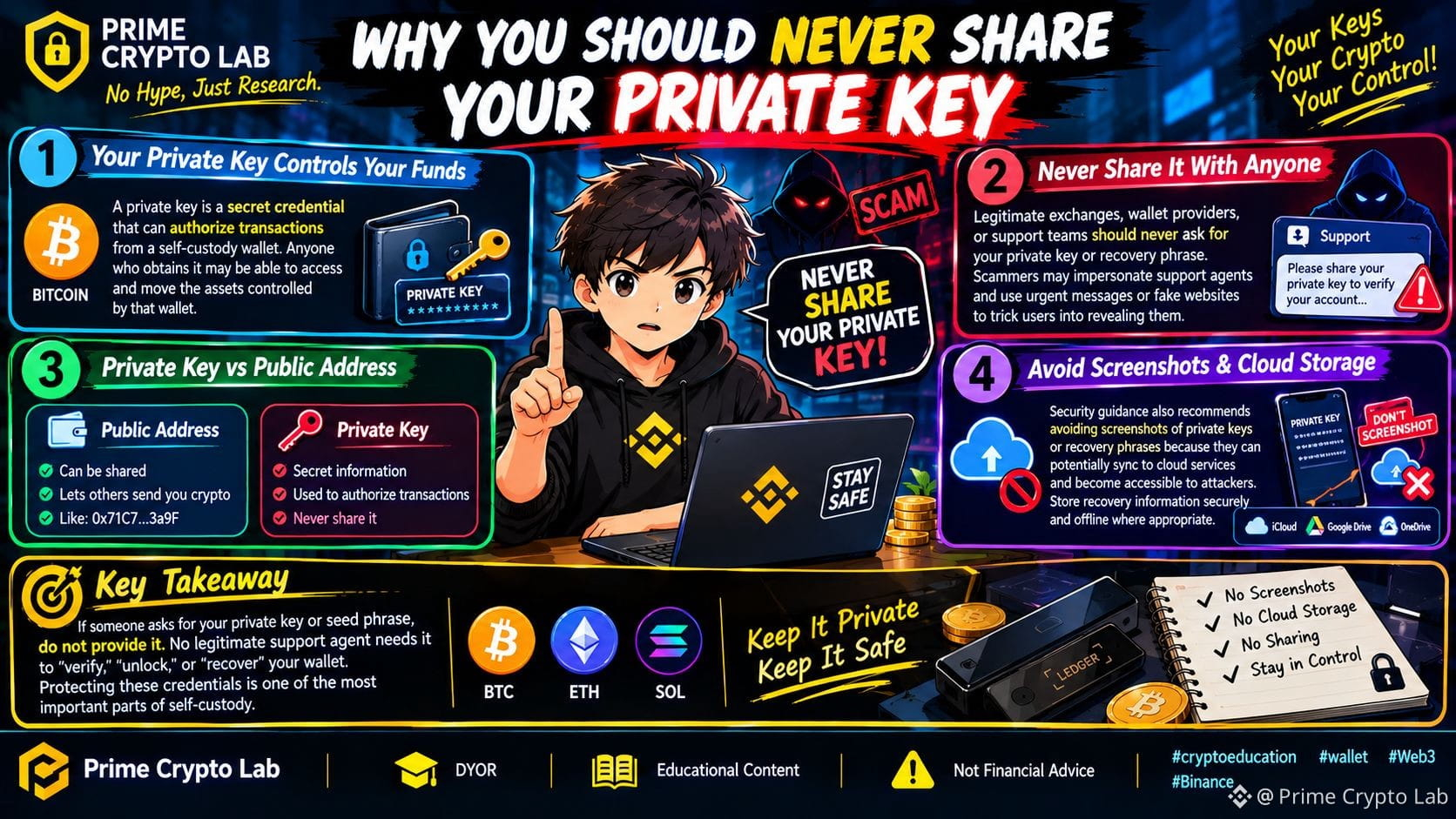
🔐 Why You Should Never Share Your Private Key
🛡️ 1. Your Private Key Controls Your Funds
Bitcoin $BTC — A private key is a secret credential that can authorize transactions from a self-custody wallet. Anyone who obtains it may be able to access and move the assets controlled by that wallet.
🚨 2. Never Share It With Anyone
Legitimate exchanges, wallet providers, or support teams should never ask for your private key or recovery phrase. Scammers may impersonate support agents and use urgent messages or fake websites to trick users into revealing them.
🔑 3. Private Key vs Public Address
A public wallet address can generally be shared so others can send you crypto. A private key is different: it is secret information used to authorize transactions. Keep it confidential at all times.
☁️ 4. Avoid Screenshots & Cloud Storage
Ethereum $ETH — Security guidance also recommends avoiding screenshots of private keys or recovery phrases because they can potentially sync to cloud services and become accessible to attackers. Store recovery information securely and offline where appropriate.
🎯 Key Takeaway
Solana $SOL — If someone asks for your private key or seed phrase, do not provide it. No legitimate support agent needs it to “verify,” “unlock,” or “recover” your wallet. Protecting these credentials is one of the most important parts of self-custody.
Prime Crypto Lab — No Hype, Just Research.
DYOR | Educational Content | Not Financial Advice
#cryptoeducation #WalletSecurity #Web3 #SelfCustody
🔐 Why You Should Never Share Your Private Key
🛡️ 1. Your Private Key Controls Your Funds
Bitcoin $BTC — A private key is a secret credential that can authorize transactions from a self-custody wallet. Anyone who obtains it may be able to access and move the assets controlled by that wallet.
🚨 2. Never Share It With Anyone
Legitimate exchanges, wallet providers, or support teams should never ask for your private key or recovery phrase. Scammers may impersonate support agents and use urgent messages or fake websites to trick users into revealing them.
🔑 3. Private Key vs Public Address
A public wallet address can generally be shared so others can send you crypto. A private key is different: it is secret information used to authorize transactions. Keep it confidential at all times.
☁️ 4. Avoid Screenshots & Cloud Storage
Ethereum $ETH — Security guidance also recommends avoiding screenshots of private keys or recovery phrases because they can potentially sync to cloud services and become accessible to attackers. Store recovery information securely and offline where appropriate.
🎯 Key Takeaway
Solana $SOL — If someone asks for your private key or seed phrase, do not provide it. No legitimate support agent needs it to “verify,” “unlock,” or “recover” your wallet. Protecting these credentials is one of the most important parts of self-custody.
Prime Crypto Lab — No Hype, Just Research.
DYOR | Educational Content | Not Financial Advice
#cryptoeducation #WalletSecurity #Web3 #SelfCustody
🛡️ 1. Your Private Key Controls Your Funds
Bitcoin $BTC — A private key is a secret credential that can authorize transactions from a self-custody wallet. Anyone who obtains it may be able to access and move the assets controlled by that wallet.
🚨 2. Never Share It With Anyone
Legitimate exchanges, wallet providers, or support teams should never ask for your private key or recovery phrase. Scammers may impersonate support agents and use urgent messages or fake websites to trick users into revealing them.
🔑 3. Private Key vs Public Address
A public wallet address can generally be shared so others can send you crypto. A private key is different: it is secret information used to authorize transactions. Keep it confidential at all times.
☁️ 4. Avoid Screenshots & Cloud Storage
Ethereum $ETH — Security guidance also recommends avoiding screenshots of private keys or recovery phrases because they can potentially sync to cloud services and become accessible to attackers. Store recovery information securely and offline where appropriate.
🎯 Key Takeaway
Solana $SOL — If someone asks for your private key or seed phrase, do not provide it. No legitimate support agent needs it to “verify,” “unlock,” or “recover” your wallet. Protecting these credentials is one of the most important parts of self-custody.
Prime Crypto Lab — No Hype, Just Research.
DYOR | Educational Content | Not Financial Advice
#cryptoeducation #WalletSecurity #Web3 #SelfCustody
94


·
--
တက်ရိပ်ရှိသည်
#hackersdrainover12.4mxrpfromdcentwallets
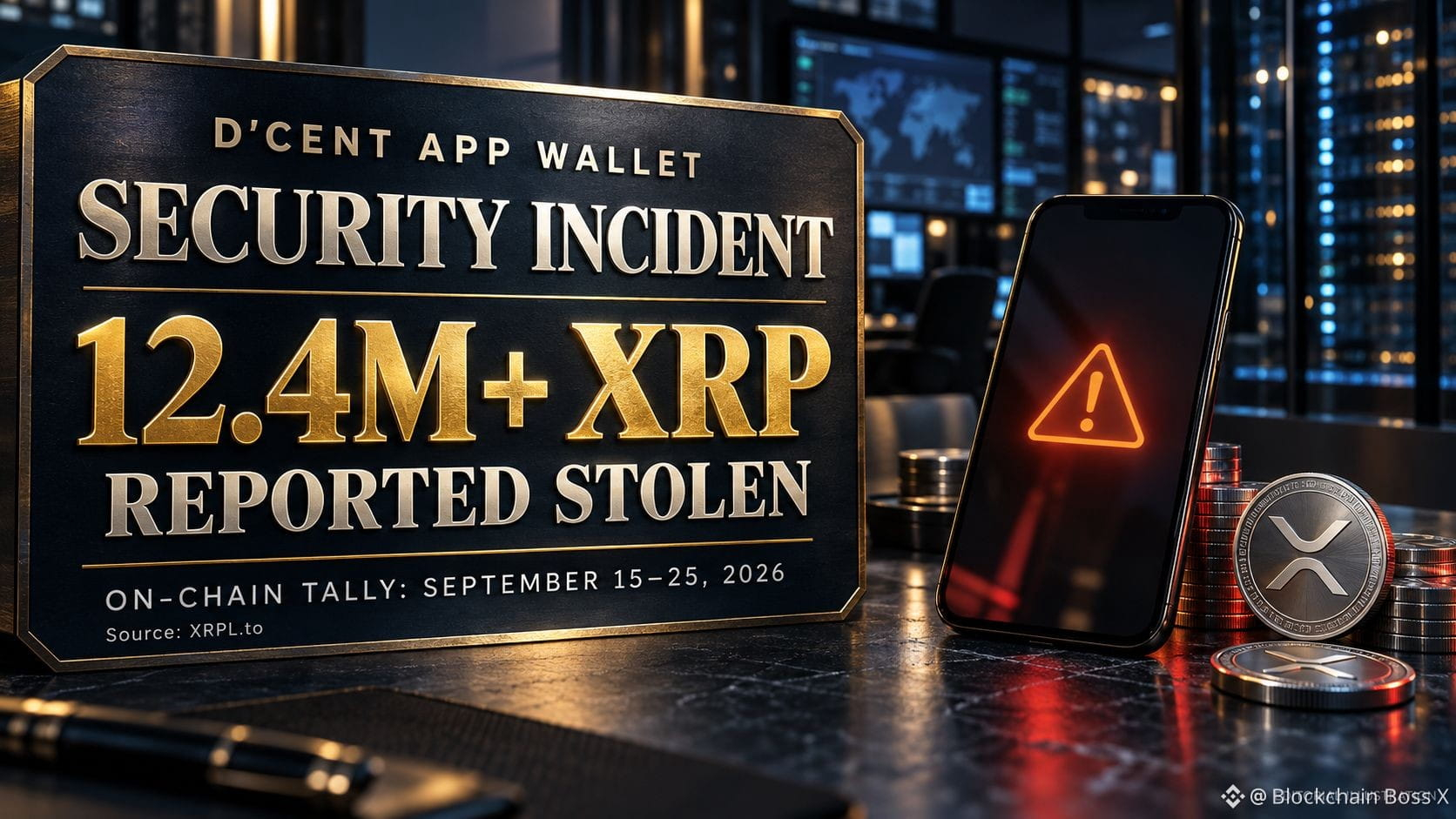
🔐 12.4M+ XRP Reported Stolen in D’CENT App Wallet Incident
XRPL.to’s on-chain investigation tracked 12,402,589 XRP taken from 7,393 wallets between September 15 and 25, 2026. The tally counts wallets, which may differ from the number of affected people.
DCENT’s official notices concern its App Wallet, including hardware wallets whose recovery phrase was also entered into the app. Hardware-generated phrases never entered into the App Wallet fall outside the notice’s direct scope, according to its FAQ.
For affected users, DCENT advises checking the recovery backup, updating through official app stores and transferring assets to a wallet created with an entirely new recovery phrase. Never share that phrase with anyone offering support or recovery.
My take: Wallet security depends on where the recovery phrase has been used, as well as the device holding it. Reusing an exposed phrase on new hardware leaves that exposure in place.
The most useful next disclosures would identify the initial compromise, affected versions and independently verifiable recovery progress. Those details would help users judge whether the fixes address the cause. On-chain transfers show where assets moved; they cannot establish how attackers initially obtained the keys.
Which security update would give affected users the most confidence? 👇
#HackersDrainOver12.4MXRPFromDCENTWallets #xrp #WalletSecurity
#hackersdrainover12.4mxrpfromdcentwallets
🔐 12.4M+ XRP Reported Stolen in D’CENT App Wallet Incident
XRPL.to’s on-chain investigation tracked 12,402,589 XRP taken from 7,393 wallets between September 15 and 25, 2026. The tally counts wallets, which may differ from the number of affected people.
DCENT’s official notices concern its App Wallet, including hardware wallets whose recovery phrase was also entered into the app. Hardware-generated phrases never entered into the App Wallet fall outside the notice’s direct scope, according to its FAQ.
For affected users, DCENT advises checking the recovery backup, updating through official app stores and transferring assets to a wallet created with an entirely new recovery phrase. Never share that phrase with anyone offering support or recovery.
My take: Wallet security depends on where the recovery phrase has been used, as well as the device holding it. Reusing an exposed phrase on new hardware leaves that exposure in place.
The most useful next disclosures would identify the initial compromise, affected versions and independently verifiable recovery progress. Those details would help users judge whether the fixes address the cause. On-chain transfers show where assets moved; they cannot establish how attackers initially obtained the keys.
Which security update would give affected users the most confidence? 👇
#HackersDrainOver12.4MXRPFromDCENTWallets #xrp #WalletSecurity
🔐 12.4M+ XRP Reported Stolen in D’CENT App Wallet Incident
XRPL.to’s on-chain investigation tracked 12,402,589 XRP taken from 7,393 wallets between September 15 and 25, 2026. The tally counts wallets, which may differ from the number of affected people.
DCENT’s official notices concern its App Wallet, including hardware wallets whose recovery phrase was also entered into the app. Hardware-generated phrases never entered into the App Wallet fall outside the notice’s direct scope, according to its FAQ.
For affected users, DCENT advises checking the recovery backup, updating through official app stores and transferring assets to a wallet created with an entirely new recovery phrase. Never share that phrase with anyone offering support or recovery.
My take: Wallet security depends on where the recovery phrase has been used, as well as the device holding it. Reusing an exposed phrase on new hardware leaves that exposure in place.
The most useful next disclosures would identify the initial compromise, affected versions and independently verifiable recovery progress. Those details would help users judge whether the fixes address the cause. On-chain transfers show where assets moved; they cannot establish how attackers initially obtained the keys.
Which security update would give affected users the most confidence? 👇
#HackersDrainOver12.4MXRPFromDCENTWallets #xrp #WalletSecurity
2
997
YOUR WALLET & SECURITY UPDATE NO.7
The Secondhand Hardware Wallet Trap:
Honestly, this one never crossed my mind until someone brought it up: buying a hardware wallet secondhand. Even the ones that show up "factory sealed."
Here's the part that got me. Someone could reseal the box with a seed phrase already loaded on the device, then just wait. You open it, set it up, fund it, feeling great about your new security upgrade... and they had the keys before you ever touched the box. Looks brand new. It isn't!
So now I'm curious...now that you know this can happen, would you still buy one secondhand if it looked sealed?
$USDC $BTC $BNB
#Cryptollegiate #WalletSecurity
{spot}(USDCUSDT)
{spot}(BTCUSDT)
{spot}(BNBUSDT)
Would you trust a hardware wallet you bought secondhand, even factory-sealed?
YOUR WALLET & SECURITY UPDATE NO.7
The Secondhand Hardware Wallet Trap:
Honestly, this one never crossed my mind until someone brought it up: buying a hardware wallet secondhand. Even the ones that show up "factory sealed."
Here's the part that got me. Someone could reseal the box with a seed phrase already loaded on the device, then just wait. You open it, set it up, fund it, feeling great about your new security upgrade... and they had the keys before you ever touched the box. Looks brand new. It isn't!
So now I'm curious...now that you know this can happen, would you still buy one secondhand if it looked sealed?
$USDC $BTC $BNB
#Cryptollegiate #WalletSecurity
Would you trust a hardware wallet you bought secondhand, even factory-sealed?
The Secondhand Hardware Wallet Trap:
Honestly, this one never crossed my mind until someone brought it up: buying a hardware wallet secondhand. Even the ones that show up "factory sealed."
Here's the part that got me. Someone could reseal the box with a seed phrase already loaded on the device, then just wait. You open it, set it up, fund it, feeling great about your new security upgrade... and they had the keys before you ever touched the box. Looks brand new. It isn't!
So now I'm curious...now that you know this can happen, would you still buy one secondhand if it looked sealed?
$USDC $BTC $BNB
#Cryptollegiate #WalletSecurity
Would you trust a hardware wallet you bought secondhand, even factory-sealed?
Sealed is sealed, I'd use it
100%
Never, buy new or not at all
0%
After a factory reset + verify
0%
Never thought bout it till now
0%
1 မဲများ • မဲပိတ်ပါပြီ
1
233

Binance is sounding the alarm on address poisoning scams. Scammers are mimicking your past transaction history to bait you into sending funds to their fake addresses. Double check every single character before hitting send.
#AddressPoisoning #WalletSecurity
Binance is sounding the alarm on address poisoning scams. Scammers are mimicking your past transaction history to bait you into sending funds to their fake addresses. Double check every single character before hitting send.
#AddressPoisoning #WalletSecurity
#AddressPoisoning #WalletSecurity
2
·
--
Read Wallet Security BadgesAn EAL5+ or EAL6+ label can be a useful security signal, but it should start a due-diligence question rather than end one.
First identify the target of the evaluation. A wallet may use a secure element with a Common Criteria rating. That tells you something about the assessed chip and its resistance under a defined scope. It does not automatically certify the entire device, firmware, bootloader, companion app, transaction parser, recovery process, manufacturing controls and every future update.
Use four questions for every badge: who issued it, what exact component was evaluated, which model and version were covered, and when the evaluation happened? Look for a certificate identifier, security target, evaluation report or audit scope. If a vendor cites an independent audit, check whether the report is available, whether findings were fixed and whether remediation was verified.
Then review the layers outside the badge. Examine firmware transparency, signed-update controls, vulnerability disclosure, bug-bounty coverage, trusted-screen clarity, recovery architecture and official purchase channels. A strong physical security component cannot stop a user from approving a malicious request or exposing recovery material.
TokenToolHub’s guide shows how to separate useful assurance evidence from vague security marketing:
https://tokentoolhub.com/wallet-security-certifications/
#WalletSecurity #HardwareWallets #CryptoSecurity #SelfCustody #CyberSecurity
Read Wallet Security Badges
An EAL5+ or EAL6+ label can be a useful security signal, but it should start a due-diligence question rather than end one.
First identify the target of the evaluation. A wallet may use a secure element with a Common Criteria rating. That tells you something about the assessed chip and its resistance under a defined scope. It does not automatically certify the entire device, firmware, bootloader, companion app, transaction parser, recovery process, manufacturing controls and every future update.
Use four questions for every badge: who issued it, what exact component was evaluated, which model and version were covered, and when the evaluation happened? Look for a certificate identifier, security target, evaluation report or audit scope. If a vendor cites an independent audit, check whether the report is available, whether findings were fixed and whether remediation was verified.
Then review the layers outside the badge. Examine firmware transparency, signed-update controls, vulnerability disclosure, bug-bounty coverage, trusted-screen clarity, recovery architecture and official purchase channels. A strong physical security component cannot stop a user from approving a malicious request or exposing recovery material.
TokenToolHub’s guide shows how to separate useful assurance evidence from vague security marketing:
https://tokentoolhub.com/wallet-security-certifications/
#WalletSecurity #HardwareWallets #CryptoSecurity #SelfCustody #CyberSecurity
First identify the target of the evaluation. A wallet may use a secure element with a Common Criteria rating. That tells you something about the assessed chip and its resistance under a defined scope. It does not automatically certify the entire device, firmware, bootloader, companion app, transaction parser, recovery process, manufacturing controls and every future update.
Use four questions for every badge: who issued it, what exact component was evaluated, which model and version were covered, and when the evaluation happened? Look for a certificate identifier, security target, evaluation report or audit scope. If a vendor cites an independent audit, check whether the report is available, whether findings were fixed and whether remediation was verified.
Then review the layers outside the badge. Examine firmware transparency, signed-update controls, vulnerability disclosure, bug-bounty coverage, trusted-screen clarity, recovery architecture and official purchase channels. A strong physical security component cannot stop a user from approving a malicious request or exposing recovery material.
TokenToolHub’s guide shows how to separate useful assurance evidence from vague security marketing:
https://tokentoolhub.com/wallet-security-certifications/
#WalletSecurity #HardwareWallets #CryptoSecurity #SelfCustody #CyberSecurity
29
Duelbits crypto casino has gone offline following a $7 million hot wallet exploit. This massive security breach underscores the significant risks centralized crypto platforms face from targeted hacks.
#DuelbitsHack #WalletSecurity
Duelbits crypto casino has gone offline following a $7 million hot wallet exploit. This massive security breach underscores the significant risks centralized crypto platforms face from targeted hacks.
#DuelbitsHack #WalletSecurity
#DuelbitsHack #WalletSecurity
10

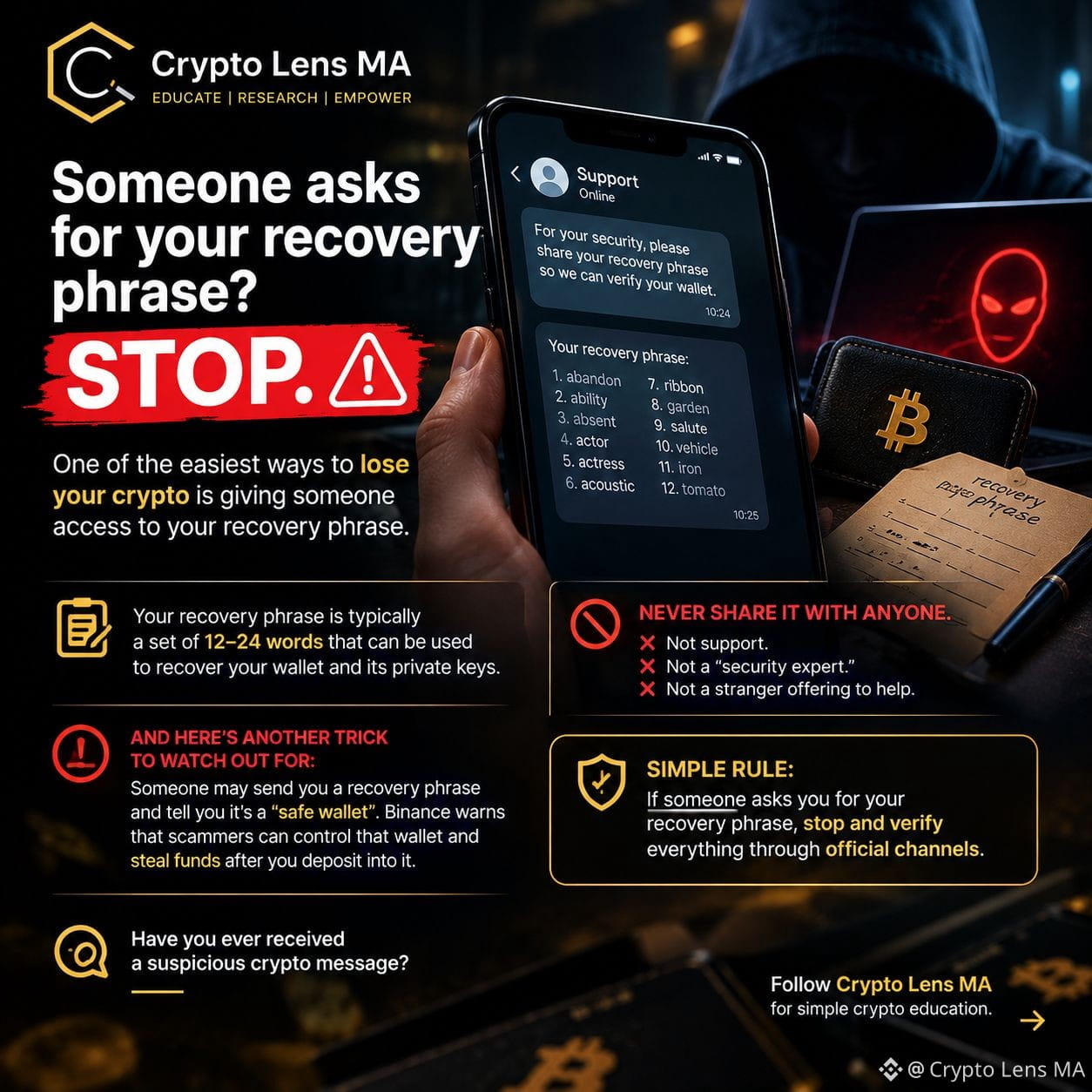
Someone asks for your recovery phrase? STOP. 🚨
One of the easiest ways to lose your crypto is giving someone access to your recovery phrase.
Your recovery phrase is typically a set of 12–24 words that can be used to recover your wallet and its private keys.
🔴 Never share it with anyone.
Not support.
Not a “security expert.”
Not a stranger offering to help.
And here's another trick to watch out for:
Someone may send you a recovery phrase and tell you it's a “safe wallet”. Binance warns that scammers can control that wallet and steal funds after you deposit into it.
Simple rule: If someone asks you for your recovery phrase, stop and verify everything through official channels. 🔐
Have you ever received a suspicious crypto message?
#CryptoSecurity #Cryptoscam #crypto #blockchain #WalletSecurity
Someone asks for your recovery phrase? STOP. 🚨
One of the easiest ways to lose your crypto is giving someone access to your recovery phrase.
Your recovery phrase is typically a set of 12–24 words that can be used to recover your wallet and its private keys.
🔴 Never share it with anyone.
Not support.
Not a “security expert.”
Not a stranger offering to help.
And here's another trick to watch out for:
Someone may send you a recovery phrase and tell you it's a “safe wallet”. Binance warns that scammers can control that wallet and steal funds after you deposit into it.
Simple rule: If someone asks you for your recovery phrase, stop and verify everything through official channels. 🔐
Have you ever received a suspicious crypto message?
#CryptoSecurity #Cryptoscam #crypto #blockchain #WalletSecurity
One of the easiest ways to lose your crypto is giving someone access to your recovery phrase.
Your recovery phrase is typically a set of 12–24 words that can be used to recover your wallet and its private keys.
🔴 Never share it with anyone.
Not support.
Not a “security expert.”
Not a stranger offering to help.
And here's another trick to watch out for:
Someone may send you a recovery phrase and tell you it's a “safe wallet”. Binance warns that scammers can control that wallet and steal funds after you deposit into it.
Simple rule: If someone asks you for your recovery phrase, stop and verify everything through official channels. 🔐
Have you ever received a suspicious crypto message?
#CryptoSecurity #Cryptoscam #crypto #blockchain #WalletSecurity
147
A Web3 wallet provider reported a security breach, warning the XRP community to move assets immediately. This exploit puts user funds at significant risk if they do not act quickly.
#XRP #WalletSecurity
A Web3 wallet provider reported a security breach, warning the XRP community to move assets immediately. This exploit puts user funds at significant risk if they do not act quickly.
#XRP #WalletSecurity
#XRP #WalletSecurity
16
A simple coding error allowed a hacker to drain $7.8 million from a crypto wallet. This catastrophic exploit highlights the extreme risks of even minor security oversights in digital asset management.
#SecurityVulnerability #WalletSecurity
A simple coding error allowed a hacker to drain $7.8 million from a crypto wallet. This catastrophic exploit highlights the extreme risks of even minor security oversights in digital asset management.
#SecurityVulnerability #WalletSecurity
#SecurityVulnerability #WalletSecurity
7
🚨 ¿SABÍAS QUE UNA APROBACIÓN PUEDE REPRESENTAR UN RIESGO?
Cuando interactuás con determinados protocolos, podés otorgar permiso a un contrato para gastar determinados tokens de tu wallet.
El problema aparece cuando:
❌ Otorgás permisos ilimitados.
❌ Dejás aprobaciones antiguas que ya no utilizás.
❌ Interactuás con contratos comprometidos.
Por eso, una buena práctica es revisar periódicamente las aprobaciones de tus wallets y revocar aquellas que ya no necesites.
🔐 No alcanza con proteger tu frase semilla.
También tenés que controlar qué contratos tienen permisos sobre tus activos.
Antes de firmar:
👉 Leé qué estás autorizando.
👉 Verificá el contrato.
👉 No firmes automáticamente.
Una firma puede ser mucho más importante de lo que parece.
#DeFi #Web3 #WalletSecurity #CryptoSecurity #BinanceSquare
🚨 ¿SABÍAS QUE UNA APROBACIÓN PUEDE REPRESENTAR UN RIESGO?
Cuando interactuás con determinados protocolos, podés otorgar permiso a un contrato para gastar determinados tokens de tu wallet.
El problema aparece cuando:
❌ Otorgás permisos ilimitados.
❌ Dejás aprobaciones antiguas que ya no utilizás.
❌ Interactuás con contratos comprometidos.
Por eso, una buena práctica es revisar periódicamente las aprobaciones de tus wallets y revocar aquellas que ya no necesites.
🔐 No alcanza con proteger tu frase semilla.
También tenés que controlar qué contratos tienen permisos sobre tus activos.
Antes de firmar:
👉 Leé qué estás autorizando.
👉 Verificá el contrato.
👉 No firmes automáticamente.
Una firma puede ser mucho más importante de lo que parece.
#DeFi #Web3 #WalletSecurity #CryptoSecurity #BinanceSquare
Cuando interactuás con determinados protocolos, podés otorgar permiso a un contrato para gastar determinados tokens de tu wallet.
El problema aparece cuando:
❌ Otorgás permisos ilimitados.
❌ Dejás aprobaciones antiguas que ya no utilizás.
❌ Interactuás con contratos comprometidos.
Por eso, una buena práctica es revisar periódicamente las aprobaciones de tus wallets y revocar aquellas que ya no necesites.
🔐 No alcanza con proteger tu frase semilla.
También tenés que controlar qué contratos tienen permisos sobre tus activos.
Antes de firmar:
👉 Leé qué estás autorizando.
👉 Verificá el contrato.
👉 No firmes automáticamente.
Una firma puede ser mucho más importante de lo que parece.
#DeFi #Web3 #WalletSecurity #CryptoSecurity #BinanceSquare
55
·
--
#hackersatack
#HackerStrategy
#Revolut
#WalletSecurity
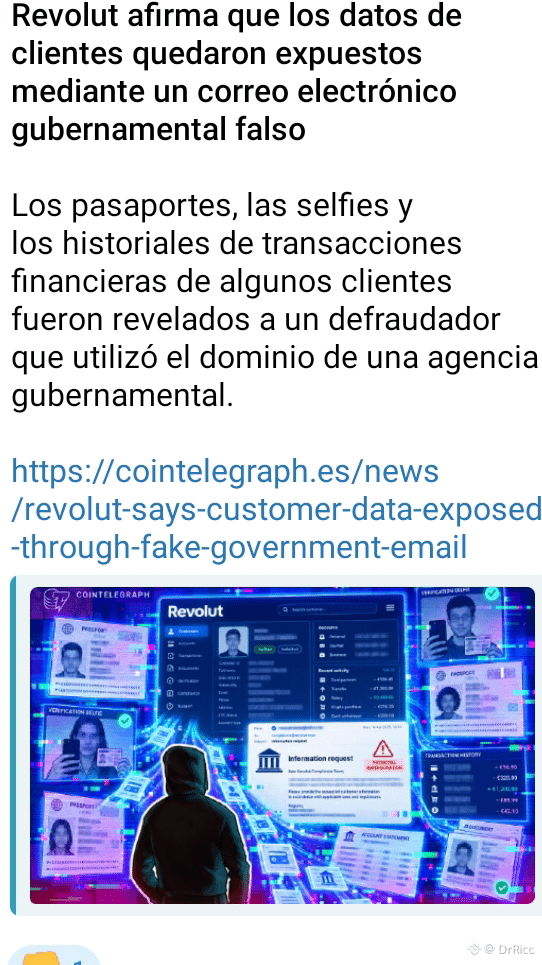
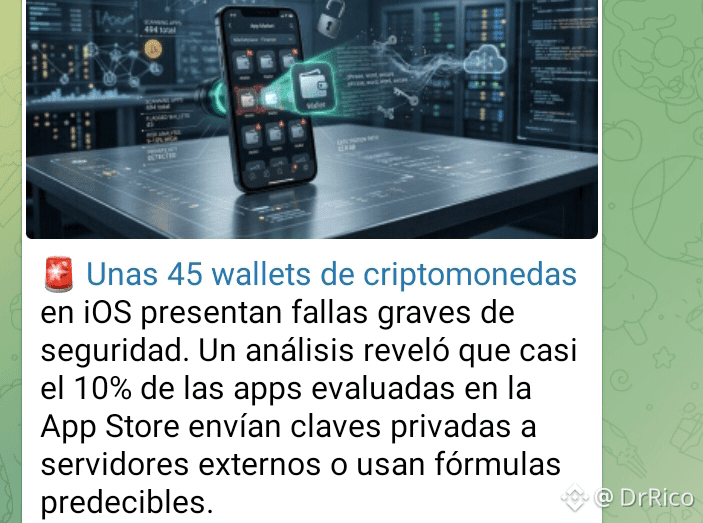
Fallas y más fallas ,hackeos y más hackeos han sido las noticias que han dominado este años en las noticias criptos !! está vez le tocó a Revolut!! además el dato más curioso más de 45 wallets de Criptomonedas de IOS presentan fallas graves de seguridad !! 🤦🤦🤦🤦🤦🤦🤦🤦🤦🤦🤦🤦🤦🤦🤦 los Hackers a darse Banquete !! 🤮🤮🤮🤮
$USD1
$USDC
$ETH
#hackersatack
#HackerStrategy
#Revolut
#WalletSecurity
Fallas y más fallas ,hackeos y más hackeos han sido las noticias que han dominado este años en las noticias criptos !! está vez le tocó a Revolut!! además el dato más curioso más de 45 wallets de Criptomonedas de IOS presentan fallas graves de seguridad !! 🤦🤦🤦🤦🤦🤦🤦🤦🤦🤦🤦🤦🤦🤦🤦 los Hackers a darse Banquete !! 🤮🤮🤮🤮
$USD1
$USDC
$ETH
#HackerStrategy
#Revolut
#WalletSecurity
Fallas y más fallas ,hackeos y más hackeos han sido las noticias que han dominado este años en las noticias criptos !! está vez le tocó a Revolut!! además el dato más curioso más de 45 wallets de Criptomonedas de IOS presentan fallas graves de seguridad !! 🤦🤦🤦🤦🤦🤦🤦🤦🤦🤦🤦🤦🤦🤦🤦 los Hackers a darse Banquete !! 🤮🤮🤮🤮
$USD1
$USDC
$ETH
162

·
--
Coldcard 第三波攻击资金持续移动:托管系统要回答什么问题2026-09-08
The Block、CoinDesk、Cointelegraph 与 Decrypt 均报道,Coldcard 第三波攻击所得的比特币近期出现大额转移。报道援引 Galaxy Research 的追踪称,第三波被盗资金约 45% 已经移动。
从行业角度看,重点不只是资金流向,而是托管系统能否在异常发生后快速回答:哪些金库受影响、哪些授权仍然有效、剩余资金能否隔离,以及恢复后哪些控制路径仍然可信。
如果系统只能在交易发生后追踪地址,它解决的是取证问题;更完整的控制面还需要把密钥生成、签名权限、异常检测、暂停和恢复流程连接起来。Coldcard 事件后续能否说明攻击者取得的是单个密钥、批量授权,还是更上游的密钥管理权限,仍值得观察。
#AI #Web3 #MPC #WalletSecurity
Coldcard 第三波攻击资金持续移动:托管系统要回答什么问题
2026-09-08
The Block、CoinDesk、Cointelegraph 与 Decrypt 均报道,Coldcard 第三波攻击所得的比特币近期出现大额转移。报道援引 Galaxy Research 的追踪称,第三波被盗资金约 45% 已经移动。
从行业角度看,重点不只是资金流向,而是托管系统能否在异常发生后快速回答:哪些金库受影响、哪些授权仍然有效、剩余资金能否隔离,以及恢复后哪些控制路径仍然可信。
如果系统只能在交易发生后追踪地址,它解决的是取证问题;更完整的控制面还需要把密钥生成、签名权限、异常检测、暂停和恢复流程连接起来。Coldcard 事件后续能否说明攻击者取得的是单个密钥、批量授权,还是更上游的密钥管理权限,仍值得观察。
#AI #Web3 #MPC #WalletSecurity
The Block、CoinDesk、Cointelegraph 与 Decrypt 均报道,Coldcard 第三波攻击所得的比特币近期出现大额转移。报道援引 Galaxy Research 的追踪称,第三波被盗资金约 45% 已经移动。
从行业角度看,重点不只是资金流向,而是托管系统能否在异常发生后快速回答:哪些金库受影响、哪些授权仍然有效、剩余资金能否隔离,以及恢复后哪些控制路径仍然可信。
如果系统只能在交易发生后追踪地址,它解决的是取证问题;更完整的控制面还需要把密钥生成、签名权限、异常检测、暂停和恢复流程连接起来。Coldcard 事件后续能否说明攻击者取得的是单个密钥、批量授权,还是更上游的密钥管理权限,仍值得观察。
#AI #Web3 #MPC #WalletSecurity
51

·
--
Tuyệt vời! Hãy cùng mình biến tin tức này thành một bài đăng "chất lừ" trên Binance Square nhé!
---
**SỐC TOÀN TẬP: Mở khóa ví '1 tỷ USD' nhưng chỉ tìm thấy 10 USD! Sự thật phũ phàng đằng sau những ví crypto 'ảo' khiến cả cộng đồng ngỡ ngàng!** 😱
Anh em trong không gian crypto hẳn đã từng nghe về những câu chuyện "tìm lại được ví mất" đầy ly kỳ. Nhưng tin tức nóng hổi vừa được các chuyên gia khôi phục tài sản tiết lộ lại là một lời cảnh tỉnh đanh thép cho tất cả chúng ta!
Dưới đây là những điểm chính bạn cần nắm bắt ngay lập tức:
* **Những "thám tử" crypto có thể giúp bạn lấy lại quyền truy cập** ví đã mất (quên mật khẩu, cụm từ hạt giống). Đây là một tia hy vọng cho những ai lỡ tay "đánh rơi" chìa khóa kho báu kỹ thuật số của mình.
* **Tuy nhiên, nỗ lực này trở nên vô ích nếu số tiền trong ví đã "bốc hơi"** từ trước hoặc chưa bao giờ được nạp vào. Kỹ năng khôi phục dù đỉnh cao đến mấy cũng không thể tạo ra tiền từ hư không!
* **Cú sốc lớn: Một ví được cho là trị giá hàng tỷ đô la, sau khi được khôi phục quyền truy cập, chỉ còn vỏn vẹn 10 USD bên trong!** Điều này phơi bày một thực tế đáng buồn về những ảo tưởng có thể tồn tại trong thị trường.
**Góc nhìn cá nhân từ mình:**
Bài học xương máu ở đây là: Việc khôi phục được quyền truy cập chỉ là bước đầu. Điều quan trọng hơn cả là đảm bảo *tiền của bạn thực sự nằm trong ví* và bạn có phương pháp quản lý an toàn, minh bạch. Đừng để mình rơi vào tình cảnh ảo tưởng về "ví triệu đô" nhưng thực chất rỗng tuếch. Luôn kiểm tra số dư và chủ động bảo vệ tài sản của mình TRƯỚC KHI sự cố xảy ra. Mọi nỗ lực khôi phục đều vô nghĩa nếu ví của bạn đã trống rỗng! Hãy tỉnh táo anh em ạ!
Bạn nghĩ sao về vụ việc này? Đây có phải là lời cảnh tỉnh cần thiết cho cộng đồng crypto? Hãy để lại bình luận bên dưới nhé! 👇
Đừng quên nhấn nút **Theo Dõi** để không bỏ lỡ những phân tích chuyên sâu và tin tức nóng hổi nhất từ mình!
#CryptoNews #TrendingNews #WalletSecurity #Blockchain
Tuyệt vời! Hãy cùng mình biến tin tức này thành một bài đăng "chất lừ" trên Binance Square nhé!
---
**SỐC TOÀN TẬP: Mở khóa ví '1 tỷ USD' nhưng chỉ tìm thấy 10 USD! Sự thật phũ phàng đằng sau những ví crypto 'ảo' khiến cả cộng đồng ngỡ ngàng!** 😱
Anh em trong không gian crypto hẳn đã từng nghe về những câu chuyện "tìm lại được ví mất" đầy ly kỳ. Nhưng tin tức nóng hổi vừa được các chuyên gia khôi phục tài sản tiết lộ lại là một lời cảnh tỉnh đanh thép cho tất cả chúng ta!
Dưới đây là những điểm chính bạn cần nắm bắt ngay lập tức:
* **Những "thám tử" crypto có thể giúp bạn lấy lại quyền truy cập** ví đã mất (quên mật khẩu, cụm từ hạt giống). Đây là một tia hy vọng cho những ai lỡ tay "đánh rơi" chìa khóa kho báu kỹ thuật số của mình.
* **Tuy nhiên, nỗ lực này trở nên vô ích nếu số tiền trong ví đã "bốc hơi"** từ trước hoặc chưa bao giờ được nạp vào. Kỹ năng khôi phục dù đỉnh cao đến mấy cũng không thể tạo ra tiền từ hư không!
* **Cú sốc lớn: Một ví được cho là trị giá hàng tỷ đô la, sau khi được khôi phục quyền truy cập, chỉ còn vỏn vẹn 10 USD bên trong!** Điều này phơi bày một thực tế đáng buồn về những ảo tưởng có thể tồn tại trong thị trường.
**Góc nhìn cá nhân từ mình:**
Bài học xương máu ở đây là: Việc khôi phục được quyền truy cập chỉ là bước đầu. Điều quan trọng hơn cả là đảm bảo *tiền của bạn thực sự nằm trong ví* và bạn có phương pháp quản lý an toàn, minh bạch. Đừng để mình rơi vào tình cảnh ảo tưởng về "ví triệu đô" nhưng thực chất rỗng tuếch. Luôn kiểm tra số dư và chủ động bảo vệ tài sản của mình TRƯỚC KHI sự cố xảy ra. Mọi nỗ lực khôi phục đều vô nghĩa nếu ví của bạn đã trống rỗng! Hãy tỉnh táo anh em ạ!
Bạn nghĩ sao về vụ việc này? Đây có phải là lời cảnh tỉnh cần thiết cho cộng đồng crypto? Hãy để lại bình luận bên dưới nhé! 👇
Đừng quên nhấn nút **Theo Dõi** để không bỏ lỡ những phân tích chuyên sâu và tin tức nóng hổi nhất từ mình!
#CryptoNews #TrendingNews #WalletSecurity #Blockchain
---
**SỐC TOÀN TẬP: Mở khóa ví '1 tỷ USD' nhưng chỉ tìm thấy 10 USD! Sự thật phũ phàng đằng sau những ví crypto 'ảo' khiến cả cộng đồng ngỡ ngàng!** 😱
Anh em trong không gian crypto hẳn đã từng nghe về những câu chuyện "tìm lại được ví mất" đầy ly kỳ. Nhưng tin tức nóng hổi vừa được các chuyên gia khôi phục tài sản tiết lộ lại là một lời cảnh tỉnh đanh thép cho tất cả chúng ta!
Dưới đây là những điểm chính bạn cần nắm bắt ngay lập tức:
* **Những "thám tử" crypto có thể giúp bạn lấy lại quyền truy cập** ví đã mất (quên mật khẩu, cụm từ hạt giống). Đây là một tia hy vọng cho những ai lỡ tay "đánh rơi" chìa khóa kho báu kỹ thuật số của mình.
* **Tuy nhiên, nỗ lực này trở nên vô ích nếu số tiền trong ví đã "bốc hơi"** từ trước hoặc chưa bao giờ được nạp vào. Kỹ năng khôi phục dù đỉnh cao đến mấy cũng không thể tạo ra tiền từ hư không!
* **Cú sốc lớn: Một ví được cho là trị giá hàng tỷ đô la, sau khi được khôi phục quyền truy cập, chỉ còn vỏn vẹn 10 USD bên trong!** Điều này phơi bày một thực tế đáng buồn về những ảo tưởng có thể tồn tại trong thị trường.
**Góc nhìn cá nhân từ mình:**
Bài học xương máu ở đây là: Việc khôi phục được quyền truy cập chỉ là bước đầu. Điều quan trọng hơn cả là đảm bảo *tiền của bạn thực sự nằm trong ví* và bạn có phương pháp quản lý an toàn, minh bạch. Đừng để mình rơi vào tình cảnh ảo tưởng về "ví triệu đô" nhưng thực chất rỗng tuếch. Luôn kiểm tra số dư và chủ động bảo vệ tài sản của mình TRƯỚC KHI sự cố xảy ra. Mọi nỗ lực khôi phục đều vô nghĩa nếu ví của bạn đã trống rỗng! Hãy tỉnh táo anh em ạ!
Bạn nghĩ sao về vụ việc này? Đây có phải là lời cảnh tỉnh cần thiết cho cộng đồng crypto? Hãy để lại bình luận bên dưới nhé! 👇
Đừng quên nhấn nút **Theo Dõi** để không bỏ lỡ những phân tích chuyên sâu và tin tức nóng hổi nhất từ mình!
#CryptoNews #TrendingNews #WalletSecurity #Blockchain
9
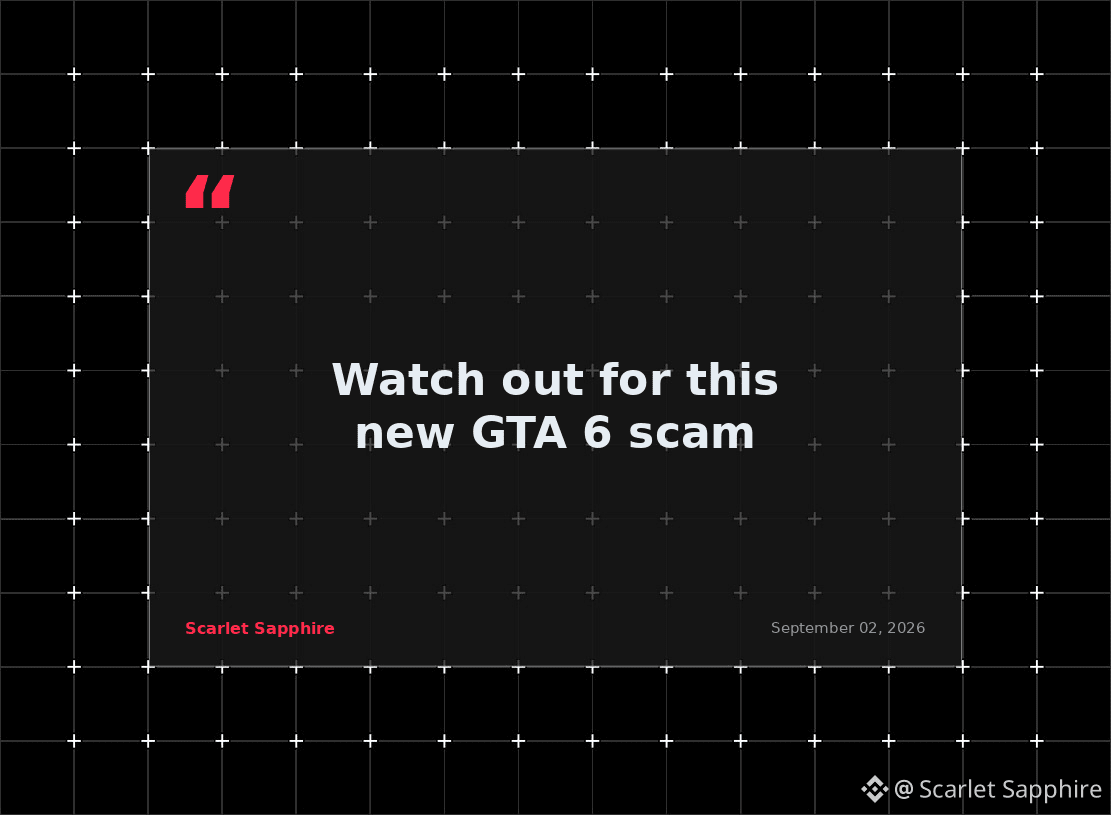
Watch out for this new GTA 6 scam
Scammers are using fake Grand Theft Auto VI leak sites to deploy malicious wallet drainers. Be extremely careful with hype driven links and avoid connecting your wallet to unverified sources to prevent getting rekt.
#PhishingAlert #WalletSecurity
Watch out for this new GTA 6 scam
Scammers are using fake Grand Theft Auto VI leak sites to deploy malicious wallet drainers. Be extremely careful with hype driven links and avoid connecting your wallet to unverified sources to prevent getting rekt.
#PhishingAlert #WalletSecurity
Scammers are using fake Grand Theft Auto VI leak sites to deploy malicious wallet drainers. Be extremely careful with hype driven links and avoid connecting your wallet to unverified sources to prevent getting rekt.
#PhishingAlert #WalletSecurity
1
36

$713M lost across 158,000+ wallet compromises in 2025.
Hackers shifted from exchanges to personal wallets. 📉
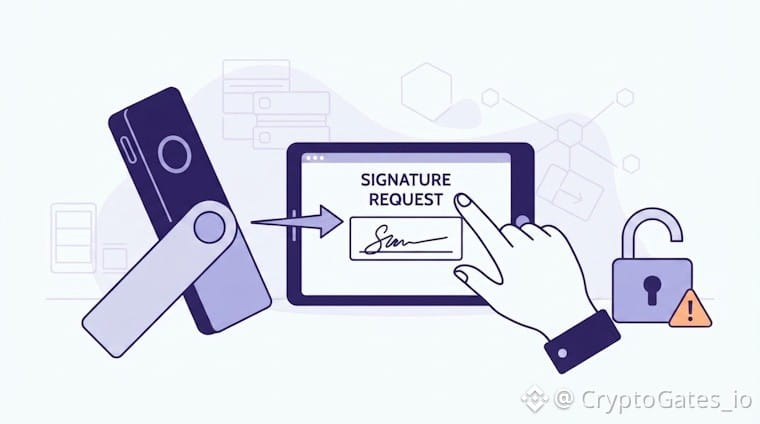
No fraud detection. No reversal. One bad approval is final.
Check every signature request before confirming.
#cryptogates #WalletSecurity #RiskManagement
$713M lost across 158,000+ wallet compromises in 2025.
Hackers shifted from exchanges to personal wallets. 📉
No fraud detection. No reversal. One bad approval is final.
Check every signature request before confirming.
#cryptogates #WalletSecurity #RiskManagement
Hackers shifted from exchanges to personal wallets. 📉
No fraud detection. No reversal. One bad approval is final.
Check every signature request before confirming.
#cryptogates #WalletSecurity #RiskManagement
93

直播翻车翻到助记词,这操作真的绷不住了。
Robinhood 创始人 Vlad Tenev 在直播里意外暴露助记词,黑客秒进钱包接管地址,顺手把一个 Meme 币从 50 万市值拉到 1400 万,两小时成交量干到 2000 万美元。数千散户闻风追进去,接着币价瞬间跳水,经典的"名人光环 + 抢跑收割"剧本。
更骚的操作在后面:主地址被 Robinhood RPC 冻结、节点拒绝打包交易之后,黑客直接换战场跑到 BNB Chain,用同一批关联地址发新币、自买自卖刷热度,再高位派发套现。一整套流程行云流水,基本可以确认是有备而来。
几个提醒:
1. 助记词离摄像头、离剪贴板、离任何联网设备,永远不要在直播/录屏/远程会议里碰钱包
2. 名人地址异动带动的 Meme 行情,九成是别人剧本里的下一幕,不是你的机会
3. RPC 层冻结只能拦住单一节点,链上资产真被拿走基本追不回,自托管的边界要看清
安全这件事,永远是被薅过一次才长记性,希望这次别是你。
#WalletSecurity #MemeCoin #BNBChain
直播翻车翻到助记词,这操作真的绷不住了。
Robinhood 创始人 Vlad Tenev 在直播里意外暴露助记词,黑客秒进钱包接管地址,顺手把一个 Meme 币从 50 万市值拉到 1400 万,两小时成交量干到 2000 万美元。数千散户闻风追进去,接着币价瞬间跳水,经典的"名人光环 + 抢跑收割"剧本。
更骚的操作在后面:主地址被 Robinhood RPC 冻结、节点拒绝打包交易之后,黑客直接换战场跑到 BNB Chain,用同一批关联地址发新币、自买自卖刷热度,再高位派发套现。一整套流程行云流水,基本可以确认是有备而来。
几个提醒:
1. 助记词离摄像头、离剪贴板、离任何联网设备,永远不要在直播/录屏/远程会议里碰钱包
2. 名人地址异动带动的 Meme 行情,九成是别人剧本里的下一幕,不是你的机会
3. RPC 层冻结只能拦住单一节点,链上资产真被拿走基本追不回,自托管的边界要看清
安全这件事,永远是被薅过一次才长记性,希望这次别是你。
#WalletSecurity #MemeCoin #BNBChain
Robinhood 创始人 Vlad Tenev 在直播里意外暴露助记词,黑客秒进钱包接管地址,顺手把一个 Meme 币从 50 万市值拉到 1400 万,两小时成交量干到 2000 万美元。数千散户闻风追进去,接着币价瞬间跳水,经典的"名人光环 + 抢跑收割"剧本。
更骚的操作在后面:主地址被 Robinhood RPC 冻结、节点拒绝打包交易之后,黑客直接换战场跑到 BNB Chain,用同一批关联地址发新币、自买自卖刷热度,再高位派发套现。一整套流程行云流水,基本可以确认是有备而来。
几个提醒:
1. 助记词离摄像头、离剪贴板、离任何联网设备,永远不要在直播/录屏/远程会议里碰钱包
2. 名人地址异动带动的 Meme 行情,九成是别人剧本里的下一幕,不是你的机会
3. RPC 层冻结只能拦住单一节点,链上资产真被拿走基本追不回,自托管的边界要看清
安全这件事,永远是被薅过一次才长记性,希望这次别是你。
#WalletSecurity #MemeCoin #BNBChain
55

·
--
Why is nobody talking about the “safe app store” myth after a fake iOS wallet allegedly drained $1.8M in Bitcoin?
Most crypto users are told security is their personal responsibility, and yes, it is. But when traders download what looks like a legit wallet and lose their $BTC, the damage is not just a bad trade or a missed exit. It is a full wipeout.
This federal lawsuit against Apple is a brutal case study in crypto’s biggest blind spot: trust. The mainstream narrative says scammers live on sketchy links and shady DMs, but here the alleged attack came through a fake iOS wallet, the exact place many users assume has already been vetted.
That matters for everyone holding $BTC, $ETH, or $BNB. If a platform can create the perception of safety without catching a fake wallet that allegedly drains $1.8M, then “just be careful” is not enough. Security has to include better app review, clearer wallet verification, and users treating every download like a transaction approval.
Where do you think responsibility should sit here: the user, the app gatekeeper, or both?
#Bitcoin #CryptoSecurity #WalletSecurity
Why is nobody talking about the “safe app store” myth after a fake iOS wallet allegedly drained $1.8M in Bitcoin?
Most crypto users are told security is their personal responsibility, and yes, it is. But when traders download what looks like a legit wallet and lose their $BTC , the damage is not just a bad trade or a missed exit. It is a full wipeout.
This federal lawsuit against Apple is a brutal case study in crypto’s biggest blind spot: trust. The mainstream narrative says scammers live on sketchy links and shady DMs, but here the alleged attack came through a fake iOS wallet, the exact place many users assume has already been vetted.
That matters for everyone holding $BTC , $ETH , or $BNB . If a platform can create the perception of safety without catching a fake wallet that allegedly drains $1.8M, then “just be careful” is not enough. Security has to include better app review, clearer wallet verification, and users treating every download like a transaction approval.
Where do you think responsibility should sit here: the user, the app gatekeeper, or both?
#Bitcoin #CryptoSecurity #WalletSecurity
Most crypto users are told security is their personal responsibility, and yes, it is. But when traders download what looks like a legit wallet and lose their $BTC , the damage is not just a bad trade or a missed exit. It is a full wipeout.
This federal lawsuit against Apple is a brutal case study in crypto’s biggest blind spot: trust. The mainstream narrative says scammers live on sketchy links and shady DMs, but here the alleged attack came through a fake iOS wallet, the exact place many users assume has already been vetted.
That matters for everyone holding $BTC , $ETH , or $BNB . If a platform can create the perception of safety without catching a fake wallet that allegedly drains $1.8M, then “just be careful” is not enough. Security has to include better app review, clearer wallet verification, and users treating every download like a transaction approval.
Where do you think responsibility should sit here: the user, the app gatekeeper, or both?
#Bitcoin #CryptoSecurity #WalletSecurity
48
·
--
High activity ≠ high risk.
We scanned this Solana address, publicly labeled by Solscan as a Kraken Hot Wallet:
6LY1JzAFVZsP2a2xKrtU6znQMQ5h4i7tocWdgrkZzkzF
TokenToolHub returned:
• Risk score: 22/100
• Risk band: Low
• Confidence: High
• High-priority signals: 0
• Medium-priority signals: 2
• Token accounts: 1,021
• Supported holdings: 1,013
• Recent signatures sampled: 200
• Active delegates: 0
• Recent approvals: 0
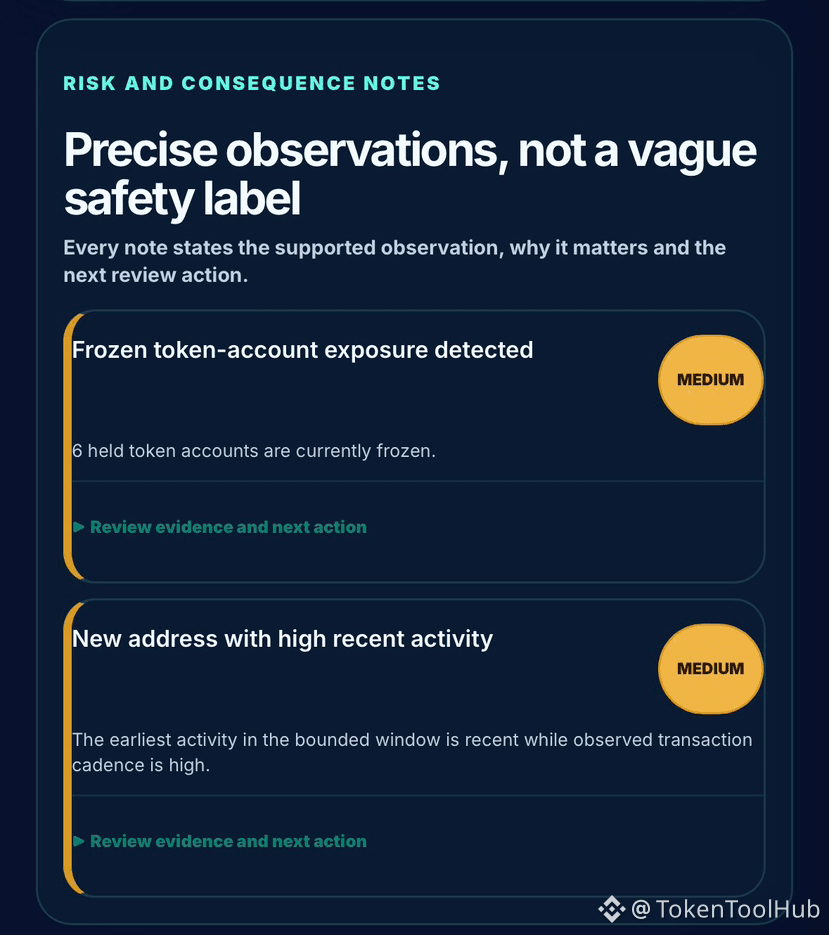
• Frozen token accounts: 6
The interesting part is transaction density.
Within the bounded history window, activity was estimated at roughly 23,967 signatures/day.
That sounds extreme, but volume alone is not evidence of malicious behavior.
All 28 deeply parsed transactions were signed by the wallet and used it as fee payer, consistent with a highly active operational address.
The two Medium findings were six frozen token accounts and unusually high recent transaction cadence.
Also important: the reported 0-day sampled age reflects the bounded retrieval window, not necessarily the wallet’s true creation date.
A useful wallet scanner needs to separate automation and exchange-scale activity from actual risk evidence.
Full scan:
https://tokentoolhub.com/solana-wallet-risk-scanner/?address=6LY1JzAFVZsP2a2xKrtU6znQMQ5h4i7tocWdgrkZzkzF
#solana #Onchain #WalletSecurity #CryptoSecurity
High activity ≠ high risk.
We scanned this Solana address, publicly labeled by Solscan as a Kraken Hot Wallet:
6LY1JzAFVZsP2a2xKrtU6znQMQ5h4i7tocWdgrkZzkzF
TokenToolHub returned:
• Risk score: 22/100
• Risk band: Low
• Confidence: High
• High-priority signals: 0
• Medium-priority signals: 2
• Token accounts: 1,021
• Supported holdings: 1,013
• Recent signatures sampled: 200
• Active delegates: 0
• Recent approvals: 0
• Frozen token accounts: 6
The interesting part is transaction density.
Within the bounded history window, activity was estimated at roughly 23,967 signatures/day.
That sounds extreme, but volume alone is not evidence of malicious behavior.
All 28 deeply parsed transactions were signed by the wallet and used it as fee payer, consistent with a highly active operational address.
The two Medium findings were six frozen token accounts and unusually high recent transaction cadence.
Also important: the reported 0-day sampled age reflects the bounded retrieval window, not necessarily the wallet’s true creation date.
A useful wallet scanner needs to separate automation and exchange-scale activity from actual risk evidence.
Full scan:
https://tokentoolhub.com/solana-wallet-risk-scanner/?address=6LY1JzAFVZsP2a2xKrtU6znQMQ5h4i7tocWdgrkZzkzF
#solana #Onchain #WalletSecurity #CryptoSecurity
We scanned this Solana address, publicly labeled by Solscan as a Kraken Hot Wallet:
6LY1JzAFVZsP2a2xKrtU6znQMQ5h4i7tocWdgrkZzkzF
TokenToolHub returned:
• Risk score: 22/100
• Risk band: Low
• Confidence: High
• High-priority signals: 0
• Medium-priority signals: 2
• Token accounts: 1,021
• Supported holdings: 1,013
• Recent signatures sampled: 200
• Active delegates: 0
• Recent approvals: 0
• Frozen token accounts: 6
The interesting part is transaction density.
Within the bounded history window, activity was estimated at roughly 23,967 signatures/day.
That sounds extreme, but volume alone is not evidence of malicious behavior.
All 28 deeply parsed transactions were signed by the wallet and used it as fee payer, consistent with a highly active operational address.
The two Medium findings were six frozen token accounts and unusually high recent transaction cadence.
Also important: the reported 0-day sampled age reflects the bounded retrieval window, not necessarily the wallet’s true creation date.
A useful wallet scanner needs to separate automation and exchange-scale activity from actual risk evidence.
Full scan:
https://tokentoolhub.com/solana-wallet-risk-scanner/?address=6LY1JzAFVZsP2a2xKrtU6znQMQ5h4i7tocWdgrkZzkzF
#solana #Onchain #WalletSecurity #CryptoSecurity
80
Log in to explore more content
Join global crypto users on Binance Square
⚡️ Get latest and useful information about crypto.
💬 Trusted by the world’s largest crypto exchange.
👍 Discover real insights from verified creators.
အီးမေးလ် / ဖုန်းနံပါတ်
ရေပန်းစားနေသော ခေါင်းစဉ်များ
1
#BNBSurpasses$790
10,375 views
84 Discussing
2
#ZamaRises15.99%ToIntradayHigh$0.09
4,858 views
72 Discussing
3
#BitcoinSpotETFsDraw$6.34BInflowsInQ3
3,609 views
60 Discussing
4
#EthereumValidatorExitQueueJumps392%
56,284 views
688 Discussing
5
#IMFApprovesElSalvador$138MWithBitcoinWaiver
7,467 views
40 Discussing
6
#SECHaltsCryptoETFReviewsAmidFundingLapse
209,207 views
1,582 Discussing
7
#ZcashETFPostsFirstWeeklyOutflow$93.6M
88,465 views
245 Discussing
8
#GreekPoliceBustCryptoScamRingArrest17
335,904 views
2,249 Discussing
9
#BitcoinRejectedAt$87K
205,301 views
304 Discussing
10
#FedOctoberRateHikeOddsFallTo17%
333,827 views
2,370 Discussing