

#walletsafety
walletsafety
134,851 ຄັ້ງທີ່ເບິ່ງ
195 ກຳລັງສົນທະນາ
ມາແຮງ
ຫຼ້າສຸດ

Your Bitcoin Could Vanish While You "Speed Up" a Payment Update Your Wallet NOW
Electrum, one of Bitcoin's oldest wallets, just disclosed a frightening flaw — and attackers are already exploiting it. A rogue server can quietly swap your real payment for a fake one that sends your coins to the attacker. The wallet still shows it as pending, so when you tap "increase fee" to speed it up, you unknowingly sign the theft yourself. Developers confirmed two October reports: one user spotted the swap in time, but another lost funds after approving what looked like a routine fee bump. In one case the fake transaction carried zero fee, so it looked stuck, and the attacker's address even matched the last four characters of the real destination. Electrum fixed the flaw in version 4.8.3, released October 24 — every older version is still at risk on a malicious server. Update now, connect only to servers you trust, and always check the full address and amount before signing. Not financial advice — just protect your coins.
$BTC
#Bitcoin #Electrum #CryptoSecurity #WalletSafety
Your Bitcoin Could Vanish While You "Speed Up" a Payment Update Your Wallet NOW
Electrum, one of Bitcoin's oldest wallets, just disclosed a frightening flaw — and attackers are already exploiting it. A rogue server can quietly swap your real payment for a fake one that sends your coins to the attacker. The wallet still shows it as pending, so when you tap "increase fee" to speed it up, you unknowingly sign the theft yourself. Developers confirmed two October reports: one user spotted the swap in time, but another lost funds after approving what looked like a routine fee bump. In one case the fake transaction carried zero fee, so it looked stuck, and the attacker's address even matched the last four characters of the real destination. Electrum fixed the flaw in version 4.8.3, released October 24 — every older version is still at risk on a malicious server. Update now, connect only to servers you trust, and always check the full address and amount before signing. Not financial advice — just protect your coins.
$BTC
#Bitcoin #Electrum #CryptoSecurity #WalletSafety
Electrum, one of Bitcoin's oldest wallets, just disclosed a frightening flaw — and attackers are already exploiting it. A rogue server can quietly swap your real payment for a fake one that sends your coins to the attacker. The wallet still shows it as pending, so when you tap "increase fee" to speed it up, you unknowingly sign the theft yourself. Developers confirmed two October reports: one user spotted the swap in time, but another lost funds after approving what looked like a routine fee bump. In one case the fake transaction carried zero fee, so it looked stuck, and the attacker's address even matched the last four characters of the real destination. Electrum fixed the flaw in version 4.8.3, released October 24 — every older version is still at risk on a malicious server. Update now, connect only to servers you trust, and always check the full address and amount before signing. Not financial advice — just protect your coins.
$BTC
#Bitcoin #Electrum #CryptoSecurity #WalletSafety
71
A BITCOIN WALLET SECURITY WARNING YOU SHOULDN’T IGNORE.
Electrum has released version 4.8.3 after discovering a high-severity vulnerability affecting older versions.
And this isn’t just theoretical. Developers confirmed that at least one user lost funds.
Here’s how the attack works:
1. You send a Bitcoin transaction.
2. A malicious server replaces its unconfirmed wallet-history entry with a fraudulent transaction.
3. You attempt to speed up the payment by increasing its fee.
4. Without noticing the changed destination, you could authorize a payment to the attacker.
The attackers even used addresses sharing the same last four characters as legitimate destinations.
What should users do?
• Update Electrum to version 4.8.3.
• Download updates only from the official website.
• Verify the full recipient address and amount before signing transactions.
• Never approve an unfamiliar transaction simply to increase its fee.
Important lesson: Self-custody gives you control over your assets, but it also requires understanding transaction security.
Protecting wealth matters just as much as growing it.
Do you verify the entire wallet address before approving a transaction?
#Bitcoin #CryptoSecurity #WalletSafety #CryptoEducation
A BITCOIN WALLET SECURITY WARNING YOU SHOULDN’T IGNORE.
Electrum has released version 4.8.3 after discovering a high-severity vulnerability affecting older versions.
And this isn’t just theoretical. Developers confirmed that at least one user lost funds.
Here’s how the attack works:
1. You send a Bitcoin transaction.
2. A malicious server replaces its unconfirmed wallet-history entry with a fraudulent transaction.
3. You attempt to speed up the payment by increasing its fee.
4. Without noticing the changed destination, you could authorize a payment to the attacker.
The attackers even used addresses sharing the same last four characters as legitimate destinations.
What should users do?
• Update Electrum to version 4.8.3.
• Download updates only from the official website.
• Verify the full recipient address and amount before signing transactions.
• Never approve an unfamiliar transaction simply to increase its fee.
Important lesson: Self-custody gives you control over your assets, but it also requires understanding transaction security.
Protecting wealth matters just as much as growing it.
Do you verify the entire wallet address before approving a transaction?
#Bitcoin #CryptoSecurity #WalletSafety #CryptoEducation
Electrum has released version 4.8.3 after discovering a high-severity vulnerability affecting older versions.
And this isn’t just theoretical. Developers confirmed that at least one user lost funds.
Here’s how the attack works:
1. You send a Bitcoin transaction.
2. A malicious server replaces its unconfirmed wallet-history entry with a fraudulent transaction.
3. You attempt to speed up the payment by increasing its fee.
4. Without noticing the changed destination, you could authorize a payment to the attacker.
The attackers even used addresses sharing the same last four characters as legitimate destinations.
What should users do?
• Update Electrum to version 4.8.3.
• Download updates only from the official website.
• Verify the full recipient address and amount before signing transactions.
• Never approve an unfamiliar transaction simply to increase its fee.
Important lesson: Self-custody gives you control over your assets, but it also requires understanding transaction security.
Protecting wealth matters just as much as growing it.
Do you verify the entire wallet address before approving a transaction?
#Bitcoin #CryptoSecurity #WalletSafety #CryptoEducation
81
YOUR WALLET PASSWORD CAN BE SECURE. YOUR CRYPTO CAN STILL BE STOLEN.
Polkadot’s Community Foundation has confirmed malicious code in several versions of the Fearless Wallet browser extension.
The affected software could transmit private keys to attackers when users unlocked their wallets.
Eight users have reported potentially related unauthorized transactions involving 17,286 DOT.
Here’s the critical lesson:
Your wallet password and your private key are NOT the same thing.
If someone obtains your private key:
• Changing your password won’t invalidate it.
• Reinstalling your wallet won’t make it safe.
• Importing the same recovery phrase into another app won’t protect your assets.
Affected users should generate completely new keys in a trusted wallet and transfer their assets. Follow the foundation’s official instructions, particularly for staked or locked funds.
For Muslim investors, protecting entrusted wealth requires more than avoiding speculative investments. Understanding custody and security risks matters too.
Did you know that changing your wallet password cannot protect an already-exposed private key?
#CryptoSecurity #Polkadot #CryptoEducation #WalletSafety
YOUR WALLET PASSWORD CAN BE SECURE. YOUR CRYPTO CAN STILL BE STOLEN.
Polkadot’s Community Foundation has confirmed malicious code in several versions of the Fearless Wallet browser extension.
The affected software could transmit private keys to attackers when users unlocked their wallets.
Eight users have reported potentially related unauthorized transactions involving 17,286 DOT.
Here’s the critical lesson:
Your wallet password and your private key are NOT the same thing.
If someone obtains your private key:
• Changing your password won’t invalidate it.
• Reinstalling your wallet won’t make it safe.
• Importing the same recovery phrase into another app won’t protect your assets.
Affected users should generate completely new keys in a trusted wallet and transfer their assets. Follow the foundation’s official instructions, particularly for staked or locked funds.
For Muslim investors, protecting entrusted wealth requires more than avoiding speculative investments. Understanding custody and security risks matters too.
Did you know that changing your wallet password cannot protect an already-exposed private key?
#CryptoSecurity #Polkadot #CryptoEducation #WalletSafety
Polkadot’s Community Foundation has confirmed malicious code in several versions of the Fearless Wallet browser extension.
The affected software could transmit private keys to attackers when users unlocked their wallets.
Eight users have reported potentially related unauthorized transactions involving 17,286 DOT.
Here’s the critical lesson:
Your wallet password and your private key are NOT the same thing.
If someone obtains your private key:
• Changing your password won’t invalidate it.
• Reinstalling your wallet won’t make it safe.
• Importing the same recovery phrase into another app won’t protect your assets.
Affected users should generate completely new keys in a trusted wallet and transfer their assets. Follow the foundation’s official instructions, particularly for staked or locked funds.
For Muslim investors, protecting entrusted wealth requires more than avoiding speculative investments. Understanding custody and security risks matters too.
Did you know that changing your wallet password cannot protect an already-exposed private key?
#CryptoSecurity #Polkadot #CryptoEducation #WalletSafety
280

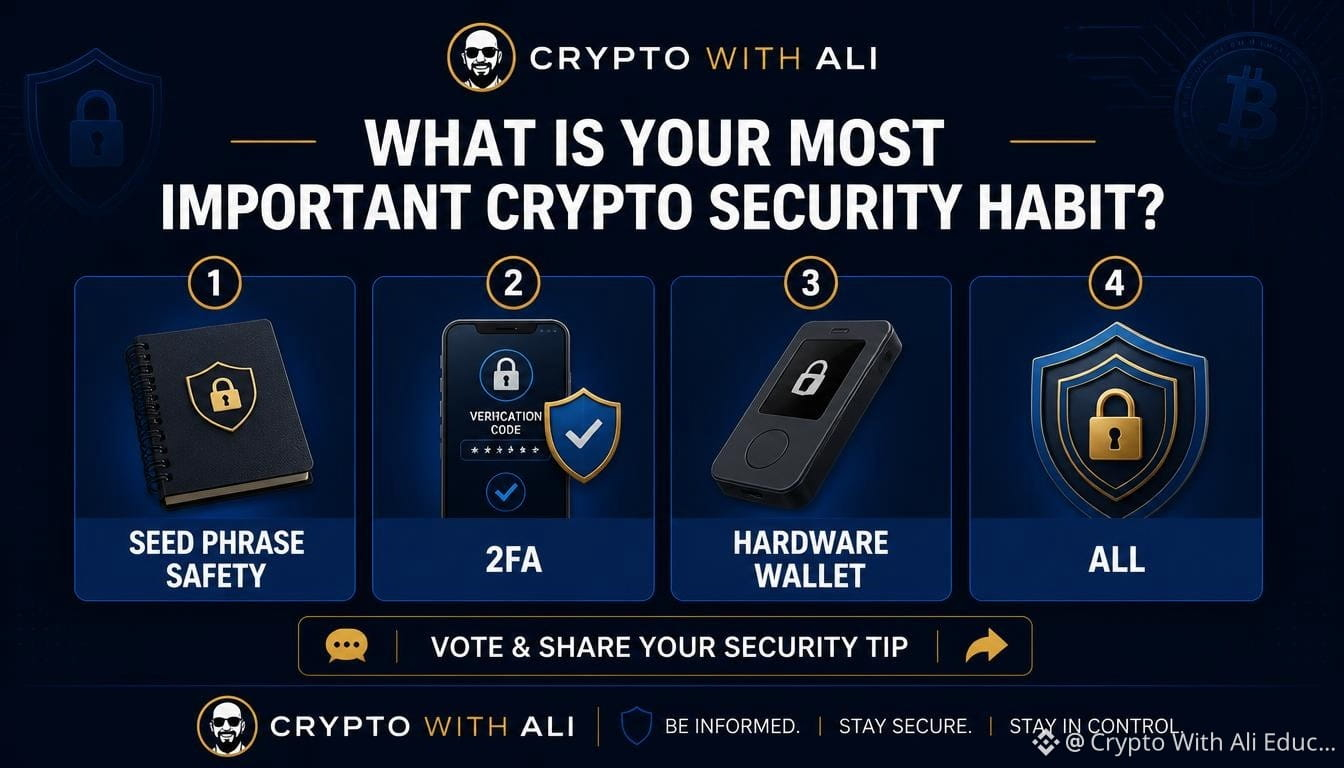
Most Important Crypto Security Habit: Which One Do You Choose?
Crypto security depends on more than one layer of protection. A strong routine can help reduce the risk of losing access to your assets.
📊 Vote for your top priority:
Seed Phrase Safety — keep recovery words private and offline
2FA — add another layer of account protection
Hardware Wallet — keep private keys offline when appropriately configured
All — combine multiple security practices
💬 Which habit would you recommend to a beginner, and why?
Remember: no single tool eliminates every risk. Protect your recovery phrase, verify addresses, and be cautious of unsolicited messages.
#CryptoSecurity #WalletSafety #cryptoeducation #Web3
Educational content only. Not financial advice.
Most Important Crypto Security Habit: Which One Do You Choose?
Crypto security depends on more than one layer of protection. A strong routine can help reduce the risk of losing access to your assets.
📊 Vote for your top priority:
Seed Phrase Safety — keep recovery words private and offline
2FA — add another layer of account protection
Hardware Wallet — keep private keys offline when appropriately configured
All — combine multiple security practices
💬 Which habit would you recommend to a beginner, and why?
Remember: no single tool eliminates every risk. Protect your recovery phrase, verify addresses, and be cautious of unsolicited messages.
#CryptoSecurity #WalletSafety #cryptoeducation #Web3
Educational content only. Not financial advice.
Crypto security depends on more than one layer of protection. A strong routine can help reduce the risk of losing access to your assets.
📊 Vote for your top priority:
Seed Phrase Safety — keep recovery words private and offline
2FA — add another layer of account protection
Hardware Wallet — keep private keys offline when appropriately configured
All — combine multiple security practices
💬 Which habit would you recommend to a beginner, and why?
Remember: no single tool eliminates every risk. Protect your recovery phrase, verify addresses, and be cautious of unsolicited messages.
#CryptoSecurity #WalletSafety #cryptoeducation #Web3
Educational content only. Not financial advice.
38

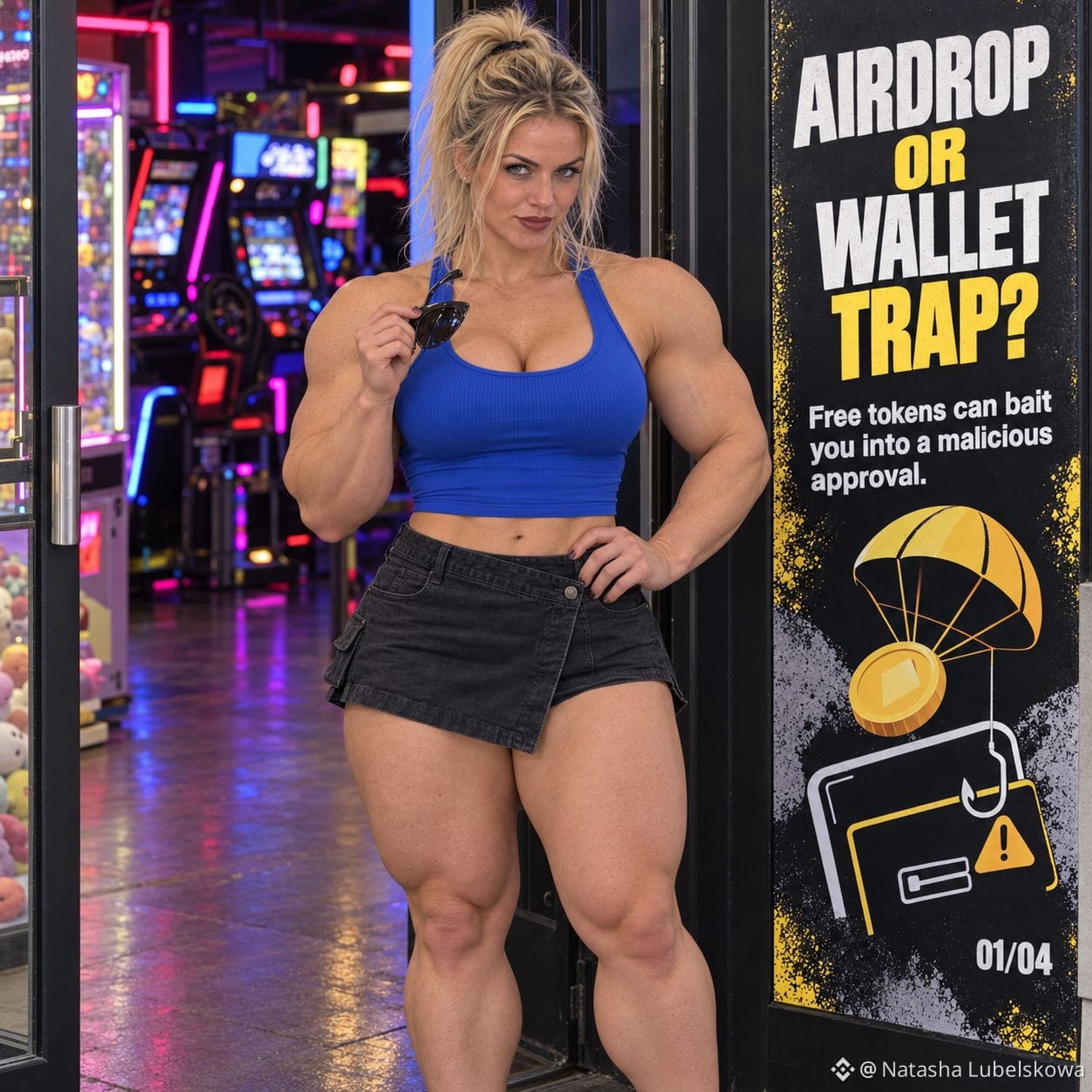
AIRDROP OR WALLET TRAP? 🪂
Free tokens can bait you into giving away wallet access. Swipe through four checks before your next claim.
1. Treat unexpected tokens as untrusted. A displayed price does not prove they are safe or sellable.
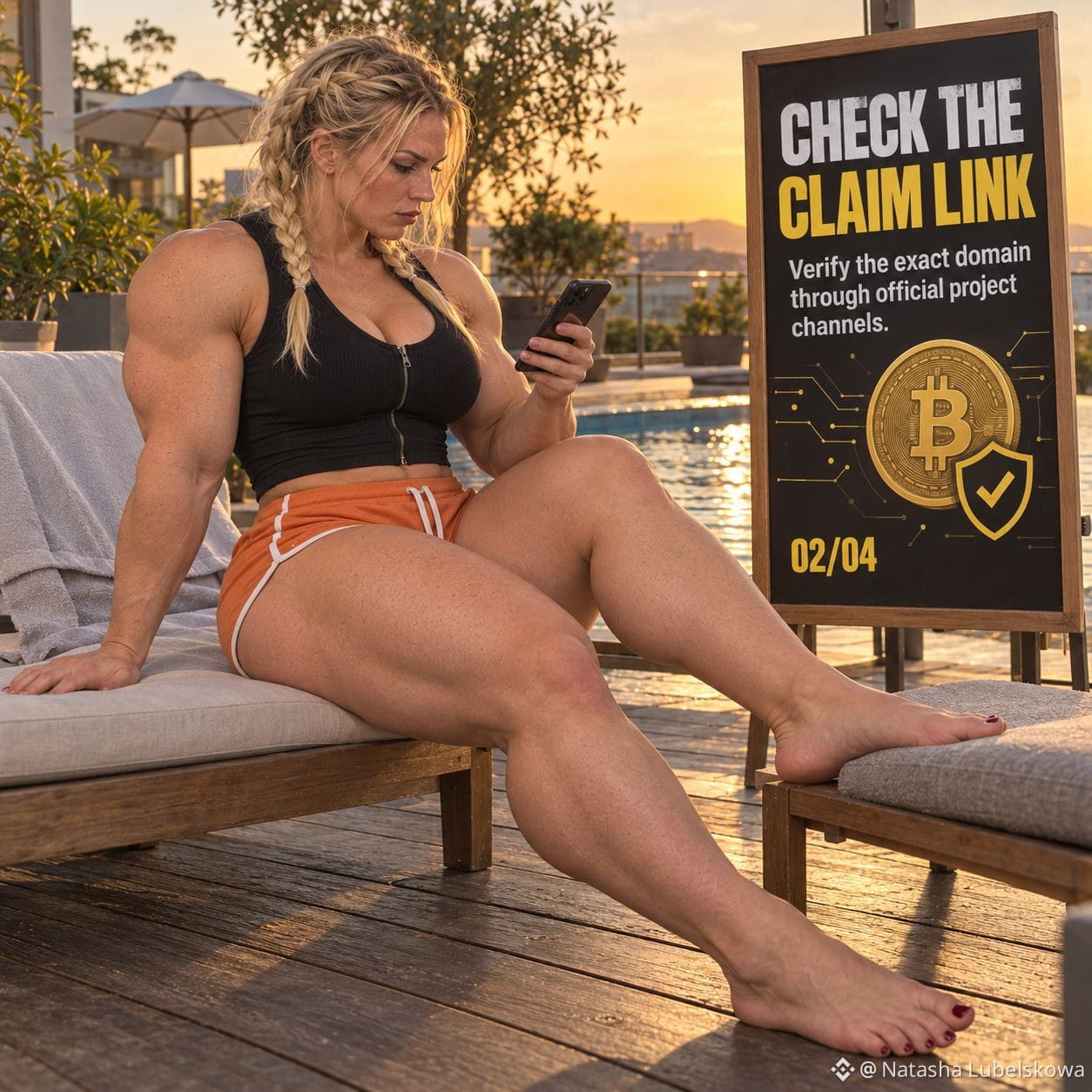
2. Verify the exact claim domain through official project channels. Avoid links from unsolicited messages.
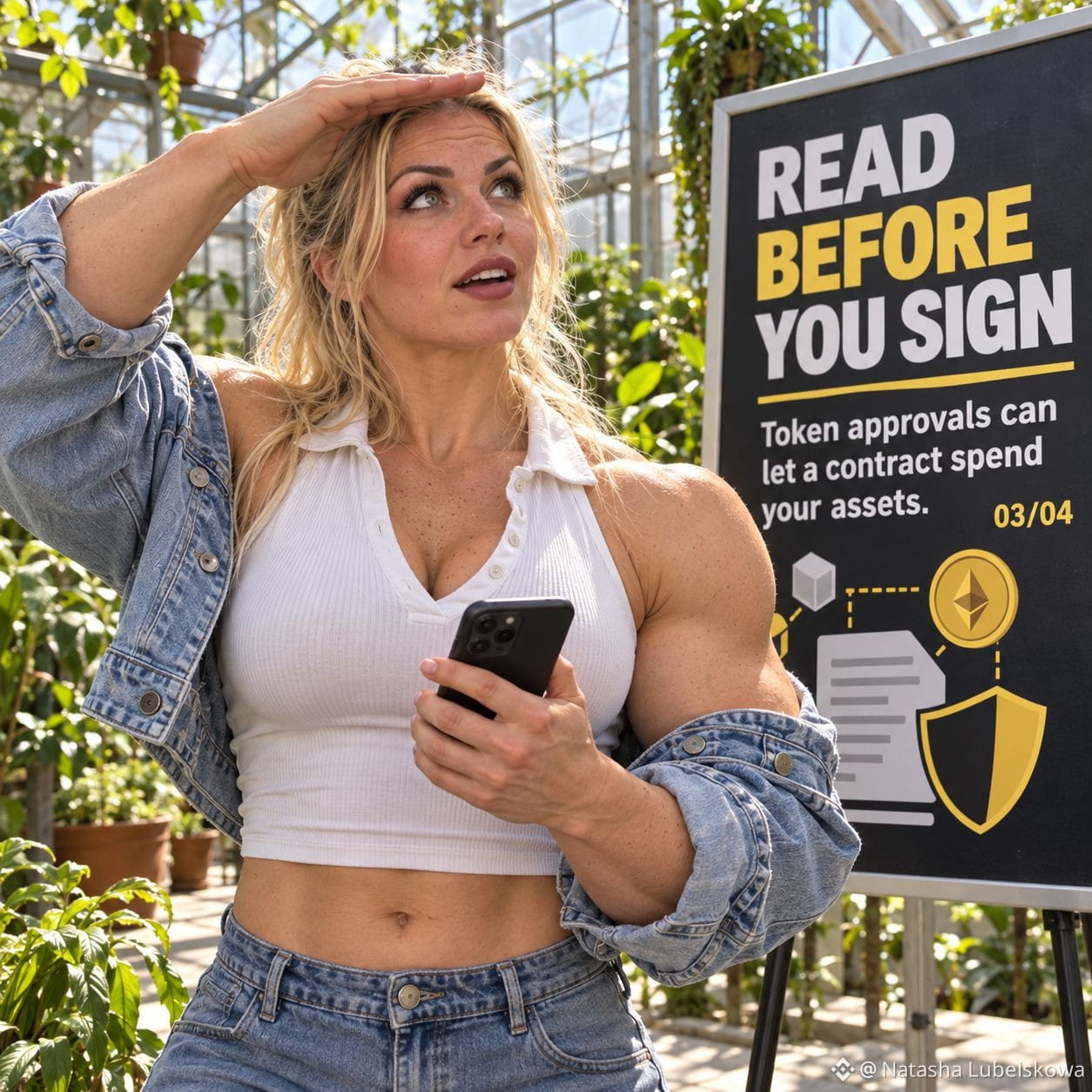
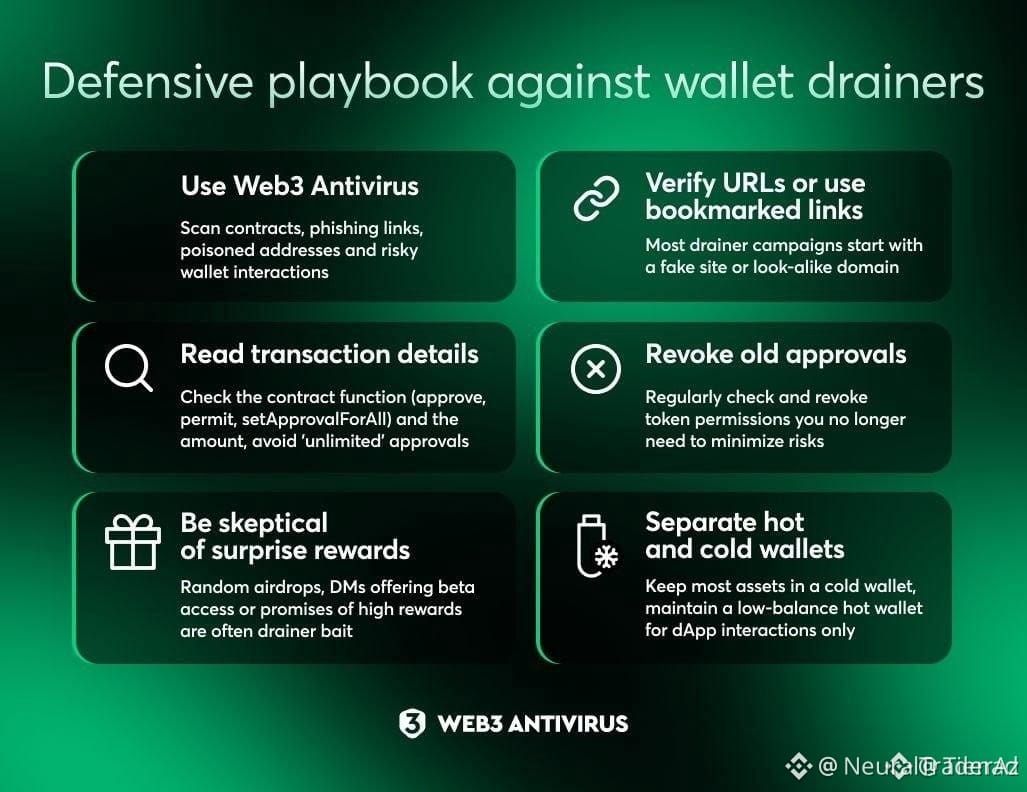
3. Read before signing. Check the network, contract, spending permission and amount. An approval can let a contract spend your tokens.
4. Keep your recovery phrase private. A legitimate airdrop never needs it or your private key.
Pressure to act fast is a reason to pause. If you do not understand a wallet request, do not sign it.
Which red flag have you seen most often?
#Airdrop #CryptoSecurity #Web3 #WalletSafety
AIRDROP OR WALLET TRAP? 🪂
Free tokens can bait you into giving away wallet access. Swipe through four checks before your next claim.
1. Treat unexpected tokens as untrusted. A displayed price does not prove they are safe or sellable.
2. Verify the exact claim domain through official project channels. Avoid links from unsolicited messages.
3. Read before signing. Check the network, contract, spending permission and amount. An approval can let a contract spend your tokens.
4. Keep your recovery phrase private. A legitimate airdrop never needs it or your private key.
Pressure to act fast is a reason to pause. If you do not understand a wallet request, do not sign it.
Which red flag have you seen most often?
#Airdrop #CryptoSecurity #Web3 #WalletSafety
Free tokens can bait you into giving away wallet access. Swipe through four checks before your next claim.
1. Treat unexpected tokens as untrusted. A displayed price does not prove they are safe or sellable.
2. Verify the exact claim domain through official project channels. Avoid links from unsolicited messages.
3. Read before signing. Check the network, contract, spending permission and amount. An approval can let a contract spend your tokens.
4. Keep your recovery phrase private. A legitimate airdrop never needs it or your private key.
Pressure to act fast is a reason to pause. If you do not understand a wallet request, do not sign it.
Which red flag have you seen most often?
#Airdrop #CryptoSecurity #Web3 #WalletSafety

76


·
--
🔐 Turn an Old iPhone Into a Crypto Cold Wallet
Most people think you need an expensive hardware wallet to secure your crypto.
You don’t necessarily need one. An unused iPhone can be turned into a highly isolated wallet if you set it up correctly.
🛡️ 10-Step Setup
1️⃣ Start fresh
Use a brand-new or factory-reset iPhone dedicated only to your crypto.
2️⃣ Create a separate Apple ID
Use a new email and a unique, strong password that you never reuse elsewhere.
3️⃣ Lock the device down
Disable Face ID and use a long alphanumeric passcode.
4️⃣ Enable Lockdown Mode
Add another layer of protection against sophisticated attacks.
5️⃣ Enable automatic data erase
Turn on “Erase Data After 10 Failed Passcode Attempts.”
6️⃣ Protect your backup
Disable iCloud Backup so sensitive wallet data isn't unnecessarily copied to the cloud.
7️⃣ Install the wallet carefully
Download the wallet only from its verified official source and double-check the developer/publisher.
8️⃣ Protect the recovery phrase
Generate a fresh wallet and write the seed phrase by hand on paper or, preferably, a durable metal backup.
🚫 Never screenshot it. Never store it in Notes, email, cloud storage, or messages.
9️⃣ Test before transferring big funds
Send a small transaction first. Verify the receiving address and the entire process before moving larger amounts.
🔟 Keep the device offline
For maximum isolation, remove the SIM, enable Airplane Mode, keep Wi-Fi/Bluetooth off, and store the phone securely. Keep the recovery backup somewhere separate.
⚠️ The Golden Rule
Your iPhone is replaceable. Your recovery phrase is not.
If someone gets your seed phrase, they can potentially control your funds—even if the phone itself is perfectly secure.
Cold storage isn't about having the fanciest device.
It's about eliminating unnecessary connections and protecting the one secret that matters most. 🔒
#Crypto #Bitcoin #CryptoSecurity #ColdWallet #Web3 #WalletSafety
🔐 Turn an Old iPhone Into a Crypto Cold Wallet
Most people think you need an expensive hardware wallet to secure your crypto.
You don’t necessarily need one. An unused iPhone can be turned into a highly isolated wallet if you set it up correctly.
🛡️ 10-Step Setup
1️⃣ Start fresh
Use a brand-new or factory-reset iPhone dedicated only to your crypto.
2️⃣ Create a separate Apple ID
Use a new email and a unique, strong password that you never reuse elsewhere.
3️⃣ Lock the device down
Disable Face ID and use a long alphanumeric passcode.
4️⃣ Enable Lockdown Mode
Add another layer of protection against sophisticated attacks.
5️⃣ Enable automatic data erase
Turn on “Erase Data After 10 Failed Passcode Attempts.”
6️⃣ Protect your backup
Disable iCloud Backup so sensitive wallet data isn't unnecessarily copied to the cloud.
7️⃣ Install the wallet carefully
Download the wallet only from its verified official source and double-check the developer/publisher.
8️⃣ Protect the recovery phrase
Generate a fresh wallet and write the seed phrase by hand on paper or, preferably, a durable metal backup.
🚫 Never screenshot it. Never store it in Notes, email, cloud storage, or messages.
9️⃣ Test before transferring big funds
Send a small transaction first. Verify the receiving address and the entire process before moving larger amounts.
🔟 Keep the device offline
For maximum isolation, remove the SIM, enable Airplane Mode, keep Wi-Fi/Bluetooth off, and store the phone securely. Keep the recovery backup somewhere separate.
⚠️ The Golden Rule
Your iPhone is replaceable. Your recovery phrase is not.
If someone gets your seed phrase, they can potentially control your funds—even if the phone itself is perfectly secure.
Cold storage isn't about having the fanciest device.
It's about eliminating unnecessary connections and protecting the one secret that matters most. 🔒
#Crypto #Bitcoin #CryptoSecurity #ColdWallet #Web3 #WalletSafety
Most people think you need an expensive hardware wallet to secure your crypto.
You don’t necessarily need one. An unused iPhone can be turned into a highly isolated wallet if you set it up correctly.
🛡️ 10-Step Setup
1️⃣ Start fresh
Use a brand-new or factory-reset iPhone dedicated only to your crypto.
2️⃣ Create a separate Apple ID
Use a new email and a unique, strong password that you never reuse elsewhere.
3️⃣ Lock the device down
Disable Face ID and use a long alphanumeric passcode.
4️⃣ Enable Lockdown Mode
Add another layer of protection against sophisticated attacks.
5️⃣ Enable automatic data erase
Turn on “Erase Data After 10 Failed Passcode Attempts.”
6️⃣ Protect your backup
Disable iCloud Backup so sensitive wallet data isn't unnecessarily copied to the cloud.
7️⃣ Install the wallet carefully
Download the wallet only from its verified official source and double-check the developer/publisher.
8️⃣ Protect the recovery phrase
Generate a fresh wallet and write the seed phrase by hand on paper or, preferably, a durable metal backup.
🚫 Never screenshot it. Never store it in Notes, email, cloud storage, or messages.
9️⃣ Test before transferring big funds
Send a small transaction first. Verify the receiving address and the entire process before moving larger amounts.
🔟 Keep the device offline
For maximum isolation, remove the SIM, enable Airplane Mode, keep Wi-Fi/Bluetooth off, and store the phone securely. Keep the recovery backup somewhere separate.
⚠️ The Golden Rule
Your iPhone is replaceable. Your recovery phrase is not.
If someone gets your seed phrase, they can potentially control your funds—even if the phone itself is perfectly secure.
Cold storage isn't about having the fanciest device.
It's about eliminating unnecessary connections and protecting the one secret that matters most. 🔒
#Crypto #Bitcoin #CryptoSecurity #ColdWallet #Web3 #WalletSafety
153

Update your iPhone immediately
Apple patched an iOS CoreGraphics flaw used to target sensitive crypto wallet data. SlowMist warns users to update their devices immediately to mitigate the risk of asset theft.
#iOSSecurity #WalletSafety
Update your iPhone immediately
Apple patched an iOS CoreGraphics flaw used to target sensitive crypto wallet data. SlowMist warns users to update their devices immediately to mitigate the risk of asset theft.
#iOSSecurity #WalletSafety
Apple patched an iOS CoreGraphics flaw used to target sensitive crypto wallet data. SlowMist warns users to update their devices immediately to mitigate the risk of asset theft.
#iOSSecurity #WalletSafety
17

·
--
Apple says it rejected over 371,000 malicious app submissions, and that’s exactly why “safe because it’s in the app store” is a dangerous assumption.
Crypto users get drained all the time by fake wallet apps, clone interfaces, and lookalike tools that feel legit until the seed phrase is gone. One bad download can cost more than a bad trade on $BTC or $ETH.
The key detail here: Apple didn’t give a direct comment, but pointed to its ecosystem stats and said no active Sparrow clones remain in the store. That sounds reassuring, but it also confirms the bigger issue , malicious apps do make it far enough to need rejection, removal, and constant policing.
For traders holding $SOL, $BTC, or any self-custody assets, the risk isn’t just market volatility. It’s operational security. Always verify the developer, app history, website source, reviews, and never type a seed phrase into anything you found through search alone.
What’s your process for checking whether a crypto app is actually legit?
#CryptoSecurity #WalletSafety #OnChainLessons
Apple says it rejected over 371,000 malicious app submissions, and that’s exactly why “safe because it’s in the app store” is a dangerous assumption.
Crypto users get drained all the time by fake wallet apps, clone interfaces, and lookalike tools that feel legit until the seed phrase is gone. One bad download can cost more than a bad trade on $BTC or $ETH .
The key detail here: Apple didn’t give a direct comment, but pointed to its ecosystem stats and said no active Sparrow clones remain in the store. That sounds reassuring, but it also confirms the bigger issue , malicious apps do make it far enough to need rejection, removal, and constant policing.
For traders holding $SOL , $BTC , or any self-custody assets, the risk isn’t just market volatility. It’s operational security. Always verify the developer, app history, website source, reviews, and never type a seed phrase into anything you found through search alone.
What’s your process for checking whether a crypto app is actually legit?
#CryptoSecurity #WalletSafety #OnChainLessons
Crypto users get drained all the time by fake wallet apps, clone interfaces, and lookalike tools that feel legit until the seed phrase is gone. One bad download can cost more than a bad trade on $BTC or $ETH .
The key detail here: Apple didn’t give a direct comment, but pointed to its ecosystem stats and said no active Sparrow clones remain in the store. That sounds reassuring, but it also confirms the bigger issue , malicious apps do make it far enough to need rejection, removal, and constant policing.
For traders holding $SOL , $BTC , or any self-custody assets, the risk isn’t just market volatility. It’s operational security. Always verify the developer, app history, website source, reviews, and never type a seed phrase into anything you found through search alone.
What’s your process for checking whether a crypto app is actually legit?
#CryptoSecurity #WalletSafety #OnChainLessons
65

·
--
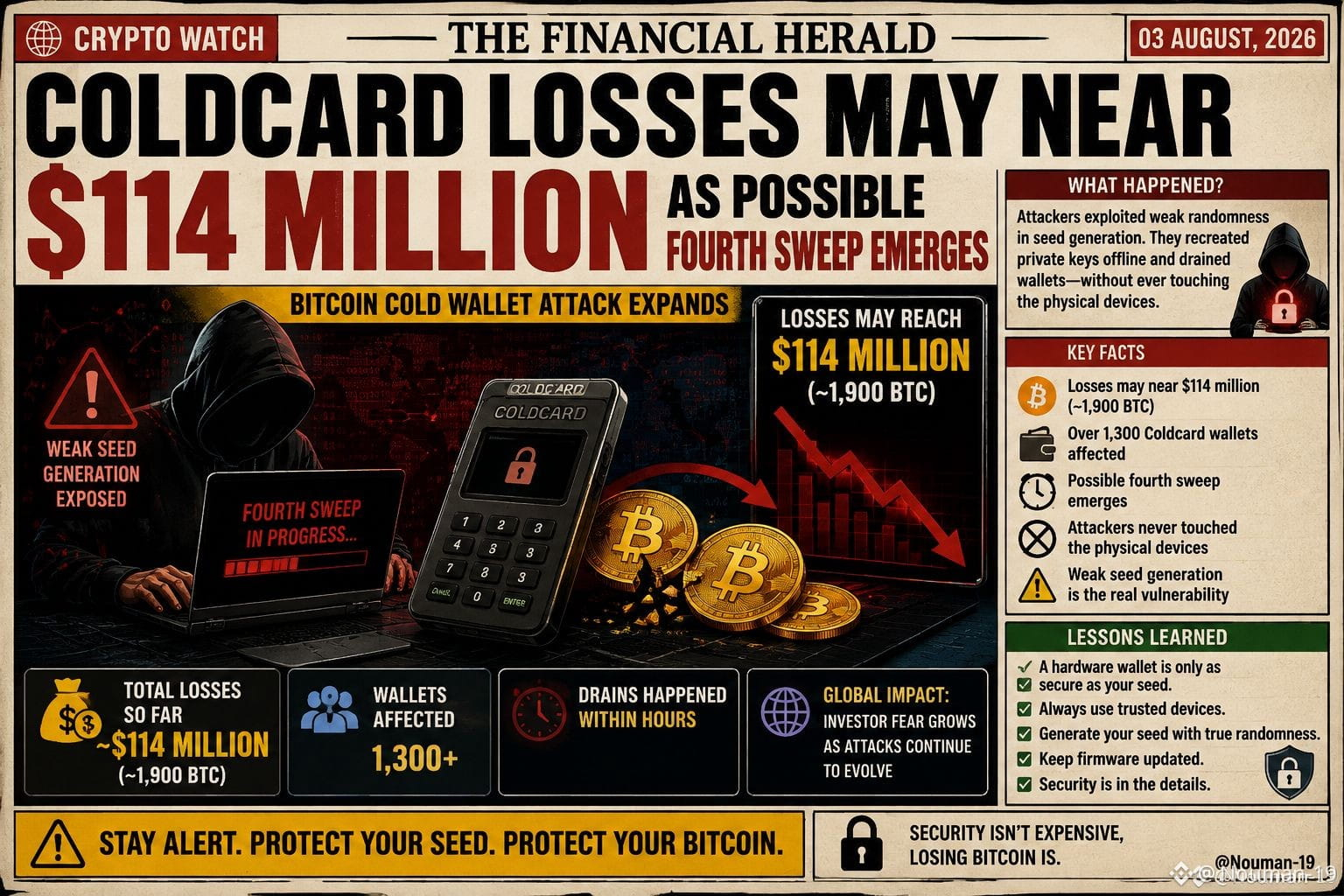
Coldcard Wallet Attack Update
A possible fourth sweep has been detected, pushing estimated losses from the Coldcard wallet-related attack to nearly $114 million.
🔍 Key Highlights: • Estimated losses may reach $114M • Investigators are tracking a possible fourth wallet sweep • The incident highlights that even cold storage requires careful operational security • Always verify wallet setup, firmware, and recovery procedures
🛡️ Security Reminder: Cold wallets are designed to keep private keys offline, but mistakes, compromised recovery phrases, or supply-chain risks can still lead to major losses.
Stay informed. Stay secure. 🔐
#Bitcoin #Crypto #ColdWallet #Coldcard #CryptoSecurity #Blockchain #BTC #CyberSecurity #CryptoNews🚀🔥V #WalletSafety #Web3 #CryptoUpdates
Coldcard Wallet Attack Update
A possible fourth sweep has been detected, pushing estimated losses from the Coldcard wallet-related attack to nearly $114 million.
🔍 Key Highlights: • Estimated losses may reach $114M • Investigators are tracking a possible fourth wallet sweep • The incident highlights that even cold storage requires careful operational security • Always verify wallet setup, firmware, and recovery procedures
🛡️ Security Reminder: Cold wallets are designed to keep private keys offline, but mistakes, compromised recovery phrases, or supply-chain risks can still lead to major losses.
Stay informed. Stay secure. 🔐
#Bitcoin #Crypto #ColdWallet #Coldcard #CryptoSecurity #Blockchain #BTC #CyberSecurity #CryptoNews🚀🔥V #WalletSafety #Web3 #CryptoUpdates
A possible fourth sweep has been detected, pushing estimated losses from the Coldcard wallet-related attack to nearly $114 million.
🔍 Key Highlights: • Estimated losses may reach $114M • Investigators are tracking a possible fourth wallet sweep • The incident highlights that even cold storage requires careful operational security • Always verify wallet setup, firmware, and recovery procedures
🛡️ Security Reminder: Cold wallets are designed to keep private keys offline, but mistakes, compromised recovery phrases, or supply-chain risks can still lead to major losses.
Stay informed. Stay secure. 🔐
#Bitcoin #Crypto #ColdWallet #Coldcard #CryptoSecurity #Blockchain #BTC #CyberSecurity #CryptoNews🚀🔥V #WalletSafety #Web3 #CryptoUpdates
1
83

$USDC wallet security is back in focus 🛡️
A 316K $USDC wallet drainer case just reminded the market that one careless signature can be enough to get completely rekt. That usually makes weak hands more cautious short term, but it also puts a spotlight on projects and tools built around on-chain security.
Alright everyone, this is one of those moments where smart money watches behavior, not noise. Whale games love distraction, and retail often learns the hard way. Keep wallet activity tight, avoid blind contract approvals, and stay sharp while the crowd is sleeping.
Not financial advice. Manage your risk.
#USDC #CryptoSecurity #WalletSafety #OnChain
🧠
$USDC wallet security is back in focus 🛡️
A 316K $USDC wallet drainer case just reminded the market that one careless signature can be enough to get completely rekt. That usually makes weak hands more cautious short term, but it also puts a spotlight on projects and tools built around on-chain security.
Alright everyone, this is one of those moments where smart money watches behavior, not noise. Whale games love distraction, and retail often learns the hard way. Keep wallet activity tight, avoid blind contract approvals, and stay sharp while the crowd is sleeping.
Not financial advice. Manage your risk.
#USDC #CryptoSecurity #WalletSafety #OnChain
🧠
A 316K $USDC wallet drainer case just reminded the market that one careless signature can be enough to get completely rekt. That usually makes weak hands more cautious short term, but it also puts a spotlight on projects and tools built around on-chain security.
Alright everyone, this is one of those moments where smart money watches behavior, not noise. Whale games love distraction, and retail often learns the hard way. Keep wallet activity tight, avoid blind contract approvals, and stay sharp while the crowd is sleeping.
Not financial advice. Manage your risk.
#USDC #CryptoSecurity #WalletSafety #OnChain
🧠
87

·
--
Thousands of crypto wallets might be at risk – here’s why. A new report from Coinspect reveals a vulnerability called 'Ill Bloom' affecting many crypto wallets. This problem stems from how some wallets generate their "recovery phrases" – those 12 or 24 words you use to restore your funds if you lose access. If these phrases aren't truly random, it makes it easier for attackers to guess them and steal your crypto. This matters because your recovery phrase is the master key to your digital assets. If it's weak or predictable, your funds aren't secure, no matter how strong your password is. It highlights the critical importance of using reputable wallets and strong security practices. This news reminds us that fundamental security is paramount in crypto. While we celebrate gains like $VANRY's +42.09% today, ensuring your holdings are safe from vulnerabilities like "Ill Bloom" is far more important. Always double-check your wallet’s security provenance. What are your thoughts on wallet security? #CryptoSecurity #WalletSafety #Blockchain 🔒 $BTC $ETH
Thousands of crypto wallets might be at risk – here’s why. A new report from Coinspect reveals a vulnerability called 'Ill Bloom' affecting many crypto wallets. This problem stems from how some wallets generate their "recovery phrases" – those 12 or 24 words you use to restore your funds if you lose access. If these phrases aren't truly random, it makes it easier for attackers to guess them and steal your crypto. This matters because your recovery phrase is the master key to your digital assets. If it's weak or predictable, your funds aren't secure, no matter how strong your password is. It highlights the critical importance of using reputable wallets and strong security practices. This news reminds us that fundamental security is paramount in crypto. While we celebrate gains like $VANRY's +42.09% today, ensuring your holdings are safe from vulnerabilities like "Ill Bloom" is far more important. Always double-check your wallet’s security provenance. What are your thoughts on wallet security? #CryptoSecurity #WalletSafety #Blockchain 🔒 $BTC $ETH
197

⚖️ Security Alert for Crypto Holders: Growing malware threats demand increased vigilance from investors
On July 19, 2026, The Kaspersky malware framework report, combined with the Consensys North Korean developer infiltration, paints a concerning picture for crypto security. As the ecosystem grows to $2.30T in total value, malicious actors are investing more resources in targeted attacks.
Best practices include: using hardware wallets for long-term storage of Bitcoin $BTC and Ethereum $ETH, never sharing seed phrases, verifying software downloads via checksums, and using unique strong passwords for exchange accounts.
📌 Key Takeaway:
Crypto security is a shared responsibility. As the industry matures, security infrastructure must mature too — both at the company level and the individual investor level.
#CryptoSecurity #BestPractices #WalletSafety
#BinanceAlphaAlert
⚖️ Security Alert for Crypto Holders: Growing malware threats demand increased vigilance from investors
On July 19, 2026, The Kaspersky malware framework report, combined with the Consensys North Korean developer infiltration, paints a concerning picture for crypto security. As the ecosystem grows to $2.30T in total value, malicious actors are investing more resources in targeted attacks.
Best practices include: using hardware wallets for long-term storage of Bitcoin $BTC and Ethereum $ETH , never sharing seed phrases, verifying software downloads via checksums, and using unique strong passwords for exchange accounts.
📌 Key Takeaway:
Crypto security is a shared responsibility. As the industry matures, security infrastructure must mature too — both at the company level and the individual investor level.
#CryptoSecurity #BestPractices #WalletSafety
#BinanceAlphaAlert
On July 19, 2026, The Kaspersky malware framework report, combined with the Consensys North Korean developer infiltration, paints a concerning picture for crypto security. As the ecosystem grows to $2.30T in total value, malicious actors are investing more resources in targeted attacks.
Best practices include: using hardware wallets for long-term storage of Bitcoin $BTC and Ethereum $ETH , never sharing seed phrases, verifying software downloads via checksums, and using unique strong passwords for exchange accounts.
📌 Key Takeaway:
Crypto security is a shared responsibility. As the industry matures, security infrastructure must mature too — both at the company level and the individual investor level.
#CryptoSecurity #BestPractices #WalletSafety
#BinanceAlphaAlert
33

·
--
**Your Crypto Wallet Security Just Got a Wake-Up Call**
Imagine someone had been quietly siphoning money from your account for over a year without you even realizing it – that's the shocking truth about OkoBot, a malware operation that has stolen crypto wallet recovery phrases using 20 sneaky modules and affected users across at least five countries.
**What is a crypto wallet recovery phrase?**
#Cryptosecurity #Walletsafety
It's the crucial list of words that allows you to recover your wallet if you lose access to it, think of it as a digital key to your treasure chest. OkoBot's sophisticated malware is specifically designed to snatch this information, leaving victims helpless and their funds at risk.
**Real-world example:**
Kaspersky researchers have been monitoring OkoBot's activities and have successfully blocked the malware's attempts to steal user data, highlighting the importance of staying vigilant and taking proactive measures to secure your wallet.
**Takeaway:**
Secure your wallet recovery phrase by storing it off-chain, like in a physical notebook, and enable two-factor authentication to add an extra layer of protection #Walletsecurity
**What do you do to keep your crypto wallet safe? Share your expert tips in the comments below!
**Your Crypto Wallet Security Just Got a Wake-Up Call**
Imagine someone had been quietly siphoning money from your account for over a year without you even realizing it – that's the shocking truth about OkoBot, a malware operation that has stolen crypto wallet recovery phrases using 20 sneaky modules and affected users across at least five countries.
**What is a crypto wallet recovery phrase?**
#Cryptosecurity #Walletsafety
It's the crucial list of words that allows you to recover your wallet if you lose access to it, think of it as a digital key to your treasure chest. OkoBot's sophisticated malware is specifically designed to snatch this information, leaving victims helpless and their funds at risk.
**Real-world example:**
Kaspersky researchers have been monitoring OkoBot's activities and have successfully blocked the malware's attempts to steal user data, highlighting the importance of staying vigilant and taking proactive measures to secure your wallet.
**Takeaway:**
Secure your wallet recovery phrase by storing it off-chain, like in a physical notebook, and enable two-factor authentication to add an extra layer of protection #Walletsecurity
**What do you do to keep your crypto wallet safe? Share your expert tips in the comments below!
Imagine someone had been quietly siphoning money from your account for over a year without you even realizing it – that's the shocking truth about OkoBot, a malware operation that has stolen crypto wallet recovery phrases using 20 sneaky modules and affected users across at least five countries.
**What is a crypto wallet recovery phrase?**
#Cryptosecurity #Walletsafety
It's the crucial list of words that allows you to recover your wallet if you lose access to it, think of it as a digital key to your treasure chest. OkoBot's sophisticated malware is specifically designed to snatch this information, leaving victims helpless and their funds at risk.
**Real-world example:**
Kaspersky researchers have been monitoring OkoBot's activities and have successfully blocked the malware's attempts to steal user data, highlighting the importance of staying vigilant and taking proactive measures to secure your wallet.
**Takeaway:**
Secure your wallet recovery phrase by storing it off-chain, like in a physical notebook, and enable two-factor authentication to add an extra layer of protection #Walletsecurity
**What do you do to keep your crypto wallet safe? Share your expert tips in the comments below!
18

·
--
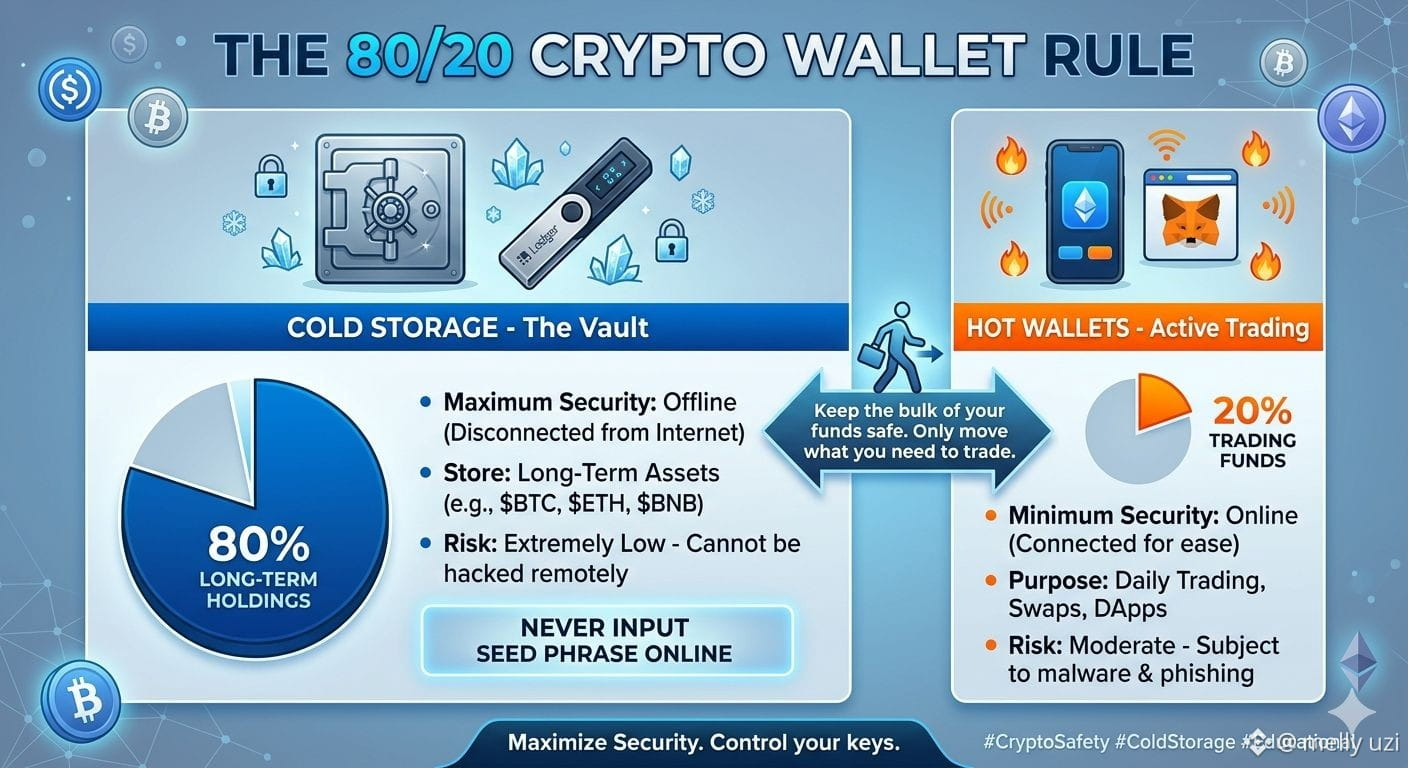
🚨 THE 80/20 CRYPTO RULE: Save Your Portfolio in 30 Seconds! 🚨
Most retail investors don't lose their crypto to market crashes—they lose it to hackers and wallet exploits. If all your funds are on a phone app or browser extension, you are at risk.
Here is the simple rule to keep your funds safe:
🔥 Hot Wallets (Keep 20% Max)
•What they are: Online apps or browser extensions.
•Purpose: Daily trading, quick swaps, and active spending.
•Risk: Connected to the internet, making them vulnerable to malware.
❄️ Cold Wallets (Keep 80% Min)
•What they are: Offline physical hardware devices.
•Purpose: Storing long-term assets like $BTC , $ETH , or $BNB .
•Risk: Extremely safe because hackers cannot touch what is disconnected from the internet.
🚫 The Ultimate Safety Rule
Never type your seed phrase online.
No real project, exchange, or support team will ever ask for it.
👇 COMMUNITY POLL: 👇
What wallet setup are you using right now? Drop your tips below to help out new traders!
#CryptoSecurity #WalletSafety #EducationalContent #defi
🚨 THE 80/20 CRYPTO RULE: Save Your Portfolio in 30 Seconds! 🚨
Most retail investors don't lose their crypto to market crashes—they lose it to hackers and wallet exploits. If all your funds are on a phone app or browser extension, you are at risk.
Here is the simple rule to keep your funds safe:
🔥 Hot Wallets (Keep 20% Max)
•What they are: Online apps or browser extensions.
•Purpose: Daily trading, quick swaps, and active spending.
•Risk: Connected to the internet, making them vulnerable to malware.
❄️ Cold Wallets (Keep 80% Min)
•What they are: Offline physical hardware devices.
•Purpose: Storing long-term assets like $BTC , $ETH , or $BNB .
•Risk: Extremely safe because hackers cannot touch what is disconnected from the internet.
🚫 The Ultimate Safety Rule
Never type your seed phrase online.
No real project, exchange, or support team will ever ask for it.
👇 COMMUNITY POLL: 👇
What wallet setup are you using right now? Drop your tips below to help out new traders!
#CryptoSecurity #WalletSafety #EducationalContent #defi
Most retail investors don't lose their crypto to market crashes—they lose it to hackers and wallet exploits. If all your funds are on a phone app or browser extension, you are at risk.
Here is the simple rule to keep your funds safe:
🔥 Hot Wallets (Keep 20% Max)
•What they are: Online apps or browser extensions.
•Purpose: Daily trading, quick swaps, and active spending.
•Risk: Connected to the internet, making them vulnerable to malware.
❄️ Cold Wallets (Keep 80% Min)
•What they are: Offline physical hardware devices.
•Purpose: Storing long-term assets like $BTC , $ETH , or $BNB .
•Risk: Extremely safe because hackers cannot touch what is disconnected from the internet.
🚫 The Ultimate Safety Rule
Never type your seed phrase online.
No real project, exchange, or support team will ever ask for it.
👇 COMMUNITY POLL: 👇
What wallet setup are you using right now? Drop your tips below to help out new traders!
#CryptoSecurity #WalletSafety #EducationalContent #defi
100

·
--
ສັນຍານກະທິງ
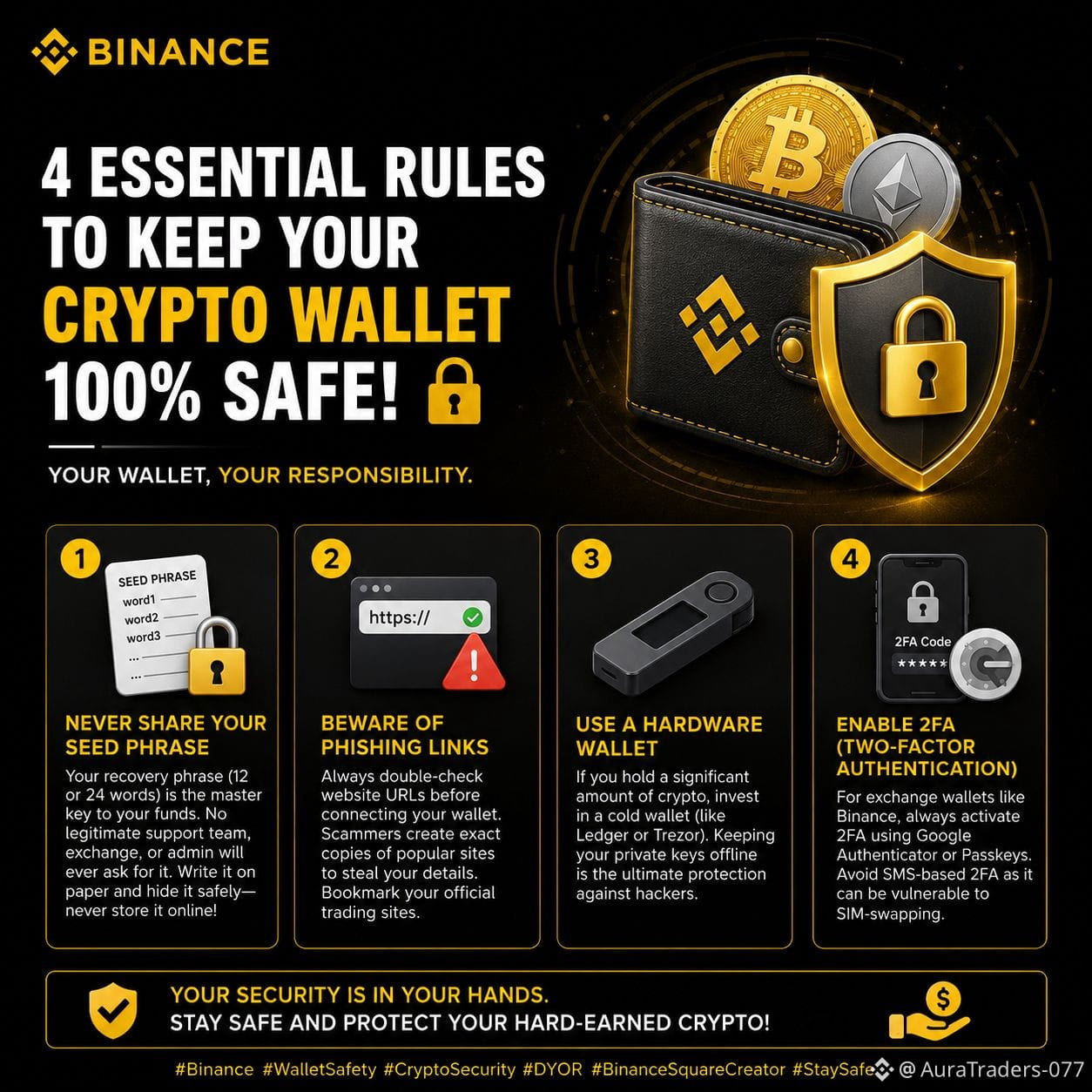
🛡️ How to Keep Your Crypto Wallet 100% Safe:
4 Essential Security Rules!
Hey Binance Square Fam! 👋
In the crypto world, you are your own bank. While having total control over your funds is amazing, it also means you are responsible for your own security. Scammers are getting smarter every day, but you can protect your assets by following these 4 golden safety rules:
1️⃣ Never Share Your Seed Phrase: Your recovery phrase (12 or 24 words) is the master key to your funds. No legitimate support team, exchange, or admin will ever ask for it. Write it on paper and hide it safely—never store it online!
2️⃣ Beware of Phishing Links: Always double-check website URLs before connecting your wallet. Scammers create exact copies of popular sites to steal your details. Bookmark your official trading sites.
3️⃣ Use a Hardware Wallet for Long-Term Storage: If you hold a significant amount of crypto, invest in a cold wallet (like Ledger or Trezor). Keeping your private keys offline is the ultimate protection against hackers.
4️⃣ Enable 2FA (Two-Factor Authentication): For exchange wallets like Binance, always activate 2FA using Google Authenticator or Passkeys. Avoid SMS-based 2FA as it can be vulnerable to SIM-swapping.Your security is in your hands. Stay safe and protect your hard-earned crypto! 💸What is your number one rule for wallet safety?
Let's discuss in the comments! 👇
#Binance #WalletSafety #CryptoSecurity #DYOR #BinanceSquareCreator #StaySafe
$BTC
🛡️ How to Keep Your Crypto Wallet 100% Safe:
4 Essential Security Rules!
Hey Binance Square Fam! 👋
In the crypto world, you are your own bank. While having total control over your funds is amazing, it also means you are responsible for your own security. Scammers are getting smarter every day, but you can protect your assets by following these 4 golden safety rules:
1️⃣ Never Share Your Seed Phrase: Your recovery phrase (12 or 24 words) is the master key to your funds. No legitimate support team, exchange, or admin will ever ask for it. Write it on paper and hide it safely—never store it online!
2️⃣ Beware of Phishing Links: Always double-check website URLs before connecting your wallet. Scammers create exact copies of popular sites to steal your details. Bookmark your official trading sites.
3️⃣ Use a Hardware Wallet for Long-Term Storage: If you hold a significant amount of crypto, invest in a cold wallet (like Ledger or Trezor). Keeping your private keys offline is the ultimate protection against hackers.
4️⃣ Enable 2FA (Two-Factor Authentication): For exchange wallets like Binance, always activate 2FA using Google Authenticator or Passkeys. Avoid SMS-based 2FA as it can be vulnerable to SIM-swapping.Your security is in your hands. Stay safe and protect your hard-earned crypto! 💸What is your number one rule for wallet safety?
Let's discuss in the comments! 👇
#Binance #WalletSafety #CryptoSecurity #DYOR #BinanceSquareCreator #StaySafe
$BTC
4 Essential Security Rules!
Hey Binance Square Fam! 👋
In the crypto world, you are your own bank. While having total control over your funds is amazing, it also means you are responsible for your own security. Scammers are getting smarter every day, but you can protect your assets by following these 4 golden safety rules:
1️⃣ Never Share Your Seed Phrase: Your recovery phrase (12 or 24 words) is the master key to your funds. No legitimate support team, exchange, or admin will ever ask for it. Write it on paper and hide it safely—never store it online!
2️⃣ Beware of Phishing Links: Always double-check website URLs before connecting your wallet. Scammers create exact copies of popular sites to steal your details. Bookmark your official trading sites.
3️⃣ Use a Hardware Wallet for Long-Term Storage: If you hold a significant amount of crypto, invest in a cold wallet (like Ledger or Trezor). Keeping your private keys offline is the ultimate protection against hackers.
4️⃣ Enable 2FA (Two-Factor Authentication): For exchange wallets like Binance, always activate 2FA using Google Authenticator or Passkeys. Avoid SMS-based 2FA as it can be vulnerable to SIM-swapping.Your security is in your hands. Stay safe and protect your hard-earned crypto! 💸What is your number one rule for wallet safety?
Let's discuss in the comments! 👇
#Binance #WalletSafety #CryptoSecurity #DYOR #BinanceSquareCreator #StaySafe
$BTC
1
78
⚖️ Security Best Practices: Protecting Your Crypto Assets
On July 21, 2026, securing digital assets is more important than ever with over $72.00B in daily trading volume. Following security best practices can prevent loss from hacks, scams, and human error.
Key practices include using hardware wallets for long-term storage, enabling two-factor authentication, never sharing private keys, and verifying all transaction details before signing.
A cold wallet approach — keeping most funds offline — remains the gold standard for crypto security.
📌 Key Takeaway:
Self-custody and security best practices are essential for protecting crypto assets from theft and loss.
#CryptoSecurity #WalletSafety #Educational
#BinanceAlphaAlert
⚖️ Security Best Practices: Protecting Your Crypto Assets
On July 21, 2026, securing digital assets is more important than ever with over $72.00B in daily trading volume. Following security best practices can prevent loss from hacks, scams, and human error.
Key practices include using hardware wallets for long-term storage, enabling two-factor authentication, never sharing private keys, and verifying all transaction details before signing.
A cold wallet approach — keeping most funds offline — remains the gold standard for crypto security.
📌 Key Takeaway:
Self-custody and security best practices are essential for protecting crypto assets from theft and loss.
#CryptoSecurity #WalletSafety #Educational
#BinanceAlphaAlert
On July 21, 2026, securing digital assets is more important than ever with over $72.00B in daily trading volume. Following security best practices can prevent loss from hacks, scams, and human error.
Key practices include using hardware wallets for long-term storage, enabling two-factor authentication, never sharing private keys, and verifying all transaction details before signing.
A cold wallet approach — keeping most funds offline — remains the gold standard for crypto security.
📌 Key Takeaway:
Self-custody and security best practices are essential for protecting crypto assets from theft and loss.
#CryptoSecurity #WalletSafety #Educational
#BinanceAlphaAlert
18
🔐 SecondFi Cardano Exploit: Recovery Plan and Security Lessons
On June 28, 2026, SecondFi announced a two-week recovery plan after a wallet exploit on the Cardano network. The incident reminds us that security vulnerabilities remain a challenge in DeFi.
Key lessons: use hardware wallets, avoid excessive approvals, and monitor for suspicious contract interactions. Each exploit makes the ecosystem more resilient.
📌 Key Takeaway:
Security exploits are learning moments — each incident strengthens the overall security posture of DeFi.
#Cardano #DeFiSecurity #WalletSafety
#BinanceAlphaAlert
🔐 SecondFi Cardano Exploit: Recovery Plan and Security Lessons
On June 28, 2026, SecondFi announced a two-week recovery plan after a wallet exploit on the Cardano network. The incident reminds us that security vulnerabilities remain a challenge in DeFi.
Key lessons: use hardware wallets, avoid excessive approvals, and monitor for suspicious contract interactions. Each exploit makes the ecosystem more resilient.
📌 Key Takeaway:
Security exploits are learning moments — each incident strengthens the overall security posture of DeFi.
#Cardano #DeFiSecurity #WalletSafety
#BinanceAlphaAlert
On June 28, 2026, SecondFi announced a two-week recovery plan after a wallet exploit on the Cardano network. The incident reminds us that security vulnerabilities remain a challenge in DeFi.
Key lessons: use hardware wallets, avoid excessive approvals, and monitor for suspicious contract interactions. Each exploit makes the ecosystem more resilient.
📌 Key Takeaway:
Security exploits are learning moments — each incident strengthens the overall security posture of DeFi.
#Cardano #DeFiSecurity #WalletSafety
#BinanceAlphaAlert
13

تنبيه أمني حاسم $ADA WALLET: احتيال يستهدف عمليات ترحيل SECOND-FI! 🛡️
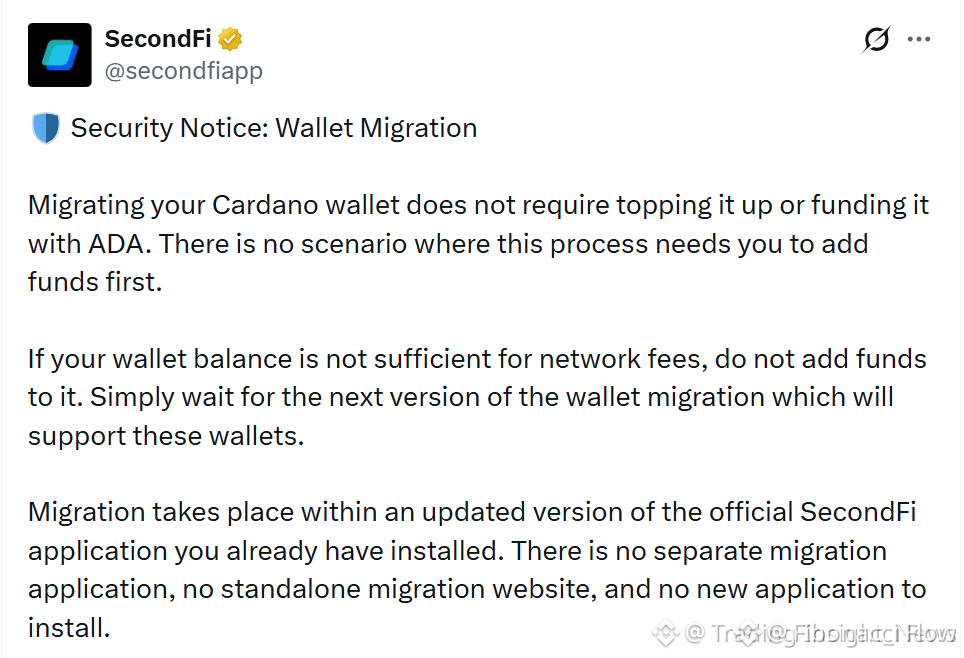
يحاول المحتالون استغلال أحدث ترقية SecondFi الخاصة بـ $ADA holders، لكن حماية رأس مالك تبدأ بالقدرة على التعرف على الفخاخ. 🔍 إذا طلب أي شخص أموالًا إضافية أو إيداعات مقدّمة أو تحميل تطبيقات خارج الواجهة الرسمية، فهذا احتيال صريح.
يتم إجراء الترحيل الحقيقي حصريًا داخل التطبيق الرسمي دون ملامسة مواقع خارجية أو طلب معاملات شحن إضافي. 🛡️ إذا كان رصيدك الحالي لا يغطي غازًا أساسيًا، فما عليك سوى الانتظار حتى يتم إصدار الدعم في النسخة التالية.
حماية رأس المال هي القاعدة الأولى للبقاء في هذا السوق، لذا لا تقع أبدًا في فخ رسائل الدعم الوهمية التي تعرض المساعدة. 💡 هل سبق أن حاول الاحتيال استهداف محفظتك عبر رسالة ترحيل مزيفة؟ 👇
⚠️ ليس نصيحة مالية. أدِر مخاطرَك دائمًا. 🛡️
🏷️ #ADA #Cardano #SecurityAlert #Crypto #WalletSafety
تنبيه أمني حاسم $ADA WALLET: احتيال يستهدف عمليات ترحيل SECOND-FI! 🛡️
يحاول المحتالون استغلال أحدث ترقية SecondFi الخاصة بـ $ADA holders، لكن حماية رأس مالك تبدأ بالقدرة على التعرف على الفخاخ. 🔍 إذا طلب أي شخص أموالًا إضافية أو إيداعات مقدّمة أو تحميل تطبيقات خارج الواجهة الرسمية، فهذا احتيال صريح.
يتم إجراء الترحيل الحقيقي حصريًا داخل التطبيق الرسمي دون ملامسة مواقع خارجية أو طلب معاملات شحن إضافي. 🛡️ إذا كان رصيدك الحالي لا يغطي غازًا أساسيًا، فما عليك سوى الانتظار حتى يتم إصدار الدعم في النسخة التالية.
حماية رأس المال هي القاعدة الأولى للبقاء في هذا السوق، لذا لا تقع أبدًا في فخ رسائل الدعم الوهمية التي تعرض المساعدة. 💡 هل سبق أن حاول الاحتيال استهداف محفظتك عبر رسالة ترحيل مزيفة؟ 👇
⚠️ ليس نصيحة مالية. أدِر مخاطرَك دائمًا. 🛡️
🏷️ #ADA #Cardano #SecurityAlert #Crypto #WalletSafety
يحاول المحتالون استغلال أحدث ترقية SecondFi الخاصة بـ $ADA holders، لكن حماية رأس مالك تبدأ بالقدرة على التعرف على الفخاخ. 🔍 إذا طلب أي شخص أموالًا إضافية أو إيداعات مقدّمة أو تحميل تطبيقات خارج الواجهة الرسمية، فهذا احتيال صريح.
يتم إجراء الترحيل الحقيقي حصريًا داخل التطبيق الرسمي دون ملامسة مواقع خارجية أو طلب معاملات شحن إضافي. 🛡️ إذا كان رصيدك الحالي لا يغطي غازًا أساسيًا، فما عليك سوى الانتظار حتى يتم إصدار الدعم في النسخة التالية.
حماية رأس المال هي القاعدة الأولى للبقاء في هذا السوق، لذا لا تقع أبدًا في فخ رسائل الدعم الوهمية التي تعرض المساعدة. 💡 هل سبق أن حاول الاحتيال استهداف محفظتك عبر رسالة ترحيل مزيفة؟ 👇
⚠️ ليس نصيحة مالية. أدِر مخاطرَك دائمًا. 🛡️
🏷️ #ADA #Cardano #SecurityAlert #Crypto #WalletSafety
165
·
--
Here’s what happened when a trader used a custom address flow to move funds without connecting the receiving wallet.
The convenience looked harmless: connect only the wallet holding the asset, paste the destination address, send. But that’s exactly where people lose money in crypto, especially when moving $USDT, $ETH, or $BTC across wallets under pressure.
In this setup, the sending side is verified because you connect the wallet that holds the asset. The receiving side is not connected at all. You simply type or paste 1 destination address, which means the whole transfer depends on that address being correct, on the right network, and not altered by clipboard malware.
The risk most people miss is psychological. Because the flow feels simpler, traders may skip the slow checks: matching chain, checking the first and last characters, sending a small test transaction, or confirming they control the destination wallet. One wrong character or wrong network can turn a routine transfer into a permanent loss.
Custom address features are useful, but they shift more responsibility onto the sender. Convenience removes friction, and in crypto, friction is sometimes the safety layer. What checks do you always make before sending to a custom address?
#CryptoSecurity #WalletSafety #BinanceSquare
Here’s what happened when a trader used a custom address flow to move funds without connecting the receiving wallet.
The convenience looked harmless: connect only the wallet holding the asset, paste the destination address, send. But that’s exactly where people lose money in crypto, especially when moving $USDT, $ETH , or $BTC across wallets under pressure.
In this setup, the sending side is verified because you connect the wallet that holds the asset. The receiving side is not connected at all. You simply type or paste 1 destination address, which means the whole transfer depends on that address being correct, on the right network, and not altered by clipboard malware.
The risk most people miss is psychological. Because the flow feels simpler, traders may skip the slow checks: matching chain, checking the first and last characters, sending a small test transaction, or confirming they control the destination wallet. One wrong character or wrong network can turn a routine transfer into a permanent loss.
Custom address features are useful, but they shift more responsibility onto the sender. Convenience removes friction, and in crypto, friction is sometimes the safety layer. What checks do you always make before sending to a custom address?
#CryptoSecurity #WalletSafety #BinanceSquare
The convenience looked harmless: connect only the wallet holding the asset, paste the destination address, send. But that’s exactly where people lose money in crypto, especially when moving $USDT, $ETH , or $BTC across wallets under pressure.
In this setup, the sending side is verified because you connect the wallet that holds the asset. The receiving side is not connected at all. You simply type or paste 1 destination address, which means the whole transfer depends on that address being correct, on the right network, and not altered by clipboard malware.
The risk most people miss is psychological. Because the flow feels simpler, traders may skip the slow checks: matching chain, checking the first and last characters, sending a small test transaction, or confirming they control the destination wallet. One wrong character or wrong network can turn a routine transfer into a permanent loss.
Custom address features are useful, but they shift more responsibility onto the sender. Convenience removes friction, and in crypto, friction is sometimes the safety layer. What checks do you always make before sending to a custom address?
#CryptoSecurity #WalletSafety #BinanceSquare
36
·
--
Everyone thinks their crypto is locked down tight once it hits a wallet, but actually one address just stacked $235,747 in stolen funds in about 48 hours.
Crypto traders know that sick feeling when a phishing link or a reused password wipes out months of gains overnight. Unlike a bad trade, this money almost never comes back.
A single wallet pulled in that much stolen $BTC, $ETH and $USDT over two days. These operators move fast and they only need you to slip up once. It is like leaving your front door wide open with a sign that says valuables inside.
Basic habits still stop most of it. Unique passwords and never sharing a seed phrase keep the majority of these thieves out.
Where do you think this goes from here as more people pile in?
#CryptoSecurity #WalletSafety #StolenCrypto
Everyone thinks their crypto is locked down tight once it hits a wallet, but actually one address just stacked $235,747 in stolen funds in about 48 hours.
Crypto traders know that sick feeling when a phishing link or a reused password wipes out months of gains overnight. Unlike a bad trade, this money almost never comes back.
A single wallet pulled in that much stolen $BTC , $ETH and $USDT over two days. These operators move fast and they only need you to slip up once. It is like leaving your front door wide open with a sign that says valuables inside.
Basic habits still stop most of it. Unique passwords and never sharing a seed phrase keep the majority of these thieves out.
Where do you think this goes from here as more people pile in?
#CryptoSecurity #WalletSafety #StolenCrypto
Crypto traders know that sick feeling when a phishing link or a reused password wipes out months of gains overnight. Unlike a bad trade, this money almost never comes back.
A single wallet pulled in that much stolen $BTC , $ETH and $USDT over two days. These operators move fast and they only need you to slip up once. It is like leaving your front door wide open with a sign that says valuables inside.
Basic habits still stop most of it. Unique passwords and never sharing a seed phrase keep the majority of these thieves out.
Where do you think this goes from here as more people pile in?
#CryptoSecurity #WalletSafety #StolenCrypto
1
1.1k
ເຂົ້າສູ່ລະບົບເພື່ອສຳຫຼວດເນື້ອຫາເພີ່ມເຕີມ
ເຂົ້າຮ່ວມກຸ່ມຜູ້ໃຊ້ຄຣິບໂຕທົ່ວໂລກໃນ Binance Square.
⚡️ ໄດ້ຮັບຂໍ້ມູນຫຼ້າສຸດ ແລະ ທີ່ມີປະໂຫຍດກ່ຽວກັບຄຣິບໂຕ.
💬 ໄດ້ຮັບຄວາມໄວ້ວາງໃຈຈາກຕະຫຼາດແລກປ່ຽນຄຣິບໂຕທີ່ໃຫຍ່ທີ່ສຸດໃນໂລກ.
👍 ຄົ້ນຫາຂໍ້ມູນເຊີງເລິກທີ່ແທ້ຈາກນັກສ້າງທີ່ໄດ້ຮັບການຢືນຢັນ.
ອີເມວ / ເບີໂທລະສັບ
ຫົວຂໍ້ທີ່ກໍາລັງນິຍົມ
1
#BinancePick
3.1M ຄັ້ງທີ່ເບິ່ງ
153,340 ກຳລັງສົນທະນາ
2
#EarningsSeason
5.3M ຄັ້ງທີ່ເບິ່ງ
26,068 ກຳລັງສົນທະນາ
3
#AnthropicTTMRevenueGrewAbout1200%
36,046 ຄັ້ງທີ່ເບິ່ງ
446 ກຳລັງສົນທະນາ
4
#AnthropicS1ExpectedToday
29,677 ຄັ້ງທີ່ເບິ່ງ
362 ກຳລັງສົນທະນາ
5
#SouthKoreaReportedlyWeighsFourthCryptoTaxDelay
33,033 ຄັ້ງທີ່ເບິ່ງ
494 ກຳລັງສົນທະນາ
6
#FranklinTempletonFilesForTwoDividendToBitcoinETFs
43,939 ຄັ້ງທີ່ເບິ່ງ
560 ກຳລັງສົນທະນາ
7
#StrategyMSTRSurpassesNasdaqInMarketCap
33,758 ຄັ້ງທີ່ເບິ່ງ
399 ກຳລັງສົນທະນາ
8
#CanadaProposesStablecoinRedemptionWithin3BusinessDays
1,412 ຄັ້ງທີ່ເບິ່ງ
37 ກຳລັງສົນທະນາ
9
#ElectrumWalletBugLetRogueServersStealFunds
33,054 ຄັ້ງທີ່ເບິ່ງ
480 ກຳລັງສົນທະນາ
10
#ArgentineCourtDismissesLIBRACaseAgainstMilei
49,315 ຄັ້ງທີ່ເບິ່ງ
601 ກຳລັງສົນທະນາ