
Aaira_3596
180 投稿

Aaira_3596
11 フォロー
1.1K+ フォロワー
402 いいね
投稿
翻訳参照
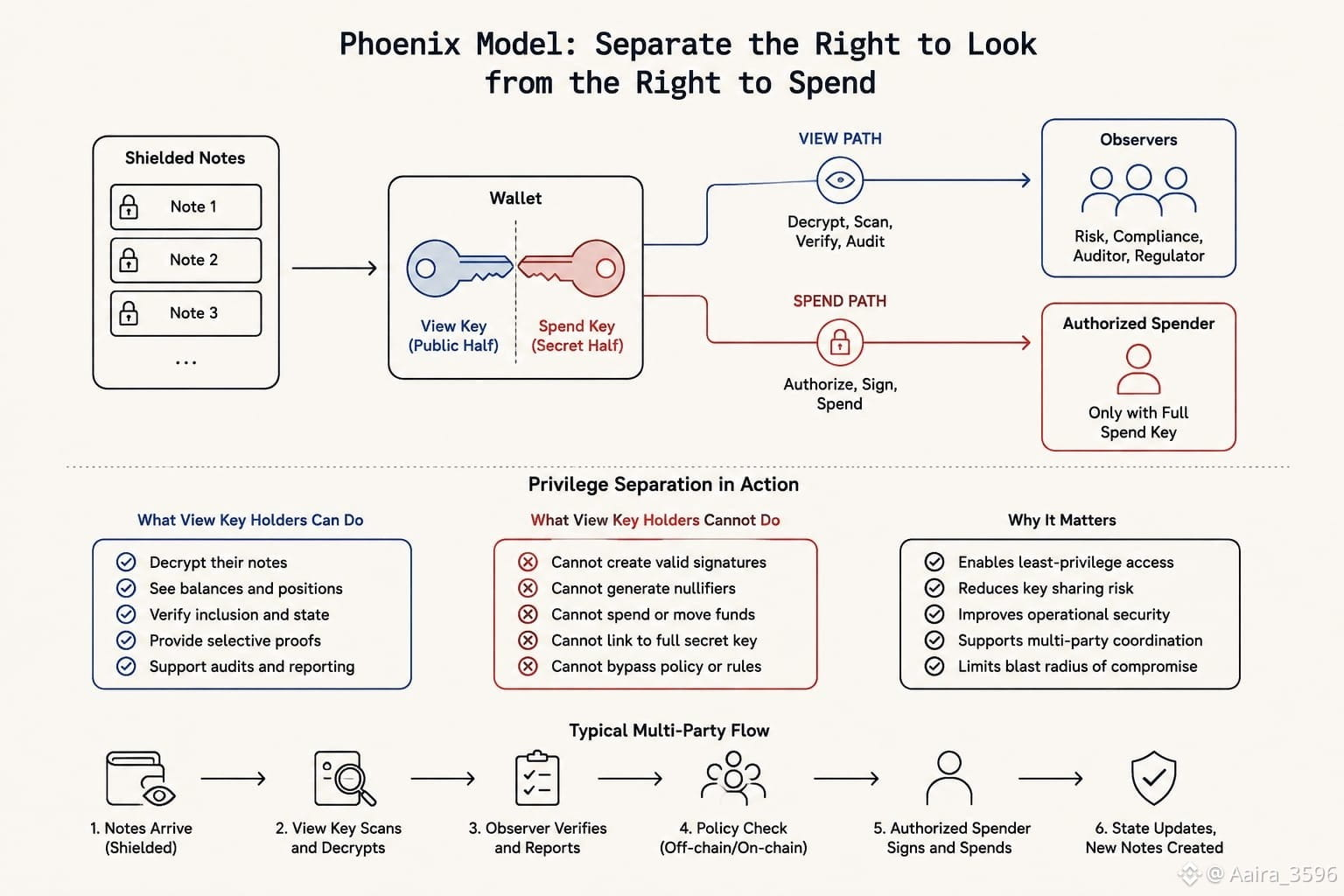
#dusk $DUSK @Dusk I was watching a node sync last week when a note scan stalled. The wallet had the view key, so it could decrypt the incoming shielded notes and tally the balance just fine. But the spend path kept failing on the nullifier. Turns out the operator had shared only the view half with the monitoring script. The full secret stayed offline.
That little gap is what the Phoenix design leans on. You can hand someone the ability to see every note that belongs to an address—values, positions, the whole local state—without ever giving them the scalar that finishes the note secret key. They can verify, they can audit, they can even prove ownership to a regulator. They just cannot move anything. The system treats “looking” and “authorizing” as two different privileges instead of one fused secret.
It changes how people coordinate. Risk teams can watch balances in real time. Compliance can pull selective history. The actual keys that sign stays with whoever is supposed to control the funds. You start seeing fewer “just share the seed for a second” requests, which is useful when the money is real.
Still not sure how cleanly this holds once you have dozens of parties needing different slices of visibility at the same time. The crypto boundary is sharp. The operational ones usually aren’t. Next time a multi-party settlement hits a view-key handoff under time pressure, I’ll be watching whether anyone reaches for the full secret out of habit.
That little gap is what the Phoenix design leans on. You can hand someone the ability to see every note that belongs to an address—values, positions, the whole local state—without ever giving them the scalar that finishes the note secret key. They can verify, they can audit, they can even prove ownership to a regulator. They just cannot move anything. The system treats “looking” and “authorizing” as two different privileges instead of one fused secret.
It changes how people coordinate. Risk teams can watch balances in real time. Compliance can pull selective history. The actual keys that sign stays with whoever is supposed to control the funds. You start seeing fewer “just share the seed for a second” requests, which is useful when the money is real.
Still not sure how cleanly this holds once you have dozens of parties needing different slices of visibility at the same time. The crypto boundary is sharp. The operational ones usually aren’t. Next time a multi-party settlement hits a view-key handoff under time pressure, I’ll be watching whether anyone reaches for the full secret out of habit.
翻訳参照
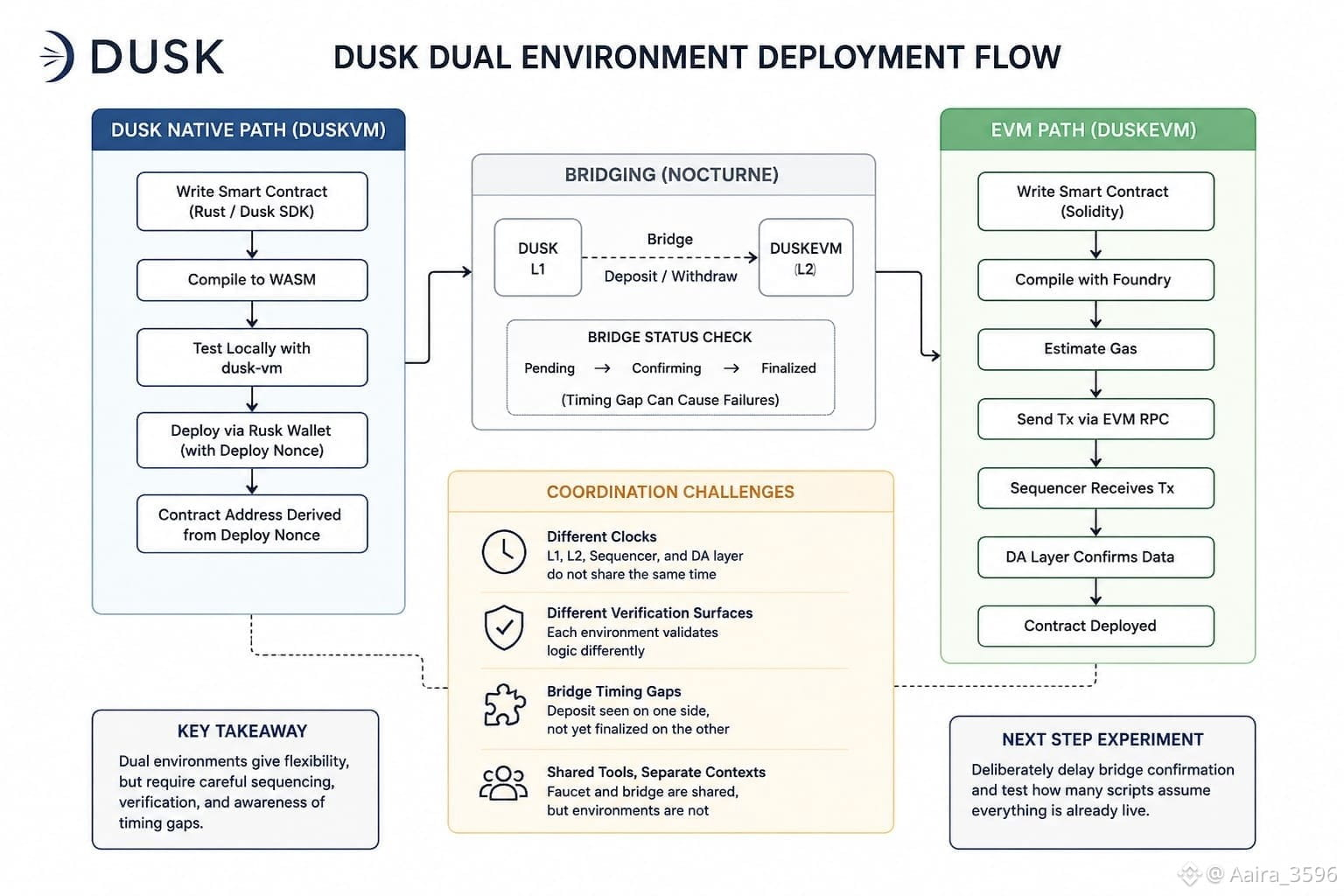
#dusk $DUSK @Dusk I watched a deploy retry fail this morning on the DuskEVM side. Same Foundry command, same encrypted keystore, gas estimate looked clean enough. Transaction just hung. The bridged testnet DUSK from Nocturne hadn’t fully settled explorer still showed the L1 hop pending while the EVM RPC already took the signed payload. Small timing gap, but it made me sit there watching the bridge status instead of assuming the tooling would just coordinate itself.
That stall said more than most of the docs. You’re bouncing between two environments that don’t share a clock or the same verification surface. Native path: compile the WASM, run it through dusk-vm locally, then hand it to the Rusk wallet with a deploy nonce that becomes part of the address. Miss the nonce and the contract lands somewhere unexpected. EVM side feels familiar until the sequencer and the data-availability layer disagree about when a deposit is actually real. People start treating the Discord faucet and the bridge like shared infrastructure rather than free tokens, which changes how carefully they sequence their own tests.
I’m still not convinced the dual setup scales cleanly once more teams hit the same coordination points at once. The incentives push toward careful verification, but only if you notice the gaps. Next time I’ll deliberately delay the bridge confirmation and watch how many of the usual scripts still assume everything is already live.
That stall said more than most of the docs. You’re bouncing between two environments that don’t share a clock or the same verification surface. Native path: compile the WASM, run it through dusk-vm locally, then hand it to the Rusk wallet with a deploy nonce that becomes part of the address. Miss the nonce and the contract lands somewhere unexpected. EVM side feels familiar until the sequencer and the data-availability layer disagree about when a deposit is actually real. People start treating the Discord faucet and the bridge like shared infrastructure rather than free tokens, which changes how carefully they sequence their own tests.
I’m still not convinced the dual setup scales cleanly once more teams hit the same coordination points at once. The incentives push toward careful verification, but only if you notice the gaps. Next time I’ll deliberately delay the bridge confirmation and watch how many of the usual scripts still assume everything is already live.
翻訳参照
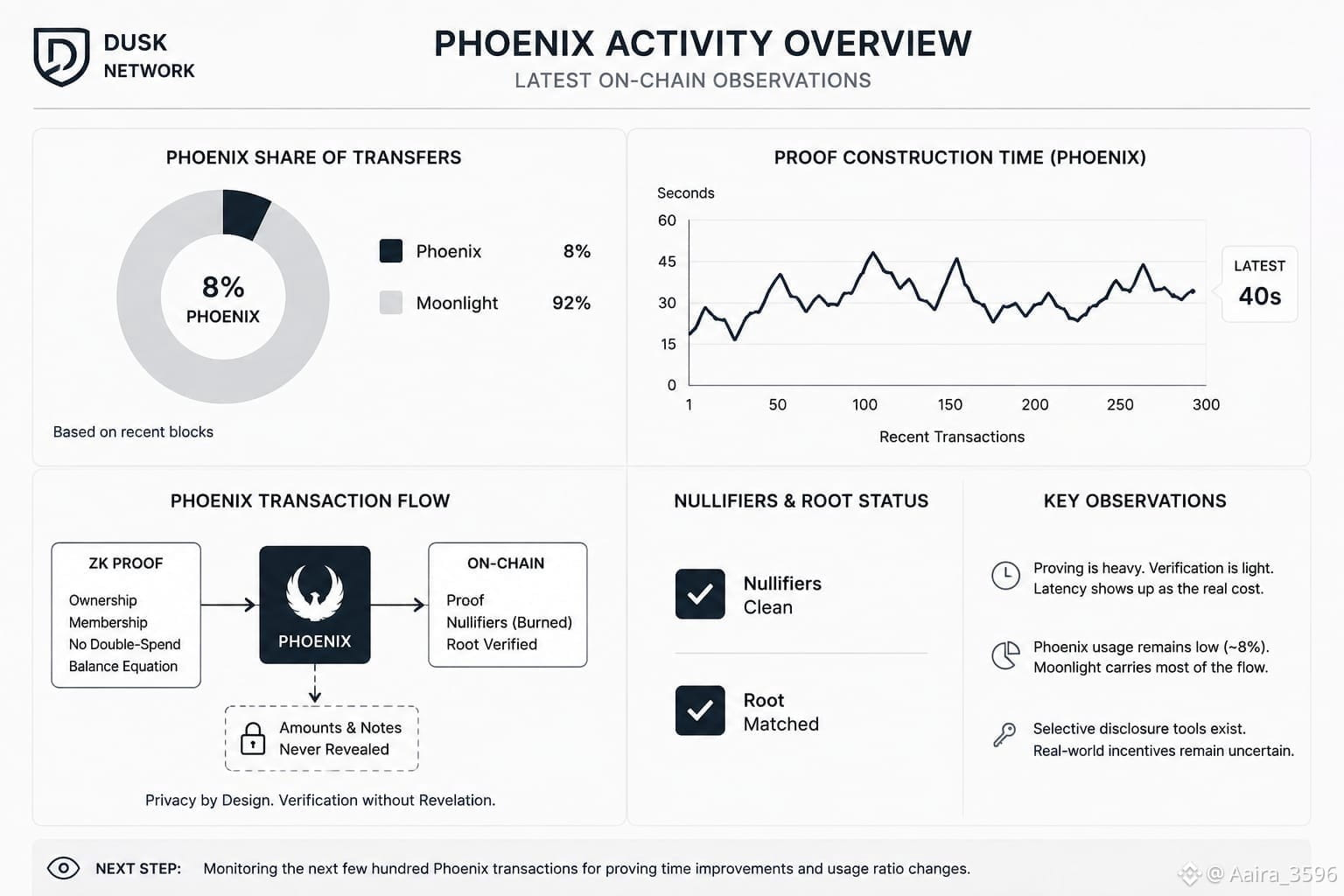
#dusk $DUSK @Dusk I watched another Phoenix spend hang on Dusk last night. Forty seconds of the wallet just chewing on the proof before the node finally accepted it. Nullifiers showed up clean. Root matched. Balance equation held. Nothing on-chain ever revealed the amounts or which notes got spent. Just the proof and a couple of burned markers sitting there.
That quiet is deliberate. The circuit makes the sender do all the hard arithmetic so the validators never touch the actual values. Ownership, membership, no double-spend — all forced into the proof without the data itself ever appearing. Verification stays light. Construction does not.
Still seeing the same split in recent blocks on Dusk. Most value keeps moving on Moonlight. Phoenix appears, but sparsely — lately around eight percent of transfers. Hard to blame anyone running a busy wallet or exchange flow. Proving keys are heavy, remote provers get more of the witness than feels comfortable, and the cost shows up as latency more than anything else. Dual path exists. People keep choosing the public one.
Not sure yet how the selective disclosure side will hold up when real pressure arrives. Viewing keys are there. Sender encryption is there. Whether anyone actually hands them over under audit is a different problem. Math works either way. Incentives might not.
Going to watch the next few hundred Phoenix transactions on Dusk and see if proving times drop or if the ratio just stays stuck.
That quiet is deliberate. The circuit makes the sender do all the hard arithmetic so the validators never touch the actual values. Ownership, membership, no double-spend — all forced into the proof without the data itself ever appearing. Verification stays light. Construction does not.
Still seeing the same split in recent blocks on Dusk. Most value keeps moving on Moonlight. Phoenix appears, but sparsely — lately around eight percent of transfers. Hard to blame anyone running a busy wallet or exchange flow. Proving keys are heavy, remote provers get more of the witness than feels comfortable, and the cost shows up as latency more than anything else. Dual path exists. People keep choosing the public one.
Not sure yet how the selective disclosure side will hold up when real pressure arrives. Viewing keys are there. Sender encryption is there. Whether anyone actually hands them over under audit is a different problem. Math works either way. Incentives might not.
Going to watch the next few hundred Phoenix transactions on Dusk and see if proving times drop or if the ratio just stays stuck.
翻訳参照
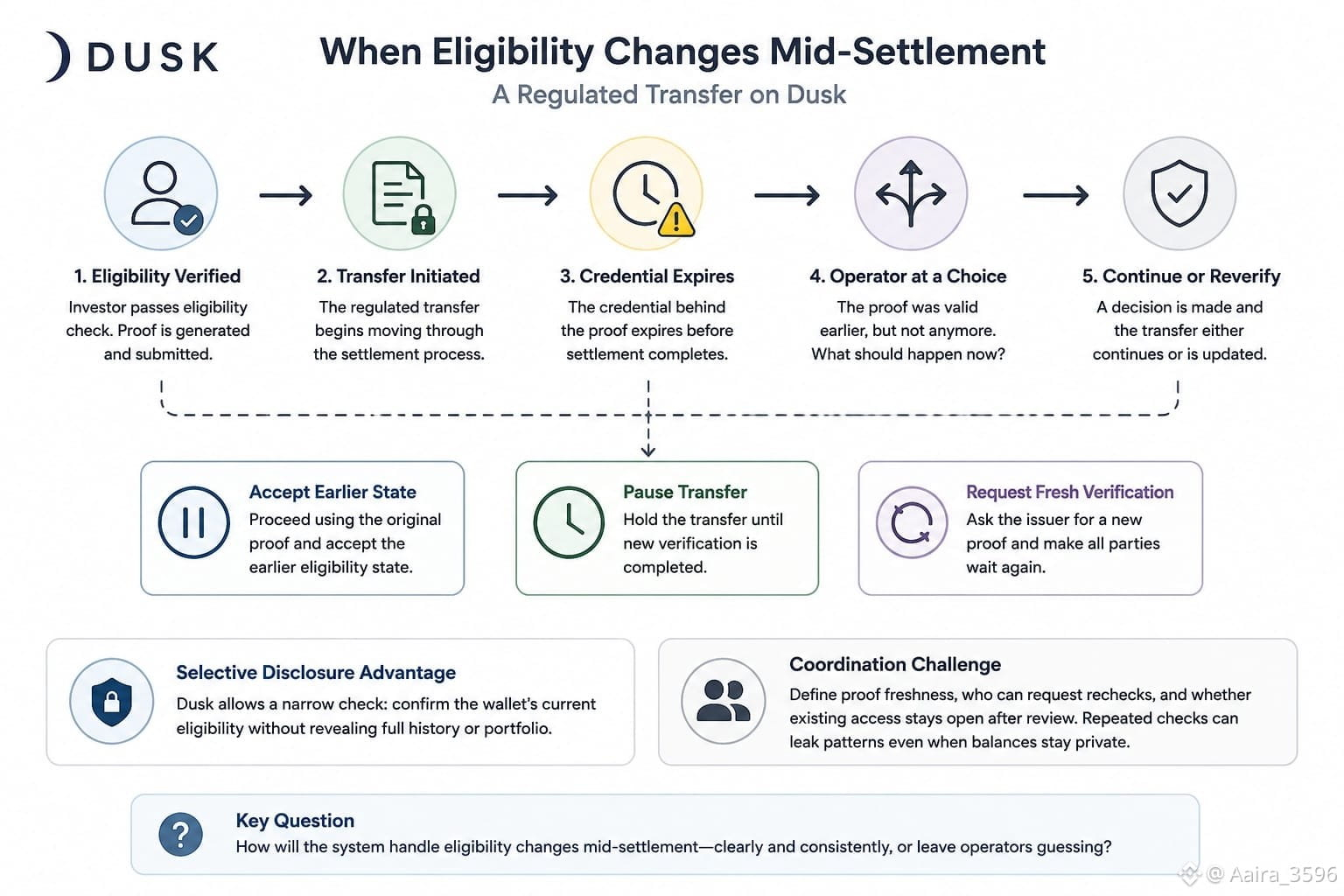
#dusk $DUSK @Dusk I noticed the problem when a regulated transfer on Dusk stopped just before settlement. The investor had passed the eligibility check earlier, but the credential behind that proof expired while the transaction was still moving through the process. Nothing looked obviously broken. The proof had been valid. Or, well, it had been valid when submitted. That left the operator with an awkward choice: accept the earlier state, pause the transfer, or request fresh verification and make everyone wait again. What caught my attention was how little extra information was actually needed. The issuer did not need the investor’s full history or current portfolio, only confirmation that the receiving wallet was still eligible at that moment. Dusk’s selective disclosure model should make that narrow check possible without turning a routine delay into a broad data request. But the mechanics do not remove the coordination problem. Someone still has to define when a proof becomes stale, who can request another one, and whether existing access should remain open after the review. Repeated checks could also leak patterns even when balances stay hidden. I’m not sure how cleanly this holds up once custodians, issuers, and external reviewers are all working on different schedules. I’d watch the next transfer where eligibility changes mid-settlement and see whether the system fails clearly—or just leaves an operator guessing.
翻訳参照
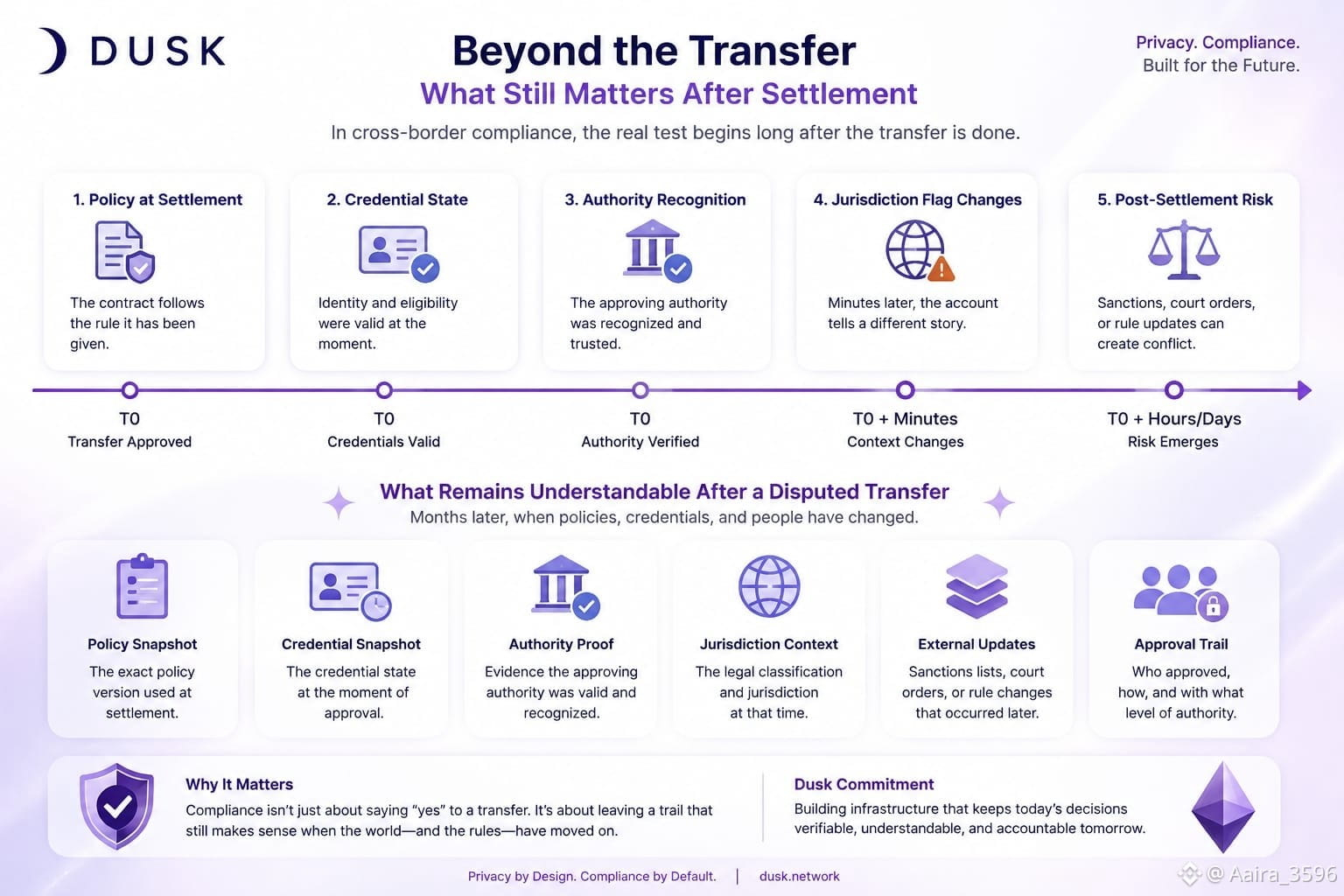
#dusk $DUSK @Dusk I noticed the jurisdiction flag after the transfer had settled. It had changed only minutes later, so the approval was technically correct, but the account now told a different story. Anyone reviewing it next month could easily wonder why the asset had been allowed through. My first thought was that Dusk only needed to retain the policy used at settlement. Then I realized that would not be enough. The reviewer would also need the credential state from that moment and some evidence that the approving authority was still recognized. Maybe more. This is where cross-border compliance starts slipping out of a neat contract model. One country may treat the asset as a security while another treats it as a contractual claim, and those classifications can change without the token moving at all. The contract follows the rule it has been given. It does not know whether that rule still makes legal sense. A sanctions update arriving after settlement makes the gap harder to ignore. A court could demand a freeze while the issuer is already processing redemption somewhere else. Letting one operator override the asset would be fast, but I would not be comfortable with that power sitting quietly in the background. Requiring several approvals feels safer until the response is urgent. I’m less interested in seeing another clean transfer now. I want to see what remains understandable after a disputed one—months later, after the policies, credentials, and people responsible have changed.
翻訳参照
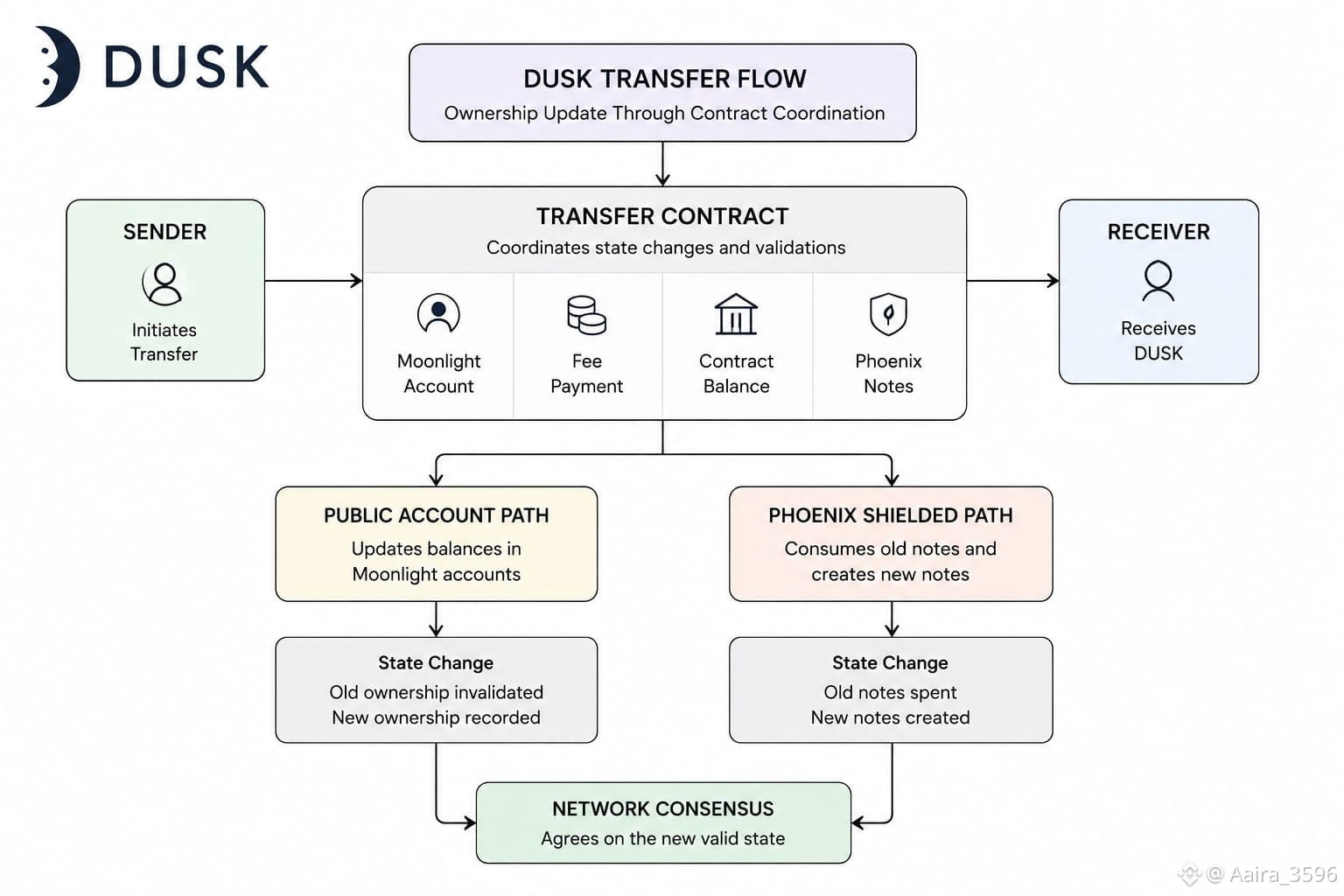
#dusk $DUSK I noticed the mismatch while tracing a DUSK transfer that looked finished in the wallet but still felt incomplete from the system side. The number had changed, sure, but that was only the visible part. Underneath it, the Transfer contract was still the place where several different kinds of state had to agree: the Moonlight account, the fee being paid, the contract balance, or, in another path, the Phoenix notes being consumed and recreated. That made me stop thinking about DUSK as something that simply moves from A to B. It is closer to the network deciding that one version of ownership is no longer valid and another one is. Small distinction, but operationally it matters. A contract can change its own application state without becoming the authority on what native DUSK means, and that separation probably prevents a lot of accounting logic from leaking into every application. Still, I would not call the model simple. Once public accounts, shielded notes, gas, and contract-held funds start touching the same execution path, the coordination burden just moves lower in the stack. Maybe that is the point. What I would want to watch is a busy period with several contract calls and mixed transaction types landing together, because that is where clean accounting assumptions usually start getting uncomfortable.@Dusk
翻訳参照
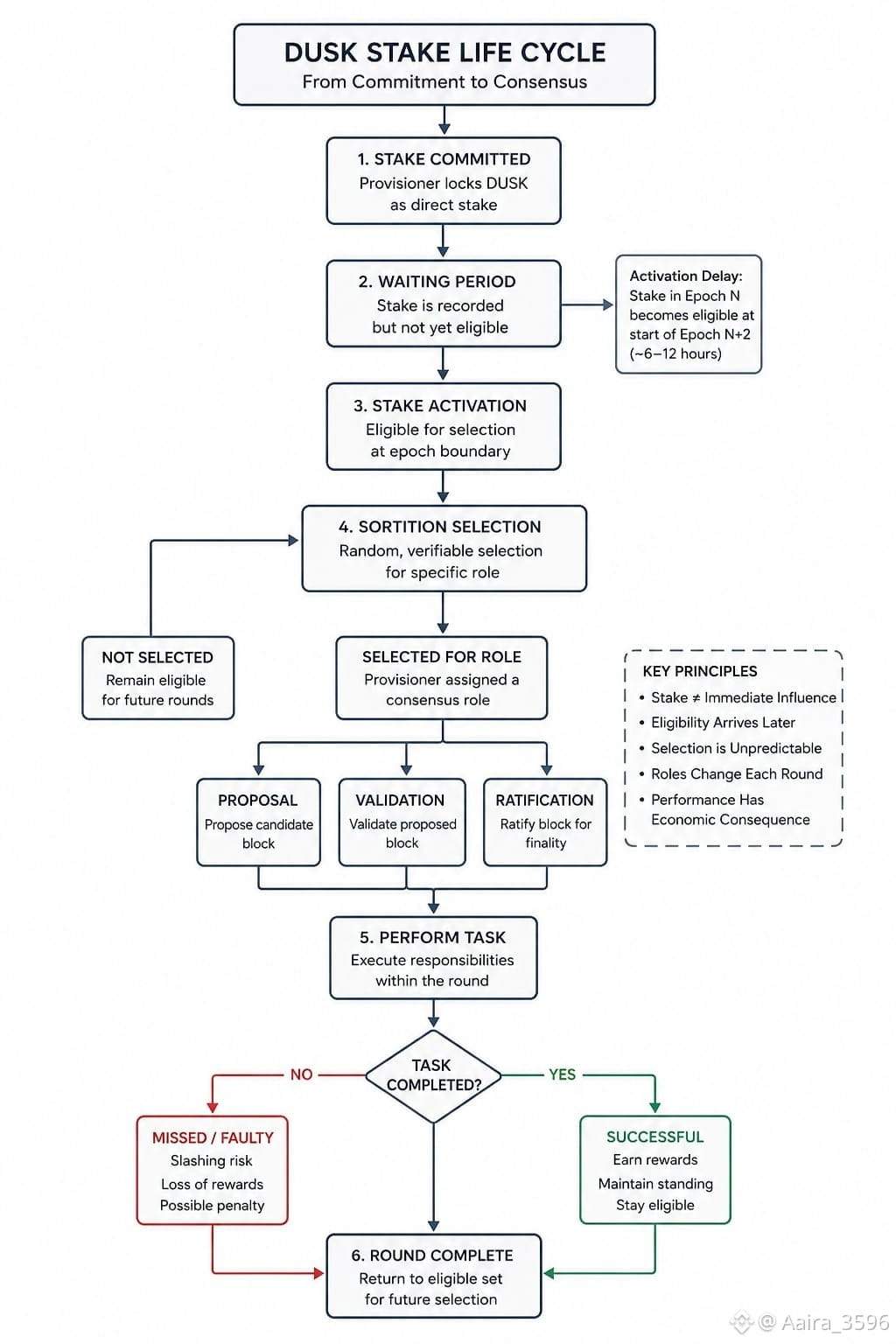
#dusk $DUSK $ACE $AKE @Dusk I noticed the awkward part when a new DUSK stake was already committed but still could not participate in consensus. The capital had moved, yet from the network’s point of view the provisioner was still waiting. My first reaction was to treat that as unnecessary delay, but watching the epoch boundary made the design look different. Dusk does not let fresh stake become immediate influence. Eligibility arrives later, which means someone cannot simply move capital in and expect instant access to consensus selection. That changes how a provisioner has to think about timing. And even after activation, the stake is only eligibility, not a permanent seat. A provisioner can sit there doing very little for a while, then suddenly be selected for a role where missing the job has an economic consequence. Generator rewards pull behavior in another direction: being selected is valuable, but only if the participant actually performs when the network asks. I’m still unsure how smooth this feels when operators are topping up stake, entering around epoch boundaries, or recovering from penalties. The mechanism looks orderly on paper; operations rarely stay that tidy. What I would watch next is a period where many provisioners change stake at roughly the same time and see whether the delayed maturity and reward structure still produce predictable behavior under that pressure.
私はコーヒーを飲みながらDuskの報酬割合を確認していて、最も重要な数字は、ジェネレーターが失い得る取り分かもしれないと気づきました。それは、セキュリティが「権利」ではなく「完了した作業」を中心に構築されていることを示しています。
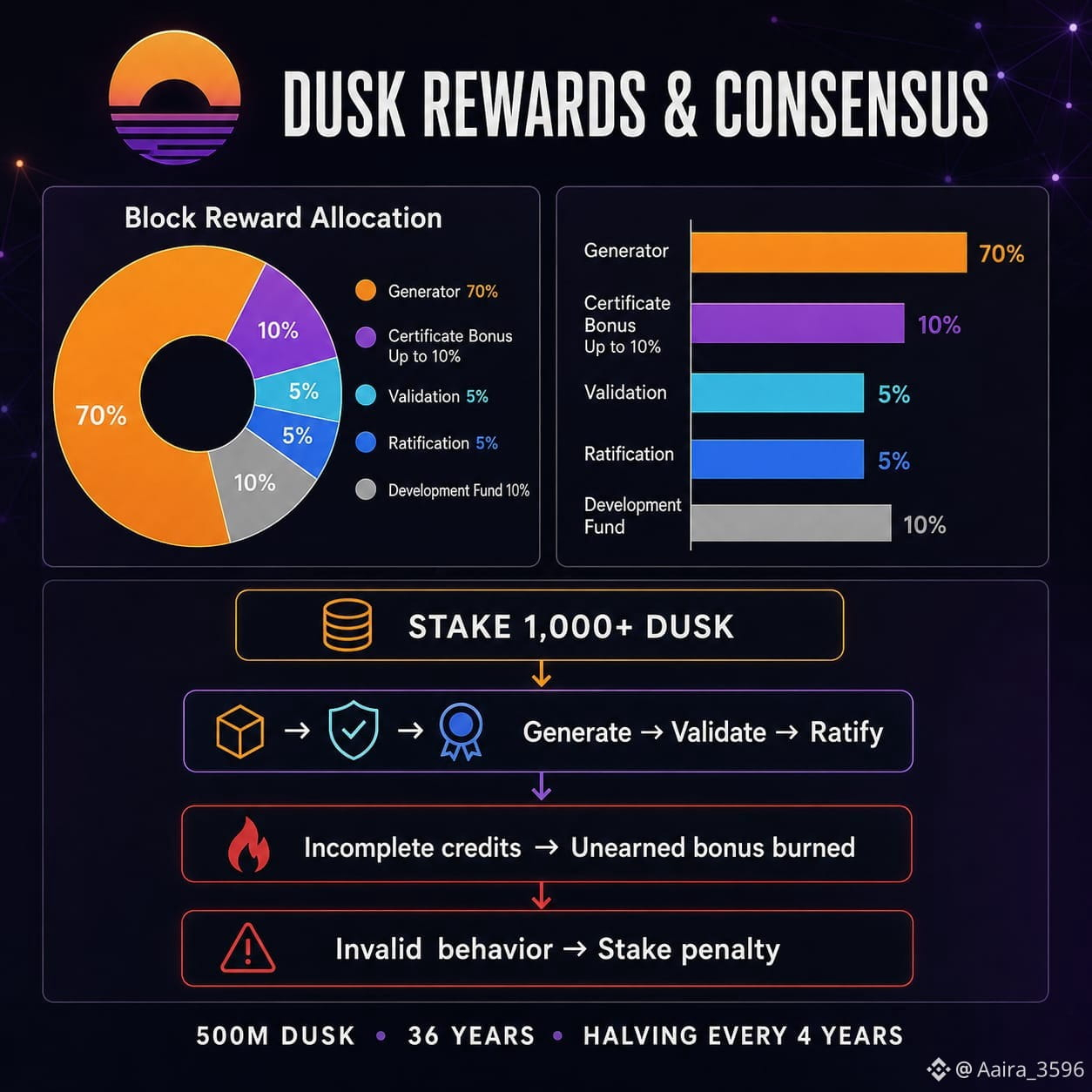
@Dusk において、プロビジョナーは少なくとも1,000 $DUSK をステークすることでコンセンサスを担保します。彼らの資本は参加へのアクセスを与えますが、報酬は、ブロックが生成・検証・勅許の過程を通過するときに果たした役割に依存します。
ブロック報酬は、生成される新しい発行分と、そのブロックで支払われたすべての取引手数料を組み合わせたものです。ジェネレーターはまず報酬の70%を直接受け取り、さらに最終証明書に含まれるクレジットに基づいて別途10%を回収できる場合があります。必要なコンセンサス証拠が不完全なとき、その10%のうち未達分は焼却(バーン)されます。したがって、証明書の品質は、ブロックを組み立てる参加者にとって財務上の意味を持つことになります。
独立したチェックもまた報酬の対象です。検証委員会は提案を評価することで5%を受け取り、勅許委員会はそれを確認することで5%を受け取ります。さらに別の10%は開発基金を支えます。この配分により、経済的報酬をブロック作成だけに全て寄せることを避けています。
プロビジョナーには下方リスクもあります。失敗した参加はサスペンド(停止)につながり、アクティブなDUSKをロックされたステークへ移動させます。そこでは保有物であるものの、参加できません。相反する提案に対する無効な投票や署名は重大なペナルティを引き起こし、ステークの一部を焼却する可能性があります。
発行計画では、36年間にわたって合計500 million DUSKを供給し、4年ごとに発行率を半減させます。そのため、取引手数料を増やすことが、時間とともに#dusk securityを支える上でますます重要になります。$DUSK $AKE $EDEN
ジェネレーター報酬の一部を証明書クレジットに直接連動させることで、一貫して強いコンセンサス参加を促すだけの十分な圧力が生まれるでしょうか?
@Dusk において、プロビジョナーは少なくとも1,000 $DUSK をステークすることでコンセンサスを担保します。彼らの資本は参加へのアクセスを与えますが、報酬は、ブロックが生成・検証・勅許の過程を通過するときに果たした役割に依存します。
ブロック報酬は、生成される新しい発行分と、そのブロックで支払われたすべての取引手数料を組み合わせたものです。ジェネレーターはまず報酬の70%を直接受け取り、さらに最終証明書に含まれるクレジットに基づいて別途10%を回収できる場合があります。必要なコンセンサス証拠が不完全なとき、その10%のうち未達分は焼却(バーン)されます。したがって、証明書の品質は、ブロックを組み立てる参加者にとって財務上の意味を持つことになります。
独立したチェックもまた報酬の対象です。検証委員会は提案を評価することで5%を受け取り、勅許委員会はそれを確認することで5%を受け取ります。さらに別の10%は開発基金を支えます。この配分により、経済的報酬をブロック作成だけに全て寄せることを避けています。
プロビジョナーには下方リスクもあります。失敗した参加はサスペンド(停止)につながり、アクティブなDUSKをロックされたステークへ移動させます。そこでは保有物であるものの、参加できません。相反する提案に対する無効な投票や署名は重大なペナルティを引き起こし、ステークの一部を焼却する可能性があります。
発行計画では、36年間にわたって合計500 million DUSKを供給し、4年ごとに発行率を半減させます。そのため、取引手数料を増やすことが、時間とともに#dusk securityを支える上でますます重要になります。$DUSK $AKE $EDEN
ジェネレーター報酬の一部を証明書クレジットに直接連動させることで、一貫して強いコンセンサス参加を促すだけの十分な圧力が生まれるでしょうか?
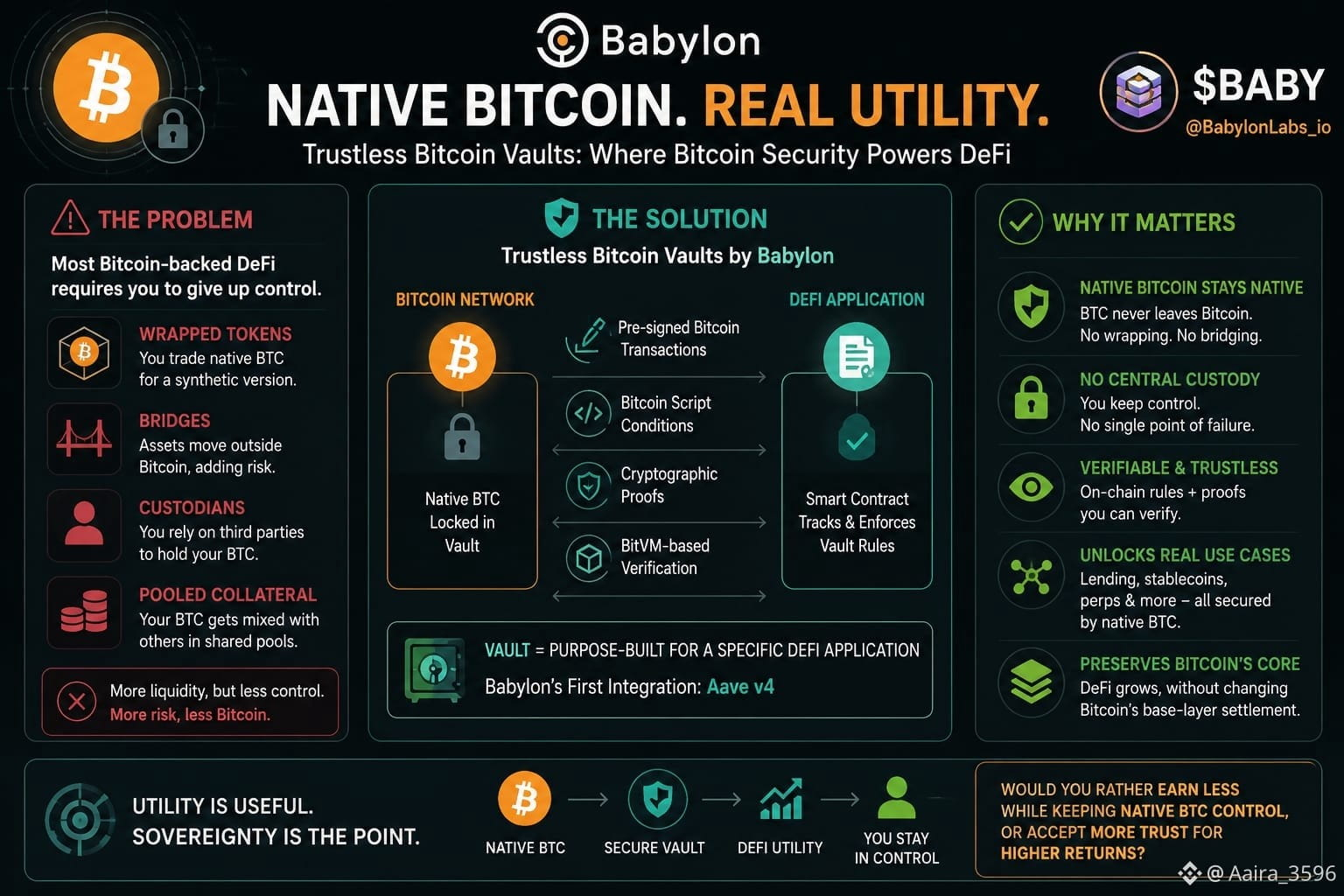
かつて私は、自分で持ち歩くよりも楽だと思って、家の鍵を誰かに預けたことがあります。何も問題は起きませんでしたが、自分の家にアクセスする権利が別の人に依存しているのだと分かっていました。これが、多くのBitcoinを裏付けにしたDeFiの感覚です。
本当の問題は、BTCが借り入れを支えられるかどうかではありません。ビットコインがビットコインらしさを失わなければならなくなるかどうか、つまりそれが「使える」状態になる前に、振る舞いを止める必要があるかどうかです。ラップトトークン、ブリッジ、カストディアン、プールされた担保は、追加の信頼前提を生み出します。流動性は得られても、ネイティブ資産を直接コントロールすることは手放し、さらにビットコインの外側にあるリスクを引き継ぐことになります。
BabylonのTrustless Bitcoin Vaultsは、別の道を選びます。ネイティブBTCはラップやブリッジを介さず、ビットコインネットワーク上にロックされたままです。事前署名されたビットコイン取引、Bitcoin Scriptの条件、暗号学的な証明、そしてBitVMベースの検証により、別のチェーン上のスマートコントラクトが、その担保に対して「何が起きうるか」を調整できます。バルテッドは特定のDeFiアプリケーション向けに作られ、Babylonの最初の統合はAave v4を前提に設計されています。
ステーブルコインの借り入れが最初に見える機能ですが、より深い価値は担保のアーキテクチャにあります。担保としてコインを中央集権的なカストディに預けたり、合成表現へ移したりすることなく、ネイティブBTCに対する請求をDeFiが認識し、執行できる方法を提供します。これにより、ビットコインのベースレイヤーでの決済を維持しながら、融資、ステーブルコイン発行、パーペチュアル、その他のBitcoin担保型市場を支えることが可能になります。
私にとって、だからこそネイティブなビットコインは、ローンそのもの以上に重要です。有用性は役に立ちますが、ポイントは主権(ソブリニティ)です。$BABY は、Babylonがこのモデルの中核インフラになれば恩恵を受ける可能性がありますが、導入(アダプション)と実行(エクゼキューション)が依然として重要です。
ネイティブBTCのコントロールを保ったままより低い収益を得たいですか?それとも、より高いリターンのためにより多くの信頼を受け入れますか?
#baby @BabylonLabs_io
本当の問題は、BTCが借り入れを支えられるかどうかではありません。ビットコインがビットコインらしさを失わなければならなくなるかどうか、つまりそれが「使える」状態になる前に、振る舞いを止める必要があるかどうかです。ラップトトークン、ブリッジ、カストディアン、プールされた担保は、追加の信頼前提を生み出します。流動性は得られても、ネイティブ資産を直接コントロールすることは手放し、さらにビットコインの外側にあるリスクを引き継ぐことになります。
BabylonのTrustless Bitcoin Vaultsは、別の道を選びます。ネイティブBTCはラップやブリッジを介さず、ビットコインネットワーク上にロックされたままです。事前署名されたビットコイン取引、Bitcoin Scriptの条件、暗号学的な証明、そしてBitVMベースの検証により、別のチェーン上のスマートコントラクトが、その担保に対して「何が起きうるか」を調整できます。バルテッドは特定のDeFiアプリケーション向けに作られ、Babylonの最初の統合はAave v4を前提に設計されています。
ステーブルコインの借り入れが最初に見える機能ですが、より深い価値は担保のアーキテクチャにあります。担保としてコインを中央集権的なカストディに預けたり、合成表現へ移したりすることなく、ネイティブBTCに対する請求をDeFiが認識し、執行できる方法を提供します。これにより、ビットコインのベースレイヤーでの決済を維持しながら、融資、ステーブルコイン発行、パーペチュアル、その他のBitcoin担保型市場を支えることが可能になります。
私にとって、だからこそネイティブなビットコインは、ローンそのもの以上に重要です。有用性は役に立ちますが、ポイントは主権(ソブリニティ)です。$BABY は、Babylonがこのモデルの中核インフラになれば恩恵を受ける可能性がありますが、導入(アダプション)と実行(エクゼキューション)が依然として重要です。
ネイティブBTCのコントロールを保ったままより低い収益を得たいですか?それとも、より高いリターンのためにより多くの信頼を受け入れますか?
#baby @BabylonLabs_io
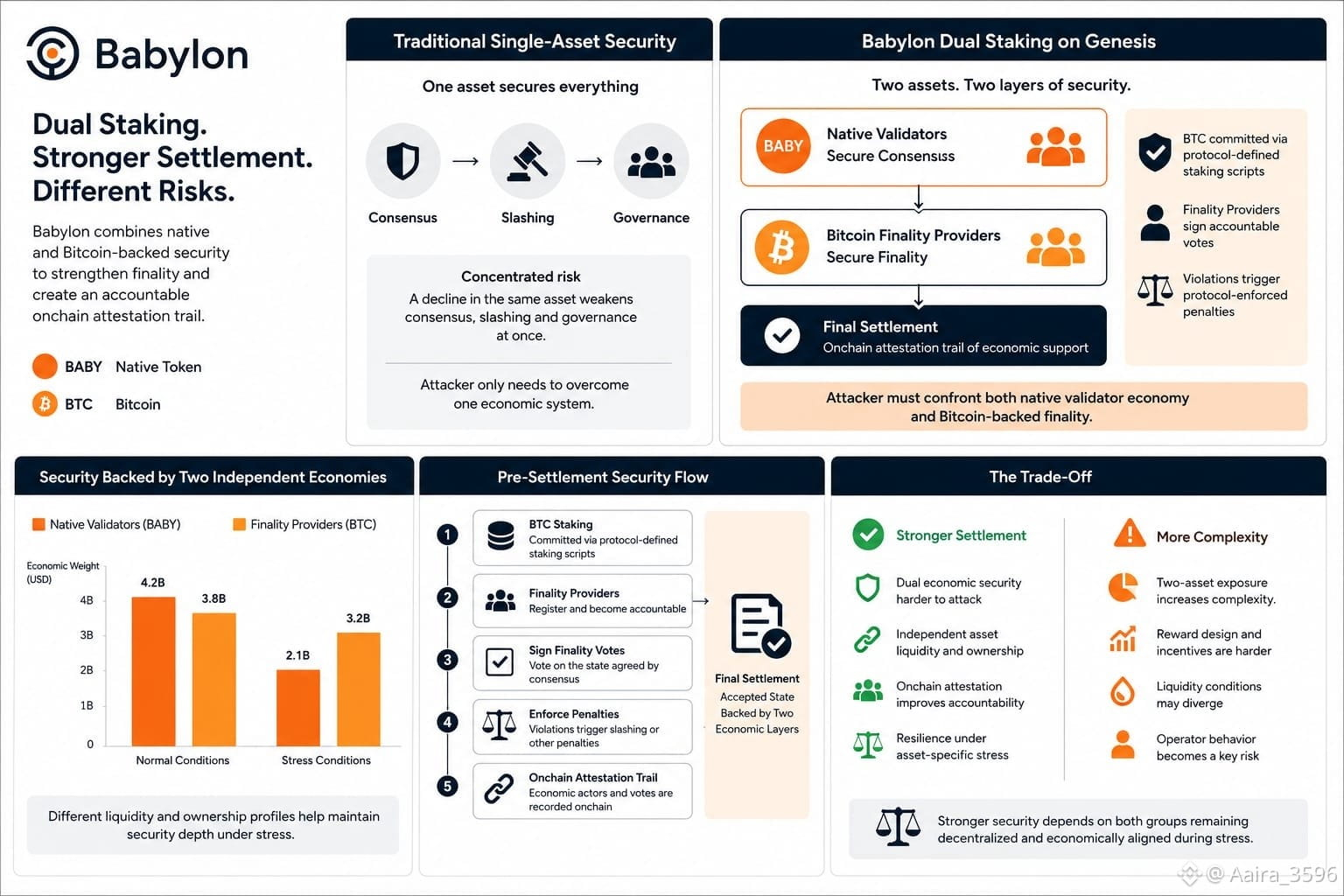
DeFiにおける最も重要なセキュリティの問いは、トランザクションが実行できるかどうかではなく、システムに十分な独立した経済的ウェイトがあり、不正な決済を本当に高コストにすることができるかどうかだと思います。
多くのオンチェーン・アプリケーションは、単一のバリデータ集合に依存しているか、あるいはオフチェーンのオペレーターが、あらかじめ定義された条件が満たされたことを確認しています。これは集中リスクを生みます。同じ資産がコンセンサスを支え、スラッシングを吸収し、ガバナンス権限を決める場合、その資産の急激な下落は、いくつかの保護を同時に弱めてしまう可能性があります。
@BabylonLabs_io は、Babylon Genesisにおけるデュアル・ステーキングによってこれを別の形で扱います。ネイティブの$BABY バリデータがチェーンのコンセンサスを支え、ビットコインを裏付けとしたFinality Providersが、基盤となるコンセンサス層の上で最終性(finality)投票を追加します。その結果は単にステークが増えるだけではありません。流動性の保有とリスク特性が異なる2つの資産から引き出されるセキュリティです。
Babylonにおける事前決済(pre-settlement)制御の仕組みは、注意深く理解されるべきです。これは、実行前にあらゆるDeFiアクションを確認する汎用的なポリシー・エンジンではありません。代わりに、参加者が最終決済に影響を与える前にセキュリティ条件が設定されます。BTCはプロトコル定義のステーキング・スクリプトを通じてコミットされ、説明責任のあるFinality Providersが投票に署名し、違反はプロトコルによって強制されるペナルティを引き起こし得ます。これらの投票とステーキング状態は、受け入れられた状態を支持した経済的アクターが誰であったかを示すオンチェーンのアテステーション(証明)トレイルを形成します。
私の見解では、これは、攻撃者がネイティブのバリデータ経済と、ビットコインに裏付けられた最終性の双方に直面しなければならないため、レジリエンスが向上します。しかし同時に、2つの資産へのエクスポージャーも追加されます。セキュリティは強くなり得る一方で、インセンティブが期待、流動性条件、そしてオペレーターの振る舞いに対してより複雑になります。
このトレードオフは重要です。デュアル・ステーキングは、コミットされる総額だけで判断されるべきではなく、ストレス時に両方のセキュリティ・グループが十分に分散化され、かつ経済的に整合しているかどうかで判断されるべきです。
Babylonの2資産モデルは、意味のあるほど強い決済を生み出すのでしょうか。それとも、単にセキュリティ・リスクをより複雑な構造へ移しているだけなのでしょうか?#baby
多くのオンチェーン・アプリケーションは、単一のバリデータ集合に依存しているか、あるいはオフチェーンのオペレーターが、あらかじめ定義された条件が満たされたことを確認しています。これは集中リスクを生みます。同じ資産がコンセンサスを支え、スラッシングを吸収し、ガバナンス権限を決める場合、その資産の急激な下落は、いくつかの保護を同時に弱めてしまう可能性があります。
@BabylonLabs_io は、Babylon Genesisにおけるデュアル・ステーキングによってこれを別の形で扱います。ネイティブの$BABY バリデータがチェーンのコンセンサスを支え、ビットコインを裏付けとしたFinality Providersが、基盤となるコンセンサス層の上で最終性(finality)投票を追加します。その結果は単にステークが増えるだけではありません。流動性の保有とリスク特性が異なる2つの資産から引き出されるセキュリティです。
Babylonにおける事前決済(pre-settlement)制御の仕組みは、注意深く理解されるべきです。これは、実行前にあらゆるDeFiアクションを確認する汎用的なポリシー・エンジンではありません。代わりに、参加者が最終決済に影響を与える前にセキュリティ条件が設定されます。BTCはプロトコル定義のステーキング・スクリプトを通じてコミットされ、説明責任のあるFinality Providersが投票に署名し、違反はプロトコルによって強制されるペナルティを引き起こし得ます。これらの投票とステーキング状態は、受け入れられた状態を支持した経済的アクターが誰であったかを示すオンチェーンのアテステーション(証明)トレイルを形成します。
私の見解では、これは、攻撃者がネイティブのバリデータ経済と、ビットコインに裏付けられた最終性の双方に直面しなければならないため、レジリエンスが向上します。しかし同時に、2つの資産へのエクスポージャーも追加されます。セキュリティは強くなり得る一方で、インセンティブが期待、流動性条件、そしてオペレーターの振る舞いに対してより複雑になります。
このトレードオフは重要です。デュアル・ステーキングは、コミットされる総額だけで判断されるべきではなく、ストレス時に両方のセキュリティ・グループが十分に分散化され、かつ経済的に整合しているかどうかで判断されるべきです。
Babylonの2資産モデルは、意味のあるほど強い決済を生み出すのでしょうか。それとも、単にセキュリティ・リスクをより複雑な構造へ移しているだけなのでしょうか?#baby
一部該当
翻訳参照
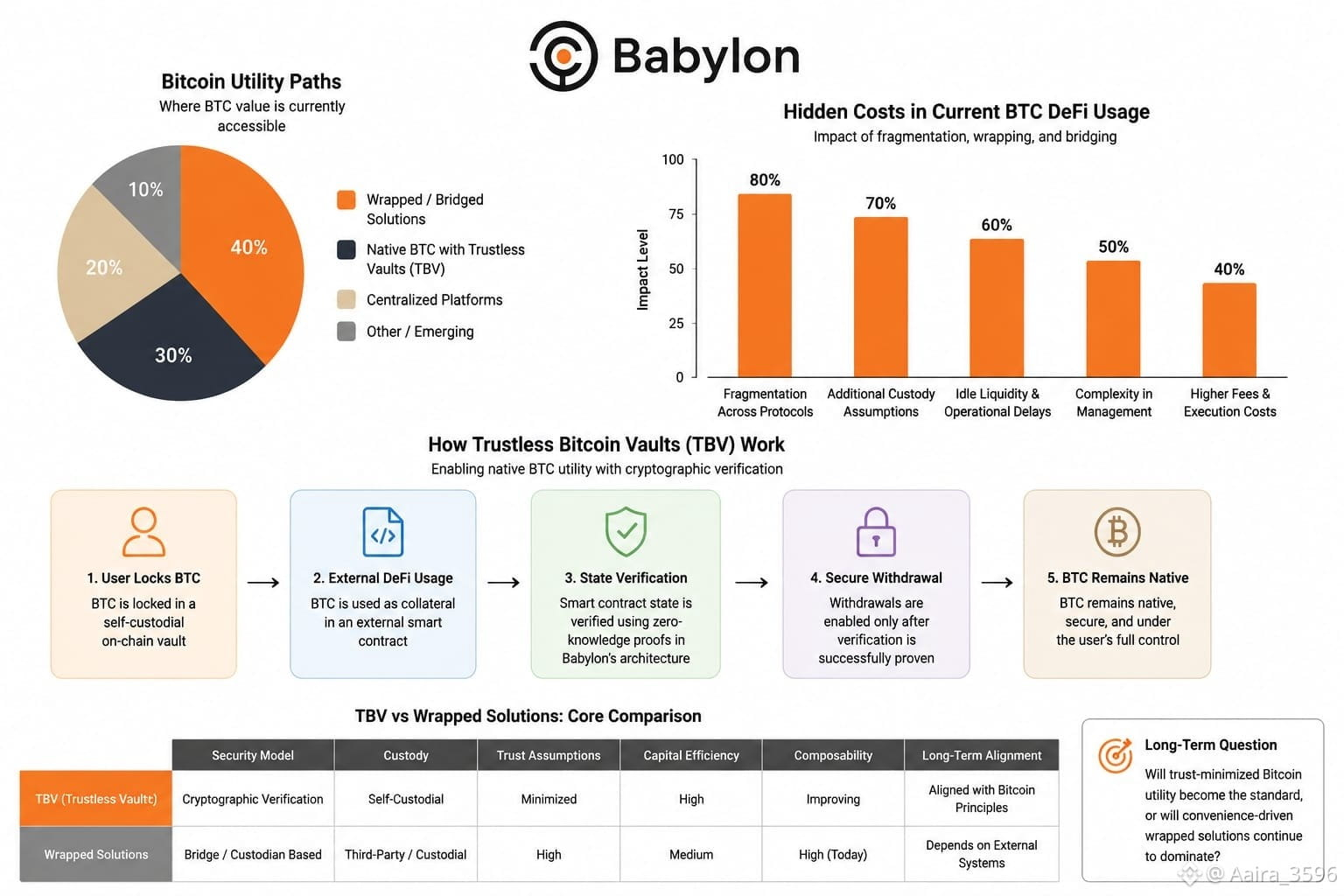
I believe the next phase of Bitcoin utility will not be defined by simply moving BTC into more DeFi platforms, but by reducing the hidden costs that come with doing so. The challenge is not only liquidity; it is fragmentation. When Bitcoin holders seek yield or collateral opportunities, they often divide capital across multiple protocols, bridges, and wrapped assets. This creates operational delays, idle liquidity, additional custody assumptions, and a growing dependency on systems outside Bitcoin’s original security model.
Babylon’s Trustless Bitcoin Vaults (TBV) introduce a different framework for connecting Bitcoin with external applications. Instead of requiring users to wrap BTC or transfer ownership through intermediaries, TBV allows holders to keep native Bitcoin secured through self-custodial on-chain vaults while still using BTC as productive collateral. The key mechanism is verification: withdrawals are enabled only after the relevant external smart contract state is validated through zero-knowledge proofs within Babylon’s verification architecture.
My view is that the important innovation is not just making Bitcoin compatible with DeFi. It is reducing the coordination cost between two different philosophies: Bitcoin’s conservative security principles and the demand for programmable financial systems. Wrapping and bridging prioritize accessibility, but they often introduce additional trust layers. TBV attempts to replace those assumptions with cryptographic verification.
However, this does not remove every challenge. Adoption depends on whether users, protocols, and liquidity providers see enough value in this new coordination model. A technically strong solution still needs real economic demand to create sustainable network effects.
For me, the long-term question around @BabylonLabs_io and $BABY is whether TBV can become a meaningful infrastructure layer that simplifies Bitcoin’s role in decentralized finance.
Will trust-minimized Bitcoin utility become the standard, or will convenience-driven wrapped solutions continue to dominate?
#baby
Babylon’s Trustless Bitcoin Vaults (TBV) introduce a different framework for connecting Bitcoin with external applications. Instead of requiring users to wrap BTC or transfer ownership through intermediaries, TBV allows holders to keep native Bitcoin secured through self-custodial on-chain vaults while still using BTC as productive collateral. The key mechanism is verification: withdrawals are enabled only after the relevant external smart contract state is validated through zero-knowledge proofs within Babylon’s verification architecture.
My view is that the important innovation is not just making Bitcoin compatible with DeFi. It is reducing the coordination cost between two different philosophies: Bitcoin’s conservative security principles and the demand for programmable financial systems. Wrapping and bridging prioritize accessibility, but they often introduce additional trust layers. TBV attempts to replace those assumptions with cryptographic verification.
However, this does not remove every challenge. Adoption depends on whether users, protocols, and liquidity providers see enough value in this new coordination model. A technically strong solution still needs real economic demand to create sustainable network effects.
For me, the long-term question around @BabylonLabs_io and $BABY is whether TBV can become a meaningful infrastructure layer that simplifies Bitcoin’s role in decentralized finance.
Will trust-minimized Bitcoin utility become the standard, or will convenience-driven wrapped solutions continue to dominate?
#baby
翻訳参照
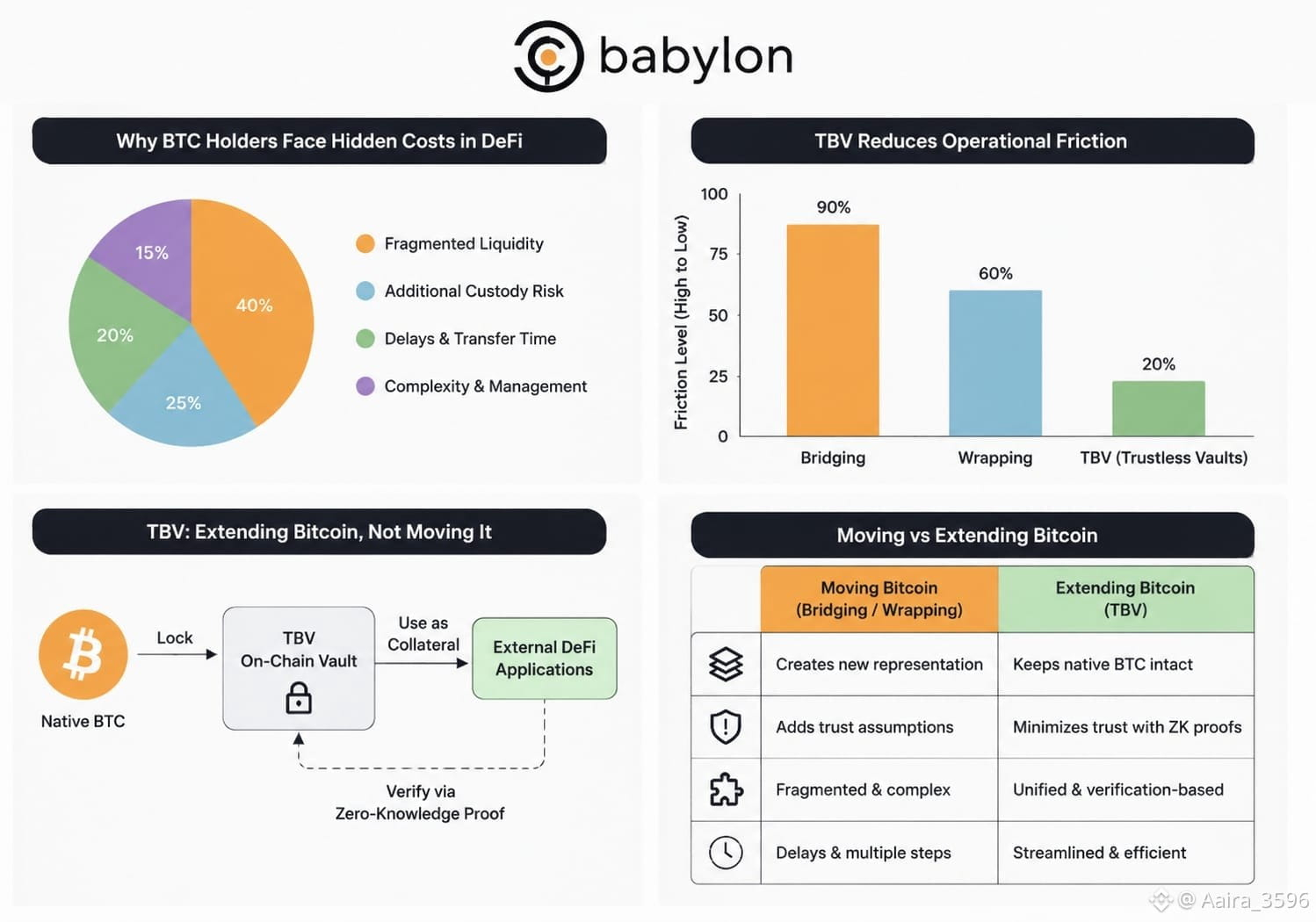
i believe the biggest hidden cost of moving Bitcoin into DeFi is not the transaction fee or the technology itself, but the complexity users inherit after leaving Bitcoin’s native environment. Every bridge, wrapped asset, and separate platform introduces new coordination points, fragmented liquidity, and additional custody assumptions.
The real challenge for BTC holders is not a lack of demand for utility. It is the difficult choice between maintaining self-custody and accessing productive opportunities. Many users end up splitting capital across different protocols, managing multiple positions, waiting for transfers, and accepting risks that do not come from Bitcoin itself.
Babylon’s Trustless Bitcoin Vaults (TBV) present a different framework. Instead of creating another representation of Bitcoin through wrapping, TBV focuses on enabling native BTC to remain under a self-custodial model while interacting with external financial systems. Users can lock BTC into on-chain vaults and use it as productive collateral, while withdrawals rely on verification of external smart contract states through zero-knowledge proofs.
The important distinction is between moving Bitcoin and extending Bitcoin. Wrapping and bridging often solve accessibility by creating additional layers around BTC. TBV aims to reduce that friction by creating a verification-based connection, where trust is minimized and the original asset remains central.
In my view, the long-term value proposition of @BabylonLabs_io is not simply increasing Bitcoin activity. It is creating a cleaner coordination layer between Bitcoin’s security principles and broader blockchain applications. However, the success of this model will depend on real adoption, security performance, and whether users find the experience meaningfully better than existing alternatives.
For me, the key question is whether trustless infrastructure can become the standard way Bitcoin participates in decentralized finance.
Could $BABY become a foundation for that transition, or will adoption remain the biggest challenge? #baby
The real challenge for BTC holders is not a lack of demand for utility. It is the difficult choice between maintaining self-custody and accessing productive opportunities. Many users end up splitting capital across different protocols, managing multiple positions, waiting for transfers, and accepting risks that do not come from Bitcoin itself.
Babylon’s Trustless Bitcoin Vaults (TBV) present a different framework. Instead of creating another representation of Bitcoin through wrapping, TBV focuses on enabling native BTC to remain under a self-custodial model while interacting with external financial systems. Users can lock BTC into on-chain vaults and use it as productive collateral, while withdrawals rely on verification of external smart contract states through zero-knowledge proofs.
The important distinction is between moving Bitcoin and extending Bitcoin. Wrapping and bridging often solve accessibility by creating additional layers around BTC. TBV aims to reduce that friction by creating a verification-based connection, where trust is minimized and the original asset remains central.
In my view, the long-term value proposition of @BabylonLabs_io is not simply increasing Bitcoin activity. It is creating a cleaner coordination layer between Bitcoin’s security principles and broader blockchain applications. However, the success of this model will depend on real adoption, security performance, and whether users find the experience meaningfully better than existing alternatives.
For me, the key question is whether trustless infrastructure can become the standard way Bitcoin participates in decentralized finance.
Could $BABY become a foundation for that transition, or will adoption remain the biggest challenge? #baby
翻訳参照
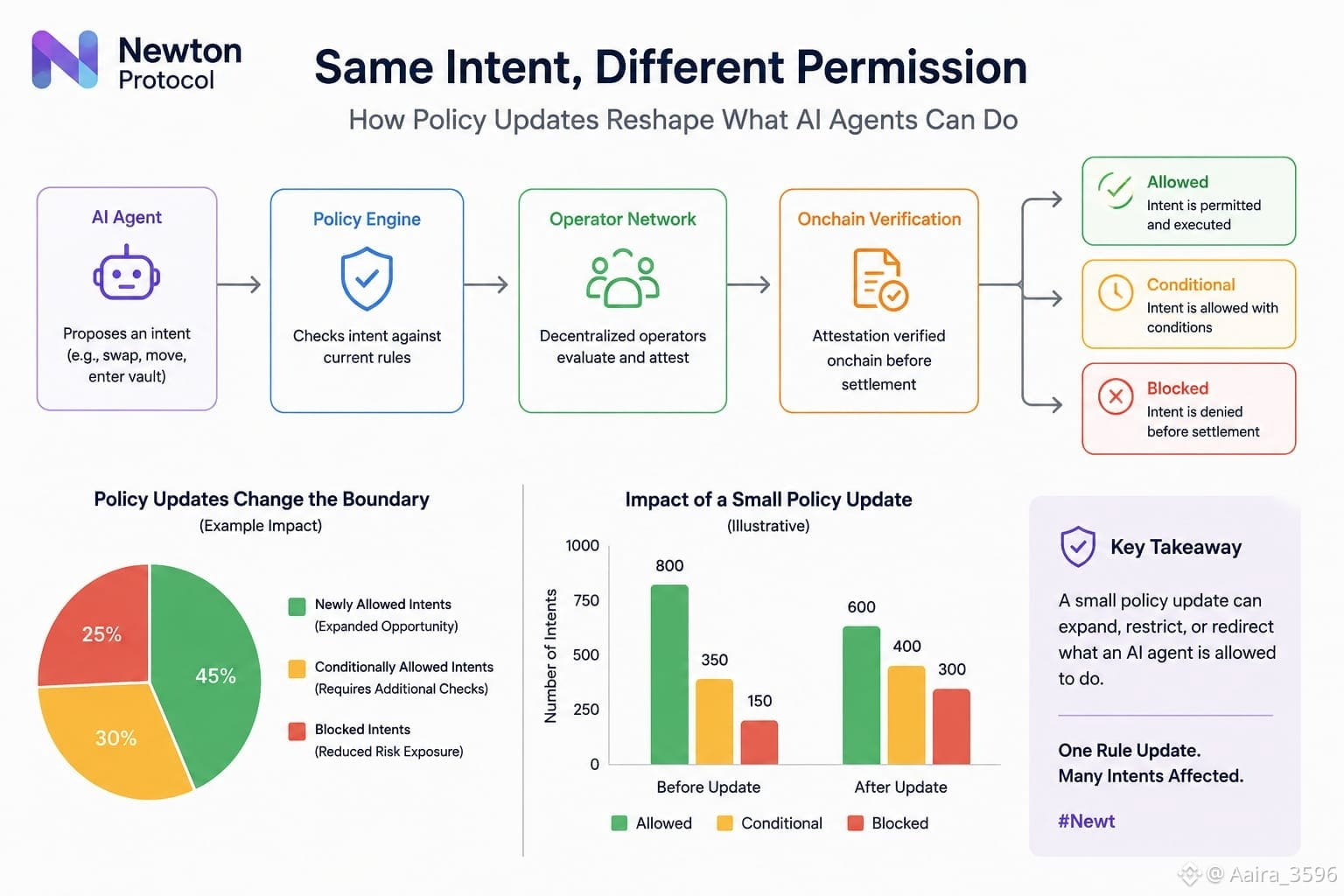
I think the biggest risk in autonomous finance isn’t that an AI agent makes one bad decision. It’s that a rule change quietly reshapes what the agent is allowed to attempt.
That’s why a small policy update inside @NewtonProtocol can have an outsized effect. An intent may look identical—swap an asset, move collateral, enter a vault—but a revised rule can make that action acceptable, conditional, or blocked before settlement.
My framework is “same intent, different permission.”
AI-powered trading systems are built to optimize. They chase yield, rebalance exposure, and react faster than humans. But optimization without authorization is dangerous. An agent may follow its objective perfectly while violating a new risk limit, interacting with a flagged wallet, or relying on stale assumptions.
Newton’s Mainnet Beta addresses that gap by separating execution from permission. Developers define policies, a decentralized operator network checks proposed transactions against those rules, and an attestation is verified onchain before settlement. The agent can propose. The policy determines whether the proposal is admissible.
That matters because policy updates don’t merely adjust settings. They redraw the boundary of possible behavior. A tighter collateral threshold can remove risky intents. A new compliance condition can invalidate acceptable routes. A revised exposure cap can redirect an automated strategy.
I see this as more flexible than hardcoding every safeguard into a smart contract, but also more sensitive. A poorly designed or badly governed update could block useful activity as efficiently as it stops harmful activity.
For $NEWT and #Newt , the real test isn’t only whether policies can change quickly. It’s whether those changes remain transparent, predictable, and accountable.
When one small rule can redefine an agent’s available choices, who should control that rule and how closely should the market watch it?$LAB
That’s why a small policy update inside @NewtonProtocol can have an outsized effect. An intent may look identical—swap an asset, move collateral, enter a vault—but a revised rule can make that action acceptable, conditional, or blocked before settlement.
My framework is “same intent, different permission.”
AI-powered trading systems are built to optimize. They chase yield, rebalance exposure, and react faster than humans. But optimization without authorization is dangerous. An agent may follow its objective perfectly while violating a new risk limit, interacting with a flagged wallet, or relying on stale assumptions.
Newton’s Mainnet Beta addresses that gap by separating execution from permission. Developers define policies, a decentralized operator network checks proposed transactions against those rules, and an attestation is verified onchain before settlement. The agent can propose. The policy determines whether the proposal is admissible.
That matters because policy updates don’t merely adjust settings. They redraw the boundary of possible behavior. A tighter collateral threshold can remove risky intents. A new compliance condition can invalidate acceptable routes. A revised exposure cap can redirect an automated strategy.
I see this as more flexible than hardcoding every safeguard into a smart contract, but also more sensitive. A poorly designed or badly governed update could block useful activity as efficiently as it stops harmful activity.
For $NEWT and #Newt , the real test isn’t only whether policies can change quickly. It’s whether those changes remain transparent, predictable, and accountable.
When one small rule can redefine an agent’s available choices, who should control that rule and how closely should the market watch it?$LAB
翻訳参照
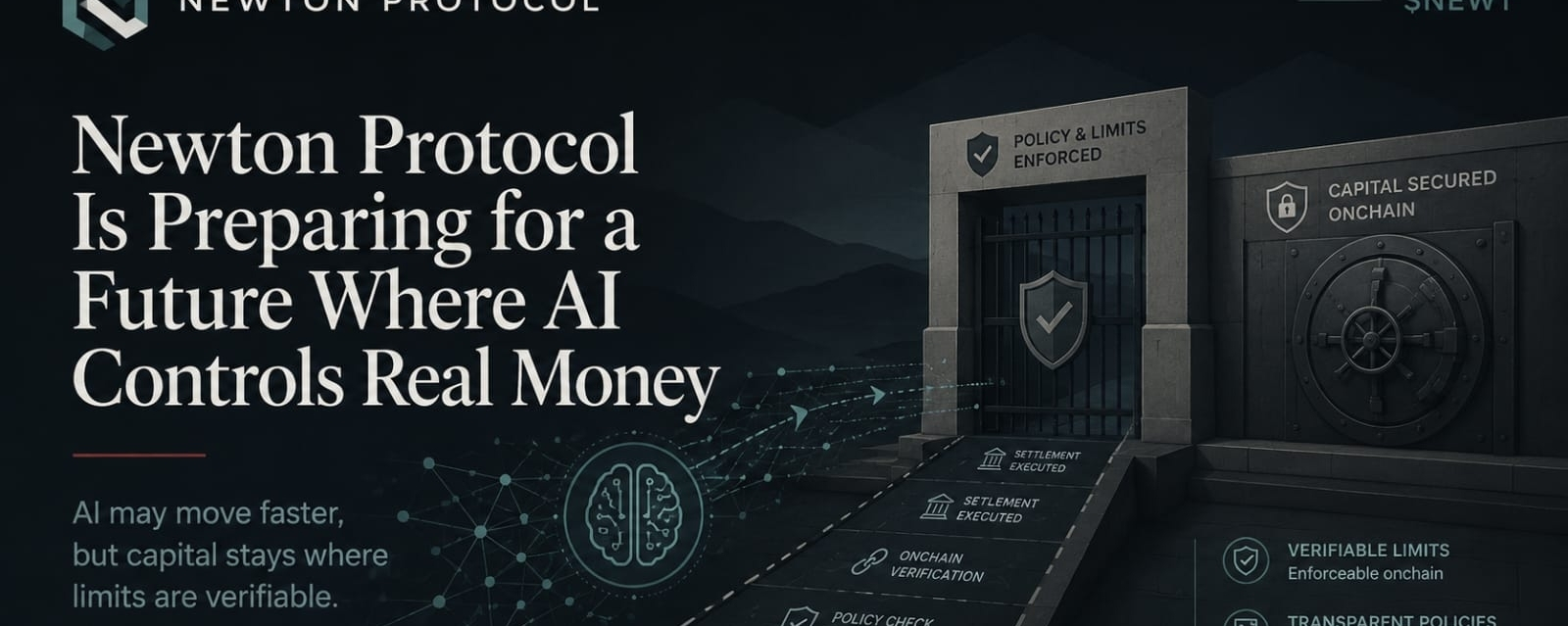
I think the next major risk in Web3 won’t come from agents that are too slow. It’ll come from agents that are fast, capable, and operating without enough proof that each action was permitted.
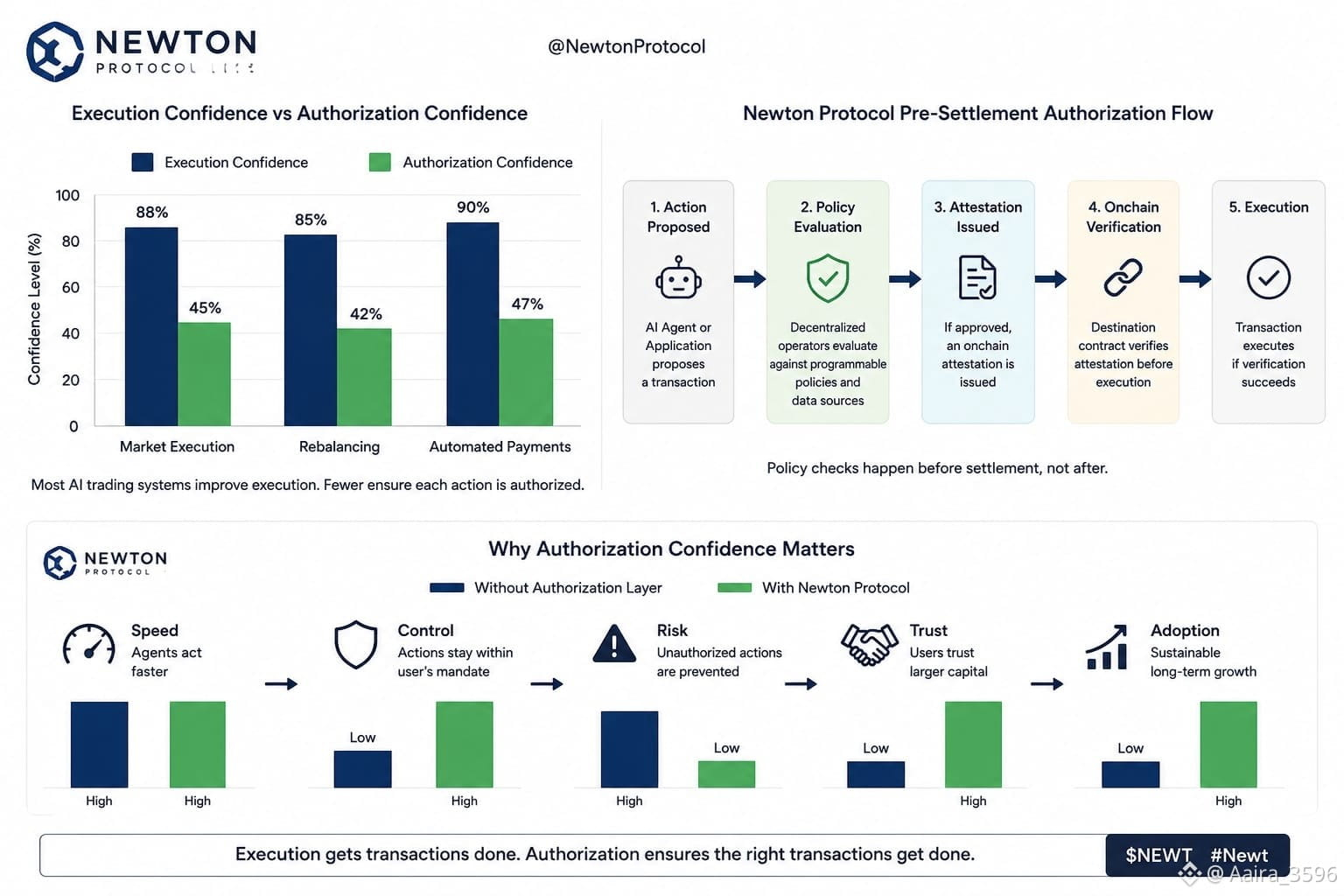
That creates a useful distinction: execution confidence versus authorization confidence. Execution confidence asks whether a transaction will settle correctly. Authorization confidence asks whether it should be allowed to settle under the user’s rules.
Most AI trading systems are improving the first side. They can find routes, rebalance positions, automate payments, or react to market data. But a valid signature still doesn’t prove that an agent respected exposure limits, approved contracts, identity requirements, collateral standards, or changing risk conditions.
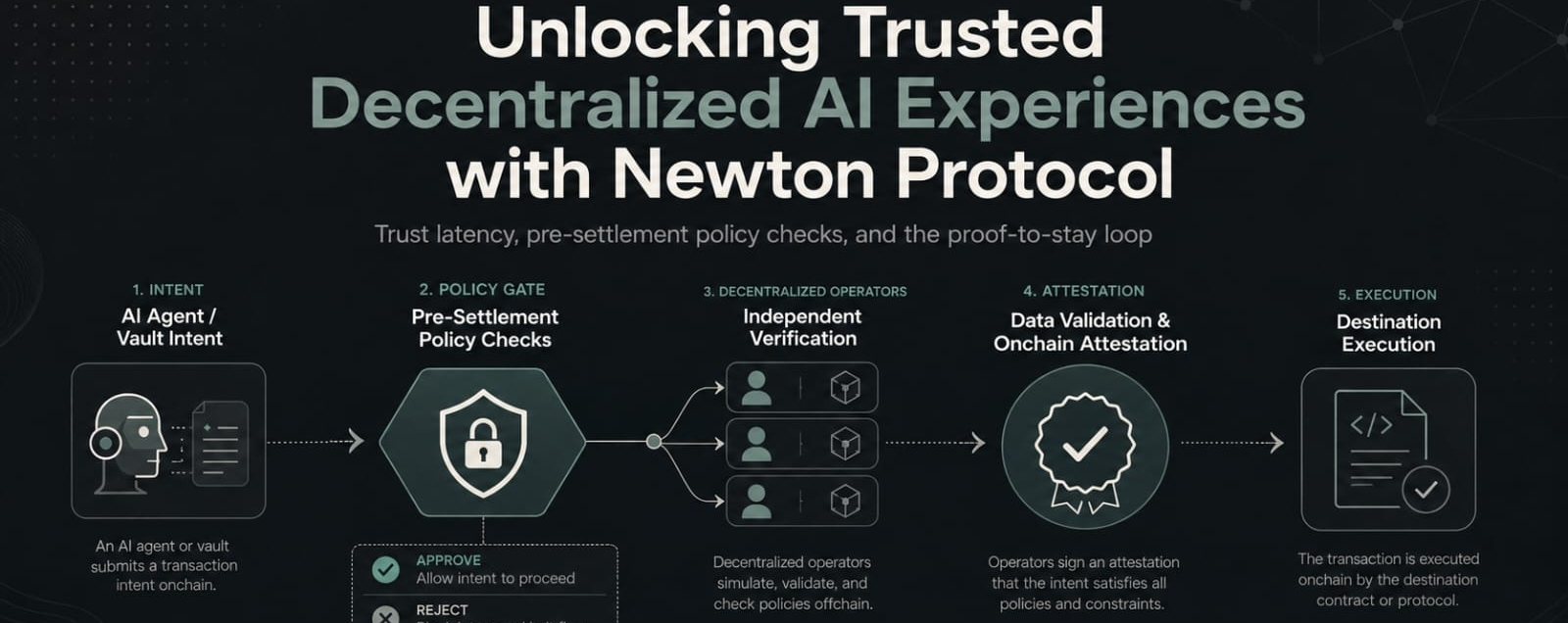
@NewtonProtocol s Mainnet Beta is designed to address that gap. Applications can define programmable policies that are evaluated before settlement. Decentralized operators check the proposed action against relevant conditions, and an approved action receives an onchain attestation that the destination contract can verify before execution.
For users, the important features aren’t only technical. Newton can separate policy from agent logic, combine multiple data sources, update rules without rebuilding an entire application, and create a verifiable record showing that authorization checks occurred.
My view is that this could become more valuable than another marginal improvement in agent intelligence. Smarter automation is useful, but controllable automation is what makes larger amounts of capital easier to trust.
Still, Mainnet Beta is early. Additional checks can introduce cost, latency, integration risk, and dependency on data quality. $NEWT ultimately needs real usage, not just a strong architecture.
Will Web3 users value agents for what they can do, or for what they can prove they were allowed to do? #Newt $LAB
That creates a useful distinction: execution confidence versus authorization confidence. Execution confidence asks whether a transaction will settle correctly. Authorization confidence asks whether it should be allowed to settle under the user’s rules.
Most AI trading systems are improving the first side. They can find routes, rebalance positions, automate payments, or react to market data. But a valid signature still doesn’t prove that an agent respected exposure limits, approved contracts, identity requirements, collateral standards, or changing risk conditions.
@NewtonProtocol s Mainnet Beta is designed to address that gap. Applications can define programmable policies that are evaluated before settlement. Decentralized operators check the proposed action against relevant conditions, and an approved action receives an onchain attestation that the destination contract can verify before execution.
For users, the important features aren’t only technical. Newton can separate policy from agent logic, combine multiple data sources, update rules without rebuilding an entire application, and create a verifiable record showing that authorization checks occurred.
My view is that this could become more valuable than another marginal improvement in agent intelligence. Smarter automation is useful, but controllable automation is what makes larger amounts of capital easier to trust.
Still, Mainnet Beta is early. Additional checks can introduce cost, latency, integration risk, and dependency on data quality. $NEWT ultimately needs real usage, not just a strong architecture.
Will Web3 users value agents for what they can do, or for what they can prove they were allowed to do? #Newt $LAB
翻訳参照
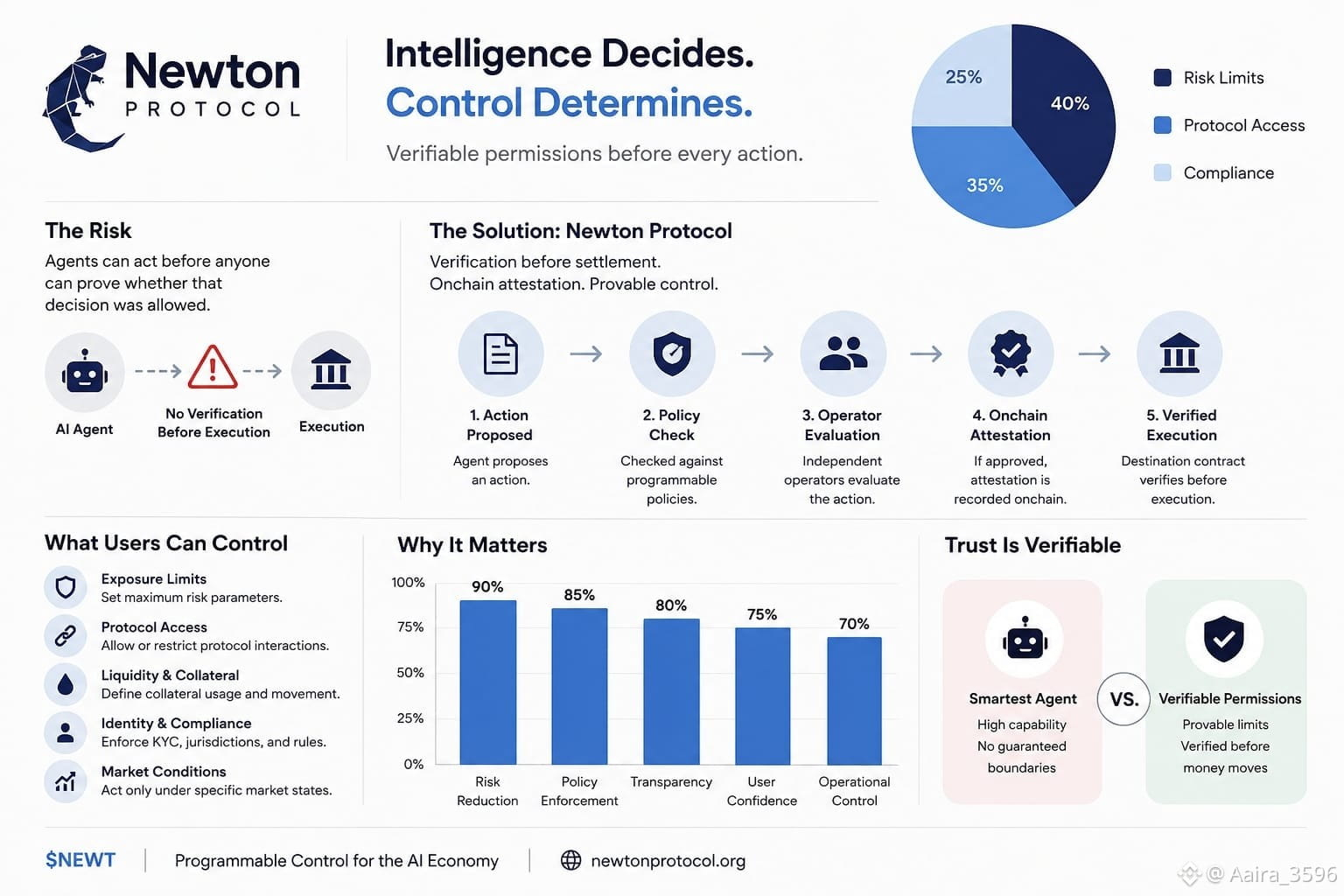
I think the biggest risk in AI-powered finance is not that an agent makes a bad decision. It is that the agent can act before anyone can prove whether that decision was allowed.
That distinction matters. Trading bots, automated vaults, and onchain agents are getting faster and more capable, but execution speed is not the same as control. An agent may identify a profitable rebalance, move collateral, or route capital across protocols, yet still operate outside a user’s risk limits, approved markets, or compliance rules.
My framework is simple: intelligence decides what to do; control determines whether it has the right to do it.
That is where @NewtonProtocol ’s Mainnet Beta becomes interesting. Newton inserts a verification layer before settlement. A proposed action is checked against programmable policies, and independent operators evaluate whether it satisfies the required conditions. If it passes, the network produces an onchain attestation that the destination contract can verify before execution.
In practice, that could let users define boundaries around exposure, protocol access, liquidity, identity, or market conditions without giving an AI agent unrestricted authority. Think of it less like improving the trader and more like installing a risk desk between the trader and the final order.
I find that more important than another promise of smarter automation. Intelligence can create edge, but verifiable limits create confidence. My skepticism is that the system will only matter if policies remain transparent, data inputs stay reliable, and integration is simple enough for real applications to adopt.
If AI agents begin managing serious capital, will investors trust the smartest agent, or the one whose permissions can be proven before money moves?
$NEWT #Newt $LAB
That distinction matters. Trading bots, automated vaults, and onchain agents are getting faster and more capable, but execution speed is not the same as control. An agent may identify a profitable rebalance, move collateral, or route capital across protocols, yet still operate outside a user’s risk limits, approved markets, or compliance rules.
My framework is simple: intelligence decides what to do; control determines whether it has the right to do it.
That is where @NewtonProtocol ’s Mainnet Beta becomes interesting. Newton inserts a verification layer before settlement. A proposed action is checked against programmable policies, and independent operators evaluate whether it satisfies the required conditions. If it passes, the network produces an onchain attestation that the destination contract can verify before execution.
In practice, that could let users define boundaries around exposure, protocol access, liquidity, identity, or market conditions without giving an AI agent unrestricted authority. Think of it less like improving the trader and more like installing a risk desk between the trader and the final order.
I find that more important than another promise of smarter automation. Intelligence can create edge, but verifiable limits create confidence. My skepticism is that the system will only matter if policies remain transparent, data inputs stay reliable, and integration is simple enough for real applications to adopt.
If AI agents begin managing serious capital, will investors trust the smartest agent, or the one whose permissions can be proven before money moves?
$NEWT #Newt $LAB
ログインして、さらにコンテンツを読む