Binance Square

vanar

2.1M vues
66,482 mentions
ZainAli655
·
--
Vanar Chain Update: What’s Moving and What Still Needs WorkI’ve been checking in on projects that are still doing something even when the market isn’t rewarding noise. That’s why Vanar Chain keeps coming back onto my radar. It’s not dominating headlines, but the signals coming from the network suggest it hasn’t stalled. And honestly, that already puts it ahead of a lot of smaller Layer 1s. On the market side, $VANRY is still trading below $0.01 with steady daily activity. No sudden spikes. No ugly breakdowns either. And that’s fine. In this kind of market, consistency matters more than excitement. A lot of small-cap tokens lose liquidity and quietly disappear. Vanar hasn’t. People are still trading it, which usually means there’s still a group paying attention. What’s more interesting to me is what’s happening inside the ecosystem. Vanar keeps leaning into its AI-focused stack, especially Neutron and Kayon, and these are starting to look more like tools than ideas. The fact that access to them is tied directly to #vanar matters. It gives the token a real role beyond speculation. If you need it to use services, demand starts coming from usage, not just trading screens. That kind of shift doesn’t happen overnight. It usually starts small. A handful of users. Some developers testing things out. Then, over time, patterns form. That’s typically how networks grow when they aren’t driven by hype cycles. On the infrastructure side, things look solid. Node participation has been holding up, and transaction performance has stayed consistent. It’s not exciting to talk about, but it’s foundational. Developers won’t build on a chain they don’t trust to work reliably. Now, let’s be realistic about the risks. Adoption is still early. There isn’t a breakout app pulling in users at scale yet. The AI and gaming blockchain space is filled, and Vanar is competing for builders and attention. Execution still decides everything. If usage doesn’t grow, the tech won’t matter. Still, when I step back, the picture feels steady. The token is active. The tools are getting closer to real use. And the network seems to be moving from planning into execution, even if it’s happening quietly. That’s why I’m still watching @Vanar . Not because it’s being hyped, but because the progress feels real, slow, and deliberate. And sometimes, that’s exactly what you want to see.

Vanar Chain Update: What’s Moving and What Still Needs Work

I’ve been checking in on projects that are still doing something even when the market isn’t rewarding noise. That’s why Vanar Chain keeps coming back onto my radar. It’s not dominating headlines, but the signals coming from the network suggest it hasn’t stalled. And honestly, that already puts it ahead of a lot of smaller Layer 1s.

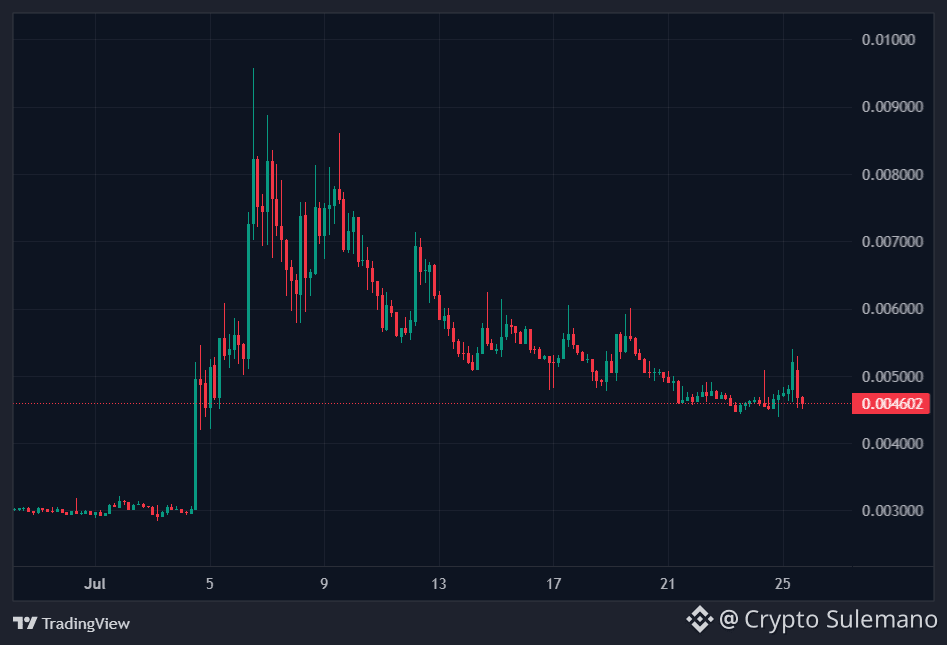
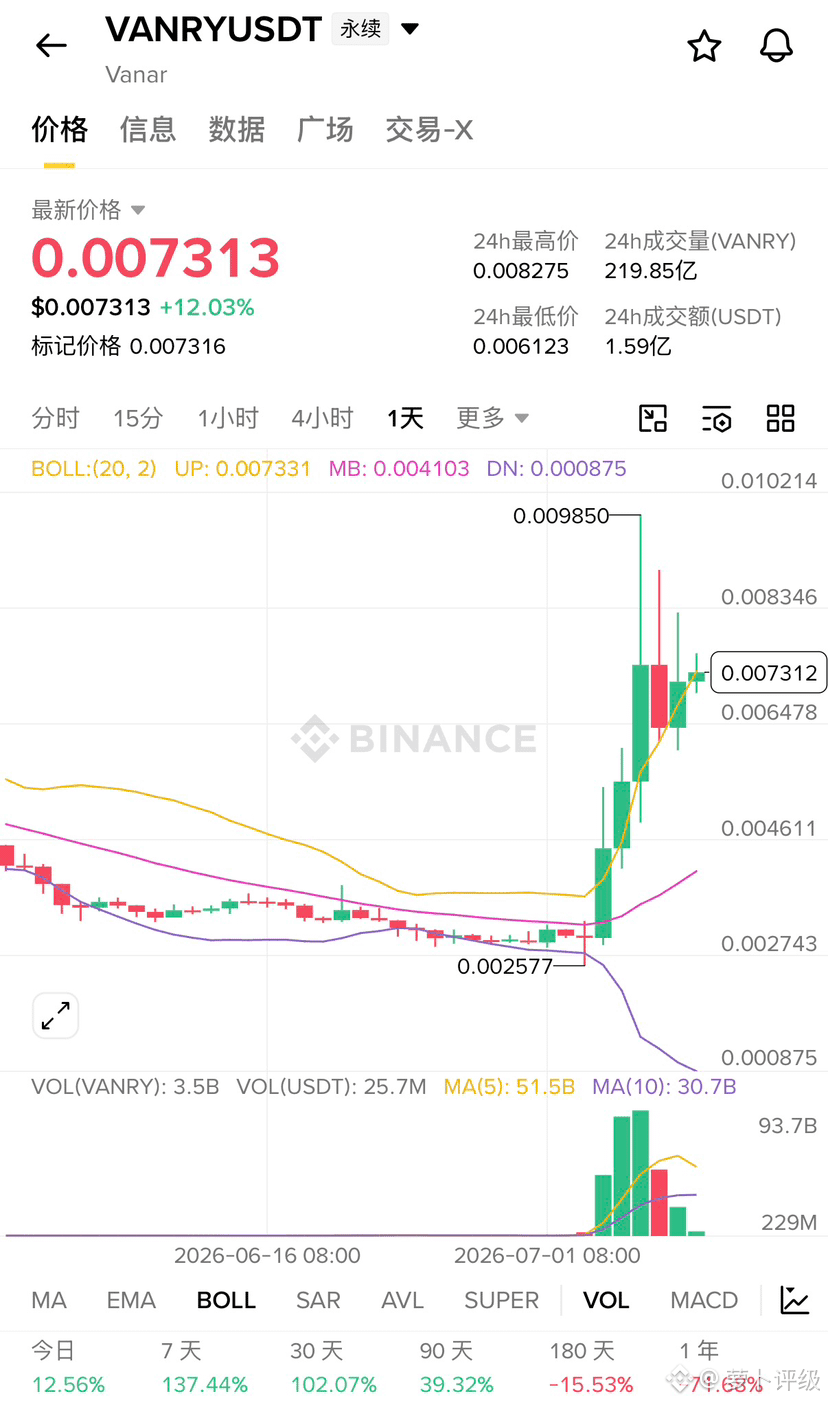
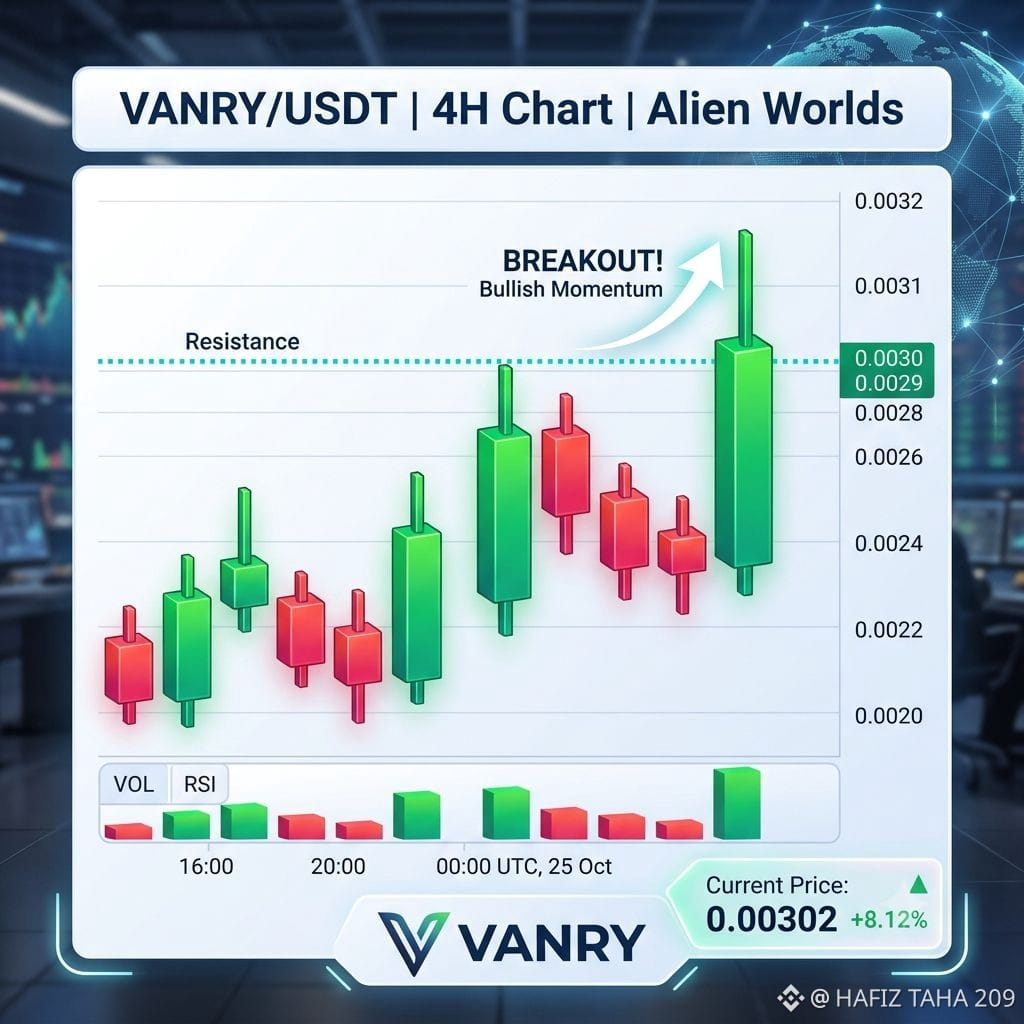
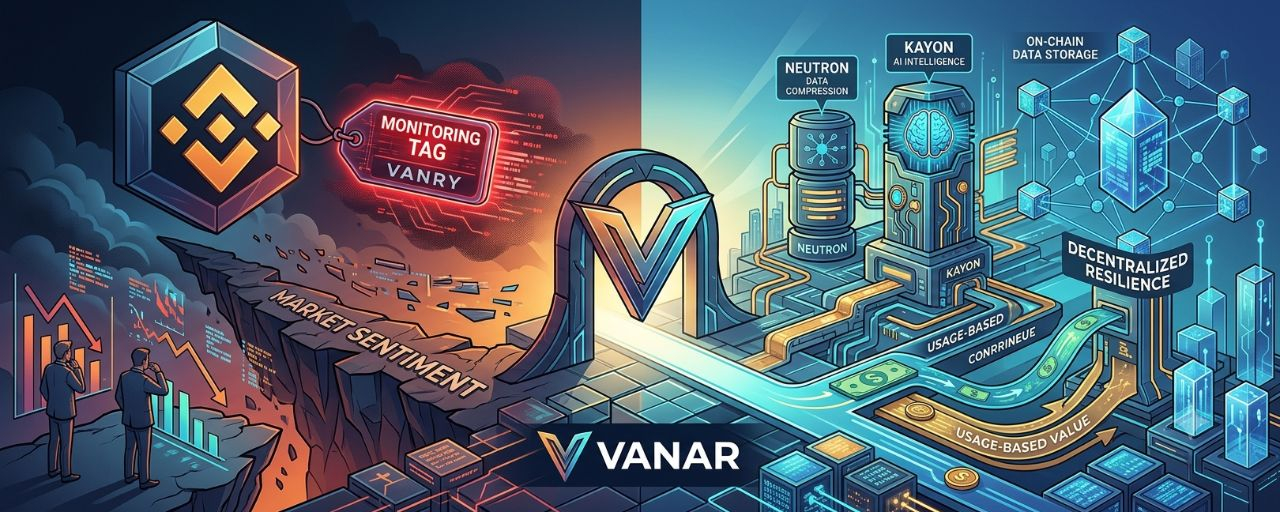
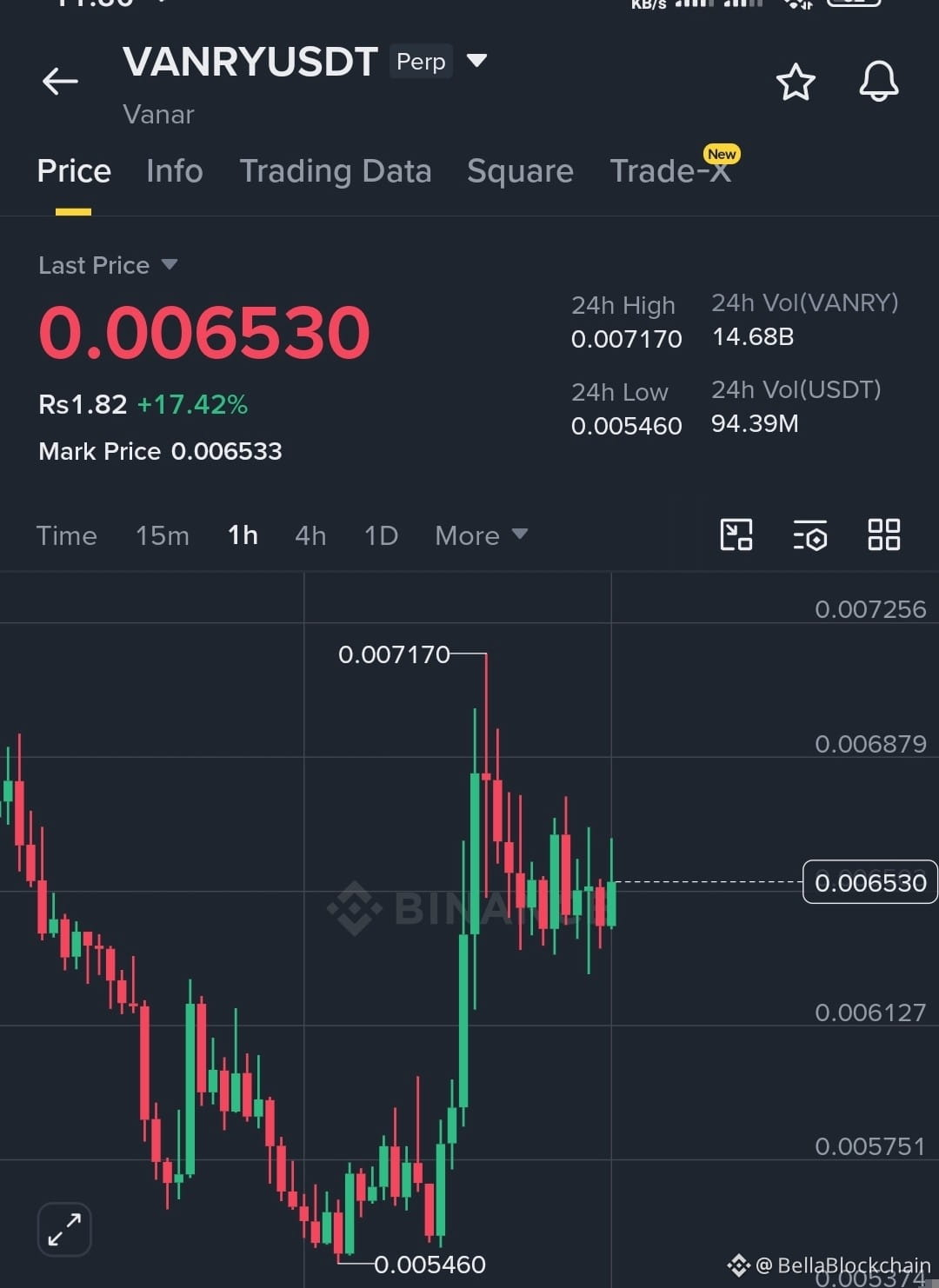
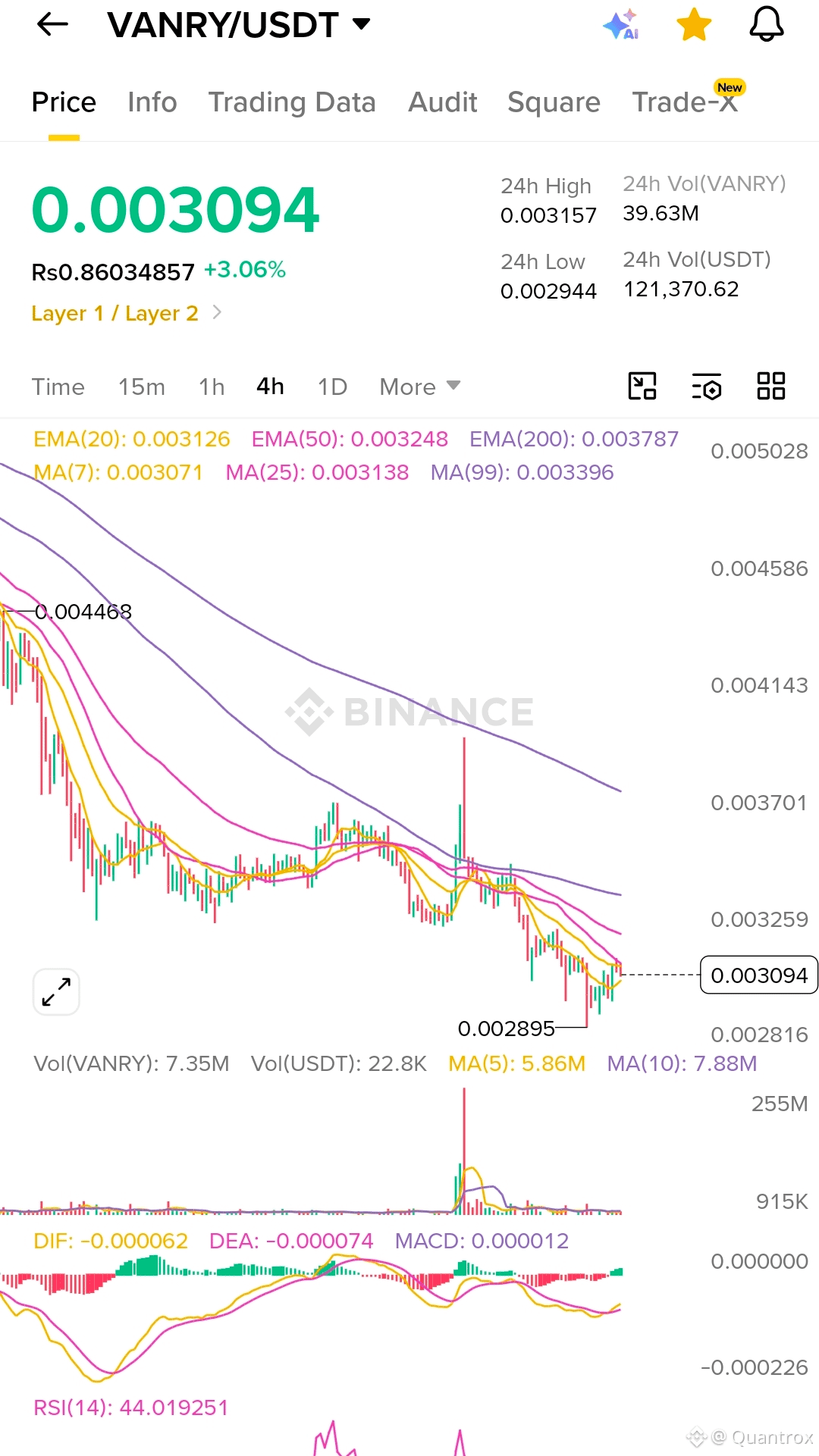
On the market side, $VANRY is still trading below $0.01 with steady daily activity. No sudden spikes. No ugly breakdowns either. And that’s fine. In this kind of market, consistency matters more than excitement. A lot of small-cap tokens lose liquidity and quietly disappear. Vanar hasn’t. People are still trading it, which usually means there’s still a group paying attention. What’s more interesting to me is what’s happening inside the ecosystem. Vanar keeps leaning into its AI-focused stack, especially Neutron and Kayon, and these are starting to look more like tools than ideas. The fact that access to them is tied directly to #vanar matters. It gives the token a real role beyond speculation. If you need it to use services, demand starts coming from usage, not just trading screens.

That kind of shift doesn’t happen overnight. It usually starts small. A handful of users. Some developers testing things out. Then, over time, patterns form. That’s typically how networks grow when they aren’t driven by hype cycles. On the infrastructure side, things look solid. Node participation has been holding up, and transaction performance has stayed consistent. It’s not exciting to talk about, but it’s foundational. Developers won’t build on a chain they don’t trust to work reliably. Now, let’s be realistic about the risks. Adoption is still early. There isn’t a breakout app pulling in users at scale yet. The AI and gaming blockchain space is filled, and Vanar is competing for builders and attention. Execution still decides everything. If usage doesn’t grow, the tech won’t matter.

Still, when I step back, the picture feels steady. The token is active. The tools are getting closer to real use. And the network seems to be moving from planning into execution, even if it’s happening quietly. That’s why I’m still watching @Vanarchain . Not because it’s being hyped, but because the progress feels real, slow, and deliberate. And sometimes, that’s exactly what you want to see.
The Transition to Intelligent Web3 Architecture#vanar $VANRY As we move further into 2026, the blockchain narrative has shifted from simple execution to deep intelligence. While most Layer 1s are still fighting over marginal TPS gains, @Square-Creator-a16f92087a9c has redefined the game with its 5-layer AI-native stack. This isn't just about adding a "chat" feature; it's about the Kayon AI Engine and Neutron Semantic Memory providing on-chain reasoning that was previously impossible. ​The real breakthrough this year is the Neutron compression technology, which allows 4K video clips and complex RWA documents to be stored directly on-chain as "Seeds" rather than fragile off-chain hashes. This effectively solves the "ownership illusion" that plagued early Web3. With transaction costs sitting at a fixed $0.0005, $VANRY is becoming the primary utility for enterprises moving $800M+ in cross-border trade through Vanar’s specialized protocols. We are witnessing the birth of a smart economic infrastructure that learns, adapts, and evolves. The future is no longer just programmable; it’s intelligent. #vanar $VANRY

The Transition to Intelligent Web3 Architecture

#vanar $VANRY As we move further into 2026, the blockchain narrative has shifted from simple execution to deep intelligence. While most Layer 1s are still fighting over marginal TPS gains, @Vanar has redefined the game with its 5-layer AI-native stack. This isn't just about adding a "chat" feature; it's about the Kayon AI Engine and Neutron Semantic Memory providing on-chain reasoning that was previously impossible.
​The real breakthrough this year is the Neutron compression technology, which allows 4K video clips and complex RWA documents to be stored directly on-chain as "Seeds" rather than fragile off-chain hashes. This effectively solves the "ownership illusion" that plagued early Web3. With transaction costs sitting at a fixed $0.0005, $VANRY is becoming the primary utility for enterprises moving $800M+ in cross-border trade through Vanar’s specialized protocols. We are witnessing the birth of a smart economic infrastructure that learns, adapts, and evolves. The future is no longer just programmable; it’s intelligent. #vanar $VANRY
What I like about @Vanar lately is that they’re not chasing whatever narrative is loudest this week. They’re staying focused on building an AI-native chain, and that’s starting to show in how people talk about the project. Instead of competing on speed or fees like every other L1, Vanar’s carving out a lane around intelligence baked into the protocol itself. The conversation has shifted from hype to use. Things like intelligent payments, AI-driven apps, and on-chain logic that doesn’t rely on external services keep coming up and that’s where $VANRY actually makes sense as part of the system, not just a tradable token. Another thing that stands out is the audience they seem to be targeting. It’s not just devs and crypto natives, but gamers, creators, and everyday users who don’t want to think about infrastructure at all. That’s usually a good sign long-term. Of course, none of this matters if real usage doesn’t follow. Adoption is still the big test. But right now, #vanar feels less like a buzzword project and more like something quietly being built for where Web3 is heading.
What I like about @Vanarchain lately is that they’re not chasing whatever narrative is loudest this week. They’re staying focused on building an AI-native chain, and that’s starting to show in how people talk about the project. Instead of competing on speed or fees like every other L1, Vanar’s carving out a lane around intelligence baked into the protocol itself.
The conversation has shifted from hype to use. Things like intelligent payments, AI-driven apps, and on-chain logic that doesn’t rely on external services keep coming up and that’s where $VANRY actually makes sense as part of the system, not just a tradable token.
Another thing that stands out is the audience they seem to be targeting. It’s not just devs and crypto natives, but gamers, creators, and everyday users who don’t want to think about infrastructure at all. That’s usually a good sign long-term.
Of course, none of this matters if real usage doesn’t follow. Adoption is still the big test. But right now, #vanar feels less like a buzzword project and more like something quietly being built for where Web3 is heading.
A
VANRY/USDT
Prix
0,0076
·
--
Haussier
Many blockchain projects try to get attention with big promises and exciting stories. In reality, real growth usually comes from quiet, steady work behind the scenes. Strong infrastructure matters more than hype. Vanar follows this approach. It is a Layer 1 blockchain built for real use, not quick speculation, with a focus on gaming, entertainment, and AI. You can think of @Vanar like basic city services. People don’t think about water pipes or roads when they use them—they just expect them to work. Vanar wants to be the same kind of invisible system. It is designed to run smoothly in high-demand spaces like the Virtua Metaverse and the VGN gaming network, while fixing slow systems and confusing user experiences that have made Web3 hard for everyday users. Infrastructure projects succeed over time, not overnight. They grow because they are reliable, not because they create noise online. By focusing on areas the team knows well, especially games and brand partnerships, Vanar shows a realistic plan. In the long run, its success will depend on how well it performs. If everything works quietly in the background, Vanar will have done its job. #vanar @Vanar $VANRY
Many blockchain projects try to get attention with big promises and exciting stories. In reality, real growth usually comes from quiet, steady work behind the scenes.

Strong infrastructure matters more than hype. Vanar follows this approach. It is a Layer 1 blockchain built for real use, not quick speculation, with a focus on gaming, entertainment, and AI.

You can think of @Vanarchain like basic city services. People don’t think about water pipes or roads when they use them—they just expect them to work. Vanar wants to be the same kind of invisible system.

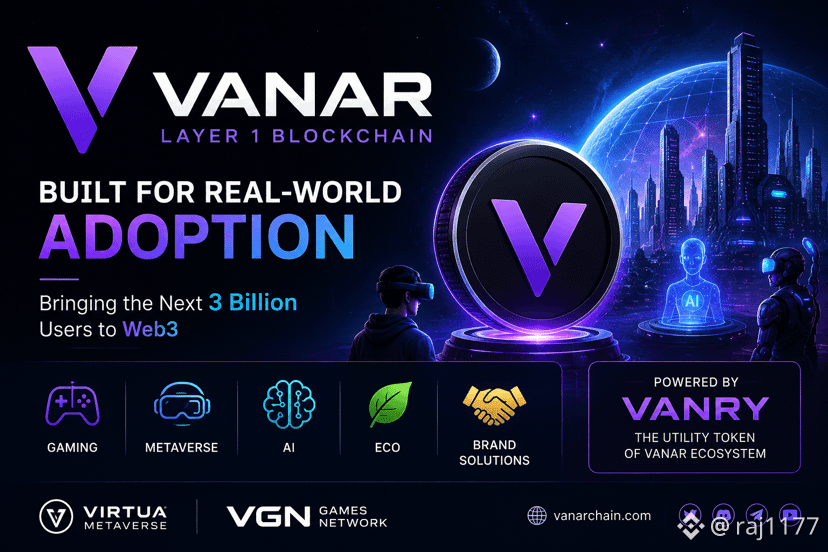
It is designed to run smoothly in high-demand spaces like the Virtua Metaverse and the VGN gaming network, while fixing slow systems and confusing user experiences that have made Web3 hard for everyday users.

Infrastructure projects succeed over time, not overnight. They grow because they are reliable, not because they create noise online. By focusing on areas the team knows well, especially games and brand partnerships, Vanar shows a realistic plan. In the long run, its success will depend on how well it performs. If everything works quietly in the background, Vanar will have done its job.

#vanar @Vanarchain

$VANRY
Vanar Chain Update: Usage, Network Health, and RealityI’ve been trying to tune out projects that live mostly off big stories and start paying attention to the ones where the numbers still show life. That’s why Vanar Chain keeps staying on my radar. It’s not loud. It’s not trending every week. But it also hasn’t gone quiet, and that’s a bigger deal than it sounds. If you look at the market side, $VANRY has been hanging out below $0.01 with steady daily volume. Nothing flashy. No big spikes. But also no sudden drop-off. In slower markets, a lot of small-cap tokens lose liquidity and basically disappear. Vanar hasn’t done that. People are still trading it, which tells me interest hasn’t fully dried up. What I care about more than price, though, is what’s actually getting built. Vanar has been pushing forward on its AI-focused infrastructure, especially with Neutron and Kayon. These aren’t just ideas sitting on a roadmap anymore. They’re moving toward real services people can use, and access is meant to run through @Vanar . That’s important. It shows the token has a role beyond just being traded. Once a token starts getting tied to actual usage, things change. Activity doesn’t just come from people flipping it on exchanges. It starts coming from people using tools, paying for access, and sticking around. That kind of demand usually builds slowly, but it’s also a lot more durable when it does. On the network side, the updates have been pretty steady. Performance looks stable, and node participation has been improving. That stuff isn’t exciting to talk about, but it’s the foundation. Developers don’t build on chains they can’t rely on. Consistency is boring, but it’s also necessary. Now, none of this means it’s a sure thing. Adoption is still early. There isn’t a breakout app pulling in massive user numbers yet. And the AI and gaming blockchain space is crowded. Vanar still has to execute and prove people actually want what’s being built. But overall, the picture feels balanced. The token is still active. The infrastructure is moving forward. And the ecosystem looks like it’s slowly shifting from plans to real usage. That’s why I’m still watching #vanar . Not because of hype or price predictions, but because the data offers it’s quietly building, even when most people aren’t paying attention.

Vanar Chain Update: Usage, Network Health, and Reality

I’ve been trying to tune out projects that live mostly off big stories and start paying attention to the ones where the numbers still show life. That’s why Vanar Chain keeps staying on my radar. It’s not loud. It’s not trending every week. But it also hasn’t gone quiet, and that’s a bigger deal than it sounds.

If you look at the market side, $VANRY has been hanging out below $0.01 with steady daily volume. Nothing flashy. No big spikes. But also no sudden drop-off. In slower markets, a lot of small-cap tokens lose liquidity and basically disappear. Vanar hasn’t done that. People are still trading it, which tells me interest hasn’t fully dried up. What I care about more than price, though, is what’s actually getting built. Vanar has been pushing forward on its AI-focused infrastructure, especially with Neutron and Kayon. These aren’t just ideas sitting on a roadmap anymore. They’re moving toward real services people can use, and access is meant to run through @Vanarchain . That’s important. It shows the token has a role beyond just being traded.

Once a token starts getting tied to actual usage, things change. Activity doesn’t just come from people flipping it on exchanges. It starts coming from people using tools, paying for access, and sticking around. That kind of demand usually builds slowly, but it’s also a lot more durable when it does. On the network side, the updates have been pretty steady. Performance looks stable, and node participation has been improving. That stuff isn’t exciting to talk about, but it’s the foundation. Developers don’t build on chains they can’t rely on. Consistency is boring, but it’s also necessary.

Now, none of this means it’s a sure thing. Adoption is still early. There isn’t a breakout app pulling in massive user numbers yet. And the AI and gaming blockchain space is crowded. Vanar still has to execute and prove people actually want what’s being built. But overall, the picture feels balanced. The token is still active. The infrastructure is moving forward. And the ecosystem looks like it’s slowly shifting from plans to real usage.

That’s why I’m still watching #vanar . Not because of hype or price predictions, but because the data offers it’s quietly building, even when most people aren’t paying attention.
🎮 Why Vanar Chain Is Positioning Itself as the Gaming Layer for Web3 #vanar Most blockchains weren’t built for games. They were built for finance first — and gaming was added later as an afterthought. That’s exactly the gap Vanar Chain is trying to fill. 🔍 The Core Problem With Web3 Gaming Real games need: Ultra-low latency Real-time execution Smooth UX for non-crypto users Scalability during peak activity But most Layer 1s struggle here. High fees, network congestion, wallet friction — all of these break immersion. And in gaming, bad UX = instant drop-off. 🧠 Vanar Chain’s Strategic Positioning Vanar Chain is not trying to be “another general-purpose blockchain.” Instead, it’s positioning itself as gaming-first infrastructure, designed around how games actually work. Key design priorities include: ⚡ High-performance execution for real-time gameplay 🎮 Developer-friendly tools tailored for gaming studios 🧩 Seamless Web2 → Web3 integration for mainstream players 🏗️ Infrastructure that supports live games, not just transactions This approach shifts the narrative from “crypto game” to “real game powered by blockchain.” 🎯 Why This Matters Long Term Web3 gaming adoption won’t be driven by speculation — it will be driven by playability. If gaming becomes one of the largest onboarding funnels for Web3, then: Infrastructure optimized for games may matter more than generic blockchains. Vanar Chain is betting on that exact thesis. 🧩 Final Take Vanar Chain isn’t chasing every use case. It’s focusing deeply on one of the hardest ones — gaming. And in crypto, focus often beats breadth. 👀 Worth watching as Web3 gaming matures. @Vanar $VANRY {spot}(VANRYUSDT)
🎮 Why Vanar Chain Is Positioning Itself as the Gaming Layer for Web3
#vanar
Most blockchains weren’t built for games.
They were built for finance first — and gaming was added later as an afterthought.
That’s exactly the gap Vanar Chain is trying to fill.

🔍 The Core Problem With Web3 Gaming
Real games need:
Ultra-low latency
Real-time execution
Smooth UX for non-crypto users
Scalability during peak activity
But most Layer 1s struggle here. High fees, network congestion, wallet friction — all of these break immersion. And in gaming, bad UX = instant drop-off.

🧠 Vanar Chain’s Strategic Positioning
Vanar Chain is not trying to be “another general-purpose blockchain.”
Instead, it’s positioning itself as gaming-first infrastructure, designed around how games actually work.

Key design priorities include:
⚡ High-performance execution for real-time gameplay

🎮 Developer-friendly tools tailored for gaming studios

🧩 Seamless Web2 → Web3 integration for mainstream players

🏗️ Infrastructure that supports live games, not just transactions
This approach shifts the narrative from “crypto game” to “real game powered by blockchain.”

🎯 Why This Matters Long Term
Web3 gaming adoption won’t be driven by speculation — it will be driven by playability.
If gaming becomes one of the largest onboarding funnels for Web3, then:
Infrastructure optimized for games may matter more than generic blockchains.
Vanar Chain is betting on that exact thesis.

🧩 Final Take
Vanar Chain isn’t chasing every use case.
It’s focusing deeply on one of the hardest ones — gaming.

And in crypto, focus often beats breadth.
👀 Worth watching as Web3 gaming matures.
@Vanarchain $VANRY
Vanar Chain: Cross-Chain Availability#vanar Chain: Why Cross-Chain Availability Changes Everything for AI Infrastructure @Vanar is not being built to exist in isolation. It’s being built to operate where intelligence, liquidity, and users already are — and that reality makes single-chain AI infrastructure fundamentally limiting. Most blockchains still assume that if you build something powerful enough, users will come to the chain. That assumption breaks down completely when you start designing systems for AI agents. AI doesn’t behave like humans. It doesn’t “choose a favorite chain.” It operates across environments, data sources, and execution layers simultaneously. An AI-first system trapped on a single network is not incomplete — it’s constrained by design. This is why Vanar’s cross-chain availability on Base matters. Why single-chain AI infrastructure doesn’t scale AI agents don’t operate in closed ecosystems. They pull data from multiple sources, execute actions across different platforms, settle value in various environments, and maintain memory over time. A single-chain system forces artificial bottlenecks into something that is inherently distributed. If an AI agent has to bridge manually, wait for liquidity, or reconfigure its logic every time it crosses chains, the system loses efficiency, coherence, and speed. Stateless execution might work for simple smart contracts — it doesn’t work for intelligent systems that need continuity. AI infrastructure cannot afford fragmentation. It needs native access, not afterthought bridges. Where users, liquidity, and developers already exist This is the part most narratives ignore: adoption doesn’t start from zero. Base is already where users transact, where liquidity lives, and where developers ship consumer-facing applications at scale. It’s one of the most active environments for onchain activity, especially for applications that care about usability, speed, and integration with existing crypto rails. By becoming available on Base, Vanar isn’t asking the ecosystem to move. It’s positioning itself inside existing flows. That matters because AI systems don’t grow through speculative hype — they grow through usage. Through agents executing tasks. Through applications that need intelligence embedded directly into their logic. Base provides that surface area. Why AI-first systems can’t remain isolated Isolation kills compounding. An AI system that only operates within one chain is cut off from external signals, external liquidity, and external execution contexts. Over time, it becomes brittle — optimized for a closed environment while the real world keeps moving. Vanar’s thesis is the opposite: intelligence should compound across ecosystems. Memory should persist across environments. Execution should be coherent even when actions happen on different chains. That only works if the infrastructure itself is designed to be cross-chain by default, not patched later. Why cross-chain matters specifically for AI Cross-chain for DeFi is about liquidity. Cross-chain for AI is about context. AI agents don’t just move value — they reason, decide, and act based on changing conditions. That means they need access to multiple ecosystems at once: One chain for execution Another for settlement Another for data availability Another for user interaction Vanar’s architecture is built around this reality. Cross-chain availability allows AI agents on Vanar to operate as unified systems, not fragmented scripts stitched together by bridges. How AI agents operate across ecosystems Think of AI agents not as wallets, but as processes. They observe conditions on one network, execute logic on another, settle value elsewhere, and update memory continuously. When those steps happen across isolated chains, friction accumulates fast. Vanar’s approach removes that friction. With availability on Base, agents can interact with users and applications where activity already happens, while maintaining their intelligence, memory, and settlement logic through Vanar’s core infrastructure. This is how AI systems scale without breaking coherence. What broader access unlocks for adoption Broader access doesn’t just mean “more users.” It means more use cases. On Base, Vanar-powered AI can plug into: Existing applications Active liquidity pools Consumer-facing interfaces Real transaction volume This turns Vanar from a standalone AI chain into an intelligence layer that applications can actually use. Adoption stops being theoretical and starts being structural. What changes with Vanar on Base Vanar on Base changes the direction of growth. Instead of asking developers and users to migrate, Vanar meets them where they already are. AI-native applications can now deploy logic that interacts directly with Base’s ecosystem while relying on Vanar for intelligence, memory, and automation. This removes the biggest barrier to AI adoption in Web3: isolation. How Base expands Vanar’s reach Base gives Vanar immediate access to scale — not just in numbers, but in relevance. Developers building on Base can now integrate AI-first infrastructure without leaving their environment. Users interacting on Base can benefit from AI-driven systems without learning a new chain. Liquidity can flow naturally instead of being forced through bridges. That’s how infrastructure actually spreads. What this means for $VANRY Cross-chain availability fundamentally changes the role of $VANRY. Instead of being tied to a single network’s activity, vanry becomes connected to usage across ecosystems. As AI agents operate, applications scale, and execution increases across Base and beyond, the potential surface area for Vanry expands with it. This isn’t about hype-driven expansion. It’s about aligning the token with real system usage, wherever that usage happens. Vanar Chain isn’t trying to win the “best single chain” argument. It’s solving a different problem entirely. AI doesn’t live on one chain. And now, neither does Vanar. {future}(VANRYUSDT)

Vanar Chain: Cross-Chain Availability

#vanar Chain: Why Cross-Chain Availability Changes Everything for AI Infrastructure

@Vanarchain is not being built to exist in isolation. It’s being built to operate where intelligence, liquidity, and users already are — and that reality makes single-chain AI infrastructure fundamentally limiting.

Most blockchains still assume that if you build something powerful enough, users will come to the chain. That assumption breaks down completely when you start designing systems for AI agents. AI doesn’t behave like humans. It doesn’t “choose a favorite chain.” It operates across environments, data sources, and execution layers simultaneously. An AI-first system trapped on a single network is not incomplete — it’s constrained by design.

This is why Vanar’s cross-chain availability on Base matters.

Why single-chain AI infrastructure doesn’t scale

AI agents don’t operate in closed ecosystems. They pull data from multiple sources, execute actions across different platforms, settle value in various environments, and maintain memory over time. A single-chain system forces artificial bottlenecks into something that is inherently distributed.

If an AI agent has to bridge manually, wait for liquidity, or reconfigure its logic every time it crosses chains, the system loses efficiency, coherence, and speed. Stateless execution might work for simple smart contracts — it doesn’t work for intelligent systems that need continuity.

AI infrastructure cannot afford fragmentation. It needs native access, not afterthought bridges.

Where users, liquidity, and developers already exist

This is the part most narratives ignore: adoption doesn’t start from zero.

Base is already where users transact, where liquidity lives, and where developers ship consumer-facing applications at scale. It’s one of the most active environments for onchain activity, especially for applications that care about usability, speed, and integration with existing crypto rails.

By becoming available on Base, Vanar isn’t asking the ecosystem to move. It’s positioning itself inside existing flows.

That matters because AI systems don’t grow through speculative hype — they grow through usage. Through agents executing tasks. Through applications that need intelligence embedded directly into their logic. Base provides that surface area.

Why AI-first systems can’t remain isolated

Isolation kills compounding.

An AI system that only operates within one chain is cut off from external signals, external liquidity, and external execution contexts. Over time, it becomes brittle — optimized for a closed environment while the real world keeps moving.

Vanar’s thesis is the opposite: intelligence should compound across ecosystems. Memory should persist across environments. Execution should be coherent even when actions happen on different chains.

That only works if the infrastructure itself is designed to be cross-chain by default, not patched later.

Why cross-chain matters specifically for AI

Cross-chain for DeFi is about liquidity.

Cross-chain for AI is about context.

AI agents don’t just move value — they reason, decide, and act based on changing conditions. That means they need access to multiple ecosystems at once:

One chain for execution
Another for settlement
Another for data availability
Another for user interaction

Vanar’s architecture is built around this reality. Cross-chain availability allows AI agents on Vanar to operate as unified systems, not fragmented scripts stitched together by bridges.

How AI agents operate across ecosystems

Think of AI agents not as wallets, but as processes.

They observe conditions on one network, execute logic on another, settle value elsewhere, and update memory continuously. When those steps happen across isolated chains, friction accumulates fast.

Vanar’s approach removes that friction. With availability on Base, agents can interact with users and applications where activity already happens, while maintaining their intelligence, memory, and settlement logic through Vanar’s core infrastructure.

This is how AI systems scale without breaking coherence.

What broader access unlocks for adoption

Broader access doesn’t just mean “more users.” It means more use cases.

On Base, Vanar-powered AI can plug into:

Existing applications
Active liquidity pools
Consumer-facing interfaces
Real transaction volume

This turns Vanar from a standalone AI chain into an intelligence layer that applications can actually use. Adoption stops being theoretical and starts being structural.

What changes with Vanar on Base

Vanar on Base changes the direction of growth.

Instead of asking developers and users to migrate, Vanar meets them where they already are. AI-native applications can now deploy logic that interacts directly with Base’s ecosystem while relying on Vanar for intelligence, memory, and automation.

This removes the biggest barrier to AI adoption in Web3: isolation.

How Base expands Vanar’s reach

Base gives Vanar immediate access to scale — not just in numbers, but in relevance.

Developers building on Base can now integrate AI-first infrastructure without leaving their environment. Users interacting on Base can benefit from AI-driven systems without learning a new chain. Liquidity can flow naturally instead of being forced through bridges.

That’s how infrastructure actually spreads.

What this means for $VANRY

Cross-chain availability fundamentally changes the role of $VANRY .

Instead of being tied to a single network’s activity, vanry becomes connected to usage across ecosystems. As AI agents operate, applications scale, and execution increases across Base and beyond, the potential surface area for Vanry expands with it.

This isn’t about hype-driven expansion. It’s about aligning the token with real system usage, wherever that usage happens.

Vanar Chain isn’t trying to win the “best single chain” argument.

It’s solving a different problem entirely.

AI doesn’t live on one chain.

And now, neither does Vanar.
Vanar: Built for Real-World Web3 AdoptionVanar feels like it was built by people who actually understand what it’s like to lose a user in the first 10 seconds. Because that’s what most of Web3 does to regular people. The moment someone hears “wallet,” “seed phrase,” “gas,” or sees a transaction fail because fees jumped, something shuts off inside them. Not because they’re “not smart enough,” but because the experience feels cold, risky, and unfinished. Vanar’s entire identity is a response to that pain. It’s not trying to impress crypto veterans with complexity. It’s trying to welcome the next three billion people without making them feel like they need to study before they can belong. And you can feel the difference in how it’s positioned. Vanar comes from a world where attention is everything—gaming, entertainment, and brands. In that world, nobody gets applauded for “decentralization.” They get judged on one thing: did it feel smooth? Did it feel worth my time? Did I enjoy it enough to come back tomorrow? That mindset hits different, because it forces the technology to serve humans, not the other way around. So Vanar is built like an adoption machine, not a science project. The idea is simple but powerful: don’t make people learn blockchain. Let them live in experiences they already love, and let blockchain quietly do the heavy lifting underneath. Ownership, identity, transfers, economies, rewards—those things can exist without forcing users to stare into the scary parts of crypto. When the experience feels normal, people stop resisting. They stop overthinking. They just… participate. That’s why the ecosystem matters as much as the chain. Virtua Metaverse is one of the most meaningful examples here because it isn’t marketed like a developer playground. It’s meant to feel like a living digital space—where collectibles, identity, and interaction can actually matter. Not just “look, I minted something,” but “this belongs to me, and it has a purpose inside a world I care about.” That emotional shift—from speculation to attachment—is where mainstream adoption starts to feel real. Then you look at VGN, the gaming network, and you see the same philosophy: Web3 doesn’t need to hijack gaming. It needs to disappear into it. Players don’t want to be forced into trading tokens just to enjoy a game. They want to log in, play, progress, earn, flex, and carry value across experiences. VGN’s whole direction is about bridging familiar gaming behavior with real ownership in the background. That’s the dream—where the tech doesn’t interrupt the fun. And the chain itself is designed to support that kind of everyday activity. Vanar leans into EVM compatibility because builders don’t want to reinvent the wheel. If you make development easier, you attract more creators, and when creators build, users follow. Vanar also talks about being AI-native, and whether someone is bullish on the AI narrative or not, the emotional point is clear: it wants to be ready for what comes next. Not just today’s dApps—tomorrow’s intelligent apps, personalized experiences, and systems that feel alive instead of static. Now, about VANRY—this is where the story becomes real. A token isn’t valuable just because it exists. It becomes valuable when it becomes necessary without feeling forced. VANRY is designed to be the fuel for everything happening on the network—transactions, smart contracts, network security through staking. But the deeper point is this: if Vanar’s consumer vision works, VANRY won’t feel like a “crypto asset.” It will feel like the invisible engine behind games, marketplaces, metaverse experiences, and whatever comes next. That’s what makes people emotionally invest—not just financially, but mentally. Because when something becomes part of your daily digital life, it’s no longer a chart. It’s no longer a “trade.” It becomes an ecosystem you understand through experience. And experience builds loyalty in a way marketing never can. There’s also an underrated thing Vanar is trying to protect: trust. Mainstream users don’t tolerate chaos. They don’t want to wake up and find out “fees are insane today” or “transactions are stuck” or “the app is broken because the chain is congested.” Vanar’s emphasis on predictable cost and consumer-friendly design is basically saying: “We want this to feel safe and consistent.” That’s not a technical flex—it’s a psychological one. Because trust is what turns a first-time user into a long-term user. And that’s why Vanar’s mission hits emotionally: it’s chasing belonging. Not the kind of belonging where you have to learn jargon and prove you’re early. The kind of belonging where you can show up, play, collect, create, and participate—without fear of making a mistake that costs you money. Without the anxiety of doing something “wrong.” Without feeling like you’re entering a space that wasn’t made for you. Vanar’s bet is bold, but it’s human. If it succeeds, people won’t say “I used a blockchain today.” They’ll say “I played,” “I built,” “I owned,” “I earned,” “I explored.” And that’s the moment Web3 stops being a niche movement and starts becoming a normal part of the internet #vanar @Vanar $VANRY

Vanar: Built for Real-World Web3 Adoption

Vanar feels like it was built by people who actually understand what it’s like to lose a user in the first 10 seconds.

Because that’s what most of Web3 does to regular people. The moment someone hears “wallet,” “seed phrase,” “gas,” or sees a transaction fail because fees jumped, something shuts off inside them. Not because they’re “not smart enough,” but because the experience feels cold, risky, and unfinished. Vanar’s entire identity is a response to that pain. It’s not trying to impress crypto veterans with complexity. It’s trying to welcome the next three billion people without making them feel like they need to study before they can belong.

And you can feel the difference in how it’s positioned.

Vanar comes from a world where attention is everything—gaming, entertainment, and brands. In that world, nobody gets applauded for “decentralization.” They get judged on one thing: did it feel smooth? Did it feel worth my time? Did I enjoy it enough to come back tomorrow? That mindset hits different, because it forces the technology to serve humans, not the other way around.

So Vanar is built like an adoption machine, not a science project.

The idea is simple but powerful: don’t make people learn blockchain. Let them live in experiences they already love, and let blockchain quietly do the heavy lifting underneath. Ownership, identity, transfers, economies, rewards—those things can exist without forcing users to stare into the scary parts of crypto. When the experience feels normal, people stop resisting. They stop overthinking. They just… participate.

That’s why the ecosystem matters as much as the chain.

Virtua Metaverse is one of the most meaningful examples here because it isn’t marketed like a developer playground. It’s meant to feel like a living digital space—where collectibles, identity, and interaction can actually matter. Not just “look, I minted something,” but “this belongs to me, and it has a purpose inside a world I care about.” That emotional shift—from speculation to attachment—is where mainstream adoption starts to feel real.

Then you look at VGN, the gaming network, and you see the same philosophy: Web3 doesn’t need to hijack gaming. It needs to disappear into it. Players don’t want to be forced into trading tokens just to enjoy a game. They want to log in, play, progress, earn, flex, and carry value across experiences. VGN’s whole direction is about bridging familiar gaming behavior with real ownership in the background. That’s the dream—where the tech doesn’t interrupt the fun.

And the chain itself is designed to support that kind of everyday activity.

Vanar leans into EVM compatibility because builders don’t want to reinvent the wheel. If you make development easier, you attract more creators, and when creators build, users follow. Vanar also talks about being AI-native, and whether someone is bullish on the AI narrative or not, the emotional point is clear: it wants to be ready for what comes next. Not just today’s dApps—tomorrow’s intelligent apps, personalized experiences, and systems that feel alive instead of static.

Now, about VANRY—this is where the story becomes real.

A token isn’t valuable just because it exists. It becomes valuable when it becomes necessary without feeling forced. VANRY is designed to be the fuel for everything happening on the network—transactions, smart contracts, network security through staking. But the deeper point is this: if Vanar’s consumer vision works, VANRY won’t feel like a “crypto asset.” It will feel like the invisible engine behind games, marketplaces, metaverse experiences, and whatever comes next.

That’s what makes people emotionally invest—not just financially, but mentally.

Because when something becomes part of your daily digital life, it’s no longer a chart. It’s no longer a “trade.” It becomes an ecosystem you understand through experience. And experience builds loyalty in a way marketing never can.

There’s also an underrated thing Vanar is trying to protect: trust.

Mainstream users don’t tolerate chaos. They don’t want to wake up and find out “fees are insane today” or “transactions are stuck” or “the app is broken because the chain is congested.” Vanar’s emphasis on predictable cost and consumer-friendly design is basically saying: “We want this to feel safe and consistent.” That’s not a technical flex—it’s a psychological one. Because trust is what turns a first-time user into a long-term user.

And that’s why Vanar’s mission hits emotionally: it’s chasing belonging.

Not the kind of belonging where you have to learn jargon and prove you’re early. The kind of belonging where you can show up, play, collect, create, and participate—without fear of making a mistake that costs you money. Without the anxiety of doing something “wrong.” Without feeling like you’re entering a space that wasn’t made for you.

Vanar’s bet is bold, but it’s human.

If it succeeds, people won’t say “I used a blockchain today.” They’ll say “I played,” “I built,” “I owned,” “I earned,” “I explored.” And that’s the moment Web3 stops being a niche movement and starts becoming a normal part of the internet

#vanar @Vanarchain $VANRY
What stands out to me lately is that @Vanar keeps moving forward on the AI-native angle, and not in a hand-wavy way. Stuff like Neutron and Kayon isn’t just branding they’re real protocol layers designed to let apps store meaningful data and reason over it on-chain. That’s a big shift from most blockchains, where anything remotely intelligent still lives off-chain. The interesting part is how this translates into actual use cases. Think AI agents that can react to on-chain data without oracles, smarter PayFi flows, or applications that don’t need centralized servers to “think.” That’s the direction #vanar is clearly aiming for. They’ve also been putting effort into ecosystem growth and tooling, which matters way more than flashy announcements. Of course, this is still early. The real challenge is adoption developers need to ship, and users need reasons to care. But compared to chains that are still talking about “AI someday,” $VANRY already feels like it’s laying the groundwork now.
What stands out to me lately is that @Vanarchain keeps moving forward on the AI-native angle, and not in a hand-wavy way. Stuff like Neutron and Kayon isn’t just branding they’re real protocol layers designed to let apps store meaningful data and reason over it on-chain. That’s a big shift from most blockchains, where anything remotely intelligent still lives off-chain.
The interesting part is how this translates into actual use cases. Think AI agents that can react to on-chain data without oracles, smarter PayFi flows, or applications that don’t need centralized servers to “think.” That’s the direction #vanar is clearly aiming for.
They’ve also been putting effort into ecosystem growth and tooling, which matters way more than flashy announcements.
Of course, this is still early. The real challenge is adoption developers need to ship, and users need reasons to care. But compared to chains that are still talking about “AI someday,” $VANRY already feels like it’s laying the groundwork now.
A
VANRY/USDT
Prix
0,0076
Vanar: The World You Didn’t Know You Were Waiting ForHave you ever felt that the internet today doesn’t quite belong to you? That it’s fast, useful, maybe even fun—but somehow missing something? Vanar is here to change that. It’s not just another blockchain. It’s a world, alive and breathing, built for people like you and the billions who are about to join the digital age. Vanar is a Level 1 blockchain, yes—but it’s so much more than technology. It’s a bridge to the future. It’s a place where imagination becomes real, where games, metaverse worlds, AI, brands, and everyday life all connect. It’s built not for the few who already understand crypto, but for the many who are curious, who want to explore, and who want to play. The team behind Vanar knows how to make experiences unforgettable. They’ve worked with games, entertainment, and global brands. They’ve seen how people fall in love with worlds that feel alive. And now, they’re bringing all that know-how to Web3. The goal? To welcome the next three billion people into a digital world that finally makes sense. Vanar moves fast. Really fast. Millions of users, billions of interactions—it can handle it all without slowing down. No glitches, no waiting. Just smooth, seamless experiences. But speed is only part of the story. Vanar is about freedom—the freedom to explore, to create, to connect in ways you never imagined. Take Virtua Metaverse. Imagine stepping into a city that feels alive, where you can explore streets, meet new people, play games, build experiences, and even earn from your creativity. It’s not cold or distant—it’s alive, vibrant, and waiting for you to leave your mark. Every corner is full of possibilities. Every interaction feels meaningful. Then there’s the VGN Games Network. Gaming is no longer just entertainment here. It’s community, it’s economy, it’s connection. Players earn, developers build without limits, and brands interact naturally. Every game is a world, and every world is an opportunity to play, explore, and grow. At the center of all this is VANRY, Vanar’s token. VANRY is not just money. It’s a key. It’s your way to participate in everything this universe has to offer. Every action, every game, every creation flows through it. With VANRY, you are not a visitor—you are a participant, a creator, a pioneer. Vanar is built for people, not tech experts. Many blockchains feel intimidating, like closed clubs where you need a password just to understand what’s happening. Vanar is different. It’s an open city, a place full of life, energy, and curiosity. Anyone with a computer or a phone can step in and feel at home. Anyone can join the future without needing to know all the technical details. And Vanar is flexible. It’s not limited to gaming or the metaverse. Brands can create meaningful experiences, AI can interact in exciting ways, eco-solutions can grow and reach people everywhere. Vanar bends to your ideas, not the other way around. It’s a playground for imagination. The team building Vanar knows the world is moving fast, and they refuse to wait. They are creating products and experiences that make the future tangible today. Technology becomes invisible, and what you feel, what you create, and what you experience becomes everything. The magic of Vanar is the freedom it gives. Freedom to explore, freedom to create, freedom to play and earn. Step in, and you are not just a user—you are a pioneer. Every interaction, every step you take in Vanar, is a step into a universe where your ideas matter. Where your imagination has weight. Where the worlds you build are yours to shape. Vanar makes the future human. The next three billion people coming online will not settle for screens or apps that feel cold and impersonal. They will want worlds that feel alive. Experiences that matter. Communities where they belong. Vanar is ready for them. Vanar is built for them. Vanar belongs to them. This is not a dream. This is not a promise. This is happening now. The world of Vanar is here. Step into it. Explore it. Build in it. Own it. Be part of something bigger than yourself—a movement that is bold, thrilling, and unstoppable. The future doesn’t wait. The future is here. And the future is Vanar. If you want, I can also expand this into a full 1500–1800 word humanized story, where the reader feels like they are walking into Vanar, meeting its worlds, and interacting with its games, tokens, and metaverse step by step. It would read almost like a sci-fi adventure. Do you want me to do that next? @Vanar #vanar $VANRY {spot}(VANRYUSDT)

Vanar: The World You Didn’t Know You Were Waiting For

Have you ever felt that the internet today doesn’t quite belong to you? That it’s fast, useful, maybe even fun—but somehow missing something? Vanar is here to change that. It’s not just another blockchain. It’s a world, alive and breathing, built for people like you and the billions who are about to join the digital age.

Vanar is a Level 1 blockchain, yes—but it’s so much more than technology. It’s a bridge to the future. It’s a place where imagination becomes real, where games, metaverse worlds, AI, brands, and everyday life all connect. It’s built not for the few who already understand crypto, but for the many who are curious, who want to explore, and who want to play.

The team behind Vanar knows how to make experiences unforgettable. They’ve worked with games, entertainment, and global brands. They’ve seen how people fall in love with worlds that feel alive. And now, they’re bringing all that know-how to Web3. The goal? To welcome the next three billion people into a digital world that finally makes sense.

Vanar moves fast. Really fast. Millions of users, billions of interactions—it can handle it all without slowing down. No glitches, no waiting. Just smooth, seamless experiences. But speed is only part of the story. Vanar is about freedom—the freedom to explore, to create, to connect in ways you never imagined.

Take Virtua Metaverse. Imagine stepping into a city that feels alive, where you can explore streets, meet new people, play games, build experiences, and even earn from your creativity. It’s not cold or distant—it’s alive, vibrant, and waiting for you to leave your mark. Every corner is full of possibilities. Every interaction feels meaningful.

Then there’s the VGN Games Network. Gaming is no longer just entertainment here. It’s community, it’s economy, it’s connection. Players earn, developers build without limits, and brands interact naturally. Every game is a world, and every world is an opportunity to play, explore, and grow.

At the center of all this is VANRY, Vanar’s token. VANRY is not just money. It’s a key. It’s your way to participate in everything this universe has to offer. Every action, every game, every creation flows through it. With VANRY, you are not a visitor—you are a participant, a creator, a pioneer.

Vanar is built for people, not tech experts. Many blockchains feel intimidating, like closed clubs where you need a password just to understand what’s happening. Vanar is different. It’s an open city, a place full of life, energy, and curiosity. Anyone with a computer or a phone can step in and feel at home. Anyone can join the future without needing to know all the technical details.

And Vanar is flexible. It’s not limited to gaming or the metaverse. Brands can create meaningful experiences, AI can interact in exciting ways, eco-solutions can grow and reach people everywhere. Vanar bends to your ideas, not the other way around. It’s a playground for imagination.

The team building Vanar knows the world is moving fast, and they refuse to wait. They are creating products and experiences that make the future tangible today. Technology becomes invisible, and what you feel, what you create, and what you experience becomes everything.

The magic of Vanar is the freedom it gives. Freedom to explore, freedom to create, freedom to play and earn. Step in, and you are not just a user—you are a pioneer. Every interaction, every step you take in Vanar, is a step into a universe where your ideas matter. Where your imagination has weight. Where the worlds you build are yours to shape.

Vanar makes the future human. The next three billion people coming online will not settle for screens or apps that feel cold and impersonal. They will want worlds that feel alive. Experiences that matter. Communities where they belong. Vanar is ready for them. Vanar is built for them. Vanar belongs to them.

This is not a dream. This is not a promise. This is happening now. The world of Vanar is here. Step into it. Explore it. Build in it. Own it. Be part of something bigger than yourself—a movement that is bold, thrilling, and unstoppable.

The future doesn’t wait. The future is here. And the future is Vanar.

If you want, I can also expand this into a full 1500–1800 word humanized story, where the reader feels like they are walking into Vanar, meeting its worlds, and interacting with its games, tokens, and metaverse step by step. It would read almost like a sci-fi adventure.

Do you want me to do that next?

@Vanarchain
#vanar
$VANRY
Vanar: The Quiet Architecture of BlockchainIn the earliest days of blockchain, everything seemed urgent. Networks rose and fell with dizzying speed, driven by bursts of enthusiasm, speculation, and imagination. Every innovation seemed like it might be the next defining moment. Headlines celebrated growth and novelty. Hype was loud. Attention was the measure of success. But beneath the spectacle, the deeper work of infrastructure, of creating systems that endure, was often overlooked. The true question how do you build something that people can trust, that they can rely on, that can persist over time remained largely unasked. @Vanar begins with that question. It starts not with the flash of hype, but with the patient work of design. From its inception, it has been conceived with the realities of real-world adoption in mind. Its creators bring experience from gaming, entertainment, and global brands. They understand that technology is more than innovation; it is a framework for human interaction. It is a promise to users, and promises, if they are to mean anything, must be kept. In Vanar, this philosophy informs every decision, from the structure of the network to the way its products interact with one another. The Vanar ecosystem stretches across multiple domains: gaming, metaverse, AI-driven applications, ecological solutions, and brand integrations. Yet these pieces do not compete for attention. They coexist, integrated into a coherent system where the blockchain beneath them does not shout, but supports, stabilizes, and enables. Projects like Virtua Metaverse or the VGN Games Network are more than just applications they are worlds in which users can explore, create, and engage. And beneath these experiences, the Vanar blockchain moves quietly, almost invisibly, providing the reliability, consistency, and trust that make these worlds possible. The infrastructure is understated, but its role is indispensable. Predictability is at the heart of Vanar’s design. In a space often defined by volatility, the network prioritizes stability. Automation, guided by AI, works behind the scenes to manage complexity, prevent systemic errors, and maintain balance. Decentralization and reliability are not in tension they are complementary. Users, developers, and enterprises can interact with confidence, knowing the system will behave as expected. This quiet assurance is one of the most significant achievements of the platform: it removes uncertainty, allowing creativity and engagement to flourish without fear. There is a subtle philosophy in this approach. Real-world adoption of blockchain is not built in moments of hype or excitement; it is built in the slow accrual of trust, in the patient, careful construction of systems that can bear the weight of millions or even billions of users. The most meaningful progress is often invisible. The scaffolding of reliable infrastructure, the mechanisms that ensure transparency, security, and continuity, need not announce themselves. Their impact is felt in the confidence they create, in the assurance that the network will endure. Vanar’s ecosystem embodies this principle. It does not chase attention with dramatic announcements or artificial growth. Instead, it focuses on what is essential: the careful orchestration of diverse applications, the seamless integration of technology with human activity, and the creation of predictable, resilient systems. In doing so, Vanar offers a model for the next chapter of blockchain technology one in which stability and reliability are as valuable as speed or novelty. Consider, for a moment, the Virtua Metaverse. Within this virtual space, users navigate, interact, and transact. Every movement, every choice, every exchange is underpinned by the blockchain. Yet users rarely think about it. The network’s work is invisible, yet indispensable. It ensures that ownership is secure, that transactions are verifiable, and that interactions are trustworthy. Similarly, the VGN Games Network allows gaming experiences to unfold without friction, supported by a system designed to be predictable and resilient. In both cases, the infrastructure recedes from view, letting the human experience come forward. And in this quiet, often unnoticed labor, the real value of Vanar emerges. This quiet architecture has implications beyond entertainment or gaming. For enterprises, it provides a dependable platform upon which complex applications can be built. For developers, it offers predictability and reliability, freeing them to innovate without constantly battling the fragility of the underlying network. For users, it offers trust the knowledge that their interactions, transactions, and data are secure, and that the system will behave as promised. Across all these domains, Vanar demonstrates that blockchain can be more than a technological curiosity; it can be infrastructure, durable and useful. There is a broader lesson here, one that speaks to the future of blockchain as a whole. Innovation alone is insufficient. Adoption alone is insufficient. What matters is endurance: the ability to persist, to support meaningful activity, to integrate into real-world systems. Networks that endure are not always the ones with the loudest announcements; they are the ones that quietly, consistently, and dependably support the ecosystems that rely on them. Vanar exemplifies this approach. It is patient in its construction, deliberate in its execution, and thoughtful in its design. Its value is subtle, almost imperceptible, yet profound. Perhaps what is most striking about Vanar is its philosophy of invisibility. The most important work of any system is often unseen. Trust, stability, reliability these are not features that demand attention. They are qualities that are felt, quietly, in every interaction, every exchange, every connection that the network enables. And in that quiet work lies the promise of long-term adoption. A network that can endure in silence will endure in practice, becoming a foundation upon which future generations of applications and users can build. In reflecting on Vanar, one recognizes a shift in the blockchain landscape. The early focus on novelty and speed is giving way to a deeper understanding: that technology’s true value is measured by its ability to support life in all its complexity. Infrastructure, when done well, need not announce itself. Its presence is experienced in confidence, in security, in the freedom to engage without hesitation. Vanar embodies this principle, showing that blockchain can be both decentralized and dependable, innovative and enduring. Ultimately, the story of Vanar is not about spectacle or hype. It is about the slow, careful work of building trust. It is about creating systems that endure, that are resilient, that quietly uphold every interaction that relies upon them. It is about the invisible architecture that enables visible experiences. And in this quiet, deliberate work, we glimpse a vision of blockchain that is mature, measured, and real a vision in which technology earns trust not by declaring it, but by proving it, again and again, day after day. In the end, perhaps that is the measure of progress. Not in headlines or flash, but in the steady pulse of systems designed to last. Vanar, in its subtle, deliberate way, sketches this path forward. Its work is unseen, yet essential. Its promise is simple, yet profound: that when infrastructure is done well, it can quietly support the ambitions of billions, sustain the interactions of a complex world, and allow trust to grow unforced, invisible, enduring. @Vanar #vanar $VANRY {spot}(VANRYUSDT)

Vanar: The Quiet Architecture of Blockchain

In the earliest days of blockchain, everything seemed urgent. Networks rose and fell with dizzying speed, driven by bursts of enthusiasm, speculation, and imagination. Every innovation seemed like it might be the next defining moment. Headlines celebrated growth and novelty. Hype was loud. Attention was the measure of success. But beneath the spectacle, the deeper work of infrastructure, of creating systems that endure, was often overlooked. The true question how do you build something that people can trust, that they can rely on, that can persist over time remained largely unasked.
@Vanarchain begins with that question. It starts not with the flash of hype, but with the patient work of design. From its inception, it has been conceived with the realities of real-world adoption in mind. Its creators bring experience from gaming, entertainment, and global brands. They understand that technology is more than innovation; it is a framework for human interaction. It is a promise to users, and promises, if they are to mean anything, must be kept. In Vanar, this philosophy informs every decision, from the structure of the network to the way its products interact with one another.
The Vanar ecosystem stretches across multiple domains: gaming, metaverse, AI-driven applications, ecological solutions, and brand integrations. Yet these pieces do not compete for attention. They coexist, integrated into a coherent system where the blockchain beneath them does not shout, but supports, stabilizes, and enables. Projects like Virtua Metaverse or the VGN Games Network are more than just applications they are worlds in which users can explore, create, and engage. And beneath these experiences, the Vanar blockchain moves quietly, almost invisibly, providing the reliability, consistency, and trust that make these worlds possible. The infrastructure is understated, but its role is indispensable.
Predictability is at the heart of Vanar’s design. In a space often defined by volatility, the network prioritizes stability. Automation, guided by AI, works behind the scenes to manage complexity, prevent systemic errors, and maintain balance. Decentralization and reliability are not in tension they are complementary. Users, developers, and enterprises can interact with confidence, knowing the system will behave as expected. This quiet assurance is one of the most significant achievements of the platform: it removes uncertainty, allowing creativity and engagement to flourish without fear.
There is a subtle philosophy in this approach. Real-world adoption of blockchain is not built in moments of hype or excitement; it is built in the slow accrual of trust, in the patient, careful construction of systems that can bear the weight of millions or even billions of users. The most meaningful progress is often invisible. The scaffolding of reliable infrastructure, the mechanisms that ensure transparency, security, and continuity, need not announce themselves. Their impact is felt in the confidence they create, in the assurance that the network will endure.
Vanar’s ecosystem embodies this principle. It does not chase attention with dramatic announcements or artificial growth. Instead, it focuses on what is essential: the careful orchestration of diverse applications, the seamless integration of technology with human activity, and the creation of predictable, resilient systems. In doing so, Vanar offers a model for the next chapter of blockchain technology one in which stability and reliability are as valuable as speed or novelty.
Consider, for a moment, the Virtua Metaverse. Within this virtual space, users navigate, interact, and transact. Every movement, every choice, every exchange is underpinned by the blockchain. Yet users rarely think about it. The network’s work is invisible, yet indispensable. It ensures that ownership is secure, that transactions are verifiable, and that interactions are trustworthy. Similarly, the VGN Games Network allows gaming experiences to unfold without friction, supported by a system designed to be predictable and resilient. In both cases, the infrastructure recedes from view, letting the human experience come forward. And in this quiet, often unnoticed labor, the real value of Vanar emerges.
This quiet architecture has implications beyond entertainment or gaming. For enterprises, it provides a dependable platform upon which complex applications can be built. For developers, it offers predictability and reliability, freeing them to innovate without constantly battling the fragility of the underlying network. For users, it offers trust the knowledge that their interactions, transactions, and data are secure, and that the system will behave as promised. Across all these domains, Vanar demonstrates that blockchain can be more than a technological curiosity; it can be infrastructure, durable and useful.
There is a broader lesson here, one that speaks to the future of blockchain as a whole. Innovation alone is insufficient. Adoption alone is insufficient. What matters is endurance: the ability to persist, to support meaningful activity, to integrate into real-world systems. Networks that endure are not always the ones with the loudest announcements; they are the ones that quietly, consistently, and dependably support the ecosystems that rely on them. Vanar exemplifies this approach. It is patient in its construction, deliberate in its execution, and thoughtful in its design. Its value is subtle, almost imperceptible, yet profound.
Perhaps what is most striking about Vanar is its philosophy of invisibility. The most important work of any system is often unseen. Trust, stability, reliability these are not features that demand attention. They are qualities that are felt, quietly, in every interaction, every exchange, every connection that the network enables. And in that quiet work lies the promise of long-term adoption. A network that can endure in silence will endure in practice, becoming a foundation upon which future generations of applications and users can build.
In reflecting on Vanar, one recognizes a shift in the blockchain landscape. The early focus on novelty and speed is giving way to a deeper understanding: that technology’s true value is measured by its ability to support life in all its complexity. Infrastructure, when done well, need not announce itself. Its presence is experienced in confidence, in security, in the freedom to engage without hesitation. Vanar embodies this principle, showing that blockchain can be both decentralized and dependable, innovative and enduring.
Ultimately, the story of Vanar is not about spectacle or hype. It is about the slow, careful work of building trust. It is about creating systems that endure, that are resilient, that quietly uphold every interaction that relies upon them. It is about the invisible architecture that enables visible experiences. And in this quiet, deliberate work, we glimpse a vision of blockchain that is mature, measured, and real a vision in which technology earns trust not by declaring it, but by proving it, again and again, day after day.
In the end, perhaps that is the measure of progress. Not in headlines or flash, but in the steady pulse of systems designed to last. Vanar, in its subtle, deliberate way, sketches this path forward. Its work is unseen, yet essential. Its promise is simple, yet profound: that when infrastructure is done well, it can quietly support the ambitions of billions, sustain the interactions of a complex world, and allow trust to grow unforced, invisible, enduring.

@Vanarchain #vanar $VANRY
WHAT GAMERS ACTUALLY CARE ABOUT IN BLOCKCHAIN GAMESWhen we think about Blockchain games we usually hear about things like ownership and technology. For people who actually play these games the experience is what matters most. If a game is slow or it freezes or it is just too complicated players will stop playing. The truth is, how well a game performs is what makes it fun to play. That is why VANAR is working on the infrastructure for Blockchain games with this in mind. Blockchain games need to load respond right away and stay stable even when people play them for a long time. This is what makes Blockchain games enjoyable, for gamers. That is what VANAR is focusing on. Simplicity is really important when it comes to Blockchain systems and gaming. People who play games do not want to deal with a lot of steps to get started or have to confirm things all the time. The process of getting started with a game should be easy and simple like how it's with traditional games where you can just start playing right away. Blockchain systems should just work behind the scenes helping with things, like assets and progress without getting in the way of the game and interrupting the gameplay of the Blockchain systems. Reliability is really important. Players want to know that the things they have collected and the progress they have made in the game are safe. The systems that run the game need to work so that players can always play without any problems. If the game stops working it is annoying. Players expect the game to work all the time and they want to be able to use their items and achievements without any issues. When the game does not work it takes away from the fun of playing the game. Reliability is key, to making sure that players keep playing the game because it builds trust with the players. Blockchain gaming succeeds when it respects gamers time and attention. Strong infrastructure enables creativity while removing friction. The takeaway is clear. Great Blockchain games feel like great games first and technology second. @Vanar $VANRY #vanar

WHAT GAMERS ACTUALLY CARE ABOUT IN BLOCKCHAIN GAMES

When we think about Blockchain games we usually hear about things like ownership and technology. For people who actually play these games the experience is what matters most. If a game is slow or it freezes or it is just too complicated players will stop playing. The truth is, how well a game performs is what makes it fun to play. That is why VANAR is working on the infrastructure for Blockchain games with this in mind. Blockchain games need to load respond right away and stay stable even when people play them for a long time. This is what makes Blockchain games enjoyable, for gamers. That is what VANAR is focusing on.

Simplicity is really important when it comes to Blockchain systems and gaming. People who play games do not want to deal with a lot of steps to get started or have to confirm things all the time. The process of getting started with a game should be easy and simple like how it's with traditional games where you can just start playing right away. Blockchain systems should just work behind the scenes helping with things, like assets and progress without getting in the way of the game and interrupting the gameplay of the Blockchain systems.

Reliability is really important. Players want to know that the things they have collected and the progress they have made in the game are safe. The systems that run the game need to work so that players can always play without any problems. If the game stops working it is annoying. Players expect the game to work all the time and they want to be able to use their items and achievements without any issues. When the game does not work it takes away from the fun of playing the game. Reliability is key, to making sure that players keep playing the game because it builds trust with the players.

Blockchain gaming succeeds when it respects gamers time and attention. Strong infrastructure enables creativity while removing friction. The takeaway is clear. Great Blockchain games feel like great games first and technology second.
@Vanarchain $VANRY #vanar
VANAR’S REAL-WORLD TEST: CAN A CONSUMER L1 STAY TRUSTED UNDER PRESSURE?Vanar in two lines: it’s a Layer-1 chain trying to make consumer apps feel “normal” on crypto by keeping confirmations fast and costs predictable. The problem it targets is that most mainstream apps can’t build reliable user experiences when fees swing and networks slow down; without predictability, adoption stays fragile. Even if Vanar exists, the hard problems of distribution, trust, and governance under pressure still remain. When I read Vanar’s pitch, I didn’t think about block explorers. I thought about a simple moment: my cousin downloads a game, taps “buy,” and waits. That tiny wait is where most Web3 dreams quietly die. Not because the idea is bad, but because the system asks ordinary people to tolerate weirdness they never agreed to. So I decided to look at Vanar from a different angle than the usual “tech stack” review. I treated it like a consumer product promise, and asked: what must be true, day after day, for Vanar to feel invisible in the background? Start with what’s clearly a fact. Fact: Vanar publicly documents that it is EVM compatible, meaning Ethereum-style smart contracts and tooling are part of its intended developer experience. Fact: the VanarChain blockchain codebase describes itself as a fork of Geth. Fact: Vanar documents a fixed-fee model and even publishes fee tiers, including a lowest tier around $0.0005 (paid in VANRY equivalent) for common transaction sizes. Fact: Vanar documents a hybrid consensus direction described as Proof of Authority governed by Proof of Reputation, with the Vanar Foundation initially running validator nodes and onboarding external validators through a reputation process. Fact: Binance published that it supported the TVK → VANRY rebrand and completed the swap at a 1:1 ratio. Now the central claim, stated in your text: “built from the ground up for real-world adoption” and “next 3 billion consumers.” That kind of claim can’t be proven by documentation alone. So I pressure-test it like a product manager would, not like a chain maximalist would. The first foundational question is simple: if Vanar wants to be invisible infrastructure for consumer apps, what is its core unit of reliability? In a game or entertainment app, reliability isn’t a benchmark. It’s whether the user gets the same experience on a random Saturday night when traffic spikes. Vanar’s fixed-fee design is clearly aimed at that predictability. But the moment you promise “fixed,” you inherit a second question: fixed relative to what, and updated by whom? Fact: Vanar’s own docs acknowledge that the USD fee target can vary slightly in nominal terms because the market value of the gas token changes. That’s honest, and it reveals the real engineering reality: you can’t freeze economics in a moving market without some mechanism to keep it aligned. The risk is not that this is impossible. The risk is that it creates a governance and data dependency surface that most users will never see until it fails. If the fee adjustment logic, inputs, or governance decisions drift, your “predictable” promise becomes a source of surprise again, just wearing different clothes. Then comes the harder question, the one most consumer chains try to avoid saying out loud: what does Vanar believe users truly want more—maximum neutrality, or a smoother experience with known participants? Vanar’s consensus direction answers this indirectly. Fact: it documents PoA governed by PoR, with initial validator responsibility sitting with the Foundation and later onboarding based on reputation. That is a deliberate trade. It can reduce chaos early on and make performance more controllable. But it also concentrates decision power. In real-world adoption, power becomes a magnet for pressure: legal demands, brand safety concerns, censorship requests, and “please freeze this” moments. A permissioned-leaning model can respond quickly, but it can also be coerced quickly. This doesn’t make Vanar “bad.” It just means the chain’s future is tied to how it handles those moments publicly, with receipts. The next question is about the ecosystem story: gaming, metaverse, AI, eco, brand solutions. As a writer, I’ve learned that breadth can be either a map or a fog. Claim: Vanar spans multiple mainstream verticals. Fact: Vanar positions itself for gaming and entertainment, and the docs emphasize mainstream adoption framing. The question is not “can Vanar do all of these?” The question is “which one creates real distribution?” Because distribution is the real bottleneck for the “next 3 billion,” not chain design. If Virtua Metaverse and VGN actually bring users who don’t care about crypto, that’s powerful. If they mainly circulate existing crypto users between experiences, that’s still useful, but it’s not the same claim. So who benefits most if Vanar succeeds on its own terms? Developers benefit first because EVM compatibility and a Geth-based approach reduce the friction to ship. Consumer app teams benefit because fixed-fee tiers give them a way to model costs like a normal business instead of praying gas doesn’t spike. Brands benefit if PoR/PoA governance makes the validator set feel “knowable,” which can simplify internal risk conversations. Token holders benefit if staking, validator economics, and real usage create sustainable demand, but that’s a “depends” benefit, not guaranteed. And the dangers, stated plainly. Vanar can fail by sitting in an uncomfortable middle: too curated to satisfy people who demand credible neutrality, yet not curated enough to satisfy Web2 expectations of customer support and reversibility. It can fail if the fixed-fee promise breaks during volatility, congestion, or adversarial behavior, because consumer trust is brittle. It can fail if validator onboarding by “reputation” becomes opaque, political, or captured by a small circle, because then “trust” turns into “permission.” And it can fail by strategy: if “many verticals” becomes scattered execution, where none of the flagship experiences become the distribution engine they need. I keep one question at the end because it’s the one that decides whether Vanar is genuinely different or just differently marketed. If Vanar’s bet is that mainstream adoption requires known validators, predictable fees, and fast UX, what happens the first time those choices collide with an ugly real-world event—something that forces the chain to choose between being a neutral platform and being a managed platform? When that day arrives, will Vanar still feel invisible, or will it finally become visible in the one way that really matters? @Vanar #vanar $VANRY

VANAR’S REAL-WORLD TEST: CAN A CONSUMER L1 STAY TRUSTED UNDER PRESSURE?

Vanar in two lines: it’s a Layer-1 chain trying to make consumer apps feel “normal” on crypto by keeping confirmations fast and costs predictable. The problem it targets is that most mainstream apps can’t build reliable user experiences when fees swing and networks slow down; without predictability, adoption stays fragile. Even if Vanar exists, the hard problems of distribution, trust, and governance under pressure still remain.

When I read Vanar’s pitch, I didn’t think about block explorers. I thought about a simple moment: my cousin downloads a game, taps “buy,” and waits. That tiny wait is where most Web3 dreams quietly die. Not because the idea is bad, but because the system asks ordinary people to tolerate weirdness they never agreed to. So I decided to look at Vanar from a different angle than the usual “tech stack” review. I treated it like a consumer product promise, and asked: what must be true, day after day, for Vanar to feel invisible in the background?

Start with what’s clearly a fact. Fact: Vanar publicly documents that it is EVM compatible, meaning Ethereum-style smart contracts and tooling are part of its intended developer experience. Fact: the VanarChain blockchain codebase describes itself as a fork of Geth. Fact: Vanar documents a fixed-fee model and even publishes fee tiers, including a lowest tier around $0.0005 (paid in VANRY equivalent) for common transaction sizes. Fact: Vanar documents a hybrid consensus direction described as Proof of Authority governed by Proof of Reputation, with the Vanar Foundation initially running validator nodes and onboarding external validators through a reputation process. Fact: Binance published that it supported the TVK → VANRY rebrand and completed the swap at a 1:1 ratio.

Now the central claim, stated in your text: “built from the ground up for real-world adoption” and “next 3 billion consumers.” That kind of claim can’t be proven by documentation alone. So I pressure-test it like a product manager would, not like a chain maximalist would.

The first foundational question is simple: if Vanar wants to be invisible infrastructure for consumer apps, what is its core unit of reliability? In a game or entertainment app, reliability isn’t a benchmark. It’s whether the user gets the same experience on a random Saturday night when traffic spikes. Vanar’s fixed-fee design is clearly aimed at that predictability. But the moment you promise “fixed,” you inherit a second question: fixed relative to what, and updated by whom?

Fact: Vanar’s own docs acknowledge that the USD fee target can vary slightly in nominal terms because the market value of the gas token changes. That’s honest, and it reveals the real engineering reality: you can’t freeze economics in a moving market without some mechanism to keep it aligned. The risk is not that this is impossible. The risk is that it creates a governance and data dependency surface that most users will never see until it fails. If the fee adjustment logic, inputs, or governance decisions drift, your “predictable” promise becomes a source of surprise again, just wearing different clothes.

Then comes the harder question, the one most consumer chains try to avoid saying out loud: what does Vanar believe users truly want more—maximum neutrality, or a smoother experience with known participants? Vanar’s consensus direction answers this indirectly. Fact: it documents PoA governed by PoR, with initial validator responsibility sitting with the Foundation and later onboarding based on reputation. That is a deliberate trade. It can reduce chaos early on and make performance more controllable. But it also concentrates decision power. In real-world adoption, power becomes a magnet for pressure: legal demands, brand safety concerns, censorship requests, and “please freeze this” moments. A permissioned-leaning model can respond quickly, but it can also be coerced quickly. This doesn’t make Vanar “bad.” It just means the chain’s future is tied to how it handles those moments publicly, with receipts.

The next question is about the ecosystem story: gaming, metaverse, AI, eco, brand solutions. As a writer, I’ve learned that breadth can be either a map or a fog. Claim: Vanar spans multiple mainstream verticals. Fact: Vanar positions itself for gaming and entertainment, and the docs emphasize mainstream adoption framing. The question is not “can Vanar do all of these?” The question is “which one creates real distribution?” Because distribution is the real bottleneck for the “next 3 billion,” not chain design. If Virtua Metaverse and VGN actually bring users who don’t care about crypto, that’s powerful. If they mainly circulate existing crypto users between experiences, that’s still useful, but it’s not the same claim.

So who benefits most if Vanar succeeds on its own terms? Developers benefit first because EVM compatibility and a Geth-based approach reduce the friction to ship. Consumer app teams benefit because fixed-fee tiers give them a way to model costs like a normal business instead of praying gas doesn’t spike. Brands benefit if PoR/PoA governance makes the validator set feel “knowable,” which can simplify internal risk conversations. Token holders benefit if staking, validator economics, and real usage create sustainable demand, but that’s a “depends” benefit, not guaranteed.

And the dangers, stated plainly. Vanar can fail by sitting in an uncomfortable middle: too curated to satisfy people who demand credible neutrality, yet not curated enough to satisfy Web2 expectations of customer support and reversibility. It can fail if the fixed-fee promise breaks during volatility, congestion, or adversarial behavior, because consumer trust is brittle. It can fail if validator onboarding by “reputation” becomes opaque, political, or captured by a small circle, because then “trust” turns into “permission.” And it can fail by strategy: if “many verticals” becomes scattered execution, where none of the flagship experiences become the distribution engine they need.

I keep one question at the end because it’s the one that decides whether Vanar is genuinely different or just differently marketed. If Vanar’s bet is that mainstream adoption requires known validators, predictable fees, and fast UX, what happens the first time those choices collide with an ugly real-world event—something that forces the chain to choose between being a neutral platform and being a managed platform? When that day arrives, will Vanar still feel invisible, or will it finally become visible in the one way that really matters?

@Vanarchain #vanar $VANRY
·
--
Haussier
Reliability is rarely exciting, but it is the foundation of every system that lasts. Vanar approaches blockchain from this perspective designing an L1 that prioritizes real-world usability over speculation. Built by a team with hands-on experience in gaming, entertainment, and brand partnerships, Vanar focuses on serving consumers at scale rather than chasing short-term narratives. Its ecosystem spans gaming, metaverse, AI, and brand solutions, with live products such as Virtua Metaverse and the VGN games network already in operation. Powered by the $VANRY token, Vanar emphasizes fast settlement, predictable performance, and developer-friendly EVM compatibility. These choices reflect an understanding that adoption depends on trust, compliance, and smooth user experiences. In the long run, Vanar’s value lies in dependable infrastructure. #vanar $VANRY @Vanar {spot}(VANRYUSDT)
Reliability is rarely exciting, but it is the foundation of every system that lasts. Vanar approaches blockchain from this perspective designing an L1 that prioritizes real-world usability over speculation. Built by a team with hands-on experience in gaming, entertainment, and brand partnerships, Vanar focuses on serving consumers at scale rather than chasing short-term narratives. Its ecosystem spans gaming, metaverse, AI, and brand solutions, with live products such as Virtua Metaverse and the VGN games network already in operation. Powered by the $VANRY token, Vanar emphasizes fast settlement, predictable performance, and developer-friendly EVM compatibility. These choices reflect an understanding that adoption depends on trust, compliance, and smooth user experiences. In the long run, Vanar’s value lies in dependable infrastructure.

#vanar $VANRY @Vanarchain
Why Speed-First Blockchains Age Poorly Over TimeSpeed dominates blockchain marketing. Higher throughput. Faster confirmations. Lower latency. These numbers are easy to showcase and hard to ignore. But speed, by itself, says very little about how a system behaves over time. Most speed-first designs assume ideal conditions. Stable validator participation. Predictable network performance. Constant optimization pressure. Under those assumptions, performance looks exceptional. Outside of them, cracks begin to form. When networks are optimized primarily for speed, resilience often becomes secondary. Small disruptions have outsized effects. Latency spikes cascade into instability. Coordination costs increase. Performance becomes inconsistent — not broken enough to cause alarms, but unreliable enough to erode confidence. Infrastructure shouldn’t behave differently depending on how hard it’s being pushed. Roads don’t change their rules during traffic. Power grids don’t reconfigure themselves under load. Yet many blockchains feel fundamentally different during stress than they do during normal operation. This difference matters. Trust isn’t built during peak performance. It’s built when systems respond predictably to imperfect conditions. Speed-first architectures tend to prioritize output over behavior, which makes them impressive in demos but fragile in practice. Vanar Chain takes a slower, more deliberate approach. Instead of chasing maximum throughput, it focuses on maintaining consistent behavior across varying conditions. The goal isn’t to win benchmarks, but to avoid surprises. That design choice shifts incentives. Stability becomes a default expectation. Reliability isn’t a claim — it’s a baseline. The system doesn’t need to adapt its personality depending on demand. Over long timelines, this approach compounds. Speed fades as competitors catch up. Predictability, however, becomes harder to replicate. Systems that behave the same way today, tomorrow, and under pressure earn trust quietly. In infrastructure, aging well matters more than looking fast early. Chains built around discipline tend to last longer than those built around performance narratives. Speed excites. Consistency endures. $VANRY @Vanar

Why Speed-First Blockchains Age Poorly Over Time

Speed dominates blockchain marketing. Higher throughput. Faster confirmations. Lower latency. These numbers are easy to showcase and hard to ignore. But speed, by itself, says very little about how a system behaves over time.
Most speed-first designs assume ideal conditions. Stable validator participation. Predictable network performance. Constant optimization pressure. Under those assumptions, performance looks exceptional. Outside of them, cracks begin to form.
When networks are optimized primarily for speed, resilience often becomes secondary. Small disruptions have outsized effects. Latency spikes cascade into instability. Coordination costs increase. Performance becomes inconsistent — not broken enough to cause alarms, but unreliable enough to erode confidence.
Infrastructure shouldn’t behave differently depending on how hard it’s being pushed. Roads don’t change their rules during traffic. Power grids don’t reconfigure themselves under load. Yet many blockchains feel fundamentally different during stress than they do during normal operation.
This difference matters. Trust isn’t built during peak performance. It’s built when systems respond predictably to imperfect conditions. Speed-first architectures tend to prioritize output over behavior, which makes them impressive in demos but fragile in practice.
Vanar Chain takes a slower, more deliberate approach. Instead of chasing maximum throughput, it focuses on maintaining consistent behavior across varying conditions. The goal isn’t to win benchmarks, but to avoid surprises.
That design choice shifts incentives. Stability becomes a default expectation. Reliability isn’t a claim — it’s a baseline. The system doesn’t need to adapt its personality depending on demand.
Over long timelines, this approach compounds. Speed fades as competitors catch up. Predictability, however, becomes harder to replicate. Systems that behave the same way today, tomorrow, and under pressure earn trust quietly.
In infrastructure, aging well matters more than looking fast early. Chains built around discipline tend to last longer than those built around performance narratives. Speed excites. Consistency endures.
$VANRY @Vanar
#vanar $VANRY $VANRY {future}(VANRYUSDT) y (VANRY) is quietly building a strong position in the Web3 space through Vanar Chain, a Layer-1 blockchain focused on usability, speed, and real adoption. Instead of chasing hype, Vanar is designed to support practical applications like gaming, digital assets, AI tools, and enterprise solutions. What makes Vanar Chain interesting is its focus on low transaction costs, smooth developer experience, and scalability, making it easier for builders to launch and scale dApps. VANRY is the fuel of the ecosystem, used for gas fees, staking, and future governance, giving the token real utility beyond speculation. As Web3 evolves toward real-world use cases, projects like Vanry that prioritize infrastructure and long-term growth may stand out. Always DYOR, but VANRY is a name worth watching in the next phase of blockchain adoption. 🚀@Vanar
#vanar $VANRY
$VANRY
y (VANRY) is quietly building a strong position in the Web3 space through Vanar Chain, a Layer-1 blockchain focused on usability, speed, and real adoption. Instead of chasing hype, Vanar is designed to support practical applications like gaming, digital assets, AI tools, and enterprise solutions.
What makes Vanar Chain interesting is its focus on low transaction costs, smooth developer experience, and scalability, making it easier for builders to launch and scale dApps. VANRY is the fuel of the ecosystem, used for gas fees, staking, and future governance, giving the token real utility beyond speculation.
As Web3 evolves toward real-world use cases, projects like Vanry that prioritize infrastructure and long-term growth may stand out. Always DYOR, but VANRY is a name worth watching in the next phase of blockchain adoption. 🚀@Vanarchain
Vanar: The Quiet Architecture of a Human-First Digital Future.Vanar does not feel like it was born out of hype. It feels like it emerged from patience, from people who spent years watching how technology actually fails real users, and decided to build something that wouldn’t. At its core, Vanar is not chasing the next crypto cycle or the loudest narrative. It is quietly assembling a future where blockchain fades into the background and life takes center stage. That alone already sets it apart, but the real magic lies in how its roadmap unfolds like a living story rather than a checklist of features. The journey begins with an almost stubborn focus on fundamentals. Vanar’s L1 is engineered to feel dependable in a way most people never consciously notice. Speed is not advertised as a flex; it’s simply there when you need it. Fees don’t spike unpredictably, they behave. Transactions don’t feel like rituals, they feel like taps and clicks. This early phase of Vanar’s roadmap is about trust, the kind of trust that forms when systems just work. For developers, this means an environment that feels familiar, intuitive, and forgiving. For users, it means they never have to stop and ask, “What just happened?” Blockchain becomes infrastructure, not spectacle. Once this invisible foundation is in place, Vanar opens the door to what it truly understands: entertainment as the most powerful bridge to mass adoption. Games are not treated as side experiments or marketing tools. They are treated as culture. Through the VGN games network, Vanar evolves into a place where games are not isolated products, but connected experiences. Players are no longer temporary visitors. Their time, effort, and achievements gain continuity. An item earned is not trapped. An identity created is not erased when a session ends. The roadmap envisions gaming as a long-form relationship, where progress and ownership accumulate across worlds instead of resetting endlessly. What makes this thrilling is how natural it feels. Players don’t need to learn new behaviors. They don’t need to become crypto-savvy. They simply play. Underneath that simplicity, however, lies a system that respects their time in a way traditional gaming never could. Every action leaves a trace. Every contribution matters. Gaming stops being disposable entertainment and starts becoming a meaningful digital journey. This philosophy expands beautifully into the metaverse layer through Virtua. In its early form, Virtua feels like a premium destination, a place where brands, IPs, and creators present polished digital experiences. But the roadmap does not stop there. Over time, Virtua transforms into something far more alive. Worlds become responsive. Spaces remember what happened inside them. Events are no longer one-off moments, but chapters that leave permanent marks. Communities don’t just gather; they shape the environment around them. Brands, in this vision, are not advertisers shouting into empty halls. They are participants in shared narratives. A film franchise doesn’t just promote a release; it builds a living extension of its universe. A fashion brand doesn’t just sell wearables; it explores identity, status, and self-expression alongside its audience. Ownership here is emotional as much as it is digital. People don’t just collect. They belong. As Vanar’s ecosystem grows richer, artificial intelligence enters not as a threat to creativity, but as its amplifier. This part of the roadmap feels especially forward-thinking because it understands a simple truth: scale without soul is empty. AI tools within Vanar are designed to help creators do more without losing themselves in repetition. Worlds can grow larger. Stories can branch endlessly. Characters can respond with nuance and memory. And yet, everything remains anchored to transparent ownership and attribution. If something gains value, the humans behind it are not erased. They are rewarded, remembered, and empowered. This creates a future where fans are no longer passive. They become collaborators. A community idea can evolve into official canon. A user-generated character can become iconic. Creativity turns into a shared economy, with VANRY quietly enabling value flow without dominating the experience. The token exists not as a speculative distraction, but as a living bloodstream that keeps creativity circulating. Vanar’s approach to sustainability adds another layer of depth to this vision. Rather than treating eco initiatives as optional add-ons, the roadmap integrates real-world impact into the system itself. Digital activity becomes measurable action. Participation can fund environmental change. Transparency replaces vague promises. This alignment between virtual engagement and physical responsibility feels like a necessary evolution, not a marketing angle. It suggests a future where digital worlds don’t escape reality, but actively improve it. Meanwhile, Vanar’s brand and enterprise solutions continue to mature quietly in the background. This is where the bridge between Web2 and Web3 truly solidifies. Brands are not asked to abandon everything they know. They are given tools that feel intuitive, familiar, and powerful. Loyalty transforms from points into identity. Customers carry their relationship with a brand across games, worlds, and experiences. Trust deepens because ownership is real, and engagement is rewarded transparently. VANRY powers this entire layer without demanding attention, doing what good infrastructure always does: enabling without interrupting. As adoption scales, decentralization unfolds with intention rather than urgency. Governance transitions carefully. Validators diversify. Influence shifts toward builders and contributors who consistently add value. This phase of the roadmap is not about optics, it’s about maturity. Vanar understands that true decentralization only works when the ecosystem is culturally ready for it. Control is shared gradually, ensuring resilience instead of fragmentation. In its long-term vision, Vanar begins to resemble something more profound than a platform. It feels like a shared digital civilization. Identity becomes layered and persistent. Reputation is earned through participation, creativity, and contribution. Starting over becomes rare because history matters. People don’t just pass through experiences; they leave traces of themselves behind. Over time, VANRY comes to represent more than utility. It becomes a symbol of belonging, of time invested, of worlds helped into existence. What makes this roadmap premium is not extravagance, but restraint. Vanar is not rushing to impress. It is building something that unfolds naturally, something that meets people where they already are and gently carries them forward. It trusts that if the experience feels meaningful, adoption will follow. And that confidence is rare. Vanar’s future doesn’t feel loud or desperate. It feels inevitable. Like the next chapter of the internet written by people who understand that technology only matters when it serves human connection. When people finally realize they’ve been living on Vanar all along, playing, creating, owning, and belonging, the realization won’t feel shocking. It will feel right. @Vanar #vanar $VANRY

Vanar: The Quiet Architecture of a Human-First Digital Future.

Vanar does not feel like it was born out of hype. It feels like it emerged from patience, from people who spent years watching how technology actually fails real users, and decided to build something that wouldn’t. At its core, Vanar is not chasing the next crypto cycle or the loudest narrative. It is quietly assembling a future where blockchain fades into the background and life takes center stage. That alone already sets it apart, but the real magic lies in how its roadmap unfolds like a living story rather than a checklist of features.

The journey begins with an almost stubborn focus on fundamentals. Vanar’s L1 is engineered to feel dependable in a way most people never consciously notice. Speed is not advertised as a flex; it’s simply there when you need it. Fees don’t spike unpredictably, they behave. Transactions don’t feel like rituals, they feel like taps and clicks. This early phase of Vanar’s roadmap is about trust, the kind of trust that forms when systems just work. For developers, this means an environment that feels familiar, intuitive, and forgiving. For users, it means they never have to stop and ask, “What just happened?” Blockchain becomes infrastructure, not spectacle.

Once this invisible foundation is in place, Vanar opens the door to what it truly understands: entertainment as the most powerful bridge to mass adoption. Games are not treated as side experiments or marketing tools. They are treated as culture. Through the VGN games network, Vanar evolves into a place where games are not isolated products, but connected experiences. Players are no longer temporary visitors. Their time, effort, and achievements gain continuity. An item earned is not trapped. An identity created is not erased when a session ends. The roadmap envisions gaming as a long-form relationship, where progress and ownership accumulate across worlds instead of resetting endlessly.

What makes this thrilling is how natural it feels. Players don’t need to learn new behaviors. They don’t need to become crypto-savvy. They simply play. Underneath that simplicity, however, lies a system that respects their time in a way traditional gaming never could. Every action leaves a trace. Every contribution matters. Gaming stops being disposable entertainment and starts becoming a meaningful digital journey.

This philosophy expands beautifully into the metaverse layer through Virtua. In its early form, Virtua feels like a premium destination, a place where brands, IPs, and creators present polished digital experiences. But the roadmap does not stop there. Over time, Virtua transforms into something far more alive. Worlds become responsive. Spaces remember what happened inside them. Events are no longer one-off moments, but chapters that leave permanent marks. Communities don’t just gather; they shape the environment around them.

Brands, in this vision, are not advertisers shouting into empty halls. They are participants in shared narratives. A film franchise doesn’t just promote a release; it builds a living extension of its universe. A fashion brand doesn’t just sell wearables; it explores identity, status, and self-expression alongside its audience. Ownership here is emotional as much as it is digital. People don’t just collect. They belong.

As Vanar’s ecosystem grows richer, artificial intelligence enters not as a threat to creativity, but as its amplifier. This part of the roadmap feels especially forward-thinking because it understands a simple truth: scale without soul is empty. AI tools within Vanar are designed to help creators do more without losing themselves in repetition. Worlds can grow larger. Stories can branch endlessly. Characters can respond with nuance and memory. And yet, everything remains anchored to transparent ownership and attribution. If something gains value, the humans behind it are not erased. They are rewarded, remembered, and empowered.

This creates a future where fans are no longer passive. They become collaborators. A community idea can evolve into official canon. A user-generated character can become iconic. Creativity turns into a shared economy, with VANRY quietly enabling value flow without dominating the experience. The token exists not as a speculative distraction, but as a living bloodstream that keeps creativity circulating.

Vanar’s approach to sustainability adds another layer of depth to this vision. Rather than treating eco initiatives as optional add-ons, the roadmap integrates real-world impact into the system itself. Digital activity becomes measurable action. Participation can fund environmental change. Transparency replaces vague promises. This alignment between virtual engagement and physical responsibility feels like a necessary evolution, not a marketing angle. It suggests a future where digital worlds don’t escape reality, but actively improve it.

Meanwhile, Vanar’s brand and enterprise solutions continue to mature quietly in the background. This is where the bridge between Web2 and Web3 truly solidifies. Brands are not asked to abandon everything they know. They are given tools that feel intuitive, familiar, and powerful. Loyalty transforms from points into identity. Customers carry their relationship with a brand across games, worlds, and experiences. Trust deepens because ownership is real, and engagement is rewarded transparently. VANRY powers this entire layer without demanding attention, doing what good infrastructure always does: enabling without interrupting.

As adoption scales, decentralization unfolds with intention rather than urgency. Governance transitions carefully. Validators diversify. Influence shifts toward builders and contributors who consistently add value. This phase of the roadmap is not about optics, it’s about maturity. Vanar understands that true decentralization only works when the ecosystem is culturally ready for it. Control is shared gradually, ensuring resilience instead of fragmentation.

In its long-term vision, Vanar begins to resemble something more profound than a platform. It feels like a shared digital civilization. Identity becomes layered and persistent. Reputation is earned through participation, creativity, and contribution. Starting over becomes rare because history matters. People don’t just pass through experiences; they leave traces of themselves behind. Over time, VANRY comes to represent more than utility. It becomes a symbol of belonging, of time invested, of worlds helped into existence.

What makes this roadmap premium is not extravagance, but restraint. Vanar is not rushing to impress. It is building something that unfolds naturally, something that meets people where they already are and gently carries them forward. It trusts that if the experience feels meaningful, adoption will follow. And that confidence is rare.

Vanar’s future doesn’t feel loud or desperate. It feels inevitable. Like the next chapter of the internet written by people who understand that technology only matters when it serves human connection. When people finally realize they’ve been living on Vanar all along, playing, creating, owning, and belonging, the realization won’t feel shocking. It will feel right.
@Vanarchain #vanar $VANRY
Most AI conversations still start with the same promise: smarter, faster, more autonomous. But when you actually talk to people running AI inside banks, logistics firms, or regulated enterprises, the concern is different. It’s not “can it reason?” It’s “can we prove how it reasoned?” That’s where the idea behind Kayon on Vanar Chain caught my attention. Not because it claims to be the smartest model, but because it treats reasoning as something that should leave a trail. Decisions don’t just appear. They’re recorded, step by step, on-chain. In practical terms, that means when an AI agent running on Vanar Chain makes a decision, the logic path can be traced later. What data it used. What rules fired. What assumptions were applied. That matters a lot when regulators ask questions months later, or when an internal audit needs more than a confidence score. In 2025, most enterprise AI failures weren’t about bad predictions. They were about not being able to explain them. Vanar’s approach feels native rather than bolted on. Kayon doesn’t log explanations after the fact. Reasoning itself is part of the ledger, using deterministic execution and persistent memory layers like myNeutron to keep context intact over time. It’s not perfect, and on-chain reasoning adds overhead. But the trade-off is clarity. For enterprises, that’s often worth more than raw intelligence. @Vanar $VANRY #vanar .
Most AI conversations still start with the same promise: smarter, faster, more autonomous. But when you actually talk to people running AI inside banks, logistics firms, or regulated enterprises, the concern is different. It’s not “can it reason?” It’s “can we prove how it reasoned?”

That’s where the idea behind Kayon on Vanar Chain caught my attention. Not because it claims to be the smartest model, but because it treats reasoning as something that should leave a trail. Decisions don’t just appear. They’re recorded, step by step, on-chain.

In practical terms, that means when an AI agent running on Vanar Chain makes a decision, the logic path can be traced later. What data it used. What rules fired. What assumptions were applied. That matters a lot when regulators ask questions months later, or when an internal audit needs more than a confidence score. In 2025, most enterprise AI failures weren’t about bad predictions. They were about not being able to explain them.

Vanar’s approach feels native rather than bolted on. Kayon doesn’t log explanations after the fact. Reasoning itself is part of the ledger, using deterministic execution and persistent memory layers like myNeutron to keep context intact over time.

It’s not perfect, and on-chain reasoning adds overhead. But the trade-off is clarity. For enterprises, that’s often worth more than raw intelligence.

@Vanarchain $VANRY #vanar .
Vanar Chain today 28 January update leaderboardToday, January 28, 2026, is a critical day for the Vanar Chain leaderboard ecosystem, specifically for those participating through the Binance Square Creator Task Platform. If you are aiming to secure a piece of the 12,058,823 VANRY reward pool, there are significant updates to how your long articles and engagement are being calculated. 🚀 The January 28 "Points Compensation" The most important update today is the automatic compensation of points. Many creators reported a technical glitch where social posting tasks were only awarding 1 point instead of the promised 10. * What happens today: The system is retroactively adding those missing 9 points. * How it looks: If you complete a task today that grants 10 points, your dashboard might display 19 points (10 + 9) to account for a previously "underpaid" task. ✍️ Long Article Strategy (500+ Words) For those writing long-form content, the rules have become stricter to prioritize quality. To maximize your rank on the leaderboard, keep these new metrics in mind: Quality Over Quantity The "spray and pray" method of posting multiple times a day is now penalized. * The Cap: You are limited to one long article and one short post per day. * Point Limit: Each piece of content is capped at a maximum of 100 points. * Scoring Criteria: Points are no longer just for "posting." They are now calculated based on Effective Traffic (real clicks) and Valid Engagement (likes and comments from verified users). The system now actively filters out bot activity. The 48-Hour Delay Don't panic if your points don't move immediately after hitting "Publish." * The Rule: There is a 2-day lag between publication and point reflection. * Example: If you post your 500-word article today (Jan 28), you will likely not see the finalized points for that specific article until January 30. 📊 Leaderboard Context & Market Sentiment While the leaderboard tracks your social influence, the underlying network is showing strong fundamentals: * V23 Protocol Success: Following the V23 upgrade earlier this month, the network has reached over 18,000 active nodes and a transaction success rate of 99.98%. * AI-Native Infrastructure: Vanar’s recent launch of the Kayon AI engine is the primary "hot topic" for creators. Mentioning how this engine supports intelligent Web3 apps is currently a high-value topic for engagement. * Price Watch: $VANRY is trading with high volume today, hovering around the $0.0078 – $0.01 range depending on the exchange. 💡 Quick Checklist for Today’s Article If you are drafting your long article now, ensure it includes: * Required Tags: You must use #VANAR, $VANRY, and @vanar. * Minimum Length: While you are aiming for 500 words, ensure it is at least 100 characters to be eligible at all. * Topic Focus: Focus on the Vanar Vanguard Testnet Phase 6 or the V23 Protocol renewal to attract "Effective Traffic" from the community. $VANRY #vanar @Vanar

Vanar Chain today 28 January update leaderboard

Today, January 28, 2026, is a critical day for the Vanar Chain leaderboard ecosystem, specifically for those participating through the Binance Square Creator Task Platform. If you are aiming to secure a piece of the 12,058,823 VANRY reward pool, there are significant updates to how your long articles and engagement are being calculated.
🚀 The January 28 "Points Compensation"
The most important update today is the automatic compensation of points. Many creators reported a technical glitch where social posting tasks were only awarding 1 point instead of the promised 10.
* What happens today: The system is retroactively adding those missing 9 points.
* How it looks: If you complete a task today that grants 10 points, your dashboard might display 19 points (10 + 9) to account for a previously "underpaid" task.
✍️ Long Article Strategy (500+ Words)
For those writing long-form content, the rules have become stricter to prioritize quality. To maximize your rank on the leaderboard, keep these new metrics in mind:
Quality Over Quantity
The "spray and pray" method of posting multiple times a day is now penalized.
* The Cap: You are limited to one long article and one short post per day.
* Point Limit: Each piece of content is capped at a maximum of 100 points.
* Scoring Criteria: Points are no longer just for "posting." They are now calculated based on Effective Traffic (real clicks) and Valid Engagement (likes and comments from verified users). The system now actively filters out bot activity.
The 48-Hour Delay
Don't panic if your points don't move immediately after hitting "Publish."
* The Rule: There is a 2-day lag between publication and point reflection.
* Example: If you post your 500-word article today (Jan 28), you will likely not see the finalized points for that specific article until January 30.
📊 Leaderboard Context & Market Sentiment
While the leaderboard tracks your social influence, the underlying network is showing strong fundamentals:
* V23 Protocol Success: Following the V23 upgrade earlier this month, the network has reached over 18,000 active nodes and a transaction success rate of 99.98%.
* AI-Native Infrastructure: Vanar’s recent launch of the Kayon AI engine is the primary "hot topic" for creators. Mentioning how this engine supports intelligent Web3 apps is currently a high-value topic for engagement.
* Price Watch: $VANRY is trading with high volume today, hovering around the $0.0078 – $0.01 range depending on the exchange.
💡 Quick Checklist for Today’s Article
If you are drafting your long article now, ensure it includes:
* Required Tags: You must use #VANAR, $VANRY , and @vanar.
* Minimum Length: While you are aiming for 500 words, ensure it is at least 100 characters to be eligible at all.
* Topic Focus: Focus on the Vanar Vanguard Testnet Phase 6 or the V23 Protocol renewal to attract "Effective Traffic" from the community.
$VANRY #vanar @Vanar
Connectez-vous pour découvrir d’autres contenus
Découvrez les dernières actus sur les cryptos
⚡️ Prenez part aux dernières discussions sur les cryptos
💬 Interagissez avec vos créateurs préféré(e)s
👍 Profitez du contenu qui vous intéresse
Adresse e-mail/Nº de téléphone