
H A R E E M
7.9k Publications

H A R E E M
 Binance Square Vérifié
Signaler
Bloquer l’utilisateur
184 Suivis
30.5K+ Abonnés
10.6K+ J’aime
Publications
Tous
Citations
Direct
·
--
#dusk $DUSK @Dusk_Foundation
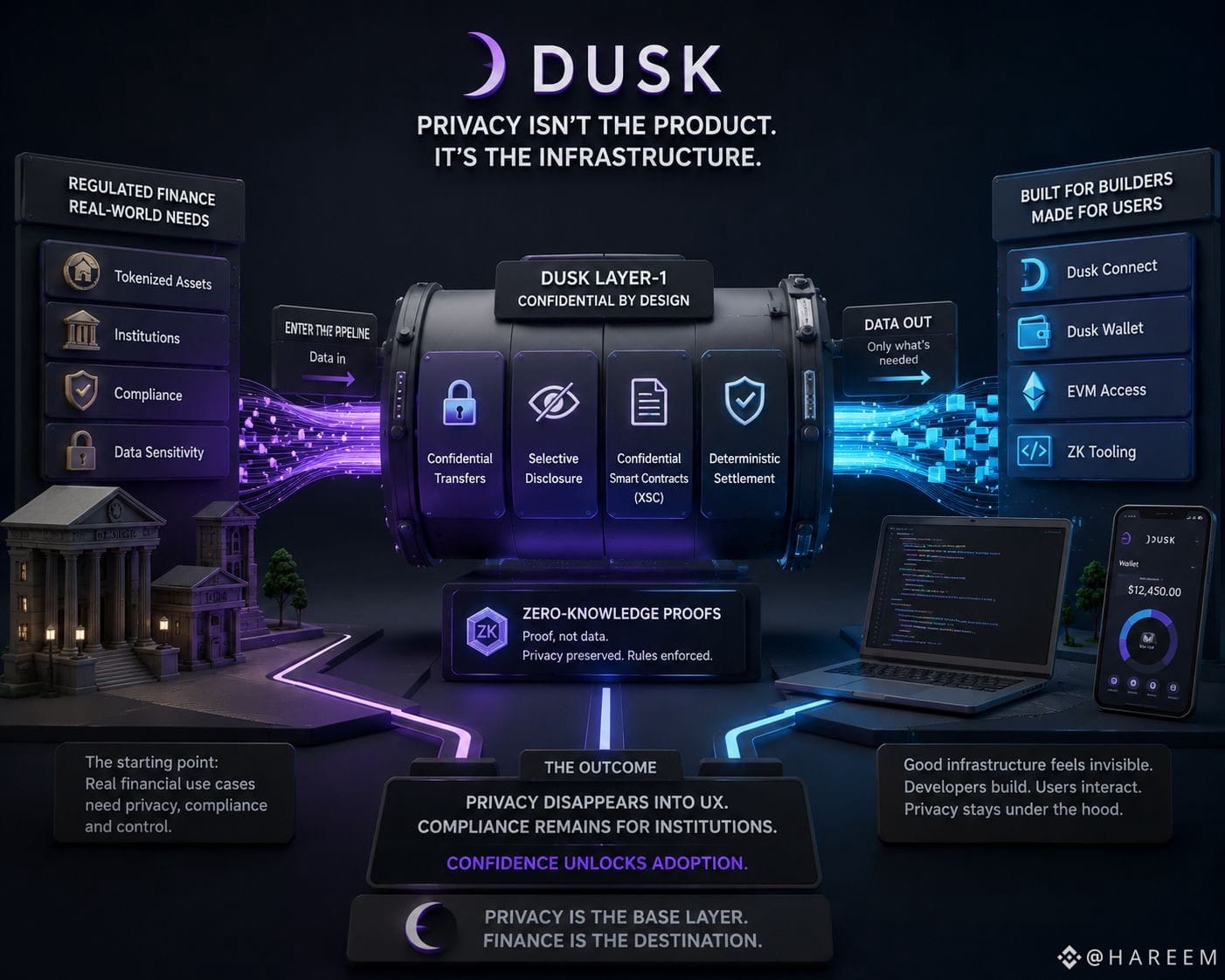
Je reviens sans cesse à une seule question avec Dusk : la confidentialité est-elle vraiment le produit, ou bien est-ce la condition qui permet l’existence de produits financiers sur la blockchain ?
Cette distinction est importante. Dusk est construit autour d’actifs régulés, de divulgations sélectives et de contrats confidentiels, mais le signal qui m’intéresse davantage se produit aux marges. Dusk Connect et le nouveau wallet réduisent la friction des dApps, tandis que les récents travaux des développeurs ont renforcé les outils zk et les tests EVM. Pour moi, cela ressemble moins à une vitrine de la confidentialité qu’à une tentative de transformer une cryptographie difficile en infrastructure financière utilisable.
J’ai vu des projets de confidentialité résoudre le problème technique ardu, puis avoir du mal avec le problème ennuyeux : amener les gens à l’utiliser.
Je ne suis pas convaincu que Dusk ait résolu l’adoption. Le test consiste à voir si la confidentialité disparaît dans l’expérience utilisateur (UX) tandis que la conformité reste visible pour les institutions.
Quand cela arrive, la confidentialité cesse d’être le titre. Elle devient une infrastructure. C’est ce que je surveille.
#dusk $DUSK @Dusk
Je reviens sans cesse à une seule question avec Dusk : la confidentialité est-elle vraiment le produit, ou bien est-ce la condition qui permet l’existence de produits financiers sur la blockchain ?
Cette distinction est importante. Dusk est construit autour d’actifs régulés, de divulgations sélectives et de contrats confidentiels, mais le signal qui m’intéresse davantage se produit aux marges. Dusk Connect et le nouveau wallet réduisent la friction des dApps, tandis que les récents travaux des développeurs ont renforcé les outils zk et les tests EVM. Pour moi, cela ressemble moins à une vitrine de la confidentialité qu’à une tentative de transformer une cryptographie difficile en infrastructure financière utilisable.
J’ai vu des projets de confidentialité résoudre le problème technique ardu, puis avoir du mal avec le problème ennuyeux : amener les gens à l’utiliser.
Je ne suis pas convaincu que Dusk ait résolu l’adoption. Le test consiste à voir si la confidentialité disparaît dans l’expérience utilisateur (UX) tandis que la conformité reste visible pour les institutions.
Quand cela arrive, la confidentialité cesse d’être le titre. Elle devient une infrastructure. C’est ce que je surveille.
Je reviens sans cesse à une seule question avec Dusk : la confidentialité est-elle vraiment le produit, ou bien est-ce la condition qui permet l’existence de produits financiers sur la blockchain ?
Cette distinction est importante. Dusk est construit autour d’actifs régulés, de divulgations sélectives et de contrats confidentiels, mais le signal qui m’intéresse davantage se produit aux marges. Dusk Connect et le nouveau wallet réduisent la friction des dApps, tandis que les récents travaux des développeurs ont renforcé les outils zk et les tests EVM. Pour moi, cela ressemble moins à une vitrine de la confidentialité qu’à une tentative de transformer une cryptographie difficile en infrastructure financière utilisable.
J’ai vu des projets de confidentialité résoudre le problème technique ardu, puis avoir du mal avec le problème ennuyeux : amener les gens à l’utiliser.
Je ne suis pas convaincu que Dusk ait résolu l’adoption. Le test consiste à voir si la confidentialité disparaît dans l’expérience utilisateur (UX) tandis que la conformité reste visible pour les institutions.
Quand cela arrive, la confidentialité cesse d’être le titre. Elle devient une infrastructure. C’est ce que je surveille.
233
·
--
Haussier
#dusk $DUSK @Dusk_Foundation
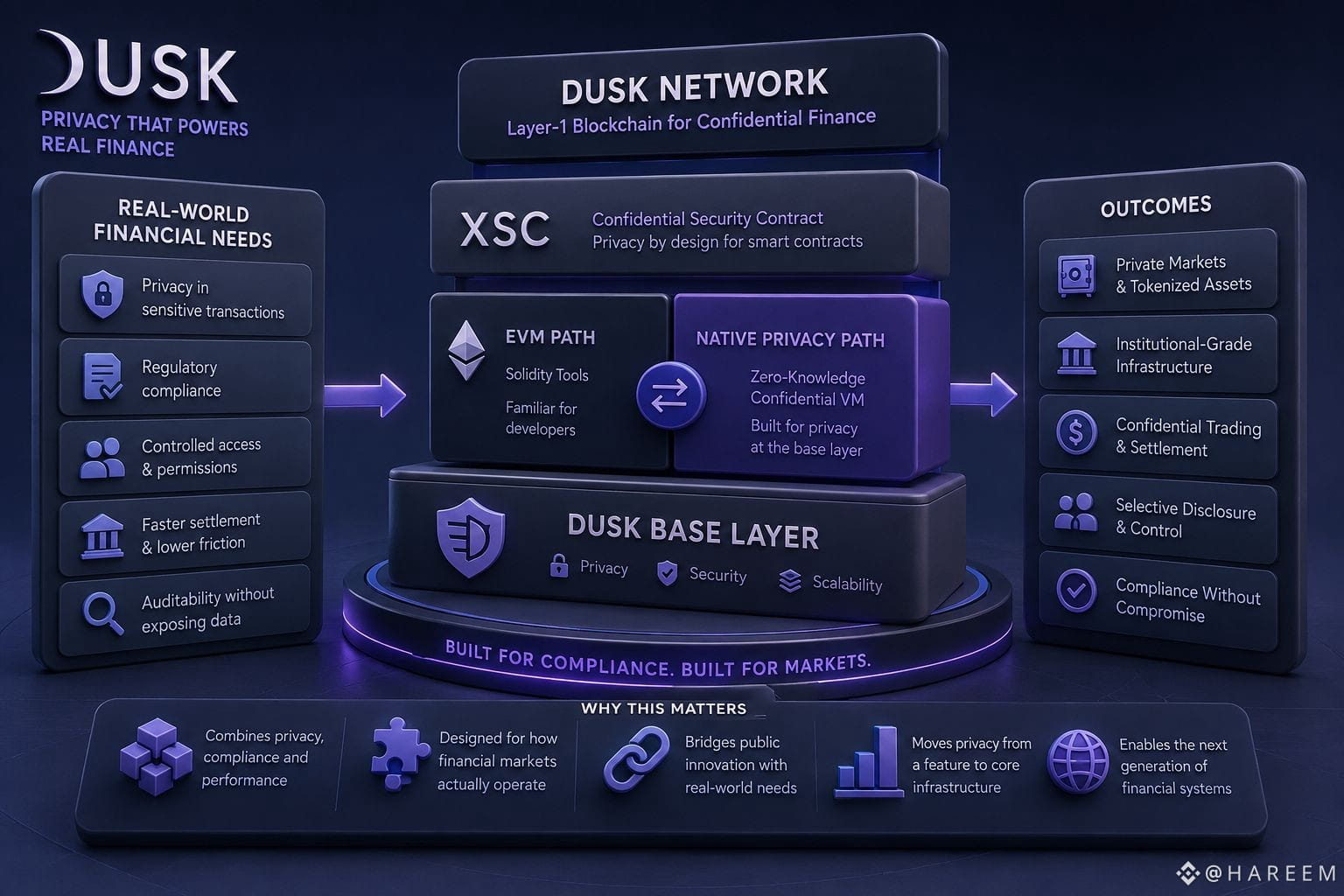
J’ai commencé à regarder Dusk moins comme une « chaîne de confidentialité » et davantage comme un test visant à déterminer si les marchés financiers ont réellement besoin d’une conception de blockchain différente.
Ce qui a attiré mon attention, c’est l’orientation de la pile technologique. Dusk dispose désormais d’une voie EVM pour les outils Solidity familiers, tandis que sa machine virtuelle native gère la confidentialité et les flux de preuve à divulgation nulle (zero-knowledge). Dans le même temps, les travaux récents s’orientent de plus en plus vers des titres réglementés, le financement des marchés privés, ainsi que le trading et la compensation. Pour moi, cette combinaison compte davantage que l’étiquette « confidentialité » elle-même.
J’ai vu de nombreuses chaînes ajouter, a posteriori, des éléments de confidentialité, de tokenisation ou des récits de conformité. Le problème difficile consiste à faire fonctionner ces éléments ensemble sans recréer le même flux de travail fragmenté que les institutions utilisent déjà.
Dusk semble chercher à combler ce manque : l’éligibilité, les transferts contrôlés, la divulgation sélective et la compensation vivant plus près les uns des autres. Je reste toutefois prudent, surtout après chaque cycle qui a produit une nouvelle histoire de « blockchain institutionnelle ».
Mais peut-être que la question utile n’est pas de savoir si Dusk peut rendre des actifs privés. C’est plutôt de savoir s’il peut supprimer suffisamment de frictions opérationnelles pour que les établissements financiers préfèrent l’utiliser. C’est la partie que je vais surveiller.
#dusk $DUSK @Dusk
J’ai commencé à regarder Dusk moins comme une « chaîne de confidentialité » et davantage comme un test visant à déterminer si les marchés financiers ont réellement besoin d’une conception de blockchain différente.
Ce qui a attiré mon attention, c’est l’orientation de la pile technologique. Dusk dispose désormais d’une voie EVM pour les outils Solidity familiers, tandis que sa machine virtuelle native gère la confidentialité et les flux de preuve à divulgation nulle (zero-knowledge). Dans le même temps, les travaux récents s’orientent de plus en plus vers des titres réglementés, le financement des marchés privés, ainsi que le trading et la compensation. Pour moi, cette combinaison compte davantage que l’étiquette « confidentialité » elle-même.
J’ai vu de nombreuses chaînes ajouter, a posteriori, des éléments de confidentialité, de tokenisation ou des récits de conformité. Le problème difficile consiste à faire fonctionner ces éléments ensemble sans recréer le même flux de travail fragmenté que les institutions utilisent déjà.
Dusk semble chercher à combler ce manque : l’éligibilité, les transferts contrôlés, la divulgation sélective et la compensation vivant plus près les uns des autres. Je reste toutefois prudent, surtout après chaque cycle qui a produit une nouvelle histoire de « blockchain institutionnelle ».
Mais peut-être que la question utile n’est pas de savoir si Dusk peut rendre des actifs privés. C’est plutôt de savoir s’il peut supprimer suffisamment de frictions opérationnelles pour que les établissements financiers préfèrent l’utiliser. C’est la partie que je vais surveiller.
J’ai commencé à regarder Dusk moins comme une « chaîne de confidentialité » et davantage comme un test visant à déterminer si les marchés financiers ont réellement besoin d’une conception de blockchain différente.
Ce qui a attiré mon attention, c’est l’orientation de la pile technologique. Dusk dispose désormais d’une voie EVM pour les outils Solidity familiers, tandis que sa machine virtuelle native gère la confidentialité et les flux de preuve à divulgation nulle (zero-knowledge). Dans le même temps, les travaux récents s’orientent de plus en plus vers des titres réglementés, le financement des marchés privés, ainsi que le trading et la compensation. Pour moi, cette combinaison compte davantage que l’étiquette « confidentialité » elle-même.
J’ai vu de nombreuses chaînes ajouter, a posteriori, des éléments de confidentialité, de tokenisation ou des récits de conformité. Le problème difficile consiste à faire fonctionner ces éléments ensemble sans recréer le même flux de travail fragmenté que les institutions utilisent déjà.
Dusk semble chercher à combler ce manque : l’éligibilité, les transferts contrôlés, la divulgation sélective et la compensation vivant plus près les uns des autres. Je reste toutefois prudent, surtout après chaque cycle qui a produit une nouvelle histoire de « blockchain institutionnelle ».
Mais peut-être que la question utile n’est pas de savoir si Dusk peut rendre des actifs privés. C’est plutôt de savoir s’il peut supprimer suffisamment de frictions opérationnelles pour que les établissements financiers préfèrent l’utiliser. C’est la partie que je vais surveiller.
1
2
134
·
--
#dusk $DUSK @Dusk_Foundation
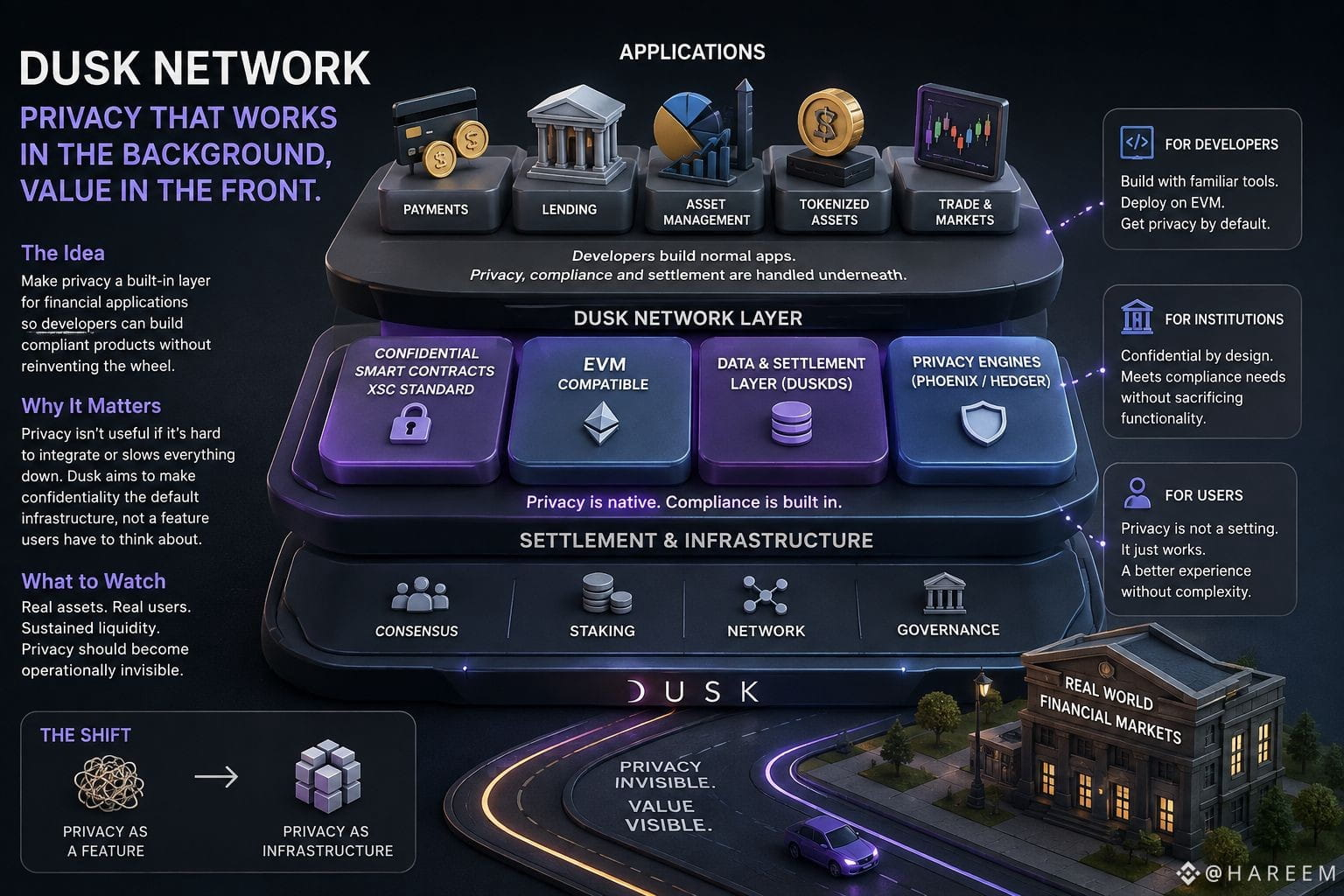
Je reviens sans cesse à une seule question avec Dusk : la confidentialité devient-elle réellement utile quand personne n’a besoin d’y penser ?
Cela me paraît plus important que l’étiquette habituelle de « blockchain de confidentialité ». Dusk construit des contrats intelligents confidentiels, la compatibilité EVM, sa propre architecture de règlement et une infrastructure conçue pour des actifs financiers tokenisés. L’activité récente de l’écosystème autour des portefeuilles, des infrastructures de trading et des outils EVM rend cette direction plus facile à percevoir.
Mais j’ai assez observé des cycles pour savoir que la bonne architecture, à elle seule, ne crée pas un marché. Le vrai test, c’est de savoir si les développeurs peuvent créer des produits financiers réglementés sans traiter la confidentialité comme une préoccupation technique distincte.
C’est là que Dusk m’intéresse. Si la confidentialité devient quelque chose que les applications héritent simplement du réseau sous-jacent, plutôt qu’une fonctionnalité que les utilisateurs doivent choisir activement, la proposition de valeur change.
Je ne suis pas encore prêt à dire que c’est prouvé. La liquidité, les utilisateurs et l’activité applicative durable comptent encore plus que les schémas techniques.
Mais je pense que la bonne chose à surveiller n’est pas la manière dont Dusk parle haut et fort de la confidentialité. C’est de voir si la confidentialité finit par devenir, discrètement, une partie du flux de travail.
#dusk $DUSK @Dusk
Je reviens sans cesse à une seule question avec Dusk : la confidentialité devient-elle réellement utile quand personne n’a besoin d’y penser ?
Cela me paraît plus important que l’étiquette habituelle de « blockchain de confidentialité ». Dusk construit des contrats intelligents confidentiels, la compatibilité EVM, sa propre architecture de règlement et une infrastructure conçue pour des actifs financiers tokenisés. L’activité récente de l’écosystème autour des portefeuilles, des infrastructures de trading et des outils EVM rend cette direction plus facile à percevoir.
Mais j’ai assez observé des cycles pour savoir que la bonne architecture, à elle seule, ne crée pas un marché. Le vrai test, c’est de savoir si les développeurs peuvent créer des produits financiers réglementés sans traiter la confidentialité comme une préoccupation technique distincte.
C’est là que Dusk m’intéresse. Si la confidentialité devient quelque chose que les applications héritent simplement du réseau sous-jacent, plutôt qu’une fonctionnalité que les utilisateurs doivent choisir activement, la proposition de valeur change.
Je ne suis pas encore prêt à dire que c’est prouvé. La liquidité, les utilisateurs et l’activité applicative durable comptent encore plus que les schémas techniques.
Mais je pense que la bonne chose à surveiller n’est pas la manière dont Dusk parle haut et fort de la confidentialité. C’est de voir si la confidentialité finit par devenir, discrètement, une partie du flux de travail.
Je reviens sans cesse à une seule question avec Dusk : la confidentialité devient-elle réellement utile quand personne n’a besoin d’y penser ?
Cela me paraît plus important que l’étiquette habituelle de « blockchain de confidentialité ». Dusk construit des contrats intelligents confidentiels, la compatibilité EVM, sa propre architecture de règlement et une infrastructure conçue pour des actifs financiers tokenisés. L’activité récente de l’écosystème autour des portefeuilles, des infrastructures de trading et des outils EVM rend cette direction plus facile à percevoir.
Mais j’ai assez observé des cycles pour savoir que la bonne architecture, à elle seule, ne crée pas un marché. Le vrai test, c’est de savoir si les développeurs peuvent créer des produits financiers réglementés sans traiter la confidentialité comme une préoccupation technique distincte.
C’est là que Dusk m’intéresse. Si la confidentialité devient quelque chose que les applications héritent simplement du réseau sous-jacent, plutôt qu’une fonctionnalité que les utilisateurs doivent choisir activement, la proposition de valeur change.
Je ne suis pas encore prêt à dire que c’est prouvé. La liquidité, les utilisateurs et l’activité applicative durable comptent encore plus que les schémas techniques.
Mais je pense que la bonne chose à surveiller n’est pas la manière dont Dusk parle haut et fort de la confidentialité. C’est de voir si la confidentialité finit par devenir, discrètement, une partie du flux de travail.
3
3
132
·
--
#dusk $DUSK @Dusk_Foundation
Quelque chose dans l’obscurité du crépuscule semble mériter d’être observé pour une raison qui a peu à voir avec le mot « confidentialité ».
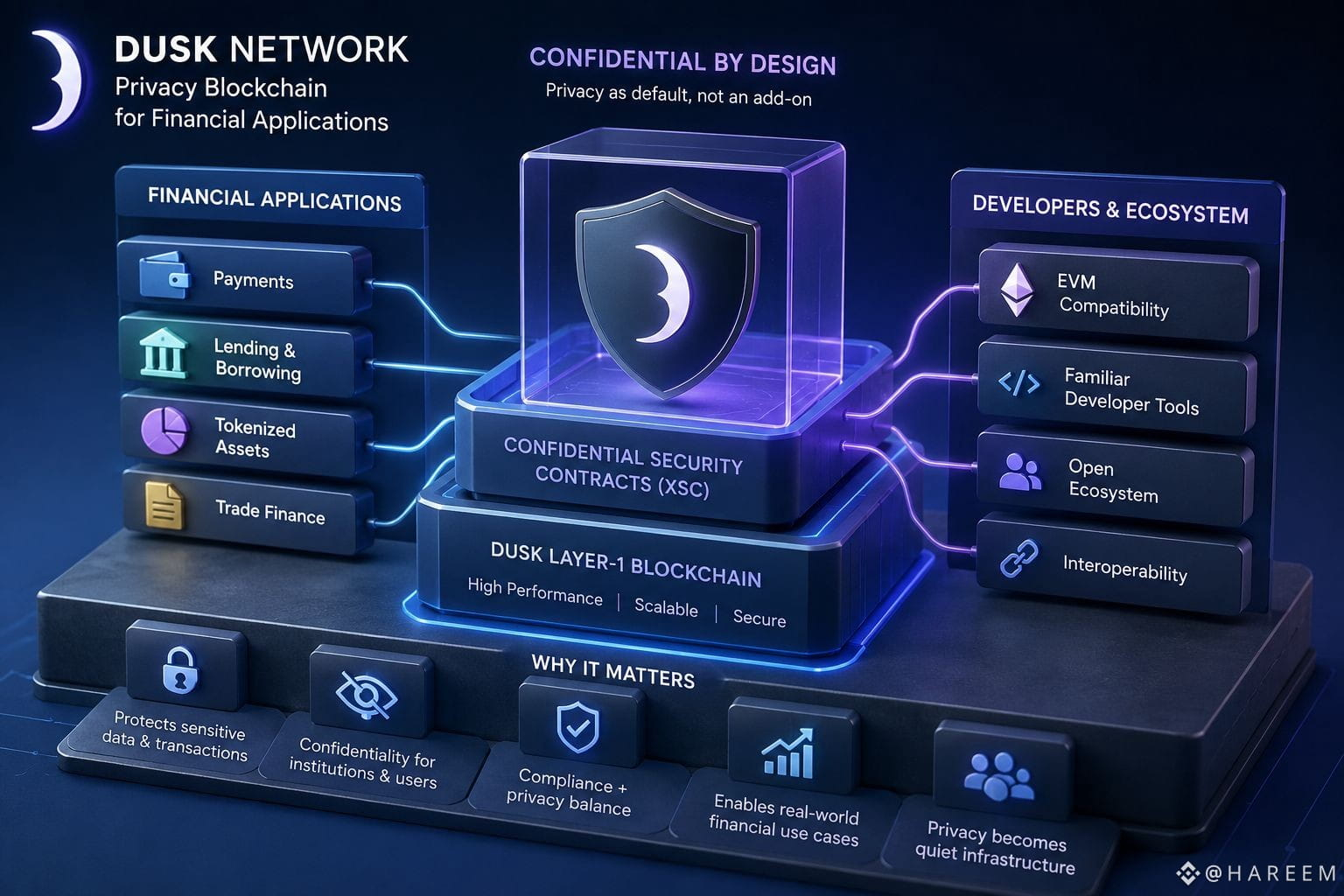
J’ai déjà vu ce cycle : un projet construit une infrastructure ingénieuse, le marché s’enthousiasme pour l’architecture, puis personne ne change vraiment de comportement. L’aspect intéressant de Dusk, c’est de savoir s’il peut éviter ce piège en faisant en sorte que la confidentialité ressemble moins à une fonctionnalité et davantage au câblage par défaut des activités financières.
Cette nuance compte. Les applications financières ont souvent besoin de discrétion concernant les soldes, les transactions, les contreparties et la logique métier sensible, mais elles ont aussi besoin d’une exécution prévisible, d’outils de développement familiers et d’un accès à un écosystème plus vaste. Dusk semble progresser vers cet équilibre plutôt que de traiter la confidentialité comme un exploit technique isolé.
Je reste toutefois sceptique. Une bonne infrastructure ne crée pas automatiquement de la demande, et le marché financier n’a pas manqué de chaînes impressionnantes qui n’ont jamais abouti à un usage significatif.
Ce que j’observe est beaucoup plus simple : les développeurs finissent-ils par choisir Dusk parce que cacher l’information sensible est pratique, et non parce que la confidentialité est à la mode ?
Ce serait le vrai signal pour moi. La confidentialité devient précieuse lorsque les utilisateurs cessent d’en parler et s’attendent simplement à ce qu’elle soit là.
#dusk $DUSK @Dusk
Quelque chose dans l’obscurité du crépuscule semble mériter d’être observé pour une raison qui a peu à voir avec le mot « confidentialité ».
J’ai déjà vu ce cycle : un projet construit une infrastructure ingénieuse, le marché s’enthousiasme pour l’architecture, puis personne ne change vraiment de comportement. L’aspect intéressant de Dusk, c’est de savoir s’il peut éviter ce piège en faisant en sorte que la confidentialité ressemble moins à une fonctionnalité et davantage au câblage par défaut des activités financières.
Cette nuance compte. Les applications financières ont souvent besoin de discrétion concernant les soldes, les transactions, les contreparties et la logique métier sensible, mais elles ont aussi besoin d’une exécution prévisible, d’outils de développement familiers et d’un accès à un écosystème plus vaste. Dusk semble progresser vers cet équilibre plutôt que de traiter la confidentialité comme un exploit technique isolé.
Je reste toutefois sceptique. Une bonne infrastructure ne crée pas automatiquement de la demande, et le marché financier n’a pas manqué de chaînes impressionnantes qui n’ont jamais abouti à un usage significatif.
Ce que j’observe est beaucoup plus simple : les développeurs finissent-ils par choisir Dusk parce que cacher l’information sensible est pratique, et non parce que la confidentialité est à la mode ?
Ce serait le vrai signal pour moi. La confidentialité devient précieuse lorsque les utilisateurs cessent d’en parler et s’attendent simplement à ce qu’elle soit là.
Quelque chose dans l’obscurité du crépuscule semble mériter d’être observé pour une raison qui a peu à voir avec le mot « confidentialité ».
J’ai déjà vu ce cycle : un projet construit une infrastructure ingénieuse, le marché s’enthousiasme pour l’architecture, puis personne ne change vraiment de comportement. L’aspect intéressant de Dusk, c’est de savoir s’il peut éviter ce piège en faisant en sorte que la confidentialité ressemble moins à une fonctionnalité et davantage au câblage par défaut des activités financières.
Cette nuance compte. Les applications financières ont souvent besoin de discrétion concernant les soldes, les transactions, les contreparties et la logique métier sensible, mais elles ont aussi besoin d’une exécution prévisible, d’outils de développement familiers et d’un accès à un écosystème plus vaste. Dusk semble progresser vers cet équilibre plutôt que de traiter la confidentialité comme un exploit technique isolé.
Je reste toutefois sceptique. Une bonne infrastructure ne crée pas automatiquement de la demande, et le marché financier n’a pas manqué de chaînes impressionnantes qui n’ont jamais abouti à un usage significatif.
Ce que j’observe est beaucoup plus simple : les développeurs finissent-ils par choisir Dusk parce que cacher l’information sensible est pratique, et non parce que la confidentialité est à la mode ?
Ce serait le vrai signal pour moi. La confidentialité devient précieuse lorsque les utilisateurs cessent d’en parler et s’attendent simplement à ce qu’elle soit là.
9
8
173
·
--
#dusk $DUSK @Dusk_Foundation
J’ai vécu assez de cycles crypto pour savoir que la « confidentialité » peut devenir un simple mot de plus que l’on utilise comme un récit quand on en a besoin.
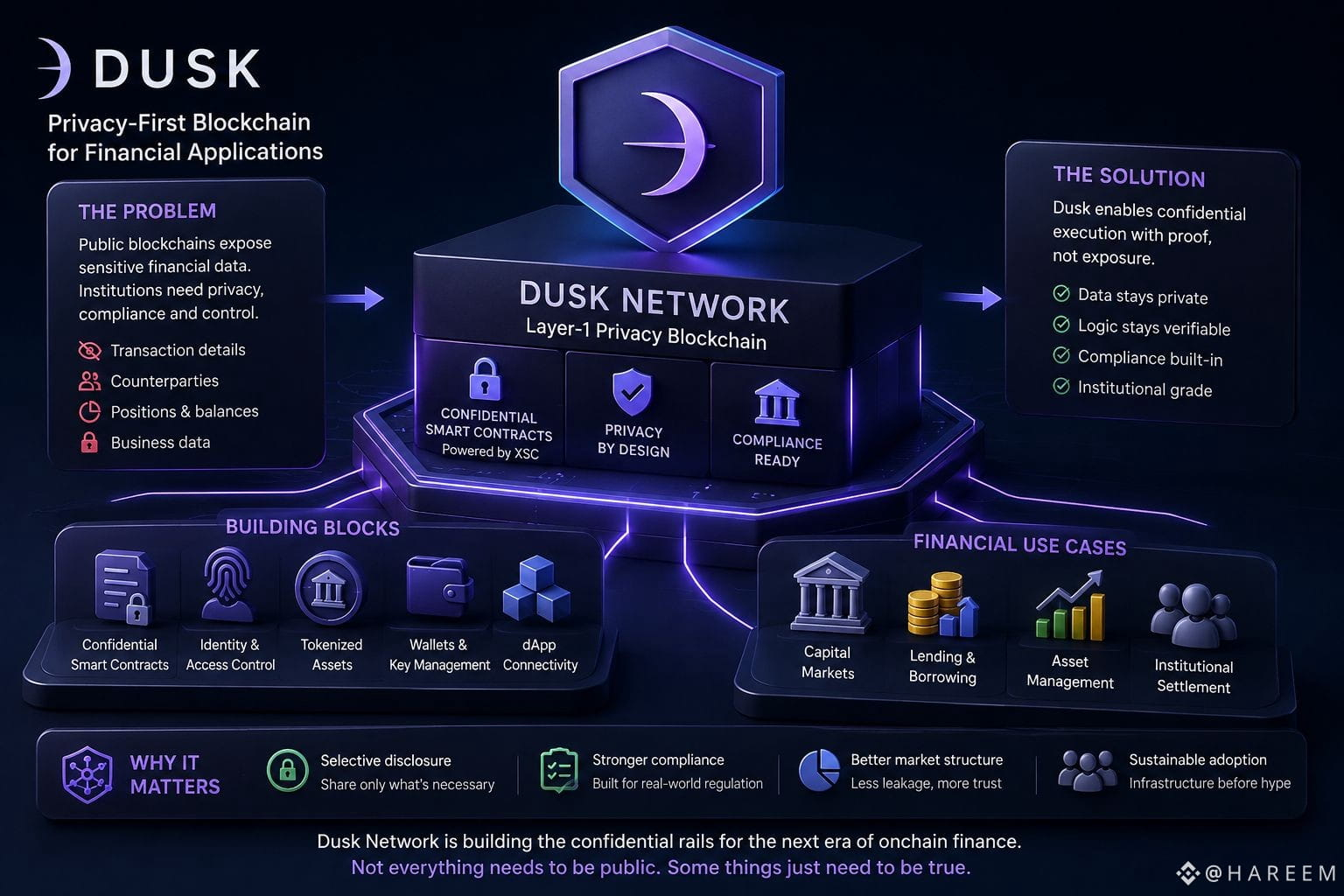
Ce qui rend Dusk un peu plus intrigant à mes yeux, c’est le problème qui se cache en dessous. Si de vrais actifs financiers circulent onchain, je ne pense pas que chaque détail doive automatiquement être visible par tout le monde. Les positions, les identités, les transactions et les données commerciales sensibles ne peuvent pas toujours vivre dans une maison en verre.
Je remarque sans cesse que Dusk se concentre sur les pièces moins spectaculaires de ce puzzle : des smart contracts confidentiels, l’identité, des actifs tokenisés, des portefeuilles, ainsi que l’infrastructure nécessaire pour que les applications puissent réellement les utiliser.
Je ne dis pas que cela garantit l’adoption. Non. J’ai vu de nombreux projets techniquement solides échouer parce que le marché s’en fichait tout simplement.
Mais je pense que la meilleure question pour Dusk n’est pas « jusqu’où la confidentialité peut-elle aller ? » C’est plutôt de savoir si, à terme, les marchés financiers décideront que la confidentialité sélective est nécessaire — et non facultative.
Si c’est le cas, l’approche de Dusk pourrait sembler plus logique avec le recul. Pour l’instant, j’observe l’usage, pas les promesses.
#dusk $DUSK @Dusk
J’ai vécu assez de cycles crypto pour savoir que la « confidentialité » peut devenir un simple mot de plus que l’on utilise comme un récit quand on en a besoin.
Ce qui rend Dusk un peu plus intrigant à mes yeux, c’est le problème qui se cache en dessous. Si de vrais actifs financiers circulent onchain, je ne pense pas que chaque détail doive automatiquement être visible par tout le monde. Les positions, les identités, les transactions et les données commerciales sensibles ne peuvent pas toujours vivre dans une maison en verre.
Je remarque sans cesse que Dusk se concentre sur les pièces moins spectaculaires de ce puzzle : des smart contracts confidentiels, l’identité, des actifs tokenisés, des portefeuilles, ainsi que l’infrastructure nécessaire pour que les applications puissent réellement les utiliser.
Je ne dis pas que cela garantit l’adoption. Non. J’ai vu de nombreux projets techniquement solides échouer parce que le marché s’en fichait tout simplement.
Mais je pense que la meilleure question pour Dusk n’est pas « jusqu’où la confidentialité peut-elle aller ? » C’est plutôt de savoir si, à terme, les marchés financiers décideront que la confidentialité sélective est nécessaire — et non facultative.
Si c’est le cas, l’approche de Dusk pourrait sembler plus logique avec le recul. Pour l’instant, j’observe l’usage, pas les promesses.
J’ai vécu assez de cycles crypto pour savoir que la « confidentialité » peut devenir un simple mot de plus que l’on utilise comme un récit quand on en a besoin.
Ce qui rend Dusk un peu plus intrigant à mes yeux, c’est le problème qui se cache en dessous. Si de vrais actifs financiers circulent onchain, je ne pense pas que chaque détail doive automatiquement être visible par tout le monde. Les positions, les identités, les transactions et les données commerciales sensibles ne peuvent pas toujours vivre dans une maison en verre.
Je remarque sans cesse que Dusk se concentre sur les pièces moins spectaculaires de ce puzzle : des smart contracts confidentiels, l’identité, des actifs tokenisés, des portefeuilles, ainsi que l’infrastructure nécessaire pour que les applications puissent réellement les utiliser.
Je ne dis pas que cela garantit l’adoption. Non. J’ai vu de nombreux projets techniquement solides échouer parce que le marché s’en fichait tout simplement.
Mais je pense que la meilleure question pour Dusk n’est pas « jusqu’où la confidentialité peut-elle aller ? » C’est plutôt de savoir si, à terme, les marchés financiers décideront que la confidentialité sélective est nécessaire — et non facultative.
Si c’est le cas, l’approche de Dusk pourrait sembler plus logique avec le recul. Pour l’instant, j’observe l’usage, pas les promesses.
19
15
162
·
--
#dusk $DUSK @Dusk_Foundation
J’ai commencé à penser à Dusk d’une façon un peu différente.
Au début, l’angle de la confidentialité ressemblait à l’histoire habituelle de la crypto. Puis je me suis penché de plus près et j’ai réalisé que le problème le plus ardu n’est pas de rendre les transactions privées. C’est de les rendre privées sans pour autant rendre l’ensemble du système impossible à vérifier.
Cette distinction compte.
Dusk permet à différents types d’activité d’avoir différents niveaux de visibilité : des comptes publics, des transferts protégés, et une divulgation sélective lorsque quelqu’un a réellement besoin d’une preuve. Sa norme XSC pousse cette idée jusque dans des smart contracts confidentiels, tandis que DuskEVM offre aux développeurs un chemin plus familier vers l’écosystème.
Je reviens sans cesse à cet équilibre, parce que les marchés financiers n’ont jamais été réellement « entièrement transparents ». Ils fonctionnent avec de l’information contrôlée.
L’élan récent autour de Dusk Connect, du nouveau wallet, et de la direction EVM plus large me donne davantage envie de savoir si l’infrastructure peut devenir utilisable, pas seulement techniquement impressionnante.
Je reste prudent. Une bonne conception ne crée pas automatiquement de la demande. Mais si Dusk peut faire en sorte que la confidentialité ressemble à une partie normale de l’infrastructure financière plutôt qu’à une fonctionnalité spéciale, alors c’est là que, je pense, commence la vraie thèse.
#dusk $DUSK @Dusk
J’ai commencé à penser à Dusk d’une façon un peu différente.
Au début, l’angle de la confidentialité ressemblait à l’histoire habituelle de la crypto. Puis je me suis penché de plus près et j’ai réalisé que le problème le plus ardu n’est pas de rendre les transactions privées. C’est de les rendre privées sans pour autant rendre l’ensemble du système impossible à vérifier.
Cette distinction compte.
Dusk permet à différents types d’activité d’avoir différents niveaux de visibilité : des comptes publics, des transferts protégés, et une divulgation sélective lorsque quelqu’un a réellement besoin d’une preuve. Sa norme XSC pousse cette idée jusque dans des smart contracts confidentiels, tandis que DuskEVM offre aux développeurs un chemin plus familier vers l’écosystème.
Je reviens sans cesse à cet équilibre, parce que les marchés financiers n’ont jamais été réellement « entièrement transparents ». Ils fonctionnent avec de l’information contrôlée.
L’élan récent autour de Dusk Connect, du nouveau wallet, et de la direction EVM plus large me donne davantage envie de savoir si l’infrastructure peut devenir utilisable, pas seulement techniquement impressionnante.
Je reste prudent. Une bonne conception ne crée pas automatiquement de la demande. Mais si Dusk peut faire en sorte que la confidentialité ressemble à une partie normale de l’infrastructure financière plutôt qu’à une fonctionnalité spéciale, alors c’est là que, je pense, commence la vraie thèse.
J’ai commencé à penser à Dusk d’une façon un peu différente.
Au début, l’angle de la confidentialité ressemblait à l’histoire habituelle de la crypto. Puis je me suis penché de plus près et j’ai réalisé que le problème le plus ardu n’est pas de rendre les transactions privées. C’est de les rendre privées sans pour autant rendre l’ensemble du système impossible à vérifier.
Cette distinction compte.
Dusk permet à différents types d’activité d’avoir différents niveaux de visibilité : des comptes publics, des transferts protégés, et une divulgation sélective lorsque quelqu’un a réellement besoin d’une preuve. Sa norme XSC pousse cette idée jusque dans des smart contracts confidentiels, tandis que DuskEVM offre aux développeurs un chemin plus familier vers l’écosystème.
Je reviens sans cesse à cet équilibre, parce que les marchés financiers n’ont jamais été réellement « entièrement transparents ». Ils fonctionnent avec de l’information contrôlée.
L’élan récent autour de Dusk Connect, du nouveau wallet, et de la direction EVM plus large me donne davantage envie de savoir si l’infrastructure peut devenir utilisable, pas seulement techniquement impressionnante.
Je reste prudent. Une bonne conception ne crée pas automatiquement de la demande. Mais si Dusk peut faire en sorte que la confidentialité ressemble à une partie normale de l’infrastructure financière plutôt qu’à une fonctionnalité spéciale, alors c’est là que, je pense, commence la vraie thèse.
5
2
124
·
--
#dusk $DUSK @Dusk_Foundation
J’observe Dusk depuis un certain temps, et je pense que la partie intéressante n’est pas simplement « la confidentialité sur une blockchain ». Cette formule a été utilisée tellement de fois qu’elle ne m’apprend presque plus rien.
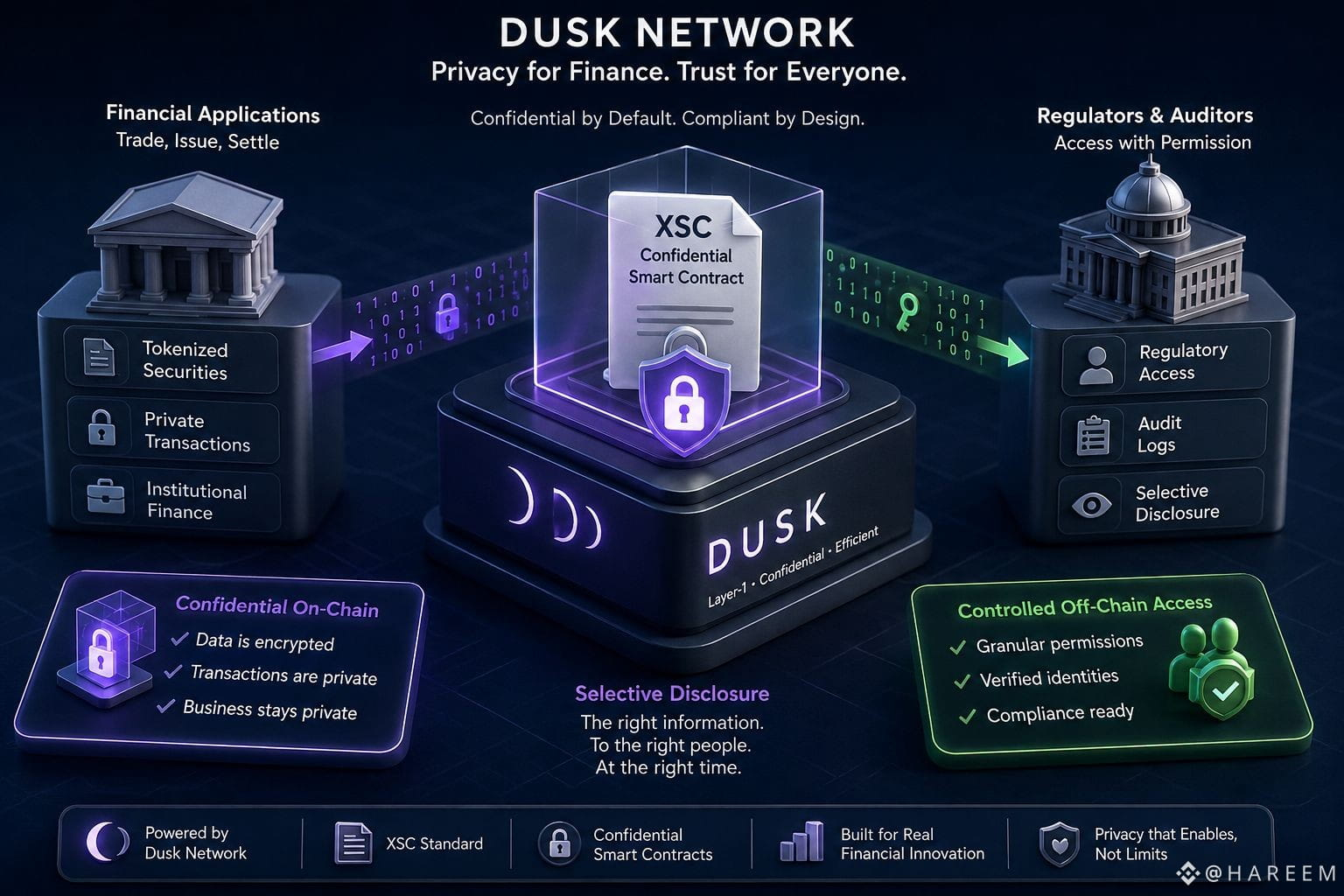
Ce qui retient vraiment mon attention, c’est le problème que Dusk cherche à résoudre : les marchés financiers ont besoin de confidentialité, mais ils ont aussi besoin de règles, de vérification et d’un accès contrôlé à l’information. On ne peut pas, de manière réaliste, mettre l’intégralité de chaque transaction, solde ou détail d’activité en accès public total et s’attendre à ce que des institutions financières sérieuses s’y sentent à l’aise.
C’est là que l’approche XSC et les smart contracts confidentiels commencent à faire davantage de sens pour moi. Les travaux récents autour du portefeuille de Dusk, Dusk Connect, et l’accent grandissant mis sur les actifs financiers tokenisés donnent à cette idée un caractère moins théorique.
Mais je n’en suis pas encore convaincu. J’ai déjà vu ce cycle : des partenariats sont annoncés, les discours deviennent plus bruyants, et l’usage réel reste discret.
Donc je ne surveille pas Dusk pour le buzz. Je le surveille pour voir s’il peut rendre la confidentialité ennuyeuse et donc pratique. Si, à terme, des applications financières utilisent une infrastructure blockchain confidentielle sans que les utilisateurs aient même besoin d’y penser, ce serait bien plus significatif qu’un autre récit crypto éphémère.
#dusk $DUSK @Dusk
J’observe Dusk depuis un certain temps, et je pense que la partie intéressante n’est pas simplement « la confidentialité sur une blockchain ». Cette formule a été utilisée tellement de fois qu’elle ne m’apprend presque plus rien.
Ce qui retient vraiment mon attention, c’est le problème que Dusk cherche à résoudre : les marchés financiers ont besoin de confidentialité, mais ils ont aussi besoin de règles, de vérification et d’un accès contrôlé à l’information. On ne peut pas, de manière réaliste, mettre l’intégralité de chaque transaction, solde ou détail d’activité en accès public total et s’attendre à ce que des institutions financières sérieuses s’y sentent à l’aise.
C’est là que l’approche XSC et les smart contracts confidentiels commencent à faire davantage de sens pour moi. Les travaux récents autour du portefeuille de Dusk, Dusk Connect, et l’accent grandissant mis sur les actifs financiers tokenisés donnent à cette idée un caractère moins théorique.
Mais je n’en suis pas encore convaincu. J’ai déjà vu ce cycle : des partenariats sont annoncés, les discours deviennent plus bruyants, et l’usage réel reste discret.
Donc je ne surveille pas Dusk pour le buzz. Je le surveille pour voir s’il peut rendre la confidentialité ennuyeuse et donc pratique. Si, à terme, des applications financières utilisent une infrastructure blockchain confidentielle sans que les utilisateurs aient même besoin d’y penser, ce serait bien plus significatif qu’un autre récit crypto éphémère.
J’observe Dusk depuis un certain temps, et je pense que la partie intéressante n’est pas simplement « la confidentialité sur une blockchain ». Cette formule a été utilisée tellement de fois qu’elle ne m’apprend presque plus rien.
Ce qui retient vraiment mon attention, c’est le problème que Dusk cherche à résoudre : les marchés financiers ont besoin de confidentialité, mais ils ont aussi besoin de règles, de vérification et d’un accès contrôlé à l’information. On ne peut pas, de manière réaliste, mettre l’intégralité de chaque transaction, solde ou détail d’activité en accès public total et s’attendre à ce que des institutions financières sérieuses s’y sentent à l’aise.
C’est là que l’approche XSC et les smart contracts confidentiels commencent à faire davantage de sens pour moi. Les travaux récents autour du portefeuille de Dusk, Dusk Connect, et l’accent grandissant mis sur les actifs financiers tokenisés donnent à cette idée un caractère moins théorique.
Mais je n’en suis pas encore convaincu. J’ai déjà vu ce cycle : des partenariats sont annoncés, les discours deviennent plus bruyants, et l’usage réel reste discret.
Donc je ne surveille pas Dusk pour le buzz. Je le surveille pour voir s’il peut rendre la confidentialité ennuyeuse et donc pratique. Si, à terme, des applications financières utilisent une infrastructure blockchain confidentielle sans que les utilisateurs aient même besoin d’y penser, ce serait bien plus significatif qu’un autre récit crypto éphémère.
3
3
103
·
--
#dusk $DUSK @Dusk_Foundation
J’ai vu le récit sur la confidentialité revenir dans la crypto bien plus de fois que je ne peux compter. Ça commence généralement par une idée forte, puis ça finit progressivement par se transformer en une autre liste de fonctionnalités techniques. C’est pourquoi j’observe Dusk un peu différemment.
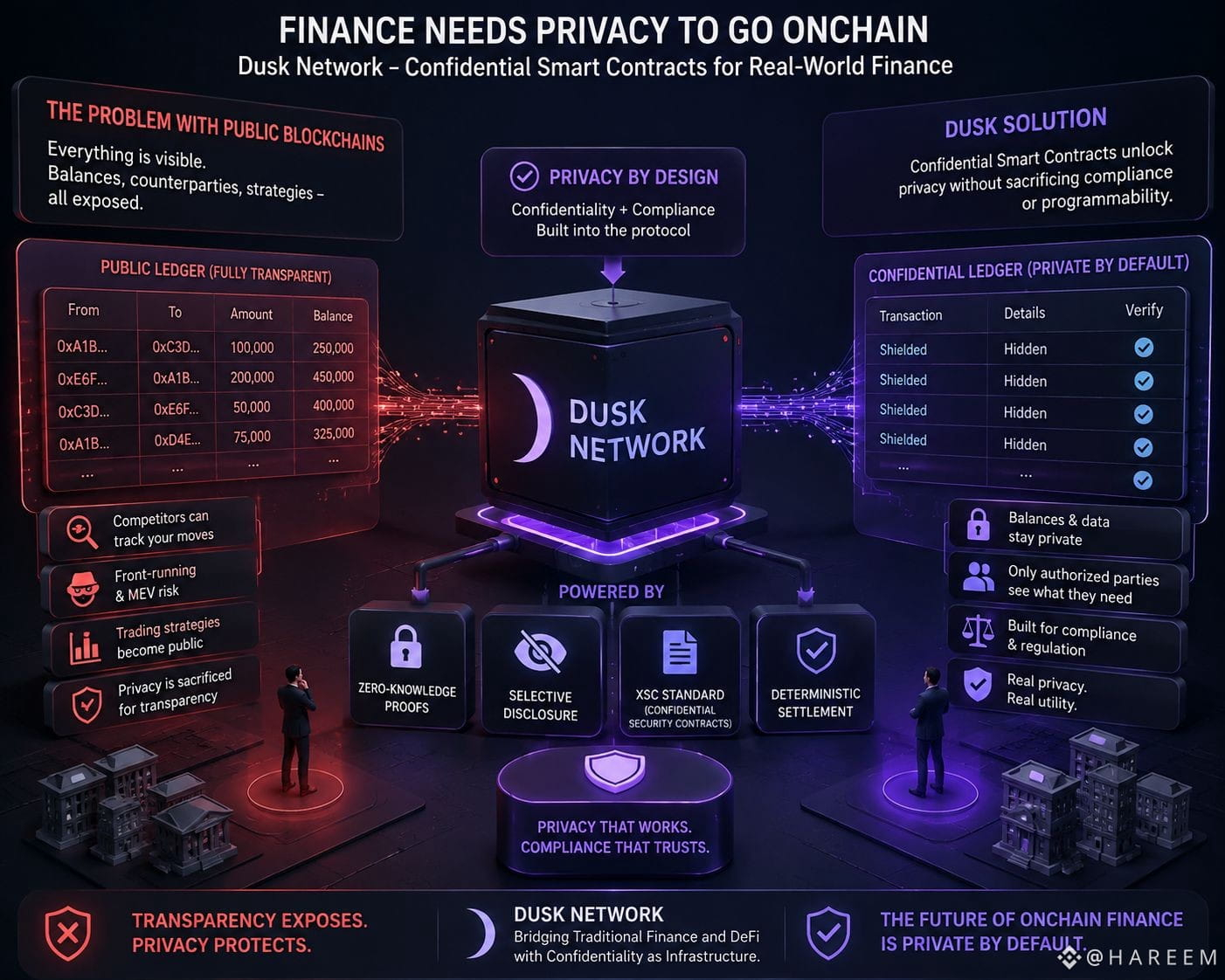
Ce qui m’intéresse n’est pas simplement le fait que Dusk veut que les transactions restent privées. Ce qui se cache derrière cette idée, c’est le problème : les marchés financiers ne peuvent pas, de manière réaliste, consigner chaque solde, chaque transaction et chaque relation d’affaires sur un registre public, tout en s’attendant à ce que des acteurs sérieux s’y sentent à l’aise.
Dusk tente d’y répondre avec des smart contracts confidentiels, des preuves à divulgation nulle de connaissance, une divulgation sélective et son cadre XSC pour les actifs financiers. J’aime cette direction, mais je ne suis pas prêt à y voir un succès. La crypto regorge de projets dotés d’une architecture impressionnante, qui n’ont pourtant jamais trouvé de vrais utilisateurs.
Je reviens sans cesse à une question simple : que se passe-t-il lorsque des institutions veulent les avantages de la blockchain sans transformer leur activité financière en données publiques ?
Si Dusk peut répondre à cette question dans la pratique, la confidentialité cesse d’être un récit. Elle devient une partie de l’infrastructure dont les gens ont réellement besoin.
#dusk $DUSK @Dusk
J’ai vu le récit sur la confidentialité revenir dans la crypto bien plus de fois que je ne peux compter. Ça commence généralement par une idée forte, puis ça finit progressivement par se transformer en une autre liste de fonctionnalités techniques. C’est pourquoi j’observe Dusk un peu différemment.
Ce qui m’intéresse n’est pas simplement le fait que Dusk veut que les transactions restent privées. Ce qui se cache derrière cette idée, c’est le problème : les marchés financiers ne peuvent pas, de manière réaliste, consigner chaque solde, chaque transaction et chaque relation d’affaires sur un registre public, tout en s’attendant à ce que des acteurs sérieux s’y sentent à l’aise.
Dusk tente d’y répondre avec des smart contracts confidentiels, des preuves à divulgation nulle de connaissance, une divulgation sélective et son cadre XSC pour les actifs financiers. J’aime cette direction, mais je ne suis pas prêt à y voir un succès. La crypto regorge de projets dotés d’une architecture impressionnante, qui n’ont pourtant jamais trouvé de vrais utilisateurs.
Je reviens sans cesse à une question simple : que se passe-t-il lorsque des institutions veulent les avantages de la blockchain sans transformer leur activité financière en données publiques ?
Si Dusk peut répondre à cette question dans la pratique, la confidentialité cesse d’être un récit. Elle devient une partie de l’infrastructure dont les gens ont réellement besoin.
J’ai vu le récit sur la confidentialité revenir dans la crypto bien plus de fois que je ne peux compter. Ça commence généralement par une idée forte, puis ça finit progressivement par se transformer en une autre liste de fonctionnalités techniques. C’est pourquoi j’observe Dusk un peu différemment.
Ce qui m’intéresse n’est pas simplement le fait que Dusk veut que les transactions restent privées. Ce qui se cache derrière cette idée, c’est le problème : les marchés financiers ne peuvent pas, de manière réaliste, consigner chaque solde, chaque transaction et chaque relation d’affaires sur un registre public, tout en s’attendant à ce que des acteurs sérieux s’y sentent à l’aise.
Dusk tente d’y répondre avec des smart contracts confidentiels, des preuves à divulgation nulle de connaissance, une divulgation sélective et son cadre XSC pour les actifs financiers. J’aime cette direction, mais je ne suis pas prêt à y voir un succès. La crypto regorge de projets dotés d’une architecture impressionnante, qui n’ont pourtant jamais trouvé de vrais utilisateurs.
Je reviens sans cesse à une question simple : que se passe-t-il lorsque des institutions veulent les avantages de la blockchain sans transformer leur activité financière en données publiques ?
Si Dusk peut répondre à cette question dans la pratique, la confidentialité cesse d’être un récit. Elle devient une partie de l’infrastructure dont les gens ont réellement besoin.
3
3
111
·
--
#dusk $DUSK @Dusk_Foundation
Je suis devenu plus sceptique à l’égard des récits de « chaînes de confidentialité » après en avoir observé assez de cycles. « Privé » semble utile, mais en finance, la question la plus difficile est de savoir ce que l’on peut prouver sans exposer tout. C’est là que le projet Dusk attire mon attention.
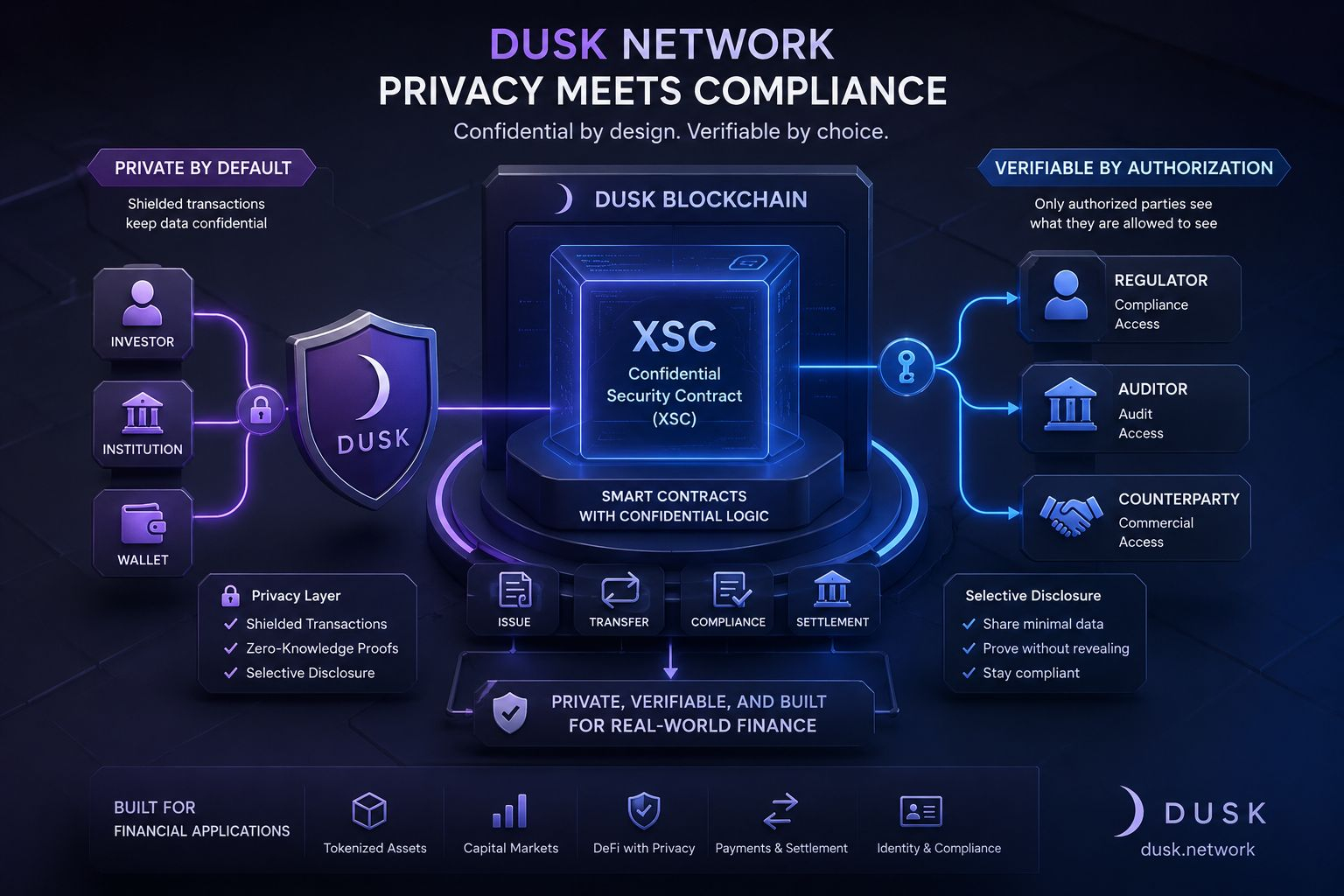
Son modèle XSC traite la confidentialité comme faisant partie du contrat, avec un accès contrôlé à des informations chiffrées. Les travaux récents autour de Dusk Trade, des actifs tokenisés, de l’identité et du règlement rendent l’idée plus praticable que de simplement construire une autre chaîne où les transactions sont plus difficiles à voir.
Je ne dis pas que Dusk l’a résolu. Nous avons tous vu des réseaux techniquement impressionnants avoir du mal à trouver des utilisateurs. Ce qui m’intéresse, c’est de savoir si la confidentialité peut devenir une infrastructure plutôt qu’une simple fonctionnalité.
Si des marchés réglementés passent onchain, ils ne voudront pas que chaque position soit exposée. Mais ils n’accepteront pas non plus une « boîte noire ». Dusk essaie de s’inscrire précisément entre les deux.
C’est ce que je surveille : la question de savoir si la confidentialité et la vérification peuvent fonctionner ensemble suffisamment bien pour que la finance s’y intéresse.
#dusk $DUSK @Dusk
Je suis devenu plus sceptique à l’égard des récits de « chaînes de confidentialité » après en avoir observé assez de cycles. « Privé » semble utile, mais en finance, la question la plus difficile est de savoir ce que l’on peut prouver sans exposer tout. C’est là que le projet Dusk attire mon attention.
Son modèle XSC traite la confidentialité comme faisant partie du contrat, avec un accès contrôlé à des informations chiffrées. Les travaux récents autour de Dusk Trade, des actifs tokenisés, de l’identité et du règlement rendent l’idée plus praticable que de simplement construire une autre chaîne où les transactions sont plus difficiles à voir.
Je ne dis pas que Dusk l’a résolu. Nous avons tous vu des réseaux techniquement impressionnants avoir du mal à trouver des utilisateurs. Ce qui m’intéresse, c’est de savoir si la confidentialité peut devenir une infrastructure plutôt qu’une simple fonctionnalité.
Si des marchés réglementés passent onchain, ils ne voudront pas que chaque position soit exposée. Mais ils n’accepteront pas non plus une « boîte noire ». Dusk essaie de s’inscrire précisément entre les deux.
C’est ce que je surveille : la question de savoir si la confidentialité et la vérification peuvent fonctionner ensemble suffisamment bien pour que la finance s’y intéresse.
Je suis devenu plus sceptique à l’égard des récits de « chaînes de confidentialité » après en avoir observé assez de cycles. « Privé » semble utile, mais en finance, la question la plus difficile est de savoir ce que l’on peut prouver sans exposer tout. C’est là que le projet Dusk attire mon attention.
Son modèle XSC traite la confidentialité comme faisant partie du contrat, avec un accès contrôlé à des informations chiffrées. Les travaux récents autour de Dusk Trade, des actifs tokenisés, de l’identité et du règlement rendent l’idée plus praticable que de simplement construire une autre chaîne où les transactions sont plus difficiles à voir.
Je ne dis pas que Dusk l’a résolu. Nous avons tous vu des réseaux techniquement impressionnants avoir du mal à trouver des utilisateurs. Ce qui m’intéresse, c’est de savoir si la confidentialité peut devenir une infrastructure plutôt qu’une simple fonctionnalité.
Si des marchés réglementés passent onchain, ils ne voudront pas que chaque position soit exposée. Mais ils n’accepteront pas non plus une « boîte noire ». Dusk essaie de s’inscrire précisément entre les deux.
C’est ce que je surveille : la question de savoir si la confidentialité et la vérification peuvent fonctionner ensemble suffisamment bien pour que la finance s’y intéresse.
7
3
137
·
--
Haussier
#dusk $DUSK @Dusk_Foundation
J’ai vu le discours sur la confidentialité revenir et repartir assez souvent pour ne pas m’emballer uniquement parce qu’un projet affirme « finance confidentielle ».
Ce qui me pousse à regarder Dusk est un peu différent.
Le véritable problème n’est pas de tout cacher. Les systèmes financiers ne peuvent pas fonctionner de cette manière. Quelqu’un doit encore vérifier la propriété, faire respecter les règles, régler les transactions et savoir exactement ce qu’on est autorisé à voir. La question intéressante est de savoir si vous pouvez tout faire cela sans transformer l’activité financière de chaque utilisateur en données publiques.
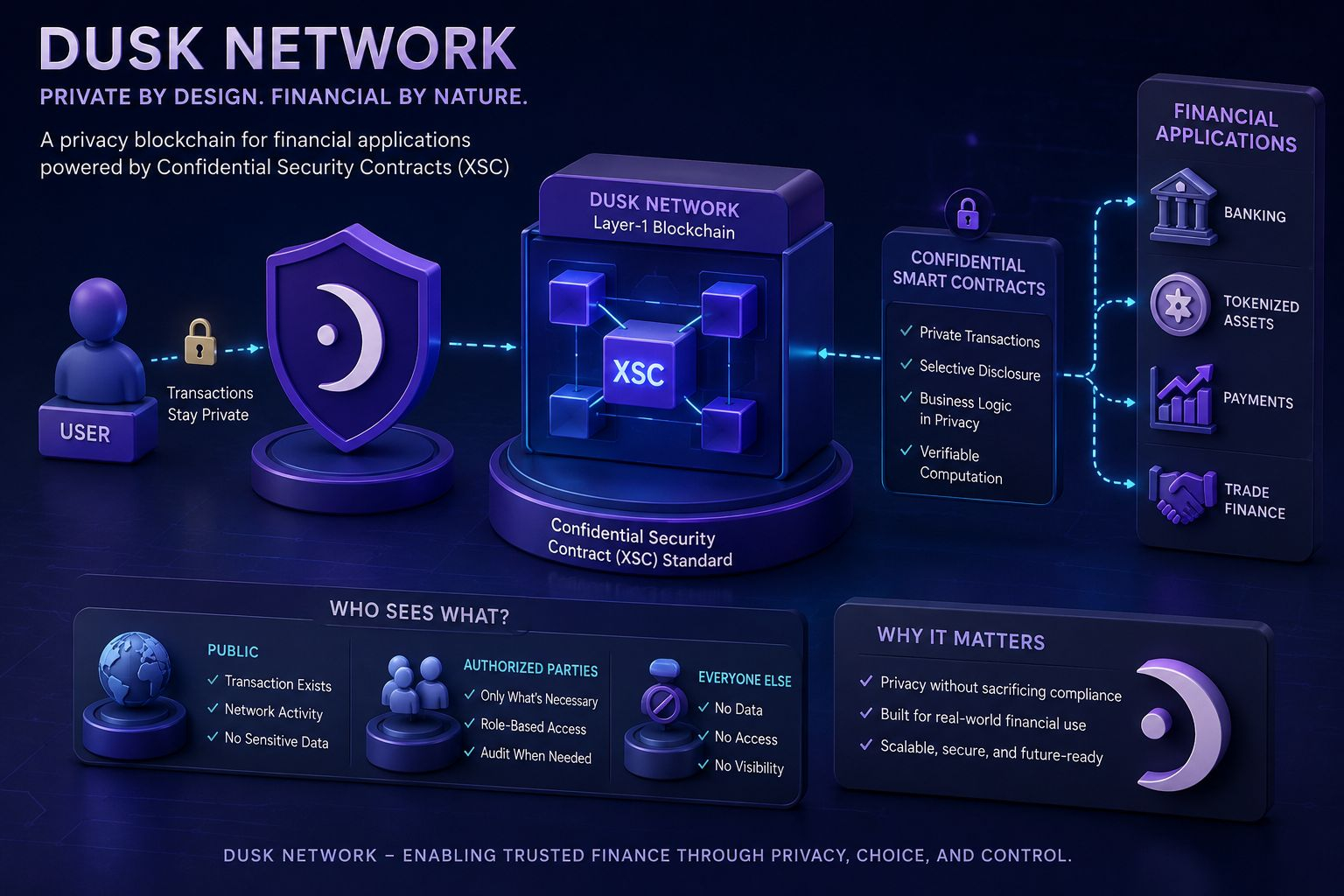
C’est là que l’approche XSC de Dusk et les contrats confidentiels commencent à faire davantage de sens pour moi. Et la récente attention portée à des éléments comme Dusk Connect, l’infrastructure de portefeuille et le travail sur la sécurité me fait penser que l’équipe comprend que la partie difficile ne consiste pas seulement à construire une technologie de confidentialité. Il s’agit de rendre l’expérience entière utilisable et digne de confiance.
Je reste sceptique. J’ai vu trop de projets confondre une technologie ingénieuse avec une adoption réelle.
Mais Dusk a un test plus intéressant à venir : la confidentialité peut-elle devenir quelque chose à peine remarqué par les utilisateurs ?
Si c’est le cas, c’est à ce moment-là que je commencerai à prêter beaucoup plus d’attention.
#dusk $DUSK @Dusk
J’ai vu le discours sur la confidentialité revenir et repartir assez souvent pour ne pas m’emballer uniquement parce qu’un projet affirme « finance confidentielle ».
Ce qui me pousse à regarder Dusk est un peu différent.
Le véritable problème n’est pas de tout cacher. Les systèmes financiers ne peuvent pas fonctionner de cette manière. Quelqu’un doit encore vérifier la propriété, faire respecter les règles, régler les transactions et savoir exactement ce qu’on est autorisé à voir. La question intéressante est de savoir si vous pouvez tout faire cela sans transformer l’activité financière de chaque utilisateur en données publiques.
C’est là que l’approche XSC de Dusk et les contrats confidentiels commencent à faire davantage de sens pour moi. Et la récente attention portée à des éléments comme Dusk Connect, l’infrastructure de portefeuille et le travail sur la sécurité me fait penser que l’équipe comprend que la partie difficile ne consiste pas seulement à construire une technologie de confidentialité. Il s’agit de rendre l’expérience entière utilisable et digne de confiance.
Je reste sceptique. J’ai vu trop de projets confondre une technologie ingénieuse avec une adoption réelle.
Mais Dusk a un test plus intéressant à venir : la confidentialité peut-elle devenir quelque chose à peine remarqué par les utilisateurs ?
Si c’est le cas, c’est à ce moment-là que je commencerai à prêter beaucoup plus d’attention.
J’ai vu le discours sur la confidentialité revenir et repartir assez souvent pour ne pas m’emballer uniquement parce qu’un projet affirme « finance confidentielle ».
Ce qui me pousse à regarder Dusk est un peu différent.
Le véritable problème n’est pas de tout cacher. Les systèmes financiers ne peuvent pas fonctionner de cette manière. Quelqu’un doit encore vérifier la propriété, faire respecter les règles, régler les transactions et savoir exactement ce qu’on est autorisé à voir. La question intéressante est de savoir si vous pouvez tout faire cela sans transformer l’activité financière de chaque utilisateur en données publiques.
C’est là que l’approche XSC de Dusk et les contrats confidentiels commencent à faire davantage de sens pour moi. Et la récente attention portée à des éléments comme Dusk Connect, l’infrastructure de portefeuille et le travail sur la sécurité me fait penser que l’équipe comprend que la partie difficile ne consiste pas seulement à construire une technologie de confidentialité. Il s’agit de rendre l’expérience entière utilisable et digne de confiance.
Je reste sceptique. J’ai vu trop de projets confondre une technologie ingénieuse avec une adoption réelle.
Mais Dusk a un test plus intéressant à venir : la confidentialité peut-elle devenir quelque chose à peine remarqué par les utilisateurs ?
Si c’est le cas, c’est à ce moment-là que je commencerai à prêter beaucoup plus d’attention.
5
5
139
·
--
Haussier
#dusk $DUSK @Dusk_Foundation
J’ai repensé Dusk d’une manière un peu différente ces derniers temps.
La confidentialité semble simple jusqu’au moment où l’on place une vraie activité financière dans l’équation. Vous ne voulez pas seulement tout masquer. Vous avez encore besoin de règles, d’autorisations, de conformité et d’une façon de prouver ce qui s’est passé sans tout exposer derrière.
C’est justement la partie qui m’intéresse dans Dusk.
L’approche XSC vise essentiellement à intégrer la confidentialité dans la manière dont fonctionnent les contrats financiers, plutôt que de traiter la vie privée comme une couche supplémentaire ajoutée plus tard. J’aime cette direction, mais je ne suis pas prêt à supposer que cela fonctionne simplement parce que l’architecture semble solide sur le papier.
J’ai déjà vu ça avec des projets crypto : une technologie performante attire l’attention, mais l’épreuve la plus difficile survient quand les développeurs doivent construire quelque chose que les gens utilisent réellement.
Alors, j’observe davantage l’écosystème que le récit.
Si, à terme, les développeurs commencent à utiliser l’exécution confidentielle simplement parce que cela rend les produits financiers plus faciles à construire, cela compterait pour moi bien plus que n’importe quelle autre statistique sur la confidentialité.
Pour Dusk, la question intéressante n’est pas « Une blockchain peut-elle être privée ? »
C’est de savoir si la confidentialité peut devenir une infrastructure financière normale.
#dusk $DUSK @Dusk
J’ai repensé Dusk d’une manière un peu différente ces derniers temps.
La confidentialité semble simple jusqu’au moment où l’on place une vraie activité financière dans l’équation. Vous ne voulez pas seulement tout masquer. Vous avez encore besoin de règles, d’autorisations, de conformité et d’une façon de prouver ce qui s’est passé sans tout exposer derrière.
C’est justement la partie qui m’intéresse dans Dusk.
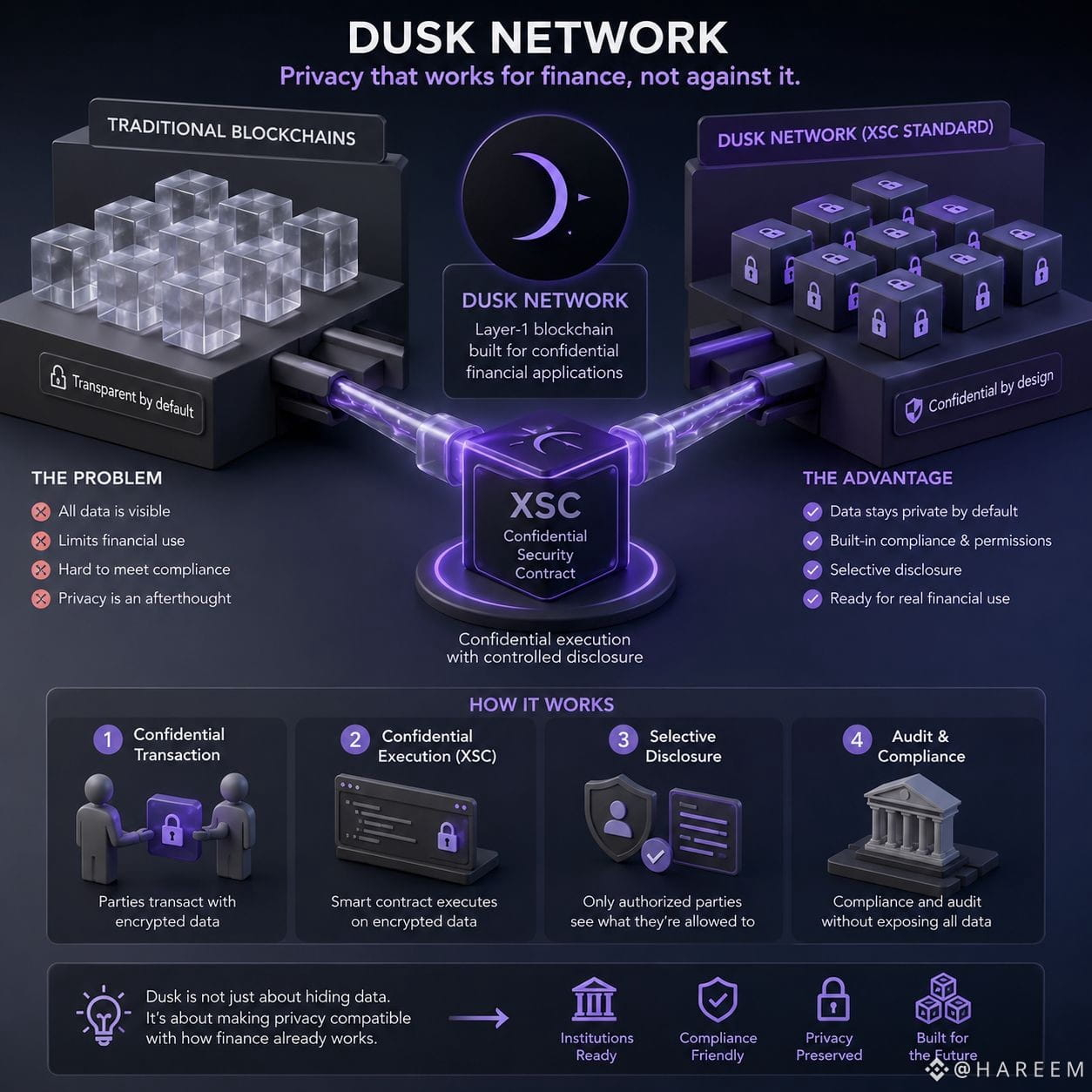
L’approche XSC vise essentiellement à intégrer la confidentialité dans la manière dont fonctionnent les contrats financiers, plutôt que de traiter la vie privée comme une couche supplémentaire ajoutée plus tard. J’aime cette direction, mais je ne suis pas prêt à supposer que cela fonctionne simplement parce que l’architecture semble solide sur le papier.
J’ai déjà vu ça avec des projets crypto : une technologie performante attire l’attention, mais l’épreuve la plus difficile survient quand les développeurs doivent construire quelque chose que les gens utilisent réellement.
Alors, j’observe davantage l’écosystème que le récit.
Si, à terme, les développeurs commencent à utiliser l’exécution confidentielle simplement parce que cela rend les produits financiers plus faciles à construire, cela compterait pour moi bien plus que n’importe quelle autre statistique sur la confidentialité.
Pour Dusk, la question intéressante n’est pas « Une blockchain peut-elle être privée ? »
C’est de savoir si la confidentialité peut devenir une infrastructure financière normale.
J’ai repensé Dusk d’une manière un peu différente ces derniers temps.
La confidentialité semble simple jusqu’au moment où l’on place une vraie activité financière dans l’équation. Vous ne voulez pas seulement tout masquer. Vous avez encore besoin de règles, d’autorisations, de conformité et d’une façon de prouver ce qui s’est passé sans tout exposer derrière.
C’est justement la partie qui m’intéresse dans Dusk.
L’approche XSC vise essentiellement à intégrer la confidentialité dans la manière dont fonctionnent les contrats financiers, plutôt que de traiter la vie privée comme une couche supplémentaire ajoutée plus tard. J’aime cette direction, mais je ne suis pas prêt à supposer que cela fonctionne simplement parce que l’architecture semble solide sur le papier.
J’ai déjà vu ça avec des projets crypto : une technologie performante attire l’attention, mais l’épreuve la plus difficile survient quand les développeurs doivent construire quelque chose que les gens utilisent réellement.
Alors, j’observe davantage l’écosystème que le récit.
Si, à terme, les développeurs commencent à utiliser l’exécution confidentielle simplement parce que cela rend les produits financiers plus faciles à construire, cela compterait pour moi bien plus que n’importe quelle autre statistique sur la confidentialité.
Pour Dusk, la question intéressante n’est pas « Une blockchain peut-elle être privée ? »
C’est de savoir si la confidentialité peut devenir une infrastructure financière normale.
6
6
124
·
--
Haussier
#baby $BABY @babylonlabs_io
Ces derniers temps, je pense à Babylon d’une manière un peu différente. La plupart des conversations tournent encore autour du TVL, des chiffres de staking, ou du fait de savoir si Bitcoin devrait même être impliqué dans la sécurisation d’autres réseaux. Ce sont des questions légitimes, mais je ne suis pas sûr qu’elles touchent vraiment au cœur de ce qui est réellement testé ici.
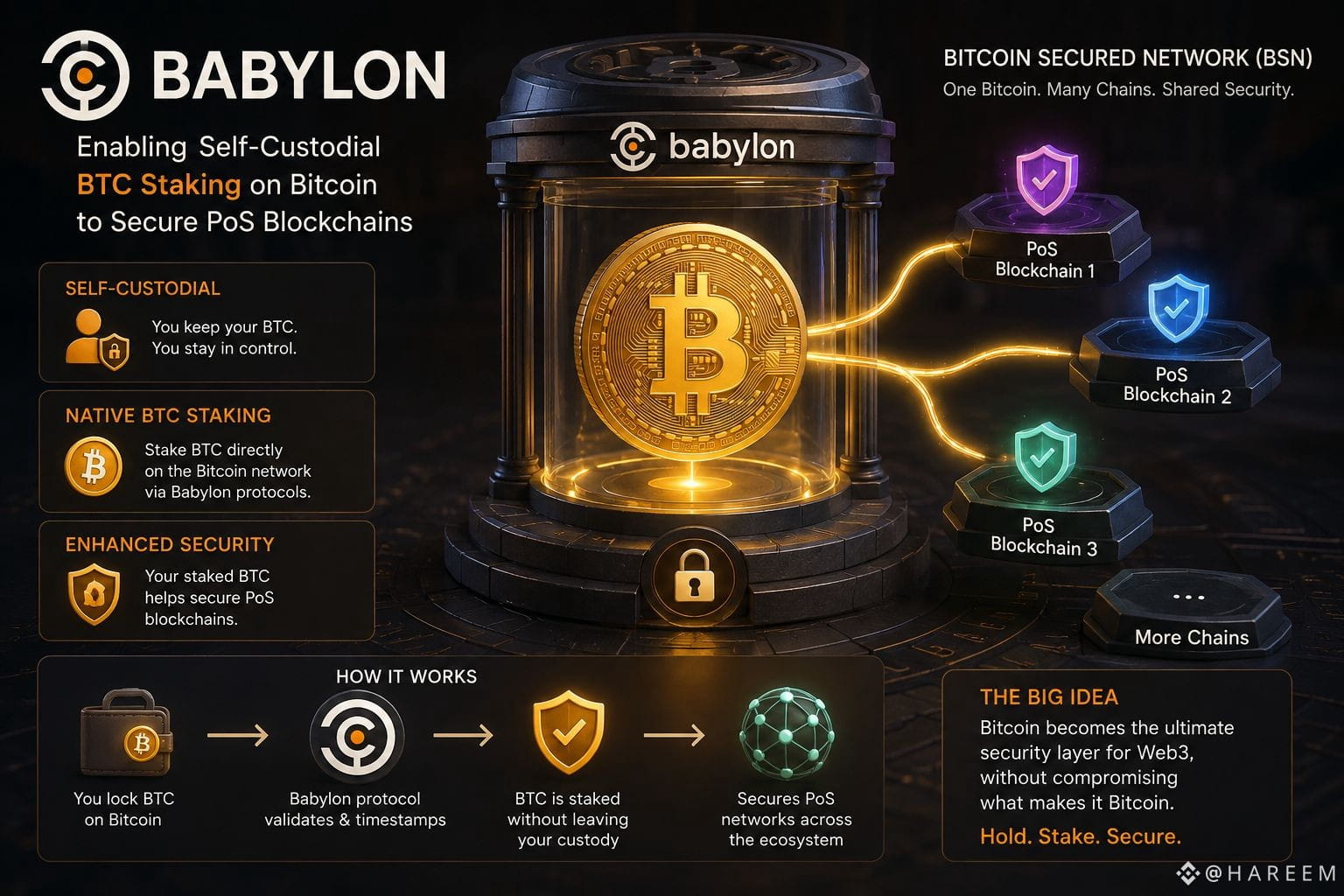
Ce qui revient le plus pour moi, c’est le comportement humain. Les détenteurs de Bitcoin ont passé des années à être conditionnés à faire une seule chose : conserver leurs pièces et éviter les risques inutiles. Babylon remet discrètement en question cet état d’esprit en posant une question différente : et si votre BTC pouvait contribuer à la sécurité du réseau sans renoncer à l’autocustodie ? C’est un changement bien plus important que ce qu’il n’y paraît, car il ne s’agit pas seulement de technologie : il s’agit de confiance.
J’ai vu de nombreux projets crypto avec des métriques impressionnantes qui ont disparu une fois les incitations atténuées. La liquidité est facile à attirer quand les récompenses sont élevées. Modifier durablement le comportement est beaucoup plus difficile. C’est pourquoi je trouve Babylon intéressant. Les progrès récents autour du staking BABY et de la vision plus large du Bitcoin Secured Network comptent moins pour moi que de savoir si les gens continuent de participer une fois que l’enthousiasme retombe.
Peut-être que c’est là le véritable test. Si Bitcoin évoluait en passant d’un simple réservoir de valeur à une source active de sécurité décentralisée—sans compromettre les principes qui l’ont rendu précieux dès le départ—ce serait une avancée réelle. Sinon, cela finira par n’être qu’un autre récit qui semblait plus grand qu’il ne l’était vraiment.
#baby $BABY @BabylonLabs_io
Ces derniers temps, je pense à Babylon d’une manière un peu différente. La plupart des conversations tournent encore autour du TVL, des chiffres de staking, ou du fait de savoir si Bitcoin devrait même être impliqué dans la sécurisation d’autres réseaux. Ce sont des questions légitimes, mais je ne suis pas sûr qu’elles touchent vraiment au cœur de ce qui est réellement testé ici.
Ce qui revient le plus pour moi, c’est le comportement humain. Les détenteurs de Bitcoin ont passé des années à être conditionnés à faire une seule chose : conserver leurs pièces et éviter les risques inutiles. Babylon remet discrètement en question cet état d’esprit en posant une question différente : et si votre BTC pouvait contribuer à la sécurité du réseau sans renoncer à l’autocustodie ? C’est un changement bien plus important que ce qu’il n’y paraît, car il ne s’agit pas seulement de technologie : il s’agit de confiance.
J’ai vu de nombreux projets crypto avec des métriques impressionnantes qui ont disparu une fois les incitations atténuées. La liquidité est facile à attirer quand les récompenses sont élevées. Modifier durablement le comportement est beaucoup plus difficile. C’est pourquoi je trouve Babylon intéressant. Les progrès récents autour du staking BABY et de la vision plus large du Bitcoin Secured Network comptent moins pour moi que de savoir si les gens continuent de participer une fois que l’enthousiasme retombe.
Peut-être que c’est là le véritable test. Si Bitcoin évoluait en passant d’un simple réservoir de valeur à une source active de sécurité décentralisée—sans compromettre les principes qui l’ont rendu précieux dès le départ—ce serait une avancée réelle. Sinon, cela finira par n’être qu’un autre récit qui semblait plus grand qu’il ne l’était vraiment.
Ces derniers temps, je pense à Babylon d’une manière un peu différente. La plupart des conversations tournent encore autour du TVL, des chiffres de staking, ou du fait de savoir si Bitcoin devrait même être impliqué dans la sécurisation d’autres réseaux. Ce sont des questions légitimes, mais je ne suis pas sûr qu’elles touchent vraiment au cœur de ce qui est réellement testé ici.
Ce qui revient le plus pour moi, c’est le comportement humain. Les détenteurs de Bitcoin ont passé des années à être conditionnés à faire une seule chose : conserver leurs pièces et éviter les risques inutiles. Babylon remet discrètement en question cet état d’esprit en posant une question différente : et si votre BTC pouvait contribuer à la sécurité du réseau sans renoncer à l’autocustodie ? C’est un changement bien plus important que ce qu’il n’y paraît, car il ne s’agit pas seulement de technologie : il s’agit de confiance.
J’ai vu de nombreux projets crypto avec des métriques impressionnantes qui ont disparu une fois les incitations atténuées. La liquidité est facile à attirer quand les récompenses sont élevées. Modifier durablement le comportement est beaucoup plus difficile. C’est pourquoi je trouve Babylon intéressant. Les progrès récents autour du staking BABY et de la vision plus large du Bitcoin Secured Network comptent moins pour moi que de savoir si les gens continuent de participer une fois que l’enthousiasme retombe.
Peut-être que c’est là le véritable test. Si Bitcoin évoluait en passant d’un simple réservoir de valeur à une source active de sécurité décentralisée—sans compromettre les principes qui l’ont rendu précieux dès le départ—ce serait une avancée réelle. Sinon, cela finira par n’être qu’un autre récit qui semblait plus grand qu’il ne l’était vraiment.
92
38
680
·
--
Haussier
#baby $BABY @babylonlabs_io
Ces derniers temps, je réfléchis à Babylon d’une manière un peu différente. Tout le monde semble se concentrer sur la quantité de BTC mise en staking ou sur la vitesse à laquelle l’écosystème grandit, mais je ne pense pas que ces chiffres racontent toute l’histoire.
Ce qui retient particulièrement mon attention, c’est une question beaucoup plus simple : si, demain, les récompenses devenaient moins attrayantes, les gens verraient-ils encore de la valeur à l’utiliser ? J’ai suivi assez de cycles crypto pour savoir que des dépôts peuvent apparaître pour des incitations, mais le fait de rester nécessite généralement quelque chose de plus profond.
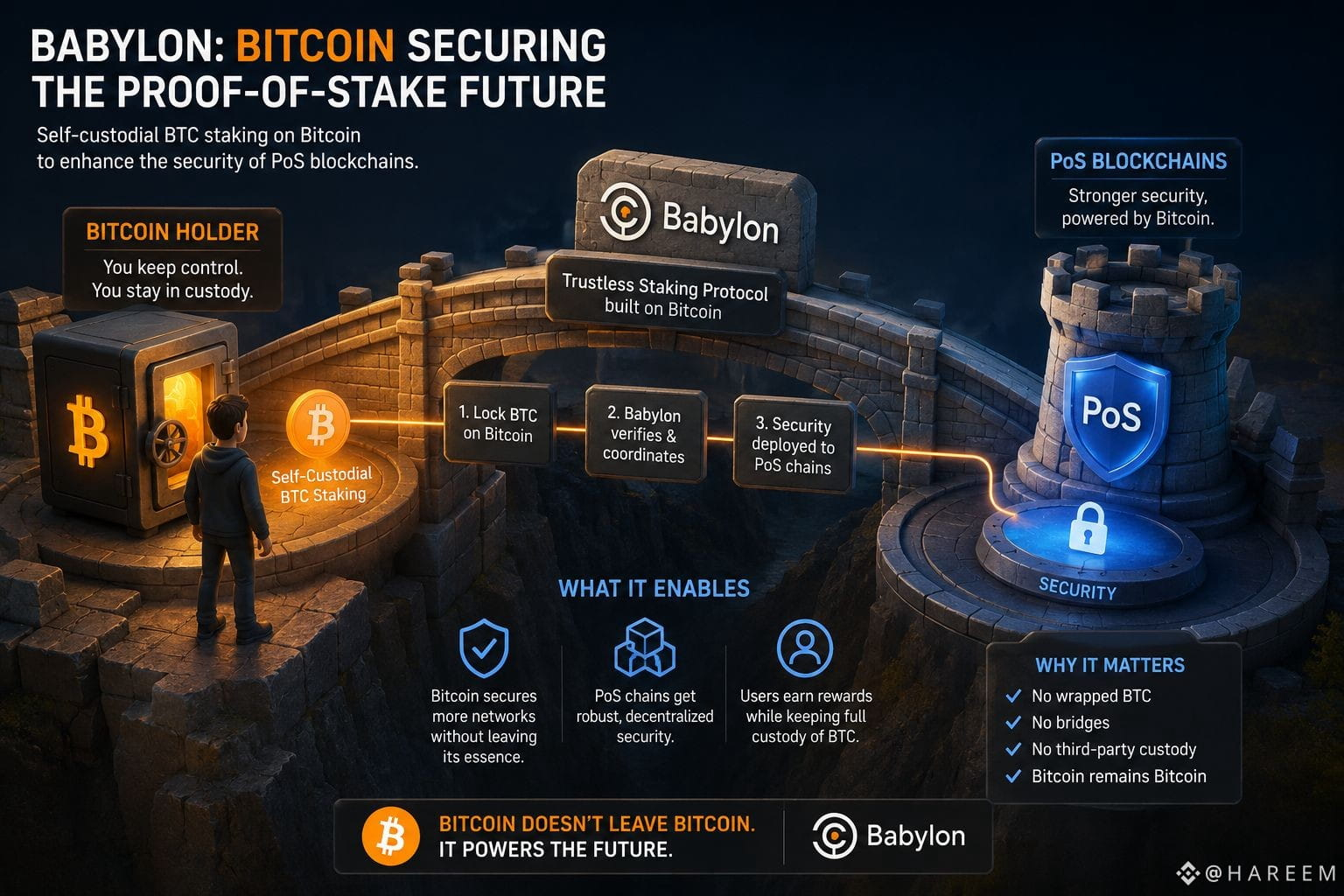
C’est pourquoi je trouve Babylon intéressant. Il ne cherche pas à convaincre les détenteurs de Bitcoin d’abandonner la garde juste pour générer du rendement. Il teste plutôt la capacité de Bitcoin à contribuer à la sécurisation d’autres réseaux tout en restant Bitcoin. Cela ressemble à un essai plus porteur que ce que la plupart des gens lui accordent.
Je ne suis pas encore convaincu du résultat, et je ne pense pas que quiconque devrait l’être pour l’instant. Mais si les utilisateurs continuent de participer quand les récompenses faciles ne seront plus la raison principale, cela me dira bien plus que n’importe quel graphique de TVL ou titre de presse ne pourra jamais le faire.
#baby $BABY @BabylonLabs_io
Ces derniers temps, je réfléchis à Babylon d’une manière un peu différente. Tout le monde semble se concentrer sur la quantité de BTC mise en staking ou sur la vitesse à laquelle l’écosystème grandit, mais je ne pense pas que ces chiffres racontent toute l’histoire.
Ce qui retient particulièrement mon attention, c’est une question beaucoup plus simple : si, demain, les récompenses devenaient moins attrayantes, les gens verraient-ils encore de la valeur à l’utiliser ? J’ai suivi assez de cycles crypto pour savoir que des dépôts peuvent apparaître pour des incitations, mais le fait de rester nécessite généralement quelque chose de plus profond.
C’est pourquoi je trouve Babylon intéressant. Il ne cherche pas à convaincre les détenteurs de Bitcoin d’abandonner la garde juste pour générer du rendement. Il teste plutôt la capacité de Bitcoin à contribuer à la sécurisation d’autres réseaux tout en restant Bitcoin. Cela ressemble à un essai plus porteur que ce que la plupart des gens lui accordent.
Je ne suis pas encore convaincu du résultat, et je ne pense pas que quiconque devrait l’être pour l’instant. Mais si les utilisateurs continuent de participer quand les récompenses faciles ne seront plus la raison principale, cela me dira bien plus que n’importe quel graphique de TVL ou titre de presse ne pourra jamais le faire.
Ces derniers temps, je réfléchis à Babylon d’une manière un peu différente. Tout le monde semble se concentrer sur la quantité de BTC mise en staking ou sur la vitesse à laquelle l’écosystème grandit, mais je ne pense pas que ces chiffres racontent toute l’histoire.
Ce qui retient particulièrement mon attention, c’est une question beaucoup plus simple : si, demain, les récompenses devenaient moins attrayantes, les gens verraient-ils encore de la valeur à l’utiliser ? J’ai suivi assez de cycles crypto pour savoir que des dépôts peuvent apparaître pour des incitations, mais le fait de rester nécessite généralement quelque chose de plus profond.
C’est pourquoi je trouve Babylon intéressant. Il ne cherche pas à convaincre les détenteurs de Bitcoin d’abandonner la garde juste pour générer du rendement. Il teste plutôt la capacité de Bitcoin à contribuer à la sécurisation d’autres réseaux tout en restant Bitcoin. Cela ressemble à un essai plus porteur que ce que la plupart des gens lui accordent.
Je ne suis pas encore convaincu du résultat, et je ne pense pas que quiconque devrait l’être pour l’instant. Mais si les utilisateurs continuent de participer quand les récompenses faciles ne seront plus la raison principale, cela me dira bien plus que n’importe quel graphique de TVL ou titre de presse ne pourra jamais le faire.
108
48
713
·
--
#baby $BABY @babylonlabs_io
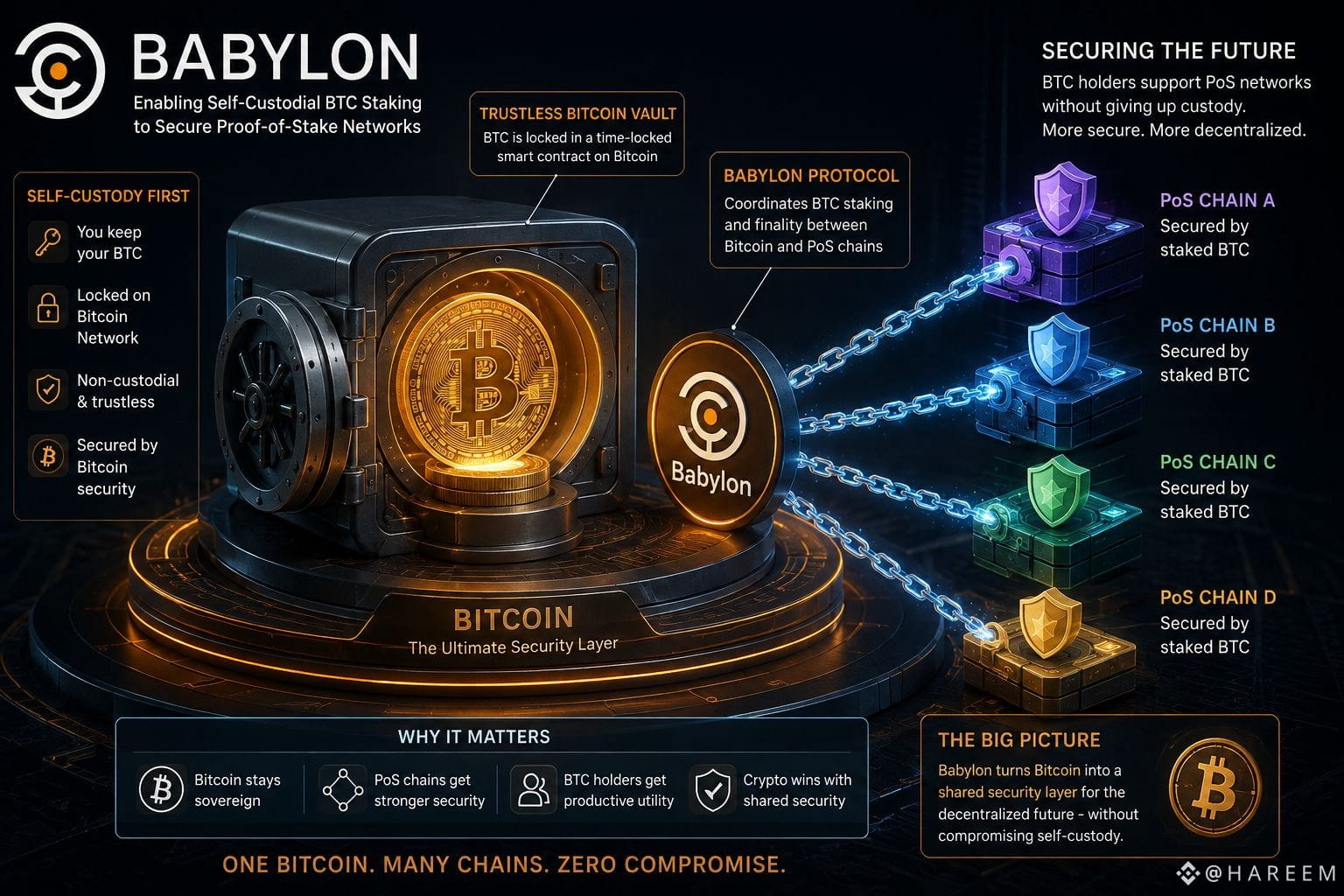
Je reviens sans cesse à la même idée quand je regarde Babylone : peut-être qu’on pose la mauvaise question. Tout le monde parle de la façon dont le Bitcoin peut générer un rendement, mais je pense que la question la plus intéressante est plutôt de savoir s’il peut renforcer d’autres réseaux sans renoncer aux principes qui ont rendu le Bitcoin précieux à l’origine.
J’ai vu assez de cycles crypto pour savoir que des incitations attrayantes peuvent faire passer presque n’importe quoi pour une réussite pendant un moment. Ce qui compte le plus, c’est ce que font les gens après la disparition de l’excitation. C’est pourquoi je prête davantage attention à la façon dont l’écosystème de Babylone évolue qu’aux chiffres à court terme. Si des développeurs, des validateurs et des détenteurs de BTC continuent de participer quand les récompenses faciles ne sont plus la raison principale, cela m’en dit beaucoup plus que n’importe quel titre.
Je ne suis pas encore convaincu du résultat, et je ne pense pas que quiconque devrait l’être pour l’instant. Mais si Babylone prouve que le Bitcoin autogéré peut devenir une couche de sécurité pour d’autres chaînes sans compromettre la propriété, ce ne sera pas juste un autre protocole. Cela pourrait, discrètement, redessiner la place du Bitcoin dans l’écosystème crypto au sens large.
#baby $BABY @BabylonLabs_io
Je reviens sans cesse à la même idée quand je regarde Babylone : peut-être qu’on pose la mauvaise question. Tout le monde parle de la façon dont le Bitcoin peut générer un rendement, mais je pense que la question la plus intéressante est plutôt de savoir s’il peut renforcer d’autres réseaux sans renoncer aux principes qui ont rendu le Bitcoin précieux à l’origine.
J’ai vu assez de cycles crypto pour savoir que des incitations attrayantes peuvent faire passer presque n’importe quoi pour une réussite pendant un moment. Ce qui compte le plus, c’est ce que font les gens après la disparition de l’excitation. C’est pourquoi je prête davantage attention à la façon dont l’écosystème de Babylone évolue qu’aux chiffres à court terme. Si des développeurs, des validateurs et des détenteurs de BTC continuent de participer quand les récompenses faciles ne sont plus la raison principale, cela m’en dit beaucoup plus que n’importe quel titre.
Je ne suis pas encore convaincu du résultat, et je ne pense pas que quiconque devrait l’être pour l’instant. Mais si Babylone prouve que le Bitcoin autogéré peut devenir une couche de sécurité pour d’autres chaînes sans compromettre la propriété, ce ne sera pas juste un autre protocole. Cela pourrait, discrètement, redessiner la place du Bitcoin dans l’écosystème crypto au sens large.
Je reviens sans cesse à la même idée quand je regarde Babylone : peut-être qu’on pose la mauvaise question. Tout le monde parle de la façon dont le Bitcoin peut générer un rendement, mais je pense que la question la plus intéressante est plutôt de savoir s’il peut renforcer d’autres réseaux sans renoncer aux principes qui ont rendu le Bitcoin précieux à l’origine.
J’ai vu assez de cycles crypto pour savoir que des incitations attrayantes peuvent faire passer presque n’importe quoi pour une réussite pendant un moment. Ce qui compte le plus, c’est ce que font les gens après la disparition de l’excitation. C’est pourquoi je prête davantage attention à la façon dont l’écosystème de Babylone évolue qu’aux chiffres à court terme. Si des développeurs, des validateurs et des détenteurs de BTC continuent de participer quand les récompenses faciles ne sont plus la raison principale, cela m’en dit beaucoup plus que n’importe quel titre.
Je ne suis pas encore convaincu du résultat, et je ne pense pas que quiconque devrait l’être pour l’instant. Mais si Babylone prouve que le Bitcoin autogéré peut devenir une couche de sécurité pour d’autres chaînes sans compromettre la propriété, ce ne sera pas juste un autre protocole. Cela pourrait, discrètement, redessiner la place du Bitcoin dans l’écosystème crypto au sens large.
95
37
930
·
--
#baby $BABY @babylonlabs_io
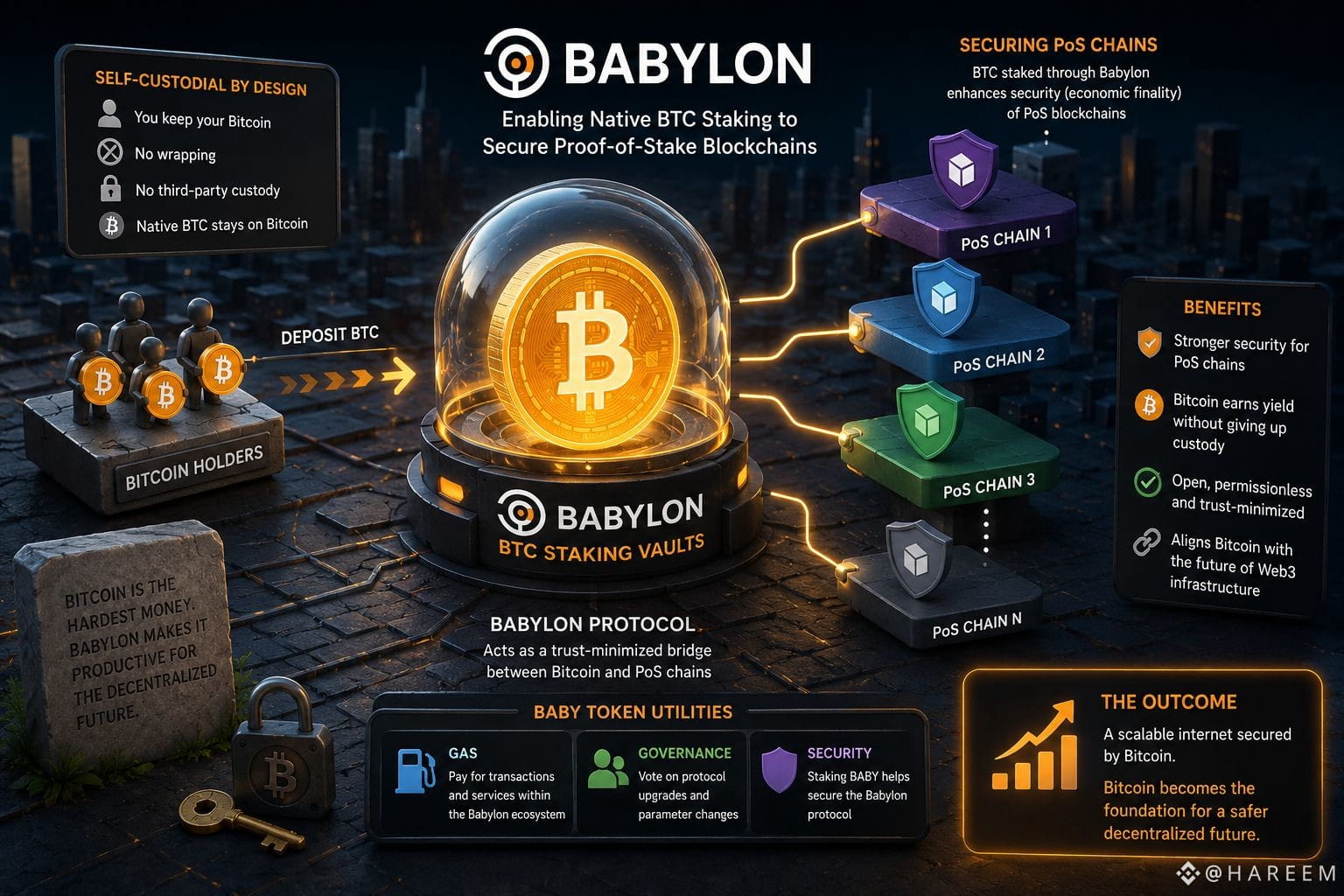
Ces derniers temps, je réfléchis à Babylon sous un angle différent. La plupart des discussions tournent encore autour du staking BTC, mais j’ai l’impression que ce n’est que la partie émergée de l’iceberg. Ce qui retient vraiment mon attention, c’est la question plus vaste : est-ce que Bitcoin peut devenir une couche de sécurité pour d’autres réseaux, sans renoncer à ce qui rend Bitcoin précieux en premier lieu ?
J’ai observé assez de cycles de marché pour savoir que les narratifs sont faciles à construire quand la liquidité circule. La difficulté arrive ensuite, lorsque les incitations se refroidissent et que les gens continuent à utiliser le produit parce qu’il résout réellement un problème. C’est à ce stade que je m’intéresse.
Il y a quelque chose dans Babylon qui semble différent, parce que son succès n’est pas lié à la nécessité de convaincre les gens d’abandonner Bitcoin. L’objectif est d’élargir ce que Bitcoin peut faire tout en gardant la gestion en auto-conservation au cœur du dispositif. Je ne suis pas encore prêt à qualifier cela de modèle prouvé, mais je pense que c’est le bon défi sur lequel se concentrer. Si l’usage réel continue après que l’enthousiasme se soit dissipé, cela nous dira bien plus que n’importe quel mouvement de prix à court terme.
#baby $BABY @BabylonLabs_io
Ces derniers temps, je réfléchis à Babylon sous un angle différent. La plupart des discussions tournent encore autour du staking BTC, mais j’ai l’impression que ce n’est que la partie émergée de l’iceberg. Ce qui retient vraiment mon attention, c’est la question plus vaste : est-ce que Bitcoin peut devenir une couche de sécurité pour d’autres réseaux, sans renoncer à ce qui rend Bitcoin précieux en premier lieu ?
J’ai observé assez de cycles de marché pour savoir que les narratifs sont faciles à construire quand la liquidité circule. La difficulté arrive ensuite, lorsque les incitations se refroidissent et que les gens continuent à utiliser le produit parce qu’il résout réellement un problème. C’est à ce stade que je m’intéresse.
Il y a quelque chose dans Babylon qui semble différent, parce que son succès n’est pas lié à la nécessité de convaincre les gens d’abandonner Bitcoin. L’objectif est d’élargir ce que Bitcoin peut faire tout en gardant la gestion en auto-conservation au cœur du dispositif. Je ne suis pas encore prêt à qualifier cela de modèle prouvé, mais je pense que c’est le bon défi sur lequel se concentrer. Si l’usage réel continue après que l’enthousiasme se soit dissipé, cela nous dira bien plus que n’importe quel mouvement de prix à court terme.
Ces derniers temps, je réfléchis à Babylon sous un angle différent. La plupart des discussions tournent encore autour du staking BTC, mais j’ai l’impression que ce n’est que la partie émergée de l’iceberg. Ce qui retient vraiment mon attention, c’est la question plus vaste : est-ce que Bitcoin peut devenir une couche de sécurité pour d’autres réseaux, sans renoncer à ce qui rend Bitcoin précieux en premier lieu ?
J’ai observé assez de cycles de marché pour savoir que les narratifs sont faciles à construire quand la liquidité circule. La difficulté arrive ensuite, lorsque les incitations se refroidissent et que les gens continuent à utiliser le produit parce qu’il résout réellement un problème. C’est à ce stade que je m’intéresse.
Il y a quelque chose dans Babylon qui semble différent, parce que son succès n’est pas lié à la nécessité de convaincre les gens d’abandonner Bitcoin. L’objectif est d’élargir ce que Bitcoin peut faire tout en gardant la gestion en auto-conservation au cœur du dispositif. Je ne suis pas encore prêt à qualifier cela de modèle prouvé, mais je pense que c’est le bon défi sur lequel se concentrer. Si l’usage réel continue après que l’enthousiasme se soit dissipé, cela nous dira bien plus que n’importe quel mouvement de prix à court terme.
110
40
281
·
--
Haussier
#baby $BABY @babylonlabs_io
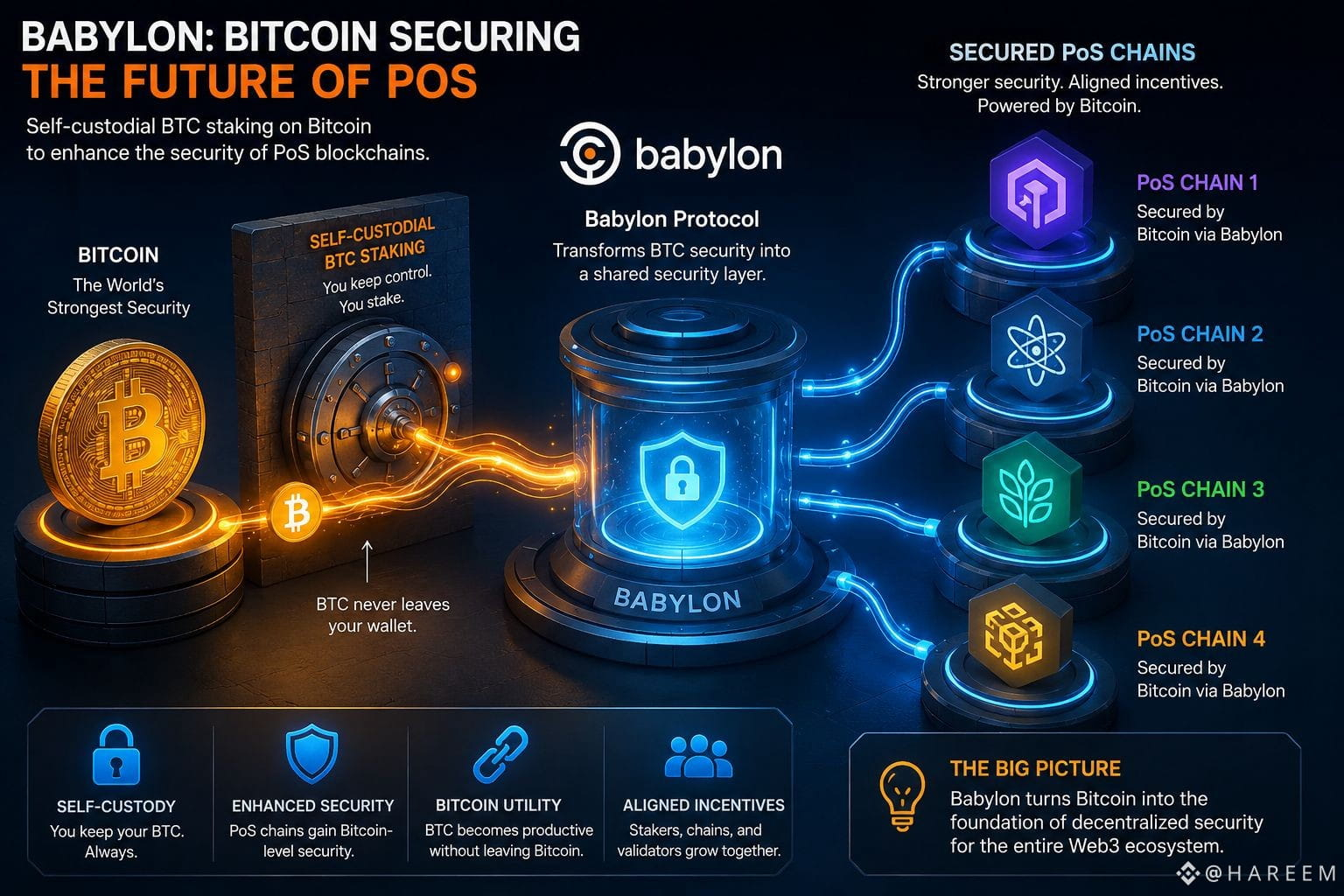
Ces derniers temps, je repense à Babylon d’une manière un peu différente. La plupart des discussions continuent de tourner autour de l’« staking » sur BTC, mais je ne pense pas que ce soit la partie la plus intéressante à observer. Ce qui attire mon attention, c’est l’idée que Bitcoin devienne silencieusement une couche de sécurité pour d’autres réseaux, tout en restant sous contrôle par l’utilisateur. Si cela fonctionne de manière constante, ce sera un changement bien plus important qu’un autre produit de staking.
J’ai suffisamment observé des cycles crypto pour savoir que de bonnes narratives se diffusent plus vite qu’une bonne infrastructure. Les projets qui survivent ne sont généralement pas les plus bruyants : ce sont ceux que les gens continuent d’utiliser longtemps après que l’excitation est retombée. C’est pourquoi je prête davantage attention à la croissance de l’écosystème, à la participation des validateurs et aux intégrations réelles plutôt qu’aux variations de prix à court terme.
Je reste prudent. Chaque protocole semble convaincant lorsque le sentiment est fort. Le vrai test arrive quand le marché devient ennuyeux et que les gens continuent quand même à l’utiliser. Si Babylon continue de prouver que Bitcoin peut sécuriser des écosystèmes PoS sans demander aux détenteurs de renoncer au contrôle de leurs actifs, alors sa plus grande réussite ne sera pas le rendement. Elle consistera à transformer la manière dont Bitcoin crée de la valeur au-delà de sa propre chaîne.
#baby $BABY @BabylonLabs_io
Ces derniers temps, je repense à Babylon d’une manière un peu différente. La plupart des discussions continuent de tourner autour de l’« staking » sur BTC, mais je ne pense pas que ce soit la partie la plus intéressante à observer. Ce qui attire mon attention, c’est l’idée que Bitcoin devienne silencieusement une couche de sécurité pour d’autres réseaux, tout en restant sous contrôle par l’utilisateur. Si cela fonctionne de manière constante, ce sera un changement bien plus important qu’un autre produit de staking.
J’ai suffisamment observé des cycles crypto pour savoir que de bonnes narratives se diffusent plus vite qu’une bonne infrastructure. Les projets qui survivent ne sont généralement pas les plus bruyants : ce sont ceux que les gens continuent d’utiliser longtemps après que l’excitation est retombée. C’est pourquoi je prête davantage attention à la croissance de l’écosystème, à la participation des validateurs et aux intégrations réelles plutôt qu’aux variations de prix à court terme.
Je reste prudent. Chaque protocole semble convaincant lorsque le sentiment est fort. Le vrai test arrive quand le marché devient ennuyeux et que les gens continuent quand même à l’utiliser. Si Babylon continue de prouver que Bitcoin peut sécuriser des écosystèmes PoS sans demander aux détenteurs de renoncer au contrôle de leurs actifs, alors sa plus grande réussite ne sera pas le rendement. Elle consistera à transformer la manière dont Bitcoin crée de la valeur au-delà de sa propre chaîne.
Ces derniers temps, je repense à Babylon d’une manière un peu différente. La plupart des discussions continuent de tourner autour de l’« staking » sur BTC, mais je ne pense pas que ce soit la partie la plus intéressante à observer. Ce qui attire mon attention, c’est l’idée que Bitcoin devienne silencieusement une couche de sécurité pour d’autres réseaux, tout en restant sous contrôle par l’utilisateur. Si cela fonctionne de manière constante, ce sera un changement bien plus important qu’un autre produit de staking.
J’ai suffisamment observé des cycles crypto pour savoir que de bonnes narratives se diffusent plus vite qu’une bonne infrastructure. Les projets qui survivent ne sont généralement pas les plus bruyants : ce sont ceux que les gens continuent d’utiliser longtemps après que l’excitation est retombée. C’est pourquoi je prête davantage attention à la croissance de l’écosystème, à la participation des validateurs et aux intégrations réelles plutôt qu’aux variations de prix à court terme.
Je reste prudent. Chaque protocole semble convaincant lorsque le sentiment est fort. Le vrai test arrive quand le marché devient ennuyeux et que les gens continuent quand même à l’utiliser. Si Babylon continue de prouver que Bitcoin peut sécuriser des écosystèmes PoS sans demander aux détenteurs de renoncer au contrôle de leurs actifs, alors sa plus grande réussite ne sera pas le rendement. Elle consistera à transformer la manière dont Bitcoin crée de la valeur au-delà de sa propre chaîne.
83
34
508
·
--
Haussier
#baby $BABY @babylonlabs_io
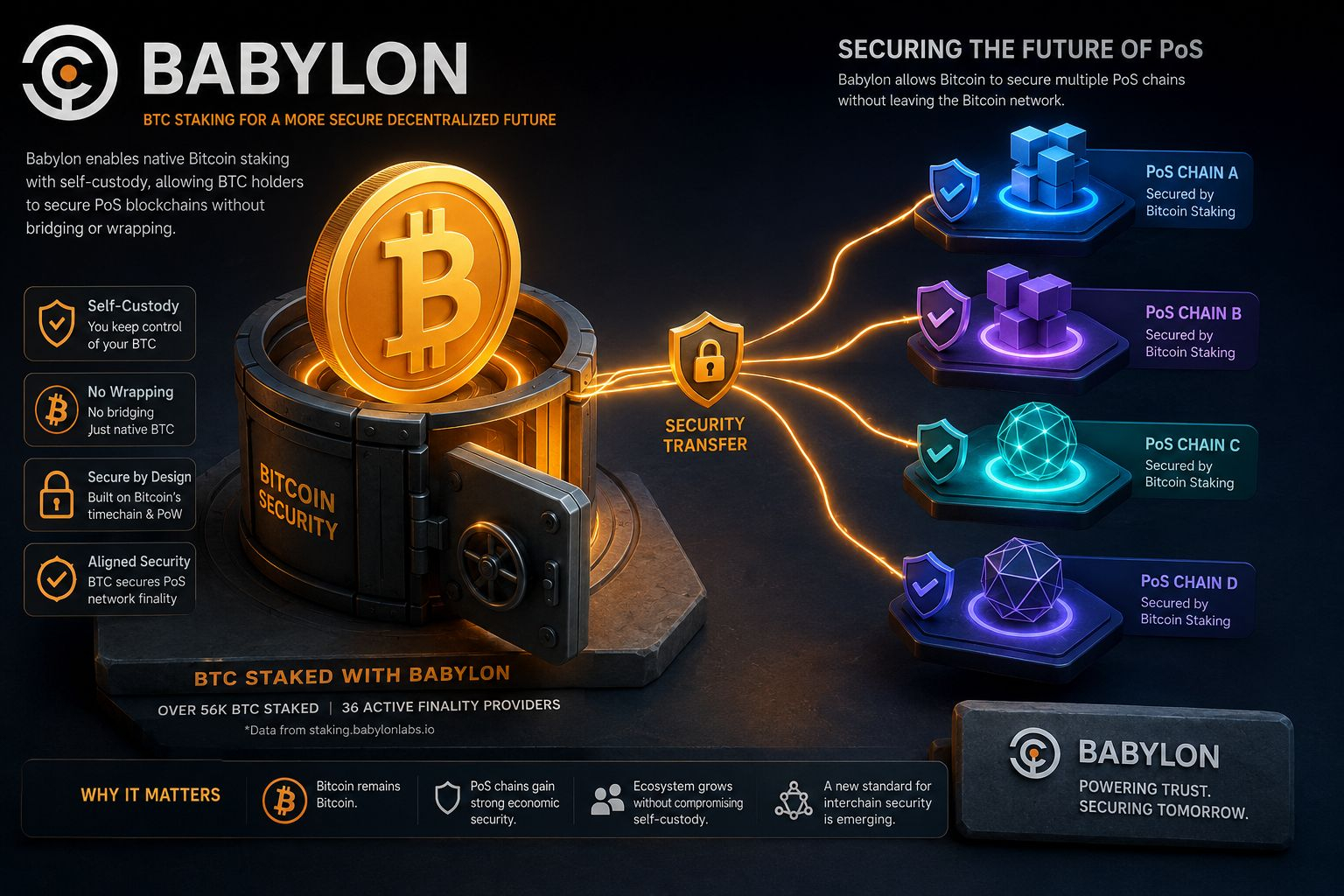
J’ai suffisamment évolué dans l’univers crypto pour remarquer que chaque cycle tente de donner à Bitcoin un nouveau rôle. Certaines idées disparaissent en quelques mois, tandis que d’autres continuent discrètement à évoluer même lorsque les projecteurs se déplacent ailleurs. C’est pour cela que je reviens sans cesse vers Babylon. Ce qui m’intéresse n’est pas la promesse de récompenses de staking ni une autre étape symbolique en matière de TVL. C’est la question plus vaste que pose le protocole : est-ce que Bitcoin peut renforcer d’autres réseaux sans renoncer aux qualités qui en font sa valeur, avant tout ?
J’ai vu de nombreux projets confondre ingénierie financière et véritable innovation. Babylon me semble différent, car l’idée de base est étonnamment simple. Au lieu de demander aux détenteurs de Bitcoin de faire confiance à une autre chaîne pour leurs actifs, le protocole met l’accent sur la préservation de la self-custody tout en permettant à la sécurité de Bitcoin de soutenir des écosystèmes PoS. Sur le papier, ça paraît simple, mais en pratique, c’est un équilibre difficile à atteindre.
Je reste prudent. Chaque nouveau récit crypto mérite du scepticisme jusqu’à ce qu’il soit confronté à différentes conditions de marché. Mais il y a quelque chose avec Babylon qui m’incite à prêter attention. Si cela prouve que Bitcoin peut étendre sa sécurité au-delà de son propre réseau sans compromettre ses principes fondamentaux, l’impact à long terme pourrait être bien plus significatif qu’une simple histoire de rendement temporaire. Parfois, la forme d’innovation la plus forte n’est pas de faire faire plus à Bitcoin : c’est de lui permettre de rester exactement ce qu’il est tout en rendant silencieusement tout ce qui l’entoure plus solide.
#baby $BABY @BabylonLabs_io
J’ai suffisamment évolué dans l’univers crypto pour remarquer que chaque cycle tente de donner à Bitcoin un nouveau rôle. Certaines idées disparaissent en quelques mois, tandis que d’autres continuent discrètement à évoluer même lorsque les projecteurs se déplacent ailleurs. C’est pour cela que je reviens sans cesse vers Babylon. Ce qui m’intéresse n’est pas la promesse de récompenses de staking ni une autre étape symbolique en matière de TVL. C’est la question plus vaste que pose le protocole : est-ce que Bitcoin peut renforcer d’autres réseaux sans renoncer aux qualités qui en font sa valeur, avant tout ?
J’ai vu de nombreux projets confondre ingénierie financière et véritable innovation. Babylon me semble différent, car l’idée de base est étonnamment simple. Au lieu de demander aux détenteurs de Bitcoin de faire confiance à une autre chaîne pour leurs actifs, le protocole met l’accent sur la préservation de la self-custody tout en permettant à la sécurité de Bitcoin de soutenir des écosystèmes PoS. Sur le papier, ça paraît simple, mais en pratique, c’est un équilibre difficile à atteindre.
Je reste prudent. Chaque nouveau récit crypto mérite du scepticisme jusqu’à ce qu’il soit confronté à différentes conditions de marché. Mais il y a quelque chose avec Babylon qui m’incite à prêter attention. Si cela prouve que Bitcoin peut étendre sa sécurité au-delà de son propre réseau sans compromettre ses principes fondamentaux, l’impact à long terme pourrait être bien plus significatif qu’une simple histoire de rendement temporaire. Parfois, la forme d’innovation la plus forte n’est pas de faire faire plus à Bitcoin : c’est de lui permettre de rester exactement ce qu’il est tout en rendant silencieusement tout ce qui l’entoure plus solide.
J’ai suffisamment évolué dans l’univers crypto pour remarquer que chaque cycle tente de donner à Bitcoin un nouveau rôle. Certaines idées disparaissent en quelques mois, tandis que d’autres continuent discrètement à évoluer même lorsque les projecteurs se déplacent ailleurs. C’est pour cela que je reviens sans cesse vers Babylon. Ce qui m’intéresse n’est pas la promesse de récompenses de staking ni une autre étape symbolique en matière de TVL. C’est la question plus vaste que pose le protocole : est-ce que Bitcoin peut renforcer d’autres réseaux sans renoncer aux qualités qui en font sa valeur, avant tout ?
J’ai vu de nombreux projets confondre ingénierie financière et véritable innovation. Babylon me semble différent, car l’idée de base est étonnamment simple. Au lieu de demander aux détenteurs de Bitcoin de faire confiance à une autre chaîne pour leurs actifs, le protocole met l’accent sur la préservation de la self-custody tout en permettant à la sécurité de Bitcoin de soutenir des écosystèmes PoS. Sur le papier, ça paraît simple, mais en pratique, c’est un équilibre difficile à atteindre.
Je reste prudent. Chaque nouveau récit crypto mérite du scepticisme jusqu’à ce qu’il soit confronté à différentes conditions de marché. Mais il y a quelque chose avec Babylon qui m’incite à prêter attention. Si cela prouve que Bitcoin peut étendre sa sécurité au-delà de son propre réseau sans compromettre ses principes fondamentaux, l’impact à long terme pourrait être bien plus significatif qu’une simple histoire de rendement temporaire. Parfois, la forme d’innovation la plus forte n’est pas de faire faire plus à Bitcoin : c’est de lui permettre de rester exactement ce qu’il est tout en rendant silencieusement tout ce qui l’entoure plus solide.
56
28
563
·
--
#FedSeptHikeOddsJumpToAbout82%
#USTreasuryYieldsRetreat
#OilExtendsDecline
$ON
{future}(ONUSDT)
$LAB
{future}(LABUSDT)
$DEXE
{spot}(DEXEUSDT)
Plus je regarde Babylon, moins je pense que l’histoire réelle porte sur les récompenses de mise. Je pense plutôt qu’il s’agit de la manière dont ils traitent avec soin le Bitcoin lui-même. J’ai été là assez longtemps pour voir énormément de projets promettre de « débloquer du BTC », mais beaucoup se sont finalement retrouvés à demander aux utilisateurs de faire confiance à un autre pont, à un autre dépositaire, ou à une autre couche de complexité. C’est pour ça que je n’ai jamais jugé Babylon sur le marketing.
Ce qui retient vraiment mon attention, c’est l’état d’esprit derrière la conception. Au lieu d’essayer de transformer le Bitcoin en tout, il semble axé sur le fait de laisser le Bitcoin renforcer d’autres réseaux tout en gardant la self-custody au cœur du système. Ça ressemble à une approche plus réaliste.
Je reste prudent. La crypto a cette habitude de rendre chaque nouvelle idée révolutionnaire avant qu’elle ait été correctement testée. Mais si Babylon réussit, je ne pense pas que ce sera parce qu’elle a créé une autre opportunité de rendement. Ce sera parce qu’elle a prouvé que le Bitcoin peut contribuer à d’autres écosystèmes sans renoncer aux principes qui le rendent précieux au départ. Pour moi, c’est la question qui mérite d’être suivie — pas l’emballement.
#FedSeptHikeOddsJumpToAbout82%
#USTreasuryYieldsRetreat
#OilExtendsDecline
$ON
$LAB
$DEXE
Plus je regarde Babylon, moins je pense que l’histoire réelle porte sur les récompenses de mise. Je pense plutôt qu’il s’agit de la manière dont ils traitent avec soin le Bitcoin lui-même. J’ai été là assez longtemps pour voir énormément de projets promettre de « débloquer du BTC », mais beaucoup se sont finalement retrouvés à demander aux utilisateurs de faire confiance à un autre pont, à un autre dépositaire, ou à une autre couche de complexité. C’est pour ça que je n’ai jamais jugé Babylon sur le marketing.
Ce qui retient vraiment mon attention, c’est l’état d’esprit derrière la conception. Au lieu d’essayer de transformer le Bitcoin en tout, il semble axé sur le fait de laisser le Bitcoin renforcer d’autres réseaux tout en gardant la self-custody au cœur du système. Ça ressemble à une approche plus réaliste.
Je reste prudent. La crypto a cette habitude de rendre chaque nouvelle idée révolutionnaire avant qu’elle ait été correctement testée. Mais si Babylon réussit, je ne pense pas que ce sera parce qu’elle a créé une autre opportunité de rendement. Ce sera parce qu’elle a prouvé que le Bitcoin peut contribuer à d’autres écosystèmes sans renoncer aux principes qui le rendent précieux au départ. Pour moi, c’est la question qui mérite d’être suivie — pas l’emballement.
#USTreasuryYieldsRetreat
#OilExtendsDecline
$ON
$LAB
$DEXE
Plus je regarde Babylon, moins je pense que l’histoire réelle porte sur les récompenses de mise. Je pense plutôt qu’il s’agit de la manière dont ils traitent avec soin le Bitcoin lui-même. J’ai été là assez longtemps pour voir énormément de projets promettre de « débloquer du BTC », mais beaucoup se sont finalement retrouvés à demander aux utilisateurs de faire confiance à un autre pont, à un autre dépositaire, ou à une autre couche de complexité. C’est pour ça que je n’ai jamais jugé Babylon sur le marketing.
Ce qui retient vraiment mon attention, c’est l’état d’esprit derrière la conception. Au lieu d’essayer de transformer le Bitcoin en tout, il semble axé sur le fait de laisser le Bitcoin renforcer d’autres réseaux tout en gardant la self-custody au cœur du système. Ça ressemble à une approche plus réaliste.
Je reste prudent. La crypto a cette habitude de rendre chaque nouvelle idée révolutionnaire avant qu’elle ait été correctement testée. Mais si Babylon réussit, je ne pense pas que ce sera parce qu’elle a créé une autre opportunité de rendement. Ce sera parce qu’elle a prouvé que le Bitcoin peut contribuer à d’autres écosystèmes sans renoncer aux principes qui le rendent précieux au départ. Pour moi, c’est la question qui mérite d’être suivie — pas l’emballement.
🔒 Security over yield
40%
🟠 Self-custody matters most
40%
⚖️ Too early to judge
0%
👀 Watching, not convinced yet
20%
5 Votes • Vote fermé
19
16
3.8k
·
--
#baby @babylonlabs_io $BABY
{spot}(BABYUSDT)
J’ai vécu assez longtemps pour savoir que la crypto adore transformer chaque nouvelle idée en la prochaine grande narration. La plupart de ces récits s’éteignent une fois que de vrais utilisateurs commencent à poser des questions difficiles. C’est pourquoi je continue d’observer Babylon sous un angle différent. Je ne le vois pas comme une autre façon d’extraire un rendement supplémentaire de Bitcoin. Je le vois comme une expérience visant à déterminer si la caractéristique la plus forte de Bitcoin — sa sécurité — peut s’étendre au-delà de son propre réseau sans compromettre la self-custody. Voilà un défi bien plus significatif.
Les avancées récentes de l’écosystème, de l’extension de l’infrastructure de staking à de nouvelles intégrations et à des outils, me disent que l’équipe se concentre sur le fait de rendre le système plus utilisable plutôt que de créer simplement l’excitation. J’apprécie cette approche, parce que j’ai vu trop de projets consacrer plus de temps au marketing qu’à l’amélioration du produit lui-même.
Je reste prudent. Chaque protocole semble solide jusqu’à ce qu’il soit confronté à la pression, à l’évolution des conditions de marché et à des incitations inattendues. C’est à ce moment-là que la vraie conception est mise à l’épreuve. Si Babylon réussit, ce ne sera pas parce qu’il a offert les récompenses les plus élevées. Ce sera parce qu’il aura prouvé que Bitcoin peut sécuriser d’autres écosystèmes tout en restant fidèle aux principes qui ont fait naître la confiance à l’origine. C’est la question que je surveille, pas le prix.
#baby @BabylonLabs_io $BABY
J’ai vécu assez longtemps pour savoir que la crypto adore transformer chaque nouvelle idée en la prochaine grande narration. La plupart de ces récits s’éteignent une fois que de vrais utilisateurs commencent à poser des questions difficiles. C’est pourquoi je continue d’observer Babylon sous un angle différent. Je ne le vois pas comme une autre façon d’extraire un rendement supplémentaire de Bitcoin. Je le vois comme une expérience visant à déterminer si la caractéristique la plus forte de Bitcoin — sa sécurité — peut s’étendre au-delà de son propre réseau sans compromettre la self-custody. Voilà un défi bien plus significatif.
Les avancées récentes de l’écosystème, de l’extension de l’infrastructure de staking à de nouvelles intégrations et à des outils, me disent que l’équipe se concentre sur le fait de rendre le système plus utilisable plutôt que de créer simplement l’excitation. J’apprécie cette approche, parce que j’ai vu trop de projets consacrer plus de temps au marketing qu’à l’amélioration du produit lui-même.
Je reste prudent. Chaque protocole semble solide jusqu’à ce qu’il soit confronté à la pression, à l’évolution des conditions de marché et à des incitations inattendues. C’est à ce moment-là que la vraie conception est mise à l’épreuve. Si Babylon réussit, ce ne sera pas parce qu’il a offert les récompenses les plus élevées. Ce sera parce qu’il aura prouvé que Bitcoin peut sécuriser d’autres écosystèmes tout en restant fidèle aux principes qui ont fait naître la confiance à l’origine. C’est la question que je surveille, pas le prix.
J’ai vécu assez longtemps pour savoir que la crypto adore transformer chaque nouvelle idée en la prochaine grande narration. La plupart de ces récits s’éteignent une fois que de vrais utilisateurs commencent à poser des questions difficiles. C’est pourquoi je continue d’observer Babylon sous un angle différent. Je ne le vois pas comme une autre façon d’extraire un rendement supplémentaire de Bitcoin. Je le vois comme une expérience visant à déterminer si la caractéristique la plus forte de Bitcoin — sa sécurité — peut s’étendre au-delà de son propre réseau sans compromettre la self-custody. Voilà un défi bien plus significatif.
Les avancées récentes de l’écosystème, de l’extension de l’infrastructure de staking à de nouvelles intégrations et à des outils, me disent que l’équipe se concentre sur le fait de rendre le système plus utilisable plutôt que de créer simplement l’excitation. J’apprécie cette approche, parce que j’ai vu trop de projets consacrer plus de temps au marketing qu’à l’amélioration du produit lui-même.
Je reste prudent. Chaque protocole semble solide jusqu’à ce qu’il soit confronté à la pression, à l’évolution des conditions de marché et à des incitations inattendues. C’est à ce moment-là que la vraie conception est mise à l’épreuve. Si Babylon réussit, ce ne sera pas parce qu’il a offert les récompenses les plus élevées. Ce sera parce qu’il aura prouvé que Bitcoin peut sécuriser d’autres écosystèmes tout en restant fidèle aux principes qui ont fait naître la confiance à l’origine. C’est la question que je surveille, pas le prix.
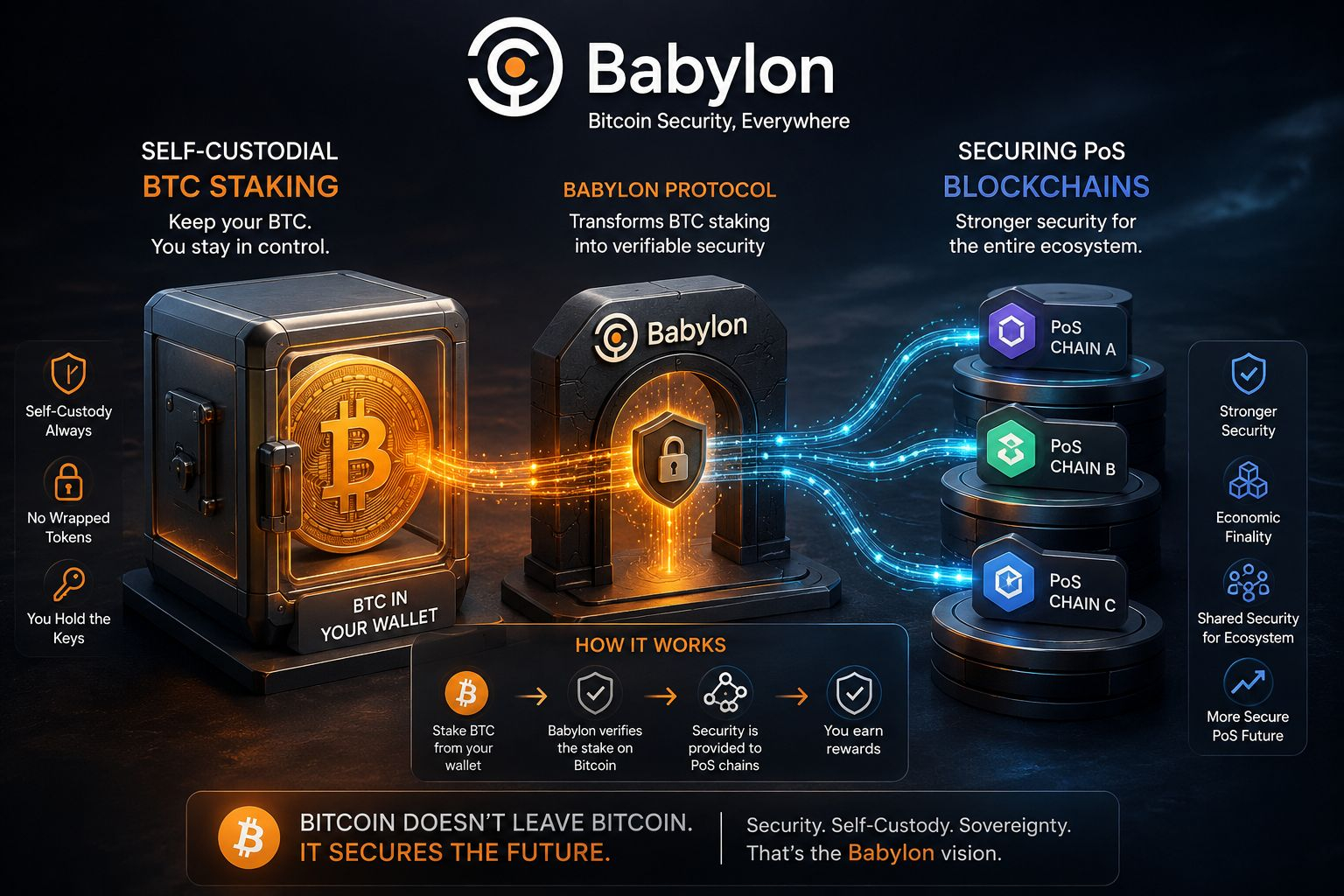
49
30
848
·
--
Haussier
#baby $BABY @babylonlabs_io
Je regarde Babylon, et ce qui me semble le plus intéressant, ce n’est pas l’étiquette « staking BTC ». C’est la tentative de faire faire plus à un Bitcoin auto-custodié, sans demander aux détenteurs d’abandonner la partie qui compte le plus pour eux : le contrôle. C’est un problème beaucoup plus difficile qu’il n’y paraît. De nombreux projets crypto disent vouloir créer de l’utilité autour du BTC, mais la plupart d’entre eux reposent en silence sur une confiance supplémentaire, des enveloppes supplémentaires ou des hypothèses supplémentaires. Babylon semble tester une habitude différente : conserver le BTC natif, garder l’intégrité de la garde, et voir si les gens accepteront la complexité seulement lorsqu’elle ajoute clairement de la valeur. Je ne sais pas encore quelle demande existe réellement pour cet arbitrage, mais je ne pense pas que le marché doive passer à côté du signal. La vraie histoire n’est pas le staking. Il s’agit de savoir si le Bitcoin peut rester du Bitcoin tout en devenant utile dans un système financier plus actif. C’est une trajectoire beaucoup plus étroite, et probablement plus honnête.
#baby $BABY @BabylonLabs_io
Je regarde Babylon, et ce qui me semble le plus intéressant, ce n’est pas l’étiquette « staking BTC ». C’est la tentative de faire faire plus à un Bitcoin auto-custodié, sans demander aux détenteurs d’abandonner la partie qui compte le plus pour eux : le contrôle. C’est un problème beaucoup plus difficile qu’il n’y paraît. De nombreux projets crypto disent vouloir créer de l’utilité autour du BTC, mais la plupart d’entre eux reposent en silence sur une confiance supplémentaire, des enveloppes supplémentaires ou des hypothèses supplémentaires. Babylon semble tester une habitude différente : conserver le BTC natif, garder l’intégrité de la garde, et voir si les gens accepteront la complexité seulement lorsqu’elle ajoute clairement de la valeur. Je ne sais pas encore quelle demande existe réellement pour cet arbitrage, mais je ne pense pas que le marché doive passer à côté du signal. La vraie histoire n’est pas le staking. Il s’agit de savoir si le Bitcoin peut rester du Bitcoin tout en devenant utile dans un système financier plus actif. C’est une trajectoire beaucoup plus étroite, et probablement plus honnête.
Je regarde Babylon, et ce qui me semble le plus intéressant, ce n’est pas l’étiquette « staking BTC ». C’est la tentative de faire faire plus à un Bitcoin auto-custodié, sans demander aux détenteurs d’abandonner la partie qui compte le plus pour eux : le contrôle. C’est un problème beaucoup plus difficile qu’il n’y paraît. De nombreux projets crypto disent vouloir créer de l’utilité autour du BTC, mais la plupart d’entre eux reposent en silence sur une confiance supplémentaire, des enveloppes supplémentaires ou des hypothèses supplémentaires. Babylon semble tester une habitude différente : conserver le BTC natif, garder l’intégrité de la garde, et voir si les gens accepteront la complexité seulement lorsqu’elle ajoute clairement de la valeur. Je ne sais pas encore quelle demande existe réellement pour cet arbitrage, mais je ne pense pas que le marché doive passer à côté du signal. La vraie histoire n’est pas le staking. Il s’agit de savoir si le Bitcoin peut rester du Bitcoin tout en devenant utile dans un système financier plus actif. C’est une trajectoire beaucoup plus étroite, et probablement plus honnête.
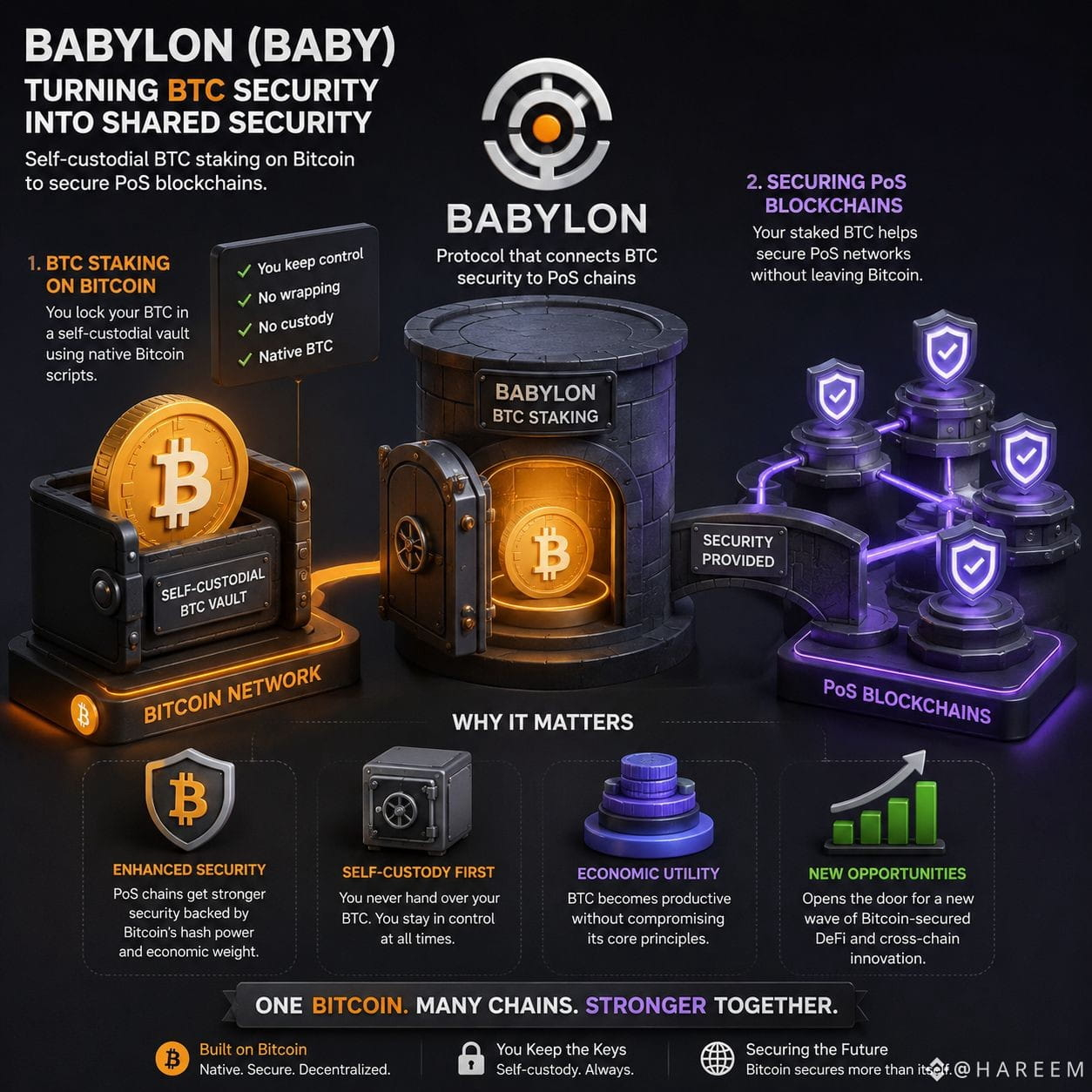
6
7
118
Connectez-vous pour découvrir plus de contenu
Rejoignez la communauté mondiale des adeptes de cryptomonnaies sur Binance Square
⚡️ Suviez les dernières informations importantes sur les cryptomonnaies.
💬 Jugé digne de confiance par la plus grande plateforme d’échange de cryptomonnaies au monde.
👍 Découvrez les connaissances que partagent les créateurs vérifiés.
Adresse e-mail/Nº de téléphone
Sujets d’actualité
ClarityActFacesProceduralVoteSept15
64,356 vues
841 mentions
Les gars, voici la mise à jour de la semaine prochaine pour $BTC et les majors, les zones de trading, et les données qui vont déclencher le mouvement !
Je vais expliquer chaque niveau, pourquoi on pourrait y arriver, pourquoi j’en reste à un bottom en attente sous 50 000 $ pour le BTC, et pourquoi je ne suis toujours pas bullish sur le BTC après un mouvement aussi explosif !
Pour le BTC, comme vous pouvez le voir sur mon graphique, j’utilise Fibonacci pour trouver les niveaux de retracement. Et ne vous inquiétez pas, j’utilise la Fib depuis assez longtemps, je l’ai testée, et je pense que ces niveaux sont pertinents. Ainsi, le scénario haussier, c’est que le marché atteigne les niveaux 0.5 ou 0.618 de la Fib. Ces deux niveaux se situent autour de 72 500 $ et 70 100 $ pour le BTC. Cette zone doit être retracée si le BTC veut faire un mouvement explosif et valider cette impulsion haussière.
Pendant qu’on regarde les aspects techniques, les fondamentaux entrent en jeu !
Voici la loi CLARITY. Les chances au 15 septembre sont actuellement élevées, à plus de 80 %. Mais supposons qu’elle soit approuvée. Le niveau maximum que je vise si la loi est adoptée, c’est 84 000–86 000 $ en une bougie rapide.
Mais il y a la réunion de la FED le lendemain, le 16 septembre, et je pense personnellement qu’elle pourrait entraîner une hausse. Il n’y a aucune façon que cette fois ils fassent de l’assouplissement. Ils doivent se diriger vers un resserrement monétaire. Il faut relever de 25 bps. Notez bien ça !
Vous vous demandez quel sera l’impact ?
Un crash absolu de 7–10 % le jour même, le 16 septembre !
Et ce n’est pas fini là. Le 18 septembre, nous avons la décision des taux de la BOJ, qui pourrait aussi provoquer une hausse de 25 bps.
Ces deux événements pourraient facilement nous faire passer sous 60 000 $.
Raison ? Le yen carry trade.
Ils pourraient balayer la liquidité des actions, ce qui aura un impact direct sur les actifs risqués.
Les deux vont subir une chute libre…
Donc, conclusion : je ne veux pas rallonger
LOI CLARITY REJETÉE → FOURCHETTE 70 K$–72,5 K$
LOI CLARITY ADOPTÉE → MAXIMUM 84 K$–86 K$
Voilà les raisons précises pour lesquelles je reste baissier sur les majors, et en plus, la structure n’est toujours pas basculée haussière sur les time frames plus élevés.
Laissez un LIKE !
#ClarityActFacesProceduralVoteSept15
$ETH et flux d’ETF ! Notez bien : évitez les shorts sur ETH !
Crypto_LUX
·10 mentions J’aime
·2.8k vues
US2YearYieldRisesTo4.61%
41,096 vues
731 mentions
US10YearTreasuryYieldNears5%
25,298 vues
434 mentions