

A L I M A
4k Publications

A L I M A
 Compte Square Vérifié+
Signaler
Bloquer l’utilisateur
CONTENT CREATOR || VERIFIED KOL ON X & CMC
404 Suivis
42.0K+ Abonnés
38.7K+ J’aime
Publications
Tous
Citations
Vidéos
·
--
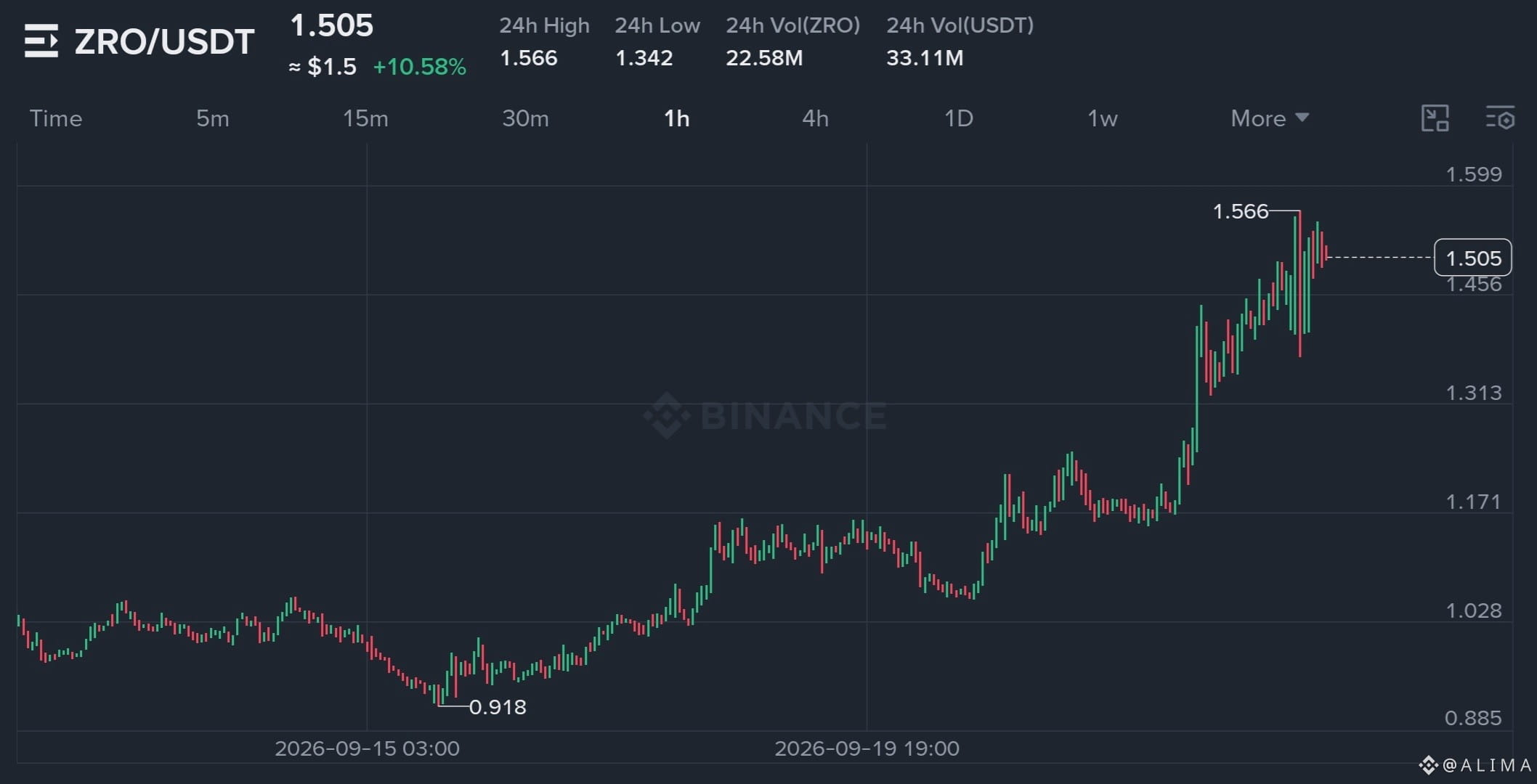
$ZRO Pumping Update
Who caught this move?
$ZRO has pushed from around $1.17 to a high of $1.566.
If you’re already in profit, congrats. I’d consider taking some profit around:
Half Profit Zone: $1.55 – $1.57
Next Targets:
TP1: $1.60
TP2: $1.65
If $1.56–$1.60 gets rejected, don’t chase the move.
Support: $1.45 – $1.46
Major Support: $1.31
For a fresh entry, I’d wait for a proper pullback and confirmation rather than chasing at $1.50+.
#zro #Write2Earn #ZROUSDT
$ZRO Pumping Update
Who caught this move?
$ZRO has pushed from around $1.17 to a high of $1.566.
If you’re already in profit, congrats. I’d consider taking some profit around:
Half Profit Zone: $1.55 – $1.57
Next Targets:
TP1: $1.60
TP2: $1.65
If $1.56–$1.60 gets rejected, don’t chase the move.
Support: $1.45 – $1.46
Major Support: $1.31
For a fresh entry, I’d wait for a proper pullback and confirmation rather than chasing at $1.50+.
#zro #Write2Earn #ZROUSDT
Who caught this move?
$ZRO has pushed from around $1.17 to a high of $1.566.
If you’re already in profit, congrats. I’d consider taking some profit around:
Half Profit Zone: $1.55 – $1.57
Next Targets:
TP1: $1.60
TP2: $1.65
If $1.56–$1.60 gets rejected, don’t chase the move.
Support: $1.45 – $1.46
Major Support: $1.31
For a fresh entry, I’d wait for a proper pullback and confirmation rather than chasing at $1.50+.
#zro #Write2Earn #ZROUSDT
36
28
6.7k
·
--
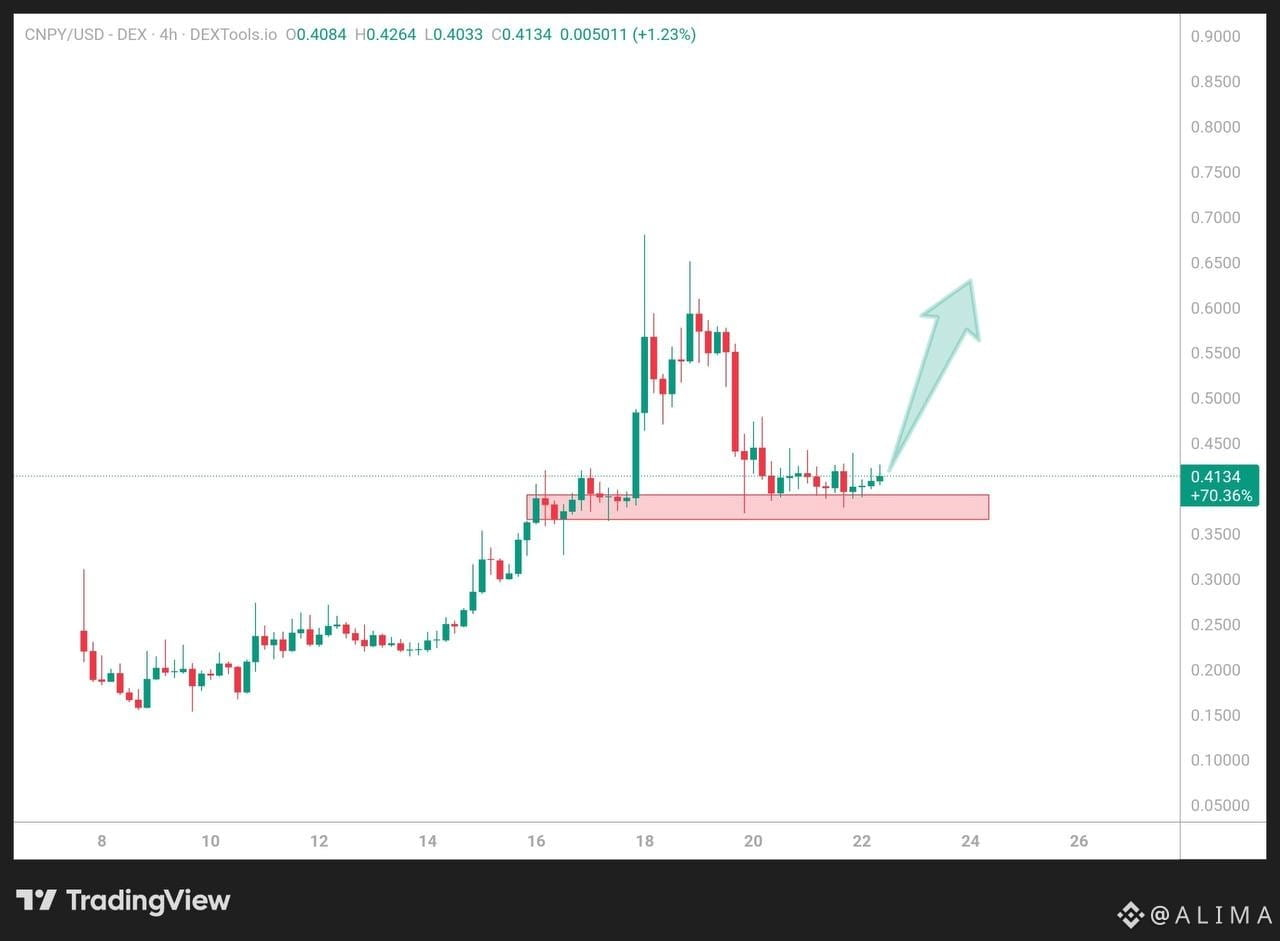
$CNPY went from ~$0.20 to ~$0.60+.
Then got smoked.
Now it’s back around $0.40, sitting right on the previous support area.
What caught my attention:
$20M launch mcap → ~$10M flush → recovery → new highs.
And Canopy isn’t just a token.
Nested Chains. Restaking. Shared security. App launches.
$CNPY went from ~$0.20 to ~$0.60+.
Then got smoked.
Now it’s back around $0.40, sitting right on the previous support area.
What caught my attention:
$20M launch mcap → ~$10M flush → recovery → new highs.
And Canopy isn’t just a token.
Nested Chains. Restaking. Shared security. App launches.
Then got smoked.
Now it’s back around $0.40, sitting right on the previous support area.
What caught my attention:
$20M launch mcap → ~$10M flush → recovery → new highs.
And Canopy isn’t just a token.
Nested Chains. Restaking. Shared security. App launches.
46
1
58
8.2k
·
--
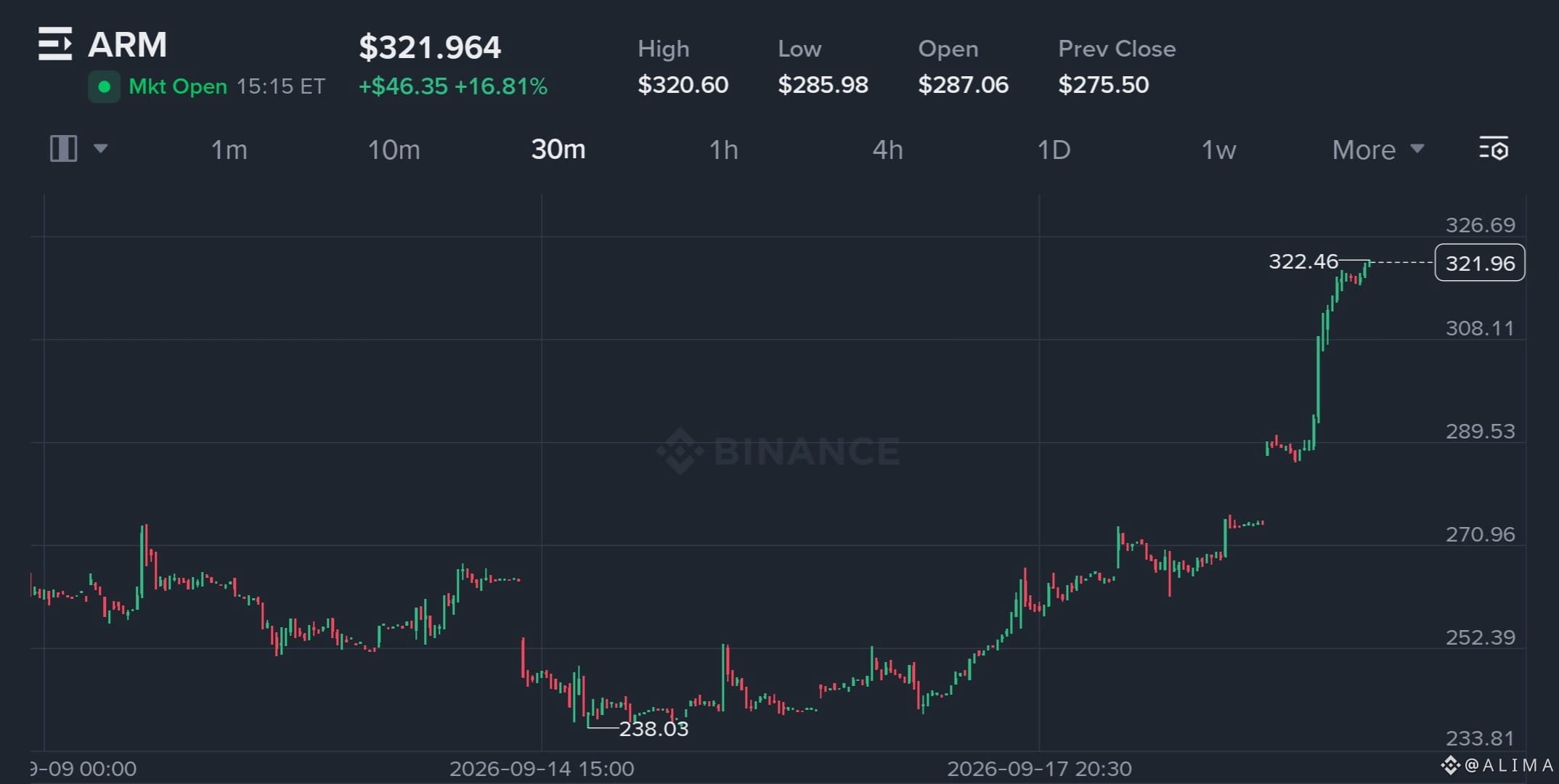
$ARM has already made a strong move from the $289 area and is now trading around $322.
Who caught this move?
Half Profit Zone: $320 - $326.70
Resistance: $326.70
Next Target: $326.70
If price breaks and holds above $326.70, we can look for a fresh setup for the next targets.
At these levels, chasing is risky. Taking some profit and protecting the position makes more sense than entering late.
Support: $308.10
Wait for confirmation around the resistance before taking any fresh entry.
#ARM #Write2Earn
$ARM has already made a strong move from the $289 area and is now trading around $322.
Who caught this move?
Half Profit Zone: $320 - $326.70
Resistance: $326.70
Next Target: $326.70
If price breaks and holds above $326.70, we can look for a fresh setup for the next targets.
At these levels, chasing is risky. Taking some profit and protecting the position makes more sense than entering late.
Support: $308.10
Wait for confirmation around the resistance before taking any fresh entry.
#ARM #Write2Earn
Who caught this move?
Half Profit Zone: $320 - $326.70
Resistance: $326.70
Next Target: $326.70
If price breaks and holds above $326.70, we can look for a fresh setup for the next targets.
At these levels, chasing is risky. Taking some profit and protecting the position makes more sense than entering late.
Support: $308.10
Wait for confirmation around the resistance before taking any fresh entry.
#ARM #Write2Earn
26
29
4.6k
·
--
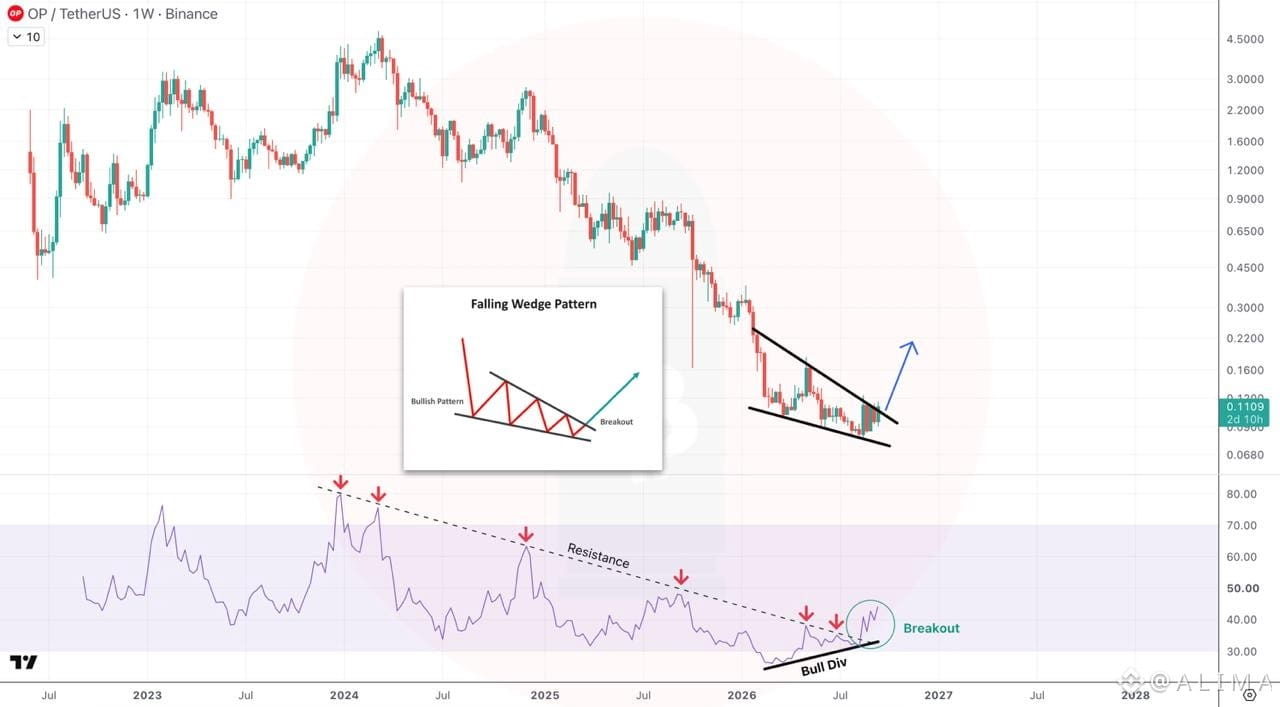
$OP looks ready to move 📈
the weekly chart is showing a falling wedge breakout, plus bullish divergence on RSI. Price broke above the wedge resistance and that's usually a sign the downtrend is losing strength.
Entry Zone: $0.10 - $0.11
SL: $0.088 (below wedge support)
Targets:
TP1: $0.14
TP2: $0.18
TP3: $0.22
This looks like a good area for a long setup. Wait for a proper close above the wedge before entering, don't chase the candle.
#op🔥🔥 #op/usdt
$OP looks ready to move 📈
the weekly chart is showing a falling wedge breakout, plus bullish divergence on RSI. Price broke above the wedge resistance and that's usually a sign the downtrend is losing strength.
Entry Zone: $0.10 - $0.11
SL: $0.088 (below wedge support)
Targets:
TP1: $0.14
TP2: $0.18
TP3: $0.22
This looks like a good area for a long setup. Wait for a proper close above the wedge before entering, don't chase the candle.
#op🔥🔥 #op/usdt
the weekly chart is showing a falling wedge breakout, plus bullish divergence on RSI. Price broke above the wedge resistance and that's usually a sign the downtrend is losing strength.
Entry Zone: $0.10 - $0.11
SL: $0.088 (below wedge support)
Targets:
TP1: $0.14
TP2: $0.18
TP3: $0.22
This looks like a good area for a long setup. Wait for a proper close above the wedge before entering, don't chase the candle.
#op🔥🔥 #op/usdt
26
39
4.5k
·
--
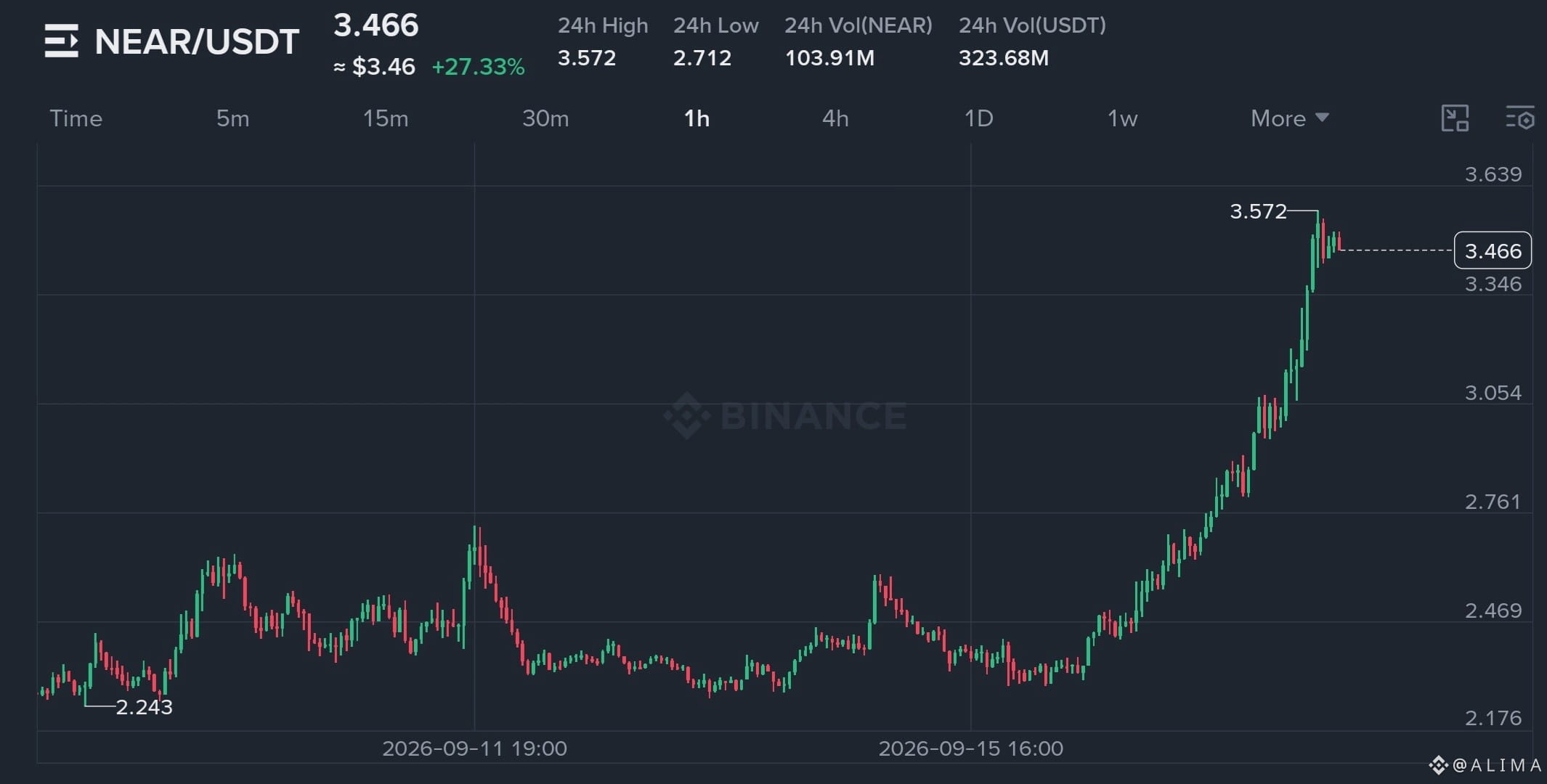
$NEAR is moving exactly where we wanted to see it.
This move was already on the radar, who caught it?
Current Price: $3.46
Half Profit Zone: $3.50 - $3.57
Next Targets:
TP1: $3.57
TP2: $3.64
TP3: $3.80
If price gets rejected around $3.57-$3.64, consider taking some profit instead of chasing.
Support: $3.35
If $3.35 breaks, next support is around $3.05.
Congrats to everyone who caught the move.
#Near #Write2Earn
$NEAR is moving exactly where we wanted to see it.
This move was already on the radar, who caught it?
Current Price: $3.46
Half Profit Zone: $3.50 - $3.57
Next Targets:
TP1: $3.57
TP2: $3.64
TP3: $3.80
If price gets rejected around $3.57-$3.64, consider taking some profit instead of chasing.
Support: $3.35
If $3.35 breaks, next support is around $3.05.
Congrats to everyone who caught the move.
#Near #Write2Earn
This move was already on the radar, who caught it?
Current Price: $3.46
Half Profit Zone: $3.50 - $3.57
Next Targets:
TP1: $3.57
TP2: $3.64
TP3: $3.80
If price gets rejected around $3.57-$3.64, consider taking some profit instead of chasing.
Support: $3.35
If $3.35 breaks, next support is around $3.05.
Congrats to everyone who caught the move.
#Near #Write2Earn
27
37
4.5k
·
--
$RAY has already made a strong move, and this setup was worth watching from earlier levels.
Who caught this move?
The chart is now consolidating around $1.60–$1.65 after reaching $1.79, so chasing here isn’t ideal.
Half Profit Zone: $1.72 – $1.79
Next Targets:
TP1: $1.79
TP2: $1.90
TP3: $2.05
If $1.79 gets rejected again, some profit booking makes sense.
Support: $1.55 – $1.60
Major Support: $1.45
Congrats to everyone who caught the move. Now protect those profits and don’t get too greedy.
#Ray #Write2Earn
$RAY has already made a strong move, and this setup was worth watching from earlier levels.
Who caught this move?
The chart is now consolidating around $1.60–$1.65 after reaching $1.79, so chasing here isn’t ideal.
Half Profit Zone: $1.72 – $1.79
Next Targets:
TP1: $1.79
TP2: $1.90
TP3: $2.05
If $1.79 gets rejected again, some profit booking makes sense.
Support: $1.55 – $1.60
Major Support: $1.45
Congrats to everyone who caught the move. Now protect those profits and don’t get too greedy.
#Ray #Write2Earn
Who caught this move?
The chart is now consolidating around $1.60–$1.65 after reaching $1.79, so chasing here isn’t ideal.
Half Profit Zone: $1.72 – $1.79
Next Targets:
TP1: $1.79
TP2: $1.90
TP3: $2.05
If $1.79 gets rejected again, some profit booking makes sense.
Support: $1.55 – $1.60
Major Support: $1.45
Congrats to everyone who caught the move. Now protect those profits and don’t get too greedy.
#Ray #Write2Earn
13
1.3k
·
--
Partiellement vrai
One thing I noticed while going through BattleTown:
The announced first presale round is the lowest pricing tier, while the later rounds are listed at progressively higher prices.
That's an interesting setup.
But I wouldn't look at that in isolation.
What caught my attention more is what the project is putting around $BTOWN
🎮 Retro inspired tank battles
🛡 10 tank levels
🧩 NFT elements
🌐 Web3 mechanics
So there's actually a product narrative sitting behind the token launch.
And that's important.
I've seen plenty of projects where the presale is the entire story. There's not much to discuss once you look past the token.
BattleTown at least gives you something else to evaluate.
Does the game become good enough to justify the ecosystem being built around it?
That's the part I'm interested in.
Worth keeping an eye on.
DYOR.
One thing I noticed while going through BattleTown:
The announced first presale round is the lowest pricing tier, while the later rounds are listed at progressively higher prices.
That's an interesting setup.
But I wouldn't look at that in isolation.
What caught my attention more is what the project is putting around $BTOWN
🎮 Retro inspired tank battles
🛡 10 tank levels
🧩 NFT elements
🌐 Web3 mechanics
So there's actually a product narrative sitting behind the token launch.
And that's important.
I've seen plenty of projects where the presale is the entire story. There's not much to discuss once you look past the token.
BattleTown at least gives you something else to evaluate.
Does the game become good enough to justify the ecosystem being built around it?
That's the part I'm interested in.
Worth keeping an eye on.
DYOR.
The announced first presale round is the lowest pricing tier, while the later rounds are listed at progressively higher prices.
That's an interesting setup.
But I wouldn't look at that in isolation.
What caught my attention more is what the project is putting around $BTOWN
🎮 Retro inspired tank battles
🛡 10 tank levels
🧩 NFT elements
🌐 Web3 mechanics
So there's actually a product narrative sitting behind the token launch.
And that's important.
I've seen plenty of projects where the presale is the entire story. There's not much to discuss once you look past the token.
BattleTown at least gives you something else to evaluate.
Does the game become good enough to justify the ecosystem being built around it?
That's the part I'm interested in.
Worth keeping an eye on.
DYOR.

3
16
4.1k
·
--
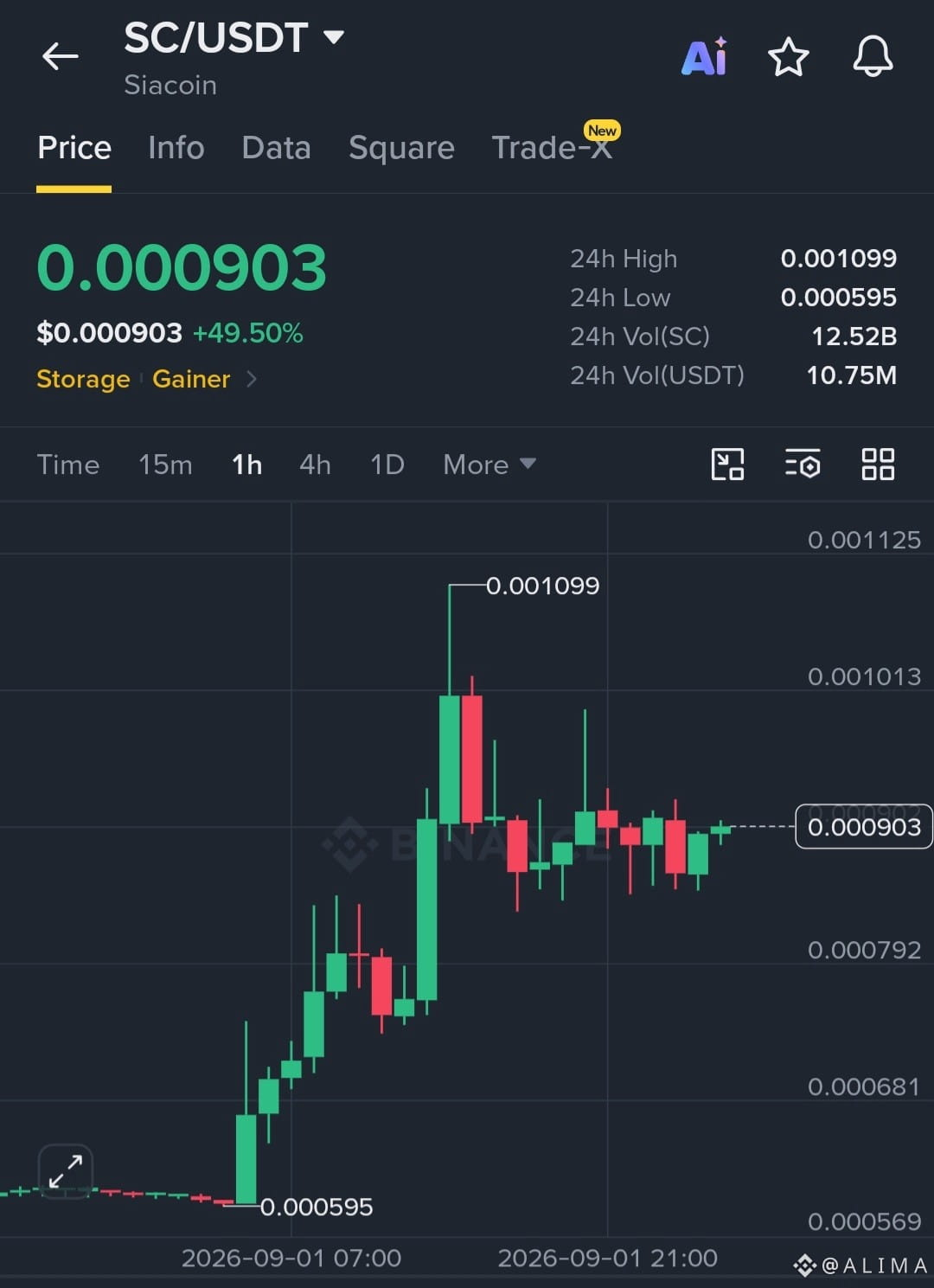
$SC already pumped hard.
#SC went from 0.000595 to 0.001099, that's the move everyone's been eyeing. Anyone catch this one early?
Right now sitting at 0.000903, cooling off after that spike, sellers stepped in near the top.
Half Profit Zone: 0.00095 - 0.00098
Support Zone 1: 0.00085
Support Zone 2: 0.00075 (if first one breaks)
Next Targets if it hold : TP1: 0.00098 TP2: 0.00105
Rejection near highs is clear don't get greedy chasing this. Let it consolidate, book some profit if you're in, and wait for a clean setup before adding more. No FOMO entries here, patience pays.
#ARBRises30%OnRobinhoodChainRevenue #btc70k #Write2Earn!
$SC already pumped hard.
#SC went from 0.000595 to 0.001099, that's the move everyone's been eyeing. Anyone catch this one early?
Right now sitting at 0.000903, cooling off after that spike, sellers stepped in near the top.
Half Profit Zone: 0.00095 - 0.00098
Support Zone 1: 0.00085
Support Zone 2: 0.00075 (if first one breaks)
Next Targets if it hold : TP1: 0.00098 TP2: 0.00105
Rejection near highs is clear don't get greedy chasing this. Let it consolidate, book some profit if you're in, and wait for a clean setup before adding more. No FOMO entries here, patience pays.
#ARBRises30%OnRobinhoodChainRevenue #btc70k #Write2Earn!
#SC went from 0.000595 to 0.001099, that's the move everyone's been eyeing. Anyone catch this one early?
Right now sitting at 0.000903, cooling off after that spike, sellers stepped in near the top.
Half Profit Zone: 0.00095 - 0.00098
Support Zone 1: 0.00085
Support Zone 2: 0.00075 (if first one breaks)
Next Targets if it hold : TP1: 0.00098 TP2: 0.00105
Rejection near highs is clear don't get greedy chasing this. Let it consolidate, book some profit if you're in, and wait for a clean setup before adding more. No FOMO entries here, patience pays.
#ARBRises30%OnRobinhoodChainRevenue #btc70k #Write2Earn!
3
16
497
·
--
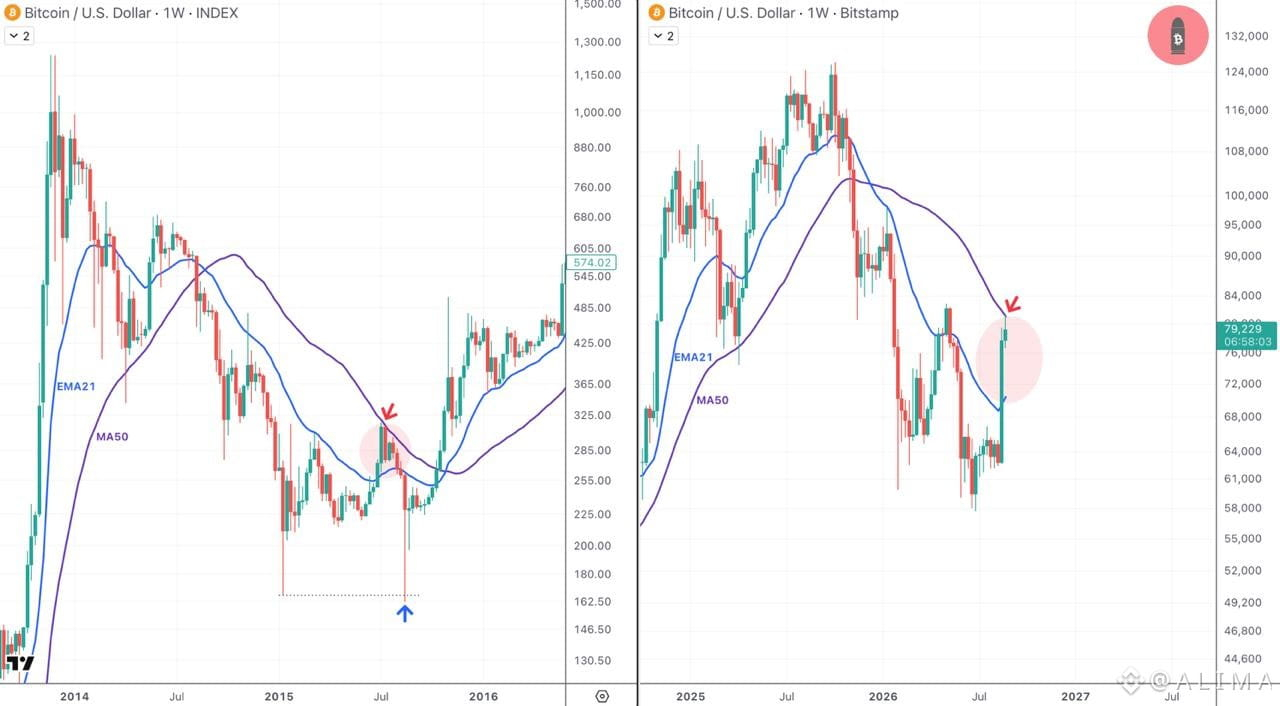
Back in 2015, $BTC saw a similar setup: a bullish break above the 21 week EMA, only to get rejected right at the 50 week MA. What followed wasn't pretty, the entire move was erased and BTC even dipped to a fresh low in the process.
History doesn't repeat itself perfectly, and it's worth remembering that Bitcoin back then was a much smaller, far less liquid market than it is today. So this comparison isn't a guarantee of what's coming.
Still, patterns like this are worth keeping on your radar. If BTC is approaching that same 50 week MA resistance again, it's a level worth watching closely in the weeks ahead not as a prediction, but as context for managing risk.
Keep an eye on that line.
#BTC #Write2Earn
Back in 2015, $BTC saw a similar setup: a bullish break above the 21 week EMA, only to get rejected right at the 50 week MA. What followed wasn't pretty, the entire move was erased and BTC even dipped to a fresh low in the process.
History doesn't repeat itself perfectly, and it's worth remembering that Bitcoin back then was a much smaller, far less liquid market than it is today. So this comparison isn't a guarantee of what's coming.
Still, patterns like this are worth keeping on your radar. If BTC is approaching that same 50 week MA resistance again, it's a level worth watching closely in the weeks ahead not as a prediction, but as context for managing risk.
Keep an eye on that line.
#BTC #Write2Earn
History doesn't repeat itself perfectly, and it's worth remembering that Bitcoin back then was a much smaller, far less liquid market than it is today. So this comparison isn't a guarantee of what's coming.
Still, patterns like this are worth keeping on your radar. If BTC is approaching that same 50 week MA resistance again, it's a level worth watching closely in the weeks ahead not as a prediction, but as context for managing risk.
Keep an eye on that line.
#BTC #Write2Earn
1
14
720
·
--
Partiellement vrai
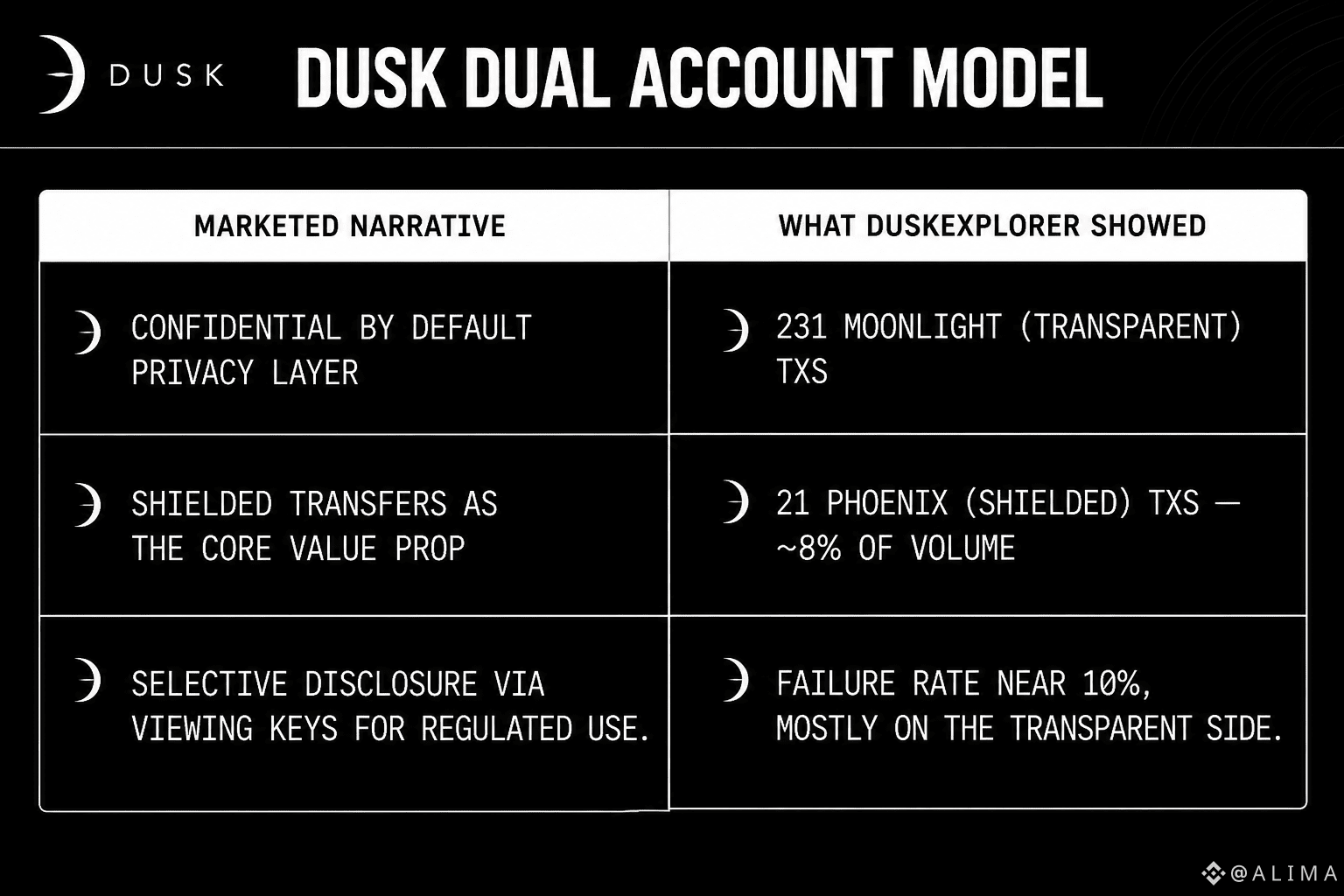
#dusk $DUSK @Dusk_Foundation pulled up the live explorer mid task and just sat with the numbers for a sec.
24h txs: 252 total. Moonlight public transparent 231. Phoenix shielded 21. That's roughly 92% transparent, 8% shielded. On a chain literally built around confidential by default, selective disclosure... the actual traffic is almost entirely running through the plain account model.
Makes sense once you think about it though Moonlight was added for exchange compliance, nonce based, easy to integrate and that's exactly who's moving first: exchanges, bots, routine transfers.
Shielded Phoenix notes are the harder path separate flow, viewing keys, more friction to set up.. so naturally it's the minority use case right now, even though it's the headline feature.
had my snack, kept refreshing the tx list… hold up, the failure rate was sitting near 10% too, which is its own rabbit hole I didn't have time for.
Not a knock on the design, more just when a chain launches with two lanes, the advanced lane doesn't fill up just because it exists. Makes me wonder what it'll actually take to flip that ratio, or if it's even meant to flip.
#dusk $DUSK @Dusk pulled up the live explorer mid task and just sat with the numbers for a sec.
24h txs: 252 total. Moonlight public transparent 231. Phoenix shielded 21. That's roughly 92% transparent, 8% shielded. On a chain literally built around confidential by default, selective disclosure... the actual traffic is almost entirely running through the plain account model.
Makes sense once you think about it though Moonlight was added for exchange compliance, nonce based, easy to integrate and that's exactly who's moving first: exchanges, bots, routine transfers.
Shielded Phoenix notes are the harder path separate flow, viewing keys, more friction to set up.. so naturally it's the minority use case right now, even though it's the headline feature.
had my snack, kept refreshing the tx list… hold up, the failure rate was sitting near 10% too, which is its own rabbit hole I didn't have time for.
Not a knock on the design, more just when a chain launches with two lanes, the advanced lane doesn't fill up just because it exists. Makes me wonder what it'll actually take to flip that ratio, or if it's even meant to flip.
24h txs: 252 total. Moonlight public transparent 231. Phoenix shielded 21. That's roughly 92% transparent, 8% shielded. On a chain literally built around confidential by default, selective disclosure... the actual traffic is almost entirely running through the plain account model.
Makes sense once you think about it though Moonlight was added for exchange compliance, nonce based, easy to integrate and that's exactly who's moving first: exchanges, bots, routine transfers.
Shielded Phoenix notes are the harder path separate flow, viewing keys, more friction to set up.. so naturally it's the minority use case right now, even though it's the headline feature.
had my snack, kept refreshing the tx list… hold up, the failure rate was sitting near 10% too, which is its own rabbit hole I didn't have time for.
Not a knock on the design, more just when a chain launches with two lanes, the advanced lane doesn't fill up just because it exists. Makes me wonder what it'll actually take to flip that ratio, or if it's even meant to flip.
6
23
1k
·
--
Partiellement vrai
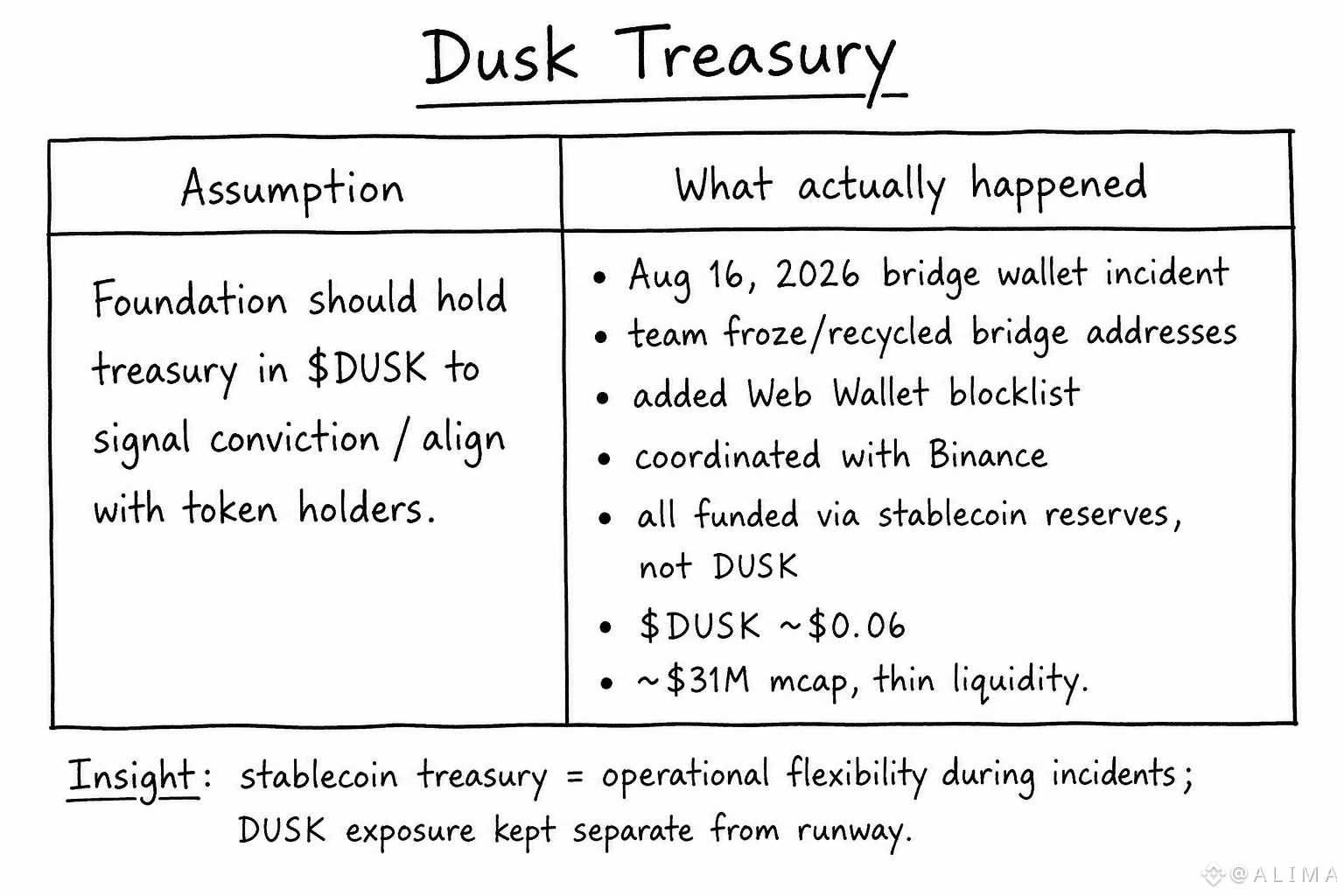
#dusk $DUSK @Dusk_Foundation treasury structure and kept getting stuck on one weird little contrast the foundation runs a MiCA first,we're basically TradFi's on ramp pitch, yet its own reserves lean stablecoin heavy instead of parking value in native DUSK. made me pause mid snack, ngl.
The thing that clicked. Go back to Aug 16.. the team caught suspicious activity on a bridge managed wallet, froze and recycled the addresses, pushed a Web Wallet recipient blocklist, looped in Binance on the touched flow. Fast, clean containment.
But notice what made that response possible: they weren't scrambling to hedge against their own token's price while doing it. DUSK's sitting around $0.06, ~$31M mcap thin enough that treasury in DUSK would mean funding ops off an asset that swings on sentiment, not fundamentals.
Stablecoins let the foundation act operationally without also playing portfolio manager.
So the advanced behavior here isn't some DeFi trick, it's almost boring protect runway first, let the token be the thing users/speculators hold, not the thing that pays contributor invoices. Kinda undercuts the buy the token to be aligned narrative, hold up...
Still not sure if that's prudent treasury management or a quiet signal about how much confidence the team has in near term DUSK demand. Anyone else read it that way?
#dusk $DUSK @Dusk treasury structure and kept getting stuck on one weird little contrast the foundation runs a MiCA first,we're basically TradFi's on ramp pitch, yet its own reserves lean stablecoin heavy instead of parking value in native DUSK. made me pause mid snack, ngl.
The thing that clicked. Go back to Aug 16.. the team caught suspicious activity on a bridge managed wallet, froze and recycled the addresses, pushed a Web Wallet recipient blocklist, looped in Binance on the touched flow. Fast, clean containment.
But notice what made that response possible: they weren't scrambling to hedge against their own token's price while doing it. DUSK's sitting around $0.06, ~$31M mcap thin enough that treasury in DUSK would mean funding ops off an asset that swings on sentiment, not fundamentals.
Stablecoins let the foundation act operationally without also playing portfolio manager.
So the advanced behavior here isn't some DeFi trick, it's almost boring protect runway first, let the token be the thing users/speculators hold, not the thing that pays contributor invoices. Kinda undercuts the buy the token to be aligned narrative, hold up...
Still not sure if that's prudent treasury management or a quiet signal about how much confidence the team has in near term DUSK demand. Anyone else read it that way?
The thing that clicked. Go back to Aug 16.. the team caught suspicious activity on a bridge managed wallet, froze and recycled the addresses, pushed a Web Wallet recipient blocklist, looped in Binance on the touched flow. Fast, clean containment.
But notice what made that response possible: they weren't scrambling to hedge against their own token's price while doing it. DUSK's sitting around $0.06, ~$31M mcap thin enough that treasury in DUSK would mean funding ops off an asset that swings on sentiment, not fundamentals.
Stablecoins let the foundation act operationally without also playing portfolio manager.
So the advanced behavior here isn't some DeFi trick, it's almost boring protect runway first, let the token be the thing users/speculators hold, not the thing that pays contributor invoices. Kinda undercuts the buy the token to be aligned narrative, hold up...
Still not sure if that's prudent treasury management or a quiet signal about how much confidence the team has in near term DUSK demand. Anyone else read it that way?
11
33
2.4k
·
--
Partiellement vrai
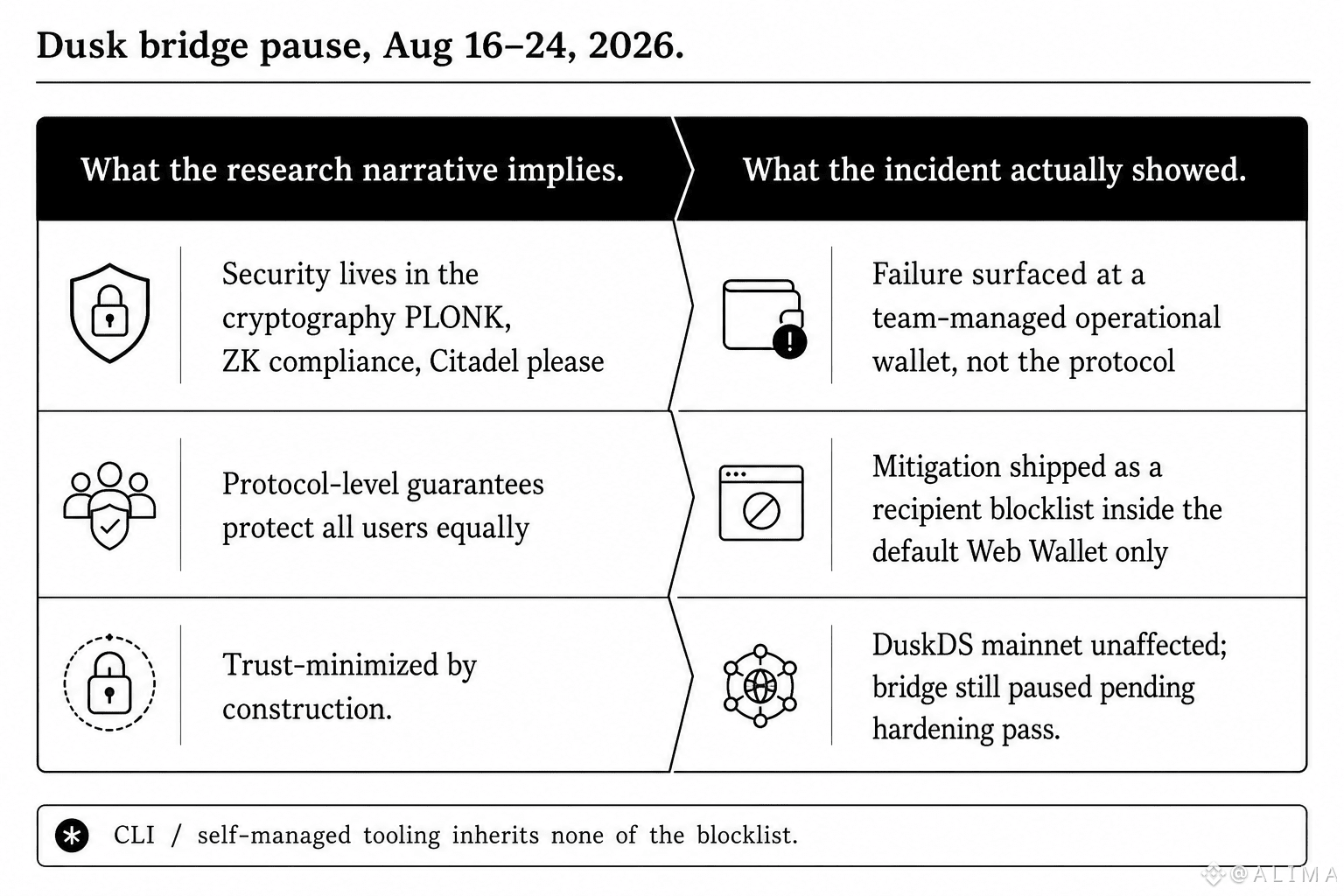
#dusk $DUSK @Dusk_Foundation spent the whole task down a Khovratovich rabbit hole Argon2, Equihash, the PLONK work sitting under Dusk serious cryptography. Then I checked what had actually happened on the network recently, and it was… a team managed operational wallet behaving oddly.
Aug 16 bridge services paused after monitoring flagged activity inconsistent with normal bridge ops. Still paused today while they finish a hardening pass. No protocol level issue on DuskDS blocks kept coming the entire time. And the mitigation they shipped wasn't a proof system. It was a recipient blocklist in the Web Wallet that throws a warning before you can send to a flagged address.
Hold up.. that's the bit that stuck with me. The hardest math in the stack was irrelevant to the week's actual risk surface. And the fix landed exactly where the default user lives. If you're on Rusk CLI or your own tooling, you inherit none of it. Sovereignty, no seatbelt.
I keep flipping on it. Half of me says a frontend blocklist is the correct pragmatic move cover the most people in a day, argue about elegance later. Other half thinks a chain built for regulated markets probably shouldn't have its most visible safety control sitting outside the protocol.
So when institutions finally show up… which layer are they actually trusting?
#dusk $DUSK @Dusk spent the whole task down a Khovratovich rabbit hole Argon2, Equihash, the PLONK work sitting under Dusk serious cryptography. Then I checked what had actually happened on the network recently, and it was… a team managed operational wallet behaving oddly.
Aug 16 bridge services paused after monitoring flagged activity inconsistent with normal bridge ops. Still paused today while they finish a hardening pass. No protocol level issue on DuskDS blocks kept coming the entire time. And the mitigation they shipped wasn't a proof system. It was a recipient blocklist in the Web Wallet that throws a warning before you can send to a flagged address.
Hold up.. that's the bit that stuck with me. The hardest math in the stack was irrelevant to the week's actual risk surface. And the fix landed exactly where the default user lives. If you're on Rusk CLI or your own tooling, you inherit none of it. Sovereignty, no seatbelt.
I keep flipping on it. Half of me says a frontend blocklist is the correct pragmatic move cover the most people in a day, argue about elegance later. Other half thinks a chain built for regulated markets probably shouldn't have its most visible safety control sitting outside the protocol.
So when institutions finally show up… which layer are they actually trusting?
Aug 16 bridge services paused after monitoring flagged activity inconsistent with normal bridge ops. Still paused today while they finish a hardening pass. No protocol level issue on DuskDS blocks kept coming the entire time. And the mitigation they shipped wasn't a proof system. It was a recipient blocklist in the Web Wallet that throws a warning before you can send to a flagged address.
Hold up.. that's the bit that stuck with me. The hardest math in the stack was irrelevant to the week's actual risk surface. And the fix landed exactly where the default user lives. If you're on Rusk CLI or your own tooling, you inherit none of it. Sovereignty, no seatbelt.
I keep flipping on it. Half of me says a frontend blocklist is the correct pragmatic move cover the most people in a day, argue about elegance later. Other half thinks a chain built for regulated markets probably shouldn't have its most visible safety control sitting outside the protocol.
So when institutions finally show up… which layer are they actually trusting?
30
62
5.2k
·
--
Vérifié
#dusk $DUSK @Dusk_Foundation reward split and honestly the thing that stuck wasn't the APY number, it was the timing gap between who gets paid and who gets promised.
Quick context, while I was in the docs, the team was still cleaning up after that Aug 16 bridge incident suspicious wallet activity flagged, bridge addresses recycled, Web Wallet blocklist pushed live same day.
Good response, fast. But it made me actually go check how block rewards get split, since bridge pauses always make me nervous about where the money actually flows.
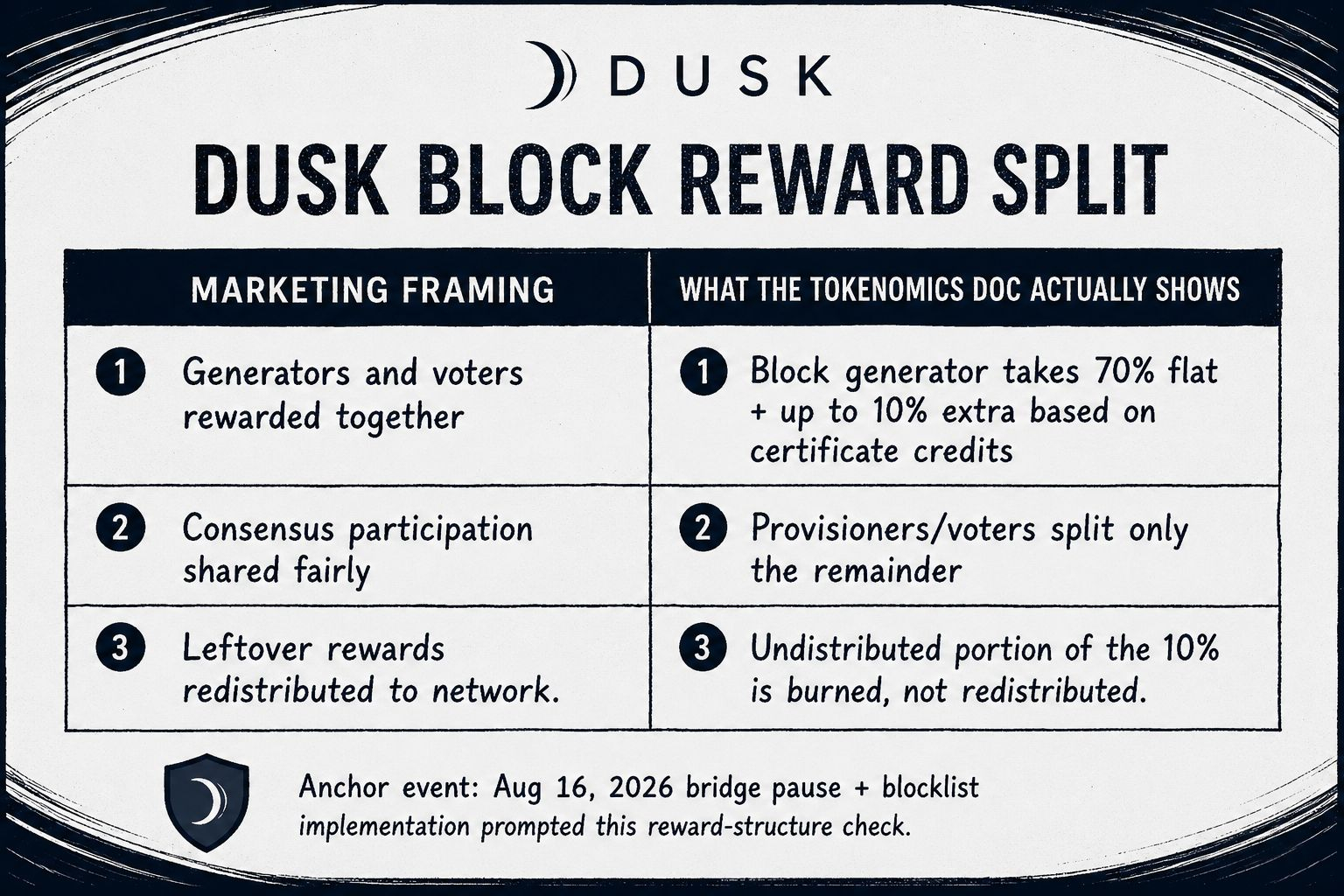
Turns out block generators take 70% flat, plus up to another 10% depending on credits bundled into the certificate any leftover chunk just gets burned instead of handed to voters. Provisioners the ones actually voting attesting split whatever's left.
So the guy proposing the block gets paid immediately and disproportionately and the voters who secure consensus get the remainder, sometimes smaller than you'd assume from the marketing language around "shared consensus rewards.
Not saying it's wrong, PoS chains do this kind of weighting all the time… but it's a different picture than generators and voters both reward implies at first read. Makes me wonder how much that 10% variable actually moves in practice versus just getting burned most blocks.
#dusk $DUSK @Dusk reward split and honestly the thing that stuck wasn't the APY number, it was the timing gap between who gets paid and who gets promised.
Quick context, while I was in the docs, the team was still cleaning up after that Aug 16 bridge incident suspicious wallet activity flagged, bridge addresses recycled, Web Wallet blocklist pushed live same day.
Good response, fast. But it made me actually go check how block rewards get split, since bridge pauses always make me nervous about where the money actually flows.
Turns out block generators take 70% flat, plus up to another 10% depending on credits bundled into the certificate any leftover chunk just gets burned instead of handed to voters. Provisioners the ones actually voting attesting split whatever's left.
So the guy proposing the block gets paid immediately and disproportionately and the voters who secure consensus get the remainder, sometimes smaller than you'd assume from the marketing language around "shared consensus rewards.
Not saying it's wrong, PoS chains do this kind of weighting all the time… but it's a different picture than generators and voters both reward implies at first read. Makes me wonder how much that 10% variable actually moves in practice versus just getting burned most blocks.
Quick context, while I was in the docs, the team was still cleaning up after that Aug 16 bridge incident suspicious wallet activity flagged, bridge addresses recycled, Web Wallet blocklist pushed live same day.
Good response, fast. But it made me actually go check how block rewards get split, since bridge pauses always make me nervous about where the money actually flows.
Turns out block generators take 70% flat, plus up to another 10% depending on credits bundled into the certificate any leftover chunk just gets burned instead of handed to voters. Provisioners the ones actually voting attesting split whatever's left.
So the guy proposing the block gets paid immediately and disproportionately and the voters who secure consensus get the remainder, sometimes smaller than you'd assume from the marketing language around "shared consensus rewards.
Not saying it's wrong, PoS chains do this kind of weighting all the time… but it's a different picture than generators and voters both reward implies at first read. Makes me wonder how much that 10% variable actually moves in practice versus just getting burned most blocks.
19
45
3.9k
·
--
Partiellement vrai
#dusk $DUSK @Dusk_Foundation spent the creatorpad task digging through Dusk recent activity and honestly the thing that stuck wasn't the Reinforced Concrete hash stats 17x faster than Poseidon, sure, neat cryptography.
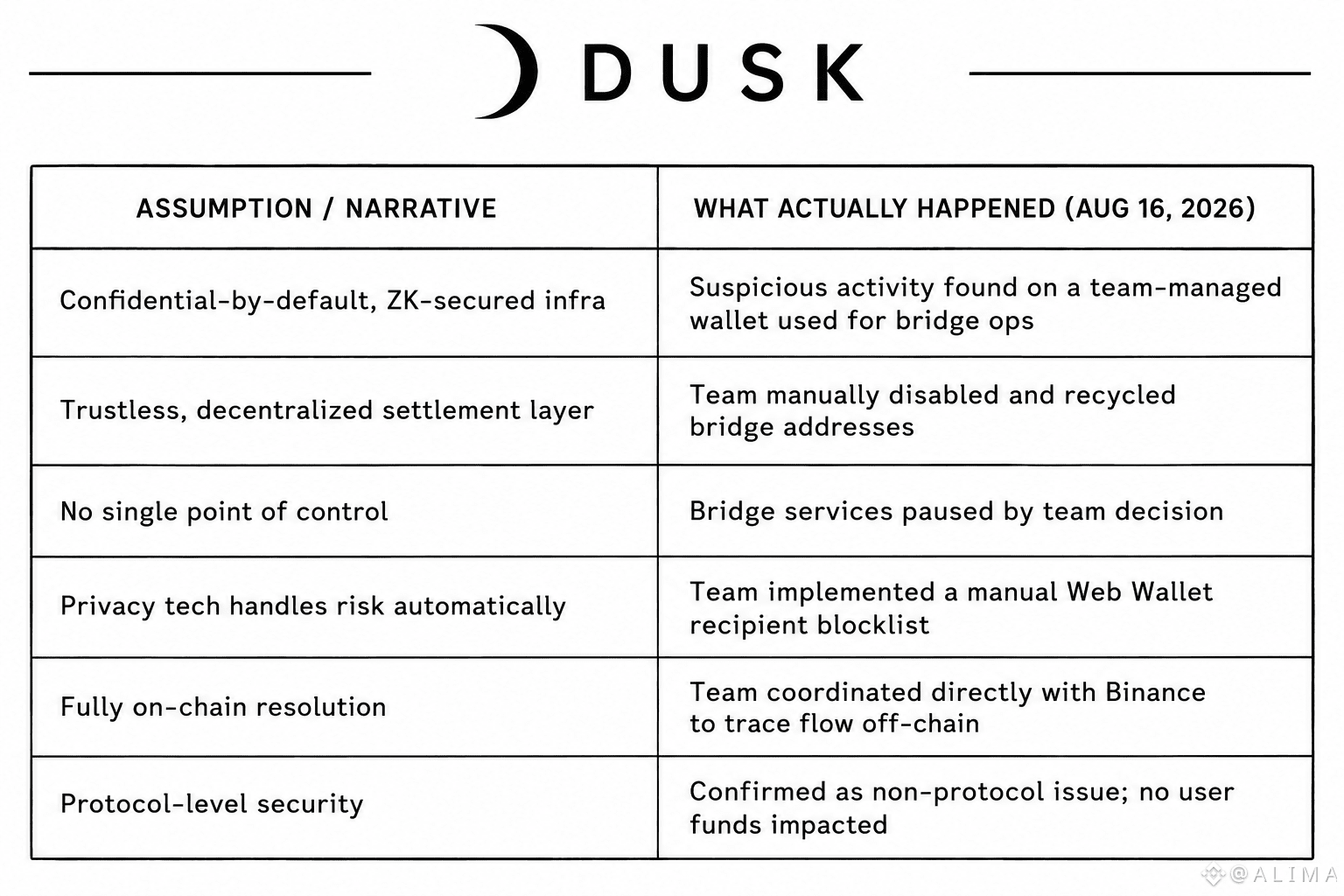
It was what happened on August 16 the team flagged suspicious activity on a team-managed wallet tied to bridge ops. Dusk, a privacy-native L1 and the fix was… disable the addresses, pause the bridge, roll out a recipient blocklist, then call Binance directly to trace the flow.
Hold up.. that's not exotic. That's the same playbook any centralized custodian runs. No user funds lost, fine, good outcome. But the incident response wasn't the protocol's ZK machinery caught it automatically. It was humans watching a wallet and pulling a manual kill switch.
That's the real insight for me: the marketing is confidential by default, deterministic settlement, zk everything. The practical reality, at least during a stress moment, is a team operated bridge with admin level pause and blocklist powers sitting right next to all that cryptography.
Makes sense bridges are always the soft underbelly, I know this, everyone knows this but seeing it play out on a chain built around trustless privacy specifically was the part that made me pause mid scroll.
Not a knock, just noticing the gap between the layer that's actually decentralized settlement, proofs and the layer that isn't yet bridge custody.... curious how long that gap stays there.
#dusk $DUSK @Dusk spent the creatorpad task digging through Dusk recent activity and honestly the thing that stuck wasn't the Reinforced Concrete hash stats 17x faster than Poseidon, sure, neat cryptography.
It was what happened on August 16 the team flagged suspicious activity on a team-managed wallet tied to bridge ops. Dusk, a privacy-native L1 and the fix was… disable the addresses, pause the bridge, roll out a recipient blocklist, then call Binance directly to trace the flow.
Hold up.. that's not exotic. That's the same playbook any centralized custodian runs. No user funds lost, fine, good outcome. But the incident response wasn't the protocol's ZK machinery caught it automatically. It was humans watching a wallet and pulling a manual kill switch.
That's the real insight for me: the marketing is confidential by default, deterministic settlement, zk everything. The practical reality, at least during a stress moment, is a team operated bridge with admin level pause and blocklist powers sitting right next to all that cryptography.
Makes sense bridges are always the soft underbelly, I know this, everyone knows this but seeing it play out on a chain built around trustless privacy specifically was the part that made me pause mid scroll.
Not a knock, just noticing the gap between the layer that's actually decentralized settlement, proofs and the layer that isn't yet bridge custody.... curious how long that gap stays there.
It was what happened on August 16 the team flagged suspicious activity on a team-managed wallet tied to bridge ops. Dusk, a privacy-native L1 and the fix was… disable the addresses, pause the bridge, roll out a recipient blocklist, then call Binance directly to trace the flow.
Hold up.. that's not exotic. That's the same playbook any centralized custodian runs. No user funds lost, fine, good outcome. But the incident response wasn't the protocol's ZK machinery caught it automatically. It was humans watching a wallet and pulling a manual kill switch.
That's the real insight for me: the marketing is confidential by default, deterministic settlement, zk everything. The practical reality, at least during a stress moment, is a team operated bridge with admin level pause and blocklist powers sitting right next to all that cryptography.
Makes sense bridges are always the soft underbelly, I know this, everyone knows this but seeing it play out on a chain built around trustless privacy specifically was the part that made me pause mid scroll.
Not a knock, just noticing the gap between the layer that's actually decentralized settlement, proofs and the layer that isn't yet bridge custody.... curious how long that gap stays there.
30
40
1.8k
·
--
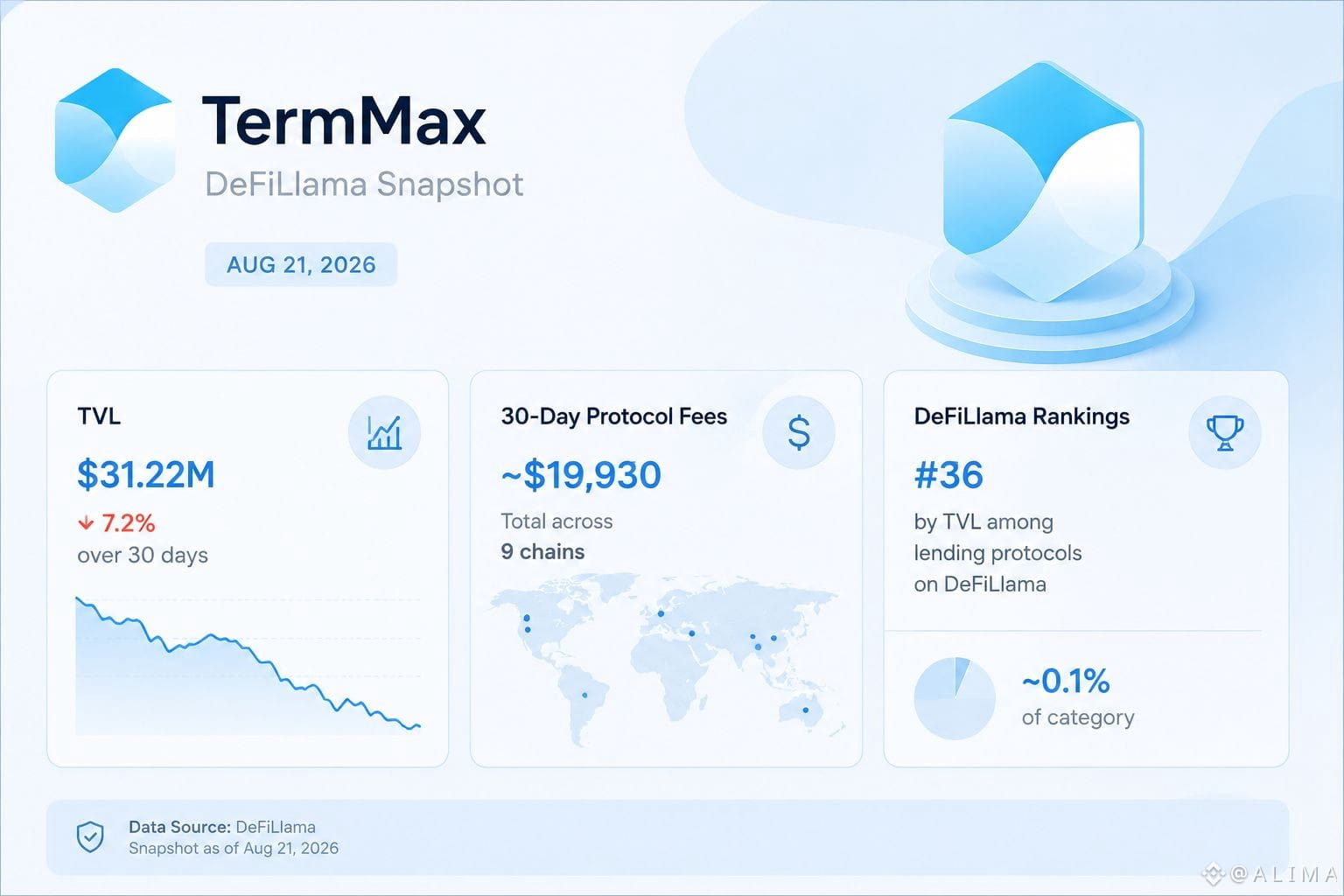
#termmax @termmax fixed rate pitch.. the whole institutions want certainty, floating rates are chaos angle. Makes sense on paper. Then I pulled up their actual DefiLlama page mid task and… hold up.
TVL sitting at $31.22M, down 7.2% over the past 30 days. Protocol fees for that same window? Just under $20K. Not $20K a day $20K total, across 30 days, spread over 9 chains.
For a protocol marketed as the institutional answer to floating rate risk, the number that's supposed to prove real usage is actually shrinking while the narrative gets louder.
That's the thing that stuck with me. Not the zero coupon bond mechanics, not the curator vault design those are fine, honestly clever.
It's the gap between institutions are choosing TermMax as a headline and what the chain data shows happening right now. Rate certainty is a real product. Whether capital is actually rotating in for it, at scale, today.. that's a separate question the TVL chart doesn't answer yet.
If the institutional flows are still mostly one or two curator relationships doing the heavy lifting rather than a broad base. Anyone tracking which curator wallets are actually net depositing this month?
#termmax @TermMax fixed rate pitch.. the whole institutions want certainty, floating rates are chaos angle. Makes sense on paper. Then I pulled up their actual DefiLlama page mid task and… hold up.
TVL sitting at $31.22M, down 7.2% over the past 30 days. Protocol fees for that same window? Just under $20K. Not $20K a day $20K total, across 30 days, spread over 9 chains.
For a protocol marketed as the institutional answer to floating rate risk, the number that's supposed to prove real usage is actually shrinking while the narrative gets louder.
That's the thing that stuck with me. Not the zero coupon bond mechanics, not the curator vault design those are fine, honestly clever.
It's the gap between institutions are choosing TermMax as a headline and what the chain data shows happening right now. Rate certainty is a real product. Whether capital is actually rotating in for it, at scale, today.. that's a separate question the TVL chart doesn't answer yet.
If the institutional flows are still mostly one or two curator relationships doing the heavy lifting rather than a broad base. Anyone tracking which curator wallets are actually net depositing this month?
TVL sitting at $31.22M, down 7.2% over the past 30 days. Protocol fees for that same window? Just under $20K. Not $20K a day $20K total, across 30 days, spread over 9 chains.
For a protocol marketed as the institutional answer to floating rate risk, the number that's supposed to prove real usage is actually shrinking while the narrative gets louder.
That's the thing that stuck with me. Not the zero coupon bond mechanics, not the curator vault design those are fine, honestly clever.
It's the gap between institutions are choosing TermMax as a headline and what the chain data shows happening right now. Rate certainty is a real product. Whether capital is actually rotating in for it, at scale, today.. that's a separate question the TVL chart doesn't answer yet.
If the institutional flows are still mostly one or two curator relationships doing the heavy lifting rather than a broad base. Anyone tracking which curator wallets are actually net depositing this month?
7
20
357
·
--
Vérifié
#dusk $DUSK @Dusk_Foundation spent the creatorpad task digging into Hedger, the auditable zero knowledge layer they keep pitching as privacy without opacity. Figured it'd be another marketing loop until I actually checked the timeline against something real.
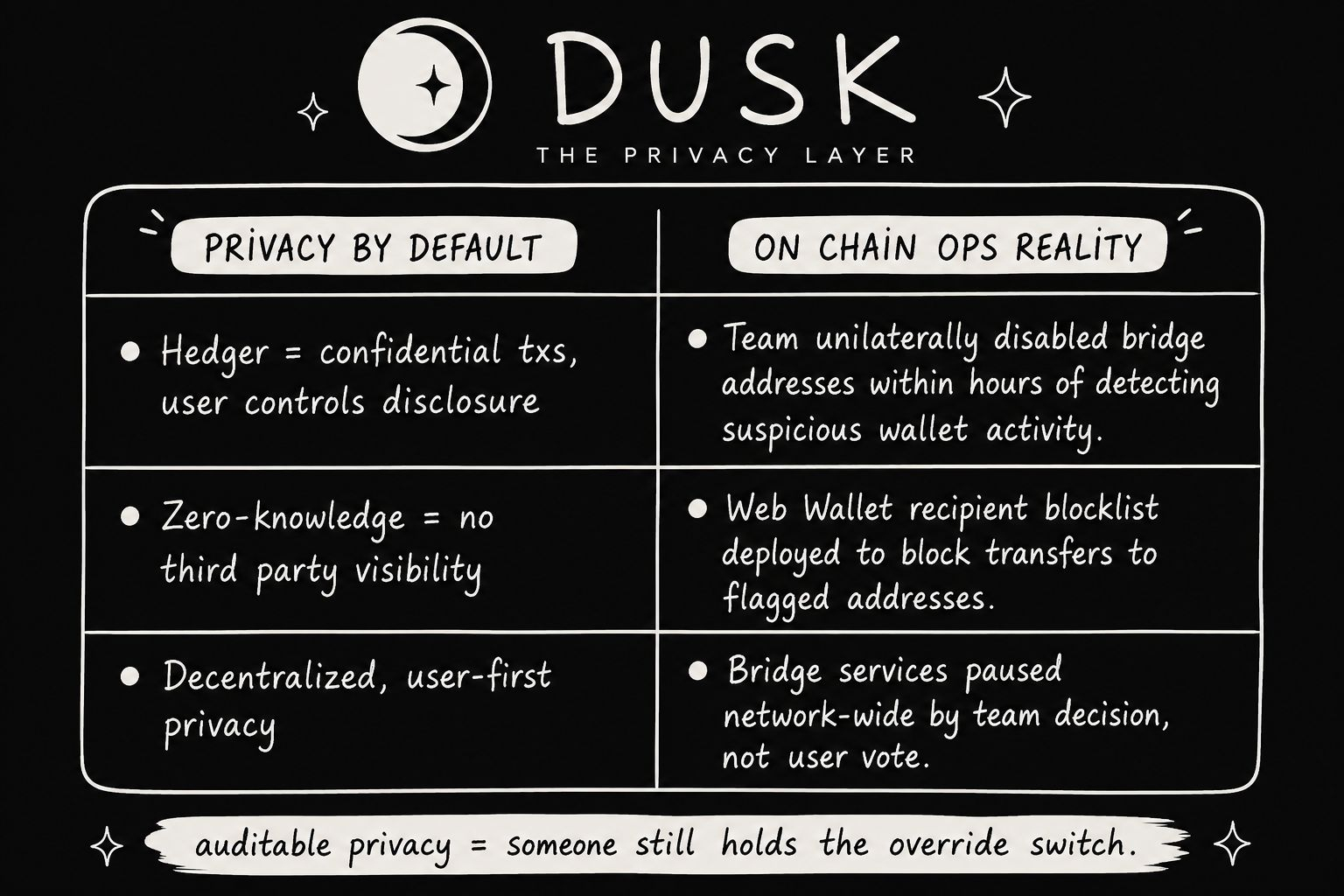
Aug 16, five days back team caught suspicious activity on a bridge managed wallet. Within hours they disabled the affected bridge addresses, paused bridge ops, and pushed a Web Wallet recipient blocklist to stop funds moving to flagged addresses.
That's… not what you'd expect from a chain that markets itself on confidentiality by default. Hold up the blocklist part is the interesting bit. It means the privacy here isn't absolute, it's selective disclosure with an off switch the team can flip fast.
Kind of reframed the whole homomorphic/ZK pitch for me. The tech isn't built for hiding everything from everyoneit's built so someone the protocol, compliance layer, whoever holds the keys can still see and intervene when it matters.
Makes sense for regulated finance. Less sense if you came in expecting Monero style anonymity.
Still chewing on it, who actually gets that visibility first, and does auditable quietly mean someone's always watching just not you?
#dusk $DUSK @Dusk spent the creatorpad task digging into Hedger, the auditable zero knowledge layer they keep pitching as privacy without opacity. Figured it'd be another marketing loop until I actually checked the timeline against something real.
Aug 16, five days back team caught suspicious activity on a bridge managed wallet. Within hours they disabled the affected bridge addresses, paused bridge ops, and pushed a Web Wallet recipient blocklist to stop funds moving to flagged addresses.
That's… not what you'd expect from a chain that markets itself on confidentiality by default. Hold up the blocklist part is the interesting bit. It means the privacy here isn't absolute, it's selective disclosure with an off switch the team can flip fast.
Kind of reframed the whole homomorphic/ZK pitch for me. The tech isn't built for hiding everything from everyoneit's built so someone the protocol, compliance layer, whoever holds the keys can still see and intervene when it matters.
Makes sense for regulated finance. Less sense if you came in expecting Monero style anonymity.
Still chewing on it, who actually gets that visibility first, and does auditable quietly mean someone's always watching just not you?
Aug 16, five days back team caught suspicious activity on a bridge managed wallet. Within hours they disabled the affected bridge addresses, paused bridge ops, and pushed a Web Wallet recipient blocklist to stop funds moving to flagged addresses.
That's… not what you'd expect from a chain that markets itself on confidentiality by default. Hold up the blocklist part is the interesting bit. It means the privacy here isn't absolute, it's selective disclosure with an off switch the team can flip fast.
Kind of reframed the whole homomorphic/ZK pitch for me. The tech isn't built for hiding everything from everyoneit's built so someone the protocol, compliance layer, whoever holds the keys can still see and intervene when it matters.
Makes sense for regulated finance. Less sense if you came in expecting Monero style anonymity.
Still chewing on it, who actually gets that visibility first, and does auditable quietly mean someone's always watching just not you?
42
63
5.1k
·
--
Vérifié
#dusk $DUSK @Dusk_Foundation STOX now branded Dusk Trade kept popping up while I was digging through Dusk stuff this week and one detail made me stop scrolling.
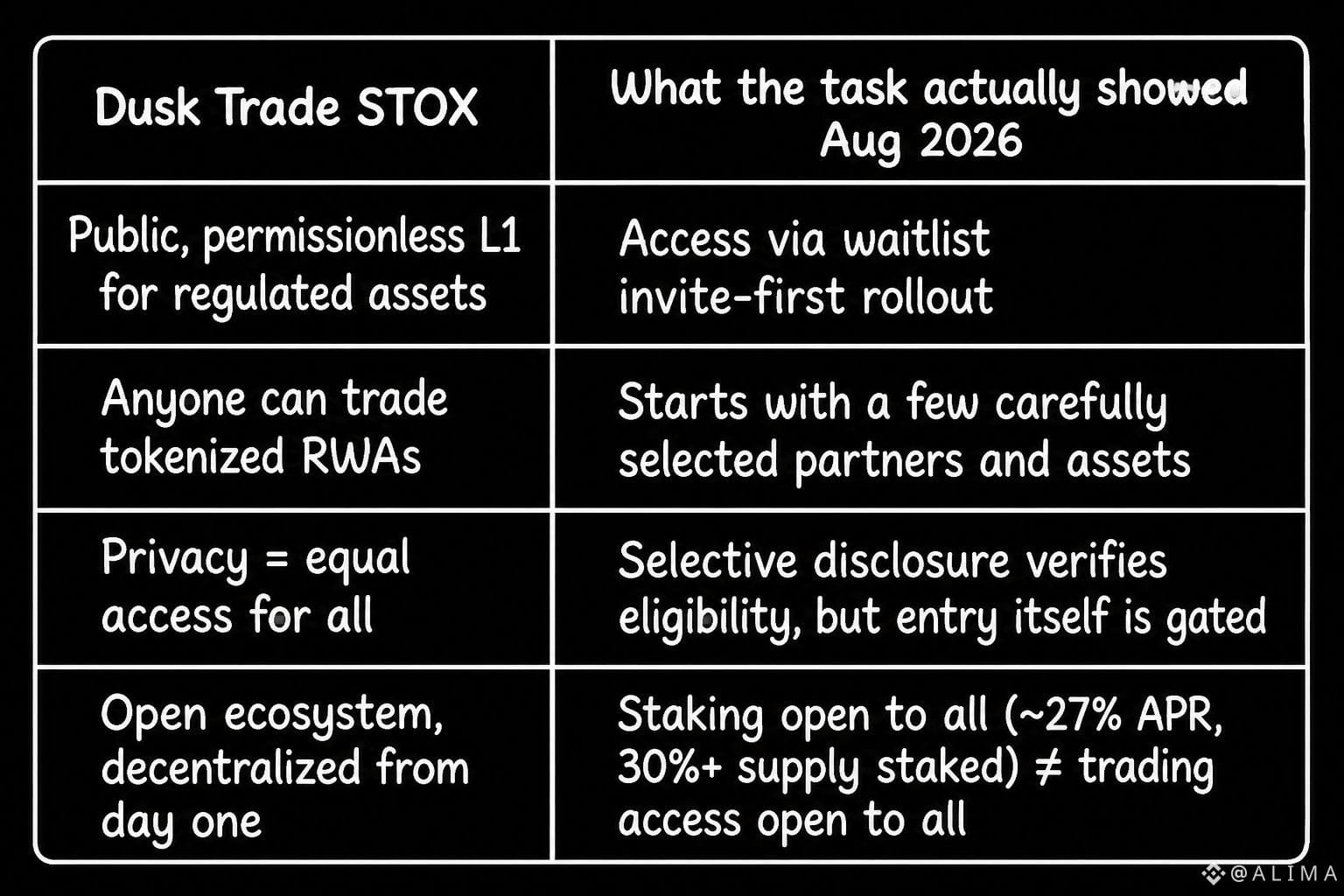
Aug 15 they published a piece on opening private markets to SMEs right after that I went looking for the actual trading platform. Dusk markets itself as public, permissionless L1. Dusk Trade isn't that. Not yet.
It's a waitlist. Selective disclosure lets you prove residency or eligibility without leaking your identity, sure clever tech but the rollout itself is a few carefully selected partners and assets" first, expanding later.
So the privacy layer is trustless, the access layer isn't.
Made me think about my own onboarding, I staked a small amount, checked the numbers, over 30% of supply locked, APR sitting around 27% variable. Solid. But staking ≠ trading access. Two different doors, two different queues.
Who gets into that first cohort of assets and on what terms feels like the real story here, not the ZK marketing copy. Anyone actually off the waitlist yet?
#dusk $DUSK @Dusk STOX now branded Dusk Trade kept popping up while I was digging through Dusk stuff this week and one detail made me stop scrolling.
Aug 15 they published a piece on opening private markets to SMEs right after that I went looking for the actual trading platform. Dusk markets itself as public, permissionless L1. Dusk Trade isn't that. Not yet.
It's a waitlist. Selective disclosure lets you prove residency or eligibility without leaking your identity, sure clever tech but the rollout itself is a few carefully selected partners and assets" first, expanding later.
So the privacy layer is trustless, the access layer isn't.
Made me think about my own onboarding, I staked a small amount, checked the numbers, over 30% of supply locked, APR sitting around 27% variable. Solid. But staking ≠ trading access. Two different doors, two different queues.
Who gets into that first cohort of assets and on what terms feels like the real story here, not the ZK marketing copy. Anyone actually off the waitlist yet?
Aug 15 they published a piece on opening private markets to SMEs right after that I went looking for the actual trading platform. Dusk markets itself as public, permissionless L1. Dusk Trade isn't that. Not yet.
It's a waitlist. Selective disclosure lets you prove residency or eligibility without leaking your identity, sure clever tech but the rollout itself is a few carefully selected partners and assets" first, expanding later.
So the privacy layer is trustless, the access layer isn't.
Made me think about my own onboarding, I staked a small amount, checked the numbers, over 30% of supply locked, APR sitting around 27% variable. Solid. But staking ≠ trading access. Two different doors, two different queues.
Who gets into that first cohort of assets and on what terms feels like the real story here, not the ZK marketing copy. Anyone actually off the waitlist yet?
44
44
643
·
--
Partiellement vrai
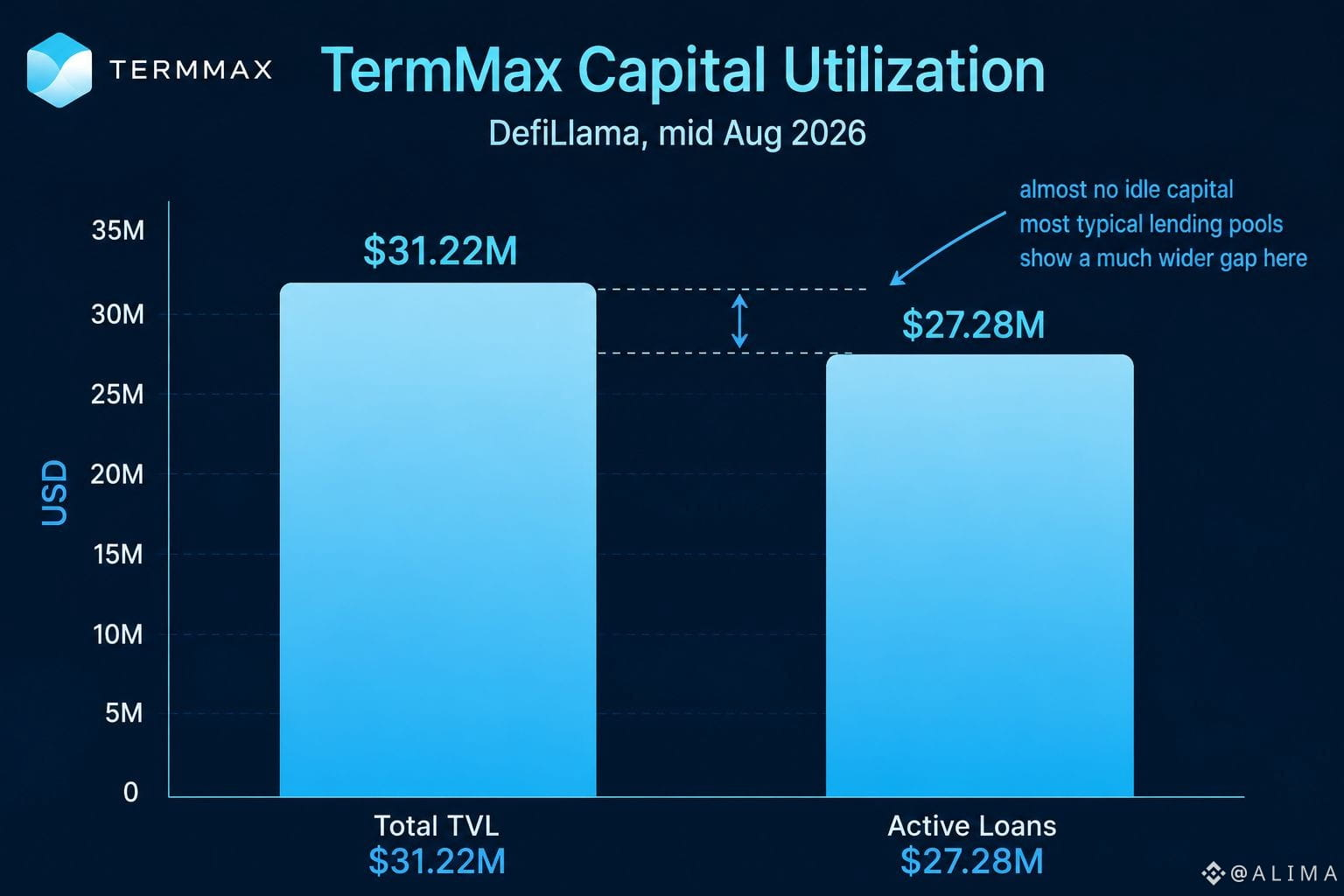
#termmax @termmax been sitting with the TermMax numbers since wrapping the task and one ratio won't let go of me .pulled up DefiLlama mid task TVL sitting at $31.22M, down 7.2% over the trailing 30 days. Normal enough, capital rotates in and out. But active loans on the same page read $27.28M.
That's not a lending pool with a pile of idle liquidity parked and waiting that's almost the entire TVL actually deployed, matched, working.
Took me a sec to get why. TermMax doesn't really have an "idle" state the way pooled lending does. Lenders mint FT the zero coupon leg at a fixed discount the moment they deposit, borrowers lock a GT position against it. The yield isn't accruing somewhere to be claimed later… it's already priced into the FT at mint.
So capital either gets matched into that structure or it just doesn't sit there earning a floating trickle. No in between holding pattern like you'd expect from a Compound style pool.
Small detail but it reframes what TVL even means for this design versus everything else I checked today.
Doesn't tell me whether that's a sign of real efficiency or just a smaller market with less room to be sloppy though still chewing on that one.
#termmax @TermMax been sitting with the TermMax numbers since wrapping the task and one ratio won't let go of me .pulled up DefiLlama mid task TVL sitting at $31.22M, down 7.2% over the trailing 30 days. Normal enough, capital rotates in and out. But active loans on the same page read $27.28M.
That's not a lending pool with a pile of idle liquidity parked and waiting that's almost the entire TVL actually deployed, matched, working.
Took me a sec to get why. TermMax doesn't really have an "idle" state the way pooled lending does. Lenders mint FT the zero coupon leg at a fixed discount the moment they deposit, borrowers lock a GT position against it. The yield isn't accruing somewhere to be claimed later… it's already priced into the FT at mint.
So capital either gets matched into that structure or it just doesn't sit there earning a floating trickle. No in between holding pattern like you'd expect from a Compound style pool.
Small detail but it reframes what TVL even means for this design versus everything else I checked today.
Doesn't tell me whether that's a sign of real efficiency or just a smaller market with less room to be sloppy though still chewing on that one.
That's not a lending pool with a pile of idle liquidity parked and waiting that's almost the entire TVL actually deployed, matched, working.
Took me a sec to get why. TermMax doesn't really have an "idle" state the way pooled lending does. Lenders mint FT the zero coupon leg at a fixed discount the moment they deposit, borrowers lock a GT position against it. The yield isn't accruing somewhere to be claimed later… it's already priced into the FT at mint.
So capital either gets matched into that structure or it just doesn't sit there earning a floating trickle. No in between holding pattern like you'd expect from a Compound style pool.
Small detail but it reframes what TVL even means for this design versus everything else I checked today.
Doesn't tell me whether that's a sign of real efficiency or just a smaller market with less room to be sloppy though still chewing on that one.
11
26
549
·
--
Vérifié
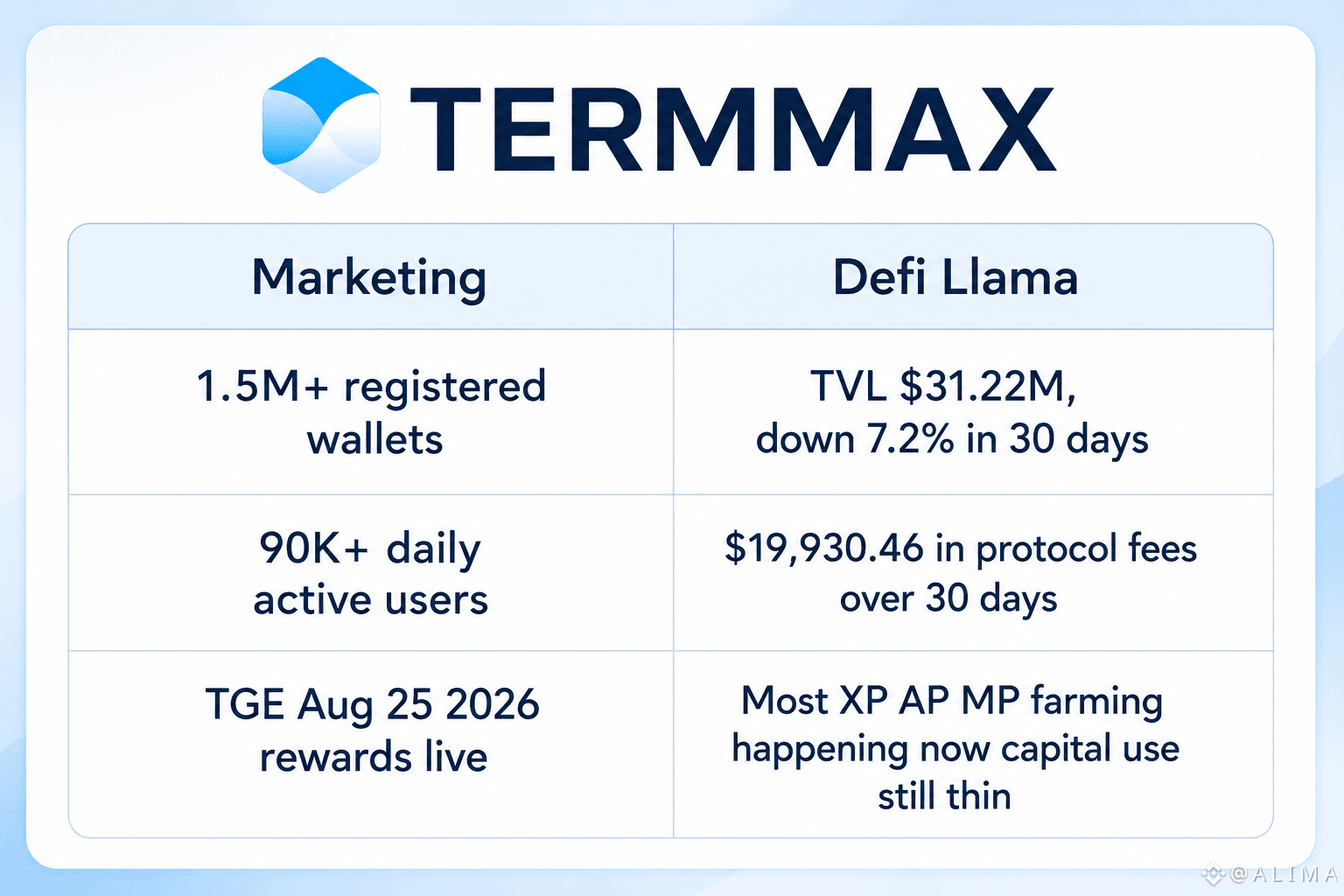
#termmax @termmax spent the task afternoon poking around before the TGE, and one number kept bugging me. Official line says 1.5M+ registered wallets, 90K+ daily actives, live on 10 EVM chains, TGE locked for August 25. Big numbers.
Then I flip to DefiLlama and see TVL sitting around $31M, down 7.2% over the past month, and fees for the last 30 days come out to just under $20K total. hold up, that gap is the whole story.
1.5 million wallets and $20K in monthly fees don't belong in the same sentence unless most of those wallets aren't actually lending or borrowing anything. They're just… there. Present. Farming XP/AP/MP points that unlock at TGE.
The default behavior on TermMax right now isn't fixed rate borrowing, it's points farming, the advanced stuff actual GT positions, curated vault deposits is still a minority sport happening quietly underneath the wallet count.
Kinda reminded me of watching a stadium fill up for a game that hasn't started, everyone's in their seat, nobody's actually playing yet.
what the DAU number looks like a week after tokens are claimable. Does usage catch up to the wallet count, or was the wallet count always the product.
#termmax @TermMax spent the task afternoon poking around before the TGE, and one number kept bugging me. Official line says 1.5M+ registered wallets, 90K+ daily actives, live on 10 EVM chains, TGE locked for August 25. Big numbers.
Then I flip to DefiLlama and see TVL sitting around $31M, down 7.2% over the past month, and fees for the last 30 days come out to just under $20K total. hold up, that gap is the whole story.
1.5 million wallets and $20K in monthly fees don't belong in the same sentence unless most of those wallets aren't actually lending or borrowing anything. They're just… there. Present. Farming XP/AP/MP points that unlock at TGE.
The default behavior on TermMax right now isn't fixed rate borrowing, it's points farming, the advanced stuff actual GT positions, curated vault deposits is still a minority sport happening quietly underneath the wallet count.
Kinda reminded me of watching a stadium fill up for a game that hasn't started, everyone's in their seat, nobody's actually playing yet.
what the DAU number looks like a week after tokens are claimable. Does usage catch up to the wallet count, or was the wallet count always the product.
Then I flip to DefiLlama and see TVL sitting around $31M, down 7.2% over the past month, and fees for the last 30 days come out to just under $20K total. hold up, that gap is the whole story.
1.5 million wallets and $20K in monthly fees don't belong in the same sentence unless most of those wallets aren't actually lending or borrowing anything. They're just… there. Present. Farming XP/AP/MP points that unlock at TGE.
The default behavior on TermMax right now isn't fixed rate borrowing, it's points farming, the advanced stuff actual GT positions, curated vault deposits is still a minority sport happening quietly underneath the wallet count.
Kinda reminded me of watching a stadium fill up for a game that hasn't started, everyone's in their seat, nobody's actually playing yet.
what the DAU number looks like a week after tokens are claimable. Does usage catch up to the wallet count, or was the wallet count always the product.
25
46
520
·
--
Partiellement vrai
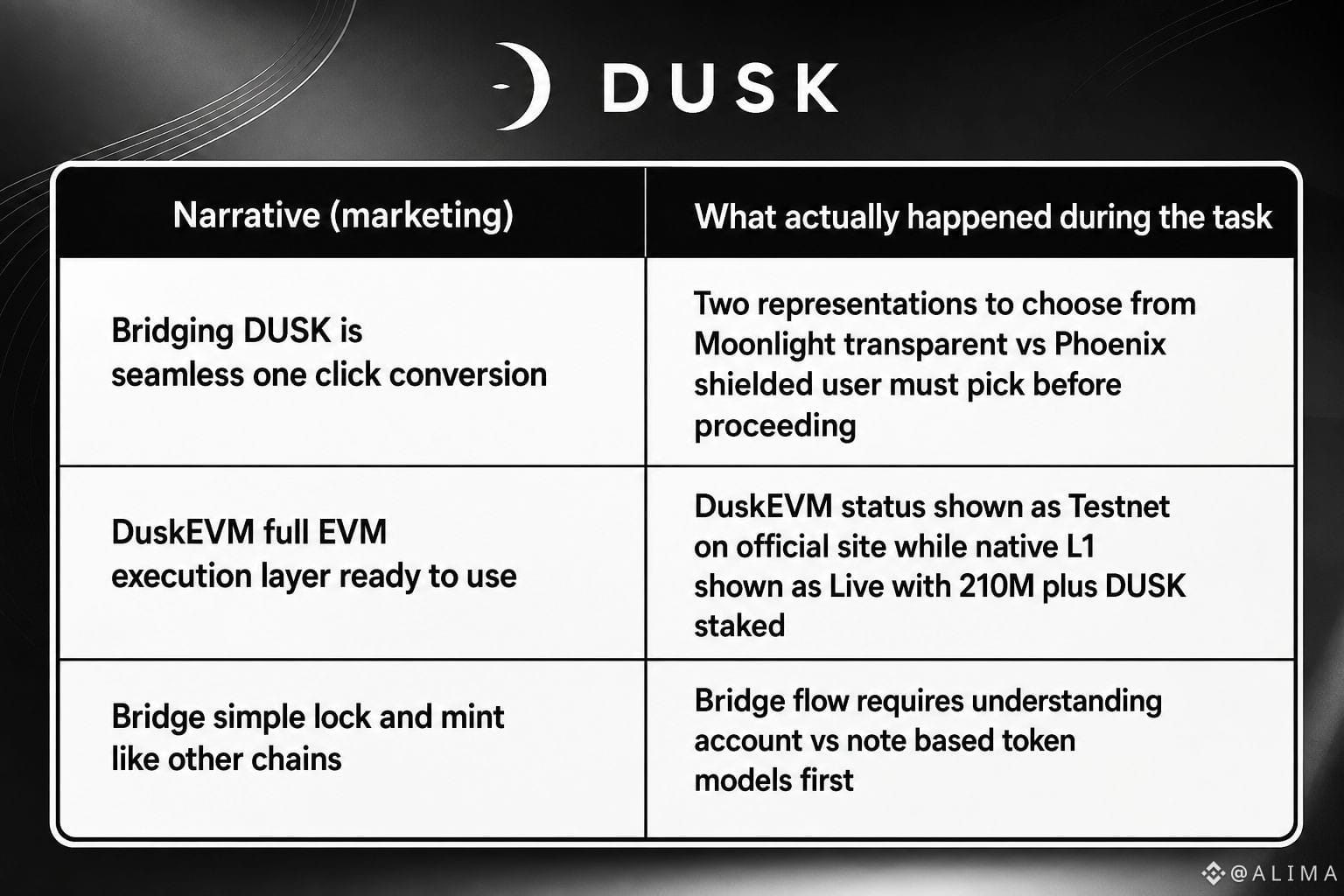
#dusk $DUSK @Dusk_Foundation Okay so I spent the creatorpad task actually walking through the bridge flow instead of just reading the guide, and the thing that stuck was this, the native Dusk L1 shows Live with 210M+ DUSK staked securing it right now but the moment you cross into DuskEVM territory.. that whole EVM execution layer is still tagged Testnet.
the part that made me pause… bridging isn't one bridge, it's two mental models stitched together. Your DUSK either lives as Moonlight transparent, account based, feels normal or Phoenix shielded, note based, feels like a different asset entirely.
Moving between EVM origin DUSK and native DUSK means picking which representation you actually want to hold and the wallet doesn't really explain that tradeoff up front, you kind of discover it mid flow.
Small anecdote , I assumed bridging would just be a lock and mint like every other chain, wallet popup, confirm, done. Instead I found myself re reading the Moonlight/Phoenix distinction twice, hmm.. because picking wrong isn't catastrophic but it does change what you can do with the tokens afterward staking eligibility, privacy, whatever your next step is.
So the marketing says seamless conversion, and functionally it is but seamless and legible aren't the same thing. curious how many people bridge once, get their funds, and never actually understand which side of the ledger they ended up on.
#dusk $DUSK @Dusk Okay so I spent the creatorpad task actually walking through the bridge flow instead of just reading the guide, and the thing that stuck was this, the native Dusk L1 shows Live with 210M+ DUSK staked securing it right now but the moment you cross into DuskEVM territory.. that whole EVM execution layer is still tagged Testnet.
the part that made me pause… bridging isn't one bridge, it's two mental models stitched together. Your DUSK either lives as Moonlight transparent, account based, feels normal or Phoenix shielded, note based, feels like a different asset entirely.
Moving between EVM origin DUSK and native DUSK means picking which representation you actually want to hold and the wallet doesn't really explain that tradeoff up front, you kind of discover it mid flow.
Small anecdote , I assumed bridging would just be a lock and mint like every other chain, wallet popup, confirm, done. Instead I found myself re reading the Moonlight/Phoenix distinction twice, hmm.. because picking wrong isn't catastrophic but it does change what you can do with the tokens afterward staking eligibility, privacy, whatever your next step is.
So the marketing says seamless conversion, and functionally it is but seamless and legible aren't the same thing. curious how many people bridge once, get their funds, and never actually understand which side of the ledger they ended up on.
the part that made me pause… bridging isn't one bridge, it's two mental models stitched together. Your DUSK either lives as Moonlight transparent, account based, feels normal or Phoenix shielded, note based, feels like a different asset entirely.
Moving between EVM origin DUSK and native DUSK means picking which representation you actually want to hold and the wallet doesn't really explain that tradeoff up front, you kind of discover it mid flow.
Small anecdote , I assumed bridging would just be a lock and mint like every other chain, wallet popup, confirm, done. Instead I found myself re reading the Moonlight/Phoenix distinction twice, hmm.. because picking wrong isn't catastrophic but it does change what you can do with the tokens afterward staking eligibility, privacy, whatever your next step is.
So the marketing says seamless conversion, and functionally it is but seamless and legible aren't the same thing. curious how many people bridge once, get their funds, and never actually understand which side of the ledger they ended up on.
68
77
1.3k
Connectez-vous pour découvrir plus de contenu
Rejoignez la communauté mondiale des adeptes de cryptomonnaies sur Binance Square
⚡️ Suviez les dernières informations importantes sur les cryptomonnaies.
💬 Jugé digne de confiance par la plus grande plateforme d’échange de cryptomonnaies au monde.
👍 Découvrez les connaissances que partagent les créateurs vérifiés.
Adresse e-mail/Nº de téléphone
Sujets d’actualité
ChinaMayLetAlibabaByteDanceBuyNvidiaChips
419 vues
53 mentions
#ChinaMayLetAlibabaByteDanceBuyNvidiaChips
Discussion
Reports say China may allow companies including Alibaba and ByteDance to purchase Nvidia’s newly released RTX PRO 5500 chips. China’s Ministry of Industry and Information Technology reportedly asked companies about planned quantities and intended uses, although the report has not been independently verified.
This is notable because:
For Nvidia: Approval could create additional China sales and maintain Nvidia’s presence in the Chinese AI ecosystem.
For Alibaba & ByteDance: More Nvidia computing capacity could support AI model development and inference amid strong demand for computing power.
For China’s chip strategy: The RTX PRO 5500 is not Nvidia’s top data-center AI accelerator, while Chinese firms are also developing domestic alternatives such as Alibaba’s own AI chips.
For markets: Confirmation of meaningful purchases could affect sentiment around Nvidia and the broader semiconductor sector, but the scale and timing of any approvals remain uncertain.
The key point is that this is a reported potential approval, not a confirmed purchase agreement. Reuters said it could not independently verify the report.
PALASH5
·0 mentions J’aime
·328 vues
USChinaRelease$30BTariffCutProductLists
5 vues
3 mentions
SKoreaFSCConsidersVirtualAssetMarketMaker
1,515 vues
85 mentions