
William-ETH
23.1k Publications

William-ETH
 Compte Square Vérifié+
Signaler
Bloquer l’utilisateur
Living every day with focus and quiet power.Consistency is my strongest language...

Traders League Badge Beginner
Ouvert au trading
Trade régulièrement
1.9 an(s)
154 Suivis
46.4K+ Abonnés
74.9K+ J’aime
1 Badges
Publications
Portefeuille
Tous
Citations
Direct
PINNED
·
--
Haussier
D'accord, transformons ça en quelque chose de plus affûté, plus cinématographique et plus difficile à ignorer :
Ils fixent tous les mêmes graphiques.
Les mêmes tokens. Le même bruit. Les mêmes trades bondés.
Pendant ce temps… quelque chose bouge dans l'ombre.
Pas bruyant. Pas explosif.
Juste stable. Contrôlé. Intentional.
COS est en train de prendre un bid.
Pas de vague de hype. Pas de cirque d'influenceurs.
Juste cette accumulation silencieuse… celle que tu ne remarques que si tu es ici depuis assez longtemps pour la sentir avant de la voir.
Parce que le véritable momentum ?
Il ne s'annonce pas.
Il se construit.
Et voici la partie que la plupart des gens ratent : le volume ne ment pas.
La liquidité s'infiltre. S'étend sous la surface.
Ce n'est pas aléatoire. C'est du positioning.
Les baleines ne tweetent pas.
Elles ne chassent pas les candlesticks verts.
Elles laissent des empreintes — dans le tape, dans les carnets de commandes, dans ces murs silencieux qui s'accumulent là où personne ne regarde.
Et ce n'est pas qu'un seul graphique.
DOCK se renforce aussi.
Ce n'est pas une coïncidence.
C'est de la rotation.
Quand plusieurs acteurs dans le même secteur commencent à bouger ensemble…
cela signifie une chose :
L'argent intelligent est déjà à l'intérieur.
Ils ne demandent pas de confirmation.
Ils n'attendent pas de permission.
Ils chargent.
Alors détends-toi — ce n'est pas un moment pour "vendre tout et se lancer à fond".
Pas de promesses. Pas de discours de lune du jour au lendemain.
Juste ça :
Les vrais mouvements commencent silencieusement.
Au moment où ça commence à devenir tendance… au moment où les bougies vont verticales…
C'est déjà intégré dans le prix.
Donc ouais… je ne regarde pas le bruit.
Je regarde les empreintes. 👀
Et toi ?$COS
Ou le remarqueras-tu… quand il sera déjà trop tard ?
#SocialTokens #altcoinseason #Web3 #WhaleWatch
D'accord, transformons ça en quelque chose de plus affûté, plus cinématographique et plus difficile à ignorer :
Ils fixent tous les mêmes graphiques.
Les mêmes tokens. Le même bruit. Les mêmes trades bondés.
Pendant ce temps… quelque chose bouge dans l'ombre.
Pas bruyant. Pas explosif.
Juste stable. Contrôlé. Intentional.
COS est en train de prendre un bid.
Pas de vague de hype. Pas de cirque d'influenceurs.
Juste cette accumulation silencieuse… celle que tu ne remarques que si tu es ici depuis assez longtemps pour la sentir avant de la voir.
Parce que le véritable momentum ?
Il ne s'annonce pas.
Il se construit.
Et voici la partie que la plupart des gens ratent : le volume ne ment pas.
La liquidité s'infiltre. S'étend sous la surface.
Ce n'est pas aléatoire. C'est du positioning.
Les baleines ne tweetent pas.
Elles ne chassent pas les candlesticks verts.
Elles laissent des empreintes — dans le tape, dans les carnets de commandes, dans ces murs silencieux qui s'accumulent là où personne ne regarde.
Et ce n'est pas qu'un seul graphique.
DOCK se renforce aussi.
Ce n'est pas une coïncidence.
C'est de la rotation.
Quand plusieurs acteurs dans le même secteur commencent à bouger ensemble…
cela signifie une chose :
L'argent intelligent est déjà à l'intérieur.
Ils ne demandent pas de confirmation.
Ils n'attendent pas de permission.
Ils chargent.
Alors détends-toi — ce n'est pas un moment pour "vendre tout et se lancer à fond".
Pas de promesses. Pas de discours de lune du jour au lendemain.
Juste ça :
Les vrais mouvements commencent silencieusement.
Au moment où ça commence à devenir tendance… au moment où les bougies vont verticales…
C'est déjà intégré dans le prix.
Donc ouais… je ne regarde pas le bruit.
Je regarde les empreintes. 👀
Et toi ?$COS
Ou le remarqueras-tu… quand il sera déjà trop tard ?
#SocialTokens #altcoinseason #Web3 #WhaleWatch
Ils fixent tous les mêmes graphiques.
Les mêmes tokens. Le même bruit. Les mêmes trades bondés.
Pendant ce temps… quelque chose bouge dans l'ombre.
Pas bruyant. Pas explosif.
Juste stable. Contrôlé. Intentional.
COS est en train de prendre un bid.
Pas de vague de hype. Pas de cirque d'influenceurs.
Juste cette accumulation silencieuse… celle que tu ne remarques que si tu es ici depuis assez longtemps pour la sentir avant de la voir.
Parce que le véritable momentum ?
Il ne s'annonce pas.
Il se construit.
Et voici la partie que la plupart des gens ratent : le volume ne ment pas.
La liquidité s'infiltre. S'étend sous la surface.
Ce n'est pas aléatoire. C'est du positioning.
Les baleines ne tweetent pas.
Elles ne chassent pas les candlesticks verts.
Elles laissent des empreintes — dans le tape, dans les carnets de commandes, dans ces murs silencieux qui s'accumulent là où personne ne regarde.
Et ce n'est pas qu'un seul graphique.
DOCK se renforce aussi.
Ce n'est pas une coïncidence.
C'est de la rotation.
Quand plusieurs acteurs dans le même secteur commencent à bouger ensemble…
cela signifie une chose :
L'argent intelligent est déjà à l'intérieur.
Ils ne demandent pas de confirmation.
Ils n'attendent pas de permission.
Ils chargent.
Alors détends-toi — ce n'est pas un moment pour "vendre tout et se lancer à fond".
Pas de promesses. Pas de discours de lune du jour au lendemain.
Juste ça :
Les vrais mouvements commencent silencieusement.
Au moment où ça commence à devenir tendance… au moment où les bougies vont verticales…
C'est déjà intégré dans le prix.
Donc ouais… je ne regarde pas le bruit.
Je regarde les empreintes. 👀
Et toi ?$COS
Ou le remarqueras-tu… quand il sera déjà trop tard ?
#SocialTokens #altcoinseason #Web3 #WhaleWatch
148
19
251
222.7k
·
--
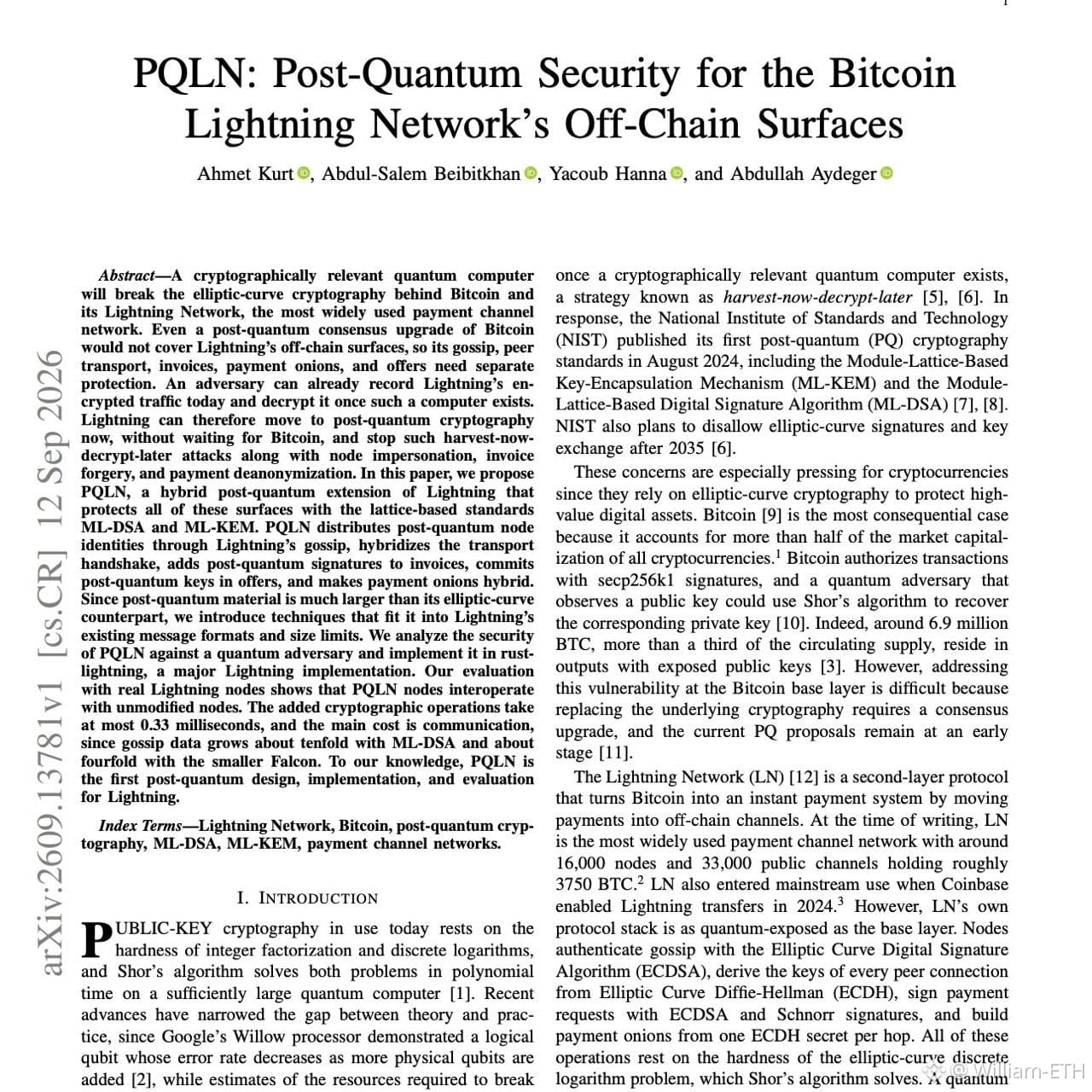
ALERTE : Des étudiants de l’East Texas A&M ont construit une protection cryptographique quantique pour le réseau Bitcoin Lightning.
Leur solution ajoute un chiffrement conçu pour résister aux attaques de futurs ordinateurs quantiques, afin d’aider à protéger les paiements Lightning sans modifier Bitcoin lui-même.
Une étape majeure vers une sécurité renforcée de Bitcoin à mesure que la technologie quantique progresse.
L’avenir de la sécurité de Bitcoin se construit dès aujourd’hui.
ALERTE : Des étudiants de l’East Texas A&M ont construit une protection cryptographique quantique pour le réseau Bitcoin Lightning.
Leur solution ajoute un chiffrement conçu pour résister aux attaques de futurs ordinateurs quantiques, afin d’aider à protéger les paiements Lightning sans modifier Bitcoin lui-même.
Une étape majeure vers une sécurité renforcée de Bitcoin à mesure que la technologie quantique progresse.
L’avenir de la sécurité de Bitcoin se construit dès aujourd’hui.
Leur solution ajoute un chiffrement conçu pour résister aux attaques de futurs ordinateurs quantiques, afin d’aider à protéger les paiements Lightning sans modifier Bitcoin lui-même.
Une étape majeure vers une sécurité renforcée de Bitcoin à mesure que la technologie quantique progresse.
L’avenir de la sécurité de Bitcoin se construit dès aujourd’hui.
5
5
51
·
--
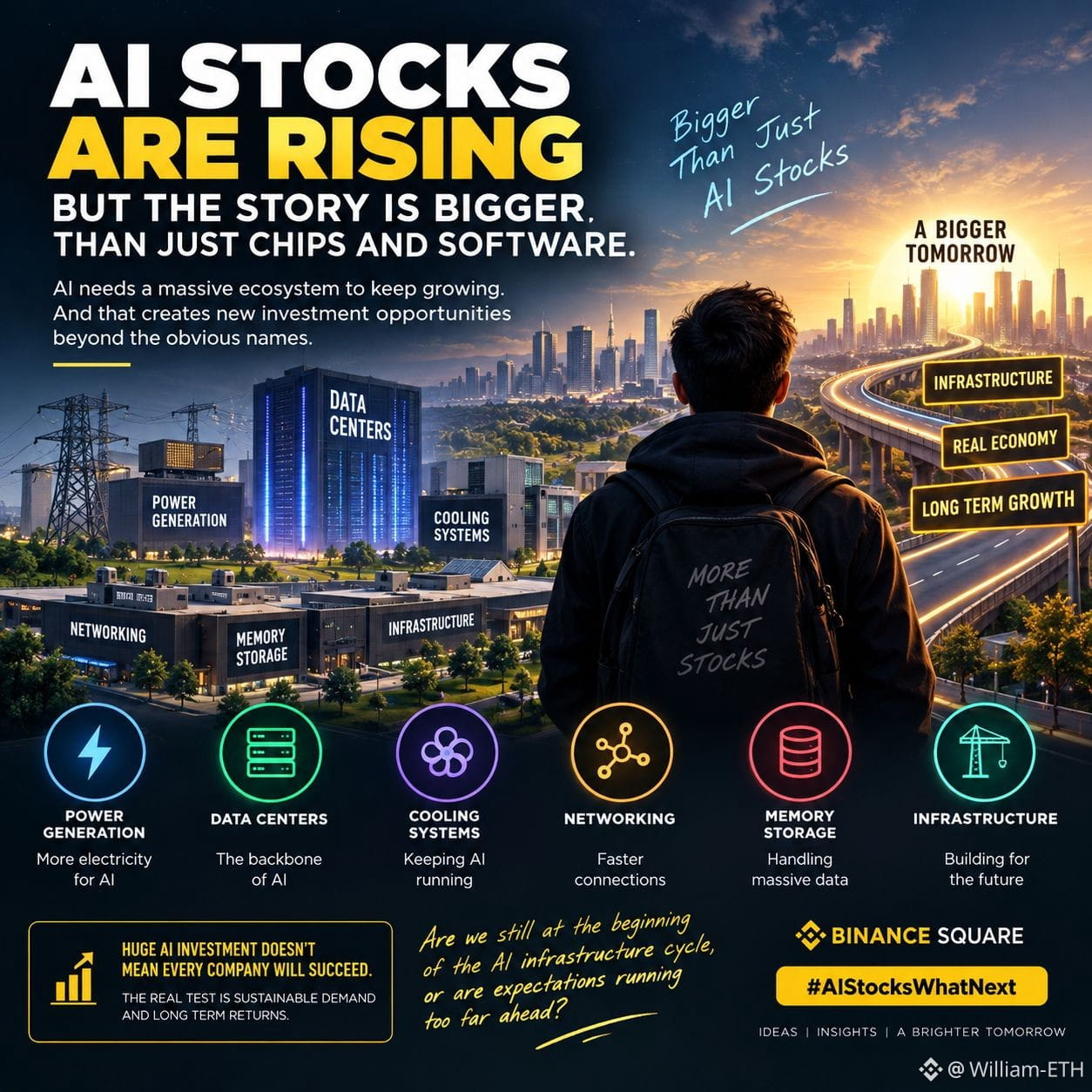
Je réfléchis à ce qui pourrait venir ensuite pendant que les actions liées à l’IA continuent de grimper.
Il semble que l’opportunité soit plus vaste que les seuls puces et logiciels. L’IA a besoin de gigantesques centres de données, d’électricité, de systèmes de refroidissement, de mise en réseau, de mémoire et d’une infrastructure plus solide pour que tout fonctionne.
Cette partie de l’histoire est facile à négliger.
Je suis les entreprises qui soutiennent cette expansion de l’IA, plutôt que de me concentrer uniquement sur les noms dont tout le monde parle déjà.
Mais je pense aussi qu’il est important de rester réaliste. Des dépenses massives en IA ne signifient pas que chaque entreprise associée réussira. Le véritable test sera de savoir si ces dépenses créent une demande durable et des retours à long terme.
Pour moi, la question la plus intéressante est simple :
Sommes-nous encore au début du cycle d’infrastructure de l’IA, ou bien les attentes sont-elles déjà en avance trop loin ?
C’est précisément ce que je vais suivre de près.
#AIStocksWhatNext
Je réfléchis à ce qui pourrait venir ensuite pendant que les actions liées à l’IA continuent de grimper.
Il semble que l’opportunité soit plus vaste que les seuls puces et logiciels. L’IA a besoin de gigantesques centres de données, d’électricité, de systèmes de refroidissement, de mise en réseau, de mémoire et d’une infrastructure plus solide pour que tout fonctionne.
Cette partie de l’histoire est facile à négliger.
Je suis les entreprises qui soutiennent cette expansion de l’IA, plutôt que de me concentrer uniquement sur les noms dont tout le monde parle déjà.
Mais je pense aussi qu’il est important de rester réaliste. Des dépenses massives en IA ne signifient pas que chaque entreprise associée réussira. Le véritable test sera de savoir si ces dépenses créent une demande durable et des retours à long terme.
Pour moi, la question la plus intéressante est simple :
Sommes-nous encore au début du cycle d’infrastructure de l’IA, ou bien les attentes sont-elles déjà en avance trop loin ?
C’est précisément ce que je vais suivre de près.
#AIStocksWhatNext
Il semble que l’opportunité soit plus vaste que les seuls puces et logiciels. L’IA a besoin de gigantesques centres de données, d’électricité, de systèmes de refroidissement, de mise en réseau, de mémoire et d’une infrastructure plus solide pour que tout fonctionne.
Cette partie de l’histoire est facile à négliger.
Je suis les entreprises qui soutiennent cette expansion de l’IA, plutôt que de me concentrer uniquement sur les noms dont tout le monde parle déjà.
Mais je pense aussi qu’il est important de rester réaliste. Des dépenses massives en IA ne signifient pas que chaque entreprise associée réussira. Le véritable test sera de savoir si ces dépenses créent une demande durable et des retours à long terme.
Pour moi, la question la plus intéressante est simple :
Sommes-nous encore au début du cycle d’infrastructure de l’IA, ou bien les attentes sont-elles déjà en avance trop loin ?
C’est précisément ce que je vais suivre de près.
#AIStocksWhatNext
9
16
1.8k
·
--
Haussier
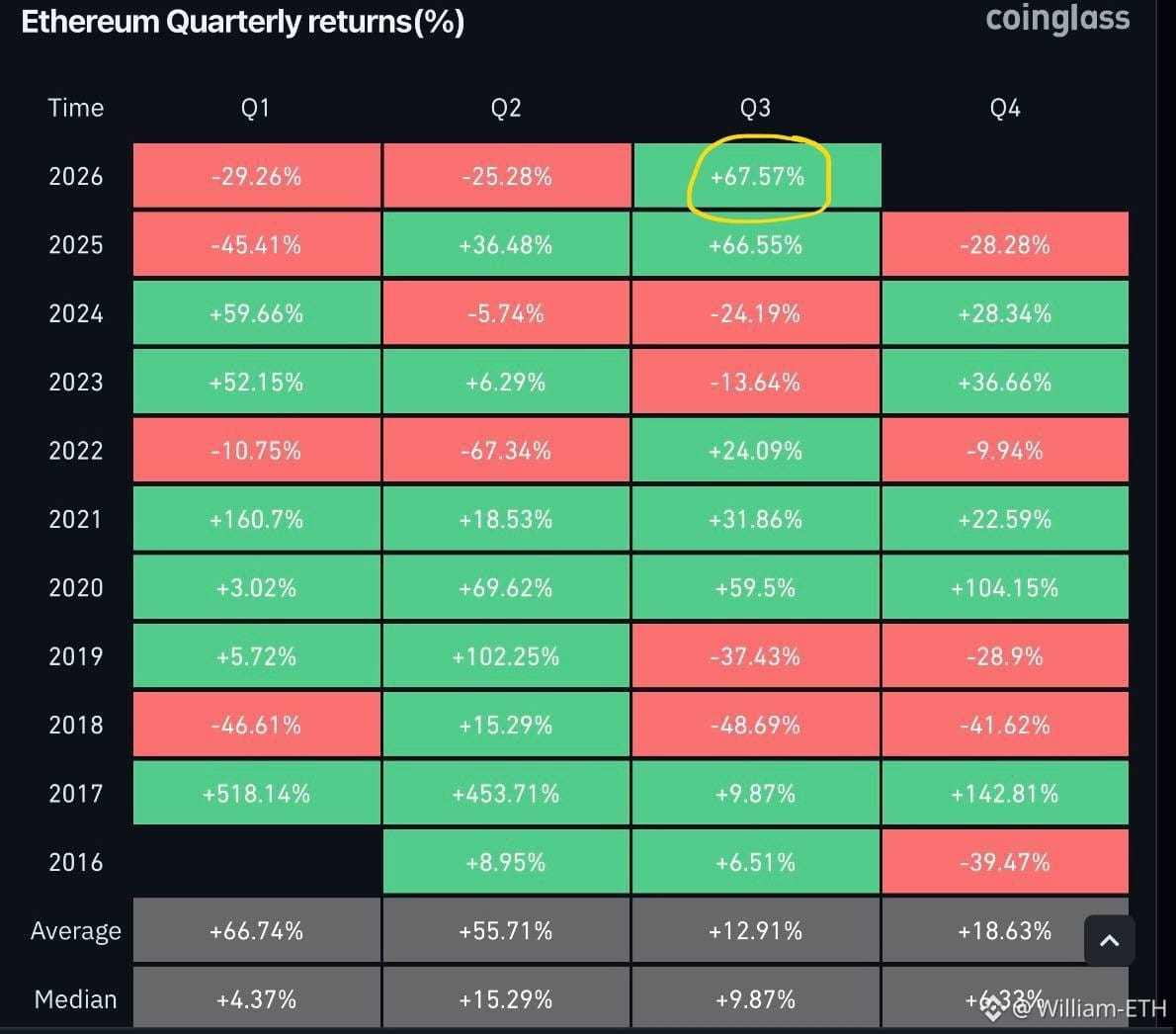
$ETH CHAUFFE 🔥
Le T3 pourrait devenir le meilleur T3 jamais réalisé pour Ethereum, avec un gain impressionnant de +67,57% à ce jour.
Ce genre d’élan attire l’attention très vite. 👀
Si cette force se maintient, la dernière ligne droite du T3 pourrait devenir encore plus palpitante.
Je surveille de près $ETH. L’élan est bien réel, et c’est ici que les choses peuvent aller très vite.
On y va et on Trade maintenant $ETH 🚀
$ETH CHAUFFE 🔥
Le T3 pourrait devenir le meilleur T3 jamais réalisé pour Ethereum, avec un gain impressionnant de +67,57% à ce jour.
Ce genre d’élan attire l’attention très vite. 👀
Si cette force se maintient, la dernière ligne droite du T3 pourrait devenir encore plus palpitante.
Je surveille de près $ETH. L’élan est bien réel, et c’est ici que les choses peuvent aller très vite.
On y va et on Trade maintenant $ETH 🚀
Le T3 pourrait devenir le meilleur T3 jamais réalisé pour Ethereum, avec un gain impressionnant de +67,57% à ce jour.
Ce genre d’élan attire l’attention très vite. 👀
Si cette force se maintient, la dernière ligne droite du T3 pourrait devenir encore plus palpitante.
Je surveille de près $ETH. L’élan est bien réel, et c’est ici que les choses peuvent aller très vite.
On y va et on Trade maintenant $ETH 🚀
21
28
13.2k
·
--
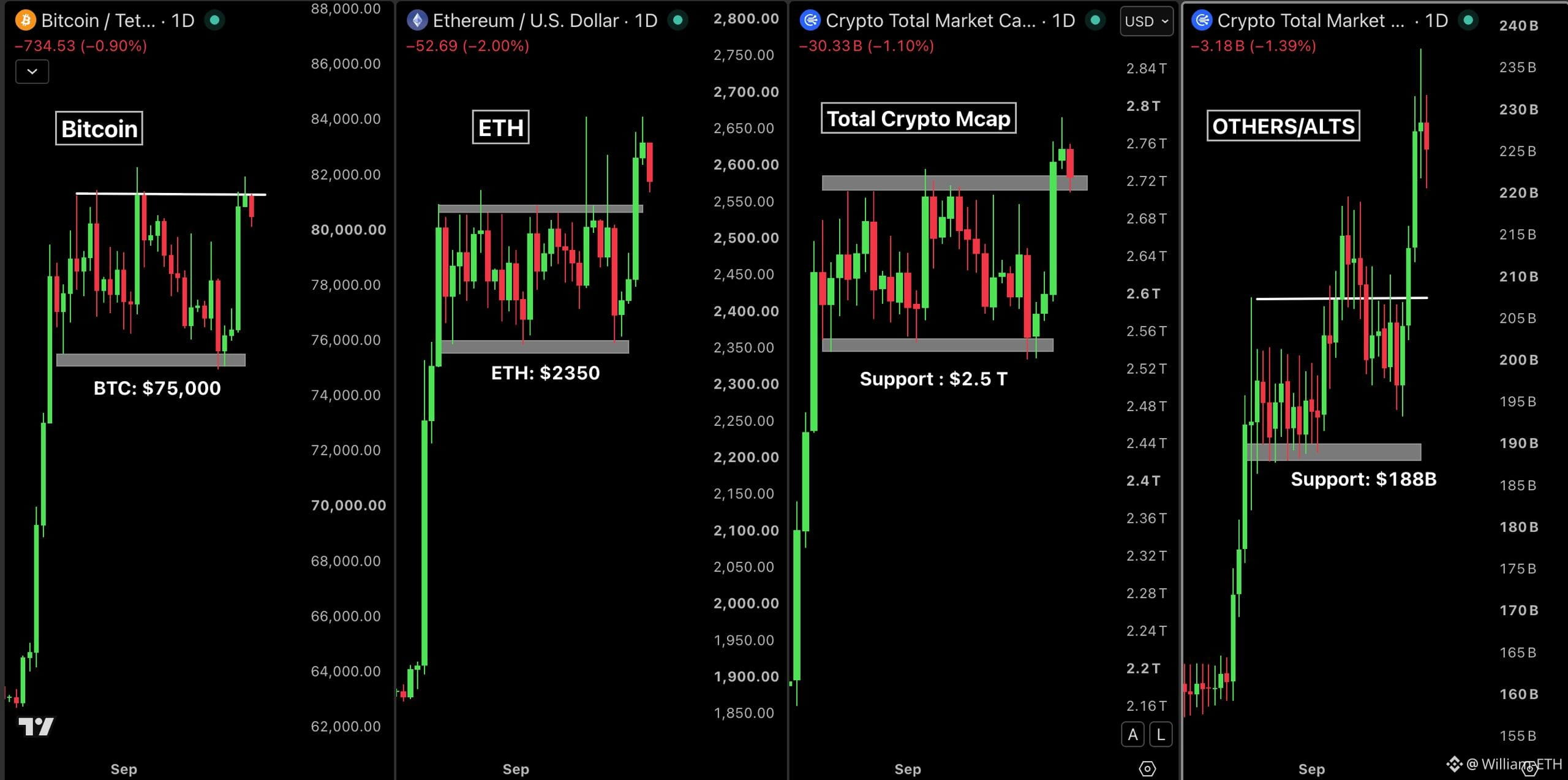
🔥 LA CRYPTO A CHOQUÉ LE MARCHÉ
$BTC a tenu le support des 75K, a rebondi de 7% et a repris 80K.
$ETH a tenu le niveau de 2 350, a rebondi de 10% et a repoussé les prix au-dessus de 2 550.
Les ALTs ont bondi de 17% depuis le plus bas récent et la capitalisation boursière totale a regagné 2,5T, ajoutant 200B.
Même avec un MANQUE DE CLARTÉ qui échoue, les taux de la Fed restent plus élevés et le pétrole reste au plus haut.
Désormais, les niveaux clés 👀
$BTC doit clôturer en hebdomadaire au-dessus de 78 760, puis franchir 83K.
$ETH doit rester au-dessus de 2 600.
Tant que ces niveaux ne sont pas cassés, j’appelle ça un fort rebond, pas un marché haussier confirmé.
Le marché a survécu à la peur. Maintenant, on surveille la suite. ❤️
🔥 LA CRYPTO A CHOQUÉ LE MARCHÉ
$BTC a tenu le support des 75K, a rebondi de 7% et a repris 80K.
$ETH a tenu le niveau de 2 350, a rebondi de 10% et a repoussé les prix au-dessus de 2 550.
Les ALTs ont bondi de 17% depuis le plus bas récent et la capitalisation boursière totale a regagné 2,5T, ajoutant 200B.
Même avec un MANQUE DE CLARTÉ qui échoue, les taux de la Fed restent plus élevés et le pétrole reste au plus haut.
Désormais, les niveaux clés 👀
$BTC doit clôturer en hebdomadaire au-dessus de 78 760, puis franchir 83K.
$ETH doit rester au-dessus de 2 600.
Tant que ces niveaux ne sont pas cassés, j’appelle ça un fort rebond, pas un marché haussier confirmé.
Le marché a survécu à la peur. Maintenant, on surveille la suite. ❤️
$BTC a tenu le support des 75K, a rebondi de 7% et a repris 80K.
$ETH a tenu le niveau de 2 350, a rebondi de 10% et a repoussé les prix au-dessus de 2 550.
Les ALTs ont bondi de 17% depuis le plus bas récent et la capitalisation boursière totale a regagné 2,5T, ajoutant 200B.
Même avec un MANQUE DE CLARTÉ qui échoue, les taux de la Fed restent plus élevés et le pétrole reste au plus haut.
Désormais, les niveaux clés 👀
$BTC doit clôturer en hebdomadaire au-dessus de 78 760, puis franchir 83K.
$ETH doit rester au-dessus de 2 600.
Tant que ces niveaux ne sont pas cassés, j’appelle ça un fort rebond, pas un marché haussier confirmé.
Le marché a survécu à la peur. Maintenant, on surveille la suite. ❤️
16
16
956
·
--
🔥 SEMAINE INCROYABLE POUR LA CRYPTO !
La loi CLARITY a échoué malgré un soutien majeur.
Le Bitcoin a chuté à 75 000 $ et les ours s’attendent à de nouveaux plus bas.
Puis TOUT a basculé 👀
🇺🇸 Le projet de loi sur une Réserve Stratégique en Bitcoin a progressé
📜 Le projet de loi sur la fiscalité crypto a été adopté
🏛️ La SEC s’est orientée vers des règles claires pour la crypto
📈 Le trading d’actions onchain a été approuvé
⚡ Les règles crypto de la CFTC ont été envoyées à la Maison-Blanche
Puis est arrivée la volte-face 🚀
Le $BTC a bondi de 75 000 $ à 81 000 $, gagnant 6 000 $ et reprenant la MA50.
Le $ETH a clôturé au-dessus de 2 600 $ pour la première fois depuis janvier 2026.
La capitalisation du marché des altcoins a atteint un plus haut sur 8 mois.
Le plus gros FUD n’a pas réussi à casser la crypto.
Cette force me dit que ce marché devient plus solide à chaque cycle. ❤️
🔥 SEMAINE INCROYABLE POUR LA CRYPTO !
La loi CLARITY a échoué malgré un soutien majeur.
Le Bitcoin a chuté à 75 000 $ et les ours s’attendent à de nouveaux plus bas.
Puis TOUT a basculé 👀
🇺🇸 Le projet de loi sur une Réserve Stratégique en Bitcoin a progressé
📜 Le projet de loi sur la fiscalité crypto a été adopté
🏛️ La SEC s’est orientée vers des règles claires pour la crypto
📈 Le trading d’actions onchain a été approuvé
⚡ Les règles crypto de la CFTC ont été envoyées à la Maison-Blanche
Puis est arrivée la volte-face 🚀
Le $BTC a bondi de 75 000 $ à 81 000 $, gagnant 6 000 $ et reprenant la MA50.
Le $ETH a clôturé au-dessus de 2 600 $ pour la première fois depuis janvier 2026.
La capitalisation du marché des altcoins a atteint un plus haut sur 8 mois.
Le plus gros FUD n’a pas réussi à casser la crypto.
Cette force me dit que ce marché devient plus solide à chaque cycle. ❤️
La loi CLARITY a échoué malgré un soutien majeur.
Le Bitcoin a chuté à 75 000 $ et les ours s’attendent à de nouveaux plus bas.
Puis TOUT a basculé 👀
🇺🇸 Le projet de loi sur une Réserve Stratégique en Bitcoin a progressé
📜 Le projet de loi sur la fiscalité crypto a été adopté
🏛️ La SEC s’est orientée vers des règles claires pour la crypto
📈 Le trading d’actions onchain a été approuvé
⚡ Les règles crypto de la CFTC ont été envoyées à la Maison-Blanche
Puis est arrivée la volte-face 🚀
Le $BTC a bondi de 75 000 $ à 81 000 $, gagnant 6 000 $ et reprenant la MA50.
Le $ETH a clôturé au-dessus de 2 600 $ pour la première fois depuis janvier 2026.
La capitalisation du marché des altcoins a atteint un plus haut sur 8 mois.
Le plus gros FUD n’a pas réussi à casser la crypto.
Cette force me dit que ce marché devient plus solide à chaque cycle. ❤️
18
17
6.7k
·
--
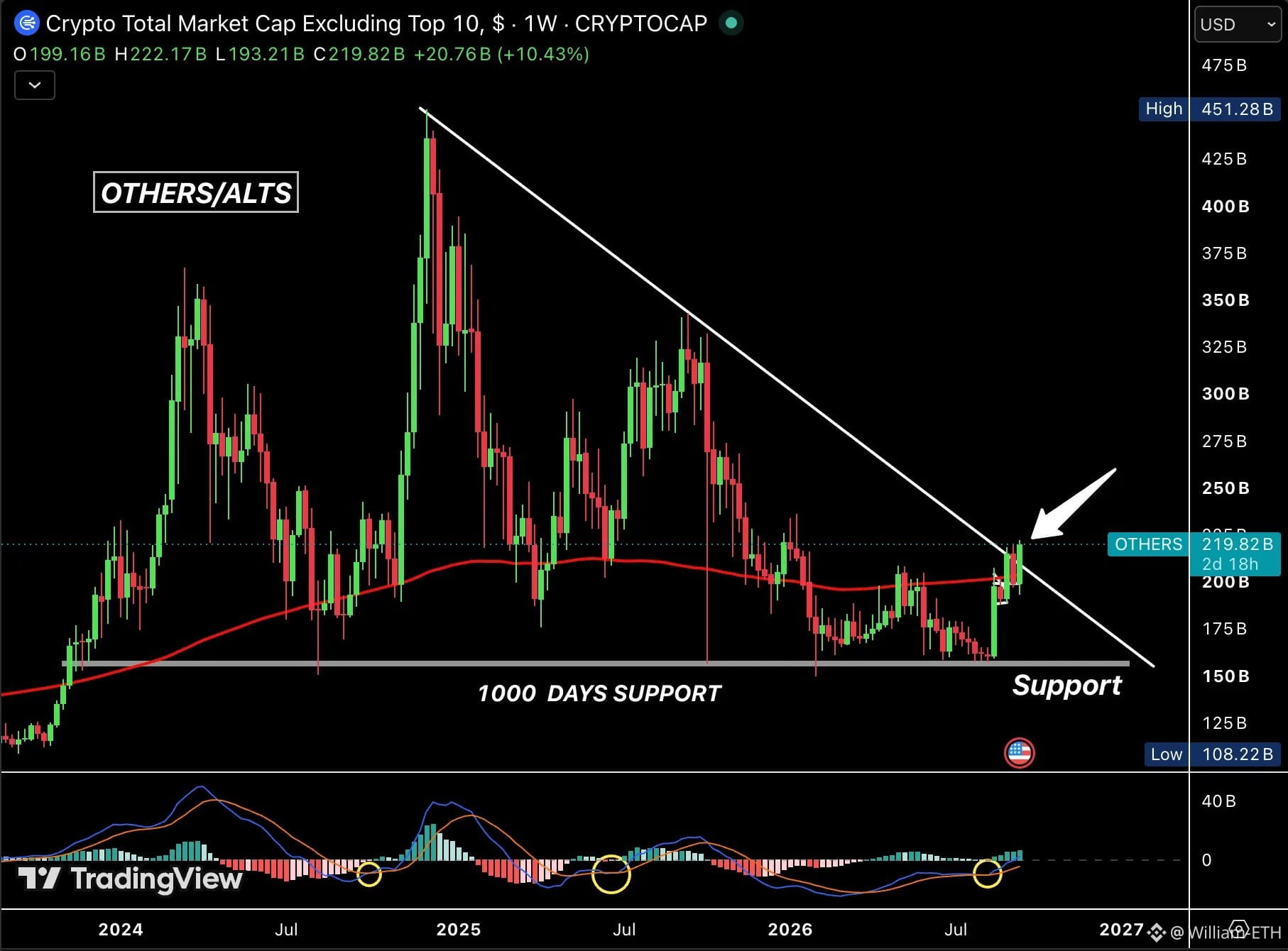
$LES ALTCOINS FINALEMENT SE RÉVEILLENT 🚀
La capitalisation hebdomadaire du marché Alt sort d’une tendance baissière vieille d’environ 2 ans et vient d’enregistrer un énorme +10% cette semaine.
Toujours en dessous du précédent sommet à $451B, donc je n’appelle pas encore l’altseason.
Le point clé, maintenant, est simple 👀
Clôture hebdomadaire au-dessus de la ligne de tendance = dynamique haussière confirmée.
Échec = la zone de $160B à $190B pourrait être retestée.
En attendant, $BTC est de retour au-dessus de $77K malgré une forte pression macro.
2026 était censée être une année baissière.
Peut-être que cette fois, c’est vraiment différent. 🔥
$LES ALTCOINS FINALEMENT SE RÉVEILLENT 🚀
La capitalisation hebdomadaire du marché Alt sort d’une tendance baissière vieille d’environ 2 ans et vient d’enregistrer un énorme +10% cette semaine.
Toujours en dessous du précédent sommet à $451B, donc je n’appelle pas encore l’altseason.
Le point clé, maintenant, est simple 👀
Clôture hebdomadaire au-dessus de la ligne de tendance = dynamique haussière confirmée.
Échec = la zone de $160B à $190B pourrait être retestée.
En attendant, $BTC est de retour au-dessus de $77K malgré une forte pression macro.
2026 était censée être une année baissière.
Peut-être que cette fois, c’est vraiment différent. 🔥
La capitalisation hebdomadaire du marché Alt sort d’une tendance baissière vieille d’environ 2 ans et vient d’enregistrer un énorme +10% cette semaine.
Toujours en dessous du précédent sommet à $451B, donc je n’appelle pas encore l’altseason.
Le point clé, maintenant, est simple 👀
Clôture hebdomadaire au-dessus de la ligne de tendance = dynamique haussière confirmée.
Échec = la zone de $160B à $190B pourrait être retestée.
En attendant, $BTC est de retour au-dessus de $77K malgré une forte pression macro.
2026 était censée être une année baissière.
Peut-être que cette fois, c’est vraiment différent. 🔥
17
16
746
·
--
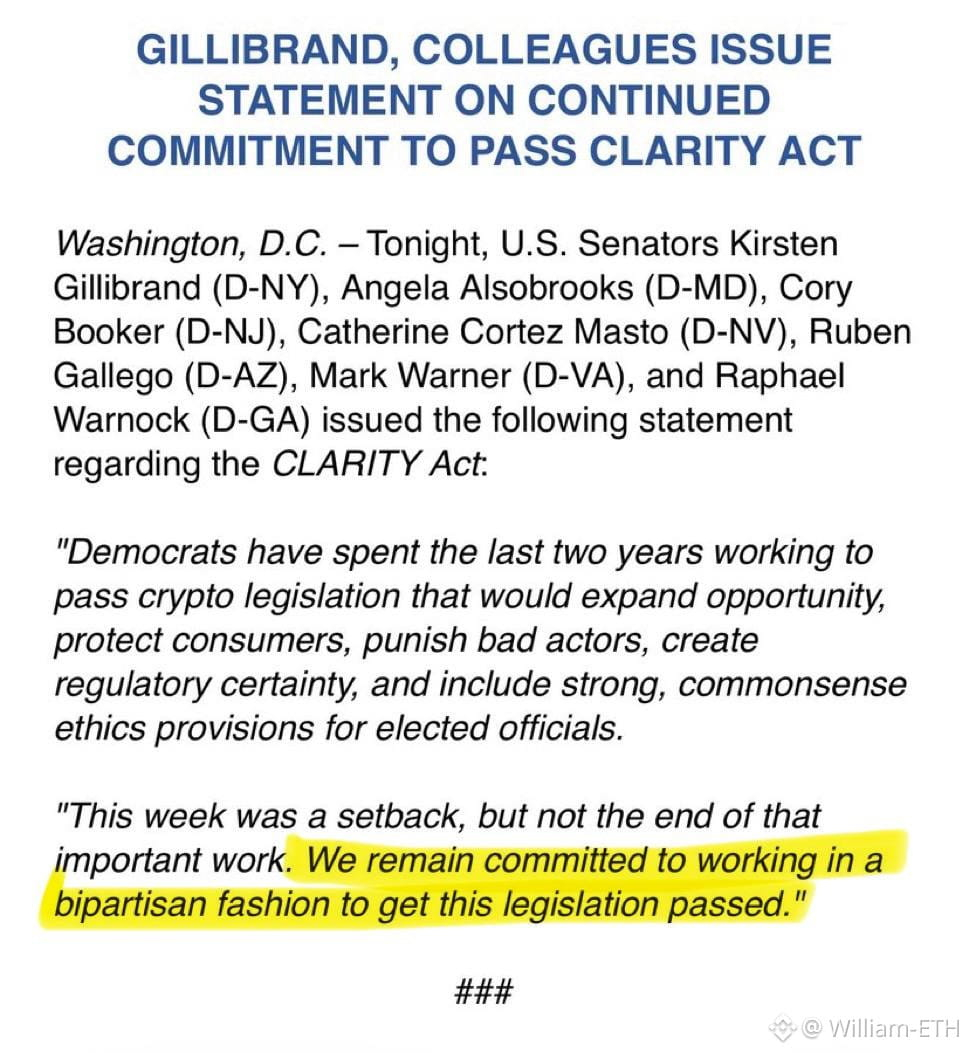
🇺🇸 LA LOI CLARITY n’est pas encore morte 🚨
Le Sénat a bloqué le projet de loi CLARITY par 49 voix contre 50, mais la bataille n’est pas terminée.
7 sénateurs démocrates seraient déterminés à travailler en vue de faire adopter le projet de loi sur la structure du marché des cryptos.
Le message est clair 👀
La réglementation des cryptos est toujours d’actualité 🇺🇸
Le prochain mouvement pourrait être COLOSSAL pour les cryptos.
Je surveille celui-ci de très près. 🔥
🇺🇸 LA LOI CLARITY n’est pas encore morte 🚨
Le Sénat a bloqué le projet de loi CLARITY par 49 voix contre 50, mais la bataille n’est pas terminée.
7 sénateurs démocrates seraient déterminés à travailler en vue de faire adopter le projet de loi sur la structure du marché des cryptos.
Le message est clair 👀
La réglementation des cryptos est toujours d’actualité 🇺🇸
Le prochain mouvement pourrait être COLOSSAL pour les cryptos.
Je surveille celui-ci de très près. 🔥
Le Sénat a bloqué le projet de loi CLARITY par 49 voix contre 50, mais la bataille n’est pas terminée.
7 sénateurs démocrates seraient déterminés à travailler en vue de faire adopter le projet de loi sur la structure du marché des cryptos.
Le message est clair 👀
La réglementation des cryptos est toujours d’actualité 🇺🇸
Le prochain mouvement pourrait être COLOSSAL pour les cryptos.
Je surveille celui-ci de très près. 🔥
5
1
21
10.1k
·
--
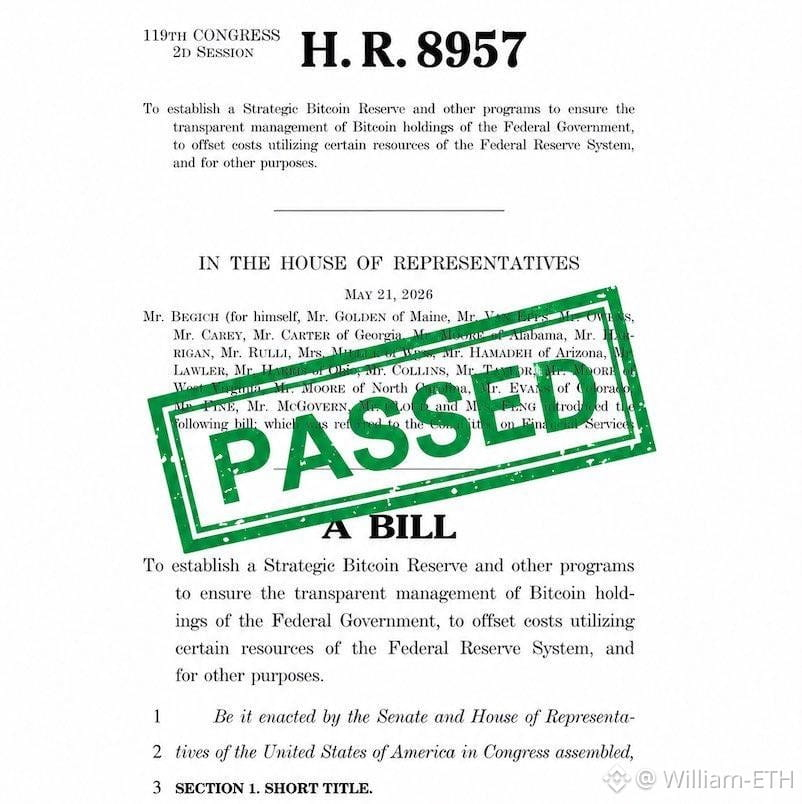
🚨 INFOS DE DERNIÈRE MINUTE 🇺🇸
La commission des services financiers de la Chambre des représentants des États-Unis a fait avancer le projet de loi sur la réserve stratégique de Bitcoin, H.R. 8957, par un vote de 28 voix contre 21. 🇺🇸₿
La proposition créerait une réserve fédérale de Bitcoin à long terme, avec un Bitcoin détenu pendant 20 ans.
C’est une étape majeure pour l’adoption du Bitcoin et cela pourrait attirer encore plus l’attention des institutions sur BTC.
🔥 Le message devient plus fort
Le Bitcoin s’inscrit de plus en plus dans la grande conversation financière. BTC
🚨 INFOS DE DERNIÈRE MINUTE 🇺🇸
La commission des services financiers de la Chambre des représentants des États-Unis a fait avancer le projet de loi sur la réserve stratégique de Bitcoin, H.R. 8957, par un vote de 28 voix contre 21. 🇺🇸₿
La proposition créerait une réserve fédérale de Bitcoin à long terme, avec un Bitcoin détenu pendant 20 ans.
C’est une étape majeure pour l’adoption du Bitcoin et cela pourrait attirer encore plus l’attention des institutions sur BTC.
🔥 Le message devient plus fort
Le Bitcoin s’inscrit de plus en plus dans la grande conversation financière. BTC
La commission des services financiers de la Chambre des représentants des États-Unis a fait avancer le projet de loi sur la réserve stratégique de Bitcoin, H.R. 8957, par un vote de 28 voix contre 21. 🇺🇸₿
La proposition créerait une réserve fédérale de Bitcoin à long terme, avec un Bitcoin détenu pendant 20 ans.
C’est une étape majeure pour l’adoption du Bitcoin et cela pourrait attirer encore plus l’attention des institutions sur BTC.
🔥 Le message devient plus fort
Le Bitcoin s’inscrit de plus en plus dans la grande conversation financière. BTC
2
264
·
--
Vérifié
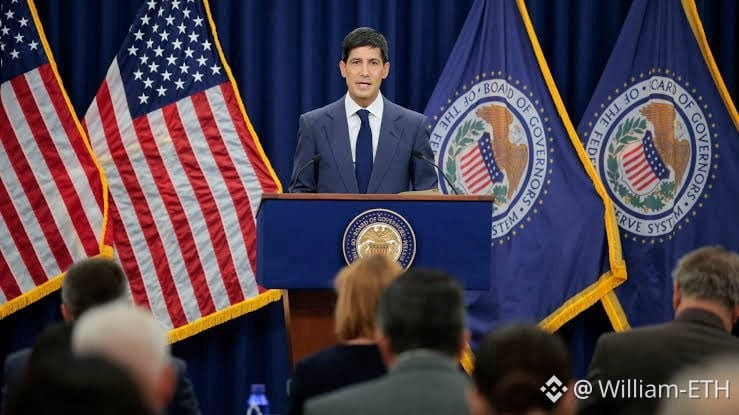
🚨 C’EST LE JOUR DU FOMC
⏰ 14:00 (ET) : Décision sur les taux
📈 Le marché table sur une probabilité de 92,5% pour une hausse de 25 pb
🎙️ 14:30 (ET) : Conférence de presse de Warsh
Surveillez les mots, pas seulement le taux.
🔥 Signaux faucons = risque de volatilité sérieuse
⚡ La crypto pourrait réagir RAPIDEMENT
Restez vigilant. Une seule phrase peut faire bouger le marché.
🚨 C’EST LE JOUR DU FOMC
⏰ 14:00 (ET) : Décision sur les taux
📈 Le marché table sur une probabilité de 92,5% pour une hausse de 25 pb
🎙️ 14:30 (ET) : Conférence de presse de Warsh
Surveillez les mots, pas seulement le taux.
🔥 Signaux faucons = risque de volatilité sérieuse
⚡ La crypto pourrait réagir RAPIDEMENT
Restez vigilant. Une seule phrase peut faire bouger le marché.
⏰ 14:00 (ET) : Décision sur les taux
📈 Le marché table sur une probabilité de 92,5% pour une hausse de 25 pb
🎙️ 14:30 (ET) : Conférence de presse de Warsh
Surveillez les mots, pas seulement le taux.
🔥 Signaux faucons = risque de volatilité sérieuse
⚡ La crypto pourrait réagir RAPIDEMENT
Restez vigilant. Une seule phrase peut faire bouger le marché.
3
2.2k
·
--
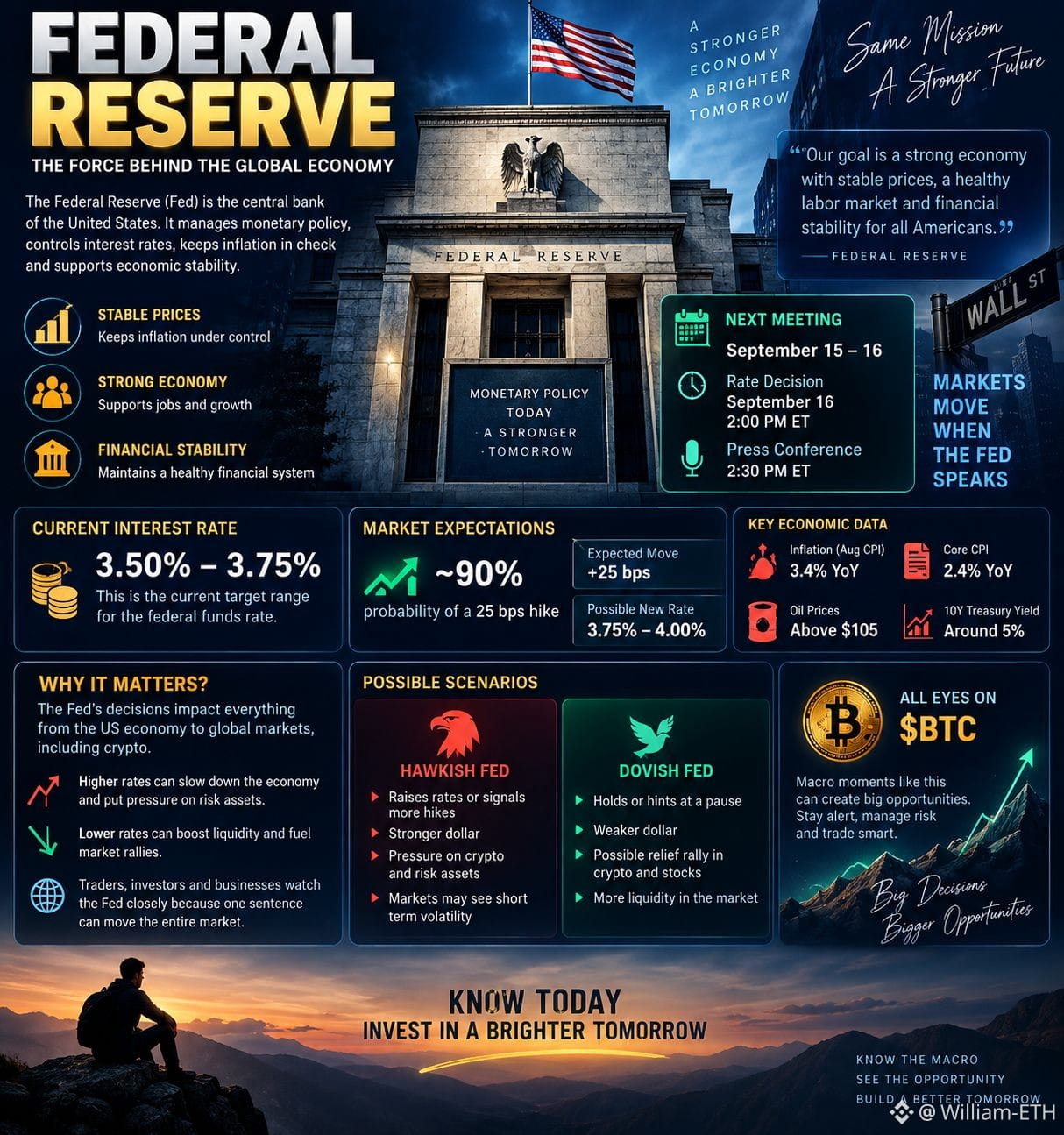
🚨🇺🇸 La Réserve fédérale est au centre des attentions aujourd’hui.
La grande question est simple :
La Fed va-t-elle relever ses taux de 25 pb ou surprendre le marché en maintenant les taux ?
📌 Taux actuel : 3,50 % à 3,75 %
📈 Probabilité de hausse du marché : autour de 90 %
🔥 Mouvement attendu : +25 pb
🎯 Inflation : 3,4 % sur un an
📊 CPI de base : 2,4 % sur un an
🛢️ Les prix de l’énergie restent élevés
🏦 Rendement du Trésor US à 10 ans : autour de 5 %
La décision de la Réserve fédérale tombe le 16 septembre, suivie de la conférence de presse de Powell.
Une Fed plus ferme (hawkish) pourrait peser sur la crypto et les actifs à risque.
Un message plus souple pourrait déclencher un fort mouvement de soulagement.
Je surveille de près $BTC, car c’est le genre de moment macro où une seule phrase peut changer l’humeur de l’ensemble du marché. 🔥
#FedRateWatch
🚨🇺🇸 La Réserve fédérale est au centre des attentions aujourd’hui.
La grande question est simple :
La Fed va-t-elle relever ses taux de 25 pb ou surprendre le marché en maintenant les taux ?
📌 Taux actuel : 3,50 % à 3,75 %
📈 Probabilité de hausse du marché : autour de 90 %
🔥 Mouvement attendu : +25 pb
🎯 Inflation : 3,4 % sur un an
📊 CPI de base : 2,4 % sur un an
🛢️ Les prix de l’énergie restent élevés
🏦 Rendement du Trésor US à 10 ans : autour de 5 %
La décision de la Réserve fédérale tombe le 16 septembre, suivie de la conférence de presse de Powell.
Une Fed plus ferme (hawkish) pourrait peser sur la crypto et les actifs à risque.
Un message plus souple pourrait déclencher un fort mouvement de soulagement.
Je surveille de près $BTC, car c’est le genre de moment macro où une seule phrase peut changer l’humeur de l’ensemble du marché. 🔥
#FedRateWatch
La grande question est simple :
La Fed va-t-elle relever ses taux de 25 pb ou surprendre le marché en maintenant les taux ?
📌 Taux actuel : 3,50 % à 3,75 %
📈 Probabilité de hausse du marché : autour de 90 %
🔥 Mouvement attendu : +25 pb
🎯 Inflation : 3,4 % sur un an
📊 CPI de base : 2,4 % sur un an
🛢️ Les prix de l’énergie restent élevés
🏦 Rendement du Trésor US à 10 ans : autour de 5 %
La décision de la Réserve fédérale tombe le 16 septembre, suivie de la conférence de presse de Powell.
Une Fed plus ferme (hawkish) pourrait peser sur la crypto et les actifs à risque.
Un message plus souple pourrait déclencher un fort mouvement de soulagement.
Je surveille de près $BTC, car c’est le genre de moment macro où une seule phrase peut changer l’humeur de l’ensemble du marché. 🔥
#FedRateWatch
432
·
--
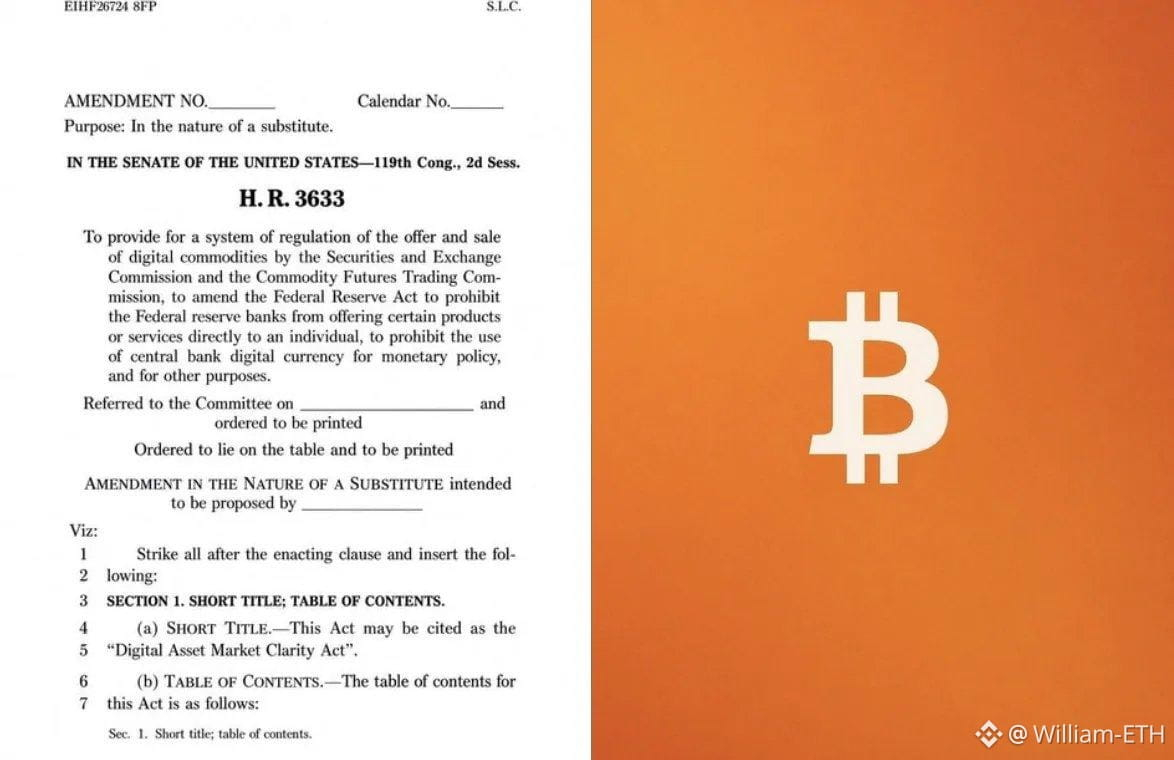
🚨 Les prochaines 24 heures pourraient façonner la cryptographie
Le Sénat vote sur la loi CLARITY aujourd’hui, le 15 septembre à 14h15 (HE).
🔥 60 voix nécessaires pour avancer
🇺🇸 Les Républicains détiennent 53 sièges, et ont besoin d’au moins 7 Démocrates
📜 120+ dispositions demandées par les Démocrates ajoutées
🏦 Un nouveau coupe-circuit protège les banques communautaires contre les sorties de stablecoins
⚖️ Les règles d’éthique exigent que les responsables vendent la cryptomonnaie ou utilisent une fiducie aveugle
🏛️ La Chambre l’a déjà adopté par 294 voix contre 134 en juillet 2025
➡️ S’il progresse, il fera l’objet d’un vote final au Sénat, puis d’une approbation identique des deux chambres avant le président Trump
S’il échoue, le projet de loi peut revenir, mais les élections de mi-mandat resserrent la fenêtre.
Aujourd’hui pourrait être un moment historique pour la réglementation des cryptos. 🚀
Je surveille ce dossier de près. Le prochain chapitre pourrait commencer dès aujourd’hui.
🚨 Les prochaines 24 heures pourraient façonner la cryptographie
Le Sénat vote sur la loi CLARITY aujourd’hui, le 15 septembre à 14h15 (HE).
🔥 60 voix nécessaires pour avancer
🇺🇸 Les Républicains détiennent 53 sièges, et ont besoin d’au moins 7 Démocrates
📜 120+ dispositions demandées par les Démocrates ajoutées
🏦 Un nouveau coupe-circuit protège les banques communautaires contre les sorties de stablecoins
⚖️ Les règles d’éthique exigent que les responsables vendent la cryptomonnaie ou utilisent une fiducie aveugle
🏛️ La Chambre l’a déjà adopté par 294 voix contre 134 en juillet 2025
➡️ S’il progresse, il fera l’objet d’un vote final au Sénat, puis d’une approbation identique des deux chambres avant le président Trump
S’il échoue, le projet de loi peut revenir, mais les élections de mi-mandat resserrent la fenêtre.
Aujourd’hui pourrait être un moment historique pour la réglementation des cryptos. 🚀
Je surveille ce dossier de près. Le prochain chapitre pourrait commencer dès aujourd’hui.
Le Sénat vote sur la loi CLARITY aujourd’hui, le 15 septembre à 14h15 (HE).
🔥 60 voix nécessaires pour avancer
🇺🇸 Les Républicains détiennent 53 sièges, et ont besoin d’au moins 7 Démocrates
📜 120+ dispositions demandées par les Démocrates ajoutées
🏦 Un nouveau coupe-circuit protège les banques communautaires contre les sorties de stablecoins
⚖️ Les règles d’éthique exigent que les responsables vendent la cryptomonnaie ou utilisent une fiducie aveugle
🏛️ La Chambre l’a déjà adopté par 294 voix contre 134 en juillet 2025
➡️ S’il progresse, il fera l’objet d’un vote final au Sénat, puis d’une approbation identique des deux chambres avant le président Trump
S’il échoue, le projet de loi peut revenir, mais les élections de mi-mandat resserrent la fenêtre.
Aujourd’hui pourrait être un moment historique pour la réglementation des cryptos. 🚀
Je surveille ce dossier de près. Le prochain chapitre pourrait commencer dès aujourd’hui.
3
1.1k
·
--
🔥 CONFIGURATION HEBDOMADAIRE BITCOIN 🔥
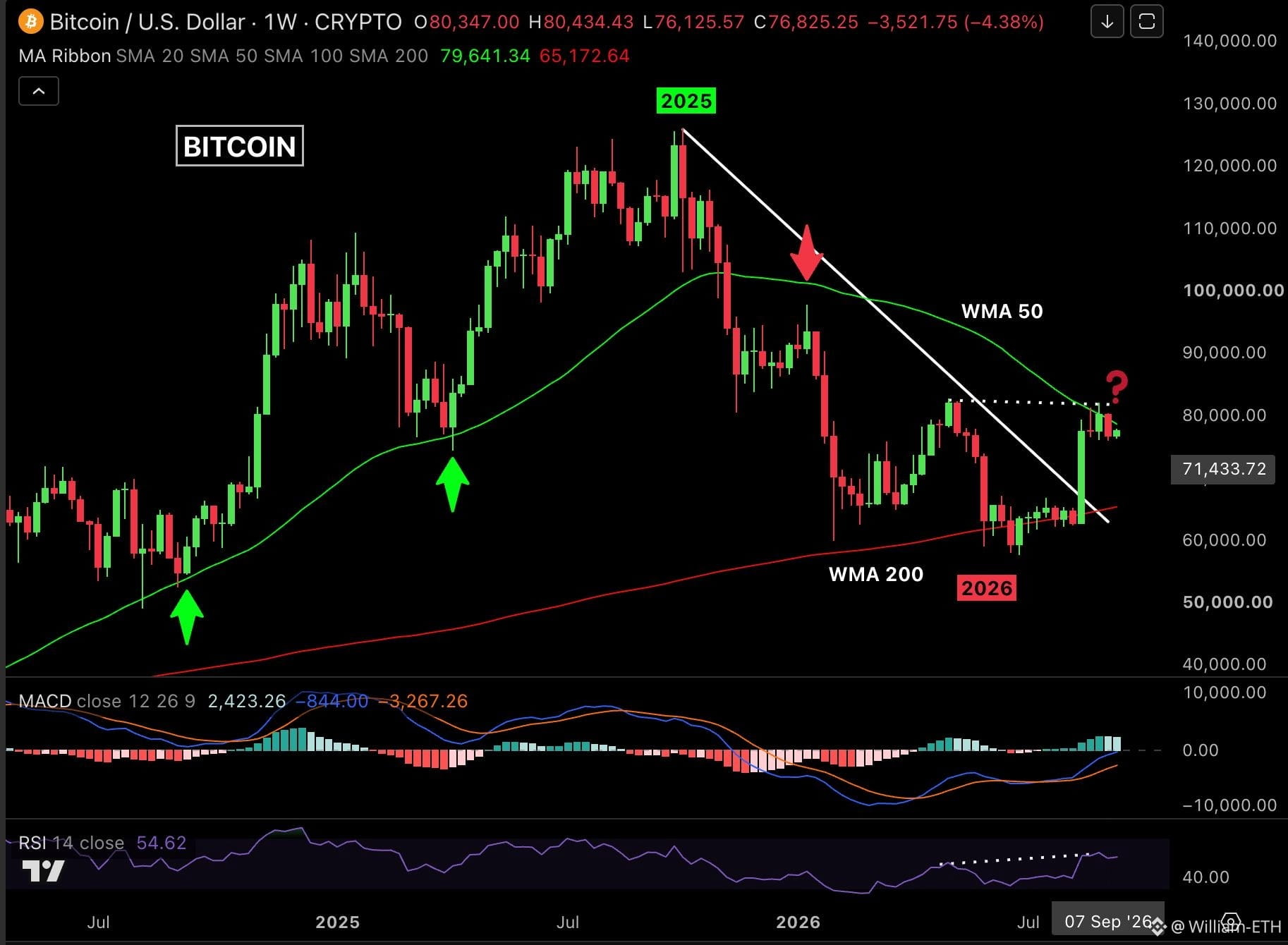
$BTC a été rejeté par la MM 50W et a clôturé la semaine en baisse de 4,38%.
Maintenant, tout descend vers 75 500 $ 👀
📌 Support clé : 75 500 $
📌 À perdre : 65 000 $ à 67 000 $ (zone MM 200)
📌 À tenir : la tendance haussière hebdomadaire reste intacte
🚨 Cette semaine pourrait être explosive :
🇺🇸 15 sept. : vote sur le CLARITY Act
🇺🇸 16 sept. : décision de la Fed (FOMC)
Les marchés s’attendent à une hausse de 25 points de base ; une grande partie est peut-être déjà intégrée.
Mais si Warsh surprend avec une pause, $BTC pourrait réagir fortement à la hausse.
Mon objectif est simple :
Tenir 75 500 $ = les Taureaux se battent encore 🐂
Perdre 75 500 $ = risque de correction plus importante 🔻
C’est le niveau que je surveille toute la semaine.
🔥 CONFIGURATION HEBDOMADAIRE BITCOIN 🔥
$BTC a été rejeté par la MM 50W et a clôturé la semaine en baisse de 4,38%.
Maintenant, tout descend vers 75 500 $ 👀
📌 Support clé : 75 500 $
📌 À perdre : 65 000 $ à 67 000 $ (zone MM 200)
📌 À tenir : la tendance haussière hebdomadaire reste intacte
🚨 Cette semaine pourrait être explosive :
🇺🇸 15 sept. : vote sur le CLARITY Act
🇺🇸 16 sept. : décision de la Fed (FOMC)
Les marchés s’attendent à une hausse de 25 points de base ; une grande partie est peut-être déjà intégrée.
Mais si Warsh surprend avec une pause, $BTC pourrait réagir fortement à la hausse.
Mon objectif est simple :
Tenir 75 500 $ = les Taureaux se battent encore 🐂
Perdre 75 500 $ = risque de correction plus importante 🔻
C’est le niveau que je surveille toute la semaine.
$BTC a été rejeté par la MM 50W et a clôturé la semaine en baisse de 4,38%.
Maintenant, tout descend vers 75 500 $ 👀
📌 Support clé : 75 500 $
📌 À perdre : 65 000 $ à 67 000 $ (zone MM 200)
📌 À tenir : la tendance haussière hebdomadaire reste intacte
🚨 Cette semaine pourrait être explosive :
🇺🇸 15 sept. : vote sur le CLARITY Act
🇺🇸 16 sept. : décision de la Fed (FOMC)
Les marchés s’attendent à une hausse de 25 points de base ; une grande partie est peut-être déjà intégrée.
Mais si Warsh surprend avec une pause, $BTC pourrait réagir fortement à la hausse.
Mon objectif est simple :
Tenir 75 500 $ = les Taureaux se battent encore 🐂
Perdre 75 500 $ = risque de correction plus importante 🔻
C’est le niveau que je surveille toute la semaine.
181
·
--
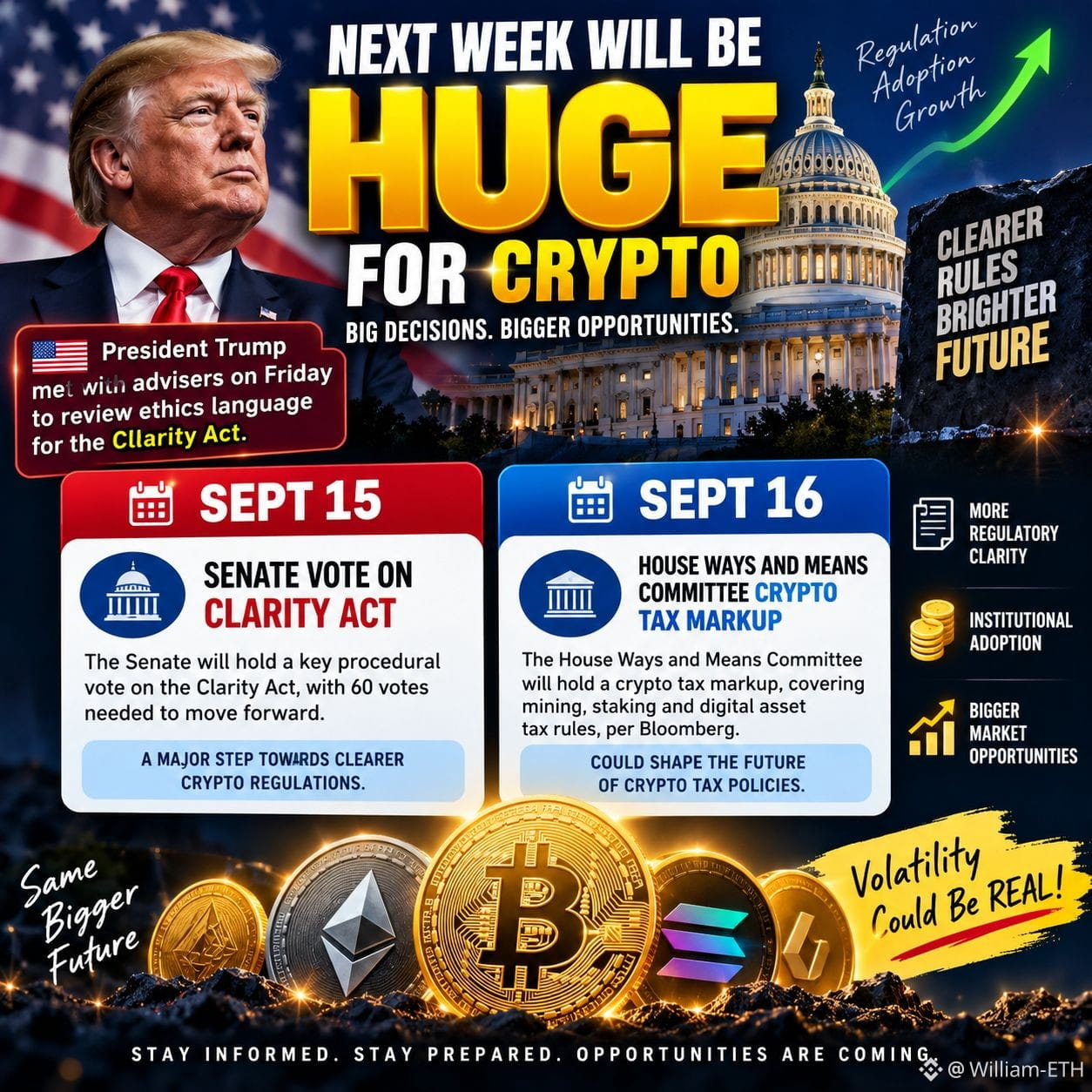
🚨 LA SEMAINE PROCHAINE POURRAIT ÊTRE ÉNORME POUR LA CRYPTO
🇺🇸 15 sept. : Le Sénat se prononce sur le vote procédural clé concernant le CLARITY Act, avec 60 voix nécessaires pour avancer.
🇺🇸 16 sept. : La commission des Ways and Means de la Chambre examine un projet de modification fiscale sur la crypto couvrant l’exploitation minière, le staking et les règles relatives à la fiscalité des actifs numériques.
🔥 Trump et les législateurs travaillent aussi sur la formulation controversée concernant l’éthique.
Deux journées majeures. Un test colossal pour la réglementation de la crypto.
La volatilité pourrait être RÉELLE. 👀
Je surveille cette semaine de très près.
🚨 LA SEMAINE PROCHAINE POURRAIT ÊTRE ÉNORME POUR LA CRYPTO
🇺🇸 15 sept. : Le Sénat se prononce sur le vote procédural clé concernant le CLARITY Act, avec 60 voix nécessaires pour avancer.
🇺🇸 16 sept. : La commission des Ways and Means de la Chambre examine un projet de modification fiscale sur la crypto couvrant l’exploitation minière, le staking et les règles relatives à la fiscalité des actifs numériques.
🔥 Trump et les législateurs travaillent aussi sur la formulation controversée concernant l’éthique.
Deux journées majeures. Un test colossal pour la réglementation de la crypto.
La volatilité pourrait être RÉELLE. 👀
Je surveille cette semaine de très près.
🇺🇸 15 sept. : Le Sénat se prononce sur le vote procédural clé concernant le CLARITY Act, avec 60 voix nécessaires pour avancer.
🇺🇸 16 sept. : La commission des Ways and Means de la Chambre examine un projet de modification fiscale sur la crypto couvrant l’exploitation minière, le staking et les règles relatives à la fiscalité des actifs numériques.
🔥 Trump et les législateurs travaillent aussi sur la formulation controversée concernant l’éthique.
Deux journées majeures. Un test colossal pour la réglementation de la crypto.
La volatilité pourrait être RÉELLE. 👀
Je surveille cette semaine de très près.
3
1.3k
·
--
Vérifié
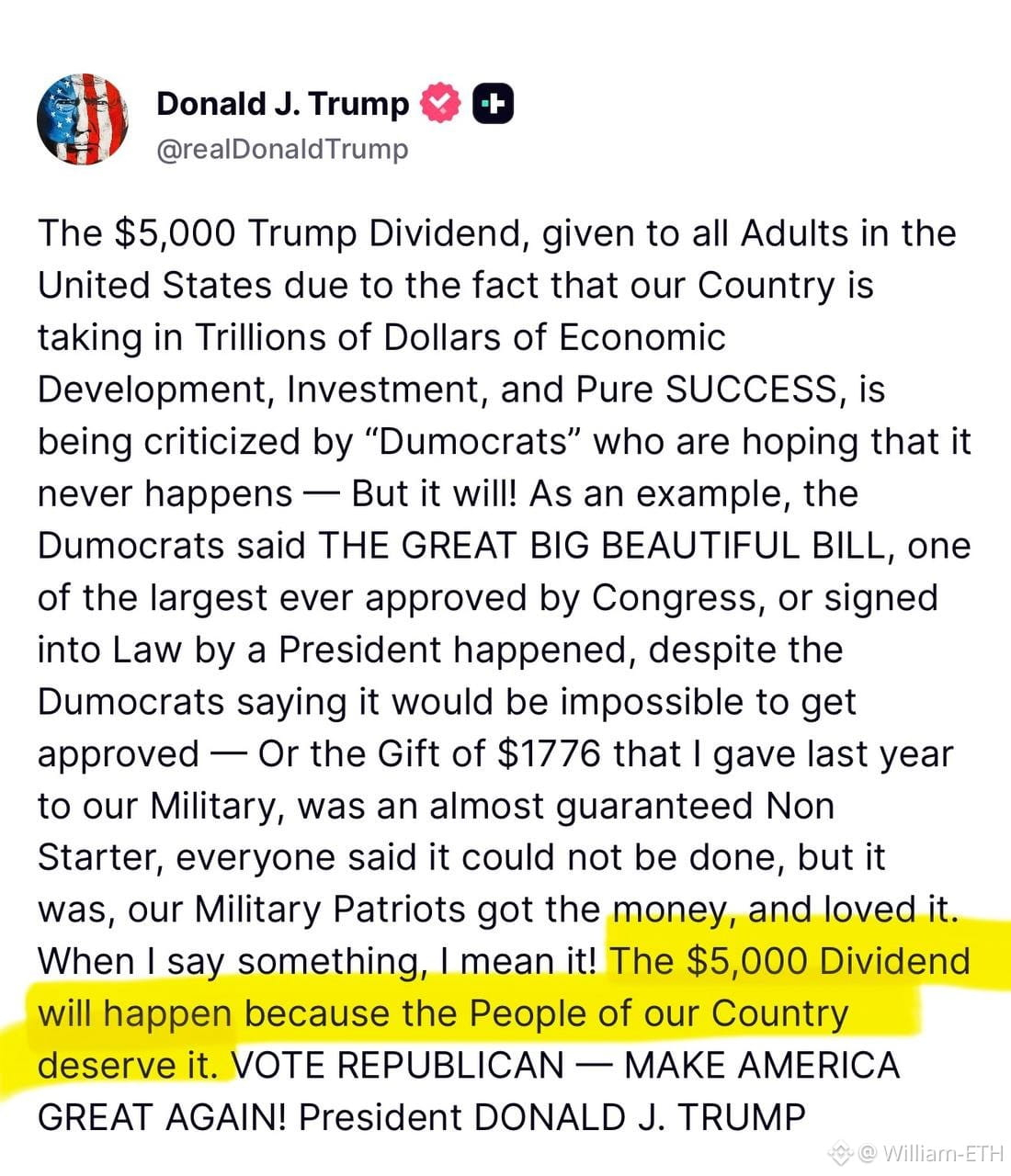
🇺🇸 ALERTE DIVIDENDE DE 5 000 $ DE TRUMP
Le président Trump affirme que le dividende de 5 000 $ aura lieu parce que les Américains le méritent.
S’il est approuvé, cela pourrait injecter une liquidité massive dans l’économie et potentiellement dynamiser les actifs à risque.
Souvenez-vous de l’ère des plans de relance de 2020 à 2021. Le Bitcoin est passé d’environ 3 800 $ à près de 69 000 $ pendant ce cycle haussier plus large.
Désormais, la grande question est simple :
L’histoire va-t-elle se répéter ?
Les traders de $BTC surveillent de très près.
Cela pourrait devenir TRÈS intéressant. 🔥
🇺🇸 ALERTE DIVIDENDE DE 5 000 $ DE TRUMP
Le président Trump affirme que le dividende de 5 000 $ aura lieu parce que les Américains le méritent.
S’il est approuvé, cela pourrait injecter une liquidité massive dans l’économie et potentiellement dynamiser les actifs à risque.
Souvenez-vous de l’ère des plans de relance de 2020 à 2021. Le Bitcoin est passé d’environ 3 800 $ à près de 69 000 $ pendant ce cycle haussier plus large.
Désormais, la grande question est simple :
L’histoire va-t-elle se répéter ?
Les traders de $BTC surveillent de très près.
Cela pourrait devenir TRÈS intéressant. 🔥
Le président Trump affirme que le dividende de 5 000 $ aura lieu parce que les Américains le méritent.
S’il est approuvé, cela pourrait injecter une liquidité massive dans l’économie et potentiellement dynamiser les actifs à risque.
Souvenez-vous de l’ère des plans de relance de 2020 à 2021. Le Bitcoin est passé d’environ 3 800 $ à près de 69 000 $ pendant ce cycle haussier plus large.
Désormais, la grande question est simple :
L’histoire va-t-elle se répéter ?
Les traders de $BTC surveillent de très près.
Cela pourrait devenir TRÈS intéressant. 🔥
1.7k
·
--
Vérifié
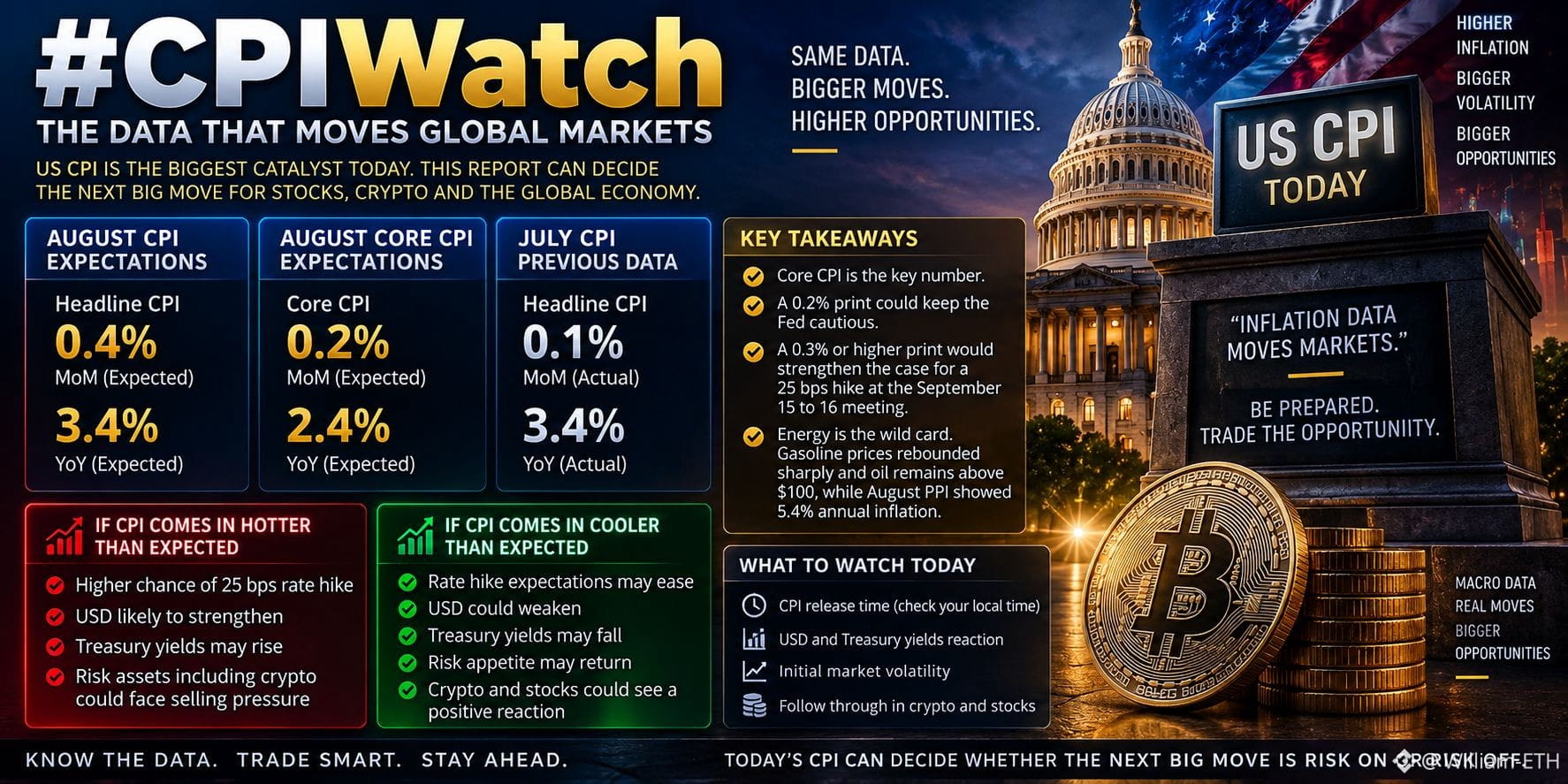
L’IPC américain est aujourd’hui le principal catalyseur du marché.
L’IPC d’août est attendu à 0,4 % MoM et 3,4 % YoY, tandis que l’IPC sous-jacent est attendu à 0,2 % MoM et 2,4 % YoY. L’IPC global de juillet était à 3,4 % YoY, avec une inflation mensuelle à 0,1 %.
Le chiffre clé est l’IPC sous-jacent. Un chiffre à 0,2 % pourrait maintenir la Fed prudente, mais 0,3 % ou plus renforcerait l’argument en faveur d’une hausse de 25 pdb lors de la réunion du 15 au 16 septembre.
L’énergie est la variable imprévisible. Les prix de l’essence ont rebondi fortement et le pétrole reste au-dessus de 100 $, tandis que l’IP P d’août a déjà montré une inflation annuelle de 5,4 %.
Pour les cryptos, surveillez la première réaction en USD et sur les rendements des Treasuries. Un IPC chaud pourrait entraîner une pression vendeuse, tandis que des données plus fraîches pourraient raviver l’appétit pour le risque.
Le CPI d’aujourd’hui peut déterminer si le prochain grand mouvement sera « risk on » ou « risk off ».
#CPIWatch
L’IPC américain est aujourd’hui le principal catalyseur du marché.
L’IPC d’août est attendu à 0,4 % MoM et 3,4 % YoY, tandis que l’IPC sous-jacent est attendu à 0,2 % MoM et 2,4 % YoY. L’IPC global de juillet était à 3,4 % YoY, avec une inflation mensuelle à 0,1 %.
Le chiffre clé est l’IPC sous-jacent. Un chiffre à 0,2 % pourrait maintenir la Fed prudente, mais 0,3 % ou plus renforcerait l’argument en faveur d’une hausse de 25 pdb lors de la réunion du 15 au 16 septembre.
L’énergie est la variable imprévisible. Les prix de l’essence ont rebondi fortement et le pétrole reste au-dessus de 100 $, tandis que l’IP P d’août a déjà montré une inflation annuelle de 5,4 %.
Pour les cryptos, surveillez la première réaction en USD et sur les rendements des Treasuries. Un IPC chaud pourrait entraîner une pression vendeuse, tandis que des données plus fraîches pourraient raviver l’appétit pour le risque.
Le CPI d’aujourd’hui peut déterminer si le prochain grand mouvement sera « risk on » ou « risk off ».
#CPIWatch
L’IPC d’août est attendu à 0,4 % MoM et 3,4 % YoY, tandis que l’IPC sous-jacent est attendu à 0,2 % MoM et 2,4 % YoY. L’IPC global de juillet était à 3,4 % YoY, avec une inflation mensuelle à 0,1 %.
Le chiffre clé est l’IPC sous-jacent. Un chiffre à 0,2 % pourrait maintenir la Fed prudente, mais 0,3 % ou plus renforcerait l’argument en faveur d’une hausse de 25 pdb lors de la réunion du 15 au 16 septembre.
L’énergie est la variable imprévisible. Les prix de l’essence ont rebondi fortement et le pétrole reste au-dessus de 100 $, tandis que l’IP P d’août a déjà montré une inflation annuelle de 5,4 %.
Pour les cryptos, surveillez la première réaction en USD et sur les rendements des Treasuries. Un IPC chaud pourrait entraîner une pression vendeuse, tandis que des données plus fraîches pourraient raviver l’appétit pour le risque.
Le CPI d’aujourd’hui peut déterminer si le prochain grand mouvement sera « risk on » ou « risk off ».
#CPIWatch
1
1
323
·
--
Haussier
Vérifié
CASSURE 🇺🇸
Le Trésor américain vient juste de racheter 5,19 MILLIARDS de dollars de sa propre dette.
Cela porte le total de cette semaine à environ 17,7 MILLIARDS de dollars, à un rythme sans précédent de rachats de la part du Trésor.
Mais voici la tournure.
Le Trésor était autorisé à racheter jusqu’à 6 Md$, pourtant les rendements à long terme ont continué de grimper, le rendement à 10 ans frôlant les 5%.
Ce n’est pas seulement un rachat.
C’est un signal majeur indiquant que la liquidité et la pression sur le marché obligataire américain méritent une attention particulière.
La prochaine étape pourrait avoir d’énormes conséquences pour les actions, la crypto et la liquidité mondiale.
CASSURE 🇺🇸
Le Trésor américain vient juste de racheter 5,19 MILLIARDS de dollars de sa propre dette.
Cela porte le total de cette semaine à environ 17,7 MILLIARDS de dollars, à un rythme sans précédent de rachats de la part du Trésor.
Mais voici la tournure.
Le Trésor était autorisé à racheter jusqu’à 6 Md$, pourtant les rendements à long terme ont continué de grimper, le rendement à 10 ans frôlant les 5%.
Ce n’est pas seulement un rachat.
C’est un signal majeur indiquant que la liquidité et la pression sur le marché obligataire américain méritent une attention particulière.
La prochaine étape pourrait avoir d’énormes conséquences pour les actions, la crypto et la liquidité mondiale.
Le Trésor américain vient juste de racheter 5,19 MILLIARDS de dollars de sa propre dette.
Cela porte le total de cette semaine à environ 17,7 MILLIARDS de dollars, à un rythme sans précédent de rachats de la part du Trésor.
Mais voici la tournure.
Le Trésor était autorisé à racheter jusqu’à 6 Md$, pourtant les rendements à long terme ont continué de grimper, le rendement à 10 ans frôlant les 5%.
Ce n’est pas seulement un rachat.
C’est un signal majeur indiquant que la liquidité et la pression sur le marché obligataire américain méritent une attention particulière.
La prochaine étape pourrait avoir d’énormes conséquences pour les actions, la crypto et la liquidité mondiale.
1
5
1.7k
·
--
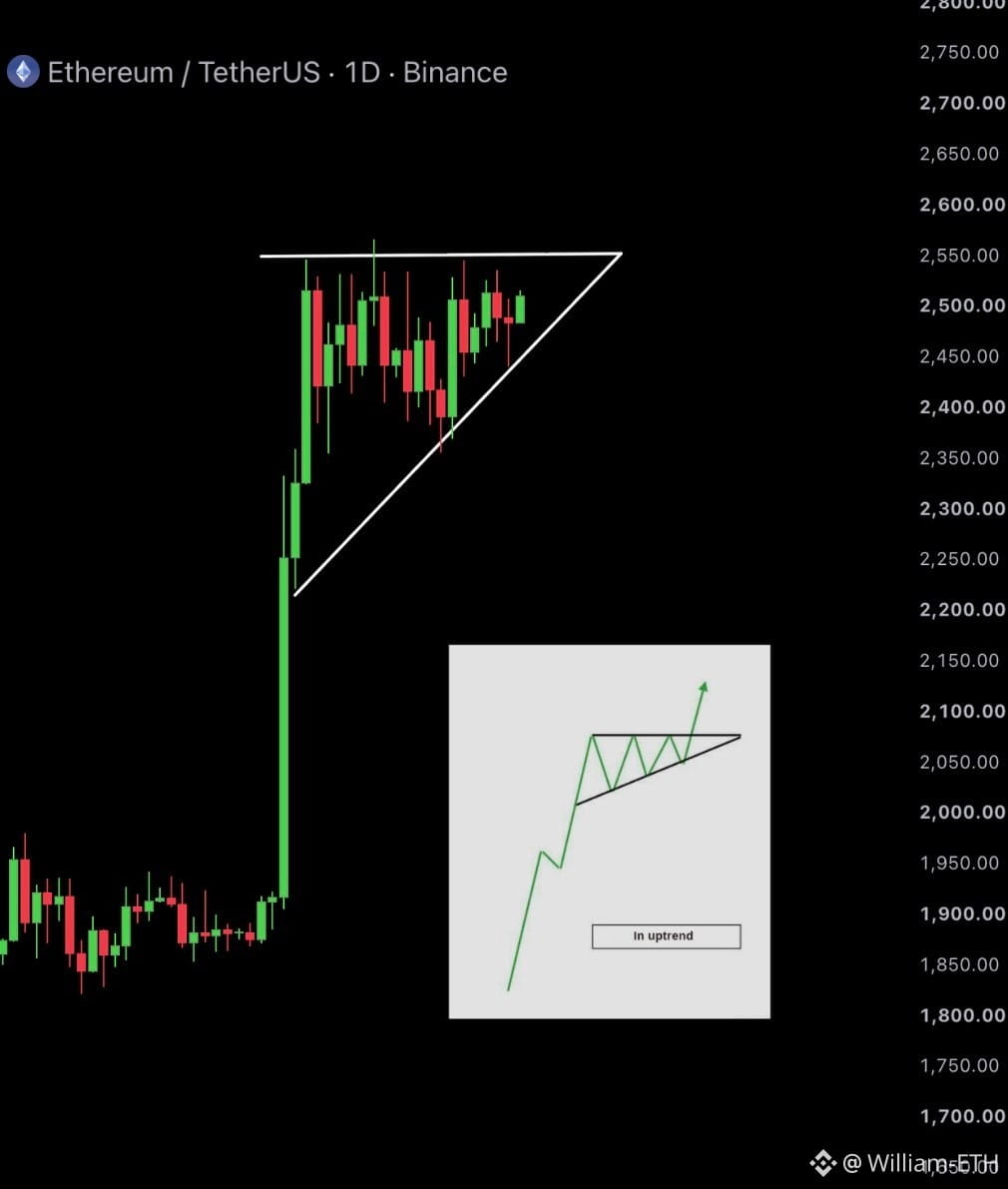
🚨 $ETH RUPTURE À LA HAUSSE EN COURS ? 🔥
$ETH se comprime sous la zone de résistance clé des 2 550 à 2 600.
Une cassure nette et une tenue au-dessus de 2 600 pourraient ouvrir la voie vers :
🎯 2 800
🎯 3 000
🎯 3 050
Niveaux de support à surveiller : 2 485 puis 2 440
Le setup semble haussier, mais la confirmation compte. Pas de cassure tant que les acheteurs ne reprennent pas la résistance avec force.
Je surveille de près celui-ci, car le prochain mouvement pourrait être explosif. 🚀
🚨 $ETH RUPTURE À LA HAUSSE EN COURS ? 🔥
$ETH se comprime sous la zone de résistance clé des 2 550 à 2 600.
Une cassure nette et une tenue au-dessus de 2 600 pourraient ouvrir la voie vers :
🎯 2 800
🎯 3 000
🎯 3 050
Niveaux de support à surveiller : 2 485 puis 2 440
Le setup semble haussier, mais la confirmation compte. Pas de cassure tant que les acheteurs ne reprennent pas la résistance avec force.
Je surveille de près celui-ci, car le prochain mouvement pourrait être explosif. 🚀
$ETH se comprime sous la zone de résistance clé des 2 550 à 2 600.
Une cassure nette et une tenue au-dessus de 2 600 pourraient ouvrir la voie vers :
🎯 2 800
🎯 3 000
🎯 3 050
Niveaux de support à surveiller : 2 485 puis 2 440
Le setup semble haussier, mais la confirmation compte. Pas de cassure tant que les acheteurs ne reprennent pas la résistance avec force.
Je surveille de près celui-ci, car le prochain mouvement pourrait être explosif. 🚀
1
3
1.2k
·
--
Vérifié
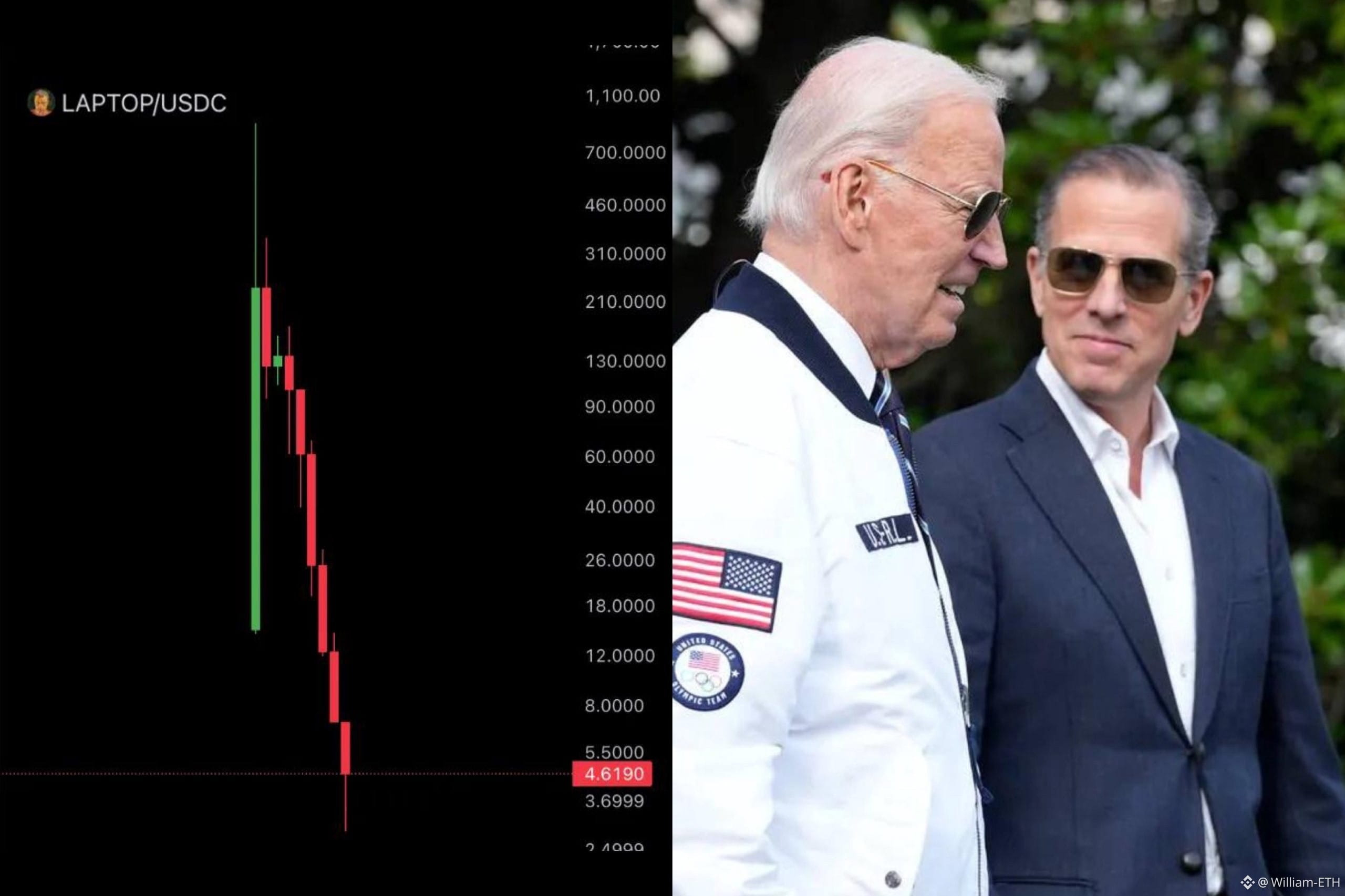
🚨 C’EST FOLLEMENT INSANE 🚨
La memecoin du $LAPTOP de Hunter Biden a été lancée comme un token-mème politique, avec 20% de l’offre réservée à des largages pour la communauté, y compris des wallets qui ont perdu de l’argent sur $TRUMP.
Mais le lancement s’est rapidement transformé en chaos, avec des informations affirmant que le $LAPTOP a chuté d’environ 98% en quelques minutes. 📉
L’idée était simple :
$LAPTOP se lance
$TRUMP perdants reçoivent une part
Le mème politique devient un token
Au lieu de ça, les traders assistent à un nouvel effondrement brutal d’une memecoin.
La crypto ne cesse jamais de me surprendre. 😳
🚨 C’EST FOLLEMENT INSANE 🚨
La memecoin du $LAPTOP de Hunter Biden a été lancée comme un token-mème politique, avec 20% de l’offre réservée à des largages pour la communauté, y compris des wallets qui ont perdu de l’argent sur $TRUMP .
Mais le lancement s’est rapidement transformé en chaos, avec des informations affirmant que le $LAPTOP a chuté d’environ 98% en quelques minutes. 📉
L’idée était simple :
$LAPTOP se lance
$TRUMP perdants reçoivent une part
Le mème politique devient un token
Au lieu de ça, les traders assistent à un nouvel effondrement brutal d’une memecoin.
La crypto ne cesse jamais de me surprendre. 😳
La memecoin du $LAPTOP de Hunter Biden a été lancée comme un token-mème politique, avec 20% de l’offre réservée à des largages pour la communauté, y compris des wallets qui ont perdu de l’argent sur $TRUMP .
Mais le lancement s’est rapidement transformé en chaos, avec des informations affirmant que le $LAPTOP a chuté d’environ 98% en quelques minutes. 📉
L’idée était simple :
$LAPTOP se lance
$TRUMP perdants reçoivent une part
Le mème politique devient un token
Au lieu de ça, les traders assistent à un nouvel effondrement brutal d’une memecoin.
La crypto ne cesse jamais de me surprendre. 😳
1
2
3.1k
·
--
🚨 ALERTE : Ethereum se prépare à l’ère quantique ! ⚡
La Fondation Ethereum vise décembre 2029 pour rendre Ethereum L1 résistant aux attaques quantiques, à travers les couches d’exécution, de consensus et de données.
Cela signifie une cryptographie plus robuste, des validateurs plus sûrs et une protection contre les futures attaques quantiques.
La menace n’est pas là aujourd’hui, mais Ethereum se prépare plusieurs années à l’avance. 🔥
$ETH construit pour la prochaine décennie, pas seulement pour le prochain cycle.
Super haussier sur le long terme. 🚀
#ETH🔥🔥🔥🔥🔥🔥 #Binance #crypto
🚨 ALERTE : Ethereum se prépare à l’ère quantique ! ⚡
La Fondation Ethereum vise décembre 2029 pour rendre Ethereum L1 résistant aux attaques quantiques, à travers les couches d’exécution, de consensus et de données.
Cela signifie une cryptographie plus robuste, des validateurs plus sûrs et une protection contre les futures attaques quantiques.
La menace n’est pas là aujourd’hui, mais Ethereum se prépare plusieurs années à l’avance. 🔥
$ETH construit pour la prochaine décennie, pas seulement pour le prochain cycle.
Super haussier sur le long terme. 🚀
#ETH🔥🔥🔥🔥🔥🔥 #Binance #crypto
La Fondation Ethereum vise décembre 2029 pour rendre Ethereum L1 résistant aux attaques quantiques, à travers les couches d’exécution, de consensus et de données.
Cela signifie une cryptographie plus robuste, des validateurs plus sûrs et une protection contre les futures attaques quantiques.
La menace n’est pas là aujourd’hui, mais Ethereum se prépare plusieurs années à l’avance. 🔥
$ETH construit pour la prochaine décennie, pas seulement pour le prochain cycle.
Super haussier sur le long terme. 🚀
#ETH🔥🔥🔥🔥🔥🔥 #Binance #crypto
163
Connectez-vous pour découvrir plus de contenu
Rejoignez la communauté mondiale des adeptes de cryptomonnaies sur Binance Square
⚡️ Suviez les dernières informations importantes sur les cryptomonnaies.
💬 Jugé digne de confiance par la plus grande plateforme d’échange de cryptomonnaies au monde.
👍 Découvrez les connaissances que partagent les créateurs vérifiés.
Adresse e-mail/Nº de téléphone
Sujets d’actualité
AIStocksWhatNext
542,280 vues
4,027 mentions
Partagez et gagnez une récompense de trafic dans notre campagne de hashtag tendance
✨Sujet : Quelles autres opportunités d’investissement restent-elles alors que les actions liées à l’IA continuent de grimper ?
👉Comment participer :
Publiez une courte publication ou un article avec le hashtag #AIStocksWhatNext
Partagez si vous êtes plutôt haussier ou baissier, et publiez vos avoirs en actions IA ou votre transaction — utiliser le widget de trading peut améliorer votre éligibilité.
Vous pouvez aussi renforcer votre publication en partageant des données ou des graphiques, et en évitant les images générées par l’IA.
✍️Créez du contenu à partir des angles ci-dessous :
- Nvidia affirme que les ventes de puces vont doubler l’an prochain, et que les principaux acteurs de l’IA continuent d’enregistrer des revenus records ; les dépenses en calcul qui soutiennent tout cela sont tout aussi impressionnantes. La demande en IA décolle-t-elle vraiment ? Et combien de temps cela peut-il durer ? Les actions IA montent partout. Est-ce une vraie cassure, ou juste un rebond à court terme ?
- Des leaders de l’industrie appellent à ralentir le développement de l’IA, tandis que Trump prévoit de construire une « Force IA », affirmant que l’IA pourrait représenter 25 % du PIB américain à l’avenir. De quel côté êtes-vous ? Le soutien au niveau des États sera-t-il un gain de long terme pour les actions IA ?
- Achetez-vous des actions liées à l’IA ? Partagez votre transaction/position liée à l’IA avec notre widget de partage de trading.
⏰Période de la campagne :
- 2026-09-22 7:00 - 2026-09-24 4:00 UTC
🎁Récompense :
- Les publications qualifiées qui respectent les consignes ci-dessus et contiennent plus de 100 mots seront examinées et pourront recevoir un boost aléatoire de trafic de 500 à 3 000 vues. Vous recevrez une notification de la part de votre secrétaire de flux si votre publication est sélectionnée.
- Ayez une chance de voir votre article mis en avant sur Binance Square Official
Vous cherchez des idées pour votre publication ? Visitez la page du sujet #AIStocksWhatNext ou la page Square Guide on How to Post for Better Reach.
Binance Square Official
·442 mentions J’aime
·1.1M vues
IranSetsConditionsToEndSevenMonthWar
135 vues
35 mentions
CardanoJoinsX402PaymentStandard
144 vues
25 mentions