
#stablecoins
stablecoins
7.4M vues
26,667 mentions
Populaire
Récents

·
--
Les stablecoins ont discrètement franchi la ligne, passant de l’expérience crypto à une infrastructure financière.
La conversation autour des stablecoins tourne toujours autour de la capitalisation boursière. La vraie histoire, c’est la vélocité de règlement — et elle s’accélère sur des couloirs que la plupart des traders ne suivent pas.
Les paiements B2B transfrontaliers réglés via des rails en stablecoins progressent à un rythme qui fait ressembler le bull run 2021 des stablecoins à un simple échauffement. Les entreprises n’utilisent pas USDT et USDC parce qu’elles sont des passionnés de crypto. Elles les utilisent parce qu’un règlement en 30 secondes à 0,01 $ surpasse un transfert SWIFT de 3 jours à 25 $, avec six banques intermédiaires qui prélèvent leur part.
Le modèle de la banque correspondante a été conçu pour un monde sans internet. Les stablecoins sont la version « internet » de ce système — plus rapides, moins coûteux, et de plus en plus réglementés. La loi GENIUS n’a pas créé cette tendance. Elle l’a simplement validée, alors qu’elle était déjà en marche.
Voici ce que la plupart des gens ratent : le volume de règlement des stablecoins rivalise désormais avec certains grands réseaux de paiement sur certaines liaisons — en particulier le règlement des échanges Asie–Europe et l’accès au dollar en Amérique latine. Ce volume ne vient pas des traders. Il vient des importateurs, des exportateurs et des PME qui ont besoin de liquidité en dollars sans accès aux banques locales.
Les chaînes qui captent ce flux ne sont pas celles qui affichent les TPS les plus élevés. Ce sont celles qui disposent de la liquidité la plus profonde, des meilleurs rails de conformité et du risque de règlement le plus faible.
Surveillez les ratios règlement/capitalisation boursière, pas seulement la capitalisation boursière.
$ETH $SOL $BNB
#Stablecoins #CryptoPayments #CrossBorder #DeFi #FinancialInfrastructure
Les stablecoins ont discrètement franchi la ligne, passant de l’expérience crypto à une infrastructure financière.
La conversation autour des stablecoins tourne toujours autour de la capitalisation boursière. La vraie histoire, c’est la vélocité de règlement — et elle s’accélère sur des couloirs que la plupart des traders ne suivent pas.
Les paiements B2B transfrontaliers réglés via des rails en stablecoins progressent à un rythme qui fait ressembler le bull run 2021 des stablecoins à un simple échauffement. Les entreprises n’utilisent pas USDT et USDC parce qu’elles sont des passionnés de crypto. Elles les utilisent parce qu’un règlement en 30 secondes à 0,01 $ surpasse un transfert SWIFT de 3 jours à 25 $, avec six banques intermédiaires qui prélèvent leur part.
Le modèle de la banque correspondante a été conçu pour un monde sans internet. Les stablecoins sont la version « internet » de ce système — plus rapides, moins coûteux, et de plus en plus réglementés. La loi GENIUS n’a pas créé cette tendance. Elle l’a simplement validée, alors qu’elle était déjà en marche.
Voici ce que la plupart des gens ratent : le volume de règlement des stablecoins rivalise désormais avec certains grands réseaux de paiement sur certaines liaisons — en particulier le règlement des échanges Asie–Europe et l’accès au dollar en Amérique latine. Ce volume ne vient pas des traders. Il vient des importateurs, des exportateurs et des PME qui ont besoin de liquidité en dollars sans accès aux banques locales.
Les chaînes qui captent ce flux ne sont pas celles qui affichent les TPS les plus élevés. Ce sont celles qui disposent de la liquidité la plus profonde, des meilleurs rails de conformité et du risque de règlement le plus faible.
Surveillez les ratios règlement/capitalisation boursière, pas seulement la capitalisation boursière.
$ETH $SOL $BNB
#Stablecoins #CryptoPayments #CrossBorder #DeFi #FinancialInfrastructure
La conversation autour des stablecoins tourne toujours autour de la capitalisation boursière. La vraie histoire, c’est la vélocité de règlement — et elle s’accélère sur des couloirs que la plupart des traders ne suivent pas.
Les paiements B2B transfrontaliers réglés via des rails en stablecoins progressent à un rythme qui fait ressembler le bull run 2021 des stablecoins à un simple échauffement. Les entreprises n’utilisent pas USDT et USDC parce qu’elles sont des passionnés de crypto. Elles les utilisent parce qu’un règlement en 30 secondes à 0,01 $ surpasse un transfert SWIFT de 3 jours à 25 $, avec six banques intermédiaires qui prélèvent leur part.
Le modèle de la banque correspondante a été conçu pour un monde sans internet. Les stablecoins sont la version « internet » de ce système — plus rapides, moins coûteux, et de plus en plus réglementés. La loi GENIUS n’a pas créé cette tendance. Elle l’a simplement validée, alors qu’elle était déjà en marche.
Voici ce que la plupart des gens ratent : le volume de règlement des stablecoins rivalise désormais avec certains grands réseaux de paiement sur certaines liaisons — en particulier le règlement des échanges Asie–Europe et l’accès au dollar en Amérique latine. Ce volume ne vient pas des traders. Il vient des importateurs, des exportateurs et des PME qui ont besoin de liquidité en dollars sans accès aux banques locales.
Les chaînes qui captent ce flux ne sont pas celles qui affichent les TPS les plus élevés. Ce sont celles qui disposent de la liquidité la plus profonde, des meilleurs rails de conformité et du risque de règlement le plus faible.
Surveillez les ratios règlement/capitalisation boursière, pas seulement la capitalisation boursière.
$ETH $SOL $BNB
#Stablecoins #CryptoPayments #CrossBorder #DeFi #FinancialInfrastructure
34

Franchement les gars, c’est vraiment énorme pour une adoption dans le monde réel 💡 MoneyGram vient d’annoncer le déploiement d’une nouvelle carte Visa qui permet aux gens de détenir des dollars et de les dépenser directement à partir d’un solde de stablecoin 💳 On parle toujours du fait que la crypto entre dans les paiements du quotidien, mais quand un géant des transferts de fonds comme MoneyGram s’associe avec Visa pour les stablecoins, là c’est énorme.
Ça montre vraiment à quel point des dollars numériques comme $USDT et $USDC deviennent tranquillement l’épine dorsale de la finance mondiale, sans même que les utilisateurs particuliers ne remarquent la complexité derrière tout ça 🚀 Si on supprime ce frottement, les utilisateurs grand public utiliseront des stablecoins tous les jours pour le café et les courses. Gros pas en avant pour l’utilisabilité de la crypto !
#Write2Earn #Stablecoins #CryptoAdoption #PayWithCrypto
Franchement les gars, c’est vraiment énorme pour une adoption dans le monde réel 💡 MoneyGram vient d’annoncer le déploiement d’une nouvelle carte Visa qui permet aux gens de détenir des dollars et de les dépenser directement à partir d’un solde de stablecoin 💳 On parle toujours du fait que la crypto entre dans les paiements du quotidien, mais quand un géant des transferts de fonds comme MoneyGram s’associe avec Visa pour les stablecoins, là c’est énorme.
Ça montre vraiment à quel point des dollars numériques comme $USDT et $USDC deviennent tranquillement l’épine dorsale de la finance mondiale, sans même que les utilisateurs particuliers ne remarquent la complexité derrière tout ça 🚀 Si on supprime ce frottement, les utilisateurs grand public utiliseront des stablecoins tous les jours pour le café et les courses. Gros pas en avant pour l’utilisabilité de la crypto !
#Write2Earn #Stablecoins #CryptoAdoption #PayWithCrypto
Ça montre vraiment à quel point des dollars numériques comme $USDT et $USDC deviennent tranquillement l’épine dorsale de la finance mondiale, sans même que les utilisateurs particuliers ne remarquent la complexité derrière tout ça 🚀 Si on supprime ce frottement, les utilisateurs grand public utiliseront des stablecoins tous les jours pour le café et les courses. Gros pas en avant pour l’utilisabilité de la crypto !
#Write2Earn #Stablecoins #CryptoAdoption #PayWithCrypto

64
Urgent : MoneyGram vient de lâcher une énorme bombe en matière d’adoption en Amérique latine. 💸
Ils viennent de lancer leur toute première carte adossée à une stablecoin en Colombie, en partenariat avec la société fintech Rain.
Voici ce que vous devez savoir :
🚀 Première carte basée sur des stablecoins chez MoneyGram
🇨🇴 Lancement initial en Colombie
💳 Propulsée par Visa et développée avec Rain
C’est énorme pour intégrer des stablecoins comme $USDC et $USDT dans des achats du quotidien en conditions réelles. Surveillez l’adoption des cryptos en LATAM : ça avance à une vitesse incroyable.
#Stablecoins #Visa #Adoption #Write2Earn
Urgent : MoneyGram vient de lâcher une énorme bombe en matière d’adoption en Amérique latine. 💸
Ils viennent de lancer leur toute première carte adossée à une stablecoin en Colombie, en partenariat avec la société fintech Rain.
Voici ce que vous devez savoir :
🚀 Première carte basée sur des stablecoins chez MoneyGram
🇨🇴 Lancement initial en Colombie
💳 Propulsée par Visa et développée avec Rain
C’est énorme pour intégrer des stablecoins comme $USDC et $USDT dans des achats du quotidien en conditions réelles. Surveillez l’adoption des cryptos en LATAM : ça avance à une vitesse incroyable.
#Stablecoins #Visa #Adoption #Write2Earn
Ils viennent de lancer leur toute première carte adossée à une stablecoin en Colombie, en partenariat avec la société fintech Rain.
Voici ce que vous devez savoir :
🚀 Première carte basée sur des stablecoins chez MoneyGram
🇨🇴 Lancement initial en Colombie
💳 Propulsée par Visa et développée avec Rain
C’est énorme pour intégrer des stablecoins comme $USDC et $USDT dans des achats du quotidien en conditions réelles. Surveillez l’adoption des cryptos en LATAM : ça avance à une vitesse incroyable.
#Stablecoins #Visa #Adoption #Write2Earn
46

·
--
La foule voit dans les stablecoins émis par les banques la clé d’une adoption de masse, mais $ETH fournisseurs de liquidité sentent un risque systémique.
Le grand public veut la commodité, tandis que les professionnels craignent que la garde héritée ouvre la porte à la censure. Les actifs bancaires utilisent des passerelles autorisées qui sont incompatibles avec l’esprit ouvert de $BNB. Surveillez les conditions de rachat pour repérer des contraintes de sortie cachées, car c’est là que se situe le vrai danger.
$ETH #crypto #stablecoins #Payments
La foule voit dans les stablecoins émis par les banques la clé d’une adoption de masse, mais $ETH fournisseurs de liquidité sentent un risque systémique.
Le grand public veut la commodité, tandis que les professionnels craignent que la garde héritée ouvre la porte à la censure. Les actifs bancaires utilisent des passerelles autorisées qui sont incompatibles avec l’esprit ouvert de $BNB . Surveillez les conditions de rachat pour repérer des contraintes de sortie cachées, car c’est là que se situe le vrai danger.
$ETH #crypto #stablecoins #Payments
Le grand public veut la commodité, tandis que les professionnels craignent que la garde héritée ouvre la porte à la censure. Les actifs bancaires utilisent des passerelles autorisées qui sont incompatibles avec l’esprit ouvert de $BNB . Surveillez les conditions de rachat pour repérer des contraintes de sortie cachées, car c’est là que se situe le vrai danger.
$ETH #crypto #stablecoins #Payments

85

·
--
Rendement des stablecoins dans le cadre de la GENIUSUn stablecoin peut rester proche de 1 $ tandis que le produit qui verse 4 %, 8 % ou 15 % comporte un risque considérable.
La loi GENIUS restreint les paiements autorisés aux émetteurs de stablecoins, qui ne peuvent verser des intérêts ou des rendements uniquement parce qu’un utilisateur détient, utilise ou conserve le stablecoin. Cela ne rend pas pour autant chaque produit de rendement externe sans risque ni interdit.
Une plateforme peut prêter des stablecoins déposés. Un protocole DeFi peut percevoir des intérêts auprès des emprunteurs. Un pool de liquidité peut distribuer des frais de trading et des incitations. Un fonds tokenisé peut investir dans des titres du Trésor. Un wrapper peut ajouter plusieurs contrats et contreparties autour du stablecoin d’origine.
Rendement des stablecoins dans le cadre de la GENIUS
Un stablecoin peut rester proche de 1 $ tandis que le produit qui verse 4 %, 8 % ou 15 % comporte un risque considérable.
La loi GENIUS restreint les paiements autorisés aux émetteurs de stablecoins, qui ne peuvent verser des intérêts ou des rendements uniquement parce qu’un utilisateur détient, utilise ou conserve le stablecoin. Cela ne rend pas pour autant chaque produit de rendement externe sans risque ni interdit.
Une plateforme peut prêter des stablecoins déposés. Un protocole DeFi peut percevoir des intérêts auprès des emprunteurs. Un pool de liquidité peut distribuer des frais de trading et des incitations. Un fonds tokenisé peut investir dans des titres du Trésor. Un wrapper peut ajouter plusieurs contrats et contreparties autour du stablecoin d’origine.
La loi GENIUS restreint les paiements autorisés aux émetteurs de stablecoins, qui ne peuvent verser des intérêts ou des rendements uniquement parce qu’un utilisateur détient, utilise ou conserve le stablecoin. Cela ne rend pas pour autant chaque produit de rendement externe sans risque ni interdit.
Une plateforme peut prêter des stablecoins déposés. Un protocole DeFi peut percevoir des intérêts auprès des emprunteurs. Un pool de liquidité peut distribuer des frais de trading et des incitations. Un fonds tokenisé peut investir dans des titres du Trésor. Un wrapper peut ajouter plusieurs contrats et contreparties autour du stablecoin d’origine.
31

·
--
LES FLUX MONÉTAIRES INSTITUTIONNELS SIGNALENT UNE EXPANSION PAR 5X POUR $SKY D’ICI 2028 🦈
Entrée : 0.065 ⚡
Objectif : 0.325 🚀
Les recherches sur les actifs numériques de Standard Chartered projettent $SKY pour conduire la prochaine évolution de l’infrastructure institutionnelle des stablecoins, avec pour cible 0.325 à partir des niveaux d’accumulation actuels. Le catalyseur structurel réside dans l’évolution architecturale vers une demande USDS génératrice de rendement, où l’intégration d’actifs du monde réel soutient déjà plus de 5,5 milliards de dollars de déploiement de capitaux. 📊
Contrairement aux anciens “pegs” sans rendement, ce modèle capte directement les marges d’intérêt nettes au sein d’un réseau d’agents en expansion. 🏦 Avec 45 % des revenus du protocole distribués aux stakers et 10 % alimentant des rachats automatiques, les flux de trésorerie systémiques s’accumulent directement à mesure que la capitalisation du marché des stablecoins s’approche de 2 000 milliards.
Alors que les géants historiques du secteur bancaire construisent des couches de règlement concurrentes, l’argent intelligent se positionne autour de protocoles disposant d’une liquidité on-chain déjà prouvée. 💬 Pensez-vous que les stablecoins avec rendement cannibaliseront totalement les “pegs” traditionnels sans rendement pendant le prochain cycle macroéconomique ? 👇
⚠️ Ceci ne constitue pas un conseil financier. Gérez toujours votre risque. 🛡️
🏷️ #SKY #Stablecoins #DeFi #Crypto
🎯 🦈
LES FLUX MONÉTAIRES INSTITUTIONNELS SIGNALENT UNE EXPANSION PAR 5X POUR $SKY D’ICI 2028 🦈
Entrée : 0.065 ⚡
Objectif : 0.325 🚀
Les recherches sur les actifs numériques de Standard Chartered projettent $SKY pour conduire la prochaine évolution de l’infrastructure institutionnelle des stablecoins, avec pour cible 0.325 à partir des niveaux d’accumulation actuels. Le catalyseur structurel réside dans l’évolution architecturale vers une demande USDS génératrice de rendement, où l’intégration d’actifs du monde réel soutient déjà plus de 5,5 milliards de dollars de déploiement de capitaux. 📊
Contrairement aux anciens “pegs” sans rendement, ce modèle capte directement les marges d’intérêt nettes au sein d’un réseau d’agents en expansion. 🏦 Avec 45 % des revenus du protocole distribués aux stakers et 10 % alimentant des rachats automatiques, les flux de trésorerie systémiques s’accumulent directement à mesure que la capitalisation du marché des stablecoins s’approche de 2 000 milliards.
Alors que les géants historiques du secteur bancaire construisent des couches de règlement concurrentes, l’argent intelligent se positionne autour de protocoles disposant d’une liquidité on-chain déjà prouvée. 💬 Pensez-vous que les stablecoins avec rendement cannibaliseront totalement les “pegs” traditionnels sans rendement pendant le prochain cycle macroéconomique ? 👇
⚠️ Ceci ne constitue pas un conseil financier. Gérez toujours votre risque. 🛡️
🏷️ #SKY #Stablecoins #DeFi #Crypto
🎯 🦈
Entrée : 0.065 ⚡
Objectif : 0.325 🚀
Les recherches sur les actifs numériques de Standard Chartered projettent $SKY pour conduire la prochaine évolution de l’infrastructure institutionnelle des stablecoins, avec pour cible 0.325 à partir des niveaux d’accumulation actuels. Le catalyseur structurel réside dans l’évolution architecturale vers une demande USDS génératrice de rendement, où l’intégration d’actifs du monde réel soutient déjà plus de 5,5 milliards de dollars de déploiement de capitaux. 📊
Contrairement aux anciens “pegs” sans rendement, ce modèle capte directement les marges d’intérêt nettes au sein d’un réseau d’agents en expansion. 🏦 Avec 45 % des revenus du protocole distribués aux stakers et 10 % alimentant des rachats automatiques, les flux de trésorerie systémiques s’accumulent directement à mesure que la capitalisation du marché des stablecoins s’approche de 2 000 milliards.
Alors que les géants historiques du secteur bancaire construisent des couches de règlement concurrentes, l’argent intelligent se positionne autour de protocoles disposant d’une liquidité on-chain déjà prouvée. 💬 Pensez-vous que les stablecoins avec rendement cannibaliseront totalement les “pegs” traditionnels sans rendement pendant le prochain cycle macroéconomique ? 👇
⚠️ Ceci ne constitue pas un conseil financier. Gérez toujours votre risque. 🛡️
🏷️ #SKY #Stablecoins #DeFi #Crypto
🎯 🦈
25

Wanchain est l’endroit idéal pour utiliser vos stablecoins.
Gagnez un Taux Annuel Procentuel (TAP) élevé en faisant du staking #USDT ou #USDC✅ et gagnez des xWAN.
Changez et envoyez #Stake xWAN afin de gagner #Stablecoins
Rendez-vous sur xstake.wanchain.org et profitez de ces opportunités !
Wanchain est l’endroit idéal pour utiliser vos stablecoins.
Gagnez un Taux Annuel Procentuel (TAP) élevé en faisant du staking #USDT ou #USDC✅ et gagnez des xWAN.
Changez et envoyez #Stake xWAN afin de gagner #Stablecoins
Rendez-vous sur xstake.wanchain.org et profitez de ces opportunités !
Gagnez un Taux Annuel Procentuel (TAP) élevé en faisant du staking #USDT ou #USDC✅ et gagnez des xWAN.
Changez et envoyez #Stake xWAN afin de gagner #Stablecoins
Rendez-vous sur xstake.wanchain.org et profitez de ces opportunités !

49

·
--
MoneyGram lance une carte Visa en stablecoin en Colombie, permettant aux utilisateurs de dépenser des stablecoins auprès de plus de 150 M de commerçants Visa dans le monde.
Chiffres clés :
• 🌍 150 M+ de commerçants Visa
• 🇨🇴 Marché de lancement : Colombie
• 💵 Paiements directs en stablecoins
Pourquoi c’est important :
Une étape majeure pour rendre les stablecoins utilisables pour les achats du quotidien.
#Crypto #Stablecoins #VİSA #MoneyGram #BinanceSquare
MoneyGram lance une carte Visa en stablecoin en Colombie, permettant aux utilisateurs de dépenser des stablecoins auprès de plus de 150 M de commerçants Visa dans le monde.
Chiffres clés :
• 🌍 150 M+ de commerçants Visa
• 🇨🇴 Marché de lancement : Colombie
• 💵 Paiements directs en stablecoins
Pourquoi c’est important :
Une étape majeure pour rendre les stablecoins utilisables pour les achats du quotidien.
#Crypto #Stablecoins #VİSA #MoneyGram #BinanceSquare
Chiffres clés :
• 🌍 150 M+ de commerçants Visa
• 🇨🇴 Marché de lancement : Colombie
• 💵 Paiements directs en stablecoins
Pourquoi c’est important :
Une étape majeure pour rendre les stablecoins utilisables pour les achats du quotidien.
#Crypto #Stablecoins #VİSA #MoneyGram #BinanceSquare
59

Les stablecoins font partie des innovations les plus utiles de la crypto.
Elles permettent aux utilisateurs de transférer une valeur libellée en dollars à travers différents réseaux blockchain sans dépendre entièrement des systèmes bancaires traditionnels.
Que vous fassiez du trading, que vous transfériez des fonds ou que vous utilisiez la DeFi, les stablecoins sont devenues une composante majeure de l’écosystème crypto.
#Stablecoins #crypto #USDT $STABLE
Les stablecoins font partie des innovations les plus utiles de la crypto.
Elles permettent aux utilisateurs de transférer une valeur libellée en dollars à travers différents réseaux blockchain sans dépendre entièrement des systèmes bancaires traditionnels.
Que vous fassiez du trading, que vous transfériez des fonds ou que vous utilisiez la DeFi, les stablecoins sont devenues une composante majeure de l’écosystème crypto.
#Stablecoins #crypto #USDT $STABLE
Elles permettent aux utilisateurs de transférer une valeur libellée en dollars à travers différents réseaux blockchain sans dépendre entièrement des systèmes bancaires traditionnels.
Que vous fassiez du trading, que vous transfériez des fonds ou que vous utilisiez la DeFi, les stablecoins sont devenues une composante majeure de l’écosystème crypto.
#Stablecoins #crypto #USDT $STABLE
47
·
--
Les stablecoins ont cessé d’être une simple expérience crypto il y a un certain temps — ce sont désormais le rail en dollars qui connaît la plus forte croissance sur la planète.
La vraie histoire ne concerne pas la spéculation de détail. Il s’agit des paiements transfrontaliers B2B. La banque correspondante de la finance traditionnelle prend 2 à 5 jours, coûte 1 à 3 % en frais, et nécessite une chaîne de banques intermédiaires rien que pour transférer des dollars entre deux entreprises. Les stablecoins le font en quelques secondes pour une fraction de cent.
C’est cet écart qui explique pourquoi les équipes trésorerie de vraies entreprises — pas seulement des natifs de la crypto — migrent leur fonds de roulement vers des rails en stablecoins. Si vous pouvez payer un fournisseur à Singapour depuis le Mexique en 4 secondes pour un coût quasi nul, l’ancienne route SWIFT commence à ressembler à une machine à télécopier.
Et dans les marchés émergents, les stablecoins font discrètement ce que des décennies de politiques de dollarisation n’ont pas réussi à faire : offrir aux particuliers et aux entreprises l’accès à l’épargne en dollars et au règlement, sans avoir besoin d’un compte bancaire américain. Ce n’est pas un effet secondaire — c’est le produit.
La couche d’infrastructure compte ici. Les chaînes qui proposent un gas prévisible, une finalité rapide et une liquidité profonde pour les paires de stablecoins gagnent en volume. $BNB and $ETH sont bien positionnés pour ce changement.
$BTC , c’est l’histoire de la réserve de valeur. Les stablecoins, c’est l’histoire du moyen d’échange. Les deux peuvent gagner — ils résolvent des problèmes différents.
#Stablecoins #CryptoAdoption #CrossBorderPayments #DeFi #Web3
Les stablecoins ont cessé d’être une simple expérience crypto il y a un certain temps — ce sont désormais le rail en dollars qui connaît la plus forte croissance sur la planète.
La vraie histoire ne concerne pas la spéculation de détail. Il s’agit des paiements transfrontaliers B2B. La banque correspondante de la finance traditionnelle prend 2 à 5 jours, coûte 1 à 3 % en frais, et nécessite une chaîne de banques intermédiaires rien que pour transférer des dollars entre deux entreprises. Les stablecoins le font en quelques secondes pour une fraction de cent.
C’est cet écart qui explique pourquoi les équipes trésorerie de vraies entreprises — pas seulement des natifs de la crypto — migrent leur fonds de roulement vers des rails en stablecoins. Si vous pouvez payer un fournisseur à Singapour depuis le Mexique en 4 secondes pour un coût quasi nul, l’ancienne route SWIFT commence à ressembler à une machine à télécopier.
Et dans les marchés émergents, les stablecoins font discrètement ce que des décennies de politiques de dollarisation n’ont pas réussi à faire : offrir aux particuliers et aux entreprises l’accès à l’épargne en dollars et au règlement, sans avoir besoin d’un compte bancaire américain. Ce n’est pas un effet secondaire — c’est le produit.
La couche d’infrastructure compte ici. Les chaînes qui proposent un gas prévisible, une finalité rapide et une liquidité profonde pour les paires de stablecoins gagnent en volume. $BNB and $ETH sont bien positionnés pour ce changement.
$BTC , c’est l’histoire de la réserve de valeur. Les stablecoins, c’est l’histoire du moyen d’échange. Les deux peuvent gagner — ils résolvent des problèmes différents.
#Stablecoins #CryptoAdoption #CrossBorderPayments #DeFi #Web3
La vraie histoire ne concerne pas la spéculation de détail. Il s’agit des paiements transfrontaliers B2B. La banque correspondante de la finance traditionnelle prend 2 à 5 jours, coûte 1 à 3 % en frais, et nécessite une chaîne de banques intermédiaires rien que pour transférer des dollars entre deux entreprises. Les stablecoins le font en quelques secondes pour une fraction de cent.
C’est cet écart qui explique pourquoi les équipes trésorerie de vraies entreprises — pas seulement des natifs de la crypto — migrent leur fonds de roulement vers des rails en stablecoins. Si vous pouvez payer un fournisseur à Singapour depuis le Mexique en 4 secondes pour un coût quasi nul, l’ancienne route SWIFT commence à ressembler à une machine à télécopier.
Et dans les marchés émergents, les stablecoins font discrètement ce que des décennies de politiques de dollarisation n’ont pas réussi à faire : offrir aux particuliers et aux entreprises l’accès à l’épargne en dollars et au règlement, sans avoir besoin d’un compte bancaire américain. Ce n’est pas un effet secondaire — c’est le produit.
La couche d’infrastructure compte ici. Les chaînes qui proposent un gas prévisible, une finalité rapide et une liquidité profonde pour les paires de stablecoins gagnent en volume. $BNB and $ETH sont bien positionnés pour ce changement.
$BTC , c’est l’histoire de la réserve de valeur. Les stablecoins, c’est l’histoire du moyen d’échange. Les deux peuvent gagner — ils résolvent des problèmes différents.
#Stablecoins #CryptoAdoption #CrossBorderPayments #DeFi #Web3
49

·
--
MoneyGram dévoile une carte Visa qui vous permet de détenir des dollars et de dépenser à partir d’un solde adossé à une cryptomonnaie stable. Avec $USDC backing, les dépenses du quotidien pourraient devenir fluides, reliant les dollars numériques aux achats du monde réel. #CryptoNews #Stablecoins #MoneyGram
MoneyGram dévoile une carte Visa qui vous permet de détenir des dollars et de dépenser à partir d’un solde adossé à une cryptomonnaie stable. Avec $USDC backing, les dépenses du quotidien pourraient devenir fluides, reliant les dollars numériques aux achats du monde réel. #CryptoNews #Stablecoins #MoneyGram

1

Oubliez le titre. Voici le cadre simple que j’utilise pour lire la liquidité des stablecoins sans courir après les chandeliers.
1. Offre : la capitalisation boursière des stablecoins augmente-t-elle ou diminue-t-elle ?
2. Flux : les stablecoins sont-ils acheminés vers les bourses ou vers la DeFi ?
3. Déploiement : cette liquidité est-elle réellement utilisée ?
Ma thèse est simple : une offre en hausse + des entrées fraîches + un déploiement réel est plus fort que la seule croissance de l’offre.
Qu’est-ce qui la contredit ? L’offre augmente alors que l’activité sur les bourses/DeFi s’affaiblit, ou bien la liquidité ressort rapidement.
Faites d’abord la recherche. Échangez ensuite.
#BinanceSquare #Crypto #Stablecoins #RWA #CryptoEducation
Oubliez le titre. Voici le cadre simple que j’utilise pour lire la liquidité des stablecoins sans courir après les chandeliers.
1. Offre : la capitalisation boursière des stablecoins augmente-t-elle ou diminue-t-elle ?
2. Flux : les stablecoins sont-ils acheminés vers les bourses ou vers la DeFi ?
3. Déploiement : cette liquidité est-elle réellement utilisée ?
Ma thèse est simple : une offre en hausse + des entrées fraîches + un déploiement réel est plus fort que la seule croissance de l’offre.
Qu’est-ce qui la contredit ? L’offre augmente alors que l’activité sur les bourses/DeFi s’affaiblit, ou bien la liquidité ressort rapidement.
Faites d’abord la recherche. Échangez ensuite.
#BinanceSquare #Crypto #Stablecoins #RWA #CryptoEducation
1. Offre : la capitalisation boursière des stablecoins augmente-t-elle ou diminue-t-elle ?
2. Flux : les stablecoins sont-ils acheminés vers les bourses ou vers la DeFi ?
3. Déploiement : cette liquidité est-elle réellement utilisée ?
Ma thèse est simple : une offre en hausse + des entrées fraîches + un déploiement réel est plus fort que la seule croissance de l’offre.
Qu’est-ce qui la contredit ? L’offre augmente alors que l’activité sur les bourses/DeFi s’affaiblit, ou bien la liquidité ressort rapidement.
Faites d’abord la recherche. Échangez ensuite.
#BinanceSquare #Crypto #Stablecoins #RWA #CryptoEducation
1
1
33

·
--
Haussier
#bankofamericagrouppilotsusbdcstablecoin
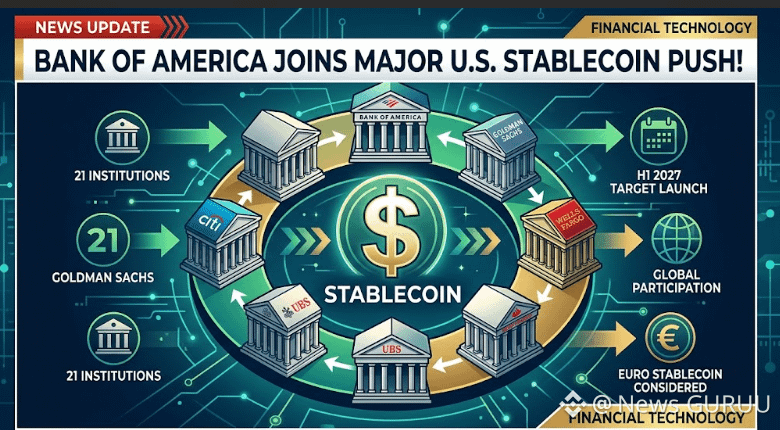
🚨 LES BANQUES ENTRERENT DANS LA COURSE AUX STABLECOINS ! 💵
21 grandes institutions financières, dont Bank of America, Goldman Sachs, Citi, Wells Fargo et UBS, prévoient une coentreprise pour émettre un stablecoin adossé au dollar américain, avec pour objectif le T1 2027.
💡 Pourquoi c'est important : l'entrée de grandes banques dans les stablecoins pourrait accélérer l’adoption institutionnelle des cryptomonnaies et renforcer la demande pour des paiements basés sur la blockchain. Un stablecoin indexé sur l’euro est également envisagé.
🎯 TRADING VIEW : ACHETER 📈
Surveillez de près les récits concernant les stablecoins, les paiements et les cryptos institutionnelles — mais évitez la FOMO, car les rotations peuvent aller très vite.
Les stablecoins adossés à des banques pourraient-ils devenir le prochain grand catalyseur crypto ? 👀 "CLIQUEZ SUR LA BALISE DE PIÈCE JAUNE CI-DESSOUS POUR ACCÉDER À LA PAGE DE TRADING SOUHAITÉE ET OBTENIR LE BÉNÉFICE DU TRADE"$USDC
{future}(USDCUSDT)
#Stablecoins #CryptoAdoption
#bankofamericagrouppilotsusbdcstablecoin
🚨 LES BANQUES ENTRERENT DANS LA COURSE AUX STABLECOINS ! 💵
21 grandes institutions financières, dont Bank of America, Goldman Sachs, Citi, Wells Fargo et UBS, prévoient une coentreprise pour émettre un stablecoin adossé au dollar américain, avec pour objectif le T1 2027.
💡 Pourquoi c'est important : l'entrée de grandes banques dans les stablecoins pourrait accélérer l’adoption institutionnelle des cryptomonnaies et renforcer la demande pour des paiements basés sur la blockchain. Un stablecoin indexé sur l’euro est également envisagé.
🎯 TRADING VIEW : ACHETER 📈
Surveillez de près les récits concernant les stablecoins, les paiements et les cryptos institutionnelles — mais évitez la FOMO, car les rotations peuvent aller très vite.
Les stablecoins adossés à des banques pourraient-ils devenir le prochain grand catalyseur crypto ? 👀 "CLIQUEZ SUR LA BALISE DE PIÈCE JAUNE CI-DESSOUS POUR ACCÉDER À LA PAGE DE TRADING SOUHAITÉE ET OBTENIR LE BÉNÉFICE DU TRADE"$USDC
#Stablecoins #CryptoAdoption
🚨 LES BANQUES ENTRERENT DANS LA COURSE AUX STABLECOINS ! 💵
21 grandes institutions financières, dont Bank of America, Goldman Sachs, Citi, Wells Fargo et UBS, prévoient une coentreprise pour émettre un stablecoin adossé au dollar américain, avec pour objectif le T1 2027.
💡 Pourquoi c'est important : l'entrée de grandes banques dans les stablecoins pourrait accélérer l’adoption institutionnelle des cryptomonnaies et renforcer la demande pour des paiements basés sur la blockchain. Un stablecoin indexé sur l’euro est également envisagé.
🎯 TRADING VIEW : ACHETER 📈
Surveillez de près les récits concernant les stablecoins, les paiements et les cryptos institutionnelles — mais évitez la FOMO, car les rotations peuvent aller très vite.
Les stablecoins adossés à des banques pourraient-ils devenir le prochain grand catalyseur crypto ? 👀 "CLIQUEZ SUR LA BALISE DE PIÈCE JAUNE CI-DESSOUS POUR ACCÉDER À LA PAGE DE TRADING SOUHAITÉE ET OBTENIR LE BÉNÉFICE DU TRADE"$USDC
#Stablecoins #CryptoAdoption
1
21

·
--
la loi sur les stablecoins a été adoptée. les règles sur les stablecoins n’ont jamais fait leur apparition
les régulateurs fédéraux ont manqué le délai d’un an prévu par la propre loi GENIUS pour les règles finales, le 18 juillet 2026. la date est arrivée, la date est passée, et je n’ai vu exactement personne en parler
la OCC vise désormais novembre 2026, et si ce délai glisse à son tour, le mécanisme de repli prévu par la loi s’activera le 18 janvier 2027. jusqu’à ce qu’un de ces échéanciers aboutisse, les émetteurs opèrent sous des directives provisoires
les directives provisoires sont une manière polie de dire : « on vous dira plus tard ». tout ce qui a été construit par-dessus $USDC et le reste, pour l’instant, repose sur un placeholder
je ne pense pas que tout ça explose. les grands émetteurs se sont comportés comme si les règles finales existaient déjà, parce que l’alternative consiste à construire le produit deux fois
ça explique aussi pourquoi les banques font des pilotes plutôt que de lancer. on ne sort pas un produit contre des directives avec une date d’expiration
la leçon que je dois sans cesse réapprendre : le titre, c’est l’adoption de la loi. ce qui décide réellement de votre vie, c’est le calendrier de la réglementation, un sujet que personne ne couvre
saviez-vous que le délai avait été manqué ? honnêtement, je ne l’ai su que cette semaine
#Stablecoins
la loi sur les stablecoins a été adoptée. les règles sur les stablecoins n’ont jamais fait leur apparition
les régulateurs fédéraux ont manqué le délai d’un an prévu par la propre loi GENIUS pour les règles finales, le 18 juillet 2026. la date est arrivée, la date est passée, et je n’ai vu exactement personne en parler
la OCC vise désormais novembre 2026, et si ce délai glisse à son tour, le mécanisme de repli prévu par la loi s’activera le 18 janvier 2027. jusqu’à ce qu’un de ces échéanciers aboutisse, les émetteurs opèrent sous des directives provisoires
les directives provisoires sont une manière polie de dire : « on vous dira plus tard ». tout ce qui a été construit par-dessus $USDC et le reste, pour l’instant, repose sur un placeholder
je ne pense pas que tout ça explose. les grands émetteurs se sont comportés comme si les règles finales existaient déjà, parce que l’alternative consiste à construire le produit deux fois
ça explique aussi pourquoi les banques font des pilotes plutôt que de lancer. on ne sort pas un produit contre des directives avec une date d’expiration
la leçon que je dois sans cesse réapprendre : le titre, c’est l’adoption de la loi. ce qui décide réellement de votre vie, c’est le calendrier de la réglementation, un sujet que personne ne couvre
saviez-vous que le délai avait été manqué ? honnêtement, je ne l’ai su que cette semaine
#Stablecoins
les régulateurs fédéraux ont manqué le délai d’un an prévu par la propre loi GENIUS pour les règles finales, le 18 juillet 2026. la date est arrivée, la date est passée, et je n’ai vu exactement personne en parler
la OCC vise désormais novembre 2026, et si ce délai glisse à son tour, le mécanisme de repli prévu par la loi s’activera le 18 janvier 2027. jusqu’à ce qu’un de ces échéanciers aboutisse, les émetteurs opèrent sous des directives provisoires
les directives provisoires sont une manière polie de dire : « on vous dira plus tard ». tout ce qui a été construit par-dessus $USDC et le reste, pour l’instant, repose sur un placeholder
je ne pense pas que tout ça explose. les grands émetteurs se sont comportés comme si les règles finales existaient déjà, parce que l’alternative consiste à construire le produit deux fois
ça explique aussi pourquoi les banques font des pilotes plutôt que de lancer. on ne sort pas un produit contre des directives avec une date d’expiration
la leçon que je dois sans cesse réapprendre : le titre, c’est l’adoption de la loi. ce qui décide réellement de votre vie, c’est le calendrier de la réglementation, un sujet que personne ne couvre
saviez-vous que le délai avait été manqué ? honnêtement, je ne l’ai su que cette semaine
#Stablecoins
3
7

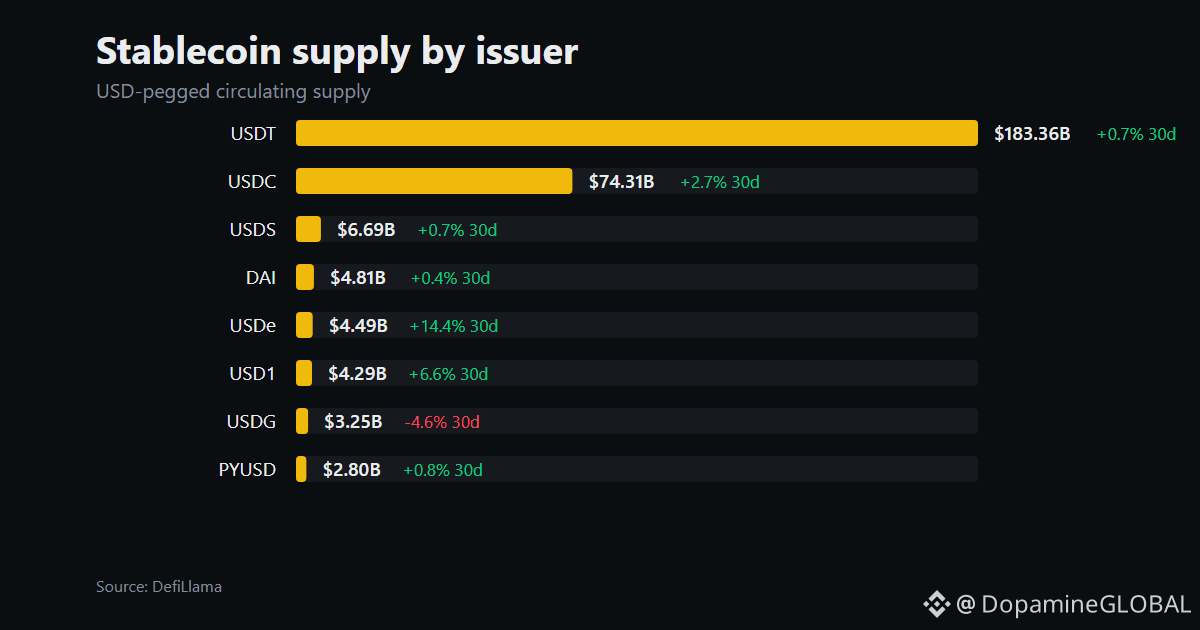
USDe gagne des parts de marché en stablecoins pendant que USDG se contracte, et le point important est que la base plus large adossée au dollar n’a que très peu augmenté.
Le $USDE , l’offre a progressé de 14,4 % sur 30 jours pour atteindre 4,49 Md$, soit 1,5 % du marché des stablecoins à 310,23 Md$. $USDG a chuté de 4,6 % à 3,25 Md$, soit 1,1 %. Cet écart ressemble moins à un vaste afflux de nouveaux capitaux qu’à des allocations qui se déplacent entre produits de stablecoins.
La lecture naïve serait : « la croissance de USDe correspond à une liquidité nouvelle ». Pas forcément. Si des traders échangent un stablecoin contre un autre, USDe peut gagner en offre sans que le marché crypto reçoive beaucoup de pouvoir d’achat supplémentaire. L’offre totale n’a augmenté que de 0,36 % sur 7 jours, soit 1,12 Md$.
Le graphique de l’émetteur met aussi en évidence le problème d’échelle. USDT conserve toujours 60,8 %, USDC 24,6 % et USDS 2,2 %. La croissance de USDe est significative pour sa propre distribution, mais elle n’a pas encore modifié l’infrastructure fondamentale du marché.
L’offre ne peut pas non plus nous dire si USDe est détenu en attente, utilisé comme collatéral ou déployé sur les marchés. Cela montre le contenant, pas la vélocité.
Ce n’est pas un conseil financier. Faites vos propres recherches.
#Stablecoins #USDe #USDG
USDe gagne des parts de marché en stablecoins pendant que USDG se contracte, et le point important est que la base plus large adossée au dollar n’a que très peu augmenté.
Le $USDE , l’offre a progressé de 14,4 % sur 30 jours pour atteindre 4,49 Md$, soit 1,5 % du marché des stablecoins à 310,23 Md$. $USDG a chuté de 4,6 % à 3,25 Md$, soit 1,1 %. Cet écart ressemble moins à un vaste afflux de nouveaux capitaux qu’à des allocations qui se déplacent entre produits de stablecoins.
La lecture naïve serait : « la croissance de USDe correspond à une liquidité nouvelle ». Pas forcément. Si des traders échangent un stablecoin contre un autre, USDe peut gagner en offre sans que le marché crypto reçoive beaucoup de pouvoir d’achat supplémentaire. L’offre totale n’a augmenté que de 0,36 % sur 7 jours, soit 1,12 Md$.
Le graphique de l’émetteur met aussi en évidence le problème d’échelle. USDT conserve toujours 60,8 %, USDC 24,6 % et USDS 2,2 %. La croissance de USDe est significative pour sa propre distribution, mais elle n’a pas encore modifié l’infrastructure fondamentale du marché.
L’offre ne peut pas non plus nous dire si USDe est détenu en attente, utilisé comme collatéral ou déployé sur les marchés. Cela montre le contenant, pas la vélocité.
Ce n’est pas un conseil financier. Faites vos propres recherches.
#Stablecoins #USDe #USDG
Le $USDE , l’offre a progressé de 14,4 % sur 30 jours pour atteindre 4,49 Md$, soit 1,5 % du marché des stablecoins à 310,23 Md$. $USDG a chuté de 4,6 % à 3,25 Md$, soit 1,1 %. Cet écart ressemble moins à un vaste afflux de nouveaux capitaux qu’à des allocations qui se déplacent entre produits de stablecoins.
La lecture naïve serait : « la croissance de USDe correspond à une liquidité nouvelle ». Pas forcément. Si des traders échangent un stablecoin contre un autre, USDe peut gagner en offre sans que le marché crypto reçoive beaucoup de pouvoir d’achat supplémentaire. L’offre totale n’a augmenté que de 0,36 % sur 7 jours, soit 1,12 Md$.
Le graphique de l’émetteur met aussi en évidence le problème d’échelle. USDT conserve toujours 60,8 %, USDC 24,6 % et USDS 2,2 %. La croissance de USDe est significative pour sa propre distribution, mais elle n’a pas encore modifié l’infrastructure fondamentale du marché.
L’offre ne peut pas non plus nous dire si USDe est détenu en attente, utilisé comme collatéral ou déployé sur les marchés. Cela montre le contenant, pas la vélocité.
Ce n’est pas un conseil financier. Faites vos propres recherches.
#Stablecoins #USDe #USDG
35
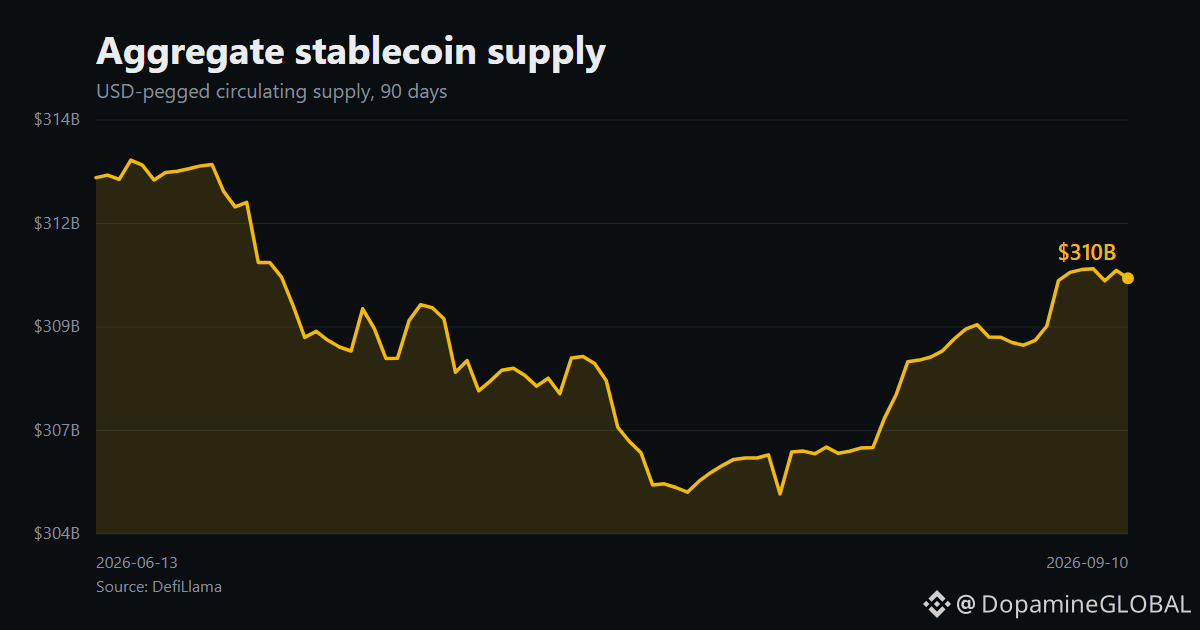
Le Bitcoin est en baisse de 3,56 % cette semaine, mais la base des stablecoins n’a quasiment pas bougé. L’offre agrégée adossée au dollar (USD) s’établit à 310,23 Md$, en hausse de seulement 0,36 %, soit 1,12 Md$, sur 7 jours.
Cet écart compte. Une sortie générale de liquidité se traduirait généralement par des stablecoins rachetés ou quittant le système. Or ce n’est pas le cas. La lecture la plus claire est une rotation au sein de la liquidité crypto existante : les détenteurs changent d’exposition, tandis que le montant du capital de règlement immobilisé on-chain reste presque à plat.
La conclusion naïve serait que la faiblesse du Bitcoin équivaut à une sortie de capitaux hors crypto. Les données sur l’offre ne vont pas dans ce sens. Elles indiquent plutôt un rééchelonnement des prix et un repositionnement, et non un retrait à grande échelle de poudre sèche.
Cela dit, l’offre agrégée peut masquer la plomberie. L’USDT peut croître sur une chaîne pendant qu’un autre émetteur se contracte ailleurs, et ce chiffre ne nous dit pas quels actifs ou quels sites ont reçu le capital redistribué. Le graphique des stablecoins sur 90 jours montre la base de liquidité, pas le chemin au niveau des portefeuilles.
C’est pourquoi $BTC faiblesse associée à une base de stablecoins à 310,23 Md$ est plus utile comme signal de structure de marché qu’un simple titre « risk-off ». L’argent existant est en train de bouger.
Ceci n’est pas un conseil financier. Faites vos propres recherches.
#Stablecoins #Bitcoin
Le Bitcoin est en baisse de 3,56 % cette semaine, mais la base des stablecoins n’a quasiment pas bougé. L’offre agrégée adossée au dollar (USD) s’établit à 310,23 Md$, en hausse de seulement 0,36 %, soit 1,12 Md$, sur 7 jours.
Cet écart compte. Une sortie générale de liquidité se traduirait généralement par des stablecoins rachetés ou quittant le système. Or ce n’est pas le cas. La lecture la plus claire est une rotation au sein de la liquidité crypto existante : les détenteurs changent d’exposition, tandis que le montant du capital de règlement immobilisé on-chain reste presque à plat.
La conclusion naïve serait que la faiblesse du Bitcoin équivaut à une sortie de capitaux hors crypto. Les données sur l’offre ne vont pas dans ce sens. Elles indiquent plutôt un rééchelonnement des prix et un repositionnement, et non un retrait à grande échelle de poudre sèche.
Cela dit, l’offre agrégée peut masquer la plomberie. L’USDT peut croître sur une chaîne pendant qu’un autre émetteur se contracte ailleurs, et ce chiffre ne nous dit pas quels actifs ou quels sites ont reçu le capital redistribué. Le graphique des stablecoins sur 90 jours montre la base de liquidité, pas le chemin au niveau des portefeuilles.
C’est pourquoi $BTC faiblesse associée à une base de stablecoins à 310,23 Md$ est plus utile comme signal de structure de marché qu’un simple titre « risk-off ». L’argent existant est en train de bouger.
Ceci n’est pas un conseil financier. Faites vos propres recherches.
#Stablecoins #Bitcoin
Cet écart compte. Une sortie générale de liquidité se traduirait généralement par des stablecoins rachetés ou quittant le système. Or ce n’est pas le cas. La lecture la plus claire est une rotation au sein de la liquidité crypto existante : les détenteurs changent d’exposition, tandis que le montant du capital de règlement immobilisé on-chain reste presque à plat.
La conclusion naïve serait que la faiblesse du Bitcoin équivaut à une sortie de capitaux hors crypto. Les données sur l’offre ne vont pas dans ce sens. Elles indiquent plutôt un rééchelonnement des prix et un repositionnement, et non un retrait à grande échelle de poudre sèche.
Cela dit, l’offre agrégée peut masquer la plomberie. L’USDT peut croître sur une chaîne pendant qu’un autre émetteur se contracte ailleurs, et ce chiffre ne nous dit pas quels actifs ou quels sites ont reçu le capital redistribué. Le graphique des stablecoins sur 90 jours montre la base de liquidité, pas le chemin au niveau des portefeuilles.
C’est pourquoi $BTC faiblesse associée à une base de stablecoins à 310,23 Md$ est plus utile comme signal de structure de marché qu’un simple titre « risk-off ». L’argent existant est en train de bouger.
Ceci n’est pas un conseil financier. Faites vos propres recherches.
#Stablecoins #Bitcoin
43


Article
Les grandes banques s’attaquent aux stablecoins🏦 Les banques entrent dans la course aux stablecoins
Les grandes banques s’enfoncent davantage dans les stablecoins. 👀
Un grand groupe travaille sur un stablecoin en USD pour les paiements et le règlement numérique.
Les stablecoins ont commencé avec la crypto.
Désormais, les banques veulent y participer.
#Stablecoins
#Banking #Crypto #USDC #USDT
Les grandes banques s’attaquent aux stablecoins
🏦 Les banques entrent dans la course aux stablecoins
Les grandes banques s’enfoncent davantage dans les stablecoins. 👀
Un grand groupe travaille sur un stablecoin en USD pour les paiements et le règlement numérique.
Les stablecoins ont commencé avec la crypto.
Désormais, les banques veulent y participer.
#Stablecoins
#Banking #Crypto #USDC #USDT
Les grandes banques s’enfoncent davantage dans les stablecoins. 👀
Un grand groupe travaille sur un stablecoin en USD pour les paiements et le règlement numérique.
Les stablecoins ont commencé avec la crypto.
Désormais, les banques veulent y participer.
#Stablecoins
#Banking #Crypto #USDC #USDT
27

·
--
SOMMET STABLECOIN 2026 : L’INFRASTRUCTURE DES 1 000 MILLIARDS DE DOLLARS EST LÀ ! 🌟
Singapour, 8 oct. - Le groupe XREX accueille le principal événement asiatique dédié aux stablecoins pour la 4e année, et les signaux sont MASSIFS pour les traders crypto ! 📊
💡 POINTS CLÉS :
✅ Les stablecoins = un secteur indépendant - vers une capitalisation de 1 000 MILLIARDS de dollars
✅ 30+ intervenants de Curve, Aave, Coinbase, Stellar, Paxos, Galaxy Ventures
✅ 600+ participants - banques, régulateurs, géants du paiement se réunissent
✅ L’avantage de Singapour - 37 sociétés agréées DPT + tests du projet MAS BLOOM
IMPLICATIONS POUR LE TRADING :
🔹 Curve Finance (CRV) - Sponsor principal + rôle des stablecoins DeFi dans l’infrastructure
→ Objectif de prix : 0,47 $+ d’ici la fin de l’année (+33% de potentiel) coincodex.com
🔹 Aave (AAVE) - Stani Kulechov prend la parole = un grand titre sur le prêt en stablecoins ?
→ Actuel : ~125 $, domination du protocole en croissance www.coingecko.com
🔹 Stellar (XLM) - Infrastructure de paiement transfrontalier
→ CBO Raja Chakravorti au sommet = annonces de partenariats ?
Clarté réglementaire à Singapour = TENDANCE HAUSSIÈRE pour tous les projets de stablecoins
→ Une nouvelle législation vient d’être publiée le 1er sept. 2026 www.gibsondunn.com
💰 POURQUOI C’EST IMPORTANT :
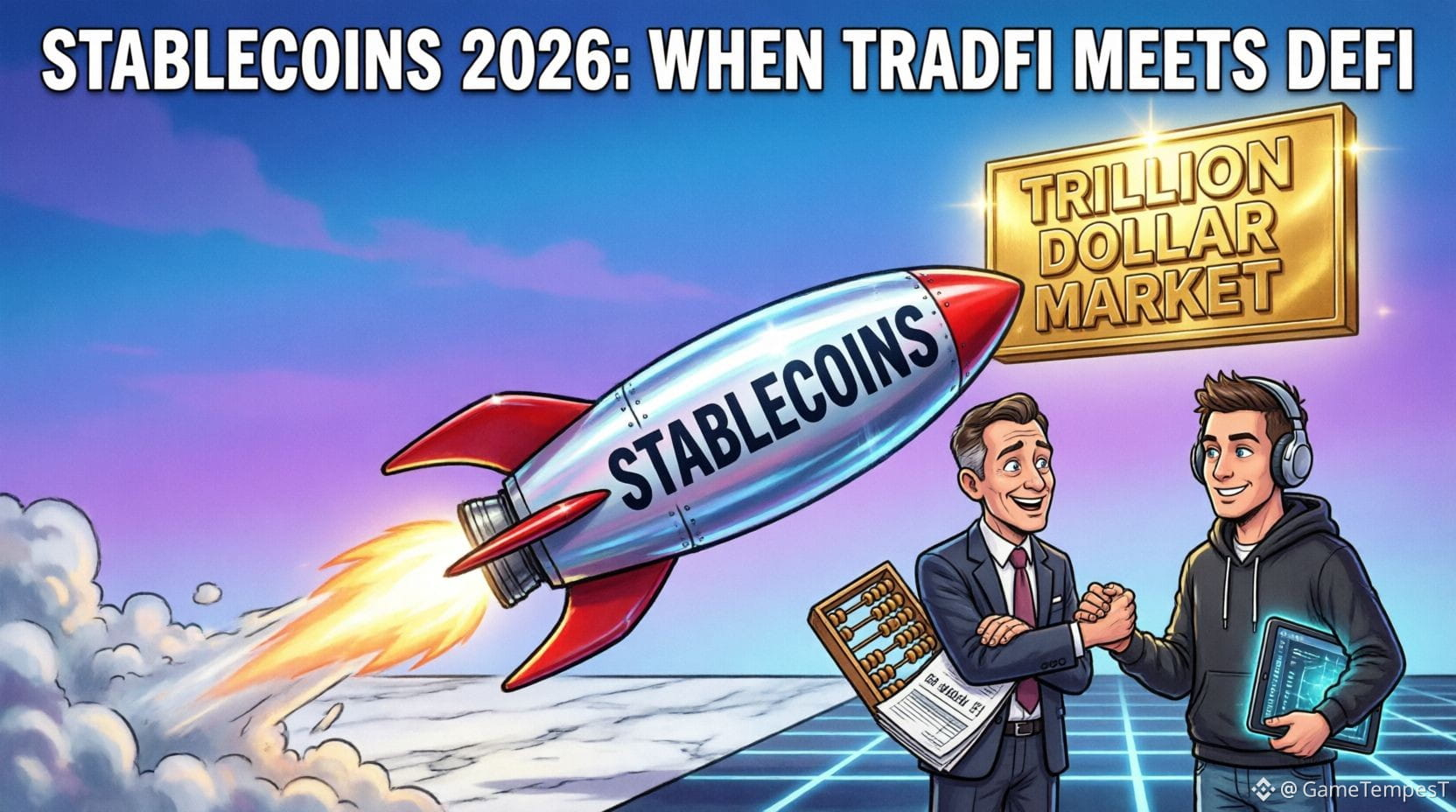
Quand la TRADFI rencontre la DEFI à cette échelle, les flux de liquidité suivent. Les stablecoins ne sont plus un simple « crypto » : ce sont des INFRASTRUCTURES FINANCIÈRES.
Wayne Huang (PDG de XREX) a parfaitement résumé : « Les stablecoins redéfinissent la façon dont l’argent circule, se compense et se règle. »
PLACEZ-VOUS :
Surveillez CRV, AAVE, XLM pour des mouvements potentiels à la cassure
Projets réglementés à Singapour = entrée de capitaux institutionnels
Tokens de paiement transfrontaliers = vague d’adoption massive
La convergence est RÉELLE. Êtes-vous prêt ? 🎯
#Stablecoins #crypto #defi
SOMMET STABLECOIN 2026 : L’INFRASTRUCTURE DES 1 000 MILLIARDS DE DOLLARS EST LÀ ! 🌟
Singapour, 8 oct. - Le groupe XREX accueille le principal événement asiatique dédié aux stablecoins pour la 4e année, et les signaux sont MASSIFS pour les traders crypto ! 📊
💡 POINTS CLÉS :
✅ Les stablecoins = un secteur indépendant - vers une capitalisation de 1 000 MILLIARDS de dollars
✅ 30+ intervenants de Curve, Aave, Coinbase, Stellar, Paxos, Galaxy Ventures
✅ 600+ participants - banques, régulateurs, géants du paiement se réunissent
✅ L’avantage de Singapour - 37 sociétés agréées DPT + tests du projet MAS BLOOM
IMPLICATIONS POUR LE TRADING :
🔹 Curve Finance (CRV) - Sponsor principal + rôle des stablecoins DeFi dans l’infrastructure
→ Objectif de prix : 0,47 $+ d’ici la fin de l’année (+33% de potentiel) coincodex.com
🔹 Aave (AAVE) - Stani Kulechov prend la parole = un grand titre sur le prêt en stablecoins ?
→ Actuel : ~125 $, domination du protocole en croissance www.coingecko.com
🔹 Stellar (XLM) - Infrastructure de paiement transfrontalier
→ CBO Raja Chakravorti au sommet = annonces de partenariats ?
Clarté réglementaire à Singapour = TENDANCE HAUSSIÈRE pour tous les projets de stablecoins
→ Une nouvelle législation vient d’être publiée le 1er sept. 2026 www.gibsondunn.com
💰 POURQUOI C’EST IMPORTANT :
Quand la TRADFI rencontre la DEFI à cette échelle, les flux de liquidité suivent. Les stablecoins ne sont plus un simple « crypto » : ce sont des INFRASTRUCTURES FINANCIÈRES.
Wayne Huang (PDG de XREX) a parfaitement résumé : « Les stablecoins redéfinissent la façon dont l’argent circule, se compense et se règle. »
PLACEZ-VOUS :
Surveillez CRV, AAVE, XLM pour des mouvements potentiels à la cassure
Projets réglementés à Singapour = entrée de capitaux institutionnels
Tokens de paiement transfrontaliers = vague d’adoption massive
La convergence est RÉELLE. Êtes-vous prêt ? 🎯
#Stablecoins #crypto #defi
Singapour, 8 oct. - Le groupe XREX accueille le principal événement asiatique dédié aux stablecoins pour la 4e année, et les signaux sont MASSIFS pour les traders crypto ! 📊
💡 POINTS CLÉS :
✅ Les stablecoins = un secteur indépendant - vers une capitalisation de 1 000 MILLIARDS de dollars
✅ 30+ intervenants de Curve, Aave, Coinbase, Stellar, Paxos, Galaxy Ventures
✅ 600+ participants - banques, régulateurs, géants du paiement se réunissent
✅ L’avantage de Singapour - 37 sociétés agréées DPT + tests du projet MAS BLOOM
IMPLICATIONS POUR LE TRADING :
🔹 Curve Finance (CRV) - Sponsor principal + rôle des stablecoins DeFi dans l’infrastructure
→ Objectif de prix : 0,47 $+ d’ici la fin de l’année (+33% de potentiel) coincodex.com
🔹 Aave (AAVE) - Stani Kulechov prend la parole = un grand titre sur le prêt en stablecoins ?
→ Actuel : ~125 $, domination du protocole en croissance www.coingecko.com
🔹 Stellar (XLM) - Infrastructure de paiement transfrontalier
→ CBO Raja Chakravorti au sommet = annonces de partenariats ?
Clarté réglementaire à Singapour = TENDANCE HAUSSIÈRE pour tous les projets de stablecoins
→ Une nouvelle législation vient d’être publiée le 1er sept. 2026 www.gibsondunn.com
💰 POURQUOI C’EST IMPORTANT :
Quand la TRADFI rencontre la DEFI à cette échelle, les flux de liquidité suivent. Les stablecoins ne sont plus un simple « crypto » : ce sont des INFRASTRUCTURES FINANCIÈRES.
Wayne Huang (PDG de XREX) a parfaitement résumé : « Les stablecoins redéfinissent la façon dont l’argent circule, se compense et se règle. »
PLACEZ-VOUS :
Surveillez CRV, AAVE, XLM pour des mouvements potentiels à la cassure
Projets réglementés à Singapour = entrée de capitaux institutionnels
Tokens de paiement transfrontaliers = vague d’adoption massive
La convergence est RÉELLE. Êtes-vous prêt ? 🎯
#Stablecoins #crypto #defi
165

Détention de 1.6 USDT en $USDT
💵 Tether lance un fonds de crédit privé de 400 millions de dollars
Tether s’associe à Fasanara pour lancer un fonds de 400 millions de dollars axé sur le crédit privé.
Le partenariat utilisera également l’infrastructure des stablecoins pour les paiements.
Cela montre comment les stablecoins s’étendent au-delà du trading crypto traditionnel.
$USDT
#Tether #USDT #Stablecoins #Crypto
💵 Tether lance un fonds de crédit privé de 400 millions de dollars
Tether s’associe à Fasanara pour lancer un fonds de 400 millions de dollars axé sur le crédit privé.
Le partenariat utilisera également l’infrastructure des stablecoins pour les paiements.
Cela montre comment les stablecoins s’étendent au-delà du trading crypto traditionnel.
$USDT
#Tether #USDT #Stablecoins #Crypto
Tether s’associe à Fasanara pour lancer un fonds de 400 millions de dollars axé sur le crédit privé.
Le partenariat utilisera également l’infrastructure des stablecoins pour les paiements.
Cela montre comment les stablecoins s’étendent au-delà du trading crypto traditionnel.
$USDT
#Tether #USDT #Stablecoins #Crypto

23
·
--
Les stablecoins deviennent discrètement l’innovation la plus décisive dans le crypto — pas à cause de la spéculation, mais grâce aux “rails”.
Alors que la plupart de l’attention du marché se concentre sur l’évolution des prix $BTC and $ETH , la vraie histoire de volume se joue en dessous : les stablecoins règlent désormais des milliers de milliards de dollars de valeur de transferts annuels, entrant de plus en plus en concurrence avec des systèmes historiques comme SWIFT et les réseaux de cartes. La différence ? Une finalité du règlement en quelques secondes, des frais quasi nuls et une disponibilité 24/7.
Trois changements structurels accélèrent cette dynamique :
1. Adoption par les trésoreries d’entreprise — Les entreprises ne se contentent plus de détenir du crypto ; elles utilisent des stablecoins pour des paiements transfrontaliers, des règlements aux fournisseurs et la paie dans des régions où le système bancaire est fragmenté.
2. Débit des solutions de couche 2 — Les réseaux qui réduisent les coûts de transaction à un niveau inférieur au centime rendent les micropaiements en stablecoins économiquement viables pour la première fois.
3. Clarté réglementaire (lentement) — Les juridictions dotées de cadres clairs pour les stablecoins attirent les développeurs et les capitaux. Celles qui n’en ont pas regardent les talents partir.
Conséquence pour les investisseurs : ne négligez pas la couche d’infrastructure. Les plus grands gagnants du prochain cycle haussier ne seront peut-être pas les tokens les plus médiatisés — ce seront les réseaux qui traitent discrètement, à grande échelle, des volumes de paiements dans le monde réel.
Les rails de paiement sont ennuyeux. C’est précisément pour cela qu’ils gagnent.
#Stablecoins #CryptoPayments #DeFi #Web3 #FinancialInclusion
Les stablecoins deviennent discrètement l’innovation la plus décisive dans le crypto — pas à cause de la spéculation, mais grâce aux “rails”.
Alors que la plupart de l’attention du marché se concentre sur l’évolution des prix $BTC and $ETH , la vraie histoire de volume se joue en dessous : les stablecoins règlent désormais des milliers de milliards de dollars de valeur de transferts annuels, entrant de plus en plus en concurrence avec des systèmes historiques comme SWIFT et les réseaux de cartes. La différence ? Une finalité du règlement en quelques secondes, des frais quasi nuls et une disponibilité 24/7.
Trois changements structurels accélèrent cette dynamique :
1. Adoption par les trésoreries d’entreprise — Les entreprises ne se contentent plus de détenir du crypto ; elles utilisent des stablecoins pour des paiements transfrontaliers, des règlements aux fournisseurs et la paie dans des régions où le système bancaire est fragmenté.
2. Débit des solutions de couche 2 — Les réseaux qui réduisent les coûts de transaction à un niveau inférieur au centime rendent les micropaiements en stablecoins économiquement viables pour la première fois.
3. Clarté réglementaire (lentement) — Les juridictions dotées de cadres clairs pour les stablecoins attirent les développeurs et les capitaux. Celles qui n’en ont pas regardent les talents partir.
Conséquence pour les investisseurs : ne négligez pas la couche d’infrastructure. Les plus grands gagnants du prochain cycle haussier ne seront peut-être pas les tokens les plus médiatisés — ce seront les réseaux qui traitent discrètement, à grande échelle, des volumes de paiements dans le monde réel.
Les rails de paiement sont ennuyeux. C’est précisément pour cela qu’ils gagnent.
#Stablecoins #CryptoPayments #DeFi #Web3 #FinancialInclusion
Alors que la plupart de l’attention du marché se concentre sur l’évolution des prix $BTC and $ETH , la vraie histoire de volume se joue en dessous : les stablecoins règlent désormais des milliers de milliards de dollars de valeur de transferts annuels, entrant de plus en plus en concurrence avec des systèmes historiques comme SWIFT et les réseaux de cartes. La différence ? Une finalité du règlement en quelques secondes, des frais quasi nuls et une disponibilité 24/7.
Trois changements structurels accélèrent cette dynamique :
1. Adoption par les trésoreries d’entreprise — Les entreprises ne se contentent plus de détenir du crypto ; elles utilisent des stablecoins pour des paiements transfrontaliers, des règlements aux fournisseurs et la paie dans des régions où le système bancaire est fragmenté.
2. Débit des solutions de couche 2 — Les réseaux qui réduisent les coûts de transaction à un niveau inférieur au centime rendent les micropaiements en stablecoins économiquement viables pour la première fois.
3. Clarté réglementaire (lentement) — Les juridictions dotées de cadres clairs pour les stablecoins attirent les développeurs et les capitaux. Celles qui n’en ont pas regardent les talents partir.
Conséquence pour les investisseurs : ne négligez pas la couche d’infrastructure. Les plus grands gagnants du prochain cycle haussier ne seront peut-être pas les tokens les plus médiatisés — ce seront les réseaux qui traitent discrètement, à grande échelle, des volumes de paiements dans le monde réel.
Les rails de paiement sont ennuyeux. C’est précisément pour cela qu’ils gagnent.
#Stablecoins #CryptoPayments #DeFi #Web3 #FinancialInclusion
268
Connectez-vous pour découvrir plus de contenu
Rejoignez la communauté mondiale des adeptes de cryptomonnaies sur Binance Square
⚡️ Suviez les dernières informations importantes sur les cryptomonnaies.
💬 Jugé digne de confiance par la plus grande plateforme d’échange de cryptomonnaies au monde.
👍 Découvrez les connaissances que partagent les créateurs vérifiés.
Adresse e-mail/Nº de téléphone
Sujets d’actualité
1
#CPIWatch
87.1M vues
503,117 mentions
2
#EtherRalliesAsBearishBetsLiquidate
0 vues
2 mentions
3
#EthereumHits$2600FirstTimeInSevenMonths
65 vues
6 mentions
4
#USInflationHoldsAt3.4%InAugust
0 vues
1 mentions
5
#CircleProposes$400MTazapayAcquisition
65 vues
5 mentions
6
#BitcoinReboundsAbove$79KAfterCPI
4,346 vues
141 mentions
7
#BNBTops730USDT
33,999 vues
820 mentions
8
#BitcoinOpenInterestShareRisesTo42.1%
19,189 vues
459 mentions
9
#OpenAILaunchesAgentsAPIPublicBeta
15,492 vues
287 mentions
10
#SpotGoldRises0.87%SilverGains1.13%
13,954 vues
254 mentions