

NOISEMEKA
121 Posts

NOISEMEKA
 Square Verified
Report
Block User
BP-243A07A4C319
Open Trade
Frequent Trader
2.7 Years
105 Following
138 Followers
71 Liked
Posts
Portfolio
·
--
Market Update: Direction Still Unclear
The crypto market is still trading at elevated levels, but the next clear direction hasn’t been confirmed yet.
$BTC is hovering around $84K. The $87K area remains a key resistance zone, and a breakout likely needs strong volume to confirm it. For now, $84K is the key short-term support.
$ETH is consolidating around $2,665–$2,685 as selling pressure starts to ease. A reclaim of $2,700 could open the way toward $2,750, while losing $2,650 would put $2,600 back in focus.
For now, patience matters. Let price confirm the direction before chasing the move.
Market Update: Direction Still Unclear
The crypto market is still trading at elevated levels, but the next clear direction hasn’t been confirmed yet.
$BTC is hovering around $84K. The $87K area remains a key resistance zone, and a breakout likely needs strong volume to confirm it. For now, $84K is the key short-term support.
$ETH is consolidating around $2,665–$2,685 as selling pressure starts to ease. A reclaim of $2,700 could open the way toward $2,750, while losing $2,650 would put $2,600 back in focus.
For now, patience matters. Let price confirm the direction before chasing the move.
The crypto market is still trading at elevated levels, but the next clear direction hasn’t been confirmed yet.
$BTC is hovering around $84K. The $87K area remains a key resistance zone, and a breakout likely needs strong volume to confirm it. For now, $84K is the key short-term support.
$ETH is consolidating around $2,665–$2,685 as selling pressure starts to ease. A reclaim of $2,700 could open the way toward $2,750, while losing $2,650 would put $2,600 back in focus.
For now, patience matters. Let price confirm the direction before chasing the move.
79
·
--
Why DeFi Apps Need More Than a Swap Button
When you use a DeFi app, the swap button is only the visible part.
Behind that simple action, there can be liquidity discovery, route selection, quote comparison, transaction execution, and settlement.
This is where STON.fi’s infrastructure becomes interesting.
With tools like the STON.fi SDK and Omniston, developers can build swap experiences without creating every piece of routing and liquidity infrastructure from zero.
That means wallets, Telegram apps, launch platforms, and other TON projects can focus more on their own product experience while connecting to established DeFi infrastructure.
The bigger picture?
DeFi becomes stronger when protocols can build on top of each other instead of rebuilding the same infrastructure separately.
That is the power of composability.
#STONfi #TON #Omniston #DeFi #Web3 $TON @stonfi
Why DeFi Apps Need More Than a Swap Button
When you use a DeFi app, the swap button is only the visible part.
Behind that simple action, there can be liquidity discovery, route selection, quote comparison, transaction execution, and settlement.
This is where STON.fi’s infrastructure becomes interesting.
With tools like the STON.fi SDK and Omniston, developers can build swap experiences without creating every piece of routing and liquidity infrastructure from zero.
That means wallets, Telegram apps, launch platforms, and other TON projects can focus more on their own product experience while connecting to established DeFi infrastructure.
The bigger picture?
DeFi becomes stronger when protocols can build on top of each other instead of rebuilding the same infrastructure separately.
That is the power of composability.
#STONfi #TON #Omniston #DeFi #Web3 $TON @STONfi DEX
When you use a DeFi app, the swap button is only the visible part.
Behind that simple action, there can be liquidity discovery, route selection, quote comparison, transaction execution, and settlement.
This is where STON.fi’s infrastructure becomes interesting.
With tools like the STON.fi SDK and Omniston, developers can build swap experiences without creating every piece of routing and liquidity infrastructure from zero.
That means wallets, Telegram apps, launch platforms, and other TON projects can focus more on their own product experience while connecting to established DeFi infrastructure.
The bigger picture?
DeFi becomes stronger when protocols can build on top of each other instead of rebuilding the same infrastructure separately.
That is the power of composability.
#STONfi #TON #Omniston #DeFi #Web3 $TON @STONfi DEX

80
·
--
Before swapping a token on DeFi, check what you’re actually interacting with.
One thing I appreciate about STON.fi is that its open ecosystem doesn't mean every token is treated as if it has the same risk profile.
STON.fi uses interface labels to give users additional context around certain tokens, including Fake, Honeypot, Taxable, Suspicious, and DMCA Notice categories.
Why does this matter?
Because on a permissionless blockchain, anyone can create a token.
A familiar name or logo doesn't automatically mean you're holding the official asset.
For example:
🔹 Fake — designed to imitate a known asset or brand.
🔹 Honeypot — may allow buying while preventing normal selling.
🔹 Taxable — the token contract includes additional transfer/swap fees.
🔹 Suspicious — raises specific concerns that deserve extra attention.
🔹 DMCA Notice — associated with an intellectual-property complaint.
STON.fi also applies different restrictions depending on the category. Some flagged tokens cannot be swapped through the dApp, while others remain accessible with additional warnings or conditions.
The lesson isn't “trust the label.”
It's use the label as a reason to investigate.
Before interacting with an unfamiliar token:
Verify the contract address → check the official project → understand the token mechanics → look for unusual fees or restrictions → then make your own decision.
A token's name, logo, or ticker is not enough.
In DeFi, knowing exactly what contract you're interacting with is part of DYOR.
And sometimes the most useful feature isn't another trading tool.
It's a small warning that makes you stop and look twice.
#STONfi #TON #DeFi #CryptoEducation #Web3 @stonfi $TON
Before swapping a token on DeFi, check what you’re actually interacting with.
One thing I appreciate about STON.fi is that its open ecosystem doesn't mean every token is treated as if it has the same risk profile.
STON.fi uses interface labels to give users additional context around certain tokens, including Fake, Honeypot, Taxable, Suspicious, and DMCA Notice categories.
Why does this matter?
Because on a permissionless blockchain, anyone can create a token.
A familiar name or logo doesn't automatically mean you're holding the official asset.
For example:
🔹 Fake — designed to imitate a known asset or brand.
🔹 Honeypot — may allow buying while preventing normal selling.
🔹 Taxable — the token contract includes additional transfer/swap fees.
🔹 Suspicious — raises specific concerns that deserve extra attention.
🔹 DMCA Notice — associated with an intellectual-property complaint.
STON.fi also applies different restrictions depending on the category. Some flagged tokens cannot be swapped through the dApp, while others remain accessible with additional warnings or conditions.
The lesson isn't “trust the label.”
It's use the label as a reason to investigate.
Before interacting with an unfamiliar token:
Verify the contract address → check the official project → understand the token mechanics → look for unusual fees or restrictions → then make your own decision.
A token's name, logo, or ticker is not enough.
In DeFi, knowing exactly what contract you're interacting with is part of DYOR.
And sometimes the most useful feature isn't another trading tool.
It's a small warning that makes you stop and look twice.
#STONfi #TON #DeFi #CryptoEducation #Web3 @STONfi DEX $TON
One thing I appreciate about STON.fi is that its open ecosystem doesn't mean every token is treated as if it has the same risk profile.
STON.fi uses interface labels to give users additional context around certain tokens, including Fake, Honeypot, Taxable, Suspicious, and DMCA Notice categories.
Why does this matter?
Because on a permissionless blockchain, anyone can create a token.
A familiar name or logo doesn't automatically mean you're holding the official asset.
For example:
🔹 Fake — designed to imitate a known asset or brand.
🔹 Honeypot — may allow buying while preventing normal selling.
🔹 Taxable — the token contract includes additional transfer/swap fees.
🔹 Suspicious — raises specific concerns that deserve extra attention.
🔹 DMCA Notice — associated with an intellectual-property complaint.
STON.fi also applies different restrictions depending on the category. Some flagged tokens cannot be swapped through the dApp, while others remain accessible with additional warnings or conditions.
The lesson isn't “trust the label.”
It's use the label as a reason to investigate.
Before interacting with an unfamiliar token:
Verify the contract address → check the official project → understand the token mechanics → look for unusual fees or restrictions → then make your own decision.
A token's name, logo, or ticker is not enough.
In DeFi, knowing exactly what contract you're interacting with is part of DYOR.
And sometimes the most useful feature isn't another trading tool.
It's a small warning that makes you stop and look twice.
#STONfi #TON #DeFi #CryptoEducation #Web3 @STONfi DEX $TON
30
·
--
A new chain joining STON.fi cross-chain swaps is bigger than just adding another network.
Arc is built specifically around stablecoin finance, with USDC used for network fees and an EVM-compatible environment for developers.
Now, through STON.fi’s cross-chain infrastructure, users can access USDC on Arc alongside stablecoin liquidity across multiple supported networks.
Why does this matter?
Liquidity is fragmented across chains.
The more networks that can connect through one swap experience, the less users have to think about where their assets currently live.
And the interesting part is that Arc is not simply another chain being added to a list.
Its design focuses on payments, FX, capital markets and stablecoin-native financial activity, making stablecoin connectivity especially relevant.
For me, the bigger lesson is simple:
Cross-chain DeFi isn't only about moving tokens between chains.
It's about making liquidity feel more connected.
STON.fi adding Arc shows how Omniston can continue expanding that connection across different blockchain ecosystems.
The initial $1,000-per-transaction limit is part of the launch conditions, so users should check the current limits before swapping.
#STONfi #Arc #TON #DeFi #Stablecoins @stonfi $TON
A new chain joining STON.fi cross-chain swaps is bigger than just adding another network.
Arc is built specifically around stablecoin finance, with USDC used for network fees and an EVM-compatible environment for developers.
Now, through STON.fi’s cross-chain infrastructure, users can access USDC on Arc alongside stablecoin liquidity across multiple supported networks.
Why does this matter?
Liquidity is fragmented across chains.
The more networks that can connect through one swap experience, the less users have to think about where their assets currently live.
And the interesting part is that Arc is not simply another chain being added to a list.
Its design focuses on payments, FX, capital markets and stablecoin-native financial activity, making stablecoin connectivity especially relevant.
For me, the bigger lesson is simple:
Cross-chain DeFi isn't only about moving tokens between chains.
It's about making liquidity feel more connected.
STON.fi adding Arc shows how Omniston can continue expanding that connection across different blockchain ecosystems.
The initial $1,000-per-transaction limit is part of the launch conditions, so users should check the current limits before swapping.
#STONfi #Arc #TON #DeFi #Stablecoins @STONfi DEX $TON
Arc is built specifically around stablecoin finance, with USDC used for network fees and an EVM-compatible environment for developers.
Now, through STON.fi’s cross-chain infrastructure, users can access USDC on Arc alongside stablecoin liquidity across multiple supported networks.
Why does this matter?
Liquidity is fragmented across chains.
The more networks that can connect through one swap experience, the less users have to think about where their assets currently live.
And the interesting part is that Arc is not simply another chain being added to a list.
Its design focuses on payments, FX, capital markets and stablecoin-native financial activity, making stablecoin connectivity especially relevant.
For me, the bigger lesson is simple:
Cross-chain DeFi isn't only about moving tokens between chains.
It's about making liquidity feel more connected.
STON.fi adding Arc shows how Omniston can continue expanding that connection across different blockchain ecosystems.
The initial $1,000-per-transaction limit is part of the launch conditions, so users should check the current limits before swapping.
#STONfi #Arc #TON #DeFi #Stablecoins @STONfi DEX $TON
115
·
--
A liquidity pool is more than two tokens sitting together.
When you see a pair like STON/USDT on STON.fi, it is easy to think the pool is simply a place where two assets are stored.
But the pool is actually part of the mechanism that allows users to trade without relying on a traditional order book.
Here’s the simple idea:
Liquidity providers deposit the required assets → the pool holds that liquidity → traders interact with the pool when swapping → the pool’s token balances change after each trade.
This creates an important relationship between traders and liquidity providers.
🔹 Traders need liquidity
Without sufficient liquidity, larger swaps can move the pool price significantly.
That can lead to higher price impact for the trader.
🔹 Liquidity providers supply the trading environment
LPs contribute assets to the pool and receive LP tokens representing their share of that pool.
Their liquidity helps make swaps possible.
🔹 Trading changes the pool
Every swap changes the proportion of assets inside the pool.
That means the pool is constantly responding to trading activity rather than simply sitting there holding tokens.
This is one reason volume, liquidity depth and pool composition matter when researching a pool.
The bigger lesson
DeFi isn't only about the person making the swap.
There is an entire system working underneath:
Trader → needs liquidity
Liquidity provider → supplies liquidity
Pool → facilitates the swap
Protocol → coordinates the mechanism
Understanding these relationships makes it much easier to understand why DEXs work the way they do.
So the next time you see a liquidity pool on STON.fi, don't just look at the token pair.
Ask:
How much liquidity is available?
How active is the pool?
What assets am I exposing myself to?
What are the potential risks and rewards?
That is where meaningful DeFi research begins.
#STONfi #TON #DeFi #Liquidity #CryptoEducation @stonfi $TON
A liquidity pool is more than two tokens sitting together.
When you see a pair like STON/USDT on STON.fi, it is easy to think the pool is simply a place where two assets are stored.
But the pool is actually part of the mechanism that allows users to trade without relying on a traditional order book.
Here’s the simple idea:
Liquidity providers deposit the required assets → the pool holds that liquidity → traders interact with the pool when swapping → the pool’s token balances change after each trade.
This creates an important relationship between traders and liquidity providers.
🔹 Traders need liquidity
Without sufficient liquidity, larger swaps can move the pool price significantly.
That can lead to higher price impact for the trader.
🔹 Liquidity providers supply the trading environment
LPs contribute assets to the pool and receive LP tokens representing their share of that pool.
Their liquidity helps make swaps possible.
🔹 Trading changes the pool
Every swap changes the proportion of assets inside the pool.
That means the pool is constantly responding to trading activity rather than simply sitting there holding tokens.
This is one reason volume, liquidity depth and pool composition matter when researching a pool.
The bigger lesson
DeFi isn't only about the person making the swap.
There is an entire system working underneath:
Trader → needs liquidity
Liquidity provider → supplies liquidity
Pool → facilitates the swap
Protocol → coordinates the mechanism
Understanding these relationships makes it much easier to understand why DEXs work the way they do.
So the next time you see a liquidity pool on STON.fi, don't just look at the token pair.
Ask:
How much liquidity is available?
How active is the pool?
What assets am I exposing myself to?
What are the potential risks and rewards?
That is where meaningful DeFi research begins.
#STONfi #TON #DeFi #Liquidity #CryptoEducation @STONfi DEX $TON
When you see a pair like STON/USDT on STON.fi, it is easy to think the pool is simply a place where two assets are stored.
But the pool is actually part of the mechanism that allows users to trade without relying on a traditional order book.
Here’s the simple idea:
Liquidity providers deposit the required assets → the pool holds that liquidity → traders interact with the pool when swapping → the pool’s token balances change after each trade.
This creates an important relationship between traders and liquidity providers.
🔹 Traders need liquidity
Without sufficient liquidity, larger swaps can move the pool price significantly.
That can lead to higher price impact for the trader.
🔹 Liquidity providers supply the trading environment
LPs contribute assets to the pool and receive LP tokens representing their share of that pool.
Their liquidity helps make swaps possible.
🔹 Trading changes the pool
Every swap changes the proportion of assets inside the pool.
That means the pool is constantly responding to trading activity rather than simply sitting there holding tokens.
This is one reason volume, liquidity depth and pool composition matter when researching a pool.
The bigger lesson
DeFi isn't only about the person making the swap.
There is an entire system working underneath:
Trader → needs liquidity
Liquidity provider → supplies liquidity
Pool → facilitates the swap
Protocol → coordinates the mechanism
Understanding these relationships makes it much easier to understand why DEXs work the way they do.
So the next time you see a liquidity pool on STON.fi, don't just look at the token pair.
Ask:
How much liquidity is available?
How active is the pool?
What assets am I exposing myself to?
What are the potential risks and rewards?
That is where meaningful DeFi research begins.
#STONfi #TON #DeFi #Liquidity #CryptoEducation @STONfi DEX $TON
23
·
--
TONCO’s integration with Omniston goes beyond simply adding cross-chain swaps.
TONCO provides concentrated-liquidity DEX infrastructure.
STON.fi provides DeFi liquidity infrastructure.
Omniston adds cross-chain swap execution.
The integration means TONCO can offer cross-chain functionality without building the entire infrastructure itself. It also shows how DeFi infrastructure can become composable, allowing DEXs, wallets, and other applications to connect specialized components rather than rebuilding everything from scratch.
The bigger idea: complex cross-chain processes can happen underneath while users get a simpler trading experience. For builders, reusable infrastructure makes it easier to add cross-chain functionality and focus on their product's unique value.
#STONfi #Toncoin #web3 #DEFİ @stonfi $TON
TONCO’s integration with Omniston goes beyond simply adding cross-chain swaps.
TONCO provides concentrated-liquidity DEX infrastructure.
STON.fi provides DeFi liquidity infrastructure.
Omniston adds cross-chain swap execution.
The integration means TONCO can offer cross-chain functionality without building the entire infrastructure itself. It also shows how DeFi infrastructure can become composable, allowing DEXs, wallets, and other applications to connect specialized components rather than rebuilding everything from scratch.
The bigger idea: complex cross-chain processes can happen underneath while users get a simpler trading experience. For builders, reusable infrastructure makes it easier to add cross-chain functionality and focus on their product's unique value.
#STONfi #Toncoin #web3 #DEFİ @STONfi DEX $TON
TONCO provides concentrated-liquidity DEX infrastructure.
STON.fi provides DeFi liquidity infrastructure.
Omniston adds cross-chain swap execution.
The integration means TONCO can offer cross-chain functionality without building the entire infrastructure itself. It also shows how DeFi infrastructure can become composable, allowing DEXs, wallets, and other applications to connect specialized components rather than rebuilding everything from scratch.
The bigger idea: complex cross-chain processes can happen underneath while users get a simpler trading experience. For builders, reusable infrastructure makes it easier to add cross-chain functionality and focus on their product's unique value.
#STONfi #Toncoin #web3 #DEFİ @STONfi DEX $TON
75
·
--
DeFi campaigns can teach you more than just how to earn rewards.
Take STON.fi’s “One Swap. Across Chains” campaign.
At first glance, it looks like a campaign where users complete tasks and collect Miles. But there is a deeper idea behind it.
The campaign connects different parts of the TON ecosystem into one experience:
🔹 Cross-chain swaps - experience moving value between different networks.
🔹 Stoncat - explore how NFTs can have utility beyond simply being collectibles.
🔹 Telegram-native experiences - interact with DeFi through products built around Telegram.
🔹 Partner integrations - discover how wallets and other Web3 products can connect to STON.fi.
🔹 Referrals - participation can extend beyond your own activity.
One important detail is that not every action automatically qualifies. The campaign rules specify what counts, when an action must happen, and how Miles are tracked. For example, referral Miles require the invited user to complete a qualifying cross-chain swap before they count.
That is something I think more users should pay attention to:
Don't just chase the reward. Understand the mechanism behind it.
When you understand how the system works, you learn how different pieces of an ecosystem connect.
And that is where campaigns become more than campaigns.
They become a practical way to explore DeFi.
STON.fi is building an ecosystem where swapping, cross-chain liquidity, wallets, Telegram, partners and community participation can work together.
#STONfi #TON #DeFi #Web3 #CryptoEducation @stonfi $TON
DeFi campaigns can teach you more than just how to earn rewards.
Take STON.fi’s “One Swap. Across Chains” campaign.
At first glance, it looks like a campaign where users complete tasks and collect Miles. But there is a deeper idea behind it.
The campaign connects different parts of the TON ecosystem into one experience:
🔹 Cross-chain swaps - experience moving value between different networks.
🔹 Stoncat - explore how NFTs can have utility beyond simply being collectibles.
🔹 Telegram-native experiences - interact with DeFi through products built around Telegram.
🔹 Partner integrations - discover how wallets and other Web3 products can connect to STON.fi.
🔹 Referrals - participation can extend beyond your own activity.
One important detail is that not every action automatically qualifies. The campaign rules specify what counts, when an action must happen, and how Miles are tracked. For example, referral Miles require the invited user to complete a qualifying cross-chain swap before they count.
That is something I think more users should pay attention to:
Don't just chase the reward. Understand the mechanism behind it.
When you understand how the system works, you learn how different pieces of an ecosystem connect.
And that is where campaigns become more than campaigns.
They become a practical way to explore DeFi.
STON.fi is building an ecosystem where swapping, cross-chain liquidity, wallets, Telegram, partners and community participation can work together.
#STONfi #TON #DeFi #Web3 #CryptoEducation @STONfi DEX $TON
Take STON.fi’s “One Swap. Across Chains” campaign.
At first glance, it looks like a campaign where users complete tasks and collect Miles. But there is a deeper idea behind it.
The campaign connects different parts of the TON ecosystem into one experience:
🔹 Cross-chain swaps - experience moving value between different networks.
🔹 Stoncat - explore how NFTs can have utility beyond simply being collectibles.
🔹 Telegram-native experiences - interact with DeFi through products built around Telegram.
🔹 Partner integrations - discover how wallets and other Web3 products can connect to STON.fi.
🔹 Referrals - participation can extend beyond your own activity.
One important detail is that not every action automatically qualifies. The campaign rules specify what counts, when an action must happen, and how Miles are tracked. For example, referral Miles require the invited user to complete a qualifying cross-chain swap before they count.
That is something I think more users should pay attention to:
Don't just chase the reward. Understand the mechanism behind it.
When you understand how the system works, you learn how different pieces of an ecosystem connect.
And that is where campaigns become more than campaigns.
They become a practical way to explore DeFi.
STON.fi is building an ecosystem where swapping, cross-chain liquidity, wallets, Telegram, partners and community participation can work together.
#STONfi #TON #DeFi #Web3 #CryptoEducation @STONfi DEX $TON
84
·
--
STON.fi × Polygon
Polygon is more than another blockchain connected to STON.fi.
It is a large EVM ecosystem with activity across DeFi, stablecoins, payments, RWAs, DEXs, prediction markets, and consumer applications.
So why does connecting Polygon with TON matter?
Imagine holding assets on TON while the liquidity or application you need is on Polygon. Without a simple cross-chain route, you may need to use a bridge, switch interfaces, check supported tokens, wait for transactions, and possibly swap again.
That creates unnecessary friction.
With STON.fi cross-chain swaps, supported assets can move between TON, Polygon, and other supported networks through a simpler flow:
Choose the asset → select the destination network → review the transaction → confirm → receive.
The infrastructure behind this is Omniston, which handles the routing, liquidity coordination, and execution layer so users don't have to manually manage every part of the process.
And this is bigger than just one integration.
TON users can reach opportunities beyond TON, while users from other supported networks can access the TON ecosystem more easily.
The real value of cross-chain infrastructure is connectivity.
As more ecosystems grow, users shouldn't have to treat every blockchain like a completely separate world.
More connected liquidity means more accessible DeFi.
#STONfi #Polygon #TON #Omniston @stonfi $TON #DeFi
STON.fi × Polygon
Polygon is more than another blockchain connected to STON.fi.
It is a large EVM ecosystem with activity across DeFi, stablecoins, payments, RWAs, DEXs, prediction markets, and consumer applications.
So why does connecting Polygon with TON matter?
Imagine holding assets on TON while the liquidity or application you need is on Polygon. Without a simple cross-chain route, you may need to use a bridge, switch interfaces, check supported tokens, wait for transactions, and possibly swap again.
That creates unnecessary friction.
With STON.fi cross-chain swaps, supported assets can move between TON, Polygon, and other supported networks through a simpler flow:
Choose the asset → select the destination network → review the transaction → confirm → receive.
The infrastructure behind this is Omniston, which handles the routing, liquidity coordination, and execution layer so users don't have to manually manage every part of the process.
And this is bigger than just one integration.
TON users can reach opportunities beyond TON, while users from other supported networks can access the TON ecosystem more easily.
The real value of cross-chain infrastructure is connectivity.
As more ecosystems grow, users shouldn't have to treat every blockchain like a completely separate world.
More connected liquidity means more accessible DeFi.
#STONfi #Polygon #TON #Omniston @STONfi DEX $TON #DeFi
Polygon is more than another blockchain connected to STON.fi.
It is a large EVM ecosystem with activity across DeFi, stablecoins, payments, RWAs, DEXs, prediction markets, and consumer applications.
So why does connecting Polygon with TON matter?
Imagine holding assets on TON while the liquidity or application you need is on Polygon. Without a simple cross-chain route, you may need to use a bridge, switch interfaces, check supported tokens, wait for transactions, and possibly swap again.
That creates unnecessary friction.
With STON.fi cross-chain swaps, supported assets can move between TON, Polygon, and other supported networks through a simpler flow:
Choose the asset → select the destination network → review the transaction → confirm → receive.
The infrastructure behind this is Omniston, which handles the routing, liquidity coordination, and execution layer so users don't have to manually manage every part of the process.
And this is bigger than just one integration.
TON users can reach opportunities beyond TON, while users from other supported networks can access the TON ecosystem more easily.
The real value of cross-chain infrastructure is connectivity.
As more ecosystems grow, users shouldn't have to treat every blockchain like a completely separate world.
More connected liquidity means more accessible DeFi.
#STONfi #Polygon #TON #Omniston @STONfi DEX $TON #DeFi
101
·
--
Why Cross-Chain Liquidity Needs Good Routing
As more blockchains develop their own liquidity, fragmentation becomes a bigger challenge.
A token may have liquidity on TON, TRON, Ethereum, Base, Polygon, or another network.
The user doesn't necessarily care where that liquidity sits.
They care about one thing:
“How much will I actually receive?”
That's where routing infrastructure becomes important.
With Omniston, STON.fi can coordinate available liquidity and routes across supported networks rather than making users manually search through different ecosystems.
The process can look simple from the user's side:
Choose what you have → choose what you need → review the route → confirm.
But underneath, there can be a lot more happening:
🔹 Finding available liquidity
🔹 Comparing possible routes
🔹 Considering execution conditions
🔹 Coordinating the swap
🔹 Completing the transaction across networks
This is an important part of cross-chain DeFi that users don't always see.
Connecting blockchains is one challenge.
Connecting their liquidity efficiently is another.
As more ecosystems grow independently, infrastructure that can help bring fragmented liquidity together becomes increasingly important.
The future of cross-chain DeFi isn't only about more chains. It's about making those chains easier to navigate.
#STONfi #Omniston #TON @stonfi $TON
Why Cross-Chain Liquidity Needs Good Routing
As more blockchains develop their own liquidity, fragmentation becomes a bigger challenge.
A token may have liquidity on TON, TRON, Ethereum, Base, Polygon, or another network.
The user doesn't necessarily care where that liquidity sits.
They care about one thing:
“How much will I actually receive?”
That's where routing infrastructure becomes important.
With Omniston, STON.fi can coordinate available liquidity and routes across supported networks rather than making users manually search through different ecosystems.
The process can look simple from the user's side:
Choose what you have → choose what you need → review the route → confirm.
But underneath, there can be a lot more happening:
🔹 Finding available liquidity
🔹 Comparing possible routes
🔹 Considering execution conditions
🔹 Coordinating the swap
🔹 Completing the transaction across networks
This is an important part of cross-chain DeFi that users don't always see.
Connecting blockchains is one challenge.
Connecting their liquidity efficiently is another.
As more ecosystems grow independently, infrastructure that can help bring fragmented liquidity together becomes increasingly important.
The future of cross-chain DeFi isn't only about more chains. It's about making those chains easier to navigate.
#STONfi #Omniston #TON @STONfi DEX $TON
As more blockchains develop their own liquidity, fragmentation becomes a bigger challenge.
A token may have liquidity on TON, TRON, Ethereum, Base, Polygon, or another network.
The user doesn't necessarily care where that liquidity sits.
They care about one thing:
“How much will I actually receive?”
That's where routing infrastructure becomes important.
With Omniston, STON.fi can coordinate available liquidity and routes across supported networks rather than making users manually search through different ecosystems.
The process can look simple from the user's side:
Choose what you have → choose what you need → review the route → confirm.
But underneath, there can be a lot more happening:
🔹 Finding available liquidity
🔹 Comparing possible routes
🔹 Considering execution conditions
🔹 Coordinating the swap
🔹 Completing the transaction across networks
This is an important part of cross-chain DeFi that users don't always see.
Connecting blockchains is one challenge.
Connecting their liquidity efficiently is another.
As more ecosystems grow independently, infrastructure that can help bring fragmented liquidity together becomes increasingly important.
The future of cross-chain DeFi isn't only about more chains. It's about making those chains easier to navigate.
#STONfi #Omniston #TON @STONfi DEX $TON
71
·
--
The Importance of Liquidity Depth
A token can have a strong community and an active market, but without enough liquidity, trading can still be difficult.
Liquidity depth affects how easily users can buy or sell an asset without significantly moving its price.
This is why STON.fi's liquidity pools are an important part of the TON DeFi ecosystem.
When liquidity is available:
🔹 Traders can execute swaps
🔹 Projects have more accessible markets
🔹 Users can enter or exit positions more easily
🔹 DeFi applications can build on existing markets
But liquidity isn't simply about having a large number on a dashboard.
Its distribution across pools and trading pairs also matters.
A pool with limited liquidity can experience greater price impact when a relatively large trade enters it.
The bigger lesson:
DeFi growth isn't only about launching more tokens.
It also requires the infrastructure and liquidity that allow those tokens to actually be traded efficiently.
That's why I look beyond the token itself and pay attention to the markets supporting it.
A healthy DeFi ecosystem needs both assets people want to trade and liquidity that lets them trade them.
#STONfi #TON #DeFi #Liquidity #DEX $TON @stonfi
The Importance of Liquidity Depth
A token can have a strong community and an active market, but without enough liquidity, trading can still be difficult.
Liquidity depth affects how easily users can buy or sell an asset without significantly moving its price.
This is why STON.fi's liquidity pools are an important part of the TON DeFi ecosystem.
When liquidity is available:
🔹 Traders can execute swaps
🔹 Projects have more accessible markets
🔹 Users can enter or exit positions more easily
🔹 DeFi applications can build on existing markets
But liquidity isn't simply about having a large number on a dashboard.
Its distribution across pools and trading pairs also matters.
A pool with limited liquidity can experience greater price impact when a relatively large trade enters it.
The bigger lesson:
DeFi growth isn't only about launching more tokens.
It also requires the infrastructure and liquidity that allow those tokens to actually be traded efficiently.
That's why I look beyond the token itself and pay attention to the markets supporting it.
A healthy DeFi ecosystem needs both assets people want to trade and liquidity that lets them trade them.
#STONfi #TON #DeFi #Liquidity #DEX $TON @STONfi DEX
A token can have a strong community and an active market, but without enough liquidity, trading can still be difficult.
Liquidity depth affects how easily users can buy or sell an asset without significantly moving its price.
This is why STON.fi's liquidity pools are an important part of the TON DeFi ecosystem.
When liquidity is available:
🔹 Traders can execute swaps
🔹 Projects have more accessible markets
🔹 Users can enter or exit positions more easily
🔹 DeFi applications can build on existing markets
But liquidity isn't simply about having a large number on a dashboard.
Its distribution across pools and trading pairs also matters.
A pool with limited liquidity can experience greater price impact when a relatively large trade enters it.
The bigger lesson:
DeFi growth isn't only about launching more tokens.
It also requires the infrastructure and liquidity that allow those tokens to actually be traded efficiently.
That's why I look beyond the token itself and pay attention to the markets supporting it.
A healthy DeFi ecosystem needs both assets people want to trade and liquidity that lets them trade them.
#STONfi #TON #DeFi #Liquidity #DEX $TON @STONfi DEX
98
·
--
The Role of TON in DeFi
TON's biggest advantage may not be one specific DeFi feature.
It is the distribution layer around it.
With Telegram connecting millions of users to the TON ecosystem, the opportunity is to make on-chain products feel closer to the apps people already use.
That creates an interesting path:
Telegram → TON → Wallet → DeFi → Swap
STON.fi fits into this ecosystem by providing decentralized trading infrastructure for TON users and builders.
The more accessible DeFi becomes, the less the average user needs to understand about complicated blockchain infrastructure before getting started.
But adoption isn't just about bringing more users on-chain.
It also requires:
🔹 Useful applications
🔹 Deep liquidity
🔹 Reliable infrastructure
🔹 Simple user experiences
🔹 Sustainable ecosystems
My takeaway:
TON's opportunity is not simply to attract users.
It's to turn that distribution into real on-chain activity and useful financial products.
And as the ecosystem grows, infrastructure that connects users, liquidity, and applications becomes increasingly important.
TON can be the network. Telegram can be the gateway. DeFi needs to make the journey worthwhile.
#STONfi #TON #DeFi #Telegram #Web3
The Role of TON in DeFi
TON's biggest advantage may not be one specific DeFi feature.
It is the distribution layer around it.
With Telegram connecting millions of users to the TON ecosystem, the opportunity is to make on-chain products feel closer to the apps people already use.
That creates an interesting path:
Telegram → TON → Wallet → DeFi → Swap
STON.fi fits into this ecosystem by providing decentralized trading infrastructure for TON users and builders.
The more accessible DeFi becomes, the less the average user needs to understand about complicated blockchain infrastructure before getting started.
But adoption isn't just about bringing more users on-chain.
It also requires:
🔹 Useful applications
🔹 Deep liquidity
🔹 Reliable infrastructure
🔹 Simple user experiences
🔹 Sustainable ecosystems
My takeaway:
TON's opportunity is not simply to attract users.
It's to turn that distribution into real on-chain activity and useful financial products.
And as the ecosystem grows, infrastructure that connects users, liquidity, and applications becomes increasingly important.
TON can be the network. Telegram can be the gateway. DeFi needs to make the journey worthwhile.
#STONfi #TON #DeFi #Telegram #Web3
TON's biggest advantage may not be one specific DeFi feature.
It is the distribution layer around it.
With Telegram connecting millions of users to the TON ecosystem, the opportunity is to make on-chain products feel closer to the apps people already use.
That creates an interesting path:
Telegram → TON → Wallet → DeFi → Swap
STON.fi fits into this ecosystem by providing decentralized trading infrastructure for TON users and builders.
The more accessible DeFi becomes, the less the average user needs to understand about complicated blockchain infrastructure before getting started.
But adoption isn't just about bringing more users on-chain.
It also requires:
🔹 Useful applications
🔹 Deep liquidity
🔹 Reliable infrastructure
🔹 Simple user experiences
🔹 Sustainable ecosystems
My takeaway:
TON's opportunity is not simply to attract users.
It's to turn that distribution into real on-chain activity and useful financial products.
And as the ecosystem grows, infrastructure that connects users, liquidity, and applications becomes increasingly important.
TON can be the network. Telegram can be the gateway. DeFi needs to make the journey worthwhile.
#STONfi #TON #DeFi #Telegram #Web3
83
·
--
Liquidity Is Becoming More Connected
One thing I find interesting about STON.fi is that its development isn't only about adding more features to one DEX.
It's about connecting liquidity to more places where users actually interact with DeFi.
Through integrations with wallets, Telegram apps, launch platforms, and cross-chain infrastructure, STON.fi can become part of different user journeys.
A user might discover a token in a Telegram app.
A project might launch through a TON platform.
A wallet might need a built-in swap.
A trader might want to move value between chains.
Different starting points, but the same challenge remains:
How do you connect users with useful liquidity efficiently?
This is where infrastructure such as STON.fi and Omniston becomes important.
The end goal isn't to make users understand every route, pool, or technical process.
It's to make the experience simpler while the infrastructure underneath becomes more capable.
My takeaway:
The strongest DeFi ecosystems won't be built only by individual protocols.
They will grow through interoperability, integrations, liquidity, and builders creating new experiences on top of existing infrastructure.
That's the part of TON DeFi I'm watching closely.
More connections can create more ways for users to access DeFi.
#STONfi #TON #DeFi #Omniston #Web3
Liquidity Is Becoming More Connected
One thing I find interesting about STON.fi is that its development isn't only about adding more features to one DEX.
It's about connecting liquidity to more places where users actually interact with DeFi.
Through integrations with wallets, Telegram apps, launch platforms, and cross-chain infrastructure, STON.fi can become part of different user journeys.
A user might discover a token in a Telegram app.
A project might launch through a TON platform.
A wallet might need a built-in swap.
A trader might want to move value between chains.
Different starting points, but the same challenge remains:
How do you connect users with useful liquidity efficiently?
This is where infrastructure such as STON.fi and Omniston becomes important.
The end goal isn't to make users understand every route, pool, or technical process.
It's to make the experience simpler while the infrastructure underneath becomes more capable.
My takeaway:
The strongest DeFi ecosystems won't be built only by individual protocols.
They will grow through interoperability, integrations, liquidity, and builders creating new experiences on top of existing infrastructure.
That's the part of TON DeFi I'm watching closely.
More connections can create more ways for users to access DeFi.
#STONfi #TON #DeFi #Omniston #Web3
One thing I find interesting about STON.fi is that its development isn't only about adding more features to one DEX.
It's about connecting liquidity to more places where users actually interact with DeFi.
Through integrations with wallets, Telegram apps, launch platforms, and cross-chain infrastructure, STON.fi can become part of different user journeys.
A user might discover a token in a Telegram app.
A project might launch through a TON platform.
A wallet might need a built-in swap.
A trader might want to move value between chains.
Different starting points, but the same challenge remains:
How do you connect users with useful liquidity efficiently?
This is where infrastructure such as STON.fi and Omniston becomes important.
The end goal isn't to make users understand every route, pool, or technical process.
It's to make the experience simpler while the infrastructure underneath becomes more capable.
My takeaway:
The strongest DeFi ecosystems won't be built only by individual protocols.
They will grow through interoperability, integrations, liquidity, and builders creating new experiences on top of existing infrastructure.
That's the part of TON DeFi I'm watching closely.
More connections can create more ways for users to access DeFi.
#STONfi #TON #DeFi #Omniston #Web3
68
·
--
Why Integrations Matter More Than Announcements
A DeFi ecosystem becomes stronger when its protocols connect with each other.
STON.fi has been integrating with wallets, trading apps, launch ecosystems, and other TON projects. But the bigger story isn't the number of integrations.
It's what those connections allow users and builders to do.
A wallet can access swaps without sending users somewhere else.
A launch platform can move tokens toward established liquidity.
A Telegram application can bring DeFi closer to everyday users.
And Omniston can help coordinate liquidity and routes across supported networks.
This creates an important network effect:
More integrations → more access points → more liquidity connectivity → better user experiences.
For builders, infrastructure that can be plugged into an existing product can also reduce the amount of work required to create DeFi functionality from scratch.
That's why I pay attention to infrastructure, not just token launches.
A protocol can be useful on its own, but its real ecosystem value can grow when other products start building on top of it.
STON.fi's growing integration layer is therefore worth watching as TON's DeFi ecosystem continues to develop.
The future of DeFi may not be one giant application. It may be an ecosystem of connected applications working together.
#STONfi #TON #DeFi #Omniston
Why Integrations Matter More Than Announcements
A DeFi ecosystem becomes stronger when its protocols connect with each other.
STON.fi has been integrating with wallets, trading apps, launch ecosystems, and other TON projects. But the bigger story isn't the number of integrations.
It's what those connections allow users and builders to do.
A wallet can access swaps without sending users somewhere else.
A launch platform can move tokens toward established liquidity.
A Telegram application can bring DeFi closer to everyday users.
And Omniston can help coordinate liquidity and routes across supported networks.
This creates an important network effect:
More integrations → more access points → more liquidity connectivity → better user experiences.
For builders, infrastructure that can be plugged into an existing product can also reduce the amount of work required to create DeFi functionality from scratch.
That's why I pay attention to infrastructure, not just token launches.
A protocol can be useful on its own, but its real ecosystem value can grow when other products start building on top of it.
STON.fi's growing integration layer is therefore worth watching as TON's DeFi ecosystem continues to develop.
The future of DeFi may not be one giant application. It may be an ecosystem of connected applications working together.
#STONfi #TON #DeFi #Omniston
A DeFi ecosystem becomes stronger when its protocols connect with each other.
STON.fi has been integrating with wallets, trading apps, launch ecosystems, and other TON projects. But the bigger story isn't the number of integrations.
It's what those connections allow users and builders to do.
A wallet can access swaps without sending users somewhere else.
A launch platform can move tokens toward established liquidity.
A Telegram application can bring DeFi closer to everyday users.
And Omniston can help coordinate liquidity and routes across supported networks.
This creates an important network effect:
More integrations → more access points → more liquidity connectivity → better user experiences.
For builders, infrastructure that can be plugged into an existing product can also reduce the amount of work required to create DeFi functionality from scratch.
That's why I pay attention to infrastructure, not just token launches.
A protocol can be useful on its own, but its real ecosystem value can grow when other products start building on top of it.
STON.fi's growing integration layer is therefore worth watching as TON's DeFi ecosystem continues to develop.
The future of DeFi may not be one giant application. It may be an ecosystem of connected applications working together.
#STONfi #TON #DeFi #Omniston
60
·
--
The Builder Side of DeFi
What happens when DeFi infrastructure becomes something developers can build on?
STON.fi isn't only a place where users swap tokens.
Its SDK and Omniston infrastructure give builders tools to integrate swapping and liquidity into wallets, launchpads, Telegram applications, and other TON products.
That changes the user experience.
Instead of sending users to a separate DEX every time they need a swap, a project can build the swap experience directly into its own product.
Think about the possibilities:
🔹 Wallets with built-in swaps
🔹 Telegram-native trading experiences
🔹 Apps accessing multiple liquidity sources
🔹 Cross-chain swap functionality
🔹 Launchpads with easier token access
The important part is what happens under the hood.
Users may see a simple swap interface, while infrastructure handles the complicated routing and execution behind it.
This is why DeFi infrastructure matters.
The next stage of adoption may not come from users learning how to navigate more protocols.
It may come from DeFi becoming invisible inside the applications people already use.
And that's where infrastructure like STON.fi and Omniston becomes interesting for the TON ecosystem.
The best DeFi infrastructure may be the infrastructure users don't even notice.
#STONfi i #Omniston #TonChain #DeFiDominance #Web3 @stonfi $TON
The Builder Side of DeFi
What happens when DeFi infrastructure becomes something developers can build on?
STON.fi isn't only a place where users swap tokens.
Its SDK and Omniston infrastructure give builders tools to integrate swapping and liquidity into wallets, launchpads, Telegram applications, and other TON products.
That changes the user experience.
Instead of sending users to a separate DEX every time they need a swap, a project can build the swap experience directly into its own product.
Think about the possibilities:
🔹 Wallets with built-in swaps
🔹 Telegram-native trading experiences
🔹 Apps accessing multiple liquidity sources
🔹 Cross-chain swap functionality
🔹 Launchpads with easier token access
The important part is what happens under the hood.
Users may see a simple swap interface, while infrastructure handles the complicated routing and execution behind it.
This is why DeFi infrastructure matters.
The next stage of adoption may not come from users learning how to navigate more protocols.
It may come from DeFi becoming invisible inside the applications people already use.
And that's where infrastructure like STON.fi and Omniston becomes interesting for the TON ecosystem.
The best DeFi infrastructure may be the infrastructure users don't even notice.
#STONfi i #Omniston #TonChain #DeFiDominance #Web3 @STONfi DEX $TON
What happens when DeFi infrastructure becomes something developers can build on?
STON.fi isn't only a place where users swap tokens.
Its SDK and Omniston infrastructure give builders tools to integrate swapping and liquidity into wallets, launchpads, Telegram applications, and other TON products.
That changes the user experience.
Instead of sending users to a separate DEX every time they need a swap, a project can build the swap experience directly into its own product.
Think about the possibilities:
🔹 Wallets with built-in swaps
🔹 Telegram-native trading experiences
🔹 Apps accessing multiple liquidity sources
🔹 Cross-chain swap functionality
🔹 Launchpads with easier token access
The important part is what happens under the hood.
Users may see a simple swap interface, while infrastructure handles the complicated routing and execution behind it.
This is why DeFi infrastructure matters.
The next stage of adoption may not come from users learning how to navigate more protocols.
It may come from DeFi becoming invisible inside the applications people already use.
And that's where infrastructure like STON.fi and Omniston becomes interesting for the TON ecosystem.
The best DeFi infrastructure may be the infrastructure users don't even notice.
#STONfi i #Omniston #TonChain #DeFiDominance #Web3 @STONfi DEX $TON

94
·
--
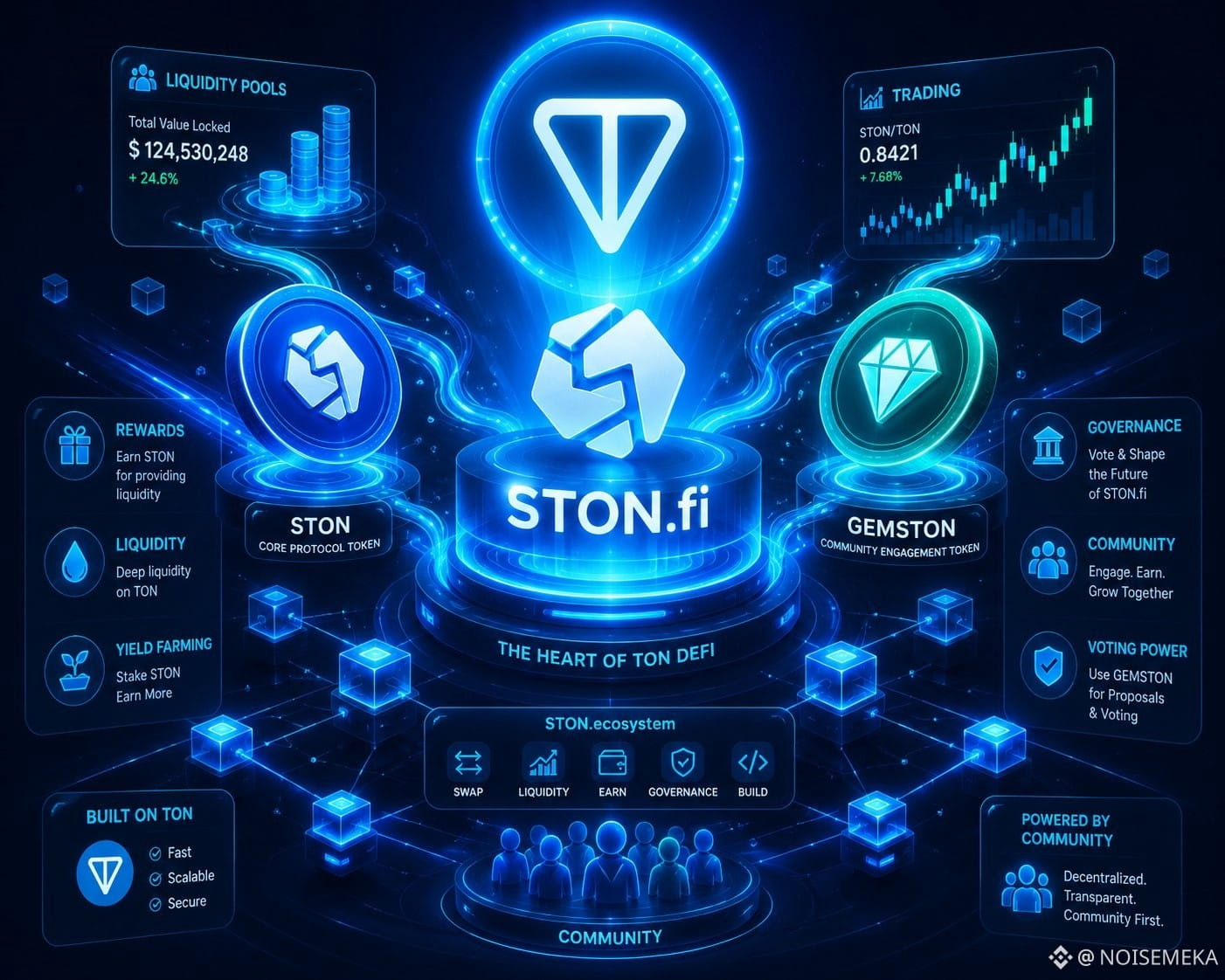
Cross-chain DeFi shouldn't feel like a different world every time you change networks.
Moving between ecosystems often means dealing with different wallets, bridges, interfaces, liquidity sources, and transaction flows.
For users, that fragmentation creates friction.
This is why cross-chain infrastructure is becoming increasingly important.
STON.fi's Omniston is designed to coordinate cross-chain swaps and connect liquidity across different networks, allowing users to access supported assets through a more unified experience.
The bigger idea isn't simply “swap from Chain A to Chain B.”
It's about making different blockchain ecosystems feel less isolated from each other.
As more assets and users move across TON, Ethereum, TRON, BNB Chain, Arbitrum, Base, Avalanche, Polygon and other ecosystems, infrastructure that can connect liquidity becomes increasingly valuable.
The future of DeFi may not be about choosing one chain.
It may be about making the chains people already use work better together.
That's the kind of infrastructure worth watching.
#STONfi #STON #TON #Omniston #DeFi @stonfi $TON
Cross-chain DeFi shouldn't feel like a different world every time you change networks.
Moving between ecosystems often means dealing with different wallets, bridges, interfaces, liquidity sources, and transaction flows.
For users, that fragmentation creates friction.
This is why cross-chain infrastructure is becoming increasingly important.
STON.fi's Omniston is designed to coordinate cross-chain swaps and connect liquidity across different networks, allowing users to access supported assets through a more unified experience.
The bigger idea isn't simply “swap from Chain A to Chain B.”
It's about making different blockchain ecosystems feel less isolated from each other.
As more assets and users move across TON, Ethereum, TRON, BNB Chain, Arbitrum, Base, Avalanche, Polygon and other ecosystems, infrastructure that can connect liquidity becomes increasingly valuable.
The future of DeFi may not be about choosing one chain.
It may be about making the chains people already use work better together.
That's the kind of infrastructure worth watching.
#STONfi #STON #TON #Omniston #DeFi @STONfi DEX $TON
Moving between ecosystems often means dealing with different wallets, bridges, interfaces, liquidity sources, and transaction flows.
For users, that fragmentation creates friction.
This is why cross-chain infrastructure is becoming increasingly important.
STON.fi's Omniston is designed to coordinate cross-chain swaps and connect liquidity across different networks, allowing users to access supported assets through a more unified experience.
The bigger idea isn't simply “swap from Chain A to Chain B.”
It's about making different blockchain ecosystems feel less isolated from each other.
As more assets and users move across TON, Ethereum, TRON, BNB Chain, Arbitrum, Base, Avalanche, Polygon and other ecosystems, infrastructure that can connect liquidity becomes increasingly valuable.
The future of DeFi may not be about choosing one chain.
It may be about making the chains people already use work better together.
That's the kind of infrastructure worth watching.
#STONfi #STON #TON #Omniston #DeFi @STONfi DEX $TON
1
1
62
·
--
What Is Price Impact?
A swap can have a different result depending on how much liquidity is available.
Price impact is the effect your own trade has on the pool's price.
When a pool has deep liquidity, larger trades can often be absorbed more efficiently. But when liquidity is limited, a large trade relative to the pool can move the price more significantly.
For DeFi users, this matters because the token price you see before swapping isn't the only thing to consider.
Before confirming a swap, pay attention to:
🔹 Price impact
🔹 Slippage
🔹 Available liquidity
🔹 The amount you will receive
🔹 Network and trading fees
Simple example:
A small swap in a deep pool may barely affect the market.
A much larger swap in a shallow pool can move the pool price noticeably.
That's why liquidity depth matters.
The important lesson is simple:
Don't judge a swap only by the displayed token price. Understand how your trade interacts with the liquidity behind it.
Better DeFi decisions start with understanding what happens underneath the “Swap” button.
#STONfi #TON #DeFi #DEX @stonfi $TON
What Is Price Impact?
A swap can have a different result depending on how much liquidity is available.
Price impact is the effect your own trade has on the pool's price.
When a pool has deep liquidity, larger trades can often be absorbed more efficiently. But when liquidity is limited, a large trade relative to the pool can move the price more significantly.
For DeFi users, this matters because the token price you see before swapping isn't the only thing to consider.
Before confirming a swap, pay attention to:
🔹 Price impact
🔹 Slippage
🔹 Available liquidity
🔹 The amount you will receive
🔹 Network and trading fees
Simple example:
A small swap in a deep pool may barely affect the market.
A much larger swap in a shallow pool can move the pool price noticeably.
That's why liquidity depth matters.
The important lesson is simple:
Don't judge a swap only by the displayed token price. Understand how your trade interacts with the liquidity behind it.
Better DeFi decisions start with understanding what happens underneath the “Swap” button.
#STONfi #TON #DeFi #DEX @STONfi DEX $TON
A swap can have a different result depending on how much liquidity is available.
Price impact is the effect your own trade has on the pool's price.
When a pool has deep liquidity, larger trades can often be absorbed more efficiently. But when liquidity is limited, a large trade relative to the pool can move the price more significantly.
For DeFi users, this matters because the token price you see before swapping isn't the only thing to consider.
Before confirming a swap, pay attention to:
🔹 Price impact
🔹 Slippage
🔹 Available liquidity
🔹 The amount you will receive
🔹 Network and trading fees
Simple example:
A small swap in a deep pool may barely affect the market.
A much larger swap in a shallow pool can move the pool price noticeably.
That's why liquidity depth matters.
The important lesson is simple:
Don't judge a swap only by the displayed token price. Understand how your trade interacts with the liquidity behind it.
Better DeFi decisions start with understanding what happens underneath the “Swap” button.
#STONfi #TON #DeFi #DEX @STONfi DEX $TON
60
·
--
Why Token Pairs Matter in Liquidity Pools
When you provide liquidity, you don't choose just one asset. You choose a pair.
That's because a liquidity pool needs two assets to facilitate trading between them.
For example:
STON + USDT
An LP supplies both assets, creating a market where traders can swap $STON and $USDT.
But different pairs create different opportunities and risks.
A volatile-token/stablecoin pair may behave very differently from two volatile tokens, because both assets can move significantly relative to each other.
Before becoming an LP, ask:
🔹 What are the two assets?
🔹 How volatile are they?
🔹 How deep is the pool?
🔹 What trading activity does it have?
🔹 What rewards are available?
🔹 What could happen if the prices move in different directions?
The key lesson:
Choosing a liquidity pool isn't just choosing an APR.
You're choosing two assets whose prices and trading relationship will affect your LP position.
Understand the pair first.
Then evaluate the rewards.
In DeFi, the assets behind the yield matter more than the yield headline.
#STONfi #STON #TON #DeFi #Liquidity @stonfi $TON
Why Token Pairs Matter in Liquidity Pools
When you provide liquidity, you don't choose just one asset. You choose a pair.
That's because a liquidity pool needs two assets to facilitate trading between them.
For example:
STON + USDT
An LP supplies both assets, creating a market where traders can swap $STON and $USDT.
But different pairs create different opportunities and risks.
A volatile-token/stablecoin pair may behave very differently from two volatile tokens, because both assets can move significantly relative to each other.
Before becoming an LP, ask:
🔹 What are the two assets?
🔹 How volatile are they?
🔹 How deep is the pool?
🔹 What trading activity does it have?
🔹 What rewards are available?
🔹 What could happen if the prices move in different directions?
The key lesson:
Choosing a liquidity pool isn't just choosing an APR.
You're choosing two assets whose prices and trading relationship will affect your LP position.
Understand the pair first.
Then evaluate the rewards.
In DeFi, the assets behind the yield matter more than the yield headline.
#STONfi #STON #TON #DeFi #Liquidity @STONfi DEX $TON
When you provide liquidity, you don't choose just one asset. You choose a pair.
That's because a liquidity pool needs two assets to facilitate trading between them.
For example:
STON + USDT
An LP supplies both assets, creating a market where traders can swap $STON and $USDT.
But different pairs create different opportunities and risks.
A volatile-token/stablecoin pair may behave very differently from two volatile tokens, because both assets can move significantly relative to each other.
Before becoming an LP, ask:
🔹 What are the two assets?
🔹 How volatile are they?
🔹 How deep is the pool?
🔹 What trading activity does it have?
🔹 What rewards are available?
🔹 What could happen if the prices move in different directions?
The key lesson:
Choosing a liquidity pool isn't just choosing an APR.
You're choosing two assets whose prices and trading relationship will affect your LP position.
Understand the pair first.
Then evaluate the rewards.
In DeFi, the assets behind the yield matter more than the yield headline.
#STONfi #STON #TON #DeFi #Liquidity @STONfi DEX $TON
67
·
--
What Happens After You Add Liquidity?
Providing liquidity isn't the end of the process. It's the beginning of a position.
When you add a token pair to a STON.fi liquidity pool, your assets become part of the pool that traders can use for swaps.
As trading happens, the ratio of tokens in the pool changes.
That means your LP position isn't simply sitting still.
Its composition can change as users trade, and the value of your position can move with the market.
This is why liquidity provision requires more than checking the current APR.
You should understand:
🔹 How the pool works
🔹 What assets you're depositing
🔹 How trading changes the pool
🔹 Potential impermanent loss
🔹 Farming rewards and their conditions
🔹 How you can exit your position
The important lesson:
When you provide liquidity, you're not just depositing tokens.
You're participating in a market.
Traders use the liquidity you provide, the pool responds to their activity, and your position changes accordingly.
Understanding what happens after you click “Add Liquidity” is just as important as understanding why you clicked it.
Don't just provide liquidity. Understand your position.
#STONfi #TON #DeFi #Liquidity #LP
What Happens After You Add Liquidity?
Providing liquidity isn't the end of the process. It's the beginning of a position.
When you add a token pair to a STON.fi liquidity pool, your assets become part of the pool that traders can use for swaps.
As trading happens, the ratio of tokens in the pool changes.
That means your LP position isn't simply sitting still.
Its composition can change as users trade, and the value of your position can move with the market.
This is why liquidity provision requires more than checking the current APR.
You should understand:
🔹 How the pool works
🔹 What assets you're depositing
🔹 How trading changes the pool
🔹 Potential impermanent loss
🔹 Farming rewards and their conditions
🔹 How you can exit your position
The important lesson:
When you provide liquidity, you're not just depositing tokens.
You're participating in a market.
Traders use the liquidity you provide, the pool responds to their activity, and your position changes accordingly.
Understanding what happens after you click “Add Liquidity” is just as important as understanding why you clicked it.
Don't just provide liquidity. Understand your position.
#STONfi #TON #DeFi #Liquidity #LP
Providing liquidity isn't the end of the process. It's the beginning of a position.
When you add a token pair to a STON.fi liquidity pool, your assets become part of the pool that traders can use for swaps.
As trading happens, the ratio of tokens in the pool changes.
That means your LP position isn't simply sitting still.
Its composition can change as users trade, and the value of your position can move with the market.
This is why liquidity provision requires more than checking the current APR.
You should understand:
🔹 How the pool works
🔹 What assets you're depositing
🔹 How trading changes the pool
🔹 Potential impermanent loss
🔹 Farming rewards and their conditions
🔹 How you can exit your position
The important lesson:
When you provide liquidity, you're not just depositing tokens.
You're participating in a market.
Traders use the liquidity you provide, the pool responds to their activity, and your position changes accordingly.
Understanding what happens after you click “Add Liquidity” is just as important as understanding why you clicked it.
Don't just provide liquidity. Understand your position.
#STONfi #TON #DeFi #Liquidity #LP
77
·
--
Why Liquidity Routing Matters
Finding liquidity is only half the challenge. Getting there efficiently is the other half.
In DeFi, the same asset can have liquidity spread across different pools and networks. This creates multiple possible routes for a single swap.
A smart routing system can evaluate available options and coordinate a route based on factors such as:
🔹 Available liquidity
🔹 Expected execution
🔹 Price impact
🔹 Trading conditions
🔹 Network requirements
This is where infrastructure like Omniston becomes interesting.
Instead of making users manually search through different routes, the infrastructure works behind the scenes to connect available liquidity and simplify the swap experience.
But routing doesn't remove risk. Users should still review the final amount, fees, slippage, and price impact before confirming a transaction.
The bigger lesson:
As DeFi grows, liquidity becomes increasingly fragmented.
The challenge isn't only creating more liquidity.
It's building better infrastructure to connect users with the liquidity that already exists.
Better routing can turn a complicated multi-chain journey into a simpler swap experience.
#STONfi #Omniston #TON #Liquidity #DEX @stonfi $TON
Why Liquidity Routing Matters
Finding liquidity is only half the challenge. Getting there efficiently is the other half.
In DeFi, the same asset can have liquidity spread across different pools and networks. This creates multiple possible routes for a single swap.
A smart routing system can evaluate available options and coordinate a route based on factors such as:
🔹 Available liquidity
🔹 Expected execution
🔹 Price impact
🔹 Trading conditions
🔹 Network requirements
This is where infrastructure like Omniston becomes interesting.
Instead of making users manually search through different routes, the infrastructure works behind the scenes to connect available liquidity and simplify the swap experience.
But routing doesn't remove risk. Users should still review the final amount, fees, slippage, and price impact before confirming a transaction.
The bigger lesson:
As DeFi grows, liquidity becomes increasingly fragmented.
The challenge isn't only creating more liquidity.
It's building better infrastructure to connect users with the liquidity that already exists.
Better routing can turn a complicated multi-chain journey into a simpler swap experience.
#STONfi #Omniston #TON #Liquidity #DEX @STONfi DEX $TON
Finding liquidity is only half the challenge. Getting there efficiently is the other half.
In DeFi, the same asset can have liquidity spread across different pools and networks. This creates multiple possible routes for a single swap.
A smart routing system can evaluate available options and coordinate a route based on factors such as:
🔹 Available liquidity
🔹 Expected execution
🔹 Price impact
🔹 Trading conditions
🔹 Network requirements
This is where infrastructure like Omniston becomes interesting.
Instead of making users manually search through different routes, the infrastructure works behind the scenes to connect available liquidity and simplify the swap experience.
But routing doesn't remove risk. Users should still review the final amount, fees, slippage, and price impact before confirming a transaction.
The bigger lesson:
As DeFi grows, liquidity becomes increasingly fragmented.
The challenge isn't only creating more liquidity.
It's building better infrastructure to connect users with the liquidity that already exists.
Better routing can turn a complicated multi-chain journey into a simpler swap experience.
#STONfi #Omniston #TON #Liquidity #DEX @STONfi DEX $TON
85
·
--
STON.fi Education , Why Stablecoin Liquidity Matters
Stablecoins are more than just a way to hold a dollar-like asset in DeFi.
They often act as a bridge between different tokens, markets, and trading strategies.
On a DEX such as STON.fi, pairs involving stablecoins can give traders a familiar reference asset while helping create deeper markets for volatile tokens.
For example:
Token ↔ USDT
can allow users to enter or exit a token position without first converting through a traditional bank or centralized exchange.
Stablecoin liquidity can therefore support:
🔹 Easier token swaps
🔹 More efficient market formation
🔹 Portfolio rebalancing
🔹 Cross-chain movement of value
🔹 Greater accessibility to DeFi markets
But stablecoins aren't completely risk-free. Users should still understand the specific stablecoin, its underlying mechanism, liquidity, and the risks of the protocol they're interacting with.
The bigger lesson:
A strong DeFi ecosystem needs more than exciting tokens.
It also needs reliable liquidity between assets.
Stablecoins can play an important role in creating those connections.
Sometimes, the most important asset in a trading ecosystem is the one designed to stay stable.
#STONfi #TON #CryptoEducation #Web @stonfi $TON
STON.fi Education , Why Stablecoin Liquidity Matters
Stablecoins are more than just a way to hold a dollar-like asset in DeFi.
They often act as a bridge between different tokens, markets, and trading strategies.
On a DEX such as STON.fi, pairs involving stablecoins can give traders a familiar reference asset while helping create deeper markets for volatile tokens.
For example:
Token ↔ USDT
can allow users to enter or exit a token position without first converting through a traditional bank or centralized exchange.
Stablecoin liquidity can therefore support:
🔹 Easier token swaps
🔹 More efficient market formation
🔹 Portfolio rebalancing
🔹 Cross-chain movement of value
🔹 Greater accessibility to DeFi markets
But stablecoins aren't completely risk-free. Users should still understand the specific stablecoin, its underlying mechanism, liquidity, and the risks of the protocol they're interacting with.
The bigger lesson:
A strong DeFi ecosystem needs more than exciting tokens.
It also needs reliable liquidity between assets.
Stablecoins can play an important role in creating those connections.
Sometimes, the most important asset in a trading ecosystem is the one designed to stay stable.
#STONfi #TON #CryptoEducation #Web @STONfi DEX $TON
Stablecoins are more than just a way to hold a dollar-like asset in DeFi.
They often act as a bridge between different tokens, markets, and trading strategies.
On a DEX such as STON.fi, pairs involving stablecoins can give traders a familiar reference asset while helping create deeper markets for volatile tokens.
For example:
Token ↔ USDT
can allow users to enter or exit a token position without first converting through a traditional bank or centralized exchange.
Stablecoin liquidity can therefore support:
🔹 Easier token swaps
🔹 More efficient market formation
🔹 Portfolio rebalancing
🔹 Cross-chain movement of value
🔹 Greater accessibility to DeFi markets
But stablecoins aren't completely risk-free. Users should still understand the specific stablecoin, its underlying mechanism, liquidity, and the risks of the protocol they're interacting with.
The bigger lesson:
A strong DeFi ecosystem needs more than exciting tokens.
It also needs reliable liquidity between assets.
Stablecoins can play an important role in creating those connections.
Sometimes, the most important asset in a trading ecosystem is the one designed to stay stable.
#STONfi #TON #CryptoEducation #Web @STONfi DEX $TON
77
Log in to explore more content
Join global crypto users on Binance Square
⚡️ Get latest and useful information about crypto.
💬 Trusted by the world’s largest crypto exchange.
👍 Discover real insights from verified creators.
Email / Phone number
Trending Topics
FedMinutesFocusOnOctoberPause
400,489 views
2,533 Discussing
🚨 THE FED JUST DROPPED A HUGE HINT — OCTOBER PAUSE INCOMING?
Wall Street is betting the Fed will HIT THE BRAKES in October. And crypto traders are watching closely. 👀
The latest FOMC minutes have shifted attention toward a potential pause at the October 27–28 meeting.
📊 The market setup:
🔥 October rate hold: approximately 82.8% in the latest previously reported pricing.
🔥 Rate hike probability: approximately 17.2%.
🔥 Weakening labor-market data is making an immediate hike harder to justify.
But here's the twist.
A PAUSE IS NOT A RATE CUT.
The Fed could hold in October while keeping the door open for additional tightening later.
For $BTC, $ ETH and $XAU, that distinction matters.
A pause could ease immediate pressure on risk assets. But persistent inflation and elevated Treasury yields could still crush bullish momentum.
⚠️ THE BIG QUESTION:
Is Wall Street positioning for a crypto breakout — or setting up another massive bull trap before the next Fed decision?
$BTC $ETH $BNB $SOL $XAU
#fedminutesfocusonoctoberpause #BinanceLaunchesBinanceIntelligence #EvernorthDelaysNasdaqDebutToOct12 #RobinhoodAdds$25MInBitcoinToBalanceSheet #SP500AndNasdaqHitRecordHighs
KimHotbae
·32 Likes
·34.9k views
VitalikWarnsAICouldWeakenCryptographySecurity
4,392 views
201 Discussing
XRPSpotETFsHold$1.7BWeeklyInflowsSlow
762 views
29 Discussing