

cryptoo-vision
482 Posts
cryptoo-vision
Report
Block User
Crypto Market Analyst ; BTC • ETH • Altcoins ;Market Structure | Narratives | Research
Open Trade
4.6 Years
80 Following
135 Followers
293 Liked
Posts
Portfolio
All
Quotes
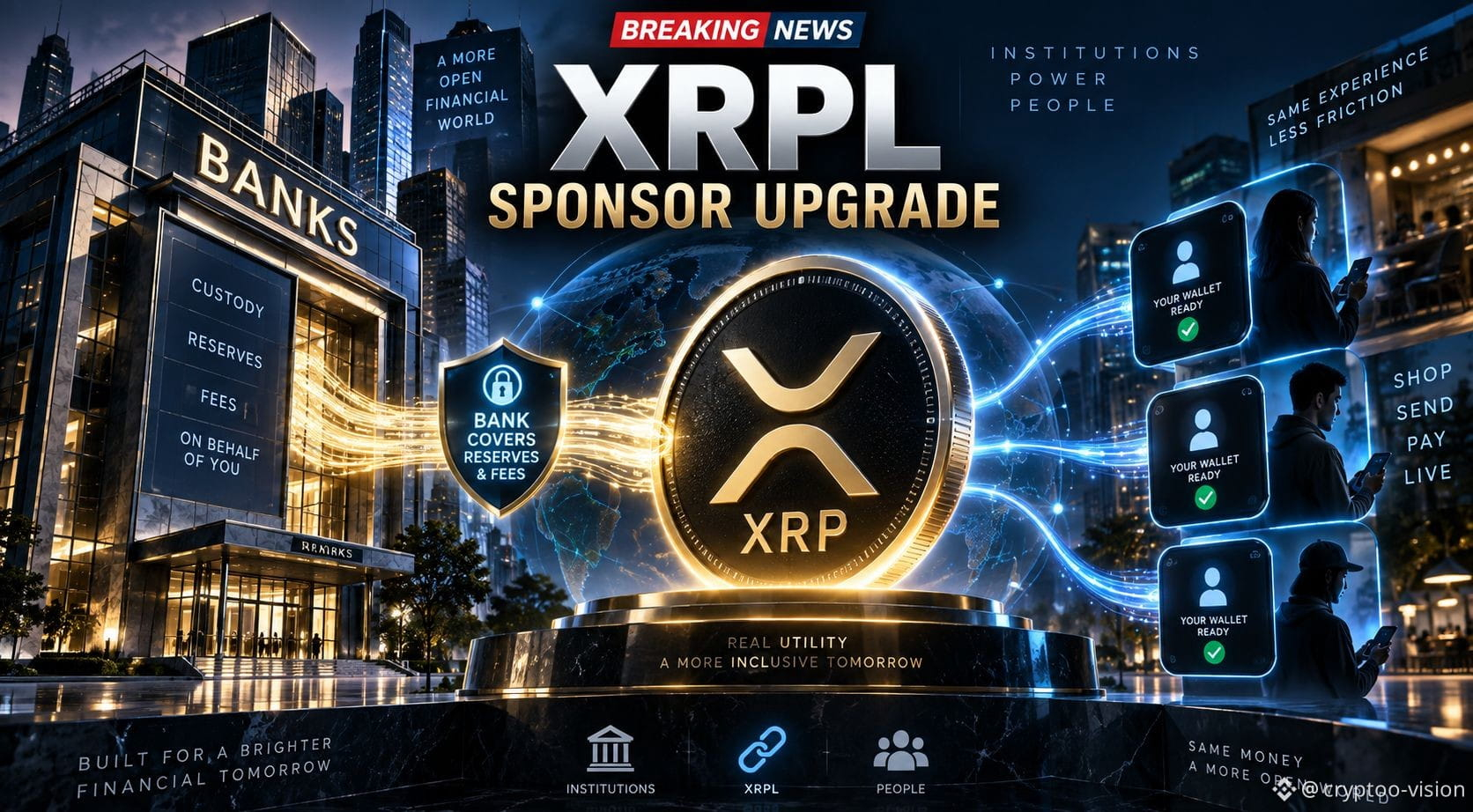
$XRP Could Get a Major Institutional Upgrade.
A new XRPL proposal could make onboarding easier for banks, issuers and platforms.
The “Sponsored Fees and Reserves” feature would allow third parties to cover $XRP transaction fees and account reserves while users keep control of their accounts and keys.
Why it matters:
* Lower onboarding friction
* Easier integration for institutions
* Users maintain account control
* Supports payments and tokenization use cases
The proposal still requires validator approval.
If adopted, it could make XRPL infrastructure easier for institutions to use without requiring every user to manage $XRP for network costs.
Source: CryptoSlate / XRPL
#xrp #XRPL #crypto #InstitutionalAdoption
$XRP Could Get a Major Institutional Upgrade.
A new XRPL proposal could make onboarding easier for banks, issuers and platforms.
The “Sponsored Fees and Reserves” feature would allow third parties to cover $XRP transaction fees and account reserves while users keep control of their accounts and keys.
Why it matters:
* Lower onboarding friction
* Easier integration for institutions
* Users maintain account control
* Supports payments and tokenization use cases
The proposal still requires validator approval.
If adopted, it could make XRPL infrastructure easier for institutions to use without requiring every user to manage $XRP for network costs.
Source: CryptoSlate / XRPL
#xrp #XRPL #crypto #InstitutionalAdoption
A new XRPL proposal could make onboarding easier for banks, issuers and platforms.
The “Sponsored Fees and Reserves” feature would allow third parties to cover $XRP transaction fees and account reserves while users keep control of their accounts and keys.
Why it matters:
* Lower onboarding friction
* Easier integration for institutions
* Users maintain account control
* Supports payments and tokenization use cases
The proposal still requires validator approval.
If adopted, it could make XRPL infrastructure easier for institutions to use without requiring every user to manage $XRP for network costs.
Source: CryptoSlate / XRPL
#xrp #XRPL #crypto #InstitutionalAdoption
98
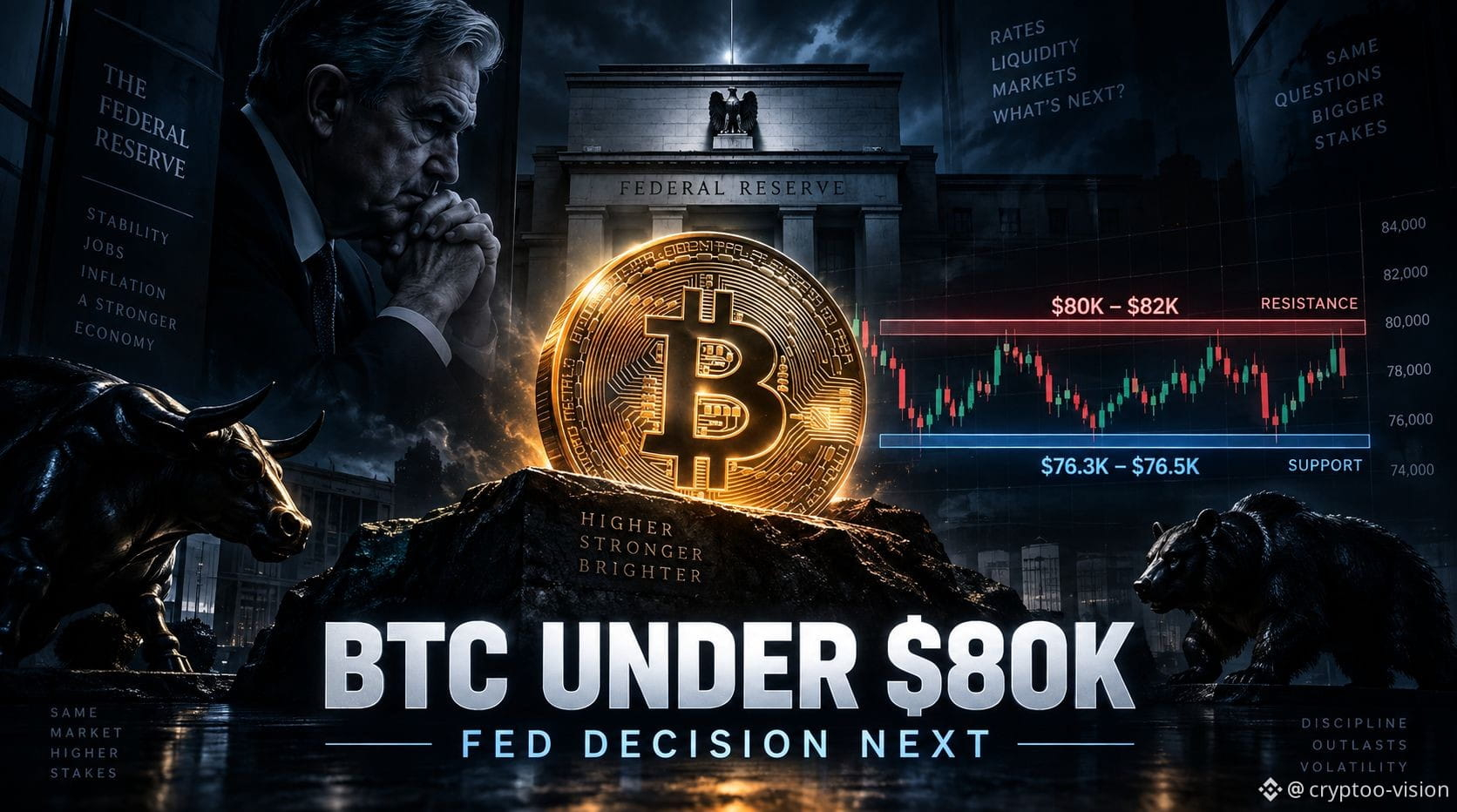
$BTC Holds Key Range as Fed Uncertainty Weighs on Markets
Bitcoin remains under pressure below $77K, with traders focused on the $76K–$82K range.
Macro pressure is building:
* Oil prices remain elevated
* Treasury yields are rising
* Fed uncertainty continues to weigh on risk assets
Key levels:
+ Support: $76K
+ Resistance: $80K–$83K
+ Break above resistance = recovery strengthens
+ Lose $76K = structure weakens
For now, $BTC remains range-bound as markets wait for the next macro catalyst.
Source: CryptoSlate
#BTC #bitcoin #crypto #Fed
$BTC Holds Key Range as Fed Uncertainty Weighs on Markets
Bitcoin remains under pressure below $77K, with traders focused on the $76K–$82K range.
Macro pressure is building:
* Oil prices remain elevated
* Treasury yields are rising
* Fed uncertainty continues to weigh on risk assets
Key levels:
+ Support: $76K
+ Resistance: $80K–$83K
+ Break above resistance = recovery strengthens
+ Lose $76K = structure weakens
For now, $BTC remains range-bound as markets wait for the next macro catalyst.
Source: CryptoSlate
#BTC #bitcoin #crypto #Fed
Bitcoin remains under pressure below $77K, with traders focused on the $76K–$82K range.
Macro pressure is building:
* Oil prices remain elevated
* Treasury yields are rising
* Fed uncertainty continues to weigh on risk assets
Key levels:
+ Support: $76K
+ Resistance: $80K–$83K
+ Break above resistance = recovery strengthens
+ Lose $76K = structure weakens
For now, $BTC remains range-bound as markets wait for the next macro catalyst.
Source: CryptoSlate
#BTC #bitcoin #crypto #Fed
1
105
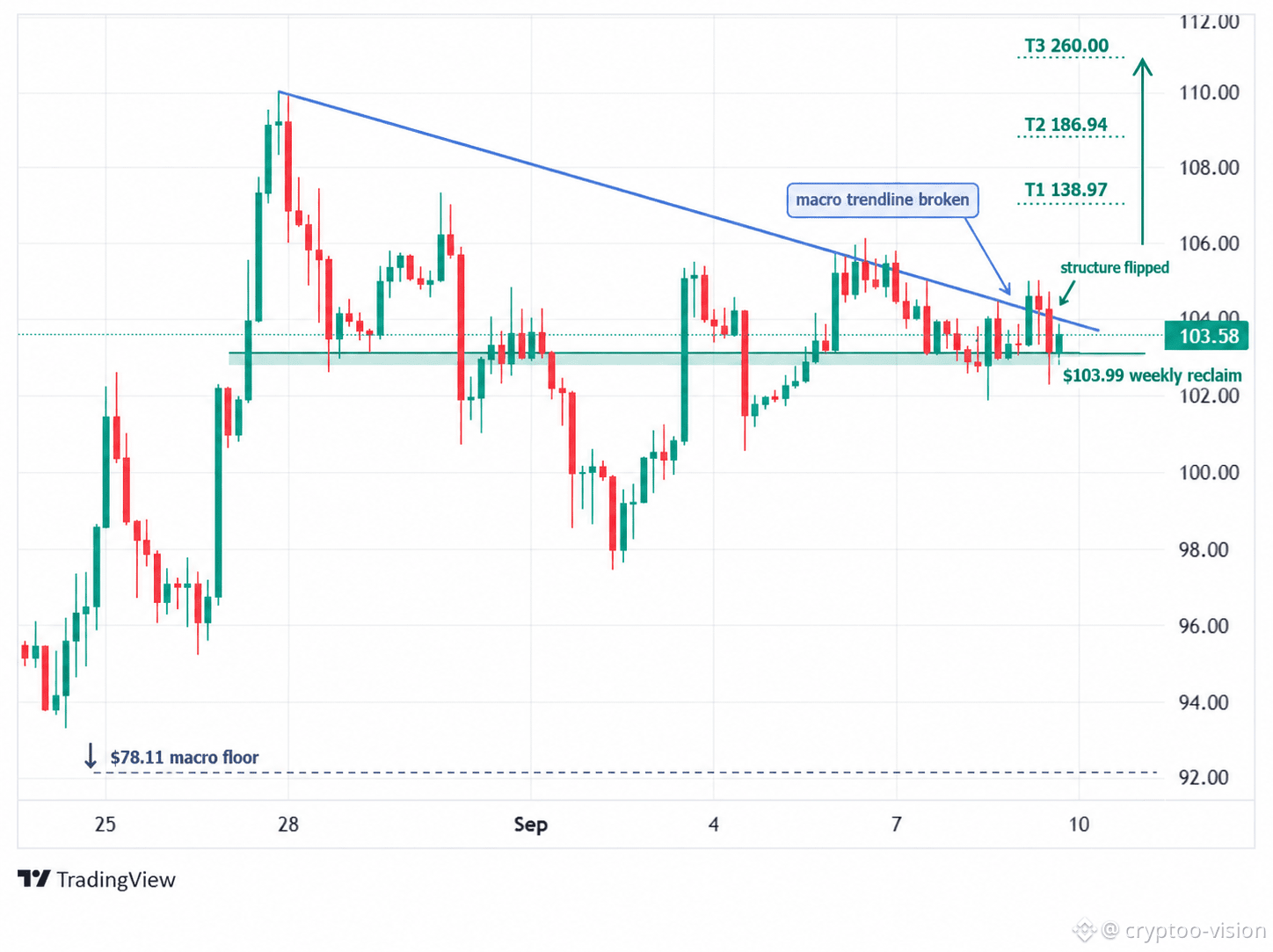
$SOL Tests Macro Breakout Zone as 4H Structure Strengthens
Solana is holding near a key breakout area after reclaiming the $103.99 weekly level.
Key levels:
* Reclaim zone: $103.99
* Macro floor: $78.11
* Upside targets: $138.97 → $186.94 → $260
The 4H structure remains constructive while $SOL holds above the reclaimed trendline.
A sustained hold keeps the upside scenario active. Losing the reclaim zone would weaken the setup and require reassessment.
#sol #solana #crypto #TechnicalAnalysis
$SOL Tests Macro Breakout Zone as 4H Structure Strengthens
Solana is holding near a key breakout area after reclaiming the $103.99 weekly level.
Key levels:
* Reclaim zone: $103.99
* Macro floor: $78.11
* Upside targets: $138.97 → $186.94 → $260
The 4H structure remains constructive while $SOL holds above the reclaimed trendline.
A sustained hold keeps the upside scenario active. Losing the reclaim zone would weaken the setup and require reassessment.
#sol #solana #crypto #TechnicalAnalysis
Solana is holding near a key breakout area after reclaiming the $103.99 weekly level.
Key levels:
* Reclaim zone: $103.99
* Macro floor: $78.11
* Upside targets: $138.97 → $186.94 → $260
The 4H structure remains constructive while $SOL holds above the reclaimed trendline.
A sustained hold keeps the upside scenario active. Losing the reclaim zone would weaken the setup and require reassessment.
#sol #solana #crypto #TechnicalAnalysis
68
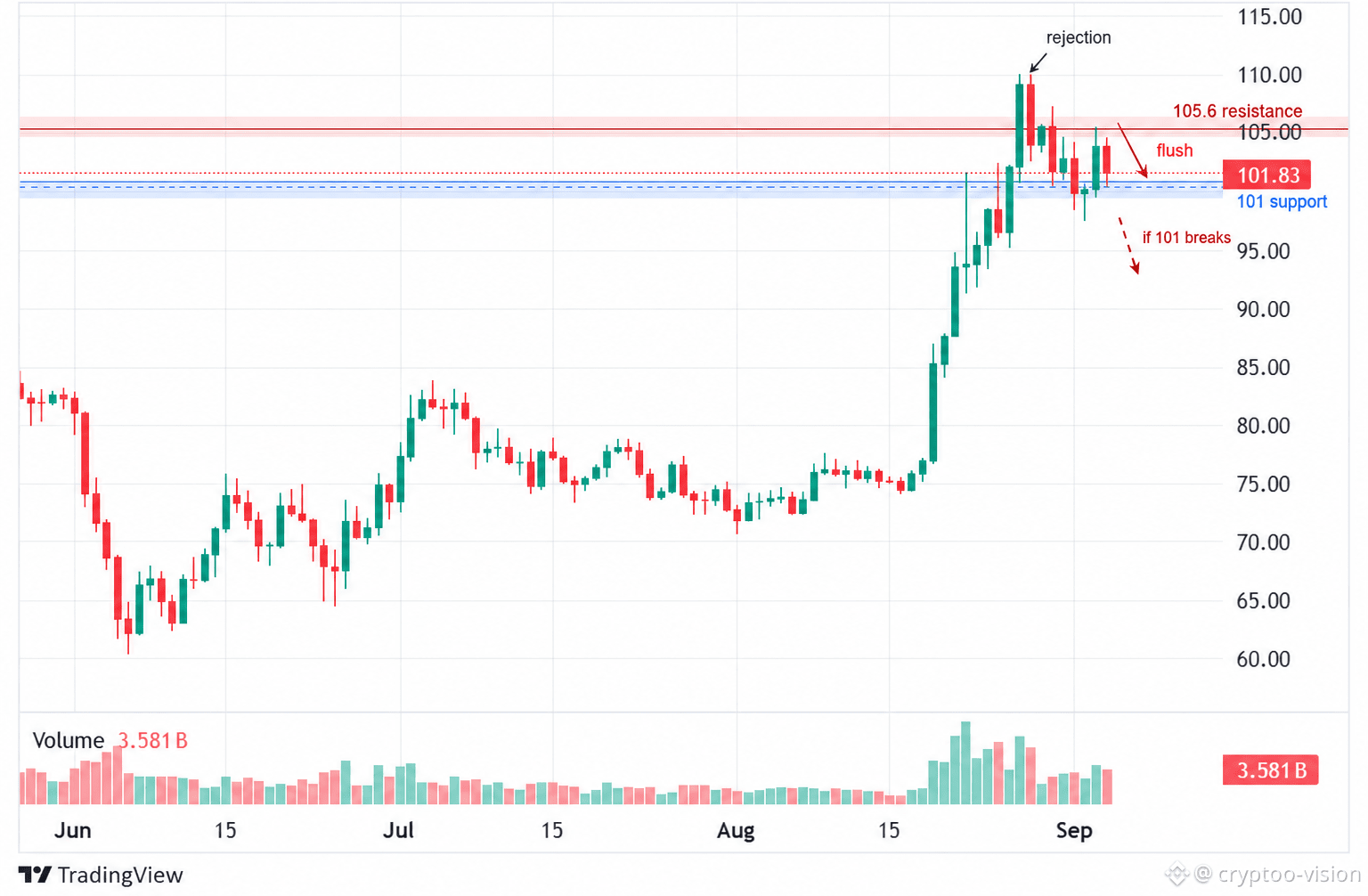
$SOL Tests Critical Support After $105 Rejection
$SOL lost momentum near the $105 resistance zone and has pulled back toward $101–$102.
Key levels to watch:
* Resistance: $105–$105.5
* Current support: $101–$102
* Session low: ~$100.45
* Break below $101 could expose lower demand zones
For now, sellers are still defending the upper range.
A strong hold around $101 would keep the short-term structure intact. A confirmed breakdown would shift momentum back toward the bears.
$101 is the level to watch.
#sol #solana #crypto #TechnicalAnalysis
$SOL Tests Critical Support After $105 Rejection
$SOL lost momentum near the $105 resistance zone and has pulled back toward $101–$102.
Key levels to watch:
* Resistance: $105–$105.5
* Current support: $101–$102
* Session low: ~$100.45
* Break below $101 could expose lower demand zones
For now, sellers are still defending the upper range.
A strong hold around $101 would keep the short-term structure intact. A confirmed breakdown would shift momentum back toward the bears.
$101 is the level to watch.
#sol #solana #crypto #TechnicalAnalysis
$SOL lost momentum near the $105 resistance zone and has pulled back toward $101–$102.
Key levels to watch:
* Resistance: $105–$105.5
* Current support: $101–$102
* Session low: ~$100.45
* Break below $101 could expose lower demand zones
For now, sellers are still defending the upper range.
A strong hold around $101 would keep the short-term structure intact. A confirmed breakdown would shift momentum back toward the bears.
$101 is the level to watch.
#sol #solana #crypto #TechnicalAnalysis
79
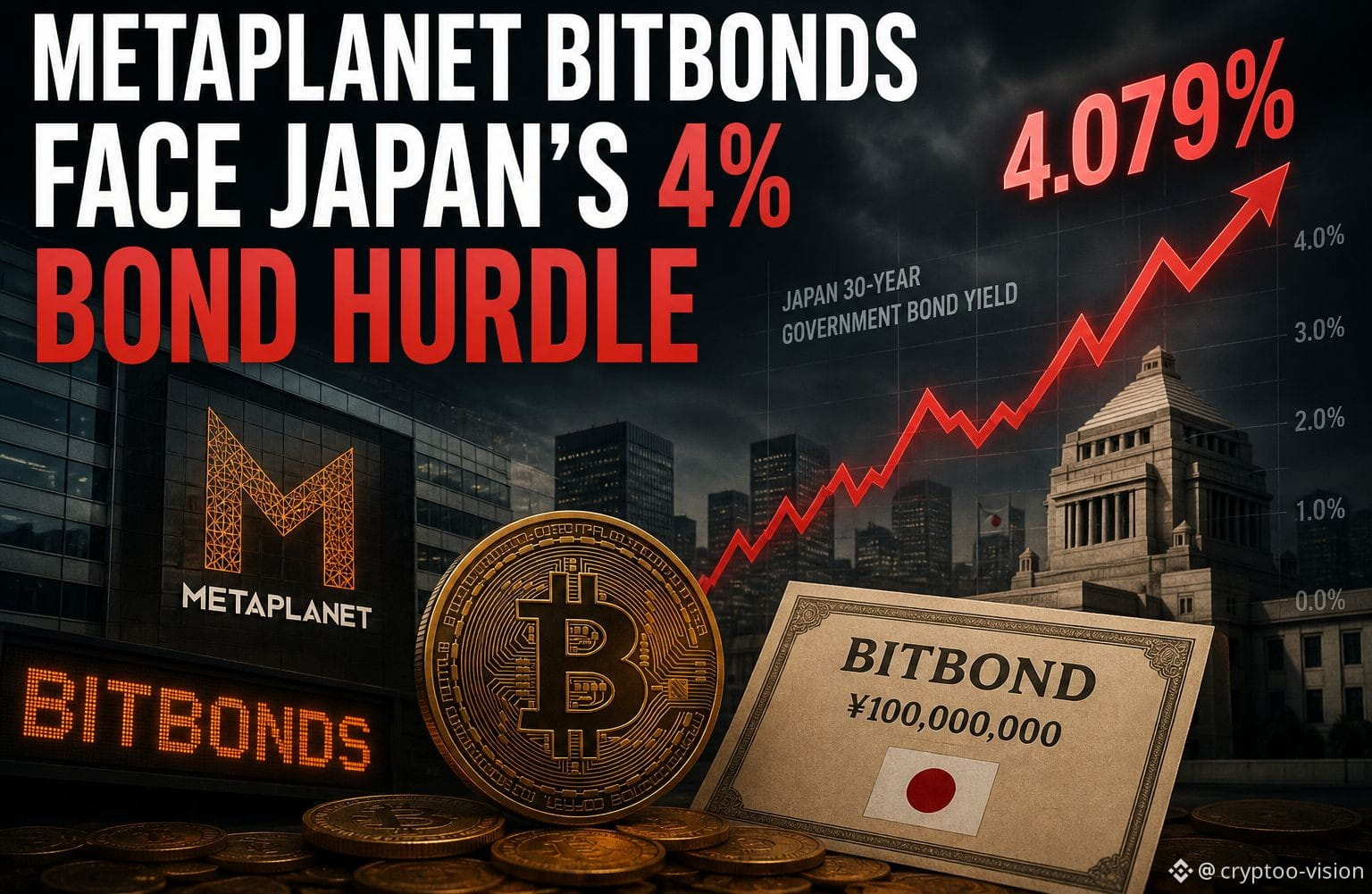
Metaplanet’s Bitcoin Strategy Faces a New Test From Japan’s Rising Yields
Metaplanet has relied on low-cost borrowing to expand its $BTC holdings, but Japan’s 30-year government bond yield has now climbed above 4%.
Why it matters:
* Existing fixed-rate debt is unaffected
* Future BitBonds and refinancing could become more expensive
* Metaplanet’s first BitBonds carry coupons around 4.0%–4.3%
* Higher borrowing costs could reduce the efficiency of future $BTC accumulation
For example, a 1% increase on ¥100B of debt would add roughly ¥1B in annual interest costs.
The key question is whether Metaplanet can continue growing Bitcoin per share while Japan’s funding environment becomes more expensive.
#BTC #bitcoin #metaplanet #crypto
Metaplanet’s Bitcoin Strategy Faces a New Test From Japan’s Rising Yields
Metaplanet has relied on low-cost borrowing to expand its $BTC holdings, but Japan’s 30-year government bond yield has now climbed above 4%.
Why it matters:
* Existing fixed-rate debt is unaffected
* Future BitBonds and refinancing could become more expensive
* Metaplanet’s first BitBonds carry coupons around 4.0%–4.3%
* Higher borrowing costs could reduce the efficiency of future $BTC accumulation
For example, a 1% increase on ¥100B of debt would add roughly ¥1B in annual interest costs.
The key question is whether Metaplanet can continue growing Bitcoin per share while Japan’s funding environment becomes more expensive.
#BTC #bitcoin #metaplanet #crypto
Metaplanet has relied on low-cost borrowing to expand its $BTC holdings, but Japan’s 30-year government bond yield has now climbed above 4%.
Why it matters:
* Existing fixed-rate debt is unaffected
* Future BitBonds and refinancing could become more expensive
* Metaplanet’s first BitBonds carry coupons around 4.0%–4.3%
* Higher borrowing costs could reduce the efficiency of future $BTC accumulation
For example, a 1% increase on ¥100B of debt would add roughly ¥1B in annual interest costs.
The key question is whether Metaplanet can continue growing Bitcoin per share while Japan’s funding environment becomes more expensive.
#BTC #bitcoin #metaplanet #crypto
79
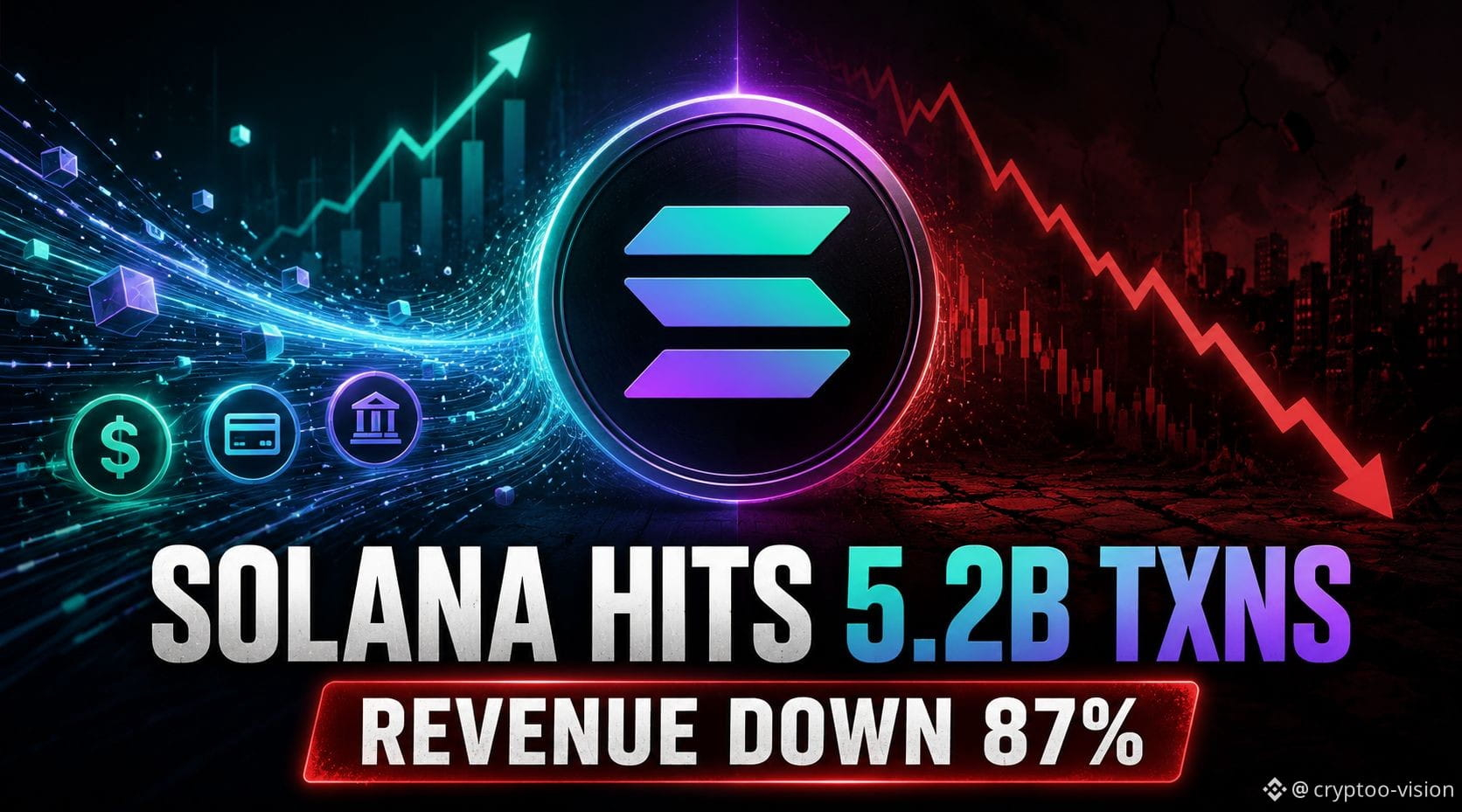
Solana Just Hit Record Activity — But Network Revenue Fell 87%
$SOL processed a record 5.2B non-vote transactions in August, up 19% from July.
But there’s an important shift underneath the numbers:
* H1 network revenue fell 87% YoY to $141M
* Memecoins dropped from 40% to 16% of spot trading volume
* Stablecoin swaps increased from 6% to 19%
* Transaction fees remain extremely low
The takeaway: Solana activity is growing, but the type of activity is changing.
The network is moving away from the high-fee memecoin boom toward stablecoins, DeFi and payments sectors that currently generate less revenue per transaction.
For $SOL , the next question is whether record usage can eventually translate into sustainable network revenue.
#sol #solana #defi #crypto
Solana Just Hit Record Activity — But Network Revenue Fell 87%
$SOL processed a record 5.2B non-vote transactions in August, up 19% from July.
But there’s an important shift underneath the numbers:
* H1 network revenue fell 87% YoY to $141M
* Memecoins dropped from 40% to 16% of spot trading volume
* Stablecoin swaps increased from 6% to 19%
* Transaction fees remain extremely low
The takeaway: Solana activity is growing, but the type of activity is changing.
The network is moving away from the high-fee memecoin boom toward stablecoins, DeFi and payments sectors that currently generate less revenue per transaction.
For $SOL , the next question is whether record usage can eventually translate into sustainable network revenue.
#sol #solana #defi #crypto
$SOL processed a record 5.2B non-vote transactions in August, up 19% from July.
But there’s an important shift underneath the numbers:
* H1 network revenue fell 87% YoY to $141M
* Memecoins dropped from 40% to 16% of spot trading volume
* Stablecoin swaps increased from 6% to 19%
* Transaction fees remain extremely low
The takeaway: Solana activity is growing, but the type of activity is changing.
The network is moving away from the high-fee memecoin boom toward stablecoins, DeFi and payments sectors that currently generate less revenue per transaction.
For $SOL , the next question is whether record usage can eventually translate into sustainable network revenue.
#sol #solana #defi #crypto
108
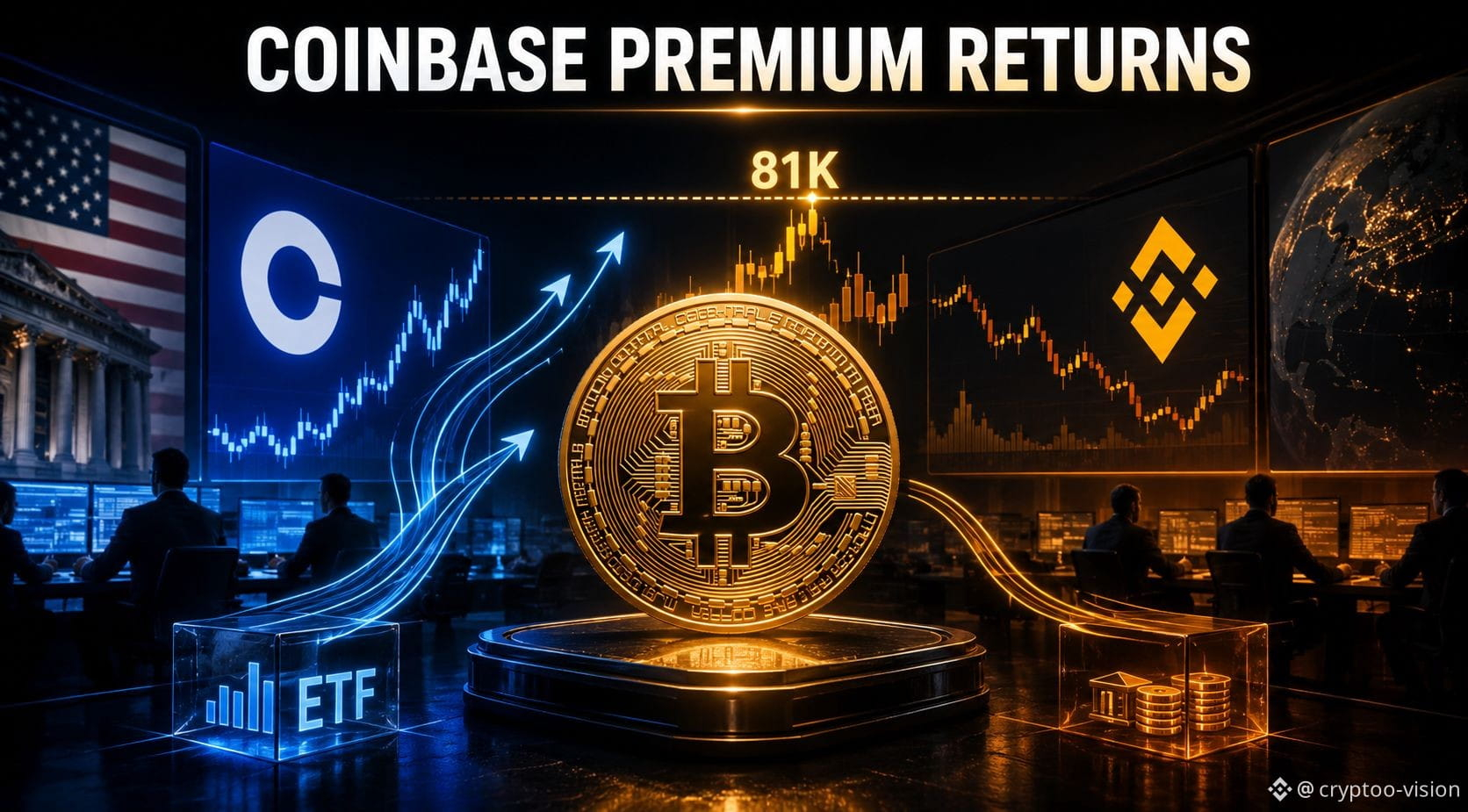
Bitcoin’s Coinbase Premium Just Flipped Positive First Time Since May
$BTC is once again trading at a premium on Coinbase versus Binance, signaling stronger U.S.-based buying demand.
The shift comes as $BTC rebounds from around $63K to nearly $80K.
Key signals:
* Coinbase Premium turned positive for the first time since May
* U.S. spot $BTC ETFs attracted $3.51B in recent inflows
* BlackRock’s IBIT is leading the renewed institutional demand
* $81K remains the key resistance, near Bitcoin’s 50-week moving average
Historically, a sustained Coinbase Premium has often appeared during strong Bitcoin market phases.
The signal is positive but persistence matters. A clean break above $81K would strengthen the case for further upside.
#BTC #bitcoin #crypto #BitcoinETF #coinbase
Bitcoin’s Coinbase Premium Just Flipped Positive First Time Since May
$BTC is once again trading at a premium on Coinbase versus Binance, signaling stronger U.S.-based buying demand.
The shift comes as $BTC rebounds from around $63K to nearly $80K.
Key signals:
* Coinbase Premium turned positive for the first time since May
* U.S. spot $BTC ETFs attracted $3.51B in recent inflows
* BlackRock’s IBIT is leading the renewed institutional demand
* $81K remains the key resistance, near Bitcoin’s 50-week moving average
Historically, a sustained Coinbase Premium has often appeared during strong Bitcoin market phases.
The signal is positive but persistence matters. A clean break above $81K would strengthen the case for further upside.
#BTC #bitcoin #crypto #BitcoinETF #coinbase
$BTC is once again trading at a premium on Coinbase versus Binance, signaling stronger U.S.-based buying demand.
The shift comes as $BTC rebounds from around $63K to nearly $80K.
Key signals:
* Coinbase Premium turned positive for the first time since May
* U.S. spot $BTC ETFs attracted $3.51B in recent inflows
* BlackRock’s IBIT is leading the renewed institutional demand
* $81K remains the key resistance, near Bitcoin’s 50-week moving average
Historically, a sustained Coinbase Premium has often appeared during strong Bitcoin market phases.
The signal is positive but persistence matters. A clean break above $81K would strengthen the case for further upside.
#BTC #bitcoin #crypto #BitcoinETF #coinbase
74
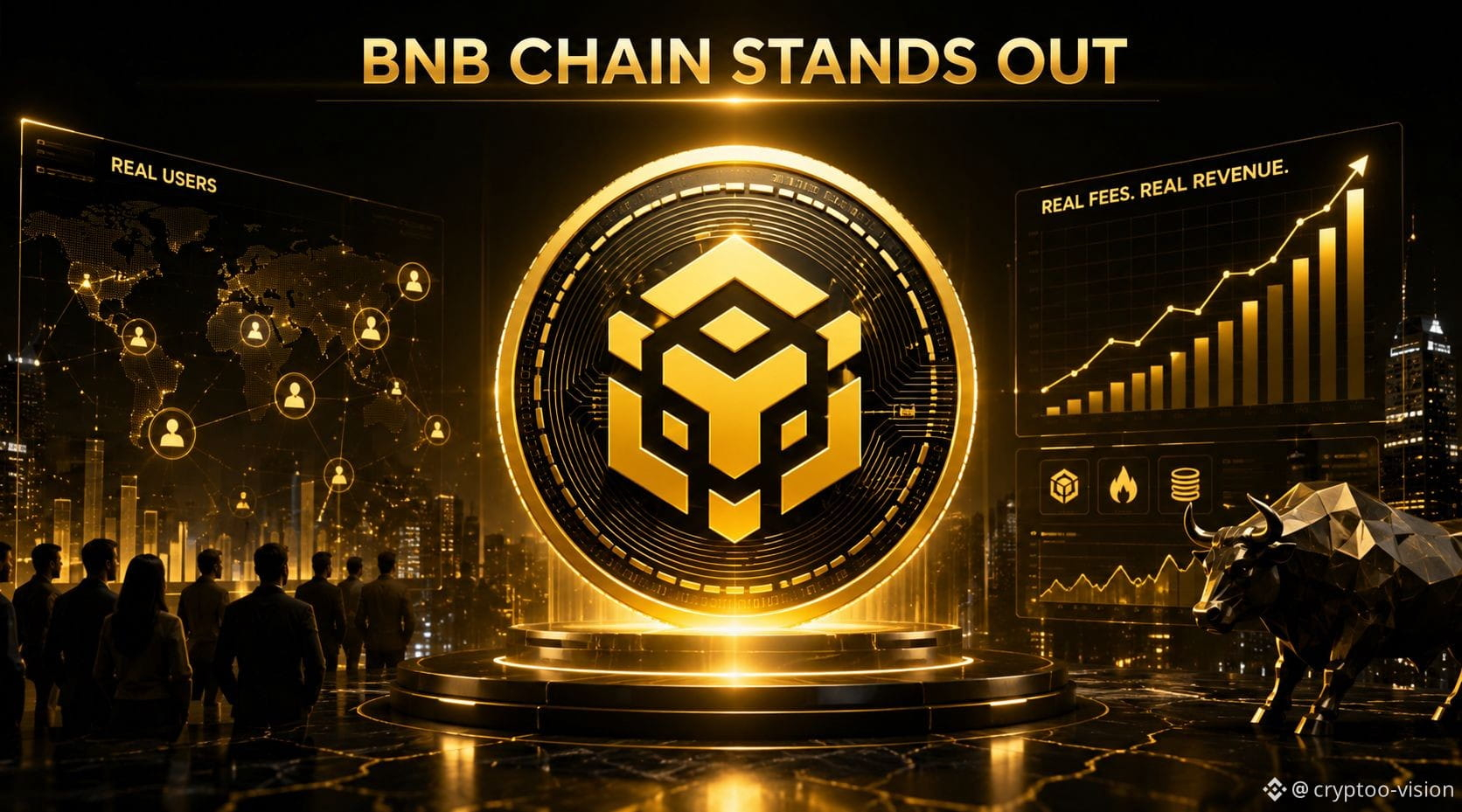
VanEck has highlighted $BNB Chain as one of the stronger long-term blockchain investment cases based on fundamentals.
According to the firm's analysis, the focus is not on hype or short-term price action, but on metrics that institutions typically value:
- Real user activity
- Sustainable revenue generation
- Network utility and adoption
While many blockchains compete for attention through narratives, $BNB Chain continues to be evaluated on measurable on-chain activity and economic output.
For investors, the takeaway is simple: institutional research is increasingly focusing on fundamentals rather than speculation alone.
#bnb #BNBChain #VanEck #crypto #altcoins
VanEck has highlighted $BNB Chain as one of the stronger long-term blockchain investment cases based on fundamentals.
According to the firm's analysis, the focus is not on hype or short-term price action, but on metrics that institutions typically value:
- Real user activity
- Sustainable revenue generation
- Network utility and adoption
While many blockchains compete for attention through narratives, $BNB Chain continues to be evaluated on measurable on-chain activity and economic output.
For investors, the takeaway is simple: institutional research is increasingly focusing on fundamentals rather than speculation alone.
#bnb #BNBChain #VanEck #crypto #altcoins
According to the firm's analysis, the focus is not on hype or short-term price action, but on metrics that institutions typically value:
- Real user activity
- Sustainable revenue generation
- Network utility and adoption
While many blockchains compete for attention through narratives, $BNB Chain continues to be evaluated on measurable on-chain activity and economic output.
For investors, the takeaway is simple: institutional research is increasingly focusing on fundamentals rather than speculation alone.
#bnb #BNBChain #VanEck #crypto #altcoins
78
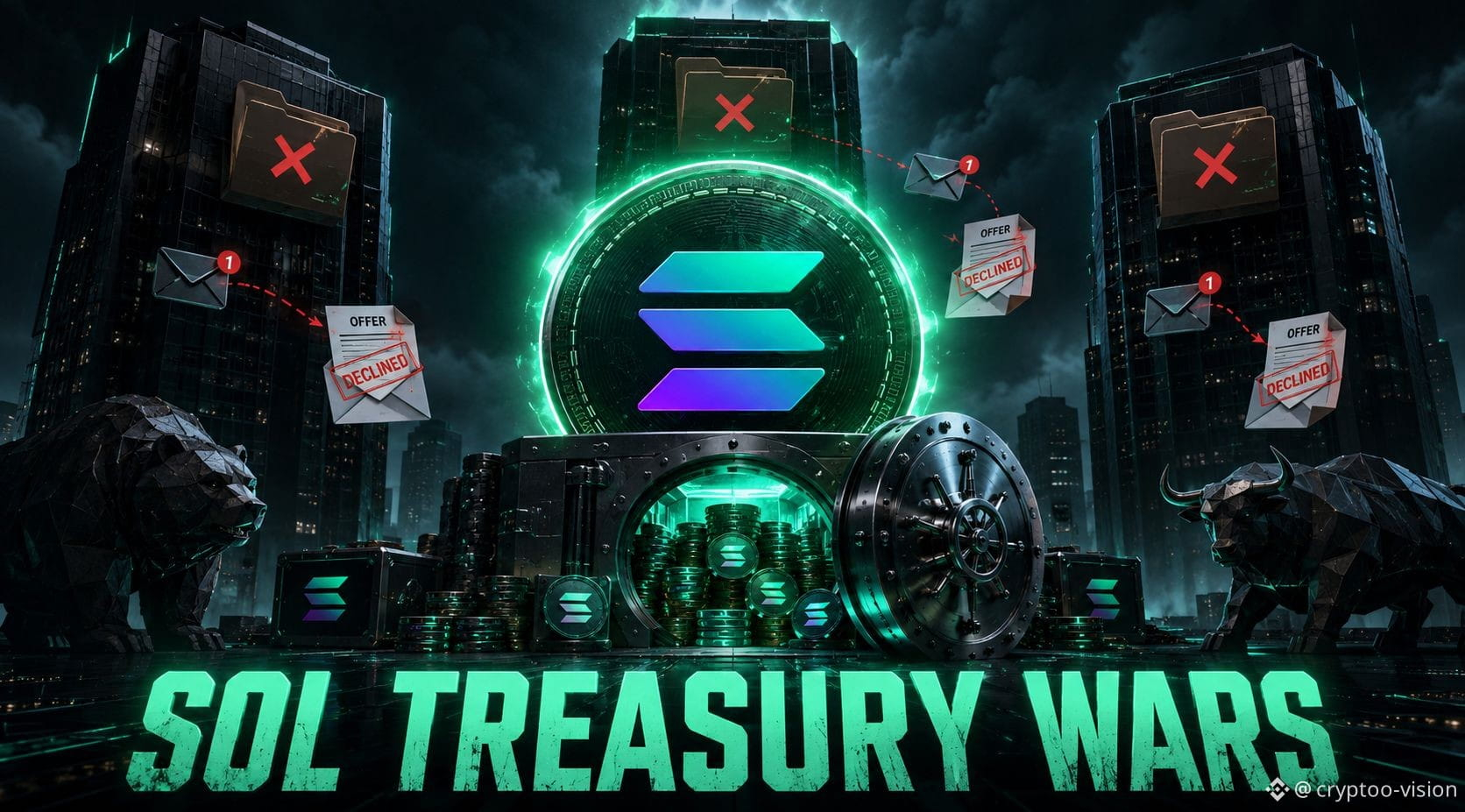
A major consolidation story is unfolding in the Solana treasury sector.
Forward Industries (FWDI), the largest publicly traded corporate holder of $SOL , attempted to acquire three smaller Solana-focused treasury companies in June 2026.
Key facts:
- FWDI holds over 7M $SOL
- Most of its holdings are staked or deployed within the Solana ecosystem
- Acquisition offers reportedly carried premiums of 10–20%
The outcome:
* Solana Company (HSDT) declined the offer
* SkyAI (SKYA) did not respond before the proposal expired
* Brera Holdings (SLMT) rejected the bid
For the $SOL ecosystem, it is another sign that corporate treasury strategies are becoming a meaningful part of the market narrative.
#sol #solana #crypto #CorporateTreasury #MergersAndAcquisitions
A major consolidation story is unfolding in the Solana treasury sector.
Forward Industries (FWDI), the largest publicly traded corporate holder of $SOL , attempted to acquire three smaller Solana-focused treasury companies in June 2026.
Key facts:
- FWDI holds over 7M $SOL
- Most of its holdings are staked or deployed within the Solana ecosystem
- Acquisition offers reportedly carried premiums of 10–20%
The outcome:
* Solana Company (HSDT) declined the offer
* SkyAI (SKYA) did not respond before the proposal expired
* Brera Holdings (SLMT) rejected the bid
For the $SOL ecosystem, it is another sign that corporate treasury strategies are becoming a meaningful part of the market narrative.
#sol #solana #crypto #CorporateTreasury #MergersAndAcquisitions
Forward Industries (FWDI), the largest publicly traded corporate holder of $SOL , attempted to acquire three smaller Solana-focused treasury companies in June 2026.
Key facts:
- FWDI holds over 7M $SOL
- Most of its holdings are staked or deployed within the Solana ecosystem
- Acquisition offers reportedly carried premiums of 10–20%
The outcome:
* Solana Company (HSDT) declined the offer
* SkyAI (SKYA) did not respond before the proposal expired
* Brera Holdings (SLMT) rejected the bid
For the $SOL ecosystem, it is another sign that corporate treasury strategies are becoming a meaningful part of the market narrative.
#sol #solana #crypto #CorporateTreasury #MergersAndAcquisitions
84
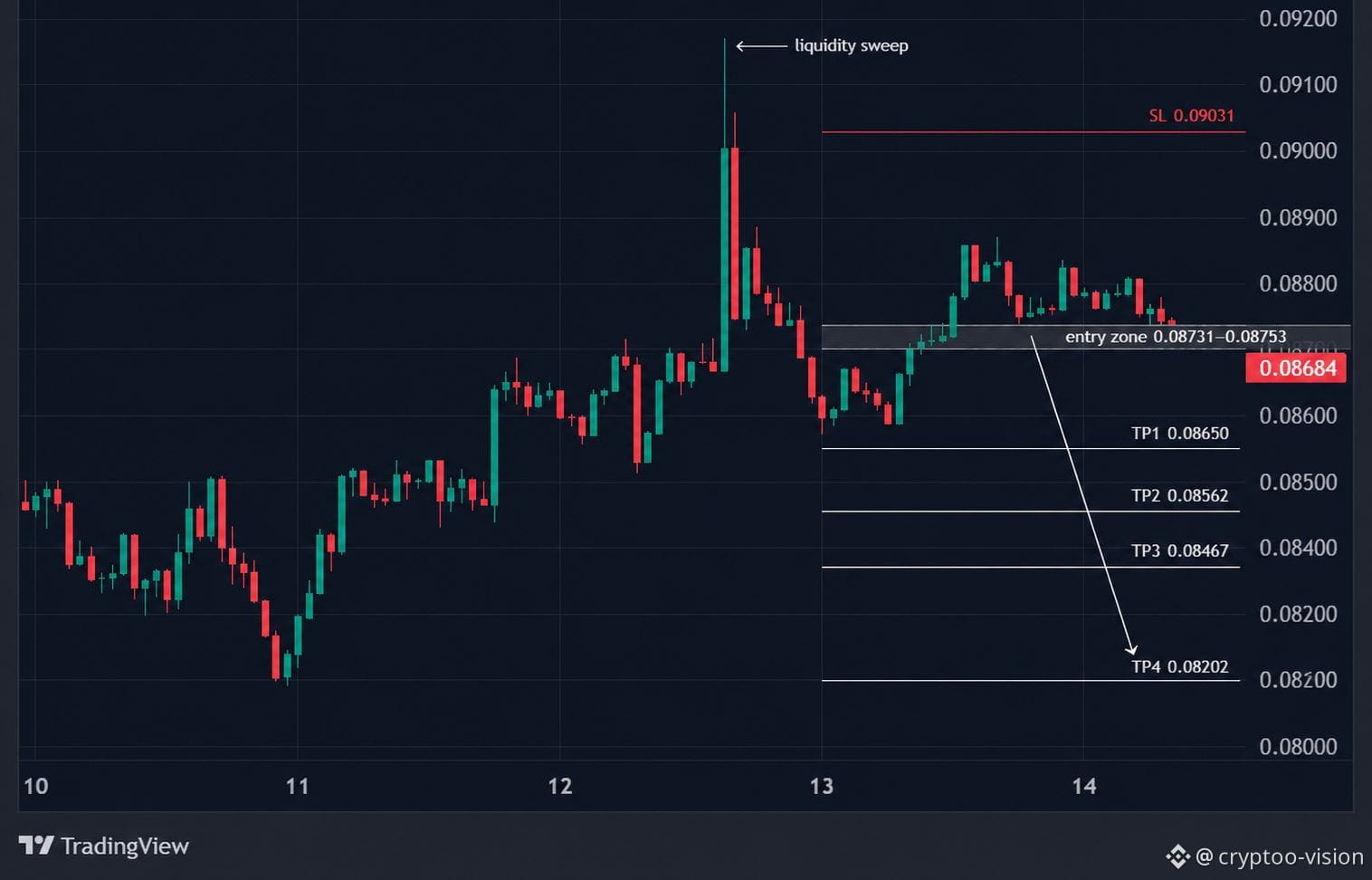
SHORT ALERT: $DOGE Rejection at 0.08753 25x Signal Active
$DOGE printed entry at 0.08731 - 0.08753 and stalled. Sellers defending hard. Stoploss: 0.09031.
Six targets stacked below: 0.08650 | 0.08562 | 0.08467 | 0.08394 | 0.08286 | 0.08202.
Price failed to break above 0.08753 a clear warning for bulls. Momentum is fading fast. The implication: downside flush incoming across all six levels.
Verdict: $DOGE is a short until 0.08202 holds.
#DOGE #ShortSignal #cryptotrading #BinanceSquare
SHORT ALERT: $DOGE Rejection at 0.08753 25x Signal Active
$DOGE printed entry at 0.08731 - 0.08753 and stalled. Sellers defending hard. Stoploss: 0.09031.
Six targets stacked below: 0.08650 | 0.08562 | 0.08467 | 0.08394 | 0.08286 | 0.08202.
Price failed to break above 0.08753 a clear warning for bulls. Momentum is fading fast. The implication: downside flush incoming across all six levels.
Verdict: $DOGE is a short until 0.08202 holds.
#DOGE #ShortSignal #cryptotrading #BinanceSquare
$DOGE printed entry at 0.08731 - 0.08753 and stalled. Sellers defending hard. Stoploss: 0.09031.
Six targets stacked below: 0.08650 | 0.08562 | 0.08467 | 0.08394 | 0.08286 | 0.08202.
Price failed to break above 0.08753 a clear warning for bulls. Momentum is fading fast. The implication: downside flush incoming across all six levels.
Verdict: $DOGE is a short until 0.08202 holds.
#DOGE #ShortSignal #cryptotrading #BinanceSquare
1
123
$DOGE is gaining new infrastructure through the House of Doge x Paxos partnership.
The expansion aims to increase $DOGE access across 150+ countries, giving the asset broader global reach.
Why it matters:
- Paxos provides regulated crypto infrastructure
- Wider access means more fiat on-ramps
- House of Doge continues pushing Dogecoin commercialization
$DOGE is often viewed only as a memecoin, but infrastructure development adds another layer to the story.
Global access and regulated rails could gradually strengthen DOGE’s market profile over time.
#DOGE #Dogecoin #crypto #Paxos
$DOGE is gaining new infrastructure through the House of Doge x Paxos partnership.
The expansion aims to increase $DOGE access across 150+ countries, giving the asset broader global reach.
Why it matters:
- Paxos provides regulated crypto infrastructure
- Wider access means more fiat on-ramps
- House of Doge continues pushing Dogecoin commercialization
$DOGE is often viewed only as a memecoin, but infrastructure development adds another layer to the story.
Global access and regulated rails could gradually strengthen DOGE’s market profile over time.
#DOGE #Dogecoin #crypto #Paxos
The expansion aims to increase $DOGE access across 150+ countries, giving the asset broader global reach.
Why it matters:
- Paxos provides regulated crypto infrastructure
- Wider access means more fiat on-ramps
- House of Doge continues pushing Dogecoin commercialization
$DOGE is often viewed only as a memecoin, but infrastructure development adds another layer to the story.
Global access and regulated rails could gradually strengthen DOGE’s market profile over time.
#DOGE #Dogecoin #crypto #Paxos

155
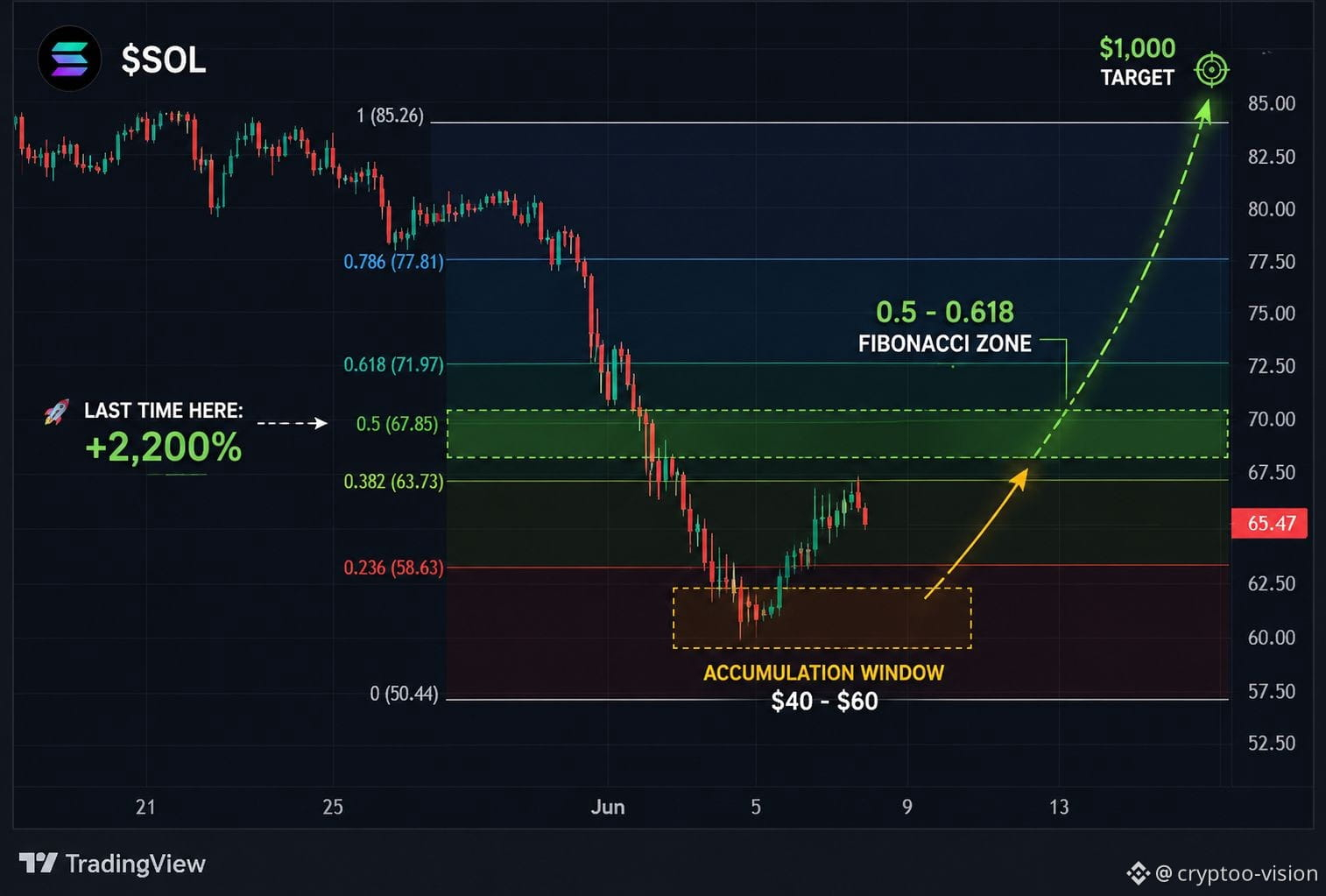
$SOL is once again trading near a key Fibonacci retracement zone that played an important role during the previous cycle.
The 0.5-0.618 retracement range has historically acted as a major accumulation area, and Solana is currently positioned just above it.
Key levels:
- Fibonacci zone: $40–$60
- Current price: ~$67
- Major resistance and extension levels remain above current market prices
The last cycle saw a significant rally after $SOL spent time in this range. While history does not guarantee repetition, traders often monitor these zones for signs of accumulation and trend reversals.
For now, the focus remains on whether $SOL can build support and reclaim higher levels.
#sol #solana #crypto #altcoins #TechnicalAnalysis
$SOL is once again trading near a key Fibonacci retracement zone that played an important role during the previous cycle.
The 0.5-0.618 retracement range has historically acted as a major accumulation area, and Solana is currently positioned just above it.
Key levels:
- Fibonacci zone: $40–$60
- Current price: ~$67
- Major resistance and extension levels remain above current market prices
The last cycle saw a significant rally after $SOL spent time in this range. While history does not guarantee repetition, traders often monitor these zones for signs of accumulation and trend reversals.
For now, the focus remains on whether $SOL can build support and reclaim higher levels.
#sol #solana #crypto #altcoins #TechnicalAnalysis
The 0.5-0.618 retracement range has historically acted as a major accumulation area, and Solana is currently positioned just above it.
Key levels:
- Fibonacci zone: $40–$60
- Current price: ~$67
- Major resistance and extension levels remain above current market prices
The last cycle saw a significant rally after $SOL spent time in this range. While history does not guarantee repetition, traders often monitor these zones for signs of accumulation and trend reversals.
For now, the focus remains on whether $SOL can build support and reclaim higher levels.
#sol #solana #crypto #altcoins #TechnicalAnalysis
55
$BTC is moving deeper into traditional finance infrastructure.
This summer, Coinbase and Better Home & Finance plan to launch mortgage products that allow eligible borrowers to use $BTC or USDC as collateral for home financing.
Key developments:
- FHFA issued guidance in June 2025
- Newrez adopted the framework in early 2026
- The 21st Century Mortgage Act aims to provide long-term regulatory support
The broader trend is clear: digital assets are increasingly being integrated into established financial systems rather than operating alongside them.
Whether adoption accelerates or not, $BTC 's role in mainstream finance continues to expand beyond trading and investment use cases.
#bitcoin #BTC #crypto #TradFi #Adoption
$BTC is moving deeper into traditional finance infrastructure.
This summer, Coinbase and Better Home & Finance plan to launch mortgage products that allow eligible borrowers to use $BTC or USDC as collateral for home financing.
Key developments:
- FHFA issued guidance in June 2025
- Newrez adopted the framework in early 2026
- The 21st Century Mortgage Act aims to provide long-term regulatory support
The broader trend is clear: digital assets are increasingly being integrated into established financial systems rather than operating alongside them.
Whether adoption accelerates or not, $BTC 's role in mainstream finance continues to expand beyond trading and investment use cases.
#bitcoin #BTC #crypto #TradFi #Adoption
This summer, Coinbase and Better Home & Finance plan to launch mortgage products that allow eligible borrowers to use $BTC or USDC as collateral for home financing.
Key developments:
- FHFA issued guidance in June 2025
- Newrez adopted the framework in early 2026
- The 21st Century Mortgage Act aims to provide long-term regulatory support
The broader trend is clear: digital assets are increasingly being integrated into established financial systems rather than operating alongside them.
Whether adoption accelerates or not, $BTC 's role in mainstream finance continues to expand beyond trading and investment use cases.
#bitcoin #BTC #crypto #TradFi #Adoption

84
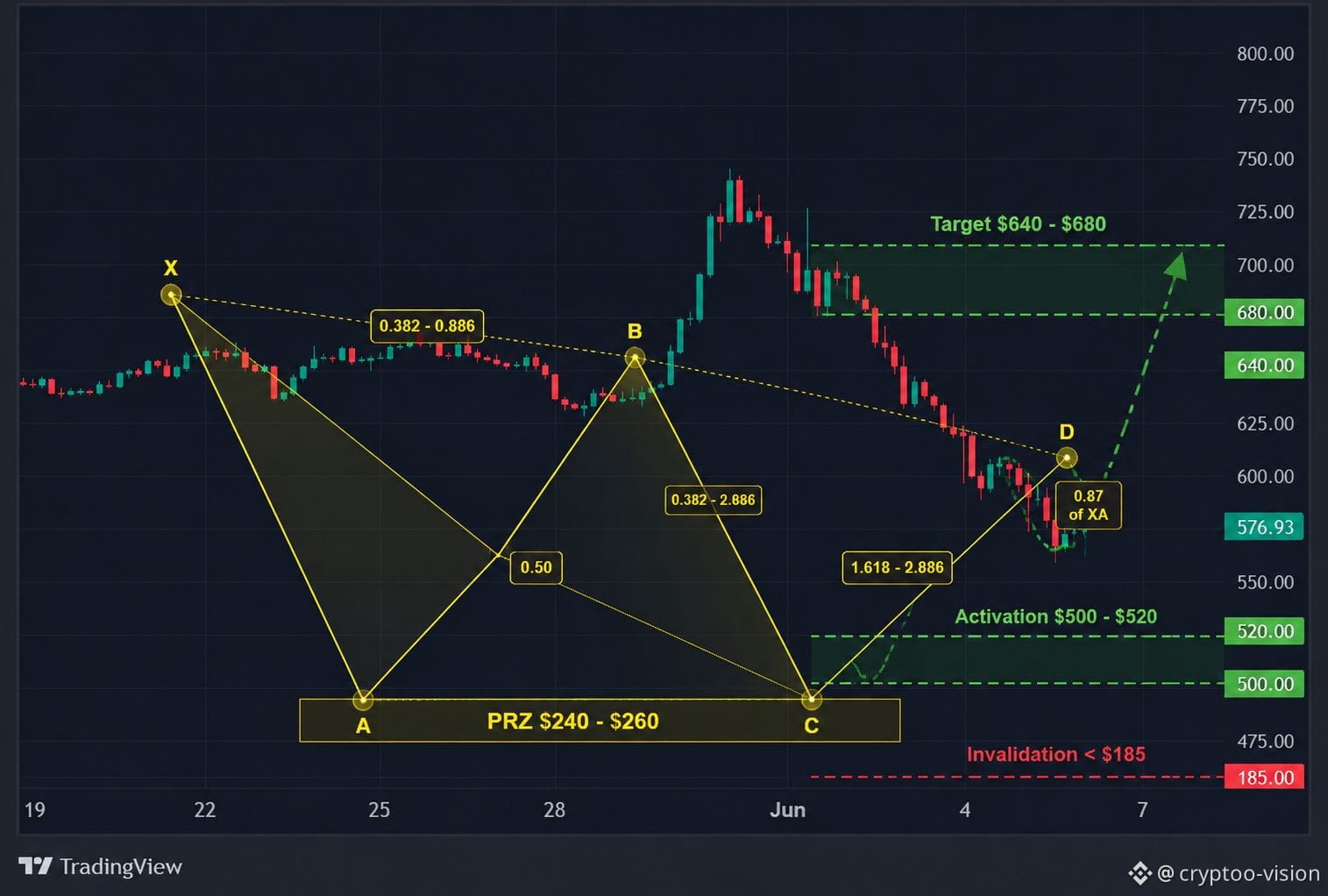
$BNB has completed a Bullish Bat harmonic pattern on the 4H chart, with the reversal zone formed around $240–$260.
Key structure:
- Pattern: Bullish Bat X-A-B-C-D
- D point: 0.87 retracement of XA
- CD extension: 2.752 of BC
- PRZ: $240–$260
$BNB is now trading around $325, above the potential reversal zone.
Levels to watch:
- Activation: break above $500–$520
- Target after activation: $640–$680
- Invalidation: close below $185–$190
The setup remains technical and level-based. Confirmation only comes if price breaks the activation zone.
#bnb #Binance #cryptocurreny #harmonictrading
$BNB has completed a Bullish Bat harmonic pattern on the 4H chart, with the reversal zone formed around $240–$260.
Key structure:
- Pattern: Bullish Bat X-A-B-C-D
- D point: 0.87 retracement of XA
- CD extension: 2.752 of BC
- PRZ: $240–$260
$BNB is now trading around $325, above the potential reversal zone.
Levels to watch:
- Activation: break above $500–$520
- Target after activation: $640–$680
- Invalidation: close below $185–$190
The setup remains technical and level-based. Confirmation only comes if price breaks the activation zone.
#bnb #Binance #cryptocurreny #harmonictrading
Key structure:
- Pattern: Bullish Bat X-A-B-C-D
- D point: 0.87 retracement of XA
- CD extension: 2.752 of BC
- PRZ: $240–$260
$BNB is now trading around $325, above the potential reversal zone.
Levels to watch:
- Activation: break above $500–$520
- Target after activation: $640–$680
- Invalidation: close below $185–$190
The setup remains technical and level-based. Confirmation only comes if price breaks the activation zone.
#bnb #Binance #cryptocurreny #harmonictrading
120
Ethereum’s identity debate is becoming more important for the market.
Recent signals have put the long-term $ETH thesis back under discussion:
- Ryan Sean Adams said Ethereum must become the global settlement layer or risk failing its core mission
- David Hoffman reportedly sold his last ETH, arguing the “ETH is money” thesis has reached its limit
- Jeffrey Wilcke moved a large amount of $ETH to Kraken
Ethereum is still heavily tied to DeFi, speculation, and memecoin activity
The key question is simple:
Can Ethereum become the main settlement layer for global finance, or will faster, more institution-friendly chains capture that role?
For price, this adds uncertainty. $ETH rallies may need stronger proof of real settlement demand, not only narrative strength.
#ETH #Ethereum #defi #altcoins
Ethereum’s identity debate is becoming more important for the market.
Recent signals have put the long-term $ETH thesis back under discussion:
- Ryan Sean Adams said Ethereum must become the global settlement layer or risk failing its core mission
- David Hoffman reportedly sold his last ETH, arguing the “ETH is money” thesis has reached its limit
- Jeffrey Wilcke moved a large amount of $ETH to Kraken
Ethereum is still heavily tied to DeFi, speculation, and memecoin activity
The key question is simple:
Can Ethereum become the main settlement layer for global finance, or will faster, more institution-friendly chains capture that role?
For price, this adds uncertainty. $ETH rallies may need stronger proof of real settlement demand, not only narrative strength.
#ETH #Ethereum #defi #altcoins
Recent signals have put the long-term $ETH thesis back under discussion:
- Ryan Sean Adams said Ethereum must become the global settlement layer or risk failing its core mission
- David Hoffman reportedly sold his last ETH, arguing the “ETH is money” thesis has reached its limit
- Jeffrey Wilcke moved a large amount of $ETH to Kraken
Ethereum is still heavily tied to DeFi, speculation, and memecoin activity
The key question is simple:
Can Ethereum become the main settlement layer for global finance, or will faster, more institution-friendly chains capture that role?
For price, this adds uncertainty. $ETH rallies may need stronger proof of real settlement demand, not only narrative strength.
#ETH #Ethereum #defi #altcoins

183
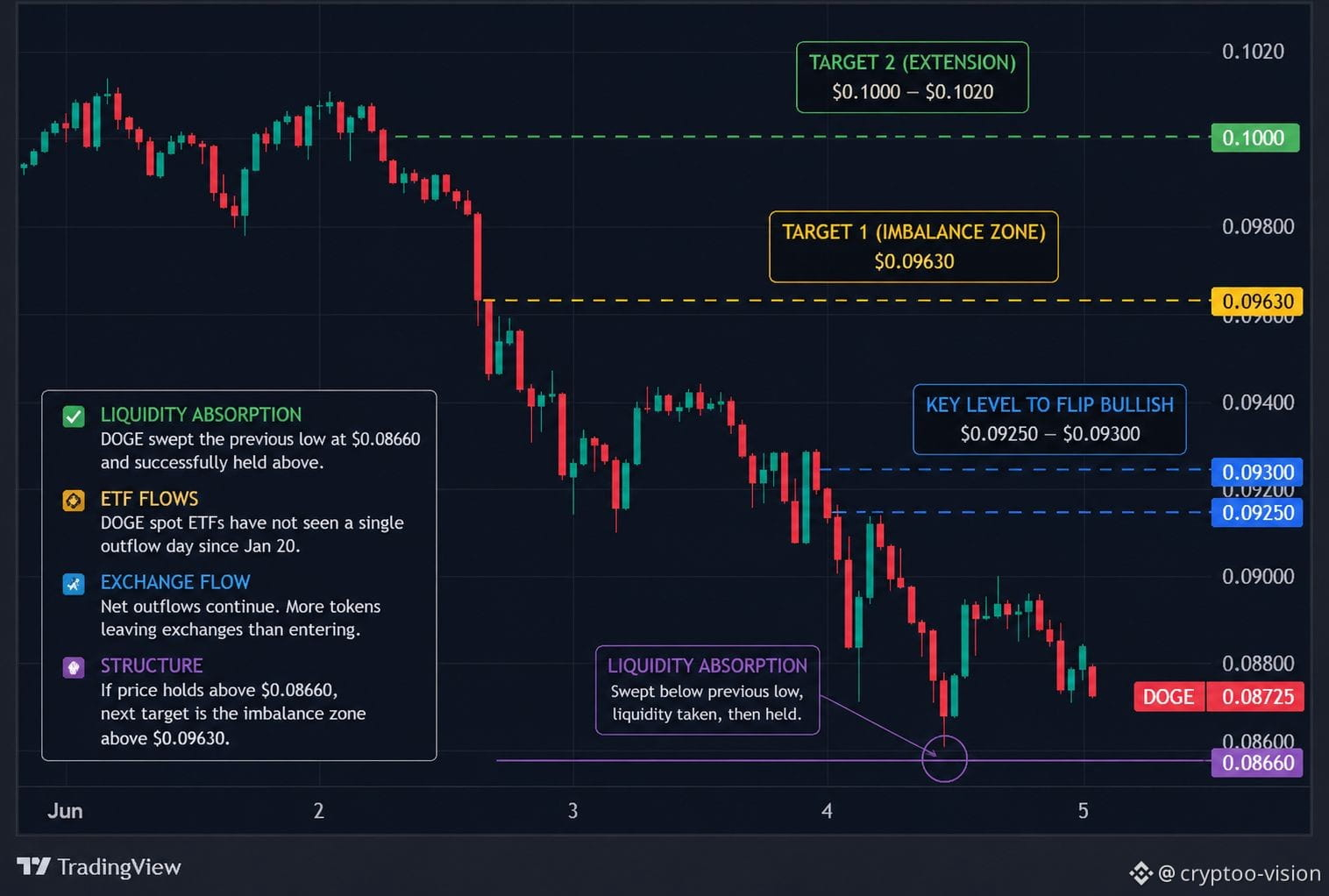
$DOGE is being ignored by most of the market, but the setup is still worth watching.
Current price: $0.0889
Three signals stand out:
- $DOGE swept the previous low near $0.0866 and held. That suggests liquidity absorption, not a clean breakdown.
- Dogecoin spot ETFs have recorded no outflows since January 20, while BTC and ETH ETFs saw outflows during the recent selloff.
- $DOGE exchange flows remain net negative, meaning more coins are leaving exchanges than entering.
Key levels:
* Entry zone: $0.0866–$0.0905
* Target: $0.0963+
* Invalidation: below $0.0875
For now, the structure remains active as long as support holds.
#DOGE #Dogecoin #crypto #altcoins
$DOGE is being ignored by most of the market, but the setup is still worth watching.
Current price: $0.0889
Three signals stand out:
- $DOGE swept the previous low near $0.0866 and held. That suggests liquidity absorption, not a clean breakdown.
- Dogecoin spot ETFs have recorded no outflows since January 20, while BTC and ETH ETFs saw outflows during the recent selloff.
- $DOGE exchange flows remain net negative, meaning more coins are leaving exchanges than entering.
Key levels:
* Entry zone: $0.0866–$0.0905
* Target: $0.0963+
* Invalidation: below $0.0875
For now, the structure remains active as long as support holds.
#DOGE #Dogecoin #crypto #altcoins
Current price: $0.0889
Three signals stand out:
- $DOGE swept the previous low near $0.0866 and held. That suggests liquidity absorption, not a clean breakdown.
- Dogecoin spot ETFs have recorded no outflows since January 20, while BTC and ETH ETFs saw outflows during the recent selloff.
- $DOGE exchange flows remain net negative, meaning more coins are leaving exchanges than entering.
Key levels:
* Entry zone: $0.0866–$0.0905
* Target: $0.0963+
* Invalidation: below $0.0875
For now, the structure remains active as long as support holds.
#DOGE #Dogecoin #crypto #altcoins
85
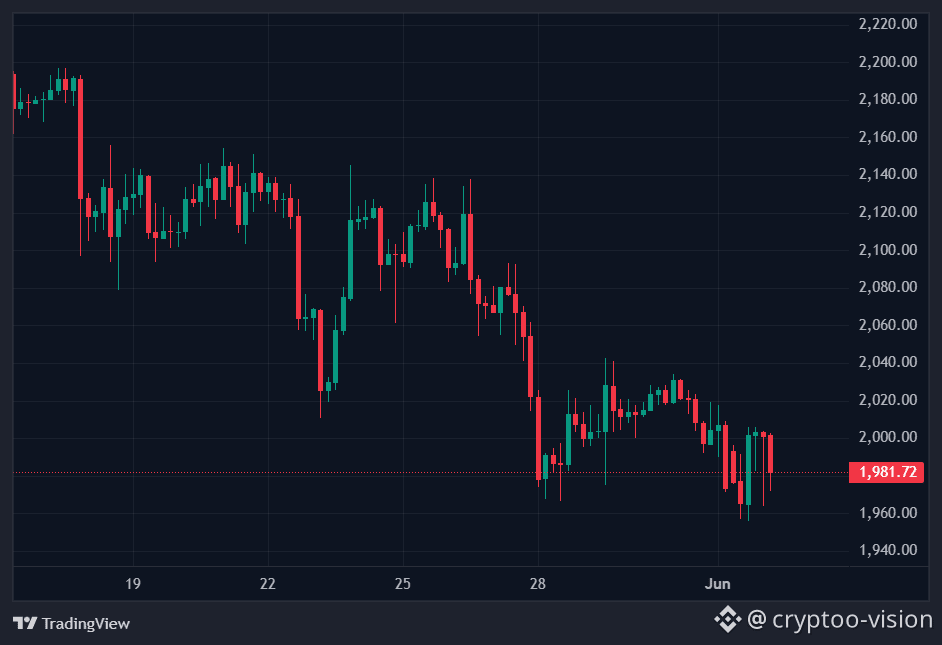
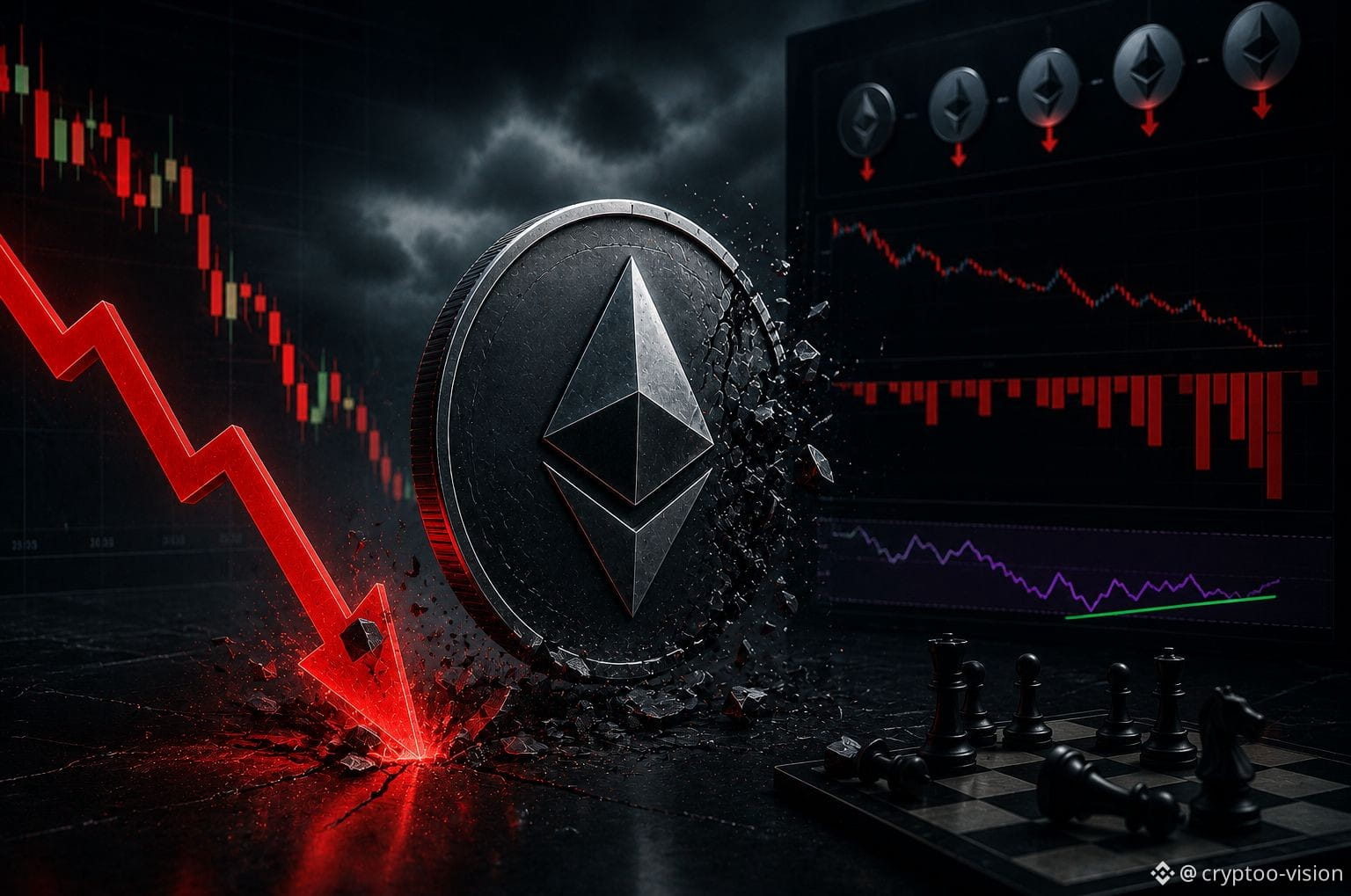
$ETH has fallen below $2,000 for the first time since March, putting a key level back in focus.
What's driving the weakness?
- Spot $ETH ETF outflows have remained negative for weeks
- Risk-off sentiment continues to pressure speculative assets
- The chart structure still shows lower highs and lower lows
There is one potential positive signal: bullish divergences are starting to appear on several indicators.
But divergences alone are not enough.
The level to watch is $2,045. A confirmed move above it would be the first sign that momentum may be shifting.
Until then, the trend remains under pressure.
#ETH #Ethereum #crypto #etf
$ETH has fallen below $2,000 for the first time since March, putting a key level back in focus.
What's driving the weakness?
- Spot $ETH ETF outflows have remained negative for weeks
- Risk-off sentiment continues to pressure speculative assets
- The chart structure still shows lower highs and lower lows
There is one potential positive signal: bullish divergences are starting to appear on several indicators.
But divergences alone are not enough.
The level to watch is $2,045. A confirmed move above it would be the first sign that momentum may be shifting.
Until then, the trend remains under pressure.
#ETH #Ethereum #crypto #etf
What's driving the weakness?
- Spot $ETH ETF outflows have remained negative for weeks
- Risk-off sentiment continues to pressure speculative assets
- The chart structure still shows lower highs and lower lows
There is one potential positive signal: bullish divergences are starting to appear on several indicators.
But divergences alone are not enough.
The level to watch is $2,045. A confirmed move above it would be the first sign that momentum may be shifting.
Until then, the trend remains under pressure.
#ETH #Ethereum #crypto #etf
96
Verified
$XRP ’s June escrow release is making headlines, but the bigger picture matters more.
Ripple released 1B $XRP as part of its scheduled monthly escrow process. This has happened regularly since 2017, and most of the released $XRP is usually re-locked back into escrow.
So this is not automatically a sell signal.
At the same time, XRP spot ETF data shows strong institutional interest:
- Cumulative net inflows: $1.42B
- May 29 inflows: $11.88M
The real story is not just the unlock.
It is scheduled supply management + institutional demand + improving market structure.
#xrp #Ripple #crypto #etf
$XRP ’s June escrow release is making headlines, but the bigger picture matters more.
Ripple released 1B $XRP as part of its scheduled monthly escrow process. This has happened regularly since 2017, and most of the released $XRP is usually re-locked back into escrow.
So this is not automatically a sell signal.
At the same time, XRP spot ETF data shows strong institutional interest:
- Cumulative net inflows: $1.42B
- May 29 inflows: $11.88M
The real story is not just the unlock.
It is scheduled supply management + institutional demand + improving market structure.
#xrp #Ripple #crypto #etf
Ripple released 1B $XRP as part of its scheduled monthly escrow process. This has happened regularly since 2017, and most of the released $XRP is usually re-locked back into escrow.
So this is not automatically a sell signal.
At the same time, XRP spot ETF data shows strong institutional interest:
- Cumulative net inflows: $1.42B
- May 29 inflows: $11.88M
The real story is not just the unlock.
It is scheduled supply management + institutional demand + improving market structure.
#xrp #Ripple #crypto #etf
3
34
32.2k
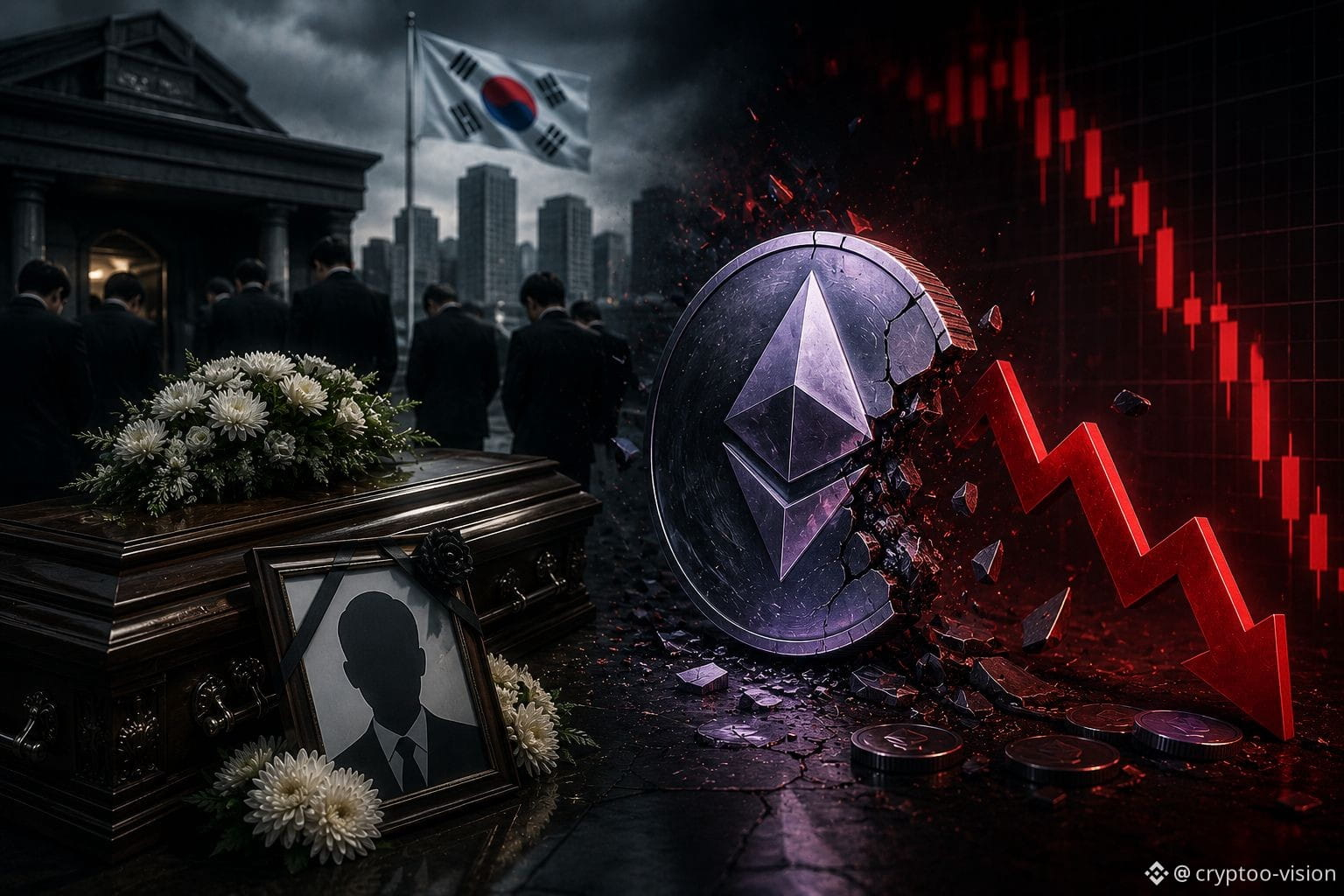
A South Korean funeral operator reportedly lost around $33M after using client pre-paid funeral funds in a leveraged $ETH -related position.
The company, Boomosarang, placed about $43M into a 2x leveraged ETF linked to BitMine, one of the largest corporate holders of Ethereum. After the recent crypto correction, the position reportedly fell to around $7M.
Key points:
-Funds came from real client pre-payments
-The position used 2x leverage
-A normal $ETH correction became a major capital loss
-Client refund pressure is now a serious concern
The core issue was not $ETH itself, but the combination of leverage, treasury mismanagement, and the use of client funds for speculative exposure.
Leverage can amplify gains during strong markets, but it can also accelerate losses during volatility.
#ETH #Ethereum #CryptoRisk #Leverage #RiskManagement
A South Korean funeral operator reportedly lost around $33M after using client pre-paid funeral funds in a leveraged $ETH -related position.
The company, Boomosarang, placed about $43M into a 2x leveraged ETF linked to BitMine, one of the largest corporate holders of Ethereum. After the recent crypto correction, the position reportedly fell to around $7M.
Key points:
-Funds came from real client pre-payments
-The position used 2x leverage
-A normal $ETH correction became a major capital loss
-Client refund pressure is now a serious concern
The core issue was not $ETH itself, but the combination of leverage, treasury mismanagement, and the use of client funds for speculative exposure.
Leverage can amplify gains during strong markets, but it can also accelerate losses during volatility.
#ETH #Ethereum #CryptoRisk #Leverage #RiskManagement
The company, Boomosarang, placed about $43M into a 2x leveraged ETF linked to BitMine, one of the largest corporate holders of Ethereum. After the recent crypto correction, the position reportedly fell to around $7M.
Key points:
-Funds came from real client pre-payments
-The position used 2x leverage
-A normal $ETH correction became a major capital loss
-Client refund pressure is now a serious concern
The core issue was not $ETH itself, but the combination of leverage, treasury mismanagement, and the use of client funds for speculative exposure.
Leverage can amplify gains during strong markets, but it can also accelerate losses during volatility.
#ETH #Ethereum #CryptoRisk #Leverage #RiskManagement
93
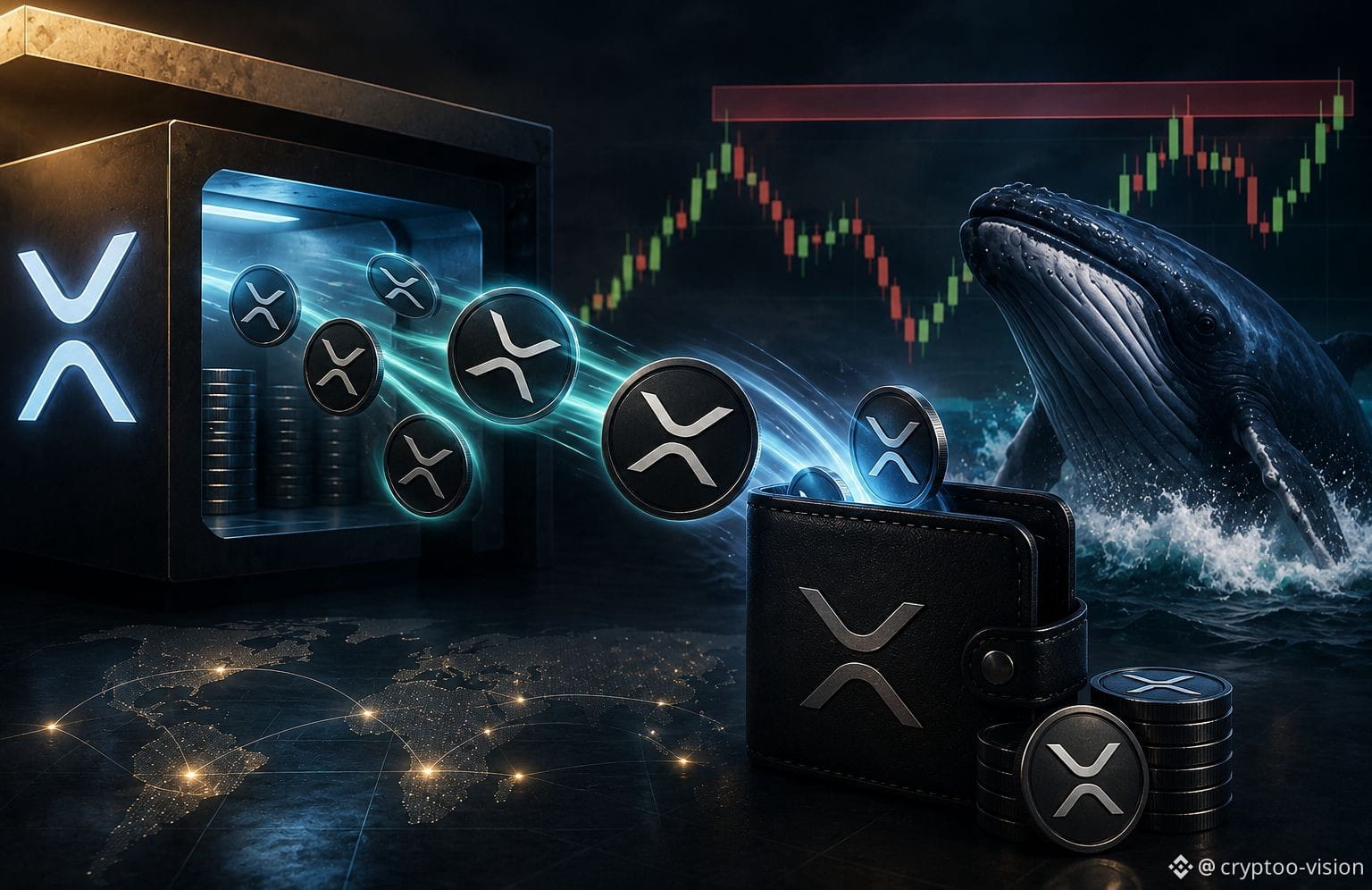
$XRP recorded more than $115M in exchange outflows within 24 hours while price continues testing a key resistance area.
Large exchange withdrawals are often monitored as a sign that holders may be moving assets into long-term storage rather than preparing to sell.
Current implications:
- Available sell-side supply near resistance is decreasing
- Whale activity suggests positioning rather than distribution
- Order book liquidity above current price levels appears thinner
Historically, strong outflow spikes during resistance tests have often preceded periods of increased volatility.
The next 48 hours may be important for confirming direction.
#xrp #Onchain #WhaleWatchers #crypto $XRP
$XRP recorded more than $115M in exchange outflows within 24 hours while price continues testing a key resistance area.
Large exchange withdrawals are often monitored as a sign that holders may be moving assets into long-term storage rather than preparing to sell.
Current implications:
- Available sell-side supply near resistance is decreasing
- Whale activity suggests positioning rather than distribution
- Order book liquidity above current price levels appears thinner
Historically, strong outflow spikes during resistance tests have often preceded periods of increased volatility.
The next 48 hours may be important for confirming direction.
#xrp #Onchain #WhaleWatchers #crypto $XRP
Large exchange withdrawals are often monitored as a sign that holders may be moving assets into long-term storage rather than preparing to sell.
Current implications:
- Available sell-side supply near resistance is decreasing
- Whale activity suggests positioning rather than distribution
- Order book liquidity above current price levels appears thinner
Historically, strong outflow spikes during resistance tests have often preceded periods of increased volatility.
The next 48 hours may be important for confirming direction.
#xrp #Onchain #WhaleWatchers #crypto $XRP
85
Log in to explore more content
Join global crypto users on Binance Square
⚡️ Get latest and useful information about crypto.
💬 Trusted by the world’s largest crypto exchange.
👍 Discover real insights from verified creators.
Email / Phone number