
币圈半边天 摩根智能杭州古墩新时代店
930 Posts

币圈半边天 摩根智能杭州古墩新时代店
古墩路808号三楼

ST Holder
Frequent Trader
4.3 Years
135 Following
13.4K+ Followers
23.0K+ Liked
Posts
All
Quotes
Videos
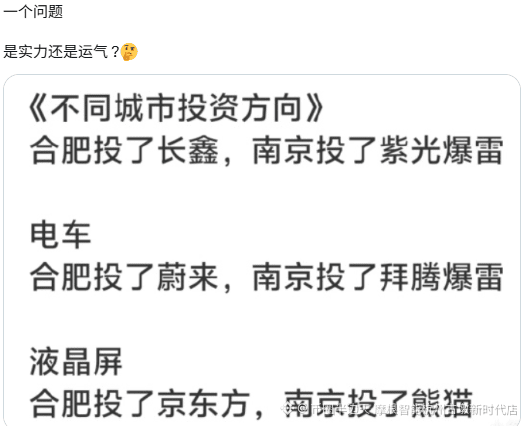
Hefei has a few reusable things: first, mature entities that “have a team, have technology, and have existing production capacity” rather than PPT projects (BOE already has Beijing’s Generation 5 line; NIO has outsourced manufacturing and delivery volumes in Anhui; and Zhaoxin has Zhu Yiming’s team led by Innolux); second, a rolling mechanism of “equity investment—project implementation—exit at the right time—then reinvest,” with the money flowing back; third, locally, no unit or individual has ever been dealt with for any investment failure. This risk-tolerance design matters far more than stock-picking ability.
The Hefei Party secretary’s own description is: “This is not venture capital; it’s industrial investment. This is not gambling; it’s hard work”—the evaluation is about clustering of the industrial chain, not single-transaction IRR.
The role of luck is systematically underestimated.
The most convincing counterexample is precisely Zhaoxin. The prospectus shows that as of the end of 2025, cumulative losses were 36.65 billion yuan. From 2023 to 2025, net profit attributable to shareholders were -16.34 billion yuan, -7.145 billion yuan, and 1.875 billion yuan, respectively. In other words, as of last year, this investment was still a major financial pit.
The turning point came in Q1 2026: revenue was 50.8 billion yuan, up 719% year over year; net profit attributable to shareholders was 24.762 billion yuan, up 1,688% year over year. The driver was a super storage cycle brought by AI computing power. In Q1 2026, the DRAM contract price’s quarter-on-quarter increase was revised upward to 93%—98%. This cycle is not something Hefei could design.
Zhaoxin had already accumulated losses of more than 36 billion yuan before the super AI cycle arrived, only then did it reverse in one fell swoop. If it broke out three years later, the story would have been completely different.
This is “strength in the process, luck in the magnitude.” Hefei’s mechanism raises the win rate from roughly 20% to 40%, but raising 20% to 40% does not mean any single bet is guaranteed to succeed. What it guarantees is that, given enough repeated bets, positive expected returns can be realized.
Hefei’s real advantage may be fiscal “ability to afford losses”: by 2025, it had invested more than 210 billion yuan in strategic emerging industries cumulatively, driving total project investment of over 810 billion yuan. With a large enough sample size—and with holding periods of 10 years for BOE and 9 years for Zhaoxin—there is time for the cycle to turn.
So the more troublesome question is not “Is Hefei strength or luck?” but that this experience is not replicable for imitators. Most places that try to emulate Hefei end up with one fiasco after another; Zhuhai state-owned assets became a negative example. What they can learn is “daring to bet,” but what they can’t learn is industrial-chain judgment, exit discipline, and the fiscal robustness to hold steady despite floating losses of hundreds of billions for nine years.
The Hefei Party secretary’s own description is: “This is not venture capital; it’s industrial investment. This is not gambling; it’s hard work”—the evaluation is about clustering of the industrial chain, not single-transaction IRR.
The role of luck is systematically underestimated.
The most convincing counterexample is precisely Zhaoxin. The prospectus shows that as of the end of 2025, cumulative losses were 36.65 billion yuan. From 2023 to 2025, net profit attributable to shareholders were -16.34 billion yuan, -7.145 billion yuan, and 1.875 billion yuan, respectively. In other words, as of last year, this investment was still a major financial pit.
The turning point came in Q1 2026: revenue was 50.8 billion yuan, up 719% year over year; net profit attributable to shareholders was 24.762 billion yuan, up 1,688% year over year. The driver was a super storage cycle brought by AI computing power. In Q1 2026, the DRAM contract price’s quarter-on-quarter increase was revised upward to 93%—98%. This cycle is not something Hefei could design.
Zhaoxin had already accumulated losses of more than 36 billion yuan before the super AI cycle arrived, only then did it reverse in one fell swoop. If it broke out three years later, the story would have been completely different.
This is “strength in the process, luck in the magnitude.” Hefei’s mechanism raises the win rate from roughly 20% to 40%, but raising 20% to 40% does not mean any single bet is guaranteed to succeed. What it guarantees is that, given enough repeated bets, positive expected returns can be realized.
Hefei’s real advantage may be fiscal “ability to afford losses”: by 2025, it had invested more than 210 billion yuan in strategic emerging industries cumulatively, driving total project investment of over 810 billion yuan. With a large enough sample size—and with holding periods of 10 years for BOE and 9 years for Zhaoxin—there is time for the cycle to turn.
So the more troublesome question is not “Is Hefei strength or luck?” but that this experience is not replicable for imitators. Most places that try to emulate Hefei end up with one fiasco after another; Zhuhai state-owned assets became a negative example. What they can learn is “daring to bet,” but what they can’t learn is industrial-chain judgment, exit discipline, and the fiscal robustness to hold steady despite floating losses of hundreds of billions for nine years.
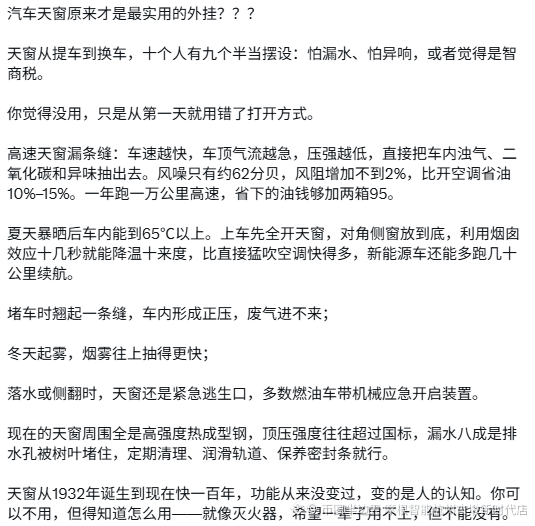
1. High-speed negative pressure ventilation: the principle works, and the experience is better than side windows
The ventilation logic of cracking open the sunroof follows the Bernoulli principle: the faster the car goes, the higher the airflow speed over the roof and the lower the pressure. A negative pressure forms at the sunroof position, “pulling out” stale air, carbon dioxide, and odors from inside the car.
Compared with fully opening side windows, cracking the sunroof results in much less increased wind resistance and wind noise. There’s no strong, direct blast effect you’d get from side windows—at high speeds, the air-exchange experience is indeed better.
2. In summer, the “chimney effect” for fast heat release: a very practical technique
After the car has been left in the sun, the air temperature at the top inside the vehicle can reach 60–70°C. At this time, fully opening the sunroof plus lowering the diagonal side windows will let the hot air rise quickly out through the sunroof due to its lower density, while outside air at ambient temperature enters through the side windows, creating air convection.
This method can quickly purge the intensely heated surface air inside the car within 1 minute, significantly reducing the head-level perceived temperature. It cools faster than cranking the AC as soon as you get in. It also helps vent harmful substances that volatilize from hot interior materials. For new-energy vehicles, it can reduce the initial AC power consumption, indirectly saving range.
3. In traffic jams / during dust storms, a tilted-up sunroof is cleaner than opening side windows
When the sunroof is tilted upward, the airflow passes over the top of the sunroof. Inside the car, a slight positive pressure forms, making it less likely for outside exhaust fumes and dust to backflow into the cabin.
In areas with poor air quality—such as congested roads or near construction sites—using a tilted-up sunroof instead of side-window ventilation keeps air circulating while also reducing the entry of exhaust and dust. This tip is highly practical.
4. Winter anti-fog assistance: works faster
In winter, fogging on the windows is essentially caused by moisture-laden warm air inside the car condensing on cold glass. Moist, warm water vapor naturally rises. When you crack open the sunroof at this time, the negative pressure rapidly “pulls away” the excess moisture in the cabin. Combined with warm air defogging, it works faster than simply blowing on the windshield. It also helps avoid the problem where the glass gets colder from continuous blowing and re-fogs after you stop.
5. The main cause of leaks is clogged drainage holes, not a design flaw
For the vast majority of sunroof leaks, the issue isn’t poor sealing. Instead, the drainage holes at the corners of the sunroof get clogged with leaves, dust, and silt. Rainwater then overflows the water-guiding channel and flows into the car.
Regular maintenance—such as cleaning the drainage holes (e.g., every six months), lubricating the tracks, and caring for the seals—can fix 90% or more of sunroof leakage problems.
The ventilation logic of cracking open the sunroof follows the Bernoulli principle: the faster the car goes, the higher the airflow speed over the roof and the lower the pressure. A negative pressure forms at the sunroof position, “pulling out” stale air, carbon dioxide, and odors from inside the car.
Compared with fully opening side windows, cracking the sunroof results in much less increased wind resistance and wind noise. There’s no strong, direct blast effect you’d get from side windows—at high speeds, the air-exchange experience is indeed better.
2. In summer, the “chimney effect” for fast heat release: a very practical technique
After the car has been left in the sun, the air temperature at the top inside the vehicle can reach 60–70°C. At this time, fully opening the sunroof plus lowering the diagonal side windows will let the hot air rise quickly out through the sunroof due to its lower density, while outside air at ambient temperature enters through the side windows, creating air convection.
This method can quickly purge the intensely heated surface air inside the car within 1 minute, significantly reducing the head-level perceived temperature. It cools faster than cranking the AC as soon as you get in. It also helps vent harmful substances that volatilize from hot interior materials. For new-energy vehicles, it can reduce the initial AC power consumption, indirectly saving range.
3. In traffic jams / during dust storms, a tilted-up sunroof is cleaner than opening side windows
When the sunroof is tilted upward, the airflow passes over the top of the sunroof. Inside the car, a slight positive pressure forms, making it less likely for outside exhaust fumes and dust to backflow into the cabin.
In areas with poor air quality—such as congested roads or near construction sites—using a tilted-up sunroof instead of side-window ventilation keeps air circulating while also reducing the entry of exhaust and dust. This tip is highly practical.
4. Winter anti-fog assistance: works faster
In winter, fogging on the windows is essentially caused by moisture-laden warm air inside the car condensing on cold glass. Moist, warm water vapor naturally rises. When you crack open the sunroof at this time, the negative pressure rapidly “pulls away” the excess moisture in the cabin. Combined with warm air defogging, it works faster than simply blowing on the windshield. It also helps avoid the problem where the glass gets colder from continuous blowing and re-fogs after you stop.
5. The main cause of leaks is clogged drainage holes, not a design flaw
For the vast majority of sunroof leaks, the issue isn’t poor sealing. Instead, the drainage holes at the corners of the sunroof get clogged with leaves, dust, and silt. Rainwater then overflows the water-guiding channel and flows into the car.
Regular maintenance—such as cleaning the drainage holes (e.g., every six months), lubricating the tracks, and caring for the seals—can fix 90% or more of sunroof leakage problems.
I. The denominator is also surging. The average daily trading value of KOSPI has risen from 270 trillion won in January to the 500–600 trillion won level in May and June. At least half of the credit for this “1%” ratio belongs to the semiconductor boom in the Korean stock market—not entirely a collapse in the crypto market.
II. This is only data from “spot exchanges within South Korea.” Korean regulators only allow individuals to trade spot, with no perpetual contracts; institutions are also restricted. Industry estimates say that in 2025, about 1.6 quadrillion won in crypto assets flowed out of South Korea and moved to overseas exchanges. So the accurate wording is: “Koreans aren’t trading on exchanges in South Korea,” not “Koreans aren’t trading anymore.”
III. The global market doesn’t match the idea that “it’s completely dead.” In 2025, the total trading volume across global crypto exchanges exceeded $7.9 trillion. Futures and perpetual contracts were about $6.2 trillion, accounting for 77%; spot was about $1.86 trillion, with year-on-year growth of roughly 9%. Monthly trading volume for perpetual contracts increased from $41.4 billion in January 2024 to $72.4 billion in January 2026. Trading activity hasn’t disappeared—it has shifted from “retail users buying spot” to “leveraged derivatives.”
The two things actually supported by the data are:—Bitcoin’s price is still around half of last year’s peak, and Korea-style retail “altcoin spot” behavior has lost its appeal under the pressure of regulatory lag plus the squeeze from a bull market in stocks.
II. This is only data from “spot exchanges within South Korea.” Korean regulators only allow individuals to trade spot, with no perpetual contracts; institutions are also restricted. Industry estimates say that in 2025, about 1.6 quadrillion won in crypto assets flowed out of South Korea and moved to overseas exchanges. So the accurate wording is: “Koreans aren’t trading on exchanges in South Korea,” not “Koreans aren’t trading anymore.”
III. The global market doesn’t match the idea that “it’s completely dead.” In 2025, the total trading volume across global crypto exchanges exceeded $7.9 trillion. Futures and perpetual contracts were about $6.2 trillion, accounting for 77%; spot was about $1.86 trillion, with year-on-year growth of roughly 9%. Monthly trading volume for perpetual contracts increased from $41.4 billion in January 2024 to $72.4 billion in January 2026. Trading activity hasn’t disappeared—it has shifted from “retail users buying spot” to “leveraged derivatives.”
The two things actually supported by the data are:—Bitcoin’s price is still around half of last year’s peak, and Korea-style retail “altcoin spot” behavior has lost its appeal under the pressure of regulatory lag plus the squeeze from a bull market in stocks.

1. About “ingredient disclosure in the U.S.”: Partly true, with limitations
Yunnan Baiyao is a first-class state-protected traditional Chinese medicine in China. It is protected domestically under the Measures for the Protection of Chinese Medicine Product Varieties, and therefore it is legally allowed not to disclose the full formula. When it is sold in the U.S., it must comply with local regulatory requirements, so it publicly lists the product’s main ingredient categories.
In the early ingredient list disclosed for the U.S. version, there was no mention of caulking aconite (the source of aconitine). It was not until 2013, after Hong Kong’s Department of Health detected undeclared aconite-type alkaloids in the product and a subsequent ban-and-controversy erupted, that Yunnan Baiyao revised its package insert to clearly indicate the presence of caulking aconite ingredients.
What is disclosed overseas is only the names of the main medicinal materials—not the complete formulation ratios, processing methods, or other core confidential details.
2. About “only for use as pet medicine”: The statement is seriously misleading
In the U.S. market, Yunnan Baiyao has a compliant identity as a dietary supplement for humans, not a drug. It can be sold for people to consume, but it cannot be promoted for treating diseases, and it is not approved to be marketed as a drug. So it is not true that it “cannot be eaten by people.”
The products labeled “For Pets” shown in the image are being sold as pet supplies due to third-party pet retailers’ market practices. This is neither the official behavior of Yunnan Baiyao, nor is it something that Yunnan Baiyao is only allowed to sell in the U.S. in the form of a pet drug. It is also not an FDA approval of Yunnan Baiyao as a pet drug.
Overseas, there are indeed veterinarians and pet owners who use Yunnan Baiyao for stopping bleeding from minor pet injuries. However, this falls under non-official off-label folk use; it is not an officially approved pet-indication by regulators.
3. About “FDA certification wasn’t obtained because aconitine is toxic”: A one-sided attribution
Aconitine itself is a highly toxic component. Ingesting excessive amounts can cause arrhythmia, respiratory paralysis, and even death—one of the core points of safety concerns regarding Yunnan Baiyao. However, the Yunnan Baiyao sold in China uses processed caulking aconite. After standardized processing and production methods, the toxic alkaloids are substantially degraded, and within the prescribed dosage it is considered to fall within a safe range.
The key reason Yunnan Baiyao did not obtain FDA drug approval is that it did not complete the full set of clinical trials required by the FDA (including phase III). Therefore, it cannot sufficiently prove its efficacy, safety, and quality controllability to meet modern medical standards. This is not due to aconitine as a single ingredient alone.
Yunnan Baiyao is a first-class state-protected traditional Chinese medicine in China. It is protected domestically under the Measures for the Protection of Chinese Medicine Product Varieties, and therefore it is legally allowed not to disclose the full formula. When it is sold in the U.S., it must comply with local regulatory requirements, so it publicly lists the product’s main ingredient categories.
In the early ingredient list disclosed for the U.S. version, there was no mention of caulking aconite (the source of aconitine). It was not until 2013, after Hong Kong’s Department of Health detected undeclared aconite-type alkaloids in the product and a subsequent ban-and-controversy erupted, that Yunnan Baiyao revised its package insert to clearly indicate the presence of caulking aconite ingredients.
What is disclosed overseas is only the names of the main medicinal materials—not the complete formulation ratios, processing methods, or other core confidential details.
2. About “only for use as pet medicine”: The statement is seriously misleading
In the U.S. market, Yunnan Baiyao has a compliant identity as a dietary supplement for humans, not a drug. It can be sold for people to consume, but it cannot be promoted for treating diseases, and it is not approved to be marketed as a drug. So it is not true that it “cannot be eaten by people.”
The products labeled “For Pets” shown in the image are being sold as pet supplies due to third-party pet retailers’ market practices. This is neither the official behavior of Yunnan Baiyao, nor is it something that Yunnan Baiyao is only allowed to sell in the U.S. in the form of a pet drug. It is also not an FDA approval of Yunnan Baiyao as a pet drug.
Overseas, there are indeed veterinarians and pet owners who use Yunnan Baiyao for stopping bleeding from minor pet injuries. However, this falls under non-official off-label folk use; it is not an officially approved pet-indication by regulators.
3. About “FDA certification wasn’t obtained because aconitine is toxic”: A one-sided attribution
Aconitine itself is a highly toxic component. Ingesting excessive amounts can cause arrhythmia, respiratory paralysis, and even death—one of the core points of safety concerns regarding Yunnan Baiyao. However, the Yunnan Baiyao sold in China uses processed caulking aconite. After standardized processing and production methods, the toxic alkaloids are substantially degraded, and within the prescribed dosage it is considered to fall within a safe range.
The key reason Yunnan Baiyao did not obtain FDA drug approval is that it did not complete the full set of clinical trials required by the FDA (including phase III). Therefore, it cannot sufficiently prove its efficacy, safety, and quality controllability to meet modern medical standards. This is not due to aconitine as a single ingredient alone.

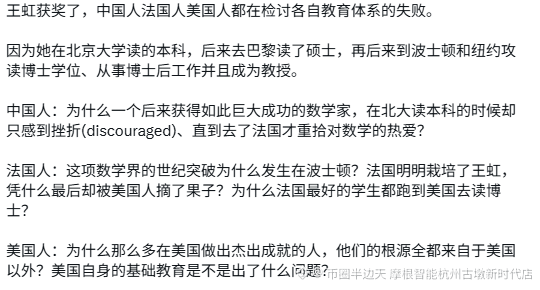
China’s Self-Examination: It Built the Foundation, but Wore Down the Passion?
From a Chinese perspective, the core contradiction is this: Wang Hong did not have a background in the math Olympiad. During her undergraduate years at Peking University, she was surrounded by domestic top competition gold medalists. At one point, her grades were lagging, and she felt frustrated. After moving to France, the more relaxed, exploration-based education environment allowed her to rediscover her love of mathematics and regain confidence.
Why the Self-Examination Makes Sense: In China, undergraduate education in foundational disciplines is strong at high-intensity knowledge delivery and standardized selection. It can quickly give students extremely solid mathematical and scientific foundations, but it does not do well at accommodating prodigies who did not come through competitions. It is also relatively weak in protecting and guiding academic interest. High-intensity, “involution-style” competition can easily wear down some students’ curiosity about the subject itself.
The Other Side That’s Easy to Overlook: Wang Hong herself has clearly stated that most of the core foundation training for her mathematical research came from Peking University. China’s “build-the-foundation” ability in education is the groundwork for all her subsequent research. This “strict entry, strict progression, emphasis on fundamentals” model comes at the cost of some students’ confidence and interest, but its payoff is raising the overall lower bound of talent.
France’s Self-Examination: Develops Talent, but Can’t Keep the Results?
France’s sense of loss reflects a common challenge faced by Europe’s elite education: France has a globally top-tier system for cultivating mathematical elites. The mathematics master’s programs at École Polytechnique and Paris-Saclay University are in the world’s first-tier group. Wang Hong made a critical transition there—from “mastering fundamentals” to “entering frontier research.” But ultimately, she chose to pursue her PhD in the United States, where major breakthrough achievements also emerged within the U.S. academic system.
Why the Self-Examination Makes Sense: France’s elite education excels at refining students’ academic taste and research capabilities. However, when compared with top U.S. universities, France has clear gaps in the number of local research positions, faculty pay and benefits, and the scale of project funding. Many top mathematical talents who complete master’s training in France will flow to the United States during their PhD stages. France has long been trapped in a dilemma of talent “second-stage outflow”: it cultivates exceptional people, only for other countries to benefit from them.
The Other Side That’s Easy to Overlook: France’s elite education model itself is successful. Its problem is not “training quality,” but rather the ability to retain talent and research—its capacity to keep people in the industry and local research ecosystem.
From a Chinese perspective, the core contradiction is this: Wang Hong did not have a background in the math Olympiad. During her undergraduate years at Peking University, she was surrounded by domestic top competition gold medalists. At one point, her grades were lagging, and she felt frustrated. After moving to France, the more relaxed, exploration-based education environment allowed her to rediscover her love of mathematics and regain confidence.
Why the Self-Examination Makes Sense: In China, undergraduate education in foundational disciplines is strong at high-intensity knowledge delivery and standardized selection. It can quickly give students extremely solid mathematical and scientific foundations, but it does not do well at accommodating prodigies who did not come through competitions. It is also relatively weak in protecting and guiding academic interest. High-intensity, “involution-style” competition can easily wear down some students’ curiosity about the subject itself.
The Other Side That’s Easy to Overlook: Wang Hong herself has clearly stated that most of the core foundation training for her mathematical research came from Peking University. China’s “build-the-foundation” ability in education is the groundwork for all her subsequent research. This “strict entry, strict progression, emphasis on fundamentals” model comes at the cost of some students’ confidence and interest, but its payoff is raising the overall lower bound of talent.
France’s Self-Examination: Develops Talent, but Can’t Keep the Results?
France’s sense of loss reflects a common challenge faced by Europe’s elite education: France has a globally top-tier system for cultivating mathematical elites. The mathematics master’s programs at École Polytechnique and Paris-Saclay University are in the world’s first-tier group. Wang Hong made a critical transition there—from “mastering fundamentals” to “entering frontier research.” But ultimately, she chose to pursue her PhD in the United States, where major breakthrough achievements also emerged within the U.S. academic system.
Why the Self-Examination Makes Sense: France’s elite education excels at refining students’ academic taste and research capabilities. However, when compared with top U.S. universities, France has clear gaps in the number of local research positions, faculty pay and benefits, and the scale of project funding. Many top mathematical talents who complete master’s training in France will flow to the United States during their PhD stages. France has long been trapped in a dilemma of talent “second-stage outflow”: it cultivates exceptional people, only for other countries to benefit from them.
The Other Side That’s Easy to Overlook: France’s elite education model itself is successful. Its problem is not “training quality,” but rather the ability to retain talent and research—its capacity to keep people in the industry and local research ecosystem.
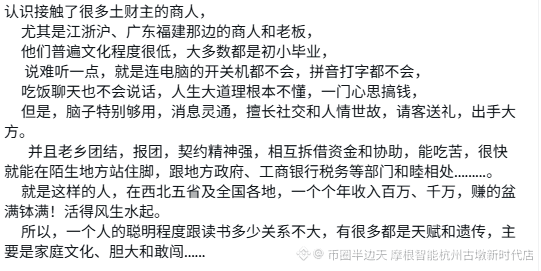
The observed phenomenon here is broadly true, but the conclusion—that being “smart” mainly comes from innate talent and inheritance, and that studying has little to do with it—is the result of several statistical illusions stacking on top of each other.
The unseen denominator
At a dinner party, you encounter the subset of people who survived among the same group. They share characteristics such as having only finished primary school, being bold enough to take risks, and being able to borrow funds from people back home. But those who ran away, those brought down by chains of guarantees, those who got in, and those who gambled away their money will never appear at your table.
The credit-crash wave of informal lending in Wenzhou in 2011, and later the P2P and guarantee-industry circles—what fell was the other half of this same group. Using the same set of traits can explain both success and failure, which shows that these traits themselves are not the explanatory variables.
A generational effect mistaken for an ability issue
Most of these bosses were born in the 1950s to 1970s. Back then, college entrance exam admission rates were in the single digits. Universities were not a filter at all. Among the smartest people of that generation, most simply couldn’t afford to study. So “low-education bosses are smart” really means that in that era, education and intelligence were almost uncorrelated.
If you look at the post-1990s and post-2000s instead, the proportion of people who dropped out at middle school and built a business from scratch to reach the tens of millions has plummeted almost overnight. This isn’t because people got dumber—it’s because the arbitrage opportunities disappeared.
They profited from policy and system dividends
Information asymmetry, blurry policy gray zones, relationship-based resources, and the courage to bet—between 1980 and 2010, China priced these skills extremely high. The “getting along harmoniously” and “entertaining and giving gifts” you listed are precisely the core competitive advantages in such an environment.
This is a high-return skill bundle tied to a specific time and place; it is not a general sense in which “having a working brain” alone is enough.
The hardest counterevidence
Almost without exception, these bosses did everything they could to send their children to study, go abroad for education, and take public-service exams. If studying really had no use, their money would vote against itself. They all know better than anyone: the path they took is no longer available for the next generation.
If we talk about what is truly valid in this argument, there is actually only one thing—education is not equal to ability, and the amount of schooling cannot directly be translated into “smart.” But moving from that to the claim that “smartness mainly comes from innate talent and inheritance” crosses a very deep bridge in between.
The unseen denominator
At a dinner party, you encounter the subset of people who survived among the same group. They share characteristics such as having only finished primary school, being bold enough to take risks, and being able to borrow funds from people back home. But those who ran away, those brought down by chains of guarantees, those who got in, and those who gambled away their money will never appear at your table.
The credit-crash wave of informal lending in Wenzhou in 2011, and later the P2P and guarantee-industry circles—what fell was the other half of this same group. Using the same set of traits can explain both success and failure, which shows that these traits themselves are not the explanatory variables.
A generational effect mistaken for an ability issue
Most of these bosses were born in the 1950s to 1970s. Back then, college entrance exam admission rates were in the single digits. Universities were not a filter at all. Among the smartest people of that generation, most simply couldn’t afford to study. So “low-education bosses are smart” really means that in that era, education and intelligence were almost uncorrelated.
If you look at the post-1990s and post-2000s instead, the proportion of people who dropped out at middle school and built a business from scratch to reach the tens of millions has plummeted almost overnight. This isn’t because people got dumber—it’s because the arbitrage opportunities disappeared.
They profited from policy and system dividends
Information asymmetry, blurry policy gray zones, relationship-based resources, and the courage to bet—between 1980 and 2010, China priced these skills extremely high. The “getting along harmoniously” and “entertaining and giving gifts” you listed are precisely the core competitive advantages in such an environment.
This is a high-return skill bundle tied to a specific time and place; it is not a general sense in which “having a working brain” alone is enough.
The hardest counterevidence
Almost without exception, these bosses did everything they could to send their children to study, go abroad for education, and take public-service exams. If studying really had no use, their money would vote against itself. They all know better than anyone: the path they took is no longer available for the next generation.
If we talk about what is truly valid in this argument, there is actually only one thing—education is not equal to ability, and the amount of schooling cannot directly be translated into “smart.” But moving from that to the claim that “smartness mainly comes from innate talent and inheritance” crosses a very deep bridge in between.
“Can’t step on the accelerator for the pivot”
The burden of the legacy business is too heavy. In the era of internal-combustion vehicles, German and Japanese automakers built a complete system of self-interest—from engine and transmission patents to the supply chain, dealers, and unions. Every additional EV sold means one fewer high-profit ICE vehicle sold, directly taking away from the existing “pie” across the company and its upstream and downstream partners. Internal resistance and the pains of transformation are far greater than for China’s new power brands starting from scratch, so their pace has generally been slower, and even strategic reversals have occurred.
Is making EVs really unprofitable? And can’t China’s companies do better? China benefits from full-industry-chain scale effects, allowing the end-to-end vehicle cost of pure-electric models in the same segment to be 30%–50% lower than that of European automakers. Western automakers either price EVs high and can’t sell them, or cut prices and suffer huge losses. For example, Ford’s EV business has posted losses for many consecutive years totaling tens of billions of dollars. Volkswagen’s EV business profitability is also far inferior to its ICE segment. It’s not that they don’t want to make EVs—they do, but once they do, they can’t beat China’s brands and they also drag down overall profit.
Patents are a barrier, but not an “absolute monopoly.” China’s patent application volume and industrial maturity in areas such as traction batteries, motors, in-vehicle control electronics, high-voltage platforms, and charging piles are indeed globally leading. Especially for practical technologies like LFP and CTP/CTC battery formats, an industrial barrier has formed: “It’s cheaper to adopt China’s solutions than to develop in-house.” However, overseas still has technical reserves in some areas—such as automotive-grade chips, high-end power semiconductors, and certain chassis control algorithms—so it’s not completely impossible to work around China’s patents. More often, what happens is that “once you get around them, you completely lose the cost advantage.”
The burden of the legacy business is too heavy. In the era of internal-combustion vehicles, German and Japanese automakers built a complete system of self-interest—from engine and transmission patents to the supply chain, dealers, and unions. Every additional EV sold means one fewer high-profit ICE vehicle sold, directly taking away from the existing “pie” across the company and its upstream and downstream partners. Internal resistance and the pains of transformation are far greater than for China’s new power brands starting from scratch, so their pace has generally been slower, and even strategic reversals have occurred.
Is making EVs really unprofitable? And can’t China’s companies do better? China benefits from full-industry-chain scale effects, allowing the end-to-end vehicle cost of pure-electric models in the same segment to be 30%–50% lower than that of European automakers. Western automakers either price EVs high and can’t sell them, or cut prices and suffer huge losses. For example, Ford’s EV business has posted losses for many consecutive years totaling tens of billions of dollars. Volkswagen’s EV business profitability is also far inferior to its ICE segment. It’s not that they don’t want to make EVs—they do, but once they do, they can’t beat China’s brands and they also drag down overall profit.
Patents are a barrier, but not an “absolute monopoly.” China’s patent application volume and industrial maturity in areas such as traction batteries, motors, in-vehicle control electronics, high-voltage platforms, and charging piles are indeed globally leading. Especially for practical technologies like LFP and CTP/CTC battery formats, an industrial barrier has formed: “It’s cheaper to adopt China’s solutions than to develop in-house.” However, overseas still has technical reserves in some areas—such as automotive-grade chips, high-end power semiconductors, and certain chassis control algorithms—so it’s not completely impossible to work around China’s patents. More often, what happens is that “once you get around them, you completely lose the cost advantage.”
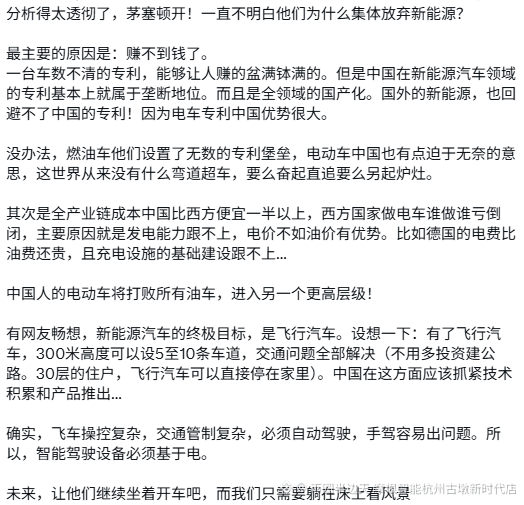
Fu Haitang is not in a hurry to bottom-fish in live hogs. The key is to strictly follow his long-standing “supply-demand resonance” bottom-fishing standards—not merely to watch the price fall. Behind it is his straightforward understanding of economic laws:
Meeting only the single condition of “low-price losses” is not enough to create resonance. His bottom-fishing requires multi-condition resonance: “low price + low inventories + deep losses across the entire industry + improving demand + high price premiums (i.e., a large positive basis/discount-to-market gap).” During this round of live hog price declines, although prices remain sluggish and livestock-raising companies are losing money, social inventories are still at a high level, and capacity reduction has not been thorough. The magnitude of earlier losses was not enough to force large-scale culling of breeding sows. The industry has not truly reached the level of “nobody wants to keep doing it” liquidation.
Capacity liquidation is delayed: it hurts first before real de-capacity happens. He has been clear that policy calls to cut capacity have had no practical effect; only when market losses truly make industry participants feel the pain will breeding farmers proactively cull sows and exit the sector. In this round, the initial loss severity was limited, capacity was not genuinely cleared, and the oversupply situation has not fundamentally changed—so the time to bottom-fish has not arrived.
The trend is something you wait for, not something you create. This is the investment principle that runs through his entire approach: do not trade frequently—just wait for the certain, extreme, favorable行情. When supply-demand conflicts have not been thoroughly intensified and bottom signals have not all appeared, he would rather stay in cash and wait than enter early, to avoid enduring long drawdowns while the market is still halfway to the bottom.
III. His core investment logic
Fu Haitang’s “all-in” style of trading looks aggressive, but in essence it is contrarian investing based on the industry’s fundamentals. The core logic is very simple:
“Way of Heaven” thinking: if commodity prices remain below the cost of the entire industry for the long term, they will definitely rise back; otherwise that commodity will be “extinct”—an objective law that cannot be violated. Conversely, if prices rise so high that the entire industry is crazily expanding capacity, they will also inevitably fall.
Field research is king: he doesn’t trust paper data or hearsay in the market. He personally goes to production areas, asks farmers, and calculates costs to judge the real supply-demand situation.
Trade only extreme conditions: he doesn’t participate in range-bound, oscillating markets. He acts only when the whole industry is extremely pessimistic or extremely euphoric—capturing the turning point where extremes reverse (物极必反).
Meeting only the single condition of “low-price losses” is not enough to create resonance. His bottom-fishing requires multi-condition resonance: “low price + low inventories + deep losses across the entire industry + improving demand + high price premiums (i.e., a large positive basis/discount-to-market gap).” During this round of live hog price declines, although prices remain sluggish and livestock-raising companies are losing money, social inventories are still at a high level, and capacity reduction has not been thorough. The magnitude of earlier losses was not enough to force large-scale culling of breeding sows. The industry has not truly reached the level of “nobody wants to keep doing it” liquidation.
Capacity liquidation is delayed: it hurts first before real de-capacity happens. He has been clear that policy calls to cut capacity have had no practical effect; only when market losses truly make industry participants feel the pain will breeding farmers proactively cull sows and exit the sector. In this round, the initial loss severity was limited, capacity was not genuinely cleared, and the oversupply situation has not fundamentally changed—so the time to bottom-fish has not arrived.
The trend is something you wait for, not something you create. This is the investment principle that runs through his entire approach: do not trade frequently—just wait for the certain, extreme, favorable行情. When supply-demand conflicts have not been thoroughly intensified and bottom signals have not all appeared, he would rather stay in cash and wait than enter early, to avoid enduring long drawdowns while the market is still halfway to the bottom.
III. His core investment logic
Fu Haitang’s “all-in” style of trading looks aggressive, but in essence it is contrarian investing based on the industry’s fundamentals. The core logic is very simple:
“Way of Heaven” thinking: if commodity prices remain below the cost of the entire industry for the long term, they will definitely rise back; otherwise that commodity will be “extinct”—an objective law that cannot be violated. Conversely, if prices rise so high that the entire industry is crazily expanding capacity, they will also inevitably fall.
Field research is king: he doesn’t trust paper data or hearsay in the market. He personally goes to production areas, asks farmers, and calculates costs to judge the real supply-demand situation.
Trade only extreme conditions: he doesn’t participate in range-bound, oscillating markets. He acts only when the whole industry is extremely pessimistic or extremely euphoric—capturing the turning point where extremes reverse (物极必反).
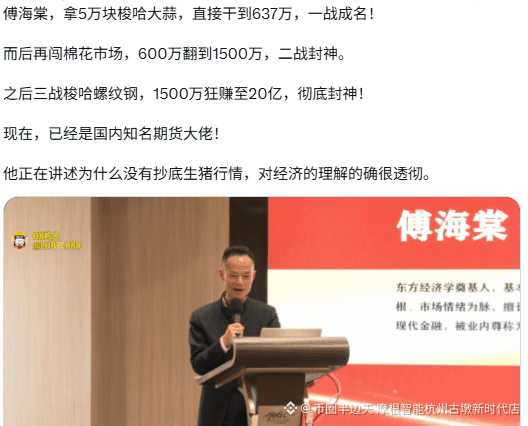
Getting to divorce isn’t fresh news, nor does it “settle the debts.” Lan Yingying herself said on a variety show that over ten years she went to the Civil Affairs Bureau three times and still couldn’t get it done. The most recent explanation was that Zou Shiming intentionally brought a magnetized-damaged ID card. When asked, “Have the debts been paid off—so will they still divorce?” she also didn’t answer directly, saying only that the children need a father. More importantly, business losses are a classic case of joint marital debt; divorce only divides the debt, it doesn’t extinguish it, and creditors can still pursue repayment.
As for the line about “which son they think is a useless trash to decide custody”—that sentence was written as a joke aimed at the hot search from the previous period, when the mother-in-law called someone “useless trash,” not a plan.
Returning to boxing is the least feasible option. Zou Shiming was born in 1981; he is 45 this year. After losing to Muimura Sho in 2017, he retired with an eye injury. For a lightweight athlete to come back to the professional ring at this age— even if he truly managed to box again— the appearance fee for one domestic match is basically meaningless compared to the “hole” worth hundreds of millions in scale.
《Jizhan》 is a movie; Zhang Jiaxian is an actor.
Filming movies and opening a boxing gym are contradictory paths. That 200 million came from losing money at a high-end boxing gym in Shanghai—annual venue rent, and a chandelier that costs three million, that kind of打法. So “opening a few-hundred-square-meter underground boxing gym” is actually the only truly practical line in the whole piece: taking the same business and making it smaller in scale, using lighter assets and more labor. But it’s a completely different worldview from the earlier “if the movie explodes at the box office, enter the film industry to get rich” route. The blogger treats it as Plan B alongside the others, which shows he wants a narrative climax—not cash flow.
And the path he is actually taking is precisely the one not mentioned in that answer: livestream shopping, variety-show exposure, self-media, and online boxing classes priced at 199 yuan—together with selling properties in Beijing, Shanghai, Guiyang, and even in the United States, plus consigning bags for sale. By the end of March this year, debts at three banks had already been paid off. The remaining repayment pressure has dropped to less than 20% of what it was before. In July, the claim was that he still owed money to six-figure friends; the two parties’ incomes are settled separately, and each pays their own. In other words, “breaking the deadlock” is already happening—just in a non-heroic form. That’s why viewers need a version of “comeback + filming a movie” to consume.
This comment demonstrates how the public rewrites the script for a fallen idol: first cut off ties (divorce), then atone (bow down to train), then be crowned (a movie), and finally pass it on (training the next generation).
As for the line about “which son they think is a useless trash to decide custody”—that sentence was written as a joke aimed at the hot search from the previous period, when the mother-in-law called someone “useless trash,” not a plan.
Returning to boxing is the least feasible option. Zou Shiming was born in 1981; he is 45 this year. After losing to Muimura Sho in 2017, he retired with an eye injury. For a lightweight athlete to come back to the professional ring at this age— even if he truly managed to box again— the appearance fee for one domestic match is basically meaningless compared to the “hole” worth hundreds of millions in scale.
《Jizhan》 is a movie; Zhang Jiaxian is an actor.
Filming movies and opening a boxing gym are contradictory paths. That 200 million came from losing money at a high-end boxing gym in Shanghai—annual venue rent, and a chandelier that costs three million, that kind of打法. So “opening a few-hundred-square-meter underground boxing gym” is actually the only truly practical line in the whole piece: taking the same business and making it smaller in scale, using lighter assets and more labor. But it’s a completely different worldview from the earlier “if the movie explodes at the box office, enter the film industry to get rich” route. The blogger treats it as Plan B alongside the others, which shows he wants a narrative climax—not cash flow.
And the path he is actually taking is precisely the one not mentioned in that answer: livestream shopping, variety-show exposure, self-media, and online boxing classes priced at 199 yuan—together with selling properties in Beijing, Shanghai, Guiyang, and even in the United States, plus consigning bags for sale. By the end of March this year, debts at three banks had already been paid off. The remaining repayment pressure has dropped to less than 20% of what it was before. In July, the claim was that he still owed money to six-figure friends; the two parties’ incomes are settled separately, and each pays their own. In other words, “breaking the deadlock” is already happening—just in a non-heroic form. That’s why viewers need a version of “comeback + filming a movie” to consume.
This comment demonstrates how the public rewrites the script for a fallen idol: first cut off ties (divorce), then atone (bow down to train), then be crowned (a movie), and finally pass it on (training the next generation).
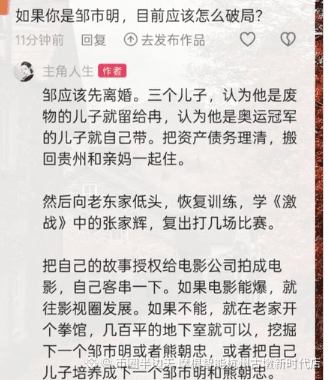
All co-founders left, and the core conflict wasn’t the company being brought down—it was a disagreement over strategy:
In 2025, Wang Xiaochuan overruled the majority and announced a retreat from the general-purpose large-model front line, going all in on healthcare AI. Almost all the co-founders opposed this decision—they believed in the long-term imagination of general-purpose large models, and thought BaiChuan deserved to keep competing in the general-purpose track.
But Wang Xiaochuan’s judgment was: general-purpose large models burn money without end, the head-effect will only grow stronger, and small and mid-sized players won’t have long-term chances; meanwhile, healthcare is a track with strong demand, high value, and clear willingness to pay. It can turn technology into real value. As the founder with veto power, he ultimately pushed the transition through by force, which also directly led to the core team gradually resigning from late 2024 through 2026.
Looking from the original intention of “starting a company for general-purpose large models,” it’s regrettable: the initial vision was to build a general-purpose foundation model, but it has now completely withdrawn from mainstream competition in the general-purpose arena. The founding team has fractured and fallen apart—by that measure, it didn’t reach the original goal.
Looking from the perspective of “commercial value and social value,” however, it’s actually lucid: the general-purpose large-model market has long become a game for big players burning money, where most companies will eventually be eliminated; but healthcare AI is one of the few tracks where technology can be directly converted into productive forces. BaiChuan has already built clear technical barriers and deployment scenarios, and has arguably progressed more solidly than many companies still burning money to chase the general-purpose leaderboard.
In 2025, Wang Xiaochuan overruled the majority and announced a retreat from the general-purpose large-model front line, going all in on healthcare AI. Almost all the co-founders opposed this decision—they believed in the long-term imagination of general-purpose large models, and thought BaiChuan deserved to keep competing in the general-purpose track.
But Wang Xiaochuan’s judgment was: general-purpose large models burn money without end, the head-effect will only grow stronger, and small and mid-sized players won’t have long-term chances; meanwhile, healthcare is a track with strong demand, high value, and clear willingness to pay. It can turn technology into real value. As the founder with veto power, he ultimately pushed the transition through by force, which also directly led to the core team gradually resigning from late 2024 through 2026.
Looking from the original intention of “starting a company for general-purpose large models,” it’s regrettable: the initial vision was to build a general-purpose foundation model, but it has now completely withdrawn from mainstream competition in the general-purpose arena. The founding team has fractured and fallen apart—by that measure, it didn’t reach the original goal.
Looking from the perspective of “commercial value and social value,” however, it’s actually lucid: the general-purpose large-model market has long become a game for big players burning money, where most companies will eventually be eliminated; but healthcare AI is one of the few tracks where technology can be directly converted into productive forces. BaiChuan has already built clear technical barriers and deployment scenarios, and has arguably progressed more solidly than many companies still burning money to chase the general-purpose leaderboard.
Asymmetric deterrence. The premise for MAD is that both sides can withstand a first strike and carry out retaliation. This is not the case for students: reporting an advisor is usually not anonymous (who is supervising you, who can obtain that batch of data—once the circle is checked, it’s obvious). Also, the time scale for punishment is completely different: delays, signature blocks, and cutting off recommendation letters are enforced immediately, while investigations into academic misconduct are measured in years—and they often end with nothing. And on top of that, the advisor also has the “gun” of AI plagiarism detection; for them, the cost of checking students is lower and the consequences are more direct. This is more like one side having a nuclear weapon but lacking second-strike capability.
I think the real positive value of this is preemptive deterrence. When “all my old papers might be checked line by line at any time” becomes a consensus, it will indeed, at the margin, make people write more cleanly. But that benefit is diffuse and long-term, whereas the cost of “reporting an enemy” is specific and paid immediately.
The imbalance of power between teachers and students, and the persistence of academic misconduct despite repeated bans, stem from institutional problems: unclear boundaries between advisors’ rights and responsibilities; inconvenient student appeal channels; opaque academic misconduct enforcement procedures; and missing regulations on retaining original data.
Relying on AI tools to achieve a “balanced mutual threat” is only a short-term game of bargaining brought by technology; it cannot fundamentally solve the problem. A truly healthy ecosystem requires clear institutional constraints, accessible legitimate channels for rights protection, and unified standards for academic integrity—so that supervision has rules, power has boundaries, and appeals have a path, rather than escalating into a situation where everyone fears and turns on everyone else.
In the past, students facing an advisor’s academic misconduct or abuse of power often chose to endure it because of insufficient information capability and high costs of filing complaints. AI tools lower the threshold for collecting evidence; they can help constrain advisors’ academic conduct, and force the relationship between teachers and students back toward equality. They have some positive deterrent effect, and they also provide technical support for legitimate academic supervision.
Describing the teacher-student relationship as a confrontation of “nuclear extortion - nuclear deterrence” is a distorted view of the game. Normal graduate training should be based on collaboration between mentor and mentee and the transmission of scholarship. If both sides hold weapons to “ruin the other’s academic career” and remain on guard against each other, the end result can only be to destroy trust in research: advisors will not dare to guide freely, and students will not dare to communicate honestly—ultimately harming proper academic training.
I think the real positive value of this is preemptive deterrence. When “all my old papers might be checked line by line at any time” becomes a consensus, it will indeed, at the margin, make people write more cleanly. But that benefit is diffuse and long-term, whereas the cost of “reporting an enemy” is specific and paid immediately.
The imbalance of power between teachers and students, and the persistence of academic misconduct despite repeated bans, stem from institutional problems: unclear boundaries between advisors’ rights and responsibilities; inconvenient student appeal channels; opaque academic misconduct enforcement procedures; and missing regulations on retaining original data.
Relying on AI tools to achieve a “balanced mutual threat” is only a short-term game of bargaining brought by technology; it cannot fundamentally solve the problem. A truly healthy ecosystem requires clear institutional constraints, accessible legitimate channels for rights protection, and unified standards for academic integrity—so that supervision has rules, power has boundaries, and appeals have a path, rather than escalating into a situation where everyone fears and turns on everyone else.
In the past, students facing an advisor’s academic misconduct or abuse of power often chose to endure it because of insufficient information capability and high costs of filing complaints. AI tools lower the threshold for collecting evidence; they can help constrain advisors’ academic conduct, and force the relationship between teachers and students back toward equality. They have some positive deterrent effect, and they also provide technical support for legitimate academic supervision.
Describing the teacher-student relationship as a confrontation of “nuclear extortion - nuclear deterrence” is a distorted view of the game. Normal graduate training should be based on collaboration between mentor and mentee and the transmission of scholarship. If both sides hold weapons to “ruin the other’s academic career” and remain on guard against each other, the end result can only be to destroy trust in research: advisors will not dare to guide freely, and students will not dare to communicate honestly—ultimately harming proper academic training.

At its core, it’s “most people run alongside the pack, while a few pay.” The vast majority of examinees were never going to pass anyway. The agencies, using the gimmick of “free training,” managed to capture a large amount of traffic; in the end, they profit mainly from the high fees paid by a small number of successful candidates. For students, it looks like you’re “getting something for free,” but in reality you pay with time costs, while the agencies are almost guaranteed to make money.
Small agencies face the risk of running off with the funds, and this model is extremely dependent on cash flow. If it’s a small agency, and enrollment falls short of expectations or the capital chain breaks, “refunds are hard to get” and even a “run off with the money” scam can easily happen. Even large agencies’ contract-based classes have had refund disputes; for street-corner small agencies, their ability to fulfill their commitments is even more questionable.
Agencies will implicitly screen students to ensure pass rates and reduce compensation costs. Without realizing it, they filter out students—those with too weak a foundation or those clearly unlikely to pass—who may be politely discouraged from continuing, or guided to enroll in regular non-contract classes. Ultimately, the group that remains in the contract-based class is, by nature, a cohort with a relatively higher pass rate.
Small agencies face the risk of running off with the funds, and this model is extremely dependent on cash flow. If it’s a small agency, and enrollment falls short of expectations or the capital chain breaks, “refunds are hard to get” and even a “run off with the money” scam can easily happen. Even large agencies’ contract-based classes have had refund disputes; for street-corner small agencies, their ability to fulfill their commitments is even more questionable.
Agencies will implicitly screen students to ensure pass rates and reduce compensation costs. Without realizing it, they filter out students—those with too weak a foundation or those clearly unlikely to pass—who may be politely discouraged from continuing, or guided to enroll in regular non-contract classes. Ultimately, the group that remains in the contract-based class is, by nature, a cohort with a relatively higher pass rate.
“Not all AI agent services are being shut down,” rather, it specifically refers to the fact that the official platforms clearly distinguish the scope for user-built/personified interaction-type agents: this adjustment applies only to UGC agents created by users themselves. The two platforms’ official built-in standardized AI Q&A, office, and creative tools are not affected in any way.
July 15 is the effective date of the “Interim Measures for the Administration of AI Personified Interactive Services.” The measures were jointly released on April 10, 2026 by five departments: the Cyberspace Administration of China, the National Development and Reform Commission, the Ministry of Industry and Information Technology, the Ministry of Public Security, and the State Administration for Market Regulation. It is the first domestic regulatory document specifically for AI personified interactive services. It requires落实 the main responsibilities including implementing anti-addiction mechanisms, verifying the identities of minors, and content review.
Regulatory authorities have already taken preliminary enforcement actions—this was not a sudden raid. On June 26, the Shanghai Municipal Cyberspace Administration reported the first-phase results of its special campaign “Clear Up and Rectify Chaos in AI Applications.” In total, more than 14,000 noncompliant agents were taken offline. Among them, “One-Click Undressing” and gambling-related agents under Xiyu (MiniMax) became key targets for rectification. Earlier, regulatory guidance and legal briefing had already been completed with nearly 100 platforms. Therefore, “a bit sudden” is more accurately “the timing was within expectations, but same-day actions by the two leading platforms are unprecedented in the industry.”
Migration path: Doubao moves these kinds of functions to the Maoxiang App. As a vertical role-interaction app, it has separately built a complete review and anti-addiction system. Qianwen, meanwhile, plans to separate its compliant agent business from the main site into an independent plan. This also indicates the platforms are not simply “cutting them off,” but shifting the risk exposure from the main site to vertical products that are easier to implement tiered governance on.
Why choose “direct shutdown” instead of “rectification”?
For leading platforms choosing direct shutdown rather than correcting issues item by item, industry analysis mainly points to several factors:
Very high compliance costs: In a UGC model, the number of AI agents built by users is huge, and content varies widely. To fully implement end-to-end content review, minors’ identity verification, and anti-addiction mechanisms, both technical and human resource costs are enormous.
Large risk exposure: Investigations by media have previously exposed chaos in some AI virtual companions, such as nominally “minor mode” without real verification and identity checks failing to work. If a platform keeps the functionality but does not conduct adequate review, it may face more severe penalties.
July 15 is the effective date of the “Interim Measures for the Administration of AI Personified Interactive Services.” The measures were jointly released on April 10, 2026 by five departments: the Cyberspace Administration of China, the National Development and Reform Commission, the Ministry of Industry and Information Technology, the Ministry of Public Security, and the State Administration for Market Regulation. It is the first domestic regulatory document specifically for AI personified interactive services. It requires落实 the main responsibilities including implementing anti-addiction mechanisms, verifying the identities of minors, and content review.
Regulatory authorities have already taken preliminary enforcement actions—this was not a sudden raid. On June 26, the Shanghai Municipal Cyberspace Administration reported the first-phase results of its special campaign “Clear Up and Rectify Chaos in AI Applications.” In total, more than 14,000 noncompliant agents were taken offline. Among them, “One-Click Undressing” and gambling-related agents under Xiyu (MiniMax) became key targets for rectification. Earlier, regulatory guidance and legal briefing had already been completed with nearly 100 platforms. Therefore, “a bit sudden” is more accurately “the timing was within expectations, but same-day actions by the two leading platforms are unprecedented in the industry.”
Migration path: Doubao moves these kinds of functions to the Maoxiang App. As a vertical role-interaction app, it has separately built a complete review and anti-addiction system. Qianwen, meanwhile, plans to separate its compliant agent business from the main site into an independent plan. This also indicates the platforms are not simply “cutting them off,” but shifting the risk exposure from the main site to vertical products that are easier to implement tiered governance on.
Why choose “direct shutdown” instead of “rectification”?
For leading platforms choosing direct shutdown rather than correcting issues item by item, industry analysis mainly points to several factors:
Very high compliance costs: In a UGC model, the number of AI agents built by users is huge, and content varies widely. To fully implement end-to-end content review, minors’ identity verification, and anti-addiction mechanisms, both technical and human resource costs are enormous.
Large risk exposure: Investigations by media have previously exposed chaos in some AI virtual companions, such as nominally “minor mode” without real verification and identity checks failing to work. If a platform keeps the functionality but does not conduct adequate review, it may face more severe penalties.

“Roll”
Most coins really have no value—and they never have; it’s not something that started now. The marginal cost of issuing a token is close to zero. There’s no cash flow, no equity, and no legal recourse. Value depends entirely on the next buyer. It’s arithmetic: if something can be supplied almost infinitely, it cannot universally have value. This isn’t an opinion.
But “most coins have no value” and “crypto has no future” are two different problems. Think about the internet bubble of 2000: back then, most internet companies on the NASDAQ went to zero, but the internet itself didn’t. Still, be careful with the analogy—arguing that crypto must have a future because “Amazon survived” is survivorship bias. People who bought a basket of internet stocks in those days took more than a decade to break even. The analogy really only shows this: “90% of projects are trash” holds true in any cycle of technological narratives piled on top of speculative mania; it can’t, by itself, be used to decide whether an industry lives or dies.
What you should ask is: in this industry, has anything found real demand beyond speculation? My view is yes, but it’s highly concentrated.
First, stablecoins. These are probably the only crypto product-market fit with little controversy to date—cross-border payments, access to dollars in emerging markets, trade settlement. In the U.S., the GENIUS Act passed in 2025 brought them under proper regulation. Ironically, stablecoins’ success is precisely the failure of the “decentralization ideal”: at their core they’re on-chain dollars, strengthening rather than replacing the existing dollar system. Second, Bitcoin. It has already completed its identity shift from a geek toy to an alternative macro asset—ETFs, publicly listed company reserves, and institutional allocations. You may not agree with the value logic (it’s still essentially a consensus asset, like digital gold), but the holder base has changed completely compared with 2017. Third, barely—Ethereum and RWA (tokenized real-world assets). This has been discussed for years, yet actual deployment has always been far below the heat of the narrative.
Beyond that, the long tail—tens of thousands of altcoins, memecoins, and various “ecosystem tokens”—is basically casino chips. Their “future” is that new chips keep being issued, old chips go to zero, and the cycle repeats periodically. This part won’t disappear because casino demand is eternal, but you can’t really call it value.
So I lean toward a somewhat counterintuitive conclusion: the more future crypto has, the less future there is for the “coin world” (the crypto scene). The valuable components (BTC, stablecoins, and compliant infrastructure) are being absorbed by traditional finance.
But “most coins have no value” and “crypto has no future” are two different problems. Think about the internet bubble of 2000: back then, most internet companies on the NASDAQ went to zero, but the internet itself didn’t. Still, be careful with the analogy—arguing that crypto must have a future because “Amazon survived” is survivorship bias. People who bought a basket of internet stocks in those days took more than a decade to break even. The analogy really only shows this: “90% of projects are trash” holds true in any cycle of technological narratives piled on top of speculative mania; it can’t, by itself, be used to decide whether an industry lives or dies.
What you should ask is: in this industry, has anything found real demand beyond speculation? My view is yes, but it’s highly concentrated.
First, stablecoins. These are probably the only crypto product-market fit with little controversy to date—cross-border payments, access to dollars in emerging markets, trade settlement. In the U.S., the GENIUS Act passed in 2025 brought them under proper regulation. Ironically, stablecoins’ success is precisely the failure of the “decentralization ideal”: at their core they’re on-chain dollars, strengthening rather than replacing the existing dollar system. Second, Bitcoin. It has already completed its identity shift from a geek toy to an alternative macro asset—ETFs, publicly listed company reserves, and institutional allocations. You may not agree with the value logic (it’s still essentially a consensus asset, like digital gold), but the holder base has changed completely compared with 2017. Third, barely—Ethereum and RWA (tokenized real-world assets). This has been discussed for years, yet actual deployment has always been far below the heat of the narrative.
Beyond that, the long tail—tens of thousands of altcoins, memecoins, and various “ecosystem tokens”—is basically casino chips. Their “future” is that new chips keep being issued, old chips go to zero, and the cycle repeats periodically. This part won’t disappear because casino demand is eternal, but you can’t really call it value.
So I lean toward a somewhat counterintuitive conclusion: the more future crypto has, the less future there is for the “coin world” (the crypto scene). The valuable components (BTC, stablecoins, and compliant infrastructure) are being absorbed by traditional finance.
How widespread is HPV? About 80%-90% of women may be infected with HPV at some point in their lives. The vast majority clear the infection on their own—most within 1 year thanks to the immune system. Only a small number of high-risk types persist for more than 12 months, and it can take another 10-20 years for them to possibly develop into cervical cancer. In other words, having carried HPV is a "human norm," not a marker of a few "bad people." It takes 10-20 years for persistent infection to turn into cancer. The story of two successive wives "passing it along" points to either separate, independent histories of long-term infection, or simply a timing that doesn’t match the narrative of "he got it right after he married her and died immediately."
Cervical cancer is the only cancer that can be nearly completely prevented today by "vaccines + screening." With intervention during the precancerous stage, the cure rate can reach 98%. Men should also get the HPV vaccine—Nobel Prize laureate zur Hausen even said that if prevention could only focus on one gender, then men should be vaccinated. Rather than cursing "virus kings" in the hallway, treat it as a "relationship disease": check together as a couple, vaccinate at the appropriate age, and undergo regular TCT + HPV screening.
Cervical cancer is the only cancer that can be nearly completely prevented today by "vaccines + screening." With intervention during the precancerous stage, the cure rate can reach 98%. Men should also get the HPV vaccine—Nobel Prize laureate zur Hausen even said that if prevention could only focus on one gender, then men should be vaccinated. Rather than cursing "virus kings" in the hallway, treat it as a "relationship disease": check together as a couple, vaccinate at the appropriate age, and undergo regular TCT + HPV screening.

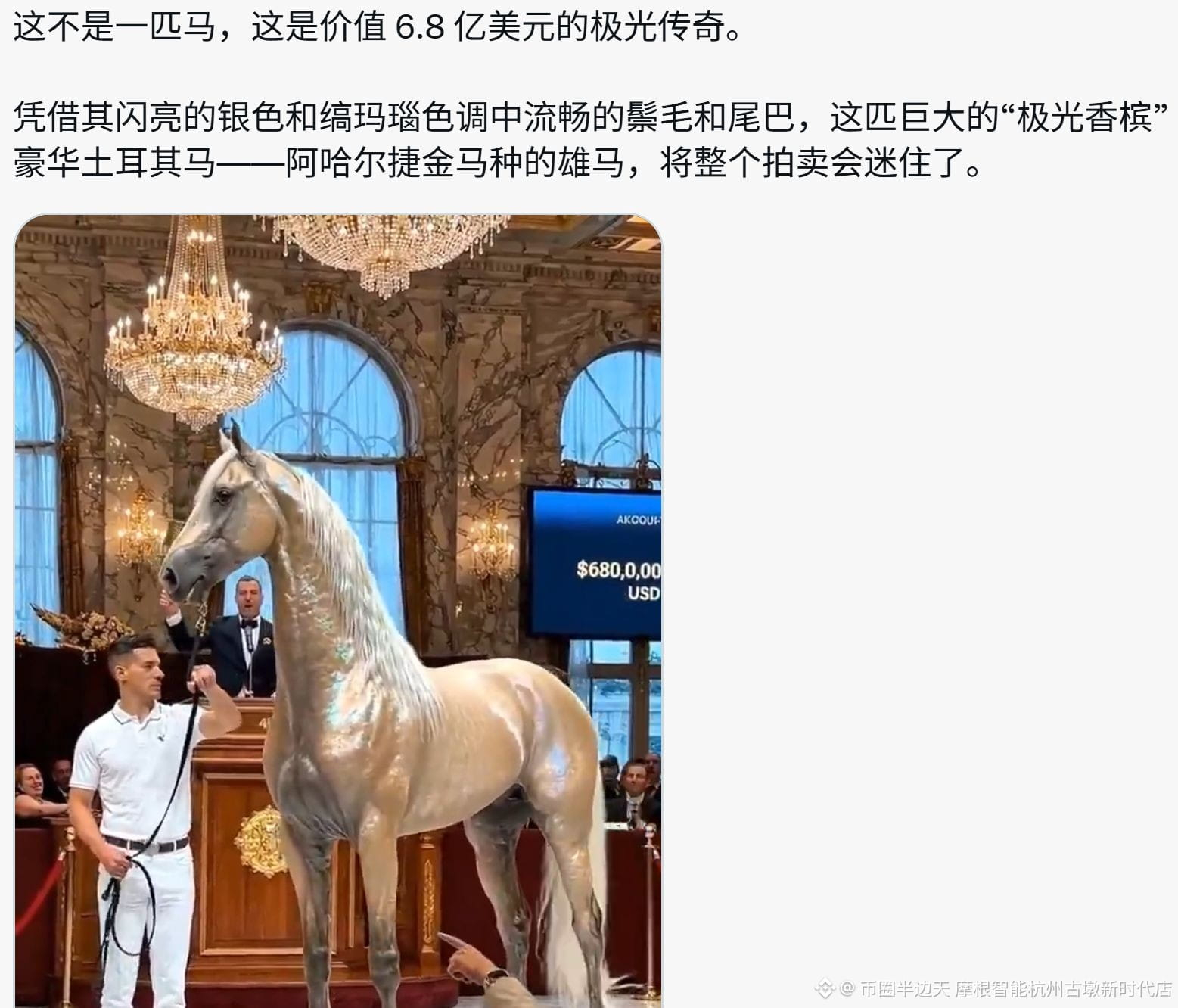
It is Turkmenistan’s national horse, featured on the country’s national emblem. It is one of the world’s oldest purebred horse breeds, with a breeding history of over 3,000 years. Today, globally there are only about 6,000–8,000 purebred Akhal-Teke horses, making it a rare breed.
Appearance: Its most distinctive feature is its coat with a natural metallic sheen. The unique structure of its hair makes the coat appear to shimmer like silk or metal under light. Individuals in gold and silver tones are especially striking, which is why it is also known as “the horse from heaven.”
History and culture: This breed is renowned for its extraordinary endurance and speed. It was a key horse type along the ancient Silk Road. In China during the Han dynasty, it was called “he xue ma” (the blood-sweating horse). Emperor Wu of Han launched an expedition in pursuit of this breed. Today, Turkmenistan often presents purebred Akhal-Teke horses as state gifts; they are the core symbol of its “horse diplomacy.”
The most expensive horse whose sale was confirmed through a public auction is the 2006 Thoroughbred The Green Monkey, sold for $16 million (listed in the Guinness Records).
Appearance: Its most distinctive feature is its coat with a natural metallic sheen. The unique structure of its hair makes the coat appear to shimmer like silk or metal under light. Individuals in gold and silver tones are especially striking, which is why it is also known as “the horse from heaven.”
History and culture: This breed is renowned for its extraordinary endurance and speed. It was a key horse type along the ancient Silk Road. In China during the Han dynasty, it was called “he xue ma” (the blood-sweating horse). Emperor Wu of Han launched an expedition in pursuit of this breed. Today, Turkmenistan often presents purebred Akhal-Teke horses as state gifts; they are the core symbol of its “horse diplomacy.”
The most expensive horse whose sale was confirmed through a public auction is the 2006 Thoroughbred The Green Monkey, sold for $16 million (listed in the Guinness Records).
In this run through June, the Altcoin Season Index briefly jumped from the 30s in April and May up to 49. But it’s still a long way from confirming that altcoin season—75. As for BTC.D, it also slipped from above 60% down to around 58%. The latest reading has Bitcoin hovering back around 58%, with the price moving in the 59–60k range. By the old rules, BTC.D needs to steadily break below 55% and ASI needs to go above 75 before we can say for sure that capital is truly moving out. At this level, it’s more like a gray zone between Bitcoin Season and altseason.
The key is the quality of that “altcoin strength” move. In early June, Bitcoin itself dropped below 70k; leveraged longs got liquidated. On a BTC-denominated basis, alts appeared passively strong—because the base had been hit. In other words, that “it feels like altcoin season” sensation you have may partly be due to Bitcoin simply falling on its own, not because alts are genuinely siphoning up new incremental capital. That kind of relative strength is often a false signal.
Also, this market structure is different from 17/21. Spot Bitcoin ETFs lock a large amount of institutional capital into Bitcoin (the so-called “ETF wall”). Those funds basically won’t spill over into altcoins. So even if there is rotation, it’s more likely to be selective—toward large caps and narrative-driven areas (AI, RWA, ecosystem activity)—rather than the broad “everyone gets a share” kind of bull run from back then. From that perspective, being heavily positioned in Bitcoin right now might not necessarily be the wrong place.
The key is the quality of that “altcoin strength” move. In early June, Bitcoin itself dropped below 70k; leveraged longs got liquidated. On a BTC-denominated basis, alts appeared passively strong—because the base had been hit. In other words, that “it feels like altcoin season” sensation you have may partly be due to Bitcoin simply falling on its own, not because alts are genuinely siphoning up new incremental capital. That kind of relative strength is often a false signal.
Also, this market structure is different from 17/21. Spot Bitcoin ETFs lock a large amount of institutional capital into Bitcoin (the so-called “ETF wall”). Those funds basically won’t spill over into altcoins. So even if there is rotation, it’s more likely to be selective—toward large caps and narrative-driven areas (AI, RWA, ecosystem activity)—rather than the broad “everyone gets a share” kind of bull run from back then. From that perspective, being heavily positioned in Bitcoin right now might not necessarily be the wrong place.

China — Founded and stable. Since 2021, China has fully prohibited crypto exchanges from operating for users within the country; this status has not changed.
United States — This point is currently no longer valid, and the direction is reversed. In 2023, Binance pleaded guilty, paid a $4.3 billion settlement, exited the U.S. market, and CZ resigned—yes, at one time it was indeed “not allowed.” But then: in May 2025, the SEC formally withdrew its lawsuit against Binance and Changpeng Zhao. This was one of the last few crypto enforcement cases from that agency, and it was “with prejudice” (meaning it cannot be refiled). More importantly, on October 23, 2025, Trump issued a full pardon to Changpeng Zhao, erasing his convictions and restoring his right to operate in the U.S. Behind this is a direct alignment of interests: the Trump family’s World Liberty Financial is highly dependent on Binance—Binance helped create the initial code for its stablecoin USD1, and Binance also received a $2 billion investment from Abu Dhabi’s sovereign fund MGX, paid entirely in USD1. So “the U.S. does not allow Binance” is already an outdated judgment by 2026; it is now closer to “the U.S. government is helping Binance.”
European Union — This point has only just become true today. Before MiCA, Binance in EU member states operated under the old registration regimes of individual countries, and it was not banned across the board. On June 24, Binance formally withdrew its MiCA license application submitted to Greece earlier this year, and it will suspend all EU-regulated services starting July 1. MiCA uses a “passporting” model: if any one member state issues a license, it can operate across all 27 countries; conversely, if it cannot obtain a license in one place, the whole continent effectively shuts its doors at the same time. So starting today, Binance truly enters the state of “cannot legally serve EU residents without a license.”
In other words, these three doors were never all shut at the exact same time—America is opening, the EU has just closed, and only China has stayed closed.
Even if we step back and assume that the three major markets really do shut down simultaneously, Binance can still be first. The reason is that the conclusion depends on a wrong implied assumption: that the market position of a crypto exchange is determined by whether it can enter the compliant market of the largest GDP economy. That assumption is wrong.
A global market with fragmented regulation.
Even if the three major economies—China, the U.S., and the EU—are very strong, they are still only three among more than 200 countries and regions worldwide. From its inception, Binance has focused on the global market. It grew by leveraging the needs and regulatory gaps of emerging markets, and it built very high barriers through liquidity and its ecosystem.
United States — This point is currently no longer valid, and the direction is reversed. In 2023, Binance pleaded guilty, paid a $4.3 billion settlement, exited the U.S. market, and CZ resigned—yes, at one time it was indeed “not allowed.” But then: in May 2025, the SEC formally withdrew its lawsuit against Binance and Changpeng Zhao. This was one of the last few crypto enforcement cases from that agency, and it was “with prejudice” (meaning it cannot be refiled). More importantly, on October 23, 2025, Trump issued a full pardon to Changpeng Zhao, erasing his convictions and restoring his right to operate in the U.S. Behind this is a direct alignment of interests: the Trump family’s World Liberty Financial is highly dependent on Binance—Binance helped create the initial code for its stablecoin USD1, and Binance also received a $2 billion investment from Abu Dhabi’s sovereign fund MGX, paid entirely in USD1. So “the U.S. does not allow Binance” is already an outdated judgment by 2026; it is now closer to “the U.S. government is helping Binance.”
European Union — This point has only just become true today. Before MiCA, Binance in EU member states operated under the old registration regimes of individual countries, and it was not banned across the board. On June 24, Binance formally withdrew its MiCA license application submitted to Greece earlier this year, and it will suspend all EU-regulated services starting July 1. MiCA uses a “passporting” model: if any one member state issues a license, it can operate across all 27 countries; conversely, if it cannot obtain a license in one place, the whole continent effectively shuts its doors at the same time. So starting today, Binance truly enters the state of “cannot legally serve EU residents without a license.”
In other words, these three doors were never all shut at the exact same time—America is opening, the EU has just closed, and only China has stayed closed.
Even if we step back and assume that the three major markets really do shut down simultaneously, Binance can still be first. The reason is that the conclusion depends on a wrong implied assumption: that the market position of a crypto exchange is determined by whether it can enter the compliant market of the largest GDP economy. That assumption is wrong.
A global market with fragmented regulation.
Even if the three major economies—China, the U.S., and the EU—are very strong, they are still only three among more than 200 countries and regions worldwide. From its inception, Binance has focused on the global market. It grew by leveraging the needs and regulatory gaps of emerging markets, and it built very high barriers through liquidity and its ecosystem.

Many Tesla institutional shareholders believe that a merger would dilute their own equity—Tesla has clear cash flow and profitability, while SpaceX is still in a stage of large losses and heavy investment. Using Tesla’s high-quality assets to obtain SpaceX’s highly valued stock is not a good deal for Tesla shareholders;
Another way to look at it is that Tesla shareholders are hoping for a merger—Tesla has fallen 15% this year, and profits are declining, so the merger is being viewed as a “rescue.” What actually needs to be “handled” is the other side: with the stock-for-stock deal, existing SpaceX shareholders would see their stake diluted from 100% to less than two-thirds—those who lose out are them.
TSLA shareholders would ask: Why should I trade transparent, highly liquid TSLA for a more complex, higher-capital-expenditure, giant hybrid that relies more on Musk’s credit? SpaceX shareholders would ask: Why should I take on the auto cycle, low margins, regulatory and brand risks?
Another way to look at it is that Tesla shareholders are hoping for a merger—Tesla has fallen 15% this year, and profits are declining, so the merger is being viewed as a “rescue.” What actually needs to be “handled” is the other side: with the stock-for-stock deal, existing SpaceX shareholders would see their stake diluted from 100% to less than two-thirds—those who lose out are them.
TSLA shareholders would ask: Why should I trade transparent, highly liquid TSLA for a more complex, higher-capital-expenditure, giant hybrid that relies more on Musk’s credit? SpaceX shareholders would ask: Why should I take on the auto cycle, low margins, regulatory and brand risks?
TSLAUS-5.86%
SPCXUS-1.18%
Log in to explore more content