

小恐龙说趋势
413 Posts
 LIVE
LIVE小恐龙说趋势
Report
Block User
6 Following
2.0K+ Followers
2.2K+ Liked
Posts
All
Live
·
--
🦖 The UK’s biggest bank asked 100 financial executives the same question—71 of them gave identical answers
[📣 盘面异动群里喊](https://app.binance.com/uni-qr/JpwCPfBj)
First, let’s lay it out clearly: Lloyds Banking Group (Lloyds, the UK’s largest financial services institution) conducted an annual survey, asking 100 executives from major UK banks, insurance, asset management, and finance-sector enablers. The result: 71% believe that “tokenization” will reshape the entire financial services industry. This isn’t retail chatter—it’s the people sitting at the trading desk who said it.
What do they care about most? 60% voted for “faster payments and settlement,” while 41% chose “better collateral and liquidity management.” Put simply: in the traditional system, a chunk of capital keeps moving back and forth—and a lot of time gets wasted being tied up. Whoever unblocks it first gets an extra amount of usable funds.
Bigger numbers are next. A sector working group backed by the UK government estimated in July that if the UK captures a leading position in tokenized finance, by 2035 it could contribute an additional £33 billion per year to the UK economy—around $4.4 billion. They also urged that the UK’s first tokenized government bond be issued in early 2027.
Lloyds isn’t just asking questions. Earlier this year, it teamed up with Archax and Canton Network to complete the UK’s first public blockchain transaction using “tokenized deposits” to buy “tokenized UK government bonds”—actual proof that it works in the real world. The Bank of England also proposed in May to redesign core settlement infrastructure toward something closer to 7×24 hours.
My take: the real signal in this wave isn’t “Brits are starting to trade crypto too.” It’s that the foundational infrastructure of traditional finance is quietly changing tracks. 💰 Retail watches coin prices, but institutions care about settlement efficiency, collateral turnover, and cross-border clearing. Once these links—from Bitcoin to tokenized government bonds—are put on-chain, what’s saved is tangible liquidity, not just sentiment on a chart. 📈 But don’t overhype expectations: between a survey and real-world deployment there are still three hurdles—regulation, standards, and interoperability. Whether that tokenized government bond can be issued on time in 2027 is the first testable checkpoint.
Do you think this “put money on-chain” upgrade will work out first in the US, or be implemented first in Europe? Let’s discuss in the comments.
Click the profile picture to watch the live stream
Every day, I’ll help you track tokenization hot topics—not just what’s happening in the news, but also why it’s happening, and what opportunities are behind it 👀🚀
🦖 The UK’s biggest bank asked 100 financial executives the same question—71 of them gave identical answers
📣 盘面异动群里喊
First, let’s lay it out clearly: Lloyds Banking Group (Lloyds, the UK’s largest financial services institution) conducted an annual survey, asking 100 executives from major UK banks, insurance, asset management, and finance-sector enablers. The result: 71% believe that “tokenization” will reshape the entire financial services industry. This isn’t retail chatter—it’s the people sitting at the trading desk who said it.
What do they care about most? 60% voted for “faster payments and settlement,” while 41% chose “better collateral and liquidity management.” Put simply: in the traditional system, a chunk of capital keeps moving back and forth—and a lot of time gets wasted being tied up. Whoever unblocks it first gets an extra amount of usable funds.
Bigger numbers are next. A sector working group backed by the UK government estimated in July that if the UK captures a leading position in tokenized finance, by 2035 it could contribute an additional £33 billion per year to the UK economy—around $4.4 billion. They also urged that the UK’s first tokenized government bond be issued in early 2027.
Lloyds isn’t just asking questions. Earlier this year, it teamed up with Archax and Canton Network to complete the UK’s first public blockchain transaction using “tokenized deposits” to buy “tokenized UK government bonds”—actual proof that it works in the real world. The Bank of England also proposed in May to redesign core settlement infrastructure toward something closer to 7×24 hours.
My take: the real signal in this wave isn’t “Brits are starting to trade crypto too.” It’s that the foundational infrastructure of traditional finance is quietly changing tracks. 💰 Retail watches coin prices, but institutions care about settlement efficiency, collateral turnover, and cross-border clearing. Once these links—from Bitcoin to tokenized government bonds—are put on-chain, what’s saved is tangible liquidity, not just sentiment on a chart. 📈 But don’t overhype expectations: between a survey and real-world deployment there are still three hurdles—regulation, standards, and interoperability. Whether that tokenized government bond can be issued on time in 2027 is the first testable checkpoint.
Do you think this “put money on-chain” upgrade will work out first in the US, or be implemented first in Europe? Let’s discuss in the comments.
Click the profile picture to watch the live stream
Every day, I’ll help you track tokenization hot topics—not just what’s happening in the news, but also why it’s happening, and what opportunities are behind it 👀🚀
📣 盘面异动群里喊
First, let’s lay it out clearly: Lloyds Banking Group (Lloyds, the UK’s largest financial services institution) conducted an annual survey, asking 100 executives from major UK banks, insurance, asset management, and finance-sector enablers. The result: 71% believe that “tokenization” will reshape the entire financial services industry. This isn’t retail chatter—it’s the people sitting at the trading desk who said it.
What do they care about most? 60% voted for “faster payments and settlement,” while 41% chose “better collateral and liquidity management.” Put simply: in the traditional system, a chunk of capital keeps moving back and forth—and a lot of time gets wasted being tied up. Whoever unblocks it first gets an extra amount of usable funds.
Bigger numbers are next. A sector working group backed by the UK government estimated in July that if the UK captures a leading position in tokenized finance, by 2035 it could contribute an additional £33 billion per year to the UK economy—around $4.4 billion. They also urged that the UK’s first tokenized government bond be issued in early 2027.
Lloyds isn’t just asking questions. Earlier this year, it teamed up with Archax and Canton Network to complete the UK’s first public blockchain transaction using “tokenized deposits” to buy “tokenized UK government bonds”—actual proof that it works in the real world. The Bank of England also proposed in May to redesign core settlement infrastructure toward something closer to 7×24 hours.
My take: the real signal in this wave isn’t “Brits are starting to trade crypto too.” It’s that the foundational infrastructure of traditional finance is quietly changing tracks. 💰 Retail watches coin prices, but institutions care about settlement efficiency, collateral turnover, and cross-border clearing. Once these links—from Bitcoin to tokenized government bonds—are put on-chain, what’s saved is tangible liquidity, not just sentiment on a chart. 📈 But don’t overhype expectations: between a survey and real-world deployment there are still three hurdles—regulation, standards, and interoperability. Whether that tokenized government bond can be issued on time in 2027 is the first testable checkpoint.
Do you think this “put money on-chain” upgrade will work out first in the US, or be implemented first in Europe? Let’s discuss in the comments.
Click the profile picture to watch the live stream
Every day, I’ll help you track tokenization hot topics—not just what’s happening in the news, but also why it’s happening, and what opportunities are behind it 👀🚀

8
·
--
#比特币站上8.6万美元涨2.99%
The probability of a Fed rate hike in October has plunged from 64% to 18% in one week. Bitcoin surges to $87,229 within an hour.
[🏛️ ⏰ 消息群里第一时间说](https://app.binance.com/uni-qr/JpwCPfBj)
The U.S. just released its September jobs report: nonfarm payrolls added only 29,000 jobs versus an expected 84,000. The August figure was revised down from 162,000 to 133,000, and the unemployment rate rose to 4.2%. As soon as the data hit, Bitcoin jumped in the short term to $87,229—just one breath away from a new eight-month high.
But it didn’t hold. At the time of posting, Bitcoin had already fallen back below $86,000, with a wall of sell orders stacked above $87,300. In other words, it’s expectation-driven, not spot buyers chasing price. 🦖
Let’s break down the data: the yield on the 30-year U.S. Treasury fell to 5.573%, the 10-year to 5.2%. Both are down for a second straight day—though on Wednesday, they had just touched fresh 2024 highs. The S&P 500 is up 1%, and the Nasdaq is up 1.8%. CME FedWatch shows the probability of a 25-basis-point hike at the October meeting is now only 18%, down from 64% a week ago. Kobeissi Letter says this is the third-weakest jobs report in 2026. QCP Capital’s view is that once Treasuries make a “relief-rally” move, it would be the cleanest bullish catalyst for Bitcoin. Trader Aksel Kibar also noted that the pullback of the $82,800 support on the daily chart has already taken place.
Put simply: this payroll report tears up another page of the script that the Fed still needs to keep hiking. With employment weak, Treasury yields falling, and risk assets getting a breather, Bitcoin has been especially sensitive to interest rates lately—so it reacts most directly. ⚠️ But one caution: what’s rising is the rate-cut (not hike) expectations, not real money flowing into the market. As long as that wall above $87,300 hasn’t been chewed through, this looks more like a rebound than a true reversal.
Do you think this move is a short squeeze—or can they really take out the $87,000 level before the October meeting? Let’s discuss in the comments.
Click the profile picture to watch the livestream
Every day, I’ll follow Bitcoin hotspots for you—not just to see what happened in the news, but to help you understand the logic and opportunities behind it 👀🚀
#比特币站上8.6万美元涨2.99%
The probability of a Fed rate hike in October has plunged from 64% to 18% in one week. Bitcoin surges to $87,229 within an hour.
🏛️ ⏰ 消息群里第一时间说
The U.S. just released its September jobs report: nonfarm payrolls added only 29,000 jobs versus an expected 84,000. The August figure was revised down from 162,000 to 133,000, and the unemployment rate rose to 4.2%. As soon as the data hit, Bitcoin jumped in the short term to $87,229—just one breath away from a new eight-month high.
But it didn’t hold. At the time of posting, Bitcoin had already fallen back below $86,000, with a wall of sell orders stacked above $87,300. In other words, it’s expectation-driven, not spot buyers chasing price. 🦖
Let’s break down the data: the yield on the 30-year U.S. Treasury fell to 5.573%, the 10-year to 5.2%. Both are down for a second straight day—though on Wednesday, they had just touched fresh 2024 highs. The S&P 500 is up 1%, and the Nasdaq is up 1.8%. CME FedWatch shows the probability of a 25-basis-point hike at the October meeting is now only 18%, down from 64% a week ago. Kobeissi Letter says this is the third-weakest jobs report in 2026. QCP Capital’s view is that once Treasuries make a “relief-rally” move, it would be the cleanest bullish catalyst for Bitcoin. Trader Aksel Kibar also noted that the pullback of the $82,800 support on the daily chart has already taken place.
Put simply: this payroll report tears up another page of the script that the Fed still needs to keep hiking. With employment weak, Treasury yields falling, and risk assets getting a breather, Bitcoin has been especially sensitive to interest rates lately—so it reacts most directly. ⚠️ But one caution: what’s rising is the rate-cut (not hike) expectations, not real money flowing into the market. As long as that wall above $87,300 hasn’t been chewed through, this looks more like a rebound than a true reversal.
Do you think this move is a short squeeze—or can they really take out the $87,000 level before the October meeting? Let’s discuss in the comments.
Click the profile picture to watch the livestream
Every day, I’ll follow Bitcoin hotspots for you—not just to see what happened in the news, but to help you understand the logic and opportunities behind it 👀🚀
The probability of a Fed rate hike in October has plunged from 64% to 18% in one week. Bitcoin surges to $87,229 within an hour.
🏛️ ⏰ 消息群里第一时间说
The U.S. just released its September jobs report: nonfarm payrolls added only 29,000 jobs versus an expected 84,000. The August figure was revised down from 162,000 to 133,000, and the unemployment rate rose to 4.2%. As soon as the data hit, Bitcoin jumped in the short term to $87,229—just one breath away from a new eight-month high.
But it didn’t hold. At the time of posting, Bitcoin had already fallen back below $86,000, with a wall of sell orders stacked above $87,300. In other words, it’s expectation-driven, not spot buyers chasing price. 🦖
Let’s break down the data: the yield on the 30-year U.S. Treasury fell to 5.573%, the 10-year to 5.2%. Both are down for a second straight day—though on Wednesday, they had just touched fresh 2024 highs. The S&P 500 is up 1%, and the Nasdaq is up 1.8%. CME FedWatch shows the probability of a 25-basis-point hike at the October meeting is now only 18%, down from 64% a week ago. Kobeissi Letter says this is the third-weakest jobs report in 2026. QCP Capital’s view is that once Treasuries make a “relief-rally” move, it would be the cleanest bullish catalyst for Bitcoin. Trader Aksel Kibar also noted that the pullback of the $82,800 support on the daily chart has already taken place.
Put simply: this payroll report tears up another page of the script that the Fed still needs to keep hiking. With employment weak, Treasury yields falling, and risk assets getting a breather, Bitcoin has been especially sensitive to interest rates lately—so it reacts most directly. ⚠️ But one caution: what’s rising is the rate-cut (not hike) expectations, not real money flowing into the market. As long as that wall above $87,300 hasn’t been chewed through, this looks more like a rebound than a true reversal.
Do you think this move is a short squeeze—or can they really take out the $87,000 level before the October meeting? Let’s discuss in the comments.
Click the profile picture to watch the livestream
Every day, I’ll follow Bitcoin hotspots for you—not just to see what happened in the news, but to help you understand the logic and opportunities behind it 👀🚀

1
135
·
--
A 14,000x gap: Europe is calling for “de-dollarization,” while its issuers race to launch dollar stablecoins 🦖
[🚨 行情变了群里说](https://app.binance.com/uni-qr/JpwCPfBj)
AllUnity, a German stablecoin issuer, launched its USD stablecoin USDAU on Wednesday, expanding its product line from euros to dollars. SG-Forge, a subsidiary under Société Générale, did it earlier—back in 2025 it launched the dollar coin USDCV. But these dollar stablecoins issued by Europe itself each have a market cap of only about $13 million—while USDT is $184 billion and USDC is $74 billion.
First, let’s lay out the background. In recent years, Europe has been pushing euro stablecoins, aiming to reduce cross-border trade’s dependence on the dollar. The EU is also re-reviewing its MiCA regulatory framework, and the ECB has repeatedly warned: stablecoins will further strengthen the dollar’s dominance. In theory, policy direction should drive funds toward euro stablecoins.
But the answer from issuers is a different story. AllUnity’s CEO puts it plainly: in global trade and FX markets, the dollar is the “adhesive.” For European companies to handle cross-border payments, issuing only euro stablecoins is simply not enough. Stable Mint’s CEO is even more direct: the demand for dollar stablecoins is already there—Europe can’t just “wish it away” with policy. What Europe can truly control is who issues for European users and under what rules.
Data also sides with demand. Since Stable Mint launched its USDSM, the on-chain transfer volume has already exceeded $380 million, with 3.8 million transactions and 2,600+ holding addresses. SG-Forge, meanwhile, says that demand for USDCV comes from trading, settlement, collateral, and treasury management—not speculation.
⚠️ My take: This isn’t a battle over “monetary sovereignty of the euro versus the dollar.” It’s a fight over who controls the settlement layer. Europe’s issuers are being very practical—first, get the compliance license, secure issuance rights for dollar stablecoins under EU rules, and then wait for MiCA’s re-review to smooth out those thresholds around reserves and custody. As for whether users choose euro or dollar denomination, let them vote with their feet.
But reality is a bit awkward: the dollar stablecoins Europe issues itself are only at the $13 million market-cap level, compared with USDT’s $184 billion and USDC’s $74 billion. Compliance in the stablecoin space hasn’t yet translated into market share reversal—users follow liquidity and network effects, not regulatory posture.
💥 One-line translation: Europe wants to “de-dollarize,” but even its own licensed issuers are building dollar infrastructure. Rules can be set, but demand can’t.
Do you think “compliant dollar stablecoins” have a chance to catch up to USDT—or is the network-effects lock already decided? Drop your thoughts in the comments.
Click the avatar to watch the live stream
Every day, I’ll keep you updated on stablecoin hotspots—more than just what happens in the news, I’ll help you understand the logic and opportunities behind it 👀🚀
A 14,000x gap: Europe is calling for “de-dollarization,” while its issuers race to launch dollar stablecoins 🦖
🚨 行情变了群里说
AllUnity, a German stablecoin issuer, launched its USD stablecoin USDAU on Wednesday, expanding its product line from euros to dollars. SG-Forge, a subsidiary under Société Générale, did it earlier—back in 2025 it launched the dollar coin USDCV. But these dollar stablecoins issued by Europe itself each have a market cap of only about $13 million—while USDT is $184 billion and USDC is $74 billion.
First, let’s lay out the background. In recent years, Europe has been pushing euro stablecoins, aiming to reduce cross-border trade’s dependence on the dollar. The EU is also re-reviewing its MiCA regulatory framework, and the ECB has repeatedly warned: stablecoins will further strengthen the dollar’s dominance. In theory, policy direction should drive funds toward euro stablecoins.
But the answer from issuers is a different story. AllUnity’s CEO puts it plainly: in global trade and FX markets, the dollar is the “adhesive.” For European companies to handle cross-border payments, issuing only euro stablecoins is simply not enough. Stable Mint’s CEO is even more direct: the demand for dollar stablecoins is already there—Europe can’t just “wish it away” with policy. What Europe can truly control is who issues for European users and under what rules.
Data also sides with demand. Since Stable Mint launched its USDSM, the on-chain transfer volume has already exceeded $380 million, with 3.8 million transactions and 2,600+ holding addresses. SG-Forge, meanwhile, says that demand for USDCV comes from trading, settlement, collateral, and treasury management—not speculation.
⚠️ My take: This isn’t a battle over “monetary sovereignty of the euro versus the dollar.” It’s a fight over who controls the settlement layer. Europe’s issuers are being very practical—first, get the compliance license, secure issuance rights for dollar stablecoins under EU rules, and then wait for MiCA’s re-review to smooth out those thresholds around reserves and custody. As for whether users choose euro or dollar denomination, let them vote with their feet.
But reality is a bit awkward: the dollar stablecoins Europe issues itself are only at the $13 million market-cap level, compared with USDT’s $184 billion and USDC’s $74 billion. Compliance in the stablecoin space hasn’t yet translated into market share reversal—users follow liquidity and network effects, not regulatory posture.
💥 One-line translation: Europe wants to “de-dollarize,” but even its own licensed issuers are building dollar infrastructure. Rules can be set, but demand can’t.
Do you think “compliant dollar stablecoins” have a chance to catch up to USDT—or is the network-effects lock already decided? Drop your thoughts in the comments.
Click the avatar to watch the live stream
Every day, I’ll keep you updated on stablecoin hotspots—more than just what happens in the news, I’ll help you understand the logic and opportunities behind it 👀🚀
🚨 行情变了群里说
AllUnity, a German stablecoin issuer, launched its USD stablecoin USDAU on Wednesday, expanding its product line from euros to dollars. SG-Forge, a subsidiary under Société Générale, did it earlier—back in 2025 it launched the dollar coin USDCV. But these dollar stablecoins issued by Europe itself each have a market cap of only about $13 million—while USDT is $184 billion and USDC is $74 billion.
First, let’s lay out the background. In recent years, Europe has been pushing euro stablecoins, aiming to reduce cross-border trade’s dependence on the dollar. The EU is also re-reviewing its MiCA regulatory framework, and the ECB has repeatedly warned: stablecoins will further strengthen the dollar’s dominance. In theory, policy direction should drive funds toward euro stablecoins.
But the answer from issuers is a different story. AllUnity’s CEO puts it plainly: in global trade and FX markets, the dollar is the “adhesive.” For European companies to handle cross-border payments, issuing only euro stablecoins is simply not enough. Stable Mint’s CEO is even more direct: the demand for dollar stablecoins is already there—Europe can’t just “wish it away” with policy. What Europe can truly control is who issues for European users and under what rules.
Data also sides with demand. Since Stable Mint launched its USDSM, the on-chain transfer volume has already exceeded $380 million, with 3.8 million transactions and 2,600+ holding addresses. SG-Forge, meanwhile, says that demand for USDCV comes from trading, settlement, collateral, and treasury management—not speculation.
⚠️ My take: This isn’t a battle over “monetary sovereignty of the euro versus the dollar.” It’s a fight over who controls the settlement layer. Europe’s issuers are being very practical—first, get the compliance license, secure issuance rights for dollar stablecoins under EU rules, and then wait for MiCA’s re-review to smooth out those thresholds around reserves and custody. As for whether users choose euro or dollar denomination, let them vote with their feet.
But reality is a bit awkward: the dollar stablecoins Europe issues itself are only at the $13 million market-cap level, compared with USDT’s $184 billion and USDC’s $74 billion. Compliance in the stablecoin space hasn’t yet translated into market share reversal—users follow liquidity and network effects, not regulatory posture.
💥 One-line translation: Europe wants to “de-dollarize,” but even its own licensed issuers are building dollar infrastructure. Rules can be set, but demand can’t.
Do you think “compliant dollar stablecoins” have a chance to catch up to USDT—or is the network-effects lock already decided? Drop your thoughts in the comments.
Click the avatar to watch the live stream
Every day, I’ll keep you updated on stablecoin hotspots—more than just what happens in the news, I’ll help you understand the logic and opportunities behind it 👀🚀

10
·
--
#bnb链代币化股票规模破10亿美元占市场30%
A $1 billion-plus public blockchain has emerged—neither Ethereum nor Solana 🦖
[⚡ 有大动静群里说](https://app.binance.com/uni-qr/JpwCPfBj)
The tokenized stocks and ETFs on the BNB Chain have surged to $1.1 billion, becoming the first public blockchain in the whole industry to cross the $1 billion mark. The entire tokenized stocks market has also grown from $2.87 billion in August to $3.7 billion—BNB alone accounts for roughly 30%.
Let’s first make clear the weight of these numbers. Back in January this year, the tokenized stocks market was only $719 million. At that time, Ethereum accounted for 48%, Solana 31%, and the BNB Chain just 13%. More than nine months later, the landscape has been completely reshaped: the BNB Chain took $1.1 billion and 30% share, Ethereum fell to $828 million (22%), and Solana was $738 million (20%). The overall market expanded more than fivefold, yet BNB’s share has risen by more than double.
More importantly: the users. On the BNB Chain, 1.8 million addresses hold tokenized stocks, representing 45% of the whole network—almost matching the combined total of the next few players. In a Tuesday report, Binance Research specifically called out that tokenized securities from Binance bStocks and Ondo Global Markets are running on the BNB Chain. This isn’t tech flexing—it’s a win for distribution channels.
⚠️ My take: Over the past couple of days, everyone has been watching Bitcoin surge toward $86,000, but the real undercurrent is that “stocks on-chain” is moving from concept to a licensing business. The SEC has just granted a five-year innovation exemption for tokenized stocks. Cboe and S&P are also moving index options on-chain, and Robinhood’s crypto chief is still complaining that the exemption terms are too tightly constrained. In other words, this isn’t crypto-project in-fighting—it’s the first time on-chain brokers and traditional brokers are going head-to-head for turf. BNB is winning with a massive retail user base, forcing its share from 13% up to 30%; meanwhile, what Ethereum has lost is precisely the institutional narrative it used to pride itself on.
💥 One-line translation: When everyone is chasing AI and memes, institutions are quietly moving stocks on-chain—and the chain that grabs the most chips is the one that’s most “grounded in reality.”
Do you think tokenized stocks will become the next trillion-dollar track, just like stablecoins? Let’s discuss in the comments.
Click the avatar to watch the livestream
Every day, I’ll help you stay on top of BNB hot spots—not just what’s happening in the news, but also the logic and opportunities behind it 👀🚀
#bnb链代币化股票规模破10亿美元占市场30%
A $1 billion-plus public blockchain has emerged—neither Ethereum nor Solana 🦖
⚡ 有大动静群里说
The tokenized stocks and ETFs on the BNB Chain have surged to $1.1 billion, becoming the first public blockchain in the whole industry to cross the $1 billion mark. The entire tokenized stocks market has also grown from $2.87 billion in August to $3.7 billion—BNB alone accounts for roughly 30%.
Let’s first make clear the weight of these numbers. Back in January this year, the tokenized stocks market was only $719 million. At that time, Ethereum accounted for 48%, Solana 31%, and the BNB Chain just 13%. More than nine months later, the landscape has been completely reshaped: the BNB Chain took $1.1 billion and 30% share, Ethereum fell to $828 million (22%), and Solana was $738 million (20%). The overall market expanded more than fivefold, yet BNB’s share has risen by more than double.
More importantly: the users. On the BNB Chain, 1.8 million addresses hold tokenized stocks, representing 45% of the whole network—almost matching the combined total of the next few players. In a Tuesday report, Binance Research specifically called out that tokenized securities from Binance bStocks and Ondo Global Markets are running on the BNB Chain. This isn’t tech flexing—it’s a win for distribution channels.
⚠️ My take: Over the past couple of days, everyone has been watching Bitcoin surge toward $86,000, but the real undercurrent is that “stocks on-chain” is moving from concept to a licensing business. The SEC has just granted a five-year innovation exemption for tokenized stocks. Cboe and S&P are also moving index options on-chain, and Robinhood’s crypto chief is still complaining that the exemption terms are too tightly constrained. In other words, this isn’t crypto-project in-fighting—it’s the first time on-chain brokers and traditional brokers are going head-to-head for turf. BNB is winning with a massive retail user base, forcing its share from 13% up to 30%; meanwhile, what Ethereum has lost is precisely the institutional narrative it used to pride itself on.
💥 One-line translation: When everyone is chasing AI and memes, institutions are quietly moving stocks on-chain—and the chain that grabs the most chips is the one that’s most “grounded in reality.”
Do you think tokenized stocks will become the next trillion-dollar track, just like stablecoins? Let’s discuss in the comments.
Click the avatar to watch the livestream
Every day, I’ll help you stay on top of BNB hot spots—not just what’s happening in the news, but also the logic and opportunities behind it 👀🚀
A $1 billion-plus public blockchain has emerged—neither Ethereum nor Solana 🦖
⚡ 有大动静群里说
The tokenized stocks and ETFs on the BNB Chain have surged to $1.1 billion, becoming the first public blockchain in the whole industry to cross the $1 billion mark. The entire tokenized stocks market has also grown from $2.87 billion in August to $3.7 billion—BNB alone accounts for roughly 30%.
Let’s first make clear the weight of these numbers. Back in January this year, the tokenized stocks market was only $719 million. At that time, Ethereum accounted for 48%, Solana 31%, and the BNB Chain just 13%. More than nine months later, the landscape has been completely reshaped: the BNB Chain took $1.1 billion and 30% share, Ethereum fell to $828 million (22%), and Solana was $738 million (20%). The overall market expanded more than fivefold, yet BNB’s share has risen by more than double.
More importantly: the users. On the BNB Chain, 1.8 million addresses hold tokenized stocks, representing 45% of the whole network—almost matching the combined total of the next few players. In a Tuesday report, Binance Research specifically called out that tokenized securities from Binance bStocks and Ondo Global Markets are running on the BNB Chain. This isn’t tech flexing—it’s a win for distribution channels.
⚠️ My take: Over the past couple of days, everyone has been watching Bitcoin surge toward $86,000, but the real undercurrent is that “stocks on-chain” is moving from concept to a licensing business. The SEC has just granted a five-year innovation exemption for tokenized stocks. Cboe and S&P are also moving index options on-chain, and Robinhood’s crypto chief is still complaining that the exemption terms are too tightly constrained. In other words, this isn’t crypto-project in-fighting—it’s the first time on-chain brokers and traditional brokers are going head-to-head for turf. BNB is winning with a massive retail user base, forcing its share from 13% up to 30%; meanwhile, what Ethereum has lost is precisely the institutional narrative it used to pride itself on.
💥 One-line translation: When everyone is chasing AI and memes, institutions are quietly moving stocks on-chain—and the chain that grabs the most chips is the one that’s most “grounded in reality.”
Do you think tokenized stocks will become the next trillion-dollar track, just like stablecoins? Let’s discuss in the comments.
Click the avatar to watch the livestream
Every day, I’ll help you stay on top of BNB hot spots—not just what’s happening in the news, but also the logic and opportunities behind it 👀🚀

81
·
--
#美国9月非农仅增2.9万人失业率升至4.2%
In just one month, only 29,000 new jobs were added—about 70% fewer than expected. Tonight’s rate-hike script was literally upended by the U.S. government’s own employment data 🦖
[📈 进群看今日思路](https://app.binance.com/uni-qr/JpwCPfBj)
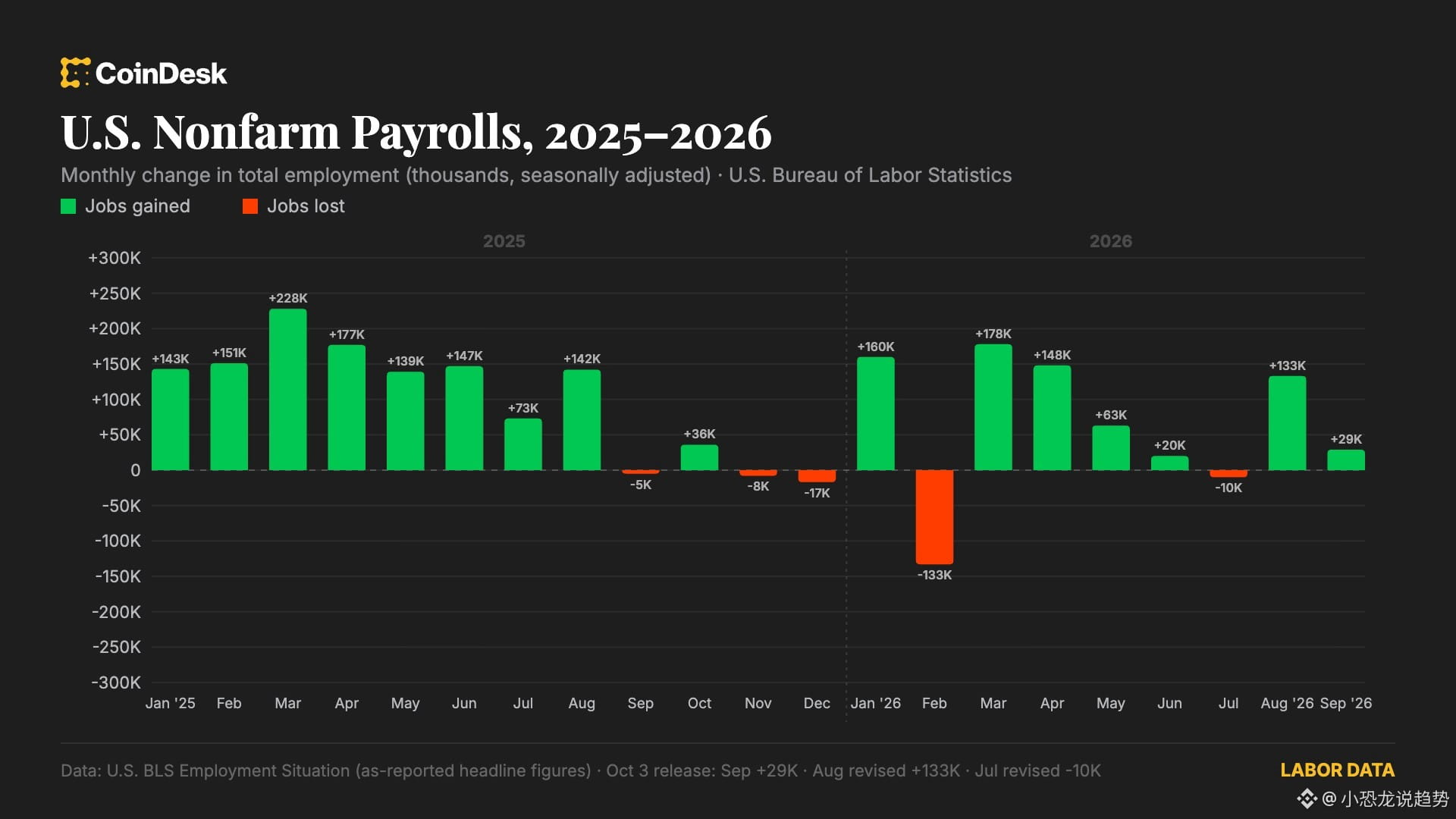
In September, U.S. nonfarm payroll employment increased by only 29,000, while the market had expected 90,000. The unemployment rate unexpectedly rose instead of falling, climbing from 4.1% to 4.2%. The moment the data was released, traders immediately turned around: the probability that the October 28 policy meeting would keep interest rates unchanged jumped from 35.8% a week ago to 74%.
First, let’s talk about how “cold” this report is. The July gain was revised from +21,000 to -10,000. August was cut from +162,000 to +133,000. Together, the two months saw a reduction of 60,000 jobs. Over the past year, the average monthly job additions have dropped to just 45,000. Wages are also softening: average hourly earnings rose only 0.1% month over month, far below the 0.3% expected. Year over year, wages rose 3.0%, also below the 3.2% forecast. This isn’t merely a report that’s slightly below expectations—it’s one where the labor market and wages are cooling across the board.
The market’s reaction has been very straightforward. The 10-year U.S. Treasury yield dropped 7 basis points in one go to 5.17%. The 2-year yield fell to 4.71%. Nasdaq futures surged 1.2%, gold jumped more than 1%, and the U.S. dollar weakened. Taking advantage of the move, Bitcoin pushed above $86,500—up about 3% in 24 hours—and briefly hovered near $87,000.
⚠️ My view: What’s truly worth watching isn’t the conclusion that rates won’t be raised, but the reason behind it. Core PCE year over year came in at 3.0% on Wednesday, well below the 3.3% expected—so inflation really is easing. But employment is also easing—this combination of cooling inflation and weakening jobs is exactly the scenario the Federal Reserve would least want to face. The market is now trading “no rate hike” as a positive—but whether September’s CPI on October 14, and whether the unemployment rate continues to move higher from here, will determine whether the market rebounds or shifts into a new phase.
📉 Another signal comes from liquidity: U.S. spot Bitcoin ETFs saw net inflows of $2.65 billion in September. Total net inflows in Q3 were $6.34 billion. That sounds like a lot—until you account for outflows in the first two quarters. Even for the full year 2026, net inflows are still under $1 billion. Money is coming back slowly, but in a very restrained way.
💥 So the question now isn’t whether the Fed will hike, but whether the market is willing to accept and price in a weakening employment-data story.
Do you think this is the real reversal after the bad news is already “priced in,” or the last round of a squeeze before the data deterioration fully plays out? Let’s discuss in the comments.
Click the profile picture to watch the live stream
Every day, I’ll help you track Bitcoin hotspots—not just what’s happening in the news, but also how to understand the logic and the opportunities behind it 👀🚀
#美国9月非农仅增2.9万人失业率升至4.2%
In just one month, only 29,000 new jobs were added—about 70% fewer than expected. Tonight’s rate-hike script was literally upended by the U.S. government’s own employment data 🦖
📈 进群看今日思路
In September, U.S. nonfarm payroll employment increased by only 29,000, while the market had expected 90,000. The unemployment rate unexpectedly rose instead of falling, climbing from 4.1% to 4.2%. The moment the data was released, traders immediately turned around: the probability that the October 28 policy meeting would keep interest rates unchanged jumped from 35.8% a week ago to 74%.
First, let’s talk about how “cold” this report is. The July gain was revised from +21,000 to -10,000. August was cut from +162,000 to +133,000. Together, the two months saw a reduction of 60,000 jobs. Over the past year, the average monthly job additions have dropped to just 45,000. Wages are also softening: average hourly earnings rose only 0.1% month over month, far below the 0.3% expected. Year over year, wages rose 3.0%, also below the 3.2% forecast. This isn’t merely a report that’s slightly below expectations—it’s one where the labor market and wages are cooling across the board.
The market’s reaction has been very straightforward. The 10-year U.S. Treasury yield dropped 7 basis points in one go to 5.17%. The 2-year yield fell to 4.71%. Nasdaq futures surged 1.2%, gold jumped more than 1%, and the U.S. dollar weakened. Taking advantage of the move, Bitcoin pushed above $86,500—up about 3% in 24 hours—and briefly hovered near $87,000.
⚠️ My view: What’s truly worth watching isn’t the conclusion that rates won’t be raised, but the reason behind it. Core PCE year over year came in at 3.0% on Wednesday, well below the 3.3% expected—so inflation really is easing. But employment is also easing—this combination of cooling inflation and weakening jobs is exactly the scenario the Federal Reserve would least want to face. The market is now trading “no rate hike” as a positive—but whether September’s CPI on October 14, and whether the unemployment rate continues to move higher from here, will determine whether the market rebounds or shifts into a new phase.
📉 Another signal comes from liquidity: U.S. spot Bitcoin ETFs saw net inflows of $2.65 billion in September. Total net inflows in Q3 were $6.34 billion. That sounds like a lot—until you account for outflows in the first two quarters. Even for the full year 2026, net inflows are still under $1 billion. Money is coming back slowly, but in a very restrained way.
💥 So the question now isn’t whether the Fed will hike, but whether the market is willing to accept and price in a weakening employment-data story.
Do you think this is the real reversal after the bad news is already “priced in,” or the last round of a squeeze before the data deterioration fully plays out? Let’s discuss in the comments.
Click the profile picture to watch the live stream
Every day, I’ll help you track Bitcoin hotspots—not just what’s happening in the news, but also how to understand the logic and the opportunities behind it 👀🚀
In just one month, only 29,000 new jobs were added—about 70% fewer than expected. Tonight’s rate-hike script was literally upended by the U.S. government’s own employment data 🦖
📈 进群看今日思路
In September, U.S. nonfarm payroll employment increased by only 29,000, while the market had expected 90,000. The unemployment rate unexpectedly rose instead of falling, climbing from 4.1% to 4.2%. The moment the data was released, traders immediately turned around: the probability that the October 28 policy meeting would keep interest rates unchanged jumped from 35.8% a week ago to 74%.
First, let’s talk about how “cold” this report is. The July gain was revised from +21,000 to -10,000. August was cut from +162,000 to +133,000. Together, the two months saw a reduction of 60,000 jobs. Over the past year, the average monthly job additions have dropped to just 45,000. Wages are also softening: average hourly earnings rose only 0.1% month over month, far below the 0.3% expected. Year over year, wages rose 3.0%, also below the 3.2% forecast. This isn’t merely a report that’s slightly below expectations—it’s one where the labor market and wages are cooling across the board.
The market’s reaction has been very straightforward. The 10-year U.S. Treasury yield dropped 7 basis points in one go to 5.17%. The 2-year yield fell to 4.71%. Nasdaq futures surged 1.2%, gold jumped more than 1%, and the U.S. dollar weakened. Taking advantage of the move, Bitcoin pushed above $86,500—up about 3% in 24 hours—and briefly hovered near $87,000.
⚠️ My view: What’s truly worth watching isn’t the conclusion that rates won’t be raised, but the reason behind it. Core PCE year over year came in at 3.0% on Wednesday, well below the 3.3% expected—so inflation really is easing. But employment is also easing—this combination of cooling inflation and weakening jobs is exactly the scenario the Federal Reserve would least want to face. The market is now trading “no rate hike” as a positive—but whether September’s CPI on October 14, and whether the unemployment rate continues to move higher from here, will determine whether the market rebounds or shifts into a new phase.
📉 Another signal comes from liquidity: U.S. spot Bitcoin ETFs saw net inflows of $2.65 billion in September. Total net inflows in Q3 were $6.34 billion. That sounds like a lot—until you account for outflows in the first two quarters. Even for the full year 2026, net inflows are still under $1 billion. Money is coming back slowly, but in a very restrained way.
💥 So the question now isn’t whether the Fed will hike, but whether the market is willing to accept and price in a weakening employment-data story.
Do you think this is the real reversal after the bad news is already “priced in,” or the last round of a squeeze before the data deterioration fully plays out? Let’s discuss in the comments.
Click the profile picture to watch the live stream
Every day, I’ll help you track Bitcoin hotspots—not just what’s happening in the news, but also how to understand the logic and the opportunities behind it 👀🚀
21
·
--
$179.1 billion: A Russian “shadow banking” pipeline is brought to the spotlight by the U.S. Department of the Treasury 🦖
[🕐 最新解读群里更新](https://app.binance.com/uni-qr/JpwCPfBj)
On Thursday, the U.S. Department of the Treasury designated A7 Network as a “significant transnational criminal organization.” At the same time, the Office of Foreign Assets Control (OFAC) also listed its addresses in Russia, Kyrgyzstan, Nigeria, and Zimbabwe. FinCEN separately issued a proposed rule to ban all fund transfers involving its “subordinate agents.” The most striking figures are: from February 2025 to June 2026, more than 180 entities handled at least $179.1 billion in ruble stablecoins issued by the A7 system.⚠️
First, let’s break down how this system works. The ruble stablecoin is issued by Old Vector, which is registered in Kyrgyzstan, and runs on both Tron and Ethereum. The reserves are held at the Russian state-owned defense bank Promsvyazbank. The design is like a mirror: the coins move between addresses within Russia, representing “outbound payments.” Meanwhile, downstream agents conduct fiat payments outside the country—using USD, CNY, dirhams, and euros—as corresponding equivalents. The two sides are completely separated, making sanctioned funds look like ordinary trade.💥
How big is it, really? FinCEN says the A7 group opened accounts in at least 83 countries and roughly 435 financial institutions, handling more than $1.7 billion from January 2025 to June 2026. These accounts were operated by a team in Moscow using customized VPNs, making the traces appear to come from Dubai, Hong Kong, or Bishkek. One agent directly connected with Iran’s “shadow tanker fleet,” and, together with sister companies, received nearly $140 million from entities involved in sanctions evasion; another sent about $1.6 million to a company involved in weapons procurement. The Treasury also tied it to the money-laundering chain involving Nobitex, an Iran exchange that was sanctioned in June this year, and hackers targeting North Korean exchanges.
Why is this time “different”? FinCEN invoked the sixth special measure under Section 9714 of the Countering Russian Money Laundering Act—essentially a fund transfer ban. It is intended to constrain about 348,000 institutions, and crypto trading platforms are included. TRM Labs explains that the fifth measure (restricting agent accounts) leaves a gap: because transactions of these tokens don’t actually go through agent banks, authorities must use the broader sixth measure to rein in both fiat and crypto.
Two more details are worth noting. First, since the Grinex theft incident in April, the supply of this token has become concentrated in non-custodial wallets. On-chain analysis firms believe this may be the token’s active move away from sanctioned locations. Second, historical data shows that this channel had previously routed almost all flows through the now-sanctioned Garantex and Grinex.
My take: this isn’t an isolated round of sanctions—it’s an action to “close the main gate.” In the past, sanctions targeted exchanges and sanctioned wallets, and money could still detour around them. This time, the authorities are cutting directly at the “switch” between fiat and crypto, pushing compliance obligations onto all U.S. financial institutions. There may be no immediate impact on ordinary people, but it serves as a reminder: when on-chain ledgers are public and trading platforms are identity-verified, the ones that usually can’t withstand regulatory pressure are often the supposedly “well-hidden” channels.
After this “shadow banking” route is blocked, do you think the funds will completely exit—or switch to a new disguise and keep running? Let’s discuss in the comments.
Click your avatar to watch the live stream
Every day, I’ll bring you the latest developments in crypto regulatory hotspots—not just what’s happening in the news, but also the logic and opportunities behind it 👀🚀
$179.1 billion: A Russian “shadow banking” pipeline is brought to the spotlight by the U.S. Department of the Treasury 🦖
🕐 最新解读群里更新
On Thursday, the U.S. Department of the Treasury designated A7 Network as a “significant transnational criminal organization.” At the same time, the Office of Foreign Assets Control (OFAC) also listed its addresses in Russia, Kyrgyzstan, Nigeria, and Zimbabwe. FinCEN separately issued a proposed rule to ban all fund transfers involving its “subordinate agents.” The most striking figures are: from February 2025 to June 2026, more than 180 entities handled at least $179.1 billion in ruble stablecoins issued by the A7 system.⚠️
First, let’s break down how this system works. The ruble stablecoin is issued by Old Vector, which is registered in Kyrgyzstan, and runs on both Tron and Ethereum. The reserves are held at the Russian state-owned defense bank Promsvyazbank. The design is like a mirror: the coins move between addresses within Russia, representing “outbound payments.” Meanwhile, downstream agents conduct fiat payments outside the country—using USD, CNY, dirhams, and euros—as corresponding equivalents. The two sides are completely separated, making sanctioned funds look like ordinary trade.💥
How big is it, really? FinCEN says the A7 group opened accounts in at least 83 countries and roughly 435 financial institutions, handling more than $1.7 billion from January 2025 to June 2026. These accounts were operated by a team in Moscow using customized VPNs, making the traces appear to come from Dubai, Hong Kong, or Bishkek. One agent directly connected with Iran’s “shadow tanker fleet,” and, together with sister companies, received nearly $140 million from entities involved in sanctions evasion; another sent about $1.6 million to a company involved in weapons procurement. The Treasury also tied it to the money-laundering chain involving Nobitex, an Iran exchange that was sanctioned in June this year, and hackers targeting North Korean exchanges.
Why is this time “different”? FinCEN invoked the sixth special measure under Section 9714 of the Countering Russian Money Laundering Act—essentially a fund transfer ban. It is intended to constrain about 348,000 institutions, and crypto trading platforms are included. TRM Labs explains that the fifth measure (restricting agent accounts) leaves a gap: because transactions of these tokens don’t actually go through agent banks, authorities must use the broader sixth measure to rein in both fiat and crypto.
Two more details are worth noting. First, since the Grinex theft incident in April, the supply of this token has become concentrated in non-custodial wallets. On-chain analysis firms believe this may be the token’s active move away from sanctioned locations. Second, historical data shows that this channel had previously routed almost all flows through the now-sanctioned Garantex and Grinex.
My take: this isn’t an isolated round of sanctions—it’s an action to “close the main gate.” In the past, sanctions targeted exchanges and sanctioned wallets, and money could still detour around them. This time, the authorities are cutting directly at the “switch” between fiat and crypto, pushing compliance obligations onto all U.S. financial institutions. There may be no immediate impact on ordinary people, but it serves as a reminder: when on-chain ledgers are public and trading platforms are identity-verified, the ones that usually can’t withstand regulatory pressure are often the supposedly “well-hidden” channels.
After this “shadow banking” route is blocked, do you think the funds will completely exit—or switch to a new disguise and keep running? Let’s discuss in the comments.
Click your avatar to watch the live stream
Every day, I’ll bring you the latest developments in crypto regulatory hotspots—not just what’s happening in the news, but also the logic and opportunities behind it 👀🚀
🕐 最新解读群里更新
On Thursday, the U.S. Department of the Treasury designated A7 Network as a “significant transnational criminal organization.” At the same time, the Office of Foreign Assets Control (OFAC) also listed its addresses in Russia, Kyrgyzstan, Nigeria, and Zimbabwe. FinCEN separately issued a proposed rule to ban all fund transfers involving its “subordinate agents.” The most striking figures are: from February 2025 to June 2026, more than 180 entities handled at least $179.1 billion in ruble stablecoins issued by the A7 system.⚠️
First, let’s break down how this system works. The ruble stablecoin is issued by Old Vector, which is registered in Kyrgyzstan, and runs on both Tron and Ethereum. The reserves are held at the Russian state-owned defense bank Promsvyazbank. The design is like a mirror: the coins move between addresses within Russia, representing “outbound payments.” Meanwhile, downstream agents conduct fiat payments outside the country—using USD, CNY, dirhams, and euros—as corresponding equivalents. The two sides are completely separated, making sanctioned funds look like ordinary trade.💥
How big is it, really? FinCEN says the A7 group opened accounts in at least 83 countries and roughly 435 financial institutions, handling more than $1.7 billion from January 2025 to June 2026. These accounts were operated by a team in Moscow using customized VPNs, making the traces appear to come from Dubai, Hong Kong, or Bishkek. One agent directly connected with Iran’s “shadow tanker fleet,” and, together with sister companies, received nearly $140 million from entities involved in sanctions evasion; another sent about $1.6 million to a company involved in weapons procurement. The Treasury also tied it to the money-laundering chain involving Nobitex, an Iran exchange that was sanctioned in June this year, and hackers targeting North Korean exchanges.
Why is this time “different”? FinCEN invoked the sixth special measure under Section 9714 of the Countering Russian Money Laundering Act—essentially a fund transfer ban. It is intended to constrain about 348,000 institutions, and crypto trading platforms are included. TRM Labs explains that the fifth measure (restricting agent accounts) leaves a gap: because transactions of these tokens don’t actually go through agent banks, authorities must use the broader sixth measure to rein in both fiat and crypto.
Two more details are worth noting. First, since the Grinex theft incident in April, the supply of this token has become concentrated in non-custodial wallets. On-chain analysis firms believe this may be the token’s active move away from sanctioned locations. Second, historical data shows that this channel had previously routed almost all flows through the now-sanctioned Garantex and Grinex.
My take: this isn’t an isolated round of sanctions—it’s an action to “close the main gate.” In the past, sanctions targeted exchanges and sanctioned wallets, and money could still detour around them. This time, the authorities are cutting directly at the “switch” between fiat and crypto, pushing compliance obligations onto all U.S. financial institutions. There may be no immediate impact on ordinary people, but it serves as a reminder: when on-chain ledgers are public and trading platforms are identity-verified, the ones that usually can’t withstand regulatory pressure are often the supposedly “well-hidden” channels.
After this “shadow banking” route is blocked, do you think the funds will completely exit—or switch to a new disguise and keep running? Let’s discuss in the comments.
Click your avatar to watch the live stream
Every day, I’ll bring you the latest developments in crypto regulatory hotspots—not just what’s happening in the news, but also the logic and opportunities behind it 👀🚀
217
·
--
A 16-year-old boy is accused of controlling more than a thousand ransomware extortion attacks worldwide 🦖🚨
[⚖️ ⏰ 消息群里第一时间说](https://app.binance.com/uni-qr/JpwCPfBj)
Spanish police in Alicante have arrested a 16-year-old Romanian teenager, concluding that he is the administrator and main operator of the ransomware group KillSec. This is a coordinated European operation codenamed KillSwitch, in which at least 110TB of stolen data was seized.
Let’s talk scale—these numbers are terrifying. Police believe the group was involved in roughly 1,000 suspected attacks worldwide, with around 500 confirmed to have succeeded. The operation searched eight properties in Spain, Greece, Romania, and the UK, seized control of five core servers, and also took over its dark-web leak site.
They have been active since around 2024, targeting software vulnerabilities and cloud storage with weak defenses. After stealing data, they carry out “double extortion”: first encrypt your servers, then threaten to publish the data if you don’t have backups. In Puerto Rico, a company that didn’t pay saw about 180GB of patient data posted directly online.
The key is in this line: the ransom is usually demanded to be paid in cryptocurrency.⚖️
Besides the 16-year-old already in custody, there are two suspects in their twenties—one in the UK and one in Romania. A 25-year-old “negotiator” in Manchester, UK was arrested, and local authorities have confirmed 28 victim companies. Another suspect, a Dutch national using the alias Archduke, was indicted by a federal grand jury in Puerto Rico on September 16. He faces up to 10 years in prison and possible extradition.
Even more worrying, investigators found that the group also used AI to build and maintain its ransomware infrastructure, and to screen potential victims.
My take: many people think cryptocurrency equals anonymity, but this time Europol’s European Cybercrime Centre specifically deployed a team to trace encrypted funds. The ledger on-chain is public by nature, and with the identity verification thresholds at exchanges, once money moves to and from marked addresses, it can become evidence for investigators. 💰 The “anonymity” that truly protects hackers may not be protecting them at all.
For ordinary users, the takeaway from stories like this is straightforward: don’t leave important data only in a cloud account without strong verification. When facing ransomware, backups and access management matter more than anything.
What do you think—did cryptocurrency help hackers, or help the police? Let’s discuss in the comments.
Click the profile icon to watch the livestream
Every day, I’ll help you track cryptocurrency security hotspots—not just what happened, but also the logic and opportunities behind it 👀🚀
A 16-year-old boy is accused of controlling more than a thousand ransomware extortion attacks worldwide 🦖🚨
⚖️ ⏰ 消息群里第一时间说
Spanish police in Alicante have arrested a 16-year-old Romanian teenager, concluding that he is the administrator and main operator of the ransomware group KillSec. This is a coordinated European operation codenamed KillSwitch, in which at least 110TB of stolen data was seized.
Let’s talk scale—these numbers are terrifying. Police believe the group was involved in roughly 1,000 suspected attacks worldwide, with around 500 confirmed to have succeeded. The operation searched eight properties in Spain, Greece, Romania, and the UK, seized control of five core servers, and also took over its dark-web leak site.
They have been active since around 2024, targeting software vulnerabilities and cloud storage with weak defenses. After stealing data, they carry out “double extortion”: first encrypt your servers, then threaten to publish the data if you don’t have backups. In Puerto Rico, a company that didn’t pay saw about 180GB of patient data posted directly online.
The key is in this line: the ransom is usually demanded to be paid in cryptocurrency.⚖️
Besides the 16-year-old already in custody, there are two suspects in their twenties—one in the UK and one in Romania. A 25-year-old “negotiator” in Manchester, UK was arrested, and local authorities have confirmed 28 victim companies. Another suspect, a Dutch national using the alias Archduke, was indicted by a federal grand jury in Puerto Rico on September 16. He faces up to 10 years in prison and possible extradition.
Even more worrying, investigators found that the group also used AI to build and maintain its ransomware infrastructure, and to screen potential victims.
My take: many people think cryptocurrency equals anonymity, but this time Europol’s European Cybercrime Centre specifically deployed a team to trace encrypted funds. The ledger on-chain is public by nature, and with the identity verification thresholds at exchanges, once money moves to and from marked addresses, it can become evidence for investigators. 💰 The “anonymity” that truly protects hackers may not be protecting them at all.
For ordinary users, the takeaway from stories like this is straightforward: don’t leave important data only in a cloud account without strong verification. When facing ransomware, backups and access management matter more than anything.
What do you think—did cryptocurrency help hackers, or help the police? Let’s discuss in the comments.
Click the profile icon to watch the livestream
Every day, I’ll help you track cryptocurrency security hotspots—not just what happened, but also the logic and opportunities behind it 👀🚀
⚖️ ⏰ 消息群里第一时间说
Spanish police in Alicante have arrested a 16-year-old Romanian teenager, concluding that he is the administrator and main operator of the ransomware group KillSec. This is a coordinated European operation codenamed KillSwitch, in which at least 110TB of stolen data was seized.
Let’s talk scale—these numbers are terrifying. Police believe the group was involved in roughly 1,000 suspected attacks worldwide, with around 500 confirmed to have succeeded. The operation searched eight properties in Spain, Greece, Romania, and the UK, seized control of five core servers, and also took over its dark-web leak site.
They have been active since around 2024, targeting software vulnerabilities and cloud storage with weak defenses. After stealing data, they carry out “double extortion”: first encrypt your servers, then threaten to publish the data if you don’t have backups. In Puerto Rico, a company that didn’t pay saw about 180GB of patient data posted directly online.
The key is in this line: the ransom is usually demanded to be paid in cryptocurrency.⚖️
Besides the 16-year-old already in custody, there are two suspects in their twenties—one in the UK and one in Romania. A 25-year-old “negotiator” in Manchester, UK was arrested, and local authorities have confirmed 28 victim companies. Another suspect, a Dutch national using the alias Archduke, was indicted by a federal grand jury in Puerto Rico on September 16. He faces up to 10 years in prison and possible extradition.
Even more worrying, investigators found that the group also used AI to build and maintain its ransomware infrastructure, and to screen potential victims.
My take: many people think cryptocurrency equals anonymity, but this time Europol’s European Cybercrime Centre specifically deployed a team to trace encrypted funds. The ledger on-chain is public by nature, and with the identity verification thresholds at exchanges, once money moves to and from marked addresses, it can become evidence for investigators. 💰 The “anonymity” that truly protects hackers may not be protecting them at all.
For ordinary users, the takeaway from stories like this is straightforward: don’t leave important data only in a cloud account without strong verification. When facing ransomware, backups and access management matter more than anything.
What do you think—did cryptocurrency help hackers, or help the police? Let’s discuss in the comments.
Click the profile icon to watch the livestream
Every day, I’ll help you track cryptocurrency security hotspots—not just what happened, but also the logic and opportunities behind it 👀🚀

79
·
--
#比特币升至8.5万美元附近
Bitcoin shorts worth $122 million were liquidated in a single day, surged to $86,857—then turned around 🦖
[🚨 行情变了群里说](https://app.binance.com/uni-qr/JpwCPfBj)
That $85,000 sell-wall, which had been suppressing the price all week, was pushed aside—hard—by the buyers. Bitcoin touched a high of $86,857 on Friday, the highest since September 23. Within 24 hours, shorts totaling $122 million were liquidated, and across the entire crypto market about $210 million in liquidations were recorded 💥. But what’s really worth paying attention to isn’t the price—it’s that leverage is quietly becoming more crowded.
On-chain data firm Glassnode puts it plainly: the sell orders above $85,000 have noticeably declined. "The remaining sell orders seem to have been withdrawn," which means pushing the price upward will take less effort. CoinGlass’s liquidation heatmap shows that liquidations are likely to start clustering above $87,300—meaning after one batch of shorts was pushed out, fresh ammunition has already piled up at higher levels.
On the other side, the derivatives market is accelerating. CoinDesk, citing CoinGlass data: Bitcoin open interest has risen by $230 million since September 30—about 27,000 BTC. Total open interest climbed to roughly 653,000 BTC, or about $56.2 billion, an increase of about 4.3%. Meanwhile, the funding rate for perpetual contracts rose from around 3% to 10% over the same period. A positive funding rate means long traders are paying the short side—bullish bets are getting more crowded, and holding costs are also rising.
One reminder ⚠️: open interest at the end of September was about 625,000 BTC, which was already close to the lowest in 12 months. So this round of growth is rebounding from a very low base—it’s not quite full-blown mania yet.
On price action: Bitcoin climbed from about $83,500 to $86,500. Around $86,000 sits the breakeven zone for U.S. spot Bitcoin ETF investors, and this is exactly where bulls and bears will repeatedly fight. ETF flows are cooperating as well: on October 1, spot Bitcoin ETF net inflows totaled $102.7 million, including BlackRock’s IBIT pulling in $195 million in a single day. However, compared with the near $1 billion daily inflow on September 21 and the highest peak in the past year, the pace of inflows has clearly slowed.
Pre-market, crypto-related stocks moved higher in sync: Strategy and Strive rose by about 3%, and a certain exchange’s stock and Robinhood each rose by about 2%.
My take: A fast rally doesn’t necessarily mean a stable rally. Funding rates have tripled, suggesting longs are paying to hold positions. The more crowded the leverage, the easier it is for a data reversal to trigger a cascade. Above $87,300, liquidation clusters are building; below $86,000 is the ETF cost line. Tonight’s U.S. September Non-Farm Payrolls is the starting gun—if jobs are strong, the rate-hike odds could bounce back, and leveraged longs would be hit first. If jobs are weak, then the $87,000 wall has a chance to be pushed flat.
After tonight’s Non-Farm Payrolls, do you think Bitcoin breaks $87,000 first, or pulls back to $85,000 first? Let’s discuss in the comments.
Click the avatar to watch the livestream
Every day, I’ll take you through Bitcoin headlines—not just what happens in the news, but also the logic and opportunities behind it 👀🚀
#比特币升至8.5万美元附近
Bitcoin shorts worth $122 million were liquidated in a single day, surged to $86,857—then turned around 🦖
🚨 行情变了群里说
That $85,000 sell-wall, which had been suppressing the price all week, was pushed aside—hard—by the buyers. Bitcoin touched a high of $86,857 on Friday, the highest since September 23. Within 24 hours, shorts totaling $122 million were liquidated, and across the entire crypto market about $210 million in liquidations were recorded 💥. But what’s really worth paying attention to isn’t the price—it’s that leverage is quietly becoming more crowded.
On-chain data firm Glassnode puts it plainly: the sell orders above $85,000 have noticeably declined. "The remaining sell orders seem to have been withdrawn," which means pushing the price upward will take less effort. CoinGlass’s liquidation heatmap shows that liquidations are likely to start clustering above $87,300—meaning after one batch of shorts was pushed out, fresh ammunition has already piled up at higher levels.
On the other side, the derivatives market is accelerating. CoinDesk, citing CoinGlass data: Bitcoin open interest has risen by $230 million since September 30—about 27,000 BTC. Total open interest climbed to roughly 653,000 BTC, or about $56.2 billion, an increase of about 4.3%. Meanwhile, the funding rate for perpetual contracts rose from around 3% to 10% over the same period. A positive funding rate means long traders are paying the short side—bullish bets are getting more crowded, and holding costs are also rising.
One reminder ⚠️: open interest at the end of September was about 625,000 BTC, which was already close to the lowest in 12 months. So this round of growth is rebounding from a very low base—it’s not quite full-blown mania yet.
On price action: Bitcoin climbed from about $83,500 to $86,500. Around $86,000 sits the breakeven zone for U.S. spot Bitcoin ETF investors, and this is exactly where bulls and bears will repeatedly fight. ETF flows are cooperating as well: on October 1, spot Bitcoin ETF net inflows totaled $102.7 million, including BlackRock’s IBIT pulling in $195 million in a single day. However, compared with the near $1 billion daily inflow on September 21 and the highest peak in the past year, the pace of inflows has clearly slowed.
Pre-market, crypto-related stocks moved higher in sync: Strategy and Strive rose by about 3%, and a certain exchange’s stock and Robinhood each rose by about 2%.
My take: A fast rally doesn’t necessarily mean a stable rally. Funding rates have tripled, suggesting longs are paying to hold positions. The more crowded the leverage, the easier it is for a data reversal to trigger a cascade. Above $87,300, liquidation clusters are building; below $86,000 is the ETF cost line. Tonight’s U.S. September Non-Farm Payrolls is the starting gun—if jobs are strong, the rate-hike odds could bounce back, and leveraged longs would be hit first. If jobs are weak, then the $87,000 wall has a chance to be pushed flat.
After tonight’s Non-Farm Payrolls, do you think Bitcoin breaks $87,000 first, or pulls back to $85,000 first? Let’s discuss in the comments.
Click the avatar to watch the livestream
Every day, I’ll take you through Bitcoin headlines—not just what happens in the news, but also the logic and opportunities behind it 👀🚀
Bitcoin shorts worth $122 million were liquidated in a single day, surged to $86,857—then turned around 🦖
🚨 行情变了群里说
That $85,000 sell-wall, which had been suppressing the price all week, was pushed aside—hard—by the buyers. Bitcoin touched a high of $86,857 on Friday, the highest since September 23. Within 24 hours, shorts totaling $122 million were liquidated, and across the entire crypto market about $210 million in liquidations were recorded 💥. But what’s really worth paying attention to isn’t the price—it’s that leverage is quietly becoming more crowded.
On-chain data firm Glassnode puts it plainly: the sell orders above $85,000 have noticeably declined. "The remaining sell orders seem to have been withdrawn," which means pushing the price upward will take less effort. CoinGlass’s liquidation heatmap shows that liquidations are likely to start clustering above $87,300—meaning after one batch of shorts was pushed out, fresh ammunition has already piled up at higher levels.
On the other side, the derivatives market is accelerating. CoinDesk, citing CoinGlass data: Bitcoin open interest has risen by $230 million since September 30—about 27,000 BTC. Total open interest climbed to roughly 653,000 BTC, or about $56.2 billion, an increase of about 4.3%. Meanwhile, the funding rate for perpetual contracts rose from around 3% to 10% over the same period. A positive funding rate means long traders are paying the short side—bullish bets are getting more crowded, and holding costs are also rising.
One reminder ⚠️: open interest at the end of September was about 625,000 BTC, which was already close to the lowest in 12 months. So this round of growth is rebounding from a very low base—it’s not quite full-blown mania yet.
On price action: Bitcoin climbed from about $83,500 to $86,500. Around $86,000 sits the breakeven zone for U.S. spot Bitcoin ETF investors, and this is exactly where bulls and bears will repeatedly fight. ETF flows are cooperating as well: on October 1, spot Bitcoin ETF net inflows totaled $102.7 million, including BlackRock’s IBIT pulling in $195 million in a single day. However, compared with the near $1 billion daily inflow on September 21 and the highest peak in the past year, the pace of inflows has clearly slowed.
Pre-market, crypto-related stocks moved higher in sync: Strategy and Strive rose by about 3%, and a certain exchange’s stock and Robinhood each rose by about 2%.
My take: A fast rally doesn’t necessarily mean a stable rally. Funding rates have tripled, suggesting longs are paying to hold positions. The more crowded the leverage, the easier it is for a data reversal to trigger a cascade. Above $87,300, liquidation clusters are building; below $86,000 is the ETF cost line. Tonight’s U.S. September Non-Farm Payrolls is the starting gun—if jobs are strong, the rate-hike odds could bounce back, and leveraged longs would be hit first. If jobs are weak, then the $87,000 wall has a chance to be pushed flat.
After tonight’s Non-Farm Payrolls, do you think Bitcoin breaks $87,000 first, or pulls back to $85,000 first? Let’s discuss in the comments.
Click the avatar to watch the livestream
Every day, I’ll take you through Bitcoin headlines—not just what happens in the news, but also the logic and opportunities behind it 👀🚀

11
·
--
#比特币升至8.5万美元附近
The odds of a rate hike in October dropped from 70% to 30% over one week. Bitcoin has risen for four straight days, climbing to $86,000 🦖
[⚡ 有大动静群里说](https://app.binance.com/uni-qr/JpwCPfBj)
Federal Reserve Vice Chair Jefferson’s remarks on Thursday caused the market’s rate-hike expectations to suddenly hit the brakes: the probability of another rate hike at the October 28 meeting fell from 70% to 30% within a week. The probability that there will be at least one more rate hike before year-end also slipped from 95% to 80%. Bitcoin rose for the fourth consecutive trading day, trading at about $86,200, up roughly 3% over 24 hours.📈
This rebound is also supported by the bond market. The 2-year U.S. Treasury yield fell 12.3 basis points in a day to 4.764%, and the 10-year yield dropped 9.4 basis points to 5.217%, briefly touching 5.36% intraday. Jefferson’s exact words were that since the September meeting, yields across various maturities have continued to rise, indicating investors are re-evaluating the macro environment. “My colleagues and I need to form our own judgment—this may require more time”—translated, it means: wait for more data, don’t rush.
But two signals can’t be ignored. First, the September ISM Manufacturing PMI came in at 54.5 and is still expanding, while the Prices Paid subcomponent jumped from 71.1 to 77.9—so inflation pressures are actually getting heavier. Second, August PCE year-over-year at 3.4% was below the 3.7% forecast, but this time the data methodology was adjusted. Some institutions estimate that the change in the definition alone could make core PCE look up to 20 basis points lower; plus, July was also revised down by 30 basis points. So the market is discounting those four words—“inflation cooling.” ⚠️
On-chain, there’s a bit of comfort. Glassnode pointed out that the coin-denominated open interest has shrunk by nearly 20% since the August low, while the price has risen 35%. Open interest is already at the lowest level since March—less leverage means this rally is less likely to be wiped back to square one by a single liquidation cascade. Bitcoin rose 42.7% in Q3, the strongest Q3 since 2017; Citi also raised its 12-month target price from $82,000 to $113,000. Ahead of Thursday’s U.S. stock market open, Strategy was up more than 3%, and one exchange/ Circle was up more than 2%.
My take: the core driver of this move isn’t something happening in the crypto sector itself—it’s that “rate hikes may be paused.” But tonight, if the U.S. September nonfarm payrolls report comes out and employment is still strong, the 30% rate-hike probability can bounce right back, and the key support at $82,500 could be tested again. Before you take action, look at the data.📉
After tonight’s jobs report, do you think Bitcoin will first surge to $90,000, or first pull back to $82,000? Let’s discuss in the comments.
Click the profile picture to watch the live stream
Every day, I’ll help you track Bitcoin hot topics—not just what’s happening in the news, but also the logic and opportunities behind it 👀🚀
#比特币升至8.5万美元附近
The odds of a rate hike in October dropped from 70% to 30% over one week. Bitcoin has risen for four straight days, climbing to $86,000 🦖
⚡ 有大动静群里说
Federal Reserve Vice Chair Jefferson’s remarks on Thursday caused the market’s rate-hike expectations to suddenly hit the brakes: the probability of another rate hike at the October 28 meeting fell from 70% to 30% within a week. The probability that there will be at least one more rate hike before year-end also slipped from 95% to 80%. Bitcoin rose for the fourth consecutive trading day, trading at about $86,200, up roughly 3% over 24 hours.📈
This rebound is also supported by the bond market. The 2-year U.S. Treasury yield fell 12.3 basis points in a day to 4.764%, and the 10-year yield dropped 9.4 basis points to 5.217%, briefly touching 5.36% intraday. Jefferson’s exact words were that since the September meeting, yields across various maturities have continued to rise, indicating investors are re-evaluating the macro environment. “My colleagues and I need to form our own judgment—this may require more time”—translated, it means: wait for more data, don’t rush.
But two signals can’t be ignored. First, the September ISM Manufacturing PMI came in at 54.5 and is still expanding, while the Prices Paid subcomponent jumped from 71.1 to 77.9—so inflation pressures are actually getting heavier. Second, August PCE year-over-year at 3.4% was below the 3.7% forecast, but this time the data methodology was adjusted. Some institutions estimate that the change in the definition alone could make core PCE look up to 20 basis points lower; plus, July was also revised down by 30 basis points. So the market is discounting those four words—“inflation cooling.” ⚠️
On-chain, there’s a bit of comfort. Glassnode pointed out that the coin-denominated open interest has shrunk by nearly 20% since the August low, while the price has risen 35%. Open interest is already at the lowest level since March—less leverage means this rally is less likely to be wiped back to square one by a single liquidation cascade. Bitcoin rose 42.7% in Q3, the strongest Q3 since 2017; Citi also raised its 12-month target price from $82,000 to $113,000. Ahead of Thursday’s U.S. stock market open, Strategy was up more than 3%, and one exchange/ Circle was up more than 2%.
My take: the core driver of this move isn’t something happening in the crypto sector itself—it’s that “rate hikes may be paused.” But tonight, if the U.S. September nonfarm payrolls report comes out and employment is still strong, the 30% rate-hike probability can bounce right back, and the key support at $82,500 could be tested again. Before you take action, look at the data.📉
After tonight’s jobs report, do you think Bitcoin will first surge to $90,000, or first pull back to $82,000? Let’s discuss in the comments.
Click the profile picture to watch the live stream
Every day, I’ll help you track Bitcoin hot topics—not just what’s happening in the news, but also the logic and opportunities behind it 👀🚀
The odds of a rate hike in October dropped from 70% to 30% over one week. Bitcoin has risen for four straight days, climbing to $86,000 🦖
⚡ 有大动静群里说
Federal Reserve Vice Chair Jefferson’s remarks on Thursday caused the market’s rate-hike expectations to suddenly hit the brakes: the probability of another rate hike at the October 28 meeting fell from 70% to 30% within a week. The probability that there will be at least one more rate hike before year-end also slipped from 95% to 80%. Bitcoin rose for the fourth consecutive trading day, trading at about $86,200, up roughly 3% over 24 hours.📈
This rebound is also supported by the bond market. The 2-year U.S. Treasury yield fell 12.3 basis points in a day to 4.764%, and the 10-year yield dropped 9.4 basis points to 5.217%, briefly touching 5.36% intraday. Jefferson’s exact words were that since the September meeting, yields across various maturities have continued to rise, indicating investors are re-evaluating the macro environment. “My colleagues and I need to form our own judgment—this may require more time”—translated, it means: wait for more data, don’t rush.
But two signals can’t be ignored. First, the September ISM Manufacturing PMI came in at 54.5 and is still expanding, while the Prices Paid subcomponent jumped from 71.1 to 77.9—so inflation pressures are actually getting heavier. Second, August PCE year-over-year at 3.4% was below the 3.7% forecast, but this time the data methodology was adjusted. Some institutions estimate that the change in the definition alone could make core PCE look up to 20 basis points lower; plus, July was also revised down by 30 basis points. So the market is discounting those four words—“inflation cooling.” ⚠️
On-chain, there’s a bit of comfort. Glassnode pointed out that the coin-denominated open interest has shrunk by nearly 20% since the August low, while the price has risen 35%. Open interest is already at the lowest level since March—less leverage means this rally is less likely to be wiped back to square one by a single liquidation cascade. Bitcoin rose 42.7% in Q3, the strongest Q3 since 2017; Citi also raised its 12-month target price from $82,000 to $113,000. Ahead of Thursday’s U.S. stock market open, Strategy was up more than 3%, and one exchange/ Circle was up more than 2%.
My take: the core driver of this move isn’t something happening in the crypto sector itself—it’s that “rate hikes may be paused.” But tonight, if the U.S. September nonfarm payrolls report comes out and employment is still strong, the 30% rate-hike probability can bounce right back, and the key support at $82,500 could be tested again. Before you take action, look at the data.📉
After tonight’s jobs report, do you think Bitcoin will first surge to $90,000, or first pull back to $82,000? Let’s discuss in the comments.
Click the profile picture to watch the live stream
Every day, I’ll help you track Bitcoin hot topics—not just what’s happening in the news, but also the logic and opportunities behind it 👀🚀
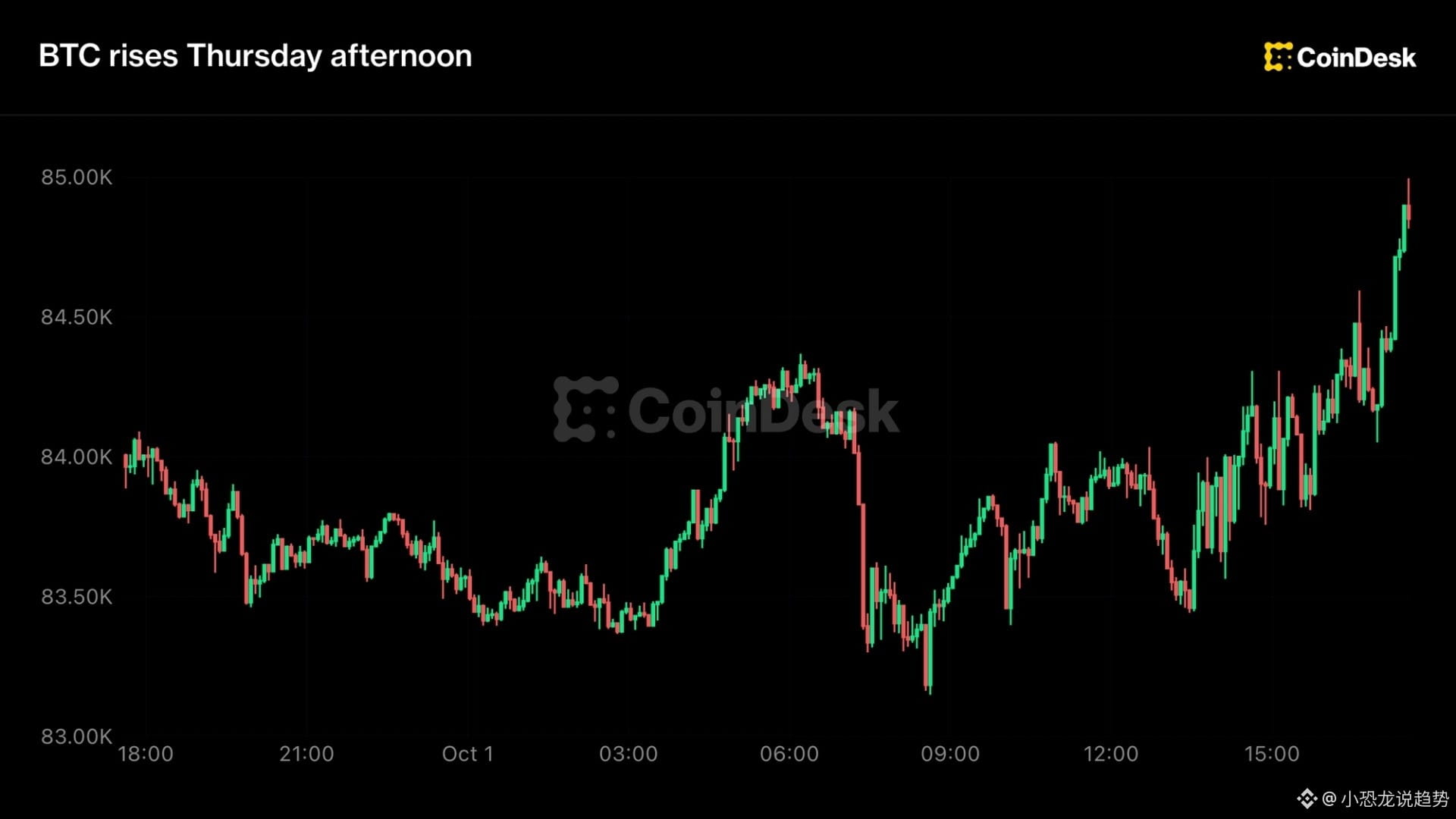
1
1.5k
·
--
190 billion dollars to “go home”: USDT has drifted for more than a decade—this month it returns to the Bitcoin network 🦖
[🕐 最新解读群里更新](https://app.binance.com/uni-qr/JpwCPfBj)
The world’s largest stablecoin, USDT, with a market value of nearly 19 billion dollars, is expected this month to issue on the Bitcoin network again via a project supported by Tether, Utexo. Note: this is not a new stablecoin—USDT’s original home has always been Bitcoin. In 2014, it was born on the Bitcoin network using the Omni protocol. Later, as faster and cheaper options emerged, the main battlefield shifted to Ethereum and TRON. After years of circling back, it’s now moving to the oldest chain.
This time, it’s taking a new approach. Utexo was founded in 2025. Earlier this year, it raised a $7.5 million seed round and has already obtained commercial authorization to issue USDT on the Bitcoin network. What it plans to do in three areas: privacy-enabled USDT transfers, direct exchanges between native Bitcoin and USDT, and loans backed by native Bitcoin. At the core is an architecture based on the RGB protocol—using client-side validation to keep most transaction data outside Bitcoin’s public ledger. In other words, transfer traces won’t be visible across the entire network the way they are on Ethereum or TRON. 🔍
Tether has already “voted with its feet.” According to Bitcoin Treasuries, Tether held about 100,000 Bitcoins as of mid-August, worth roughly $8.4 billion at the time. In a single line on a social platform, Tether CEO Paolo Ardoino said: “It’s coming home.”
Utexo co-founder Viktor Ihnatiuk put it more plainly: “Tether has always been a Bitcoin company. Bitcoin is the stable anchor for them, like gold.”
My take comes in three layers. First, this feels more like a “back door” return home: Bitcoin’s main-layer throughput is limited, so running a stablecoin directly there isn’t realistic. By coming back on RGB’s off-chain verification approach, USDT is essentially conceding that the main layer only serves as a settlement and anchoring layer. Second, privacy is the selling point—but for addresses that are sanctioned or tied to wrongdoing, Utexo uses “blacklisting UTXOs,” not “freezing addresses.” That’s a new compliance posture, and whether regulators accept it is the biggest variable. Third, Utexo says that after the initial launch, it will expand USDT to the Lightning Network. Only once it truly lands can it potentially unlock the missing “payments narrative” that Bitcoin has long lacked. ⚖️
On the flip side, the stablecoin battlefield is firmly in the hands of Ethereum and TRON right now. Is USDT returning to Bitcoin just sentiment, or can it genuinely reclaim market share? I lean toward this: in the short term, it’s a good narrative; in the long term, it depends on whether the Lightning Network and fees can hold up.
Do you think USDT’s “return home” this time can reshape Bitcoin’s payments landscape? Let’s discuss in the comments 👇
Click the avatar to watch the live stream
every day, I’ll help you track the hottest moments in the crypto market—not just what news happens, but also how to understand the underlying logic and opportunities 👀🚀
190 billion dollars to “go home”: USDT has drifted for more than a decade—this month it returns to the Bitcoin network 🦖
🕐 最新解读群里更新
The world’s largest stablecoin, USDT, with a market value of nearly 19 billion dollars, is expected this month to issue on the Bitcoin network again via a project supported by Tether, Utexo. Note: this is not a new stablecoin—USDT’s original home has always been Bitcoin. In 2014, it was born on the Bitcoin network using the Omni protocol. Later, as faster and cheaper options emerged, the main battlefield shifted to Ethereum and TRON. After years of circling back, it’s now moving to the oldest chain.
This time, it’s taking a new approach. Utexo was founded in 2025. Earlier this year, it raised a $7.5 million seed round and has already obtained commercial authorization to issue USDT on the Bitcoin network. What it plans to do in three areas: privacy-enabled USDT transfers, direct exchanges between native Bitcoin and USDT, and loans backed by native Bitcoin. At the core is an architecture based on the RGB protocol—using client-side validation to keep most transaction data outside Bitcoin’s public ledger. In other words, transfer traces won’t be visible across the entire network the way they are on Ethereum or TRON. 🔍
Tether has already “voted with its feet.” According to Bitcoin Treasuries, Tether held about 100,000 Bitcoins as of mid-August, worth roughly $8.4 billion at the time. In a single line on a social platform, Tether CEO Paolo Ardoino said: “It’s coming home.”
Utexo co-founder Viktor Ihnatiuk put it more plainly: “Tether has always been a Bitcoin company. Bitcoin is the stable anchor for them, like gold.”
My take comes in three layers. First, this feels more like a “back door” return home: Bitcoin’s main-layer throughput is limited, so running a stablecoin directly there isn’t realistic. By coming back on RGB’s off-chain verification approach, USDT is essentially conceding that the main layer only serves as a settlement and anchoring layer. Second, privacy is the selling point—but for addresses that are sanctioned or tied to wrongdoing, Utexo uses “blacklisting UTXOs,” not “freezing addresses.” That’s a new compliance posture, and whether regulators accept it is the biggest variable. Third, Utexo says that after the initial launch, it will expand USDT to the Lightning Network. Only once it truly lands can it potentially unlock the missing “payments narrative” that Bitcoin has long lacked. ⚖️
On the flip side, the stablecoin battlefield is firmly in the hands of Ethereum and TRON right now. Is USDT returning to Bitcoin just sentiment, or can it genuinely reclaim market share? I lean toward this: in the short term, it’s a good narrative; in the long term, it depends on whether the Lightning Network and fees can hold up.
Do you think USDT’s “return home” this time can reshape Bitcoin’s payments landscape? Let’s discuss in the comments 👇
Click the avatar to watch the live stream
every day, I’ll help you track the hottest moments in the crypto market—not just what news happens, but also how to understand the underlying logic and opportunities 👀🚀
🕐 最新解读群里更新
The world’s largest stablecoin, USDT, with a market value of nearly 19 billion dollars, is expected this month to issue on the Bitcoin network again via a project supported by Tether, Utexo. Note: this is not a new stablecoin—USDT’s original home has always been Bitcoin. In 2014, it was born on the Bitcoin network using the Omni protocol. Later, as faster and cheaper options emerged, the main battlefield shifted to Ethereum and TRON. After years of circling back, it’s now moving to the oldest chain.
This time, it’s taking a new approach. Utexo was founded in 2025. Earlier this year, it raised a $7.5 million seed round and has already obtained commercial authorization to issue USDT on the Bitcoin network. What it plans to do in three areas: privacy-enabled USDT transfers, direct exchanges between native Bitcoin and USDT, and loans backed by native Bitcoin. At the core is an architecture based on the RGB protocol—using client-side validation to keep most transaction data outside Bitcoin’s public ledger. In other words, transfer traces won’t be visible across the entire network the way they are on Ethereum or TRON. 🔍
Tether has already “voted with its feet.” According to Bitcoin Treasuries, Tether held about 100,000 Bitcoins as of mid-August, worth roughly $8.4 billion at the time. In a single line on a social platform, Tether CEO Paolo Ardoino said: “It’s coming home.”
Utexo co-founder Viktor Ihnatiuk put it more plainly: “Tether has always been a Bitcoin company. Bitcoin is the stable anchor for them, like gold.”
My take comes in three layers. First, this feels more like a “back door” return home: Bitcoin’s main-layer throughput is limited, so running a stablecoin directly there isn’t realistic. By coming back on RGB’s off-chain verification approach, USDT is essentially conceding that the main layer only serves as a settlement and anchoring layer. Second, privacy is the selling point—but for addresses that are sanctioned or tied to wrongdoing, Utexo uses “blacklisting UTXOs,” not “freezing addresses.” That’s a new compliance posture, and whether regulators accept it is the biggest variable. Third, Utexo says that after the initial launch, it will expand USDT to the Lightning Network. Only once it truly lands can it potentially unlock the missing “payments narrative” that Bitcoin has long lacked. ⚖️
On the flip side, the stablecoin battlefield is firmly in the hands of Ethereum and TRON right now. Is USDT returning to Bitcoin just sentiment, or can it genuinely reclaim market share? I lean toward this: in the short term, it’s a good narrative; in the long term, it depends on whether the Lightning Network and fees can hold up.
Do you think USDT’s “return home” this time can reshape Bitcoin’s payments landscape? Let’s discuss in the comments 👇
Click the avatar to watch the live stream
every day, I’ll help you track the hottest moments in the crypto market—not just what news happens, but also how to understand the underlying logic and opportunities 👀🚀

157
·
--
$2.65 billion: Bitcoin just reclaimed $85,000—yet institutions “after the rate hikes” dumped nearly the second-strongest monthly buying order in a year 🦖
[💡 群里更新数据解读](https://app.binance.com/uni-qr/JpwCPfBj)
U.S. spot Bitcoin ETFs saw net inflows of $2.65 billion in September— the second-largest single-month inflow since October 2025; entering the first day of October, net inflows continued at about $102.7 million. At the same time, Bitcoin reclaimed the $85,000 level, rising about 3.4% on the day to $85,984. This time, money and price moved in the same direction.
The contrast is hiding on Ethereum: also on October 1, Ethereum ETFs recorded net outflows of $55.4 million. One side is going in, the other is going out.
What’s truly key is the timing of these numbers. Just after the U.S. Federal Reserve raised rates to 3.75%-4.00% in September— the first hike since July 2023— the most feared market scenario was “the hike lands and institutions pull back.” The September flows delivered the opposite answer: institutions didn’t leave; they kept treating dips as buying opportunities. The Crypto Fear and Greed Index is now 69, in the “greed” zone, but not extreme yet.
Zeus Research analyst Dominick John’s view is: continued ETF inflows indicate that institutional demand “has not faded,” suggesting a Q4 bottom may already be in place and the market structure is shifting in a more bullish direction. He also reminds people to watch two things next—jobless claims on October 8, and inflation data plus remarks from Fed officials—both could reshape rate-expectation trajectories. 📈
On-chain also provides an intriguing comparison. Earlier today, data showed Bitcoin’s profit-taking amount rose to the highest level of the year. On September 22, 25,700 BTC were cashed out as realized profits in a single day; meanwhile, short-term traders’ unrealized profit ratio reached 33%, the highest since December 2024. Translate it this way: retail and older holdings are taking profits, while ETF-type institutional channels are taking over the baton. Who is lifting whose parade is clear at a glance. 👀
Among other coins, Solana led the gains, up 3.8% on the day to $121.96, with $4.01 billion in volume and a $71.75 billion market cap; XRP rose 2.0% to $1.51; privacy coin Zcash fell 2.3% to $1,376 against the trend. Even in a broad rally, there’s still differentiation—money is selecting targets.
My take: these $2.65 billion aren’t just emotion-driven inflows— they occurred after the rate hike landed, and after the market’s biggest hesitation, making them more “heavy” than the late FOMO chasing seen at bull-market tops. But stay clear-eyed too: ETFs are slow money—they provide a floor, but they don’t take responsibility for pushing prices onto a parabola. What ultimately determines how high Q4 can go is still which way rate expectations tilt.
Which storyline do you think you’re more aligned with—are these $2.65 billion the starting point for October’s move, or just another “fakeout”? Let’s discuss in the comments.
Click the avatar to watch the livestream
Every day, I’ll take you through Bitcoin and crypto market hotspots— not only what’s happening in the news, but also how to understand the underlying logic and opportunities 👀🚀
$2.65 billion: Bitcoin just reclaimed $85,000—yet institutions “after the rate hikes” dumped nearly the second-strongest monthly buying order in a year 🦖
💡 群里更新数据解读
U.S. spot Bitcoin ETFs saw net inflows of $2.65 billion in September— the second-largest single-month inflow since October 2025; entering the first day of October, net inflows continued at about $102.7 million. At the same time, Bitcoin reclaimed the $85,000 level, rising about 3.4% on the day to $85,984. This time, money and price moved in the same direction.
The contrast is hiding on Ethereum: also on October 1, Ethereum ETFs recorded net outflows of $55.4 million. One side is going in, the other is going out.
What’s truly key is the timing of these numbers. Just after the U.S. Federal Reserve raised rates to 3.75%-4.00% in September— the first hike since July 2023— the most feared market scenario was “the hike lands and institutions pull back.” The September flows delivered the opposite answer: institutions didn’t leave; they kept treating dips as buying opportunities. The Crypto Fear and Greed Index is now 69, in the “greed” zone, but not extreme yet.
Zeus Research analyst Dominick John’s view is: continued ETF inflows indicate that institutional demand “has not faded,” suggesting a Q4 bottom may already be in place and the market structure is shifting in a more bullish direction. He also reminds people to watch two things next—jobless claims on October 8, and inflation data plus remarks from Fed officials—both could reshape rate-expectation trajectories. 📈
On-chain also provides an intriguing comparison. Earlier today, data showed Bitcoin’s profit-taking amount rose to the highest level of the year. On September 22, 25,700 BTC were cashed out as realized profits in a single day; meanwhile, short-term traders’ unrealized profit ratio reached 33%, the highest since December 2024. Translate it this way: retail and older holdings are taking profits, while ETF-type institutional channels are taking over the baton. Who is lifting whose parade is clear at a glance. 👀
Among other coins, Solana led the gains, up 3.8% on the day to $121.96, with $4.01 billion in volume and a $71.75 billion market cap; XRP rose 2.0% to $1.51; privacy coin Zcash fell 2.3% to $1,376 against the trend. Even in a broad rally, there’s still differentiation—money is selecting targets.
My take: these $2.65 billion aren’t just emotion-driven inflows— they occurred after the rate hike landed, and after the market’s biggest hesitation, making them more “heavy” than the late FOMO chasing seen at bull-market tops. But stay clear-eyed too: ETFs are slow money—they provide a floor, but they don’t take responsibility for pushing prices onto a parabola. What ultimately determines how high Q4 can go is still which way rate expectations tilt.
Which storyline do you think you’re more aligned with—are these $2.65 billion the starting point for October’s move, or just another “fakeout”? Let’s discuss in the comments.
Click the avatar to watch the livestream
Every day, I’ll take you through Bitcoin and crypto market hotspots— not only what’s happening in the news, but also how to understand the underlying logic and opportunities 👀🚀
💡 群里更新数据解读
U.S. spot Bitcoin ETFs saw net inflows of $2.65 billion in September— the second-largest single-month inflow since October 2025; entering the first day of October, net inflows continued at about $102.7 million. At the same time, Bitcoin reclaimed the $85,000 level, rising about 3.4% on the day to $85,984. This time, money and price moved in the same direction.
The contrast is hiding on Ethereum: also on October 1, Ethereum ETFs recorded net outflows of $55.4 million. One side is going in, the other is going out.
What’s truly key is the timing of these numbers. Just after the U.S. Federal Reserve raised rates to 3.75%-4.00% in September— the first hike since July 2023— the most feared market scenario was “the hike lands and institutions pull back.” The September flows delivered the opposite answer: institutions didn’t leave; they kept treating dips as buying opportunities. The Crypto Fear and Greed Index is now 69, in the “greed” zone, but not extreme yet.
Zeus Research analyst Dominick John’s view is: continued ETF inflows indicate that institutional demand “has not faded,” suggesting a Q4 bottom may already be in place and the market structure is shifting in a more bullish direction. He also reminds people to watch two things next—jobless claims on October 8, and inflation data plus remarks from Fed officials—both could reshape rate-expectation trajectories. 📈
On-chain also provides an intriguing comparison. Earlier today, data showed Bitcoin’s profit-taking amount rose to the highest level of the year. On September 22, 25,700 BTC were cashed out as realized profits in a single day; meanwhile, short-term traders’ unrealized profit ratio reached 33%, the highest since December 2024. Translate it this way: retail and older holdings are taking profits, while ETF-type institutional channels are taking over the baton. Who is lifting whose parade is clear at a glance. 👀
Among other coins, Solana led the gains, up 3.8% on the day to $121.96, with $4.01 billion in volume and a $71.75 billion market cap; XRP rose 2.0% to $1.51; privacy coin Zcash fell 2.3% to $1,376 against the trend. Even in a broad rally, there’s still differentiation—money is selecting targets.
My take: these $2.65 billion aren’t just emotion-driven inflows— they occurred after the rate hike landed, and after the market’s biggest hesitation, making them more “heavy” than the late FOMO chasing seen at bull-market tops. But stay clear-eyed too: ETFs are slow money—they provide a floor, but they don’t take responsibility for pushing prices onto a parabola. What ultimately determines how high Q4 can go is still which way rate expectations tilt.
Which storyline do you think you’re more aligned with—are these $2.65 billion the starting point for October’s move, or just another “fakeout”? Let’s discuss in the comments.
Click the avatar to watch the livestream
Every day, I’ll take you through Bitcoin and crypto market hotspots— not only what’s happening in the news, but also how to understand the underlying logic and opportunities 👀🚀

18
·
--
Privacy blockchain Zano rebuilt an entire month of its ledger from scratch 🦖 The trigger was just a $553 “entry ticket”—someone used 100 ZANO to register an address, and it somehow created 36.9 million tokens out of thin air.
[🤔 有想法进群聊](https://app.binance.com/uni-qr/JpwCPfBj)
This week the team confirmed: due to a vulnerability in the Gateway Address feature, about 36.9 million unauthorized ZANO tokens were inserted on-chain, along with a forged on-chain USD stablecoin, Freedom Dollar (fUSD). To clear out this batch of “fake coins,” Zano has rolled back the chain by about a month, restarting at block height 3,833,000—that is, before the hard fork (Hard Fork 6) that introduced this functionality. ⚠️
The attack method wasn’t sophisticated. On August 28, the attacker registered a Gateway Address and paid a 100 ZANO registration fee (then worth about $553) to test-mint a fake asset. The next day (August 29), they minted about 18.4 million ZANO out of thin air in a single transaction. The most striking part is that these coins were “identical to the real ones” and could be spent normally—nearly a month passed with no one noticing 😨 until September 25, when the attacker repeated the trick: minted another ~18.4 million ZANO and copied out fUSD. Only then did the internal team raise the alarm.
According to the team, none of their safeguards caught the bug in advance—AI-assisted testing, internal audits, and vulnerability bounties all failed.
The cost is also laid bare: what was invalidated by the rollback wasn’t just the illegally minted tokens, but also an entire month of legitimate transfers. Transactions from that period effectively “didn’t happen” on the new chain, and payments that had already settled on other chains can’t be recovered 💥 The compensation plan includes a developers’ fund plus team members’ personal funds and pledged donations. It will mainly go through exchanges and payment services: exchanges will replay the withdrawals invalidated by the rollback, the team will create credit records for affected top-ups, and later they will publish the compensation and appeals process.
My take: the core of this debate isn’t really “whether they’ll compensate.” It’s “how much is the four words ‘decentralization’ worth” ⚖️ The team’s argument is firm: if they don’t act, there will be unlimited minting that dilutes all token holders—basically telling future attackers that the stolen coins will still hold their value. But the other side is also true: the ledger can be torn down for a month to put out the fire, and the slogan that “on-chain settlement is immutable” gets chipped away. Going forward, every additional rollback of this kind will make institutions ask one more question when allocating on-chain assets: what is finality—exactly how final is it?
Chat in the comments: Should the chain roll back for a month to plug a vulnerability? Or would you rather take the hard line and never touch history?
Click the avatar to watch the live stream—every day I’ll help you follow the crypto security hot spots. Not just what happened in the news, but also help you understand the logic and opportunities behind it 👀🚀
Privacy blockchain Zano rebuilt an entire month of its ledger from scratch 🦖 The trigger was just a $553 “entry ticket”—someone used 100 ZANO to register an address, and it somehow created 36.9 million tokens out of thin air.
🤔 有想法进群聊
This week the team confirmed: due to a vulnerability in the Gateway Address feature, about 36.9 million unauthorized ZANO tokens were inserted on-chain, along with a forged on-chain USD stablecoin, Freedom Dollar (fUSD). To clear out this batch of “fake coins,” Zano has rolled back the chain by about a month, restarting at block height 3,833,000—that is, before the hard fork (Hard Fork 6) that introduced this functionality. ⚠️
The attack method wasn’t sophisticated. On August 28, the attacker registered a Gateway Address and paid a 100 ZANO registration fee (then worth about $553) to test-mint a fake asset. The next day (August 29), they minted about 18.4 million ZANO out of thin air in a single transaction. The most striking part is that these coins were “identical to the real ones” and could be spent normally—nearly a month passed with no one noticing 😨 until September 25, when the attacker repeated the trick: minted another ~18.4 million ZANO and copied out fUSD. Only then did the internal team raise the alarm.
According to the team, none of their safeguards caught the bug in advance—AI-assisted testing, internal audits, and vulnerability bounties all failed.
The cost is also laid bare: what was invalidated by the rollback wasn’t just the illegally minted tokens, but also an entire month of legitimate transfers. Transactions from that period effectively “didn’t happen” on the new chain, and payments that had already settled on other chains can’t be recovered 💥 The compensation plan includes a developers’ fund plus team members’ personal funds and pledged donations. It will mainly go through exchanges and payment services: exchanges will replay the withdrawals invalidated by the rollback, the team will create credit records for affected top-ups, and later they will publish the compensation and appeals process.
My take: the core of this debate isn’t really “whether they’ll compensate.” It’s “how much is the four words ‘decentralization’ worth” ⚖️ The team’s argument is firm: if they don’t act, there will be unlimited minting that dilutes all token holders—basically telling future attackers that the stolen coins will still hold their value. But the other side is also true: the ledger can be torn down for a month to put out the fire, and the slogan that “on-chain settlement is immutable” gets chipped away. Going forward, every additional rollback of this kind will make institutions ask one more question when allocating on-chain assets: what is finality—exactly how final is it?
Chat in the comments: Should the chain roll back for a month to plug a vulnerability? Or would you rather take the hard line and never touch history?
Click the avatar to watch the live stream—every day I’ll help you follow the crypto security hot spots. Not just what happened in the news, but also help you understand the logic and opportunities behind it 👀🚀
🤔 有想法进群聊
This week the team confirmed: due to a vulnerability in the Gateway Address feature, about 36.9 million unauthorized ZANO tokens were inserted on-chain, along with a forged on-chain USD stablecoin, Freedom Dollar (fUSD). To clear out this batch of “fake coins,” Zano has rolled back the chain by about a month, restarting at block height 3,833,000—that is, before the hard fork (Hard Fork 6) that introduced this functionality. ⚠️
The attack method wasn’t sophisticated. On August 28, the attacker registered a Gateway Address and paid a 100 ZANO registration fee (then worth about $553) to test-mint a fake asset. The next day (August 29), they minted about 18.4 million ZANO out of thin air in a single transaction. The most striking part is that these coins were “identical to the real ones” and could be spent normally—nearly a month passed with no one noticing 😨 until September 25, when the attacker repeated the trick: minted another ~18.4 million ZANO and copied out fUSD. Only then did the internal team raise the alarm.
According to the team, none of their safeguards caught the bug in advance—AI-assisted testing, internal audits, and vulnerability bounties all failed.
The cost is also laid bare: what was invalidated by the rollback wasn’t just the illegally minted tokens, but also an entire month of legitimate transfers. Transactions from that period effectively “didn’t happen” on the new chain, and payments that had already settled on other chains can’t be recovered 💥 The compensation plan includes a developers’ fund plus team members’ personal funds and pledged donations. It will mainly go through exchanges and payment services: exchanges will replay the withdrawals invalidated by the rollback, the team will create credit records for affected top-ups, and later they will publish the compensation and appeals process.
My take: the core of this debate isn’t really “whether they’ll compensate.” It’s “how much is the four words ‘decentralization’ worth” ⚖️ The team’s argument is firm: if they don’t act, there will be unlimited minting that dilutes all token holders—basically telling future attackers that the stolen coins will still hold their value. But the other side is also true: the ledger can be torn down for a month to put out the fire, and the slogan that “on-chain settlement is immutable” gets chipped away. Going forward, every additional rollback of this kind will make institutions ask one more question when allocating on-chain assets: what is finality—exactly how final is it?
Chat in the comments: Should the chain roll back for a month to plug a vulnerability? Or would you rather take the hard line and never touch history?
Click the avatar to watch the live stream—every day I’ll help you follow the crypto security hot spots. Not just what happened in the news, but also help you understand the logic and opportunities behind it 👀🚀

13
·
--
Bitcoin Lightning Network Urgent Upgrade ⚠️ Someone is attacking nodes that haven’t been patched, and the entire industry has already had $1.26 billion stolen in Q3 🦖
[👥 一起来群里抬杠](https://app.binance.com/uni-qr/JpwCPfBj)
Core Lightning—the open-source node software for the Bitcoin Lightning Network—said on Friday: If you’re still running version 26.06.7 or earlier, upgrade immediately. The team said they received reports that “attackers are targeting unpatched nodes,” but they didn’t disclose which specific vulnerability it is or how big the impact is.
Even more chilling is the timeline. On September 16, they only then discovered a potential issue that could affect users’ funds, involving an experimental feature; they waited a full 6 days, and only on September 22 released the patched 26.06.8 version. The changelog is written quite plainly: fixes include a flaw that can directly crash the sending node, requests that can exhaust memory in the REST interface, and a “channel shutdown bug that could cause users to lose coins due to penalties.” The team even intentionally hid some testing details so that attackers would find it harder to reverse-engineer an exploit.
This isn’t an isolated case. CertiK data shows that in Q3 2026, the crypto industry as a whole lost $1.26 billion to theft 💥—a jump of 53.9% from Q2’s $819 million. Security incidents rose from 219 to 247. One exchange lost $387.5 million, accounting for 31% of that quarter—by far the biggest single incident of the quarter. Liquid Network took $319 million, Tectonic $120 million, and Coldcard $112.7 million followed closely.
Just in September there were 99 incidents with losses of about $769 million; fortunately, $273 million was frozen or recovered.
My translation: The target of this wave of hacking is shifting from “exchange vaults” to “infrastructure” ⚖️. Previously everyone focused on hot wallets and private keys; now even node software, cross-chain bridges, and third-party security products are becoming attack vectors. That $387.5 million theft from one exchange—was a third-party security product vulnerability being compromised, internal credentials being stolen, and then withdrawal instructions being forged.
For node operators, don’t complain about the hassle: restart when you need to, and upgrade when you need to. For ordinary users, there’s limited you can do—but don’t keep your wallet and apps on old versions. Don’t skip updates just to save time ⚠️.
Let’s chat in the comments: Do you run your own Bitcoin node? Or do you leave everything to exchange custodians?
Click the avatar to watch the live stream—every day I’ll help you follow Bitcoin hotspots. Not just what happens in the news, but also how to understand the logic and opportunities behind it 👀🚀
Bitcoin Lightning Network Urgent Upgrade ⚠️ Someone is attacking nodes that haven’t been patched, and the entire industry has already had $1.26 billion stolen in Q3 🦖
👥 一起来群里抬杠
Core Lightning—the open-source node software for the Bitcoin Lightning Network—said on Friday: If you’re still running version 26.06.7 or earlier, upgrade immediately. The team said they received reports that “attackers are targeting unpatched nodes,” but they didn’t disclose which specific vulnerability it is or how big the impact is.
Even more chilling is the timeline. On September 16, they only then discovered a potential issue that could affect users’ funds, involving an experimental feature; they waited a full 6 days, and only on September 22 released the patched 26.06.8 version. The changelog is written quite plainly: fixes include a flaw that can directly crash the sending node, requests that can exhaust memory in the REST interface, and a “channel shutdown bug that could cause users to lose coins due to penalties.” The team even intentionally hid some testing details so that attackers would find it harder to reverse-engineer an exploit.
This isn’t an isolated case. CertiK data shows that in Q3 2026, the crypto industry as a whole lost $1.26 billion to theft 💥—a jump of 53.9% from Q2’s $819 million. Security incidents rose from 219 to 247. One exchange lost $387.5 million, accounting for 31% of that quarter—by far the biggest single incident of the quarter. Liquid Network took $319 million, Tectonic $120 million, and Coldcard $112.7 million followed closely.
Just in September there were 99 incidents with losses of about $769 million; fortunately, $273 million was frozen or recovered.
My translation: The target of this wave of hacking is shifting from “exchange vaults” to “infrastructure” ⚖️. Previously everyone focused on hot wallets and private keys; now even node software, cross-chain bridges, and third-party security products are becoming attack vectors. That $387.5 million theft from one exchange—was a third-party security product vulnerability being compromised, internal credentials being stolen, and then withdrawal instructions being forged.
For node operators, don’t complain about the hassle: restart when you need to, and upgrade when you need to. For ordinary users, there’s limited you can do—but don’t keep your wallet and apps on old versions. Don’t skip updates just to save time ⚠️.
Let’s chat in the comments: Do you run your own Bitcoin node? Or do you leave everything to exchange custodians?
Click the avatar to watch the live stream—every day I’ll help you follow Bitcoin hotspots. Not just what happens in the news, but also how to understand the logic and opportunities behind it 👀🚀
👥 一起来群里抬杠
Core Lightning—the open-source node software for the Bitcoin Lightning Network—said on Friday: If you’re still running version 26.06.7 or earlier, upgrade immediately. The team said they received reports that “attackers are targeting unpatched nodes,” but they didn’t disclose which specific vulnerability it is or how big the impact is.
Even more chilling is the timeline. On September 16, they only then discovered a potential issue that could affect users’ funds, involving an experimental feature; they waited a full 6 days, and only on September 22 released the patched 26.06.8 version. The changelog is written quite plainly: fixes include a flaw that can directly crash the sending node, requests that can exhaust memory in the REST interface, and a “channel shutdown bug that could cause users to lose coins due to penalties.” The team even intentionally hid some testing details so that attackers would find it harder to reverse-engineer an exploit.
This isn’t an isolated case. CertiK data shows that in Q3 2026, the crypto industry as a whole lost $1.26 billion to theft 💥—a jump of 53.9% from Q2’s $819 million. Security incidents rose from 219 to 247. One exchange lost $387.5 million, accounting for 31% of that quarter—by far the biggest single incident of the quarter. Liquid Network took $319 million, Tectonic $120 million, and Coldcard $112.7 million followed closely.
Just in September there were 99 incidents with losses of about $769 million; fortunately, $273 million was frozen or recovered.
My translation: The target of this wave of hacking is shifting from “exchange vaults” to “infrastructure” ⚖️. Previously everyone focused on hot wallets and private keys; now even node software, cross-chain bridges, and third-party security products are becoming attack vectors. That $387.5 million theft from one exchange—was a third-party security product vulnerability being compromised, internal credentials being stolen, and then withdrawal instructions being forged.
For node operators, don’t complain about the hassle: restart when you need to, and upgrade when you need to. For ordinary users, there’s limited you can do—but don’t keep your wallet and apps on old versions. Don’t skip updates just to save time ⚠️.
Let’s chat in the comments: Do you run your own Bitcoin node? Or do you leave everything to exchange custodians?
Click the avatar to watch the live stream—every day I’ll help you follow Bitcoin hotspots. Not just what happens in the news, but also how to understand the logic and opportunities behind it 👀🚀

4
·
--
Verified
#imf批准向萨尔瓦多拨款1.39亿美元
$139 million deposited: A country that treats Bitcoin as legal tender, crossed the IMF’s red line—yet the IMF still granted it a waiver 🦖
[📣 盘面异动群里喊](https://app.binance.com/uni-qr/JpwCPfBj)
The International Monetary Fund (IMF) has just approved a $139 million disbursement to El Salvador, along with a “waiver”—waiving El Salvador’s violation of a clause in its loan agreement that restricts the country from continuing to accumulate Bitcoin.
The situation itself isn’t complicated: the IMF’s Executive Board completed the second and third reviews of El Salvador’s $1.4 billion Extended Fund Facility (EFF), confirming that funds can be released immediately. However, the reviews found that El Salvador’s Bitcoin holdings surpassed the limit set in the agreement. In normal circumstances, breaching the condition would allow the IMF to hold up the payout.
Instead, the IMF chose to “waive”—acknowledging that you’ve gone past the line, but not considering it serious enough to stop this payment.
This “Bitcoin holdings limit” is itself extremely rare. The IMF’s logic is that when a sovereign state uses Bitcoin as reserves, it introduces additional volatility risks to its public finances—so the country’s stockpiling behavior must be capped.
If we lay out the timeline, it becomes clearer:
In 2021, El Salvador became the first country in the world to list Bitcoin as legal tender. After that, the government repeatedly made public purchases, driving national reserves higher and higher. The problem is that it is both hoarding coins and also taking IMF money—two things that naturally clash.
On September 4, 2026, the IMF also confirmed a key point: all of El Salvador’s official Bitcoin holdings added since June 2025 came entirely from private donations, with no use of public funds. This finding greatly eased concerns about “using taxpayers’ money to buy Bitcoin,” and paved the way for this disbursement.
Let me translate my take: the IMF’s stance is actually quite nuanced—it didn’t slam the door on El Salvador’s Bitcoin strategy, but it is tightening the country’s freedom step by step with “conditionality” clauses. A waiver doesn’t mean the clause is deleted: the cap is still there, and every future disbursement will have to be re-evaluated to see whether it’s gone over the line. In other words, every time El Salvador buys another Bitcoin, it directly ties to whether it can keep receiving international financing. In the history of sovereign lending, this is almost unprecedented.
⚠️ A reminder for people who hold Bitcoin: this is both an endorsement of sovereign holders and also a cap. The rules for a “national team” buying Bitcoin are shifting from “no rules” to “there are rules”—and the rules are ones that can be tightened at any time.
Do you think more countries will follow El Salvador’s path of “state-backed coin hoarding”? Or is this route only one El Salvador can take? Let’s discuss in the comments 🐋
Click your avatar to watch the live stream—every day I’ll take you to follow crypto highlights. Not just what happens in the news, but also help you understand the logic and opportunities behind it 👀🚀
#imf批准向萨尔瓦多拨款1.39亿美元
$139 million deposited: A country that treats Bitcoin as legal tender, crossed the IMF’s red line—yet the IMF still granted it a waiver 🦖
📣 盘面异动群里喊
The International Monetary Fund (IMF) has just approved a $139 million disbursement to El Salvador, along with a “waiver”—waiving El Salvador’s violation of a clause in its loan agreement that restricts the country from continuing to accumulate Bitcoin.
The situation itself isn’t complicated: the IMF’s Executive Board completed the second and third reviews of El Salvador’s $1.4 billion Extended Fund Facility (EFF), confirming that funds can be released immediately. However, the reviews found that El Salvador’s Bitcoin holdings surpassed the limit set in the agreement. In normal circumstances, breaching the condition would allow the IMF to hold up the payout.
Instead, the IMF chose to “waive”—acknowledging that you’ve gone past the line, but not considering it serious enough to stop this payment.
This “Bitcoin holdings limit” is itself extremely rare. The IMF’s logic is that when a sovereign state uses Bitcoin as reserves, it introduces additional volatility risks to its public finances—so the country’s stockpiling behavior must be capped.
If we lay out the timeline, it becomes clearer:
In 2021, El Salvador became the first country in the world to list Bitcoin as legal tender. After that, the government repeatedly made public purchases, driving national reserves higher and higher. The problem is that it is both hoarding coins and also taking IMF money—two things that naturally clash.
On September 4, 2026, the IMF also confirmed a key point: all of El Salvador’s official Bitcoin holdings added since June 2025 came entirely from private donations, with no use of public funds. This finding greatly eased concerns about “using taxpayers’ money to buy Bitcoin,” and paved the way for this disbursement.
Let me translate my take: the IMF’s stance is actually quite nuanced—it didn’t slam the door on El Salvador’s Bitcoin strategy, but it is tightening the country’s freedom step by step with “conditionality” clauses. A waiver doesn’t mean the clause is deleted: the cap is still there, and every future disbursement will have to be re-evaluated to see whether it’s gone over the line. In other words, every time El Salvador buys another Bitcoin, it directly ties to whether it can keep receiving international financing. In the history of sovereign lending, this is almost unprecedented.
⚠️ A reminder for people who hold Bitcoin: this is both an endorsement of sovereign holders and also a cap. The rules for a “national team” buying Bitcoin are shifting from “no rules” to “there are rules”—and the rules are ones that can be tightened at any time.
Do you think more countries will follow El Salvador’s path of “state-backed coin hoarding”? Or is this route only one El Salvador can take? Let’s discuss in the comments 🐋
Click your avatar to watch the live stream—every day I’ll take you to follow crypto highlights. Not just what happens in the news, but also help you understand the logic and opportunities behind it 👀🚀
$139 million deposited: A country that treats Bitcoin as legal tender, crossed the IMF’s red line—yet the IMF still granted it a waiver 🦖
📣 盘面异动群里喊
The International Monetary Fund (IMF) has just approved a $139 million disbursement to El Salvador, along with a “waiver”—waiving El Salvador’s violation of a clause in its loan agreement that restricts the country from continuing to accumulate Bitcoin.
The situation itself isn’t complicated: the IMF’s Executive Board completed the second and third reviews of El Salvador’s $1.4 billion Extended Fund Facility (EFF), confirming that funds can be released immediately. However, the reviews found that El Salvador’s Bitcoin holdings surpassed the limit set in the agreement. In normal circumstances, breaching the condition would allow the IMF to hold up the payout.
Instead, the IMF chose to “waive”—acknowledging that you’ve gone past the line, but not considering it serious enough to stop this payment.
This “Bitcoin holdings limit” is itself extremely rare. The IMF’s logic is that when a sovereign state uses Bitcoin as reserves, it introduces additional volatility risks to its public finances—so the country’s stockpiling behavior must be capped.
If we lay out the timeline, it becomes clearer:
In 2021, El Salvador became the first country in the world to list Bitcoin as legal tender. After that, the government repeatedly made public purchases, driving national reserves higher and higher. The problem is that it is both hoarding coins and also taking IMF money—two things that naturally clash.
On September 4, 2026, the IMF also confirmed a key point: all of El Salvador’s official Bitcoin holdings added since June 2025 came entirely from private donations, with no use of public funds. This finding greatly eased concerns about “using taxpayers’ money to buy Bitcoin,” and paved the way for this disbursement.
Let me translate my take: the IMF’s stance is actually quite nuanced—it didn’t slam the door on El Salvador’s Bitcoin strategy, but it is tightening the country’s freedom step by step with “conditionality” clauses. A waiver doesn’t mean the clause is deleted: the cap is still there, and every future disbursement will have to be re-evaluated to see whether it’s gone over the line. In other words, every time El Salvador buys another Bitcoin, it directly ties to whether it can keep receiving international financing. In the history of sovereign lending, this is almost unprecedented.
⚠️ A reminder for people who hold Bitcoin: this is both an endorsement of sovereign holders and also a cap. The rules for a “national team” buying Bitcoin are shifting from “no rules” to “there are rules”—and the rules are ones that can be tightened at any time.
Do you think more countries will follow El Salvador’s path of “state-backed coin hoarding”? Or is this route only one El Salvador can take? Let’s discuss in the comments 🐋
Click your avatar to watch the live stream—every day I’ll take you to follow crypto highlights. Not just what happens in the news, but also help you understand the logic and opportunities behind it 👀🚀

277
·
--
#sec拟放宽投顾加密托管规则
760-page filing drops at once: US SEC wants investment advisers to hold clients' crypto assets themselves 🦖
[⚖️ ⏰ 消息群里第一时间说](https://app.binance.com/uni-qr/JpwCPfBj)
On Thursday, the U.S. Securities and Exchange Commission (SEC) unveiled a new proposal for crypto custody. The core idea is to carve out a compliant path for registered investment advisers and regulated funds: under certain conditions, they could hold clients’ crypto assets themselves, without having to wait for a qualified custodian; it would also allow state-chartered trust companies to serve as crypto custodians. The rules would sit under the 1940 Investment Advisers Act and the Investment Company Act, with a正文 of 760 pages.
Why did this roadblock take years to resolve? Because the “qualified custodian” threshold was never clearly defined. Advisers are required to hand over client assets to an institution that meets strict custody standards, but regulators never provided an answer on which crypto firms qualify. The result: many institutions simply wouldn’t touch crypto—and some even had the project team hold the assets first.
As early as May 2025, the Digital Commerce Chamber raised the issue with the SEC: some advisers outright rejected token allocations.
But this “self-custody” isn’t something you can do casually with a private key. The conditions are stringent: you must first prove that for each asset, no qualified custodian can be found, and you must re-verify that every quarter. Once a qualified custodian becomes available, the assets must be transferred out as quickly as possible. You need to meet standards for private key management, network security, and segregation of client assets. And for every transfer, at least two authorized people must approve. Funds using this approach also have to have their board oversighted.
Chair Atkins put it bluntly: the market has grown from the “niche curiosity” of 2008 into a multi-trillion-dollar asset class, yet the rules haven’t kept up. She wants to replace “the gray uncertainty caused by custody rules designed for a bygone era.” Commissioner Peirce compared the wait to regulatory “rollercoaster rides,” saying advisers have been “clenching their teeth and refusing to let go”—and she is set to depart this Friday, leaving only two commissioners. Another commissioner, Ueda, acknowledged that custody by advisers inherently involves conflicts of interest, and fiduciary duties still remain.
⚠️ Translation: This is a piece the SEC has put together itself—after the CLARITY Act failed in the Senate by a 49-to-50 vote—by checking off its crypto agenda item by item. Earlier, there were innovative exemption for tokenized stocks and a Regulation Crypto Assets fundraising framework; now custody is added too. But note: it’s still only a proposal. After it’s published in the Federal Register, there will be 60 days for public comment, and then a vote.
🦕 My take: What’s truly valuable in this rule isn’t that funds will store coins themselves—it’s that, for the first time, it clearly spells out a “compliant path.” Institutions previously didn’t have the courage to do it, and what they often lacked wasn’t guts but process. Once the threshold is clear, it will unlock a tranche of capital that compliance departments would otherwise have blocked. But don’t expect a pump tomorrow—there are still several months between proposal and implementation.
Do you think the biggest winners this time are custody service providers, or those fund managers stuck outside the door? Chat in the comments 👇
Click the avatar to watch the live stream
Every day, I’ll help you follow key developments in crypto regulation—not just what happens in the news, but also the logic and opportunities behind it 👀🚀
#sec拟放宽投顾加密托管规则
760-page filing drops at once: US SEC wants investment advisers to hold clients' crypto assets themselves 🦖
⚖️ ⏰ 消息群里第一时间说
On Thursday, the U.S. Securities and Exchange Commission (SEC) unveiled a new proposal for crypto custody. The core idea is to carve out a compliant path for registered investment advisers and regulated funds: under certain conditions, they could hold clients’ crypto assets themselves, without having to wait for a qualified custodian; it would also allow state-chartered trust companies to serve as crypto custodians. The rules would sit under the 1940 Investment Advisers Act and the Investment Company Act, with a正文 of 760 pages.
Why did this roadblock take years to resolve? Because the “qualified custodian” threshold was never clearly defined. Advisers are required to hand over client assets to an institution that meets strict custody standards, but regulators never provided an answer on which crypto firms qualify. The result: many institutions simply wouldn’t touch crypto—and some even had the project team hold the assets first.
As early as May 2025, the Digital Commerce Chamber raised the issue with the SEC: some advisers outright rejected token allocations.
But this “self-custody” isn’t something you can do casually with a private key. The conditions are stringent: you must first prove that for each asset, no qualified custodian can be found, and you must re-verify that every quarter. Once a qualified custodian becomes available, the assets must be transferred out as quickly as possible. You need to meet standards for private key management, network security, and segregation of client assets. And for every transfer, at least two authorized people must approve. Funds using this approach also have to have their board oversighted.
Chair Atkins put it bluntly: the market has grown from the “niche curiosity” of 2008 into a multi-trillion-dollar asset class, yet the rules haven’t kept up. She wants to replace “the gray uncertainty caused by custody rules designed for a bygone era.” Commissioner Peirce compared the wait to regulatory “rollercoaster rides,” saying advisers have been “clenching their teeth and refusing to let go”—and she is set to depart this Friday, leaving only two commissioners. Another commissioner, Ueda, acknowledged that custody by advisers inherently involves conflicts of interest, and fiduciary duties still remain.
⚠️ Translation: This is a piece the SEC has put together itself—after the CLARITY Act failed in the Senate by a 49-to-50 vote—by checking off its crypto agenda item by item. Earlier, there were innovative exemption for tokenized stocks and a Regulation Crypto Assets fundraising framework; now custody is added too. But note: it’s still only a proposal. After it’s published in the Federal Register, there will be 60 days for public comment, and then a vote.
🦕 My take: What’s truly valuable in this rule isn’t that funds will store coins themselves—it’s that, for the first time, it clearly spells out a “compliant path.” Institutions previously didn’t have the courage to do it, and what they often lacked wasn’t guts but process. Once the threshold is clear, it will unlock a tranche of capital that compliance departments would otherwise have blocked. But don’t expect a pump tomorrow—there are still several months between proposal and implementation.
Do you think the biggest winners this time are custody service providers, or those fund managers stuck outside the door? Chat in the comments 👇
Click the avatar to watch the live stream
Every day, I’ll help you follow key developments in crypto regulation—not just what happens in the news, but also the logic and opportunities behind it 👀🚀
760-page filing drops at once: US SEC wants investment advisers to hold clients' crypto assets themselves 🦖
⚖️ ⏰ 消息群里第一时间说
On Thursday, the U.S. Securities and Exchange Commission (SEC) unveiled a new proposal for crypto custody. The core idea is to carve out a compliant path for registered investment advisers and regulated funds: under certain conditions, they could hold clients’ crypto assets themselves, without having to wait for a qualified custodian; it would also allow state-chartered trust companies to serve as crypto custodians. The rules would sit under the 1940 Investment Advisers Act and the Investment Company Act, with a正文 of 760 pages.
Why did this roadblock take years to resolve? Because the “qualified custodian” threshold was never clearly defined. Advisers are required to hand over client assets to an institution that meets strict custody standards, but regulators never provided an answer on which crypto firms qualify. The result: many institutions simply wouldn’t touch crypto—and some even had the project team hold the assets first.
As early as May 2025, the Digital Commerce Chamber raised the issue with the SEC: some advisers outright rejected token allocations.
But this “self-custody” isn’t something you can do casually with a private key. The conditions are stringent: you must first prove that for each asset, no qualified custodian can be found, and you must re-verify that every quarter. Once a qualified custodian becomes available, the assets must be transferred out as quickly as possible. You need to meet standards for private key management, network security, and segregation of client assets. And for every transfer, at least two authorized people must approve. Funds using this approach also have to have their board oversighted.
Chair Atkins put it bluntly: the market has grown from the “niche curiosity” of 2008 into a multi-trillion-dollar asset class, yet the rules haven’t kept up. She wants to replace “the gray uncertainty caused by custody rules designed for a bygone era.” Commissioner Peirce compared the wait to regulatory “rollercoaster rides,” saying advisers have been “clenching their teeth and refusing to let go”—and she is set to depart this Friday, leaving only two commissioners. Another commissioner, Ueda, acknowledged that custody by advisers inherently involves conflicts of interest, and fiduciary duties still remain.
⚠️ Translation: This is a piece the SEC has put together itself—after the CLARITY Act failed in the Senate by a 49-to-50 vote—by checking off its crypto agenda item by item. Earlier, there were innovative exemption for tokenized stocks and a Regulation Crypto Assets fundraising framework; now custody is added too. But note: it’s still only a proposal. After it’s published in the Federal Register, there will be 60 days for public comment, and then a vote.
🦕 My take: What’s truly valuable in this rule isn’t that funds will store coins themselves—it’s that, for the first time, it clearly spells out a “compliant path.” Institutions previously didn’t have the courage to do it, and what they often lacked wasn’t guts but process. Once the threshold is clear, it will unlock a tranche of capital that compliance departments would otherwise have blocked. But don’t expect a pump tomorrow—there are still several months between proposal and implementation.
Do you think the biggest winners this time are custody service providers, or those fund managers stuck outside the door? Chat in the comments 👇
Click the avatar to watch the live stream
Every day, I’ll help you follow key developments in crypto regulation—not just what happens in the news, but also the logic and opportunities behind it 👀🚀

1
120
·
--
On a single day, 25,700 Bitcoin were sold off for cash—setting the most intense record of 2026 💥
[🚨 行情变了群里说](https://app.binance.com/uni-qr/JpwCPfBj)
The figures come from a report released by an exchange research institute on October 2: on September 22, on-chain holders realized profits of 25,700 BTC in one day, the highest single-day level this year; at the same time, the unrealized profit rate for short-term traders rose to 33%, a new high since December 2024.
What’s even more important is the demand side. Over the past 30 days, Bitcoin’s “apparent spot demand” fell by about 170,000 BTC; meanwhile, the speculative incremental in the futures market also dropped from 164,000 BTC on September 14 to 16,000 BTC on September 29—shrinking by roughly 90% in ten days.
On one side, profit-taking volumes are getting more aggressive; on the other, there’s less and less demand to buy the dip. Analyst Julio Moreno from CryptoQuant pointed out last week: the simultaneous rise of unrealized profits and profit-taking is a signal that upside momentum is weakening ⚠️
So why hasn’t the price collapsed? Because the people selling have made money and are cashing out, not cutting losses after being underwater. In Q3, Bitcoin rose by about 40%, and Ethereum even climbed 70.9% in the quarter. With strong floating gains, the urge to realize profits naturally stays high. Looking back at history, true distribution at high levels is often accompanied by leveraged players getting liquidated in a chain reaction; what we’re seeing now is more like a mild “sell as it goes” pattern.
My take is that these data reflect a real market condition: it’s not a lack of confidence—it's that no one is willing to chase at this level. The area above $85,000 keeps getting pressed back repeatedly; to genuinely break through, you need spot buying to bring in fresh volume—not a hard push from short-covering. For everyday players, this kind of churn—“profit-taking heating up + demand cooling down”—is the easiest environment to get hit from both sides: you chase and end up trapped in losses, then you get cut at the lows.
Do you plan to keep holding the coins you’ve got, or cash out some first? Let’s discuss in the comments 🦖
Click the profile picture to watch the livestream and share your thinking on your positions.
Every day, I’ll help you track Bitcoin hotspots—not just what happens in the news, but also how to understand the logic and opportunities behind it 👀🚀
On a single day, 25,700 Bitcoin were sold off for cash—setting the most intense record of 2026 💥
🚨 行情变了群里说
The figures come from a report released by an exchange research institute on October 2: on September 22, on-chain holders realized profits of 25,700 BTC in one day, the highest single-day level this year; at the same time, the unrealized profit rate for short-term traders rose to 33%, a new high since December 2024.
What’s even more important is the demand side. Over the past 30 days, Bitcoin’s “apparent spot demand” fell by about 170,000 BTC; meanwhile, the speculative incremental in the futures market also dropped from 164,000 BTC on September 14 to 16,000 BTC on September 29—shrinking by roughly 90% in ten days.
On one side, profit-taking volumes are getting more aggressive; on the other, there’s less and less demand to buy the dip. Analyst Julio Moreno from CryptoQuant pointed out last week: the simultaneous rise of unrealized profits and profit-taking is a signal that upside momentum is weakening ⚠️
So why hasn’t the price collapsed? Because the people selling have made money and are cashing out, not cutting losses after being underwater. In Q3, Bitcoin rose by about 40%, and Ethereum even climbed 70.9% in the quarter. With strong floating gains, the urge to realize profits naturally stays high. Looking back at history, true distribution at high levels is often accompanied by leveraged players getting liquidated in a chain reaction; what we’re seeing now is more like a mild “sell as it goes” pattern.
My take is that these data reflect a real market condition: it’s not a lack of confidence—it's that no one is willing to chase at this level. The area above $85,000 keeps getting pressed back repeatedly; to genuinely break through, you need spot buying to bring in fresh volume—not a hard push from short-covering. For everyday players, this kind of churn—“profit-taking heating up + demand cooling down”—is the easiest environment to get hit from both sides: you chase and end up trapped in losses, then you get cut at the lows.
Do you plan to keep holding the coins you’ve got, or cash out some first? Let’s discuss in the comments 🦖
Click the profile picture to watch the livestream and share your thinking on your positions.
Every day, I’ll help you track Bitcoin hotspots—not just what happens in the news, but also how to understand the logic and opportunities behind it 👀🚀
🚨 行情变了群里说
The figures come from a report released by an exchange research institute on October 2: on September 22, on-chain holders realized profits of 25,700 BTC in one day, the highest single-day level this year; at the same time, the unrealized profit rate for short-term traders rose to 33%, a new high since December 2024.
What’s even more important is the demand side. Over the past 30 days, Bitcoin’s “apparent spot demand” fell by about 170,000 BTC; meanwhile, the speculative incremental in the futures market also dropped from 164,000 BTC on September 14 to 16,000 BTC on September 29—shrinking by roughly 90% in ten days.
On one side, profit-taking volumes are getting more aggressive; on the other, there’s less and less demand to buy the dip. Analyst Julio Moreno from CryptoQuant pointed out last week: the simultaneous rise of unrealized profits and profit-taking is a signal that upside momentum is weakening ⚠️
So why hasn’t the price collapsed? Because the people selling have made money and are cashing out, not cutting losses after being underwater. In Q3, Bitcoin rose by about 40%, and Ethereum even climbed 70.9% in the quarter. With strong floating gains, the urge to realize profits naturally stays high. Looking back at history, true distribution at high levels is often accompanied by leveraged players getting liquidated in a chain reaction; what we’re seeing now is more like a mild “sell as it goes” pattern.
My take is that these data reflect a real market condition: it’s not a lack of confidence—it's that no one is willing to chase at this level. The area above $85,000 keeps getting pressed back repeatedly; to genuinely break through, you need spot buying to bring in fresh volume—not a hard push from short-covering. For everyday players, this kind of churn—“profit-taking heating up + demand cooling down”—is the easiest environment to get hit from both sides: you chase and end up trapped in losses, then you get cut at the lows.
Do you plan to keep holding the coins you’ve got, or cash out some first? Let’s discuss in the comments 🦖
Click the profile picture to watch the livestream and share your thinking on your positions.
Every day, I’ll help you track Bitcoin hotspots—not just what happens in the news, but also how to understand the logic and opportunities behind it 👀🚀
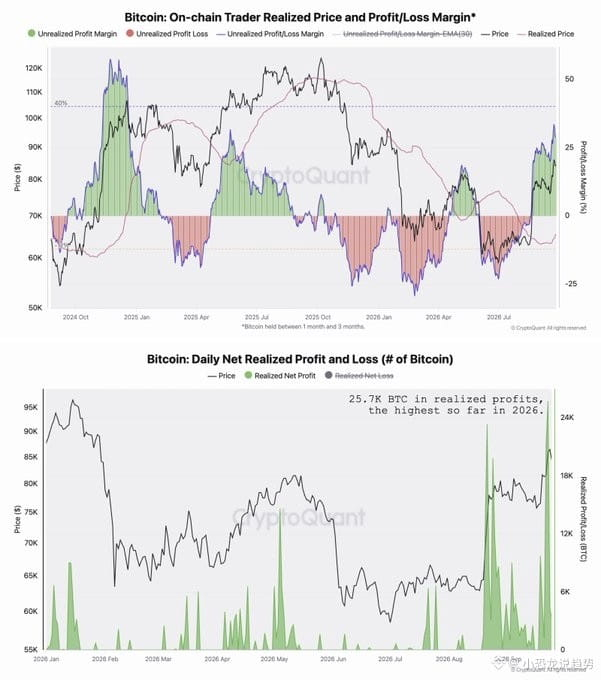
60
·
--
In 10 days, they swept up 41,025 Bitcoin—yet the price is stuck right at the 85,000 threshold for an entire week 🦖
[📊 进群看每日策略](https://app.binance.com/uni-qr/JpwCPfBj)
On-chain data firm Santiment’s latest disclosure: addresses holding between 10 and 10,000 BTC have net added 41,025 Bitcoin in just 10 days. The combined holdings of these whale wallets have already reached 13.64 million BTC, accounting for 67.93% of the total supply worldwide. But meanwhile, Bitcoin’s price on September 30 was still hovering around $83,300. The supply wall between $84,000 and $85,000 has never been chewed through 🐋
First, let’s look at the price position. On September 21, Bitcoin briefly surged to $87,363 during the intraday session, then gave it all back along the way down. On September 28, it closed at $83,503, and even dipped to as low as $82,571 that day. The first line of defense below is $82,000 to $82,800. The first gate above is $84,000 to $85,200. Only higher up do we see the September high around $87,400. That means over the past few trading days, Bitcoin has been grinding back and forth in the middle of this range ⚠️
Now, consider the two legs of the money flow. First, coins are moving out of exchanges: on September 25, a major exchange saw daily outflows of more than 13,800 BTC— the largest single-day outflow since early 2023. Over four days, the exchange’s reported Bitcoin reserves fell from 705,000 BTC to 685,000 BTC, down roughly 20,000 BTC. Second, institutions are buying in: from September 21 to 25, U.S. spot Bitcoin ETFs saw total net inflows of about $2.39 billion, the strongest weekly inflows since 2026 📈
Analyst Ali Martinez’s script is even more direct: he believes Bitcoin has already formed a double-bottom pattern, and as long as the $82,000 neckline holds, the pattern target points to $100,000. But he also emphasizes that this is a conditional target—not a result that has already been realized. Conversely, if $82,000 breaks, deeper support to watch would be $72,000 to $73,000.
My take: whale accumulation, declining exchange reserves, and ongoing ETF buying—all three signals lean bullish. Yet the price simply won’t move up, and that in itself is the most valuable information—it shows that the sell pressure around $84,000 to $85,000 is real. Whales buy faster than the chart reacts, but price only respects traded volume. Reading “accumulation” as “pull up immediately” is the easiest trap to fall into this round.
Do you think this whale accumulation is a trap set up before a breakout, or will it just get pushed back again by that $85,000 wall? Let’s discuss in the comments.
Click the profile picture to watch the livestream
Every day, I’ll help you track crypto hot topics—not just what happens in the news, but how to understand the logic and opportunities behind it 👀🚀
In 10 days, they swept up 41,025 Bitcoin—yet the price is stuck right at the 85,000 threshold for an entire week 🦖
📊 进群看每日策略
On-chain data firm Santiment’s latest disclosure: addresses holding between 10 and 10,000 BTC have net added 41,025 Bitcoin in just 10 days. The combined holdings of these whale wallets have already reached 13.64 million BTC, accounting for 67.93% of the total supply worldwide. But meanwhile, Bitcoin’s price on September 30 was still hovering around $83,300. The supply wall between $84,000 and $85,000 has never been chewed through 🐋
First, let’s look at the price position. On September 21, Bitcoin briefly surged to $87,363 during the intraday session, then gave it all back along the way down. On September 28, it closed at $83,503, and even dipped to as low as $82,571 that day. The first line of defense below is $82,000 to $82,800. The first gate above is $84,000 to $85,200. Only higher up do we see the September high around $87,400. That means over the past few trading days, Bitcoin has been grinding back and forth in the middle of this range ⚠️
Now, consider the two legs of the money flow. First, coins are moving out of exchanges: on September 25, a major exchange saw daily outflows of more than 13,800 BTC— the largest single-day outflow since early 2023. Over four days, the exchange’s reported Bitcoin reserves fell from 705,000 BTC to 685,000 BTC, down roughly 20,000 BTC. Second, institutions are buying in: from September 21 to 25, U.S. spot Bitcoin ETFs saw total net inflows of about $2.39 billion, the strongest weekly inflows since 2026 📈
Analyst Ali Martinez’s script is even more direct: he believes Bitcoin has already formed a double-bottom pattern, and as long as the $82,000 neckline holds, the pattern target points to $100,000. But he also emphasizes that this is a conditional target—not a result that has already been realized. Conversely, if $82,000 breaks, deeper support to watch would be $72,000 to $73,000.
My take: whale accumulation, declining exchange reserves, and ongoing ETF buying—all three signals lean bullish. Yet the price simply won’t move up, and that in itself is the most valuable information—it shows that the sell pressure around $84,000 to $85,000 is real. Whales buy faster than the chart reacts, but price only respects traded volume. Reading “accumulation” as “pull up immediately” is the easiest trap to fall into this round.
Do you think this whale accumulation is a trap set up before a breakout, or will it just get pushed back again by that $85,000 wall? Let’s discuss in the comments.
Click the profile picture to watch the livestream
Every day, I’ll help you track crypto hot topics—not just what happens in the news, but how to understand the logic and opportunities behind it 👀🚀
📊 进群看每日策略
On-chain data firm Santiment’s latest disclosure: addresses holding between 10 and 10,000 BTC have net added 41,025 Bitcoin in just 10 days. The combined holdings of these whale wallets have already reached 13.64 million BTC, accounting for 67.93% of the total supply worldwide. But meanwhile, Bitcoin’s price on September 30 was still hovering around $83,300. The supply wall between $84,000 and $85,000 has never been chewed through 🐋
First, let’s look at the price position. On September 21, Bitcoin briefly surged to $87,363 during the intraday session, then gave it all back along the way down. On September 28, it closed at $83,503, and even dipped to as low as $82,571 that day. The first line of defense below is $82,000 to $82,800. The first gate above is $84,000 to $85,200. Only higher up do we see the September high around $87,400. That means over the past few trading days, Bitcoin has been grinding back and forth in the middle of this range ⚠️
Now, consider the two legs of the money flow. First, coins are moving out of exchanges: on September 25, a major exchange saw daily outflows of more than 13,800 BTC— the largest single-day outflow since early 2023. Over four days, the exchange’s reported Bitcoin reserves fell from 705,000 BTC to 685,000 BTC, down roughly 20,000 BTC. Second, institutions are buying in: from September 21 to 25, U.S. spot Bitcoin ETFs saw total net inflows of about $2.39 billion, the strongest weekly inflows since 2026 📈
Analyst Ali Martinez’s script is even more direct: he believes Bitcoin has already formed a double-bottom pattern, and as long as the $82,000 neckline holds, the pattern target points to $100,000. But he also emphasizes that this is a conditional target—not a result that has already been realized. Conversely, if $82,000 breaks, deeper support to watch would be $72,000 to $73,000.
My take: whale accumulation, declining exchange reserves, and ongoing ETF buying—all three signals lean bullish. Yet the price simply won’t move up, and that in itself is the most valuable information—it shows that the sell pressure around $84,000 to $85,000 is real. Whales buy faster than the chart reacts, but price only respects traded volume. Reading “accumulation” as “pull up immediately” is the easiest trap to fall into this round.
Do you think this whale accumulation is a trap set up before a breakout, or will it just get pushed back again by that $85,000 wall? Let’s discuss in the comments.
Click the profile picture to watch the livestream
Every day, I’ll help you track crypto hot topics—not just what happens in the news, but how to understand the logic and opportunities behind it 👀🚀

167
·
--
#以太坊三季度涨70.9% #比特币etf三季度净流入63.4亿美元
A quarter saw $1.26 billion stolen—while Bitcoin in the same period rose by 40% 🦖
[📈 进群一起分析行情](https://app.binance.com/uni-qr/JpwCPfBj)
The third quarter has just wrapped up: CertiK’s latest data shows that in Q3 2026, the crypto industry suffered $1.26 billion in losses from security incidents, up 53.9% from the $819.4 million in Q2; the number of incidents rose from 219 to 247. The single largest theft was $387.5 million from a major exchange on September 24—accounting for 31% of the quarter’s total losses in one incident 💥
But in the very same quarter, Bitcoin rose by about 40% and Ethereum surged 70.9%. Bitcoin ETFs saw net inflows of $6.34 billion. On one side, a hackers’ harvest season; on the other, a bulls’ celebration season—this is the most unflattering side of a bull market ⚠️
First, let’s lay out the hackers’ scoreboard. September was the worst-hit month: $769 million lost in a single month, with 99 incidents—96% of which came from exploits. Besides that exchange’s $387.5 million, Liquid Network was hit for $319 million, Tectonic lost $120 million, and Coldcard was stolen for $112.7 million. Fortunately, about $273 million was frozen or recovered, bringing September’s net loss down to $495.3 million. The bigger trouble is money laundering pathways: the stolen funds are being transferred through privacy pools, making on-chain tracking increasingly difficult.
Now, let’s look at the bulls’ performance report. Bitcoin is back above $84,000, with $82,500 as the key support level. Citigroup has just raised its 12-month target price from $82,000 to $113,000, bullish on ETF fund returning; Ethereum’s quarterly gain is 70.9%, and the target price is set at $3,028 📈
My take: this cold and hot swing is actually two sides of the same thing. Institutional money is pouring in at scale through ETFs, inflating the total size of crypto assets—and pushing the amount stolen per incident into the hundreds-of-millions. Paper gains in a bull market can be very tempting, but the risk that “the assets are in someone else’s hands” is also being amplified at the same time. For everyday people, the biggest lesson of this quarter isn’t chasing pumps—it’s figuring out whose pocket your coins are really in.
Do you think this wave of hacks will slow down institutions’ pace of entry? Or do you think ETF buyers simply don’t care about these events? Let’s discuss in the comments.
Click the profile picture to watch the live stream
Every day, I’ll help you track crypto hotspots—not just what happened in the news, but also the logic and opportunities behind it 👀🚀
#以太坊三季度涨70.9% #比特币etf三季度净流入63.4亿美元
A quarter saw $1.26 billion stolen—while Bitcoin in the same period rose by 40% 🦖
📈 进群一起分析行情
The third quarter has just wrapped up: CertiK’s latest data shows that in Q3 2026, the crypto industry suffered $1.26 billion in losses from security incidents, up 53.9% from the $819.4 million in Q2; the number of incidents rose from 219 to 247. The single largest theft was $387.5 million from a major exchange on September 24—accounting for 31% of the quarter’s total losses in one incident 💥
But in the very same quarter, Bitcoin rose by about 40% and Ethereum surged 70.9%. Bitcoin ETFs saw net inflows of $6.34 billion. On one side, a hackers’ harvest season; on the other, a bulls’ celebration season—this is the most unflattering side of a bull market ⚠️
First, let’s lay out the hackers’ scoreboard. September was the worst-hit month: $769 million lost in a single month, with 99 incidents—96% of which came from exploits. Besides that exchange’s $387.5 million, Liquid Network was hit for $319 million, Tectonic lost $120 million, and Coldcard was stolen for $112.7 million. Fortunately, about $273 million was frozen or recovered, bringing September’s net loss down to $495.3 million. The bigger trouble is money laundering pathways: the stolen funds are being transferred through privacy pools, making on-chain tracking increasingly difficult.
Now, let’s look at the bulls’ performance report. Bitcoin is back above $84,000, with $82,500 as the key support level. Citigroup has just raised its 12-month target price from $82,000 to $113,000, bullish on ETF fund returning; Ethereum’s quarterly gain is 70.9%, and the target price is set at $3,028 📈
My take: this cold and hot swing is actually two sides of the same thing. Institutional money is pouring in at scale through ETFs, inflating the total size of crypto assets—and pushing the amount stolen per incident into the hundreds-of-millions. Paper gains in a bull market can be very tempting, but the risk that “the assets are in someone else’s hands” is also being amplified at the same time. For everyday people, the biggest lesson of this quarter isn’t chasing pumps—it’s figuring out whose pocket your coins are really in.
Do you think this wave of hacks will slow down institutions’ pace of entry? Or do you think ETF buyers simply don’t care about these events? Let’s discuss in the comments.
Click the profile picture to watch the live stream
Every day, I’ll help you track crypto hotspots—not just what happened in the news, but also the logic and opportunities behind it 👀🚀
A quarter saw $1.26 billion stolen—while Bitcoin in the same period rose by 40% 🦖
📈 进群一起分析行情
The third quarter has just wrapped up: CertiK’s latest data shows that in Q3 2026, the crypto industry suffered $1.26 billion in losses from security incidents, up 53.9% from the $819.4 million in Q2; the number of incidents rose from 219 to 247. The single largest theft was $387.5 million from a major exchange on September 24—accounting for 31% of the quarter’s total losses in one incident 💥
But in the very same quarter, Bitcoin rose by about 40% and Ethereum surged 70.9%. Bitcoin ETFs saw net inflows of $6.34 billion. On one side, a hackers’ harvest season; on the other, a bulls’ celebration season—this is the most unflattering side of a bull market ⚠️
First, let’s lay out the hackers’ scoreboard. September was the worst-hit month: $769 million lost in a single month, with 99 incidents—96% of which came from exploits. Besides that exchange’s $387.5 million, Liquid Network was hit for $319 million, Tectonic lost $120 million, and Coldcard was stolen for $112.7 million. Fortunately, about $273 million was frozen or recovered, bringing September’s net loss down to $495.3 million. The bigger trouble is money laundering pathways: the stolen funds are being transferred through privacy pools, making on-chain tracking increasingly difficult.
Now, let’s look at the bulls’ performance report. Bitcoin is back above $84,000, with $82,500 as the key support level. Citigroup has just raised its 12-month target price from $82,000 to $113,000, bullish on ETF fund returning; Ethereum’s quarterly gain is 70.9%, and the target price is set at $3,028 📈
My take: this cold and hot swing is actually two sides of the same thing. Institutional money is pouring in at scale through ETFs, inflating the total size of crypto assets—and pushing the amount stolen per incident into the hundreds-of-millions. Paper gains in a bull market can be very tempting, but the risk that “the assets are in someone else’s hands” is also being amplified at the same time. For everyday people, the biggest lesson of this quarter isn’t chasing pumps—it’s figuring out whose pocket your coins are really in.
Do you think this wave of hacks will slow down institutions’ pace of entry? Or do you think ETF buyers simply don’t care about these events? Let’s discuss in the comments.
Click the profile picture to watch the live stream
Every day, I’ll help you track crypto hotspots—not just what happened in the news, but also the logic and opportunities behind it 👀🚀

504
·
--
Verified
A privacy coin that surged 253% in one year—dropped 21% from its high in a single day 🦖
[🔎 进群看完整分析](https://app.binance.com/uni-qr/JpwCPfBj)
Zcash (ZEC) is currently trading at $1,333.50, down 7.29% on the day. Compared with the September-end peak of about $1,698, that’s roughly a 21% decline. In this rally, it rocketed from a bottom of $480.72 to its peak—up about 253%. The larger the gain, the scarier the pullback looks. That’s normal. But behind this drop, there are three forces working at the same time.
First, the most direct: ETF money is starting to flow in reverse. Grayscale’s Zcash ETF (ticker: ZCSH) saw net outflows of $30.25 million on September 30—its first clearly noticeable “bleeding” since it listed on August 25. Cumulative net inflows have fallen from the earlier high to about $268 million. The same morning, its 3-for-1 share split had just taken effect. It raised $260 million more than a month after listing, and then—on the day of the split—recorded its first large outflow. That timing alone is worth pondering.
Second, the mood across the whole market. On Wednesday, Bitcoin initially surged to $85,600 on the back of PCE inflation data coming in below expectations, but then quickly gave back all the gains. The 10-year U.S. Treasury yield closed at 5.29%. Meanwhile, the CME FedWatch showed the market’s probability for an October rate hike has already dropped from 70% to below 50%. When the broader market isn’t supportive, high-volatility small coins typically fall faster.
Third, and the easiest to overlook: the shielded pool. On-chain sleuth ZachXBT flagged 2,746 ZEC, worth about $3.9 million, flowing into Zcash’s privacy pool from addresses related to a $387 million theft involving a certain exchange. The amount isn’t large, and it’s not necessarily the direct trigger for today’s drop—but it brings an uncomfortable fact into the spotlight: among the most loyal privacy-coin users, there’s a group that happens to be hackers. ⚠️
My view comes in two layers.
First layer: from a technical standpoint, what it’s showing right now looks like a pullback—not a breakdown. RSI is 50.2, which is completely neutral—neither overbought nor smashed. ADX at 52.0 suggests the trend is strong, but ADX is lagging. The 50-day moving average is still above the 200-day moving average, and the structure hasn’t been broken. The real levels to watch are two prices: if the daily candle closes below $1,233, the “golden zone” should start to kick in; only if it reclaims $1,410.72 can this move genuinely be said to be back on track.
Second layer—and this is what I want to emphasize more: back in June, it already performed the same kind of play. At that time, a serious vulnerability in the shielded pool was exposed. ZEC then crashed from $635 all the way to an intraday low of $309—a decline of 38%. What happened afterward? It still went on to break above $1,600. For a narrative-driven coin, the “hole” created by bad news is often the starting point of the next leg of the cycle. The condition, though, is that it must also withstand the dual pressure from both ETF capital and regulatory attention.
Put simply: a 21% retracement versus a 253% rally is, for now, just profit-taking—not a trend reversal. The real issue is that privacy coins’ “narrative premium” and “regulatory discount” are always tangled together. The stronger they run, the higher the probability they’ll be watched.
Let’s talk in the comments: do you think this is a buy-the-dip opportunity, or a signal that the trend has topped?
Click the avatar to watch the livestream
Every day, I’ll help you track hot spots in privacy coins and ETF fund flows—not just what happens in the news, but also how to understand the underlying logic and opportunities 👀🚀
A privacy coin that surged 253% in one year—dropped 21% from its high in a single day 🦖
🔎 进群看完整分析
Zcash (ZEC) is currently trading at $1,333.50, down 7.29% on the day. Compared with the September-end peak of about $1,698, that’s roughly a 21% decline. In this rally, it rocketed from a bottom of $480.72 to its peak—up about 253%. The larger the gain, the scarier the pullback looks. That’s normal. But behind this drop, there are three forces working at the same time.
First, the most direct: ETF money is starting to flow in reverse. Grayscale’s Zcash ETF (ticker: ZCSH) saw net outflows of $30.25 million on September 30—its first clearly noticeable “bleeding” since it listed on August 25. Cumulative net inflows have fallen from the earlier high to about $268 million. The same morning, its 3-for-1 share split had just taken effect. It raised $260 million more than a month after listing, and then—on the day of the split—recorded its first large outflow. That timing alone is worth pondering.
Second, the mood across the whole market. On Wednesday, Bitcoin initially surged to $85,600 on the back of PCE inflation data coming in below expectations, but then quickly gave back all the gains. The 10-year U.S. Treasury yield closed at 5.29%. Meanwhile, the CME FedWatch showed the market’s probability for an October rate hike has already dropped from 70% to below 50%. When the broader market isn’t supportive, high-volatility small coins typically fall faster.
Third, and the easiest to overlook: the shielded pool. On-chain sleuth ZachXBT flagged 2,746 ZEC, worth about $3.9 million, flowing into Zcash’s privacy pool from addresses related to a $387 million theft involving a certain exchange. The amount isn’t large, and it’s not necessarily the direct trigger for today’s drop—but it brings an uncomfortable fact into the spotlight: among the most loyal privacy-coin users, there’s a group that happens to be hackers. ⚠️
My view comes in two layers.
First layer: from a technical standpoint, what it’s showing right now looks like a pullback—not a breakdown. RSI is 50.2, which is completely neutral—neither overbought nor smashed. ADX at 52.0 suggests the trend is strong, but ADX is lagging. The 50-day moving average is still above the 200-day moving average, and the structure hasn’t been broken. The real levels to watch are two prices: if the daily candle closes below $1,233, the “golden zone” should start to kick in; only if it reclaims $1,410.72 can this move genuinely be said to be back on track.
Second layer—and this is what I want to emphasize more: back in June, it already performed the same kind of play. At that time, a serious vulnerability in the shielded pool was exposed. ZEC then crashed from $635 all the way to an intraday low of $309—a decline of 38%. What happened afterward? It still went on to break above $1,600. For a narrative-driven coin, the “hole” created by bad news is often the starting point of the next leg of the cycle. The condition, though, is that it must also withstand the dual pressure from both ETF capital and regulatory attention.
Put simply: a 21% retracement versus a 253% rally is, for now, just profit-taking—not a trend reversal. The real issue is that privacy coins’ “narrative premium” and “regulatory discount” are always tangled together. The stronger they run, the higher the probability they’ll be watched.
Let’s talk in the comments: do you think this is a buy-the-dip opportunity, or a signal that the trend has topped?
Click the avatar to watch the livestream
Every day, I’ll help you track hot spots in privacy coins and ETF fund flows—not just what happens in the news, but also how to understand the underlying logic and opportunities 👀🚀
🔎 进群看完整分析
Zcash (ZEC) is currently trading at $1,333.50, down 7.29% on the day. Compared with the September-end peak of about $1,698, that’s roughly a 21% decline. In this rally, it rocketed from a bottom of $480.72 to its peak—up about 253%. The larger the gain, the scarier the pullback looks. That’s normal. But behind this drop, there are three forces working at the same time.
First, the most direct: ETF money is starting to flow in reverse. Grayscale’s Zcash ETF (ticker: ZCSH) saw net outflows of $30.25 million on September 30—its first clearly noticeable “bleeding” since it listed on August 25. Cumulative net inflows have fallen from the earlier high to about $268 million. The same morning, its 3-for-1 share split had just taken effect. It raised $260 million more than a month after listing, and then—on the day of the split—recorded its first large outflow. That timing alone is worth pondering.
Second, the mood across the whole market. On Wednesday, Bitcoin initially surged to $85,600 on the back of PCE inflation data coming in below expectations, but then quickly gave back all the gains. The 10-year U.S. Treasury yield closed at 5.29%. Meanwhile, the CME FedWatch showed the market’s probability for an October rate hike has already dropped from 70% to below 50%. When the broader market isn’t supportive, high-volatility small coins typically fall faster.
Third, and the easiest to overlook: the shielded pool. On-chain sleuth ZachXBT flagged 2,746 ZEC, worth about $3.9 million, flowing into Zcash’s privacy pool from addresses related to a $387 million theft involving a certain exchange. The amount isn’t large, and it’s not necessarily the direct trigger for today’s drop—but it brings an uncomfortable fact into the spotlight: among the most loyal privacy-coin users, there’s a group that happens to be hackers. ⚠️
My view comes in two layers.
First layer: from a technical standpoint, what it’s showing right now looks like a pullback—not a breakdown. RSI is 50.2, which is completely neutral—neither overbought nor smashed. ADX at 52.0 suggests the trend is strong, but ADX is lagging. The 50-day moving average is still above the 200-day moving average, and the structure hasn’t been broken. The real levels to watch are two prices: if the daily candle closes below $1,233, the “golden zone” should start to kick in; only if it reclaims $1,410.72 can this move genuinely be said to be back on track.
Second layer—and this is what I want to emphasize more: back in June, it already performed the same kind of play. At that time, a serious vulnerability in the shielded pool was exposed. ZEC then crashed from $635 all the way to an intraday low of $309—a decline of 38%. What happened afterward? It still went on to break above $1,600. For a narrative-driven coin, the “hole” created by bad news is often the starting point of the next leg of the cycle. The condition, though, is that it must also withstand the dual pressure from both ETF capital and regulatory attention.
Put simply: a 21% retracement versus a 253% rally is, for now, just profit-taking—not a trend reversal. The real issue is that privacy coins’ “narrative premium” and “regulatory discount” are always tangled together. The stronger they run, the higher the probability they’ll be watched.
Let’s talk in the comments: do you think this is a buy-the-dip opportunity, or a signal that the trend has topped?
Click the avatar to watch the livestream
Every day, I’ll help you track hot spots in privacy coins and ETF fund flows—not just what happens in the news, but also how to understand the underlying logic and opportunities 👀🚀
411
Log in to explore more content
Join global crypto users on Binance Square
⚡️ Get latest and useful information about crypto.
💬 Trusted by the world’s largest crypto exchange.
👍 Discover real insights from verified creators.
Email / Phone number