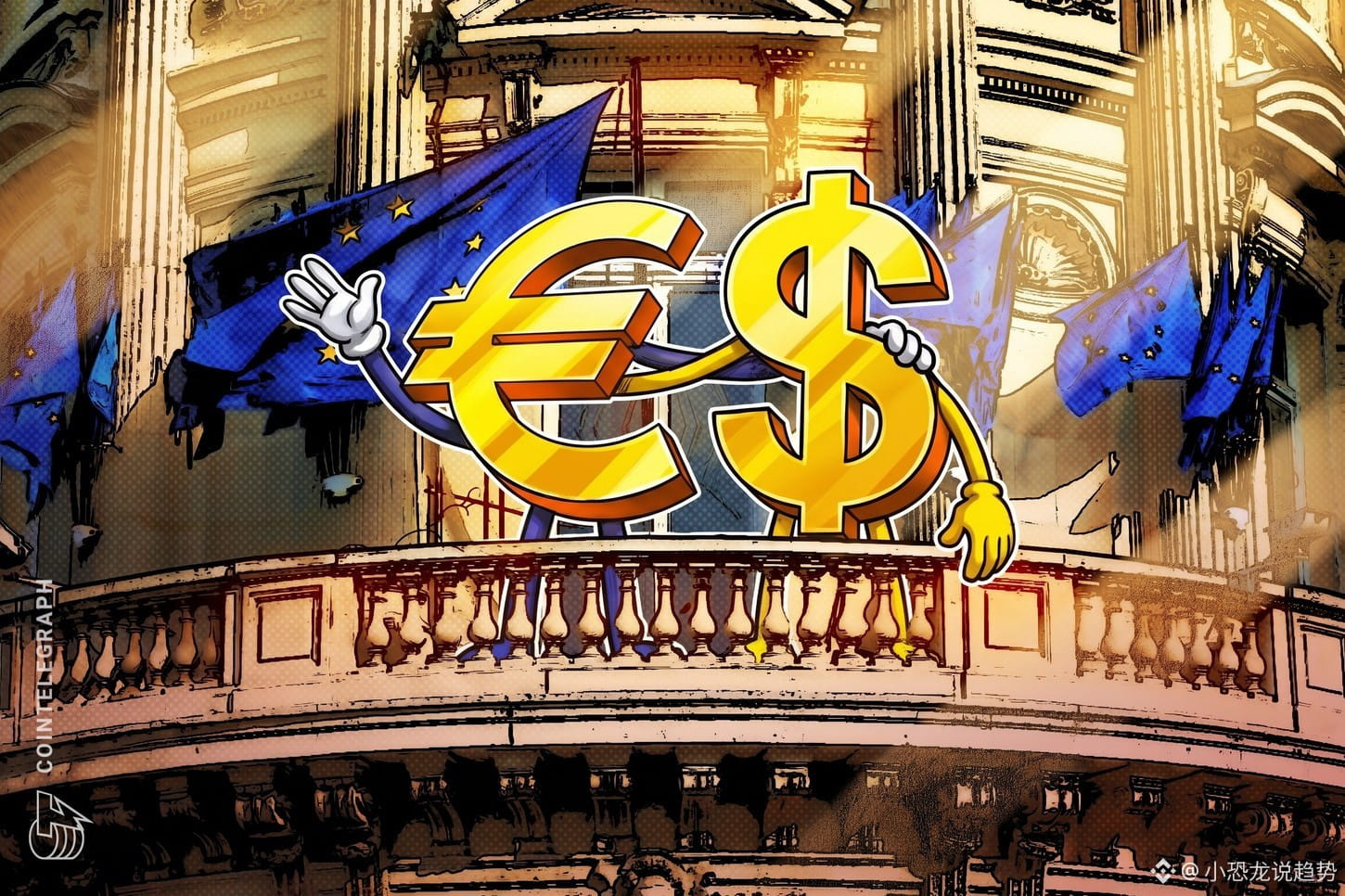
A 14,000x gap: Europe is calling for “de-dollarization,” while its issuers race to launch dollar stablecoins 🦖
🚨 行情变了群里说
AllUnity, a German stablecoin issuer, launched its USD stablecoin USDAU on Wednesday, expanding its product line from euros to dollars. SG-Forge, a subsidiary under Société Générale, did it earlier—back in 2025 it launched the dollar coin USDCV. But these dollar stablecoins issued by Europe itself each have a market cap of only about $13 million—while USDT is $184 billion and USDC is $74 billion.
First, let’s lay out the background. In recent years, Europe has been pushing euro stablecoins, aiming to reduce cross-border trade’s dependence on the dollar. The EU is also re-reviewing its MiCA regulatory framework, and the ECB has repeatedly warned: stablecoins will further strengthen the dollar’s dominance. In theory, policy direction should drive funds toward euro stablecoins.
But the answer from issuers is a different story. AllUnity’s CEO puts it plainly: in global trade and FX markets, the dollar is the “adhesive.” For European companies to handle cross-border payments, issuing only euro stablecoins is simply not enough. Stable Mint’s CEO is even more direct: the demand for dollar stablecoins is already there—Europe can’t just “wish it away” with policy. What Europe can truly control is who issues for European users and under what rules.
Data also sides with demand. Since Stable Mint launched its USDSM, the on-chain transfer volume has already exceeded $380 million, with 3.8 million transactions and 2,600+ holding addresses. SG-Forge, meanwhile, says that demand for USDCV comes from trading, settlement, collateral, and treasury management—not speculation.
⚠️ My take: This isn’t a battle over “monetary sovereignty of the euro versus the dollar.” It’s a fight over who controls the settlement layer. Europe’s issuers are being very practical—first, get the compliance license, secure issuance rights for dollar stablecoins under EU rules, and then wait for MiCA’s re-review to smooth out those thresholds around reserves and custody. As for whether users choose euro or dollar denomination, let them vote with their feet.
But reality is a bit awkward: the dollar stablecoins Europe issues itself are only at the $13 million market-cap level, compared with USDT’s $184 billion and USDC’s $74 billion. Compliance in the stablecoin space hasn’t yet translated into market share reversal—users follow liquidity and network effects, not regulatory posture.
💥 One-line translation: Europe wants to “de-dollarize,” but even its own licensed issuers are building dollar infrastructure. Rules can be set, but demand can’t.
Do you think “compliant dollar stablecoins” have a chance to catch up to USDT—or is the network-effects lock already decided? Drop your thoughts in the comments.
Click the avatar to watch the live stream
Every day, I’ll keep you updated on stablecoin hotspots—more than just what happens in the news, I’ll help you understand the logic and opportunities behind it 👀🚀
🚨 行情变了群里说
AllUnity, a German stablecoin issuer, launched its USD stablecoin USDAU on Wednesday, expanding its product line from euros to dollars. SG-Forge, a subsidiary under Société Générale, did it earlier—back in 2025 it launched the dollar coin USDCV. But these dollar stablecoins issued by Europe itself each have a market cap of only about $13 million—while USDT is $184 billion and USDC is $74 billion.
First, let’s lay out the background. In recent years, Europe has been pushing euro stablecoins, aiming to reduce cross-border trade’s dependence on the dollar. The EU is also re-reviewing its MiCA regulatory framework, and the ECB has repeatedly warned: stablecoins will further strengthen the dollar’s dominance. In theory, policy direction should drive funds toward euro stablecoins.
But the answer from issuers is a different story. AllUnity’s CEO puts it plainly: in global trade and FX markets, the dollar is the “adhesive.” For European companies to handle cross-border payments, issuing only euro stablecoins is simply not enough. Stable Mint’s CEO is even more direct: the demand for dollar stablecoins is already there—Europe can’t just “wish it away” with policy. What Europe can truly control is who issues for European users and under what rules.
Data also sides with demand. Since Stable Mint launched its USDSM, the on-chain transfer volume has already exceeded $380 million, with 3.8 million transactions and 2,600+ holding addresses. SG-Forge, meanwhile, says that demand for USDCV comes from trading, settlement, collateral, and treasury management—not speculation.
⚠️ My take: This isn’t a battle over “monetary sovereignty of the euro versus the dollar.” It’s a fight over who controls the settlement layer. Europe’s issuers are being very practical—first, get the compliance license, secure issuance rights for dollar stablecoins under EU rules, and then wait for MiCA’s re-review to smooth out those thresholds around reserves and custody. As for whether users choose euro or dollar denomination, let them vote with their feet.
But reality is a bit awkward: the dollar stablecoins Europe issues itself are only at the $13 million market-cap level, compared with USDT’s $184 billion and USDC’s $74 billion. Compliance in the stablecoin space hasn’t yet translated into market share reversal—users follow liquidity and network effects, not regulatory posture.
💥 One-line translation: Europe wants to “de-dollarize,” but even its own licensed issuers are building dollar infrastructure. Rules can be set, but demand can’t.
Do you think “compliant dollar stablecoins” have a chance to catch up to USDT—or is the network-effects lock already decided? Drop your thoughts in the comments.
Click the avatar to watch the live stream
Every day, I’ll keep you updated on stablecoin hotspots—more than just what happens in the news, I’ll help you understand the logic and opportunities behind it 👀🚀