$179.1 billion: A Russian “shadow banking” pipeline is brought to the spotlight by the U.S. Department of the Treasury 🦖
🕐 最新解读群里更新
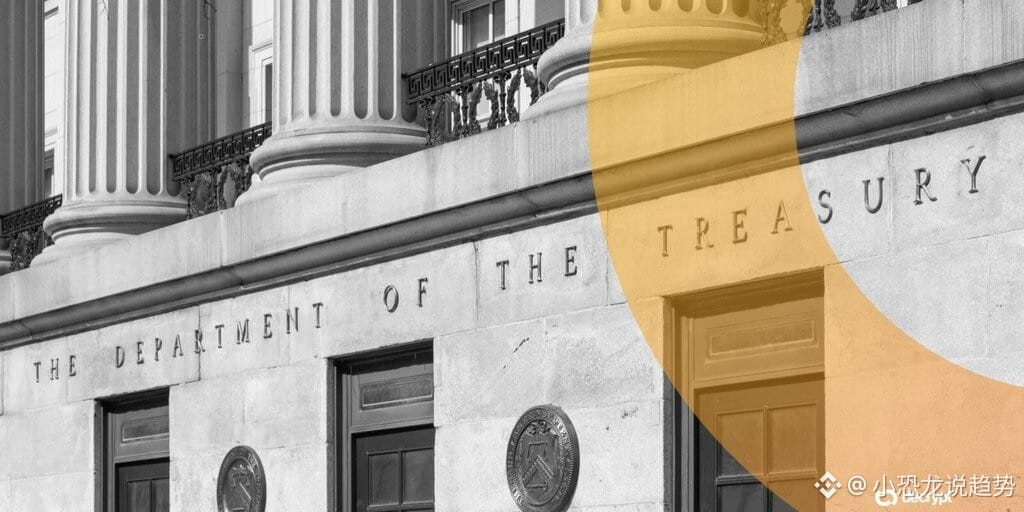
On Thursday, the U.S. Department of the Treasury designated A7 Network as a “significant transnational criminal organization.” At the same time, the Office of Foreign Assets Control (OFAC) also listed its addresses in Russia, Kyrgyzstan, Nigeria, and Zimbabwe. FinCEN separately issued a proposed rule to ban all fund transfers involving its “subordinate agents.” The most striking figures are: from February 2025 to June 2026, more than 180 entities handled at least $179.1 billion in ruble stablecoins issued by the A7 system.⚠️
First, let’s break down how this system works. The ruble stablecoin is issued by Old Vector, which is registered in Kyrgyzstan, and runs on both Tron and Ethereum. The reserves are held at the Russian state-owned defense bank Promsvyazbank. The design is like a mirror: the coins move between addresses within Russia, representing “outbound payments.” Meanwhile, downstream agents conduct fiat payments outside the country—using USD, CNY, dirhams, and euros—as corresponding equivalents. The two sides are completely separated, making sanctioned funds look like ordinary trade.💥
How big is it, really? FinCEN says the A7 group opened accounts in at least 83 countries and roughly 435 financial institutions, handling more than $1.7 billion from January 2025 to June 2026. These accounts were operated by a team in Moscow using customized VPNs, making the traces appear to come from Dubai, Hong Kong, or Bishkek. One agent directly connected with Iran’s “shadow tanker fleet,” and, together with sister companies, received nearly $140 million from entities involved in sanctions evasion; another sent about $1.6 million to a company involved in weapons procurement. The Treasury also tied it to the money-laundering chain involving Nobitex, an Iran exchange that was sanctioned in June this year, and hackers targeting North Korean exchanges.
Why is this time “different”? FinCEN invoked the sixth special measure under Section 9714 of the Countering Russian Money Laundering Act—essentially a fund transfer ban. It is intended to constrain about 348,000 institutions, and crypto trading platforms are included. TRM Labs explains that the fifth measure (restricting agent accounts) leaves a gap: because transactions of these tokens don’t actually go through agent banks, authorities must use the broader sixth measure to rein in both fiat and crypto.
Two more details are worth noting. First, since the Grinex theft incident in April, the supply of this token has become concentrated in non-custodial wallets. On-chain analysis firms believe this may be the token’s active move away from sanctioned locations. Second, historical data shows that this channel had previously routed almost all flows through the now-sanctioned Garantex and Grinex.
My take: this isn’t an isolated round of sanctions—it’s an action to “close the main gate.” In the past, sanctions targeted exchanges and sanctioned wallets, and money could still detour around them. This time, the authorities are cutting directly at the “switch” between fiat and crypto, pushing compliance obligations onto all U.S. financial institutions. There may be no immediate impact on ordinary people, but it serves as a reminder: when on-chain ledgers are public and trading platforms are identity-verified, the ones that usually can’t withstand regulatory pressure are often the supposedly “well-hidden” channels.
After this “shadow banking” route is blocked, do you think the funds will completely exit—or switch to a new disguise and keep running? Let’s discuss in the comments.
Click your avatar to watch the live stream
Every day, I’ll bring you the latest developments in crypto regulatory hotspots—not just what’s happening in the news, but also the logic and opportunities behind it 👀🚀
🕐 最新解读群里更新
On Thursday, the U.S. Department of the Treasury designated A7 Network as a “significant transnational criminal organization.” At the same time, the Office of Foreign Assets Control (OFAC) also listed its addresses in Russia, Kyrgyzstan, Nigeria, and Zimbabwe. FinCEN separately issued a proposed rule to ban all fund transfers involving its “subordinate agents.” The most striking figures are: from February 2025 to June 2026, more than 180 entities handled at least $179.1 billion in ruble stablecoins issued by the A7 system.⚠️
First, let’s break down how this system works. The ruble stablecoin is issued by Old Vector, which is registered in Kyrgyzstan, and runs on both Tron and Ethereum. The reserves are held at the Russian state-owned defense bank Promsvyazbank. The design is like a mirror: the coins move between addresses within Russia, representing “outbound payments.” Meanwhile, downstream agents conduct fiat payments outside the country—using USD, CNY, dirhams, and euros—as corresponding equivalents. The two sides are completely separated, making sanctioned funds look like ordinary trade.💥
How big is it, really? FinCEN says the A7 group opened accounts in at least 83 countries and roughly 435 financial institutions, handling more than $1.7 billion from January 2025 to June 2026. These accounts were operated by a team in Moscow using customized VPNs, making the traces appear to come from Dubai, Hong Kong, or Bishkek. One agent directly connected with Iran’s “shadow tanker fleet,” and, together with sister companies, received nearly $140 million from entities involved in sanctions evasion; another sent about $1.6 million to a company involved in weapons procurement. The Treasury also tied it to the money-laundering chain involving Nobitex, an Iran exchange that was sanctioned in June this year, and hackers targeting North Korean exchanges.
Why is this time “different”? FinCEN invoked the sixth special measure under Section 9714 of the Countering Russian Money Laundering Act—essentially a fund transfer ban. It is intended to constrain about 348,000 institutions, and crypto trading platforms are included. TRM Labs explains that the fifth measure (restricting agent accounts) leaves a gap: because transactions of these tokens don’t actually go through agent banks, authorities must use the broader sixth measure to rein in both fiat and crypto.
Two more details are worth noting. First, since the Grinex theft incident in April, the supply of this token has become concentrated in non-custodial wallets. On-chain analysis firms believe this may be the token’s active move away from sanctioned locations. Second, historical data shows that this channel had previously routed almost all flows through the now-sanctioned Garantex and Grinex.
My take: this isn’t an isolated round of sanctions—it’s an action to “close the main gate.” In the past, sanctions targeted exchanges and sanctioned wallets, and money could still detour around them. This time, the authorities are cutting directly at the “switch” between fiat and crypto, pushing compliance obligations onto all U.S. financial institutions. There may be no immediate impact on ordinary people, but it serves as a reminder: when on-chain ledgers are public and trading platforms are identity-verified, the ones that usually can’t withstand regulatory pressure are often the supposedly “well-hidden” channels.
After this “shadow banking” route is blocked, do you think the funds will completely exit—or switch to a new disguise and keep running? Let’s discuss in the comments.
Click your avatar to watch the live stream
Every day, I’ll bring you the latest developments in crypto regulatory hotspots—not just what’s happening in the news, but also the logic and opportunities behind it 👀🚀