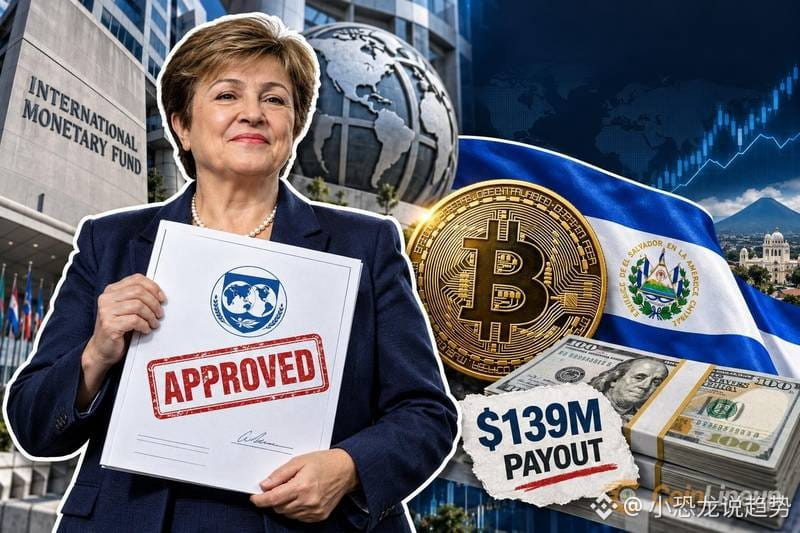
#imf批准向萨尔瓦多拨款1.39亿美元
$139 million deposited: A country that treats Bitcoin as legal tender, crossed the IMF’s red line—yet the IMF still granted it a waiver 🦖
📣 盘面异动群里喊
The International Monetary Fund (IMF) has just approved a $139 million disbursement to El Salvador, along with a “waiver”—waiving El Salvador’s violation of a clause in its loan agreement that restricts the country from continuing to accumulate Bitcoin.
The situation itself isn’t complicated: the IMF’s Executive Board completed the second and third reviews of El Salvador’s $1.4 billion Extended Fund Facility (EFF), confirming that funds can be released immediately. However, the reviews found that El Salvador’s Bitcoin holdings surpassed the limit set in the agreement. In normal circumstances, breaching the condition would allow the IMF to hold up the payout.
Instead, the IMF chose to “waive”—acknowledging that you’ve gone past the line, but not considering it serious enough to stop this payment.
This “Bitcoin holdings limit” is itself extremely rare. The IMF’s logic is that when a sovereign state uses Bitcoin as reserves, it introduces additional volatility risks to its public finances—so the country’s stockpiling behavior must be capped.
If we lay out the timeline, it becomes clearer:
In 2021, El Salvador became the first country in the world to list Bitcoin as legal tender. After that, the government repeatedly made public purchases, driving national reserves higher and higher. The problem is that it is both hoarding coins and also taking IMF money—two things that naturally clash.
On September 4, 2026, the IMF also confirmed a key point: all of El Salvador’s official Bitcoin holdings added since June 2025 came entirely from private donations, with no use of public funds. This finding greatly eased concerns about “using taxpayers’ money to buy Bitcoin,” and paved the way for this disbursement.
Let me translate my take: the IMF’s stance is actually quite nuanced—it didn’t slam the door on El Salvador’s Bitcoin strategy, but it is tightening the country’s freedom step by step with “conditionality” clauses. A waiver doesn’t mean the clause is deleted: the cap is still there, and every future disbursement will have to be re-evaluated to see whether it’s gone over the line. In other words, every time El Salvador buys another Bitcoin, it directly ties to whether it can keep receiving international financing. In the history of sovereign lending, this is almost unprecedented.
⚠️ A reminder for people who hold Bitcoin: this is both an endorsement of sovereign holders and also a cap. The rules for a “national team” buying Bitcoin are shifting from “no rules” to “there are rules”—and the rules are ones that can be tightened at any time.
Do you think more countries will follow El Salvador’s path of “state-backed coin hoarding”? Or is this route only one El Salvador can take? Let’s discuss in the comments 🐋
Click your avatar to watch the live stream—every day I’ll take you to follow crypto highlights. Not just what happens in the news, but also help you understand the logic and opportunities behind it 👀🚀
$139 million deposited: A country that treats Bitcoin as legal tender, crossed the IMF’s red line—yet the IMF still granted it a waiver 🦖
📣 盘面异动群里喊
The International Monetary Fund (IMF) has just approved a $139 million disbursement to El Salvador, along with a “waiver”—waiving El Salvador’s violation of a clause in its loan agreement that restricts the country from continuing to accumulate Bitcoin.
The situation itself isn’t complicated: the IMF’s Executive Board completed the second and third reviews of El Salvador’s $1.4 billion Extended Fund Facility (EFF), confirming that funds can be released immediately. However, the reviews found that El Salvador’s Bitcoin holdings surpassed the limit set in the agreement. In normal circumstances, breaching the condition would allow the IMF to hold up the payout.
Instead, the IMF chose to “waive”—acknowledging that you’ve gone past the line, but not considering it serious enough to stop this payment.
This “Bitcoin holdings limit” is itself extremely rare. The IMF’s logic is that when a sovereign state uses Bitcoin as reserves, it introduces additional volatility risks to its public finances—so the country’s stockpiling behavior must be capped.
If we lay out the timeline, it becomes clearer:
In 2021, El Salvador became the first country in the world to list Bitcoin as legal tender. After that, the government repeatedly made public purchases, driving national reserves higher and higher. The problem is that it is both hoarding coins and also taking IMF money—two things that naturally clash.
On September 4, 2026, the IMF also confirmed a key point: all of El Salvador’s official Bitcoin holdings added since June 2025 came entirely from private donations, with no use of public funds. This finding greatly eased concerns about “using taxpayers’ money to buy Bitcoin,” and paved the way for this disbursement.
Let me translate my take: the IMF’s stance is actually quite nuanced—it didn’t slam the door on El Salvador’s Bitcoin strategy, but it is tightening the country’s freedom step by step with “conditionality” clauses. A waiver doesn’t mean the clause is deleted: the cap is still there, and every future disbursement will have to be re-evaluated to see whether it’s gone over the line. In other words, every time El Salvador buys another Bitcoin, it directly ties to whether it can keep receiving international financing. In the history of sovereign lending, this is almost unprecedented.
⚠️ A reminder for people who hold Bitcoin: this is both an endorsement of sovereign holders and also a cap. The rules for a “national team” buying Bitcoin are shifting from “no rules” to “there are rules”—and the rules are ones that can be tightened at any time.
Do you think more countries will follow El Salvador’s path of “state-backed coin hoarding”? Or is this route only one El Salvador can take? Let’s discuss in the comments 🐋
Click your avatar to watch the live stream—every day I’ll take you to follow crypto highlights. Not just what happens in the news, but also help you understand the logic and opportunities behind it 👀🚀