
小恐龙说趋势
367 Posts

小恐龙说趋势
Report
Block User
6 年市场经验,公众号.比特柠檬,记录市场的真实逻辑,研究下一步会去哪
13 Following
2.0K+ Followers
2.2K+ Liked
Posts
All
Live
·
--
#比特币突破8万美元大关
[🔄 进群聊山寨币动态](https://app.binance.com/uni-qr/EXpjD4Vi)
Two years: Bitcoin is up 28%, while mid-cap altcoins are down 74%. If you held crypto assets for two years, the difference between those who bet on Bitcoin and those who bet on altcoins was more than 100 points—this isn’t a joke. It’s the most heartbreaking line item from Glassnode’s latest report based on on-chain data.
The report lays bare the backdrop of this cycle: Bitcoin has compounded upward throughout, while the mid-cap cohort has seen a “cut in half and then cut in half again” situation. Even Ethereum—the #2 coin—has basically gone nowhere over these two years. The familiar “altcoin season” rotation people used to know—funds moving from Bitcoin into smaller coins in the later stages of a bull market—didn’t happen this time. Money stayed locked at the top.
Leverage has also revealed the truth clearly: Bitcoin futures open interest is only about 2% of market cap, whereas speculative coins like PEPE account for around 24%. The bubble is stacked entirely in the highest-risk corner. Institutions have even “voted with their feet”: spot Bitcoin ETFs have accumulated net inflows of roughly $55.2 billion, while spot Ethereum ETFs have only about $13.1 billion—more than a 4x difference. Even Solana spot ETFs are just about $29.7 million.
Not until this week did Bitcoin break the $80,000 mark that the broader market was pulled up a little: crypto total market cap rose 4.6% in a day to around $2.85 trillion. Solana jumped about 10% in one day, and NEAR and Uniswap rose even more sharply. Some people have started asking—could altcoin season finally be back?
My take: don’t rush in to bottom-fish. The report’s date goes up to the close of Aug 23, but the direction is unmistakable—when money only flows to the highest-confidence places, “cheap” altcoins are often a trap. And when rotation eventually does happen, you’ll need to see sustained increases in trading volume for smaller coins—not just jump in because of a one-off squeeze rebound.
Do you think this altcoin season will return, or will it be only Bitcoin dominating from now on? Let’s discuss in the comments 👇
Every day, I’ll bring you Bitcoin headlines—not just what’s happening in the news, but also the logic and opportunities behind it 👀🚀
#比特币突破8万美元大关
🔄 进群聊山寨币动态
Two years: Bitcoin is up 28%, while mid-cap altcoins are down 74%. If you held crypto assets for two years, the difference between those who bet on Bitcoin and those who bet on altcoins was more than 100 points—this isn’t a joke. It’s the most heartbreaking line item from Glassnode’s latest report based on on-chain data.
The report lays bare the backdrop of this cycle: Bitcoin has compounded upward throughout, while the mid-cap cohort has seen a “cut in half and then cut in half again” situation. Even Ethereum—the #2 coin—has basically gone nowhere over these two years. The familiar “altcoin season” rotation people used to know—funds moving from Bitcoin into smaller coins in the later stages of a bull market—didn’t happen this time. Money stayed locked at the top.
Leverage has also revealed the truth clearly: Bitcoin futures open interest is only about 2% of market cap, whereas speculative coins like PEPE account for around 24%. The bubble is stacked entirely in the highest-risk corner. Institutions have even “voted with their feet”: spot Bitcoin ETFs have accumulated net inflows of roughly $55.2 billion, while spot Ethereum ETFs have only about $13.1 billion—more than a 4x difference. Even Solana spot ETFs are just about $29.7 million.
Not until this week did Bitcoin break the $80,000 mark that the broader market was pulled up a little: crypto total market cap rose 4.6% in a day to around $2.85 trillion. Solana jumped about 10% in one day, and NEAR and Uniswap rose even more sharply. Some people have started asking—could altcoin season finally be back?
My take: don’t rush in to bottom-fish. The report’s date goes up to the close of Aug 23, but the direction is unmistakable—when money only flows to the highest-confidence places, “cheap” altcoins are often a trap. And when rotation eventually does happen, you’ll need to see sustained increases in trading volume for smaller coins—not just jump in because of a one-off squeeze rebound.
Do you think this altcoin season will return, or will it be only Bitcoin dominating from now on? Let’s discuss in the comments 👇
Every day, I’ll bring you Bitcoin headlines—not just what’s happening in the news, but also the logic and opportunities behind it 👀🚀
🔄 进群聊山寨币动态
Two years: Bitcoin is up 28%, while mid-cap altcoins are down 74%. If you held crypto assets for two years, the difference between those who bet on Bitcoin and those who bet on altcoins was more than 100 points—this isn’t a joke. It’s the most heartbreaking line item from Glassnode’s latest report based on on-chain data.
The report lays bare the backdrop of this cycle: Bitcoin has compounded upward throughout, while the mid-cap cohort has seen a “cut in half and then cut in half again” situation. Even Ethereum—the #2 coin—has basically gone nowhere over these two years. The familiar “altcoin season” rotation people used to know—funds moving from Bitcoin into smaller coins in the later stages of a bull market—didn’t happen this time. Money stayed locked at the top.
Leverage has also revealed the truth clearly: Bitcoin futures open interest is only about 2% of market cap, whereas speculative coins like PEPE account for around 24%. The bubble is stacked entirely in the highest-risk corner. Institutions have even “voted with their feet”: spot Bitcoin ETFs have accumulated net inflows of roughly $55.2 billion, while spot Ethereum ETFs have only about $13.1 billion—more than a 4x difference. Even Solana spot ETFs are just about $29.7 million.
Not until this week did Bitcoin break the $80,000 mark that the broader market was pulled up a little: crypto total market cap rose 4.6% in a day to around $2.85 trillion. Solana jumped about 10% in one day, and NEAR and Uniswap rose even more sharply. Some people have started asking—could altcoin season finally be back?
My take: don’t rush in to bottom-fish. The report’s date goes up to the close of Aug 23, but the direction is unmistakable—when money only flows to the highest-confidence places, “cheap” altcoins are often a trap. And when rotation eventually does happen, you’ll need to see sustained increases in trading volume for smaller coins—not just jump in because of a one-off squeeze rebound.
Do you think this altcoin season will return, or will it be only Bitcoin dominating from now on? Let’s discuss in the comments 👇
Every day, I’ll bring you Bitcoin headlines—not just what’s happening in the news, but also the logic and opportunities behind it 👀🚀
559
·
--
#比特币突破8万美元大关
[💥 清算数据群里实时更新](https://app.binance.com/uni-qr/EXpjD4Vi)
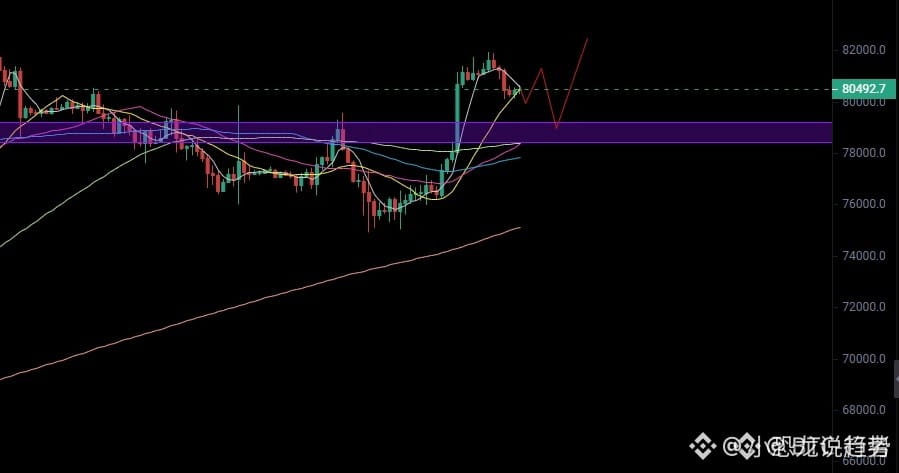
Everyone on the whole internet is betting on a crash, but even after a $571 million long liquidation, Bitcoin still wasn’t smashed lower. A week ago, nearly everyone agreed that the Fed’s rate hikes plus the CLARITY Act dying in the Senate would trigger a wave of brutal selling. But both “bad news” items have already landed—and Bitcoin hasn’t crashed. Instead, it has climbed back from $75,000 to above $80,000, step by step.
First, let’s see how dangerous it was that night. Before the vote on the evening of September 14, Bitcoin slid all the way down to around $75,000. After the Senate killed the CLARITY Act 49–50 on September 15, within 24 hours, long futures were liquidated for $571 million. U.S. crypto stocks fell as much as 10% intraday, then rebounded together again on Friday.
The most abnormal part is—nobody got trapped. Bitfinex’s head of derivatives, Jag Kooner, said that almost no traders had bet in advance that the bill would pass, so there wasn’t much positioning to unwind; the bad news was priced in early.
Behind this is Bitcoin fending off three rounds of shocks within a month: the Fed raised rates by 25 bps to 3.75%-4.00% (first time since July 2023), the CLARITY legislation failed, and $571 million in long liquidations occurred—yet the price wasn’t repriced lower.
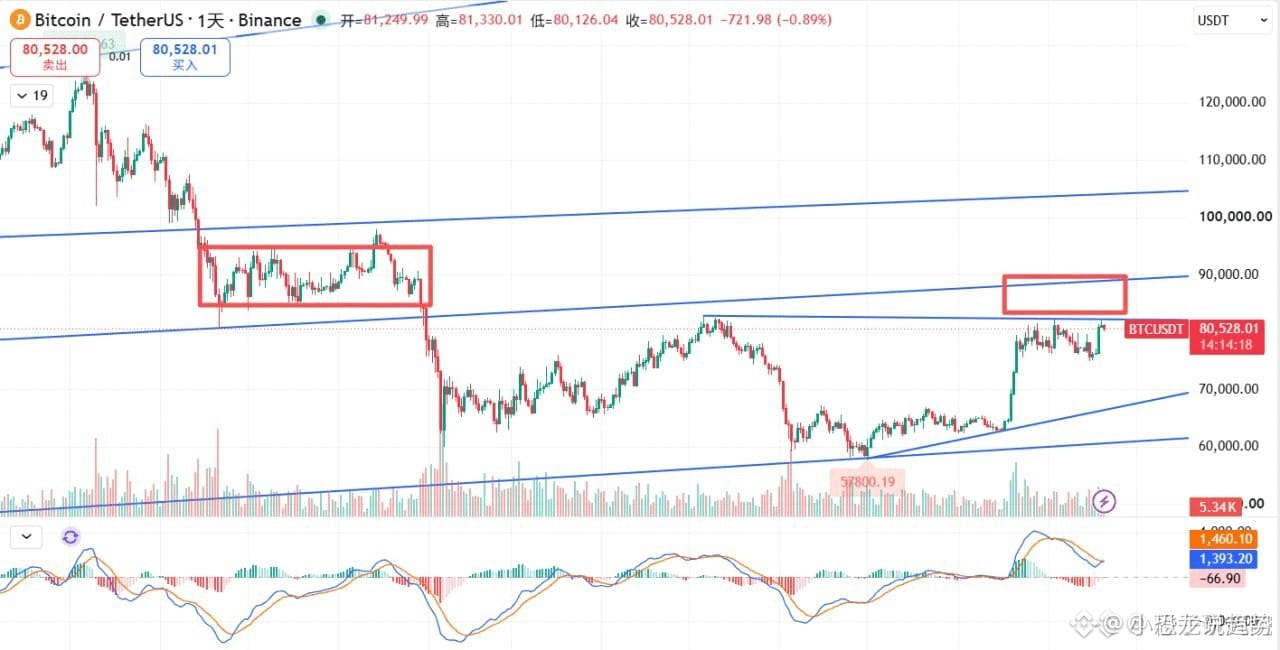
My take: Nexo analyst Ilya Kalchev put it very plainly—what Bitcoin lacks right now is a “catalyst.” His key levels are: first, reclaim and hold above $77,950, then push toward $79,300 and $80,000. Only after breaking above $80,000 is the door open to $81,400. If it falls back below $75,000, the recovery could be in jeopardy.
Bitwise Chief Investment Officer Matt Hougan was even more direct: the U.S. still has a roughly two-and-a-half-year pro-crypto regulatory window. Even though the bill didn’t pass, it just “moves things around,” but Bitcoin’s fundamentals haven’t changed. Mati Greenspan even likened Bitcoin to a badger—living without relying on any government legislation.
So what is the market really waiting for? Some are betting that “smart money hasn’t entered yet.” Others are watching the employment report on October 2 and the CPI on October 14. The real tipping point is still whether Bitcoin can hold firm after breaking through the $80,000 mark.
Drop a comment—do you think this “crash that didn’t come” means the shorts aren’t in position yet, or is it a genuine reversal? Are there still people around you who dare to chase longs right now?
Every day, I’ll bring you coverage of the hottest topics in the crypto space—more than just what happens in the news, helping you understand the logic and the opportunities behind it 👀🚀
Click the profile picture to watch the live stream
#比特币突破8万美元大关
💥 清算数据群里实时更新
Everyone on the whole internet is betting on a crash, but even after a $571 million long liquidation, Bitcoin still wasn’t smashed lower. A week ago, nearly everyone agreed that the Fed’s rate hikes plus the CLARITY Act dying in the Senate would trigger a wave of brutal selling. But both “bad news” items have already landed—and Bitcoin hasn’t crashed. Instead, it has climbed back from $75,000 to above $80,000, step by step.
First, let’s see how dangerous it was that night. Before the vote on the evening of September 14, Bitcoin slid all the way down to around $75,000. After the Senate killed the CLARITY Act 49–50 on September 15, within 24 hours, long futures were liquidated for $571 million. U.S. crypto stocks fell as much as 10% intraday, then rebounded together again on Friday.
The most abnormal part is—nobody got trapped. Bitfinex’s head of derivatives, Jag Kooner, said that almost no traders had bet in advance that the bill would pass, so there wasn’t much positioning to unwind; the bad news was priced in early.
Behind this is Bitcoin fending off three rounds of shocks within a month: the Fed raised rates by 25 bps to 3.75%-4.00% (first time since July 2023), the CLARITY legislation failed, and $571 million in long liquidations occurred—yet the price wasn’t repriced lower.
My take: Nexo analyst Ilya Kalchev put it very plainly—what Bitcoin lacks right now is a “catalyst.” His key levels are: first, reclaim and hold above $77,950, then push toward $79,300 and $80,000. Only after breaking above $80,000 is the door open to $81,400. If it falls back below $75,000, the recovery could be in jeopardy.
Bitwise Chief Investment Officer Matt Hougan was even more direct: the U.S. still has a roughly two-and-a-half-year pro-crypto regulatory window. Even though the bill didn’t pass, it just “moves things around,” but Bitcoin’s fundamentals haven’t changed. Mati Greenspan even likened Bitcoin to a badger—living without relying on any government legislation.
So what is the market really waiting for? Some are betting that “smart money hasn’t entered yet.” Others are watching the employment report on October 2 and the CPI on October 14. The real tipping point is still whether Bitcoin can hold firm after breaking through the $80,000 mark.
Drop a comment—do you think this “crash that didn’t come” means the shorts aren’t in position yet, or is it a genuine reversal? Are there still people around you who dare to chase longs right now?
Every day, I’ll bring you coverage of the hottest topics in the crypto space—more than just what happens in the news, helping you understand the logic and the opportunities behind it 👀🚀
Click the profile picture to watch the live stream
💥 清算数据群里实时更新
Everyone on the whole internet is betting on a crash, but even after a $571 million long liquidation, Bitcoin still wasn’t smashed lower. A week ago, nearly everyone agreed that the Fed’s rate hikes plus the CLARITY Act dying in the Senate would trigger a wave of brutal selling. But both “bad news” items have already landed—and Bitcoin hasn’t crashed. Instead, it has climbed back from $75,000 to above $80,000, step by step.
First, let’s see how dangerous it was that night. Before the vote on the evening of September 14, Bitcoin slid all the way down to around $75,000. After the Senate killed the CLARITY Act 49–50 on September 15, within 24 hours, long futures were liquidated for $571 million. U.S. crypto stocks fell as much as 10% intraday, then rebounded together again on Friday.
The most abnormal part is—nobody got trapped. Bitfinex’s head of derivatives, Jag Kooner, said that almost no traders had bet in advance that the bill would pass, so there wasn’t much positioning to unwind; the bad news was priced in early.
Behind this is Bitcoin fending off three rounds of shocks within a month: the Fed raised rates by 25 bps to 3.75%-4.00% (first time since July 2023), the CLARITY legislation failed, and $571 million in long liquidations occurred—yet the price wasn’t repriced lower.
My take: Nexo analyst Ilya Kalchev put it very plainly—what Bitcoin lacks right now is a “catalyst.” His key levels are: first, reclaim and hold above $77,950, then push toward $79,300 and $80,000. Only after breaking above $80,000 is the door open to $81,400. If it falls back below $75,000, the recovery could be in jeopardy.
Bitwise Chief Investment Officer Matt Hougan was even more direct: the U.S. still has a roughly two-and-a-half-year pro-crypto regulatory window. Even though the bill didn’t pass, it just “moves things around,” but Bitcoin’s fundamentals haven’t changed. Mati Greenspan even likened Bitcoin to a badger—living without relying on any government legislation.
So what is the market really waiting for? Some are betting that “smart money hasn’t entered yet.” Others are watching the employment report on October 2 and the CPI on October 14. The real tipping point is still whether Bitcoin can hold firm after breaking through the $80,000 mark.
Drop a comment—do you think this “crash that didn’t come” means the shorts aren’t in position yet, or is it a genuine reversal? Are there still people around you who dare to chase longs right now?
Every day, I’ll bring you coverage of the hottest topics in the crypto space—more than just what happens in the news, helping you understand the logic and the opportunities behind it 👀🚀
Click the profile picture to watch the live stream
814
·
--
#比特币突破8万美元大关
[🏛️ 宏观数据进群解读](https://app.binance.com/uni-qr/EXpjD4Vi)
Everyone is waiting for Bitcoin to crash, but it took three heavy blows—after wiping out $571 million in long positions over 24 hours, it turned around and climbed back above 81,000.
This week, three big mountains are facing Bitcoin: the Federal Reserve’s first rate hike in two years—up 25 basis points; the CLARITY Act, a piece of written law for the crypto industry, failed in the Senate 49–50; and then, within 24 hours, $571 million worth of long positions were blown up in a chain reaction. Any one of these, if taken alone, would have been a script for digging pits in the past. Yet Bitcoin clung to around $75,000—it didn’t break down. Instead, it climbed steadily back above $81,000.
Let’s look at the first blow: the rate hike. This is the first hike since July 2023, with rates lifted to between 3.75% and 4.00%, which is worst for assets that pay no yield. The second blow: the CLARITY Act, heavily anticipated, with a cloture vote of 49–50 in the Senate—just 11 votes short of the 60 needed to move forward. The written law the industry wanted failed again. The third is derivatives—on the day the vote was finalized, shares of several crypto-listed companies dropped directly by 10%, and by Friday they collectively regained their losses.
So the question is: why didn’t it crash? Bitfinex derivatives head Jag Kooner offered a cold explanation: almost nobody was betting on the bill passing before the vote, so there wasn’t much positioning to unwind. Plainly translated: the bad news was already priced in—nobody was waiting for it to “arrive,” so nobody rushed to run.
Nexo analyst Ilya Kalchev mapped out the next steps in detail: first, it needs to clear $77,950; then break $79,300 and $80,000. Once it holds above $80,000, look toward $81,400. On the other hand, if it falls below $75,000, this rebound may be over. Bitwise’s Matt Hougan is more optimistic, saying the U.S. still has a 2.5-year window for crypto-friendly regulation—so the road may be bumpier, but the direction hasn’t changed. The harshest line comes from Mati Greenspan: “Bitcoin is like a badger—it doesn’t rely on any government, and it doesn’t rely on any legislation.”
My take: the market treats bad news as known information—that in itself is one of the bottom-forming signals. But don’t get ahead of yourself—October 2’s Non-Farm Payrolls and October 14’s CPI will be the real next exam.
Comment section—let’s talk: do you think this Bitcoin move is holding up, or will it eventually catch up with a downside drop?
Every day I’ll take you to the crypto market’s hotspots—not just to see what news happens, but to help you understand the logic and opportunities behind it 👀🚀
Click the profile picture to watch the live stream.
#比特币突破8万美元大关
🏛️ 宏观数据进群解读
Everyone is waiting for Bitcoin to crash, but it took three heavy blows—after wiping out $571 million in long positions over 24 hours, it turned around and climbed back above 81,000.
This week, three big mountains are facing Bitcoin: the Federal Reserve’s first rate hike in two years—up 25 basis points; the CLARITY Act, a piece of written law for the crypto industry, failed in the Senate 49–50; and then, within 24 hours, $571 million worth of long positions were blown up in a chain reaction. Any one of these, if taken alone, would have been a script for digging pits in the past. Yet Bitcoin clung to around $75,000—it didn’t break down. Instead, it climbed steadily back above $81,000.
Let’s look at the first blow: the rate hike. This is the first hike since July 2023, with rates lifted to between 3.75% and 4.00%, which is worst for assets that pay no yield. The second blow: the CLARITY Act, heavily anticipated, with a cloture vote of 49–50 in the Senate—just 11 votes short of the 60 needed to move forward. The written law the industry wanted failed again. The third is derivatives—on the day the vote was finalized, shares of several crypto-listed companies dropped directly by 10%, and by Friday they collectively regained their losses.
So the question is: why didn’t it crash? Bitfinex derivatives head Jag Kooner offered a cold explanation: almost nobody was betting on the bill passing before the vote, so there wasn’t much positioning to unwind. Plainly translated: the bad news was already priced in—nobody was waiting for it to “arrive,” so nobody rushed to run.
Nexo analyst Ilya Kalchev mapped out the next steps in detail: first, it needs to clear $77,950; then break $79,300 and $80,000. Once it holds above $80,000, look toward $81,400. On the other hand, if it falls below $75,000, this rebound may be over. Bitwise’s Matt Hougan is more optimistic, saying the U.S. still has a 2.5-year window for crypto-friendly regulation—so the road may be bumpier, but the direction hasn’t changed. The harshest line comes from Mati Greenspan: “Bitcoin is like a badger—it doesn’t rely on any government, and it doesn’t rely on any legislation.”
My take: the market treats bad news as known information—that in itself is one of the bottom-forming signals. But don’t get ahead of yourself—October 2’s Non-Farm Payrolls and October 14’s CPI will be the real next exam.
Comment section—let’s talk: do you think this Bitcoin move is holding up, or will it eventually catch up with a downside drop?
Every day I’ll take you to the crypto market’s hotspots—not just to see what news happens, but to help you understand the logic and opportunities behind it 👀🚀
Click the profile picture to watch the live stream.
🏛️ 宏观数据进群解读
Everyone is waiting for Bitcoin to crash, but it took three heavy blows—after wiping out $571 million in long positions over 24 hours, it turned around and climbed back above 81,000.
This week, three big mountains are facing Bitcoin: the Federal Reserve’s first rate hike in two years—up 25 basis points; the CLARITY Act, a piece of written law for the crypto industry, failed in the Senate 49–50; and then, within 24 hours, $571 million worth of long positions were blown up in a chain reaction. Any one of these, if taken alone, would have been a script for digging pits in the past. Yet Bitcoin clung to around $75,000—it didn’t break down. Instead, it climbed steadily back above $81,000.
Let’s look at the first blow: the rate hike. This is the first hike since July 2023, with rates lifted to between 3.75% and 4.00%, which is worst for assets that pay no yield. The second blow: the CLARITY Act, heavily anticipated, with a cloture vote of 49–50 in the Senate—just 11 votes short of the 60 needed to move forward. The written law the industry wanted failed again. The third is derivatives—on the day the vote was finalized, shares of several crypto-listed companies dropped directly by 10%, and by Friday they collectively regained their losses.
So the question is: why didn’t it crash? Bitfinex derivatives head Jag Kooner offered a cold explanation: almost nobody was betting on the bill passing before the vote, so there wasn’t much positioning to unwind. Plainly translated: the bad news was already priced in—nobody was waiting for it to “arrive,” so nobody rushed to run.
Nexo analyst Ilya Kalchev mapped out the next steps in detail: first, it needs to clear $77,950; then break $79,300 and $80,000. Once it holds above $80,000, look toward $81,400. On the other hand, if it falls below $75,000, this rebound may be over. Bitwise’s Matt Hougan is more optimistic, saying the U.S. still has a 2.5-year window for crypto-friendly regulation—so the road may be bumpier, but the direction hasn’t changed. The harshest line comes from Mati Greenspan: “Bitcoin is like a badger—it doesn’t rely on any government, and it doesn’t rely on any legislation.”
My take: the market treats bad news as known information—that in itself is one of the bottom-forming signals. But don’t get ahead of yourself—October 2’s Non-Farm Payrolls and October 14’s CPI will be the real next exam.
Comment section—let’s talk: do you think this Bitcoin move is holding up, or will it eventually catch up with a downside drop?
Every day I’ll take you to the crypto market’s hotspots—not just to see what news happens, but to help you understand the logic and opportunities behind it 👀🚀
Click the profile picture to watch the live stream.
555
·
--
#xrp交易所储备创七年新低
[💬 观点碰撞,进群聊聊](https://app.binance.com/uni-qr/EXpjD4Vi)
4 days swept away 1.54 billion tokens worth $2.2 billion
A massive whale is疯狂吸筹XRP (accumulating aggressively). On-chain data platform Santiment has detected that in just 96 hours, large holders bought in roughly 1.54 billion XRP. At the current price, that comes to over $2.2 billion— the most intense buying wave since the second half of 2026.
More importantly, here’s how the money moved. Usually, when large amounts of tokens flow into exchanges, it’s taken as a sign of impending sell-off. But this time is different: first, XRP is sent in large quantities to exchanges, and the immediate buying demand absorbs the sell pressure. Then, these coins are quickly withdrawn again and moved into cold wallets for long-term locking. Once bought, they don’t stay on the exchange— they’re taken out and hidden. That effectively removes liquid supply from the market, making it impossible to dump in the short term.
Santiment’s data also shows that after several months of dormancy, whale addresses have suddenly come back to life and are nearing historical peak levels. This isn’t small-money testing—it’s big-player, mainstream-force action.
The technicals are lining up too. The daily chart has formed an inverse head-and-shoulders bottom, a classic bullish pattern. The right-shoulder defense zone is at $1.33, and the price is currently holding steadily above $1.40. The real breakout level is the neckline at $1.55. As long as the daily close can hold above it, the pattern is considered confirmed, and the next target directly points to $2—the key psychological level.
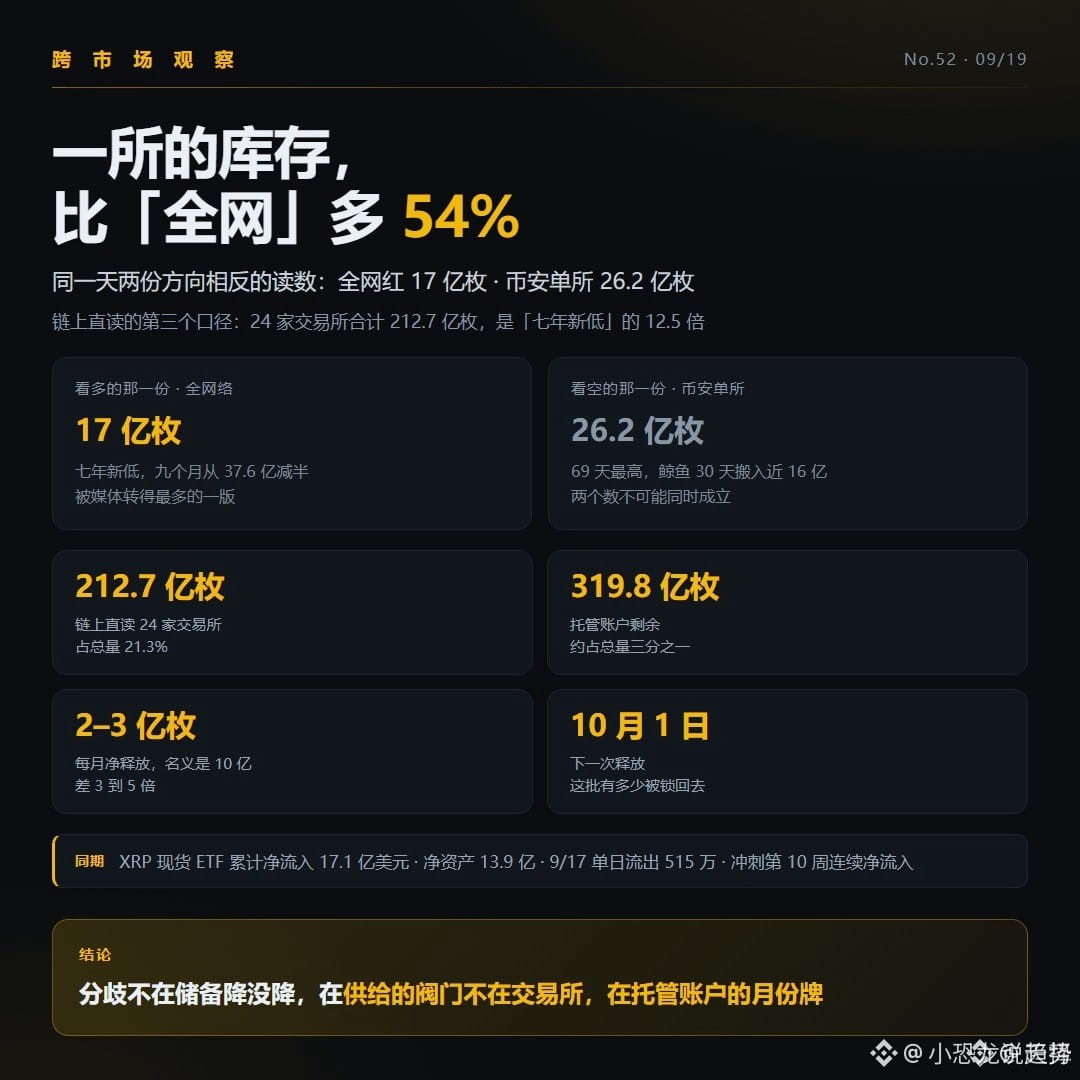
My take: this isn’t retail chasing along. It looks like institutions and whales are getting positioned early. Last week, XRP exchange reserves hit a seven-year low, and now another 1.54 billion XRP has been withdrawn into cold wallets—liquid supply available off-exchange is getting thinner. The thinner the float, the easier it is to push price upward. What’s missing for $2 isn’t good news—only a single daily candle that can stand firm above $1.55.
Do you think this is the main force truly accumulating, or a smoke-screen to lure people before a run-up and distribution? Let’s talk in the comments.
Every day I’ll take you to track the crypto hotspots— not just what news is happening, but also the logic and opportunities behind it 👀🚀
#xrp交易所储备创七年新低
💬 观点碰撞,进群聊聊
4 days swept away 1.54 billion tokens worth $2.2 billion
A massive whale is疯狂吸筹XRP (accumulating aggressively). On-chain data platform Santiment has detected that in just 96 hours, large holders bought in roughly 1.54 billion XRP. At the current price, that comes to over $2.2 billion— the most intense buying wave since the second half of 2026.
More importantly, here’s how the money moved. Usually, when large amounts of tokens flow into exchanges, it’s taken as a sign of impending sell-off. But this time is different: first, XRP is sent in large quantities to exchanges, and the immediate buying demand absorbs the sell pressure. Then, these coins are quickly withdrawn again and moved into cold wallets for long-term locking. Once bought, they don’t stay on the exchange— they’re taken out and hidden. That effectively removes liquid supply from the market, making it impossible to dump in the short term.
Santiment’s data also shows that after several months of dormancy, whale addresses have suddenly come back to life and are nearing historical peak levels. This isn’t small-money testing—it’s big-player, mainstream-force action.
The technicals are lining up too. The daily chart has formed an inverse head-and-shoulders bottom, a classic bullish pattern. The right-shoulder defense zone is at $1.33, and the price is currently holding steadily above $1.40. The real breakout level is the neckline at $1.55. As long as the daily close can hold above it, the pattern is considered confirmed, and the next target directly points to $2—the key psychological level.
My take: this isn’t retail chasing along. It looks like institutions and whales are getting positioned early. Last week, XRP exchange reserves hit a seven-year low, and now another 1.54 billion XRP has been withdrawn into cold wallets—liquid supply available off-exchange is getting thinner. The thinner the float, the easier it is to push price upward. What’s missing for $2 isn’t good news—only a single daily candle that can stand firm above $1.55.
Do you think this is the main force truly accumulating, or a smoke-screen to lure people before a run-up and distribution? Let’s talk in the comments.
Every day I’ll take you to track the crypto hotspots— not just what news is happening, but also the logic and opportunities behind it 👀🚀
💬 观点碰撞,进群聊聊
4 days swept away 1.54 billion tokens worth $2.2 billion
A massive whale is疯狂吸筹XRP (accumulating aggressively). On-chain data platform Santiment has detected that in just 96 hours, large holders bought in roughly 1.54 billion XRP. At the current price, that comes to over $2.2 billion— the most intense buying wave since the second half of 2026.
More importantly, here’s how the money moved. Usually, when large amounts of tokens flow into exchanges, it’s taken as a sign of impending sell-off. But this time is different: first, XRP is sent in large quantities to exchanges, and the immediate buying demand absorbs the sell pressure. Then, these coins are quickly withdrawn again and moved into cold wallets for long-term locking. Once bought, they don’t stay on the exchange— they’re taken out and hidden. That effectively removes liquid supply from the market, making it impossible to dump in the short term.
Santiment’s data also shows that after several months of dormancy, whale addresses have suddenly come back to life and are nearing historical peak levels. This isn’t small-money testing—it’s big-player, mainstream-force action.
The technicals are lining up too. The daily chart has formed an inverse head-and-shoulders bottom, a classic bullish pattern. The right-shoulder defense zone is at $1.33, and the price is currently holding steadily above $1.40. The real breakout level is the neckline at $1.55. As long as the daily close can hold above it, the pattern is considered confirmed, and the next target directly points to $2—the key psychological level.
My take: this isn’t retail chasing along. It looks like institutions and whales are getting positioned early. Last week, XRP exchange reserves hit a seven-year low, and now another 1.54 billion XRP has been withdrawn into cold wallets—liquid supply available off-exchange is getting thinner. The thinner the float, the easier it is to push price upward. What’s missing for $2 isn’t good news—only a single daily candle that can stand firm above $1.55.
Do you think this is the main force truly accumulating, or a smoke-screen to lure people before a run-up and distribution? Let’s talk in the comments.
Every day I’ll take you to track the crypto hotspots— not just what news is happening, but also the logic and opportunities behind it 👀🚀
889
·
--
An NFT project that rides on the “zero-knowledge proof” label, pocketing $17 million while delivering almost nothing.
On-chain sleuth ZachXBT publicly accuses: an NFT project posing under the banner of zkSNARKs technology took roughly $17 million from investors, yet the promised functionality has barely been delivered. As of the time of publication, the team has offered no official response—how this bill will be settled remains uncertain.
First, let’s get clear on what zkSNARKs is. Its full name is “Zero-Knowledge Succinct Non-Interactive Argument of Knowledge.” It’s legitimate cryptography—able to prove that something is true without revealing the underlying data. Privacy coins and scaling solutions use it, and institutions are putting real money into it. The problem is this: the more complex the technology is, the harder it is for ordinary retail investors to verify—making it easier to use as a “looks-advanced” marketing banner.
ZachXBT is not a bystander. Over the years, this on-chain detective has built a reputation for tracking crypto funding flows and digging into wallets, exposing fraud and misappropriation in the industry. Many names he previously pointed out have later been investigated further by exchanges, on-chain analytics firms, and even law enforcement. This time, his allegations come from reports by two media outlets, CryptoBriefing and The Cryptonomist.
My take: In the broader crypto market, those $17 million are a drop in the bucket—too small to move the market in any meaningful way. The real impact is on sentiment. Retail investors may become even more wary of “zero-knowledge” and “zk” type terms, while projects that are genuinely building privacy technologies in a grounded way could end up getting unfairly targeted. Technical jargon is never a protective talisman—only delivery counts.
Have you ever bought a project that sounds technically impressive but actually delivers nothing? How did you end up seeing through it later? Let’s discuss in the comments.
Every day, I take you to follow crypto hot topics—not just what happened in the news, but also the logic and opportunities behind it 👀🚀
Click the profile picture to watch the live stream.
[💬 评论区聊不透,进群细说](https://app.binance.com/uni-qr/EXpjD4Vi)
An NFT project that rides on the “zero-knowledge proof” label, pocketing $17 million while delivering almost nothing.
On-chain sleuth ZachXBT publicly accuses: an NFT project posing under the banner of zkSNARKs technology took roughly $17 million from investors, yet the promised functionality has barely been delivered. As of the time of publication, the team has offered no official response—how this bill will be settled remains uncertain.
First, let’s get clear on what zkSNARKs is. Its full name is “Zero-Knowledge Succinct Non-Interactive Argument of Knowledge.” It’s legitimate cryptography—able to prove that something is true without revealing the underlying data. Privacy coins and scaling solutions use it, and institutions are putting real money into it. The problem is this: the more complex the technology is, the harder it is for ordinary retail investors to verify—making it easier to use as a “looks-advanced” marketing banner.
ZachXBT is not a bystander. Over the years, this on-chain detective has built a reputation for tracking crypto funding flows and digging into wallets, exposing fraud and misappropriation in the industry. Many names he previously pointed out have later been investigated further by exchanges, on-chain analytics firms, and even law enforcement. This time, his allegations come from reports by two media outlets, CryptoBriefing and The Cryptonomist.
My take: In the broader crypto market, those $17 million are a drop in the bucket—too small to move the market in any meaningful way. The real impact is on sentiment. Retail investors may become even more wary of “zero-knowledge” and “zk” type terms, while projects that are genuinely building privacy technologies in a grounded way could end up getting unfairly targeted. Technical jargon is never a protective talisman—only delivery counts.
Have you ever bought a project that sounds technically impressive but actually delivers nothing? How did you end up seeing through it later? Let’s discuss in the comments.
Every day, I take you to follow crypto hot topics—not just what happened in the news, but also the logic and opportunities behind it 👀🚀
Click the profile picture to watch the live stream.
💬 评论区聊不透,进群细说
On-chain sleuth ZachXBT publicly accuses: an NFT project posing under the banner of zkSNARKs technology took roughly $17 million from investors, yet the promised functionality has barely been delivered. As of the time of publication, the team has offered no official response—how this bill will be settled remains uncertain.
First, let’s get clear on what zkSNARKs is. Its full name is “Zero-Knowledge Succinct Non-Interactive Argument of Knowledge.” It’s legitimate cryptography—able to prove that something is true without revealing the underlying data. Privacy coins and scaling solutions use it, and institutions are putting real money into it. The problem is this: the more complex the technology is, the harder it is for ordinary retail investors to verify—making it easier to use as a “looks-advanced” marketing banner.
ZachXBT is not a bystander. Over the years, this on-chain detective has built a reputation for tracking crypto funding flows and digging into wallets, exposing fraud and misappropriation in the industry. Many names he previously pointed out have later been investigated further by exchanges, on-chain analytics firms, and even law enforcement. This time, his allegations come from reports by two media outlets, CryptoBriefing and The Cryptonomist.
My take: In the broader crypto market, those $17 million are a drop in the bucket—too small to move the market in any meaningful way. The real impact is on sentiment. Retail investors may become even more wary of “zero-knowledge” and “zk” type terms, while projects that are genuinely building privacy technologies in a grounded way could end up getting unfairly targeted. Technical jargon is never a protective talisman—only delivery counts.
Have you ever bought a project that sounds technically impressive but actually delivers nothing? How did you end up seeing through it later? Let’s discuss in the comments.
Every day, I take you to follow crypto hot topics—not just what happened in the news, but also the logic and opportunities behind it 👀🚀
Click the profile picture to watch the live stream.
💬 评论区聊不透,进群细说
502
·
--
#sol涨约10%
[💰 进群聊SOL动态](https://app.binance.com/uni-qr/EXpjD4Vi)
For 12 straight weeks, money has only flowed in and never out. SOL’s ETF has been quietly pulling in capital, while Bitcoin has stayed eerily calm to its lowest point on record.
Solana’s spot ETF has recorded net inflows for 12 consecutive weeks—an entire three months of capital only entering, never leaving. According to data from CryptoBriefing and Yahoo Finance, this is one of the longest sustained buying streaks among this year’s crypto ETFs. Meanwhile, at the same time, Bitcoin—the largest by market cap—turned in the “quietest week on record,” with both trading volume and volatility pinned to the floor.
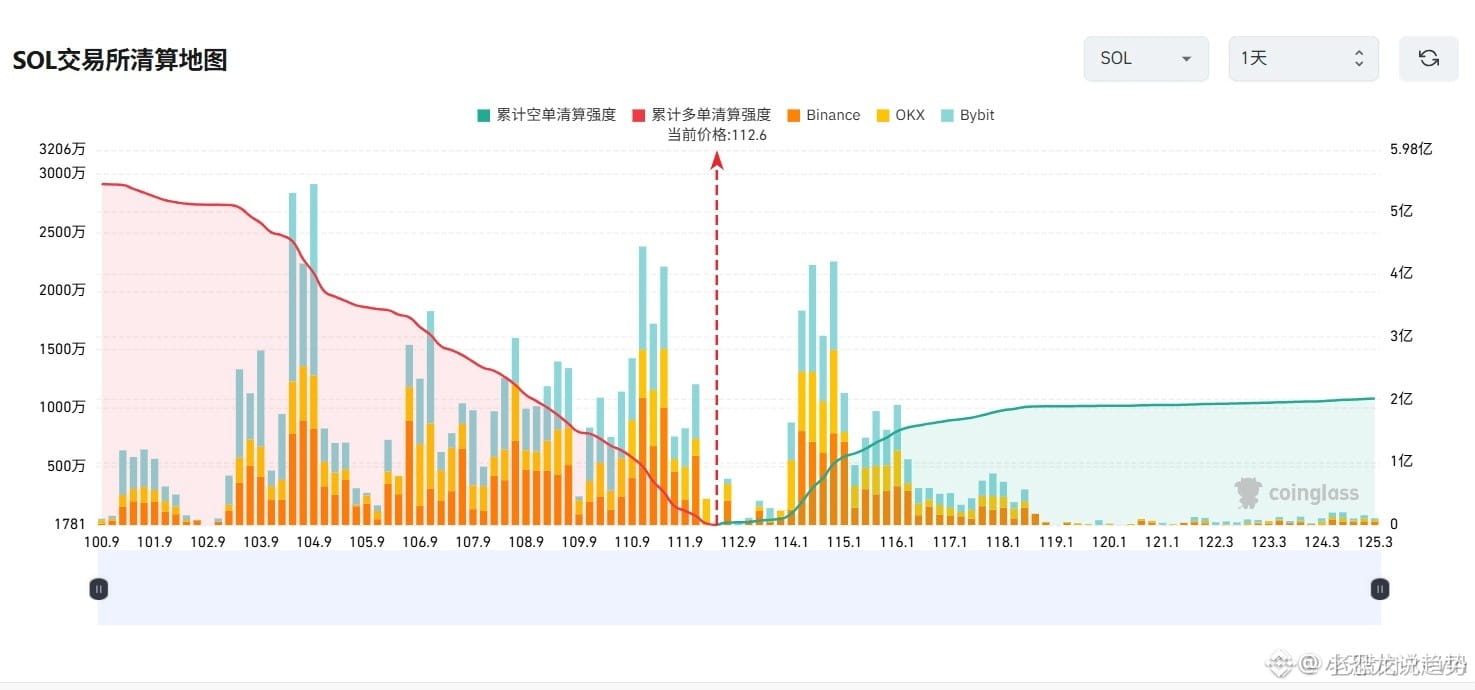
First, let’s look at SOL. Its current price is around $110, up about 10% over the past week, after hovering near $99 seven days ago. More importantly, where is the money coming from: the ETF allows institutions to gain compliant exposure to SOL’s rise and fall without having to custody private keys themselves. Twelve consecutive weeks of net inflows suggests a group of buyers are adding steadily through traditional brokerage accounts—not chasing and then selling off.
Now, Bitcoin. Above $81,000, the price has been as steady as a dead calm. This kind of “most peaceful ever” usually has two interpretations: one is that capital is waiting for catalysts like policy meetings and macro data to land; the other is the calm before the storm—after low volatility, big moves often follow.
My take: this is a signal of “segmentation” in capital within the crypto market. After Bitcoin pushed above $80,000, short-term funds started looking for the next asset with a story, elasticity, and something institutions can actually get their hands on—and SOL happened to catch this wave. The ETF’s ongoing inflows, at their core, mean institutions are topping up the second tier beyond “Bitcoin + Ethereum.”
But let’s also pour a bit of cold water on it: whether 12 weeks of inflows can extend into 13 or 14 depends on whether the SOL ecosystem has new stories that keep pace. Once Bitcoin wakes up out of its calm and regains everyone’s attention, this SOL inflow run could dry up at any moment.
Will you follow this SOL ETF rally, or will you keep holding only Bitcoin? Let’s chat in the comments.
Every day, I’ll take you to track crypto hotspots—not just what’s happening in the news, but helping you understand the underlying logic and opportunities 👀🚀
#sol涨约10%
💰 进群聊SOL动态
For 12 straight weeks, money has only flowed in and never out. SOL’s ETF has been quietly pulling in capital, while Bitcoin has stayed eerily calm to its lowest point on record.
Solana’s spot ETF has recorded net inflows for 12 consecutive weeks—an entire three months of capital only entering, never leaving. According to data from CryptoBriefing and Yahoo Finance, this is one of the longest sustained buying streaks among this year’s crypto ETFs. Meanwhile, at the same time, Bitcoin—the largest by market cap—turned in the “quietest week on record,” with both trading volume and volatility pinned to the floor.
First, let’s look at SOL. Its current price is around $110, up about 10% over the past week, after hovering near $99 seven days ago. More importantly, where is the money coming from: the ETF allows institutions to gain compliant exposure to SOL’s rise and fall without having to custody private keys themselves. Twelve consecutive weeks of net inflows suggests a group of buyers are adding steadily through traditional brokerage accounts—not chasing and then selling off.
Now, Bitcoin. Above $81,000, the price has been as steady as a dead calm. This kind of “most peaceful ever” usually has two interpretations: one is that capital is waiting for catalysts like policy meetings and macro data to land; the other is the calm before the storm—after low volatility, big moves often follow.
My take: this is a signal of “segmentation” in capital within the crypto market. After Bitcoin pushed above $80,000, short-term funds started looking for the next asset with a story, elasticity, and something institutions can actually get their hands on—and SOL happened to catch this wave. The ETF’s ongoing inflows, at their core, mean institutions are topping up the second tier beyond “Bitcoin + Ethereum.”
But let’s also pour a bit of cold water on it: whether 12 weeks of inflows can extend into 13 or 14 depends on whether the SOL ecosystem has new stories that keep pace. Once Bitcoin wakes up out of its calm and regains everyone’s attention, this SOL inflow run could dry up at any moment.
Will you follow this SOL ETF rally, or will you keep holding only Bitcoin? Let’s chat in the comments.
Every day, I’ll take you to track crypto hotspots—not just what’s happening in the news, but helping you understand the underlying logic and opportunities 👀🚀
💰 进群聊SOL动态
For 12 straight weeks, money has only flowed in and never out. SOL’s ETF has been quietly pulling in capital, while Bitcoin has stayed eerily calm to its lowest point on record.
Solana’s spot ETF has recorded net inflows for 12 consecutive weeks—an entire three months of capital only entering, never leaving. According to data from CryptoBriefing and Yahoo Finance, this is one of the longest sustained buying streaks among this year’s crypto ETFs. Meanwhile, at the same time, Bitcoin—the largest by market cap—turned in the “quietest week on record,” with both trading volume and volatility pinned to the floor.
First, let’s look at SOL. Its current price is around $110, up about 10% over the past week, after hovering near $99 seven days ago. More importantly, where is the money coming from: the ETF allows institutions to gain compliant exposure to SOL’s rise and fall without having to custody private keys themselves. Twelve consecutive weeks of net inflows suggests a group of buyers are adding steadily through traditional brokerage accounts—not chasing and then selling off.
Now, Bitcoin. Above $81,000, the price has been as steady as a dead calm. This kind of “most peaceful ever” usually has two interpretations: one is that capital is waiting for catalysts like policy meetings and macro data to land; the other is the calm before the storm—after low volatility, big moves often follow.
My take: this is a signal of “segmentation” in capital within the crypto market. After Bitcoin pushed above $80,000, short-term funds started looking for the next asset with a story, elasticity, and something institutions can actually get their hands on—and SOL happened to catch this wave. The ETF’s ongoing inflows, at their core, mean institutions are topping up the second tier beyond “Bitcoin + Ethereum.”
But let’s also pour a bit of cold water on it: whether 12 weeks of inflows can extend into 13 or 14 depends on whether the SOL ecosystem has new stories that keep pace. Once Bitcoin wakes up out of its calm and regains everyone’s attention, this SOL inflow run could dry up at any moment.
Will you follow this SOL ETF rally, or will you keep holding only Bitcoin? Let’s chat in the comments.
Every day, I’ll take you to track crypto hotspots—not just what’s happening in the news, but helping you understand the underlying logic and opportunities 👀🚀
469
·
--
Verified
You can buy meme coins with a credit card and pocket cashback without identity verification—Visa has moved to plug this loophole.
On Friday, Visa issued a directive to payment processors: they are no longer allowed to classify card purchases of meme coins as “digital media” transactions. Why? Because it was discovered that with this classification, buying coins could accumulate credit card points and earn cashback just like buying movie tickets—yet under Visa’s rules, purchases of cryptocurrencies are not eligible for cashback.
The key to this loophole is something called a “Merchant Category Code.” Code 5815 is originally intended for digital goods and media content, and it carries no “crypto-related” marker. As a result, by using a company called Crossmint to run card purchases of meme coins through two apps—Fomo and the Robinhood Wallet—the system labels the transaction as “buy digital content,” and points and cashback are awarded as they normally would be.
How big is the loophole? Crossmint’s checkout rails allow users to buy up to $1,000 worth of meme coins per day with no KYC identity verification throughout, with a total transaction cap of $1 million. The first bank to spot the anomaly was Chase, which reported the issue to Visa. Visa later confirmed that at least one transaction had been misclassified.
Visa’s grace period ends next week. After that, these coin-purchase transactions must be handled as “ordinary cryptocurrency transactions”—not eligible for consumer cashback, and they may even be subject to stricter KYC identity checks.
Crossmint disagrees, arguing that based on certain SEC guidance, some meme coins are more like “collectibles,” so classifying them as digital media is reasonable. The exact words of its Chief Strategy Officer, Fonz Olvera, were: “There’s always a bit of tension between business and law.” After being questioned by the media, the two coins GENIUS and DEGEN were removed from Apple Pay checkout routes.
But there’s more to watch: the New York State Attorney General Letitia James’ office has already become aware of this product and is investigating. And another major card network, Mastercard, has not yet commented on whether it will follow suit.
My take: on the surface, this looks like a “loophole-chasing” game between “coin-economy” opportunists and the payment network. At a deeper level, it’s this—credit card cashback is money banks allocate as subsidies for “consumer” spending, while buying coins is booked as “investment/transfer,” which shouldn’t be eligible for that subsidy. What got exploited is the blurry line between “consumption” and “investment.”
First-order impact: meme coins lose a low-friction credit-card on-ramp, so over-the-counter demand driven by emotion-based trading may drop. Second-order impact: once the New York attorney general steps in, it signals that “credit-card funding for meme coins” has already been treated as a compliance risk point—so stricter identity verification and anti–money laundering checks are likely to follow.
If you’re buying meme coins with a credit card to earn cashback, do you think it’s a reasonable exploitation of a loophole—or a disguised way of turning investing into “consumption”? Discuss in the comments.
Every day, I’ll bring you attention to crypto hotspots—not just what’s happening in the news, but also the logic and opportunities behind it 👀🚀
[⚖️ 合规风向,进群一起看](https://app.binance.com/uni-qr/EXpjD4Vi)
You can buy meme coins with a credit card and pocket cashback without identity verification—Visa has moved to plug this loophole.
On Friday, Visa issued a directive to payment processors: they are no longer allowed to classify card purchases of meme coins as “digital media” transactions. Why? Because it was discovered that with this classification, buying coins could accumulate credit card points and earn cashback just like buying movie tickets—yet under Visa’s rules, purchases of cryptocurrencies are not eligible for cashback.
The key to this loophole is something called a “Merchant Category Code.” Code 5815 is originally intended for digital goods and media content, and it carries no “crypto-related” marker. As a result, by using a company called Crossmint to run card purchases of meme coins through two apps—Fomo and the Robinhood Wallet—the system labels the transaction as “buy digital content,” and points and cashback are awarded as they normally would be.
How big is the loophole? Crossmint’s checkout rails allow users to buy up to $1,000 worth of meme coins per day with no KYC identity verification throughout, with a total transaction cap of $1 million. The first bank to spot the anomaly was Chase, which reported the issue to Visa. Visa later confirmed that at least one transaction had been misclassified.
Visa’s grace period ends next week. After that, these coin-purchase transactions must be handled as “ordinary cryptocurrency transactions”—not eligible for consumer cashback, and they may even be subject to stricter KYC identity checks.
Crossmint disagrees, arguing that based on certain SEC guidance, some meme coins are more like “collectibles,” so classifying them as digital media is reasonable. The exact words of its Chief Strategy Officer, Fonz Olvera, were: “There’s always a bit of tension between business and law.” After being questioned by the media, the two coins GENIUS and DEGEN were removed from Apple Pay checkout routes.
But there’s more to watch: the New York State Attorney General Letitia James’ office has already become aware of this product and is investigating. And another major card network, Mastercard, has not yet commented on whether it will follow suit.
My take: on the surface, this looks like a “loophole-chasing” game between “coin-economy” opportunists and the payment network. At a deeper level, it’s this—credit card cashback is money banks allocate as subsidies for “consumer” spending, while buying coins is booked as “investment/transfer,” which shouldn’t be eligible for that subsidy. What got exploited is the blurry line between “consumption” and “investment.”
First-order impact: meme coins lose a low-friction credit-card on-ramp, so over-the-counter demand driven by emotion-based trading may drop. Second-order impact: once the New York attorney general steps in, it signals that “credit-card funding for meme coins” has already been treated as a compliance risk point—so stricter identity verification and anti–money laundering checks are likely to follow.
If you’re buying meme coins with a credit card to earn cashback, do you think it’s a reasonable exploitation of a loophole—or a disguised way of turning investing into “consumption”? Discuss in the comments.
Every day, I’ll bring you attention to crypto hotspots—not just what’s happening in the news, but also the logic and opportunities behind it 👀🚀
⚖️ 合规风向,进群一起看
On Friday, Visa issued a directive to payment processors: they are no longer allowed to classify card purchases of meme coins as “digital media” transactions. Why? Because it was discovered that with this classification, buying coins could accumulate credit card points and earn cashback just like buying movie tickets—yet under Visa’s rules, purchases of cryptocurrencies are not eligible for cashback.
The key to this loophole is something called a “Merchant Category Code.” Code 5815 is originally intended for digital goods and media content, and it carries no “crypto-related” marker. As a result, by using a company called Crossmint to run card purchases of meme coins through two apps—Fomo and the Robinhood Wallet—the system labels the transaction as “buy digital content,” and points and cashback are awarded as they normally would be.
How big is the loophole? Crossmint’s checkout rails allow users to buy up to $1,000 worth of meme coins per day with no KYC identity verification throughout, with a total transaction cap of $1 million. The first bank to spot the anomaly was Chase, which reported the issue to Visa. Visa later confirmed that at least one transaction had been misclassified.
Visa’s grace period ends next week. After that, these coin-purchase transactions must be handled as “ordinary cryptocurrency transactions”—not eligible for consumer cashback, and they may even be subject to stricter KYC identity checks.
Crossmint disagrees, arguing that based on certain SEC guidance, some meme coins are more like “collectibles,” so classifying them as digital media is reasonable. The exact words of its Chief Strategy Officer, Fonz Olvera, were: “There’s always a bit of tension between business and law.” After being questioned by the media, the two coins GENIUS and DEGEN were removed from Apple Pay checkout routes.
But there’s more to watch: the New York State Attorney General Letitia James’ office has already become aware of this product and is investigating. And another major card network, Mastercard, has not yet commented on whether it will follow suit.
My take: on the surface, this looks like a “loophole-chasing” game between “coin-economy” opportunists and the payment network. At a deeper level, it’s this—credit card cashback is money banks allocate as subsidies for “consumer” spending, while buying coins is booked as “investment/transfer,” which shouldn’t be eligible for that subsidy. What got exploited is the blurry line between “consumption” and “investment.”
First-order impact: meme coins lose a low-friction credit-card on-ramp, so over-the-counter demand driven by emotion-based trading may drop. Second-order impact: once the New York attorney general steps in, it signals that “credit-card funding for meme coins” has already been treated as a compliance risk point—so stricter identity verification and anti–money laundering checks are likely to follow.
If you’re buying meme coins with a credit card to earn cashback, do you think it’s a reasonable exploitation of a loophole—or a disguised way of turning investing into “consumption”? Discuss in the comments.
Every day, I’ll bring you attention to crypto hotspots—not just what’s happening in the news, but also the logic and opportunities behind it 👀🚀
⚖️ 合规风向,进群一起看
703
·
--
#越南拟2026年发首批加密牌照
[⚖️ 合规风向,进群一起看](https://app.binance.com/uni-qr/EXpjD4Vi)
Vietnam, a country that has topped the global crypto adoption rankings for years. With a population of 98 million, there are tens of millions of people trading coins—yet today it is only now that it is set to issue its first license.
The Chairman of the Vietnam Securities Commission, Vu Thi Chan Phuong, has officially confirmed: In 2026, the first batch of crypto asset service provider licenses will be issued, following a pilot framework. The rules directly benchmark FATF anti-money-laundering recommendations and the EU model. In other words, Vietnam’s plan to issue its first crypto licenses in 2026 is basically a done deal.
How big is the contrast? In Chainalysis’ Global Crypto Adoption Index, Vietnam has consistently ranked in the top tier as number one for years. From street vendors to factory workers, people recognize Bitcoin. Yet these years, the coins have remained in a gray area—neither illegal nor recognized. It was not until June 14, 2025, when the “Law on Digital Technology Industry” was passed, and it officially took effect on January 1, 2026, that cryptocurrencies finally gained a legal identity for the first time. Now, what’s being added is the final piece of the puzzle.
My take: This is not “tighter regulation,” but “grabbing incremental growth.” The licensing thresholds are high and the number of slots is limited. The first batch will only issue single-digit licenses. Whoever gets them first can capture compliant capital across Southeast Asia. Even more important is to watch the chain reaction—once Vietnam moves, Thailand, Indonesia, and the Philippines are likely to follow. The map of regulated exchanges in Asia will need to be redrawn. For a market with a population of 98 million and adoption rates among the global top three, moving from gray to official status is a real, tangible increase.
Let’s chat in the comments—do you think Vietnam’s batch of licenses is opening the door for the crypto industry, or blocking the path for illicit business?
Click the avatar to watch the livestream
Every day, I’ll take you to follow global hotspots—not just what’s happening in the news, but to help you understand the logic and opportunities behind it 👀🚀
#越南拟2026年发首批加密牌照
⚖️ 合规风向,进群一起看
Vietnam, a country that has topped the global crypto adoption rankings for years. With a population of 98 million, there are tens of millions of people trading coins—yet today it is only now that it is set to issue its first license.
The Chairman of the Vietnam Securities Commission, Vu Thi Chan Phuong, has officially confirmed: In 2026, the first batch of crypto asset service provider licenses will be issued, following a pilot framework. The rules directly benchmark FATF anti-money-laundering recommendations and the EU model. In other words, Vietnam’s plan to issue its first crypto licenses in 2026 is basically a done deal.
How big is the contrast? In Chainalysis’ Global Crypto Adoption Index, Vietnam has consistently ranked in the top tier as number one for years. From street vendors to factory workers, people recognize Bitcoin. Yet these years, the coins have remained in a gray area—neither illegal nor recognized. It was not until June 14, 2025, when the “Law on Digital Technology Industry” was passed, and it officially took effect on January 1, 2026, that cryptocurrencies finally gained a legal identity for the first time. Now, what’s being added is the final piece of the puzzle.
My take: This is not “tighter regulation,” but “grabbing incremental growth.” The licensing thresholds are high and the number of slots is limited. The first batch will only issue single-digit licenses. Whoever gets them first can capture compliant capital across Southeast Asia. Even more important is to watch the chain reaction—once Vietnam moves, Thailand, Indonesia, and the Philippines are likely to follow. The map of regulated exchanges in Asia will need to be redrawn. For a market with a population of 98 million and adoption rates among the global top three, moving from gray to official status is a real, tangible increase.
Let’s chat in the comments—do you think Vietnam’s batch of licenses is opening the door for the crypto industry, or blocking the path for illicit business?
Click the avatar to watch the livestream
Every day, I’ll take you to follow global hotspots—not just what’s happening in the news, but to help you understand the logic and opportunities behind it 👀🚀
⚖️ 合规风向,进群一起看
Vietnam, a country that has topped the global crypto adoption rankings for years. With a population of 98 million, there are tens of millions of people trading coins—yet today it is only now that it is set to issue its first license.
The Chairman of the Vietnam Securities Commission, Vu Thi Chan Phuong, has officially confirmed: In 2026, the first batch of crypto asset service provider licenses will be issued, following a pilot framework. The rules directly benchmark FATF anti-money-laundering recommendations and the EU model. In other words, Vietnam’s plan to issue its first crypto licenses in 2026 is basically a done deal.
How big is the contrast? In Chainalysis’ Global Crypto Adoption Index, Vietnam has consistently ranked in the top tier as number one for years. From street vendors to factory workers, people recognize Bitcoin. Yet these years, the coins have remained in a gray area—neither illegal nor recognized. It was not until June 14, 2025, when the “Law on Digital Technology Industry” was passed, and it officially took effect on January 1, 2026, that cryptocurrencies finally gained a legal identity for the first time. Now, what’s being added is the final piece of the puzzle.
My take: This is not “tighter regulation,” but “grabbing incremental growth.” The licensing thresholds are high and the number of slots is limited. The first batch will only issue single-digit licenses. Whoever gets them first can capture compliant capital across Southeast Asia. Even more important is to watch the chain reaction—once Vietnam moves, Thailand, Indonesia, and the Philippines are likely to follow. The map of regulated exchanges in Asia will need to be redrawn. For a market with a population of 98 million and adoption rates among the global top three, moving from gray to official status is a real, tangible increase.
Let’s chat in the comments—do you think Vietnam’s batch of licenses is opening the door for the crypto industry, or blocking the path for illicit business?
Click the avatar to watch the livestream
Every day, I’ll take you to follow global hotspots—not just what’s happening in the news, but to help you understand the logic and opportunities behind it 👀🚀

957
·
--
#以太坊重回2600美元
[🔄 山寨季要不要参与,进群聊](https://app.binance.com/uni-qr/EXpjD4Vi)
Ethereum returns to $2,600—this week’s market staged a reversal: the rate hike landed without a crash, and instead pushed the market cap back up to $322 billion.
Who’s going up, and by how much—let’s get that straight first. Ethereum is currently at $2,637, up 2.26% in 24 hours, with trading volume of $16.2 billion. Bitcoin is steady above $81,500. Solana and XRP are also climbing; XRP jumped another 3.57% today.
But what determines this round of height isn’t the candlestick chart—it’s the Fed’s dot plot.
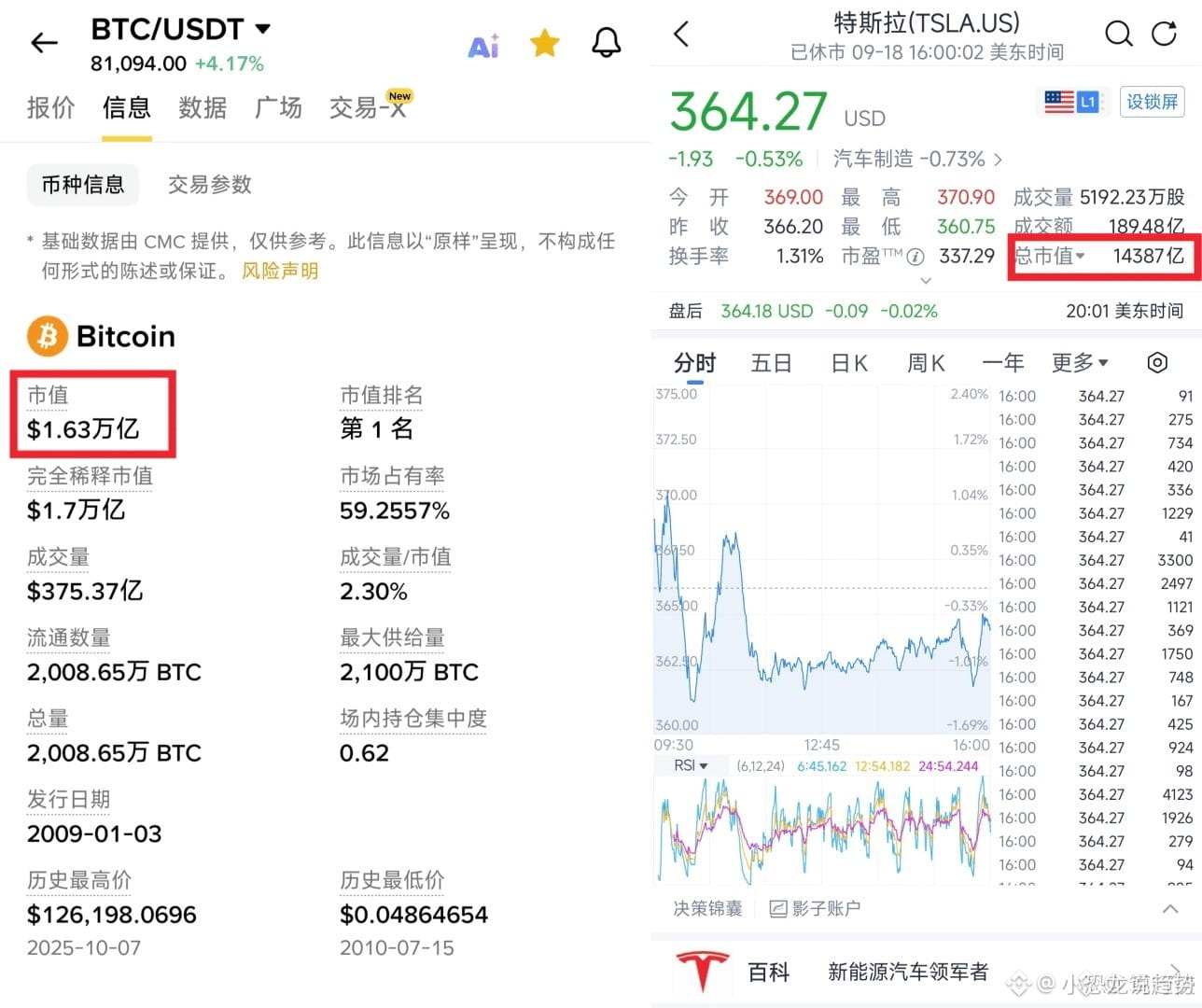
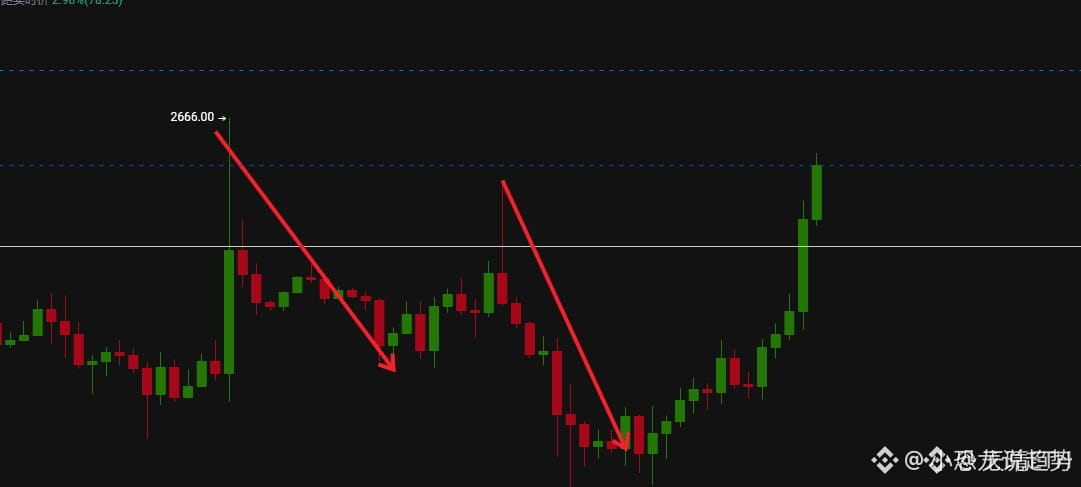
Let’s look at the data first. Ethereum has re-trod the integer level of $2,600, with market cap around $322 billion and 24-hour trading volume reaching $16.2 billion. Bitcoin is now at $81,500, with market cap of $1.64 trillion. Compared with when the CLARITY Act stalled in the Senate this week and prices were knocked below $75,000, it has already rebounded by nearly 9%. Solana is $111, XRP is $1.43—XRP is the most aggressive mover among the major coins in this round.
The logic behind it is very clear. The Fed raised rates this week by 25 basis points to a range of 3.75% to 4.00%, the first time it has hiked since July 2023. But what truly eased investors’ nerves was the dot plot: by the end of 2027, the median rate is only projected to be 4.1%, meaning at most it could move once more—not the continuous tightening the market had feared. With the rate hike delivered and the path turning more dovish, panic selling drained away, and risk assets launched a coordinated counterattack.
My view: this wave of Ethereum returning to $2,600 is more about catching up with the broader market’s rebound, not an independent narrative driving Ethereum by itself. To see whether it can hold, you need to watch whether volume increases enough to chew through the layer of trapped supply from prior highs—otherwise, it’s just a top-side probe in a range-bound market. Don’t chase gains in the short term; it’s safer to act after pullbacks confirm.
Do you think this Ethereum move is a reversal or just a rebound? Let’s chat in the comments 👀🚀
Click the profile picture to watch the livestream.
Every day, I’ll help you track Ethereum hotspots—not only what’s happening in the news, but also the underlying logic and opportunities behind it 👀🚀
#以太坊重回2600美元
🔄 山寨季要不要参与,进群聊
Ethereum returns to $2,600—this week’s market staged a reversal: the rate hike landed without a crash, and instead pushed the market cap back up to $322 billion.
Who’s going up, and by how much—let’s get that straight first. Ethereum is currently at $2,637, up 2.26% in 24 hours, with trading volume of $16.2 billion. Bitcoin is steady above $81,500. Solana and XRP are also climbing; XRP jumped another 3.57% today.
But what determines this round of height isn’t the candlestick chart—it’s the Fed’s dot plot.
Let’s look at the data first. Ethereum has re-trod the integer level of $2,600, with market cap around $322 billion and 24-hour trading volume reaching $16.2 billion. Bitcoin is now at $81,500, with market cap of $1.64 trillion. Compared with when the CLARITY Act stalled in the Senate this week and prices were knocked below $75,000, it has already rebounded by nearly 9%. Solana is $111, XRP is $1.43—XRP is the most aggressive mover among the major coins in this round.
The logic behind it is very clear. The Fed raised rates this week by 25 basis points to a range of 3.75% to 4.00%, the first time it has hiked since July 2023. But what truly eased investors’ nerves was the dot plot: by the end of 2027, the median rate is only projected to be 4.1%, meaning at most it could move once more—not the continuous tightening the market had feared. With the rate hike delivered and the path turning more dovish, panic selling drained away, and risk assets launched a coordinated counterattack.
My view: this wave of Ethereum returning to $2,600 is more about catching up with the broader market’s rebound, not an independent narrative driving Ethereum by itself. To see whether it can hold, you need to watch whether volume increases enough to chew through the layer of trapped supply from prior highs—otherwise, it’s just a top-side probe in a range-bound market. Don’t chase gains in the short term; it’s safer to act after pullbacks confirm.
Do you think this Ethereum move is a reversal or just a rebound? Let’s chat in the comments 👀🚀
Click the profile picture to watch the livestream.
Every day, I’ll help you track Ethereum hotspots—not only what’s happening in the news, but also the underlying logic and opportunities behind it 👀🚀
🔄 山寨季要不要参与,进群聊
Ethereum returns to $2,600—this week’s market staged a reversal: the rate hike landed without a crash, and instead pushed the market cap back up to $322 billion.
Who’s going up, and by how much—let’s get that straight first. Ethereum is currently at $2,637, up 2.26% in 24 hours, with trading volume of $16.2 billion. Bitcoin is steady above $81,500. Solana and XRP are also climbing; XRP jumped another 3.57% today.
But what determines this round of height isn’t the candlestick chart—it’s the Fed’s dot plot.
Let’s look at the data first. Ethereum has re-trod the integer level of $2,600, with market cap around $322 billion and 24-hour trading volume reaching $16.2 billion. Bitcoin is now at $81,500, with market cap of $1.64 trillion. Compared with when the CLARITY Act stalled in the Senate this week and prices were knocked below $75,000, it has already rebounded by nearly 9%. Solana is $111, XRP is $1.43—XRP is the most aggressive mover among the major coins in this round.
The logic behind it is very clear. The Fed raised rates this week by 25 basis points to a range of 3.75% to 4.00%, the first time it has hiked since July 2023. But what truly eased investors’ nerves was the dot plot: by the end of 2027, the median rate is only projected to be 4.1%, meaning at most it could move once more—not the continuous tightening the market had feared. With the rate hike delivered and the path turning more dovish, panic selling drained away, and risk assets launched a coordinated counterattack.
My view: this wave of Ethereum returning to $2,600 is more about catching up with the broader market’s rebound, not an independent narrative driving Ethereum by itself. To see whether it can hold, you need to watch whether volume increases enough to chew through the layer of trapped supply from prior highs—otherwise, it’s just a top-side probe in a range-bound market. Don’t chase gains in the short term; it’s safer to act after pullbacks confirm.
Do you think this Ethereum move is a reversal or just a rebound? Let’s chat in the comments 👀🚀
Click the profile picture to watch the livestream.
Every day, I’ll help you track Ethereum hotspots—not only what’s happening in the news, but also the underlying logic and opportunities behind it 👀🚀
935
·
--
Verified
#xrp交易所储备创七年新低
[🔄 山寨轮动快,进群盯节奏](https://app.binance.com/uni-qr/EXpjD4Vi)
The XRP on exchanges is being quietly drained to its lowest point in seven years.
On one side, on-chain tokens are flowing out of exchanges and supply is tightening; on the other, XRP surged 6.93% in a single day, jumping from $1.2964 all the way to $1.4028, closing around $1.3863 and posting the most aggressive single-day gain in weeks. More importantly, Bitcoin’s market share slid from 64% down to 59%—funds are clearly rotating from the big leader into altcoins, and XRP is the most favored in this wave.
XRP exchange reserves hit a seven-year low, which is usually interpreted as tightening supply: coins moving from exchanges to cold wallets means less selling pressure and more scarcity—an archetypal bullish signal. The technical picture is cooperating too—on the daily chart, the 50-day moving average is still below the 200-day moving average, forming a “death cross” structure. But this gap has narrowed to the tightest level since the August 2024 golden cross; at the current pace, there’s a chance it flips into a “golden cross” by mid-October.
However, let’s cool things off: the 4-hour chart already saw a golden cross once back on August 21, yet the gap not only failed to widen—it closed back up again. That suggests the daily-level crossover still isn’t set in stone. ADX is at 35.2, so the trend is real; RSI is at 54.6, not yet in overbought territory. Fundamentals and on-chain activity are handing bullish traders step ladders—but it remains to be seen whether the key level at $1.38 can be held.
Meanwhile, Ripple is busy laying the next brick for this chain: the Batch V1.1 upgrade allows up to 8 transactions to be bundled into one—either all succeed or all fail—directly supporting “all-or-nothing delivery.” This feature will go live after September 29. Of the 35 validator nodes, 30 have already voted in favor—institutions are waiting, on-chain activity is tightening up, and price is moving.
Do you think this XRP move is a real reversal, or just another round of false excitement? Let’s chat in the comments 👀🚀
Click the profile picture to watch the live stream
Every day, I’ll help you track XRP hotspots—not only what’s happening in the news, but also how to understand the logic and opportunities behind it 👀🚀
#xrp交易所储备创七年新低
🔄 山寨轮动快,进群盯节奏
The XRP on exchanges is being quietly drained to its lowest point in seven years.
On one side, on-chain tokens are flowing out of exchanges and supply is tightening; on the other, XRP surged 6.93% in a single day, jumping from $1.2964 all the way to $1.4028, closing around $1.3863 and posting the most aggressive single-day gain in weeks. More importantly, Bitcoin’s market share slid from 64% down to 59%—funds are clearly rotating from the big leader into altcoins, and XRP is the most favored in this wave.
XRP exchange reserves hit a seven-year low, which is usually interpreted as tightening supply: coins moving from exchanges to cold wallets means less selling pressure and more scarcity—an archetypal bullish signal. The technical picture is cooperating too—on the daily chart, the 50-day moving average is still below the 200-day moving average, forming a “death cross” structure. But this gap has narrowed to the tightest level since the August 2024 golden cross; at the current pace, there’s a chance it flips into a “golden cross” by mid-October.
However, let’s cool things off: the 4-hour chart already saw a golden cross once back on August 21, yet the gap not only failed to widen—it closed back up again. That suggests the daily-level crossover still isn’t set in stone. ADX is at 35.2, so the trend is real; RSI is at 54.6, not yet in overbought territory. Fundamentals and on-chain activity are handing bullish traders step ladders—but it remains to be seen whether the key level at $1.38 can be held.
Meanwhile, Ripple is busy laying the next brick for this chain: the Batch V1.1 upgrade allows up to 8 transactions to be bundled into one—either all succeed or all fail—directly supporting “all-or-nothing delivery.” This feature will go live after September 29. Of the 35 validator nodes, 30 have already voted in favor—institutions are waiting, on-chain activity is tightening up, and price is moving.
Do you think this XRP move is a real reversal, or just another round of false excitement? Let’s chat in the comments 👀🚀
Click the profile picture to watch the live stream
Every day, I’ll help you track XRP hotspots—not only what’s happening in the news, but also how to understand the logic and opportunities behind it 👀🚀
🔄 山寨轮动快,进群盯节奏
The XRP on exchanges is being quietly drained to its lowest point in seven years.
On one side, on-chain tokens are flowing out of exchanges and supply is tightening; on the other, XRP surged 6.93% in a single day, jumping from $1.2964 all the way to $1.4028, closing around $1.3863 and posting the most aggressive single-day gain in weeks. More importantly, Bitcoin’s market share slid from 64% down to 59%—funds are clearly rotating from the big leader into altcoins, and XRP is the most favored in this wave.
XRP exchange reserves hit a seven-year low, which is usually interpreted as tightening supply: coins moving from exchanges to cold wallets means less selling pressure and more scarcity—an archetypal bullish signal. The technical picture is cooperating too—on the daily chart, the 50-day moving average is still below the 200-day moving average, forming a “death cross” structure. But this gap has narrowed to the tightest level since the August 2024 golden cross; at the current pace, there’s a chance it flips into a “golden cross” by mid-October.
However, let’s cool things off: the 4-hour chart already saw a golden cross once back on August 21, yet the gap not only failed to widen—it closed back up again. That suggests the daily-level crossover still isn’t set in stone. ADX is at 35.2, so the trend is real; RSI is at 54.6, not yet in overbought territory. Fundamentals and on-chain activity are handing bullish traders step ladders—but it remains to be seen whether the key level at $1.38 can be held.
Meanwhile, Ripple is busy laying the next brick for this chain: the Batch V1.1 upgrade allows up to 8 transactions to be bundled into one—either all succeed or all fail—directly supporting “all-or-nothing delivery.” This feature will go live after September 29. Of the 35 validator nodes, 30 have already voted in favor—institutions are waiting, on-chain activity is tightening up, and price is moving.
Do you think this XRP move is a real reversal, or just another round of false excitement? Let’s chat in the comments 👀🚀
Click the profile picture to watch the live stream
Every day, I’ll help you track XRP hotspots—not only what’s happening in the news, but also how to understand the logic and opportunities behind it 👀🚀

671
·
--
Verified
#美联储加息是否已成定局
[🏛️ 宏观数据进群解读](https://app.binance.com/uni-qr/EXpjD4Vi)
For months, Trump has repeatedly urged: “Cut interest rates faster.” On taking office, Powell/Wash immediately acted—then, in response, raised rates by 25 basis points.
Has a Federal Reserve rate hike become a foregone conclusion? The answer was revealed in the early hours: not only did it happen—it was approved unanimously.
In the early hours of today Beijing time, the Federal Reserve raised the benchmark interest rate by 25 basis points, lifting the range to 3.75%-4.00%. This is the first rate hike since July 2023. More importantly, this decision was unanimous—there was not a single dissenting vote.
The most dramatic moment came afterwards. Over the past few months, Trump had been publicly calling for rate cuts. However, the new chair, Wash, not only didn’t take the bait—he raised rates instead, adding: “The economy really is getting stronger, but inflation is the problem.”
In other words: You praise the economy—I agree; but you want me to cut rates? Not a chance.
When asked what he thought of Trump’s response, Wash directly refused to comment and tossed out a line he had said at Jackson Hole: “What we want is price stability. What we want is discipline—not this one decision.”
The market had already priced in this “shot.” Before the decision, Wall Street was betting on a 25-basis-point hike with a probability of over 92%. So after the news landed, Bitcoin only surged briefly, then quickly returned to around $75,500, moving hardly at all throughout the day.
But what’s really worth watching is what comes next. The Fed’s latest dot plot still leaves a gap: there may be another rate hike before year-end. If Wash truly follows through, then today’s calm—“bad news fully out”—is merely the prelude to the next round of volatility.
My view: This rate hike itself isn’t the real news. The true new variable is Wash’s stance—a chair bold enough to withstand presidential pressure and put “price stability” first. For the crypto market, that means the script of tightening dollar liquidity isn’t over yet—don’t rush to go all-in on bargain buys.
So the question is: do you think this rate hike is the bottom of the “bad news fully out,” or the top of the “one more shot”? Let’s discuss in the comments.
Every day, I bring you coverage of Fed hotspots—more than just what news happened. I’ll also help you understand the logic and opportunities behind it 👀🚀
#美联储加息是否已成定局
🏛️ 宏观数据进群解读
For months, Trump has repeatedly urged: “Cut interest rates faster.” On taking office, Powell/Wash immediately acted—then, in response, raised rates by 25 basis points.
Has a Federal Reserve rate hike become a foregone conclusion? The answer was revealed in the early hours: not only did it happen—it was approved unanimously.
In the early hours of today Beijing time, the Federal Reserve raised the benchmark interest rate by 25 basis points, lifting the range to 3.75%-4.00%. This is the first rate hike since July 2023. More importantly, this decision was unanimous—there was not a single dissenting vote.
The most dramatic moment came afterwards. Over the past few months, Trump had been publicly calling for rate cuts. However, the new chair, Wash, not only didn’t take the bait—he raised rates instead, adding: “The economy really is getting stronger, but inflation is the problem.”
In other words: You praise the economy—I agree; but you want me to cut rates? Not a chance.
When asked what he thought of Trump’s response, Wash directly refused to comment and tossed out a line he had said at Jackson Hole: “What we want is price stability. What we want is discipline—not this one decision.”
The market had already priced in this “shot.” Before the decision, Wall Street was betting on a 25-basis-point hike with a probability of over 92%. So after the news landed, Bitcoin only surged briefly, then quickly returned to around $75,500, moving hardly at all throughout the day.
But what’s really worth watching is what comes next. The Fed’s latest dot plot still leaves a gap: there may be another rate hike before year-end. If Wash truly follows through, then today’s calm—“bad news fully out”—is merely the prelude to the next round of volatility.
My view: This rate hike itself isn’t the real news. The true new variable is Wash’s stance—a chair bold enough to withstand presidential pressure and put “price stability” first. For the crypto market, that means the script of tightening dollar liquidity isn’t over yet—don’t rush to go all-in on bargain buys.
So the question is: do you think this rate hike is the bottom of the “bad news fully out,” or the top of the “one more shot”? Let’s discuss in the comments.
Every day, I bring you coverage of Fed hotspots—more than just what news happened. I’ll also help you understand the logic and opportunities behind it 👀🚀
🏛️ 宏观数据进群解读
For months, Trump has repeatedly urged: “Cut interest rates faster.” On taking office, Powell/Wash immediately acted—then, in response, raised rates by 25 basis points.
Has a Federal Reserve rate hike become a foregone conclusion? The answer was revealed in the early hours: not only did it happen—it was approved unanimously.
In the early hours of today Beijing time, the Federal Reserve raised the benchmark interest rate by 25 basis points, lifting the range to 3.75%-4.00%. This is the first rate hike since July 2023. More importantly, this decision was unanimous—there was not a single dissenting vote.
The most dramatic moment came afterwards. Over the past few months, Trump had been publicly calling for rate cuts. However, the new chair, Wash, not only didn’t take the bait—he raised rates instead, adding: “The economy really is getting stronger, but inflation is the problem.”
In other words: You praise the economy—I agree; but you want me to cut rates? Not a chance.
When asked what he thought of Trump’s response, Wash directly refused to comment and tossed out a line he had said at Jackson Hole: “What we want is price stability. What we want is discipline—not this one decision.”
The market had already priced in this “shot.” Before the decision, Wall Street was betting on a 25-basis-point hike with a probability of over 92%. So after the news landed, Bitcoin only surged briefly, then quickly returned to around $75,500, moving hardly at all throughout the day.
But what’s really worth watching is what comes next. The Fed’s latest dot plot still leaves a gap: there may be another rate hike before year-end. If Wash truly follows through, then today’s calm—“bad news fully out”—is merely the prelude to the next round of volatility.
My view: This rate hike itself isn’t the real news. The true new variable is Wash’s stance—a chair bold enough to withstand presidential pressure and put “price stability” first. For the crypto market, that means the script of tightening dollar liquidity isn’t over yet—don’t rush to go all-in on bargain buys.
So the question is: do you think this rate hike is the bottom of the “bad news fully out,” or the top of the “one more shot”? Let’s discuss in the comments.
Every day, I bring you coverage of Fed hotspots—more than just what news happened. I’ll also help you understand the logic and opportunities behind it 👀🚀

615
·
--
Verified
#美联储加息是否已成定局
[🏛️ 美联储动向群里跟进](https://app.binance.com/uni-qr/EXpjD4Vi)
Rate hike delivered, Bitcoin remains unmoved—$75,700. After the decision, there was almost zero movement within half an hour; what moved instead were U.S. stocks and U.S. Treasuries.
The first reaction after the decision came out was far milder than market expectations. Bitcoin traded sideways around $75,700, with gains and losses so small they’re nearly negligible. U.S. stocks edged higher, while Treasury yields actually dipped slightly. This suggests the rate hike was already priced in early—the bad news had been digested cleanly a month before the decision.
Put it in plain language: Everyone was waiting for this punch. When it finally lands, it doesn’t hurt. The institutions that needed to de-risk already cut exposure before the FOMC meeting; what’s left are seasoned pros willing to weather the volatility.
You can see it in the pricing: before the decision, the market priced this hike at as high as 93%, leaving almost no room for surprises. Bitcoin’s technical picture is also there in black and white—strong support sits around the $68,000 area. With $75,700 still a distance away from the cliff, bears also don’t dare to smash it down impulsively.
But calm may be an illusion. Buried in the dot plot are expectations for a second rate hike within the year—that’s the second boot hovering overhead. The next 48 hours are the key: if Waller adds another hawkish line at the press conference, the U.S. dollar index could turn upward, and today’s sideways chop could instantly become the starting point for another round of declines.
Comment section—let’s discuss: In this period of consolidation, does it look like bottoming, or a continuation in the middle of a selloff?
Every day, I’ll keep you on top of Fed hotspots—not just reporting what’s happening, but helping you understand the logic and opportunities behind it 👀🚀
#美联储加息是否已成定局
🏛️ 美联储动向群里跟进
Rate hike delivered, Bitcoin remains unmoved—$75,700. After the decision, there was almost zero movement within half an hour; what moved instead were U.S. stocks and U.S. Treasuries.
The first reaction after the decision came out was far milder than market expectations. Bitcoin traded sideways around $75,700, with gains and losses so small they’re nearly negligible. U.S. stocks edged higher, while Treasury yields actually dipped slightly. This suggests the rate hike was already priced in early—the bad news had been digested cleanly a month before the decision.
Put it in plain language: Everyone was waiting for this punch. When it finally lands, it doesn’t hurt. The institutions that needed to de-risk already cut exposure before the FOMC meeting; what’s left are seasoned pros willing to weather the volatility.
You can see it in the pricing: before the decision, the market priced this hike at as high as 93%, leaving almost no room for surprises. Bitcoin’s technical picture is also there in black and white—strong support sits around the $68,000 area. With $75,700 still a distance away from the cliff, bears also don’t dare to smash it down impulsively.
But calm may be an illusion. Buried in the dot plot are expectations for a second rate hike within the year—that’s the second boot hovering overhead. The next 48 hours are the key: if Waller adds another hawkish line at the press conference, the U.S. dollar index could turn upward, and today’s sideways chop could instantly become the starting point for another round of declines.
Comment section—let’s discuss: In this period of consolidation, does it look like bottoming, or a continuation in the middle of a selloff?
Every day, I’ll keep you on top of Fed hotspots—not just reporting what’s happening, but helping you understand the logic and opportunities behind it 👀🚀
🏛️ 美联储动向群里跟进
Rate hike delivered, Bitcoin remains unmoved—$75,700. After the decision, there was almost zero movement within half an hour; what moved instead were U.S. stocks and U.S. Treasuries.
The first reaction after the decision came out was far milder than market expectations. Bitcoin traded sideways around $75,700, with gains and losses so small they’re nearly negligible. U.S. stocks edged higher, while Treasury yields actually dipped slightly. This suggests the rate hike was already priced in early—the bad news had been digested cleanly a month before the decision.
Put it in plain language: Everyone was waiting for this punch. When it finally lands, it doesn’t hurt. The institutions that needed to de-risk already cut exposure before the FOMC meeting; what’s left are seasoned pros willing to weather the volatility.
You can see it in the pricing: before the decision, the market priced this hike at as high as 93%, leaving almost no room for surprises. Bitcoin’s technical picture is also there in black and white—strong support sits around the $68,000 area. With $75,700 still a distance away from the cliff, bears also don’t dare to smash it down impulsively.
But calm may be an illusion. Buried in the dot plot are expectations for a second rate hike within the year—that’s the second boot hovering overhead. The next 48 hours are the key: if Waller adds another hawkish line at the press conference, the U.S. dollar index could turn upward, and today’s sideways chop could instantly become the starting point for another round of declines.
Comment section—let’s discuss: In this period of consolidation, does it look like bottoming, or a continuation in the middle of a selloff?
Every day, I’ll keep you on top of Fed hotspots—not just reporting what’s happening, but helping you understand the logic and opportunities behind it 👀🚀
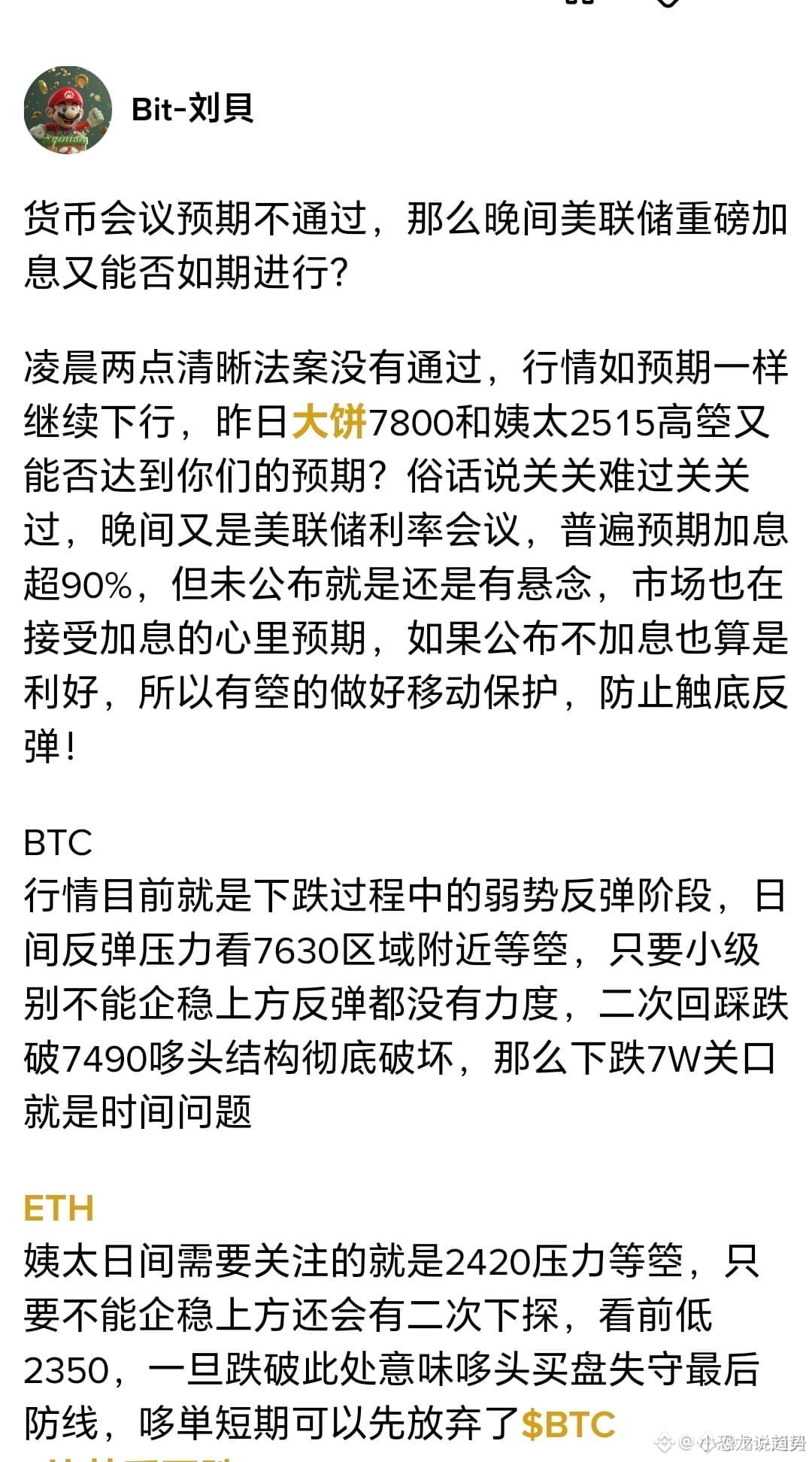
758
·
--
Verified
#美联储加息是否已成定局
[📢 进群聊美股动态](https://app.binance.com/uni-qr/EXpjD4Vi)
For the first time in three years and two months, the Federal Reserve raised interest rates—at 2 a.m., the federal funds rate was increased by 25 basis points, moving into the 3.75% to 4.00% range.
This hike was approved unanimously. None of the seven voting officials dissented. The last rate hike dated back to July 2023—an interval of three years and two months. The path to rate cuts has now officially come to an end, and there is no longer any suspense about the direction of monetary policy.
Put simply: the Fed believes it can’t get prices under control. It would rather make borrowing more expensive than risk failing to bring inflation back to its 2% target. The statement is quite firm: economic activity is expanding at a steady pace, but inflation remains too high—so today’s move is intended to bring inflation back home in a more timely manner. The new chair, Waller, for the first time presided over the policy meeting; in his opening remarks, he already laid out the playbook: the committee wants price stability.
When the decision was released, Bitcoin barely moved—it just traded sideways around $75,700. US stocks edged higher, while Treasury yields actually dipped slightly. A classic “bad news fully priced in, buy the facts” scenario: the market had already priced this hike at more than 92%, so once it actually happened, nobody panicked.
The real risk is buried in the dot plot. In most officials’ expectations, there’s still a potential second rate hike later this year. So the biggest uncertainty today isn’t whether there was a hike—it’s whether there will be another one over the next six months. That will determine where the money supporting Bitcoin and US equities will flow.
Comment section question: Do you believe a second rate hike this year will actually happen?
Every day, I’ll keep you on top of Fed headlines—not just what happens in the news, but also how to understand the logic and the opportunities behind it 👀🚀
#美联储加息是否已成定局
📢 进群聊美股动态
For the first time in three years and two months, the Federal Reserve raised interest rates—at 2 a.m., the federal funds rate was increased by 25 basis points, moving into the 3.75% to 4.00% range.
This hike was approved unanimously. None of the seven voting officials dissented. The last rate hike dated back to July 2023—an interval of three years and two months. The path to rate cuts has now officially come to an end, and there is no longer any suspense about the direction of monetary policy.
Put simply: the Fed believes it can’t get prices under control. It would rather make borrowing more expensive than risk failing to bring inflation back to its 2% target. The statement is quite firm: economic activity is expanding at a steady pace, but inflation remains too high—so today’s move is intended to bring inflation back home in a more timely manner. The new chair, Waller, for the first time presided over the policy meeting; in his opening remarks, he already laid out the playbook: the committee wants price stability.
When the decision was released, Bitcoin barely moved—it just traded sideways around $75,700. US stocks edged higher, while Treasury yields actually dipped slightly. A classic “bad news fully priced in, buy the facts” scenario: the market had already priced this hike at more than 92%, so once it actually happened, nobody panicked.
The real risk is buried in the dot plot. In most officials’ expectations, there’s still a potential second rate hike later this year. So the biggest uncertainty today isn’t whether there was a hike—it’s whether there will be another one over the next six months. That will determine where the money supporting Bitcoin and US equities will flow.
Comment section question: Do you believe a second rate hike this year will actually happen?
Every day, I’ll keep you on top of Fed headlines—not just what happens in the news, but also how to understand the logic and the opportunities behind it 👀🚀
📢 进群聊美股动态
For the first time in three years and two months, the Federal Reserve raised interest rates—at 2 a.m., the federal funds rate was increased by 25 basis points, moving into the 3.75% to 4.00% range.
This hike was approved unanimously. None of the seven voting officials dissented. The last rate hike dated back to July 2023—an interval of three years and two months. The path to rate cuts has now officially come to an end, and there is no longer any suspense about the direction of monetary policy.
Put simply: the Fed believes it can’t get prices under control. It would rather make borrowing more expensive than risk failing to bring inflation back to its 2% target. The statement is quite firm: economic activity is expanding at a steady pace, but inflation remains too high—so today’s move is intended to bring inflation back home in a more timely manner. The new chair, Waller, for the first time presided over the policy meeting; in his opening remarks, he already laid out the playbook: the committee wants price stability.
When the decision was released, Bitcoin barely moved—it just traded sideways around $75,700. US stocks edged higher, while Treasury yields actually dipped slightly. A classic “bad news fully priced in, buy the facts” scenario: the market had already priced this hike at more than 92%, so once it actually happened, nobody panicked.
The real risk is buried in the dot plot. In most officials’ expectations, there’s still a potential second rate hike later this year. So the biggest uncertainty today isn’t whether there was a hike—it’s whether there will be another one over the next six months. That will determine where the money supporting Bitcoin and US equities will flow.
Comment section question: Do you believe a second rate hike this year will actually happen?
Every day, I’ll keep you on top of Fed headlines—not just what happens in the news, but also how to understand the logic and the opportunities behind it 👀🚀
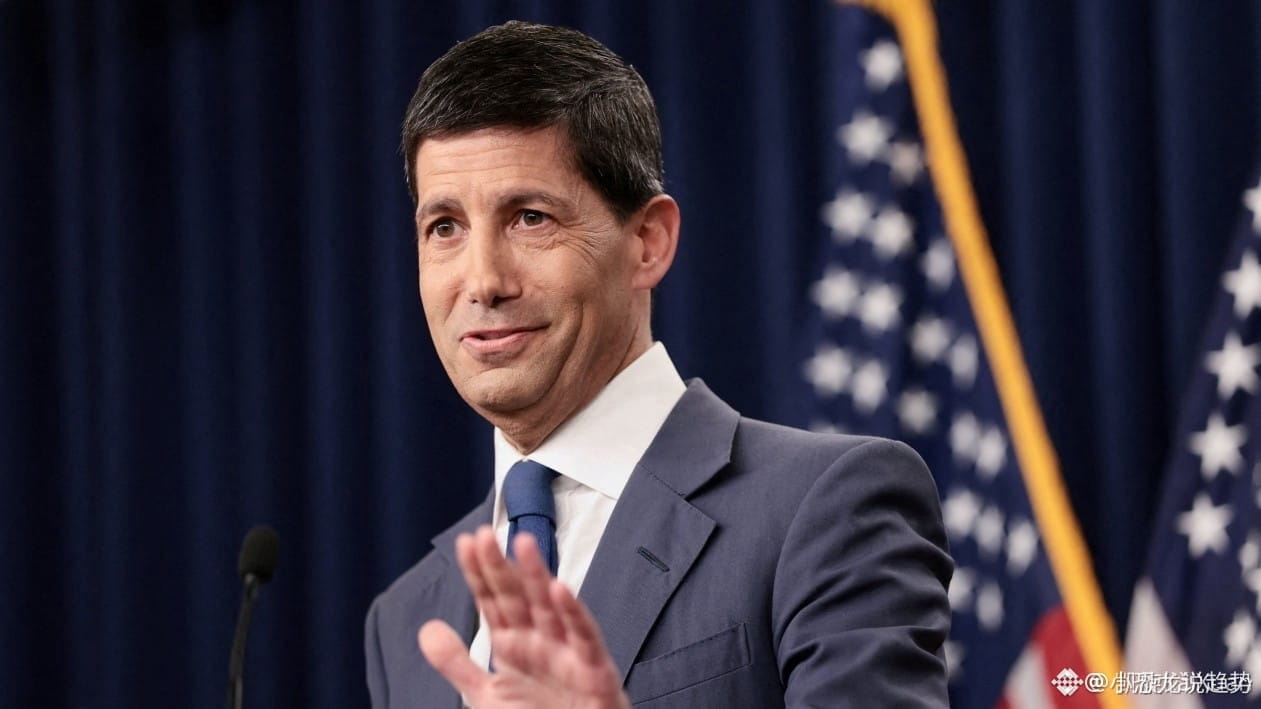
743
Log in to explore more content
Join global crypto users on Binance Square
⚡️ Get latest and useful information about crypto.
💬 Trusted by the world’s largest crypto exchange.
👍 Discover real insights from verified creators.
Email / Phone number
Trending Topics
AIStocksWhatNext
198,110 views
2,194 Discussing
Share & Win Traffic Reward in our Trending Hashtag Campaign
✨Topic: What Other Investment Opportunities Remain as AI Stocks Keep Rising?
👉How to Join:
Publish a short post or article with hashtag #AIStocksWhatNext
Share whether you’re bullish or bearish, and post your AI stock holdings or trade — using the trade widget may improve your eligibility.
You can also strengthen your post by sharing data or charts, and avoiding AI-generated images.
✍️Create content based on the below angles:
- Nvidia says chip sales will double next year, and top AI companies keep hitting record revenue, the compute spend behind it is just as staggering. Is AI demand really taking off? And how long can it last? AI stocks are up across the board. Is this a real breakout, or just a short-term bounce?
- Industry leaders are calling to slow down AI development, while Trump plans to build an “AI Force”, claiming AI could account for 25% of U.S. GDP in the future. Whose side are you on? Will state-level backing be a long-term win for AI stocks?
- Are you buying AI stocks? Share your AI-related trade/holdings with our trade sharing widget.
⏰Campaign Period:
- 2026-09-22 7:00 - 2026-09-24 4:00 UTC
🎁Reward:
- Qualified posts that comply with the above guidelines and contain more than 100 words will be reviewed and may receive a random traffic boost of 500 to 3,000 views. You will receive a notification from your feed secretary if your post is selected.
- Get a chance to have your article featured on Binance Square Official
Need ideas for your post? Visit the topic page #AIStocksWhatNext or the Square Guide on How to Post for Better Reach.
Binance Square Official
·288 Likes
·613.6k views
BitcoinBreaksAboveMayHighNears$86K
6,676 views
114 Discussing
DogecoinRises15%
16,781 views
646 Discussing