#美国9月非农仅增2.9万人失业率升至4.2%
In just one month, only 29,000 new jobs were added—about 70% fewer than expected. Tonight’s rate-hike script was literally upended by the U.S. government’s own employment data 🦖
📈 进群看今日思路
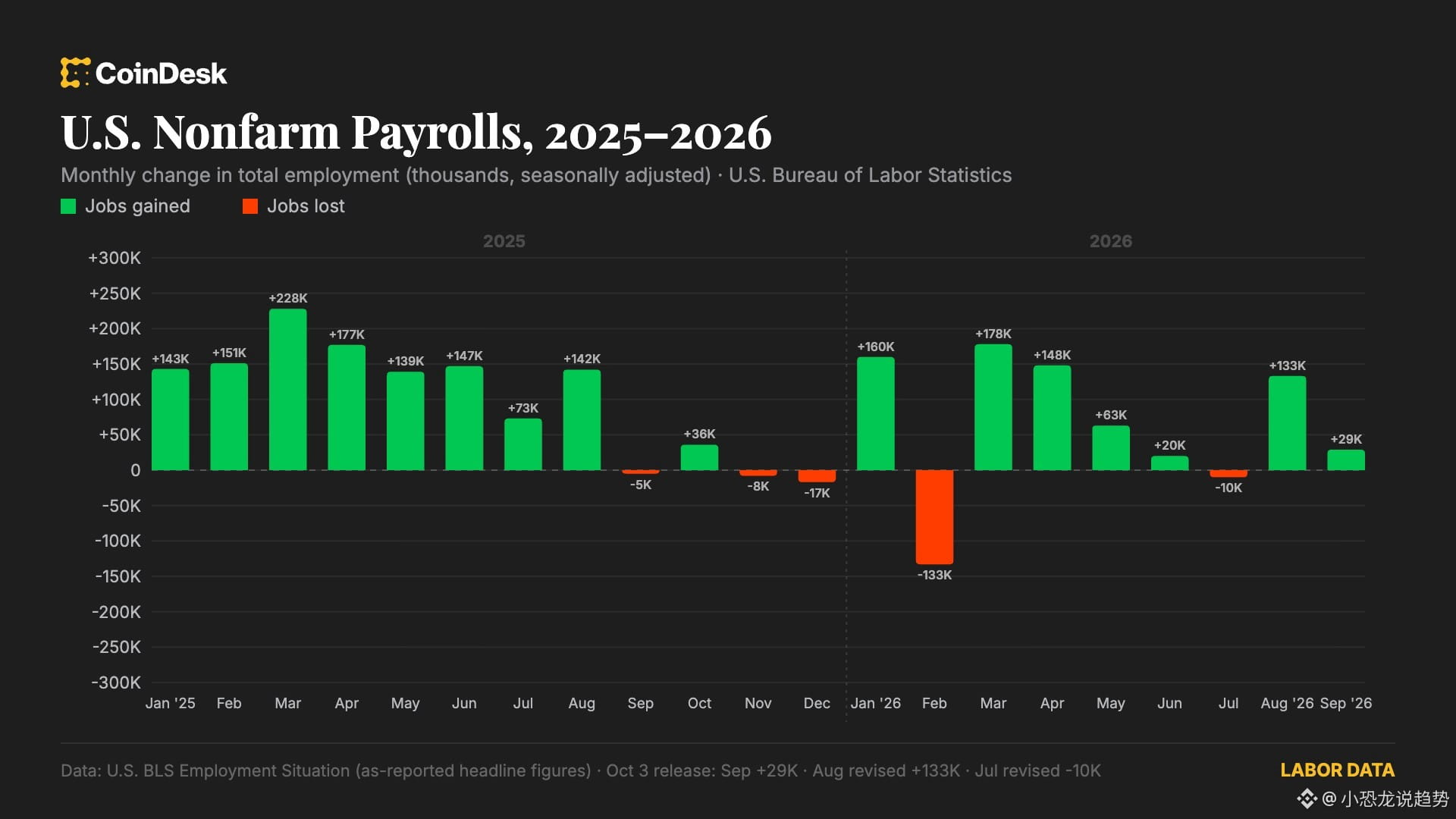
In September, U.S. nonfarm payroll employment increased by only 29,000, while the market had expected 90,000. The unemployment rate unexpectedly rose instead of falling, climbing from 4.1% to 4.2%. The moment the data was released, traders immediately turned around: the probability that the October 28 policy meeting would keep interest rates unchanged jumped from 35.8% a week ago to 74%.
First, let’s talk about how “cold” this report is. The July gain was revised from +21,000 to -10,000. August was cut from +162,000 to +133,000. Together, the two months saw a reduction of 60,000 jobs. Over the past year, the average monthly job additions have dropped to just 45,000. Wages are also softening: average hourly earnings rose only 0.1% month over month, far below the 0.3% expected. Year over year, wages rose 3.0%, also below the 3.2% forecast. This isn’t merely a report that’s slightly below expectations—it’s one where the labor market and wages are cooling across the board.
The market’s reaction has been very straightforward. The 10-year U.S. Treasury yield dropped 7 basis points in one go to 5.17%. The 2-year yield fell to 4.71%. Nasdaq futures surged 1.2%, gold jumped more than 1%, and the U.S. dollar weakened. Taking advantage of the move, Bitcoin pushed above $86,500—up about 3% in 24 hours—and briefly hovered near $87,000.
⚠️ My view: What’s truly worth watching isn’t the conclusion that rates won’t be raised, but the reason behind it. Core PCE year over year came in at 3.0% on Wednesday, well below the 3.3% expected—so inflation really is easing. But employment is also easing—this combination of cooling inflation and weakening jobs is exactly the scenario the Federal Reserve would least want to face. The market is now trading “no rate hike” as a positive—but whether September’s CPI on October 14, and whether the unemployment rate continues to move higher from here, will determine whether the market rebounds or shifts into a new phase.
📉 Another signal comes from liquidity: U.S. spot Bitcoin ETFs saw net inflows of $2.65 billion in September. Total net inflows in Q3 were $6.34 billion. That sounds like a lot—until you account for outflows in the first two quarters. Even for the full year 2026, net inflows are still under $1 billion. Money is coming back slowly, but in a very restrained way.
💥 So the question now isn’t whether the Fed will hike, but whether the market is willing to accept and price in a weakening employment-data story.
Do you think this is the real reversal after the bad news is already “priced in,” or the last round of a squeeze before the data deterioration fully plays out? Let’s discuss in the comments.
Click the profile picture to watch the live stream
Every day, I’ll help you track Bitcoin hotspots—not just what’s happening in the news, but also how to understand the logic and the opportunities behind it 👀🚀
In just one month, only 29,000 new jobs were added—about 70% fewer than expected. Tonight’s rate-hike script was literally upended by the U.S. government’s own employment data 🦖
📈 进群看今日思路
In September, U.S. nonfarm payroll employment increased by only 29,000, while the market had expected 90,000. The unemployment rate unexpectedly rose instead of falling, climbing from 4.1% to 4.2%. The moment the data was released, traders immediately turned around: the probability that the October 28 policy meeting would keep interest rates unchanged jumped from 35.8% a week ago to 74%.
First, let’s talk about how “cold” this report is. The July gain was revised from +21,000 to -10,000. August was cut from +162,000 to +133,000. Together, the two months saw a reduction of 60,000 jobs. Over the past year, the average monthly job additions have dropped to just 45,000. Wages are also softening: average hourly earnings rose only 0.1% month over month, far below the 0.3% expected. Year over year, wages rose 3.0%, also below the 3.2% forecast. This isn’t merely a report that’s slightly below expectations—it’s one where the labor market and wages are cooling across the board.
The market’s reaction has been very straightforward. The 10-year U.S. Treasury yield dropped 7 basis points in one go to 5.17%. The 2-year yield fell to 4.71%. Nasdaq futures surged 1.2%, gold jumped more than 1%, and the U.S. dollar weakened. Taking advantage of the move, Bitcoin pushed above $86,500—up about 3% in 24 hours—and briefly hovered near $87,000.
⚠️ My view: What’s truly worth watching isn’t the conclusion that rates won’t be raised, but the reason behind it. Core PCE year over year came in at 3.0% on Wednesday, well below the 3.3% expected—so inflation really is easing. But employment is also easing—this combination of cooling inflation and weakening jobs is exactly the scenario the Federal Reserve would least want to face. The market is now trading “no rate hike” as a positive—but whether September’s CPI on October 14, and whether the unemployment rate continues to move higher from here, will determine whether the market rebounds or shifts into a new phase.
📉 Another signal comes from liquidity: U.S. spot Bitcoin ETFs saw net inflows of $2.65 billion in September. Total net inflows in Q3 were $6.34 billion. That sounds like a lot—until you account for outflows in the first two quarters. Even for the full year 2026, net inflows are still under $1 billion. Money is coming back slowly, but in a very restrained way.
💥 So the question now isn’t whether the Fed will hike, but whether the market is willing to accept and price in a weakening employment-data story.
Do you think this is the real reversal after the bad news is already “priced in,” or the last round of a squeeze before the data deterioration fully plays out? Let’s discuss in the comments.
Click the profile picture to watch the live stream
Every day, I’ll help you track Bitcoin hotspots—not just what’s happening in the news, but also how to understand the logic and the opportunities behind it 👀🚀