
GLOW_PK
11.5k Posts

GLOW_PK
 Square Verified+
📊 Crypto Trader | Technical Analysis | Market Insights | Risk Management First 🚀
Open Trade
High-Frequency Trader
2.7 Years
2.7K+ Following
34.3K+ Followers
25.9K+ Liked
Posts
Portfolio
All
Quotes
Videos
Live
PINNED
SOL red packet dropped ❤️🩹🧧
and suddenly nobody🫀✨️
needs sleep anymore 😂🎁
Everyone refreshing nonstop🎁🧧
like their salary depends on it 🤣💸🚀
Clim it Fast 🎁🤗💞🔐
$NVDAB $AAPLB $SOL
#Claim #Redpaicket #SECSendsCryptoCustodyRuleToWhiteHouse #SECSendsCryptoCustodyRuleToWhiteHouse #XRPRallies44%InAWeek
and suddenly nobody🫀✨️
needs sleep anymore 😂🎁
Everyone refreshing nonstop🎁🧧
like their salary depends on it 🤣💸🚀
Clim it Fast 🎁🤗💞🔐
$NVDAB $AAPLB $SOL
#Claim #Redpaicket #SECSendsCryptoCustodyRuleToWhiteHouse #SECSendsCryptoCustodyRuleToWhiteHouse #XRPRallies44%InAWeek

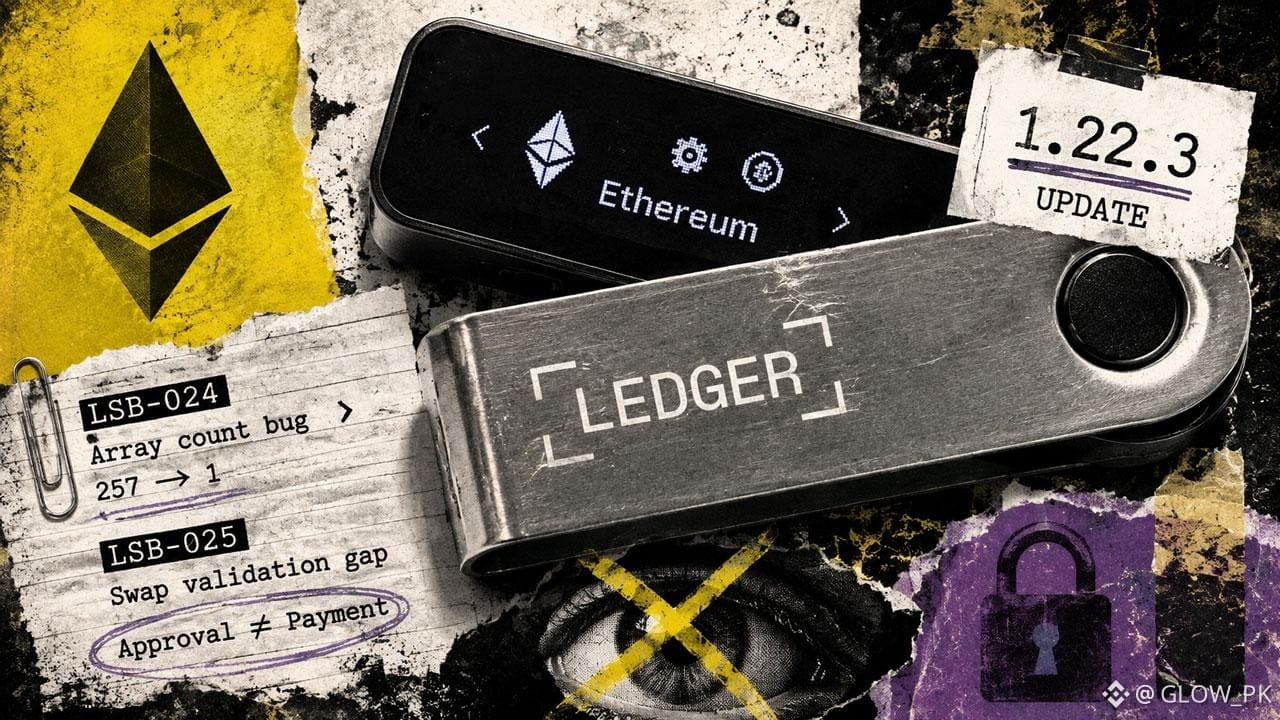
🔐 I initially thought the viral Ledger “Ethereum hack” was just another reminder that hardware wallets aren't as safe as people believe.
But after looking deeper, the real story is more nuanced—and arguably more concerning.
Ledger says the bug shown in the viral demonstration had already been fixed in version 1.22.2.
Sounds reassuring.
Except that wasn't the end of it.
Two separate signing vulnerabilities still remained and required another update.
That’s why version 1.22.3 matters.
According to Ledger, neither of those vulnerabilities was exploited in the wild. But this is the part I think crypto users often underestimate:
Security isn't binary.
A device can be protected against the exploit going viral today while still having other weaknesses that haven't been fully addressed yet.
And for hardware wallet users, the biggest risk isn't always someone “hacking” the device directly.
Sometimes it's much simpler:
You trust what you're signing without fully understanding what the transaction is actually authorizing.
The latest update closes the two remaining signing issues, but the bigger lesson goes beyond Ledger.
🔍 Don't treat a hardware wallet like a magic shield.
Keep firmware updated.
Verify transactions carefully.
And never assume that “not exploited in the wild” means “no risk existed.”
In crypto, security updates often arrive quietly.
The consequences of ignoring them usually don't.
Would you update your wallet firmware immediately—or wait until a vulnerability is actually exploited?
#CryptoSecurity #Ethereum #Web3 #bitcoin #CryptoNews
But after looking deeper, the real story is more nuanced—and arguably more concerning.
Ledger says the bug shown in the viral demonstration had already been fixed in version 1.22.2.
Sounds reassuring.
Except that wasn't the end of it.
Two separate signing vulnerabilities still remained and required another update.
That’s why version 1.22.3 matters.
According to Ledger, neither of those vulnerabilities was exploited in the wild. But this is the part I think crypto users often underestimate:
Security isn't binary.
A device can be protected against the exploit going viral today while still having other weaknesses that haven't been fully addressed yet.
And for hardware wallet users, the biggest risk isn't always someone “hacking” the device directly.
Sometimes it's much simpler:
You trust what you're signing without fully understanding what the transaction is actually authorizing.
The latest update closes the two remaining signing issues, but the bigger lesson goes beyond Ledger.
🔍 Don't treat a hardware wallet like a magic shield.
Keep firmware updated.
Verify transactions carefully.
And never assume that “not exploited in the wild” means “no risk existed.”
In crypto, security updates often arrive quietly.
The consequences of ignoring them usually don't.
Would you update your wallet firmware immediately—or wait until a vulnerability is actually exploited?
#CryptoSecurity #Ethereum #Web3 #bitcoin #CryptoNews
I keep seeing people compare Alpha Modus to Michael Saylor.
But this deal exposes something much more uncomfortable.
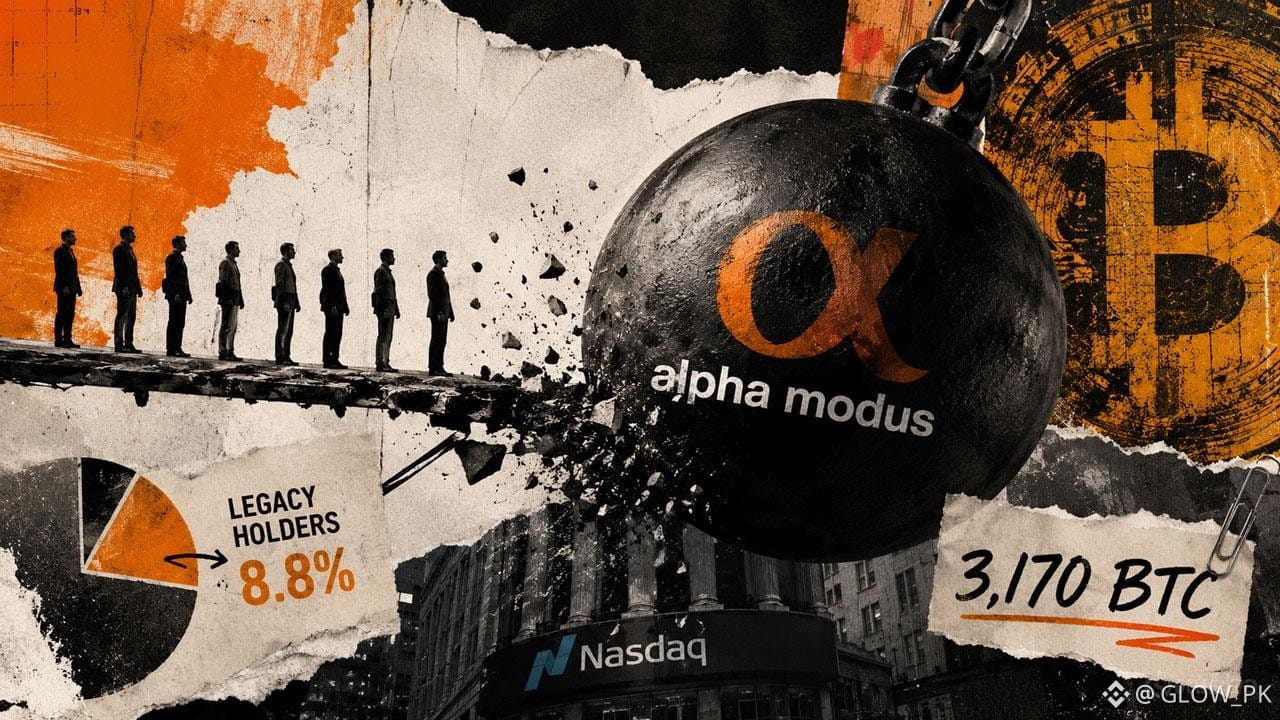
$AMOD agreed to bring 3,170 BTC onto its balance sheet—valued at over $200M in the proposed transaction.
The price?
Massive dilution.
The company agreed to issue over 51.6M new Class A shares, with matching warrants, compared with roughly 5M shares outstanding before the deal.
And the market’s reaction was brutal.
The stock dropped sharply after the announcement.
Here’s the part I think many people are missing:
Bitcoin on a balance sheet is not the same thing as cash in the bank.
The transaction still has to close.
BTC’s value can move before and after closing.
And even if the balance sheet looks dramatically stronger on paper, that doesn't automatically fix near-term liquidity or the underlying business.
This is the difference between owning Bitcoin and having a sustainable Bitcoin strategy.
Saylor built a long-term capital machine around BTC.
Alpha Modus is trying to use BTC to transform its balance sheet while facing a Nasdaq listing deficiency.
Same asset.
Completely different starting position.
Maybe the deal works.
But the market is asking a much harder question:
If you multiply the asset base by 10x, but potentially dilute the shareholders even more, who actually captures the upside?
#Bitcoin #BTC #CryptoNews #BinanceSquare #Investing
But this deal exposes something much more uncomfortable.
$AMOD agreed to bring 3,170 BTC onto its balance sheet—valued at over $200M in the proposed transaction.
The price?
Massive dilution.
The company agreed to issue over 51.6M new Class A shares, with matching warrants, compared with roughly 5M shares outstanding before the deal.
And the market’s reaction was brutal.
The stock dropped sharply after the announcement.
Here’s the part I think many people are missing:
Bitcoin on a balance sheet is not the same thing as cash in the bank.
The transaction still has to close.
BTC’s value can move before and after closing.
And even if the balance sheet looks dramatically stronger on paper, that doesn't automatically fix near-term liquidity or the underlying business.
This is the difference between owning Bitcoin and having a sustainable Bitcoin strategy.
Saylor built a long-term capital machine around BTC.
Alpha Modus is trying to use BTC to transform its balance sheet while facing a Nasdaq listing deficiency.
Same asset.
Completely different starting position.
Maybe the deal works.
But the market is asking a much harder question:
If you multiply the asset base by 10x, but potentially dilute the shareholders even more, who actually captures the upside?
#Bitcoin #BTC #CryptoNews #BinanceSquare #Investing
I was looking into Ethereum’s upcoming Glamsterdam changes, and one trade-off stood out to me.
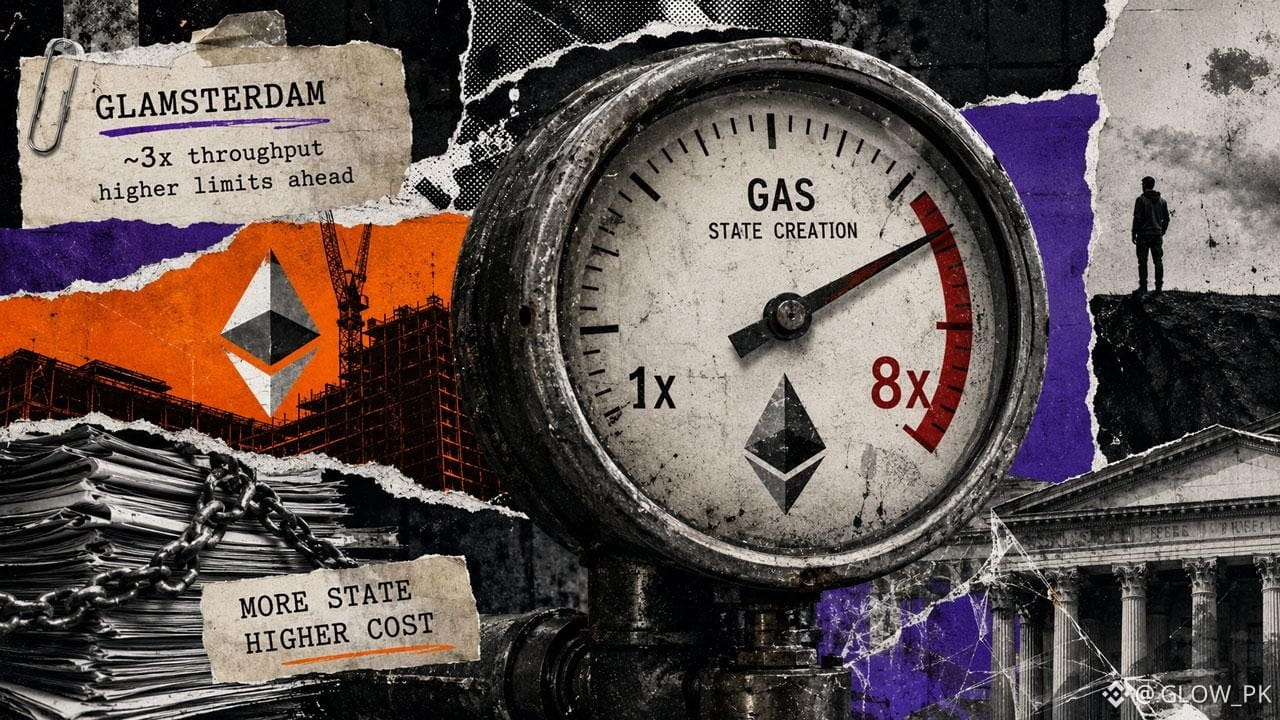
The new gas repricing could potentially support around 3x more base-layer throughput.
That sounds like a straightforward win.
But historical transaction replays revealed something uncomfortable: millions of transactions could fail under the new gas schedule.
Most of those issues may be relatively easy to fix by adjusting gas limits.
The harder problem is older smart contracts built around hardcoded gas assumptions.
This is the part of scaling upgrades people often overlook.
Making a network faster isn't only about increasing capacity. Every change to the underlying economics can interact with code that was written years ago and assumed the rules would stay the same.
Ethereum may get significantly more throughput.
But the real challenge is making sure yesterday's contracts can survive tomorrow's network.
#Ethereum #ETH #blockchain #crypto #SmartContracts
The new gas repricing could potentially support around 3x more base-layer throughput.
That sounds like a straightforward win.
But historical transaction replays revealed something uncomfortable: millions of transactions could fail under the new gas schedule.
Most of those issues may be relatively easy to fix by adjusting gas limits.
The harder problem is older smart contracts built around hardcoded gas assumptions.
This is the part of scaling upgrades people often overlook.
Making a network faster isn't only about increasing capacity. Every change to the underlying economics can interact with code that was written years ago and assumed the rules would stay the same.
Ethereum may get significantly more throughput.
But the real challenge is making sure yesterday's contracts can survive tomorrow's network.
#Ethereum #ETH #blockchain #crypto #SmartContracts
I was thinking about something interesting while looking at the growth of stablecoin payments.
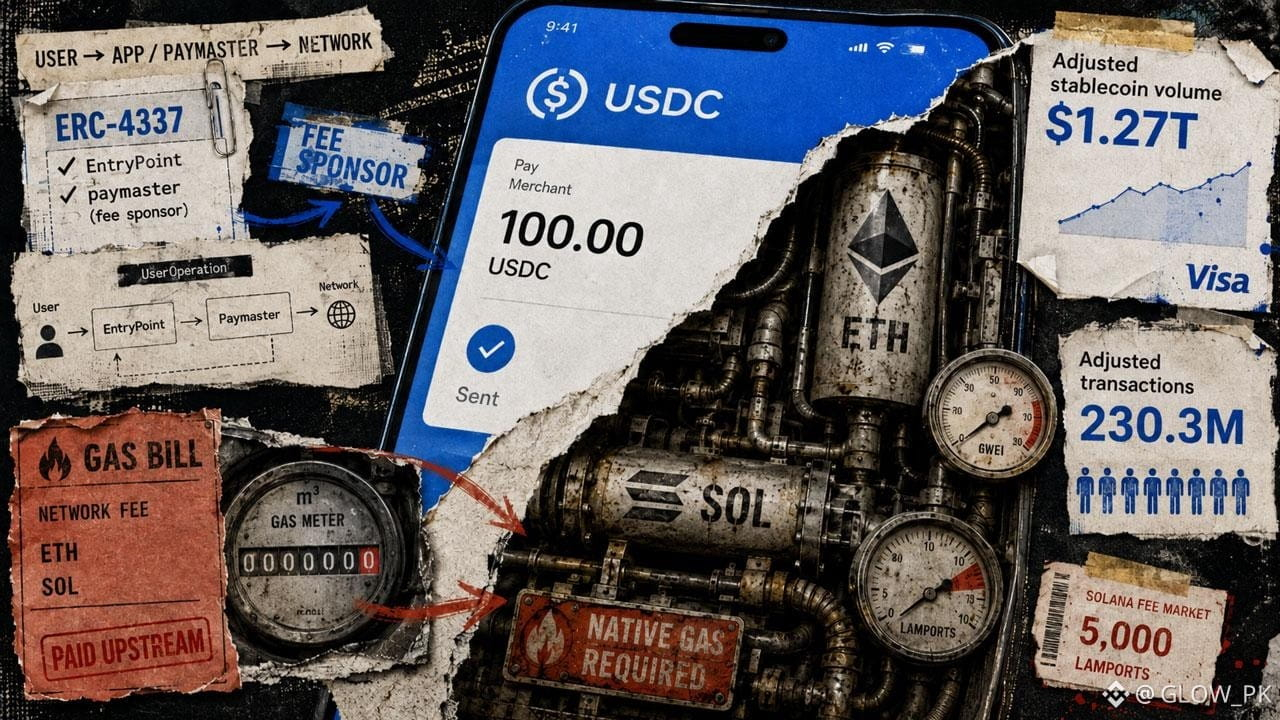
Users may soon be able to move billions in stablecoins without ever needing to buy or hold $ETH or $SOL themselves.
The experience becomes simple: open the app, send USDC, and forget everything happening underneath.
But there’s one thing abstraction cannot remove: the gas bill.
Someone still has to pay for blockspace.
That changes where native token demand comes from. Instead of millions of individual users constantly acquiring gas tokens, demand could increasingly shift toward a smaller group of wallets, paymasters, and infrastructure providers operating at scale.
So the question isn't whether gas demand disappears.
It's who ends up holding the tokens required to pay for it.
That could become one of the most important structural changes in the next phase of crypto adoption. 👀
#Crypto #Stablecoins #Ethereum #solana #blockchain
Users may soon be able to move billions in stablecoins without ever needing to buy or hold $ETH or $SOL themselves.
The experience becomes simple: open the app, send USDC, and forget everything happening underneath.
But there’s one thing abstraction cannot remove: the gas bill.
Someone still has to pay for blockspace.
That changes where native token demand comes from. Instead of millions of individual users constantly acquiring gas tokens, demand could increasingly shift toward a smaller group of wallets, paymasters, and infrastructure providers operating at scale.
So the question isn't whether gas demand disappears.
It's who ends up holding the tokens required to pay for it.
That could become one of the most important structural changes in the next phase of crypto adoption. 👀
#Crypto #Stablecoins #Ethereum #solana #blockchain
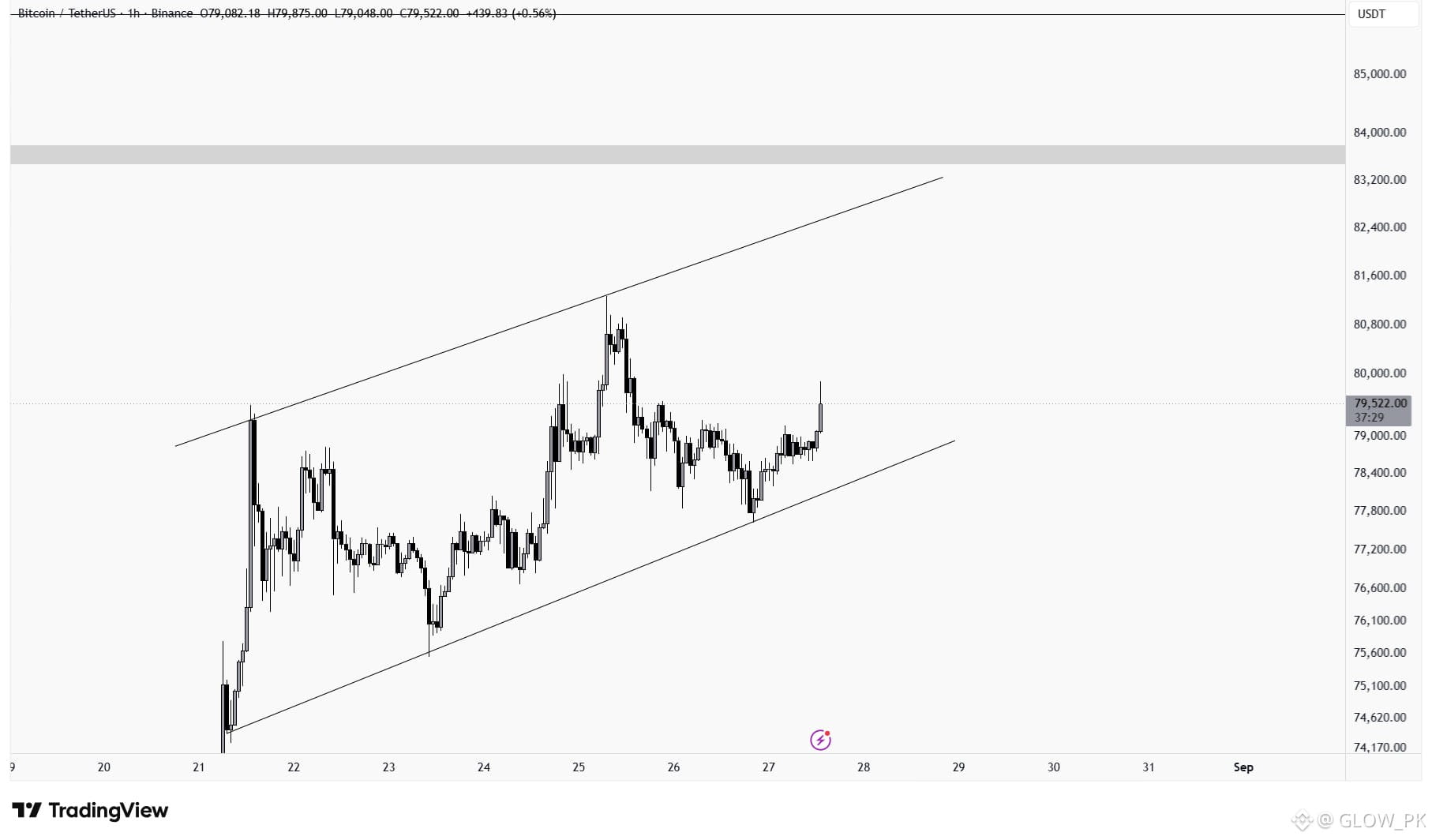
$BTC is once again showing signs of strength after following the broader uptrend.
Right now, the price appears to be forming a rising channel, which makes the structure quite interesting.
As long as Bitcoin continues respecting this channel and holding its key support levels, the next move could be another push upward to form a new Higher High.
The structure is bullish for now, but the channel boundaries will be important to watch. 👀
Will $BTC continue the momentum, or are we about to see another test before the next breakout?
#bitcoin #crypto #BTCTrading #CryptoMarket
Right now, the price appears to be forming a rising channel, which makes the structure quite interesting.
As long as Bitcoin continues respecting this channel and holding its key support levels, the next move could be another push upward to form a new Higher High.
The structure is bullish for now, but the channel boundaries will be important to watch. 👀
Will $BTC continue the momentum, or are we about to see another test before the next breakout?
#bitcoin #crypto #BTCTrading #CryptoMarket
·
--
🎙️ Crypto market trend exchange; answering questions for newcomers ✅ Co-create the Binance Square 🦅 Spread the free-thinking philosophy! Maintain ecological balance!

End
03 h 15 m 26 s
10.9k
79
·
--
🎙️ Rally peak breakdown and pressure pullback, high-level washout: BTC retraces to 79,000–79,200 and then stabilizes for low-risk longs; ETH retraces to 2,460–2,475 and stabilizes for low-risk longs. Lightly short near resistance with strict stop-losses. ATM system real-time prices

End
03 h 56 m 50 s
3.1k
10

·
--
🎙️ Build Binance Square, Invest BNB Regularly|Friday, is the bull back again? Let's chat~

End
05 h 17 m 30 s
9.5k
36
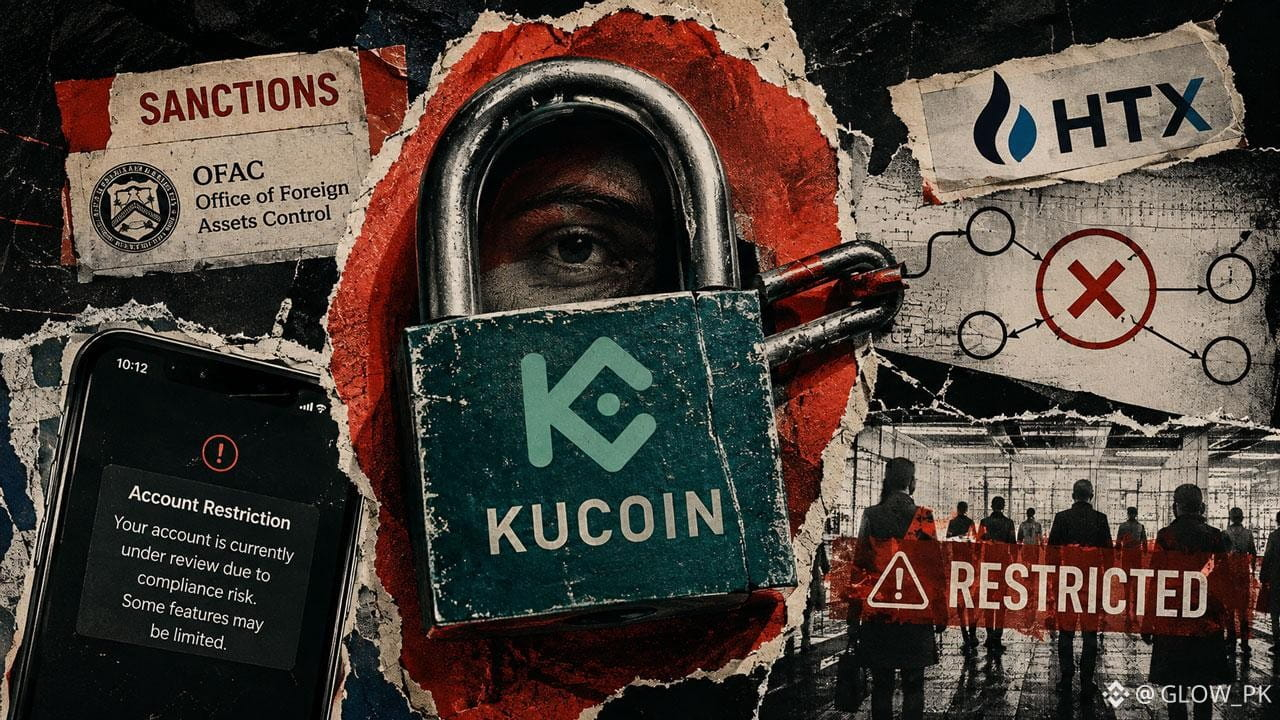
🚨 BIG:
KuCoin can reportedly hold or reject crypto transfers linked indirectly to 17 sanctioned platforms — even if users never sent funds to those platforms themselves.
The biggest question is transparency: How many transaction hops are being tracked, and what level of exposure is enough to trigger a block?
As crypto compliance becomes more advanced, understanding where your funds have been could become just as important as where you’re sending them. 👀
#crypto #Bitcoin #blockchain #CryptoNewss #Binance
KuCoin can reportedly hold or reject crypto transfers linked indirectly to 17 sanctioned platforms — even if users never sent funds to those platforms themselves.
The biggest question is transparency: How many transaction hops are being tracked, and what level of exposure is enough to trigger a block?
As crypto compliance becomes more advanced, understanding where your funds have been could become just as important as where you’re sending them. 👀
#crypto #Bitcoin #blockchain #CryptoNewss #Binance
🇻🇪 BIG:
The U.S. is reportedly nearing a deal to secure an ownership stake in Venezuelan oil fields containing around 90 billion barrels of proven reserves, according to Axios.
If confirmed, this could mark a major shift in the global energy landscape and U.S.–Venezuela relations. 🛢️
#Oil #Venezuela #USA #energy #markets
The U.S. is reportedly nearing a deal to secure an ownership stake in Venezuelan oil fields containing around 90 billion barrels of proven reserves, according to Axios.
If confirmed, this could mark a major shift in the global energy landscape and U.S.–Venezuela relations. 🛢️
#Oil #Venezuela #USA #energy #markets


PINDI BOY PK²⁵
·
--
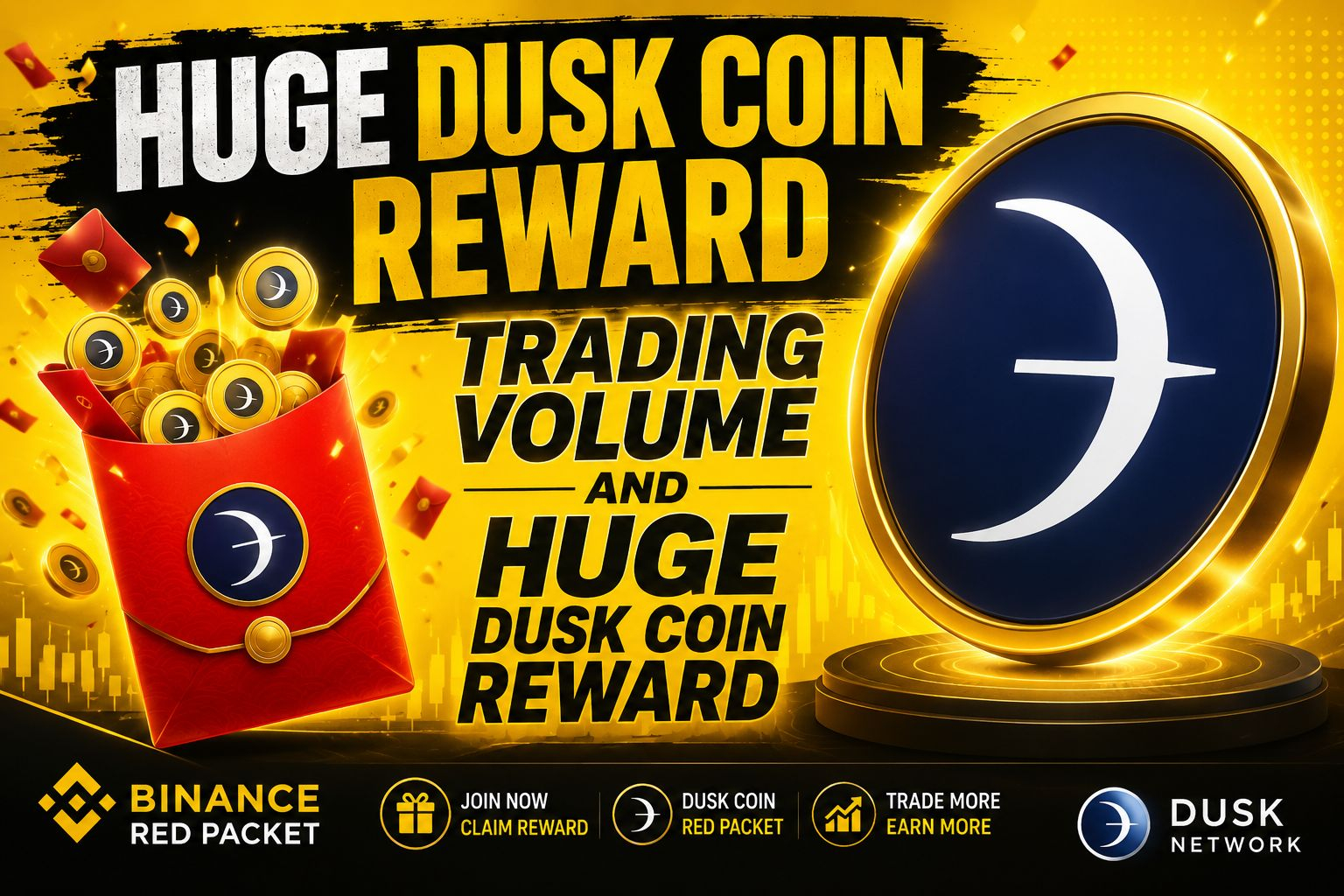
Bullish🎁❤️ DUSK COIN RED PACKET ❤️🎁
🔥 HUGE DUSK COIN REWARD
📈 HUGE TRADING VOLUME
🎁 TRADE MORE • EARN MORE • CLAIM YOUR DUSK REWARD
💙 A SPECIAL GIFT FOR THE DUSK COMMUNITY ❤️
🎉 JOIN THE RED PACKET & GRAB YOUR REWARD! 🎁
#DUSK #DuskNetwork #Crypto #Binance #cryptotrading
$DUSK
🔥 HUGE DUSK COIN REWARD
📈 HUGE TRADING VOLUME
🎁 TRADE MORE • EARN MORE • CLAIM YOUR DUSK REWARD
💙 A SPECIAL GIFT FOR THE DUSK COMMUNITY ❤️
🎉 JOIN THE RED PACKET & GRAB YOUR REWARD! 🎁
#DUSK #DuskNetwork #Crypto #Binance #cryptotrading
$DUSK
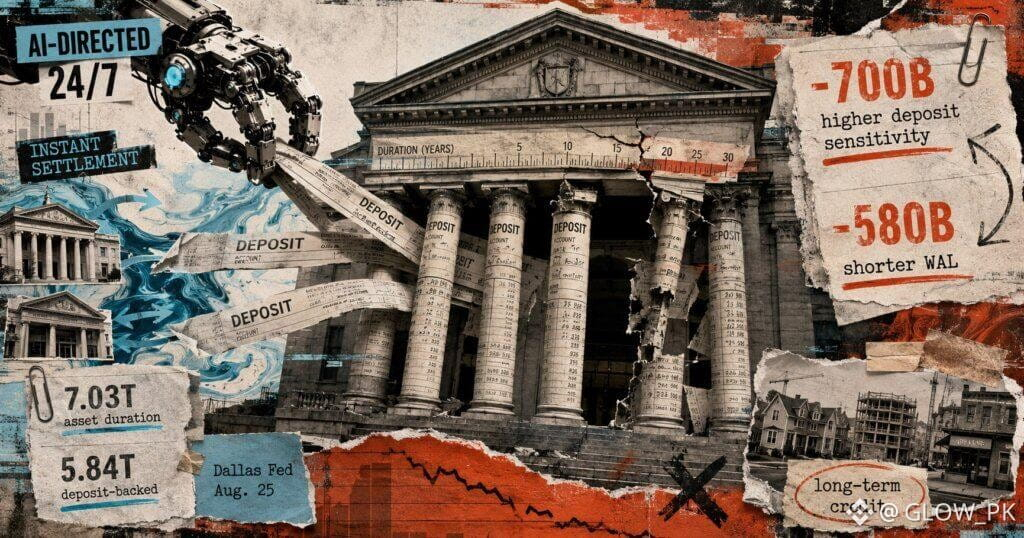
📊 DATA:
A Dallas Fed model suggests that a 10% increase in deposit rate sensitivity could reduce banks’ appetite for duration risk by around $700B.
The bigger issue is what happens when AI starts moving money instantly toward the best available returns.
Banks may have to compete harder for deposits, pushing their funding costs higher. And when banks pay more for funding, those costs could eventually reach everyday borrowers through higher loan rates.
AI isn’t just changing trading and investing—it could quietly reshape how the entire banking system prices money.
#AI #Banking #Finance #Crypto #economy
A Dallas Fed model suggests that a 10% increase in deposit rate sensitivity could reduce banks’ appetite for duration risk by around $700B.
The bigger issue is what happens when AI starts moving money instantly toward the best available returns.
Banks may have to compete harder for deposits, pushing their funding costs higher. And when banks pay more for funding, those costs could eventually reach everyday borrowers through higher loan rates.
AI isn’t just changing trading and investing—it could quietly reshape how the entire banking system prices money.
#AI #Banking #Finance #Crypto #economy
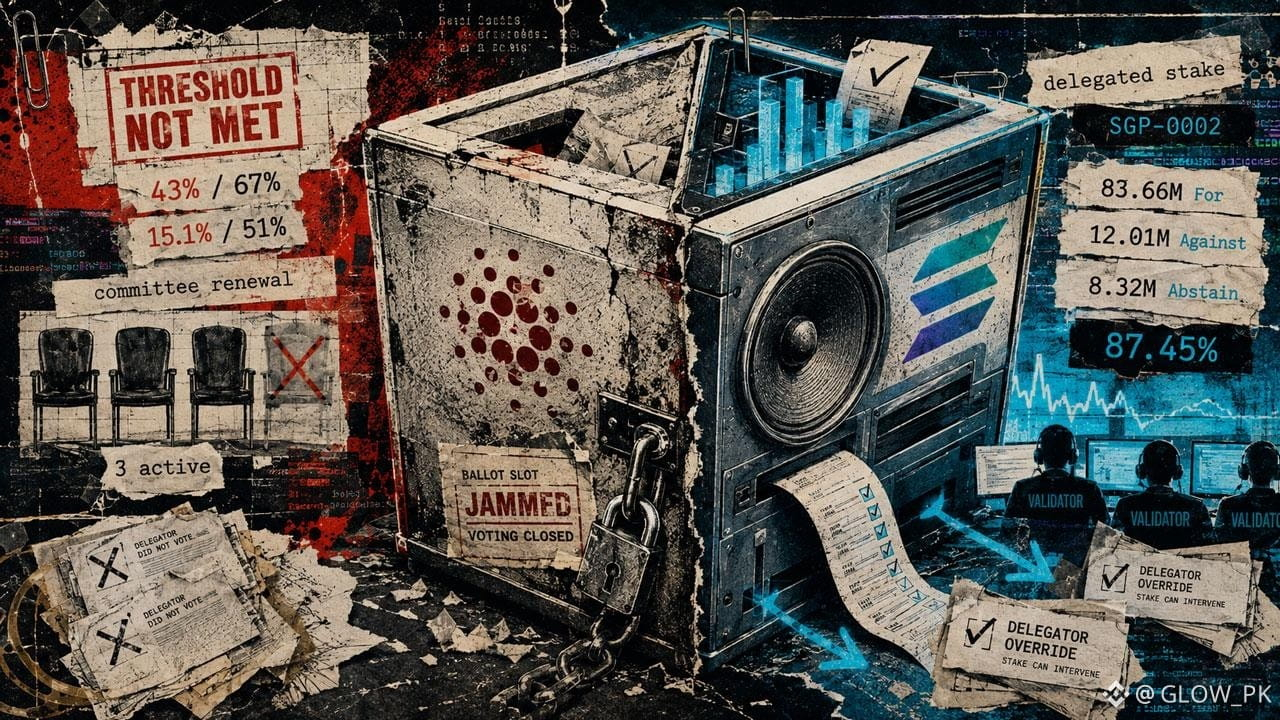
Cardano and Solana are exposing two very different problems in crypto governance.
Cardano gives passive holders more direct control, but when voters stay silent, decision-making can become concentrated around a small group.
Solana takes the opposite approach. Validators can vote with delegated stake by default, improving participation—but raising a bigger question: are validators always voting in the best interest of delegators?
Neither model is perfect.
One struggles with voter apathy. The other struggles with representation.
Maybe the hardest problem in decentralized governance isn't getting people to vote—it's making sure the right incentives exist when they do.
#Cardano #Solana #Crypto #Blockchain #defi
Cardano gives passive holders more direct control, but when voters stay silent, decision-making can become concentrated around a small group.
Solana takes the opposite approach. Validators can vote with delegated stake by default, improving participation—but raising a bigger question: are validators always voting in the best interest of delegators?
Neither model is perfect.
One struggles with voter apathy. The other struggles with representation.
Maybe the hardest problem in decentralized governance isn't getting people to vote—it's making sure the right incentives exist when they do.
#Cardano #Solana #Crypto #Blockchain #defi
🔥 UPDATE:
Nvidia is reportedly set to acquire AI platform Hugging Face in a massive $12.9B deal, according to The Information.
If confirmed, this could be one of Nvidia’s biggest moves beyond chips. Hugging Face sits at the center of the open-source AI ecosystem, used by millions of developers and researchers worldwide.
The bigger question is: will Nvidia now control even more of the AI stack—from hardware to models and developer tools? 👀
This could reshape the entire AI race.
#Nvidia #AI #HuggingFace #Crypto #Technology
Nvidia is reportedly set to acquire AI platform Hugging Face in a massive $12.9B deal, according to The Information.
If confirmed, this could be one of Nvidia’s biggest moves beyond chips. Hugging Face sits at the center of the open-source AI ecosystem, used by millions of developers and researchers worldwide.
The bigger question is: will Nvidia now control even more of the AI stack—from hardware to models and developer tools? 👀
This could reshape the entire AI race.
#Nvidia #AI #HuggingFace #Crypto #Technology

🔥 BIG:
StarkWare has reportedly executed the first-ever quantum-safe Bitcoin transaction on mainnet.
This is more than just a technical milestone. As quantum computing continues to advance, the question of Bitcoin’s long-term security is becoming harder to ignore.
The real challenge now is whether quantum-resistant technology can move from experiments into practical protection for the wider Bitcoin ecosystem.
Early step today, potentially a much bigger conversation tomorrow. 👀
#Bitcoin #BTC #StarkWare #crypto #blockchain
StarkWare has reportedly executed the first-ever quantum-safe Bitcoin transaction on mainnet.
This is more than just a technical milestone. As quantum computing continues to advance, the question of Bitcoin’s long-term security is becoming harder to ignore.
The real challenge now is whether quantum-resistant technology can move from experiments into practical protection for the wider Bitcoin ecosystem.
Early step today, potentially a much bigger conversation tomorrow. 👀
#Bitcoin #BTC #StarkWare #crypto #blockchain

📊 Bitcoin is heading into a major options expiry with around $6.4B in contracts set to expire on August 28.
Right now, BTC is sitting between two key zones: $75K and $80K, where heavy call positioning could influence price action.
The interesting part is that these levels could act like a magnet and pin the price—or become fuel for a sharper breakout if momentum takes over.
But without a clearer view of dealer positioning, it’s still difficult to know which scenario has the stronger edge.
One thing is certain: this expiry could bring increased volatility. 👀
Will BTC stay trapped between these levels or finally break out? 🔥
#Bitcoin #BTC #Crypto #options #cryptotrading
Right now, BTC is sitting between two key zones: $75K and $80K, where heavy call positioning could influence price action.
The interesting part is that these levels could act like a magnet and pin the price—or become fuel for a sharper breakout if momentum takes over.
But without a clearer view of dealer positioning, it’s still difficult to know which scenario has the stronger edge.
One thing is certain: this expiry could bring increased volatility. 👀
Will BTC stay trapped between these levels or finally break out? 🔥
#Bitcoin #BTC #Crypto #options #cryptotrading

Log in to explore more content