
Elise_Crypto
1.1k Posts

Elise_Crypto
Tu guía en el mundo cripto. 💡 Aprende las claves del mercado y crece con nosotros. ¡Bienvenidos! 📈

BNB Holder
Occasional Trader
1.1 Years
2.0K+ Following
988 Followers
1.1K+ Liked
Posts
All
Quotes
Live
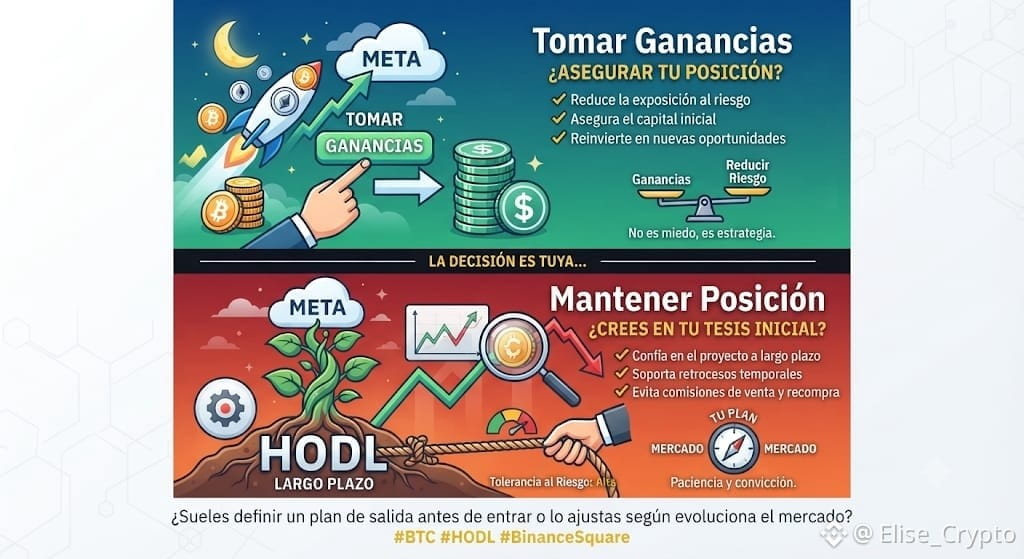
🚨 Do you take profits or hold your position?
After several green days, it’s normal to start doubting yourself: “Should I sell now before it pulls back?”
The difference shouldn’t be fear, but your plan.
📉 A pullback doesn’t automatically invalidate a thesis.
📈 But it also doesn’t mean the market will keep rising without pauses.
Before acting, it’s worth checking three things:
Your time horizon: did you enter for weeks, months, or the long term?
Your thesis: do the project and market conditions still support your original idea?
Your risk: if the price corrects, is your position and liquidity still manageable?
Taking profits can reduce exposure. Holding can make sense if your thesis is still valid. Neither option is automatic: it depends on your goal, your risk tolerance, and not letting a 4-hour candle decide for you.
💬 Community question:
Do you usually define an exit plan before entering, or do you adjust it as the market evolves?
#BTC #Crypto #Trading #HODL #BİNANCESQUARE #GestiónDeRiesgo #PsicologíaTrading #Criptomonedas #Bullrun #inversioninteligente $BTC

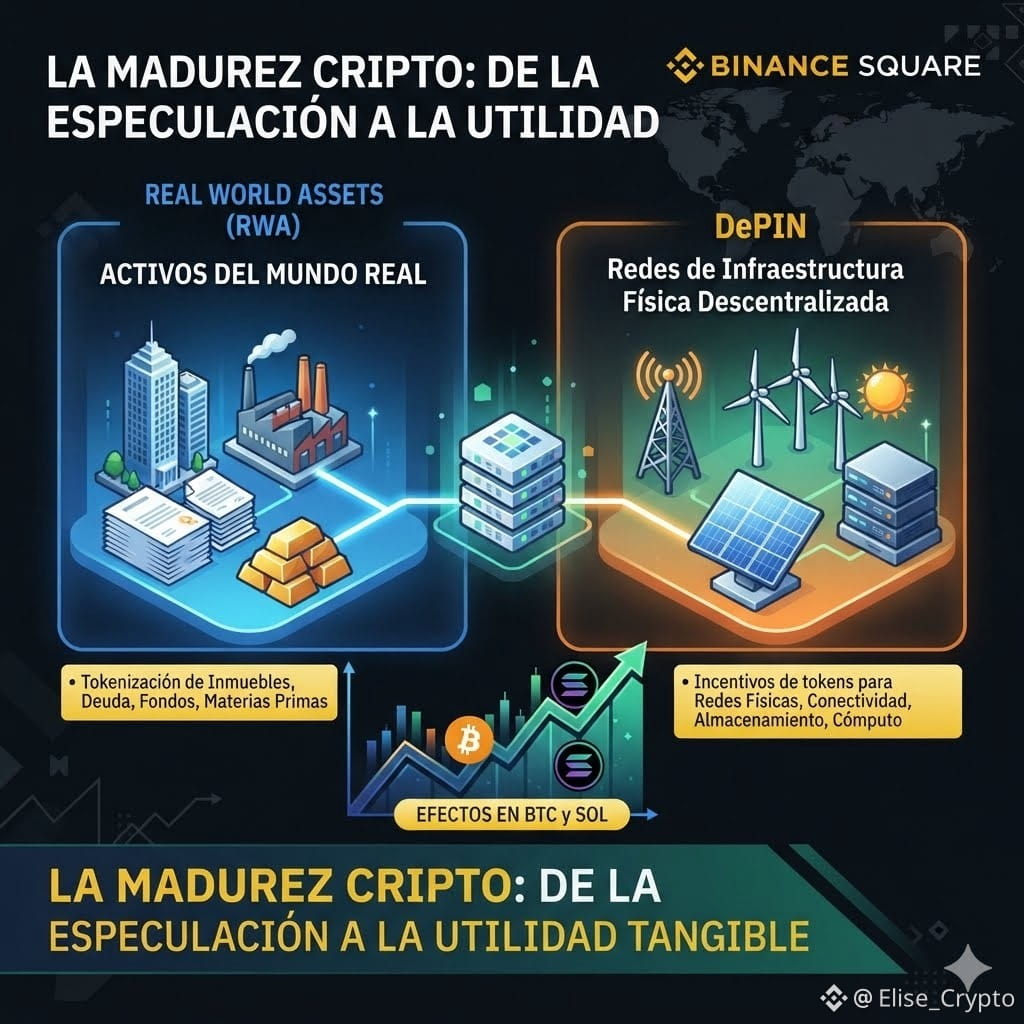
🚀 The crypto ecosystem is maturing beyond speculation.
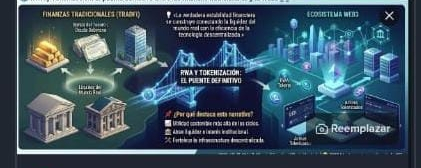
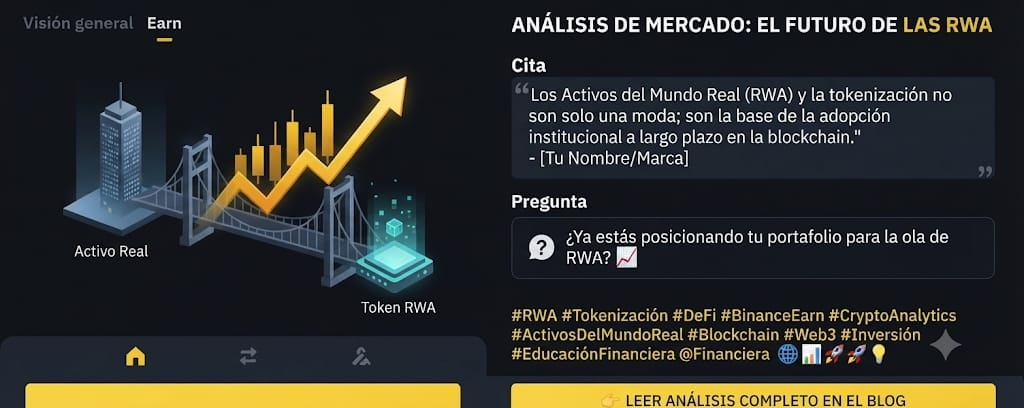
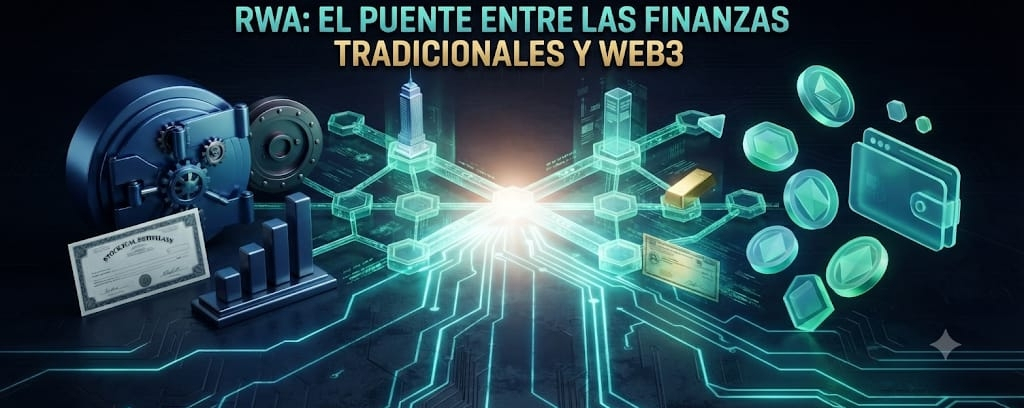
The Real-World Asset (RWA) and Decentralized Physical Infrastructure Networks (DePIN) narratives aim to connect blockchain technology with real-economy activities.
🔹 RWA: tokenization can represent assets such as debt, funds, real estate, or commodities within a more transparent, programmable, and potentially more efficient digital infrastructure.
🔹 DePIN: uses token-based incentives to drive physical networks, such as connectivity, storage, computing, or data collection.
For assets like BTC and SOL, the effect is not necessarily direct or guaranteed. BTC often reflects more macroeconomic factors, liquidity, and institutional adoption; SOL may be more exposed to application activity, token issuance, and the projects built on its network. Even so, if RWA and DePIN can attract users, generate revenue, and sustain utility, they could strengthen the sector’s narrative of real adoption.
⚠️ There are also risks: regulation, limited liquidity of tokenized assets, incentive models that are not sustainable, competition between networks, and a gap between the narrative and actual usage.
The key is not only to follow the trend, but to review real metrics: active users, organic volume, revenue, verifiable partnerships, security, and adoption outside the crypto environment.
Do your own research (DYOR): the potential exists, but the market remains volatile and there are no guaranteed results.
#RWA #DePIN #BTC SOL #BinanceSquare #cryptoeducation $BTC $SOL
The Real-World Asset (RWA) and Decentralized Physical Infrastructure Networks (DePIN) narratives aim to connect blockchain technology with real-economy activities.
🔹 RWA: tokenization can represent assets such as debt, funds, real estate, or commodities within a more transparent, programmable, and potentially more efficient digital infrastructure.
🔹 DePIN: uses token-based incentives to drive physical networks, such as connectivity, storage, computing, or data collection.
For assets like BTC and SOL, the effect is not necessarily direct or guaranteed. BTC often reflects more macroeconomic factors, liquidity, and institutional adoption; SOL may be more exposed to application activity, token issuance, and the projects built on its network. Even so, if RWA and DePIN can attract users, generate revenue, and sustain utility, they could strengthen the sector’s narrative of real adoption.
⚠️ There are also risks: regulation, limited liquidity of tokenized assets, incentive models that are not sustainable, competition between networks, and a gap between the narrative and actual usage.
The key is not only to follow the trend, but to review real metrics: active users, organic volume, revenue, verifiable partnerships, security, and adoption outside the crypto environment.
Do your own research (DYOR): the potential exists, but the market remains volatile and there are no guaranteed results.
#RWA #DePIN #BTC SOL #BinanceSquare #cryptoeducation $BTC $SOL
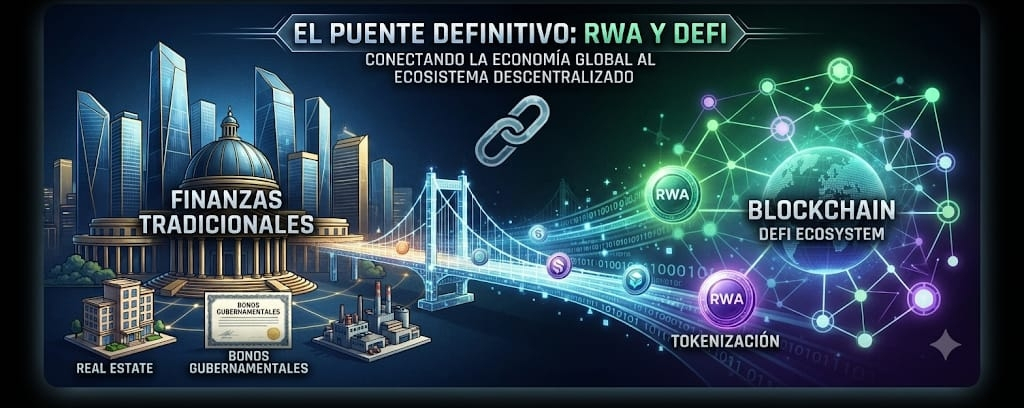
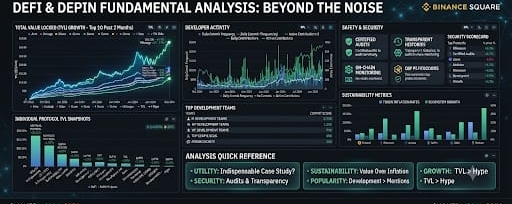
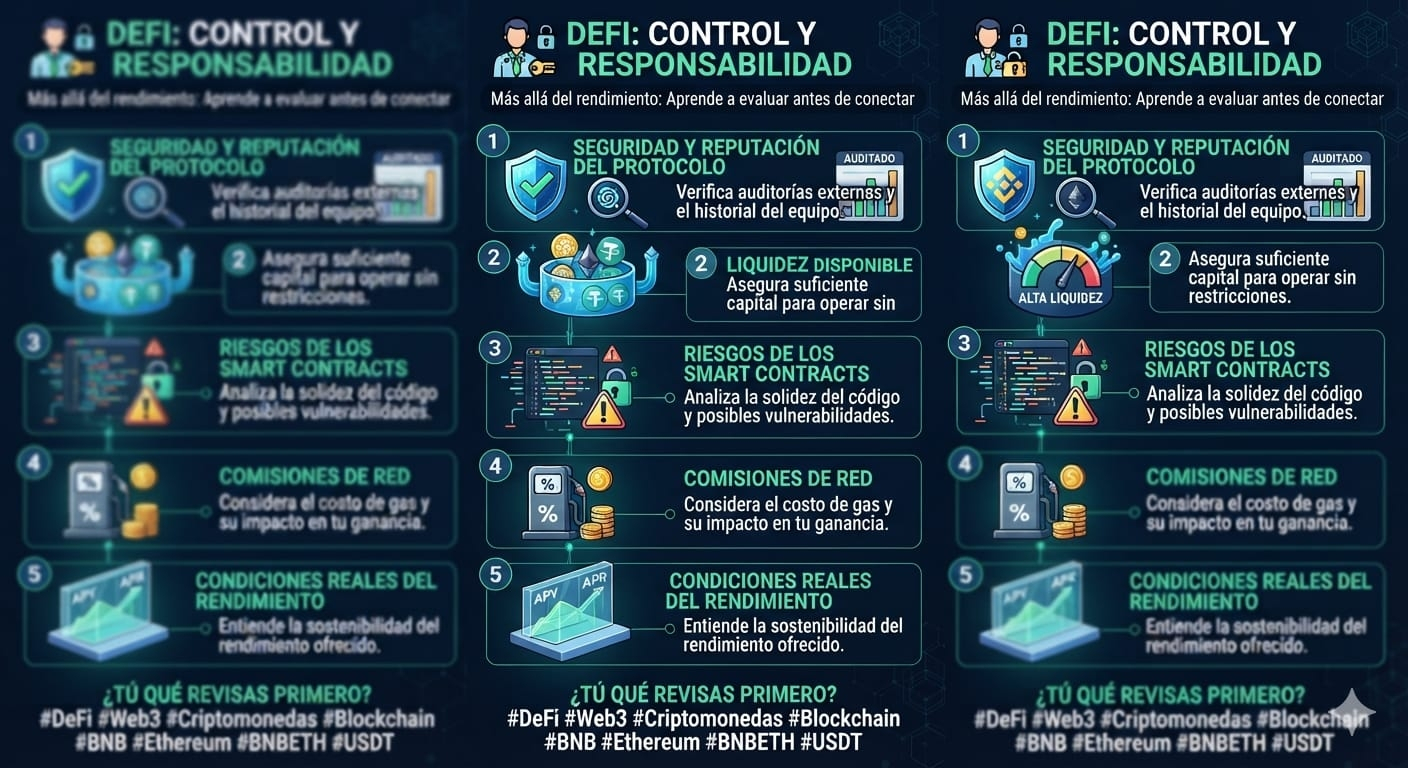
DeFi is not just about “earning yield”: it’s learning how to have more control over your assets.
Decentralized finance makes it possible to trade cryptocurrencies, provide liquidity, access loans, and explore financial products through open protocols—without depending exclusively on traditional intermediaries.
But the opportunity also comes with responsibility. Before you connect your wallet or deposit funds, it’s worth checking:
✅ The security and reputation of the protocol
✅ The available liquidity
✅ The risks of smart contracts
✅ Network fees
✅ The real conditions of the yield being offered
It’s not about chasing quick promises. In DeFi, understanding how each tool works can help you make more informed decisions and better protect your assets.
What do you check first before using a DeFi protocol?
#DeFi #Web3 #Cryptocurrencies #blockchain #BNB #Ethereum
BNBETH $USDT $BNB $ETH
Decentralized finance makes it possible to trade cryptocurrencies, provide liquidity, access loans, and explore financial products through open protocols—without depending exclusively on traditional intermediaries.
But the opportunity also comes with responsibility. Before you connect your wallet or deposit funds, it’s worth checking:
✅ The security and reputation of the protocol
✅ The available liquidity
✅ The risks of smart contracts
✅ Network fees
✅ The real conditions of the yield being offered
It’s not about chasing quick promises. In DeFi, understanding how each tool works can help you make more informed decisions and better protect your assets.
What do you check first before using a DeFi protocol?
#DeFi #Web3 #Cryptocurrencies #blockchain #BNB #Ethereum
BNBETH $USDT $BNB $ETH
#CryptoSecurity #dyor #Web3 #BINANCESQUARE #education $BTC $ETH $BNB
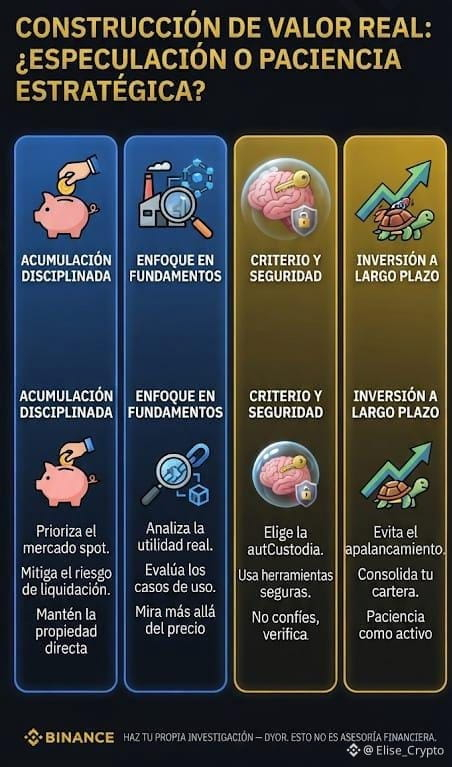
Building Real Value: Speculation or Strategic Patience?
In the crypto ecosystem, the day-to-day noise of charts and extreme leverage often cloud the long-term picture. However, projects with solid fundamentals—especially in key sectors such as Real-World Assets tokenization (RWA) and decentralized physical infrastructure networks (DePIN)—are built brick by brick, regardless of short-term volatility.
Key points to evaluate in your strategy:
Disciplined accumulation: Prioritize the spot market to mitigate liquidation risk and maintain direct ownership of the assets.
Focus on fundamentals: Analyze the real utility of protocols before following passing trends.
Risk management: True control of capital comes from patience and the use of secure saving tools.
💡 What’s your main approach for this cycle: chasing quick gains with derivatives or building a strong spot portfolio? I’ll read your comments!
Building Real Value: Speculation or Strategic Patience?
In the crypto ecosystem, the day-to-day noise of charts and extreme leverage often cloud the long-term picture. However, projects with solid fundamentals—especially in key sectors such as Real-World Assets tokenization (RWA) and decentralized physical infrastructure networks (DePIN)—are built brick by brick, regardless of short-term volatility.
Key points to evaluate in your strategy:
Disciplined accumulation: Prioritize the spot market to mitigate liquidation risk and maintain direct ownership of the assets.
Focus on fundamentals: Analyze the real utility of protocols before following passing trends.
Risk management: True control of capital comes from patience and the use of secure saving tools.
💡 What’s your main approach for this cycle: chasing quick gains with derivatives or building a strong spot portfolio? I’ll read your comments!

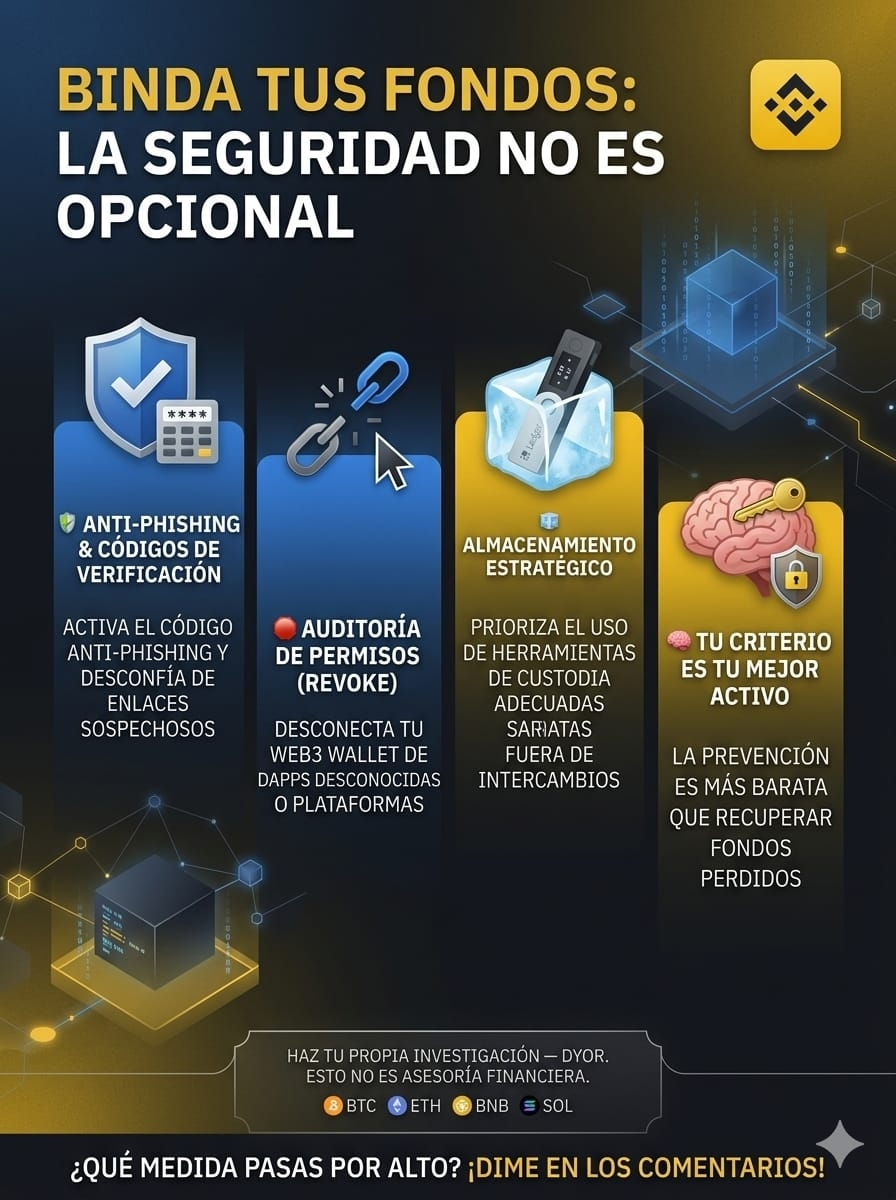
🛡️ Crypto security is not optional. As the ecosystem grows, scammers’ tactics evolve, and what the community most wants to know is how to protect their funds.
📊 The pillars we all must master to defend ourselves:
🔒 Anti-Phishing and Verification Codes: Always enable the anti-phishing code on exchanges and distrust any external link that promises quick rewards.
🛑 Permission Auditing (Revoke): Regularly disconnect your Web3 Wallet from dApps or unknown platforms to prevent unauthorized access to your funds.
🧊 Strategic Storage: Don’t leave all your capital exposed on exchanges or hot wallets; prioritize using secure savings and appropriate custody tools.
🧠 Security reflection: In this market, the most valuable asset is not only your capital, but your judgment and the protection of your keys or access. Prevention is always cheaper than trying to recover lost funds.
What security measure do you think most users tend to overlook? I’m listening in the comments! 👇
Do your own research — DYOR. This is not financial advice.
#CryptoSecurity #Dyor #Web3 #BİNANCESQUARE #Education
$BTC $ETH $BNB
📊 The pillars we all must master to defend ourselves:
🔒 Anti-Phishing and Verification Codes: Always enable the anti-phishing code on exchanges and distrust any external link that promises quick rewards.
🛑 Permission Auditing (Revoke): Regularly disconnect your Web3 Wallet from dApps or unknown platforms to prevent unauthorized access to your funds.
🧊 Strategic Storage: Don’t leave all your capital exposed on exchanges or hot wallets; prioritize using secure savings and appropriate custody tools.
🧠 Security reflection: In this market, the most valuable asset is not only your capital, but your judgment and the protection of your keys or access. Prevention is always cheaper than trying to recover lost funds.
What security measure do you think most users tend to overlook? I’m listening in the comments! 👇
Do your own research — DYOR. This is not financial advice.
#CryptoSecurity #Dyor #Web3 #BİNANCESQUARE #Education
$BTC $ETH $BNB
Do you think BTC will recover to $80K or will we see a correction before trying again? Do you think the current momentum is enough to break through that zone, or is a correction still needed before continuing?
$BTC
$BTC
Recupera los $80K directo 🚀
54%
Corrección a $76K primero 📉
41%
Rango lateral (acumulación) ⏳
5%
41 votes • Voting closed
New purchase executed on the BNB/USDC pair! 📈
Taking advantage of market movements to build a position strategically. I’ve just recorded a trade for 9.75 USDC, maintaining the discipline of long-term accumulation and step-by-step capital management.
Patience and a focus on key assets are the foundation of a solid crypto strategy.
Do Your Own Research (DYOR). Educational content, not financial advice.
#BNB #USDC #BinanceSquare #CryptoTrading $BNB $USDC
Taking advantage of market movements to build a position strategically. I’ve just recorded a trade for 9.75 USDC, maintaining the discipline of long-term accumulation and step-by-step capital management.
Patience and a focus on key assets are the foundation of a solid crypto strategy.
Do Your Own Research (DYOR). Educational content, not financial advice.
#BNB #USDC #BinanceSquare #CryptoTrading $BNB $USDC
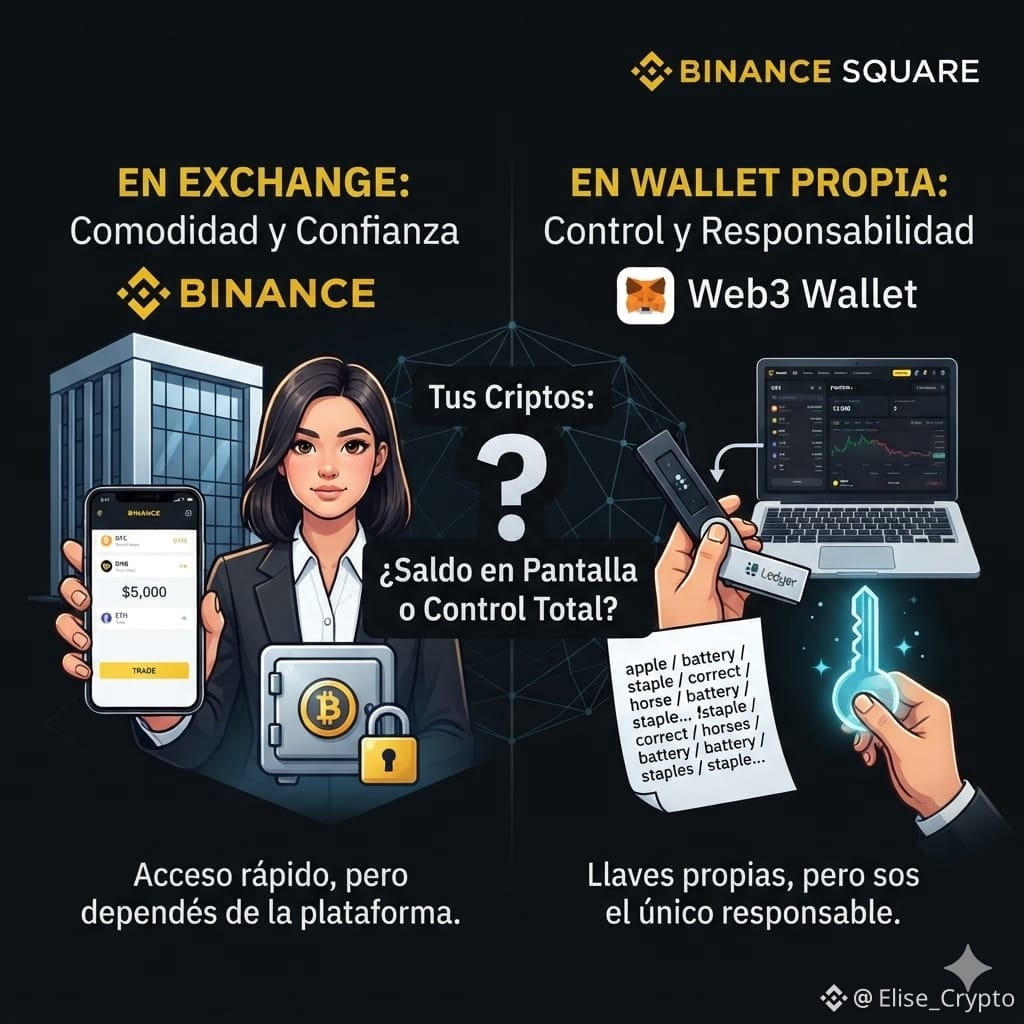
Do you really “have” your crypto… or do you just see a number on the screen? 👀
Buying BTC, BNB, or any cryptocurrency may seem simple: you log into your account, see your balance, and you’re done. But in this ecosystem there’s one question that changes everything:
Who has the private keys?
🔹 If your funds are on an exchange, you get convenience: you can trade quickly, use yield products, join events, and move capital easily. But the keys are held by the platform, so you depend on its infrastructure, security, and policies.
🔹 If you use a Web3 wallet, control is in your hands. Nobody needs to authorize you to move your funds. But beware: that freedom also brings total responsibility. If you lose your seed phrase or sign something malicious, there’s no magical “recover” button.
The conversation shouldn’t be “exchange vs. self-custody” as if one were perfect and the other useless.
The real move is understanding when to prioritize convenience and when to prioritize control. ⚡
Because in the end, owning crypto isn’t just having a balance.
It’s knowing who has the final say over that balance.
💬 Where do you keep most of your crypto: on an exchange, in your own wallet, or split between both?
#BinanceSquare #cryptoeducation #Web3 #DeFi $BNB
Buying BTC, BNB, or any cryptocurrency may seem simple: you log into your account, see your balance, and you’re done. But in this ecosystem there’s one question that changes everything:
Who has the private keys?
🔹 If your funds are on an exchange, you get convenience: you can trade quickly, use yield products, join events, and move capital easily. But the keys are held by the platform, so you depend on its infrastructure, security, and policies.
🔹 If you use a Web3 wallet, control is in your hands. Nobody needs to authorize you to move your funds. But beware: that freedom also brings total responsibility. If you lose your seed phrase or sign something malicious, there’s no magical “recover” button.
The conversation shouldn’t be “exchange vs. self-custody” as if one were perfect and the other useless.
The real move is understanding when to prioritize convenience and when to prioritize control. ⚡
Because in the end, owning crypto isn’t just having a balance.
It’s knowing who has the final say over that balance.
💬 Where do you keep most of your crypto: on an exchange, in your own wallet, or split between both?
#BinanceSquare #cryptoeducation #Web3 #DeFi $BNB
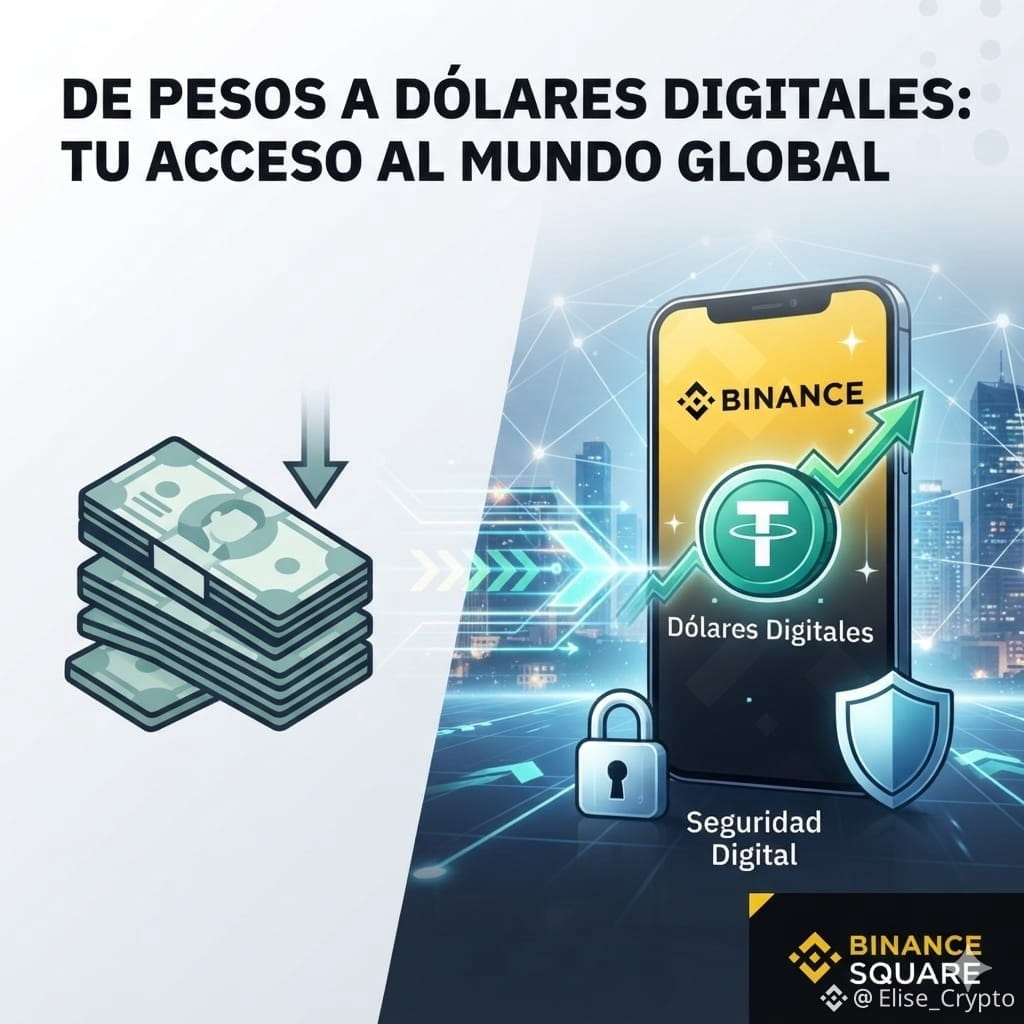
Get paid in pesos or local currency, but live in the digital money era 🌍💵
Today we need to reflect on something that’s becoming increasingly clear: even though we receive our income in our local currency, the reality of working, buying, traveling, and paying through apps means that digital money and digital dollars are no longer just a topic for “crypto enthusiasts,” but a daily necessity.
In a hyperconnected world, understanding how value moves involves key pillars:
Digital dollars: Stability and protection against local devaluation.
Payments and travel: Easy transactions without physical borders.
Money from your phone: Financial self-management at the touch of a button from your mobile.
Digital security: The key to protecting our assets and avoiding unnecessary risks.
This isn’t about rushing or using complex tools without understanding them: it’s about learning first so you can make better decisions, manage risk, and protect your capital.
👉 And you? Which of these points do you think is the biggest challenge when starting to use digital dollars in your day-to-day life? I’d love to hear your thoughts in the comments!
#Binance #cryptoeducation #DolaresDigitales #finanzaspersonales #Web3 🚀💛$USDT $USDC $BNB
Today we need to reflect on something that’s becoming increasingly clear: even though we receive our income in our local currency, the reality of working, buying, traveling, and paying through apps means that digital money and digital dollars are no longer just a topic for “crypto enthusiasts,” but a daily necessity.
In a hyperconnected world, understanding how value moves involves key pillars:
Digital dollars: Stability and protection against local devaluation.
Payments and travel: Easy transactions without physical borders.
Money from your phone: Financial self-management at the touch of a button from your mobile.
Digital security: The key to protecting our assets and avoiding unnecessary risks.
This isn’t about rushing or using complex tools without understanding them: it’s about learning first so you can make better decisions, manage risk, and protect your capital.
👉 And you? Which of these points do you think is the biggest challenge when starting to use digital dollars in your day-to-day life? I’d love to hear your thoughts in the comments!
#Binance #cryptoeducation #DolaresDigitales #finanzaspersonales #Web3 🚀💛$USDT $USDC $BNB
Technical Analysis BTC: Range or Rejection at $80K? 📊
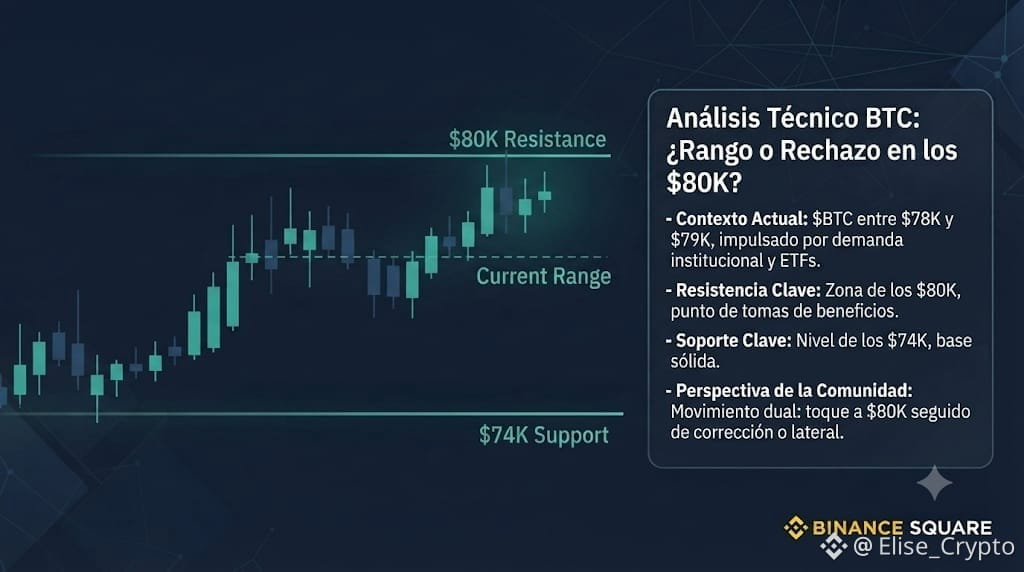
Current Context: Bitcoin ($BTC ) is trading between $78K and $79K, driven by strong institutional demand, sustained inflows into ETFs, and a massive cleanup of short positions.
Key Resistance: The $80K area is the most immediate psychological and institutional barrier. This is where profit-taking and the highest short-term selling pressure converge.
Key Support: The $74K level remains as the solid foundation that safeguards the current uptrend structure against any corrective pullback.
Community Outlook: The scenario with the most technical and voting backing points to a dual move: an initial touch of the $80K resistance followed by a healthy correction or a sideways move within the $74K–$80K range.
What’s your outlook for this week? Leave it in the comments! 👇
#bitcoin #AnalisisTecnico #defi #BİNANCESQUARE #cryptoeducation
Current Context: Bitcoin ($BTC ) is trading between $78K and $79K, driven by strong institutional demand, sustained inflows into ETFs, and a massive cleanup of short positions.
Key Resistance: The $80K area is the most immediate psychological and institutional barrier. This is where profit-taking and the highest short-term selling pressure converge.
Key Support: The $74K level remains as the solid foundation that safeguards the current uptrend structure against any corrective pullback.
Community Outlook: The scenario with the most technical and voting backing points to a dual move: an initial touch of the $80K resistance followed by a healthy correction or a sideways move within the $74K–$80K range.
What’s your outlook for this week? Leave it in the comments! 👇
#bitcoin #AnalisisTecnico #defi #BİNANCESQUARE #cryptoeducation
Log in to explore more content