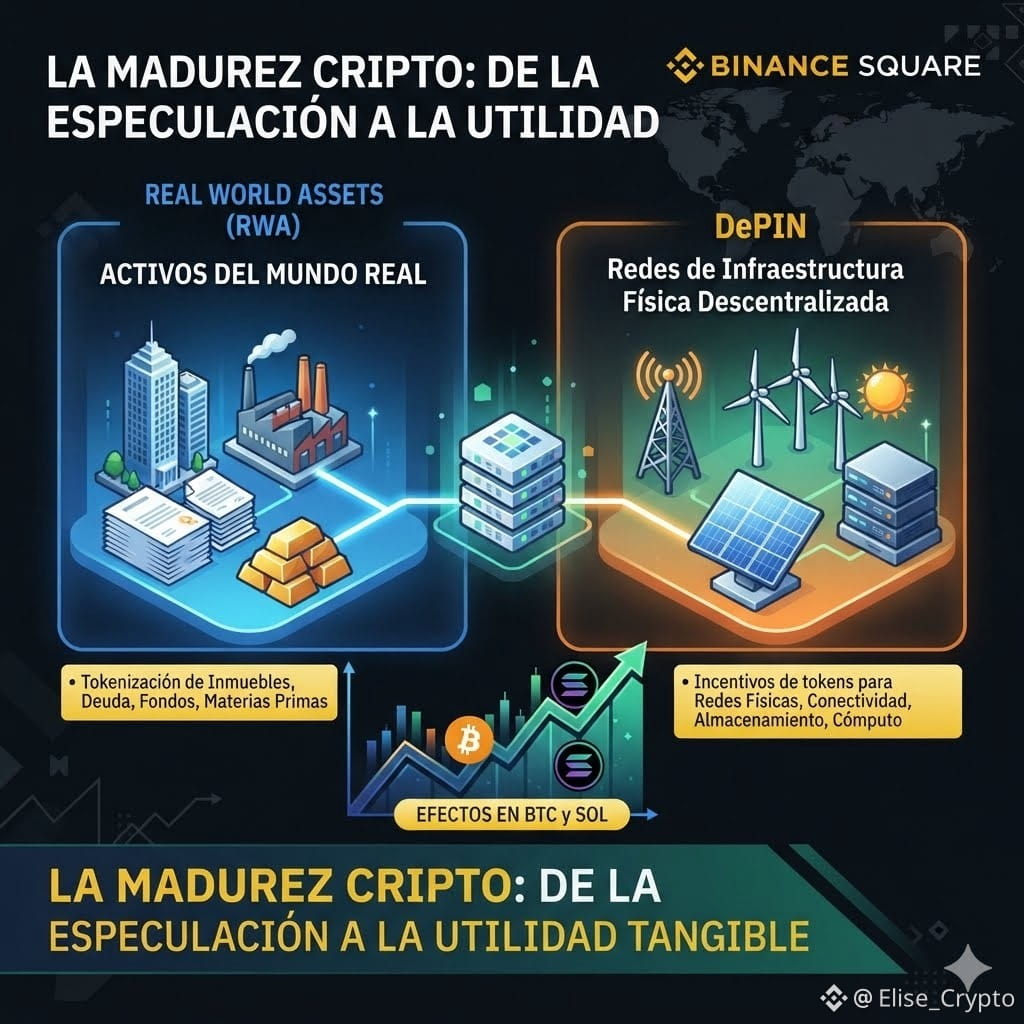
🚀 The crypto ecosystem is maturing beyond speculation.
The Real-World Asset (RWA) and Decentralized Physical Infrastructure Networks (DePIN) narratives aim to connect blockchain technology with real-economy activities.
🔹 RWA: tokenization can represent assets such as debt, funds, real estate, or commodities within a more transparent, programmable, and potentially more efficient digital infrastructure.
🔹 DePIN: uses token-based incentives to drive physical networks, such as connectivity, storage, computing, or data collection.
For assets like BTC and SOL, the effect is not necessarily direct or guaranteed. BTC often reflects more macroeconomic factors, liquidity, and institutional adoption; SOL may be more exposed to application activity, token issuance, and the projects built on its network. Even so, if RWA and DePIN can attract users, generate revenue, and sustain utility, they could strengthen the sector’s narrative of real adoption.
⚠️ There are also risks: regulation, limited liquidity of tokenized assets, incentive models that are not sustainable, competition between networks, and a gap between the narrative and actual usage.
The key is not only to follow the trend, but to review real metrics: active users, organic volume, revenue, verifiable partnerships, security, and adoption outside the crypto environment.
Do your own research (DYOR): the potential exists, but the market remains volatile and there are no guaranteed results.
#RWA #DePIN #BTC SOL #BinanceSquare #cryptoeducation $BTC $SOL
The Real-World Asset (RWA) and Decentralized Physical Infrastructure Networks (DePIN) narratives aim to connect blockchain technology with real-economy activities.
🔹 RWA: tokenization can represent assets such as debt, funds, real estate, or commodities within a more transparent, programmable, and potentially more efficient digital infrastructure.
🔹 DePIN: uses token-based incentives to drive physical networks, such as connectivity, storage, computing, or data collection.
For assets like BTC and SOL, the effect is not necessarily direct or guaranteed. BTC often reflects more macroeconomic factors, liquidity, and institutional adoption; SOL may be more exposed to application activity, token issuance, and the projects built on its network. Even so, if RWA and DePIN can attract users, generate revenue, and sustain utility, they could strengthen the sector’s narrative of real adoption.
⚠️ There are also risks: regulation, limited liquidity of tokenized assets, incentive models that are not sustainable, competition between networks, and a gap between the narrative and actual usage.
The key is not only to follow the trend, but to review real metrics: active users, organic volume, revenue, verifiable partnerships, security, and adoption outside the crypto environment.
Do your own research (DYOR): the potential exists, but the market remains volatile and there are no guaranteed results.
#RWA #DePIN #BTC SOL #BinanceSquare #cryptoeducation $BTC $SOL