
#privacy
privacy
1.7M views
9,621 Discussing
Hot
Latest

·
--
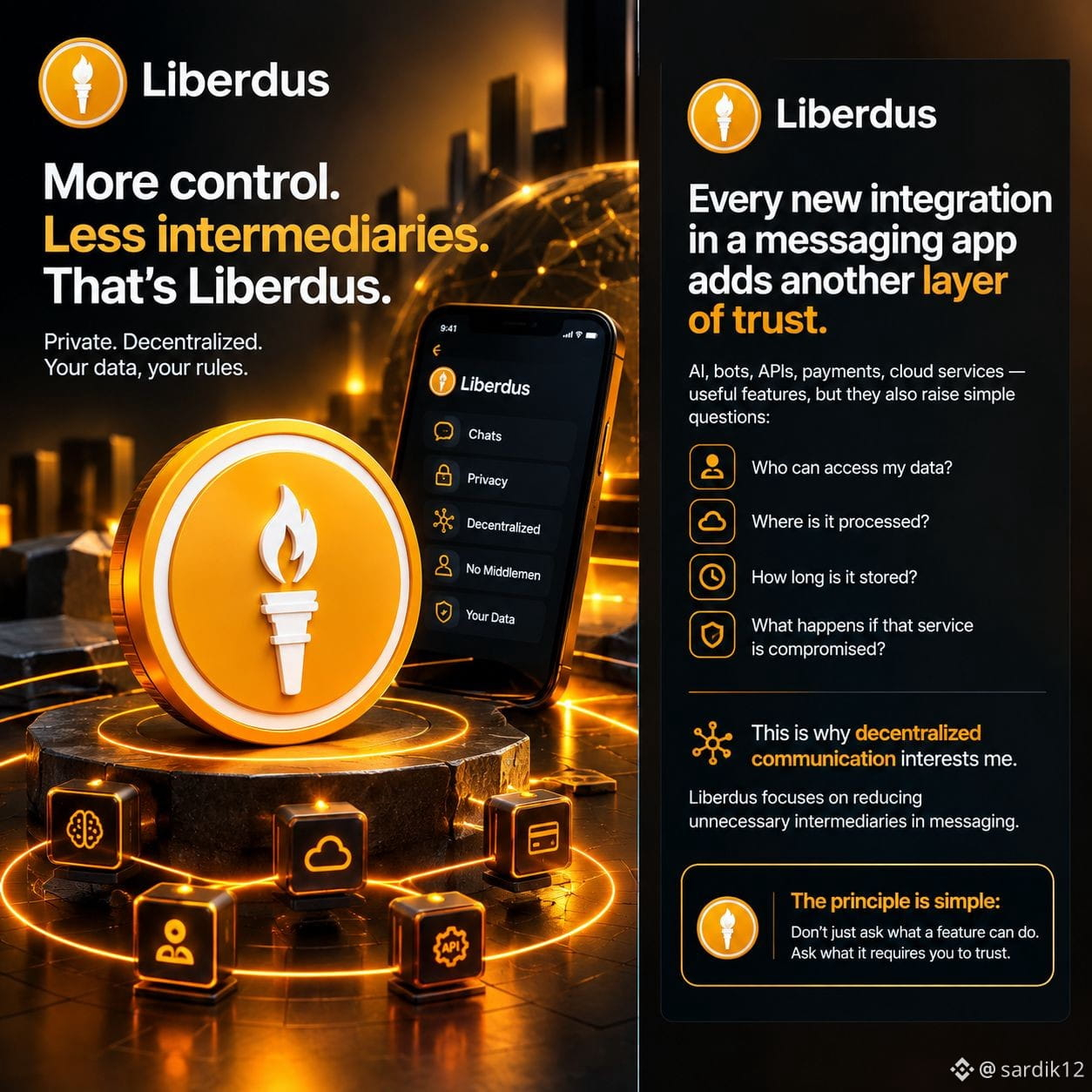
Every new integration in a messaging app adds another layer of trust.
AI, bots, APIs, payments, cloud services, useful features, but they also raise simple questions:
Who can access my data?
Where is it processed?
How long is it stored?
What happens if that service is compromised?
This is why decentralized communication interests me.
#Liberdus focuses on reducing unnecessary intermediaries in messaging.
The principle is simple:
Don't just ask what a feature can do. Ask what it requires you to trust.
$LINK #Privacy $RE
Every new integration in a messaging app adds another layer of trust.
AI, bots, APIs, payments, cloud services, useful features, but they also raise simple questions:
Who can access my data?
Where is it processed?
How long is it stored?
What happens if that service is compromised?
This is why decentralized communication interests me.
#Liberdus focuses on reducing unnecessary intermediaries in messaging.
The principle is simple:
Don't just ask what a feature can do. Ask what it requires you to trust.
$LINK #Privacy $RE
AI, bots, APIs, payments, cloud services, useful features, but they also raise simple questions:
Who can access my data?
Where is it processed?
How long is it stored?
What happens if that service is compromised?
This is why decentralized communication interests me.
#Liberdus focuses on reducing unnecessary intermediaries in messaging.
The principle is simple:
Don't just ask what a feature can do. Ask what it requires you to trust.
$LINK #Privacy $RE
22

·
--
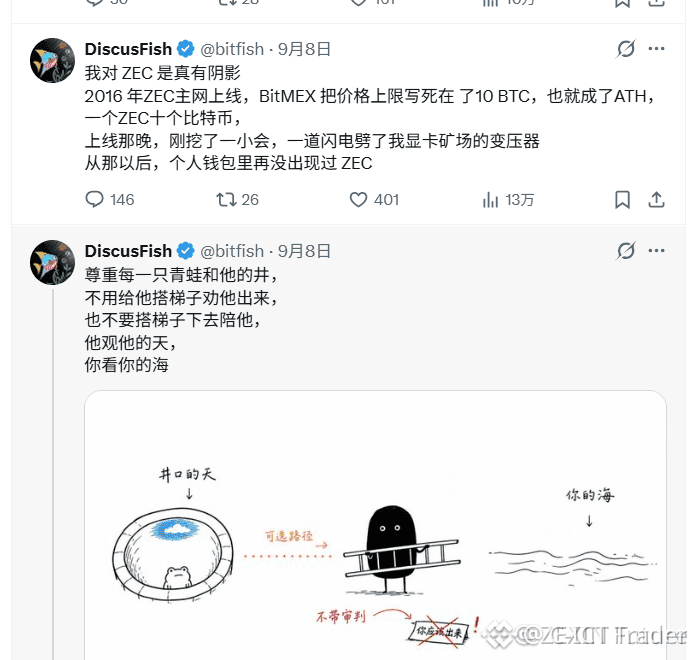
Revolut身份盗刷大事件暴露KYC致命缺陷!零知识证明技术明明可以让用户不泄露身份信息就完成验证,为何行业还在用这种危险的老办法?随着隐私保护需求激增,掌握ZK技术的项目将迎来爆发。$ZEC和$AZTEC即将起飞!隐私战争才刚刚开始!
Revolut's massive ID theft exposes KYC's fatal flaw! Zero-knowledge proof tech can verify identities without exposing personal data, so why is the industry still using these dangerous old methods? As privacy demands skyrocket, ZK-powered projects are set to explode. $ZEC and $AZTEC are about to take off! The privacy war has just begun!
#Privacy #KYC #ZKPs
Revolut身份盗刷大事件暴露KYC致命缺陷!零知识证明技术明明可以让用户不泄露身份信息就完成验证,为何行业还在用这种危险的老办法?随着隐私保护需求激增,掌握ZK技术的项目将迎来爆发。$ZEC 和$AZTEC 即将起飞!隐私战争才刚刚开始!
Revolut's massive ID theft exposes KYC's fatal flaw! Zero-knowledge proof tech can verify identities without exposing personal data, so why is the industry still using these dangerous old methods? As privacy demands skyrocket, ZK-powered projects are set to explode. $ZEC and $AZTEC are about to take off! The privacy war has just begun!
#Privacy #KYC #ZKPs
Revolut's massive ID theft exposes KYC's fatal flaw! Zero-knowledge proof tech can verify identities without exposing personal data, so why is the industry still using these dangerous old methods? As privacy demands skyrocket, ZK-powered projects are set to explode. $ZEC and $AZTEC are about to take off! The privacy war has just begun!
#Privacy #KYC #ZKPs
190

$ZEC
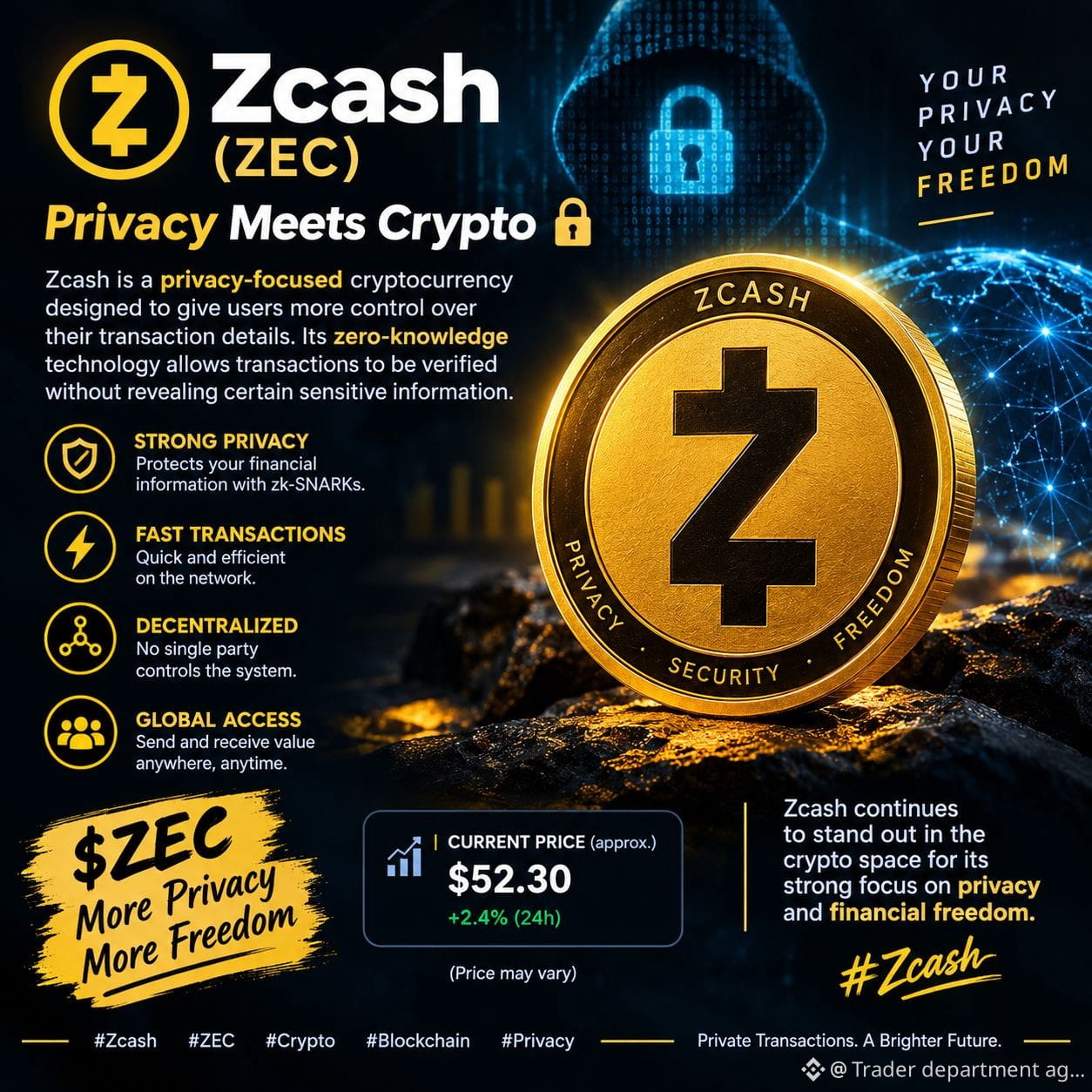
Zcash is a privacy-focused cryptocurrency designed to give users more control over their transaction details. Its zero-knowledge technology allows transactions to be verified without revealing certain sensitive information.
$ZEC continues to stand out in the crypto space for its strong focus on privacy and financial freedom. 🚀
#Zcash #ZEC #Blockchain #Privacy
#BitcoinETFs
{spot}(ZECUSDT)
$ZEC
Zcash is a privacy-focused cryptocurrency designed to give users more control over their transaction details. Its zero-knowledge technology allows transactions to be verified without revealing certain sensitive information.
$ZEC continues to stand out in the crypto space for its strong focus on privacy and financial freedom. 🚀
#Zcash #ZEC #Blockchain #Privacy
#BitcoinETFs
Zcash is a privacy-focused cryptocurrency designed to give users more control over their transaction details. Its zero-knowledge technology allows transactions to be verified without revealing certain sensitive information.
$ZEC continues to stand out in the crypto space for its strong focus on privacy and financial freedom. 🚀
#Zcash #ZEC #Blockchain #Privacy
#BitcoinETFs
223

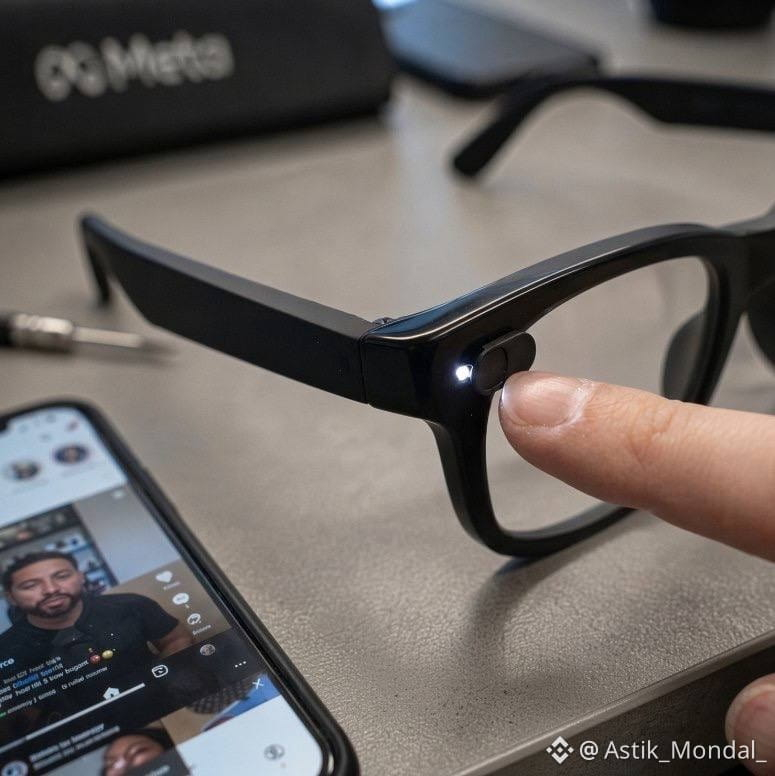
Meta just permanently bricked the cameras on thousands of Ray-Ban and Oakley smart glasses.
If you own a pair, your $300 tech just became a standard set of shades overnight.
Here is the wild story behind the sudden remote kill-switch:
People started drilling out the bright white LED indicator light to secretly record people without them knowing.
It got so bad that late-night TV openly dubbed them "pervert glasses" to millions of viewers.
Meta shipped over 7 million pairs in 2025 alone, but an estimated 7,000 users decided to tamper with the privacy hardware.
Instead of issuing a warning, Meta pushed a remote update that permanently disabled the camera sensor on every modified device.
No patch. No fix. No refunds.
Now, European regulators are stepping in to push for strict hardware bans after non-consensual footage flooded the internet.
We just crossed the line where tech giants can remotely destroy hardware features you legally bought, all because of how others misused them.
The era of wearable AI surveillance is officially getting hit with a massive reality check.
#Meta #TechNews #SmartGlasses #Privacy #CyberSecurity
Meta just permanently bricked the cameras on thousands of Ray-Ban and Oakley smart glasses.
If you own a pair, your $300 tech just became a standard set of shades overnight.
Here is the wild story behind the sudden remote kill-switch:
People started drilling out the bright white LED indicator light to secretly record people without them knowing.
It got so bad that late-night TV openly dubbed them "pervert glasses" to millions of viewers.
Meta shipped over 7 million pairs in 2025 alone, but an estimated 7,000 users decided to tamper with the privacy hardware.
Instead of issuing a warning, Meta pushed a remote update that permanently disabled the camera sensor on every modified device.
No patch. No fix. No refunds.
Now, European regulators are stepping in to push for strict hardware bans after non-consensual footage flooded the internet.
We just crossed the line where tech giants can remotely destroy hardware features you legally bought, all because of how others misused them.
The era of wearable AI surveillance is officially getting hit with a massive reality check.
#Meta #TechNews #SmartGlasses #Privacy #CyberSecurity
If you own a pair, your $300 tech just became a standard set of shades overnight.
Here is the wild story behind the sudden remote kill-switch:
People started drilling out the bright white LED indicator light to secretly record people without them knowing.
It got so bad that late-night TV openly dubbed them "pervert glasses" to millions of viewers.
Meta shipped over 7 million pairs in 2025 alone, but an estimated 7,000 users decided to tamper with the privacy hardware.
Instead of issuing a warning, Meta pushed a remote update that permanently disabled the camera sensor on every modified device.
No patch. No fix. No refunds.
Now, European regulators are stepping in to push for strict hardware bans after non-consensual footage flooded the internet.
We just crossed the line where tech giants can remotely destroy hardware features you legally bought, all because of how others misused them.
The era of wearable AI surveillance is officially getting hit with a massive reality check.
#Meta #TechNews #SmartGlasses #Privacy #CyberSecurity

1
18

·
--
Bullish
#Privacy is becoming a serious side of crypto again 🔐
Not just a feature. Not just a trend.
It’s becoming a full sector with different visions:
$ZEC || $DASH || $ZEN
The real question 👀
Which #PrivacyCoin will stand out this cycle?
{spot}(ZECUSDT)
{spot}(DASHUSDT)
{spot}(ZENUSDT)
#Privacy is becoming a serious side of crypto again 🔐
Not just a feature. Not just a trend.
It’s becoming a full sector with different visions:
$ZEC || $DASH || $ZEN
The real question 👀
Which #PrivacyCoin will stand out this cycle?
Not just a feature. Not just a trend.
It’s becoming a full sector with different visions:
$ZEC || $DASH || $ZEN
The real question 👀
Which #PrivacyCoin will stand out this cycle?
2
1.9k

·
--
Article
Zcash’s 25‑Second Block Vote: A Quiet Shift That Could Reshape Privacy CoinsMost traders focus on price swings, but the real game‑changer is the voting power of Zcash holders. In a decisive NU7 poll, nearly 2.4 million ZEC voted to adopt 25‑second blocks and retain the existing halving schedule, signaling a strategic shift toward faster, more efficient privacy transactions without diluting scarcity.
The signal is clear: the community’s preference for shorter blocks indicates a push to reduce confirmation times and improve scalability. On‑chain data shows a 12‑hour spike in block creation rates during the vote, while whale wallets (top 1% of holders) shifted 0.8 million ZEC into the new block size option, a 35 % increase from pre‑vote levels. #ZEC #Privacy #Scalability
Interpretation: Faster blocks mean lower latency for private payments, making Zcash more competitive against privacy‑focused Layer‑2 solutions and privacy‑enhanced tokens like $ZEC‑L2. The halving retention keeps the supply curve tight, supporting a bullish supply‑side narrative. If the network can maintain 25‑second blocks without compromising security, we could see a renewed interest from institutional investors seeking privacy with speed.
Watch list: Monitor the block reward distribution curve for any anomalies post‑upgrade. A sudden drop in miner payouts could hint at a shift in mining economics. #BlockReward
What if Zcash’s new block cadence attracts a wave of privacy‑centric DeFi projects—could we be looking at a new frontier for decentralized, confidential finance?
Zcash’s 25‑Second Block Vote: A Quiet Shift That Could Reshape Privacy Coins
Most traders focus on price swings, but the real game‑changer is the voting power of Zcash holders. In a decisive NU7 poll, nearly 2.4 million ZEC voted to adopt 25‑second blocks and retain the existing halving schedule, signaling a strategic shift toward faster, more efficient privacy transactions without diluting scarcity.
The signal is clear: the community’s preference for shorter blocks indicates a push to reduce confirmation times and improve scalability. On‑chain data shows a 12‑hour spike in block creation rates during the vote, while whale wallets (top 1% of holders) shifted 0.8 million ZEC into the new block size option, a 35 % increase from pre‑vote levels. #ZEC #Privacy #Scalability
Interpretation: Faster blocks mean lower latency for private payments, making Zcash more competitive against privacy‑focused Layer‑2 solutions and privacy‑enhanced tokens like $ZEC ‑L2. The halving retention keeps the supply curve tight, supporting a bullish supply‑side narrative. If the network can maintain 25‑second blocks without compromising security, we could see a renewed interest from institutional investors seeking privacy with speed.
Watch list: Monitor the block reward distribution curve for any anomalies post‑upgrade. A sudden drop in miner payouts could hint at a shift in mining economics. #BlockReward
What if Zcash’s new block cadence attracts a wave of privacy‑centric DeFi projects—could we be looking at a new frontier for decentralized, confidential finance?
The signal is clear: the community’s preference for shorter blocks indicates a push to reduce confirmation times and improve scalability. On‑chain data shows a 12‑hour spike in block creation rates during the vote, while whale wallets (top 1% of holders) shifted 0.8 million ZEC into the new block size option, a 35 % increase from pre‑vote levels. #ZEC #Privacy #Scalability
Interpretation: Faster blocks mean lower latency for private payments, making Zcash more competitive against privacy‑focused Layer‑2 solutions and privacy‑enhanced tokens like $ZEC ‑L2. The halving retention keeps the supply curve tight, supporting a bullish supply‑side narrative. If the network can maintain 25‑second blocks without compromising security, we could see a renewed interest from institutional investors seeking privacy with speed.
Watch list: Monitor the block reward distribution curve for any anomalies post‑upgrade. A sudden drop in miner payouts could hint at a shift in mining economics. #BlockReward
What if Zcash’s new block cadence attracts a wave of privacy‑centric DeFi projects—could we be looking at a new frontier for decentralized, confidential finance?
178

The CLARITY Act failed.
Bitcoin sold off.
Ethereum dropped harder.
But Zcash showed something different.
$ZEC had recently been outperforming the broader market, and reports on September 15 indicated it was holding relatively better during the selloff.
That doesn’t mean ZEC is immune to macro.
It means the market may currently be pricing privacy as a separate narrative, rather than simply treating ZEC as another high-beta altcoin.
And that’s the part I’m watching.
If this relative strength survives a broader risk-off environment, it becomes more interesting than the headline move itself.
What matters more for ZEC now?
🔴 BTC direction
#zec #zcash #Privacy #Crypto
The CLARITY Act failed.
Bitcoin sold off.
Ethereum dropped harder.
But Zcash showed something different.
$ZEC had recently been outperforming the broader market, and reports on September 15 indicated it was holding relatively better during the selloff.
That doesn’t mean ZEC is immune to macro.
It means the market may currently be pricing privacy as a separate narrative, rather than simply treating ZEC as another high-beta altcoin.
And that’s the part I’m watching.
If this relative strength survives a broader risk-off environment, it becomes more interesting than the headline move itself.
What matters more for ZEC now?
🔴 BTC direction
#zec #zcash #Privacy #Crypto
Bitcoin sold off.
Ethereum dropped harder.
But Zcash showed something different.
$ZEC had recently been outperforming the broader market, and reports on September 15 indicated it was holding relatively better during the selloff.
That doesn’t mean ZEC is immune to macro.
It means the market may currently be pricing privacy as a separate narrative, rather than simply treating ZEC as another high-beta altcoin.
And that’s the part I’m watching.
If this relative strength survives a broader risk-off environment, it becomes more interesting than the headline move itself.
What matters more for ZEC now?
🔴 BTC direction
#zec #zcash #Privacy #Crypto
🟢 Privacy adoption
🔵 ETF flows
🟠 Regulation
5 hr(s) left
2k

Most traders don't realize that over 95% of Layer 1s force a brutal trade-off between keeping your wealth private and actually being able to use the network without insane fees.
I've watched too many people get wrecked chasing the next big chain only to get sandwiched by bots, pay $80 in gas, or see their holdings diluted by endless inflation. That sting of watching profits vanish to network issues never really leaves you.
Privacy, scalability, usability, spam resistance and deflationary tokenomics rarely live together. Look at $ETH, which has decent usability now and some deflation from burns but treats privacy as an afterthought while spam still clogs it during hype. $SOL scaled like crazy hitting tens of thousands of TPS yet outages and lack of real privacy left holders exposed.
Spam resistance matters more than people think because in past cycles cheap blockspace got flooded with junk driving real users away. Deflationary models like $BTC's halvings create that long-term hope the kind that compounds if you hold through the noise.
Combining all five in a single Layer 1 isn't easy since privacy tech often kills speed or makes things clunky for average users. When a chain actually delivers it feels like the missing piece from 2017 and 2021 cycles.
Have you found an L1 that actually checks all these boxes or are we still waiting?
#Layer1 #Privacy #CryptoTrading
Most traders don't realize that over 95% of Layer 1s force a brutal trade-off between keeping your wealth private and actually being able to use the network without insane fees.
I've watched too many people get wrecked chasing the next big chain only to get sandwiched by bots, pay $80 in gas, or see their holdings diluted by endless inflation. That sting of watching profits vanish to network issues never really leaves you.
Privacy, scalability, usability, spam resistance and deflationary tokenomics rarely live together. Look at $ETH , which has decent usability now and some deflation from burns but treats privacy as an afterthought while spam still clogs it during hype. $SOL scaled like crazy hitting tens of thousands of TPS yet outages and lack of real privacy left holders exposed.
Spam resistance matters more than people think because in past cycles cheap blockspace got flooded with junk driving real users away. Deflationary models like $BTC 's halvings create that long-term hope the kind that compounds if you hold through the noise.
Combining all five in a single Layer 1 isn't easy since privacy tech often kills speed or makes things clunky for average users. When a chain actually delivers it feels like the missing piece from 2017 and 2021 cycles.
Have you found an L1 that actually checks all these boxes or are we still waiting?
#Layer1 #Privacy #CryptoTrading
I've watched too many people get wrecked chasing the next big chain only to get sandwiched by bots, pay $80 in gas, or see their holdings diluted by endless inflation. That sting of watching profits vanish to network issues never really leaves you.
Privacy, scalability, usability, spam resistance and deflationary tokenomics rarely live together. Look at $ETH , which has decent usability now and some deflation from burns but treats privacy as an afterthought while spam still clogs it during hype. $SOL scaled like crazy hitting tens of thousands of TPS yet outages and lack of real privacy left holders exposed.
Spam resistance matters more than people think because in past cycles cheap blockspace got flooded with junk driving real users away. Deflationary models like $BTC 's halvings create that long-term hope the kind that compounds if you hold through the noise.
Combining all five in a single Layer 1 isn't easy since privacy tech often kills speed or makes things clunky for average users. When a chain actually delivers it feels like the missing piece from 2017 and 2021 cycles.
Have you found an L1 that actually checks all these boxes or are we still waiting?
#Layer1 #Privacy #CryptoTrading
20

·
--
Quantum computers could crack most current encryption in under a decade, leaving privacy coins exposed.
You've been hit with sky-high fees on $ETH during congestion or seen how $XMR transactions might not stay private forever. That future threat of quantum computing turning your holdings transparent is a real way to lose everything you've stacked.
Liberdus is built with quantum-resistant, end-to-end encrypted messaging that's fully open source, specifically for those privacy threats coming down the line.
Its Shardus integration allows linear scaling through blockless dynamic sharding so transaction capacity grows with more nodes. This keeps speeds high and fees low, unlike the usual bottlenecks.
If projects like $LIBERDUS don't become the standard, we could all get rugged by outdated tech that can't handle scale or security.
Where do you think privacy chains head next with quantum on the horizon?
#QuantumResistant #Privacy #Sharding
Quantum computers could crack most current encryption in under a decade, leaving privacy coins exposed.
You've been hit with sky-high fees on $ETH during congestion or seen how $XMR transactions might not stay private forever. That future threat of quantum computing turning your holdings transparent is a real way to lose everything you've stacked.
Liberdus is built with quantum-resistant, end-to-end encrypted messaging that's fully open source, specifically for those privacy threats coming down the line.
Its Shardus integration allows linear scaling through blockless dynamic sharding so transaction capacity grows with more nodes. This keeps speeds high and fees low, unlike the usual bottlenecks.
If projects like $LIBERDUS don't become the standard, we could all get rugged by outdated tech that can't handle scale or security.
Where do you think privacy chains head next with quantum on the horizon?
#QuantumResistant #Privacy #Sharding
You've been hit with sky-high fees on $ETH during congestion or seen how $XMR transactions might not stay private forever. That future threat of quantum computing turning your holdings transparent is a real way to lose everything you've stacked.
Liberdus is built with quantum-resistant, end-to-end encrypted messaging that's fully open source, specifically for those privacy threats coming down the line.
Its Shardus integration allows linear scaling through blockless dynamic sharding so transaction capacity grows with more nodes. This keeps speeds high and fees low, unlike the usual bottlenecks.
If projects like $LIBERDUS don't become the standard, we could all get rugged by outdated tech that can't handle scale or security.
Where do you think privacy chains head next with quantum on the horizon?
#QuantumResistant #Privacy #Sharding
52

·
--
$ZEC
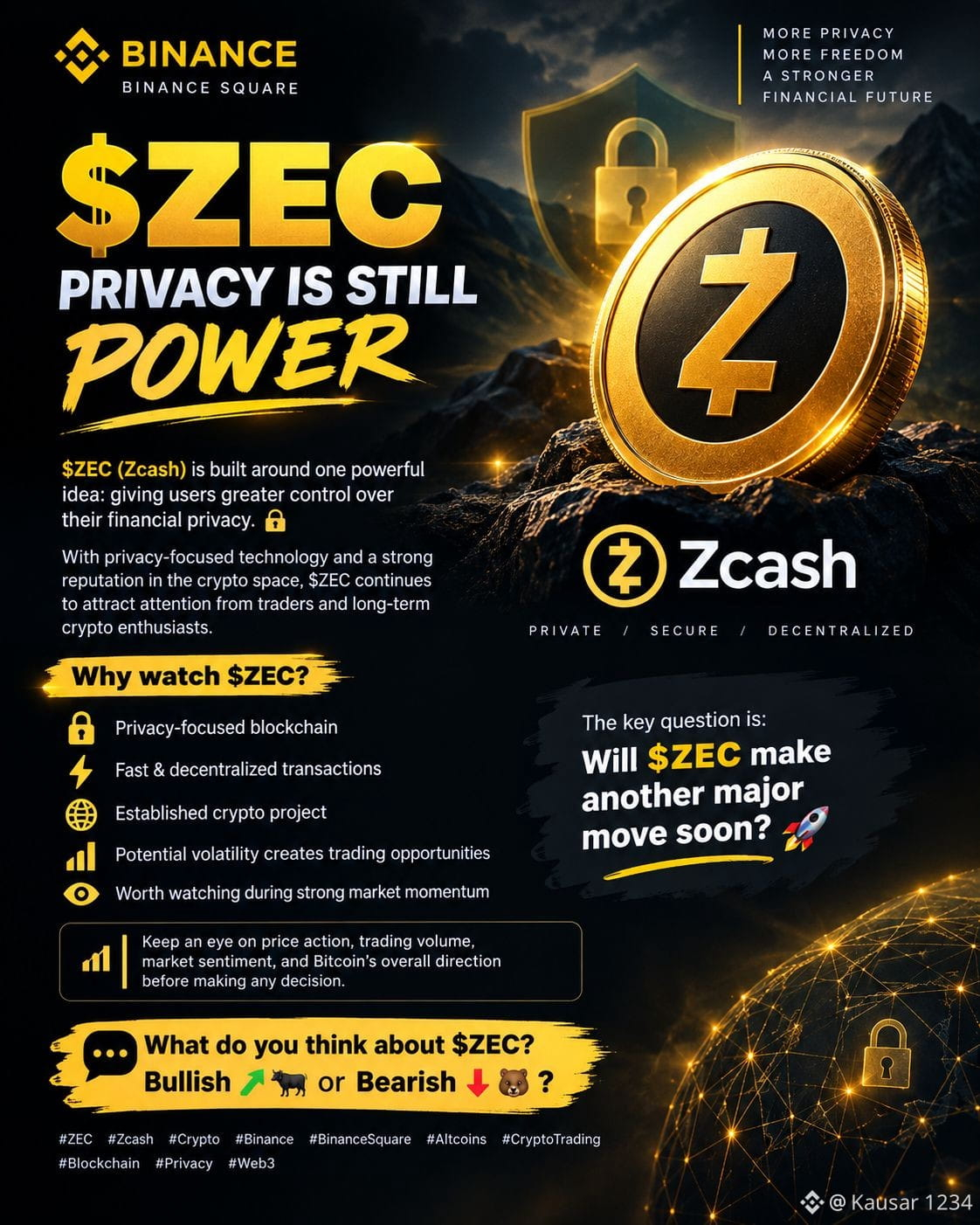
🚀 $ZEC — PRIVACY IS STILL POWER
(Zcash) is built around one powerful idea: giving users greater control over their financial privacy. 🔐
With privacy-focused technology and a strong reputation in the crypto space, $ZEC continues to attract attention from traders and long-term crypto enthusiasts.
📌 Why watch $ZEC?
• 🔐 Privacy-focused blockchain
• ⚡ Fast & decentralized transactions
• 🌐 Established crypto project
• 📈 Potential volatility creates trading opportunities
• 👀 Worth watching during strong market momentum
The key question is:
Will make another major move soon? 🚀
Keep an eye on price action, trading volume, market sentiment, and Bitcoin’s overall direction before making any decision.
💬 What do you think about $ZEC?
Bullish 🐂 or Bearish 🐻?
#ZEC #Zcash #Crypto #Binance #BinanceSquare #altcoins #cryptotrading #Blockchain #Privacy #Web3
$ZEC
🚀 $ZEC — PRIVACY IS STILL POWER
(Zcash) is built around one powerful idea: giving users greater control over their financial privacy. 🔐
With privacy-focused technology and a strong reputation in the crypto space, $ZEC continues to attract attention from traders and long-term crypto enthusiasts.
📌 Why watch $ZEC ?
• 🔐 Privacy-focused blockchain
• ⚡ Fast & decentralized transactions
• 🌐 Established crypto project
• 📈 Potential volatility creates trading opportunities
• 👀 Worth watching during strong market momentum
The key question is:
Will make another major move soon? 🚀
Keep an eye on price action, trading volume, market sentiment, and Bitcoin’s overall direction before making any decision.
💬 What do you think about $ZEC ?
Bullish 🐂 or Bearish 🐻?
#ZEC #Zcash #Crypto #Binance #BinanceSquare #altcoins #cryptotrading #Blockchain #Privacy #Web3
🚀 $ZEC — PRIVACY IS STILL POWER
(Zcash) is built around one powerful idea: giving users greater control over their financial privacy. 🔐
With privacy-focused technology and a strong reputation in the crypto space, $ZEC continues to attract attention from traders and long-term crypto enthusiasts.
📌 Why watch $ZEC ?
• 🔐 Privacy-focused blockchain
• ⚡ Fast & decentralized transactions
• 🌐 Established crypto project
• 📈 Potential volatility creates trading opportunities
• 👀 Worth watching during strong market momentum
The key question is:
Will make another major move soon? 🚀
Keep an eye on price action, trading volume, market sentiment, and Bitcoin’s overall direction before making any decision.
💬 What do you think about $ZEC ?
Bullish 🐂 or Bearish 🐻?
#ZEC #Zcash #Crypto #Binance #BinanceSquare #altcoins #cryptotrading #Blockchain #Privacy #Web3
156

·
--
Bullish
🚀 $COTI SPOT ACCUMULATION & BUY SETUP! 📈
{spot}(COTIUSDT)
Privacy narrative loading... and COTI is sitting right at the demand reload zone.
🔍 WHY THIS SPOT BUY?
• 1H higher-low structure forming after a healthy pullback — the RSI has cooled from overbought, giving room for the next leg up
• Avalanche Summit catalyst: $COTI CMO presents Privacy-on-Demand demo in NYC on Sept 16-17 — privacy narrative front and center
• Spot sentiment note: Order book shows clear buy walls building around the $0.0175 region, with sellers thinning out below
🎯 SPOT TRADE PLAN:
• Trade Type: SPOT BUY
• Accumulation Zone: $0.01655 – $0.01685
• Target 1 (TP1): $0.01780
• Target 2 (TP2): $0.01938
• Invalidation / Cut Loss: $0.01600
💡 SPOT STRATEGY:
No leverage. No shorting. Buying real COTI tokens at the demand zone and holding for the catalyst-driven move. If the Summit delivers, the privacy narrative can re-rate this fast.
💬 ARE YOU ACCUMULATING? What's your target for $COTI ? Drop it below! 👇
#Crypto #BinanceSquare #SpotTrading #COTI #Altcoins #TechnicalAnalysis #Privacy
🚀 $COTI SPOT ACCUMULATION & BUY SETUP! 📈
Privacy narrative loading... and COTI is sitting right at the demand reload zone.
🔍 WHY THIS SPOT BUY?
• 1H higher-low structure forming after a healthy pullback — the RSI has cooled from overbought, giving room for the next leg up
• Avalanche Summit catalyst: $COTI CMO presents Privacy-on-Demand demo in NYC on Sept 16-17 — privacy narrative front and center
• Spot sentiment note: Order book shows clear buy walls building around the $0.0175 region, with sellers thinning out below
🎯 SPOT TRADE PLAN:
• Trade Type: SPOT BUY
• Accumulation Zone: $0.01655 – $0.01685
• Target 1 (TP1): $0.01780
• Target 2 (TP2): $0.01938
• Invalidation / Cut Loss: $0.01600
💡 SPOT STRATEGY:
No leverage. No shorting. Buying real COTI tokens at the demand zone and holding for the catalyst-driven move. If the Summit delivers, the privacy narrative can re-rate this fast.
💬 ARE YOU ACCUMULATING? What's your target for $COTI ? Drop it below! 👇
#Crypto #BinanceSquare #SpotTrading #COTI #Altcoins #TechnicalAnalysis #Privacy
Privacy narrative loading... and COTI is sitting right at the demand reload zone.
🔍 WHY THIS SPOT BUY?
• 1H higher-low structure forming after a healthy pullback — the RSI has cooled from overbought, giving room for the next leg up
• Avalanche Summit catalyst: $COTI CMO presents Privacy-on-Demand demo in NYC on Sept 16-17 — privacy narrative front and center
• Spot sentiment note: Order book shows clear buy walls building around the $0.0175 region, with sellers thinning out below
🎯 SPOT TRADE PLAN:
• Trade Type: SPOT BUY
• Accumulation Zone: $0.01655 – $0.01685
• Target 1 (TP1): $0.01780
• Target 2 (TP2): $0.01938
• Invalidation / Cut Loss: $0.01600
💡 SPOT STRATEGY:
No leverage. No shorting. Buying real COTI tokens at the demand zone and holding for the catalyst-driven move. If the Summit delivers, the privacy narrative can re-rate this fast.
💬 ARE YOU ACCUMULATING? What's your target for $COTI ? Drop it below! 👇
#Crypto #BinanceSquare #SpotTrading #COTI #Altcoins #TechnicalAnalysis #Privacy
1
163
$ZEC presents one of the most interesting questions in this market.
Crypto regulation is becoming clearer.
But what happens to privacy-focused assets when regulation becomes more demanding?
That is where the thesis gets complicated.
More regulatory clarity can bring institutional capital into crypto.
But privacy will continue to challenge the boundaries between transparency, compliance and financial sovereignty.
The CLARITY Act could help define the rules of the game.
But it won’t answer the privacy question.
Poll: What becomes more valuable in the next cycle?
#zec #zcash #Privacy #Crypto
{spot}(ZECUSDT)
$ZEC presents one of the most interesting questions in this market.
Crypto regulation is becoming clearer.
But what happens to privacy-focused assets when regulation becomes more demanding?
That is where the thesis gets complicated.
More regulatory clarity can bring institutional capital into crypto.
But privacy will continue to challenge the boundaries between transparency, compliance and financial sovereignty.
The CLARITY Act could help define the rules of the game.
But it won’t answer the privacy question.
Poll: What becomes more valuable in the next cycle?
#zec #zcash #Privacy #Crypto
Crypto regulation is becoming clearer.
But what happens to privacy-focused assets when regulation becomes more demanding?
That is where the thesis gets complicated.
More regulatory clarity can bring institutional capital into crypto.
But privacy will continue to challenge the boundaries between transparency, compliance and financial sovereignty.
The CLARITY Act could help define the rules of the game.
But it won’t answer the privacy question.
Poll: What becomes more valuable in the next cycle?
#zec #zcash #Privacy #Crypto
🔐 Financial privacy
100%
🏛️ Regulatory clarity
0%
⚖️ A balance of both
0%
❓ Too early to tell
0%
3 votes • Voting closed
411

·
--
Seeing devs build payroll systems, treasury tooling and wallets on PriFi is the first sign of actual utility beyond basic yield farming.
Speculative capital usually rotates between DEXs and privacy-mixers, but building institutional tooling requires long-term commitment to the underlying state machine. Once teams start deploying payroll and treasury controls, it means the private state primitives are stable enough for real operational workflows, not just testnet experiments.
#Privacy $POL $BTC
Seeing devs build payroll systems, treasury tooling and wallets on PriFi is the first sign of actual utility beyond basic yield farming.
Speculative capital usually rotates between DEXs and privacy-mixers, but building institutional tooling requires long-term commitment to the underlying state machine. Once teams start deploying payroll and treasury controls, it means the private state primitives are stable enough for real operational workflows, not just testnet experiments.
#Privacy $POL $BTC
Speculative capital usually rotates between DEXs and privacy-mixers, but building institutional tooling requires long-term commitment to the underlying state machine. Once teams start deploying payroll and treasury controls, it means the private state primitives are stable enough for real operational workflows, not just testnet experiments.
#Privacy $POL $BTC

1
152

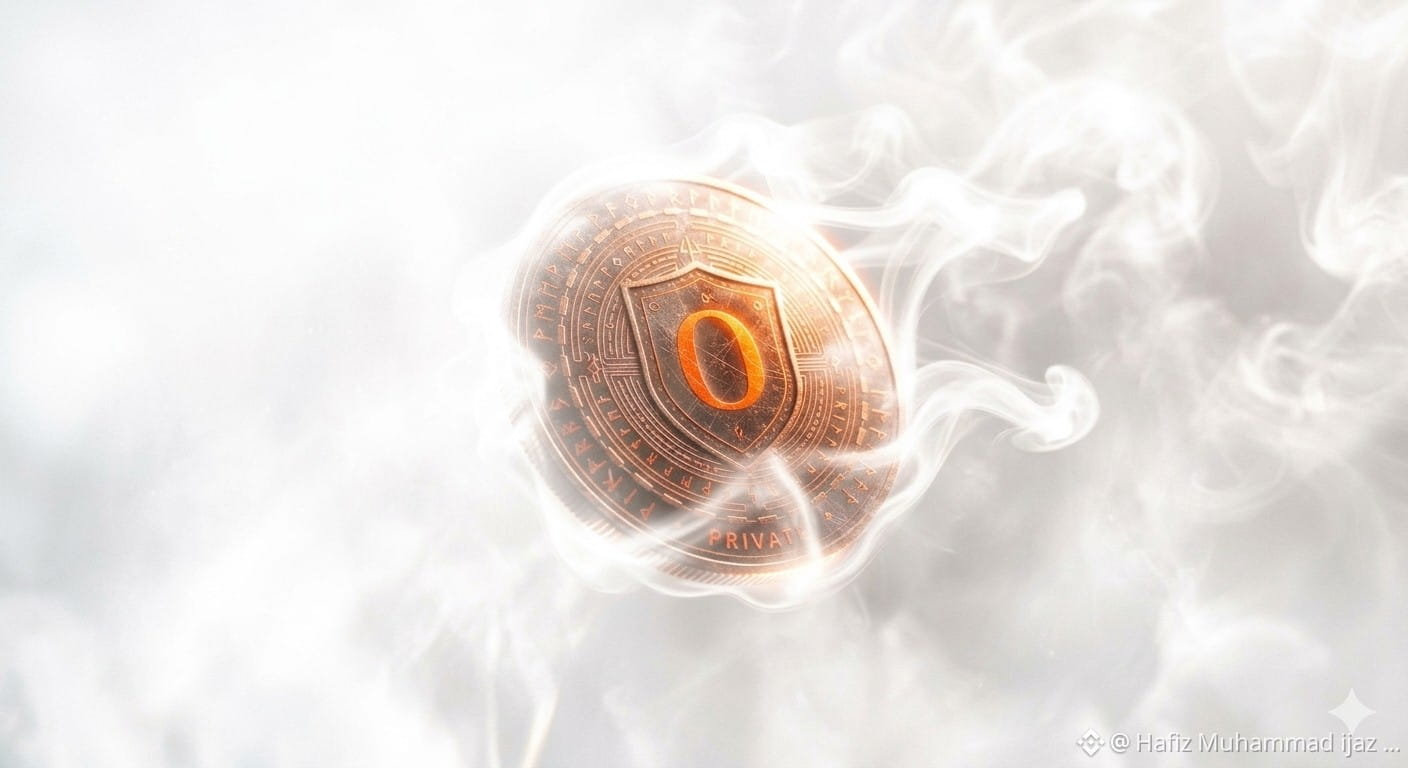
Monero just hit $505, up over 20,000% from its 2014 lows. While everyone chases the next AI coin or meme token, $XMR quietly became one of the best performers of the year by doing exactly what it was built for privacy. Sometimes the oldest thesis in the room turns out to be the right one.
#Monero #XMR #Privacy
{future}(XMRUSDT)
Monero just hit $505, up over 20,000% from its 2014 lows. While everyone chases the next AI coin or meme token, $XMR quietly became one of the best performers of the year by doing exactly what it was built for privacy. Sometimes the oldest thesis in the room turns out to be the right one.
#Monero #XMR #Privacy
#Monero #XMR #Privacy
99
Most people assume regulated fintech apps keep their crypto activity completely private, but recent breaches prove that centralized custody carries massive off-chain privacy risks.
You spend months practicing operational security, only for an exchange or neo-bank leak to tie your real identity directly to your on-chain wallet addresses and net worth. That turns you into an immediate target for phishing, SIM swapping, and physical extortion.
Revolut confirmed a data exposure that compromised sensitive customer info, ranging from identity documents and account details to complete transaction logs, including $BTC transactions. When centralized platforms leak records like this, attackers don't just get your email; they map your entire historical flow into assets like $ETH or $SOL straight back to your legal name.
A cold wallet protects your private keys, but it cannot fix the metadata trail you create when buying through centralized ramps.
How are you managing the privacy footprint left behind by your KYC exchange accounts?
#CryptoSecurity #Bitcoin #Privacy
Most people assume regulated fintech apps keep their crypto activity completely private, but recent breaches prove that centralized custody carries massive off-chain privacy risks.
You spend months practicing operational security, only for an exchange or neo-bank leak to tie your real identity directly to your on-chain wallet addresses and net worth. That turns you into an immediate target for phishing, SIM swapping, and physical extortion.
Revolut confirmed a data exposure that compromised sensitive customer info, ranging from identity documents and account details to complete transaction logs, including $BTC transactions. When centralized platforms leak records like this, attackers don't just get your email; they map your entire historical flow into assets like $ETH or $SOL straight back to your legal name.
A cold wallet protects your private keys, but it cannot fix the metadata trail you create when buying through centralized ramps.
How are you managing the privacy footprint left behind by your KYC exchange accounts?
#CryptoSecurity #Bitcoin #Privacy
You spend months practicing operational security, only for an exchange or neo-bank leak to tie your real identity directly to your on-chain wallet addresses and net worth. That turns you into an immediate target for phishing, SIM swapping, and physical extortion.
Revolut confirmed a data exposure that compromised sensitive customer info, ranging from identity documents and account details to complete transaction logs, including $BTC transactions. When centralized platforms leak records like this, attackers don't just get your email; they map your entire historical flow into assets like $ETH or $SOL straight back to your legal name.
A cold wallet protects your private keys, but it cannot fix the metadata trail you create when buying through centralized ramps.
How are you managing the privacy footprint left behind by your KYC exchange accounts?
#CryptoSecurity #Bitcoin #Privacy
11

·
--
🚀🦈 $ZEC UNLEASHES PRIMAL MOMENTUM – PRIVACY POWER SURGES!
📊 Institutional order flow shows a fresh demand block forming as smart money defends the privacy narrative. 🌊 Liquidity pools below the recent swing low have been exhausted, prompting a swift reclamation of the 4‑hour range. ⚡ Volume spikes on the top‑tier exchange confirm aggressive buying pressure, while the fair‑value gap above the last swing high remains unfilled, hinting at a potential upside thrust. 🔍 The confluence of order‑block retest and liquidity sweep sets the stage for a clean, high‑conviction swing.
💬 Are you aligning your position with the emerging privacy premium? 👇
⚠️ Not financial advice. Always manage your risk. 🛡️
🏷️ #ZEC #Privacy #LongSetup #Crypto
🦈 💎
🚀🦈 $ZEC UNLEASHES PRIMAL MOMENTUM – PRIVACY POWER SURGES!
📊 Institutional order flow shows a fresh demand block forming as smart money defends the privacy narrative. 🌊 Liquidity pools below the recent swing low have been exhausted, prompting a swift reclamation of the 4‑hour range. ⚡ Volume spikes on the top‑tier exchange confirm aggressive buying pressure, while the fair‑value gap above the last swing high remains unfilled, hinting at a potential upside thrust. 🔍 The confluence of order‑block retest and liquidity sweep sets the stage for a clean, high‑conviction swing.
💬 Are you aligning your position with the emerging privacy premium? 👇
⚠️ Not financial advice. Always manage your risk. 🛡️
🏷️ #ZEC #Privacy #LongSetup #Crypto
🦈 💎
📊 Institutional order flow shows a fresh demand block forming as smart money defends the privacy narrative. 🌊 Liquidity pools below the recent swing low have been exhausted, prompting a swift reclamation of the 4‑hour range. ⚡ Volume spikes on the top‑tier exchange confirm aggressive buying pressure, while the fair‑value gap above the last swing high remains unfilled, hinting at a potential upside thrust. 🔍 The confluence of order‑block retest and liquidity sweep sets the stage for a clean, high‑conviction swing.
💬 Are you aligning your position with the emerging privacy premium? 👇
⚠️ Not financial advice. Always manage your risk. 🛡️
🏷️ #ZEC #Privacy #LongSetup #Crypto
🦈 💎
51

·
--
$COTI registers an interesting move after advancing toward its Layer-2 privacy ecosystem and the transition of its network, with a current price close to $0.0167 USD and daily trading volume that ranges between $30 and $55 million. However, pressure to migrate tokens (V1 to V2) and the high volatility of the mid-cap cryptocurrency market pose risks that must be carefully assessed. It is advisable to analyze whether interest in its new privacy and staking solutions is sustainable or only reflects technical and short-term speculative dynamics.
#Coti #Layer2 #Privacy
{spot}(COTIUSDT)
$COTI registers an interesting move after advancing toward its Layer-2 privacy ecosystem and the transition of its network, with a current price close to $0.0167 USD and daily trading volume that ranges between $30 and $55 million. However, pressure to migrate tokens (V1 to V2) and the high volatility of the mid-cap cryptocurrency market pose risks that must be carefully assessed. It is advisable to analyze whether interest in its new privacy and staking solutions is sustainable or only reflects technical and short-term speculative dynamics.
#Coti #Layer2 #Privacy
#Coti #Layer2 #Privacy
20

·
--
Central Bank Digital Currency (CBDC) vs Monero: A Clash of Currency Philosophies
【The Rise of CBDC】
China’s digital yuan: piloted for years, covering hundreds of millions of users.
The EU digital euro: plans to begin trials in 2026.
The U.S. digital dollar: the Federal Reserve is studying it.
Global trend: more than 130 countries are exploring CBDCs.
【Privacy Concerns with CBDC】
Fully transparent: the government can see the amount, time, and counterpart of every transaction.
Programmable money: spending limits, expiration dates, and use cases can be set.
Social credit: consumption data may affect social credit scores.
Financial surveillance: the government can freeze, confiscate, or restrict anyone’s funds.
【Monero’s Alternative】
Default privacy: no application, no setup—privacy is automatically protected.
No borders: not controlled by any government; usable worldwide.
Anti-censorship: cannot be frozen, confiscated, or restricted.
Financial freedom: true digital cash for peer-to-peer transactions.
【Technical Comparison】
CBDC: a centralized database, government-controlled.
Monero: a decentralized blockchain with community governance.
CBDC: requires identity verification, KYC/AML.
Monero: no identity required—protects privacy.
【Future Outlook】
Possible coexistence: CBDC for everyday payments, Monero for privacy protection.
Regulatory game of chess: governments may try to ban privacy coins, but the technology is difficult to eradicate.
User choice: the market ultimately decides which currency becomes more popular.
Monero’s mission: to guard the last vestige of financial freedom in an age of surveillance.
💡 Preferred for private transactions: xmrdex.com
#Monero #XMR #Privacy #bull market
Central Bank Digital Currency (CBDC) vs Monero: A Clash of Currency Philosophies
【The Rise of CBDC】
China’s digital yuan: piloted for years, covering hundreds of millions of users.
The EU digital euro: plans to begin trials in 2026.
The U.S. digital dollar: the Federal Reserve is studying it.
Global trend: more than 130 countries are exploring CBDCs.
【Privacy Concerns with CBDC】
Fully transparent: the government can see the amount, time, and counterpart of every transaction.
Programmable money: spending limits, expiration dates, and use cases can be set.
Social credit: consumption data may affect social credit scores.
Financial surveillance: the government can freeze, confiscate, or restrict anyone’s funds.
【Monero’s Alternative】
Default privacy: no application, no setup—privacy is automatically protected.
No borders: not controlled by any government; usable worldwide.
Anti-censorship: cannot be frozen, confiscated, or restricted.
Financial freedom: true digital cash for peer-to-peer transactions.
【Technical Comparison】
CBDC: a centralized database, government-controlled.
Monero: a decentralized blockchain with community governance.
CBDC: requires identity verification, KYC/AML.
Monero: no identity required—protects privacy.
【Future Outlook】
Possible coexistence: CBDC for everyday payments, Monero for privacy protection.
Regulatory game of chess: governments may try to ban privacy coins, but the technology is difficult to eradicate.
User choice: the market ultimately decides which currency becomes more popular.
Monero’s mission: to guard the last vestige of financial freedom in an age of surveillance.
💡 Preferred for private transactions: xmrdex.com
#Monero #XMR #Privacy #bull market
【The Rise of CBDC】
China’s digital yuan: piloted for years, covering hundreds of millions of users.
The EU digital euro: plans to begin trials in 2026.
The U.S. digital dollar: the Federal Reserve is studying it.
Global trend: more than 130 countries are exploring CBDCs.
【Privacy Concerns with CBDC】
Fully transparent: the government can see the amount, time, and counterpart of every transaction.
Programmable money: spending limits, expiration dates, and use cases can be set.
Social credit: consumption data may affect social credit scores.
Financial surveillance: the government can freeze, confiscate, or restrict anyone’s funds.
【Monero’s Alternative】
Default privacy: no application, no setup—privacy is automatically protected.
No borders: not controlled by any government; usable worldwide.
Anti-censorship: cannot be frozen, confiscated, or restricted.
Financial freedom: true digital cash for peer-to-peer transactions.
【Technical Comparison】
CBDC: a centralized database, government-controlled.
Monero: a decentralized blockchain with community governance.
CBDC: requires identity verification, KYC/AML.
Monero: no identity required—protects privacy.
【Future Outlook】
Possible coexistence: CBDC for everyday payments, Monero for privacy protection.
Regulatory game of chess: governments may try to ban privacy coins, but the technology is difficult to eradicate.
User choice: the market ultimately decides which currency becomes more popular.
Monero’s mission: to guard the last vestige of financial freedom in an age of surveillance.
💡 Preferred for private transactions: xmrdex.com
#Monero #XMR #Privacy #bull market
142

Verified
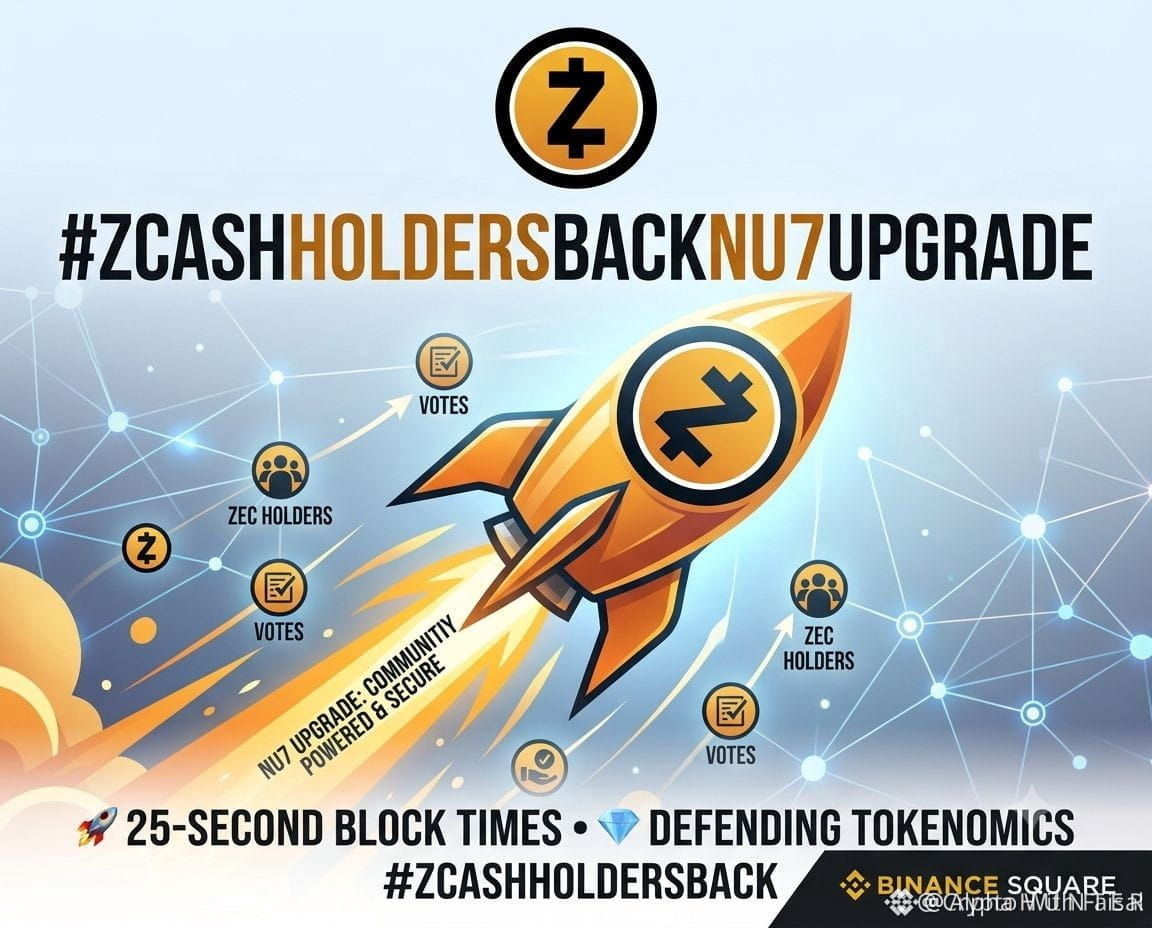
#zcashholdersbacknu7upgrade
🔥 The story about privacy is VERY MUCH ALIVE. Zcash is leading the charge!
If you’re not paying attention to what’s happening right now with Zcash, you’re missing out. The vote just wrapped up, and the community sent a resounding, clear message to the entire crypto ecosystem.
With more than 66% of eligible ZEC showing up to vote in a fully encrypted, privacy-focused on-chain ballot, Zcash has just demonstrated the power of its decentralization. 💪
The NU7 upgrade removes the unnecessary, accelerates the network toward 25-second blocks, and protects the halving schedule strictly the way BTC does.
{future}(ZECUSDT)
What I like most: the market is finally rewarding real utility and governance. While other altcoins are collapsing, $ZEC holds strong. The privacy sector is heating up, and Zcash is perfectly positioned for the next surge.
Is ZEC the undisputed king of privacy coins, or are you backing something else? Let’s talk about it in the comments! 🗣️🔥
#Zcash #Privacy #blockchain
$SYN
{future}(SYNUSDT)
$BR
{future}(BRUSDT)
#zcashholdersbacknu7upgrade
🔥 The story about privacy is VERY MUCH ALIVE. Zcash is leading the charge!
If you’re not paying attention to what’s happening right now with Zcash, you’re missing out. The vote just wrapped up, and the community sent a resounding, clear message to the entire crypto ecosystem.
With more than 66% of eligible ZEC showing up to vote in a fully encrypted, privacy-focused on-chain ballot, Zcash has just demonstrated the power of its decentralization. 💪
The NU7 upgrade removes the unnecessary, accelerates the network toward 25-second blocks, and protects the halving schedule strictly the way BTC does.
What I like most: the market is finally rewarding real utility and governance. While other altcoins are collapsing, $ZEC holds strong. The privacy sector is heating up, and Zcash is perfectly positioned for the next surge.
Is ZEC the undisputed king of privacy coins, or are you backing something else? Let’s talk about it in the comments! 🗣️🔥
#Zcash #Privacy #blockchain
$SYN
$BR
🔥 The story about privacy is VERY MUCH ALIVE. Zcash is leading the charge!
If you’re not paying attention to what’s happening right now with Zcash, you’re missing out. The vote just wrapped up, and the community sent a resounding, clear message to the entire crypto ecosystem.
With more than 66% of eligible ZEC showing up to vote in a fully encrypted, privacy-focused on-chain ballot, Zcash has just demonstrated the power of its decentralization. 💪
The NU7 upgrade removes the unnecessary, accelerates the network toward 25-second blocks, and protects the halving schedule strictly the way BTC does.
What I like most: the market is finally rewarding real utility and governance. While other altcoins are collapsing, $ZEC holds strong. The privacy sector is heating up, and Zcash is perfectly positioned for the next surge.
Is ZEC the undisputed king of privacy coins, or are you backing something else? Let’s talk about it in the comments! 🗣️🔥
#Zcash #Privacy #blockchain
$SYN
$BR
1
221

·
--
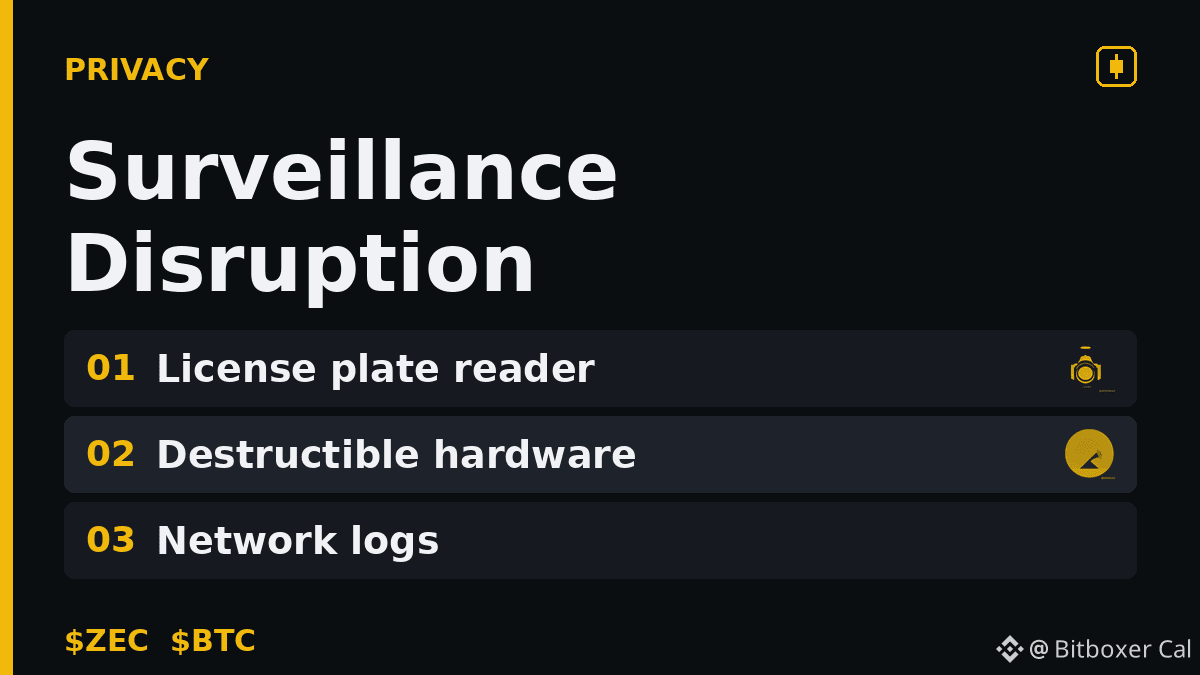
A new GTA V mod turns city surveillance grids into digital targets, highlighting the real-world friction facing $ZEC.
While players see a toy, this simulation mirrors the struggle against modern privacy hurdles. Masking your digital footprint is a complex war of metadata rather than a simple sledgehammer. How does this shift your perspective on privacy tech?
$ZEC $BTC #Privacy #Tech #OnChain
A new GTA V mod turns city surveillance grids into digital targets, highlighting the real-world friction facing $ZEC .
While players see a toy, this simulation mirrors the struggle against modern privacy hurdles. Masking your digital footprint is a complex war of metadata rather than a simple sledgehammer. How does this shift your perspective on privacy tech?
$ZEC $BTC #Privacy #Tech #OnChain
While players see a toy, this simulation mirrors the struggle against modern privacy hurdles. Masking your digital footprint is a complex war of metadata rather than a simple sledgehammer. How does this shift your perspective on privacy tech?
$ZEC $BTC #Privacy #Tech #OnChain
126
Log in to explore more content
Join global crypto users on Binance Square
⚡️ Get latest and useful information about crypto.
💬 Trusted by the world’s largest crypto exchange.
👍 Discover real insights from verified creators.
Email / Phone number
Trending Topics
1
#FedRateWatch
1.5M views
6,867 Discussing
2
#ZcashRises6%
61,385 views
703 Discussing
3
#XRPSinks10%
40,593 views
463 Discussing
4
#BitcoinETFsShed$450M
7,864 views
100 Discussing
5
#CircleOpensArcMainnet
18,675 views
305 Discussing
6
#ZcashHoldersBackNU7Upgrade
31,069 views
468 Discussing
7
#MSTRTradingVolumeSurpassesMorganStanley
28,430 views
611 Discussing
8
#BitcoinFalls4%
58,075 views
956 Discussing
9
#SKHynixInTalksToMakeMemoryChipsInUS
22,400 views
372 Discussing
10
#OpenAIDiscussesNewFundingAt$1.2TValuation
6,289 views
61 Discussing