

#openzeppelin
openzeppelin
2,767 views
35 Discussing
Hot
Latest

·
--
Bearish
S&P Global now has its own smart contract auditor — OpenZeppelin. And that makes me a little uneasy.
The deal closed on October 26, and the price was not disclosed. OpenZeppelin founder Demian Brener will report to the president of S&P Global Ratings, and that same Ratings launched a DeFi vault risk assessment on October 4, Vault Risk Assessment (this is not a credit rating).
So, one company audits protocols, and its parent company may assess vaults on protocols that OpenZeppelin checked. Basically, the conflict of interest here suggests itself.
The good thing: the OpenZeppelin Contracts library remains open source and free. Nothing changes for developers.
And the “more than $38 trillion through contracts” figure comes from the company’s own release, so take it as marketing)
#OpenZeppelin #defi
9

·
--
A traditional ratings giant has brought blockchain security into its fold.
According to reports from PANews and others, S&P Global has completed its acquisition of blockchain security company OpenZeppelin. The official position is that the OpenZeppelin Contracts smart contract library will remain open source, free, and publicly maintained. Developers need not rush to migrate away from the library in the near term. For enterprise procurement teams, however, this means that “audits/standard components” may be more readily incorporated into traditional risk management and ratings frameworks.
How to read this: Don’t focus only on the fact that “a big company acquired it.” The key question is whether the open-source commitment can be reflected in verifiable governance and release processes, and whether audits, vulnerability disclosures, and the dependency supply chain will remain transparent after the acquisition. Projects using the library should include dependency pinning and security update schedules in their operations checklists, rather than assuming everything will carry on as usual automatically.
#OpenZeppelin #智能合约 #安全 #S&PGlobal
10

·
--
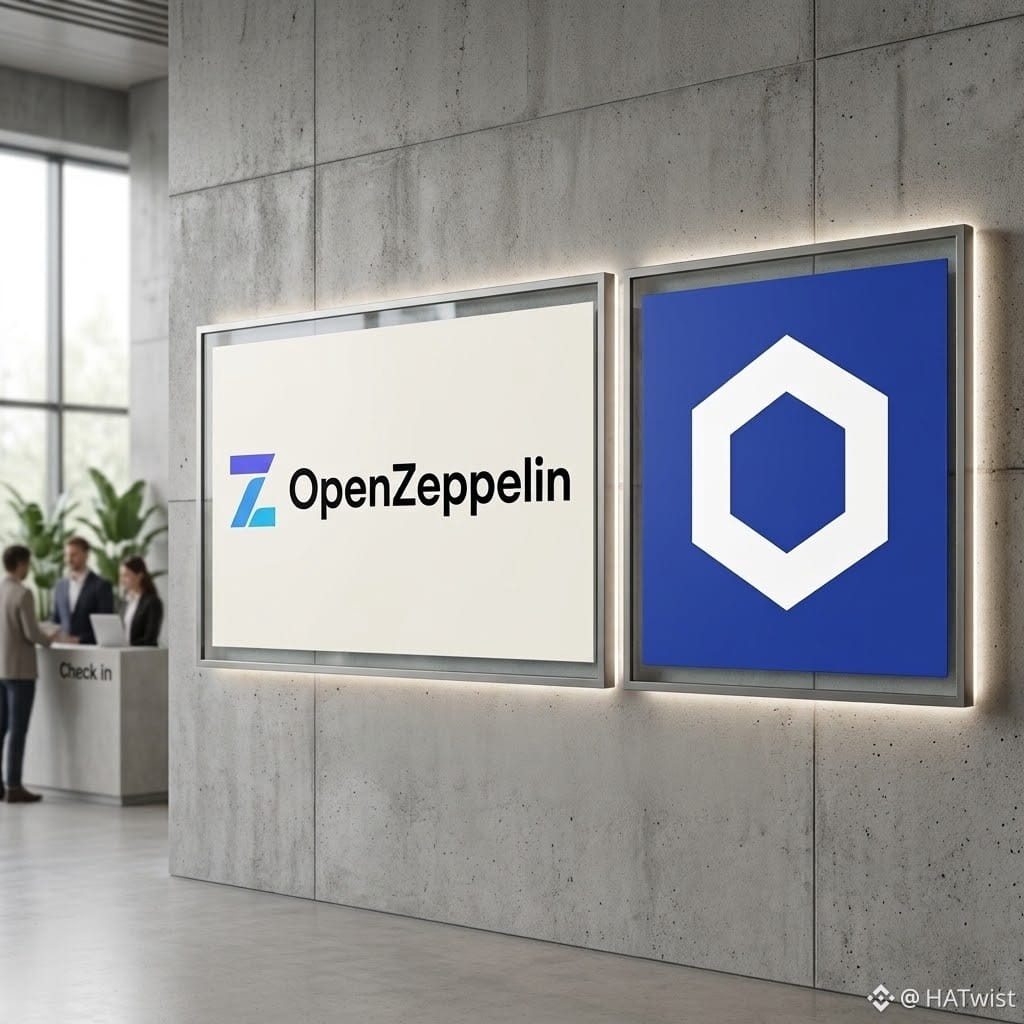
🚨 JUST IN: OpenZeppelin integrates Chainlink CCIP and ACE into its developer tools! 🔗
The integration brings powerful cross-chain transfer and onchain compliance capabilities directly into developers’ workflows.
By combining Chainlink’s interoperability and compliance technology with OpenZeppelin’s security tools, the collaboration aims to help institutions and developers build safer, more connected blockchain applications. 🚀
#Chainlink #LINK $LINK #OpenZeppelin #Crypto #Blockchain
2
50

🧱 OpenZeppelin × Chainlink join forces: the developer “default toolkit” has changed
A piece of news that’s easy to overlook but goes right to the foundations: OpenZeppelin announced a partnership with Chainlink, integrating several of Chainlink’s tools directly into OpenZeppelin’s smart contract library.
🔹 CCIP: cross-chain transfers
🔹 ACE: automated compliance, such as sanctions screening
🔹 CRE: more complex on-chain workflows
According to the announcement, OpenZeppelin’s tools support 9 of the top 10 stablecoins and have processed transfers worth more than $38 trillion in total. This partnership comes shortly after S&P Global acquired OpenZeppelin.
Why do I think this is worth talking about?
When many people write smart contracts, their first step is to import OpenZeppelin’s library. Now cross-chain and compliance modules are also part of this “default option,” meaning that in the future, issuing a tokenized asset or building a regulated application may no longer require cobbling together services from different providers.
For institutions, this lowers the barriers to entry. For DeFi purists, compliance screening becoming “ready to use out of the box” may also mean it will become increasingly difficult to avoid.
My take: the more standardized infrastructure becomes, the more on-chain finance starts to resemble traditional finance. Efficiency improves, but the space for “permissionlessness” will gradually shrink. That’s not necessarily a bad thing, but it’s worth looking at clearly.
What do you think: is compliance becoming part of developers’ default toolkit a necessary step for crypto to go mainstream, or a gradual departure from decentralization’s original ideals? Let’s discuss in the comments 👇
#Chainlink #OpenZeppelin #RWA #Stablecoins
73

·
--
📰 Why did OpenZeppelin’s auditing tools suddenly become a hot commodity for TRON?
OpenZeppelin has rolled out a range of audited smart contract toolsets for the TRON ecosystem, including upgrade tools and permission management. While this has long been standard on ETH, the TRON version places special emphasis on security. That means DApp developers on TRON can take fewer detours, though OpenZeppelin is still reminding developers not to treat audits as a sure thing—they still need to test their contracts before going live. Improving code quality in the TRON ecosystem is a good thing, but the impact on the broader market is limited.
Why is this news important?
The core reason OpenZeppelin’s auditing tools matter is that smart contract security is one of the biggest bottlenecks to DeFi’s breakout. TRON has long been criticized for having a lower DApp security standard than Ethereum. Now OpenZeppelin is delivering audited libraries directly to TRON, effectively lowering the security bar by half. In a cycle where industry regulation is tightening and hacker attacks are frequent, any move that improves ecosystem security deserves attention. This also echoes recent efforts by BNB Chain and Solana to strengthen security collaboration, suggesting that cross-chain security solutions are becoming a mainstream competitive direction.
Market impact
The impact on BTC/ETH prices is negligible. BTC at $84,069.5 suggests the market is still digesting expectations of rate hikes, while ETH’s slight rise to $2,689.25 looks more like lingering momentum from AI hype. This news most directly affects the development cost of DApps in the TRON ecosystem, meaning more DeFi projects with security validation may appear on TRON in the future. However, it doesn’t substantially change the overall market landscape, since Ethereum still leads in both the number and quality of DApps. Historical reference: after Ethereum’s hard fork in 2019, the widespread adoption of security libraries gave ETH a boost of less than 1%.
Trading/Action idea
💡 In the short term, there may be a slight sentiment boost for the TRON token BNB $773.09, but it likely won’t exceed 0.5%. This logic only holds if TRON can maintain a security-audit ratio above 80% for every 100 DApps for 3 consecutive months. If regulation suddenly tightens the TRC-20 standard, this thesis is invalidated.
This article has no sponsorship from any project, and the author does not hold any of the assets mentioned
⚠️ Not investment advice; predictions are for reference only
#OpenZeppelin
#BTC $BNB
265
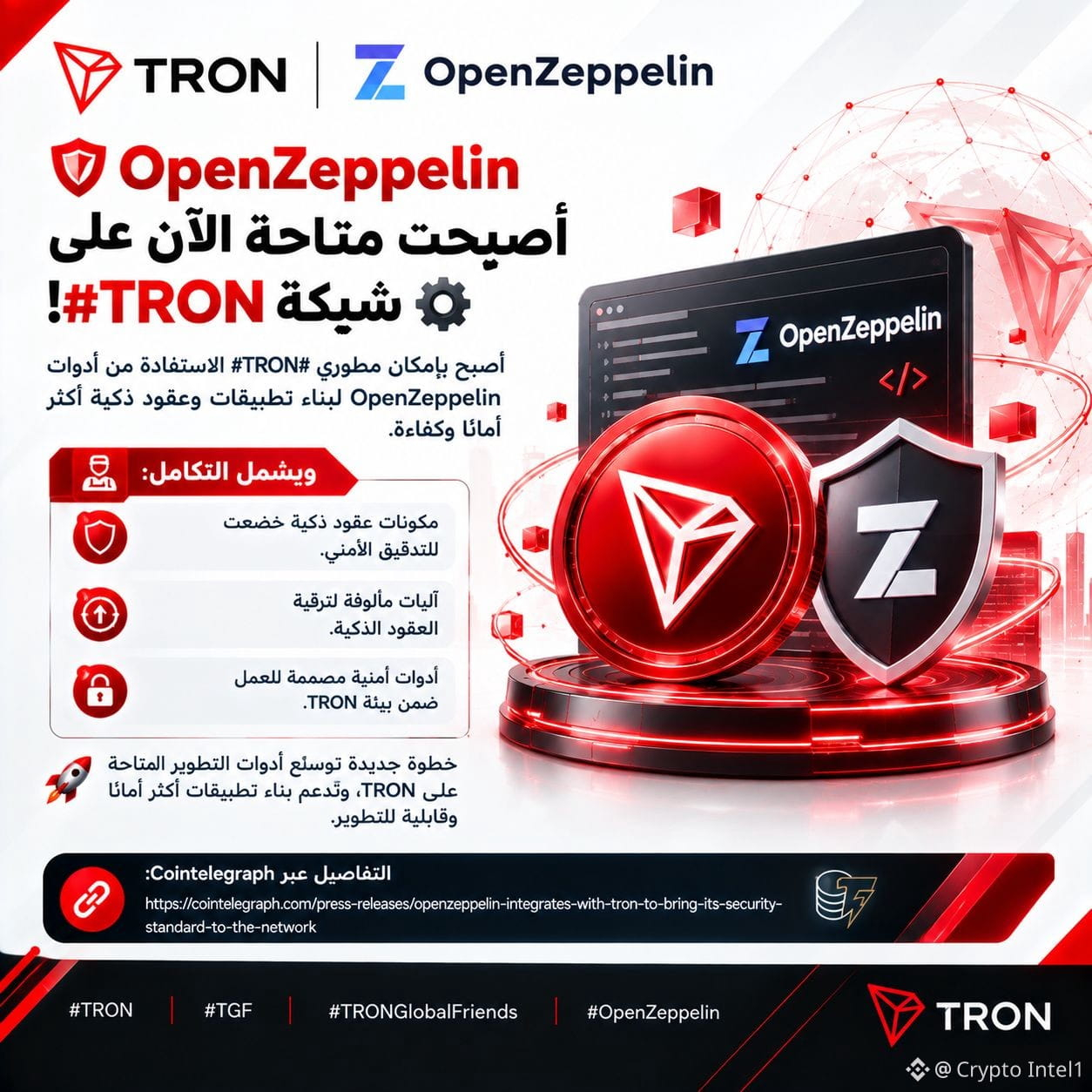
🛡️ OpenZeppelin is now available on the #TRON network! ⚙️
Developers #TRON can now use OpenZeppelin tools to build safer and more efficient applications and smart contracts.
👨💻 The integration includes:
🔹 Smart contract components that have undergone security audits.
🔹 Familiar mechanisms to upgrade smart contracts.
🔹 Security tools designed to work within the TRON environment.
🚀 A new step that expands the development tools available on TRON, supporting the building of more secure and scalable applications.
🔗 Details via Cointelegraph:
https://cointelegraph.com/press-releases/openzeppelin-integrates-with-tron-to-bring-its-security-standard-to-the-network
#TGF #TRON #TRONGlobalFriends
@TRONDAO
#OpenZeppelin
🛡️ OpenZeppelin is now available on the #TRON network! ⚙️
Developers #TRON can now use OpenZeppelin tools to build safer and more efficient applications and smart contracts.
👨💻 The integration includes:
🔹 Smart contract components that have undergone security audits.
🔹 Familiar mechanisms to upgrade smart contracts.
🔹 Security tools designed to work within the TRON environment.
🚀 A new step that expands the development tools available on TRON, supporting the building of more secure and scalable applications.
🔗 Details via Cointelegraph:
https://cointelegraph.com/press-releases/openzeppelin-integrates-with-tron-to-bring-its-security-standard-to-the-network
#TGF #TRON #TRONGlobalFriends
@TRON DAO
#OpenZeppelin
119

⚠️ OpenZeppelin Co-Founder: "All DeFi is Unsafe"
According to The Block, OpenZeppelin co-founder Manuel Aráoz stated:
🚨 Key Takeaways:
• Currently believes "all DeFi is unsafe"
• Has advised friends and family to exit all DeFi positions
📉 Involved Protocols:
• Aave
• MakerDAO
• Compound
💡 Background Insights:
• OpenZeppelin is a top-tier security audit firm in the industry
• The co-founder's bearish stance on DeFi security has caught market attention
• May reflect deep concerns over systemic risks in smart contracts
⚠️ Note:
• Personal opinions do not represent industry consensus
• DeFi security risks do exist, but different protocols have varying security levels
• Users are advised to assess risks independently and diversify positions
• The above is for informational purposes only and does not constitute investment advice
#DeFi #安全 #OpenZeppelin
210

·
--
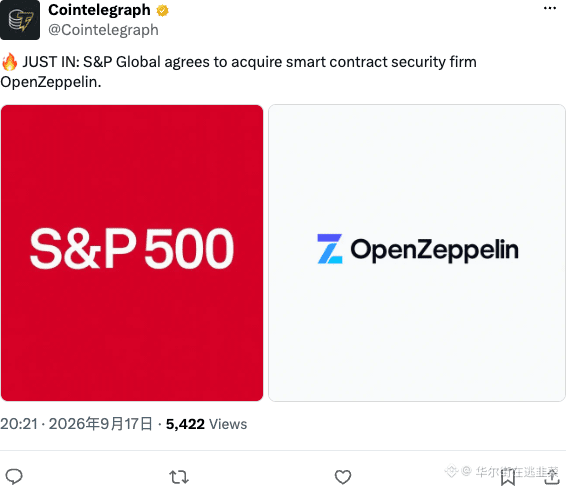
S&P Global is set to acquire OpenZeppelin. Traditional financial giants are directly stepping in to buy smart contract security firms—this signal is even stronger than ETF inflows. Going forward, on-chain auditing and compliance standards are very likely to be rewritten by these old-money players. Don’t just watch the candlestick chart— the infrastructure layer is being quietly absorbed.
$BTC $ETH #OpenZeppelin
$BTC $ETH #OpenZeppelin
353

·
--
S&P Global will acquire the blockchain security company OpenZeppelin, further expanding its presence in digital asset security and compliance infrastructure.
#S&PGlobal #OpenZeppelin #Blockchain security
S&P Global will acquire the blockchain security company OpenZeppelin, further expanding its presence in digital asset security and compliance infrastructure.
#S&PGlobal #OpenZeppelin #Blockchain security
#S&PGlobal #OpenZeppelin #Blockchain security
43
S&P GLOBAL JUST BOUGHT THE GUARDIAN OF ON-CHAIN SECURITY.
S&P Global has agreed to acquire OpenZeppelin, a company specializing in smart contract security, in a deal that shows on-chain risk is starting to be pulled directly into traditional financial risk assessment systems.
OpenZeppelin says its smart contract libraries have supported more than $37T in transaction value.
Carried out more than 900 security engagements.
OpenZeppelin’s technology is used in stablecoins, tokenized funds, and DeFi.
S&P wants to expand risk assessment into technology risk on the blockchain.
OpenZeppelin will continue operating independently under the current brand; CEO Demian Brener will continue to lead.
The deal value was not disclosed.
This isn’t simply S&P buying a cybersecurity company. It shows that smart-contract risk is gradually becoming a type of financial risk that traditional institutions need to account for as more assets move on-chain.
S&P used to rate credit risk.
Now it needs to worry about whether your fu**ing smart contract can get hacked.
Brothers, do you think this is a sign that TradFi is seriously stepping into on-chain risk management, or just simply an M&A deal?
DYOR. Not investment advice.
#S&PGlobal #OpenZeppelin #defi
1
1
55

·
--
$TRX
{future}(TRXUSDT)
*🇨🇳 Chinese translation:*
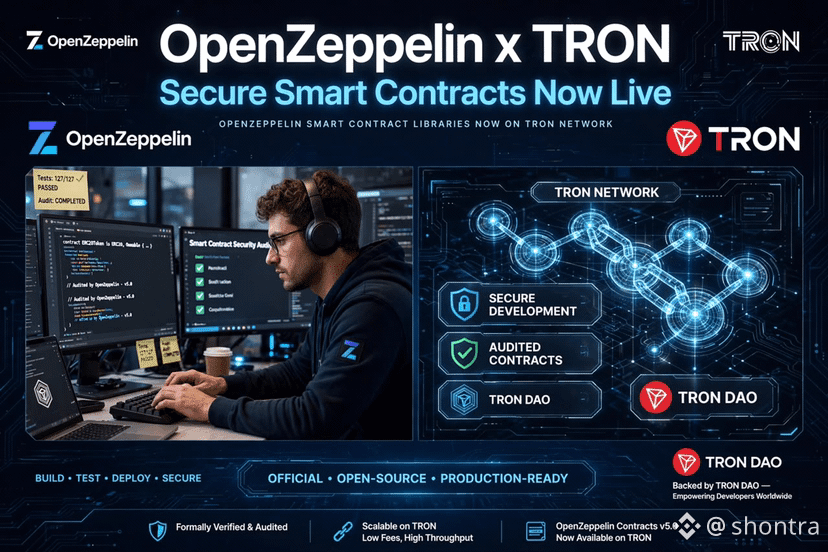
OpenZeppelin says its smart contract library and secure development toolkit now support the TRON network, allowing developers to use audited contract components, upgrade tools, and the Contracts Wizard contract guide. According to BeInCrypto, the integration is intended to support more advanced use cases such as tokens, access control, and governance, including passkey authentication, supply control, and permissions management. TRON DAO states that as TRON expands into stablecoins, DeFi, and payments, this move lowers the barrier for builders.
*Poster:*
*Square copy:*
🔐 *Major collaboration! OpenZeppelin’s smart contract library lands on TRON!*
Developer benefits: audited contract components + upgrade tools + one-click Contracts Wizard generation
Supports advanced plays such as tokens, permissions, governance, passkey authentication, and more!
TRON DAO: Lower the development barrier and accelerate the expansion of the stablecoin/DeFi/payments ecosystem!
#TRON #OpenZeppelin #smart contract
$TRX
*🇨🇳 Chinese translation:*
OpenZeppelin says its smart contract library and secure development toolkit now support the TRON network, allowing developers to use audited contract components, upgrade tools, and the Contracts Wizard contract guide. According to BeInCrypto, the integration is intended to support more advanced use cases such as tokens, access control, and governance, including passkey authentication, supply control, and permissions management. TRON DAO states that as TRON expands into stablecoins, DeFi, and payments, this move lowers the barrier for builders.
*Poster:*
*Square copy:*
🔐 *Major collaboration! OpenZeppelin’s smart contract library lands on TRON!*
Developer benefits: audited contract components + upgrade tools + one-click Contracts Wizard generation
Supports advanced plays such as tokens, permissions, governance, passkey authentication, and more!
TRON DAO: Lower the development barrier and accelerate the expansion of the stablecoin/DeFi/payments ecosystem!
#TRON #OpenZeppelin #smart contract
35

Verified
S&P Global is acquiring OpenZeppelin to strengthen its position in the tokenized finance and blockchain security space.
#OpenZeppelin #TokenizedFinance
S&P Global is acquiring OpenZeppelin to strengthen its position in the tokenized finance and blockchain security space.
#OpenZeppelin #TokenizedFinance
#OpenZeppelin #TokenizedFinance
1
17

·
--
S&P Global Acquires OpenZeppelin: A Rating Giant Buys Onchain Security StandardsRating giant makes a move: S&P Global officially announces the acquisition of OpenZeppelin.
Even if CLARITY can still block things in the Senate, the capital markets side is already buying onchain security standards.
September 17, S&P Global (NYSE: SPGI) issued a PR: It has reached an agreement to acquire OpenZeppelin. The terms were not disclosed and delivery is pending the satisfaction of closing conditions; the official said it is not expected to have a material impact on financial results.
Let’s put the hard numbers on the table first:
1️⃣ OpenZeppelin Contracts has cumulatively supported value transfers exceeding $37 trillion (including most leading stablecoins and tokenized funds)
2️⃣ 900+ security engagements; the official claims that 10,000+ vulnerabilities were identified before launch
S&P Global Acquires OpenZeppelin: A Rating Giant Buys Onchain Security Standards
Rating giant makes a move: S&P Global officially announces the acquisition of OpenZeppelin.
Even if CLARITY can still block things in the Senate, the capital markets side is already buying onchain security standards.
September 17, S&P Global (NYSE: SPGI) issued a PR: It has reached an agreement to acquire OpenZeppelin. The terms were not disclosed and delivery is pending the satisfaction of closing conditions; the official said it is not expected to have a material impact on financial results.
Let’s put the hard numbers on the table first:
1️⃣ OpenZeppelin Contracts has cumulatively supported value transfers exceeding $37 trillion (including most leading stablecoins and tokenized funds)
2️⃣ 900+ security engagements; the official claims that 10,000+ vulnerabilities were identified before launch
80

·
--
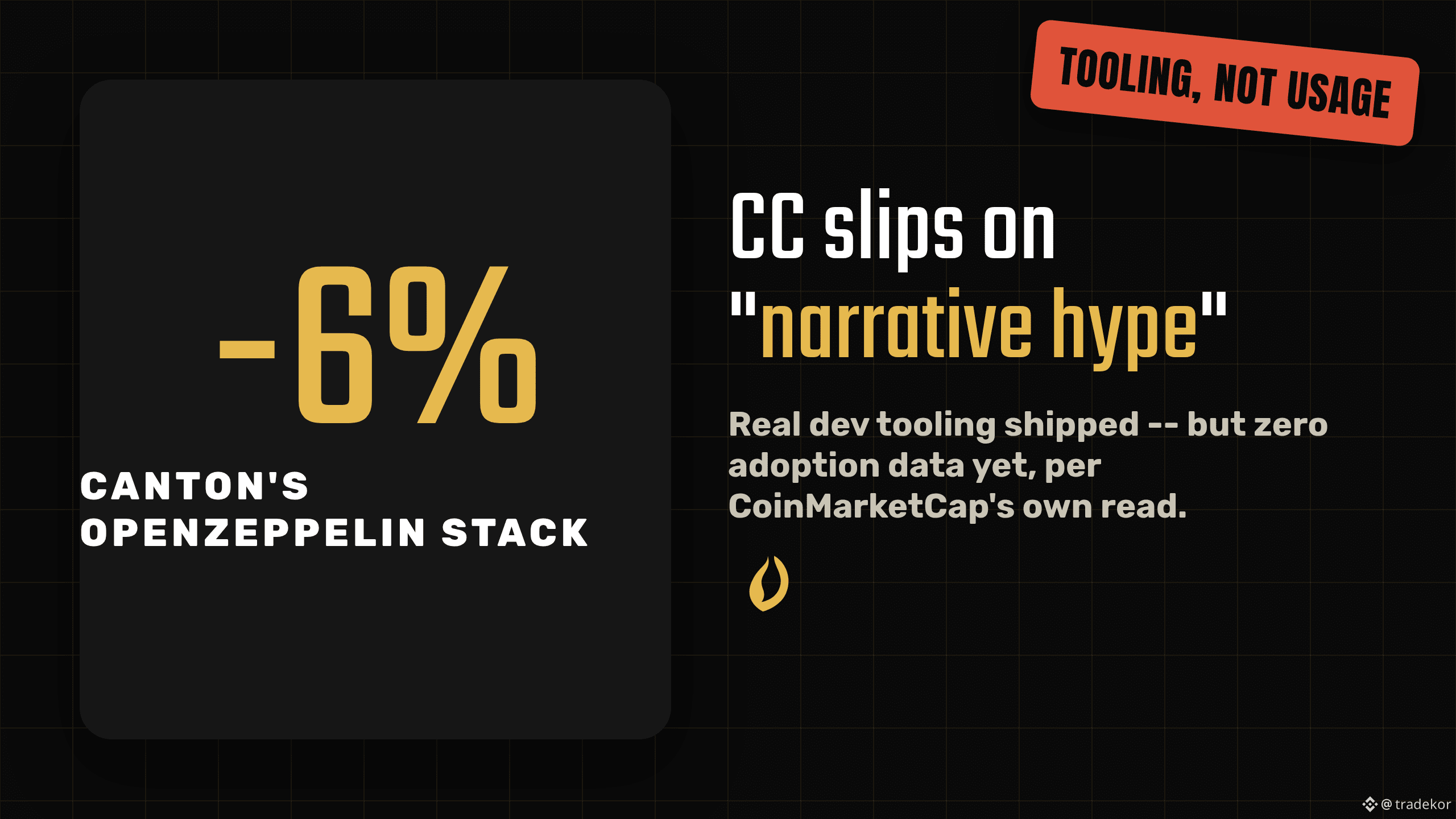
OpenZeppelin just shipped its security-standard contract library for Canton -- and CC dropped roughly 6% through support the same week.
The news: OpenZeppelin announced Aug 16 that its Daml security-standard library is live for Canton Network, built with the Canton Foundation, supporting the CIP-112 token/settlement standard. It ships four reference implementations -- a privacy DEX, lending protocol, confidential auctions, cross-chain stablecoin payments -- playing the role for Canton/Daml that OpenZeppelin Contracts plays for Solidity: audited building blocks builders import instead of writing from scratch.
The catch: CC fell ~6% through its $0.101 support in the same window, and CoinMarketCap's own coverage frames it as "narrative hype" -- real impact depends on whether developers actually adopt these templates. No transaction-count, TVL, or adoption data yet shows the stack is used. CC sits near multi-month lows ($0.087-$0.091) versus February's $0.1938 all-time high. Every report traces back to one OpenZeppelin/Canton Foundation announcement -- wide agreement, not independent confirmation.
Our read: real infrastructure that lowers the bar for institutional builders on Canton, but tooling availability isn't proof of usage, and the market didn't buy the story this time. Falsifiable watch-point: does any of the four reference apps show real deployed volume in the next 1-2 months, or does this stay unused tooling?
Does shipping developer infrastructure move your read on a chain, or do you wait for actual usage data first?
Not financial advice. DYOR.
$CC #Canton #OpenZeppelin #Institutional #CryptoNews
67
·
--
Verified
S&P Global acquires OpenZeppelin: what the ratings giant is buying is on-chain security standardsS&P Global (NYSE: SPGI) has officially announced that it will acquire OpenZeppelin—not another PR about “big ideas.” This is the credit-rating/data giant directly incorporating on-chain security standards into its system.
Sep 17 PR Newswire: The parties have signed the acquisition agreement. Financial terms were not disclosed; the deal is still subject to closing conditions; and there is “no expectation of a material impact” on SPGI’s performance. In other words: strategic fill-in, not to boost revenue immediately.
OpenZeppelin will continue as an independent business unit, operating under its original name. CEO Demian Brener will remain in post and report to Yann Le Pallec, President of S&P Global Ratings.
S&P Global acquires OpenZeppelin: what the ratings giant is buying is on-chain security standards
S&P Global (NYSE: SPGI) has officially announced that it will acquire OpenZeppelin—not another PR about “big ideas.” This is the credit-rating/data giant directly incorporating on-chain security standards into its system.
Sep 17 PR Newswire: The parties have signed the acquisition agreement. Financial terms were not disclosed; the deal is still subject to closing conditions; and there is “no expectation of a material impact” on SPGI’s performance. In other words: strategic fill-in, not to boost revenue immediately.
OpenZeppelin will continue as an independent business unit, operating under its original name. CEO Demian Brener will remain in post and report to Yann Le Pallec, President of S&P Global Ratings.
SPGIUS-0.23%
922

·
--
S&P Global (NYSE: SPGI) 9/17 official announcement: The parties have signed an agreement to acquire on-chain security company OpenZeppelin.
This is not yet closed. Both sides say: the transaction is still subject to satisfaction of conditions; no amount has been disclosed, and S&P does not expect it to have a material impact on its financial reports. OpenZeppelin will continue operating independently under its original name; CEO Demian Brener will remain in role, reporting to Yann Le Pallec, President of S&P Ratings.
The scale figures match on both sides: Contracts cumulative handled value exceeds $37 trillion, and 900+ security projects have been completed. OpenZeppelin also states: the contract library remains open-source, free, and continues to be publicly maintained on GitHub.
For the average person: this is a ratings agency bringing on-chain security standards into its risk and benchmark framework—not a boon for any single coin, and it hasn’t singled out any particular chain.
Source:
https://investor.spglobal.com/news-releases/news-details/2026/SP-Global-Announces-Agreement-to-Acquire-OpenZeppelin/default.aspx
https://www.openzeppelin.com/news/spglobal-enters-agreement-to-acquire-openzeppelin
#OpenZeppelin
SPGIUS-0.23%
193

S&P Global acquires OpenZeppelin, expanding risk controls for tokenization
- S&P Global has acquired OpenZeppelin, expanding its operations in tokenized finance.
- This move follows a recent investment in Kaiko.
- S&P Global is targeting technology risk for banks and asset management on-chain.
- RSS has not provided any further details about the deal.
#OpenZeppelin #TokenizedFinance #CryptoNews
$btc $eth
#vlikevn #Titanbot
Source: CoinDesk
8


Article
S&P Global Goes Deeper Into Crypto: Data Meets Blockchain🚨 S&P Global is making bigger moves into crypto. 👀
First came its investment in Kaiko, a major crypto data provider.
Now S&P Global is moving to acquire OpenZeppelin, bringing smart contract security into the picture. 🔐
The strategy is becoming clear:
Crypto data + blockchain security + tokenized finance. 🔗📊
Wall Street is building deeper connections with onchain markets.
$RDDT $NBIS $H
#Crypto
{stock_us}(NBIS.US)
{stock_us}(RDDT.US)
#Blockchain #OpenZeppelin #Tokenization
S&P Global Goes Deeper Into Crypto: Data Meets Blockchain
🚨 S&P Global is making bigger moves into crypto. 👀
First came its investment in Kaiko, a major crypto data provider.
Now S&P Global is moving to acquire OpenZeppelin, bringing smart contract security into the picture. 🔐
The strategy is becoming clear:
Crypto data + blockchain security + tokenized finance. 🔗📊
Wall Street is building deeper connections with onchain markets.
$RDDT $NBIS $H
#Crypto
#Blockchain #OpenZeppelin #Tokenization
359
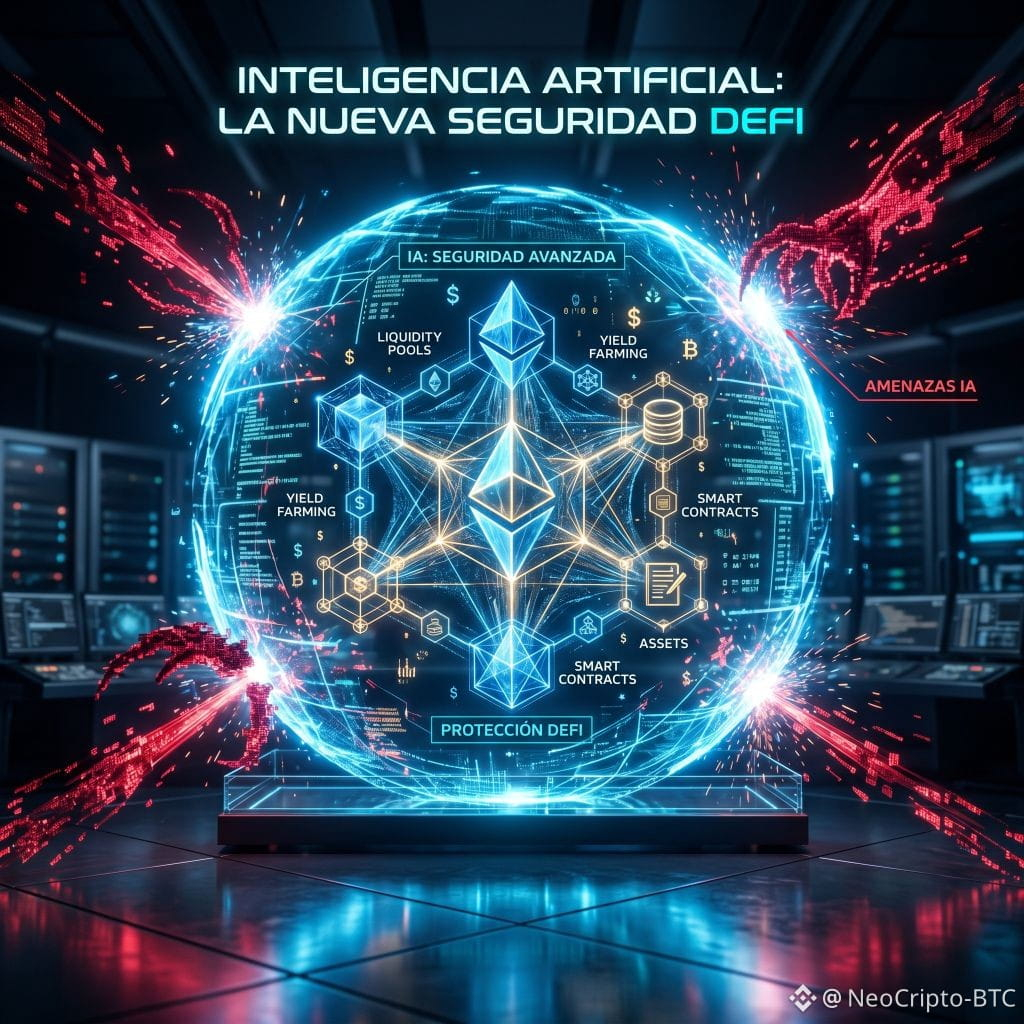
⚠️ DeFi Alert! Artificial Intelligence is changing the game for smart contract security 🤖🔒
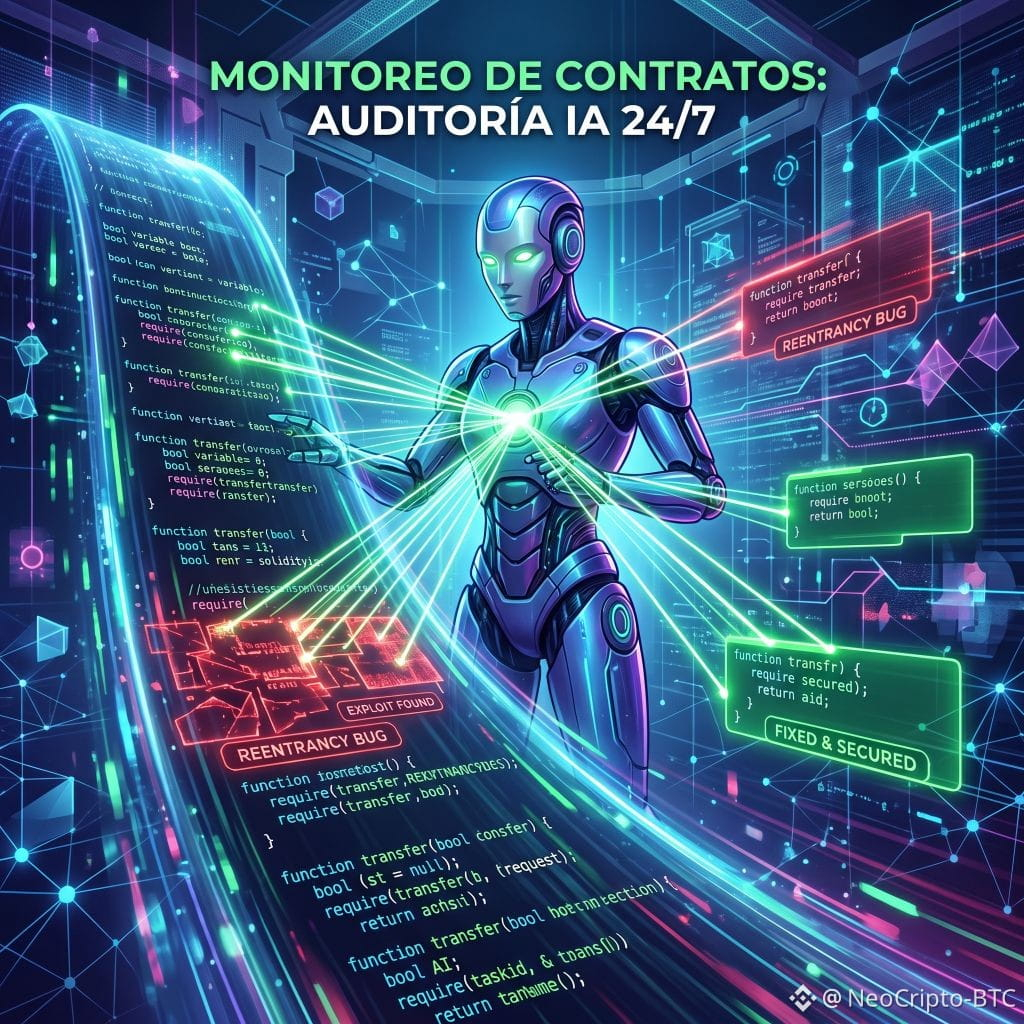
Hey, Binance community! Manuel Aráoz, co-founder of OpenZeppelin — the leading firm in blockchain auditing and security — has dropped a crucial warning: the rise of AI-based coding agents is making the DeFi ecosystem less secure.
Until now, smart contracts were as safe as humans' ability to spot flaws. However, the speed and accuracy with which AI tools can analyze code and uncover hidden vulnerabilities have drastically changed the landscape. The concerning part is that this tech is already in the hands of attackers, who are using it automatically to exploit weaknesses in decentralized protocols before developers can catch them.
This doesn’t spell the end for decentralized finance, but the beginning of a new era. To counter this threat, the Web3 cybersecurity industry is already rolling out continuous security programs powered by AI, designed to defend and monitor contracts in real-time.
The key message is clear for all investors, developers, and enthusiasts: now more than ever, auditing code just once isn't enough. Security must be dynamic and ongoing to protect our funds.
What do you think about the impact of AI on crypto security? Do you believe it will be a benefit or a danger in the long run? We’re looking forward to your thoughts in the comments!
#OpenZeppelin
$LINK
{future}(LINKUSDT)
$FET
{future}(FETUSDT)
$INJ
{future}(INJUSDT)
⚠️ DeFi Alert! Artificial Intelligence is changing the game for smart contract security 🤖🔒
Hey, Binance community! Manuel Aráoz, co-founder of OpenZeppelin — the leading firm in blockchain auditing and security — has dropped a crucial warning: the rise of AI-based coding agents is making the DeFi ecosystem less secure.
Until now, smart contracts were as safe as humans' ability to spot flaws. However, the speed and accuracy with which AI tools can analyze code and uncover hidden vulnerabilities have drastically changed the landscape. The concerning part is that this tech is already in the hands of attackers, who are using it automatically to exploit weaknesses in decentralized protocols before developers can catch them.
This doesn’t spell the end for decentralized finance, but the beginning of a new era. To counter this threat, the Web3 cybersecurity industry is already rolling out continuous security programs powered by AI, designed to defend and monitor contracts in real-time.
The key message is clear for all investors, developers, and enthusiasts: now more than ever, auditing code just once isn't enough. Security must be dynamic and ongoing to protect our funds.
What do you think about the impact of AI on crypto security? Do you believe it will be a benefit or a danger in the long run? We’re looking forward to your thoughts in the comments!
#OpenZeppelin
$LINK
$FET
$INJ
1
230

·
--
S&P Global officially closes its acquisition of OpenZeppelin: on-chain security joins the ratings giant’s portfolio
According to an official S&P Global press release, on October 26, S&P Global (NYSE: SPGI) announced that it had completed its acquisition of OpenZeppelin, an on-chain security company. The deal was first disclosed on September 17; financial terms were not disclosed, and the company said the acquisition would not have a material impact on its results. OpenZeppelin will retain its independent business unit and brand. Founder Demian Brener will remain with the company and report to Yann Le Pallec, president of S&P Global Ratings. The Contracts open-source library will continue to be maintained and made freely available.
Key facts (from the official release): Founded in 2015, OpenZeppelin has completed 900+ security assessments and uncovered over 10,000 vulnerabilities before launch. Contracts has supported the transfer of more than $38 trillion in value and is used by major stablecoins and tokenized funds. S&P says the acquisition strengthens its ability to assess technology risks in digital assets and connects it with a customer network of traditional financial institutions.
[Commentary] For tokenized assets, stablecoins, and RWAs to make their way onto institutional balance sheets, what’s needed is not just regulatory approval, but also standards for “smart contract and underlying technology risks” that rating systems can understand. A ratings giant buying a firm that sets security audit standards signals that on-chain security is shifting from something “outsourced by project teams” to “capital markets infrastructure.” Keeping the contract library open source should support ecosystem trust in the short term. Longer term, it remains to be seen how assessment products will be priced and whether they will be cross-sold alongside credit ratings.
[Opportunities/Risks] Watch institutional-grade on-chain risk management and auditing, as well as compliance costs for tokenized funds and stablecoin issuers. Risks include disputes over independence and open-source governance after the acquisition, as well as greater concentration in the audit market. With this week’s FOMC meeting and earnings from Microsoft and Google also in focus, risk appetite remains driven primarily by macro factors. The narrative around smart contract security in the $ETH ecosystem could benefit indirectly, but this is not a short-term price catalyst.
Do you think “ratings companies entering on-chain security” will accelerate the growth of RWAs, or first raise the bar for project audits?
#标普 #OpenZeppelin #链上安全 #RWA #Tokenization
$ETH $BTC
For reference only; this is not investment advice.
8
Log in to explore more content
Join global crypto users on Binance Square
⚡️ Get latest and useful information about crypto.
💬 Trusted by the world’s largest crypto exchange.
👍 Discover real insights from verified creators.
Email / Phone number
Trending Topics
1
#CanMicrosoftDeliverOnAI
74,501 views
726 Discussing
2
#CanGoogleDefindItsCore
39,037 views
539 Discussing
3
#FOMCWatch
9.1M views
27,933 Discussing
4
#EthereumDropsBelow$2300
10,716 views
157 Discussing
5
#BitcoinSlipsBelow$80KAgain
30,151 views
119 Discussing
6
#ThailandLaunchesWORPTStablecoinToQRPaymentApp
61,136 views
787 Discussing
7
#StrategySkipsBitcoinPurchasesSpends$205MOnSTRCBuybacks
11,628 views
98 Discussing
8
#BitmineAdds10452ETH
105,657 views
1,184 Discussing
9
#SouthKoreaConsidersEducationTaxOnCryptoExchanges
62,531 views
840 Discussing
10
#OCCUrgesCommunityBanksToEnterStablecoinPayments
43,120 views
600 Discussing