

小東西
139 Posts

小東西
Report
Block User
關注我 ✨ 愛你們

BTC Holder
Frequent Trader
5.4 Years
14 Following
88 Followers
118 Liked
Posts
·
--
$XRP, Evernorth Beijing time October 1, a press release said that the merger proposal with Armada has been approved by shareholders. After the deal closes, it is expected that they will hold approximately 473 million XRP tokens.
Put simply, XRP is the coin used on the XRP Ledger for transfers and settlement.
They said that after the deal closes, it will be the largest pure-XRP treasury company in the public market, preparing to list under XRPN on Nasdaq.
$XRP , Evernorth Beijing time October 1, a press release said that the merger proposal with Armada has been approved by shareholders. After the deal closes, it is expected that they will hold approximately 473 million XRP tokens.
Put simply, XRP is the coin used on the XRP Ledger for transfers and settlement.
They said that after the deal closes, it will be the largest pure-XRP treasury company in the public market, preparing to list under XRPN on Nasdaq.
Put simply, XRP is the coin used on the XRP Ledger for transfers and settlement.
They said that after the deal closes, it will be the largest pure-XRP treasury company in the public market, preparing to list under XRPN on Nasdaq.
70
·
--
$ONDO, in a report released in Beijing time early on October 2, said that the Intelligent Portfolios product has been expanded to seven tiers.
This coin is Ondo’s platform token for tokenizing real-world assets on-chain, turning traditional assets such as stocks and ETFs into on-chain tokens that can be held on the blockchain.
According to the report, on Ethereum and BNB Chain, qualified investors can now access these portfolios.
$ONDO , in a report released in Beijing time early on October 2, said that the Intelligent Portfolios product has been expanded to seven tiers.
This coin is Ondo’s platform token for tokenizing real-world assets on-chain, turning traditional assets such as stocks and ETFs into on-chain tokens that can be held on the blockchain.
According to the report, on Ethereum and BNB Chain, qualified investors can now access these portfolios.
This coin is Ondo’s platform token for tokenizing real-world assets on-chain, turning traditional assets such as stocks and ETFs into on-chain tokens that can be held on the blockchain.
According to the report, on Ethereum and BNB Chain, qualified investors can now access these portfolios.
1
75
·
--
$HYPE, a custody provider Copper in Beijing time reported on October 1 that Hyperliquid perpetuals can now be traded directly on their platform.
This coin is the platform token for Hyperliquid’s on-chain derivatives exchange.
The release said that decentralized perpetual trading volume now accounts for more than half.
$HYPE , a custody provider Copper in Beijing time reported on October 1 that Hyperliquid perpetuals can now be traded directly on their platform.
This coin is the platform token for Hyperliquid’s on-chain derivatives exchange.
The release said that decentralized perpetual trading volume now accounts for more than half.
This coin is the platform token for Hyperliquid’s on-chain derivatives exchange.
The release said that decentralized perpetual trading volume now accounts for more than half.
142
·
--
Verified
$QNT, OKX issued a press release stating that at 4:00 PM Beijing time on October 1, the U-Perpetual sustainable contract QUANTUSDT will be launched for trading.
This coin is Quant Network’s token. They build programmable money infrastructure, using Overledger to connect the rails of banks, chains, and tokenized deposits together.
The press release said the maximum leverage of this contract can reach 50x.
$QNT , OKX issued a press release stating that at 4:00 PM Beijing time on October 1, the U-Perpetual sustainable contract QUANTUSDT will be launched for trading.
This coin is Quant Network’s token. They build programmable money infrastructure, using Overledger to connect the rails of banks, chains, and tokenized deposits together.
The press release said the maximum leverage of this contract can reach 50x.
This coin is Quant Network’s token. They build programmable money infrastructure, using Overledger to connect the rails of banks, chains, and tokenized deposits together.
The press release said the maximum leverage of this contract can reach 50x.
609
·
--
$CT, according to a Binance press release, on October 1 at 3:45 PM Beijing time, the U-margined perpetual sustainable contract CTUSDT begins trading.
This coin is Concrete’s governance token. They build on-chain treasuries and yield infrastructure for institutions.
The press release says the maximum leverage for this contract can reach 20x.
$CT , according to a Binance press release, on October 1 at 3:45 PM Beijing time, the U-margined perpetual sustainable contract CTUSDT begins trading.
This coin is Concrete’s governance token. They build on-chain treasuries and yield infrastructure for institutions.
The press release says the maximum leverage for this contract can reach 20x.
This coin is Concrete’s governance token. They build on-chain treasuries and yield infrastructure for institutions.
The press release says the maximum leverage for this contract can reach 20x.
442
·
--
$USDC, Visa Beijing time September 30 issue said it has completed a cross-border settlement pilot with UK-based Lloyds Banking Group, settling Visa’s payment obligations with a stablecoin.
Put simply, USDC is a stablecoin pegged to the U.S. dollar, used for transfers and settlement.
According to the report, this pilot settled about $750,000 in total; Lloyds bought it through the UK-compliant entity Archax, transferred it from Jersey to Visa in the United States, and even over the weekend it can arrive faster than traditional interbank cross-border settlement.
$USDC , Visa Beijing time September 30 issue said it has completed a cross-border settlement pilot with UK-based Lloyds Banking Group, settling Visa’s payment obligations with a stablecoin.
Put simply, USDC is a stablecoin pegged to the U.S. dollar, used for transfers and settlement.
According to the report, this pilot settled about $750,000 in total; Lloyds bought it through the UK-compliant entity Archax, transferred it from Jersey to Visa in the United States, and even over the weekend it can arrive faster than traditional interbank cross-border settlement.
Put simply, USDC is a stablecoin pegged to the U.S. dollar, used for transfers and settlement.
According to the report, this pilot settled about $750,000 in total; Lloyds bought it through the UK-compliant entity Archax, transferred it from Jersey to Visa in the United States, and even over the weekend it can arrive faster than traditional interbank cross-border settlement.
40
·
--
$XRP , Ripple (as of press time 9/29 Beijing time) said that Brazil’s custodian and settlement institution CSD BR has begun using an XRP Ledger mirror to register BTG Pactual’s fund shares.
Simply put, XRP is the coin used for transfers and settlement on the XRP Ledger.
The release says this institution has registered assets worth over 22 trillion reais; in terms of official accounts, it’s still their system that counts. On-chain, it’s for auditing and inquiry first, and it has already been launched into real market conditions.
$XRP , Ripple (as of press time 9/29 Beijing time) said that Brazil’s custodian and settlement institution CSD BR has begun using an XRP Ledger mirror to register BTG Pactual’s fund shares.
Simply put, XRP is the coin used for transfers and settlement on the XRP Ledger.
The release says this institution has registered assets worth over 22 trillion reais; in terms of official accounts, it’s still their system that counts. On-chain, it’s for auditing and inquiry first, and it has already been launched into real market conditions.
Simply put, XRP is the coin used for transfers and settlement on the XRP Ledger.
The release says this institution has registered assets worth over 22 trillion reais; in terms of official accounts, it’s still their system that counts. On-chain, it’s for auditing and inquiry first, and it has already been launched into real market conditions.
258
·
--
$ETH MetaMask said in a press release that base-layer infrastructure is having issues; validators affected by their non-custodial staking should exit preventively.
Ethereum is the public chain that everyone uses to run smart contracts and earn money through staking.
They said they currently haven't seen any direct threat to wallets; Lido added that it will take about 45 days for these validators to complete the exit, withdraw, and then re-enter. Updated in the early morning of October 1 Beijing time.
$ETH MetaMask said in a press release that base-layer infrastructure is having issues; validators affected by their non-custodial staking should exit preventively.
Ethereum is the public chain that everyone uses to run smart contracts and earn money through staking.
They said they currently haven't seen any direct threat to wallets; Lido added that it will take about 45 days for these validators to complete the exit, withdraw, and then re-enter. Updated in the early morning of October 1 Beijing time.
Ethereum is the public chain that everyone uses to run smart contracts and earn money through staking.
They said they currently haven't seen any direct threat to wallets; Lido added that it will take about 45 days for these validators to complete the exit, withdraw, and then re-enter. Updated in the early morning of October 1 Beijing time.
197
·
--
$CT , Beijing time September 30 at 6:00 PM, KuCoin announced that spot CT/USDT is now trading.
This coin is Concrete’s governance token. They build an on-chain treasury and yield infrastructure for institutions.
They said that by September 2026, ecosystem deposits will be around $1.2 billion.
$CT , Beijing time September 30 at 6:00 PM, KuCoin announced that spot CT/USDT is now trading.
This coin is Concrete’s governance token. They build an on-chain treasury and yield infrastructure for institutions.
They said that by September 2026, ecosystem deposits will be around $1.2 billion.
This coin is Concrete’s governance token. They build an on-chain treasury and yield infrastructure for institutions.
They said that by September 2026, ecosystem deposits will be around $1.2 billion.
428
·
--
Verified
$GRASS , Multicoin: Beijing time, on September 29, it will be announced that both hedge funds and venture capital have invested in this project.
In simple terms, it allows people to share the extra bandwidth at home to help AI collect data from publicly available web pages.
The press release says that there are now more than 6 million people on it contributing bandwidth.
Do you think there is still room for growth along the line of “helping AI fetch real-time data”?
$GRASS , Multicoin: Beijing time, on September 29, it will be announced that both hedge funds and venture capital have invested in this project.
In simple terms, it allows people to share the extra bandwidth at home to help AI collect data from publicly available web pages.
The press release says that there are now more than 6 million people on it contributing bandwidth.
Do you think there is still room for growth along the line of “helping AI fetch real-time data”?
In simple terms, it allows people to share the extra bandwidth at home to help AI collect data from publicly available web pages.
The press release says that there are now more than 6 million people on it contributing bandwidth.
Do you think there is still room for growth along the line of “helping AI fetch real-time data”?
235
·
--
$HYPE Lion Group, which is listed on the U.S. stock market, said in a press release that on September 29 it sold part of its crypto inventory and then bought about 38,000 more.
This coin is a token on Hyperliquid, which mainly conducts on-chain perpetual futures trading.
The press release was issued in the evening of September 30 Beijing time. They said this time was an increase in position, not a sale of the position they already held.
Do you care more about this step of concentrating inventory into this coin, or whether they will continue to add more later?
$HYPE Lion Group, which is listed on the U.S. stock market, said in a press release that on September 29 it sold part of its crypto inventory and then bought about 38,000 more.
This coin is a token on Hyperliquid, which mainly conducts on-chain perpetual futures trading.
The press release was issued in the evening of September 30 Beijing time. They said this time was an increase in position, not a sale of the position they already held.
Do you care more about this step of concentrating inventory into this coin, or whether they will continue to add more later?
This coin is a token on Hyperliquid, which mainly conducts on-chain perpetual futures trading.
The press release was issued in the evening of September 30 Beijing time. They said this time was an increase in position, not a sale of the position they already held.
Do you care more about this step of concentrating inventory into this coin, or whether they will continue to add more later?
230
·
--
$RONIN is getting upgraded. Ronin’s official statement says that the Karst mainnet will go live on October 8 at 12:00 a.m. (Beijing time).
They say that most people don’t need to do anything, and the chain won’t stop. After the upgrade, the per-transaction gas limit will be about 16.8 million.
Binance says that at 11:00 p.m. on October 7 (Beijing time), deposits and withdrawals on this network will be temporarily paused first. Trading will continue as usual; once the network is stable, it will be enabled again without any additional announcements.
$RONIN is getting upgraded. Ronin’s official statement says that the Karst mainnet will go live on October 8 at 12:00 a.m. (Beijing time).
They say that most people don’t need to do anything, and the chain won’t stop. After the upgrade, the per-transaction gas limit will be about 16.8 million.
Binance says that at 11:00 p.m. on October 7 (Beijing time), deposits and withdrawals on this network will be temporarily paused first. Trading will continue as usual; once the network is stable, it will be enabled again without any additional announcements.
They say that most people don’t need to do anything, and the chain won’t stop. After the upgrade, the per-transaction gas limit will be about 16.8 million.
Binance says that at 11:00 p.m. on October 7 (Beijing time), deposits and withdrawals on this network will be temporarily paused first. Trading will continue as usual; once the network is stable, it will be enabled again without any additional announcements.
1
84
·
--
DogeOS said in a press release that the public test network went live last night, giving Dogecoin an extra layer where it can run applications.
They said this is an EVM-compatible environment built for DOGE, so developers can start doing things like trading, lending, stablecoins, and games on it—the mainnet is coming later.
They said the underlying ledger will stay as-is, and smart contracts are added on top of that layer.
$DOGE
DogeOS said in a press release that the public test network went live last night, giving Dogecoin an extra layer where it can run applications.
They said this is an EVM-compatible environment built for DOGE, so developers can start doing things like trading, lending, stablecoins, and games on it—the mainnet is coming later.
They said the underlying ledger will stay as-is, and smart contracts are added on top of that layer.
$DOGE
They said this is an EVM-compatible environment built for DOGE, so developers can start doing things like trading, lending, stablecoins, and games on it—the mainnet is coming later.
They said the underlying ledger will stay as-is, and smart contracts are added on top of that layer.
$DOGE
322
·
--
Grayscale said that their Zcash ETF, ticker ZCSH, has already been completed with a 3-for-1 split. It took effect before the market opened on September 30 on the NYSE Arca, and on that day trading began using the post-split share count.
In the 8-K filing, it states that before the split, the outstanding shares were 7,989,300, with a net asset value of $111.41 per share. After the split, this became 23,967,900 shares, with a net asset value of $37.14 per share. They said the total value of investors’ holdings did not change due to this split, and the ticker remains ZCSH.
This is a split of the ETF’s shares, not an increase in Zcash’s own issuance.
$ZEC
Grayscale said that their Zcash ETF, ticker ZCSH, has already been completed with a 3-for-1 split. It took effect before the market opened on September 30 on the NYSE Arca, and on that day trading began using the post-split share count.
In the 8-K filing, it states that before the split, the outstanding shares were 7,989,300, with a net asset value of $111.41 per share. After the split, this became 23,967,900 shares, with a net asset value of $37.14 per share. They said the total value of investors’ holdings did not change due to this split, and the ticker remains ZCSH.
This is a split of the ETF’s shares, not an increase in Zcash’s own issuance.
$ZEC
In the 8-K filing, it states that before the split, the outstanding shares were 7,989,300, with a net asset value of $111.41 per share. After the split, this became 23,967,900 shares, with a net asset value of $37.14 per share. They said the total value of investors’ holdings did not change due to this split, and the ticker remains ZCSH.
This is a split of the ETF’s shares, not an increase in Zcash’s own issuance.
$ZEC
209
·
--
Open Standard CEO Zach Abrams told CoinDesk that their dollar stablecoin OUSD went live yesterday.
He said that it can now be used on Ethereum, Solana, Base, and Tempo. The five founding partners are Coinbase, Mastercard, Shopify, Stripe, and Visa, and they received the same amount of equity at the start. They said that over the next few months, they will roll out more than $1 billion to build liquidity.
He also said that when the partners were announced in June, there were more than 140 companies; now, the number of companies they want to onboard has already exceeded 200. The newly added ones include UBS, Japan’s SBI Holdings, and Jeeves.
Open Standard CEO Zach Abrams told CoinDesk that their dollar stablecoin OUSD went live yesterday.
He said that it can now be used on Ethereum, Solana, Base, and Tempo. The five founding partners are Coinbase, Mastercard, Shopify, Stripe, and Visa, and they received the same amount of equity at the start. They said that over the next few months, they will roll out more than $1 billion to build liquidity.
He also said that when the partners were announced in June, there were more than 140 companies; now, the number of companies they want to onboard has already exceeded 200. The newly added ones include UBS, Japan’s SBI Holdings, and Jeeves.
He said that it can now be used on Ethereum, Solana, Base, and Tempo. The five founding partners are Coinbase, Mastercard, Shopify, Stripe, and Visa, and they received the same amount of equity at the start. They said that over the next few months, they will roll out more than $1 billion to build liquidity.
He also said that when the partners were announced in June, there were more than 140 companies; now, the number of companies they want to onboard has already exceeded 200. The newly added ones include UBS, Japan’s SBI Holdings, and Jeeves.
379
·
--
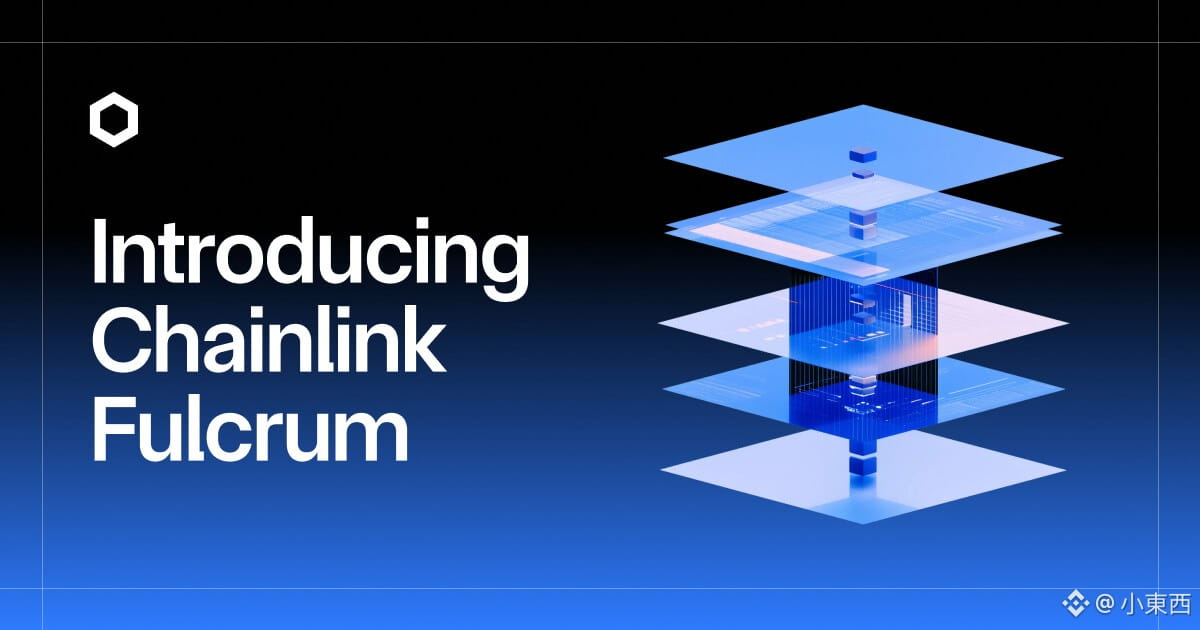
Chainlink’s official website post announces the launch of Fulcrum, enabling institutions to do cross-chain financing while also managing collateral.
They say this is the first cross-chain repurchase (repo) workflow: where the agreement is executed, and where the settlement for the funds and collateral occurs—broken into separate parts. From a single entry point, you can choose eligible assets and set conditions, for example, prohibiting the collateral from being re-pledged, and then settling on a different chain that supports it.
In the article, they cite Citi’s estimate: roughly a quarter of institutional collateral remains idle because of settlement cutoffs and operational frictions. On average, that costs a top-tier institution about $346 million in annual revenue.
The release also clarifies that Fulcrum does not custody, does not act as a counterparty for trades, and does not open trading venues. The agreement is signed by the participating parties, and runs on the venue that they connect to.
$LINK
Chainlink’s official website post announces the launch of Fulcrum, enabling institutions to do cross-chain financing while also managing collateral.
They say this is the first cross-chain repurchase (repo) workflow: where the agreement is executed, and where the settlement for the funds and collateral occurs—broken into separate parts. From a single entry point, you can choose eligible assets and set conditions, for example, prohibiting the collateral from being re-pledged, and then settling on a different chain that supports it.
In the article, they cite Citi’s estimate: roughly a quarter of institutional collateral remains idle because of settlement cutoffs and operational frictions. On average, that costs a top-tier institution about $346 million in annual revenue.
The release also clarifies that Fulcrum does not custody, does not act as a counterparty for trades, and does not open trading venues. The agreement is signed by the participating parties, and runs on the venue that they connect to.
$LINK
They say this is the first cross-chain repurchase (repo) workflow: where the agreement is executed, and where the settlement for the funds and collateral occurs—broken into separate parts. From a single entry point, you can choose eligible assets and set conditions, for example, prohibiting the collateral from being re-pledged, and then settling on a different chain that supports it.
In the article, they cite Citi’s estimate: roughly a quarter of institutional collateral remains idle because of settlement cutoffs and operational frictions. On average, that costs a top-tier institution about $346 million in annual revenue.
The release also clarifies that Fulcrum does not custody, does not act as a counterparty for trades, and does not open trading venues. The agreement is signed by the participating parties, and runs on the venue that they connect to.
$LINK
90
·
--
Verified
Today Hyperliquid launched a credit line for institutional borrowing. Hyperion DeFi, Anchorage, and HyperLend said in a press release that this is the first transaction on the chain.
The collateral is HYPE that is still staked, placed in Anchorage Digital Bank’s qualified custody, so the coins don’t need to be transferred out first.
HyperLend’s CEO said that validators other than the lab and foundation have staked 150 million HYPE. He said this batch is worth more than $10 billion. Previously, people could only withdraw staking rewards and couldn’t use the same assets as collateral at the same time.
Today Hyperliquid launched a credit line for institutional borrowing. Hyperion DeFi, Anchorage, and HyperLend said in a press release that this is the first transaction on the chain.
The collateral is HYPE that is still staked, placed in Anchorage Digital Bank’s qualified custody, so the coins don’t need to be transferred out first.
HyperLend’s CEO said that validators other than the lab and foundation have staked 150 million HYPE. He said this batch is worth more than $10 billion. Previously, people could only withdraw staking rewards and couldn’t use the same assets as collateral at the same time.
The collateral is HYPE that is still staked, placed in Anchorage Digital Bank’s qualified custody, so the coins don’t need to be transferred out first.
HyperLend’s CEO said that validators other than the lab and foundation have staked 150 million HYPE. He said this batch is worth more than $10 billion. Previously, people could only withdraw staking rewards and couldn’t use the same assets as collateral at the same time.
175
·
--
$QNT Someone moved 492,721 coins in a single transfer.
At 4:55 p.m. on September 30 (Beijing time), from a wallet whose name was not publicly disclosed to another wallet; neither side was named.
Crypto Briefing estimates the value at about $139.6 million.
QNT is Quant’s token. Their Overledger enables institutions to connect to different chains using the same interface.
{spot}(QNTUSDT)
$QNT Someone moved 492,721 coins in a single transfer.
At 4:55 p.m. on September 30 (Beijing time), from a wallet whose name was not publicly disclosed to another wallet; neither side was named.
Crypto Briefing estimates the value at about $139.6 million.
QNT is Quant’s token. Their Overledger enables institutions to connect to different chains using the same interface.
At 4:55 p.m. on September 30 (Beijing time), from a wallet whose name was not publicly disclosed to another wallet; neither side was named.
Crypto Briefing estimates the value at about $139.6 million.
QNT is Quant’s token. Their Overledger enables institutions to connect to different chains using the same interface.
197
·
--
$SOON +46.64%, CoinCodex says it was the biggest gainer on that day among the top 200 by market cap.
Today, this coin is being used as a trading currency. At 15:13 (Taipei), the project account announced that 100xSOON has been launched on BNB Chain, for financial AI agents to execute leveraged trades, with everything denominated in SOON. The project says that 80% of platform revenue will be used to buy back and burn SOON.
So its current use case is for pricing and settlement of entering this leveraged product—not another type of stablecoin. A maximum leverage of 10,000x, settled every 30 seconds, are all rules written by the project itself.
The price increase can’t be directly recorded as the reaction after the announcement. CoinCodex’s timestamp for the numbers is 14:00 Beijing time, which is earlier than this launch post. How revenue is calculated, and whether buybacks have actually occurred, can’t be matched to on-chain activity at the moment.
$SOON +46.64%, CoinCodex says it was the biggest gainer on that day among the top 200 by market cap.
Today, this coin is being used as a trading currency. At 15:13 (Taipei), the project account announced that 100xSOON has been launched on BNB Chain, for financial AI agents to execute leveraged trades, with everything denominated in SOON. The project says that 80% of platform revenue will be used to buy back and burn SOON.
So its current use case is for pricing and settlement of entering this leveraged product—not another type of stablecoin. A maximum leverage of 10,000x, settled every 30 seconds, are all rules written by the project itself.
The price increase can’t be directly recorded as the reaction after the announcement. CoinCodex’s timestamp for the numbers is 14:00 Beijing time, which is earlier than this launch post. How revenue is calculated, and whether buybacks have actually occurred, can’t be matched to on-chain activity at the moment.
Today, this coin is being used as a trading currency. At 15:13 (Taipei), the project account announced that 100xSOON has been launched on BNB Chain, for financial AI agents to execute leveraged trades, with everything denominated in SOON. The project says that 80% of platform revenue will be used to buy back and burn SOON.
So its current use case is for pricing and settlement of entering this leveraged product—not another type of stablecoin. A maximum leverage of 10,000x, settled every 30 seconds, are all rules written by the project itself.
The price increase can’t be directly recorded as the reaction after the announcement. CoinCodex’s timestamp for the numbers is 14:00 Beijing time, which is earlier than this launch post. How revenue is calculated, and whether buybacks have actually occurred, can’t be matched to on-chain activity at the moment.
139
·
--
Quant (QNT) is still hot after these 48 hours. On September 28, Santiment wrote that the single-day appearance of 645 whale transactions of at least $1 million is the highest recorded in that chart. The same post also said that this move increased roughly 4x in late September.
This can be read as large-address activity, but the number of transactions alone does not indicate direction. New highs only show that big players are acting; they do not say whether they are entering or exiting.
Santiment also stated that it’s not possible to tell the direction of each individual whale transaction. The Clearing House’s choice of Quant was based on an old announcement from September 24, not new facts within these 48 hours.
The same post also said that when profits are already substantial, the FOMO risk is extremely high; consolidation is healthier than continuing straight up. Next, we’ll see whether this run shifts from a straight-line surge into consolidation.
Quant (QNT) is still hot after these 48 hours. On September 28, Santiment wrote that the single-day appearance of 645 whale transactions of at least $1 million is the highest recorded in that chart. The same post also said that this move increased roughly 4x in late September.
This can be read as large-address activity, but the number of transactions alone does not indicate direction. New highs only show that big players are acting; they do not say whether they are entering or exiting.
Santiment also stated that it’s not possible to tell the direction of each individual whale transaction. The Clearing House’s choice of Quant was based on an old announcement from September 24, not new facts within these 48 hours.
The same post also said that when profits are already substantial, the FOMO risk is extremely high; consolidation is healthier than continuing straight up. Next, we’ll see whether this run shifts from a straight-line surge into consolidation.
This can be read as large-address activity, but the number of transactions alone does not indicate direction. New highs only show that big players are acting; they do not say whether they are entering or exiting.
Santiment also stated that it’s not possible to tell the direction of each individual whale transaction. The Clearing House’s choice of Quant was based on an old announcement from September 24, not new facts within these 48 hours.
The same post also said that when profits are already substantial, the FOMO risk is extremely high; consolidation is healthier than continuing straight up. Next, we’ll see whether this run shifts from a straight-line surge into consolidation.
168
Log in to explore more content
Join global crypto users on Binance Square
⚡️ Get latest and useful information about crypto.
💬 Trusted by the world’s largest crypto exchange.
👍 Discover real insights from verified creators.
Email / Phone number
Trending Topics
EtherGains70.9%InQ3
140,658 views
1,110 Discussing
One of the best third quarters in history 💰
September closed out last night, and with it, the quarter. For the quarter, BTC is up 42%—the second-best Q3 on record. ETH had a record-breaking Q3 overall, up 70%.
Looking at the chart, things are still looking good: we’re holding support, but we’re testing it more and more often. Plus, ETF momentum is weakening — inflows are gradually declining, and yesterday saw outflows for the first time in a long while.
Yes, historically, October has been a good month for crypto — it’s not called “Uptober” for nothing. But it’s also one of the most volatile months. Last year, for example, we managed to hit a new all-time high (ATH) and experience a flash crash.
🚀 High Accuracy Trades.
$BTC
$ETH
$SOL
#EtherGains70.9%InQ3 #DollarIndexHitsHighestSinceMay2025 #CFTCSubmitsTwoEventContractRulesToWhiteHouse #MicronBeatsEarningsLiftsGuidance
Knowledge is Power
·0 Likes
·226 views
TreasuryLetsStatesFileStablecoinCertificationsEarly
7,475 views
78 Discussing
US10YearYieldNears5.3%
144,891 views
1,110 Discussing