

#cryptoforbeginners
cryptoforbeginners
840,109 views
2,125 Discussing
Hot
Latest

🚨 One of the biggest mistakes beginners make in crypto?
Buying a coin simply because someone said:
“Bro, this one is going to 100x.” 😂
Before touching any coin, check:
• What does the project actually do?
• How much is already in circulation?
• What is its market cap?
• Is there real trading volume?
• What are the risks?
You don't need to catch every pump.
Sometimes the smartest trade is the one you DON'T take.
What was the first crypto you ever bought? 👇
#CryptoEducation💡🚀 #CryptoForBeginners #Binance
🚨 One of the biggest mistakes beginners make in crypto?
Buying a coin simply because someone said:
“Bro, this one is going to 100x.” 😂
Before touching any coin, check:
• What does the project actually do?
• How much is already in circulation?
• What is its market cap?
• Is there real trading volume?
• What are the risks?
You don't need to catch every pump.
Sometimes the smartest trade is the one you DON'T take.
What was the first crypto you ever bought? 👇
#CryptoEducation💡🚀 #CryptoForBeginners #Binance
Buying a coin simply because someone said:
“Bro, this one is going to 100x.” 😂
Before touching any coin, check:
• What does the project actually do?
• How much is already in circulation?
• What is its market cap?
• Is there real trading volume?
• What are the risks?
You don't need to catch every pump.
Sometimes the smartest trade is the one you DON'T take.
What was the first crypto you ever bought? 👇
#CryptoEducation💡🚀 #CryptoForBeginners #Binance
1
113

·
--
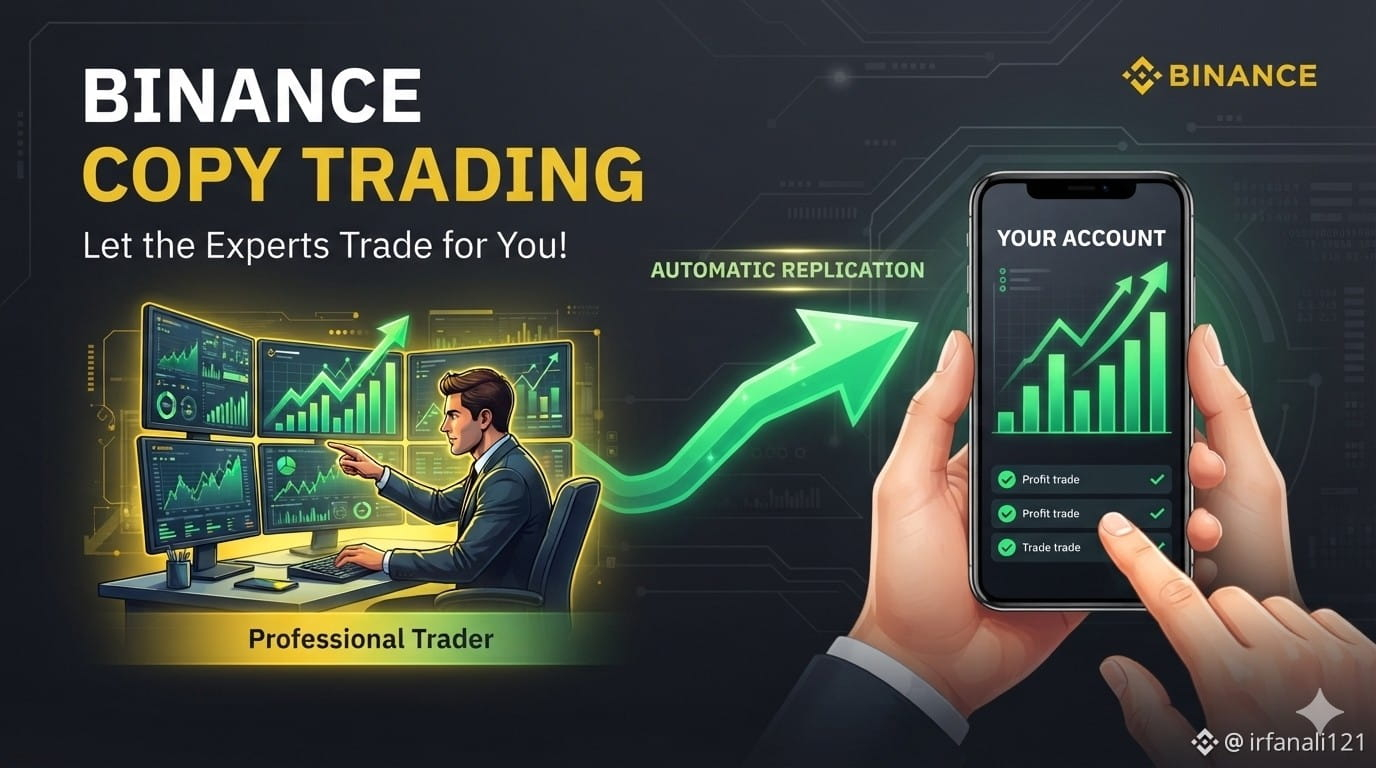
Stop Losing Money in Crypto! Try Copy Trading (Step-by-Step Guide) 📉➡️
Are you tired of losing your funds because you don't know how to analyze charts? You don't need to be a pro to make profits anymore. Let's talk about Binance Copy Trading – the easiest way for beginners to earn!
🌟 What is Copy Trading?
It’s simple: You look at the top-performing traders on Binance, check their profit history, and click "Copy". When they make a profit, YOU make a profit automatically!
💰 How much do you need?
You can start with as low as $10 to $100! You don't need thousands of dollars to build a portfolio.
🔥 3 Golden Rules before you click "Copy":
1️⃣ Check the ROI & Win Rate: Don't just look at high profits. Look for a trader with a consistent win rate over the last 30 to 90 days.
2️⃣ Look at MDD (Maximum Drawdown): Low MDD means the trader takes low risks. Avoid traders with MDD higher than 15-20%.
3️⃣ Don't put all eggs in one basket: Test with a small amount first!
Form your own strategy and let the experts do the hard work for you. 🧠
#BinanceSquare #COPYTRADİNG #CryptoForBeginners #tradingtips #WhaleAlert
Stop Losing Money in Crypto! Try Copy Trading (Step-by-Step Guide) 📉➡️
Are you tired of losing your funds because you don't know how to analyze charts? You don't need to be a pro to make profits anymore. Let's talk about Binance Copy Trading – the easiest way for beginners to earn!
🌟 What is Copy Trading?
It’s simple: You look at the top-performing traders on Binance, check their profit history, and click "Copy". When they make a profit, YOU make a profit automatically!
💰 How much do you need?
You can start with as low as $10 to $100! You don't need thousands of dollars to build a portfolio.
🔥 3 Golden Rules before you click "Copy":
1️⃣ Check the ROI & Win Rate: Don't just look at high profits. Look for a trader with a consistent win rate over the last 30 to 90 days.
2️⃣ Look at MDD (Maximum Drawdown): Low MDD means the trader takes low risks. Avoid traders with MDD higher than 15-20%.
3️⃣ Don't put all eggs in one basket: Test with a small amount first!
Form your own strategy and let the experts do the hard work for you. 🧠
#BinanceSquare #COPYTRADİNG #CryptoForBeginners #tradingtips #WhaleAlert
Are you tired of losing your funds because you don't know how to analyze charts? You don't need to be a pro to make profits anymore. Let's talk about Binance Copy Trading – the easiest way for beginners to earn!
🌟 What is Copy Trading?
It’s simple: You look at the top-performing traders on Binance, check their profit history, and click "Copy". When they make a profit, YOU make a profit automatically!
💰 How much do you need?
You can start with as low as $10 to $100! You don't need thousands of dollars to build a portfolio.
🔥 3 Golden Rules before you click "Copy":
1️⃣ Check the ROI & Win Rate: Don't just look at high profits. Look for a trader with a consistent win rate over the last 30 to 90 days.
2️⃣ Look at MDD (Maximum Drawdown): Low MDD means the trader takes low risks. Avoid traders with MDD higher than 15-20%.
3️⃣ Don't put all eggs in one basket: Test with a small amount first!
Form your own strategy and let the experts do the hard work for you. 🧠
#BinanceSquare #COPYTRADİNG #CryptoForBeginners #tradingtips #WhaleAlert
82
·
--
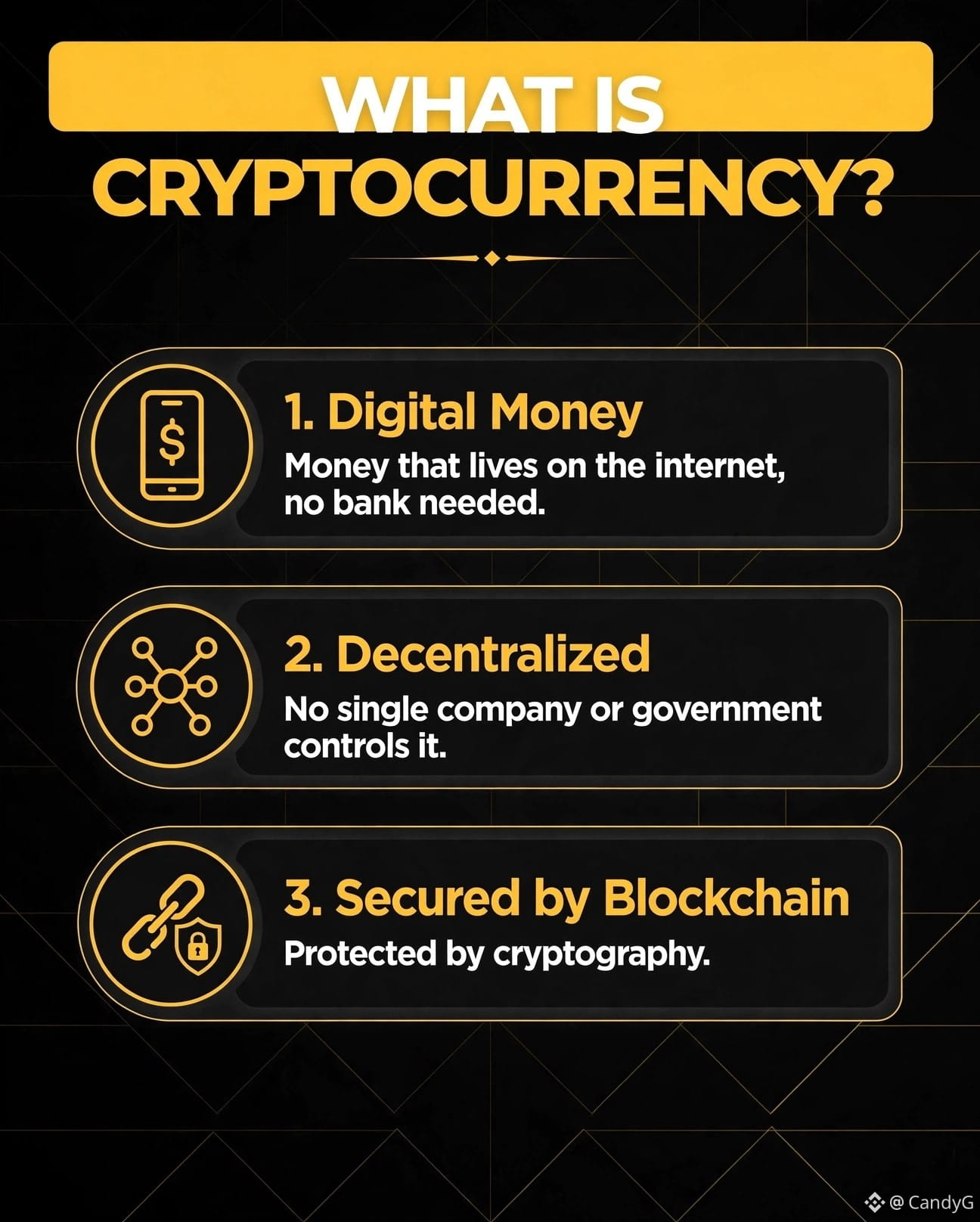
Crypto 101 | Part 1: What is Cryptocurrency? 💛
Starting my new educational series for beginners!
1️⃣ Digital Money: Money that lives on the internet, no bank needed
2️⃣ Decentralized: No single company controls it
3️⃣ Secured by Blockchain: Protected by cryptography
Think of it like M-Pesa, but global and without a central company.
Follow for Part 2 tomorrow: What is Blockchain? - The engine behind it all!
#CryptoForBeginners #BinanceAcademy #Web3
Crypto 101 | Part 1: What is Cryptocurrency? 💛
Starting my new educational series for beginners!
1️⃣ Digital Money: Money that lives on the internet, no bank needed
2️⃣ Decentralized: No single company controls it
3️⃣ Secured by Blockchain: Protected by cryptography
Think of it like M-Pesa, but global and without a central company.
Follow for Part 2 tomorrow: What is Blockchain? - The engine behind it all!
#CryptoForBeginners #BinanceAcademy #Web3
Starting my new educational series for beginners!
1️⃣ Digital Money: Money that lives on the internet, no bank needed
2️⃣ Decentralized: No single company controls it
3️⃣ Secured by Blockchain: Protected by cryptography
Think of it like M-Pesa, but global and without a central company.
Follow for Part 2 tomorrow: What is Blockchain? - The engine behind it all!
#CryptoForBeginners #BinanceAcademy #Web3
1
2
158

·
--
How I Made My First $100 on Binance with Just $10: A Beginner's GuideStarting crypto with small money is scary. I started with only $10 on Binance, and here is the exact safe method I used to grow it without gambling in futures.
*1. I Did Not Start With Trading*
Most beginners lose in futures on day 1. I avoided it completely. I started with *Binance Earn - Flexible Savings*. I put my $10 USDT in Flexible Savings at 5-8% APY. Small, but safe while I learned.
*2. I Used Learn & Earn*
Binance Academy gave me free $3-$5 in crypto just for watching videos and answering quizzes. No investment needed. This took my $10 to $14.
*3. I Tried Launchpool With $10*
This was the game changer. I staked my USDT in Launchpool for new projects. I got free new tokens every 2-3 days. I sold them immediately for USDT. In 1 month, I earned around $25 extra.
*4. I Did Spot DCA on BTC*
Every week, I bought $2 worth of BTC, no matter the price. This is called DCA. When BTC went up, my small holdings grew.
In 3 months, my $10 became ∼$100. Not by luck, but by patience.
*3 Mistakes to Avoid:*
1. Don't use 50x leverage as a beginner
2. Don't put all money in one meme coin
3. Don't panic sell when market falls 10%
Start small, learn free tools on Binance, and let compounding work.
#Binance #BTC #CryptoForBeginners #Write2Earn
How I Made My First $100 on Binance with Just $10: A Beginner's Guide
Starting crypto with small money is scary. I started with only $10 on Binance, and here is the exact safe method I used to grow it without gambling in futures.
*1. I Did Not Start With Trading*
Most beginners lose in futures on day 1. I avoided it completely. I started with *Binance Earn - Flexible Savings*. I put my $10 USDT in Flexible Savings at 5-8% APY. Small, but safe while I learned.
*2. I Used Learn & Earn*
Binance Academy gave me free $3-$5 in crypto just for watching videos and answering quizzes. No investment needed. This took my $10 to $14.
*3. I Tried Launchpool With $10*
This was the game changer. I staked my USDT in Launchpool for new projects. I got free new tokens every 2-3 days. I sold them immediately for USDT. In 1 month, I earned around $25 extra.
*4. I Did Spot DCA on BTC*
Every week, I bought $2 worth of BTC, no matter the price. This is called DCA. When BTC went up, my small holdings grew.
In 3 months, my $10 became ∼$100. Not by luck, but by patience.
*3 Mistakes to Avoid:*
1. Don't use 50x leverage as a beginner
2. Don't put all money in one meme coin
3. Don't panic sell when market falls 10%
Start small, learn free tools on Binance, and let compounding work.
#Binance #BTC #CryptoForBeginners #Write2Earn
*1. I Did Not Start With Trading*
Most beginners lose in futures on day 1. I avoided it completely. I started with *Binance Earn - Flexible Savings*. I put my $10 USDT in Flexible Savings at 5-8% APY. Small, but safe while I learned.
*2. I Used Learn & Earn*
Binance Academy gave me free $3-$5 in crypto just for watching videos and answering quizzes. No investment needed. This took my $10 to $14.
*3. I Tried Launchpool With $10*
This was the game changer. I staked my USDT in Launchpool for new projects. I got free new tokens every 2-3 days. I sold them immediately for USDT. In 1 month, I earned around $25 extra.
*4. I Did Spot DCA on BTC*
Every week, I bought $2 worth of BTC, no matter the price. This is called DCA. When BTC went up, my small holdings grew.
In 3 months, my $10 became ∼$100. Not by luck, but by patience.
*3 Mistakes to Avoid:*
1. Don't use 50x leverage as a beginner
2. Don't put all money in one meme coin
3. Don't panic sell when market falls 10%
Start small, learn free tools on Binance, and let compounding work.
#Binance #BTC #CryptoForBeginners #Write2Earn
206 Atlas:
Earn yields are negligible on $10, and Learn & Earn is a marketing cost. This is not trading income.
2
2
285

·
--
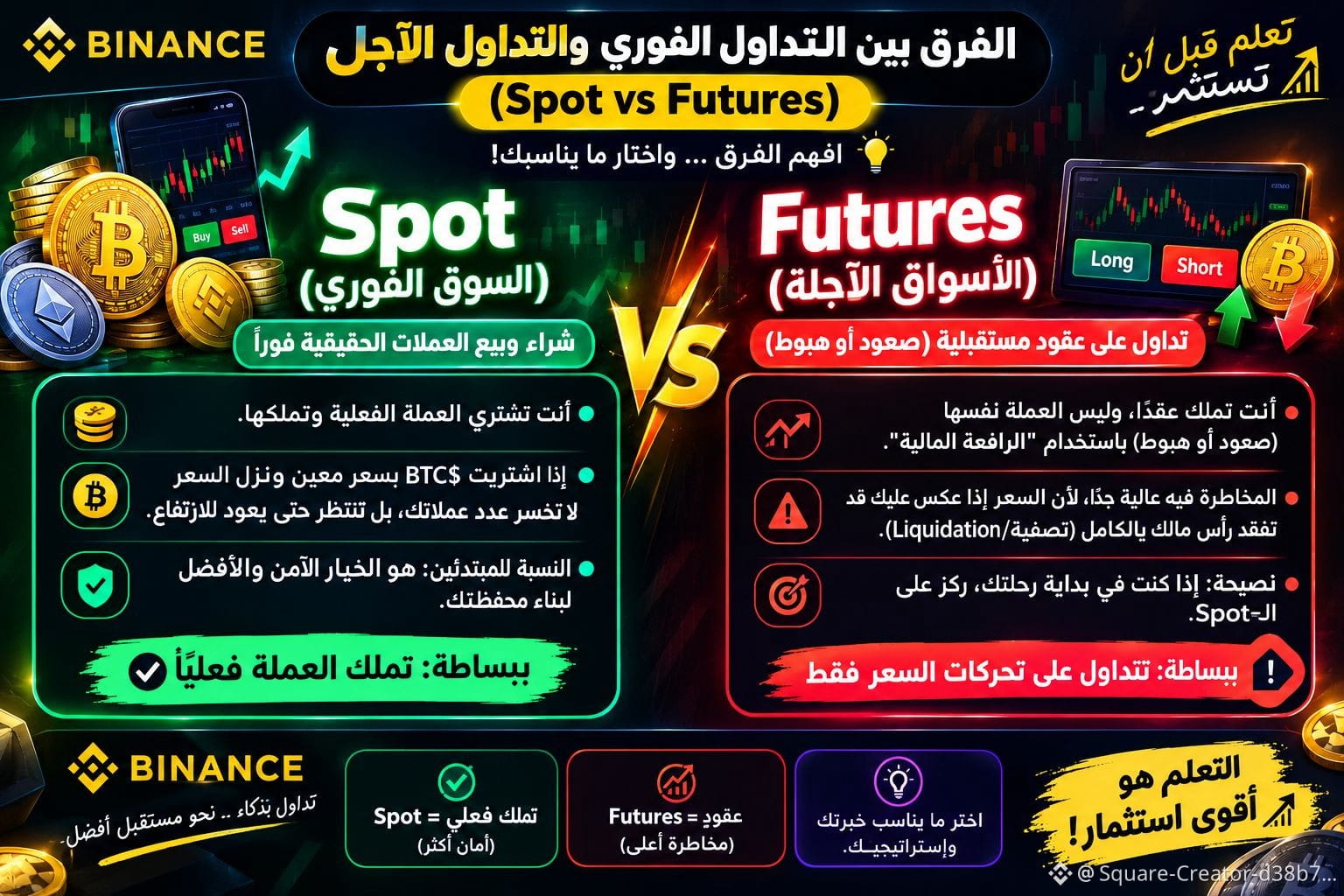
What’s the difference between spot trading and futures trading? 💡
(Spot market trading)
You buy the cryptocurrency and own it. If you buy Bitcoin at a certain price and the price drops, you don’t lose the number of coins you hold—you just wait until it rises again.
For beginners, this is the best and safest option for building and maintaining your portfolio.
(Futures market trading)
You don’t own the cryptocurrency—you only predict the price movement (up or down) using leverage.
The risk is very high, because if the price moves against you, you may lose all of your capital.
(Tip)
If you’re just starting your journey, focus on the spot market first and learn risk management.
#BinanceSquare #CryptoForBeginners #LTC #BTC
{future}(LTCUSDT)
What’s the difference between spot trading and futures trading? 💡
(Spot market trading)
You buy the cryptocurrency and own it. If you buy Bitcoin at a certain price and the price drops, you don’t lose the number of coins you hold—you just wait until it rises again.
For beginners, this is the best and safest option for building and maintaining your portfolio.
(Futures market trading)
You don’t own the cryptocurrency—you only predict the price movement (up or down) using leverage.
The risk is very high, because if the price moves against you, you may lose all of your capital.
(Tip)
If you’re just starting your journey, focus on the spot market first and learn risk management.
#BinanceSquare #CryptoForBeginners #LTC #BTC
(Spot market trading)
You buy the cryptocurrency and own it. If you buy Bitcoin at a certain price and the price drops, you don’t lose the number of coins you hold—you just wait until it rises again.
For beginners, this is the best and safest option for building and maintaining your portfolio.
(Futures market trading)
You don’t own the cryptocurrency—you only predict the price movement (up or down) using leverage.
The risk is very high, because if the price moves against you, you may lose all of your capital.
(Tip)
If you’re just starting your journey, focus on the spot market first and learn risk management.
#BinanceSquare #CryptoForBeginners #LTC #BTC
2
438

Day 3 of learning crypto 📈
Today I’m starting to understand that trading isn’t just about buying when the price is low and selling when it goes up.
I’m learning to actually watch the candles, understand the movement and be patient before entering a trade.
Still learning. Still making mistakes. But I’m getting there 😂
One trade at a time.
#CryptoForBeginners #tradingjourney #LearnCrypto #SpotTrading #BTC☀️
Day 3 of learning crypto 📈
Today I’m starting to understand that trading isn’t just about buying when the price is low and selling when it goes up.
I’m learning to actually watch the candles, understand the movement and be patient before entering a trade.
Still learning. Still making mistakes. But I’m getting there 😂
One trade at a time.
#CryptoForBeginners #tradingjourney #LearnCrypto #SpotTrading #BTC☀️
Today I’m starting to understand that trading isn’t just about buying when the price is low and selling when it goes up.
I’m learning to actually watch the candles, understand the movement and be patient before entering a trade.
Still learning. Still making mistakes. But I’m getting there 😂
One trade at a time.
#CryptoForBeginners #tradingjourney #LearnCrypto #SpotTrading #BTC☀️
206 Atlas:
Patience is good, but ensure you have a defined invalidation point for entries to stop the bleeding during the learning phase.
1
1
260
·
--
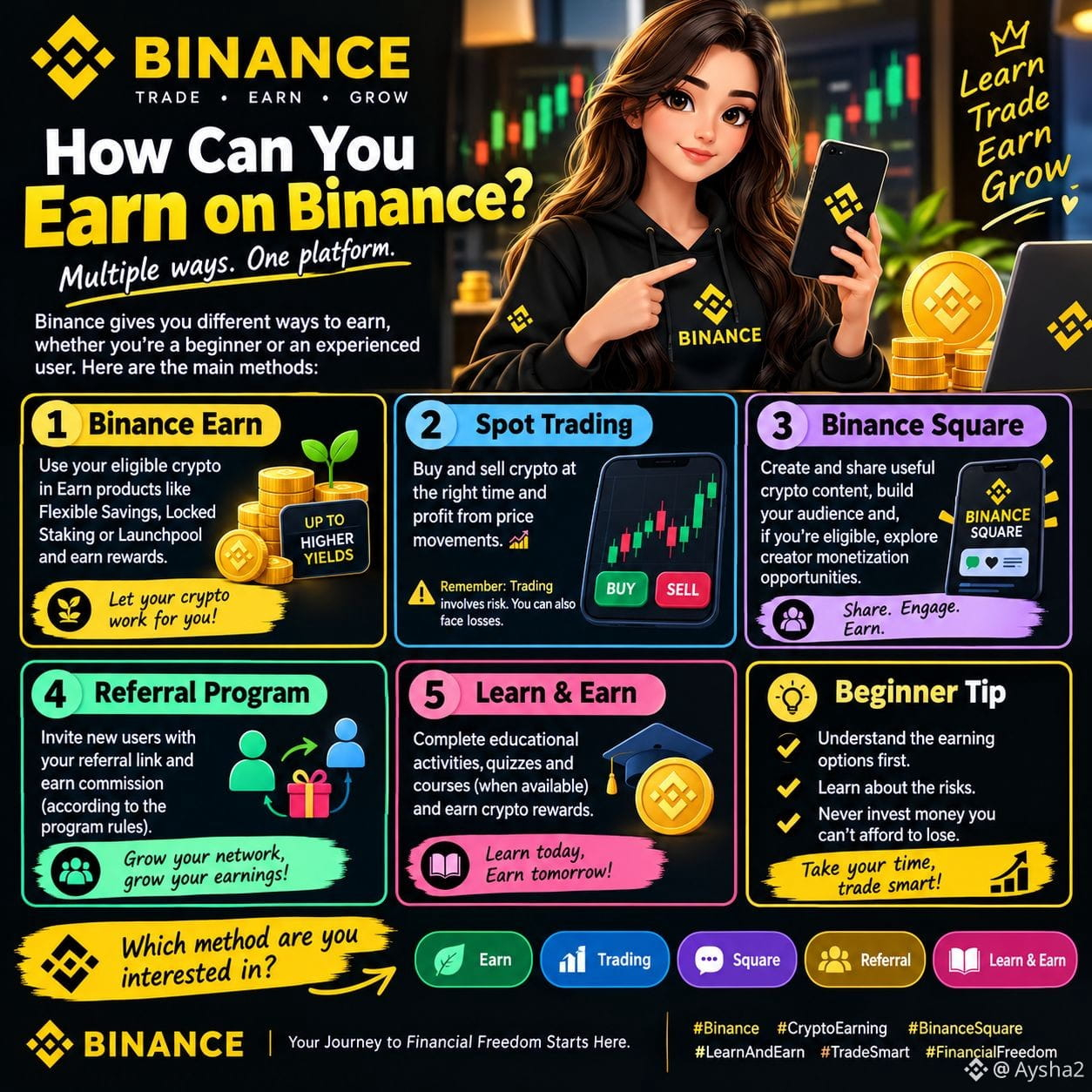
💰 How Can You Earn on Binance?
There are different ways to earn on Binance, but remember—profit in crypto is not guaranteed. 📌
🔹 1. Binance Earn You can earn rewards by using your eligible crypto in the available Earn products.
🔹 2. Spot Trading You can potentially make profit from the price difference by buying/selling crypto. 📈
⚠️ There is also a risk of loss.
🔹 3. Binance Square Share useful crypto content, build your audience, and if you’re eligible, explore available creator monetization opportunities. ✍️
🔹 4. Referral Program Eligible users can invite new users using their referral link and earn commission, according to the program’s rules.
🔹 5. Learn & Earn Where available, you can earn crypto rewards by completing educational activities. 🎓
✨ Beginner Tip:
First, understand Binance’s earning options, learn about the risks, and don’t invest money in trading without understanding it.
👇 Which method would you like to earn with on Binance?
Earn • Trading • Square • Referral • Learn & Earn
#cryptoearning #BİNANCESQUARE #CryptoForBeginners #BitcoinDunyamiz #Crypto_Jobs🎯
💰 How Can You Earn on Binance?
There are different ways to earn on Binance, but remember—profit in crypto is not guaranteed. 📌
🔹 1. Binance Earn You can earn rewards by using your eligible crypto in the available Earn products.
🔹 2. Spot Trading You can potentially make profit from the price difference by buying/selling crypto. 📈
⚠️ There is also a risk of loss.
🔹 3. Binance Square Share useful crypto content, build your audience, and if you’re eligible, explore available creator monetization opportunities. ✍️
🔹 4. Referral Program Eligible users can invite new users using their referral link and earn commission, according to the program’s rules.
🔹 5. Learn & Earn Where available, you can earn crypto rewards by completing educational activities. 🎓
✨ Beginner Tip:
First, understand Binance’s earning options, learn about the risks, and don’t invest money in trading without understanding it.
👇 Which method would you like to earn with on Binance?
Earn • Trading • Square • Referral • Learn & Earn
#cryptoearning #BİNANCESQUARE #CryptoForBeginners #BitcoinDunyamiz #Crypto_Jobs🎯
There are different ways to earn on Binance, but remember—profit in crypto is not guaranteed. 📌
🔹 1. Binance Earn You can earn rewards by using your eligible crypto in the available Earn products.
🔹 2. Spot Trading You can potentially make profit from the price difference by buying/selling crypto. 📈
⚠️ There is also a risk of loss.
🔹 3. Binance Square Share useful crypto content, build your audience, and if you’re eligible, explore available creator monetization opportunities. ✍️
🔹 4. Referral Program Eligible users can invite new users using their referral link and earn commission, according to the program’s rules.
🔹 5. Learn & Earn Where available, you can earn crypto rewards by completing educational activities. 🎓
✨ Beginner Tip:
First, understand Binance’s earning options, learn about the risks, and don’t invest money in trading without understanding it.
👇 Which method would you like to earn with on Binance?
Earn • Trading • Square • Referral • Learn & Earn
#cryptoearning #BİNANCESQUARE #CryptoForBeginners #BitcoinDunyamiz #Crypto_Jobs🎯
2
58

·
--
Most crypto content is written by full-time traders. I'm not one — I'm a Nepali working a delivery job in Dubai, learning this stuff in my spare time. 🇳🇵🇦🇪
A few things I've noticed since I started:
Sending USDT home is often faster and sometimes cheaper than traditional remittance apps, depending on fees on both ends Binance's Learn & Earn quizzes are a genuinely free way to start learning without risking anything Small, boring habits (like using Simple Earn on idle USDT) matter more than chasing pumps
If you're an expat or gig worker curious about crypto but don't have capital to "invest," you don't need to — you can learn first. Happy to share what I've picked up if anyone has questions.
#CryptoForBeginners #ExpatLife #Write2Earn $GOOGL.US
{spot}(BTCUSDT)
Most crypto content is written by full-time traders. I'm not one — I'm a Nepali working a delivery job in Dubai, learning this stuff in my spare time. 🇳🇵🇦🇪
A few things I've noticed since I started:
Sending USDT home is often faster and sometimes cheaper than traditional remittance apps, depending on fees on both ends Binance's Learn & Earn quizzes are a genuinely free way to start learning without risking anything Small, boring habits (like using Simple Earn on idle USDT) matter more than chasing pumps
If you're an expat or gig worker curious about crypto but don't have capital to "invest," you don't need to — you can learn first. Happy to share what I've picked up if anyone has questions.
#CryptoForBeginners #ExpatLife #Write2Earn $GOOGL.US
A few things I've noticed since I started:
Sending USDT home is often faster and sometimes cheaper than traditional remittance apps, depending on fees on both ends Binance's Learn & Earn quizzes are a genuinely free way to start learning without risking anything Small, boring habits (like using Simple Earn on idle USDT) matter more than chasing pumps
If you're an expat or gig worker curious about crypto but don't have capital to "invest," you don't need to — you can learn first. Happy to share what I've picked up if anyone has questions.
#CryptoForBeginners #ExpatLife #Write2Earn $GOOGL.US
BTC+1.12%
GOOGLUS-0.15%
233

·
--
NEW TO CRYPTO TRADING? START HERE
You don't need 20 indicators on your screen.
Start with the basics:
📌 Support & resistance
📌 Market structure
📌 Volume
📌 Risk/reward
📌 Position sizing
📌 Stop-losses
📌 Trading psychology
Then build your strategy around a setup you actually understand.
The biggest mistake beginners make?
Trying to make money before learning how to manage risk.
Learn first. Trade second.
If you're new to crypto, comment “START” 👇
#CryptoForBeginners #CryptoTrading #BinanceSquare #Bitcoin #TradingTips
NEW TO CRYPTO TRADING? START HERE
You don't need 20 indicators on your screen.
Start with the basics:
📌 Support & resistance
📌 Market structure
📌 Volume
📌 Risk/reward
📌 Position sizing
📌 Stop-losses
📌 Trading psychology
Then build your strategy around a setup you actually understand.
The biggest mistake beginners make?
Trying to make money before learning how to manage risk.
Learn first. Trade second.
If you're new to crypto, comment “START” 👇
#CryptoForBeginners #CryptoTrading #BinanceSquare #Bitcoin #TradingTips
You don't need 20 indicators on your screen.
Start with the basics:
📌 Support & resistance
📌 Market structure
📌 Volume
📌 Risk/reward
📌 Position sizing
📌 Stop-losses
📌 Trading psychology
Then build your strategy around a setup you actually understand.
The biggest mistake beginners make?
Trying to make money before learning how to manage risk.
Learn first. Trade second.
If you're new to crypto, comment “START” 👇
#CryptoForBeginners #CryptoTrading #BinanceSquare #Bitcoin #TradingTips
1
1
What is $BTC ? Explained in 30 seconds ⏱️
Bitcoin is a digital currency that no bank or government controls.
Key facts:
1️⃣ Only 21 million $BTC will ever exist
2️⃣ Transactions are recorded on a public ledger called the blockchain
3️⃣ You can buy a small fraction, you don't need a whole coin
Think of it like digital gold: limited supply and valued by people worldwide.
Next up: how is $ETH different from $BTC? Comment "YES" 👇
Not financial advice. Always DYOR.
{spot}(BTCUSDT)
#bitcoin #CryptoForBeginners
What is $BTC ? Explained in 30 seconds ⏱️
Bitcoin is a digital currency that no bank or government controls.
Key facts:
1️⃣ Only 21 million $BTC will ever exist
2️⃣ Transactions are recorded on a public ledger called the blockchain
3️⃣ You can buy a small fraction, you don't need a whole coin
Think of it like digital gold: limited supply and valued by people worldwide.
Next up: how is $ETH different from $BTC ? Comment "YES" 👇
Not financial advice. Always DYOR.
#bitcoin #CryptoForBeginners
Bitcoin is a digital currency that no bank or government controls.
Key facts:
1️⃣ Only 21 million $BTC will ever exist
2️⃣ Transactions are recorded on a public ledger called the blockchain
3️⃣ You can buy a small fraction, you don't need a whole coin
Think of it like digital gold: limited supply and valued by people worldwide.
Next up: how is $ETH different from $BTC ? Comment "YES" 👇
Not financial advice. Always DYOR.
#bitcoin #CryptoForBeginners
8
$BTC topped $86K today, but with $922M in liquidations 📊
Wait, isn't a price increase good news? Here's what beginners should understand:
Liquidations happen when leveraged traders (using borrowed money) get forced out of their positions. A big liquidation number often means:
1️⃣ Many traders were betting against the move (in this case, shorts)
2️⃣ Their forced buy-back can accelerate the price rise
3️⃣ It also means volatility is high, sharp moves in both directions are more likely right now
Lesson: big price jumps with heavy liquidations are exciting, but also a sign to be extra careful with leverage.
Were you watching this move? Tell me below 👇
Not financial advice. Always DYOR.
{spot}(BTCUSDT)
#bitcoin #CryptoForBeginners #BTC
$BTC topped $86K today, but with $922M in liquidations 📊
Wait, isn't a price increase good news? Here's what beginners should understand:
Liquidations happen when leveraged traders (using borrowed money) get forced out of their positions. A big liquidation number often means:
1️⃣ Many traders were betting against the move (in this case, shorts)
2️⃣ Their forced buy-back can accelerate the price rise
3️⃣ It also means volatility is high, sharp moves in both directions are more likely right now
Lesson: big price jumps with heavy liquidations are exciting, but also a sign to be extra careful with leverage.
Were you watching this move? Tell me below 👇
Not financial advice. Always DYOR.
#bitcoin #CryptoForBeginners #BTC
Wait, isn't a price increase good news? Here's what beginners should understand:
Liquidations happen when leveraged traders (using borrowed money) get forced out of their positions. A big liquidation number often means:
1️⃣ Many traders were betting against the move (in this case, shorts)
2️⃣ Their forced buy-back can accelerate the price rise
3️⃣ It also means volatility is high, sharp moves in both directions are more likely right now
Lesson: big price jumps with heavy liquidations are exciting, but also a sign to be extra careful with leverage.
Were you watching this move? Tell me below 👇
Not financial advice. Always DYOR.
#bitcoin #CryptoForBeginners #BTC
8
$BNB just broke $787 🚀
Part of a broader market rally, with several major coins moving up together today.
For beginners, here's the key lesson:
When the whole market rallies together, it's often driven by overall sentiment (like macro news or big money flowing in), not just one coin's story.
A simple way to think about it:
✅ Check if BTC, ETH and BNB are all green, that tells you it's a market-wide move
✅ Don't assume one coin is "special" just because it's trending
✅ Round numbers like $800 often act as psychological resistance, watch if price holds above it
Do you think $BNB holds above $787? Tell me below 👇
Not financial advice. Always DYOR.
{spot}(BNBUSDT)
#CryptoForBeginners #BNB金鏟子
$BNB just broke $787 🚀
Part of a broader market rally, with several major coins moving up together today.
For beginners, here's the key lesson:
When the whole market rallies together, it's often driven by overall sentiment (like macro news or big money flowing in), not just one coin's story.
A simple way to think about it:
✅ Check if BTC, ETH and BNB are all green, that tells you it's a market-wide move
✅ Don't assume one coin is "special" just because it's trending
✅ Round numbers like $800 often act as psychological resistance, watch if price holds above it
Do you think $BNB holds above $787? Tell me below 👇
Not financial advice. Always DYOR.
#CryptoForBeginners #BNB金鏟子
Part of a broader market rally, with several major coins moving up together today.
For beginners, here's the key lesson:
When the whole market rallies together, it's often driven by overall sentiment (like macro news or big money flowing in), not just one coin's story.
A simple way to think about it:
✅ Check if BTC, ETH and BNB are all green, that tells you it's a market-wide move
✅ Don't assume one coin is "special" just because it's trending
✅ Round numbers like $800 often act as psychological resistance, watch if price holds above it
Do you think $BNB holds above $787? Tell me below 👇
Not financial advice. Always DYOR.
#CryptoForBeginners #BNB金鏟子
45
3 mistakes most crypto beginners make ⚠️
1. Putting all your money into one coin
Whether it's $BTC $ETH , never invest more than you can afford to lose.
2. Following hype without research
If someone promises "$BTC to 1 million, guaranteed", stay away. 🚩
3. Sharing wallet details or seed phrases
No real support team will ever ask for your password or OTP.
Which one have you seen most often? Tell me below 👇
Not financial advice. Always DYOR.
#CryptoSafety #CryptoForBeginners
{spot}(BTCUSDT)
{spot}(ETHUSDT)
3 mistakes most crypto beginners make ⚠️
1. Putting all your money into one coin
Whether it's $BTC $ETH , never invest more than you can afford to lose.
2. Following hype without research
If someone promises "$BTC to 1 million, guaranteed", stay away. 🚩
3. Sharing wallet details or seed phrases
No real support team will ever ask for your password or OTP.
Which one have you seen most often? Tell me below 👇
Not financial advice. Always DYOR.
#CryptoSafety #CryptoForBeginners
1. Putting all your money into one coin
Whether it's $BTC $ETH , never invest more than you can afford to lose.
2. Following hype without research
If someone promises "$BTC to 1 million, guaranteed", stay away. 🚩
3. Sharing wallet details or seed phrases
No real support team will ever ask for your password or OTP.
Which one have you seen most often? Tell me below 👇
Not financial advice. Always DYOR.
#CryptoSafety #CryptoForBeginners
40
$BTC is back near $86K 📈
Here's the simple picture:
- Up about 6% in the last 24 hours
- Still around 31% below its all-time high of ~$126K (Oct 2025)
What does this mean for beginners?
A strong bounce is good news, but it doesn't mean the trend has changed. Bitcoin has been through many sharp moves up and down. One good day doesn't guarantee the next.
A calm approach:
✅ Don't chase green candles
✅ Have a plan before you buy
✅ Only use money you can afford to lose
Where do you think $BTC goes next? Tell me below 👇
Not financial advice. Always DYOR.
#bitcoin #CryptoForBeginners #BTC
{spot}(BTCUSDT)
$BTC is back near $86K 📈
Here's the simple picture:
- Up about 6% in the last 24 hours
- Still around 31% below its all-time high of ~$126K (Oct 2025)
What does this mean for beginners?
A strong bounce is good news, but it doesn't mean the trend has changed. Bitcoin has been through many sharp moves up and down. One good day doesn't guarantee the next.
A calm approach:
✅ Don't chase green candles
✅ Have a plan before you buy
✅ Only use money you can afford to lose
Where do you think $BTC goes next? Tell me below 👇
Not financial advice. Always DYOR.
#bitcoin #CryptoForBeginners #BTC
Here's the simple picture:
- Up about 6% in the last 24 hours
- Still around 31% below its all-time high of ~$126K (Oct 2025)
What does this mean for beginners?
A strong bounce is good news, but it doesn't mean the trend has changed. Bitcoin has been through many sharp moves up and down. One good day doesn't guarantee the next.
A calm approach:
✅ Don't chase green candles
✅ Have a plan before you buy
✅ Only use money you can afford to lose
Where do you think $BTC goes next? Tell me below 👇
Not financial advice. Always DYOR.
#bitcoin #CryptoForBeginners #BTC
87

·
--
> My First Day on Binance - What I Learned
> I am new to crypto and today I learned that Binance is not just for trading. There are many ways to learn and earn for beginners like WOTD, Learn & Earn, and Square. My goal is to learn first and invest later. No rush, no FOMO. Learning is the real earning.
> #Binance #CryptoForBeginners
> My First Day on Binance - What I Learned
> I am new to crypto and today I learned that Binance is not just for trading. There are many ways to learn and earn for beginners like WOTD, Learn & Earn, and Square. My goal is to learn first and invest later. No rush, no FOMO. Learning is the real earning.
> #Binance #CryptoForBeginners
> I am new to crypto and today I learned that Binance is not just for trading. There are many ways to learn and earn for beginners like WOTD, Learn & Earn, and Square. My goal is to learn first and invest later. No rush, no FOMO. Learning is the real earning.
> #Binance #CryptoForBeginners
3
279

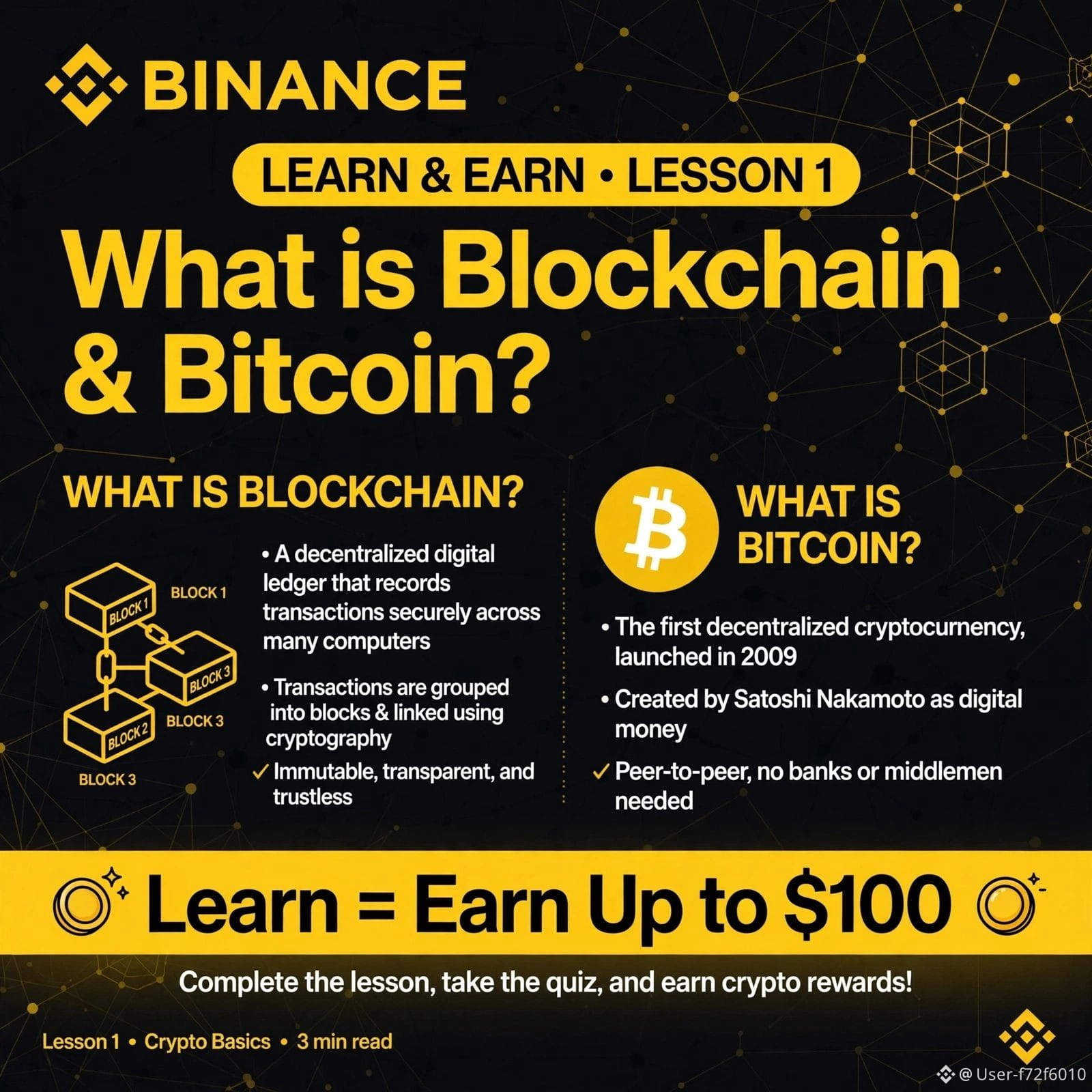
📚 LEARN & EARN - LESSON 1: WHAT IS CRYPTO?
New to Crypto? Let's learn in 30 seconds:
1. What is Blockchain?
Blockchain is a digital diary that everyone can see but no one can cheat. All transactions are recorded forever.
2. What is Bitcoin (BTC)?
Bitcoin is the first cryptocurrency, created in 2009. It's digital gold - limited supply of only 21 Million.
3. Why Learn & Earn?
Binance pays you to learn this! Watch, learn, and earn free crypto.
👉 Start Learning & Earning Now:
[https://app.binance.com/uni-qr/cpos/363984740422347?r=MHSAPG79](https://app.binance.com/uni-qr/cpos/363984740422347?r=MHSAPG79)
Complete Lesson 1 quiz and get your first $3 USDT!
Follow me for Lesson 2 tomorrow.
#BinanceAcademy #LearnAndEarn #Lesson1 #CryptoForBeginners
📚 LEARN & EARN - LESSON 1: WHAT IS CRYPTO?
New to Crypto? Let's learn in 30 seconds:
1. What is Blockchain?
Blockchain is a digital diary that everyone can see but no one can cheat. All transactions are recorded forever.
2. What is Bitcoin (BTC)?
Bitcoin is the first cryptocurrency, created in 2009. It's digital gold - limited supply of only 21 Million.
3. Why Learn & Earn?
Binance pays you to learn this! Watch, learn, and earn free crypto.
👉 Start Learning & Earning Now:
https://app.binance.com/uni-qr/cpos/363984740422347?r=MHSAPG79
Complete Lesson 1 quiz and get your first $3 USDT!
Follow me for Lesson 2 tomorrow.
#BinanceAcademy #LearnAndEarn #Lesson1 #CryptoForBeginners
New to Crypto? Let's learn in 30 seconds:
1. What is Blockchain?
Blockchain is a digital diary that everyone can see but no one can cheat. All transactions are recorded forever.
2. What is Bitcoin (BTC)?
Bitcoin is the first cryptocurrency, created in 2009. It's digital gold - limited supply of only 21 Million.
3. Why Learn & Earn?
Binance pays you to learn this! Watch, learn, and earn free crypto.
👉 Start Learning & Earning Now:
https://app.binance.com/uni-qr/cpos/363984740422347?r=MHSAPG79
Complete Lesson 1 quiz and get your first $3 USDT!
Follow me for Lesson 2 tomorrow.
#BinanceAcademy #LearnAndEarn #Lesson1 #CryptoForBeginners
1
97

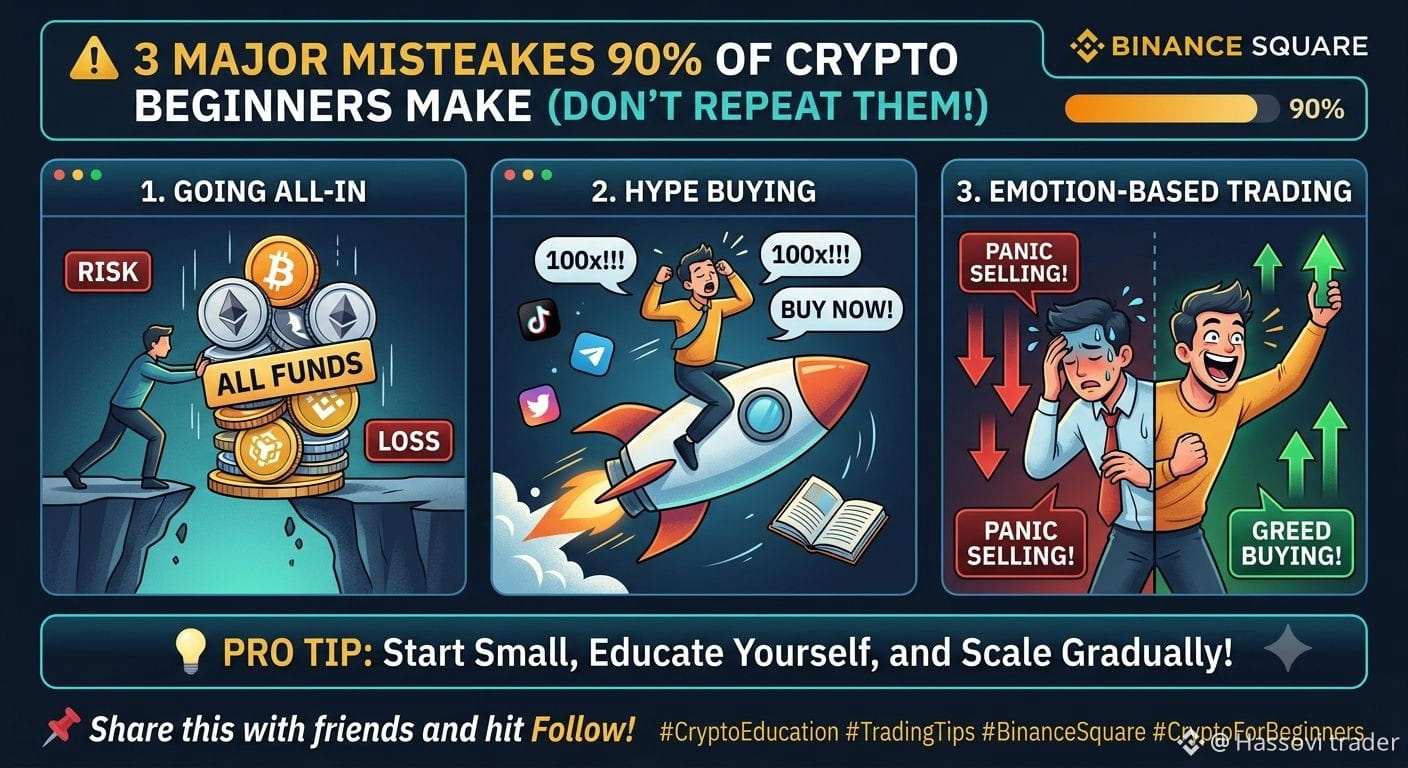
⚠️ 3 Major Mistakes 90% of Crypto Beginners Make (Don't Repeat Them!)
In the crypto market, preserving your capital comes before making money. Many newcomers lose their money by making these exact mistakes:
Going All-In: Putting all your funds into a single coin or entering the market all at once carries extreme risk.
Hype Buying: Don't buy a coin just because someone on TikTok or Telegram claims "This coin will go 100x!" Always understand what the underlying project actually does.
Emotion-Based Trading: Panic selling when the market drops and buying out of greed when the market pumps is a guaranteed recipe for loss.
💡 Pro Tip: Start small, educate yourself, and scale your investment gradually!
📌 Don't forget to Share this with your friends and hit Follow for more!👏
#CryptoEducation #TradingTips #CryptoForBeginners #Bticoin #BinanceSquareFamily
⚠️ 3 Major Mistakes 90% of Crypto Beginners Make (Don't Repeat Them!)
In the crypto market, preserving your capital comes before making money. Many newcomers lose their money by making these exact mistakes:
Going All-In: Putting all your funds into a single coin or entering the market all at once carries extreme risk.
Hype Buying: Don't buy a coin just because someone on TikTok or Telegram claims "This coin will go 100x!" Always understand what the underlying project actually does.
Emotion-Based Trading: Panic selling when the market drops and buying out of greed when the market pumps is a guaranteed recipe for loss.
💡 Pro Tip: Start small, educate yourself, and scale your investment gradually!
📌 Don't forget to Share this with your friends and hit Follow for more!👏
#CryptoEducation #TradingTips #CryptoForBeginners #Bticoin #BinanceSquareFamily
In the crypto market, preserving your capital comes before making money. Many newcomers lose their money by making these exact mistakes:
Going All-In: Putting all your funds into a single coin or entering the market all at once carries extreme risk.
Hype Buying: Don't buy a coin just because someone on TikTok or Telegram claims "This coin will go 100x!" Always understand what the underlying project actually does.
Emotion-Based Trading: Panic selling when the market drops and buying out of greed when the market pumps is a guaranteed recipe for loss.
💡 Pro Tip: Start small, educate yourself, and scale your investment gradually!
📌 Don't forget to Share this with your friends and hit Follow for more!👏
#CryptoEducation #TradingTips #CryptoForBeginners #Bticoin #BinanceSquareFamily
311

·
--
I'm Not a Successful Trader Yet. Here's What I'm Learning.
Let me be honest: I'm still a beginner. My capital is small, and I'm still figuring things out.
When I started, I thought trading was simple. Buy, wait, profit. Then I found out my emotions were my biggest problem. I bought when I saw green candles and panicked when I saw red ones. It wasn't a strategy, it was guessing.
So now I'm trying to slow down. Here's what I'm practicing:
✅ Only using money I can afford to lose
✅ Not buying just because everyone on my timeline is talking about it
✅ Writing down why I'm entering a trade
✅ Taking breaks when I feel stressed
I'm not making big money, and I'm okay with that for now. Learning without blowing up my small account is a win for me.
If you're also starting small, you're not behind. We're all learning, one lesson at a time.
✍️ Any beginners here? What's the hardest part of trading for you? Let's learn together.
#Binance #BinanceSquare #CryptoForBeginners #WriteToEarn
I'm Not a Successful Trader Yet. Here's What I'm Learning.
Let me be honest: I'm still a beginner. My capital is small, and I'm still figuring things out.
When I started, I thought trading was simple. Buy, wait, profit. Then I found out my emotions were my biggest problem. I bought when I saw green candles and panicked when I saw red ones. It wasn't a strategy, it was guessing.
So now I'm trying to slow down. Here's what I'm practicing:
✅ Only using money I can afford to lose
✅ Not buying just because everyone on my timeline is talking about it
✅ Writing down why I'm entering a trade
✅ Taking breaks when I feel stressed
I'm not making big money, and I'm okay with that for now. Learning without blowing up my small account is a win for me.
If you're also starting small, you're not behind. We're all learning, one lesson at a time.
✍️ Any beginners here? What's the hardest part of trading for you? Let's learn together.
#Binance #BinanceSquare #CryptoForBeginners #WriteToEarn
Let me be honest: I'm still a beginner. My capital is small, and I'm still figuring things out.
When I started, I thought trading was simple. Buy, wait, profit. Then I found out my emotions were my biggest problem. I bought when I saw green candles and panicked when I saw red ones. It wasn't a strategy, it was guessing.
So now I'm trying to slow down. Here's what I'm practicing:
✅ Only using money I can afford to lose
✅ Not buying just because everyone on my timeline is talking about it
✅ Writing down why I'm entering a trade
✅ Taking breaks when I feel stressed
I'm not making big money, and I'm okay with that for now. Learning without blowing up my small account is a win for me.
If you're also starting small, you're not behind. We're all learning, one lesson at a time.
✍️ Any beginners here? What's the hardest part of trading for you? Let's learn together.
#Binance #BinanceSquare #CryptoForBeginners #WriteToEarn
130

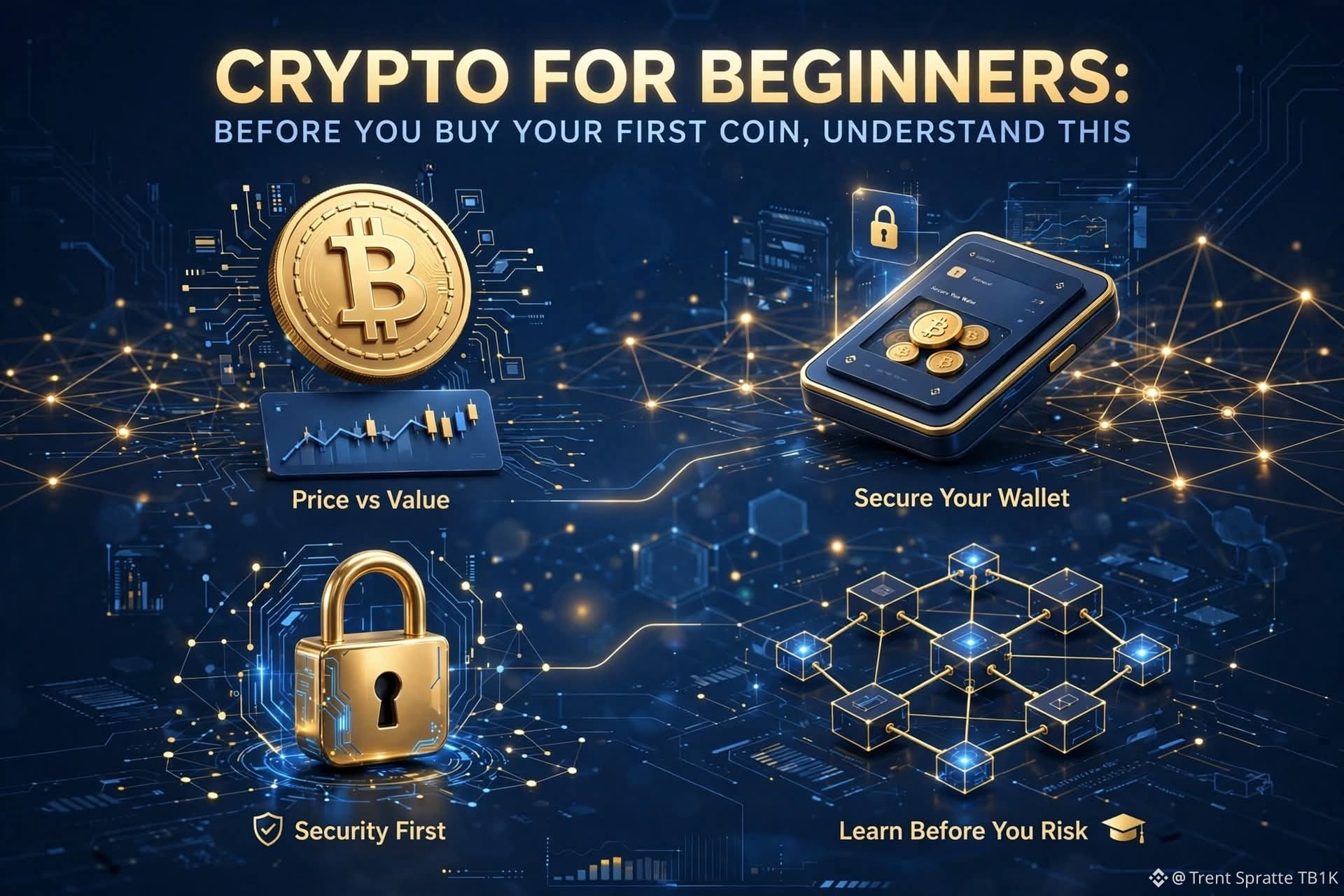
🌍 CRYPTO FOR BEGINNERS: BEFORE YOU BUY YOUR FIRST COIN, UNDERSTAND THIS
Imagine waking up tomorrow and hearing:
“Bitcoin is up 10%!”
Your first thought might be:
“Should I buy?”
But there is a better question:
“Why did it move?”
That single question can change the way a beginner looks at crypto.
🧩 1. A Coin Is Not Just a Price
When you see BTC at a certain price, remember that the number itself doesn't explain the entire project.
Look beyond the chart:
🔹 What problem does the network solve?
🔹 How does the technology work?
🔹 What creates demand?
🔹 How many coins exist?
🔹 Who controls development?
🔹 What are the risks?
📊 2. Price ≠ Value
A coin priced at $0.01 is not automatically “cheap.”
And a coin priced at $1,000 isn't automatically “expensive.”
Market capitalization, supply, adoption and utility can tell a much bigger story than the unit price.
🧠 3. Don't Let Emotions Become Your Strategy
Crypto markets can move quickly.
Fear can make people sell too early.
Excitement can make people buy without research.
Instead of asking:
“How fast can I become rich?”
Ask:
“What am I actually buying?”
🔐 4. Learn Before You Risk
Understand wallets, private keys, exchanges, network fees, scams, volatility and security before putting meaningful money into crypto.
And remember:
Never invest money you cannot afford to lose.
🚀 The Beginner's Rule
Don't chase every green candle.
Don't panic over every red candle.
Learn first.
Research second.
Decide third.
The goal isn't to predict every market move.
The goal is to understand what you're participating in.
💬 Question for experienced crypto users:
What is the ONE crypto lesson you wish someone had taught you before your first investment?
#CryptoEducation #BinanceSquare #Bitcoin #BTC #Web3 #CryptoAnalysis #Crypto101 #DigitalAssets #InvestingBasics #CryptoCommunity
@BTC- @Ethereum_official @Square-Creator-ce2378404
#BTCBreaks80K #BTC走势分析 #BTC☀ #CryptoForBeginners
🌍 CRYPTO FOR BEGINNERS: BEFORE YOU BUY YOUR FIRST COIN, UNDERSTAND THIS
Imagine waking up tomorrow and hearing:
“Bitcoin is up 10%!”
Your first thought might be:
“Should I buy?”
But there is a better question:
“Why did it move?”
That single question can change the way a beginner looks at crypto.
🧩 1. A Coin Is Not Just a Price
When you see BTC at a certain price, remember that the number itself doesn't explain the entire project.
Look beyond the chart:
🔹 What problem does the network solve?
🔹 How does the technology work?
🔹 What creates demand?
🔹 How many coins exist?
🔹 Who controls development?
🔹 What are the risks?
📊 2. Price ≠ Value
A coin priced at $0.01 is not automatically “cheap.”
And a coin priced at $1,000 isn't automatically “expensive.”
Market capitalization, supply, adoption and utility can tell a much bigger story than the unit price.
🧠 3. Don't Let Emotions Become Your Strategy
Crypto markets can move quickly.
Fear can make people sell too early.
Excitement can make people buy without research.
Instead of asking:
“How fast can I become rich?”
Ask:
“What am I actually buying?”
🔐 4. Learn Before You Risk
Understand wallets, private keys, exchanges, network fees, scams, volatility and security before putting meaningful money into crypto.
And remember:
Never invest money you cannot afford to lose.
🚀 The Beginner's Rule
Don't chase every green candle.
Don't panic over every red candle.
Learn first.
Research second.
Decide third.
The goal isn't to predict every market move.
The goal is to understand what you're participating in.
💬 Question for experienced crypto users:
What is the ONE crypto lesson you wish someone had taught you before your first investment?
#CryptoEducation #BinanceSquare #Bitcoin #BTC #Web3 #CryptoAnalysis #Crypto101 #DigitalAssets #InvestingBasics #CryptoCommunity
@BTC - @Ethereum @BNB
#BTCBreaks80K #BTC走势分析 #BTC☀ #CryptoForBeginners
Imagine waking up tomorrow and hearing:
“Bitcoin is up 10%!”
Your first thought might be:
“Should I buy?”
But there is a better question:
“Why did it move?”
That single question can change the way a beginner looks at crypto.
🧩 1. A Coin Is Not Just a Price
When you see BTC at a certain price, remember that the number itself doesn't explain the entire project.
Look beyond the chart:
🔹 What problem does the network solve?
🔹 How does the technology work?
🔹 What creates demand?
🔹 How many coins exist?
🔹 Who controls development?
🔹 What are the risks?
📊 2. Price ≠ Value
A coin priced at $0.01 is not automatically “cheap.”
And a coin priced at $1,000 isn't automatically “expensive.”
Market capitalization, supply, adoption and utility can tell a much bigger story than the unit price.
🧠 3. Don't Let Emotions Become Your Strategy
Crypto markets can move quickly.
Fear can make people sell too early.
Excitement can make people buy without research.
Instead of asking:
“How fast can I become rich?”
Ask:
“What am I actually buying?”
🔐 4. Learn Before You Risk
Understand wallets, private keys, exchanges, network fees, scams, volatility and security before putting meaningful money into crypto.
And remember:
Never invest money you cannot afford to lose.
🚀 The Beginner's Rule
Don't chase every green candle.
Don't panic over every red candle.
Learn first.
Research second.
Decide third.
The goal isn't to predict every market move.
The goal is to understand what you're participating in.
💬 Question for experienced crypto users:
What is the ONE crypto lesson you wish someone had taught you before your first investment?
#CryptoEducation #BinanceSquare #Bitcoin #BTC #Web3 #CryptoAnalysis #Crypto101 #DigitalAssets #InvestingBasics #CryptoCommunity
@BTC - @Ethereum @BNB
#BTCBreaks80K #BTC走势分析 #BTC☀ #CryptoForBeginners
94

LEARNING BINANCE FROM ZERO🤑🤑🤑
I’m also learning about cryptocurrencies, and I decided to share everything I discover along my journey. 📚
But first, what exactly is Binance?
Binance is a platform where we can buy, sell, and trade different cryptocurrencies.
For example:
₿ #Bitcoin ($BTC)
#Ethereum ($ETH)
🟡 BNB ($BNB)
💵 USDT ($USDT)
⚠️ IMPORTANT: Having a Binance account does NOT mean you will make money. The cryptocurrency market involves risks, so it’s important to learn how everything works before investing.
👉 If you’re also just getting started, follow this series. Let’s learn together! 🚀
#Binance #Crypto #bitcoin #USDT🔥🔥🔥 #CryptoForBeginners
LEARNING BINANCE FROM ZERO🤑🤑🤑
I’m also learning about cryptocurrencies, and I decided to share everything I discover along my journey. 📚
But first, what exactly is Binance?
Binance is a platform where we can buy, sell, and trade different cryptocurrencies.
For example:
₿ #Bitcoin ($BTC)
#Ethereum ($ETH)
🟡 BNB ($BNB)
💵 USDT ($USDT)
⚠️ IMPORTANT: Having a Binance account does NOT mean you will make money. The cryptocurrency market involves risks, so it’s important to learn how everything works before investing.
👉 If you’re also just getting started, follow this series. Let’s learn together! 🚀
#Binance #Crypto #bitcoin #USDT🔥🔥🔥 #CryptoForBeginners
I’m also learning about cryptocurrencies, and I decided to share everything I discover along my journey. 📚
But first, what exactly is Binance?
Binance is a platform where we can buy, sell, and trade different cryptocurrencies.
For example:
₿ #Bitcoin ($BTC)
#Ethereum ($ETH)
🟡 BNB ($BNB)
💵 USDT ($USDT)
⚠️ IMPORTANT: Having a Binance account does NOT mean you will make money. The cryptocurrency market involves risks, so it’s important to learn how everything works before investing.
👉 If you’re also just getting started, follow this series. Let’s learn together! 🚀
#Binance #Crypto #bitcoin #USDT🔥🔥🔥 #CryptoForBeginners
94
Log in to explore more content
Join global crypto users on Binance Square
⚡️ Get latest and useful information about crypto.
💬 Trusted by the world’s largest crypto exchange.
👍 Discover real insights from verified creators.
Email / Phone number
Trending Topics
1
#EarningsSeason
78,054 views
759 Discussing
2
#ECBToTestAIAgentsInDigitalEuroPayments
95 views
28 Discussing
3
#JapanFSABacksFourthStablecoinTradeSettlementPilot
1,912 views
147 Discussing
4
#BitgetHackerFailsToMoveStolenFunds
9,301 views
282 Discussing
5
#BitMineETHHoldingsTop6Million
12,207 views
450 Discussing
6
#StrategyAdds1666BTCHoldingsReach847666
10,737 views
303 Discussing
7
#NvidiaApproves$150BBuyback
3,377 views
61 Discussing
8
#OpenAIDelaysGPT6.1OverSafetyIssues
23,279 views
638 Discussing
9
#AMDToAcquireWorldLabsFor$8.2B
1,677 views
51 Discussing
10
#AnthropicIPOProspectusCouldValueItOver$2T
5,468 views
74 Discussing