
AVI SETI
943 Posts

AVI SETI
Report
Block User
Synthosphere | Binance Square Creator
Delivering daily crypto content, analysis & real-time market insights.
5.4 Months
1 Following
94 Followers
150 Liked
Posts
All
Videos
PINNED
·
--
See translation
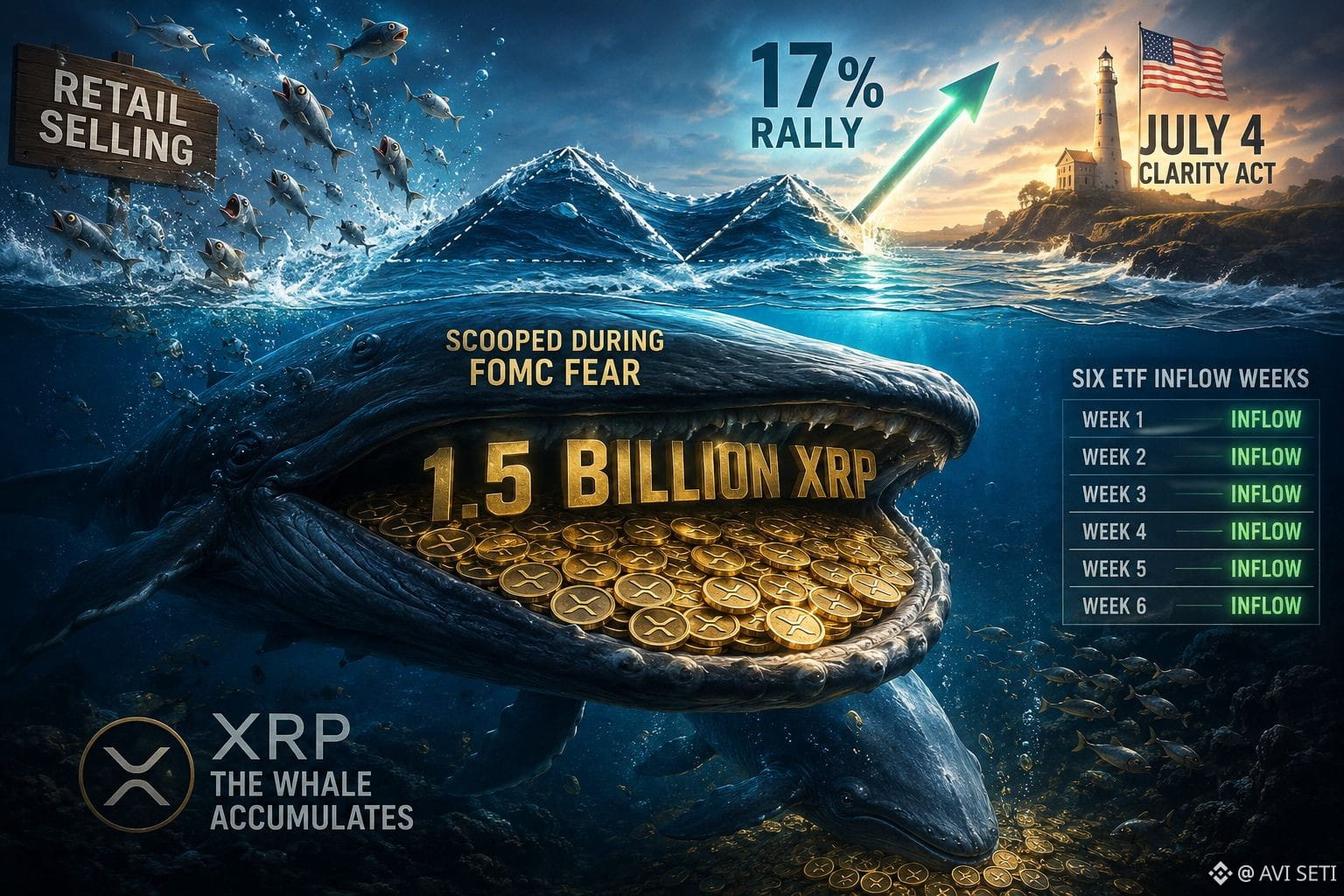
XRP whales just scooped 1.5 BILLION tokens.
During the FOMC fear. During the market pressure.
Quietly. Deliberately. Massively.
XRP Price Prediction: Triangle Setup Signals Potential 17% Rally as Whales Scoop 1.5B Coins.
1.5 billion XRP. At current prices — that's $1.65-$1.77 BILLION in whale accumulation.
Let me put that in context.
This week — while retail investors watched the FOMC hawkish signal and panicked — whales were buying 1.5 billion XRP.
That's not a coincidence. Whales accumulate before catalysts. Not after.
The catalysts they're accumulating before:
🕊️ US-Iran Peace Deal: TOMORROW — risk-on returns
⚖️ CLARITY Act July 4: 16 days — permanent commodity status
📊 XRP triangle setup: 17% rally signal confirmed by technicals
🏦 Six consecutive weeks of XRP ETF inflows: $1.44 billion total
🏦 Three US banks tokenized network: cross-chain rails needed
1.5 billion tokens. $1.65 billion in whale buying.
The signal is not subtle.
📊 XRP today:
— Price: ~$1.18-$1.23 — recovering
— 1.5B whale accumulation: this week ✅
— Triangle setup: 17% rally technical signal ✅
— Six weeks ETF inflows: $1.44B ✅
— July 4: 16 days ✅
— Peace deal tomorrow: risk-on catalyst ✅
1.5 billion tokens scooped while retail panicked.
Smart money speaks through actions.
#XRP #Ripple #WhaleAccumulation #BinanceSquare #FedHawkishDotPlotFlattensYieldCurve
XRP whales just scooped 1.5 BILLION tokens.
During the FOMC fear. During the market pressure.
Quietly. Deliberately. Massively.
XRP Price Prediction: Triangle Setup Signals Potential 17% Rally as Whales Scoop 1.5B Coins.
1.5 billion XRP. At current prices — that's $1.65-$1.77 BILLION in whale accumulation.
Let me put that in context.
This week — while retail investors watched the FOMC hawkish signal and panicked — whales were buying 1.5 billion XRP.
That's not a coincidence. Whales accumulate before catalysts. Not after.
The catalysts they're accumulating before:
🕊️ US-Iran Peace Deal: TOMORROW — risk-on returns
⚖️ CLARITY Act July 4: 16 days — permanent commodity status
📊 XRP triangle setup: 17% rally signal confirmed by technicals
🏦 Six consecutive weeks of XRP ETF inflows: $1.44 billion total
🏦 Three US banks tokenized network: cross-chain rails needed
1.5 billion tokens. $1.65 billion in whale buying.
The signal is not subtle.
📊 XRP today:
— Price: ~$1.18-$1.23 — recovering
— 1.5B whale accumulation: this week ✅
— Triangle setup: 17% rally technical signal ✅
— Six weeks ETF inflows: $1.44B ✅
— July 4: 16 days ✅
— Peace deal tomorrow: risk-on catalyst ✅
1.5 billion tokens scooped while retail panicked.
Smart money speaks through actions.
#XRP #Ripple #WhaleAccumulation #BinanceSquare #FedHawkishDotPlotFlattensYieldCurve
During the FOMC fear. During the market pressure.
Quietly. Deliberately. Massively.
XRP Price Prediction: Triangle Setup Signals Potential 17% Rally as Whales Scoop 1.5B Coins.
1.5 billion XRP. At current prices — that's $1.65-$1.77 BILLION in whale accumulation.
Let me put that in context.
This week — while retail investors watched the FOMC hawkish signal and panicked — whales were buying 1.5 billion XRP.
That's not a coincidence. Whales accumulate before catalysts. Not after.
The catalysts they're accumulating before:
🕊️ US-Iran Peace Deal: TOMORROW — risk-on returns
⚖️ CLARITY Act July 4: 16 days — permanent commodity status
📊 XRP triangle setup: 17% rally signal confirmed by technicals
🏦 Six consecutive weeks of XRP ETF inflows: $1.44 billion total
🏦 Three US banks tokenized network: cross-chain rails needed
1.5 billion tokens. $1.65 billion in whale buying.
The signal is not subtle.
📊 XRP today:
— Price: ~$1.18-$1.23 — recovering
— 1.5B whale accumulation: this week ✅
— Triangle setup: 17% rally technical signal ✅
— Six weeks ETF inflows: $1.44B ✅
— July 4: 16 days ✅
— Peace deal tomorrow: risk-on catalyst ✅
1.5 billion tokens scooped while retail panicked.
Smart money speaks through actions.
#XRP #Ripple #WhaleAccumulation #BinanceSquare #FedHawkishDotPlotFlattensYieldCurve
3
27
15.8k
PINNED
·
--
Verified
See translation
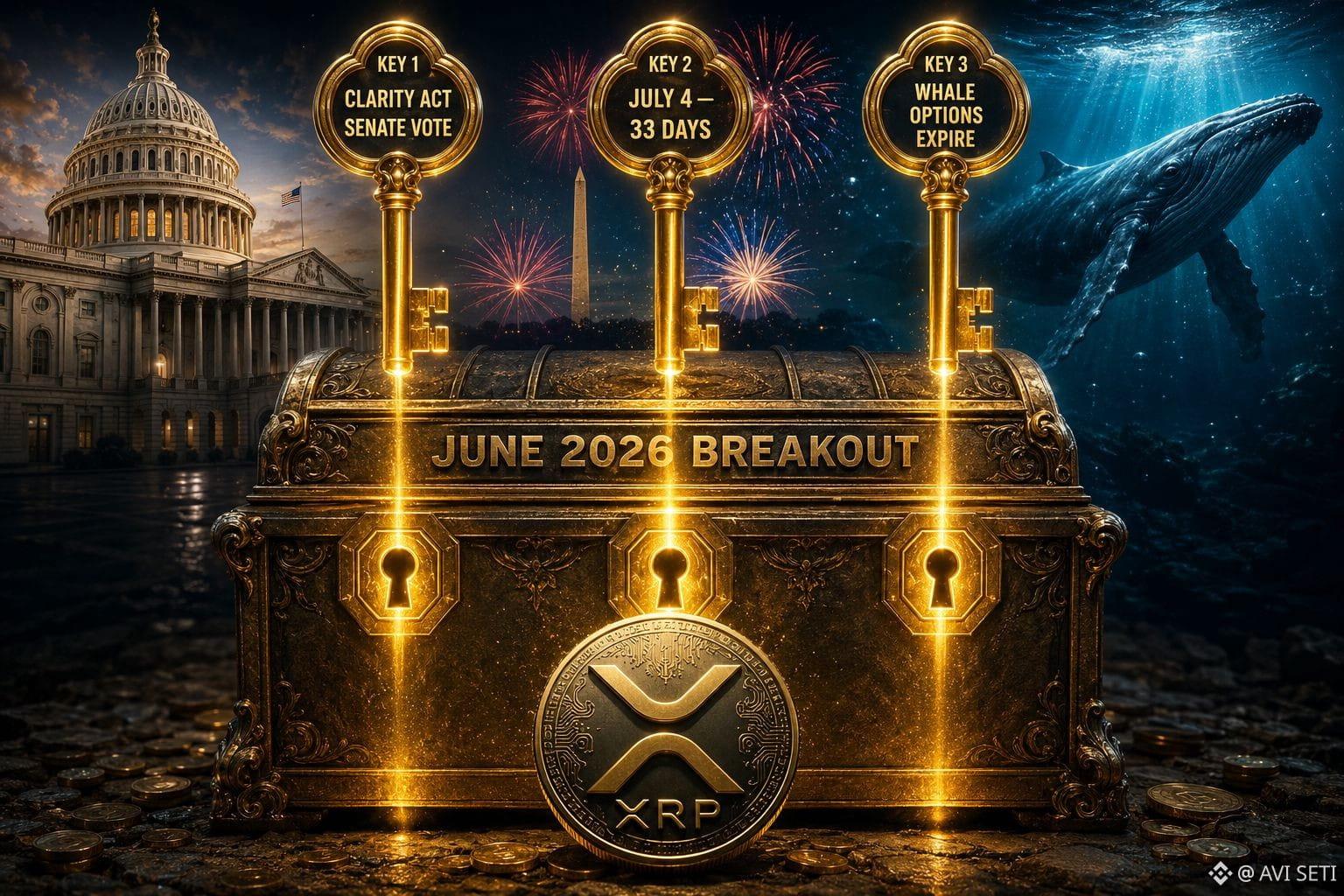
Welcome to June 2026.
This might be $XRP most important month of the year.
Here are the three reasons why.
Reason 1: CLARITY Act Full Senate Vote
The bill cleared committee 15-9 in May. June is the target for the full Senate floor vote. If it passes — XRP gets permanent federal commodity status. Institutions get their green light.
Reason 2: July 4 Is 33 Days Away
The White House set July 4 as the CLARITY Act signing ceremony target. Every day in June is one day closer to the moment XRP's legal status becomes permanently codified into American law.
Reason 3: The Whale's June Call Expires
Remember the whale who collected $224,000 betting XRP stays flat through June? Their options expire this month. If XRP breaks above $1.45 in June — they face losses. They will defend the range. And when their defense ends — the move begins.
Plus the fundamentals haven't moved:
🏦 JPMorgan XRPL settlement: proven ✅
🏦 RLUSD: $1B+ ✅
🏦 Samsung Upbit: Korean retail growing ✅
📊 XRP today:
— Price: ~$1.30-$1.33 — June 1 open
— Support: $1.28-$1.30
— June full Senate vote: coming ✅
— July 4: 33 days ✅
— Whale options: expiring this month ✅
— Breakout above $1.45 → $1.60
Three reasons. One month. June is XRP's month.
#XRP #Ripple #JuneIsXRP #BinanceSquare #AaveSecuresUKFCARegistration
Welcome to June 2026.
This might be $XRP most important month of the year.
Here are the three reasons why.
Reason 1: CLARITY Act Full Senate Vote
The bill cleared committee 15-9 in May. June is the target for the full Senate floor vote. If it passes — XRP gets permanent federal commodity status. Institutions get their green light.
Reason 2: July 4 Is 33 Days Away
The White House set July 4 as the CLARITY Act signing ceremony target. Every day in June is one day closer to the moment XRP's legal status becomes permanently codified into American law.
Reason 3: The Whale's June Call Expires
Remember the whale who collected $224,000 betting XRP stays flat through June? Their options expire this month. If XRP breaks above $1.45 in June — they face losses. They will defend the range. And when their defense ends — the move begins.
Plus the fundamentals haven't moved:
🏦 JPMorgan XRPL settlement: proven ✅
🏦 RLUSD: $1B+ ✅
🏦 Samsung Upbit: Korean retail growing ✅
📊 XRP today:
— Price: ~$1.30-$1.33 — June 1 open
— Support: $1.28-$1.30
— June full Senate vote: coming ✅
— July 4: 33 days ✅
— Whale options: expiring this month ✅
— Breakout above $1.45 → $1.60
Three reasons. One month. June is XRP's month.
#XRP #Ripple #JuneIsXRP #BinanceSquare #AaveSecuresUKFCARegistration
This might be $XRP most important month of the year.
Here are the three reasons why.
Reason 1: CLARITY Act Full Senate Vote
The bill cleared committee 15-9 in May. June is the target for the full Senate floor vote. If it passes — XRP gets permanent federal commodity status. Institutions get their green light.
Reason 2: July 4 Is 33 Days Away
The White House set July 4 as the CLARITY Act signing ceremony target. Every day in June is one day closer to the moment XRP's legal status becomes permanently codified into American law.
Reason 3: The Whale's June Call Expires
Remember the whale who collected $224,000 betting XRP stays flat through June? Their options expire this month. If XRP breaks above $1.45 in June — they face losses. They will defend the range. And when their defense ends — the move begins.
Plus the fundamentals haven't moved:
🏦 JPMorgan XRPL settlement: proven ✅
🏦 RLUSD: $1B+ ✅
🏦 Samsung Upbit: Korean retail growing ✅
📊 XRP today:
— Price: ~$1.30-$1.33 — June 1 open
— Support: $1.28-$1.30
— June full Senate vote: coming ✅
— July 4: 33 days ✅
— Whale options: expiring this month ✅
— Breakout above $1.45 → $1.60
Three reasons. One month. June is XRP's month.
#XRP #Ripple #JuneIsXRP #BinanceSquare #AaveSecuresUKFCARegistration
4
12
13.9k
·
--
See translation
Zcash remains one of the only large-cap cryptocurrencies moving higher while the broader market sits frozen ahead of today's Fed decision, with privacy coins broadly (Zcash and Monero) standing out as the sole sector showing genuine upward momentum according to multiple market trackers. This resilience comes even as "only 2 of the top 10 coins" in the entire crypto market are reportedly up for 2026 so far, underscoring just how unusual Zcash's continued strength has been throughout a month dominated by CPI surprises, a failed CLARITY Act vote, and now an incoming rate hike. Analysts monitoring the privacy-coin rotation note that if the trend holds through both today's Fed decision and tomorrow's Bank of Japan meeting, it would suggest genuine structural rotation into privacy-focused assets rather than simply a leveraged short squeeze. Zcash's continued decoupling from broader market stress — even during one of 2026's most consequential 48-hour macro and regulatory windows — has made it the standout narrative trade of the entire month.
#Zcash #ZEC #PrivacyCoins #CryptoRotation #Altcoins
Zcash remains one of the only large-cap cryptocurrencies moving higher while the broader market sits frozen ahead of today's Fed decision, with privacy coins broadly (Zcash and Monero) standing out as the sole sector showing genuine upward momentum according to multiple market trackers. This resilience comes even as "only 2 of the top 10 coins" in the entire crypto market are reportedly up for 2026 so far, underscoring just how unusual Zcash's continued strength has been throughout a month dominated by CPI surprises, a failed CLARITY Act vote, and now an incoming rate hike. Analysts monitoring the privacy-coin rotation note that if the trend holds through both today's Fed decision and tomorrow's Bank of Japan meeting, it would suggest genuine structural rotation into privacy-focused assets rather than simply a leveraged short squeeze. Zcash's continued decoupling from broader market stress — even during one of 2026's most consequential 48-hour macro and regulatory windows — has made it the standout narrative trade of the entire month.
#Zcash #ZEC #PrivacyCoins #CryptoRotation #Altcoins
#Zcash #ZEC #PrivacyCoins #CryptoRotation #Altcoins

1
189
·
--
See translation
Solana is hovering just above the psychologically important $100 level, down 0.80% on the day and 2.30% for the week, with year-to-date performance now at negative 19.16% as the token struggles under its high-beta profile heading into today's Fed decision. Solana spot ETFs pulled in over $170 million in August with total category assets approaching $1.5 billion, but September flows have turned choppy, logging four separate outflow sessions this month as risk appetite cools.
Analysts note that nothing has fundamentally broken in Solana's underlying story — the issue is structural: SOL behaves as a high-beta asset that gets sold first whenever Bitcoin dominance rises, which it has, climbing toward 59% amid this week's dual regulatory and monetary policy shocks. A clean break below $100 could open room down to the low nineties, making today's Fed announcement a critical near-term test for the token.
#Solana #SOL #CryptoETF #FedRateHike #Altcoins
Solana is hovering just above the psychologically important $100 level, down 0.80% on the day and 2.30% for the week, with year-to-date performance now at negative 19.16% as the token struggles under its high-beta profile heading into today's Fed decision. Solana spot ETFs pulled in over $170 million in August with total category assets approaching $1.5 billion, but September flows have turned choppy, logging four separate outflow sessions this month as risk appetite cools.
Analysts note that nothing has fundamentally broken in Solana's underlying story — the issue is structural: SOL behaves as a high-beta asset that gets sold first whenever Bitcoin dominance rises, which it has, climbing toward 59% amid this week's dual regulatory and monetary policy shocks. A clean break below $100 could open room down to the low nineties, making today's Fed announcement a critical near-term test for the token.
#Solana #SOL #CryptoETF #FedRateHike #Altcoins
Analysts note that nothing has fundamentally broken in Solana's underlying story — the issue is structural: SOL behaves as a high-beta asset that gets sold first whenever Bitcoin dominance rises, which it has, climbing toward 59% amid this week's dual regulatory and monetary policy shocks. A clean break below $100 could open room down to the low nineties, making today's Fed announcement a critical near-term test for the token.
#Solana #SOL #CryptoETF #FedRateHike #Altcoins

32
·
--
See translation
XRP has taken the hardest hit among majors, sliding roughly 7.3% to around $1.31 in the wake of the CLARITY Act's failed Senate cloture vote, since XRP's regulatory classification stood to benefit most directly from the bill's SEC/CFTC jurisdictional split. Senator Elizabeth Warren was among the most vocal opponents, arguing the bill could "decimate the guardrails that were put in place after the Great Depression," while Senator Cynthia Lummis had spent weeks publicly pressing Democratic colleagues to back the measure as bipartisan, unfinished business.
With cloture requiring 60 votes and only 50 senators voting yes, comprehensive federal crypto rules may now slip into 2027, according to lawmakers involved in drafting the legislation. Coinbase CEO Brian Armstrong offered a silver lining, noting that even without CLARITY, "the SEC and the CFTC have said that they're ready to publish rulemaking," meaning regulatory clarity could still arrive through agency action rather than Congress.
#XRP #Ripple #CLARITYAct #CryptoRegulation #SenateVote
XRP has taken the hardest hit among majors, sliding roughly 7.3% to around $1.31 in the wake of the CLARITY Act's failed Senate cloture vote, since XRP's regulatory classification stood to benefit most directly from the bill's SEC/CFTC jurisdictional split. Senator Elizabeth Warren was among the most vocal opponents, arguing the bill could "decimate the guardrails that were put in place after the Great Depression," while Senator Cynthia Lummis had spent weeks publicly pressing Democratic colleagues to back the measure as bipartisan, unfinished business.
With cloture requiring 60 votes and only 50 senators voting yes, comprehensive federal crypto rules may now slip into 2027, according to lawmakers involved in drafting the legislation. Coinbase CEO Brian Armstrong offered a silver lining, noting that even without CLARITY, "the SEC and the CFTC have said that they're ready to publish rulemaking," meaning regulatory clarity could still arrive through agency action rather than Congress.
#XRP #Ripple #CLARITYAct #CryptoRegulation #SenateVote
With cloture requiring 60 votes and only 50 senators voting yes, comprehensive federal crypto rules may now slip into 2027, according to lawmakers involved in drafting the legislation. Coinbase CEO Brian Armstrong offered a silver lining, noting that even without CLARITY, "the SEC and the CFTC have said that they're ready to publish rulemaking," meaning regulatory clarity could still arrive through agency action rather than Congress.
#XRP #Ripple #CLARITYAct #CryptoRegulation #SenateVote

73
·
--
Article
See translation
24 Hours That Broke Crypto's Biggest Bet of the YearHook:
Yesterday, the U.S. Senate killed the CLARITY Act. Today, the Federal Reserve is expected to raise interest rates for the first time in three years. Two of the three biggest catalysts crypto has faced all year landed back-to-back, and the market's reaction has been brutal: Bitcoin down to $76,700, XRP down 7.3%, Coinbase stock down 9%, Circle down over 10%. This is the story of crypto's roughest 48 hours of 2026 — and why some of the industry's biggest names are calling the chaos a strange kind of good news.
Macro Factors: A Rate Hike Nobody Wanted But Everybody Expected
The Federal Reserve's two-day policy meeting concludes today with a decision due at 2:00 p.m. ET, and virtually every major bank on Wall Street — Goldman Sachs, JPMorgan, Morgan Stanley, Bank of America, Citigroup, Wells Fargo, UBS, HSBC, and Barclays — expects a 25-basis-point hike, which would lift the federal funds target range from 3.50–3.75% to 3.75–4.00%. The shift traces back to August's inflation CPI came in at 3.4% year-over-year with a hotter-than-expected 0.4% monthly increase, while the Producer Price Index hit 5.4%, driven heavily by a 3.9% jump in petrol prices. CME FedWatch now prices a 93% probability of the hike, and futures markets flipped dramatically in the days following the September 11 CPI release. Bitcoin has been whipsawing through this uncertainty all week, touching $79,579 on Monday before sliding to a low of $75,560 — its weakest level since August 21 — as traders priced in both the rate decision and the Senate's crypto legislation fight simultaneously.
Institutional Moves: Buying the Panic, Again
Despite the two-front pressure, institutional buyers haven't abandoned ship. U.S. spot Bitcoin ETFs recorded $159.9 million in net inflows on September 14 alone, led by BlackRock's IBIT with $134.3 million, followed by Fidelity's FBTC at $53.3 million and Morgan Stanley's MSBT at $9.7 million — a clear signal that some large allocators are treating this week's volatility as a buying opportunity rather than a reason to retreat. That said, not everyone is playing the same game: crypto-adjacent equities took a beating yesterday as the CLARITY Act vote failed, with Coinbase sliding nearly 9% to $174.80 and Circle collapsing more than 10% to $87.51, reflecting how directly exposed publicly traded crypto infrastructure companies are to U.S. regulatory outcomes compared to the underlying tokens themselves. Michael Saylor's Strategy, meanwhile, used the moment to reinforce its long-standing thesis, arguing that Bitcoin has had adequate regulatory clarity through the CFTC for years regardless of what happens with broader market-structure legislation.
On-Chain and Whale Behavior: Liquidations Everywhere, Except in One Corner
The past 48 hours have been a liquidation bloodbath across leveraged crypto positions. Over 79,000 traders were liquidated in a single 24-hour window heading into today's Fed decision, with total losses reaching $337.75 million, while a separate burst of short-covering earlier in the week saw over $100 million in short positions wiped out in just 30 minutes as Bitcoin briefly spiked above $79,000. Options markets are reflecting the fear directly: Bitcoin's put options are now pricier than calls across both 7-day and 30-day tenors, with the 7-day 25-delta skew swinging by over 3 volatility points week-over-week — traders are actively paying up for downside protection through this week's back-to-back macro and regulatory events. Yet amid all this stress, one corner of the market has stayed almost eerily calm: Zcash and Monero remain the only large-cap cryptocurrencies trending higher, a divergence analysts say would confirm a genuine structural rotation into privacy assets if it survives both today's Fed decision and tomorrow's Bank of Japan meeting.
Regulation: The Bill That Needed 60 and Got 50
The CLARITY Act's failure yesterday closes out a saga that began back in May 2025, when the bill was first introduced to establish a regulatory framework splitting digital asset oversight between the SEC and CFTC. It advanced through the Senate Banking Committee in May 2026 by a 15-9 vote, cleared procedural calendar hurdles in June, and even earned a late push from Treasury Secretary Scott Bessent, who explicitly linked the bill to strengthening enforcement authority over a proposed U.S. Bitcoin reserve. But it ultimately fell short on cloture, with only 50 of the required 60 votes secured — meaning at least several Republicans joined Democrats in opposition, driven partly by unresolved concerns over ethics provisions tied to government officials' crypto holdings and banking industry pushback on a stablecoin "circuit breaker" provision. Senator Elizabeth Warren was among the loudest opponents, warning the bill risked unwinding post-Great Depression financial guardrails. The practical result: comprehensive federal crypto market-structure rules likely won't return to serious Senate consideration until 2027 at the earliest, though Brian Armstrong of Coinbase has argued that SEC and CFTC rulemaking could still deliver meaningful clarity even without new legislation.
Outlook: Two Paths, Same Question
Crypto now faces a genuinely bifurcated setup heading into the back half of September. If today's Fed hike lands as a "one-and-done" move with dovish forward guidance from Chair Kevin Warsh, markets could stabilize quickly, treating the CLARITY Act failure as a one-time political disappointment rather than a lasting structural setback — echoing Saylor's view that Bitcoin never really needed the bill in the first place. If instead the Fed signals further tightening ahead of tomorrow's Bank of Japan decision, the combination of higher-for-longer U.S. rates and unresolved crypto regulation could extend this week's selloff meaningfully, particularly for high-beta altcoins like Solana and regulation-sensitive assets like XRP. Either way, the fact that Zcash has held its ground through the worst of both storms this week suggests that not every corner of crypto moves on the same macro and political triggers — a genuinely new dynamic for a market long characterized by everything trading in lockstep.
Closing Thought:
Crypto just survived a legislative failure and is about to face a rate hike in the same 24-hour window — and it's still standing. That resilience, more than any single price level, might be the real story of September 16.
Disclaimer: This article is for informational purposes only and does not constitute financial, investment, or legal advice. Cryptocurrency markets are highly volatile and carry significant risk of loss, including losses driven by leverage and liquidations. Always conduct your own research and consult a licensed financial advisor before making investment decisions.
#FedRateWatch #EthereumFallsBelow$2400 #BitcoinSlidesTo$76000 #ClarityActOddsHalveOnPolymarket #US30YTreasuryYieldTops5.40%
24 Hours That Broke Crypto's Biggest Bet of the Year
Hook:
Yesterday, the U.S. Senate killed the CLARITY Act. Today, the Federal Reserve is expected to raise interest rates for the first time in three years. Two of the three biggest catalysts crypto has faced all year landed back-to-back, and the market's reaction has been brutal: Bitcoin down to $76,700, XRP down 7.3%, Coinbase stock down 9%, Circle down over 10%. This is the story of crypto's roughest 48 hours of 2026 — and why some of the industry's biggest names are calling the chaos a strange kind of good news.
Macro Factors: A Rate Hike Nobody Wanted But Everybody Expected
The Federal Reserve's two-day policy meeting concludes today with a decision due at 2:00 p.m. ET, and virtually every major bank on Wall Street — Goldman Sachs, JPMorgan, Morgan Stanley, Bank of America, Citigroup, Wells Fargo, UBS, HSBC, and Barclays — expects a 25-basis-point hike, which would lift the federal funds target range from 3.50–3.75% to 3.75–4.00%. The shift traces back to August's inflation CPI came in at 3.4% year-over-year with a hotter-than-expected 0.4% monthly increase, while the Producer Price Index hit 5.4%, driven heavily by a 3.9% jump in petrol prices. CME FedWatch now prices a 93% probability of the hike, and futures markets flipped dramatically in the days following the September 11 CPI release. Bitcoin has been whipsawing through this uncertainty all week, touching $79,579 on Monday before sliding to a low of $75,560 — its weakest level since August 21 — as traders priced in both the rate decision and the Senate's crypto legislation fight simultaneously.
Institutional Moves: Buying the Panic, Again
Despite the two-front pressure, institutional buyers haven't abandoned ship. U.S. spot Bitcoin ETFs recorded $159.9 million in net inflows on September 14 alone, led by BlackRock's IBIT with $134.3 million, followed by Fidelity's FBTC at $53.3 million and Morgan Stanley's MSBT at $9.7 million — a clear signal that some large allocators are treating this week's volatility as a buying opportunity rather than a reason to retreat. That said, not everyone is playing the same game: crypto-adjacent equities took a beating yesterday as the CLARITY Act vote failed, with Coinbase sliding nearly 9% to $174.80 and Circle collapsing more than 10% to $87.51, reflecting how directly exposed publicly traded crypto infrastructure companies are to U.S. regulatory outcomes compared to the underlying tokens themselves. Michael Saylor's Strategy, meanwhile, used the moment to reinforce its long-standing thesis, arguing that Bitcoin has had adequate regulatory clarity through the CFTC for years regardless of what happens with broader market-structure legislation.
On-Chain and Whale Behavior: Liquidations Everywhere, Except in One Corner
The past 48 hours have been a liquidation bloodbath across leveraged crypto positions. Over 79,000 traders were liquidated in a single 24-hour window heading into today's Fed decision, with total losses reaching $337.75 million, while a separate burst of short-covering earlier in the week saw over $100 million in short positions wiped out in just 30 minutes as Bitcoin briefly spiked above $79,000. Options markets are reflecting the fear directly: Bitcoin's put options are now pricier than calls across both 7-day and 30-day tenors, with the 7-day 25-delta skew swinging by over 3 volatility points week-over-week — traders are actively paying up for downside protection through this week's back-to-back macro and regulatory events. Yet amid all this stress, one corner of the market has stayed almost eerily calm: Zcash and Monero remain the only large-cap cryptocurrencies trending higher, a divergence analysts say would confirm a genuine structural rotation into privacy assets if it survives both today's Fed decision and tomorrow's Bank of Japan meeting.
Regulation: The Bill That Needed 60 and Got 50
The CLARITY Act's failure yesterday closes out a saga that began back in May 2025, when the bill was first introduced to establish a regulatory framework splitting digital asset oversight between the SEC and CFTC. It advanced through the Senate Banking Committee in May 2026 by a 15-9 vote, cleared procedural calendar hurdles in June, and even earned a late push from Treasury Secretary Scott Bessent, who explicitly linked the bill to strengthening enforcement authority over a proposed U.S. Bitcoin reserve. But it ultimately fell short on cloture, with only 50 of the required 60 votes secured — meaning at least several Republicans joined Democrats in opposition, driven partly by unresolved concerns over ethics provisions tied to government officials' crypto holdings and banking industry pushback on a stablecoin "circuit breaker" provision. Senator Elizabeth Warren was among the loudest opponents, warning the bill risked unwinding post-Great Depression financial guardrails. The practical result: comprehensive federal crypto market-structure rules likely won't return to serious Senate consideration until 2027 at the earliest, though Brian Armstrong of Coinbase has argued that SEC and CFTC rulemaking could still deliver meaningful clarity even without new legislation.
Outlook: Two Paths, Same Question
Crypto now faces a genuinely bifurcated setup heading into the back half of September. If today's Fed hike lands as a "one-and-done" move with dovish forward guidance from Chair Kevin Warsh, markets could stabilize quickly, treating the CLARITY Act failure as a one-time political disappointment rather than a lasting structural setback — echoing Saylor's view that Bitcoin never really needed the bill in the first place. If instead the Fed signals further tightening ahead of tomorrow's Bank of Japan decision, the combination of higher-for-longer U.S. rates and unresolved crypto regulation could extend this week's selloff meaningfully, particularly for high-beta altcoins like Solana and regulation-sensitive assets like XRP. Either way, the fact that Zcash has held its ground through the worst of both storms this week suggests that not every corner of crypto moves on the same macro and political triggers — a genuinely new dynamic for a market long characterized by everything trading in lockstep.
Closing Thought:
Crypto just survived a legislative failure and is about to face a rate hike in the same 24-hour window — and it's still standing. That resilience, more than any single price level, might be the real story of September 16.
Disclaimer: This article is for informational purposes only and does not constitute financial, investment, or legal advice. Cryptocurrency markets are highly volatile and carry significant risk of loss, including losses driven by leverage and liquidations. Always conduct your own research and consult a licensed financial advisor before making investment decisions.
#FedRateWatch #EthereumFallsBelow$2400 #BitcoinSlidesTo$76000 #ClarityActOddsHalveOnPolymarket #US30YTreasuryYieldTops5.40%
Yesterday, the U.S. Senate killed the CLARITY Act. Today, the Federal Reserve is expected to raise interest rates for the first time in three years. Two of the three biggest catalysts crypto has faced all year landed back-to-back, and the market's reaction has been brutal: Bitcoin down to $76,700, XRP down 7.3%, Coinbase stock down 9%, Circle down over 10%. This is the story of crypto's roughest 48 hours of 2026 — and why some of the industry's biggest names are calling the chaos a strange kind of good news.
Macro Factors: A Rate Hike Nobody Wanted But Everybody Expected
The Federal Reserve's two-day policy meeting concludes today with a decision due at 2:00 p.m. ET, and virtually every major bank on Wall Street — Goldman Sachs, JPMorgan, Morgan Stanley, Bank of America, Citigroup, Wells Fargo, UBS, HSBC, and Barclays — expects a 25-basis-point hike, which would lift the federal funds target range from 3.50–3.75% to 3.75–4.00%. The shift traces back to August's inflation CPI came in at 3.4% year-over-year with a hotter-than-expected 0.4% monthly increase, while the Producer Price Index hit 5.4%, driven heavily by a 3.9% jump in petrol prices. CME FedWatch now prices a 93% probability of the hike, and futures markets flipped dramatically in the days following the September 11 CPI release. Bitcoin has been whipsawing through this uncertainty all week, touching $79,579 on Monday before sliding to a low of $75,560 — its weakest level since August 21 — as traders priced in both the rate decision and the Senate's crypto legislation fight simultaneously.
Institutional Moves: Buying the Panic, Again
Despite the two-front pressure, institutional buyers haven't abandoned ship. U.S. spot Bitcoin ETFs recorded $159.9 million in net inflows on September 14 alone, led by BlackRock's IBIT with $134.3 million, followed by Fidelity's FBTC at $53.3 million and Morgan Stanley's MSBT at $9.7 million — a clear signal that some large allocators are treating this week's volatility as a buying opportunity rather than a reason to retreat. That said, not everyone is playing the same game: crypto-adjacent equities took a beating yesterday as the CLARITY Act vote failed, with Coinbase sliding nearly 9% to $174.80 and Circle collapsing more than 10% to $87.51, reflecting how directly exposed publicly traded crypto infrastructure companies are to U.S. regulatory outcomes compared to the underlying tokens themselves. Michael Saylor's Strategy, meanwhile, used the moment to reinforce its long-standing thesis, arguing that Bitcoin has had adequate regulatory clarity through the CFTC for years regardless of what happens with broader market-structure legislation.
On-Chain and Whale Behavior: Liquidations Everywhere, Except in One Corner
The past 48 hours have been a liquidation bloodbath across leveraged crypto positions. Over 79,000 traders were liquidated in a single 24-hour window heading into today's Fed decision, with total losses reaching $337.75 million, while a separate burst of short-covering earlier in the week saw over $100 million in short positions wiped out in just 30 minutes as Bitcoin briefly spiked above $79,000. Options markets are reflecting the fear directly: Bitcoin's put options are now pricier than calls across both 7-day and 30-day tenors, with the 7-day 25-delta skew swinging by over 3 volatility points week-over-week — traders are actively paying up for downside protection through this week's back-to-back macro and regulatory events. Yet amid all this stress, one corner of the market has stayed almost eerily calm: Zcash and Monero remain the only large-cap cryptocurrencies trending higher, a divergence analysts say would confirm a genuine structural rotation into privacy assets if it survives both today's Fed decision and tomorrow's Bank of Japan meeting.
Regulation: The Bill That Needed 60 and Got 50
The CLARITY Act's failure yesterday closes out a saga that began back in May 2025, when the bill was first introduced to establish a regulatory framework splitting digital asset oversight between the SEC and CFTC. It advanced through the Senate Banking Committee in May 2026 by a 15-9 vote, cleared procedural calendar hurdles in June, and even earned a late push from Treasury Secretary Scott Bessent, who explicitly linked the bill to strengthening enforcement authority over a proposed U.S. Bitcoin reserve. But it ultimately fell short on cloture, with only 50 of the required 60 votes secured — meaning at least several Republicans joined Democrats in opposition, driven partly by unresolved concerns over ethics provisions tied to government officials' crypto holdings and banking industry pushback on a stablecoin "circuit breaker" provision. Senator Elizabeth Warren was among the loudest opponents, warning the bill risked unwinding post-Great Depression financial guardrails. The practical result: comprehensive federal crypto market-structure rules likely won't return to serious Senate consideration until 2027 at the earliest, though Brian Armstrong of Coinbase has argued that SEC and CFTC rulemaking could still deliver meaningful clarity even without new legislation.
Outlook: Two Paths, Same Question
Crypto now faces a genuinely bifurcated setup heading into the back half of September. If today's Fed hike lands as a "one-and-done" move with dovish forward guidance from Chair Kevin Warsh, markets could stabilize quickly, treating the CLARITY Act failure as a one-time political disappointment rather than a lasting structural setback — echoing Saylor's view that Bitcoin never really needed the bill in the first place. If instead the Fed signals further tightening ahead of tomorrow's Bank of Japan decision, the combination of higher-for-longer U.S. rates and unresolved crypto regulation could extend this week's selloff meaningfully, particularly for high-beta altcoins like Solana and regulation-sensitive assets like XRP. Either way, the fact that Zcash has held its ground through the worst of both storms this week suggests that not every corner of crypto moves on the same macro and political triggers — a genuinely new dynamic for a market long characterized by everything trading in lockstep.
Closing Thought:
Crypto just survived a legislative failure and is about to face a rate hike in the same 24-hour window — and it's still standing. That resilience, more than any single price level, might be the real story of September 16.
Disclaimer: This article is for informational purposes only and does not constitute financial, investment, or legal advice. Cryptocurrency markets are highly volatile and carry significant risk of loss, including losses driven by leverage and liquidations. Always conduct your own research and consult a licensed financial advisor before making investment decisions.
#FedRateWatch #EthereumFallsBelow$2400 #BitcoinSlidesTo$76000 #ClarityActOddsHalveOnPolymarket #US30YTreasuryYieldTops5.40%
110
·
--
See translation
Ethereum has slipped to around $2,400–$2,500, down roughly 5% over the past 24 hours as the combination of the CLARITY Act's Senate failure and looming Fed rate hike weighed on the broader altcoin market. ETH's decline came alongside a rough session for crypto-adjacent equities, with Coinbase shares falling nearly 9% to $174.80 and Circle's stock tanking more than 10% to $87.51 as regulatory uncertainty rattled the sector.
Despite the pullback, spot Bitcoin ETFs (a proxy for broader institutional crypto sentiment) still logged $159.9 million in net inflows on September 14, led by BlackRock's IBIT at $134.3 million, suggesting institutional buyers used the pre-vote dip as an accumulation opportunity rather than an exit signal. With today's FOMC decision due at 2:00 p.m. ET, traders are watching Fed Chair Kevin Warsh's tone closely, since a hawkish surprise could extend Ethereum's slide while a measured, "one-and-done" signal could help stabilize the broader market.
#Ethereum #ETH #FedDecision #CryptoMarket #ETHPrice
Ethereum has slipped to around $2,400–$2,500, down roughly 5% over the past 24 hours as the combination of the CLARITY Act's Senate failure and looming Fed rate hike weighed on the broader altcoin market. ETH's decline came alongside a rough session for crypto-adjacent equities, with Coinbase shares falling nearly 9% to $174.80 and Circle's stock tanking more than 10% to $87.51 as regulatory uncertainty rattled the sector.
Despite the pullback, spot Bitcoin ETFs (a proxy for broader institutional crypto sentiment) still logged $159.9 million in net inflows on September 14, led by BlackRock's IBIT at $134.3 million, suggesting institutional buyers used the pre-vote dip as an accumulation opportunity rather than an exit signal. With today's FOMC decision due at 2:00 p.m. ET, traders are watching Fed Chair Kevin Warsh's tone closely, since a hawkish surprise could extend Ethereum's slide while a measured, "one-and-done" signal could help stabilize the broader market.
#Ethereum #ETH #FedDecision #CryptoMarket #ETHPrice
Despite the pullback, spot Bitcoin ETFs (a proxy for broader institutional crypto sentiment) still logged $159.9 million in net inflows on September 14, led by BlackRock's IBIT at $134.3 million, suggesting institutional buyers used the pre-vote dip as an accumulation opportunity rather than an exit signal. With today's FOMC decision due at 2:00 p.m. ET, traders are watching Fed Chair Kevin Warsh's tone closely, since a hawkish surprise could extend Ethereum's slide while a measured, "one-and-done" signal could help stabilize the broader market.
#Ethereum #ETH #FedDecision #CryptoMarket #ETHPrice

51
·
--
See translation
Bitcoin is trading near $76,700–$77,000 after the CLARITY Act failed its Senate cloture vote yesterday, with only 50 of the needed 60 votes secured as over 40 senators, including several Republicans, voted against advancing the bill. The failure ends market-structure legislative work in the Senate for 2026, and Polymarket's odds on the bill becoming law this year have collapsed to just 18%.
Michael Saylor's Strategy called the outcome "good for Bitcoin," arguing BTC already has sufficient regulatory clarity through existing CFTC treatment, while Strive CEO Matt Cole called the failure "bad for the United States and bad for crypto" but still bullish for BTC specifically. Markets now pivot immediately to today's Federal Reserve rate decision, with CME FedWatch pricing a 93% probability of a 25-basis-point hike — the first increase in three years — that would push the federal funds range from 3.50–3.75% to 3.75–4.00%.
#Bitcoin #BTC #CLARITYAct #FedRateHike #CryptoNews
Bitcoin is trading near $76,700–$77,000 after the CLARITY Act failed its Senate cloture vote yesterday, with only 50 of the needed 60 votes secured as over 40 senators, including several Republicans, voted against advancing the bill. The failure ends market-structure legislative work in the Senate for 2026, and Polymarket's odds on the bill becoming law this year have collapsed to just 18%.
Michael Saylor's Strategy called the outcome "good for Bitcoin," arguing BTC already has sufficient regulatory clarity through existing CFTC treatment, while Strive CEO Matt Cole called the failure "bad for the United States and bad for crypto" but still bullish for BTC specifically. Markets now pivot immediately to today's Federal Reserve rate decision, with CME FedWatch pricing a 93% probability of a 25-basis-point hike — the first increase in three years — that would push the federal funds range from 3.50–3.75% to 3.75–4.00%.
#Bitcoin #BTC #CLARITYAct #FedRateHike #CryptoNews
Michael Saylor's Strategy called the outcome "good for Bitcoin," arguing BTC already has sufficient regulatory clarity through existing CFTC treatment, while Strive CEO Matt Cole called the failure "bad for the United States and bad for crypto" but still bullish for BTC specifically. Markets now pivot immediately to today's Federal Reserve rate decision, with CME FedWatch pricing a 93% probability of a 25-basis-point hike — the first increase in three years — that would push the federal funds range from 3.50–3.75% to 3.75–4.00%.
#Bitcoin #BTC #CLARITYAct #FedRateHike #CryptoNews

79
·
--
See translation
Cosmos Hub's ATOM is trading around $1.60, with roughly $50 million in 24-hour trading volume. The token has been under pressure, falling about 3.3% over the past seven days, but the broader Cosmos ecosystem continues to focus on interoperability through IBC, which connects dozens of blockchain networks.
With the market entering a major Fed-and-regulation week, ATOM is becoming a high-beta bet on whether capital rotates back toward established interoperability infrastructure after the current risk-off period.
#ATOM#Cosmos #IBC #Interoperability #CryptoMarket
Cosmos Hub's ATOM is trading around $1.60, with roughly $50 million in 24-hour trading volume. The token has been under pressure, falling about 3.3% over the past seven days, but the broader Cosmos ecosystem continues to focus on interoperability through IBC, which connects dozens of blockchain networks.
With the market entering a major Fed-and-regulation week, ATOM is becoming a high-beta bet on whether capital rotates back toward established interoperability infrastructure after the current risk-off period.
#ATOM#Cosmos #IBC #Interoperability #CryptoMarket
With the market entering a major Fed-and-regulation week, ATOM is becoming a high-beta bet on whether capital rotates back toward established interoperability infrastructure after the current risk-off period.
#ATOM#Cosmos #IBC #Interoperability #CryptoMarket

52
·
--
See translation
Filecoin is trading around $0.89, with CoinGecko data showing the token up roughly 6.6% over seven days. The bigger fundamental story is Filecoin's supply schedule: its long-running vesting program is expected to end on October 15, 2026, which could reduce gross issuance by approximately 75%.
Filecoin is simultaneously trying to shift its 2026 strategy away from expanding token supply and toward increasing real network demand and usage.
#FIL #Filecoin #DePIN #DecentralizedStorage #CryptoNews
Filecoin is trading around $0.89, with CoinGecko data showing the token up roughly 6.6% over seven days. The bigger fundamental story is Filecoin's supply schedule: its long-running vesting program is expected to end on October 15, 2026, which could reduce gross issuance by approximately 75%.
Filecoin is simultaneously trying to shift its 2026 strategy away from expanding token supply and toward increasing real network demand and usage.
#FIL #Filecoin #DePIN #DecentralizedStorage #CryptoNews
Filecoin is simultaneously trying to shift its 2026 strategy away from expanding token supply and toward increasing real network demand and usage.
#FIL #Filecoin #DePIN #DecentralizedStorage #CryptoNews

285
·
--
See translation
Litecoin is trading around $54, after recently recovering above the $50 level. A fresh development came from European crypto platform SwissBorg, which added Litecoin and Zcash to its platform, allowing users to swap LTC through 12 fiat currencies and more than 400 digital assets.
The listing arrives as European regulators continue debating tighter rules around privacy-enhancing cryptocurrencies, giving Litecoin additional visibility in the region's compliant crypto market.
#LTC #Litecoin #SwissBorg #CryptoAdoption #CryptoNews
Litecoin is trading around $54, after recently recovering above the $50 level. A fresh development came from European crypto platform SwissBorg, which added Litecoin and Zcash to its platform, allowing users to swap LTC through 12 fiat currencies and more than 400 digital assets.
The listing arrives as European regulators continue debating tighter rules around privacy-enhancing cryptocurrencies, giving Litecoin additional visibility in the region's compliant crypto market.
#LTC #Litecoin #SwissBorg #CryptoAdoption #CryptoNews
The listing arrives as European regulators continue debating tighter rules around privacy-enhancing cryptocurrencies, giving Litecoin additional visibility in the region's compliant crypto market.
#LTC #Litecoin #SwissBorg #CryptoAdoption #CryptoNews

113
·
--

Article
See translation
Crypto September 15, 2026: CLARITY Act Vote Meets a Fed Rate Hike as Bitcoin Holds Near $78KThe crypto market has entered one of the most important 48-hour periods of September.
On September 15, the U.S. Senate is preparing for a crucial procedural vote on the CLARITY Act, legislation designed to establish a broader regulatory framework for digital assets. On September 16, the Federal Reserve is expected to make a major interest-rate decision, with markets pricing a strong probability of a 25-basis-point hike.
Bitcoin is hovering around the $77,000–$78,000 area, while the broader crypto market is waiting for two completely different catalysts: one political and regulatory, the other monetary.
The result could determine whether crypto enters the second half of September with renewed institutional confidence or another period of volatility.
1. The CLARITY Act Reaches Its Biggest Test
The biggest crypto-specific event today is happening in Washington.
Senate Republicans released a revised version of the CLARITY Act after incorporating 126 substantive changes requested by Democrats. The revisions include additional ethics restrictions and provisions that could give state attorneys general greater enforcement powers.
But passage is far from guaranteed.
The legislation needs enough support to clear the Senate's procedural hurdle, and the banking industry remains concerned about provisions surrounding stablecoins.
Traditional banks fear that stablecoin growth could compete directly with bank deposits and potentially reduce the amount of money available for traditional lending.
That creates an unusual political alignment.
Crypto companies want clearer rules because regulatory uncertainty has limited institutional expansion.
Banks want safeguards because they fear stablecoins could become direct competitors to traditional deposit products.
The Senate vote therefore represents more than another piece of crypto legislation.
It is effectively a vote on how much of the future financial system will be built around blockchain-based assets.
2. The Fed Is Creating a Completely Different Problem
While Washington is debating crypto regulation, the Federal Reserve is dealing with inflation.
Oil prices have surged above $100 per barrel, with Brent recently around $106.96 and U.S. crude around $102.68 following renewed Middle East tensions and concerns about oil supply.
That matters because higher energy prices can keep inflation elevated.
Markets are consequently pricing an approximately 90% probability of a 25-basis-point Fed rate hike at the September meeting. Reuters reported that economists increasingly expect the Fed to raise rates because inflation remains above target and oil prices have added another inflationary risk.
For crypto, higher rates are usually a difficult environment.
Bitcoin and altcoins compete for capital with traditional assets offering higher yields.
A more restrictive Fed can therefore reduce liquidity and increase volatility across risk assets.
3. Bitcoin Is Stuck Between Institutional Demand and Macro Pressure
Bitcoin's price reflects this conflict.
BTC recently traded around $77,700, after recovering from earlier weakness but remaining below the psychologically important $80,000 level. The asset is still well below its three-month high near $82,163.
The institutional picture is more complicated.
Bitcoin ETFs ended a three-week period of strong inflows with approximately $462.7 million of weekly outflows, while Ethereum ETFs continued to attract capital. Earlier, Ethereum ETFs recorded approximately $216 million of inflows on September 11, compared with a $13.29 million Bitcoin ETF outflow that day.
That does not mean institutions are abandoning Bitcoin.
Instead, it suggests that institutional crypto allocations are becoming more diversified.
Ethereum, Solana and other regulated investment products can now compete for capital that once had relatively few destinations.
This is an important structural change for the market.
4. DeFi Is Developing Its Own Institutional Narrative
Uniswap provides a good example.
UNI has surged strongly in September as its fee-funded burn mechanism has started connecting protocol activity more directly to token supply. Recent reporting put UNI around $7 after a roughly 38.8% weekly gain, while BitMEX co-founder Arthur Hayes reportedly purchased 244,406 UNI for about $1.73 million.
The important point is not simply that UNI went up.
It is the change in token economics.
Eligible protocol fees are used to acquire UNI and permanently burn those tokens, creating a mechanism through which greater protocol activity can potentially reduce circulating supply.
Uniswap has also expanded its presence on Robinhood Chain.
This is part of a much larger trend: DeFi protocols are increasingly interacting directly with tokenized assets and traditional financial platforms.
5. Robinhood Is Changing the Layer-2 Narrative
Arbitrum is another example.
The Robinhood Chain launch created a surprising new revenue narrative for ARB.
Robinhood Chain reportedly generated around $1.9 million in revenue over 24 hours, contributing to a sharp ARB rally in early September. Subsequent reports showed daily fees rising toward approximately $4.5 million.
But traders now face a new variable.
Approximately 92.6 million ARB tokens are scheduled to unlock on September 16, creating additional potential supply immediately after today's regulatory vote and tomorrow's Fed decision.
That combination makes ARB particularly sensitive over the next 48 hours.
Positive regulation and easier financial conditions could strengthen the Layer-2 narrative.
A hawkish Fed combined with new token supply could produce the opposite effect.
6. Supply Economics Are Returning to the Spotlight
Filecoin offers another interesting example.
FIL is trading around $0.89 and has gained about 6.6% over seven days. More importantly, Filecoin's vesting program is scheduled to end on October 15, a change expected to reduce gross issuance by roughly 75%.
This is important because crypto markets are increasingly paying attention to supply mechanics.
A project can have strong technology and adoption, but if new token issuance constantly increases sell pressure, price performance can remain weak.
Filecoin's 2026 strategy is therefore shifting toward increasing demand rather than simply expanding supply.
If that transition succeeds, FIL could become an interesting case study in how tokenomics affect long-term valuation.
Outlook: Two Votes, Two Completely Different Futures
September 15 and September 16 represent two competing forces.
The CLARITY Act could provide greater regulatory certainty for crypto businesses, exchanges, token issuers and financial institutions.
The Federal Reserve could simultaneously make financial conditions tighter by raising interest rates.
One pushes toward greater crypto adoption.
The other potentially pulls liquidity away from risk assets.
That contradiction explains why Bitcoin has struggled to decisively reclaim $80,000 despite improving institutional infrastructure.
Closing Thought
Crypto is entering a new phase where regulation, monetary policy and blockchain fundamentals are becoming tightly connected.
The CLARITY Act could determine how U.S. digital assets are regulated.
The Fed could determine how much liquidity is available to buy them.
And underneath those headline events, networks such as Uniswap, Arbitrum, Litecoin, Filecoin and Cosmos are developing very different economic models and use cases.
The next major crypto move may therefore not be driven by Bitcoin alone.
It could come from the intersection of regulation, institutional capital, token economics and monetary policy.
For traders, the next 48 hours could be extremely volatile.
For the industry, however, the more important question is whether the U.S. finally establishes a regulatory framework capable of supporting crypto's integration into mainstream finance.
Financial disclaimer: This article is for informational and educational purposes only and is not financial, investment, trading or legal advice. Cryptocurrency markets are highly volatile, and prices can change rapidly. Always conduct your own research and consider your own risk tolerance before making investment decisions.
#BitcoinReboundsTo$79K #GrayscalePutsXRPAt26.11%InAdvisorPortfolio #SECChairUrgesCongressToAdvanceClarityAct #RLUSDSupplyHitsRecord$2.442B #AnthropicCEOCallsForAISlowdown
September 15, 2026 — Global financial markets are at a critical crossroads as institutional traders closely monitor the U.S. Senate’s CLARITY Act vote and the Federal Reserve’s latest interest-rate decision. Bitcoin trades near $77,800 while Ethereum holds around $2,500, with major digital assets also in focus. At the same time, rising oil prices above $100 and higher Treasury yields are adding fresh inflation and risk pressures. With ETF flows, institutional capital, regulatory developments and monetary policy shaping sentiment, crypto markets remain highly sensitive to the next major move in Washington and the Fed.
Crypto September 15, 2026: CLARITY Act Vote Meets a Fed Rate Hike as Bitcoin Holds Near $78K
The crypto market has entered one of the most important 48-hour periods of September.
On September 15, the U.S. Senate is preparing for a crucial procedural vote on the CLARITY Act, legislation designed to establish a broader regulatory framework for digital assets. On September 16, the Federal Reserve is expected to make a major interest-rate decision, with markets pricing a strong probability of a 25-basis-point hike.
Bitcoin is hovering around the $77,000–$78,000 area, while the broader crypto market is waiting for two completely different catalysts: one political and regulatory, the other monetary.
The result could determine whether crypto enters the second half of September with renewed institutional confidence or another period of volatility.
1. The CLARITY Act Reaches Its Biggest Test
The biggest crypto-specific event today is happening in Washington.
Senate Republicans released a revised version of the CLARITY Act after incorporating 126 substantive changes requested by Democrats. The revisions include additional ethics restrictions and provisions that could give state attorneys general greater enforcement powers.
But passage is far from guaranteed.
The legislation needs enough support to clear the Senate's procedural hurdle, and the banking industry remains concerned about provisions surrounding stablecoins.
Traditional banks fear that stablecoin growth could compete directly with bank deposits and potentially reduce the amount of money available for traditional lending.
That creates an unusual political alignment.
Crypto companies want clearer rules because regulatory uncertainty has limited institutional expansion.
Banks want safeguards because they fear stablecoins could become direct competitors to traditional deposit products.
The Senate vote therefore represents more than another piece of crypto legislation.
It is effectively a vote on how much of the future financial system will be built around blockchain-based assets.
2. The Fed Is Creating a Completely Different Problem
While Washington is debating crypto regulation, the Federal Reserve is dealing with inflation.
Oil prices have surged above $100 per barrel, with Brent recently around $106.96 and U.S. crude around $102.68 following renewed Middle East tensions and concerns about oil supply.
That matters because higher energy prices can keep inflation elevated.
Markets are consequently pricing an approximately 90% probability of a 25-basis-point Fed rate hike at the September meeting. Reuters reported that economists increasingly expect the Fed to raise rates because inflation remains above target and oil prices have added another inflationary risk.
For crypto, higher rates are usually a difficult environment.
Bitcoin and altcoins compete for capital with traditional assets offering higher yields.
A more restrictive Fed can therefore reduce liquidity and increase volatility across risk assets.
3. Bitcoin Is Stuck Between Institutional Demand and Macro Pressure
Bitcoin's price reflects this conflict.
BTC recently traded around $77,700, after recovering from earlier weakness but remaining below the psychologically important $80,000 level. The asset is still well below its three-month high near $82,163.
The institutional picture is more complicated.
Bitcoin ETFs ended a three-week period of strong inflows with approximately $462.7 million of weekly outflows, while Ethereum ETFs continued to attract capital. Earlier, Ethereum ETFs recorded approximately $216 million of inflows on September 11, compared with a $13.29 million Bitcoin ETF outflow that day.
That does not mean institutions are abandoning Bitcoin.
Instead, it suggests that institutional crypto allocations are becoming more diversified.
Ethereum, Solana and other regulated investment products can now compete for capital that once had relatively few destinations.
This is an important structural change for the market.
4. DeFi Is Developing Its Own Institutional Narrative
Uniswap provides a good example.
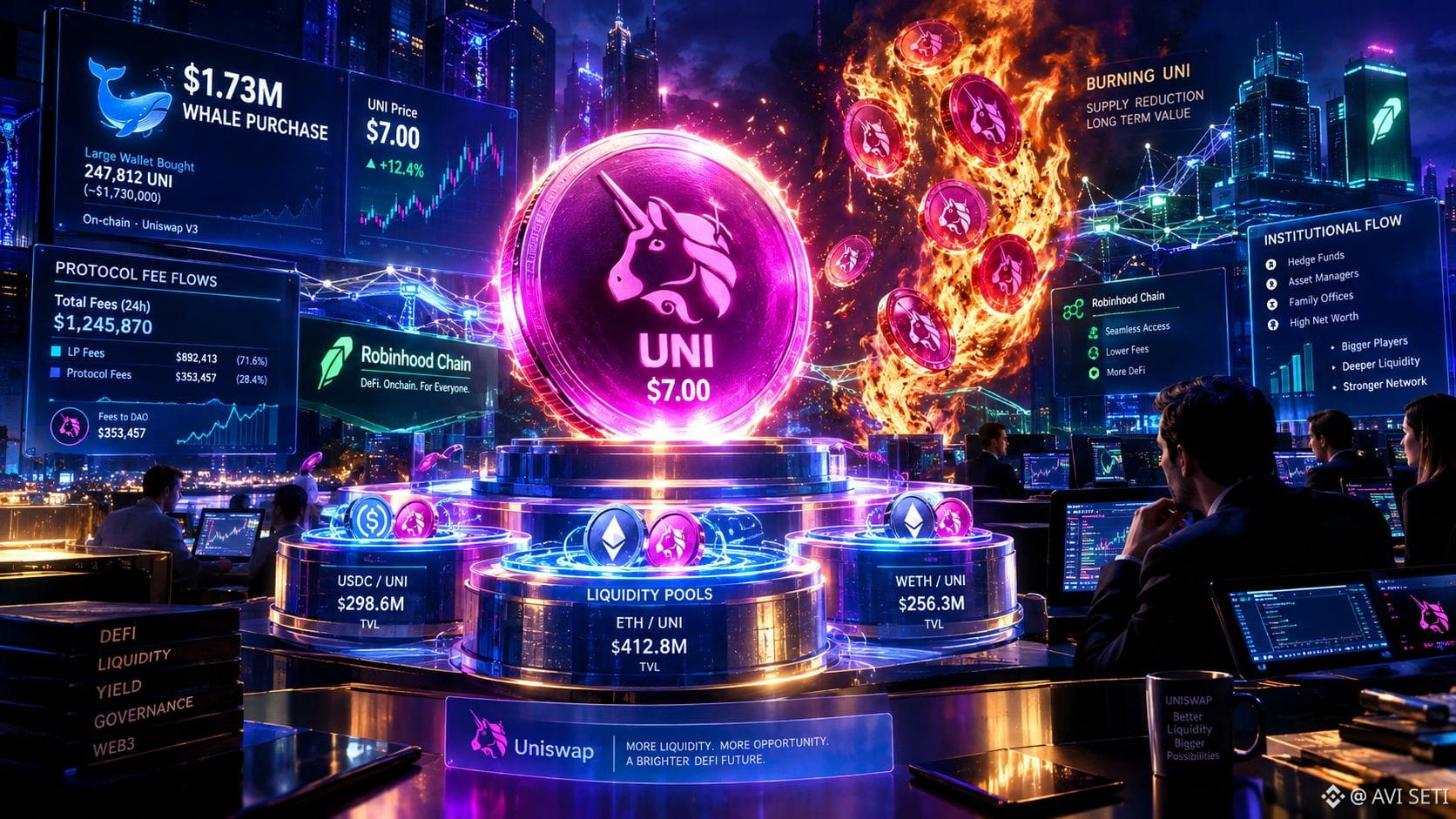
UNI has surged strongly in September as its fee-funded burn mechanism has started connecting protocol activity more directly to token supply. Recent reporting put UNI around $7 after a roughly 38.8% weekly gain, while BitMEX co-founder Arthur Hayes reportedly purchased 244,406 UNI for about $1.73 million.
The important point is not simply that UNI went up.
It is the change in token economics.
Eligible protocol fees are used to acquire UNI and permanently burn those tokens, creating a mechanism through which greater protocol activity can potentially reduce circulating supply.
Uniswap has also expanded its presence on Robinhood Chain.
This is part of a much larger trend: DeFi protocols are increasingly interacting directly with tokenized assets and traditional financial platforms.
5. Robinhood Is Changing the Layer-2 Narrative
Arbitrum is another example.
The Robinhood Chain launch created a surprising new revenue narrative for ARB.
Robinhood Chain reportedly generated around $1.9 million in revenue over 24 hours, contributing to a sharp ARB rally in early September. Subsequent reports showed daily fees rising toward approximately $4.5 million.
But traders now face a new variable.
Approximately 92.6 million ARB tokens are scheduled to unlock on September 16, creating additional potential supply immediately after today's regulatory vote and tomorrow's Fed decision.
That combination makes ARB particularly sensitive over the next 48 hours.
Positive regulation and easier financial conditions could strengthen the Layer-2 narrative.
A hawkish Fed combined with new token supply could produce the opposite effect.
6. Supply Economics Are Returning to the Spotlight
Filecoin offers another interesting example.
FIL is trading around $0.89 and has gained about 6.6% over seven days. More importantly, Filecoin's vesting program is scheduled to end on October 15, a change expected to reduce gross issuance by roughly 75%.
This is important because crypto markets are increasingly paying attention to supply mechanics.
A project can have strong technology and adoption, but if new token issuance constantly increases sell pressure, price performance can remain weak.
Filecoin's 2026 strategy is therefore shifting toward increasing demand rather than simply expanding supply.
If that transition succeeds, FIL could become an interesting case study in how tokenomics affect long-term valuation.
Outlook: Two Votes, Two Completely Different Futures
September 15 and September 16 represent two competing forces.
The CLARITY Act could provide greater regulatory certainty for crypto businesses, exchanges, token issuers and financial institutions.
The Federal Reserve could simultaneously make financial conditions tighter by raising interest rates.
One pushes toward greater crypto adoption.
The other potentially pulls liquidity away from risk assets.
That contradiction explains why Bitcoin has struggled to decisively reclaim $80,000 despite improving institutional infrastructure.
Closing Thought
Crypto is entering a new phase where regulation, monetary policy and blockchain fundamentals are becoming tightly connected.
The CLARITY Act could determine how U.S. digital assets are regulated.
The Fed could determine how much liquidity is available to buy them.
And underneath those headline events, networks such as Uniswap, Arbitrum, Litecoin, Filecoin and Cosmos are developing very different economic models and use cases.
The next major crypto move may therefore not be driven by Bitcoin alone.
It could come from the intersection of regulation, institutional capital, token economics and monetary policy.
For traders, the next 48 hours could be extremely volatile.
For the industry, however, the more important question is whether the U.S. finally establishes a regulatory framework capable of supporting crypto's integration into mainstream finance.
Financial disclaimer: This article is for informational and educational purposes only and is not financial, investment, trading or legal advice. Cryptocurrency markets are highly volatile, and prices can change rapidly. Always conduct your own research and consider your own risk tolerance before making investment decisions.
#BitcoinReboundsTo$79K #GrayscalePutsXRPAt26.11%InAdvisorPortfolio #SECChairUrgesCongressToAdvanceClarityAct #RLUSDSupplyHitsRecord$2.442B #AnthropicCEOCallsForAISlowdown
September 15, 2026 — Global financial markets are at a critical crossroads as institutional traders closely monitor the U.S. Senate’s CLARITY Act vote and the Federal Reserve’s latest interest-rate decision. Bitcoin trades near $77,800 while Ethereum holds around $2,500, with major digital assets also in focus. At the same time, rising oil prices above $100 and higher Treasury yields are adding fresh inflation and risk pressures. With ETF flows, institutional capital, regulatory developments and monetary policy shaping sentiment, crypto markets remain highly sensitive to the next major move in Washington and the Fed.
On September 15, the U.S. Senate is preparing for a crucial procedural vote on the CLARITY Act, legislation designed to establish a broader regulatory framework for digital assets. On September 16, the Federal Reserve is expected to make a major interest-rate decision, with markets pricing a strong probability of a 25-basis-point hike.
Bitcoin is hovering around the $77,000–$78,000 area, while the broader crypto market is waiting for two completely different catalysts: one political and regulatory, the other monetary.
The result could determine whether crypto enters the second half of September with renewed institutional confidence or another period of volatility.
1. The CLARITY Act Reaches Its Biggest Test
The biggest crypto-specific event today is happening in Washington.
Senate Republicans released a revised version of the CLARITY Act after incorporating 126 substantive changes requested by Democrats. The revisions include additional ethics restrictions and provisions that could give state attorneys general greater enforcement powers.
But passage is far from guaranteed.
The legislation needs enough support to clear the Senate's procedural hurdle, and the banking industry remains concerned about provisions surrounding stablecoins.
Traditional banks fear that stablecoin growth could compete directly with bank deposits and potentially reduce the amount of money available for traditional lending.
That creates an unusual political alignment.
Crypto companies want clearer rules because regulatory uncertainty has limited institutional expansion.
Banks want safeguards because they fear stablecoins could become direct competitors to traditional deposit products.
The Senate vote therefore represents more than another piece of crypto legislation.
It is effectively a vote on how much of the future financial system will be built around blockchain-based assets.
2. The Fed Is Creating a Completely Different Problem
While Washington is debating crypto regulation, the Federal Reserve is dealing with inflation.
Oil prices have surged above $100 per barrel, with Brent recently around $106.96 and U.S. crude around $102.68 following renewed Middle East tensions and concerns about oil supply.
That matters because higher energy prices can keep inflation elevated.
Markets are consequently pricing an approximately 90% probability of a 25-basis-point Fed rate hike at the September meeting. Reuters reported that economists increasingly expect the Fed to raise rates because inflation remains above target and oil prices have added another inflationary risk.
For crypto, higher rates are usually a difficult environment.
Bitcoin and altcoins compete for capital with traditional assets offering higher yields.
A more restrictive Fed can therefore reduce liquidity and increase volatility across risk assets.
3. Bitcoin Is Stuck Between Institutional Demand and Macro Pressure
Bitcoin's price reflects this conflict.
BTC recently traded around $77,700, after recovering from earlier weakness but remaining below the psychologically important $80,000 level. The asset is still well below its three-month high near $82,163.
The institutional picture is more complicated.
Bitcoin ETFs ended a three-week period of strong inflows with approximately $462.7 million of weekly outflows, while Ethereum ETFs continued to attract capital. Earlier, Ethereum ETFs recorded approximately $216 million of inflows on September 11, compared with a $13.29 million Bitcoin ETF outflow that day.
That does not mean institutions are abandoning Bitcoin.
Instead, it suggests that institutional crypto allocations are becoming more diversified.
Ethereum, Solana and other regulated investment products can now compete for capital that once had relatively few destinations.
This is an important structural change for the market.
4. DeFi Is Developing Its Own Institutional Narrative
Uniswap provides a good example.
UNI has surged strongly in September as its fee-funded burn mechanism has started connecting protocol activity more directly to token supply. Recent reporting put UNI around $7 after a roughly 38.8% weekly gain, while BitMEX co-founder Arthur Hayes reportedly purchased 244,406 UNI for about $1.73 million.
The important point is not simply that UNI went up.
It is the change in token economics.
Eligible protocol fees are used to acquire UNI and permanently burn those tokens, creating a mechanism through which greater protocol activity can potentially reduce circulating supply.
Uniswap has also expanded its presence on Robinhood Chain.
This is part of a much larger trend: DeFi protocols are increasingly interacting directly with tokenized assets and traditional financial platforms.
5. Robinhood Is Changing the Layer-2 Narrative
Arbitrum is another example.
The Robinhood Chain launch created a surprising new revenue narrative for ARB.
Robinhood Chain reportedly generated around $1.9 million in revenue over 24 hours, contributing to a sharp ARB rally in early September. Subsequent reports showed daily fees rising toward approximately $4.5 million.
But traders now face a new variable.
Approximately 92.6 million ARB tokens are scheduled to unlock on September 16, creating additional potential supply immediately after today's regulatory vote and tomorrow's Fed decision.
That combination makes ARB particularly sensitive over the next 48 hours.
Positive regulation and easier financial conditions could strengthen the Layer-2 narrative.
A hawkish Fed combined with new token supply could produce the opposite effect.
6. Supply Economics Are Returning to the Spotlight
Filecoin offers another interesting example.
FIL is trading around $0.89 and has gained about 6.6% over seven days. More importantly, Filecoin's vesting program is scheduled to end on October 15, a change expected to reduce gross issuance by roughly 75%.
This is important because crypto markets are increasingly paying attention to supply mechanics.
A project can have strong technology and adoption, but if new token issuance constantly increases sell pressure, price performance can remain weak.
Filecoin's 2026 strategy is therefore shifting toward increasing demand rather than simply expanding supply.
If that transition succeeds, FIL could become an interesting case study in how tokenomics affect long-term valuation.
Outlook: Two Votes, Two Completely Different Futures
September 15 and September 16 represent two competing forces.
The CLARITY Act could provide greater regulatory certainty for crypto businesses, exchanges, token issuers and financial institutions.
The Federal Reserve could simultaneously make financial conditions tighter by raising interest rates.
One pushes toward greater crypto adoption.
The other potentially pulls liquidity away from risk assets.
That contradiction explains why Bitcoin has struggled to decisively reclaim $80,000 despite improving institutional infrastructure.
Closing Thought
Crypto is entering a new phase where regulation, monetary policy and blockchain fundamentals are becoming tightly connected.
The CLARITY Act could determine how U.S. digital assets are regulated.
The Fed could determine how much liquidity is available to buy them.
And underneath those headline events, networks such as Uniswap, Arbitrum, Litecoin, Filecoin and Cosmos are developing very different economic models and use cases.
The next major crypto move may therefore not be driven by Bitcoin alone.
It could come from the intersection of regulation, institutional capital, token economics and monetary policy.
For traders, the next 48 hours could be extremely volatile.
For the industry, however, the more important question is whether the U.S. finally establishes a regulatory framework capable of supporting crypto's integration into mainstream finance.
Financial disclaimer: This article is for informational and educational purposes only and is not financial, investment, trading or legal advice. Cryptocurrency markets are highly volatile, and prices can change rapidly. Always conduct your own research and consider your own risk tolerance before making investment decisions.
#BitcoinReboundsTo$79K #GrayscalePutsXRPAt26.11%InAdvisorPortfolio #SECChairUrgesCongressToAdvanceClarityAct #RLUSDSupplyHitsRecord$2.442B #AnthropicCEOCallsForAISlowdown
September 15, 2026 — Global financial markets are at a critical crossroads as institutional traders closely monitor the U.S. Senate’s CLARITY Act vote and the Federal Reserve’s latest interest-rate decision. Bitcoin trades near $77,800 while Ethereum holds around $2,500, with major digital assets also in focus. At the same time, rising oil prices above $100 and higher Treasury yields are adding fresh inflation and risk pressures. With ETF flows, institutional capital, regulatory developments and monetary policy shaping sentiment, crypto markets remain highly sensitive to the next major move in Washington and the Fed.
145
·
--
See translation
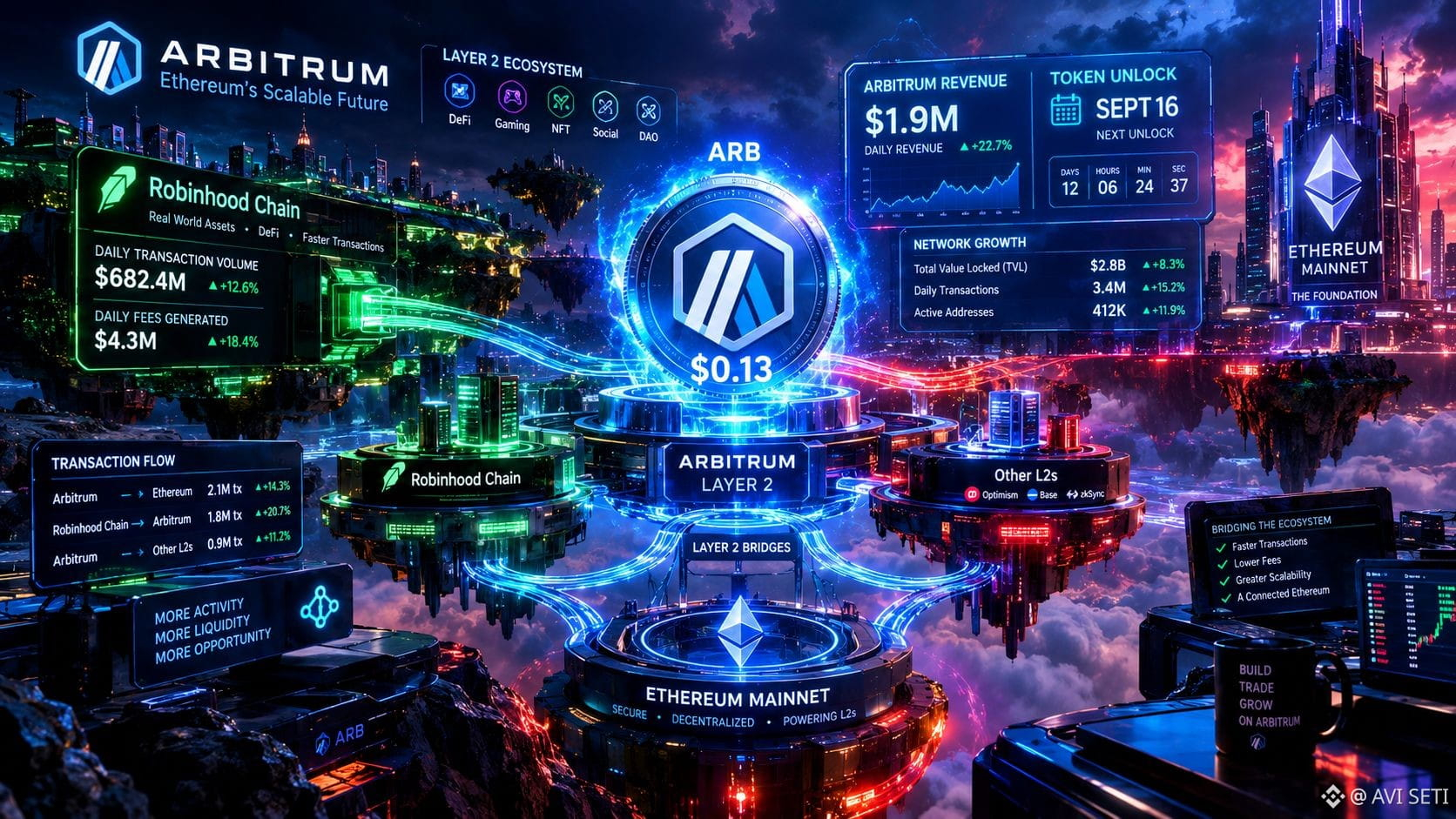
Arbitrum is trading around $0.13, after one of the most dramatic rallies among major Layer-2 tokens this month. ARB surged sharply after Robinhood Chain revenue reached record levels, with reported daily revenue of around $1.9 million and later fee figures reaching roughly $4.5 million, helping fuel renewed interest in ARB's economic connection to the Robinhood ecosystem.
The token is now facing another important catalyst: approximately 92.6 million ARB tokens are scheduled for an unlock on September 16, creating a fresh supply event for traders to monitor.
#ARB #Arbitrum #Layer2 #Robinhood #CryptoMarket
Arbitrum is trading around $0.13, after one of the most dramatic rallies among major Layer-2 tokens this month. ARB surged sharply after Robinhood Chain revenue reached record levels, with reported daily revenue of around $1.9 million and later fee figures reaching roughly $4.5 million, helping fuel renewed interest in ARB's economic connection to the Robinhood ecosystem.
The token is now facing another important catalyst: approximately 92.6 million ARB tokens are scheduled for an unlock on September 16, creating a fresh supply event for traders to monitor.
#ARB #Arbitrum #Layer2 #Robinhood #CryptoMarket
The token is now facing another important catalyst: approximately 92.6 million ARB tokens are scheduled for an unlock on September 16, creating a fresh supply event for traders to monitor.
#ARB #Arbitrum #Layer2 #Robinhood #CryptoMarket
279
·
--
See translation
Uniswap is trading around $7, after a powerful September rally that pushed UNI roughly 38.8% higher in one week. The major catalyst is Uniswap's fee-funded UNI burn mechanism, which converts eligible protocol fees into UNI that is permanently removed from supply.
Uniswap's activity has also expanded through Robinhood Chain, while BitMEX co-founder Arthur Hayes reportedly bought 244,406 UNI worth about $1.73 million, adding another institutional-style signal to the DeFi narrative.
#UNI #Uniswap #DeFi #RobinhoodChain #CryptoNews
Uniswap is trading around $7, after a powerful September rally that pushed UNI roughly 38.8% higher in one week. The major catalyst is Uniswap's fee-funded UNI burn mechanism, which converts eligible protocol fees into UNI that is permanently removed from supply.
Uniswap's activity has also expanded through Robinhood Chain, while BitMEX co-founder Arthur Hayes reportedly bought 244,406 UNI worth about $1.73 million, adding another institutional-style signal to the DeFi narrative.
#UNI #Uniswap #DeFi #RobinhoodChain #CryptoNews
Uniswap's activity has also expanded through Robinhood Chain, while BitMEX co-founder Arthur Hayes reportedly bought 244,406 UNI worth about $1.73 million, adding another institutional-style signal to the DeFi narrative.
#UNI #Uniswap #DeFi #RobinhoodChain #CryptoNews
136
·
--
See translation
Zcash continues to be the standout performer of the entire crypto market this month, holding firm above $1,100 and maintaining double-digit weekly gains even as Bitcoin, XRP, and Solana all trade in tight, low-conviction ranges ahead of tomorrow's CLARITY Act vote. The privacy coin's rally, sparked by Grayscale's late-August conversion of its Zcash Trust into a spot ETF trading on NYSE Arca, has proven remarkably resilient through multiple rounds of broader market uncertainty, including last week's hot CPI print and this week's regulatory anticipation. Zcash's continued strength stands out as a rare example of an asset trading almost entirely on its own independent narrative — institutional ETF access to privacy-preserving technology — rather than reacting to the same macro and regulatory triggers moving the rest of the market. With roughly 29% of ZEC's total supply held in shielded addresses, the token's fundamental privacy-adoption story continues running in parallel with its speculative price momentum.
#Zcash #ZEC #PrivacyCoins #CryptoETF #Altcoins
Zcash continues to be the standout performer of the entire crypto market this month, holding firm above $1,100 and maintaining double-digit weekly gains even as Bitcoin, XRP, and Solana all trade in tight, low-conviction ranges ahead of tomorrow's CLARITY Act vote. The privacy coin's rally, sparked by Grayscale's late-August conversion of its Zcash Trust into a spot ETF trading on NYSE Arca, has proven remarkably resilient through multiple rounds of broader market uncertainty, including last week's hot CPI print and this week's regulatory anticipation. Zcash's continued strength stands out as a rare example of an asset trading almost entirely on its own independent narrative — institutional ETF access to privacy-preserving technology — rather than reacting to the same macro and regulatory triggers moving the rest of the market. With roughly 29% of ZEC's total supply held in shielded addresses, the token's fundamental privacy-adoption story continues running in parallel with its speculative price momentum.
#Zcash #ZEC #PrivacyCoins #CryptoETF #Altcoins
#Zcash #ZEC #PrivacyCoins #CryptoETF #Altcoins

47
·
--
See translation
Solana is trading around $102, up about 1% over the past 24 hours, holding steady in a market broadly described by analysts as "stuck between fear and money" ahead of tomorrow's CLARITY Act vote. Solana ETFs have continued pulling in fresh capital throughout September even as the price itself has remained largely range-bound, mirroring the same flow-without-breakout dynamic playing out in Bitcoin and XRP. The network's underlying fundamentals remain a bright spot, following a record-setting August that saw 5.2 billion non-vote transactions processed on-chain — a 19% increase from July — reinforcing Solana's positioning as one of the busiest blockchains in the industry regardless of short-term price action. With Solana's Alpenglow consensus upgrade targeting roughly 150-millisecond finality still on track for October, traders are watching to see whether technical progress eventually translates into renewed momentum once regulatory clarity resolves one way or another.
#Solana #SOL #CryptoETF #Blockchain #CryptoNews
Solana is trading around $102, up about 1% over the past 24 hours, holding steady in a market broadly described by analysts as "stuck between fear and money" ahead of tomorrow's CLARITY Act vote. Solana ETFs have continued pulling in fresh capital throughout September even as the price itself has remained largely range-bound, mirroring the same flow-without-breakout dynamic playing out in Bitcoin and XRP. The network's underlying fundamentals remain a bright spot, following a record-setting August that saw 5.2 billion non-vote transactions processed on-chain — a 19% increase from July — reinforcing Solana's positioning as one of the busiest blockchains in the industry regardless of short-term price action. With Solana's Alpenglow consensus upgrade targeting roughly 150-millisecond finality still on track for October, traders are watching to see whether technical progress eventually translates into renewed momentum once regulatory clarity resolves one way or another.
#Solana #SOL #CryptoETF #Blockchain #CryptoNews
#Solana #SOL #CryptoETF #Blockchain #CryptoNews
36
·
--
See translation
XRP is trading flat around $1.36, down slightly over the past 24 hours, even as Ripple's RLUSD stablecoin continues expanding its institutional footprint across the Middle East, having previously secured recognition as an Accepted Fiat-Referenced Token within Abu Dhabi Global Market by the region's Financial Services Regulatory Authority. XRP spot ETFs have posted nine consecutive days of net inflows totaling roughly $644 million, yet the price itself remains stuck below key moving averages with an RSI reading of 46 — a classic case of capital flowing in without triggering a breakout.
All eyes are now on tomorrow's Senate vote on the revised CLARITY Act, since XRP's long-term price action remains more tied to U.S. regulatory clarity on its legal classification than to any single stablecoin approval. Traders are treating XRP as a genuine "wait and see" story, with a decisive move above resistance needed to shift sentiment meaningfully.
#XRP #Ripple #RLUSD #CLARITYAct #CryptoRegulation
XRP is trading flat around $1.36, down slightly over the past 24 hours, even as Ripple's RLUSD stablecoin continues expanding its institutional footprint across the Middle East, having previously secured recognition as an Accepted Fiat-Referenced Token within Abu Dhabi Global Market by the region's Financial Services Regulatory Authority. XRP spot ETFs have posted nine consecutive days of net inflows totaling roughly $644 million, yet the price itself remains stuck below key moving averages with an RSI reading of 46 — a classic case of capital flowing in without triggering a breakout.
All eyes are now on tomorrow's Senate vote on the revised CLARITY Act, since XRP's long-term price action remains more tied to U.S. regulatory clarity on its legal classification than to any single stablecoin approval. Traders are treating XRP as a genuine "wait and see" story, with a decisive move above resistance needed to shift sentiment meaningfully.
#XRP #Ripple #RLUSD #CLARITYAct #CryptoRegulation
All eyes are now on tomorrow's Senate vote on the revised CLARITY Act, since XRP's long-term price action remains more tied to U.S. regulatory clarity on its legal classification than to any single stablecoin approval. Traders are treating XRP as a genuine "wait and see" story, with a decisive move above resistance needed to shift sentiment meaningfully.
#XRP #Ripple #RLUSD #CLARITYAct #CryptoRegulation

74
·
--

Article
See translation
The Vote That Could Freeze or Free Crypto: Inside Tomorrow's CLARITY Act ShowdownHook:
Bitcoin is sitting still at $77,500. Ethereum is quietly outperforming. XRP has pulled in $644 million in ETF inflows over nine straight days and hasn't moved an inch. This isn't boredom — it's the entire crypto market holding its breath. Tomorrow, the Senate votes on a freshly revised, 630-page version of the CLARITY Act, and depending on what happens, September 15, 2026 could be remembered as the day U.S. crypto regulation finally grew up, or the day it got pushed back to the next decade.
Macro Factors: A Market Frozen in Place on Purpose
The broader crypto market is showing every sign of a market waiting, not weak. Bitcoin has held a tight range around $77,000–$78,000 for days, XRP is pinned near $1.36 with an RSI of just 46, and Solana is similarly stuck around $102 despite continued ETF inflows. Analysts describe the setup bluntly: money is flowing in, but prices aren't moving, because everyone is waiting on the same catalyst. That catalyst is tomorrow's Senate vote on the CLARITY Act, the market-structure bill that would legally define whether tokens like XRP and Solana are securities, commodities, or something else entirely. Adding to the tension, commentary from XS.com's head of business development notes that while mega-whales continue accumulating tokens quietly in the background, heavy selling from mid-tier holders is creating persistent overhead resistance — a dynamic that often precedes a sharp move once uncertainty clears, in either direction.
Institutional Moves: Betting Big Regardless of Washington's Timeline
Interestingly, some of the biggest institutional moves this month haven't waited for regulatory clarity at all. Ripple's RLUSD stablecoin, now carrying a market capitalization north of $1 billion, has continued its global institutional expansion, having secured recognition as an Accepted Fiat-Referenced Token within Abu Dhabi Global Market by the region's Financial Services Regulatory Authority — allowing FSRA-licensed firms to use RLUSD for permitted, regulated financial activities. That approval builds on Ripple's broader UAE strategy, which already includes full regulatory approval to offer cross-border payment services inside the Dubai International Financial Centre. Meanwhile, spot ETF issuers across Bitcoin, Ethereum, XRP, and Solana have all continued absorbing fresh capital throughout September regardless of the looming Senate vote — proof that institutional allocators are positioning ahead of the outcome rather than waiting to react to it. This is a meaningful shift from prior crypto cycles, where major institutional capital typically arrived only after legal questions were fully resolved.
On-Chain and Whale Behavior: One Asset Refuses to Wait
While most of the market sits in a holding pattern, Zcash has spent the past several weeks proving that not every asset needs regulatory clarity to run. ZEC has held double-digit weekly gains even through last week's hot CPI print and this week's pre-vote anxiety, a resilience that traces directly back to Grayscale's late-August conversion of its Zcash Trust into a spot ETF on NYSE Arca. The fact that Zcash's rally has continued uninterrupted through multiple macro and regulatory stress tests — while Bitcoin, XRP, and Solana all stall — suggests real, independent institutional demand for privacy-coin exposure through a regulated wrapper, separate from the broader market's wait-and-see posture. On the network side, Solana's fundamentals tell a similarly independent story: the chain processed a record 5.2 billion non-vote transactions in August, a 19% jump from July, showing genuine usage growth completely decoupled from the token's flat price action.
Regulation: 630 Pages, 100+ Changes, One Vote
The centerpiece of this week's entire market narrative is the CLARITY Act itself. Senate Republicans released a heavily revised, 630-page version of the bill this week, incorporating more than 100 changes specifically designed to address "decentralized-in-name-only" protocols — a direct response to criticism that earlier drafts left too much room for centralized projects to claim decentralized status and avoid securities regulation. The bill faces a pivotal procedural vote tomorrow, September 15, and the outcome carries outsized weight: pass it, and years of "is this a security" uncertainty around assets like XRP could finally begin resolving; fail it, and the industry may be looking at years more of the same jurisdictional limbo that's kept institutional capital cautious even as ETF products proliferate. Given how tightly Bitcoin, XRP, and Solana are all trading right now, this single vote may do more to move prices this week than any single earnings report, Fed decision, or ETF flow data point combined.
Outlook: The Coiled Spring
Markets rarely stay this quiet for long, and every signal points to compressed energy waiting for a trigger. ETF inflows are climbing across nearly every major asset even as prices refuse to move — a pattern that historically resolves in a sharp breakout once the uncertainty causing the freeze finally lifts. If the CLARITY Act clears tomorrow's vote, expect capital that's been sitting on the sidelines in ETF wrappers to translate more directly into spot buying pressure across XRP, Solana, and other assets whose classification has been in question. If it stalls again, expect the market to settle back into its recent range while attention shifts to whichever narrative moves next — quite possibly Zcash, which has already shown it doesn't need Washington's permission to keep climbing.
Closing Thought:
Markets rarely announce their turning points in advance, but this week feels like an exception. When money keeps flowing in while prices stay perfectly still, something has to give — and tomorrow, the U.S. Senate may be the one to decide which direction it gives.
Disclaimer: This article is for informational purposes only and does not constitute financial, investment, or legal advice. Cryptocurrency markets are highly volatile and carry significant risk of loss. Always conduct your own research and consult a licensed financial advisor before making investment decisions.
#AnthropicCEOCallsForAISlowdown #BitcoinThirdSingleBlockReorgInFourWeeks #BitcoinSpotETFsRecord$463MNetOutflowLastWeek #EURequiresWalletMakersReportFlawsIn24Hours #ZcashNU7VoteEndsSeptember14
A tightly coiled brass spring rests on a dark wooden desk, its metal rings catching a warm, golden glow that seems to pulse from within—compressed energy held in perfect tension. In the soft blur behind it, a calendar page shows tomorrow’s date circled in red, while a single desk lamp cuts through deep shadows, casting the scene in moody amber and charcoal. The still life feels like a held breath: quiet, charged, and ready to release.
The Vote That Could Freeze or Free Crypto: Inside Tomorrow's CLARITY Act Showdown
Hook:
Bitcoin is sitting still at $77,500. Ethereum is quietly outperforming. XRP has pulled in $644 million in ETF inflows over nine straight days and hasn't moved an inch. This isn't boredom — it's the entire crypto market holding its breath. Tomorrow, the Senate votes on a freshly revised, 630-page version of the CLARITY Act, and depending on what happens, September 15, 2026 could be remembered as the day U.S. crypto regulation finally grew up, or the day it got pushed back to the next decade.
Macro Factors: A Market Frozen in Place on Purpose
The broader crypto market is showing every sign of a market waiting, not weak. Bitcoin has held a tight range around $77,000–$78,000 for days, XRP is pinned near $1.36 with an RSI of just 46, and Solana is similarly stuck around $102 despite continued ETF inflows. Analysts describe the setup bluntly: money is flowing in, but prices aren't moving, because everyone is waiting on the same catalyst. That catalyst is tomorrow's Senate vote on the CLARITY Act, the market-structure bill that would legally define whether tokens like XRP and Solana are securities, commodities, or something else entirely. Adding to the tension, commentary from XS.com's head of business development notes that while mega-whales continue accumulating tokens quietly in the background, heavy selling from mid-tier holders is creating persistent overhead resistance — a dynamic that often precedes a sharp move once uncertainty clears, in either direction.
Institutional Moves: Betting Big Regardless of Washington's Timeline
Interestingly, some of the biggest institutional moves this month haven't waited for regulatory clarity at all. Ripple's RLUSD stablecoin, now carrying a market capitalization north of $1 billion, has continued its global institutional expansion, having secured recognition as an Accepted Fiat-Referenced Token within Abu Dhabi Global Market by the region's Financial Services Regulatory Authority — allowing FSRA-licensed firms to use RLUSD for permitted, regulated financial activities. That approval builds on Ripple's broader UAE strategy, which already includes full regulatory approval to offer cross-border payment services inside the Dubai International Financial Centre. Meanwhile, spot ETF issuers across Bitcoin, Ethereum, XRP, and Solana have all continued absorbing fresh capital throughout September regardless of the looming Senate vote — proof that institutional allocators are positioning ahead of the outcome rather than waiting to react to it. This is a meaningful shift from prior crypto cycles, where major institutional capital typically arrived only after legal questions were fully resolved.
On-Chain and Whale Behavior: One Asset Refuses to Wait
While most of the market sits in a holding pattern, Zcash has spent the past several weeks proving that not every asset needs regulatory clarity to run. ZEC has held double-digit weekly gains even through last week's hot CPI print and this week's pre-vote anxiety, a resilience that traces directly back to Grayscale's late-August conversion of its Zcash Trust into a spot ETF on NYSE Arca. The fact that Zcash's rally has continued uninterrupted through multiple macro and regulatory stress tests — while Bitcoin, XRP, and Solana all stall — suggests real, independent institutional demand for privacy-coin exposure through a regulated wrapper, separate from the broader market's wait-and-see posture. On the network side, Solana's fundamentals tell a similarly independent story: the chain processed a record 5.2 billion non-vote transactions in August, a 19% jump from July, showing genuine usage growth completely decoupled from the token's flat price action.
Regulation: 630 Pages, 100+ Changes, One Vote
The centerpiece of this week's entire market narrative is the CLARITY Act itself. Senate Republicans released a heavily revised, 630-page version of the bill this week, incorporating more than 100 changes specifically designed to address "decentralized-in-name-only" protocols — a direct response to criticism that earlier drafts left too much room for centralized projects to claim decentralized status and avoid securities regulation. The bill faces a pivotal procedural vote tomorrow, September 15, and the outcome carries outsized weight: pass it, and years of "is this a security" uncertainty around assets like XRP could finally begin resolving; fail it, and the industry may be looking at years more of the same jurisdictional limbo that's kept institutional capital cautious even as ETF products proliferate. Given how tightly Bitcoin, XRP, and Solana are all trading right now, this single vote may do more to move prices this week than any single earnings report, Fed decision, or ETF flow data point combined.
Outlook: The Coiled Spring
Markets rarely stay this quiet for long, and every signal points to compressed energy waiting for a trigger. ETF inflows are climbing across nearly every major asset even as prices refuse to move — a pattern that historically resolves in a sharp breakout once the uncertainty causing the freeze finally lifts. If the CLARITY Act clears tomorrow's vote, expect capital that's been sitting on the sidelines in ETF wrappers to translate more directly into spot buying pressure across XRP, Solana, and other assets whose classification has been in question. If it stalls again, expect the market to settle back into its recent range while attention shifts to whichever narrative moves next — quite possibly Zcash, which has already shown it doesn't need Washington's permission to keep climbing.
Closing Thought:
Markets rarely announce their turning points in advance, but this week feels like an exception. When money keeps flowing in while prices stay perfectly still, something has to give — and tomorrow, the U.S. Senate may be the one to decide which direction it gives.
Disclaimer: This article is for informational purposes only and does not constitute financial, investment, or legal advice. Cryptocurrency markets are highly volatile and carry significant risk of loss. Always conduct your own research and consult a licensed financial advisor before making investment decisions.
#AnthropicCEOCallsForAISlowdown #BitcoinThirdSingleBlockReorgInFourWeeks #BitcoinSpotETFsRecord$463MNetOutflowLastWeek #EURequiresWalletMakersReportFlawsIn24Hours #ZcashNU7VoteEndsSeptember14
A tightly coiled brass spring rests on a dark wooden desk, its metal rings catching a warm, golden glow that seems to pulse from within—compressed energy held in perfect tension. In the soft blur behind it, a calendar page shows tomorrow’s date circled in red, while a single desk lamp cuts through deep shadows, casting the scene in moody amber and charcoal. The still life feels like a held breath: quiet, charged, and ready to release.
Bitcoin is sitting still at $77,500. Ethereum is quietly outperforming. XRP has pulled in $644 million in ETF inflows over nine straight days and hasn't moved an inch. This isn't boredom — it's the entire crypto market holding its breath. Tomorrow, the Senate votes on a freshly revised, 630-page version of the CLARITY Act, and depending on what happens, September 15, 2026 could be remembered as the day U.S. crypto regulation finally grew up, or the day it got pushed back to the next decade.
Macro Factors: A Market Frozen in Place on Purpose
The broader crypto market is showing every sign of a market waiting, not weak. Bitcoin has held a tight range around $77,000–$78,000 for days, XRP is pinned near $1.36 with an RSI of just 46, and Solana is similarly stuck around $102 despite continued ETF inflows. Analysts describe the setup bluntly: money is flowing in, but prices aren't moving, because everyone is waiting on the same catalyst. That catalyst is tomorrow's Senate vote on the CLARITY Act, the market-structure bill that would legally define whether tokens like XRP and Solana are securities, commodities, or something else entirely. Adding to the tension, commentary from XS.com's head of business development notes that while mega-whales continue accumulating tokens quietly in the background, heavy selling from mid-tier holders is creating persistent overhead resistance — a dynamic that often precedes a sharp move once uncertainty clears, in either direction.
Institutional Moves: Betting Big Regardless of Washington's Timeline
Interestingly, some of the biggest institutional moves this month haven't waited for regulatory clarity at all. Ripple's RLUSD stablecoin, now carrying a market capitalization north of $1 billion, has continued its global institutional expansion, having secured recognition as an Accepted Fiat-Referenced Token within Abu Dhabi Global Market by the region's Financial Services Regulatory Authority — allowing FSRA-licensed firms to use RLUSD for permitted, regulated financial activities. That approval builds on Ripple's broader UAE strategy, which already includes full regulatory approval to offer cross-border payment services inside the Dubai International Financial Centre. Meanwhile, spot ETF issuers across Bitcoin, Ethereum, XRP, and Solana have all continued absorbing fresh capital throughout September regardless of the looming Senate vote — proof that institutional allocators are positioning ahead of the outcome rather than waiting to react to it. This is a meaningful shift from prior crypto cycles, where major institutional capital typically arrived only after legal questions were fully resolved.
On-Chain and Whale Behavior: One Asset Refuses to Wait
While most of the market sits in a holding pattern, Zcash has spent the past several weeks proving that not every asset needs regulatory clarity to run. ZEC has held double-digit weekly gains even through last week's hot CPI print and this week's pre-vote anxiety, a resilience that traces directly back to Grayscale's late-August conversion of its Zcash Trust into a spot ETF on NYSE Arca. The fact that Zcash's rally has continued uninterrupted through multiple macro and regulatory stress tests — while Bitcoin, XRP, and Solana all stall — suggests real, independent institutional demand for privacy-coin exposure through a regulated wrapper, separate from the broader market's wait-and-see posture. On the network side, Solana's fundamentals tell a similarly independent story: the chain processed a record 5.2 billion non-vote transactions in August, a 19% jump from July, showing genuine usage growth completely decoupled from the token's flat price action.
Regulation: 630 Pages, 100+ Changes, One Vote
The centerpiece of this week's entire market narrative is the CLARITY Act itself. Senate Republicans released a heavily revised, 630-page version of the bill this week, incorporating more than 100 changes specifically designed to address "decentralized-in-name-only" protocols — a direct response to criticism that earlier drafts left too much room for centralized projects to claim decentralized status and avoid securities regulation. The bill faces a pivotal procedural vote tomorrow, September 15, and the outcome carries outsized weight: pass it, and years of "is this a security" uncertainty around assets like XRP could finally begin resolving; fail it, and the industry may be looking at years more of the same jurisdictional limbo that's kept institutional capital cautious even as ETF products proliferate. Given how tightly Bitcoin, XRP, and Solana are all trading right now, this single vote may do more to move prices this week than any single earnings report, Fed decision, or ETF flow data point combined.
Outlook: The Coiled Spring
Markets rarely stay this quiet for long, and every signal points to compressed energy waiting for a trigger. ETF inflows are climbing across nearly every major asset even as prices refuse to move — a pattern that historically resolves in a sharp breakout once the uncertainty causing the freeze finally lifts. If the CLARITY Act clears tomorrow's vote, expect capital that's been sitting on the sidelines in ETF wrappers to translate more directly into spot buying pressure across XRP, Solana, and other assets whose classification has been in question. If it stalls again, expect the market to settle back into its recent range while attention shifts to whichever narrative moves next — quite possibly Zcash, which has already shown it doesn't need Washington's permission to keep climbing.
Closing Thought:
Markets rarely announce their turning points in advance, but this week feels like an exception. When money keeps flowing in while prices stay perfectly still, something has to give — and tomorrow, the U.S. Senate may be the one to decide which direction it gives.
Disclaimer: This article is for informational purposes only and does not constitute financial, investment, or legal advice. Cryptocurrency markets are highly volatile and carry significant risk of loss. Always conduct your own research and consult a licensed financial advisor before making investment decisions.
#AnthropicCEOCallsForAISlowdown #BitcoinThirdSingleBlockReorgInFourWeeks #BitcoinSpotETFsRecord$463MNetOutflowLastWeek #EURequiresWalletMakersReportFlawsIn24Hours #ZcashNU7VoteEndsSeptember14
A tightly coiled brass spring rests on a dark wooden desk, its metal rings catching a warm, golden glow that seems to pulse from within—compressed energy held in perfect tension. In the soft blur behind it, a calendar page shows tomorrow’s date circled in red, while a single desk lamp cuts through deep shadows, casting the scene in moody amber and charcoal. The still life feels like a held breath: quiet, charged, and ready to release.
1
124
·
--
See translation
Ethereum is trading around $2,510–$2,539, up roughly 2.8% over the past 24 hours and notably outperforming Bitcoin as the market braces for tomorrow's CLARITY Act vote. ETH's resilience this week stands out against a backdrop of broader market caution, with the token now up an extraordinary 87,249% since its 2015 debut at $2.83, according to Forbes' latest market data.
Ethereum's outperformance comes as institutional flows continue shifting between BTC and ETH products depending on the news cycle, with traders using Ethereum as a relative-strength play whenever Bitcoin-specific catalysts like ETF outflows or regulatory headlines dominate sentiment. The token's steady climb through a week of regulatory uncertainty suggests institutional confidence in Ethereum's fundamentals remains intact even as headline risk swirls around the broader market.
#Ethereum #ETH #CryptoMarket #ETHPrice #CryptoNews
Ethereum is trading around $2,510–$2,539, up roughly 2.8% over the past 24 hours and notably outperforming Bitcoin as the market braces for tomorrow's CLARITY Act vote. ETH's resilience this week stands out against a backdrop of broader market caution, with the token now up an extraordinary 87,249% since its 2015 debut at $2.83, according to Forbes' latest market data.
Ethereum's outperformance comes as institutional flows continue shifting between BTC and ETH products depending on the news cycle, with traders using Ethereum as a relative-strength play whenever Bitcoin-specific catalysts like ETF outflows or regulatory headlines dominate sentiment. The token's steady climb through a week of regulatory uncertainty suggests institutional confidence in Ethereum's fundamentals remains intact even as headline risk swirls around the broader market.
#Ethereum #ETH #CryptoMarket #ETHPrice #CryptoNews
Ethereum's outperformance comes as institutional flows continue shifting between BTC and ETH products depending on the news cycle, with traders using Ethereum as a relative-strength play whenever Bitcoin-specific catalysts like ETF outflows or regulatory headlines dominate sentiment. The token's steady climb through a week of regulatory uncertainty suggests institutional confidence in Ethereum's fundamentals remains intact even as headline risk swirls around the broader market.
#Ethereum #ETH #CryptoMarket #ETHPrice #CryptoNews

51
·
--
See translation
Bitcoin is holding around $77,500–$77,700 heading into tomorrow's pivotal Senate vote on a revised, 630-page version of the CLARITY Act, which Senate Republicans unveiled this week with over 100 changes specifically targeting "decentralized-in-name-only" crypto protocols. The market remains in a tight, low-volatility holding pattern, with prediction markets showing traders confident BTC stays above $68,000–$70,000 through the day, reflecting more consolidation than conviction.
Mid-tier holders have reportedly been selling into strength even as mega-whales continue quietly accumulating, according to commentary from XS.com's head of business development, creating persistent overhead resistance despite steady institutional demand underneath. With Bitcoin still about 39% below its October 2025 all-time high of $128,198, tomorrow's Senate vote is shaping up as the market's next real directional catalyst.
#Bitcoin #BTC #CLARITYAct #CryptoNews #EURequiresWalletMakersReportFlawsIn24Hours
Bitcoin is holding around $77,500–$77,700 heading into tomorrow's pivotal Senate vote on a revised, 630-page version of the CLARITY Act, which Senate Republicans unveiled this week with over 100 changes specifically targeting "decentralized-in-name-only" crypto protocols. The market remains in a tight, low-volatility holding pattern, with prediction markets showing traders confident BTC stays above $68,000–$70,000 through the day, reflecting more consolidation than conviction.
Mid-tier holders have reportedly been selling into strength even as mega-whales continue quietly accumulating, according to commentary from XS.com's head of business development, creating persistent overhead resistance despite steady institutional demand underneath. With Bitcoin still about 39% below its October 2025 all-time high of $128,198, tomorrow's Senate vote is shaping up as the market's next real directional catalyst.
#Bitcoin #BTC #CLARITYAct #CryptoNews #EURequiresWalletMakersReportFlawsIn24Hours
Mid-tier holders have reportedly been selling into strength even as mega-whales continue quietly accumulating, according to commentary from XS.com's head of business development, creating persistent overhead resistance despite steady institutional demand underneath. With Bitcoin still about 39% below its October 2025 all-time high of $128,198, tomorrow's Senate vote is shaping up as the market's next real directional catalyst.
#Bitcoin #BTC #CLARITYAct #CryptoNews #EURequiresWalletMakersReportFlawsIn24Hours

67
Log in to explore more content
Join global crypto users on Binance Square
⚡️ Get latest and useful information about crypto.
💬 Trusted by the world’s largest crypto exchange.
👍 Discover real insights from verified creators.
Email / Phone number
Trending Topics
FedRateWatch
1M views
4,910 Discussing
Share & Win Traffic Reward in our Trending Hashtag Campaign
✨Topic: FOMC September, What's The Fed's Next Move?
👉How to Join:
Publish a short post or article with hashtag #FedRateWatch
Create content based on the below angles:
- August core CPI rose 0.3% month-over-month, and the odds of a 25bp hike this week are now close to 90%. Do you anticipate a rate hike this week? Is it a one-off, or the start of a longer hiking cycle?
- If the hike lands, how does it play out for BTC, tech stocks, and gold? Bullish or bearish?
- How are you planning to trade next? Share your BTC, stocks or gold trade/holdings with our trade sharing widget.
⏰Campaign Period:
- 2026-09-15 11:00 - 2026-09-17 3:00 UTC
🎁Reward:
- Qualified posts that comply with the above guidelines and contain more than 100 words will be reviewed and may receive a random traffic boost of 500 to 3,000 views. You will receive a notification from your feed secretary if your post is selected.
- Get a chance to have your article featured on Binance Square Official
Need ideas for your post? Visit the topic page #FedRateWatch or the Square Guide on How to Post for Better Reach.
Binance Square Official
·556 Likes
·1.3M views
ZcashHoldersBackNU7Upgrade
2,405 views
91 Discussing
MSTRTradingVolumeSurpassesMorganStanley
8,817 views
308 Discussing