

#cosmos
cosmos
923,987 views
2,616 Discussing
Hot
Latest
·
--
$ATOM $6 Soon🔥
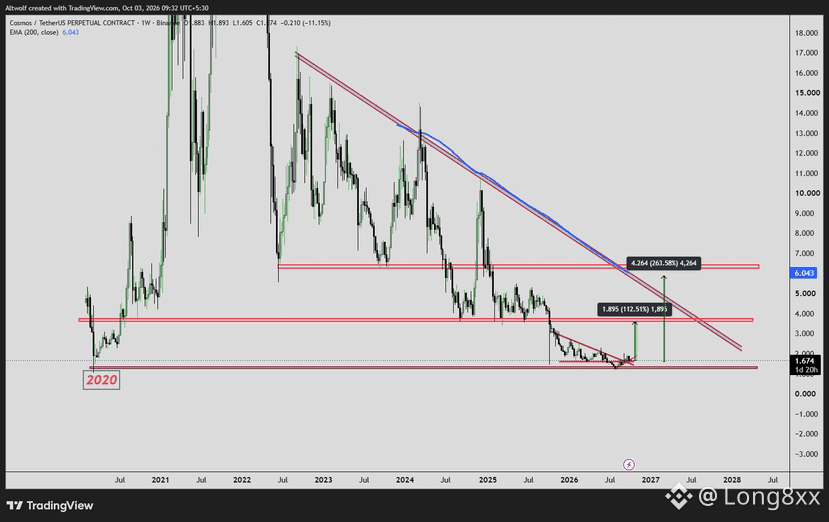
We’ve held the 2020 low, and the 1D uptrend is strong.
I’m watching $3.50 in the coming weeks.
Final target: $6 — right at the major weekly 200EMA + long-term downtrend resistance.
Key levels. Strong structure.
I’ll keep updating.
#ATOm #Cosmos
$ATOM $6 Soon🔥
We’ve held the 2020 low, and the 1D uptrend is strong.
I’m watching $3.50 in the coming weeks.
Final target: $6 — right at the major weekly 200EMA + long-term downtrend resistance.
Key levels. Strong structure.
I’ll keep updating.
#ATOm #Cosmos
We’ve held the 2020 low, and the 1D uptrend is strong.
I’m watching $3.50 in the coming weeks.
Final target: $6 — right at the major weekly 200EMA + long-term downtrend resistance.
Key levels. Strong structure.
I’ll keep updating.
#ATOm #Cosmos
当代老财迷:
还有希望吗?
1
1
306


·
--
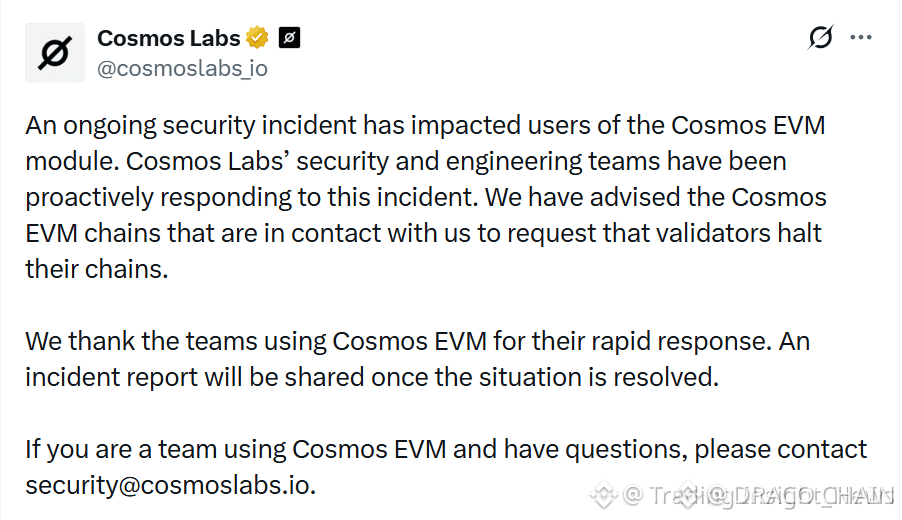
🚨 $ATOM CRITICAL EXPLOIT: COSMOS EVM SECURITY BREACH TRIGGERS MULTI-CHAIN HALTS 📉
Cosmos Labs has confirmed a severe vulnerability within the Cosmos EVM module, forcing multiple validator networks across the ecosystem into emergency halts. 🔍 Institutional risk models are shifting into capital preservation as smart money assesses the full scope of structural vulnerability across interconnected chains. ⚠️
When infrastructure layers experience systemic failure, liquidity cascades rapidly follow, leaving exposed order flow vulnerable to contagion. 📊 Project teams utilizing the EVM architecture are undergoing immediate security audits while market participants monitor for potential cascade risks. 📌
🤔 Are you withdrawing liquidity from affected Cosmos EVM chains or waiting for official mitigation updates? 👇
⚠️ Not financial advice. Always manage your risk. 🛡️
🏷️ #ATOM #Cosmos #SecurityAlert #Crypto
🚨 🛡️
🚨 $ATOM CRITICAL EXPLOIT: COSMOS EVM SECURITY BREACH TRIGGERS MULTI-CHAIN HALTS 📉
Cosmos Labs has confirmed a severe vulnerability within the Cosmos EVM module, forcing multiple validator networks across the ecosystem into emergency halts. 🔍 Institutional risk models are shifting into capital preservation as smart money assesses the full scope of structural vulnerability across interconnected chains. ⚠️
When infrastructure layers experience systemic failure, liquidity cascades rapidly follow, leaving exposed order flow vulnerable to contagion. 📊 Project teams utilizing the EVM architecture are undergoing immediate security audits while market participants monitor for potential cascade risks. 📌
🤔 Are you withdrawing liquidity from affected Cosmos EVM chains or waiting for official mitigation updates? 👇
⚠️ Not financial advice. Always manage your risk. 🛡️
🏷️ #ATOM #Cosmos #SecurityAlert #Crypto
🚨 🛡️
Cosmos Labs has confirmed a severe vulnerability within the Cosmos EVM module, forcing multiple validator networks across the ecosystem into emergency halts. 🔍 Institutional risk models are shifting into capital preservation as smart money assesses the full scope of structural vulnerability across interconnected chains. ⚠️
When infrastructure layers experience systemic failure, liquidity cascades rapidly follow, leaving exposed order flow vulnerable to contagion. 📊 Project teams utilizing the EVM architecture are undergoing immediate security audits while market participants monitor for potential cascade risks. 📌
🤔 Are you withdrawing liquidity from affected Cosmos EVM chains or waiting for official mitigation updates? 👇
⚠️ Not financial advice. Always manage your risk. 🛡️
🏷️ #ATOM #Cosmos #SecurityAlert #Crypto
🚨 🛡️
147

·
--
Cosmos (ATOM): Institutional integrator or ecosystem consolidation?The coin $ATOM (Cosmos Hub) is going through a phase of key restructuring.
The token is transformed from a purely infrastructure tool for cross-network interaction into an important gateway for traditional finance (TradFi).
Key News & Fundamental Drivers
Integration of the Tokenization Suite with Swift Ledger:
Cosmos Labs integrated its tokenization module with the distributed ledger Swift. This enables international banks to carry out transactions 24/7 without rebuilding their current infrastructure. For ATOM, this is a step toward the role of critical middleware for the corporate segment.
Cosmos (ATOM): Institutional integrator or ecosystem consolidation?
The coin $ATOM (Cosmos Hub) is going through a phase of key restructuring.
The token is transformed from a purely infrastructure tool for cross-network interaction into an important gateway for traditional finance (TradFi).
Key News & Fundamental Drivers
Integration of the Tokenization Suite with Swift Ledger:
Cosmos Labs integrated its tokenization module with the distributed ledger Swift. This enables international banks to carry out transactions 24/7 without rebuilding their current infrastructure. For ATOM, this is a step toward the role of critical middleware for the corporate segment.
The token is transformed from a purely infrastructure tool for cross-network interaction into an important gateway for traditional finance (TradFi).
Key News & Fundamental Drivers
Integration of the Tokenization Suite with Swift Ledger:
Cosmos Labs integrated its tokenization module with the distributed ledger Swift. This enables international banks to carry out transactions 24/7 without rebuilding their current infrastructure. For ATOM, this is a step toward the role of critical middleware for the corporate segment.
55

ATOM: CAN BUYERS REBUILD THIS BROKEN MARKET RANGE?
ATOM is testing whether September’s breakdown was a failure or the start of a lower range.
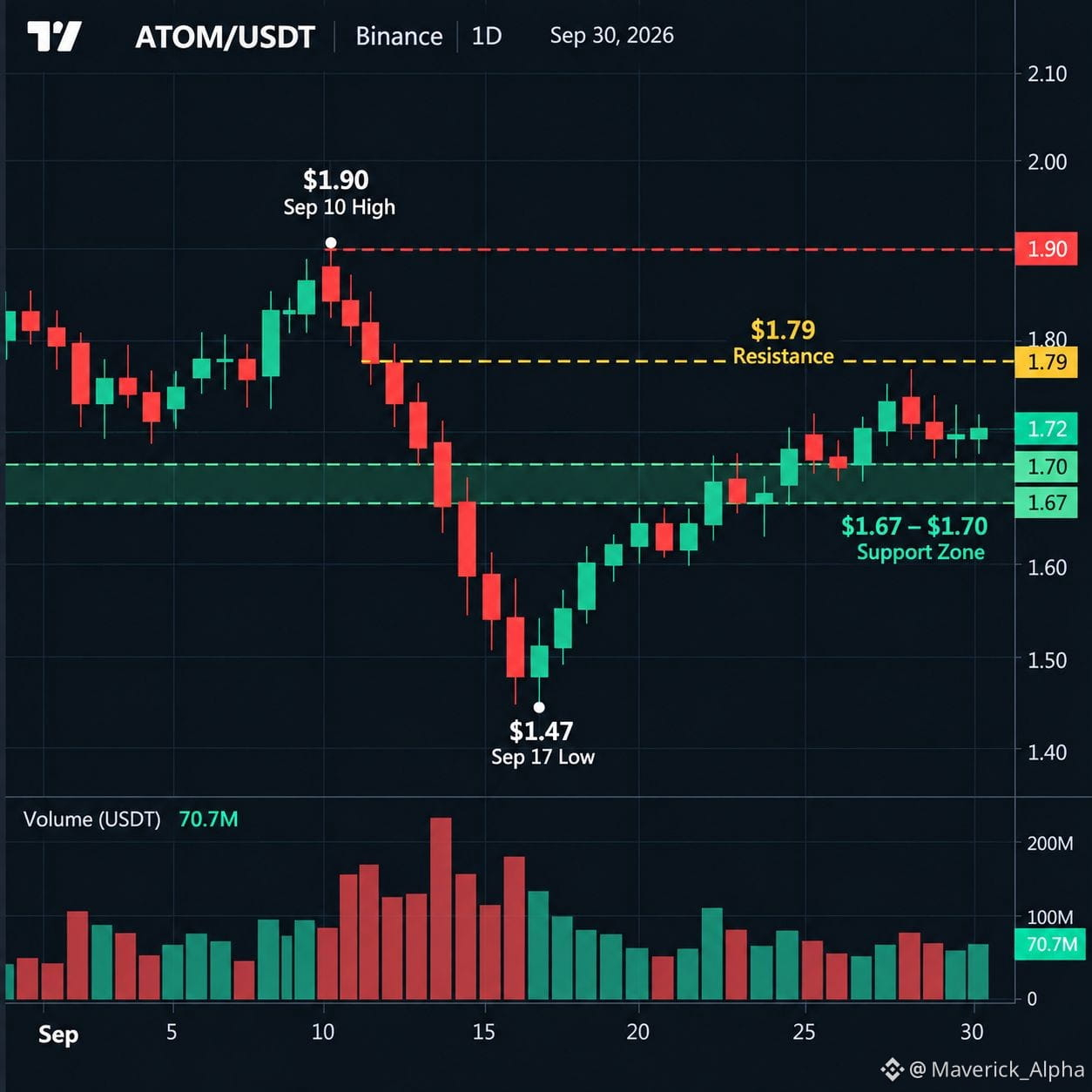
The Binance daily chart shows ATOM falling from a $1.90 September 10 high to $1.47 on September 17, then recovering to about $1.72 by September 30.
The rebound matters, but price remains below the $1.79–$1.90 area where sellers appeared.
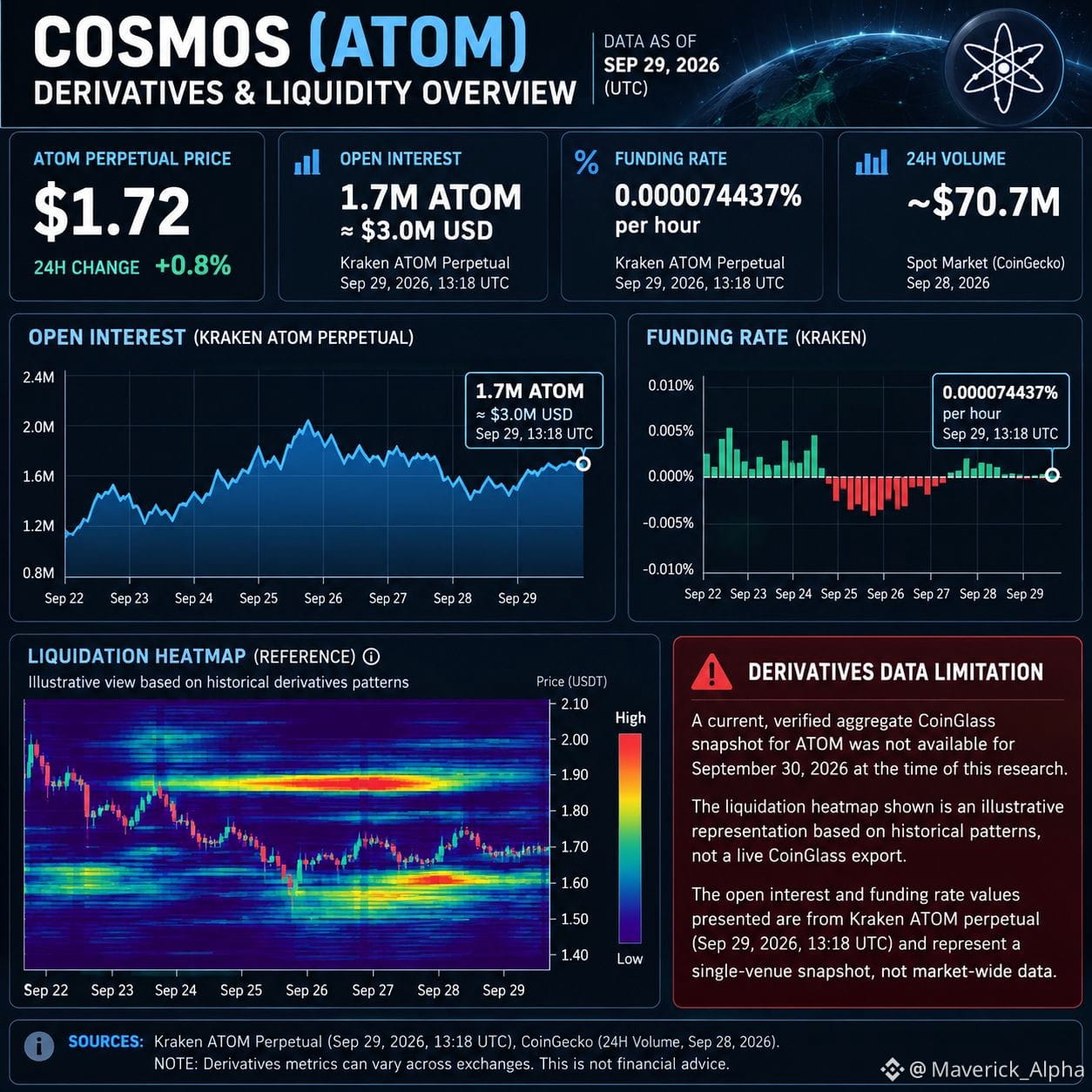
Volume is the key test. September 28 brought a 7.9% drop while daily volume remained around $70.7 million on CoinGecko.
Buyers recovered part of the loss, but have not produced a decisive close above $1.79.
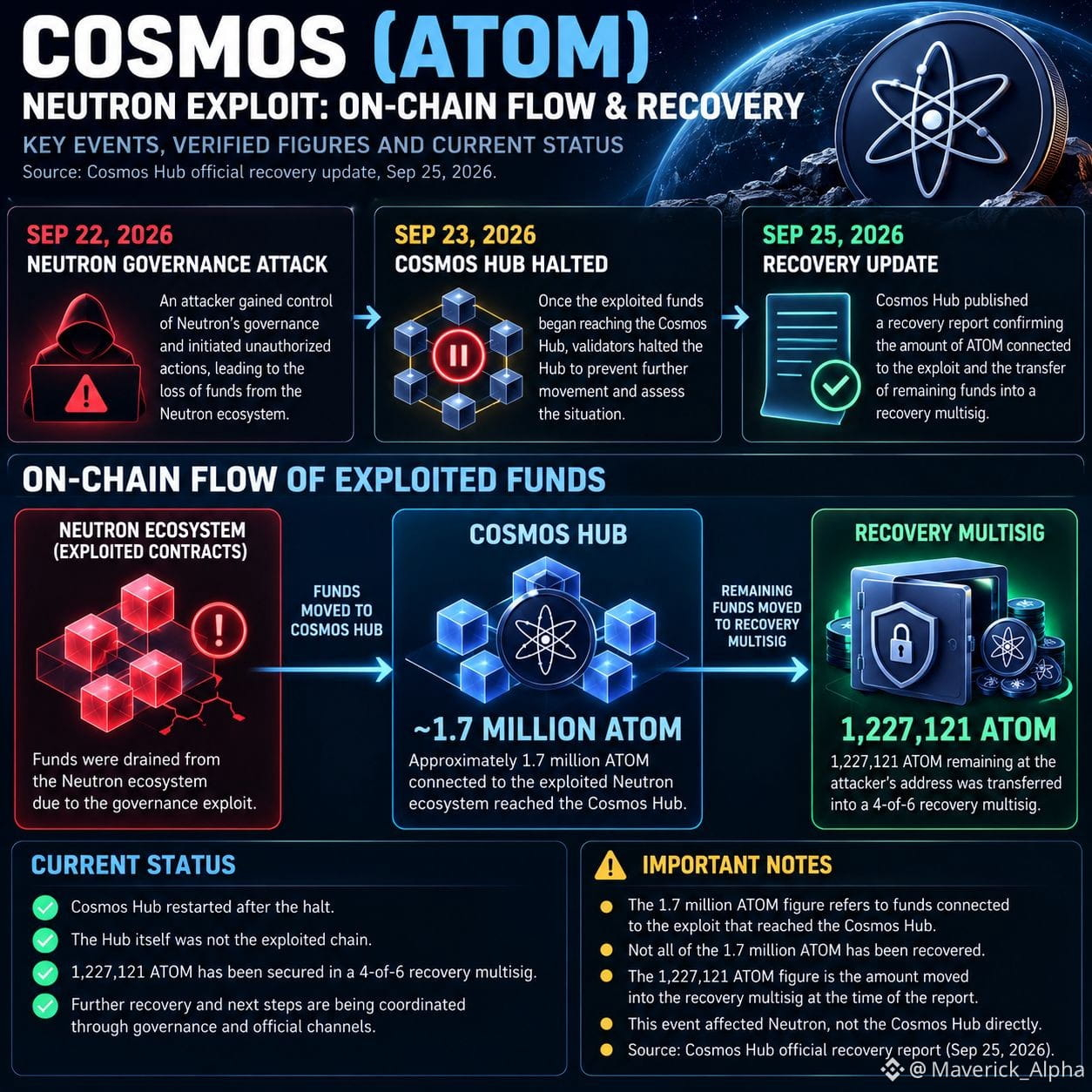
There is also a fundamental complication. The Cosmos Hub halted after roughly 1.7 million ATOM connected to the Neutron exploit reached the Hub; 1,227,121 ATOM was moved into a recovery multisig.
Separately, Cosmos is redesigning ATOM’s tokenomics after research found sell pressure concentrated among a small number of large holders.
WHAT HAPPENS NEXT?
Holding roughly $1.67–$1.70 keeps the rebound structure alive; reclaiming $1.79 with stronger volume would improve the case for a return toward $1.90. Losing support would weaken it.
MY FINAL TAKE
ATOM has repaired part of the chart, not the whole range. Buyers need acceptance above resistance—not just another bounce.
Can ATOM reclaim $1.79 with enough volume to prove this is a rebuild rather than a relief rally?
#ATOM #Cosmos
$ATOM
{future}(ATOMUSDT)
ATOM: CAN BUYERS REBUILD THIS BROKEN MARKET RANGE?
ATOM is testing whether September’s breakdown was a failure or the start of a lower range.
The Binance daily chart shows ATOM falling from a $1.90 September 10 high to $1.47 on September 17, then recovering to about $1.72 by September 30.
The rebound matters, but price remains below the $1.79–$1.90 area where sellers appeared.
Volume is the key test. September 28 brought a 7.9% drop while daily volume remained around $70.7 million on CoinGecko.
Buyers recovered part of the loss, but have not produced a decisive close above $1.79.
There is also a fundamental complication. The Cosmos Hub halted after roughly 1.7 million ATOM connected to the Neutron exploit reached the Hub; 1,227,121 ATOM was moved into a recovery multisig.
Separately, Cosmos is redesigning ATOM’s tokenomics after research found sell pressure concentrated among a small number of large holders.
WHAT HAPPENS NEXT?
Holding roughly $1.67–$1.70 keeps the rebound structure alive; reclaiming $1.79 with stronger volume would improve the case for a return toward $1.90. Losing support would weaken it.
MY FINAL TAKE
ATOM has repaired part of the chart, not the whole range. Buyers need acceptance above resistance—not just another bounce.
Can ATOM reclaim $1.79 with enough volume to prove this is a rebuild rather than a relief rally?
#ATOM #Cosmos
$ATOM
ATOM is testing whether September’s breakdown was a failure or the start of a lower range.
The Binance daily chart shows ATOM falling from a $1.90 September 10 high to $1.47 on September 17, then recovering to about $1.72 by September 30.
The rebound matters, but price remains below the $1.79–$1.90 area where sellers appeared.
Volume is the key test. September 28 brought a 7.9% drop while daily volume remained around $70.7 million on CoinGecko.
Buyers recovered part of the loss, but have not produced a decisive close above $1.79.
There is also a fundamental complication. The Cosmos Hub halted after roughly 1.7 million ATOM connected to the Neutron exploit reached the Hub; 1,227,121 ATOM was moved into a recovery multisig.
Separately, Cosmos is redesigning ATOM’s tokenomics after research found sell pressure concentrated among a small number of large holders.
WHAT HAPPENS NEXT?
Holding roughly $1.67–$1.70 keeps the rebound structure alive; reclaiming $1.79 with stronger volume would improve the case for a return toward $1.90. Losing support would weaken it.
MY FINAL TAKE
ATOM has repaired part of the chart, not the whole range. Buyers need acceptance above resistance—not just another bounce.
Can ATOM reclaim $1.79 with enough volume to prove this is a rebuild rather than a relief rally?
#ATOM #Cosmos
$ATOM
14

·
--
🚨 $ATOM — MOMENTUM & BREAKOUT SETUP
⚠️ DON’T CHASE THE CANDLE — WAIT FOR CONFIRMATION.
$ATOM is showing renewed momentum, with strong trading activity on Binance Spot. The key now is whether buyers can defend the recent support zone and reclaim the next resistance.
🎯 TRADE PLAN
🟢 PREFERRED ENTRY:
$1.85 – $1.93
🚀 TARGET 1:
$2.03
🚀 TARGET 2:
$2.18
🚀 TARGET 3:
$2.35
📈 BREAKOUT ENTRY:
A strong move above $2.03 with increasing volume could confirm another momentum leg.
❌ INVALIDATION:
Below $1.75
🐋 WHAT I’M WATCHING:
• Volume expansion
• Buyers defending $1.85–$1.93
• Breakout above $2.03
• Overall BTC market direction
💡 SPOT TRADER PLAN:
Wait for either:
1️⃣ A controlled pullback into the entry zone
OR
2️⃣ A confirmed breakout above $2.03 with strong volume.
Do not enter simply because ATOM starts moving.
Risk management first. No setup is guaranteed.
⚠️ Technical analysis only — not financial advice. Crypto is highly volatile. DYOR.
#ATOM #Cosmos #Binance #Crypto #CryptoAnalysis
{future}(ATOMUSDT)
🚨 $ATOM — MOMENTUM & BREAKOUT SETUP
⚠️ DON’T CHASE THE CANDLE — WAIT FOR CONFIRMATION.
$ATOM is showing renewed momentum, with strong trading activity on Binance Spot. The key now is whether buyers can defend the recent support zone and reclaim the next resistance.
🎯 TRADE PLAN
🟢 PREFERRED ENTRY:
$1.85 – $1.93
🚀 TARGET 1:
$2.03
🚀 TARGET 2:
$2.18
🚀 TARGET 3:
$2.35
📈 BREAKOUT ENTRY:
A strong move above $2.03 with increasing volume could confirm another momentum leg.
❌ INVALIDATION:
Below $1.75
🐋 WHAT I’M WATCHING:
• Volume expansion
• Buyers defending $1.85–$1.93
• Breakout above $2.03
• Overall BTC market direction
💡 SPOT TRADER PLAN:
Wait for either:
1️⃣ A controlled pullback into the entry zone
OR
2️⃣ A confirmed breakout above $2.03 with strong volume.
Do not enter simply because ATOM starts moving.
Risk management first. No setup is guaranteed.
⚠️ Technical analysis only — not financial advice. Crypto is highly volatile. DYOR.
#ATOM #Cosmos #Binance #Crypto #CryptoAnalysis
⚠️ DON’T CHASE THE CANDLE — WAIT FOR CONFIRMATION.
$ATOM is showing renewed momentum, with strong trading activity on Binance Spot. The key now is whether buyers can defend the recent support zone and reclaim the next resistance.
🎯 TRADE PLAN
🟢 PREFERRED ENTRY:
$1.85 – $1.93
🚀 TARGET 1:
$2.03
🚀 TARGET 2:
$2.18
🚀 TARGET 3:
$2.35
📈 BREAKOUT ENTRY:
A strong move above $2.03 with increasing volume could confirm another momentum leg.
❌ INVALIDATION:
Below $1.75
🐋 WHAT I’M WATCHING:
• Volume expansion
• Buyers defending $1.85–$1.93
• Breakout above $2.03
• Overall BTC market direction
💡 SPOT TRADER PLAN:
Wait for either:
1️⃣ A controlled pullback into the entry zone
OR
2️⃣ A confirmed breakout above $2.03 with strong volume.
Do not enter simply because ATOM starts moving.
Risk management first. No setup is guaranteed.
⚠️ Technical analysis only — not financial advice. Crypto is highly volatile. DYOR.
#ATOM #Cosmos #Binance #Crypto #CryptoAnalysis
179
·
--
Bullish
Cosmos ($ATOM )
Cosmos remains a well-known blockchain ecosystem focused on interoperability. ATOM continues to attract traders looking for established altcoin setups. Today, the important signals are support, resistance, and volume. If $ATOM
{spot}(ATOMUSDT)
holds support while broader market sentiment improves, traders may watch for a move toward resistance. A failed breakout can create the opposite setup. I prefer using simple levels because complicated charts can create confusion. Bitcoin’s direction also matters because large-cap altcoins often follow the wider market. The main lesson is to avoid forcing a trade. If the setup is unclear, staying out can protect capital until better conditions appear. #Cosmos
Cosmos ($ATOM )
Cosmos remains a well-known blockchain ecosystem focused on interoperability. ATOM continues to attract traders looking for established altcoin setups. Today, the important signals are support, resistance, and volume. If $ATOM
holds support while broader market sentiment improves, traders may watch for a move toward resistance. A failed breakout can create the opposite setup. I prefer using simple levels because complicated charts can create confusion. Bitcoin’s direction also matters because large-cap altcoins often follow the wider market. The main lesson is to avoid forcing a trade. If the setup is unclear, staying out can protect capital until better conditions appear. #Cosmos
Cosmos remains a well-known blockchain ecosystem focused on interoperability. ATOM continues to attract traders looking for established altcoin setups. Today, the important signals are support, resistance, and volume. If $ATOM
holds support while broader market sentiment improves, traders may watch for a move toward resistance. A failed breakout can create the opposite setup. I prefer using simple levels because complicated charts can create confusion. Bitcoin’s direction also matters because large-cap altcoins often follow the wider market. The main lesson is to avoid forcing a trade. If the setup is unclear, staying out can protect capital until better conditions appear. #Cosmos
6
·
--
Bullish
$ATOM
Cosmos champions the "internet of blockchains," letting independent chains communicate through IBC. Many app-specific chains rely on this design, and $ATOM
{spot}(ATOMUSDT)
sits at the center of the ecosystem's security debate. Price has been range-bound, but interoperability remains a strong long-term theme. Watch staking yields and cross-chain volume. Is Cosmos due for a comeback? Let me know your thoughts. #Cosmos
$ATOM
Cosmos champions the "internet of blockchains," letting independent chains communicate through IBC. Many app-specific chains rely on this design, and $ATOM
sits at the center of the ecosystem's security debate. Price has been range-bound, but interoperability remains a strong long-term theme. Watch staking yields and cross-chain volume. Is Cosmos due for a comeback? Let me know your thoughts. #Cosmos
Cosmos champions the "internet of blockchains," letting independent chains communicate through IBC. Many app-specific chains rely on this design, and $ATOM
sits at the center of the ecosystem's security debate. Price has been range-bound, but interoperability remains a strong long-term theme. Watch staking yields and cross-chain volume. Is Cosmos due for a comeback? Let me know your thoughts. #Cosmos
9

Cosmos validators just blocked a massive exploit, intercepting 1.23 million stolen ATOM before the funds could vanish. While this quick action highlights the strength of decentralized security, getting those tokens back to rightful owners isn't instant. It now depends entirely on an upcoming Neutron recovery plan and a successful governance vote. This situation proves why community consensus remains the ultimate judge in cross-chain ecosystems, balancing safety with decentralized protocol rules. $ATOM #Cosmos #CryptoSecurity #Governance
Cosmos validators just blocked a massive exploit, intercepting 1.23 million stolen ATOM before the funds could vanish. While this quick action highlights the strength of decentralized security, getting those tokens back to rightful owners isn't instant. It now depends entirely on an upcoming Neutron recovery plan and a successful governance vote. This situation proves why community consensus remains the ultimate judge in cross-chain ecosystems, balancing safety with decentralized protocol rules. $ATOM #Cosmos #CryptoSecurity #Governance
101

·
--
🚨 Cosmos validators intercepted 1.23M stolen ATOM, but refunds are on hold pending a governance vote and Neutron recovery plan approval. This delay could weigh on short-term ATOM sentiment as liquidity remains locked. Smart money may watch for vote outcome as a signal for network security confidence. Will the governance vote unlock the funds or prolong uncertainty?
#Cosmos
$ATOM #TradingSignal #CryptoAnalysis
🚨 Cosmos validators intercepted 1.23M stolen ATOM, but refunds are on hold pending a governance vote and Neutron recovery plan approval. This delay could weigh on short-term ATOM sentiment as liquidity remains locked. Smart money may watch for vote outcome as a signal for network security confidence. Will the governance vote unlock the funds or prolong uncertainty?
#Cosmos
$ATOM #TradingSignal #CryptoAnalysis
#Cosmos
$ATOM #TradingSignal #CryptoAnalysis

89

·
--
⚛️ Cosmos ($ATOM) Interoperability & Network Security Spotlight! ⚡
As cross-chain communication protocols and modular application-specific blockchains continue to expand, Cosmos ($ATOM) remains a core architectural pillar driving the multi-chain universe.
Key highlights keeping $ATOM in focus:
* Inter-Blockchain Communication (IBC) Expansion: The IBC protocol continues to serve as the gold standard for secure, trustless cross-chain messaging, connecting dozens of independent sovereign chains with seamless interoperability.
* Resilient Network Governance & Recovery: Following rapid validator coordination and network security measures, the Cosmos ecosystem recently demonstrated robust crisis response capabilities, successfully securing funds and maintaining decentralized consensus under high-pressure scenarios.
* Enterprise & Institutional Infrastructure: Ongoing developments such as specialized tokenization suites and institutional banking partner networks are bridging traditional finance rails with high-speed decentralized applications.
Are you tracking Cosmos's IBC ecosystem growth or monitoring its latest governance upgrades? Share your thoughts below! 👇
Disclaimer: Cryptocurrency markets carry high volatility and risk. Always do your own research before trading or investing.
#ATOM #Cosmos #IBC #CryptoTrading
⚛️ Cosmos ($ATOM ) Interoperability & Network Security Spotlight! ⚡
As cross-chain communication protocols and modular application-specific blockchains continue to expand, Cosmos ($ATOM ) remains a core architectural pillar driving the multi-chain universe.
Key highlights keeping $ATOM in focus:
* Inter-Blockchain Communication (IBC) Expansion: The IBC protocol continues to serve as the gold standard for secure, trustless cross-chain messaging, connecting dozens of independent sovereign chains with seamless interoperability.
* Resilient Network Governance & Recovery: Following rapid validator coordination and network security measures, the Cosmos ecosystem recently demonstrated robust crisis response capabilities, successfully securing funds and maintaining decentralized consensus under high-pressure scenarios.
* Enterprise & Institutional Infrastructure: Ongoing developments such as specialized tokenization suites and institutional banking partner networks are bridging traditional finance rails with high-speed decentralized applications.
Are you tracking Cosmos's IBC ecosystem growth or monitoring its latest governance upgrades? Share your thoughts below! 👇
Disclaimer: Cryptocurrency markets carry high volatility and risk. Always do your own research before trading or investing.
#ATOM #Cosmos #IBC #CryptoTrading
As cross-chain communication protocols and modular application-specific blockchains continue to expand, Cosmos ($ATOM ) remains a core architectural pillar driving the multi-chain universe.
Key highlights keeping $ATOM in focus:
* Inter-Blockchain Communication (IBC) Expansion: The IBC protocol continues to serve as the gold standard for secure, trustless cross-chain messaging, connecting dozens of independent sovereign chains with seamless interoperability.
* Resilient Network Governance & Recovery: Following rapid validator coordination and network security measures, the Cosmos ecosystem recently demonstrated robust crisis response capabilities, successfully securing funds and maintaining decentralized consensus under high-pressure scenarios.
* Enterprise & Institutional Infrastructure: Ongoing developments such as specialized tokenization suites and institutional banking partner networks are bridging traditional finance rails with high-speed decentralized applications.
Are you tracking Cosmos's IBC ecosystem growth or monitoring its latest governance upgrades? Share your thoughts below! 👇
Disclaimer: Cryptocurrency markets carry high volatility and risk. Always do your own research before trading or investing.
#ATOM #Cosmos #IBC #CryptoTrading
1
273

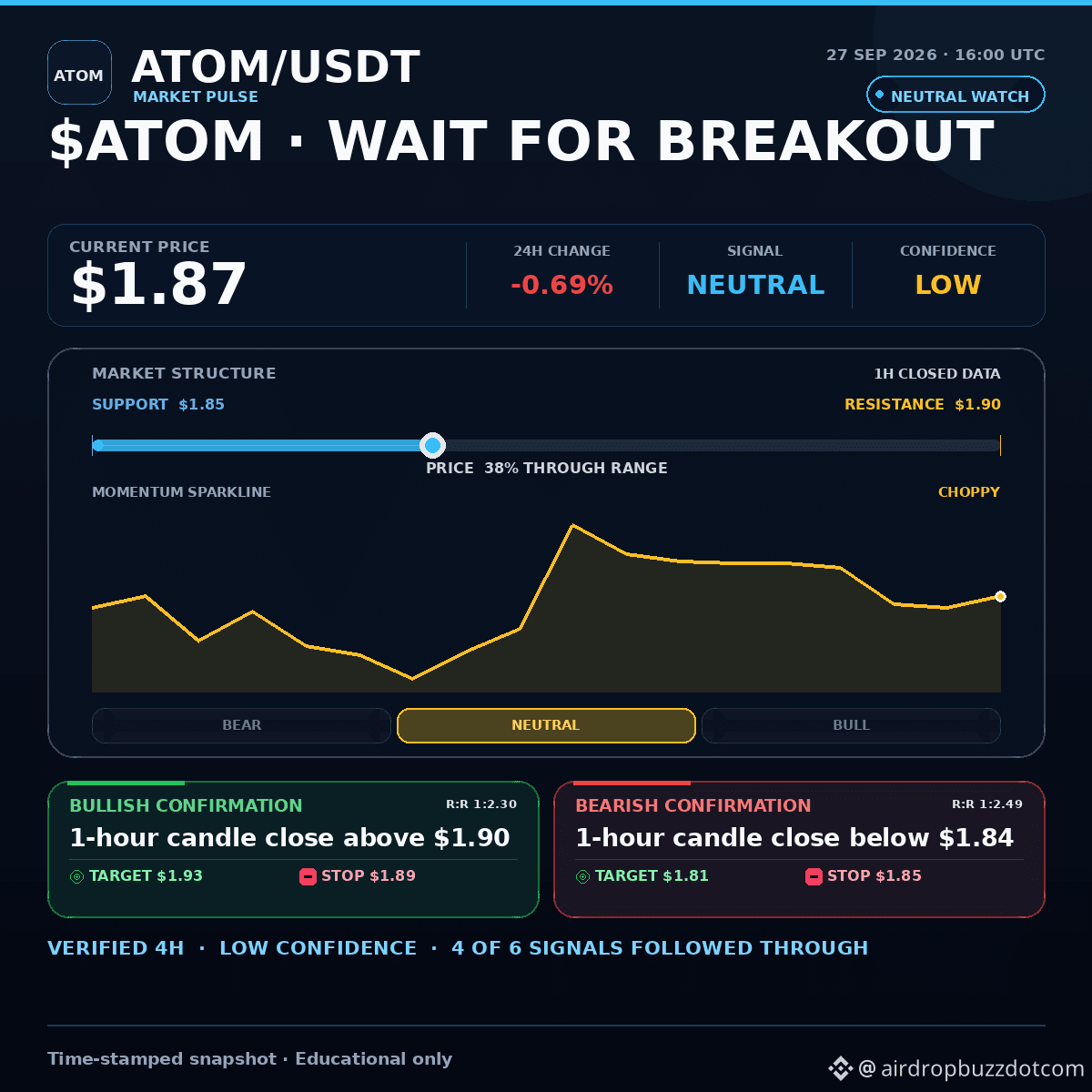
Only 4 of 6 recent directional moves were favorable for $ATOM. Confirmation has to do the heavy lifting.
📊 Snapshot
• Price: $1.87
• 24H: -0.69%
• Bias: Neutral
📈 Bull Trigger
1-hour close above $1.90 with open interest confirmation
📉 Bear Trigger
1-hour close below $1.84 with open interest confirmation
🎯 Signal Read
Both triggers remain possible, but only a confirmed break turns the current noise into a directional read.
📌 Confidence
Low · Low historical confidence · 4 of 6 directional moves were favorable
Signal Quality
- OI: Flat (-0.10%)
- 4H: Bullish | 1D: Bullish (Aligned)
- ATR filter: 0.50 ATR ($0.01)
- Risk/reward: 1:2.49
Bear scenario risk plan
- Entry: $1.84
- Stop: $1.85
- Target: $1.81
Use closed-candle confirmation because these levels define conditions, not future price forecasts.
Front-run it or wait? Reply FRONT-RUN or WAIT.
#ATOM #Cosmos #CryptoTrading #MarketPulse
Educational only. Time-stamped market snapshot, not financial advice.
Only 4 of 6 recent directional moves were favorable for $ATOM . Confirmation has to do the heavy lifting.
📊 Snapshot
• Price: $1.87
• 24H: -0.69%
• Bias: Neutral
📈 Bull Trigger
1-hour close above $1.90 with open interest confirmation
📉 Bear Trigger
1-hour close below $1.84 with open interest confirmation
🎯 Signal Read
Both triggers remain possible, but only a confirmed break turns the current noise into a directional read.
📌 Confidence
Low · Low historical confidence · 4 of 6 directional moves were favorable
Signal Quality
- OI: Flat (-0.10%)
- 4H: Bullish | 1D: Bullish (Aligned)
- ATR filter: 0.50 ATR ($0.01)
- Risk/reward: 1:2.49
Bear scenario risk plan
- Entry: $1.84
- Stop: $1.85
- Target: $1.81
Use closed-candle confirmation because these levels define conditions, not future price forecasts.
Front-run it or wait? Reply FRONT-RUN or WAIT.
#ATOM #Cosmos #CryptoTrading #MarketPulse
Educational only. Time-stamped market snapshot, not financial advice.
📊 Snapshot
• Price: $1.87
• 24H: -0.69%
• Bias: Neutral
📈 Bull Trigger
1-hour close above $1.90 with open interest confirmation
📉 Bear Trigger
1-hour close below $1.84 with open interest confirmation
🎯 Signal Read
Both triggers remain possible, but only a confirmed break turns the current noise into a directional read.
📌 Confidence
Low · Low historical confidence · 4 of 6 directional moves were favorable
Signal Quality
- OI: Flat (-0.10%)
- 4H: Bullish | 1D: Bullish (Aligned)
- ATR filter: 0.50 ATR ($0.01)
- Risk/reward: 1:2.49
Bear scenario risk plan
- Entry: $1.84
- Stop: $1.85
- Target: $1.81
Use closed-candle confirmation because these levels define conditions, not future price forecasts.
Front-run it or wait? Reply FRONT-RUN or WAIT.
#ATOM #Cosmos #CryptoTrading #MarketPulse
Educational only. Time-stamped market snapshot, not financial advice.
10

·
--
$ATOM Lagging Rebound Potential! 🚀
This setup is top-tier. Once Astroboy starts moving, it’ll easily be in the top 5 gainers list.
If you haven’t boarded yet, set up quietly now — don’t wait until it takes off to regret it.
The bull market is right ahead – these next two months are the turnaround window.
Just charge! 😎
#ATOM #Cosmos #Crypto #Bullrun
{spot}(ATOMUSDT)
$ATOM Lagging Rebound Potential! 🚀
This setup is top-tier. Once Astroboy starts moving, it’ll easily be in the top 5 gainers list.
If you haven’t boarded yet, set up quietly now — don’t wait until it takes off to regret it.
The bull market is right ahead – these next two months are the turnaround window.
Just charge! 😎
#ATOM #Cosmos #Crypto #Bullrun
This setup is top-tier. Once Astroboy starts moving, it’ll easily be in the top 5 gainers list.
If you haven’t boarded yet, set up quietly now — don’t wait until it takes off to regret it.
The bull market is right ahead – these next two months are the turnaround window.
Just charge! 😎
#ATOM #Cosmos #Crypto #Bullrun
307

·
--
#Cosmos #Neutron $ATOM A total of 1.227 million ATOM involved in a case were moved into a recovery multisig—sounds like “successful asset recovery.” But for affected users, the more critical questions are: Who controls the money now, and when will it be returned, under what rules? My view is that this action completed one step of risk containment, but it did not complete compensation.
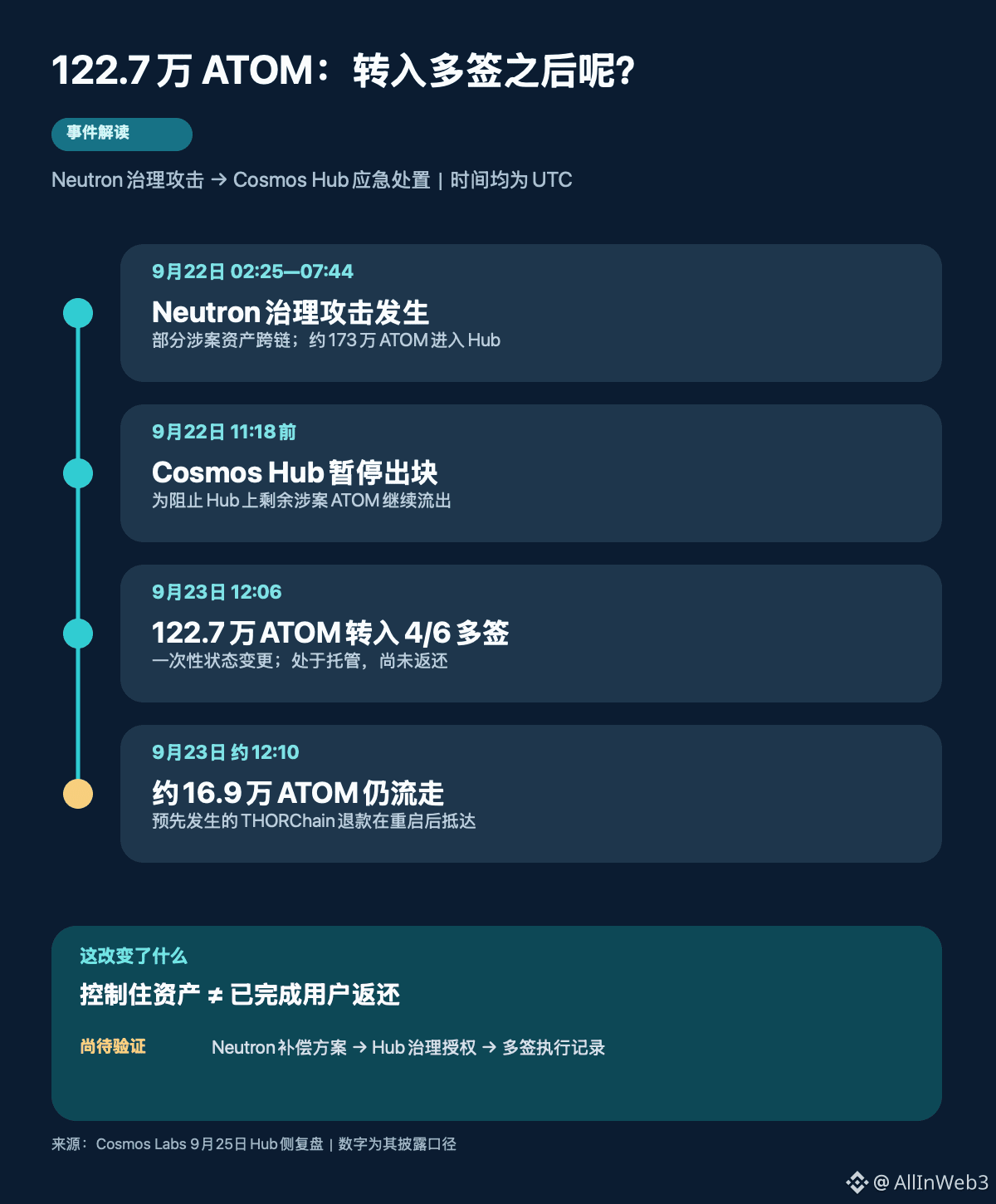
First, separate the two networks. On September 22, the attacker gained partial control of the governance process over certain protocol contract management and withdrew assets; about 1.73 million ATOM were then sent to Cosmos Hub. The Hub itself wasn’t breached, but validators coordinated a halt in block production to prevent the remaining ATOM involved in the incident from being transferred out. After about 24.5 hours of downtime, the Hub restarted at 12:00 UTC on September 23. At 12:06, a one-time state change moved the attacker’s remaining 1,227,121 ATOM into a multisig address controlled by four of the six signees—only those signatures could unlock it. This was an action disclosed by Cosmos Labs in their September 25 post-incident review of the Hub side; it does not mean the funds have already returned to the victims’ accounts.
Another transaction makes the boundaries clearer: about 168,991 ATOM came from an earlier THORChain refund. Only after the restart did it reach the attacker’s address, after which it flowed out again. The postmortem explanation is that validators approved a one-time modification transferring the address’s existing balance at the stopped height, but it did not authorize any indefinite automatic deductions for future inbound funds. This loss exposure shows the limitations of the emergency response plan—and it also illustrates that “being able to change on-chain state” doesn’t automatically mean “being able to recover all cross-chain assets.”
I think what’s truly worth debating is not labeling this response as simply “centralized” or “heroic rescue,” but whether the emergency powers can be kept clearly bounded and auditable after the fact. Pausing the entire Hub carries real availability costs; even though the change targets only a single address, it still represents extraordinary authority. The good side is that the post-incident review publicly disclosed the target address, the amounts, the signers, and the patching process using a vote with more than two-thirds of voting power. The incomplete side is that the Neutron affected parties still need to propose an allocation plan; the multisig signers say funds will be moved out only after authorization via a Cosmos Hub governance proposal, and any differences in the patch source code still need to be disclosed.
So the next step, as I see it, is to verify three things: how Neutron’s full incident report defines the harmed accounts; how the Hub governance proposal explicitly states the basis for collecting/receiving funds; and whether the multisig withdrawals can be matched one-by-one with the final incoming settlement. If those records are fully and transparently published, I would raise my assessment of this emergency governance. If it remains long-term at “the funds have been kept,” then it can’t be called compensation already received by users. Would you accept a chain pausing and altering the on-chain state to preserve the involved assets? If so, to what point would you require post-incident disclosure?
#Cosmos #Neutron $ATOM A total of 1.227 million ATOM involved in a case were moved into a recovery multisig—sounds like “successful asset recovery.” But for affected users, the more critical questions are: Who controls the money now, and when will it be returned, under what rules? My view is that this action completed one step of risk containment, but it did not complete compensation.
First, separate the two networks. On September 22, the attacker gained partial control of the governance process over certain protocol contract management and withdrew assets; about 1.73 million ATOM were then sent to Cosmos Hub. The Hub itself wasn’t breached, but validators coordinated a halt in block production to prevent the remaining ATOM involved in the incident from being transferred out. After about 24.5 hours of downtime, the Hub restarted at 12:00 UTC on September 23. At 12:06, a one-time state change moved the attacker’s remaining 1,227,121 ATOM into a multisig address controlled by four of the six signees—only those signatures could unlock it. This was an action disclosed by Cosmos Labs in their September 25 post-incident review of the Hub side; it does not mean the funds have already returned to the victims’ accounts.
Another transaction makes the boundaries clearer: about 168,991 ATOM came from an earlier THORChain refund. Only after the restart did it reach the attacker’s address, after which it flowed out again. The postmortem explanation is that validators approved a one-time modification transferring the address’s existing balance at the stopped height, but it did not authorize any indefinite automatic deductions for future inbound funds. This loss exposure shows the limitations of the emergency response plan—and it also illustrates that “being able to change on-chain state” doesn’t automatically mean “being able to recover all cross-chain assets.”
I think what’s truly worth debating is not labeling this response as simply “centralized” or “heroic rescue,” but whether the emergency powers can be kept clearly bounded and auditable after the fact. Pausing the entire Hub carries real availability costs; even though the change targets only a single address, it still represents extraordinary authority. The good side is that the post-incident review publicly disclosed the target address, the amounts, the signers, and the patching process using a vote with more than two-thirds of voting power. The incomplete side is that the Neutron affected parties still need to propose an allocation plan; the multisig signers say funds will be moved out only after authorization via a Cosmos Hub governance proposal, and any differences in the patch source code still need to be disclosed.
So the next step, as I see it, is to verify three things: how Neutron’s full incident report defines the harmed accounts; how the Hub governance proposal explicitly states the basis for collecting/receiving funds; and whether the multisig withdrawals can be matched one-by-one with the final incoming settlement. If those records are fully and transparently published, I would raise my assessment of this emergency governance. If it remains long-term at “the funds have been kept,” then it can’t be called compensation already received by users. Would you accept a chain pausing and altering the on-chain state to preserve the involved assets? If so, to what point would you require post-incident disclosure?
First, separate the two networks. On September 22, the attacker gained partial control of the governance process over certain protocol contract management and withdrew assets; about 1.73 million ATOM were then sent to Cosmos Hub. The Hub itself wasn’t breached, but validators coordinated a halt in block production to prevent the remaining ATOM involved in the incident from being transferred out. After about 24.5 hours of downtime, the Hub restarted at 12:00 UTC on September 23. At 12:06, a one-time state change moved the attacker’s remaining 1,227,121 ATOM into a multisig address controlled by four of the six signees—only those signatures could unlock it. This was an action disclosed by Cosmos Labs in their September 25 post-incident review of the Hub side; it does not mean the funds have already returned to the victims’ accounts.
Another transaction makes the boundaries clearer: about 168,991 ATOM came from an earlier THORChain refund. Only after the restart did it reach the attacker’s address, after which it flowed out again. The postmortem explanation is that validators approved a one-time modification transferring the address’s existing balance at the stopped height, but it did not authorize any indefinite automatic deductions for future inbound funds. This loss exposure shows the limitations of the emergency response plan—and it also illustrates that “being able to change on-chain state” doesn’t automatically mean “being able to recover all cross-chain assets.”
I think what’s truly worth debating is not labeling this response as simply “centralized” or “heroic rescue,” but whether the emergency powers can be kept clearly bounded and auditable after the fact. Pausing the entire Hub carries real availability costs; even though the change targets only a single address, it still represents extraordinary authority. The good side is that the post-incident review publicly disclosed the target address, the amounts, the signers, and the patching process using a vote with more than two-thirds of voting power. The incomplete side is that the Neutron affected parties still need to propose an allocation plan; the multisig signers say funds will be moved out only after authorization via a Cosmos Hub governance proposal, and any differences in the patch source code still need to be disclosed.
So the next step, as I see it, is to verify three things: how Neutron’s full incident report defines the harmed accounts; how the Hub governance proposal explicitly states the basis for collecting/receiving funds; and whether the multisig withdrawals can be matched one-by-one with the final incoming settlement. If those records are fully and transparently published, I would raise my assessment of this emergency governance. If it remains long-term at “the funds have been kept,” then it can’t be called compensation already received by users. Would you accept a chain pausing and altering the on-chain state to preserve the involved assets? If so, to what point would you require post-incident disclosure?
1
181

·
--
Cosmos, this move was decisive enough.
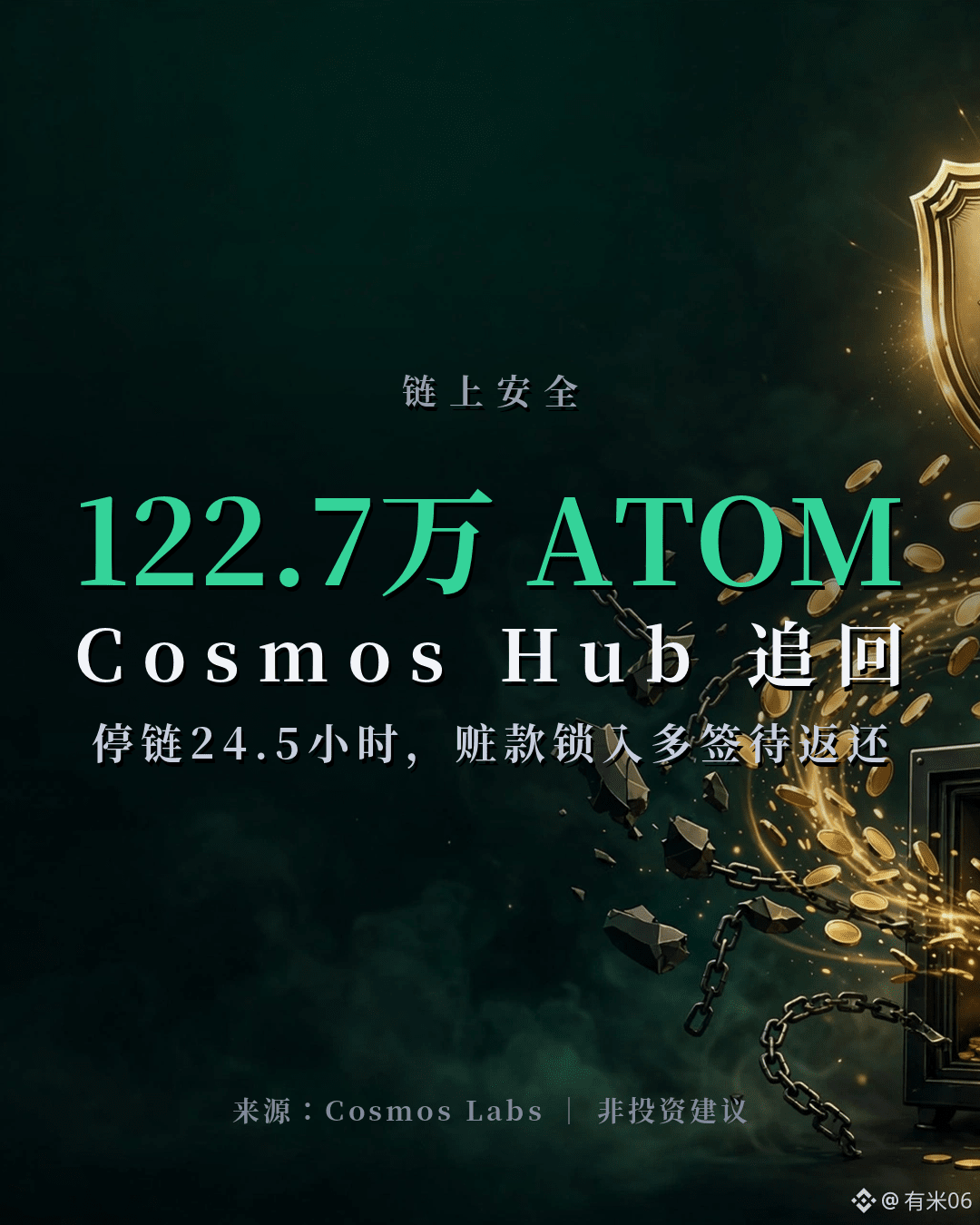
On September 22, Neutron encountered a governance attack. The hackers bridged about 1.73 million ATOM tokens to the Cosmos Hub. Hub validators simply halted the entire chain for 24.5 hours, then on the 23rd used a patched version to resume block production. They also transferred the remaining 1.227 million ATOM from the hacker addresses into a 4/6 multisig wallet in one go—waiting only for governance proposal approval before returning them. However, the 500,000 ATOM that were previously exchanged into ETH via THORChain cannot be recovered.
Data as of: 2026-09-26 13:30 UTC
Source: Cosmos Hub official forum; KuCoin/ChainCatcher news alerts
For information sharing only and does not constitute investment advice.
#Cosmos #ATOM #链上安全
Cosmos, this move was decisive enough.
On September 22, Neutron encountered a governance attack. The hackers bridged about 1.73 million ATOM tokens to the Cosmos Hub. Hub validators simply halted the entire chain for 24.5 hours, then on the 23rd used a patched version to resume block production. They also transferred the remaining 1.227 million ATOM from the hacker addresses into a 4/6 multisig wallet in one go—waiting only for governance proposal approval before returning them. However, the 500,000 ATOM that were previously exchanged into ETH via THORChain cannot be recovered.
Data as of: 2026-09-26 13:30 UTC
Source: Cosmos Hub official forum; KuCoin/ChainCatcher news alerts
For information sharing only and does not constitute investment advice.
#Cosmos #ATOM #链上安全
On September 22, Neutron encountered a governance attack. The hackers bridged about 1.73 million ATOM tokens to the Cosmos Hub. Hub validators simply halted the entire chain for 24.5 hours, then on the 23rd used a patched version to resume block production. They also transferred the remaining 1.227 million ATOM from the hacker addresses into a 4/6 multisig wallet in one go—waiting only for governance proposal approval before returning them. However, the 500,000 ATOM that were previously exchanged into ETH via THORChain cannot be recovered.
Data as of: 2026-09-26 13:30 UTC
Source: Cosmos Hub official forum; KuCoin/ChainCatcher news alerts
For information sharing only and does not constitute investment advice.
#Cosmos #ATOM #链上安全
250

·
--
Bearish
$ATOM
{future}(ATOMUSDT)
🚨#Cosmos Hub validators have secured 1.23 million ATOM taken in a Neutron governance attack after halting the network for about 24.5 hours and moving the tokens to a recovery wallet.#CFTCUpdatesGuidanceOnTokenizedAssets
$ATOM
🚨#Cosmos Hub validators have secured 1.23 million ATOM taken in a Neutron governance attack after halting the network for about 24.5 hours and moving the tokens to a recovery wallet.#CFTCUpdatesGuidanceOnTokenizedAssets
🚨#Cosmos Hub validators have secured 1.23 million ATOM taken in a Neutron governance attack after halting the network for about 24.5 hours and moving the tokens to a recovery wallet.#CFTCUpdatesGuidanceOnTokenizedAssets

1
209

🚨 $ATOM RECOVERS 1.22M STOLEN TOKENS TO MULTISIG AFTER NEUTRON GOVERNANCE EXPLOIT 🛡️
Institutional security intervention has contained the bulk of the exploit fallout following the recent governance breach on Neutron. 🦈 While 500k $ATOM was bridged out via THORChain, validators successfully intercepted 1.227 million tokens by routing them directly into a 4/6 institutional multisig vault.
With block production fully restored on Gaia v28.3.0, the recovered funds are effectively locked from circulation and pending a community governance vote next week. 💡 The immediate sell pressure risk has been isolated, stabilizing market structure despite the initial protocol distress. 💬 Do you expect this swift validator containment to restore confidence in the Cosmos ecosystem? 👇
⚠️ Not financial advice. Always manage your risk. 🛡️
🏷️ #ATOM #Cosmos #CryptoSecurity #DeFi
🦈 🛡️
🚨 $ATOM RECOVERS 1.22M STOLEN TOKENS TO MULTISIG AFTER NEUTRON GOVERNANCE EXPLOIT 🛡️
Institutional security intervention has contained the bulk of the exploit fallout following the recent governance breach on Neutron. 🦈 While 500k $ATOM was bridged out via THORChain, validators successfully intercepted 1.227 million tokens by routing them directly into a 4/6 institutional multisig vault.
With block production fully restored on Gaia v28.3.0, the recovered funds are effectively locked from circulation and pending a community governance vote next week. 💡 The immediate sell pressure risk has been isolated, stabilizing market structure despite the initial protocol distress. 💬 Do you expect this swift validator containment to restore confidence in the Cosmos ecosystem? 👇
⚠️ Not financial advice. Always manage your risk. 🛡️
🏷️ #ATOM #Cosmos #CryptoSecurity #DeFi
🦈 🛡️
Institutional security intervention has contained the bulk of the exploit fallout following the recent governance breach on Neutron. 🦈 While 500k $ATOM was bridged out via THORChain, validators successfully intercepted 1.227 million tokens by routing them directly into a 4/6 institutional multisig vault.
With block production fully restored on Gaia v28.3.0, the recovered funds are effectively locked from circulation and pending a community governance vote next week. 💡 The immediate sell pressure risk has been isolated, stabilizing market structure despite the initial protocol distress. 💬 Do you expect this swift validator containment to restore confidence in the Cosmos ecosystem? 👇
⚠️ Not financial advice. Always manage your risk. 🛡️
🏷️ #ATOM #Cosmos #CryptoSecurity #DeFi
🦈 🛡️
134

·
--
Cosmos Hub: $1.22M ATOM moved into a multisig; attacker proposal rejectedAfter the governance attack on Neutron, the top reaction on hot search was: “Cosmos has also been hacked.”
No. The Hub itself wasn’t breached, and user funds weren’t moved. What was swept away was the attacker’s dirty money that came in through a bridge.
Cosmos Labs Sept 25 official recap: After Sept 22 Neutron governance attack drained liquidity from protocols such as Astroport and others, about $1.73M in ATOM was sent to the Hub. Validators were halted for roughly 24.5 hours; when Gaia v28.3.0 restarted, it moved the remaining ~1.227M ATOM into the 4/6 multisig (Nansen / Keplr / Enigma / Silknodes / Kiln / Polkachu) in one go. About $500K ATOM was already converted to $ETH via THORChain and cannot be tracked; after the restart, another ~169K ATOM was refunded and slipped away.
Cosmos Hub: $1.22M ATOM moved into a multisig; attacker proposal rejected
After the governance attack on Neutron, the top reaction on hot search was: “Cosmos has also been hacked.”
No. The Hub itself wasn’t breached, and user funds weren’t moved. What was swept away was the attacker’s dirty money that came in through a bridge.
Cosmos Labs Sept 25 official recap: After Sept 22 Neutron governance attack drained liquidity from protocols such as Astroport and others, about $1.73M in ATOM was sent to the Hub. Validators were halted for roughly 24.5 hours; when Gaia v28.3.0 restarted, it moved the remaining ~1.227M ATOM into the 4/6 multisig (Nansen / Keplr / Enigma / Silknodes / Kiln / Polkachu) in one go. About $500K ATOM was already converted to $ETH via THORChain and cannot be tracked; after the restart, another ~169K ATOM was refunded and slipped away.
No. The Hub itself wasn’t breached, and user funds weren’t moved. What was swept away was the attacker’s dirty money that came in through a bridge.
Cosmos Labs Sept 25 official recap: After Sept 22 Neutron governance attack drained liquidity from protocols such as Astroport and others, about $1.73M in ATOM was sent to the Hub. Validators were halted for roughly 24.5 hours; when Gaia v28.3.0 restarted, it moved the remaining ~1.227M ATOM into the 4/6 multisig (Nansen / Keplr / Enigma / Silknodes / Kiln / Polkachu) in one go. About $500K ATOM was already converted to $ETH via THORChain and cannot be tracked; after the restart, another ~169K ATOM was refunded and slipped away.
95

🚨 COSMOS Recovers 220 📈 Million USD ATOM, 169K Still Escapes 🧠
📊 | $BTC | $ETH | $BNB |
- Please follow, like, and comment to discuss industry trends together. 📈
- After a pause, the Cosmos mainnet restarted with the goal of reclaiming stolen ATOM assets.
- Successfully locked ATOM worth approximately 220 million USD, about 150 million tokens.
- Still about 169K ATOM (approximately 22,000 USD) has not been recovered.
- The recovered funds have been transferred to a Neutron validator multisig wallet and were not affected by other chains. 🔥
- If further recovery efforts continue to succeed, it could boost confidence in on-chain security, and the price may stabilize in the short term.
- If the escaped 169K tokens are sold off by large holders, it is expected to create some pressure on ATOM’s market value.
- Whale activity remains neutral, so short-term fluctuations may be affected only limitedly by sentiment.
- If regulators further intervene in cross-chain tracking, more assets may be frozen, improving overall market transparency.
- How do you think the whereabouts of the remaining stolen ATOM will affect the long-term development of the Cosmos ecosystem?
- Welcome to follow our channel and share your thoughts to gain insight into the crypto market together.
- #Cosmos #ATOM #Crypto #Blockchain #Whales
🚨 COSMOS Recovers 220 📈 Million USD ATOM, 169K Still Escapes 🧠
📊 | $BTC | $ETH | $BNB |
- Please follow, like, and comment to discuss industry trends together. 📈
- After a pause, the Cosmos mainnet restarted with the goal of reclaiming stolen ATOM assets.
- Successfully locked ATOM worth approximately 220 million USD, about 150 million tokens.
- Still about 169K ATOM (approximately 22,000 USD) has not been recovered.
- The recovered funds have been transferred to a Neutron validator multisig wallet and were not affected by other chains. 🔥
- If further recovery efforts continue to succeed, it could boost confidence in on-chain security, and the price may stabilize in the short term.
- If the escaped 169K tokens are sold off by large holders, it is expected to create some pressure on ATOM’s market value.
- Whale activity remains neutral, so short-term fluctuations may be affected only limitedly by sentiment.
- If regulators further intervene in cross-chain tracking, more assets may be frozen, improving overall market transparency.
- How do you think the whereabouts of the remaining stolen ATOM will affect the long-term development of the Cosmos ecosystem?
- Welcome to follow our channel and share your thoughts to gain insight into the crypto market together.
- #Cosmos #ATOM #Crypto #Blockchain #Whales
📊 | $BTC | $ETH | $BNB |
- Please follow, like, and comment to discuss industry trends together. 📈
- After a pause, the Cosmos mainnet restarted with the goal of reclaiming stolen ATOM assets.
- Successfully locked ATOM worth approximately 220 million USD, about 150 million tokens.
- Still about 169K ATOM (approximately 22,000 USD) has not been recovered.
- The recovered funds have been transferred to a Neutron validator multisig wallet and were not affected by other chains. 🔥
- If further recovery efforts continue to succeed, it could boost confidence in on-chain security, and the price may stabilize in the short term.
- If the escaped 169K tokens are sold off by large holders, it is expected to create some pressure on ATOM’s market value.
- Whale activity remains neutral, so short-term fluctuations may be affected only limitedly by sentiment.
- If regulators further intervene in cross-chain tracking, more assets may be frozen, improving overall market transparency.
- How do you think the whereabouts of the remaining stolen ATOM will affect the long-term development of the Cosmos ecosystem?
- Welcome to follow our channel and share your thoughts to gain insight into the crypto market together.
- #Cosmos #ATOM #Crypto #Blockchain #Whales
422
·
--
🚨 | Cosmos Hub network returns to operation
Cosmos Hub announced that validators succeeded in restarting the network according to the plan, with block production resuming and the network returning to normal operation.
📌 Cipher Vault: Block production has stabilized, with continued monitoring of network performance over the coming period.
#Cosmos #ATOM #Crypto #CipherVault
🚨 | Cosmos Hub network returns to operation
Cosmos Hub announced that validators succeeded in restarting the network according to the plan, with block production resuming and the network returning to normal operation.
📌 Cipher Vault: Block production has stabilized, with continued monitoring of network performance over the coming period.
#Cosmos #ATOM #Crypto #CipherVault
Cosmos Hub announced that validators succeeded in restarting the network according to the plan, with block production resuming and the network returning to normal operation.
📌 Cipher Vault: Block production has stabilized, with continued monitoring of network performance over the coming period.
#Cosmos #ATOM #Crypto #CipherVault
1
76
Log in to explore more content
Join global crypto users on Binance Square
⚡️ Get latest and useful information about crypto.
💬 Trusted by the world’s largest crypto exchange.
👍 Discover real insights from verified creators.
Email / Phone number
Trending Topics
1
#BinanceLaunchesBinanceIntelligence
0 views
0 Discussing
2
#EvernorthXRPTreasuryCompletesSPACMerger
54 views
19 Discussing
3
#ADAGains10%Above$0.27
16,195 views
182 Discussing
4
#ETHUp70%InQ3ButLiquidityFalls
181,401 views
1,112 Discussing
5
#EthStakingExitQueueHits2026High
61,849 views
793 Discussing
6
#FedOctoberHoldOdds82.3%
64,704 views
752 Discussing
7
#Nikkei225Jumps2.5%ToThreeMonthHigh
84,747 views
1,115 Discussing
8
#CircleMints$2.75BUSDCOnSolanaIn7Days
2,334 views
52 Discussing
9
#DriftHackVictimsBeginClaims
181,850 views
1,764 Discussing
10
#SolanaTokenizedStockVolumeTops$4.4BInSeptember
13,940 views
133 Discussing