
#web3development
web3development
18,137 views
214 Discussing
Hot
Latest

·
--
See translation
Developer Activity Is the Most Honest Leading Indicator in Crypto
Price charts attract attention. Developer activity builds the future.
Across every major market cycle, sustained developer commits have preceded protocol breakouts by months — sometimes years. When prices are flat or down, teams still building are quietly compounding optionality. When everyone panics, GitHub repositories tell a different story.
Look at the patterns:
$ETH has maintained the deepest developer ecosystem in crypto for years running — thousands of active repos, new EIPs shipping, tooling maturing. That gravity doesn't evaporate in a bear market; it widens the moat.
Layer 1s with formal research-to-deployment pipelines move slower, but structurally they're serious. The communities that rebuild after adversity — and the tooling that improves — represent real, measurable momentum.
$SOL has seen a developer renaissance post-FTX fallout. The community rebuilt. The tooling improved. The momentum is real.
$BNB Chain developer activity has accelerated with opBNB and BEP-520 upgrades — a signal the ecosystem is compounding infrastructure, not just transaction volume.
The mental model: treat developer activity as a floor on long-term value. A protocol with declining commits and rising price is fragile. A protocol with rising commits and flat price is opportunity.
Smart money watches GitHub. Maybe you should too.
#CryptoInsights #Web3Development #BlockchainTech #LongTermThinking #CryptoStrategy
55
·
--
See translation
Want to become a BNB Chain developer? Start with fundamentals, then build.
Binance Academy can help you understand the concepts behind BNB Chain development:
• Blockchain architecture, transactions and wallets
• EVM basics, smart contracts and gas fees
• Solidity programming and contract security
• DeFi, NFTs, tokens and Web3 applications
• Private-key safety, phishing awareness and wallet protection
A practical learning path:
1. Learn how blocks, transactions and consensus work.
2. Understand Ethereum Virtual Machine concepts.
3. Study Solidity syntax, contract state and events.
4. Practise with testnet—not real funds.
5. Learn how to read transactions with a block explorer.
6. Review access control, reentrancy, oracle and arithmetic risks.
7. Read the official BNB Chain developer documentation.
8. Build one small project: a token, voting contract or simple dApp.
9. Test, document and review the code before deployment.
Academy gives you the knowledge foundation. Official BNB Chain documentation, SDKs, RPC tools and testnets turn that knowledge into working software.
Do not copy contracts blindly. A deployed smart contract can be difficult or impossible to change, and a coding error can permanently lose funds.
Learn first. Test safely. Ship only after review.
Start learning: academy.binance.com
Educational content only. Not financial advice.
#BinanceAcademy #BNBChain #Web3Development #BinanceAngels
60

·
--
The evolution of reactivity in Web 3 through the Composition API represents a fundamental shift for building scalable and efficient applications. By decoupling component logic, we optimize performance and make long-term maintenance easier. It is an essential tool for those seeking excellence in frontend development.
#Web3
#Web3Development
#FrontendDevelopment
#Web3
#Web3Development
#FrontendDevelopment
114
·
--
See translation
Developer ecosystems are the most durable moat in crypto — and the hardest to replicate.
Price moves fast. Developer mindshare moves slowly. That asymmetry is the edge most investors miss.
When a developer chooses a chain, they are not making a trade. They are making a multi-year commitment. They learn the tooling, build the mental model, deploy their reputation, and wire in their users. Switching costs compound with every line of code.
This is why watching developer activity during bear markets reveals more about the next cycle than any price chart. Builders who stay when token prices are down are not tourists — they are the ones constructing the infrastructure that the next wave of capital will flow into.
$ETH has spent a decade accumulating this kind of gravity. Its developer surface area — EVM tooling, Solidity talent, audit firms, library depth, L2 compatibility — is genuinely irreplicable in the short run. $SOL is running a different but credible playbook: low latency, low fees, and a developer experience increasingly competitive with web2 standards. $DOT is quietly building shared-security interoperability rails that reduce the trust surface area of multi-chain applications.
The chains winning developer mindshare today are not necessarily the ones generating headlines. They are the ones where builders keep shipping when it is boring.
Count active GitHub commits and deployed contracts, not grant budgets.
Developer gravity precedes capital gravity.
#BNBChain #CryptoInsights #Web3Development #DeFi #Blockchain
110

·
--
Article
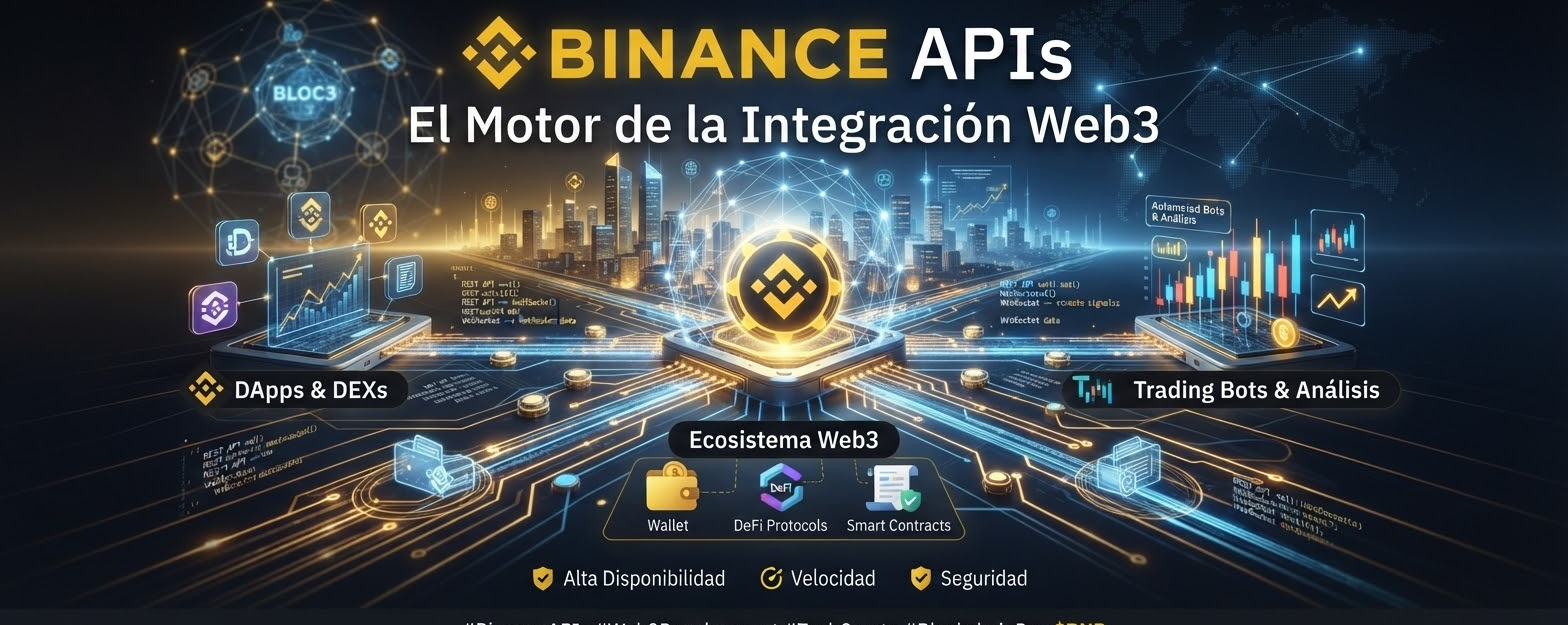
Binance APIs: The Engine of Web3 IntegrationBinance APIs represent the core infrastructure for connecting decentralized applications, analytics platforms, and trading tools with one of the most robust ecosystems in the market. Their design focuses on ensuring high availability, fast response times, and advanced security for developers and institutional analysts.
Key Aspects
• Scalable Connectivity: They enable real-time integration of market data and efficient execution of automated operations.
Binance APIs: The Engine of Web3 Integration
Binance APIs represent the core infrastructure for connecting decentralized applications, analytics platforms, and trading tools with one of the most robust ecosystems in the market. Their design focuses on ensuring high availability, fast response times, and advanced security for developers and institutional analysts.
Key Aspects
• Scalable Connectivity: They enable real-time integration of market data and efficient execution of automated operations.
Key Aspects
• Scalable Connectivity: They enable real-time integration of market data and efficient execution of automated operations.
1
1
3
408


·
--
See translation
Layer 3s: The Era of Hyper-Customized Networks ⚡
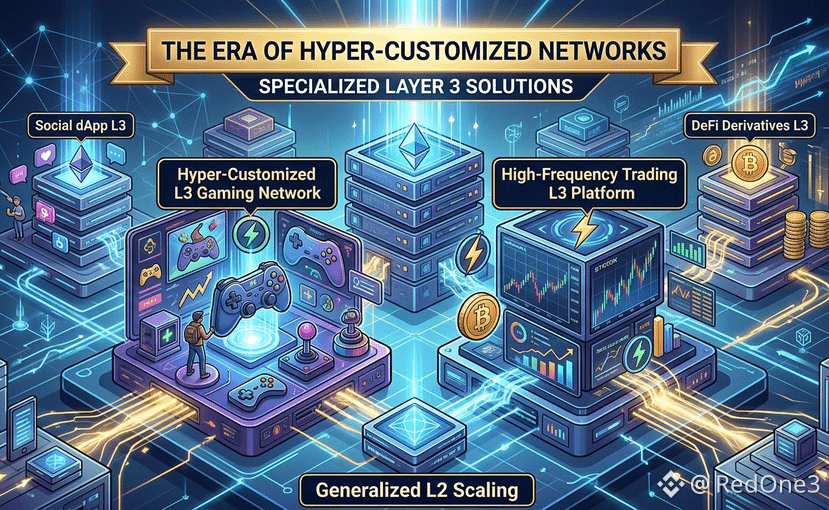
Layer 2s solved gas fees; Layer 3s are solving application-specific scalability. By building specialized L3 execution environments, developers can deploy games and high-frequency trading platforms with near-zero latency.
#Layer2 #Layer3 #ScalingSolutions #Web3Development .
Layer 2s solved gas fees; Layer 3s are solving application-specific scalability. By building specialized L3 execution environments, developers can deploy games and high-frequency trading platforms with near-zero latency.
#Layer2 #Layer3 #ScalingSolutions #Web3Development .
159

See translation
($MOVR) is an Ethereum-compatible smart contract parachain built on the Kusama network. It serves as a companion network to Moonbeam, offering a permanently incentivized platform for new projects to test and deploy code under real economic conditions.
Key Features of Moonriver:
Minimal Re-configuration: Developers can mirror Ethereum accounts, keys, subscriptions, and logs instantly.
Built-in Integrations: Supports standard Ethereum tools like MetaMask, Remix, and Hardhat out of the box.
Cross-Chain Interoperability: Leverages Kusama’s cross-consensus messaging (XCM) to interact with other parachains seamlessly.
By bridging the gap between Ethereum’s developer ecosystem and Kusama’s scalable architecture, $MOVR continues to be a crucial playground for Web3 innovation.
What are your thoughts on parachain performance this cycle?
#Blockchain #CryptoNews #Web3Development #Moonriver #DeFi
$MOVR
{spot}(MOVRUSDT)
($MOVR ) is an Ethereum-compatible smart contract parachain built on the Kusama network. It serves as a companion network to Moonbeam, offering a permanently incentivized platform for new projects to test and deploy code under real economic conditions.
Key Features of Moonriver:
Minimal Re-configuration: Developers can mirror Ethereum accounts, keys, subscriptions, and logs instantly.
Built-in Integrations: Supports standard Ethereum tools like MetaMask, Remix, and Hardhat out of the box.
Cross-Chain Interoperability: Leverages Kusama’s cross-consensus messaging (XCM) to interact with other parachains seamlessly.
By bridging the gap between Ethereum’s developer ecosystem and Kusama’s scalable architecture, $MOVR continues to be a crucial playground for Web3 innovation.
What are your thoughts on parachain performance this cycle?
#Blockchain #CryptoNews #Web3Development #Moonriver #DeFi
$MOVR
264

·
--
See translation
#Web3 Developers aren't just talking about secure AI—they are actively building it. @OpenGradient is seeing serious developer traction, with their decentralized infrastructure already hosting more than 2,000 unique models. Their upcoming creator tools will make it even simpler for Web3 builders to deploy verifiable, trustless AI apps without massive overhead. If you want to check out how the ecosystem feels, try launching your own setup at chat.opengradient.ai.
For the developers in the room: What’s the biggest technical bottleneck you face when attempting to deploy secure AI models on-chain today?
$OPG #opg #BinanceSquareTalks #Web3Development $SKHYNIX
For the developers in the room: What’s the biggest technical bottleneck you face when attempting to deploy secure AI models on-chain today?
$OPG #opg #BinanceSquareTalks #Web3Development $SKHYNIX

9
2
213

See translation
Sovereignty and absolute control of data by application creators will change the internet business model. The rapid development tools of $NEAR greatly ease this structural transition.#Web3Development #nearprotocol
Sovereignty and absolute control of data by application creators will change the internet business model. The rapid development tools of $NEAR greatly ease this structural transition.#Web3Development #nearprotocol
2
113
·
--
See translation
Coding Smart Contracts with Plain English 💻
AI prompt-to-contract tools are democratizing dApp development. Write what you want in plain text, and AI builds the secure, deployed contract on-chain instantly.
#Web3Development #SmartContracts #CodingAI #Blockchain .
Coding Smart Contracts with Plain English 💻
AI prompt-to-contract tools are democratizing dApp development. Write what you want in plain text, and AI builds the secure, deployed contract on-chain instantly.
#Web3Development #SmartContracts #CodingAI #Blockchain .
AI prompt-to-contract tools are democratizing dApp development. Write what you want in plain text, and AI builds the secure, deployed contract on-chain instantly.
#Web3Development #SmartContracts #CodingAI #Blockchain .
74

💡 Beyond speculation: What real utility backs the $AIN token? 🤖🌐
In today's crypto market, many tokens rise on "hype" alone, but the projects that survive in the long term are those that offer real infrastructure. That's the case with Infinity Ground ($AIN ).
For those who see the ticker and don't understand what it does, here's its fundamental value:
1. Modular AI Infrastructure: It's a blockchain protocol built on BNB Chain and divided into 5 critical layers (Application, Execution, Data, Model, and Hosting).
2. No-code development (Infinity IDE): It allows any user or developer to build and deploy decentralized Web3 applications using natural language instructions (prompts).
3. The ecosystem's engine: The $AIN token isn't a meme; it's actively used to pay gas fees, stake on the platform, participate in governance, and access the AI application marketplace.
When a project combines real technological utility with a product people can use (Agentic IDE), the narrative changes completely.
Do you think AI infrastructure protocols will dominate the altcoin market this season? 🧠🚀
#InfinityGround #artificialintelligence #BNBChain #Web3Development #CryptoUtility
2
98

·
--
Bullish
See translation
Headline: What makes an Overledger "mApp" different? 💡
Most crypto apps are dApps (decentralized applications confined to a single blockchain or dependent on third-party bridge oracles).
Quant introduced mApps (multi-chain applications):
✅ Native multi-chain logic in a single code base
✅ Write once, deploy across Ethereum, Polygon, Hyperledger, Corda, etc.
✅ Eliminates vendor lock-in for enterprise clients
Tech stacks that solve actual developer friction are the ones that survive across market cycles.
Have you tested Overledger developer tools yet?
#QNT #Web3Development #blockchains #BinanceSquare #Overledger $QNT
{spot}(QNTUSDT)
Headline: What makes an Overledger "mApp" different? 💡
Most crypto apps are dApps (decentralized applications confined to a single blockchain or dependent on third-party bridge oracles).
Quant introduced mApps (multi-chain applications):
✅ Native multi-chain logic in a single code base
✅ Write once, deploy across Ethereum, Polygon, Hyperledger, Corda, etc.
✅ Eliminates vendor lock-in for enterprise clients
Tech stacks that solve actual developer friction are the ones that survive across market cycles.
Have you tested Overledger developer tools yet?
#QNT #Web3Development #blockchains #BinanceSquare #Overledger $QNT
348

·
--

Article
See translation
Wrapped Tokens:Bridging Bitcoin and Ethereum DeFi 🔄
The fragmentation of liquidity across independent blockchain networks remains a significant challenge for decentralized finance. Because separate layer-1 chains cannot communicate natively, assets like $BTC
{spot}(BTCUSDT)
are traditionally locked within their own ecosystem, unable to interact with external smart contracts. Wrapped tokens successfully solve this interoperability friction by functioning as a decentralized asset bridge to the Ethereum network. Through a secure vault mechanism, real coins are locked with a custodian, who then issues an identical one-of-one synthetic token on the host chain. This technical bridge allows holders to deploy their capital into advanced yield-generating protocols, automated lending platforms, and deep liquidity pools. While native purists emphasize the unique self-custody risks inherent to relying on external smart contracts and wrapping custodians, the framework expands the economic utility of digital commodities. Managed securely, wrapping features connect the absolute scarcity of @Bitcoinworld with the expressive programmability of smart contract applications, building a unified open finance ecosystem. 🌐
#DeFi2026 #Ethereum #WrappedTokens #Web3Development #SpaceXDiscloses$1.45BHoldingOfBTC
Wrapped Tokens:
Bridging Bitcoin and Ethereum DeFi 🔄
The fragmentation of liquidity across independent blockchain networks remains a significant challenge for decentralized finance. Because separate layer-1 chains cannot communicate natively, assets like $BTC
are traditionally locked within their own ecosystem, unable to interact with external smart contracts. Wrapped tokens successfully solve this interoperability friction by functioning as a decentralized asset bridge to the Ethereum network. Through a secure vault mechanism, real coins are locked with a custodian, who then issues an identical one-of-one synthetic token on the host chain. This technical bridge allows holders to deploy their capital into advanced yield-generating protocols, automated lending platforms, and deep liquidity pools. While native purists emphasize the unique self-custody risks inherent to relying on external smart contracts and wrapping custodians, the framework expands the economic utility of digital commodities. Managed securely, wrapping features connect the absolute scarcity of @Bitcoinworld with the expressive programmability of smart contract applications, building a unified open finance ecosystem. 🌐
#DeFi2026 #Ethereum #WrappedTokens #Web3Development #SpaceXDiscloses$1.45BHoldingOfBTC
53
·
--

Article
See translation
Decoding the AI Stack: How OpenClaw Agents Can Leverage OpenLedger’s Layer-1 Data ArchitectureThe Convergence of Logic and Ledger
In the rapidly evolving landscape of decentralized artificial intelligence, the distinction between an application framework and an underlying infrastructure network is critical. When analyzing the current state of autonomous systems, projects like OpenClaw and @Openledger represent two entirely different layers of the same tech stack.
While they are developed by completely separate entities and feature independent codebases, evaluating them through an architectural lens reveals a powerful conceptual synergy. OpenClaw provides the execution engine that dictates how an agent processes tasks, while OpenLedger delivers the decentralized data foundation that ensures those tasks are backed by verifiable, high-integrity information.
1. OpenClaw: The Local Execution and Orchestration Tier
OpenClaw is fundamentally engineered as an open-source, self-hosted agent gateway. It is designed for builders who want full control over their models, runtime environments, and communication pipelines.
Local Runtime Mastery: OpenClaw excels at managing context windows, prompt routing, and plugin integration locally. It allows builders to hook up local Large Language Models (via tools like Ollama or LM Studio) and direct their outputs to active communication hubs like Telegram or Discord.Autonomous Workflows: The framework acts as the brain and hands of the system. It handles the structural logic of how an agent interprets a command, triggers a specific script, and formats the final response back to the user or channel.Privacy and Customization: Because it is designed for self-hosting, OpenClaw ensures that the operational logic and agent workflows remain completely private, fast, and free from rigid third-party API dependencies.
2. OpenLedger: The Layer-1 Verifiable Data Base-Layer
On the other side of the spectrum lies OpenLedger, which operates not as an application framework, but as a purpose-built Layer-1 blockchain infrastructure tailored specifically for AI data governance, provenance, and compute scaling.
Crowdsourced Datanets: Instead of relying on generic, noisy web data or centralized data silos, OpenLedger introduces specialized, domain-specific databases maintained by the community. These networks provide clean, high-quality information tailored for specific industries.Proof of Attribution: This is the core protocol innovation of the network. OpenLedger tracks the exact lineage of the data used to fine-tune or query models on-chain. It ensures that the original data creators are verified and fairly compensated, preventing intellectual property disputes. Infrastructure Optimization (OpenLoRA): OpenLedger incorporates custom execution engines designed to host and deploy thousands of fine-tuned, lightweight model adapters efficiently on distributed GPU hardware, lowering the computational barrier to entry for complex AI tasks.
3. Building the Unified Stack: Architectural Integration Potential
When a system architect looks at these two separate layers, the goal isn't to find native compatibility out of the box, but to design an interface where they complement one another to solve the fundamental limitations of isolated AI agents.
Bridging the Data Gap
A major bottleneck for any locally hosted OpenClaw agent is data stagnation. If the agent only relies on fixed local documents or unverified web searches, its utility is limited. By integrating OpenLedger's decentralized API endpoints, an OpenClaw agent can dynamically query hyper-specialized Datanets. This gives the local agent access to verified, tamper-proof knowledge bases, drastically reducing hallucination rates and increasing its technical accuracy.
Enabling True Economic Autonomy
For an autonomous agent to be truly independent, it requires a native financial and verification layer. If an OpenClaw agent is deployed to hunt market insights, perform automated smart contract audits, or generate content, it needs a way to sustain its own operations.
OpenLedger provides the exact Web3 infrastructure required for this economy. Through its native tokenomics $OPEN and micro-payment rails, the OpenClaw agent can autonomously interact with the blockchain. It can purchase premium data from a Datanet to complete a task, pay for distributed fine-tuning compute, or securely log its own analytical outputs on-chain, charging end-users a micro-fee for its automated services.
Summary of the Operational Stack
To visualize how these two independent ecosystems can be mapped out into a singular, highly functional workflow without relying on Decoding the AI Stack: How OpenClaw Agents Can Leverage OpenLedger’s Layer-1 Data Architecture data structures, we can break them down into their core operational layers:
The Communication Layer: Channels like Telegram, Discord, or Web3 platforms handle user interactions and trigger active event loops.The Core Logic & Routing Layer (OpenClaw): The self-hosted gateway intercepts the trigger, processes the prompt logic, manages the plugins, and commands the local or cloud LLM.The Data & Verification Layer (OpenLedger): The underlying Layer-1 blockchain handles the cryptographic logging, provides secure data streams from localized Datanets, and processes the micro-transactions required to execute or reward the workflow.
Ultimately, OpenClaw is the framework you use to build the agent's cognitive logic, while OpenLedger is the decentralized network that secures its data pipeline and provides the economic rails to make it truly autonomous.
#DeAI #OpenLedger #AIAgents #CryptoInfrastructure #Web3Development .
Decoding the AI Stack: How OpenClaw Agents Can Leverage OpenLedger’s Layer-1 Data Architecture
The Convergence of Logic and Ledger
In the rapidly evolving landscape of decentralized artificial intelligence, the distinction between an application framework and an underlying infrastructure network is critical. When analyzing the current state of autonomous systems, projects like OpenClaw and @OpenLedger represent two entirely different layers of the same tech stack.
While they are developed by completely separate entities and feature independent codebases, evaluating them through an architectural lens reveals a powerful conceptual synergy. OpenClaw provides the execution engine that dictates how an agent processes tasks, while OpenLedger delivers the decentralized data foundation that ensures those tasks are backed by verifiable, high-integrity information.
1. OpenClaw: The Local Execution and Orchestration Tier
OpenClaw is fundamentally engineered as an open-source, self-hosted agent gateway. It is designed for builders who want full control over their models, runtime environments, and communication pipelines.
Local Runtime Mastery: OpenClaw excels at managing context windows, prompt routing, and plugin integration locally. It allows builders to hook up local Large Language Models (via tools like Ollama or LM Studio) and direct their outputs to active communication hubs like Telegram or Discord.Autonomous Workflows: The framework acts as the brain and hands of the system. It handles the structural logic of how an agent interprets a command, triggers a specific script, and formats the final response back to the user or channel.Privacy and Customization: Because it is designed for self-hosting, OpenClaw ensures that the operational logic and agent workflows remain completely private, fast, and free from rigid third-party API dependencies.
2. OpenLedger: The Layer-1 Verifiable Data Base-Layer
On the other side of the spectrum lies OpenLedger, which operates not as an application framework, but as a purpose-built Layer-1 blockchain infrastructure tailored specifically for AI data governance, provenance, and compute scaling.
Crowdsourced Datanets: Instead of relying on generic, noisy web data or centralized data silos, OpenLedger introduces specialized, domain-specific databases maintained by the community. These networks provide clean, high-quality information tailored for specific industries.Proof of Attribution: This is the core protocol innovation of the network. OpenLedger tracks the exact lineage of the data used to fine-tune or query models on-chain. It ensures that the original data creators are verified and fairly compensated, preventing intellectual property disputes. Infrastructure Optimization (OpenLoRA): OpenLedger incorporates custom execution engines designed to host and deploy thousands of fine-tuned, lightweight model adapters efficiently on distributed GPU hardware, lowering the computational barrier to entry for complex AI tasks.
3. Building the Unified Stack: Architectural Integration Potential
When a system architect looks at these two separate layers, the goal isn't to find native compatibility out of the box, but to design an interface where they complement one another to solve the fundamental limitations of isolated AI agents.
Bridging the Data Gap
A major bottleneck for any locally hosted OpenClaw agent is data stagnation. If the agent only relies on fixed local documents or unverified web searches, its utility is limited. By integrating OpenLedger's decentralized API endpoints, an OpenClaw agent can dynamically query hyper-specialized Datanets. This gives the local agent access to verified, tamper-proof knowledge bases, drastically reducing hallucination rates and increasing its technical accuracy.
Enabling True Economic Autonomy
For an autonomous agent to be truly independent, it requires a native financial and verification layer. If an OpenClaw agent is deployed to hunt market insights, perform automated smart contract audits, or generate content, it needs a way to sustain its own operations.
OpenLedger provides the exact Web3 infrastructure required for this economy. Through its native tokenomics $OPEN and micro-payment rails, the OpenClaw agent can autonomously interact with the blockchain. It can purchase premium data from a Datanet to complete a task, pay for distributed fine-tuning compute, or securely log its own analytical outputs on-chain, charging end-users a micro-fee for its automated services.
Summary of the Operational Stack
To visualize how these two independent ecosystems can be mapped out into a singular, highly functional workflow without relying on Decoding the AI Stack: How OpenClaw Agents Can Leverage OpenLedger’s Layer-1 Data Architecture data structures, we can break them down into their core operational layers:
The Communication Layer: Channels like Telegram, Discord, or Web3 platforms handle user interactions and trigger active event loops.The Core Logic & Routing Layer (OpenClaw): The self-hosted gateway intercepts the trigger, processes the prompt logic, manages the plugins, and commands the local or cloud LLM.The Data & Verification Layer (OpenLedger): The underlying Layer-1 blockchain handles the cryptographic logging, provides secure data streams from localized Datanets, and processes the micro-transactions required to execute or reward the workflow.
Ultimately, OpenClaw is the framework you use to build the agent's cognitive logic, while OpenLedger is the decentralized network that secures its data pipeline and provides the economic rails to make it truly autonomous.
#DeAI #OpenLedger #AIAgents #CryptoInfrastructure #Web3Development .
61

·
--

Article
See translation
17/25: What kind of developer would actually change how global trade works?Not the kind building another DEX.
Not the kind optimising gas fees.
Not the kind writing whitepapers about trustless systems they've never tested against a real supplier in Guangzhou.
The developer who changes how global trade works is a different profile entirely.
They're curious about the real-world problem first.
They've wondered why a verified professional with €50,000 in savings can't rent an apartment in Berlin because their bank account is in Shanghai. They've asked why a factory with 10 years of export history has to accept 60-day payment cycles because the buyer has no way to verify their track record. They find these problems genuinely interesting — not just as engineering challenges but as human ones.
They're comfortable with ambiguity.
Trust infrastructure doesn't come with a clean spec. The requirements emerge from real transactions, real disputes, real people who don't behave like the happy-path user in the product brief. Building here means iterating against messy reality, not an elegant test suite.
They think about identity, verification, and context — not just transactions.
Moving money is a solved problem. Moving trust is not. The hard engineering is in the oracle layer — how do you get reliable real-world information into a contract that can act on it? Inspection reports. Identity verification. Delivery confirmation. Dispute resolution. This is the unsolved problem.
They want to build something that matters at scale.
Global trade is a $32 trillion market. The trust infrastructure layer serving it is fragmented, expensive, and largely unchanged for decades. The team that builds the right layer here doesn't just make a product — they reshape how commerce works across borders.
They're okay starting small.
We're early. The first problems we're solving are specific — a Munich apartment, a Shenzhen shipment, an Africa-EU commodity deal. The vision is larger. The path goes through getting the small problems right first.
If you read this and recognised yourself — let's talk.
DM open. Or find us at borderflow.pages.dev
#BuildingInPublic #Web3Development #TrustInfrastructure #RWA #Web3Commerce
17/25: What kind of developer would actually change how global trade works?
Not the kind building another DEX.
Not the kind optimising gas fees.
Not the kind writing whitepapers about trustless systems they've never tested against a real supplier in Guangzhou.
The developer who changes how global trade works is a different profile entirely.
They're curious about the real-world problem first.
They've wondered why a verified professional with €50,000 in savings can't rent an apartment in Berlin because their bank account is in Shanghai. They've asked why a factory with 10 years of export history has to accept 60-day payment cycles because the buyer has no way to verify their track record. They find these problems genuinely interesting — not just as engineering challenges but as human ones.
They're comfortable with ambiguity.
Trust infrastructure doesn't come with a clean spec. The requirements emerge from real transactions, real disputes, real people who don't behave like the happy-path user in the product brief. Building here means iterating against messy reality, not an elegant test suite.
They think about identity, verification, and context — not just transactions.
Moving money is a solved problem. Moving trust is not. The hard engineering is in the oracle layer — how do you get reliable real-world information into a contract that can act on it? Inspection reports. Identity verification. Delivery confirmation. Dispute resolution. This is the unsolved problem.
They want to build something that matters at scale.
Global trade is a $32 trillion market. The trust infrastructure layer serving it is fragmented, expensive, and largely unchanged for decades. The team that builds the right layer here doesn't just make a product — they reshape how commerce works across borders.
They're okay starting small.
We're early. The first problems we're solving are specific — a Munich apartment, a Shenzhen shipment, an Africa-EU commodity deal. The vision is larger. The path goes through getting the small problems right first.
If you read this and recognised yourself — let's talk.
DM open. Or find us at borderflow.pages.dev
#BuildingInPublic #Web3Development #TrustInfrastructure #RWA #Web3Commerce
170


Article
Sei V2 and Giga: Where Performance Meets Mass Adoption
While most blockchainsSei V2 and Giga: Where Performance Meets Mass Adoption
$SEI
While most blockchains take entire quarters to plan a single upgrade, Sei managed to smash the impossible barrier in just one week. This is no longer just numbers; it's a redefinition of speed and scalability standards in the Web3 space.
The Highlights of Sei's Historic Week:
Sei V2 and Giga: Where Performance Meets Mass Adoption While most blockchains
Sei V2 and Giga: Where Performance Meets Mass Adoption
$SEI
While most blockchains take entire quarters to plan a single upgrade, Sei managed to smash the impossible barrier in just one week. This is no longer just numbers; it's a redefinition of speed and scalability standards in the Web3 space.
The Highlights of Sei's Historic Week:
$SEI
While most blockchains take entire quarters to plan a single upgrade, Sei managed to smash the impossible barrier in just one week. This is no longer just numbers; it's a redefinition of speed and scalability standards in the Web3 space.
The Highlights of Sei's Historic Week:
170
·
--
See translation
Solving the Deployment Friction: How OpenLedger Infrastructure Drives Real On-Chain AI ActivityThe broader cryptocurrency market remains heavily fixated on speculative AI narratives and flashy application interfaces. However, experienced builders understand that the true bottleneck for decentralized artificial intelligence has quietly shifted from model creation to the harsh realities of deployment. In the current ecosystem, setting up stable, scalable infrastructure for autonomous agents and complex model inference remains a highly fragmented and fragile process. Developers routinely face configuration mismatches, unstable distributed hosting environments, and massive cloud inefficiencies that slow down the transition from theoretical whitepapers to active production.
OpenLedger directly tackles this operational friction by introducing robust infrastructure upgrades specifically optimized for decentralized AI execution. Instead of forcing builders to wrestle with unstable third-party environments, the network focuses on delivering standardized cloud configurations and streamlined hosting setups. This underlying optimization ensures that autonomous agents, validation nodes, and decentralized inference layers can run continuously without the constant risk of environment breaking under heavy data traffic.
The real-world implication of reducing deployment friction is a significant acceleration in active, on-chain utility. When building within an optimized Layer-1 ecosystem, developers can launch domain-specific AI applications and deploy autonomous agents far more rapidly. This structural efficiency shifts the entire paradigm from speculative hype to tangible, usage-driven network velocity. Every active agent operating seamlessly on the network translates directly to cryptographic logging events, real-time data verification cycles, and automated financial transactions.
By providing a highly stable and standardized deployment highway, @Openledger simplifies the relationship between the developer and the blockchain. It allows technical teams to dedicate their energy toward sharpening cognitive logic and refining specialized datasets, rather than wasting resource hours on broken infrastructure configs. As the decentralized AI sector matures, the projects that prioritize removing operational friction for builders are uniquely positioned to become the core execution layers of the emerging web3 knowledge economy.
$OPEN
#DeAI #OpenLedger #AIInfrastructure #Web3Development #Layer1 .
Solving the Deployment Friction: How OpenLedger Infrastructure Drives Real On-Chain AI Activity
The broader cryptocurrency market remains heavily fixated on speculative AI narratives and flashy application interfaces. However, experienced builders understand that the true bottleneck for decentralized artificial intelligence has quietly shifted from model creation to the harsh realities of deployment. In the current ecosystem, setting up stable, scalable infrastructure for autonomous agents and complex model inference remains a highly fragmented and fragile process. Developers routinely face configuration mismatches, unstable distributed hosting environments, and massive cloud inefficiencies that slow down the transition from theoretical whitepapers to active production.
OpenLedger directly tackles this operational friction by introducing robust infrastructure upgrades specifically optimized for decentralized AI execution. Instead of forcing builders to wrestle with unstable third-party environments, the network focuses on delivering standardized cloud configurations and streamlined hosting setups. This underlying optimization ensures that autonomous agents, validation nodes, and decentralized inference layers can run continuously without the constant risk of environment breaking under heavy data traffic.
The real-world implication of reducing deployment friction is a significant acceleration in active, on-chain utility. When building within an optimized Layer-1 ecosystem, developers can launch domain-specific AI applications and deploy autonomous agents far more rapidly. This structural efficiency shifts the entire paradigm from speculative hype to tangible, usage-driven network velocity. Every active agent operating seamlessly on the network translates directly to cryptographic logging events, real-time data verification cycles, and automated financial transactions.
By providing a highly stable and standardized deployment highway, @OpenLedger simplifies the relationship between the developer and the blockchain. It allows technical teams to dedicate their energy toward sharpening cognitive logic and refining specialized datasets, rather than wasting resource hours on broken infrastructure configs. As the decentralized AI sector matures, the projects that prioritize removing operational friction for builders are uniquely positioned to become the core execution layers of the emerging web3 knowledge economy.
$OPEN
#DeAI #OpenLedger #AIInfrastructure #Web3Development #Layer1 .
70

·
--
See translation
High transaction fees and computational overhead on-chain are major bottlenecks that prevent institutional capital from scaling within DeFi protocols. Genius solves this structural problem through pure Code Optimization.
The entire smart contract architecture is designed from scratch to minimize execution costs and gas consumption during complex calculations. This extreme focus on clean, efficient code ensures seamless throughput even during intense market congestion. By reducing technical friction and maximizing scalability, the network builds an enterprise-ready environment for serious liquidity deployment.
In Web3, the efficiency of your code determines the limits of your growth.
#GENIUS #Web3Development #SmartContracts #Solidity #BlockchainTech $GENIUS @GeniusOfficial
144

·
--
See translation
#crypto #Binance $BTC
{future}(BTCUSDT)
Why Blockchain is More Than Just Trading! 💻🛡️
Beyond the price charts, Blockchain is a revolutionary data management technology.
As a Computer Science student, I find Decentralized Ledgers fascinating for security.
Smart contracts are changing how we handle digital agreements without middle-men.
Understanding the "Code" behind the coin helps in making better long-term decisions.
Let’s focus on the technology today to reap the financial rewards tomorrow!
#BlockchainTech #ICSCrypto #Web3Development
#crypto #Binance $BTC
Why Blockchain is More Than Just Trading! 💻🛡️
Beyond the price charts, Blockchain is a revolutionary data management technology.
As a Computer Science student, I find Decentralized Ledgers fascinating for security.
Smart contracts are changing how we handle digital agreements without middle-men.
Understanding the "Code" behind the coin helps in making better long-term decisions.
Let’s focus on the technology today to reap the financial rewards tomorrow!
#BlockchainTech #ICSCrypto #Web3Development
86

·
--
See translation
$ETH
{spot}(ETHUSDT)
Layer-2 users, DeFi builders, and value investors looking at market pullbacks.
Prices down, adoption up. That’s the real story defining Ethereum right now. 📊
Yes, the market has handed us some volatility, and the ETH/BTC ratio has tested major lows. But if you look past the price tickers, the underlying reality is completely different:
Massive Ecosystem Utilities: Active network upgrades are aggressively tackling gas fees, making transactions smoother and cheaper for everyday users.
Smart Money Action: While paper hands react to short-term ETF outflows, massive chunks of ETH are quietly moving off major exchanges into long-term self-custody and staking.
When the noise clears, the networks that actually build real-world infrastructure are the ones left standing. Don't lose sight of the bigger picture.
What’s your take—is this the ultimate accumulation zone or are you waiting for a clearer reversal? 💭
#Ethereum #DeFi #CryptoInsights #Blockchain #Web3Development
$ETH
Layer-2 users, DeFi builders, and value investors looking at market pullbacks.
Prices down, adoption up. That’s the real story defining Ethereum right now. 📊
Yes, the market has handed us some volatility, and the ETH/BTC ratio has tested major lows. But if you look past the price tickers, the underlying reality is completely different:
Massive Ecosystem Utilities: Active network upgrades are aggressively tackling gas fees, making transactions smoother and cheaper for everyday users.
Smart Money Action: While paper hands react to short-term ETF outflows, massive chunks of ETH are quietly moving off major exchanges into long-term self-custody and staking.
When the noise clears, the networks that actually build real-world infrastructure are the ones left standing. Don't lose sight of the bigger picture.
What’s your take—is this the ultimate accumulation zone or are you waiting for a clearer reversal? 💭
#Ethereum #DeFi #CryptoInsights #Blockchain #Web3Development
64
Log in to explore more content
Join global crypto users on Binance Square
⚡️ Get latest and useful information about crypto.
💬 Trusted by the world’s largest crypto exchange.
👍 Discover real insights from verified creators.
Email / Phone number
Trending Topics
1
#HuangRisksOusterOverReportedAffairWithSubordinate
41,633 views
633 Discussing
2
#AnthropicRejectsIPODelayValuationinQuestion
490,857 views
4,065 Discussing
3
#CoreWeaveJumps10%On168%RevenueGrowth
76,265 views
972 Discussing
4
#ZcashFallsBelow$1000ForFirstTimeSinceSeptember
43,711 views
200 Discussing
5
#MSCIRemovalMayCurbStrategy’sBitcoinBuying
5,814 views
123 Discussing
6
#CanNvidiaEarningsEaseMarketConcerns?
188,382 views
1,900 Discussing
7
#SouthKoreaToLetExchangesSuspendWithdrawalsOnSuspectedHacks
159 views
10 Discussing
8
#PythAddsNYSERealTimeDataToMarketplace
2,586 views
78 Discussing
9
#SolanaCompanyReports$3.4MQ3Revenue
1,188 views
30 Discussing
10
#TradFiForBeginners
485,886 views
3,295 Discussing