

#stablecoins
stablecoins
7.5M views
27,831 Discussing
Hot
Latest

·
--
Verified
See translation
🚨 APTOS JUST HIT A BIG STABLECOIN MILESTONE
Aptos is pushing deeper into the stablecoin race.
The latest Aptos update says the network has now passed $1 billion in stablecoin supply, with USDT, USDC, USDe and PYUSD0 represented across the ecosystem. Aptos also reports stablecoin supply is up 500% year over year.
And there’s fresh activity underneath that headline.
Aptos reported another $62.3 million of stablecoin inflows in 24 hours, while Aptos-native USDT has also recently expanded to Bitkub in Thailand.
On the protocol side, the v1.49.0 testnet upgrade proposal is currently in governance voting, with voting scheduled to end October 2.
Stablecoins + payments + protocol upgrades — Aptos is giving the ecosystem plenty to watch.
Click the $APT widget below and check the latest Aptos developments.
$APT
{future}(APTUSDT)
.
.
.
#Aptos #Stablecoins #Write2Earn
Not financial advice. DYOR.
🚨 APTOS JUST HIT A BIG STABLECOIN MILESTONE
Aptos is pushing deeper into the stablecoin race.
The latest Aptos update says the network has now passed $1 billion in stablecoin supply, with USDT, USDC, USDe and PYUSD0 represented across the ecosystem. Aptos also reports stablecoin supply is up 500% year over year.
And there’s fresh activity underneath that headline.
Aptos reported another $62.3 million of stablecoin inflows in 24 hours, while Aptos-native USDT has also recently expanded to Bitkub in Thailand.
On the protocol side, the v1.49.0 testnet upgrade proposal is currently in governance voting, with voting scheduled to end October 2.
Stablecoins + payments + protocol upgrades — Aptos is giving the ecosystem plenty to watch.
Click the $APT widget below and check the latest Aptos developments.
$APT
.
.
.
#Aptos #Stablecoins #Write2Earn
Not financial advice. DYOR.
Aptos is pushing deeper into the stablecoin race.
The latest Aptos update says the network has now passed $1 billion in stablecoin supply, with USDT, USDC, USDe and PYUSD0 represented across the ecosystem. Aptos also reports stablecoin supply is up 500% year over year.
And there’s fresh activity underneath that headline.
Aptos reported another $62.3 million of stablecoin inflows in 24 hours, while Aptos-native USDT has also recently expanded to Bitkub in Thailand.
On the protocol side, the v1.49.0 testnet upgrade proposal is currently in governance voting, with voting scheduled to end October 2.
Stablecoins + payments + protocol upgrades — Aptos is giving the ecosystem plenty to watch.
Click the $APT widget below and check the latest Aptos developments.
$APT
.
.
.
#Aptos #Stablecoins #Write2Earn
Not financial advice. DYOR.

1.4k

·
--
See translation
Everyone assumes crypto threatens dollar dominance. The data says the opposite.
Stablecoins — denominated almost entirely in USD — are quietly becoming the most powerful extension of American monetary reach in history. USDT and USDC don't compete with the dollar. They ARE the dollar, running on permissionless rails that no central bank controls.
Think about what that means:
→ A freelancer in Lagos gets paid in USDC, settles in seconds, holds dollar-denominated savings on a phone.
→ A business in Istanbul invoices in USDT, bypassing correspondent banks entirely.
→ A DeFi protocol on $ETH clears $50B/day in stablecoin volume — all denominated in USD.
Every stablecoin transaction is, effectively, a vote for the dollar as the world's reserve currency. No SWIFT. No Fed wire. No approval required.
The network effect compounds: $BNB Chain, $SOL, and $ETH all compete to carry stablecoin volume. The chain that wins stablecoin throughput gets the fee revenue AND becomes the rails for the dominant global currency.
Regulators who understand this aren't trying to stop stablecoins. They're trying to own the standard.
Stablecoins aren't a threat to the dollar. They're its best distribution channel.
#Stablecoins #CryptoInsights #DeFi #BinanceSquare #Web3
Everyone assumes crypto threatens dollar dominance. The data says the opposite.
Stablecoins — denominated almost entirely in USD — are quietly becoming the most powerful extension of American monetary reach in history. USDT and USDC don't compete with the dollar. They ARE the dollar, running on permissionless rails that no central bank controls.
Think about what that means:
→ A freelancer in Lagos gets paid in USDC, settles in seconds, holds dollar-denominated savings on a phone.
→ A business in Istanbul invoices in USDT, bypassing correspondent banks entirely.
→ A DeFi protocol on $ETH clears $50B/day in stablecoin volume — all denominated in USD.
Every stablecoin transaction is, effectively, a vote for the dollar as the world's reserve currency. No SWIFT. No Fed wire. No approval required.
The network effect compounds: $BNB Chain, $SOL , and $ETH all compete to carry stablecoin volume. The chain that wins stablecoin throughput gets the fee revenue AND becomes the rails for the dominant global currency.
Regulators who understand this aren't trying to stop stablecoins. They're trying to own the standard.
Stablecoins aren't a threat to the dollar. They're its best distribution channel.
#Stablecoins #CryptoInsights #DeFi #BinanceSquare #Web3
Stablecoins — denominated almost entirely in USD — are quietly becoming the most powerful extension of American monetary reach in history. USDT and USDC don't compete with the dollar. They ARE the dollar, running on permissionless rails that no central bank controls.
Think about what that means:
→ A freelancer in Lagos gets paid in USDC, settles in seconds, holds dollar-denominated savings on a phone.
→ A business in Istanbul invoices in USDT, bypassing correspondent banks entirely.
→ A DeFi protocol on $ETH clears $50B/day in stablecoin volume — all denominated in USD.
Every stablecoin transaction is, effectively, a vote for the dollar as the world's reserve currency. No SWIFT. No Fed wire. No approval required.
The network effect compounds: $BNB Chain, $SOL , and $ETH all compete to carry stablecoin volume. The chain that wins stablecoin throughput gets the fee revenue AND becomes the rails for the dominant global currency.
Regulators who understand this aren't trying to stop stablecoins. They're trying to own the standard.
Stablecoins aren't a threat to the dollar. They're its best distribution channel.
#Stablecoins #CryptoInsights #DeFi #BinanceSquare #Web3
21

·
--
See translation
🇪🇺 Circle Urges EU to Revise MiCA Stablecoin Rules
💵 Circle has submitted proposals to the European Commission calling for changes to MiCA rules affecting foreign stablecoins.
🌍 The company also proposed a recognition mechanism for overseas stablecoin issuers, aiming to make cross-border stablecoin markets more integrated.
⚖️ The debate highlights the EU’s challenge of balancing market access, consumer protection and regulatory oversight.
👀 Could clearer recognition rules accelerate global stablecoin adoption?
#Stablecoins #MiCA #Circle #CryptoRegulation
🇪🇺 Circle Urges EU to Revise MiCA Stablecoin Rules
💵 Circle has submitted proposals to the European Commission calling for changes to MiCA rules affecting foreign stablecoins.
🌍 The company also proposed a recognition mechanism for overseas stablecoin issuers, aiming to make cross-border stablecoin markets more integrated.
⚖️ The debate highlights the EU’s challenge of balancing market access, consumer protection and regulatory oversight.
👀 Could clearer recognition rules accelerate global stablecoin adoption?
#Stablecoins #MiCA #Circle #CryptoRegulation
💵 Circle has submitted proposals to the European Commission calling for changes to MiCA rules affecting foreign stablecoins.
🌍 The company also proposed a recognition mechanism for overseas stablecoin issuers, aiming to make cross-border stablecoin markets more integrated.
⚖️ The debate highlights the EU’s challenge of balancing market access, consumer protection and regulatory oversight.
👀 Could clearer recognition rules accelerate global stablecoin adoption?
#Stablecoins #MiCA #Circle #CryptoRegulation

1
63

See translation
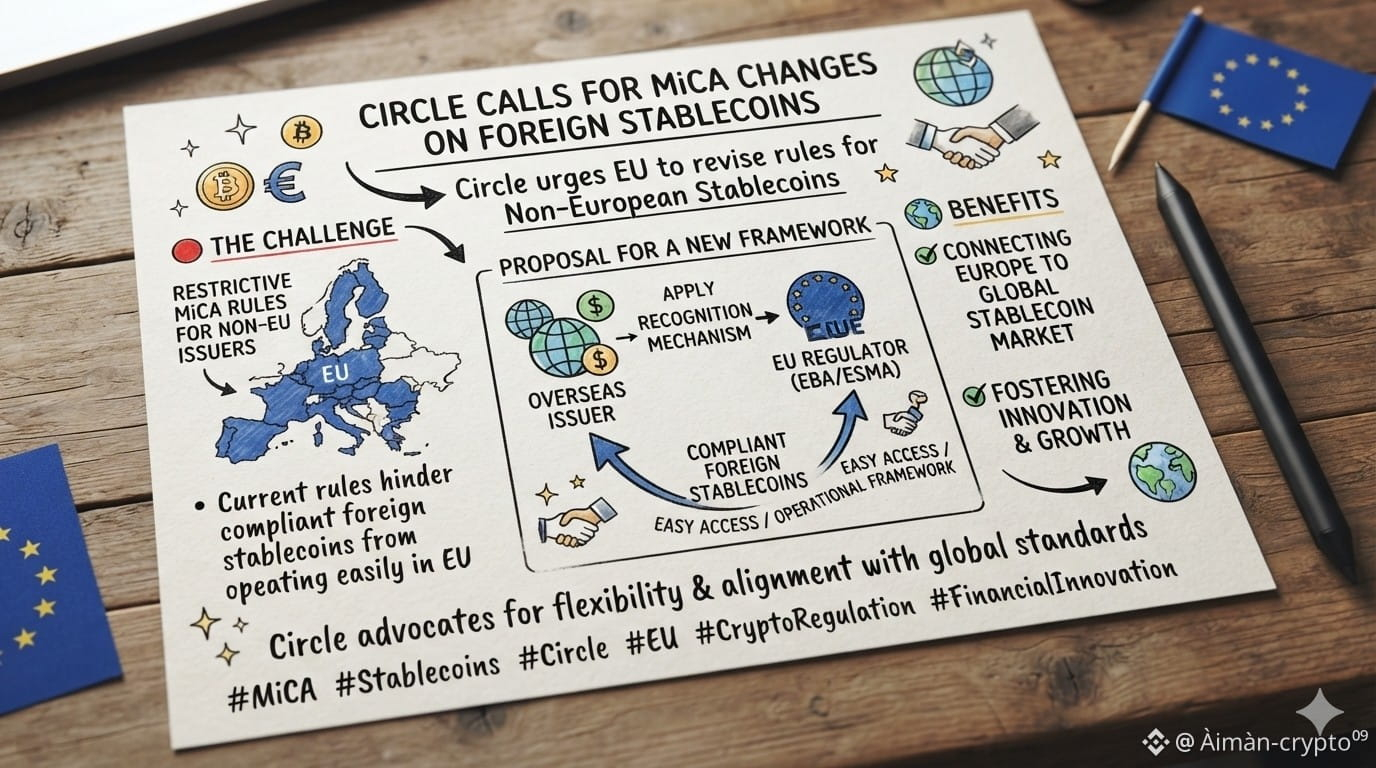
⚡ Circle Calls for MiCA Changes on Foreign Stablecoins
Circle is urging the EU to revise parts of its MiCA rules covering stablecoins issued outside Europe.
The company also proposed a recognition mechanism for overseas issuers, aiming to make it easier for compliant foreign stablecoins to operate in the EU.
🌍 A more flexible framework could help connect Europe with the growing global stablecoin market.
#Circle #MiCA #Stablecoins #Crypto #Eu
⚡ Circle Calls for MiCA Changes on Foreign Stablecoins
Circle is urging the EU to revise parts of its MiCA rules covering stablecoins issued outside Europe.
The company also proposed a recognition mechanism for overseas issuers, aiming to make it easier for compliant foreign stablecoins to operate in the EU.
🌍 A more flexible framework could help connect Europe with the growing global stablecoin market.
#Circle #MiCA #Stablecoins #Crypto #Eu
Circle is urging the EU to revise parts of its MiCA rules covering stablecoins issued outside Europe.
The company also proposed a recognition mechanism for overseas issuers, aiming to make it easier for compliant foreign stablecoins to operate in the EU.
🌍 A more flexible framework could help connect Europe with the growing global stablecoin market.
#Circle #MiCA #Stablecoins #Crypto #Eu
FaisalShehzad_BNB:
kanjoos
2
1
173
·
--
See translation
Stablecoins are quietly becoming the most important payment infrastructure built on crypto rails - and the market has barely priced this in.
While most attention stays on price action, stablecoin settlement volumes have been running at multi-trillion-dollar annual rates. USDT and USDC together process more daily transfer volume than many traditional payment networks. The difference? Settlement is near-instant, available 24/7, and crosses borders without correspondent banking delays.
For businesses operating in emerging markets, this is not a speculative bet - it is operational necessity. A small exporter in Southeast Asia settling an invoice in two minutes via stablecoin rails instead of waiting five business days for a wire transfer is a concrete productivity gain, not a thesis.
The regulatory tailwind is accelerating this. MiCA in Europe, the proposed US stablecoin framework, and Singapore MAS licensing regime are all moving in the same direction: treat stablecoins as regulated payment instruments, not unregulated crypto assets. That shift unlocks institutional issuers, bank-backed stablecoins, and enterprise treasury adoption.
The chains that win the stablecoin settlement race - low fees, fast finality, compliance-friendly tooling - are building durable, real-economy demand floors beneath their ecosystems.
$BNB $XRP
#Stablecoins #PaymentRails #CryptoAdoption #DeFi #BinanceSquare
Stablecoins are quietly becoming the most important payment infrastructure built on crypto rails - and the market has barely priced this in.
While most attention stays on price action, stablecoin settlement volumes have been running at multi-trillion-dollar annual rates. USDT and USDC together process more daily transfer volume than many traditional payment networks. The difference? Settlement is near-instant, available 24/7, and crosses borders without correspondent banking delays.
For businesses operating in emerging markets, this is not a speculative bet - it is operational necessity. A small exporter in Southeast Asia settling an invoice in two minutes via stablecoin rails instead of waiting five business days for a wire transfer is a concrete productivity gain, not a thesis.
The regulatory tailwind is accelerating this. MiCA in Europe, the proposed US stablecoin framework, and Singapore MAS licensing regime are all moving in the same direction: treat stablecoins as regulated payment instruments, not unregulated crypto assets. That shift unlocks institutional issuers, bank-backed stablecoins, and enterprise treasury adoption.
The chains that win the stablecoin settlement race - low fees, fast finality, compliance-friendly tooling - are building durable, real-economy demand floors beneath their ecosystems.
$BNB $XRP
#Stablecoins #PaymentRails #CryptoAdoption #DeFi #BinanceSquare
While most attention stays on price action, stablecoin settlement volumes have been running at multi-trillion-dollar annual rates. USDT and USDC together process more daily transfer volume than many traditional payment networks. The difference? Settlement is near-instant, available 24/7, and crosses borders without correspondent banking delays.
For businesses operating in emerging markets, this is not a speculative bet - it is operational necessity. A small exporter in Southeast Asia settling an invoice in two minutes via stablecoin rails instead of waiting five business days for a wire transfer is a concrete productivity gain, not a thesis.
The regulatory tailwind is accelerating this. MiCA in Europe, the proposed US stablecoin framework, and Singapore MAS licensing regime are all moving in the same direction: treat stablecoins as regulated payment instruments, not unregulated crypto assets. That shift unlocks institutional issuers, bank-backed stablecoins, and enterprise treasury adoption.
The chains that win the stablecoin settlement race - low fees, fast finality, compliance-friendly tooling - are building durable, real-economy demand floors beneath their ecosystems.
$BNB $XRP
#Stablecoins #PaymentRails #CryptoAdoption #DeFi #BinanceSquare
71

·
--
See translation
$USDC /$USDT Oct 4 - Why $19.85B volume matters?
Stablecoins = $1.00 (always)
But Oct 4 volume:
- USDC volume still $19B+ = whales NOT leaving
- USDT dominance 4.5% = people holding cash to buy dips
- Yesterday $10M USDC whale bought WLFI
Signal♨️: When stable volume high + BTC flat = BIG MOVE in 24-48h
{spot}(USDCUSDT)
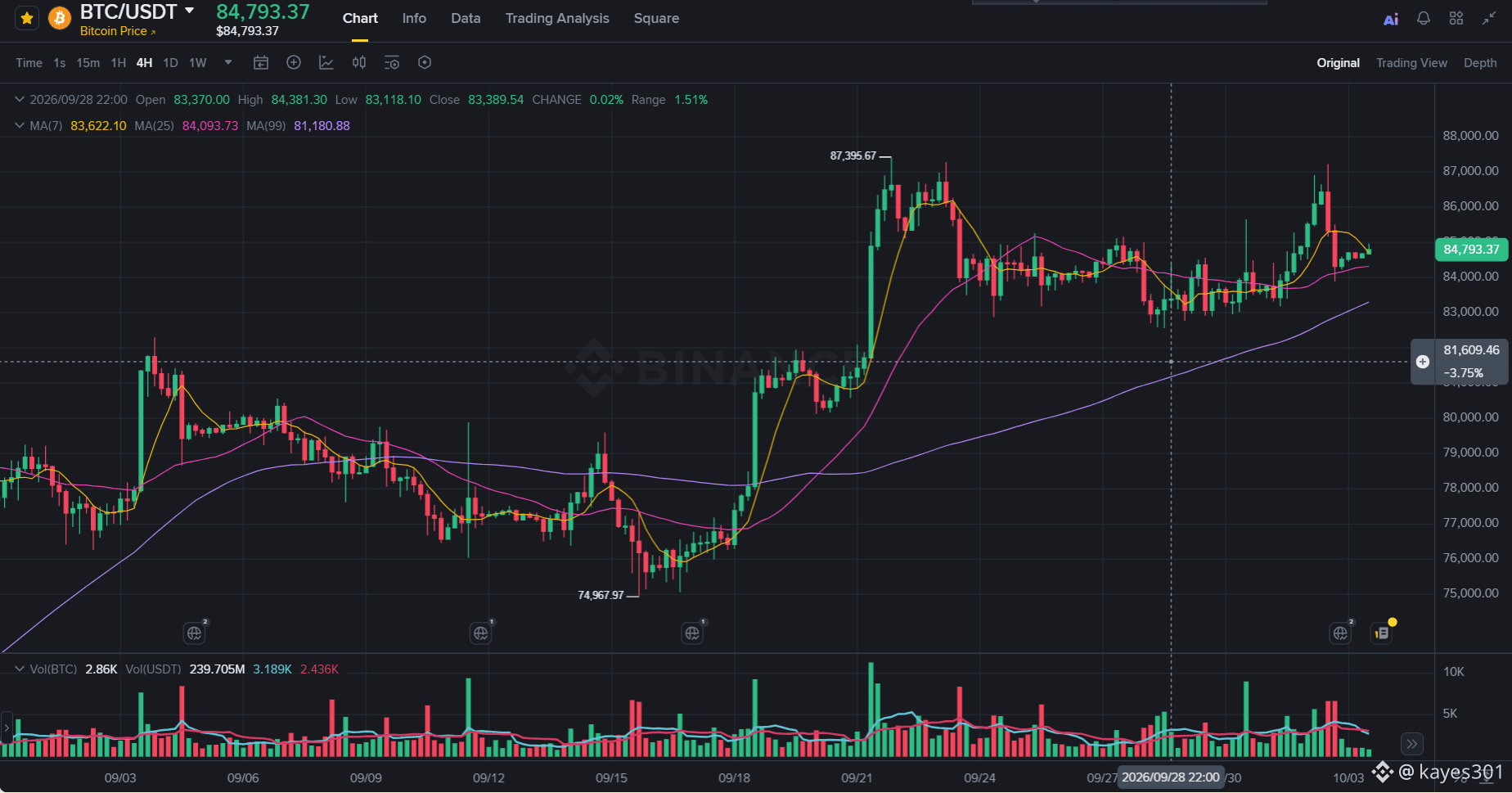
Last time: Oct 2-3 BTC $84K -> $86K
Next: $84,790 -> $87K?
Watch stablecoins, not just BTC.
#USDCTreasury #USDT。 #Stablecoins #WhaleAlert
$USDC /$USDT Oct 4 - Why $19.85B volume matters?
Stablecoins = $1.00 (always)
But Oct 4 volume:
- USDC volume still $19B+ = whales NOT leaving
- USDT dominance 4.5% = people holding cash to buy dips
- Yesterday $10M USDC whale bought WLFI
Signal♨️: When stable volume high + BTC flat = BIG MOVE in 24-48h
Last time: Oct 2-3 BTC $84K -> $86K
Next: $84,790 -> $87K?
Watch stablecoins, not just BTC.
#USDCTreasury #USDT。 #Stablecoins #WhaleAlert
Stablecoins = $1.00 (always)
But Oct 4 volume:
- USDC volume still $19B+ = whales NOT leaving
- USDT dominance 4.5% = people holding cash to buy dips
- Yesterday $10M USDC whale bought WLFI
Signal♨️: When stable volume high + BTC flat = BIG MOVE in 24-48h
Last time: Oct 2-3 BTC $84K -> $86K
Next: $84,790 -> $87K?
Watch stablecoins, not just BTC.
#USDCTreasury #USDT。 #Stablecoins #WhaleAlert
74

See translation
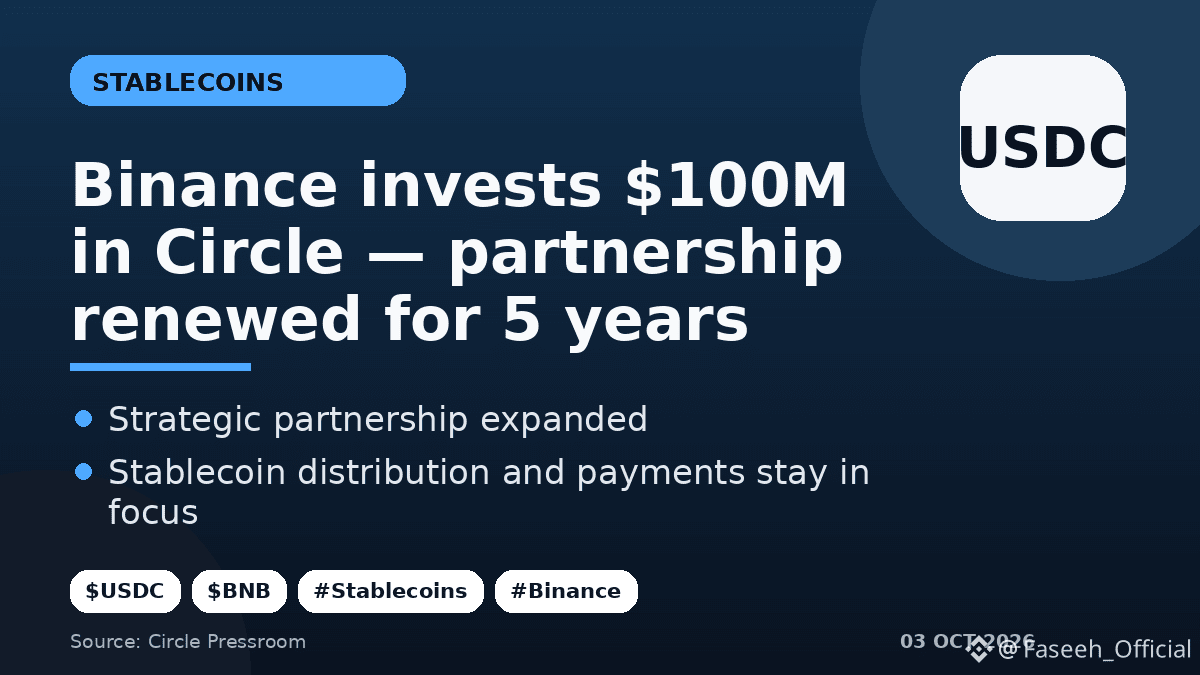
💵 STABLECOIN INFRASTRUCTURE: Circle says Binance invested $100M in Circle, expanded the strategic partnership and renewed their commercial agreement for five years. That puts $USDC distribution and stablecoin payments back in focus. $USDC $BNB #Stablecoins #USDC #Binance #CryptoNews
💵 STABLECOIN INFRASTRUCTURE: Circle says Binance invested $100M in Circle, expanded the strategic partnership and renewed their commercial agreement for five years. That puts $USDC distribution and stablecoin payments back in focus. $USDC $BNB #Stablecoins #USDC #Binance #CryptoNews
119

·
--
See translation
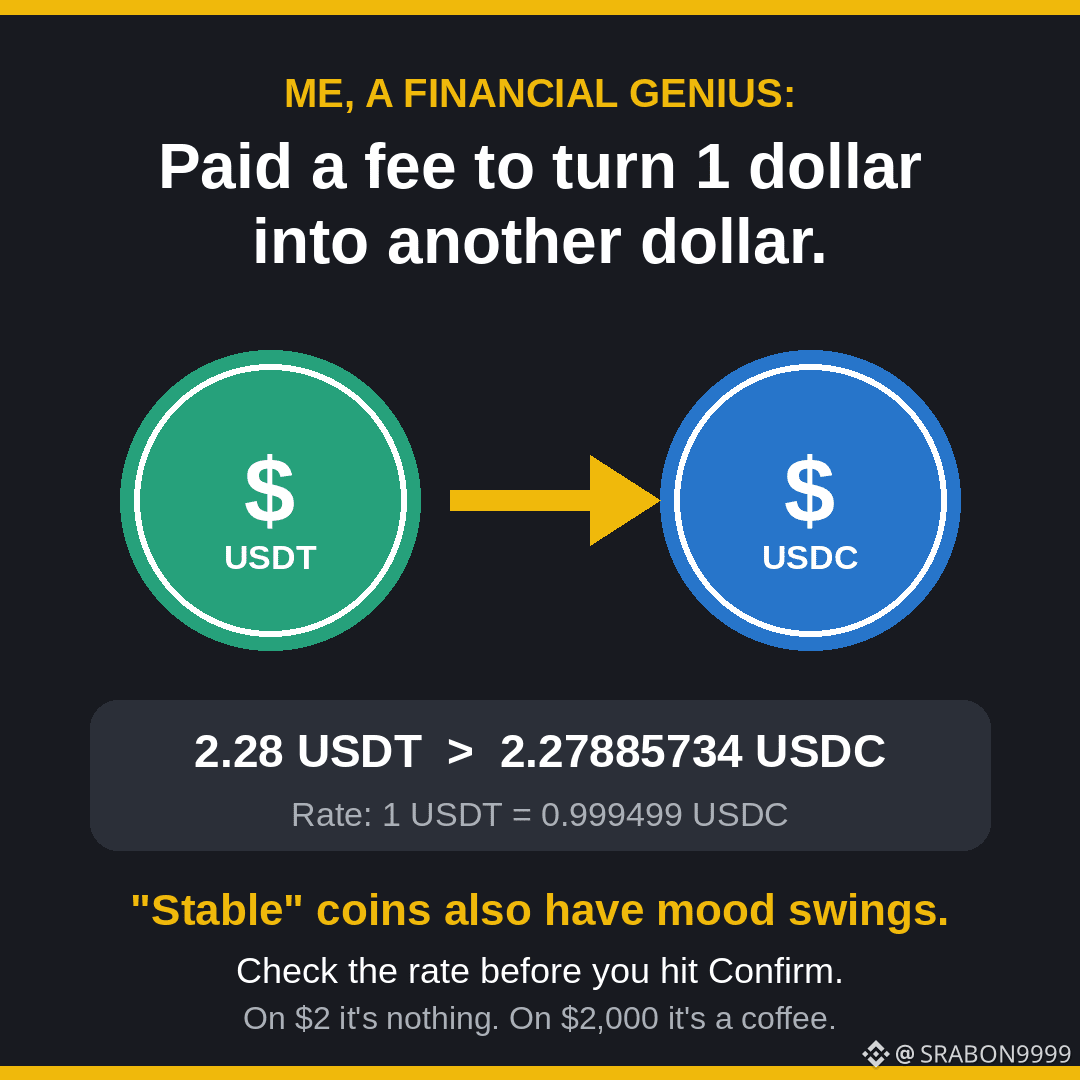
Paid 0.001 USD to turn 1 dollar into another dollar. Financial genius. 🤡💸
2.28 USDT → 2.27885734 USDC
"Stable" coins also have mood swings. 😅
💡 Check the rate before you hit Confirm. On $2 it's nothing, on $2,000 it's a coffee. ☕
Team USDT or Team USDC? 👇
#Binance #USDT #USDC✅ #Stablecoins
Paid 0.001 USD to turn 1 dollar into another dollar. Financial genius. 🤡💸
2.28 USDT → 2.27885734 USDC
"Stable" coins also have mood swings. 😅
💡 Check the rate before you hit Confirm. On $2 it's nothing, on $2,000 it's a coffee. ☕
Team USDT or Team USDC? 👇
#Binance #USDT #USDC✅ #Stablecoins
2.28 USDT → 2.27885734 USDC
"Stable" coins also have mood swings. 😅
💡 Check the rate before you hit Confirm. On $2 it's nothing, on $2,000 it's a coffee. ☕
Team USDT or Team USDC? 👇
#Binance #USDT #USDC✅ #Stablecoins
2
321
·
--
See translation
Stablecoin payment rails are quietly becoming the most important infrastructure in crypto — and most people are still missing it.
While traders focus on price action, a parallel financial system is being built. Cross-border stablecoin transfers now settle in seconds for fractions of a cent. A business in Southeast Asia can pay a supplier in Latin America without touching correspondent banking, SWIFT delays, or 3-5% FX spreads.
The numbers reflect this shift. Stablecoin transaction volume has consistently rivaled — and in some months exceeded — Visa settlement volumes. But unlike card rails, these transactions are programmable, composable, and permissionless.
Why does this matter for crypto assets? Because payment utility creates sticky demand floors. When stablecoins become the preferred settlement layer for real commerce, the underlying chains carrying that volume accrue lasting value. $BNB benefits from BNB Chain’s low-fee settlement. $SOL benefits from its speed and throughput advantages. $ETH benefits from the depth of its DeFi collateral ecosystem.
The thesis isn’t just “crypto as speculation” anymore. Payment rails are a utility moat. Chains that win the stablecoin routing wars will have structural demand that survives every bear market.
Watch where real commerce settles. That’s your long-term signal.
#Stablecoins #CryptoPayments #BNBChain #DeFi #CryptoInfrastructure
Stablecoin payment rails are quietly becoming the most important infrastructure in crypto — and most people are still missing it.
While traders focus on price action, a parallel financial system is being built. Cross-border stablecoin transfers now settle in seconds for fractions of a cent. A business in Southeast Asia can pay a supplier in Latin America without touching correspondent banking, SWIFT delays, or 3-5% FX spreads.
The numbers reflect this shift. Stablecoin transaction volume has consistently rivaled — and in some months exceeded — Visa settlement volumes. But unlike card rails, these transactions are programmable, composable, and permissionless.
Why does this matter for crypto assets? Because payment utility creates sticky demand floors. When stablecoins become the preferred settlement layer for real commerce, the underlying chains carrying that volume accrue lasting value. $BNB benefits from BNB Chain’s low-fee settlement. $SOL benefits from its speed and throughput advantages. $ETH benefits from the depth of its DeFi collateral ecosystem.
The thesis isn’t just “crypto as speculation” anymore. Payment rails are a utility moat. Chains that win the stablecoin routing wars will have structural demand that survives every bear market.
Watch where real commerce settles. That’s your long-term signal.
#Stablecoins #CryptoPayments #BNBChain #DeFi #CryptoInfrastructure
While traders focus on price action, a parallel financial system is being built. Cross-border stablecoin transfers now settle in seconds for fractions of a cent. A business in Southeast Asia can pay a supplier in Latin America without touching correspondent banking, SWIFT delays, or 3-5% FX spreads.
The numbers reflect this shift. Stablecoin transaction volume has consistently rivaled — and in some months exceeded — Visa settlement volumes. But unlike card rails, these transactions are programmable, composable, and permissionless.
Why does this matter for crypto assets? Because payment utility creates sticky demand floors. When stablecoins become the preferred settlement layer for real commerce, the underlying chains carrying that volume accrue lasting value. $BNB benefits from BNB Chain’s low-fee settlement. $SOL benefits from its speed and throughput advantages. $ETH benefits from the depth of its DeFi collateral ecosystem.
The thesis isn’t just “crypto as speculation” anymore. Payment rails are a utility moat. Chains that win the stablecoin routing wars will have structural demand that survives every bear market.
Watch where real commerce settles. That’s your long-term signal.
#Stablecoins #CryptoPayments #BNBChain #DeFi #CryptoInfrastructure
36

·
--
See translation
Tether just brought USDT back to the Bitcoin network after more than a decade away, using Lightning and RGB, backed by a $7.5M seed round Tether co-led.
I remember when stablecoins on Bitcoin barely worked. Lightning has come a long way since then.
Do you think stablecoins belong on Bitcoin's base layer, or is that better left to Ethereum and other smart contract chains? 🤔
$BTC $USDT #Stablecoins #Lightning #bitcoin
Not financial advice.
{spot}(BTCUSDT)
Tether just brought USDT back to the Bitcoin network after more than a decade away, using Lightning and RGB, backed by a $7.5M seed round Tether co-led.
I remember when stablecoins on Bitcoin barely worked. Lightning has come a long way since then.
Do you think stablecoins belong on Bitcoin's base layer, or is that better left to Ethereum and other smart contract chains? 🤔
$BTC $USDT #Stablecoins #Lightning #bitcoin
Not financial advice.
I remember when stablecoins on Bitcoin barely worked. Lightning has come a long way since then.
Do you think stablecoins belong on Bitcoin's base layer, or is that better left to Ethereum and other smart contract chains? 🤔
$BTC $USDT #Stablecoins #Lightning #bitcoin
Not financial advice.
93

See translation
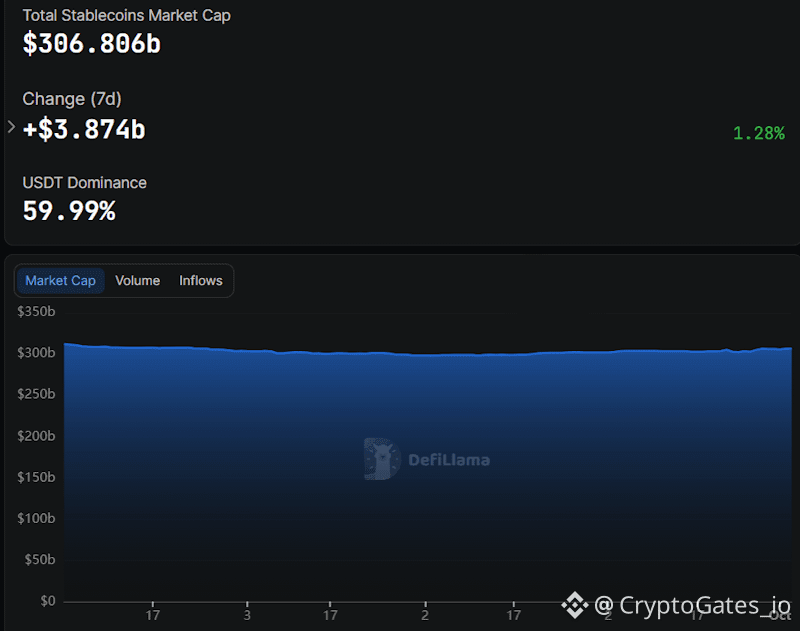
Stablecoins: total supply at $306.8b, +$3.9b (+1.28%) over 7 days.
USDT dominance at 59.99%.
Read: supply has moved in a narrow range for about three months. Growth is modest, not accelerating, which can suggest capital is present but waiting rather than entering aggressively.
Execution angle: when liquidity sits on the sidelines, the deployment method matters more than timing one entry. Staggered DCA entries with defined size and spacing can be backtested against historical drawdowns before capital goes live.
Backtest the plan first...
#Stablecoins #DCA #DryPowder
Stablecoins: total supply at $306.8b, +$3.9b (+1.28%) over 7 days.
USDT dominance at 59.99%.
Read: supply has moved in a narrow range for about three months. Growth is modest, not accelerating, which can suggest capital is present but waiting rather than entering aggressively.
Execution angle: when liquidity sits on the sidelines, the deployment method matters more than timing one entry. Staggered DCA entries with defined size and spacing can be backtested against historical drawdowns before capital goes live.
Backtest the plan first...
#Stablecoins #DCA #DryPowder
USDT dominance at 59.99%.
Read: supply has moved in a narrow range for about three months. Growth is modest, not accelerating, which can suggest capital is present but waiting rather than entering aggressively.
Execution angle: when liquidity sits on the sidelines, the deployment method matters more than timing one entry. Staggered DCA entries with defined size and spacing can be backtested against historical drawdowns before capital goes live.
Backtest the plan first...
#Stablecoins #DCA #DryPowder
30
·
--
See translation
Stablecoin supply growth is one of the most reliable leading indicators traders overlook.
When the total circulating supply of USDT and USDC expands rapidly — especially on-chain — it signals dry powder accumulating on the sidelines. Capital enters the crypto ecosystem first as stablecoins before rotating into risk assets. A surge in stablecoin supply often precedes $BTC and $ETH price appreciation by weeks, not days.
The reverse is equally telling. When stablecoin supply contracts — redemptions outpace minting — it suggests capital is exiting the ecosystem entirely, not just rotating. That is a structurally bearish signal regardless of short-term price action.
Stablecoin velocity adds another layer. High velocity (frequent movement on-chain) indicates active trading and deployment into DeFi protocols, DEXs, and lending markets. Low velocity despite high supply means capital is parked, waiting for a catalyst.
The framework: watch stablecoin supply growth rate plus exchange inflows of stablecoins together. Supply rising plus exchange inflows rising means buying pressure is loading. Supply rising plus exchange inflows falling signals accumulation off-exchange — often the more bullish setup.
Most retail traders only watch price. Smart money watches where the liquidity is building before the move.
Track the supply. Follow the dry powder.
#Stablecoins #CryptoMarkets #OnChainData #DeFi #BinanceSquare
Stablecoin supply growth is one of the most reliable leading indicators traders overlook.
When the total circulating supply of USDT and USDC expands rapidly — especially on-chain — it signals dry powder accumulating on the sidelines. Capital enters the crypto ecosystem first as stablecoins before rotating into risk assets. A surge in stablecoin supply often precedes $BTC and $ETH price appreciation by weeks, not days.
The reverse is equally telling. When stablecoin supply contracts — redemptions outpace minting — it suggests capital is exiting the ecosystem entirely, not just rotating. That is a structurally bearish signal regardless of short-term price action.
Stablecoin velocity adds another layer. High velocity (frequent movement on-chain) indicates active trading and deployment into DeFi protocols, DEXs, and lending markets. Low velocity despite high supply means capital is parked, waiting for a catalyst.
The framework: watch stablecoin supply growth rate plus exchange inflows of stablecoins together. Supply rising plus exchange inflows rising means buying pressure is loading. Supply rising plus exchange inflows falling signals accumulation off-exchange — often the more bullish setup.
Most retail traders only watch price. Smart money watches where the liquidity is building before the move.
Track the supply. Follow the dry powder.
#Stablecoins #CryptoMarkets #OnChainData #DeFi #BinanceSquare
When the total circulating supply of USDT and USDC expands rapidly — especially on-chain — it signals dry powder accumulating on the sidelines. Capital enters the crypto ecosystem first as stablecoins before rotating into risk assets. A surge in stablecoin supply often precedes $BTC and $ETH price appreciation by weeks, not days.
The reverse is equally telling. When stablecoin supply contracts — redemptions outpace minting — it suggests capital is exiting the ecosystem entirely, not just rotating. That is a structurally bearish signal regardless of short-term price action.
Stablecoin velocity adds another layer. High velocity (frequent movement on-chain) indicates active trading and deployment into DeFi protocols, DEXs, and lending markets. Low velocity despite high supply means capital is parked, waiting for a catalyst.
The framework: watch stablecoin supply growth rate plus exchange inflows of stablecoins together. Supply rising plus exchange inflows rising means buying pressure is loading. Supply rising plus exchange inflows falling signals accumulation off-exchange — often the more bullish setup.
Most retail traders only watch price. Smart money watches where the liquidity is building before the move.
Track the supply. Follow the dry powder.
#Stablecoins #CryptoMarkets #OnChainData #DeFi #BinanceSquare
36

See translation
If you're still ignoring Bitcoin as a settlement rail while parking everything on cheaper chains, stop now.
You've watched $USDT liquidity chase low fees to Tron and Ethereum, then gotten wrecked by congestion or missed native collateral plays because Bitcoin's rails were too clunky. That FOMO into the next easier chain has cost people real money in fees and opportunity.
Tether's $184 billion $USDT is coming back to Bitcoin this month. Utexo, backed by Tether, secured a license and plans Bitcoin-native USDT with private transfers, direct $BTC/USDT swaps, and loans using native Bitcoin as collateral. This is the same migration pattern we saw when stables flooded Tron to escape Ethereum gas, except now the original chain is trying to reclaim the throne.
For years the path of least resistance won and $ETH plus Tron ate the lunch. Bitcoin stayed digital gold while dollars settled elsewhere. Tether putting weight behind this feels different from past Bitcoin DeFi experiments that fizzled without the actual stablecoin issuer involved.
Where do you think this goes if native dollar rails actually land on Bitcoin?
#Bitcoin #USDT #Stablecoins
If you're still ignoring Bitcoin as a settlement rail while parking everything on cheaper chains, stop now.
You've watched $USDT liquidity chase low fees to Tron and Ethereum, then gotten wrecked by congestion or missed native collateral plays because Bitcoin's rails were too clunky. That FOMO into the next easier chain has cost people real money in fees and opportunity.
Tether's $184 billion $USDT is coming back to Bitcoin this month. Utexo, backed by Tether, secured a license and plans Bitcoin-native USDT with private transfers, direct $BTC /USDT swaps, and loans using native Bitcoin as collateral. This is the same migration pattern we saw when stables flooded Tron to escape Ethereum gas, except now the original chain is trying to reclaim the throne.
For years the path of least resistance won and $ETH plus Tron ate the lunch. Bitcoin stayed digital gold while dollars settled elsewhere. Tether putting weight behind this feels different from past Bitcoin DeFi experiments that fizzled without the actual stablecoin issuer involved.
Where do you think this goes if native dollar rails actually land on Bitcoin?
#Bitcoin #USDT #Stablecoins
You've watched $USDT liquidity chase low fees to Tron and Ethereum, then gotten wrecked by congestion or missed native collateral plays because Bitcoin's rails were too clunky. That FOMO into the next easier chain has cost people real money in fees and opportunity.
Tether's $184 billion $USDT is coming back to Bitcoin this month. Utexo, backed by Tether, secured a license and plans Bitcoin-native USDT with private transfers, direct $BTC /USDT swaps, and loans using native Bitcoin as collateral. This is the same migration pattern we saw when stables flooded Tron to escape Ethereum gas, except now the original chain is trying to reclaim the throne.
For years the path of least resistance won and $ETH plus Tron ate the lunch. Bitcoin stayed digital gold while dollars settled elsewhere. Tether putting weight behind this feels different from past Bitcoin DeFi experiments that fizzled without the actual stablecoin issuer involved.
Where do you think this goes if native dollar rails actually land on Bitcoin?
#Bitcoin #USDT #Stablecoins
20
See translation
Picture this: years ago, we watched stablecoin volume abandon the original network because moving dollars on smart contract chains was simply faster and cheaper.
For most traders, that migration meant dealing with risky bridges, wrapped tokens, and fragmented liquidity. You had to leave the most secure network just to manage risk or take out a simple dollar loan.
Tether is now shifting that balance by backing Utexo to bring native $USDT settlement back to Bitcoin this month. Armed with over $184B in market supply, the project introduces licensed direct swaps, private transfers, and dollar lending collateralized directly by native $BTC.
Historically, networks like Tron absorbed daily transaction volume while Ethereum captured complex trading pairs, leaving Bitcoin primarily as a passive reserve asset. Integrating native dollar rails allows the network to compete directly with smart contract platforms without relying on custodial wrappers.
Where do you think liquidity flows once native Bitcoin dollars go live?
#Bitcoin #Tether #Stablecoins
Picture this: years ago, we watched stablecoin volume abandon the original network because moving dollars on smart contract chains was simply faster and cheaper.
For most traders, that migration meant dealing with risky bridges, wrapped tokens, and fragmented liquidity. You had to leave the most secure network just to manage risk or take out a simple dollar loan.
Tether is now shifting that balance by backing Utexo to bring native $USDT settlement back to Bitcoin this month. Armed with over $184B in market supply, the project introduces licensed direct swaps, private transfers, and dollar lending collateralized directly by native $BTC .
Historically, networks like Tron absorbed daily transaction volume while Ethereum captured complex trading pairs, leaving Bitcoin primarily as a passive reserve asset. Integrating native dollar rails allows the network to compete directly with smart contract platforms without relying on custodial wrappers.
Where do you think liquidity flows once native Bitcoin dollars go live?
#Bitcoin #Tether #Stablecoins
For most traders, that migration meant dealing with risky bridges, wrapped tokens, and fragmented liquidity. You had to leave the most secure network just to manage risk or take out a simple dollar loan.
Tether is now shifting that balance by backing Utexo to bring native $USDT settlement back to Bitcoin this month. Armed with over $184B in market supply, the project introduces licensed direct swaps, private transfers, and dollar lending collateralized directly by native $BTC .
Historically, networks like Tron absorbed daily transaction volume while Ethereum captured complex trading pairs, leaving Bitcoin primarily as a passive reserve asset. Integrating native dollar rails allows the network to compete directly with smart contract platforms without relying on custodial wrappers.
Where do you think liquidity flows once native Bitcoin dollars go live?
#Bitcoin #Tether #Stablecoins

7
See translation
⚡ Mastercard Moves Into Stablecoins!
Mastercard plans to integrate Open USD (OUSD) through BVNK, its stablecoin infrastructure business.
🏦 The move could help financial institutions and partners access OUSD more easily, bringing stablecoins closer to traditional finance.
🌍 Another step toward wider stablecoin adoption and real-world payment use cases.
#Mastercard #OUSD #Stablecoins #Crypto #Web3
⚡ Mastercard Moves Into Stablecoins!
Mastercard plans to integrate Open USD (OUSD) through BVNK, its stablecoin infrastructure business.
🏦 The move could help financial institutions and partners access OUSD more easily, bringing stablecoins closer to traditional finance.
🌍 Another step toward wider stablecoin adoption and real-world payment use cases.
#Mastercard #OUSD #Stablecoins #Crypto #Web3
Mastercard plans to integrate Open USD (OUSD) through BVNK, its stablecoin infrastructure business.
🏦 The move could help financial institutions and partners access OUSD more easily, bringing stablecoins closer to traditional finance.
🌍 Another step toward wider stablecoin adoption and real-world payment use cases.
#Mastercard #OUSD #Stablecoins #Crypto #Web3

2
177


See translation
Stablecoins are the most used product in crypto and the least understood.
What they are: digital dollars. 1 USDT or 1 USDC is meant to equal 1 US dollar, backed by cash and short term treasuries held by the issuer.
Why they matter: Chainalysis says stablecoins now make up 96% of person to person crypto transfers within countries. Cross border stablecoin payments grew 77% in a year. This is real money movement, not speculation.
What changed this month: the Fed proposed rules for payment stablecoins. Regulation sounds boring, but it is exactly what lets banks and businesses use these rails at scale.
Risk to remember: a stablecoin is only as good as its reserves. Stick to the large, audited ones. A 20% yield offer on a "stablecoin" is the oldest trap in the book.
Do you use stablecoins for savings, trading, or payments?
#FedProposesPaymentStablecoinRules #Stablecoins #CryptoEducation $USDC $BTC
Stablecoins are the most used product in crypto and the least understood.
What they are: digital dollars. 1 USDT or 1 USDC is meant to equal 1 US dollar, backed by cash and short term treasuries held by the issuer.
Why they matter: Chainalysis says stablecoins now make up 96% of person to person crypto transfers within countries. Cross border stablecoin payments grew 77% in a year. This is real money movement, not speculation.
What changed this month: the Fed proposed rules for payment stablecoins. Regulation sounds boring, but it is exactly what lets banks and businesses use these rails at scale.
Risk to remember: a stablecoin is only as good as its reserves. Stick to the large, audited ones. A 20% yield offer on a "stablecoin" is the oldest trap in the book.
Do you use stablecoins for savings, trading, or payments?
#FedProposesPaymentStablecoinRules #Stablecoins #CryptoEducation $USDC $BTC
What they are: digital dollars. 1 USDT or 1 USDC is meant to equal 1 US dollar, backed by cash and short term treasuries held by the issuer.
Why they matter: Chainalysis says stablecoins now make up 96% of person to person crypto transfers within countries. Cross border stablecoin payments grew 77% in a year. This is real money movement, not speculation.
What changed this month: the Fed proposed rules for payment stablecoins. Regulation sounds boring, but it is exactly what lets banks and businesses use these rails at scale.
Risk to remember: a stablecoin is only as good as its reserves. Stick to the large, audited ones. A 20% yield offer on a "stablecoin" is the oldest trap in the book.
Do you use stablecoins for savings, trading, or payments?
#FedProposesPaymentStablecoinRules #Stablecoins #CryptoEducation $USDC $BTC
Homebizchamp:
Yes sir it's happening around us. I'm involved with a project of Deobanking.tech ng by founder of USDT. Let's discuss, how your community can be part of this project and collaborate. @myhomebiz83 telegram
1
2
413
·
--
See translation
Stablecoins are quietly becoming the most important financial infrastructure crypto has ever built.
The narrative used to be about trading and speculation. The reality in 2026 is different: stablecoins are being used to pay suppliers across borders, settle invoices between businesses, and move payroll across jurisdictions — all without touching a correspondent bank.
The numbers reflect this shift. Stablecoin transaction volume now rivals major card networks on an annualized basis. But unlike card payments, settlement is final in seconds, fees are fractions of a cent, and no counterparty can reverse the transaction or freeze funds mid-transfer.
This matters for $ETH and $BNB because stablecoin payment growth validates the underlying blockchains as settlement layers. Every dollar moved over Ethereum or BNB Chain is another data point proving the infrastructure works at scale.
For $XRP, the stablecoin payment thesis reinforces the broader fast-finality-for-cross-border-value-transfer argument that has driven its institutional adoption story.
The real unlock comes when merchants accept stablecoins natively — not as a curiosity but as the default. At that point, the on-ramp/off-ramp friction disappears and crypto becomes the invisible layer underneath everyday commerce.
Payment rails are where the next wave of durable adoption gets built.
#Stablecoins #CryptoPayments #BNBChain #DeFi #CryptoAdoption
Stablecoins are quietly becoming the most important financial infrastructure crypto has ever built.
The narrative used to be about trading and speculation. The reality in 2026 is different: stablecoins are being used to pay suppliers across borders, settle invoices between businesses, and move payroll across jurisdictions — all without touching a correspondent bank.
The numbers reflect this shift. Stablecoin transaction volume now rivals major card networks on an annualized basis. But unlike card payments, settlement is final in seconds, fees are fractions of a cent, and no counterparty can reverse the transaction or freeze funds mid-transfer.
This matters for $ETH and $BNB because stablecoin payment growth validates the underlying blockchains as settlement layers. Every dollar moved over Ethereum or BNB Chain is another data point proving the infrastructure works at scale.
For $XRP , the stablecoin payment thesis reinforces the broader fast-finality-for-cross-border-value-transfer argument that has driven its institutional adoption story.
The real unlock comes when merchants accept stablecoins natively — not as a curiosity but as the default. At that point, the on-ramp/off-ramp friction disappears and crypto becomes the invisible layer underneath everyday commerce.
Payment rails are where the next wave of durable adoption gets built.
#Stablecoins #CryptoPayments #BNBChain #DeFi #CryptoAdoption
The narrative used to be about trading and speculation. The reality in 2026 is different: stablecoins are being used to pay suppliers across borders, settle invoices between businesses, and move payroll across jurisdictions — all without touching a correspondent bank.
The numbers reflect this shift. Stablecoin transaction volume now rivals major card networks on an annualized basis. But unlike card payments, settlement is final in seconds, fees are fractions of a cent, and no counterparty can reverse the transaction or freeze funds mid-transfer.
This matters for $ETH and $BNB because stablecoin payment growth validates the underlying blockchains as settlement layers. Every dollar moved over Ethereum or BNB Chain is another data point proving the infrastructure works at scale.
For $XRP , the stablecoin payment thesis reinforces the broader fast-finality-for-cross-border-value-transfer argument that has driven its institutional adoption story.
The real unlock comes when merchants accept stablecoins natively — not as a curiosity but as the default. At that point, the on-ramp/off-ramp friction disappears and crypto becomes the invisible layer underneath everyday commerce.
Payment rails are where the next wave of durable adoption gets built.
#Stablecoins #CryptoPayments #BNBChain #DeFi #CryptoAdoption
75

See translation
In the subtle refinement of stablecoin infrastructure, dollar-backed tokens continue embedding themselves into global settlement and treasury operations. As regulatory frameworks mature and on-chain volumes persist, these instruments demonstrate resilience as practical financial rails. Echoing the 2021 payments expansion that normalized digital dollars, this maturation carries a 68% probability of deeper integration through the season if institutional use cases and cross-border accessibility keep advancing.
$USDC $USD1 $RLUSD #RadaRI121 #CoinVahini #Stablecoins #USDC
In the subtle refinement of stablecoin infrastructure, dollar-backed tokens continue embedding themselves into global settlement and treasury operations. As regulatory frameworks mature and on-chain volumes persist, these instruments demonstrate resilience as practical financial rails. Echoing the 2021 payments expansion that normalized digital dollars, this maturation carries a 68% probability of deeper integration through the season if institutional use cases and cross-border accessibility keep advancing.
$USDC $USD1 $RLUSD #RadaRI121 #CoinVahini #Stablecoins #USDC
$USDC $USD1 $RLUSD #RadaRI121 #CoinVahini #Stablecoins #USDC
125

·
--
See translation
Central banks aligning directly with a private crypto issuer on liquidity is almost unheard of, yet that's exactly what reports say the ECB is considering.
Traders lose sleep over sudden liquidity crunches that wipe out positions overnight, especially when regulators get involved and nobody saw it coming.
The ECB and some national central banks are reportedly open to treating this more like traditional liquidity support. Unusual because it puts them in alignment with the issuer rather than just watching from the sidelines.
That sounds helpful on paper but the warning signs are there. If they get skin in the game they will want more say over how reserves work and when redemptions happen. $USDT has survived plenty of tests already, yet adding official backing could still backfire if the terms change overnight.
Same goes for $USDC flows in Europe. A misstep here might even pressure $BTC if traders start questioning the whole stablecoin layer.
What's your take on whether this helps or just adds another layer of risk?
#CryptoRegulation #Stablecoins #ECB
Central banks aligning directly with a private crypto issuer on liquidity is almost unheard of, yet that's exactly what reports say the ECB is considering.
Traders lose sleep over sudden liquidity crunches that wipe out positions overnight, especially when regulators get involved and nobody saw it coming.
The ECB and some national central banks are reportedly open to treating this more like traditional liquidity support. Unusual because it puts them in alignment with the issuer rather than just watching from the sidelines.
That sounds helpful on paper but the warning signs are there. If they get skin in the game they will want more say over how reserves work and when redemptions happen. $USDT has survived plenty of tests already, yet adding official backing could still backfire if the terms change overnight.
Same goes for $USDC flows in Europe. A misstep here might even pressure $BTC if traders start questioning the whole stablecoin layer.
What's your take on whether this helps or just adds another layer of risk?
#CryptoRegulation #Stablecoins #ECB
Traders lose sleep over sudden liquidity crunches that wipe out positions overnight, especially when regulators get involved and nobody saw it coming.
The ECB and some national central banks are reportedly open to treating this more like traditional liquidity support. Unusual because it puts them in alignment with the issuer rather than just watching from the sidelines.
That sounds helpful on paper but the warning signs are there. If they get skin in the game they will want more say over how reserves work and when redemptions happen. $USDT has survived plenty of tests already, yet adding official backing could still backfire if the terms change overnight.
Same goes for $USDC flows in Europe. A misstep here might even pressure $BTC if traders start questioning the whole stablecoin layer.
What's your take on whether this helps or just adds another layer of risk?
#CryptoRegulation #Stablecoins #ECB

16
See translation
everyone thinks $USDC is basically just t-bills you can spend, but actually the current rules make circle hold 30-60% in bank deposits that can go to zero like they did last time.
that's the real pain. you sit in stables waiting for a better entry on alts and then some bank fails, $USDC depegs hard and you're left holding the bag or panic selling at the worst time.
circle is trying to scrap those 30% / 60% bank deposit floors and swap them for a 1-5 day liquidity test. they also want the 35% cap on one country's government bonds lifted so a dollar coin like $USDC can hold mostly u.s. treasuries instead of being forced into banks.
ngl if this goes through it changes the risk profile completely. right now some of us keep a split with $USDT and $DAI just to not get wrecked by the next svb style event.
anyone else seeing this ser?
#USDC #stablecoins #crypto
everyone thinks $USDC is basically just t-bills you can spend, but actually the current rules make circle hold 30-60% in bank deposits that can go to zero like they did last time.
that's the real pain. you sit in stables waiting for a better entry on alts and then some bank fails, $USDC depegs hard and you're left holding the bag or panic selling at the worst time.
circle is trying to scrap those 30% / 60% bank deposit floors and swap them for a 1-5 day liquidity test. they also want the 35% cap on one country's government bonds lifted so a dollar coin like $USDC can hold mostly u.s. treasuries instead of being forced into banks.
ngl if this goes through it changes the risk profile completely. right now some of us keep a split with $USDT and $DAI just to not get wrecked by the next svb style event.
anyone else seeing this ser?
#USDC #stablecoins #crypto
that's the real pain. you sit in stables waiting for a better entry on alts and then some bank fails, $USDC depegs hard and you're left holding the bag or panic selling at the worst time.
circle is trying to scrap those 30% / 60% bank deposit floors and swap them for a 1-5 day liquidity test. they also want the 35% cap on one country's government bonds lifted so a dollar coin like $USDC can hold mostly u.s. treasuries instead of being forced into banks.
ngl if this goes through it changes the risk profile completely. right now some of us keep a split with $USDT and $DAI just to not get wrecked by the next svb style event.
anyone else seeing this ser?
#USDC #stablecoins #crypto

7
Log in to explore more content
Join global crypto users on Binance Square
⚡️ Get latest and useful information about crypto.
💬 Trusted by the world’s largest crypto exchange.
👍 Discover real insights from verified creators.
Email / Phone number
Trending Topics
1
#SECHaltsCryptoETFReviewsAmidFundingLapse
62,405 views
697 Discussing
2
#ZcashETFPostsFirstWeeklyOutflow$93.6M
65,491 views
203 Discussing
3
#GreekPoliceBustCryptoScamRingArrest17
219,228 views
1,553 Discussing
4
#BitcoinRejectedAt$87K
170,923 views
258 Discussing
5
#FedOctoberRateHikeOddsFallTo17%
239,948 views
1,720 Discussing
6
#NvidiaHitsRecordHighUp2.4%
168,483 views
1,204 Discussing
7
#CanaryFilesAmendedS1ForPEPEETF
49,977 views
802 Discussing
8
#BitcoinParesGainsAfterRallyTo$86.5K
59,904 views
177 Discussing
9
#CerebrasSinksNearly20%OnReportNvidiaToPowerOpenAI
160,799 views
1,402 Discussing
10
#SECProposesCryptoCustodyRules
220,881 views
1,736 Discussing