

#web3security
web3security
608,159 views
1,274 Discussing
Hot
Latest

2. ⚡ Analyse : Pourquoi la sécurité des agents IA (AI Agents) devient essentielle en Web3
Titre : Agents IA & Smart Contracts : La nouvelle frontière de la sécurité Web3 🤖🔒
Contenu :
L'intégration des agents autonomes basés sur l'IA dans l'écosystème crypto ouvre des perspectives immenses (trading automatisé, gestion de trésorerie DeFi, exécution de tâches cross-chain). Cependant, elle introduit également de nouveaux défis.
📌 Les enjeux clés de contrôle :
Gestion des clés privées (KEYLESS / Clés déléguées) : Donner des permissions d'exécution sans exposer les clés maîtresses.
Limites de transactions : Configurer des garde-fous sur les smart contracts pour empêcher des exécutions erronées lors de pics de volatilité.
Vérification d'identité distribuée : S'assurer que chaque agent IA respecte les standards de sécurité établis.
L'automatisation intelligente doit toujours s'accompagner d'une gouvernance stricte et de protocoles de gestion des risques rigoureux.
#AIAgents #Web3Security #CryptoTech #BinanceSquare #TechInnovation @Square-Creator-df2667927
2. ⚡ Analyse : Pourquoi la sécurité des agents IA (AI Agents) devient essentielle en Web3
Titre : Agents IA & Smart Contracts : La nouvelle frontière de la sécurité Web3 🤖🔒
Contenu :
L'intégration des agents autonomes basés sur l'IA dans l'écosystème crypto ouvre des perspectives immenses (trading automatisé, gestion de trésorerie DeFi, exécution de tâches cross-chain). Cependant, elle introduit également de nouveaux défis.
📌 Les enjeux clés de contrôle :
Gestion des clés privées (KEYLESS / Clés déléguées) : Donner des permissions d'exécution sans exposer les clés maîtresses.
Limites de transactions : Configurer des garde-fous sur les smart contracts pour empêcher des exécutions erronées lors de pics de volatilité.
Vérification d'identité distribuée : S'assurer que chaque agent IA respecte les standards de sécurité établis.
L'automatisation intelligente doit toujours s'accompagner d'une gouvernance stricte et de protocoles de gestion des risques rigoureux.
#AIAgents #Web3Security #CryptoTech #BinanceSquare #TechInnovation @Mubarak
Titre : Agents IA & Smart Contracts : La nouvelle frontière de la sécurité Web3 🤖🔒
Contenu :
L'intégration des agents autonomes basés sur l'IA dans l'écosystème crypto ouvre des perspectives immenses (trading automatisé, gestion de trésorerie DeFi, exécution de tâches cross-chain). Cependant, elle introduit également de nouveaux défis.
📌 Les enjeux clés de contrôle :
Gestion des clés privées (KEYLESS / Clés déléguées) : Donner des permissions d'exécution sans exposer les clés maîtresses.
Limites de transactions : Configurer des garde-fous sur les smart contracts pour empêcher des exécutions erronées lors de pics de volatilité.
Vérification d'identité distribuée : S'assurer que chaque agent IA respecte les standards de sécurité établis.
L'automatisation intelligente doit toujours s'accompagner d'une gouvernance stricte et de protocoles de gestion des risques rigoureux.
#AIAgents #Web3Security #CryptoTech #BinanceSquare #TechInnovation @Mubarak
62

🚨 CRITICAL CONTRACT VULNERABILITY THREATENS HISTORICAL $ETH NFT APPROVALS ACROSS MAGIC EDEN! ⚠️
🔍 A known exploit in Limit Break's Payment Processor is putting legacy EVM marketplace approvals at risk across Ethereum, Polygon, and Base. Any wallet that interacted with Magic Eden listings between February and October 2024 could have open permissions susceptible to malicious drains.
💡 Security hygiene is non-negotiable if you want to protect your portfolio capital long term. Yuga Labs has launched an asset claim portal for affected victims, but revoking all active "approved for all" contract permissions remains the mandatory first step. 🛡️
💬 Have you audited your active smart contract allowances today, or are you leaving your wallet exposed to legacy protocol exploits? 👇
⚠️ Not financial advice. Always manage your risk. 🛡️
🏷️ #ETH #Web3Security #NFTs #CryptoSecurity
🛡️ 👁️
🚨 CRITICAL CONTRACT VULNERABILITY THREATENS HISTORICAL $ETH NFT APPROVALS ACROSS MAGIC EDEN! ⚠️
🔍 A known exploit in Limit Break's Payment Processor is putting legacy EVM marketplace approvals at risk across Ethereum, Polygon, and Base. Any wallet that interacted with Magic Eden listings between February and October 2024 could have open permissions susceptible to malicious drains.
💡 Security hygiene is non-negotiable if you want to protect your portfolio capital long term. Yuga Labs has launched an asset claim portal for affected victims, but revoking all active "approved for all" contract permissions remains the mandatory first step. 🛡️
💬 Have you audited your active smart contract allowances today, or are you leaving your wallet exposed to legacy protocol exploits? 👇
⚠️ Not financial advice. Always manage your risk. 🛡️
🏷️ #ETH #Web3Security #NFTs #CryptoSecurity
🛡️ 👁️
🔍 A known exploit in Limit Break's Payment Processor is putting legacy EVM marketplace approvals at risk across Ethereum, Polygon, and Base. Any wallet that interacted with Magic Eden listings between February and October 2024 could have open permissions susceptible to malicious drains.
💡 Security hygiene is non-negotiable if you want to protect your portfolio capital long term. Yuga Labs has launched an asset claim portal for affected victims, but revoking all active "approved for all" contract permissions remains the mandatory first step. 🛡️
💬 Have you audited your active smart contract allowances today, or are you leaving your wallet exposed to legacy protocol exploits? 👇
⚠️ Not financial advice. Always manage your risk. 🛡️
🏷️ #ETH #Web3Security #NFTs #CryptoSecurity
🛡️ 👁️
10

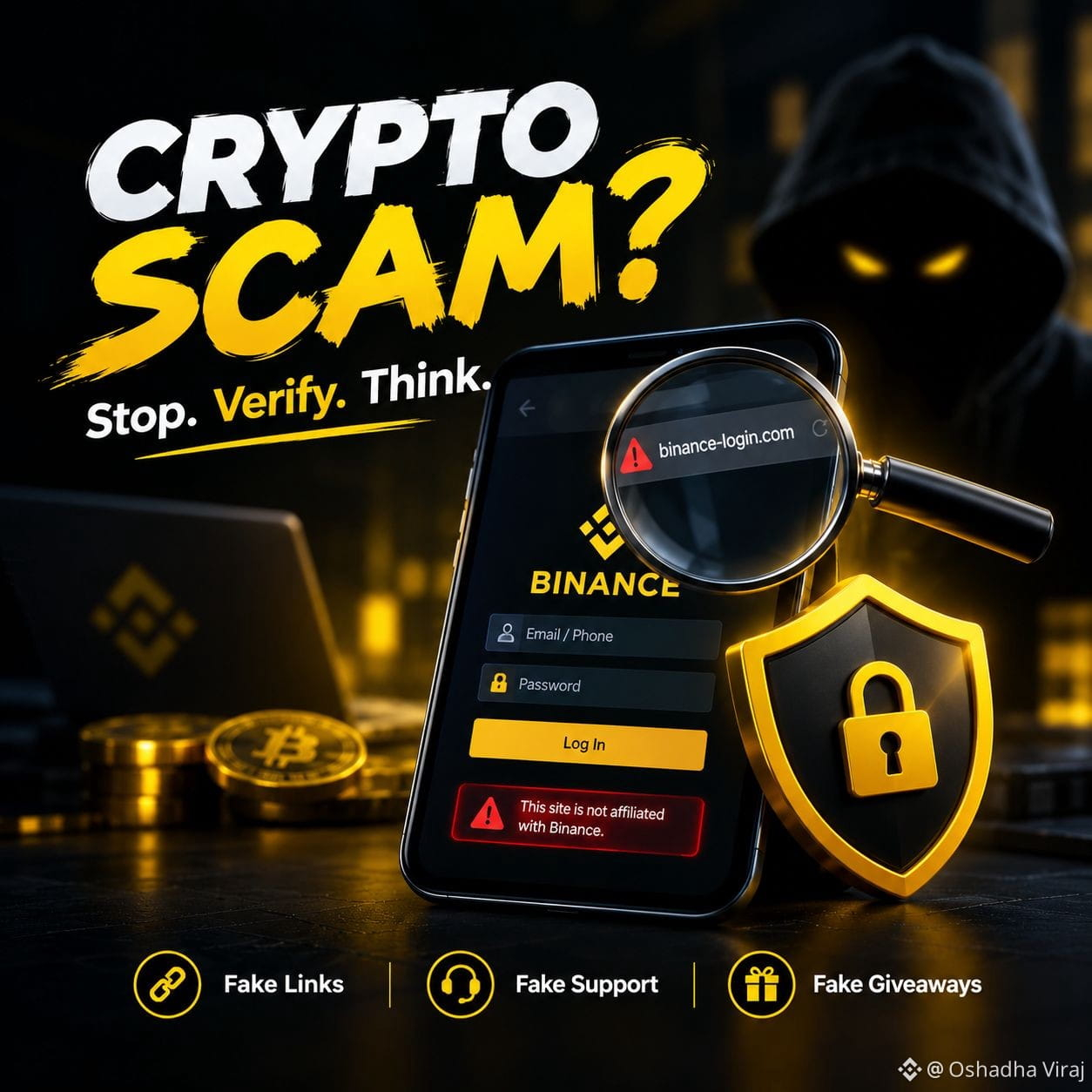
How to Spot a Crypto Scam Before You Lose Money
Crypto scams are becoming more sophisticated. Learning to recognize common warning signs can help you avoid losing your funds.
Common Crypto Scam Warning Signs
1. Fake Websites & Phishing Links
Scammers may create websites that look like legitimate exchanges or wallets. Always check the URL before entering your login details.
2. Fake Support Accounts
Be cautious of unexpected messages from people claiming to be Binance or wallet support. Never share your password, 2FA code, seed phrase, or private keys.
3. Guaranteed Returns
Promises of guaranteed profits, “risk-free” investments, or unusually high returns are major warning signs.
4. Fake Giveaways & Airdrops
Be careful with offers asking you to send crypto first to receive a larger amount in return.
5. Urgent Pressure
Scammers often create urgency by saying you must act immediately. Stop and verify before taking action.
6. Suspicious Investment Opportunities
Be cautious of unknown projects, platforms, or individuals asking you to deposit funds without providing verifiable information.
7. Unknown Links & Attachments
Avoid clicking suspicious links or opening unexpected files sent through DMs, emails, or social media.
Before You Trust an Offer
Stop. Verify. Think.
Check the official website, verify the account or project through trusted sources, and never send funds simply because someone promises a reward or profit.
In crypto, protecting your funds starts with recognizing the warning signs.
What is the biggest crypto scam red flag you have seen?
$BTC $ETH $BNB
#BinanceSquare #CryptoSecurity #ScamAwareness #CryptoEducation #Web3Security
How to Spot a Crypto Scam Before You Lose Money
Crypto scams are becoming more sophisticated. Learning to recognize common warning signs can help you avoid losing your funds.
Common Crypto Scam Warning Signs
1. Fake Websites & Phishing Links
Scammers may create websites that look like legitimate exchanges or wallets. Always check the URL before entering your login details.
2. Fake Support Accounts
Be cautious of unexpected messages from people claiming to be Binance or wallet support. Never share your password, 2FA code, seed phrase, or private keys.
3. Guaranteed Returns
Promises of guaranteed profits, “risk-free” investments, or unusually high returns are major warning signs.
4. Fake Giveaways & Airdrops
Be careful with offers asking you to send crypto first to receive a larger amount in return.
5. Urgent Pressure
Scammers often create urgency by saying you must act immediately. Stop and verify before taking action.
6. Suspicious Investment Opportunities
Be cautious of unknown projects, platforms, or individuals asking you to deposit funds without providing verifiable information.
7. Unknown Links & Attachments
Avoid clicking suspicious links or opening unexpected files sent through DMs, emails, or social media.
Before You Trust an Offer
Stop. Verify. Think.
Check the official website, verify the account or project through trusted sources, and never send funds simply because someone promises a reward or profit.
In crypto, protecting your funds starts with recognizing the warning signs.
What is the biggest crypto scam red flag you have seen?
$BTC $ETH $BNB
#BinanceSquare #CryptoSecurity #ScamAwareness #CryptoEducation #Web3Security
Crypto scams are becoming more sophisticated. Learning to recognize common warning signs can help you avoid losing your funds.
Common Crypto Scam Warning Signs
1. Fake Websites & Phishing Links
Scammers may create websites that look like legitimate exchanges or wallets. Always check the URL before entering your login details.
2. Fake Support Accounts
Be cautious of unexpected messages from people claiming to be Binance or wallet support. Never share your password, 2FA code, seed phrase, or private keys.
3. Guaranteed Returns
Promises of guaranteed profits, “risk-free” investments, or unusually high returns are major warning signs.
4. Fake Giveaways & Airdrops
Be careful with offers asking you to send crypto first to receive a larger amount in return.
5. Urgent Pressure
Scammers often create urgency by saying you must act immediately. Stop and verify before taking action.
6. Suspicious Investment Opportunities
Be cautious of unknown projects, platforms, or individuals asking you to deposit funds without providing verifiable information.
7. Unknown Links & Attachments
Avoid clicking suspicious links or opening unexpected files sent through DMs, emails, or social media.
Before You Trust an Offer
Stop. Verify. Think.
Check the official website, verify the account or project through trusted sources, and never send funds simply because someone promises a reward or profit.
In crypto, protecting your funds starts with recognizing the warning signs.
What is the biggest crypto scam red flag you have seen?
$BTC $ETH $BNB
#BinanceSquare #CryptoSecurity #ScamAwareness #CryptoEducation #Web3Security
1
61

·
--
An AI agent can stay within a wallet’s spending cap and still make the wrong call.
Imagine an ETH → USDC swap. A $100 cap limits the amount, but it does not prove the user approved this exact transaction. That approval may specify the chain, target contract, calldata hash, value, nonce, and expiry. If the calldata changes after approval, staying under $100 does not make the new call authorized.
I would test this at two points:
Before signing: does the final call match the user’s signed authorization?After execution: does the observed transaction match it, and can an independent reviewer check the receipt?
We have a reproducible synthetic Base swap test that rejects changed calldata. It broadcasts no transaction and moves no funds.
Insight supplies separate pre-trade oracle and risk evidence. PriorSeal records exact-call authorization and observed execution evidence. They can be used independently or together.
For the next public test case, which failure would you most want to see reproduced: stale risk data, overly broad permissions, execution that differs from authorization, or missing post-execution evidence?
#AIAgents #Web3Security
An AI agent can stay within a wallet’s spending cap and still make the wrong call.
Imagine an ETH → USDC swap. A $100 cap limits the amount, but it does not prove the user approved this exact transaction. That approval may specify the chain, target contract, calldata hash, value, nonce, and expiry. If the calldata changes after approval, staying under $100 does not make the new call authorized.
I would test this at two points:
Before signing: does the final call match the user’s signed authorization?After execution: does the observed transaction match it, and can an independent reviewer check the receipt?
We have a reproducible synthetic Base swap test that rejects changed calldata. It broadcasts no transaction and moves no funds.
Insight supplies separate pre-trade oracle and risk evidence. PriorSeal records exact-call authorization and observed execution evidence. They can be used independently or together.
For the next public test case, which failure would you most want to see reproduced: stale risk data, overly broad permissions, execution that differs from authorization, or missing post-execution evidence?
#AIAgents #Web3Security
Imagine an ETH → USDC swap. A $100 cap limits the amount, but it does not prove the user approved this exact transaction. That approval may specify the chain, target contract, calldata hash, value, nonce, and expiry. If the calldata changes after approval, staying under $100 does not make the new call authorized.
I would test this at two points:
Before signing: does the final call match the user’s signed authorization?After execution: does the observed transaction match it, and can an independent reviewer check the receipt?
We have a reproducible synthetic Base swap test that rejects changed calldata. It broadcasts no transaction and moves no funds.
Insight supplies separate pre-trade oracle and risk evidence. PriorSeal records exact-call authorization and observed execution evidence. They can be used independently or together.
For the next public test case, which failure would you most want to see reproduced: stale risk data, overly broad permissions, execution that differs from authorization, or missing post-execution evidence?
#AIAgents #Web3Security
81

·
--
570万美元的NFT说没就没——等等,是白帽赶在黑客前先搬空保住的。真正被偷走的,是另一笔账。
起点是一个两年前就没人管的合约权限。Payment Processor V2,Magic Eden去年10月就停用了,今年一季度连整个EVM市场都关了,官方说得明白:没有一个实时挂单受影响。
问题是,系统关得再彻底,你两年前点的那个"同意"按钮,权限还活着。有人翻出了这把旧钥匙——白帽连夜抢救23155枚NFT、价值570万美元,没让黑客得手;但660枚WETH没抢救及时,加上其他损失,Revoke.cash统计至少280万美元真被偷走,里面580枚WETH。
这件事第一波传播的版本是"Magic Eden被黑了",吓得人到处转截图。传着传着方向变了——0xQuit这类技术号把V2/V3的漏洞机制讲清楚,Revoke.cash直接贴出撤销授权的操作链接。74093次浏览、147次转发,推的不是恐慌,是一件正经事:去查查你钱包里还有哪些三年没动过的老权限。
真正值钱的地方在这——产品关停不等于风险清零,旧授权是活的定时炸弹。V3现在还在跑,官方这次是靠人工介入才没出大事。
这波$ME我偏震荡不看跌——问题出在两年前的旧合约留了个后门,跟今天的平台业务没关系,拿这个杀跌没道理。真正该盯的不是ME价格,是V3这套还在跑的系统:这次靠人工介入拦住了,下一次要是没拦住,那才是真正该慌的信号。
$ME #NFT #Web3Security #MagicEden
570万美元的NFT说没就没——等等,是白帽赶在黑客前先搬空保住的。真正被偷走的,是另一笔账。
起点是一个两年前就没人管的合约权限。Payment Processor V2,Magic Eden去年10月就停用了,今年一季度连整个EVM市场都关了,官方说得明白:没有一个实时挂单受影响。
问题是,系统关得再彻底,你两年前点的那个"同意"按钮,权限还活着。有人翻出了这把旧钥匙——白帽连夜抢救23155枚NFT、价值570万美元,没让黑客得手;但660枚WETH没抢救及时,加上其他损失,Revoke.cash统计至少280万美元真被偷走,里面580枚WETH。
这件事第一波传播的版本是"Magic Eden被黑了",吓得人到处转截图。传着传着方向变了——0xQuit这类技术号把V2/V3的漏洞机制讲清楚,Revoke.cash直接贴出撤销授权的操作链接。74093次浏览、147次转发,推的不是恐慌,是一件正经事:去查查你钱包里还有哪些三年没动过的老权限。
真正值钱的地方在这——产品关停不等于风险清零,旧授权是活的定时炸弹。V3现在还在跑,官方这次是靠人工介入才没出大事。
这波$ME 我偏震荡不看跌——问题出在两年前的旧合约留了个后门,跟今天的平台业务没关系,拿这个杀跌没道理。真正该盯的不是ME价格,是V3这套还在跑的系统:这次靠人工介入拦住了,下一次要是没拦住,那才是真正该慌的信号。
$ME #NFT #Web3Security #MagicEden
起点是一个两年前就没人管的合约权限。Payment Processor V2,Magic Eden去年10月就停用了,今年一季度连整个EVM市场都关了,官方说得明白:没有一个实时挂单受影响。
问题是,系统关得再彻底,你两年前点的那个"同意"按钮,权限还活着。有人翻出了这把旧钥匙——白帽连夜抢救23155枚NFT、价值570万美元,没让黑客得手;但660枚WETH没抢救及时,加上其他损失,Revoke.cash统计至少280万美元真被偷走,里面580枚WETH。
这件事第一波传播的版本是"Magic Eden被黑了",吓得人到处转截图。传着传着方向变了——0xQuit这类技术号把V2/V3的漏洞机制讲清楚,Revoke.cash直接贴出撤销授权的操作链接。74093次浏览、147次转发,推的不是恐慌,是一件正经事:去查查你钱包里还有哪些三年没动过的老权限。
真正值钱的地方在这——产品关停不等于风险清零,旧授权是活的定时炸弹。V3现在还在跑,官方这次是靠人工介入才没出大事。
这波$ME 我偏震荡不看跌——问题出在两年前的旧合约留了个后门,跟今天的平台业务没关系,拿这个杀跌没道理。真正该盯的不是ME价格,是V3这套还在跑的系统:这次靠人工介入拦住了,下一次要是没拦住,那才是真正该慌的信号。
$ME #NFT #Web3Security #MagicEden
117

Triều Tiên bị cáo buộc dùng phỏng vấn xin việc giả để cuỗm 10,7 triệu USD tiền crypto
Một chiến dịch tấn công mạng liên quan đến Triều Tiên vừa bị phanh phuy sau khi "cuỗm" thành công khoảng 10,71 triệu USD từ hơn 7.000 ví tiền mã hóa. Cảnh báo chung này vừa được 7 cơ quan an ninh và tình báo từ Nhật Bản, Mỹ, Australia và Đức đồng loạt phát đi.
Tên chiến dịch: Được Nhật Bản gọi là WaterPlum, còn giới an ninh mạng quen thuộc với cái tên Contagious Interview.
Quy mô: Từ tháng 12/2025 đến tháng 7/2026, nhóm này đã lây nhiễm khoảng 30.000 thiết bị tại hơn 100 quốc gia.
Mục tiêu: Lập trình viên, kỹ sư và nhân sự làm việc trong mảng crypto, blockchain và Web3.
Chiêu trò: Giả danh công ty AI, NFT hoặc crypto để tuyển dụng. Nhóm này mời ứng viên phỏng vấn kỹ thuật rồi dụ tải file làm bài test hoặc "sửa lỗi" cuộc gọi video. Thực chất, các file này chứa mã độc như BeaverTail, InvisibleFerret và StoatWaffle.
Công nghệ xịn xịn: Sử dụng AI để đổi mặt (deepfake) lúc phỏng vấn và dùng các dàn máy tính ma (laptop farm) để giấu vị trí thực. Nhật Bản vừa triệt phá một laptop farm như vậy lần đầu tiên trên lãnh thổ của mình.
Tổ chức đứng sau: FBI và cảnh sát Nhật Bản nhận định WaterPlum cùng các mạng lưới lao động IT từ xa này đều thuộc cùng một cơ quan quốc phòng Triều Tiên.
Bài viết chỉ mang tính chất cập nhật tin tức. Nếu bạn bất ngờ nhận được lời mời phỏng vấn lương triệu đô từ một công ty blockchain bí ẩn và được yêu cầu tải file .exe để "test camera", xin chúc mừng, bạn chuẩn bị tài trợ cho chương trình vũ trụ của một quốc gia nào đó rồi đấy!
#CryptoScam #CyberSecurity #ContagiousInterview #WaterPlum #Web3Security
Triều Tiên bị cáo buộc dùng phỏng vấn xin việc giả để cuỗm 10,7 triệu USD tiền crypto
Một chiến dịch tấn công mạng liên quan đến Triều Tiên vừa bị phanh phuy sau khi "cuỗm" thành công khoảng 10,71 triệu USD từ hơn 7.000 ví tiền mã hóa. Cảnh báo chung này vừa được 7 cơ quan an ninh và tình báo từ Nhật Bản, Mỹ, Australia và Đức đồng loạt phát đi.
Tên chiến dịch: Được Nhật Bản gọi là WaterPlum, còn giới an ninh mạng quen thuộc với cái tên Contagious Interview.
Quy mô: Từ tháng 12/2025 đến tháng 7/2026, nhóm này đã lây nhiễm khoảng 30.000 thiết bị tại hơn 100 quốc gia.
Mục tiêu: Lập trình viên, kỹ sư và nhân sự làm việc trong mảng crypto, blockchain và Web3.
Chiêu trò: Giả danh công ty AI, NFT hoặc crypto để tuyển dụng. Nhóm này mời ứng viên phỏng vấn kỹ thuật rồi dụ tải file làm bài test hoặc "sửa lỗi" cuộc gọi video. Thực chất, các file này chứa mã độc như BeaverTail, InvisibleFerret và StoatWaffle.
Công nghệ xịn xịn: Sử dụng AI để đổi mặt (deepfake) lúc phỏng vấn và dùng các dàn máy tính ma (laptop farm) để giấu vị trí thực. Nhật Bản vừa triệt phá một laptop farm như vậy lần đầu tiên trên lãnh thổ của mình.
Tổ chức đứng sau: FBI và cảnh sát Nhật Bản nhận định WaterPlum cùng các mạng lưới lao động IT từ xa này đều thuộc cùng một cơ quan quốc phòng Triều Tiên.
Bài viết chỉ mang tính chất cập nhật tin tức. Nếu bạn bất ngờ nhận được lời mời phỏng vấn lương triệu đô từ một công ty blockchain bí ẩn và được yêu cầu tải file .exe để "test camera", xin chúc mừng, bạn chuẩn bị tài trợ cho chương trình vũ trụ của một quốc gia nào đó rồi đấy!
#CryptoScam #CyberSecurity #ContagiousInterview #WaterPlum #Web3Security
Một chiến dịch tấn công mạng liên quan đến Triều Tiên vừa bị phanh phuy sau khi "cuỗm" thành công khoảng 10,71 triệu USD từ hơn 7.000 ví tiền mã hóa. Cảnh báo chung này vừa được 7 cơ quan an ninh và tình báo từ Nhật Bản, Mỹ, Australia và Đức đồng loạt phát đi.
Tên chiến dịch: Được Nhật Bản gọi là WaterPlum, còn giới an ninh mạng quen thuộc với cái tên Contagious Interview.
Quy mô: Từ tháng 12/2025 đến tháng 7/2026, nhóm này đã lây nhiễm khoảng 30.000 thiết bị tại hơn 100 quốc gia.
Mục tiêu: Lập trình viên, kỹ sư và nhân sự làm việc trong mảng crypto, blockchain và Web3.
Chiêu trò: Giả danh công ty AI, NFT hoặc crypto để tuyển dụng. Nhóm này mời ứng viên phỏng vấn kỹ thuật rồi dụ tải file làm bài test hoặc "sửa lỗi" cuộc gọi video. Thực chất, các file này chứa mã độc như BeaverTail, InvisibleFerret và StoatWaffle.
Công nghệ xịn xịn: Sử dụng AI để đổi mặt (deepfake) lúc phỏng vấn và dùng các dàn máy tính ma (laptop farm) để giấu vị trí thực. Nhật Bản vừa triệt phá một laptop farm như vậy lần đầu tiên trên lãnh thổ của mình.
Tổ chức đứng sau: FBI và cảnh sát Nhật Bản nhận định WaterPlum cùng các mạng lưới lao động IT từ xa này đều thuộc cùng một cơ quan quốc phòng Triều Tiên.
Bài viết chỉ mang tính chất cập nhật tin tức. Nếu bạn bất ngờ nhận được lời mời phỏng vấn lương triệu đô từ một công ty blockchain bí ẩn và được yêu cầu tải file .exe để "test camera", xin chúc mừng, bạn chuẩn bị tài trợ cho chương trình vũ trụ của một quốc gia nào đó rồi đấy!
#CryptoScam #CyberSecurity #ContagiousInterview #WaterPlum #Web3Security
39
·
--
Do spending limits and allowlists make an AI agent wallet fully controllable?
Binance recently described the boundaries built into Agentic Wallet: capability toggles, separate spending quotas, token allowlists, recipient restrictions, transaction simulation, and activity notifications.
This shows how the conversation is moving from:
“Can an AI agent trade?”
to:
“Within exactly which boundaries may it trade?”
I think we need to ask one more question:
After execution, can the user or an independent reviewer verify that the agent stayed within those boundaries?
Consider one $ETH → $USDC swap. I would want three independently checkable evidence layers:
1. Before the decision
Was the market data fresh? Did independent oracle sources agree? What risk verdict was available at that moment?
2. At authorization
Who approved which chain, contract, value, calldata hash, nonce, and validity window?
3. After execution
Did the onchain transaction match the authorized exact call? If it failed, was reorganized, or remained uncertain, was the original evidence preserved?
This is why I designed two separate products:
• Insight verifies the data and risk signals behind a decision.
• PriorSeal binds user or organizational authorization to the observed EVM execution and produces an offline-verifiable receipt.
They can be used independently or together. Neither product holds assets, signs transactions for the wallet, or replaces wallet-level limits and allowlists.
If you are building an agent wallet or onchain agent, which failure would you solve first?
A. Bad data
B. Overbroad permissions
C. Execution deviating from authorization
D. No reliable post-execution record
I’ll turn the most selected scenario into the next public test case.
#AIAgents #Web3Security
Do spending limits and allowlists make an AI agent wallet fully controllable?
Binance recently described the boundaries built into Agentic Wallet: capability toggles, separate spending quotas, token allowlists, recipient restrictions, transaction simulation, and activity notifications.
This shows how the conversation is moving from:
“Can an AI agent trade?”
to:
“Within exactly which boundaries may it trade?”
I think we need to ask one more question:
After execution, can the user or an independent reviewer verify that the agent stayed within those boundaries?
Consider one $ETH → $USDC swap. I would want three independently checkable evidence layers:
1. Before the decision
Was the market data fresh? Did independent oracle sources agree? What risk verdict was available at that moment?
2. At authorization
Who approved which chain, contract, value, calldata hash, nonce, and validity window?
3. After execution
Did the onchain transaction match the authorized exact call? If it failed, was reorganized, or remained uncertain, was the original evidence preserved?
This is why I designed two separate products:
• Insight verifies the data and risk signals behind a decision.
• PriorSeal binds user or organizational authorization to the observed EVM execution and produces an offline-verifiable receipt.
They can be used independently or together. Neither product holds assets, signs transactions for the wallet, or replaces wallet-level limits and allowlists.
If you are building an agent wallet or onchain agent, which failure would you solve first?
A. Bad data
B. Overbroad permissions
C. Execution deviating from authorization
D. No reliable post-execution record
I’ll turn the most selected scenario into the next public test case.
#AIAgents #Web3Security
Binance recently described the boundaries built into Agentic Wallet: capability toggles, separate spending quotas, token allowlists, recipient restrictions, transaction simulation, and activity notifications.
This shows how the conversation is moving from:
“Can an AI agent trade?”
to:
“Within exactly which boundaries may it trade?”
I think we need to ask one more question:
After execution, can the user or an independent reviewer verify that the agent stayed within those boundaries?
Consider one $ETH → $USDC swap. I would want three independently checkable evidence layers:
1. Before the decision
Was the market data fresh? Did independent oracle sources agree? What risk verdict was available at that moment?
2. At authorization
Who approved which chain, contract, value, calldata hash, nonce, and validity window?
3. After execution
Did the onchain transaction match the authorized exact call? If it failed, was reorganized, or remained uncertain, was the original evidence preserved?
This is why I designed two separate products:
• Insight verifies the data and risk signals behind a decision.
• PriorSeal binds user or organizational authorization to the observed EVM execution and produces an offline-verifiable receipt.
They can be used independently or together. Neither product holds assets, signs transactions for the wallet, or replaces wallet-level limits and allowlists.
If you are building an agent wallet or onchain agent, which failure would you solve first?
A. Bad data
B. Overbroad permissions
C. Execution deviating from authorization
D. No reliable post-execution record
I’ll turn the most selected scenario into the next public test case.
#AIAgents #Web3Security
80
·
--
🤖 Comment garder les agents IA sous contrôle dans le Web3 ?
L’intégration des agents autonomes dans la crypto offre d'immenses opportunités, mais impose une sécurité irréprochable. Sans règles claires, le risque de dérive ou d'erreurs d'exécution augmente.
💡 Les piliers d'une IA sous contrôle :
Garde-fous algorithmiques : Définir des limites strictes pour éviter les transactions non autorisées.
Transparence et auditability : Suivre chaque décision de l'agent en temps réel sur la blockchain.
Gouvernance décentralisée :
Laisser la communauté valider les paramètres clés d'intervention.
L'alliance entre intelligence artificielle et blockchain ne peut réussir qu'avec une supervision humaine et technique rigoureuse.
💬 Faites-vous confiance aux agents IA autonomes pour gérer vos opérations crypto
? Donnez votre avis en commentaire ! 👇
#BinanceSquare #CryptoAI #AIAgents #Web3Security
🤖 Comment garder les agents IA sous contrôle dans le Web3 ?
L’intégration des agents autonomes dans la crypto offre d'immenses opportunités, mais impose une sécurité irréprochable. Sans règles claires, le risque de dérive ou d'erreurs d'exécution augmente.
💡 Les piliers d'une IA sous contrôle :
Garde-fous algorithmiques : Définir des limites strictes pour éviter les transactions non autorisées.
Transparence et auditability : Suivre chaque décision de l'agent en temps réel sur la blockchain.
Gouvernance décentralisée :
Laisser la communauté valider les paramètres clés d'intervention.
L'alliance entre intelligence artificielle et blockchain ne peut réussir qu'avec une supervision humaine et technique rigoureuse.
💬 Faites-vous confiance aux agents IA autonomes pour gérer vos opérations crypto
? Donnez votre avis en commentaire ! 👇
#BinanceSquare #CryptoAI #AIAgents #Web3Security
L’intégration des agents autonomes dans la crypto offre d'immenses opportunités, mais impose une sécurité irréprochable. Sans règles claires, le risque de dérive ou d'erreurs d'exécution augmente.
💡 Les piliers d'une IA sous contrôle :
Garde-fous algorithmiques : Définir des limites strictes pour éviter les transactions non autorisées.
Transparence et auditability : Suivre chaque décision de l'agent en temps réel sur la blockchain.
Gouvernance décentralisée :
Laisser la communauté valider les paramètres clés d'intervention.
L'alliance entre intelligence artificielle et blockchain ne peut réussir qu'avec une supervision humaine et technique rigoureuse.
💬 Faites-vous confiance aux agents IA autonomes pour gérer vos opérations crypto
? Donnez votre avis en commentaire ! 👇
#BinanceSquare #CryptoAI #AIAgents #Web3Security
1
143

If you still leave your browser extensions logged in on an unlocked laptop, stop now.
Nothing stings worse than watching your hard-earned portfolio get wiped out while stepping away for 5 minutes, especially when the protocol did not even get hacked.
We have seen massive smart contract breaches drain hundreds of millions from DeFi protocols, but this recent incident was entirely local. The attacker did not find a zero-day in a smart contract or breach an exchange infrastructure; they simply exploited an active session on an unlocked machine. If you keep your funds sitting in a hot wallet or leave web sessions open, an attacker with physical or remote terminal access can sign transactions silently without triggering any alarms.
Compare that to a hardware setup where physical button confirmation is mandatory. Even if a rogue script takes over your desktop session, a cold device blocks silent drains on your $ETH or $BNB instantly because it requires physical verification on the device itself. Relying on simple browser memory to protect your $BTC bags is like locking your front door but leaving the keys in the latch.
How many layers of physical confirmation do you actually use before letting a transaction leave your wallet?
#CryptoSecurity #Web3Security #SelfCustody
If you still leave your browser extensions logged in on an unlocked laptop, stop now.
Nothing stings worse than watching your hard-earned portfolio get wiped out while stepping away for 5 minutes, especially when the protocol did not even get hacked.
We have seen massive smart contract breaches drain hundreds of millions from DeFi protocols, but this recent incident was entirely local. The attacker did not find a zero-day in a smart contract or breach an exchange infrastructure; they simply exploited an active session on an unlocked machine. If you keep your funds sitting in a hot wallet or leave web sessions open, an attacker with physical or remote terminal access can sign transactions silently without triggering any alarms.
Compare that to a hardware setup where physical button confirmation is mandatory. Even if a rogue script takes over your desktop session, a cold device blocks silent drains on your $ETH or $BNB instantly because it requires physical verification on the device itself. Relying on simple browser memory to protect your $BTC bags is like locking your front door but leaving the keys in the latch.
How many layers of physical confirmation do you actually use before letting a transaction leave your wallet?
#CryptoSecurity #Web3Security #SelfCustody
Nothing stings worse than watching your hard-earned portfolio get wiped out while stepping away for 5 minutes, especially when the protocol did not even get hacked.
We have seen massive smart contract breaches drain hundreds of millions from DeFi protocols, but this recent incident was entirely local. The attacker did not find a zero-day in a smart contract or breach an exchange infrastructure; they simply exploited an active session on an unlocked machine. If you keep your funds sitting in a hot wallet or leave web sessions open, an attacker with physical or remote terminal access can sign transactions silently without triggering any alarms.
Compare that to a hardware setup where physical button confirmation is mandatory. Even if a rogue script takes over your desktop session, a cold device blocks silent drains on your $ETH or $BNB instantly because it requires physical verification on the device itself. Relying on simple browser memory to protect your $BTC bags is like locking your front door but leaving the keys in the latch.
How many layers of physical confirmation do you actually use before letting a transaction leave your wallet?
#CryptoSecurity #Web3Security #SelfCustody
35

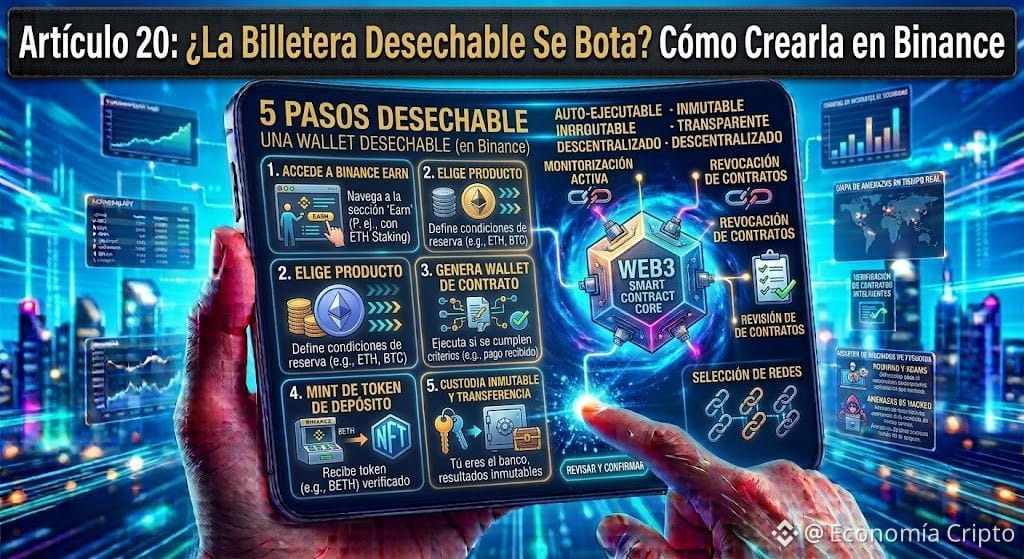
Artículo 20: ¿La Billetera Desechable Se Bota? Cómo Crearla en Binance
Tras el artículo anterior, muchos usuarios nos preguntaron: "¿Tengo que crear y borrar una billetera nueva cada vez que opero?" La respuesta corta es NO.
No necesitas destruir la billetera ni perder tus claves. El término "desechable" (Burner Wallet) es solo una estrategia operativa: significa que la usas como un "escudo de paso", manteniendo en ella únicamente el saldo mínimo que vas a gastar en ese momento.
¿Cómo funciona en la práctica?
Tu aplicación o extensión de billetera puede administrar múltiples direcciones bajo la misma aplicación. Puedes tener una dirección llamada "Ahorros" (que nunca conectas a páginas web) y otra llamada "Pruebas/Desechable".
No tienes que borrar la billetera de pruebas tras usarla; simplemente la dejas vacía (o con unos pocos centavos en $BNB para gas) hasta la próxima vez que quieras interactuar con una dApp, comprar un NFT o probar un protocolo nuevo.
Cómo crear tu Billetera Desechable usando Binance
Con la Billetera Web3 de Binance es súper sencillo y no necesitas instalar aplicaciones de terceros:
Abre la App de Binance: Ve a la pestaña "Web3" en la parte superior de tu pantalla.
Crea una Billetera Secundaria: Entra en los ajustes de la billetera (icono de perfil o gestión de billeteras) y selecciona "Añadir billetera" o crear una nueva dirección dentro de tu misma cuenta.
Asígnale un Nombre: Nómbrala "Billetera de Pruebas" o "Desechable".
Pásale solo lo necesario: Cuando vayas a interactuar con un sitio externo, transfiere desde tu billetera Spot de Binance solo el monto exacto en $BNB o USDT que necesitas para la transacción.
La Ventaja Definitiva
Al trabajar con esta estructura, si por error autorizas un sitio malicioso con tu billetera de pruebas, tu saldo principal en Binance y tus ahorros guardados en otras direcciones quedan 100% intactos. Es la forma más inteligente de explorar la Web3 con cero estrés.
#SeguridadCripto #BinanceWeb3 #Web3Security #AprendeCripto $BNB
{spot}(BTCUSDT)
{spot}(BNBUSDT)
Artículo 20: ¿La Billetera Desechable Se Bota? Cómo Crearla en Binance
Tras el artículo anterior, muchos usuarios nos preguntaron: "¿Tengo que crear y borrar una billetera nueva cada vez que opero?" La respuesta corta es NO.
No necesitas destruir la billetera ni perder tus claves. El término "desechable" (Burner Wallet) es solo una estrategia operativa: significa que la usas como un "escudo de paso", manteniendo en ella únicamente el saldo mínimo que vas a gastar en ese momento.
¿Cómo funciona en la práctica?
Tu aplicación o extensión de billetera puede administrar múltiples direcciones bajo la misma aplicación. Puedes tener una dirección llamada "Ahorros" (que nunca conectas a páginas web) y otra llamada "Pruebas/Desechable".
No tienes que borrar la billetera de pruebas tras usarla; simplemente la dejas vacía (o con unos pocos centavos en $BNB para gas) hasta la próxima vez que quieras interactuar con una dApp, comprar un NFT o probar un protocolo nuevo.
Cómo crear tu Billetera Desechable usando Binance
Con la Billetera Web3 de Binance es súper sencillo y no necesitas instalar aplicaciones de terceros:
Abre la App de Binance: Ve a la pestaña "Web3" en la parte superior de tu pantalla.
Crea una Billetera Secundaria: Entra en los ajustes de la billetera (icono de perfil o gestión de billeteras) y selecciona "Añadir billetera" o crear una nueva dirección dentro de tu misma cuenta.
Asígnale un Nombre: Nómbrala "Billetera de Pruebas" o "Desechable".
Pásale solo lo necesario: Cuando vayas a interactuar con un sitio externo, transfiere desde tu billetera Spot de Binance solo el monto exacto en $BNB o USDT que necesitas para la transacción.
La Ventaja Definitiva
Al trabajar con esta estructura, si por error autorizas un sitio malicioso con tu billetera de pruebas, tu saldo principal en Binance y tus ahorros guardados en otras direcciones quedan 100% intactos. Es la forma más inteligente de explorar la Web3 con cero estrés.
#SeguridadCripto #BinanceWeb3 #Web3Security #AprendeCripto $BNB
Tras el artículo anterior, muchos usuarios nos preguntaron: "¿Tengo que crear y borrar una billetera nueva cada vez que opero?" La respuesta corta es NO.
No necesitas destruir la billetera ni perder tus claves. El término "desechable" (Burner Wallet) es solo una estrategia operativa: significa que la usas como un "escudo de paso", manteniendo en ella únicamente el saldo mínimo que vas a gastar en ese momento.
¿Cómo funciona en la práctica?
Tu aplicación o extensión de billetera puede administrar múltiples direcciones bajo la misma aplicación. Puedes tener una dirección llamada "Ahorros" (que nunca conectas a páginas web) y otra llamada "Pruebas/Desechable".
No tienes que borrar la billetera de pruebas tras usarla; simplemente la dejas vacía (o con unos pocos centavos en $BNB para gas) hasta la próxima vez que quieras interactuar con una dApp, comprar un NFT o probar un protocolo nuevo.
Cómo crear tu Billetera Desechable usando Binance
Con la Billetera Web3 de Binance es súper sencillo y no necesitas instalar aplicaciones de terceros:
Abre la App de Binance: Ve a la pestaña "Web3" en la parte superior de tu pantalla.
Crea una Billetera Secundaria: Entra en los ajustes de la billetera (icono de perfil o gestión de billeteras) y selecciona "Añadir billetera" o crear una nueva dirección dentro de tu misma cuenta.
Asígnale un Nombre: Nómbrala "Billetera de Pruebas" o "Desechable".
Pásale solo lo necesario: Cuando vayas a interactuar con un sitio externo, transfiere desde tu billetera Spot de Binance solo el monto exacto en $BNB o USDT que necesitas para la transacción.
La Ventaja Definitiva
Al trabajar con esta estructura, si por error autorizas un sitio malicioso con tu billetera de pruebas, tu saldo principal en Binance y tus ahorros guardados en otras direcciones quedan 100% intactos. Es la forma más inteligente de explorar la Web3 con cero estrés.
#SeguridadCripto #BinanceWeb3 #Web3Security #AprendeCripto $BNB
1
61

Traditional finance giants are doubling down on web3 infrastructure. S&P Global acquiring OpenZeppelin proves that smart contract security is no longer just a crypto-native concern—it is a trillion-dollar institutional priority. As audits and risk management merge with Wall Street standards, expect compliance to drive the next wave of adoption. This is a massive validation for onchain tooling and sets a bullish precedent for enterprise-grade blockchain security moving forward. #CryptoNews #Web3Security #InstitutionalCrypto
Traditional finance giants are doubling down on web3 infrastructure. S&P Global acquiring OpenZeppelin proves that smart contract security is no longer just a crypto-native concern—it is a trillion-dollar institutional priority. As audits and risk management merge with Wall Street standards, expect compliance to drive the next wave of adoption. This is a massive validation for onchain tooling and sets a bullish precedent for enterprise-grade blockchain security moving forward. #CryptoNews #Web3Security #InstitutionalCrypto
1
Traditional finance is diving deeper into the blockchain infrastructure layer. S&P Global's acquisition of OpenZeppelin signals a major shift toward institutional-grade security in tokenized assets. As banks and asset managers migrate real-world financial products onchain, mitigating smart contract vulnerabilities has become a top priority. This move bridges legacy risk management with decentralized tech, paving the way for safer institutional adoption ahead. #CryptoNews #DeFi #Web3Security
Traditional finance is diving deeper into the blockchain infrastructure layer. S&P Global's acquisition of OpenZeppelin signals a major shift toward institutional-grade security in tokenized assets. As banks and asset managers migrate real-world financial products onchain, mitigating smart contract vulnerabilities has become a top priority. This move bridges legacy risk management with decentralized tech, paving the way for safer institutional adoption ahead. #CryptoNews #DeFi #Web3Security
53
Everyone thinks web3 wallet safety is just about securing seed phrases, but actually most everyday losses stem from simple copy-paste errors and malicious inbox spam.
We have all felt that mini heart attack sending $ETH to a random 42-character 0x address, praying a single typo does not wipe out our portfolio. Add constant phishing DMs into the mix, and navigating on-chain transactions feels like walking through a minefield.
First, human-readable handles act like saving a contact name in your phone rather than memorizing raw digits. Instead of verifying long hexadecimal strings every time you transfer assets or interact with protocols like $ENS, a simple name tag completely eliminates the guesswork.
Second, an on-chain toll system treats spam like paid postage. Requiring senders to pay a small fee to deliver unsolicited messages makes mass phishing campaigns too expensive to run, keeping your inbox clean and your wallet secure.
How much would readable names and inbox tolls improve your daily trading routine?
#Web3Security #CryptoEducation #Blockchain
Everyone thinks web3 wallet safety is just about securing seed phrases, but actually most everyday losses stem from simple copy-paste errors and malicious inbox spam.
We have all felt that mini heart attack sending $ETH to a random 42-character 0x address, praying a single typo does not wipe out our portfolio. Add constant phishing DMs into the mix, and navigating on-chain transactions feels like walking through a minefield.
First, human-readable handles act like saving a contact name in your phone rather than memorizing raw digits. Instead of verifying long hexadecimal strings every time you transfer assets or interact with protocols like $ENS , a simple name tag completely eliminates the guesswork.
Second, an on-chain toll system treats spam like paid postage. Requiring senders to pay a small fee to deliver unsolicited messages makes mass phishing campaigns too expensive to run, keeping your inbox clean and your wallet secure.
How much would readable names and inbox tolls improve your daily trading routine?
#Web3Security #CryptoEducation #Blockchain
We have all felt that mini heart attack sending $ETH to a random 42-character 0x address, praying a single typo does not wipe out our portfolio. Add constant phishing DMs into the mix, and navigating on-chain transactions feels like walking through a minefield.
First, human-readable handles act like saving a contact name in your phone rather than memorizing raw digits. Instead of verifying long hexadecimal strings every time you transfer assets or interact with protocols like $ENS , a simple name tag completely eliminates the guesswork.
Second, an on-chain toll system treats spam like paid postage. Requiring senders to pay a small fee to deliver unsolicited messages makes mass phishing campaigns too expensive to run, keeping your inbox clean and your wallet secure.
How much would readable names and inbox tolls improve your daily trading routine?
#Web3Security #CryptoEducation #Blockchain
71
Outils de Trading : La gestion des autorisations de jetons (Token Approvals)
Titre : Révoquer les autorisations obsolètes sur son portefeuille Web3 🛡️🧹
Contenu :
Lorsque vous interagissez avec des applications décentralisées (DApps), vous accordez des autorisations d'accès aux jetons de votre portefeuille.
📌 Pourquoi est-ce critique ?
Si une DApp autrefois utilisée subit une faille de sécurité par la suite, les autorisations illimitées accordées précédemment peuvent être exploitées.
💡 Bonne pratique :
Prenez l'habitude de vérifier et de révoquer les autorisations inutilisées à l'aide d'outils de vérification de révocations (Revoke) régulièrement.
#Web3Security #SmartContracts #TokenApprovals #CryptoSafety #BinanceSquare
Outils de Trading : La gestion des autorisations de jetons (Token Approvals)
Titre : Révoquer les autorisations obsolètes sur son portefeuille Web3 🛡️🧹
Contenu :
Lorsque vous interagissez avec des applications décentralisées (DApps), vous accordez des autorisations d'accès aux jetons de votre portefeuille.
📌 Pourquoi est-ce critique ?
Si une DApp autrefois utilisée subit une faille de sécurité par la suite, les autorisations illimitées accordées précédemment peuvent être exploitées.
💡 Bonne pratique :
Prenez l'habitude de vérifier et de révoquer les autorisations inutilisées à l'aide d'outils de vérification de révocations (Revoke) régulièrement.
#Web3Security #SmartContracts #TokenApprovals #CryptoSafety #BinanceSquare
Titre : Révoquer les autorisations obsolètes sur son portefeuille Web3 🛡️🧹
Contenu :
Lorsque vous interagissez avec des applications décentralisées (DApps), vous accordez des autorisations d'accès aux jetons de votre portefeuille.
📌 Pourquoi est-ce critique ?
Si une DApp autrefois utilisée subit une faille de sécurité par la suite, les autorisations illimitées accordées précédemment peuvent être exploitées.
💡 Bonne pratique :
Prenez l'habitude de vérifier et de révoquer les autorisations inutilisées à l'aide d'outils de vérification de révocations (Revoke) régulièrement.
#Web3Security #SmartContracts #TokenApprovals #CryptoSafety #BinanceSquare
10
·
--
⚡ Enterprise Data Under Siege: Law Firm Cyberattacks Nearly Double, Pushing Web3 Security to Forefront
📌 Key Highlights:
• **Escalating Threat:** Prominent legal firm Greenberg Traurig confirms sensitive client documents were exfiltrated and subsequently leaked to the dark web, spotlighting critical vulnerabilities in traditional enterprise data security.
• **Alarming Surge:** Cybersecurity leader BakerHostetler reports a near-doubling of cyber incidents targeting law firms in the past year, underscoring the escalating sophistication and volume of data breach attempts.
• **Web3 Imperative:** This surge in high-profile data theft amplifies the urgent need for immutable, decentralized data storage and robust privacy solutions, potentially accelerating institutional demand for Web3 security frameworks.
📊 Market Takeaway:
The escalating frequency and severity of traditional data breaches could fast-track enterprise adoption of blockchain-native security and privacy protocols. This trend may drive increased interest in projects offering decentralized storage and enhanced data protection features as a more resilient alternative.
#Cybersecurity #DataPrivacy #Web3Security
⚡ Enterprise Data Under Siege: Law Firm Cyberattacks Nearly Double, Pushing Web3 Security to Forefront
📌 Key Highlights:
• **Escalating Threat:** Prominent legal firm Greenberg Traurig confirms sensitive client documents were exfiltrated and subsequently leaked to the dark web, spotlighting critical vulnerabilities in traditional enterprise data security.
• **Alarming Surge:** Cybersecurity leader BakerHostetler reports a near-doubling of cyber incidents targeting law firms in the past year, underscoring the escalating sophistication and volume of data breach attempts.
• **Web3 Imperative:** This surge in high-profile data theft amplifies the urgent need for immutable, decentralized data storage and robust privacy solutions, potentially accelerating institutional demand for Web3 security frameworks.
📊 Market Takeaway:
The escalating frequency and severity of traditional data breaches could fast-track enterprise adoption of blockchain-native security and privacy protocols. This trend may drive increased interest in projects offering decentralized storage and enhanced data protection features as a more resilient alternative.
#Cybersecurity #DataPrivacy #Web3Security
📌 Key Highlights:
• **Escalating Threat:** Prominent legal firm Greenberg Traurig confirms sensitive client documents were exfiltrated and subsequently leaked to the dark web, spotlighting critical vulnerabilities in traditional enterprise data security.
• **Alarming Surge:** Cybersecurity leader BakerHostetler reports a near-doubling of cyber incidents targeting law firms in the past year, underscoring the escalating sophistication and volume of data breach attempts.
• **Web3 Imperative:** This surge in high-profile data theft amplifies the urgent need for immutable, decentralized data storage and robust privacy solutions, potentially accelerating institutional demand for Web3 security frameworks.
📊 Market Takeaway:
The escalating frequency and severity of traditional data breaches could fast-track enterprise adoption of blockchain-native security and privacy protocols. This trend may drive increased interest in projects offering decentralized storage and enhanced data protection features as a more resilient alternative.
#Cybersecurity #DataPrivacy #Web3Security

89

·
--
🚨 HACKENPROOF COMPLETES PENETRATION AUDIT FOR TOP-TIER EXCHANGE SECURING $BTC FLOWS! 🛡️
Institutional capital demands robust risk control architectures before deploying significant liquidity across order books. HackenProof white hats completed a comprehensive penetration audit for a top-tier exchange across core trading engines, smart contracts, and API endpoints. 🔍
With risk mitigation optimized across asset security and risk control modules, operational integrity remains locked in ahead of market volatility. 📊 Proactive infrastructure hardening ensures institutional liquidity pools remain fully protected against external execution threats. 🛡️
💬 Do you prioritize third-party security audits when choosing order flow venues? 👇
⚠️ Not financial advice. Always manage your risk. 🛡️
🏷️ #BTC #Web3Security #Crypto #SecurityAudit
🛡️ 💎
🚨 HACKENPROOF COMPLETES PENETRATION AUDIT FOR TOP-TIER EXCHANGE SECURING $BTC FLOWS! 🛡️
Institutional capital demands robust risk control architectures before deploying significant liquidity across order books. HackenProof white hats completed a comprehensive penetration audit for a top-tier exchange across core trading engines, smart contracts, and API endpoints. 🔍
With risk mitigation optimized across asset security and risk control modules, operational integrity remains locked in ahead of market volatility. 📊 Proactive infrastructure hardening ensures institutional liquidity pools remain fully protected against external execution threats. 🛡️
💬 Do you prioritize third-party security audits when choosing order flow venues? 👇
⚠️ Not financial advice. Always manage your risk. 🛡️
🏷️ #BTC #Web3Security #Crypto #SecurityAudit
🛡️ 💎
Institutional capital demands robust risk control architectures before deploying significant liquidity across order books. HackenProof white hats completed a comprehensive penetration audit for a top-tier exchange across core trading engines, smart contracts, and API endpoints. 🔍
With risk mitigation optimized across asset security and risk control modules, operational integrity remains locked in ahead of market volatility. 📊 Proactive infrastructure hardening ensures institutional liquidity pools remain fully protected against external execution threats. 🛡️
💬 Do you prioritize third-party security audits when choosing order flow venues? 👇
⚠️ Not financial advice. Always manage your risk. 🛡️
🏷️ #BTC #Web3Security #Crypto #SecurityAudit
🛡️ 💎
8
If you are still disabling essential session cookies to protect your privacy while trading, stop now. Missing a high-volatility breakout on $BTC because an aggressive browser extension logged you out mid-order is an expensive way to learn a basic security lesson.
Essential system cookies only trigger when you perform direct actions like submitting order forms, updating privacy preferences, or logging into your account. They store 0 personally identifiable details and simply keep your terminal running smoothly. When you force your browser to block them, key platform features break immediately.
Some traders insist on blocking every script under the belief that absolute isolation is always safer. However, crippling your interface while managing active $ETH and $BNB positions creates unnecessary execution risk with zero added privacy benefit.
Where do you think traders should draw the line between interface reliability and strict privacy?
#CryptoTrading #Web3Security #RiskManagement
If you are still disabling essential session cookies to protect your privacy while trading, stop now. Missing a high-volatility breakout on $BTC because an aggressive browser extension logged you out mid-order is an expensive way to learn a basic security lesson.
Essential system cookies only trigger when you perform direct actions like submitting order forms, updating privacy preferences, or logging into your account. They store 0 personally identifiable details and simply keep your terminal running smoothly. When you force your browser to block them, key platform features break immediately.
Some traders insist on blocking every script under the belief that absolute isolation is always safer. However, crippling your interface while managing active $ETH and $BNB positions creates unnecessary execution risk with zero added privacy benefit.
Where do you think traders should draw the line between interface reliability and strict privacy?
#CryptoTrading #Web3Security #RiskManagement
Essential system cookies only trigger when you perform direct actions like submitting order forms, updating privacy preferences, or logging into your account. They store 0 personally identifiable details and simply keep your terminal running smoothly. When you force your browser to block them, key platform features break immediately.
Some traders insist on blocking every script under the belief that absolute isolation is always safer. However, crippling your interface while managing active $ETH and $BNB positions creates unnecessary execution risk with zero added privacy benefit.
Where do you think traders should draw the line between interface reliability and strict privacy?
#CryptoTrading #Web3Security #RiskManagement

9

·
--
A contract can preserve the same external interface while changing evidence beneath it.
TokenToolHub compared Soneium’s verified ETHLockbox v1.2.0 and v1.3.1 implementations.
The callable surface showed zero added, removed or changed functions, and both contracts had 36 ABI entries. However, normalized runtime bytecode differed and compiler artifacts identified three storage-position changes requiring review:
• systemConfig
• authorizedPortals
• authorizedLockboxes
The comparison returned 72/100 change materiality with three material findings and one unresolved coverage area.
These findings do not prove exploitability or complete storage incompatibility. They identify where compiler-matched upgrade-safety validation and manual review should focus.
Full comparison:
https://tokentoolhub.com/smart-contract-diff/?a_net=eth&a=0x784d2f03593a42a6e4676a012762f18775ecbbe6&b_net=eth&b=0xb3a24db07038b51962026329b62e7a965d56a6ad
#Ethereum #blockchain #SmartContracts #Web3Security #CryptoResearch
A contract can preserve the same external interface while changing evidence beneath it.
TokenToolHub compared Soneium’s verified ETHLockbox v1.2.0 and v1.3.1 implementations.
The callable surface showed zero added, removed or changed functions, and both contracts had 36 ABI entries. However, normalized runtime bytecode differed and compiler artifacts identified three storage-position changes requiring review:
• systemConfig
• authorizedPortals
• authorizedLockboxes
The comparison returned 72/100 change materiality with three material findings and one unresolved coverage area.
These findings do not prove exploitability or complete storage incompatibility. They identify where compiler-matched upgrade-safety validation and manual review should focus.
Full comparison:
https://tokentoolhub.com/smart-contract-diff/?a_net=eth&a=0x784d2f03593a42a6e4676a012762f18775ecbbe6&b_net=eth&b=0xb3a24db07038b51962026329b62e7a965d56a6ad
#Ethereum #blockchain #SmartContracts #Web3Security #CryptoResearch
TokenToolHub compared Soneium’s verified ETHLockbox v1.2.0 and v1.3.1 implementations.
The callable surface showed zero added, removed or changed functions, and both contracts had 36 ABI entries. However, normalized runtime bytecode differed and compiler artifacts identified three storage-position changes requiring review:
• systemConfig
• authorizedPortals
• authorizedLockboxes
The comparison returned 72/100 change materiality with three material findings and one unresolved coverage area.
These findings do not prove exploitability or complete storage incompatibility. They identify where compiler-matched upgrade-safety validation and manual review should focus.
Full comparison:
https://tokentoolhub.com/smart-contract-diff/?a_net=eth&a=0x784d2f03593a42a6e4676a012762f18775ecbbe6&b_net=eth&b=0xb3a24db07038b51962026329b62e7a965d56a6ad
#Ethereum #blockchain #SmartContracts #Web3Security #CryptoResearch
28
·
--
A wallet connection and a token approval are not the same thing.
Connecting generally allows a dApp to see the public wallet address and request actions.
An approval can give a spender permission to move eligible tokens later.
That distinction matters because the original transaction can be finished while the permission remains active.
Before approving:
• identify the token
• identify the spender
• check the allowance amount
• understand whether it is unlimited
• verify the application requesting it
• review old permissions regularly
A secure private key does not cancel a dangerous permission that the wallet legitimately authorized.
TokenToolHub treats approval exposure as its own evidence layer, separate from ordinary wallet balance and transaction history.
#WalletSecurity #CryptoSecurity #Web3Security #DeFiSecurity2026 #OnChain
A wallet connection and a token approval are not the same thing.
Connecting generally allows a dApp to see the public wallet address and request actions.
An approval can give a spender permission to move eligible tokens later.
That distinction matters because the original transaction can be finished while the permission remains active.
Before approving:
• identify the token
• identify the spender
• check the allowance amount
• understand whether it is unlimited
• verify the application requesting it
• review old permissions regularly
A secure private key does not cancel a dangerous permission that the wallet legitimately authorized.
TokenToolHub treats approval exposure as its own evidence layer, separate from ordinary wallet balance and transaction history.
#WalletSecurity #CryptoSecurity #Web3Security #DeFiSecurity2026 #OnChain
Connecting generally allows a dApp to see the public wallet address and request actions.
An approval can give a spender permission to move eligible tokens later.
That distinction matters because the original transaction can be finished while the permission remains active.
Before approving:
• identify the token
• identify the spender
• check the allowance amount
• understand whether it is unlimited
• verify the application requesting it
• review old permissions regularly
A secure private key does not cancel a dangerous permission that the wallet legitimately authorized.
TokenToolHub treats approval exposure as its own evidence layer, separate from ordinary wallet balance and transaction history.
#WalletSecurity #CryptoSecurity #Web3Security #DeFiSecurity2026 #OnChain
54
·
--
Safe Wallet Migration: What to Do If Your Recovery Phrase May Be ExposedA wallet migration is not complete just because you moved your crypto to another wallet application.
If the recovery phrase itself may have been leaked, phished, exposed to malware, generated using weak randomness, or otherwise compromised, importing that same phrase into another wallet does not eliminate the underlying risk.
The interface changes. The cryptographic root does not.
This distinction is important because a recovery phrase can derive the private keys controlling multiple accounts. If an attacker has obtained that phrase, creating another account under the same seed or restoring it in another application does not establish a genuinely independent security boundary.
A safer migration requires a new cryptographic root and a systematic process for retiring dependence on the old one.
Start by identifying what actually happened
Not every suspicious wallet event means the recovery phrase was compromised.
Before migrating, try to classify the incident.
Was the recovery phrase exposed?
Was it entered into a phishing page?
Was the device potentially compromised by malware?
Was the phrase generated by software suspected of using weak randomness?
Was an unexpected transaction caused by an ERC-20 allowance?
Was an NFT operator granted permission?
Was there a permit signature?
Was the loss related to a vulnerable or upgraded smart contract?
Or is the cause of the incident still unknown?
These situations can produce similar symptoms but represent different security problems.
A malicious token allowance, for example, may allow an authorized spender to transfer specific tokens without knowing the private key.
A compromised recovery phrase is considerably broader because the underlying secret itself can potentially be used to derive and control associated accounts.
Create a genuinely independent wallet
If the recovery phrase itself may be compromised, the destination wallet should not be another account generated from that phrase.
Generate a completely new wallet using current trustworthy software or appropriate signing hardware and independent cryptographically secure randomness.
Do not modify a few words from the old phrase.
Do not use an unknown online seed generator.
Do not send the new phrase through email or messaging applications.
And do not type either the old or new recovery phrase into an online wallet scanner.
Public blockchain investigation does not require your recovery phrase.
Protect the new recovery phrase
A migration can fail if the new wallet inherits the same secret-management problems as the old one.
Record the new recovery phrase securely and offline according to your security requirements.
Avoid screenshots, photographs, ordinary cloud notes and unnecessary digital copies.
Nobody assisting with an on-chain investigation should need your seed phrase or private key simply to examine public blockchain activity.
Before moving significant assets, also verify that your backup and recovery process works correctly.
Inventory the entire wallet footprint
Do not assume the balance displayed on the first screen of a wallet application represents everything associated with the old seed.
A complete inventory can include:
• Native coins
• Fungible tokens
• NFTs
• Staking positions
• Lending deposits
• Liquidity positions
• Vault shares
• Bridge balances
• Claimable rewards
• Secondary accounts
• Assets across multiple EVM networks
• Solana assets and accounts
• Other protocol-specific positions
If the seed itself is potentially compromised, every relevant account and blockchain derived from that seed deserves consideration.
Investigate the public wallet state
On-chain intelligence can help establish what happened before migration.
Public wallet addresses and transaction hashes can be used to examine transaction activity, counterparties, funding paths, contract interactions, approvals, transfers and other observable risk signals.
But there is an important limitation.
A clean wallet scan does not prove that the recovery phrase is secure.
Blockchain data can reveal public activity. It normally cannot establish whether the entropy used to create a recovery phrase was sufficiently random or whether somebody obtained the phrase through an off-chain compromise.
Seed security and on-chain wallet analysis answer different questions.
Verify the destination before transferring substantial value
Before moving significant assets, verify the destination address independently.
Clipboard malware, address substitution and simple copying mistakes can turn a security migration into another loss.
When practical, send a small test transaction first.
Confirm that it reaches the intended wallet and that you retain control of the destination before transferring larger amounts.
If the wallet is actively being drained
An active wallet drain changes the priorities.
When assets are currently leaving the wallet, protecting what remains may be more important than completing a perfect forensic investigation first.
Speed matters, but destination verification still matters.
Sending assets quickly to the wrong address does not solve the incident.
The appropriate response will depend on whether the attacker controls the root key, has delegated spending authority, or is exploiting another mechanism.
Plan migration order and gas
Do not move assets randomly.
Some positions require additional transactions to exit, and those transactions require native gas.
Moving all native currency first could leave the old wallet unable to complete required operations.
Consider tokens, NFTs, staking positions, lending positions, liquidity positions, protocol withdrawals and other assets before determining the transfer sequence.
If the wallet is actively compromised, repeatedly sending additional gas to it can also create risk.
Review ERC-20 allowances
Moving tokens is only part of an EVM migration.
ERC-20 allowances deserve separate attention.
A wallet may previously have authorized a smart contract or another address to spend tokens using mechanisms such as transferFrom.
Disconnecting the wallet from a website does not automatically revoke that on-chain authorization.
Website connection state and blockchain permission state are different things.
Relevant allowances should therefore be reviewed during incident response.
However, if the recovery phrase itself has been compromised, revoking approvals should not be treated as a substitute for migrating away from the compromised root.
Check NFT operator permissions
NFTs introduce another permission layer.
ERC-721 and ERC-1155 operator approvals can authorize another address to interact with multiple assets.
A wallet that appears clean when examining ordinary ERC-20 allowances may still contain NFT-related permissions requiring investigation.
Consider permit signatures
Some authorization mechanisms do not begin with a conventional on-chain approve transaction.
Permit-based systems can use signed messages to establish token-spending authority.
This means that simply searching transaction history for standard approval calls may not provide the complete authorization picture.
Decode unfamiliar transactions
Large or unfamiliar EVM transactions should be understood before signing whenever practical.
Transaction decoding can reveal information such as:
• The destination contract
• Called method
• Parameters
• Token transfers
• Approval changes
• Internal execution
• Logs
• Transaction status
During an investigation, this information can also help distinguish direct wallet activity from delegated token spending.
Account for Solana separately
A cross-chain migration should not blindly apply EVM terminology to Solana.
Solana has its own account and permission architecture.
Depending on the assets involved, review token accounts, delegates, authorities, program interactions and relevant Token-2022 functionality.
The security objective remains similar, but the mechanisms controlling assets differ.
Review smart-contract changes when relevant
Sometimes the wallet itself is not the only component involved in an incident.
If suspicious activity involves an upgradeable router, proxy, smart account, spender or protocol contract, comparing contract implementations can help establish whether the underlying on-chain code changed.
A contract upgrade does not automatically indicate malicious behavior, but it can provide important context during an investigation.
Be careful with bridges
Moving assets across chains introduces additional variables.
Before using a bridge during migration, verify the destination network, destination address, bridge interface, contract and expected representation of the transferred asset.
During a security incident, unnecessary complexity can increase the chance of another mistake.
Update future deposit routes
This is one of the easiest migration steps to overlook.
Moving the existing balance does not stop new funds from being sent to the old address.
After migration, review:
• Exchange withdrawal whitelists
• Saved wallet contacts
• Payroll destinations
• Payment pages
• ENS records where relevant
• Donation addresses
• Business invoices
• Validator or mining payouts
• Recurring transfers
• Other systems containing the old address
Otherwise, the compromised wallet can continue receiving assets long after you thought it had been retired.
When is a wallet migration actually complete?
A migration should not be considered complete simply because the old wallet shows a zero balance.
The objective is to remove operational dependence on the compromised root.
That means accounting for assets, understanding relevant permissions, updating future deposit routes, protecting the new recovery material and ensuring that systems you control no longer rely on the old wallet.
The broader lesson is simple:
Changing wallet applications is not the same as changing your recovery phrase.
Disconnecting a website is not the same as revoking an on-chain allowance.
A clean public wallet scan is not proof that a seed phrase remains secret.
And moving the visible token balance is not necessarily a complete wallet migration.
If the root secret itself may be compromised, establish a genuinely independent destination and treat the migration as a complete security operation.
TokenToolHub has published a more detailed Safe Wallet Migration Checklist covering the complete workflow, including wallet investigation, EVM permissions, Solana considerations, transaction decoding, migration sequencing and post-migration retirement.
Read the full guide:
https://tokentoolhub.com/safe-wallet-migration-checklist/
#Web3Security #BlockchainSecurity #OnchainIntelligence #CryptoWallet #blockchain
Safe Wallet Migration: What to Do If Your Recovery Phrase May Be Exposed
A wallet migration is not complete just because you moved your crypto to another wallet application.
If the recovery phrase itself may have been leaked, phished, exposed to malware, generated using weak randomness, or otherwise compromised, importing that same phrase into another wallet does not eliminate the underlying risk.
The interface changes. The cryptographic root does not.
This distinction is important because a recovery phrase can derive the private keys controlling multiple accounts. If an attacker has obtained that phrase, creating another account under the same seed or restoring it in another application does not establish a genuinely independent security boundary.
A safer migration requires a new cryptographic root and a systematic process for retiring dependence on the old one.
Start by identifying what actually happened
Not every suspicious wallet event means the recovery phrase was compromised.
Before migrating, try to classify the incident.
Was the recovery phrase exposed?
Was it entered into a phishing page?
Was the device potentially compromised by malware?
Was the phrase generated by software suspected of using weak randomness?
Was an unexpected transaction caused by an ERC-20 allowance?
Was an NFT operator granted permission?
Was there a permit signature?
Was the loss related to a vulnerable or upgraded smart contract?
Or is the cause of the incident still unknown?
These situations can produce similar symptoms but represent different security problems.
A malicious token allowance, for example, may allow an authorized spender to transfer specific tokens without knowing the private key.
A compromised recovery phrase is considerably broader because the underlying secret itself can potentially be used to derive and control associated accounts.
Create a genuinely independent wallet
If the recovery phrase itself may be compromised, the destination wallet should not be another account generated from that phrase.
Generate a completely new wallet using current trustworthy software or appropriate signing hardware and independent cryptographically secure randomness.
Do not modify a few words from the old phrase.
Do not use an unknown online seed generator.
Do not send the new phrase through email or messaging applications.
And do not type either the old or new recovery phrase into an online wallet scanner.
Public blockchain investigation does not require your recovery phrase.
Protect the new recovery phrase
A migration can fail if the new wallet inherits the same secret-management problems as the old one.
Record the new recovery phrase securely and offline according to your security requirements.
Avoid screenshots, photographs, ordinary cloud notes and unnecessary digital copies.
Nobody assisting with an on-chain investigation should need your seed phrase or private key simply to examine public blockchain activity.
Before moving significant assets, also verify that your backup and recovery process works correctly.
Inventory the entire wallet footprint
Do not assume the balance displayed on the first screen of a wallet application represents everything associated with the old seed.
A complete inventory can include:
• Native coins
• Fungible tokens
• NFTs
• Staking positions
• Lending deposits
• Liquidity positions
• Vault shares
• Bridge balances
• Claimable rewards
• Secondary accounts
• Assets across multiple EVM networks
• Solana assets and accounts
• Other protocol-specific positions
If the seed itself is potentially compromised, every relevant account and blockchain derived from that seed deserves consideration.
Investigate the public wallet state
On-chain intelligence can help establish what happened before migration.
Public wallet addresses and transaction hashes can be used to examine transaction activity, counterparties, funding paths, contract interactions, approvals, transfers and other observable risk signals.
But there is an important limitation.
A clean wallet scan does not prove that the recovery phrase is secure.
Blockchain data can reveal public activity. It normally cannot establish whether the entropy used to create a recovery phrase was sufficiently random or whether somebody obtained the phrase through an off-chain compromise.
Seed security and on-chain wallet analysis answer different questions.
Verify the destination before transferring substantial value
Before moving significant assets, verify the destination address independently.
Clipboard malware, address substitution and simple copying mistakes can turn a security migration into another loss.
When practical, send a small test transaction first.
Confirm that it reaches the intended wallet and that you retain control of the destination before transferring larger amounts.
If the wallet is actively being drained
An active wallet drain changes the priorities.
When assets are currently leaving the wallet, protecting what remains may be more important than completing a perfect forensic investigation first.
Speed matters, but destination verification still matters.
Sending assets quickly to the wrong address does not solve the incident.
The appropriate response will depend on whether the attacker controls the root key, has delegated spending authority, or is exploiting another mechanism.
Plan migration order and gas
Do not move assets randomly.
Some positions require additional transactions to exit, and those transactions require native gas.
Moving all native currency first could leave the old wallet unable to complete required operations.
Consider tokens, NFTs, staking positions, lending positions, liquidity positions, protocol withdrawals and other assets before determining the transfer sequence.
If the wallet is actively compromised, repeatedly sending additional gas to it can also create risk.
Review ERC-20 allowances
Moving tokens is only part of an EVM migration.
ERC-20 allowances deserve separate attention.
A wallet may previously have authorized a smart contract or another address to spend tokens using mechanisms such as transferFrom.
Disconnecting the wallet from a website does not automatically revoke that on-chain authorization.
Website connection state and blockchain permission state are different things.
Relevant allowances should therefore be reviewed during incident response.
However, if the recovery phrase itself has been compromised, revoking approvals should not be treated as a substitute for migrating away from the compromised root.
Check NFT operator permissions
NFTs introduce another permission layer.
ERC-721 and ERC-1155 operator approvals can authorize another address to interact with multiple assets.
A wallet that appears clean when examining ordinary ERC-20 allowances may still contain NFT-related permissions requiring investigation.
Consider permit signatures
Some authorization mechanisms do not begin with a conventional on-chain approve transaction.
Permit-based systems can use signed messages to establish token-spending authority.
This means that simply searching transaction history for standard approval calls may not provide the complete authorization picture.
Decode unfamiliar transactions
Large or unfamiliar EVM transactions should be understood before signing whenever practical.
Transaction decoding can reveal information such as:
• The destination contract
• Called method
• Parameters
• Token transfers
• Approval changes
• Internal execution
• Logs
• Transaction status
During an investigation, this information can also help distinguish direct wallet activity from delegated token spending.
Account for Solana separately
A cross-chain migration should not blindly apply EVM terminology to Solana.
Solana has its own account and permission architecture.
Depending on the assets involved, review token accounts, delegates, authorities, program interactions and relevant Token-2022 functionality.
The security objective remains similar, but the mechanisms controlling assets differ.
Review smart-contract changes when relevant
Sometimes the wallet itself is not the only component involved in an incident.
If suspicious activity involves an upgradeable router, proxy, smart account, spender or protocol contract, comparing contract implementations can help establish whether the underlying on-chain code changed.
A contract upgrade does not automatically indicate malicious behavior, but it can provide important context during an investigation.
Be careful with bridges
Moving assets across chains introduces additional variables.
Before using a bridge during migration, verify the destination network, destination address, bridge interface, contract and expected representation of the transferred asset.
During a security incident, unnecessary complexity can increase the chance of another mistake.
Update future deposit routes
This is one of the easiest migration steps to overlook.
Moving the existing balance does not stop new funds from being sent to the old address.
After migration, review:
• Exchange withdrawal whitelists
• Saved wallet contacts
• Payroll destinations
• Payment pages
• ENS records where relevant
• Donation addresses
• Business invoices
• Validator or mining payouts
• Recurring transfers
• Other systems containing the old address
Otherwise, the compromised wallet can continue receiving assets long after you thought it had been retired.
When is a wallet migration actually complete?
A migration should not be considered complete simply because the old wallet shows a zero balance.
The objective is to remove operational dependence on the compromised root.
That means accounting for assets, understanding relevant permissions, updating future deposit routes, protecting the new recovery material and ensuring that systems you control no longer rely on the old wallet.
The broader lesson is simple:
Changing wallet applications is not the same as changing your recovery phrase.
Disconnecting a website is not the same as revoking an on-chain allowance.
A clean public wallet scan is not proof that a seed phrase remains secret.
And moving the visible token balance is not necessarily a complete wallet migration.
If the root secret itself may be compromised, establish a genuinely independent destination and treat the migration as a complete security operation.
TokenToolHub has published a more detailed Safe Wallet Migration Checklist covering the complete workflow, including wallet investigation, EVM permissions, Solana considerations, transaction decoding, migration sequencing and post-migration retirement.
Read the full guide:
https://tokentoolhub.com/safe-wallet-migration-checklist/
#Web3Security #BlockchainSecurity #OnchainIntelligence #CryptoWallet #blockchain
If the recovery phrase itself may have been leaked, phished, exposed to malware, generated using weak randomness, or otherwise compromised, importing that same phrase into another wallet does not eliminate the underlying risk.
The interface changes. The cryptographic root does not.
This distinction is important because a recovery phrase can derive the private keys controlling multiple accounts. If an attacker has obtained that phrase, creating another account under the same seed or restoring it in another application does not establish a genuinely independent security boundary.
A safer migration requires a new cryptographic root and a systematic process for retiring dependence on the old one.
Start by identifying what actually happened
Not every suspicious wallet event means the recovery phrase was compromised.
Before migrating, try to classify the incident.
Was the recovery phrase exposed?
Was it entered into a phishing page?
Was the device potentially compromised by malware?
Was the phrase generated by software suspected of using weak randomness?
Was an unexpected transaction caused by an ERC-20 allowance?
Was an NFT operator granted permission?
Was there a permit signature?
Was the loss related to a vulnerable or upgraded smart contract?
Or is the cause of the incident still unknown?
These situations can produce similar symptoms but represent different security problems.
A malicious token allowance, for example, may allow an authorized spender to transfer specific tokens without knowing the private key.
A compromised recovery phrase is considerably broader because the underlying secret itself can potentially be used to derive and control associated accounts.
Create a genuinely independent wallet
If the recovery phrase itself may be compromised, the destination wallet should not be another account generated from that phrase.
Generate a completely new wallet using current trustworthy software or appropriate signing hardware and independent cryptographically secure randomness.
Do not modify a few words from the old phrase.
Do not use an unknown online seed generator.
Do not send the new phrase through email or messaging applications.
And do not type either the old or new recovery phrase into an online wallet scanner.
Public blockchain investigation does not require your recovery phrase.
Protect the new recovery phrase
A migration can fail if the new wallet inherits the same secret-management problems as the old one.
Record the new recovery phrase securely and offline according to your security requirements.
Avoid screenshots, photographs, ordinary cloud notes and unnecessary digital copies.
Nobody assisting with an on-chain investigation should need your seed phrase or private key simply to examine public blockchain activity.
Before moving significant assets, also verify that your backup and recovery process works correctly.
Inventory the entire wallet footprint
Do not assume the balance displayed on the first screen of a wallet application represents everything associated with the old seed.
A complete inventory can include:
• Native coins
• Fungible tokens
• NFTs
• Staking positions
• Lending deposits
• Liquidity positions
• Vault shares
• Bridge balances
• Claimable rewards
• Secondary accounts
• Assets across multiple EVM networks
• Solana assets and accounts
• Other protocol-specific positions
If the seed itself is potentially compromised, every relevant account and blockchain derived from that seed deserves consideration.
Investigate the public wallet state
On-chain intelligence can help establish what happened before migration.
Public wallet addresses and transaction hashes can be used to examine transaction activity, counterparties, funding paths, contract interactions, approvals, transfers and other observable risk signals.
But there is an important limitation.
A clean wallet scan does not prove that the recovery phrase is secure.
Blockchain data can reveal public activity. It normally cannot establish whether the entropy used to create a recovery phrase was sufficiently random or whether somebody obtained the phrase through an off-chain compromise.
Seed security and on-chain wallet analysis answer different questions.
Verify the destination before transferring substantial value
Before moving significant assets, verify the destination address independently.
Clipboard malware, address substitution and simple copying mistakes can turn a security migration into another loss.
When practical, send a small test transaction first.
Confirm that it reaches the intended wallet and that you retain control of the destination before transferring larger amounts.
If the wallet is actively being drained
An active wallet drain changes the priorities.
When assets are currently leaving the wallet, protecting what remains may be more important than completing a perfect forensic investigation first.
Speed matters, but destination verification still matters.
Sending assets quickly to the wrong address does not solve the incident.
The appropriate response will depend on whether the attacker controls the root key, has delegated spending authority, or is exploiting another mechanism.
Plan migration order and gas
Do not move assets randomly.
Some positions require additional transactions to exit, and those transactions require native gas.
Moving all native currency first could leave the old wallet unable to complete required operations.
Consider tokens, NFTs, staking positions, lending positions, liquidity positions, protocol withdrawals and other assets before determining the transfer sequence.
If the wallet is actively compromised, repeatedly sending additional gas to it can also create risk.
Review ERC-20 allowances
Moving tokens is only part of an EVM migration.
ERC-20 allowances deserve separate attention.
A wallet may previously have authorized a smart contract or another address to spend tokens using mechanisms such as transferFrom.
Disconnecting the wallet from a website does not automatically revoke that on-chain authorization.
Website connection state and blockchain permission state are different things.
Relevant allowances should therefore be reviewed during incident response.
However, if the recovery phrase itself has been compromised, revoking approvals should not be treated as a substitute for migrating away from the compromised root.
Check NFT operator permissions
NFTs introduce another permission layer.
ERC-721 and ERC-1155 operator approvals can authorize another address to interact with multiple assets.
A wallet that appears clean when examining ordinary ERC-20 allowances may still contain NFT-related permissions requiring investigation.
Consider permit signatures
Some authorization mechanisms do not begin with a conventional on-chain approve transaction.
Permit-based systems can use signed messages to establish token-spending authority.
This means that simply searching transaction history for standard approval calls may not provide the complete authorization picture.
Decode unfamiliar transactions
Large or unfamiliar EVM transactions should be understood before signing whenever practical.
Transaction decoding can reveal information such as:
• The destination contract
• Called method
• Parameters
• Token transfers
• Approval changes
• Internal execution
• Logs
• Transaction status
During an investigation, this information can also help distinguish direct wallet activity from delegated token spending.
Account for Solana separately
A cross-chain migration should not blindly apply EVM terminology to Solana.
Solana has its own account and permission architecture.
Depending on the assets involved, review token accounts, delegates, authorities, program interactions and relevant Token-2022 functionality.
The security objective remains similar, but the mechanisms controlling assets differ.
Review smart-contract changes when relevant
Sometimes the wallet itself is not the only component involved in an incident.
If suspicious activity involves an upgradeable router, proxy, smart account, spender or protocol contract, comparing contract implementations can help establish whether the underlying on-chain code changed.
A contract upgrade does not automatically indicate malicious behavior, but it can provide important context during an investigation.
Be careful with bridges
Moving assets across chains introduces additional variables.
Before using a bridge during migration, verify the destination network, destination address, bridge interface, contract and expected representation of the transferred asset.
During a security incident, unnecessary complexity can increase the chance of another mistake.
Update future deposit routes
This is one of the easiest migration steps to overlook.
Moving the existing balance does not stop new funds from being sent to the old address.
After migration, review:
• Exchange withdrawal whitelists
• Saved wallet contacts
• Payroll destinations
• Payment pages
• ENS records where relevant
• Donation addresses
• Business invoices
• Validator or mining payouts
• Recurring transfers
• Other systems containing the old address
Otherwise, the compromised wallet can continue receiving assets long after you thought it had been retired.
When is a wallet migration actually complete?
A migration should not be considered complete simply because the old wallet shows a zero balance.
The objective is to remove operational dependence on the compromised root.
That means accounting for assets, understanding relevant permissions, updating future deposit routes, protecting the new recovery material and ensuring that systems you control no longer rely on the old wallet.
The broader lesson is simple:
Changing wallet applications is not the same as changing your recovery phrase.
Disconnecting a website is not the same as revoking an on-chain allowance.
A clean public wallet scan is not proof that a seed phrase remains secret.
And moving the visible token balance is not necessarily a complete wallet migration.
If the root secret itself may be compromised, establish a genuinely independent destination and treat the migration as a complete security operation.
TokenToolHub has published a more detailed Safe Wallet Migration Checklist covering the complete workflow, including wallet investigation, EVM permissions, Solana considerations, transaction decoding, migration sequencing and post-migration retirement.
Read the full guide:
https://tokentoolhub.com/safe-wallet-migration-checklist/
#Web3Security #BlockchainSecurity #OnchainIntelligence #CryptoWallet #blockchain
90
Log in to explore more content
Join global crypto users on Binance Square
⚡️ Get latest and useful information about crypto.
💬 Trusted by the world’s largest crypto exchange.
👍 Discover real insights from verified creators.
Email / Phone number
Trending Topics
1
#ChainlinkLaunchesCCIP2WithEnterpriseVerification
705 views
126 Discussing
2
#GoldFallsTo$4144
2,106 views
70 Discussing
3
#QNTFallsOver40%FromMorningHigh
19,714 views
579 Discussing
4
#KospiFalls2.7%SamsungSKHynixDropOver5%
3,449 views
244 Discussing
5
#BitgetCEOConfirms$388MStolenInHack
1,352 views
29 Discussing
6
#BTCFallsBelow$83000
13,521 views
115 Discussing
7
#BitgetDetailsSecurityIncidentTimeline
12,689 views
398 Discussing
8
#BitcoinSpotETFs$2.39BWeeklyNetInflow
5,498 views
26 Discussing
9
#FedProposesPaymentStablecoinRules
41,828 views
759 Discussing
10
#ChinaMayLetAlibabaByteDanceBuyNvidiaChips
43,816 views
766 Discussing