

#cryptosecurity
cryptosecurity
8.5M views
11,586 Discussing
Hot
Latest

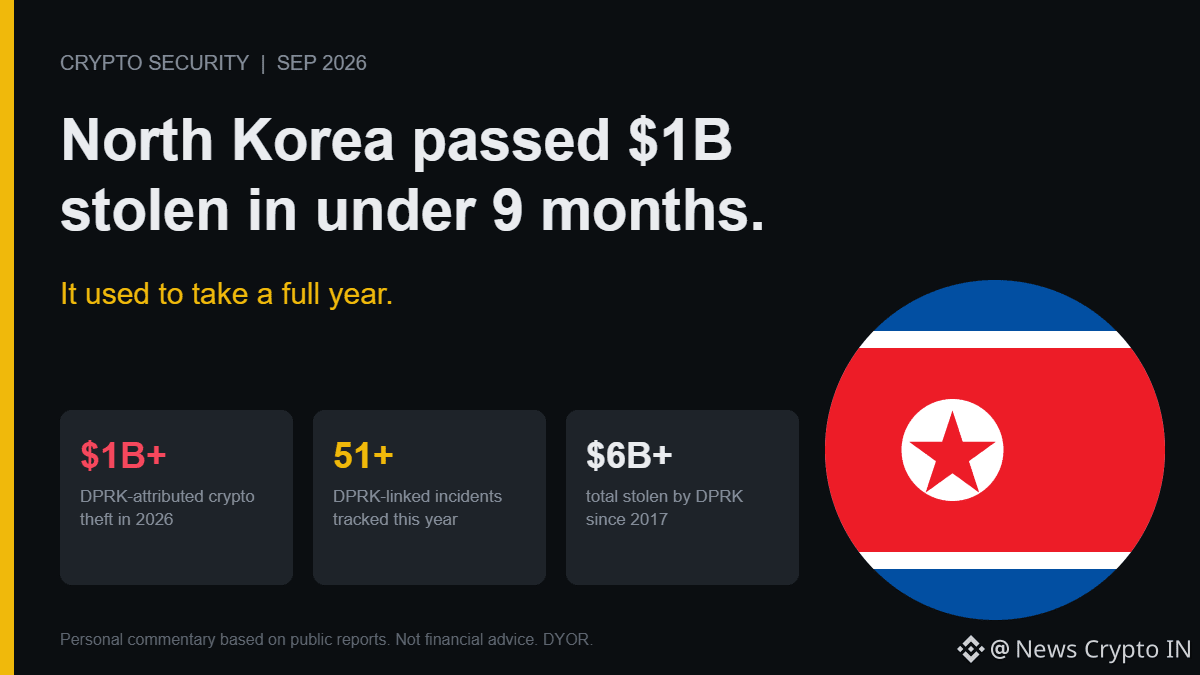
North Korea just crossed $1 billion in crypto theft for 2026, and did it in under 9 months. Last year that milestone took a full 12.
The Bitget hack ($387.5M, confirmed Sept 24) pushed the total over the line. Elliptic has tracked 51+ DPRK-linked incidents this year alone, part of a cumulative haul north of $6B since 2017. Another 2026 example: the Drift Protocol attack, where social engineering moved $285M out in 12 minutes.
The acceleration matters more than the total. A state actor getting faster at extracting nine-figure sums means the industry's security model isn't just losing dollars, it's losing the race. Exchanges harden one attack surface (hot wallets, smart contract audits), and the next hit comes through a different door: spoofed transfers, social engineering, insider access.
Not every attribution is airtight; Bitget's own CEO called the tactics "consistent with" DPRK groups, not confirmed Lazarus. But the pattern across 51 incidents this year is hard to wave away as coincidence.
At this pace, when does $1B/year in state-sponsored theft become a cost the industry just prices in, instead of a crisis?
#Lazarus #CryptoSecurity
North Korea just crossed $1 billion in crypto theft for 2026, and did it in under 9 months. Last year that milestone took a full 12.
The Bitget hack ($387.5M, confirmed Sept 24) pushed the total over the line. Elliptic has tracked 51+ DPRK-linked incidents this year alone, part of a cumulative haul north of $6B since 2017. Another 2026 example: the Drift Protocol attack, where social engineering moved $285M out in 12 minutes.
The acceleration matters more than the total. A state actor getting faster at extracting nine-figure sums means the industry's security model isn't just losing dollars, it's losing the race. Exchanges harden one attack surface (hot wallets, smart contract audits), and the next hit comes through a different door: spoofed transfers, social engineering, insider access.
Not every attribution is airtight; Bitget's own CEO called the tactics "consistent with" DPRK groups, not confirmed Lazarus. But the pattern across 51 incidents this year is hard to wave away as coincidence.
At this pace, when does $1B/year in state-sponsored theft become a cost the industry just prices in, instead of a crisis?
#Lazarus #CryptoSecurity
The Bitget hack ($387.5M, confirmed Sept 24) pushed the total over the line. Elliptic has tracked 51+ DPRK-linked incidents this year alone, part of a cumulative haul north of $6B since 2017. Another 2026 example: the Drift Protocol attack, where social engineering moved $285M out in 12 minutes.
The acceleration matters more than the total. A state actor getting faster at extracting nine-figure sums means the industry's security model isn't just losing dollars, it's losing the race. Exchanges harden one attack surface (hot wallets, smart contract audits), and the next hit comes through a different door: spoofed transfers, social engineering, insider access.
Not every attribution is airtight; Bitget's own CEO called the tactics "consistent with" DPRK groups, not confirmed Lazarus. But the pattern across 51 incidents this year is hard to wave away as coincidence.
At this pace, when does $1B/year in state-sponsored theft become a cost the industry just prices in, instead of a crisis?
#Lazarus #CryptoSecurity
966

🚨 Major Crypto Hacks Have Shaken the Industry in 2026
2026 has been marked by several major security incidents across the crypto industry. Billions of dollars in digital assets have been affected by exploits and hacks, highlighting the importance of security in both DeFi protocols and centralized exchanges.
One of the biggest incidents involved KelpDAO, which lost approximately $292 million in April. Attackers exploited a vulnerability in its LayerZero-powered bridge and drained around 116,500 rsETH, representing roughly 18% of the token's circulating supply.
Drift Protocol was also hit by a major attack, with approximately $285 million drained from its vaults. Blockaid described it as a sophisticated governance-layer attack that exploited weaknesses in the protocol's operational security.
In September, Liquid Network suffered an exploit involving approximately $320 million worth of Bitcoin. Attackers exploited a vulnerability in the transaction-validation system to withdraw BTC from the network's reserves. Around 85% of the withdrawn Bitcoin was later returned.
Most recently, Bitget suffered a major security incident on September 24. The exchange initially estimated the loss at around $351.6 million, with subsequent analysis putting the figure at approximately $387.5 million. Bitget stated that its cold wallets remained secure and that the loss would be covered by its User Protection Fund. The investigation is ongoing.
These incidents are a reminder that crypto security remains one of the most important issues in the industry.
What do you think is the biggest security risk in crypto today — DeFi bridges, smart contracts, governance systems, or centralized exchanges?
#Crypto #Bitcoin #BTC #Ethereum #ETH #DeFi #CryptoSecurity
🚨 Major Crypto Hacks Have Shaken the Industry in 2026
2026 has been marked by several major security incidents across the crypto industry. Billions of dollars in digital assets have been affected by exploits and hacks, highlighting the importance of security in both DeFi protocols and centralized exchanges.
One of the biggest incidents involved KelpDAO, which lost approximately $292 million in April. Attackers exploited a vulnerability in its LayerZero-powered bridge and drained around 116,500 rsETH, representing roughly 18% of the token's circulating supply.
Drift Protocol was also hit by a major attack, with approximately $285 million drained from its vaults. Blockaid described it as a sophisticated governance-layer attack that exploited weaknesses in the protocol's operational security.
In September, Liquid Network suffered an exploit involving approximately $320 million worth of Bitcoin. Attackers exploited a vulnerability in the transaction-validation system to withdraw BTC from the network's reserves. Around 85% of the withdrawn Bitcoin was later returned.
Most recently, Bitget suffered a major security incident on September 24. The exchange initially estimated the loss at around $351.6 million, with subsequent analysis putting the figure at approximately $387.5 million. Bitget stated that its cold wallets remained secure and that the loss would be covered by its User Protection Fund. The investigation is ongoing.
These incidents are a reminder that crypto security remains one of the most important issues in the industry.
What do you think is the biggest security risk in crypto today — DeFi bridges, smart contracts, governance systems, or centralized exchanges?
#Crypto #Bitcoin #BTC #Ethereum #ETH #DeFi #CryptoSecurity
2026 has been marked by several major security incidents across the crypto industry. Billions of dollars in digital assets have been affected by exploits and hacks, highlighting the importance of security in both DeFi protocols and centralized exchanges.
One of the biggest incidents involved KelpDAO, which lost approximately $292 million in April. Attackers exploited a vulnerability in its LayerZero-powered bridge and drained around 116,500 rsETH, representing roughly 18% of the token's circulating supply.
Drift Protocol was also hit by a major attack, with approximately $285 million drained from its vaults. Blockaid described it as a sophisticated governance-layer attack that exploited weaknesses in the protocol's operational security.
In September, Liquid Network suffered an exploit involving approximately $320 million worth of Bitcoin. Attackers exploited a vulnerability in the transaction-validation system to withdraw BTC from the network's reserves. Around 85% of the withdrawn Bitcoin was later returned.
Most recently, Bitget suffered a major security incident on September 24. The exchange initially estimated the loss at around $351.6 million, with subsequent analysis putting the figure at approximately $387.5 million. Bitget stated that its cold wallets remained secure and that the loss would be covered by its User Protection Fund. The investigation is ongoing.
These incidents are a reminder that crypto security remains one of the most important issues in the industry.
What do you think is the biggest security risk in crypto today — DeFi bridges, smart contracts, governance systems, or centralized exchanges?
#Crypto #Bitcoin #BTC #Ethereum #ETH #DeFi #CryptoSecurity
95
·
--
🔷 Bitget is getting back to normal — but the real test is still ahead.
After the $388M breach, withdrawals are being restored and the Protection Fund has reached $309M.
But recovery ≠ resolution.
~$3.8M in stolen $ZEC was reportedly moved into Ironwood, showing that the fund-tracing process is still active.
The next signal to watch isn’t just withdrawals reopening.
It’s how much of the stolen funds can actually be recovered — and whether confidence fully returns.
#Bitget #CryptoSecurity #ZEC $ZEC
🔷 Bitget is getting back to normal — but the real test is still ahead.
After the $388M breach, withdrawals are being restored and the Protection Fund has reached $309M.
But recovery ≠ resolution.
~$3.8M in stolen $ZEC was reportedly moved into Ironwood, showing that the fund-tracing process is still active.
The next signal to watch isn’t just withdrawals reopening.
It’s how much of the stolen funds can actually be recovered — and whether confidence fully returns.
#Bitget #CryptoSecurity #ZEC $ZEC
After the $388M breach, withdrawals are being restored and the Protection Fund has reached $309M.
But recovery ≠ resolution.
~$3.8M in stolen $ZEC was reportedly moved into Ironwood, showing that the fund-tracing process is still active.
The next signal to watch isn’t just withdrawals reopening.
It’s how much of the stolen funds can actually be recovered — and whether confidence fully returns.
#Bitget #CryptoSecurity #ZEC $ZEC
1
182

·
--
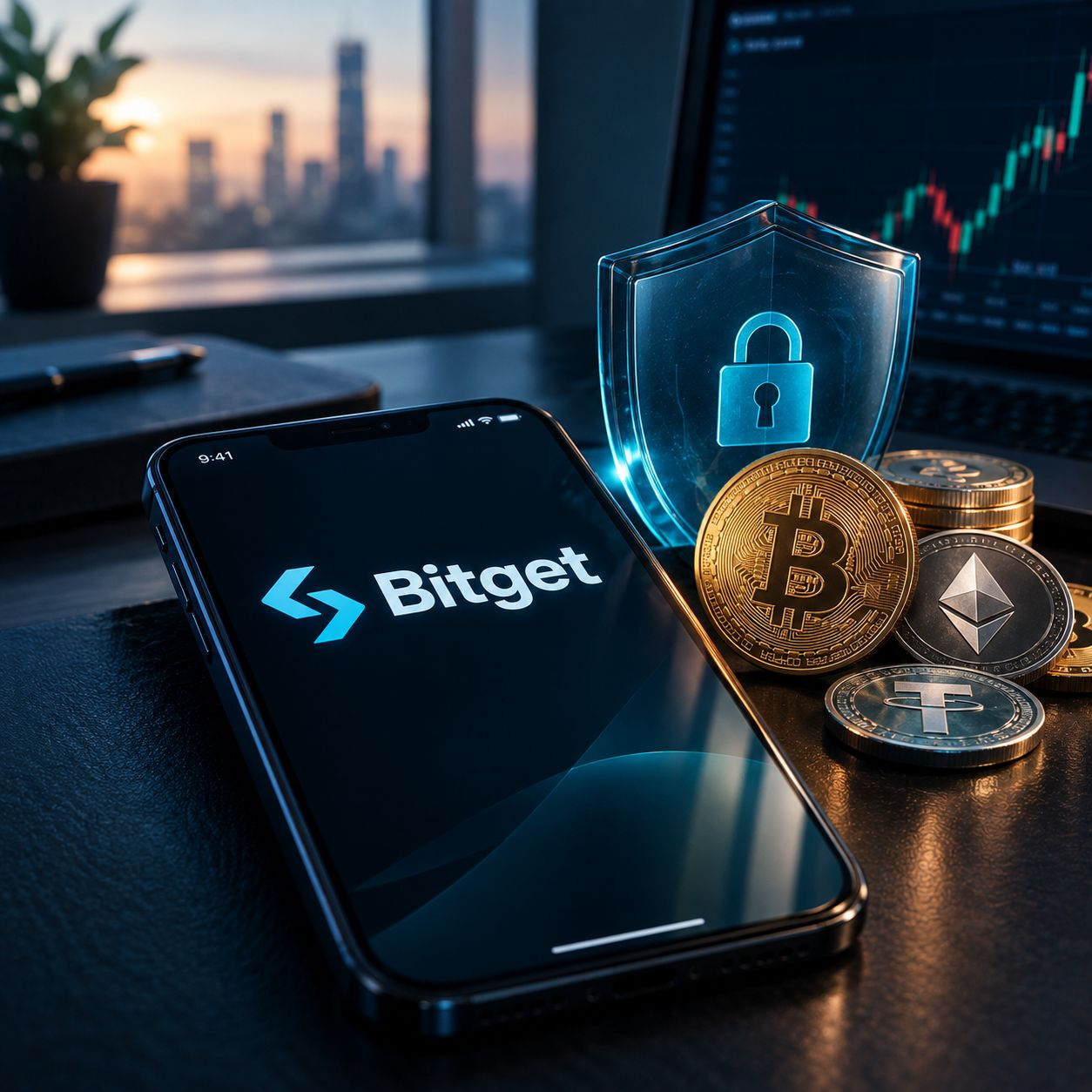
Crypto Security Is Back In Focus After a Major Exchange Breach 🎯
A major crypto-platform security incident has put exchange and wallet risk back at the center of the market conversation.
Public reports indicate hundreds of millions of dollars in customer withdrawals were affected, while investigations focused on compromised internal access and infrastructure vulnerabilities. The incident is a reminder of a basic rule in crypto:
Market risk is not the only risk. Operational security matters too.
For users, that means treating account protection as seriously as price volatility:
Use strong, unique passwords
Enable two-factor authentication
Review withdrawal and device settings
Be cautious with phishing links and impersonation messages
Understand where and how assets are held
This does not change the underlying blockchain technology—but it reinforces why custody, platform controls, and user security habits remain critical.
#CryptoSecurity #Web3Safety #Write2Earn
Follow For more Update News...
@5ur1d
@Square-Creator-4f1968b4bd55
@Square-Creator-e36956b8e5e4f
@crypto_inquiad
Crypto Security Is Back In Focus After a Major Exchange Breach 🎯
A major crypto-platform security incident has put exchange and wallet risk back at the center of the market conversation.
Public reports indicate hundreds of millions of dollars in customer withdrawals were affected, while investigations focused on compromised internal access and infrastructure vulnerabilities. The incident is a reminder of a basic rule in crypto:
Market risk is not the only risk. Operational security matters too.
For users, that means treating account protection as seriously as price volatility:
Use strong, unique passwords
Enable two-factor authentication
Review withdrawal and device settings
Be cautious with phishing links and impersonation messages
Understand where and how assets are held
This does not change the underlying blockchain technology—but it reinforces why custody, platform controls, and user security habits remain critical.
#CryptoSecurity #Web3Safety #Write2Earn
Follow For more Update News...
@TAJBI
@Marco cryptos
@NIRJHOR CRYPTO
@CRYPTO INQUIAD
A major crypto-platform security incident has put exchange and wallet risk back at the center of the market conversation.
Public reports indicate hundreds of millions of dollars in customer withdrawals were affected, while investigations focused on compromised internal access and infrastructure vulnerabilities. The incident is a reminder of a basic rule in crypto:
Market risk is not the only risk. Operational security matters too.
For users, that means treating account protection as seriously as price volatility:
Use strong, unique passwords
Enable two-factor authentication
Review withdrawal and device settings
Be cautious with phishing links and impersonation messages
Understand where and how assets are held
This does not change the underlying blockchain technology—but it reinforces why custody, platform controls, and user security habits remain critical.
#CryptoSecurity #Web3Safety #Write2Earn
Follow For more Update News...
@TAJBI
@Marco cryptos
@NIRJHOR CRYPTO
@CRYPTO INQUIAD


60

Article
Bitget’s $387M Breach Exposes a Hidden Crypto Security Risk🚨 Bitget’s security breach exposed a bigger crypto risk. 👀🔐
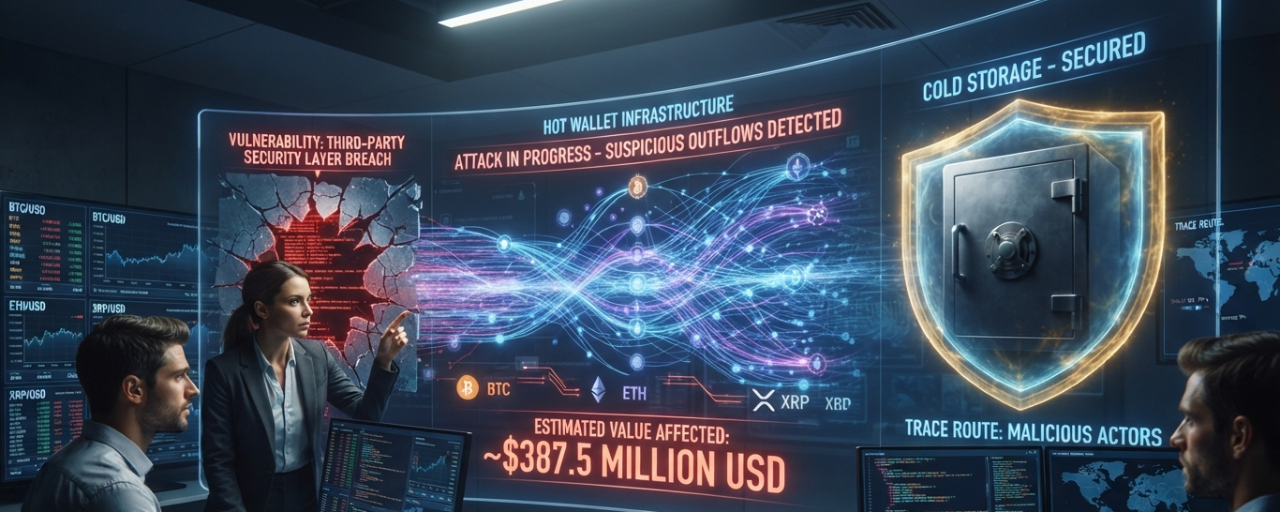
Around $387.5M in assets were transferred from a portion of Bitget’s hot and warm wallet infrastructure on September 24.
But here's the important part:
🔐 Cold wallets were not affected
🗝️ Private keys were not compromised
🛡️ User account balances remained unaffected
Bitget says the attacker exploited a vulnerability in a third party security product, obtained high level internal credentials and used them to send fraudulent withdrawal commands.
The vulnerability has since been remediated, while Mandiant and SlowMist are assisting with the investigation.
The bigger lesson?
Crypto security isn't only about protecting private keys.
A weak third party dependency can become another path into critical infrastructure.
🏦 Exchanges
🔐 Security vendors
⚙️ Internal access
🛡️ Withdrawal controls
The attack may be contained, but the industry question remains:
👀 How much should crypto platforms trust third party security infrastructure?
$BTC $ETH $XRP
#CryptoSecurity
{future}(ZAMAUSDT)
{future}(MARSCOINUSDT)
{future}(HBARUSDT)
#Bitget #CryptoNews #Web3Safety #RiskManagement
Bitget’s $387M Breach Exposes a Hidden Crypto Security Risk
🚨 Bitget’s security breach exposed a bigger crypto risk. 👀🔐
Around $387.5M in assets were transferred from a portion of Bitget’s hot and warm wallet infrastructure on September 24.
But here's the important part:
🔐 Cold wallets were not affected
🗝️ Private keys were not compromised
🛡️ User account balances remained unaffected
Bitget says the attacker exploited a vulnerability in a third party security product, obtained high level internal credentials and used them to send fraudulent withdrawal commands.
The vulnerability has since been remediated, while Mandiant and SlowMist are assisting with the investigation.
The bigger lesson?
Crypto security isn't only about protecting private keys.
A weak third party dependency can become another path into critical infrastructure.
🏦 Exchanges
🔐 Security vendors
⚙️ Internal access
🛡️ Withdrawal controls
The attack may be contained, but the industry question remains:
👀 How much should crypto platforms trust third party security infrastructure?
$BTC $ETH $XRP
#CryptoSecurity
#Bitget #CryptoNews #Web3Safety #RiskManagement
Around $387.5M in assets were transferred from a portion of Bitget’s hot and warm wallet infrastructure on September 24.
But here's the important part:
🔐 Cold wallets were not affected
🗝️ Private keys were not compromised
🛡️ User account balances remained unaffected
Bitget says the attacker exploited a vulnerability in a third party security product, obtained high level internal credentials and used them to send fraudulent withdrawal commands.
The vulnerability has since been remediated, while Mandiant and SlowMist are assisting with the investigation.
The bigger lesson?
Crypto security isn't only about protecting private keys.
A weak third party dependency can become another path into critical infrastructure.
🏦 Exchanges
🔐 Security vendors
⚙️ Internal access
🛡️ Withdrawal controls
The attack may be contained, but the industry question remains:
👀 How much should crypto platforms trust third party security infrastructure?
$BTC $ETH $XRP
#CryptoSecurity
#Bitget #CryptoNews #Web3Safety #RiskManagement
1
·
--
🚨 8 Crypto Transfer Mistakes You Should Avoid on Binance
Sending crypto is fast and convenient, but one small mistake can sometimes lead to a transaction that is difficult or impossible to recover.
Before sending $USDT, $BTC, $ETH or any other crypto, take a few seconds to check these 8 things 👇
1️⃣ Check the wallet address
Always verify the destination address carefully. Never send funds to an address from an unknown or suspicious source.
2️⃣ Choose the correct network
This is extremely important. Make sure the network you select is supported by the receiving wallet or platform.
3️⃣ Double-check the amount
Before confirming, verify the amount, fees and final amount that will be received.
4️⃣ Check the Memo or Tag
Some deposits require a Memo, Tag or similar information. If the receiving platform asks for one, make sure you enter it correctly.
5️⃣ Consider a small test transaction
When using a new address for the first time, a small test transfer can help confirm that the address and network are correct before sending a larger amount.
6️⃣ Beware of fake support
Binance support will never need your private key or wallet seed phrase. Never share your password, seed phrase or security codes with anyone.
7️⃣ Don't assume the same token means the same network
A cryptocurrency can exist on multiple networks. Always check the network on both the sending and receiving sides.
8️⃣ Keep your transaction ID
After sending crypto, save the TXID or transaction hash when available. It can help you track the transaction on the blockchain.
✅ My 30-second checklist:
Address → Network → Amount → Memo/Tag → Fees → Destination
Crypto transactions can be irreversible, so don't rush. Take 30 seconds to verify everything before pressing Confirm.
What is the most common crypto transfer mistake you've seen? 👇
#Binance #BinanceSquare #Crypto #CryptoTips #Bitcoin #Ethereum #USDT#BTC #ETH #Web3 #CryptoSecurity
🚨 8 Crypto Transfer Mistakes You Should Avoid on Binance
Sending crypto is fast and convenient, but one small mistake can sometimes lead to a transaction that is difficult or impossible to recover.
Before sending $USDT, $BTC, $ETH or any other crypto, take a few seconds to check these 8 things 👇
1️⃣ Check the wallet address
Always verify the destination address carefully. Never send funds to an address from an unknown or suspicious source.
2️⃣ Choose the correct network
This is extremely important. Make sure the network you select is supported by the receiving wallet or platform.
3️⃣ Double-check the amount
Before confirming, verify the amount, fees and final amount that will be received.
4️⃣ Check the Memo or Tag
Some deposits require a Memo, Tag or similar information. If the receiving platform asks for one, make sure you enter it correctly.
5️⃣ Consider a small test transaction
When using a new address for the first time, a small test transfer can help confirm that the address and network are correct before sending a larger amount.
6️⃣ Beware of fake support
Binance support will never need your private key or wallet seed phrase. Never share your password, seed phrase or security codes with anyone.
7️⃣ Don't assume the same token means the same network
A cryptocurrency can exist on multiple networks. Always check the network on both the sending and receiving sides.
8️⃣ Keep your transaction ID
After sending crypto, save the TXID or transaction hash when available. It can help you track the transaction on the blockchain.
✅ My 30-second checklist:
Address → Network → Amount → Memo/Tag → Fees → Destination
Crypto transactions can be irreversible, so don't rush. Take 30 seconds to verify everything before pressing Confirm.
What is the most common crypto transfer mistake you've seen? 👇
#Binance #BinanceSquare #Crypto #CryptoTips #Bitcoin #Ethereum #USDT#BTC #ETH #Web3 #CryptoSecurity
Sending crypto is fast and convenient, but one small mistake can sometimes lead to a transaction that is difficult or impossible to recover.
Before sending $USDT, $BTC, $ETH or any other crypto, take a few seconds to check these 8 things 👇
1️⃣ Check the wallet address
Always verify the destination address carefully. Never send funds to an address from an unknown or suspicious source.
2️⃣ Choose the correct network
This is extremely important. Make sure the network you select is supported by the receiving wallet or platform.
3️⃣ Double-check the amount
Before confirming, verify the amount, fees and final amount that will be received.
4️⃣ Check the Memo or Tag
Some deposits require a Memo, Tag or similar information. If the receiving platform asks for one, make sure you enter it correctly.
5️⃣ Consider a small test transaction
When using a new address for the first time, a small test transfer can help confirm that the address and network are correct before sending a larger amount.
6️⃣ Beware of fake support
Binance support will never need your private key or wallet seed phrase. Never share your password, seed phrase or security codes with anyone.
7️⃣ Don't assume the same token means the same network
A cryptocurrency can exist on multiple networks. Always check the network on both the sending and receiving sides.
8️⃣ Keep your transaction ID
After sending crypto, save the TXID or transaction hash when available. It can help you track the transaction on the blockchain.
✅ My 30-second checklist:
Address → Network → Amount → Memo/Tag → Fees → Destination
Crypto transactions can be irreversible, so don't rush. Take 30 seconds to verify everything before pressing Confirm.
What is the most common crypto transfer mistake you've seen? 👇
#Binance #BinanceSquare #Crypto #CryptoTips #Bitcoin #Ethereum #USDT#BTC #ETH #Web3 #CryptoSecurity
1
80

🚨 DEEP-DIVE ANALYSIS ON THE $BTC HOT WALLET EXPLOIT REVEALS ZERO-DAY BREACH! 💥
📌 Forensic investigation into the recent hot wallet breach at a top-tier exchange reveals a highly sophisticated operation. Attackers weaponized a zero-day exploit paired with compromised internal credentials to execute a lightning-fast, three-hour cross-chain drain. 📊
💡 Custom-built tools were deployed to exploit backend withdrawal logic while the malicious actor attempted to alter transaction records on-chain. 🔍 As security firms continue tracing lateral movement across networks, off-exchange liquidity protection is back in the spotlight. 💬 Are you keeping your capital on hot wallets during volatile market phases or moving strictly to cold storage? 👇
⚠️ Not financial advice. Always manage your risk. 🛡️
🏷️ #BTC #CryptoSecurity #OnChain #Blockchain
👁️ 🛡️
🚨 DEEP-DIVE ANALYSIS ON THE $BTC HOT WALLET EXPLOIT REVEALS ZERO-DAY BREACH! 💥
📌 Forensic investigation into the recent hot wallet breach at a top-tier exchange reveals a highly sophisticated operation. Attackers weaponized a zero-day exploit paired with compromised internal credentials to execute a lightning-fast, three-hour cross-chain drain. 📊
💡 Custom-built tools were deployed to exploit backend withdrawal logic while the malicious actor attempted to alter transaction records on-chain. 🔍 As security firms continue tracing lateral movement across networks, off-exchange liquidity protection is back in the spotlight. 💬 Are you keeping your capital on hot wallets during volatile market phases or moving strictly to cold storage? 👇
⚠️ Not financial advice. Always manage your risk. 🛡️
🏷️ #BTC #CryptoSecurity #OnChain #Blockchain
👁️ 🛡️
📌 Forensic investigation into the recent hot wallet breach at a top-tier exchange reveals a highly sophisticated operation. Attackers weaponized a zero-day exploit paired with compromised internal credentials to execute a lightning-fast, three-hour cross-chain drain. 📊
💡 Custom-built tools were deployed to exploit backend withdrawal logic while the malicious actor attempted to alter transaction records on-chain. 🔍 As security firms continue tracing lateral movement across networks, off-exchange liquidity protection is back in the spotlight. 💬 Are you keeping your capital on hot wallets during volatile market phases or moving strictly to cold storage? 👇
⚠️ Not financial advice. Always manage your risk. 🛡️
🏷️ #BTC #CryptoSecurity #OnChain #Blockchain
👁️ 🛡️
16

·
--
🚨 SLOWMIST UNCOVERS ZERO-DAY EXPLOIT AND INSIDER IMPERSONATION IN RECENT $BTC SECURITY BREACH 🚨
SlowMist has exposed the mechanics behind a top-tier exchange security incident, revealing a sophisticated attack vector involving a third-party zero-day vulnerability and unauthorized administrative access. 🔍 On-chain forensics show the attacker deployed custom withdrawal logic, routing assets across multiple blockchains in under three hours while attempting to obscure withdrawal logs. 🛡️
Institutional security protocols are now being audited as lateral movement vector investigations continue. 📊 When major infrastructure faces targeted exploits, market participants must evaluate counterparty risk and on-chain security standards. 💬 How do you think high-profile security audits like this impact long-term market trust? 👇
⚠️ Not financial advice. Always manage your risk. 🛡️
🏷️ #BTC #CryptoSecurity #OnChain #MarketAnalysis
🎯 🛡️
🚨 SLOWMIST UNCOVERS ZERO-DAY EXPLOIT AND INSIDER IMPERSONATION IN RECENT $BTC SECURITY BREACH 🚨
SlowMist has exposed the mechanics behind a top-tier exchange security incident, revealing a sophisticated attack vector involving a third-party zero-day vulnerability and unauthorized administrative access. 🔍 On-chain forensics show the attacker deployed custom withdrawal logic, routing assets across multiple blockchains in under three hours while attempting to obscure withdrawal logs. 🛡️
Institutional security protocols are now being audited as lateral movement vector investigations continue. 📊 When major infrastructure faces targeted exploits, market participants must evaluate counterparty risk and on-chain security standards. 💬 How do you think high-profile security audits like this impact long-term market trust? 👇
⚠️ Not financial advice. Always manage your risk. 🛡️
🏷️ #BTC #CryptoSecurity #OnChain #MarketAnalysis
🎯 🛡️
SlowMist has exposed the mechanics behind a top-tier exchange security incident, revealing a sophisticated attack vector involving a third-party zero-day vulnerability and unauthorized administrative access. 🔍 On-chain forensics show the attacker deployed custom withdrawal logic, routing assets across multiple blockchains in under three hours while attempting to obscure withdrawal logs. 🛡️
Institutional security protocols are now being audited as lateral movement vector investigations continue. 📊 When major infrastructure faces targeted exploits, market participants must evaluate counterparty risk and on-chain security standards. 💬 How do you think high-profile security audits like this impact long-term market trust? 👇
⚠️ Not financial advice. Always manage your risk. 🛡️
🏷️ #BTC #CryptoSecurity #OnChain #MarketAnalysis
🎯 🛡️
16

·
--
Bullish
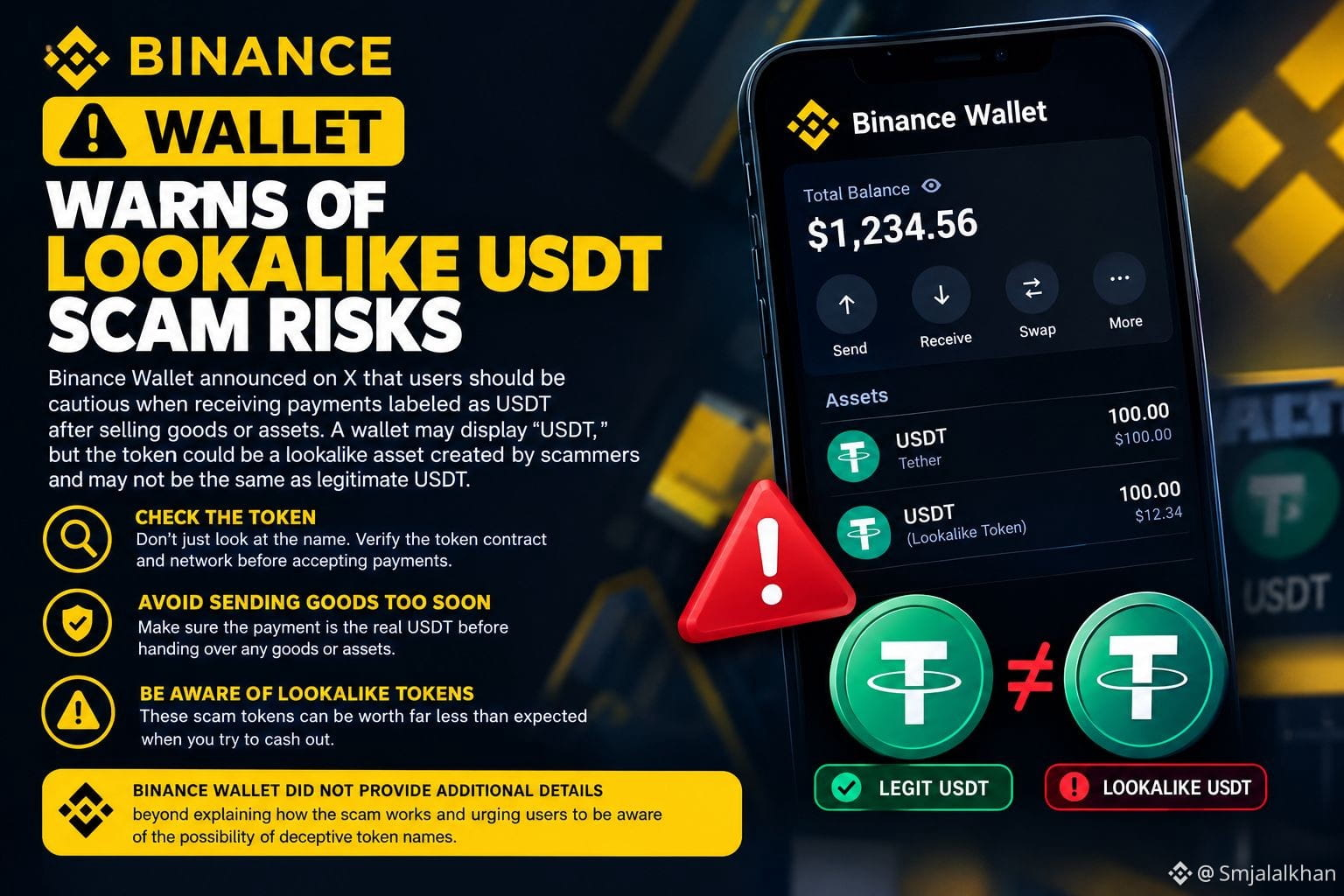
🚨 **BINANCE WALLET SECURITY ALERT: BEWARE OF DECEPTIVE LOOKALIKE "USDT" SCAM RISKS!** 🚨
Traders and Sellers, protect your digital assets immediately! Empty timeline hype means nothing—absolute on-chain verification and strict safety protocols are your only shields in this compressed cycle! A massive deceptive network has been exposed by the official security channels. Let's break down the mechanics! 📊📉
🔍 **How the Lookalike USDT Scam Works:**
* **The Illusion:** You sell your real-world goods, properties, or digital assets. The buyer sends the crypto, and your wallet instantly displays "USDT" with the proper logo.
* **The Deception Trap:** Under transaction pressure and seeing the text reflected, you release the assets blindly. But wait—that "USDT" is a fake clone token contract deployed by scammers!
* **The Valuation Crash:** These cloned tokens mimic legitimate stablecoins flawlessly inside your UI history, but they hold ZERO liquidity and are worth absolutely nothing when you later attempt to cash out!
$BTC
🛡️ **The Operational Security Rules:**
1. **Never Trust UI Labels:** Always expand the inbound transaction and verify the official smart contract address of the incoming token, not just the text name!
2. **Secure the Baseline:** Avoid interacting with unverified external deposits. Shift your core operations to premium chains like {spot}(BTCUSDT), {spot}(BNBUSDT), or hold secure blocks under strict Isolated guidelines!
---$BNB
💬 **THE COMPRESSION CHALLENGE IS LIVE: SHARE YOUR SAFETY METRICS BELOW!**
Have you ever received a forged token or a suspicious dust asset warning inside your Web3 wallet? Stop being a passive spectator. Share your security experiences below, drop your watchlists, and hit that **FOLLOW** button right now to protect our ledger balance together! 👇🔥
$USDT
#CryptoSecurity #USDT #ScamAlert #BinanceSquare #writetoearn
🚨 **BINANCE WALLET SECURITY ALERT: BEWARE OF DECEPTIVE LOOKALIKE "USDT" SCAM RISKS!** 🚨
Traders and Sellers, protect your digital assets immediately! Empty timeline hype means nothing—absolute on-chain verification and strict safety protocols are your only shields in this compressed cycle! A massive deceptive network has been exposed by the official security channels. Let's break down the mechanics! 📊📉
🔍 **How the Lookalike USDT Scam Works:**
* **The Illusion:** You sell your real-world goods, properties, or digital assets. The buyer sends the crypto, and your wallet instantly displays "USDT" with the proper logo.
* **The Deception Trap:** Under transaction pressure and seeing the text reflected, you release the assets blindly. But wait—that "USDT" is a fake clone token contract deployed by scammers!
* **The Valuation Crash:** These cloned tokens mimic legitimate stablecoins flawlessly inside your UI history, but they hold ZERO liquidity and are worth absolutely nothing when you later attempt to cash out!
$BTC
🛡️ **The Operational Security Rules:**
1. **Never Trust UI Labels:** Always expand the inbound transaction and verify the official smart contract address of the incoming token, not just the text name!
2. **Secure the Baseline:** Avoid interacting with unverified external deposits. Shift your core operations to premium chains like , , or hold secure blocks under strict Isolated guidelines!
---$BNB
💬 **THE COMPRESSION CHALLENGE IS LIVE: SHARE YOUR SAFETY METRICS BELOW!**
Have you ever received a forged token or a suspicious dust asset warning inside your Web3 wallet? Stop being a passive spectator. Share your security experiences below, drop your watchlists, and hit that **FOLLOW** button right now to protect our ledger balance together! 👇🔥
$USDT
#CryptoSecurity #USDT #ScamAlert #BinanceSquare #writetoearn
Traders and Sellers, protect your digital assets immediately! Empty timeline hype means nothing—absolute on-chain verification and strict safety protocols are your only shields in this compressed cycle! A massive deceptive network has been exposed by the official security channels. Let's break down the mechanics! 📊📉
🔍 **How the Lookalike USDT Scam Works:**
* **The Illusion:** You sell your real-world goods, properties, or digital assets. The buyer sends the crypto, and your wallet instantly displays "USDT" with the proper logo.
* **The Deception Trap:** Under transaction pressure and seeing the text reflected, you release the assets blindly. But wait—that "USDT" is a fake clone token contract deployed by scammers!
* **The Valuation Crash:** These cloned tokens mimic legitimate stablecoins flawlessly inside your UI history, but they hold ZERO liquidity and are worth absolutely nothing when you later attempt to cash out!
$BTC
🛡️ **The Operational Security Rules:**
1. **Never Trust UI Labels:** Always expand the inbound transaction and verify the official smart contract address of the incoming token, not just the text name!
2. **Secure the Baseline:** Avoid interacting with unverified external deposits. Shift your core operations to premium chains like , , or hold secure blocks under strict Isolated guidelines!
---$BNB
💬 **THE COMPRESSION CHALLENGE IS LIVE: SHARE YOUR SAFETY METRICS BELOW!**
Have you ever received a forged token or a suspicious dust asset warning inside your Web3 wallet? Stop being a passive spectator. Share your security experiences below, drop your watchlists, and hit that **FOLLOW** button right now to protect our ledger balance together! 👇🔥
$USDT
#CryptoSecurity #USDT #ScamAlert #BinanceSquare #writetoearn
1
27

·
--
🚨 THE PPV2 EXPLOIT IS STILL DRAINING $ETH WALLETS SO REVOKE YOUR APPROVALS NOW! ⚠️
The Payment Processor V2 exploit is actively draining funds on-chain, and attackers are getting ruthless. Even if your wallet survived the initial September wave, open contract approvals mean your assets remain completely exposed to automated drainers. 🩸
Exploiters are now tipping block builders up to 99% of stolen proceeds to guarantee execution, making front-run rescues virtually impossible the moment an offer is accepted. If you trade on-chain, revoke legacy permissions immediately before signing your next deal. 🔍
💬 Have you cleared your active contract approvals today, or are you leaving your wallet exposed to silent MEV drainers? 👇
⚠️ Not financial advice. Always manage your risk. 🛡️
🏷️ #ETH #CryptoSecurity #OnChain #SecurityAlert
⚠️ 👁️
🚨 THE PPV2 EXPLOIT IS STILL DRAINING $ETH WALLETS SO REVOKE YOUR APPROVALS NOW! ⚠️
The Payment Processor V2 exploit is actively draining funds on-chain, and attackers are getting ruthless. Even if your wallet survived the initial September wave, open contract approvals mean your assets remain completely exposed to automated drainers. 🩸
Exploiters are now tipping block builders up to 99% of stolen proceeds to guarantee execution, making front-run rescues virtually impossible the moment an offer is accepted. If you trade on-chain, revoke legacy permissions immediately before signing your next deal. 🔍
💬 Have you cleared your active contract approvals today, or are you leaving your wallet exposed to silent MEV drainers? 👇
⚠️ Not financial advice. Always manage your risk. 🛡️
🏷️ #ETH #CryptoSecurity #OnChain #SecurityAlert
⚠️ 👁️
The Payment Processor V2 exploit is actively draining funds on-chain, and attackers are getting ruthless. Even if your wallet survived the initial September wave, open contract approvals mean your assets remain completely exposed to automated drainers. 🩸
Exploiters are now tipping block builders up to 99% of stolen proceeds to guarantee execution, making front-run rescues virtually impossible the moment an offer is accepted. If you trade on-chain, revoke legacy permissions immediately before signing your next deal. 🔍
💬 Have you cleared your active contract approvals today, or are you leaving your wallet exposed to silent MEV drainers? 👇
⚠️ Not financial advice. Always manage your risk. 🛡️
🏷️ #ETH #CryptoSecurity #OnChain #SecurityAlert
⚠️ 👁️
15

Bitcoin: WPO Project Announcement InvestigationEVENT SCORE: 100/100 | Generated: 2026-09-30T04:34:38.529Z
Executive Summary
Bitcoin (BTC) triggered the security incidents radar after 2 relevant reports across 2 domains. 1 source matched an official project, exchange, or public-authority domain. Event score: 100/100.
Announcement And Source Review
- Bitcoin Pioneer Adam Back’s Empire Beset by Hack, Lawsuits - Bloomberg.com — bloomberg.com; observed Tue, 29 Sep 2026 15:09:31 GMT; established editorial
- Bitcoin Pioneer Adam Back's Empire Beset by Hack and Lawsuits - Binance — binance.com; observed Tue, 29 Sep 2026 12:24:55 GMT; primary
Official-Source Check
1 cited item matched the project's CoinMarketCap-listed website domain, a major exchange domain, or a public authority. Publication also required either a second official source or broad independent confirmation.
Evidence quality: 79/100 across 2 independent domains; 1 established editorial record(s).
Market Reaction
- CoinMarketCap rank: 1.
- Price change: 1h +0.08%, 24h +0.16%, 7d -4.54%.
- Market capitalization: $1.67T; 24h volume: $26.26B.
- Turnover: 1.6% of market cap; volume change -32.5%.
Neutral Assessment
A partnership, listing, launch, upgrade, security disclosure, or regulatory statement can affect attention and liquidity, but its long-term importance depends on confirmed scope, delivery, adoption, and measurable on-chain or business activity. The observed market reaction does not prove causation.
What To Verify Next
- Confirm the exact announcement on the primary project's website or verified account.
- Check counterpart confirmation when a partnership or integration is claimed.
- Track implementation dates, contract addresses, token unlocks, and measurable usage.
- Treat screenshots, anonymous posts, and copied press releases as unverified until a primary source confirms them.
Confirmation And Invalidation
Confirmation requires delivery against a dated primary announcement, counterpart confirmation where applicable, and measurable adoption, volume, users, fees, or on-chain activity. A denial, delay, missing counterpart confirmation, or no measurable delivery weakens the thesis.
Methodology
The radar first discovers a candidate, then runs an asset-specific news search, compares independent domains, matches official project domains from CoinMarketCap metadata, and checks price, volume, liquidity, and recency before publication.
This automated neutral report is not financial advice. Verify primary sources before acting.
Follow WPO and visit our website for more intelligence reports.
#wpo_report #BTC #CryptoSecurity
Bitcoin: WPO Project Announcement Investigation
EVENT SCORE: 100/100 | Generated: 2026-09-30T04:34:38.529Z
Executive Summary
Bitcoin (BTC) triggered the security incidents radar after 2 relevant reports across 2 domains. 1 source matched an official project, exchange, or public-authority domain. Event score: 100/100.
Announcement And Source Review
- Bitcoin Pioneer Adam Back’s Empire Beset by Hack, Lawsuits - Bloomberg.com — bloomberg.com; observed Tue, 29 Sep 2026 15:09:31 GMT; established editorial
- Bitcoin Pioneer Adam Back's Empire Beset by Hack and Lawsuits - Binance — binance.com; observed Tue, 29 Sep 2026 12:24:55 GMT; primary
Official-Source Check
1 cited item matched the project's CoinMarketCap-listed website domain, a major exchange domain, or a public authority. Publication also required either a second official source or broad independent confirmation.
Evidence quality: 79/100 across 2 independent domains; 1 established editorial record(s).
Market Reaction
- CoinMarketCap rank: 1.
- Price change: 1h +0.08%, 24h +0.16%, 7d -4.54%.
- Market capitalization: $1.67T; 24h volume: $26.26B.
- Turnover: 1.6% of market cap; volume change -32.5%.
Neutral Assessment
A partnership, listing, launch, upgrade, security disclosure, or regulatory statement can affect attention and liquidity, but its long-term importance depends on confirmed scope, delivery, adoption, and measurable on-chain or business activity. The observed market reaction does not prove causation.
What To Verify Next
- Confirm the exact announcement on the primary project's website or verified account.
- Check counterpart confirmation when a partnership or integration is claimed.
- Track implementation dates, contract addresses, token unlocks, and measurable usage.
- Treat screenshots, anonymous posts, and copied press releases as unverified until a primary source confirms them.
Confirmation And Invalidation
Confirmation requires delivery against a dated primary announcement, counterpart confirmation where applicable, and measurable adoption, volume, users, fees, or on-chain activity. A denial, delay, missing counterpart confirmation, or no measurable delivery weakens the thesis.
Methodology
The radar first discovers a candidate, then runs an asset-specific news search, compares independent domains, matches official project domains from CoinMarketCap metadata, and checks price, volume, liquidity, and recency before publication.
This automated neutral report is not financial advice. Verify primary sources before acting.
Follow WPO and visit our website for more intelligence reports.
#wpo_report #BTC #CryptoSecurity
Executive Summary
Bitcoin (BTC) triggered the security incidents radar after 2 relevant reports across 2 domains. 1 source matched an official project, exchange, or public-authority domain. Event score: 100/100.
Announcement And Source Review
- Bitcoin Pioneer Adam Back’s Empire Beset by Hack, Lawsuits - Bloomberg.com — bloomberg.com; observed Tue, 29 Sep 2026 15:09:31 GMT; established editorial
- Bitcoin Pioneer Adam Back's Empire Beset by Hack and Lawsuits - Binance — binance.com; observed Tue, 29 Sep 2026 12:24:55 GMT; primary
Official-Source Check
1 cited item matched the project's CoinMarketCap-listed website domain, a major exchange domain, or a public authority. Publication also required either a second official source or broad independent confirmation.
Evidence quality: 79/100 across 2 independent domains; 1 established editorial record(s).
Market Reaction
- CoinMarketCap rank: 1.
- Price change: 1h +0.08%, 24h +0.16%, 7d -4.54%.
- Market capitalization: $1.67T; 24h volume: $26.26B.
- Turnover: 1.6% of market cap; volume change -32.5%.
Neutral Assessment
A partnership, listing, launch, upgrade, security disclosure, or regulatory statement can affect attention and liquidity, but its long-term importance depends on confirmed scope, delivery, adoption, and measurable on-chain or business activity. The observed market reaction does not prove causation.
What To Verify Next
- Confirm the exact announcement on the primary project's website or verified account.
- Check counterpart confirmation when a partnership or integration is claimed.
- Track implementation dates, contract addresses, token unlocks, and measurable usage.
- Treat screenshots, anonymous posts, and copied press releases as unverified until a primary source confirms them.
Confirmation And Invalidation
Confirmation requires delivery against a dated primary announcement, counterpart confirmation where applicable, and measurable adoption, volume, users, fees, or on-chain activity. A denial, delay, missing counterpart confirmation, or no measurable delivery weakens the thesis.
Methodology
The radar first discovers a candidate, then runs an asset-specific news search, compares independent domains, matches official project domains from CoinMarketCap metadata, and checks price, volume, liquidity, and recency before publication.
This automated neutral report is not financial advice. Verify primary sources before acting.
Follow WPO and visit our website for more intelligence reports.
#wpo_report #BTC #CryptoSecurity
2
1.2k

·
--
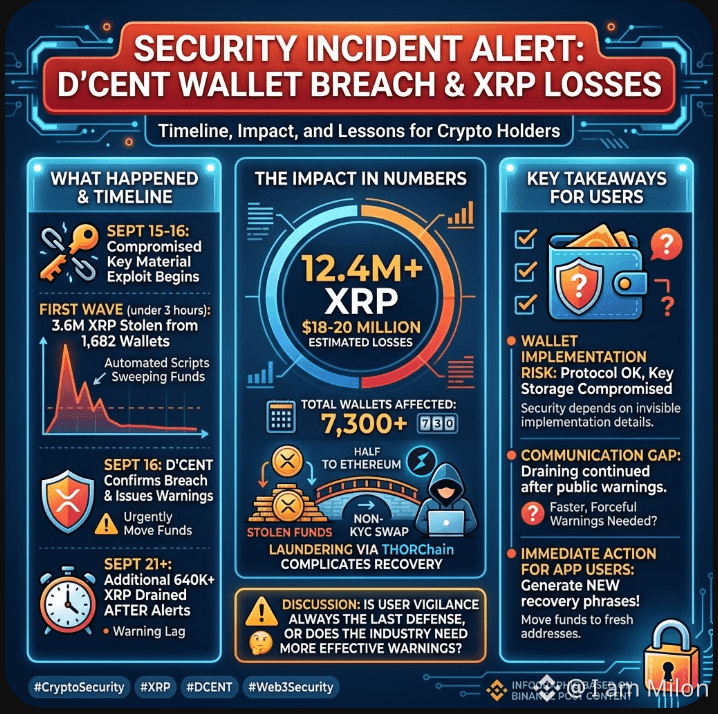
🚨 Over 12.4M $XRP Drained: What the D'CENT Wallet Breach Teaches Us About Key Security
A major breach affecting South Korean provider D’CENT App Wallet recently saw attackers sweep over 12.4 million XRP (valued at roughly $18–20 million) across 7,300+ compromised wallets.
The most alarming part? The bleeding continued days after public warnings were issued.
📉 Breakdown of the Incident
The Initial Exploit: Attackers compromised private key material, using valid cryptographic signatures to execute unauthorized transactions. No flaw was found on the XRP Ledger itself.
The First Wave: On September 15–16, automated scripts and targeted manual drains swept 3.6M XRP from 1,682 wallets in under 3 hours.
The Delayed Impact: Despite public alerts on September 16 urging users to migrate funds, over 640,000 additional XRP were stolen after September 21. By September 25, total losses surpassed 12.4M XRP.
The Laundering Route: Roughly half of the stolen funds were routed to Ethereum via THORChain to obscure the audit trail through non-KYC cross-chain swaps.
🔑 Key Takeaways for Crypto Holders
Implementation Matters: A blockchain protocol can be 100% secure, but wallet-level key management and software implementation remain vulnerable attack vectors.
Communication Gap: Public advisories often move slower than automated drain scripts. Not all users check security alerts daily, leaving unmigrated wallets exposed long after an exploit is discovered.
Immediate Action Required: D'CENT has advised all App Wallet users to immediately generate new seed phrases and move remaining balances to fresh addresses.
💬 Discussion:
When mid-breach warnings fail to reach users in time, should platforms implement protocol-level freeze mechanisms (if decentralized structures allow), or is user vigilance always the ultimate line of defense?
Share your thoughts below! 👇
#CryptoSecurity #XRP #DCENT #Binance #Web3Security
🚨 Over 12.4M $XRP Drained: What the D'CENT Wallet Breach Teaches Us About Key Security
A major breach affecting South Korean provider D’CENT App Wallet recently saw attackers sweep over 12.4 million XRP (valued at roughly $18–20 million) across 7,300+ compromised wallets.
The most alarming part? The bleeding continued days after public warnings were issued.
📉 Breakdown of the Incident
The Initial Exploit: Attackers compromised private key material, using valid cryptographic signatures to execute unauthorized transactions. No flaw was found on the XRP Ledger itself.
The First Wave: On September 15–16, automated scripts and targeted manual drains swept 3.6M XRP from 1,682 wallets in under 3 hours.
The Delayed Impact: Despite public alerts on September 16 urging users to migrate funds, over 640,000 additional XRP were stolen after September 21. By September 25, total losses surpassed 12.4M XRP.
The Laundering Route: Roughly half of the stolen funds were routed to Ethereum via THORChain to obscure the audit trail through non-KYC cross-chain swaps.
🔑 Key Takeaways for Crypto Holders
Implementation Matters: A blockchain protocol can be 100% secure, but wallet-level key management and software implementation remain vulnerable attack vectors.
Communication Gap: Public advisories often move slower than automated drain scripts. Not all users check security alerts daily, leaving unmigrated wallets exposed long after an exploit is discovered.
Immediate Action Required: D'CENT has advised all App Wallet users to immediately generate new seed phrases and move remaining balances to fresh addresses.
💬 Discussion:
When mid-breach warnings fail to reach users in time, should platforms implement protocol-level freeze mechanisms (if decentralized structures allow), or is user vigilance always the ultimate line of defense?
Share your thoughts below! 👇
#CryptoSecurity #XRP #DCENT #Binance #Web3Security
A major breach affecting South Korean provider D’CENT App Wallet recently saw attackers sweep over 12.4 million XRP (valued at roughly $18–20 million) across 7,300+ compromised wallets.
The most alarming part? The bleeding continued days after public warnings were issued.
📉 Breakdown of the Incident
The Initial Exploit: Attackers compromised private key material, using valid cryptographic signatures to execute unauthorized transactions. No flaw was found on the XRP Ledger itself.
The First Wave: On September 15–16, automated scripts and targeted manual drains swept 3.6M XRP from 1,682 wallets in under 3 hours.
The Delayed Impact: Despite public alerts on September 16 urging users to migrate funds, over 640,000 additional XRP were stolen after September 21. By September 25, total losses surpassed 12.4M XRP.
The Laundering Route: Roughly half of the stolen funds were routed to Ethereum via THORChain to obscure the audit trail through non-KYC cross-chain swaps.
🔑 Key Takeaways for Crypto Holders
Implementation Matters: A blockchain protocol can be 100% secure, but wallet-level key management and software implementation remain vulnerable attack vectors.
Communication Gap: Public advisories often move slower than automated drain scripts. Not all users check security alerts daily, leaving unmigrated wallets exposed long after an exploit is discovered.
Immediate Action Required: D'CENT has advised all App Wallet users to immediately generate new seed phrases and move remaining balances to fresh addresses.
💬 Discussion:
When mid-breach warnings fail to reach users in time, should platforms implement protocol-level freeze mechanisms (if decentralized structures allow), or is user vigilance always the ultimate line of defense?
Share your thoughts below! 👇
#CryptoSecurity #XRP #DCENT #Binance #Web3Security
57

·
--
Bullish
#hackersdrainover12.4mxrpfromdcentwallets
ALERT 🚨 12.4M+ XRP Drained in Massive DC’ENT Wallet Exploit: How to Protect Your Funds!
A major security breach targeting the D'CENT App Wallet (mobile software wallet) has resulted in the theft of 12.4 million XRP. Over a multi-day spree, attackers executed automated drains affecting more than 7,300 wallets.
D'CENT confirmed that physical biometric hardware wallets remain secure and uncompromised, unless users previously imported their hardware recovery seed phrase directly into the mobile app.
📰 Key Headlines & Market Breakdown
Private Key Leak in Legacy App Versions: Attackers exploited a private key compromise mechanism present in D'CENT App Wallet versions older than v8.1.0/v10.0.
Valid On-Chain Signatures: The hack was not a protocol bug within the XRP Ledger (XRPL). The attacker obtained valid private keys, allowing automated scripts to sign legitimate transactions and drain balances.
Cross-Chain Money Laundering: On-chain monitoring reveals that millions of stolen XRP tokens were rapidly bridged through decentralised liquidity protocols like THORChain to convert funds into ETH and BTC.
Immediate Action Plan for Users: D'CENT urges all App Wallet users to update to the latest version immediately and migrate all remaining funds to a completely new recovery seed phrase.
❓ Discussion Point
DC’ENT Hardware Wallet Security Incident: Was it a compromised private key or a firmware bug?
📊 Related Crypto Trade Signal: XRP/USDT
Trade Bias: Volatile / Recovery Long
$XRP
{future}(XRPUSDT)
Entry Zone: $1.48 – $1.53
Target 1 (TP1): $1.65
Target 2 (TP2): $1.80
Stop Loss (SL): $1.39
Leverage (Futures): 2x – 3x (Isolated / Low Risk)
Technical Rationale: The wallet exploit creates localized panic selling, but market metrics show strong whale accumulation and institutional support absorbing supply near key moving averages. Look for a relief bounce once negative wallet headlines settle.
#OpenAIDelaysGPT6.1OverSafetyIssues #CryptoSecurity #xrp
#hackersdrainover12.4mxrpfromdcentwallets
ALERT 🚨 12.4M+ XRP Drained in Massive DC’ENT Wallet Exploit: How to Protect Your Funds!
A major security breach targeting the D'CENT App Wallet (mobile software wallet) has resulted in the theft of 12.4 million XRP. Over a multi-day spree, attackers executed automated drains affecting more than 7,300 wallets.
D'CENT confirmed that physical biometric hardware wallets remain secure and uncompromised, unless users previously imported their hardware recovery seed phrase directly into the mobile app.
📰 Key Headlines & Market Breakdown
Private Key Leak in Legacy App Versions: Attackers exploited a private key compromise mechanism present in D'CENT App Wallet versions older than v8.1.0/v10.0.
Valid On-Chain Signatures: The hack was not a protocol bug within the XRP Ledger (XRPL). The attacker obtained valid private keys, allowing automated scripts to sign legitimate transactions and drain balances.
Cross-Chain Money Laundering: On-chain monitoring reveals that millions of stolen XRP tokens were rapidly bridged through decentralised liquidity protocols like THORChain to convert funds into ETH and BTC.
Immediate Action Plan for Users: D'CENT urges all App Wallet users to update to the latest version immediately and migrate all remaining funds to a completely new recovery seed phrase.
❓ Discussion Point
DC’ENT Hardware Wallet Security Incident: Was it a compromised private key or a firmware bug?
📊 Related Crypto Trade Signal: XRP/USDT
Trade Bias: Volatile / Recovery Long
$XRP
Entry Zone: $1.48 – $1.53
Target 1 (TP1): $1.65
Target 2 (TP2): $1.80
Stop Loss (SL): $1.39
Leverage (Futures): 2x – 3x (Isolated / Low Risk)
Technical Rationale: The wallet exploit creates localized panic selling, but market metrics show strong whale accumulation and institutional support absorbing supply near key moving averages. Look for a relief bounce once negative wallet headlines settle.
#OpenAIDelaysGPT6.1OverSafetyIssues #CryptoSecurity #xrp
ALERT 🚨 12.4M+ XRP Drained in Massive DC’ENT Wallet Exploit: How to Protect Your Funds!
A major security breach targeting the D'CENT App Wallet (mobile software wallet) has resulted in the theft of 12.4 million XRP. Over a multi-day spree, attackers executed automated drains affecting more than 7,300 wallets.
D'CENT confirmed that physical biometric hardware wallets remain secure and uncompromised, unless users previously imported their hardware recovery seed phrase directly into the mobile app.
📰 Key Headlines & Market Breakdown
Private Key Leak in Legacy App Versions: Attackers exploited a private key compromise mechanism present in D'CENT App Wallet versions older than v8.1.0/v10.0.
Valid On-Chain Signatures: The hack was not a protocol bug within the XRP Ledger (XRPL). The attacker obtained valid private keys, allowing automated scripts to sign legitimate transactions and drain balances.
Cross-Chain Money Laundering: On-chain monitoring reveals that millions of stolen XRP tokens were rapidly bridged through decentralised liquidity protocols like THORChain to convert funds into ETH and BTC.
Immediate Action Plan for Users: D'CENT urges all App Wallet users to update to the latest version immediately and migrate all remaining funds to a completely new recovery seed phrase.
❓ Discussion Point
DC’ENT Hardware Wallet Security Incident: Was it a compromised private key or a firmware bug?
📊 Related Crypto Trade Signal: XRP/USDT
Trade Bias: Volatile / Recovery Long
$XRP
Entry Zone: $1.48 – $1.53
Target 1 (TP1): $1.65
Target 2 (TP2): $1.80
Stop Loss (SL): $1.39
Leverage (Futures): 2x – 3x (Isolated / Low Risk)
Technical Rationale: The wallet exploit creates localized panic selling, but market metrics show strong whale accumulation and institutional support absorbing supply near key moving averages. Look for a relief bounce once negative wallet headlines settle.
#OpenAIDelaysGPT6.1OverSafetyIssues #CryptoSecurity #xrp
3
5.8k
·
--
🔥 $BTC $ETH $BNB Bitget $388M Hack Recovery Efforts Stall | #️⃣ Trending #4
📌 Key facts:
• Bitget CEO Gracy Chen admitted low optimism on full fund recovery after hackers exploited a third-party security product zero-day vulnerabil...
• NEAR Intents intercepted $50M+ in transfer attempts via its SHIELD system, while Chainflip and THORChain also came under scrutiny for their...
📊 Market analysis & trading logic:
Post-exploit dynamics are predictable: panic sell → bottom → recovery. The protocols that patch fast and reimburse users bounce hardest. I look for the 'overreaction gap' — when price drops 15%+ but the fundamentals are patchable, that's where contrarian entries live. Wait for the dev team's response before sizing your position.
Would love to hear from @cz_binance and @WuBlockchain on this 🔥
🔍 Trending searches: FIL | QNT | INJ | ETC | BTC
💬 Do you agree with my take or am I missing something? Challenge me 👇
👉 New here? Follow for daily market breakdowns and actionable trading views!
💬 Comment your thoughts — I reply to everyone!
#CryptoSecurity #Blockchain #Crypto #SAFU
🔥 $BTC $ETH $BNB Bitget $388M Hack Recovery Efforts Stall | #️⃣ Trending #4
📌 Key facts:
• Bitget CEO Gracy Chen admitted low optimism on full fund recovery after hackers exploited a third-party security product zero-day vulnerabil...
• NEAR Intents intercepted $50M+ in transfer attempts via its SHIELD system, while Chainflip and THORChain also came under scrutiny for their...
📊 Market analysis & trading logic:
Post-exploit dynamics are predictable: panic sell → bottom → recovery. The protocols that patch fast and reimburse users bounce hardest. I look for the 'overreaction gap' — when price drops 15%+ but the fundamentals are patchable, that's where contrarian entries live. Wait for the dev team's response before sizing your position.
Would love to hear from @cz_binance and @WuBlockchain on this 🔥
🔍 Trending searches: FIL | QNT | INJ | ETC | BTC
💬 Do you agree with my take or am I missing something? Challenge me 👇
👉 New here? Follow for daily market breakdowns and actionable trading views!
💬 Comment your thoughts — I reply to everyone!
#CryptoSecurity #Blockchain #Crypto #SAFU
📌 Key facts:
• Bitget CEO Gracy Chen admitted low optimism on full fund recovery after hackers exploited a third-party security product zero-day vulnerabil...
• NEAR Intents intercepted $50M+ in transfer attempts via its SHIELD system, while Chainflip and THORChain also came under scrutiny for their...
📊 Market analysis & trading logic:
Post-exploit dynamics are predictable: panic sell → bottom → recovery. The protocols that patch fast and reimburse users bounce hardest. I look for the 'overreaction gap' — when price drops 15%+ but the fundamentals are patchable, that's where contrarian entries live. Wait for the dev team's response before sizing your position.
Would love to hear from @cz_binance and @WuBlockchain on this 🔥
🔍 Trending searches: FIL | QNT | INJ | ETC | BTC
💬 Do you agree with my take or am I missing something? Challenge me 👇
👉 New here? Follow for daily market breakdowns and actionable trading views!
💬 Comment your thoughts — I reply to everyone!
#CryptoSecurity #Blockchain #Crypto #SAFU
85

·
--
Bullish
#bitgethackerfailstomovestolenfunds
🚨 BITGET HACKER CAN’T MOVE THE STOLEN FUNDS! 👀
The attacker behind the reported Bitget exploit is reportedly struggling to move the stolen assets, as attempts to transfer or launder the funds face increasing on-chain monitoring. 🕵️♂️
🔒 Stolen funds remain under close watch
👀 Blockchain activity is being tracked
⚠️ Attempts to move the assets could trigger further alerts
🌐 On-chain transparency is making it harder to disappear
Crypto hacks can move fast…
But blockchains remember everything. 👁️
The hacker may have stolen the funds.
Moving them is another story. 💀
#Bitge t #CryptoSecurity #crypto $BTC
#bitgethackerfailstomovestolenfunds
🚨 BITGET HACKER CAN’T MOVE THE STOLEN FUNDS! 👀
The attacker behind the reported Bitget exploit is reportedly struggling to move the stolen assets, as attempts to transfer or launder the funds face increasing on-chain monitoring. 🕵️♂️
🔒 Stolen funds remain under close watch
👀 Blockchain activity is being tracked
⚠️ Attempts to move the assets could trigger further alerts
🌐 On-chain transparency is making it harder to disappear
Crypto hacks can move fast…
But blockchains remember everything. 👁️
The hacker may have stolen the funds.
Moving them is another story. 💀
#Bitge t #CryptoSecurity #crypto $BTC
🚨 BITGET HACKER CAN’T MOVE THE STOLEN FUNDS! 👀
The attacker behind the reported Bitget exploit is reportedly struggling to move the stolen assets, as attempts to transfer or launder the funds face increasing on-chain monitoring. 🕵️♂️
🔒 Stolen funds remain under close watch
👀 Blockchain activity is being tracked
⚠️ Attempts to move the assets could trigger further alerts
🌐 On-chain transparency is making it harder to disappear
Crypto hacks can move fast…
But blockchains remember everything. 👁️
The hacker may have stolen the funds.
Moving them is another story. 💀
#Bitge t #CryptoSecurity #crypto $BTC
653

·
--
The user wants a safety awareness post for Binance Square about using separate wallets for DeFi. Constraints: no markdown, 150-200 words, warning-style tone (serious but not panic), 3 clear actionable steps, ends with specific line and hashtags. Must output ONLY the final post text, no extra formatting, no reasoning.
Let's craft ~170 words.
Structure: warning tone intro, explain risk, then 3 steps numbered or bullet but no markdown (plain text lines). End with required sentence and hashtags line.
Word count: aim 170.
Count roughly: Let's write then count.
Draft:
"Using one wallet for everything is a silent threat. Every DeFi protocol you connect to gains permission to move funds from that address. A single malicious contract or phishing site can drain your entire portfolio in seconds. Keep your main holdings isolated.
Step 1: Create a dedicated hot wallet (e.g., MetaMask, Trust Wallet) used only for DeFi, airdrops, and testnets. Fund it with only the amount you are willing to risk.
Step 2: Store long‑term assets — Bitcoin, ETH, stablecoins — in a hardware wallet or a separate cold address that never signs DeFi transactions.
Step 3: Revoke token approvals regularly using tools like Revoke.cash or the wallet’s built‑in manager. Set a calendar reminder each month.
Treat your DeFi wallet like a disposable glove: use it, then discard the exposure. Share this with someone new to crypto — it could save them!
#CryptoMarket #BinanceSquare #CryptoSecurity #StaySafe"
Now count words. Let's count roughly.
Words count manually:
"Using(1) one2 wallet3 for4 everything5 is6 a7 silent8 threat.9 Every10 DeFi11 protocol12 you13 connect1
The user wants a safety awareness post for Binance Square about using separate wallets for DeFi. Constraints: no markdown, 150-200 words, warning-style tone (serious but not panic), 3 clear actionable steps, ends with specific line and hashtags. Must output ONLY the final post text, no extra formatting, no reasoning.
Let's craft ~170 words.
Structure: warning tone intro, explain risk, then 3 steps numbered or bullet but no markdown (plain text lines). End with required sentence and hashtags line.
Word count: aim 170.
Count roughly: Let's write then count.
Draft:
"Using one wallet for everything is a silent threat. Every DeFi protocol you connect to gains permission to move funds from that address. A single malicious contract or phishing site can drain your entire portfolio in seconds. Keep your main holdings isolated.
Step 1: Create a dedicated hot wallet (e.g., MetaMask, Trust Wallet) used only for DeFi, airdrops, and testnets. Fund it with only the amount you are willing to risk.
Step 2: Store long‑term assets — Bitcoin, ETH, stablecoins — in a hardware wallet or a separate cold address that never signs DeFi transactions.
Step 3: Revoke token approvals regularly using tools like Revoke.cash or the wallet’s built‑in manager. Set a calendar reminder each month.
Treat your DeFi wallet like a disposable glove: use it, then discard the exposure. Share this with someone new to crypto — it could save them!
#CryptoMarket #BinanceSquare #CryptoSecurity #StaySafe"
Now count words. Let's count roughly.
Words count manually:
"Using(1) one2 wallet3 for4 everything5 is6 a7 silent8 threat.9 Every10 DeFi11 protocol12 you13 connect1
Let's craft ~170 words.
Structure: warning tone intro, explain risk, then 3 steps numbered or bullet but no markdown (plain text lines). End with required sentence and hashtags line.
Word count: aim 170.
Count roughly: Let's write then count.
Draft:
"Using one wallet for everything is a silent threat. Every DeFi protocol you connect to gains permission to move funds from that address. A single malicious contract or phishing site can drain your entire portfolio in seconds. Keep your main holdings isolated.
Step 1: Create a dedicated hot wallet (e.g., MetaMask, Trust Wallet) used only for DeFi, airdrops, and testnets. Fund it with only the amount you are willing to risk.
Step 2: Store long‑term assets — Bitcoin, ETH, stablecoins — in a hardware wallet or a separate cold address that never signs DeFi transactions.
Step 3: Revoke token approvals regularly using tools like Revoke.cash or the wallet’s built‑in manager. Set a calendar reminder each month.
Treat your DeFi wallet like a disposable glove: use it, then discard the exposure. Share this with someone new to crypto — it could save them!
#CryptoMarket #BinanceSquare #CryptoSecurity #StaySafe"
Now count words. Let's count roughly.
Words count manually:
"Using(1) one2 wallet3 for4 everything5 is6 a7 silent8 threat.9 Every10 DeFi11 protocol12 you13 connect1

·
--
Read the Transaction Before SigningA transaction can be cryptographically valid and still be completely against the user’s intention.
That is the problem clear signing is designed to reduce. Instead of showing an unexplained payload or a generic Contract Interaction label, the wallet should explain the chain, contract, action, asset, recipient or spender, amount, expiry and likely outcome.
Readable text alone is not enough. A malicious interface can attach a reassuring label to dangerous calldata. A typed message can still authorize a permit. A batch can hide several approvals and transfers behind one confirmation. A familiar proxy address can execute different logic after an upgrade.
Before signing, verify the actual network and full contract address. Check the function, spender, recipient, token contract, amount, deadline and any persistent authority created by the request. For a batch, inspect every meaningful action rather than judging only the first step.
For material transactions, compare the wallet display with an independent decode or simulation. After execution, verify the receipt, balances, allowances and operator permissions. Clear signing strengthens the final checkpoint, but independent verification makes that checkpoint harder to manipulate.
Read the complete TokenToolHub guide:
https://tokentoolhub.com/clear-signing-in-crypto-transaction-approvals/
#CryptoSecurity #Ethereum #Web3 #WalletSecurity #blockchain
Read the Transaction Before Signing
A transaction can be cryptographically valid and still be completely against the user’s intention.
That is the problem clear signing is designed to reduce. Instead of showing an unexplained payload or a generic Contract Interaction label, the wallet should explain the chain, contract, action, asset, recipient or spender, amount, expiry and likely outcome.
Readable text alone is not enough. A malicious interface can attach a reassuring label to dangerous calldata. A typed message can still authorize a permit. A batch can hide several approvals and transfers behind one confirmation. A familiar proxy address can execute different logic after an upgrade.
Before signing, verify the actual network and full contract address. Check the function, spender, recipient, token contract, amount, deadline and any persistent authority created by the request. For a batch, inspect every meaningful action rather than judging only the first step.
For material transactions, compare the wallet display with an independent decode or simulation. After execution, verify the receipt, balances, allowances and operator permissions. Clear signing strengthens the final checkpoint, but independent verification makes that checkpoint harder to manipulate.
Read the complete TokenToolHub guide:
https://tokentoolhub.com/clear-signing-in-crypto-transaction-approvals/
#CryptoSecurity #Ethereum #Web3 #WalletSecurity #blockchain
That is the problem clear signing is designed to reduce. Instead of showing an unexplained payload or a generic Contract Interaction label, the wallet should explain the chain, contract, action, asset, recipient or spender, amount, expiry and likely outcome.
Readable text alone is not enough. A malicious interface can attach a reassuring label to dangerous calldata. A typed message can still authorize a permit. A batch can hide several approvals and transfers behind one confirmation. A familiar proxy address can execute different logic after an upgrade.
Before signing, verify the actual network and full contract address. Check the function, spender, recipient, token contract, amount, deadline and any persistent authority created by the request. For a batch, inspect every meaningful action rather than judging only the first step.
For material transactions, compare the wallet display with an independent decode or simulation. After execution, verify the receipt, balances, allowances and operator permissions. Clear signing strengthens the final checkpoint, but independent verification makes that checkpoint harder to manipulate.
Read the complete TokenToolHub guide:
https://tokentoolhub.com/clear-signing-in-crypto-transaction-approvals/
#CryptoSecurity #Ethereum #Web3 #WalletSecurity #blockchain
29

·
--
🔐 “Security Check”
🔐 QUICK CRYPTO SECURITY CHECK
Go check these RIGHT NOW:
✅ Is 2FA enabled?
✅ Is your email secured?
✅ Are you using a unique password?
✅ Have you checked recent account activity?
✅ Are your withdrawal/security settings correct?
✅ Are you using official websites/apps?
One minute of security can save you a lot of trouble later.
#CryptoSecurity #BinanceSquare #StaySafe
🔐 “Security Check”
🔐 QUICK CRYPTO SECURITY CHECK
Go check these RIGHT NOW:
✅ Is 2FA enabled?
✅ Is your email secured?
✅ Are you using a unique password?
✅ Have you checked recent account activity?
✅ Are your withdrawal/security settings correct?
✅ Are you using official websites/apps?
One minute of security can save you a lot of trouble later.
#CryptoSecurity #BinanceSquare #StaySafe
🔐 QUICK CRYPTO SECURITY CHECK
Go check these RIGHT NOW:
✅ Is 2FA enabled?
✅ Is your email secured?
✅ Are you using a unique password?
✅ Have you checked recent account activity?
✅ Are your withdrawal/security settings correct?
✅ Are you using official websites/apps?
One minute of security can save you a lot of trouble later.
#CryptoSecurity #BinanceSquare #StaySafe
·
--
🚨 “Crypto Scam Alert”
🚨 5 RED FLAGS YOU SHOULD NEVER IGNORE
❌ Guaranteed profits
❌ “Send 1 ETH and receive 2 ETH”
❌ Fake giveaways
❌ Someone asking for your seed phrase
❌ Pressure to invest immediately
If someone promises guaranteed crypto profits, slow down and verify everything.
Have you ever encountered a crypto scam? 👇
#CryptoSecurity #BinanceSquare #ScamAwareness
🚨 “Crypto Scam Alert”
🚨 5 RED FLAGS YOU SHOULD NEVER IGNORE
❌ Guaranteed profits
❌ “Send 1 ETH and receive 2 ETH”
❌ Fake giveaways
❌ Someone asking for your seed phrase
❌ Pressure to invest immediately
If someone promises guaranteed crypto profits, slow down and verify everything.
Have you ever encountered a crypto scam? 👇
#CryptoSecurity #BinanceSquare #ScamAwareness
🚨 5 RED FLAGS YOU SHOULD NEVER IGNORE
❌ Guaranteed profits
❌ “Send 1 ETH and receive 2 ETH”
❌ Fake giveaways
❌ Someone asking for your seed phrase
❌ Pressure to invest immediately
If someone promises guaranteed crypto profits, slow down and verify everything.
Have you ever encountered a crypto scam? 👇
#CryptoSecurity #BinanceSquare #ScamAwareness
27
·
--
Seed Phrase Safety Is Not EnoughProtecting a seed phrase is essential, but it is only one layer of wallet security.
A recovery phrase can remain offline and uncompromised while the wallet itself accumulates dangerous permissions. An unlimited token allowance can let a spender move assets later. An NFT operator approval can cover an entire collection. A signed permit can create spending authority even when the user never submits a normal approval transaction directly.
The wallet’s interaction history matters too. Repeated contact with unverified contracts, risky counterparties, unknown bridges or compromised applications can change the wallet’s exposure long after it was created.
Strong custody therefore requires ongoing review. Check active token allowances, NFT operators, delegated authority, smart-account modules and unfamiliar counterparties. Investigate unexpected funding paths and unusual asset movements. Separate the safety of the private key from the safety of the permissions attached to the address.
The practical rule is simple: protecting the backup prevents one class of failure. Reviewing what the wallet can currently authorize helps prevent another.
Read the complete TokenToolHub guide:
https://tokentoolhub.com/wallet-security-beyond-seed-phrase/
#CryptoSecurity #WalletSecurity #Web3 #blockchain #Crypto
Seed Phrase Safety Is Not Enough
Protecting a seed phrase is essential, but it is only one layer of wallet security.
A recovery phrase can remain offline and uncompromised while the wallet itself accumulates dangerous permissions. An unlimited token allowance can let a spender move assets later. An NFT operator approval can cover an entire collection. A signed permit can create spending authority even when the user never submits a normal approval transaction directly.
The wallet’s interaction history matters too. Repeated contact with unverified contracts, risky counterparties, unknown bridges or compromised applications can change the wallet’s exposure long after it was created.
Strong custody therefore requires ongoing review. Check active token allowances, NFT operators, delegated authority, smart-account modules and unfamiliar counterparties. Investigate unexpected funding paths and unusual asset movements. Separate the safety of the private key from the safety of the permissions attached to the address.
The practical rule is simple: protecting the backup prevents one class of failure. Reviewing what the wallet can currently authorize helps prevent another.
Read the complete TokenToolHub guide:
https://tokentoolhub.com/wallet-security-beyond-seed-phrase/
#CryptoSecurity #WalletSecurity #Web3 #blockchain #Crypto
A recovery phrase can remain offline and uncompromised while the wallet itself accumulates dangerous permissions. An unlimited token allowance can let a spender move assets later. An NFT operator approval can cover an entire collection. A signed permit can create spending authority even when the user never submits a normal approval transaction directly.
The wallet’s interaction history matters too. Repeated contact with unverified contracts, risky counterparties, unknown bridges or compromised applications can change the wallet’s exposure long after it was created.
Strong custody therefore requires ongoing review. Check active token allowances, NFT operators, delegated authority, smart-account modules and unfamiliar counterparties. Investigate unexpected funding paths and unusual asset movements. Separate the safety of the private key from the safety of the permissions attached to the address.
The practical rule is simple: protecting the backup prevents one class of failure. Reviewing what the wallet can currently authorize helps prevent another.
Read the complete TokenToolHub guide:
https://tokentoolhub.com/wallet-security-beyond-seed-phrase/
#CryptoSecurity #WalletSecurity #Web3 #blockchain #Crypto
45
Log in to explore more content
Join global crypto users on Binance Square
⚡️ Get latest and useful information about crypto.
💬 Trusted by the world’s largest crypto exchange.
👍 Discover real insights from verified creators.
Email / Phone number
Trending Topics
1
#BitcoinClears$85200
5,955 views
164 Discussing
2
#AltcoinSeasonIndexHoldsAbove60For5Days
33,979 views
945 Discussing
3
#USADPAdds90000JobsInSeptember
15,089 views
537 Discussing
4
#USCorePCEEasesTo3%InAugust
11,842 views
432 Discussing
5
#KospiPostsWorstQuarterSince2020
8,926 views
430 Discussing
6
#SECToClarifyOnChainFundraisingRules
21,320 views
603 Discussing
7
#UKFCAOpensCryptoFirmAuthorization
22,116 views
514 Discussing
8
#JapanMOFStudyGroupOnTokenizedGovtBonds
17,563 views
406 Discussing
9
#QNTRises287%
76,791 views
867 Discussing
10
#TrumpRejectsAIRulesForVoluntaryAudits
46,465 views
762 Discussing