

#kospipostsworstquartersince2020
kospipostsworstquartersince2020
31,976 views
640 Discussing
Hot
Latest

·
--
Partly True
#kospipostsworstquartersince2020
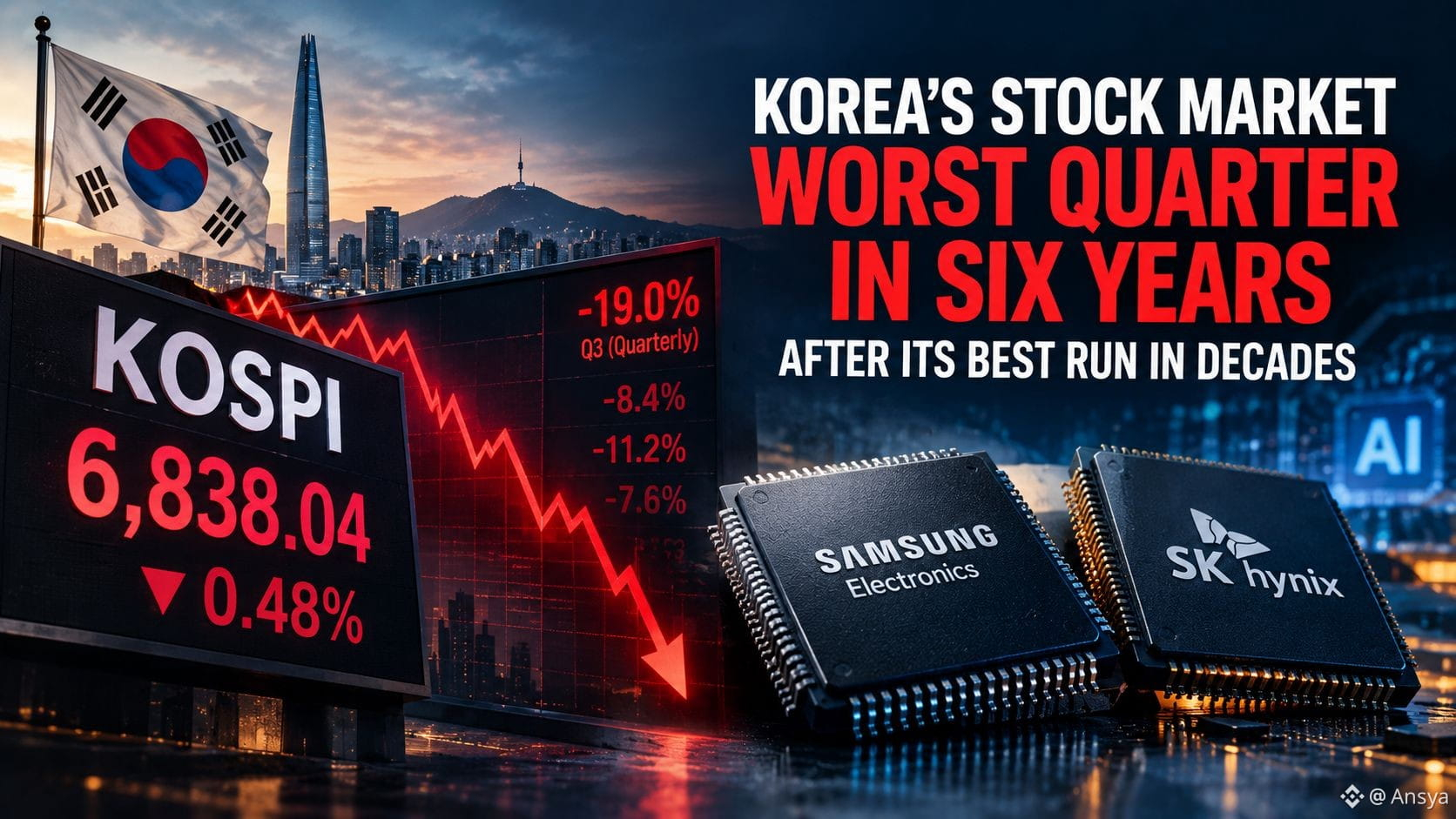
Korea's Stock Market Just Posted Its Worst Quarter in Six Years — After Its Best Run in Decades
South Korea's KOSPI closed out the third quarter down roughly 19%, its steepest quarterly decline since the pandemic crash of early 2020 — a sharp reversal for a market that had been one of the world's strongest performers earlier this year.
Here's what happened: the index closed at 6,838.04 on September 30, falling 0.48% on the day and capping a third quarter marked by heavy foreign selling — overseas investors offloaded over 519 billion won of shares — alongside surging U.S. Treasury yields and a pullback in AI-related trading. The decline hit memory-chip giants Samsung Electronics and SK Hynix especially hard, which together now make up roughly half the KOSPI's total weight, up from about a quarter just a year ago. Rising global bond yields made safer assets more attractive relative to stocks, while a weakening won compounded losses for foreign holders. Despite the steep quarterly drop, the KOSPI remains up around 60% year-to-date, reflecting how dramatic the earlier rally was before this correction.
Why does this matter? This is a clear illustration of concentration risk — when two companies account for half an index's value, a reversal in their specific trade (in this case, AI infrastructure enthusiasm cooling) can drag down an entire national market, regardless of broader economic conditions. It's also a useful signal for global sentiment: Korea's chipmakers sit at the center of AI supply chains that stretch into US tech and European pension holdings alike, making this pullback relevant well beyond Seoul.
Whether this marks a healthy cooling after an extraordinary run, or the start of a longer AI-trade unwind, isn't yet clear.
When two stocks define an entire market's fate, is that concentration a strength on the way up, or a warning sign waiting to surface? 🤔
#KOSPI #AIStocks #GlobalMarkets #SouthKorea
$AGT $MOVR $STX
{future}(STXUSDT)
{future}(MOVRUSDT)
{future}(AGTUSDT)
#kospipostsworstquartersince2020
Korea's Stock Market Just Posted Its Worst Quarter in Six Years — After Its Best Run in Decades
South Korea's KOSPI closed out the third quarter down roughly 19%, its steepest quarterly decline since the pandemic crash of early 2020 — a sharp reversal for a market that had been one of the world's strongest performers earlier this year.
Here's what happened: the index closed at 6,838.04 on September 30, falling 0.48% on the day and capping a third quarter marked by heavy foreign selling — overseas investors offloaded over 519 billion won of shares — alongside surging U.S. Treasury yields and a pullback in AI-related trading. The decline hit memory-chip giants Samsung Electronics and SK Hynix especially hard, which together now make up roughly half the KOSPI's total weight, up from about a quarter just a year ago. Rising global bond yields made safer assets more attractive relative to stocks, while a weakening won compounded losses for foreign holders. Despite the steep quarterly drop, the KOSPI remains up around 60% year-to-date, reflecting how dramatic the earlier rally was before this correction.
Why does this matter? This is a clear illustration of concentration risk — when two companies account for half an index's value, a reversal in their specific trade (in this case, AI infrastructure enthusiasm cooling) can drag down an entire national market, regardless of broader economic conditions. It's also a useful signal for global sentiment: Korea's chipmakers sit at the center of AI supply chains that stretch into US tech and European pension holdings alike, making this pullback relevant well beyond Seoul.
Whether this marks a healthy cooling after an extraordinary run, or the start of a longer AI-trade unwind, isn't yet clear.
When two stocks define an entire market's fate, is that concentration a strength on the way up, or a warning sign waiting to surface? 🤔
#KOSPI #AIStocks #GlobalMarkets #SouthKorea
$AGT $MOVR $STX
Korea's Stock Market Just Posted Its Worst Quarter in Six Years — After Its Best Run in Decades
South Korea's KOSPI closed out the third quarter down roughly 19%, its steepest quarterly decline since the pandemic crash of early 2020 — a sharp reversal for a market that had been one of the world's strongest performers earlier this year.
Here's what happened: the index closed at 6,838.04 on September 30, falling 0.48% on the day and capping a third quarter marked by heavy foreign selling — overseas investors offloaded over 519 billion won of shares — alongside surging U.S. Treasury yields and a pullback in AI-related trading. The decline hit memory-chip giants Samsung Electronics and SK Hynix especially hard, which together now make up roughly half the KOSPI's total weight, up from about a quarter just a year ago. Rising global bond yields made safer assets more attractive relative to stocks, while a weakening won compounded losses for foreign holders. Despite the steep quarterly drop, the KOSPI remains up around 60% year-to-date, reflecting how dramatic the earlier rally was before this correction.
Why does this matter? This is a clear illustration of concentration risk — when two companies account for half an index's value, a reversal in their specific trade (in this case, AI infrastructure enthusiasm cooling) can drag down an entire national market, regardless of broader economic conditions. It's also a useful signal for global sentiment: Korea's chipmakers sit at the center of AI supply chains that stretch into US tech and European pension holdings alike, making this pullback relevant well beyond Seoul.
Whether this marks a healthy cooling after an extraordinary run, or the start of a longer AI-trade unwind, isn't yet clear.
When two stocks define an entire market's fate, is that concentration a strength on the way up, or a warning sign waiting to surface? 🤔
#KOSPI #AIStocks #GlobalMarkets #SouthKorea
$AGT $MOVR $STX
4k

KOSPI JUST HAD ITS WORST QUARTER SINCE 2020South Korea’s KOSPI closed Q3 at 6,838.04, down 19.3% for the quarter — its sharpest quarterly decline since Q1 2020.
But here’s the interesting part: the index is still roughly 60%+ higher YTD after the huge rally earlier this year.
What’s driving the sell-off?
💻 Semiconductor stocks under pressure
📉 Foreign investors selling
📈 Higher global bond yields
🤖 Questions around AI/memory valuations
With Samsung and SK Hynix heavily influencing the index, the semiconductor trade is now the key area to watch.
And tonight, $MU earnings and guidance could give another clue about where the AI-memory cycle is heading. 👀
I’m watching the reaction rather than chasing the move.
$KOSPI $SAMSUNG $SKHYNIX
#KOSPI #Aİ #MarketCrash #kospipostsworstquartersince2020
KOSPI JUST HAD ITS WORST QUARTER SINCE 2020
South Korea’s KOSPI closed Q3 at 6,838.04, down 19.3% for the quarter — its sharpest quarterly decline since Q1 2020.
But here’s the interesting part: the index is still roughly 60%+ higher YTD after the huge rally earlier this year.
What’s driving the sell-off?
💻 Semiconductor stocks under pressure
📉 Foreign investors selling
📈 Higher global bond yields
🤖 Questions around AI/memory valuations
With Samsung and SK Hynix heavily influencing the index, the semiconductor trade is now the key area to watch.
And tonight, $MU earnings and guidance could give another clue about where the AI-memory cycle is heading. 👀
I’m watching the reaction rather than chasing the move.
$KOSPI $SAMSUNG $SKHYNIX
#KOSPI #Aİ #MarketCrash #kospipostsworstquartersince2020
But here’s the interesting part: the index is still roughly 60%+ higher YTD after the huge rally earlier this year.
What’s driving the sell-off?
💻 Semiconductor stocks under pressure
📉 Foreign investors selling
📈 Higher global bond yields
🤖 Questions around AI/memory valuations
With Samsung and SK Hynix heavily influencing the index, the semiconductor trade is now the key area to watch.
And tonight, $MU earnings and guidance could give another clue about where the AI-memory cycle is heading. 👀
I’m watching the reaction rather than chasing the move.
$KOSPI $SAMSUNG $SKHYNIX
#KOSPI #Aİ #MarketCrash #kospipostsworstquartersince2020
491


#kospipostsworstquartersince2020
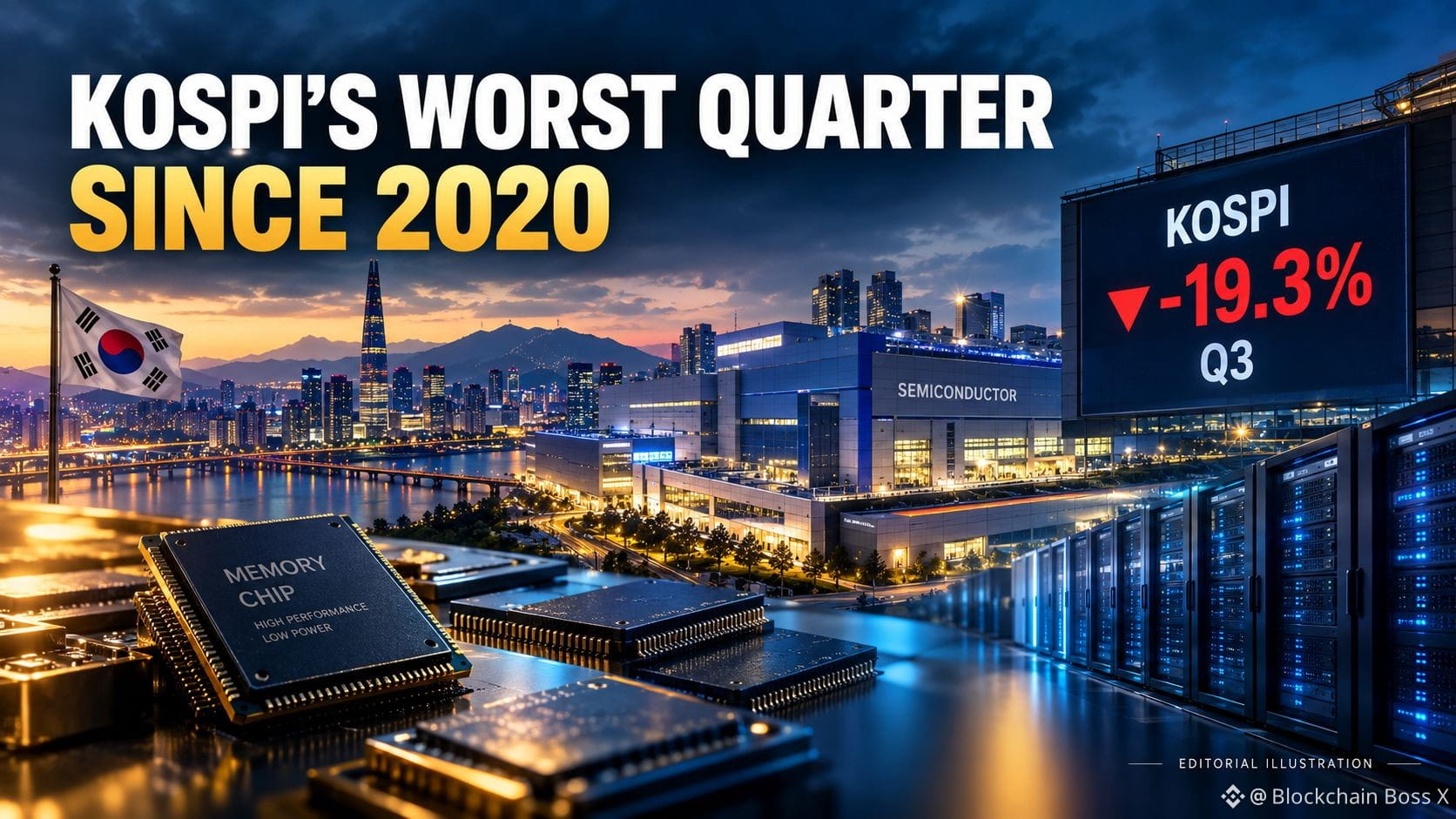
KOSPI Posts Its Worst Quarter Since Early 2020
South Korea’s benchmark stock index ended the third quarter under heavy pressure, reversing a powerful first-half rally and exposing the risks behind crowded AI and semiconductor trades.
The KOSPI fell 19.3% in Q3, its steepest quarterly decline since the first quarter of 2020. On September 30, the index closed at 6,838.04, down 0.48% for the day. Despite the sharp correction, it remained roughly twice as high as a year earlier.
The sell-off was concentrated in major chipmakers after investors questioned whether AI-related valuations and spending could remain justified. Higher global bond yields, elevated oil prices, concerns over delayed monetary easing and continued foreign selling added pressure. Samsung Electronics and SK hynix were among the key stocks affected.
The decline also shows how quickly market leadership can reverse when expectations become stretched. South Korea remains highly exposed to global technology demand, so the KOSPI can act as a useful barometer for sentiment toward AI infrastructure and memory semiconductors.
My take: This is not automatically evidence that the AI cycle has ended. It is a warning that strong earnings expectations may already be priced in, while higher yields make expensive growth assets more vulnerable. Crypto traders should watch whether this weakness spreads into broader technology and risk markets.
Is the KOSPI correction a healthy reset—or an early warning for AI-linked assets?
#KOSPI #Aİ #GlobalMarkets
$AGT $MOVR $NOM
{future}(NOMUSDT)
{future}(MOVRUSDT)
{future}(AGTUSDT)
#kospipostsworstquartersince2020
KOSPI Posts Its Worst Quarter Since Early 2020
South Korea’s benchmark stock index ended the third quarter under heavy pressure, reversing a powerful first-half rally and exposing the risks behind crowded AI and semiconductor trades.
The KOSPI fell 19.3% in Q3, its steepest quarterly decline since the first quarter of 2020. On September 30, the index closed at 6,838.04, down 0.48% for the day. Despite the sharp correction, it remained roughly twice as high as a year earlier.
The sell-off was concentrated in major chipmakers after investors questioned whether AI-related valuations and spending could remain justified. Higher global bond yields, elevated oil prices, concerns over delayed monetary easing and continued foreign selling added pressure. Samsung Electronics and SK hynix were among the key stocks affected.
The decline also shows how quickly market leadership can reverse when expectations become stretched. South Korea remains highly exposed to global technology demand, so the KOSPI can act as a useful barometer for sentiment toward AI infrastructure and memory semiconductors.
My take: This is not automatically evidence that the AI cycle has ended. It is a warning that strong earnings expectations may already be priced in, while higher yields make expensive growth assets more vulnerable. Crypto traders should watch whether this weakness spreads into broader technology and risk markets.
Is the KOSPI correction a healthy reset—or an early warning for AI-linked assets?
#KOSPI #Aİ #GlobalMarkets
$AGT $MOVR $NOM
KOSPI Posts Its Worst Quarter Since Early 2020
South Korea’s benchmark stock index ended the third quarter under heavy pressure, reversing a powerful first-half rally and exposing the risks behind crowded AI and semiconductor trades.
The KOSPI fell 19.3% in Q3, its steepest quarterly decline since the first quarter of 2020. On September 30, the index closed at 6,838.04, down 0.48% for the day. Despite the sharp correction, it remained roughly twice as high as a year earlier.
The sell-off was concentrated in major chipmakers after investors questioned whether AI-related valuations and spending could remain justified. Higher global bond yields, elevated oil prices, concerns over delayed monetary easing and continued foreign selling added pressure. Samsung Electronics and SK hynix were among the key stocks affected.
The decline also shows how quickly market leadership can reverse when expectations become stretched. South Korea remains highly exposed to global technology demand, so the KOSPI can act as a useful barometer for sentiment toward AI infrastructure and memory semiconductors.
My take: This is not automatically evidence that the AI cycle has ended. It is a warning that strong earnings expectations may already be priced in, while higher yields make expensive growth assets more vulnerable. Crypto traders should watch whether this weakness spreads into broader technology and risk markets.
Is the KOSPI correction a healthy reset—or an early warning for AI-linked assets?
#KOSPI #Aİ #GlobalMarkets
$AGT $MOVR $NOM
1.9k

·
--
#kospipostsworstquartersince2020 KOSPI POSTS WORST QUARTER SINCE Q1 2020
South Korea's
KOSPI fell 19.3% in Q3, closing Wednesday down 0.48% at 6,838.04. Japan's Nikkei 225 rose 1.94% to 66,753.72.$TRIA $FOLKS $ALCH
#kospipostsworstquartersince2020 KOSPI POSTS WORST QUARTER SINCE Q1 2020
South Korea's
KOSPI fell 19.3% in Q3, closing Wednesday down 0.48% at 6,838.04. Japan's Nikkei 225 rose 1.94% to 66,753.72.$TRIA $FOLKS $ALCH
South Korea's
KOSPI fell 19.3% in Q3, closing Wednesday down 0.48% at 6,838.04. Japan's Nikkei 225 rose 1.94% to 66,753.72.$TRIA $FOLKS $ALCH
370
·
--
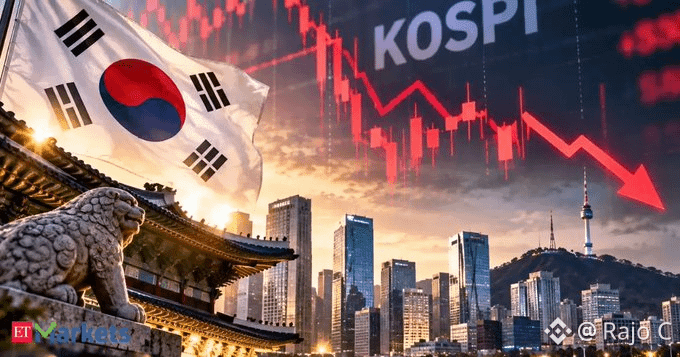
#kospipostsworstquartersince2020 #SouthKorean shares reversed early gains to trade lower on Wednesday as elevated bond yields weighed on investor sentiment, putting the benchmark KOSPI
on track for its biggest quarterly decline in six-and-a-half years, according to a report by Reuters.
#ETMarkets $PLAY $MARA $APE
#kospipostsworstquartersince2020 #SouthKorean shares reversed early gains to trade lower on Wednesday as elevated bond yields weighed on investor sentiment, putting the benchmark KOSPI
on track for its biggest quarterly decline in six-and-a-half years, according to a report by Reuters.
#ETMarkets $PLAY $MARA $APE
on track for its biggest quarterly decline in six-and-a-half years, according to a report by Reuters.
#ETMarkets $PLAY $MARA $APE
486

·
--
Bullish
#kospipostsworstquartersince2020
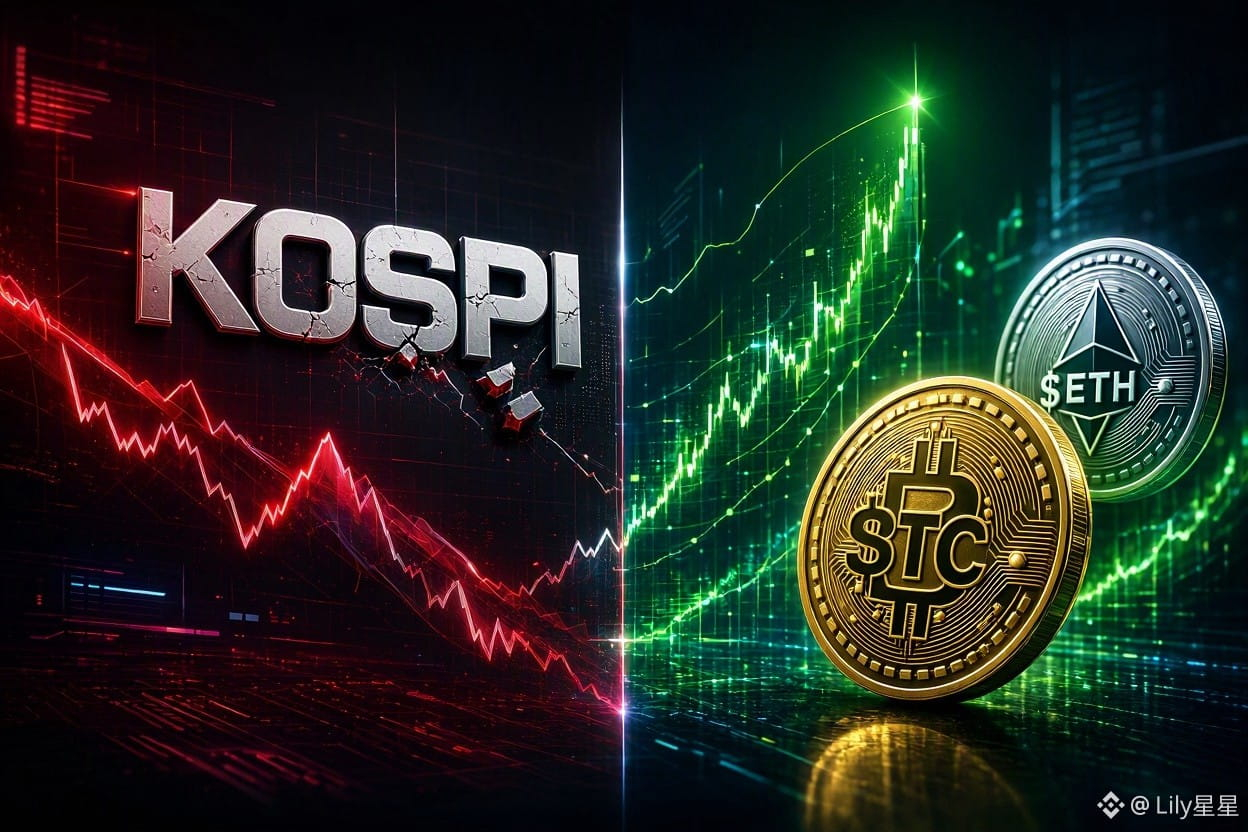
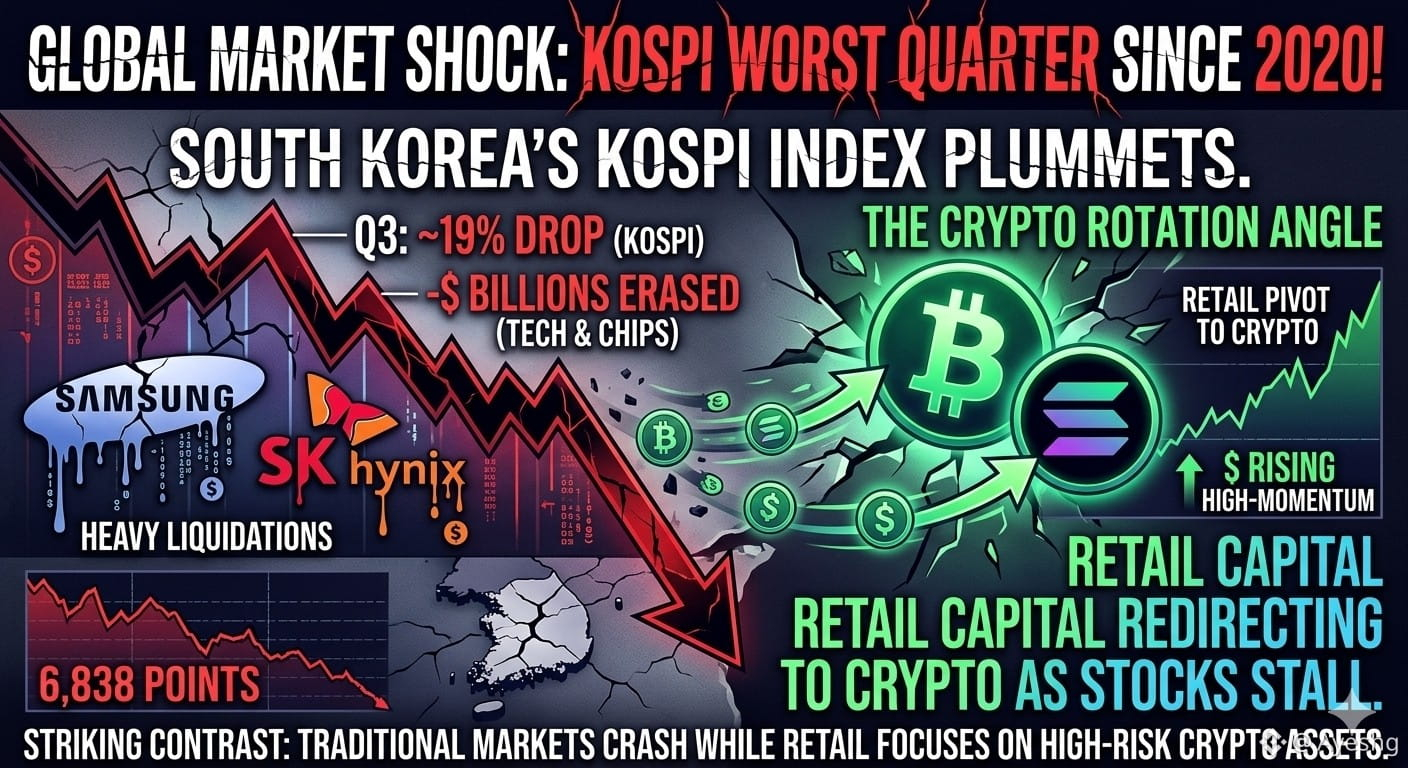
📉 GLOBAL MARKET SHOCK: South Korea's KOSPI Suffers Worst Quarter Since 2020! 🚨
South Korea’s benchmark KOSPI index has officially closed out Q3 with a ~19% drop, marking its worst quarterly performance since the COVID-19 crash in early 2020. Heavy foreign liquidations in major tech and semiconductor giants like Samsung Electronics and SK Hynix—driven by cooling AI investment hype and rising global bond yields—have triggered a massive ripple effect across Asian markets.
$SOL
{future}(SOLUSDT)
Key Market Updates & Crypto Capital Spillover
Tech & Chip Sell-off: Heavy institutional dumping of semiconductor proxies (Samsung, SK Hynix) erased billions in market capitalization, dragging the KOSPI down to 6,838 points.
Foreign Capital Outflow: Foreign institutions net-sold billions in Korean equities as macroeconomic pressures, elevated oil prices, and rising borrowing costs forced investors to reduce risk exposure in traditional equities.
$AAVE
{future}(AAVEUSDT)
The Crypto Rotation Angle: South Korea is home to one of the world's most active retail trading communities (the "Kimchi Premium" effect). As traditional stocks stall, retail capital is actively looking to pivot away from stagnant equity markets into high-momentum crypto assets like Bitcoin and altcoins.
Traditional markets are struggling under heavy macro pressure... Do you think retail capital will shift into crypto for better returns this quarter? Share your thoughts below! 👇
#JapanMOFStudyGroupOnTokenizedGovtBonds #TrumpRejectsAIRulesForVoluntaryAudits #Traditional #BinanceSquare
#kospipostsworstquartersince2020
📉 GLOBAL MARKET SHOCK: South Korea's KOSPI Suffers Worst Quarter Since 2020! 🚨
South Korea’s benchmark KOSPI index has officially closed out Q3 with a ~19% drop, marking its worst quarterly performance since the COVID-19 crash in early 2020. Heavy foreign liquidations in major tech and semiconductor giants like Samsung Electronics and SK Hynix—driven by cooling AI investment hype and rising global bond yields—have triggered a massive ripple effect across Asian markets.
$SOL
Key Market Updates & Crypto Capital Spillover
Tech & Chip Sell-off: Heavy institutional dumping of semiconductor proxies (Samsung, SK Hynix) erased billions in market capitalization, dragging the KOSPI down to 6,838 points.
Foreign Capital Outflow: Foreign institutions net-sold billions in Korean equities as macroeconomic pressures, elevated oil prices, and rising borrowing costs forced investors to reduce risk exposure in traditional equities.
$AAVE
The Crypto Rotation Angle: South Korea is home to one of the world's most active retail trading communities (the "Kimchi Premium" effect). As traditional stocks stall, retail capital is actively looking to pivot away from stagnant equity markets into high-momentum crypto assets like Bitcoin and altcoins.
Traditional markets are struggling under heavy macro pressure... Do you think retail capital will shift into crypto for better returns this quarter? Share your thoughts below! 👇
#JapanMOFStudyGroupOnTokenizedGovtBonds #TrumpRejectsAIRulesForVoluntaryAudits #Traditional #BinanceSquare
📉 GLOBAL MARKET SHOCK: South Korea's KOSPI Suffers Worst Quarter Since 2020! 🚨
South Korea’s benchmark KOSPI index has officially closed out Q3 with a ~19% drop, marking its worst quarterly performance since the COVID-19 crash in early 2020. Heavy foreign liquidations in major tech and semiconductor giants like Samsung Electronics and SK Hynix—driven by cooling AI investment hype and rising global bond yields—have triggered a massive ripple effect across Asian markets.
$SOL
Key Market Updates & Crypto Capital Spillover
Tech & Chip Sell-off: Heavy institutional dumping of semiconductor proxies (Samsung, SK Hynix) erased billions in market capitalization, dragging the KOSPI down to 6,838 points.
Foreign Capital Outflow: Foreign institutions net-sold billions in Korean equities as macroeconomic pressures, elevated oil prices, and rising borrowing costs forced investors to reduce risk exposure in traditional equities.
$AAVE
The Crypto Rotation Angle: South Korea is home to one of the world's most active retail trading communities (the "Kimchi Premium" effect). As traditional stocks stall, retail capital is actively looking to pivot away from stagnant equity markets into high-momentum crypto assets like Bitcoin and altcoins.
Traditional markets are struggling under heavy macro pressure... Do you think retail capital will shift into crypto for better returns this quarter? Share your thoughts below! 👇
#JapanMOFStudyGroupOnTokenizedGovtBonds #TrumpRejectsAIRulesForVoluntaryAudits #Traditional #BinanceSquare
2
2.1k

·
--
Article
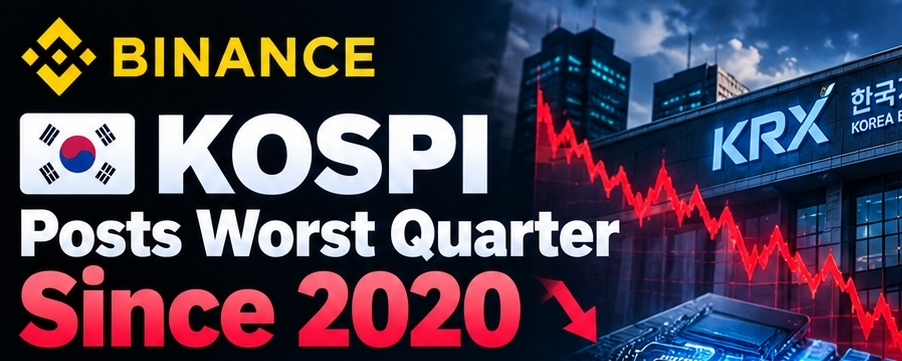
🇰🇷📉 KOSPI Posts Worst Quarter Since 2020#KospiPostsWorstQuarterSince2020
South Korea's benchmark KOSPI suffered a major quarterly decline, falling approximately 19.3% during Q3 2026 — its steepest quarterly drop since Q1 2020.
📊 Key details:
• Q3 decline: ~19.3%
• Worst quarter since Q1 2020
• KOSPI Wednesday close: 6,838.04
• Foreign investors and elevated bond yields added pressure
• Semiconductor stocks were a major focus during the sell-off
💻 Why it matters:
South Korea's market has significant exposure to major semiconductor companies such as Samsung Electronics and SK Hynix. Concerns surrounding AI investment returns, memory-chip valuations and higher global bond yields contributed to pressure on Korean equities.
🌏 What traders are watching:
• Samsung & SK Hynix performance
• AI semiconductor demand
• Global Treasury yields
• Foreign investment flows
• Asian equity-market sentiment
• Upcoming semiconductor earnings and guidance
⚠️ A weak KOSPI does not automatically mean the broader global stock market or crypto market will follow the same path. Cross-asset correlations can change as macro conditions evolve.
#KOSPI #KoreaStocks #SKHYNIX #Semiconductors
🇰🇷📉 KOSPI Posts Worst Quarter Since 2020
#KospiPostsWorstQuarterSince2020
South Korea's benchmark KOSPI suffered a major quarterly decline, falling approximately 19.3% during Q3 2026 — its steepest quarterly drop since Q1 2020.
📊 Key details:
• Q3 decline: ~19.3%
• Worst quarter since Q1 2020
• KOSPI Wednesday close: 6,838.04
• Foreign investors and elevated bond yields added pressure
• Semiconductor stocks were a major focus during the sell-off
💻 Why it matters:
South Korea's market has significant exposure to major semiconductor companies such as Samsung Electronics and SK Hynix. Concerns surrounding AI investment returns, memory-chip valuations and higher global bond yields contributed to pressure on Korean equities.
🌏 What traders are watching:
• Samsung & SK Hynix performance
• AI semiconductor demand
• Global Treasury yields
• Foreign investment flows
• Asian equity-market sentiment
• Upcoming semiconductor earnings and guidance
⚠️ A weak KOSPI does not automatically mean the broader global stock market or crypto market will follow the same path. Cross-asset correlations can change as macro conditions evolve.
#KOSPI #KoreaStocks #SKHYNIX #Semiconductors
South Korea's benchmark KOSPI suffered a major quarterly decline, falling approximately 19.3% during Q3 2026 — its steepest quarterly drop since Q1 2020.
📊 Key details:
• Q3 decline: ~19.3%
• Worst quarter since Q1 2020
• KOSPI Wednesday close: 6,838.04
• Foreign investors and elevated bond yields added pressure
• Semiconductor stocks were a major focus during the sell-off
💻 Why it matters:
South Korea's market has significant exposure to major semiconductor companies such as Samsung Electronics and SK Hynix. Concerns surrounding AI investment returns, memory-chip valuations and higher global bond yields contributed to pressure on Korean equities.
🌏 What traders are watching:
• Samsung & SK Hynix performance
• AI semiconductor demand
• Global Treasury yields
• Foreign investment flows
• Asian equity-market sentiment
• Upcoming semiconductor earnings and guidance
⚠️ A weak KOSPI does not automatically mean the broader global stock market or crypto market will follow the same path. Cross-asset correlations can change as macro conditions evolve.
#KOSPI #KoreaStocks #SKHYNIX #Semiconductors
1
36

·
--
#KospiPostsWorstQuarterSince2020
📉 South Korea’s KOSPI Posts Worst Quarter Since 2020
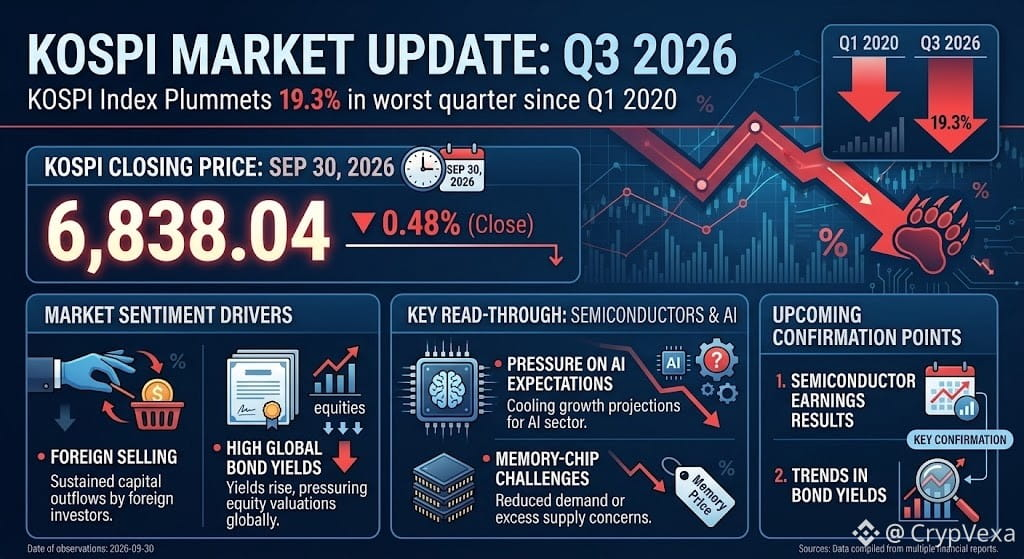
🇰🇷 South Korea’s KOSPI fell 19.3% in Q3 2026, marking its weakest quarter since Q1 2020.
📊 The index closed 0.48% lower at 6,838.04 on September 30, with foreign selling and elevated global bond yields weighing on sentiment.
🤖 Why it matters: The selloff puts attention on AI and memory-chip expectations, with upcoming semiconductor earnings and global bond yields likely to be key market signals.
👀 Will semiconductor results provide clarity on the AI trade?
#KOSPI #StockMarket #Semiconductors #AI
#KospiPostsWorstQuarterSince2020
📉 South Korea’s KOSPI Posts Worst Quarter Since 2020
🇰🇷 South Korea’s KOSPI fell 19.3% in Q3 2026, marking its weakest quarter since Q1 2020.
📊 The index closed 0.48% lower at 6,838.04 on September 30, with foreign selling and elevated global bond yields weighing on sentiment.
🤖 Why it matters: The selloff puts attention on AI and memory-chip expectations, with upcoming semiconductor earnings and global bond yields likely to be key market signals.
👀 Will semiconductor results provide clarity on the AI trade?
#KOSPI #StockMarket #Semiconductors #AI
📉 South Korea’s KOSPI Posts Worst Quarter Since 2020
🇰🇷 South Korea’s KOSPI fell 19.3% in Q3 2026, marking its weakest quarter since Q1 2020.
📊 The index closed 0.48% lower at 6,838.04 on September 30, with foreign selling and elevated global bond yields weighing on sentiment.
🤖 Why it matters: The selloff puts attention on AI and memory-chip expectations, with upcoming semiconductor earnings and global bond yields likely to be key market signals.
👀 Will semiconductor results provide clarity on the AI trade?
#KOSPI #StockMarket #Semiconductors #AI
22

·
--
#kospipostsworstquartersince2020
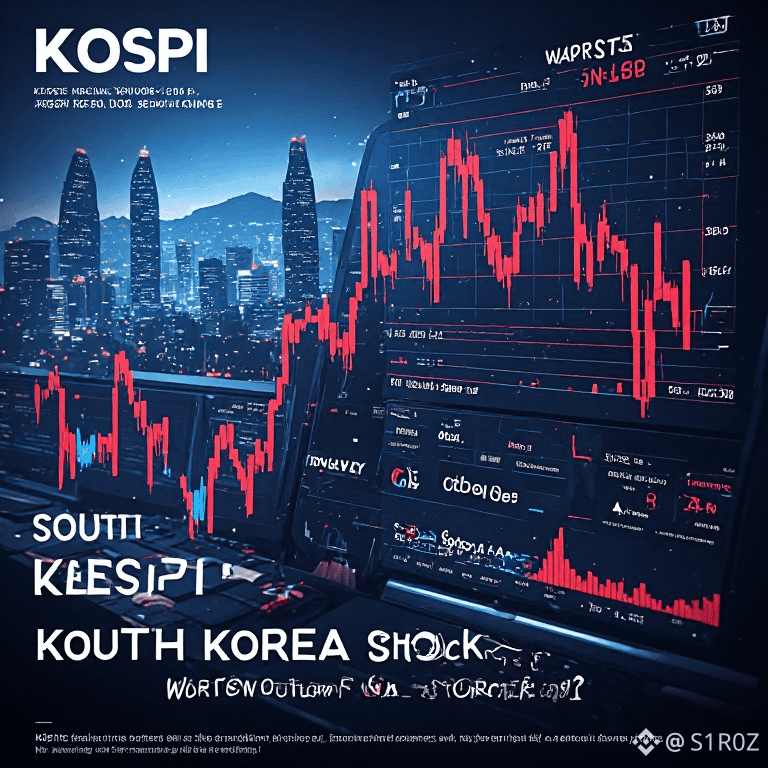
📉 South Korea’s KOSPI just posted its worst quarter since 2020.
The benchmark index reportedly ended Q3 down around 19%, with heavy selling hitting major technology and semiconductor names such as Samsung Electronics and SK Hynix.
Several pressures are being cited behind the decline, including cooling AI investment sentiment, rising global bond yields, elevated oil prices and higher borrowing costs. Foreign institutions also continued reducing exposure to Korean equities.
The crypto angle is where things get interesting. South Korea has one of the world’s most active retail crypto markets, so weakness in traditional equities could potentially influence where retail capital moves next.
But a stock-market selloff doesn’t automatically mean money flows into crypto. Traders will need to watch actual capital flows and risk appetite.
$SOL
{spot}(SOLUSDT)
| $AAVE
{spot}(AAVEUSDT)
#KOSPI #CryptoMarket #bitcoin #altcoins
#kospipostsworstquartersince2020
📉 South Korea’s KOSPI just posted its worst quarter since 2020.
The benchmark index reportedly ended Q3 down around 19%, with heavy selling hitting major technology and semiconductor names such as Samsung Electronics and SK Hynix.
Several pressures are being cited behind the decline, including cooling AI investment sentiment, rising global bond yields, elevated oil prices and higher borrowing costs. Foreign institutions also continued reducing exposure to Korean equities.
The crypto angle is where things get interesting. South Korea has one of the world’s most active retail crypto markets, so weakness in traditional equities could potentially influence where retail capital moves next.
But a stock-market selloff doesn’t automatically mean money flows into crypto. Traders will need to watch actual capital flows and risk appetite.
$SOL
| $AAVE
#KOSPI #CryptoMarket #bitcoin #altcoins
📉 South Korea’s KOSPI just posted its worst quarter since 2020.
The benchmark index reportedly ended Q3 down around 19%, with heavy selling hitting major technology and semiconductor names such as Samsung Electronics and SK Hynix.
Several pressures are being cited behind the decline, including cooling AI investment sentiment, rising global bond yields, elevated oil prices and higher borrowing costs. Foreign institutions also continued reducing exposure to Korean equities.
The crypto angle is where things get interesting. South Korea has one of the world’s most active retail crypto markets, so weakness in traditional equities could potentially influence where retail capital moves next.
But a stock-market selloff doesn’t automatically mean money flows into crypto. Traders will need to watch actual capital flows and risk appetite.
$SOL
| $AAVE
#KOSPI #CryptoMarket #bitcoin #altcoins
1
149

·
--
Verified
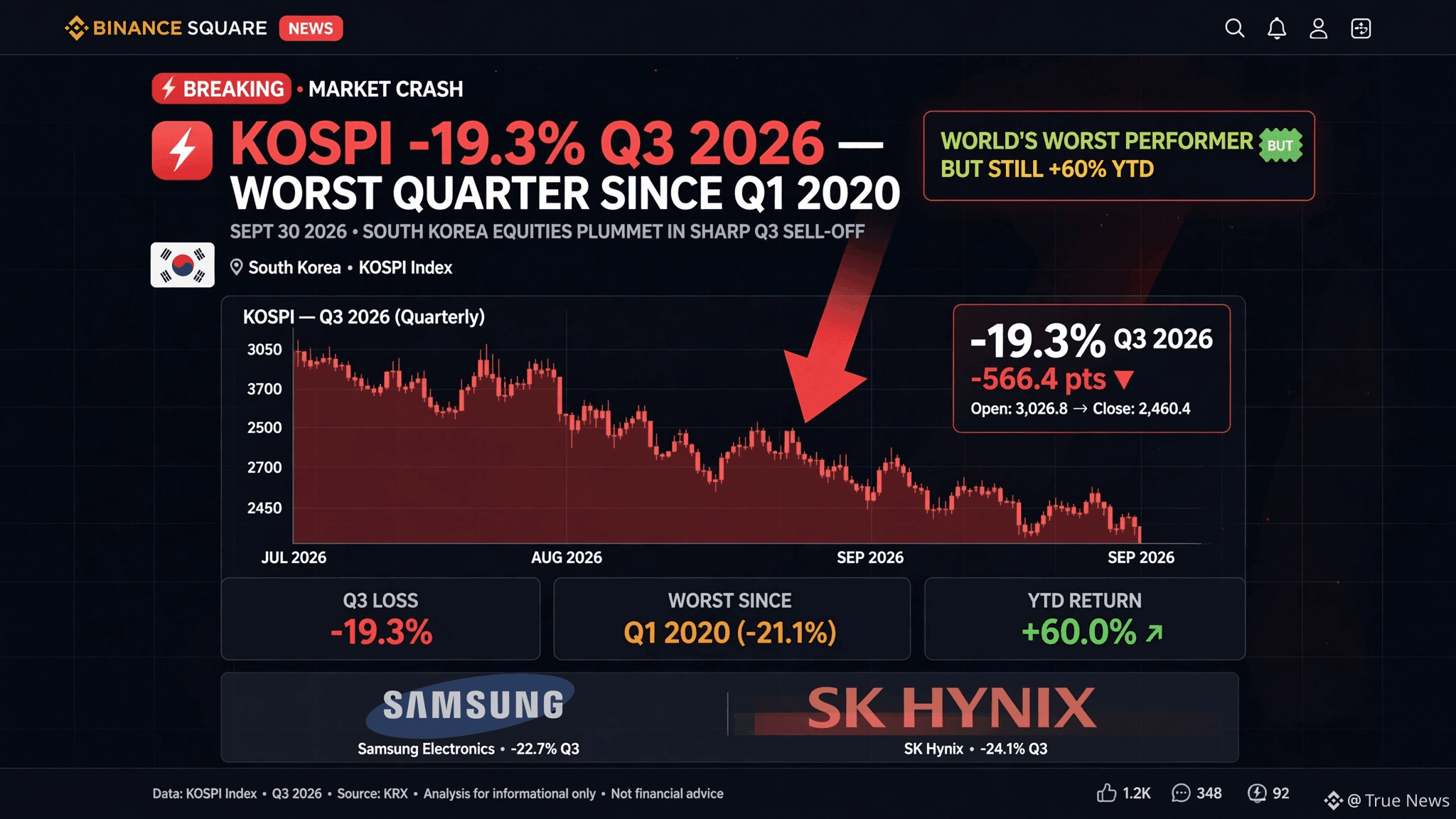
KOSPI CRASHED -19.3% | Worst Quarter Since 2020 | But Still +60% YTD 😱
🚨BREAKING: Just checked close today.
South Korea's KOSPI closed at 6,838.04 down -0.48% (32.77 pts) on Sep 30 and fell -19.3% in Q3, biggest drop since Q1 2020
FT says -18.8% - world's worst performing market in Q3
But here is the twist no one is talking about: It's still UP 60% $YTD
Why did it crash?
I dug into data and found 2 reasons:
1. Two companies = 50% of market. Samsung & SK Hynix now make up roughly half the KOSPI weight. When memory chips sell-off in July, whole index collapsed.
2. Leverage killed it. Big leveraged bets on AI memory trade unwind + foreign investors net sold ₩6.4T + bond yields spiked.
My personal take: I've seen this before. 6 green quarters in a row then -19% is healthy. S&P 500 still +2% in Q3. This is not AI end, this is AI reset. I'm watching for bounce near 6,800.
I'm not buying yet, but adding to watchlist. Are you buying this dip or waiting for more blood?
$KOSPI $SAMSUNG $SKHYNIX
#KOSPI #AI #MarketCrash#kospipostsworstquartersince2020
KOSPI CRASHED -19.3% | Worst Quarter Since 2020 | But Still +60% YTD 😱
🚨BREAKING: Just checked close today.
South Korea's KOSPI closed at 6,838.04 down -0.48% (32.77 pts) on Sep 30 and fell -19.3% in Q3, biggest drop since Q1 2020
FT says -18.8% - world's worst performing market in Q3
But here is the twist no one is talking about: It's still UP 60% $YTD
Why did it crash?
I dug into data and found 2 reasons:
1. Two companies = 50% of market. Samsung & SK Hynix now make up roughly half the KOSPI weight. When memory chips sell-off in July, whole index collapsed.
2. Leverage killed it. Big leveraged bets on AI memory trade unwind + foreign investors net sold ₩6.4T + bond yields spiked.
My personal take: I've seen this before. 6 green quarters in a row then -19% is healthy. S&P 500 still +2% in Q3. This is not AI end, this is AI reset. I'm watching for bounce near 6,800.
I'm not buying yet, but adding to watchlist. Are you buying this dip or waiting for more blood?
$KOSPI $SAMSUNG $SKHYNIX
#KOSPI #AI #MarketCrash#kospipostsworstquartersince2020
🚨BREAKING: Just checked close today.
South Korea's KOSPI closed at 6,838.04 down -0.48% (32.77 pts) on Sep 30 and fell -19.3% in Q3, biggest drop since Q1 2020
FT says -18.8% - world's worst performing market in Q3
But here is the twist no one is talking about: It's still UP 60% $YTD
Why did it crash?
I dug into data and found 2 reasons:
1. Two companies = 50% of market. Samsung & SK Hynix now make up roughly half the KOSPI weight. When memory chips sell-off in July, whole index collapsed.
2. Leverage killed it. Big leveraged bets on AI memory trade unwind + foreign investors net sold ₩6.4T + bond yields spiked.
My personal take: I've seen this before. 6 green quarters in a row then -19% is healthy. S&P 500 still +2% in Q3. This is not AI end, this is AI reset. I'm watching for bounce near 6,800.
I'm not buying yet, but adding to watchlist. Are you buying this dip or waiting for more blood?
$KOSPI $SAMSUNG $SKHYNIX
#KOSPI #AI #MarketCrash#kospipostsworstquartersince2020
1
1.7k

·
--
KOSPI Suffers Its Worst Quarter Since 2020 📉
South Korea’s KOSPI fell 19.3% in the third quarter, marking its biggest quarterly decline since Q1 2020. The index closed Wednesday at 6,838.04 after giving up an early gain of more than 1%.
The selloff was driven in part by weakness in major memory-chip stocks such as Samsung Electronics and SK Hynix, while rising bond yields and foreign selling added pressure. Foreign investors were net sellers during the latest session. 👀
It’s a sharp reversal after six straight quarters of gains. Yet despite the brutal quarter, the KOSPI is still up 62.3% for the year, showing just how strong the earlier rally was.#KospiPostsWorstQuarterSince2020
KOSPI Suffers Its Worst Quarter Since 2020 📉
South Korea’s KOSPI fell 19.3% in the third quarter, marking its biggest quarterly decline since Q1 2020. The index closed Wednesday at 6,838.04 after giving up an early gain of more than 1%.
The selloff was driven in part by weakness in major memory-chip stocks such as Samsung Electronics and SK Hynix, while rising bond yields and foreign selling added pressure. Foreign investors were net sellers during the latest session. 👀
It’s a sharp reversal after six straight quarters of gains. Yet despite the brutal quarter, the KOSPI is still up 62.3% for the year, showing just how strong the earlier rally was.#KospiPostsWorstQuarterSince2020
South Korea’s KOSPI fell 19.3% in the third quarter, marking its biggest quarterly decline since Q1 2020. The index closed Wednesday at 6,838.04 after giving up an early gain of more than 1%.
The selloff was driven in part by weakness in major memory-chip stocks such as Samsung Electronics and SK Hynix, while rising bond yields and foreign selling added pressure. Foreign investors were net sellers during the latest session. 👀
It’s a sharp reversal after six straight quarters of gains. Yet despite the brutal quarter, the KOSPI is still up 62.3% for the year, showing just how strong the earlier rally was.#KospiPostsWorstQuarterSince2020
2
419

·
--
Bearish
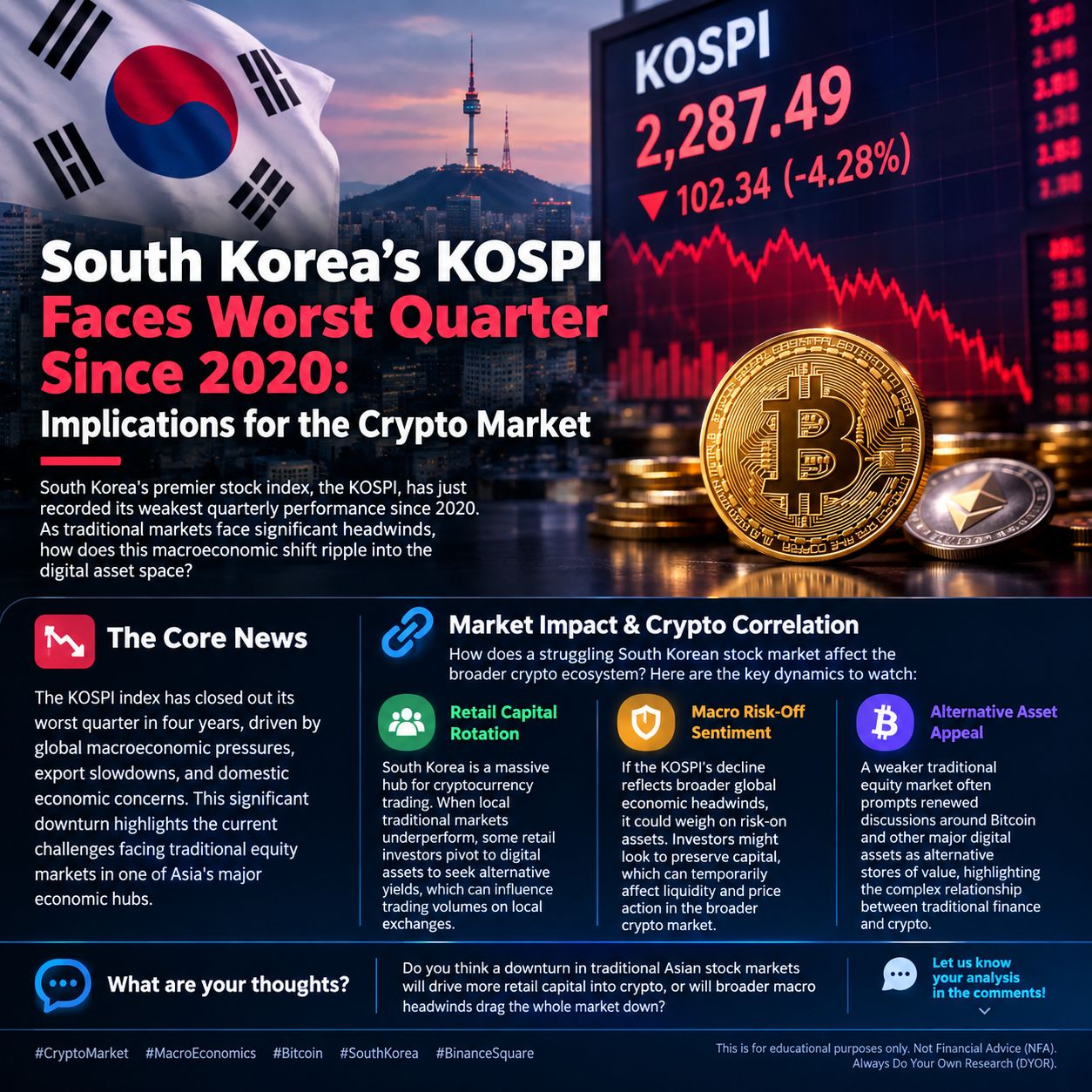
#kospipostsworstquartersince2020 South Korea’s KOSPI Faces Worst Quarter Since 2020 Implications for the Crypto Market
South Korea’s premier stock index, the KOSPI has just recorded its weakest quarterly performance since 2020. As traditional markets face significant headwinds, how does this macroeconomic shift ripple into the digital asset space?
📉 The Core News
The KOSPI index has closed out its worst quarter in four years driven by a combination of global macroeconomic pressures, export slowdowns, and domestic economic concerns. This significant downturn highlights the current challenges facing traditional equity markets in one of Asia's major economic hubs.
Market Impact & Crypto Correlation
How does a struggling South Korean stock market affect the broader crypto ecosystem? Here are the key dynamics to watch:
Retail Capital Rotation South Korea is a massive hub for cryptocurrency trading. Historically when local traditional markets underperform some retail investors pivot to digital assets to seek alternative yields which can influence trading volumes on local exchanges.
Macro Risk-Off Sentiment Conversely, if the KOSPI’s decline reflects broader global economic headwinds, it could weigh on risk-on assets. Investors might look to preserve capital which can temporarily affect liquidity and price action in the broader crypto market.
Alternative Asset Appeal A weaker traditional equity market often prompts renewed discussions around Bitcoin and other major digital assets as alternative stores of value, highlighting the complex relationship between traditional finance and crypto.
What are your thoughts?
Do you think a downturn in traditional Asian stock markets will drive more retail capital into crypto or will broader macro headwinds drag the whole market down? Let us know your analysis in the comments
#CryptoMarket #MacroEconomics #Bitcoin #SouthKorea #BinanceSquare This is for educational purposes only. Not Financial Advice (NFA). Always Do Your Own Research (DYOR).
$2Z $SYRUP
{future}(SYRUPUSDT)
{future}(2ZUSDT)
#kospipostsworstquartersince2020 South Korea’s KOSPI Faces Worst Quarter Since 2020 Implications for the Crypto Market
South Korea’s premier stock index, the KOSPI has just recorded its weakest quarterly performance since 2020. As traditional markets face significant headwinds, how does this macroeconomic shift ripple into the digital asset space?
📉 The Core News
The KOSPI index has closed out its worst quarter in four years driven by a combination of global macroeconomic pressures, export slowdowns, and domestic economic concerns. This significant downturn highlights the current challenges facing traditional equity markets in one of Asia's major economic hubs.
Market Impact & Crypto Correlation
How does a struggling South Korean stock market affect the broader crypto ecosystem? Here are the key dynamics to watch:
Retail Capital Rotation South Korea is a massive hub for cryptocurrency trading. Historically when local traditional markets underperform some retail investors pivot to digital assets to seek alternative yields which can influence trading volumes on local exchanges.
Macro Risk-Off Sentiment Conversely, if the KOSPI’s decline reflects broader global economic headwinds, it could weigh on risk-on assets. Investors might look to preserve capital which can temporarily affect liquidity and price action in the broader crypto market.
Alternative Asset Appeal A weaker traditional equity market often prompts renewed discussions around Bitcoin and other major digital assets as alternative stores of value, highlighting the complex relationship between traditional finance and crypto.
What are your thoughts?
Do you think a downturn in traditional Asian stock markets will drive more retail capital into crypto or will broader macro headwinds drag the whole market down? Let us know your analysis in the comments
#CryptoMarket #MacroEconomics #Bitcoin #SouthKorea #BinanceSquare This is for educational purposes only. Not Financial Advice (NFA). Always Do Your Own Research (DYOR).
$2Z $SYRUP
South Korea’s premier stock index, the KOSPI has just recorded its weakest quarterly performance since 2020. As traditional markets face significant headwinds, how does this macroeconomic shift ripple into the digital asset space?
📉 The Core News
The KOSPI index has closed out its worst quarter in four years driven by a combination of global macroeconomic pressures, export slowdowns, and domestic economic concerns. This significant downturn highlights the current challenges facing traditional equity markets in one of Asia's major economic hubs.
Market Impact & Crypto Correlation
How does a struggling South Korean stock market affect the broader crypto ecosystem? Here are the key dynamics to watch:
Retail Capital Rotation South Korea is a massive hub for cryptocurrency trading. Historically when local traditional markets underperform some retail investors pivot to digital assets to seek alternative yields which can influence trading volumes on local exchanges.
Macro Risk-Off Sentiment Conversely, if the KOSPI’s decline reflects broader global economic headwinds, it could weigh on risk-on assets. Investors might look to preserve capital which can temporarily affect liquidity and price action in the broader crypto market.
Alternative Asset Appeal A weaker traditional equity market often prompts renewed discussions around Bitcoin and other major digital assets as alternative stores of value, highlighting the complex relationship between traditional finance and crypto.
What are your thoughts?
Do you think a downturn in traditional Asian stock markets will drive more retail capital into crypto or will broader macro headwinds drag the whole market down? Let us know your analysis in the comments
#CryptoMarket #MacroEconomics #Bitcoin #SouthKorea #BinanceSquare This is for educational purposes only. Not Financial Advice (NFA). Always Do Your Own Research (DYOR).
$2Z $SYRUP
873

·
--
Bullish
Partly True
#kospipostsworstquartersince2020
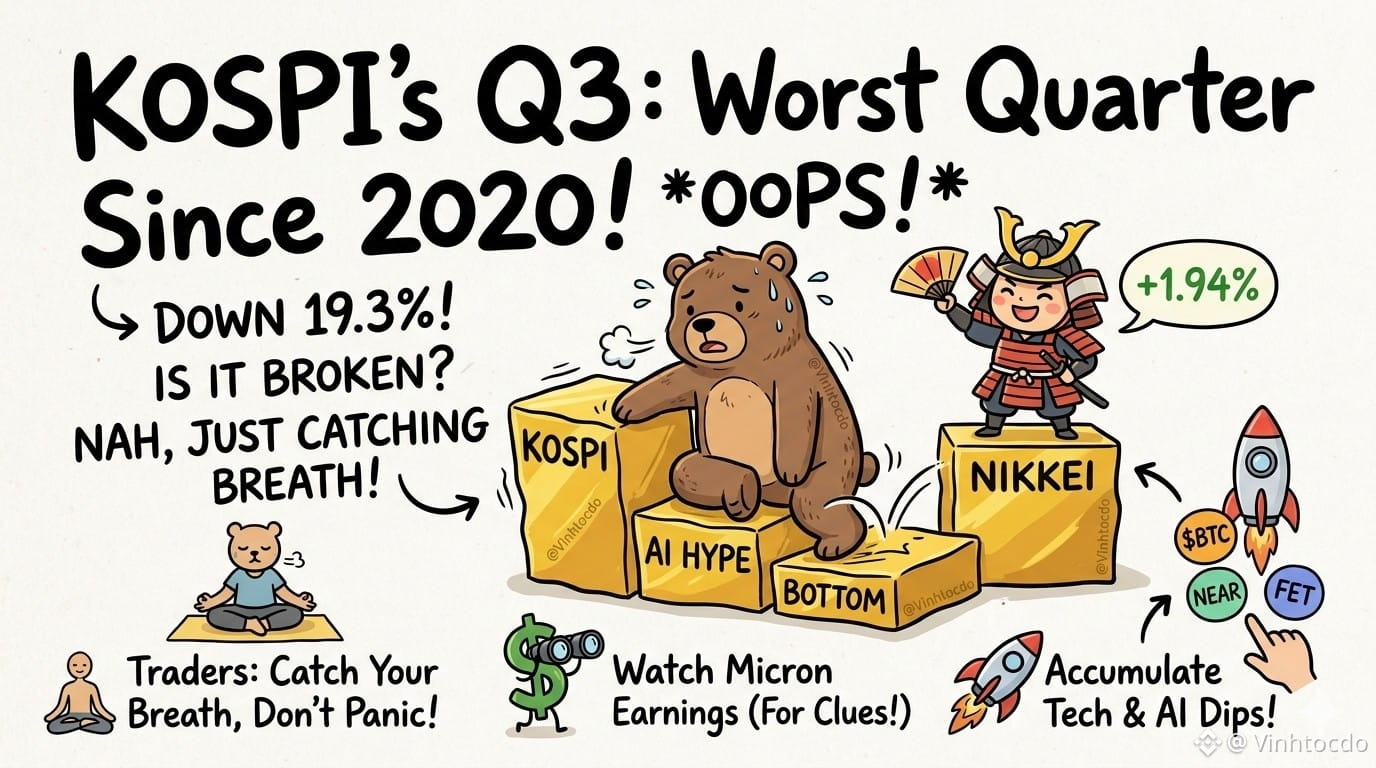
🚨 BREAKING: Kospi just posted its WORST quarter since 2020, crashing 19.3% in Q3! 📉 Meanwhile, Japan’s Nikkei is up 1.94%. Talk about sibling rivalry!
Is Korea's market broken? Nah, it just climbed too high on the AI hype (shoutout to Samsung & SK Hynix) and now it’s just catching its breath at the bottom! What goes up must take a break, right?
What should traders do?
1️⃣ Don't panic sell—this is a classic tech cool-off. 🧘♂️
2️⃣ Watch the Micron earnings report tonight for clues.
3️⃣ Accumulate solid tech & AI dips. 💸
Not financial advice! 🛑
Support me! Sign up on Binance with code VINHTOCDO: [https://www.binance.com/register?ref=VINHTOCDO](https://www.binance.com/register?ref=VINHTOCDO)
👇 Click & Trade below to support me:
$BTC
{future}(BTCUSDT)
| $NEAR
{future}(NEARUSDT)
| $FET
{future}(FETUSDT)
#Kospi #CryptoTrending #aicrypto #TechDip #VINHTOCDO
#kospipostsworstquartersince2020
🚨 BREAKING: Kospi just posted its WORST quarter since 2020, crashing 19.3% in Q3! 📉 Meanwhile, Japan’s Nikkei is up 1.94%. Talk about sibling rivalry!
Is Korea's market broken? Nah, it just climbed too high on the AI hype (shoutout to Samsung & SK Hynix) and now it’s just catching its breath at the bottom! What goes up must take a break, right?
What should traders do?
1️⃣ Don't panic sell—this is a classic tech cool-off. 🧘♂️
2️⃣ Watch the Micron earnings report tonight for clues.
3️⃣ Accumulate solid tech & AI dips. 💸
Not financial advice! 🛑
Support me! Sign up on Binance with code VINHTOCDO: https://www.binance.com/register?ref=VINHTOCDO
👇 Click & Trade below to support me:
$BTC
| $NEAR
| $FET
#Kospi #CryptoTrending #aicrypto #TechDip #VINHTOCDO
🚨 BREAKING: Kospi just posted its WORST quarter since 2020, crashing 19.3% in Q3! 📉 Meanwhile, Japan’s Nikkei is up 1.94%. Talk about sibling rivalry!
Is Korea's market broken? Nah, it just climbed too high on the AI hype (shoutout to Samsung & SK Hynix) and now it’s just catching its breath at the bottom! What goes up must take a break, right?
What should traders do?
1️⃣ Don't panic sell—this is a classic tech cool-off. 🧘♂️
2️⃣ Watch the Micron earnings report tonight for clues.
3️⃣ Accumulate solid tech & AI dips. 💸
Not financial advice! 🛑
Support me! Sign up on Binance with code VINHTOCDO: https://www.binance.com/register?ref=VINHTOCDO
👇 Click & Trade below to support me:
$BTC
| $NEAR
| $FET
#Kospi #CryptoTrending #aicrypto #TechDip #VINHTOCDO
2
527

·
--
#kospipostsworstquartersince2020 🚨 KOSPI POSTS WORST QUARTER SINCE 2020 — SOUTH KOREAN STOCKS UNDER PRESSURE 📉
South Korea’s benchmark KOSPI index closed Q3 2026 with a 19.3% quarterly decline, marking its biggest quarterly drop since Q1 2020.
The index closed at 6,838.04 on September 30, down 0.48% on the day.
📊 KEY MARKET DEVELOPMENTS
• 🇰🇷 KOSPI Q3 performance: -19.3%
• 📉 Worst quarter since Q1 2020
• 🔻 September 30 close: 6,838.04
• 🌏 Foreign investors remained net sellers
• 💻 Semiconductor stocks faced heavy selling pressure
• 📈 Rising global bond yields added pressure to equities
🔍 WHY DID KOSPI FALL?
The decline was driven partly by a sell-off in major semiconductor stocks amid concerns about elevated AI-related valuations. Rising global bond yields and expectations for higher interest rates also weighed on investor sentiment.
Foreign selling was particularly concentrated in major chipmakers. Reports showed significant net selling in SK hynix and Samsung Electronics during September.
💰 WHAT ABOUT CRYPTO?
South Korea has one of the world’s most active crypto trading markets, but there is no confirmed evidence that the KOSPI decline is automatically causing capital to rotate into Bitcoin or altcoins.
For crypto traders, the more important factors to watch are global liquidity, bond yields, the U.S. dollar, risk appetite and broader institutional flows.
⚠️ Bottom Line:
The KOSPI’s Q3 decline highlights significant pressure in South Korean equities, particularly the semiconductor sector. Whether this eventually affects crypto flows will depend on broader market conditions rather than the KOSPI alone.
What are you watching next — Asian equities, Bitcoin liquidity, or semiconductor stocks? 👇
#KOSPI #SouthKorea #StockMarket #CryptoNews #Bitcoin #Semiconductor #Macro
💰 $BTC
💎 $ETH
⚡ $SOL
🔥 $AAVE
📊 $NVDA
🟦 $005930.KS
#kospipostsworstquartersince2020 🚨 KOSPI POSTS WORST QUARTER SINCE 2020 — SOUTH KOREAN STOCKS UNDER PRESSURE 📉
South Korea’s benchmark KOSPI index closed Q3 2026 with a 19.3% quarterly decline, marking its biggest quarterly drop since Q1 2020.
The index closed at 6,838.04 on September 30, down 0.48% on the day.
📊 KEY MARKET DEVELOPMENTS
• 🇰🇷 KOSPI Q3 performance: -19.3%
• 📉 Worst quarter since Q1 2020
• 🔻 September 30 close: 6,838.04
• 🌏 Foreign investors remained net sellers
• 💻 Semiconductor stocks faced heavy selling pressure
• 📈 Rising global bond yields added pressure to equities
🔍 WHY DID KOSPI FALL?
The decline was driven partly by a sell-off in major semiconductor stocks amid concerns about elevated AI-related valuations. Rising global bond yields and expectations for higher interest rates also weighed on investor sentiment.
Foreign selling was particularly concentrated in major chipmakers. Reports showed significant net selling in SK hynix and Samsung Electronics during September.
💰 WHAT ABOUT CRYPTO?
South Korea has one of the world’s most active crypto trading markets, but there is no confirmed evidence that the KOSPI decline is automatically causing capital to rotate into Bitcoin or altcoins.
For crypto traders, the more important factors to watch are global liquidity, bond yields, the U.S. dollar, risk appetite and broader institutional flows.
⚠️ Bottom Line:
The KOSPI’s Q3 decline highlights significant pressure in South Korean equities, particularly the semiconductor sector. Whether this eventually affects crypto flows will depend on broader market conditions rather than the KOSPI alone.
What are you watching next — Asian equities, Bitcoin liquidity, or semiconductor stocks? 👇
#KOSPI #SouthKorea #StockMarket #CryptoNews #Bitcoin #Semiconductor #Macro
💰 $BTC
💎 $ETH
⚡ $SOL
🔥 $AAVE
📊 $NVDA
🟦 $005930.KS
South Korea’s benchmark KOSPI index closed Q3 2026 with a 19.3% quarterly decline, marking its biggest quarterly drop since Q1 2020.
The index closed at 6,838.04 on September 30, down 0.48% on the day.
📊 KEY MARKET DEVELOPMENTS
• 🇰🇷 KOSPI Q3 performance: -19.3%
• 📉 Worst quarter since Q1 2020
• 🔻 September 30 close: 6,838.04
• 🌏 Foreign investors remained net sellers
• 💻 Semiconductor stocks faced heavy selling pressure
• 📈 Rising global bond yields added pressure to equities
🔍 WHY DID KOSPI FALL?
The decline was driven partly by a sell-off in major semiconductor stocks amid concerns about elevated AI-related valuations. Rising global bond yields and expectations for higher interest rates also weighed on investor sentiment.
Foreign selling was particularly concentrated in major chipmakers. Reports showed significant net selling in SK hynix and Samsung Electronics during September.
💰 WHAT ABOUT CRYPTO?
South Korea has one of the world’s most active crypto trading markets, but there is no confirmed evidence that the KOSPI decline is automatically causing capital to rotate into Bitcoin or altcoins.
For crypto traders, the more important factors to watch are global liquidity, bond yields, the U.S. dollar, risk appetite and broader institutional flows.
⚠️ Bottom Line:
The KOSPI’s Q3 decline highlights significant pressure in South Korean equities, particularly the semiconductor sector. Whether this eventually affects crypto flows will depend on broader market conditions rather than the KOSPI alone.
What are you watching next — Asian equities, Bitcoin liquidity, or semiconductor stocks? 👇
#KOSPI #SouthKorea #StockMarket #CryptoNews #Bitcoin #Semiconductor #Macro
💰 $BTC
💎 $ETH
⚡ $SOL
🔥 $AAVE
📊 $NVDA
🟦 $005930.KS
1.7k

·
--
Bearish
#kospipostsworstquartersince2020
🇰🇷🚨 KOSPI JUST HAD ITS WORST QUARTER SINCE 2020! 📉
One of Asia’s major stock indexes is closing out a brutal quarter, with the KOSPI recording its weakest quarterly performance since 2020.
📉 Worst quarter in 6 years
🇰🇷 Korean stocks under pressure
🌏 Asian markets watching closely
⚠️ Risk sentiment taking a hit
And now the BIG question:
IS THIS THE START OF A BIGGER SELL-OFF… OR COULD KOSPI SNAP BACK? 👀
🔥 Markets are entering the next quarter with traders watching every move.
Would you buy the dip or stay out?
#KOSPI #stockmarket #markets
#kospipostsworstquartersince2020
🇰🇷🚨 KOSPI JUST HAD ITS WORST QUARTER SINCE 2020! 📉
One of Asia’s major stock indexes is closing out a brutal quarter, with the KOSPI recording its weakest quarterly performance since 2020.
📉 Worst quarter in 6 years
🇰🇷 Korean stocks under pressure
🌏 Asian markets watching closely
⚠️ Risk sentiment taking a hit
And now the BIG question:
IS THIS THE START OF A BIGGER SELL-OFF… OR COULD KOSPI SNAP BACK? 👀
🔥 Markets are entering the next quarter with traders watching every move.
Would you buy the dip or stay out?
#KOSPI #stockmarket #markets
🇰🇷🚨 KOSPI JUST HAD ITS WORST QUARTER SINCE 2020! 📉
One of Asia’s major stock indexes is closing out a brutal quarter, with the KOSPI recording its weakest quarterly performance since 2020.
📉 Worst quarter in 6 years
🇰🇷 Korean stocks under pressure
🌏 Asian markets watching closely
⚠️ Risk sentiment taking a hit
And now the BIG question:
IS THIS THE START OF A BIGGER SELL-OFF… OR COULD KOSPI SNAP BACK? 👀
🔥 Markets are entering the next quarter with traders watching every move.
Would you buy the dip or stay out?
#KOSPI #stockmarket #markets
121

·
--
According to the latest data, the Korea Kospi index suffered its most severe decline since 2020 in the fourth quarter of 2023. Specifically, the Kospi fell cumulatively by 14.2% in the fourth quarter, mainly driven by rising global interest rates and geopolitical risks. In particular, the decline in October was the steepest, reaching 8.7%. In addition, major Korean companies such as Samsung Electronics and Hyundai Motor were also significantly affected, with their market capitalizations shrinking by 12.3% and 9.8%, respectively. Market analysis indicates that as the Federal Reserve continues to raise interest rates, external pressure on the Korean stock market has intensified. Although the South Korean government rolled out a fiscal stimulus package of about $15 billion to ease market pressure, its effects have yet to become clearly apparent. At present, investors are still closely monitoring the global economic outlook and the quarterly earnings reports of Korean companies. #KospiPostsWorstQuarterSince2020
According to the latest data, the Korea Kospi index suffered its most severe decline since 2020 in the fourth quarter of 2023. Specifically, the Kospi fell cumulatively by 14.2% in the fourth quarter, mainly driven by rising global interest rates and geopolitical risks. In particular, the decline in October was the steepest, reaching 8.7%. In addition, major Korean companies such as Samsung Electronics and Hyundai Motor were also significantly affected, with their market capitalizations shrinking by 12.3% and 9.8%, respectively. Market analysis indicates that as the Federal Reserve continues to raise interest rates, external pressure on the Korean stock market has intensified. Although the South Korean government rolled out a fiscal stimulus package of about $15 billion to ease market pressure, its effects have yet to become clearly apparent. At present, investors are still closely monitoring the global economic outlook and the quarterly earnings reports of Korean companies. #KospiPostsWorstQuarterSince2020
5

Partly True
KOSPI: -19.3% no 3T. Worst quarter since 2020. Still +60% year-to-date.
Close: 6,838.04 (-0.48%).
The FT says -18.8% — the world’s worst market this quarter.
Why it fell:
1. Extreme concentration: Samsung and SK Hynix make up ~50% of the KOSPI weight. When memory chips fell in July, the entire index followed.
2. Leverage: leveraged bets in the AI trade were unwound. Foreigners sold ₩6.4T. Bond yields surged.
My view: six green quarters and then -19% is healthy. This isn’t the end of AI—it’s a reset. Watching for a rebound near 6,800.
I haven’t bought yet. Added to my watchlist.
Are you buying the dip or waiting for more blood?
$QNT $SAMSUNGEM $SKHYNIX
#AI #MarketCrash #kospipostsworstquartersince2020
{spot}(QNTUSDT)
{future}(SKHYNIXUSDT)
KOSPI: -19.3% no 3T. Worst quarter since 2020. Still +60% year-to-date.
Close: 6,838.04 (-0.48%).
The FT says -18.8% — the world’s worst market this quarter.
Why it fell:
1. Extreme concentration: Samsung and SK Hynix make up ~50% of the KOSPI weight. When memory chips fell in July, the entire index followed.
2. Leverage: leveraged bets in the AI trade were unwound. Foreigners sold ₩6.4T. Bond yields surged.
My view: six green quarters and then -19% is healthy. This isn’t the end of AI—it’s a reset. Watching for a rebound near 6,800.
I haven’t bought yet. Added to my watchlist.
Are you buying the dip or waiting for more blood?
$QNT $SAMSUNGEM $SKHYNIX
#AI #MarketCrash #kospipostsworstquartersince2020
Close: 6,838.04 (-0.48%).
The FT says -18.8% — the world’s worst market this quarter.
Why it fell:
1. Extreme concentration: Samsung and SK Hynix make up ~50% of the KOSPI weight. When memory chips fell in July, the entire index followed.
2. Leverage: leveraged bets in the AI trade were unwound. Foreigners sold ₩6.4T. Bond yields surged.
My view: six green quarters and then -19% is healthy. This isn’t the end of AI—it’s a reset. Watching for a rebound near 6,800.
I haven’t bought yet. Added to my watchlist.
Are you buying the dip or waiting for more blood?
$QNT $SAMSUNGEM $SKHYNIX
#AI #MarketCrash #kospipostsworstquartersince2020
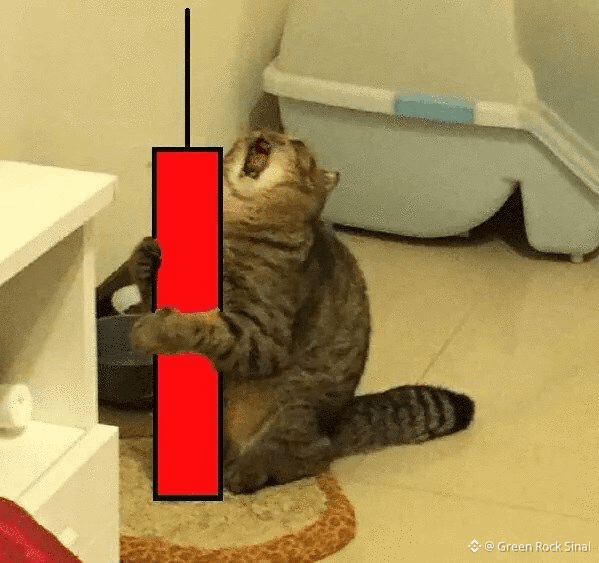
Yelena Riechman Brol:
syn tem taxa alta e tá em oferta. logo sobe.
2
4
3.9k

·
--
#KospiPostsWorstQuarterSince2020
The KOSPI index is headed for its worst quarter since the beginning of 2020.
South Korean stocks swung from early gains to losses as high bond yields kept investors on edge and foreign investors sold shares worth 519,100 million won.
South Korea’s KOSPI index turned from an initial rally to losses in the latest session, leaving the benchmark on track for its biggest quarterly drop since the beginning of 2020, as investors grapple with high bond yields and persistent foreign selling.
The index’s daily move has been small, but the quarterly one hasn’t: the KOSPI has fallen by around 19%, and foreign investors have been net sellers of shares worth 519,100 million won.
The most important force is interest rates. When government bond yields rise, “safe” assets start offering more income, and stocks have to look cheaper to compete.
$BTC
{spot}(BTCUSDT)
$BNB
{spot}(BNBUSDT)
$NVDA.US
{stock_us}(NVDA.US)
#KospiPostsWorstQuarterSince2020
The KOSPI index is headed for its worst quarter since the beginning of 2020.
South Korean stocks swung from early gains to losses as high bond yields kept investors on edge and foreign investors sold shares worth 519,100 million won.
South Korea’s KOSPI index turned from an initial rally to losses in the latest session, leaving the benchmark on track for its biggest quarterly drop since the beginning of 2020, as investors grapple with high bond yields and persistent foreign selling.
The index’s daily move has been small, but the quarterly one hasn’t: the KOSPI has fallen by around 19%, and foreign investors have been net sellers of shares worth 519,100 million won.
The most important force is interest rates. When government bond yields rise, “safe” assets start offering more income, and stocks have to look cheaper to compete.
$BTC
$BNB
$NVDA.US
The KOSPI index is headed for its worst quarter since the beginning of 2020.
South Korean stocks swung from early gains to losses as high bond yields kept investors on edge and foreign investors sold shares worth 519,100 million won.
South Korea’s KOSPI index turned from an initial rally to losses in the latest session, leaving the benchmark on track for its biggest quarterly drop since the beginning of 2020, as investors grapple with high bond yields and persistent foreign selling.
The index’s daily move has been small, but the quarterly one hasn’t: the KOSPI has fallen by around 19%, and foreign investors have been net sellers of shares worth 519,100 million won.
The most important force is interest rates. When government bond yields rise, “safe” assets start offering more income, and stocks have to look cheaper to compete.
$BTC
$BNB
$NVDA.US

1
1
139

👀 Q4 Watch Begins
After its worst quarter since 2020, $KOSPI enters October under the spotlight.
#kospipostsworstquartersince2020
👀 Q4 Watch Begins
After its worst quarter since 2020, $KOSPI enters October under the spotlight.
#kospipostsworstquartersince2020
After its worst quarter since 2020, $KOSPI enters October under the spotlight.
#kospipostsworstquartersince2020
2
⚠️ KOSPI Under Pressure
A rough quarter for $KOSPI, marking its weakest performance since 2020.
#kospipostsworstquartersince2020
⚠️ KOSPI Under Pressure
A rough quarter for $KOSPI, marking its weakest performance since 2020.
#kospipostsworstquartersince2020
A rough quarter for $KOSPI, marking its weakest performance since 2020.
#kospipostsworstquartersince2020
2
Log in to explore more content
Join global crypto users on Binance Square
⚡️ Get latest and useful information about crypto.
💬 Trusted by the world’s largest crypto exchange.
👍 Discover real insights from verified creators.
Email / Phone number
Trending Topics
1
#US10YearYieldNears5.3%
0 views
4 Discussing
2
#BitcoinETFsTake$6.34BillionInQ3
0 views
0 Discussing
3
#KoreaProposesTokenizingStocksAndBonds
17,552 views
294 Discussing
4
#MetaMaskExitsLidoValidatorsAfterSecurityIncident
82,755 views
1,010 Discussing
5
#MicronBeatsEarningsLiftsGuidance
49,160 views
779 Discussing
6
#CFTCSubmitsTwoEventContractRulesToWhiteHouse
33,127 views
630 Discussing
7
#BitcoinClears$85200
38,862 views
364 Discussing
8
#AltcoinSeasonIndexHoldsAbove60For5Days
184,456 views
2,233 Discussing
9
#USADPAdds90000JobsInSeptember
86,674 views
1,265 Discussing
10
#USCorePCEEasesTo3%InAugust
61,463 views
817 Discussing