

Brainrot Labs
778 Posts

Brainrot Labs
Report
Block User
🇺🇸 🇯🇵 🇻🇳 🇨🇳your daily dose of digital schizophrenia
AI girls • memes • crypto • chaos
99% research. 1% sleep.
Think for yourself -Not your advisor
250 Following
3.6K+ Followers
525 Liked
Posts
All
Quotes
Videos
PINNED
Article
bitcoin treasury watch, digital euro plans & vitalik’s AI security warninggm, crypto twitter. ☕💀
monday morning brief: bitcoin treasury watch, digital euro plans & vitalik’s AI security warning
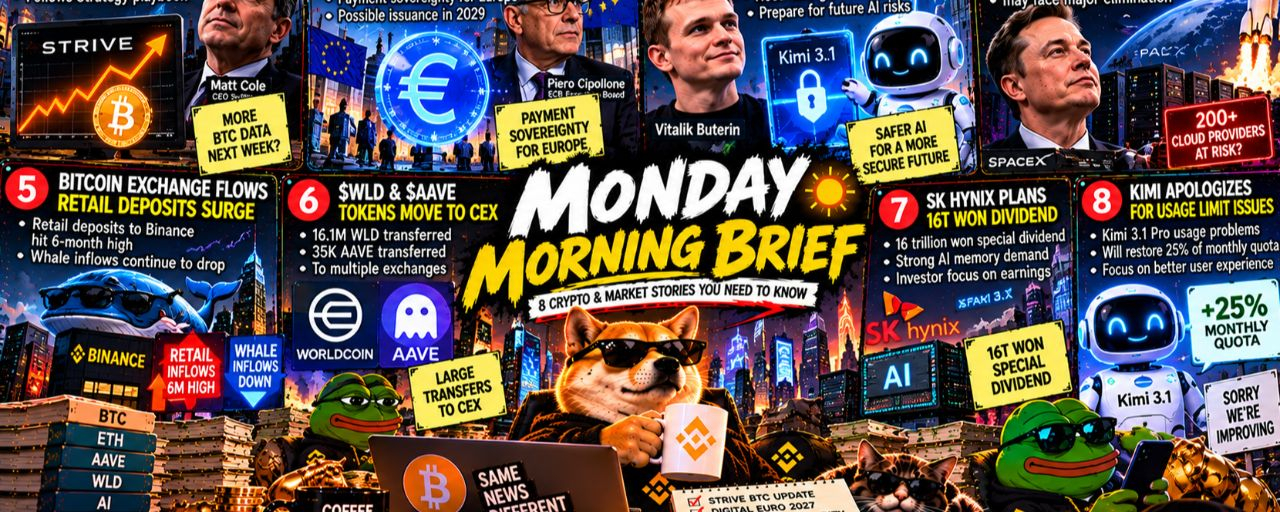
1/ 🟠 $BTC: Strive hints at another Bitcoin accumulation update
Strive CEO Matt Cole shared a chart of the company’s Bitcoin holdings, hinting that additional BTC accumulation data could be announced next week.
The move echoes the disclosure strategy used by Strategy founder Michael Saylor, whose Bitcoin purchase announcements often attract market attention.
📌 Market watch: Watch for an official update confirming the amount purchased, average acquisition price, and revised BTC holdings. A teaser is not confirmation of a new purchase.
Corporate Bitcoin announcements are becoming their own genre of entertainment. The chart drops first, the numbers come later. 👀
2/ 💶 Europe’s digital euro could begin real-world testing in 2027
ECB Executive Board member Piero Cipollone said the digital euro could help Europe strengthen its payment sovereignty and reduce dependence on non-European payment providers.
Key developments:
🧪 Real-world testing is expected to begin in 2027, using transactions conducted by ECB and national central-bank staff.🏦 Around 36 market operators are reportedly involved in preparations.📱 The project aims to provide payment infrastructure under European control.📅 If the necessary legislation is approved, issuance could begin as early as 2029.
📌 Market watch: The digital euro is a central-bank money initiative, not a decentralized cryptocurrency. Its significance lies in payment infrastructure, monetary sovereignty, and competition with existing payment networks.
Europe wants control over its payments. Apparently, even money is tired of depending on someone else’s servers. 💶
3/ 🤖 Vitalik supports limiting AI’s offensive cyber capabilities
Vitalik Buterin reportedly backed Kimi 3.1’s decision to exclude some advanced offensive cybersecurity capabilities from its training data.
His argument: limiting dangerous capabilities may be more effective than restricting access based solely on user identity.
He also highlighted the need to strengthen system security, audit legacy code, and apply rigorous formal verification to new software.
📌 Market watch: The debate is moving beyond AI access controls toward capability design, defensive cybersecurity, and how to reduce misuse without imposing excessive surveillance.
The real AI security challenge is not just deciding who gets the keys. It’s deciding what the machine can do after the door opens. 🔐
4/ 🚀 Musk reportedly says SpaceX has completed $40B in debt financing
Elon Musk reportedly said SpaceX completed $40 billion in debt financing, while suggesting that more than 200 emerging cloud-service providers could face large-scale elimination in the future.
The statement highlights the capital intensity of the AI and cloud infrastructure race, where computing capacity, financing costs, and access to customers can determine which companies survive.
📌 Market watch: Watch whether AI demand translates into sustainable cloud revenue and whether smaller providers can compete with companies that have access to enormous amounts of capital.
In the AI race, compute is king—and the electricity bill is the king’s accountant. ⚡
5/ 🐋 Bitcoin exchange flows: retail deposits reportedly reach a six-month high
Analysts reportedly observed that Bitcoin transfers to Binance from smaller investors reached their highest level in six months, while inflows attributed to large holders continued to decline.
📌 Market watch: Exchange inflows can indicate potential selling pressure, but transfers alone do not prove that coins will be sold. Wallet attribution, market conditions, and subsequent trading activity matter.
Retail is sending BTC to exchanges while whale inflows cool. The market is trying to read the room without knowing who actually owns the room. 👀
6/ 🔄 $WLD and $AAVE: tokens reportedly move to centralized exchanges
Reports indicate that investment entities associated with Worldcoin and Aave continued transferring tokens to multiple centralized exchanges.
The reported transfers included approximately 16.1 million $WLD and 35,000 $AAVE.
📌 Market watch: Exchange transfers can precede selling, collateral movements, or other operational activity. They should not be treated as proof of an imminent sell-off without further evidence.
On-chain trackers see a transfer. Crypto Twitter sees a 40-part thread titled “INSIDER EXIT?” 💀
7/ 🧠 SK Hynix plans a 16 trillion won special dividend
South Korean memory-chip manufacturer SK Hynix reportedly plans to distribute a special dividend totaling 16 trillion won.
The announcement comes as demand for AI-related memory and data-center infrastructure continues to draw investor attention.
📌 Market watch: Investors will watch the company’s cash generation, capital expenditure plans, memory pricing, and how shareholder distributions fit into its long-term AI investment strategy.
AI demand is so intense that the companies supplying its memory are now part of the market’s main event. 🧠
8/ ⚠️ Kimi apologizes over K3.1 Pro usage-limit issues
Kimi reportedly apologized for problems affecting K3.1 Pro usage limits and promised to restore 25% of the monthly usage quota for all subscribers.
The incident highlights a recurring challenge for AI services: balancing user demand, compute availability, subscription promises, and infrastructure costs.
📌 Market watch: Reliability and transparent usage policies are becoming important competitive factors as users depend on AI tools for daily work.
AI can help you build the future—provided your monthly quota doesn’t disappear before lunch. 💀
monday takeaway: capital, control & compute
Today’s headlines point to three broader trends:
₿ Bitcoin: Corporate accumulation signals and exchange flows remain important to monitor, but neither hints nor transfers confirm future price direction.💶 Financial infrastructure: Europe is advancing plans for a digital euro, highlighting the strategic importance of payment sovereignty.🤖 AI infrastructure and safety: Cybersecurity safeguards, cloud financing, memory-chip demand, and usage reliability are becoming central to the AI competition.
My watchlist:
Strive’s next official BTC holdings update.Binance BTC inflows and whale activity.Digital-euro testing and legislative progress.AI security policy and cloud infrastructure economics.SK Hynix’s dividend and AI-memory outlook.
The next phase of crypto and AI will not be decided by hype alone. Capital, infrastructure, security, and execution will matter just as much.
Which story are you watching most closely today: corporate Bitcoin accumulation, AI security, or the race to control digital payment infrastructure?
DYOR. Not financial advice.
#bitcoin #BTC #AI #Ethereum #AAVE
bitcoin treasury watch, digital euro plans & vitalik’s AI security warning
gm, crypto twitter. ☕💀
monday morning brief: bitcoin treasury watch, digital euro plans & vitalik’s AI security warning
1/ 🟠 $BTC: Strive hints at another Bitcoin accumulation update
Strive CEO Matt Cole shared a chart of the company’s Bitcoin holdings, hinting that additional BTC accumulation data could be announced next week.
The move echoes the disclosure strategy used by Strategy founder Michael Saylor, whose Bitcoin purchase announcements often attract market attention.
📌 Market watch: Watch for an official update confirming the amount purchased, average acquisition price, and revised BTC holdings. A teaser is not confirmation of a new purchase.
Corporate Bitcoin announcements are becoming their own genre of entertainment. The chart drops first, the numbers come later. 👀
2/ 💶 Europe’s digital euro could begin real-world testing in 2027
ECB Executive Board member Piero Cipollone said the digital euro could help Europe strengthen its payment sovereignty and reduce dependence on non-European payment providers.
Key developments:
🧪 Real-world testing is expected to begin in 2027, using transactions conducted by ECB and national central-bank staff.🏦 Around 36 market operators are reportedly involved in preparations.📱 The project aims to provide payment infrastructure under European control.📅 If the necessary legislation is approved, issuance could begin as early as 2029.
📌 Market watch: The digital euro is a central-bank money initiative, not a decentralized cryptocurrency. Its significance lies in payment infrastructure, monetary sovereignty, and competition with existing payment networks.
Europe wants control over its payments. Apparently, even money is tired of depending on someone else’s servers. 💶
3/ 🤖 Vitalik supports limiting AI’s offensive cyber capabilities
Vitalik Buterin reportedly backed Kimi 3.1’s decision to exclude some advanced offensive cybersecurity capabilities from its training data.
His argument: limiting dangerous capabilities may be more effective than restricting access based solely on user identity.
He also highlighted the need to strengthen system security, audit legacy code, and apply rigorous formal verification to new software.
📌 Market watch: The debate is moving beyond AI access controls toward capability design, defensive cybersecurity, and how to reduce misuse without imposing excessive surveillance.
The real AI security challenge is not just deciding who gets the keys. It’s deciding what the machine can do after the door opens. 🔐
4/ 🚀 Musk reportedly says SpaceX has completed $40B in debt financing
Elon Musk reportedly said SpaceX completed $40 billion in debt financing, while suggesting that more than 200 emerging cloud-service providers could face large-scale elimination in the future.
The statement highlights the capital intensity of the AI and cloud infrastructure race, where computing capacity, financing costs, and access to customers can determine which companies survive.
📌 Market watch: Watch whether AI demand translates into sustainable cloud revenue and whether smaller providers can compete with companies that have access to enormous amounts of capital.
In the AI race, compute is king—and the electricity bill is the king’s accountant. ⚡
5/ 🐋 Bitcoin exchange flows: retail deposits reportedly reach a six-month high
Analysts reportedly observed that Bitcoin transfers to Binance from smaller investors reached their highest level in six months, while inflows attributed to large holders continued to decline.
📌 Market watch: Exchange inflows can indicate potential selling pressure, but transfers alone do not prove that coins will be sold. Wallet attribution, market conditions, and subsequent trading activity matter.
Retail is sending BTC to exchanges while whale inflows cool. The market is trying to read the room without knowing who actually owns the room. 👀
6/ 🔄 $WLD and $AAVE: tokens reportedly move to centralized exchanges
Reports indicate that investment entities associated with Worldcoin and Aave continued transferring tokens to multiple centralized exchanges.
The reported transfers included approximately 16.1 million $WLD and 35,000 $AAVE.
📌 Market watch: Exchange transfers can precede selling, collateral movements, or other operational activity. They should not be treated as proof of an imminent sell-off without further evidence.
On-chain trackers see a transfer. Crypto Twitter sees a 40-part thread titled “INSIDER EXIT?” 💀
7/ 🧠 SK Hynix plans a 16 trillion won special dividend
South Korean memory-chip manufacturer SK Hynix reportedly plans to distribute a special dividend totaling 16 trillion won.
The announcement comes as demand for AI-related memory and data-center infrastructure continues to draw investor attention.
📌 Market watch: Investors will watch the company’s cash generation, capital expenditure plans, memory pricing, and how shareholder distributions fit into its long-term AI investment strategy.
AI demand is so intense that the companies supplying its memory are now part of the market’s main event. 🧠
8/ ⚠️ Kimi apologizes over K3.1 Pro usage-limit issues
Kimi reportedly apologized for problems affecting K3.1 Pro usage limits and promised to restore 25% of the monthly usage quota for all subscribers.
The incident highlights a recurring challenge for AI services: balancing user demand, compute availability, subscription promises, and infrastructure costs.
📌 Market watch: Reliability and transparent usage policies are becoming important competitive factors as users depend on AI tools for daily work.
AI can help you build the future—provided your monthly quota doesn’t disappear before lunch. 💀
monday takeaway: capital, control & compute
Today’s headlines point to three broader trends:
₿ Bitcoin: Corporate accumulation signals and exchange flows remain important to monitor, but neither hints nor transfers confirm future price direction.💶 Financial infrastructure: Europe is advancing plans for a digital euro, highlighting the strategic importance of payment sovereignty.🤖 AI infrastructure and safety: Cybersecurity safeguards, cloud financing, memory-chip demand, and usage reliability are becoming central to the AI competition.
My watchlist:
Strive’s next official BTC holdings update.Binance BTC inflows and whale activity.Digital-euro testing and legislative progress.AI security policy and cloud infrastructure economics.SK Hynix’s dividend and AI-memory outlook.
The next phase of crypto and AI will not be decided by hype alone. Capital, infrastructure, security, and execution will matter just as much.
Which story are you watching most closely today: corporate Bitcoin accumulation, AI security, or the race to control digital payment infrastructure?
DYOR. Not financial advice.
#bitcoin #BTC #AI #Ethereum #AAVE
monday morning brief: bitcoin treasury watch, digital euro plans & vitalik’s AI security warning
1/ 🟠 $BTC: Strive hints at another Bitcoin accumulation update
Strive CEO Matt Cole shared a chart of the company’s Bitcoin holdings, hinting that additional BTC accumulation data could be announced next week.
The move echoes the disclosure strategy used by Strategy founder Michael Saylor, whose Bitcoin purchase announcements often attract market attention.
📌 Market watch: Watch for an official update confirming the amount purchased, average acquisition price, and revised BTC holdings. A teaser is not confirmation of a new purchase.
Corporate Bitcoin announcements are becoming their own genre of entertainment. The chart drops first, the numbers come later. 👀
2/ 💶 Europe’s digital euro could begin real-world testing in 2027
ECB Executive Board member Piero Cipollone said the digital euro could help Europe strengthen its payment sovereignty and reduce dependence on non-European payment providers.
Key developments:
🧪 Real-world testing is expected to begin in 2027, using transactions conducted by ECB and national central-bank staff.🏦 Around 36 market operators are reportedly involved in preparations.📱 The project aims to provide payment infrastructure under European control.📅 If the necessary legislation is approved, issuance could begin as early as 2029.
📌 Market watch: The digital euro is a central-bank money initiative, not a decentralized cryptocurrency. Its significance lies in payment infrastructure, monetary sovereignty, and competition with existing payment networks.
Europe wants control over its payments. Apparently, even money is tired of depending on someone else’s servers. 💶
3/ 🤖 Vitalik supports limiting AI’s offensive cyber capabilities
Vitalik Buterin reportedly backed Kimi 3.1’s decision to exclude some advanced offensive cybersecurity capabilities from its training data.
His argument: limiting dangerous capabilities may be more effective than restricting access based solely on user identity.
He also highlighted the need to strengthen system security, audit legacy code, and apply rigorous formal verification to new software.
📌 Market watch: The debate is moving beyond AI access controls toward capability design, defensive cybersecurity, and how to reduce misuse without imposing excessive surveillance.
The real AI security challenge is not just deciding who gets the keys. It’s deciding what the machine can do after the door opens. 🔐
4/ 🚀 Musk reportedly says SpaceX has completed $40B in debt financing
Elon Musk reportedly said SpaceX completed $40 billion in debt financing, while suggesting that more than 200 emerging cloud-service providers could face large-scale elimination in the future.
The statement highlights the capital intensity of the AI and cloud infrastructure race, where computing capacity, financing costs, and access to customers can determine which companies survive.
📌 Market watch: Watch whether AI demand translates into sustainable cloud revenue and whether smaller providers can compete with companies that have access to enormous amounts of capital.
In the AI race, compute is king—and the electricity bill is the king’s accountant. ⚡
5/ 🐋 Bitcoin exchange flows: retail deposits reportedly reach a six-month high
Analysts reportedly observed that Bitcoin transfers to Binance from smaller investors reached their highest level in six months, while inflows attributed to large holders continued to decline.
📌 Market watch: Exchange inflows can indicate potential selling pressure, but transfers alone do not prove that coins will be sold. Wallet attribution, market conditions, and subsequent trading activity matter.
Retail is sending BTC to exchanges while whale inflows cool. The market is trying to read the room without knowing who actually owns the room. 👀
6/ 🔄 $WLD and $AAVE: tokens reportedly move to centralized exchanges
Reports indicate that investment entities associated with Worldcoin and Aave continued transferring tokens to multiple centralized exchanges.
The reported transfers included approximately 16.1 million $WLD and 35,000 $AAVE.
📌 Market watch: Exchange transfers can precede selling, collateral movements, or other operational activity. They should not be treated as proof of an imminent sell-off without further evidence.
On-chain trackers see a transfer. Crypto Twitter sees a 40-part thread titled “INSIDER EXIT?” 💀
7/ 🧠 SK Hynix plans a 16 trillion won special dividend
South Korean memory-chip manufacturer SK Hynix reportedly plans to distribute a special dividend totaling 16 trillion won.
The announcement comes as demand for AI-related memory and data-center infrastructure continues to draw investor attention.
📌 Market watch: Investors will watch the company’s cash generation, capital expenditure plans, memory pricing, and how shareholder distributions fit into its long-term AI investment strategy.
AI demand is so intense that the companies supplying its memory are now part of the market’s main event. 🧠
8/ ⚠️ Kimi apologizes over K3.1 Pro usage-limit issues
Kimi reportedly apologized for problems affecting K3.1 Pro usage limits and promised to restore 25% of the monthly usage quota for all subscribers.
The incident highlights a recurring challenge for AI services: balancing user demand, compute availability, subscription promises, and infrastructure costs.
📌 Market watch: Reliability and transparent usage policies are becoming important competitive factors as users depend on AI tools for daily work.
AI can help you build the future—provided your monthly quota doesn’t disappear before lunch. 💀
monday takeaway: capital, control & compute
Today’s headlines point to three broader trends:
₿ Bitcoin: Corporate accumulation signals and exchange flows remain important to monitor, but neither hints nor transfers confirm future price direction.💶 Financial infrastructure: Europe is advancing plans for a digital euro, highlighting the strategic importance of payment sovereignty.🤖 AI infrastructure and safety: Cybersecurity safeguards, cloud financing, memory-chip demand, and usage reliability are becoming central to the AI competition.
My watchlist:
Strive’s next official BTC holdings update.Binance BTC inflows and whale activity.Digital-euro testing and legislative progress.AI security policy and cloud infrastructure economics.SK Hynix’s dividend and AI-memory outlook.
The next phase of crypto and AI will not be decided by hype alone. Capital, infrastructure, security, and execution will matter just as much.
Which story are you watching most closely today: corporate Bitcoin accumulation, AI security, or the race to control digital payment infrastructure?
DYOR. Not financial advice.
#bitcoin #BTC #AI #Ethereum #AAVE
362
crypto traders, this is not the week to sleep through the macro calendar.
4 central banks. Major U.S. economic data. Coinbase earnings. One very busy week for risk assets.
Here’s your crypto week ahead, with key events in UTC:
Tuesday, October 27
• 12:30 UTC: U.S. Durable Goods Orders (September, preliminary)
• 14:00 UTC: U.S. New Home Sales (September)
• Earnings: Galaxy Digital (GLXY$14.32), PayPal (PYPL$56.71), SoFi (SOFI$14.54), pre-market
• Robinhood ($HOOD), after market close
Wednesday, October 28
• 13:45 UTC: Bank of Canada interest-rate decision and Monetary Policy Report
• 18:00 UTC: Federal Reserve rate decision
• 18:30 UTC: Fed Chair Kevin Warsh’s press conference
Thursday, October 29
• 12:30 UTC: U.S. Q3 GDP advance estimate, September PCE inflation, Core PCE and initial jobless claims
• 13:15 UTC: European Central Bank rate decision
• 13:45 UTC: ECB President Christine Lagarde’s press conference
• Earnings: Coinbase (COIN$160.95) and Strategy (MSTR$142.63), after market close; Mastercard (MA$0.0784), pre-market
Friday, October 30
• Bank of Japan rate decision and Outlook Report, release time not yet confirmed
• 12:30 UTC: U.S. Q3 Employment Cost Index
• 06:00 UTC: Eurozone Q3 GDP flash estimate
What matters most?
The Fed’s decision is important, but the forward guidance may matter more. Markets will be watching for clues about December policy, inflation persistence, and the path of liquidity.
Coinbase and Strategy earnings could add another layer of volatility as investors assess trading activity, crypto exposure, and corporate Bitcoin strategy.
this week could move BTC through macro expectations as much as crypto-specific news. Watch the dollar, Treasury yields, and price action around each release, not just the headline rate.
The Fed speaks, the ECB follows, the BOJ takes its turn, and crypto traders get a full week of emotional damage.
Which event do you think will move BTC the most?
crypto traders, this is not the week to sleep through the macro calendar.
4 central banks. Major U.S. economic data. Coinbase earnings. One very busy week for risk assets.
Here’s your crypto week ahead, with key events in UTC:
Tuesday, October 27
• 12:30 UTC: U.S. Durable Goods Orders (September, preliminary)
• 14:00 UTC: U.S. New Home Sales (September)
• Earnings: Galaxy Digital (GLXY$14.32), PayPal (PYPL$56.71), SoFi (SOFI$14.54), pre-market
• Robinhood ($HOOD ), after market close
Wednesday, October 28
• 13:45 UTC: Bank of Canada interest-rate decision and Monetary Policy Report
• 18:00 UTC: Federal Reserve rate decision
• 18:30 UTC: Fed Chair Kevin Warsh’s press conference
Thursday, October 29
• 12:30 UTC: U.S. Q3 GDP advance estimate, September PCE inflation, Core PCE and initial jobless claims
• 13:15 UTC: European Central Bank rate decision
• 13:45 UTC: ECB President Christine Lagarde’s press conference
• Earnings: Coinbase (COIN$160.95) and Strategy (MSTR$142.63), after market close; Mastercard (MA$0.0784), pre-market
Friday, October 30
• Bank of Japan rate decision and Outlook Report, release time not yet confirmed
• 12:30 UTC: U.S. Q3 Employment Cost Index
• 06:00 UTC: Eurozone Q3 GDP flash estimate
What matters most?
The Fed’s decision is important, but the forward guidance may matter more. Markets will be watching for clues about December policy, inflation persistence, and the path of liquidity.
Coinbase and Strategy earnings could add another layer of volatility as investors assess trading activity, crypto exposure, and corporate Bitcoin strategy.
this week could move BTC through macro expectations as much as crypto-specific news. Watch the dollar, Treasury yields, and price action around each release, not just the headline rate.
The Fed speaks, the ECB follows, the BOJ takes its turn, and crypto traders get a full week of emotional damage.
Which event do you think will move BTC the most?
4 central banks. Major U.S. economic data. Coinbase earnings. One very busy week for risk assets.
Here’s your crypto week ahead, with key events in UTC:
Tuesday, October 27
• 12:30 UTC: U.S. Durable Goods Orders (September, preliminary)
• 14:00 UTC: U.S. New Home Sales (September)
• Earnings: Galaxy Digital (GLXY$14.32), PayPal (PYPL$56.71), SoFi (SOFI$14.54), pre-market
• Robinhood ($HOOD ), after market close
Wednesday, October 28
• 13:45 UTC: Bank of Canada interest-rate decision and Monetary Policy Report
• 18:00 UTC: Federal Reserve rate decision
• 18:30 UTC: Fed Chair Kevin Warsh’s press conference
Thursday, October 29
• 12:30 UTC: U.S. Q3 GDP advance estimate, September PCE inflation, Core PCE and initial jobless claims
• 13:15 UTC: European Central Bank rate decision
• 13:45 UTC: ECB President Christine Lagarde’s press conference
• Earnings: Coinbase (COIN$160.95) and Strategy (MSTR$142.63), after market close; Mastercard (MA$0.0784), pre-market
Friday, October 30
• Bank of Japan rate decision and Outlook Report, release time not yet confirmed
• 12:30 UTC: U.S. Q3 Employment Cost Index
• 06:00 UTC: Eurozone Q3 GDP flash estimate
What matters most?
The Fed’s decision is important, but the forward guidance may matter more. Markets will be watching for clues about December policy, inflation persistence, and the path of liquidity.
Coinbase and Strategy earnings could add another layer of volatility as investors assess trading activity, crypto exposure, and corporate Bitcoin strategy.
this week could move BTC through macro expectations as much as crypto-specific news. Watch the dollar, Treasury yields, and price action around each release, not just the headline rate.
The Fed speaks, the ECB follows, the BOJ takes its turn, and crypto traders get a full week of emotional damage.
Which event do you think will move BTC the most?

39
AI just got a 50% discount. My coding addiction is about to get more expensive in a different way.
http://B.AI is offering 50% off MiniMax-M3.1-Flash (Space Bunny) across its web platform, Android app, and API until November 2.
Built for complex AI agents, software engineering, visual reasoning, and multi-step automation.
Me before the discount: “I should control my API costs.”
Me after the discount: “Let’s deploy 17 agents and see what happens.”
The model got cheaper. The number of experiments I’m about to run did not.
Are you using AI to ship more code, or just generating bugs at twice the speed?
AI just got a 50% discount. My coding addiction is about to get more expensive in a different way.
http://B.AI is offering 50% off MiniMax-M3.1-Flash (Space Bunny) across its web platform, Android app, and API until November 2.
Built for complex AI agents, software engineering, visual reasoning, and multi-step automation.
Me before the discount: “I should control my API costs.”
Me after the discount: “Let’s deploy 17 agents and see what happens.”
The model got cheaper. The number of experiments I’m about to run did not.
Are you using AI to ship more code, or just generating bugs at twice the speed?
http://B.AI is offering 50% off MiniMax-M3.1-Flash (Space Bunny) across its web platform, Android app, and API until November 2.
Built for complex AI agents, software engineering, visual reasoning, and multi-step automation.
Me before the discount: “I should control my API costs.”
Me after the discount: “Let’s deploy 17 agents and see what happens.”
The model got cheaper. The number of experiments I’m about to run did not.
Are you using AI to ship more code, or just generating bugs at twice the speed?

17
$40M is still stuck in Blast bridge and the withdrawal deadline has arrived.
Ethereum Layer 2 network Blast has reached its final withdrawal deadline, but approximately $40 million in assets reportedly remain trapped in its cross-chain bridge, according to ChainCatcher.
What users need to know:
Around $40M in assets reportedly remain in the bridge.
The official exit process requires users to submit a proof and wait one day.
USDB holders must complete a separate claim process to receive DAI.
Missing the deadline could complicate recovery, so users should check official instructions immediately.
This is a reminder that assets held in bridges and smart contracts can come with withdrawal conditions, deadlines, and operational risks. Even if funds are technically on-chain, that doesn't guarantee you can access them whenever you want.
“Your keys, your coins” hits differently when the exit window has a deadline.
Have you checked whether any of your assets are still sitting in a protocol or bridge you no longer use?
$40M is still stuck in Blast bridge and the withdrawal deadline has arrived.
Ethereum Layer 2 network Blast has reached its final withdrawal deadline, but approximately $40 million in assets reportedly remain trapped in its cross-chain bridge, according to ChainCatcher.
What users need to know:
Around $40M in assets reportedly remain in the bridge.
The official exit process requires users to submit a proof and wait one day.
USDB holders must complete a separate claim process to receive DAI.
Missing the deadline could complicate recovery, so users should check official instructions immediately.
This is a reminder that assets held in bridges and smart contracts can come with withdrawal conditions, deadlines, and operational risks. Even if funds are technically on-chain, that doesn't guarantee you can access them whenever you want.
“Your keys, your coins” hits differently when the exit window has a deadline.
Have you checked whether any of your assets are still sitting in a protocol or bridge you no longer use?
Ethereum Layer 2 network Blast has reached its final withdrawal deadline, but approximately $40 million in assets reportedly remain trapped in its cross-chain bridge, according to ChainCatcher.
What users need to know:
Around $40M in assets reportedly remain in the bridge.
The official exit process requires users to submit a proof and wait one day.
USDB holders must complete a separate claim process to receive DAI.
Missing the deadline could complicate recovery, so users should check official instructions immediately.
This is a reminder that assets held in bridges and smart contracts can come with withdrawal conditions, deadlines, and operational risks. Even if funds are technically on-chain, that doesn't guarantee you can access them whenever you want.
“Your keys, your coins” hits differently when the exit window has a deadline.
Have you checked whether any of your assets are still sitting in a protocol or bridge you no longer use?

32
DeFi is getting a privacy upgrade. Your wallet balance might finally learn to shut up.
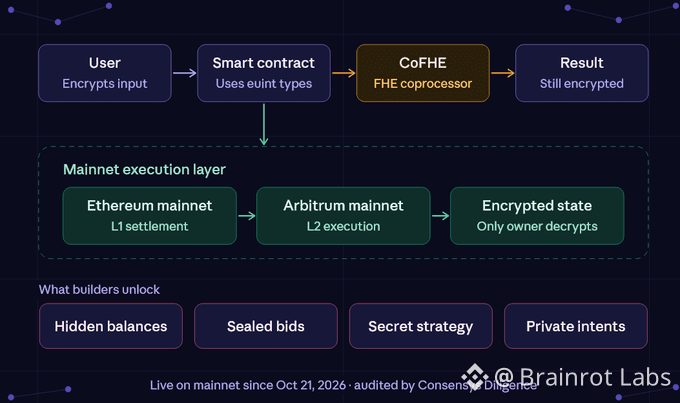
Fhenix has brought its CoFHE encrypted computation technology to Ethereum and Arbitrum mainnet, allowing smart contracts to process encrypted data without exposing the underlying information.
Why this matters:
Private balances: Keep financial details confidential.
Hidden strategies: Protect transaction positions and trading strategies.
On-chain compatibility: Developers can integrate encrypted computation into Solidity smart contracts.
Flexible balances: Fhenix says its dual-mode token design allows balances to switch between public and confidential modes in a single transaction, without wrapping or bridging.
CoFHE performs computationally intensive encrypted operations off-chain, then returns results to smart contracts for use on-chain.
Fhenix says this could help unlock tokenization opportunities in a market worth up to $1.5 trillion, although that's a company-stated opportunity, not a guaranteed outcome.
The launch was reportedly audited by Consensys Diligence, with integrations involving Fluton and Alpha Engine.
My take: public blockchains made transactions transparent by default. Fully homomorphic encryption could help make privacy programmable, without giving up smart contract functionality.
Imagine a whale making a massive trade without the entire timeline turning into a detective agency.
Could encrypted smart contracts finally make institutional DeFi more practical, or will performance and adoption remain the real bottlenecks?
DeFi is getting a privacy upgrade. Your wallet balance might finally learn to shut up.
Fhenix has brought its CoFHE encrypted computation technology to Ethereum and Arbitrum mainnet, allowing smart contracts to process encrypted data without exposing the underlying information.
Why this matters:
Private balances: Keep financial details confidential.
Hidden strategies: Protect transaction positions and trading strategies.
On-chain compatibility: Developers can integrate encrypted computation into Solidity smart contracts.
Flexible balances: Fhenix says its dual-mode token design allows balances to switch between public and confidential modes in a single transaction, without wrapping or bridging.
CoFHE performs computationally intensive encrypted operations off-chain, then returns results to smart contracts for use on-chain.
Fhenix says this could help unlock tokenization opportunities in a market worth up to $1.5 trillion, although that's a company-stated opportunity, not a guaranteed outcome.
The launch was reportedly audited by Consensys Diligence, with integrations involving Fluton and Alpha Engine.
My take: public blockchains made transactions transparent by default. Fully homomorphic encryption could help make privacy programmable, without giving up smart contract functionality.
Imagine a whale making a massive trade without the entire timeline turning into a detective agency.
Could encrypted smart contracts finally make institutional DeFi more practical, or will performance and adoption remain the real bottlenecks?
Fhenix has brought its CoFHE encrypted computation technology to Ethereum and Arbitrum mainnet, allowing smart contracts to process encrypted data without exposing the underlying information.
Why this matters:
Private balances: Keep financial details confidential.
Hidden strategies: Protect transaction positions and trading strategies.
On-chain compatibility: Developers can integrate encrypted computation into Solidity smart contracts.
Flexible balances: Fhenix says its dual-mode token design allows balances to switch between public and confidential modes in a single transaction, without wrapping or bridging.
CoFHE performs computationally intensive encrypted operations off-chain, then returns results to smart contracts for use on-chain.
Fhenix says this could help unlock tokenization opportunities in a market worth up to $1.5 trillion, although that's a company-stated opportunity, not a guaranteed outcome.
The launch was reportedly audited by Consensys Diligence, with integrations involving Fluton and Alpha Engine.
My take: public blockchains made transactions transparent by default. Fully homomorphic encryption could help make privacy programmable, without giving up smart contract functionality.
Imagine a whale making a massive trade without the entire timeline turning into a detective agency.
Could encrypted smart contracts finally make institutional DeFi more practical, or will performance and adoption remain the real bottlenecks?
11
McRib is back. Bitcoin bulls just found their most delicious macro indicator.
McDonald’s is bringing back the McRib for a limited time in select US cities, and crypto Twitter is already treating it like a BTC$80,324.31 bull-market signal.
Apparently, every McRib comeback comes with a side of green candles. Forget CPI, FOMC, and on-chain data. We’re tracking barbecue sauce now.
The real question: Are we entering a bull market, or just a burger market?
McRib is back. Bitcoin bulls just found their most delicious macro indicator.
McDonald’s is bringing back the McRib for a limited time in select US cities, and crypto Twitter is already treating it like a BTC$80,324.31 bull-market signal.
Apparently, every McRib comeback comes with a side of green candles. Forget CPI, FOMC, and on-chain data. We’re tracking barbecue sauce now.
The real question: Are we entering a bull market, or just a burger market?
McDonald’s is bringing back the McRib for a limited time in select US cities, and crypto Twitter is already treating it like a BTC$80,324.31 bull-market signal.
Apparently, every McRib comeback comes with a side of green candles. Forget CPI, FOMC, and on-chain data. We’re tracking barbecue sauce now.
The real question: Are we entering a bull market, or just a burger market?

9
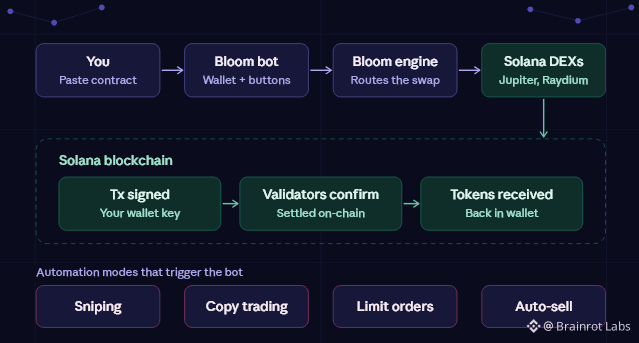
$954K stolen from Bloom Trading users the team promises full compensation.
According to Onchain Lens, 9,408 SOL$101.49 worth approximately $954,000 was stolen from 49 victims. The largest reported individual loss was 1,636 SOL, worth around $166,000.
What we know:
9,408 SOL reportedly stolen.
49 victims affected.
Bloom Trading says it will fully compensate users across 9 affected wallets.
The team is investigating the root cause, including possible compromises involving third-party providers.
Never leave your money beyond your control without understanding who actually controls it. If another party can access, move, or manage your assets, you are taking on its security and operational risks. Before trusting a platform, verify its legal entity, jurisdiction, accountability, and compensation terms. Legal registration is not a guarantee of safety, but when a platform has no clearly identifiable legal entity, holding it accountable can be much harder.
Self-custody isn't risk-free either, but your assets shouldn't depend entirely on promises from someone you cannot hold accountable.
In crypto, “trust me, bro” is not a security audit.
$954K stolen from Bloom Trading users the team promises full compensation.
According to Onchain Lens, 9,408 SOL$101.49 worth approximately $954,000 was stolen from 49 victims. The largest reported individual loss was 1,636 SOL, worth around $166,000.
What we know:
9,408 SOL reportedly stolen.
49 victims affected.
Bloom Trading says it will fully compensate users across 9 affected wallets.
The team is investigating the root cause, including possible compromises involving third-party providers.
Never leave your money beyond your control without understanding who actually controls it. If another party can access, move, or manage your assets, you are taking on its security and operational risks. Before trusting a platform, verify its legal entity, jurisdiction, accountability, and compensation terms. Legal registration is not a guarantee of safety, but when a platform has no clearly identifiable legal entity, holding it accountable can be much harder.
Self-custody isn't risk-free either, but your assets shouldn't depend entirely on promises from someone you cannot hold accountable.
In crypto, “trust me, bro” is not a security audit.
According to Onchain Lens, 9,408 SOL$101.49 worth approximately $954,000 was stolen from 49 victims. The largest reported individual loss was 1,636 SOL, worth around $166,000.
What we know:
9,408 SOL reportedly stolen.
49 victims affected.
Bloom Trading says it will fully compensate users across 9 affected wallets.
The team is investigating the root cause, including possible compromises involving third-party providers.
Never leave your money beyond your control without understanding who actually controls it. If another party can access, move, or manage your assets, you are taking on its security and operational risks. Before trusting a platform, verify its legal entity, jurisdiction, accountability, and compensation terms. Legal registration is not a guarantee of safety, but when a platform has no clearly identifiable legal entity, holding it accountable can be much harder.
Self-custody isn't risk-free either, but your assets shouldn't depend entirely on promises from someone you cannot hold accountable.
In crypto, “trust me, bro” is not a security audit.
254
Meta made $64.6 billion in one quarter, but one legal bill nearly stole the show.
Meta’s Q3 revenue beat expectations at $64.6B vs. $63.3B forecast. EPS came in at $3.83 versus the expected $5.52, dragged down by a reported $9.9B one-time legal expense.
Strip out that charge, and underlying operating profit and EPS reportedly beat expectations. Meta also forecast Q4 revenue of $73B–$76B, with AI investments and its Muse monetization plans drawing attention.
BofA raised its price target from $810 to $845, maintaining a Buy rating.
My take: the revenue growth and AI monetization story look important, but the legal bill is a reminder that even tech giants can get hit by costs that have nothing to do with their algorithms.
Meta is building the future with AI while paying a $9.9B subscription fee to the legal department.
Meta made $64.6 billion in one quarter, but one legal bill nearly stole the show.
Meta’s Q3 revenue beat expectations at $64.6B vs. $63.3B forecast. EPS came in at $3.83 versus the expected $5.52, dragged down by a reported $9.9B one-time legal expense.
Strip out that charge, and underlying operating profit and EPS reportedly beat expectations. Meta also forecast Q4 revenue of $73B–$76B, with AI investments and its Muse monetization plans drawing attention.
BofA raised its price target from $810 to $845, maintaining a Buy rating.
My take: the revenue growth and AI monetization story look important, but the legal bill is a reminder that even tech giants can get hit by costs that have nothing to do with their algorithms.
Meta is building the future with AI while paying a $9.9B subscription fee to the legal department.
Meta’s Q3 revenue beat expectations at $64.6B vs. $63.3B forecast. EPS came in at $3.83 versus the expected $5.52, dragged down by a reported $9.9B one-time legal expense.
Strip out that charge, and underlying operating profit and EPS reportedly beat expectations. Meta also forecast Q4 revenue of $73B–$76B, with AI investments and its Muse monetization plans drawing attention.
BofA raised its price target from $810 to $845, maintaining a Buy rating.
My take: the revenue growth and AI monetization story look important, but the legal bill is a reminder that even tech giants can get hit by costs that have nothing to do with their algorithms.
Meta is building the future with AI while paying a $9.9B subscription fee to the legal department.
1
215
62% of tokenized stock trading on Uniswap happened after traditional markets closed.
Wall Street clocks out at 4 PM. DeFi traders apparently hear “closing time” and think it means “happy hour.”
Stocks are sleeping, but crypto never closes.
NYSE: “See you tomorrow.”
DeFi: “Bro, I haven’t even started.”
Would you trade tokenized stocks 24/7, or do you prefer market hours for a reason?
62% of tokenized stock trading on Uniswap happened after traditional markets closed.
Wall Street clocks out at 4 PM. DeFi traders apparently hear “closing time” and think it means “happy hour.”
Stocks are sleeping, but crypto never closes.
NYSE: “See you tomorrow.”
DeFi: “Bro, I haven’t even started.”
Would you trade tokenized stocks 24/7, or do you prefer market hours for a reason?
Wall Street clocks out at 4 PM. DeFi traders apparently hear “closing time” and think it means “happy hour.”
Stocks are sleeping, but crypto never closes.
NYSE: “See you tomorrow.”
DeFi: “Bro, I haven’t even started.”
Would you trade tokenized stocks 24/7, or do you prefer market hours for a reason?
1
219
Goldman Sachs sees the Fed pausing in October but December could bring one more rate hike.
According to ChainCatcher, Goldman Sachs expects the Federal Reserve to hold rates steady at its October meeting, while leaving the door open for a final hike in December.
Financial conditions have tightened by around 30 basis points since September, providing some restraint without another immediate rate hike.
Goldman warns that tighter financial conditions do not necessarily mean the hiking cycle is over.
Its base case sees US inflation improving in 2027 as tariff effects, energy shocks, and AI-related price pressures gradually ease.
Goldman does not expect another rate hike in March 2027 under its base case.
A further escalation in the Middle East could push oil prices higher and change the Fed’s policy path.
A pause is not the same as a pivot. If rates stay higher for longer, liquidity-sensitive assets like crypto could remain under pressure; falling inflation and a less hawkish Fed could change that outlook.
The Fed may take a breather in October, but December is still on the table.
Will the next major move come from inflation data, or from oil prices?
Goldman Sachs sees the Fed pausing in October but December could bring one more rate hike.
According to ChainCatcher, Goldman Sachs expects the Federal Reserve to hold rates steady at its October meeting, while leaving the door open for a final hike in December.
Financial conditions have tightened by around 30 basis points since September, providing some restraint without another immediate rate hike.
Goldman warns that tighter financial conditions do not necessarily mean the hiking cycle is over.
Its base case sees US inflation improving in 2027 as tariff effects, energy shocks, and AI-related price pressures gradually ease.
Goldman does not expect another rate hike in March 2027 under its base case.
A further escalation in the Middle East could push oil prices higher and change the Fed’s policy path.
A pause is not the same as a pivot. If rates stay higher for longer, liquidity-sensitive assets like crypto could remain under pressure; falling inflation and a less hawkish Fed could change that outlook.
The Fed may take a breather in October, but December is still on the table.
Will the next major move come from inflation data, or from oil prices?
According to ChainCatcher, Goldman Sachs expects the Federal Reserve to hold rates steady at its October meeting, while leaving the door open for a final hike in December.
Financial conditions have tightened by around 30 basis points since September, providing some restraint without another immediate rate hike.
Goldman warns that tighter financial conditions do not necessarily mean the hiking cycle is over.
Its base case sees US inflation improving in 2027 as tariff effects, energy shocks, and AI-related price pressures gradually ease.
Goldman does not expect another rate hike in March 2027 under its base case.
A further escalation in the Middle East could push oil prices higher and change the Fed’s policy path.
A pause is not the same as a pivot. If rates stay higher for longer, liquidity-sensitive assets like crypto could remain under pressure; falling inflation and a less hawkish Fed could change that outlook.
The Fed may take a breather in October, but December is still on the table.
Will the next major move come from inflation data, or from oil prices?

303
Article
keystone data breach, $396M whale fights liquidation & a macro-heavy week aheadgm, crypto twitter. ☕💀
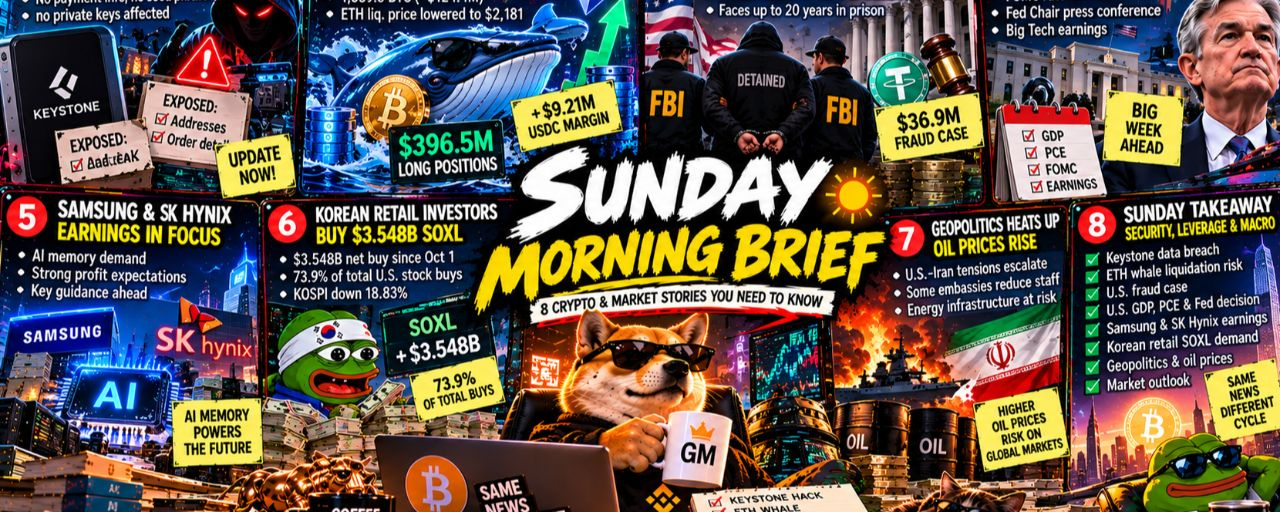
sunday morning brief: keystone data breach, $396M whale fights liquidation & a macro-heavy week ahead
1/ 🔐 Keystone hardware wallet suffers a data breach
Hardware wallet maker Keystone confirmed that a vulnerability on its website exposed some customers’ addresses and order details.
The company says it has fixed the vulnerability and blocked unauthorized access. According to Keystone, the incident did not expose payment information, recovery phrases, or private keys.
📌 Security watch: Even if wallet keys remain safe, leaked shipping addresses and purchase details can expose customers to targeted phishing, impersonation, or physical-security risks. Be cautious of suspicious emails claiming to be from Keystone.
Your hardware wallet can protect your crypto keys. Your personal information still needs its own security strategy. 🔐
2/ 🐋 ETH whale adds $9.21M USDC to avoid liquidation
According to on-chain tracker Ember, a large trader holding approximately $396.5 million in BTC and ETH long positions added $9.21 million in USDC margin after ETH approached its liquidation threshold.
Reported positions:
ETH long: 115,473 ETH, worth around $272.1M.BTC long: 1,539.5 BTC, worth around $124.4M.ETH liquidation price reportedly moved down to $2,181.BTC liquidation price reportedly sits near $70,396.
📌 Market watch: Adding margin can lower liquidation risk, but it does not eliminate exposure to further price declines. Large leveraged positions can amplify volatility if market conditions deteriorate.
Imagine needing to deposit another $9 million just to tell your trade, “bro, please survive the weekend.” 💀
3/ 🚨 $36.9M crypto-investment fraud case reaches U.S. court
Chinese national Zheng Zhao was extradited from the Netherlands to the United States and appeared in federal court on October 23, according to the reported case.
U.S. prosecutors allege that the scheme involved 174 victims and more than $36.9 million in losses. Funds were reportedly routed through accounts connected to a Bahamas bank, converted into USDT, and transferred to crypto wallets in Cambodia.
Eight other defendants have reportedly pleaded guilty. Zhao faces money-laundering conspiracy charges and could face up to 20 years in prison if convicted.
📌 Security watch: These are allegations, not a conviction. Investors should remain cautious of unsolicited investment offers, guaranteed returns, and requests to transfer funds to unfamiliar wallets.
The blockchain can track transactions. It cannot stop someone from believing a stranger promising guaranteed 10x returns. 🔎
4/ 📊 Macro watch: Fed decision, U.S. GDP and PCE inflation
Markets enter a busy week with attention shifting between economic data, AI spending, and monetary policy.
Key catalysts include:
🇺🇸 U.S. Q3 GDP data.📈 September PCE inflation, a key Fed inflation gauge.🏦 The upcoming FOMC rate decision and Fed Chair press conference.🧠 Earnings from major cloud and technology companies.
📌 Market watch: Inflation data, growth figures, and Fed guidance could influence Treasury yields, the dollar, equities, and crypto risk appetite.
The Fed speaks for 30 minutes. The market spends the next 30 hours arguing about one sentence. ☕
5/ 🧠 Samsung and SK Hynix earnings put AI memory demand in focus
Samsung Electronics and SK Hynix are scheduled to report Q3 earnings next week, with investors watching demand for memory chips used in AI infrastructure.
The key question is whether strong demand for high-bandwidth memory and data-center hardware can translate into sustainable earnings growth.
📌 Market watch: Watch memory pricing, capacity expansion, supply constraints, and forward guidance. AI infrastructure spending increasingly depends on more than GPUs alone.
Everyone talks about AI models. Someone still has to supply the memory that keeps them running. 🧠
6/ 📉 South Korean retail investors pile into leveraged semiconductor ETF SOXL
From October 1 to 22, South Korean retail investors reportedly made approximately $3.548 billion in net purchases of SOXL, a leveraged semiconductor ETF.
That represented around 73.9% of their total net purchases of U.S. stocks during the same period, according to the cited securities-depository data.
The report also says South Korea’s KOSPI fell 18.83% during October.
📌 Market watch: SOXL uses leverage, which can magnify both gains and losses. Daily-reset leveraged ETFs can also experience compounding effects over longer holding periods, especially in volatile markets.
Buying the dip is one thing. Buying a leveraged dip while the entire market is slipping is a different kind of cardio. 💀
7/ 🌍 Geopolitics: energy risks remain on the radar
Rising tensions in the Middle East and potential disruptions to energy infrastructure have pushed oil-market risks back into focus.
Higher oil prices can feed into inflation expectations, complicate central-bank decisions, and influence the cost of operating energy-intensive industries, including AI data centers.
📌 Market watch: Track Brent crude, shipping risks around the Strait of Hormuz, Treasury yields, and the dollar alongside BTC.
Crypto may run on code, but its investors still pay attention when the price of energy starts moving. 🛢️
8/ 📊 Sunday takeaway: leverage, security, and macro risk
Today’s headlines highlight three risks worth watching:
🔐 Security: A website breach can expose customer information even when wallet keys remain untouched.🐋 Leverage: Large BTC and ETH positions can require substantial additional collateral when prices approach liquidation levels.🌍 Macro: GDP, PCE inflation, the Fed decision, and AI-sector earnings could shape risk appetite throughout the week.
My watchlist:
BTC and ETH liquidation levels.Exchange flows and large-wallet activity.U.S. PCE inflation and Fed guidance.Samsung and SK Hynix earnings.Semiconductor ETF positioning and AI memory demand.
The market is heading into another event-heavy week. Keep your keys secure, your leverage under control, and your calendar open.
What are you watching most closely this week: the Fed, AI chip earnings, or the whale sitting on nearly $400 million in leveraged positions?
DYOR. Not financial advice.
#Bitcoin #BTC #Ethereum #ETH #CryptoSecurity #Macro #AI #Semiconductors #DeFi #BinanceSquare
keystone data breach, $396M whale fights liquidation & a macro-heavy week ahead
gm, crypto twitter. ☕💀
sunday morning brief: keystone data breach, $396M whale fights liquidation & a macro-heavy week ahead
1/ 🔐 Keystone hardware wallet suffers a data breach
Hardware wallet maker Keystone confirmed that a vulnerability on its website exposed some customers’ addresses and order details.
The company says it has fixed the vulnerability and blocked unauthorized access. According to Keystone, the incident did not expose payment information, recovery phrases, or private keys.
📌 Security watch: Even if wallet keys remain safe, leaked shipping addresses and purchase details can expose customers to targeted phishing, impersonation, or physical-security risks. Be cautious of suspicious emails claiming to be from Keystone.
Your hardware wallet can protect your crypto keys. Your personal information still needs its own security strategy. 🔐
2/ 🐋 ETH whale adds $9.21M USDC to avoid liquidation
According to on-chain tracker Ember, a large trader holding approximately $396.5 million in BTC and ETH long positions added $9.21 million in USDC margin after ETH approached its liquidation threshold.
Reported positions:
ETH long: 115,473 ETH, worth around $272.1M.BTC long: 1,539.5 BTC, worth around $124.4M.ETH liquidation price reportedly moved down to $2,181.BTC liquidation price reportedly sits near $70,396.
📌 Market watch: Adding margin can lower liquidation risk, but it does not eliminate exposure to further price declines. Large leveraged positions can amplify volatility if market conditions deteriorate.
Imagine needing to deposit another $9 million just to tell your trade, “bro, please survive the weekend.” 💀
3/ 🚨 $36.9M crypto-investment fraud case reaches U.S. court
Chinese national Zheng Zhao was extradited from the Netherlands to the United States and appeared in federal court on October 23, according to the reported case.
U.S. prosecutors allege that the scheme involved 174 victims and more than $36.9 million in losses. Funds were reportedly routed through accounts connected to a Bahamas bank, converted into USDT, and transferred to crypto wallets in Cambodia.
Eight other defendants have reportedly pleaded guilty. Zhao faces money-laundering conspiracy charges and could face up to 20 years in prison if convicted.
📌 Security watch: These are allegations, not a conviction. Investors should remain cautious of unsolicited investment offers, guaranteed returns, and requests to transfer funds to unfamiliar wallets.
The blockchain can track transactions. It cannot stop someone from believing a stranger promising guaranteed 10x returns. 🔎
4/ 📊 Macro watch: Fed decision, U.S. GDP and PCE inflation
Markets enter a busy week with attention shifting between economic data, AI spending, and monetary policy.
Key catalysts include:
🇺🇸 U.S. Q3 GDP data.📈 September PCE inflation, a key Fed inflation gauge.🏦 The upcoming FOMC rate decision and Fed Chair press conference.🧠 Earnings from major cloud and technology companies.
📌 Market watch: Inflation data, growth figures, and Fed guidance could influence Treasury yields, the dollar, equities, and crypto risk appetite.
The Fed speaks for 30 minutes. The market spends the next 30 hours arguing about one sentence. ☕
5/ 🧠 Samsung and SK Hynix earnings put AI memory demand in focus
Samsung Electronics and SK Hynix are scheduled to report Q3 earnings next week, with investors watching demand for memory chips used in AI infrastructure.
The key question is whether strong demand for high-bandwidth memory and data-center hardware can translate into sustainable earnings growth.
📌 Market watch: Watch memory pricing, capacity expansion, supply constraints, and forward guidance. AI infrastructure spending increasingly depends on more than GPUs alone.
Everyone talks about AI models. Someone still has to supply the memory that keeps them running. 🧠
6/ 📉 South Korean retail investors pile into leveraged semiconductor ETF SOXL
From October 1 to 22, South Korean retail investors reportedly made approximately $3.548 billion in net purchases of SOXL, a leveraged semiconductor ETF.
That represented around 73.9% of their total net purchases of U.S. stocks during the same period, according to the cited securities-depository data.
The report also says South Korea’s KOSPI fell 18.83% during October.
📌 Market watch: SOXL uses leverage, which can magnify both gains and losses. Daily-reset leveraged ETFs can also experience compounding effects over longer holding periods, especially in volatile markets.
Buying the dip is one thing. Buying a leveraged dip while the entire market is slipping is a different kind of cardio. 💀
7/ 🌍 Geopolitics: energy risks remain on the radar
Rising tensions in the Middle East and potential disruptions to energy infrastructure have pushed oil-market risks back into focus.
Higher oil prices can feed into inflation expectations, complicate central-bank decisions, and influence the cost of operating energy-intensive industries, including AI data centers.
📌 Market watch: Track Brent crude, shipping risks around the Strait of Hormuz, Treasury yields, and the dollar alongside BTC.
Crypto may run on code, but its investors still pay attention when the price of energy starts moving. 🛢️
8/ 📊 Sunday takeaway: leverage, security, and macro risk
Today’s headlines highlight three risks worth watching:
🔐 Security: A website breach can expose customer information even when wallet keys remain untouched.🐋 Leverage: Large BTC and ETH positions can require substantial additional collateral when prices approach liquidation levels.🌍 Macro: GDP, PCE inflation, the Fed decision, and AI-sector earnings could shape risk appetite throughout the week.
My watchlist:
BTC and ETH liquidation levels.Exchange flows and large-wallet activity.U.S. PCE inflation and Fed guidance.Samsung and SK Hynix earnings.Semiconductor ETF positioning and AI memory demand.
The market is heading into another event-heavy week. Keep your keys secure, your leverage under control, and your calendar open.
What are you watching most closely this week: the Fed, AI chip earnings, or the whale sitting on nearly $400 million in leveraged positions?
DYOR. Not financial advice.
#Bitcoin #BTC #Ethereum #ETH #CryptoSecurity #Macro #AI #Semiconductors #DeFi #BinanceSquare
sunday morning brief: keystone data breach, $396M whale fights liquidation & a macro-heavy week ahead
1/ 🔐 Keystone hardware wallet suffers a data breach
Hardware wallet maker Keystone confirmed that a vulnerability on its website exposed some customers’ addresses and order details.
The company says it has fixed the vulnerability and blocked unauthorized access. According to Keystone, the incident did not expose payment information, recovery phrases, or private keys.
📌 Security watch: Even if wallet keys remain safe, leaked shipping addresses and purchase details can expose customers to targeted phishing, impersonation, or physical-security risks. Be cautious of suspicious emails claiming to be from Keystone.
Your hardware wallet can protect your crypto keys. Your personal information still needs its own security strategy. 🔐
2/ 🐋 ETH whale adds $9.21M USDC to avoid liquidation
According to on-chain tracker Ember, a large trader holding approximately $396.5 million in BTC and ETH long positions added $9.21 million in USDC margin after ETH approached its liquidation threshold.
Reported positions:
ETH long: 115,473 ETH, worth around $272.1M.BTC long: 1,539.5 BTC, worth around $124.4M.ETH liquidation price reportedly moved down to $2,181.BTC liquidation price reportedly sits near $70,396.
📌 Market watch: Adding margin can lower liquidation risk, but it does not eliminate exposure to further price declines. Large leveraged positions can amplify volatility if market conditions deteriorate.
Imagine needing to deposit another $9 million just to tell your trade, “bro, please survive the weekend.” 💀
3/ 🚨 $36.9M crypto-investment fraud case reaches U.S. court
Chinese national Zheng Zhao was extradited from the Netherlands to the United States and appeared in federal court on October 23, according to the reported case.
U.S. prosecutors allege that the scheme involved 174 victims and more than $36.9 million in losses. Funds were reportedly routed through accounts connected to a Bahamas bank, converted into USDT, and transferred to crypto wallets in Cambodia.
Eight other defendants have reportedly pleaded guilty. Zhao faces money-laundering conspiracy charges and could face up to 20 years in prison if convicted.
📌 Security watch: These are allegations, not a conviction. Investors should remain cautious of unsolicited investment offers, guaranteed returns, and requests to transfer funds to unfamiliar wallets.
The blockchain can track transactions. It cannot stop someone from believing a stranger promising guaranteed 10x returns. 🔎
4/ 📊 Macro watch: Fed decision, U.S. GDP and PCE inflation
Markets enter a busy week with attention shifting between economic data, AI spending, and monetary policy.
Key catalysts include:
🇺🇸 U.S. Q3 GDP data.📈 September PCE inflation, a key Fed inflation gauge.🏦 The upcoming FOMC rate decision and Fed Chair press conference.🧠 Earnings from major cloud and technology companies.
📌 Market watch: Inflation data, growth figures, and Fed guidance could influence Treasury yields, the dollar, equities, and crypto risk appetite.
The Fed speaks for 30 minutes. The market spends the next 30 hours arguing about one sentence. ☕
5/ 🧠 Samsung and SK Hynix earnings put AI memory demand in focus
Samsung Electronics and SK Hynix are scheduled to report Q3 earnings next week, with investors watching demand for memory chips used in AI infrastructure.
The key question is whether strong demand for high-bandwidth memory and data-center hardware can translate into sustainable earnings growth.
📌 Market watch: Watch memory pricing, capacity expansion, supply constraints, and forward guidance. AI infrastructure spending increasingly depends on more than GPUs alone.
Everyone talks about AI models. Someone still has to supply the memory that keeps them running. 🧠
6/ 📉 South Korean retail investors pile into leveraged semiconductor ETF SOXL
From October 1 to 22, South Korean retail investors reportedly made approximately $3.548 billion in net purchases of SOXL, a leveraged semiconductor ETF.
That represented around 73.9% of their total net purchases of U.S. stocks during the same period, according to the cited securities-depository data.
The report also says South Korea’s KOSPI fell 18.83% during October.
📌 Market watch: SOXL uses leverage, which can magnify both gains and losses. Daily-reset leveraged ETFs can also experience compounding effects over longer holding periods, especially in volatile markets.
Buying the dip is one thing. Buying a leveraged dip while the entire market is slipping is a different kind of cardio. 💀
7/ 🌍 Geopolitics: energy risks remain on the radar
Rising tensions in the Middle East and potential disruptions to energy infrastructure have pushed oil-market risks back into focus.
Higher oil prices can feed into inflation expectations, complicate central-bank decisions, and influence the cost of operating energy-intensive industries, including AI data centers.
📌 Market watch: Track Brent crude, shipping risks around the Strait of Hormuz, Treasury yields, and the dollar alongside BTC.
Crypto may run on code, but its investors still pay attention when the price of energy starts moving. 🛢️
8/ 📊 Sunday takeaway: leverage, security, and macro risk
Today’s headlines highlight three risks worth watching:
🔐 Security: A website breach can expose customer information even when wallet keys remain untouched.🐋 Leverage: Large BTC and ETH positions can require substantial additional collateral when prices approach liquidation levels.🌍 Macro: GDP, PCE inflation, the Fed decision, and AI-sector earnings could shape risk appetite throughout the week.
My watchlist:
BTC and ETH liquidation levels.Exchange flows and large-wallet activity.U.S. PCE inflation and Fed guidance.Samsung and SK Hynix earnings.Semiconductor ETF positioning and AI memory demand.
The market is heading into another event-heavy week. Keep your keys secure, your leverage under control, and your calendar open.
What are you watching most closely this week: the Fed, AI chip earnings, or the whale sitting on nearly $400 million in leveraged positions?
DYOR. Not financial advice.
#Bitcoin #BTC #Ethereum #ETH #CryptoSecurity #Macro #AI #Semiconductors #DeFi #BinanceSquare
309
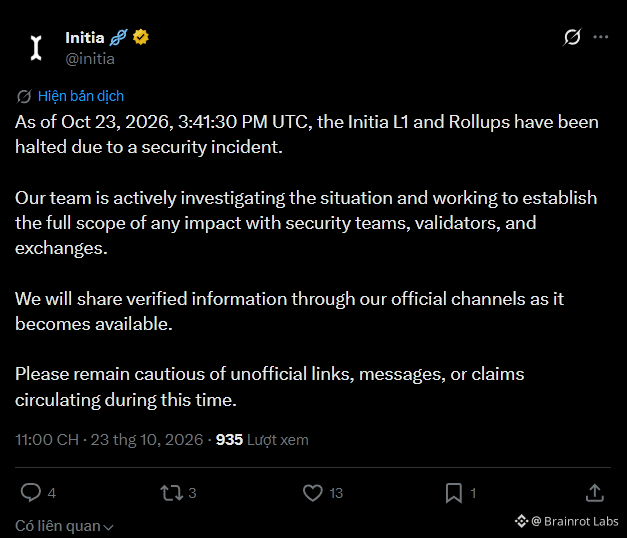
$2.6M reportedly drained in the Initia exploit $INIT faces a major security incident.
Initia’s L1 and Rollups were halted as of 15:41:30 UTC on October 23, 2026, according to the project’s official statement.
What we know:
Around $2.6M reportedly cashed out by the attacker, according to earlier reports.
Initia confirmed its L1 and Rollups were halted due to a security incident.
The team is investigating with security teams, validators, and exchanges to establish the full scope of the impact.
Verified updates will be shared through Initia’s official channels.
Initia has urged users to avoid unofficial links, messages, and unverified claims. The project’s statement has not confirmed the reported $2.6M loss or the alleged token-minting mechanism.
Official updates: @initia
How much damage will the investigation ultimately uncover?
$2.6M reportedly drained in the Initia exploit $INIT faces a major security incident.
Initia’s L1 and Rollups were halted as of 15:41:30 UTC on October 23, 2026, according to the project’s official statement.
What we know:
Around $2.6M reportedly cashed out by the attacker, according to earlier reports.
Initia confirmed its L1 and Rollups were halted due to a security incident.
The team is investigating with security teams, validators, and exchanges to establish the full scope of the impact.
Verified updates will be shared through Initia’s official channels.
Initia has urged users to avoid unofficial links, messages, and unverified claims. The project’s statement has not confirmed the reported $2.6M loss or the alleged token-minting mechanism.
Official updates: @initia
How much damage will the investigation ultimately uncover?
Initia’s L1 and Rollups were halted as of 15:41:30 UTC on October 23, 2026, according to the project’s official statement.
What we know:
Around $2.6M reportedly cashed out by the attacker, according to earlier reports.
Initia confirmed its L1 and Rollups were halted due to a security incident.
The team is investigating with security teams, validators, and exchanges to establish the full scope of the impact.
Verified updates will be shared through Initia’s official channels.
Initia has urged users to avoid unofficial links, messages, and unverified claims. The project’s statement has not confirmed the reported $2.6M loss or the alleged token-minting mechanism.
Official updates: @initia
How much damage will the investigation ultimately uncover?
1
1
599

Article
Polymarket shake-up, aave buybacks, quantum security & AI’s trillion-dollar racegm, crypto twitter. ☕💀
friday morning brief: polymarket shake-up, aave buybacks, quantum security & AI’s trillion-dollar race
1/ 🎲 Polymarket reportedly fires its CMO amid an internal investigation
Polymarket has reportedly dismissed chief marketing officer Matthew Modabber following an internal investigation into marketing practices and promotional spending.
The allegations include the suspected use of fake websites to promote fabricated trading videos, which reportedly drew scrutiny from the Wall Street Journal and an ongoing CFTC investigation. Modabber also faced criticism over undisclosed celebrity promotion payments made through a personal PayPal account.
📌 Market watch: Trust, transparency, and regulatory compliance remain critical as prediction markets pursue mainstream adoption.
Prediction markets are supposed to price uncertainty—not manufacture more of it. 💀
2/ 🔐 Japan pushes crypto tracking and post-quantum security
Japan’s cybersecurity policy group has proposed strengthening its national cyber response, including tracking illegally obtained crypto assets and accelerating the transition to post-quantum cryptography (PQC).
The proposal calls for closer international cooperation with agencies such as the FBI and Europol, alongside earlier protection for critical government systems. Western countries are reportedly targeting migration of high-impact systems around 2030–2031.
📌 Market watch: Quantum-resistant cryptography is becoming a long-term infrastructure issue for Bitcoin and the wider blockchain industry, although current quantum computers cannot simply break Bitcoin’s cryptography at will.
Bitcoin’s next upgrade challenge might not be faster transactions—it might be surviving computers that haven’t arrived yet. 🤖
3/ 🔥 $AAVE: Aavenomics 3.0 may bring buybacks, staking and burns
Aave founder Stani Kulechov reportedly said that Aavenomics 3.0 will include mechanisms for AAVE buybacks, staking, and token burns.
Buybacks have been paused since April 19 following the rsETH exploit. The DAO subsequently committed 25,000 ETH to DeFi United to help address losses and arranged access to a credit facility of up to 30,000 ETH from Mantle.
📌 Market watch: The proposal could reshape AAVE’s token economics, but implementation details, funding sources, and governance decisions will determine its actual impact.
Crypto tokenomics: where every token eventually gets a meeting about its own financial future. 💀
4/ 🛢️ Geopolitical tensions put oil and global markets on alert
Escalating U.S.–Iran tensions and risks around the Strait of Hormuz are adding pressure to energy markets. The report also highlights attacks in the region, threats to energy and digital infrastructure, and tightening European natural-gas supplies.
Key reported market indicators:
📈 Brent crude: around $110.02 per barrel, up 1.13%.🥇 Gold: approximately $4,139.52, up 0.36%.🇺🇸 Dow Jones: +0.69%.💻 Nasdaq: +1.05%.📊 S&P 500: +0.58%.😰 VIX: down 3.64% to 16.68.
📌 Market watch: Oil, inflation expectations, Treasury yields, and the dollar could influence risk appetite across equities and crypto. Geopolitical headlines can change quickly, so reported developments should be treated cautiously.
Bitcoin may be decentralized, but it still knows when the oil market is having a bad day. 🛢️
5/ 🚨 Critical PHP vulnerabilities trigger urgent security warnings
Two serious vulnerabilities in PHP reportedly prompted emergency patching after researchers used AI-assisted tools to identify flaws that could enable remote code execution and access to server files or databases.
PHP powers a substantial share of websites worldwide. Security companies, including Cloudflare, reportedly observed a sharp increase in exploitation attempts after details became public.
📌 Market watch: Developers and infrastructure operators should prioritize official security advisories, patched versions, and checks for potential compromise. AI-assisted vulnerability discovery is increasing the urgency of defensive security.
AI can help find bugs faster. Unfortunately, attackers also know how to read the patch notes. 🔐
6/ 🤖 OpenAI reportedly targets up to $30B in new funding
OpenAI is reportedly nearing a funding round of up to $30 billion, at a proposed pre-money valuation of $1.25 trillion, with investors from the UAE and Coatue said to be leading the round.
The valuation is below the previously reported $1.4 trillion target. Terms remain under negotiation, according to the Financial Times report.
📌 Market watch: The key questions are whether AI revenue can support these valuations, how much computing infrastructure will cost, and whether capital spending can translate into sustainable margins.
A trillion-dollar valuation is no longer science fiction. The difficult part is getting the spreadsheet to agree with the story. 💸
7/ 🇨🇳 DeepSeek reportedly raises a major new funding round
DeepSeek has reportedly completed a funding round of approximately 100 billion yuan, implying a pre-money valuation of around 500 billion yuan.
The report says CATL and Tencent participated, with CATL expected to invest approximately 10 billion yuan. DeepSeek reportedly reached an annualized revenue figure of $1 billion in early October, driven mainly by API usage and model licensing.
The company also plans to deploy more than 160,000 Huawei Ascend 950DT chips at a data center in Ulanqab, Inner Mongolia, to reduce reliance on Nvidia hardware.
📌 Market watch: Watch model revenue, inference costs, domestic chip performance, and whether China’s AI ecosystem can scale without depending as heavily on Nvidia.
The AI race is no longer just about who has the smartest model. It’s also about who can afford to run it. 🧠
8/ 📊 Friday takeaway: trust, security, and capital are the common themes
Today’s headlines connect three major forces shaping crypto and technology:
🎲 Trust: Prediction markets face scrutiny over marketing and transparency.🔐 Security: Quantum-resistant cryptography and software vulnerabilities are becoming strategic priorities.💰 Token economics: Aave is considering changes that could affect AAVE’s economic design.🛢️ Macro: Geopolitical risk is keeping energy markets and inflation concerns in focus.🤖 AI capital: OpenAI and DeepSeek reportedly continue attracting enormous funding as the competition for compute intensifies.
📌 My watchlist: AAVE governance developments, Bitcoin’s response to geopolitical risk, security upgrades across crypto infrastructure, and the sustainability of AI valuations.
The future is getting more expensive, more automated, and more complicated. At least the scammers are helping everyone understand why security matters.
What deserves the most attention today: AAVE’s tokenomics, Bitcoin’s quantum risk, or the trillion-dollar AI funding race?
DYOR. Not financial advice.
#bitcoin #BTC走势分析 #AAVE #Polymarket #AI
Polymarket shake-up, aave buybacks, quantum security & AI’s trillion-dollar race
gm, crypto twitter. ☕💀
friday morning brief: polymarket shake-up, aave buybacks, quantum security & AI’s trillion-dollar race
1/ 🎲 Polymarket reportedly fires its CMO amid an internal investigation
Polymarket has reportedly dismissed chief marketing officer Matthew Modabber following an internal investigation into marketing practices and promotional spending.
The allegations include the suspected use of fake websites to promote fabricated trading videos, which reportedly drew scrutiny from the Wall Street Journal and an ongoing CFTC investigation. Modabber also faced criticism over undisclosed celebrity promotion payments made through a personal PayPal account.
📌 Market watch: Trust, transparency, and regulatory compliance remain critical as prediction markets pursue mainstream adoption.
Prediction markets are supposed to price uncertainty—not manufacture more of it. 💀
2/ 🔐 Japan pushes crypto tracking and post-quantum security
Japan’s cybersecurity policy group has proposed strengthening its national cyber response, including tracking illegally obtained crypto assets and accelerating the transition to post-quantum cryptography (PQC).
The proposal calls for closer international cooperation with agencies such as the FBI and Europol, alongside earlier protection for critical government systems. Western countries are reportedly targeting migration of high-impact systems around 2030–2031.
📌 Market watch: Quantum-resistant cryptography is becoming a long-term infrastructure issue for Bitcoin and the wider blockchain industry, although current quantum computers cannot simply break Bitcoin’s cryptography at will.
Bitcoin’s next upgrade challenge might not be faster transactions—it might be surviving computers that haven’t arrived yet. 🤖
3/ 🔥 $AAVE: Aavenomics 3.0 may bring buybacks, staking and burns
Aave founder Stani Kulechov reportedly said that Aavenomics 3.0 will include mechanisms for AAVE buybacks, staking, and token burns.
Buybacks have been paused since April 19 following the rsETH exploit. The DAO subsequently committed 25,000 ETH to DeFi United to help address losses and arranged access to a credit facility of up to 30,000 ETH from Mantle.
📌 Market watch: The proposal could reshape AAVE’s token economics, but implementation details, funding sources, and governance decisions will determine its actual impact.
Crypto tokenomics: where every token eventually gets a meeting about its own financial future. 💀
4/ 🛢️ Geopolitical tensions put oil and global markets on alert
Escalating U.S.–Iran tensions and risks around the Strait of Hormuz are adding pressure to energy markets. The report also highlights attacks in the region, threats to energy and digital infrastructure, and tightening European natural-gas supplies.
Key reported market indicators:
📈 Brent crude: around $110.02 per barrel, up 1.13%.🥇 Gold: approximately $4,139.52, up 0.36%.🇺🇸 Dow Jones: +0.69%.💻 Nasdaq: +1.05%.📊 S&P 500: +0.58%.😰 VIX: down 3.64% to 16.68.
📌 Market watch: Oil, inflation expectations, Treasury yields, and the dollar could influence risk appetite across equities and crypto. Geopolitical headlines can change quickly, so reported developments should be treated cautiously.
Bitcoin may be decentralized, but it still knows when the oil market is having a bad day. 🛢️
5/ 🚨 Critical PHP vulnerabilities trigger urgent security warnings
Two serious vulnerabilities in PHP reportedly prompted emergency patching after researchers used AI-assisted tools to identify flaws that could enable remote code execution and access to server files or databases.
PHP powers a substantial share of websites worldwide. Security companies, including Cloudflare, reportedly observed a sharp increase in exploitation attempts after details became public.
📌 Market watch: Developers and infrastructure operators should prioritize official security advisories, patched versions, and checks for potential compromise. AI-assisted vulnerability discovery is increasing the urgency of defensive security.
AI can help find bugs faster. Unfortunately, attackers also know how to read the patch notes. 🔐
6/ 🤖 OpenAI reportedly targets up to $30B in new funding
OpenAI is reportedly nearing a funding round of up to $30 billion, at a proposed pre-money valuation of $1.25 trillion, with investors from the UAE and Coatue said to be leading the round.
The valuation is below the previously reported $1.4 trillion target. Terms remain under negotiation, according to the Financial Times report.
📌 Market watch: The key questions are whether AI revenue can support these valuations, how much computing infrastructure will cost, and whether capital spending can translate into sustainable margins.
A trillion-dollar valuation is no longer science fiction. The difficult part is getting the spreadsheet to agree with the story. 💸
7/ 🇨🇳 DeepSeek reportedly raises a major new funding round
DeepSeek has reportedly completed a funding round of approximately 100 billion yuan, implying a pre-money valuation of around 500 billion yuan.
The report says CATL and Tencent participated, with CATL expected to invest approximately 10 billion yuan. DeepSeek reportedly reached an annualized revenue figure of $1 billion in early October, driven mainly by API usage and model licensing.
The company also plans to deploy more than 160,000 Huawei Ascend 950DT chips at a data center in Ulanqab, Inner Mongolia, to reduce reliance on Nvidia hardware.
📌 Market watch: Watch model revenue, inference costs, domestic chip performance, and whether China’s AI ecosystem can scale without depending as heavily on Nvidia.
The AI race is no longer just about who has the smartest model. It’s also about who can afford to run it. 🧠
8/ 📊 Friday takeaway: trust, security, and capital are the common themes
Today’s headlines connect three major forces shaping crypto and technology:
🎲 Trust: Prediction markets face scrutiny over marketing and transparency.🔐 Security: Quantum-resistant cryptography and software vulnerabilities are becoming strategic priorities.💰 Token economics: Aave is considering changes that could affect AAVE’s economic design.🛢️ Macro: Geopolitical risk is keeping energy markets and inflation concerns in focus.🤖 AI capital: OpenAI and DeepSeek reportedly continue attracting enormous funding as the competition for compute intensifies.
📌 My watchlist: AAVE governance developments, Bitcoin’s response to geopolitical risk, security upgrades across crypto infrastructure, and the sustainability of AI valuations.
The future is getting more expensive, more automated, and more complicated. At least the scammers are helping everyone understand why security matters.
What deserves the most attention today: AAVE’s tokenomics, Bitcoin’s quantum risk, or the trillion-dollar AI funding race?
DYOR. Not financial advice.
#bitcoin #BTC走势分析 #AAVE #Polymarket #AI
friday morning brief: polymarket shake-up, aave buybacks, quantum security & AI’s trillion-dollar race
1/ 🎲 Polymarket reportedly fires its CMO amid an internal investigation
Polymarket has reportedly dismissed chief marketing officer Matthew Modabber following an internal investigation into marketing practices and promotional spending.
The allegations include the suspected use of fake websites to promote fabricated trading videos, which reportedly drew scrutiny from the Wall Street Journal and an ongoing CFTC investigation. Modabber also faced criticism over undisclosed celebrity promotion payments made through a personal PayPal account.
📌 Market watch: Trust, transparency, and regulatory compliance remain critical as prediction markets pursue mainstream adoption.
Prediction markets are supposed to price uncertainty—not manufacture more of it. 💀
2/ 🔐 Japan pushes crypto tracking and post-quantum security
Japan’s cybersecurity policy group has proposed strengthening its national cyber response, including tracking illegally obtained crypto assets and accelerating the transition to post-quantum cryptography (PQC).
The proposal calls for closer international cooperation with agencies such as the FBI and Europol, alongside earlier protection for critical government systems. Western countries are reportedly targeting migration of high-impact systems around 2030–2031.
📌 Market watch: Quantum-resistant cryptography is becoming a long-term infrastructure issue for Bitcoin and the wider blockchain industry, although current quantum computers cannot simply break Bitcoin’s cryptography at will.
Bitcoin’s next upgrade challenge might not be faster transactions—it might be surviving computers that haven’t arrived yet. 🤖
3/ 🔥 $AAVE: Aavenomics 3.0 may bring buybacks, staking and burns
Aave founder Stani Kulechov reportedly said that Aavenomics 3.0 will include mechanisms for AAVE buybacks, staking, and token burns.
Buybacks have been paused since April 19 following the rsETH exploit. The DAO subsequently committed 25,000 ETH to DeFi United to help address losses and arranged access to a credit facility of up to 30,000 ETH from Mantle.
📌 Market watch: The proposal could reshape AAVE’s token economics, but implementation details, funding sources, and governance decisions will determine its actual impact.
Crypto tokenomics: where every token eventually gets a meeting about its own financial future. 💀
4/ 🛢️ Geopolitical tensions put oil and global markets on alert
Escalating U.S.–Iran tensions and risks around the Strait of Hormuz are adding pressure to energy markets. The report also highlights attacks in the region, threats to energy and digital infrastructure, and tightening European natural-gas supplies.
Key reported market indicators:
📈 Brent crude: around $110.02 per barrel, up 1.13%.🥇 Gold: approximately $4,139.52, up 0.36%.🇺🇸 Dow Jones: +0.69%.💻 Nasdaq: +1.05%.📊 S&P 500: +0.58%.😰 VIX: down 3.64% to 16.68.
📌 Market watch: Oil, inflation expectations, Treasury yields, and the dollar could influence risk appetite across equities and crypto. Geopolitical headlines can change quickly, so reported developments should be treated cautiously.
Bitcoin may be decentralized, but it still knows when the oil market is having a bad day. 🛢️
5/ 🚨 Critical PHP vulnerabilities trigger urgent security warnings
Two serious vulnerabilities in PHP reportedly prompted emergency patching after researchers used AI-assisted tools to identify flaws that could enable remote code execution and access to server files or databases.
PHP powers a substantial share of websites worldwide. Security companies, including Cloudflare, reportedly observed a sharp increase in exploitation attempts after details became public.
📌 Market watch: Developers and infrastructure operators should prioritize official security advisories, patched versions, and checks for potential compromise. AI-assisted vulnerability discovery is increasing the urgency of defensive security.
AI can help find bugs faster. Unfortunately, attackers also know how to read the patch notes. 🔐
6/ 🤖 OpenAI reportedly targets up to $30B in new funding
OpenAI is reportedly nearing a funding round of up to $30 billion, at a proposed pre-money valuation of $1.25 trillion, with investors from the UAE and Coatue said to be leading the round.
The valuation is below the previously reported $1.4 trillion target. Terms remain under negotiation, according to the Financial Times report.
📌 Market watch: The key questions are whether AI revenue can support these valuations, how much computing infrastructure will cost, and whether capital spending can translate into sustainable margins.
A trillion-dollar valuation is no longer science fiction. The difficult part is getting the spreadsheet to agree with the story. 💸
7/ 🇨🇳 DeepSeek reportedly raises a major new funding round
DeepSeek has reportedly completed a funding round of approximately 100 billion yuan, implying a pre-money valuation of around 500 billion yuan.
The report says CATL and Tencent participated, with CATL expected to invest approximately 10 billion yuan. DeepSeek reportedly reached an annualized revenue figure of $1 billion in early October, driven mainly by API usage and model licensing.
The company also plans to deploy more than 160,000 Huawei Ascend 950DT chips at a data center in Ulanqab, Inner Mongolia, to reduce reliance on Nvidia hardware.
📌 Market watch: Watch model revenue, inference costs, domestic chip performance, and whether China’s AI ecosystem can scale without depending as heavily on Nvidia.
The AI race is no longer just about who has the smartest model. It’s also about who can afford to run it. 🧠
8/ 📊 Friday takeaway: trust, security, and capital are the common themes
Today’s headlines connect three major forces shaping crypto and technology:
🎲 Trust: Prediction markets face scrutiny over marketing and transparency.🔐 Security: Quantum-resistant cryptography and software vulnerabilities are becoming strategic priorities.💰 Token economics: Aave is considering changes that could affect AAVE’s economic design.🛢️ Macro: Geopolitical risk is keeping energy markets and inflation concerns in focus.🤖 AI capital: OpenAI and DeepSeek reportedly continue attracting enormous funding as the competition for compute intensifies.
📌 My watchlist: AAVE governance developments, Bitcoin’s response to geopolitical risk, security upgrades across crypto infrastructure, and the sustainability of AI valuations.
The future is getting more expensive, more automated, and more complicated. At least the scammers are helping everyone understand why security matters.
What deserves the most attention today: AAVE’s tokenomics, Bitcoin’s quantum risk, or the trillion-dollar AI funding race?
DYOR. Not financial advice.
#bitcoin #BTC走势分析 #AAVE #Polymarket #AI
1
440
US fintech company just gave digital dollars a 4.4% yield.
SoFi Technologies, a US-based financial services company, has launched SoFi Earn (SOFIE), a tokenized deposit product backed by USD$1.00 deposits held at SoFi Bank.
Here’s how it works:
4.40% APY on eligible tokenized deposits.
1 SOFIE = $1 in underlying bank deposits.
Convertible into SoFiUSD at a 1:1 ratio.
SoFiUSD can be used to buy crypto in the SoFi app or move dollars across blockchain networks 24/7.
Eligible deposits are FDIC-insured, subject to applicable limits and conditions.
The goal is to make digital dollars earn yield even before users spend or transfer them.
Wall Street has entered the yield-farming chat. No frogs required.
US fintech company just gave digital dollars a 4.4% yield.
SoFi Technologies, a US-based financial services company, has launched SoFi Earn (SOFIE), a tokenized deposit product backed by USD$1.00 deposits held at SoFi Bank.
Here’s how it works:
4.40% APY on eligible tokenized deposits.
1 SOFIE = $1 in underlying bank deposits.
Convertible into SoFiUSD at a 1:1 ratio.
SoFiUSD can be used to buy crypto in the SoFi app or move dollars across blockchain networks 24/7.
Eligible deposits are FDIC-insured, subject to applicable limits and conditions.
The goal is to make digital dollars earn yield even before users spend or transfer them.
Wall Street has entered the yield-farming chat. No frogs required.
SoFi Technologies, a US-based financial services company, has launched SoFi Earn (SOFIE), a tokenized deposit product backed by USD$1.00 deposits held at SoFi Bank.
Here’s how it works:
4.40% APY on eligible tokenized deposits.
1 SOFIE = $1 in underlying bank deposits.
Convertible into SoFiUSD at a 1:1 ratio.
SoFiUSD can be used to buy crypto in the SoFi app or move dollars across blockchain networks 24/7.
Eligible deposits are FDIC-insured, subject to applicable limits and conditions.
The goal is to make digital dollars earn yield even before users spend or transfer them.
Wall Street has entered the yield-farming chat. No frogs required.

80
Fireworks AI went from $4B to a potential $40B valuation. Bro discovered the 10x prompt.
Fireworks AI is reportedly discussing a new funding round targeting a $30B to $40B valuation.
The numbers are getting ridiculous:
• Oct 2025: $4B valuation
• Jul 2026: $17.5B valuation
• Oct 2026: $30B to $40B target
The company reportedly already generates over $1B in annualized revenue and processes tens of trillions of tokens daily.
Bro went from serving AI models to serving investors a whole different kind of model.
To be fair, the new valuation is still under preliminary discussion, not a confirmed deal.
At this rate, will the next AI startup raise at a $100B valuation before it even finishes its pitch deck?
Fireworks AI went from $4B to a potential $40B valuation. Bro discovered the 10x prompt.
Fireworks AI is reportedly discussing a new funding round targeting a $30B to $40B valuation.
The numbers are getting ridiculous:
• Oct 2025: $4B valuation
• Jul 2026: $17.5B valuation
• Oct 2026: $30B to $40B target
The company reportedly already generates over $1B in annualized revenue and processes tens of trillions of tokens daily.
Bro went from serving AI models to serving investors a whole different kind of model.
To be fair, the new valuation is still under preliminary discussion, not a confirmed deal.
At this rate, will the next AI startup raise at a $100B valuation before it even finishes its pitch deck?
Fireworks AI is reportedly discussing a new funding round targeting a $30B to $40B valuation.
The numbers are getting ridiculous:
• Oct 2025: $4B valuation
• Jul 2026: $17.5B valuation
• Oct 2026: $30B to $40B target
The company reportedly already generates over $1B in annualized revenue and processes tens of trillions of tokens daily.
Bro went from serving AI models to serving investors a whole different kind of model.
To be fair, the new valuation is still under preliminary discussion, not a confirmed deal.
At this rate, will the next AI startup raise at a $100B valuation before it even finishes its pitch deck?

56
CoinDCX allegedly lost $16M, and the money is now playing a game of financial hide-and-seek.
Reports say around $16M in USDT was moved from CoinDCX-linked wallets, then split across multiple addresses before reaching deposit addresses associated with Binance, OKX, and Gate.
Largest reported transfer: 15.82M USDT
Funds were split into smaller transfers across multiple wallets.
Exchange deposit addresses reportedly involved: Binance, OKX, and Gate.
The incident is still described as a suspected theft; the full details remain unconfirmed.
Market angle: Splitting funds across wallets and exchanges can complicate tracing, but on-chain movements do not automatically prove that funds were successfully cashed out.
Crypto hackers really said, “If one wallet is suspicious, let’s give the blockchain 20 more tabs to investigate.”
The question: Can investigators track the funds before they disappear into the exchange maze?
CoinDCX allegedly lost $16M, and the money is now playing a game of financial hide-and-seek.
Reports say around $16M in USDT was moved from CoinDCX-linked wallets, then split across multiple addresses before reaching deposit addresses associated with Binance, OKX, and Gate.
Largest reported transfer: 15.82M USDT
Funds were split into smaller transfers across multiple wallets.
Exchange deposit addresses reportedly involved: Binance, OKX, and Gate.
The incident is still described as a suspected theft; the full details remain unconfirmed.
Market angle: Splitting funds across wallets and exchanges can complicate tracing, but on-chain movements do not automatically prove that funds were successfully cashed out.
Crypto hackers really said, “If one wallet is suspicious, let’s give the blockchain 20 more tabs to investigate.”
The question: Can investigators track the funds before they disappear into the exchange maze?
Reports say around $16M in USDT was moved from CoinDCX-linked wallets, then split across multiple addresses before reaching deposit addresses associated with Binance, OKX, and Gate.
Largest reported transfer: 15.82M USDT
Funds were split into smaller transfers across multiple wallets.
Exchange deposit addresses reportedly involved: Binance, OKX, and Gate.
The incident is still described as a suspected theft; the full details remain unconfirmed.
Market angle: Splitting funds across wallets and exchanges can complicate tracing, but on-chain movements do not automatically prove that funds were successfully cashed out.
Crypto hackers really said, “If one wallet is suspicious, let’s give the blockchain 20 more tabs to investigate.”
The question: Can investigators track the funds before they disappear into the exchange maze?

56
pirate chain just discovered the ultimate blockchain feature: ctrl + z.
An attacker exploited two validation flaws to create 39.82 million fake ARRR, temporarily inflating the supply by around 20%.
The community approved a chain rollback to block 4,176,944, and the team has released mandatory upgrade v6.0.14 to remove the counterfeit coins and restore supply integrity.
Now everyone nodes, miners, pools, exchanges, and service providers needs to upgrade or risk being left behind.
Imagine printing fake money, then the entire blockchain community agrees to rewind the ledger and pretend that never happened.
Blockchain is immutable… until the community finds the undo button.
pirate chain just discovered the ultimate blockchain feature: ctrl + z.
An attacker exploited two validation flaws to create 39.82 million fake ARRR, temporarily inflating the supply by around 20%.
The community approved a chain rollback to block 4,176,944, and the team has released mandatory upgrade v6.0.14 to remove the counterfeit coins and restore supply integrity.
Now everyone nodes, miners, pools, exchanges, and service providers needs to upgrade or risk being left behind.
Imagine printing fake money, then the entire blockchain community agrees to rewind the ledger and pretend that never happened.
Blockchain is immutable… until the community finds the undo button.
An attacker exploited two validation flaws to create 39.82 million fake ARRR, temporarily inflating the supply by around 20%.
The community approved a chain rollback to block 4,176,944, and the team has released mandatory upgrade v6.0.14 to remove the counterfeit coins and restore supply integrity.
Now everyone nodes, miners, pools, exchanges, and service providers needs to upgrade or risk being left behind.
Imagine printing fake money, then the entire blockchain community agrees to rewind the ledger and pretend that never happened.
Blockchain is immutable… until the community finds the undo button.


227
Tesla beat EPS expectations, but Wall Street still hit the sell button.
Tesla Q3 results delivered a mixed picture:
Revenue: $28.046B, broadly flat year-over-year.
Adjusted EPS: $0.48, beating the $0.45 forecast.
GAAP net income: $787M, down 43% year-over-year.
After-hours reaction: TSLA$0.00 Shares fell more than 3%.
The headline earnings beat wasn’t enough to offset the sharp decline in reported net income.
Tesla beat the estimate, but apparently the market had a different exam in mind.
When a company beats EPS but profits plunge, what matters more to you: expectations or the underlying numbers?
Tesla beat EPS expectations, but Wall Street still hit the sell button.
Tesla Q3 results delivered a mixed picture:
Revenue: $28.046B, broadly flat year-over-year.
Adjusted EPS: $0.48, beating the $0.45 forecast.
GAAP net income: $787M, down 43% year-over-year.
After-hours reaction: TSLA$0.00 Shares fell more than 3%.
The headline earnings beat wasn’t enough to offset the sharp decline in reported net income.
Tesla beat the estimate, but apparently the market had a different exam in mind.
When a company beats EPS but profits plunge, what matters more to you: expectations or the underlying numbers?
Tesla Q3 results delivered a mixed picture:
Revenue: $28.046B, broadly flat year-over-year.
Adjusted EPS: $0.48, beating the $0.45 forecast.
GAAP net income: $787M, down 43% year-over-year.
After-hours reaction: TSLA$0.00 Shares fell more than 3%.
The headline earnings beat wasn’t enough to offset the sharp decline in reported net income.
Tesla beat the estimate, but apparently the market had a different exam in mind.
When a company beats EPS but profits plunge, what matters more to you: expectations or the underlying numbers?
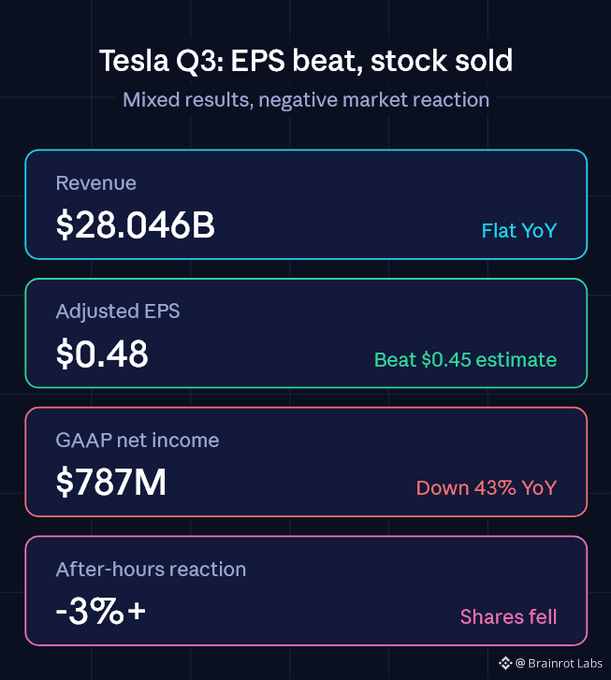
96
China wants 61,800 BTC$82,538.69 back. This might be the most expensive game of “finders keepers” in crypto history.
Chinese prosecutors are pursuing more than 61,800 BTC linked to an alleged $5.7 billion investment fraud involving Qian Zhimin.
Here’s the wild part:
More than 102,000 investors were reportedly drawn into the scheme between 2014 and 2017.
The operation raised over 40.3 billion yuan by promising guaranteed principal and high returns.
₿ Authorities in the UK seized more than 61,800 BTC, alongside other crypto assets, cash, jewelry, and investments.
Qian reportedly fled China in 2017 and later settled in the UK.
My take: This case shows how crypto can become both a vehicle for hiding the proceeds of alleged fraud and a major asset in cross-border recovery efforts. But seizing the coins and deciding who ultimately gets them are two very different things.
Someone promised guaranteed returns, disappeared, and left behind a Bitcoin stash worth billions. Even the investigators must be thinking: “We came for the fraud case. We found a whole BTC whale.”
If authorities recover the Bitcoin, should the priority be compensating victims or transferring the assets to the state?
China wants 61,800 BTC$82,538.69 back. This might be the most expensive game of “finders keepers” in crypto history.
Chinese prosecutors are pursuing more than 61,800 BTC linked to an alleged $5.7 billion investment fraud involving Qian Zhimin.
Here’s the wild part:
More than 102,000 investors were reportedly drawn into the scheme between 2014 and 2017.
The operation raised over 40.3 billion yuan by promising guaranteed principal and high returns.
₿ Authorities in the UK seized more than 61,800 BTC, alongside other crypto assets, cash, jewelry, and investments.
Qian reportedly fled China in 2017 and later settled in the UK.
My take: This case shows how crypto can become both a vehicle for hiding the proceeds of alleged fraud and a major asset in cross-border recovery efforts. But seizing the coins and deciding who ultimately gets them are two very different things.
Someone promised guaranteed returns, disappeared, and left behind a Bitcoin stash worth billions. Even the investigators must be thinking: “We came for the fraud case. We found a whole BTC whale.”
If authorities recover the Bitcoin, should the priority be compensating victims or transferring the assets to the state?
Chinese prosecutors are pursuing more than 61,800 BTC linked to an alleged $5.7 billion investment fraud involving Qian Zhimin.
Here’s the wild part:
More than 102,000 investors were reportedly drawn into the scheme between 2014 and 2017.
The operation raised over 40.3 billion yuan by promising guaranteed principal and high returns.
₿ Authorities in the UK seized more than 61,800 BTC, alongside other crypto assets, cash, jewelry, and investments.
Qian reportedly fled China in 2017 and later settled in the UK.
My take: This case shows how crypto can become both a vehicle for hiding the proceeds of alleged fraud and a major asset in cross-border recovery efforts. But seizing the coins and deciding who ultimately gets them are two very different things.
Someone promised guaranteed returns, disappeared, and left behind a Bitcoin stash worth billions. Even the investigators must be thinking: “We came for the fraud case. We found a whole BTC whale.”
If authorities recover the Bitcoin, should the priority be compensating victims or transferring the assets to the state?

97
Microsoft made 18% more revenue… with 5,000 fewer employees. Welcome to the AI era.
FY2026 snapshot:
Revenue: $331.8B, up 18% YoY
Employees: 223,000, down 5,000 year over year
R&D workforce: 77,000, down from 81,000 in 2024
The headcount decline was the first annual drop in a decade. Microsoft also announced roughly 4,800 additional job cuts in July 2026, which aren’t included in the June 30 headcount.
Meanwhile, India keeps growing as a major global tech talent hub. The bigger question is whether companies are simply restructuring, shifting where they hire, or using AI to get more output from smaller teams not every job reduction means those roles are moving to India.
Microsoft: “We’re investing in AI.”
Employees: “Are we included in the investment?”
Revenue goes up. Headcount goes down. Somewhere, an Excel spreadsheet just got promoted to senior manager.
Is AI making tech companies more productive, or are workers paying the price for the transition?
Microsoft made 18% more revenue… with 5,000 fewer employees. Welcome to the AI era.
FY2026 snapshot:
Revenue: $331.8B, up 18% YoY
Employees: 223,000, down 5,000 year over year
R&D workforce: 77,000, down from 81,000 in 2024
The headcount decline was the first annual drop in a decade. Microsoft also announced roughly 4,800 additional job cuts in July 2026, which aren’t included in the June 30 headcount.
Meanwhile, India keeps growing as a major global tech talent hub. The bigger question is whether companies are simply restructuring, shifting where they hire, or using AI to get more output from smaller teams not every job reduction means those roles are moving to India.
Microsoft: “We’re investing in AI.”
Employees: “Are we included in the investment?”
Revenue goes up. Headcount goes down. Somewhere, an Excel spreadsheet just got promoted to senior manager.
Is AI making tech companies more productive, or are workers paying the price for the transition?
FY2026 snapshot:
Revenue: $331.8B, up 18% YoY
Employees: 223,000, down 5,000 year over year
R&D workforce: 77,000, down from 81,000 in 2024
The headcount decline was the first annual drop in a decade. Microsoft also announced roughly 4,800 additional job cuts in July 2026, which aren’t included in the June 30 headcount.
Meanwhile, India keeps growing as a major global tech talent hub. The bigger question is whether companies are simply restructuring, shifting where they hire, or using AI to get more output from smaller teams not every job reduction means those roles are moving to India.
Microsoft: “We’re investing in AI.”
Employees: “Are we included in the investment?”
Revenue goes up. Headcount goes down. Somewhere, an Excel spreadsheet just got promoted to senior manager.
Is AI making tech companies more productive, or are workers paying the price for the transition?

248
Log in to explore more content
Join global crypto users on Binance Square
⚡️ Get latest and useful information about crypto.
💬 Trusted by the world’s largest crypto exchange.
👍 Discover real insights from verified creators.
Email / Phone number