
#hotwallet
hotwallet
44,323 views
102 Discussing
Hot
Latest

🚨 $BTC SECURITY BREACH EXPOSES $6.3B HOT WALLET ATTACK! 🦈
The latest breach sliced through Binance's internal AI shield, letting attackers hijack two wallet engineers' rigs and unleash a malicious script on Oct 29. 🦈 The exploit leveraged Ethereum’s fresh EIP‑7702 to seize control of a hot wallet holding roughly $6.3 B.
Within four hours the team froze $2.85 B, replenished 98 % of tokens, and promised users won’t foot the bill. 📊 This play reminds us that even trusted staff and AI tools can become the weakest link. 💡
💬 What extra layers are you adding to guard against insider‑vector attacks? 👇
⚠️ Not financial advice. Always manage your risk. 🛡️
🏷️ #BTC #Security #HotWallet #Crypto
🚀 🛡️

2

·
--
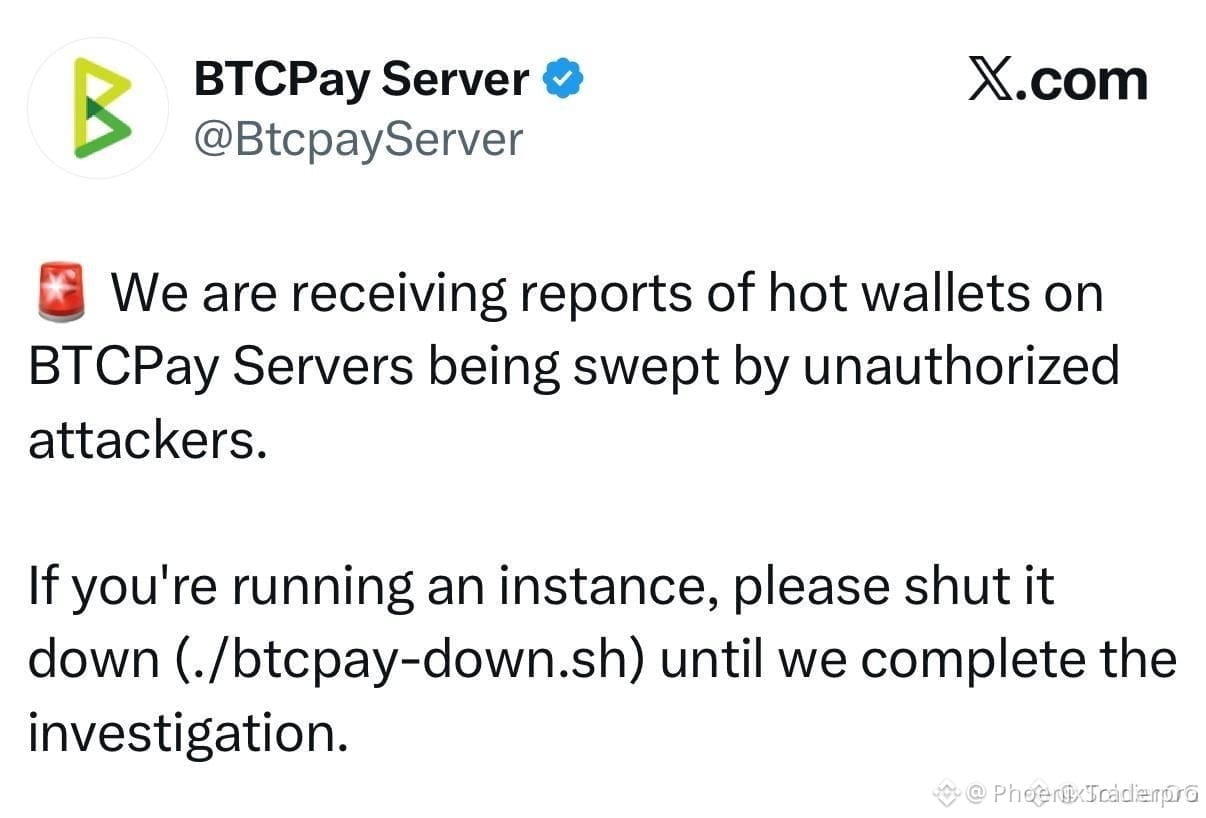
BTCPay Server warning: outdated hot wallets targeted in attack and drained
Open-source payment infrastructure BTCPay Server has issued a security warning, urging operators to shut down and upgrade immediately. The alert follows reports that nodes running outdated software have been targeted by hackers and had their hot wallet funds drained.
According to Cointelegraph, the BTCPay Server team urged operators to shut down their servers after receiving multiple reports of “unauthorized attackers draining funds.” This was not an ordinary version-update notice, but an emergency response to actual losses already occurring.
Why this matters is that BTCPay Server plays the role of a “self-custodial payment layer” in the crypto ecosystem: many merchants and community nodes rely on it to receive and manage Bitcoin. It does not itself introduce any centralized risk involving private keys, but nodes running outdated software can become clear targets for attackers. The key issue in this incident is not a vulnerability in the protocol layer, but operational security on the systems running it: outdated software and delayed patching left hot wallets exposed to the risk of being deliberately drained.
From a technical perspective, hot wallets are riskier because they need to be online to facilitate payments. If a software endpoint has a known exploitable flaw, attackers can target it and bypass its defenses. The team’s choice of the forceful wording “recommend shutting down” rather than “push a patch” suggests the vulnerability may already be under active exploitation, and waiting for an update window might not be soon enough.
At the market level, this incident is relatively localized and is more an operational security issue affecting a single piece of infrastructure than an industry-wide security crisis. Its direct short-term impact on broader market prices may be limited. However, together with recent hardware wallet incidents involving Trezor and Keystone, it paints a broader picture of payment security: whether it is a software node or a hardware wallet, any endpoint in the self-custody chain can become a point of entry for attackers.
One counterpoint to keep in mind is that this falls under operators’ own responsibility and does not reflect the security of the underlying protocol or the Bitcoin network itself. If amplified, panic could exceed the incident’s actual impact. What remains to be seen is whether the team will disclose more details about affected nodes, the specific path used to exploit the vulnerability, and a clear timeline for recovery and upgrades.
#BTCPay #CryptoSecurity #HotWallet
The above is a compilation of information and personal analysis, and does not constitute investment advice.
I will continue to follow and share updates if there are any significant developments.
74

🚨 $QI UNDER FIRE AFTER HOT‑WALLET SWEEP! 📉
🦈 The BTCPay Server pull‑the‑plug move signals a swift liquidity sweep, forcing a hard reset on hot‑wallet exposure. Smart money is already re‑routing funds, and the sudden kill‑switch caps the bleed, but the market’s pulse is now jittery. 📊 Volume spikes on the 1H chart hint at a scramble between buyers and sellers, while the order book shows a widening bid‑ask gap.
⚡ Critics warn a sharp sell‑off could cascade, yet supporters argue the shutdown stabilizes price floors, turning a glitch into a temporary pause. 💡 The next 30‑minute window will reveal which side wins the tug‑of‑war.
💬 Do you see a market dip or a brief glitch?
⚠️ Not financial advice. Always manage your risk. 🛡️
🏷️ #QI #SellOff #HotWallet #Crypto
🔥 💎
96

·
--
Binance co‑CEO says withdrawals could resume within 42 hours after reported hot‑wallet security incident
Binance’s leadership has communicated a targeted 42‑hour timeline for restoring withdrawals, stressing that any restart will follow security verification. The company also says deposits and unaffected services remain operational.
Key points
- Management reports a hot‑wallet breach and says law‑enforcement cooperation has frozen some affected assets.
- The firm states it will cover user losses from company funds and that token holdings have been allocated for compensation.
- Any restart of withdrawals is described as conditional on further security checks and verification.
Counterpoint
- Several details — including exact frozen amounts and the final timeline — are reported by the firm and remain subject to outside verification and potential change.
Takeaway
Expect updates; the stated timeline is tentative and hinges on security clearance before normal withdrawal flows resume.
#CryptoSecurity #ExchangeOutage #Withdrawals #HotWallet
60

·
--
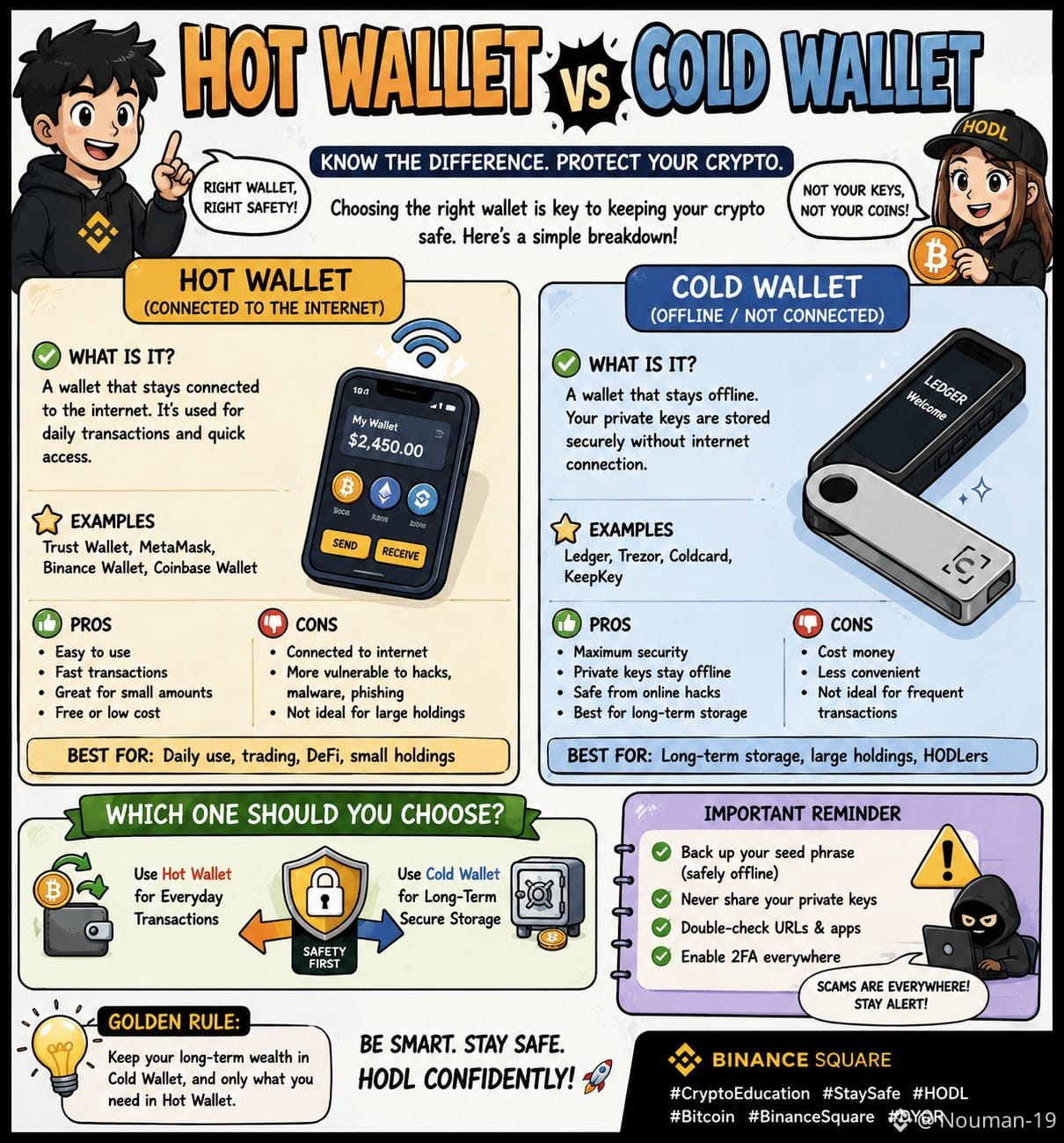
🔥 Hot Wallet vs Cold Wallet: Which One Should You Choose?
Choosing the right crypto wallet is one of the smartest decisions every crypto investor can make. While both Hot Wallets and Cold Wallets serve different purposes, understanding the difference can help you protect your digital assets.
🔥 Hot Wallet
A Hot Wallet is connected to the internet, making it ideal for daily transactions, trading, DeFi, and quick access to your funds. However, because it stays online, it carries a higher security risk.
❄️ Cold Wallet
A Cold Wallet stores your private keys offline, providing maximum protection against hackers and online threats. It's the preferred choice for long-term investors and HODLers.
💡 Golden Rule:
Use a Hot Wallet for convenience and a Cold Wallet for long-term storage. Never keep all your crypto on an exchange, always back up your recovery phrase offline, and enable Two-Factor Authentication (2FA).
📈 Market Insight:
Smart investors don't just focus on making profits—they focus on protecting them. Strong security habits are the foundation of long-term success in crypto.
DYOR • Not Financial Advice
#Crypto #Bitcoin #Ethereum #BNB #HotWallet #ColdWallet #CryptoSecurity #SelfCustody #Blockchain #BinanceSquare are #CryptoEducation #HODL #StaySafe
115

·
--
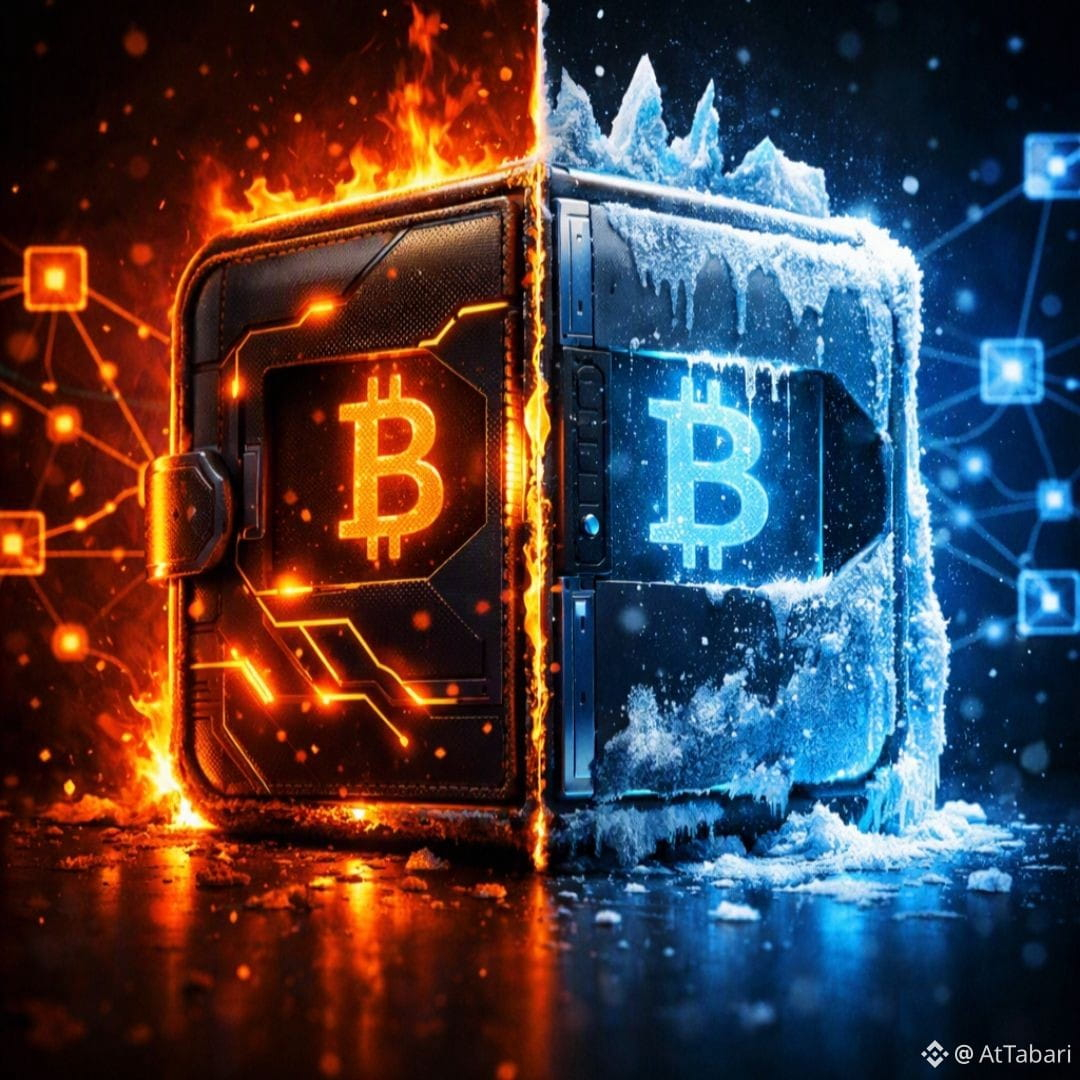
Want to master your crypto journey? Let’s talk about Wallets! 💼 Just read an amazing guide on Binance Academy about Hot vs. Cold Wallets. Here is what I learned
🔥 Hot Wallets: These are connected to the internet. They are your go to for daily activities! If you love fast trading, exploring DeFi, or using DApps, Hot Wallets give you the speed and ultimate convenience you need.
❄️ Cold Wallets: These are completely offline hardware devices. They are designed for long-term holding. Since they stay offline, they act as a highly secure vault for the crypto you want to hold for years.
The Winning Strategy (Hybrid Approach): Experienced users don't choose just one; they use BOTH! You can use a Hot Wallet for your active daily trades and a Cold Wallet as your secure vault for long-term savings. It's about combining speed with security!
Which wallet setup do you prefer? Let me know in the comments! 👇
Thanks, binance for the great educational content!
#cryptoeducation #hotwallet #Coldwallet #Web3 #CryptoTips
107

·
--
Hot Wallet vs Cold WalletA crypto wallet isn’t really a place to store coins physically like a wallet for paper money. A wallet is better understood as a tool for storing and accessing the keys that prove your ownership of assets on the blockchain.
There are two main types of wallets you need to know: hot wallets and cold wallets.
A hot wallet is a wallet that’s connected to the internet. Examples include a wallet app on your phone, a browser extension, or a built-in wallet from an exchange. This type is very practical for daily transactions because it can be accessed anytime without additional devices. But because it’s always online, the risk is higher if the device gets malware, if you accidentally click a phishing link, or if you log in through an unsafe public Wi‑Fi network.
Hot Wallet vs Cold Wallet
A crypto wallet isn’t really a place to store coins physically like a wallet for paper money. A wallet is better understood as a tool for storing and accessing the keys that prove your ownership of assets on the blockchain.
There are two main types of wallets you need to know: hot wallets and cold wallets.
A hot wallet is a wallet that’s connected to the internet. Examples include a wallet app on your phone, a browser extension, or a built-in wallet from an exchange. This type is very practical for daily transactions because it can be accessed anytime without additional devices. But because it’s always online, the risk is higher if the device gets malware, if you accidentally click a phishing link, or if you log in through an unsafe public Wi‑Fi network.
1
124
·
--
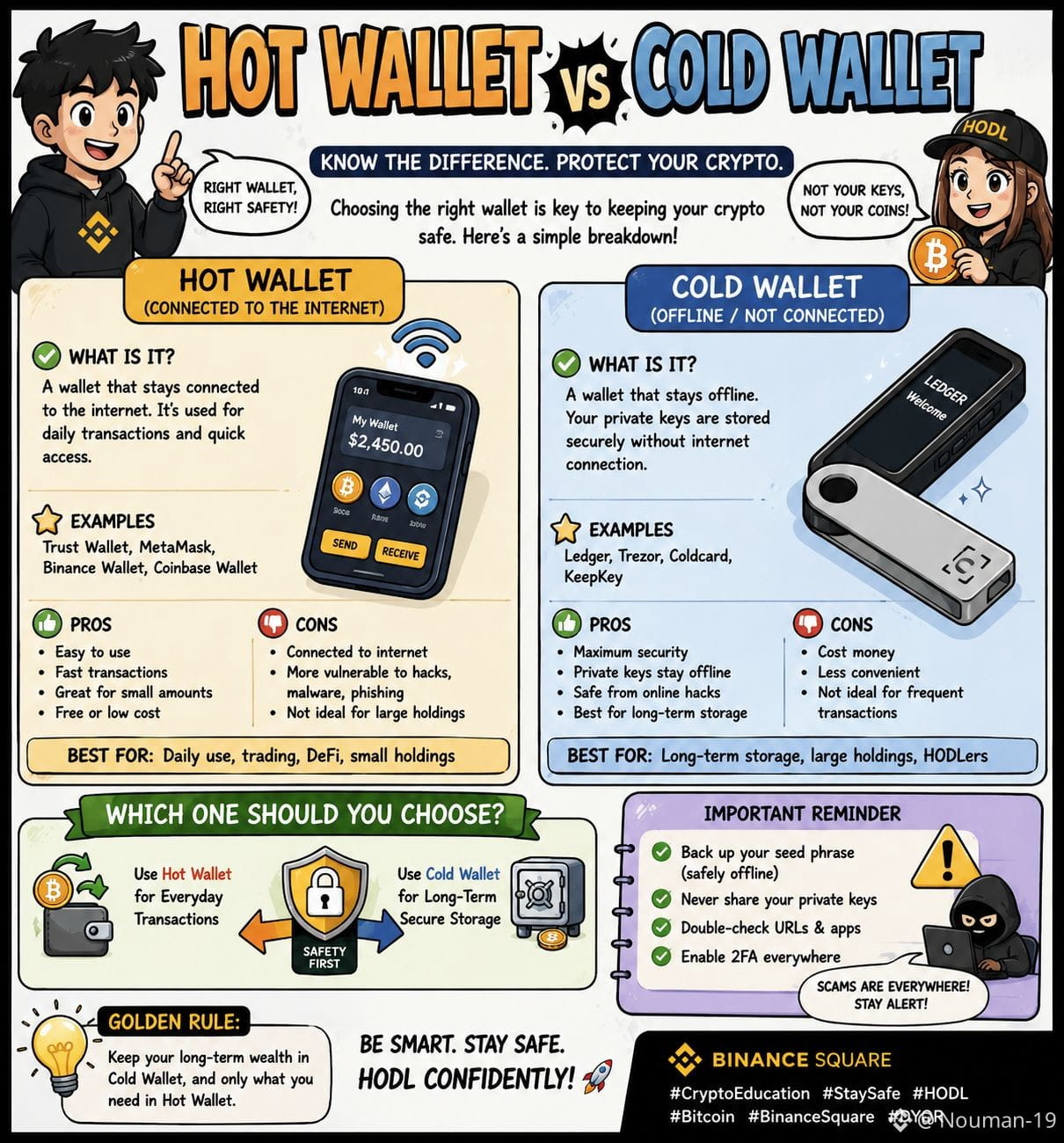
🔥 Hot Wallet vs Cold Wallet: Which One Should You Choose?
Choosing the right crypto wallet is one of the smartest decisions every crypto investor can make. While both Hot Wallets and Cold Wallets serve different purposes, understanding the difference can help you protect your digital assets.
🔥 Hot Wallet
A Hot Wallet is connected to the internet, making it ideal for daily transactions, trading, DeFi, and quick access to your funds. However, because it stays online, it carries a higher security risk.
❄️ Cold Wallet
A Cold Wallet stores your private keys offline, providing maximum protection against hackers and online threats. It's the preferred choice for long-term investors and HODLers.
💡 Golden Rule:
Use a Hot Wallet for convenience and a Cold Wallet for long-term storage. Never keep all your crypto on an exchange, always back up your recovery phrase offline, and enable Two-Factor Authentication (2FA).
📈 Market Insight:
Smart investors don't just focus on making profits—they focus on protecting them. Strong security habits are the foundation of long-term success in crypto.
DYOR • Not Financial Advice
#Crypto #Bitcoin #Ethereum #BNB #HotWallet #ColdWallet #CryptoSecurity #SelfCustody #Blockchain #BinanceSquare are #CryptoEducation #HODL #StaySafe
134

What’s the Difference Between a Hot Wallet and a Cold Wallet? 🔐
In the world of crypto, there are two types of wallets for storing your cryptocurrencies.
🔹 Hot Wallet (Online Wallet):
A wallet that is always connected to the internet. (e.g., Trust Wallet, MetaMask, or an Exchange wallet)
Advantages: Faster for trading and easier to use.
Disadvantages: Higher risk of being targeted by cyber attacks and hacks.
🔹 Cold Wallet (Offline Wallet):
Hardware devices that are not connected to the internet. (e.g., Ledger, Trezor)
Advantages: Since it can’t be hacked online, it’s extremely secure.
Disadvantages: It comes with a purchase cost, and it can be a bit more complicated to use.
💡 Recommendation: For amounts you won’t trade in the short term, keep them in an Exchange/Hot Wallet, and for long-term holding (HODL), it’s best to store them in a Cold Wallet.
#CryptoSecurity #HotWallet #ColdWallet #Binance
191

Web3 Security: Hot Wallet vs Cold Wallet
Title: Hot Wallet vs Cold Wallet: Which custody strategy should you adopt? 🔐
Content:
Every crypto user must adapt how they store their assets based on how they plan to use them.
📌 The two essential categories:
Hot Wallet (Connected Wallet): Ideal for active trading, DApp interactions, and fast staking. Access is instant, but exposure to online risks is higher.
Cold Wallet (Cold Wallet / Hardware): The preferred solution for long-term saving (HODL). Your private keys remain offline, protected from remote hacking attempts.
The golden rule: keep only the amounts you need for your day-to-day trading in your active wallets.
#Web3 #CryptoSecurity #HotWallet #ColdWallet
71

Dear $HOT Team,
The community has been mining for years... ⛏️
✅Community active
✅Market active
✅NEAR ecosystem gaining attention
We are ready for the next chapter of the roadmap.
The question is no longer "Will HOT launch?" $NEAR
The question is:
"When HOT TGE?" 👀🔥
#WenTGE #hotwallet #HOT #Near
Dear $HOT Team,
The community has been mining for years... ⛏️
✅Community active
✅Market active
✅NEAR ecosystem gaining attention
We are ready for the next chapter of the roadmap.
The question is no longer "Will HOT launch?" $NEAR
The question is:
"When HOT TGE?" 👀🔥
#WenTGE #hotwallet #HOT #Near
The community has been mining for years... ⛏️
✅Community active
✅Market active
✅NEAR ecosystem gaining attention
We are ready for the next chapter of the roadmap.
The question is no longer "Will HOT launch?" $NEAR
The question is:
"When HOT TGE?" 👀🔥
#WenTGE #hotwallet #HOT #Near

1
1
312

With the NEAR ecosystem reaching new ATHs, this is an ideal time to expand $HOT’s reach and accessibility.
@hotdao_ @donamarahp consider a major exchange listing to boost visibility, liquidity, and ecosystem growth.
#hottoken #Near #hotwallet #Binance
With the NEAR ecosystem reaching new ATHs, this is an ideal time to expand $HOT’s reach and accessibility.
@hotdao_ @donamarahp consider a major exchange listing to boost visibility, liquidity, and ecosystem growth.
#hottoken #Near #hotwallet #Binance
@hotdao_ @donamarahp consider a major exchange listing to boost visibility, liquidity, and ecosystem growth.
#hottoken #Near #hotwallet #Binance

297
·
--
Binance’s $6.3 Billion Hack: A Postmortem Reveals a Blind Spot in Hot Wallet Risk Controls
The latest developments in Binance’s $6.3 billion hack are pushing the entire industry toward an awkward crossroads: on-chain evidence clearly shows hot wallets being repeatedly drained, yet no one can prove whether the exchange’s internal signature controls held up.
According to Cointelegraph, experts reviewing the incident noted that blockchain records repeatedly show hot wallets being “emptied,” but to date, no evidence has been established of Binance’s internal signature control mechanisms, and it remains difficult to determine what role the exchange played in the asset transfers. In other words, the attack happened on-chain, but whether the defenses failed—and where—remains shrouded in mystery.
This matters because it strikes at a core issue the crypto industry has long avoided: we tend to treat “on-chain verifiability” as a source of security, but when funds flow out from within an exchange, on-chain evidence cannot answer the most critical questions about internal controls. Hot wallets, which serve as high-frequency channels for the exchange’s day-to-day withdrawals, should be among the most tightly controlled points in its risk management system. Now, however, they have become a black box that regulators and auditors alike struggle to penetrate.
The key facts from this review center on two points: first, the hackers stole as much as $6.3 billion; second, experts openly acknowledged that they could not prove the existence of Binance’s internal signature controls. The former is a publicly verifiable amount; the latter reflects an admitted limit to investigators’ capabilities. When even authoritative bodies cannot clarify the internal mechanisms, the market’s trust anchor is naturally shaken.
It is still difficult to say how the market will react. Some believe that since claims of “North Korean leadership” had already been partly priced in, sentiment may not fluctuate sharply again. But it is also possible that the new uncertainty over “the exchange’s internal controls” will prompt users to reassess the trust premium attached to leading platforms.
One countervailing factor to keep in mind is that experts’ inability to establish evidence of signature controls could actually weaken direct allegations against Binance, making it harder to assign responsibility. At the same time, the narrative of North Korean involvement remains disputed, and the market may have already priced in some of this risk.
What bears watching next is whether investigators can produce concrete evidence of internal controls, and how the market’s valuation of trust in exchanges changes. For users following related assets, the more important thing to monitor from a trading perspective is whether sentiment picks up again, rather than rushing to a conclusion.
#BinanceHack #CryptoSecurity #HotWallet
The above is an overview of information and personal analysis, and does not constitute investment advice.
Follow me for continued coverage of key market developments and data.
69

🚨 $ETH security incident REVEALS AI‑DRIVEN STEALTH ATTACK! 💥
🦈 A fake job interview tricked an engineer into loading a malware‑laden assignment, opening the gate for a sophisticated AI‑driven intrusion on a major exchange. 📊 Attackers exploited Ethereum’s EIP‑7702 to commandeer a hot wallet, pulling $6.3 B before containment kicked in. The platform froze $2.85 B and replenished 98 % of the assets from its own funds, shielding users from loss. ⚡ This episode spotlights how social‑engineering plus new contract features become the freshest weapon in the cyber‑arsenal. 🌊
💬 How are you tightening your dev security after this AI‑driven breach? 👇
⚠️ Not financial advice. Always manage your risk. 🛡️
🏷️ #ETH #Security #HackAlert #Crypto #HotWallet
🔥 💎

12

·
--
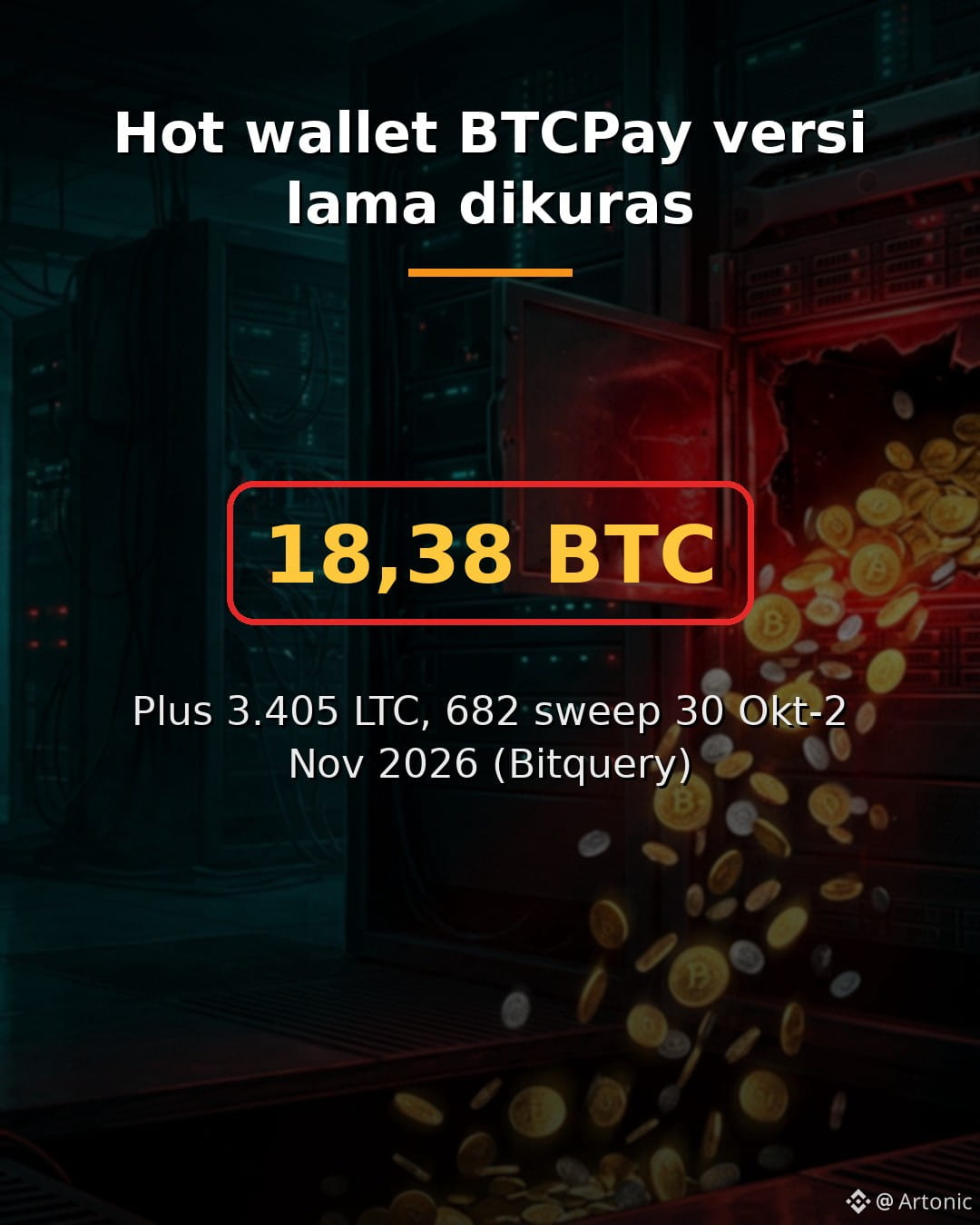
Crypto payment server hacked—why were only older versions affected?
Tracked funds: 18.38 BTC + 3,405 LTC (~$1.63 million) | 682 sweeps, Oct. 30–Nov. 2, 2026
BTCPay Server, an open-source crypto payment processor used by many merchants, confirmed that hot wallets on servers running version 2.4.1 or earlier were drained. Key points:
1. Old vulnerability, server not updated — A patch has been available since version 2.4.2 (August 7, 2026). The drained servers had never installed it. The attacker logged in as an admin and drained the hot wallets.
2. Activity continued after the warning — According to Bitquery, 87% of the funds moved in a single wave on November 1, and another 267 sweeps (~$150,000) took place after BTCPay asked servers to be shut down. This is a lower-bound estimate and does not include Lightning funds.
3. Updating alone isn’t enough — Users of older versions are advised to migrate to a new server with a new wallet and seed. Wallets whose keys are kept outside the server (e.g., hardware wallets) are safe.
The lesson: keep only operational funds in hot wallets; store the rest in a wallet whose keys you control.
#KeamananKripto #Bitcoin #BTCPay #HotWallet #BinanceSquare
171

·
--
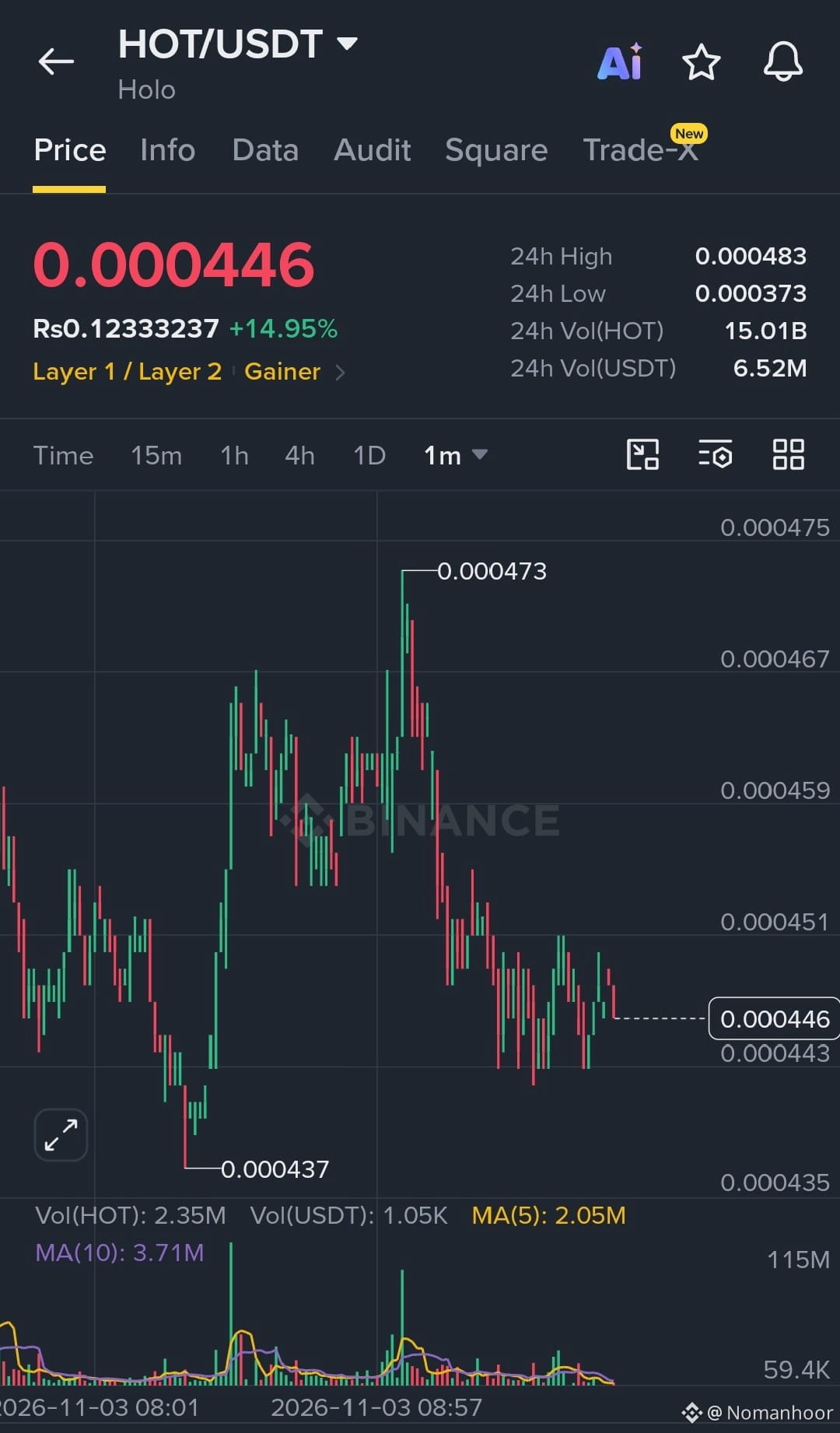
The Holo ($HOT) token—as well as the native $HOT token of the Telegram-based HOT Wallet ecosystem on NEAR—have been experiencing strong upward momentum and localized price pumps, driven by major network migrations and exploding on-chain activity.
Why HOT is Pumping: The Latest Catalysts
• The Long-Awaited HoloFuel Migration Launch: For the classic ERC-20 token Holo ($HOT ), the primary fundamental driver is the official kickoff of the highly anticipated technical migration to HoloFuel, which began rolling out around November 1, 2026. This critical transition shifts the asset from a placeholder token into the live, asset-backed functional hosting currency of the Holochain mainnet.
• Exploding NEAR-Based HOT Wallet Utility: Concurrently, the HOT Wallet ecosystem built natively as a chain-abstraction layer on the NEAR blockchain has seen massive user metrics. The wallet platform recently cleared a milestone of over 6.8 billion $HOT transfers, generating millions in underlying gas fees and confirming heavy non-speculative retail adoption.
• Essential Network "Intents confidential" Loop Integration: Crypto analysts are heavily accumulating the asset due to its integration as the utility engine inside the NEAR network's confidential trading loops. This locks its ecosystem demand directly to NEAR’s wider macroeconomic growth rather than leaving it as an isolated speculative token.
• MiCA-Compliant Infrastructure Upgrades: Holo’s proactive engineering overhaul to fully comply with Europe's strict MiCA regulations has injected heavy confidence into institutional and retail investors. This compliance reduces regulatory de-risking fears that often plague older altcoins.
#HoloToken #hotwallet #holochain #cryptopump #NearProtocol
The Holo ($HOT ) token—as well as the native $HOT token of the Telegram-based HOT Wallet ecosystem on NEAR—have been experiencing strong upward momentum and localized price pumps, driven by major network migrations and exploding on-chain activity.
Why HOT is Pumping: The Latest Catalysts
• The Long-Awaited HoloFuel Migration Launch: For the classic ERC-20 token Holo ($HOT ), the primary fundamental driver is the official kickoff of the highly anticipated technical migration to HoloFuel, which began rolling out around November 1, 2026. This critical transition shifts the asset from a placeholder token into the live, asset-backed functional hosting currency of the Holochain mainnet.
• Exploding NEAR-Based HOT Wallet Utility: Concurrently, the HOT Wallet ecosystem built natively as a chain-abstraction layer on the NEAR blockchain has seen massive user metrics. The wallet platform recently cleared a milestone of over 6.8 billion $HOT transfers, generating millions in underlying gas fees and confirming heavy non-speculative retail adoption.
• Essential Network "Intents confidential" Loop Integration: Crypto analysts are heavily accumulating the asset due to its integration as the utility engine inside the NEAR network's confidential trading loops. This locks its ecosystem demand directly to NEAR’s wider macroeconomic growth rather than leaving it as an isolated speculative token.
• MiCA-Compliant Infrastructure Upgrades: Holo’s proactive engineering overhaul to fully comply with Europe's strict MiCA regulations has injected heavy confidence into institutional and retail investors. This compliance reduces regulatory de-risking fears that often plague older altcoins.
#HoloToken #hotwallet #holochain #cryptopump #NearProtocol
257

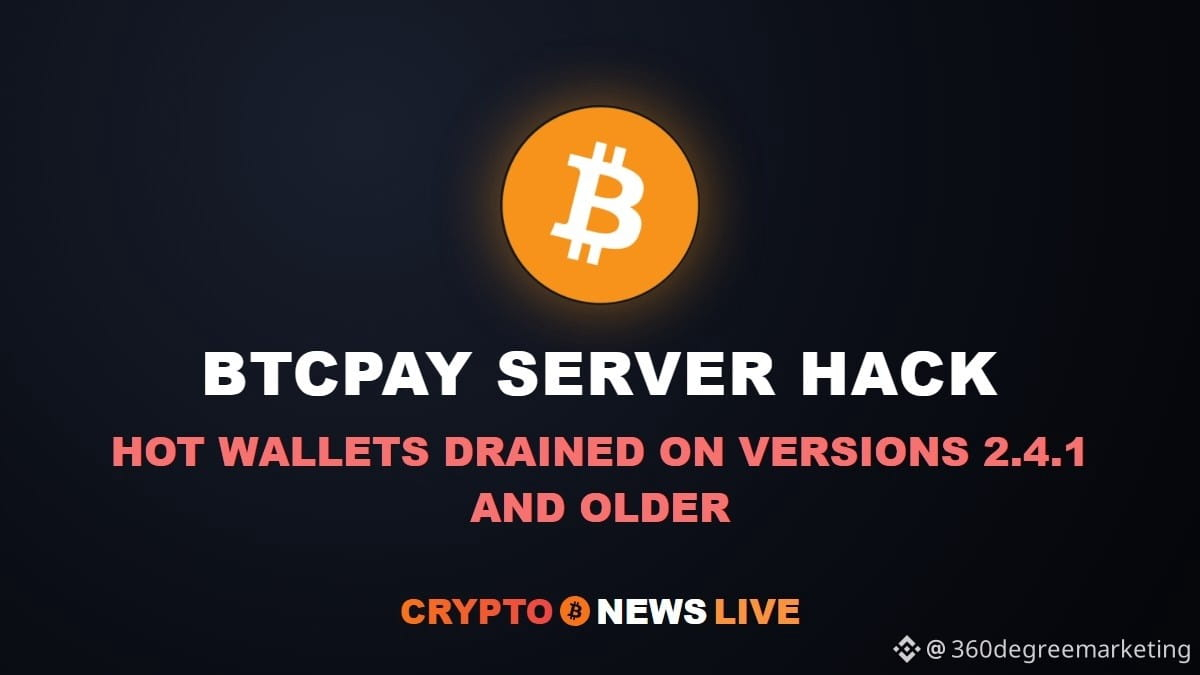
BTCPay Hack Drains Hot Wallets on Servers Running 2.4.1 or Older
The BTCPay hack emptied hot wallets on servers running 2.4.1 or older. See the timeline, the on-chain deposits, and what server owners should do next.
Full article: https://www.cryptonewslive.org/article/btcpay-hack-drains-hot-wallets-on-servers-running-2-4-1-or-older/
#Bitcoin #BlockchainSecurity #BTCPayHack #BTCPayServer #HotWallet
67


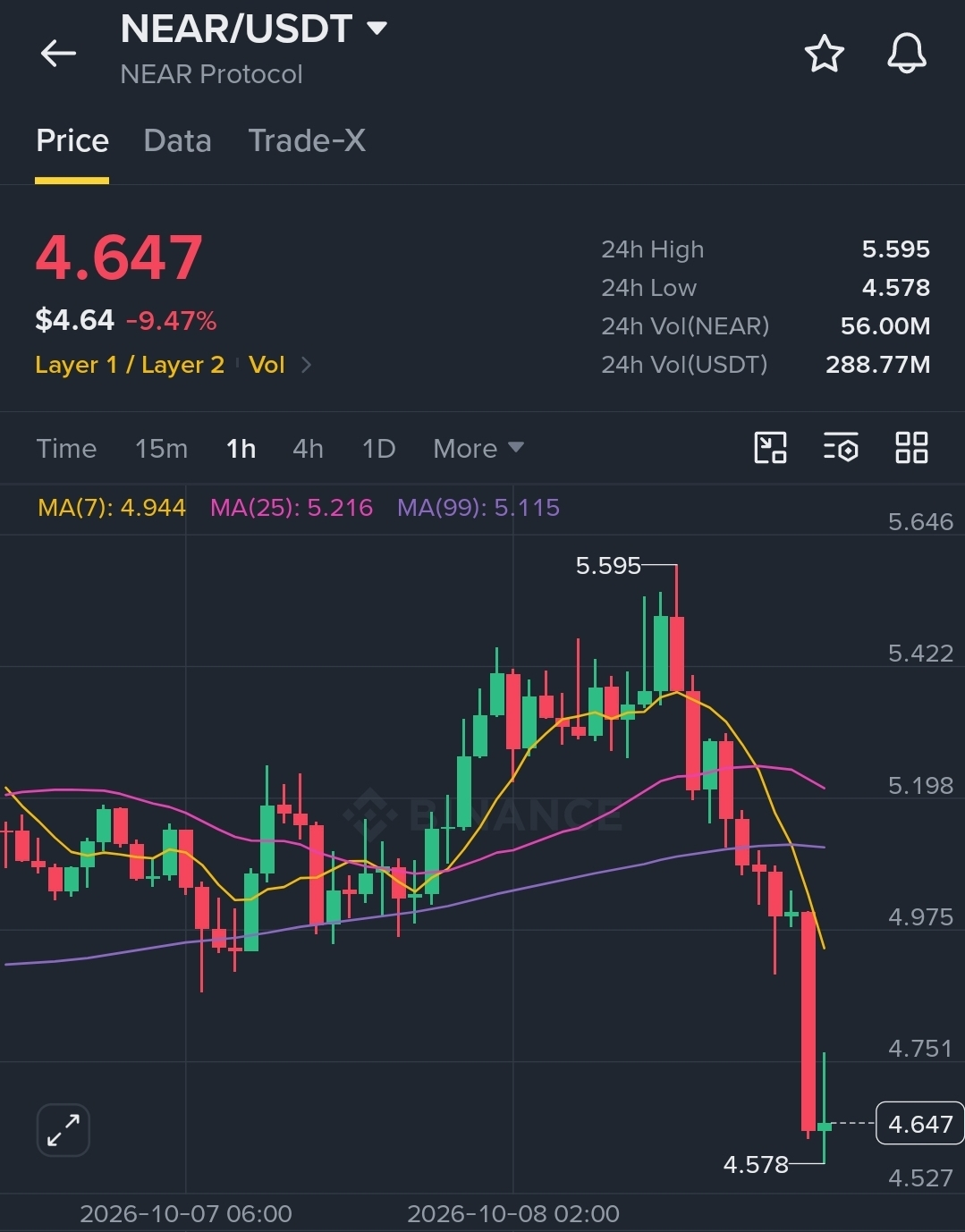
🌐 $NEAR /USDT — 🔴 SHORT · Conf 84%
━━━━━━━━━━━━━━
📍 Entry: 4.6331 – 4.6609
🛑 SL: 4.9970
🎯 TP1: 4.4147
✅ TP2: 4.2288
🏆 TP3: 3.9500
━━━━━━━━━━━━━━
🔎 Price trails MA7 (4.944), MA25 (5.216) and MA99 (5.115), with 4.578 as the low to watch.
🧠 $NEAR : Sharded L1 using Nightshade, which splits state across validators; competition from other L1s for developers is the risk.
💬 Is a 9.47% flush on 288.77M USDT volume capitulation, or the first leg of a breakdown?
#NEAR #NearProtocol #Layer1 #Nightshade #hotwallet
{future}(NEARUSDT)
🌐 $NEAR /USDT — 🔴 SHORT · Conf 84%
━━━━━━━━━━━━━━
📍 Entry: 4.6331 – 4.6609
🛑 SL: 4.9970
🎯 TP1: 4.4147
✅ TP2: 4.2288
🏆 TP3: 3.9500
━━━━━━━━━━━━━━
🔎 Price trails MA7 (4.944), MA25 (5.216) and MA99 (5.115), with 4.578 as the low to watch.
🧠 $NEAR : Sharded L1 using Nightshade, which splits state across validators; competition from other L1s for developers is the risk.
💬 Is a 9.47% flush on 288.77M USDT volume capitulation, or the first leg of a breakdown?
#NEAR #NearProtocol #Layer1 #Nightshade #hotwallet
━━━━━━━━━━━━━━
📍 Entry: 4.6331 – 4.6609
🛑 SL: 4.9970
🎯 TP1: 4.4147
✅ TP2: 4.2288
🏆 TP3: 3.9500
━━━━━━━━━━━━━━
🔎 Price trails MA7 (4.944), MA25 (5.216) and MA99 (5.115), with 4.578 as the low to watch.
🧠 $NEAR : Sharded L1 using Nightshade, which splits state across validators; competition from other L1s for developers is the risk.
💬 Is a 9.47% flush on 288.77M USDT volume capitulation, or the first leg of a breakdown?
#NEAR #NearProtocol #Layer1 #Nightshade #hotwallet

1
542

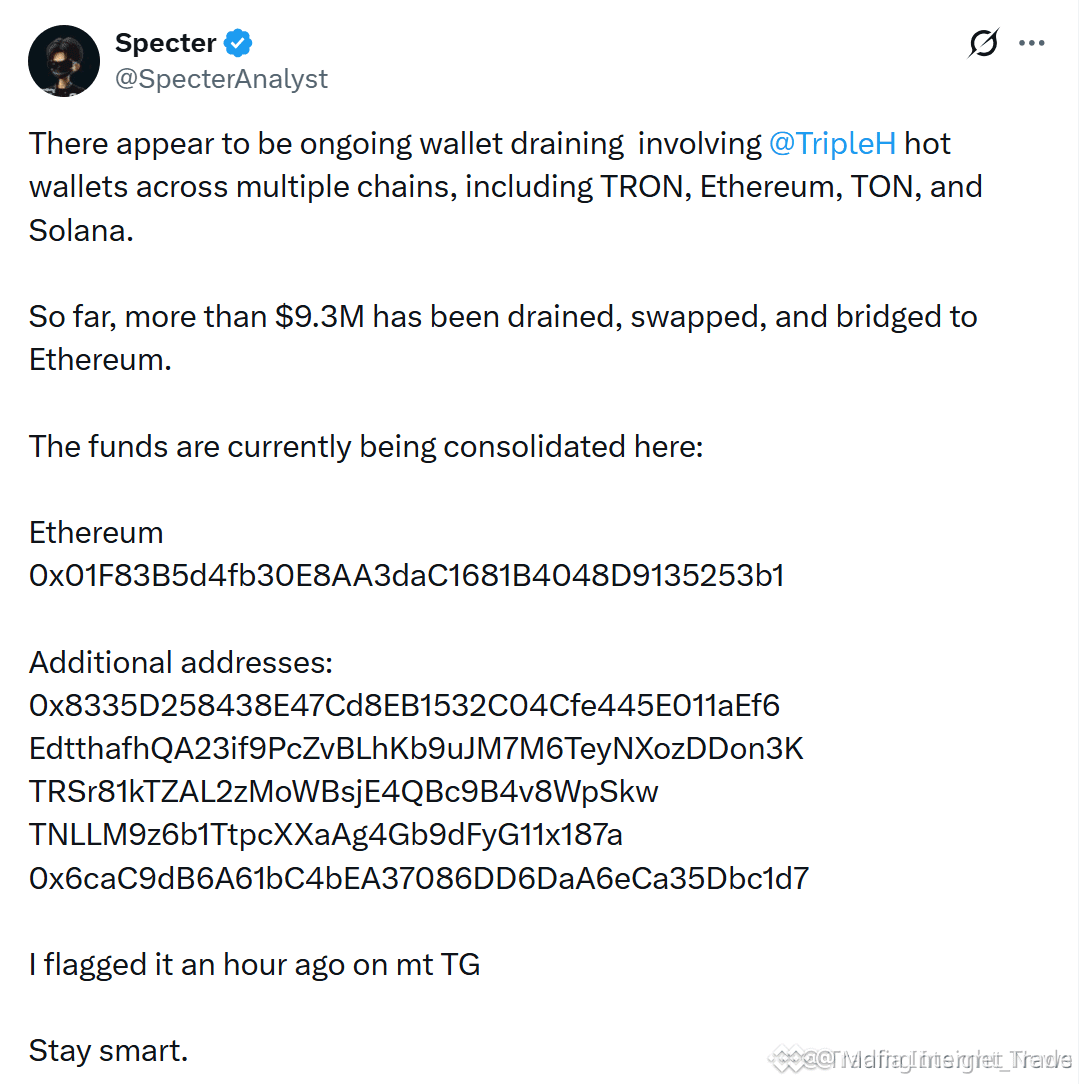
🚨 $ETH UNDER SIEGE? $9.7M HACKED ASSETS CHANNELED TO ETHEREUM 🔴
When attackers consolidate loot on a single chain, that chain becomes a liquidity bomb waiting to detonate. 💣 Triple‑A’s suspected hot wallet exploit saw over 5,226 ETH ($9.7M) land on Ethereum. That’s a massive overhang of potential sell‑pressure the market has to absorb.
📊 This isn’t a whale accumulation play — it’s a smart‑money exit route from the hacker’s perspective. 🔍 If they start distributing even a fraction of that ETH, expect volatility spikes on the downside. The market hasn’t fully priced this in yet.
💡 Do you hedge your $ETH positions against black‑swan events like this, or ride the momentum blind? 🤔
⚠️ Not financial advice. Always manage your risk. 🛡️
🏷️ #ETH #CryptoHack #Security #HotWallet #Ethereum
🔴 🦈
273
🚨 $ETH FACES DUMP PRESSURE AS HACKERS CONVERT $4.2M EXPLOIT BAGS TO ETHER! ⚠️
A suspected private key compromise just drained $4.2 million across cross-chain hot wallets, sending shockwaves through order flow monitoring. 📊 The exploit swept assets across multiple networks—draining USDT, USDC, $BNB , and $TRX —with the vast majority instantly market-swapped directly into $ETH .
🦈 When attackers consolidate stolen funds into liquid Ether, history shows sell pressure or privacy mixing moves usually follow. Keep your risk tightly managed while this hacker liquidity sits loaded on the chain. 💬 Do you expect this hacker capital to hit spot markets immediately, or will it route through mixers first? 👇
⚠️ Not financial advice. Always manage your risk. 🛡️
🏷️ #ETH #CryptoExploit #HotWallet #Web3Security #BNB
🚨 🩸
30
Log in to explore more content
Join global crypto users on Binance Square
⚡️ Get latest and useful information about crypto.
💬 Trusted by the world’s largest crypto exchange.
👍 Discover real insights from verified creators.
Email / Phone number
Trending Topics
1
#BitcoinFiveWeeklyLosses
11,537 views
399 Discussing
2
#AIChipSlumpNasdaq
6,536 views
217 Discussing
3
#NvidiaInvestigatesAfterHuang’sAffairApology
4,251 views
108 Discussing
4
#EthereumSpotETFsPost$365MWeeklyOutflow
0 views
0 Discussing
5
#BinanceReopensWithdrawalsForHYPE&APT
162,977 views
1,276 Discussing
6
#SouthKoreaDraftLawTargets15To20%ShareholderCap
164,608 views
864 Discussing
7
#TradFiForBeginners
235,716 views
2,145 Discussing
8
#KeplrAdvisesSocialLoginUsersToTransferAssets
77,003 views
619 Discussing
9
#TetherPlans€28.8MForJuventusCapitalIncrease
56,208 views
458 Discussing
10
#JobsReportRaisesHikeOdds
988,145 views
4,608 Discussing