

黑僵尸
91 Posts

黑僵尸
Report
Block User
我是来搞笑的
Open Trade
Frequent Trader
2.4 Years
261 Following
328 Followers
183 Liked
Posts
Portfolio
All
Quotes
·
--
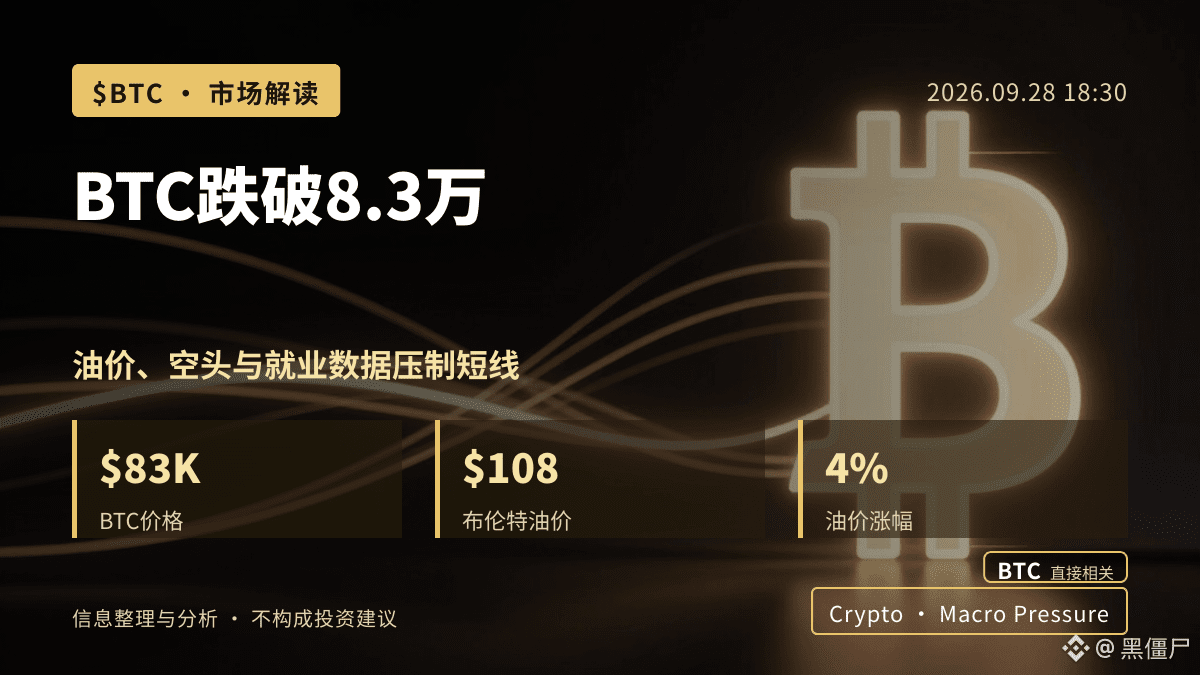
$BTC dips below $83,000: How oil prices, shorts and employment data weigh on the short-term
$BTC fell below $83,000 on Monday, and near-term pressure is spreading from the crypto market into the macro backdrop. According to Cointelegraph, BTC tracked lower alongside U.S. stock index futures after Trump failed to commit to a permanent ceasefire. CoinDesk reports that stalled Iran negotiations, Brent crude nearing $108, and traders simultaneously increasing bets on the possibility that the Federal Reserve may raise rates again are contributing factors. A drop in macro risk appetite is the most direct context for this pullback.
Why it matters: BTC breaking below $83,000 is not just a technical level failing—it’s a signal that both liquidity and risk appetite are tightening at the same time. Per CoinDesk, BTC futures short positions are nearing their intra-year lows, overall leverage demand is weak, and open interest is falling. This suggests on-market funds are more inclined to defend than to chase longs. On the oil front, CNBC says oil jumped more than 4% in a day after Trump rejected a peace proposal to reopen the Strait of Hormuz with Iran. Brent is edging toward $108. Rising energy prices can reinforce inflation expectations, which then affects the market’s view of the Fed’s path—adding further pressure on high-beta crypto assets.
How the market may respond next: If tonight’s employment data comes in strong, or if oil prices continue to rise, $BTC’s short-term outlook could face additional pressure. Conversely, if the data is weak and oil pulls back, a concentration of short positions could trigger a rapid rebound, or even a short squeeze. What to watch is whether futures open interest continues to decline, whether oil can hold above $108, and the direction of the U.S. dollar and Treasury yields after the employment data is released.
$BTC #Bitcoin #CryptoMarket
The above is an information roundup and personal analysis and does not constitute investment advice.
Follow me for ongoing monitoring of key market developments and data.
$BTC dips below $83,000: How oil prices, shorts and employment data weigh on the short-term
$BTC fell below $83,000 on Monday, and near-term pressure is spreading from the crypto market into the macro backdrop. According to Cointelegraph, BTC tracked lower alongside U.S. stock index futures after Trump failed to commit to a permanent ceasefire. CoinDesk reports that stalled Iran negotiations, Brent crude nearing $108, and traders simultaneously increasing bets on the possibility that the Federal Reserve may raise rates again are contributing factors. A drop in macro risk appetite is the most direct context for this pullback.
Why it matters: BTC breaking below $83,000 is not just a technical level failing—it’s a signal that both liquidity and risk appetite are tightening at the same time. Per CoinDesk, BTC futures short positions are nearing their intra-year lows, overall leverage demand is weak, and open interest is falling. This suggests on-market funds are more inclined to defend than to chase longs. On the oil front, CNBC says oil jumped more than 4% in a day after Trump rejected a peace proposal to reopen the Strait of Hormuz with Iran. Brent is edging toward $108. Rising energy prices can reinforce inflation expectations, which then affects the market’s view of the Fed’s path—adding further pressure on high-beta crypto assets.
How the market may respond next: If tonight’s employment data comes in strong, or if oil prices continue to rise, $BTC ’s short-term outlook could face additional pressure. Conversely, if the data is weak and oil pulls back, a concentration of short positions could trigger a rapid rebound, or even a short squeeze. What to watch is whether futures open interest continues to decline, whether oil can hold above $108, and the direction of the U.S. dollar and Treasury yields after the employment data is released.
$BTC #Bitcoin #CryptoMarket
The above is an information roundup and personal analysis and does not constitute investment advice.
Follow me for ongoing monitoring of key market developments and data.
$BTC fell below $83,000 on Monday, and near-term pressure is spreading from the crypto market into the macro backdrop. According to Cointelegraph, BTC tracked lower alongside U.S. stock index futures after Trump failed to commit to a permanent ceasefire. CoinDesk reports that stalled Iran negotiations, Brent crude nearing $108, and traders simultaneously increasing bets on the possibility that the Federal Reserve may raise rates again are contributing factors. A drop in macro risk appetite is the most direct context for this pullback.
Why it matters: BTC breaking below $83,000 is not just a technical level failing—it’s a signal that both liquidity and risk appetite are tightening at the same time. Per CoinDesk, BTC futures short positions are nearing their intra-year lows, overall leverage demand is weak, and open interest is falling. This suggests on-market funds are more inclined to defend than to chase longs. On the oil front, CNBC says oil jumped more than 4% in a day after Trump rejected a peace proposal to reopen the Strait of Hormuz with Iran. Brent is edging toward $108. Rising energy prices can reinforce inflation expectations, which then affects the market’s view of the Fed’s path—adding further pressure on high-beta crypto assets.
How the market may respond next: If tonight’s employment data comes in strong, or if oil prices continue to rise, $BTC ’s short-term outlook could face additional pressure. Conversely, if the data is weak and oil pulls back, a concentration of short positions could trigger a rapid rebound, or even a short squeeze. What to watch is whether futures open interest continues to decline, whether oil can hold above $108, and the direction of the U.S. dollar and Treasury yields after the employment data is released.
$BTC #Bitcoin #CryptoMarket
The above is an information roundup and personal analysis and does not constitute investment advice.
Follow me for ongoing monitoring of key market developments and data.
296
·
--
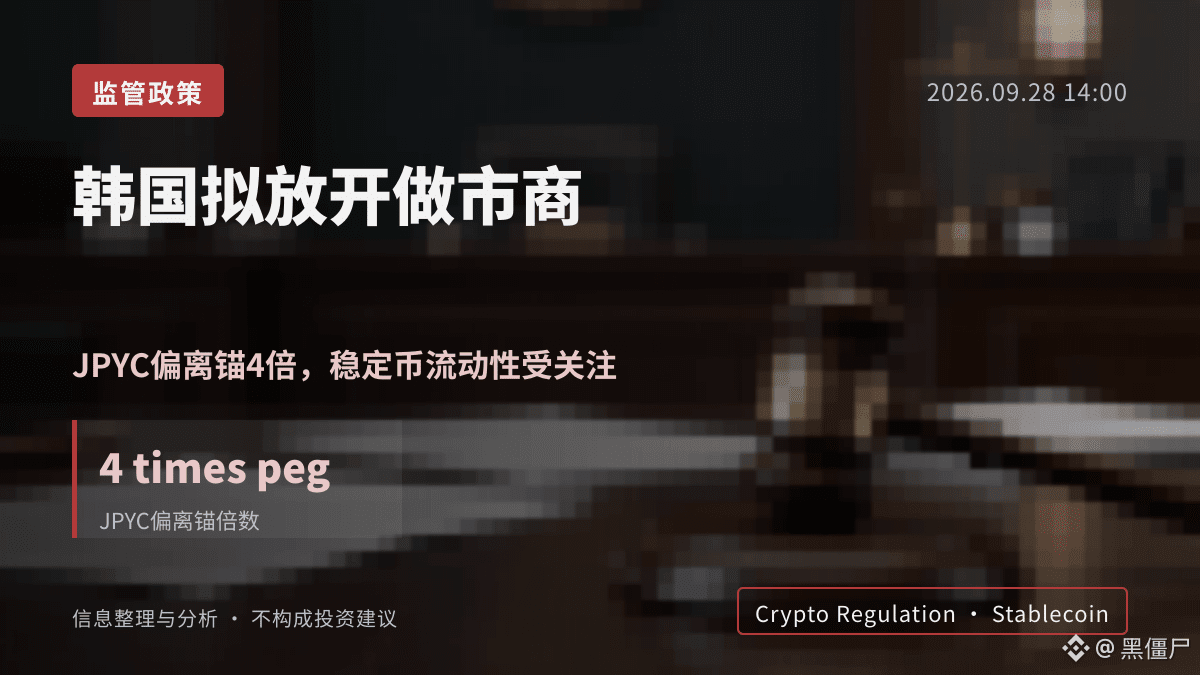
JPYC deviates from its anchor by 4x; Korea plans to loosen rules for crypto market makers
According to Cointelegraph, Korean regulators are re-evaluating the market maker regime for cryptocurrencies, after JPYC briefly traded at a price about 4 times its pegged value. This degree of deviation has brought the practical problem of liquidity gaps in stablecoin market making to the forefront.
Why is this important? The core of a stablecoin’s value is “predictability” and “fungibility.” Once there is a clear deviation, it suggests that local liquidity is insufficient, or that the market-making mechanism cannot promptly smooth out price movements. Korea’s current rules impose strict constraints on market-making activities, which may suppress market depth and make prices more susceptible to short-term supply and demand.
From the market structure perspective, if Korea allows more standardized and compliant participation by market makers, liquidity for stablecoins in Asian markets could improve—spreads could narrow, and price discovery efficiency could increase. For institutions and users who rely on stablecoin settlement and risk hedging, this means a more stable trading environment.
However, what needs to be watched is that the Korean rules are still under discussion; the timing and details of implementation remain uncertain. JPYC’s deviation may also reflect a localized, temporary liquidity issue rather than systemic risk. If market makers are introduced but fail to effectively cover long-tail stablecoins, deviation could still occur.
Next, you can keep an eye on Korea’s specific regulatory proposals, the market maker admission standards, and whether the prices of stablecoins such as JPYC return to the pegged range.
#CryptoMarket #Stablecoin
The above is compiled information and personal analysis and does not constitute investment advice. Once more policy details are clarified, I will continue to provide updates.
JPYC deviates from its anchor by 4x; Korea plans to loosen rules for crypto market makers
According to Cointelegraph, Korean regulators are re-evaluating the market maker regime for cryptocurrencies, after JPYC briefly traded at a price about 4 times its pegged value. This degree of deviation has brought the practical problem of liquidity gaps in stablecoin market making to the forefront.
Why is this important? The core of a stablecoin’s value is “predictability” and “fungibility.” Once there is a clear deviation, it suggests that local liquidity is insufficient, or that the market-making mechanism cannot promptly smooth out price movements. Korea’s current rules impose strict constraints on market-making activities, which may suppress market depth and make prices more susceptible to short-term supply and demand.
From the market structure perspective, if Korea allows more standardized and compliant participation by market makers, liquidity for stablecoins in Asian markets could improve—spreads could narrow, and price discovery efficiency could increase. For institutions and users who rely on stablecoin settlement and risk hedging, this means a more stable trading environment.
However, what needs to be watched is that the Korean rules are still under discussion; the timing and details of implementation remain uncertain. JPYC’s deviation may also reflect a localized, temporary liquidity issue rather than systemic risk. If market makers are introduced but fail to effectively cover long-tail stablecoins, deviation could still occur.
Next, you can keep an eye on Korea’s specific regulatory proposals, the market maker admission standards, and whether the prices of stablecoins such as JPYC return to the pegged range.
#CryptoMarket #Stablecoin
The above is compiled information and personal analysis and does not constitute investment advice. Once more policy details are clarified, I will continue to provide updates.
According to Cointelegraph, Korean regulators are re-evaluating the market maker regime for cryptocurrencies, after JPYC briefly traded at a price about 4 times its pegged value. This degree of deviation has brought the practical problem of liquidity gaps in stablecoin market making to the forefront.
Why is this important? The core of a stablecoin’s value is “predictability” and “fungibility.” Once there is a clear deviation, it suggests that local liquidity is insufficient, or that the market-making mechanism cannot promptly smooth out price movements. Korea’s current rules impose strict constraints on market-making activities, which may suppress market depth and make prices more susceptible to short-term supply and demand.
From the market structure perspective, if Korea allows more standardized and compliant participation by market makers, liquidity for stablecoins in Asian markets could improve—spreads could narrow, and price discovery efficiency could increase. For institutions and users who rely on stablecoin settlement and risk hedging, this means a more stable trading environment.
However, what needs to be watched is that the Korean rules are still under discussion; the timing and details of implementation remain uncertain. JPYC’s deviation may also reflect a localized, temporary liquidity issue rather than systemic risk. If market makers are introduced but fail to effectively cover long-tail stablecoins, deviation could still occur.
Next, you can keep an eye on Korea’s specific regulatory proposals, the market maker admission standards, and whether the prices of stablecoins such as JPYC return to the pegged range.
#CryptoMarket #Stablecoin
The above is compiled information and personal analysis and does not constitute investment advice. Once more policy details are clarified, I will continue to provide updates.
6
·
--
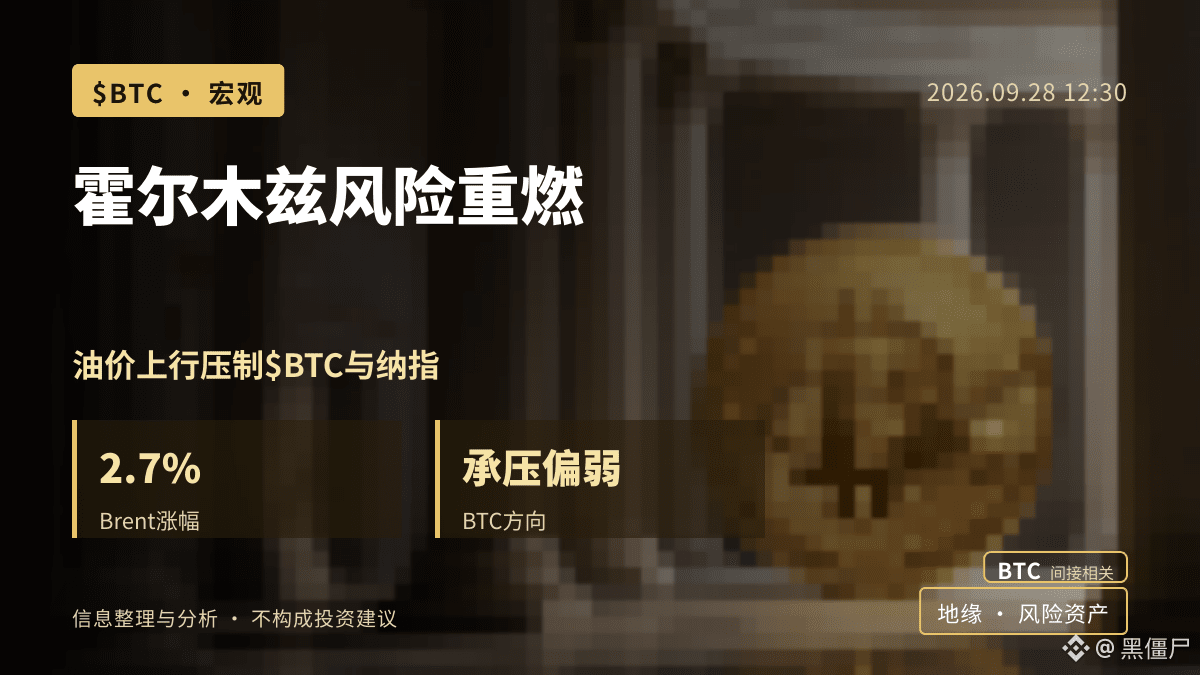
Trump Rejects Iran’s Plan to Reopen the Strait of Hormuz; $BTC Comes Under Pressure as Oil Prices Rise
Trump refused Iran’s proposal to reopen the Strait of Hormuz and restart talks with the U.S. Brent crude jumped 2.7% on the news, while $BTC moved in line with weakness in Nasdaq futures. Geopolitical risk has flared up again, and it is being suppressed through two channels: oil prices and risk-off sentiment.
According to CNBC, Iran had proposed reopening this critical shipping corridor within seven days and restarting negotiations with the U.S., but Trump’s camp rejected the idea. CoinDesk reported that Trump on Sunday did not rule out further strikes against Iran ahead of midterm elections, even as he said the war could end soon. This stance—“not fully de-escalatory”—means market concerns about supply disruption are difficult to dispel.
The Strait of Hormuz carries roughly one-fifth of the world’s crude oil shipments. Any risk to passage would directly push energy prices higher. Rising oil prices lift inflation expectations on one hand and strengthen demand for hedging on the other. Funds then flow from risk assets into traditional safe havens such as the U.S. dollar and gold. $BTC , as a high-beta risk asset, has a strong correlation with Nasdaq futures; when sentiment turns weaker, it typically faces the same pressure. That is exactly what the current market action is showing.
Judging from market reactions, in the near term risk-off sentiment could further build, and $BTC may keep oscillating lower—especially if oil prices continue rising and Nasdaq futures remain weak. In that case, the crypto market may lack independent bullish funding support. However, it is worth watching that if U.S.-Iran tensions ease quickly and shipping through the strait resumes, oil prices and risk sentiment could drop rapidly, and the crypto market’s downside may be relatively limited. A single geopolitical development should not be over-interpreted.
Next, focus on: the actual shipping conditions in the Strait of Hormuz, whether oil prices can hold above the current gains, the direction of Nasdaq futures, and whether Trump releases clearer negotiation signals. These variables will determine whether risk-off sentiment continues to intensify or fades quickly.
$BTC #Bitcoin #CryptoMarket
The above is an information roundup and my personal analysis and does not constitute investment advice.
Follow me to keep tracking key market changes and data.
Trump Rejects Iran’s Plan to Reopen the Strait of Hormuz; $BTC Comes Under Pressure as Oil Prices Rise
Trump refused Iran’s proposal to reopen the Strait of Hormuz and restart talks with the U.S. Brent crude jumped 2.7% on the news, while $BTC moved in line with weakness in Nasdaq futures. Geopolitical risk has flared up again, and it is being suppressed through two channels: oil prices and risk-off sentiment.
According to CNBC, Iran had proposed reopening this critical shipping corridor within seven days and restarting negotiations with the U.S., but Trump’s camp rejected the idea. CoinDesk reported that Trump on Sunday did not rule out further strikes against Iran ahead of midterm elections, even as he said the war could end soon. This stance—“not fully de-escalatory”—means market concerns about supply disruption are difficult to dispel.
The Strait of Hormuz carries roughly one-fifth of the world’s crude oil shipments. Any risk to passage would directly push energy prices higher. Rising oil prices lift inflation expectations on one hand and strengthen demand for hedging on the other. Funds then flow from risk assets into traditional safe havens such as the U.S. dollar and gold. $BTC , as a high-beta risk asset, has a strong correlation with Nasdaq futures; when sentiment turns weaker, it typically faces the same pressure. That is exactly what the current market action is showing.
Judging from market reactions, in the near term risk-off sentiment could further build, and $BTC may keep oscillating lower—especially if oil prices continue rising and Nasdaq futures remain weak. In that case, the crypto market may lack independent bullish funding support. However, it is worth watching that if U.S.-Iran tensions ease quickly and shipping through the strait resumes, oil prices and risk sentiment could drop rapidly, and the crypto market’s downside may be relatively limited. A single geopolitical development should not be over-interpreted.
Next, focus on: the actual shipping conditions in the Strait of Hormuz, whether oil prices can hold above the current gains, the direction of Nasdaq futures, and whether Trump releases clearer negotiation signals. These variables will determine whether risk-off sentiment continues to intensify or fades quickly.
$BTC #Bitcoin #CryptoMarket
The above is an information roundup and my personal analysis and does not constitute investment advice.
Follow me to keep tracking key market changes and data.
Trump refused Iran’s proposal to reopen the Strait of Hormuz and restart talks with the U.S. Brent crude jumped 2.7% on the news, while $BTC moved in line with weakness in Nasdaq futures. Geopolitical risk has flared up again, and it is being suppressed through two channels: oil prices and risk-off sentiment.
According to CNBC, Iran had proposed reopening this critical shipping corridor within seven days and restarting negotiations with the U.S., but Trump’s camp rejected the idea. CoinDesk reported that Trump on Sunday did not rule out further strikes against Iran ahead of midterm elections, even as he said the war could end soon. This stance—“not fully de-escalatory”—means market concerns about supply disruption are difficult to dispel.
The Strait of Hormuz carries roughly one-fifth of the world’s crude oil shipments. Any risk to passage would directly push energy prices higher. Rising oil prices lift inflation expectations on one hand and strengthen demand for hedging on the other. Funds then flow from risk assets into traditional safe havens such as the U.S. dollar and gold. $BTC , as a high-beta risk asset, has a strong correlation with Nasdaq futures; when sentiment turns weaker, it typically faces the same pressure. That is exactly what the current market action is showing.
Judging from market reactions, in the near term risk-off sentiment could further build, and $BTC may keep oscillating lower—especially if oil prices continue rising and Nasdaq futures remain weak. In that case, the crypto market may lack independent bullish funding support. However, it is worth watching that if U.S.-Iran tensions ease quickly and shipping through the strait resumes, oil prices and risk sentiment could drop rapidly, and the crypto market’s downside may be relatively limited. A single geopolitical development should not be over-interpreted.
Next, focus on: the actual shipping conditions in the Strait of Hormuz, whether oil prices can hold above the current gains, the direction of Nasdaq futures, and whether Trump releases clearer negotiation signals. These variables will determine whether risk-off sentiment continues to intensify or fades quickly.
$BTC #Bitcoin #CryptoMarket
The above is an information roundup and my personal analysis and does not constitute investment advice.
Follow me to keep tracking key market changes and data.
223
·
--
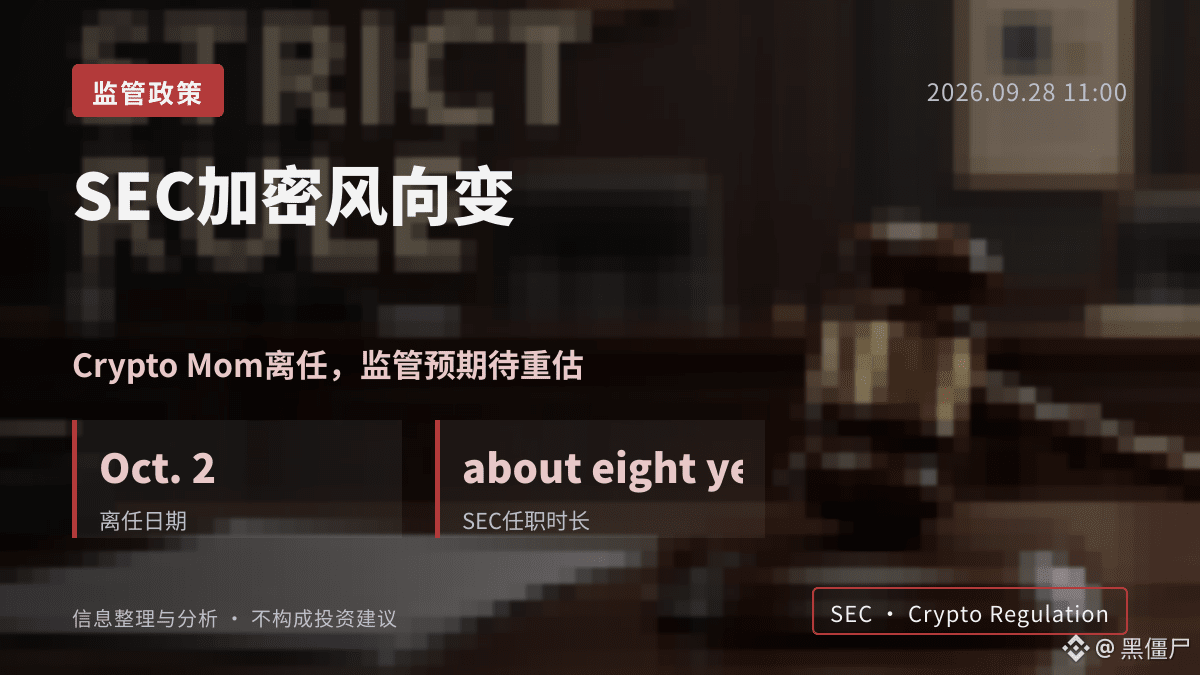
Hester Peirce steps down on October 2; SEC crypto regulation direction faces uncertainty
According to reports by Cointelegraph and CoinDesk, SEC Commissioner Hester Peirce will step down on October 2, ending her nearly eight years at the agency. During her tenure, she served as the head of the Crypto Working Group and has also been dubbed the “Crypto Mom” by the market.
Peirce has long been regarded as a relatively crypto-friendly voice within the SEC. Her departure means the SEC will lose a consistent driver pushing for engagement on crypto regulation. For the crypto market, this does not directly signal a tightening of policy, but it may change the pace and expectations of regulatory communication.
From a regulatory perspective, after Peirce leaves, the SEC’s stance toward crypto projects may depend more on the slate of new commissioners and the agency’s internal positions. If subsequent commissioners lean more toward a traditional securities-law framework, uncertainty around issues such as whether crypto assets are securities, token issuance, and exchange compliance could increase.
In terms of market reaction, near-term sentiment may lean cautiously—especially for projects and exchanges that rely on clearer SEC oversight. However, since the policy direction is not yet set, it would be inappropriate to interpret a single personnel change as an unequivocal negative or positive.
Next, it will be important to watch whether the SEC announces her successor, the new commissioner’s views on crypto, and the SEC’s subsequent statements on issues such as tokens, ETFs, and stablecoins.
#SEC #CryptoRegulation
The above is an information roundup and personal analysis and does not constitute investment advice.
I will continue to provide updates once more policy details become clear.
Hester Peirce steps down on October 2; SEC crypto regulation direction faces uncertainty
According to reports by Cointelegraph and CoinDesk, SEC Commissioner Hester Peirce will step down on October 2, ending her nearly eight years at the agency. During her tenure, she served as the head of the Crypto Working Group and has also been dubbed the “Crypto Mom” by the market.
Peirce has long been regarded as a relatively crypto-friendly voice within the SEC. Her departure means the SEC will lose a consistent driver pushing for engagement on crypto regulation. For the crypto market, this does not directly signal a tightening of policy, but it may change the pace and expectations of regulatory communication.
From a regulatory perspective, after Peirce leaves, the SEC’s stance toward crypto projects may depend more on the slate of new commissioners and the agency’s internal positions. If subsequent commissioners lean more toward a traditional securities-law framework, uncertainty around issues such as whether crypto assets are securities, token issuance, and exchange compliance could increase.
In terms of market reaction, near-term sentiment may lean cautiously—especially for projects and exchanges that rely on clearer SEC oversight. However, since the policy direction is not yet set, it would be inappropriate to interpret a single personnel change as an unequivocal negative or positive.
Next, it will be important to watch whether the SEC announces her successor, the new commissioner’s views on crypto, and the SEC’s subsequent statements on issues such as tokens, ETFs, and stablecoins.
#SEC #CryptoRegulation
The above is an information roundup and personal analysis and does not constitute investment advice.
I will continue to provide updates once more policy details become clear.
According to reports by Cointelegraph and CoinDesk, SEC Commissioner Hester Peirce will step down on October 2, ending her nearly eight years at the agency. During her tenure, she served as the head of the Crypto Working Group and has also been dubbed the “Crypto Mom” by the market.
Peirce has long been regarded as a relatively crypto-friendly voice within the SEC. Her departure means the SEC will lose a consistent driver pushing for engagement on crypto regulation. For the crypto market, this does not directly signal a tightening of policy, but it may change the pace and expectations of regulatory communication.
From a regulatory perspective, after Peirce leaves, the SEC’s stance toward crypto projects may depend more on the slate of new commissioners and the agency’s internal positions. If subsequent commissioners lean more toward a traditional securities-law framework, uncertainty around issues such as whether crypto assets are securities, token issuance, and exchange compliance could increase.
In terms of market reaction, near-term sentiment may lean cautiously—especially for projects and exchanges that rely on clearer SEC oversight. However, since the policy direction is not yet set, it would be inappropriate to interpret a single personnel change as an unequivocal negative or positive.
Next, it will be important to watch whether the SEC announces her successor, the new commissioner’s views on crypto, and the SEC’s subsequent statements on issues such as tokens, ETFs, and stablecoins.
#SEC #CryptoRegulation
The above is an information roundup and personal analysis and does not constitute investment advice.
I will continue to provide updates once more policy details become clear.
43
·
--
Zano rolls back one month of blocks to fix a gateway vulnerability—what is the cost of the repair?
Zano has just completed a fairly rare on-chain operation: according to Cointelegraph, the Zano blockchain was rolled back to the block height before the introduction of the Gateway Address feature included in Hard Fork 6, and restarted from there as the new beginning. The rollback span was about one month, and the direct trigger was a security vulnerability that exploited the gateway address mechanism.
Why is this worth noting? Not because of Zano itself, but because it demonstrates the “heaviest” kind of repair a decentralized network can perform when a protocol-layer flaw is discovered: not a patch, not a soft fork—but tearing down an entire segment of historical blocks and rebuilding it. For coin holders, this means the transaction states from the past month have been reset. Wallet balances, unconfirmed transactions, and the states of derivatives or cross-chain bridges that depend on that chain may all be affected, requiring users to double-check everything.
From a technical perspective, gateway addresses are how Zano connects external assets or enables cross-chain interactions. Once exploited, the risk is often not that a single transaction gets stolen, but that the asset-mapping relationship is tampered with. Such vulnerabilities are difficult to “cover over” with subsequent blocks, making rollback to before the feature was introduced the cleanest approach. The cost is also straightforward: the computational power of one month’s worth of blocks, node synchronization, and—most importantly—user trust all need to be rebuilt. The community also needs to explain why it chose rollback rather than other options, and how similar issues will be avoided in the future.
On the market side, Zano’s market cap is relatively small, so the event is unlikely to have a major short-term impact on the mainstream crypto market. However, it could still lead some holders to question the consensus mechanism and governance capabilities, especially if node synchronization problems or inconsistent asset states occur during the rollback. For broader DeFi and cross-chain projects, this is also a reminder: the importance of security audits and a gradual (gray-scale) rollout process before introducing new protocol functionality is just as critical as the functionality itself.
Next, what needs to be watched is: whether the on-chain state remains stable after the rollback, whether the community can reach consensus on subsequent security upgrades quickly, and whether other projects that rely on Zano gateway addresses trigger any chain reactions.
#Zano #CryptoSecurity
The above is an information compilation and personal analysis, and does not constitute investment advice.
Zano rolls back one month of blocks to fix a gateway vulnerability—what is the cost of the repair?
Zano has just completed a fairly rare on-chain operation: according to Cointelegraph, the Zano blockchain was rolled back to the block height before the introduction of the Gateway Address feature included in Hard Fork 6, and restarted from there as the new beginning. The rollback span was about one month, and the direct trigger was a security vulnerability that exploited the gateway address mechanism.
Why is this worth noting? Not because of Zano itself, but because it demonstrates the “heaviest” kind of repair a decentralized network can perform when a protocol-layer flaw is discovered: not a patch, not a soft fork—but tearing down an entire segment of historical blocks and rebuilding it. For coin holders, this means the transaction states from the past month have been reset. Wallet balances, unconfirmed transactions, and the states of derivatives or cross-chain bridges that depend on that chain may all be affected, requiring users to double-check everything.
From a technical perspective, gateway addresses are how Zano connects external assets or enables cross-chain interactions. Once exploited, the risk is often not that a single transaction gets stolen, but that the asset-mapping relationship is tampered with. Such vulnerabilities are difficult to “cover over” with subsequent blocks, making rollback to before the feature was introduced the cleanest approach. The cost is also straightforward: the computational power of one month’s worth of blocks, node synchronization, and—most importantly—user trust all need to be rebuilt. The community also needs to explain why it chose rollback rather than other options, and how similar issues will be avoided in the future.
On the market side, Zano’s market cap is relatively small, so the event is unlikely to have a major short-term impact on the mainstream crypto market. However, it could still lead some holders to question the consensus mechanism and governance capabilities, especially if node synchronization problems or inconsistent asset states occur during the rollback. For broader DeFi and cross-chain projects, this is also a reminder: the importance of security audits and a gradual (gray-scale) rollout process before introducing new protocol functionality is just as critical as the functionality itself.
Next, what needs to be watched is: whether the on-chain state remains stable after the rollback, whether the community can reach consensus on subsequent security upgrades quickly, and whether other projects that rely on Zano gateway addresses trigger any chain reactions.
#Zano #CryptoSecurity
The above is an information compilation and personal analysis, and does not constitute investment advice.
Zano has just completed a fairly rare on-chain operation: according to Cointelegraph, the Zano blockchain was rolled back to the block height before the introduction of the Gateway Address feature included in Hard Fork 6, and restarted from there as the new beginning. The rollback span was about one month, and the direct trigger was a security vulnerability that exploited the gateway address mechanism.
Why is this worth noting? Not because of Zano itself, but because it demonstrates the “heaviest” kind of repair a decentralized network can perform when a protocol-layer flaw is discovered: not a patch, not a soft fork—but tearing down an entire segment of historical blocks and rebuilding it. For coin holders, this means the transaction states from the past month have been reset. Wallet balances, unconfirmed transactions, and the states of derivatives or cross-chain bridges that depend on that chain may all be affected, requiring users to double-check everything.
From a technical perspective, gateway addresses are how Zano connects external assets or enables cross-chain interactions. Once exploited, the risk is often not that a single transaction gets stolen, but that the asset-mapping relationship is tampered with. Such vulnerabilities are difficult to “cover over” with subsequent blocks, making rollback to before the feature was introduced the cleanest approach. The cost is also straightforward: the computational power of one month’s worth of blocks, node synchronization, and—most importantly—user trust all need to be rebuilt. The community also needs to explain why it chose rollback rather than other options, and how similar issues will be avoided in the future.
On the market side, Zano’s market cap is relatively small, so the event is unlikely to have a major short-term impact on the mainstream crypto market. However, it could still lead some holders to question the consensus mechanism and governance capabilities, especially if node synchronization problems or inconsistent asset states occur during the rollback. For broader DeFi and cross-chain projects, this is also a reminder: the importance of security audits and a gradual (gray-scale) rollout process before introducing new protocol functionality is just as critical as the functionality itself.
Next, what needs to be watched is: whether the on-chain state remains stable after the rollback, whether the community can reach consensus on subsequent security upgrades quickly, and whether other projects that rely on Zano gateway addresses trigger any chain reactions.
#Zano #CryptoSecurity
The above is an information compilation and personal analysis, and does not constitute investment advice.

48
·
--
Bitcoin ETF sees seven consecutive days of net inflows, with 2026 fund flows turning positive
According to Decrypt, Bitcoin ETFs have recorded net inflows for seven consecutive trading days, with a cumulative amount nearing $3 billion, driving 2026 cumulative fund flows to positive territory.
The significance of this signal is that ETF fund flows are one of the most direct windows for observing institutional allocation demand. Sustained net inflows over multiple days suggest that after earlier outflows, institutional appetite to allocate to $BTC may be recovering—not merely driven by a one-day impulse.
In terms of market reaction, fund returning typically first shows up in spot buying and the positioning structure, and only later may translate into price trend momentum. If net inflows continue afterward, $BTC’s near-term sentiment may receive support; however, daily or short-term fund flows are easily influenced by price fluctuations, and cannot on their own confirm a trend reversal.
Key variables to watch include whether subsequent net inflows remain consistent, whether the spot price can hold steady, and whether the macro liquidity environment continues to be favorable. If fund flows and price diverge, investors should be wary of limited rebound strength.
Overall, seven consecutive positive days and turning positive for the year are encouraging signals worth monitoring, but trend confirmation still requires time to be verified.
$BTC #Bitcoin #ETF #CryptoMarket
The above is an information roundup and personal analysis and does not constitute investment advice.
Follow me for ongoing tracking of key market changes and data.
Bitcoin ETF sees seven consecutive days of net inflows, with 2026 fund flows turning positive
According to Decrypt, Bitcoin ETFs have recorded net inflows for seven consecutive trading days, with a cumulative amount nearing $3 billion, driving 2026 cumulative fund flows to positive territory.
The significance of this signal is that ETF fund flows are one of the most direct windows for observing institutional allocation demand. Sustained net inflows over multiple days suggest that after earlier outflows, institutional appetite to allocate to $BTC may be recovering—not merely driven by a one-day impulse.
In terms of market reaction, fund returning typically first shows up in spot buying and the positioning structure, and only later may translate into price trend momentum. If net inflows continue afterward, $BTC ’s near-term sentiment may receive support; however, daily or short-term fund flows are easily influenced by price fluctuations, and cannot on their own confirm a trend reversal.
Key variables to watch include whether subsequent net inflows remain consistent, whether the spot price can hold steady, and whether the macro liquidity environment continues to be favorable. If fund flows and price diverge, investors should be wary of limited rebound strength.
Overall, seven consecutive positive days and turning positive for the year are encouraging signals worth monitoring, but trend confirmation still requires time to be verified.
$BTC #Bitcoin #ETF #CryptoMarket
The above is an information roundup and personal analysis and does not constitute investment advice.
Follow me for ongoing tracking of key market changes and data.
According to Decrypt, Bitcoin ETFs have recorded net inflows for seven consecutive trading days, with a cumulative amount nearing $3 billion, driving 2026 cumulative fund flows to positive territory.
The significance of this signal is that ETF fund flows are one of the most direct windows for observing institutional allocation demand. Sustained net inflows over multiple days suggest that after earlier outflows, institutional appetite to allocate to $BTC may be recovering—not merely driven by a one-day impulse.
In terms of market reaction, fund returning typically first shows up in spot buying and the positioning structure, and only later may translate into price trend momentum. If net inflows continue afterward, $BTC ’s near-term sentiment may receive support; however, daily or short-term fund flows are easily influenced by price fluctuations, and cannot on their own confirm a trend reversal.
Key variables to watch include whether subsequent net inflows remain consistent, whether the spot price can hold steady, and whether the macro liquidity environment continues to be favorable. If fund flows and price diverge, investors should be wary of limited rebound strength.
Overall, seven consecutive positive days and turning positive for the year are encouraging signals worth monitoring, but trend confirmation still requires time to be verified.
$BTC #Bitcoin #ETF #CryptoMarket
The above is an information roundup and personal analysis and does not constitute investment advice.
Follow me for ongoing tracking of key market changes and data.

56
·
--
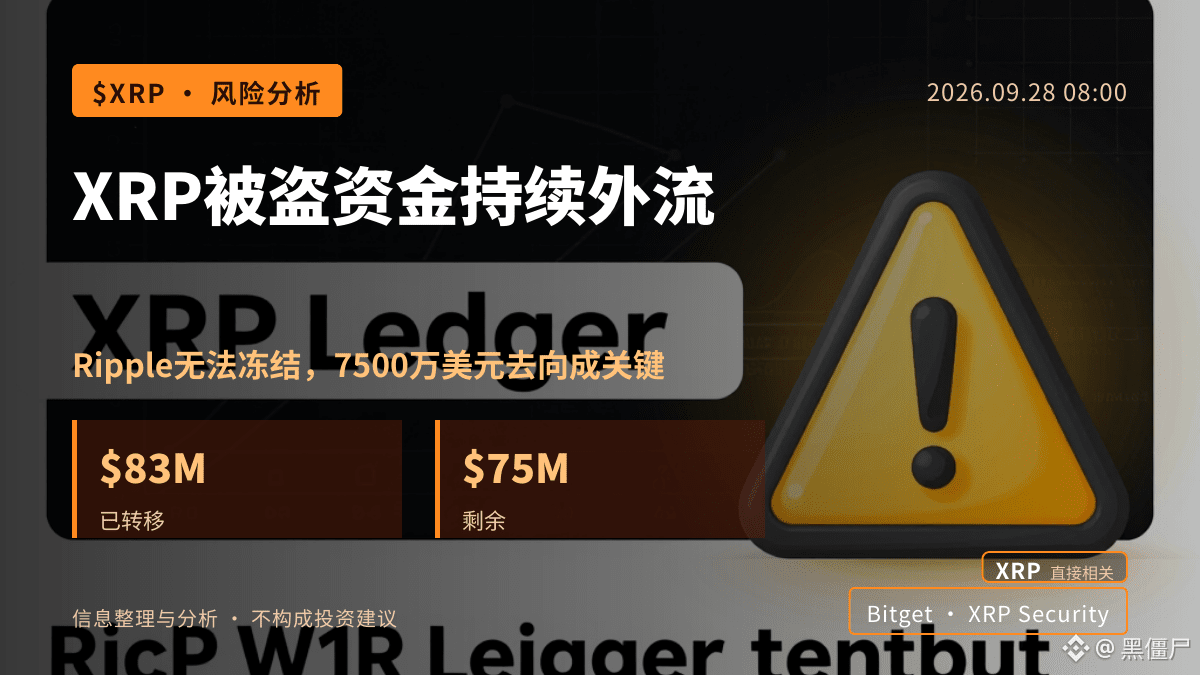
Bitget Stolen XRP Has Been Moved for $83 Million; Ripple Cannot Freeze It, Raising Concerns
According to CoinDesk, the Bitget hacker has transferred approximately $83 million worth of stolen XRP out of the original wallets. Of the five original wallets, two have been nearly emptied, the third is currently being drained, and the remaining roughly $75 million is still on-chain. The wallet $XRP has been directly singled out because these assets are continuously flowing out, and Ripple currently cannot freeze these tokens on-chain.
The key point here is not how much the hacker “stole,” but whether the outflow can still be stopped. Under the XRP Ledger’s consensus mechanism, ordinary account balances can’t be quickly frozen via smart contracts or custodians the way they can on Ethereum. Once funds leave the original wallet, tracking and interception become significantly more difficult. If the funds subsequently move to exchanges and are dumped in a centralized manner, short-term price volatility could be amplified. If they’re dispersed across multiple addresses or cold wallets, it looks more like asset transfer rather than immediate sell pressure.
Judging by market reaction, $XRP may face some pressure, but the magnitude depends on the outflow pace of the remaining $75 million and the size of incoming demand. What needs to be watched is whether the remaining funds continue to concentrate toward exchange addresses, whether large OTC trades appear, and whether Ripple or related parties propose on-chain governance responses.
On the other hand, the impact of a single security incident on long-term prices is often limited, and some of the funds may not enter the spot market immediately. Over-attributing this event could lead to overlooking broader liquidity and regulatory variables. Next, the focus should be on where the remaining $75 million goes and the exchange net inflow data.
$XRP #XRP #CryptoSecurity
The above is information compilation and personal analysis, and does not constitute investment advice. If there are any important developments afterward, I will continue to track and update.
Bitget Stolen XRP Has Been Moved for $83 Million; Ripple Cannot Freeze It, Raising Concerns
According to CoinDesk, the Bitget hacker has transferred approximately $83 million worth of stolen XRP out of the original wallets. Of the five original wallets, two have been nearly emptied, the third is currently being drained, and the remaining roughly $75 million is still on-chain. The wallet $XRP has been directly singled out because these assets are continuously flowing out, and Ripple currently cannot freeze these tokens on-chain.
The key point here is not how much the hacker “stole,” but whether the outflow can still be stopped. Under the XRP Ledger’s consensus mechanism, ordinary account balances can’t be quickly frozen via smart contracts or custodians the way they can on Ethereum. Once funds leave the original wallet, tracking and interception become significantly more difficult. If the funds subsequently move to exchanges and are dumped in a centralized manner, short-term price volatility could be amplified. If they’re dispersed across multiple addresses or cold wallets, it looks more like asset transfer rather than immediate sell pressure.
Judging by market reaction, $XRP may face some pressure, but the magnitude depends on the outflow pace of the remaining $75 million and the size of incoming demand. What needs to be watched is whether the remaining funds continue to concentrate toward exchange addresses, whether large OTC trades appear, and whether Ripple or related parties propose on-chain governance responses.
On the other hand, the impact of a single security incident on long-term prices is often limited, and some of the funds may not enter the spot market immediately. Over-attributing this event could lead to overlooking broader liquidity and regulatory variables. Next, the focus should be on where the remaining $75 million goes and the exchange net inflow data.
$XRP #XRP #CryptoSecurity
The above is information compilation and personal analysis, and does not constitute investment advice. If there are any important developments afterward, I will continue to track and update.
According to CoinDesk, the Bitget hacker has transferred approximately $83 million worth of stolen XRP out of the original wallets. Of the five original wallets, two have been nearly emptied, the third is currently being drained, and the remaining roughly $75 million is still on-chain. The wallet $XRP has been directly singled out because these assets are continuously flowing out, and Ripple currently cannot freeze these tokens on-chain.
The key point here is not how much the hacker “stole,” but whether the outflow can still be stopped. Under the XRP Ledger’s consensus mechanism, ordinary account balances can’t be quickly frozen via smart contracts or custodians the way they can on Ethereum. Once funds leave the original wallet, tracking and interception become significantly more difficult. If the funds subsequently move to exchanges and are dumped in a centralized manner, short-term price volatility could be amplified. If they’re dispersed across multiple addresses or cold wallets, it looks more like asset transfer rather than immediate sell pressure.
Judging by market reaction, $XRP may face some pressure, but the magnitude depends on the outflow pace of the remaining $75 million and the size of incoming demand. What needs to be watched is whether the remaining funds continue to concentrate toward exchange addresses, whether large OTC trades appear, and whether Ripple or related parties propose on-chain governance responses.
On the other hand, the impact of a single security incident on long-term prices is often limited, and some of the funds may not enter the spot market immediately. Over-attributing this event could lead to overlooking broader liquidity and regulatory variables. Next, the focus should be on where the remaining $75 million goes and the exchange net inflow data.
$XRP #XRP #CryptoSecurity
The above is information compilation and personal analysis, and does not constitute investment advice. If there are any important developments afterward, I will continue to track and update.
122
·
--
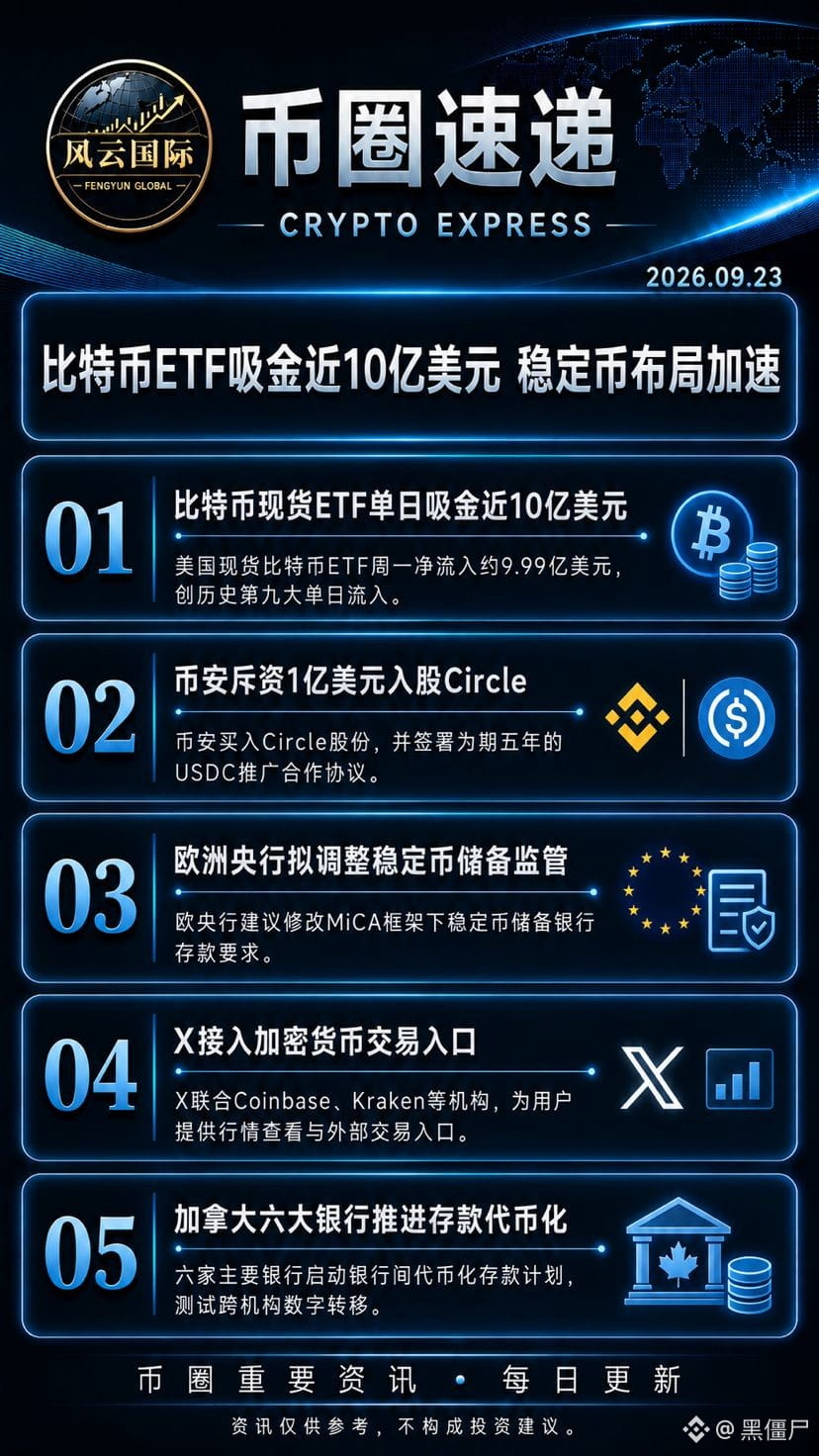
SEC Employee Guidance: Token Buybacks on Functional Networks Do Not Automatically Constitute Securities
According to Decrypt, the latest staff guidance from the U.S. Securities and Exchange Commission (SEC) makes clear that announcing token buybacks on a functional network does not necessarily amount to a commitment to turn the tokens into securities. This statement draws a direct line between token buybacks and the determination of whether something is a security. The core logic is that as long as the network itself has real functionality, the buyback action is more a part of the token’s economic mechanism, rather than a promise of profits under an investment contract.
The impact of this guidance on the crypto market is that it significantly reduces compliance uncertainty when projects implement buybacks. In the past, many projects chose to be cautious, fearing that buybacks could be interpreted as a “guarantee of returns.” Now, clarification from the SEC staff provides clearer operational space for token economic design. Market sentiment may therefore receive support—especially for protocols that rely on buyback mechanisms to maintain token value, or that may reassess their capital allocation strategies.
However, it remains to be seen that the SEC staff guidance is not an official rule. It could still be overturned or further refined later. If the market over-interprets the guidance, there may be a surge in token buyback activity in the short term, but long-term compliance risk has not been fully eliminated. In addition, the definition of a “functional network” in the guidance still requires specific cases to be further clarified, and different projects may apply different evidentiary standards for “functionality.”
Next, attention should focus on whether the SEC will incorporate this guidance into the formal rulemaking process, and how major exchanges and project teams will adjust the wording of their buyback announcements. If, subsequently, a first case emerges where the guidance is successfully used to avoid a securities determination, it would have a tangible effect on market confidence.
#SEC #CryptoRegulation #Tokenomics
The above is an information summary and personal analysis, and does not constitute investment advice.
If you like this kind of ad-free market analysis, you can follow me—important updates will continue to be provided.
SEC Employee Guidance: Token Buybacks on Functional Networks Do Not Automatically Constitute Securities
According to Decrypt, the latest staff guidance from the U.S. Securities and Exchange Commission (SEC) makes clear that announcing token buybacks on a functional network does not necessarily amount to a commitment to turn the tokens into securities. This statement draws a direct line between token buybacks and the determination of whether something is a security. The core logic is that as long as the network itself has real functionality, the buyback action is more a part of the token’s economic mechanism, rather than a promise of profits under an investment contract.
The impact of this guidance on the crypto market is that it significantly reduces compliance uncertainty when projects implement buybacks. In the past, many projects chose to be cautious, fearing that buybacks could be interpreted as a “guarantee of returns.” Now, clarification from the SEC staff provides clearer operational space for token economic design. Market sentiment may therefore receive support—especially for protocols that rely on buyback mechanisms to maintain token value, or that may reassess their capital allocation strategies.
However, it remains to be seen that the SEC staff guidance is not an official rule. It could still be overturned or further refined later. If the market over-interprets the guidance, there may be a surge in token buyback activity in the short term, but long-term compliance risk has not been fully eliminated. In addition, the definition of a “functional network” in the guidance still requires specific cases to be further clarified, and different projects may apply different evidentiary standards for “functionality.”
Next, attention should focus on whether the SEC will incorporate this guidance into the formal rulemaking process, and how major exchanges and project teams will adjust the wording of their buyback announcements. If, subsequently, a first case emerges where the guidance is successfully used to avoid a securities determination, it would have a tangible effect on market confidence.
#SEC #CryptoRegulation #Tokenomics
The above is an information summary and personal analysis, and does not constitute investment advice.
If you like this kind of ad-free market analysis, you can follow me—important updates will continue to be provided.
According to Decrypt, the latest staff guidance from the U.S. Securities and Exchange Commission (SEC) makes clear that announcing token buybacks on a functional network does not necessarily amount to a commitment to turn the tokens into securities. This statement draws a direct line between token buybacks and the determination of whether something is a security. The core logic is that as long as the network itself has real functionality, the buyback action is more a part of the token’s economic mechanism, rather than a promise of profits under an investment contract.
The impact of this guidance on the crypto market is that it significantly reduces compliance uncertainty when projects implement buybacks. In the past, many projects chose to be cautious, fearing that buybacks could be interpreted as a “guarantee of returns.” Now, clarification from the SEC staff provides clearer operational space for token economic design. Market sentiment may therefore receive support—especially for protocols that rely on buyback mechanisms to maintain token value, or that may reassess their capital allocation strategies.
However, it remains to be seen that the SEC staff guidance is not an official rule. It could still be overturned or further refined later. If the market over-interprets the guidance, there may be a surge in token buyback activity in the short term, but long-term compliance risk has not been fully eliminated. In addition, the definition of a “functional network” in the guidance still requires specific cases to be further clarified, and different projects may apply different evidentiary standards for “functionality.”
Next, attention should focus on whether the SEC will incorporate this guidance into the formal rulemaking process, and how major exchanges and project teams will adjust the wording of their buyback announcements. If, subsequently, a first case emerges where the guidance is successfully used to avoid a securities determination, it would have a tangible effect on market confidence.
#SEC #CryptoRegulation #Tokenomics
The above is an information summary and personal analysis, and does not constitute investment advice.
If you like this kind of ad-free market analysis, you can follow me—important updates will continue to be provided.
1
67

·
--
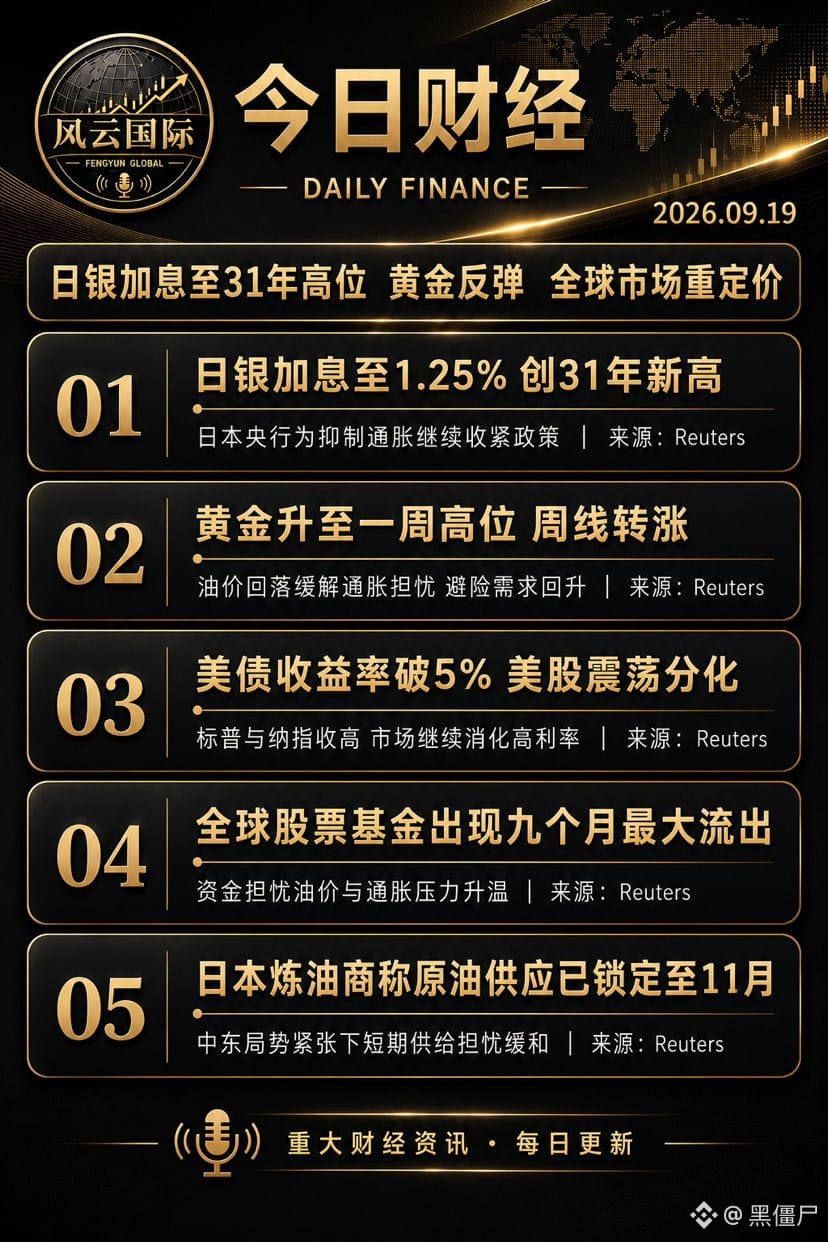
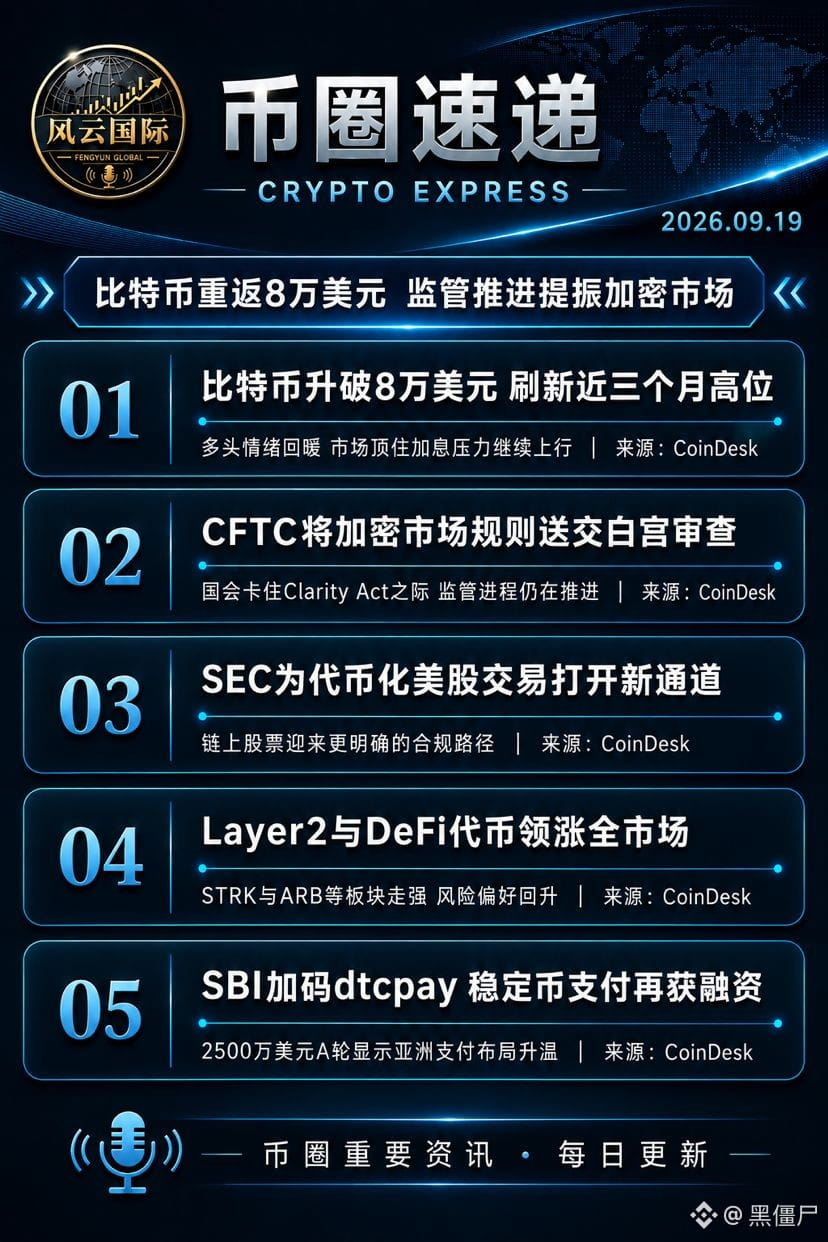
🌍 September 19 Finance and Crypto Circle Fast Update: the US, Japan, and Canada hike rates, gold rebounds, and Bitcoin returns to $80,000! Global market volatility is intensifying, with macro pressure and crypto regulatory developments intertwining. Keep an eye on fund flows and approach market opportunities and risks rationally.
#BTC #Gold #FederalReserve #BinanceSquare #FengyunInternational
🌍 September 19 Finance and Crypto Circle Fast Update: the US, Japan, and Canada hike rates, gold rebounds, and Bitcoin returns to $80,000! Global market volatility is intensifying, with macro pressure and crypto regulatory developments intertwining. Keep an eye on fund flows and approach market opportunities and risks rationally.
#BTC #Gold #FederalReserve #BinanceSquare #FengyunInternational
#BTC #Gold #FederalReserve #BinanceSquare #FengyunInternational
229
·
--
How Much Can You Earn by Investing for Ten Years
How Much Can You Earn by Investing for Ten Years
18
·
--
Article
In-depth analysis: The half-year oscillation pattern of BTC and ETH amidst liquidity retreatIn-depth analysis: In the face of liquidity retreat, the bottom-seeking journey of BTC and ETH
Recently, the market has undergone drastic changes, with gold prices plummeting and Bitcoin experiencing a significant setback. The core trigger for this series of fluctuations is the market's complete reversal of expectations regarding the Federal Reserve's interest rate cuts. As expectations for easing are thoroughly dashed, global market liquidity is undergoing a severe test, with cryptocurrencies being the first to suffer.
1. As liquidity retreats, the crypto market enters its darkest moment
Liquidity is the lifeline of the crypto market. During the bull market cycle of the past two years, it was the Federal Reserve's quantitative easing policy that injected massive funds into the market, propelling BTC and ETH to soar. Now, as inflation proves stickier than expected, the Federal Reserve's maintenance of high interest rates will far exceed market expectations, leading global capital to accelerate its withdrawal from risk assets.
In-depth analysis: The half-year oscillation pattern of BTC and ETH amidst liquidity retreat
In-depth analysis: In the face of liquidity retreat, the bottom-seeking journey of BTC and ETH
Recently, the market has undergone drastic changes, with gold prices plummeting and Bitcoin experiencing a significant setback. The core trigger for this series of fluctuations is the market's complete reversal of expectations regarding the Federal Reserve's interest rate cuts. As expectations for easing are thoroughly dashed, global market liquidity is undergoing a severe test, with cryptocurrencies being the first to suffer.
1. As liquidity retreats, the crypto market enters its darkest moment
Liquidity is the lifeline of the crypto market. During the bull market cycle of the past two years, it was the Federal Reserve's quantitative easing policy that injected massive funds into the market, propelling BTC and ETH to soar. Now, as inflation proves stickier than expected, the Federal Reserve's maintenance of high interest rates will far exceed market expectations, leading global capital to accelerate its withdrawal from risk assets.
Recently, the market has undergone drastic changes, with gold prices plummeting and Bitcoin experiencing a significant setback. The core trigger for this series of fluctuations is the market's complete reversal of expectations regarding the Federal Reserve's interest rate cuts. As expectations for easing are thoroughly dashed, global market liquidity is undergoing a severe test, with cryptocurrencies being the first to suffer.
1. As liquidity retreats, the crypto market enters its darkest moment
Liquidity is the lifeline of the crypto market. During the bull market cycle of the past two years, it was the Federal Reserve's quantitative easing policy that injected massive funds into the market, propelling BTC and ETH to soar. Now, as inflation proves stickier than expected, the Federal Reserve's maintenance of high interest rates will far exceed market expectations, leading global capital to accelerate its withdrawal from risk assets.
1.2k
·
--
Failure is temporary; failure does not mean eternal failure
Failure is temporary; failure does not mean eternal failure

我是小z啊i
·
--
BullishI'm emotional, I've blown my account, will you laugh at me???
$ETH $币安人生
$ETH $币安人生

5
·
--
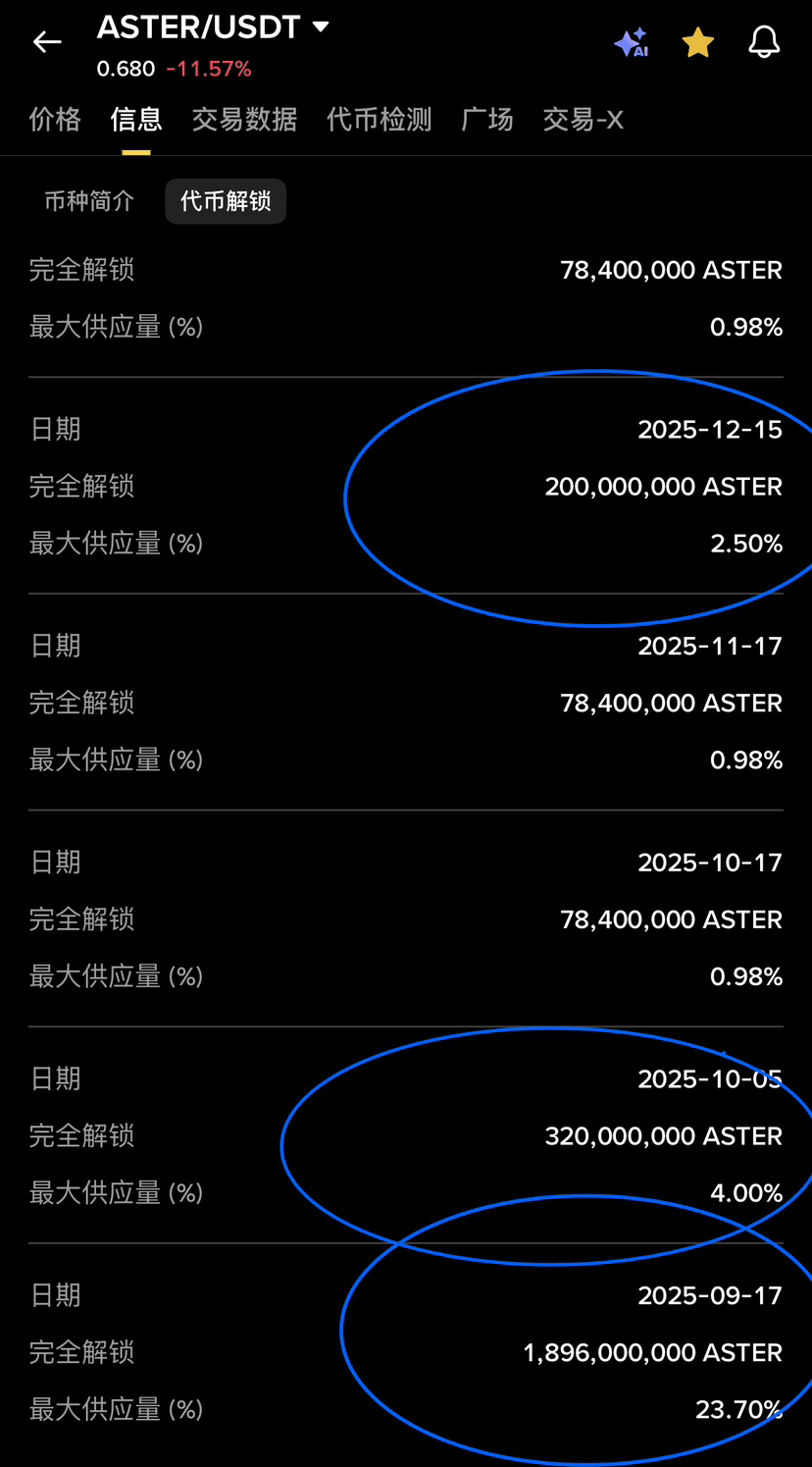
8 billion Aster evaluation optimistic scenario for 2035 completed at 6 dollars per coin evaluation completed
8 billion Aster evaluation optimistic scenario for 2035 completed at 6 dollars per coin evaluation completed

加密joker
·
--
$ASTER Do you understand the expert 🤔? It's basically just burning paper at the grave! Fooling the ghost 🤔
1
1
2
179
·
--
Bullish
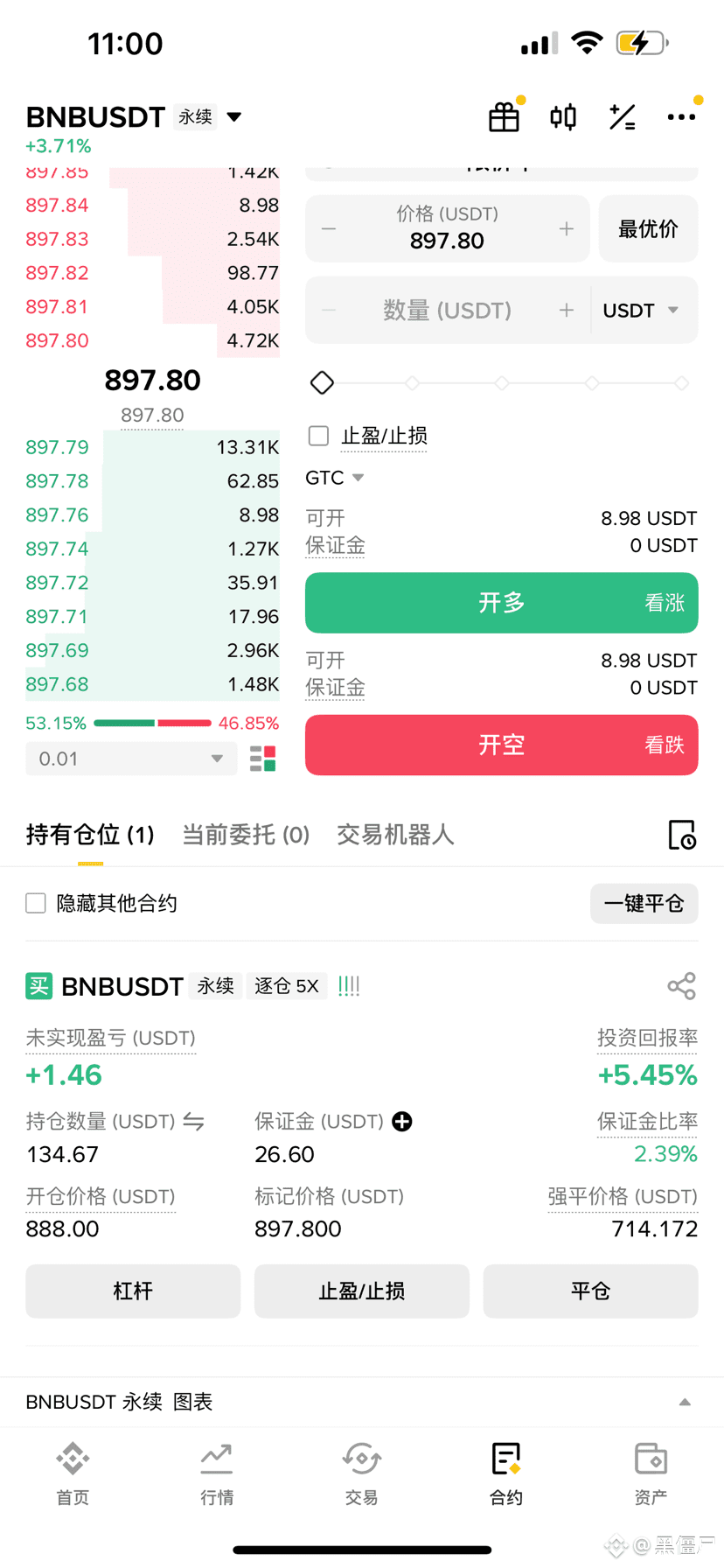
Little warehouse bullish 888 hope everyone can make a fortune together
Little warehouse bullish 888 hope everyone can make a fortune together
1
126
·
--
Bullish
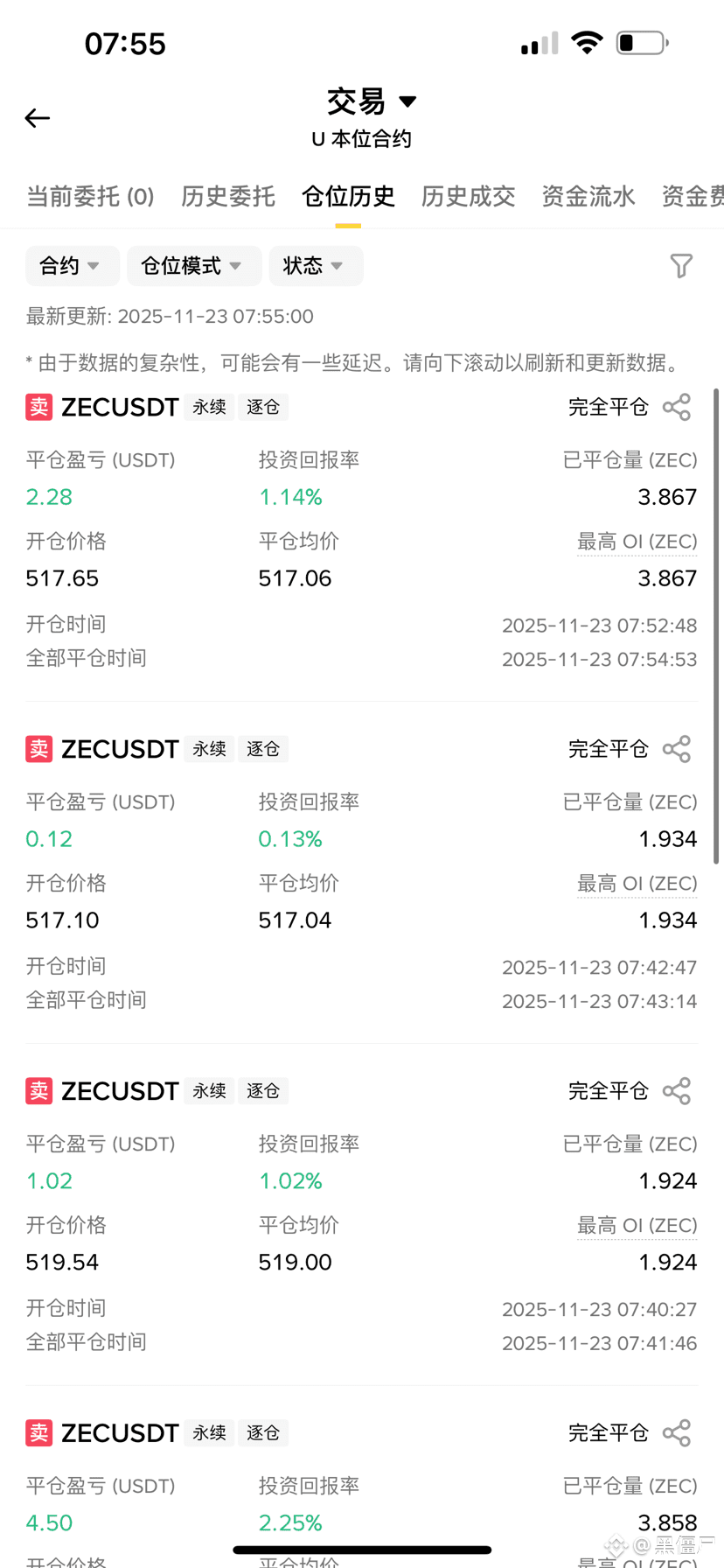
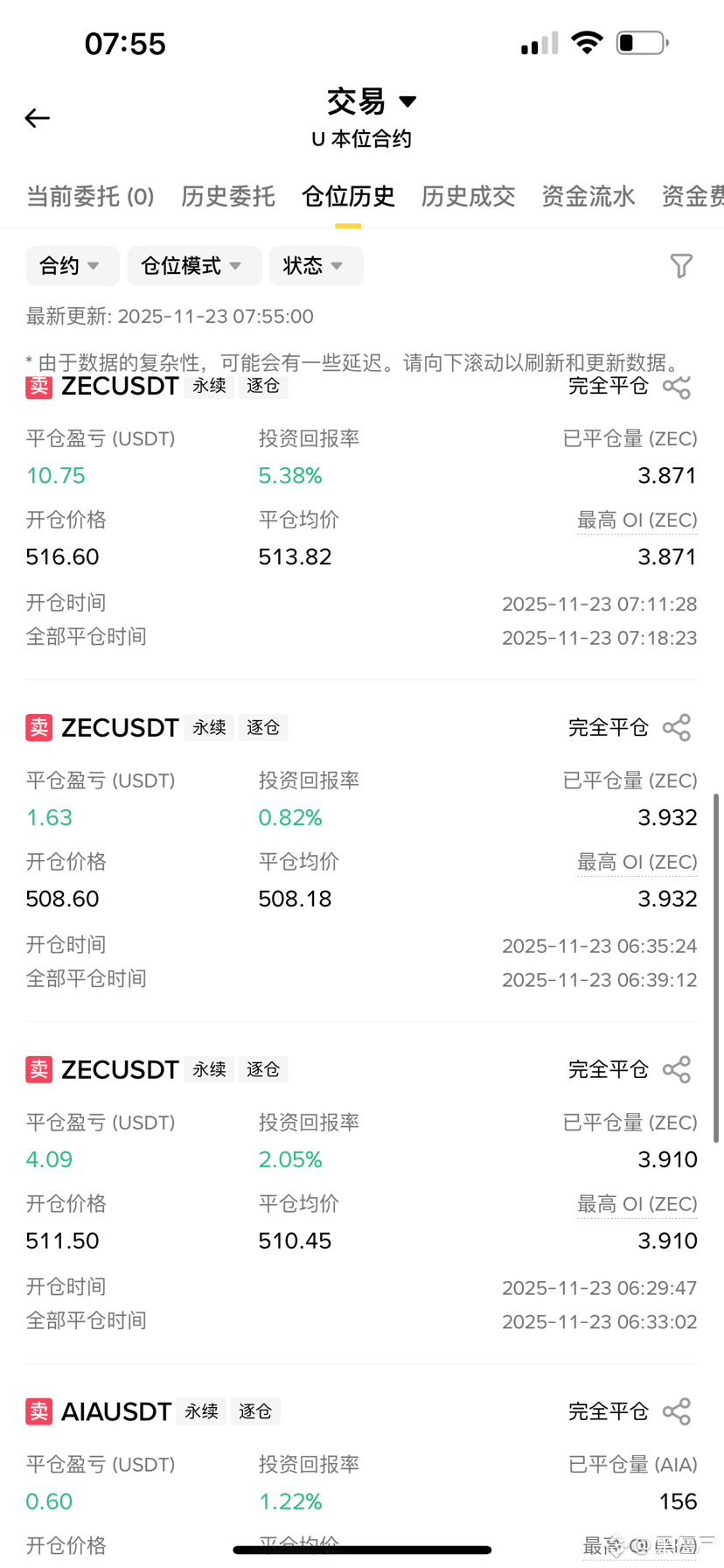
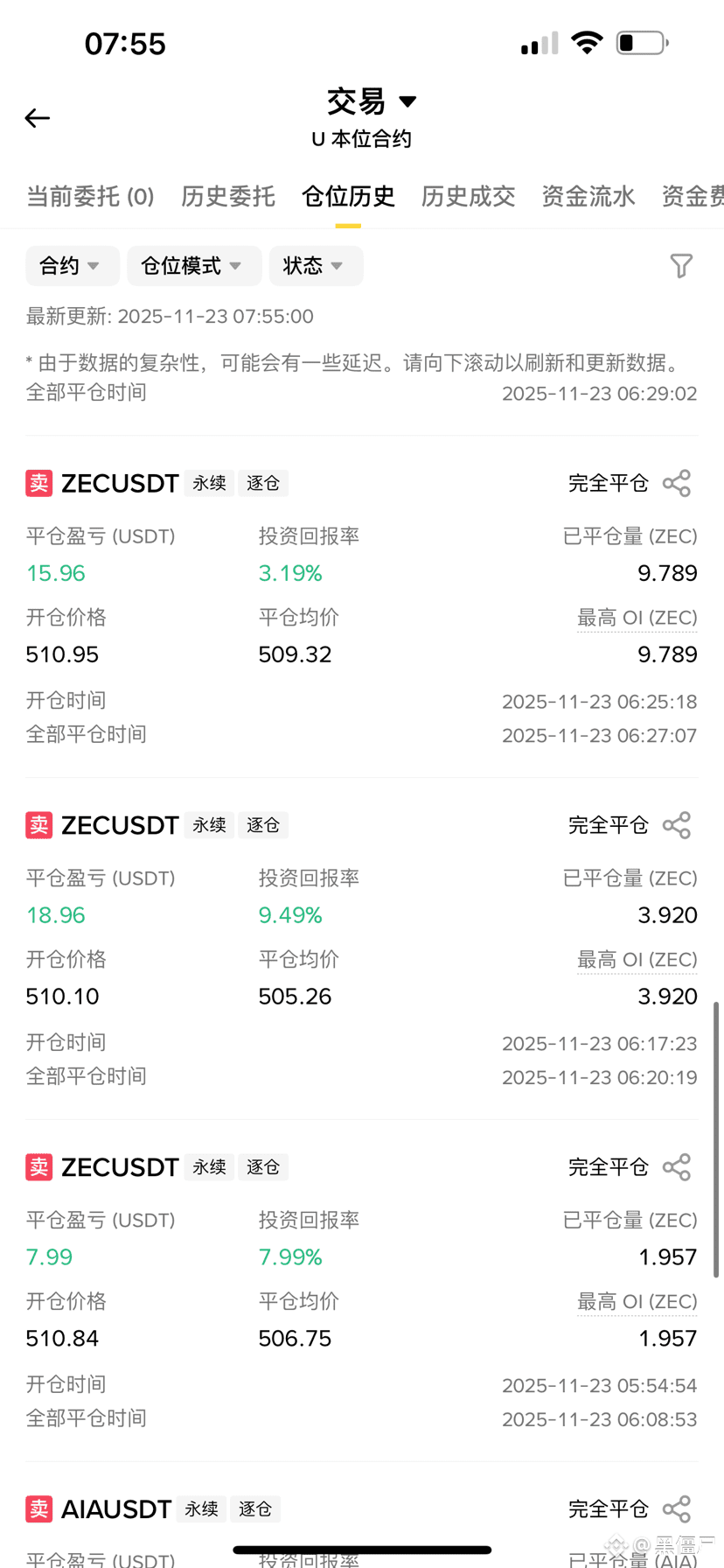
With my win rate, who can match it? How do you admire me? Haha $BTC $ZEC
With my win rate, who can match it? How do you admire me? Haha $BTC $ZEC
1.3k
·
--
《币安之书》——The Book of Binance
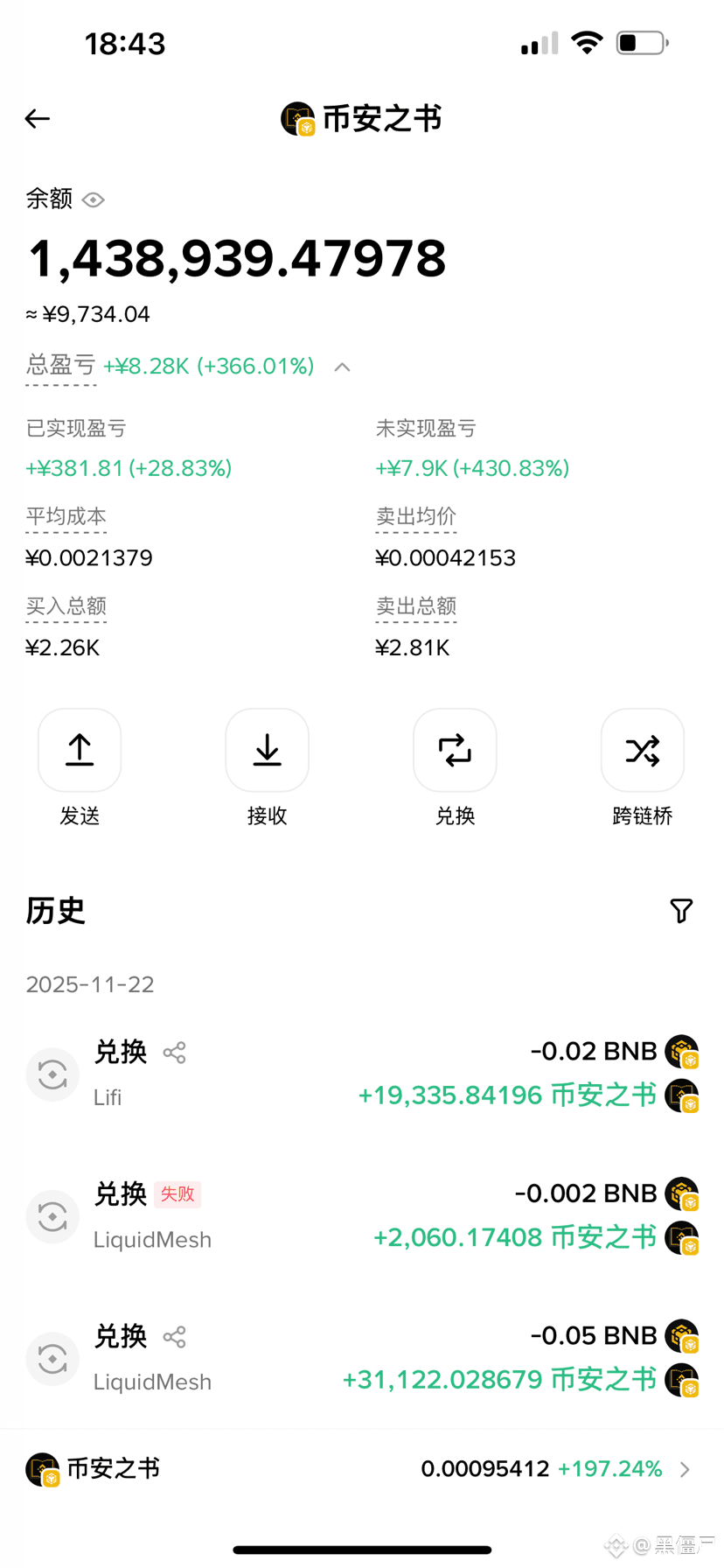
Honestly, I didn't pay much attention when this small project first came out, just treating it as one of many memes.
Until I opened its website and finished reading the pixel-style "Epic of Binance" in 14 chapters, I suddenly felt that this thing seemed a bit different.
It's not a simple imitation, but rather it incorporates the key milestones of Binance over the past decade —
from its founding in 2017, bear markets, storms, reshaping, Web3 civilization, cultural renaissance…
all written into an "on-chain novel".
A very strange feeling:
It's like reading a story that's happening right now.
⸻
At the same time, many people in the industry also noticed a coincidence:
CZ said "the book is about to be released", and the community really "wrote a book" on its own.
Not official, no pre-sale, no grand team efforts.
Instead, it formed an organic, purely community-driven product.
This spontaneous narrative is somewhat similar to $DOGE in 2021 and $ORDI in 2023:
It's not team-driven, but culture-driven.
⸻
What's even more interesting is:
In places like BX and Twitter, historical screenshots show it rising from a market value of hundreds of thousands to nearly ten million, then pulling back, and being naturally bought back by users.
There is no obvious whale manipulation, and the trading data is relatively clean.
The vitality of cultural memes generally depends on two points:
1) Is the narrative sustainable?
The narrative of "The Book of Binance" was just ignited by CZ's phrase "Book releasing soon".
2) Will the community continue to iterate?
From the current heat seen on X, the secondary creations by KOLs, and the image-text memes, it seems to be continuing to develop.
⸻
Personally, I won't give investment advice (nor am I recommending everyone to buy),
I just feel that:
In all the noise of chasing up and down, occasionally being able to see a "pure narrative" project,
feels quite reminiscent of the early days of Web3.
If CZ is truly preparing some "book",
then this community-driven product may just be the beginning.
——You never know what’s next.
CA(BSC):0x2fd2f9e1e1272bd14d8140fd1a9d2d67552d4444
(DYOR,do your own research.)
《币安之书》——The Book of Binance
Honestly, I didn't pay much attention when this small project first came out, just treating it as one of many memes.
Until I opened its website and finished reading the pixel-style "Epic of Binance" in 14 chapters, I suddenly felt that this thing seemed a bit different.
It's not a simple imitation, but rather it incorporates the key milestones of Binance over the past decade —
from its founding in 2017, bear markets, storms, reshaping, Web3 civilization, cultural renaissance…
all written into an "on-chain novel".
A very strange feeling:
It's like reading a story that's happening right now.
⸻
At the same time, many people in the industry also noticed a coincidence:
CZ said "the book is about to be released", and the community really "wrote a book" on its own.
Not official, no pre-sale, no grand team efforts.
Instead, it formed an organic, purely community-driven product.
This spontaneous narrative is somewhat similar to $DOGE in 2021 and $ORDI in 2023:
It's not team-driven, but culture-driven.
⸻
What's even more interesting is:
In places like BX and Twitter, historical screenshots show it rising from a market value of hundreds of thousands to nearly ten million, then pulling back, and being naturally bought back by users.
There is no obvious whale manipulation, and the trading data is relatively clean.
The vitality of cultural memes generally depends on two points:
1) Is the narrative sustainable?
The narrative of "The Book of Binance" was just ignited by CZ's phrase "Book releasing soon".
2) Will the community continue to iterate?
From the current heat seen on X, the secondary creations by KOLs, and the image-text memes, it seems to be continuing to develop.
⸻
Personally, I won't give investment advice (nor am I recommending everyone to buy),
I just feel that:
In all the noise of chasing up and down, occasionally being able to see a "pure narrative" project,
feels quite reminiscent of the early days of Web3.
If CZ is truly preparing some "book",
then this community-driven product may just be the beginning.
——You never know what’s next.
CA(BSC):0x2fd2f9e1e1272bd14d8140fd1a9d2d67552d4444
(DYOR,do your own research.)
Honestly, I didn't pay much attention when this small project first came out, just treating it as one of many memes.
Until I opened its website and finished reading the pixel-style "Epic of Binance" in 14 chapters, I suddenly felt that this thing seemed a bit different.
It's not a simple imitation, but rather it incorporates the key milestones of Binance over the past decade —
from its founding in 2017, bear markets, storms, reshaping, Web3 civilization, cultural renaissance…
all written into an "on-chain novel".
A very strange feeling:
It's like reading a story that's happening right now.
⸻
At the same time, many people in the industry also noticed a coincidence:
CZ said "the book is about to be released", and the community really "wrote a book" on its own.
Not official, no pre-sale, no grand team efforts.
Instead, it formed an organic, purely community-driven product.
This spontaneous narrative is somewhat similar to $DOGE in 2021 and $ORDI in 2023:
It's not team-driven, but culture-driven.
⸻
What's even more interesting is:
In places like BX and Twitter, historical screenshots show it rising from a market value of hundreds of thousands to nearly ten million, then pulling back, and being naturally bought back by users.
There is no obvious whale manipulation, and the trading data is relatively clean.
The vitality of cultural memes generally depends on two points:
1) Is the narrative sustainable?
The narrative of "The Book of Binance" was just ignited by CZ's phrase "Book releasing soon".
2) Will the community continue to iterate?
From the current heat seen on X, the secondary creations by KOLs, and the image-text memes, it seems to be continuing to develop.
⸻
Personally, I won't give investment advice (nor am I recommending everyone to buy),
I just feel that:
In all the noise of chasing up and down, occasionally being able to see a "pure narrative" project,
feels quite reminiscent of the early days of Web3.
If CZ is truly preparing some "book",
then this community-driven product may just be the beginning.
——You never know what’s next.
CA(BSC):0x2fd2f9e1e1272bd14d8140fd1a9d2d67552d4444
(DYOR,do your own research.)
37
13
32
15k
Log in to explore more content
Join global crypto users on Binance Square
⚡️ Get latest and useful information about crypto.
💬 Trusted by the world’s largest crypto exchange.
👍 Discover real insights from verified creators.
Email / Phone number
Trending Topics
GoldFallsTo$4144
1,168 views
35 Discussing
#GoldFallsTo$4144 🚨 GOLD JUST GOT HIT HARD. $4,144 IS THE LEVEL TO WATCH! 🥇📉
Gold prices took a drop now trading near $4,144 per ounce as traders rethink the Federal Reserve’s path on interest rates.
What’s pushing gold lower? Here’s what’s happening:
🔴 Fed hike bets are rising → When interest rates go up holding gold becomes more expensive because it doesn’t pay any interest. That makes bonds or savings accounts look better by comparison.
🛢️ Oil prices are climbing → Higher oil means inflation risks. That pushes banks to keep rates higher for longer which hurts gold.
💵 Yields and dollar strength → When bond yields rise—especially U.S. Treasuries—and the dollar strengthens investors often move out of gold into assets that earn returns.
So the big debate now: Is this a short-term correction after golds massive rally in 2026… or is it the start of a deeper trend reversal?
👀 Traders need to keep an eye on two levels:
- $4,200. A potential support zone
- $4,144. A critical level where price action could shift either way
Will gold bounce back, from here?. Will we see more downside pressure ahead?
#GOLD #Khan62 #trading #Investing
$PAXG · $BTC · $XAG
Khan 62
·0 Likes
·89 views
QNTFallsOver40%FromMorningHigh
7,693 views
274 Discussing
KospiFalls2.7%SamsungSKHynixDropOver5%
370 views
65 Discussing