
#bstocks
bstocks
1.5M Aufrufe
6,734 Kommentare
Hot
Zuletzt

·
--
Verifiziert
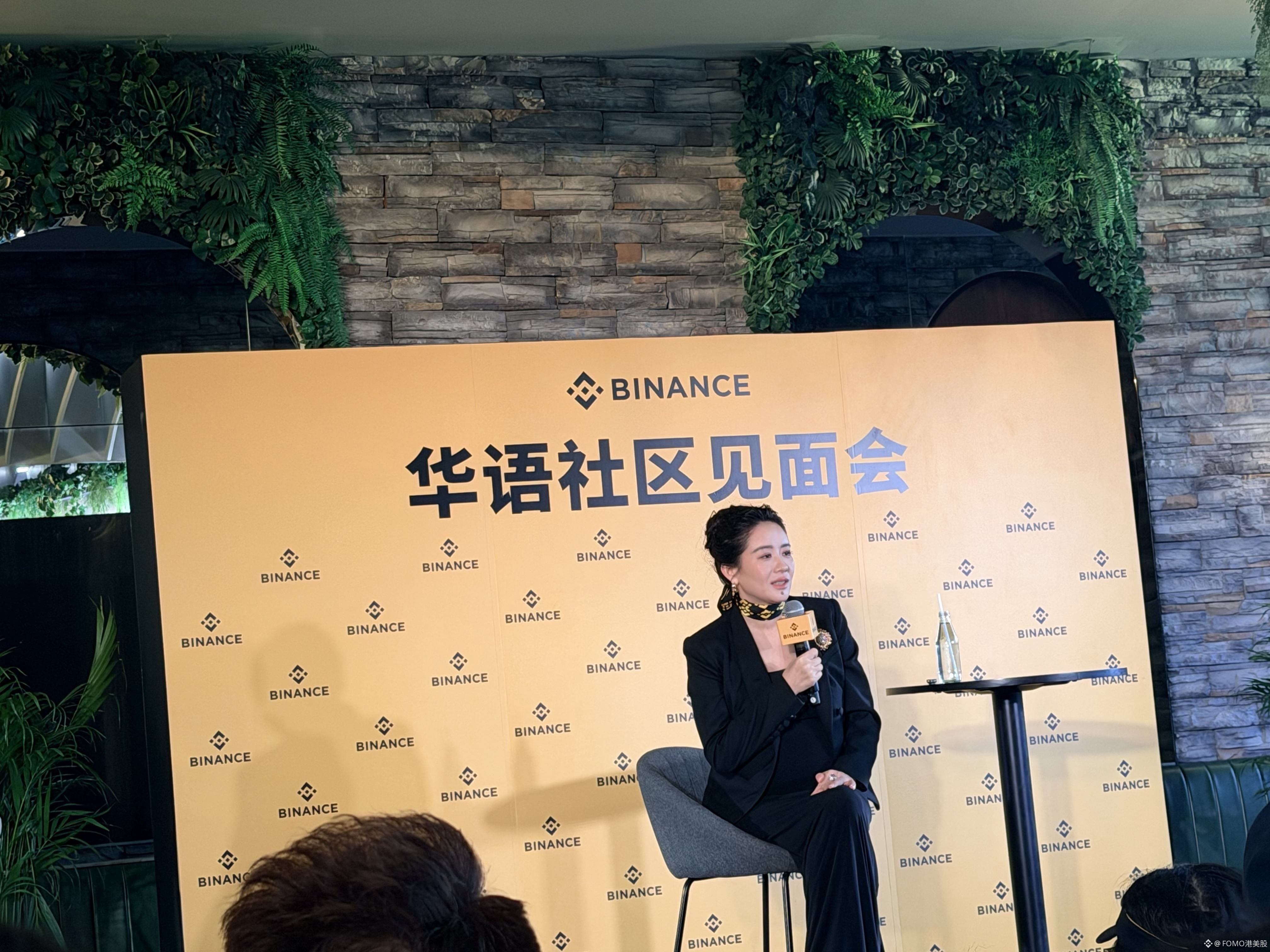
In der AMA-Session mit der Schwester Nummer eins habe ich ihr meine wichtigsten Fragen zu Binances bStocks und TradFi gestellt, @heyi , zusammen mit dem am selben Tag angekündigten Plan für Hongkong-Aktien ergab das eine komplette Binance-Produktlinie für Krypto- und Aktienprodukte.
Q1: Was war der ursprüngliche Anstoß für Binances bStocks? Wie lassen sich traditionelle US-Aktiennutzer überhaupt zum Wechsel bewegen?
Schwester Nummer eins: US-Aktiennutzer haben keinen Mangel an Zugangswegen, der Kauf von US-Aktien läuft reibungslos; die wirklich starke Nachfrage kommt von außerhalb der USA. Binance bedient die Gruppe, für die ein Konto zu eröffnen mühsam ist und die keinen Zugang zu US-Dollar-Assets bekommt. Sie sagte auch offen, worin der Abstand besteht: Die meisten US-Aktiennutzer sind noch bei Brokern wie Futu, Longbridge und Tiger. „Unsere Produkterfahrung ist im Vergleich zu ihnen noch deutlich im Rückstand“, „das Einzige, womit wir wirklich punkten können, ist der 24-Stunden-Handel“.
Q2: Wie beteiligt sich Binance an Börsengängen? Und was ist mit Unternehmen, die bereits anderswo gelistet sind?
Schwester Nummer eins: „Dieses IPO findet nicht bei Binance statt, wir sind nur ein Underwriter“, die Genehmigung liegt bei der lokalen Börse. Aktien, die zwar lokal gelistet sind, aber geringe Liquidität haben, können direkt zu uns übertragen und als Basiswerte genutzt werden. Sie achtet auf drei Dinge: ob es eine offizielle Zusammenarbeit gibt, welche Assets übertragen werden können und welche Projekte sich für einen lokalen Antrag eignen.
Q3: Zum Plan für Handelsprodukte für Hongkong-Aktien.
Binance plant, am 1. Dezember den Handel mit in Hongkong gelisteten Aktien und ETFs zu starten, zunächst mit mehr als 1000 Produkten, die direkt mit USDC gekauft werden können. Gleichzeitig bezeichnete Schwester Nummer eins diesen Schritt von Binance als den ersten Schritt einer Krypto-Börse hin zu einer „All-Finance“-Plattform.
Zusammengefasst sieht Binance bStocks als Einstiegspunkt, IPO-Underwriting als Angebotsseite für die Schaffung neuer Assets, und Hongkong-Aktien als die nächste Umsetzungsregion. Der 24-Stunden-Handel ist derzeit Binances differenzierter Wettbewerbsvorteil im Krypto-Aktien-Handel. Man sieht auch, dass Binance dieses Jahr große Anstrengungen in Aktienhandelsprodukte gesteckt hat; künftig werden weitere Produkte vorangetrieben, um das Ökosystem für Wertpapier-Token-Handel zu vervollständigen.
{spot}(BNBUSDT)
#币安区块链周进化由你 #BStocks #TradFi
In der AMA-Session mit der Schwester Nummer eins habe ich ihr meine wichtigsten Fragen zu Binances bStocks und TradFi gestellt, @Yi He , zusammen mit dem am selben Tag angekündigten Plan für Hongkong-Aktien ergab das eine komplette Binance-Produktlinie für Krypto- und Aktienprodukte.
Q1: Was war der ursprüngliche Anstoß für Binances bStocks? Wie lassen sich traditionelle US-Aktiennutzer überhaupt zum Wechsel bewegen?
Schwester Nummer eins: US-Aktiennutzer haben keinen Mangel an Zugangswegen, der Kauf von US-Aktien läuft reibungslos; die wirklich starke Nachfrage kommt von außerhalb der USA. Binance bedient die Gruppe, für die ein Konto zu eröffnen mühsam ist und die keinen Zugang zu US-Dollar-Assets bekommt. Sie sagte auch offen, worin der Abstand besteht: Die meisten US-Aktiennutzer sind noch bei Brokern wie Futu, Longbridge und Tiger. „Unsere Produkterfahrung ist im Vergleich zu ihnen noch deutlich im Rückstand“, „das Einzige, womit wir wirklich punkten können, ist der 24-Stunden-Handel“.
Q2: Wie beteiligt sich Binance an Börsengängen? Und was ist mit Unternehmen, die bereits anderswo gelistet sind?
Schwester Nummer eins: „Dieses IPO findet nicht bei Binance statt, wir sind nur ein Underwriter“, die Genehmigung liegt bei der lokalen Börse. Aktien, die zwar lokal gelistet sind, aber geringe Liquidität haben, können direkt zu uns übertragen und als Basiswerte genutzt werden. Sie achtet auf drei Dinge: ob es eine offizielle Zusammenarbeit gibt, welche Assets übertragen werden können und welche Projekte sich für einen lokalen Antrag eignen.
Q3: Zum Plan für Handelsprodukte für Hongkong-Aktien.
Binance plant, am 1. Dezember den Handel mit in Hongkong gelisteten Aktien und ETFs zu starten, zunächst mit mehr als 1000 Produkten, die direkt mit USDC gekauft werden können. Gleichzeitig bezeichnete Schwester Nummer eins diesen Schritt von Binance als den ersten Schritt einer Krypto-Börse hin zu einer „All-Finance“-Plattform.
Zusammengefasst sieht Binance bStocks als Einstiegspunkt, IPO-Underwriting als Angebotsseite für die Schaffung neuer Assets, und Hongkong-Aktien als die nächste Umsetzungsregion. Der 24-Stunden-Handel ist derzeit Binances differenzierter Wettbewerbsvorteil im Krypto-Aktien-Handel. Man sieht auch, dass Binance dieses Jahr große Anstrengungen in Aktienhandelsprodukte gesteckt hat; künftig werden weitere Produkte vorangetrieben, um das Ökosystem für Wertpapier-Token-Handel zu vervollständigen.
#币安区块链周进化由你 #BStocks #TradFi
我家的媳妇:
第一就是第一
4
1
19
9.9k

·
--
Artikel
Übersetzung ansehen
Tokenized Stocks Hit a Record $4.8B, and Binance bStocks Now Leads the MarketCrypto prices had a rough November. But one corner of on-chain finance kept setting records: tokenized stocks. On 10 November 2026, Token Terminal data showed the market reaching a record $4.8 billion, and Binance's bStocks was the largest product in it. Here is what the data says.
Quick Facts
Tokenized stocks AUM: a record $4.8B on 10 November 2026 (Token Terminal).Growth of over 640% from about $645M at the start of the year.bStocks: about $1.5B in AUM, over 31% of the market.Tokenized equities are the fastest-growing real-world asset category of 2026.
01 What Tokenized Stocks Are
A tokenized stock is a token that tracks a real share or ETF. It can trade on-chain, often 24/7, and move between wallets. bStocks, for example, are backed 1:1 by US shares held at a regulated custodian.
02 The Record in Numbers
Token Terminal's figures tell a strong story:
From about $645M at the start of 2026 to $4.8B on 10 November.That is growth of more than 640% in under a year.bStocks alone held about $1.5B, over 31% of the category.
Different trackers count slightly differently, and some put the market at $4.6-4.9B, but they agree on the direction.
03 From Zero to Leader in Five Months
bStocks only launched in June 2026. Binance Research reported that it reached $1B in assets in 125 days. By November, it was the largest tokenized stock product on the market. That speed is the result of a huge user base and the 1:1 conversion with Binance Stocks.
04 Not Moving With Crypto
The Block noted that tokenized stocks shrugged off the crypto selloff. Since 28 August, the market value of equity tokens rose about $784M: new tokens minted added about $1,123M, while falling share prices took away about $339M. In other words, the growth came from real new demand, not from rising prices.
05 Why It Matters
Tokenized stocks give people in places like Cambodia access to US equities from a few dollars, at any hour. Their value follows the stock market, not Bitcoin, so they add a different kind of exposure to a crypto portfolio.
06 What I Keep in Mind
The whole category is still tiny compared with the global stock market. bStocks give price exposure, not shareholder rights, and they are only available to eligible users. Check your app before you plan, and remember that share prices can fall as well as rise.
Bottom Line
Tokenized stocks are 2026's fastest-growing real-world asset, and Binance's bStocks became the market leader in just five months. Even in a weak crypto month, new demand kept coming. That is a trend worth watching.
This article is for information only and is not financial advice.
#bStocks #Tokenization #RWA #Binance #Jxlolo
Tokenized Stocks Hit a Record $4.8B, and Binance bStocks Now Leads the Market
Crypto prices had a rough November. But one corner of on-chain finance kept setting records: tokenized stocks. On 10 November 2026, Token Terminal data showed the market reaching a record $4.8 billion, and Binance's bStocks was the largest product in it. Here is what the data says.
Quick Facts
Tokenized stocks AUM: a record $4.8B on 10 November 2026 (Token Terminal).Growth of over 640% from about $645M at the start of the year.bStocks: about $1.5B in AUM, over 31% of the market.Tokenized equities are the fastest-growing real-world asset category of 2026.
01 What Tokenized Stocks Are
A tokenized stock is a token that tracks a real share or ETF. It can trade on-chain, often 24/7, and move between wallets. bStocks, for example, are backed 1:1 by US shares held at a regulated custodian.
02 The Record in Numbers
Token Terminal's figures tell a strong story:
From about $645M at the start of 2026 to $4.8B on 10 November.That is growth of more than 640% in under a year.bStocks alone held about $1.5B, over 31% of the category.
Different trackers count slightly differently, and some put the market at $4.6-4.9B, but they agree on the direction.
03 From Zero to Leader in Five Months
bStocks only launched in June 2026. Binance Research reported that it reached $1B in assets in 125 days. By November, it was the largest tokenized stock product on the market. That speed is the result of a huge user base and the 1:1 conversion with Binance Stocks.
04 Not Moving With Crypto
The Block noted that tokenized stocks shrugged off the crypto selloff. Since 28 August, the market value of equity tokens rose about $784M: new tokens minted added about $1,123M, while falling share prices took away about $339M. In other words, the growth came from real new demand, not from rising prices.
05 Why It Matters
Tokenized stocks give people in places like Cambodia access to US equities from a few dollars, at any hour. Their value follows the stock market, not Bitcoin, so they add a different kind of exposure to a crypto portfolio.
06 What I Keep in Mind
The whole category is still tiny compared with the global stock market. bStocks give price exposure, not shareholder rights, and they are only available to eligible users. Check your app before you plan, and remember that share prices can fall as well as rise.
Bottom Line
Tokenized stocks are 2026's fastest-growing real-world asset, and Binance's bStocks became the market leader in just five months. Even in a weak crypto month, new demand kept coming. That is a trend worth watching.
This article is for information only and is not financial advice.
#bStocks #Tokenization #RWA #Binance #Jxlolo
1
1
·
--
Artikel
Was sind bStocks? Tokenisierte Wertpapiere von Binance erklärtAls Binance im Juni 2026 bStocks einführte, stellte sich häufig die Frage: Ist das eine echte Aktie oder nur ein Krypto-Token? Die ehrliche Antwort lautet: „ein bisschen von beidem“. Hier eine einfache Erklärung auf Grundlage der offiziellen [bStocks announcement](https://www.binance.com/en/blog/markets/introducing-bstocks-tokenized-securities-11-backing-with-247-trading).
Kurzinfos
Tokenisierte Wertpapiere, jeweils 1:1 durch eine US-Aktie gedeckt, die bei einer regulierten Verwahrstelle gehalten wird.
Herausgegeben von BTech Holdings, einem verbundenen Unternehmen der Binance Group.
Die ersten tokenisierten Wertpapiere, die in die offizielle Liste der FSRA im ADGM aufgenommen wurden.
Rund um die Uhr ab etwa 5 $ handeln.
01 Was ist ein bStock?
Ein bStock ist ein Token, der eine Beteiligung an einer echten US-Aktie oder einem ETF repräsentiert. Die Aktie wird bei einer regulierten Verwahrstelle gehalten, und jeder bStock ist durch eine Aktie gedeckt. Zu den Beispielen bei der Einführung gehörten Nvidia, Tesla und Micron. Seitdem ist die Liste gewachsen, und es kamen in mehreren Chargen neue Ticker hinzu. Daher lohnt es sich, im Spot-Markt nach der aktuellen Liste zu schauen. Jeder Ticker endet mit einem B, zum Beispiel NVDAB oder TSLAB. So lassen sie sich neben den üblichen Krypto-Handelspaaren leicht erkennen.
Was sind bStocks? Tokenisierte Wertpapiere von Binance erklärt
Als Binance im Juni 2026 bStocks einführte, stellte sich häufig die Frage: Ist das eine echte Aktie oder nur ein Krypto-Token? Die ehrliche Antwort lautet: „ein bisschen von beidem“. Hier eine einfache Erklärung auf Grundlage der offiziellen bStocks announcement.
Kurzinfos
Tokenisierte Wertpapiere, jeweils 1:1 durch eine US-Aktie gedeckt, die bei einer regulierten Verwahrstelle gehalten wird.
Herausgegeben von BTech Holdings, einem verbundenen Unternehmen der Binance Group.
Die ersten tokenisierten Wertpapiere, die in die offizielle Liste der FSRA im ADGM aufgenommen wurden.
Rund um die Uhr ab etwa 5 $ handeln.
01 Was ist ein bStock?
Ein bStock ist ein Token, der eine Beteiligung an einer echten US-Aktie oder einem ETF repräsentiert. Die Aktie wird bei einer regulierten Verwahrstelle gehalten, und jeder bStock ist durch eine Aktie gedeckt. Zu den Beispielen bei der Einführung gehörten Nvidia, Tesla und Micron. Seitdem ist die Liste gewachsen, und es kamen in mehreren Chargen neue Ticker hinzu. Daher lohnt es sich, im Spot-Markt nach der aktuellen Liste zu schauen. Jeder Ticker endet mit einem B, zum Beispiel NVDAB oder TSLAB. So lassen sie sich neben den üblichen Krypto-Handelspaaren leicht erkennen.
1
4
·
--
Artikel
Fund Flow Friday: Was die Kapitalbewegungen von Binance-Aktienhändlern diese Woche verratenJede Woche veröffentlicht Binance Research den Binance Equity Weekly Fund Flow: Wie viel Geld Nutzer über die Aktienprodukte von Binance in Aktien investiert oder daraus abgezogen haben. Ich halte ihn für einen der am meisten unterschätzten Indikatoren überhaupt. In dieser Ausgabe blicke ich auf die Juli-Ausgaben der Reihe zurück und darauf, was sie uns verraten.
Kurz & knapp
Nettomittelzufluss = Käufe der Nutzer abzüglich ihrer Verkäufe über die Aktienprodukte von Binance, von Donnerstag bis Mittwoch.
Fünf Ausgaben im Juli verzeichneten Nettozuflüsse von rund 791,5 Mio. $.
Rekordwoche: rund 275 Mio. $ (Woche bis zum 29. Juli).
Fund Flow Friday: Was die Kapitalbewegungen von Binance-Aktienhändlern diese Woche verraten
Jede Woche veröffentlicht Binance Research den Binance Equity Weekly Fund Flow: Wie viel Geld Nutzer über die Aktienprodukte von Binance in Aktien investiert oder daraus abgezogen haben. Ich halte ihn für einen der am meisten unterschätzten Indikatoren überhaupt. In dieser Ausgabe blicke ich auf die Juli-Ausgaben der Reihe zurück und darauf, was sie uns verraten.
Kurz & knapp
Nettomittelzufluss = Käufe der Nutzer abzüglich ihrer Verkäufe über die Aktienprodukte von Binance, von Donnerstag bis Mittwoch.
Fünf Ausgaben im Juli verzeichneten Nettozuflüsse von rund 791,5 Mio. $.
Rekordwoche: rund 275 Mio. $ (Woche bis zum 29. Juli).
Kurz & knapp
Nettomittelzufluss = Käufe der Nutzer abzüglich ihrer Verkäufe über die Aktienprodukte von Binance, von Donnerstag bis Mittwoch.
Fünf Ausgaben im Juli verzeichneten Nettozuflüsse von rund 791,5 Mio. $.
Rekordwoche: rund 275 Mio. $ (Woche bis zum 29. Juli).
1
1

Übersetzung ansehen
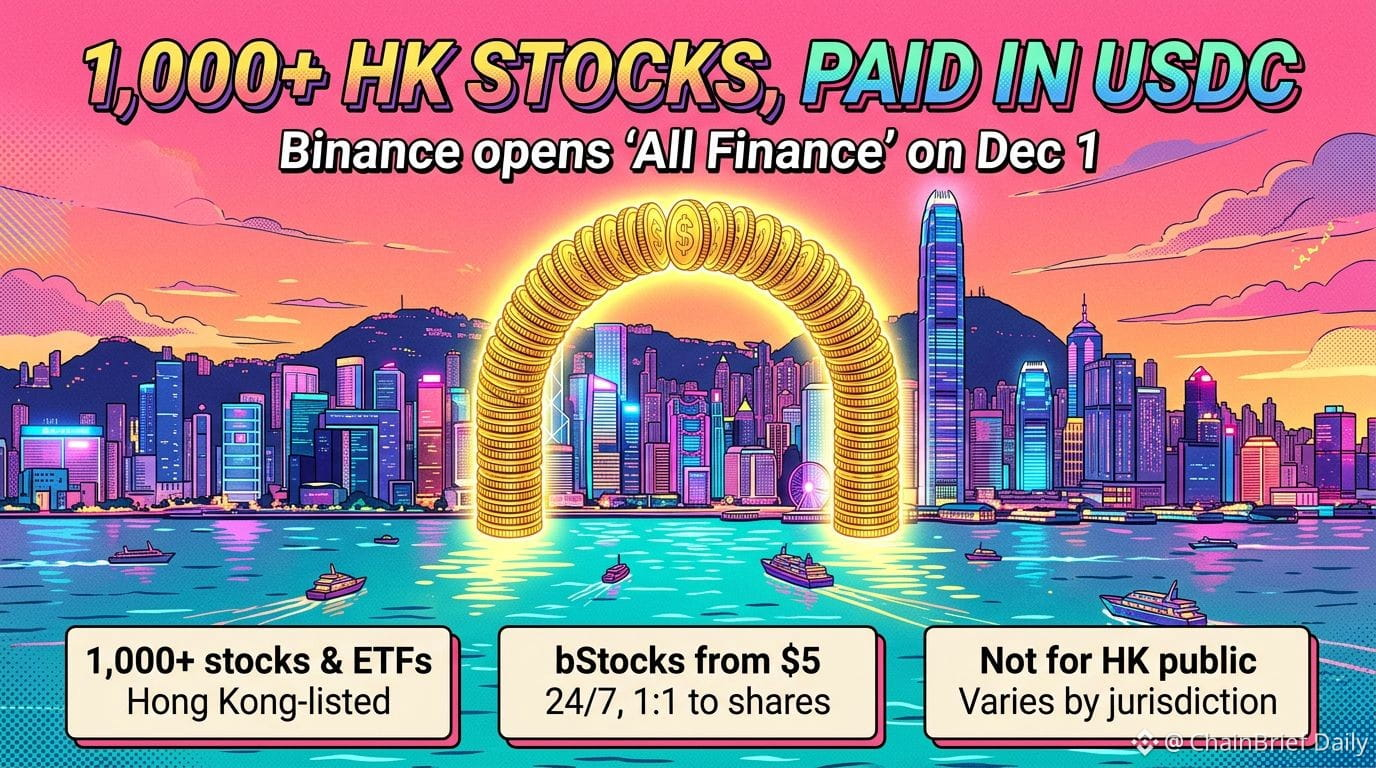
Binance just announced its next chapter: "All Finance on Binance."
At Binance Blockchain Week, co-CEO Yi He said eligible users will be able to trade more than 1,000 Hong Kong-listed stocks and ETFs starting December 1, paying directly in USDC from the same account they already use for crypto and U.S.-listed shares. Binance calls it the first step, with more markets to follow.
Key details from the company's release:
• Some Hong Kong names will also come as bStocks, tokenized shares that trade 24/7, start at $5, and convert 1:1 into the underlying stock.
• Binance says about 70% of its bStocks volume comes from emerging markets.
• Availability varies by jurisdiction, and the Hong Kong stock service is not offered to the Hong Kong public.
• Press reports say the direct stock route runs through a partner broker, with Binance acting as the introducing party.
Why it matters: a crypto exchange is now building a stablecoin-funded gateway into traditional equities. For users abroad, USDC-to-stock in one account skips the usual chain of swapping, wiring, and converting to HKD. It also shows how much the industry is leaning on TradFi products during a weak market, with sentiment deep in "extreme fear."
Keep it calm: bStocks are tokenized securities, not the same as holding the shares directly. Check which version you are buying, your local rules, the fees, and who holds the underlying assets. Product launches can also change in scope after day one.
Do you see stablecoin-funded stock trading becoming a main reason users stay on exchanges, or is it just a bear-market pivot?
#Binance #bStocks #USDC $BNB
Not financial advice.
43

·
--
Binance gab in Bangkok bekannt, dass berechtigte Nutzer ab dem 1. Dezember mit USDC direkt mehr als tausend Hongkonger Aktien und ETFs kaufen können. Für einige Hongkonger Aktien wird es außerdem tokenisierte Versionen namens bStocks geben, die rund um die Uhr gehandelt werden können. Laut der Ankündigung lassen sie sich eins zu eins in die entsprechenden Aktien umwandeln. Die beiden Produkte bieten entweder direkten Aktienbesitz oder ein Engagement in tokenisierten Wertpapieren. Der Handel mit Hongkonger Aktien steht der Öffentlichkeit in Hongkong nicht zur Verfügung.
Ob der Rund-um-die-Uhr-Handel nach Börsenschluss in Hongkong nützlich ist, hängt davon ab, wie viele Personen im Token-Markt noch Kauf- oder Verkaufsaufträge platzieren. Sobald die erste Liste und die Einzelheiten zur Umwandlung veröffentlicht sind, lassen sich die Geld-Brief-Spannen und Handelsvolumina desselben Tokens während der Börsenzeiten und nach Börsenschluss vergleichen. Außerdem kann man prüfen, ob eine Umwandlung außerhalb der Börsenzeiten möglich ist. Weiten sich die Spannen deutlich aus, bedeutet der durchgehende Handel nicht unbedingt, dass ausreichend Liquidität vorhanden ist. #bStocks Keine Anlageberatung.
Ob der Rund-um-die-Uhr-Handel nach Börsenschluss in Hongkong nützlich ist, hängt davon ab, wie viele Personen im Token-Markt noch Kauf- oder Verkaufsaufträge platzieren. Sobald die erste Liste und die Einzelheiten zur Umwandlung veröffentlicht sind, lassen sich die Geld-Brief-Spannen und Handelsvolumina desselben Tokens während der Börsenzeiten und nach Börsenschluss vergleichen. Außerdem kann man prüfen, ob eine Umwandlung außerhalb der Börsenzeiten möglich ist. Weiten sich die Spannen deutlich aus, bedeutet der durchgehende Handel nicht unbedingt, dass ausreichend Liquidität vorhanden ist. #bStocks Keine Anlageberatung.
46
·
--
Artikel
Übersetzung ansehen
Binance Never Sleeps: How bStocks Priced the Market Before Wall Street OpenedMarkets close, but news does not. When a big company reports after the bell or something happens on a weekend, the first price reaction now often happens on crypto platforms. Two names come up most: Binance with bStocks and Hyperliquid with stock perps. Here is what the data says about where the market moves first.
Quick Facts
Across seven weekends, bStocks captured a median 92% of the Monday price move.The remaining gap at the Monday open was about 0.19%.Binance handles about 69% of tokenized-stock volume in US hours, rising to 82% overnight.Hyperliquid has also shown 24/7 price discovery, mostly through perps.
01 The Race to Set the First Price
When traditional markets are shut, the first venue to price new information becomes the reference everyone watches. That is a powerful position, and both Binance and Hyperliquid want it.
02 What the Weekend Data Shows
Binance Research studied seven weekends:
bStocks had already priced in a median 92% of the Monday move.The leftover gap at the open was only about 0.19%.On large gaps, bStocks pointed the right way 41 out of 41 times.
Binance Research also says the sample is small, which is fair to keep in mind.
03 More Share When the US Sleeps
Binance handles about 69% of tokenized-stock volume during regular US hours, and that share rises to about 82% overnight. In other words, the further you get from New York hours, the more the trading happens on Binance.
04 Where Hyperliquid Fits
Hyperliquid is a serious player. Its stock and commodity perps have shown continuous weekend price discovery, and TradFi perps are a large part of its volume. The main difference is the product: Hyperliquid mostly offers perpetual contracts, while bStocks are tokens backed 1:1 by real shares and can be converted to Direct Stocks.
05 Why This Matters for Users
If you live in Asia, US news often lands in your daytime. Being able to act right away, on a deep and liquid venue, means you are not stuck waiting for New York to wake up.
06 What I Keep in Mind
First moves can overshoot, and weekend markets can be thinner. A seven-weekend study is a good signal, not a guarantee. Tokenized stocks track prices but may not give full shareholder rights, and availability depends on your country, so I check what my account in Cambodia can use.
I like that the comparison is out in the open. Healthy competition between venues usually means better prices and better products for users, whichever platform they choose.
Bottom Line
Markets are becoming real-time. The data shows bStocks on Binance are already doing much of the price discovery before Wall Street opens, and competition with venues like Hyperliquid will only push that further.
This article is for information only and is not financial advice.
#bStocks #PriceDiscovery #Hyperliquid #Binance #Jxlolo
Binance Never Sleeps: How bStocks Priced the Market Before Wall Street Opened
Markets close, but news does not. When a big company reports after the bell or something happens on a weekend, the first price reaction now often happens on crypto platforms. Two names come up most: Binance with bStocks and Hyperliquid with stock perps. Here is what the data says about where the market moves first.
Quick Facts
Across seven weekends, bStocks captured a median 92% of the Monday price move.The remaining gap at the Monday open was about 0.19%.Binance handles about 69% of tokenized-stock volume in US hours, rising to 82% overnight.Hyperliquid has also shown 24/7 price discovery, mostly through perps.
01 The Race to Set the First Price
When traditional markets are shut, the first venue to price new information becomes the reference everyone watches. That is a powerful position, and both Binance and Hyperliquid want it.
02 What the Weekend Data Shows
Binance Research studied seven weekends:
bStocks had already priced in a median 92% of the Monday move.The leftover gap at the open was only about 0.19%.On large gaps, bStocks pointed the right way 41 out of 41 times.
Binance Research also says the sample is small, which is fair to keep in mind.
03 More Share When the US Sleeps
Binance handles about 69% of tokenized-stock volume during regular US hours, and that share rises to about 82% overnight. In other words, the further you get from New York hours, the more the trading happens on Binance.
04 Where Hyperliquid Fits
Hyperliquid is a serious player. Its stock and commodity perps have shown continuous weekend price discovery, and TradFi perps are a large part of its volume. The main difference is the product: Hyperliquid mostly offers perpetual contracts, while bStocks are tokens backed 1:1 by real shares and can be converted to Direct Stocks.
05 Why This Matters for Users
If you live in Asia, US news often lands in your daytime. Being able to act right away, on a deep and liquid venue, means you are not stuck waiting for New York to wake up.
06 What I Keep in Mind
First moves can overshoot, and weekend markets can be thinner. A seven-weekend study is a good signal, not a guarantee. Tokenized stocks track prices but may not give full shareholder rights, and availability depends on your country, so I check what my account in Cambodia can use.
I like that the comparison is out in the open. Healthy competition between venues usually means better prices and better products for users, whichever platform they choose.
Bottom Line
Markets are becoming real-time. The data shows bStocks on Binance are already doing much of the price discovery before Wall Street opens, and competition with venues like Hyperliquid will only push that further.
This article is for information only and is not financial advice.
#bStocks #PriceDiscovery #Hyperliquid #Binance #Jxlolo
1
1
·
--
Artikel
Übersetzung ansehen
From Chips to Carts: Binance Prices the Retail Read Before the Market OpensFor most of 2026, AI chips were the story that moved markets. But markets rotate. In the week when Walmart, Home Depot and Target report, the focus shifts from chips to shopping carts. Consumer data tells us a lot about inflation and interest rates, and on Binance, that shift shows up in prices before Wall Street opens.
Quick Facts
Retail giants WMT, HD and TGT report earnings in the same week.Consumer spending data shapes the inflation and rates outlook.bStocks trade 24/7, so reactions show up outside US hours.Same market, different aisle: the focus moves from AI to consumption.
01 From AI to Consumption
AI earnings dominated headlines for months. When retail companies report, the question changes: are people still spending? That answer affects how investors think about the whole economy.
02 Why Retail Earnings Matter
Walmart, Home Depot and Target give a direct read on consumers:
Walmart shows everyday spending and price pressure.Home Depot shows big-ticket and home spending.Target shows discretionary shopping.
Together they help explain where inflation and interest rates may go.
03 Reports Often Land Outside Asian Daytime
US earnings usually come out before the US market opens or after it closes. For people in Asia, that is often late at night or early morning. Traditional markets make us wait for the opening bell to react.
04 How Binance Shows the Move Early
bStocks trade 24/7. When a retail report lands, users can see and act on the price reaction right away, in their own time zone. That gives an early read on how the market might open.
05 Reading the Signal
I find it useful to watch how retail stocks move compared with tech stocks in the same window. If consumer names rise while chips cool, it hints at a rotation. It is one more data point, not a promise.
06 What I Keep in Mind
Off-hours markets can be thinner, so moves can be bigger. Tokenized stocks track prices but may not give the same rights as shares. I check what my account in Cambodia can use before trading.
For me, this is also a good reminder that markets are about more than one theme. Chips, AI and big tech get most of the attention, but everyday spending is what keeps an economy moving. Watching how retail reports land helps me understand the bigger picture, even if I never trade those stocks myself. And being able to see the reaction in my own daytime makes it easier to learn from it.
It is also a good way to teach newcomers how earnings season works, one sector at a time.
Bottom Line
When the market turns from chips to carts, Binance lets you see the retail read in real time, before the opening bell.
This article is for information only and is not financial advice.
#bStocks #Earnings #Walmart #Binance #Jxlolo
From Chips to Carts: Binance Prices the Retail Read Before the Market Opens
For most of 2026, AI chips were the story that moved markets. But markets rotate. In the week when Walmart, Home Depot and Target report, the focus shifts from chips to shopping carts. Consumer data tells us a lot about inflation and interest rates, and on Binance, that shift shows up in prices before Wall Street opens.
Quick Facts
Retail giants WMT, HD and TGT report earnings in the same week.Consumer spending data shapes the inflation and rates outlook.bStocks trade 24/7, so reactions show up outside US hours.Same market, different aisle: the focus moves from AI to consumption.
01 From AI to Consumption
AI earnings dominated headlines for months. When retail companies report, the question changes: are people still spending? That answer affects how investors think about the whole economy.
02 Why Retail Earnings Matter
Walmart, Home Depot and Target give a direct read on consumers:
Walmart shows everyday spending and price pressure.Home Depot shows big-ticket and home spending.Target shows discretionary shopping.
Together they help explain where inflation and interest rates may go.
03 Reports Often Land Outside Asian Daytime
US earnings usually come out before the US market opens or after it closes. For people in Asia, that is often late at night or early morning. Traditional markets make us wait for the opening bell to react.
04 How Binance Shows the Move Early
bStocks trade 24/7. When a retail report lands, users can see and act on the price reaction right away, in their own time zone. That gives an early read on how the market might open.
05 Reading the Signal
I find it useful to watch how retail stocks move compared with tech stocks in the same window. If consumer names rise while chips cool, it hints at a rotation. It is one more data point, not a promise.
06 What I Keep in Mind
Off-hours markets can be thinner, so moves can be bigger. Tokenized stocks track prices but may not give the same rights as shares. I check what my account in Cambodia can use before trading.
For me, this is also a good reminder that markets are about more than one theme. Chips, AI and big tech get most of the attention, but everyday spending is what keeps an economy moving. Watching how retail reports land helps me understand the bigger picture, even if I never trade those stocks myself. And being able to see the reaction in my own daytime makes it easier to learn from it.
It is also a good way to teach newcomers how earnings season works, one sector at a time.
Bottom Line
When the market turns from chips to carts, Binance lets you see the retail read in real time, before the opening bell.
This article is for information only and is not financial advice.
#bStocks #Earnings #Walmart #Binance #Jxlolo
1
1
·
--

Artikel
Übersetzung ansehen
While Wall Street Sleeps: How On-Chain bStocks Are Pricing the Weekend NewsWall Street closes on Friday afternoon, but news does not take the weekend off. Earnings, economic data and world events keep coming. Stock holders usually have to wait until Monday to react. On Binance, bStocks keep trading, and the data shows they are doing real price discovery while traditional markets are shut.
Quick Facts
Across 7 weekends, bStocks priced in a median 92% of the Monday gap.On gaps above 3%, bStocks called the direction correctly all 41 times.In one week, 92% of on-chain volume traded while US markets were closed.About US$1.5B changed hands during closed hours that week.
01 The Monday Gap Problem
When big news lands on a Saturday, a stock often opens on Monday far from its Friday close. That jump is called a gap. If you hold the stock, you cannot do anything about it until the bell rings.
02 What the Weekend Data Shows
Binance Research looked at how bStocks traded over weekends:
Over 7 weekends, bStocks had already priced in a median 92% of the Monday gap.When the gap was bigger than 3%, bStocks pointed the right way in all 41 cases.
In simple words, by Sunday night the on-chain price was usually close to where Monday would open.
03 Most Volume Happens When Wall Street Is Closed
In one recent week, 92% of on-chain bStocks volume traded while US markets were shut, with around US$1.5 billion changing hands in those closed hours. That is not a side activity. It is where most of the trading happens.
04 Why This Matters to Regular Investors
For people in Asia, US market hours fall in our night. Weekend and off-hours trading lets us react to news in our own daytime. It also gives everyone an early read on how the market might open.
05 Price Discovery Is Moving On-Chain
Price discovery is the market's most basic job: finding a fair price as new information arrives. If that process increasingly happens on-chain while traditional venues are closed, it changes how we should think about where markets really live.
06 What I Keep in Mind
Off-hours markets can be thinner, so prices can move more. A tokenized stock tracks the price of a real share but may not give the same rights. I always check what is available for my account in Cambodia.
I find this useful even if I never trade on a weekend. Checking where bStocks moved on Sunday gives me a rough idea of how Monday might open, so I can plan instead of being surprised.
Bottom Line
When Wall Street sleeps, bStocks keep working. The weekend data shows on-chain markets are already doing much of the price discovery before Monday even starts.
This article is for information only and is not financial advice.
#bStocks #PriceDiscovery #Tokenization #Binance #Jxlolo
While Wall Street Sleeps: How On-Chain bStocks Are Pricing the Weekend News
Wall Street closes on Friday afternoon, but news does not take the weekend off. Earnings, economic data and world events keep coming. Stock holders usually have to wait until Monday to react. On Binance, bStocks keep trading, and the data shows they are doing real price discovery while traditional markets are shut.
Quick Facts
Across 7 weekends, bStocks priced in a median 92% of the Monday gap.On gaps above 3%, bStocks called the direction correctly all 41 times.In one week, 92% of on-chain volume traded while US markets were closed.About US$1.5B changed hands during closed hours that week.
01 The Monday Gap Problem
When big news lands on a Saturday, a stock often opens on Monday far from its Friday close. That jump is called a gap. If you hold the stock, you cannot do anything about it until the bell rings.
02 What the Weekend Data Shows
Binance Research looked at how bStocks traded over weekends:
Over 7 weekends, bStocks had already priced in a median 92% of the Monday gap.When the gap was bigger than 3%, bStocks pointed the right way in all 41 cases.
In simple words, by Sunday night the on-chain price was usually close to where Monday would open.
03 Most Volume Happens When Wall Street Is Closed
In one recent week, 92% of on-chain bStocks volume traded while US markets were shut, with around US$1.5 billion changing hands in those closed hours. That is not a side activity. It is where most of the trading happens.
04 Why This Matters to Regular Investors
For people in Asia, US market hours fall in our night. Weekend and off-hours trading lets us react to news in our own daytime. It also gives everyone an early read on how the market might open.
05 Price Discovery Is Moving On-Chain
Price discovery is the market's most basic job: finding a fair price as new information arrives. If that process increasingly happens on-chain while traditional venues are closed, it changes how we should think about where markets really live.
06 What I Keep in Mind
Off-hours markets can be thinner, so prices can move more. A tokenized stock tracks the price of a real share but may not give the same rights. I always check what is available for my account in Cambodia.
I find this useful even if I never trade on a weekend. Checking where bStocks moved on Sunday gives me a rough idea of how Monday might open, so I can plan instead of being surprised.
Bottom Line
When Wall Street sleeps, bStocks keep working. The weekend data shows on-chain markets are already doing much of the price discovery before Monday even starts.
This article is for information only and is not financial advice.
#bStocks #PriceDiscovery #Tokenization #Binance #Jxlolo
1
1
·
--
Artikel
Übersetzung ansehen
Crypto Made Markets 24/7. Now Wall Street Is Playing Catch-UpWhen I started trading crypto, one thing surprised me: the market never closed. Weekends, holidays, 3 a.m. in Phnom Penh, it did not matter. Stock markets felt old-fashioned next to that. Now Wall Street is moving toward longer hours too. To me, that says crypto had the right idea first.
Quick Facts
Nasdaq plans to go live 23 hours a day, five days a week, from 6 December 2026.Extended hours only work if someone is awake to trade.About half of bStocks volume on Binance already trades outside US market hours.TradFi is adopting the always-on model crypto has used for years.
01 Crypto Was Always On
Bitcoin has traded every minute of every day since it started. People got used to reacting to news the moment it happens, not waiting for an opening bell. That habit is now spreading into traditional finance.
02 Wall Street Is Extending Its Hours
Nasdaq plans to move to 23 hours a day, five days a week, starting 6 December 2026. It is a big change for a market that has kept fixed sessions for a very long time. The reason is simple: investors around the world want to trade when news breaks in their own time zone.
03 The Liquidity Problem
Longer hours are only useful if there are buyers and sellers. When it is night in New York, most US investors are asleep. That liquidity has to come from other regions, like Asia, the Middle East and Africa. Without them, extended sessions can be thin and prices can jump.
04 Where Binance Already Fits
Binance has a global, emerging-market user base that is awake when the US sleeps. Around half of bStocks volume already happens outside US market hours. In other words, the off-hours crowd that Wall Street now needs is already active on Binance.
05 Convergence, Not Competition
I do not see this as crypto against Wall Street. TradFi is adopting crypto infrastructure like 24/7 trading, and crypto platforms supply the global users who make those hours useful. Both sides move closer together.
06 What I Keep in Mind
Trading at night can mean thinner markets and bigger price swings. Tokenized stocks track real shares but may not give the same rights. Availability depends on your country, so I check what my account in Cambodia can access first.
For people in Cambodia, this shift is personal. US market hours fall in our evening and night, so many of us have always been late to US news. Round-the-clock markets mean we can act in our own daytime, with the same information as everyone else.
Bottom Line
Crypto showed that markets do not need to sleep. Wall Street is now catching up, and platforms like Binance already have the always-on users that make round-the-clock markets work.
This article is for information only and is not financial advice.
#bStocks #TradFi #Nasdaq #Binance #Jxlolo
Crypto Made Markets 24/7. Now Wall Street Is Playing Catch-Up
When I started trading crypto, one thing surprised me: the market never closed. Weekends, holidays, 3 a.m. in Phnom Penh, it did not matter. Stock markets felt old-fashioned next to that. Now Wall Street is moving toward longer hours too. To me, that says crypto had the right idea first.
Quick Facts
Nasdaq plans to go live 23 hours a day, five days a week, from 6 December 2026.Extended hours only work if someone is awake to trade.About half of bStocks volume on Binance already trades outside US market hours.TradFi is adopting the always-on model crypto has used for years.
01 Crypto Was Always On
Bitcoin has traded every minute of every day since it started. People got used to reacting to news the moment it happens, not waiting for an opening bell. That habit is now spreading into traditional finance.
02 Wall Street Is Extending Its Hours
Nasdaq plans to move to 23 hours a day, five days a week, starting 6 December 2026. It is a big change for a market that has kept fixed sessions for a very long time. The reason is simple: investors around the world want to trade when news breaks in their own time zone.
03 The Liquidity Problem
Longer hours are only useful if there are buyers and sellers. When it is night in New York, most US investors are asleep. That liquidity has to come from other regions, like Asia, the Middle East and Africa. Without them, extended sessions can be thin and prices can jump.
04 Where Binance Already Fits
Binance has a global, emerging-market user base that is awake when the US sleeps. Around half of bStocks volume already happens outside US market hours. In other words, the off-hours crowd that Wall Street now needs is already active on Binance.
05 Convergence, Not Competition
I do not see this as crypto against Wall Street. TradFi is adopting crypto infrastructure like 24/7 trading, and crypto platforms supply the global users who make those hours useful. Both sides move closer together.
06 What I Keep in Mind
Trading at night can mean thinner markets and bigger price swings. Tokenized stocks track real shares but may not give the same rights. Availability depends on your country, so I check what my account in Cambodia can access first.
For people in Cambodia, this shift is personal. US market hours fall in our evening and night, so many of us have always been late to US news. Round-the-clock markets mean we can act in our own daytime, with the same information as everyone else.
Bottom Line
Crypto showed that markets do not need to sleep. Wall Street is now catching up, and platforms like Binance already have the always-on users that make round-the-clock markets work.
This article is for information only and is not financial advice.
#bStocks #TradFi #Nasdaq #Binance #Jxlolo
1
1
·
--
Artikel
Übersetzung ansehen
$500M and Counting: How Binance Tokenized Stocks Became a Real MarketBig numbers are easy to announce. What matters more is what the money is doing. bStocks on Binance crossed US$500 million in assets under management, and when I look underneath that number, I see signs of a real, working market, not just a wrapper around a stock.
Quick Facts
bStocks passed US$500M in assets under management.About US$216M has gone into cross-market arbitrage.58% of volume traded when US markets were closed.Prices track the real stock within basis points.
01 Why the Headline Number Is Not the Story
AUM tells you how much money sits in a product. It does not tell you if people are actually using it. To see that, you need to look at trading behaviour, timing and pricing.
02 Arbitrage Shows the Market Is Alive
Around US$216 million has gone into cross-market arbitrage, where traders buy in one market and sell in another when prices differ. Arbitrage is a sign of a healthy market, because it pulls prices back in line and adds liquidity.
03 Trading When Wall Street Is Closed
58% of bStocks volume happened while US markets were closed. For users in Asia and other regions, that is exactly when they are awake. It shows bStocks are not copying Wall Street hours. They are filling the gap Wall Street leaves.
04 Prices That Track the Real Stock
A tokenized stock is only useful if its price stays close to the real share. bStocks have tracked their underlying stocks within basis points, which is a tiny difference. That tight tracking is what gives users confidence.
05 What Comes Next
As more people use bStocks for everyday investing, I expect more assets, more liquidity and more use in DeFi, for example as collateral. The base is already there.
06 What I Keep in Mind
bStocks give price exposure, not direct ownership of the share. They still carry the same market risk as the stock. Availability depends on your country, so I check my account in Cambodia first.
For me, the most interesting part is who it can reach. Many people who want US stock exposure live in places where opening a US brokerage account is slow or expensive. A tokenized stock they can buy with a few dollars, at any hour, opens a door that used to be closed. That is why I think the half-billion mark is only the start. As more people discover it, the market should keep growing in both size and depth.
I also like that the numbers are easy to check over time. AUM, volume and tracking quality are things anyone can follow, so the story does not rely on promises.
Bottom Line
Half a billion dollars is a milestone, but the real proof is in the activity: arbitrage, off-hours trading and tight price tracking. Tokenized stocks on Binance have become a real market.
This article is for information only and is not financial advice.
#bStocks #TokenizedStocks #RWA #Binance #Jxlolo
$500M and Counting: How Binance Tokenized Stocks Became a Real Market
Big numbers are easy to announce. What matters more is what the money is doing. bStocks on Binance crossed US$500 million in assets under management, and when I look underneath that number, I see signs of a real, working market, not just a wrapper around a stock.
Quick Facts
bStocks passed US$500M in assets under management.About US$216M has gone into cross-market arbitrage.58% of volume traded when US markets were closed.Prices track the real stock within basis points.
01 Why the Headline Number Is Not the Story
AUM tells you how much money sits in a product. It does not tell you if people are actually using it. To see that, you need to look at trading behaviour, timing and pricing.
02 Arbitrage Shows the Market Is Alive
Around US$216 million has gone into cross-market arbitrage, where traders buy in one market and sell in another when prices differ. Arbitrage is a sign of a healthy market, because it pulls prices back in line and adds liquidity.
03 Trading When Wall Street Is Closed
58% of bStocks volume happened while US markets were closed. For users in Asia and other regions, that is exactly when they are awake. It shows bStocks are not copying Wall Street hours. They are filling the gap Wall Street leaves.
04 Prices That Track the Real Stock
A tokenized stock is only useful if its price stays close to the real share. bStocks have tracked their underlying stocks within basis points, which is a tiny difference. That tight tracking is what gives users confidence.
05 What Comes Next
As more people use bStocks for everyday investing, I expect more assets, more liquidity and more use in DeFi, for example as collateral. The base is already there.
06 What I Keep in Mind
bStocks give price exposure, not direct ownership of the share. They still carry the same market risk as the stock. Availability depends on your country, so I check my account in Cambodia first.
For me, the most interesting part is who it can reach. Many people who want US stock exposure live in places where opening a US brokerage account is slow or expensive. A tokenized stock they can buy with a few dollars, at any hour, opens a door that used to be closed. That is why I think the half-billion mark is only the start. As more people discover it, the market should keep growing in both size and depth.
I also like that the numbers are easy to check over time. AUM, volume and tracking quality are things anyone can follow, so the story does not rely on promises.
Bottom Line
Half a billion dollars is a milestone, but the real proof is in the activity: arbitrage, off-hours trading and tight price tracking. Tokenized stocks on Binance have become a real market.
This article is for information only and is not financial advice.
#bStocks #TokenizedStocks #RWA #Binance #Jxlolo
1
2

·
--
Übersetzung ansehen
🚨 ¿SE ESTÁ YENDO EL DINERO A LAS bSTOCKS? LA ALTERNATIVA AL PÁNICO CRIPTO
La madrugada se pone fría para el mercado y no solo por la hora. $BTC sigue estancado rozando los $59,500 y el ambiente de pánico no ayuda. Pero si miramos a los bStocks (las acciones tokenizadas en Binance) la cosa cambia, y no hablo solo del volumen.
La verdad es que en los foros se nota un cansancio de la volatilidad típica de las altcoins y muchos están rotando liquidez a este sector tradicional digitalizado. Además del movimiento con el bStock de SpaceX ($SPCXB ) y la reciente llegada de Anthropic ($ANTB), el mercado de bStocks ya concentra cerca de $4.800 millones de dólares en activos. Muchos los están usando para "refugiarse" sin salir de la blockchain, y de paso aprovechar los dividendos y el volumen 3x para el nivel VIP de la plataforma.
Ojo, esto no significa que las bStocks no tengan su propio riesgo de mercado y dependan de Wall Street, pero en días de "miedo extremo" en las criptos, son una alternativa que no todos conocen o saben cómo usar.
¿Ustedes han probado estos tokens de acciones o prefieren aguantar en $BNB hasta que el mercado decida el rumbo? 👇
#bStocks #Bitcoin #MercadoCripto #BinanceSquare #finanzas

110
·
--
Artikel
1,5 Mrd. in 145 Tagen: Was wirklich hinter der Wachstumsgeschichte von bStocks stecktbStocks überschritt innerhalb von 145 Tagen ein verwaltetes Vermögen von 1,5 Milliarden Dollar. Das ist die Schlagzeile. Die wichtigere Frage ist, was hinter dieser Zahl steckt: Die Größe zeigt, wie groß etwas ist, das Verhalten aber, ob es Bestand haben wird.
Kurzüberblick
Laut Binance Research erreichte bStocks in 145 Tagen ein verwaltetes Vermögen (AUM) von 1,5 Milliarden Dollar
Der Markt für tokenisierte Aktien erreichte Anfang November 2026 mit 4,8 Milliarden Dollar einen Rekordwert
Die Zahl der Listings von bStocks stieg von 6 auf fast 100
56 % des bStocks-Handels finden außerhalb der US-Handelszeiten statt
1,5 Mrd. in 145 Tagen: Was wirklich hinter der Wachstumsgeschichte von bStocks steckt
bStocks überschritt innerhalb von 145 Tagen ein verwaltetes Vermögen von 1,5 Milliarden Dollar. Das ist die Schlagzeile. Die wichtigere Frage ist, was hinter dieser Zahl steckt: Die Größe zeigt, wie groß etwas ist, das Verhalten aber, ob es Bestand haben wird.
Kurzüberblick
Laut Binance Research erreichte bStocks in 145 Tagen ein verwaltetes Vermögen (AUM) von 1,5 Milliarden Dollar
Der Markt für tokenisierte Aktien erreichte Anfang November 2026 mit 4,8 Milliarden Dollar einen Rekordwert
Die Zahl der Listings von bStocks stieg von 6 auf fast 100
56 % des bStocks-Handels finden außerhalb der US-Handelszeiten statt
1
108
·
--
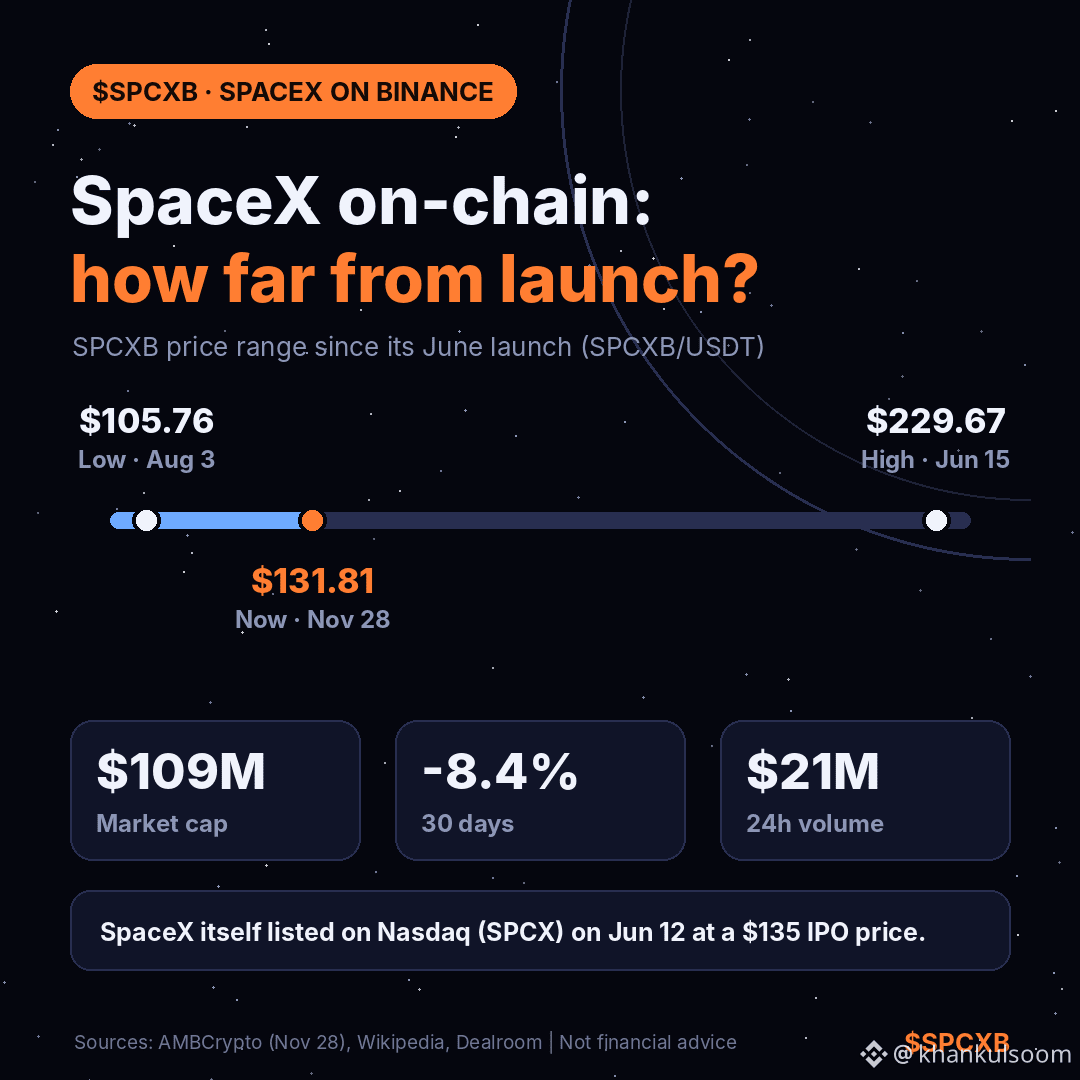
SpaceX auf Binance 🚀 $SPCXB
Kurs: etwa $131.81, Marktkapitalisierung: etwa $109M
Seit dem Start Mitte Juni: Höchststand bei $229.67 (15. Jun), Tiefststand bei $105.76 (3. Aug)
Letzte 30 Tage: etwa -8.4%, mit einem Handelsvolumen von ~$21M in 24 Stunden
Zum Vergleich: SpaceX selbst wurde am 12. Jun an der Nasdaq (SPCX) zu einem IPO-Preis von $135 gelistet
$SPCXB ist eine tokenisierte Aktie (bStock). Inhaber erhalten also ein Kursengagement, aber kein direktes Eigentum an SpaceX-Aktien.
{spot}(SPCXBUSDT)
Bevorzugst du tokenisierte Aktien on-chain oder echte Aktien?
$SPCXB #spcxb #stochasticRSI #SpaceX #BStocks
SpaceX auf Binance 🚀 $SPCXB
Kurs: etwa $131.81, Marktkapitalisierung: etwa $109M
Seit dem Start Mitte Juni: Höchststand bei $229.67 (15. Jun), Tiefststand bei $105.76 (3. Aug)
Letzte 30 Tage: etwa -8.4%, mit einem Handelsvolumen von ~$21M in 24 Stunden
Zum Vergleich: SpaceX selbst wurde am 12. Jun an der Nasdaq (SPCX) zu einem IPO-Preis von $135 gelistet
$SPCXB ist eine tokenisierte Aktie (bStock). Inhaber erhalten also ein Kursengagement, aber kein direktes Eigentum an SpaceX-Aktien.
Bevorzugst du tokenisierte Aktien on-chain oder echte Aktien?
$SPCXB #spcxb #stochasticRSI #SpaceX #BStocks
66
·
--
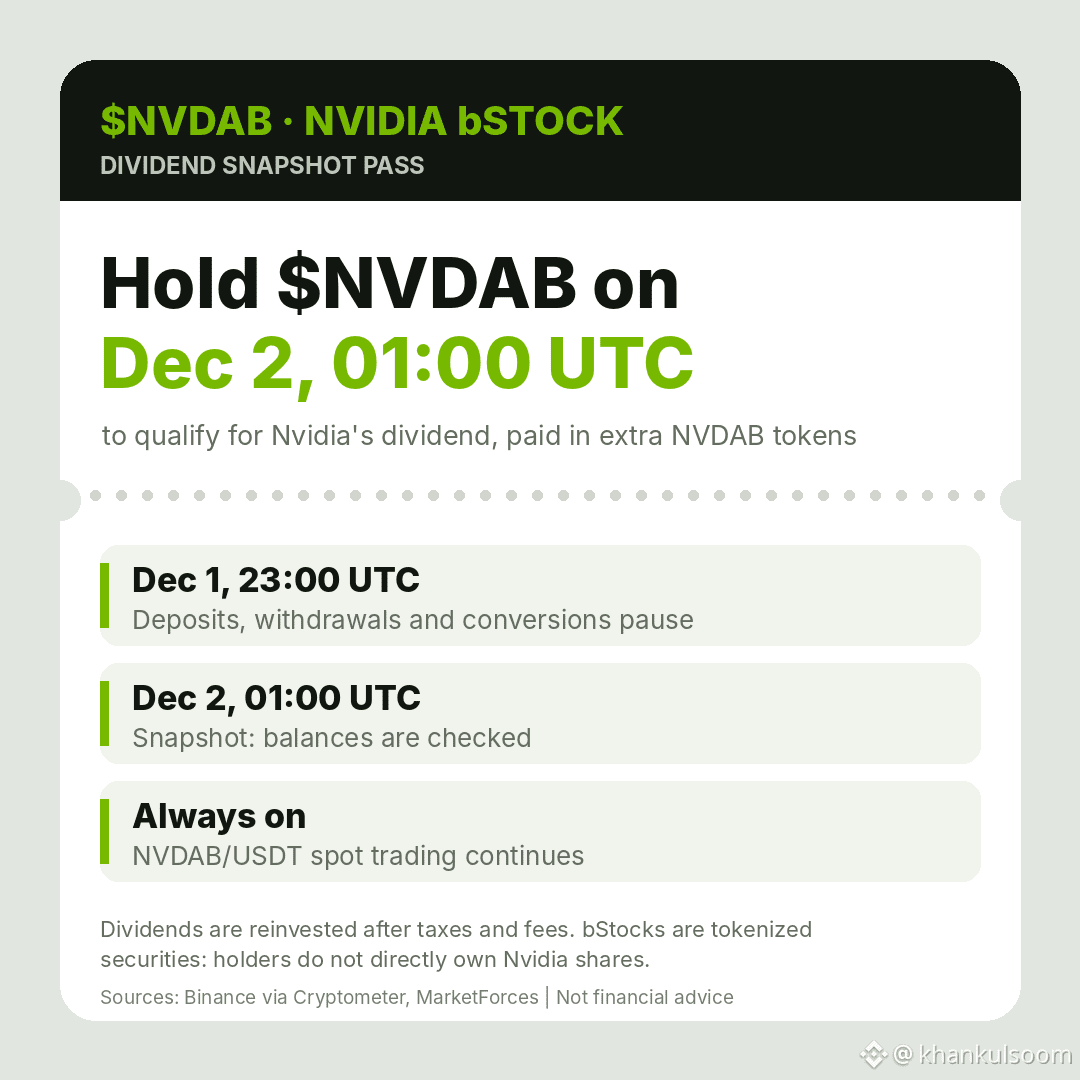
$NVDAB -Inhaber, merkt euch den Termin vor 🗓️
Binance zahlt Nvidia-Dividenden an bStock-Inhaber aus:
1. Dez., 23:00 UTC: Einzahlungen, Auszahlungen und Umtausch werden pausiert
2. Dez., 01:00 UTC: Erfassung des Kontostands. Dividenden werden nach Abzug von Steuern und Gebühren in Form zusätzlicher NVDAB-Token ausgezahlt (auch Bruchteile).
Der NVDAB/USDT-Spot-Handel bleibt durchgehend geöffnet.
Hinweis: bStocks sind tokenisierte Wertpapiere. Inhaber besitzen daher keine Nvidia-Aktien direkt.
Wirst du deine bStocks bis zur Erfassung halten?
{spot}(NVDABUSDT)
{spot}(BTCUSDT)
$NVDAB $BTC #NVIDIA #BStocks #NVDAB #bstock
$NVDAB -Inhaber, merkt euch den Termin vor 🗓️
Binance zahlt Nvidia-Dividenden an bStock-Inhaber aus:
1. Dez., 23:00 UTC: Einzahlungen, Auszahlungen und Umtausch werden pausiert
2. Dez., 01:00 UTC: Erfassung des Kontostands. Dividenden werden nach Abzug von Steuern und Gebühren in Form zusätzlicher NVDAB-Token ausgezahlt (auch Bruchteile).
Der NVDAB/USDT-Spot-Handel bleibt durchgehend geöffnet.
Hinweis: bStocks sind tokenisierte Wertpapiere. Inhaber besitzen daher keine Nvidia-Aktien direkt.
Wirst du deine bStocks bis zur Erfassung halten?
$NVDAB $BTC #NVIDIA #BStocks #NVDAB #bstock
16

·
--
Wenn Sie regelmäßig bStocks auf ADGM kaufen, startet Binance Convert Runde 3 mit einem Prämienpool von 50 SPCXB in Form von Gutscheinen.
Die Aktion läuft vom 26.11.2026 um 00:00 Uhr bis zum 23.12.2026 um 23:59 Uhr (UTC). Die ersten 5.000 Teilnehmer, die alle Voraussetzungen erfüllen, teilen sich den Prämienpool zu gleichen Teilen. Jeder Teilnehmer erhält maximal 0,01 SPCXB.
Sie müssen Ihr Konto verifizieren, sich auf der Aktionsseite registrieren und während des Aktionszeitraums bStocks über neu eingerichtete automatische Kaufpläne kaufen. Das Gesamtvolumen der qualifizierenden Transaktionen muss mindestens dem Gegenwert von 75 USDC entsprechen. Käufe aus mehreren Kaufplänen können zusammengerechnet werden; Transaktionen vor der Registrierung zählen jedoch nicht. Die Kaufpläne müssen bis zum Ende der Aktion aktiv bleiben. Werden sie pausiert oder gekündigt, zählen die Transaktionen aus diesen Plänen nicht.
bStocks werden ausschließlich auf ADGM angeboten. Der Besitz von bStocks bedeutet nicht, dass Sie direkt Eigentümer der zugrunde liegenden Aktien sind.
#Binance #BinanceConvert #bStocks
Quelle: Binance Announcements
https://www.binance.com/en/support/announcement/detail/e39a4adb1f714308949d7362cff4d046

105
·
--
Verifiziert
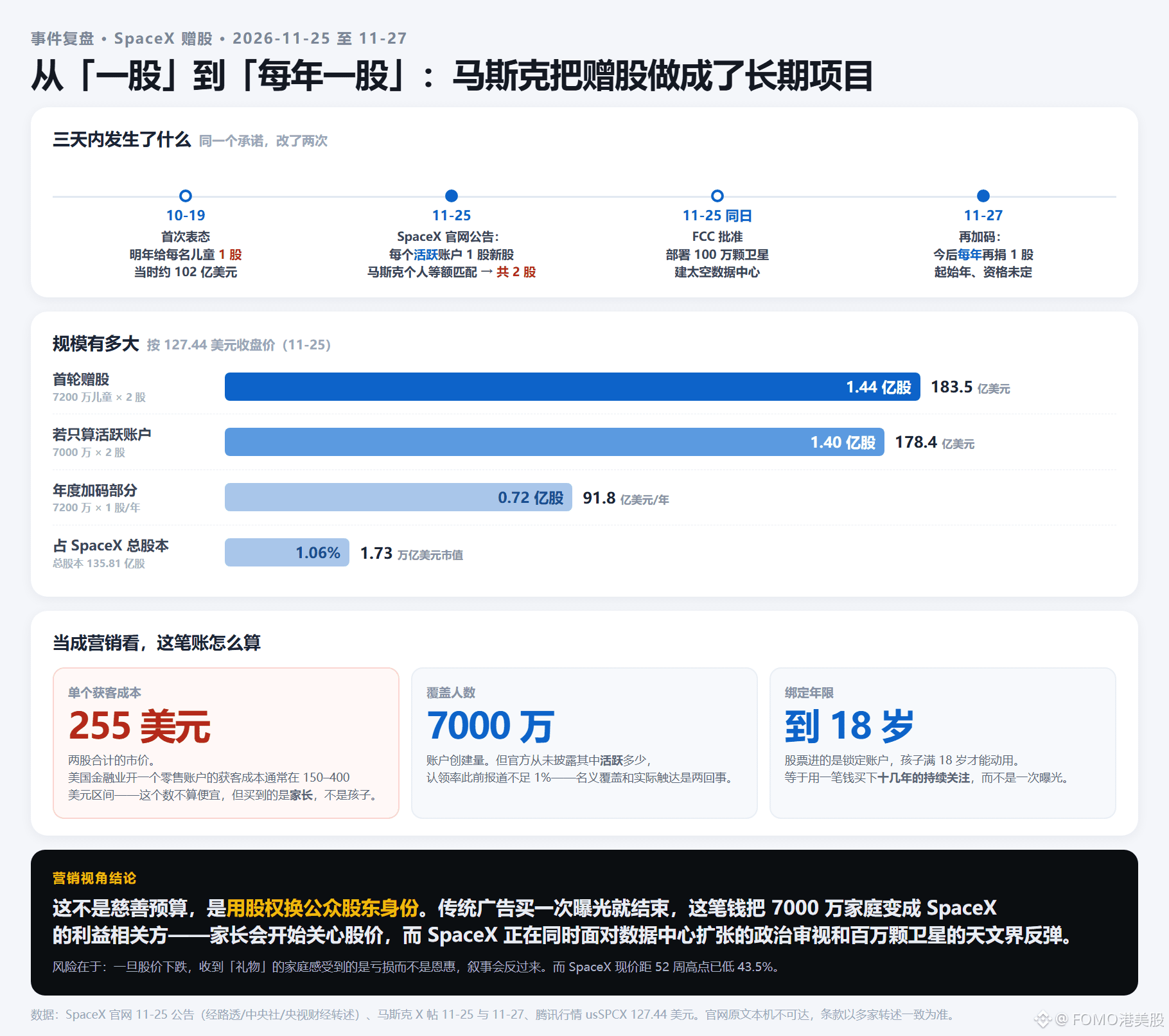
Musk schenkt Kindern Aktien und hat den Plan innerhalb von drei Tagen zweimal geändert. Am 19. Oktober sagte SpaceX $SPCXB zunächst, im nächsten Jahr jedem Kind, das an einem Trump-Konto teilnimmt, eine Aktie zu schenken – zum damaligen Kurs etwa 10,2 Milliarden US-Dollar wert. Am 25. November wurde es auf der Website konkret: eine neue Aktie pro aktivem Konto, von ihm persönlich im gleichen Umfang aufgestockt, also tatsächlich zwei Aktien. Heute kam noch eine weitere Stufe hinzu: Künftig soll jedes Jahr eine weitere Aktie gespendet werden.
Beim Schlusskurs vom 25. November von 127,44 US-Dollar entsprächen 72 Millionen Kinder 144 Millionen Aktien im Wert von 18,35 Milliarden US-Dollar, also 1,06 % aller ausstehenden Aktien. Für die 70 Millionen aktiven Konten allein wären es 17,84 Milliarden US-Dollar. Sein persönlicher Anteil daran entspräche etwa 1,19 % seiner eigenen Beteiligung.
Was man dafür bekommt, ist der Status als Aktionär. 255 US-Dollar pro Kind liegen in dem Bereich, den US-Broker für die Kundengewinnung bei Privatkunden ausgeben – gewonnen wird der Geldbeutel der Eltern. Die Aktien sind bis zum 18. Geburtstag gesperrt. Die Kosten für die Kundengewinnung verteilen sich so auf mehr als ein Jahrzehnt.
Ob sich diese Investition auszahlt, entscheidet sich nach der Schenkung am Aktienkurs.
Doch die 70 Millionen beziehen sich auf die Zahl der eröffneten Konten; wie viele davon aktiv sind und wie hoch die Einlösungsquote ist, wurde nicht bekannt gegeben. Frühere Berichte zufolge lag die Einlösungsquote unter 1 %. Der aktuelle SpaceX-Kurs liegt bereits 43,5 % unter seinem 52-Wochen-Hoch. Fällt der Kurs weiter, wird aus dem Geschenk für die Eltern ein Verlust statt eines Vorteils – und die Erzählung kippt sofort. Bei der Schenkung wird weder gefragt, ob die Kinder sie wollen, noch ob der Aktienkurs das durchhält.
{spot}(SPCXBUSDT)
#SpaceX #BStocks #马斯克
Musk schenkt Kindern Aktien und hat den Plan innerhalb von drei Tagen zweimal geändert. Am 19. Oktober sagte SpaceX $SPCXB zunächst, im nächsten Jahr jedem Kind, das an einem Trump-Konto teilnimmt, eine Aktie zu schenken – zum damaligen Kurs etwa 10,2 Milliarden US-Dollar wert. Am 25. November wurde es auf der Website konkret: eine neue Aktie pro aktivem Konto, von ihm persönlich im gleichen Umfang aufgestockt, also tatsächlich zwei Aktien. Heute kam noch eine weitere Stufe hinzu: Künftig soll jedes Jahr eine weitere Aktie gespendet werden.
Beim Schlusskurs vom 25. November von 127,44 US-Dollar entsprächen 72 Millionen Kinder 144 Millionen Aktien im Wert von 18,35 Milliarden US-Dollar, also 1,06 % aller ausstehenden Aktien. Für die 70 Millionen aktiven Konten allein wären es 17,84 Milliarden US-Dollar. Sein persönlicher Anteil daran entspräche etwa 1,19 % seiner eigenen Beteiligung.
Was man dafür bekommt, ist der Status als Aktionär. 255 US-Dollar pro Kind liegen in dem Bereich, den US-Broker für die Kundengewinnung bei Privatkunden ausgeben – gewonnen wird der Geldbeutel der Eltern. Die Aktien sind bis zum 18. Geburtstag gesperrt. Die Kosten für die Kundengewinnung verteilen sich so auf mehr als ein Jahrzehnt.
Ob sich diese Investition auszahlt, entscheidet sich nach der Schenkung am Aktienkurs.
Doch die 70 Millionen beziehen sich auf die Zahl der eröffneten Konten; wie viele davon aktiv sind und wie hoch die Einlösungsquote ist, wurde nicht bekannt gegeben. Frühere Berichte zufolge lag die Einlösungsquote unter 1 %. Der aktuelle SpaceX-Kurs liegt bereits 43,5 % unter seinem 52-Wochen-Hoch. Fällt der Kurs weiter, wird aus dem Geschenk für die Eltern ein Verlust statt eines Vorteils – und die Erzählung kippt sofort. Bei der Schenkung wird weder gefragt, ob die Kinder sie wollen, noch ob der Aktienkurs das durchhält.
#SpaceX #BStocks #马斯克
Tamara Minasian moTF:
是负债人的钱吗,还是新进一批币
5
2
12.3k


·
--
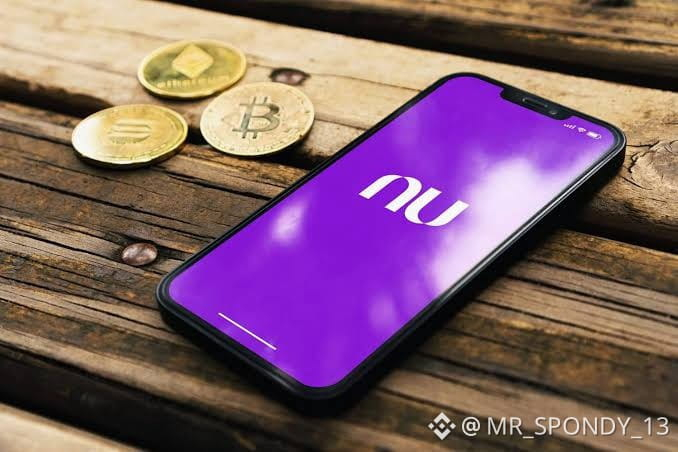
NUB: Traditionelles Banking trifft auf blockchainbasierten Zugang
Nu Holdings ist ein Finanztechnologieunternehmen, das für sein digitales Banking-Ökosystem in Lateinamerika bekannt ist.
Das Unternehmen konzentriert sich auf digitales Banking, Zahlungen, Kredite und Finanzdienstleistungen.
Marktüberblick
Screenshot-Kurs: $13.22
24 Std.: +5.42 %
Wichtig: NUB ist eine bStock-Abbildung und keine herkömmliche Kryptowährung.
Bei diesem Vermögenswert sollten Sie die zugrunde liegende Aktie, die Handelsbedingungen und die bStock-spezifischen Risiken beobachten, anstatt eine Krypto-Futures-Strategie anzuwenden.
$NUB
{spot}(NUBUSDT)
#NuHoldings #TradFi #bStocks #Mr_SPONDY_13
NUB: Traditionelles Banking trifft auf blockchainbasierten Zugang
Nu Holdings ist ein Finanztechnologieunternehmen, das für sein digitales Banking-Ökosystem in Lateinamerika bekannt ist.
Das Unternehmen konzentriert sich auf digitales Banking, Zahlungen, Kredite und Finanzdienstleistungen.
Marktüberblick
Screenshot-Kurs: $13.22
24 Std.: +5.42 %
Wichtig: NUB ist eine bStock-Abbildung und keine herkömmliche Kryptowährung.
Bei diesem Vermögenswert sollten Sie die zugrunde liegende Aktie, die Handelsbedingungen und die bStock-spezifischen Risiken beobachten, anstatt eine Krypto-Futures-Strategie anzuwenden.
$NUB
#NuHoldings #TradFi #bStocks #Mr_SPONDY_13
1
528

·
--
Binance gab am 27. November bekannt, dass Nutzer, die US-Aktientoken von Wendy’s, Nvidia, Qualcomm, PayPal und Western Digital halten, Dividenden erhalten. Die Auszahlung erfolgt nicht in bar, sondern in zusätzlichen Token derselben Art.
Die fünf Token sind $WENB für Wendy’s, $NVDAB für Nvidia, QCOMB für Qualcomm sowie PYPLB und WDCB für PayPal beziehungsweise Western Digital. Laut Binance wird der Nettobetrag der Bardividende nach Abzug der Quellensteuer und anfallender Gebühren in zusätzliche Anteile desselben Token reinvestiert; auch Bruchteile sind möglich. Nutzer, die die Token on-chain halten, erhalten die Dividende durch eine Anpassung des Multiplikators.
Um die Dividende zu erhalten, muss der entsprechende Token zum Zeitpunkt des Snapshots gehalten werden. Alle Snapshots finden um 9 Uhr (UTC+8) statt: am 1. Dezember für Wendy’s, am 2. Dezember für Nvidia, am 3. Dezember für Qualcomm und am 4. Dezember für PayPal und Western Digital. Die entsprechenden USDT-Handelspaare sind nicht betroffen und können weiterhin gehandelt werden. Der Umtausch, die Einzahlungen, Auszahlungen und der Soforttausch der betreffenden Token werden jedoch am jeweiligen Snapshot-Tag ab 7 Uhr ausgesetzt und nach Abschluss der Ausschüttung wieder aufgenommen. Eine gesonderte Mitteilung dazu erfolgt nicht. Dividenden, die auf anderen Konten eingehen, werden dem Spot-Konto gutgeschrieben. Dabei handelt es sich um Bardividenden, die die Unternehmen ohnehin ausschütten; Binance wickelt die Auszahlung gemäß den Regeln automatisch für die Inhaber der entsprechenden Token ab.
#bStocks #币安 #美股代币 stellt keine Anlageberatung dar.

518
·
--
Verifiziert
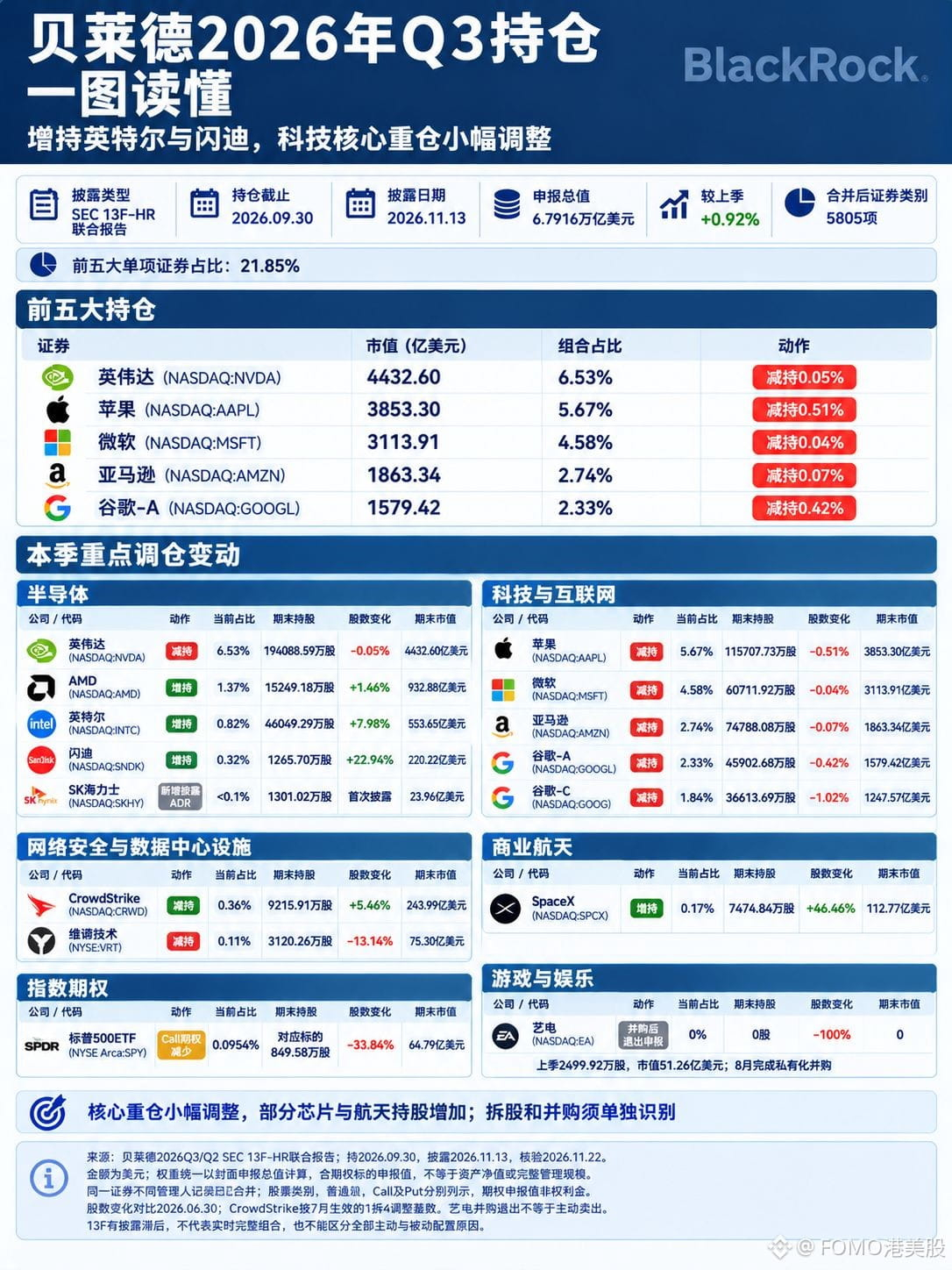
BlackRock meldete für das dritte Quartal ein Volumen von 6,79 Billionen US-Dollar, 0,92 % mehr als im zweiten Quartal. Die Top fünf sind weiterhin Nvidia $NVDAB , Apple, Microsoft, Amazon und Google. Ihr Gewicht stieg von 19,24 % auf 21,85 %, doch die Stückzahl aller fünf Positionen ging zurück. Gestiegen sind die Kurse, nicht die Positionen.
Die Aufstockungen konzentrierten sich auf Chipwerte: Intel $INTCB legte um 7,98 % auf 460 Millionen Aktien zu; der gemeldete Wert betrug 55,365 Milliarden. Sandisk $SNDKB wurde um 22,94 % aufgestockt und hatte einen Börsenwert von 22,022 Milliarden. Bei SpaceX wurde um 46,46 % aufgestockt, doch der Anteil macht nur 0,17 % aus.
Das Problem liegt im Stichtag des Berichts: Seit dem 30. September fiel Intel von 120,23 auf 54,47, ein Minus von 54,7 %. Sandisk sank von 217,49 auf 73,61, ein Minus von 66,2 %. Bei unveränderter Stückzahl schrumpfte der Buchwert dieser beiden Positionen von 77,387 Milliarden auf 25,988 Milliarden. Die Aufstockungen erfolgten vor Quartalsende; danach machten die Kursverluste die Buchgewinne zunichte. Ein 13F zeigt nur den Stand vom 30. September.
Deshalb würde ich die Aufstockungen nicht als Zeichen der Zuversicht interpretieren. Ein 13F ist um 45 Tage verzögert und nur eine Momentaufnahme zum Quartalsende. Es enthält keinerlei Informationen über Verkäufe. Ob die Intel-Position bei etwa 120 aufgestockt oder bei einem Kurs von 54 nachgekauft wurde – ob also nahe dem Hoch eingestiegen oder auf dem Tief nachgelegt wurde –, lässt sich dem Bericht nicht entnehmen. Der Großteil von BlackRocks Positionen besteht aus passiven Indexanlagen. Zeichnungen und Rücknahmen sowie Indexanpassungen können die Aktienzahl verändern – das ist nicht dasselbe wie eine aktive Kaufüberzeugung.
Ob Intel im nächsten Quartal weiter aufgestockt wird und ob Sandisk nach diesem Kurssturz reduziert wurde, wäre erst ein aussagekräftiges Signal.
{spot}(INTCBUSDT)
{spot}(SNDKBUSDT)
{spot}(NVDABUSDT)
#贝莱德 #BStocks #机构持仓
BlackRock meldete für das dritte Quartal ein Volumen von 6,79 Billionen US-Dollar, 0,92 % mehr als im zweiten Quartal. Die Top fünf sind weiterhin Nvidia $NVDAB , Apple, Microsoft, Amazon und Google. Ihr Gewicht stieg von 19,24 % auf 21,85 %, doch die Stückzahl aller fünf Positionen ging zurück. Gestiegen sind die Kurse, nicht die Positionen.
Die Aufstockungen konzentrierten sich auf Chipwerte: Intel $INTCB legte um 7,98 % auf 460 Millionen Aktien zu; der gemeldete Wert betrug 55,365 Milliarden. Sandisk $SNDKB wurde um 22,94 % aufgestockt und hatte einen Börsenwert von 22,022 Milliarden. Bei SpaceX wurde um 46,46 % aufgestockt, doch der Anteil macht nur 0,17 % aus.
Das Problem liegt im Stichtag des Berichts: Seit dem 30. September fiel Intel von 120,23 auf 54,47, ein Minus von 54,7 %. Sandisk sank von 217,49 auf 73,61, ein Minus von 66,2 %. Bei unveränderter Stückzahl schrumpfte der Buchwert dieser beiden Positionen von 77,387 Milliarden auf 25,988 Milliarden. Die Aufstockungen erfolgten vor Quartalsende; danach machten die Kursverluste die Buchgewinne zunichte. Ein 13F zeigt nur den Stand vom 30. September.
Deshalb würde ich die Aufstockungen nicht als Zeichen der Zuversicht interpretieren. Ein 13F ist um 45 Tage verzögert und nur eine Momentaufnahme zum Quartalsende. Es enthält keinerlei Informationen über Verkäufe. Ob die Intel-Position bei etwa 120 aufgestockt oder bei einem Kurs von 54 nachgekauft wurde – ob also nahe dem Hoch eingestiegen oder auf dem Tief nachgelegt wurde –, lässt sich dem Bericht nicht entnehmen. Der Großteil von BlackRocks Positionen besteht aus passiven Indexanlagen. Zeichnungen und Rücknahmen sowie Indexanpassungen können die Aktienzahl verändern – das ist nicht dasselbe wie eine aktive Kaufüberzeugung.
Ob Intel im nächsten Quartal weiter aufgestockt wird und ob Sandisk nach diesem Kurssturz reduziert wurde, wäre erst ein aussagekräftiges Signal.
#贝莱德 #BStocks #机构持仓
上帝不掷骰子:
贝莱德不是还要btc,怎么没有看到?
2
3
7.2k
Anmelden und weiter Inhalte entdecken
Krypto-Nutzer weltweit auf Binance Square kennenlernen
⚡️ Bleib in Sachen Krypto stets am Puls.
💬 Die weltgrößte Kryptobörse vertraut darauf.
👍 Erhalte verlässliche Einblicke von verifizierten Creators.
E-Mail-Adresse/Telefonnummer
Trendthemen
1
#EvolveAtBinanceBlockchainWeek
2.7M Aufrufe
21,563 Kommentare
2
#IBSGovAccountMints1BTokensDrains5.71M
24,382 Aufrufe
290 Kommentare
3
#OPECReportedlyKeepsOilQuotasUnchangedForQ1
3,084 Aufrufe
74 Kommentare
4
#XRPLAmendmentsEnterActivationWindow
9,583 Aufrufe
100 Kommentare
5
#SunReportedlyOffered4BToRescueFTX
1,583 Aufrufe
23 Kommentare
6
#WorldLibertyActsToCutLiquidationRisk
74,968 Aufrufe
638 Kommentare
7
#LiquidHackerMoves598BTC
53,719 Aufrufe
398 Kommentare
8
#TrumpMediaCouldFace883.5MRepaymentDemand
29,004 Aufrufe
156 Kommentare
9
#BitcoinETFsExtendOutflowStreakToEightDays
122,691 Aufrufe
940 Kommentare
10
#BitcoinETFsSee$5.39BNetOutflowRecord
3,765 Aufrufe
17 Kommentare