
#bstock
bstock
84,420 views
382 Discussing
Hot
Latest

·
--
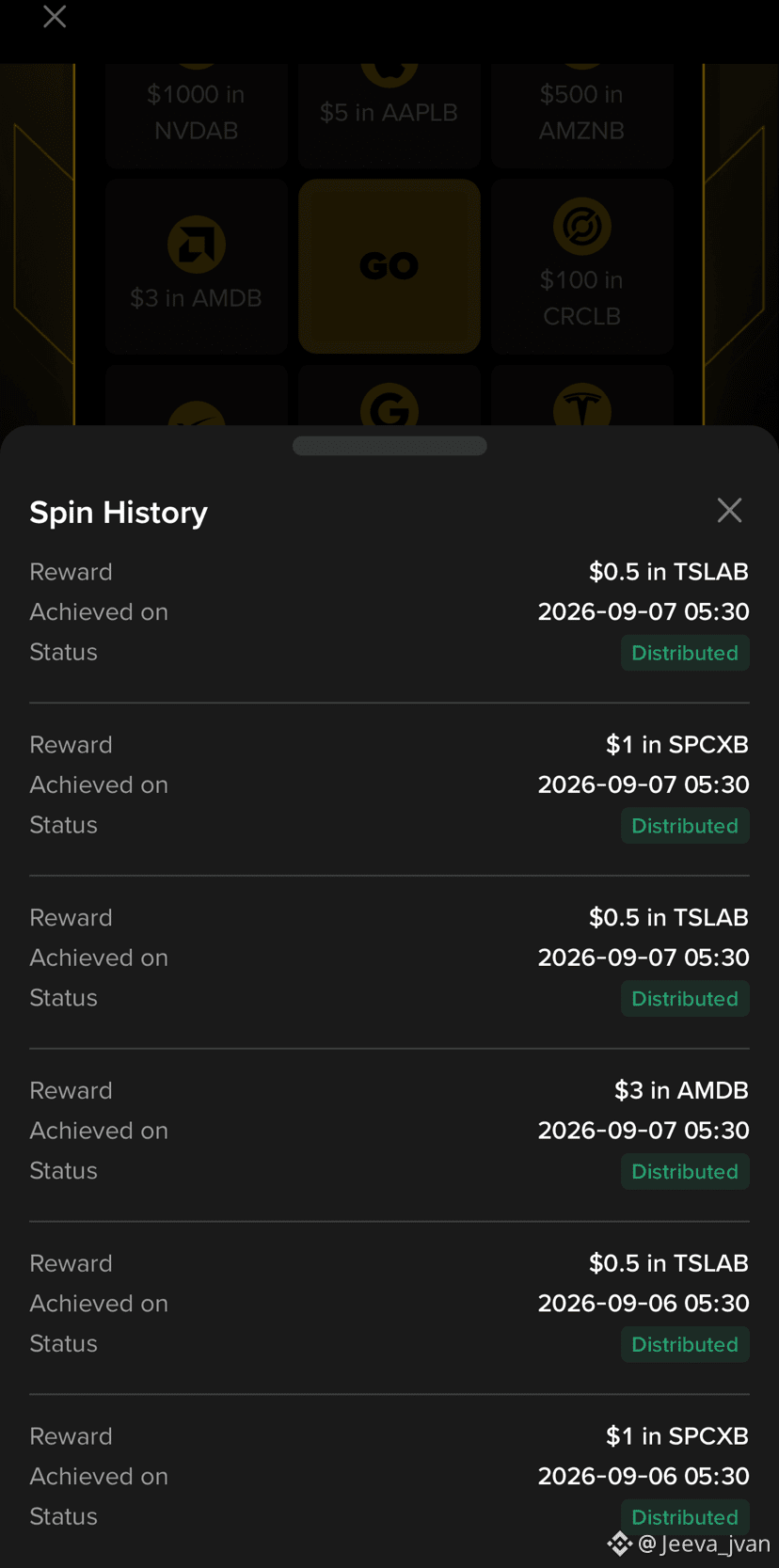
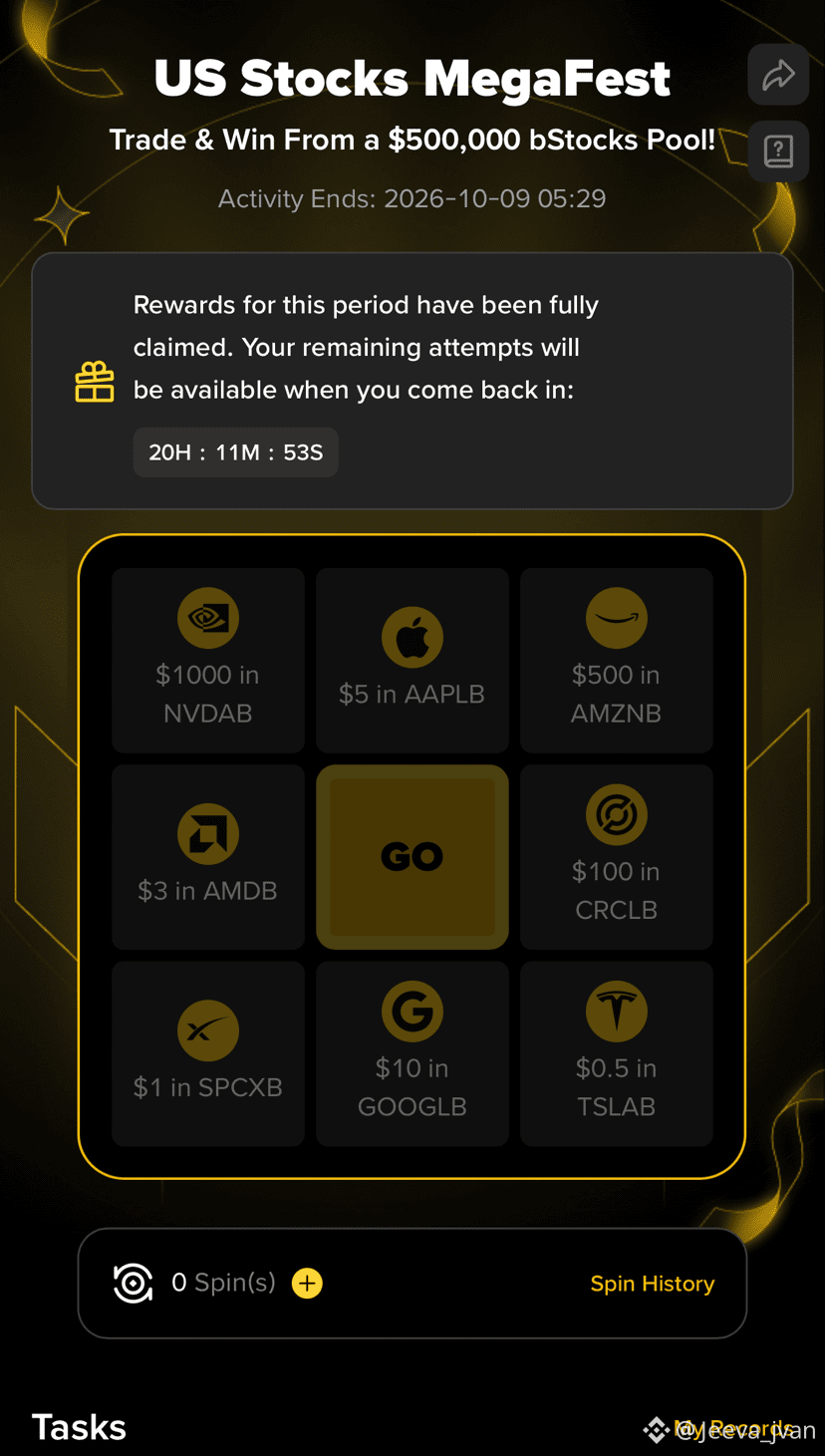
$500K bStocks pool is up for grabs.
Small rewards today, bigger wins tomorrow.
Just keep spinning and see where it takes you.
Important tip: be ready when the timer hits the correct time.
Once it’s your turn, press the Spin button multiple times quickly. With a huge crowd joining at the same time, the spins can get taken fast.
If you miss it, the timer keeps running and you may have to wait until the next day. #bstock #spin #SpinTheWheel #Rewards. #BinanceSquare
$500K bStocks pool is up for grabs.
Small rewards today, bigger wins tomorrow.
Just keep spinning and see where it takes you.
Important tip: be ready when the timer hits the correct time.
Once it’s your turn, press the Spin button multiple times quickly. With a huge crowd joining at the same time, the spins can get taken fast.
If you miss it, the timer keeps running and you may have to wait until the next day. #bstock #spin #SpinTheWheel #Rewards. #BinanceSquare
Small rewards today, bigger wins tomorrow.
Just keep spinning and see where it takes you.
Important tip: be ready when the timer hits the correct time.
Once it’s your turn, press the Spin button multiple times quickly. With a huge crowd joining at the same time, the spins can get taken fast.
If you miss it, the timer keeps running and you may have to wait until the next day. #bstock #spin #SpinTheWheel #Rewards. #BinanceSquare
AngelOfCrypto_-:
nice
1
4
1.3k

Article
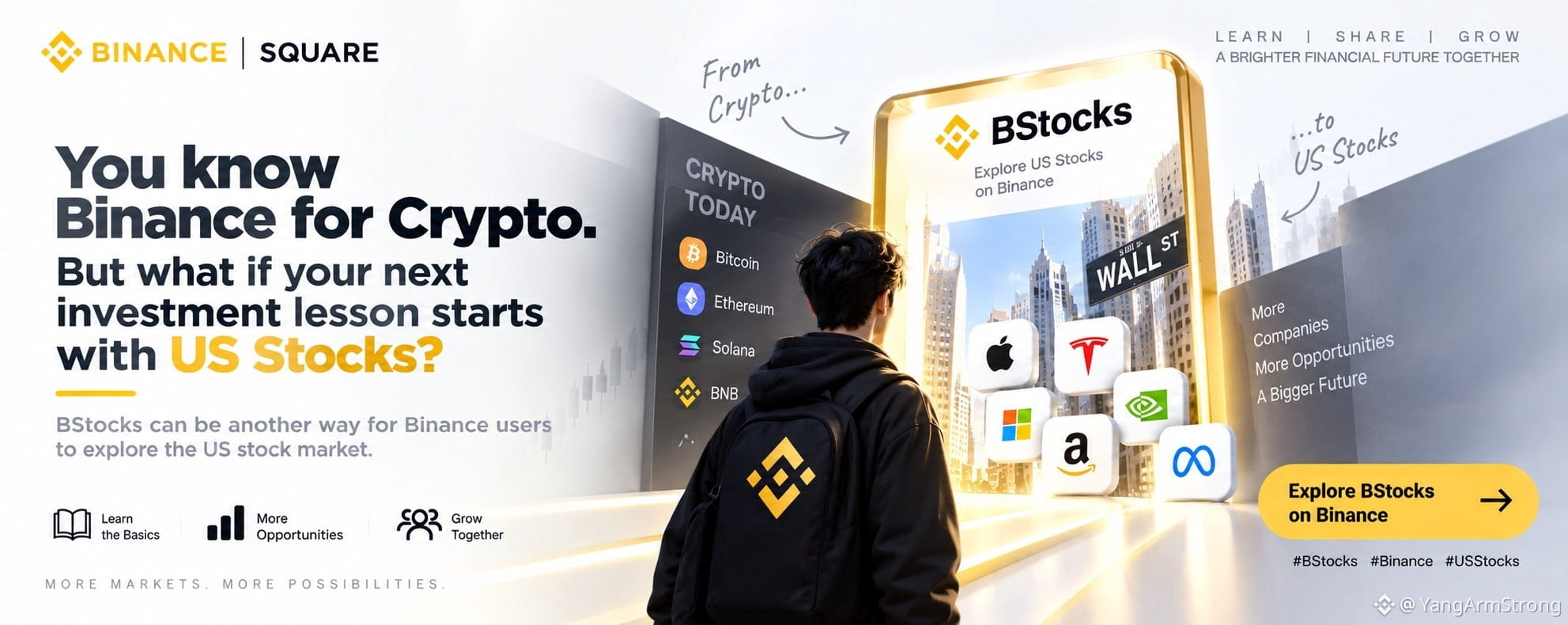
📈 You Know Binance for Crypto. But What If Your Next Investment Lesson Starts With US Stocks?You know Binance for Crypto. But what if your next investment lesson starts with US Stocks? 📈👀
If you already understand Bitcoin and other digital assets, exploring the stock market can be a completely different learning experience. And for eligible Binance users, BStocks can be another way to explore exposure to US Stocks within the Binance ecosystem.
But before jumping in, there are a few important things to understand.
🔹 1. Stocks are different from Crypto
Crypto markets can trade 24/7, while traditional US stock markets operate during specific market hours. Stock prices are also heavily influenced by company earnings, economic data, interest rates, and major business news.
🔹 2. Know what you are buying
Seeing a famous company everywhere doesn’t automatically make its stock a good investment. Before investing, learn about the company, its business model, financial performance, valuation, and future growth potential.
🔹 3. Understand risk
Stocks can rise, but they can also fall. Even large and well-known companies can experience significant price drops. Never assume that a familiar company means a risk-free investment.
🔹 4. Think about diversification
Putting all your money into one company means your portfolio depends heavily on that company. Learning about different companies, sectors, and diversification can help you understand how investors manage risk.
🔹 5. BStocks can be another learning opportunity
For Binance users interested in US Stocks, BStocks can provide another way to explore the stock market. However, availability, product structure, fees, and risks can vary by region and product, so always check the details before participating.
The most important lesson is simple:
Don’t invest in something just because it’s popular. Understand it first. 🧠📊
Crypto and Stocks are different markets, but learning about both can help you become a more informed market participant.
Would you explore US Stocks after learning about Crypto? 👀
@BinanceKhmer
#SEAstock #Binance #bstock
📈 You Know Binance for Crypto. But What If Your Next Investment Lesson Starts With US Stocks?
You know Binance for Crypto. But what if your next investment lesson starts with US Stocks? 📈👀
If you already understand Bitcoin and other digital assets, exploring the stock market can be a completely different learning experience. And for eligible Binance users, BStocks can be another way to explore exposure to US Stocks within the Binance ecosystem.
But before jumping in, there are a few important things to understand.
🔹 1. Stocks are different from Crypto
Crypto markets can trade 24/7, while traditional US stock markets operate during specific market hours. Stock prices are also heavily influenced by company earnings, economic data, interest rates, and major business news.
🔹 2. Know what you are buying
Seeing a famous company everywhere doesn’t automatically make its stock a good investment. Before investing, learn about the company, its business model, financial performance, valuation, and future growth potential.
🔹 3. Understand risk
Stocks can rise, but they can also fall. Even large and well-known companies can experience significant price drops. Never assume that a familiar company means a risk-free investment.
🔹 4. Think about diversification
Putting all your money into one company means your portfolio depends heavily on that company. Learning about different companies, sectors, and diversification can help you understand how investors manage risk.
🔹 5. BStocks can be another learning opportunity
For Binance users interested in US Stocks, BStocks can provide another way to explore the stock market. However, availability, product structure, fees, and risks can vary by region and product, so always check the details before participating.
The most important lesson is simple:
Don’t invest in something just because it’s popular. Understand it first. 🧠📊
Crypto and Stocks are different markets, but learning about both can help you become a more informed market participant.
Would you explore US Stocks after learning about Crypto? 👀
@Binance Khmer
#SEAstock #Binance #bstock
If you already understand Bitcoin and other digital assets, exploring the stock market can be a completely different learning experience. And for eligible Binance users, BStocks can be another way to explore exposure to US Stocks within the Binance ecosystem.
But before jumping in, there are a few important things to understand.
🔹 1. Stocks are different from Crypto
Crypto markets can trade 24/7, while traditional US stock markets operate during specific market hours. Stock prices are also heavily influenced by company earnings, economic data, interest rates, and major business news.
🔹 2. Know what you are buying
Seeing a famous company everywhere doesn’t automatically make its stock a good investment. Before investing, learn about the company, its business model, financial performance, valuation, and future growth potential.
🔹 3. Understand risk
Stocks can rise, but they can also fall. Even large and well-known companies can experience significant price drops. Never assume that a familiar company means a risk-free investment.
🔹 4. Think about diversification
Putting all your money into one company means your portfolio depends heavily on that company. Learning about different companies, sectors, and diversification can help you understand how investors manage risk.
🔹 5. BStocks can be another learning opportunity
For Binance users interested in US Stocks, BStocks can provide another way to explore the stock market. However, availability, product structure, fees, and risks can vary by region and product, so always check the details before participating.
The most important lesson is simple:
Don’t invest in something just because it’s popular. Understand it first. 🧠📊
Crypto and Stocks are different markets, but learning about both can help you become a more informed market participant.
Would you explore US Stocks after learning about Crypto? 👀
@Binance Khmer
#SEAstock #Binance #bstock
70
Article
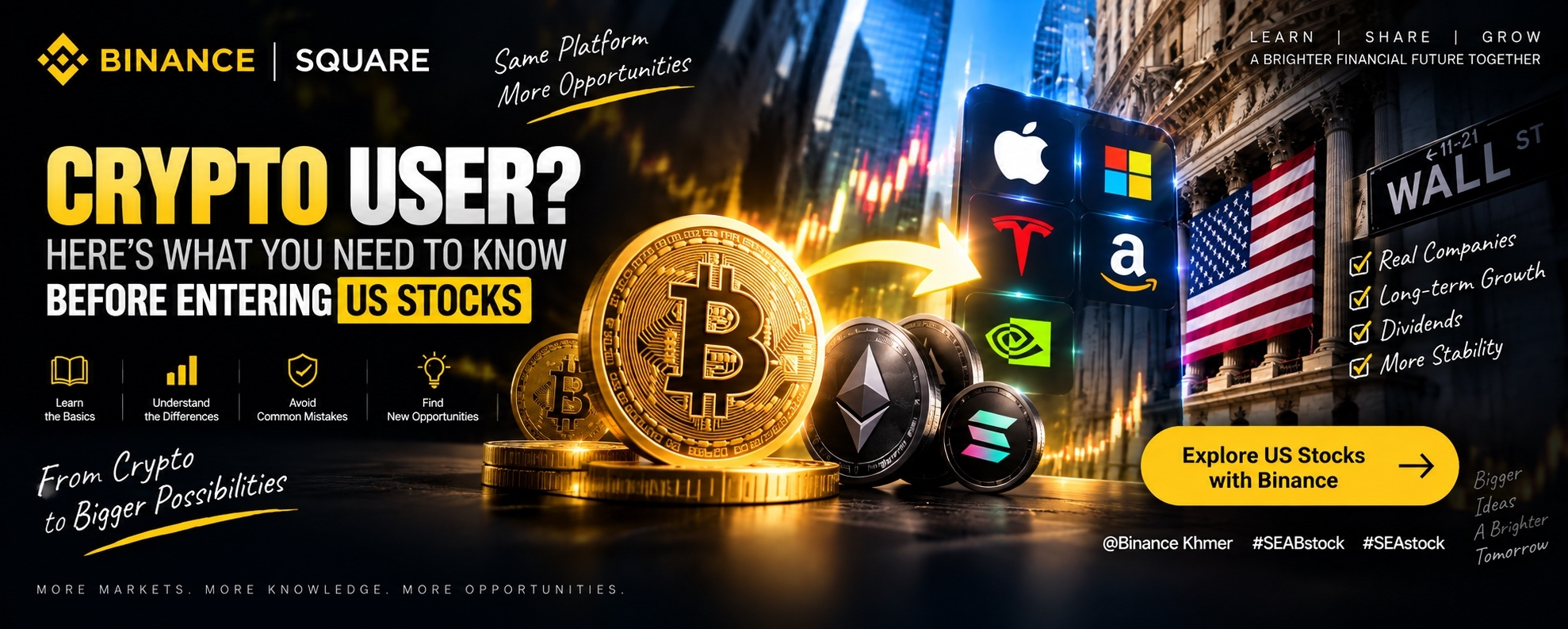
From Crypto to US Stocks: 7 Things Every Binance User Should Know 📈If you already understand Bitcoin and crypto, exploring US Stocks can feel familiar—but the market works differently. Before buying your first stock or exploring BStocks, here are 7 things every crypto user should understand.
1️⃣ Stocks don’t trade 24/7
Crypto markets operate around the clock. Traditional US stock markets have specific trading sessions, so the market can be closed while crypto is still moving. This changes how you plan entries, exits, and reactions to news.
2️⃣ Stock prices can move because of company news
A stock can react strongly to earnings reports, product launches, management changes, economic data, or unexpected company news. Understanding why a stock moves is often more important than simply watching the price.
3️⃣ Crypto and stocks have different risk profiles
Crypto can experience extremely large price swings, while individual stocks can also be volatile. Neither market is automatically “safe.” Your risk depends on what you buy, how much you invest, and how diversified your portfolio is.
4️⃣ One famous company doesn’t equal a diversified portfolio
Buying one popular stock means your investment can still be heavily affected by that single company. Learning about diversification can help reduce the impact of one investment performing badly.
5️⃣ Dividends are something crypto users should learn about
Some companies distribute part of their profits to shareholders through dividends. Not every stock pays dividends, and the amount and schedule can vary.
6️⃣ Don’t buy just because everyone is talking about it
A stock trending on social media can be interesting, but popularity isn’t the same as value. Look at the company, its financial performance, valuation, growth prospects, and the risks involved before making a decision.
7️⃣ BStocks can be another way for Binance users to explore US Stocks
For crypto users who are already familiar with Binance, BStocks can provide a way to explore the US stock market within the Binance ecosystem. But before trading, always understand exactly what product you are using, its terms, fees, availability in your region, and the risks involved.
The biggest lesson? Don’t treat Stocks exactly like Crypto. Learn the market first, then decide how much risk you’re comfortable taking.
@BinanceKhmer
#SEABstock #SEAstock #bstock
From Crypto to US Stocks: 7 Things Every Binance User Should Know 📈
If you already understand Bitcoin and crypto, exploring US Stocks can feel familiar—but the market works differently. Before buying your first stock or exploring BStocks, here are 7 things every crypto user should understand.
1️⃣ Stocks don’t trade 24/7
Crypto markets operate around the clock. Traditional US stock markets have specific trading sessions, so the market can be closed while crypto is still moving. This changes how you plan entries, exits, and reactions to news.
2️⃣ Stock prices can move because of company news
A stock can react strongly to earnings reports, product launches, management changes, economic data, or unexpected company news. Understanding why a stock moves is often more important than simply watching the price.
3️⃣ Crypto and stocks have different risk profiles
Crypto can experience extremely large price swings, while individual stocks can also be volatile. Neither market is automatically “safe.” Your risk depends on what you buy, how much you invest, and how diversified your portfolio is.
4️⃣ One famous company doesn’t equal a diversified portfolio
Buying one popular stock means your investment can still be heavily affected by that single company. Learning about diversification can help reduce the impact of one investment performing badly.
5️⃣ Dividends are something crypto users should learn about
Some companies distribute part of their profits to shareholders through dividends. Not every stock pays dividends, and the amount and schedule can vary.
6️⃣ Don’t buy just because everyone is talking about it
A stock trending on social media can be interesting, but popularity isn’t the same as value. Look at the company, its financial performance, valuation, growth prospects, and the risks involved before making a decision.
7️⃣ BStocks can be another way for Binance users to explore US Stocks
For crypto users who are already familiar with Binance, BStocks can provide a way to explore the US stock market within the Binance ecosystem. But before trading, always understand exactly what product you are using, its terms, fees, availability in your region, and the risks involved.
The biggest lesson? Don’t treat Stocks exactly like Crypto. Learn the market first, then decide how much risk you’re comfortable taking.
@Binance Khmer
#SEABstock #SEAstock #bstock
1️⃣ Stocks don’t trade 24/7
Crypto markets operate around the clock. Traditional US stock markets have specific trading sessions, so the market can be closed while crypto is still moving. This changes how you plan entries, exits, and reactions to news.
2️⃣ Stock prices can move because of company news
A stock can react strongly to earnings reports, product launches, management changes, economic data, or unexpected company news. Understanding why a stock moves is often more important than simply watching the price.
3️⃣ Crypto and stocks have different risk profiles
Crypto can experience extremely large price swings, while individual stocks can also be volatile. Neither market is automatically “safe.” Your risk depends on what you buy, how much you invest, and how diversified your portfolio is.
4️⃣ One famous company doesn’t equal a diversified portfolio
Buying one popular stock means your investment can still be heavily affected by that single company. Learning about diversification can help reduce the impact of one investment performing badly.
5️⃣ Dividends are something crypto users should learn about
Some companies distribute part of their profits to shareholders through dividends. Not every stock pays dividends, and the amount and schedule can vary.
6️⃣ Don’t buy just because everyone is talking about it
A stock trending on social media can be interesting, but popularity isn’t the same as value. Look at the company, its financial performance, valuation, growth prospects, and the risks involved before making a decision.
7️⃣ BStocks can be another way for Binance users to explore US Stocks
For crypto users who are already familiar with Binance, BStocks can provide a way to explore the US stock market within the Binance ecosystem. But before trading, always understand exactly what product you are using, its terms, fees, availability in your region, and the risks involved.
The biggest lesson? Don’t treat Stocks exactly like Crypto. Learn the market first, then decide how much risk you’re comfortable taking.
@Binance Khmer
#SEABstock #SEAstock #bstock
82

Binance New Reward 🚨
Automate bStock & Earn SPCXB Rewards!
What to do:
1. Create Binance Convert Recurring plan for bStock
2. Start from 0.01 USDC
3. Register on promo page
4. Do ≥150 USDC bStock transactions
First 2000 users will share 50 SPCXB in rewards.
Are you joining? 👇
#bStock #Binance #Crypto Rewards
Binance New Reward 🚨
Automate bStock & Earn SPCXB Rewards!
What to do:
1. Create Binance Convert Recurring plan for bStock
2. Start from 0.01 USDC
3. Register on promo page
4. Do ≥150 USDC bStock transactions
First 2000 users will share 50 SPCXB in rewards.
Are you joining? 👇
#bStock #Binance #Crypto Rewards
Automate bStock & Earn SPCXB Rewards!
What to do:
1. Create Binance Convert Recurring plan for bStock
2. Start from 0.01 USDC
3. Register on promo page
4. Do ≥150 USDC bStock transactions
First 2000 users will share 50 SPCXB in rewards.
Are you joining? 👇
#bStock #Binance #Crypto Rewards
1
88

·
--
Bullish
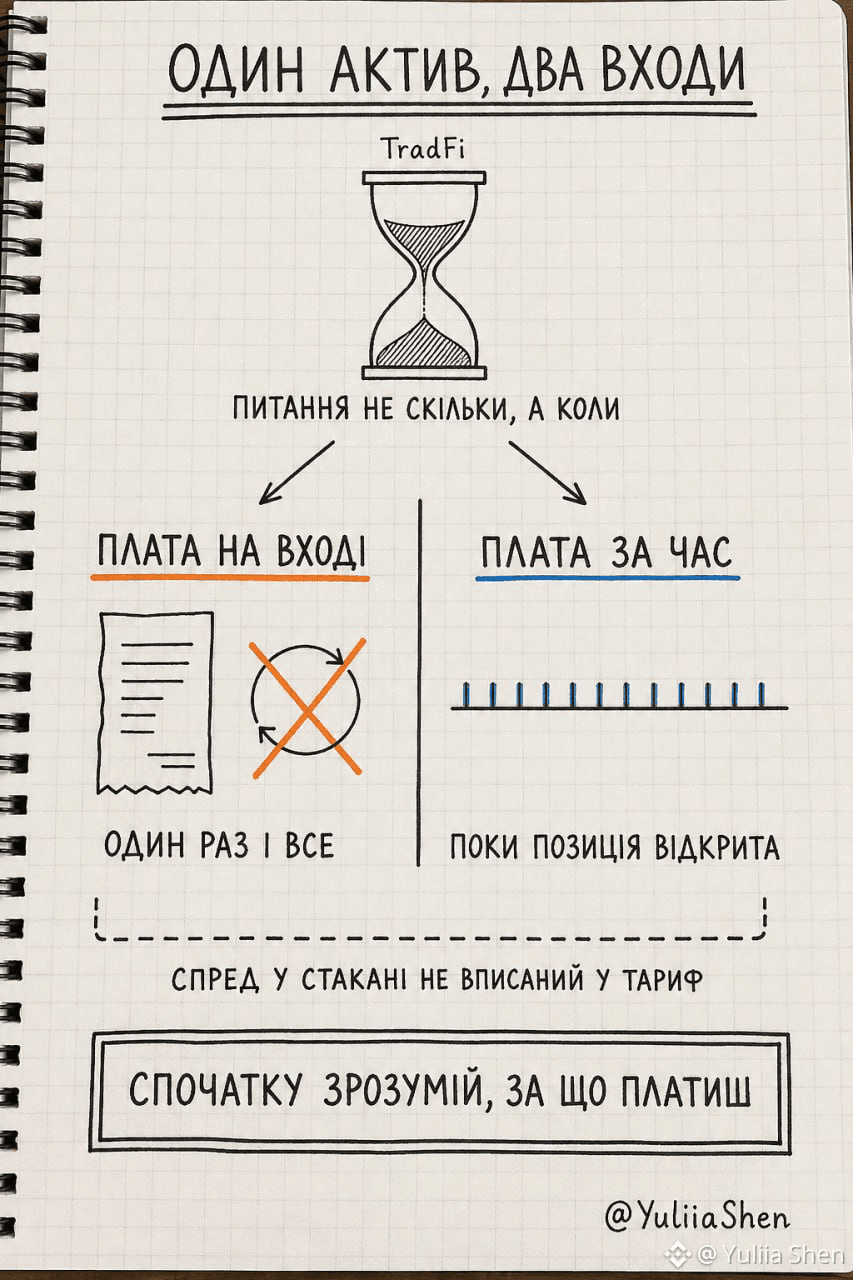
One and the same asset, but the charge for access is set up differently
There are two ways to the same company on Binance: buy bStock on the spot or open a TradFi perp. The difference is not so much the number as when you pay.
#bstock . A fee at the time of the trade. The base spot trading fee is a fixed 0.35 USD per order, and for orders above 340 USD, instead of that it takes a 0.1% spread. Until September 30, the maker fee on bStocks is zero—meaning for a limit order that sits in the order book and waits, rather than taking the price from the market. The threshold is low: in trading parameters, the minimum order is 5 USDT, and you can place a fractional amount.
#TradFi -perp. I haven’t traded perps, so it’s just the mechanics. Here the main fee isn’t a one-time thing: while the position is open, a funding rate accrues between the parties—it fluctuates and can go both ways. Plus margin requirements and the risk of liquidation, and a negative balance remains your debt.
And the third cost item that isn’t listed in the fee schedule: the spread in a specific trading pair. I compared $NVDAB and $NFLXB , and the difference in the order book was noticeable.
So the question isn’t where the fee is lower. With bStocks, the main cost comes at entry, while with a TradFi perp it continues as long as the position is open.
{spot}(NVDABUSDT)
{spot}(NFLXBUSDT)
One and the same asset, but the charge for access is set up differently
There are two ways to the same company on Binance: buy bStock on the spot or open a TradFi perp. The difference is not so much the number as when you pay.
#bstock . A fee at the time of the trade. The base spot trading fee is a fixed 0.35 USD per order, and for orders above 340 USD, instead of that it takes a 0.1% spread. Until September 30, the maker fee on bStocks is zero—meaning for a limit order that sits in the order book and waits, rather than taking the price from the market. The threshold is low: in trading parameters, the minimum order is 5 USDT, and you can place a fractional amount.
#TradFi -perp. I haven’t traded perps, so it’s just the mechanics. Here the main fee isn’t a one-time thing: while the position is open, a funding rate accrues between the parties—it fluctuates and can go both ways. Plus margin requirements and the risk of liquidation, and a negative balance remains your debt.
And the third cost item that isn’t listed in the fee schedule: the spread in a specific trading pair. I compared $NVDAB and $NFLXB , and the difference in the order book was noticeable.
So the question isn’t where the fee is lower. With bStocks, the main cost comes at entry, while with a TradFi perp it continues as long as the position is open.
There are two ways to the same company on Binance: buy bStock on the spot or open a TradFi perp. The difference is not so much the number as when you pay.
#bstock . A fee at the time of the trade. The base spot trading fee is a fixed 0.35 USD per order, and for orders above 340 USD, instead of that it takes a 0.1% spread. Until September 30, the maker fee on bStocks is zero—meaning for a limit order that sits in the order book and waits, rather than taking the price from the market. The threshold is low: in trading parameters, the minimum order is 5 USDT, and you can place a fractional amount.
#TradFi -perp. I haven’t traded perps, so it’s just the mechanics. Here the main fee isn’t a one-time thing: while the position is open, a funding rate accrues between the parties—it fluctuates and can go both ways. Plus margin requirements and the risk of liquidation, and a negative balance remains your debt.
And the third cost item that isn’t listed in the fee schedule: the spread in a specific trading pair. I compared $NVDAB and $NFLXB , and the difference in the order book was noticeable.
So the question isn’t where the fee is lower. With bStocks, the main cost comes at entry, while with a TradFi perp it continues as long as the position is open.
3
1.2k


Article
Beginner’s Guide: How TradFi Works on Binance1. What is TradFi on Binance?
TradFi — short for Traditional Finance, meaning traditional financial assets: stocks, stock market indices, gold, silver, and other instruments. Binance is gradually integrating them with the crypto infrastructure so users can work with different asset classes in a single account. At the same time,
Beginner’s Guide: How TradFi Works on Binance
1. What is TradFi on Binance?
TradFi — short for Traditional Finance, meaning traditional financial assets: stocks, stock market indices, gold, silver, and other instruments. Binance is gradually integrating them with the crypto infrastructure so users can work with different asset classes in a single account. At the same time,
TradFi — short for Traditional Finance, meaning traditional financial assets: stocks, stock market indices, gold, silver, and other instruments. Binance is gradually integrating them with the crypto infrastructure so users can work with different asset classes in a single account. At the same time,
2
138

·
--
Bullish
On Binance, there are currently four ways to gain exposure to the same U.S. stock. bStock, direct stock purchase, TradFi perps, and - starting September 1 - options.
They differ not in the interface, but in where the settlement takes place.
#bstock is a certificate on the BNB Chain. The settlement is on-chain and instant. The chain has no weekends, so trading runs 24/7.
#TradFi -perp is also calculated inside the exchange, in stablecoins, and also without pauses. But holding the asset it does not provide: it is a leveraged instrument with margin requirements and liquidation in the event of a sharp price move.
Then the other half begins.
A direct purchase of a stock is already a real security. Nest Trading sends the order to Alpaca Securities for clearing and custody, and clearing in the U.S. runs on the schedule of the American market.
Options are set up the same way, with physical delivery of shares. That’s why their trading hours are market hours: 9:30 to 16:00 New York time. Outside that window, orders are not accepted.
That’s the whole pattern. Two instruments are settled where there is no night, and they run 24/7. Two are settled through clearing, which sleeps, and they run on its schedule.
It’s not the platform that determines the hours. They are determined by where the owner actually changes.
On Binance, there are currently four ways to gain exposure to the same U.S. stock. bStock, direct stock purchase, TradFi perps, and - starting September 1 - options.
They differ not in the interface, but in where the settlement takes place.
#bstock is a certificate on the BNB Chain. The settlement is on-chain and instant. The chain has no weekends, so trading runs 24/7.
#TradFi -perp is also calculated inside the exchange, in stablecoins, and also without pauses. But holding the asset it does not provide: it is a leveraged instrument with margin requirements and liquidation in the event of a sharp price move.
Then the other half begins.
A direct purchase of a stock is already a real security. Nest Trading sends the order to Alpaca Securities for clearing and custody, and clearing in the U.S. runs on the schedule of the American market.
Options are set up the same way, with physical delivery of shares. That’s why their trading hours are market hours: 9:30 to 16:00 New York time. Outside that window, orders are not accepted.
That’s the whole pattern. Two instruments are settled where there is no night, and they run 24/7. Two are settled through clearing, which sleeps, and they run on its schedule.
It’s not the platform that determines the hours. They are determined by where the owner actually changes.
They differ not in the interface, but in where the settlement takes place.
#bstock is a certificate on the BNB Chain. The settlement is on-chain and instant. The chain has no weekends, so trading runs 24/7.
#TradFi -perp is also calculated inside the exchange, in stablecoins, and also without pauses. But holding the asset it does not provide: it is a leveraged instrument with margin requirements and liquidation in the event of a sharp price move.
Then the other half begins.
A direct purchase of a stock is already a real security. Nest Trading sends the order to Alpaca Securities for clearing and custody, and clearing in the U.S. runs on the schedule of the American market.
Options are set up the same way, with physical delivery of shares. That’s why their trading hours are market hours: 9:30 to 16:00 New York time. Outside that window, orders are not accepted.
That’s the whole pattern. Two instruments are settled where there is no night, and they run 24/7. Two are settled through clearing, which sleeps, and they run on its schedule.
It’s not the platform that determines the hours. They are determined by where the owner actually changes.

92
🚀 $BSTOCK DOMINATES TOKENIZED STOCK LIQUIDITY 🦈
📊 bStocks now commands 88% of on‑chain stock volume while holding just 26% of TVL – a classic smart‑money concentration signal. 📈 The surge to 235 k active traders and $1.7 B daily volume underscores a liquidity magnet, pulling institutional flow into the platform’s order blocks. 🌊 Meanwhile, Ondo and xStocks sit on larger TVL slices but contribute modest volume, hinting at potential liquidity sweeps toward bStocks’ high‑impact zones.
💡 With on‑chain participation edging past 1 M holders, the market is primed for another efficiency fill. 🤔 Are you positioning to ride the next bStocks liquidity wave? 👇
⚠️ Not financial advice. Always manage your risk. 🛡️
🏷️ #BSTOCK #Liquidity #SmartMoney #TokenizedStocks #Crypto
🔥 💎
🚀 $BSTOCK DOMINATES TOKENIZED STOCK LIQUIDITY 🦈
📊 bStocks now commands 88% of on‑chain stock volume while holding just 26% of TVL – a classic smart‑money concentration signal. 📈 The surge to 235 k active traders and $1.7 B daily volume underscores a liquidity magnet, pulling institutional flow into the platform’s order blocks. 🌊 Meanwhile, Ondo and xStocks sit on larger TVL slices but contribute modest volume, hinting at potential liquidity sweeps toward bStocks’ high‑impact zones.
💡 With on‑chain participation edging past 1 M holders, the market is primed for another efficiency fill. 🤔 Are you positioning to ride the next bStocks liquidity wave? 👇
⚠️ Not financial advice. Always manage your risk. 🛡️
🏷️ #BSTOCK #Liquidity #SmartMoney #TokenizedStocks #Crypto
🔥 💎
📊 bStocks now commands 88% of on‑chain stock volume while holding just 26% of TVL – a classic smart‑money concentration signal. 📈 The surge to 235 k active traders and $1.7 B daily volume underscores a liquidity magnet, pulling institutional flow into the platform’s order blocks. 🌊 Meanwhile, Ondo and xStocks sit on larger TVL slices but contribute modest volume, hinting at potential liquidity sweeps toward bStocks’ high‑impact zones.
💡 With on‑chain participation edging past 1 M holders, the market is primed for another efficiency fill. 🤔 Are you positioning to ride the next bStocks liquidity wave? 👇
⚠️ Not financial advice. Always manage your risk. 🛡️
🏷️ #BSTOCK #Liquidity #SmartMoney #TokenizedStocks #Crypto
🔥 💎
9

🚀 $BSTOCK DOMINATES TOKENIZED STOCK TRADE FLOWS! 🦈
📊 bStocks now shoulders 88% of on‑chain stock volume while holding just 26% of TVL – a classic liquidity sweep where smart money concentrates order flow. 🌊 The surge to 235 k active traders and $1.7 B daily volume shows buyers are flipping the market fast, forcing sellers to chase the spread. 💡 With holders topping 1 M, the platform’s order book depth is thickening, setting the stage for another wave of bullish pressure.
💬 Do you see $BSTOCK riding this liquidity tide or waiting for a pull‑back to re‑enter? 👇
⚠️ Not financial advice. Always manage your risk. 🛡️
🏷️ #BSTOCK #LongSetup #TokenizedStocks #Liquidity #Crypto
🔥 💎
🚀 $BSTOCK DOMINATES TOKENIZED STOCK TRADE FLOWS! 🦈
📊 bStocks now shoulders 88% of on‑chain stock volume while holding just 26% of TVL – a classic liquidity sweep where smart money concentrates order flow. 🌊 The surge to 235 k active traders and $1.7 B daily volume shows buyers are flipping the market fast, forcing sellers to chase the spread. 💡 With holders topping 1 M, the platform’s order book depth is thickening, setting the stage for another wave of bullish pressure.
💬 Do you see $BSTOCK riding this liquidity tide or waiting for a pull‑back to re‑enter? 👇
⚠️ Not financial advice. Always manage your risk. 🛡️
🏷️ #BSTOCK #LongSetup #TokenizedStocks #Liquidity #Crypto
🔥 💎
📊 bStocks now shoulders 88% of on‑chain stock volume while holding just 26% of TVL – a classic liquidity sweep where smart money concentrates order flow. 🌊 The surge to 235 k active traders and $1.7 B daily volume shows buyers are flipping the market fast, forcing sellers to chase the spread. 💡 With holders topping 1 M, the platform’s order book depth is thickening, setting the stage for another wave of bullish pressure.
💬 Do you see $BSTOCK riding this liquidity tide or waiting for a pull‑back to re‑enter? 👇
⚠️ Not financial advice. Always manage your risk. 🛡️
🏷️ #BSTOCK #LongSetup #TokenizedStocks #Liquidity #Crypto
🔥 💎
2

·
--
Article
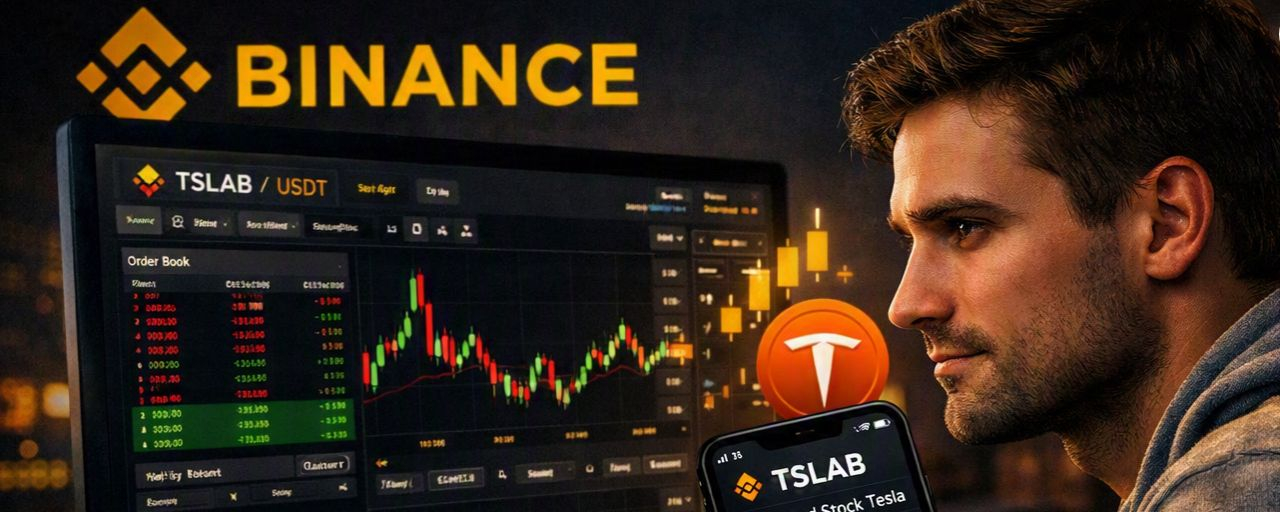
How I token-traded on bStocks for a week and what conclusions I came toHonestly, I ignored the news about #bStocks for a long time. I thought, well, another product, another button in the app that I’ll never press. Tokenized shares—sounds like something marketers invented to turn boring staking into something fashionable. But then I saw in the feed that someone bought a piece of Tesla for $12 at 3 a.m. on Sunday, and I got curious: can you really do that?
How I token-traded on bStocks for a week and what conclusions I came to
Honestly, I ignored the news about #bStocks for a long time. I thought, well, another product, another button in the app that I’ll never press. Tokenized shares—sounds like something marketers invented to turn boring staking into something fashionable. But then I saw in the feed that someone bought a piece of Tesla for $12 at 3 a.m. on Sunday, and I got curious: can you really do that?
2
562
Article
Beginner’s Guide: How bStocks Work on Binance— These are tokenized securities that allow you to gain economic exposure to the value of real U.S. stocks through blockchain. It’s important to understand that bStock is not the stock itself: the token holder does not become a direct shareholder of the company and does not receive standard voting rights or a direct right to dividends. Each bStock is backed by a corresponding underlying asset within the product structure, and access to it is available only to users who meet Binance requirements and the rules of their jurisdiction.
Beginner’s Guide: How bStocks Work on Binance
— These are tokenized securities that allow you to gain economic exposure to the value of real U.S. stocks through blockchain. It’s important to understand that bStock is not the stock itself: the token holder does not become a direct shareholder of the company and does not receive standard voting rights or a direct right to dividends. Each bStock is backed by a corresponding underlying asset within the product structure, and access to it is available only to users who meet Binance requirements and the rules of their jurisdiction.
2
277

bStocks on Binance: how to buy US stocks with crypto without brokers and bureaucracyIf you’ve ever tried opening an account with a traditional foreign broker to buy shares of Tesla, Apple, or Nvidia, then you definitely know what the main headache is. Verifications, proof of funds source, SWIFT bank transfers, limited trading hours, and a bunch of hidden fees.
bStocks on Binance: how to buy US stocks with crypto without brokers and bureaucracy
If you’ve ever tried opening an account with a traditional foreign broker to buy shares of Tesla, Apple, or Nvidia, then you definitely know what the main headache is. Verifications, proof of funds source, SWIFT bank transfers, limited trading hours, and a bunch of hidden fees.
314
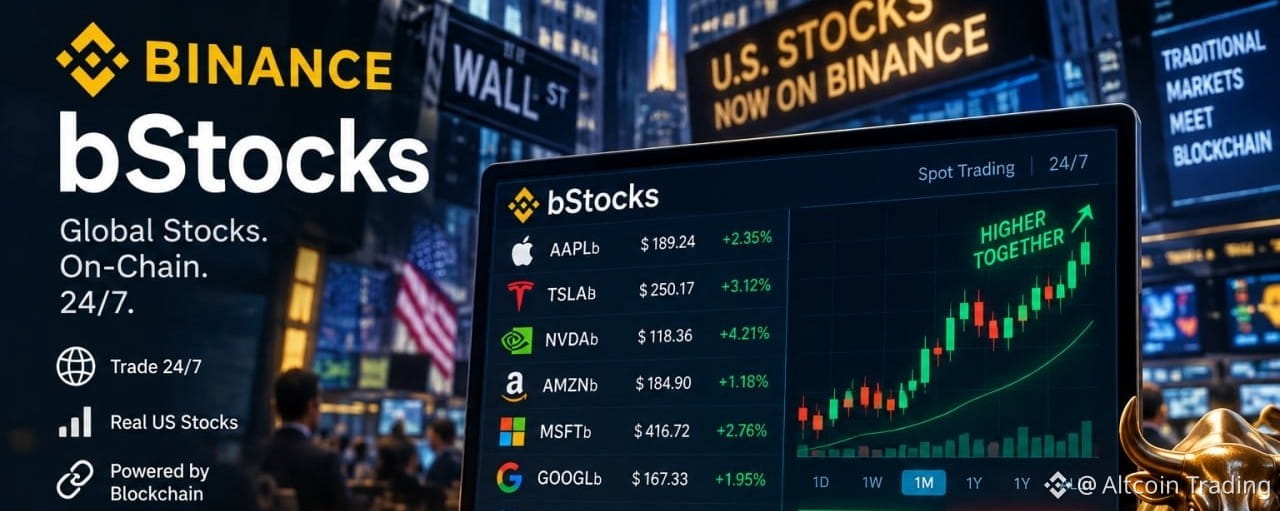
🔥 BINANCE EXPANDS STOCK ACCESS
Binance has added new bStock listings: $CRMB /USDT & $HIMSB /USDT. 📈
The bigger story? Tokenized stock exposure with 24/7 trading and 1:1 exchange for underlying shares.
🌐 Traditional markets are getting closer to crypto.
Would you trade tokenized stocks on Binance? 👀
#CRMB #HIMSB #BStock s #Binance
🔥 BINANCE EXPANDS STOCK ACCESS
Binance has added new bStock listings: $CRMB /USDT & $HIMSB /USDT. 📈
The bigger story? Tokenized stock exposure with 24/7 trading and 1:1 exchange for underlying shares.
🌐 Traditional markets are getting closer to crypto.
Would you trade tokenized stocks on Binance? 👀
#CRMB #HIMSB #BStock s #Binance
Binance has added new bStock listings: $CRMB /USDT & $HIMSB /USDT. 📈
The bigger story? Tokenized stock exposure with 24/7 trading and 1:1 exchange for underlying shares.
🌐 Traditional markets are getting closer to crypto.
Would you trade tokenized stocks on Binance? 👀
#CRMB #HIMSB #BStock s #Binance
10

·
--
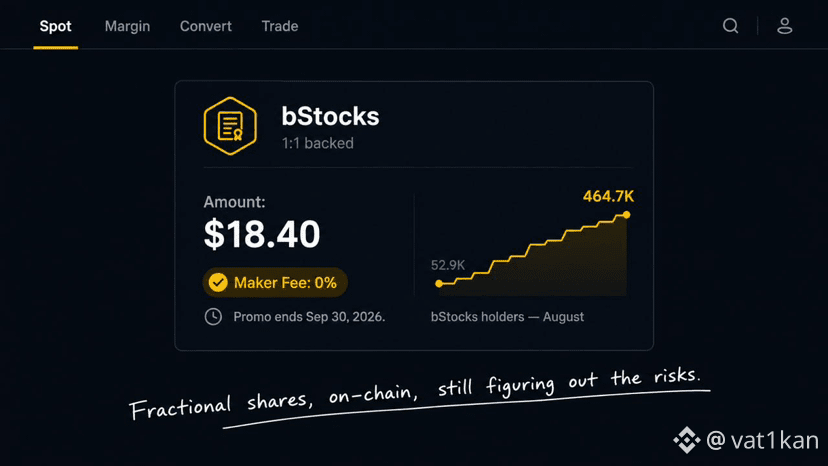
I watched bStocks from the sidelines for a long time before I saw the news that the fee was extended until September 30. That’s what pushed me to try it myself rather than just read about it in the news.
I bought a small portion of a tokenized share directly in my Binance spot wallet, with a standard order, with no extra steps. The asset is backed 1:1 by a real share held by a regulated custodian—not just a number on a screen. The fractional amount cost less than twenty dollars, and that’s where you really feel the difference from a traditional broker, where the entry threshold is usually higher.
The market context is also interesting. In August, the number of bStocks wallets grew from 52.9 thousand to over 464 thousand—by far the biggest monthly jump ever recorded for tokenized stocks. The zero maker-fee clearly played a role, and now that it’s been extended for another month, the real test will come later, when the incentives end and only those who truly need the product remain.
I won’t hide it: the risks here are no less than they seem at first glance. It’s a certificate for a share, not direct ownership, and Binance explicitly mentions liquidity risk, issuer risk, and custodial risk.
Do you already have some #bStock or not yet?
I watched bStocks from the sidelines for a long time before I saw the news that the fee was extended until September 30. That’s what pushed me to try it myself rather than just read about it in the news.
I bought a small portion of a tokenized share directly in my Binance spot wallet, with a standard order, with no extra steps. The asset is backed 1:1 by a real share held by a regulated custodian—not just a number on a screen. The fractional amount cost less than twenty dollars, and that’s where you really feel the difference from a traditional broker, where the entry threshold is usually higher.
The market context is also interesting. In August, the number of bStocks wallets grew from 52.9 thousand to over 464 thousand—by far the biggest monthly jump ever recorded for tokenized stocks. The zero maker-fee clearly played a role, and now that it’s been extended for another month, the real test will come later, when the incentives end and only those who truly need the product remain.
I won’t hide it: the risks here are no less than they seem at first glance. It’s a certificate for a share, not direct ownership, and Binance explicitly mentions liquidity risk, issuer risk, and custodial risk.
Do you already have some #bStock or not yet?
I bought a small portion of a tokenized share directly in my Binance spot wallet, with a standard order, with no extra steps. The asset is backed 1:1 by a real share held by a regulated custodian—not just a number on a screen. The fractional amount cost less than twenty dollars, and that’s where you really feel the difference from a traditional broker, where the entry threshold is usually higher.
The market context is also interesting. In August, the number of bStocks wallets grew from 52.9 thousand to over 464 thousand—by far the biggest monthly jump ever recorded for tokenized stocks. The zero maker-fee clearly played a role, and now that it’s been extended for another month, the real test will come later, when the incentives end and only those who truly need the product remain.
I won’t hide it: the risks here are no less than they seem at first glance. It’s a certificate for a share, not direct ownership, and Binance explicitly mentions liquidity risk, issuer risk, and custodial risk.
Do you already have some #bStock or not yet?
2
449

·
--
Article
Binance bStocks: What Is It? Learn How to Buy and Play in 3 Minutes (Beginner-Friendly)First, in one minute: What exactly are bStocks?
In short, bStocks is turning real U.S. stocks into tokens on the blockchain.
It’s a certificate issued by a Binance-affiliated company under regulation by Abu Dhabi Global Market (ADGM), backed 1:1 by real U.S. stocks held in custody.
What’s the biggest difference from traditional stock trading?
7×24 trading: If U.S. stocks are closed on weekends, bStocks isn’t. If breaking news hits in the middle of the night, you can still buy and sell anytime.
Very low barrier to entry: No need to open an overseas brokerage account; you can buy fractional shares with as little as 5 USDT (for example, buy 0.01 of Tesla).
Binance bStocks: What Is It? Learn How to Buy and Play in 3 Minutes (Beginner-Friendly)
First, in one minute: What exactly are bStocks?
In short, bStocks is turning real U.S. stocks into tokens on the blockchain.
It’s a certificate issued by a Binance-affiliated company under regulation by Abu Dhabi Global Market (ADGM), backed 1:1 by real U.S. stocks held in custody.
What’s the biggest difference from traditional stock trading?
7×24 trading: If U.S. stocks are closed on weekends, bStocks isn’t. If breaking news hits in the middle of the night, you can still buy and sell anytime.
Very low barrier to entry: No need to open an overseas brokerage account; you can buy fractional shares with as little as 5 USDT (for example, buy 0.01 of Tesla).
In short, bStocks is turning real U.S. stocks into tokens on the blockchain.
It’s a certificate issued by a Binance-affiliated company under regulation by Abu Dhabi Global Market (ADGM), backed 1:1 by real U.S. stocks held in custody.
What’s the biggest difference from traditional stock trading?
7×24 trading: If U.S. stocks are closed on weekends, bStocks isn’t. If breaking news hits in the middle of the night, you can still buy and sell anytime.
Very low barrier to entry: No need to open an overseas brokerage account; you can buy fractional shares with as little as 5 USDT (for example, buy 0.01 of Tesla).
User-98188:
BTR币是韩国,国家贸易支付币,叫比特币白银,公链,BSC,预测,10之天升职百倍,千载难逢机会,数量有限,快点买。
1
3
3.2k
·
--
My portfolio is not a bet on one asset. It’s a strategy.
I distribute roles among different instruments:
$BTC — the foundation of the crypto portfolio.
$ETH + SOL— growth potential, but also higher risk.
Stablecoins — a reserve for new opportunities.
Binance #bstock — diversification through exposure to traditional stock assets.
What interests me about bStocks is that they allow me to combine the familiar logic of investing in stock assets with the infrastructure of the crypto market.
I don’t see bStocks as a replacement for BTC or SOL. On the contrary—this is another element of a balanced strategy.
My goal is not to guess a single winning asset, but to build a portfolio that has different sources of potential growth.
My portfolio is not a bet on one asset. It’s a strategy.
I distribute roles among different instruments:
$BTC — the foundation of the crypto portfolio.
$ETH + SOL— growth potential, but also higher risk.
Stablecoins — a reserve for new opportunities.
Binance #bstock — diversification through exposure to traditional stock assets.
What interests me about bStocks is that they allow me to combine the familiar logic of investing in stock assets with the infrastructure of the crypto market.
I don’t see bStocks as a replacement for BTC or SOL. On the contrary—this is another element of a balanced strategy.
My goal is not to guess a single winning asset, but to build a portfolio that has different sources of potential growth.
I distribute roles among different instruments:
$BTC — the foundation of the crypto portfolio.
$ETH + SOL— growth potential, but also higher risk.
Stablecoins — a reserve for new opportunities.
Binance #bstock — diversification through exposure to traditional stock assets.
What interests me about bStocks is that they allow me to combine the familiar logic of investing in stock assets with the infrastructure of the crypto market.
I don’t see bStocks as a replacement for BTC or SOL. On the contrary—this is another element of a balanced strategy.
My goal is not to guess a single winning asset, but to build a portfolio that has different sources of potential growth.
3
90

·
--
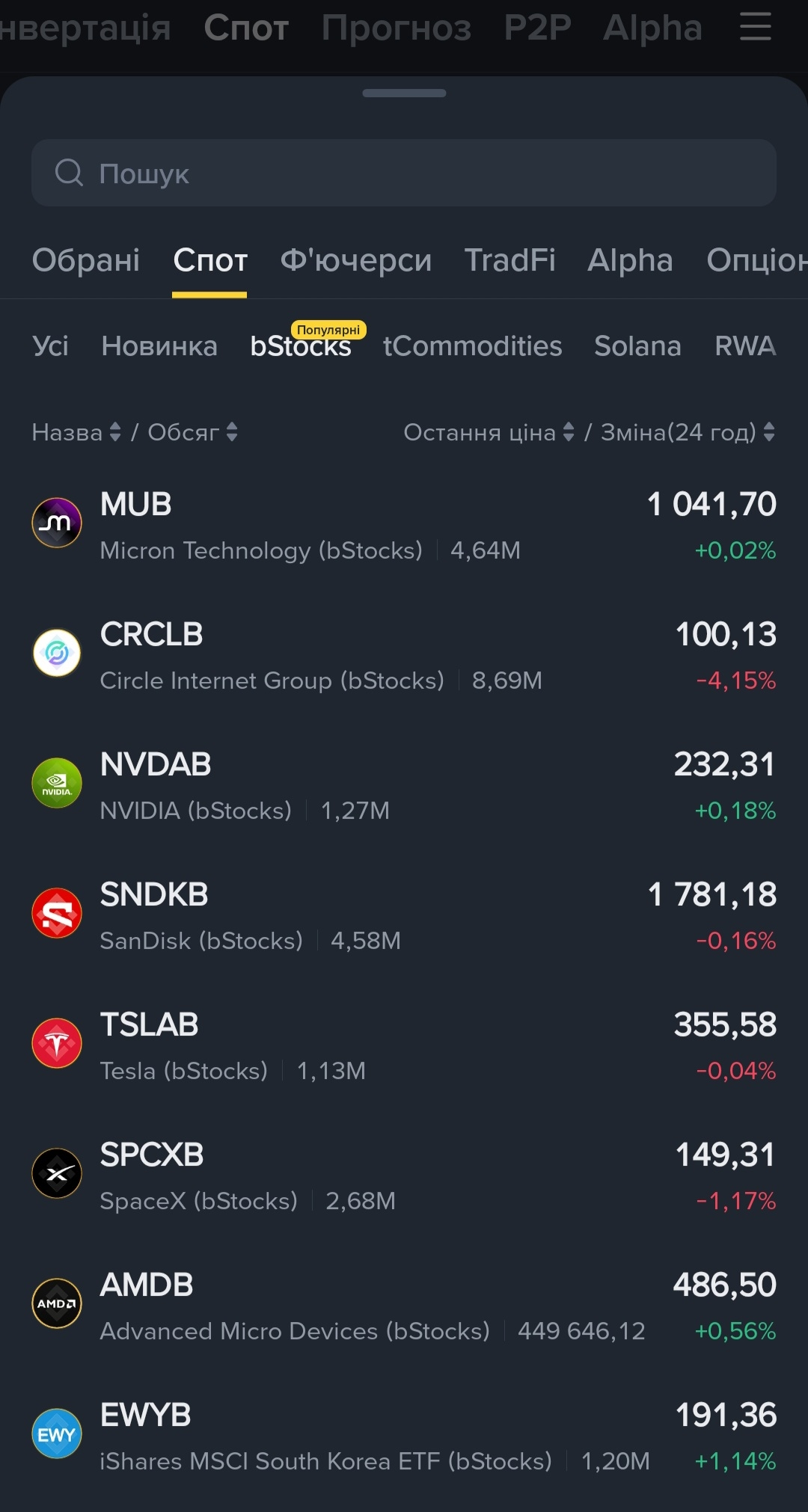
So what… Are there already stocks in crypto? 🤔
What are bStocks and why are they for beginners? 🤷 Let’s go😉
Imagine: you want to invest in shares of well-known American companies, but at the same time stay within the Binance ecosystem.
That’s where bStocks get interesting 👀
In simple terms, bStocks are tokenized securities that provide exposure to the price of underlying U.S. stocks. Each bStock is backed by the corresponding underlying asset on a 1:1 basis.
What does that give you?
🔹 24/7 — bStocks can be traded on Binance without being tied to traditional stock market hours.
🔹 You can start with a small amount — Binance states access to fractional exposure starting from $5 for supported bStocks.
🔹 No need to immediately figure out complex stock-market infrastructure — everything happens in a familiar Binance environment.
🔹 The selection is gradually expanding — among bStocks, companies like Tesla, Netflix, Oracle, and others are already available.
💡 But an important point: bStocks are not ordinary stocks and they do not provide direct ownership rights to the company’s shares. This is a separate class of tokenized securities with their own risks and terms.
For me, the main thing that makes bStocks interesting is the combination of traditional finance + blockchain.
#bstock $TSLAB
{spot}(TSLABUSDT)
So what… Are there already stocks in crypto? 🤔
What are bStocks and why are they for beginners? 🤷 Let’s go😉
Imagine: you want to invest in shares of well-known American companies, but at the same time stay within the Binance ecosystem.
That’s where bStocks get interesting 👀
In simple terms, bStocks are tokenized securities that provide exposure to the price of underlying U.S. stocks. Each bStock is backed by the corresponding underlying asset on a 1:1 basis.
What does that give you?
🔹 24/7 — bStocks can be traded on Binance without being tied to traditional stock market hours.
🔹 You can start with a small amount — Binance states access to fractional exposure starting from $5 for supported bStocks.
🔹 No need to immediately figure out complex stock-market infrastructure — everything happens in a familiar Binance environment.
🔹 The selection is gradually expanding — among bStocks, companies like Tesla, Netflix, Oracle, and others are already available.
💡 But an important point: bStocks are not ordinary stocks and they do not provide direct ownership rights to the company’s shares. This is a separate class of tokenized securities with their own risks and terms.
For me, the main thing that makes bStocks interesting is the combination of traditional finance + blockchain.
#bstock $TSLAB
What are bStocks and why are they for beginners? 🤷 Let’s go😉
Imagine: you want to invest in shares of well-known American companies, but at the same time stay within the Binance ecosystem.
That’s where bStocks get interesting 👀
In simple terms, bStocks are tokenized securities that provide exposure to the price of underlying U.S. stocks. Each bStock is backed by the corresponding underlying asset on a 1:1 basis.
What does that give you?
🔹 24/7 — bStocks can be traded on Binance without being tied to traditional stock market hours.
🔹 You can start with a small amount — Binance states access to fractional exposure starting from $5 for supported bStocks.
🔹 No need to immediately figure out complex stock-market infrastructure — everything happens in a familiar Binance environment.
🔹 The selection is gradually expanding — among bStocks, companies like Tesla, Netflix, Oracle, and others are already available.
💡 But an important point: bStocks are not ordinary stocks and they do not provide direct ownership rights to the company’s shares. This is a separate class of tokenized securities with their own risks and terms.
For me, the main thing that makes bStocks interesting is the combination of traditional finance + blockchain.
#bstock $TSLAB
6
599
·
--
Bullish
Verified
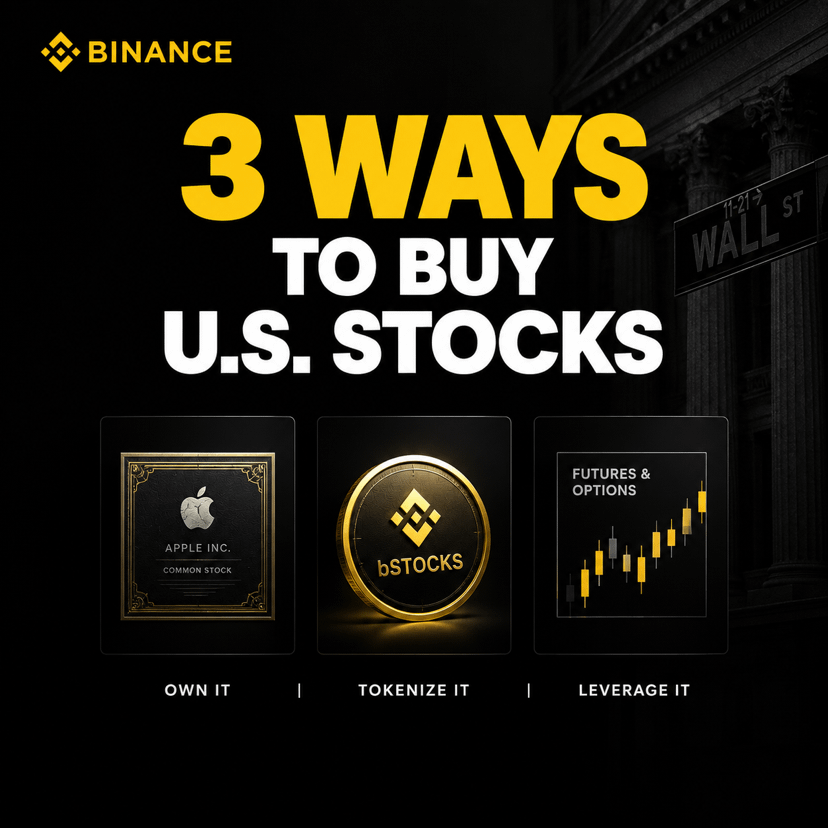
I figured out how US stocks are actually handled here. It turns out there are three different things under one name, and the confusion starts with the word “bought.”
Spot TradFi: 7000+ US stocks and ETFs, zero commission, fractional shares starting from $5. You deposit stablecoins or BNB. Bought—then you have a stock, and that’s all it is: a stock.
bStocks: 46+ tickers, trade 24/7, and get taken off the exchange into their own wallet on the BNB Chain and then go into DeFi. Bought—you don’t have a stock; you have a certificate for it.
Futures and options: you’re not buying an asset, but a right. With futures, nothing remains in your hands. With options, the underlying asset itself can be delivered—they’re here for 1000+ US stocks and ETFs, and they can be physically settled.
So basically, there are three questions it all comes down to:
- What you actually have when everything is closed. A stock / a certificate / with futures, nothing; with options, it can be a stock.
- Can you withdraw it from the exchange. bStocks—yes, to your wallet. For the rest, I haven’t seen that.
- Is there leverage. That’s the third route, and if you need it, then it’s no longer an investment but a trade—and you’re no longer acting as an investor.
Out of the three, I’m closest to spot—because I don’t have to explain anything to a lawyer. But I didn’t make any deals here, so this is still my opinion, not experience.
If you think differently—write why. I still have to decide this.
@Binance_Ukraine
#bStock #tradFi #etf $AAPLB $NVDAB $MSFTB
{spot}(AAPLBUSDT)
I figured out how US stocks are actually handled here. It turns out there are three different things under one name, and the confusion starts with the word “bought.”
Spot TradFi: 7000+ US stocks and ETFs, zero commission, fractional shares starting from $5. You deposit stablecoins or BNB. Bought—then you have a stock, and that’s all it is: a stock.
bStocks: 46+ tickers, trade 24/7, and get taken off the exchange into their own wallet on the BNB Chain and then go into DeFi. Bought—you don’t have a stock; you have a certificate for it.
Futures and options: you’re not buying an asset, but a right. With futures, nothing remains in your hands. With options, the underlying asset itself can be delivered—they’re here for 1000+ US stocks and ETFs, and they can be physically settled.
So basically, there are three questions it all comes down to:
- What you actually have when everything is closed. A stock / a certificate / with futures, nothing; with options, it can be a stock.
- Can you withdraw it from the exchange. bStocks—yes, to your wallet. For the rest, I haven’t seen that.
- Is there leverage. That’s the third route, and if you need it, then it’s no longer an investment but a trade—and you’re no longer acting as an investor.
Out of the three, I’m closest to spot—because I don’t have to explain anything to a lawyer. But I didn’t make any deals here, so this is still my opinion, not experience.
If you think differently—write why. I still have to decide this.
@Binance_Ukraine
#bStock #tradFi #etf $AAPLB $NVDAB $MSFTB
Spot TradFi: 7000+ US stocks and ETFs, zero commission, fractional shares starting from $5. You deposit stablecoins or BNB. Bought—then you have a stock, and that’s all it is: a stock.
bStocks: 46+ tickers, trade 24/7, and get taken off the exchange into their own wallet on the BNB Chain and then go into DeFi. Bought—you don’t have a stock; you have a certificate for it.
Futures and options: you’re not buying an asset, but a right. With futures, nothing remains in your hands. With options, the underlying asset itself can be delivered—they’re here for 1000+ US stocks and ETFs, and they can be physically settled.
So basically, there are three questions it all comes down to:
- What you actually have when everything is closed. A stock / a certificate / with futures, nothing; with options, it can be a stock.
- Can you withdraw it from the exchange. bStocks—yes, to your wallet. For the rest, I haven’t seen that.
- Is there leverage. That’s the third route, and if you need it, then it’s no longer an investment but a trade—and you’re no longer acting as an investor.
Out of the three, I’m closest to spot—because I don’t have to explain anything to a lawyer. But I didn’t make any deals here, so this is still my opinion, not experience.
If you think differently—write why. I still have to decide this.
@Binance_Ukraine
#bStock #tradFi #etf $AAPLB $NVDAB $MSFTB
7
424
·
--
Bullish
Verified
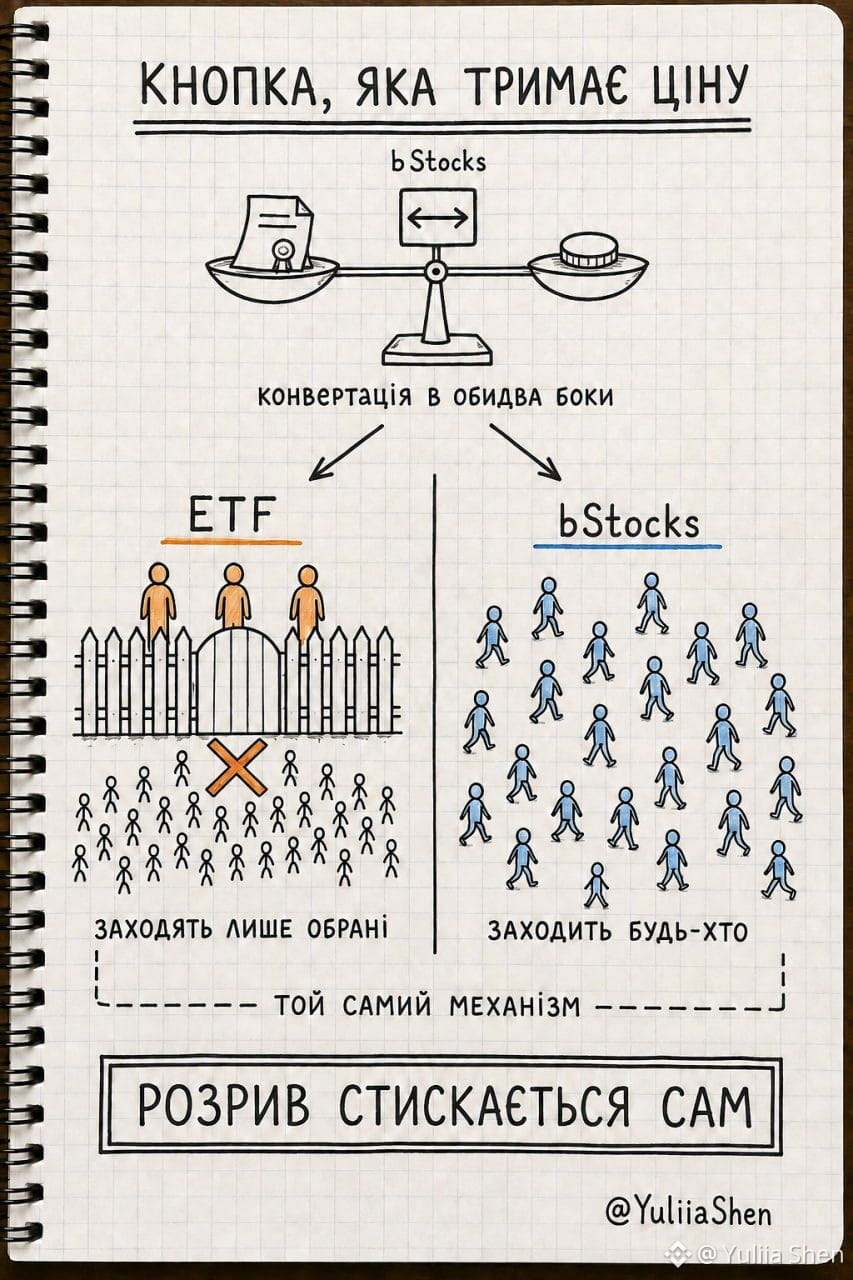
What keeps the price #bstock near the share price?
Why doesn’t $NVDAB detach from real NVIDIA? The token and the share are traded in different places and at different times. What holds them together?
First, the foundation. Each bStock is backed by a real share: the paper is bought and placed with a regulated custodian, and only then is the token issued. Binance doesn’t store paper.
Then the usual economic incentive kicks in—and it’s not the exchange or the market maker using it, but any user with a convert button.
If the token is more expensive than the share, the paper owner triggers conversion and sells the token for more. The number of tokens increases, and the price goes down. If the token is cheaper, they do the opposite: buy the token, convert it into the share, and sell the share for more. Tokens get bought up, and the price climbs.
No one forces anyone—it's just profitable, and the gap closes on its own.
In an ETF, the mechanism is similar, but access is limited to a small group of authorized participants. bStocks have none of these filters: no issuance fees, no delays, no approvals.
According to Binance Research, for $SPCXB about $98.3 million moved into tokens and about $18.9 million back into shares.
Personal: I pressed convert on $MSTRB and was denied because of my region. The mechanism works, but access depends on where you are
What keeps the price #bstock near the share price?
Why doesn’t $NVDAB detach from real NVIDIA? The token and the share are traded in different places and at different times. What holds them together?
First, the foundation. Each bStock is backed by a real share: the paper is bought and placed with a regulated custodian, and only then is the token issued. Binance doesn’t store paper.
Then the usual economic incentive kicks in—and it’s not the exchange or the market maker using it, but any user with a convert button.
If the token is more expensive than the share, the paper owner triggers conversion and sells the token for more. The number of tokens increases, and the price goes down. If the token is cheaper, they do the opposite: buy the token, convert it into the share, and sell the share for more. Tokens get bought up, and the price climbs.
No one forces anyone—it's just profitable, and the gap closes on its own.
In an ETF, the mechanism is similar, but access is limited to a small group of authorized participants. bStocks have none of these filters: no issuance fees, no delays, no approvals.
According to Binance Research, for $SPCXB about $98.3 million moved into tokens and about $18.9 million back into shares.
Personal: I pressed convert on $MSTRB and was denied because of my region. The mechanism works, but access depends on where you are
Why doesn’t $NVDAB detach from real NVIDIA? The token and the share are traded in different places and at different times. What holds them together?
First, the foundation. Each bStock is backed by a real share: the paper is bought and placed with a regulated custodian, and only then is the token issued. Binance doesn’t store paper.
Then the usual economic incentive kicks in—and it’s not the exchange or the market maker using it, but any user with a convert button.
If the token is more expensive than the share, the paper owner triggers conversion and sells the token for more. The number of tokens increases, and the price goes down. If the token is cheaper, they do the opposite: buy the token, convert it into the share, and sell the share for more. Tokens get bought up, and the price climbs.
No one forces anyone—it's just profitable, and the gap closes on its own.
In an ETF, the mechanism is similar, but access is limited to a small group of authorized participants. bStocks have none of these filters: no issuance fees, no delays, no approvals.
According to Binance Research, for $SPCXB about $98.3 million moved into tokens and about $18.9 million back into shares.
Personal: I pressed convert on $MSTRB and was denied because of my region. The mechanism works, but access depends on where you are
1
754
·
--
Bullish
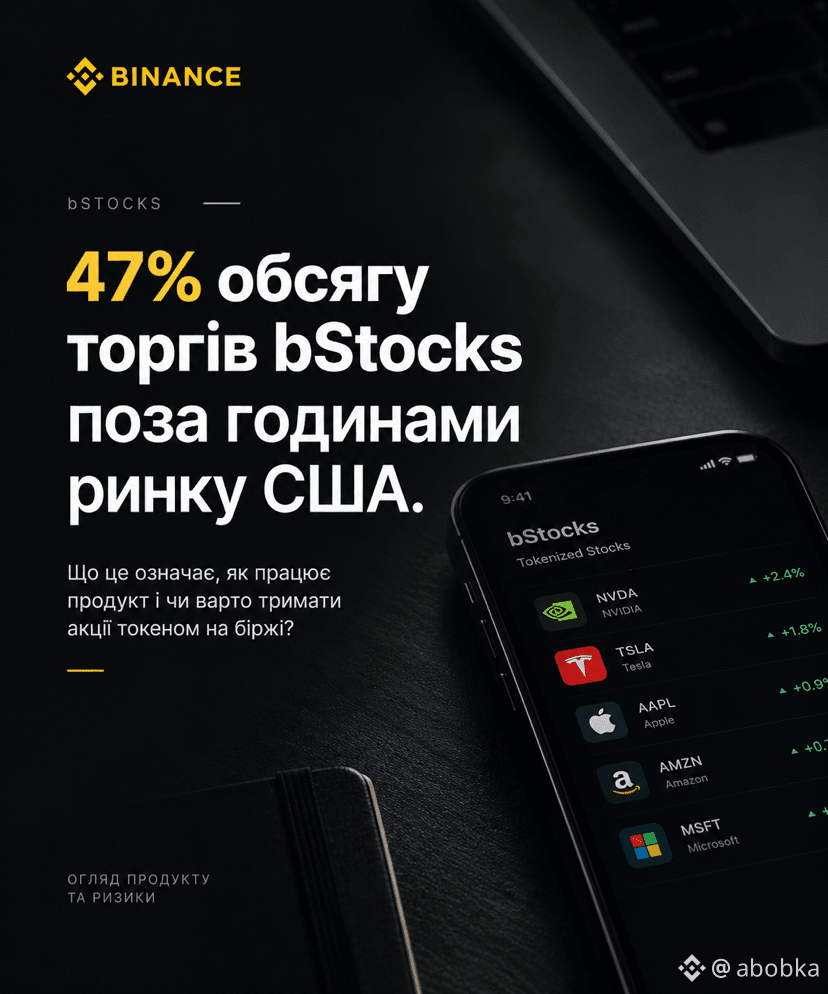
47% of bStocks trading volume happens outside U.S. market hours.
almost half. this is the only number about this product that really caught my attention—not the launch, not AUM.
because it’s not about technology. it’s about the fact that tons of people can’t physically trade during the day. different time zone. work. (I don’t need to explain that.)
so, about the product:
- launched in June, five tickers: Nvidia, Tesla, Circle, Micron, Sandisk
- by the end of July already 46+, reached Apple, Amazon, Goldman Sachs, PayPal
- over $500M in seven weeks
- 1:1, conversion with no fees, fractional shares from $5
$5 and no schedule. the entry threshold into something like Nvidia is now like this.
and it’s not standing alone. TradFi instrument volume on the exchange has been going over $80B per month since March; for perps as of September—$433B. so stocks don’t come here in secret for just one month.
what you need to know before you jump in:
bStocks are certificates for financial instruments. they don’t give direct ownership of the stock. the issuer is BTech Holdings, ADGM prospectus.
access isn’t everywhere: the U.S., the U.K., the EEA, Hong Kong, Singapore—missed.
I’m on the side for now, with a different deposit.
and you—do you hold stocks with a broker, or as a token on an exchange? for a small deposit, the second option looks smart, but I’m biased here.
@Binance_Ukraine #bStock $NVDAB
{spot}(NVDABUSDT)
47% of bStocks trading volume happens outside U.S. market hours.
almost half. this is the only number about this product that really caught my attention—not the launch, not AUM.
because it’s not about technology. it’s about the fact that tons of people can’t physically trade during the day. different time zone. work. (I don’t need to explain that.)
so, about the product:
- launched in June, five tickers: Nvidia, Tesla, Circle, Micron, Sandisk
- by the end of July already 46+, reached Apple, Amazon, Goldman Sachs, PayPal
- over $500M in seven weeks
- 1:1, conversion with no fees, fractional shares from $5
$5 and no schedule. the entry threshold into something like Nvidia is now like this.
and it’s not standing alone. TradFi instrument volume on the exchange has been going over $80B per month since March; for perps as of September—$433B. so stocks don’t come here in secret for just one month.
what you need to know before you jump in:
bStocks are certificates for financial instruments. they don’t give direct ownership of the stock. the issuer is BTech Holdings, ADGM prospectus.
access isn’t everywhere: the U.S., the U.K., the EEA, Hong Kong, Singapore—missed.
I’m on the side for now, with a different deposit.
and you—do you hold stocks with a broker, or as a token on an exchange? for a small deposit, the second option looks smart, but I’m biased here.
@Binance_Ukraine #bStock $NVDAB
almost half. this is the only number about this product that really caught my attention—not the launch, not AUM.
because it’s not about technology. it’s about the fact that tons of people can’t physically trade during the day. different time zone. work. (I don’t need to explain that.)
so, about the product:
- launched in June, five tickers: Nvidia, Tesla, Circle, Micron, Sandisk
- by the end of July already 46+, reached Apple, Amazon, Goldman Sachs, PayPal
- over $500M in seven weeks
- 1:1, conversion with no fees, fractional shares from $5
$5 and no schedule. the entry threshold into something like Nvidia is now like this.
and it’s not standing alone. TradFi instrument volume on the exchange has been going over $80B per month since March; for perps as of September—$433B. so stocks don’t come here in secret for just one month.
what you need to know before you jump in:
bStocks are certificates for financial instruments. they don’t give direct ownership of the stock. the issuer is BTech Holdings, ADGM prospectus.
access isn’t everywhere: the U.S., the U.K., the EEA, Hong Kong, Singapore—missed.
I’m on the side for now, with a different deposit.
and you—do you hold stocks with a broker, or as a token on an exchange? for a small deposit, the second option looks smart, but I’m biased here.
@Binance_Ukraine #bStock $NVDAB
7
9
249
Log in to explore more content
Join global crypto users on Binance Square
⚡️ Get latest and useful information about crypto.
💬 Trusted by the world’s largest crypto exchange.
👍 Discover real insights from verified creators.
Email / Phone number
Trending Topics
1
#FedRateWatch
170,993 views
1,152 Discussing
2
#BitcoinSlidesTo$76000
103 views
27 Discussing
3
#BitcoinReboundsTo$79K
44,079 views
332 Discussing
4
#StrategyMarketCapPassesFord
1,256 views
130 Discussing
5
#ClarityActOddsHalveOnPolymarket
1,095 views
97 Discussing
6
#US30YTreasuryYieldTops5.40%
3,772 views
106 Discussing
7
#BessentEndorsesFinalClarityActDraft
17,185 views
390 Discussing
8
#ZamaOpens16ConfidentialMorphoVaults
7,230 views
204 Discussing
9
#USDCOnChainVolumeTops$100Trillion
1,165 views
31 Discussing
10
#BitcoinSpotETFsNetInflow$160M
2,037 views
84 Discussing