

#warshnamesleadersforfivefedtaskforces
warshnamesleadersforfivefedtaskforces
30,841 Aufrufe
303 Kommentare
Hot
Zuletzt

·
--
Bullisch
#warshnamesleadersforfivefedtaskforces
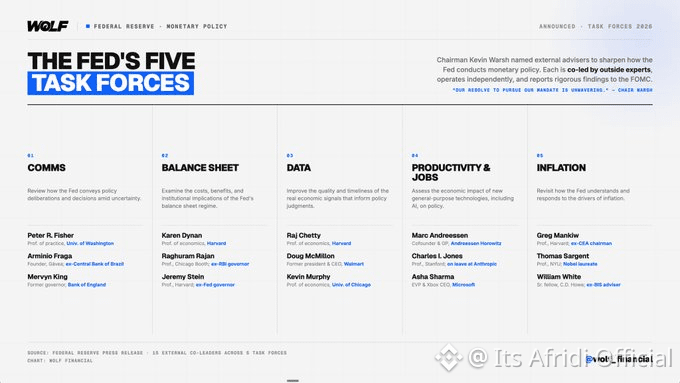
FED-CHEF KEVIN WARSH STARTET EINE UMFASSENDE ÜBERPRÜFUNG DARÜBER, WIE DIE FED
DIE GELDPOLITIK STEUERT
Fünf Arbeitsgruppen werden alles erneut untersuchen – darunter, wie die Fed
kommuniziert und wie sie Inflation liest –, jeweils gemeinsam geleitet von externen Beratern.
Die externen
Namen sind nicht die üblichen Fed-
Leute:
- Kommunikation: Mervyn King (ehemaliger Gouverneur der Bank of England), Arminio Fraga (ehemaliger Chef der brasilianischen Zentralbank)
- Bilanz: Raghuram Rajan (ehemaliger RBI-Gouverneur), Jeremy Stein (ehemaliger Fed-Gouverneur)
- Doug McMillon (ehemaliger Walmart-CEO), Raj Chetty
- Produktivität und Jobs: Marc Andreessen (a16z), Asha Sharma (Microsoft)
- Inflation: Thomas Sargent (Nobelpreisträger), Greg Mankiw (ehemaliger CEA-Vorsitzender)
Eine Arbeitsgruppe ist vollständig dem Thema KI gewidmet: Sie bewertet, wie KI
und andere neue Technologien die Wirtschaft umgestalten, um die Fed-Politik zu informieren.
Warshs Einordnung: Die US-
🇺🇸
Wirtschaft hat sich in der letzten Generation deutlich verändert – und in seinen Worten: „noch nie so sehr wie gerade jetzt.“
$AT
{future}(ATUSDT)
$AR
{future}(ARUSDT)
$A
{future}(AUSDT)
#warshnamesleadersforfivefedtaskforces
FED-CHEF KEVIN WARSH STARTET EINE UMFASSENDE ÜBERPRÜFUNG DARÜBER, WIE DIE FED
DIE GELDPOLITIK STEUERT
Fünf Arbeitsgruppen werden alles erneut untersuchen – darunter, wie die Fed
kommuniziert und wie sie Inflation liest –, jeweils gemeinsam geleitet von externen Beratern.
Die externen
Namen sind nicht die üblichen Fed-
Leute:
- Kommunikation: Mervyn King (ehemaliger Gouverneur der Bank of England), Arminio Fraga (ehemaliger Chef der brasilianischen Zentralbank)
- Bilanz: Raghuram Rajan (ehemaliger RBI-Gouverneur), Jeremy Stein (ehemaliger Fed-Gouverneur)
- Doug McMillon (ehemaliger Walmart-CEO), Raj Chetty
- Produktivität und Jobs: Marc Andreessen (a16z), Asha Sharma (Microsoft)
- Inflation: Thomas Sargent (Nobelpreisträger), Greg Mankiw (ehemaliger CEA-Vorsitzender)
Eine Arbeitsgruppe ist vollständig dem Thema KI gewidmet: Sie bewertet, wie KI
und andere neue Technologien die Wirtschaft umgestalten, um die Fed-Politik zu informieren.
Warshs Einordnung: Die US-
🇺🇸
Wirtschaft hat sich in der letzten Generation deutlich verändert – und in seinen Worten: „noch nie so sehr wie gerade jetzt.“
$AT
$AR
$A
FED-CHEF KEVIN WARSH STARTET EINE UMFASSENDE ÜBERPRÜFUNG DARÜBER, WIE DIE FED
DIE GELDPOLITIK STEUERT
Fünf Arbeitsgruppen werden alles erneut untersuchen – darunter, wie die Fed
kommuniziert und wie sie Inflation liest –, jeweils gemeinsam geleitet von externen Beratern.
Die externen
Namen sind nicht die üblichen Fed-
Leute:
- Kommunikation: Mervyn King (ehemaliger Gouverneur der Bank of England), Arminio Fraga (ehemaliger Chef der brasilianischen Zentralbank)
- Bilanz: Raghuram Rajan (ehemaliger RBI-Gouverneur), Jeremy Stein (ehemaliger Fed-Gouverneur)
- Doug McMillon (ehemaliger Walmart-CEO), Raj Chetty
- Produktivität und Jobs: Marc Andreessen (a16z), Asha Sharma (Microsoft)
- Inflation: Thomas Sargent (Nobelpreisträger), Greg Mankiw (ehemaliger CEA-Vorsitzender)
Eine Arbeitsgruppe ist vollständig dem Thema KI gewidmet: Sie bewertet, wie KI
und andere neue Technologien die Wirtschaft umgestalten, um die Fed-Politik zu informieren.
Warshs Einordnung: Die US-
🇺🇸
Wirtschaft hat sich in der letzten Generation deutlich verändert – und in seinen Worten: „noch nie so sehr wie gerade jetzt.“
$AT
$AR
$A
2
126

#WarshNamesLeadersForFiveFedTaskForces
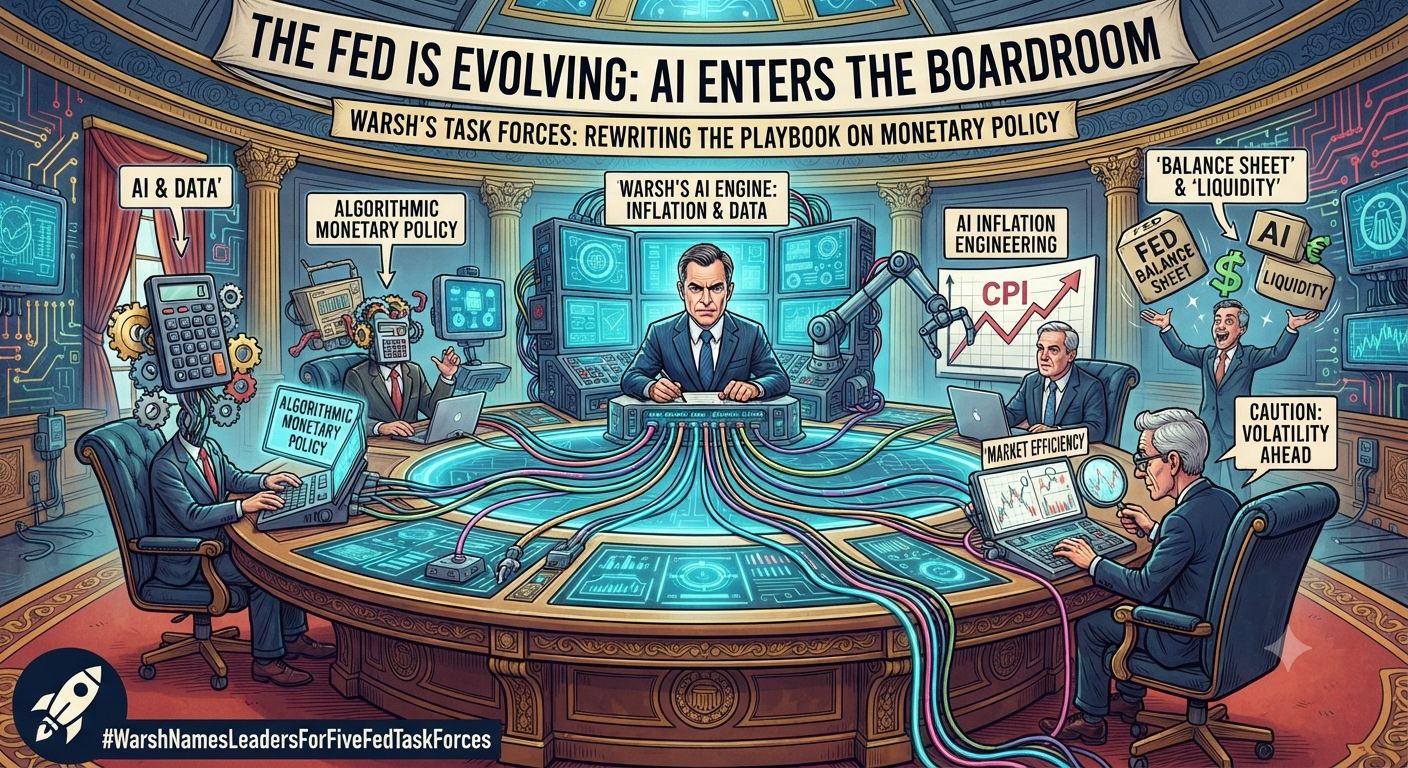
🚨"Die Fed entwickelt sich weiter: Kevin Warshs neu eingesetzte Task Forces schreiben offiziell das Drehbuch der Geldpolitik um. Indem die Federal Reserve Künstliche Intelligenz in die Kernanalyse von Inflation und Wirtschaftsdaten integriert, schaut sie nicht mehr nur den Märkten zu – sie versucht, sie mit algorithmischer Präzision zu steuern. Für uns im Krypto-Bereich ist das ein Signal, genau hinzusehen: Wenn die mächtigste Zentralbank der Welt anfängt, KI zu nutzen, um die globale Liquidität vorzugeben, ist die Volatilität unserer Vermögenswerte sicher auf eine neue Stufe gezwungen. Bleib wachsam – die Maschinen betreten die Sitzungssäle."
#FedRateDecisions #kevinwarsh
#AlphaHunter
$BTC
{future}(BTCUSDT)
$XAUT
{future}(XAUTUSDT)
#WarshNamesLeadersForFiveFedTaskForces
🚨"Die Fed entwickelt sich weiter: Kevin Warshs neu eingesetzte Task Forces schreiben offiziell das Drehbuch der Geldpolitik um. Indem die Federal Reserve Künstliche Intelligenz in die Kernanalyse von Inflation und Wirtschaftsdaten integriert, schaut sie nicht mehr nur den Märkten zu – sie versucht, sie mit algorithmischer Präzision zu steuern. Für uns im Krypto-Bereich ist das ein Signal, genau hinzusehen: Wenn die mächtigste Zentralbank der Welt anfängt, KI zu nutzen, um die globale Liquidität vorzugeben, ist die Volatilität unserer Vermögenswerte sicher auf eine neue Stufe gezwungen. Bleib wachsam – die Maschinen betreten die Sitzungssäle."
#FedRateDecisions #kevinwarsh
#AlphaHunter
$BTC
$XAUT
🚨"Die Fed entwickelt sich weiter: Kevin Warshs neu eingesetzte Task Forces schreiben offiziell das Drehbuch der Geldpolitik um. Indem die Federal Reserve Künstliche Intelligenz in die Kernanalyse von Inflation und Wirtschaftsdaten integriert, schaut sie nicht mehr nur den Märkten zu – sie versucht, sie mit algorithmischer Präzision zu steuern. Für uns im Krypto-Bereich ist das ein Signal, genau hinzusehen: Wenn die mächtigste Zentralbank der Welt anfängt, KI zu nutzen, um die globale Liquidität vorzugeben, ist die Volatilität unserer Vermögenswerte sicher auf eine neue Stufe gezwungen. Bleib wachsam – die Maschinen betreten die Sitzungssäle."
#FedRateDecisions #kevinwarsh
#AlphaHunter
$BTC
$XAUT
1
42

·
--
Artikel
Die fünf Task Forces und ihr Schwerpunkt#warshnamesleadersforfivefedtaskforces
Die Task Forces sind darauf ausgelegt, die Abläufe der Fed zu modernisieren und strukturelle Veränderungen in der Wirtschaft zu adressieren, einschließlich der Auswirkungen aufkommender Technologien wie Künstliche Intelligenz.
Kommunikation: Prüft, wie die Fed Politikberatungen und -entscheidungen der Öffentlichkeit in Phasen der Unsicherheit vermittelt.
Bilanzierungsrichtlinie: Untersucht die Kosten, Vorteile und langfristigen Auswirkungen des aktuellen Bilanzrahmens.
Zielt darauf ab, die Qualität, Aktualität und die Bereitstellungsgeschwindigkeit von Echtzeit-Wirtschaftsindikatoren zu verbessern.
Die fünf Task Forces und ihr Schwerpunkt
#warshnamesleadersforfivefedtaskforces
Die Task Forces sind darauf ausgelegt, die Abläufe der Fed zu modernisieren und strukturelle Veränderungen in der Wirtschaft zu adressieren, einschließlich der Auswirkungen aufkommender Technologien wie Künstliche Intelligenz.
Kommunikation: Prüft, wie die Fed Politikberatungen und -entscheidungen der Öffentlichkeit in Phasen der Unsicherheit vermittelt.
Bilanzierungsrichtlinie: Untersucht die Kosten, Vorteile und langfristigen Auswirkungen des aktuellen Bilanzrahmens.
Zielt darauf ab, die Qualität, Aktualität und die Bereitstellungsgeschwindigkeit von Echtzeit-Wirtschaftsindikatoren zu verbessern.
Die Task Forces sind darauf ausgelegt, die Abläufe der Fed zu modernisieren und strukturelle Veränderungen in der Wirtschaft zu adressieren, einschließlich der Auswirkungen aufkommender Technologien wie Künstliche Intelligenz.
Kommunikation: Prüft, wie die Fed Politikberatungen und -entscheidungen der Öffentlichkeit in Phasen der Unsicherheit vermittelt.
Bilanzierungsrichtlinie: Untersucht die Kosten, Vorteile und langfristigen Auswirkungen des aktuellen Bilanzrahmens.
Zielt darauf ab, die Qualität, Aktualität und die Bereitstellungsgeschwindigkeit von Echtzeit-Wirtschaftsindikatoren zu verbessern.
1
88
·
--
Bullisch
Verifiziert
#warshnamesleadersforfivefedtaskforces
SCHLÜSSELVERSTÄRKUNG: Federal Reserve Chair Kevin Warsh kündigte am Donnerstag die Leitung von fünf Arbeitsgruppen an, die die Mission und den Fokus der US-Zentralbank neu bewerten sollen.
$SKL
{future}(SKLUSDT)
$LDO
{future}(LDOUSDT)
$LTC
{future}(LTCUSDT)
#warshnamesleadersforfivefedtaskforces
SCHLÜSSELVERSTÄRKUNG: Federal Reserve Chair Kevin Warsh kündigte am Donnerstag die Leitung von fünf Arbeitsgruppen an, die die Mission und den Fokus der US-Zentralbank neu bewerten sollen.
$SKL
$LDO
$LTC
SCHLÜSSELVERSTÄRKUNG: Federal Reserve Chair Kevin Warsh kündigte am Donnerstag die Leitung von fünf Arbeitsgruppen an, die die Mission und den Fokus der US-Zentralbank neu bewerten sollen.
$SKL
$LDO
$LTC
4
4
3.8k

·
--
Bullisch
#WarshNamesLeadersForFiveFedTaskForces 🏛️ Richtungswechsel in der Politik beginnen oft im Hintergrund.
Warsh hat Führungskräfte für fünf Task Forces der Federal Reserve benannt und damit einen strukturierten Ansatz signalisiert, um zentrale Bereiche der Geldpolitik, der Finanzregulierung und der künftigen Ausrichtung der US-Notenbank zu überprüfen.
Auch wenn die unmittelbaren Auswirkungen auf die Märkte möglicherweise begrenzt sind, werden Investoren diese Task Forces genau beobachten, um Erkenntnisse zu gewinnen, die künftige Entscheidungen der Fed beeinflussen und globale Finanzmärkte in Bewegung setzen könnten.
📊 Auf den heutigen Märkten können politische Erwartungen die Preise genauso stark bewegen wie politische Maßnahmen.
#FederalReserve #MarketUpdate #economy #Investing
#WarshNamesLeadersForFiveFedTaskForces 🏛️ Richtungswechsel in der Politik beginnen oft im Hintergrund.
Warsh hat Führungskräfte für fünf Task Forces der Federal Reserve benannt und damit einen strukturierten Ansatz signalisiert, um zentrale Bereiche der Geldpolitik, der Finanzregulierung und der künftigen Ausrichtung der US-Notenbank zu überprüfen.
Auch wenn die unmittelbaren Auswirkungen auf die Märkte möglicherweise begrenzt sind, werden Investoren diese Task Forces genau beobachten, um Erkenntnisse zu gewinnen, die künftige Entscheidungen der Fed beeinflussen und globale Finanzmärkte in Bewegung setzen könnten.
📊 Auf den heutigen Märkten können politische Erwartungen die Preise genauso stark bewegen wie politische Maßnahmen.
#FederalReserve #MarketUpdate #economy #Investing
Warsh hat Führungskräfte für fünf Task Forces der Federal Reserve benannt und damit einen strukturierten Ansatz signalisiert, um zentrale Bereiche der Geldpolitik, der Finanzregulierung und der künftigen Ausrichtung der US-Notenbank zu überprüfen.
Auch wenn die unmittelbaren Auswirkungen auf die Märkte möglicherweise begrenzt sind, werden Investoren diese Task Forces genau beobachten, um Erkenntnisse zu gewinnen, die künftige Entscheidungen der Fed beeinflussen und globale Finanzmärkte in Bewegung setzen könnten.
📊 Auf den heutigen Märkten können politische Erwartungen die Preise genauso stark bewegen wie politische Maßnahmen.
#FederalReserve #MarketUpdate #economy #Investing
124

·
--
Bullisch
#WarshNamesLeadersForFiveFedTaskForces Breaking: Warsh hat die Leiter für fünf Task Forces der Federal Reserve bekanntgegeben und signalisiert damit einen neuen Anlauf, um wichtige Politik- und Betriebsbereiche bei der Fed zu überprüfen.
Die Märkte werden genau darauf achten, ob es Änderungen gibt, die die Geldpolitik, die Bankenaufsicht und die breitere US-Wirtschaft beeinflussen könnten. 📊
Wird es durch diese Task Forces zu bedeutenden Reformen kommen, oder ist das nur der Anfang? 👀
#FederalReserve #Fed #Economy #Markets $BTC $SUI
#WarshNamesLeadersForFiveFedTaskForces Breaking: Warsh hat die Leiter für fünf Task Forces der Federal Reserve bekanntgegeben und signalisiert damit einen neuen Anlauf, um wichtige Politik- und Betriebsbereiche bei der Fed zu überprüfen.
Die Märkte werden genau darauf achten, ob es Änderungen gibt, die die Geldpolitik, die Bankenaufsicht und die breitere US-Wirtschaft beeinflussen könnten. 📊
Wird es durch diese Task Forces zu bedeutenden Reformen kommen, oder ist das nur der Anfang? 👀
#FederalReserve #Fed #Economy #Markets $BTC $SUI
Die Märkte werden genau darauf achten, ob es Änderungen gibt, die die Geldpolitik, die Bankenaufsicht und die breitere US-Wirtschaft beeinflussen könnten. 📊
Wird es durch diese Task Forces zu bedeutenden Reformen kommen, oder ist das nur der Anfang? 👀
#FederalReserve #Fed #Economy #Markets $BTC $SUI

1
97

Verifiziert
#warshnamesleadersforfivefedtaskforces
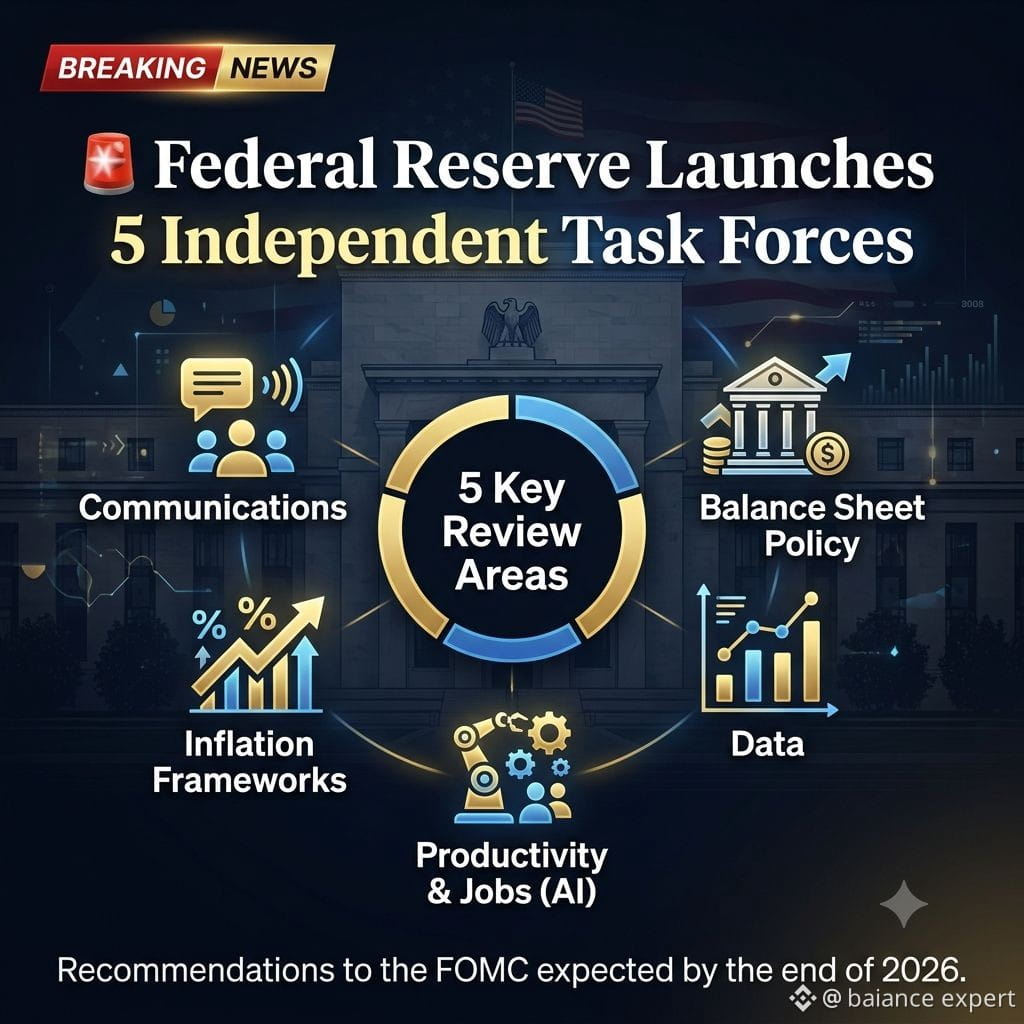
Die Federal Reserve setzt 5 unabhängige Task Forces ein, um die Kernfunktionen der Zentralbank zu überprüfen 🇺🇸
Der neu ernannte Vorsitzende der Federal Reserve, Kevin Warsh, hat die Leitung von fünf unabhängigen Task Forces bekanntgegeben, die die Kernfunktionen der Fed überprüfen und bis Ende 2026 evidenzbasierte Empfehlungen für das FOMC vorlegen werden.
📌 Schwerpunkte:
🔹 Kommunikation – Die Überprüfung, wie die Fed ihre geldpolitischen Entscheidungen und die Unsicherheit kommuniziert.
🔹 Bilanzpolitik – Die Bewertung der Kosten, Vorteile und langfristigen Auswirkungen des Bilanzrahmens der Fed.
🔹 Daten – Verbesserung der Qualität und Aktualität der wirtschaftlichen Daten, die in der Politikgestaltung verwendet werden.
🔹 Produktivität & Jobs – Einschätzung, wie transformative Technologien wie KI Beschäftigung und Wirtschaftswachstum beeinflussen.
🔹 Inflationsrahmen – Neubewertung dessen, wie die Fed Inflation misst und an ihr Zielvorgaben ausrichtet.
Die Task Forces umfassen weltweit anerkannte Ökonomen, ehemalige Zentralbankchefs, akademische Führungskräfte und Unternehmensmanager und werden unabhängig arbeiten – mit Unterstützung durch Mitarbeiter der Federal Reserve.
🗣️ Warsh sagte, sich die US-Wirtschaft habe sich in der vergangenen Generation dramatisch verändert, weshalb es entscheidend sei, die Analyseinstrumente, Politikrahmen und Entscheidungsprozesse der Fed neu zu bewerten.
👀 Die Märkte werden genau hinschauen, da diese Überprüfungen die künftige Ausrichtung der US-Geldpolitik prägen könnten.
#FederalReserve #Fed #FOMC $VELVET $TAG $EVAA
{future}(VELVETUSDT)
{alpha}(560xaa036928c9c0df07d525b55ea8ee690bb5a628c1)
{alpha}(560x208bf3e7da9639f1eaefa2de78c23396b0682025)
#warshnamesleadersforfivefedtaskforces
Die Federal Reserve setzt 5 unabhängige Task Forces ein, um die Kernfunktionen der Zentralbank zu überprüfen 🇺🇸
Der neu ernannte Vorsitzende der Federal Reserve, Kevin Warsh, hat die Leitung von fünf unabhängigen Task Forces bekanntgegeben, die die Kernfunktionen der Fed überprüfen und bis Ende 2026 evidenzbasierte Empfehlungen für das FOMC vorlegen werden.
📌 Schwerpunkte:
🔹 Kommunikation – Die Überprüfung, wie die Fed ihre geldpolitischen Entscheidungen und die Unsicherheit kommuniziert.
🔹 Bilanzpolitik – Die Bewertung der Kosten, Vorteile und langfristigen Auswirkungen des Bilanzrahmens der Fed.
🔹 Daten – Verbesserung der Qualität und Aktualität der wirtschaftlichen Daten, die in der Politikgestaltung verwendet werden.
🔹 Produktivität & Jobs – Einschätzung, wie transformative Technologien wie KI Beschäftigung und Wirtschaftswachstum beeinflussen.
🔹 Inflationsrahmen – Neubewertung dessen, wie die Fed Inflation misst und an ihr Zielvorgaben ausrichtet.
Die Task Forces umfassen weltweit anerkannte Ökonomen, ehemalige Zentralbankchefs, akademische Führungskräfte und Unternehmensmanager und werden unabhängig arbeiten – mit Unterstützung durch Mitarbeiter der Federal Reserve.
🗣️ Warsh sagte, sich die US-Wirtschaft habe sich in der vergangenen Generation dramatisch verändert, weshalb es entscheidend sei, die Analyseinstrumente, Politikrahmen und Entscheidungsprozesse der Fed neu zu bewerten.
👀 Die Märkte werden genau hinschauen, da diese Überprüfungen die künftige Ausrichtung der US-Geldpolitik prägen könnten.
#FederalReserve #Fed #FOMC $VELVET $TAG $EVAA
Die Federal Reserve setzt 5 unabhängige Task Forces ein, um die Kernfunktionen der Zentralbank zu überprüfen 🇺🇸
Der neu ernannte Vorsitzende der Federal Reserve, Kevin Warsh, hat die Leitung von fünf unabhängigen Task Forces bekanntgegeben, die die Kernfunktionen der Fed überprüfen und bis Ende 2026 evidenzbasierte Empfehlungen für das FOMC vorlegen werden.
📌 Schwerpunkte:
🔹 Kommunikation – Die Überprüfung, wie die Fed ihre geldpolitischen Entscheidungen und die Unsicherheit kommuniziert.
🔹 Bilanzpolitik – Die Bewertung der Kosten, Vorteile und langfristigen Auswirkungen des Bilanzrahmens der Fed.
🔹 Daten – Verbesserung der Qualität und Aktualität der wirtschaftlichen Daten, die in der Politikgestaltung verwendet werden.
🔹 Produktivität & Jobs – Einschätzung, wie transformative Technologien wie KI Beschäftigung und Wirtschaftswachstum beeinflussen.
🔹 Inflationsrahmen – Neubewertung dessen, wie die Fed Inflation misst und an ihr Zielvorgaben ausrichtet.
Die Task Forces umfassen weltweit anerkannte Ökonomen, ehemalige Zentralbankchefs, akademische Führungskräfte und Unternehmensmanager und werden unabhängig arbeiten – mit Unterstützung durch Mitarbeiter der Federal Reserve.
🗣️ Warsh sagte, sich die US-Wirtschaft habe sich in der vergangenen Generation dramatisch verändert, weshalb es entscheidend sei, die Analyseinstrumente, Politikrahmen und Entscheidungsprozesse der Fed neu zu bewerten.
👀 Die Märkte werden genau hinschauen, da diese Überprüfungen die künftige Ausrichtung der US-Geldpolitik prägen könnten.
#FederalReserve #Fed #FOMC $VELVET $TAG $EVAA
2
1
8
6.7k

·
--
Verifiziert
#warshnamesleadersforfivefedtaskforces
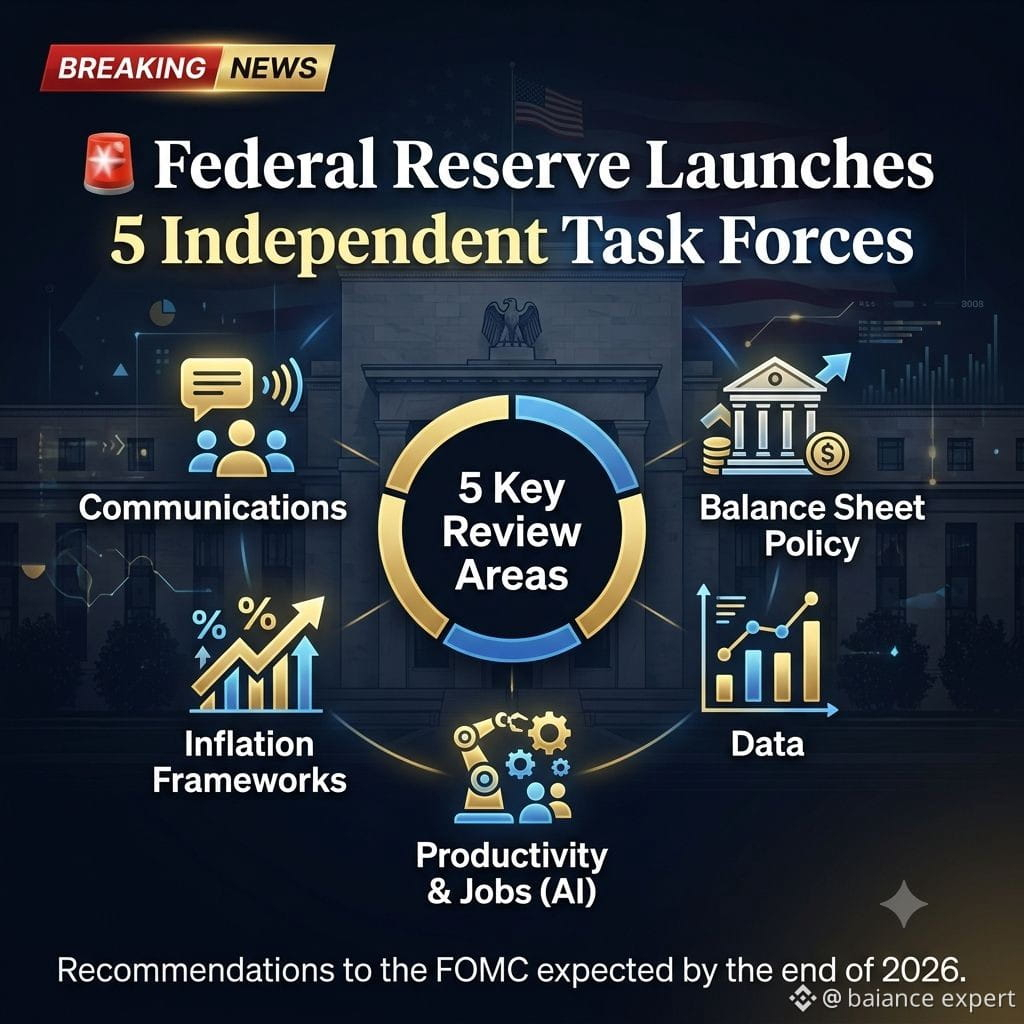
Die Federal Reserve richtet 5 unabhängige Arbeitsgruppen ein, um die Kernfunktionen der Zentralbank zu prüfen 🇺🇸
Der neue Präsident der Federal Reserve, Kevin Warsh, hat die Einrichtung von fünf unabhängigen Arbeitsgruppen angekündigt, die die grundlegenden Funktionen der Fed bewerten und bis zum FOMC Ende 2026 evidenzbasierte Empfehlungen erarbeiten sollen.
📌 Handlungsfelder:
🔹 Kommunikation – Untersuchen, wie die Fed ihre geldpolitischen Entscheidungen und die Unsicherheit kommuniziert.
🔹 Bilanzpolitik – Die Kosten, Vorteile und langfristigen Auswirkungen des Fed-Bilanzrahmens bewerten.
🔹 Daten – Die Qualität und Aktualität der für Entscheidungen verwendeten Wirtschaftsdatensätze verbessern.
🔹 Produktivität & Beschäftigung – Analysieren, wie transformative Technologien wie KI sich auf Beschäftigung und das Wirtschaftswachstum auswirken
Inflationsrahmen – Überdenken, wie die Fed Inflation misst und gezielt adressiert.
Diese Arbeitsgruppen versammeln weltweit anerkannte Ökonomen, ehemalige Zentralbanker, akademische Führungskräfte und Unternehmensleiter. Sie werden unabhängig arbeiten, mit Unterstützung durch das Personal der Federal Reserve.
🗣️ Warsh sagte, dass sich die US-Wirtschaft in der vergangenen Generation tiefgreifend verändert habe, weshalb es unerlässlich sei, die Analyseinstrumente der Fed, ihre Politikrahmen und ihre Entscheidungsprozesse neu zu bewerten.
👀 Die Märkte werden diese Überprüfungen genau beobachten, da sie die künftige Ausrichtung der US-Geldpolitik mitgestalten könnten.
#FederalReserve #Fed #FOMC $TAC $TAG $BTC
#warshnamesleadersforfivefedtaskforces
Die Federal Reserve richtet 5 unabhängige Arbeitsgruppen ein, um die Kernfunktionen der Zentralbank zu prüfen 🇺🇸
Der neue Präsident der Federal Reserve, Kevin Warsh, hat die Einrichtung von fünf unabhängigen Arbeitsgruppen angekündigt, die die grundlegenden Funktionen der Fed bewerten und bis zum FOMC Ende 2026 evidenzbasierte Empfehlungen erarbeiten sollen.
📌 Handlungsfelder:
🔹 Kommunikation – Untersuchen, wie die Fed ihre geldpolitischen Entscheidungen und die Unsicherheit kommuniziert.
🔹 Bilanzpolitik – Die Kosten, Vorteile und langfristigen Auswirkungen des Fed-Bilanzrahmens bewerten.
🔹 Daten – Die Qualität und Aktualität der für Entscheidungen verwendeten Wirtschaftsdatensätze verbessern.
🔹 Produktivität & Beschäftigung – Analysieren, wie transformative Technologien wie KI sich auf Beschäftigung und das Wirtschaftswachstum auswirken
Inflationsrahmen – Überdenken, wie die Fed Inflation misst und gezielt adressiert.
Diese Arbeitsgruppen versammeln weltweit anerkannte Ökonomen, ehemalige Zentralbanker, akademische Führungskräfte und Unternehmensleiter. Sie werden unabhängig arbeiten, mit Unterstützung durch das Personal der Federal Reserve.
🗣️ Warsh sagte, dass sich die US-Wirtschaft in der vergangenen Generation tiefgreifend verändert habe, weshalb es unerlässlich sei, die Analyseinstrumente der Fed, ihre Politikrahmen und ihre Entscheidungsprozesse neu zu bewerten.
👀 Die Märkte werden diese Überprüfungen genau beobachten, da sie die künftige Ausrichtung der US-Geldpolitik mitgestalten könnten.
#FederalReserve #Fed #FOMC $TAC $TAG $BTC
Die Federal Reserve richtet 5 unabhängige Arbeitsgruppen ein, um die Kernfunktionen der Zentralbank zu prüfen 🇺🇸
Der neue Präsident der Federal Reserve, Kevin Warsh, hat die Einrichtung von fünf unabhängigen Arbeitsgruppen angekündigt, die die grundlegenden Funktionen der Fed bewerten und bis zum FOMC Ende 2026 evidenzbasierte Empfehlungen erarbeiten sollen.
📌 Handlungsfelder:
🔹 Kommunikation – Untersuchen, wie die Fed ihre geldpolitischen Entscheidungen und die Unsicherheit kommuniziert.
🔹 Bilanzpolitik – Die Kosten, Vorteile und langfristigen Auswirkungen des Fed-Bilanzrahmens bewerten.
🔹 Daten – Die Qualität und Aktualität der für Entscheidungen verwendeten Wirtschaftsdatensätze verbessern.
🔹 Produktivität & Beschäftigung – Analysieren, wie transformative Technologien wie KI sich auf Beschäftigung und das Wirtschaftswachstum auswirken
Inflationsrahmen – Überdenken, wie die Fed Inflation misst und gezielt adressiert.
Diese Arbeitsgruppen versammeln weltweit anerkannte Ökonomen, ehemalige Zentralbanker, akademische Führungskräfte und Unternehmensleiter. Sie werden unabhängig arbeiten, mit Unterstützung durch das Personal der Federal Reserve.
🗣️ Warsh sagte, dass sich die US-Wirtschaft in der vergangenen Generation tiefgreifend verändert habe, weshalb es unerlässlich sei, die Analyseinstrumente der Fed, ihre Politikrahmen und ihre Entscheidungsprozesse neu zu bewerten.
👀 Die Märkte werden diese Überprüfungen genau beobachten, da sie die künftige Ausrichtung der US-Geldpolitik mitgestalten könnten.
#FederalReserve #Fed #FOMC $TAC $TAG $BTC
6
724

#warshnamesleadersforfivefedtaskforces $NVDAB 💰
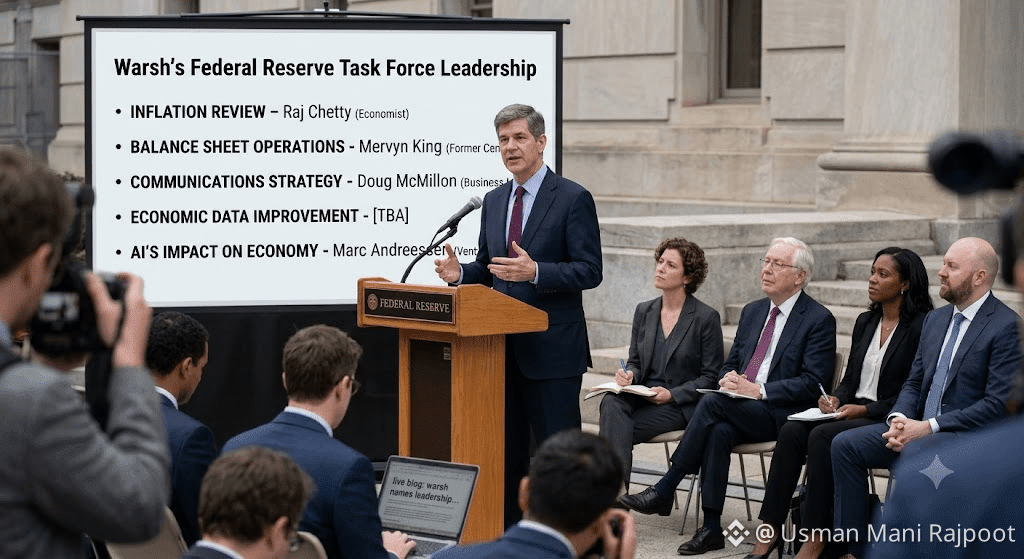
Federal Reserve-Vorsitzender Kevin Warsh hat das Führungsteam für fünf neue Task Forces vorgestellt, die prüfen sollen, wie die US-Notenbank arbeitet. Damit markiert dies eine der ambitioniertesten Reforminitiativen der letzten Jahre. Die Gruppen bringen angesehene Ökonomen, ehemalige Zentralbanker, Technologie-Manager und Unternehmensleiter zusammen, um zentrale Themen zu untersuchen – darunter Inflation, die Bilanz der Fed, Kommunikation, Wirtschaftsdaten sowie der wachsende Einfluss von Künstlicher Intelligenz auf Produktivität und Beschäftigung.
Zu den bemerkenswerten Berufungen gehören der Venture-Capitalist Marc Andreessen, der Ökonom Raj Chetty, der frühere Gouverneur der Bank of England Mervyn King sowie der ehemalige Walmart-CEO Doug McMillon. Jede Task Force arbeitet gemeinsam mit den Mitarbeitenden der Federal Reserve und soll noch in diesem Jahr Empfehlungen vorlegen.
Warsh hat wiederholt argumentiert, dass die Fed ihren politischen Rahmen modernisieren, sich auf bessere Wirtschaftsdaten stützen und verbessern sollte, wie sie mit den Märkten kommuniziert. Seine Entscheidung, Expertinnen und Experten außerhalb der Zentralbankwelt einzubeziehen, signalisiert einen umfassenderen Versuch, frische Perspektiven in die Geldpolitik einzubringen.
Obwohl die Task Forces eher beratend als entscheidungsgebend sind, könnten ihre Empfehlungen die langfristige Strategie der Federal Reserve beeinflussen und mit darüber entscheiden, wie sie auf künftige wirtschaftliche Herausforderungen reagiert – von Inflationsrisiken bis hin zu raschem technologischen Wandel. Die Finanzmärkte werden die Entwicklungen genau verfolgen, während diese Überprüfungen voranschreiten und Reformvorschläge Gestalt annehmen.
#WarshNamesLeadersForFiveFedTaskForces $💰
#warshnamesleadersforfivefedtaskforces $NVDAB 💰
Federal Reserve-Vorsitzender Kevin Warsh hat das Führungsteam für fünf neue Task Forces vorgestellt, die prüfen sollen, wie die US-Notenbank arbeitet. Damit markiert dies eine der ambitioniertesten Reforminitiativen der letzten Jahre. Die Gruppen bringen angesehene Ökonomen, ehemalige Zentralbanker, Technologie-Manager und Unternehmensleiter zusammen, um zentrale Themen zu untersuchen – darunter Inflation, die Bilanz der Fed, Kommunikation, Wirtschaftsdaten sowie der wachsende Einfluss von Künstlicher Intelligenz auf Produktivität und Beschäftigung.
Zu den bemerkenswerten Berufungen gehören der Venture-Capitalist Marc Andreessen, der Ökonom Raj Chetty, der frühere Gouverneur der Bank of England Mervyn King sowie der ehemalige Walmart-CEO Doug McMillon. Jede Task Force arbeitet gemeinsam mit den Mitarbeitenden der Federal Reserve und soll noch in diesem Jahr Empfehlungen vorlegen.
Warsh hat wiederholt argumentiert, dass die Fed ihren politischen Rahmen modernisieren, sich auf bessere Wirtschaftsdaten stützen und verbessern sollte, wie sie mit den Märkten kommuniziert. Seine Entscheidung, Expertinnen und Experten außerhalb der Zentralbankwelt einzubeziehen, signalisiert einen umfassenderen Versuch, frische Perspektiven in die Geldpolitik einzubringen.
Obwohl die Task Forces eher beratend als entscheidungsgebend sind, könnten ihre Empfehlungen die langfristige Strategie der Federal Reserve beeinflussen und mit darüber entscheiden, wie sie auf künftige wirtschaftliche Herausforderungen reagiert – von Inflationsrisiken bis hin zu raschem technologischen Wandel. Die Finanzmärkte werden die Entwicklungen genau verfolgen, während diese Überprüfungen voranschreiten und Reformvorschläge Gestalt annehmen.
#WarshNamesLeadersForFiveFedTaskForces $💰
Federal Reserve-Vorsitzender Kevin Warsh hat das Führungsteam für fünf neue Task Forces vorgestellt, die prüfen sollen, wie die US-Notenbank arbeitet. Damit markiert dies eine der ambitioniertesten Reforminitiativen der letzten Jahre. Die Gruppen bringen angesehene Ökonomen, ehemalige Zentralbanker, Technologie-Manager und Unternehmensleiter zusammen, um zentrale Themen zu untersuchen – darunter Inflation, die Bilanz der Fed, Kommunikation, Wirtschaftsdaten sowie der wachsende Einfluss von Künstlicher Intelligenz auf Produktivität und Beschäftigung.
Zu den bemerkenswerten Berufungen gehören der Venture-Capitalist Marc Andreessen, der Ökonom Raj Chetty, der frühere Gouverneur der Bank of England Mervyn King sowie der ehemalige Walmart-CEO Doug McMillon. Jede Task Force arbeitet gemeinsam mit den Mitarbeitenden der Federal Reserve und soll noch in diesem Jahr Empfehlungen vorlegen.
Warsh hat wiederholt argumentiert, dass die Fed ihren politischen Rahmen modernisieren, sich auf bessere Wirtschaftsdaten stützen und verbessern sollte, wie sie mit den Märkten kommuniziert. Seine Entscheidung, Expertinnen und Experten außerhalb der Zentralbankwelt einzubeziehen, signalisiert einen umfassenderen Versuch, frische Perspektiven in die Geldpolitik einzubringen.
Obwohl die Task Forces eher beratend als entscheidungsgebend sind, könnten ihre Empfehlungen die langfristige Strategie der Federal Reserve beeinflussen und mit darüber entscheiden, wie sie auf künftige wirtschaftliche Herausforderungen reagiert – von Inflationsrisiken bis hin zu raschem technologischen Wandel. Die Finanzmärkte werden die Entwicklungen genau verfolgen, während diese Überprüfungen voranschreiten und Reformvorschläge Gestalt annehmen.
#WarshNamesLeadersForFiveFedTaskForces $💰
3
245

·
--
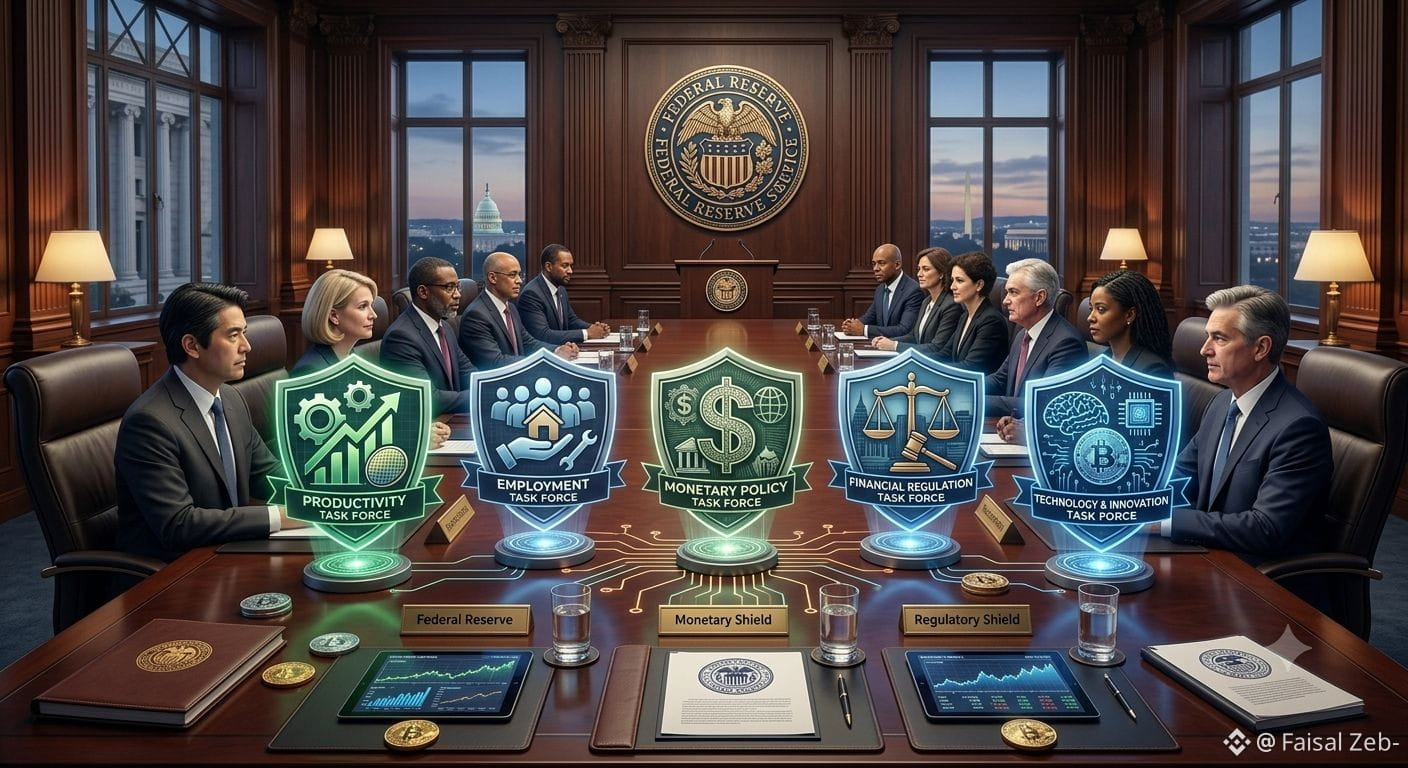
Der Vorsitzende der Federal Reserve, Kevin Warsh, hat offiziell die hochkarätigen Führungsteams benannt, die fünf neu gegründete, entscheidende Wirtschaftskräftestationen leiten sollen. Diese strategischen Gruppen sind damit beauftragt, sich mit strukturellen Veränderungen bei Produktivität, Beschäftigung und FinTech-Technologien der nächsten Generation auseinanderzusetzen. Mit Schwergewichten sowohl aus dem Silicon Valley als auch aus dem traditionellen Finanzsektor an Bord erwartet der Markt eine umfassende Modernisierung der künftigen Geldpolitik.#WarshNamesLeadersForFiveFedTaskForces
Der Vorsitzende der Federal Reserve, Kevin Warsh, hat offiziell die hochkarätigen Führungsteams benannt, die fünf neu gegründete, entscheidende Wirtschaftskräftestationen leiten sollen. Diese strategischen Gruppen sind damit beauftragt, sich mit strukturellen Veränderungen bei Produktivität, Beschäftigung und FinTech-Technologien der nächsten Generation auseinanderzusetzen. Mit Schwergewichten sowohl aus dem Silicon Valley als auch aus dem traditionellen Finanzsektor an Bord erwartet der Markt eine umfassende Modernisierung der künftigen Geldpolitik.#WarshNamesLeadersForFiveFedTaskForces
56

Verifiziert
Artikel
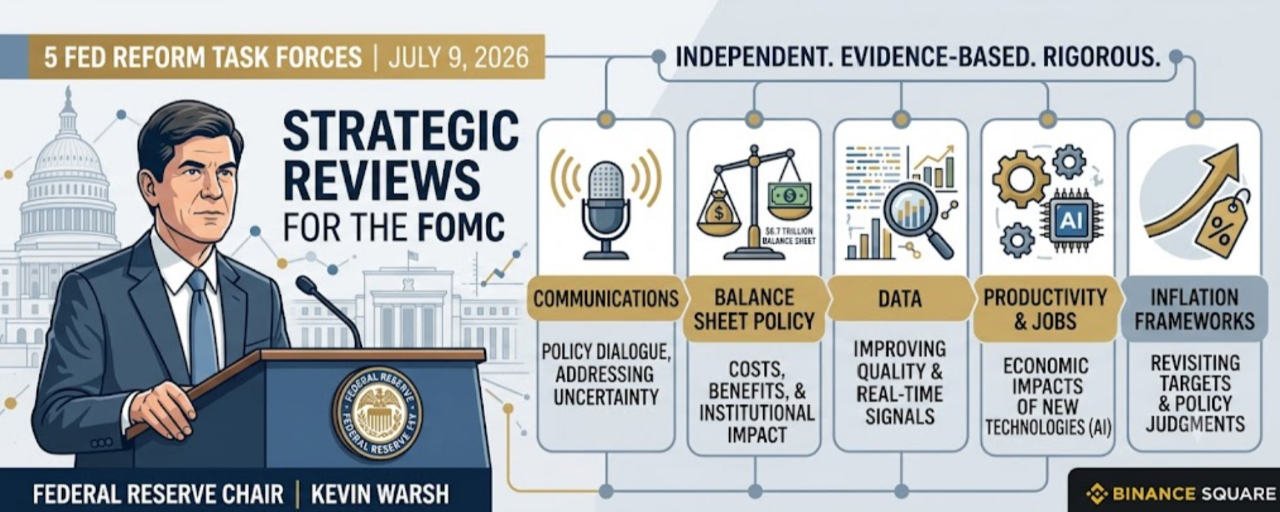
FED-VORSITZENDER KEVIN WARSH STELLT LEITER FÜR FÜNF REFORM-TASK-FORCES VOR🚨 🚨#warshnamesleadersforfivefedtaskforces
Der neu ernannte Vorsitzende der Federal Reserve, Kevin Warsh, hat offiziell die Leitung für fünf unabhängige Task Forces bekanntgegeben, die die Kernfunktionen der US-Zentralbank überprüfen sollen. Diese Gruppen wurden am 9. Juli 2026 angekündigt und sind beauftragt, dem Federal Open Market Committee (FOMC) bis zum Jahresende evidenzbasierte Erkenntnisse vorzulegen. Die Task Forces arbeiten unabhängig, mit Unterstützung durch das Fed-Personal. Sie haben den Auftrag, sich an Belegen zu orientieren, offene Rückmeldungen zu geben und sorgfältige Ergebnisse zu liefern.
FED-VORSITZENDER KEVIN WARSH STELLT LEITER FÜR FÜNF REFORM-TASK-FORCES VOR
🚨 🚨#warshnamesleadersforfivefedtaskforces
Der neu ernannte Vorsitzende der Federal Reserve, Kevin Warsh, hat offiziell die Leitung für fünf unabhängige Task Forces bekanntgegeben, die die Kernfunktionen der US-Zentralbank überprüfen sollen. Diese Gruppen wurden am 9. Juli 2026 angekündigt und sind beauftragt, dem Federal Open Market Committee (FOMC) bis zum Jahresende evidenzbasierte Erkenntnisse vorzulegen. Die Task Forces arbeiten unabhängig, mit Unterstützung durch das Fed-Personal. Sie haben den Auftrag, sich an Belegen zu orientieren, offene Rückmeldungen zu geben und sorgfältige Ergebnisse zu liefern.
Der neu ernannte Vorsitzende der Federal Reserve, Kevin Warsh, hat offiziell die Leitung für fünf unabhängige Task Forces bekanntgegeben, die die Kernfunktionen der US-Zentralbank überprüfen sollen. Diese Gruppen wurden am 9. Juli 2026 angekündigt und sind beauftragt, dem Federal Open Market Committee (FOMC) bis zum Jahresende evidenzbasierte Erkenntnisse vorzulegen. Die Task Forces arbeiten unabhängig, mit Unterstützung durch das Fed-Personal. Sie haben den Auftrag, sich an Belegen zu orientieren, offene Rückmeldungen zu geben und sorgfältige Ergebnisse zu liefern.
2
4.9k

Verifiziert
Artikel
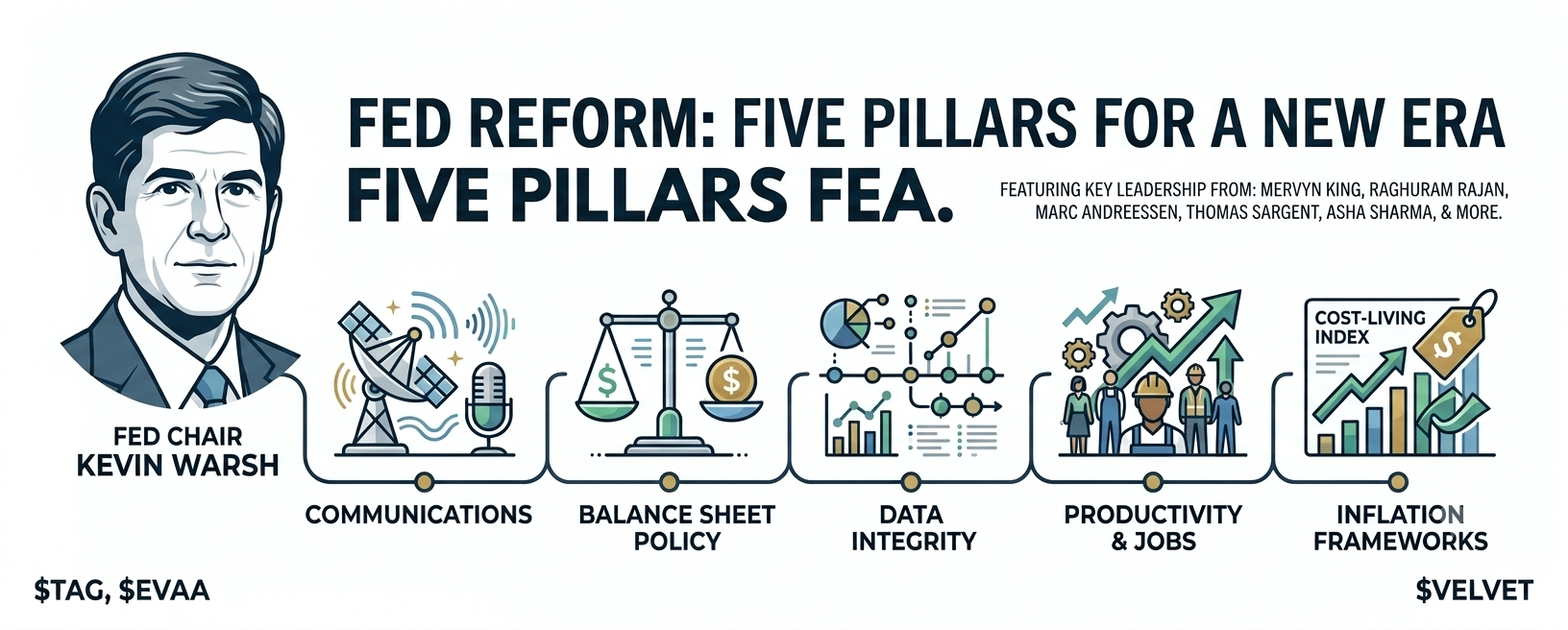
WICHTIGES MACRO-UPDATE: FED-VORSITZENDER KEVIN WARSH ERNENNT FÜHRUNG FÜR 5 NEUE REFORM-TASK-FORCES#warshnamesleadersforfivefedtaskforces
In einem bedeutenden Schritt zur Bewertung der Kernaufgaben der US-Zentralbank stellte der neu ernannte Vorsitzende der Federal Reserve, Kevin Warsh, am 9. Juli 2026 offiziell die Leitung für fünf verschiedene, unabhängige Task Forces vor.
Diese spezialisierten Gruppen sind so strukturiert, dass sie eigenständig arbeiten können, mit administrativer Unterstützung durch Mitarbeiter der Federal Reserve. Ihr vorrangiges Ziel ist es, objektive, datenbasierte Empfehlungen direkt an den Federal Open Market Committee (FOMC) zu übermitteln, noch bevor dieses Jahr endet. Laut Warsh hat sich die moderne US-Wirtschaft in der vergangenen Generation drastisch verändert, was eine gründliche Überprüfung der aktuellen Analysetools, der politischen Rahmenwerke und der Umsetzungs-Methoden erforderlich macht.
WICHTIGES MACRO-UPDATE: FED-VORSITZENDER KEVIN WARSH ERNENNT FÜHRUNG FÜR 5 NEUE REFORM-TASK-FORCES
#warshnamesleadersforfivefedtaskforces
In einem bedeutenden Schritt zur Bewertung der Kernaufgaben der US-Zentralbank stellte der neu ernannte Vorsitzende der Federal Reserve, Kevin Warsh, am 9. Juli 2026 offiziell die Leitung für fünf verschiedene, unabhängige Task Forces vor.
Diese spezialisierten Gruppen sind so strukturiert, dass sie eigenständig arbeiten können, mit administrativer Unterstützung durch Mitarbeiter der Federal Reserve. Ihr vorrangiges Ziel ist es, objektive, datenbasierte Empfehlungen direkt an den Federal Open Market Committee (FOMC) zu übermitteln, noch bevor dieses Jahr endet. Laut Warsh hat sich die moderne US-Wirtschaft in der vergangenen Generation drastisch verändert, was eine gründliche Überprüfung der aktuellen Analysetools, der politischen Rahmenwerke und der Umsetzungs-Methoden erforderlich macht.
In einem bedeutenden Schritt zur Bewertung der Kernaufgaben der US-Zentralbank stellte der neu ernannte Vorsitzende der Federal Reserve, Kevin Warsh, am 9. Juli 2026 offiziell die Leitung für fünf verschiedene, unabhängige Task Forces vor.
Diese spezialisierten Gruppen sind so strukturiert, dass sie eigenständig arbeiten können, mit administrativer Unterstützung durch Mitarbeiter der Federal Reserve. Ihr vorrangiges Ziel ist es, objektive, datenbasierte Empfehlungen direkt an den Federal Open Market Committee (FOMC) zu übermitteln, noch bevor dieses Jahr endet. Laut Warsh hat sich die moderne US-Wirtschaft in der vergangenen Generation drastisch verändert, was eine gründliche Überprüfung der aktuellen Analysetools, der politischen Rahmenwerke und der Umsetzungs-Methoden erforderlich macht.
2
5
4.1k

#WarshNamesLeadersForFiveFedTaskForces Ja — diese Schlagzeile trifft zu.
Am 9. Juli 2026 kündigte die US-Notenbank Federal Reserve offiziell die Leitung und die Ziele von fünf Arbeitsgruppen an, die von Vorsitzendem Kevin Warsh eingerichtet wurden, um zu prüfen, wie die Fed die Geldpolitik durchführt. Die Fed erklärte, die Gruppen würden Kommunikationswege, die Bilanz, die Dynamik des Arbeitsmarkts, die Inflationsdynamik sowie die Rolle von KI/Wirtschaftsdaten untersuchen. (federalreserve.gov)
Berichte von CNBC und Reuters zufolge gehörten zu den genannten Führungspersönlichkeiten hochkarätige Persönlichkeiten wie Marc Andreessen, Doug McMillon, Mervyn King und Raj Chetty, unter anderem, wobei die Gremien darauf ausgelegt seien, Empfehlungen für Änderungen in den Fed-Operationen abzugeben. (cnbc.com)
Eine saubere marktorientierte Version wäre demnach:
„Warsh benennt Führungskräfte für fünf Fed-Arbeitsgruppen, die Kommunikation, Inflation, Arbeitsmarkt, Bilanzpolitik sowie Daten-/KI-Tools prüfen.“ (federalreserve.gov)
Warum Märkte das möglicherweise interessiert:
Das deutet auf eine potenziell breite institutionelle Neuausrichtung bei der Fed hin — nicht nur auf kleine politische Anpassungen. (federalreserve.gov)
Empfohlene Änderungen bei der Messung der Inflation, der Kommunikation oder der Bilanzstrategie könnten beeinflussen, wie Investoren künftige Zinsscheidungen interpretieren. Das ist eine Schlussfolgerung auf Basis des Umfangs der Arbeitsgruppen. (federalreserve.gov)
Wenn du willst, kann ich #WarshNamesLeadersForFiveFedTaskForces auch umwandeln in:
a eine 1-zeilige News-Überschrift,
a eine Trader-Einschätzung oder
a eine Krypto-Auswirkungs-Zusammenfassung.$MUB
{spot}(MUBUSDT)
$AI
{spot}(AIUSDT)
$OPENAI
{future}(OPENAIUSDT)
@Binance_News @Binance_Announcement @Binance_Square_Official
#WarshNamesLeadersForFiveFedTaskForces Ja — diese Schlagzeile trifft zu.
Am 9. Juli 2026 kündigte die US-Notenbank Federal Reserve offiziell die Leitung und die Ziele von fünf Arbeitsgruppen an, die von Vorsitzendem Kevin Warsh eingerichtet wurden, um zu prüfen, wie die Fed die Geldpolitik durchführt. Die Fed erklärte, die Gruppen würden Kommunikationswege, die Bilanz, die Dynamik des Arbeitsmarkts, die Inflationsdynamik sowie die Rolle von KI/Wirtschaftsdaten untersuchen. (federalreserve.gov)
Berichte von CNBC und Reuters zufolge gehörten zu den genannten Führungspersönlichkeiten hochkarätige Persönlichkeiten wie Marc Andreessen, Doug McMillon, Mervyn King und Raj Chetty, unter anderem, wobei die Gremien darauf ausgelegt seien, Empfehlungen für Änderungen in den Fed-Operationen abzugeben. (cnbc.com)
Eine saubere marktorientierte Version wäre demnach:
„Warsh benennt Führungskräfte für fünf Fed-Arbeitsgruppen, die Kommunikation, Inflation, Arbeitsmarkt, Bilanzpolitik sowie Daten-/KI-Tools prüfen.“ (federalreserve.gov)
Warum Märkte das möglicherweise interessiert:
Das deutet auf eine potenziell breite institutionelle Neuausrichtung bei der Fed hin — nicht nur auf kleine politische Anpassungen. (federalreserve.gov)
Empfohlene Änderungen bei der Messung der Inflation, der Kommunikation oder der Bilanzstrategie könnten beeinflussen, wie Investoren künftige Zinsscheidungen interpretieren. Das ist eine Schlussfolgerung auf Basis des Umfangs der Arbeitsgruppen. (federalreserve.gov)
Wenn du willst, kann ich #WarshNamesLeadersForFiveFedTaskForces auch umwandeln in:
a eine 1-zeilige News-Überschrift,
a eine Trader-Einschätzung oder
a eine Krypto-Auswirkungs-Zusammenfassung.$MUB
$AI
$OPENAI
@Binance News @Binance Announcement @Binance Square Official
Am 9. Juli 2026 kündigte die US-Notenbank Federal Reserve offiziell die Leitung und die Ziele von fünf Arbeitsgruppen an, die von Vorsitzendem Kevin Warsh eingerichtet wurden, um zu prüfen, wie die Fed die Geldpolitik durchführt. Die Fed erklärte, die Gruppen würden Kommunikationswege, die Bilanz, die Dynamik des Arbeitsmarkts, die Inflationsdynamik sowie die Rolle von KI/Wirtschaftsdaten untersuchen. (federalreserve.gov)
Berichte von CNBC und Reuters zufolge gehörten zu den genannten Führungspersönlichkeiten hochkarätige Persönlichkeiten wie Marc Andreessen, Doug McMillon, Mervyn King und Raj Chetty, unter anderem, wobei die Gremien darauf ausgelegt seien, Empfehlungen für Änderungen in den Fed-Operationen abzugeben. (cnbc.com)
Eine saubere marktorientierte Version wäre demnach:
„Warsh benennt Führungskräfte für fünf Fed-Arbeitsgruppen, die Kommunikation, Inflation, Arbeitsmarkt, Bilanzpolitik sowie Daten-/KI-Tools prüfen.“ (federalreserve.gov)
Warum Märkte das möglicherweise interessiert:
Das deutet auf eine potenziell breite institutionelle Neuausrichtung bei der Fed hin — nicht nur auf kleine politische Anpassungen. (federalreserve.gov)
Empfohlene Änderungen bei der Messung der Inflation, der Kommunikation oder der Bilanzstrategie könnten beeinflussen, wie Investoren künftige Zinsscheidungen interpretieren. Das ist eine Schlussfolgerung auf Basis des Umfangs der Arbeitsgruppen. (federalreserve.gov)
Wenn du willst, kann ich #WarshNamesLeadersForFiveFedTaskForces auch umwandeln in:
a eine 1-zeilige News-Überschrift,
a eine Trader-Einschätzung oder
a eine Krypto-Auswirkungs-Zusammenfassung.$MUB
$AI
$OPENAI
@Binance News @Binance Announcement @Binance Square Official
2
201

Der Fed-Vorsitzende Kevin Warsh hat Leiter für fünf Task Forces ernannt, die zentrale Bereiche der US-Notenbank Federal Reserve überprüfen sollen – darunter KI, Inflation, Kommunikation und die Geldpolitik zur Bilanz. Es ist eine langfristige Initiative, die dazu beitragen könnte, wie die Fed künftigen wirtschaftlichen Herausforderungen begegnet. 📊
#WarshNamesLeadersForFiveFedTaskForces
Der Fed-Vorsitzende Kevin Warsh hat Leiter für fünf Task Forces ernannt, die zentrale Bereiche der US-Notenbank Federal Reserve überprüfen sollen – darunter KI, Inflation, Kommunikation und die Geldpolitik zur Bilanz. Es ist eine langfristige Initiative, die dazu beitragen könnte, wie die Fed künftigen wirtschaftlichen Herausforderungen begegnet. 📊
#WarshNamesLeadersForFiveFedTaskForces
#WarshNamesLeadersForFiveFedTaskForces
20

·
--
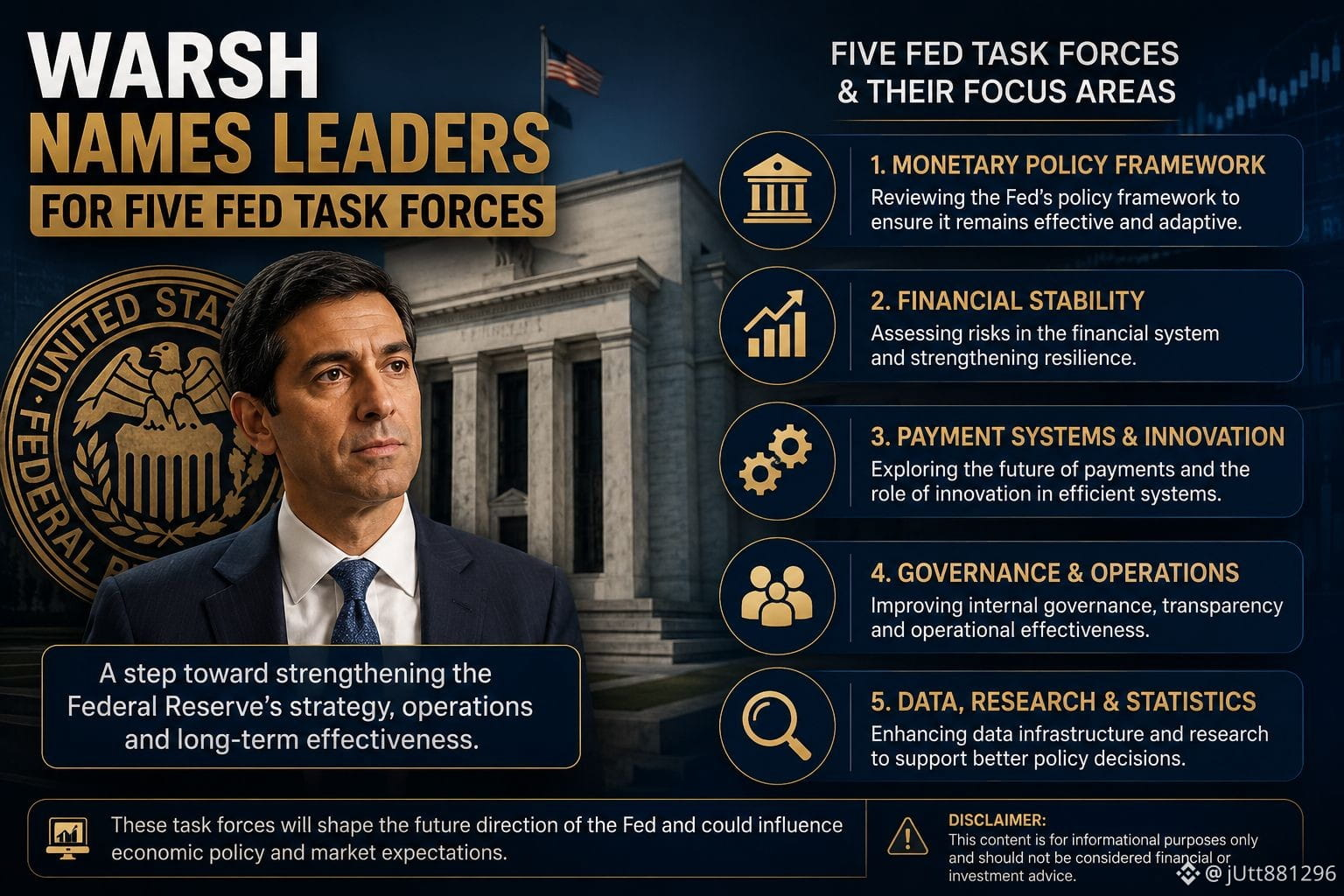
#WarshNamesLeadersForFiveFedTaskForces
Die Ernennung von Warsh, um mehrere Task Forces des Federal Reserve Systems zu leiten, signalisiert einen erneuten Fokus darauf, zentrale Bereiche der Abläufe und der langfristigen Strategie der US-Zentralbank zu prüfen. Es wird erwartet, dass diese Task Forces die Rahmenwerke der Geldpolitik, die Widerstandsfähigkeit der Finanzmärkte und die Wirksamkeit des Entscheidungsprozesses der Fed bewerten.
Obwohl der genaue Umfang der Initiativen noch in Entwicklung ist, hat der Schritt die Aufmerksamkeit von Anlegern auf sich gezogen, die genau beobachten werden, welche Empfehlungen möglicherweise die künftige Geldpolitik oder die Finanzregulierung beeinflussen könnten. Wie immer dürften die Märkte eher auf die Ergebnisse dieser Überprüfungen reagieren als auf die Ernennungen selbst.
Haftungsausschluss: Dieser Inhalt dient nur zu Informationszwecken und stellt keine finanzielle oder Anlageberatung dar.
#WarshNamesLeadersForFiveFedTaskForces
#WarshNamesLeadersForFiveFedTaskForces
Die Ernennung von Warsh, um mehrere Task Forces des Federal Reserve Systems zu leiten, signalisiert einen erneuten Fokus darauf, zentrale Bereiche der Abläufe und der langfristigen Strategie der US-Zentralbank zu prüfen. Es wird erwartet, dass diese Task Forces die Rahmenwerke der Geldpolitik, die Widerstandsfähigkeit der Finanzmärkte und die Wirksamkeit des Entscheidungsprozesses der Fed bewerten.
Obwohl der genaue Umfang der Initiativen noch in Entwicklung ist, hat der Schritt die Aufmerksamkeit von Anlegern auf sich gezogen, die genau beobachten werden, welche Empfehlungen möglicherweise die künftige Geldpolitik oder die Finanzregulierung beeinflussen könnten. Wie immer dürften die Märkte eher auf die Ergebnisse dieser Überprüfungen reagieren als auf die Ernennungen selbst.
Haftungsausschluss: Dieser Inhalt dient nur zu Informationszwecken und stellt keine finanzielle oder Anlageberatung dar.
#WarshNamesLeadersForFiveFedTaskForces
Die Ernennung von Warsh, um mehrere Task Forces des Federal Reserve Systems zu leiten, signalisiert einen erneuten Fokus darauf, zentrale Bereiche der Abläufe und der langfristigen Strategie der US-Zentralbank zu prüfen. Es wird erwartet, dass diese Task Forces die Rahmenwerke der Geldpolitik, die Widerstandsfähigkeit der Finanzmärkte und die Wirksamkeit des Entscheidungsprozesses der Fed bewerten.
Obwohl der genaue Umfang der Initiativen noch in Entwicklung ist, hat der Schritt die Aufmerksamkeit von Anlegern auf sich gezogen, die genau beobachten werden, welche Empfehlungen möglicherweise die künftige Geldpolitik oder die Finanzregulierung beeinflussen könnten. Wie immer dürften die Märkte eher auf die Ergebnisse dieser Überprüfungen reagieren als auf die Ernennungen selbst.
Haftungsausschluss: Dieser Inhalt dient nur zu Informationszwecken und stellt keine finanzielle oder Anlageberatung dar.
#WarshNamesLeadersForFiveFedTaskForces
2
132
·
--
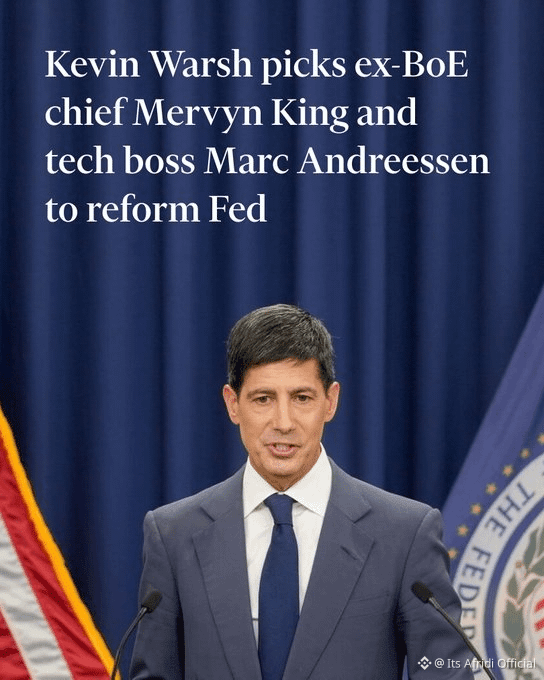
#warshnamesleadersforfivefedtaskforces
Der Vorsitzende der US-Notenbank stellte die Besetzungen für fünf Arbeitsgruppen vor, die seiner Ansicht nach die wichtigste Finanzinstitution der Welt „schärfen“ würden.
$AI
{spot}(AIUSDT)
$AB
{alpha}(560x95034f653d5d161890836ad2b6b8cc49d14e029a)
$ETC
{future}(ETCUSDT)
#warshnamesleadersforfivefedtaskforces
Der Vorsitzende der US-Notenbank stellte die Besetzungen für fünf Arbeitsgruppen vor, die seiner Ansicht nach die wichtigste Finanzinstitution der Welt „schärfen“ würden.
$AI
$AB
$ETC
Der Vorsitzende der US-Notenbank stellte die Besetzungen für fünf Arbeitsgruppen vor, die seiner Ansicht nach die wichtigste Finanzinstitution der Welt „schärfen“ würden.
$AI
$AB
$ETC
1
314

·
--
Bärisch
#warshnamesleadersforfivefedtaskforces
🦅 FED-ÜBERHOLUNG: STUHL-KRIEGSHERR-MOBILISIERT FÜNF NEUE ARBEITSGRUPPEN! 🏛️⚡
Die US-Notenbank Fed durchläuft einen massiven strukturellen Umbau. Neuer Fed-Vorsitzender Kevin Warsh hat offiziell die Leitungsteams für fünf neu geschaffene Task Forces benannt, die die US-Geldpolitik vollständig modernisieren sollen.
Wenn du Makro, Krypto oder Aktien handelst, bestimmt diese neue Führungsbesetzung die Zukunft der Zinssätze und der Marktliquidität.
Hier ist die schnelle Aufschlüsselung der neuen Fed-Kraftzentren:
🎯 Die 5 neuen Task Forces & Führung
1. Geldpolitischer Rahmen & Strategie: Geleitet vom Richmond-Fed-Präsidenten Thomas Barkin. Dieses Team überarbeitet Inflationsziele und das endgültige Zins-Spielbuch der Fed.2. Finanzstabilität & Aufsicht: Geleitet vom Fed-Gouverneur Christopher Waller. Fokus auf die Absicherung von Risiken im Bankensystem und systemischen Liquiditätsbedrohungen.3. Zahlungen & Digitale Innovation: Geleitet vom Fed-Gouverneur Adriana Kugler. Mit dem Auftrag, Großhandelszahlungen, digitale Währungen und tokenisierte Abwicklung zu modernisieren.4. Operative Effizienz: Geleitet vom Fed-Gouverneur Michelle Bowman. Ziel: interne Daten-Pipelines der Fed straffen und Engpässe beim Clearing beseitigen.5. Governance & Transparenz: Geleitet vom Dallas-Fed-Präsidenten Lorie Logan. Umstrukturierung der öffentlichen Kommunikation und der Transparenzrichtlinien für den FOMC.
💡 Die wichtigste Erkenntnis für Trader
Warsh setzt nicht nur auf den Status quo – er baut eine völlig neue Infrastruktur, um strukturelle Inflation, KI-Ausgaben-Boombereiche und moderne digitale Finanzen anzugehen.
Indem er Schwergewichte wie Waller und Logan an die Spitze dieser Einheiten stellt, signalisiert die Fed eine ausgesprochen aggressive, proaktive Haltung bei der wirtschaftlichen Aufsicht. Erwarte schon bald Veränderungen darin, wie die Fed Zinsscheidungen kommuniziert. 🌊
Glaubst du, dass Warshs neue Task Forces die Fed eher hawkisher oder transparenter machen? Schreib deine Makro-Einschätzung unten rein! 👇
#WarshNamesLeadersForFiveFedTaskForces #fomc #FederalReserve
#warshnamesleadersforfivefedtaskforces
🦅 FED-ÜBERHOLUNG: STUHL-KRIEGSHERR-MOBILISIERT FÜNF NEUE ARBEITSGRUPPEN! 🏛️⚡
Die US-Notenbank Fed durchläuft einen massiven strukturellen Umbau. Neuer Fed-Vorsitzender Kevin Warsh hat offiziell die Leitungsteams für fünf neu geschaffene Task Forces benannt, die die US-Geldpolitik vollständig modernisieren sollen.
Wenn du Makro, Krypto oder Aktien handelst, bestimmt diese neue Führungsbesetzung die Zukunft der Zinssätze und der Marktliquidität.
Hier ist die schnelle Aufschlüsselung der neuen Fed-Kraftzentren:
🎯 Die 5 neuen Task Forces & Führung
1. Geldpolitischer Rahmen & Strategie: Geleitet vom Richmond-Fed-Präsidenten Thomas Barkin. Dieses Team überarbeitet Inflationsziele und das endgültige Zins-Spielbuch der Fed.2. Finanzstabilität & Aufsicht: Geleitet vom Fed-Gouverneur Christopher Waller. Fokus auf die Absicherung von Risiken im Bankensystem und systemischen Liquiditätsbedrohungen.3. Zahlungen & Digitale Innovation: Geleitet vom Fed-Gouverneur Adriana Kugler. Mit dem Auftrag, Großhandelszahlungen, digitale Währungen und tokenisierte Abwicklung zu modernisieren.4. Operative Effizienz: Geleitet vom Fed-Gouverneur Michelle Bowman. Ziel: interne Daten-Pipelines der Fed straffen und Engpässe beim Clearing beseitigen.5. Governance & Transparenz: Geleitet vom Dallas-Fed-Präsidenten Lorie Logan. Umstrukturierung der öffentlichen Kommunikation und der Transparenzrichtlinien für den FOMC.
💡 Die wichtigste Erkenntnis für Trader
Warsh setzt nicht nur auf den Status quo – er baut eine völlig neue Infrastruktur, um strukturelle Inflation, KI-Ausgaben-Boombereiche und moderne digitale Finanzen anzugehen.
Indem er Schwergewichte wie Waller und Logan an die Spitze dieser Einheiten stellt, signalisiert die Fed eine ausgesprochen aggressive, proaktive Haltung bei der wirtschaftlichen Aufsicht. Erwarte schon bald Veränderungen darin, wie die Fed Zinsscheidungen kommuniziert. 🌊
Glaubst du, dass Warshs neue Task Forces die Fed eher hawkisher oder transparenter machen? Schreib deine Makro-Einschätzung unten rein! 👇
#WarshNamesLeadersForFiveFedTaskForces #fomc #FederalReserve
🦅 FED-ÜBERHOLUNG: STUHL-KRIEGSHERR-MOBILISIERT FÜNF NEUE ARBEITSGRUPPEN! 🏛️⚡
Die US-Notenbank Fed durchläuft einen massiven strukturellen Umbau. Neuer Fed-Vorsitzender Kevin Warsh hat offiziell die Leitungsteams für fünf neu geschaffene Task Forces benannt, die die US-Geldpolitik vollständig modernisieren sollen.
Wenn du Makro, Krypto oder Aktien handelst, bestimmt diese neue Führungsbesetzung die Zukunft der Zinssätze und der Marktliquidität.
Hier ist die schnelle Aufschlüsselung der neuen Fed-Kraftzentren:
🎯 Die 5 neuen Task Forces & Führung
1. Geldpolitischer Rahmen & Strategie: Geleitet vom Richmond-Fed-Präsidenten Thomas Barkin. Dieses Team überarbeitet Inflationsziele und das endgültige Zins-Spielbuch der Fed.2. Finanzstabilität & Aufsicht: Geleitet vom Fed-Gouverneur Christopher Waller. Fokus auf die Absicherung von Risiken im Bankensystem und systemischen Liquiditätsbedrohungen.3. Zahlungen & Digitale Innovation: Geleitet vom Fed-Gouverneur Adriana Kugler. Mit dem Auftrag, Großhandelszahlungen, digitale Währungen und tokenisierte Abwicklung zu modernisieren.4. Operative Effizienz: Geleitet vom Fed-Gouverneur Michelle Bowman. Ziel: interne Daten-Pipelines der Fed straffen und Engpässe beim Clearing beseitigen.5. Governance & Transparenz: Geleitet vom Dallas-Fed-Präsidenten Lorie Logan. Umstrukturierung der öffentlichen Kommunikation und der Transparenzrichtlinien für den FOMC.
💡 Die wichtigste Erkenntnis für Trader
Warsh setzt nicht nur auf den Status quo – er baut eine völlig neue Infrastruktur, um strukturelle Inflation, KI-Ausgaben-Boombereiche und moderne digitale Finanzen anzugehen.
Indem er Schwergewichte wie Waller und Logan an die Spitze dieser Einheiten stellt, signalisiert die Fed eine ausgesprochen aggressive, proaktive Haltung bei der wirtschaftlichen Aufsicht. Erwarte schon bald Veränderungen darin, wie die Fed Zinsscheidungen kommuniziert. 🌊
Glaubst du, dass Warshs neue Task Forces die Fed eher hawkisher oder transparenter machen? Schreib deine Makro-Einschätzung unten rein! 👇
#WarshNamesLeadersForFiveFedTaskForces #fomc #FederalReserve
123

·
--
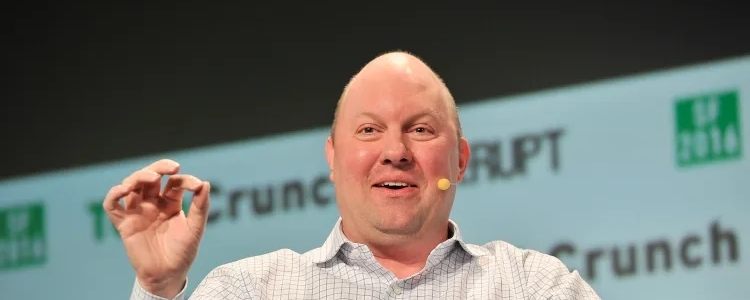
Artikel
Warsh ernennt Leiter für fünf Fed-ArbeitsgruppenDie Federal Reserve ist von der Signalisierung von Veränderungen zur Institutionalisierung derselben übergegangen. Am 9. Juli ernannte der Vorsitzende Kevin Warsh die externen Leiter von fünf Arbeitsgruppen, die Fed-Kommunikationen, die Bilanzpolitik, Wirtschaftsdaten, Produktivität und Jobs sowie Inflationsleitlinien untersuchen werden. Auf dem Papier handelt es sich um eine beratende Übung. In der Praxis ist es eine Erklärung, dass der neue Vorsitzende einige der grundlegenden Annahmen wieder aufgreifen möchte, die die Zentralbank seit der Zeit nach 2008 geprägt haben. Die Märkte achten besonders genau hin, nicht weil eine Arbeitsgruppe die Zinsen festsetzen kann, sondern weil das Verzeichnis die intellektuelle Koalition erkennen lässt, die Warsh zusammenstellt, um den Federal Open Market Committee zu beeinflussen und möglicherweise auch das nächste Jahrzehnt der US-Geldpolitik. (Federal Reserve)
Warsh ernennt Leiter für fünf Fed-Arbeitsgruppen
Die Federal Reserve ist von der Signalisierung von Veränderungen zur Institutionalisierung derselben übergegangen. Am 9. Juli ernannte der Vorsitzende Kevin Warsh die externen Leiter von fünf Arbeitsgruppen, die Fed-Kommunikationen, die Bilanzpolitik, Wirtschaftsdaten, Produktivität und Jobs sowie Inflationsleitlinien untersuchen werden. Auf dem Papier handelt es sich um eine beratende Übung. In der Praxis ist es eine Erklärung, dass der neue Vorsitzende einige der grundlegenden Annahmen wieder aufgreifen möchte, die die Zentralbank seit der Zeit nach 2008 geprägt haben. Die Märkte achten besonders genau hin, nicht weil eine Arbeitsgruppe die Zinsen festsetzen kann, sondern weil das Verzeichnis die intellektuelle Koalition erkennen lässt, die Warsh zusammenstellt, um den Federal Open Market Committee zu beeinflussen und möglicherweise auch das nächste Jahrzehnt der US-Geldpolitik. (Federal Reserve)
115
·
--
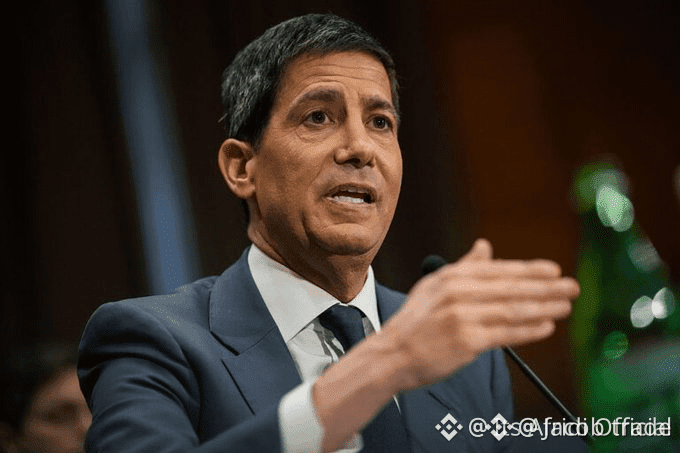
#warshnamesleadersforfivefedtaskforces
CITERNE : Der Präsident der Federal Reserve Kevin Warsh kündigte am Donnerstag die Leitung von fünf Arbeitsgruppen an, die beauftragt sind, den Auftrag und die Prioritäten der US-Zentralbank neu zu bewerten.
$SKL
$LDO
$BTC
#warshnamesleadersforfivefedtaskforces
CITERNE : Der Präsident der Federal Reserve Kevin Warsh kündigte am Donnerstag die Leitung von fünf Arbeitsgruppen an, die beauftragt sind, den Auftrag und die Prioritäten der US-Zentralbank neu zu bewerten.
$SKL
$LDO
$BTC
CITERNE : Der Präsident der Federal Reserve Kevin Warsh kündigte am Donnerstag die Leitung von fünf Arbeitsgruppen an, die beauftragt sind, den Auftrag und die Prioritäten der US-Zentralbank neu zu bewerten.
$SKL
$LDO
$BTC
2
100

Teilweise korrekt
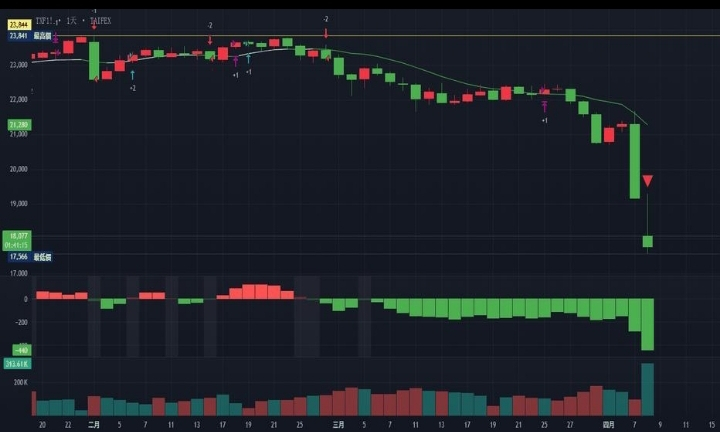
🚨$LAB Token hat den Markt gerade geschockt,
Ein 94% Rückgang ist nicht einfach nur eine weitere rote Kerze—er verändert die Marktstruktur komplett.
Einige Trader sehen solche Crashs als Kaufchance, während andere lieber abwarten, bis der Verkaufsdruck nachlässt.
Für mich endet das Fangen eines fallenden Messers selten gut. Ich warte lieber, bis der Preis sich stabilisiert und Anzeichen einer Erholung zeigt, bevor ich überhaupt über einen Einstieg nachdenke.
Manchmal ist der beste Trade der, den man nicht macht.
Würdest du den Dip kaufen oder erst mal von LAB Abstand nehmen? 👇
#LABTokenDrops94% #LAB #WarshNamesLeadersForFiveFedTaskForces $LAB
{future}(LABUSDT)
$SPCXB
{spot}(SPCXBUSDT)
🚨$LAB Token hat den Markt gerade geschockt,
Ein 94% Rückgang ist nicht einfach nur eine weitere rote Kerze—er verändert die Marktstruktur komplett.
Einige Trader sehen solche Crashs als Kaufchance, während andere lieber abwarten, bis der Verkaufsdruck nachlässt.
Für mich endet das Fangen eines fallenden Messers selten gut. Ich warte lieber, bis der Preis sich stabilisiert und Anzeichen einer Erholung zeigt, bevor ich überhaupt über einen Einstieg nachdenke.
Manchmal ist der beste Trade der, den man nicht macht.
Würdest du den Dip kaufen oder erst mal von LAB Abstand nehmen? 👇
#LABTokenDrops94% #LAB #WarshNamesLeadersForFiveFedTaskForces $LAB
$SPCXB
Ein 94% Rückgang ist nicht einfach nur eine weitere rote Kerze—er verändert die Marktstruktur komplett.
Einige Trader sehen solche Crashs als Kaufchance, während andere lieber abwarten, bis der Verkaufsdruck nachlässt.
Für mich endet das Fangen eines fallenden Messers selten gut. Ich warte lieber, bis der Preis sich stabilisiert und Anzeichen einer Erholung zeigt, bevor ich überhaupt über einen Einstieg nachdenke.
Manchmal ist der beste Trade der, den man nicht macht.
Würdest du den Dip kaufen oder erst mal von LAB Abstand nehmen? 👇
#LABTokenDrops94% #LAB #WarshNamesLeadersForFiveFedTaskForces $LAB
$SPCXB
6
1
567
Anmelden und weiter Inhalte entdecken
Krypto-Nutzer weltweit auf Binance Square kennenlernen
⚡️ Bleib in Sachen Krypto stets am Puls.
💬 Die weltgrößte Kryptobörse vertraut darauf.
👍 Erhalte verlässliche Einblicke von verifizierten Creators.
E-Mail-Adresse/Telefonnummer
Trendthemen
1
#DriftHackVictimsBeginClaims
10,368 Aufrufe
173 Kommentare
2
#SolanaTokenizedStockVolumeTops$4.4BInSeptember
1,803 Aufrufe
26 Kommentare
3
#BitcoinSpotETFsDraw$6.34BInflowsInQ3
9,760 Aufrufe
139 Kommentare
4
#EthereumValidatorExitQueueJumps392%
178,094 Aufrufe
1,356 Kommentare
5
#IMFApprovesElSalvador$138MWithBitcoinWaiver
16,393 Aufrufe
87 Kommentare
6
#SECHaltsCryptoETFReviewsAmidFundingLapse
310,711 Aufrufe
2,160 Kommentare
7
#ZcashETFPostsFirstWeeklyOutflow$93.6M
102,457 Aufrufe
267 Kommentare
8
#GreekPoliceBustCryptoScamRingArrest17
428,056 Aufrufe
2,749 Kommentare
9
#BitcoinRejectedAt$87K
236,173 Aufrufe
335 Kommentare
10
#FedOctoberRateHikeOddsFallTo17%
444,198 Aufrufe
2,867 Kommentare