
#iran
iran
10.6M views
18,976 Discussing
Hot
Latest

Article
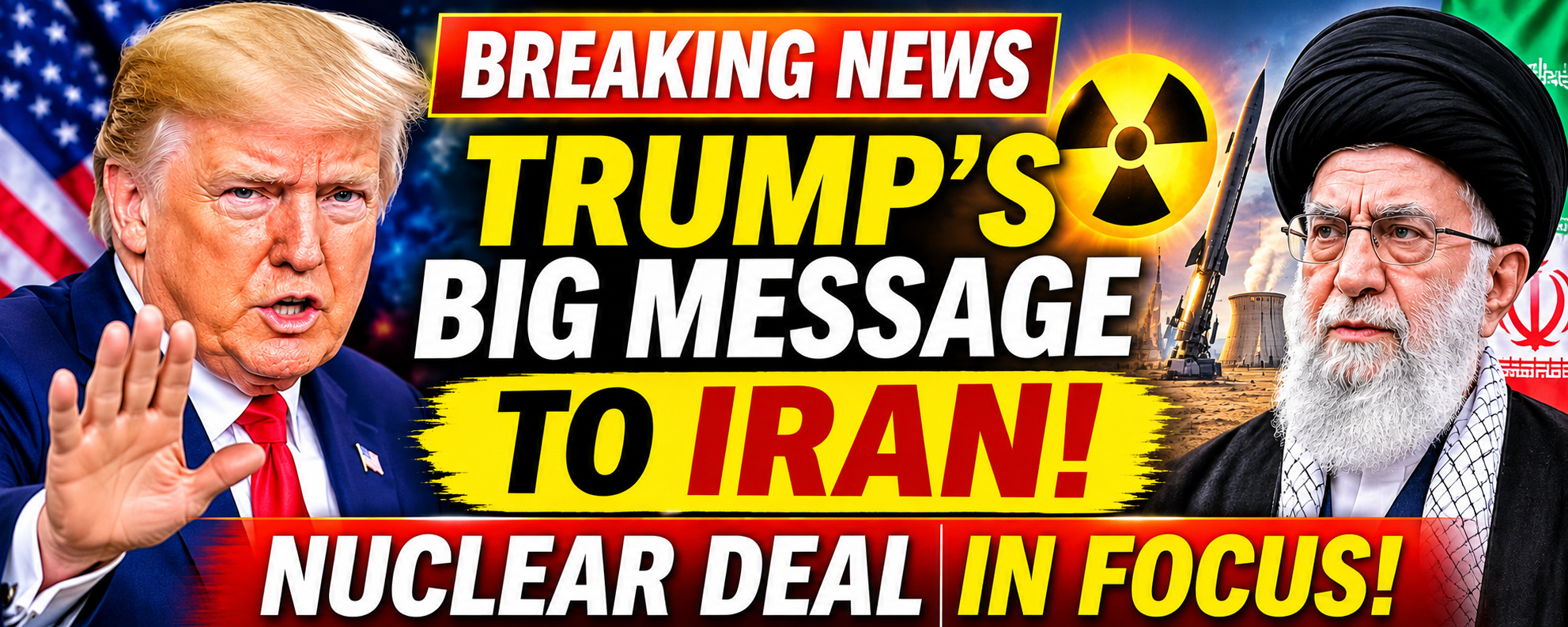
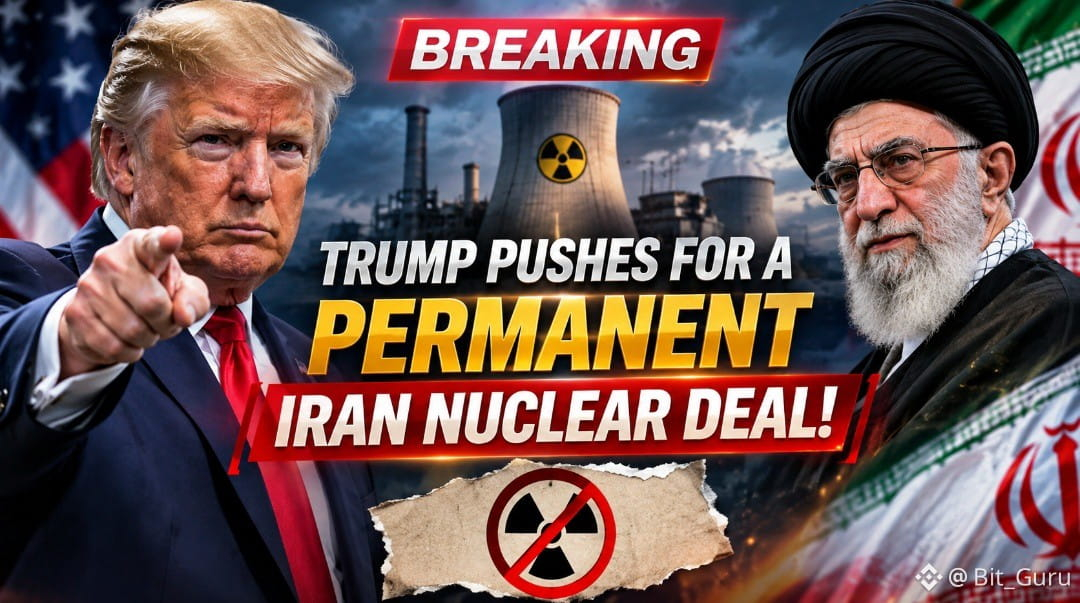
BREAKING: Trump Pushes for Permanent Nuclear Deal With Iran, Says Regime Change Was Not His GoalU.S. President Donald Trump has sent a major message regarding Iran, saying he wants a permanent agreement that would prevent Tehran from ever obtaining nuclear weapons.
In a phone interview with Fox News on November 21, $TRUMP said his administration wants a long-term agreement that cannot easily be reversed by a future U.S. president. He argued that any deal must ensure Iran never develops a nuclear weapon.
$TRUMP also expressed frustration over previous negotiations with Iran, accusing Tehran of failing to honor agreements. He suggested that a new agreement must provide stronger and more lasting guarantees.
Trump Addresses Regime Change
$Trump also addressed questions about whether changing Iran's leadership had been a central objective of his administration.
He said he had never cared too much about regime change itself. However, he referred to the successive changes in Iran's leadership during the ongoing conflict and acknowledged that the situation had evolved significantly.
His comments have drawn attention because they come amid continuing tensions between Washington and Tehran.
Iran's Position on Negotiations
Iran has also indicated that diplomatic communication through regional mediators is continuing.
Iranian Foreign Minister Abbas Araghchi has emphasized that Tehran wants guarantees against another war and an agreement that protects its national interests.
However, significant differences remain between the two sides, particularly over nuclear issues, sanctions, security guarantees, and the ongoing conflict.
What Happens Next?
$Trump's demand for a permanent nuclear agreement could become an important part of future diplomatic discussions.
For now, no new comprehensive nuclear agreement has been officially announced. Both sides continue to face major challenges in reaching terms acceptable to their respective governments.
The Bottom Line: $TRUMP says he wants a lasting agreement that prevents Iran from obtaining nuclear weapons, while Iran continues to seek guarantees and acceptable conditions for negotiations. Whether diplomacy can produce a permanent solution remains uncertain.
Trump #Iran #BreakingNews #NuclearDeal #USIranRelations #DonaldTrump #IranNews
BREAKING: Trump Pushes for Permanent Nuclear Deal With Iran, Says Regime Change Was Not His Goal
U.S. President Donald Trump has sent a major message regarding Iran, saying he wants a permanent agreement that would prevent Tehran from ever obtaining nuclear weapons.
In a phone interview with Fox News on November 21, $TRUMP said his administration wants a long-term agreement that cannot easily be reversed by a future U.S. president. He argued that any deal must ensure Iran never develops a nuclear weapon.
$TRUMP also expressed frustration over previous negotiations with Iran, accusing Tehran of failing to honor agreements. He suggested that a new agreement must provide stronger and more lasting guarantees.
Trump Addresses Regime Change
$Trump also addressed questions about whether changing Iran's leadership had been a central objective of his administration.
He said he had never cared too much about regime change itself. However, he referred to the successive changes in Iran's leadership during the ongoing conflict and acknowledged that the situation had evolved significantly.
His comments have drawn attention because they come amid continuing tensions between Washington and Tehran.
Iran's Position on Negotiations
Iran has also indicated that diplomatic communication through regional mediators is continuing.
Iranian Foreign Minister Abbas Araghchi has emphasized that Tehran wants guarantees against another war and an agreement that protects its national interests.
However, significant differences remain between the two sides, particularly over nuclear issues, sanctions, security guarantees, and the ongoing conflict.
What Happens Next?
$Trump's demand for a permanent nuclear agreement could become an important part of future diplomatic discussions.
For now, no new comprehensive nuclear agreement has been officially announced. Both sides continue to face major challenges in reaching terms acceptable to their respective governments.
The Bottom Line: $TRUMP says he wants a lasting agreement that prevents Iran from obtaining nuclear weapons, while Iran continues to seek guarantees and acceptable conditions for negotiations. Whether diplomacy can produce a permanent solution remains uncertain.
Trump #Iran #BreakingNews #NuclearDeal #USIranRelations #DonaldTrump #IranNews
126
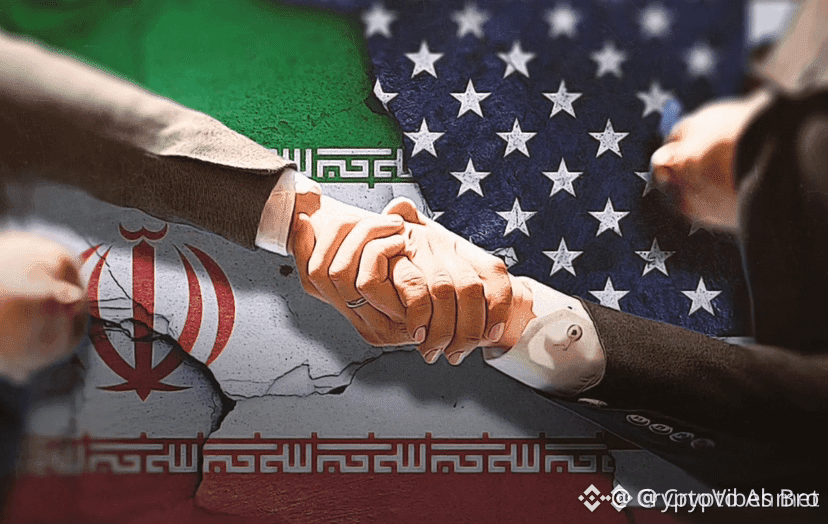
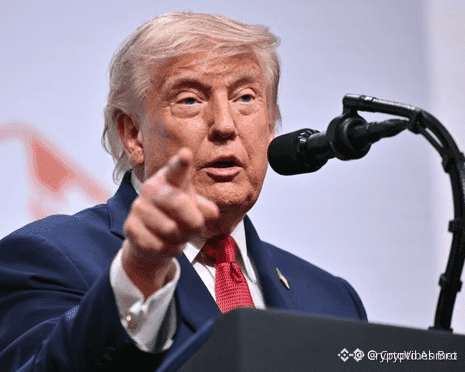
🚨 TRUMP SENDS STRONG MESSAGE TO IRAN OVER POTENTIAL DEAL!
U.S. President Donald Trump has delivered a firm message regarding ongoing negotiations with Iran, emphasizing that Washington wants an agreement that meets its expectations.
“We want a real deal, not a fake deal,” Trump stated.
His remarks add further uncertainty to the geopolitical situation and could keep global markets on alert.
Investors will be watching closely for any developments and their potential impact on financial markets.$BNB
{future}(BNBUSDT)
What could this mean for global markets and crypto? 👀$BTC
#Trump #Iran #Geopolitics #CryptoMarket #GlobalMarkets #XRP #BNB
🚨 TRUMP SENDS STRONG MESSAGE TO IRAN OVER POTENTIAL DEAL!
U.S. President Donald Trump has delivered a firm message regarding ongoing negotiations with Iran, emphasizing that Washington wants an agreement that meets its expectations.
“We want a real deal, not a fake deal,” Trump stated.
His remarks add further uncertainty to the geopolitical situation and could keep global markets on alert.
Investors will be watching closely for any developments and their potential impact on financial markets.$BNB
What could this mean for global markets and crypto? 👀$BTC
#Trump #Iran #Geopolitics #CryptoMarket #GlobalMarkets #XRP #BNB
107


·
--
🚨 BREAKING: TRUMP WANTS A PERMANENT NUCLEAR DEAL WITH IRAN! 🇺🇸🇮🇷
President Donald Trump says his goal is to prevent Iran from ever obtaining nuclear weapons through a permanent agreement. He also claims regime change was never his objective.
A successful deal could ease geopolitical tensions, stabilize oil prices and boost investor confidence. However, failed negotiations could trigger further market uncertainty.
Will diplomacy succeed, or will tensions rise again?
$DOGE $SOL
{spot}(SOLUSDT)
$BNB
{spot}(BNBUSDT)
#Trump #Iran #NuclearDeal #CryptoNews
🚨 BREAKING: TRUMP WANTS A PERMANENT NUCLEAR DEAL WITH IRAN! 🇺🇸🇮🇷
President Donald Trump says his goal is to prevent Iran from ever obtaining nuclear weapons through a permanent agreement. He also claims regime change was never his objective.
A successful deal could ease geopolitical tensions, stabilize oil prices and boost investor confidence. However, failed negotiations could trigger further market uncertainty.
Will diplomacy succeed, or will tensions rise again?
$DOGE $SOL
$BNB
#Trump #Iran #NuclearDeal #CryptoNews
3
967
·
--
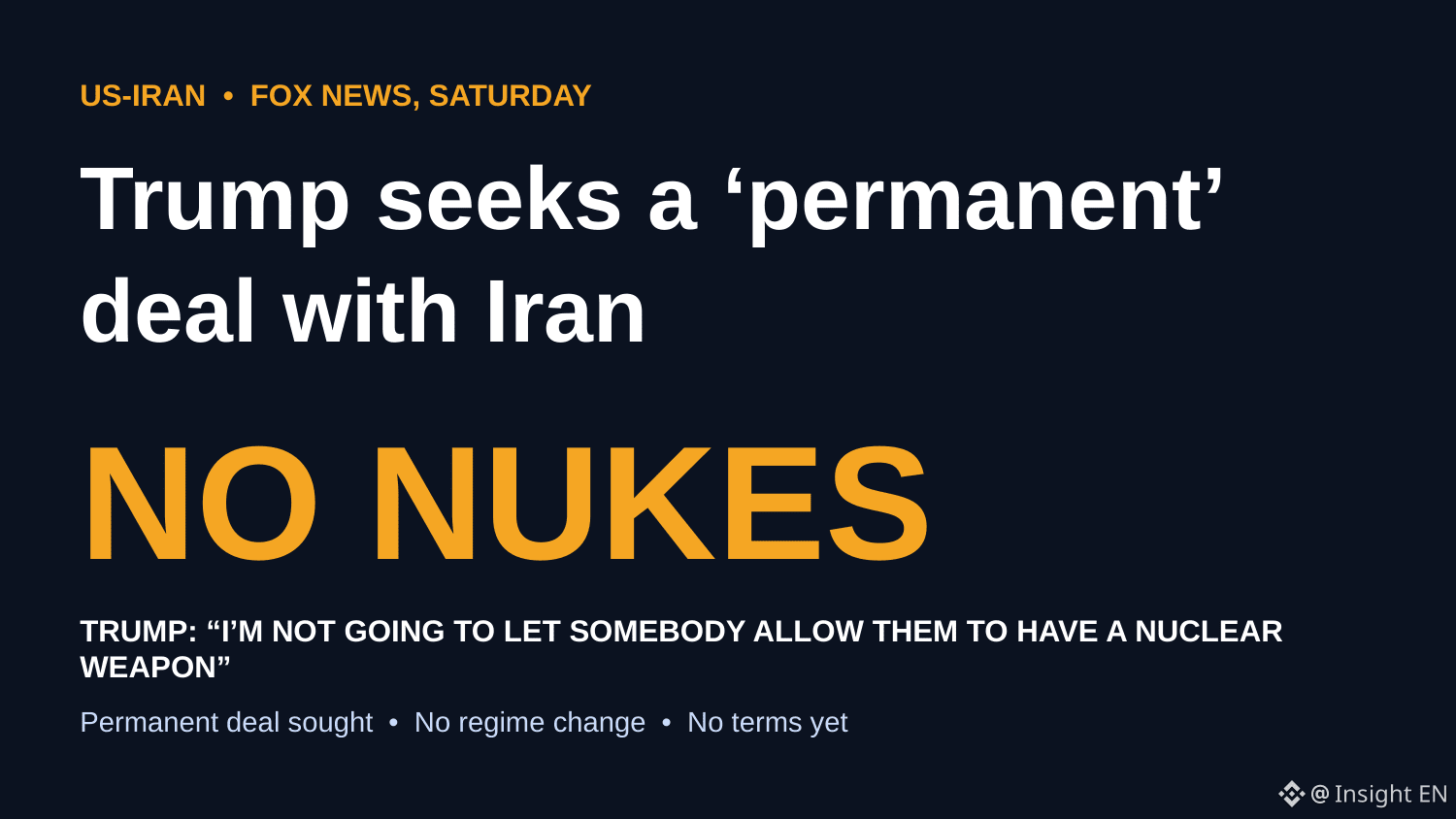
Trump seeks a 'permanent' deal with Iran — no nukes, no regime change
President Trump said on Saturday he will seek a 'permanent' deal with Iran — one built to outlast any future president.
'If we have an incompetent president in four years or 15 years or 20 years, I'm going to make a deal that is going to be permanent,' Trump told Fox News in a phone interview. 'I'm not going to let somebody allow them to have a nuclear weapon.'
He added that he has 'never cared too much about the regime' in Tehran and is not considering regime change — a clear de-escalation signal after nine months of war.
The catch: Trump says Iran wants a deal but not one he can accept. He wants a 'real deal, not a fake deal,' and no terms or timeline have been put on the table.
The same day, Qatar and Germany issued a joint statement condemning attacks on commercial shipping and opposing any obstruction of transit through the Strait of Hormuz.
Why it matters: a durable deal would unwind the war premium that has kept oil volatile — Brent has already fallen roughly 20% in November as supply outpaced demand. But with no terms agreed, markets are unlikely to price in peace yet.
Saturday, November 21, 2026.
#iran #geopolitics
Trong_Hatachi:
A permanent deal sounds ambitious, but without terms on the table, the uncertainty around oil isn't going away yet. Follow me back for more market discussions!
1
1
412
·
--
Verified
🚨 TRUMP WARNS IRAN: “WE WANT A REAL DEAL, NOT A FAKE DEAL!” 🇺🇸⚠️
President Trump says the U.S. will not accept an agreement that fails to meet its expectations, adding fresh uncertainty to U.S.–Iran negotiations.
Any progress or breakdown in talks could impact oil prices, global stocks, and crypto market sentiment.
Will tensions ease or escalate further?
$NVDA
{future}(NVDAUSDT)
$XRP
{spot}(XRPUSDT)
$TRUMP
{spot}(TRUMPUSDT)
$BTC
#Trump #Iran #BreakingNews #CryptoMarket
🚨 TRUMP WARNS IRAN: “WE WANT A REAL DEAL, NOT A FAKE DEAL!” 🇺🇸⚠️
President Trump says the U.S. will not accept an agreement that fails to meet its expectations, adding fresh uncertainty to U.S.–Iran negotiations.
Any progress or breakdown in talks could impact oil prices, global stocks, and crypto market sentiment.
Will tensions ease or escalate further?
$NVDA
$XRP
$TRUMP
$BTC
#Trump #Iran #BreakingNews #CryptoMarket
4
935

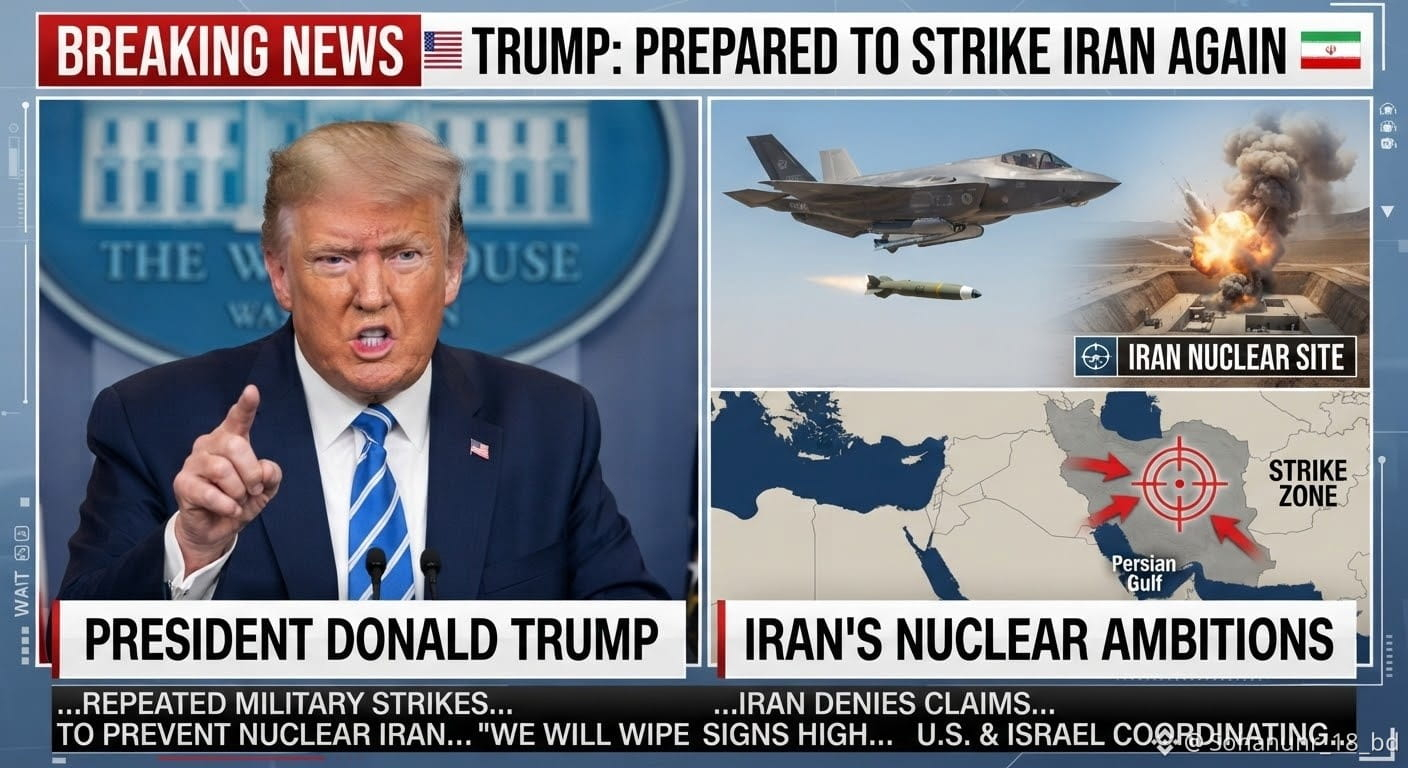
JUST IN: 🇺🇸🇮🇷 President Trump says he is prepared to repeat military strikes against Iran to prevent it from developing nuclear weapons.
#TrumpCryptoSupport #iran
{future}(USDCUSDT)
JUST IN: 🇺🇸🇮🇷 President Trump says he is prepared to repeat military strikes against Iran to prevent it from developing nuclear weapons.
#TrumpCryptoSupport #iran
#TrumpCryptoSupport #iran
123
·
--
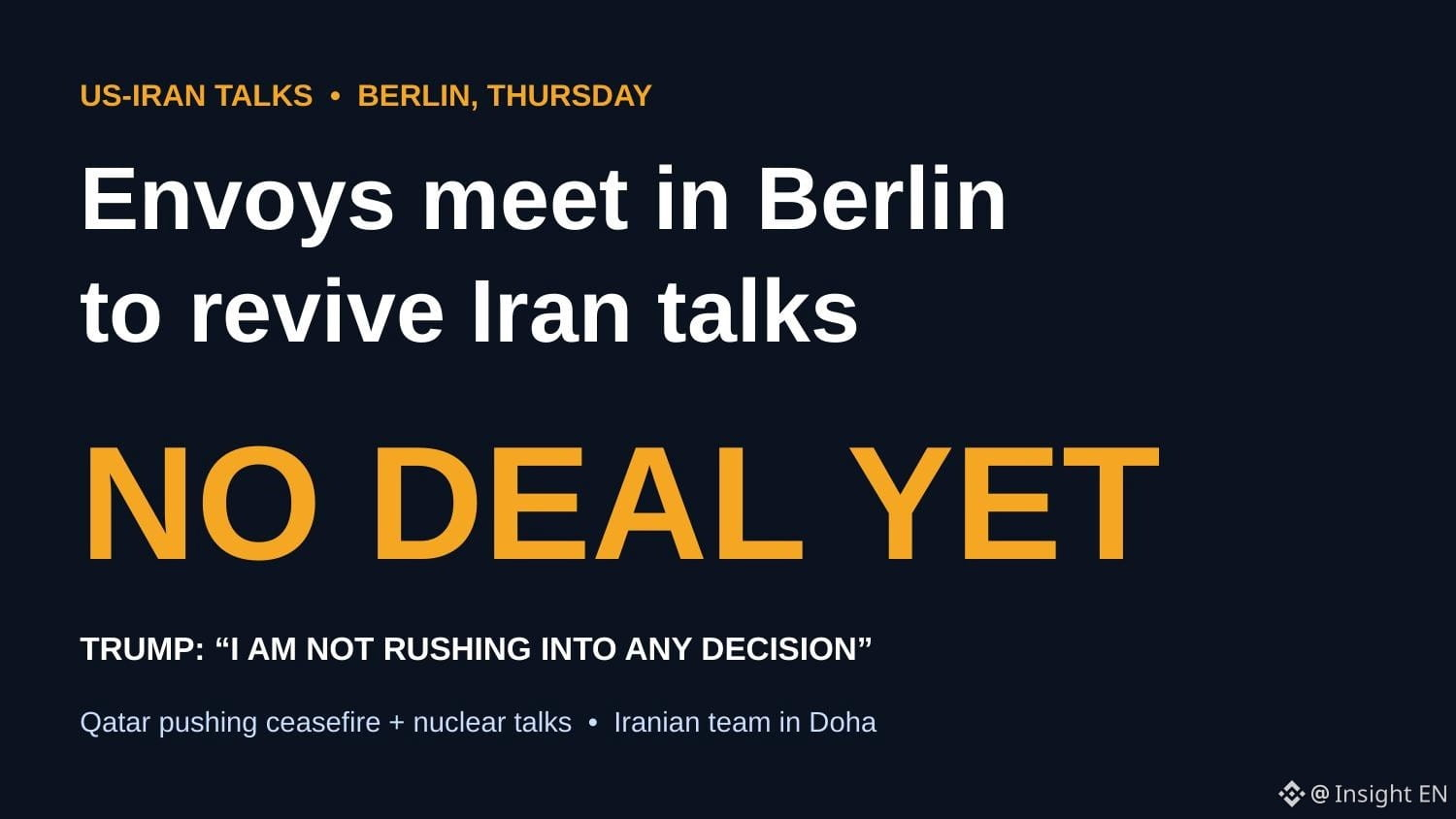
US envoys meet Qatar in Berlin to revive Iran talks
President Donald Trump's envoys Steve Witkoff and Jared Kushner met Qatar's Prime Minister Sheikh Mohammed bin Abdulrahman Al Thani in Berlin on Thursday, November 19, to discuss reviving negotiations between Washington and Tehran, Axios reported, citing two sources.
Qatar has been working for weeks to restore the ceasefire, restart nuclear talks and prevent another outbreak of war. Its prime minister met Iranian Foreign Minister Abbas Araghchi in Türkiye last week, and an Iranian technical delegation has reportedly travelled to Doha this week.
Why it matters: despite the flurry of contacts, a diplomat involved in the talks said negotiations have made no significant progress. President Trump said on Friday that Iran wants a deal, but the US wants "a real deal" — and that he is in no rush to decide on next steps.
Friday, November 20, 2026.
#iran #geopolitics
59

Article
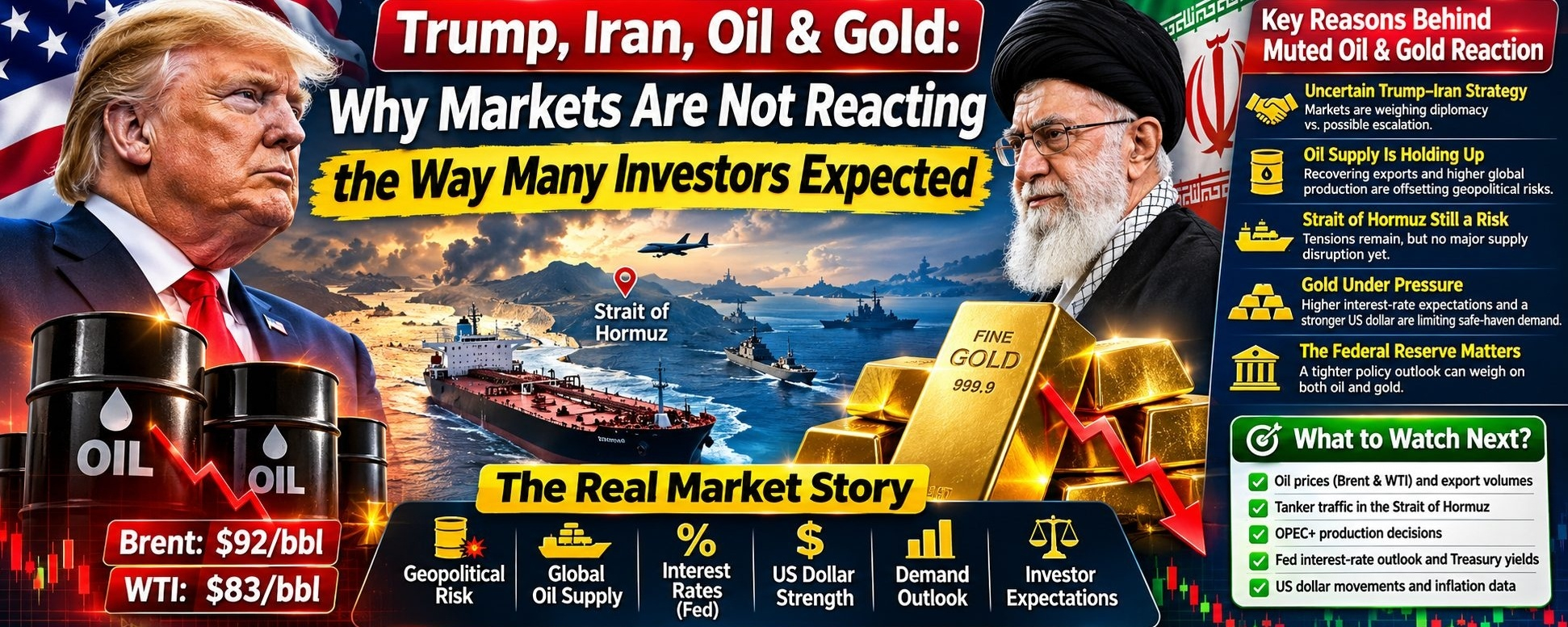
Trump, Iran, Oil & Gold: Why Markets Are Not Reacting the Way Many Investors ExpectedNovember 20, 2026
For months, investors have been watching the relationship between Donald Trump, Iran, global oil supplies, and gold prices with increasing attention. Normally, when geopolitical tensions rise in the Middle East, financial markets respond quickly. Oil prices tend to climb on fears of supply disruptions, while gold often attracts investors looking for protection against uncertainty.
But the market is telling a different story this time.
Despite ongoing tensions between the United States and Iran, concerns surrounding the Strait of Hormuz, and continued uncertainty across the Middle East, oil and gold have not delivered the kind of bullish reaction many investors anticipated.
So, what is really happening?
The answer goes beyond headlines. It comes down to how financial markets evaluate risk, supply, demand, interest rates, and expectations about what might happen next.
1. Trump's Iran Strategy Is Keeping Markets Guessing
Donald Trump's latest comments about Iran have added another layer of uncertainty to the market.
Rather than immediately committing to another major military decision, Trump has indicated that he is not rushing into a decision and has left the possibility of further developments open.
For financial markets, this matters.
Investors do not simply react to political statements. They try to determine whether those statements represent an immediate threat to global trade, energy infrastructure, or regional stability.
At the moment, markets appear to be balancing two competing possibilities:
- A diplomatic breakthrough that could reduce geopolitical pressure.
- A renewed escalation that could threaten energy transportation and regional security.
This uncertainty is preventing investors from confidently positioning for either outcome.
2. Why Oil Prices Are Not Exploding Higher
One of the biggest surprises has been the behavior of crude oil.
Historically, any serious threat involving Iran and the Strait of Hormuz has raised concerns about global energy supplies. The waterway is one of the world's most important energy transportation routes.
However, geopolitical risk is only one part of the oil pricing equation.
The other major factor is physical supply.
Recent market developments suggest that recovering Middle Eastern exports, improving shipments, and expectations of increasing global production are helping offset geopolitical concerns.
On November 20, Brent crude was around $92 per barrel in early trading reports, while WTI was around $83 per barrel. Despite some daily gains, both benchmarks were heading toward another weekly decline.
This is an important signal.
It suggests that traders are currently paying considerable attention to the possibility of an oil supply surplus rather than focusing exclusively on the possibility of another geopolitical shock.
In simple terms, the market is asking a bigger question:
Even if tensions continue, will there actually be enough disruption to create a lasting shortage of oil?
Until that question changes, geopolitical headlines alone may not be sufficient to sustain a major rally.
3. The Strait of Hormuz Remains a Critical Risk
The Strait of Hormuz is still one of the most important variables in this entire situation.
A significant portion of internationally traded oil passes through this narrow maritime corridor. Any prolonged disruption could affect shipping costs, insurance premiums, energy availability, and global inflation.
Reports of attacks on vessels and continuing regional security concerns are keeping this risk firmly on investors' radar.
However, there is an important distinction between a geopolitical threat and an actual interruption of global oil supplies.
Markets may initially react to the possibility of disruption, but sustained price increases generally require evidence that available supply is becoming more difficult to obtain.
This is why oil traders are watching tanker movements, export volumes, inventories, and shipping activity so closely.
The real story is not simply whether tensions increase. It is whether those tensions materially change the global supply picture.
4. Why Gold Is Also Struggling Despite Geopolitical Uncertainty
Gold is traditionally viewed as a safe-haven asset.
When investors become concerned about wars, political instability, financial uncertainty, or currency weakness, demand for gold can increase.
But gold does not operate independently of the broader financial system.
Interest rates, US dollar strength, Treasury yields, liquidity conditions, and investor positioning can all influence its direction.
This is particularly relevant in the current environment.
Expectations of tighter Federal Reserve policy and concerns about higher interest rates have been creating pressure on precious metals.
Why?
Because gold does not generate interest income.
When investors believe interest rates may remain elevated or rise further, interest-bearing assets can become relatively more attractive.
A stronger US dollar can also make gold more expensive for buyers using other currencies, potentially reducing international demand.
As a result, even when geopolitical uncertainty remains elevated, gold can experience selling pressure.
This explains why the traditional relationship between geopolitical risk and safe-haven demand is not producing the expected outcome.
5. The Federal Reserve May Be More Important Than Geopolitical Headlines
Another important factor investors should not overlook is monetary policy.
The Federal Reserve's interest-rate outlook can influence almost every major financial market, including gold, oil, currencies, bonds, and equities.
If markets begin pricing in higher interest rates, the consequences can be significant.
A stronger dollar can pressure commodities. Higher bond yields can reduce the attractiveness of non-yielding assets. Tighter financial conditions can also reduce expectations for future economic growth and energy consumption.
This creates a complicated situation.
On one side, geopolitical uncertainty can support oil and gold.
On the other side, tighter monetary conditions, dollar strength, and concerns about economic demand can push commodity prices lower.
At present, these opposing forces are creating a market environment in which traditional expectations are being challenged.
6. What Investors Should Watch Next
Rather than reacting to every political headline, investors should focus on the indicators that can genuinely change market direction.
For crude oil:
- Brent and WTI price movements.
- Actual oil export volumes from the Middle East.
- Tanker traffic through the Strait of Hormuz.
- Global crude inventories.
- OPEC+ production decisions.
- Evidence of a sustained supply disruption.
For gold:
- US Federal Reserve interest-rate expectations.
- US Treasury yields.
- US dollar movements.
- Inflation and employment data.
- Central-bank gold purchases.
- Institutional investor positioning.
These indicators can provide a clearer understanding of whether the current market weakness is temporary or part of a broader shift in sentiment.
7. The Bigger Picture: Markets Trade Expectations, Not Just Headlines
Perhaps the most important lesson from the current situation is that financial markets do not move according to headlines alone.
Investors constantly compare what is happening with what they had already expected to happen.
If a geopolitical event is already priced into the market, additional headlines may produce only a limited reaction.
Similarly, if traders believe that global oil supplies will remain sufficient, even serious regional tensions may not create the buying pressure necessary for a sustained oil rally.
Gold faces a similar challenge. Its safe-haven appeal can be outweighed, at least temporarily, by higher interest-rate expectations and a stronger dollar.
This does not mean geopolitical risks have disappeared.
It means that markets are currently weighing several powerful forces at the same time.
Final Thoughts
November 20, 2026, offers an important reminder that understanding financial markets requires more than following political developments.
Trump's approach toward Iran, the security situation in the Middle East, the future of oil transportation through the Strait of Hormuz, Federal Reserve policy, and global supply expectations are all influencing investor decisions.
Oil is struggling to sustain a rally because supply concerns are competing with geopolitical risks.
Gold is facing pressure because monetary policy expectations and currency movements are challenging traditional safe-haven demand.
The next major market move may depend less on another headline and more on whether the underlying economic and geopolitical conditions actually change.
The key takeaway: Geopolitical tension does not automatically mean higher oil and gold prices. Markets ultimately respond to the balance between real-world events, economic fundamentals, and investor expectations.
The smartest approach is to remain informed, follow the data, manage risk, and avoid making investment decisions based on headlines alone.
Disclaimer: This post is for educational and informational purposes only. It does not constitute financial or investment advice. Commodity markets are volatile, and investors should conduct independent research before making trading decisions.
#Trump #Iran #OilMarkets #Gold #CrudeOil #FinancialMarkets #Geopolitics #FederalReserve #MarketAnalysis #Investing
Trump, Iran, Oil & Gold: Why Markets Are Not Reacting the Way Many Investors Expected
November 20, 2026
For months, investors have been watching the relationship between Donald Trump, Iran, global oil supplies, and gold prices with increasing attention. Normally, when geopolitical tensions rise in the Middle East, financial markets respond quickly. Oil prices tend to climb on fears of supply disruptions, while gold often attracts investors looking for protection against uncertainty.
But the market is telling a different story this time.
Despite ongoing tensions between the United States and Iran, concerns surrounding the Strait of Hormuz, and continued uncertainty across the Middle East, oil and gold have not delivered the kind of bullish reaction many investors anticipated.
So, what is really happening?
The answer goes beyond headlines. It comes down to how financial markets evaluate risk, supply, demand, interest rates, and expectations about what might happen next.
1. Trump's Iran Strategy Is Keeping Markets Guessing
Donald Trump's latest comments about Iran have added another layer of uncertainty to the market.
Rather than immediately committing to another major military decision, Trump has indicated that he is not rushing into a decision and has left the possibility of further developments open.
For financial markets, this matters.
Investors do not simply react to political statements. They try to determine whether those statements represent an immediate threat to global trade, energy infrastructure, or regional stability.
At the moment, markets appear to be balancing two competing possibilities:
- A diplomatic breakthrough that could reduce geopolitical pressure.
- A renewed escalation that could threaten energy transportation and regional security.
This uncertainty is preventing investors from confidently positioning for either outcome.
2. Why Oil Prices Are Not Exploding Higher
One of the biggest surprises has been the behavior of crude oil.
Historically, any serious threat involving Iran and the Strait of Hormuz has raised concerns about global energy supplies. The waterway is one of the world's most important energy transportation routes.
However, geopolitical risk is only one part of the oil pricing equation.
The other major factor is physical supply.
Recent market developments suggest that recovering Middle Eastern exports, improving shipments, and expectations of increasing global production are helping offset geopolitical concerns.
On November 20, Brent crude was around $92 per barrel in early trading reports, while WTI was around $83 per barrel. Despite some daily gains, both benchmarks were heading toward another weekly decline.
This is an important signal.
It suggests that traders are currently paying considerable attention to the possibility of an oil supply surplus rather than focusing exclusively on the possibility of another geopolitical shock.
In simple terms, the market is asking a bigger question:
Even if tensions continue, will there actually be enough disruption to create a lasting shortage of oil?
Until that question changes, geopolitical headlines alone may not be sufficient to sustain a major rally.
3. The Strait of Hormuz Remains a Critical Risk
The Strait of Hormuz is still one of the most important variables in this entire situation.
A significant portion of internationally traded oil passes through this narrow maritime corridor. Any prolonged disruption could affect shipping costs, insurance premiums, energy availability, and global inflation.
Reports of attacks on vessels and continuing regional security concerns are keeping this risk firmly on investors' radar.
However, there is an important distinction between a geopolitical threat and an actual interruption of global oil supplies.
Markets may initially react to the possibility of disruption, but sustained price increases generally require evidence that available supply is becoming more difficult to obtain.
This is why oil traders are watching tanker movements, export volumes, inventories, and shipping activity so closely.
The real story is not simply whether tensions increase. It is whether those tensions materially change the global supply picture.
4. Why Gold Is Also Struggling Despite Geopolitical Uncertainty
Gold is traditionally viewed as a safe-haven asset.
When investors become concerned about wars, political instability, financial uncertainty, or currency weakness, demand for gold can increase.
But gold does not operate independently of the broader financial system.
Interest rates, US dollar strength, Treasury yields, liquidity conditions, and investor positioning can all influence its direction.
This is particularly relevant in the current environment.
Expectations of tighter Federal Reserve policy and concerns about higher interest rates have been creating pressure on precious metals.
Why?
Because gold does not generate interest income.
When investors believe interest rates may remain elevated or rise further, interest-bearing assets can become relatively more attractive.
A stronger US dollar can also make gold more expensive for buyers using other currencies, potentially reducing international demand.
As a result, even when geopolitical uncertainty remains elevated, gold can experience selling pressure.
This explains why the traditional relationship between geopolitical risk and safe-haven demand is not producing the expected outcome.
5. The Federal Reserve May Be More Important Than Geopolitical Headlines
Another important factor investors should not overlook is monetary policy.
The Federal Reserve's interest-rate outlook can influence almost every major financial market, including gold, oil, currencies, bonds, and equities.
If markets begin pricing in higher interest rates, the consequences can be significant.
A stronger dollar can pressure commodities. Higher bond yields can reduce the attractiveness of non-yielding assets. Tighter financial conditions can also reduce expectations for future economic growth and energy consumption.
This creates a complicated situation.
On one side, geopolitical uncertainty can support oil and gold.
On the other side, tighter monetary conditions, dollar strength, and concerns about economic demand can push commodity prices lower.
At present, these opposing forces are creating a market environment in which traditional expectations are being challenged.
6. What Investors Should Watch Next
Rather than reacting to every political headline, investors should focus on the indicators that can genuinely change market direction.
For crude oil:
- Brent and WTI price movements.
- Actual oil export volumes from the Middle East.
- Tanker traffic through the Strait of Hormuz.
- Global crude inventories.
- OPEC+ production decisions.
- Evidence of a sustained supply disruption.
For gold:
- US Federal Reserve interest-rate expectations.
- US Treasury yields.
- US dollar movements.
- Inflation and employment data.
- Central-bank gold purchases.
- Institutional investor positioning.
These indicators can provide a clearer understanding of whether the current market weakness is temporary or part of a broader shift in sentiment.
7. The Bigger Picture: Markets Trade Expectations, Not Just Headlines
Perhaps the most important lesson from the current situation is that financial markets do not move according to headlines alone.
Investors constantly compare what is happening with what they had already expected to happen.
If a geopolitical event is already priced into the market, additional headlines may produce only a limited reaction.
Similarly, if traders believe that global oil supplies will remain sufficient, even serious regional tensions may not create the buying pressure necessary for a sustained oil rally.
Gold faces a similar challenge. Its safe-haven appeal can be outweighed, at least temporarily, by higher interest-rate expectations and a stronger dollar.
This does not mean geopolitical risks have disappeared.
It means that markets are currently weighing several powerful forces at the same time.
Final Thoughts
November 20, 2026, offers an important reminder that understanding financial markets requires more than following political developments.
Trump's approach toward Iran, the security situation in the Middle East, the future of oil transportation through the Strait of Hormuz, Federal Reserve policy, and global supply expectations are all influencing investor decisions.
Oil is struggling to sustain a rally because supply concerns are competing with geopolitical risks.
Gold is facing pressure because monetary policy expectations and currency movements are challenging traditional safe-haven demand.
The next major market move may depend less on another headline and more on whether the underlying economic and geopolitical conditions actually change.
The key takeaway: Geopolitical tension does not automatically mean higher oil and gold prices. Markets ultimately respond to the balance between real-world events, economic fundamentals, and investor expectations.
The smartest approach is to remain informed, follow the data, manage risk, and avoid making investment decisions based on headlines alone.
Disclaimer: This post is for educational and informational purposes only. It does not constitute financial or investment advice. Commodity markets are volatile, and investors should conduct independent research before making trading decisions.
#Trump #Iran #OilMarkets #Gold #CrudeOil #FinancialMarkets #Geopolitics #FederalReserve #MarketAnalysis #Investing
1
380
Article
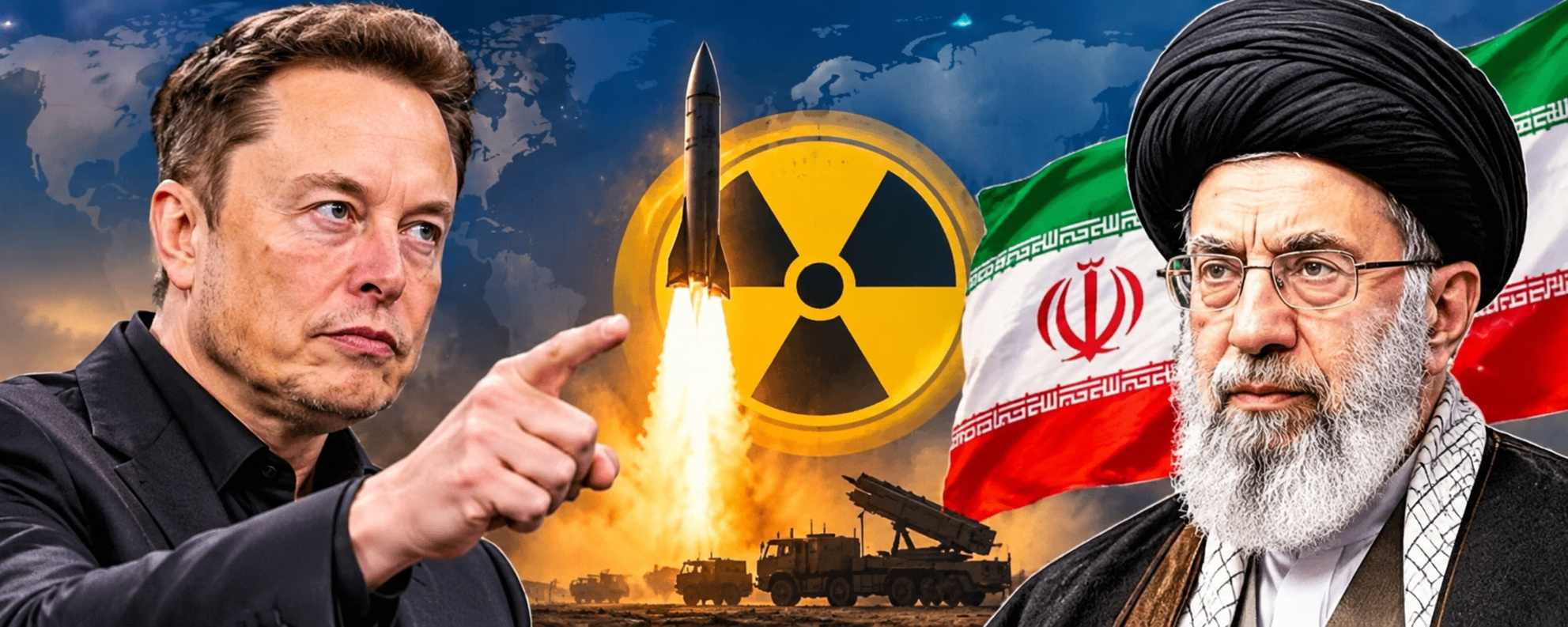
🚨 ELON MUSK WARNS IRAN: NUCLEAR ATTACK COULD HAVE CATASTROPHIC CONSEQUENCES! 🇮🇷⚠️Global tensions are once again drawing attention as reports circulate about Elon Musk's warning regarding Iran and nuclear weapons.
The message highlights the potentially devastating consequences if Iran were ever to use a nuclear weapon against any country, including the United States. Such an event could trigger an extremely serious international crisis, putting millions of lives and global security at risk.
Nuclear weapons remain one of the biggest concerns for world leaders, as even a single attack could have far-reaching consequences for humanity, international relations, and the global economy.
For now, the world continues to watch developments closely. 🌍
Could rising nuclear tensions change the future of global security?
#ElonMusk #Iran #USA #NuclearThreat #BreakingNews #Geopolitics #GlobalSecurity #CryptoNews $SPCXB $NVDAB $AAPLB
🚨 ELON MUSK WARNS IRAN: NUCLEAR ATTACK COULD HAVE CATASTROPHIC CONSEQUENCES! 🇮🇷⚠️
Global tensions are once again drawing attention as reports circulate about Elon Musk's warning regarding Iran and nuclear weapons.
The message highlights the potentially devastating consequences if Iran were ever to use a nuclear weapon against any country, including the United States. Such an event could trigger an extremely serious international crisis, putting millions of lives and global security at risk.
Nuclear weapons remain one of the biggest concerns for world leaders, as even a single attack could have far-reaching consequences for humanity, international relations, and the global economy.
For now, the world continues to watch developments closely. 🌍
Could rising nuclear tensions change the future of global security?
#ElonMusk #Iran #USA #NuclearThreat #BreakingNews #Geopolitics #GlobalSecurity #CryptoNews $SPCXB $NVDAB $AAPLB
LegacyVault:
Что должна делать небольшая, сравнительно, страна, если на её суверинитет посягает другая страна, более могущественная, или несколько стран?
1
3
5.4k

·
--
Bullish
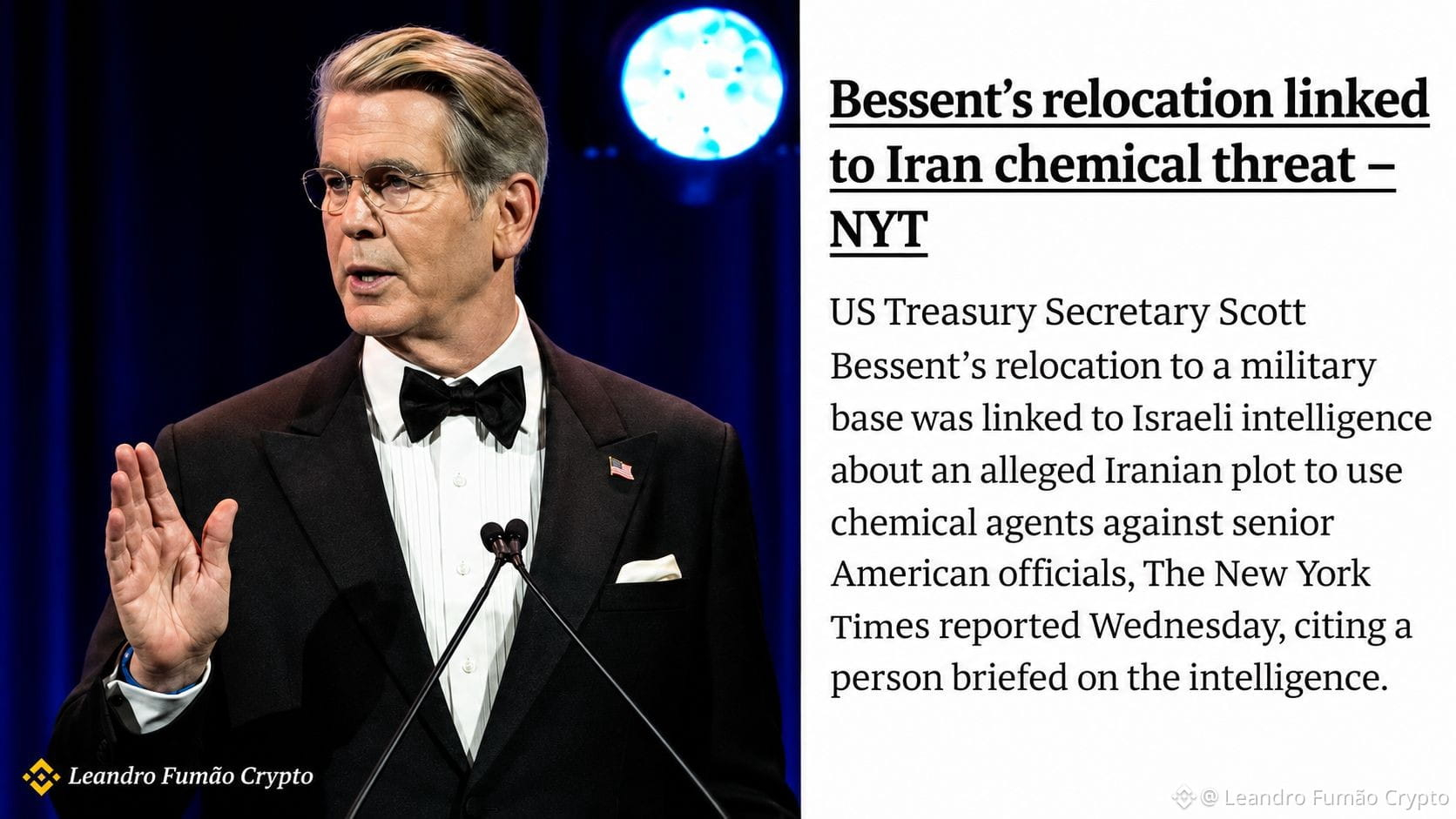
˗ˋˏ🔥ˎˊ˗ BESSENT RELOCATED OVER IRANIAN CHEMICAL THREAT ⥱ ACCORDING TO THE NYT❗
⁀➴ The U.S. Treasury Secretary was moved to a military base after Israeli intelligence warned of an alleged Iranian plan involving chemical agents targeting senior American officials.
The New York Times revealed that Treasury Secretary Scott Bessent’s move to a military base is linked to an Iranian threat. According to the report, Israeli intelligence warned of an alleged Iranian plan to use chemical agents against senior American officials. Bessent is one of the chief architects of the U.S. economic pressure campaign against Iran (including the blockade and intensified sanctions).
The decision to relocate him comes amid warnings that Iranian plans targeting American officials and citizens had reached an advanced stage. Other members of the Trump administration have also reportedly stepped up security and moved to protected locations amid growing threats.
The report raises tensions between Washington and Tehran. Bessent is leading the economic offensive against Iran and has therefore become a priority target. The mention of a possible threat involving chemical agents adds gravity to the situation and reinforces the heightened sense of risk for American officials involved in the pressure campaign against the Iranian regime.
..................................⌖ $TRUMP ⌖................................................
Does Bessent’s relocation to a military base and the warning about a possible Iranian chemical threat indicate that the conflict is entering an even more dangerous phase?
{spot}(TRUMPUSDT)
#Bessent #iran #eua
˗ˋˏ🔥ˎˊ˗ BESSENT RELOCATED OVER IRANIAN CHEMICAL THREAT ⥱ ACCORDING TO THE NYT❗
⁀➴ The U.S. Treasury Secretary was moved to a military base after Israeli intelligence warned of an alleged Iranian plan involving chemical agents targeting senior American officials.
The New York Times revealed that Treasury Secretary Scott Bessent’s move to a military base is linked to an Iranian threat. According to the report, Israeli intelligence warned of an alleged Iranian plan to use chemical agents against senior American officials. Bessent is one of the chief architects of the U.S. economic pressure campaign against Iran (including the blockade and intensified sanctions).
The decision to relocate him comes amid warnings that Iranian plans targeting American officials and citizens had reached an advanced stage. Other members of the Trump administration have also reportedly stepped up security and moved to protected locations amid growing threats.
The report raises tensions between Washington and Tehran. Bessent is leading the economic offensive against Iran and has therefore become a priority target. The mention of a possible threat involving chemical agents adds gravity to the situation and reinforces the heightened sense of risk for American officials involved in the pressure campaign against the Iranian regime.
..................................⌖ $TRUMP ⌖................................................
Does Bessent’s relocation to a military base and the warning about a possible Iranian chemical threat indicate that the conflict is entering an even more dangerous phase?
#Bessent #iran #eua
José Luan :
fV6RzUyeNGiibdd8YL56NSWU6bpJ5bLsUHP8MWrpump
6
4
5.7k

Article
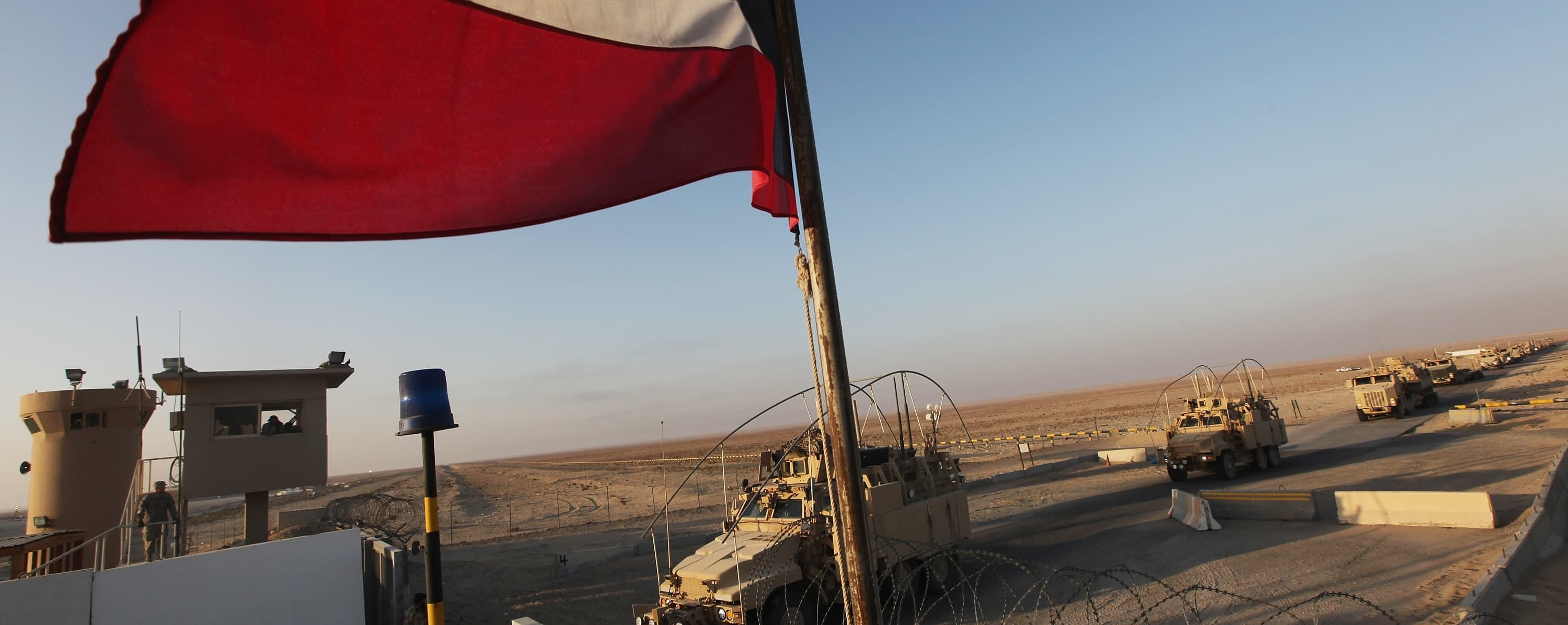
Iran says army targets U.S. drone and missile sites in Kuwait as Gulf attacks mountIran said its army targeted U.S. drone and missile installations at Kuwait's Ali Al Salem air base, extending a run of attacks on Gulf states.
$TRUMP
{spot}(TRUMPUSDT)
$BTC
{spot}(BTCUSDT)
$ETH
{spot}(ETHUSDT)
#iran #IranIsraelConflict #Irannews
Iran says army targets U.S. drone and missile sites in Kuwait as Gulf attacks mount
Iran said its army targeted U.S. drone and missile installations at Kuwait's Ali Al Salem air base, extending a run of attacks on Gulf states.
$TRUMP
$BTC
$ETH
#iran #IranIsraelConflict #Irannews
$TRUMP
$BTC
$ETH
#iran #IranIsraelConflict #Irannews
1
132

Article
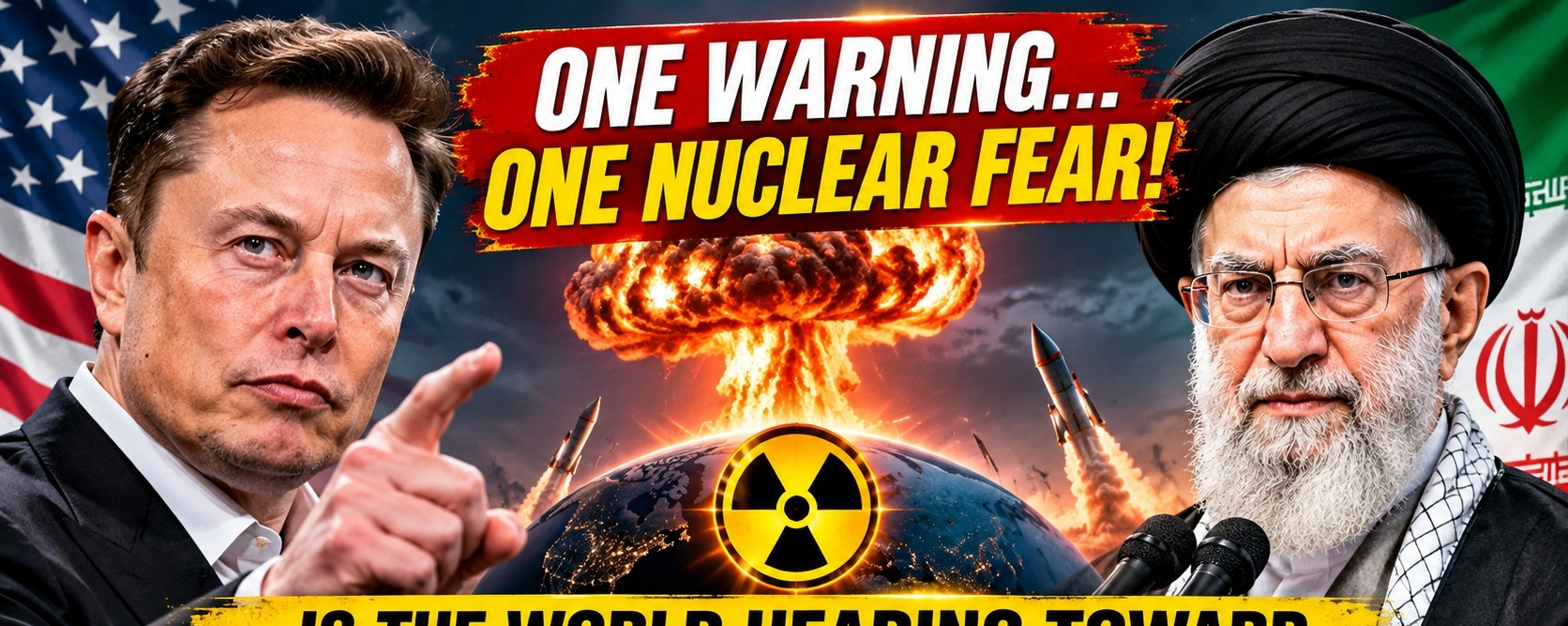
🚨 ONE WARNING. ONE NUCLEAR FEAR. IS THE WORLD HEADING TOWARD A DANGEROUS NEW CRISIS?What happens if tensions between Iran and the United States cross a line that can never be uncrossed?
{spot}(ETHUSDT)
A statement circulating online, attributed to Elon Musk, has drawn attention to the potential consequences of Iran using nuclear weapons against any country, including the United States.
But this is bigger than one warning.
🌍 Why Is This Situation Important?
Nuclear weapons are not ordinary military tools. Any nuclear escalation could trigger consequences far beyond the countries directly involved.
$BTC
Three major concerns deserve attention:
1️⃣ Global Security at Risk
Any nuclear confrontation could create an international crisis, putting millions of lives at risk.
2️⃣ Financial Markets Could React
Geopolitical instability can shake investor confidence. Gold, oil, traditional markets, and cryptocurrencies could all experience increased volatility.
3️⃣ The World Is Watching
Diplomatic decisions, military developments, and international responses could become critical in determining what happens next.
{spot}(XRPUSDT)
🔥 My Take
The biggest danger isn't just what one country might do. It's how quickly a regional conflict could develop into a global crisis.
For crypto investors, this is also a reminder: geopolitical headlines can move markets unexpectedly. Don't trade on fear alone.
One question for the community:
If tensions between Iran and the United States escalate further, which market do you think will react first — Bitcoin, Gold, or Oil?
👇 Share your thoughts.
#iran #ElonMuskTalks #GeopoliticsOrRumor #Bitcoin #CryptoNewss #GlobalSecurity
Editorial note: The screenshot do
🚨 ONE WARNING. ONE NUCLEAR FEAR. IS THE WORLD HEADING TOWARD A DANGEROUS NEW CRISIS?
What happens if tensions between Iran and the United States cross a line that can never be uncrossed?
A statement circulating online, attributed to Elon Musk, has drawn attention to the potential consequences of Iran using nuclear weapons against any country, including the United States.
But this is bigger than one warning.
🌍 Why Is This Situation Important?
Nuclear weapons are not ordinary military tools. Any nuclear escalation could trigger consequences far beyond the countries directly involved.
$BTC
Three major concerns deserve attention:
1️⃣ Global Security at Risk
Any nuclear confrontation could create an international crisis, putting millions of lives at risk.
2️⃣ Financial Markets Could React
Geopolitical instability can shake investor confidence. Gold, oil, traditional markets, and cryptocurrencies could all experience increased volatility.
3️⃣ The World Is Watching
Diplomatic decisions, military developments, and international responses could become critical in determining what happens next.
🔥 My Take
The biggest danger isn't just what one country might do. It's how quickly a regional conflict could develop into a global crisis.
For crypto investors, this is also a reminder: geopolitical headlines can move markets unexpectedly. Don't trade on fear alone.
One question for the community:
If tensions between Iran and the United States escalate further, which market do you think will react first — Bitcoin, Gold, or Oil?
👇 Share your thoughts.
#iran #ElonMuskTalks #GeopoliticsOrRumor #Bitcoin #CryptoNewss #GlobalSecurity
Editorial note: The screenshot do
216
·
--
Bullish
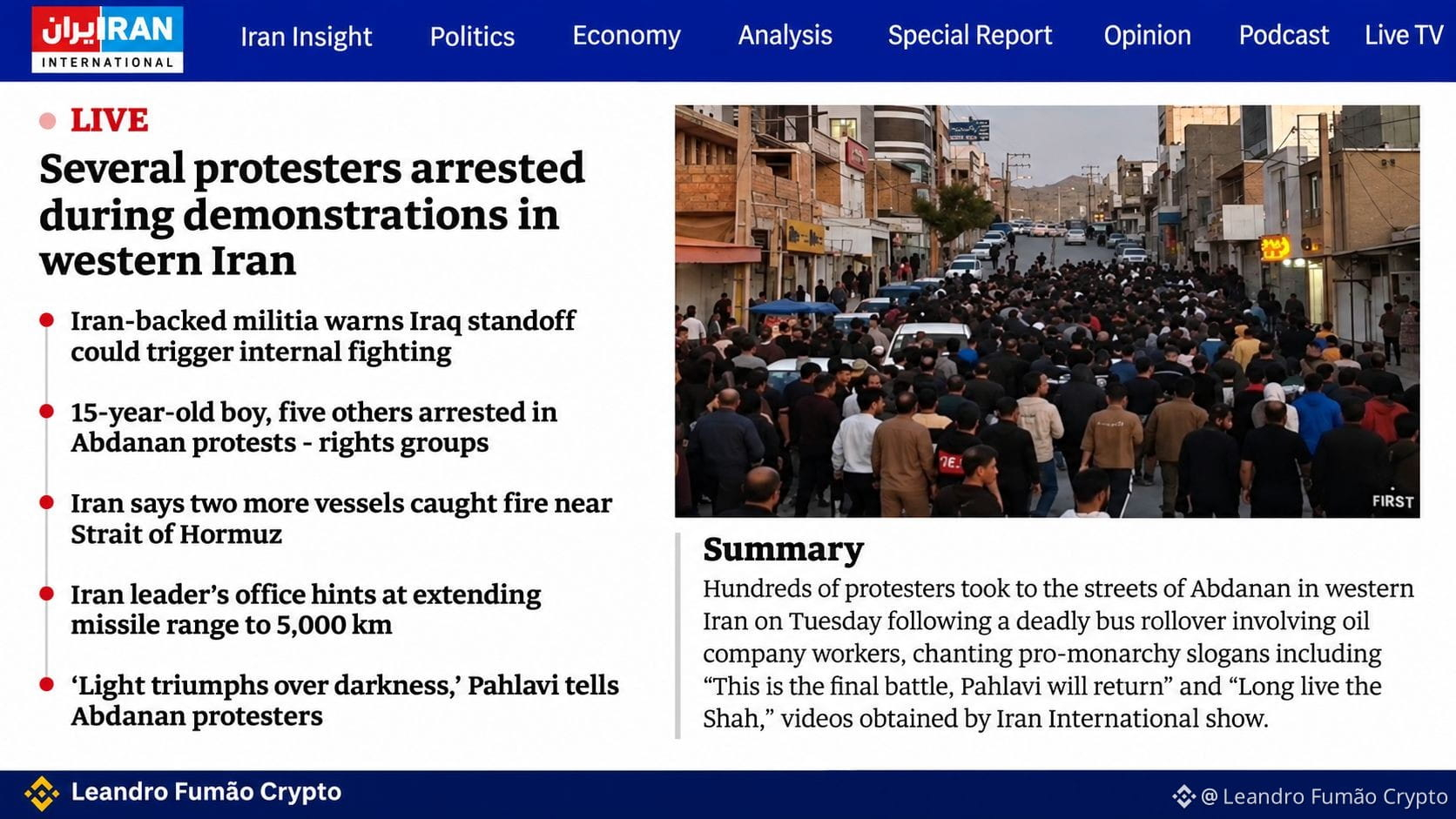
😱🔥💢 SEVERAL PROTESTERS ARRESTED DURING PROTESTS IN WESTERN IRAN❗
➵ Demonstrations in Abdanan, in Ilam Province, ended in arrests after the mobilization turned into an anti-regime protest.
Several protesters were arrested during protests in western Iran, specifically in the city of Abdanan. The demonstrations began after a bus accident killed 13 workers and engineers from an oil company.
What began as an act of mourning and a call for local authorities to be held accountable evolved into a political protest. Protesters chanted slogans against the regime, including “Death to the dictator,” and criticized the supreme leader. Security forces used tear gas and made arrests.
Reports indicate that at least two identified men and other participants were detained, including a 15-year-old minor. The situation shows the potential for local events in Iran to quickly turn into anti-government mobilizations.
The protest in Abdanan illustrates how everyday crises (in this case, a fatal accident involving workers) can turn into political demonstrations amid mounting social tension. The arrests and use of force reinforce the Iranian authorities’ pattern of responding to any street mobilization, even when the initial trigger is local or humanitarian in nature.
......................................⌖ $TRUMP ⌖............................................
💬 Do the protests in Abdanan and the arrests show that popular discontent in Iran remains latent and ready to erupt?
{spot}(TRUMPUSDT)
#iran #IranInternational
😱🔥💢 SEVERAL PROTESTERS ARRESTED DURING PROTESTS IN WESTERN IRAN❗
➵ Demonstrations in Abdanan, in Ilam Province, ended in arrests after the mobilization turned into an anti-regime protest.
Several protesters were arrested during protests in western Iran, specifically in the city of Abdanan. The demonstrations began after a bus accident killed 13 workers and engineers from an oil company.
What began as an act of mourning and a call for local authorities to be held accountable evolved into a political protest. Protesters chanted slogans against the regime, including “Death to the dictator,” and criticized the supreme leader. Security forces used tear gas and made arrests.
Reports indicate that at least two identified men and other participants were detained, including a 15-year-old minor. The situation shows the potential for local events in Iran to quickly turn into anti-government mobilizations.
The protest in Abdanan illustrates how everyday crises (in this case, a fatal accident involving workers) can turn into political demonstrations amid mounting social tension. The arrests and use of force reinforce the Iranian authorities’ pattern of responding to any street mobilization, even when the initial trigger is local or humanitarian in nature.
......................................⌖ $TRUMP ⌖............................................
💬 Do the protests in Abdanan and the arrests show that popular discontent in Iran remains latent and ready to erupt?
#iran #IranInternational
3
997

·
--
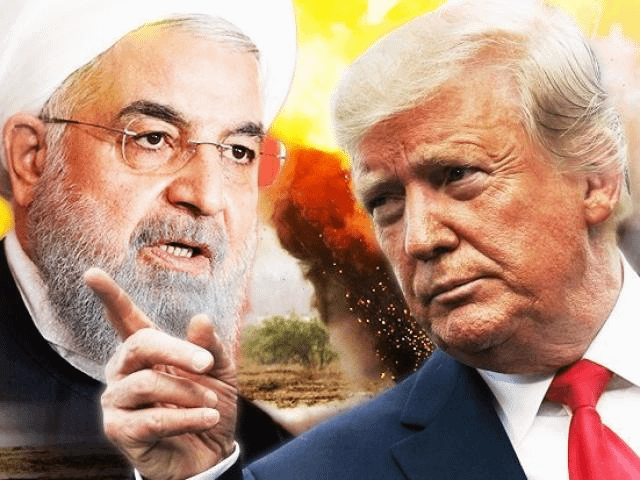
🚨 NUCLEAR WARNING FROM IRAN — COULD THIS TRIGGER A GLOBAL MARKET SHOCK? ☢️🌍
Iran's Supreme Leader Mojtaba Khamenei reportedly warned the U.S. and Israel that a nuclear strike could provoke retaliation BEYOND GEOGRAPHICAL BORDERS.
And that means one thing for traders:
⚠️ GEOPOLITICAL RISK COULD SPREAD FAR BEYOND THE MIDDLE EAST.
🛢️ OIL: Supply disruption fears could drive volatility.
🥇 GOLD: Safe-haven demand could intensify.
₿ BITCOIN: Risk-off selling and sudden liquidations remain possible.
🔥 THE BIG QUESTION: IS THIS JUST A WARNING — OR THE START OF A MUCH BIGGER ESCALATION?
$BTC $XAU $CL
{future}(CLUSDT)
{future}(XAUUSDT)
{future}(BTCUSDT)
#NvidiaEarningsTonight:AIStocks’NextMove? #A Packed Week of Earnings and Data Tests Markets #AnthropicIPOTestsInvestorAppetiteForAI #TRUMP #iran
🚨 NUCLEAR WARNING FROM IRAN — COULD THIS TRIGGER A GLOBAL MARKET SHOCK? ☢️🌍
Iran's Supreme Leader Mojtaba Khamenei reportedly warned the U.S. and Israel that a nuclear strike could provoke retaliation BEYOND GEOGRAPHICAL BORDERS.
And that means one thing for traders:
⚠️ GEOPOLITICAL RISK COULD SPREAD FAR BEYOND THE MIDDLE EAST.
🛢️ OIL: Supply disruption fears could drive volatility.
🥇 GOLD: Safe-haven demand could intensify.
₿ BITCOIN: Risk-off selling and sudden liquidations remain possible.
🔥 THE BIG QUESTION: IS THIS JUST A WARNING — OR THE START OF A MUCH BIGGER ESCALATION?
$BTC $XAU $CL
#NvidiaEarningsTonight:AIStocks’NextMove? #A Packed Week of Earnings and Data Tests Markets #AnthropicIPOTestsInvestorAppetiteForAI #TRUMP #iran
1
319

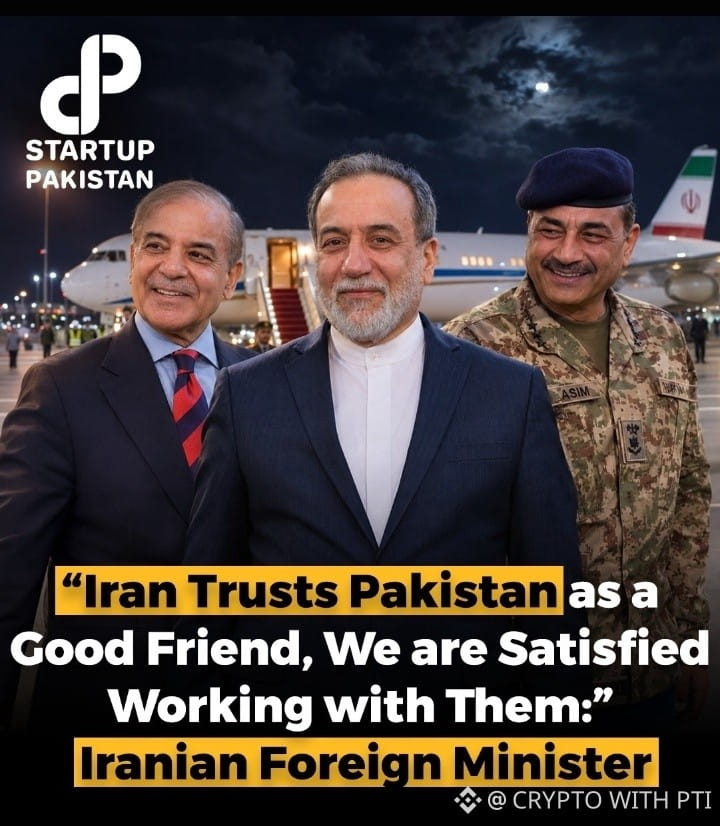
Iranian Foreign Minister Abbas Araghchi has expressed confidence in Pakistan, calling it a “good friend” and saying Tehran is satisfied with Islamabad’s diplomatic engagement.
Disclaimer: Image is AI-generated and is for reference
#Iran #Pakistan #AbbasAraghchi #Diplomacy
Iranian Foreign Minister Abbas Araghchi has expressed confidence in Pakistan, calling it a “good friend” and saying Tehran is satisfied with Islamabad’s diplomatic engagement.
Disclaimer: Image is AI-generated and is for reference
#Iran #Pakistan #AbbasAraghchi #Diplomacy
Disclaimer: Image is AI-generated and is for reference
#Iran #Pakistan #AbbasAraghchi #Diplomacy
10

·
--
GEOPOLITICAL TENSIONS ARE BACK IN FOCUS AND CRYPTO MARKETS SHOULD PAY ATTENTION.
Iran launched drones targeting a US military radar system at Bahrain's Sheikh Isa Air Base. Bahrain says its air defences intercepted the attack.
But the bigger market concern is the Strait of Hormuz.
Any disruption to this critical oil route could push energy prices higher, increase inflation concerns and put pressure on global risk assets.
For Bitcoin, I'm watching three things:
• Oil price movements. • The strength of the US dollar. • BTC's reaction to rising geopolitical uncertainty.
This isn't automatically bearish for Bitcoin, but it could increase volatility across crypto markets.
When geopolitics heats up, liquidity and risk management matter even more.
#BTC #CryptoMarket #iran #oil
1
913
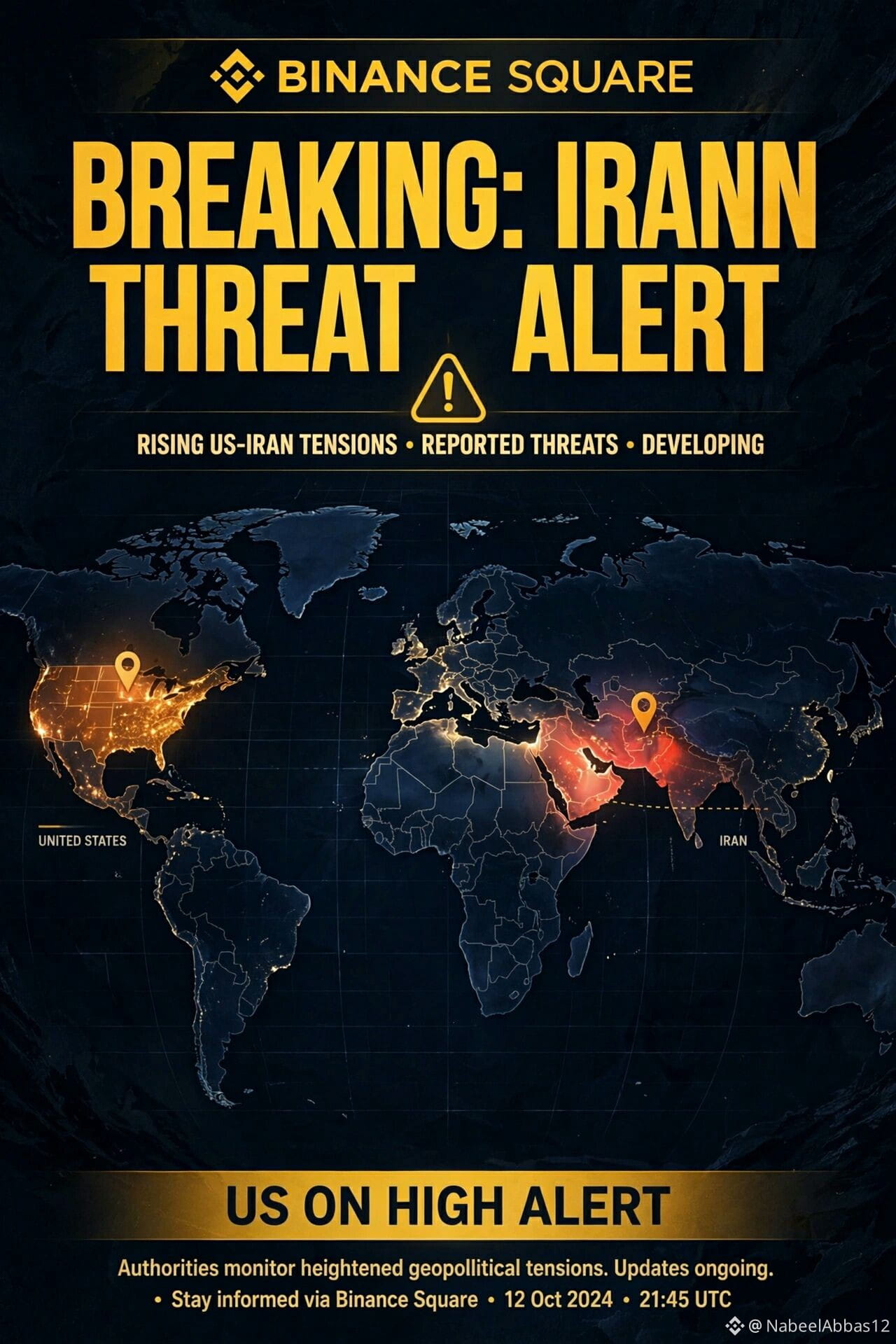
⚠️ BREAKING: Iran Threat Alert - US On High Alert ⚠️
Reports are circulating about rising US-Iran tensions and alleged threats of a Dirty Bomb attack on America.
US officials have already moved top cabinet members to Military Bases due to serious security threats, as reported by Fox News.
No official confirmation of any attack yet, but tensions are at HIGH level.
If this escalates, what will happen to:
-#BTC ?
- #Eth?
- Oil & Gold ?
War fears = Crypto Dump or Pump? 👇 Comment your view
Stay Safe, Stay Informed.
$BTC $ETH $BNB
#iran #usa #breakingnews #breakingnews #Geopolitics
1
74

·
--
Bullish
🚨 BREAKING: NEW IRAN SECURITY WARNING PUTS WASHINGTON ON ALERT!
According to a CNN report, U.S. intelligence indicates that Iran may be developing contingency plans targeting senior Trump administration officials in Washington, D.C.
⚠️ The report has raised serious security concerns and prompted U.S. officials to review possible threats and prepare contingency measures.
However, there is an important distinction:
The reported plans do not indicate an imminent attack.
U.S. officials are still assessing the intelligence.
The White House says there are currently no credible threats to the U.S. homeland.
🌍 Why does this matter for global markets?
Rising U.S.–Iran tensions could increase geopolitical uncertainty and influence oil prices, gold, Bitcoin, and broader crypto-market sentiment.
What do you think? Could these tensions trigger another wave of volatility in the financial markets?
#BreakingNews #Iran #USA #Trump #Geopolitics #Bitcoin #CryptoNews
৳
$DOGE $XRP $TRUMP
162

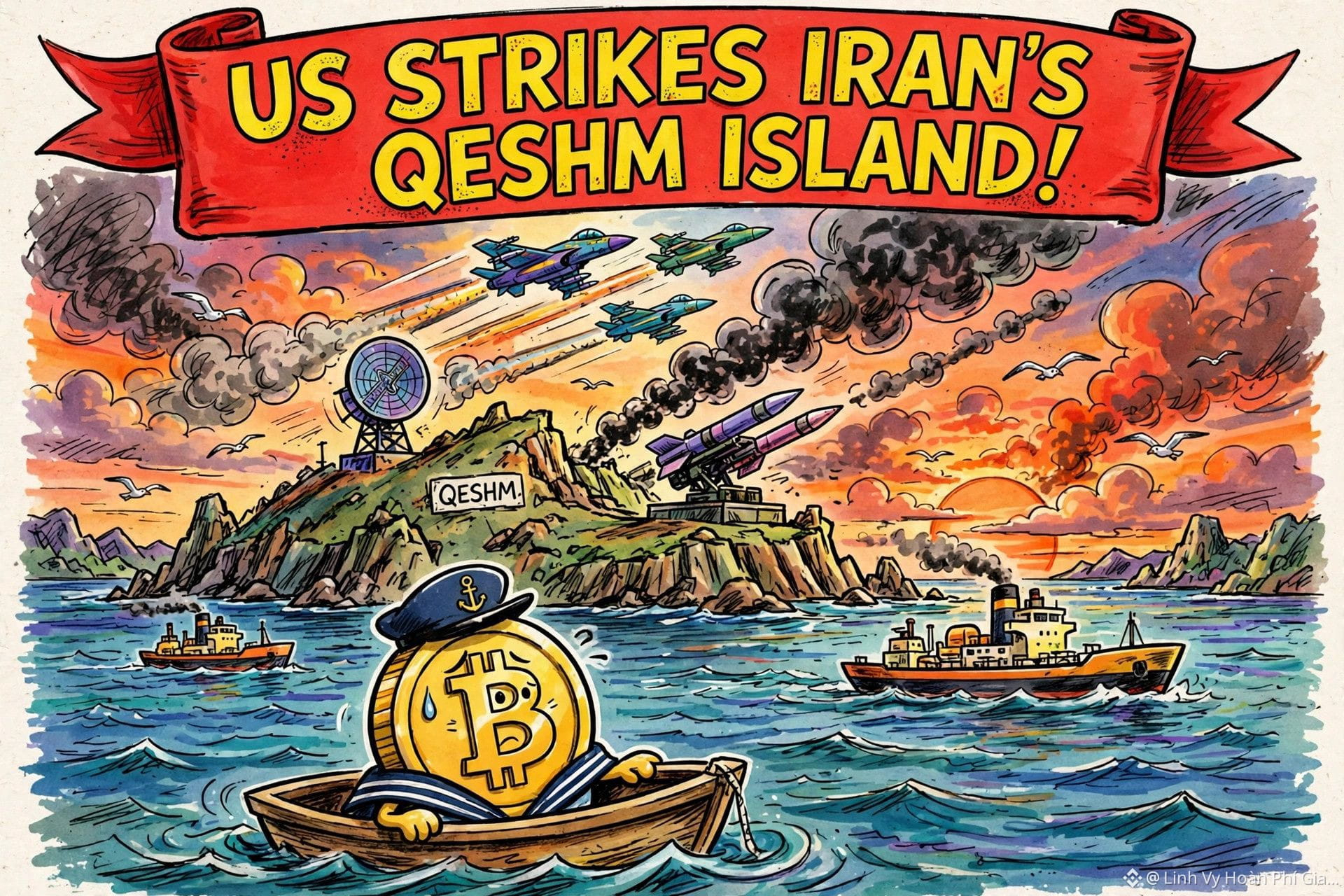
#USStrikesIranQeshmIsland
🚨 THE US BOMBS IRAN’S QESHM ISLAND, TENSIONS IN THE STRAIT OF HORMUZ ESCALATE!
US fighter jets just carried out precision strikes on IRGC missile launchers on Qeshm Island on Tuesday evening US time, retaliating for an IRGC drone attack on US radar at Isa Air Base in Bahrain just hours earlier. President Trump confirmed it was a small strike that destroyed a new Iranian air defense system in minutes, while Tehran said there were no civilian casualties and claimed that 3 oil tankers were on fire in the Strait of Hormuz. Tensions escalated as US stocks plunged in the November 17 session (Dow -1,64%, S&P 500 -1,03%), while Bitcoin held around 64.373 dollars, still below the 65.000-dollar mark.
Biggest perpetual volatility today: $ZEC 955 dollars, $UNI 5,21 dollars, $ICP 2,26 dollars
#Bitcoin #Iran #Oil
43
Log in to explore more content
Join global crypto users on Binance Square
⚡️ Get latest and useful information about crypto.
💬 Trusted by the world’s largest crypto exchange.
👍 Discover real insights from verified creators.
Email / Phone number
Trending Topics
1
#BTCReboundsAbove$60KAmidWhaleDipBuying
26,901 views
168 Discussing
2
#SolanaSets2027RoadmapToDoubleComputeCapacity
10,232 views
344 Discussing
3
#CaliforniaNvidiaProbeExaminesPotentialCriminalViolations
3,908 views
51 Discussing
4
#BlackRockLaunchesHKDollarDigitalLiquidityFund
8,649 views
296 Discussing
5
#NvidiaLoses$2.7TrillionInMonthAndAHalf
56,506 views
258 Discussing
6
#GlobalStocksFaceLongestLosingStreakSince2023
469,576 views
3,029 Discussing
7
#BlackRockIBITPostsRecord$541MSingleDayOutflow
73,981 views
159 Discussing
8
#AnthropicPlungesTowardIPOPriceonDay2
254,939 views
2,001 Discussing
9
#TwentyOneCapitalAdds172.25BTC
127,286 views
1,345 Discussing
10
#HKBillWouldExcludeTokenizedDepositsFromVirtualAssets
15,954 views
95 Discussing