

minamium
11.8k Beiträge

minamium
Melden
Nutzer blockieren
1 Following
99 Follower
375 Like gegeben
Beiträge
·
--
Übersetzung ansehen
If you're still waiting for corporate buyers to slow down before taking a position, you might be setting yourself up for an expensive lesson in missed opportunity.
Too many market participants get caught in analysis paralysis during chop, watching from the sidelines only to end up chasing green candles once institutions front-run the entire order book.
Michael Saylor is once again proving that conviction beats short-term price noise. MicroStrategy continues to aggressively stack $BTC right through market volatility, effectively cementing the narrative that corporate treasury demand is nowhere near exhausted. While skeptics argue that heavy concentration from a single entity creates systemic risk for $MSTR and the broader market if a severe drawdown hits, the reality is clear: sustained institutional accumulation removes floating supply faster than miners can produce it.
Betting against balance sheet adoption at this stage ignores the macroeconomic shift happening right in front of us. When traditional balance sheets treat volatility as liquidity rather than risk, the downside floor gets established much higher than retail expects.
Do you view relentless corporate stacking as the ultimate bullish backstop, or does it introduce too much centralized leverage into the ecosystem?
#Bitcoin #Crypto #InstitutionalAdoption
If you're still waiting for corporate buyers to slow down before taking a position, you might be setting yourself up for an expensive lesson in missed opportunity.
Too many market participants get caught in analysis paralysis during chop, watching from the sidelines only to end up chasing green candles once institutions front-run the entire order book.
Michael Saylor is once again proving that conviction beats short-term price noise. MicroStrategy continues to aggressively stack $BTC right through market volatility, effectively cementing the narrative that corporate treasury demand is nowhere near exhausted. While skeptics argue that heavy concentration from a single entity creates systemic risk for $MSTR and the broader market if a severe drawdown hits, the reality is clear: sustained institutional accumulation removes floating supply faster than miners can produce it.
Betting against balance sheet adoption at this stage ignores the macroeconomic shift happening right in front of us. When traditional balance sheets treat volatility as liquidity rather than risk, the downside floor gets established much higher than retail expects.
Do you view relentless corporate stacking as the ultimate bullish backstop, or does it introduce too much centralized leverage into the ecosystem?
#Bitcoin #Crypto #InstitutionalAdoption
Too many market participants get caught in analysis paralysis during chop, watching from the sidelines only to end up chasing green candles once institutions front-run the entire order book.
Michael Saylor is once again proving that conviction beats short-term price noise. MicroStrategy continues to aggressively stack $BTC right through market volatility, effectively cementing the narrative that corporate treasury demand is nowhere near exhausted. While skeptics argue that heavy concentration from a single entity creates systemic risk for $MSTR and the broader market if a severe drawdown hits, the reality is clear: sustained institutional accumulation removes floating supply faster than miners can produce it.
Betting against balance sheet adoption at this stage ignores the macroeconomic shift happening right in front of us. When traditional balance sheets treat volatility as liquidity rather than risk, the downside floor gets established much higher than retail expects.
Do you view relentless corporate stacking as the ultimate bullish backstop, or does it introduce too much centralized leverage into the ecosystem?
#Bitcoin #Crypto #InstitutionalAdoption

·
--
Übersetzung ansehen
Why is nobody talking about how regulatory compliance might actually be the safest alpha in this market cycle?
Most traders keep chasing low-liquidity pumps on tokens like $PHA or $MINA during high-greed phases, only to get blindsided when custodial risks or opaque balance sheets wipe out their capital overnight. We constantly complain about exchange transparency, yet ignore the actual frameworks being built to fix it.
Dubai's VARA issuing a reserve asset audit circular isn't just bureaucratic red tape; it sets a concrete blueprint for verifiable solvency. If you want to protect your portfolio, start by auditing your own counterparty exposure. First, filter your holdings to platforms and stablecoins like $USDT that actively align with strict jurisdiction standards instead of hiding in regulatory gray zones. Second, make real-time, third-party attestations a non-negotiable checklist item before locking funds into centralized yield protocols.
Real market maturity doesn't come from leverage, it comes from enforceable accountability.
Do you think standardized reserve audits will finally eliminate exchange run risks, or will platforms always find loopholes?
#DubaiVARAIssuesReserveAssetAuditCircular #BinanceLaunchesBinanceIntelligence
Why is nobody talking about how regulatory compliance might actually be the safest alpha in this market cycle?
Most traders keep chasing low-liquidity pumps on tokens like $PHA or $MINA during high-greed phases, only to get blindsided when custodial risks or opaque balance sheets wipe out their capital overnight. We constantly complain about exchange transparency, yet ignore the actual frameworks being built to fix it.
Dubai's VARA issuing a reserve asset audit circular isn't just bureaucratic red tape; it sets a concrete blueprint for verifiable solvency. If you want to protect your portfolio, start by auditing your own counterparty exposure. First, filter your holdings to platforms and stablecoins like $USDT that actively align with strict jurisdiction standards instead of hiding in regulatory gray zones. Second, make real-time, third-party attestations a non-negotiable checklist item before locking funds into centralized yield protocols.
Real market maturity doesn't come from leverage, it comes from enforceable accountability.
Do you think standardized reserve audits will finally eliminate exchange run risks, or will platforms always find loopholes?
#DubaiVARAIssuesReserveAssetAuditCircular #BinanceLaunchesBinanceIntelligence
Most traders keep chasing low-liquidity pumps on tokens like $PHA or $MINA during high-greed phases, only to get blindsided when custodial risks or opaque balance sheets wipe out their capital overnight. We constantly complain about exchange transparency, yet ignore the actual frameworks being built to fix it.
Dubai's VARA issuing a reserve asset audit circular isn't just bureaucratic red tape; it sets a concrete blueprint for verifiable solvency. If you want to protect your portfolio, start by auditing your own counterparty exposure. First, filter your holdings to platforms and stablecoins like $USDT that actively align with strict jurisdiction standards instead of hiding in regulatory gray zones. Second, make real-time, third-party attestations a non-negotiable checklist item before locking funds into centralized yield protocols.
Real market maturity doesn't come from leverage, it comes from enforceable accountability.
Do you think standardized reserve audits will finally eliminate exchange run risks, or will platforms always find loopholes?
#DubaiVARAIssuesReserveAssetAuditCircular #BinanceLaunchesBinanceIntelligence

1
·
--
Übersetzung ansehen
Picture this: last week $BTC slipped below a support that had been tested three times without breaking.
Traders who treated that level as unbreakable found themselves underwater fast, unsure whether to exit or wait for the usual bounce that never quite arrived.
The move started slow. A few large sells, then liquidations piled on as the price failed to recover.
In a greed reading of 63, most were still looking at alt pumps in $FIL and others instead of the weakening structure on Bitcoin. What a lot of people missed was the quiet rotation into $USDT as volume dried up on every attempt to reclaim the level.
These kinds of breaks tend to bring more downside if they stick. The lesson here is that holding through a confirmed breakdown often costs more than cutting early, especially with leverage in play.
Where do you think this goes from here?
#BTCFallsBelow #SECApproves3XBitcoinETF #StrategyEstimates
Picture this: last week $BTC slipped below a support that had been tested three times without breaking.
Traders who treated that level as unbreakable found themselves underwater fast, unsure whether to exit or wait for the usual bounce that never quite arrived.
The move started slow. A few large sells, then liquidations piled on as the price failed to recover.
In a greed reading of 63, most were still looking at alt pumps in $FIL and others instead of the weakening structure on Bitcoin. What a lot of people missed was the quiet rotation into $USDT as volume dried up on every attempt to reclaim the level.
These kinds of breaks tend to bring more downside if they stick. The lesson here is that holding through a confirmed breakdown often costs more than cutting early, especially with leverage in play.
Where do you think this goes from here?
#BTCFallsBelow #SECApproves3XBitcoinETF #StrategyEstimates
Traders who treated that level as unbreakable found themselves underwater fast, unsure whether to exit or wait for the usual bounce that never quite arrived.
The move started slow. A few large sells, then liquidations piled on as the price failed to recover.
In a greed reading of 63, most were still looking at alt pumps in $FIL and others instead of the weakening structure on Bitcoin. What a lot of people missed was the quiet rotation into $USDT as volume dried up on every attempt to reclaim the level.
These kinds of breaks tend to bring more downside if they stick. The lesson here is that holding through a confirmed breakdown often costs more than cutting early, especially with leverage in play.
Where do you think this goes from here?
#BTCFallsBelow #SECApproves3XBitcoinETF #StrategyEstimates

1
·
--
Übersetzung ansehen
If you're still holding shorts on $BTC waiting for a collapse, stop now.
Watching your position get liquidated in a squeeze is one of the most painful ways to lose money in this market. Traders keep falling for the same trap, piling into shorts only to get wrecked when momentum flips.
The market is split right now. Bears insist $BTC is overbought and due for a pullback after the recent run. They might have a point on the charts.
But I see it differently. If $BTC pushes toward $87.4K, those crowded shorts could start getting squeezed hard, forcing buyers in and potentially dragging $ETH higher too.
History shows these squeezes don't stay contained. $BNB often follows Bitcoin's lead in these moves.
Where do you think this goes from here if it tests that level?
#Bitcoin #Crypto #Trading
If you're still holding shorts on $BTC waiting for a collapse, stop now.
Watching your position get liquidated in a squeeze is one of the most painful ways to lose money in this market. Traders keep falling for the same trap, piling into shorts only to get wrecked when momentum flips.
The market is split right now. Bears insist $BTC is overbought and due for a pullback after the recent run. They might have a point on the charts.
But I see it differently. If $BTC pushes toward $87.4K, those crowded shorts could start getting squeezed hard, forcing buyers in and potentially dragging $ETH higher too.
History shows these squeezes don't stay contained. $BNB often follows Bitcoin's lead in these moves.
Where do you think this goes from here if it tests that level?
#Bitcoin #Crypto #Trading
Watching your position get liquidated in a squeeze is one of the most painful ways to lose money in this market. Traders keep falling for the same trap, piling into shorts only to get wrecked when momentum flips.
The market is split right now. Bears insist $BTC is overbought and due for a pullback after the recent run. They might have a point on the charts.
But I see it differently. If $BTC pushes toward $87.4K, those crowded shorts could start getting squeezed hard, forcing buyers in and potentially dragging $ETH higher too.
History shows these squeezes don't stay contained. $BNB often follows Bitcoin's lead in these moves.
Where do you think this goes from here if it tests that level?
#Bitcoin #Crypto #Trading
·
--
Übersetzung ansehen
everyone thinks high volatility is where you make the easiest money, but actually tight chop in a massive range is where retail quietly bleeds out the most.
watching your stop losses get hunted on both sides while trying to scalp the breakout is pure pain, especially when you re-enter out of frustration right before the real fakeout hits.
we just saw this exact trap play out with $BTC forming roughly a $5k gap between major liquidity pools. both high-leverage longs and shorts got caught on either side of the spread because order books were thin and market makers were just sweeping stops for liquidity before choosing a real direction.
ngl ser, when price gets stuck in a $5k vacuum like that, even solid setups across $ETH and $SOL turn into choppy degen traps. if you are forcing 20x leverage inside an unconfirmed dead zone, you are basically donating your stack to the book.
how are you navigating this gap or are you just sitting in stables until the range breaks?
#bitcoin #cryptotrading #binance
everyone thinks high volatility is where you make the easiest money, but actually tight chop in a massive range is where retail quietly bleeds out the most.
watching your stop losses get hunted on both sides while trying to scalp the breakout is pure pain, especially when you re-enter out of frustration right before the real fakeout hits.
we just saw this exact trap play out with $BTC forming roughly a $5k gap between major liquidity pools. both high-leverage longs and shorts got caught on either side of the spread because order books were thin and market makers were just sweeping stops for liquidity before choosing a real direction.
ngl ser, when price gets stuck in a $5k vacuum like that, even solid setups across $ETH and $SOL turn into choppy degen traps. if you are forcing 20x leverage inside an unconfirmed dead zone, you are basically donating your stack to the book.
how are you navigating this gap or are you just sitting in stables until the range breaks?
#bitcoin #cryptotrading #binance
watching your stop losses get hunted on both sides while trying to scalp the breakout is pure pain, especially when you re-enter out of frustration right before the real fakeout hits.
we just saw this exact trap play out with $BTC forming roughly a $5k gap between major liquidity pools. both high-leverage longs and shorts got caught on either side of the spread because order books were thin and market makers were just sweeping stops for liquidity before choosing a real direction.
ngl ser, when price gets stuck in a $5k vacuum like that, even solid setups across $ETH and $SOL turn into choppy degen traps. if you are forcing 20x leverage inside an unconfirmed dead zone, you are basically donating your stack to the book.
how are you navigating this gap or are you just sitting in stables until the range breaks?
#bitcoin #cryptotrading #binance

·
--
Übersetzung ansehen
Have you noticed nobody is talking about the $5K liquidation trap $BTC is currently sitting in?
Most traders lose money here because they ignore these zones and either get squeezed out or liquidated in the cascade. It's a painful way to learn that leverage clusters matter more than the latest news.
This current $BTC range is a textbook example. It's sitting between $87.4K up top and $82.6K down below, creating that $5K gap full of potential liquidations.
A move toward the high could start hunting shorts and turn into a squeeze. Breaking the low would flush longs and speed up the drop. I wouldn't treat either as a sure target, just the spots worth monitoring closely.
$ETH and $SOL often react strongly when $BTC hunts these liquidity pockets, which is why the whole tape can shift on one of these tests.
What's your take on which side gets tested first?
#Bitcoin #Crypto #Trading
Have you noticed nobody is talking about the $5K liquidation trap $BTC is currently sitting in?
Most traders lose money here because they ignore these zones and either get squeezed out or liquidated in the cascade. It's a painful way to learn that leverage clusters matter more than the latest news.
This current $BTC range is a textbook example. It's sitting between $87.4K up top and $82.6K down below, creating that $5K gap full of potential liquidations.
A move toward the high could start hunting shorts and turn into a squeeze. Breaking the low would flush longs and speed up the drop. I wouldn't treat either as a sure target, just the spots worth monitoring closely.
$ETH and $SOL often react strongly when $BTC hunts these liquidity pockets, which is why the whole tape can shift on one of these tests.
What's your take on which side gets tested first?
#Bitcoin #Crypto #Trading
Most traders lose money here because they ignore these zones and either get squeezed out or liquidated in the cascade. It's a painful way to learn that leverage clusters matter more than the latest news.
This current $BTC range is a textbook example. It's sitting between $87.4K up top and $82.6K down below, creating that $5K gap full of potential liquidations.
A move toward the high could start hunting shorts and turn into a squeeze. Breaking the low would flush longs and speed up the drop. I wouldn't treat either as a sure target, just the spots worth monitoring closely.
$ETH and $SOL often react strongly when $BTC hunts these liquidity pockets, which is why the whole tape can shift on one of these tests.
What's your take on which side gets tested first?
#Bitcoin #Crypto #Trading
2
·
--
Übersetzung ansehen
Most traders get wiped out not during massive market crashes, but inside quiet consolidation ranges where leverage builds up silently.
That sinking feeling of buying the top of a fakeout or panic-selling right before a violent reversal is almost always engineered by liquidity traps. You think the market is picking a direction, only to watch your position get hunted within minutes.
I have seen this setup play out across multiple cycles, and right now $BTC is sitting right in the crosshairs of a textbook liquidity sandwich. There is a roughly $5K gap forming between two critical liquidation pockets: heavy short exposure overhead at $87.4K and concentrated long leverage resting down at $82.6K.
When price consolidates between these zones, order books thin out until one side inevitably gives way. A push toward $87.4K could ignite a fast short squeeze cascade, while losing $82.6K risks accelerating downside liquidations that could easily drag $ETH and the broader market down with it. The experienced move here is rarely guessing the middle, but waiting to see how price reacts once the leverage gets swept.
Are you waiting for one of these outer zones to get tapped first, or are you already positioned?
#Bitcoin #CryptoTrading #Binance
Most traders get wiped out not during massive market crashes, but inside quiet consolidation ranges where leverage builds up silently.
That sinking feeling of buying the top of a fakeout or panic-selling right before a violent reversal is almost always engineered by liquidity traps. You think the market is picking a direction, only to watch your position get hunted within minutes.
I have seen this setup play out across multiple cycles, and right now $BTC is sitting right in the crosshairs of a textbook liquidity sandwich. There is a roughly $5K gap forming between two critical liquidation pockets: heavy short exposure overhead at $87.4K and concentrated long leverage resting down at $82.6K.
When price consolidates between these zones, order books thin out until one side inevitably gives way. A push toward $87.4K could ignite a fast short squeeze cascade, while losing $82.6K risks accelerating downside liquidations that could easily drag $ETH and the broader market down with it. The experienced move here is rarely guessing the middle, but waiting to see how price reacts once the leverage gets swept.
Are you waiting for one of these outer zones to get tapped first, or are you already positioned?
#Bitcoin #CryptoTrading #Binance
That sinking feeling of buying the top of a fakeout or panic-selling right before a violent reversal is almost always engineered by liquidity traps. You think the market is picking a direction, only to watch your position get hunted within minutes.
I have seen this setup play out across multiple cycles, and right now $BTC is sitting right in the crosshairs of a textbook liquidity sandwich. There is a roughly $5K gap forming between two critical liquidation pockets: heavy short exposure overhead at $87.4K and concentrated long leverage resting down at $82.6K.
When price consolidates between these zones, order books thin out until one side inevitably gives way. A push toward $87.4K could ignite a fast short squeeze cascade, while losing $82.6K risks accelerating downside liquidations that could easily drag $ETH and the broader market down with it. The experienced move here is rarely guessing the middle, but waiting to see how price reacts once the leverage gets swept.
Are you waiting for one of these outer zones to get tapped first, or are you already positioned?
#Bitcoin #CryptoTrading #Binance

·
--
Übersetzung ansehen
Picture this: you hold a long position all weekend hoping for a bounce, only to watch $100,000 vanish by Monday's close.
Most traders get emotionally married to a losing thesis and ride a bleeding asset all the way down, refusing to accept when structural momentum has completely broken.
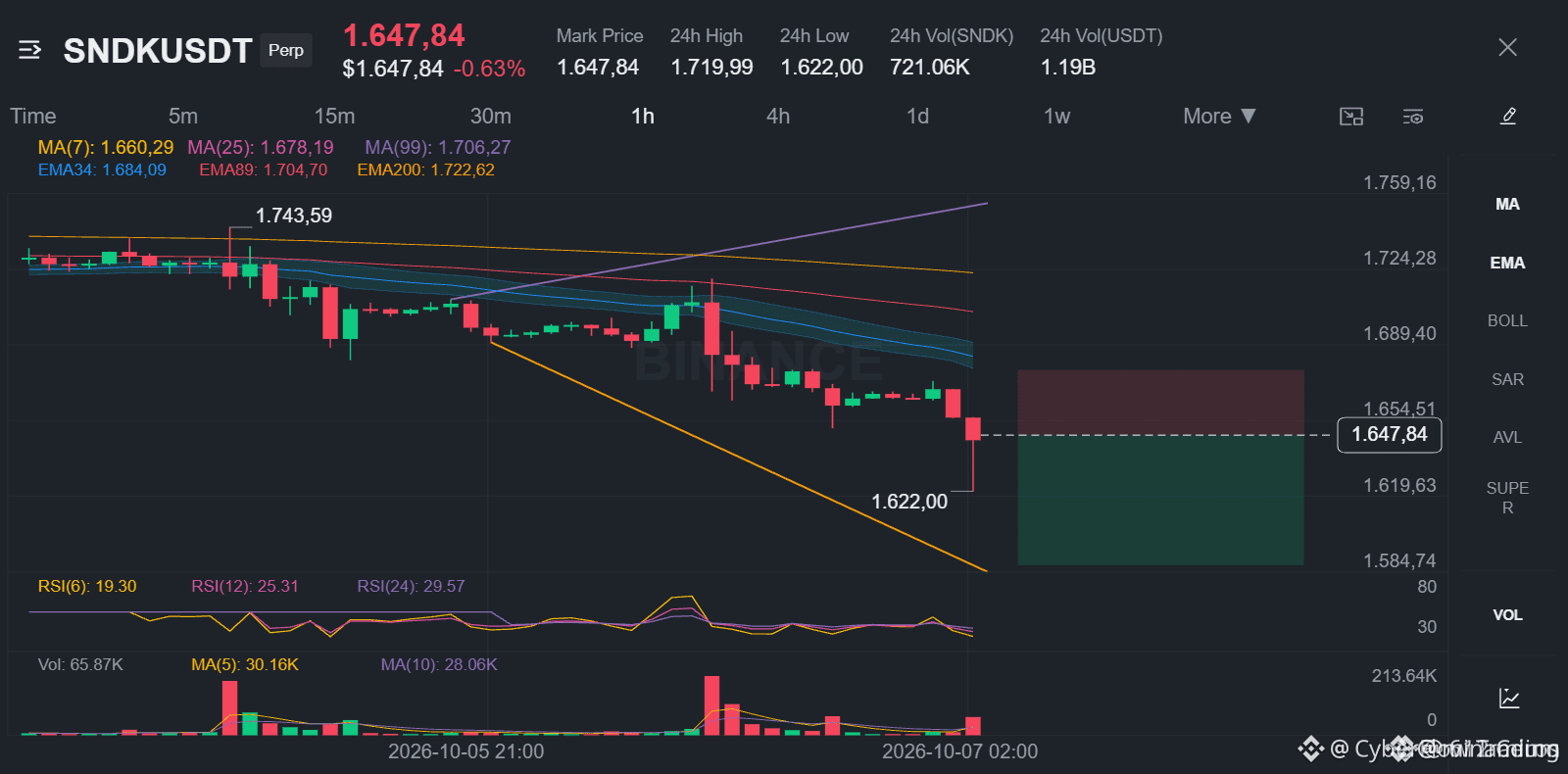
That is exactly what played out with $SNDK before this trader finally flipped the switch. Instead of stubborn diamond-handing, they cut their massive six-figure loss and immediately rotated into a short on SNDKUSDT perpetuals, securing over +139,415 USDT in unrealized gains as the token dropped another 3.20%.
It reminds me of how aggressive trend shifts played out during the capitulation phases of high-beta tokens like $LUNA in past cycles. The crowd kept praying for a V-shaped recovery, yet the real edge came from abandoning bias and riding the actual direction of the market. Surviving in futures is never about being right every time, but about flipping your bias the moment the chart proves you wrong.
How do you usually handle cutting a massive loss when a trade turns against you?
#CryptoTrading #RiskManagement #FuturesTrading
Picture this: you hold a long position all weekend hoping for a bounce, only to watch $100,000 vanish by Monday's close.
Most traders get emotionally married to a losing thesis and ride a bleeding asset all the way down, refusing to accept when structural momentum has completely broken.
That is exactly what played out with $SNDK before this trader finally flipped the switch. Instead of stubborn diamond-handing, they cut their massive six-figure loss and immediately rotated into a short on SNDKUSDT perpetuals, securing over +139,415 USDT in unrealized gains as the token dropped another 3.20%.
It reminds me of how aggressive trend shifts played out during the capitulation phases of high-beta tokens like $LUNA in past cycles. The crowd kept praying for a V-shaped recovery, yet the real edge came from abandoning bias and riding the actual direction of the market. Surviving in futures is never about being right every time, but about flipping your bias the moment the chart proves you wrong.
How do you usually handle cutting a massive loss when a trade turns against you?
#CryptoTrading #RiskManagement #FuturesTrading
Most traders get emotionally married to a losing thesis and ride a bleeding asset all the way down, refusing to accept when structural momentum has completely broken.
That is exactly what played out with $SNDK before this trader finally flipped the switch. Instead of stubborn diamond-handing, they cut their massive six-figure loss and immediately rotated into a short on SNDKUSDT perpetuals, securing over +139,415 USDT in unrealized gains as the token dropped another 3.20%.
It reminds me of how aggressive trend shifts played out during the capitulation phases of high-beta tokens like $LUNA in past cycles. The crowd kept praying for a V-shaped recovery, yet the real edge came from abandoning bias and riding the actual direction of the market. Surviving in futures is never about being right every time, but about flipping your bias the moment the chart proves you wrong.
How do you usually handle cutting a massive loss when a trade turns against you?
#CryptoTrading #RiskManagement #FuturesTrading
1
·
--
Übersetzung ansehen
If you are still trying to trade every micro dip while institutions play a completely different game, stop now.
Most retail traders get chopped up obsessing over intraday volatility and miss the macro shift happening right under their noses. While everyone panic sells on minor red candles, corporate balance sheets are quietly absorbing the float.
Strategy just posted a massive 21B dollar Q3 gain, pushing their total stack to 848,000 $BTC. On top of that, they added another 334 Bitcoin and bought back 176M dollars worth of $STRC, proving their playbook has not slowed down a bit.
Remember back in 2021 when Tesla bought in and everyone thought that was the absolute ceiling for corporate treasuries? Compare that cautious entry to what Strategy is pulling off today, turning their entire corporate model into an aggressive Bitcoin engine that leaves traditional treasury plays looking prehistoric.
Do you think other public companies will eventually be forced to copy this playbook, or is this strategy only viable for one giant?
#Bitcoin #Crypto #MicroStrategy
If you are still trying to trade every micro dip while institutions play a completely different game, stop now.
Most retail traders get chopped up obsessing over intraday volatility and miss the macro shift happening right under their noses. While everyone panic sells on minor red candles, corporate balance sheets are quietly absorbing the float.
Strategy just posted a massive 21B dollar Q3 gain, pushing their total stack to 848,000 $BTC . On top of that, they added another 334 Bitcoin and bought back 176M dollars worth of $STRC , proving their playbook has not slowed down a bit.
Remember back in 2021 when Tesla bought in and everyone thought that was the absolute ceiling for corporate treasuries? Compare that cautious entry to what Strategy is pulling off today, turning their entire corporate model into an aggressive Bitcoin engine that leaves traditional treasury plays looking prehistoric.
Do you think other public companies will eventually be forced to copy this playbook, or is this strategy only viable for one giant?
#Bitcoin #Crypto #MicroStrategy
Most retail traders get chopped up obsessing over intraday volatility and miss the macro shift happening right under their noses. While everyone panic sells on minor red candles, corporate balance sheets are quietly absorbing the float.
Strategy just posted a massive 21B dollar Q3 gain, pushing their total stack to 848,000 $BTC . On top of that, they added another 334 Bitcoin and bought back 176M dollars worth of $STRC , proving their playbook has not slowed down a bit.
Remember back in 2021 when Tesla bought in and everyone thought that was the absolute ceiling for corporate treasuries? Compare that cautious entry to what Strategy is pulling off today, turning their entire corporate model into an aggressive Bitcoin engine that leaves traditional treasury plays looking prehistoric.
Do you think other public companies will eventually be forced to copy this playbook, or is this strategy only viable for one giant?
#Bitcoin #Crypto #MicroStrategy

·
--
Übersetzung ansehen
If you are still panic selling every time macro headlines turn red, you are handing your money directly to institutions.
Watching your portfolio swing wildly while getting trapped in sudden drawdowns is exhausting. Most retail traders end up selling the bottom right before the real reversal happens.
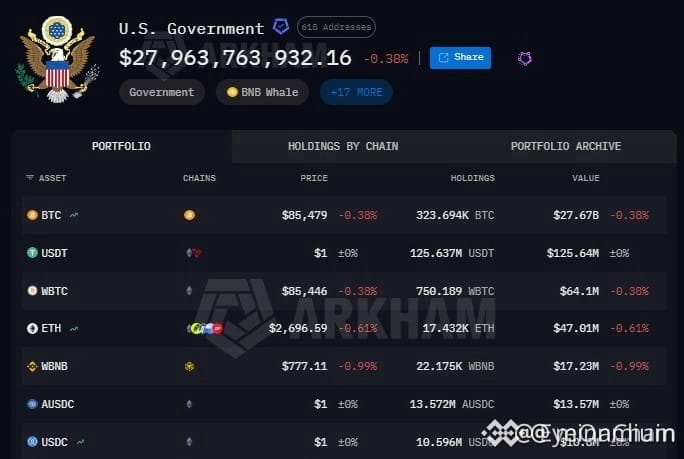
Bitcoin touched $87,400 before pulling back toward $83K, triggering roughly $330M in liquidated positions as oil above $100 spooked the broader market. Yet while retail scrambled to cut losses, large funds quietly absorbed $2.4B worth of $BTC in just one week.
Some traders argue this is the start of a deeper macro correction and that staying in cash is the only rational move. On the other hand, letting short-term fear dictate your strategy is why retail consistently underperforms, especially as automated systems accumulate both $BTC and $ETH around the clock without emotional bias.
Where do you think we go from here, a deeper correction or straight to new highs?
#Bitcoin #CryptoMarket #TradingStrategy
If you are still panic selling every time macro headlines turn red, you are handing your money directly to institutions.
Watching your portfolio swing wildly while getting trapped in sudden drawdowns is exhausting. Most retail traders end up selling the bottom right before the real reversal happens.
Bitcoin touched $87,400 before pulling back toward $83K, triggering roughly $330M in liquidated positions as oil above $100 spooked the broader market. Yet while retail scrambled to cut losses, large funds quietly absorbed $2.4B worth of $BTC in just one week.
Some traders argue this is the start of a deeper macro correction and that staying in cash is the only rational move. On the other hand, letting short-term fear dictate your strategy is why retail consistently underperforms, especially as automated systems accumulate both $BTC and $ETH around the clock without emotional bias.
Where do you think we go from here, a deeper correction or straight to new highs?
#Bitcoin #CryptoMarket #TradingStrategy
Watching your portfolio swing wildly while getting trapped in sudden drawdowns is exhausting. Most retail traders end up selling the bottom right before the real reversal happens.
Bitcoin touched $87,400 before pulling back toward $83K, triggering roughly $330M in liquidated positions as oil above $100 spooked the broader market. Yet while retail scrambled to cut losses, large funds quietly absorbed $2.4B worth of $BTC in just one week.
Some traders argue this is the start of a deeper macro correction and that staying in cash is the only rational move. On the other hand, letting short-term fear dictate your strategy is why retail consistently underperforms, especially as automated systems accumulate both $BTC and $ETH around the clock without emotional bias.
Where do you think we go from here, a deeper correction or straight to new highs?
#Bitcoin #CryptoMarket #TradingStrategy
2
·
--
Übersetzung ansehen
Everyone thinks having AI execute your trades guarantees easy profits, but actually it just automates your mistakes at lightning speed.
Most retail traders jump blindly into automated tools during market hype, only to watch their balance bleed out from flawed parameters before they even realize what went wrong.
Think of automated trading like handing the keys of a high-performance sports car to someone without a license. Giving it full throttle will not make you a better driver, it just gets you into a wall quicker. That risk becomes critical with the rollout of the new Binance Intelligence suite. While AI-focused tokens like $BR surged 50.64% and $NMR jumped 43.31% following the news, entering positions without understanding how these tools function is a recipe for heavy drawdown.
The architecture is divided into three distinct tiers: free Binance AI for general market research, Binance AI Pro for converting natural language prompts into live executable strategies, and Binance Agent OS for developers building full AI applications. As ecosystems around $ZRO and machine intelligence expand, the advantage will not belong to whoever generates prompts the fastest, but to traders who thoroughly understand position sizing and risk control before automating their orders.
Where do you think automated AI strategies will have the biggest impact on retail trading this year?
#Binance #CryptoAI #TradingStrategy
Everyone thinks having AI execute your trades guarantees easy profits, but actually it just automates your mistakes at lightning speed.
Most retail traders jump blindly into automated tools during market hype, only to watch their balance bleed out from flawed parameters before they even realize what went wrong.
Think of automated trading like handing the keys of a high-performance sports car to someone without a license. Giving it full throttle will not make you a better driver, it just gets you into a wall quicker. That risk becomes critical with the rollout of the new Binance Intelligence suite. While AI-focused tokens like $BR surged 50.64% and $NMR jumped 43.31% following the news, entering positions without understanding how these tools function is a recipe for heavy drawdown.
The architecture is divided into three distinct tiers: free Binance AI for general market research, Binance AI Pro for converting natural language prompts into live executable strategies, and Binance Agent OS for developers building full AI applications. As ecosystems around $ZRO and machine intelligence expand, the advantage will not belong to whoever generates prompts the fastest, but to traders who thoroughly understand position sizing and risk control before automating their orders.
Where do you think automated AI strategies will have the biggest impact on retail trading this year?
#Binance #CryptoAI #TradingStrategy
Most retail traders jump blindly into automated tools during market hype, only to watch their balance bleed out from flawed parameters before they even realize what went wrong.
Think of automated trading like handing the keys of a high-performance sports car to someone without a license. Giving it full throttle will not make you a better driver, it just gets you into a wall quicker. That risk becomes critical with the rollout of the new Binance Intelligence suite. While AI-focused tokens like $BR surged 50.64% and $NMR jumped 43.31% following the news, entering positions without understanding how these tools function is a recipe for heavy drawdown.
The architecture is divided into three distinct tiers: free Binance AI for general market research, Binance AI Pro for converting natural language prompts into live executable strategies, and Binance Agent OS for developers building full AI applications. As ecosystems around $ZRO and machine intelligence expand, the advantage will not belong to whoever generates prompts the fastest, but to traders who thoroughly understand position sizing and risk control before automating their orders.
Where do you think automated AI strategies will have the biggest impact on retail trading this year?
#Binance #CryptoAI #TradingStrategy

3
·
--
Übersetzung ansehen
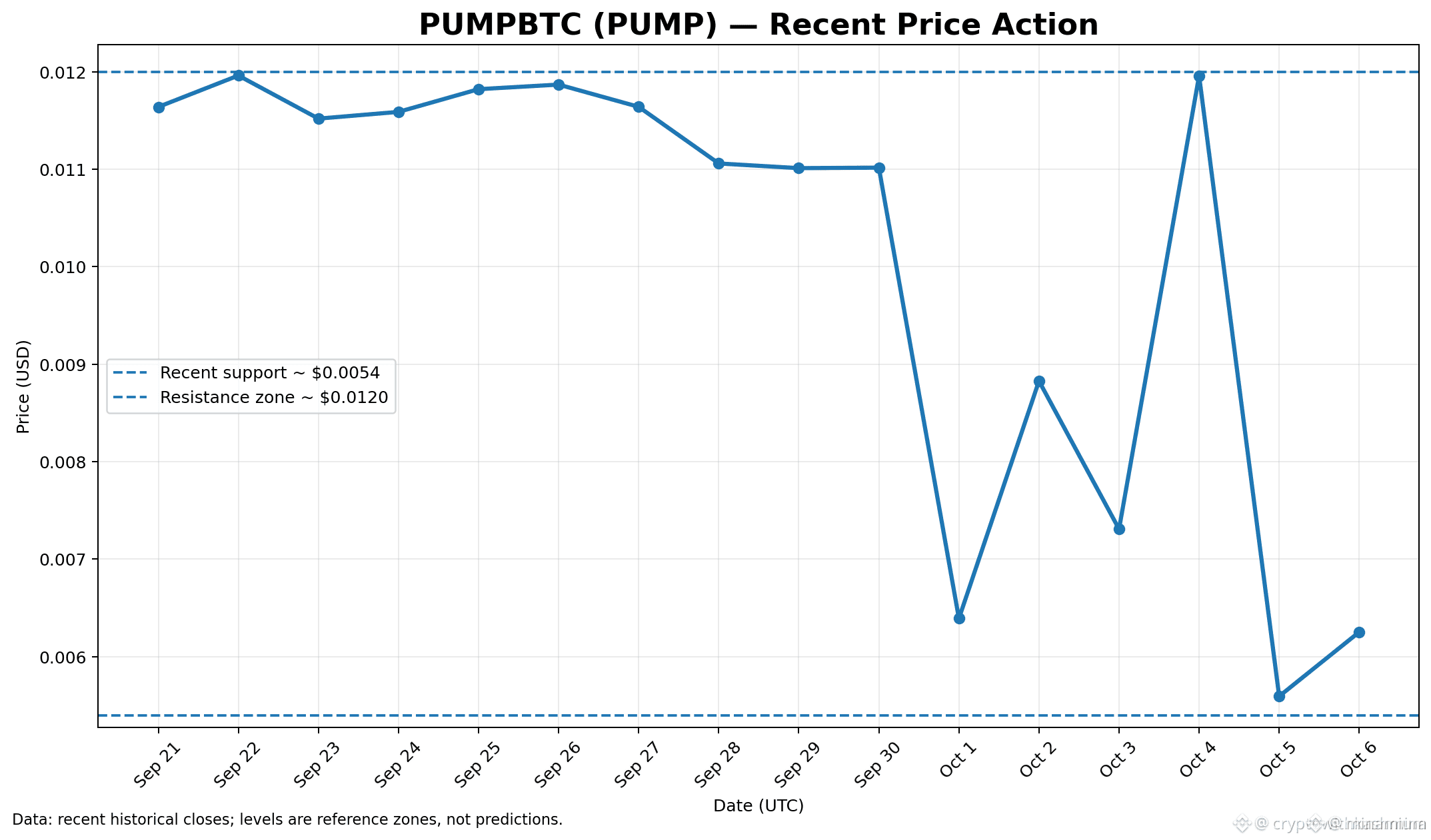
Have you noticed how $PUMPBTC perps keep turning overleveraged traders into liquidation stats overnight?
Too many people FOMO these listings like they have $BTC depth, then a 10.21% swing erases 1,745 USDT before they even process what happened.
The platform is not supposed to pause the market or reverse your bad trade. Tokens like this move on thin books and wild funding, nothing like $ETH. Blaming anyone else just delays the lesson.
Cut leverage to 5x or less. Know your exact liquidation price and place a stop with real buffer. Size the position so a 10% dump hurts but does not end you. That is the only process that actually keeps you in the game.
What's your take on handling these high-vol pairs?
#Perps #RiskManagement #Altcoins
Have you noticed how $PUMPBTC perps keep turning overleveraged traders into liquidation stats overnight?
Too many people FOMO these listings like they have $BTC depth, then a 10.21% swing erases 1,745 USDT before they even process what happened.
The platform is not supposed to pause the market or reverse your bad trade. Tokens like this move on thin books and wild funding, nothing like $ETH . Blaming anyone else just delays the lesson.
Cut leverage to 5x or less. Know your exact liquidation price and place a stop with real buffer. Size the position so a 10% dump hurts but does not end you. That is the only process that actually keeps you in the game.
What's your take on handling these high-vol pairs?
#Perps #RiskManagement #Altcoins
Too many people FOMO these listings like they have $BTC depth, then a 10.21% swing erases 1,745 USDT before they even process what happened.
The platform is not supposed to pause the market or reverse your bad trade. Tokens like this move on thin books and wild funding, nothing like $ETH . Blaming anyone else just delays the lesson.
Cut leverage to 5x or less. Know your exact liquidation price and place a stop with real buffer. Size the position so a 10% dump hurts but does not end you. That is the only process that actually keeps you in the game.
What's your take on handling these high-vol pairs?
#Perps #RiskManagement #Altcoins
8
·
--
Übersetzung ansehen
Most retail traders get liquidated not during brutal downtrends, but right when the market feels the most unstoppable.
With the Fear and Greed index sitting at 67, everyone is rushing to long every minor breakout without checking order book depth. The brutal reality is that buying into resistance because of sheer FOMO usually turns you into exit liquidity for whales looking to offload their bags.
When $BTC taps a major resistance level and gets turned away, it is rarely just a random pullback. Market makers often push price into heavy liquidity clusters to trigger late short stops, only to let high-volume sell orders absorb all that buying momentum. Watching how $SUI or $MINA bleed out shortly after Bitcoin stalls tells you everything you need to know about overextended open interest across the board.
If you are entering positions purely because a green candle looked strong without waiting for a confirmed reclaim, you are simply gambling on hope. Real spot demand needs to support these moves, otherwise rejection wicks are designed to trap the aggressive crowd every single time.
Are you de-risking at these key levels, or are you still holding out for one more push higher?
#BitcoinRejectedAt #BitcoinTargets2026OpenAt
Most retail traders get liquidated not during brutal downtrends, but right when the market feels the most unstoppable.
With the Fear and Greed index sitting at 67, everyone is rushing to long every minor breakout without checking order book depth. The brutal reality is that buying into resistance because of sheer FOMO usually turns you into exit liquidity for whales looking to offload their bags.
When $BTC taps a major resistance level and gets turned away, it is rarely just a random pullback. Market makers often push price into heavy liquidity clusters to trigger late short stops, only to let high-volume sell orders absorb all that buying momentum. Watching how $SUI or $MINA bleed out shortly after Bitcoin stalls tells you everything you need to know about overextended open interest across the board.
If you are entering positions purely because a green candle looked strong without waiting for a confirmed reclaim, you are simply gambling on hope. Real spot demand needs to support these moves, otherwise rejection wicks are designed to trap the aggressive crowd every single time.
Are you de-risking at these key levels, or are you still holding out for one more push higher?
#BitcoinRejectedAt #BitcoinTargets2026OpenAt
With the Fear and Greed index sitting at 67, everyone is rushing to long every minor breakout without checking order book depth. The brutal reality is that buying into resistance because of sheer FOMO usually turns you into exit liquidity for whales looking to offload their bags.
When $BTC taps a major resistance level and gets turned away, it is rarely just a random pullback. Market makers often push price into heavy liquidity clusters to trigger late short stops, only to let high-volume sell orders absorb all that buying momentum. Watching how $SUI or $MINA bleed out shortly after Bitcoin stalls tells you everything you need to know about overextended open interest across the board.
If you are entering positions purely because a green candle looked strong without waiting for a confirmed reclaim, you are simply gambling on hope. Real spot demand needs to support these moves, otherwise rejection wicks are designed to trap the aggressive crowd every single time.
Are you de-risking at these key levels, or are you still holding out for one more push higher?
#BitcoinRejectedAt #BitcoinTargets2026OpenAt

6
·
--
Übersetzung ansehen
Here's what happened when a sharp bounce caught an entire room of dip buyers off guard.
Most traders confuse a quick technical reaction with a macro trend shift, piling in early only to end up trapped in the next leg down.
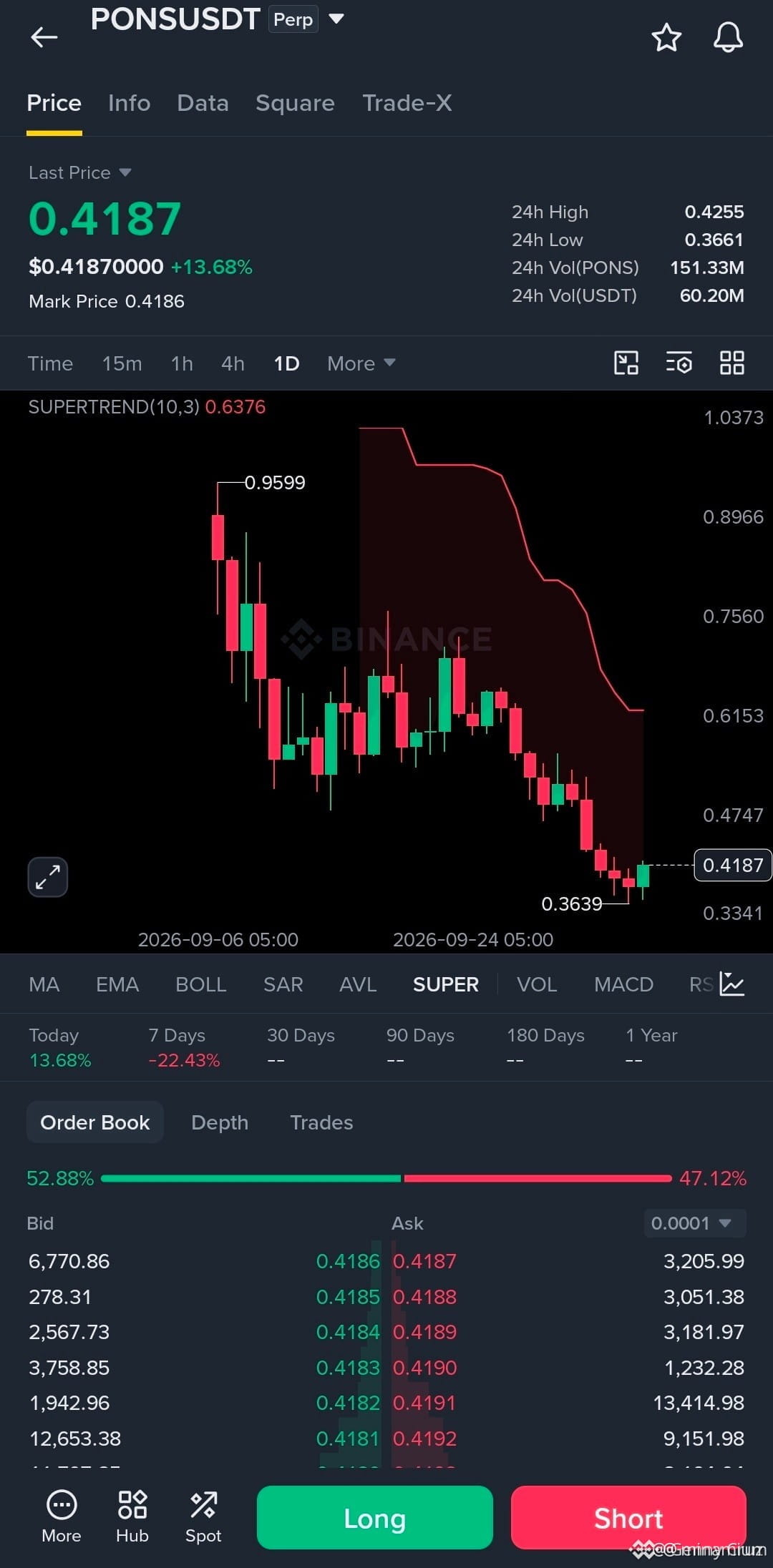
$PONS managed to rebound from its $0.3639 low back up toward $0.419, showing immediate buyer demand on the shorter timeframes. It looks constructive on the surface, but looking closely reveals the broader market structure hasn't flipped yet.
The daily Supertrend sits way higher at $0.6376, meaning the macro trend is still firmly bearish. Until price reclaims that level, moves like this in $PONS and similar mid-caps like $PENDLE or $PYTH remain relief rallies rather than confirmed trend reversals.
Are you treating this move as a structural bottom or just a textbook dead cat bounce?
#CryptoTrading #TechnicalAnalysis #Altcoins
Here's what happened when a sharp bounce caught an entire room of dip buyers off guard.
Most traders confuse a quick technical reaction with a macro trend shift, piling in early only to end up trapped in the next leg down.
$PONS managed to rebound from its $0.3639 low back up toward $0.419, showing immediate buyer demand on the shorter timeframes. It looks constructive on the surface, but looking closely reveals the broader market structure hasn't flipped yet.
The daily Supertrend sits way higher at $0.6376, meaning the macro trend is still firmly bearish. Until price reclaims that level, moves like this in $PONS and similar mid-caps like $PENDLE or $PYTH remain relief rallies rather than confirmed trend reversals.
Are you treating this move as a structural bottom or just a textbook dead cat bounce?
#CryptoTrading #TechnicalAnalysis #Altcoins
Most traders confuse a quick technical reaction with a macro trend shift, piling in early only to end up trapped in the next leg down.
$PONS managed to rebound from its $0.3639 low back up toward $0.419, showing immediate buyer demand on the shorter timeframes. It looks constructive on the surface, but looking closely reveals the broader market structure hasn't flipped yet.
The daily Supertrend sits way higher at $0.6376, meaning the macro trend is still firmly bearish. Until price reclaims that level, moves like this in $PONS and similar mid-caps like $PENDLE or $PYTH remain relief rallies rather than confirmed trend reversals.
Are you treating this move as a structural bottom or just a textbook dead cat bounce?
#CryptoTrading #TechnicalAnalysis #Altcoins

3
·
--
Übersetzung ansehen
If you are rushing to buy every sudden green candle after a brutal downtrend, stop now.
Most traders lose their capital not in the depths of a bear market, but by FOMO buying premature relief bounces right before another leg down. Watching your portfolio bleed out on fake breakouts is the easiest way to get chopped up.
We are finally seeing $PONS show some signs of life with fresh volume after months of a grind down. The bulls are quick to claim the local bottom is in, pointing to short-term momentum flipping while market leaders like $BTC consolidate.
On the other side, bears argue this is just a classic liquidity grab straight into heavy overhead resistance. While the temporary bounce looks encouraging compared to recent $SOL runners, the real test is whether price can flip previous supply into confirmed support rather than trapping breakout buyers. Until higher timeframe market structure breaks bullish, treating this move as a full reversal is premature.
Where do you think this goes from here?
#CryptoTrading #Altcoins #Binance
If you are rushing to buy every sudden green candle after a brutal downtrend, stop now.
Most traders lose their capital not in the depths of a bear market, but by FOMO buying premature relief bounces right before another leg down. Watching your portfolio bleed out on fake breakouts is the easiest way to get chopped up.
We are finally seeing $PONS show some signs of life with fresh volume after months of a grind down. The bulls are quick to claim the local bottom is in, pointing to short-term momentum flipping while market leaders like $BTC consolidate.
On the other side, bears argue this is just a classic liquidity grab straight into heavy overhead resistance. While the temporary bounce looks encouraging compared to recent $SOL runners, the real test is whether price can flip previous supply into confirmed support rather than trapping breakout buyers. Until higher timeframe market structure breaks bullish, treating this move as a full reversal is premature.
Where do you think this goes from here?
#CryptoTrading #Altcoins #Binance
Most traders lose their capital not in the depths of a bear market, but by FOMO buying premature relief bounces right before another leg down. Watching your portfolio bleed out on fake breakouts is the easiest way to get chopped up.
We are finally seeing $PONS show some signs of life with fresh volume after months of a grind down. The bulls are quick to claim the local bottom is in, pointing to short-term momentum flipping while market leaders like $BTC consolidate.
On the other side, bears argue this is just a classic liquidity grab straight into heavy overhead resistance. While the temporary bounce looks encouraging compared to recent $SOL runners, the real test is whether price can flip previous supply into confirmed support rather than trapping breakout buyers. Until higher timeframe market structure breaks bullish, treating this move as a full reversal is premature.
Where do you think this goes from here?
#CryptoTrading #Altcoins #Binance

2
·
--
Übersetzung ansehen
everyone thinks a green daily candle means the bottom is in, but actually you might just be longing someone else exit liquidity.
ngl the most painful way to lose money in this market is fomo buying a relief bounce only to watch it roll over into another lower low because you mistook a dead cat bounce for a macro trend shift.
take $PONS right now as a textbook case study. it bounced nicely off the 0.3639 low to around 0.419, but people are already celebrating like we flipped the entire chart. the reality is the daily supertrend is sitting way up at 0.6376 and still screaming bearish, meaning this entire move is just a fragile recovery attempt within a downtrend, not a confirmed reversal.
if you are trading this setup, getting chopped up here is entirely avoidable if you watch the real levels instead of your emotions. local support sits at 0.38 to 0.40, with 0.3639 being the line in the sand. before anyone dreams of targets higher up, buyers have to cleanly chew through the 0.475 to 0.50 resistance zone, and the real boss fight is that heavy 0.61 to 0.64 block where major resistance lives. until those flip, playing mid-cap altcoins like $PONS or other high beta plays like $PENDLE is strictly a range trade, not a buy-and-forget scenario.
where do you think this goes from here?
#CryptoTrading #Altcoins #TechnicalAnalysis
everyone thinks a green daily candle means the bottom is in, but actually you might just be longing someone else exit liquidity.
ngl the most painful way to lose money in this market is fomo buying a relief bounce only to watch it roll over into another lower low because you mistook a dead cat bounce for a macro trend shift.
take $PONS right now as a textbook case study. it bounced nicely off the 0.3639 low to around 0.419, but people are already celebrating like we flipped the entire chart. the reality is the daily supertrend is sitting way up at 0.6376 and still screaming bearish, meaning this entire move is just a fragile recovery attempt within a downtrend, not a confirmed reversal.
if you are trading this setup, getting chopped up here is entirely avoidable if you watch the real levels instead of your emotions. local support sits at 0.38 to 0.40, with 0.3639 being the line in the sand. before anyone dreams of targets higher up, buyers have to cleanly chew through the 0.475 to 0.50 resistance zone, and the real boss fight is that heavy 0.61 to 0.64 block where major resistance lives. until those flip, playing mid-cap altcoins like $PONS or other high beta plays like $PENDLE is strictly a range trade, not a buy-and-forget scenario.
where do you think this goes from here?
#CryptoTrading #Altcoins #TechnicalAnalysis
ngl the most painful way to lose money in this market is fomo buying a relief bounce only to watch it roll over into another lower low because you mistook a dead cat bounce for a macro trend shift.
take $PONS right now as a textbook case study. it bounced nicely off the 0.3639 low to around 0.419, but people are already celebrating like we flipped the entire chart. the reality is the daily supertrend is sitting way up at 0.6376 and still screaming bearish, meaning this entire move is just a fragile recovery attempt within a downtrend, not a confirmed reversal.
if you are trading this setup, getting chopped up here is entirely avoidable if you watch the real levels instead of your emotions. local support sits at 0.38 to 0.40, with 0.3639 being the line in the sand. before anyone dreams of targets higher up, buyers have to cleanly chew through the 0.475 to 0.50 resistance zone, and the real boss fight is that heavy 0.61 to 0.64 block where major resistance lives. until those flip, playing mid-cap altcoins like $PONS or other high beta plays like $PENDLE is strictly a range trade, not a buy-and-forget scenario.
where do you think this goes from here?
#CryptoTrading #Altcoins #TechnicalAnalysis

9
·
--
Übersetzung ansehen
Have you noticed how quickly traders mistake a standard relief bounce for a full market reversal?
Most people get trapped FOMO buying the very first green candle after a brutal grind down, only to end up as exit liquidity when higher timeframe resistance rejects the move.
Take the recent price action on $PONS as a clear case study. The asset staged a solid reaction from its $0.3639 low to trade around $0.419, finding dependable demand across the $0.38 to $0.40 support base. But reacting from extreme oversold conditions is very different from proving a structural shift.
The daily Supertrend remains firmly bearish up at $0.6376, which keeps this move classified as a recovery attempt rather than a confirmed pivot. For buyers to build real momentum, price has to clear the immediate $0.475 to $0.50 band before even thinking about challenging major overhead resistance between $0.61 and $0.64. Until leaders like $BTC provide sustained market-wide support, chasing relief moves into supply remains a dangerous game.
Are you taking profits into this upcoming resistance zone, or waiting for a confirmed trend shift?
#CryptoTrading #Altcoins #TechnicalAnalysis
Have you noticed how quickly traders mistake a standard relief bounce for a full market reversal?
Most people get trapped FOMO buying the very first green candle after a brutal grind down, only to end up as exit liquidity when higher timeframe resistance rejects the move.
Take the recent price action on $PONS as a clear case study. The asset staged a solid reaction from its $0.3639 low to trade around $0.419, finding dependable demand across the $0.38 to $0.40 support base. But reacting from extreme oversold conditions is very different from proving a structural shift.
The daily Supertrend remains firmly bearish up at $0.6376, which keeps this move classified as a recovery attempt rather than a confirmed pivot. For buyers to build real momentum, price has to clear the immediate $0.475 to $0.50 band before even thinking about challenging major overhead resistance between $0.61 and $0.64. Until leaders like $BTC provide sustained market-wide support, chasing relief moves into supply remains a dangerous game.
Are you taking profits into this upcoming resistance zone, or waiting for a confirmed trend shift?
#CryptoTrading #Altcoins #TechnicalAnalysis
Most people get trapped FOMO buying the very first green candle after a brutal grind down, only to end up as exit liquidity when higher timeframe resistance rejects the move.
Take the recent price action on $PONS as a clear case study. The asset staged a solid reaction from its $0.3639 low to trade around $0.419, finding dependable demand across the $0.38 to $0.40 support base. But reacting from extreme oversold conditions is very different from proving a structural shift.
The daily Supertrend remains firmly bearish up at $0.6376, which keeps this move classified as a recovery attempt rather than a confirmed pivot. For buyers to build real momentum, price has to clear the immediate $0.475 to $0.50 band before even thinking about challenging major overhead resistance between $0.61 and $0.64. Until leaders like $BTC provide sustained market-wide support, chasing relief moves into supply remains a dangerous game.
Are you taking profits into this upcoming resistance zone, or waiting for a confirmed trend shift?
#CryptoTrading #Altcoins #TechnicalAnalysis

2
·
--
Übersetzung ansehen
Most traders see a bounce from multi-month lows and assume the worst is over, but in the last bear cycle over 65 percent of those altcoin recoveries failed to hold once the Supertrend remained bearish.
It is painful watching $PONS grind lower for weeks only to FOMO into the first green candle and get trapped when resistance rejects the move. That fear of missing out has cost more traders their capital than any rug pull.
$PONS currently sits at $0.419 after a strong daily bounce off the $0.3639 low, and buyers have defended it well so far. Yet the daily Supertrend still points down at $0.6376, making this a classic recovery attempt rather than a confirmed trend change. I remember similar setups in 2021 where tokens bounced hard even as $BTC and $ETH showed strength only to roll over again.
Immediate support is clustered between $0.38 and $0.40, with the recent low at $0.3639 acting as the last line of defense. On the upside, $0.475 to $0.50 is the first real test, followed by the major zone at $0.61 to $0.64. Until $PONS can reclaim that Supertrend level with conviction, the path of least resistance stays down, just like we saw with so many alts during the 2022 winter.
Patience is the edge in these markets.
How are you positioning around these potential recovery plays?
#PONS #CryptoTrading #MarketCycles
Most traders see a bounce from multi-month lows and assume the worst is over, but in the last bear cycle over 65 percent of those altcoin recoveries failed to hold once the Supertrend remained bearish.
It is painful watching $PONS grind lower for weeks only to FOMO into the first green candle and get trapped when resistance rejects the move. That fear of missing out has cost more traders their capital than any rug pull.
$PONS currently sits at $0.419 after a strong daily bounce off the $0.3639 low, and buyers have defended it well so far. Yet the daily Supertrend still points down at $0.6376, making this a classic recovery attempt rather than a confirmed trend change. I remember similar setups in 2021 where tokens bounced hard even as $BTC and $ETH showed strength only to roll over again.
Immediate support is clustered between $0.38 and $0.40, with the recent low at $0.3639 acting as the last line of defense. On the upside, $0.475 to $0.50 is the first real test, followed by the major zone at $0.61 to $0.64. Until $PONS can reclaim that Supertrend level with conviction, the path of least resistance stays down, just like we saw with so many alts during the 2022 winter.
Patience is the edge in these markets.
How are you positioning around these potential recovery plays?
#PONS #CryptoTrading #MarketCycles
It is painful watching $PONS grind lower for weeks only to FOMO into the first green candle and get trapped when resistance rejects the move. That fear of missing out has cost more traders their capital than any rug pull.
$PONS currently sits at $0.419 after a strong daily bounce off the $0.3639 low, and buyers have defended it well so far. Yet the daily Supertrend still points down at $0.6376, making this a classic recovery attempt rather than a confirmed trend change. I remember similar setups in 2021 where tokens bounced hard even as $BTC and $ETH showed strength only to roll over again.
Immediate support is clustered between $0.38 and $0.40, with the recent low at $0.3639 acting as the last line of defense. On the upside, $0.475 to $0.50 is the first real test, followed by the major zone at $0.61 to $0.64. Until $PONS can reclaim that Supertrend level with conviction, the path of least resistance stays down, just like we saw with so many alts during the 2022 winter.
Patience is the edge in these markets.
How are you positioning around these potential recovery plays?
#PONS #CryptoTrading #MarketCycles
2
·
--
Übersetzung ansehen
If you are buying every relief pump thinking it is an instant macro bottom, stop now.
FOMO chasing sudden green candles is the fastest way traders bleed capital while trying to catch falling knives.
$PONS is finally seeing some life, pushing up to $0.419 after rebounding off its $0.3639 low with solid daily buying volume. The bulls are quick to celebrate this momentum, but the daily Supertrend remains firmly bearish overhead at $0.6376. There is decent local support between $0.38 and $0.40, but heading straight into the $0.475 to $0.50 supply zone without building a base usually ends poorly.
Some traders argue this bounce marks an early accumulation phase alongside $BTC stability, but the higher-timeframe reality says this is still just a recovery attempt. Until the market can decisively reclaim the major $0.61 to $0.64 resistance block, treat this as a relief rally rather than a confirmed trend reversal.
Are you treating this move as an actual trend shift or just another exit pump for trapped buyers?
#CryptoTrading #PONS #Altcoins
If you are buying every relief pump thinking it is an instant macro bottom, stop now.
FOMO chasing sudden green candles is the fastest way traders bleed capital while trying to catch falling knives.
$PONS is finally seeing some life, pushing up to $0.419 after rebounding off its $0.3639 low with solid daily buying volume. The bulls are quick to celebrate this momentum, but the daily Supertrend remains firmly bearish overhead at $0.6376. There is decent local support between $0.38 and $0.40, but heading straight into the $0.475 to $0.50 supply zone without building a base usually ends poorly.
Some traders argue this bounce marks an early accumulation phase alongside $BTC stability, but the higher-timeframe reality says this is still just a recovery attempt. Until the market can decisively reclaim the major $0.61 to $0.64 resistance block, treat this as a relief rally rather than a confirmed trend reversal.
Are you treating this move as an actual trend shift or just another exit pump for trapped buyers?
#CryptoTrading #PONS #Altcoins
FOMO chasing sudden green candles is the fastest way traders bleed capital while trying to catch falling knives.
$PONS is finally seeing some life, pushing up to $0.419 after rebounding off its $0.3639 low with solid daily buying volume. The bulls are quick to celebrate this momentum, but the daily Supertrend remains firmly bearish overhead at $0.6376. There is decent local support between $0.38 and $0.40, but heading straight into the $0.475 to $0.50 supply zone without building a base usually ends poorly.
Some traders argue this bounce marks an early accumulation phase alongside $BTC stability, but the higher-timeframe reality says this is still just a recovery attempt. Until the market can decisively reclaim the major $0.61 to $0.64 resistance block, treat this as a relief rally rather than a confirmed trend reversal.
Are you treating this move as an actual trend shift or just another exit pump for trapped buyers?
#CryptoTrading #PONS #Altcoins

6
·
--
Übersetzung ansehen
Picture this: you opened a heavy leveraged position months ago, watched the market nosedive, and spent every day hoping for a bounce just to get your capital back.
Most traders know the gut-wrenching feeling of holding an underwater bag while watching the rest of the market move on. It is the classic trap of refusing to take a loss until hope becomes your entire risk management strategy.
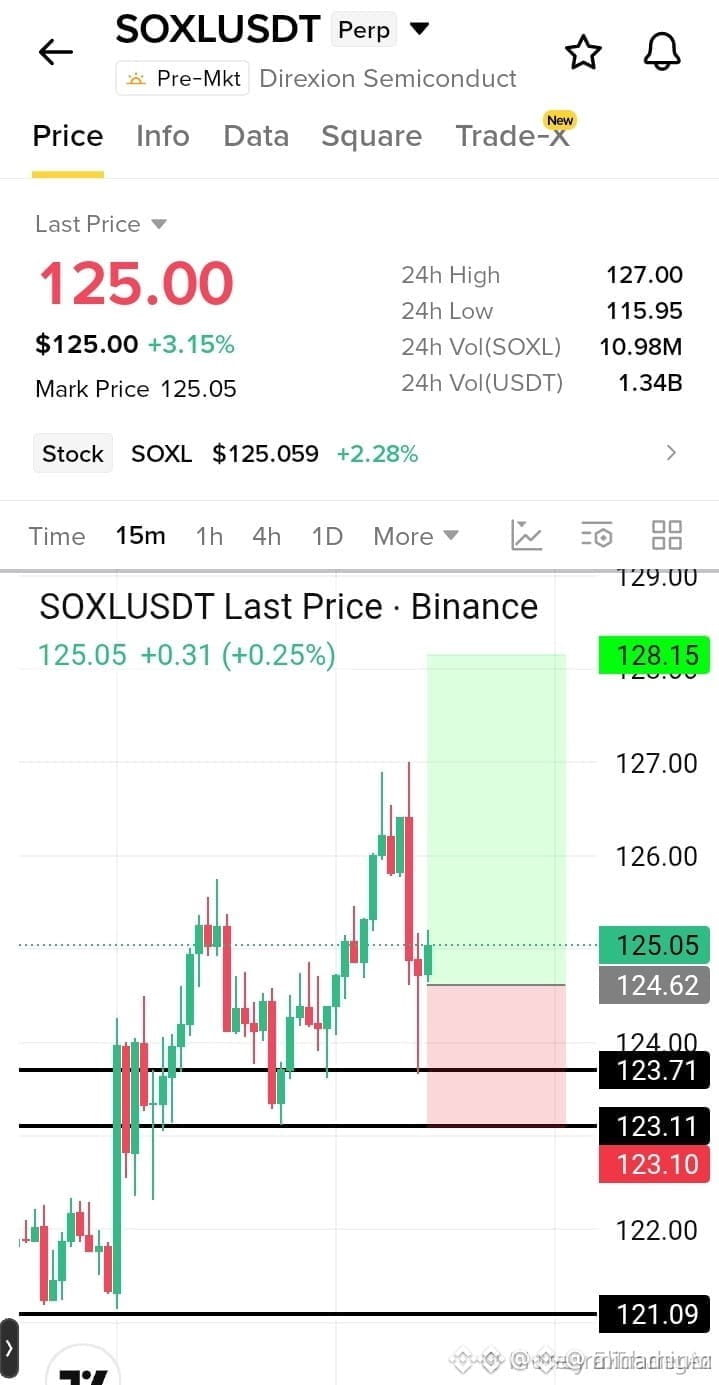
We are seeing this exact script play out with ancient $SOXL positions right now. One trader sitting on a $SOXL perp long is still nursing an unrealized loss of -$6,881.65 USDT with the asset down -0.72%, stubbornly holding as breakeven finally comes within reach. It feels very similar to the deep $BTC and $ETH longs during past market pullbacks, where accounts absorbed months of pain just waiting for liquidity to rotate back.
Leveraged products punish patience because funding rates and chop silently bleed your margin balance. Surviving a drawdown this deep is rarely about brilliant market timing; it is usually just an expensive endurance test against liquidation.
When a long-held underwater position finally crawls back near your entry, do you take the exit or hold out for green?
#CryptoTrading #Futures #TradingPsychology
Picture this: you opened a heavy leveraged position months ago, watched the market nosedive, and spent every day hoping for a bounce just to get your capital back.
Most traders know the gut-wrenching feeling of holding an underwater bag while watching the rest of the market move on. It is the classic trap of refusing to take a loss until hope becomes your entire risk management strategy.
We are seeing this exact script play out with ancient $SOXL positions right now. One trader sitting on a $SOXL perp long is still nursing an unrealized loss of -$6,881.65 USDT with the asset down -0.72%, stubbornly holding as breakeven finally comes within reach. It feels very similar to the deep $BTC and $ETH longs during past market pullbacks, where accounts absorbed months of pain just waiting for liquidity to rotate back.
Leveraged products punish patience because funding rates and chop silently bleed your margin balance. Surviving a drawdown this deep is rarely about brilliant market timing; it is usually just an expensive endurance test against liquidation.
When a long-held underwater position finally crawls back near your entry, do you take the exit or hold out for green?
#CryptoTrading #Futures #TradingPsychology
Most traders know the gut-wrenching feeling of holding an underwater bag while watching the rest of the market move on. It is the classic trap of refusing to take a loss until hope becomes your entire risk management strategy.
We are seeing this exact script play out with ancient $SOXL positions right now. One trader sitting on a $SOXL perp long is still nursing an unrealized loss of -$6,881.65 USDT with the asset down -0.72%, stubbornly holding as breakeven finally comes within reach. It feels very similar to the deep $BTC and $ETH longs during past market pullbacks, where accounts absorbed months of pain just waiting for liquidity to rotate back.
Leveraged products punish patience because funding rates and chop silently bleed your margin balance. Surviving a drawdown this deep is rarely about brilliant market timing; it is usually just an expensive endurance test against liquidation.
When a long-held underwater position finally crawls back near your entry, do you take the exit or hold out for green?
#CryptoTrading #Futures #TradingPsychology
6
Anmelden und weiter Inhalte entdecken
Krypto-Nutzer weltweit auf Binance Square kennenlernen
⚡️ Bleib in Sachen Krypto stets am Puls.
💬 Die weltgrößte Kryptobörse vertraut darauf.
👍 Erhalte verlässliche Einblicke von verifizierten Creators.
E-Mail-Adresse/Telefonnummer
Trendthemen
BinanceLaunchesBinanceIntelligence
760,608 Aufrufe
4,730 Kommentare
🚨 BINANCE BRINGT KI NOCH TIEFER IN DIE KRYPTO-WELT.
Binance hat Binance Intelligence gestartet – eine neue KI-gestützte Ebene, die auf Marktforschung, Trading-Prozesse und Krypto-Daten ausgerichtet ist.
Was besonders spannend ist?
Es ist nicht nur ein einziges Tool.
🧠 Binance AI → personalisierte Marktanalysen, Alerts und Portfolio-Einblicke
⚡ Binance AI Pro → verwandelt natürlichsprachliche Ideen in Trading-Prozesse
🤖 Agent OS → verbindet KI-Agenten mit den Möglichkeiten von Märkten, Portfolios und der Blockchain
Das ist eine große Veränderung.
Krypto-Plattformen versorgen Trader nicht mehr nur mit Charts und Daten.
Sie beginnen, ihnen KI-Systeme anzubieten, die diese Daten interpretieren können.
Die entscheidende Frage lautet:
Wird KI unter Tradern so alltäglich werden wie heute Indikatoren und Charts? 👀
$BTC
$GRIFFAIN
$NMR
#BinanceLaunchesBinanceIntelligence
Jacob trade
·0 Likes
·73 Aufrufe
BTCFallsBelow$84K
36,202 Aufrufe
124 Kommentare
DubaiVARAIssuesReserveAssetAuditCircular
11,425 Aufrufe
409 Kommentare