
#tradfi
tradfi
1.9M views
15,535 Discussing
Hot
Latest

🚀 Traditional Finance meets Blockchain as DBS and Citi achieve a major milestone!
DBS Bank and Citi have successfully executed the first-ever weekend cross-border USD settlement between Singapore and the United States using tokenized deposits. This marks a massive leap forward for 24/7 global liquidity.
🔹 Real-World Tokenization: The transaction demonstrates how tokenized deposits can bypass traditional banking hour limitations, enabling seamless weekend settlements.
🔹 Institutional Adoption: Two of the world's largest financial institutions are actively utilizing blockchain-based solutions for real settlement utility.
🔹 Efficiency Boost: This pilot showcases the reduction of friction and settlement risk in cross-border payments, setting a new standard for global banking.
This milestone proves that the future of banking lies in blockchain integration and asset tokenization.
$BTC $ETH #Tokenization #TradFi #CryptoNews #Write2Earn
DBS Bank and Citi have successfully executed the first-ever weekend cross-border USD settlement between Singapore and the United States using tokenized deposits. This marks a massive leap forward for 24/7 global liquidity.
🔹 Real-World Tokenization: The transaction demonstrates how tokenized deposits can bypass traditional banking hour limitations, enabling seamless weekend settlements.
🔹 Institutional Adoption: Two of the world's largest financial institutions are actively utilizing blockchain-based solutions for real settlement utility.
🔹 Efficiency Boost: This pilot showcases the reduction of friction and settlement risk in cross-border payments, setting a new standard for global banking.
This milestone proves that the future of banking lies in blockchain integration and asset tokenization.
$BTC $ETH #Tokenization #TradFi #CryptoNews #Write2Earn

📈 1000+ Stocks & ETFs on Binance
Binance has launched stock options on more than 1,000 selected U.S.-listed stocks and ETFs.
The interesting part?
Users can manage crypto and stock-related products through the same Binance ecosystem.
Traditional finance and crypto are becoming increasingly connected. 🌎
Do you think more traditional assets will move onto crypto platforms?
#Binance #Stocks #StockOptions #Crypto #TradFi
Binance has launched stock options on more than 1,000 selected U.S.-listed stocks and ETFs.
The interesting part?
Users can manage crypto and stock-related products through the same Binance ecosystem.
Traditional finance and crypto are becoming increasingly connected. 🌎
Do you think more traditional assets will move onto crypto platforms?
#Binance #Stocks #StockOptions #Crypto #TradFi


While you are out here chasing the next shiny dog coin, institutions are quietly setting up the board for checkmate.
Look at what $LINK is actually doing behind closed doors.
They are still working deeply with SWIFT. They are still building with the DTCC.
And now? Bottomline and its massive network of 600 banks just entered the chat.
Here is a pro tip from someone who has been around the block: Traditional institutions do not take chances. They don't gamble on hype.
Thousands of banks are currently waiting in the wings for regulatory clarity. Once that green light flashes, the infrastructure is already built and running on Chainlink.
The smart money is securing their positions right now. If you fade $LINK here, you are fading the entire digitization of TradFi.
#LINK #TradFi #Chainlink
Look at what $LINK is actually doing behind closed doors.
They are still working deeply with SWIFT. They are still building with the DTCC.
And now? Bottomline and its massive network of 600 banks just entered the chat.
Here is a pro tip from someone who has been around the block: Traditional institutions do not take chances. They don't gamble on hype.
Thousands of banks are currently waiting in the wings for regulatory clarity. Once that green light flashes, the infrastructure is already built and running on Chainlink.
The smart money is securing their positions right now. If you fade $LINK here, you are fading the entire digitization of TradFi.
#LINK #TradFi #Chainlink
🌐 Massive TradFi Leap: DBS and Citi Complete Weekend USD Payments via Swift's Blockchain!
Major banking giants DBS and Citi have successfully executed instant, 24/7 cross-border USD transactions using tokenized deposits on Swift’s Digital Ledger, CoinDesk reports. This marks a critical milestone in the race between traditional finance networks and native crypto rails.
🔹 **Real-World Utility:** This transaction represents the second confirmed live use of Swift's blockchain ledger.
🔹 **Challenging Crypto:** Swift is actively upgrading its network to prove it can compete with digital payment rails that never close.
🔹 **Tokenization Power:** The use of tokenized deposits shows how commercial bank money is evolving to fit digital economies.
As blockchain technology bridges the gap with traditional banking, the line between TradFi and DeFi continues to blur.
$BTC $XRP #Swift #Tokenization #TradFi #Write2Earn
Major banking giants DBS and Citi have successfully executed instant, 24/7 cross-border USD transactions using tokenized deposits on Swift’s Digital Ledger, CoinDesk reports. This marks a critical milestone in the race between traditional finance networks and native crypto rails.
🔹 **Real-World Utility:** This transaction represents the second confirmed live use of Swift's blockchain ledger.
🔹 **Challenging Crypto:** Swift is actively upgrading its network to prove it can compete with digital payment rails that never close.
🔹 **Tokenization Power:** The use of tokenized deposits shows how commercial bank money is evolving to fit digital economies.
As blockchain technology bridges the gap with traditional banking, the line between TradFi and DeFi continues to blur.
$BTC $XRP #Swift #Tokenization #TradFi #Write2Earn

🚀🚀🚀 TradFi Focus 🚀🚀🚀
TradFi perpetuals may serve as a tactical sleeve rather than a core holding. Keep exposure small, monitor correlations and separate short-term trades from investments.
$TSLA $NVDA $MSTR
#TradFi #RWA #StockMarket #TokenizedStocks #BinanceFutures
TradFi perpetuals may serve as a tactical sleeve rather than a core holding. Keep exposure small, monitor correlations and separate short-term trades from investments.
$TSLA $NVDA $MSTR
#TradFi #RWA #StockMarket #TokenizedStocks #BinanceFutures


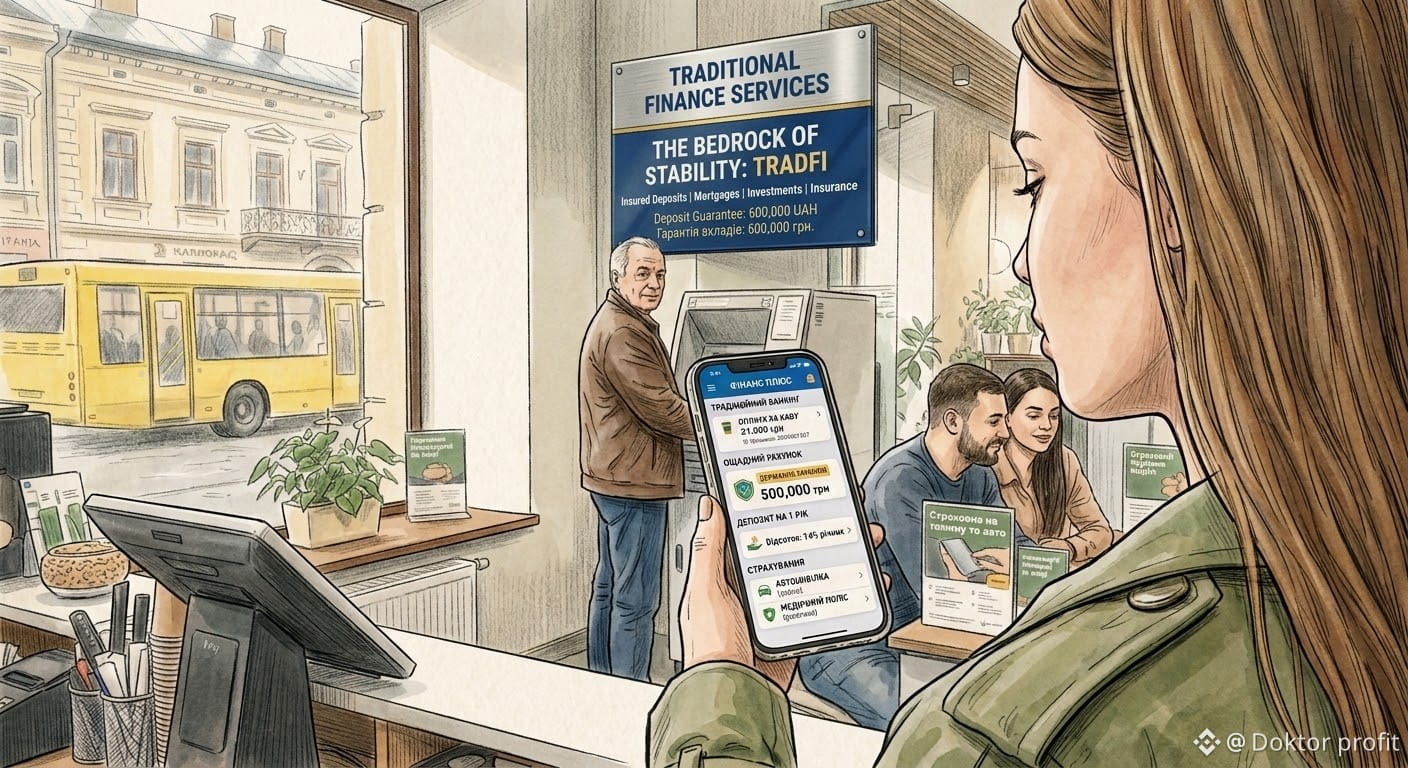
interact with traditional finance (#TradF i) every single day, even when I don't give it much thought. It is my baseline: paying for coffee with a card, receiving my salary, or setting aside a bit of money for the future.
Here is how it fits into my daily routine:
Daily expenses: I open my banking app to split a lunch bill with a friend, pay utility bills, or buy groceries. Tapping my phone via Apple Pay or Google Pay at the store is #TradFi in action, running on standard Visa or Mastercard networks.
Financial safety net: Rather than keeping my savings under the mattress, I put money into a high-yield savings account or a term deposit. I can sleep soundly knowing these funds are government-insured.
Major purchases & investing: When buying expensive tech, I rely on bank installment plans. When I decide to invest, I buy government bonds or stocks through a regulated broker, keeping everything transparent and legal.
Insurance & peace of mind: From auto insurance to health coverage, policies shield my wallet from unexpected life expenses.
Why do I stick with it? Because it is simple, secure, and straightforward. If anything goes wrong, I can always contact customer support or walk into a local branch. #TradFi provides the stability I need for my everyday life.$MSFTB $AMZNB $NVDAB
Here is how it fits into my daily routine:
Daily expenses: I open my banking app to split a lunch bill with a friend, pay utility bills, or buy groceries. Tapping my phone via Apple Pay or Google Pay at the store is #TradFi in action, running on standard Visa or Mastercard networks.
Financial safety net: Rather than keeping my savings under the mattress, I put money into a high-yield savings account or a term deposit. I can sleep soundly knowing these funds are government-insured.
Major purchases & investing: When buying expensive tech, I rely on bank installment plans. When I decide to invest, I buy government bonds or stocks through a regulated broker, keeping everything transparent and legal.
Insurance & peace of mind: From auto insurance to health coverage, policies shield my wallet from unexpected life expenses.
Why do I stick with it? Because it is simple, secure, and straightforward. If anything goes wrong, I can always contact customer support or walk into a local branch. #TradFi provides the stability I need for my everyday life.$MSFTB $AMZNB $NVDAB

Stablecoins were supposed to reduce reliance on traditional banks. Instead, the biggest players may be building even deeper into the banking system.
The article points to Stripe’s $1.1 billion acquisition of Bridge, whose core business involves coordinating bank relationships, alongside Citi’s crypto-custody plans and Standard Chartered’s testing in the sector.
That’s an important reality check for the “crypto replaces banks” narrative. Stablecoins can move value on-chain, but scaling them globally still requires fiat rails, custody, compliance, settlement and trusted access to the banking system.
For users and investors, the question is not whether banks disappear from stablecoin infrastructure. It’s which banks, payment firms and crypto platforms become the key gateways between on-chain money and the real economy.
Watch whether more major financial institutions move from pilots and custody services into direct stablecoin issuance, settlement or distribution.
Are stablecoins reshaping banking—or simply creating a new banking layer for crypto?
#Stablecoins #CryptoNews #TradFi
The article points to Stripe’s $1.1 billion acquisition of Bridge, whose core business involves coordinating bank relationships, alongside Citi’s crypto-custody plans and Standard Chartered’s testing in the sector.
That’s an important reality check for the “crypto replaces banks” narrative. Stablecoins can move value on-chain, but scaling them globally still requires fiat rails, custody, compliance, settlement and trusted access to the banking system.
For users and investors, the question is not whether banks disappear from stablecoin infrastructure. It’s which banks, payment firms and crypto platforms become the key gateways between on-chain money and the real economy.
Watch whether more major financial institutions move from pilots and custody services into direct stablecoin issuance, settlement or distribution.
Are stablecoins reshaping banking—or simply creating a new banking layer for crypto?
#Stablecoins #CryptoNews #TradFi
$LINK
Charles Schwab is reportedly expanding its crypto offering beyond Bitcoin and Ethereum—and Chainlink is on the list.
The firm plans to add , alongside Solana and Avalanche, to Schwab Crypto accounts. If implemented as described, that would give Schwab clients a more direct route to buy LINK through a major traditional brokerage platform.
$LINK
Why it matters: access is still one of crypto’s biggest adoption barriers. Adding established altcoins to a familiar investing interface could broaden visibility beyond crypto-native exchanges and wallets.
For Chainlink, the story is less about a guaranteed market move and more about distribution. Easier availability through mainstream financial platforms can put an asset in front of a very different investor audience.
The next details to watch are the launch timeline, account eligibility and whether Schwab continues expanding its supported crypto list.
Could ’s addition signal that major brokerages are ready to move beyond the BTC-and-ETH-only playbook?
#Chainlink #CryptoNews #TradFi
Charles Schwab is reportedly expanding its crypto offering beyond Bitcoin and Ethereum—and Chainlink is on the list.
The firm plans to add , alongside Solana and Avalanche, to Schwab Crypto accounts. If implemented as described, that would give Schwab clients a more direct route to buy LINK through a major traditional brokerage platform.
$LINK
Why it matters: access is still one of crypto’s biggest adoption barriers. Adding established altcoins to a familiar investing interface could broaden visibility beyond crypto-native exchanges and wallets.
For Chainlink, the story is less about a guaranteed market move and more about distribution. Easier availability through mainstream financial platforms can put an asset in front of a very different investor audience.
The next details to watch are the launch timeline, account eligibility and whether Schwab continues expanding its supported crypto list.
Could ’s addition signal that major brokerages are ready to move beyond the BTC-and-ETH-only playbook?
#Chainlink #CryptoNews #TradFi

Crypto trades 24/7. Traditional markets don’t. Crypto can move 10% before breakfast. Stocks can make a 2% move feel important.
And honestly, I think there is value in understanding both worlds.
#TradFi exposure can bring different companies, sectors and market cycles into a portfolio, while crypto offers a completely different risk/reward profile.
For me, the interesting question isn’t “TradFi or crypto?”
It’s: what job should each one do in my portfolio?
Different markets. Different risks. Different opportunities.
And honestly, I think there is value in understanding both worlds.
#TradFi exposure can bring different companies, sectors and market cycles into a portfolio, while crypto offers a completely different risk/reward profile.
For me, the interesting question isn’t “TradFi or crypto?”
It’s: what job should each one do in my portfolio?
Different markets. Different risks. Different opportunities.

🚀🚀🚀 TradFi Focus 🚀🚀🚀
A practical TradFi setup starts with a market catalyst, confirmation after the open and a fixed invalidation level. Never let leverage replace a clear trading plan.
$TSLA $NVDA $MSTR
#TradFi #RWA #StockMarket #TokenizedStocks #BinanceFutures
A practical TradFi setup starts with a market catalyst, confirmation after the open and a fixed invalidation level. Never let leverage replace a clear trading plan.
$TSLA $NVDA $MSTR
#TradFi #RWA #StockMarket #TokenizedStocks #BinanceFutures

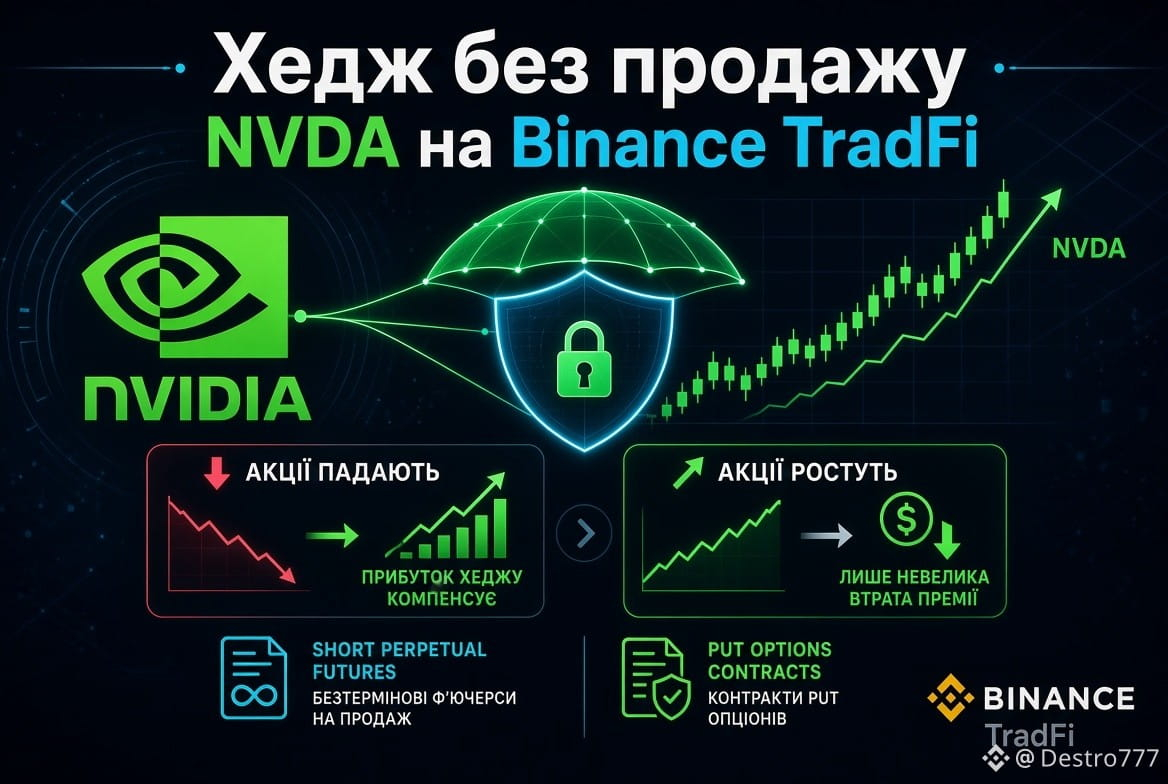
Practical case: how to hedge a stock drop without selling it
Scenario: you hold $5,000 in real Nvidia shares via Binance (Nest Trading). The company’s report is coming out in a week, and you want to protect yourself from a possible crash—yet you don’t want to sell the position (capital gains taxes, long-term plan).
Solution — Binance TradFi hedging instruments without selling the underlying asset:
🔹 NVDA equity perpetual — open a short position with modest leverage in an amount that covers part of the risk. It trades 24/7, so the hedge works even over the weekend before the report.
🔹 Or a put option — buy an NVDA put option (physically backed contract), fixing the maximum loss at the option premium value—an even more precise tool than a perpetual for one-off risks like a “report.”
What happens next:
— If the stock falls after the report → the profit from the short/option partially offsets the decline in the value of the actual shares.
— If the stock rises → you only lose the option premium (or a small amount on the perpetual), while your underlying stock position grows.
Key advantage: everything happens in a single account.
#TradFi #BinanceSquareTalks #Hedgingexpert
Scenario: you hold $5,000 in real Nvidia shares via Binance (Nest Trading). The company’s report is coming out in a week, and you want to protect yourself from a possible crash—yet you don’t want to sell the position (capital gains taxes, long-term plan).
Solution — Binance TradFi hedging instruments without selling the underlying asset:
🔹 NVDA equity perpetual — open a short position with modest leverage in an amount that covers part of the risk. It trades 24/7, so the hedge works even over the weekend before the report.
🔹 Or a put option — buy an NVDA put option (physically backed contract), fixing the maximum loss at the option premium value—an even more precise tool than a perpetual for one-off risks like a “report.”
What happens next:
— If the stock falls after the report → the profit from the short/option partially offsets the decline in the value of the actual shares.
— If the stock rises → you only lose the option premium (or a small amount on the perpetual), while your underlying stock position grows.
Key advantage: everything happens in a single account.
#TradFi #BinanceSquareTalks #Hedgingexpert

Partly True
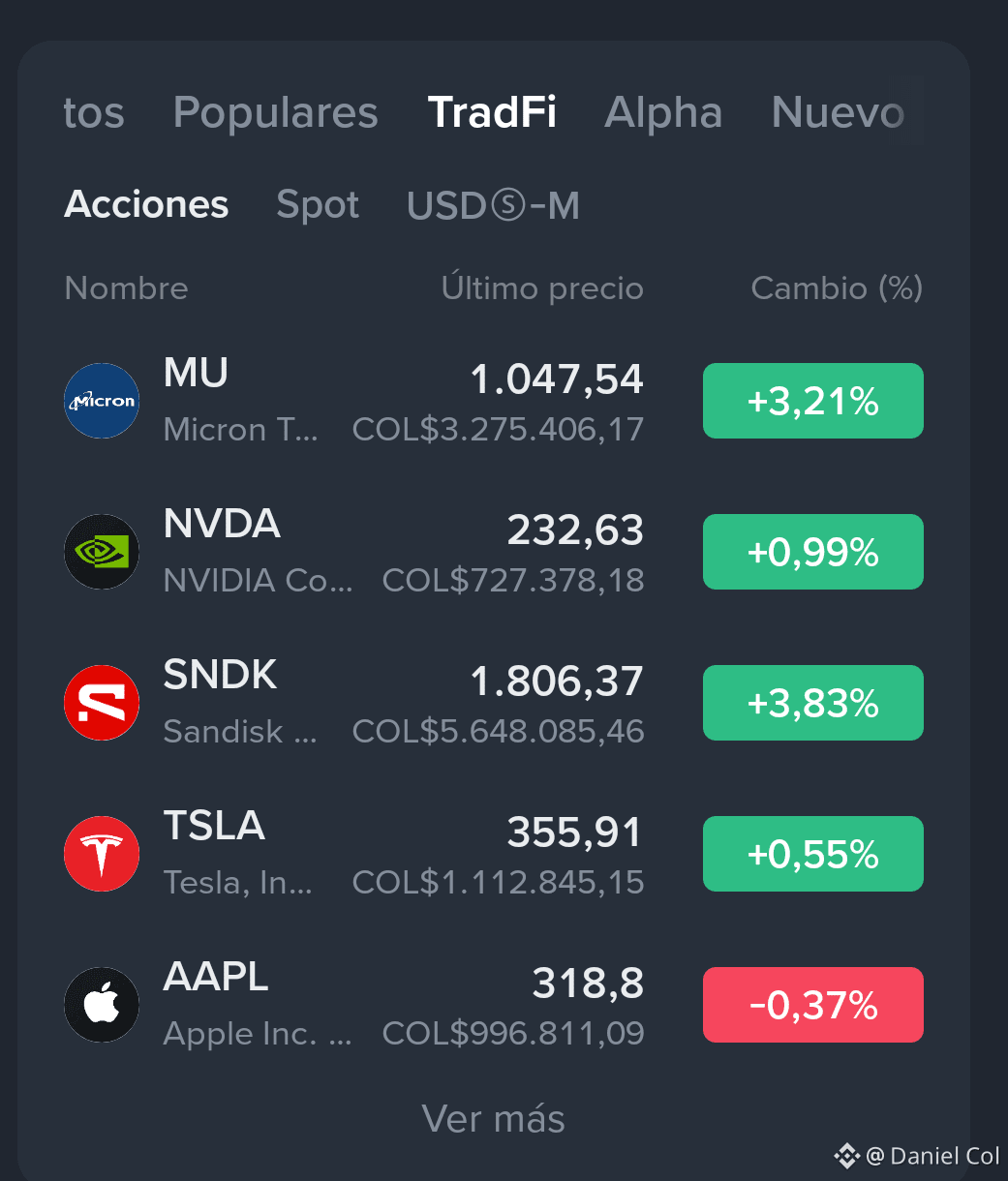
TradFi Stocks (MU, NVDA, SNDK, TSLA, AAPL)
📈 TradFi stocks on Binance right now:
Micron (MU) +3.21%
NVIDIA +0.99%
Sandisk +3.83%
Tesla +0.55%
Apple -0.37%
Who is rotating capital into tokenized stocks?
Sandisk and Micron leading the day.
#TradFi #NVDA #TSLA #BinanceSquare $NVDAB
$TSLA
$SNDK
📈 TradFi stocks on Binance right now:
Micron (MU) +3.21%
NVIDIA +0.99%
Sandisk +3.83%
Tesla +0.55%
Apple -0.37%
Who is rotating capital into tokenized stocks?
Sandisk and Micron leading the day.
#TradFi #NVDA #TSLA #BinanceSquare $NVDAB
$TSLA
$SNDK

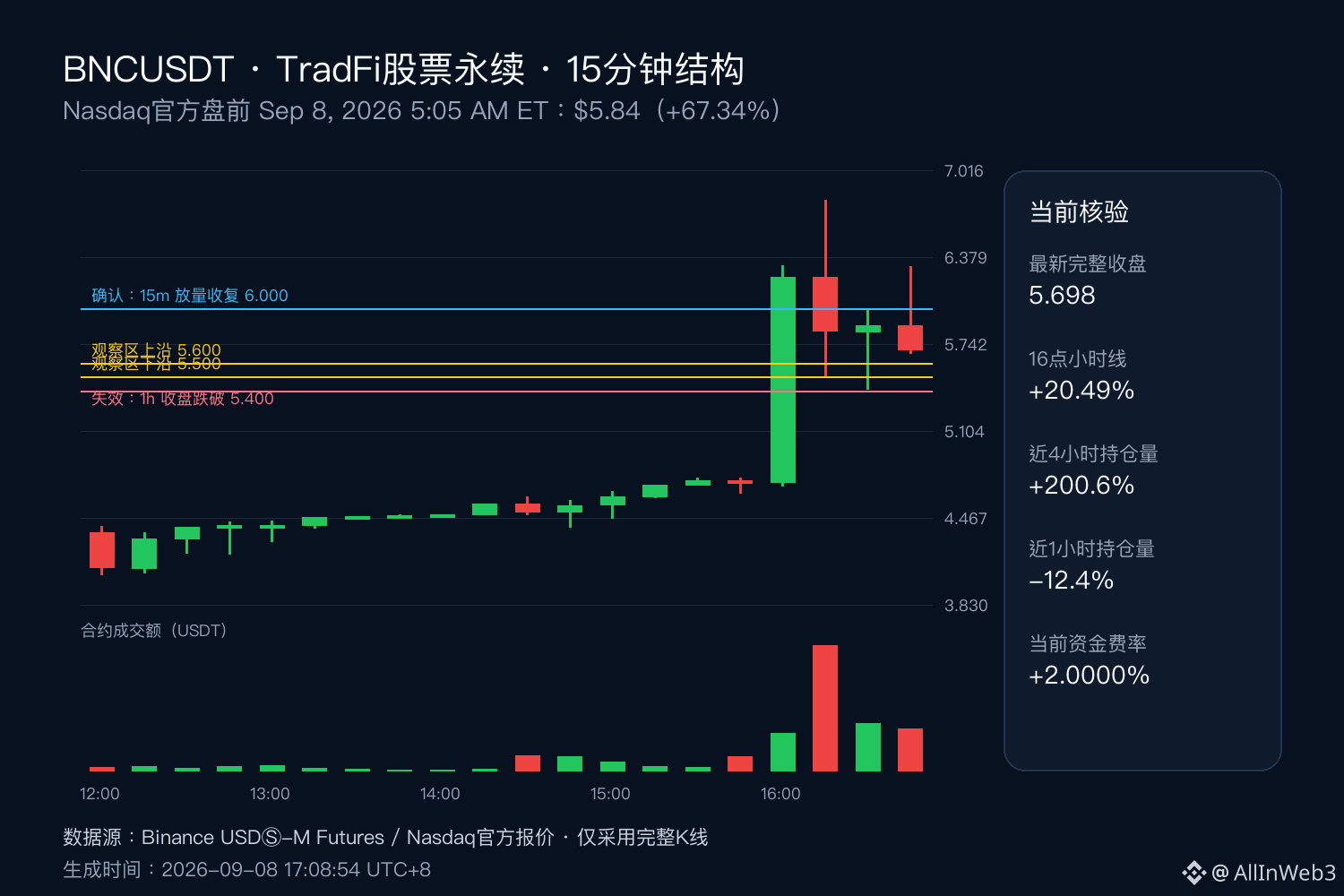
I’m just observing BNC for now—I’m not chasing this sharp pull-up. First, let’s clarify the identity: Binance has labeled BNCUSDT as a TradFi stock perpetual tied to CEA Industries (NASDAQ: BNC). It’s not Bifrost’s similarly named crypto token, so these two assets can’t be viewed interchangeably.
The price action is indeed strong, but the structure is already crowded. Binance’s full candlestick chart shows that the 4pm hourly line rose from 4.729 to 5.698, up 20.49%. It peaked intraday at 6.796, then clearly pulled back. In the Nasdaq official premarket, the 5:05 ET quote is $5.84, up 67.34%, which aligns with the direction of the Binance index. The company’s 8-K filed on September 4 is also explicit that this disclosure does not change the terms of any class of securities, so I won’t force an interpretation of the old document as the reason for today’s rally.
More concerning is this: over the past 4 hours, the number of contract positions has grown by about 200.6%. The current funding rate is already at +2.0000%. Over the last 1 hour, the open interest has fallen again by 12.4%, indicating that deleveraging has already started at the highs. The next burst of volatility may come soon.
I’m only considering two ways to participate: (1) after a pullback to 5.50–5.60, with reduced volume as selling pressure stops, then higher lows on two consecutive 15-minute candles; or (2) after the funding rate drops noticeably, when the 15-minute trading value is higher than the average of the previous four candles and the price reclaims 6.000, then wait for a confirmed pullback. If the 1-hour close breaks below 5.400, the bullish observation thesis is invalid.#BNC #TradFi #BNB
The price action is indeed strong, but the structure is already crowded. Binance’s full candlestick chart shows that the 4pm hourly line rose from 4.729 to 5.698, up 20.49%. It peaked intraday at 6.796, then clearly pulled back. In the Nasdaq official premarket, the 5:05 ET quote is $5.84, up 67.34%, which aligns with the direction of the Binance index. The company’s 8-K filed on September 4 is also explicit that this disclosure does not change the terms of any class of securities, so I won’t force an interpretation of the old document as the reason for today’s rally.
More concerning is this: over the past 4 hours, the number of contract positions has grown by about 200.6%. The current funding rate is already at +2.0000%. Over the last 1 hour, the open interest has fallen again by 12.4%, indicating that deleveraging has already started at the highs. The next burst of volatility may come soon.
I’m only considering two ways to participate: (1) after a pullback to 5.50–5.60, with reduced volume as selling pressure stops, then higher lows on two consecutive 15-minute candles; or (2) after the funding rate drops noticeably, when the 15-minute trading value is higher than the average of the previous four candles and the price reclaims 6.000, then wait for a confirmed pullback. If the 1-hour close breaks below 5.400, the bullish observation thesis is invalid.#BNC #TradFi #BNB
Verified
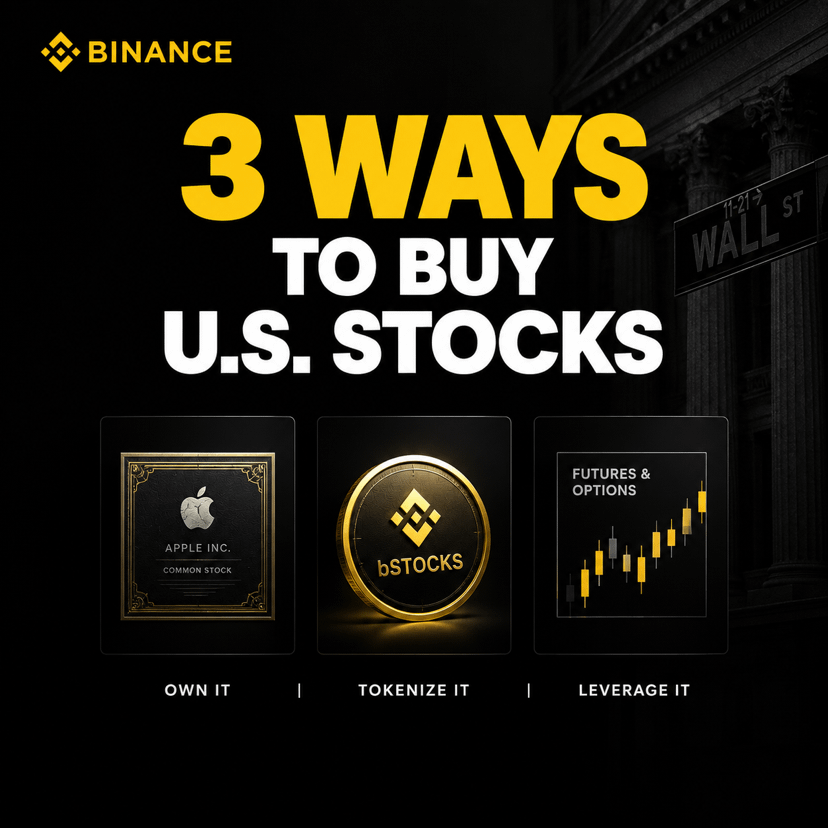
I figured out how US stocks are actually handled here. It turns out there are three different things under one name, and the confusion starts with the word “bought.”
Spot TradFi: 7000+ US stocks and ETFs, zero commission, fractional shares starting from $5. You deposit stablecoins or BNB. Bought—then you have a stock, and that’s all it is: a stock.
bStocks: 46+ tickers, trade 24/7, and get taken off the exchange into their own wallet on the BNB Chain and then go into DeFi. Bought—you don’t have a stock; you have a certificate for it.
Futures and options: you’re not buying an asset, but a right. With futures, nothing remains in your hands. With options, the underlying asset itself can be delivered—they’re here for 1000+ US stocks and ETFs, and they can be physically settled.
So basically, there are three questions it all comes down to:
- What you actually have when everything is closed. A stock / a certificate / with futures, nothing; with options, it can be a stock.
- Can you withdraw it from the exchange. bStocks—yes, to your wallet. For the rest, I haven’t seen that.
- Is there leverage. That’s the third route, and if you need it, then it’s no longer an investment but a trade—and you’re no longer acting as an investor.
Out of the three, I’m closest to spot—because I don’t have to explain anything to a lawyer. But I didn’t make any deals here, so this is still my opinion, not experience.
If you think differently—write why. I still have to decide this.
@Binance_Ukraine
#bStock #tradFi #etf $AAPLB $NVDAB $MSFTB
Spot TradFi: 7000+ US stocks and ETFs, zero commission, fractional shares starting from $5. You deposit stablecoins or BNB. Bought—then you have a stock, and that’s all it is: a stock.
bStocks: 46+ tickers, trade 24/7, and get taken off the exchange into their own wallet on the BNB Chain and then go into DeFi. Bought—you don’t have a stock; you have a certificate for it.
Futures and options: you’re not buying an asset, but a right. With futures, nothing remains in your hands. With options, the underlying asset itself can be delivered—they’re here for 1000+ US stocks and ETFs, and they can be physically settled.
So basically, there are three questions it all comes down to:
- What you actually have when everything is closed. A stock / a certificate / with futures, nothing; with options, it can be a stock.
- Can you withdraw it from the exchange. bStocks—yes, to your wallet. For the rest, I haven’t seen that.
- Is there leverage. That’s the third route, and if you need it, then it’s no longer an investment but a trade—and you’re no longer acting as an investor.
Out of the three, I’m closest to spot—because I don’t have to explain anything to a lawyer. But I didn’t make any deals here, so this is still my opinion, not experience.
If you think differently—write why. I still have to decide this.
@Binance_Ukraine
#bStock #tradFi #etf $AAPLB $NVDAB $MSFTB

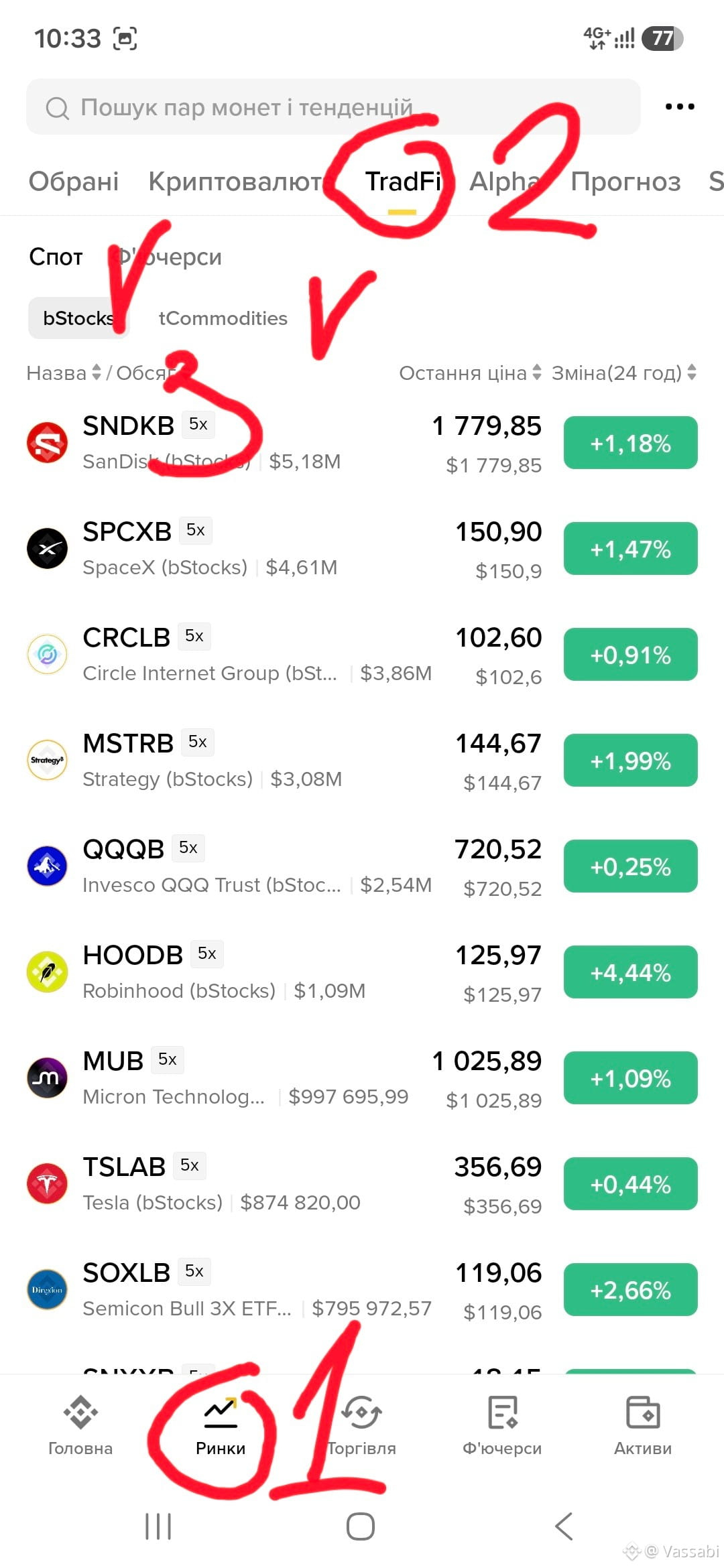
How to find bStocks and TradFi instruments in the Binance app? 📱
Save this simple step-by-step guide for yourself:
1️⃣ Go to the “Markets” section (icon at the bottom).
2️⃣ On the top panel, select the TradFi tab.
3️⃣ Choose a category: bStocks (tokenized stocks) or tCommodities (precious metals and commodities).
4️⃣ Decide on the market type — Spot or Futures.
5️⃣ Select the asset you want — a specific stock, metal, or commodity (e.g., Tesla, gold, etc.).
💡 Important reminder:
Trading in tokenized stocks and metals is linked to the schedule of traditional exchanges, so it is not available on weekends.
Technical analysis works here the same way as for purely crypto trading pairs, but for fundamental analysis I recommend paying a bit more attention—keep an eye on global news and company reports!
#bStocks #TradFi
Save this simple step-by-step guide for yourself:
1️⃣ Go to the “Markets” section (icon at the bottom).
2️⃣ On the top panel, select the TradFi tab.
3️⃣ Choose a category: bStocks (tokenized stocks) or tCommodities (precious metals and commodities).
4️⃣ Decide on the market type — Spot or Futures.
5️⃣ Select the asset you want — a specific stock, metal, or commodity (e.g., Tesla, gold, etc.).
💡 Important reminder:
Trading in tokenized stocks and metals is linked to the schedule of traditional exchanges, so it is not available on weekends.
Technical analysis works here the same way as for purely crypto trading pairs, but for fundamental analysis I recommend paying a bit more attention—keep an eye on global news and company reports!
#bStocks #TradFi

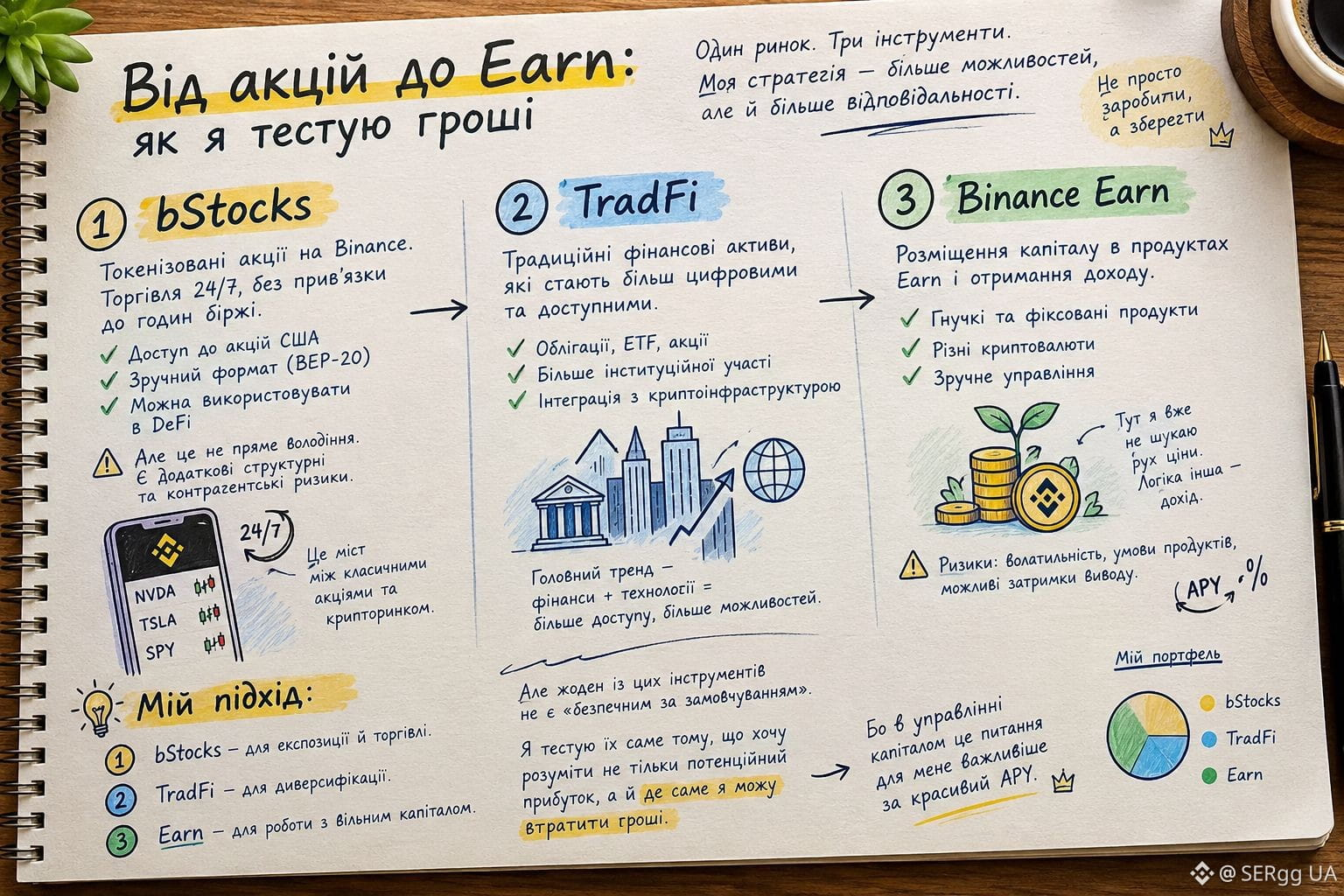
@Binance_Ukraine Lately I’ve been testing a whole chain: bStocks → TradFi → Binance Earn.
I started with #bStocks . For me, it’s an interesting bridge between traditional stocks and the crypto market. A tokenized asset can be traded 24/7, without being tied to exchange hours. But it’s important to understand: it’s not the same as directly owning a stock. Here, there are additional structural and counterparty risks. $NVDAB
Next—#TradFi . This is where I saw the main trend: financial assets are gradually becoming more digital, accessible, and integrated with the infrastructure of the crypto market.
And the third part—#BinanceEarn . Here, I’m no longer looking for price movement. The logic is different: part of the capital can be allocated to the relevant Earn products and you can receive income, understanding the terms and risks.
My approach is simple: bStocks—for exposure and trading, TradFi—for diversification, Earn—for working with idle capital.
But none of these tools is “safe by default.”
I’m testing them precisely because I want to understand not only the potential profit, but also exactly where I might lose money.
Because in capital management, for me this question matters more than a nice APY.
$SPCXB
I started with #bStocks . For me, it’s an interesting bridge between traditional stocks and the crypto market. A tokenized asset can be traded 24/7, without being tied to exchange hours. But it’s important to understand: it’s not the same as directly owning a stock. Here, there are additional structural and counterparty risks. $NVDAB
Next—#TradFi . This is where I saw the main trend: financial assets are gradually becoming more digital, accessible, and integrated with the infrastructure of the crypto market.
And the third part—#BinanceEarn . Here, I’m no longer looking for price movement. The logic is different: part of the capital can be allocated to the relevant Earn products and you can receive income, understanding the terms and risks.
My approach is simple: bStocks—for exposure and trading, TradFi—for diversification, Earn—for working with idle capital.
But none of these tools is “safe by default.”
I’m testing them precisely because I want to understand not only the potential profit, but also exactly where I might lose money.
Because in capital management, for me this question matters more than a nice APY.
$SPCXB

Why RWA is the main trend of this cycle and what bStocks have to do with it? 🌐
The transformation of finance is happening right now. Tokenization of real-world assets (RWA) removes the gap between traditional markets and Web3, and Binance bStocks makes this tool accessible to everyone.
What you get:
🔹 Direct access to tokenized securities of top U.S. companies.
🔹 Capital protection from local crypto-market fluctuations through diversification.
🔹 Easy conversion between stablecoins and stocks in a couple of seconds.
TradFi and DeFi are no longer competing—they’re complementing each other.
👇 What share of your portfolio is made up of tokenized stocks?
#TradFi
The transformation of finance is happening right now. Tokenization of real-world assets (RWA) removes the gap between traditional markets and Web3, and Binance bStocks makes this tool accessible to everyone.
What you get:
🔹 Direct access to tokenized securities of top U.S. companies.
🔹 Capital protection from local crypto-market fluctuations through diversification.
🔹 Easy conversion between stablecoins and stocks in a couple of seconds.
TradFi and DeFi are no longer competing—they’re complementing each other.
👇 What share of your portfolio is made up of tokenized stocks?
#TradFi

The more I dive into the financial market, the more I understand: investing is not just “buy and wait.”
Recently, I started paying closer attention to how crypto instruments and traditional finance—TradFi—come together.
I’m especially interested in the bStocks concept, because it shows just how strongly access to traditional assets is changing today.
In the past, the stock market seemed complicated and far away to many. Now the line between crypto and traditional finance is becoming much less obvious.
But there’s one thing that doesn’t change: before you invest, you need to understand exactly what you’re putting your money into.
Technology makes access easier.
And yet, responsibility for decisions still remains with the investor.
#bStocks #TradFi #Investing #InvestmentStrategy
$SOL
$MSFTB
$TSMB
Recently, I started paying closer attention to how crypto instruments and traditional finance—TradFi—come together.
I’m especially interested in the bStocks concept, because it shows just how strongly access to traditional assets is changing today.
In the past, the stock market seemed complicated and far away to many. Now the line between crypto and traditional finance is becoming much less obvious.
But there’s one thing that doesn’t change: before you invest, you need to understand exactly what you’re putting your money into.
Technology makes access easier.
And yet, responsibility for decisions still remains with the investor.
#bStocks #TradFi #Investing #InvestmentStrategy
$SOL
$MSFTB
$TSMB
Log in to explore more content