

#cryptolending
cryptolending
139,700 views
562 Discussing
Hot
Latest

Coinbase now lets users borrow $USDC stablecoin by pledging Bitcoin ($BTC) as collateral.
The loan features a fixed interest rate and a predetermined repayment date, offering borrowers cost certainty in a market known for rate swings.
This addition broadens the functional use of Bitcoin, allowing holders to unlock liquidity without selling their position. It also signals a growing trend of mainstream exchanges providing structured credit products tied to digital assets. Coinbase has introduced a new product that lets users borrow the USDC stablecoin using their Bitcoin as collateral.
#CryptoLending #Stablecoin #BitcoinCollateral #FixedRate #CoinbaseNews
Coinbase now lets users borrow $USDC stablecoin by pledging Bitcoin ($BTC ) as collateral.
The loan features a fixed interest rate and a predetermined repayment date, offering borrowers cost certainty in a market known for rate swings.
This addition broadens the functional use of Bitcoin, allowing holders to unlock liquidity without selling their position. It also signals a growing trend of mainstream exchanges providing structured credit products tied to digital assets. Coinbase has introduced a new product that lets users borrow the USDC stablecoin using their Bitcoin as collateral.
#CryptoLending #Stablecoin #BitcoinCollateral #FixedRate #CoinbaseNews
The loan features a fixed interest rate and a predetermined repayment date, offering borrowers cost certainty in a market known for rate swings.
This addition broadens the functional use of Bitcoin, allowing holders to unlock liquidity without selling their position. It also signals a growing trend of mainstream exchanges providing structured credit products tied to digital assets. Coinbase has introduced a new product that lets users borrow the USDC stablecoin using their Bitcoin as collateral.
#CryptoLending #Stablecoin #BitcoinCollateral #FixedRate #CoinbaseNews

45

·
--
Someone opened a Space chat about “Can Crypto Lending become mainstream?” and invited Arch Lending. In the lending space, the last cycle was completely wrecked by Celsius and BlockFi, and now we’re back with another “mainstream” narrative. The key is whether this time there are real improvements in loan-to-value (LTV) ratios, liquidation mechanisms, and custody transparency—don’t just change the label and play the same old game. Whether the narrative can be delivered is the question; let on-chain data speak.
$BTC $ETH #CryptoLending #CHAINREACTION
Someone opened a Space chat about “Can Crypto Lending become mainstream?” and invited Arch Lending. In the lending space, the last cycle was completely wrecked by Celsius and BlockFi, and now we’re back with another “mainstream” narrative. The key is whether this time there are real improvements in loan-to-value (LTV) ratios, liquidation mechanisms, and custody transparency—don’t just change the label and play the same old game. Whether the narrative can be delivered is the question; let on-chain data speak.
$BTC $ETH #CryptoLending #CHAINREACTION
$BTC $ETH #CryptoLending #CHAINREACTION

171

🔥 THE LOAN GAME JUST GOT **VOLATILITY‑PROOF** – Jack Mallers detonated the stage at Bitcoin 2026, unveiling Strike’s proof‑of‑reserves ledger and a loan product that won’t melt when BTC spikes to $76,927 (+1.08%).
📊 Proof is in the numbers: Strike now offers instant, collateral‑free credit backed by on‑chain verification, while Mallers publicly backs the upcoming Tether‑Strike merger, a move echoed by #BTC’s bullish sentiment and #Strike’s surge. Smart wallets on Solana (WANG, PAID, ELON) pumped over 168% on related assets, and BNB is already riding a 2.33% climb to $730, confirming institutional appetite. #DeFi
💡 If this lands, the crypto‑lending market could explode, pulling billions into low‑risk credit and pushing #CryptoLending into mainstream finance, while the flood of cross‑chain demand may lift BNB and SOL to new highs.
❓ Are you ready to ride the first wave of truly volatility‑proof loans, or will you watch from the sidelines?
🔥 THE LOAN GAME JUST GOT **VOLATILITY‑PROOF** – Jack Mallers detonated the stage at Bitcoin 2026, unveiling Strike’s proof‑of‑reserves ledger and a loan product that won’t melt when BTC spikes to $76,927 (+1.08%).
📊 Proof is in the numbers: Strike now offers instant, collateral‑free credit backed by on‑chain verification, while Mallers publicly backs the upcoming Tether‑Strike merger, a move echoed by #BTC’s bullish sentiment and #Strike’s surge. Smart wallets on Solana (WANG, PAID, ELON) pumped over 168% on related assets, and BNB is already riding a 2.33% climb to $730, confirming institutional appetite. #DeFi
💡 If this lands, the crypto‑lending market could explode, pulling billions into low‑risk credit and pushing #CryptoLending into mainstream finance, while the flood of cross‑chain demand may lift BNB and SOL to new highs.
❓ Are you ready to ride the first wave of truly volatility‑proof loans, or will you watch from the sidelines?
📊 Proof is in the numbers: Strike now offers instant, collateral‑free credit backed by on‑chain verification, while Mallers publicly backs the upcoming Tether‑Strike merger, a move echoed by #BTC’s bullish sentiment and #Strike’s surge. Smart wallets on Solana (WANG, PAID, ELON) pumped over 168% on related assets, and BNB is already riding a 2.33% climb to $730, confirming institutional appetite. #DeFi
💡 If this lands, the crypto‑lending market could explode, pulling billions into low‑risk credit and pushing #CryptoLending into mainstream finance, while the flood of cross‑chain demand may lift BNB and SOL to new highs.
❓ Are you ready to ride the first wave of truly volatility‑proof loans, or will you watch from the sidelines?

67

🏦 Canadian company launches a credit line supported by Bitcoin and Ethereum for five years
APX Lending, a regulated digital asset lender in Canada, has announced the launch of a new five-year revolving credit facility. The facility allows customers to borrow using Bitcoin and Ethereum, or both, and aims to connect digital assets with traditional financing without additional fees.
━━━━━━━━━━━━━━
📊 Impact: 📈 High
🏷️ DEFI
#CryptoLending #Bitcoin #Ethereum #DigitalAssets #TradFi
📰 Source: prnewswire.com
🏦 Canadian company launches a credit line supported by Bitcoin and Ethereum for five years
APX Lending, a regulated digital asset lender in Canada, has announced the launch of a new five-year revolving credit facility. The facility allows customers to borrow using Bitcoin and Ethereum, or both, and aims to connect digital assets with traditional financing without additional fees.
━━━━━━━━━━━━━━
📊 Impact: 📈 High
🏷️ DEFI
#CryptoLending #Bitcoin #Ethereum #DigitalAssets #TradFi
📰 Source: prnewswire.com
APX Lending, a regulated digital asset lender in Canada, has announced the launch of a new five-year revolving credit facility. The facility allows customers to borrow using Bitcoin and Ethereum, or both, and aims to connect digital assets with traditional financing without additional fees.
━━━━━━━━━━━━━━
📊 Impact: 📈 High
🏷️ DEFI
#CryptoLending #Bitcoin #Ethereum #DigitalAssets #TradFi
📰 Source: prnewswire.com
22

Most traders assume VIP status only comes from grinding massive volume, but parking coins in a 30-day lending product can actually unlock it on its own.
Chasing those lower fees by locking funds is a common trap. You end up stuck when $BTC dumps hard and you can't exit or even hedge, turning a small fee save into a real loss.
I dug into how these VIP setups typically operate. They look at four independent criteria: average balance, spot volume, futures volume, and whether you have active crypto lending fixed plans running 30 days or more. Hit just one and you're VIP. Sounds efficient until you realize your capital is frozen.
The risk hits in a downturn. Your $ETH sits there while it bleeds or your $USDT is locked so you miss buying the dip. Flexibility disappears exactly when you need it most. I've watched traders optimize for fees this way and regret it once volatility spikes.
Where do you think this kind of VIP mechanic actually leaves traders in a real downturn?
#CryptoLending #TradingRisks #VIPStatus
Most traders assume VIP status only comes from grinding massive volume, but parking coins in a 30-day lending product can actually unlock it on its own.
Chasing those lower fees by locking funds is a common trap. You end up stuck when $BTC dumps hard and you can't exit or even hedge, turning a small fee save into a real loss.
I dug into how these VIP setups typically operate. They look at four independent criteria: average balance, spot volume, futures volume, and whether you have active crypto lending fixed plans running 30 days or more. Hit just one and you're VIP. Sounds efficient until you realize your capital is frozen.
The risk hits in a downturn. Your $ETH sits there while it bleeds or your $USDT is locked so you miss buying the dip. Flexibility disappears exactly when you need it most. I've watched traders optimize for fees this way and regret it once volatility spikes.
Where do you think this kind of VIP mechanic actually leaves traders in a real downturn?
#CryptoLending #TradingRisks #VIPStatus
Chasing those lower fees by locking funds is a common trap. You end up stuck when $BTC dumps hard and you can't exit or even hedge, turning a small fee save into a real loss.
I dug into how these VIP setups typically operate. They look at four independent criteria: average balance, spot volume, futures volume, and whether you have active crypto lending fixed plans running 30 days or more. Hit just one and you're VIP. Sounds efficient until you realize your capital is frozen.
The risk hits in a downturn. Your $ETH sits there while it bleeds or your $USDT is locked so you miss buying the dip. Flexibility disappears exactly when you need it most. I've watched traders optimize for fees this way and regret it once volatility spikes.
Where do you think this kind of VIP mechanic actually leaves traders in a real downturn?
#CryptoLending #TradingRisks #VIPStatus

22

·
--
DeFi has been built on one assumption for five years: over-collateralize everything.
Borrow $100? Put up $150 first. It works, but it locks up enormous capital and excludes the borrowers who cannot afford that friction.
The next evolution is on-chain credit — undercollateralized lending powered by verifiable wallet history, on-chain reputation, and programmable cash-flow data.
Here is why this matters:
— Over-collateralized DeFi serves users who already have assets. Undercollateralized lending opens the door to businesses, DAOs, and emerging-market borrowers who need capital, not more leverage.
— On-chain data is uniquely powerful for credit scoring. Wallet history, protocol interactions, DAO contributions, and payment streams are verifiable, transparent, and tamper-proof — better raw inputs than a FICO score.
— Institutional capital is starting to take notice. Real-world credit pools are already routing hundreds of millions in undercollateralized loans on-chain. This is not a future use case. It is live.
— $ETH provides the programmable credit infrastructure layer. $BNB powers the high-throughput corridors where cost-sensitive borrowers live. $ADA is building the compliance-first identity frameworks that make verifiable on-chain credit scalable.
Building credit infrastructure on-chain — with full auditability, programmable enforcement, and no intermediary rent extraction — is a structural improvement over legacy finance.
The next trillion in DeFi TVL will not come from speculation. It will come from credit.
#DeFi #CryptoLending #OnChainCredit #Web3
DeFi has been built on one assumption for five years: over-collateralize everything.
Borrow $100? Put up $150 first. It works, but it locks up enormous capital and excludes the borrowers who cannot afford that friction.
The next evolution is on-chain credit — undercollateralized lending powered by verifiable wallet history, on-chain reputation, and programmable cash-flow data.
Here is why this matters:
— Over-collateralized DeFi serves users who already have assets. Undercollateralized lending opens the door to businesses, DAOs, and emerging-market borrowers who need capital, not more leverage.
— On-chain data is uniquely powerful for credit scoring. Wallet history, protocol interactions, DAO contributions, and payment streams are verifiable, transparent, and tamper-proof — better raw inputs than a FICO score.
— Institutional capital is starting to take notice. Real-world credit pools are already routing hundreds of millions in undercollateralized loans on-chain. This is not a future use case. It is live.
— $ETH provides the programmable credit infrastructure layer. $BNB powers the high-throughput corridors where cost-sensitive borrowers live. $ADA is building the compliance-first identity frameworks that make verifiable on-chain credit scalable.
Building credit infrastructure on-chain — with full auditability, programmable enforcement, and no intermediary rent extraction — is a structural improvement over legacy finance.
The next trillion in DeFi TVL will not come from speculation. It will come from credit.
#DeFi #CryptoLending #OnChainCredit #Web3
Borrow $100? Put up $150 first. It works, but it locks up enormous capital and excludes the borrowers who cannot afford that friction.
The next evolution is on-chain credit — undercollateralized lending powered by verifiable wallet history, on-chain reputation, and programmable cash-flow data.
Here is why this matters:
— Over-collateralized DeFi serves users who already have assets. Undercollateralized lending opens the door to businesses, DAOs, and emerging-market borrowers who need capital, not more leverage.
— On-chain data is uniquely powerful for credit scoring. Wallet history, protocol interactions, DAO contributions, and payment streams are verifiable, transparent, and tamper-proof — better raw inputs than a FICO score.
— Institutional capital is starting to take notice. Real-world credit pools are already routing hundreds of millions in undercollateralized loans on-chain. This is not a future use case. It is live.
— $ETH provides the programmable credit infrastructure layer. $BNB powers the high-throughput corridors where cost-sensitive borrowers live. $ADA is building the compliance-first identity frameworks that make verifiable on-chain credit scalable.
Building credit infrastructure on-chain — with full auditability, programmable enforcement, and no intermediary rent extraction — is a structural improvement over legacy finance.
The next trillion in DeFi TVL will not come from speculation. It will come from credit.
#DeFi #CryptoLending #OnChainCredit #Web3
1
90

·
--
Galaxy has recently brought crypto-collateralized borrowing to the retail market: you can use BTC, ETH, and staked SOL as collateral to borrow cash at an annualized rate of 8.99%, without needing to liquidate your positions to keep things going. For ETH holders, this effectively adds another option to access liquidity without selling your coins—especially for long-term holders who may need cash in the short term. The more products like this there are, the more it suggests that on-chain assets are being treated as legitimate collateral. But remember: borrowing always carries liquidation risk—don’t max out your leverage.
#Ethereum #CryptoLending
Galaxy has recently brought crypto-collateralized borrowing to the retail market: you can use BTC, ETH, and staked SOL as collateral to borrow cash at an annualized rate of 8.99%, without needing to liquidate your positions to keep things going. For ETH holders, this effectively adds another option to access liquidity without selling your coins—especially for long-term holders who may need cash in the short term. The more products like this there are, the more it suggests that on-chain assets are being treated as legitimate collateral. But remember: borrowing always carries liquidation risk—don’t max out your leverage.
#Ethereum #CryptoLending
#Ethereum #CryptoLending
381

·
--
$XAUT UNLOCKS LIQUIDITY AGAINST PHYSICAL GOLD HOLDINGS 🔥
Each XAUT token is backed 1:1 by one troy ounce of gold in Swiss vaults, with Tether's reserves now at roughly $23 billion. Ledn will launch XAUT-backed lending later this year, allowing holders to borrow without selling their gold.
This is a structural shift in how tokenized commodities integrate with DeFi lending rails. The same model that made Bitcoin-backed loans popular is now extending to gold. Are you holding XAUT for the flexibility or purely as a store of value?
Not financial advice. Always manage your risk.
#XAUT #GoldToken #CryptoLending #TokenizedAssets
⚡
$XAUT UNLOCKS LIQUIDITY AGAINST PHYSICAL GOLD HOLDINGS 🔥
Each XAUT token is backed 1:1 by one troy ounce of gold in Swiss vaults, with Tether's reserves now at roughly $23 billion. Ledn will launch XAUT-backed lending later this year, allowing holders to borrow without selling their gold.
This is a structural shift in how tokenized commodities integrate with DeFi lending rails. The same model that made Bitcoin-backed loans popular is now extending to gold. Are you holding XAUT for the flexibility or purely as a store of value?
Not financial advice. Always manage your risk.
#XAUT #GoldToken #CryptoLending #TokenizedAssets
⚡
Each XAUT token is backed 1:1 by one troy ounce of gold in Swiss vaults, with Tether's reserves now at roughly $23 billion. Ledn will launch XAUT-backed lending later this year, allowing holders to borrow without selling their gold.
This is a structural shift in how tokenized commodities integrate with DeFi lending rails. The same model that made Bitcoin-backed loans popular is now extending to gold. Are you holding XAUT for the flexibility or purely as a store of value?
Not financial advice. Always manage your risk.
#XAUT #GoldToken #CryptoLending #TokenizedAssets
⚡
42

·
--
Bullish
Block Earner Launches Australia’s First Crypto-Backed Home Loans via Fireblocks!
Big news for Aussie crypto investors! Australians can now use their Bitcoin to buy a house without selling their bags.
Fintech firm Block Earner has officially rolled out Australia’s first Bitcoin-backed home loan product, allowing borrowers to pledge BTC as collateral for property deposits worth up to 50% of the property's value.
Key Highlights:
HODL & Buy: Keep your exposure to Bitcoin's upside while unlocking liquidity for real-world real estate.
Institutional Security: Block Earner has partnered with Fireblocks, utilizing their cutting-edge Multi-Party Computation (MPC) wallet technology.
Zero Single Point of Failure: Private keys are split across multiple parties, ensuring top-tier custody and safety for your pledged assets.
Is crypto-backed lending the future of real estate? Let us know your thoughts below! 👇
#CryptoNews #Bitcoin #RealEstate #Fireblocks #BlockEarner #Fintech #Australia #CryptoLending
$BTC
{future}(BTCUSDT)
Block Earner Launches Australia’s First Crypto-Backed Home Loans via Fireblocks!
Big news for Aussie crypto investors! Australians can now use their Bitcoin to buy a house without selling their bags.
Fintech firm Block Earner has officially rolled out Australia’s first Bitcoin-backed home loan product, allowing borrowers to pledge BTC as collateral for property deposits worth up to 50% of the property's value.
Key Highlights:
HODL & Buy: Keep your exposure to Bitcoin's upside while unlocking liquidity for real-world real estate.
Institutional Security: Block Earner has partnered with Fireblocks, utilizing their cutting-edge Multi-Party Computation (MPC) wallet technology.
Zero Single Point of Failure: Private keys are split across multiple parties, ensuring top-tier custody and safety for your pledged assets.
Is crypto-backed lending the future of real estate? Let us know your thoughts below! 👇
#CryptoNews #Bitcoin #RealEstate #Fireblocks #BlockEarner #Fintech #Australia #CryptoLending
$BTC
Big news for Aussie crypto investors! Australians can now use their Bitcoin to buy a house without selling their bags.
Fintech firm Block Earner has officially rolled out Australia’s first Bitcoin-backed home loan product, allowing borrowers to pledge BTC as collateral for property deposits worth up to 50% of the property's value.
Key Highlights:
HODL & Buy: Keep your exposure to Bitcoin's upside while unlocking liquidity for real-world real estate.
Institutional Security: Block Earner has partnered with Fireblocks, utilizing their cutting-edge Multi-Party Computation (MPC) wallet technology.
Zero Single Point of Failure: Private keys are split across multiple parties, ensuring top-tier custody and safety for your pledged assets.
Is crypto-backed lending the future of real estate? Let us know your thoughts below! 👇
#CryptoNews #Bitcoin #RealEstate #Fireblocks #BlockEarner #Fintech #Australia #CryptoLending
$BTC
1
126

·
--
Mara Takes a Huge Gamble on BTC to Secure $600M in New LoansWhile most traders are obsessed with the latest price action, MARA is quietly making a bold move that could either make or break its future. The company has just pledged a whopping 18,750 BTC, worth around $1.2B, to secure a massive $600M loan. The funds will supposedly be used for corporate needs, energy assets, and AI expansion. But what's not clear is what exactly MARA plans to do with such a massive sum of borrowed money.
The Signal
------------
#MaraBTC #CryptoLending #BTCInstitutionalInvestment
The 18,750 BTC pledge to secure $600M in loans is an incredible move from MARA, showcasing the company's ability to attract significant institutional investment in the crypto space. We've been following MARA's on-chain data and whale behavior, and this decision might signal a new phase of institutional adoption for BTC.
The Interpretation
-----------------
This pledge not only demonstrates MARA's financial prowess but also its willingness to take on significant risk. With such a massive BTC pledge, MARA is essentially putting its $600M loan at risk, which could have significant consequences for the company's future. On one hand, this move could be a masterstroke, providing MARA with the liquidity it needs to take its projects to the next level. On the other hand, it could also lead to a severe debt crisis if MARA fails to make timely repayments. As BTC price movements become more unpredictable, MARA's gamble on the flagship cryptocurrency might just be the most significant move in crypto this year.
The Watch List
--------------
#WatchMaraDebt
Keep a close eye on MARA's debt-to-equity ratio and repayment schedule to gauge the potential risks and rewards of this massive BTC pledge. As the company ramps up its spending, it's crucial to track whether MARA can balance its corporate needs with its repayment obligations.
Thought Closer
----------------
Are there any potential downsides to MARA's BTC pledge that we're overlooking, or is this a bold move that will pay off in the long run?
Mara Takes a Huge Gamble on BTC to Secure $600M in New Loans
While most traders are obsessed with the latest price action, MARA is quietly making a bold move that could either make or break its future. The company has just pledged a whopping 18,750 BTC, worth around $1.2B, to secure a massive $600M loan. The funds will supposedly be used for corporate needs, energy assets, and AI expansion. But what's not clear is what exactly MARA plans to do with such a massive sum of borrowed money.
The Signal
------------
#MaraBTC #CryptoLending #BTCInstitutionalInvestment
The 18,750 BTC pledge to secure $600M in loans is an incredible move from MARA, showcasing the company's ability to attract significant institutional investment in the crypto space. We've been following MARA's on-chain data and whale behavior, and this decision might signal a new phase of institutional adoption for BTC.
The Interpretation
-----------------
This pledge not only demonstrates MARA's financial prowess but also its willingness to take on significant risk. With such a massive BTC pledge, MARA is essentially putting its $600M loan at risk, which could have significant consequences for the company's future. On one hand, this move could be a masterstroke, providing MARA with the liquidity it needs to take its projects to the next level. On the other hand, it could also lead to a severe debt crisis if MARA fails to make timely repayments. As BTC price movements become more unpredictable, MARA's gamble on the flagship cryptocurrency might just be the most significant move in crypto this year.
The Watch List
--------------
#WatchMaraDebt
Keep a close eye on MARA's debt-to-equity ratio and repayment schedule to gauge the potential risks and rewards of this massive BTC pledge. As the company ramps up its spending, it's crucial to track whether MARA can balance its corporate needs with its repayment obligations.
Thought Closer
----------------
Are there any potential downsides to MARA's BTC pledge that we're overlooking, or is this a bold move that will pay off in the long run?
The Signal
------------
#MaraBTC #CryptoLending #BTCInstitutionalInvestment
The 18,750 BTC pledge to secure $600M in loans is an incredible move from MARA, showcasing the company's ability to attract significant institutional investment in the crypto space. We've been following MARA's on-chain data and whale behavior, and this decision might signal a new phase of institutional adoption for BTC.
The Interpretation
-----------------
This pledge not only demonstrates MARA's financial prowess but also its willingness to take on significant risk. With such a massive BTC pledge, MARA is essentially putting its $600M loan at risk, which could have significant consequences for the company's future. On one hand, this move could be a masterstroke, providing MARA with the liquidity it needs to take its projects to the next level. On the other hand, it could also lead to a severe debt crisis if MARA fails to make timely repayments. As BTC price movements become more unpredictable, MARA's gamble on the flagship cryptocurrency might just be the most significant move in crypto this year.
The Watch List
--------------
#WatchMaraDebt
Keep a close eye on MARA's debt-to-equity ratio and repayment schedule to gauge the potential risks and rewards of this massive BTC pledge. As the company ramps up its spending, it's crucial to track whether MARA can balance its corporate needs with its repayment obligations.
Thought Closer
----------------
Are there any potential downsides to MARA's BTC pledge that we're overlooking, or is this a bold move that will pay off in the long run?
13

·
--
Verified
#termmax @termmax
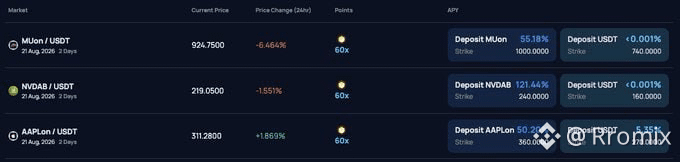
While most people argue about floating APY, @termmax is gradually building a full-fledged hub of structured products around fixed terms.
In addition to basic lending tied to a specific maturity date, the Alpha instruments include in the protocol:
Custom risk profile (Call/Put & Dual Investment): the ability to enter option mechanics and dual-currency investments directly on-chain, knowing the exact risk/return ratio before entering the trade.
Transparent order book instead of opaque formulas: rates are formed by the balance of real market participants’ supply and demand, not by hidden pool coefficients.
For those tired of constantly tracking floating interest and who want to work with clear on-chain mathematics, tools like @termmax become a core part of the $working setup.
#termmax #Web3 #Trading #CryptoLending
#termmax @TermMax
While most people argue about floating APY, @TermMax is gradually building a full-fledged hub of structured products around fixed terms.
In addition to basic lending tied to a specific maturity date, the Alpha instruments include in the protocol:
Custom risk profile (Call/Put & Dual Investment): the ability to enter option mechanics and dual-currency investments directly on-chain, knowing the exact risk/return ratio before entering the trade.
Transparent order book instead of opaque formulas: rates are formed by the balance of real market participants’ supply and demand, not by hidden pool coefficients.
For those tired of constantly tracking floating interest and who want to work with clear on-chain mathematics, tools like @TermMax become a core part of the $working setup.
#termmax #Web3 #Trading #CryptoLending
While most people argue about floating APY, @TermMax is gradually building a full-fledged hub of structured products around fixed terms.
In addition to basic lending tied to a specific maturity date, the Alpha instruments include in the protocol:
Custom risk profile (Call/Put & Dual Investment): the ability to enter option mechanics and dual-currency investments directly on-chain, knowing the exact risk/return ratio before entering the trade.
Transparent order book instead of opaque formulas: rates are formed by the balance of real market participants’ supply and demand, not by hidden pool coefficients.
For those tired of constantly tracking floating interest and who want to work with clear on-chain mathematics, tools like @TermMax become a core part of the $working setup.
#termmax #Web3 #Trading #CryptoLending

3
1
2
179

·
--
Bullish
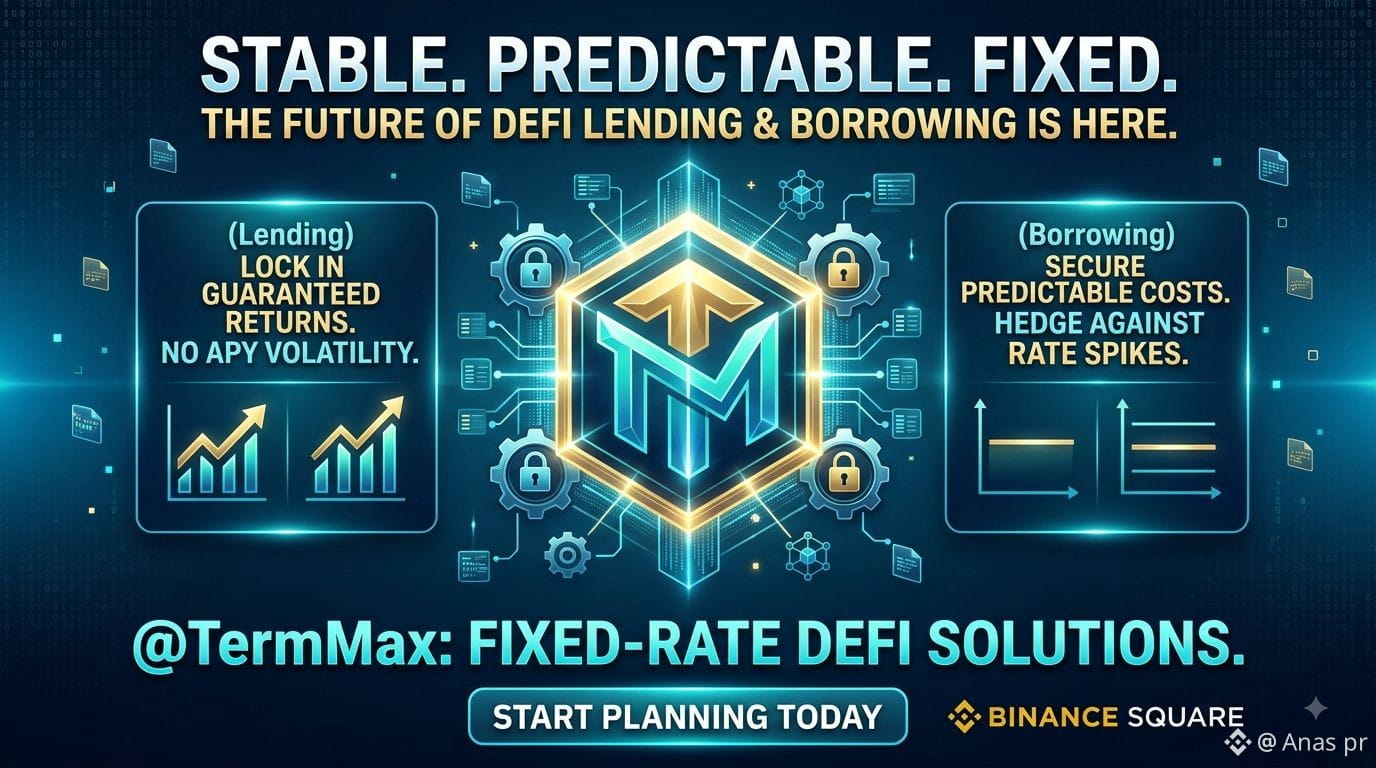
#termmax @termmax Navigating yield volatility in variable-rate DeFi protocols often feels like a guessing game. Fluctuating APYs make it nearly impossible for liquidity providers and borrowers to project long-term returns or manage debt costs with confidence. This is precisely where @TermMax steps in to transform decentralized finance.
By introducing structured fixed-rate lending and borrowing infrastructure, #TermMax brings institutional-grade financial predictability to Web3. Unlike floating-rate pools where yields drop drastically as liquidity spikes, @TermMax allows users to lock in guaranteed interest rates for set timeframes. Lenders secure reliable, non-dilutive returns on their capital, while borrowers eliminate interest rate risk and lock in exact borrowing costs to execute sophisticated yield strategies.
The term-structure architecture behind #TermMax ensures maximum capital efficiency, robust collateralization, and complete transparency. As fixed-income markets represent the vast majority of traditional finance, protocols built like #TermMax are essential for bringing true stability and institutional capital into Web3.
If you are looking to eliminate rate uncertainty and take full control of your long-term crypto portfolio, explore fixed-rate DeFi with @TermMax today.
Tagging: @TermMax
Hashtags: #TermMax #DeFi #FixedRate #CryptoLending #BinanceSquare
#termmax @TermMax Navigating yield volatility in variable-rate DeFi protocols often feels like a guessing game. Fluctuating APYs make it nearly impossible for liquidity providers and borrowers to project long-term returns or manage debt costs with confidence. This is precisely where @TermMax steps in to transform decentralized finance.
By introducing structured fixed-rate lending and borrowing infrastructure, #TermMax brings institutional-grade financial predictability to Web3. Unlike floating-rate pools where yields drop drastically as liquidity spikes, @TermMax allows users to lock in guaranteed interest rates for set timeframes. Lenders secure reliable, non-dilutive returns on their capital, while borrowers eliminate interest rate risk and lock in exact borrowing costs to execute sophisticated yield strategies.
The term-structure architecture behind #TermMax ensures maximum capital efficiency, robust collateralization, and complete transparency. As fixed-income markets represent the vast majority of traditional finance, protocols built like #TermMax are essential for bringing true stability and institutional capital into Web3.
If you are looking to eliminate rate uncertainty and take full control of your long-term crypto portfolio, explore fixed-rate DeFi with @TermMax today.
Tagging: @TermMax
Hashtags: #TermMax #DeFi #FixedRate #CryptoLending #BinanceSquare
By introducing structured fixed-rate lending and borrowing infrastructure, #TermMax brings institutional-grade financial predictability to Web3. Unlike floating-rate pools where yields drop drastically as liquidity spikes, @TermMax allows users to lock in guaranteed interest rates for set timeframes. Lenders secure reliable, non-dilutive returns on their capital, while borrowers eliminate interest rate risk and lock in exact borrowing costs to execute sophisticated yield strategies.
The term-structure architecture behind #TermMax ensures maximum capital efficiency, robust collateralization, and complete transparency. As fixed-income markets represent the vast majority of traditional finance, protocols built like #TermMax are essential for bringing true stability and institutional capital into Web3.
If you are looking to eliminate rate uncertainty and take full control of your long-term crypto portfolio, explore fixed-rate DeFi with @TermMax today.
Tagging: @TermMax
Hashtags: #TermMax #DeFi #FixedRate #CryptoLending #BinanceSquare
117

·
--
Recent Ledn research highlights a “collateral gap” in Bitcoin lending, with 88% interest but only 14% borrowing. 📊
The gap suggests many Bitcoin holders prefer to retain assets rather than use them as loan collateral, reflecting risk‑averse behavior. 🧠
Lower borrowing activity can limit the growth of Bitcoin‑backed credit products, potentially slowing projected market expansion toward $1 trillion. 💡
On‑chain data shows Bitcoin’s hash rate remains robust, supporting network security despite the lending hesitation. 🌐
Regulators are also reviewing derivative definitions, which may impact Bitcoin perpetual futures and broader market dynamics. ⚡
As always, DYOR before forming any view on how these trends might affect the ecosystem. 🔍
#Bitcoin #CryptoLending #OnChain #Finance #GAMERXERO
Recent Ledn research highlights a “collateral gap” in Bitcoin lending, with 88% interest but only 14% borrowing. 📊
The gap suggests many Bitcoin holders prefer to retain assets rather than use them as loan collateral, reflecting risk‑averse behavior. 🧠
Lower borrowing activity can limit the growth of Bitcoin‑backed credit products, potentially slowing projected market expansion toward $1 trillion. 💡
On‑chain data shows Bitcoin’s hash rate remains robust, supporting network security despite the lending hesitation. 🌐
Regulators are also reviewing derivative definitions, which may impact Bitcoin perpetual futures and broader market dynamics. ⚡
As always, DYOR before forming any view on how these trends might affect the ecosystem. 🔍
#Bitcoin #CryptoLending #OnChain #Finance #GAMERXERO
The gap suggests many Bitcoin holders prefer to retain assets rather than use them as loan collateral, reflecting risk‑averse behavior. 🧠
Lower borrowing activity can limit the growth of Bitcoin‑backed credit products, potentially slowing projected market expansion toward $1 trillion. 💡
On‑chain data shows Bitcoin’s hash rate remains robust, supporting network security despite the lending hesitation. 🌐
Regulators are also reviewing derivative definitions, which may impact Bitcoin perpetual futures and broader market dynamics. ⚡
As always, DYOR before forming any view on how these trends might affect the ecosystem. 🔍
#Bitcoin #CryptoLending #OnChain #Finance #GAMERXERO
6

·
--
Tether leverages $23B gold reserves for new lending product
Tether and Ledn just launched XAUT₮ borrowing, letting users collateralize tokenized gold for crypto loans. The move taps into Tether's massive bullion stockpile — $23 billion worth — and signals a deeper push to monetize real-world assets beyond stablecoin issuance.
This isn't just about gold authenticity. It's about turning static reserves into yield-generating infrastructure. Traditional finance has done this for decades with precious metals-backed credit lines. Crypto is catching up, and Tether is leading the bridge.
For institutional DeFi builders, tokenized precious metals offer a new risk management tool. Gold-backed loans can hedge against volatility while maintaining exposure to digital asset markets. The question is whether this model scales across other commodity categories.
Will tokenized commodities become standard collateral in crypto lending, or remain niche? Drop your take below. 👇
#TetherGold #TokenizedAssets #CryptoLending
Tether leverages $23B gold reserves for new lending product
Tether and Ledn just launched XAUT₮ borrowing, letting users collateralize tokenized gold for crypto loans. The move taps into Tether's massive bullion stockpile — $23 billion worth — and signals a deeper push to monetize real-world assets beyond stablecoin issuance.
This isn't just about gold authenticity. It's about turning static reserves into yield-generating infrastructure. Traditional finance has done this for decades with precious metals-backed credit lines. Crypto is catching up, and Tether is leading the bridge.
For institutional DeFi builders, tokenized precious metals offer a new risk management tool. Gold-backed loans can hedge against volatility while maintaining exposure to digital asset markets. The question is whether this model scales across other commodity categories.
Will tokenized commodities become standard collateral in crypto lending, or remain niche? Drop your take below. 👇
#TetherGold #TokenizedAssets #CryptoLending
Tether and Ledn just launched XAUT₮ borrowing, letting users collateralize tokenized gold for crypto loans. The move taps into Tether's massive bullion stockpile — $23 billion worth — and signals a deeper push to monetize real-world assets beyond stablecoin issuance.
This isn't just about gold authenticity. It's about turning static reserves into yield-generating infrastructure. Traditional finance has done this for decades with precious metals-backed credit lines. Crypto is catching up, and Tether is leading the bridge.
For institutional DeFi builders, tokenized precious metals offer a new risk management tool. Gold-backed loans can hedge against volatility while maintaining exposure to digital asset markets. The question is whether this model scales across other commodity categories.
Will tokenized commodities become standard collateral in crypto lending, or remain niche? Drop your take below. 👇
#TetherGold #TokenizedAssets #CryptoLending
18

·
--
SBI GROUP'S JPYSC LENDING LAUNCH COULD BOOST $XEC ADOPTION 🔥
SBI Group, a $214B Japanese giant, is launching a JPYSC lending service with a 3% annual yield, per Nikkei. This institutional move directly injects capital into the crypto ecosystem — specifically stablecoin-based lending tied to Japanese yen.
The yield is modest but significant because it signals regulatory comfort and retail access in Japan’s third-largest financial group. If adoption picks up, liquidity flows into tokens like $XEC could accelerate. The community is split between bullish adoption and short-term volatility fears. Where do you stand on this catalyst?
Not financial advice. Always manage your risk.
#XEC #CryptoLending #Adoption #JapanCrypto
⚡
SBI GROUP'S JPYSC LENDING LAUNCH COULD BOOST $XEC ADOPTION 🔥
SBI Group, a $214B Japanese giant, is launching a JPYSC lending service with a 3% annual yield, per Nikkei. This institutional move directly injects capital into the crypto ecosystem — specifically stablecoin-based lending tied to Japanese yen.
The yield is modest but significant because it signals regulatory comfort and retail access in Japan’s third-largest financial group. If adoption picks up, liquidity flows into tokens like $XEC could accelerate. The community is split between bullish adoption and short-term volatility fears. Where do you stand on this catalyst?
Not financial advice. Always manage your risk.
#XEC #CryptoLending #Adoption #JapanCrypto
⚡
SBI Group, a $214B Japanese giant, is launching a JPYSC lending service with a 3% annual yield, per Nikkei. This institutional move directly injects capital into the crypto ecosystem — specifically stablecoin-based lending tied to Japanese yen.
The yield is modest but significant because it signals regulatory comfort and retail access in Japan’s third-largest financial group. If adoption picks up, liquidity flows into tokens like $XEC could accelerate. The community is split between bullish adoption and short-term volatility fears. Where do you stand on this catalyst?
Not financial advice. Always manage your risk.
#XEC #CryptoLending #Adoption #JapanCrypto
⚡


101

·
--
Fixed-rate crypto lending just landed on Base! Morpho Midnight introduces fixed rates and set maturities on the Base blockchain. This is a big deal because most crypto lending protocols offer variable rates, meaning your interest can change unexpectedly. With fixed rates, you know exactly what you'll pay or earn over a specific period. It brings predictability to the often volatile DeFi space. This kind of stability can attract more traditional investors and make borrowing/lending much clearer for everyone. This move by Morpho on Base could significantly boost the ecosystem and bring more mainstream users into DeFi. Predictable lending terms are key for financial planning. Expect to see more protocols follow suit to offer similar stability. On a side note, it's interesting to see projects building foundational financial tools, while we also see tokens like $ERA jumping +64.56% today, showing the diverse nature of the crypto market. #DeFi #BaseChain #CryptoLending What do you think fixed rates mean for the future of borrowing in crypto? $ETH $MORPHO
Fixed-rate crypto lending just landed on Base! Morpho Midnight introduces fixed rates and set maturities on the Base blockchain. This is a big deal because most crypto lending protocols offer variable rates, meaning your interest can change unexpectedly. With fixed rates, you know exactly what you'll pay or earn over a specific period. It brings predictability to the often volatile DeFi space. This kind of stability can attract more traditional investors and make borrowing/lending much clearer for everyone. This move by Morpho on Base could significantly boost the ecosystem and bring more mainstream users into DeFi. Predictable lending terms are key for financial planning. Expect to see more protocols follow suit to offer similar stability. On a side note, it's interesting to see projects building foundational financial tools, while we also see tokens like $ERA jumping +64.56% today, showing the diverse nature of the crypto market. #DeFi #BaseChain #CryptoLending What do you think fixed rates mean for the future of borrowing in crypto? $ETH $MORPHO
91

#termmax Fixed Rates vs. Market Volatility
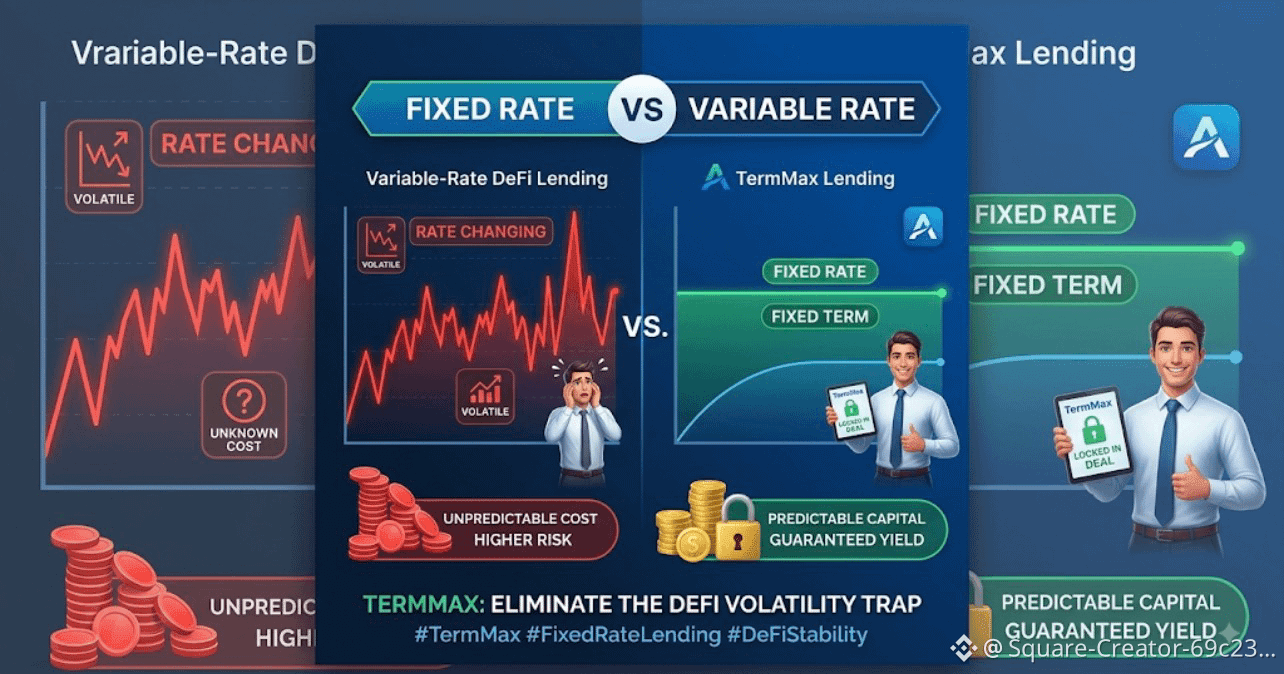
Most DeFi lending protocols rely on variable interest rates, which make long-term planning and risk management a nightmare for traders. TermMax changes the game by introducing fixed-rate and fixed-term borrowing and lending. Knowing your exact borrowing cost or yield upfront allows for far more predictable capital allocation and protection against sudden market spikes.
#TermMax #DeFi #CryptoLending
#termmax Fixed Rates vs. Market Volatility
Most DeFi lending protocols rely on variable interest rates, which make long-term planning and risk management a nightmare for traders. TermMax changes the game by introducing fixed-rate and fixed-term borrowing and lending. Knowing your exact borrowing cost or yield upfront allows for far more predictable capital allocation and protection against sudden market spikes.
#TermMax #DeFi #CryptoLending
Most DeFi lending protocols rely on variable interest rates, which make long-term planning and risk management a nightmare for traders. TermMax changes the game by introducing fixed-rate and fixed-term borrowing and lending. Knowing your exact borrowing cost or yield upfront allows for far more predictable capital allocation and protection against sudden market spikes.
#TermMax #DeFi #CryptoLending
68
·
--
Your Bitcoin Could Soon Pay for a House — Without Selling a Single Satoshi
A major Japanese lender has just launched Bitcoin-backed loans, letting borrowers unlock up to $6.2 million in cash while keeping their crypto fully intact. Instead of selling and triggering a taxable event, holders can now pledge their coins as collateral and walk away with liquidity.
This is a quiet but meaningful shift. For years, long-term holders faced a painful choice: sell into strength and lose upside, or stay illiquid. Collateralized lending erases that dilemma, turning idle Bitcoin into a working asset that can fund real-world purchases or new investments.
The bigger story is institutional trust. When a regulated bank in a major economy accepts Bitcoin as loan collateral, it signals crypto is maturing from a speculative bet into recognized financial infrastructure. Japan has long been a bellwether for Asian adoption, and moves like this often ripple outward.
Expect more traditional lenders to follow as demand for borrow-against-crypto products grows.
Would you borrow against your Bitcoin instead of selling it? 👇
#BitcoinLoans #CryptoCollateral #CryptoLending
Your Bitcoin Could Soon Pay for a House — Without Selling a Single Satoshi
A major Japanese lender has just launched Bitcoin-backed loans, letting borrowers unlock up to $6.2 million in cash while keeping their crypto fully intact. Instead of selling and triggering a taxable event, holders can now pledge their coins as collateral and walk away with liquidity.
This is a quiet but meaningful shift. For years, long-term holders faced a painful choice: sell into strength and lose upside, or stay illiquid. Collateralized lending erases that dilemma, turning idle Bitcoin into a working asset that can fund real-world purchases or new investments.
The bigger story is institutional trust. When a regulated bank in a major economy accepts Bitcoin as loan collateral, it signals crypto is maturing from a speculative bet into recognized financial infrastructure. Japan has long been a bellwether for Asian adoption, and moves like this often ripple outward.
Expect more traditional lenders to follow as demand for borrow-against-crypto products grows.
Would you borrow against your Bitcoin instead of selling it? 👇
#BitcoinLoans #CryptoCollateral #CryptoLending
A major Japanese lender has just launched Bitcoin-backed loans, letting borrowers unlock up to $6.2 million in cash while keeping their crypto fully intact. Instead of selling and triggering a taxable event, holders can now pledge their coins as collateral and walk away with liquidity.
This is a quiet but meaningful shift. For years, long-term holders faced a painful choice: sell into strength and lose upside, or stay illiquid. Collateralized lending erases that dilemma, turning idle Bitcoin into a working asset that can fund real-world purchases or new investments.
The bigger story is institutional trust. When a regulated bank in a major economy accepts Bitcoin as loan collateral, it signals crypto is maturing from a speculative bet into recognized financial infrastructure. Japan has long been a bellwether for Asian adoption, and moves like this often ripple outward.
Expect more traditional lenders to follow as demand for borrow-against-crypto products grows.
Would you borrow against your Bitcoin instead of selling it? 👇
#BitcoinLoans #CryptoCollateral #CryptoLending
50

·
--
Ripple's latest move is making waves in the crypto space, as it unveils an XRPL lending protocol 🌊. This development aims to bring institutional credit and on-chain loans to the XRP ledger, potentially expanding its use cases. With XRP currently priced at $1.0420, down 0.68% in the last 24 hours, investors are watching closely 📊. The overall market sentiment remains cautious, with a fear and greed index of 15 and BTC priced at $59,290.00, down 1.34% 📉. As the crypto landscape continues to evolve, it's essential to stay informed. What do you think this new protocol means for the future of XRP and the broader crypto market? 🚀📉💰 #cryptolending #XRP #blockchain.
Ripple's latest move is making waves in the crypto space, as it unveils an XRPL lending protocol 🌊. This development aims to bring institutional credit and on-chain loans to the XRP ledger, potentially expanding its use cases. With XRP currently priced at $1.0420, down 0.68% in the last 24 hours, investors are watching closely 📊. The overall market sentiment remains cautious, with a fear and greed index of 15 and BTC priced at $59,290.00, down 1.34% 📉. As the crypto landscape continues to evolve, it's essential to stay informed. What do you think this new protocol means for the future of XRP and the broader crypto market? 🚀📉💰 #cryptolending #XRP #blockchain.
53
·
--
#termmax @termmax
Imagine a bank deposit where the terms change every day: on Monday they promise you 12%, and by Thursday they cut it down to 0.8% because a large client has entered the bank. It sounds crazy, but that’s how most landing pages in crypto have worked until now.
@termmax brings back normal logic: the rate and the term are fixed at the time of the deal. Meanwhile, the funds are not locked forever in a smart contract—the position is tokenized, so if you need to free up liquidity, you can simply sell it on the market before the term ends. A simple tool for those who need stability, not a lottery with interest rates.
#TermMax #Web3 #CryptoLending
#termmax @TermMax
Imagine a bank deposit where the terms change every day: on Monday they promise you 12%, and by Thursday they cut it down to 0.8% because a large client has entered the bank. It sounds crazy, but that’s how most landing pages in crypto have worked until now.
@TermMax brings back normal logic: the rate and the term are fixed at the time of the deal. Meanwhile, the funds are not locked forever in a smart contract—the position is tokenized, so if you need to free up liquidity, you can simply sell it on the market before the term ends. A simple tool for those who need stability, not a lottery with interest rates.
#TermMax #Web3 #CryptoLending
Imagine a bank deposit where the terms change every day: on Monday they promise you 12%, and by Thursday they cut it down to 0.8% because a large client has entered the bank. It sounds crazy, but that’s how most landing pages in crypto have worked until now.
@TermMax brings back normal logic: the rate and the term are fixed at the time of the deal. Meanwhile, the funds are not locked forever in a smart contract—the position is tokenized, so if you need to free up liquidity, you can simply sell it on the market before the term ends. A simple tool for those who need stability, not a lottery with interest rates.
#TermMax #Web3 #CryptoLending
78
Log in to explore more content
Join global crypto users on Binance Square
⚡️ Get latest and useful information about crypto.
💬 Trusted by the world’s largest crypto exchange.
👍 Discover real insights from verified creators.
Email / Phone number
Trending Topics
1
#TrumpRejectsAIRulesForVoluntaryAudits
501 views
82 Discussing
2
#BitgetHotWalletBreachTiedToThirdPartySecurityFlaw
264 views
58 Discussing
3
#OpenAIUnveilsAlwaysOnAgentDots
1,351 views
108 Discussing
4
#ChainlinkLaunchesBankSWIFTLedgerFramework
2,922 views
112 Discussing
5
#EarningsSeason
439,249 views
3,321 Discussing
6
#SECChairWantsStockMarketsOnChain
6,226 views
185 Discussing
7
#MulticoinInvestsInGrass
3,679 views
131 Discussing
8
#CEARenamesToBNBStandardUnderBNC
4,708 views
133 Discussing
9
#BitwiseLaunchesFirstSpotNEARETF
59,708 views
762 Discussing
10
#USJobOpeningsFallToFiveMonthLow
63,039 views
592 Discussing