
#cryptobasics
cryptobasics
551,376 views
3,348 Discussing
Hot
Latest

·
--
WHY A SMALL DIP CAN TURN INTO A BIG DROP?
When the market slips, headlines often mention liquidations. That word sounds technical, but the idea is simple.
What is a liquidation, in simple words:
When a trader borrows money to take a bigger position, the exchange closes that position if the price moves too far against it. That forced closing is a liquidation.
Why do liquidations make a drop bigger?
1. FORCED SELLING ADDS PRESSURE.
When many long positions close at once, their selling pushes the price down further.
2. ONE CLOSE TRIGGERS THE NEXT.
Lower prices can trigger more liquidations, creating a chain reaction.
3. FEAR SPEEDS UP THE MOVE.
Other traders may sell quickly, even if nothing changed about the coin itself.
What a liquidation does NOT mean:
It does not mean a coin failed, and it does not mean every holder sold. It often shows how much borrowed trading was in the market, not the long-term value of the asset.
Three calm lessons for beginners:
1. LEARN BEFORE USING LEVERAGE.
Borrowed trading can close your position fast. Spot learning comes first.
2. NEVER RISK MONEY YOU CANNOT AFFORD TO LOSE.
A plan protects you when the market moves fast.
3. WATCH THE CAUSE, NOT ONLY THE CANDLE.
Ask whether the move came from news, forced selling, or a real change in the project.
A red day feels bigger when liquidations pile up. Understanding them helps you stay calm instead of reacting to noise.
Do you check leverage and liquidations before you judge a market move, or do you look at price only?
$BTC $ETH $BNB
#LearnCrypto #CryptoBasics #RiskManagement
Educational only, not financial advice.
126

·
--
Liquidity Explained
Liquidity refers to how easily you can buy or sell an asset without affecting its value. HIGH LIQUIDITY means you can buy or sell quickly without impacting the market. When you're trading, you want to be able to get in and out of a position easily. Liquidity is key to making this happen. Imagine you're trying to sell a rare collectible - if there aren't many buyers, it's going to be hard to sell it quickly. In crypto, liquidity is important because it helps you get a fair deal. If a market is highly liquid, you can buy or sell $ZEC without affecting its value. This is because there are many buyers and sellers in the market, so your trade won't impact the overall . Liquidity can be affected by many factors, including the number of buyers and sellers in a market. If a market is highly volatile, liquidity can decrease, making it harder to buy or sell. Understanding liquidity is crucial to navigating crypto markets. It's NOT ROCKET SCIENCE, but it does take some knowledge to understand how liquidity works. By knowing how liquidity affects the market, you can make better trading decisions. Disclaimer: this post is for educational purposes only. BinanceSquare #LiquidityMatters #CryptoBasics
Liquidity refers to how easily you can buy or sell an asset without affecting its value. HIGH LIQUIDITY means you can buy or sell quickly without impacting the market. When you're trading, you want to be able to get in and out of a position easily. Liquidity is key to making this happen. Imagine you're trying to sell a rare collectible - if there aren't many buyers, it's going to be hard to sell it quickly. In crypto, liquidity is important because it helps you get a fair deal. If a market is highly liquid, you can buy or sell $ZEC without affecting its value. This is because there are many buyers and sellers in the market, so your trade won't impact the overall . Liquidity can be affected by many factors, including the number of buyers and sellers in a market. If a market is highly volatile, liquidity can decrease, making it harder to buy or sell. Understanding liquidity is crucial to navigating crypto markets. It's NOT ROCKET SCIENCE, but it does take some knowledge to understand how liquidity works. By knowing how liquidity affects the market, you can make better trading decisions. Disclaimer: this post is for educational purposes only. BinanceSquare #LiquidityMatters #CryptoBasics
153
·
--
Blockchain's like a library, got 2 main ways to pick a validator. It's either Proof of Work, like a quiz, or Proof of Stake, like a vote. In Proof of Work, the validator's picked by who solves it first. In Proof of Stake, it's who has the most STAKE. $XRP an example, it's different but it works. Understanding this is KEY to getting into #Blockchain #DeFiEducation #CryptoBasics
Blockchain's like a library, got 2 main ways to pick a validator. It's either Proof of Work, like a quiz, or Proof of Stake, like a vote. In Proof of Work, the validator's picked by who solves it first. In Proof of Stake, it's who has the most STAKE. $XRP an example, it's different but it works. Understanding this is KEY to getting into #Blockchain #DeFiEducation #CryptoBasics
36
·
--
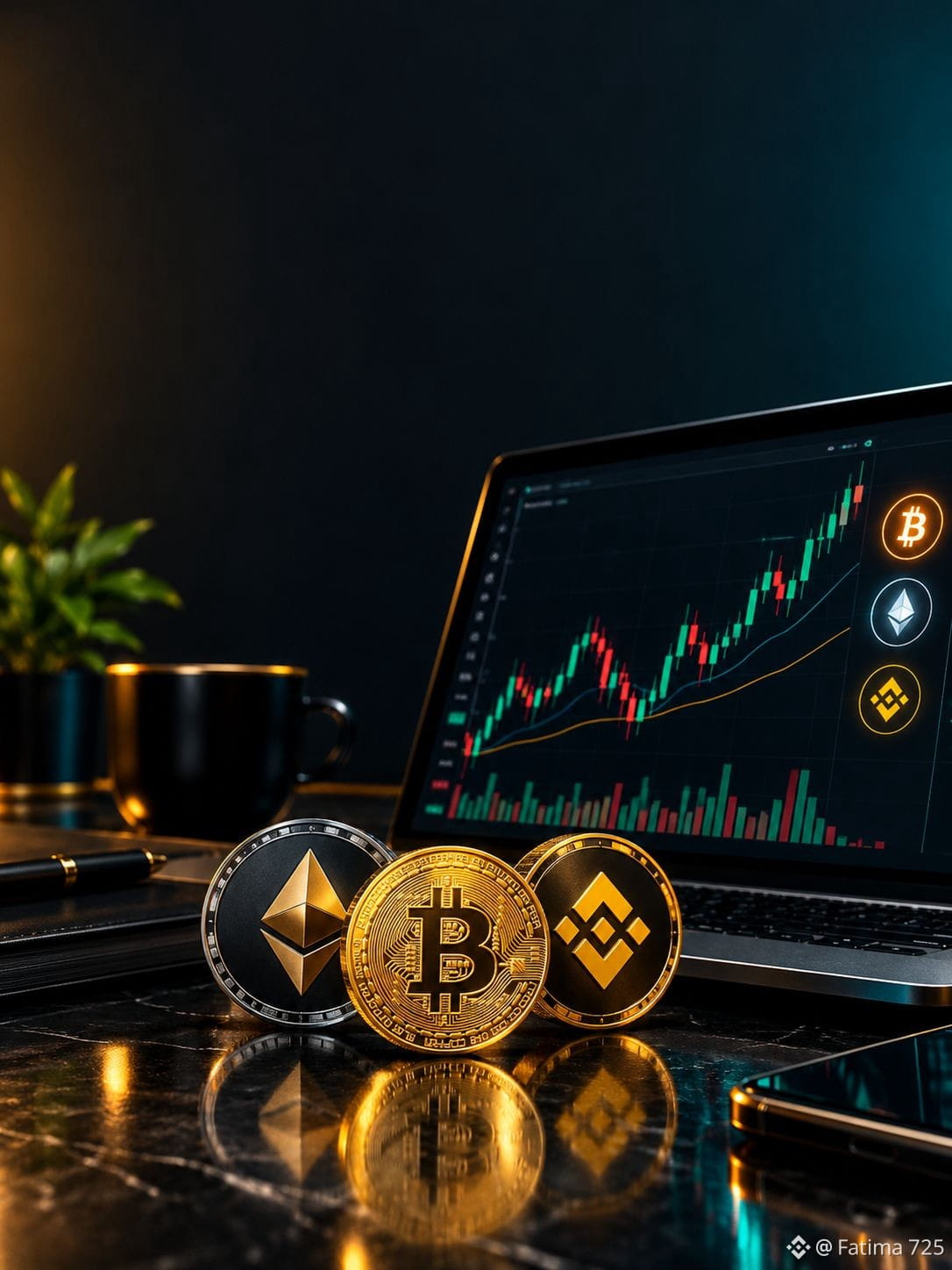
Three crypto names every beginner should research 🔍
🟠 $BTC — Bitcoin, the original cryptocurrency.
🔷 $ETH — Ethereum, a blockchain platform supporting smart contracts and decentralized applications.
🟡 $BNB — The token associated with the BNB ecosystem.
These assets have different uses and risks. A popular coin is not automatically a safe investment.
My rule: Understand the project, check its chart, and never invest money you cannot afford to lose.
Which one would you like me to explain in simple words: BTC, ETH or BNB?
#BTC #Ethereum #BNB_Market_Update #CryptoBasics
58

·
--
Binance Pumpkin Camp DAY 6
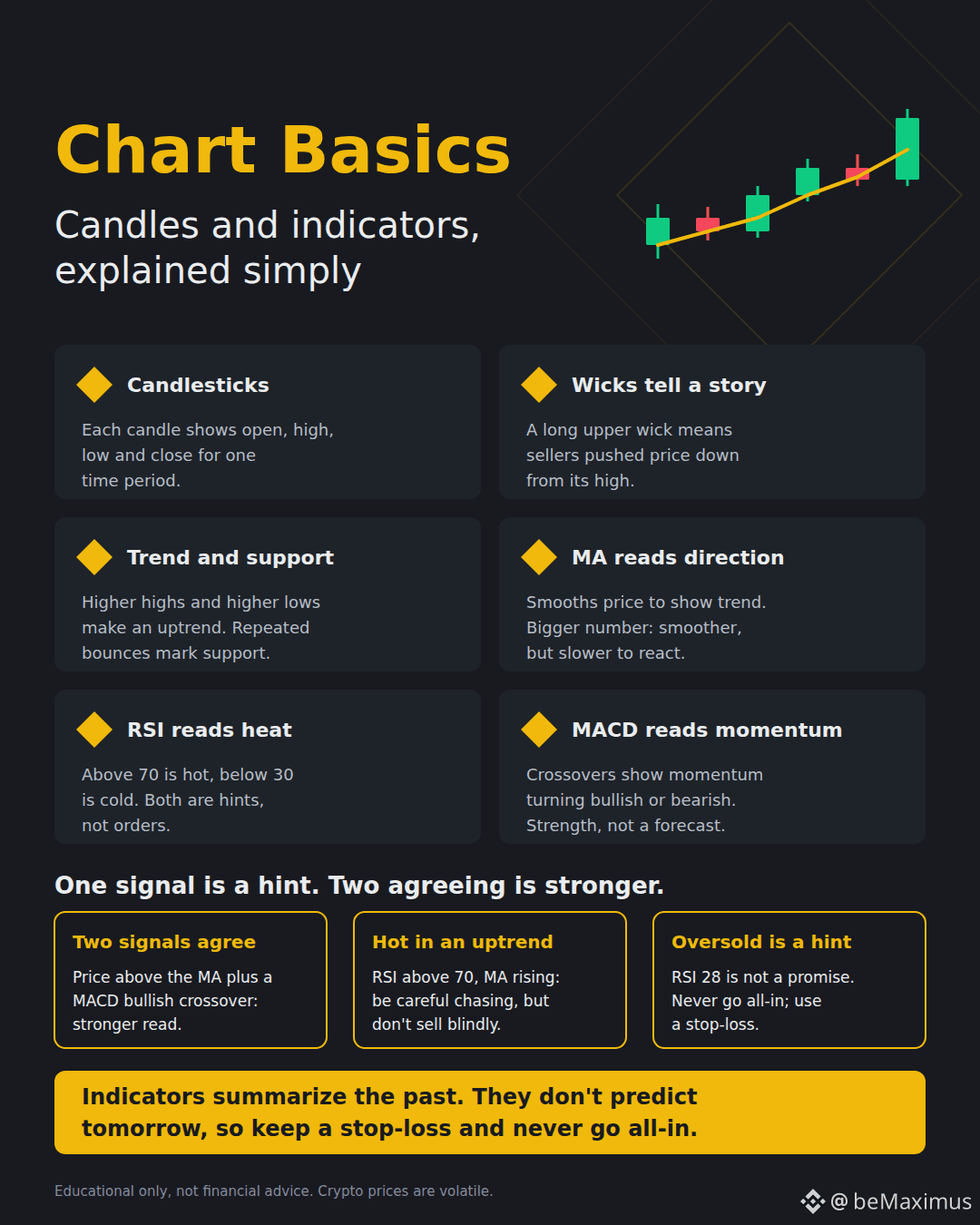
Your first crypto chart can look like chaos. Here is how to read it.
- Each candle shows the open, high, low and close for one time period.
- A long upper wick means sellers pushed price down from its high.
- Higher highs and higher lows make an uptrend. Repeated bounces mark support.
- MA reads direction. A bigger number is smoother but slower.
- RSI reads heat. Above 70 is hot, below 30 is cold.
- MACD reads momentum.
One signal is a hint. Two signals that agree are a stronger read, but still not a guarantee. Oversold does not mean “buy everything,” and overbought does not mean “sell everything.”
Indicators summarize the past. They don’t predict tomorrow. Keep a stop-loss and never go all-in.
#Binance #CryptoBasics #MACD #LearnCrypto
28

·
--
⏱️ ONE MINUTE WITH BINANCE ACADEMY #01
Blockchain vs. Cryptocurrency
Are they the same thing?
Not quite.
⛓️ BLOCKCHAIN
A way of recording and organizing data across a network. Records are linked together, and network rules help determine how new transactions are validated.
🪙 CRYPTOCURRENCY
A digital asset that can operate using blockchain technology.
Here’s the key idea:
Blockchain is the underlying technology. Cryptocurrency is one of its applications.
And blockchain can be used for more than cryptocurrencies, too.
Think of it this way: understanding the technology helps you understand the assets built on top of it.
📚 Read more with Binance Academy:
[https://www.binance.com/en/academy/articles/what-is-blockchain-and-how-does-it-work](https://www.binance.com/en/academy/articles/what-is-blockchain-and-how-does-it-work)
💬 What should the next one-minute lesson cover?
#BinanceAcademy #Binance #CryptoBasics
⏱️ ONE MINUTE WITH BINANCE ACADEMY #01
Blockchain vs. Cryptocurrency
Are they the same thing?
Not quite.
⛓️ BLOCKCHAIN
A way of recording and organizing data across a network. Records are linked together, and network rules help determine how new transactions are validated.
🪙 CRYPTOCURRENCY
A digital asset that can operate using blockchain technology.
Here’s the key idea:
Blockchain is the underlying technology. Cryptocurrency is one of its applications.
And blockchain can be used for more than cryptocurrencies, too.
Think of it this way: understanding the technology helps you understand the assets built on top of it.
📚 Read more with Binance Academy:
https://www.binance.com/en/academy/articles/what-is-blockchain-and-how-does-it-work
💬 What should the next one-minute lesson cover?
#BinanceAcademy #Binance #CryptoBasics
3
134
·
--
🔐 CRYPTO BASICS #17 — One Click Can Cost You Everything
You found a website offering a crypto airdrop. It looks legit, the design is professional, and it asks you to connect your wallet.
Everything seems fine… until you approve something you don’t understand. 👀
Here’s what every crypto user should know:
🔗 1. A Realistic Website Doesn’t Mean a Safe Website
Scammers can copy the design, logos, and content of legitimate platforms.
Always check the full domain name, verify links through official sources, and be careful with unexpected airdrops or urgent messages.
👛 2. Connecting Your Wallet Isn’t the Same as Signing a Transaction
Connecting your wallet generally allows a website to interact with your wallet interface and view certain public information.
Signing a message or transaction is different. Depending on what you’re approving, you could authorize an action that puts your assets at risk.
⚠️ 3. Never Approve What You Don’t Understand
Before signing anything:
▪️ Verify the website and the app requesting access.
▪️ Read the wallet prompt carefully.
▪️ Check token approvals and permissions.
▪️ Reject unexpected requests you can’t explain.
💡 Remember:
A wallet connection alone doesn’t automatically give a website permission to take your funds. The real risk depends on what you sign or authorize.
Take a moment to verify before you click.
In crypto, one rushed decision can be costly.
#CryptoBasics #Web3 #STAYSAFU
📚 Official learning resource: [https://www.binance.com/en/academy](https://www.binance.com/en/academy) 
🔐 CRYPTO BASICS #17 — One Click Can Cost You Everything
You found a website offering a crypto airdrop. It looks legit, the design is professional, and it asks you to connect your wallet.
Everything seems fine… until you approve something you don’t understand. 👀
Here’s what every crypto user should know:
🔗 1. A Realistic Website Doesn’t Mean a Safe Website
Scammers can copy the design, logos, and content of legitimate platforms.
Always check the full domain name, verify links through official sources, and be careful with unexpected airdrops or urgent messages.
👛 2. Connecting Your Wallet Isn’t the Same as Signing a Transaction
Connecting your wallet generally allows a website to interact with your wallet interface and view certain public information.
Signing a message or transaction is different. Depending on what you’re approving, you could authorize an action that puts your assets at risk.
⚠️ 3. Never Approve What You Don’t Understand
Before signing anything:
▪️ Verify the website and the app requesting access.
▪️ Read the wallet prompt carefully.
▪️ Check token approvals and permissions.
▪️ Reject unexpected requests you can’t explain.
💡 Remember:
A wallet connection alone doesn’t automatically give a website permission to take your funds. The real risk depends on what you sign or authorize.
Take a moment to verify before you click.
In crypto, one rushed decision can be costly.
#CryptoBasics #Web3 #STAYSAFU
📚 Official learning resource: https://www.binance.com/en/academy 
2
108

Think of a stop‑loss as a preset alarm for your trade. Imagine you’re buying a jacket and you tell a friend, ‘If the price ever drops below $50, sell it for me.’ That way you never end up paying more than you’re comfortable with. In crypto you set that alarm by placing a stop‑loss order at a price level you choose. If the market hits that level, the order turns into a market sell and gets executed automatically, protecting you from larger drops. It’s not a guarantee you’ll get exactly that price, especially in fast moves, but it does remove the need to watch the screen 24/7. Handy tool for anyone who wants a bit of peace of mind 📉 #CryptoBasics
Think of a stop‑loss as a preset alarm for your trade. Imagine you’re buying a jacket and you tell a friend, ‘If the price ever drops below $50, sell it for me.’ That way you never end up paying more than you’re comfortable with. In crypto you set that alarm by placing a stop‑loss order at a price level you choose. If the market hits that level, the order turns into a market sell and gets executed automatically, protecting you from larger drops. It’s not a guarantee you’ll get exactly that price, especially in fast moves, but it does remove the need to watch the screen 24/7. Handy tool for anyone who wants a bit of peace of mind 📉 #CryptoBasics
63

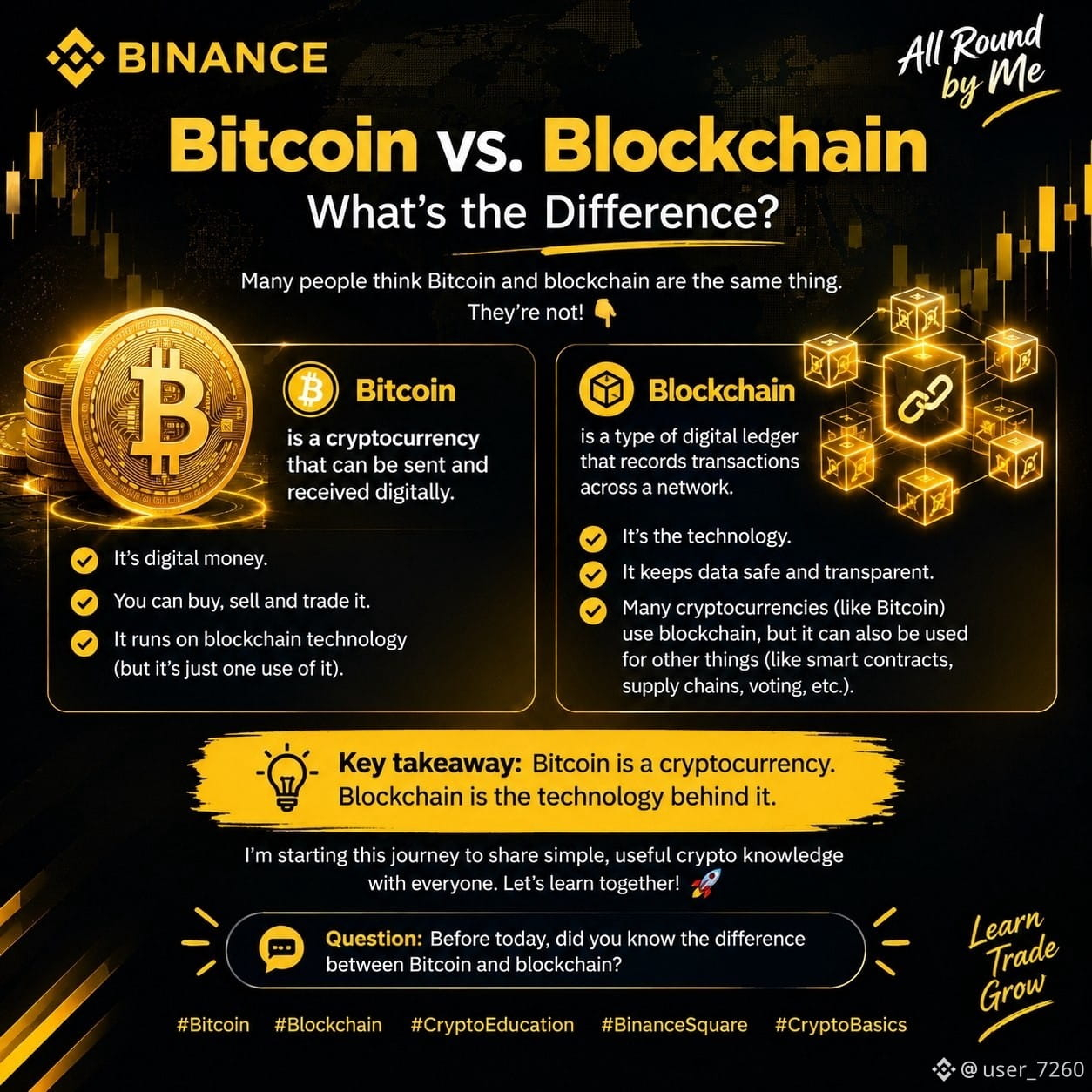
Bitcoin vs. Blockchain: What's the Difference?
🪙 BITCOIN vs. BLOCKCHAIN — What's the Difference?
New to crypto? Let's make it simple! 👇
₿ Bitcoin is a cryptocurrency that can be sent and received digitally.
🔗 Blockchain is a type of digital ledger that records transactions across a network.
💡 Here's the easiest way to remember it:
Bitcoin is digital money. Blockchain is the technology that makes Bitcoin transactions possible.
And here's something interesting: blockchain technology has many other uses beyond cryptocurrency!
🚀 At All Round by Me, we're making crypto easier to understand, one post at a time.
💬 Your turn: Did you already know the difference between Bitcoin and blockchain, or did you learn something new today?
Follow for more simple crypto explanations, useful tips, and market insights!
#Bitcoin #Blockchain #CryptoEducation #BinanceSquare #CryptoBasics
106

·
--
Bullish
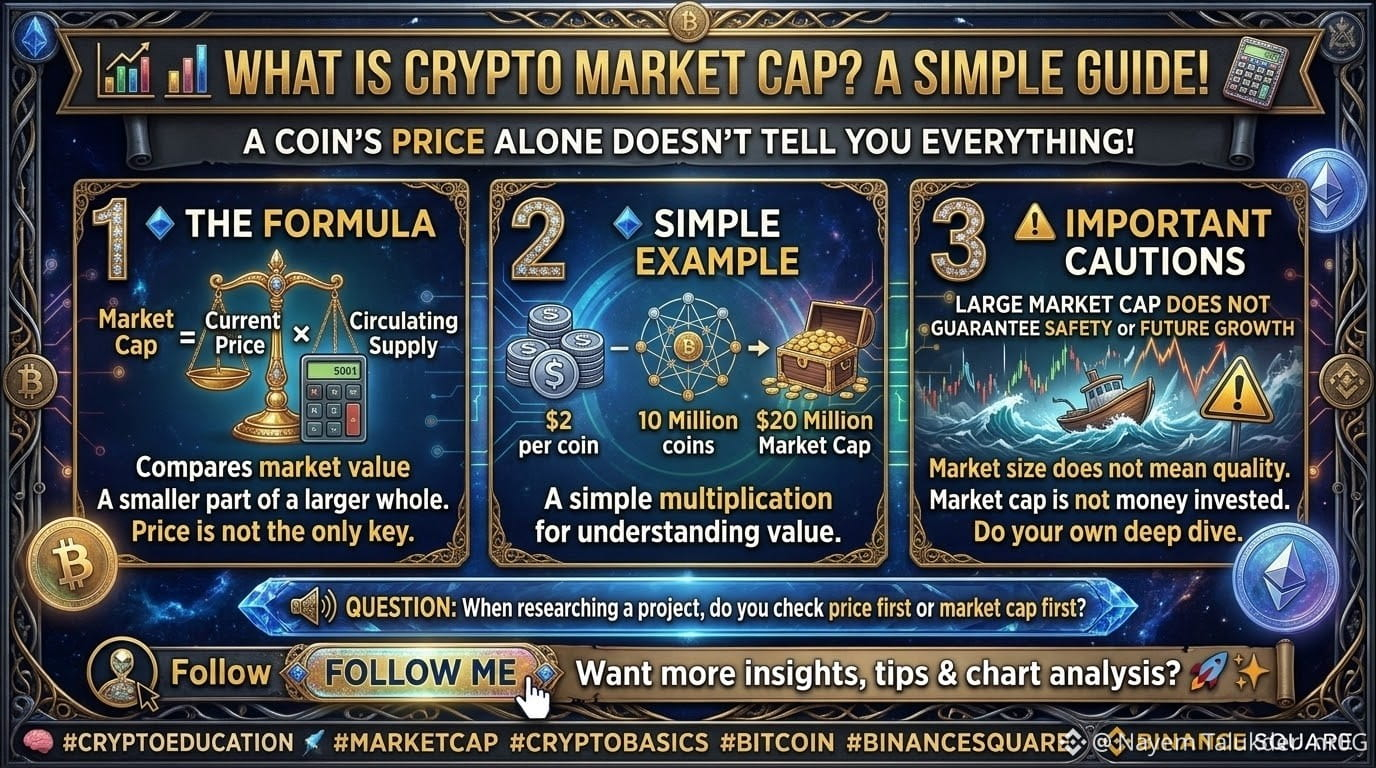
📊 What Is Crypto Market Cap? A Simple Guide!
A coin's price alone doesn't tell you everything!
🔹 The Formula: Market Cap = Current Price × Circulating Supply
🔹 Simple Example: If a coin trades at $2 and has 10 million coins in circulation, its market cap is $20 million.
{spot}(ZECUSDT)
{spot}(TRXUSDT)
{spot}(BNBUSDT)
🔹 Why Does It Matter? It helps compare the market value of different crypto assets.
⚠️ A larger market cap does not guarantee safety, quality, or future growth. Market cap is not the same as money invested.
💬 Question: When researching a crypto project, do you check price first or market cap first?
#MarketCap #CryptoBasics #Bitcoin❗ #BinanceSquare
$ZEC $TRX $BNB
📊 What Is Crypto Market Cap? A Simple Guide!
A coin's price alone doesn't tell you everything!
🔹 The Formula: Market Cap = Current Price × Circulating Supply
🔹 Simple Example: If a coin trades at $2 and has 10 million coins in circulation, its market cap is $20 million.
🔹 Why Does It Matter? It helps compare the market value of different crypto assets.
⚠️ A larger market cap does not guarantee safety, quality, or future growth. Market cap is not the same as money invested.
💬 Question: When researching a crypto project, do you check price first or market cap first?
#MarketCap #CryptoBasics #Bitcoin❗ #BinanceSquare
$ZEC $TRX $BNB
1
2
274

·
--
What Is a Stablecoin? A Simple Guide for Beginners 💵
Have you ever wondered why some cryptocurrencies are designed to maintain a stable price?
Stablecoins are cryptocurrencies designed to maintain a relatively stable value. Many are linked to traditional currencies, such as the US dollar.
For example, USDT is designed to track the value of the US dollar. However, its price can sometimes move away from $1.
Why do people use stablecoins?
To transfer funds between crypto platforms.
To hold digital assets with less price volatility than Bitcoin.
To make certain crypto transactions easier.
Remember, stablecoins still carry risks. Always check the issuer, reserves, and platform before using one.
Do you use stablecoins? Why or why not? Share your thoughts below! 👇
#CryptoEducation #Stablecoin #USDT #CryptoBasics

97

·
--
📘 WHAT IS SPOT TRADING? CRYPTO EXPLAINED FOR BEGINNERS
Confused by crypto trading? Let's make it simple 👇
🪙 1. You buy a cryptocurrency at its current market price or a price you choose.
📈 2. If its price rises, your holding may increase in value.
📉 3. If its price falls, your holding loses value.
💸 4. Trading fees may apply when you buy or sell.
⚠️ 5. Profit is NEVER guaranteed. Prices can fall sharply.
Example 👇
You buy $10 worth of a cryptocurrency.
If its value rises by 10%, it becomes $11 before fees.
If its value falls by 10%, it becomes $9 before fees.
That's how price movement works — no magic, no guaranteed money.
👇 Which topic should I explain next?
A — Spot trading
B — Futures trading
C — Reading charts
D — Trading fees
Comment A, B, C, or D 👇
#CryptoBasics #LearnCrypto #FinanceEducation #Binance
48

·
--
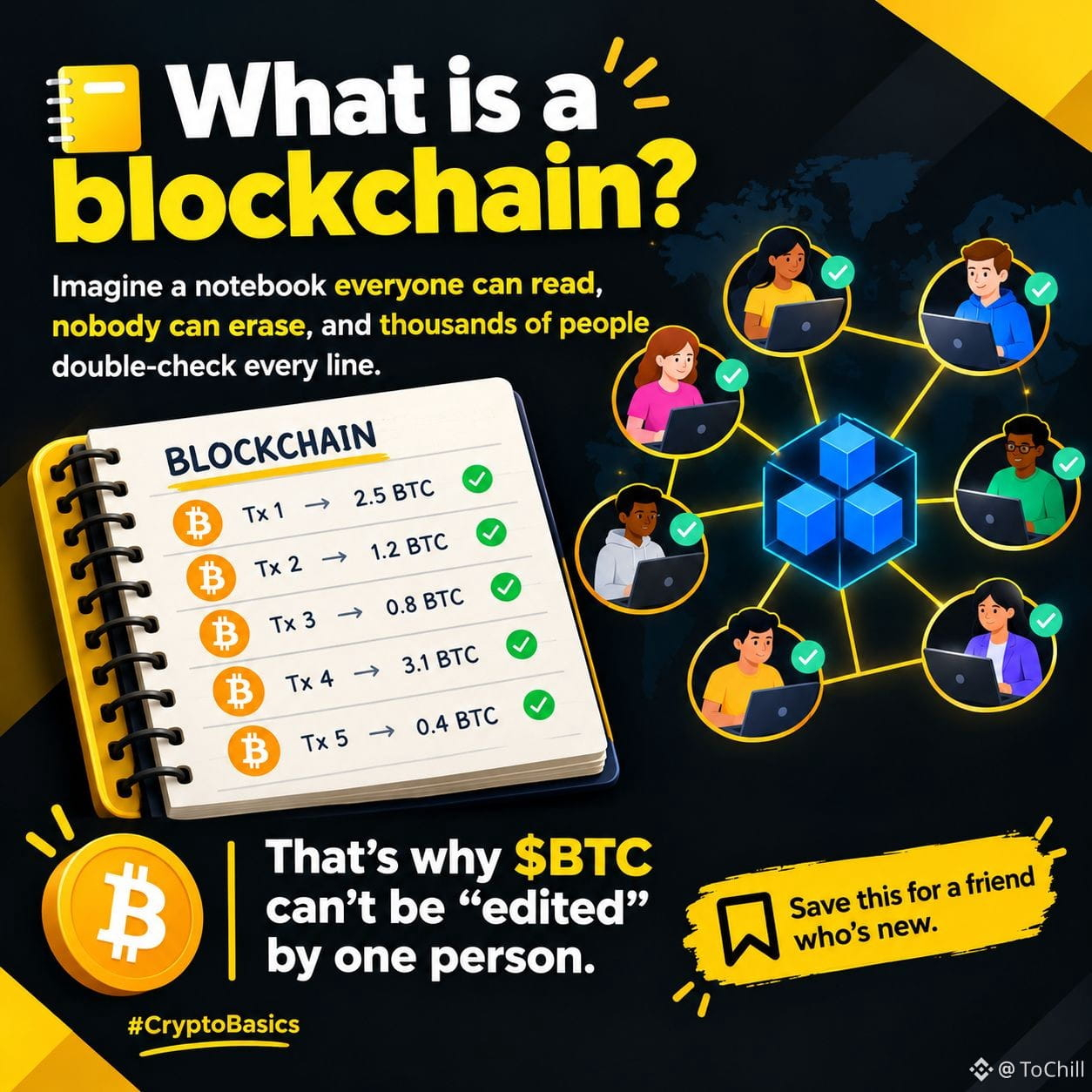
📒 What is a blockchain? Imagine a notebook everyone can read, nobody can erase, and thousands of people double-check every line. That's why $BTC can't be "edited" by one person. Save this for a friend who's new. #CryptoBasics
📒 What is a blockchain? Imagine a notebook everyone can read, nobody can erase, and thousands of people double-check every line. That's why $BTC can't be "edited" by one person. Save this for a friend who's new. #CryptoBasics
74

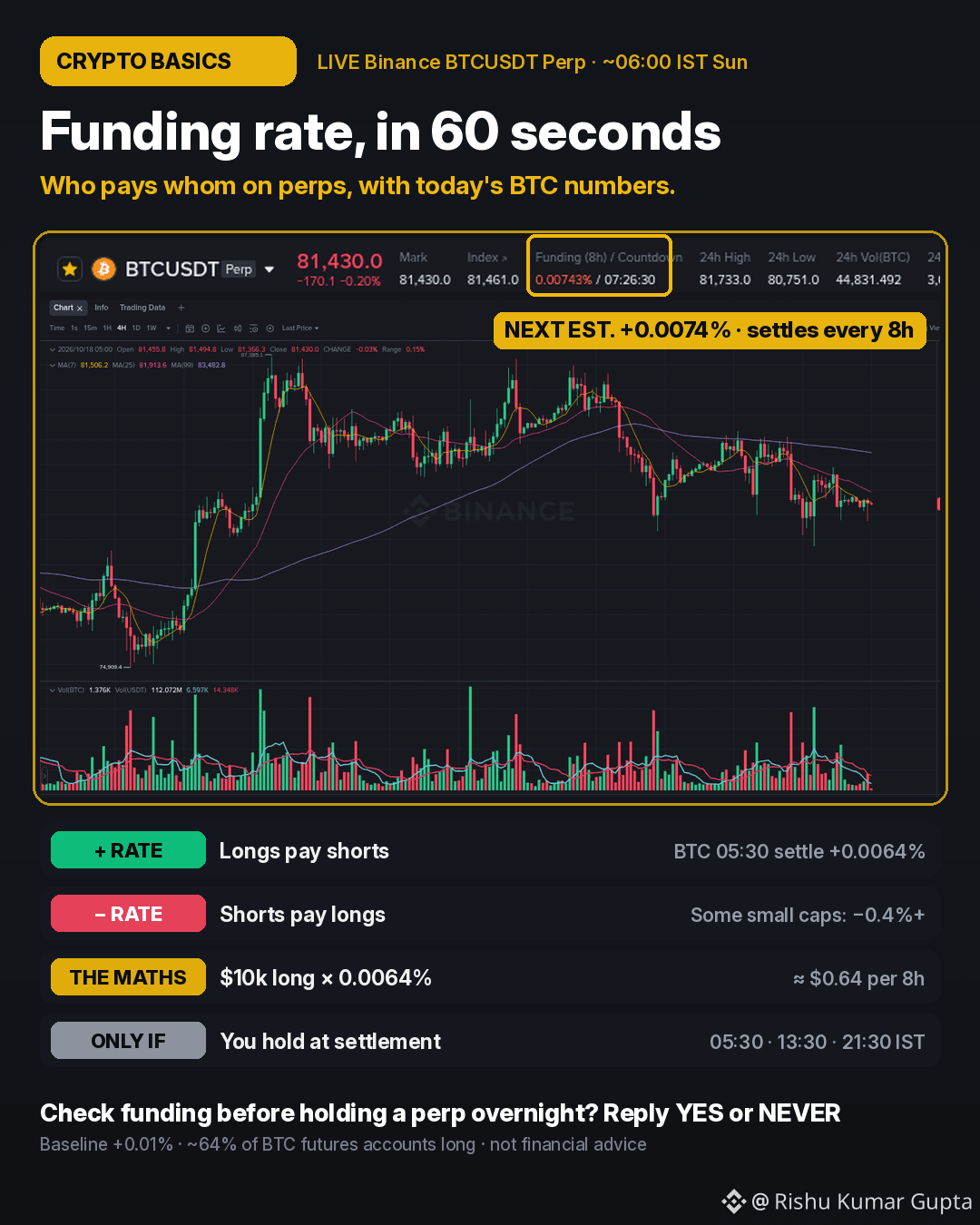
Funding rate, explained with today's BTC numbers.
On Binance perpetual futures, funding is a small payment between longs and shorts at set times (every 8h for BTCUSDT: 05:30, 13:30, 21:30 IST). It keeps the perp price close to spot.
Positive rate: longs pay shorts. Negative rate: shorts pay longs.
$BTC right now (~06:00 IST Sunday, ~$81.4k): the 05:30 settlement was +0.0064%, and the live estimate for the next one is about +0.0074%. That's under the +0.01% baseline, so longs aren't overpaying, even with ~64% of futures accounts long.
The maths: a $10,000 long at +0.0064% pays about $0.64 per 8h.
Where it bites: a few small-cap perps are sitting at −0.4% or worse per interval today. That's roughly $40+ per $10k, every settlement.
3 rules I use:
1. Check funding before holding a leveraged position for days.
2. Extreme funding shows a crowded side. It is not a buy or sell signal by itself.
3. You only pay or receive it if you hold the position at the settlement time.
Not financial advice, just the basics.
Do you check funding before holding a perp overnight? Reply YES or NEVER.
#BinanceSquare #FundingRate #CryptoBasics
82

·
--
What is Bitcoin? Explained in simple words.
Bitcoin $BTC is digital money that works on the internet, without any bank or company controlling it.
3 simple facts every beginner should know:
• There will only ever be 21 million bitcoins — no one can print more
• Every transaction is recorded on a public list called the blockchain, so it cannot be quietly changed
• People send Bitcoin directly to each other, wallet to wallet, anywhere in the world
Think of it like digital gold: limited in supply, owned by you, and moved online.
Prices go up and down, sometimes a lot — so always learn first, and never invest money you cannot afford to lose.
Educational content only, not financial advice.
#BinanceSquare #WriteToEarn #Bitcoin #CryptoBasics
85

·
--
Article
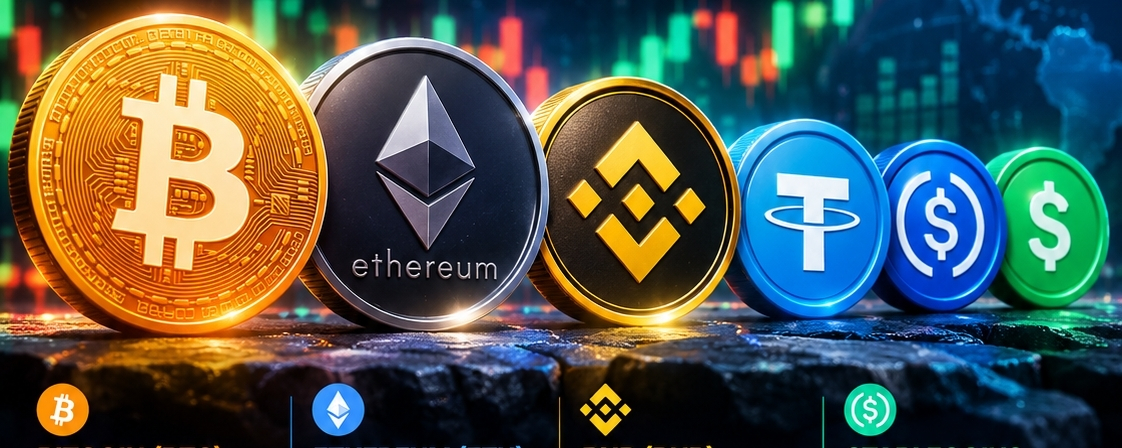
Crypto Basics: BTC, ETH, BNB & Stablecoins Explained# 📚
The crypto ecosystem has different digital assets, each serving a unique purpose.
🟠 **1. Bitcoin (BTC) — Digital Gold**
Bitcoin is a decentralized cryptocurrency with a maximum supply of 21 million coins. It is often viewed as a store of value, although its price can be highly volatile.
🔷 **2. Ethereum (ETH) — Smart Contract Powerhouse**
Ethereum supports smart contracts and decentralized applications, including DeFi, NFTs, and other Web3 services. ETH is used to pay network transaction fees.
🟡 **3. BNB — BNB Chain Utility Token**
BNB powers activity across the BNB Chain ecosystem. It is used for network gas fees and various applications, including DeFi and Web3 services.
🟢 **4. Stablecoins — Digital Assets Designed for Stability**
Stablecoins such as USDT and USDC aim to maintain a stable value, commonly against the US dollar. They are widely used for trading, transfers, and payments, but they still carry risks.
💡 **Key Takeaway:**
* BTC focuses on decentralized digital money and scarcity.
* ETH enables smart contracts and decentralized applications.
* BNB supports the BNB Chain ecosystem.
* Stablecoins aim to reduce price volatility relative to their reference asset.
Different assets. Different purposes. One evolving crypto ecosystem.
⚠️ **Disclaimer:** This content is for educational purposes only, not financial advice. Always research independently before making investment decisions.
💬 **Question:** Which crypto asset would you like to understand better — BTC, ETH, BNB, or stablecoins?
#CryptoBasics #Bitcoin #Ethereum #bnb
Crypto Basics: BTC, ETH, BNB & Stablecoins Explained
# 📚
The crypto ecosystem has different digital assets, each serving a unique purpose.
🟠 **1. Bitcoin (BTC) — Digital Gold**
Bitcoin is a decentralized cryptocurrency with a maximum supply of 21 million coins. It is often viewed as a store of value, although its price can be highly volatile.
🔷 **2. Ethereum (ETH) — Smart Contract Powerhouse**
Ethereum supports smart contracts and decentralized applications, including DeFi, NFTs, and other Web3 services. ETH is used to pay network transaction fees.
🟡 **3. BNB — BNB Chain Utility Token**
BNB powers activity across the BNB Chain ecosystem. It is used for network gas fees and various applications, including DeFi and Web3 services.
🟢 **4. Stablecoins — Digital Assets Designed for Stability**
Stablecoins such as USDT and USDC aim to maintain a stable value, commonly against the US dollar. They are widely used for trading, transfers, and payments, but they still carry risks.
💡 **Key Takeaway:**
* BTC focuses on decentralized digital money and scarcity.
* ETH enables smart contracts and decentralized applications.
* BNB supports the BNB Chain ecosystem.
* Stablecoins aim to reduce price volatility relative to their reference asset.
Different assets. Different purposes. One evolving crypto ecosystem.
⚠️ **Disclaimer:** This content is for educational purposes only, not financial advice. Always research independently before making investment decisions.
💬 **Question:** Which crypto asset would you like to understand better — BTC, ETH, BNB, or stablecoins?
#CryptoBasics #Bitcoin #Ethereum #bnb
130

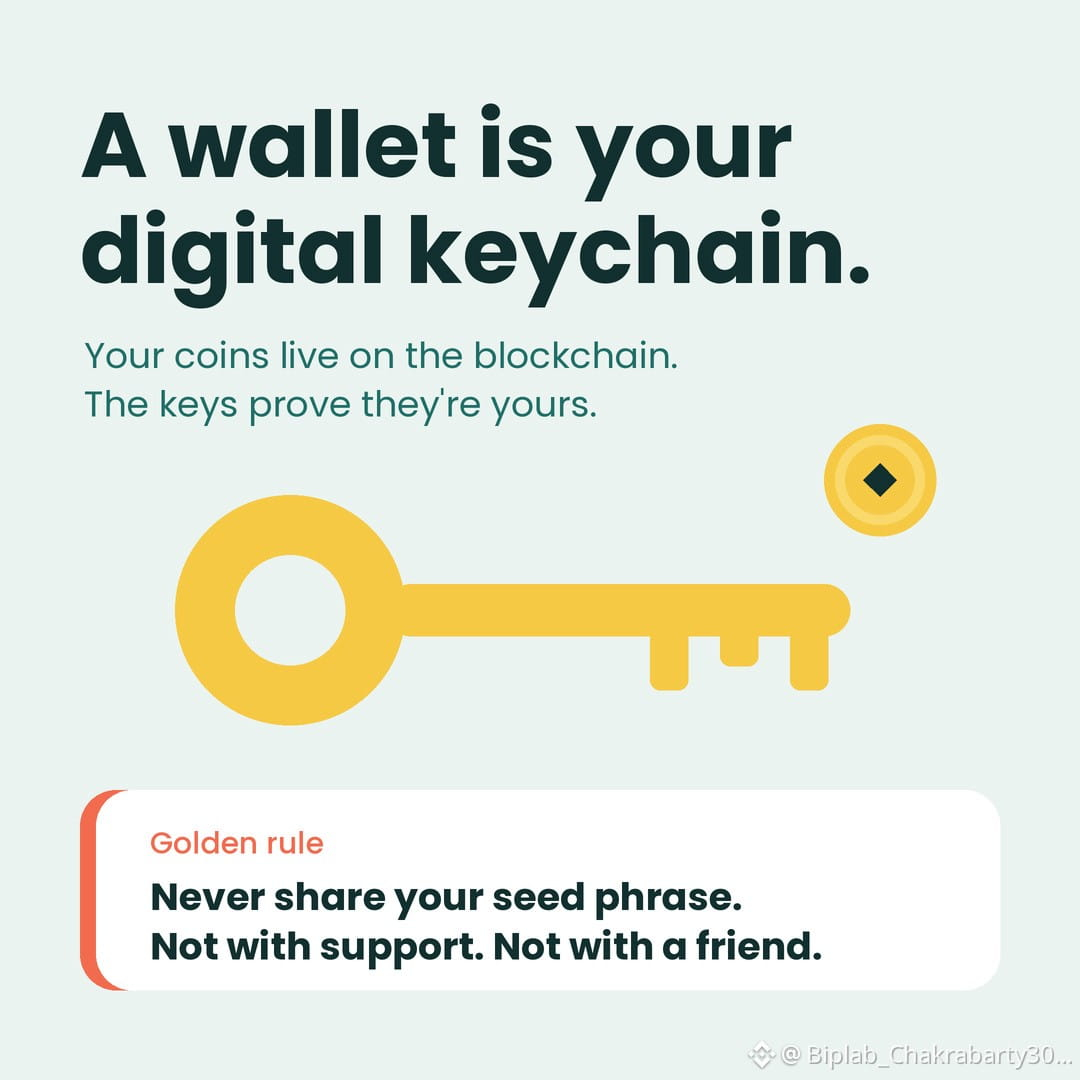
What is a wallet? 🤔
Think of it like your personal digital keychain. Your coins live on the blockchain, and your wallet holds the keys that prove they're yours.
Golden rule: never share your seed phrase with anyone. Not support, not a "friend," nobody. 🔐
Want more basics like this? Comment a topic below 👇
#CryptoBasics s #Wallet #security
1
240
·
--
Article
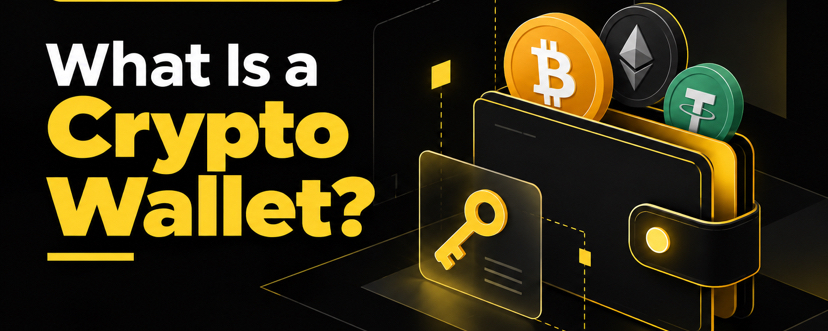
What Does a Crypto Wallet Actually Hold?You might think a crypto wallet stores your coins, just like a physical wallet holds cash.
But here’s the interesting part: your crypto doesn’t actually sit inside your wallet. 👀
So, what does a crypto wallet really do? Let’s break it down.
🔑 1. What Is a Crypto Wallet?
A crypto wallet is a tool that allows you to access and manage your digital assets on a blockchain.
It helps you send and receive crypto, check your balances, and authorize transactions.
Your assets remain recorded on the blockchain. The wallet manages the keys that allow you to access them.
🔐 2. What Are Private Keys?
Private keys are essential for controlling crypto assets.
Think of them as the secret credentials that allow you to authorize transactions from your wallet.
Anyone who gains control of your private keys may be able to access your funds.
Never share your private keys or recovery phrase with anyone.
🔥 3. Hot Wallets vs. Cold Wallets
Crypto wallets can be grouped into two common categories:
🔥 Hot Wallets
Connected to the internet.Convenient for frequent transactions.More exposed to online threats.
❄️ Cold Wallets
Keep private keys offline.Reduce exposure to online attacks.Often preferred for storing assets that don’t need frequent access.
Neither option is automatically perfect for everyone. The right choice depends on how you use your crypto and how you manage security.
🧠 4. Does a Wallet Actually Store Your Crypto?
Not in the way a physical wallet stores cash.
Your crypto exists as records on the blockchain. A wallet manages the keys used to access and control those assets.
That’s why protecting your keys and recovery phrase is so important.
💡 The Key Takeaway
A crypto wallet isn’t simply a place where your coins are stored. It’s your way to access and manage your assets on the blockchain.
Before choosing a wallet, understand how it works, how its keys are protected, and what responsibilities come with using it.
📚 Learn more with Binance Academy:
[Crypto Wallet Types Explained](https://academy.binance.com/en/articles/crypto-wallet-types-explained)
This content is for educational purposes only and isn’t financial advice.
#Binance #CryptoBasics #cryptoeducation #crypto 🌟
What Does a Crypto Wallet Actually Hold?
You might think a crypto wallet stores your coins, just like a physical wallet holds cash.
But here’s the interesting part: your crypto doesn’t actually sit inside your wallet. 👀
So, what does a crypto wallet really do? Let’s break it down.
🔑 1. What Is a Crypto Wallet?
A crypto wallet is a tool that allows you to access and manage your digital assets on a blockchain.
It helps you send and receive crypto, check your balances, and authorize transactions.
Your assets remain recorded on the blockchain. The wallet manages the keys that allow you to access them.
🔐 2. What Are Private Keys?
Private keys are essential for controlling crypto assets.
Think of them as the secret credentials that allow you to authorize transactions from your wallet.
Anyone who gains control of your private keys may be able to access your funds.
Never share your private keys or recovery phrase with anyone.
🔥 3. Hot Wallets vs. Cold Wallets
Crypto wallets can be grouped into two common categories:
🔥 Hot Wallets
Connected to the internet.Convenient for frequent transactions.More exposed to online threats.
❄️ Cold Wallets
Keep private keys offline.Reduce exposure to online attacks.Often preferred for storing assets that don’t need frequent access.
Neither option is automatically perfect for everyone. The right choice depends on how you use your crypto and how you manage security.
🧠 4. Does a Wallet Actually Store Your Crypto?
Not in the way a physical wallet stores cash.
Your crypto exists as records on the blockchain. A wallet manages the keys used to access and control those assets.
That’s why protecting your keys and recovery phrase is so important.
💡 The Key Takeaway
A crypto wallet isn’t simply a place where your coins are stored. It’s your way to access and manage your assets on the blockchain.
Before choosing a wallet, understand how it works, how its keys are protected, and what responsibilities come with using it.
📚 Learn more with Binance Academy:
Crypto Wallet Types Explained
This content is for educational purposes only and isn’t financial advice.
#Binance #CryptoBasics #cryptoeducation #crypto 🌟
1
61
·
--
Article
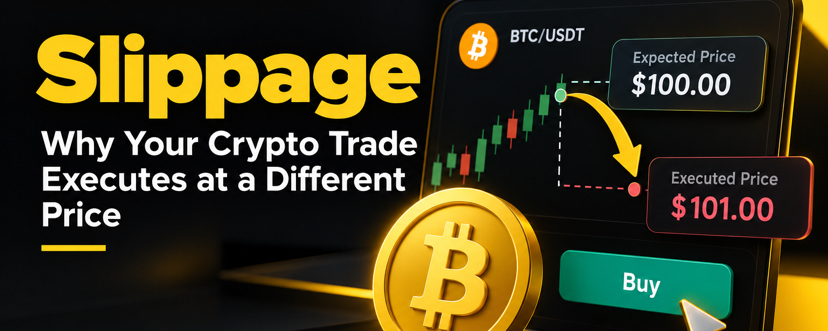
Why Did Your Crypto Trade Execute at a Different Price?You see a crypto priced at $100, place an order, and end up buying it at $101.
What happened?
It could be slippage — and understanding it can help you make more informed trading decisions.
📊 What Is Slippage?
Slippage is the difference between the expected price of a trade and the actual price at which it executes.
For example, imagine you want to buy a cryptocurrency at $100.
By the time your order executes, the price you receive is $101.
That $1 difference is slippage.
🔎 Why Does Slippage Happen?
Slippage can occur for several reasons:
1. Market Volatility
Crypto prices can move quickly. The price may change between the moment you place an order and when it executes.
2. Low Liquidity
When there aren’t enough suitable buy or sell orders available at the expected price, your order may execute at a different price.
3. Large Orders
A large order may need to match with several available orders at different prices, resulting in a different average execution price.
🟢 Can Slippage Be Positive or Negative?
Yes!
Positive Slippage: Your trade executes at a better price than expected.Negative Slippage: Your trade executes at a worse price than expected.
Slippage can affect both buying and selling.
🛡️ How Can You Manage Slippage?
Here are a few things to consider:
Consider Limit Orders: You can specify the maximum price you’re willing to pay when buying or the minimum price you’re willing to accept when selling. However, your order may not execute.Check Market Conditions: Be cautious when prices are moving rapidly.Review Available Liquidity: Before placing a large order, consider the available orders at different price levels.
Remember, no method eliminates every trading risk.
💡 The Key Takeaway
The price you see isn’t always the price you receive.
Understanding slippage helps explain why execution prices can differ from expectations, especially in fast-moving or less liquid markets.
The more you understand how trades execute, the better prepared you are to navigate the crypto market.
📚 Learn more with Binance Academy:
[Slippage — Binance Academy](https://academy.binance.com/en/glossary/slippage)
Educational content only. Not financial advice. DYOR and verify information through official sources.
#Binance #BinanceAcademy #CryptoBasics #cryptoeducation 🚀
Why Did Your Crypto Trade Execute at a Different Price?
You see a crypto priced at $100, place an order, and end up buying it at $101.
What happened?
It could be slippage — and understanding it can help you make more informed trading decisions.
📊 What Is Slippage?
Slippage is the difference between the expected price of a trade and the actual price at which it executes.
For example, imagine you want to buy a cryptocurrency at $100.
By the time your order executes, the price you receive is $101.
That $1 difference is slippage.
🔎 Why Does Slippage Happen?
Slippage can occur for several reasons:
1. Market Volatility
Crypto prices can move quickly. The price may change between the moment you place an order and when it executes.
2. Low Liquidity
When there aren’t enough suitable buy or sell orders available at the expected price, your order may execute at a different price.
3. Large Orders
A large order may need to match with several available orders at different prices, resulting in a different average execution price.
🟢 Can Slippage Be Positive or Negative?
Yes!
Positive Slippage: Your trade executes at a better price than expected.Negative Slippage: Your trade executes at a worse price than expected.
Slippage can affect both buying and selling.
🛡️ How Can You Manage Slippage?
Here are a few things to consider:
Consider Limit Orders: You can specify the maximum price you’re willing to pay when buying or the minimum price you’re willing to accept when selling. However, your order may not execute.Check Market Conditions: Be cautious when prices are moving rapidly.Review Available Liquidity: Before placing a large order, consider the available orders at different price levels.
Remember, no method eliminates every trading risk.
💡 The Key Takeaway
The price you see isn’t always the price you receive.
Understanding slippage helps explain why execution prices can differ from expectations, especially in fast-moving or less liquid markets.
The more you understand how trades execute, the better prepared you are to navigate the crypto market.
📚 Learn more with Binance Academy:
Slippage — Binance Academy
Educational content only. Not financial advice. DYOR and verify information through official sources.
#Binance #BinanceAcademy #CryptoBasics #cryptoeducation 🚀
1
108

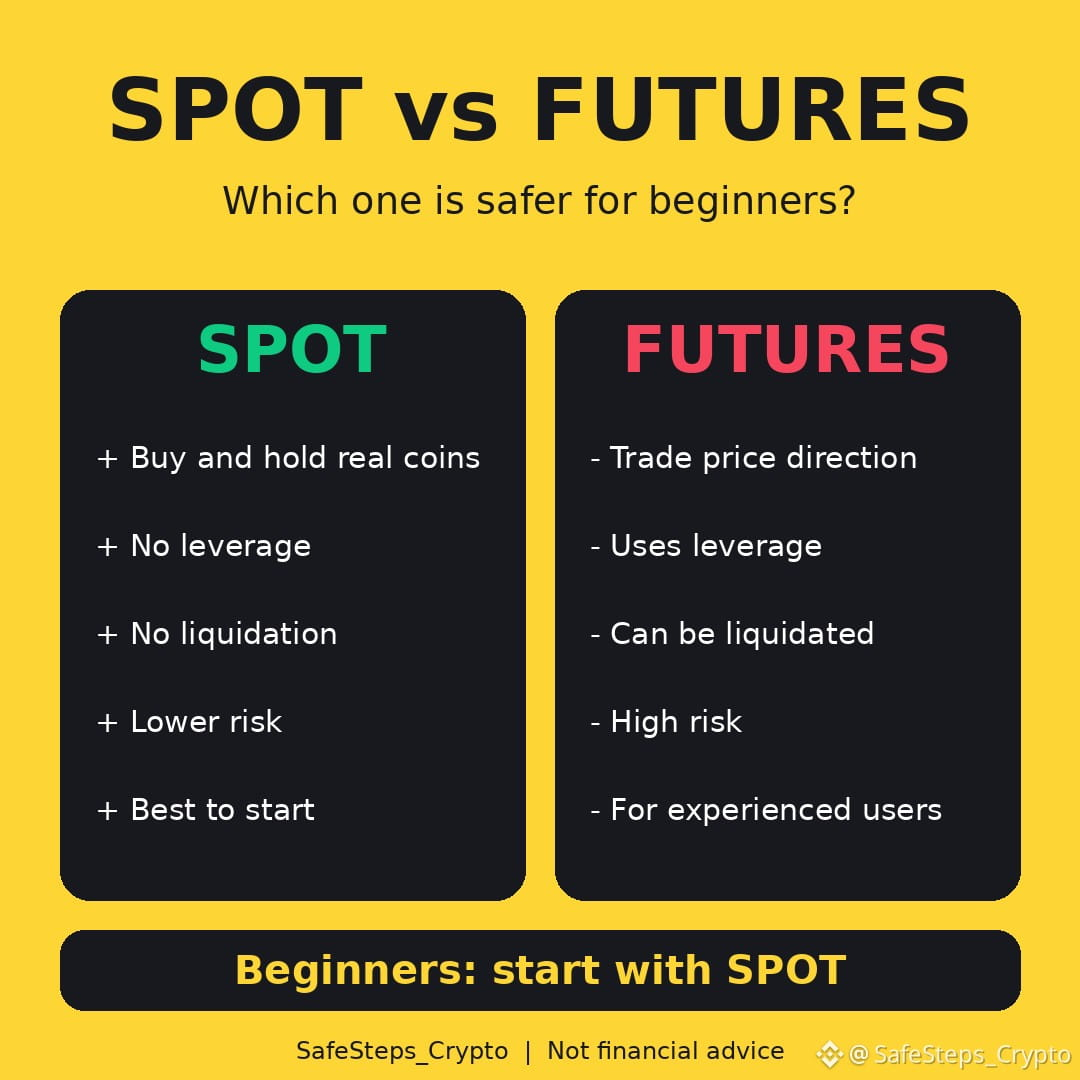
Spot vs Futures: which one should a beginner start with? 🤔
🟢 SPOT
You buy and hold real coins. No leverage, no liquidation, lower risk.
🔴 FUTURES
You trade price direction with leverage. Gains can be bigger, but losses can wipe out your balance fast.
My advice: start with Spot, learn the basics, then decide if Futures is for you.
Which one do you trade, Spot or Futures? 👇
$BTC $BNB
#Binance #Spot #Futures #BinanceSquare #CryptoBasics
1
140
Log in to explore more content
Join global crypto users on Binance Square
⚡️ Get latest and useful information about crypto.
💬 Trusted by the world’s largest crypto exchange.
👍 Discover real insights from verified creators.
Email / Phone number
Trending Topics
1
#BinanceReopensWithdrawalsForMoreAssets
12,783 views
419 Discussing
2
#AppleReportsMixedResults
8,492 views
340 Discussing
3
#BinanceHourlyDepositsExceedWithdrawals
332 views
39 Discussing
4
#USMidtermElections
693,870 views
3,750 Discussing
5
#USOctoberNFP-AreRateCutsStillPossible
95,664 views
847 Discussing
6
#Verify1to1BinanceReserves
86,166 views
620 Discussing
7
#SBIFirstHalfCryptoRevenueFalls30.1%
0 views
0 Discussing
8
#NEARVoteApprovesCutInMaxAnnualIssuanceTo1.6%
1,093 views
27 Discussing
9
#BinanceRestores28FiatWithdrawals
233,675 views
1,299 Discussing
10
#BitMineAdds8573ETHTotalHoldingsReach6.06M
582 views
35 Discussing