

#ukalgorithmiccryptotradingappsmayneedfcaauthorization
ukalgorithmiccryptotradingappsmayneedfcaauthorization
10,581 views
183 Discussing
Hot
Latest

·
--
Most retail crypto algo apps operate in a gray zone that UK regulators are about to close with required FCA authorization.
The sting of a bot ignoring your exits during a dump never really leaves you. Greed sold the dream of set-and-forget gains, then fear arrived when the code failed and your stack vanished.
I've watched this movie before. Simple bots and copy tools exploded in the last cycle, lured people with easy $USDT pair profits, then collapsed without any real accountability when volatility hit. FCA authorization would force these algorithmic apps to meet actual standards instead of hiding behind disclaimers. It is the same pattern we saw after earlier crashes: innovation runs wild, pain follows, then rules arrive to clean house.
That could mean fewer rugs on automated $DOT or $ETC strategies and more reliable execution when markets turn. In a Neutral Fear and Greed reading of 44, extra caution around untested tools already feels wise. Short term it might limit access. Longer term it weeds out the worst operators, much like previous cycles eventually did.
Where do you think this leaves UK traders heading into the next move?
#UKAlgorithmicCryptoTradingAppsMayNeedFCAAuthorization #SouthKoreaPlansToRegulateStablecoinsUnderFXLaw #DowDrops653Points

34

·
--
Bearish
#UKAlgorithmicCryptoTradingAppsMayNeedFCAAuthorization Algorithmic crypto apps may be walking into the FCA's perimeter—and that distinction matters more than the headline.
The core question is not whether a bot is clever. It is whether the app carries on a regulated investment activity. Where an activity falls inside the regulated perimeter, dealing, arranging deals or managing portfolios generally requires FCA authorisation. Software relaying a user's own orders differs from a service choosing trades and holding client assets.
This is a scope question, not a confirmed ruling on every trading app. Treat claims of blanket authorisation requirements as interpretation until the regulator sets out the details.
Why it matters: compliance raises costs and slows onboarding. Smaller developers could exit, while established platforms may benefit from clearer rules. Users could gain stronger conduct protections, but authorisation is not a seal of approval on performance.
Watch for FCA guidance, the exact permissions on the Financial Services Register, and whether an app's terms leave order decisions with you. Custody and segregation also deserve scrutiny. An entry on the register does not cover every service.
Regulatory clarity can support institutional confidence, yet heavier friction may push activity offshore. Neither outcome is automatic.
#UKCrypto #FCA #Trading #CryptoRegulation
$PEPE $ZEC $ZBT
{future}(ZBTUSDT)
{future}(ZECUSDT)
{spot}(PEPEUSDT)
#UKAlgorithmicCryptoTradingAppsMayNeedFCAAuthorization Algorithmic crypto apps may be walking into the FCA's perimeter—and that distinction matters more than the headline.
The core question is not whether a bot is clever. It is whether the app carries on a regulated investment activity. Where an activity falls inside the regulated perimeter, dealing, arranging deals or managing portfolios generally requires FCA authorisation. Software relaying a user's own orders differs from a service choosing trades and holding client assets.
This is a scope question, not a confirmed ruling on every trading app. Treat claims of blanket authorisation requirements as interpretation until the regulator sets out the details.
Why it matters: compliance raises costs and slows onboarding. Smaller developers could exit, while established platforms may benefit from clearer rules. Users could gain stronger conduct protections, but authorisation is not a seal of approval on performance.
Watch for FCA guidance, the exact permissions on the Financial Services Register, and whether an app's terms leave order decisions with you. Custody and segregation also deserve scrutiny. An entry on the register does not cover every service.
Regulatory clarity can support institutional confidence, yet heavier friction may push activity offshore. Neither outcome is automatic.
#UKCrypto #FCA #Trading #CryptoRegulation
$PEPE $ZEC $ZBT

344

·
--
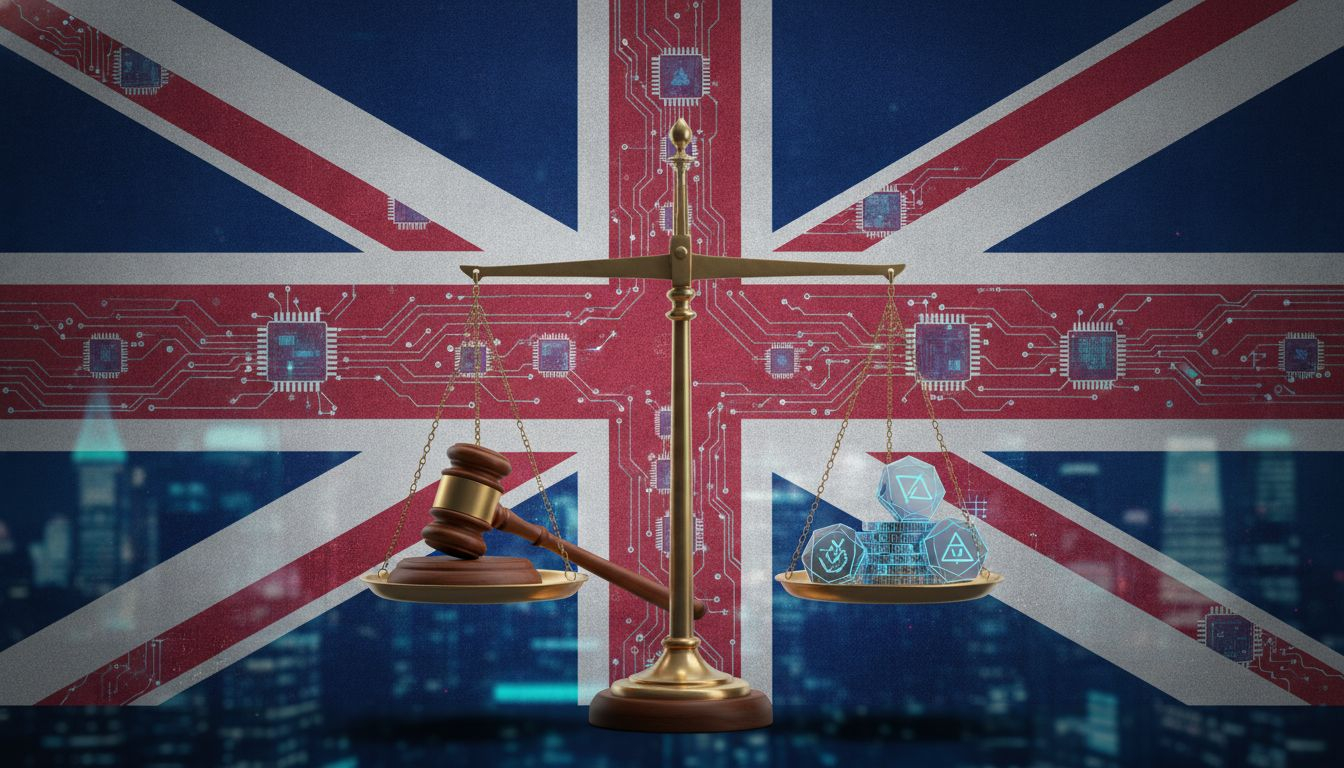
New regulatory discussions in the UK suggest that algorithmic crypto trading applications might soon require authorization from the Financial Conduct Authority (FCA). This potential shift could significantly impact how these platforms operate and serve users within the UK market.
Such a move would align crypto trading with traditional financial services, aiming to bolster consumer protection and market integrity. For existing and new apps, this means preparing for a more stringent compliance framework, potentially involving capital requirements, operational standards, and reporting obligations. This could lead to a consolidation within the market, favoring larger, well-resourced firms. Users might see enhanced security and transparency, but potentially also fewer choices or higher fees as platforms adapt.
It's crucial for businesses in this space to stay informed about regulatory developments and proactively engage with compliance measures to navigate this evolving landscape.
#UKAlgorithmicCryptoTradingAppsMayNeedFCAAuthorization
1
83

·
--
Bullish
#UKAlgorithmicCryptoTradingAppsMayNeedFCAAuthorization
🇬🇧 UK TARGETS ALGORITHMIC CRYPTO APPS: WHAT YOU NEED TO KNOW 🤖
The UK Financial Conduct Authority (FCA) is clarifying its regulatory perimeter under draft guidance CP26-36, signaling that algorithmic trading apps and automated execution tools may require formal authorization!
$ASTER
{future}(ASTERUSDT)
Here is a quick breakdown of what is changing and why it matters: 👇
$ZEC
{future}(ZECUSDT)
📌 Key Regulatory Developments
🏛️ FCA Authorization Gateway: The authorization gateway for existing UK crypto firms opened on September 30, 2026 and closes on February 28, 2027.
⏱️ Full Regime Enforcement: The comprehensive legal framework officially takes effect on October 25, 2027.
$ETH
{future}(ETHUSDT)
⚙️ Algorithmic Scope: Platforms or tools that automate order routing, select execution venues based on price/speed, or exercise discretionary execution logic may be classified as regulated intermediaries.
📝 Consultation Deadline: The public comment window for draft guidance runs through November 18, 2026, with final guidance expected in early 2027.
💡 Market Impact: Strategic Implications
🛑 Short-Term Friction: Smaller bot developers and unregulated app operators face compliance costs and operational burdens, potentially forcing service pivots or market exits.
🏦 Long-Term Institutional Entry: Clear regulatory boundaries eliminate legal ambiguity, paving the way for institutional capital and sustainable retail adoption.
💬 Discussion: Will mandatory FCA licensing make crypto trading bots safer, or will it stifle decentralized innovation in the UK? Let us know your thoughts below! 👇
#BinancePick #EarningsSeason #DowDrops653Points #web3空投
#UKAlgorithmicCryptoTradingAppsMayNeedFCAAuthorization
🇬🇧 UK TARGETS ALGORITHMIC CRYPTO APPS: WHAT YOU NEED TO KNOW 🤖
The UK Financial Conduct Authority (FCA) is clarifying its regulatory perimeter under draft guidance CP26-36, signaling that algorithmic trading apps and automated execution tools may require formal authorization!
$ASTER
Here is a quick breakdown of what is changing and why it matters: 👇
$ZEC
📌 Key Regulatory Developments
🏛️ FCA Authorization Gateway: The authorization gateway for existing UK crypto firms opened on September 30, 2026 and closes on February 28, 2027.
⏱️ Full Regime Enforcement: The comprehensive legal framework officially takes effect on October 25, 2027.
$ETH
⚙️ Algorithmic Scope: Platforms or tools that automate order routing, select execution venues based on price/speed, or exercise discretionary execution logic may be classified as regulated intermediaries.
📝 Consultation Deadline: The public comment window for draft guidance runs through November 18, 2026, with final guidance expected in early 2027.
💡 Market Impact: Strategic Implications
🛑 Short-Term Friction: Smaller bot developers and unregulated app operators face compliance costs and operational burdens, potentially forcing service pivots or market exits.
🏦 Long-Term Institutional Entry: Clear regulatory boundaries eliminate legal ambiguity, paving the way for institutional capital and sustainable retail adoption.
💬 Discussion: Will mandatory FCA licensing make crypto trading bots safer, or will it stifle decentralized innovation in the UK? Let us know your thoughts below! 👇
#BinancePick #EarningsSeason #DowDrops653Points #web3空投

Abu Fahadأ:
💛
1
1
369

·
--
Bearish
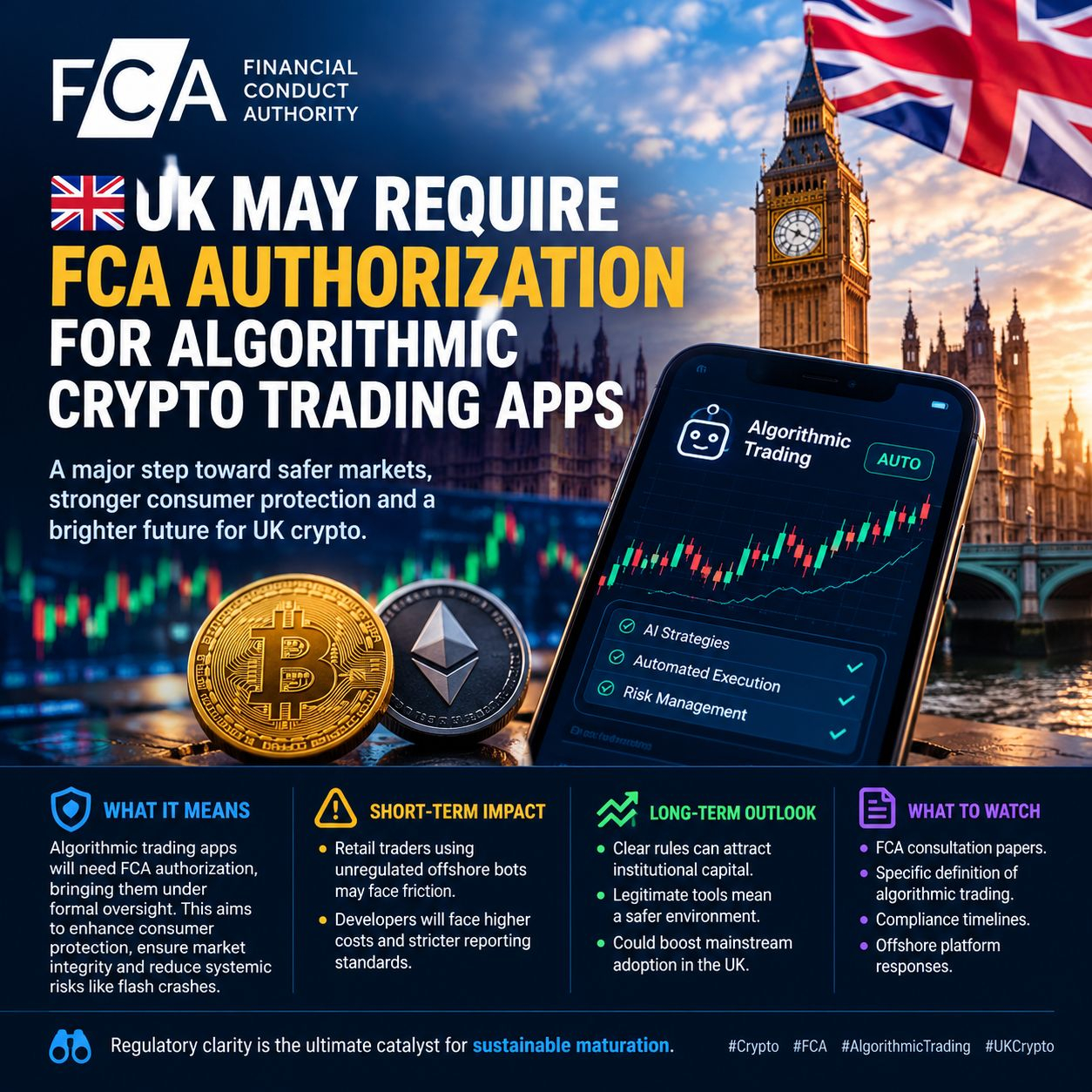
#UKAlgorithmicCryptoTradingAppsMayNeedFCAAuthorization The UK regulatory landscape for digital assets is shifting. Recent indications suggest the Financial Conduct Authority (FCA) may require algorithmic crypto trading apps to obtain formal authorization. This update marks a pivotal moment for the British market, bridging decentralized innovation with traditional oversight.
What does this mean? Algorithmic apps, which automate execution strategies, have grown rapidly. By bringing these tools under the FCA's perimeter, authorities aim to enhance consumer protection, ensure market integrity, and mitigate systemic risks tied to automated flash crashes.
For market sentiment, this presents a dual narrative. Short-term, retail traders using unregulated offshore bots may face friction as platforms adapt to new compliance frameworks. Developers will incur higher costs to meet stringent reporting standards.
However, long-term implications lean constructive. Clear regulatory boundaries often attract institutional capital. By legitimizing algorithmic tools, the UK could foster a safer environment, boosting mainstream adoption.
Traders should monitor the FCA's upcoming consultation papers. Watch for specific definitions of algorithmic trading, compliance timelines, and offshore responses. Regulatory clarity remains the ultimate catalyst for sustainable maturation.
#Crypto #FCA #AlgorithmicTrading #UKCrypto
$TREE $BMT $OPG
{future}(OPGUSDT)
{future}(BMTUSDT)
{future}(TREEUSDT)
#UKAlgorithmicCryptoTradingAppsMayNeedFCAAuthorization The UK regulatory landscape for digital assets is shifting. Recent indications suggest the Financial Conduct Authority (FCA) may require algorithmic crypto trading apps to obtain formal authorization. This update marks a pivotal moment for the British market, bridging decentralized innovation with traditional oversight.
What does this mean? Algorithmic apps, which automate execution strategies, have grown rapidly. By bringing these tools under the FCA's perimeter, authorities aim to enhance consumer protection, ensure market integrity, and mitigate systemic risks tied to automated flash crashes.
For market sentiment, this presents a dual narrative. Short-term, retail traders using unregulated offshore bots may face friction as platforms adapt to new compliance frameworks. Developers will incur higher costs to meet stringent reporting standards.
However, long-term implications lean constructive. Clear regulatory boundaries often attract institutional capital. By legitimizing algorithmic tools, the UK could foster a safer environment, boosting mainstream adoption.
Traders should monitor the FCA's upcoming consultation papers. Watch for specific definitions of algorithmic trading, compliance timelines, and offshore responses. Regulatory clarity remains the ultimate catalyst for sustainable maturation.
#Crypto #FCA #AlgorithmicTrading #UKCrypto
$TREE $BMT $OPG
2
637

·
--
Bearish
#UKAlgorithmicCryptoTradingAppsMayNeedFCAAuthorization 🇬🇧 UK FCA Targets Algorithmic Crypto Apps Automated trading faces a major regulatory milestone. The UK FCA issued draft guidance that could reshape how crypto trading apps operate.📌 Core News:
• Apps using algorithms to select trading routes (by price, liquidity, or speed) may be classified as "arranging transactions."
• This could require formal FCA authorization under new rules taking effect in Oct 2027.
• Apps merely forwarding orders without influencing execution may qualify for a technical exemption. Automation does not shield developers from oversight.
• Consultation closes Nov 18, 2026. Existing firms must apply for transitional protection by Feb 2027.
📊 Market Impact:
• Compliance Costs: DeFi aggregators and automated platforms may face higher operational overhead.
• Ecosystem Shift: Some platforms might restrict UK access or redesign algorithms to qualify for technical exemptions.
• Institutional Trust: Clearer frameworks pave the way for safer, institutional-grade products long-term.
💬 Your Take:
Will stricter algo-trading rules protect retail users or stifle DeFi innovation? Discuss below! 👇
#CryptoRegulation #FCA #AlgorithmicTrading #DeFi #CryptoNews
This is for educational purposes only. Not Financial Advice (NFA). Always Do Your Own Research (DYOR).
$TREE $BMT $QUICK
{spot}(QUICKUSDT)
{future}(BMTUSDT)
{future}(TREEUSDT)
#UKAlgorithmicCryptoTradingAppsMayNeedFCAAuthorization 🇬🇧 UK FCA Targets Algorithmic Crypto Apps Automated trading faces a major regulatory milestone. The UK FCA issued draft guidance that could reshape how crypto trading apps operate.📌 Core News:
• Apps using algorithms to select trading routes (by price, liquidity, or speed) may be classified as "arranging transactions."
• This could require formal FCA authorization under new rules taking effect in Oct 2027.
• Apps merely forwarding orders without influencing execution may qualify for a technical exemption. Automation does not shield developers from oversight.
• Consultation closes Nov 18, 2026. Existing firms must apply for transitional protection by Feb 2027.
📊 Market Impact:
• Compliance Costs: DeFi aggregators and automated platforms may face higher operational overhead.
• Ecosystem Shift: Some platforms might restrict UK access or redesign algorithms to qualify for technical exemptions.
• Institutional Trust: Clearer frameworks pave the way for safer, institutional-grade products long-term.
💬 Your Take:
Will stricter algo-trading rules protect retail users or stifle DeFi innovation? Discuss below! 👇
#CryptoRegulation #FCA #AlgorithmicTrading #DeFi #CryptoNews
This is for educational purposes only. Not Financial Advice (NFA). Always Do Your Own Research (DYOR).
$TREE $BMT $QUICK

20

·
--
#UKAlgorithmicCryptoTradingAppsMayNeedFCAAuthorization
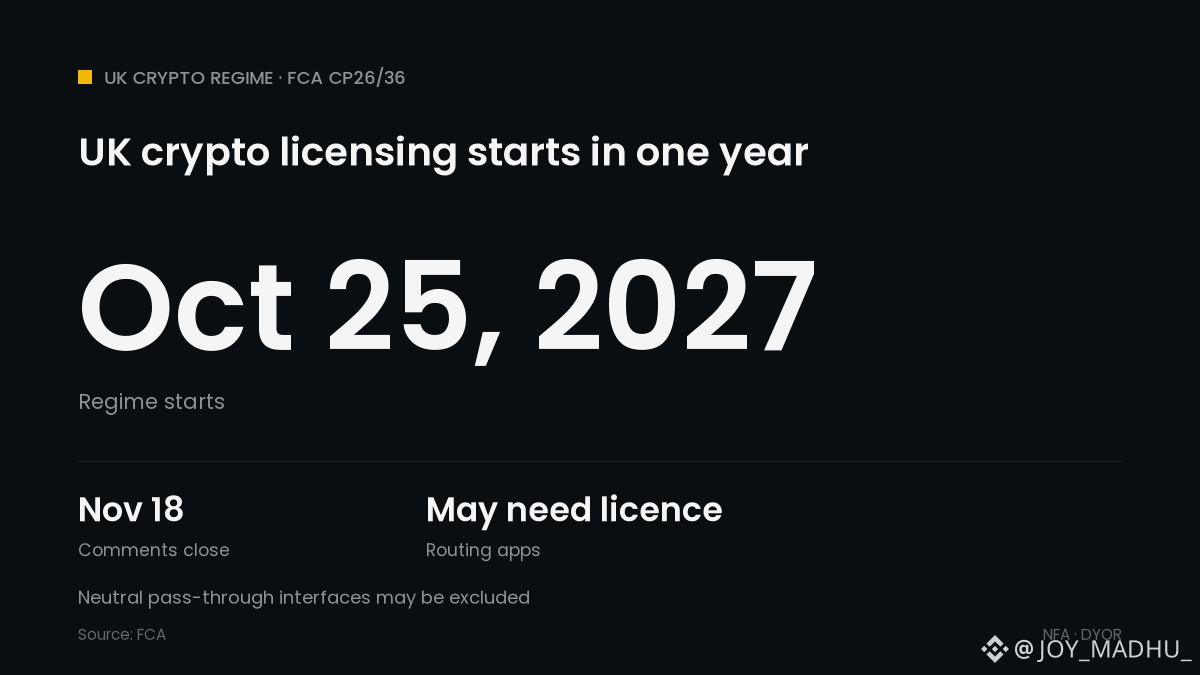
🇬🇧 UK Crypto Licensing Starts One Year From Today
📅 From Oct 25, 2027, UK crypto firms need FCA authorisation unless an exclusion applies
⚖️ New FCA draft guidance (CP26/36) explains those exclusions, with comments due Nov 18
🤖 Apps whose software picks venues, routes or timing may be "arranging deals" and need a licence
✅ A plain interface that only passes the user's own instruction to a third party or DeFi protocol can stay outside
⚠️ The FCA admits the late rule change created uncertainty and will allow extra time on the arranging part of applications
What it means for crypto: UK users may see some bots and aggregators redesign or exit, while licensed apps gain clearer footing. Bitcoin is near $80.3K, down about 0.5% in 24 hours.
Will this push DeFi apps away from UK users? 👇
$BTC $ETH
#CryptoNews #FCA #DeFi #UKAlgorithmicCryptoTradingAppsMayNeedFCAAuthorization
11

·
--
#UKAlgorithmicCryptoTradingAppsMayNeedFCAAuthorization #FCA #bitcoin
🇬🇧 UK May Tighten Rules on Crypto Trading Apps
The UK’s FCA may require crypto algorithmic trading apps to obtain authorization. New regulatory measures could focus on system audits, stress testing, market manipulation prevention, and AML/CTF compliance to improve market stability and transparency."CLICK ON THE BELOW YELLOW COIN TAG TO GO TO DESIRED TRADING PAGE TO GET BENEFIT TRADE"$BTC
{spot}(BTCUSDT)
#UKAlgorithmicCryptoTradingAppsMayNeedFCAAuthorization #FCA #bitcoin
🇬🇧 UK May Tighten Rules on Crypto Trading Apps
The UK’s FCA may require crypto algorithmic trading apps to obtain authorization. New regulatory measures could focus on system audits, stress testing, market manipulation prevention, and AML/CTF compliance to improve market stability and transparency."CLICK ON THE BELOW YELLOW COIN TAG TO GO TO DESIRED TRADING PAGE TO GET BENEFIT TRADE"$BTC

2
20

🔔 A Warning for Developers Building Crypto Trading Bots
Launching an automated crypto trading app may involve more than writing code and connecting an exchange API.
Depending on the services offered and the rules in force, FCA authorization or other regulatory obligations may apply in the UK.
Understand the legal requirements before launching, and verify the latest FCA guidance rather than relying on assumptions. 🚀
$BTC $SOL $BNB
#UKAlgorithmicCryptoTradingAppsMayNeedFCAAuthorization
27
📈 Could Clearer Rules Boost Confidence in Crypto Trading Apps?
Regulatory authorization can help establish clearer responsibilities for firms providing regulated services.
If UK requirements expand to certain algorithmic crypto trading apps, compliant providers may have to strengthen governance, controls, and consumer safeguards.
For the market, trust matters—but regulation does not eliminate trading risk. 💡
$BNB $BTC $ETH
#UKAlgorithmicCryptoTradingAppsMayNeedFCAAuthorization
12
🤖 Will Crypto Trading Bots Need FCA Approval?
The UK is considering regulatory requirements that could bring some algorithmic crypto trading apps within the FCA authorization framework.
For users, this raises an important question: is your trading platform operating within the rules that apply to its services?
Check regulatory status before trusting an app with your funds. 🔍
$BTC $SOL $XRP
#UKAlgorithmicCryptoTradingAppsMayNeedFCAAuthorization
11
🚨 UK Crypto Trading Apps Face a Regulatory Wake-Up Call!
Algorithmic crypto trading apps may need authorization from the UK Financial Conduct Authority (FCA), putting automated trading services under greater regulatory scrutiny.
Clearer oversight could strengthen consumer protection, but businesses may face higher compliance costs.
The future of automated crypto trading is increasingly tied to regulation. 📊
$BTC $ETH $BNB
#UKAlgorithmicCryptoTradingAppsMayNeedFCAAuthorization
8

Lecture Article: Regulation of Algorithmic Trading and Market Microstructure in the United Kingdom
#UKAlgorithmicCryptoTradingAppsMayNeedFCAAuthorization Microstructure Implications and Market Reactions
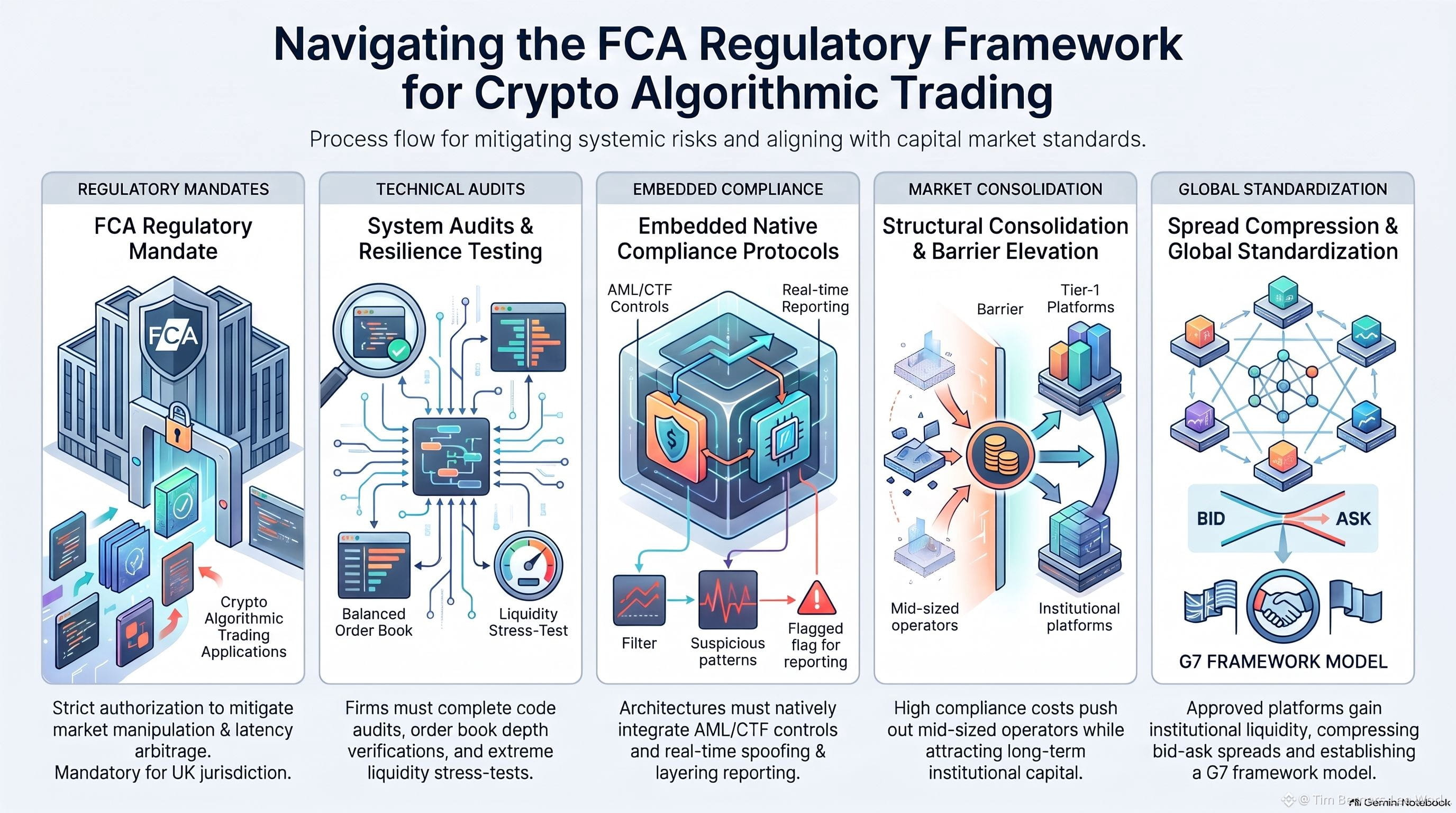
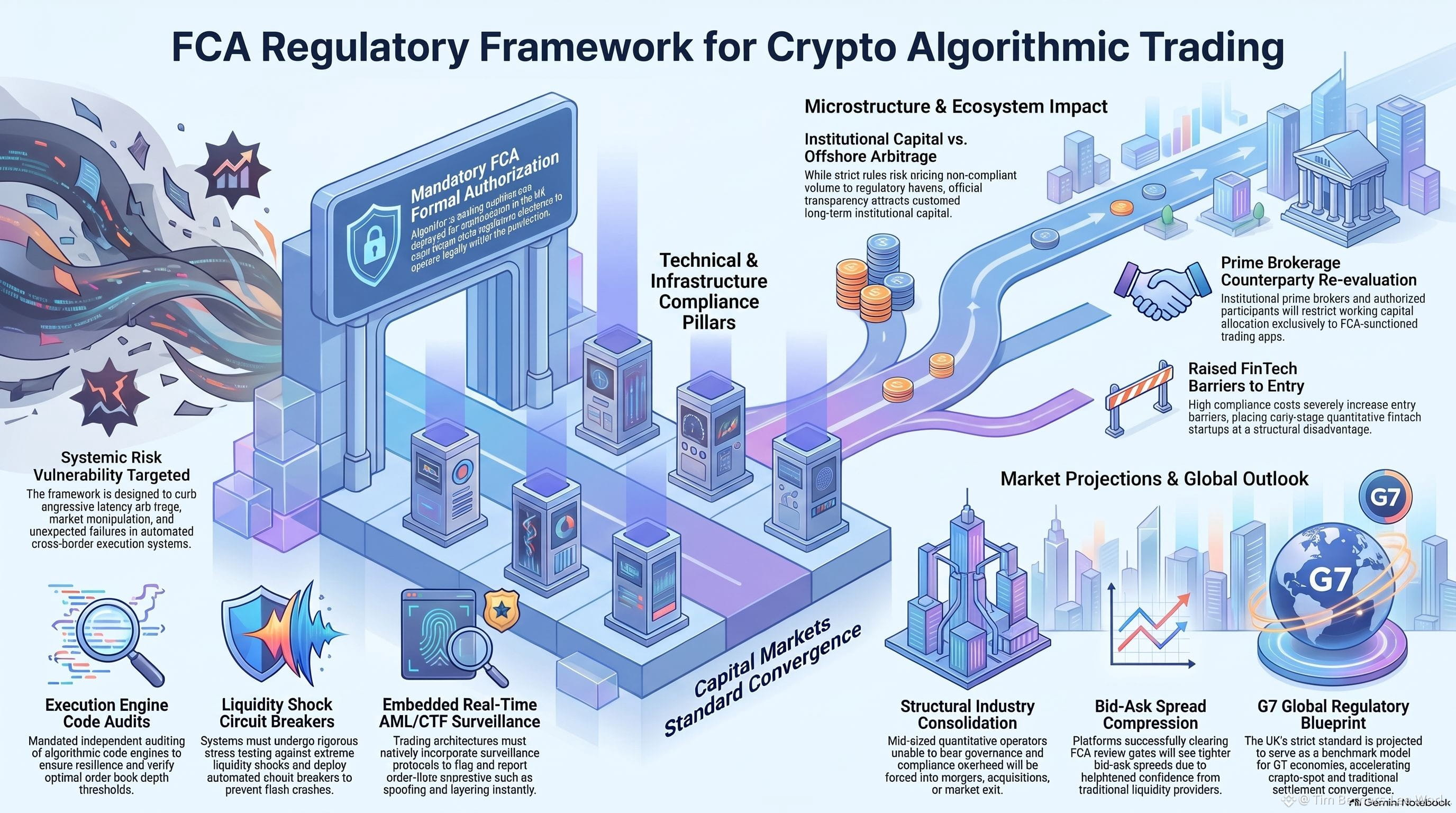
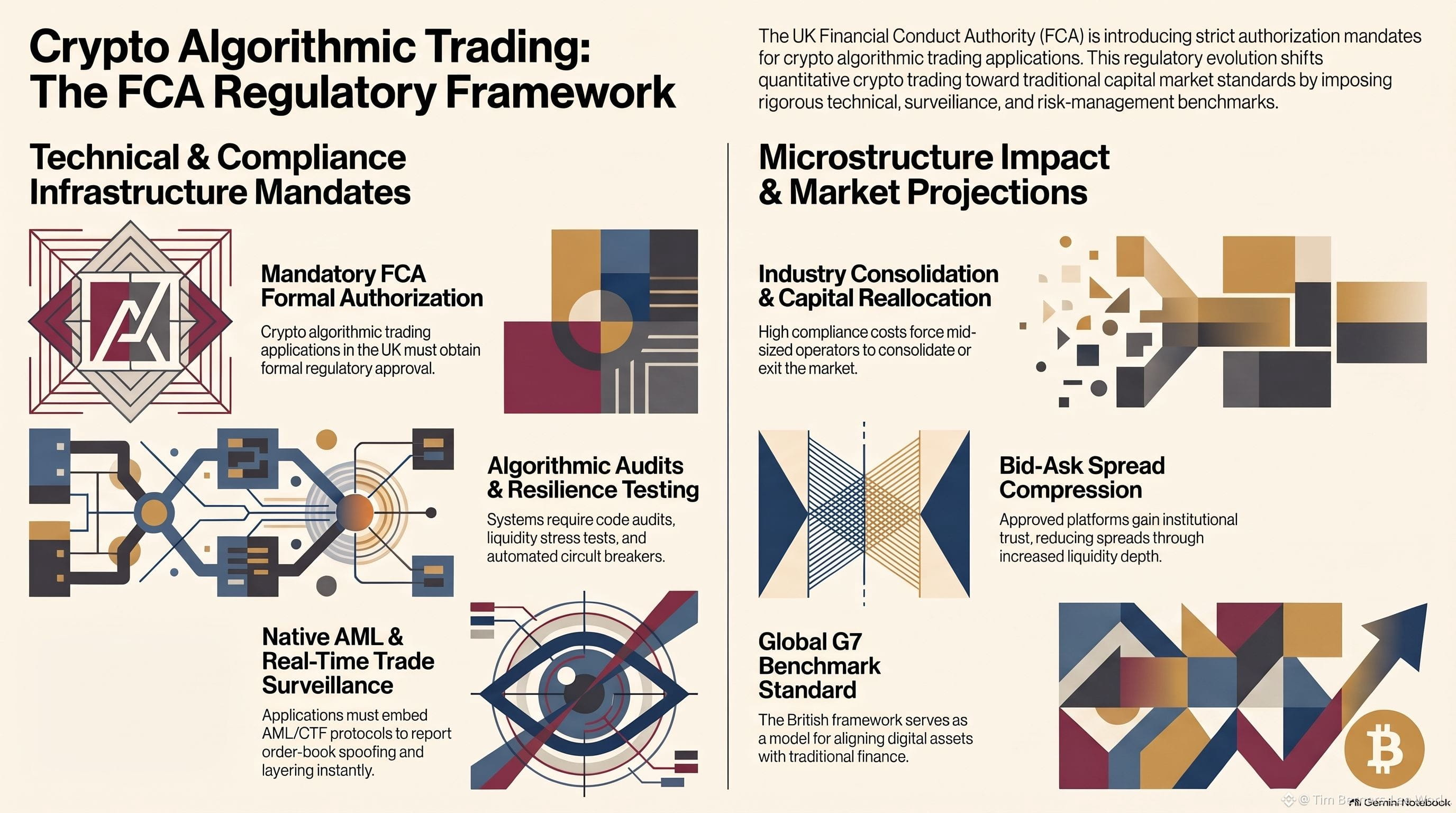
The imposition of this regulatory framework significantly alters liquidity transmission channels and substantially raises entry barriers for emerging fintech firms. Authorized participants and prime brokerage providers will be compelled to reassess their counterparty risks, limiting the allocation of working capital to applications that lack the official FCA stamp of approval. While the industry argues that excessive regulation could stifle innovation and drive trading hubs toward jurisdictions with less stringent oversight—so-called "regulatory havens"—regulators maintain that institutional transparency will, in the long term, attract a greater volume of institutional capital.
Market Projections and Analytical Conclusion
In the short to medium term, a structural consolidation is anticipated within the UK’s quantitative trading market, leading to the absorption or exit of mid-sized operators unable to bear the high costs of compliance and governance. Applications that successfully navigate the FCA’s review gates will likely see a compression in their bid-ask spreads, driven by increased confidence from traditional liquidity providers. The establishment of this British standard is likely to serve as a regulatory model for other G7 economies, accelerating global convergence between crypto-asset spot markets and conventional financial settlement infrastructure.$BTC
{spot}(BTCUSDT)
#UKAlgorithmicCryptoTradingAppsMayNeedFCAAuthorization
Lecture Article: Regulation of Algorithmic Trading and Market Microstructure in the United Kingdom
#UKAlgorithmicCryptoTradingAppsMayNeedFCAAuthorization Microstructure Implications and Market Reactions
The imposition of this regulatory framework significantly alters liquidity transmission channels and substantially raises entry barriers for emerging fintech firms. Authorized participants and prime brokerage providers will be compelled to reassess their counterparty risks, limiting the allocation of working capital to applications that lack the official FCA stamp of approval. While the industry argues that excessive regulation could stifle innovation and drive trading hubs toward jurisdictions with less stringent oversight—so-called "regulatory havens"—regulators maintain that institutional transparency will, in the long term, attract a greater volume of institutional capital.
Market Projections and Analytical Conclusion
In the short to medium term, a structural consolidation is anticipated within the UK’s quantitative trading market, leading to the absorption or exit of mid-sized operators unable to bear the high costs of compliance and governance. Applications that successfully navigate the FCA’s review gates will likely see a compression in their bid-ask spreads, driven by increased confidence from traditional liquidity providers. The establishment of this British standard is likely to serve as a regulatory model for other G7 economies, accelerating global convergence between crypto-asset spot markets and conventional financial settlement infrastructure.$BTC
#UKAlgorithmicCryptoTradingAppsMayNeedFCAAuthorization
114
Academic Article: Regulation of Algorithmic Trading and Market Microstructure in the United Kingdom
#UKAlgorithmicCryptoTradingAppsMayNeedFCAAuthorization
The Development and the Regulatory Environment
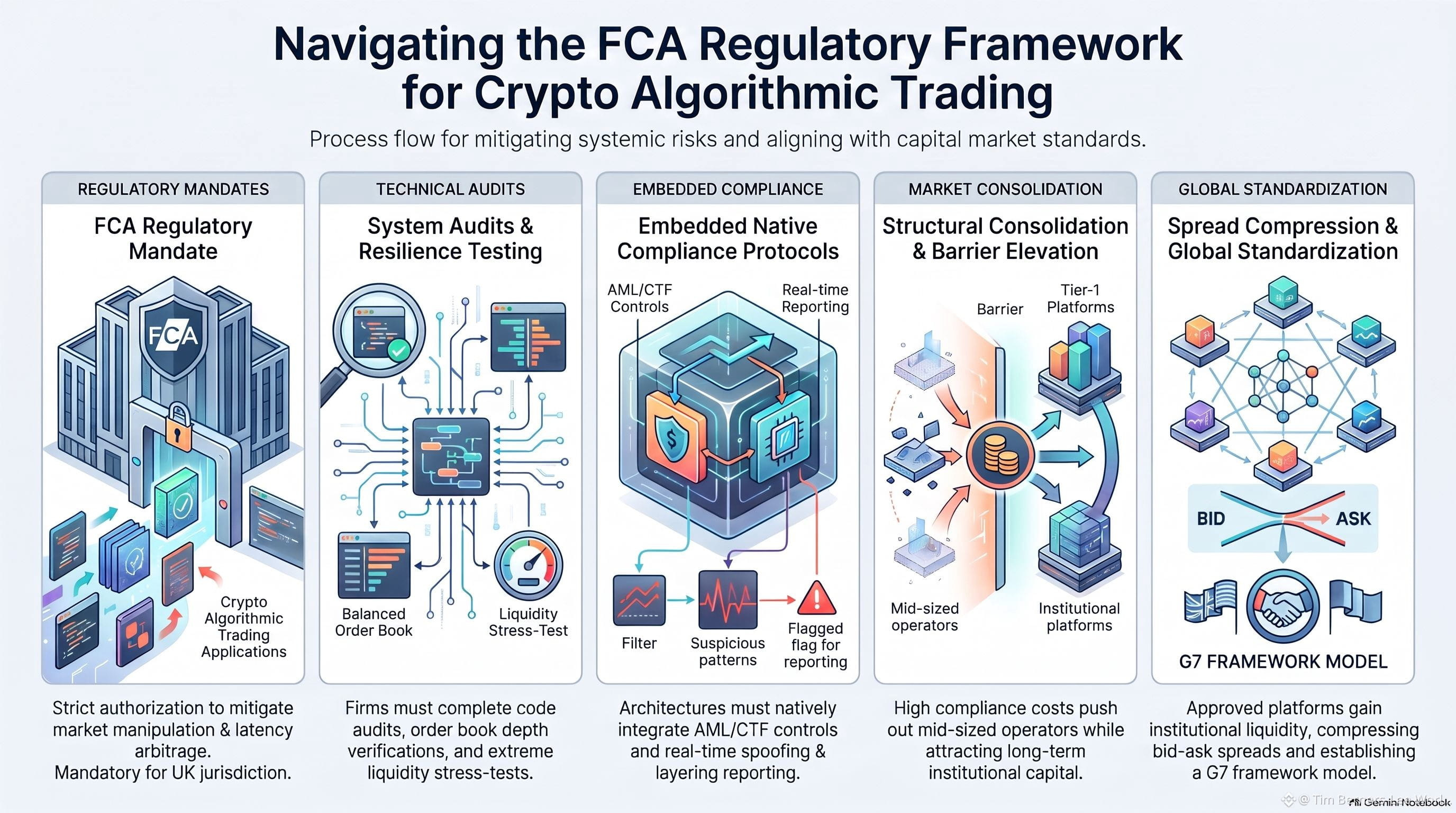
The United Kingdom’s Financial Conduct Authority (FCA) has intensified its scrutiny of the digital asset ecosystem, determining that algorithmic trading applications focused on crypto-assets and deployed within the British jurisdiction may require formal authorization under a strict regulatory regime. This measure addresses the need to mitigate systemic risks associated with market manipulation, aggressive latency arbitrage, and failures in automated systems that operate across borders. The transition toward a fully regulated environment marks a turning point for quantitative firms, which must now align their infrastructure with the established standards of Western capital markets.
Metrics, Technical Infrastructure, and Key Factors
The technical core of this oversight focuses on code audits of algorithmic execution engines and the verification of optimal thresholds within the order book (order book depth). Under the FCA’s technical standards, platforms must demonstrate system resilience through stress testing against extreme liquidity shocks and the implementation of circuit breakers. Furthermore, application architecture must natively incorporate anti-money laundering (AML) and counter-terrorist financing (CTF) protocols, with real-time reporting of anomalies detected in order flows to prevent practices such as spoofing or layering.$BTC
{spot}(BTCUSDT)
#UKAlgorithmicCryptoTradingAppsMayNeedFCAAuthorization
Academic Article: Regulation of Algorithmic Trading and Market Microstructure in the United Kingdom
#UKAlgorithmicCryptoTradingAppsMayNeedFCAAuthorization
The Development and the Regulatory Environment
The United Kingdom’s Financial Conduct Authority (FCA) has intensified its scrutiny of the digital asset ecosystem, determining that algorithmic trading applications focused on crypto-assets and deployed within the British jurisdiction may require formal authorization under a strict regulatory regime. This measure addresses the need to mitigate systemic risks associated with market manipulation, aggressive latency arbitrage, and failures in automated systems that operate across borders. The transition toward a fully regulated environment marks a turning point for quantitative firms, which must now align their infrastructure with the established standards of Western capital markets.
Metrics, Technical Infrastructure, and Key Factors
The technical core of this oversight focuses on code audits of algorithmic execution engines and the verification of optimal thresholds within the order book (order book depth). Under the FCA’s technical standards, platforms must demonstrate system resilience through stress testing against extreme liquidity shocks and the implementation of circuit breakers. Furthermore, application architecture must natively incorporate anti-money laundering (AML) and counter-terrorist financing (CTF) protocols, with real-time reporting of anomalies detected in order flows to prevent practices such as spoofing or layering.$BTC
#UKAlgorithmicCryptoTradingAppsMayNeedFCAAuthorization
#UKAlgorithmicCryptoTradingAppsMayNeedFCAAuthorization
The Development and the Regulatory Environment
The United Kingdom’s Financial Conduct Authority (FCA) has intensified its scrutiny of the digital asset ecosystem, determining that algorithmic trading applications focused on crypto-assets and deployed within the British jurisdiction may require formal authorization under a strict regulatory regime. This measure addresses the need to mitigate systemic risks associated with market manipulation, aggressive latency arbitrage, and failures in automated systems that operate across borders. The transition toward a fully regulated environment marks a turning point for quantitative firms, which must now align their infrastructure with the established standards of Western capital markets.
Metrics, Technical Infrastructure, and Key Factors
The technical core of this oversight focuses on code audits of algorithmic execution engines and the verification of optimal thresholds within the order book (order book depth). Under the FCA’s technical standards, platforms must demonstrate system resilience through stress testing against extreme liquidity shocks and the implementation of circuit breakers. Furthermore, application architecture must natively incorporate anti-money laundering (AML) and counter-terrorist financing (CTF) protocols, with real-time reporting of anomalies detected in order flows to prevent practices such as spoofing or layering.$BTC
#UKAlgorithmicCryptoTradingAppsMayNeedFCAAuthorization
148

·
--
#UKAlgorithmicCryptoTradingAppsMayNeedFCAAuthorization
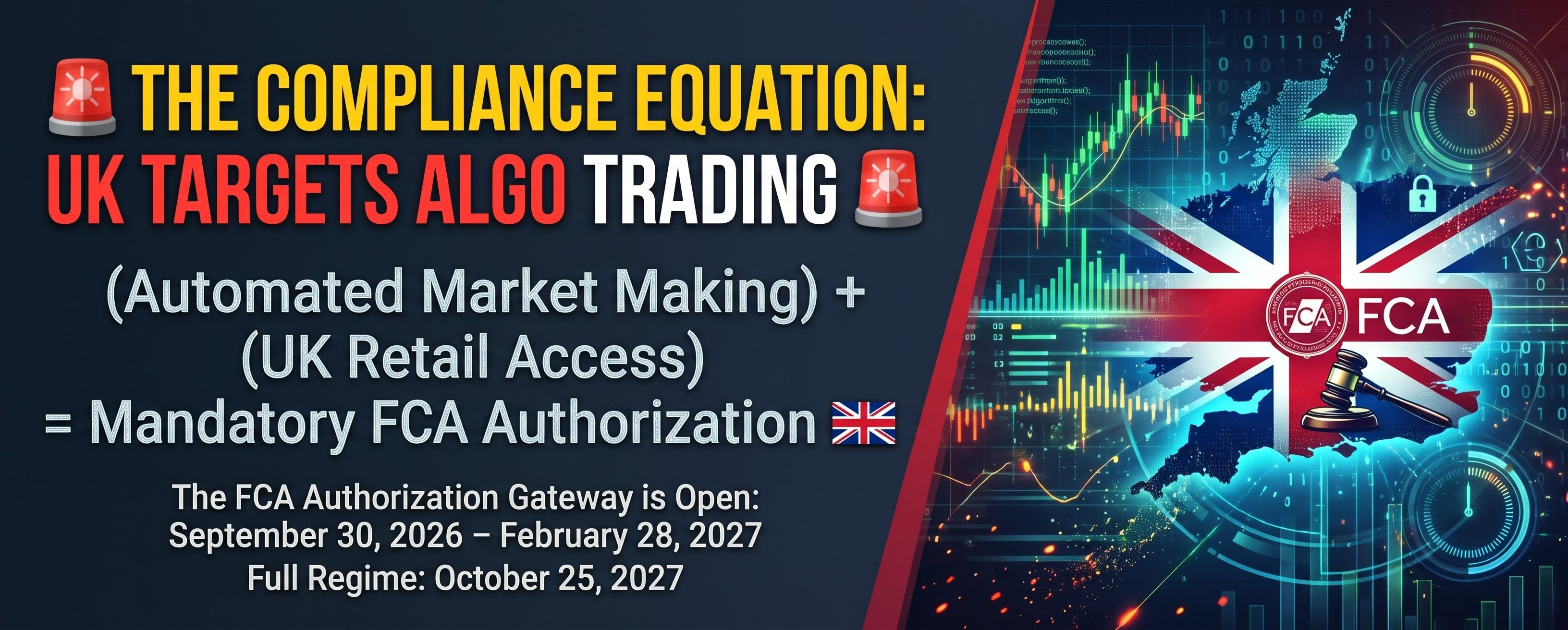
🚨 THE COMPLIANCE EQUATION: UK TARGETS ALGO TRADING & TRADING APPS!
The wild west of automated crypto trading and algorithmic apps in the United Kingdom is officially facing a hard reality check. Regulatory oversight is shifting from passive observation to strict enforcement.
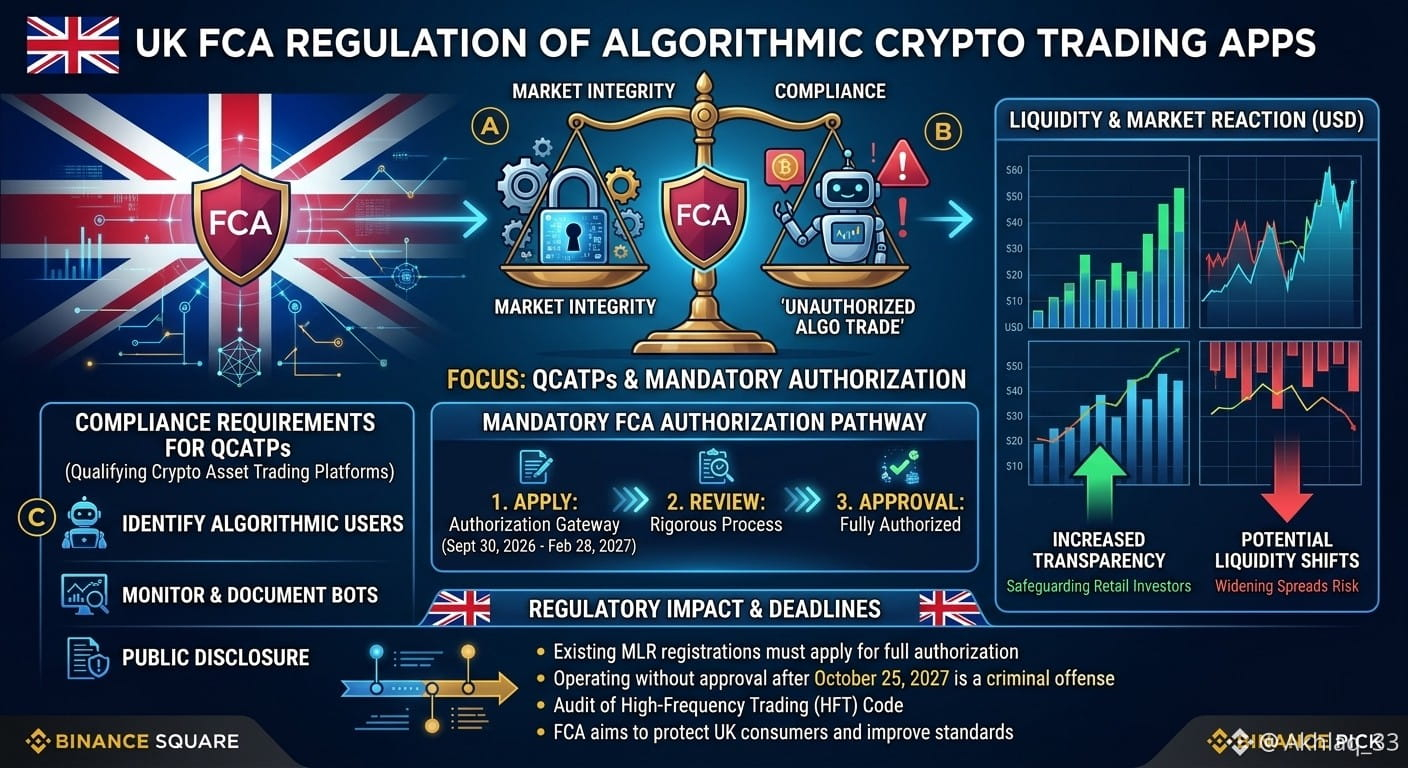
Under the Financial Conduct Authority’s (FCA) draft guidance (CP26-36), crypto trading applications and platforms that use algorithms to automatically select execution venues, compare prices, or find optimal routing speeds are officially being caught in the regulatory perimeter as market intermediaries.
⏳ The Regulatory Clock is Ticking Fast
Application Window: Existing firms must submit their formal authorization applications by February 28, 2027.
Full Enforcement: The complete regulatory regime officially takes effect on October 25, 2027. Operating without authorization after this date becomes a severe regulatory violation.
No Automatic Conversion: Existing anti-money laundering (MLR) registrations do not carry over into full authorization under the new framework.
⚙️ What This Means for Developers & Platforms
Discretionary Involvement vs. Tech Exclusion: Apps that merely transmit orders or act as pure technology infrastructure may qualify for exemptions. However, any app that actively modifies orders, determines execution timing, or routes trades based on liquidity and price will face full regulatory scrutiny.
The Compliance Moat: While smaller projects and hobbyists may struggle with high compliance and auditing costs, serious institutional platforms that successfully adapt gain a massive trust advantage.
Liquidity Pressures: Strict oversight aims to protect retail traders from predatory automated strategies, but it also creates the risk of short-term friction or liquidity migration if key market makers pull back.
Drop your take below: Are strict FCA rules a necessary filter for quality, or an overreach that stifles crypto automation? 👇#FCA #CryptoRegulation #algoTrading #CryptoNews $BTC $BNB
31

Article
🚨 THE COMPLIANCE EQUATION: UK TARGETS ALGO TRADING 🚨#UKAlgorithmicCryptoTradingAppsMayNeedFCAAuthorization The wild west of automated crypto trading in the United Kingdom is officially coming to an end. For algorithmic traders and the platforms that host them, the regulatory landscape is shifting from passive observation to strict enforcement. Let’s break down the Financial Conduct Authority (FCA) framework using pure math 🧮👇
(Automated Market Making) + (UK Retail Access) = Mandatory FCA Authorization 🇬🇧
The Regulatory Clock is Ticking
The FCA is strictly regulating how algorithmic crypto trading operates within its borders. If you are operating a trading platform with UK customers, the regulatory grace period is closing rapidly. The FCA officially opened its authorization application gateway on September 30, 2026. Crypto businesses have a strict window to submit their applications, which officially closes on February 28, 2027.
Operating without this mandatory authorization after the full regime commences on October 25, 2027, becomes a severe regulatory breach and potentially a criminal offense. Importantly, existing anti-money laundering (MLR) registrations will not automatically convert into full authorization under the new regime.
The Algorithmic Mandate for Platforms
Under the new rules for UK Qualifying Crypto Asset Trading Platforms (QCATPs), exchanges can no longer turn a blind eye to the bots providing their liquidity. Platforms must now explicitly identify, document, and continuously monitor all users who deploy market-making strategies on their venues.
Furthermore, transparency is now a legal requirement. Firms must publicly disclose to their users their exact approach to managing and mitigating potential market harms caused by algorithmic trading techniques. Taking it a step further, platforms are also required to disclose the specific number of users actively engaged in algorithmic trading on their systems.
The Liquidity Impact
By demanding platforms audit the code and impact of high-frequency trading bots, the UK is attempting to protect retail traders from predatory market-making practices and sudden flash crashes. However, strict oversight creates immense friction. If top-tier algorithmic market makers refuse to submit to UK monitoring, platforms could face a severe liquidity drain, widening spreads for the everyday retail investor.
Will this strict oversight build a safer crypto ecosystem for UK retail, or will it push massive algorithmic liquidity completely offshore?
Let's debate in the comments! 👇💬
$BTC $JCT $ORDER
{future}(JCTUSDT)
{future}(BTCUSDT)
{future}(ORDERUSDT)
#FCA #CryptoRegulation #algoTrading
🚨 THE COMPLIANCE EQUATION: UK TARGETS ALGO TRADING 🚨
#UKAlgorithmicCryptoTradingAppsMayNeedFCAAuthorization The wild west of automated crypto trading in the United Kingdom is officially coming to an end. For algorithmic traders and the platforms that host them, the regulatory landscape is shifting from passive observation to strict enforcement. Let’s break down the Financial Conduct Authority (FCA) framework using pure math 🧮👇
(Automated Market Making) + (UK Retail Access) = Mandatory FCA Authorization 🇬🇧
The Regulatory Clock is Ticking
The FCA is strictly regulating how algorithmic crypto trading operates within its borders. If you are operating a trading platform with UK customers, the regulatory grace period is closing rapidly. The FCA officially opened its authorization application gateway on September 30, 2026. Crypto businesses have a strict window to submit their applications, which officially closes on February 28, 2027.
Operating without this mandatory authorization after the full regime commences on October 25, 2027, becomes a severe regulatory breach and potentially a criminal offense. Importantly, existing anti-money laundering (MLR) registrations will not automatically convert into full authorization under the new regime.
The Algorithmic Mandate for Platforms
Under the new rules for UK Qualifying Crypto Asset Trading Platforms (QCATPs), exchanges can no longer turn a blind eye to the bots providing their liquidity. Platforms must now explicitly identify, document, and continuously monitor all users who deploy market-making strategies on their venues.
Furthermore, transparency is now a legal requirement. Firms must publicly disclose to their users their exact approach to managing and mitigating potential market harms caused by algorithmic trading techniques. Taking it a step further, platforms are also required to disclose the specific number of users actively engaged in algorithmic trading on their systems.
The Liquidity Impact
By demanding platforms audit the code and impact of high-frequency trading bots, the UK is attempting to protect retail traders from predatory market-making practices and sudden flash crashes. However, strict oversight creates immense friction. If top-tier algorithmic market makers refuse to submit to UK monitoring, platforms could face a severe liquidity drain, widening spreads for the everyday retail investor.
Will this strict oversight build a safer crypto ecosystem for UK retail, or will it push massive algorithmic liquidity completely offshore?
Let's debate in the comments! 👇💬
$BTC $JCT $ORDER
#FCA #CryptoRegulation #algoTrading
1
119

·
--
Article
🇬🇧 UK's FCA Rules on Algo Trading Apps: Why This Could Be Bullish for Crypto 🤖#UKAlgorithmicCryptoTradingAppsMayNeedFCAAuthorization
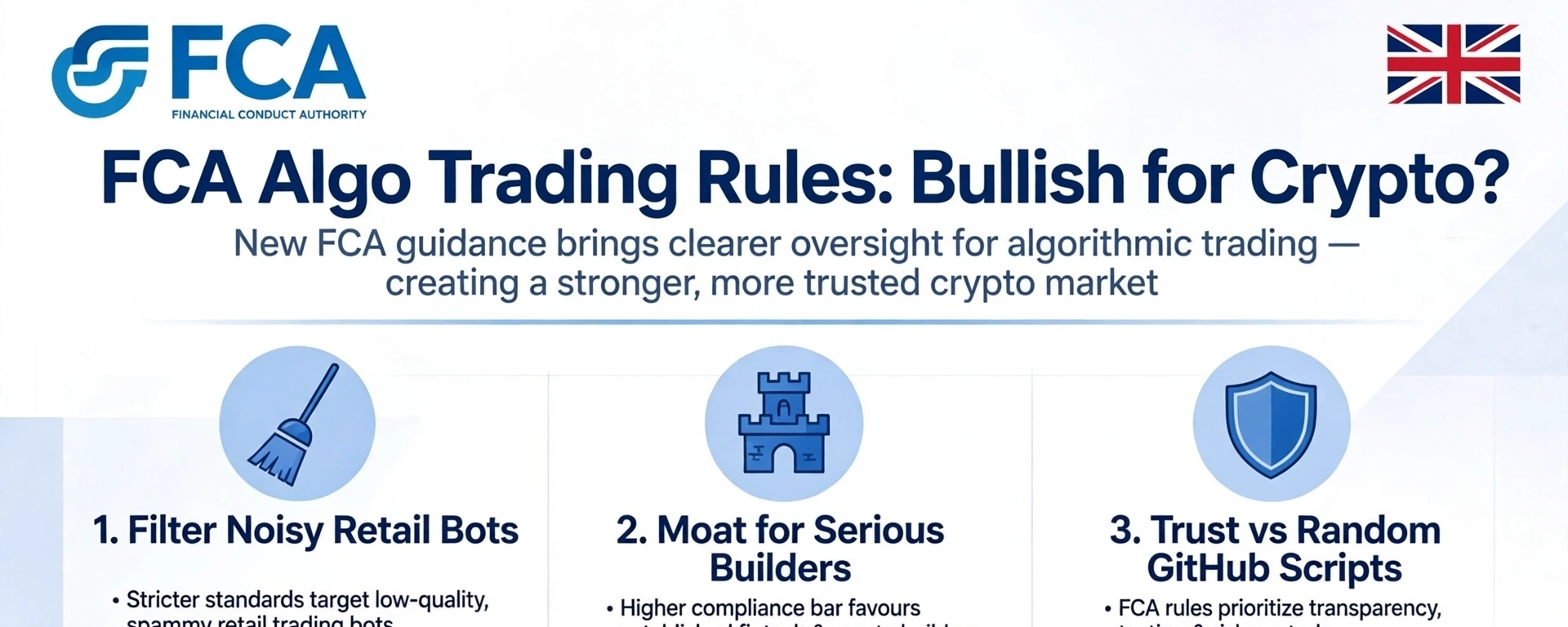
The UK's financial regulator, the **FCA (Financial Conduct Authority)**, is looking at tighter rules for **algorithmic crypto trading apps**. 📜 At first glance this sounds like bad news, but a few voices in the crypto community see it differently. 💡 Their view: **heavy compliance may actually be good for the space.** 📈
Note: the screenshot is a social media opinion post, so this article reflects that view and not an official FCA statement. Please check the FCA's own announcements for the exact rules. ✅
## 🔍 What Is the Core Argument?
The post makes a simple case: **stricter FCA rules help the algo trading space grow in a healthier way.** 🌱 It rests on three points:
1. 🧹 **Heavy compliance shakes out noisy retail bots.** Low-quality bots made with little care or testing may struggle to meet regulatory standards.
2. 🏰 **Serious builders get a clear moat against clones.** If it takes real effort to get authorized, copycats cannot enter the market as easily. 🛡️
3. 🔐 **Traders may stop trusting random GitHub scripts.** Many retail traders run code they found online without understanding it. Regulation can push them toward tools that are accountable and transparent. 👀
## 🤖 Why Algo Trading Needs Better Standards
Algorithmic trading uses software to buy and sell automatically based on set rules. ⚙️ It can be powerful, but it also carries real risks:
- 🐛 **Bugs in code** can cause big losses within minutes.
- 🎭 **Unverified bots** may make false promises about returns.
- 🔓 **Unknown scripts** can create security risks, including exposed API keys.
- 📉 **Poor risk controls** can wipe out an account in volatile markets.
When rules raise the quality bar, honest developers benefit and users are better protected. 🙌
## 🏰 The "Moat" Effect
In business, a **moat** is something that protects a company from competition. 🌊 FCA authorization could become that moat for serious teams.
- 💼 Teams with proper systems, documentation and risk management can **stand out**.
- 🪞 Clone apps that copy features but skip compliance may **disappear**.
- 🤝 Users get a clear signal of **who can be trusted**.
Over time, this could attract more **institutional interest and capital** into the UK crypto sector. 🏦💰
## 😐 The Author's Personal Stance
The author says they are **changing nothing in their personal setup** for now. 🧘 They also feel that most "trending app" debates **just add noise to social feeds**. 📢 It is a reminder not to react to every headline and to stay calm while rules develop. 🧠
## ⚠️ The Counter-Argument: What Could Go Wrong?
The post ends by asking readers to **agree or disagree**, and it mentions that a **mass user exodus from the UK would prove the author wrong**. 🚪 That is a fair risk to consider:
- 📤 Heavy rules can **push users and developers to other countries**.
- 💸 Compliance costs can be **too high for small teams and startups**.
- 🐌 Innovation may **slow down** if authorization takes too long.
- 🌍 Users might switch to **offshore platforms** with fewer protections, which is arguably worse for safety. 😬
So the outcome depends on whether the FCA's rules are **clear, fair and practical**. ⚖️
## 📊 Quick Comparison
| 🧩 Factor | ✅ Possible Upside | ⚠️ Possible Downside |
|---|---|---|
| 🤖 Retail bots | Low-quality ones get filtered out | Small hobbyists may be shut out |
| 🏗️ Serious builders | Stronger moat, more trust | Higher cost and effort |
| 👥 Traders | Safer, more transparent tools | Fewer choices |
| 🇬🇧 UK market | More credibility | Risk of users leaving |
## 💡 Tips for Algo Traders 🧠
- 🔎 **Check whether an app is authorized** before trusting it with funds.
- 🚫 **Avoid running unknown scripts** from random sources.
- 🔑 **Protect your API keys** and limit permissions (for example, disable withdrawals).
- 🧪 **Test with small amounts** before scaling up.
- 📰 **Follow official FCA updates**, not just social media opinions.
## ⚠️ Disclaimer
This article is for information only and is **not financial or legal advice**. 📌 Crypto and algorithmic trading carry high risk. Always do your own research. 🙏
## 🌟 Final Thoughts
Regulation can feel like a threat, but it can also **clean up a market and reward the builders who do things properly**. 🧹🏆 Whether the FCA's rules turn out to be bullish or a burden depends on how they are applied and how the market responds. 🔮 What do you think: **agree or disagree?** 🤔
**:** #FCA #CryptoRegulation #AlgoTrading #CryptoNews #UKCrypto
#MarketsPriceJust10%ChanceOfFedHikeNextWeek $MSFTB
{spot}(MSFTBUSDT)
#DowDrops653Points #BinancePick #UKAlgorithmicCryptoTradingAppsMayNeedFCAAuthorization
🇬🇧 UK's FCA Rules on Algo Trading Apps: Why This Could Be Bullish for Crypto 🤖
#UKAlgorithmicCryptoTradingAppsMayNeedFCAAuthorization
The UK's financial regulator, the **FCA (Financial Conduct Authority)**, is looking at tighter rules for **algorithmic crypto trading apps**. 📜 At first glance this sounds like bad news, but a few voices in the crypto community see it differently. 💡 Their view: **heavy compliance may actually be good for the space.** 📈
Note: the screenshot is a social media opinion post, so this article reflects that view and not an official FCA statement. Please check the FCA's own announcements for the exact rules. ✅
## 🔍 What Is the Core Argument?
The post makes a simple case: **stricter FCA rules help the algo trading space grow in a healthier way.** 🌱 It rests on three points:
1. 🧹 **Heavy compliance shakes out noisy retail bots.** Low-quality bots made with little care or testing may struggle to meet regulatory standards.
2. 🏰 **Serious builders get a clear moat against clones.** If it takes real effort to get authorized, copycats cannot enter the market as easily. 🛡️
3. 🔐 **Traders may stop trusting random GitHub scripts.** Many retail traders run code they found online without understanding it. Regulation can push them toward tools that are accountable and transparent. 👀
## 🤖 Why Algo Trading Needs Better Standards
Algorithmic trading uses software to buy and sell automatically based on set rules. ⚙️ It can be powerful, but it also carries real risks:
- 🐛 **Bugs in code** can cause big losses within minutes.
- 🎭 **Unverified bots** may make false promises about returns.
- 🔓 **Unknown scripts** can create security risks, including exposed API keys.
- 📉 **Poor risk controls** can wipe out an account in volatile markets.
When rules raise the quality bar, honest developers benefit and users are better protected. 🙌
## 🏰 The "Moat" Effect
In business, a **moat** is something that protects a company from competition. 🌊 FCA authorization could become that moat for serious teams.
- 💼 Teams with proper systems, documentation and risk management can **stand out**.
- 🪞 Clone apps that copy features but skip compliance may **disappear**.
- 🤝 Users get a clear signal of **who can be trusted**.
Over time, this could attract more **institutional interest and capital** into the UK crypto sector. 🏦💰
## 😐 The Author's Personal Stance
The author says they are **changing nothing in their personal setup** for now. 🧘 They also feel that most "trending app" debates **just add noise to social feeds**. 📢 It is a reminder not to react to every headline and to stay calm while rules develop. 🧠
## ⚠️ The Counter-Argument: What Could Go Wrong?
The post ends by asking readers to **agree or disagree**, and it mentions that a **mass user exodus from the UK would prove the author wrong**. 🚪 That is a fair risk to consider:
- 📤 Heavy rules can **push users and developers to other countries**.
- 💸 Compliance costs can be **too high for small teams and startups**.
- 🐌 Innovation may **slow down** if authorization takes too long.
- 🌍 Users might switch to **offshore platforms** with fewer protections, which is arguably worse for safety. 😬
So the outcome depends on whether the FCA's rules are **clear, fair and practical**. ⚖️
## 📊 Quick Comparison
| 🧩 Factor | ✅ Possible Upside | ⚠️ Possible Downside |
|---|---|---|
| 🤖 Retail bots | Low-quality ones get filtered out | Small hobbyists may be shut out |
| 🏗️ Serious builders | Stronger moat, more trust | Higher cost and effort |
| 👥 Traders | Safer, more transparent tools | Fewer choices |
| 🇬🇧 UK market | More credibility | Risk of users leaving |
## 💡 Tips for Algo Traders 🧠
- 🔎 **Check whether an app is authorized** before trusting it with funds.
- 🚫 **Avoid running unknown scripts** from random sources.
- 🔑 **Protect your API keys** and limit permissions (for example, disable withdrawals).
- 🧪 **Test with small amounts** before scaling up.
- 📰 **Follow official FCA updates**, not just social media opinions.
## ⚠️ Disclaimer
This article is for information only and is **not financial or legal advice**. 📌 Crypto and algorithmic trading carry high risk. Always do your own research. 🙏
## 🌟 Final Thoughts
Regulation can feel like a threat, but it can also **clean up a market and reward the builders who do things properly**. 🧹🏆 Whether the FCA's rules turn out to be bullish or a burden depends on how they are applied and how the market responds. 🔮 What do you think: **agree or disagree?** 🤔
**:** #FCA #CryptoRegulation #AlgoTrading #CryptoNews #UKCrypto
#MarketsPriceJust10%ChanceOfFedHikeNextWeek $MSFTB
#DowDrops653Points #BinancePick #UKAlgorithmicCryptoTradingAppsMayNeedFCAAuthorization
1
138

·
--
FCA rules on algo apps are actually bullish for the space 📉
Heavy compliance shakes out noisy retail bots
Serious builders get a clear moat against clones
Traders will finally stop trusting random Github scripts
I am changing nothing in my personal setup right now
Most trending app debates just bring more noise to feeds
Mass user exodus from the UK proves my read wrong 🚀
Agree or disagree
#UKAlgorithmicCryptoTradingAppsMayNeedFCAAuthorization #CryptoNews
1
85


#UKAlgorithmicCryptoTradingAppsMayNeedFCAAuthorization
🤖🇬🇧 UK Algorithmic Crypto Trading Apps May Need FCA Authorization 🇬🇧🤖
Imagine opening a crypto trading app, setting a few rules, and letting software buy and sell while you sleep. The convenience feels effortless, until regulation asks a critical question: who is responsible when an automated system makes decisions with your money?
The UK is moving toward a more comprehensive crypto regulatory framework. The Financial Conduct Authority (FCA) opened applications for crypto firms seeking authorization on September 30, 2026, ahead of the new regime taking effect on October 25, 2027.
Under the framework, activities such as operating crypto trading platforms, dealing in cryptoassets, and arranging transactions may require authorization. Algorithmic trading apps could therefore fall within scope depending on the services they provide and how their business operates.
The important distinction is that automation itself does not automatically make every app subject to identical requirements. The actual activity, business model, and applicable regulatory rules matter.
For users, stronger oversight could improve accountability, consumer protection, and operational standards. For developers, however, authorization may bring additional compliance costs, documentation, and operational responsibilities.
Smaller providers could face difficult choices: invest in compliance, change their services, or reconsider operating in the UK. Established firms may be better equipped to absorb those costs, although regulation alone does not guarantee a safer product.
My take: Crypto automation is becoming more than a coding challenge. Sustainable platforms will need to demonstrate not only that their algorithms work, but also that their businesses operate within the rules.
Will FCA authorization make algorithmic crypto trading safer, or could compliance costs reduce competition?
Disclaimer: Educational content only, not financial advice.
#CryptoRegulation #AlgorithmicTrading #GrowWithSAC $MUB $CUDIS $SLF

ABO3ZAM:
تحليل ممتاز يا غالي، لكن هل تعتقد أن القيود التنظيمية ذي بتخلي الحيتان تكسر الدعم الحالي وتغير الاتجاه، ولا الموضوع مجرد تصفية سيولة عابرة؟ 👍
1
1
352

·
--
#UKAlgorithmicCryptoTradingAppsMayNeedFCAAuthorization
The UK Financial Conduct Authority (FCA) has issued new draft rules for crypto trading apps. Apps that use algorithms to choose trade paths, compare prices, or find the best speed for users may now need official FCA authorization.
The regulator explained that automated decisions do not exempt developers or operators from rules. Existing crypto businesses must apply for licensing by February 28, 2027, ahead of full enforcement starting in October 2027.
$BTC $ETH $ARB
{future}(ARBUSDT)
{future}(ETHUSDT)
{future}(BTCUSDT)
#UKAlgorithmicCryptoTradingAppsMayNeedFCAAuthorization
The UK Financial Conduct Authority (FCA) has issued new draft rules for crypto trading apps. Apps that use algorithms to choose trade paths, compare prices, or find the best speed for users may now need official FCA authorization.
The regulator explained that automated decisions do not exempt developers or operators from rules. Existing crypto businesses must apply for licensing by February 28, 2027, ahead of full enforcement starting in October 2027.
$BTC $ETH $ARB

ABO3ZAM:
قراءة موفقة.. الأهم في مثل هالحركات تأمين الأرباح عند أول محطة 🤝
2
1
633
Log in to explore more content
Join global crypto users on Binance Square
⚡️ Get latest and useful information about crypto.
💬 Trusted by the world’s largest crypto exchange.
👍 Discover real insights from verified creators.
Email / Phone number
Trending Topics
1
#BinancePick
2.7M views
144,930 Discussing
2
#EarningsSeason
5.1M views
24,833 Discussing
3
#AnthropicS1ExpectedToday
0 views
2 Discussing
4
#SouthKoreaReportedlyWeighsFourthCryptoTaxDelay
4,592 views
183 Discussing
5
#FranklinTempletonFilesForTwoDividendToBitcoinETFs
10,107 views
300 Discussing
6
#StrategyMSTRSurpassesNasdaqInMarketCap
9,923 views
248 Discussing
7
#CanadaProposesStablecoinRedemptionWithin3BusinessDays
349 views
26 Discussing
8
#ElectrumWalletBugLetRogueServersStealFunds
15,043 views
369 Discussing
9
#ArgentineCourtDismissesLIBRACaseAgainstMilei
25,188 views
430 Discussing
10
#SKHynixReportedlyPlansSpecialDividendFromKioxiaStakeSale
3,795 views
52 Discussing