
Akhlaq_33
2.6k Posts

Akhlaq_33
Report
Block User
3.9K+ Following
604 Followers
1.2K+ Liked
Posts
Portfolio
All
Quotes
Videos
Live
·
--
Verified
#zcashdevelopersurgezecmovetoironwood
Zcash ($ZEC) Developers Push Sapling Migration to Ironwood: Smart Precaution or Overreaction?
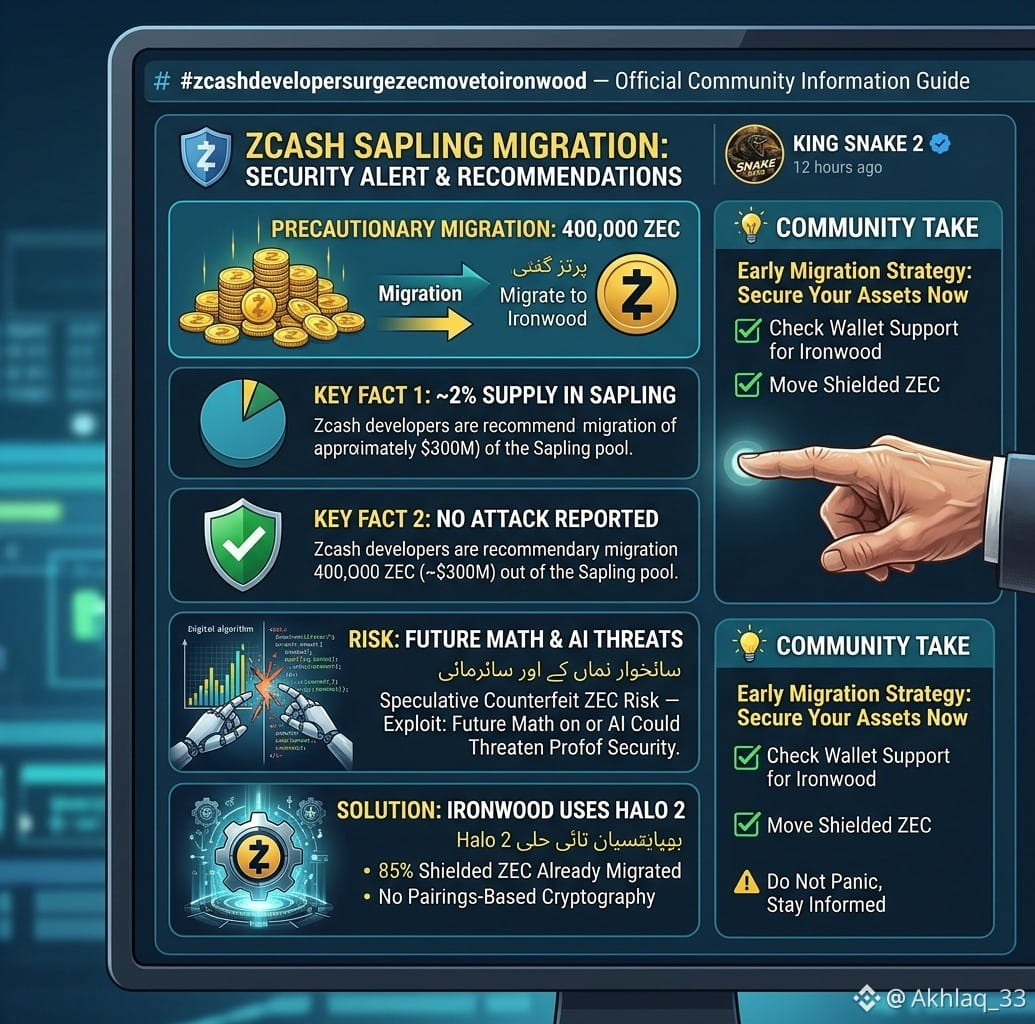
Developers on the[ Zcash](https://www.binance.com/square/hashtag/Zcash) ecosystem—including team Zakura—are urging holders of roughly 400,000 ZEC (about $300 million, or under 2% of supply) to migrate out of the older Sapling privacy pool toward Ironwood.
Here is what stands out from the current discussion:
Why Sapling Is Being Flagged
No active exploit or hack on Sapling has been reported, and developers describe a practical cryptographic attack as highly speculative
Sapling relies on pairing-based cryptography, whereas future advances in mathematics or AI could theoretically threaten proof security over time
Under 2.6% of Zcash transactions over the past 30 days used Sapling, with roughly two-thirds of those tied to miner flows
What Happens Next With Ironwood
Ironwood uses Halo 2 proofs without pairing-based assumptions and already holds around 85% of shielded ZEC
The proposed path is to disable new deposits into Sapling while keeping withdrawals open so users can migrate, though no activation date has been set yet
Market & Trader Reaction
Spot $ZEC has seen active two-way volatility around the 660–766 range alongside rising perpetual open interest and shifting positioning
For spot holders with shielded balances, checking wallet support and migrating gradually—without panicking—is the main takeaway while waiting for an official upgrade timeline
Are you viewing this push as smart long-term security housekeeping or an early overreaction before a set deadline? Share your view below.
Not financial advice. Always do your own research and manage your spot risk carefully.
#ZEC #SwitzerlandApproves57JurisdictionsForCryptoDataExchange
#zcashdevelopersurgezecmovetoironwood
Zcash ($ZEC) Developers Push Sapling Migration to Ironwood: Smart Precaution or Overreaction?
Developers on the Zcash ecosystem—including team Zakura—are urging holders of roughly 400,000 ZEC (about $300 million, or under 2% of supply) to migrate out of the older Sapling privacy pool toward Ironwood.
Here is what stands out from the current discussion:
Why Sapling Is Being Flagged
No active exploit or hack on Sapling has been reported, and developers describe a practical cryptographic attack as highly speculative
Sapling relies on pairing-based cryptography, whereas future advances in mathematics or AI could theoretically threaten proof security over time
Under 2.6% of Zcash transactions over the past 30 days used Sapling, with roughly two-thirds of those tied to miner flows
What Happens Next With Ironwood
Ironwood uses Halo 2 proofs without pairing-based assumptions and already holds around 85% of shielded ZEC
The proposed path is to disable new deposits into Sapling while keeping withdrawals open so users can migrate, though no activation date has been set yet
Market & Trader Reaction
Spot $ZEC has seen active two-way volatility around the 660–766 range alongside rising perpetual open interest and shifting positioning
For spot holders with shielded balances, checking wallet support and migrating gradually—without panicking—is the main takeaway while waiting for an official upgrade timeline
Are you viewing this push as smart long-term security housekeeping or an early overreaction before a set deadline? Share your view below.
Not financial advice. Always do your own research and manage your spot risk carefully.
#ZEC #SwitzerlandApproves57JurisdictionsForCryptoDataExchange
1
531
·
--
#monerofalls13%ondelistings
📉 Monero ($XMR) Drops ~13% Amid Exchange Delistings: Liquidity Squeeze vs. Network Health
Monero ($XMR) has pulled back roughly 13% (recently dipping near $430 and trading around 454–464) following KuCoin's announcement to delist XMR trading pairs on November 30, 2026 (08:00 UTC), with withdrawals set to close December 31, 2026.
Key points traders are watching right now:
Exchange & Liquidity Pressure
KuCoin previously accounted for a massive share of centralized XMR spot volume, coming on the heels of MEXC's delisting earlier in November and broader delistings across exchanges
Fewer centralized order books can mean thinner liquidity, wider spreads, sharper slippage, and heightened volatility—especially around key levels like the $430 zone
Deadlines for KuCoin Users
Deposits are closed, spot trading ends November 30 at 08:00 UTC, and withdrawals close December 31—so users holding on KuCoin need to plan ahead well before the cutoff
Protocol vs. Access
This move stems from exchange and regulatory/AML pressures rather than a technical failure on the Monero network itself, leaving a core question for the market: does shrinking centralized access weigh on demand long term, or push activity toward decentralized alternatives?
Are you viewing this drop as a liquidity-driven shakeout or a longer-term headwind for privacy coins? Share your thoughts below.
Not financial advice. Always do your own research and manage your spot risk carefully.
#Monero #XMR #PrivacyCoins $XMR

1
277
·
--
#xrpledgervaultgets29votes
🚨 XRPL Vaults Hit 29 Validator Votes: What It Actually Means for DeFi & $XRP
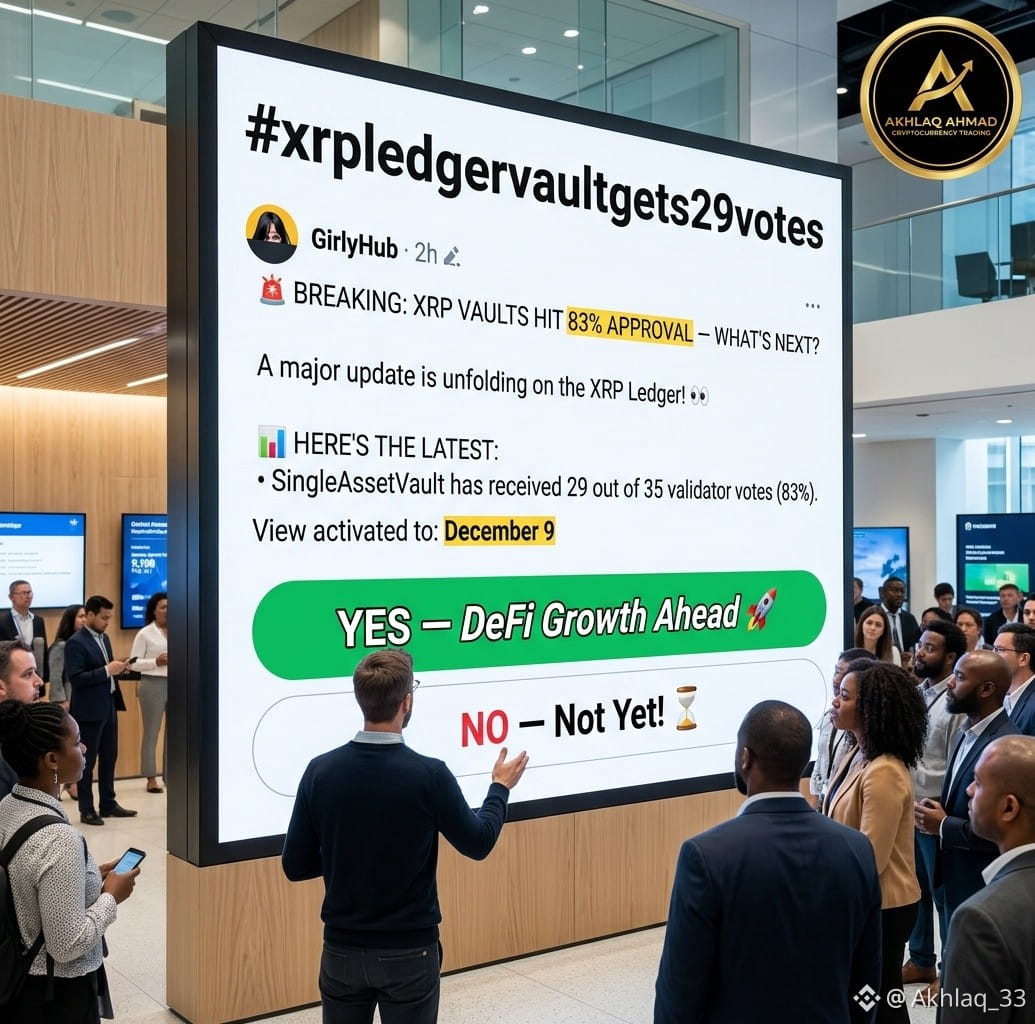
Momentum around the XRP Ledger is picking up as SingleAssetVault (XLS-65) has reached 29 out of 35 validator votes (~82.86%), crossing the required greater-than-80 % approval threshold.
Here is a breakdown of what is happening, what goes live next, and the key catch every holder should watch:
1. The 14-Day Countdown Is Active
With 29/35 votes, SingleAssetVault entered its 14-day activation window starting November 25, 2026 (~19:38 UTC), putting potential activation around December 9, 2026.
Zero buffer: Support must stay above 80% for 14 consecutive days. If even one validator flips back to 28 votes (80%), the timer resets.
2. SingleAssetVault (XLS-65) ≠ Instant Lending
Native vaults are built directly into the ledger's core code—pooling assets like $XRP, RLUSD, or other eligible tokens and issuing share tokens (such as Multi-Purpose Tokens / MPTs) to depositors, with optional institution credential controls.
However, LendingProtocol and LendingProtocolV1_1 are separate amendments currently sitting at 28/35 votes (80%)—one vote short of the threshold—and each requires its own 14-day waiting period after crossing >80%. Lending will not automatically be live on December 9 just because vaults activate.
3. The Liquidity & Risk Reality Check
The XRP Ledger holds roughly $837 million in stablecoins (with RLUSD making up around 89%), while DeFi TVL sits near $30.7 million. Native yield and lending infrastructure could give idle stablecoins a reason to stay active on-chain over the medium term.
At the same time, proposed lending structures rely on off-chain underwriting/brokers and fixed-term loans without on-chain collateral, meaning broker risk absorption and real borrower/lender adoption will be critical once live.
$XRP $BNB
88
·
--
Article
Major Oilfield Talks & 2027 Budget:#iraqsaystoraiseoilcapacity
Baghdad is pushing back against independent capacity estimates that place its sustainable crude capacity below 5 million barrels per day (bpd)—closer to 4.87–4.9 million bpd—and is arguing for recognition closer to 6 million bpd (with Oil Minister Basim Mohammed Khudair citing a 5.2 million bpd figure in talks with OPEC and longer-term expansion ambitions). Against a current OPEC+ quota ceiling of 4.431 million bpd, securing a higher baseline is central to Iraq's leverage as 2027 output targets are negotiated.
Key Market & Macro Angles to Watch
Quota Leverage Before Nov 29: With OPEC+'s current framework expiring at the end of 2026, capacity audits are the key bargaining chip for 2027 allocations—especially after the UAE exited OPEC/OPEC+ in May 2026.
Export & Revenue Momentum: Iraqi oil exports have rebounded toward 3.6 million bpd (up from 3.4 million bpd in October and 2.65 million bpd in September), helping lift monthly oil revenues to around $8.8 billion alongside byproduct sales.
Major Oilfield Talks & 2027 Budget: Baghdad has been in discussions with major international producers—including ExxonMobil, Chevron, and ConocoPhillips—over oilfield investments while finalizing its 2027 federal budget amid ongoing Middle East supply and shipping risks.
Cross-Asset Spillover: Sharp shifts in crude supply expectations and Strait of Hormuz transit risks often feed into broader inflation expectations, USD liquidity, and risk sentiment across equities and crypto markets. (Note: Spot market positioning and risk management remain essential during headline-driven volatility, without relying on leverage.)
Ahead of Sunday's OPEC+ meeting on 2027 quotas, Baghdad is pushing for a higher assessment of its crude production capacity—challenging estimates below 5 million bpd and making the case for roughly 6 million bpd (with officials also pointing to 5.2 million bpd in OPEC discussions) against its current 4.431 million bpd quota ceiling.
Key developments driving the narrative:
• Exports & Revenue: Crude exports have climbed toward ~3.6 million bpd, supporting roughly $8.8 billion in monthly oil revenue alongside byproduct proceeds.
• Field Investments: Talks with major oil companies (including ExxonMobil, Chevron, and ConocoPhillips) remain in focus as Iraq prepares its 2027 budget backdrop.
• Market Impact: Energy supply headlines and shipping route risks around the Strait of Hormuz continue to influence crude pricing, macro inflation expectations, and broader market sentiment.
#iraqsaystoraiseoilcapacity
Major Oilfield Talks & 2027 Budget:
#iraqsaystoraiseoilcapacity
Baghdad is pushing back against independent capacity estimates that place its sustainable crude capacity below 5 million barrels per day (bpd)—closer to 4.87–4.9 million bpd—and is arguing for recognition closer to 6 million bpd (with Oil Minister Basim Mohammed Khudair citing a 5.2 million bpd figure in talks with OPEC and longer-term expansion ambitions). Against a current OPEC+ quota ceiling of 4.431 million bpd, securing a higher baseline is central to Iraq's leverage as 2027 output targets are negotiated.
Key Market & Macro Angles to Watch
Quota Leverage Before Nov 29: With OPEC+'s current framework expiring at the end of 2026, capacity audits are the key bargaining chip for 2027 allocations—especially after the UAE exited OPEC/OPEC+ in May 2026.
Export & Revenue Momentum: Iraqi oil exports have rebounded toward 3.6 million bpd (up from 3.4 million bpd in October and 2.65 million bpd in September), helping lift monthly oil revenues to around $8.8 billion alongside byproduct sales.
Major Oilfield Talks & 2027 Budget: Baghdad has been in discussions with major international producers—including ExxonMobil, Chevron, and ConocoPhillips—over oilfield investments while finalizing its 2027 federal budget amid ongoing Middle East supply and shipping risks.
Cross-Asset Spillover: Sharp shifts in crude supply expectations and Strait of Hormuz transit risks often feed into broader inflation expectations, USD liquidity, and risk sentiment across equities and crypto markets. (Note: Spot market positioning and risk management remain essential during headline-driven volatility, without relying on leverage.)
Ahead of Sunday's OPEC+ meeting on 2027 quotas, Baghdad is pushing for a higher assessment of its crude production capacity—challenging estimates below 5 million bpd and making the case for roughly 6 million bpd (with officials also pointing to 5.2 million bpd in OPEC discussions) against its current 4.431 million bpd quota ceiling.
Key developments driving the narrative:
• Exports & Revenue: Crude exports have climbed toward ~3.6 million bpd, supporting roughly $8.8 billion in monthly oil revenue alongside byproduct proceeds.
• Field Investments: Talks with major oil companies (including ExxonMobil, Chevron, and ConocoPhillips) remain in focus as Iraq prepares its 2027 budget backdrop.
• Market Impact: Energy supply headlines and shipping route risks around the Strait of Hormuz continue to influence crude pricing, macro inflation expectations, and broader market sentiment.
#iraqsaystoraiseoilcapacity
496
·
--
Article
Switzerland Approves 57 Jurisdictions for Crypto Tax Data Exchange: What Traders & Investors Need to Know 🌐📊
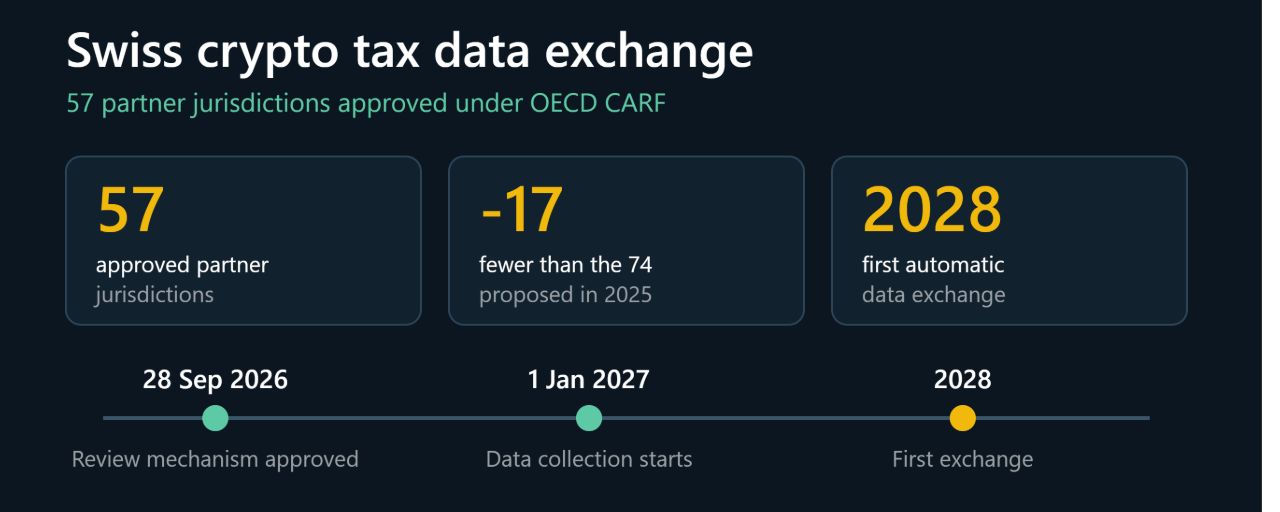
The Swiss Federal Council has officially approved a list of 57 partner jurisdictions for the automatic exchange of information (AEOI) on crypto-assets, setting the stage for cross-border tax data transfers starting in 2028.
This move aligns Switzerland with the OECD’s Crypto-Asset Reporting Framework (CARF)—a global standard designed to bring cross-border crypto reporting in line with traditional financial accounts.
Key Takeaways from the Decision
57 Approved Partners: The list covers all European Union member states, the United Kingdom, and several G20 economies. Notably, the approved list is 17 jurisdictions smaller than the 74 initially proposed in 2025.
2028 Exchange Timeline: Data collection by service providers is slated to ramp up ahead of the 2028 automatic exchange rollout (with service providers preparing for data collection starting January 1, 2027, following earlier timeline adjustments).
Strict Compliance & Confidentiality Gate: Being on the approved list does not automatically trigger data sharing. Partner jurisdictions must express interest and pass a targeted compliance review—using the verification mechanism approved by the Swiss Parliament on September 28, 2026—covering OECD confidentiality and data security standards.
What Gets Reported Under CARF: Covered crypto service providers collect details such as customer identity, tax residency, and transaction data for cross-border tax reporting between participating authorities.
Why This Matters for the Crypto Market
Closing Cross-Border Tax Gaps: Regulators worldwide are tightening tax transparency so crypto assets are reported similarly to traditional bank and securities accounts.
Institutional Legitimacy vs. Privacy Debate: Supporters argue clear rules reduce tax evasion and strengthen regulatory integration, while privacy advocates raise concerns over broad data collection and financial surveillance.
Record-Keeping Is Essential: For active spot traders and long-term holders alike, clean transaction logs, clear cost-basis tracking, and proper tax residency compliance are becoming standard best practices across major markets.
Disclaimer: This post is for informational purposes only and does not constitute financial, legal, or tax advice.
#CryptoRegulation #CARF #CryptoTax #Switzerland #Web3 #BinanceSquare $BTC $ETH
Switzerland Approves 57 Jurisdictions for Crypto Tax Data Exchange:
What Traders & Investors Need to Know 🌐📊
The Swiss Federal Council has officially approved a list of 57 partner jurisdictions for the automatic exchange of information (AEOI) on crypto-assets, setting the stage for cross-border tax data transfers starting in 2028.
This move aligns Switzerland with the OECD’s Crypto-Asset Reporting Framework (CARF)—a global standard designed to bring cross-border crypto reporting in line with traditional financial accounts.
Key Takeaways from the Decision
57 Approved Partners: The list covers all European Union member states, the United Kingdom, and several G20 economies. Notably, the approved list is 17 jurisdictions smaller than the 74 initially proposed in 2025.
2028 Exchange Timeline: Data collection by service providers is slated to ramp up ahead of the 2028 automatic exchange rollout (with service providers preparing for data collection starting January 1, 2027, following earlier timeline adjustments).
Strict Compliance & Confidentiality Gate: Being on the approved list does not automatically trigger data sharing. Partner jurisdictions must express interest and pass a targeted compliance review—using the verification mechanism approved by the Swiss Parliament on September 28, 2026—covering OECD confidentiality and data security standards.
What Gets Reported Under CARF: Covered crypto service providers collect details such as customer identity, tax residency, and transaction data for cross-border tax reporting between participating authorities.
Why This Matters for the Crypto Market
Closing Cross-Border Tax Gaps: Regulators worldwide are tightening tax transparency so crypto assets are reported similarly to traditional bank and securities accounts.
Institutional Legitimacy vs. Privacy Debate: Supporters argue clear rules reduce tax evasion and strengthen regulatory integration, while privacy advocates raise concerns over broad data collection and financial surveillance.
Record-Keeping Is Essential: For active spot traders and long-term holders alike, clean transaction logs, clear cost-basis tracking, and proper tax residency compliance are becoming standard best practices across major markets.
Disclaimer: This post is for informational purposes only and does not constitute financial, legal, or tax advice.
#CryptoRegulation #CARF #CryptoTax #Switzerland #Web3 #BinanceSquare $BTC $ETH
8
·
--
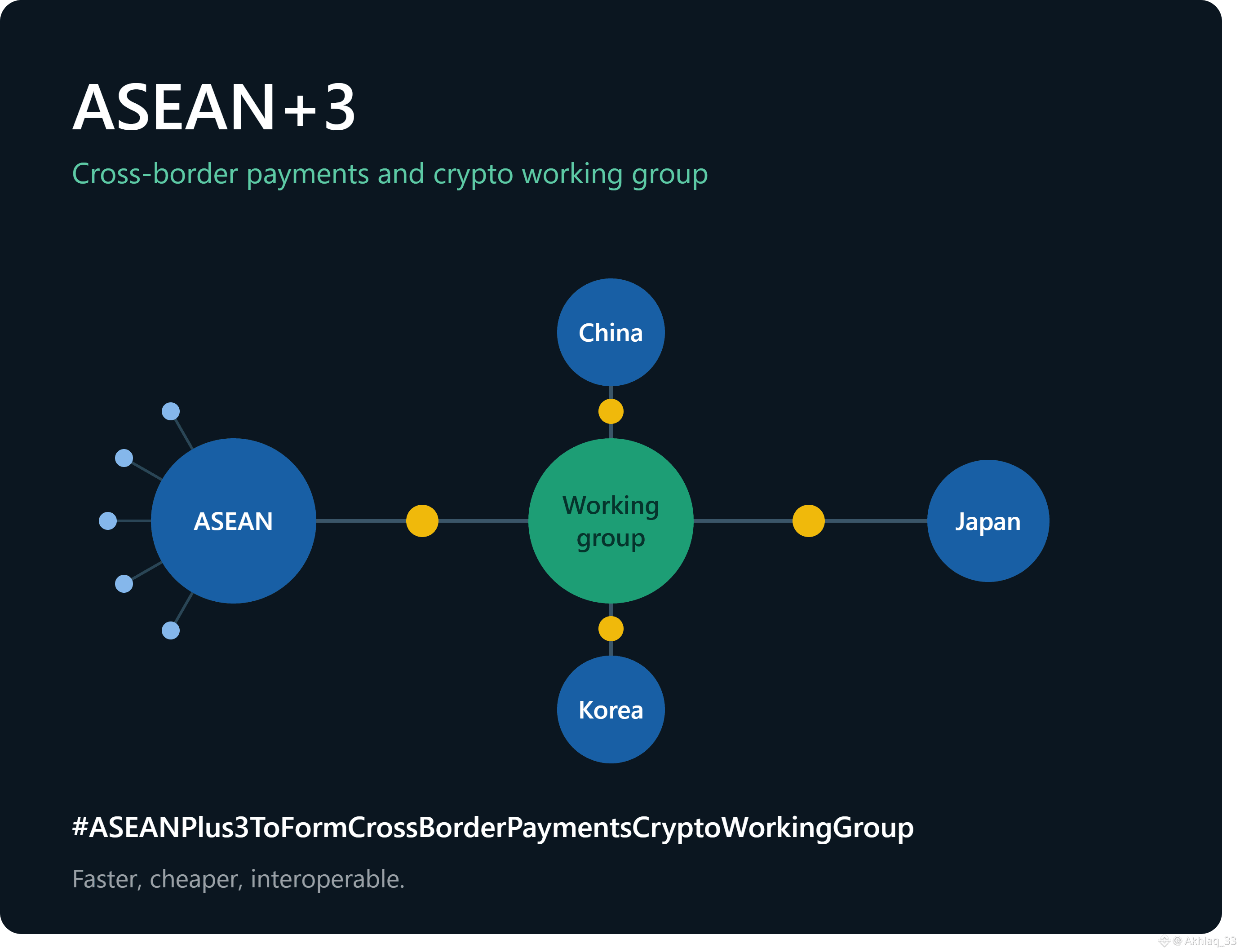
ASEAN+3 is getting serious about the future of cross-border payments 🌏
China, Japan, South Korea and the ASEAN member countries have agreed to set up a dedicated working group on cross-border digital payments and digital asset regulation. It follows the creation of the AMRO Cross-Border Digital Payments Program, which will support further policy talks. theblocktheblock
Why it matters: stablecoins are already popular in the region for remittances, especially in the Philippines and Vietnam, and for small-business cross-border trade. Regulators are now moving to catch up with what users are already doing. amro-asia
The momentum is building elsewhere too. Malaysia and Thailand recently joined Singapore's BLOOM initiative, which explores cross-border payments using stablecoins and tokenized deposits. theblock
The goal isn't to replace what works. It's to build a payments ecosystem that is faster, cheaper, and interoperable, with regulation that keeps pace with innovation.
When governments, central banks, and the crypto industry start working at the same table, that's a sign the sector is growing up.
What do you think: will stablecoins become a core part of regional payments, or stay a complement to existing systems? 👇
#ASEANPlus3ToFormCrossBorderPaymentsCryptoWorkingGroup #ASEAN #CrossBorderPayments #Crypto #Stablecoins #Web3 #Fintech$BTC $XRP $BNB
45
·
--
#evolveatbinanceblockchainweek
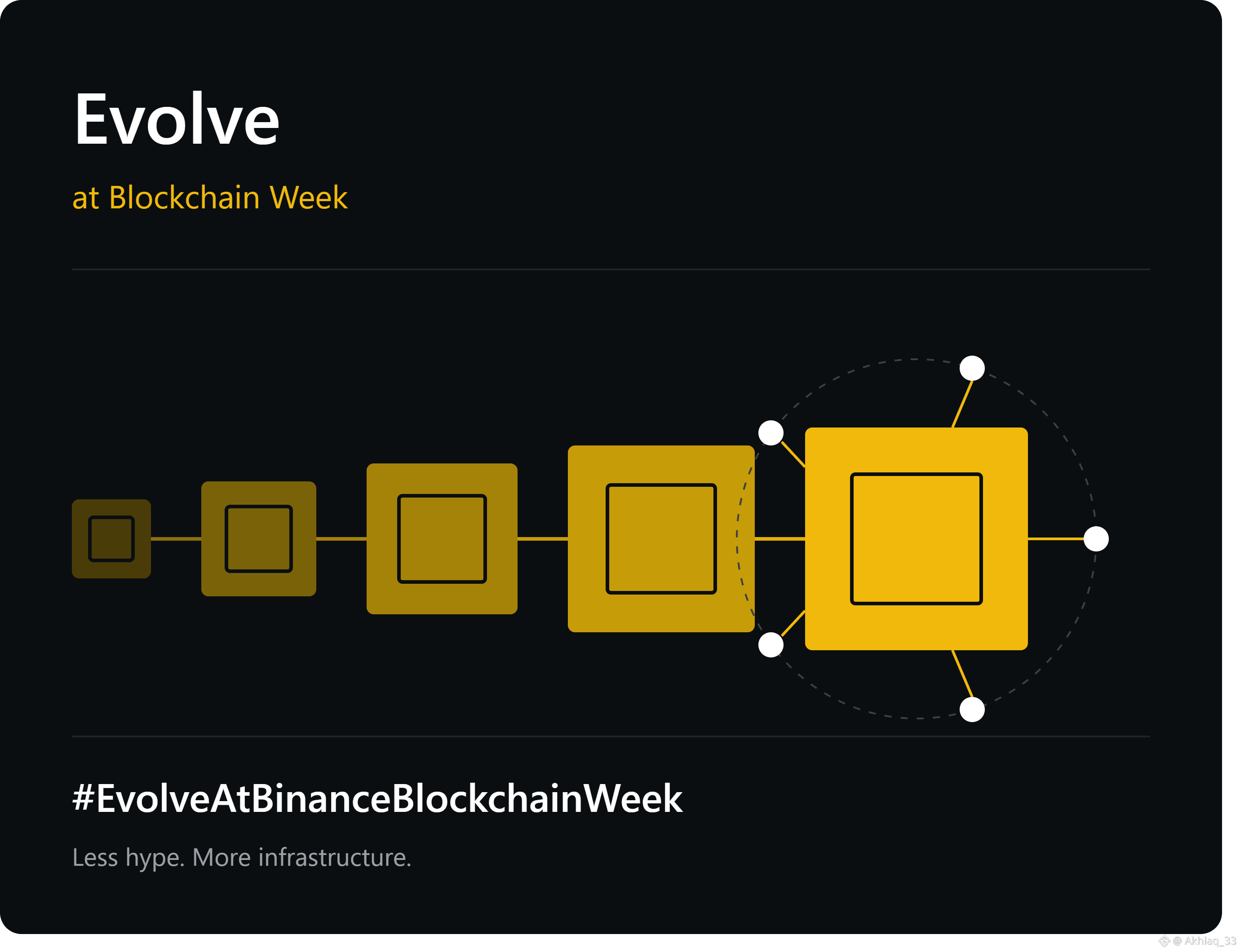
Evolving at Binance Blockchain Week 🚀
Every era of crypto has a moment when the conversation shifts from "what if" to "what's next." Binance Blockchain Week feels like one of those moments.
This week, builders, founders, regulators, and curious newcomers are in the same room (or the same livestream), trading ideas on where Web3 is headed: real-world assets, stronger security, smarter regulation, and tools that make crypto usable for everyone, not just insiders.
What stands out most? The industry is maturing. Less hype, more infrastructure. Less noise, more utility.
Evolution isn't a single announcement or a price chart. It's the people who keep learning, building, and showing up when the market is loud and when it's quiet.
If you're here, you're part of it. If you're watching from afar, it's not too late to jump in.
What's the one idea or trend you're taking away from the week? Drop it below 👇
#EvolveAtBinanceBlockchainWeek #BinanceBlockchainWeek #Binance #Blockchain #Web3 #Crypto
$BTC $ETH $BNB
46
·
--
#couldspacex’sorbitaldatacentersboostaichipdemand?
The FCC just authorized SpaceX’s "Starmind" constellation of up to 1 million orbital data center satellites—and the AI chip conversation just got a massive new frontier. 🚀
With terrestrial AI data centers facing soaring power and infrastructure demands, moving compute into orbit promises near-constant solar energy and lower maintenance overhead. Under the approval timeline, deployment must begin by November 2033, with 100,000 satellites in orbit by November 2035 and half the maximum reached by November 2038—while early plans point to specialized architectures like NVIDIA’s Vera Rubin alongside wider semiconductor, memory, and networking hardware.
Still, big authorization doesn't equal instant deployment. Key realities every market watcher should weigh:
Timelines & Scale vs. Today’s Orbit: With roughly 17,000 satellites currently in orbit and rival voices like Amazon’s Leo questioning how long a massive build-out could take, hitting huge numbers hinges heavily on Starship’s reusable launch economics.
Hard Engineering Hurdles: Operating high-power AI hardware in space means solving heat dissipation, radiation shielding, orbital maintenance, and high-throughput data links.
Chips & Narratives Need Real Execution: Even if orbital compute expands long-term semiconductor and AI infrastructure demand, commercial viability and real hardware milestones matter far more than paper approvals alone.
Is space-based AI infrastructure the next major growth driver for chips and tech, or is full scale still decades away? Share your take below! 👇
#couldspacex’sorbitaldatacentersboostaichipdemand? #SpaceX #NVIDIA #AI #Semiconductors #BinanceSquare $NVDA $SPCXB $BTC

796
·
--
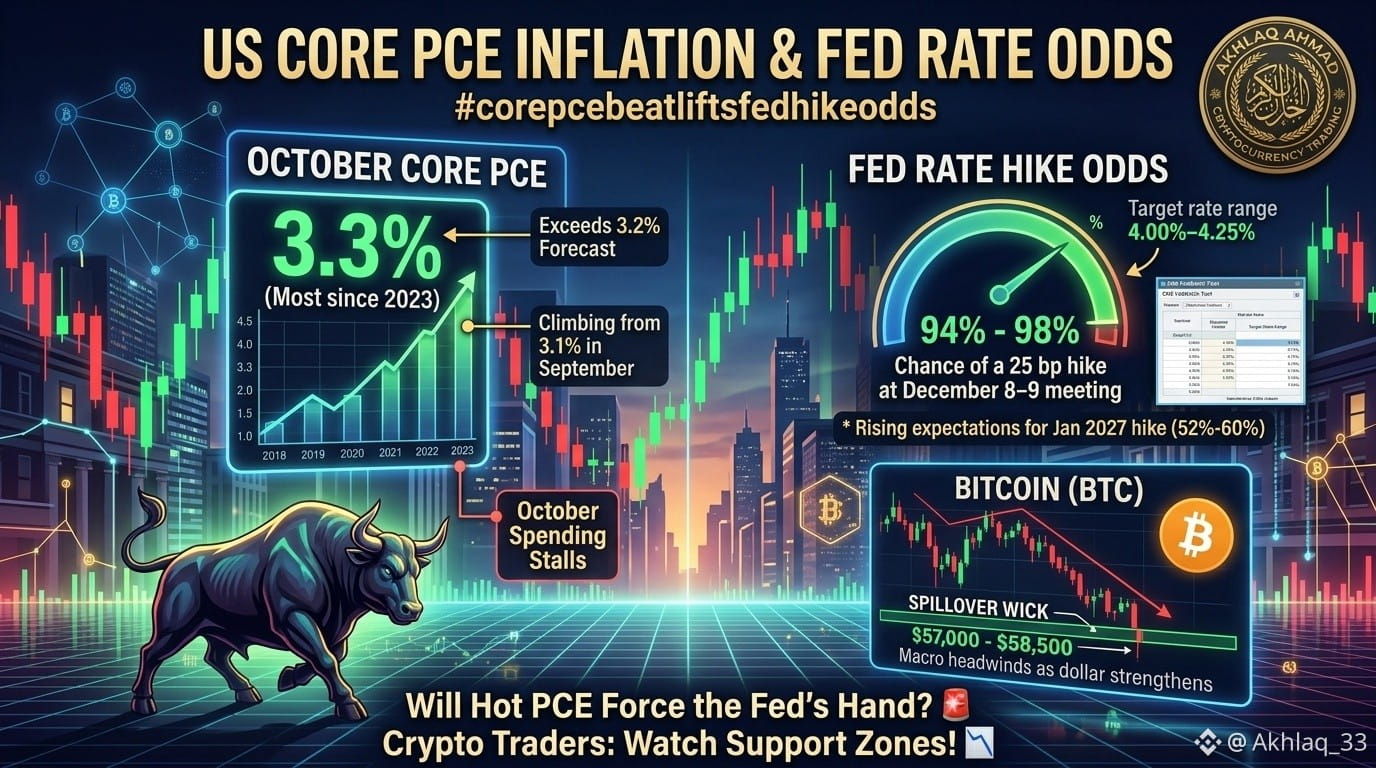
#corepcebeatliftsfedhikeodds
October Core PCE just hit 3.3% YoY—the highest since late 2023—while a December Fed rate hike looks largely priced in. The real market test is what comes next. 📊
With core PCE climbing to 3.3% (above the 3.2% forecast and September's 3.1%), headline PCE at 3.8%, and Q3 GDP revised up to 4.3%, sticky inflation and resilient growth have kept the Federal Reserve on a hawkish track. Markets are already pricing in a 25 bps hike at the December 8–9 FOMC meeting, shifting the focus toward how far tightening could extend into early 2027—and what that means for liquidity, yields, and risk assets like $BTC.
Here is how to stay grounded when macro headlines heat up:
Separate Priced-In Moves From Future Surprises: A widely expected hike often causes less shock than unexpected guidance on the rate path into Q1 2027.
Watch Liquidity & Dollar Pressure: Tighter policy and firm yields can pressure risk appetite across equities and crypto, making disciplined spot sizing essential.
Let Structure Lead, Not Headlines: Avoid chasing emotional spikes around data drops—wait for clear confirmation on your timeframes before stepping in.
Do you think markets are bracing for just a short-term rate adjustment, or a longer tightening cycle into 2027? Share your view below! 👇
#corepcebeatliftsfedhikeodds #CorePCE #FederalReserve #CryptoMarket #BinanceSquare $BTC $ETH
2
875
·
--
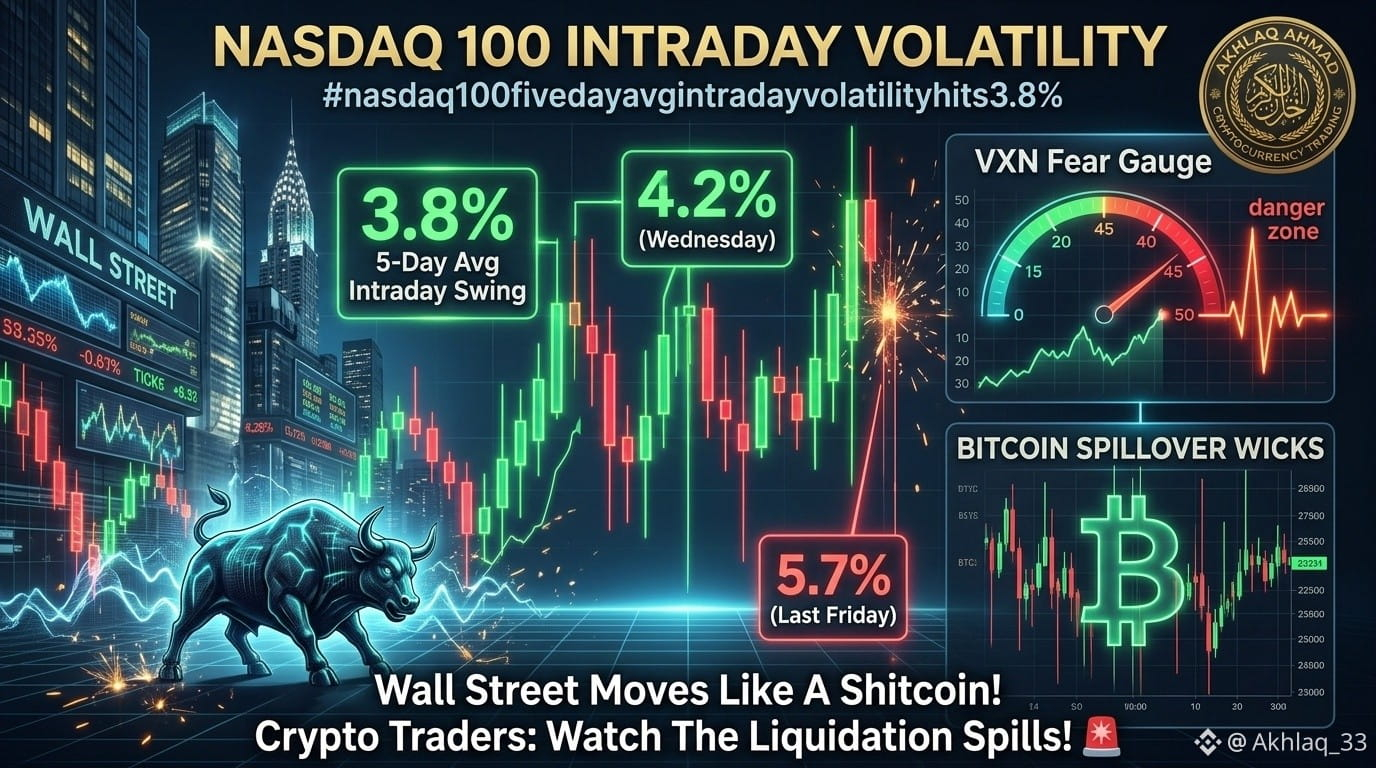
#nasdaq100fivedayavgintradayvolatilityhits3.8%
Nasdaq 100 intraday swings just hit a 5-day average of 3.8%—its highest stretch since April 2025 and second only to the 2022 bear market peak. 📊
When tech indices start swinging 4.2% to 5.7% inside single sessions—with the Nasdaq 100 Volatility Index (VXN) elevated near 38.5 after surging past 45—it’s a loud reminder that market stress isn’t confined to one asset class. AI valuation scrutiny, sticky inflation, tariff headlines, and algorithmic liquidity hunts are driving sharp high-to-low moves that can easily spill over into $BTC high-beta altcoins.
Here is how disciplined traders approach markets when Nasdaq volatility spikes:
Look Beyond the Close: A calm-looking daily close can hide massive intraday highs and lows that wipe out tight stops along the way.
Respect Spillover & Wicks: When tech swings violently, crypto risk appetite often reacts fast—bringing sudden wicks and liquidity sweeps.
Prioritize Risk Over FOMO: Wide intraday ranges punish over-leveraged or emotional entries; protecting capital and waiting for clear structure always comes first.
Is this surge in volatility a shakeout before a stronger move, or a warning sign to stay extra cautious?
#Nasdaq #CryptoMarket #Volatility #TradingStrategy BTCETH$ETH
1
74
·
--
#canmarketsreboundafterthanksgiving?
Holiday liquidity is thin, and the market is at a major crossroads.
Will crypto stage a real post-Thanksgiving rebound, or is this just a temporary bounce? 📊
With US markets closed on Thursday for Thanksgiving and closing early at 1 p.m. ET on Friday, trading volumes have thinned out right at the end of the month. Meanwhile, traditional equities are sending mixed signals: while strong Q3 GDP growth (4.3%) and low jobless claims (189,000) point to economic resilience, sticky inflation (3.3% core PCE), rate-hike expectations, and an AI-driven tech pullback have kept investors cautious.
For crypto traders, this creates a classic patience vs. FOMO test. Here is what actually matters before making your next move:
🔹 Beware of Thin-Liquidity Noise: Low holiday volume can easily exaggerate short-term price swings. A sudden green candle or sharp dip right now doesn't confirm a macro trend—real direction usually shows up once full institutional volume returns. 🔹 Watch Spot Demand & ETF Flows: A sustainable recovery in $BTC and altcoins requires genuine spot buying volume and consistent ETF inflows, rather than short-lived relief bounces.
🔹 Respect Key Support & Risk Management: Chasing breakouts in low-volume conditions is a quick way to get trapped. Waiting for multi-timeframe confirmation and sticking to disciplined spot entries beats emotional trading every single time.
The big question heading into the final stretch of the month: Do buyers step in with real volume when Wall Street returns, or are we heading for deeper consolidation first?
Drop your market outlook below! 👇
#Bitcoin #CryptoMarket #TradingStrategy #BinanceSquare BTCETH $SOL
689
·
--
#evolveatbinanceblockchainweek
Crypto is done proving it can exist. Now it’s proving it can run the global economy. 🚀
This November 28–29, all eyes are on Bangkok for Binance Blockchain Week 2026, and the official theme—Evolve—captures the exact turning point our industry is standing on.
For years, Web3 and traditional finance operated in two separate worlds. Today, the bridge between them isn't just being planned—it’s actively being built. Here is what real evolution looks like right now:
🔹 Real-World Assets (RWA) & Tokenization: Stocks, bonds, and real estate are moving on-chain, turning illiquid traditional markets into 24/7 global opportunities.
🔹 Stablecoins as Everyday Rails: Cross-border payments are shifting away from slow, expensive legacy banking toward instant, borderless settlement.
🔹 AI Meets Decentralized Infrastructure: Autonomous AI agents need transparent, programmable financial rails—and blockchain is the only infrastructure built to handle that scale.
🔹 Institutional Grade Trust: Clearer regulations, stronger security, and compliant custody are opening the doors for the next wave of global adoption.
Charts and short-term hype will always grab headlines, but lasting value comes from utility, infrastructure, and solving real-world problems. Whether you're a builder shipping code, a trader managing risk, or a newcomer exploring Web3 for the first time, the next chapter belongs to those who adapt and build with conviction.
Bangkok is setting the stage. What innovation or trend are you most excited to see take center stage this year? Drop your thoughts below! 👇
#BinanceBlockchainWeek #Web3 #Crypto #FutureOfFinance $BNB BTCETH
💡 Quick Checklist Before You Hit Post
Visuals: The official campaign requires attaching an image to qualify for the 50 USDT draw—pair this with a clean graphic featuring the Bangkok skyline, blockchain network nodes, or your personal branding.
Timing: Make sure to publish before November 29 at 23:59 (UTC) so your entry counts!

107
·
--
#HotCPIDecemberHikePriced
Breaking News: Virtual Asset Alliance of Pakistan (VAAP) Established! 🚀🇵🇰
To ensure crypto user protection, enhance awareness, and promote cyber security in Pakistan, the Virtual Asset Alliance of Pakistan (VAAP) has officially been established!
The primary goal of this alliance is to foster transparency, security, and responsible activities within the digital assets and cryptocurrency industry. A major step forward for the future of blockchain and digital finance in Pakistan! 💡🌐
#Crypto #Pakistan #Blockchain #CyberSecurity $BTC $BNB

1
154
·
--
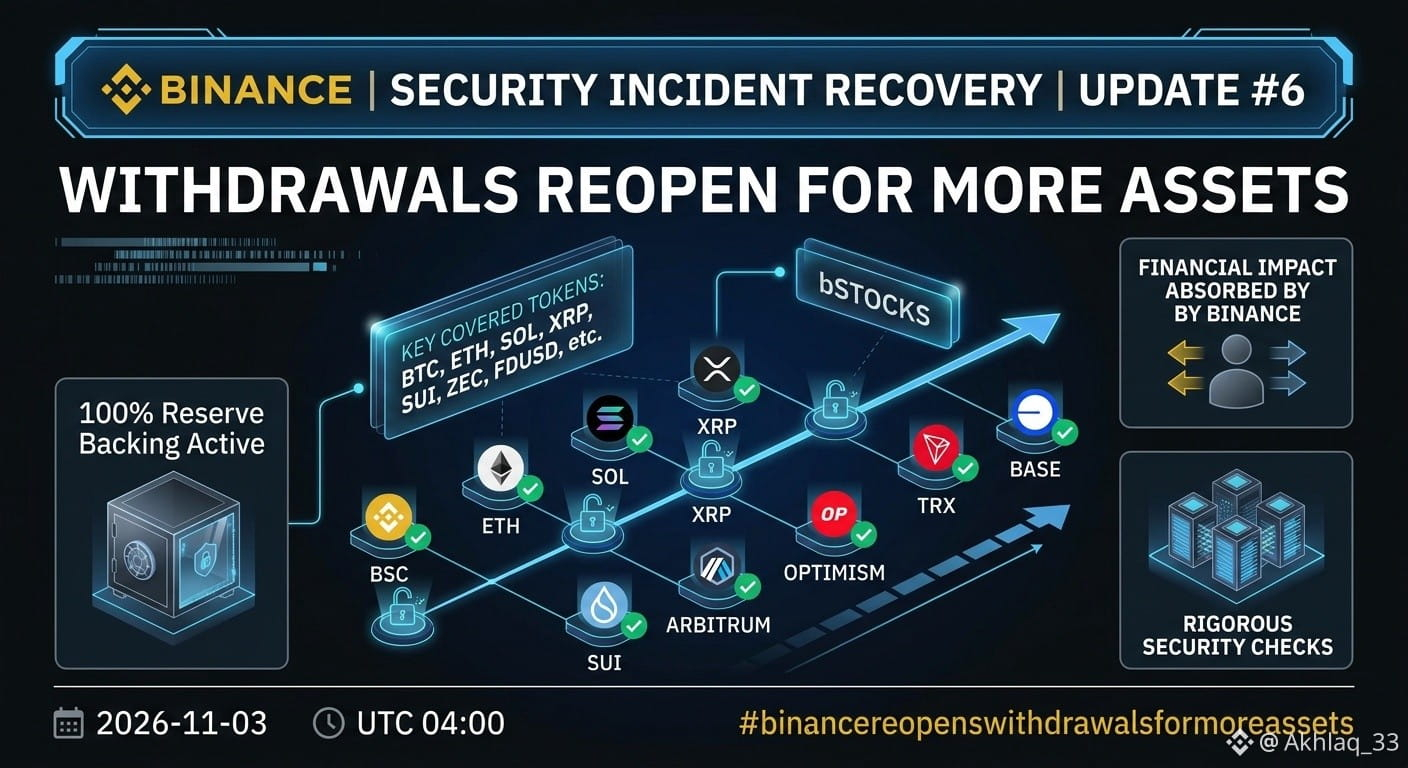
#binancereopenswithdrawalsformoreassets
🚀 Binance Security Incident Recovery Update: Withdrawals Reopen for More Assets
Binance has officially rolled out Recovery Update #6 (dated November 3, 2026), continuing the progressive reopening of withdrawal services following rigorous security audits and system readiness checks.
Key Highlights:
Phased Rollout: Following the initial phase on November 11 (Nov 1), additional networks and assets are progressively coming back online beginning at 04:00 (UTC) on November 3, 2026.
Supported Networks & Assets: Reopenings span multiple major chains including BSC, ETH, SOL, XRP, ARBITRUM, OPTIMISM, TRX, and BASE, covering high-demand assets like BTC, ETH, SOL, ADA, DOGE, and many others.
Market Impact: As withdrawal latency normalizes and capital fluidity returns to DeFi and spot order books, major tokens like BNB, BTC, and SOL are stabilizing as trader confidence recovers.
Platform Commitment: Binance has reiterated that 100% reserve backing remains active, with the financial impact of the security breach being fully absorbed directly by exchange reserves and the SAFU fund—not passed on to users.$BITO $BNB $TSMB
2
2
3.5k
·
--
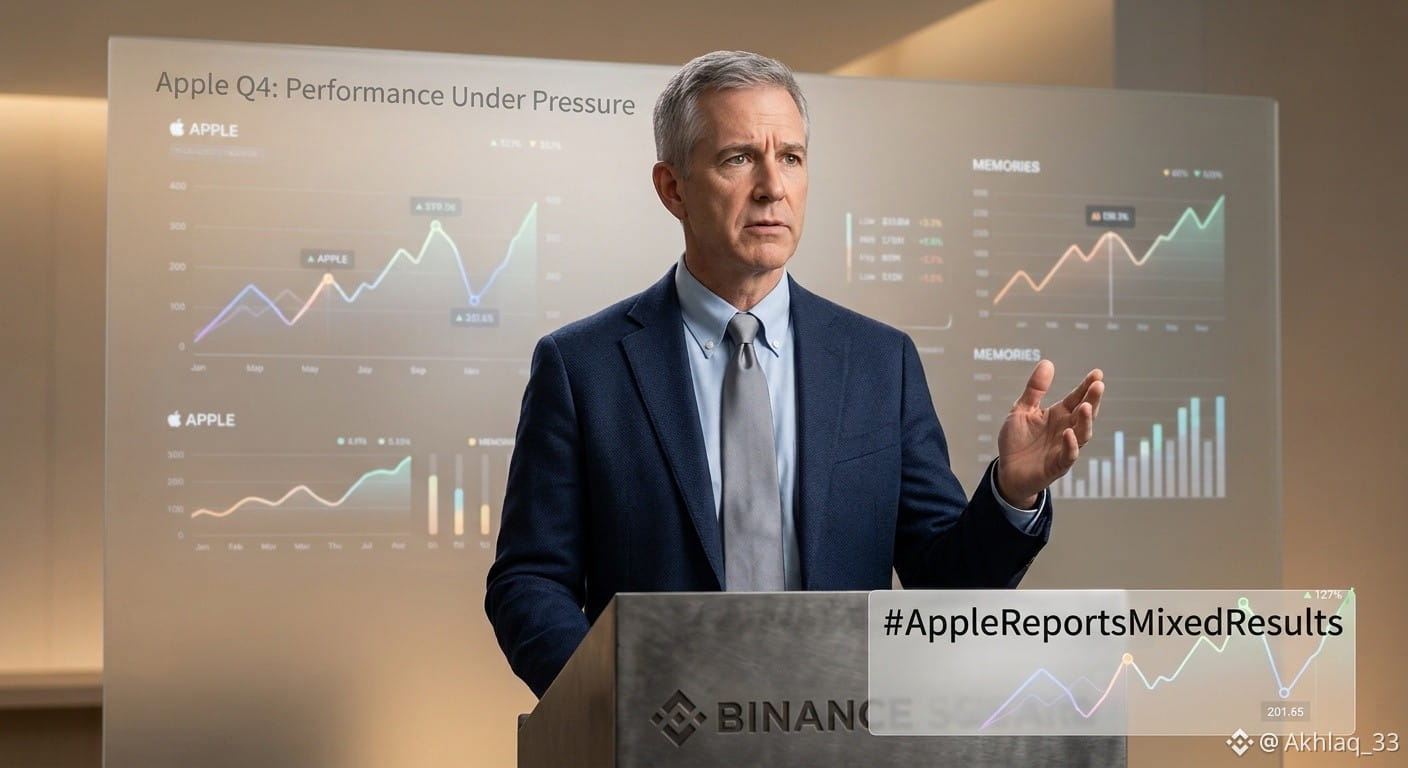
#applereportsmixedresults
Apple's Mixed Results: Margins Under Pressure Despite Strong Revenue
Apple recently reported its fiscal fourth-quarter results, and while the top-line numbers beat expectations, a cautious outlook has investors weighing the costs of future growth.
Key Financial Highlights
Revenue: Rose 12% year-over-year to $114.5 billion, topping the $113.4 billion consensus.
Earnings Per Share (EPS): Came in at $2.10, beating the expected $1.99.
Gross Margin: Reached 47.9%, slightly ahead of estimates.
Net Income: Stood at $30.7 billion.
Strong Segments vs. Lagging Areas
iPhone: Revenue climbed 17% to $57.6 billion, driven by the rollout of the iPhone 18 Pro line, even as global smartphone shipments contracted.
Mac: The standout performer, surging 24% to $10.8 billion past analyst expectations.
Services: Rose 9.8% to $31.6 billion, matching estimates.
Soft Spots: iPad revenue ($6.23 billion) and Wearables ($8.3 billion, down 7.9% year-over-year) both fell short of forecasts, alongside Greater China sales coming in below expectations.
Why Margins Are Facing a Squeeze
Despite a solid holiday forecast expecting 7% to 10% revenue growth, Apple projected a lower gross margin of 45% to 46% for the upcoming December quarter. Leadership pointed to two primary headwinds:
An "unprecedented" surge in memory chip prices driven by the data-center AI boom.
The mounting expenses required to run and scale new Siri AI features.
As Apple navigates these rising component and AI infrastructure costs, investors are closely watching whether higher price points and upcoming product rollouts can sustain its profitability moving forward.
1
258
·
--
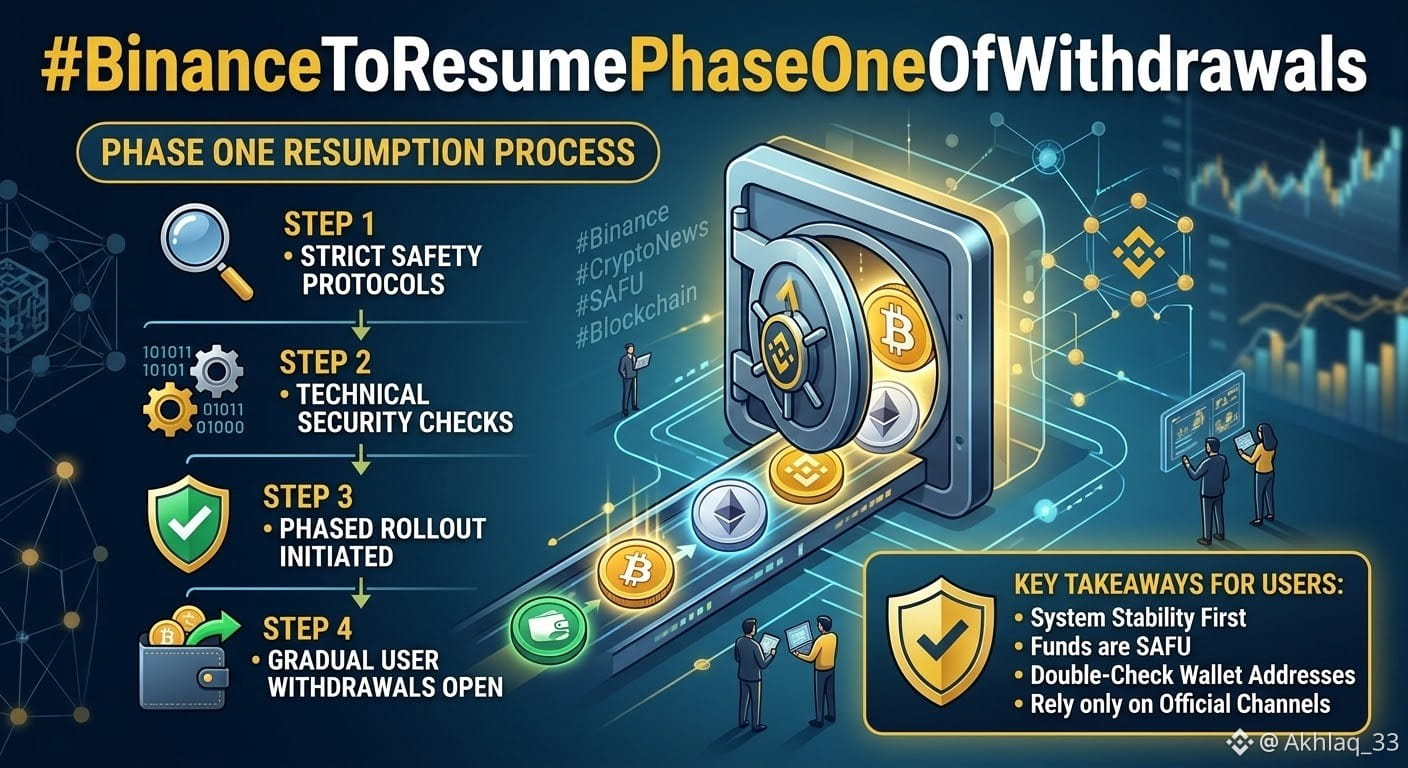
#BinanceToResumePhaseOneOfWithdrawals 🚨
Great news for the crypto community! Binance is officially initiating Phase One of withdrawal resumptions following strict safety protocols and technical security checks.
🔑 Key Takeaways for Users:
• Gradual Rollout: Withdrawals are opening in phases to ensure system stability and safety.
• Funds Are SAFU: User funds remain fully backed, with Binance absorbing all impacted assets.
• Safety First: Security remains the top priority. Double-check all wallet addresses and rely only on official announcement channels.
Patience is key as systems normalize. Steady steps forward! 📈
#Binance #blockchain #CryptoNews $BTC
1
102
·
--
Binance Hacked 😭😭
Binance Hacked 😭😭


Kashif Majeed Influencer
·
--
Binance Hacked👀🥲 #kashifmajeed #binancehack
11
·
--
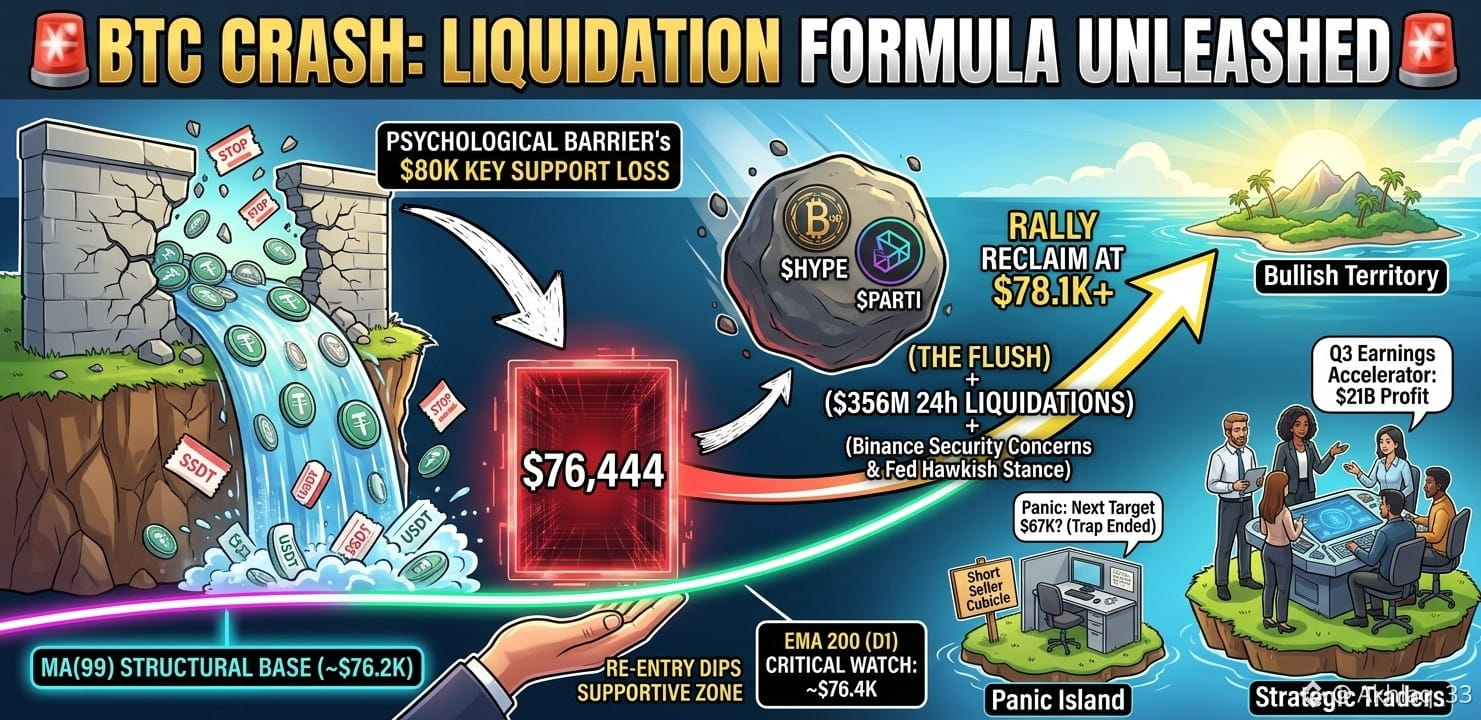
#BitcoinDropsBelow$80K
🚨 THE $76K FLUSH: Did Bitcoin Just Find Its Floor or Are We Heading Deeper?
Volatility has struck hard. Bitcoin ($BTC) experienced a brutal overnight flush, officially breaching the psychological $80,000 support handle and plunging to a 24-hour low of $76,444 (and touching near $76,270 on structural moving averages) before attempting a recovery.
The market is on edge. Here is the pure math and technical breakdown of what drove last night’s intense liquidation wave:
⚡ The Liquidation Equation: Losing the $80,000 threshold triggered a cascade of stop-loss orders and leveraged futures liquidations across exchanges, accelerating downward momentum.
📉 The Moving Average Battleground: Price slid cleanly below the short-term MA(7) (~$79,750) and MA(25) (~$81,734), putting intense focus on the long-term MA(99) trendline and daily EMA 200 support zone around 76,200–76,400.
⚖️ The Macro & Sentiment Storm: This flush didn't happen in a vacuum—it was compounded by cautious Federal Reserve signals (hawkish hold at 3.75%–4.00%), recent exchange security concerns, massive macro tech sector weakness, and heavy derivatives expiries.
🎯 What Traders Are Watching Right Now:
The Bullish Case: If buyers successfully defend the 76K–77K structural base and reclaim 78,1K–80K, this acts as a healthy leverage flush before the next leg up.
The Bearish Risk: A confirmed daily close below support risks opening the door toward deeper psychological retests.
Strategic Takeaway: Panic selling destroys capital; structured risk management preserves it. Are you accumulating this dip or waiting for confirmation?
👇 Drop your game plan in the comments below!
$BTC #TechnicalAnalysis #CryptoTrading #BinanceSquare
53
·
--
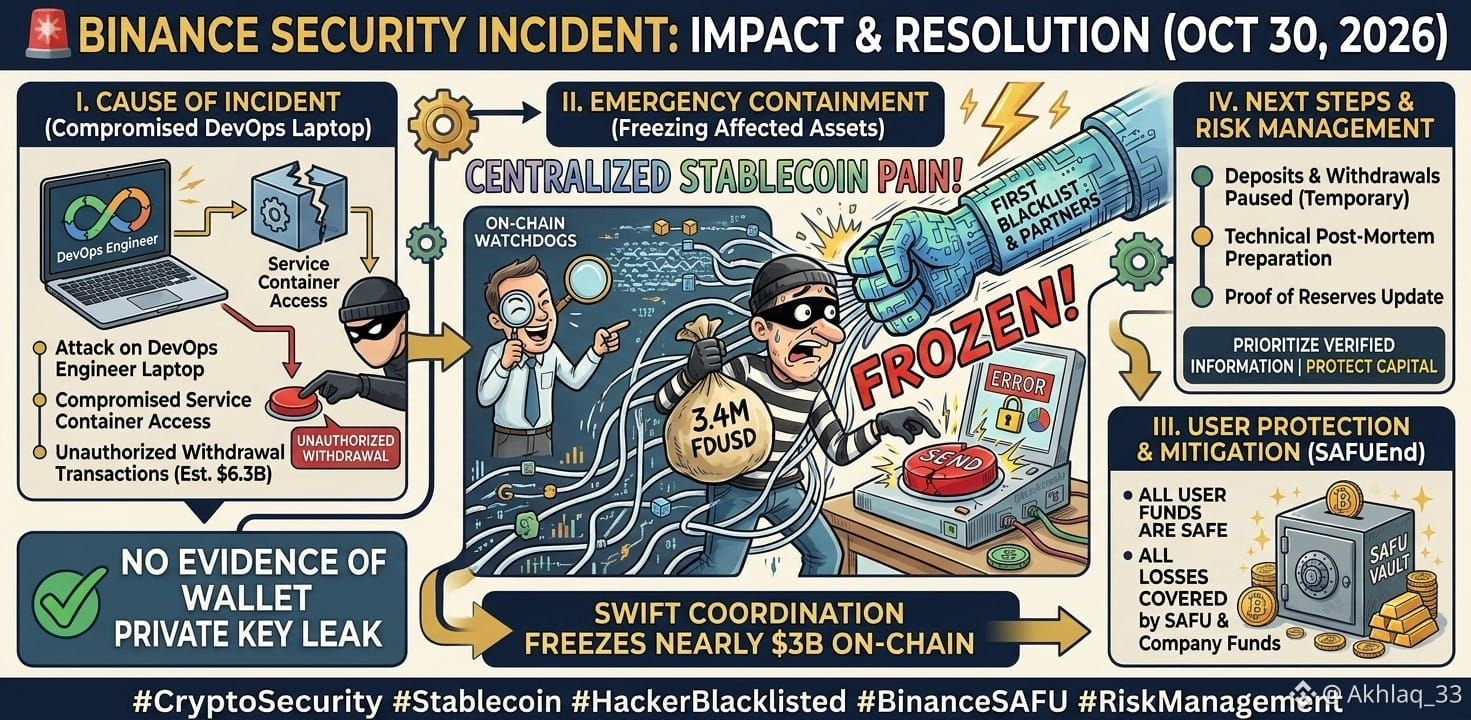
#FirstDigitalBlacklistsAttackerAddressHoldingAbout3.4MFDUSD
🚨 THE BINANCE SECURITY UPDATE: What We Actually Know About the $6.3B Incident & Asset Freezes
The crypto market is experiencing a wave of volatility following a major security incident. Rather than relying on unverified rumors circulating across social media, let’s look strictly at what Binance has officially confirmed:
⚡ The Incident & Scope: According to Binance’s official updates, an initial investigation suggests a compromised DevOps engineer's laptop allowed an attacker to access a service container and submit unauthorized withdrawal transactions. The estimated total impact is approximately $6.3 billion. Crucially, Binance confirmed there is no evidence of any wallet private key leak.
🔒 Rapid On-Chain Containment: Swift coordination with blockchain intelligence partners, law enforcement agencies, and ecosystem partners has successfully frozen nearly $3 billion of the affected assets on-chain.
🛡️ SAFU & User Protection: Binance has formally stated that user funds are safe and that all losses will be fully covered using the Secure Asset Fund for Users (SAFU) and company funds. Withdrawals and deposits were temporarily paused as a precaution while security checks and address revocations were completed.
📉 Market Impact & Reaction: The news triggered immediate macro selling pressure, pushing Bitcoin ($BTC) below $78,000 and elevating short-term market anxiety. However, seasoned traders know that panic selling rarely beats structured risk management.
Strategic Takeaway: Infrastructure tests and security incidents remind us why risk management, verified data, and calm execution matter most. Avoid emotional decisions based on hype.
👇 Are you viewing this market dip as a risk-off moment or an accumulation opportunity? Let’s discuss in the comments!
#CryptoSecurity $BTC #CryptoTrading #RiskManagement
52
·
--
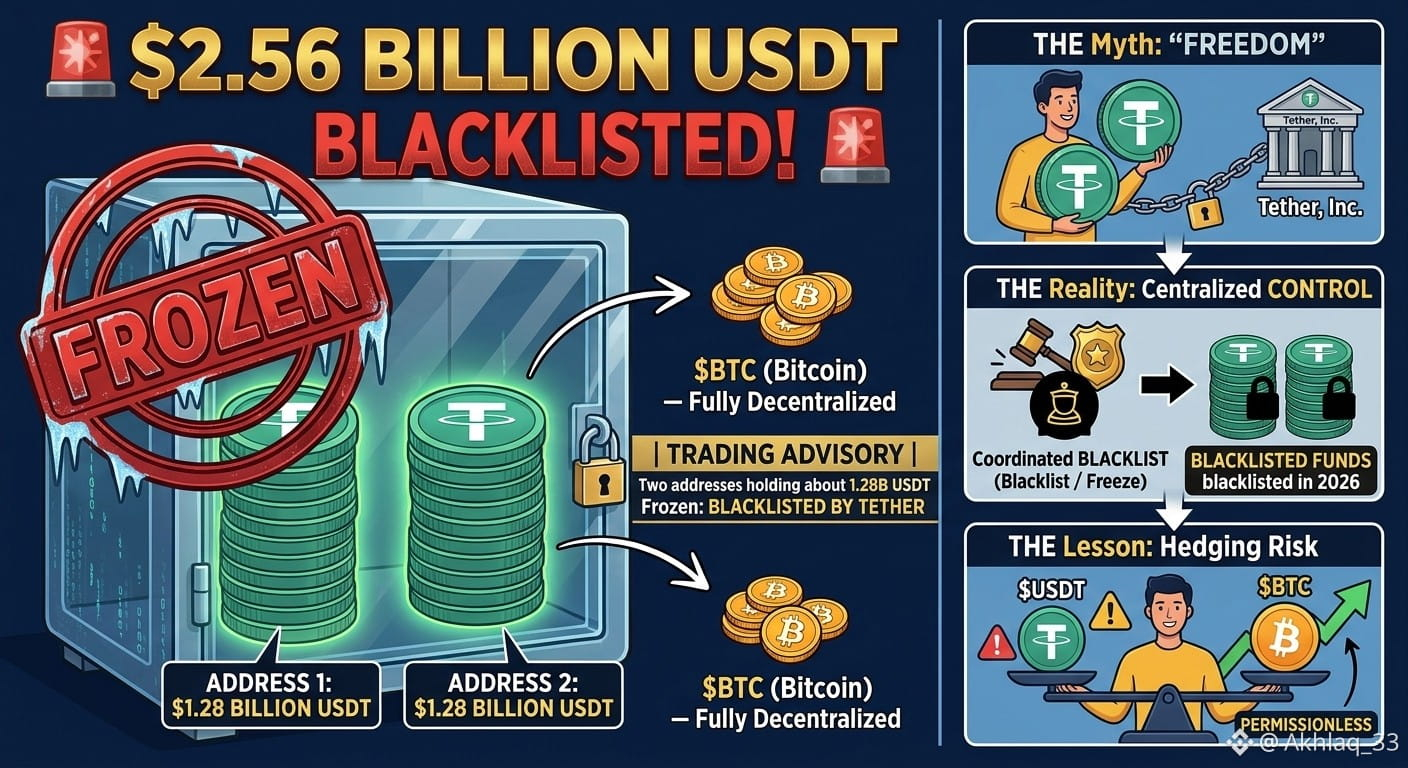
#twoaddressesholdingabout1.28busdtfrozen
🚨 $1.28B USDT FROZEN: Breaking the Myths of Stablecoin "Freedom"
The crypto community is processing a major reality check: two separate addresses, each holding a staggering $1.28 billion USDT, have been completely frozen on-chain. This isn't just about massive numbers—it's a critical moment that reveals the true architecture of today's most dominant stablecoins.
Here is the strategic breakdown of what this means for you and your portfolio:
⚡ Tether (USDT) IS NOT A DECENTRALIZED ASSET: USDT is a centralized stablecoin issued and managed by Tether. While it operates on transparent blockchains (primarily Ethereum and Tron), Tether maintains absolute control. The 'Frozen' function is hard-coded into the smart contract itself, allowing them to blacklist any address without notice.
🏦 Coordinated Enforcement: These freezes almost never happen in a vacuum. They are typically the result of direct coordination with global law enforcement and regulatory bodies to clamp down on suspected money laundering, illicit finance, terrorist funding, or sanctions evasion.
📊 Key Portfolio Strategy & Self-Custody: If the goal of your portfolio is to avoid third-party risk and centralized control, holding large positions in centralized stablecoins defeats the purpose. This event highlights that true financial freedom and "permissionless" transactions require holding fully decentralized assets like Bitcoin ($BTC).
Strategic Takeaway: True decentralized ownership comes with self-custody and zero-counterparty assets.
👇 How are you hedging your stablecoin risk after seeing $1.28 billion frozen in an instant? Let’s discuss in the comments!
#Stablecoins #USDT #CryptoRegulation #RiskManagement $BTC $USDT
1.2k
Log in to explore more content
Join global crypto users on Binance Square
⚡️ Get latest and useful information about crypto.
💬 Trusted by the world’s largest crypto exchange.
👍 Discover real insights from verified creators.
Email / Phone number
Trending Topics
EvolveAtBinanceBlockchainWeek
1.3M views
14,842 Discussing
Binance Blockchain Week starts tomorrow! 🌍
On November 28–29, whether you’re in Bangkok or joining from afar, tune in to the livestreams and join the conversation on Binance Square!
Here’s what’s in store 👇
📺 Watch the main stage live
Tune in throughout both days as industry speakers share their perspectives on this year’s theme, “Evolve” From technological innovation to real-world applications, explore what’s next for crypto.
⚔️ Watch two trading competitions
The Aster Open Qualifier and the Binance Trading Master Tournament will both be streamed live. Tune in to follow the traders in action.
🏆 Watch The Blockchain 100 Awards Ceremony
The Blockchain 100 list was selected by the community. Join us in celebrating the creators and the ideas they share!
💬 Join the community conversation
Use #EvolveAtBinanceBlockchainWeek in a post with a photo to share what you’re looking forward to, your views on the industry, or your favorite moments from the event.
The event page is now live! Subscribe to all livestreams with one click so you don’t miss a moment 👏
Binance Blockchain Week
·257 Likes
·221.6k views
MoneroFalls13%OnDelistings
55,908 views
550 Discussing
EthereumGlamsterdamKeepsStorageFeeChange
23,952 views
270 Discussing