

#base
base
958,662 views
4,412 Discussing
Hot
Latest

·
--
If you are following the explosive growth of Coinbase Layer 2 network, Base, there is one protocol you simply cannot ignore: Aerodrome Finance. Acting as the central trading and liquidity hub for the entire Base ecosystem, Aerodrome has rapidly transformed into a true powerhouse in the decentralized finance landscape.
Aerodrome operates as a next-generation decentralized exchange that combines the best features of Curve, Convex, and Uniswap through an adapted ve(3,3) tokenomics model. By utilizing its native token, AERO, alongside vote-escrowed veAERO, the protocol creates a powerful liquidity flywheel. Liquidity providers are incentivized with token emissions, while veAERO voters earn a share of trading fees and bribes for directing those emissions. This structure ensures that incentives remain tightly aligned across traders, liquidity providers, and emerging projects looking to build deep liquidity on Base.
What makes Aerodrome particularly compelling is its sheer market dominance. It consistently captures a massive share of the total value locked on Base, often accounting for more than half of the network total DeFi liquidity. The protocol has also gained strong institutional validation, notably receiving direct token investments from the Base Ecosystem Fund led by Coinbase Ventures. As Coinbase continues to seamlessly onboard millions of retail users into the Web3 ecosystem via Base, Aerodrome naturally stands out as the primary beneficiary of that incoming capital flow and trading volume.
With impressive daily trading volumes, high fee generation, and continuous innovation like its Slipstream feature for concentrated liquidity, Aerodrome is proving to be far more than just another DEX. It is the financial core driving the Base economy forward.
Whether you are looking for top yield opportunities, tracking Layer 2 market trends, or searching for key ecosystem drivers, Aerodrome Finance represents one of the strongest DeFi execution models in the current market cycle.
#Aerodrome #Base #DeFi
97

·
--
🔵 $BRETT : The Base Chain's Flagship Meme
BRETT is the best-known memecoin on Base, the Ethereum layer-2 built by Coinbase. It's named after Pepe's friend from the "Boy's Club" comic.
Why it matters 👇
1️⃣ It acts as a proxy for Base ecosystem sentiment
2️⃣ Strong ties to the $PEPE meme family
3️⃣ Benefits when activity on $ETH layer-2s grows
⚠️ Risks:
🔻 Thinner liquidity than top Solana or Ethereum memes
🔻 Dependent on Base's popularity
🔻 Meme rotations can be brutal
📌 Takeaway: each chain has its "flagship meme." Knowing them helps you read where speculative money is flowing.
💬 Which chain has the best memes: Solana, Base or Ethereum? 👇
⚠️ Educational content only, not financial advice. DYOR.
#BRETT #Base #Memecoins #BinanceSquare
1
13


Someone is using Base data today to hype “the chain keeps running after banks close.” I ran the numbers, and they actually make their own argument look bad.
Original post (@madebyshun): Base moved $6.9 billion in USDC; over the past 121 hours, banks were closed for 89 hours, and “65% happened while the banks were dark.”
89/121 ≈ 73.6%. Banks were closed for nearly three-quarters of the period, yet only 65% of the volume occurred during those hours. Even if volume were evenly distributed over time, you’d expect over 70%. The actual figure is lower, which suggests most of the funds are still moving in step with banks’ operating hours. Is this “the chain replacing banks”? It looks more like the chain is still waiting for banks to open so people can deposit and withdraw.
Also, X’s news summary described these figures as “$6.9 billion and 1.89 million transactions in 24 hours,” but the original post covered a window of more than 100 hours. The figures change when they’re passed along, and shill accounts love doing that.
Transfer volume doesn’t equal payments, either. Arbitrage bots, market makers shuffling funds back and forth, and exchanges moving funds internally are all counted in “USDC volume.” Sending $200 for $0.0008 is indeed cheap, and using only 4% of block capacity is true too. But “cheap + spare capacity” means demand hasn’t picked up yet, not that it’s already won.
I’m not bearish on Base—Denim upgrades and card spending data are both progressing. Just don’t use a chart you can’t even interpret correctly to lecture everyone else.
#Base #USDC
23

·
--
Who handles cancellations and refunds after a USDC checkout?
Suppose a customer pays, but the item is out of stock or the order is canceled. For merchants, “a transfer arrived in the wallet” isn’t enough; they also need a system for handling the order afterward.
The layer worth looking at in Base’s official Shopify case study is this: Shopify and Coinbase are building the Commerce Payments Protocol on Base, enabling eligible merchants to accept USDC payments through Shopify Payments.
According to the case study, funds authorized by the buyer first go into smart contract escrow and are released only after the merchant captures the payment. Cancellations are supported before capture, and refunds afterward. This handles the order lifecycle, not just transfers between wallets.
Customers pay with supported wallets, and eligible merchants can receive local currency on their usual payout schedule without holding a crypto balance just to offer this payment method. Coinbase Payments executes the transaction and sponsors the gas, so buyers don’t need to set aside ETH to pay the network fee. This doesn’t mean merchant processing fees are also zero.
The limitations matter, too. Shopify’s help page specifies that merchants and account representatives must meet eligibility requirements, including regional requirements, and that customers’ USDC must be on a supported network. USDC orders don’t support partial capture and can’t be used for subscription products. Don’t interpret “stablecoin support” to mean it’s available for every store, every chain, and every order type.
What I’d rather keep an eye on is whether cancellations, captures, and refunds can truly integrate with merchants’ existing workflows. Implementing payments puts the entire order to the test, not just whether checkout has one more currency button.
Sources:
Base official case study: https://www.base.org/customers/shopify
Shopify payment rules: https://help.shopify.com/en/manual/payments/shopify-payments/local-payment-methods/usdc-payments
#热币雷达 #USDC #Base #StablecoinPayments
The accompanying image is an original e-commerce payment concept illustration, not a real order or proof of payment. This is not investment advice.

58

·
--
Article
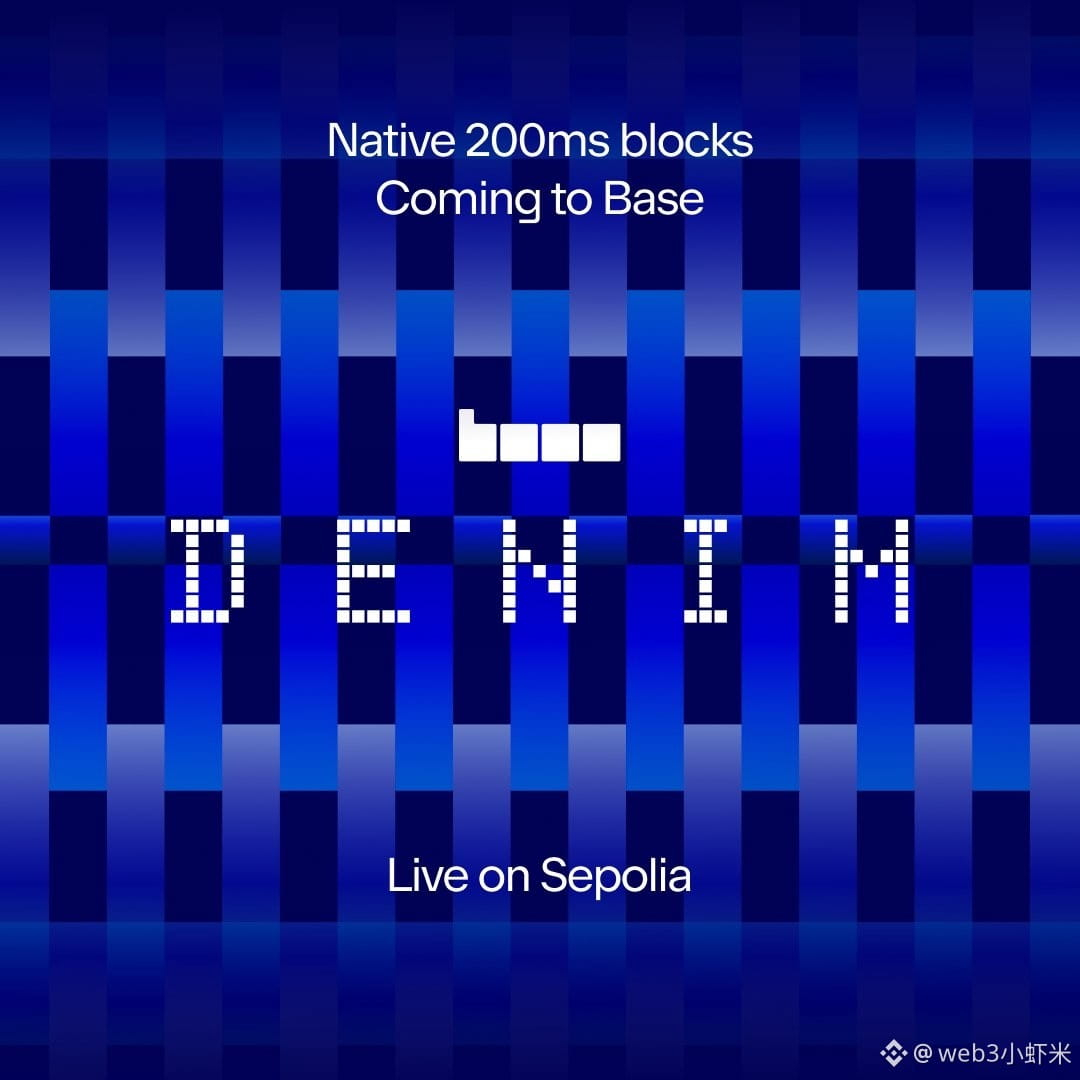
Base Denim upgrade: Mainnet switches to native 200ms block production on November 5 (already live on Sepolia; replaces Flashblocks)Denim is coming to mainnet on Base: the team says Sepolia is already producing native blocks every 200ms. Mainnet activation is scheduled for November 5 at 18:00 UTC (2:00 a.m. on November 6 in Beijing); nodes must upgrade to v1.5.1.
Key points: Previously, a canonical block was produced about every 2 seconds. Denim changes this to 5 full canonical blocks per second (one every 200ms), each with its own hash, state root, and receipts. Flashblocks will be replaced, so apps that depend on Flashblocks subscriptions need to migrate to the standard newHeads approach. If contracts still use logic like “a certain number of blocks ≈ a certain amount of time,” the wall-clock time will become one-tenth of what it was before. Update the logic to use timestamps, or divide block-count constants by 10 in advance.
Base Denim upgrade: Mainnet switches to native 200ms block production on November 5 (already live on Sepolia; replaces Flashblocks)
Denim is coming to mainnet on Base: the team says Sepolia is already producing native blocks every 200ms. Mainnet activation is scheduled for November 5 at 18:00 UTC (2:00 a.m. on November 6 in Beijing); nodes must upgrade to v1.5.1.
Key points: Previously, a canonical block was produced about every 2 seconds. Denim changes this to 5 full canonical blocks per second (one every 200ms), each with its own hash, state root, and receipts. Flashblocks will be replaced, so apps that depend on Flashblocks subscriptions need to migrate to the standard newHeads approach. If contracts still use logic like “a certain number of blocks ≈ a certain amount of time,” the wall-clock time will become one-tenth of what it was before. Update the logic to use timestamps, or divide block-count constants by 10 in advance.
Key points: Previously, a canonical block was produced about every 2 seconds. Denim changes this to 5 full canonical blocks per second (one every 200ms), each with its own hash, state root, and receipts. Flashblocks will be replaced, so apps that depend on Flashblocks subscriptions need to migrate to the standard newHeads approach. If contracts still use logic like “a certain number of blocks ≈ a certain amount of time,” the wall-clock time will become one-tenth of what it was before. Update the logic to use timestamps, or divide block-count constants by 10 in advance.
96

·
--
Base shifts into “fast gear” next Wednesday: 5 blocks per second starting November 5Base has set the date: the Denim upgrade goes live on mainnet on November 5. Block production will go from one block every 2 seconds to one every 200 milliseconds—that’s 5 full blocks per second.
This went live on testnet on October 21, when the only indication was that mainnet would launch “around November.” On October 29, Base officially (@buildonbase) nailed down the date: Denim is live on Base Sepolia, and activation on mainnet is set for November 5.
For regular users, it’ll probably just feel like confirmations are faster. For developers, the official guidance lists three things to fix before activation:
1. If you use block numbers as a measure of time, your time window will shrink by a factor of 10. It’s recommended that you use block.timestamp instead.
Base shifts into “fast gear” next Wednesday: 5 blocks per second starting November 5
Base has set the date: the Denim upgrade goes live on mainnet on November 5. Block production will go from one block every 2 seconds to one every 200 milliseconds—that’s 5 full blocks per second.
This went live on testnet on October 21, when the only indication was that mainnet would launch “around November.” On October 29, Base officially (@buildonbase) nailed down the date: Denim is live on Base Sepolia, and activation on mainnet is set for November 5.
For regular users, it’ll probably just feel like confirmations are faster. For developers, the official guidance lists three things to fix before activation:
1. If you use block numbers as a measure of time, your time window will shrink by a factor of 10. It’s recommended that you use block.timestamp instead.
314
Base is moving to Denim on November 5, changing from one block every 2 seconds to one every 200 milliseconds. Half the posts I’ve seen these past couple of days are shouting, “Base is 10x faster,” “Swaps confirm in the blink of an eye,” and “Time to go all in on Base.”
Hate to be a buzzkill, but the improvement in how it feels to tap swap on your phone isn’t as big as you might think.
Base previously used Flashblocks, which essentially split a 2-second block into smaller chunks for preconfirmation, so the frontend could already show results very quickly. What Denim does is turn those chunks into actual canonical blocks, each with its own hash, state root, and receipt. That’s an engineering cleanup—not a 10x speed boost out of nowhere. Even the official Base Build account focused on “three things developers should watch out for before activation”: apps that rely on Flashblocks data streams and pending-state reads need to migrate quickly, and logic that measures time by block count will run 10x faster and go out of sync. There’ll be about 432,000 blocks a day.
Who really benefits? Bots. Some people have already spotted buyers in Zora creator coin pools being followed immediately by a sell. The denser the blocks, the shorter the reaction window for frontrunners and sandwich bots. Retail traders can never beat scripts on speed.
Also, don’t forget that Coinbase is still the only one running the sequencer. No matter how fast the blocks get, it’s still the same player deciding the order.
One more detail: the docs used to say the mainnet launch was “Planning—November.” Now the official account has given a date: November 5. Someone asked under the official post whether it was confirmed. Treat the few days before launch as an observation period, and don’t get swept up by the “time to pivot” posts from those base.eth avatars.
#Base #Layer2
1
·
--
Shopify’s $USDC checkout has been live for 16 months: $42 million, 448,000 paymentsThe crypto world spent ten years chanting “buy coffee with crypto.” In the end, it took a checkout button to make it happen.
On October 29, Base published an official Shopify case study: Commerce Payments Protocol, built by Shopify and Coinbase on Base, had processed approximately $42.14 million in cumulative net settlements and around 448,000 payments as of October 2 (data from the SeaLaunch dashboard on Dune).
A few key details:
- Buyers pay in $USDC using a supported wallet, without paying gas themselves or needing to hold $ETH; Coinbase Payments covers the network fees
- Merchants continue receiving local currency on their usual schedule and don't need to manage crypto balances
Shopify’s $USDC checkout has been live for 16 months: $42 million, 448,000 payments
The crypto world spent ten years chanting “buy coffee with crypto.” In the end, it took a checkout button to make it happen.
On October 29, Base published an official Shopify case study: Commerce Payments Protocol, built by Shopify and Coinbase on Base, had processed approximately $42.14 million in cumulative net settlements and around 448,000 payments as of October 2 (data from the SeaLaunch dashboard on Dune).
A few key details:
- Buyers pay in $USDC using a supported wallet, without paying gas themselves or needing to hold $ETH ; Coinbase Payments covers the network fees
- Merchants continue receiving local currency on their usual schedule and don't need to manage crypto balances
480

·
--
In a way, Jesse is still a very dedicated core leader at Base.
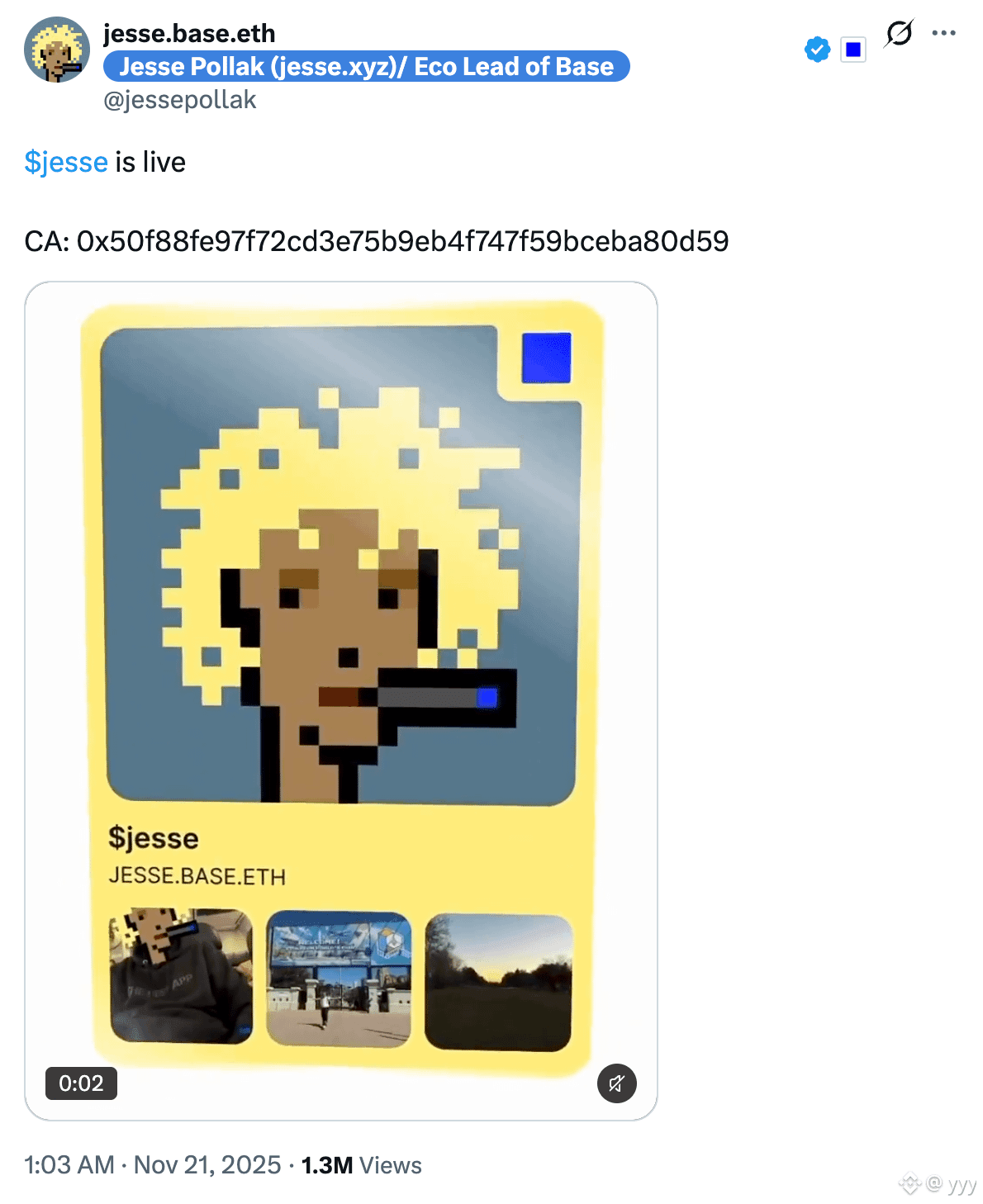
He publicly launched a namesake meme coin, $JESSE, which has now basically gone to zero;
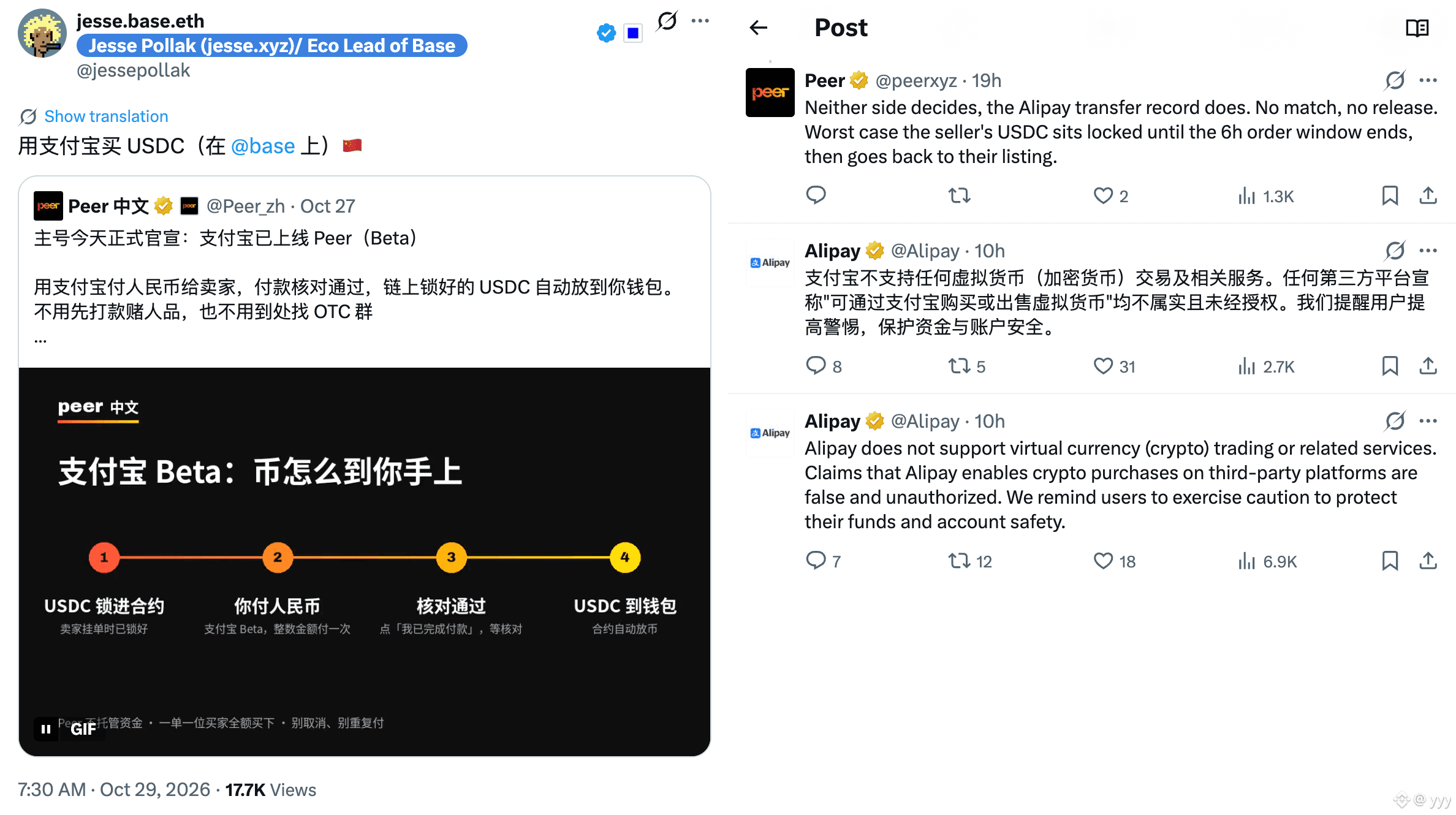
He publicly shilled Peer, a high-risk on- and off-ramp platform that prompted Alipay to issue statements in both Chinese and English distancing itself from the platform.
For the sake of building Base, Jesse’s spirit of doing what he knows cannot be done is worth learning from for every crypto founder.
#Base
107

·
--
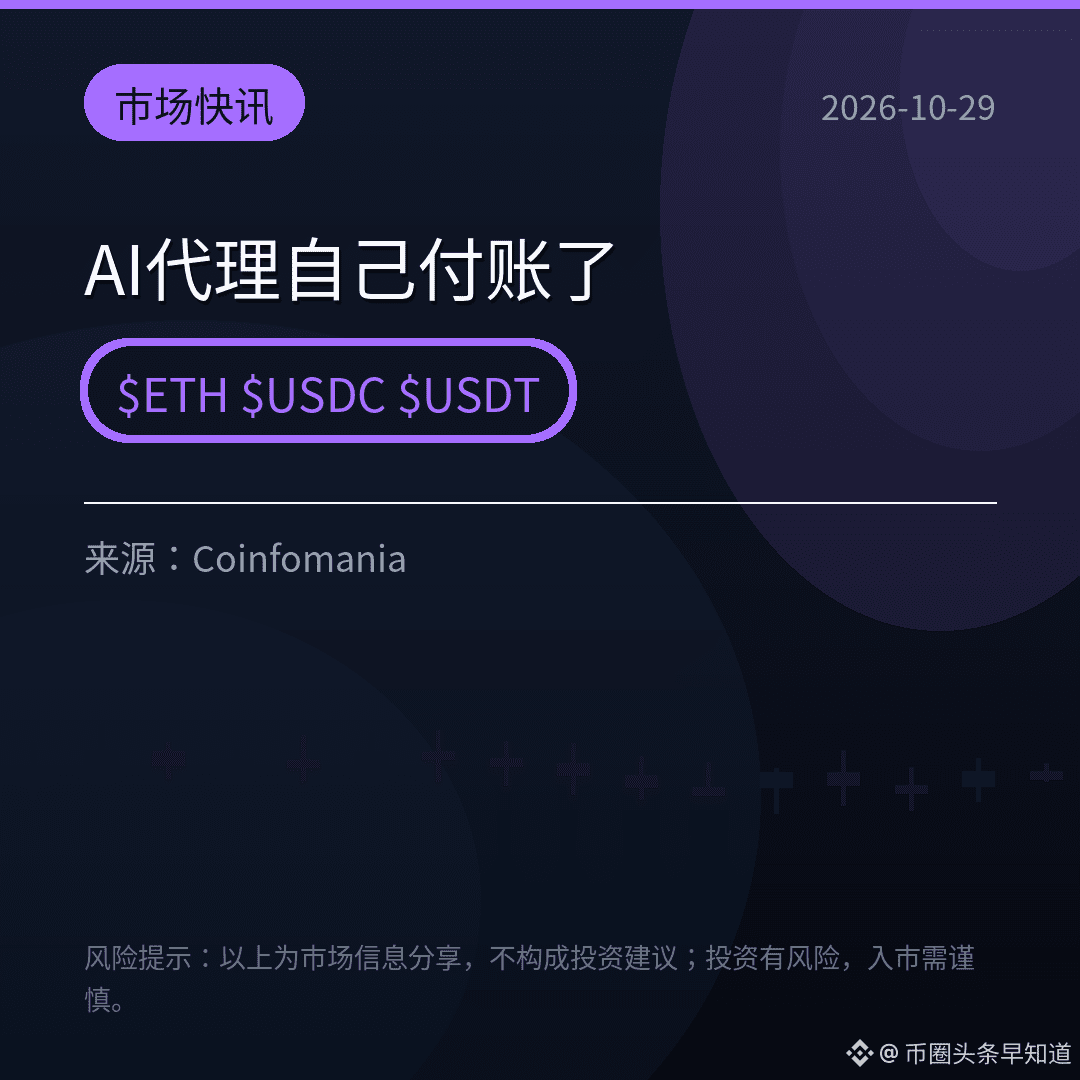
【Market Flash】AI agents are starting to pay their own bills: Base announced that agents can pay inference fees directly with stablecoins.
This move is all about efficiency: Base is an Ethereum Layer 2 network focused on scaling and lowering costs. Inference bills are frequent and small, and price swings are the last thing you want—stablecoins keep the books steady.
Don’t rush to call it a revolution. The feature was just announced, and whether it can attract real users remains to be seen. Would you trust AI to spend your money?
$ETH $USDC $USDT
#Base #稳定币 #AI agents
(Source: Coinfomania)
⚠️Risk warning: The above is shared for informational purposes only and does not constitute investment advice. Investing involves risks; please exercise caution.
5
Base Season 2 Builder Grants are open: $5,000 per project. The timeline is full of base.eth accounts reposting “$5,000 grants are up for grabs,” making it sound like free money falling from the sky.
Let’s do the math. Someone counted the numbers from Season 1: 387 projects applied, and only 6 got funded—that’s about 1 in 65. What did the other 381 teams do? Built products on Base, wrote posts, shared demos—all for free, giving the ecosystem a whole season’s worth of activity.
A $5,000 grant in exchange for hundreds of teams lining up to do the work—who benefits most from that deal doesn’t need explaining. The other 1–5 ETH in retroactive rewards works the same way: do the work first, then hope they feel like paying out.
I’m not saying don’t apply. If you were already planning to build a DeFi tool, prediction market, or AI agent on Base, there’s nothing wrong with sending in an application while you’re at it. But don’t build a whole project just for that $5,000, and definitely don’t join those “gm builders” and “please vouch” accounts boosting each other. That’s helping Base get noticed, not helping you get funded.
#Base #Coinbase
5

·
--
The capital ledger of Layer 2 networks: Is Base dominating?
According to the latest data from DefiLlama: Ethereum mainnet has a TVL of about $46.15 billion, Base about $6.13 billion, Arbitrum about $1.51 billion, and Polygon about $710 million.
A few interesting comparisons:
1) Base’s TVL is about 13.3% of Ethereum mainnet’s;
2) Arbitrum’s TVL is only about 25% of Base’s, highlighting the clear leader effect among L2s;
3) Capital is concentrated across a small number of chains, suggesting users care more about liquidity depth and application ecosystems than TPS alone.
For everyday users, the core value of L2s is lower gas fees. But TVL only represents the amount of assets locked up; it doesn’t indicate activity or security. Cross-chain bridge risks and the degree of sequencer centralization are also worth considering.
Data source: DefiLlama. This is for informational purposes only and does not constitute investment advice.
Which L2 do you use most often, and why?
#Layer2 #Base #DeFi

92

Card fees make a one-cent payment impossible. On Base, a 0.01 USDC transfer is practical.
That is the gap SCDO x402 fills for AI agents: per-call pricing that matches per-call work, recorded in SCDO Agent Ledger.
scdo.com.au
#Micropayments #x402 #Base #USDC
Card fees make a one-cent payment impossible. On Base, a 0.01 USDC transfer is practical.
That is the gap SCDO x402 fills for AI agents: per-call pricing that matches per-call work, recorded in SCDO Agent Ledger.
scdo.com.au
#Micropayments #x402 #Base #USDC
That is the gap SCDO x402 fills for AI agents: per-call pricing that matches per-call work, recorded in SCDO Agent Ledger.
scdo.com.au
#Micropayments #x402 #Base #USDC
53
·
--
Verified
The two largest DEXs on Base and OP Mainnet have officially merged. According to The Block’s report on October 21, Aerodrome and Velodrome have merged to form Aero, which has launched simultaneously across seven networks: Ethereum Mainnet, Base, Robinhood Chain, Ink, OP Mainnet, Arc, and Arbitrum. According to the project, Aerodrome accounted for 58% of DEX trading volume on Base in the third quarter, while Velodrome accounted for 60% on OP Mainnet. Combined, the seven networks see about $120 billion in monthly DEX trading volume. At the token level, the existing AERO and VELO will migrate to the new AERO, while veAERO and veVELO will convert to sAERO. A new feature in the mechanism is “Predictive Allocation”: stakers direct liquidity incentive budgets toward markets they expect to generate revenue. In addition, Slipstream V3 introduces dynamic fees that increase with market volatility and captures MEV on supported L2s. My take: the pain point with the ve(3,3) model has been that bribery steers incentives toward inefficient pools. Shifting to “betting on revenue” is a step in the right direction, but we’ll have to see the fee data after the migration is complete to judge how well it works. If you hold the old tokens, be sure to migrate through official channels and watch out for phishing links.
#DeFi #DEX #Base #Optimism $OP $ETH
#DeFi #DEX #Base #Optimism $OP $ETH
143

Just 72 hours after launch, $AERO had already attracted significant attention: related data showed Robinhood’s market share doubling for several consecutive days. As the token of Aerodrome Finance, a leading DEX in the Base ecosystem, AERO’s performance shows how a new listing combined with traffic from a trading platform can quickly amplify market interest.
But a short-term doubling doesn’t mean a trend is established. What’s more important to watch next is whether trading volume can be sustained, whether activity in the Base ecosystem can support it, and whether liquidity growth comes from genuine demand rather than being driven purely by the event.
Excitement rewards those who get in early, but it also tests those who come later. Do you think this rally in AERO is short-term sentiment, or the beginning of an ecosystem-wide move?
#AERO #Base #DecentralizedTrading
18


·
--
Bullish
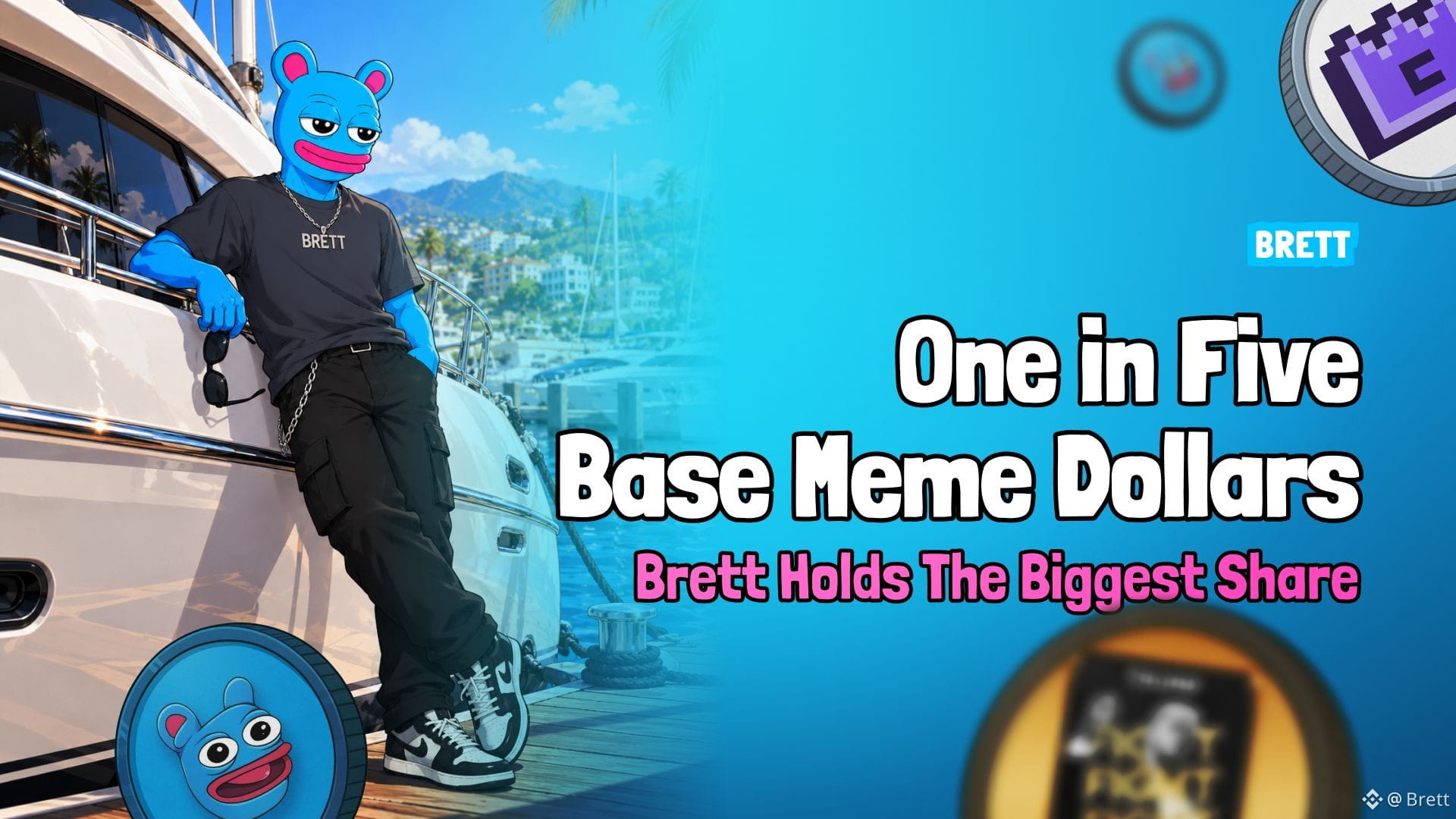
Nearly 1 in 5 Base Meme Dollars Is Brett 📊
$M turned internet attention into a full meme market. $TRUMP showed how fast a recognizable name can pull the whole room toward one ticker.
On Base, Brett is the name with that kind of category weight.
CoinGecko’s tracked Base meme market is sitting around $311.8M.
Brett alone is around $57M of that.
That puts Brett at roughly 18% of the entire tracked Base meme category by market cap.
When interest in Base memes strengthens, the market does not start from zero.
It usually checks the name already sitting on top.
Right now, that name is Brett.
#memecoin #trading #Base
257
Log in to explore more content
Join global crypto users on Binance Square
⚡️ Get latest and useful information about crypto.
💬 Trusted by the world’s largest crypto exchange.
👍 Discover real insights from verified creators.
Email / Phone number
Trending Topics
1
#BinanceProcesses$4.65BWithdrawals
532 views
25 Discussing
2
#WithdrawalsBack: 15 networks live
3,101 views
81 Discussing
3
#BinanceUpdatesProofofReservesAddresses
68,569 views
1,132 Discussing
4
#BinanceToResumePhaseOneOfWithdrawals
106,425 views
1,330 Discussing
5
#BinanceHadAlreadyCovered$6BofHackLoss
7,677 views
121 Discussing
6
#FBIConfirmsNorthKoreaIsResponsibleForBinanceCryptoHack
39,891 views
134 Discussing
7
#CZDismissesClaimsBinanceHackWasPredicted
49,580 views
588 Discussing
8
#B14gReportsUnauthorizedTransferOfAbout97MCORE
13,996 views
276 Discussing
9
#USSpotETHETFsPost23StraightDaysOfNetOutflows
16,397 views
251 Discussing
10
#IntelHasItsWorstDaySince1974
103,383 views
861 Discussing