
#cryptoresearch
cryptoresearch
Просмотров: 289,405
1,087 обсуждают
Популярные
Новые
См. перевод
🚨 A beautiful website doesn't mean a crypto project is good.
And a massive community doesn't automatically make it legitimate.
This is something I'm learning more deeply on my crypto journey. 🧠
Sometimes we see a project trending and immediately think:
🔥 “Everyone is buying it.”
🔥 “The community is huge.”
🔥 “The price is going up.”
🔥 “Maybe I should enter before it's too late.”
But there's another question we should ask:
“What have I actually researched about this project?”
That's where DYOR: Do Your Own Research, becomes important.
Research doesn't mean trying to predict the future.
It means gathering enough information to understand what you're dealing with before putting your money or trust into it.
This week, I want us to go beyond the hype and learn how to investigate a crypto project.
We'll look at:
🔎 Day 1: What should you research first?
📄 Day 2: How to investigate a project's whitepaper
👥 Day 3: How to research the team and people behind a project
💰 Day 4: How to identify financial and tokenomics red flags
🌐 Day 5: How to investigate the project's ecosystem and real utility
🧠 Day 6: What I've learned from researching crypto projects
🔄 Day 7: Weekly reflection, building a personal DYOR checklist
Because here's the mindset I want to develop:
Don't let the market's excitement become your research.
Take a step back.
Ask questions.
Verify information.
Understand the risks.
Then make your own decision.
Could you tell me:
When you discover a new crypto project, what's the FIRST thing you normally check?
A👉 Price/chart 📈
B👉 Market cap & tokenomics 🪙
C👉 Team 👥
D👉 Community/social media 📱
E👉 Utility/use case 🛠️
F👉 I don't really know where to start yet 🤔
Drop your letter below. 👇
No wrong answers, we're all learning.
🧠 Crypto Thought of the Week:
"Before asking how much a project can make you, ask what you can learn about it."
— Blessing | Still learning, still building
#Write2Earn #BinanceSquare #DYOR #CryptoResearch
And a massive community doesn't automatically make it legitimate.
This is something I'm learning more deeply on my crypto journey. 🧠
Sometimes we see a project trending and immediately think:
🔥 “Everyone is buying it.”
🔥 “The community is huge.”
🔥 “The price is going up.”
🔥 “Maybe I should enter before it's too late.”
But there's another question we should ask:
“What have I actually researched about this project?”
That's where DYOR: Do Your Own Research, becomes important.
Research doesn't mean trying to predict the future.
It means gathering enough information to understand what you're dealing with before putting your money or trust into it.
This week, I want us to go beyond the hype and learn how to investigate a crypto project.
We'll look at:
🔎 Day 1: What should you research first?
📄 Day 2: How to investigate a project's whitepaper
👥 Day 3: How to research the team and people behind a project
💰 Day 4: How to identify financial and tokenomics red flags
🌐 Day 5: How to investigate the project's ecosystem and real utility
🧠 Day 6: What I've learned from researching crypto projects
🔄 Day 7: Weekly reflection, building a personal DYOR checklist
Because here's the mindset I want to develop:
Don't let the market's excitement become your research.
Take a step back.
Ask questions.
Verify information.
Understand the risks.
Then make your own decision.
Could you tell me:
When you discover a new crypto project, what's the FIRST thing you normally check?
A👉 Price/chart 📈
B👉 Market cap & tokenomics 🪙
C👉 Team 👥
D👉 Community/social media 📱
E👉 Utility/use case 🛠️
F👉 I don't really know where to start yet 🤔
Drop your letter below. 👇
No wrong answers, we're all learning.
🧠 Crypto Thought of the Week:
"Before asking how much a project can make you, ask what you can learn about it."
— Blessing | Still learning, still building
#Write2Earn #BinanceSquare #DYOR #CryptoResearch

Проверено
ZERO HUNTER RESEARCH — В ПРОЦЕССЕ
$RENDER — мёртвая GPU-монета или сейчас самый недооценённый AI-инфра-проект?
Я здесь не для того, чтобы хайпить монету с потенциалом 10X. Я здесь, чтобы отложить вердикт, пока доказательства не будут подтверждены.
Таково правило Zero Hunter: нет подтверждённых доказательств — нет финальной оценки. Нет оценки — нет PASS. Нет PASS — нет Watchlist.
Исследование $RENDER по 7 столпам уже идёт. Сейчас это статус Research Continues, а не Watchlist Pass.
ПОДТВЕРЖДЕНО НА СЕГОДНЯ:
Нарратив — AI compute плюс DePIN. RNP-023 одобрен на RenderCon 2026, Salad Network присоединяется как подсеть, добавляя около 60 000 GPU.
Продукт — Render.com, Dispersed.com и подсеть Salad — все работают.
Токеномика — более 80% предложения уже разблокировано, линейный вестинг, без предстоящего cliff unlock, модель burn-mint теперь получает выручку Salad.
Команда — Jules Urbach основал OTOY, в advisory board входят Ari Emmanuel, JJ Abrams, Brendan Eich.
ОСТАЁТСЯ НЕСООТВЕТСТВУЮЩИМ:
Данные о концентрации держателей расходятся между источниками — в одном топ-кошелёк на 84%, в другом среди не-эксчейнджевых держателей топ-10 всего 3%. Оценка остаётся ограниченной, пока это не прояснится.
Ликвидность на DEX не была верифицирована вживую.
Инцидент безопасности 2025 года на старом Polygon-контракте, до миграции — это раскрывается, а не скрывается.
ТЕКУЩИЙ СЧЁТ: 65/100
Вердикт: Research Continues, пока не Watchlist.
Вот о чём стоит подумать: при сегодняшнем объёме предложения рыночная капитализация $RENDER составляет около $750M. Полный рост в 10X возвращает цену примерно к прежнему историческому максимуму около $13.53. Не новая территория, а возврат.
Насколько это реалистично — или это просто ещё одна история-наратив?
Настоящий вердикт приходит, когда доказательства подтверждены. Не раньше.
Вы бы пропустили эту монету?
#CryptoResearch #RENDER #DePIN #AICompute #ZeroResearch
$RENDER — мёртвая GPU-монета или сейчас самый недооценённый AI-инфра-проект?
Я здесь не для того, чтобы хайпить монету с потенциалом 10X. Я здесь, чтобы отложить вердикт, пока доказательства не будут подтверждены.
Таково правило Zero Hunter: нет подтверждённых доказательств — нет финальной оценки. Нет оценки — нет PASS. Нет PASS — нет Watchlist.
Исследование $RENDER по 7 столпам уже идёт. Сейчас это статус Research Continues, а не Watchlist Pass.
ПОДТВЕРЖДЕНО НА СЕГОДНЯ:
Нарратив — AI compute плюс DePIN. RNP-023 одобрен на RenderCon 2026, Salad Network присоединяется как подсеть, добавляя около 60 000 GPU.
Продукт — Render.com, Dispersed.com и подсеть Salad — все работают.
Токеномика — более 80% предложения уже разблокировано, линейный вестинг, без предстоящего cliff unlock, модель burn-mint теперь получает выручку Salad.
Команда — Jules Urbach основал OTOY, в advisory board входят Ari Emmanuel, JJ Abrams, Brendan Eich.
ОСТАЁТСЯ НЕСООТВЕТСТВУЮЩИМ:
Данные о концентрации держателей расходятся между источниками — в одном топ-кошелёк на 84%, в другом среди не-эксчейнджевых держателей топ-10 всего 3%. Оценка остаётся ограниченной, пока это не прояснится.
Ликвидность на DEX не была верифицирована вживую.
Инцидент безопасности 2025 года на старом Polygon-контракте, до миграции — это раскрывается, а не скрывается.
ТЕКУЩИЙ СЧЁТ: 65/100
Вердикт: Research Continues, пока не Watchlist.
Вот о чём стоит подумать: при сегодняшнем объёме предложения рыночная капитализация $RENDER составляет около $750M. Полный рост в 10X возвращает цену примерно к прежнему историческому максимуму около $13.53. Не новая территория, а возврат.
Насколько это реалистично — или это просто ещё одна история-наратив?
Настоящий вердикт приходит, когда доказательства подтверждены. Не раньше.
Вы бы пропустили эту монету?
#CryptoResearch #RENDER #DePIN #AICompute #ZeroResearch


🔎 "DYOR" — НО ЧТО ЭТО НА САМОМ ДЕЛЕ ЗНАЧИТ?
DYOR = Do Your Own Research.
Прежде чем покупать проект, посмотрите на:
📌 Какую проблему он решает?
📌 Кто стоит за ним?
📌 Токеномику
📌 Предложение и распределение
📌 Активность разработки
📌 Ликвидность
📌 Риски безопасности
📌 Активность сообщества
Вирусный пост — это не исследование.
Белая книга тоже не является автоматическим доказательством хорошей инвестиции.
Мыслите критически.
#DYOR #CryptoResearch #BinanceSquare
DYOR = Do Your Own Research.
Прежде чем покупать проект, посмотрите на:
📌 Какую проблему он решает?
📌 Кто стоит за ним?
📌 Токеномику
📌 Предложение и распределение
📌 Активность разработки
📌 Ликвидность
📌 Риски безопасности
📌 Активность сообщества
Вирусный пост — это не исследование.
Белая книга тоже не является автоматическим доказательством хорошей инвестиции.
Мыслите критически.
#DYOR #CryptoResearch #BinanceSquare

🔬 Новая исследовательская платформа для Bitcoin: простый анализ для экспериментов с криптовалютами
Был выпущен Vaquum-Limen 5.6.1 — программный инструмент, управляемый данными и предназначенный для упрощения исследований Bitcoin. Он позволяет разработчикам и исследователям организовывать эксперименты, сравнивать результаты и анализировать исторические данные с помощью файлов YAML, что облегчает процессы расследований и открытий в мире Bitcoin.
━━━━━━━━━━━━━━
📊 Влияние: 📊 среднее
🏷️ BITCOIN
#Bitcoin #CryptoResearch #Blockchain #OpenSource #DevTools
🔗 Источник: https://pypi.org/project/vaquum-limen/5.6.1/
Был выпущен Vaquum-Limen 5.6.1 — программный инструмент, управляемый данными и предназначенный для упрощения исследований Bitcoin. Он позволяет разработчикам и исследователям организовывать эксперименты, сравнивать результаты и анализировать исторические данные с помощью файлов YAML, что облегчает процессы расследований и открытий в мире Bitcoin.
━━━━━━━━━━━━━━
📊 Влияние: 📊 среднее
🏷️ BITCOIN
#Bitcoin #CryptoResearch #Blockchain #OpenSource #DevTools
🔗 Источник: https://pypi.org/project/vaquum-limen/5.6.1/
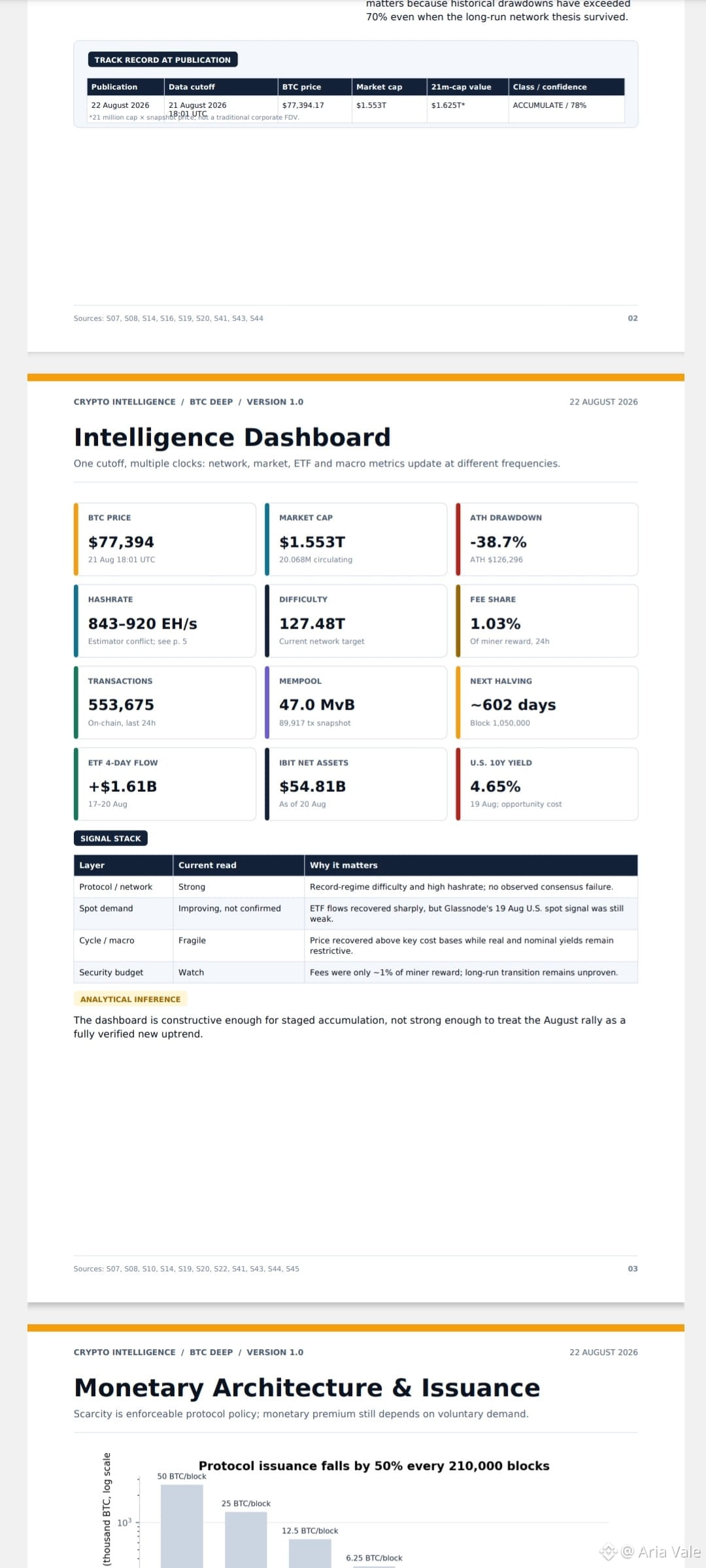
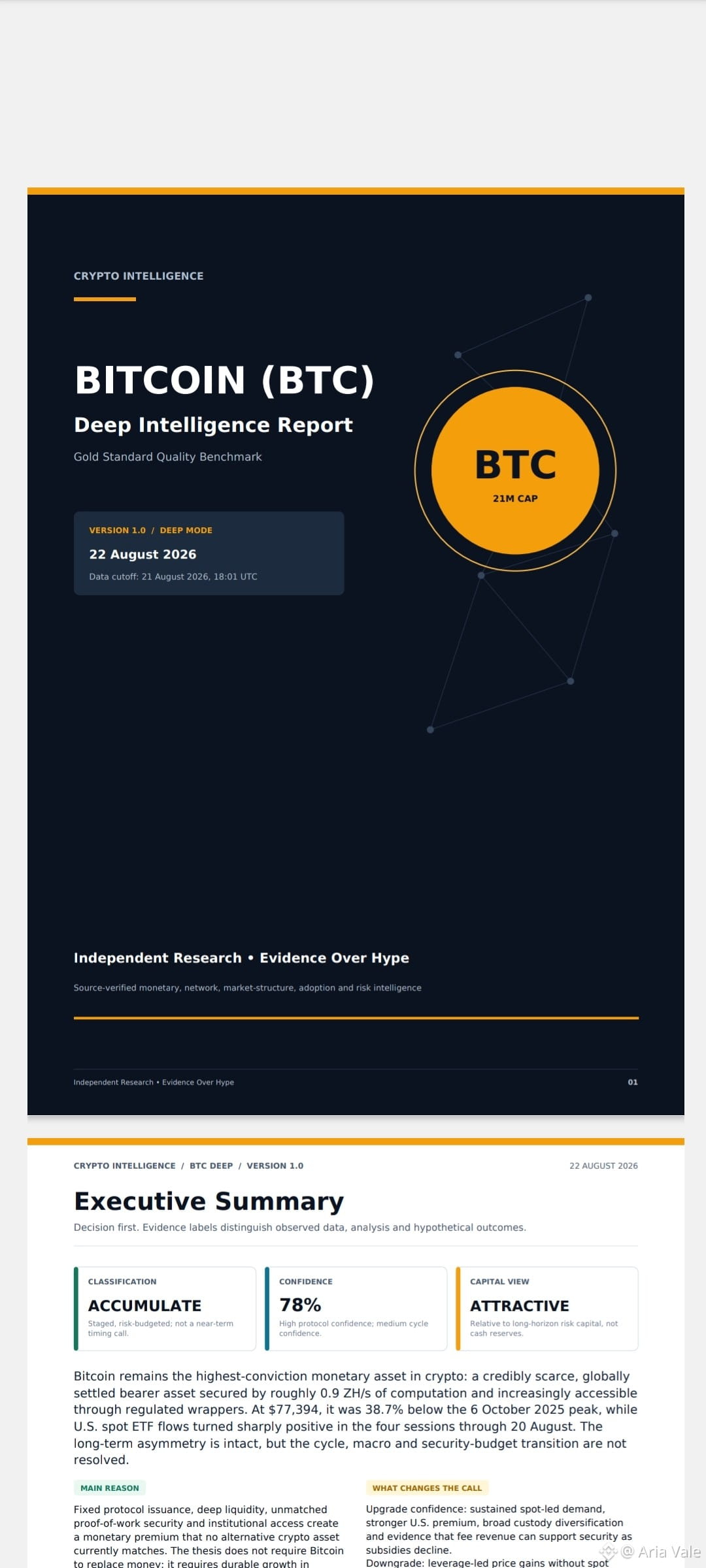
Биткоин по $77K: Всё ещё АККУМУЛИРОВАТЬ? | Отчёт глубокого интеллекта
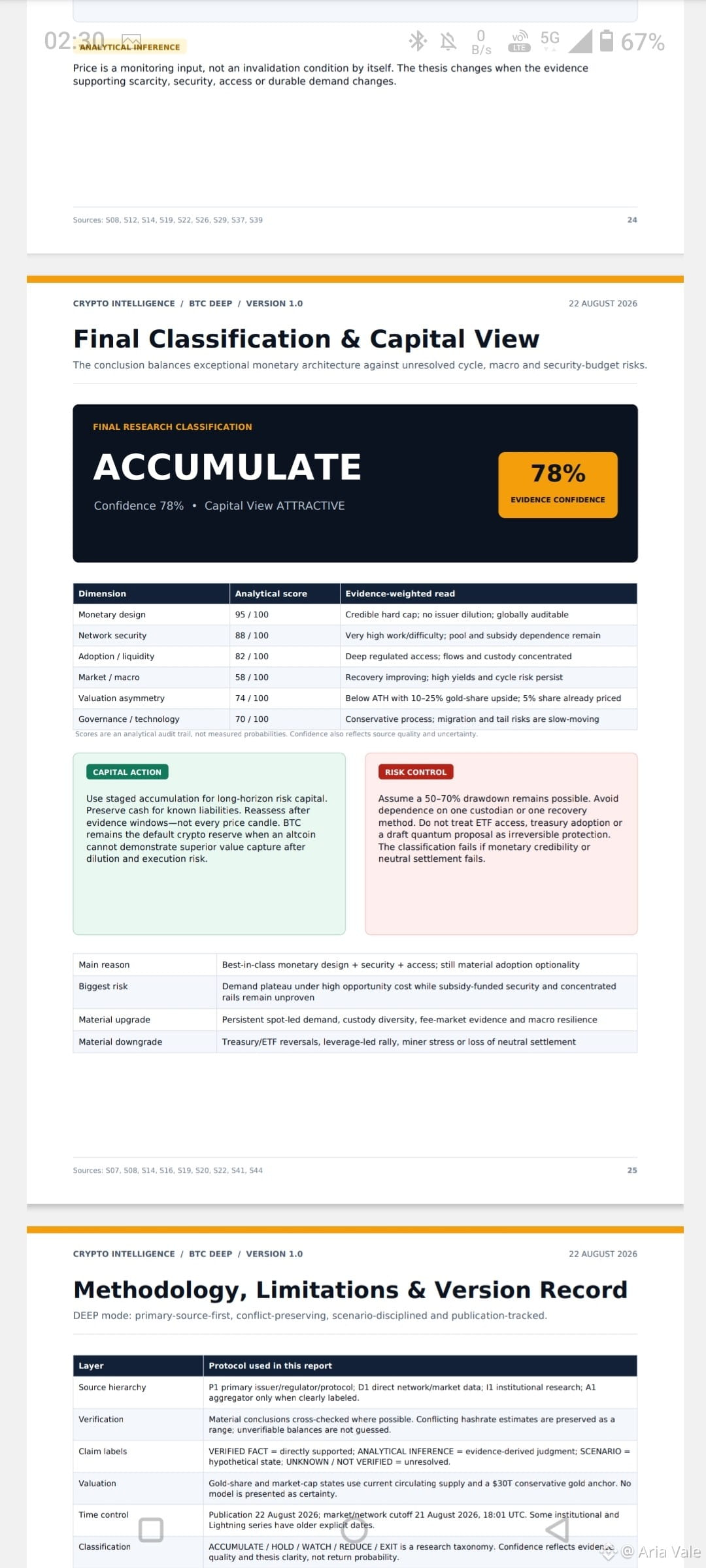
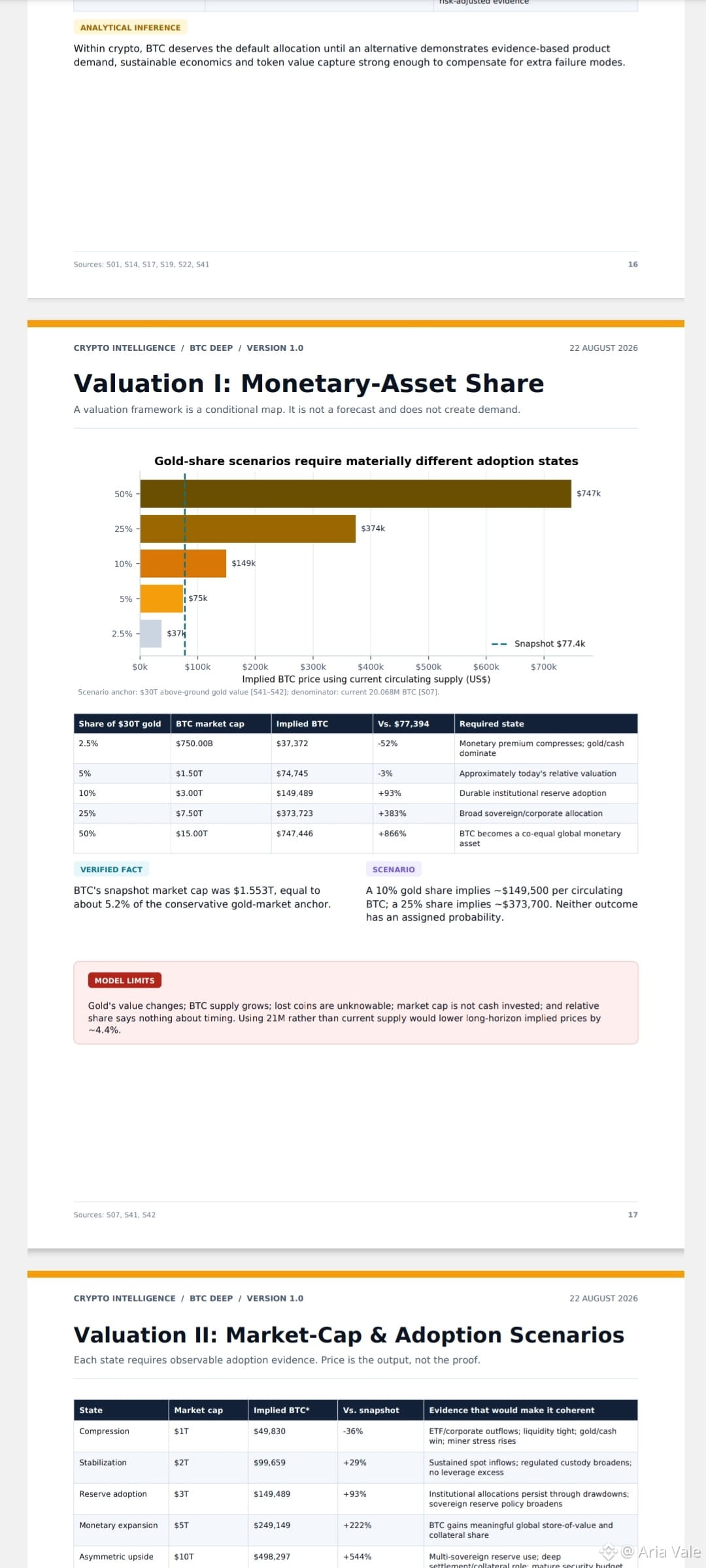
Биткоин на 38,7% ниже своего пика за октябрь 2025 года. Но одной лишь ценой почти ничего не объяснить о том, насколько BTC здесь привлекателен.
Я подготовил 28-страничный отчёт Deep Intelligence по биткоину, чтобы проверить тезис вне движения цены.
Исследование охватывает денежную архитектуру, сетевую безопасность, экономику майнинга, ончейн-активность, институциональный спрос & спрос на ETF, макроусловия, сценарии оценки, принятие и ключевые риски тезиса.
Итоговая классификация исследования: АККУМУЛИРОВАТЬ
Уверенность в доказательствах: 78%
Взгляд на капитал: ПРИВЛЕКАТЕЛЬНО
Это не прогноз цены. В отчёте также указано, что может сломать тезис — включая слабость спроса, давление на бюджеты майнеров/безопасности и упущенную макро-возможность.
Эти 4 страницы — лишь превью полного 28-страничного исследования.
Я выпускаю полный отчёт БЕСПЛАТНО.
Независимое исследование. Доказательства вместо хайпа.
$BTC
#bitcoin #CryptoResearch #Onchain #BitcoinETFs
Биткоин на 38,7% ниже своего пика за октябрь 2025 года. Но одной лишь ценой почти ничего не объяснить о том, насколько BTC здесь привлекателен.
Я подготовил 28-страничный отчёт Deep Intelligence по биткоину, чтобы проверить тезис вне движения цены.
Исследование охватывает денежную архитектуру, сетевую безопасность, экономику майнинга, ончейн-активность, институциональный спрос & спрос на ETF, макроусловия, сценарии оценки, принятие и ключевые риски тезиса.
Итоговая классификация исследования: АККУМУЛИРОВАТЬ
Уверенность в доказательствах: 78%
Взгляд на капитал: ПРИВЛЕКАТЕЛЬНО
Это не прогноз цены. В отчёте также указано, что может сломать тезис — включая слабость спроса, давление на бюджеты майнеров/безопасности и упущенную макро-возможность.
Эти 4 страницы — лишь превью полного 28-страничного исследования.
Я выпускаю полный отчёт БЕСПЛАТНО.
Независимое исследование. Доказательства вместо хайпа.
$BTC
#bitcoin #CryptoResearch #Onchain #BitcoinETFs

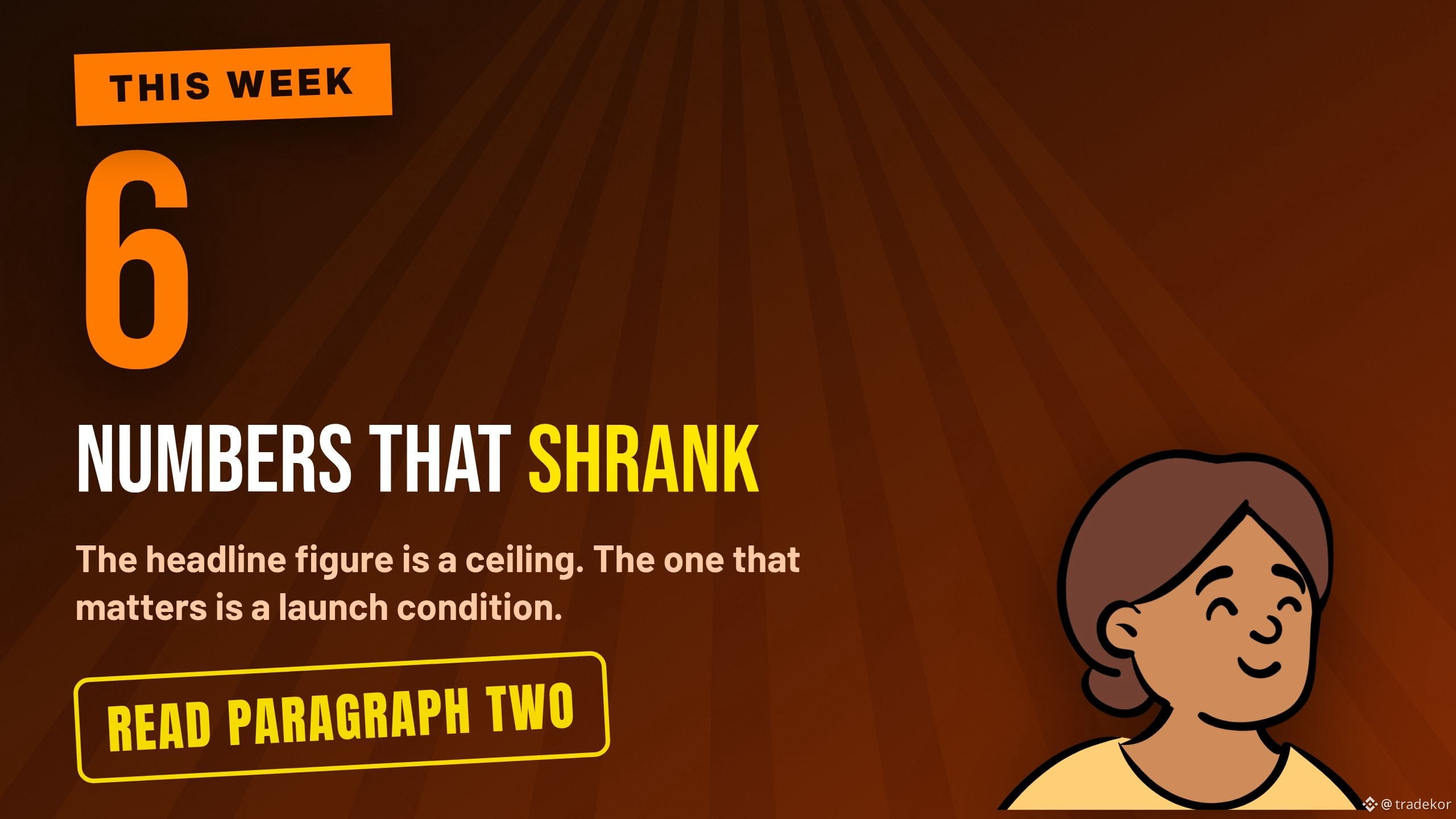
$33T стало $390B. 65x стало 2-5x. 3,000 BTC стало 200. Шесть заголовков за эту неделю — шесть чисел, которые сжались при первом же касании.
Схема: заголовочное число в криптоиндустрии почти всегда является потолком, а число, которое реально важно, почти всегда — это условие запуска, спрятанное двумя абзацами ниже. Ни одно из этих чисел не было ложью. Каждое сообщалось точно и понималось неверно.
Стейблкоины в 2025 году переместили рекордные $33T. Реальные платежи конечных пользователей — около $390B.
Ouroboros Leios от Cardano нацелен на 65x по емкости. Первое развертывание в mainnet ожидается на уровне 2x–5x.
Stacks построили стейкинговую емкость на 3,000 BTC. Первый Genesis Bond нацелен на 100–200 BTC, только whitelist.
Hyperliquid продолжает устанавливать рекорды по объему. Его buyback снизился примерно с $290M до $149M.
Glamsterdam цитируется как апгрейд к концу августа. Дата запуска в mainnet не зафиксирована; «выдержка» в testnet указывает на Q4.
Ether.fi запустила токенизированные акции для 500,000 участников. Недоступно в США.
Почему так происходит: целевые параметры дизайна, общая емкость и валовой объем — это реальные измерения, и именно их команда может объявить до того, как что-либо будет запущено. Эффективная пропускная способность, размер первой транши и чистая выручка существуют только после этого. Объявления делаются по первой цифре набора. Работать позиции должны по второй.
Привычка, которую стоит выработать: увидев любое число, спросите, что должно быть правдой, чтобы оно было достигнуто, и случилось ли это уже. Если ответ — testnet, whitelist или документ с дизайном, значит, вы смотрите на потолок.
Не является финансовым советом. DYOR.
$ETH $ADA $HYPE
#CryptoResearch #DYOR #CryptoNews #Analysis
Схема: заголовочное число в криптоиндустрии почти всегда является потолком, а число, которое реально важно, почти всегда — это условие запуска, спрятанное двумя абзацами ниже. Ни одно из этих чисел не было ложью. Каждое сообщалось точно и понималось неверно.
Стейблкоины в 2025 году переместили рекордные $33T. Реальные платежи конечных пользователей — около $390B.
Ouroboros Leios от Cardano нацелен на 65x по емкости. Первое развертывание в mainnet ожидается на уровне 2x–5x.
Stacks построили стейкинговую емкость на 3,000 BTC. Первый Genesis Bond нацелен на 100–200 BTC, только whitelist.
Hyperliquid продолжает устанавливать рекорды по объему. Его buyback снизился примерно с $290M до $149M.
Glamsterdam цитируется как апгрейд к концу августа. Дата запуска в mainnet не зафиксирована; «выдержка» в testnet указывает на Q4.
Ether.fi запустила токенизированные акции для 500,000 участников. Недоступно в США.
Почему так происходит: целевые параметры дизайна, общая емкость и валовой объем — это реальные измерения, и именно их команда может объявить до того, как что-либо будет запущено. Эффективная пропускная способность, размер первой транши и чистая выручка существуют только после этого. Объявления делаются по первой цифре набора. Работать позиции должны по второй.
Привычка, которую стоит выработать: увидев любое число, спросите, что должно быть правдой, чтобы оно было достигнуто, и случилось ли это уже. Если ответ — testnet, whitelist или документ с дизайном, значит, вы смотрите на потолок.
Не является финансовым советом. DYOR.
$ETH $ADA $HYPE
#CryptoResearch #DYOR #CryptoNews #Analysis

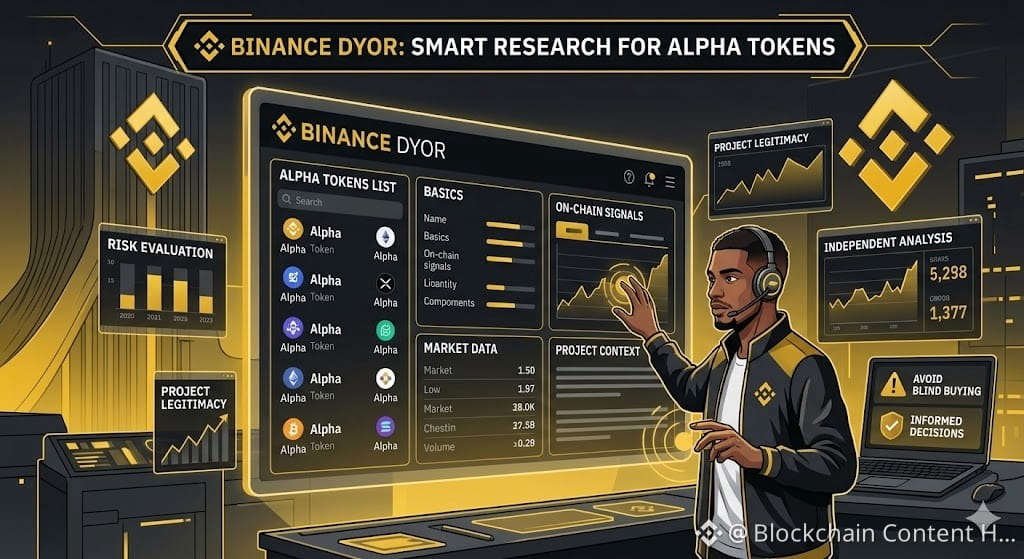
Binance представил DYOR, встроенный исследовательский хаб, посвященный токенам Binance Alpha. Он централизует ключевую информацию о токенах — включая основы, ончейн сигналы, рыночные данные и контекст проектов — все в одном месте. DYOR создан, чтобы помочь пользователям принимать более обоснованные решения перед торговлей токенами на ранних стадиях, стремясь сократить слепую покупку, предоставляя трейдерам быстрый и надежный способ оценки рисков и легитимности проектов.
#DYOR #BinanceAlpha #CryptoResearch #InformedTrading
#DYOR #BinanceAlpha #CryptoResearch #InformedTrading

JPMorgan усиливает свои позиции в криптоисследованиях, нанимая аналитика на уровне вице-президента для своей глобальной исследовательской команды в Нью-Йорке. Эта роль предполагает зарплату от $200k до $285k и требует 4–7 лет опыта на крипторынке, с сильным предпочтением к опционным продуктам.
Этот шаг сигнализирует о том, что топовые финансовые компании больше не рассматривают цифровые активы как нишу — они интегрируют их в стратегии кросс-активов наряду с FX и макроисследованиями. Новый сотрудник будет оспаривать существующие нарративы, писать отчёты на уровне институциональных стандартов и связывать криптоинсайты с высокопрофильными заинтересованными сторонами.
Спекуляции говорят сами за себя: им нужен кто-то, кто понимает как спотовый, так и деривативный рынок, может стресс-тестировать хайп и применять традиционные финансовые методы к крипте. Для рынка это усиливает сдвиг к профессиональному анализу и управлению рисками, а не просто спекуляциям.
$BTC $ETH #CryptoResearch #InstitutionalAdoption
Этот шаг сигнализирует о том, что топовые финансовые компании больше не рассматривают цифровые активы как нишу — они интегрируют их в стратегии кросс-активов наряду с FX и макроисследованиями. Новый сотрудник будет оспаривать существующие нарративы, писать отчёты на уровне институциональных стандартов и связывать криптоинсайты с высокопрофильными заинтересованными сторонами.
Спекуляции говорят сами за себя: им нужен кто-то, кто понимает как спотовый, так и деривативный рынок, может стресс-тестировать хайп и применять традиционные финансовые методы к крипте. Для рынка это усиливает сдвиг к профессиональному анализу и управлению рисками, а не просто спекуляциям.
$BTC $ETH #CryptoResearch #InstitutionalAdoption

📋 Руководство DYOR: Пять шагов для оценки любого криптопроекта
30 июня 2026 года, при наличии 17 419 активных криптовалют, исследования крайне важны. Шаг 1: Прочитайте whitepaper — понятна ли проблема? Шаг 2: Проверьте команду — они публичны и заслуживают доверия? Шаг 3: Проанализируйте токеномику — общий объем, инфляционная ставка, распределение.
Шаг 4: Оцените сообщество и экосистему — активная разработка, реальное использование. Шаг 5: Проверьте рыночные данные — объем, ликвидность, биржи, на которых размещены. Следуя этой схеме, можно отделить реальные проекты от токенов, подпитываемых хайпом.
📌 Основной вывод:
Пятишаговая схема исследования — whitepaper, команда, токеномика, экосистема, рыночные данные — помогает отфильтровать качественные проекты от шума на рынке из 17 419 монет.
#DYOR #CryptoResearch #Education
#BinanceAlphaAlert
30 июня 2026 года, при наличии 17 419 активных криптовалют, исследования крайне важны. Шаг 1: Прочитайте whitepaper — понятна ли проблема? Шаг 2: Проверьте команду — они публичны и заслуживают доверия? Шаг 3: Проанализируйте токеномику — общий объем, инфляционная ставка, распределение.
Шаг 4: Оцените сообщество и экосистему — активная разработка, реальное использование. Шаг 5: Проверьте рыночные данные — объем, ликвидность, биржи, на которых размещены. Следуя этой схеме, можно отделить реальные проекты от токенов, подпитываемых хайпом.
📌 Основной вывод:
Пятишаговая схема исследования — whitepaper, команда, токеномика, экосистема, рыночные данные — помогает отфильтровать качественные проекты от шума на рынке из 17 419 монет.
#DYOR #CryptoResearch #Education
#BinanceAlphaAlert

💎 Скрытый бриллиант: исследование #002 | RE
Большинство инвесторов спрашивают:
Цена упала достаточно, чтобы купить?
А я задаю другой вопрос:
«Есть ли у проекта всё ещё причина существовать?»
📊 Краткий обзор проекта
• Проект: RE
• Рыночная капитализация: ~$123 млн
• Объём за 24ч: ~$127 млн
• ATH: $1.08
• Текущая цена: ~$0.60 (примерно на 45% ниже ATH)
✅ Почему это в моём списке наблюдения
🔹 Сильный торговый объём показывает, что рынок обращает внимание.
🔹 Сектор **Real World Asset (RWA)** по-прежнему остаётся одной из самых обсуждаемых нарративов в крипто.
🔹 У проекта есть потенциал для восстановления, если улучшатся рыночные настроения.
⚠️ Главный риск
Текущее обращающееся предложение — это лишь часть от максимального.
Будущие разблокировки токенов могут усилить давление продаж, поэтому это важный фактор, за которым нужно следить.
📌 Моя позиция
Я не называю RE гарантированным победителем.
Я добавляю его в свой список наблюдения, потому что соотношение риск/выгода выглядит интересно на текущих уровнях.
Следующие несколько недель будут важнее, чем последние несколько месяцев.
Всегда проводите собственное исследование перед инвестированием.
━━━━━━━━━━━━━━
📊 Оценка HiddenGemAlpha
🟢 Нарратив: **8/10**
🟢 Ликвидность: **8.5/10**
🟡 Уровень риска: **Средний**
⭐ Общая оценка в списке наблюдения: **7.9/10**
Подписывайтесь на @HiddenGemAlpha, чтобы получать крипто-идеи на основе исследований — без хайпа.
#REZ #RWA #altcoins #BinanceSquare #CryptoResearch
Большинство инвесторов спрашивают:
Цена упала достаточно, чтобы купить?
А я задаю другой вопрос:
«Есть ли у проекта всё ещё причина существовать?»
📊 Краткий обзор проекта
• Проект: RE
• Рыночная капитализация: ~$123 млн
• Объём за 24ч: ~$127 млн
• ATH: $1.08
• Текущая цена: ~$0.60 (примерно на 45% ниже ATH)
✅ Почему это в моём списке наблюдения
🔹 Сильный торговый объём показывает, что рынок обращает внимание.
🔹 Сектор **Real World Asset (RWA)** по-прежнему остаётся одной из самых обсуждаемых нарративов в крипто.
🔹 У проекта есть потенциал для восстановления, если улучшатся рыночные настроения.
⚠️ Главный риск
Текущее обращающееся предложение — это лишь часть от максимального.
Будущие разблокировки токенов могут усилить давление продаж, поэтому это важный фактор, за которым нужно следить.
📌 Моя позиция
Я не называю RE гарантированным победителем.
Я добавляю его в свой список наблюдения, потому что соотношение риск/выгода выглядит интересно на текущих уровнях.
Следующие несколько недель будут важнее, чем последние несколько месяцев.
Всегда проводите собственное исследование перед инвестированием.
━━━━━━━━━━━━━━
📊 Оценка HiddenGemAlpha
🟢 Нарратив: **8/10**
🟢 Ликвидность: **8.5/10**
🟡 Уровень риска: **Средний**
⭐ Общая оценка в списке наблюдения: **7.9/10**
Подписывайтесь на @HiddenGemAlpha, чтобы получать крипто-идеи на основе исследований — без хайпа.
#REZ #RWA #altcoins #BinanceSquare #CryptoResearch

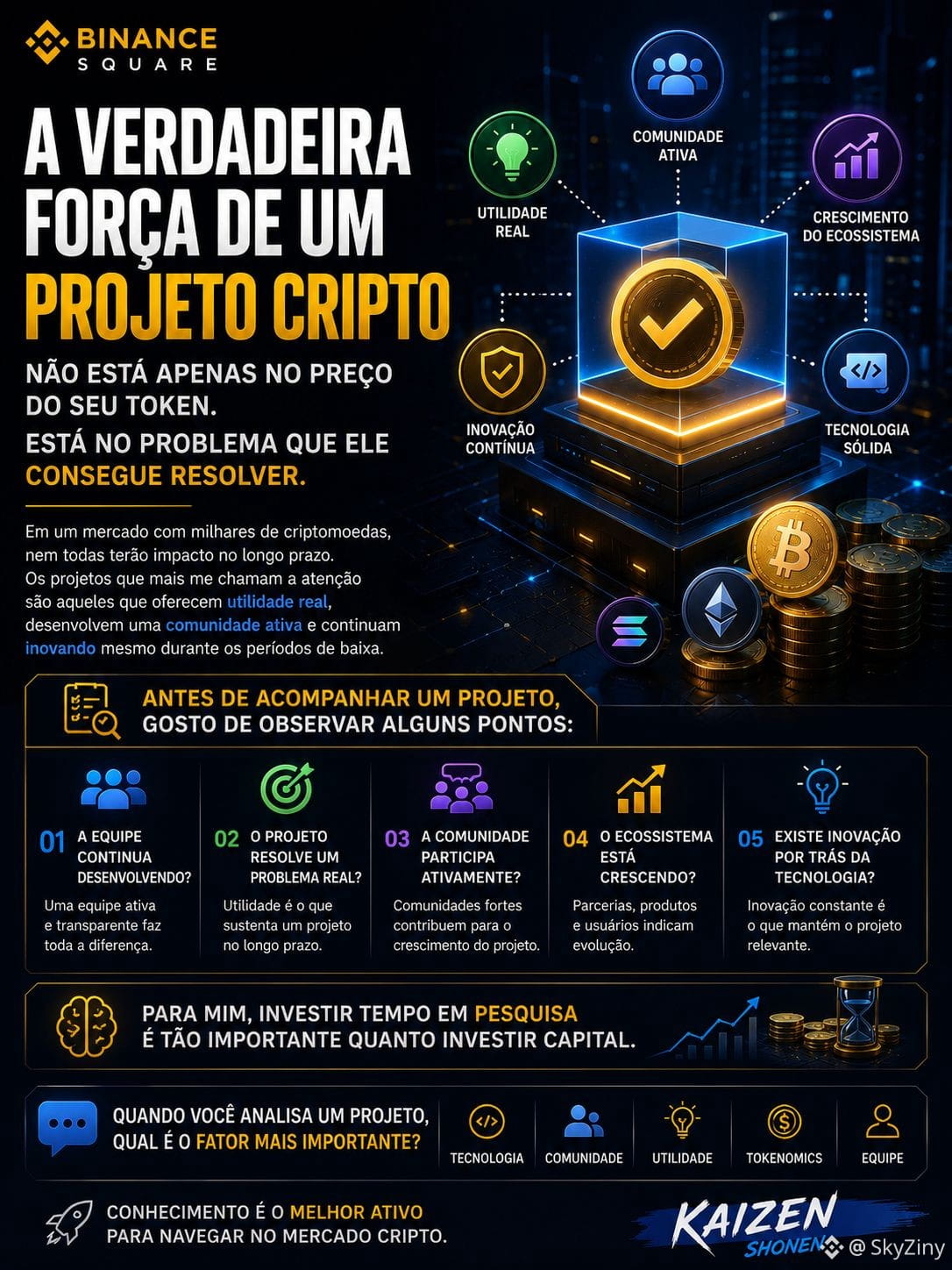
🚀 Истинная сила криптопроекта заключается не только в цене его токена. Она — в той проблеме, которую он умеет решать.
На рынке с тысячами криптовалют не все проекты окажут влияние в долгосрочной перспективе. Больше всего меня привлекают те, которые дают реальную пользу, развивают активное сообщество и продолжают внедрять инновации даже в периоды спада.
Прежде чем следить за проектом, мне нравится обращать внимание на несколько моментов:
🔍 Команда продолжает разрабатывать? 🌍 Проект решает реальную проблему? 🤝 Сообщество активно участвует? 📈 Экосистема растёт? 💡 Есть ли за технологией инновации?
Для меня тратить время на исследования так же важно, как вкладывать капитал.
В итоге знание остается лучшим активом, чтобы увереннее ориентироваться на крипторынке.
💬 Когда вы анализируете проект, какой фактор для вас самый важный: технологии, сообщество, полезность, токеномика или команда?
#crypto #blockchain #Web3 #CryptoResearch #SkyZinyJourney
На рынке с тысячами криптовалют не все проекты окажут влияние в долгосрочной перспективе. Больше всего меня привлекают те, которые дают реальную пользу, развивают активное сообщество и продолжают внедрять инновации даже в периоды спада.
Прежде чем следить за проектом, мне нравится обращать внимание на несколько моментов:
🔍 Команда продолжает разрабатывать? 🌍 Проект решает реальную проблему? 🤝 Сообщество активно участвует? 📈 Экосистема растёт? 💡 Есть ли за технологией инновации?
Для меня тратить время на исследования так же важно, как вкладывать капитал.
В итоге знание остается лучшим активом, чтобы увереннее ориентироваться на крипторынке.
💬 Когда вы анализируете проект, какой фактор для вас самый важный: технологии, сообщество, полезность, токеномика или команда?
#crypto #blockchain #Web3 #CryptoResearch #SkyZinyJourney
💡 18,090 монет — это исследовательская задача: широта возможностей, но только с дисциплиной
1 августа 2026 года рынок отслеживает 18 090 активных криптовалют на 1 508 рынках. В 2026 году дефицитным ресурсом является не предложение токенов — а внимание и анализ.
Bitcoin $BTC at 56.21% dominance and Ethereum $ETH at 10.02% показывают, где находится степень уверенности, тогда как длинный хвост конкурирует за остальное.
📌 Ключевой вывод:
В сфере из 18 090 проектов преимущество у исследователей. Инструменты, данные и дисциплина важнее погони за слухами в такой переполненной экосистеме.
#CryptoResearch #Altcoins
#BinanceAlphaAlert
1 августа 2026 года рынок отслеживает 18 090 активных криптовалют на 1 508 рынках. В 2026 году дефицитным ресурсом является не предложение токенов — а внимание и анализ.
Bitcoin $BTC at 56.21% dominance and Ethereum $ETH at 10.02% показывают, где находится степень уверенности, тогда как длинный хвост конкурирует за остальное.
📌 Ключевой вывод:
В сфере из 18 090 проектов преимущество у исследователей. Инструменты, данные и дисциплина важнее погони за слухами в такой переполненной экосистеме.
#CryptoResearch #Altcoins
#BinanceAlphaAlert

$АНАЛИЗ КРИПТОПРОЕКТА: ЧТО СТОИТ ПРОВЕРИТЬ ПЕРЕД ТЕМ, КАК ДОВЕРЯТЬ ПРОЕКТУ?
Прежде чем верить любой $crypto-промоушен-компании, спросите:
1️⃣ Какую проблему решает проект?
2️⃣ На самом деле ли технология полезна?
3️⃣ Кто это разрабатывает?
4️⃣ Каков объем токенов в обращении?
5️⃣ Есть ли графики разблокировок?
6️⃣ Активно ли сообщество?
7️⃣ Понятно ли объяснены риски?
Большое сообщество не обязательно означает, что проект успешен.
Исследования ценнее хайпа.
Как вы думаете, смарт-контрактная экосистема $Ethereum дает ему долгосрочное преимущество над $Bitcoin, или же $Bitcoin останется доминирующим?
#CryptoNews🚀🔥 #CryptoResearch #blockchain #DYOR* R
Прежде чем верить любой $crypto-промоушен-компании, спросите:
1️⃣ Какую проблему решает проект?
2️⃣ На самом деле ли технология полезна?
3️⃣ Кто это разрабатывает?
4️⃣ Каков объем токенов в обращении?
5️⃣ Есть ли графики разблокировок?
6️⃣ Активно ли сообщество?
7️⃣ Понятно ли объяснены риски?
Большое сообщество не обязательно означает, что проект успешен.
Исследования ценнее хайпа.
Как вы думаете, смарт-контрактная экосистема $Ethereum дает ему долгосрочное преимущество над $Bitcoin, или же $Bitcoin останется доминирующим?
#CryptoNews🚀🔥 #CryptoResearch #blockchain #DYOR* R
📚 Как исследовать криптопроект: чек-лист due diligence для новых инвесторов
4 июля 2026 года, отслеживается 17 387 монет: понимание того, как исследовать проекты, крайне важно. Начните с whitepaper — решает ли он реальную проблему? Затем проверьте команду, токеномику и сообщество.
Такие источники данных, как CoinGecko, дают ключевые метрики: капитализация ($2.26T), объем ($64.58B) и динамику цены. Для Bitcoin $BTC at $62,612 основы хорошо известны. Для более небольших проектов требуется более глубокий анализ.
Посмотрите на: активность на GitHub (разработчики создают что-то?), распределение токенов (оно централизовано?), и реальных пользователей (а не только ботов). Если у проекта единственный нарратив — «цена пойдет вверх», это спекуляция, а не инвестиция.
📌 Главный вывод:
Due diligence отделяет информированных инвесторов от игроков. Whitepaper + команда + токеномика + сообщество + использование = пять опор крипто-исследований.
#CryptoResearch #DYOR #Educational
#BinanceAlphaAlert
4 июля 2026 года, отслеживается 17 387 монет: понимание того, как исследовать проекты, крайне важно. Начните с whitepaper — решает ли он реальную проблему? Затем проверьте команду, токеномику и сообщество.
Такие источники данных, как CoinGecko, дают ключевые метрики: капитализация ($2.26T), объем ($64.58B) и динамику цены. Для Bitcoin $BTC at $62,612 основы хорошо известны. Для более небольших проектов требуется более глубокий анализ.
Посмотрите на: активность на GitHub (разработчики создают что-то?), распределение токенов (оно централизовано?), и реальных пользователей (а не только ботов). Если у проекта единственный нарратив — «цена пойдет вверх», это спекуляция, а не инвестиция.
📌 Главный вывод:
Due diligence отделяет информированных инвесторов от игроков. Whitepaper + команда + токеномика + сообщество + использование = пять опор крипто-исследований.
#CryptoResearch #DYOR #Educational
#BinanceAlphaAlert

Недавно наткнулся на эту поразительную исследовательскую работу из Кембриджского университета. Бернхард Рейнсберг фактически представил первую солидную структуру, которая отображает точные социо-экономические условия, способствующие массовому принятию цифровых активов.
Это связывает точки о том, почему $BTC <а>попадает в топ</а> в некоторых экономиках, в то время как другие отстают. Действительно помогает объяснить те волны принятия, которые мы продолжаем видеть с $ETH <а>и</а> $SOL <а>тоже</а>.
Такая работа кажется недостающим элементом в том, как мы понимаем реальный импульс крипты.
#Bitcoin #CryptoResearch #Cambridge #DigitalAssets #BTCAdoption
Это связывает точки о том, почему $BTC <а>попадает в топ</а> в некоторых экономиках, в то время как другие отстают. Действительно помогает объяснить те волны принятия, которые мы продолжаем видеть с $ETH <а>и</а> $SOL <а>тоже</а>.
Такая работа кажется недостающим элементом в том, как мы понимаем реальный импульс крипты.
#Bitcoin #CryptoResearch #Cambridge #DigitalAssets #BTCAdoption
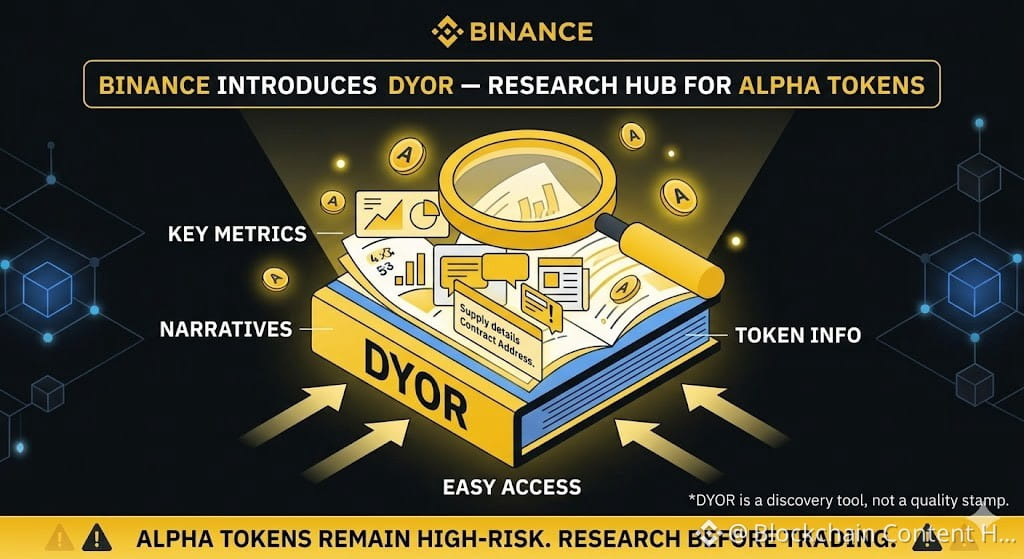
Binance представляет DYOR — Исследовательский хаб для Альфа токенов 🔍
Binance запустила DYOR, исследовательский хаб для Альфа токенов Binance, давая трейдерам быстрый доступ к ключевым метрикам, нарративам и информации о токенах в одном месте. Это инструмент для открытия — не печать качества. Альфа токены остаются высокорисковыми, поэтому проводите исследование перед торговлей.
#Binance #DYOR #BinanceAlpha #CryptoResearch
Binance запустила DYOR, исследовательский хаб для Альфа токенов Binance, давая трейдерам быстрый доступ к ключевым метрикам, нарративам и информации о токенах в одном месте. Это инструмент для открытия — не печать качества. Альфа токены остаются высокорисковыми, поэтому проводите исследование перед торговлей.
#Binance #DYOR #BinanceAlpha #CryptoResearch
📚 Как исследовать криптовалюты: базовый план комплексной проверки
2 июля 2026 года, когда на выбор доступно 17 422 криптовалюты, систематическая исследовательская рамка отделяет успешных инвесторов от спекулянтов.
Начните с основ: какую проблему решает этот проект? Есть ли у него рабочий продукт? Проверьте on-chain активность и коммиты разработчиков в GitHub. Оцените бэкграунд команды и токеномику — справедливо ли распределена эмиссия?
Сверяйте всё по нескольким источникам (CoinGecko, DeFi Llama, документация проекта, каналы сообщества). Если что-то выглядит слишком хорошо, чтобы быть правдой, скорее всего, так и есть.
📌 Главный вывод:
При наличии 17 422 монет систематическая исследовательская рамка — ваш самый важный инструмент: проверьте фундамент до того, как выделять капитал.
#DYOR #CryptoResearch
#BinanceAlphaAlert
2 июля 2026 года, когда на выбор доступно 17 422 криптовалюты, систематическая исследовательская рамка отделяет успешных инвесторов от спекулянтов.
Начните с основ: какую проблему решает этот проект? Есть ли у него рабочий продукт? Проверьте on-chain активность и коммиты разработчиков в GitHub. Оцените бэкграунд команды и токеномику — справедливо ли распределена эмиссия?
Сверяйте всё по нескольким источникам (CoinGecko, DeFi Llama, документация проекта, каналы сообщества). Если что-то выглядит слишком хорошо, чтобы быть правдой, скорее всего, так и есть.
📌 Главный вывод:
При наличии 17 422 монет систематическая исследовательская рамка — ваш самый важный инструмент: проверьте фундамент до того, как выделять капитал.
#DYOR #CryptoResearch
#BinanceAlphaAlert

Раньше я покупал монеты, не проводя надлежащего исследования. Некоторые из этих монет, например $APE $RE $SOL и многие другие монеты
Я полагался на ажиотаж, а не на понимание проекта.
Теперь я спрашиваю:
• Какую проблему решает этот проект?
• Активна ли команда?
• Есть ли реальное внедрение?
Сначала исследование. Затем решение.
#Binance #CryptoResearch #DYOR #CryptoEducation #Altcoins
Я полагался на ажиотаж, а не на понимание проекта.
Теперь я спрашиваю:
• Какую проблему решает этот проект?
• Активна ли команда?
• Есть ли реальное внедрение?
Сначала исследование. Затем решение.
#Binance #CryptoResearch #DYOR #CryptoEducation #Altcoins
In fundamental we trust!
88%
Long live gamble!
12%
8 проголосовали • Голосование закрыто
ПРОСТОЙ ЧЕК-ЛИСТ ИССЛЕДОВАНИЯ КРИПТОПРОЕКТА
Перед тем как исследовать любой проект, посмотрите на:
📌 Сайт
📌 Уайтпейпер
📌 Команда
📌 Технологии
📌 Токеномику
📌 रोडмап
📌 Партнёрства
📌 Безопасность
📌 Сообщество
📌 Риски
Никогда не оценивайте проект только по цене токена.
Токен за $0.001 не обязательно дешевле токена за $100.
Имеют значение рыночная капитализация и предложение.
Как вы думаете, криптопроекты с реальной полезностью со временем будут превосходить проекты, движимые в основном хайпом?
#CryptoResearch #Tokenomics #Blockchain #dyor
Перед тем как исследовать любой проект, посмотрите на:
📌 Сайт
📌 Уайтпейпер
📌 Команда
📌 Технологии
📌 Токеномику
📌 रोडмап
📌 Партнёрства
📌 Безопасность
📌 Сообщество
📌 Риски
Никогда не оценивайте проект только по цене токена.
Токен за $0.001 не обязательно дешевле токена за $100.
Имеют значение рыночная капитализация и предложение.
Как вы думаете, криптопроекты с реальной полезностью со временем будут превосходить проекты, движимые в основном хайпом?
#CryptoResearch #Tokenomics #Blockchain #dyor

БЫСТРАЯ ЭРОЗИЯ ИНФОРМАЦИОННОЙ АСИММЕТРИИ В КРИПТО-ИССЛЕДОВАНИЯХ ⚡
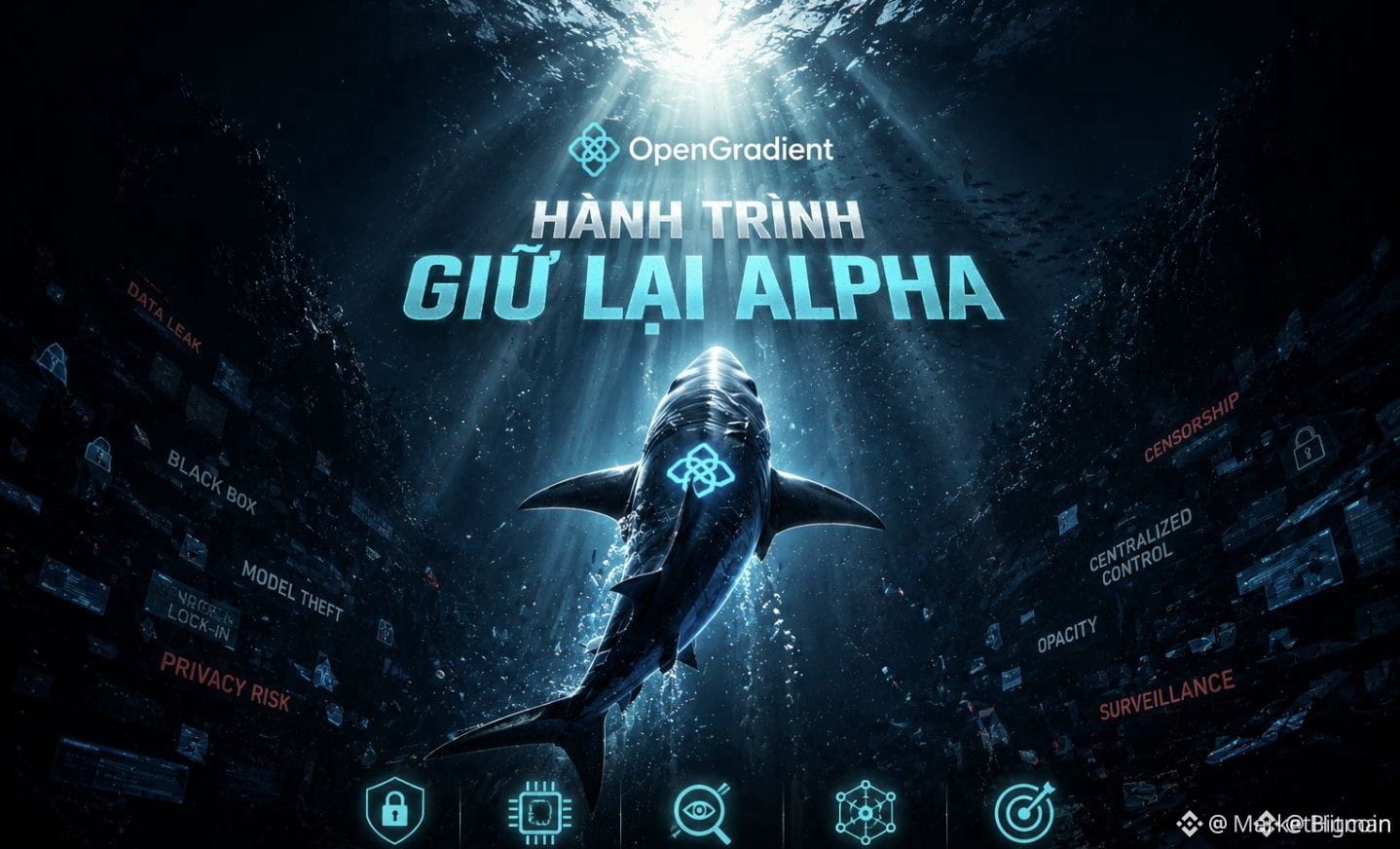
Традиционное преимущество в крипто опирается на информационную асимметрию, но ИИ стремительно делает этот выигрыш доступным всем. Когда вы загружаете собственный on-chain анализ в публичные модели, по сути вы обучаете систему воспроизводить вашу тезу для более широкого рынка. Этот структурный сдвиг означает, что ваш исследовательский процесс прямо сейчас превращается в товар, оставляя вашу «альфу» уязвимой перед теми самыми инструментами, которыми вы пользуетесь, чтобы её найти.
Чтобы сохранять конкурентное преимущество, теперь требуется строгая приватность в вашем исследовательском процессе. Инструменты, использующие среды доверенного выполнения (Trusted Execution Environments), гарантируют, что ваша рыночная теза остаётся только вашей. Как вы защищаете свою частную методологию исследований от превращения в публичные обучающие данные?
Это не финансовый совет. Всегда управляйте рисками.
#OPG #CryptoResearch #DataPrivacy #MarketStructure
🎯
Традиционное преимущество в крипто опирается на информационную асимметрию, но ИИ стремительно делает этот выигрыш доступным всем. Когда вы загружаете собственный on-chain анализ в публичные модели, по сути вы обучаете систему воспроизводить вашу тезу для более широкого рынка. Этот структурный сдвиг означает, что ваш исследовательский процесс прямо сейчас превращается в товар, оставляя вашу «альфу» уязвимой перед теми самыми инструментами, которыми вы пользуетесь, чтобы её найти.
Чтобы сохранять конкурентное преимущество, теперь требуется строгая приватность в вашем исследовательском процессе. Инструменты, использующие среды доверенного выполнения (Trusted Execution Environments), гарантируют, что ваша рыночная теза остаётся только вашей. Как вы защищаете свою частную методологию исследований от превращения в публичные обучающие данные?
Это не финансовый совет. Всегда управляйте рисками.
#OPG #CryptoResearch #DataPrivacy #MarketStructure
🎯
Войдите, чтобы посмотреть больше материала