
sardik12
2k Публикации
sardik12
Отправить жалобу
Заблокировать пользователя
Web3 Content Strategist Market Coverage, CMC KOL , Scaling crypto project for more exposure
Открытая сделка
Случайный трейдер
5.7 г
25 подписок(и/а)
2.9K+ подписчиков(а)
6.4K+ понравилось
Посты
Портфель
Все
Цитирования
Видео
PINNED
·
--
Is $XRP a good investment right now?
That depends on your strategy.
$XRP remains one of the biggest names in crypto, with growing institutional interest and continued development around the XRP Ledger. But like every asset, it still comes with market risk and volatility.
For me, it's less about chasing hype and more about watching adoption, utility, and price structure before making any move.
What's your outlook on $XRP this cycle?
55
1
132
392.2k
PINNED
·
--

Статья
BTC at $70k — This Is What the Chart Is Really SayingBTC just dipped hard and bounced back to around $70,348.
At first glance, it looks like recovery.
But zoom in… the story is more nuanced.
1️⃣ The bounce is reactive, not confident
Price is still below the MA60, which tells us the short-term trend hasn’t flipped bullish yet.
This bounce looks more like relief than strength.
2️⃣ Sellers showed up first
The drop came with strong red volume real selling pressure.
The bounce? Lower volume.
That usually means buyers are cautious, not aggressive.
3️⃣ Structure is still fragile
Lower highs are forming after the bounce.
This often leads to:
sideways consolidation, or
one more dip to grab liquidity before any real move up
Key levels that matter
Support: $70k–$69.5k
Resistance: $70.6k
Why: Actionable and saves traders time
Support: $70,000 → $69,500
If $70k fails: $69k–$68.5k becomes likely
Strength signal: Clean acceptance above $70,600
The lesson 👇
This is not a FOMO zone.
It’s a wait-for-confirmation zone.
Smart traders don’t predict, they react.
Question for you:
Are you buying strength… or waiting for the market to show its hand?
#BTC #Market_Update #TradingSignals
BTC at $70k — This Is What the Chart Is Really Saying
BTC just dipped hard and bounced back to around $70,348.
At first glance, it looks like recovery.
But zoom in… the story is more nuanced.
1️⃣ The bounce is reactive, not confident
Price is still below the MA60, which tells us the short-term trend hasn’t flipped bullish yet.
This bounce looks more like relief than strength.
2️⃣ Sellers showed up first
The drop came with strong red volume real selling pressure.
The bounce? Lower volume.
That usually means buyers are cautious, not aggressive.
3️⃣ Structure is still fragile
Lower highs are forming after the bounce.
This often leads to:
sideways consolidation, or
one more dip to grab liquidity before any real move up
Key levels that matter
Support: $70k–$69.5k
Resistance: $70.6k
Why: Actionable and saves traders time
Support: $70,000 → $69,500
If $70k fails: $69k–$68.5k becomes likely
Strength signal: Clean acceptance above $70,600
The lesson 👇
This is not a FOMO zone.
It’s a wait-for-confirmation zone.
Smart traders don’t predict, they react.
Question for you:
Are you buying strength… or waiting for the market to show its hand?
#BTC #Market_Update #TradingSignals
11
8
79
98.2k
·
--
Ethereum whales just moved 13,408 $ETH worth approximately $23.73 million.
Four wallets withdrew the assets from FalconX, Galaxy Digital and OKX, according to Lookonchain.
This is an interesting development, especially when large holders are making significant moves.
But I wouldn't automatically call it a bullish signal. Withdrawals can indicate accumulation, private custody or preparation for other on-chain activities.
What matters now is whether the movement develops into sustained holding and accumulation.
On-chain data gives us clues, not guarantees.
Do you think large holders are positioning ahead of Ethereum's next move?
#ETH #Ethereum
85
·
--
Can Anthropic’s $81.3B IPO become a turning point for $XRP ?
Ripple CEO Brad Garlinghouse believes the recent crypto sell-off is partly connected to investors moving capital into major IPOs, particularly Anthropic.
Anthropic raised approximately $81.3 billion at a $1.5 trillion valuation, making it one of the biggest IPOs in history.
His argument is interesting: when investors move money out of liquid assets like Bitcoin and $XRP to participate in major stock offerings, crypto can experience temporary selling pressure.
He also pointed to what happened after SpaceX went public, when crypto markets eventually recovered.
However, I think it's important not to overlook other factors, including inflation, interest-rate expectations and market liquidations.
The end of an IPO doesn't automatically mean money will flow back into crypto.
For XRP holders, the real question is whether buying pressure returns and market confidence improves.
Do you think $XRP could recover after the Anthropic IPO, or is the broader market weakness still a bigger concern?
1
101
·
--

Статья
Stablecoins Could Be the Bridge Between Web3 and Everyday FinanceFor a long time, much of the attention in crypto has focused on Bitcoin, altcoins, price movements and the next big opportunity.
But there is another development worth paying attention to: stablecoins.
Unlike most cryptocurrencies, stablecoins are designed to maintain a relatively stable value, often by tracking currencies such as the US dollar.
This simple idea could have a major impact on how people interact with money.
Why stablecoins matter beyond trading
Imagine a small business in Nigeria that needs to pay an international supplier.
Traditional international transfers can involve delays, multiple intermediaries and additional costs.
Stablecoins offer another possible route. With the right wallet and payment infrastructure, value can move across blockchain networks without relying entirely on traditional banking rails.
This doesn't mean stablecoins solve every payment problem. Network fees, liquidity, regulations and conversion into local currencies still matter.
However, they introduce another option worth exploring.
The numbers are becoming interesting
According to a CoinDesk report published in November 2026, stablecoin payment volume reached approximately $482 billion in the first nine months of 2026, representing a 45% increase.
What's interesting is that payment activity grew significantly even as stablecoin supply remained relatively flat.
That suggests existing stablecoins may be changing hands more frequently.
It is an important development because adoption should not only be measured by how many tokens exist, but also by how people actually use them.
What could drive the next stage?
I see three important areas:
1. Cross-border payments
People and businesses need faster, more accessible ways to move money internationally. Stablecoins could help improve this experience.
2. DeFi accessibility
Stablecoins provide a relatively predictable unit of value for lending, borrowing, liquidity provision and other decentralized financial activities.
3. Real-world financial integration
For stablecoins to achieve broader adoption, wallets, payment providers, merchants and regulated financial institutions need to make them easier and safer to use.
The challenges cannot be ignored
Adoption is not guaranteed.
Stablecoins still face regulatory uncertainty, smart contract risks, custody concerns and questions about the quality of their reserves.
A stablecoin is only as trustworthy as the infrastructure and assets supporting it.
Users also need to understand the difference between holding a stablecoin and holding actual money in a bank account.
My perspective
I believe the next major stage of Web3 growth may not be driven by another wave of speculative tokens.
It could come from blockchain applications that quietly solve everyday problems.
When people can send money, make payments, access financial services and manage digital assets without needing to understand every technical detail behind blockchain, adoption becomes much more practical.
That is the kind of progress worth watching.
What do you think will bring the next wave of Web3 adoption: stablecoin payments, tokenized real-world assets, DeFi, or something we haven't seen yet?
#Web3 #Stablecoins #Blockchain #BinanceSquare
$DAIO.US $USDT
Stablecoins Could Be the Bridge Between Web3 and Everyday Finance
For a long time, much of the attention in crypto has focused on Bitcoin, altcoins, price movements and the next big opportunity.
But there is another development worth paying attention to: stablecoins.
Unlike most cryptocurrencies, stablecoins are designed to maintain a relatively stable value, often by tracking currencies such as the US dollar.
This simple idea could have a major impact on how people interact with money.
Why stablecoins matter beyond trading
Imagine a small business in Nigeria that needs to pay an international supplier.
Traditional international transfers can involve delays, multiple intermediaries and additional costs.
Stablecoins offer another possible route. With the right wallet and payment infrastructure, value can move across blockchain networks without relying entirely on traditional banking rails.
This doesn't mean stablecoins solve every payment problem. Network fees, liquidity, regulations and conversion into local currencies still matter.
However, they introduce another option worth exploring.
The numbers are becoming interesting
According to a CoinDesk report published in November 2026, stablecoin payment volume reached approximately $482 billion in the first nine months of 2026, representing a 45% increase.
What's interesting is that payment activity grew significantly even as stablecoin supply remained relatively flat.
That suggests existing stablecoins may be changing hands more frequently.
It is an important development because adoption should not only be measured by how many tokens exist, but also by how people actually use them.
What could drive the next stage?
I see three important areas:
1. Cross-border payments
People and businesses need faster, more accessible ways to move money internationally. Stablecoins could help improve this experience.
2. DeFi accessibility
Stablecoins provide a relatively predictable unit of value for lending, borrowing, liquidity provision and other decentralized financial activities.
3. Real-world financial integration
For stablecoins to achieve broader adoption, wallets, payment providers, merchants and regulated financial institutions need to make them easier and safer to use.
The challenges cannot be ignored
Adoption is not guaranteed.
Stablecoins still face regulatory uncertainty, smart contract risks, custody concerns and questions about the quality of their reserves.
A stablecoin is only as trustworthy as the infrastructure and assets supporting it.
Users also need to understand the difference between holding a stablecoin and holding actual money in a bank account.
My perspective
I believe the next major stage of Web3 growth may not be driven by another wave of speculative tokens.
It could come from blockchain applications that quietly solve everyday problems.
When people can send money, make payments, access financial services and manage digital assets without needing to understand every technical detail behind blockchain, adoption becomes much more practical.
That is the kind of progress worth watching.
What do you think will bring the next wave of Web3 adoption: stablecoin payments, tokenized real-world assets, DeFi, or something we haven't seen yet?
#Web3 #Stablecoins #Blockchain #BinanceSquare
$DAIO.US $USDT
DAIOUS+1,27%
1
94
·
--
$XRP Ledger: Should Network Stability Come Before New Features?
A disagreement over XRP Ledger's proposed lending amendments is raising questions about the network's development priorities.
XRPL validator Daniel Keller has refused to support certain amendments, citing concerns about existing network issues and what he considers unfulfilled promises from Ripple.
My take: New features can create more opportunities for an ecosystem, but they also need a reliable foundation.
For $XRP Ledger, introducing lending capabilities could expand its use cases. However, addressing performance concerns and maintaining validator confidence should remain priorities.
More features don't automatically mean better technology. What matters is whether the network can support them reliably.
What's your view? Should XRPL focus on fixing existing issues before introducing new features?
#XRP #XRPL #Crypto
176
·
--
Проверено
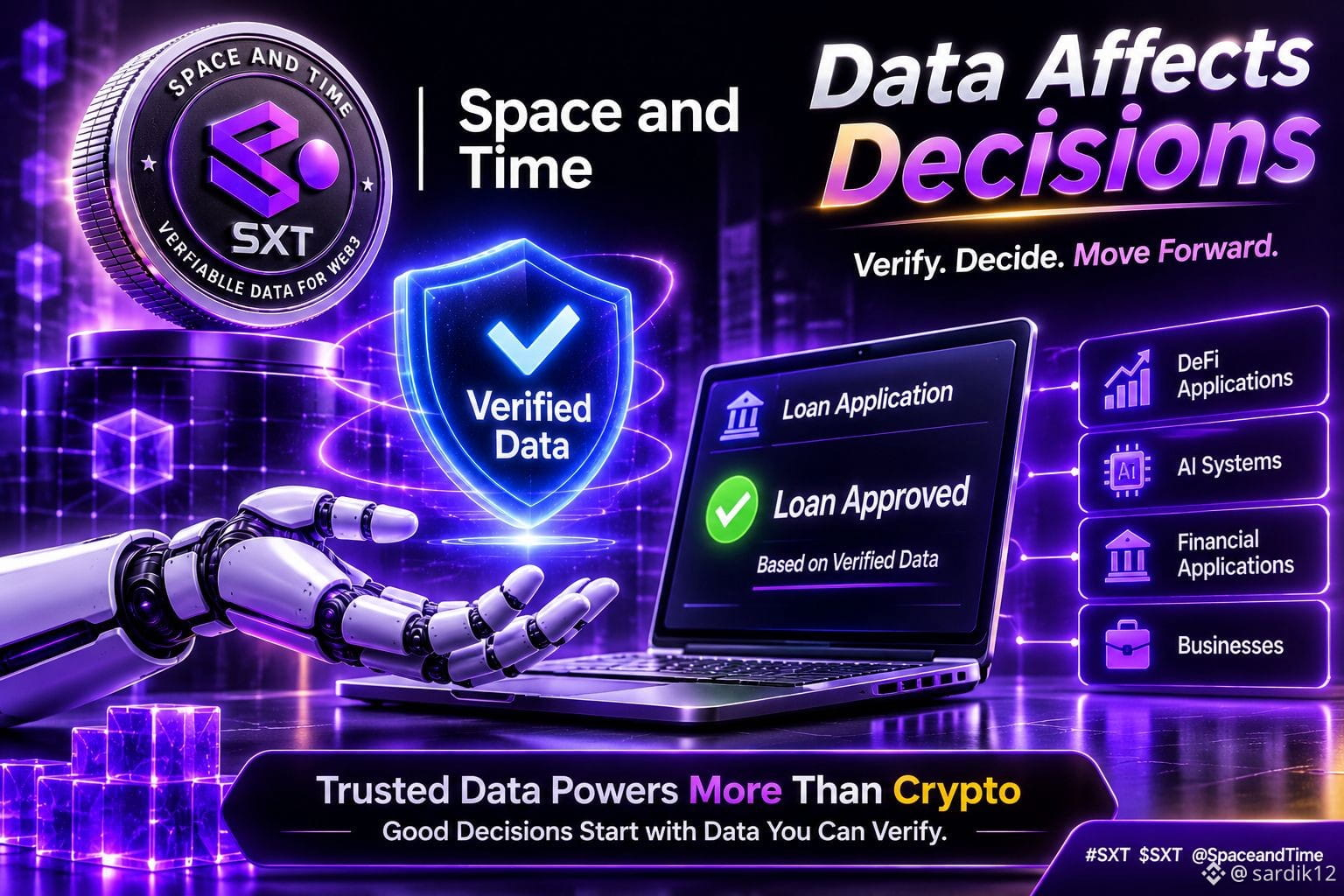
Data affects decisions
Imagine a lending application checking someone's collateral before approving a loan.
If the information it receives is inaccurate, the decision could create problems for the entire protocol.
Space and Time is building infrastructure that allows applications to verify data and calculations using zero-knowledge proofs.
This is useful beyond crypto too. AI systems, financial applications and businesses all depend on reliable information.
Good decisions start with data you can verify.
#SXT $SXT @SpaceandTimeDB
Data affects decisions
Imagine a lending application checking someone's collateral before approving a loan.
If the information it receives is inaccurate, the decision could create problems for the entire protocol.
Space and Time is building infrastructure that allows applications to verify data and calculations using zero-knowledge proofs.
This is useful beyond crypto too. AI systems, financial applications and businesses all depend on reliable information.
Good decisions start with data you can verify.
#SXT $SXT @SpaceandTime
2
9
9k
·
--
Bitcoin Below $68K: Why I'm Not Rushing to Call a Bottom
Bitcoin's recent decline is a reminder that market recoveries need more than temporary buying pressure.
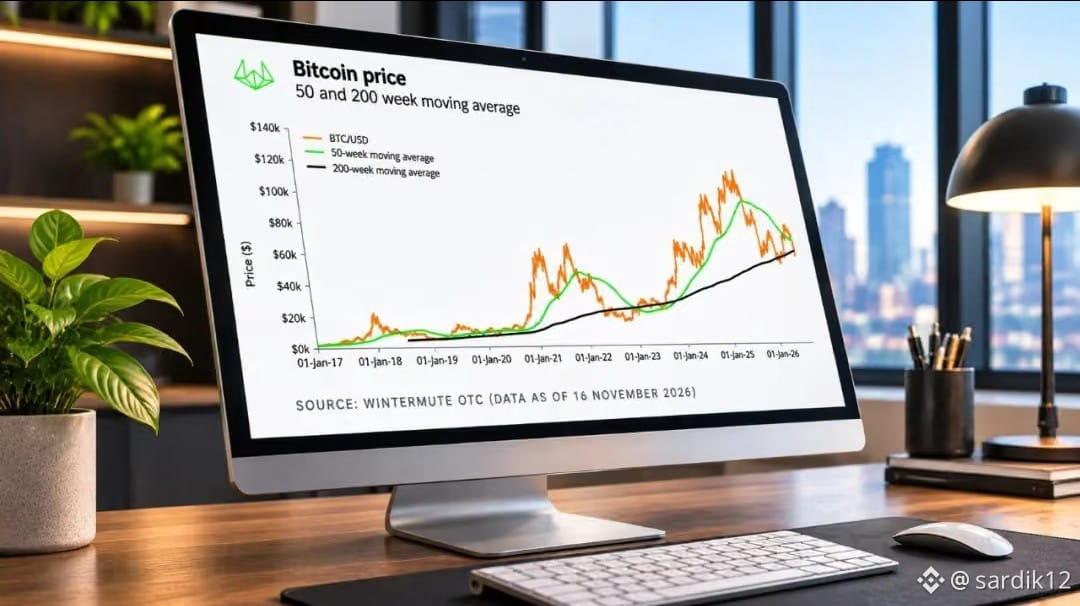
Wintermute has warned that $BTC could test $62K and potentially $60K as ETF outflows, rising interest rate expectations and leveraged liquidations continue to weigh on the market.
One level I'm paying attention to is $68K, Bitcoin's 200-week moving average.
For a stronger recovery, I want to see $BTC reclaim that level with improving buying demand, not just a quick price bounce.
My approach is to avoid chasing either direction. I'd rather wait for confirmation than make decisions based on fear or excitement.
What are you watching more closely right now: $60K support or a recovery above $68K?
#Bitcoin #BTC #CryptoTrading
177
·
--
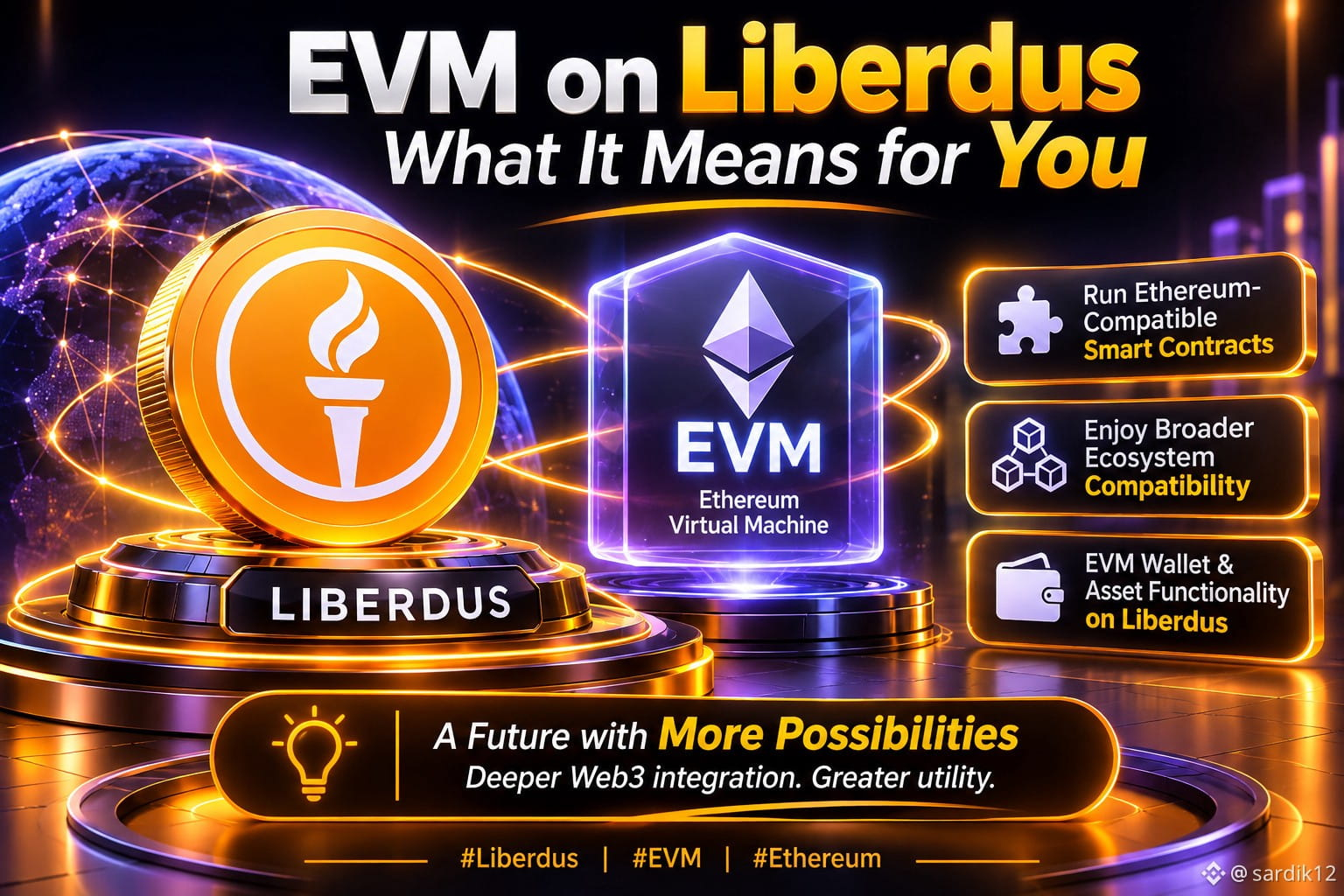
Why does EVM compatibility matter to Web3 users?
EVM allows Ethereum-compatible smart contracts to run, helping developers connect applications to a wider ecosystem.
Liberdus plans to introduce EVM wallet and asset functionality.
This could give users more ways to interact with digital assets while bringing communication and asset management closer together.
The real value will depend on how well these features work in practice.
#Liberdus #EVM #Ethereum #Web3
$FF $ETH
1
252
·
--
Проверено
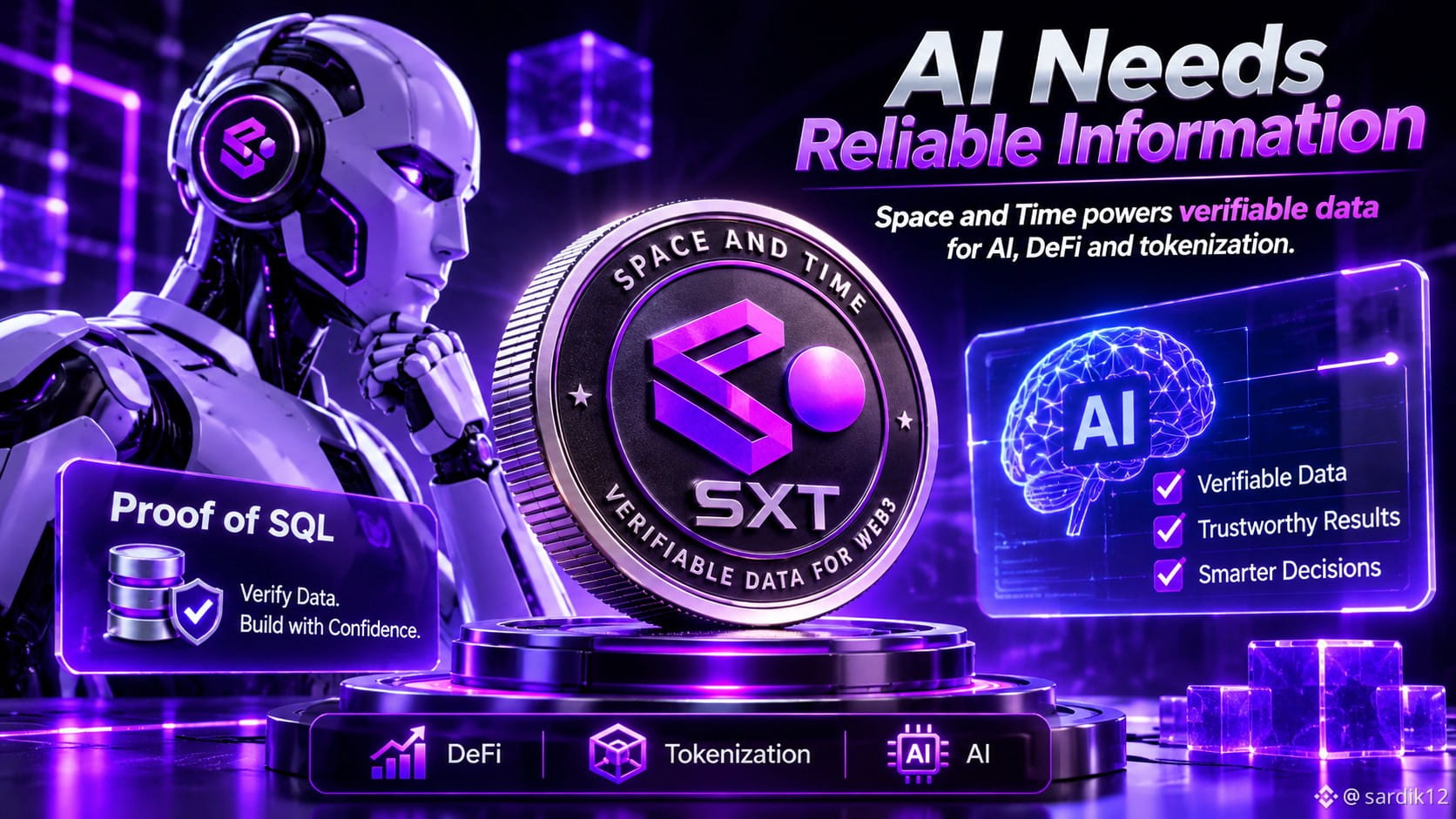
AI needs reliable information
AI can process huge amounts of information, but how do we know the data behind its answers is correct?
This is where Space and Time becomes interesting. Its Proof of SQL technology allows applications to verify that database queries were correctly executed against data that hasn't been tampered with.
As AI becomes more involved in financial decisions and business operations, reliable data will matter just as much as intelligent models.
That's an important problem Space and Time is working to solve.
#SXT $SXT @SpaceandTimeDB
AI needs reliable information
AI can process huge amounts of information, but how do we know the data behind its answers is correct?
This is where Space and Time becomes interesting. Its Proof of SQL technology allows applications to verify that database queries were correctly executed against data that hasn't been tampered with.
As AI becomes more involved in financial decisions and business operations, reliable data will matter just as much as intelligent models.
That's an important problem Space and Time is working to solve.
#SXT $SXT @SpaceandTime
1
3.2k
·
--
$XRP : Can Holding $0.78 Open the Road to $3.50?
$XRP is facing a difficult correction, but its long-term chart still has an interesting possibility.
According to analyst Ali Martinez, $XRP has been forming a large ascending triangle on its weekly chart since 2017.
His analysis suggests that XRP could drop toward $0.78 before attempting a stronger recovery.
If buyers defend that level, the next major resistance to watch is $3.50. A breakout above it could open the door to an even more ambitious $18 target.
However, these are projected levels, not guaranteed outcomes.
For now, I'm more interested in whether XRP can find support and rebuild bullish momentum than chasing distant price targets.
My key levels:
$0.78 – Potential support
$3.50 – Major resistance
$18 – Long-term breakout projection
Would you consider accumulating XRP around $0.78, or do you think more downside is coming?
#XRP #Ripple #Crypto
1
1
1k
·
--
Strategy Keeps Buying Bitcoin Despite a $9.61 Billion Unrealized Loss
Strategy isn't slowing down its Bitcoin accumulation, even as the market moves against its position.
The company recently purchased another 485 $BTC for approximately $33.4 million, bringing its total holdings to 850,849 BTC.
But there's a challenge.
Strategy's average purchase price is around $75,452 per $BTC , while Bitcoin was trading near $64,154 when the report was published.
That puts its Bitcoin treasury approximately $9.61 billion underwater on paper.
What's interesting is that Strategy continues buying despite the growing unrealized loss. It also reported around $4.75 billion in dollar reserves.
This raises an important question about its long-term conviction and financial strategy.
Buying during a downturn can be a sign of confidence, but it also increases exposure if prices continue falling.
The real test is whether Bitcoin can recover above Strategy's average acquisition price.
Do you think Strategy's continued accumulation is a smart long-term move, or is the company taking too much risk?
#Bitcoin #BTC #Strategy
1
457
·
--
Web3 Needs Better Connections, Not Just More Applications.
One challenge with Web3 is that users still have to move between different applications to communicate, manage assets and complete transactions.
This creates unnecessary friction.
That's why interoperability matters.
Liberdus is preparing EVM wallet and asset functionality, which could make it easier to connect its ecosystem with Ethereum-compatible applications and digital assets.
But the real test isn't simply adding another wallet. It's making these connections useful and easy to navigate.
If users can interact with different applications and assets without unnecessary complications, that would be a meaningful improvement.
Web3 needs applications that work together, not isolated services.
#Liberdus #Web3 #EVM
$DELLB $KITE

1
133
·
--
Проверено
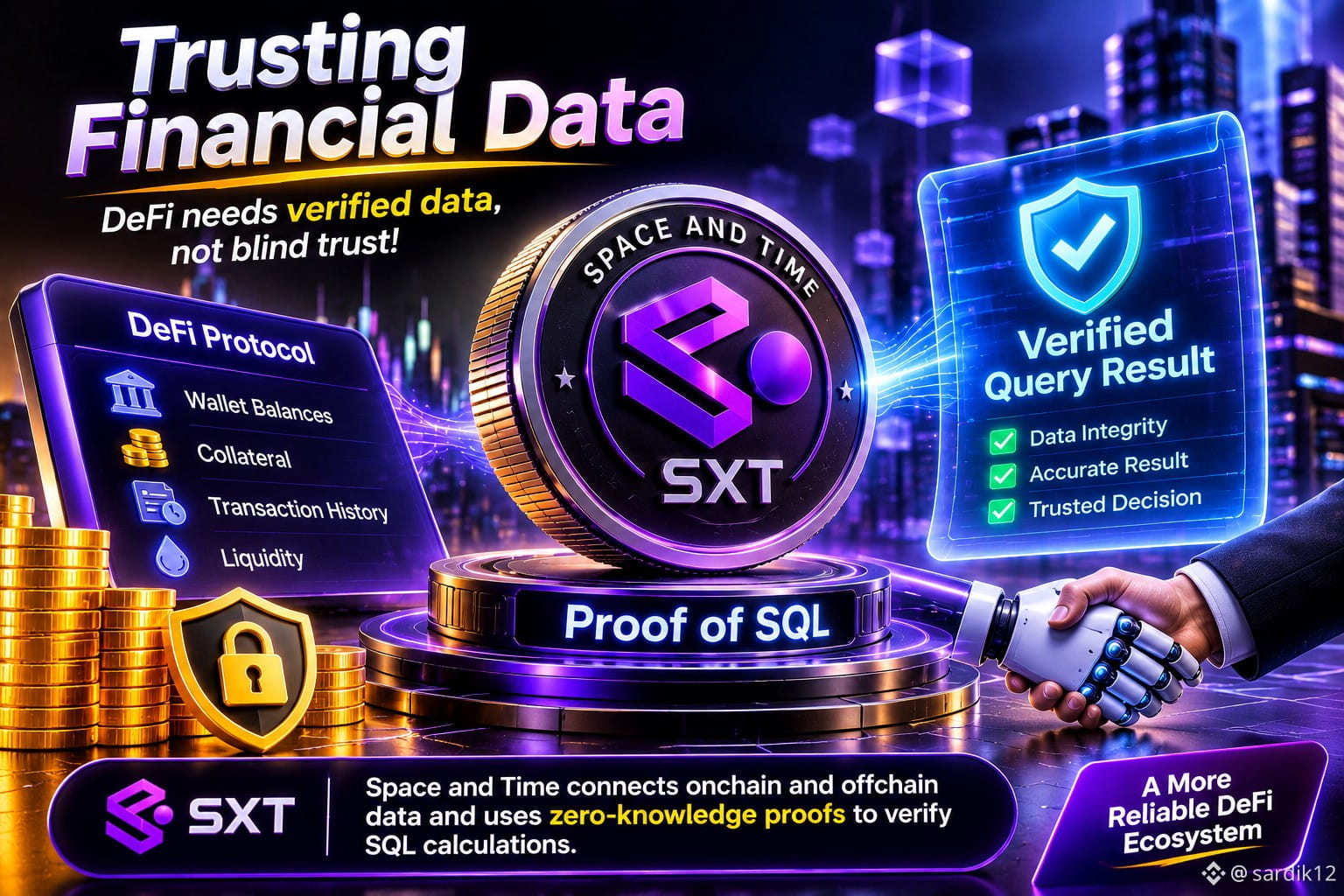
Trusting financial data
DeFi protocols make decisions using data such as wallet balances, collateral, transaction history and liquidity.
But what happens when the information behind those decisions is wrong?
Space and Time approaches this problem with Proof of SQL. It allows smart contracts and applications to verify query results instead of simply trusting a database provider.
For lending and other financial applications, that extra layer of verification could make a real difference.
#SXT $SXT @SpaceandTimeDB
Trusting financial data
DeFi protocols make decisions using data such as wallet balances, collateral, transaction history and liquidity.
But what happens when the information behind those decisions is wrong?
Space and Time approaches this problem with Proof of SQL. It allows smart contracts and applications to verify query results instead of simply trusting a database provider.
For lending and other financial applications, that extra layer of verification could make a real difference.
#SXT $SXT @SpaceandTime
2
3
3.5k
·
--
$ADA is down nearly 95% from its ATH. Is a recovery still possible?
Cardano has experienced a painful decline since reaching $3.09 in September 2021.
But Charles Hoskinson still believes $ADA can rebound.
I think the bigger issue is what will drive that recovery.
For ADA to regain strength, Cardano needs more than market optimism. It needs stronger DeFi activity, real network usage, developer growth and increased demand for its ecosystem.
A price recovery is possible, but it needs fundamentals to support it.
I am watching whether Cardano can turn its existing technology and community into stronger ecosystem activity.
Would you consider $ADA at these levels, or wait for clear signs of recovery?
#Cardano #ADA #Crypto
{spot}(ADAUSDT)
$ADA is down nearly 95% from its ATH. Is a recovery still possible?
Cardano has experienced a painful decline since reaching $3.09 in September 2021.
But Charles Hoskinson still believes $ADA can rebound.
I think the bigger issue is what will drive that recovery.
For ADA to regain strength, Cardano needs more than market optimism. It needs stronger DeFi activity, real network usage, developer growth and increased demand for its ecosystem.
A price recovery is possible, but it needs fundamentals to support it.
I am watching whether Cardano can turn its existing technology and community into stronger ecosystem activity.
Would you consider $ADA at these levels, or wait for clear signs of recovery?
#Cardano #ADA #Crypto
519
·
--
$HYPE is facing an important test around $70. Can buyers defend it?
Hyperliquid has continued expanding its trading ecosystem, but its token price has recently struggled to maintain momentum.
There are two levels I'm watching:
📍 $70.40–$70.60: Nearby support. A breakdown could expose HYPE to further selling.
📍 $72.50–$74.40: Resistance. A strong reclaim could give buyers a chance to build momentum.
What makes $HYPE
interesting is the activity behind the project. Hyperliquid recorded $730.1 billion in Q3 trading volume, according to Bitwise.
My trading approach: I wouldn't rush into a position here. I'd rather see buyers defend support and reclaim resistance with convincing volume before considering a long entry.
A clean breakdown below support would weaken that setup.
I'm watching the price reaction rather than trying to predict the next move.
Would you consider $HYPE at these levels, or wait for stronger confirmation?
#HYPE #Hyperliquid #CryptoTrading
{spot}(HYPEUSDT)
$HYPE is facing an important test around $70. Can buyers defend it?
Hyperliquid has continued expanding its trading ecosystem, but its token price has recently struggled to maintain momentum.
There are two levels I'm watching:
📍 $70.40–$70.60: Nearby support. A breakdown could expose HYPE to further selling.
📍 $72.50–$74.40: Resistance. A strong reclaim could give buyers a chance to build momentum.
What makes $HYPE
interesting is the activity behind the project. Hyperliquid recorded $730.1 billion in Q3 trading volume, according to Bitwise.
My trading approach: I wouldn't rush into a position here. I'd rather see buyers defend support and reclaim resistance with convincing volume before considering a long entry.
A clean breakdown below support would weaken that setup.
I'm watching the price reaction rather than trying to predict the next move.
Would you consider $HYPE at these levels, or wait for stronger confirmation?
#HYPE #Hyperliquid #CryptoTrading
391
·
--
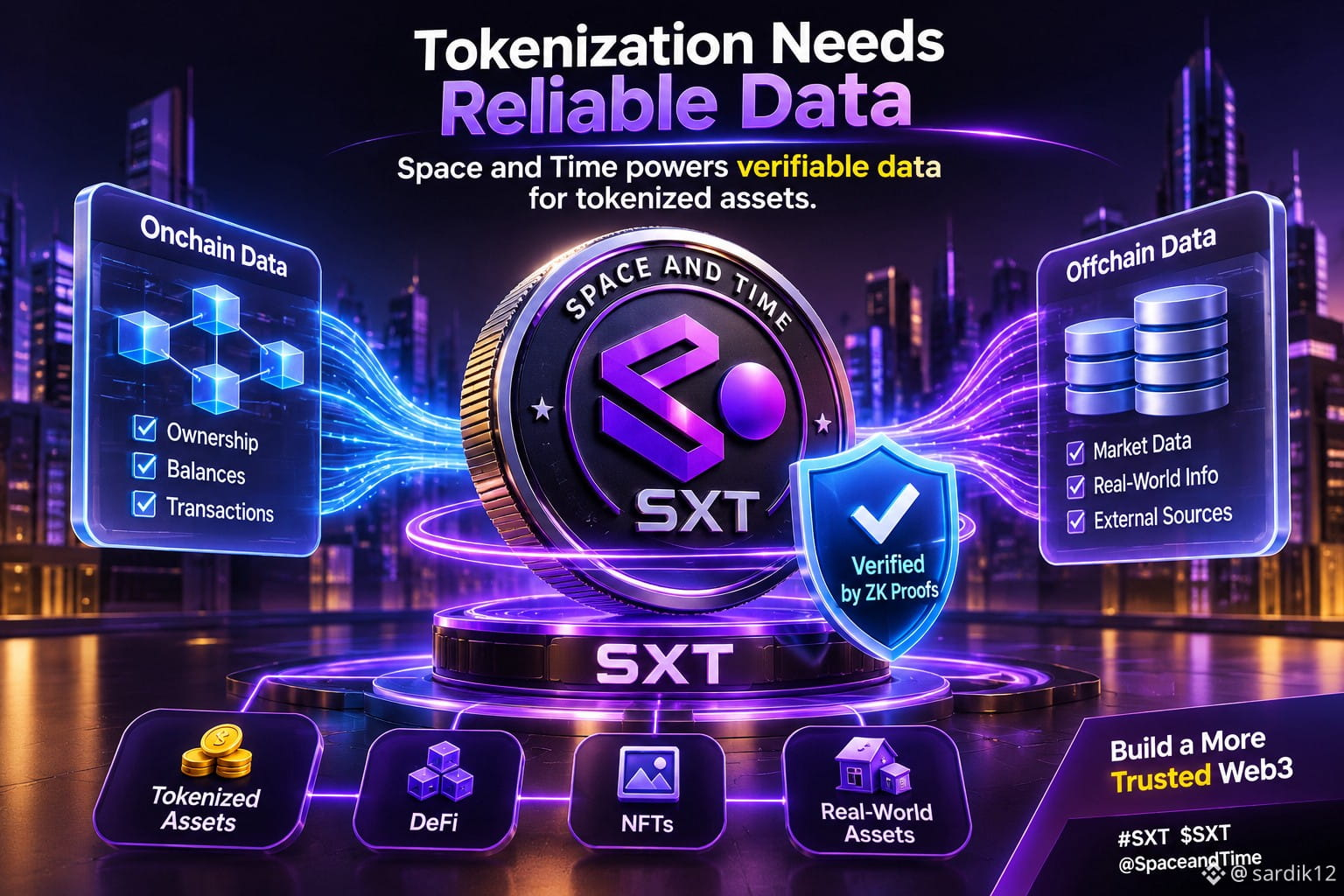
Digital assets need reliable data
Tokenizing an asset is only part of the process. The applications managing it also need accurate information about ownership, balances and transactions.
This is where verifiable data becomes important.
Space and Time connects onchain and offchain data and uses zero-knowledge proofs to verify SQL calculations. This could help tokenized asset applications make decisions using information that can actually be checked.
Infrastructure like this will matter as tokenization expands.
#SXT $SXT @SpaceandTimeDB
Digital assets need reliable data
Tokenizing an asset is only part of the process. The applications managing it also need accurate information about ownership, balances and transactions.
This is where verifiable data becomes important.
Space and Time connects onchain and offchain data and uses zero-knowledge proofs to verify SQL calculations. This could help tokenized asset applications make decisions using information that can actually be checked.
Infrastructure like this will matter as tokenization expands.
#SXT $SXT @SpaceandTime
1
781
·
--
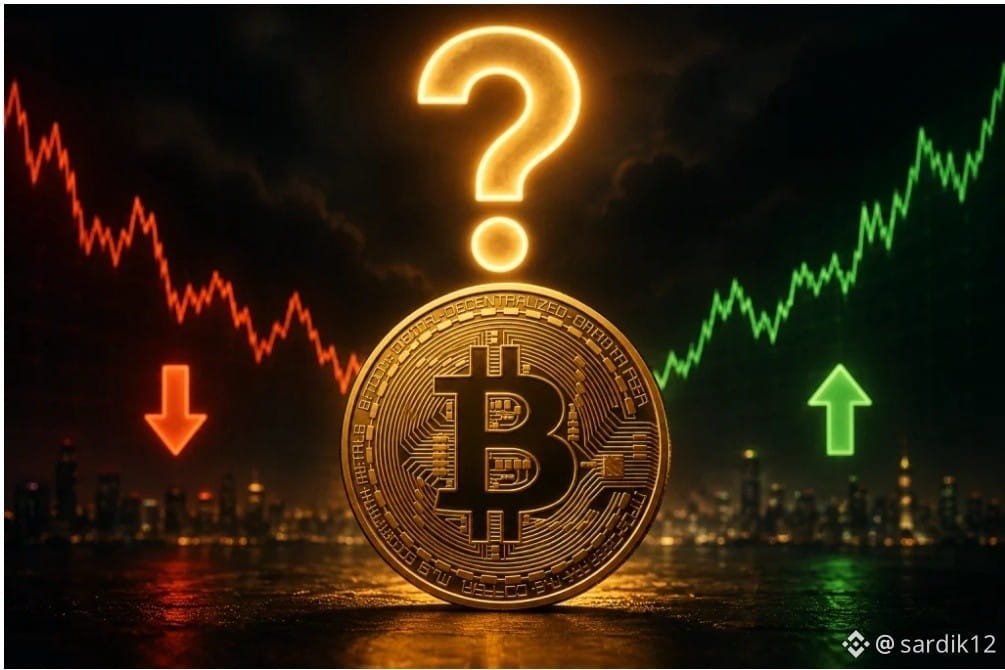
$BTC : Is the bull market losing strength?
Bitcoin's recent weakness puts two levels on my watchlist:
$64,200: Important support for the bullish outlook.
$57,700: Possible downside target if selling pressure continues.
I am not calling for a crash, but ignoring weakening momentum would be a mistake.
For now, I would rather wait for $BTC to defend support or reclaim resistance before considering a direction.
No need to chase a move without confirmation.
Would you buy a dip here or wait for a stronger recovery?
#Bitcoin #BTC
188
·
--
A DAO is not truly community-driven just because members can vote.
The real test is whether they can submit proposals, influence decisions, and hold the process accountable.
As Liberdus prepares its DAO features for testnet, governance is worth watching.
Voting is important, but community influence matters more.
What makes a DAO trustworthy to you?
#Liberdus #DAO #Governance
$SPCXB $HYPE

317
·
--
Проверено
What is Proof of SQL?
Not everyone understands why Space and Time uses zero-knowledge proofs.
Think of a database returning an answer to a question. Normally, you have to trust that the database calculated it correctly.
Proof of SQL changes that relationship. It generates cryptographic proof that the query was executed correctly against data that hasn't been manipulated.
Instead of simply receiving an answer, applications can verify it.
That's the interesting part of Space and Time.
#SXT $SXT @SpaceandTimeDB
What is Proof of SQL?
Not everyone understands why Space and Time uses zero-knowledge proofs.
Think of a database returning an answer to a question. Normally, you have to trust that the database calculated it correctly.
Proof of SQL changes that relationship. It generates cryptographic proof that the query was executed correctly against data that hasn't been manipulated.
Instead of simply receiving an answer, applications can verify it.
That's the interesting part of Space and Time.
#SXT $SXT @SpaceandTime
1
13
8.3k
Войдите, чтобы посмотреть больше материала
Присоединяйтесь к пользователям криптовалют по всему миру на Binance Square
⚡️ Получайте новейшую и полезную информацию о криптоактивах.
💬 Нам доверяет крупнейшая в мире криптобиржа.
👍 Получите достоверные аналитические данные от верифицированных создателей контента.
Эл. почта/номер телефона
В тренде
IsAnthropic’s$1.5TMarketCapJustified?
Просмотров: 7,455
68 обсуждают
Anthropic Set to Open at $105 in Record Nasdaq Debut
Binance News
·Лайков: 10
·Просмотров: 9.5k
BTCRemainsUnderPressureAfterHawkishFOMCMinutes
Просмотров: 207,954
1,985 обсуждают
NvidiaBoardReportedlySplitOverHuang’sReturn
Просмотров: 101,286
1,065 обсуждают