
carro_t
4 Публикации

carro_t
Отправить жалобу
Заблокировать пользователя
2 подписок(и/а)
0 подписчиков(а)
0 понравилось
Посты
·
--
Статья
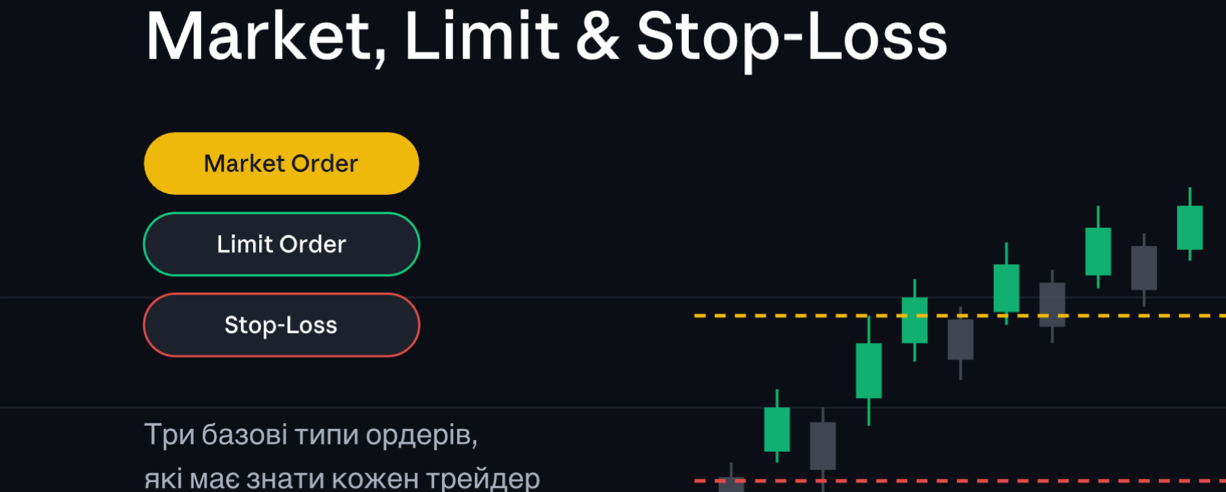
What Are Market Orders, Limit Orders, and Stop-Loss?Market Order, Limit Order, and Stop-Loss are three terms every crypto beginner should understand.
If you have ever opened Binance and seen buttons like Buy, Sell, Limit, Market, and Stop-Loss and thought:
“Wait… what exactly am I supposed to click?”
Don’t worry.
In this guide, we’ll break everything down in simple language — no complicated trading terminology and no unnecessary theory.
By the end, you’ll understand the difference between Market and Limit Orders, how Stop-Loss works, and why choosing the wrong order type can cost you money.
First: What Is an Order?
An order is basically an instruction you give an exchange to buy or sell an asset under certain conditions.
For example, you might say:
“Buy Bitcoin for me right now.”
That’s a Market Order.
Or:
“Buy Bitcoin only if the price drops to $95,000.”
That’s a Limit Order.
Or:
“If Bitcoin drops to a certain level, sell my position to limit my potential loss.”
That’s the basic idea behind a Stop-Loss.
So the difference is actually quite simple.
🟢 1. Market Order — “Buy It Now”
A Market Order tells the exchange to buy or sell an asset as quickly as possible at the best available market price.
Imagine Bitcoin is currently trading around:
$100,000
You select:
Buy → Market
You are essentially telling the exchange:
“I want to buy now. The exact price is less important than getting the order executed.”
The exchange matches your order with available orders in the market.
The main advantage?
⚡ Speed.
You don't have to wait for Bitcoin to reach a specific price.
But there is an important detail.
The final execution price may not be exactly the price you see on your screen.
During periods of high volatility or low liquidity, you can experience slippage — the difference between the expected price and the actual execution price.
So remember:
Market = “I want execution now.”
🔵 2. Limit Order — “Buy It, But Only at My Price”
Now imagine Bitcoin is trading at:
$100,000
But you only want to buy if the price drops to:
$95,000
You could place a:
Limit Buy → $95,000
Now the exchange waits.
If the market reaches your specified price, your order may be executed.
But what if Bitcoin goes:
$100K → $105K → $110K?
Your $95,000 order may simply remain unfilled.
That’s because a Limit Order gives you price control, but execution is not guaranteed.
So:
Limit = “I’m willing to wait for my price.”
🟠 Market vs. Limit
Here’s the easiest way to remember the difference:
Market OrderLimit OrderExecutionAs quickly as possibleOnly when conditions are metPriceBest available market priceYou specify the pricePrice control❌ Lower✅ HigherExecution guaranteed?Generally prioritized for execution❌ NoBest forImmediate tradesTargeting a specific price
In one sentence:
Want to trade now? → Market.
Want a specific price? → Limit.
🔴 3. Stop-Loss — Your “Emergency Exit”
Now we get to one of the most important concepts in trading:
Stop-Loss.
Imagine you bought Bitcoin at:
$100,000
You don't want to sit in front of the chart all day.
But you also don't want to wake up tomorrow and discover Bitcoin has dropped dramatically.
So you can define a price level where you want to exit the position if the market moves against you.
For example:
Stop-Loss = $95,000
If the relevant trigger condition is reached, the system can activate the order according to the type of stop order you selected.
In simple terms:
Stop-Loss = “If the market moves against me to this level, get me out.”
The purpose isn't to guarantee a profit.
It's to help you manage risk.
⚠️ Important: Stop-Loss Doesn't Guarantee Your Exact Exit Price
This is one of the biggest things beginners misunderstand.
Imagine you set a Stop-Loss at:
$95,000
But the market suddenly moves:
$96K → $94K → $92K
Depending on the order type and market conditions, your actual execution price can differ from your stop level.
This is particularly important with stop-market orders because once triggered, they become market orders.
So:
Stop-Loss is a risk-management tool — not a guarantee of a specific execution price.
🧠 Stop-Market vs. Stop-Limit
This is where things can get confusing.
Stop-Market
You define a:
Stop Price
When the trigger is reached, a Market Order is activated.
The focus is:
“Get the order into the market.”
But the exact execution price isn't guaranteed.
Stop-Limit
Here you have two prices:
Stop Price → Limit Price
When the stop price is reached, a Limit Order is placed.
For example:
Stop Price: $95,000
Limit Price: $94,500
If the stop is triggered, a Limit Order is placed at the specified limit price.
This gives you more control over the price, but introduces another risk:
If the market moves below your limit price too quickly, the order may not be filled.
So:
Stop-Market → greater focus on execution.
Stop-Limit → greater price control, but potentially greater risk of non-execution.
📊 Let's Look at a Simple Example
Imagine you buy Bitcoin at:
Entry: $100,000
You decide:
Take Profit: $110,000
Stop-Loss: $95,000
Now there are two basic scenarios.
🚀 Scenario #1 — Bitcoin Goes Up
$100K → $103K → $107K → $110K
You reach your target and can choose to take profit.
📉 Scenario #2 — Bitcoin Goes Down
$100K → $98K → $96K → $95K
Your Stop-Loss level is reached.
Your predefined exit mechanism is triggered.
You may take a loss — but the entire purpose of the Stop-Loss was to avoid allowing a potentially larger loss to continue unchecked.
❌ 5 Mistakes Beginners Make
1. Using Market Orders Without Understanding Them
Market doesn't mean:
“Buy exactly at the price I see.”
It means:
“Execute my order using the available market liquidity.”
2. Thinking Every Limit Order Will Be Filled
It won't.
If the market never reaches your specified price, your order may remain unfilled.
3. Assuming Stop-Loss Guarantees an Exact Price
It doesn't.
Fast-moving markets can cause the actual execution price to differ from your stop level.
4. Setting Stop-Loss Randomly
There is no universal rule like:
“Always set your Stop-Loss at -5%.”
The appropriate level depends on the asset, volatility, strategy, and how much risk you're willing to accept.
5. Jumping Straight Into Futures
This is especially important for beginners.
Leverage can magnify both gains and losses.
Before experimenting with Futures, make sure you actually understand basic Spot trading, order types, and risk management.
🎯 Which Order Should You Use?
Here's your cheat sheet:
I want to buy or sell immediately:
→ MARKET
I want to buy or sell at a specific price:
→ LIMIT
I want to automatically exit if the market moves against me:
→ STOP-LOSS
I want to control both the trigger and the execution price:
→ STOP-LIMIT
Easy, right?
💡 Quick Quiz
Let's see if you really understood it.
Bitcoin is currently trading at:
$100,000
You want to buy Bitcoin only if the price drops to $95,000.
Which order would you use?
A. Market
B. Limit
C. Stop-Loss
D. Futures
👇 Drop your answer in the comments.
Now here's the second question:
You bought BTC at $100,000 and want to automatically exit if the market moves below a certain level.
Which tool would you use?
A, B, C, or D?
Let's see how many people can get both answers right. 👀
🔥 The Most Important Rule
Trading isn't just about knowing:
“When should I buy?”
It's also about knowing:
What price am I willing to pay?
When will I take profit?
Where will I exit if I'm wrong?
How much am I willing to lose?
That's exactly why different order types exist.
Market gives you speed.
Limit gives you price control.
Stop-Loss helps you manage risk.
And the better you understand these tools, the less likely you are to make an expensive mistake when the market suddenly moves.
🚀 Want to Learn Binance Step by Step?
Follow this profile if you're learning crypto from the ground up.
Next, we can break down:
OCO Orders
Take Profit
Trailing Stop
Order Book
Spread
Slippage
and the other Binance tools that beginners often see but don't fully understand.
And now it's your turn:
👇 Which order do you use more often — Market or Limit?
If you're completely new to crypto, comment:
“BEGINNER”
Let's see how many beginners are here. 👇
#market_tips #Binance #TradingCommunity #TradingSignals #TradeSignal
What Are Market Orders, Limit Orders, and Stop-Loss?
Market Order, Limit Order, and Stop-Loss are three terms every crypto beginner should understand.
If you have ever opened Binance and seen buttons like Buy, Sell, Limit, Market, and Stop-Loss and thought:
“Wait… what exactly am I supposed to click?”
Don’t worry.
In this guide, we’ll break everything down in simple language — no complicated trading terminology and no unnecessary theory.
By the end, you’ll understand the difference between Market and Limit Orders, how Stop-Loss works, and why choosing the wrong order type can cost you money.
First: What Is an Order?
An order is basically an instruction you give an exchange to buy or sell an asset under certain conditions.
For example, you might say:
“Buy Bitcoin for me right now.”
That’s a Market Order.
Or:
“Buy Bitcoin only if the price drops to $95,000.”
That’s a Limit Order.
Or:
“If Bitcoin drops to a certain level, sell my position to limit my potential loss.”
That’s the basic idea behind a Stop-Loss.
So the difference is actually quite simple.
🟢 1. Market Order — “Buy It Now”
A Market Order tells the exchange to buy or sell an asset as quickly as possible at the best available market price.
Imagine Bitcoin is currently trading around:
$100,000
You select:
Buy → Market
You are essentially telling the exchange:
“I want to buy now. The exact price is less important than getting the order executed.”
The exchange matches your order with available orders in the market.
The main advantage?
⚡ Speed.
You don't have to wait for Bitcoin to reach a specific price.
But there is an important detail.
The final execution price may not be exactly the price you see on your screen.
During periods of high volatility or low liquidity, you can experience slippage — the difference between the expected price and the actual execution price.
So remember:
Market = “I want execution now.”
🔵 2. Limit Order — “Buy It, But Only at My Price”
Now imagine Bitcoin is trading at:
$100,000
But you only want to buy if the price drops to:
$95,000
You could place a:
Limit Buy → $95,000
Now the exchange waits.
If the market reaches your specified price, your order may be executed.
But what if Bitcoin goes:
$100K → $105K → $110K?
Your $95,000 order may simply remain unfilled.
That’s because a Limit Order gives you price control, but execution is not guaranteed.
So:
Limit = “I’m willing to wait for my price.”
🟠 Market vs. Limit
Here’s the easiest way to remember the difference:
Market OrderLimit OrderExecutionAs quickly as possibleOnly when conditions are metPriceBest available market priceYou specify the pricePrice control❌ Lower✅ HigherExecution guaranteed?Generally prioritized for execution❌ NoBest forImmediate tradesTargeting a specific price
In one sentence:
Want to trade now? → Market.
Want a specific price? → Limit.
🔴 3. Stop-Loss — Your “Emergency Exit”
Now we get to one of the most important concepts in trading:
Stop-Loss.
Imagine you bought Bitcoin at:
$100,000
You don't want to sit in front of the chart all day.
But you also don't want to wake up tomorrow and discover Bitcoin has dropped dramatically.
So you can define a price level where you want to exit the position if the market moves against you.
For example:
Stop-Loss = $95,000
If the relevant trigger condition is reached, the system can activate the order according to the type of stop order you selected.
In simple terms:
Stop-Loss = “If the market moves against me to this level, get me out.”
The purpose isn't to guarantee a profit.
It's to help you manage risk.
⚠️ Important: Stop-Loss Doesn't Guarantee Your Exact Exit Price
This is one of the biggest things beginners misunderstand.
Imagine you set a Stop-Loss at:
$95,000
But the market suddenly moves:
$96K → $94K → $92K
Depending on the order type and market conditions, your actual execution price can differ from your stop level.
This is particularly important with stop-market orders because once triggered, they become market orders.
So:
Stop-Loss is a risk-management tool — not a guarantee of a specific execution price.
🧠 Stop-Market vs. Stop-Limit
This is where things can get confusing.
Stop-Market
You define a:
Stop Price
When the trigger is reached, a Market Order is activated.
The focus is:
“Get the order into the market.”
But the exact execution price isn't guaranteed.
Stop-Limit
Here you have two prices:
Stop Price → Limit Price
When the stop price is reached, a Limit Order is placed.
For example:
Stop Price: $95,000
Limit Price: $94,500
If the stop is triggered, a Limit Order is placed at the specified limit price.
This gives you more control over the price, but introduces another risk:
If the market moves below your limit price too quickly, the order may not be filled.
So:
Stop-Market → greater focus on execution.
Stop-Limit → greater price control, but potentially greater risk of non-execution.
📊 Let's Look at a Simple Example
Imagine you buy Bitcoin at:
Entry: $100,000
You decide:
Take Profit: $110,000
Stop-Loss: $95,000
Now there are two basic scenarios.
🚀 Scenario #1 — Bitcoin Goes Up
$100K → $103K → $107K → $110K
You reach your target and can choose to take profit.
📉 Scenario #2 — Bitcoin Goes Down
$100K → $98K → $96K → $95K
Your Stop-Loss level is reached.
Your predefined exit mechanism is triggered.
You may take a loss — but the entire purpose of the Stop-Loss was to avoid allowing a potentially larger loss to continue unchecked.
❌ 5 Mistakes Beginners Make
1. Using Market Orders Without Understanding Them
Market doesn't mean:
“Buy exactly at the price I see.”
It means:
“Execute my order using the available market liquidity.”
2. Thinking Every Limit Order Will Be Filled
It won't.
If the market never reaches your specified price, your order may remain unfilled.
3. Assuming Stop-Loss Guarantees an Exact Price
It doesn't.
Fast-moving markets can cause the actual execution price to differ from your stop level.
4. Setting Stop-Loss Randomly
There is no universal rule like:
“Always set your Stop-Loss at -5%.”
The appropriate level depends on the asset, volatility, strategy, and how much risk you're willing to accept.
5. Jumping Straight Into Futures
This is especially important for beginners.
Leverage can magnify both gains and losses.
Before experimenting with Futures, make sure you actually understand basic Spot trading, order types, and risk management.
🎯 Which Order Should You Use?
Here's your cheat sheet:
I want to buy or sell immediately:
→ MARKET
I want to buy or sell at a specific price:
→ LIMIT
I want to automatically exit if the market moves against me:
→ STOP-LOSS
I want to control both the trigger and the execution price:
→ STOP-LIMIT
Easy, right?
💡 Quick Quiz
Let's see if you really understood it.
Bitcoin is currently trading at:
$100,000
You want to buy Bitcoin only if the price drops to $95,000.
Which order would you use?
A. Market
B. Limit
C. Stop-Loss
D. Futures
👇 Drop your answer in the comments.
Now here's the second question:
You bought BTC at $100,000 and want to automatically exit if the market moves below a certain level.
Which tool would you use?
A, B, C, or D?
Let's see how many people can get both answers right. 👀
🔥 The Most Important Rule
Trading isn't just about knowing:
“When should I buy?”
It's also about knowing:
What price am I willing to pay?
When will I take profit?
Where will I exit if I'm wrong?
How much am I willing to lose?
That's exactly why different order types exist.
Market gives you speed.
Limit gives you price control.
Stop-Loss helps you manage risk.
And the better you understand these tools, the less likely you are to make an expensive mistake when the market suddenly moves.
🚀 Want to Learn Binance Step by Step?
Follow this profile if you're learning crypto from the ground up.
Next, we can break down:
OCO Orders
Take Profit
Trailing Stop
Order Book
Spread
Slippage
and the other Binance tools that beginners often see but don't fully understand.
And now it's your turn:
👇 Which order do you use more often — Market or Limit?
If you're completely new to crypto, comment:
“BEGINNER”
Let's see how many beginners are here. 👇
#market_tips #Binance #TradingCommunity #TradingSignals #TradeSignal
If you have ever opened Binance and seen buttons like Buy, Sell, Limit, Market, and Stop-Loss and thought:
“Wait… what exactly am I supposed to click?”
Don’t worry.
In this guide, we’ll break everything down in simple language — no complicated trading terminology and no unnecessary theory.
By the end, you’ll understand the difference between Market and Limit Orders, how Stop-Loss works, and why choosing the wrong order type can cost you money.
First: What Is an Order?
An order is basically an instruction you give an exchange to buy or sell an asset under certain conditions.
For example, you might say:
“Buy Bitcoin for me right now.”
That’s a Market Order.
Or:
“Buy Bitcoin only if the price drops to $95,000.”
That’s a Limit Order.
Or:
“If Bitcoin drops to a certain level, sell my position to limit my potential loss.”
That’s the basic idea behind a Stop-Loss.
So the difference is actually quite simple.
🟢 1. Market Order — “Buy It Now”
A Market Order tells the exchange to buy or sell an asset as quickly as possible at the best available market price.
Imagine Bitcoin is currently trading around:
$100,000
You select:
Buy → Market
You are essentially telling the exchange:
“I want to buy now. The exact price is less important than getting the order executed.”
The exchange matches your order with available orders in the market.
The main advantage?
⚡ Speed.
You don't have to wait for Bitcoin to reach a specific price.
But there is an important detail.
The final execution price may not be exactly the price you see on your screen.
During periods of high volatility or low liquidity, you can experience slippage — the difference between the expected price and the actual execution price.
So remember:
Market = “I want execution now.”
🔵 2. Limit Order — “Buy It, But Only at My Price”
Now imagine Bitcoin is trading at:
$100,000
But you only want to buy if the price drops to:
$95,000
You could place a:
Limit Buy → $95,000
Now the exchange waits.
If the market reaches your specified price, your order may be executed.
But what if Bitcoin goes:
$100K → $105K → $110K?
Your $95,000 order may simply remain unfilled.
That’s because a Limit Order gives you price control, but execution is not guaranteed.
So:
Limit = “I’m willing to wait for my price.”
🟠 Market vs. Limit
Here’s the easiest way to remember the difference:
Market OrderLimit OrderExecutionAs quickly as possibleOnly when conditions are metPriceBest available market priceYou specify the pricePrice control❌ Lower✅ HigherExecution guaranteed?Generally prioritized for execution❌ NoBest forImmediate tradesTargeting a specific price
In one sentence:
Want to trade now? → Market.
Want a specific price? → Limit.
🔴 3. Stop-Loss — Your “Emergency Exit”
Now we get to one of the most important concepts in trading:
Stop-Loss.
Imagine you bought Bitcoin at:
$100,000
You don't want to sit in front of the chart all day.
But you also don't want to wake up tomorrow and discover Bitcoin has dropped dramatically.
So you can define a price level where you want to exit the position if the market moves against you.
For example:
Stop-Loss = $95,000
If the relevant trigger condition is reached, the system can activate the order according to the type of stop order you selected.
In simple terms:
Stop-Loss = “If the market moves against me to this level, get me out.”
The purpose isn't to guarantee a profit.
It's to help you manage risk.
⚠️ Important: Stop-Loss Doesn't Guarantee Your Exact Exit Price
This is one of the biggest things beginners misunderstand.
Imagine you set a Stop-Loss at:
$95,000
But the market suddenly moves:
$96K → $94K → $92K
Depending on the order type and market conditions, your actual execution price can differ from your stop level.
This is particularly important with stop-market orders because once triggered, they become market orders.
So:
Stop-Loss is a risk-management tool — not a guarantee of a specific execution price.
🧠 Stop-Market vs. Stop-Limit
This is where things can get confusing.
Stop-Market
You define a:
Stop Price
When the trigger is reached, a Market Order is activated.
The focus is:
“Get the order into the market.”
But the exact execution price isn't guaranteed.
Stop-Limit
Here you have two prices:
Stop Price → Limit Price
When the stop price is reached, a Limit Order is placed.
For example:
Stop Price: $95,000
Limit Price: $94,500
If the stop is triggered, a Limit Order is placed at the specified limit price.
This gives you more control over the price, but introduces another risk:
If the market moves below your limit price too quickly, the order may not be filled.
So:
Stop-Market → greater focus on execution.
Stop-Limit → greater price control, but potentially greater risk of non-execution.
📊 Let's Look at a Simple Example
Imagine you buy Bitcoin at:
Entry: $100,000
You decide:
Take Profit: $110,000
Stop-Loss: $95,000
Now there are two basic scenarios.
🚀 Scenario #1 — Bitcoin Goes Up
$100K → $103K → $107K → $110K
You reach your target and can choose to take profit.
📉 Scenario #2 — Bitcoin Goes Down
$100K → $98K → $96K → $95K
Your Stop-Loss level is reached.
Your predefined exit mechanism is triggered.
You may take a loss — but the entire purpose of the Stop-Loss was to avoid allowing a potentially larger loss to continue unchecked.
❌ 5 Mistakes Beginners Make
1. Using Market Orders Without Understanding Them
Market doesn't mean:
“Buy exactly at the price I see.”
It means:
“Execute my order using the available market liquidity.”
2. Thinking Every Limit Order Will Be Filled
It won't.
If the market never reaches your specified price, your order may remain unfilled.
3. Assuming Stop-Loss Guarantees an Exact Price
It doesn't.
Fast-moving markets can cause the actual execution price to differ from your stop level.
4. Setting Stop-Loss Randomly
There is no universal rule like:
“Always set your Stop-Loss at -5%.”
The appropriate level depends on the asset, volatility, strategy, and how much risk you're willing to accept.
5. Jumping Straight Into Futures
This is especially important for beginners.
Leverage can magnify both gains and losses.
Before experimenting with Futures, make sure you actually understand basic Spot trading, order types, and risk management.
🎯 Which Order Should You Use?
Here's your cheat sheet:
I want to buy or sell immediately:
→ MARKET
I want to buy or sell at a specific price:
→ LIMIT
I want to automatically exit if the market moves against me:
→ STOP-LOSS
I want to control both the trigger and the execution price:
→ STOP-LIMIT
Easy, right?
💡 Quick Quiz
Let's see if you really understood it.
Bitcoin is currently trading at:
$100,000
You want to buy Bitcoin only if the price drops to $95,000.
Which order would you use?
A. Market
B. Limit
C. Stop-Loss
D. Futures
👇 Drop your answer in the comments.
Now here's the second question:
You bought BTC at $100,000 and want to automatically exit if the market moves below a certain level.
Which tool would you use?
A, B, C, or D?
Let's see how many people can get both answers right. 👀
🔥 The Most Important Rule
Trading isn't just about knowing:
“When should I buy?”
It's also about knowing:
What price am I willing to pay?
When will I take profit?
Where will I exit if I'm wrong?
How much am I willing to lose?
That's exactly why different order types exist.
Market gives you speed.
Limit gives you price control.
Stop-Loss helps you manage risk.
And the better you understand these tools, the less likely you are to make an expensive mistake when the market suddenly moves.
🚀 Want to Learn Binance Step by Step?
Follow this profile if you're learning crypto from the ground up.
Next, we can break down:
OCO Orders
Take Profit
Trailing Stop
Order Book
Spread
Slippage
and the other Binance tools that beginners often see but don't fully understand.
And now it's your turn:
👇 Which order do you use more often — Market or Limit?
If you're completely new to crypto, comment:
“BEGINNER”
Let's see how many beginners are here. 👇
#market_tips #Binance #TradingCommunity #TradingSignals #TradeSignal
36
·
--
Статья
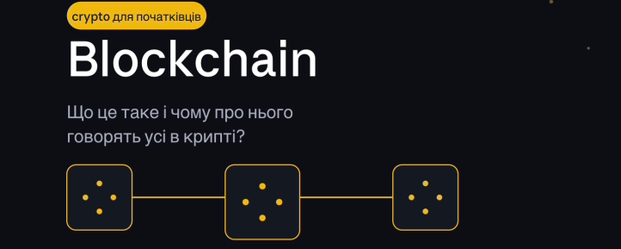
Що таке Blockchain і чому всі говорять про нього?Якщо ви тільки починаєте знайомство з криптовалютами, слово Blockchain ви, напевно, зустрічали вже десятки разів.
Bitcoin працює на блокчейні. Ethereum використовує блокчейн. NFT, DeFi, стейблкоїни та багато інших криптопроєктів також побудовані на цій технології.
Але що насправді означає слово Blockchain?
Якщо пояснювати максимально просто, блокчейн — це своєрідний цифровий журнал операцій, копія якого зберігається не в одному місці, а одночасно на великій кількості комп'ютерів.
І саме тут починається найцікавіше.
Уявімо звичайний журнал
Уявіть клас, де учні ведуть спільний журнал.
Кожного разу, коли хтось передає іншому учневі 5 гривень, ця операція записується в журнал:
Марія → Олексію: 5 грн
Потім відбувається інша операція:
Олексій → Софії: 2 грн
І ще одна:
Софія → Андрію: 1 грн
У результаті в журналі поступово накопичується історія всіх операцій.
А тепер уявімо, що цей журнал лежить не у вчителя і не в одного учня.
Кожен учень має власну копію цього журналу.
Якщо Марія спробує таємно змінити свій запис і написати, що вона передала Олексію не 5, а 50 гривень, інші учні подивляться у свої копії.
І побачать, що такого запису там немає.
Тобто одна людина не може просто взяти і переписати всю історію.
Приблизно так працює і блокчейн.
Blockchain = ланцюг блоків
Саме слово blockchain можна буквально перекласти як:
block — блок
chain — ланцюг
Тобто це ланцюг блоків.
А що знаходиться всередині блоку?
У найпростішому поясненні — інформація про операції.
Наприклад, один блок може містити сотні або тисячі транзакцій.
Коли певна кількість операцій зібрана разом, вони формують блок.
Потім цей блок додається до попереднього.
Після нього з'являється наступний.
Потім ще один.
Так поступово формується довгий ланцюг:
Блок 1 → Блок 2 → Блок 3 → Блок 4 → Блок 5 → ...
Звідси і назва — Blockchain.
Але чому не використовувати звичайну базу даних?
Це дуже хороше питання.
Адже банки, магазини та великі компанії вже давно використовують цифрові бази даних.
То навіщо взагалі потрібен блокчейн?
Головна відмінність полягає у способі організації та перевірки інформації.
У традиційній системі база даних зазвичай контролюється конкретною організацією.
Наприклад:
Банк → база даних банку → операції клієнтів
Банк відповідає за те, щоб інформація була правильною.
У блокчейні ж інформація може перевірятися та зберігатися децентралізованою мережею учасників.
Тобто немає одного центрального комп'ютера, який є єдиним джерелом правди.
І це одна з головних ідей blockchain.
Що означає «децентралізований»?
Слово звучить складно, але і тут є проста аналогія.
Уявіть, що у вашому класі є один учень, який зберігає єдиний журнал.
Якщо він загубить журнал — історія операцій зникне.
Якщо він вирішить щось змінити — інші можуть навіть не знати про це.
Це централізована система.
А тепер уявіть, що журнал є у 100 учнів одночасно.
Якщо один учень загубить свою копію, інші 99 її все одно мають.
Якщо один спробує щось підробити, його версія не збігатиметься з іншими.
Це вже набагато ближче до ідеї децентралізації.
У блокчейні роль таких «учнів» виконують комп'ютери мережі — вузли або nodes.
Що відбувається, коли ви відправляєте криптовалюту?
Давайте розберемо простий приклад.
Уявімо, що ви хочете відправити другу 0,01 BTC.
Ви створюєте транзакцію:
Ваш гаманець → гаманець друга
Але блокчейн не просто повірить вам на слово.
Мережа повинна перевірити, чи маєте ви право здійснити цю операцію та чи можете витратити ці кошти.
Після перевірки транзакція потрапляє до мережі.
Далі вона може бути включена до нового блоку.
Після того як блок буде доданий до блокчейну, інформація про транзакцію стає частиною історії мережі.
Тобто приблизно:
Створення транзакції → перевірка → включення до блоку → додавання блоку до ланцюга
І саме завдяки цьому блокчейн може працювати без необхідності, щоб кожну окрему криптовалютну операцію вручну підтверджував банк.
А хто вирішує, які транзакції правильні?
Ось тут ми підходимо до ще одного важливого поняття — консенсусу.
Консенсус — це спосіб, за допомогою якого учасники блокчейн-мережі приходять до спільної згоди щодо того, які операції є дійсними та який стан мережі вважається правильним.
Різні блокчейни використовують різні механізми консенсусу.
Наприклад, Bitcoin використовує Proof of Work (PoW).
Ethereum після переходу на Proof of Stake використовує Proof of Stake (PoS).
Необов'язково запам'ятовувати ці назви з першого разу.
Головна ідея проста:
мережі потрібен механізм, який дозволяє учасникам погодитися щодо правильного стану блокчейну.
Чому інформацію в блокчейні складно змінити?
Тут важливу роль відіграє криптографія.
Кожен блок пов'язаний із попереднім.
Якщо хтось спробує змінити інформацію в старому блоці, це вплине на його криптографічний зв'язок із наступними блоками.
Уявіть доміно:
Якщо ви змінюєте одну деталь на початку, вся подальша конструкція вже не відповідає початковій.
У блокчейні це значно складніше, ніж просто «переписати один запис».
Саме тому блокчейн часто описують як tamper-resistant, тобто систему, де непомітна зміна вже записаної інформації є дуже складною.
Але важливий нюанс:
Blockchain не означає, що дані абсолютно неможливо змінити за будь-яких умов.
Правильніше сказати, що блокчейн створює механізм, який робить несанкціоновану зміну історії дуже складною та помітною.
Чому блокчейн називають прозорим?
У багатьох публічних блокчейнах історію транзакцій може переглядати практично будь-хто.
Наприклад, можна побачити:
адресу відправника;адресу отримувача;суму транзакції;час;статус операції;блок, до якого вона потрапила.
Але тут є важливий момент.
Адреса криптогаманця — це не те саме, що ім'я людини.
Наприклад, у блокчейні може бути видно:
0xABC...123 → 0xDEF...456
Але з одного лише запису не обов'язково зрозуміло, кому саме належать ці адреси.
Тому публічний блокчейн можна назвати прозорим щодо транзакцій, але це не означає автоматичну повну анонімність користувачів.
Blockchain — це не тільки про Bitcoin
Це одна з найпоширеніших помилок початківців.
Bitcoin і blockchain — не одне й те саме.
Bitcoin — це криптовалюта та платіжна система, яка використовує blockchain як основу для запису транзакцій.
Blockchain — це технологія.
Приблизно як:
Інтернет ≠ один конкретний сайт.
Так само:
Blockchain ≠ Bitcoin.
Bitcoin — лише один із найвідоміших прикладів використання цієї технології.
Де ще використовується Blockchain?
Сьогодні blockchain застосовується або тестується у великій кількості різних сфер.
💰 Криптовалюти
Це найвідоміший варіант.
Blockchain дозволяє вести історію транзакцій криптовалют без традиційного централізованого реєстру.
🎨 NFT
NFT використовують блокчейн для фіксації інформації про унікальні цифрові активи та їхнє переміщення між адресами.
🏦 DeFi
Децентралізовані фінансові протоколи дозволяють реалізовувати різні фінансові операції за допомогою blockchain і smart contracts.
📄 Smart contracts
Smart contract — це програма, яка працює в блокчейн-середовищі та автоматично виконує закладену в неї логіку.
Простий приклад:
Якщо виконані умови X → виконати дію Y.
Тобто замість того, щоб кожну операцію контролювала людина або компанія, частина процесу може виконуватися програмним кодом.
Що таке блокчейн у двох реченнях?
Якщо після всього цього вам потрібно пояснити blockchain другові за 10 секунд, можна сказати так:
Blockchain — це цифровий реєстр, у якому інформація записується блоками та пов'язується між собою в ланцюг. Копії та перевірка даних розподілені між учасниками мережі, тому систему можна використовувати без єдиного центрального контролера.
А якщо пояснювати дитині:
Уяви величезний спільний зошит, копія якого є у тисяч людей. Коли хтось записує нову операцію, інші перевіряють її, а потім цей запис додається до спільної історії.
Ось це і є одна з найпростіших моделей blockchain.
Чому всі так багато говорять про Blockchain?
Тому що ця технологія змінила саму ідею цифрової власності та передачі цінності.
Раніше цифрові дані здебільшого контролювалися централізованими платформами.
Blockchain запропонував інший підхід:
не одна компанія зберігає єдину базу даних, а мережа учасників підтримує спільний реєстр за визначеними правилами.
Це відкриває можливість створювати системи, у яких люди можуть взаємодіяти, передавати активи та виконувати певні операції без традиційного посередника.
Саме тому blockchain став фундаментом цілої індустрії.
Але чи означає це, що Blockchain ідеальний?
Ні.
І це важливо розуміти з самого початку.
У blockchain є свої переваги:
✅ децентралізація;
✅ прозорість публічних мереж;
✅ можливість перевіряти історію транзакцій;
✅ стійкість до несанкціонованого редагування;
✅ робота без традиційного центрального посередника в окремих сценаріях.
Але є й проблеми:
❌ деякі мережі можуть мати високу комісію;
❌ швидкість транзакцій залежить від конкретного блокчейну;
❌ користувачі повинні самостійно відповідально зберігати доступ до своїх активів;
❌ помилки під час роботи з криптогаманцем можуть бути дуже дорогими;
❌ не кожне завдання потребує використання blockchain.
Тому blockchain — це не «магічна технологія, яка замінить усе».
Це інструмент, який має сенс там, де його властивості справді потрібні.
Найголовніше, що потрібно запам'ятати
Якщо ви тільки починаєте вивчати криптовалюту, не намагайтеся одразу запам'ятати десятки складних термінів.
Спочатку запам'ятайте 5 речей:
1. Blockchain — це цифровий реєстр.
Він зберігає інформацію про операції.
2. Інформація групується у блоки.
Блоки послідовно пов'язуються між собою.
3. Blockchain може працювати децентралізовано.
Замість одного центрального сервера мережу підтримують багато учасників.
4. Дані можна перевіряти.
У публічних блокчейнах історія транзакцій доступна для перегляду.
5. Blockchain ≠ Bitcoin.
Bitcoin — це один із найвідоміших прикладів використання blockchain.
І наостанок
Коли наступного разу ви побачите фразу «Blockchain technology», не уявляйте щось надзвичайно складне.
У найпростішому вигляді це можна уявити як спільний цифровий журнал, де записи організовані у блоки, пов'язані між собою, а мережа учасників допомагає перевіряти правильність нових операцій.
А вже поверх цієї простої ідеї можна будувати набагато складніші речі — від криптовалют і NFT до децентралізованих фінансових протоколів та smart contracts.
І саме тому blockchain — це набагато більше, ніж просто технологія, на якій працює Bitcoin.
#blockchain #NFT #crypto #defi #Binance
Що таке Blockchain і чому всі говорять про нього?
Якщо ви тільки починаєте знайомство з криптовалютами, слово Blockchain ви, напевно, зустрічали вже десятки разів.
Bitcoin працює на блокчейні. Ethereum використовує блокчейн. NFT, DeFi, стейблкоїни та багато інших криптопроєктів також побудовані на цій технології.
Але що насправді означає слово Blockchain?
Якщо пояснювати максимально просто, блокчейн — це своєрідний цифровий журнал операцій, копія якого зберігається не в одному місці, а одночасно на великій кількості комп'ютерів.
І саме тут починається найцікавіше.
Уявімо звичайний журнал
Уявіть клас, де учні ведуть спільний журнал.
Кожного разу, коли хтось передає іншому учневі 5 гривень, ця операція записується в журнал:
Марія → Олексію: 5 грн
Потім відбувається інша операція:
Олексій → Софії: 2 грн
І ще одна:
Софія → Андрію: 1 грн
У результаті в журналі поступово накопичується історія всіх операцій.
А тепер уявімо, що цей журнал лежить не у вчителя і не в одного учня.
Кожен учень має власну копію цього журналу.
Якщо Марія спробує таємно змінити свій запис і написати, що вона передала Олексію не 5, а 50 гривень, інші учні подивляться у свої копії.
І побачать, що такого запису там немає.
Тобто одна людина не може просто взяти і переписати всю історію.
Приблизно так працює і блокчейн.
Blockchain = ланцюг блоків
Саме слово blockchain можна буквально перекласти як:
block — блок
chain — ланцюг
Тобто це ланцюг блоків.
А що знаходиться всередині блоку?
У найпростішому поясненні — інформація про операції.
Наприклад, один блок може містити сотні або тисячі транзакцій.
Коли певна кількість операцій зібрана разом, вони формують блок.
Потім цей блок додається до попереднього.
Після нього з'являється наступний.
Потім ще один.
Так поступово формується довгий ланцюг:
Блок 1 → Блок 2 → Блок 3 → Блок 4 → Блок 5 → ...
Звідси і назва — Blockchain.
Але чому не використовувати звичайну базу даних?
Це дуже хороше питання.
Адже банки, магазини та великі компанії вже давно використовують цифрові бази даних.
То навіщо взагалі потрібен блокчейн?
Головна відмінність полягає у способі організації та перевірки інформації.
У традиційній системі база даних зазвичай контролюється конкретною організацією.
Наприклад:
Банк → база даних банку → операції клієнтів
Банк відповідає за те, щоб інформація була правильною.
У блокчейні ж інформація може перевірятися та зберігатися децентралізованою мережею учасників.
Тобто немає одного центрального комп'ютера, який є єдиним джерелом правди.
І це одна з головних ідей blockchain.
Що означає «децентралізований»?
Слово звучить складно, але і тут є проста аналогія.
Уявіть, що у вашому класі є один учень, який зберігає єдиний журнал.
Якщо він загубить журнал — історія операцій зникне.
Якщо він вирішить щось змінити — інші можуть навіть не знати про це.
Це централізована система.
А тепер уявіть, що журнал є у 100 учнів одночасно.
Якщо один учень загубить свою копію, інші 99 її все одно мають.
Якщо один спробує щось підробити, його версія не збігатиметься з іншими.
Це вже набагато ближче до ідеї децентралізації.
У блокчейні роль таких «учнів» виконують комп'ютери мережі — вузли або nodes.
Що відбувається, коли ви відправляєте криптовалюту?
Давайте розберемо простий приклад.
Уявімо, що ви хочете відправити другу 0,01 BTC.
Ви створюєте транзакцію:
Ваш гаманець → гаманець друга
Але блокчейн не просто повірить вам на слово.
Мережа повинна перевірити, чи маєте ви право здійснити цю операцію та чи можете витратити ці кошти.
Після перевірки транзакція потрапляє до мережі.
Далі вона може бути включена до нового блоку.
Після того як блок буде доданий до блокчейну, інформація про транзакцію стає частиною історії мережі.
Тобто приблизно:
Створення транзакції → перевірка → включення до блоку → додавання блоку до ланцюга
І саме завдяки цьому блокчейн може працювати без необхідності, щоб кожну окрему криптовалютну операцію вручну підтверджував банк.
А хто вирішує, які транзакції правильні?
Ось тут ми підходимо до ще одного важливого поняття — консенсусу.
Консенсус — це спосіб, за допомогою якого учасники блокчейн-мережі приходять до спільної згоди щодо того, які операції є дійсними та який стан мережі вважається правильним.
Різні блокчейни використовують різні механізми консенсусу.
Наприклад, Bitcoin використовує Proof of Work (PoW).
Ethereum після переходу на Proof of Stake використовує Proof of Stake (PoS).
Необов'язково запам'ятовувати ці назви з першого разу.
Головна ідея проста:
мережі потрібен механізм, який дозволяє учасникам погодитися щодо правильного стану блокчейну.
Чому інформацію в блокчейні складно змінити?
Тут важливу роль відіграє криптографія.
Кожен блок пов'язаний із попереднім.
Якщо хтось спробує змінити інформацію в старому блоці, це вплине на його криптографічний зв'язок із наступними блоками.
Уявіть доміно:
Якщо ви змінюєте одну деталь на початку, вся подальша конструкція вже не відповідає початковій.
У блокчейні це значно складніше, ніж просто «переписати один запис».
Саме тому блокчейн часто описують як tamper-resistant, тобто систему, де непомітна зміна вже записаної інформації є дуже складною.
Але важливий нюанс:
Blockchain не означає, що дані абсолютно неможливо змінити за будь-яких умов.
Правильніше сказати, що блокчейн створює механізм, який робить несанкціоновану зміну історії дуже складною та помітною.
Чому блокчейн називають прозорим?
У багатьох публічних блокчейнах історію транзакцій може переглядати практично будь-хто.
Наприклад, можна побачити:
адресу відправника;адресу отримувача;суму транзакції;час;статус операції;блок, до якого вона потрапила.
Але тут є важливий момент.
Адреса криптогаманця — це не те саме, що ім'я людини.
Наприклад, у блокчейні може бути видно:
0xABC...123 → 0xDEF...456
Але з одного лише запису не обов'язково зрозуміло, кому саме належать ці адреси.
Тому публічний блокчейн можна назвати прозорим щодо транзакцій, але це не означає автоматичну повну анонімність користувачів.
Blockchain — це не тільки про Bitcoin
Це одна з найпоширеніших помилок початківців.
Bitcoin і blockchain — не одне й те саме.
Bitcoin — це криптовалюта та платіжна система, яка використовує blockchain як основу для запису транзакцій.
Blockchain — це технологія.
Приблизно як:
Інтернет ≠ один конкретний сайт.
Так само:
Blockchain ≠ Bitcoin.
Bitcoin — лише один із найвідоміших прикладів використання цієї технології.
Де ще використовується Blockchain?
Сьогодні blockchain застосовується або тестується у великій кількості різних сфер.
💰 Криптовалюти
Це найвідоміший варіант.
Blockchain дозволяє вести історію транзакцій криптовалют без традиційного централізованого реєстру.
🎨 NFT
NFT використовують блокчейн для фіксації інформації про унікальні цифрові активи та їхнє переміщення між адресами.
🏦 DeFi
Децентралізовані фінансові протоколи дозволяють реалізовувати різні фінансові операції за допомогою blockchain і smart contracts.
📄 Smart contracts
Smart contract — це програма, яка працює в блокчейн-середовищі та автоматично виконує закладену в неї логіку.
Простий приклад:
Якщо виконані умови X → виконати дію Y.
Тобто замість того, щоб кожну операцію контролювала людина або компанія, частина процесу може виконуватися програмним кодом.
Що таке блокчейн у двох реченнях?
Якщо після всього цього вам потрібно пояснити blockchain другові за 10 секунд, можна сказати так:
Blockchain — це цифровий реєстр, у якому інформація записується блоками та пов'язується між собою в ланцюг. Копії та перевірка даних розподілені між учасниками мережі, тому систему можна використовувати без єдиного центрального контролера.
А якщо пояснювати дитині:
Уяви величезний спільний зошит, копія якого є у тисяч людей. Коли хтось записує нову операцію, інші перевіряють її, а потім цей запис додається до спільної історії.
Ось це і є одна з найпростіших моделей blockchain.
Чому всі так багато говорять про Blockchain?
Тому що ця технологія змінила саму ідею цифрової власності та передачі цінності.
Раніше цифрові дані здебільшого контролювалися централізованими платформами.
Blockchain запропонував інший підхід:
не одна компанія зберігає єдину базу даних, а мережа учасників підтримує спільний реєстр за визначеними правилами.
Це відкриває можливість створювати системи, у яких люди можуть взаємодіяти, передавати активи та виконувати певні операції без традиційного посередника.
Саме тому blockchain став фундаментом цілої індустрії.
Але чи означає це, що Blockchain ідеальний?
Ні.
І це важливо розуміти з самого початку.
У blockchain є свої переваги:
✅ децентралізація;
✅ прозорість публічних мереж;
✅ можливість перевіряти історію транзакцій;
✅ стійкість до несанкціонованого редагування;
✅ робота без традиційного центрального посередника в окремих сценаріях.
Але є й проблеми:
❌ деякі мережі можуть мати високу комісію;
❌ швидкість транзакцій залежить від конкретного блокчейну;
❌ користувачі повинні самостійно відповідально зберігати доступ до своїх активів;
❌ помилки під час роботи з криптогаманцем можуть бути дуже дорогими;
❌ не кожне завдання потребує використання blockchain.
Тому blockchain — це не «магічна технологія, яка замінить усе».
Це інструмент, який має сенс там, де його властивості справді потрібні.
Найголовніше, що потрібно запам'ятати
Якщо ви тільки починаєте вивчати криптовалюту, не намагайтеся одразу запам'ятати десятки складних термінів.
Спочатку запам'ятайте 5 речей:
1. Blockchain — це цифровий реєстр.
Він зберігає інформацію про операції.
2. Інформація групується у блоки.
Блоки послідовно пов'язуються між собою.
3. Blockchain може працювати децентралізовано.
Замість одного центрального сервера мережу підтримують багато учасників.
4. Дані можна перевіряти.
У публічних блокчейнах історія транзакцій доступна для перегляду.
5. Blockchain ≠ Bitcoin.
Bitcoin — це один із найвідоміших прикладів використання blockchain.
І наостанок
Коли наступного разу ви побачите фразу «Blockchain technology», не уявляйте щось надзвичайно складне.
У найпростішому вигляді це можна уявити як спільний цифровий журнал, де записи організовані у блоки, пов'язані між собою, а мережа учасників допомагає перевіряти правильність нових операцій.
А вже поверх цієї простої ідеї можна будувати набагато складніші речі — від криптовалют і NFT до децентралізованих фінансових протоколів та smart contracts.
І саме тому blockchain — це набагато більше, ніж просто технологія, на якій працює Bitcoin.
#blockchain #NFT #crypto #defi #Binance
Bitcoin працює на блокчейні. Ethereum використовує блокчейн. NFT, DeFi, стейблкоїни та багато інших криптопроєктів також побудовані на цій технології.
Але що насправді означає слово Blockchain?
Якщо пояснювати максимально просто, блокчейн — це своєрідний цифровий журнал операцій, копія якого зберігається не в одному місці, а одночасно на великій кількості комп'ютерів.
І саме тут починається найцікавіше.
Уявімо звичайний журнал
Уявіть клас, де учні ведуть спільний журнал.
Кожного разу, коли хтось передає іншому учневі 5 гривень, ця операція записується в журнал:
Марія → Олексію: 5 грн
Потім відбувається інша операція:
Олексій → Софії: 2 грн
І ще одна:
Софія → Андрію: 1 грн
У результаті в журналі поступово накопичується історія всіх операцій.
А тепер уявімо, що цей журнал лежить не у вчителя і не в одного учня.
Кожен учень має власну копію цього журналу.
Якщо Марія спробує таємно змінити свій запис і написати, що вона передала Олексію не 5, а 50 гривень, інші учні подивляться у свої копії.
І побачать, що такого запису там немає.
Тобто одна людина не може просто взяти і переписати всю історію.
Приблизно так працює і блокчейн.
Blockchain = ланцюг блоків
Саме слово blockchain можна буквально перекласти як:
block — блок
chain — ланцюг
Тобто це ланцюг блоків.
А що знаходиться всередині блоку?
У найпростішому поясненні — інформація про операції.
Наприклад, один блок може містити сотні або тисячі транзакцій.
Коли певна кількість операцій зібрана разом, вони формують блок.
Потім цей блок додається до попереднього.
Після нього з'являється наступний.
Потім ще один.
Так поступово формується довгий ланцюг:
Блок 1 → Блок 2 → Блок 3 → Блок 4 → Блок 5 → ...
Звідси і назва — Blockchain.
Але чому не використовувати звичайну базу даних?
Це дуже хороше питання.
Адже банки, магазини та великі компанії вже давно використовують цифрові бази даних.
То навіщо взагалі потрібен блокчейн?
Головна відмінність полягає у способі організації та перевірки інформації.
У традиційній системі база даних зазвичай контролюється конкретною організацією.
Наприклад:
Банк → база даних банку → операції клієнтів
Банк відповідає за те, щоб інформація була правильною.
У блокчейні ж інформація може перевірятися та зберігатися децентралізованою мережею учасників.
Тобто немає одного центрального комп'ютера, який є єдиним джерелом правди.
І це одна з головних ідей blockchain.
Що означає «децентралізований»?
Слово звучить складно, але і тут є проста аналогія.
Уявіть, що у вашому класі є один учень, який зберігає єдиний журнал.
Якщо він загубить журнал — історія операцій зникне.
Якщо він вирішить щось змінити — інші можуть навіть не знати про це.
Це централізована система.
А тепер уявіть, що журнал є у 100 учнів одночасно.
Якщо один учень загубить свою копію, інші 99 її все одно мають.
Якщо один спробує щось підробити, його версія не збігатиметься з іншими.
Це вже набагато ближче до ідеї децентралізації.
У блокчейні роль таких «учнів» виконують комп'ютери мережі — вузли або nodes.
Що відбувається, коли ви відправляєте криптовалюту?
Давайте розберемо простий приклад.
Уявімо, що ви хочете відправити другу 0,01 BTC.
Ви створюєте транзакцію:
Ваш гаманець → гаманець друга
Але блокчейн не просто повірить вам на слово.
Мережа повинна перевірити, чи маєте ви право здійснити цю операцію та чи можете витратити ці кошти.
Після перевірки транзакція потрапляє до мережі.
Далі вона може бути включена до нового блоку.
Після того як блок буде доданий до блокчейну, інформація про транзакцію стає частиною історії мережі.
Тобто приблизно:
Створення транзакції → перевірка → включення до блоку → додавання блоку до ланцюга
І саме завдяки цьому блокчейн може працювати без необхідності, щоб кожну окрему криптовалютну операцію вручну підтверджував банк.
А хто вирішує, які транзакції правильні?
Ось тут ми підходимо до ще одного важливого поняття — консенсусу.
Консенсус — це спосіб, за допомогою якого учасники блокчейн-мережі приходять до спільної згоди щодо того, які операції є дійсними та який стан мережі вважається правильним.
Різні блокчейни використовують різні механізми консенсусу.
Наприклад, Bitcoin використовує Proof of Work (PoW).
Ethereum після переходу на Proof of Stake використовує Proof of Stake (PoS).
Необов'язково запам'ятовувати ці назви з першого разу.
Головна ідея проста:
мережі потрібен механізм, який дозволяє учасникам погодитися щодо правильного стану блокчейну.
Чому інформацію в блокчейні складно змінити?
Тут важливу роль відіграє криптографія.
Кожен блок пов'язаний із попереднім.
Якщо хтось спробує змінити інформацію в старому блоці, це вплине на його криптографічний зв'язок із наступними блоками.
Уявіть доміно:
Якщо ви змінюєте одну деталь на початку, вся подальша конструкція вже не відповідає початковій.
У блокчейні це значно складніше, ніж просто «переписати один запис».
Саме тому блокчейн часто описують як tamper-resistant, тобто систему, де непомітна зміна вже записаної інформації є дуже складною.
Але важливий нюанс:
Blockchain не означає, що дані абсолютно неможливо змінити за будь-яких умов.
Правильніше сказати, що блокчейн створює механізм, який робить несанкціоновану зміну історії дуже складною та помітною.
Чому блокчейн називають прозорим?
У багатьох публічних блокчейнах історію транзакцій може переглядати практично будь-хто.
Наприклад, можна побачити:
адресу відправника;адресу отримувача;суму транзакції;час;статус операції;блок, до якого вона потрапила.
Але тут є важливий момент.
Адреса криптогаманця — це не те саме, що ім'я людини.
Наприклад, у блокчейні може бути видно:
0xABC...123 → 0xDEF...456
Але з одного лише запису не обов'язково зрозуміло, кому саме належать ці адреси.
Тому публічний блокчейн можна назвати прозорим щодо транзакцій, але це не означає автоматичну повну анонімність користувачів.
Blockchain — це не тільки про Bitcoin
Це одна з найпоширеніших помилок початківців.
Bitcoin і blockchain — не одне й те саме.
Bitcoin — це криптовалюта та платіжна система, яка використовує blockchain як основу для запису транзакцій.
Blockchain — це технологія.
Приблизно як:
Інтернет ≠ один конкретний сайт.
Так само:
Blockchain ≠ Bitcoin.
Bitcoin — лише один із найвідоміших прикладів використання цієї технології.
Де ще використовується Blockchain?
Сьогодні blockchain застосовується або тестується у великій кількості різних сфер.
💰 Криптовалюти
Це найвідоміший варіант.
Blockchain дозволяє вести історію транзакцій криптовалют без традиційного централізованого реєстру.
🎨 NFT
NFT використовують блокчейн для фіксації інформації про унікальні цифрові активи та їхнє переміщення між адресами.
🏦 DeFi
Децентралізовані фінансові протоколи дозволяють реалізовувати різні фінансові операції за допомогою blockchain і smart contracts.
📄 Smart contracts
Smart contract — це програма, яка працює в блокчейн-середовищі та автоматично виконує закладену в неї логіку.
Простий приклад:
Якщо виконані умови X → виконати дію Y.
Тобто замість того, щоб кожну операцію контролювала людина або компанія, частина процесу може виконуватися програмним кодом.
Що таке блокчейн у двох реченнях?
Якщо після всього цього вам потрібно пояснити blockchain другові за 10 секунд, можна сказати так:
Blockchain — це цифровий реєстр, у якому інформація записується блоками та пов'язується між собою в ланцюг. Копії та перевірка даних розподілені між учасниками мережі, тому систему можна використовувати без єдиного центрального контролера.
А якщо пояснювати дитині:
Уяви величезний спільний зошит, копія якого є у тисяч людей. Коли хтось записує нову операцію, інші перевіряють її, а потім цей запис додається до спільної історії.
Ось це і є одна з найпростіших моделей blockchain.
Чому всі так багато говорять про Blockchain?
Тому що ця технологія змінила саму ідею цифрової власності та передачі цінності.
Раніше цифрові дані здебільшого контролювалися централізованими платформами.
Blockchain запропонував інший підхід:
не одна компанія зберігає єдину базу даних, а мережа учасників підтримує спільний реєстр за визначеними правилами.
Це відкриває можливість створювати системи, у яких люди можуть взаємодіяти, передавати активи та виконувати певні операції без традиційного посередника.
Саме тому blockchain став фундаментом цілої індустрії.
Але чи означає це, що Blockchain ідеальний?
Ні.
І це важливо розуміти з самого початку.
У blockchain є свої переваги:
✅ децентралізація;
✅ прозорість публічних мереж;
✅ можливість перевіряти історію транзакцій;
✅ стійкість до несанкціонованого редагування;
✅ робота без традиційного центрального посередника в окремих сценаріях.
Але є й проблеми:
❌ деякі мережі можуть мати високу комісію;
❌ швидкість транзакцій залежить від конкретного блокчейну;
❌ користувачі повинні самостійно відповідально зберігати доступ до своїх активів;
❌ помилки під час роботи з криптогаманцем можуть бути дуже дорогими;
❌ не кожне завдання потребує використання blockchain.
Тому blockchain — це не «магічна технологія, яка замінить усе».
Це інструмент, який має сенс там, де його властивості справді потрібні.
Найголовніше, що потрібно запам'ятати
Якщо ви тільки починаєте вивчати криптовалюту, не намагайтеся одразу запам'ятати десятки складних термінів.
Спочатку запам'ятайте 5 речей:
1. Blockchain — це цифровий реєстр.
Він зберігає інформацію про операції.
2. Інформація групується у блоки.
Блоки послідовно пов'язуються між собою.
3. Blockchain може працювати децентралізовано.
Замість одного центрального сервера мережу підтримують багато учасників.
4. Дані можна перевіряти.
У публічних блокчейнах історія транзакцій доступна для перегляду.
5. Blockchain ≠ Bitcoin.
Bitcoin — це один із найвідоміших прикладів використання blockchain.
І наостанок
Коли наступного разу ви побачите фразу «Blockchain technology», не уявляйте щось надзвичайно складне.
У найпростішому вигляді це можна уявити як спільний цифровий журнал, де записи організовані у блоки, пов'язані між собою, а мережа учасників допомагає перевіряти правильність нових операцій.
А вже поверх цієї простої ідеї можна будувати набагато складніші речі — від криптовалют і NFT до децентралізованих фінансових протоколів та smart contracts.
І саме тому blockchain — це набагато більше, ніж просто технологія, на якій працює Bitcoin.
#blockchain #NFT #crypto #defi #Binance
110
·
--
Рост
🚨 What if the stock market never had to close?
For decades, stocks have lived inside traditional financial infrastructure:
⏰ limited trading hours
🏦 centralized brokers
⏳ settlement delays
🌍 fragmented access
bStocks are changing that model.
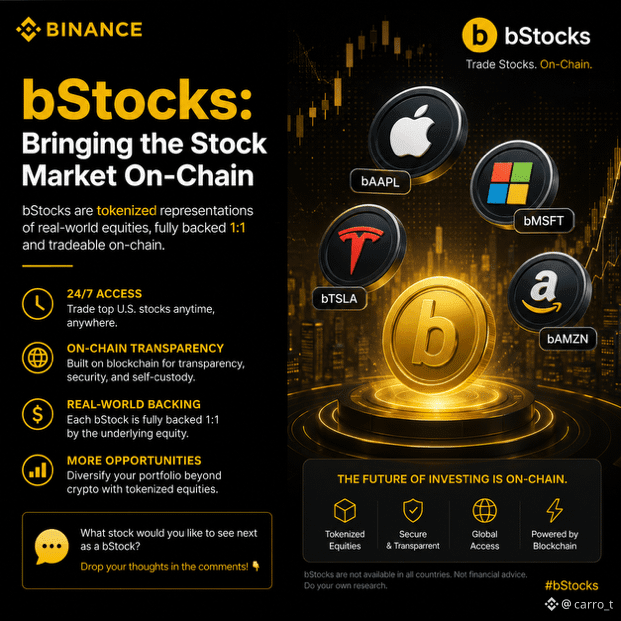
Binance bStocks are tokenized securities backed 1:1 by the corresponding U.S. shares held with a regulated custodian. They can be traded on Binance Spot 24/7, including outside traditional U.S. market hours.
And the numbers make the idea even more interesting:
💰 From $5 — fractional exposure to supported U.S. stocks
🔄 1:1 backing — each bStock is backed by the corresponding underlying share
⚡ 24/7 trading — no traditional market-hour restrictions
🔐 Self-custody — bStocks can be withdrawn to compatible BNB Smart Chain wallets
🌐 DeFi-ready — bStocks can interact with supported DeFi applications
📈 Automatic corporate actions — dividends and stock splits are processed through the Multiplier mechanism.
But there is an even bigger story here.
bStocks are part of the tokenization trend.
Stocks are no longer necessarily just something you hold through a traditional brokerage.
They can become on-chain financial assets — transferable, programmable and integrated with blockchain infrastructure.
This is where TradFi meets DeFi.
And if more real-world assets move on-chain, the line between the traditional financial system and crypto could become increasingly blurred.
⚠️ Important: bStocks are tokenized securities, not direct ownership of the underlying company’s shares, and availability is restricted to eligible users in permitted jurisdictions.
The question is:
🔥 Would you rather trade stocks during traditional market hours — or have access 24/7 on-chain?
Comment ON-CHAIN if you think tokenized stocks are the future 👇
#bStocks #Binance #RWA #Web3 #stocks
🚨 What if the stock market never had to close?
For decades, stocks have lived inside traditional financial infrastructure:
⏰ limited trading hours
🏦 centralized brokers
⏳ settlement delays
🌍 fragmented access
bStocks are changing that model.
Binance bStocks are tokenized securities backed 1:1 by the corresponding U.S. shares held with a regulated custodian. They can be traded on Binance Spot 24/7, including outside traditional U.S. market hours.
And the numbers make the idea even more interesting:
💰 From $5 — fractional exposure to supported U.S. stocks
🔄 1:1 backing — each bStock is backed by the corresponding underlying share
⚡ 24/7 trading — no traditional market-hour restrictions
🔐 Self-custody — bStocks can be withdrawn to compatible BNB Smart Chain wallets
🌐 DeFi-ready — bStocks can interact with supported DeFi applications
📈 Automatic corporate actions — dividends and stock splits are processed through the Multiplier mechanism.
But there is an even bigger story here.
bStocks are part of the tokenization trend.
Stocks are no longer necessarily just something you hold through a traditional brokerage.
They can become on-chain financial assets — transferable, programmable and integrated with blockchain infrastructure.
This is where TradFi meets DeFi.
And if more real-world assets move on-chain, the line between the traditional financial system and crypto could become increasingly blurred.
⚠️ Important: bStocks are tokenized securities, not direct ownership of the underlying company’s shares, and availability is restricted to eligible users in permitted jurisdictions.
The question is:
🔥 Would you rather trade stocks during traditional market hours — or have access 24/7 on-chain?
Comment ON-CHAIN if you think tokenized stocks are the future 👇
#bStocks #Binance #RWA #Web3 #stocks
For decades, stocks have lived inside traditional financial infrastructure:
⏰ limited trading hours
🏦 centralized brokers
⏳ settlement delays
🌍 fragmented access
bStocks are changing that model.
Binance bStocks are tokenized securities backed 1:1 by the corresponding U.S. shares held with a regulated custodian. They can be traded on Binance Spot 24/7, including outside traditional U.S. market hours.
And the numbers make the idea even more interesting:
💰 From $5 — fractional exposure to supported U.S. stocks
🔄 1:1 backing — each bStock is backed by the corresponding underlying share
⚡ 24/7 trading — no traditional market-hour restrictions
🔐 Self-custody — bStocks can be withdrawn to compatible BNB Smart Chain wallets
🌐 DeFi-ready — bStocks can interact with supported DeFi applications
📈 Automatic corporate actions — dividends and stock splits are processed through the Multiplier mechanism.
But there is an even bigger story here.
bStocks are part of the tokenization trend.
Stocks are no longer necessarily just something you hold through a traditional brokerage.
They can become on-chain financial assets — transferable, programmable and integrated with blockchain infrastructure.
This is where TradFi meets DeFi.
And if more real-world assets move on-chain, the line between the traditional financial system and crypto could become increasingly blurred.
⚠️ Important: bStocks are tokenized securities, not direct ownership of the underlying company’s shares, and availability is restricted to eligible users in permitted jurisdictions.
The question is:
🔥 Would you rather trade stocks during traditional market hours — or have access 24/7 on-chain?
Comment ON-CHAIN if you think tokenized stocks are the future 👇
#bStocks #Binance #RWA #Web3 #stocks
60
·
--
Рост
🚨TradFi is no longer watching crypto. It is building on it.
For years, the narrative was:
Crypto vs. Traditional Finance.
But 2026 is telling a different story.
The real trend may be TradFi + Blockchain
Here are 3 numbers worth watching 👇
📊 $270B+ — combined assets of stablecoins exceeded this level by December 2025, according to the BIS. Stablecoins are increasingly connected to traditional markets through their holdings of short-term assets such as U.S. Treasuries.
₿ $4.6B — trading volume of U.S. spot Bitcoin ETPs on their first trading day, January 11, 2024. The SEC had approved the products one day earlier.
🏦 21 financial institutions — including Goldman Sachs, Bank of America, Citi and Deutsche Bank — are planning a company to issue a U.S. dollar-backed stablecoin, with a potential launch in the first half of 2027.
And this is bigger than Bitcoin.
Tokenization is becoming one of the key bridges between TradFi and blockchain.
The BIS has highlighted tokenized central-bank reserves, commercial-bank money and government bonds as potential building blocks of a next-generation financial system.
So what happens next?
👉 Banks tokenize financial assets.
👉 Stablecoins become part of payment infrastructure.
👉 ETFs make crypto exposure easier for traditional investors.
👉 Blockchain moves from a speculative technology toward financial infrastructure.
The interesting question is no longer:
Will TradFi adopt crypto?
The better question is:
🔥 How much of TradFi will eventually run on blockchain?
What do you think?
А) TradFi will dominate crypto
B) Crypto will disrupt TradFi
C) They will merge into one financial system
Drop A, B or C in the comments 👇
#TradFi #crypto #bitcoin #blockchain #Tokenization
🚨TradFi is no longer watching crypto. It is building on it.
For years, the narrative was:
Crypto vs. Traditional Finance.
But 2026 is telling a different story.
The real trend may be TradFi + Blockchain
Here are 3 numbers worth watching 👇
📊 $270B+ — combined assets of stablecoins exceeded this level by December 2025, according to the BIS. Stablecoins are increasingly connected to traditional markets through their holdings of short-term assets such as U.S. Treasuries.
₿ $4.6B — trading volume of U.S. spot Bitcoin ETPs on their first trading day, January 11, 2024. The SEC had approved the products one day earlier.
🏦 21 financial institutions — including Goldman Sachs, Bank of America, Citi and Deutsche Bank — are planning a company to issue a U.S. dollar-backed stablecoin, with a potential launch in the first half of 2027.
And this is bigger than Bitcoin.
Tokenization is becoming one of the key bridges between TradFi and blockchain.
The BIS has highlighted tokenized central-bank reserves, commercial-bank money and government bonds as potential building blocks of a next-generation financial system.
So what happens next?
👉 Banks tokenize financial assets.
👉 Stablecoins become part of payment infrastructure.
👉 ETFs make crypto exposure easier for traditional investors.
👉 Blockchain moves from a speculative technology toward financial infrastructure.
The interesting question is no longer:
Will TradFi adopt crypto?
The better question is:
🔥 How much of TradFi will eventually run on blockchain?
What do you think?
А) TradFi will dominate crypto
B) Crypto will disrupt TradFi
C) They will merge into one financial system
Drop A, B or C in the comments 👇
#TradFi #crypto #bitcoin #blockchain #Tokenization
For years, the narrative was:
Crypto vs. Traditional Finance.
But 2026 is telling a different story.
The real trend may be TradFi + Blockchain
Here are 3 numbers worth watching 👇
📊 $270B+ — combined assets of stablecoins exceeded this level by December 2025, according to the BIS. Stablecoins are increasingly connected to traditional markets through their holdings of short-term assets such as U.S. Treasuries.
₿ $4.6B — trading volume of U.S. spot Bitcoin ETPs on their first trading day, January 11, 2024. The SEC had approved the products one day earlier.
🏦 21 financial institutions — including Goldman Sachs, Bank of America, Citi and Deutsche Bank — are planning a company to issue a U.S. dollar-backed stablecoin, with a potential launch in the first half of 2027.
And this is bigger than Bitcoin.
Tokenization is becoming one of the key bridges between TradFi and blockchain.
The BIS has highlighted tokenized central-bank reserves, commercial-bank money and government bonds as potential building blocks of a next-generation financial system.
So what happens next?
👉 Banks tokenize financial assets.
👉 Stablecoins become part of payment infrastructure.
👉 ETFs make crypto exposure easier for traditional investors.
👉 Blockchain moves from a speculative technology toward financial infrastructure.
The interesting question is no longer:
Will TradFi adopt crypto?
The better question is:
🔥 How much of TradFi will eventually run on blockchain?
What do you think?
А) TradFi will dominate crypto
B) Crypto will disrupt TradFi
C) They will merge into one financial system
Drop A, B or C in the comments 👇
#TradFi #crypto #bitcoin #blockchain #Tokenization
63
Войдите, чтобы посмотреть больше материала
Присоединяйтесь к пользователям криптовалют по всему миру на Binance Square
⚡️ Получайте новейшую и полезную информацию о криптоактивах.
💬 Нам доверяет крупнейшая в мире криптобиржа.
👍 Получите достоверные аналитические данные от верифицированных создателей контента.
Эл. почта/номер телефона
В тренде
BTCReaches$80000
Просмотров: 63,433
651 обсуждают
#BTCReaches$80000
🚀 80k is finally here, but why does the volume look as dry as my crypto-fried brain? 🧠 Dry liquidity today means BTC might just casually stroll up to $83k by tonight. And by tomorrow or Tuesday? $90k could be knocking on the door! 🚪🏃♂️
What should traders do? Keep your hands off the panic buttons and don't do anything crazy. 👀 NFA (Not Financial Advice), obviously. I'm just a guy watching candles. 🕯️
New to the madness? Claim your front-row seat on Binance with my code: VINHTOCDO 🏎️💨
Join here: https://www.binance.com/register?ref=VINHTOCDO
#bitcoin #BullRun #BTC80K #VINHTOCDO
$ETH
$BNB
$BTC
Vinhtocdo
·Лайков: 2
·Просмотров: 36
ZECHitsANewAllTimeHigh
Просмотров: 352,738
3,372 обсуждают
LululemonTumbles20%OnWeakGuidance
Просмотров: 149,811
2,224 обсуждают