

#tokenburn
tokenburn
Просмотров: 2.5M
2,427 обсуждают
Популярные
Новые

·
--
🚨 $HYPE BURNS 2.28M TOKENS IN 24 HOURS AS CIRCULATING SUPPLY DRIES UP! 💥
The supply side on $HYPE just experienced a massive contraction, burning over 2.28 million tokens in a single 24-hour window. 📊 This aggressive deflationary mechanism is rapidly soaking up float and draining liquidity across top-tier venues.
When circulating supply evaporates at this velocity, order books thin out fast and even modest buying volume can trigger vertical price expansion. ⚡ Market dynamics are priming for a sharp upward repricing as aggressive bids front-run the shrinking supply curve. 💡 Are you positioning early for this supply shock or waiting for the breakout confirmation? 👇
⚠️ Not financial advice. Always manage your risk. 🛡️
🏷️ #HYPE #TokenBurn #SupplyShock #Crypto
🔥 ⚡
🚨 $HYPE BURNS 2.28M TOKENS IN 24 HOURS AS CIRCULATING SUPPLY DRIES UP! 💥
The supply side on $HYPE just experienced a massive contraction, burning over 2.28 million tokens in a single 24-hour window. 📊 This aggressive deflationary mechanism is rapidly soaking up float and draining liquidity across top-tier venues.
When circulating supply evaporates at this velocity, order books thin out fast and even modest buying volume can trigger vertical price expansion. ⚡ Market dynamics are priming for a sharp upward repricing as aggressive bids front-run the shrinking supply curve. 💡 Are you positioning early for this supply shock or waiting for the breakout confirmation? 👇
⚠️ Not financial advice. Always manage your risk. 🛡️
🏷️ #HYPE #TokenBurn #SupplyShock #Crypto
🔥 ⚡
The supply side on $HYPE just experienced a massive contraction, burning over 2.28 million tokens in a single 24-hour window. 📊 This aggressive deflationary mechanism is rapidly soaking up float and draining liquidity across top-tier venues.
When circulating supply evaporates at this velocity, order books thin out fast and even modest buying volume can trigger vertical price expansion. ⚡ Market dynamics are priming for a sharp upward repricing as aggressive bids front-run the shrinking supply curve. 💡 Are you positioning early for this supply shock or waiting for the breakout confirmation? 👇
⚠️ Not financial advice. Always manage your risk. 🛡️
🏷️ #HYPE #TokenBurn #SupplyShock #Crypto
🔥 ⚡
15

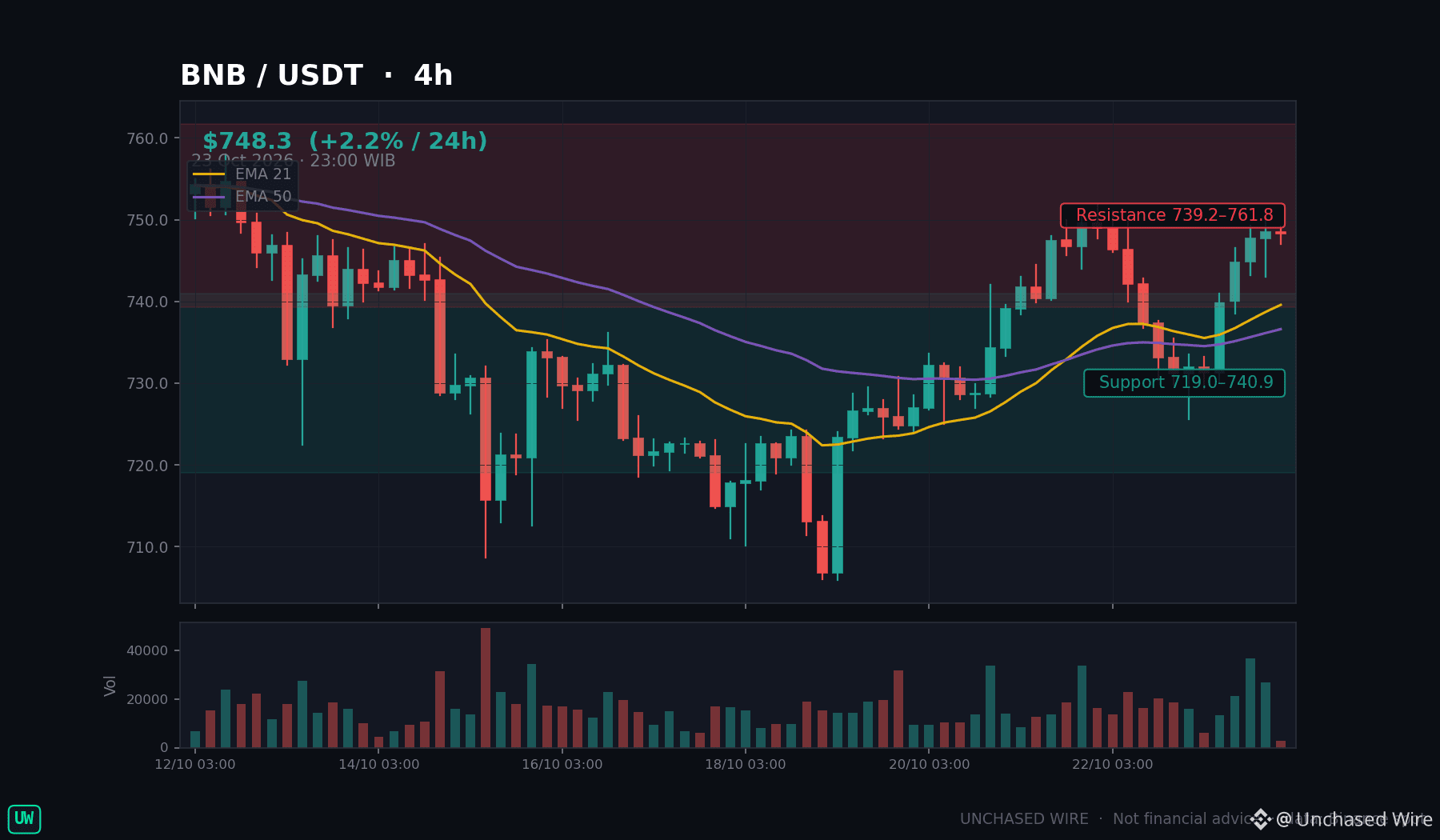
The chart says $BNB is the only major in the green this week — and it's knocking on the top of its six-week range.
Friday's bid is real: +2.6% to $748 on $89M of Binance spot volume, while BTC chopped sideways under $82K and ETH flatlined. With the Oct 27–28 Fed meeting ahead, the tape is showing where the risk bid sits.
The why isn't a rumor — it's supply math. Four days ago, BNB Chain's 37th quarterly burn removed 1.646M BNB forever (~$1.2B); supply is ~131.5M, with BEP-95 burning fees in real time. Add a spot BNB ETF past $96M in net assets, and you have shrinking supply meeting a real bid.
Levels: resistance $750–$752 (six-week range top), support $730/$720. Invalidation: a 4h close under $720 kills the relative-strength story.
The honest risk: Q3 active addresses fell 14% — the network earned more but attracted fewer users. A bid on shrinking supply is not the same as growth.
Rotation into $BNB — real risk bid, or Friday positioning ahead of the Fed? Give me your read.
$BNB #Altcoins #BNB #TokenBurn #FOMC
The chart says $BNB is the only major in the green this week — and it's knocking on the top of its six-week range.
Friday's bid is real: +2.6% to $748 on $89M of Binance spot volume, while BTC chopped sideways under $82K and ETH flatlined. With the Oct 27–28 Fed meeting ahead, the tape is showing where the risk bid sits.
The why isn't a rumor — it's supply math. Four days ago, BNB Chain's 37th quarterly burn removed 1.646M BNB forever (~$1.2B); supply is ~131.5M, with BEP-95 burning fees in real time. Add a spot BNB ETF past $96M in net assets, and you have shrinking supply meeting a real bid.
Levels: resistance $750–$752 (six-week range top), support $730/$720. Invalidation: a 4h close under $720 kills the relative-strength story.
The honest risk: Q3 active addresses fell 14% — the network earned more but attracted fewer users. A bid on shrinking supply is not the same as growth.
Rotation into $BNB — real risk bid, or Friday positioning ahead of the Fed? Give me your read.
$BNB #Altcoins #BNB #TokenBurn #FOMC
Friday's bid is real: +2.6% to $748 on $89M of Binance spot volume, while BTC chopped sideways under $82K and ETH flatlined. With the Oct 27–28 Fed meeting ahead, the tape is showing where the risk bid sits.
The why isn't a rumor — it's supply math. Four days ago, BNB Chain's 37th quarterly burn removed 1.646M BNB forever (~$1.2B); supply is ~131.5M, with BEP-95 burning fees in real time. Add a spot BNB ETF past $96M in net assets, and you have shrinking supply meeting a real bid.
Levels: resistance $750–$752 (six-week range top), support $730/$720. Invalidation: a 4h close under $720 kills the relative-strength story.
The honest risk: Q3 active addresses fell 14% — the network earned more but attracted fewer users. A bid on shrinking supply is not the same as growth.
Rotation into $BNB — real risk bid, or Friday positioning ahead of the Fed? Give me your read.
$BNB #Altcoins #BNB #TokenBurn #FOMC
3
Starting next month, every GPU job on Aethir's network starts feeding a daily $ATH burn.
The network announced this week it will burn a share of network fees every day from November, with a burn dashboard going live on the first burn. More compute reservations, bigger burns; fixed fees become floating, and the ACCELERATE build-out adds US and European compute sites into the same pipeline.
The tension: nobody knows the burn rate. The formula's details and actual fee volumes are still unknowns — the network itself says fees can drop to zero in weak markets.
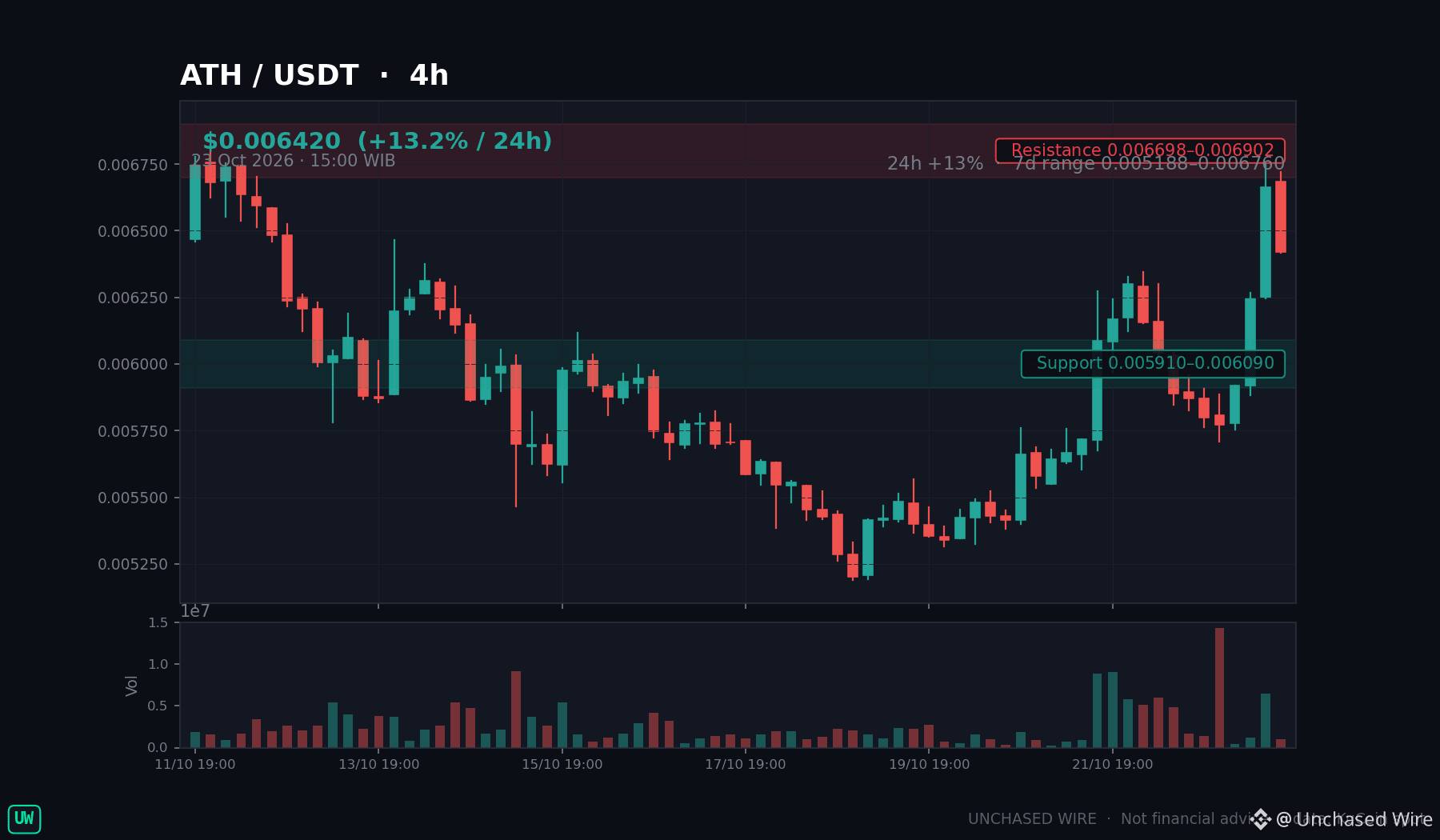
$ATH is up ~9.5% in 24h to $0.00644, testing $0.0068. Support $0.0060, the pre-pop base; a 4h close under $0.0060 ends the momentum read. The honest risk: the headline is two days old, $ATH trades ~96% below its 2024 high, and 20B of 42B max supply is circulating.
Save these levels: $0.0060 decides the momentum read, $0.0068 is the break test. If November's burns beat the market's guess — where does ATH find its real ceiling? NFA. DYOR.
$ATH #Altcoins #Aethir #TokenBurn #GPU
Starting next month, every GPU job on Aethir's network starts feeding a daily $ATH burn.
The network announced this week it will burn a share of network fees every day from November, with a burn dashboard going live on the first burn. More compute reservations, bigger burns; fixed fees become floating, and the ACCELERATE build-out adds US and European compute sites into the same pipeline.
The tension: nobody knows the burn rate. The formula's details and actual fee volumes are still unknowns — the network itself says fees can drop to zero in weak markets.
$ATH is up ~9.5% in 24h to $0.00644, testing $0.0068. Support $0.0060, the pre-pop base; a 4h close under $0.0060 ends the momentum read. The honest risk: the headline is two days old, $ATH trades ~96% below its 2024 high, and 20B of 42B max supply is circulating.
Save these levels: $0.0060 decides the momentum read, $0.0068 is the break test. If November's burns beat the market's guess — where does ATH find its real ceiling? NFA. DYOR.
$ATH #Altcoins #Aethir #TokenBurn #GPU
The network announced this week it will burn a share of network fees every day from November, with a burn dashboard going live on the first burn. More compute reservations, bigger burns; fixed fees become floating, and the ACCELERATE build-out adds US and European compute sites into the same pipeline.
The tension: nobody knows the burn rate. The formula's details and actual fee volumes are still unknowns — the network itself says fees can drop to zero in weak markets.
$ATH is up ~9.5% in 24h to $0.00644, testing $0.0068. Support $0.0060, the pre-pop base; a 4h close under $0.0060 ends the momentum read. The honest risk: the headline is two days old, $ATH trades ~96% below its 2024 high, and 20B of 42B max supply is circulating.
Save these levels: $0.0060 decides the momentum read, $0.0068 is the break test. If November's burns beat the market's guess — where does ATH find its real ceiling? NFA. DYOR.
$ATH #Altcoins #Aethir #TokenBurn #GPU

Проверено
🔥 $GRVT 1v
{alpha}(560x46f2564e0fa8248d15125e7e54173cfbdef91be7)
1 MILLION TOKENS BURNED. WHAT HAPPENS NEXT?
Grvt says its first open-market buyback permanently burned 1.1M GRVT—nearly 1% of circulating supply at the time. Future monthly rounds are planned, but amounts and timing remain discretionary. That means no guaranteed ongoing buy pressure.
The bigger test: can Grvt 2.0’s upcoming Earn and multi-market trading products attract real users and revenue? Track verified burns, platform activity, and actual launches—not promises alone.
Can adoption make this burn strategy sustainable?
#GRVT #TokenBurn #CryptoNews #altcoins
🔥 $GRVT 1v
1 MILLION TOKENS BURNED. WHAT HAPPENS NEXT?
Grvt says its first open-market buyback permanently burned 1.1M GRVT—nearly 1% of circulating supply at the time. Future monthly rounds are planned, but amounts and timing remain discretionary. That means no guaranteed ongoing buy pressure.
The bigger test: can Grvt 2.0’s upcoming Earn and multi-market trading products attract real users and revenue? Track verified burns, platform activity, and actual launches—not promises alone.
Can adoption make this burn strategy sustainable?
#GRVT #TokenBurn #CryptoNews #altcoins
1 MILLION TOKENS BURNED. WHAT HAPPENS NEXT?
Grvt says its first open-market buyback permanently burned 1.1M GRVT—nearly 1% of circulating supply at the time. Future monthly rounds are planned, but amounts and timing remain discretionary. That means no guaranteed ongoing buy pressure.
The bigger test: can Grvt 2.0’s upcoming Earn and multi-market trading products attract real users and revenue? Track verified burns, platform activity, and actual launches—not promises alone.
Can adoption make this burn strategy sustainable?
#GRVT #TokenBurn #CryptoNews #altcoins
789
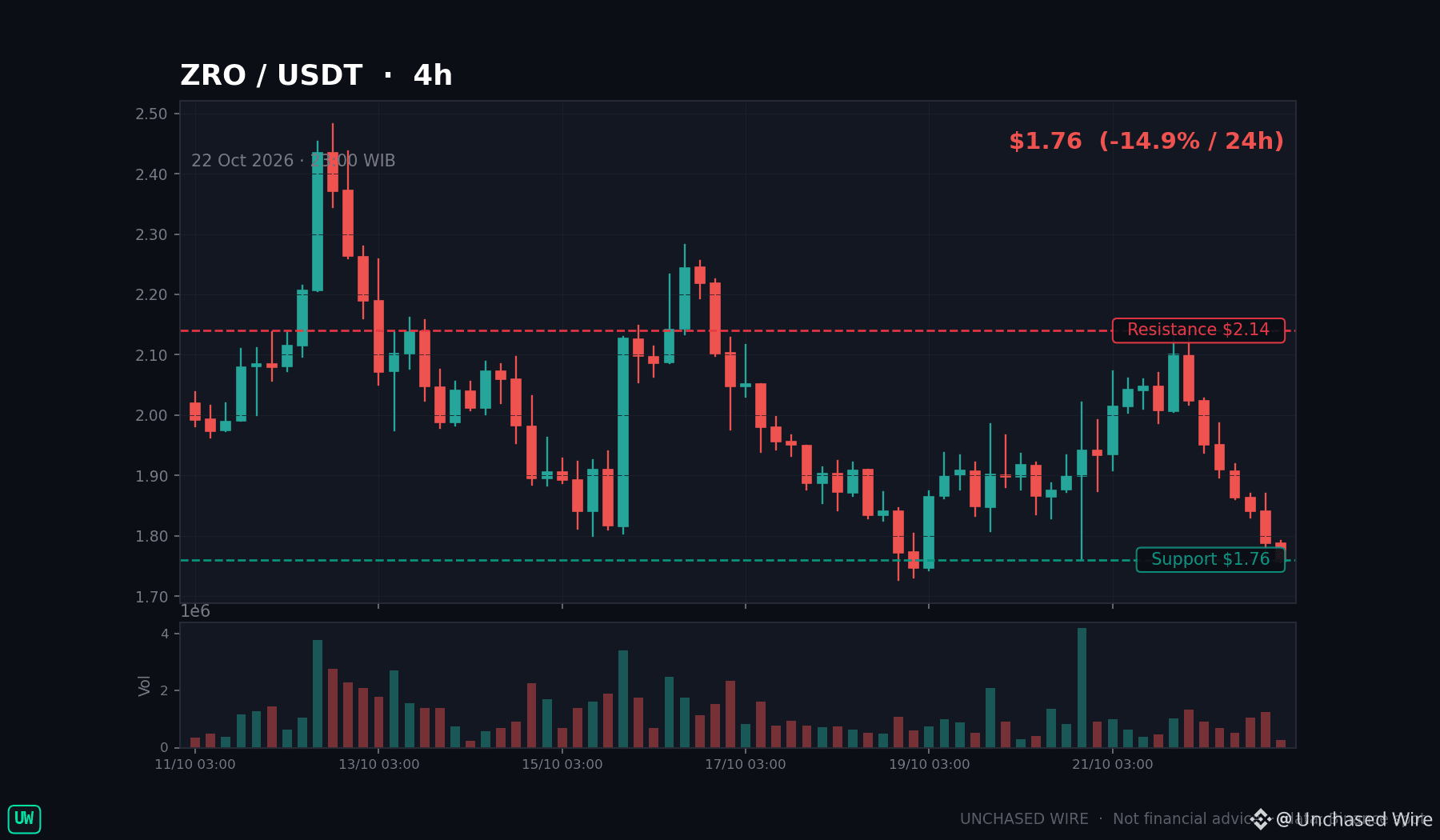
$2.14 to $1.76 in one session. The Zero mainnet news didn't change — the tape did.
ZRO ran to $2.14 after LayerZero locked in the Nov 30 launch of its Zero mainnet and the lzATLAS trading engine. The fee math is why traders cared: after 20–65% venue rebates, 75% of what's left buys back and burns ZRO. A real burn bid tied to volume — 12+ venues at launch.
Then the risk-off tape hit and the pump gave back ~18%. The catch: the burn doesn't exist until volume shows up after Nov 30. No trading, no buyback — and the launch is still five weeks out. Event pumps are rentals; this math arrived five weeks early.
Levels I'm watching: $1.76 held twice — the Oct 20 announcement wick and today's low. A 4h close under it kills the event trade; reclaiming the $1.99–$2.14 top zone re-arms it.
ZRO's story is the launch now, not the unlock. What's the number that tells you the burn is real — venue count, or trading volume after? NFA. DYOR.
$ZRO #CryptoMarkets #LayerZero #TokenBurn #CryptoNews
$2.14 to $1.76 in one session. The Zero mainnet news didn't change — the tape did.
ZRO ran to $2.14 after LayerZero locked in the Nov 30 launch of its Zero mainnet and the lzATLAS trading engine. The fee math is why traders cared: after 20–65% venue rebates, 75% of what's left buys back and burns ZRO. A real burn bid tied to volume — 12+ venues at launch.
Then the risk-off tape hit and the pump gave back ~18%. The catch: the burn doesn't exist until volume shows up after Nov 30. No trading, no buyback — and the launch is still five weeks out. Event pumps are rentals; this math arrived five weeks early.
Levels I'm watching: $1.76 held twice — the Oct 20 announcement wick and today's low. A 4h close under it kills the event trade; reclaiming the $1.99–$2.14 top zone re-arms it.
ZRO's story is the launch now, not the unlock. What's the number that tells you the burn is real — venue count, or trading volume after? NFA. DYOR.
$ZRO #CryptoMarkets #LayerZero #TokenBurn #CryptoNews
ZRO ran to $2.14 after LayerZero locked in the Nov 30 launch of its Zero mainnet and the lzATLAS trading engine. The fee math is why traders cared: after 20–65% venue rebates, 75% of what's left buys back and burns ZRO. A real burn bid tied to volume — 12+ venues at launch.
Then the risk-off tape hit and the pump gave back ~18%. The catch: the burn doesn't exist until volume shows up after Nov 30. No trading, no buyback — and the launch is still five weeks out. Event pumps are rentals; this math arrived five weeks early.
Levels I'm watching: $1.76 held twice — the Oct 20 announcement wick and today's low. A 4h close under it kills the event trade; reclaiming the $1.99–$2.14 top zone re-arms it.
ZRO's story is the launch now, not the unlock. What's the number that tells you the burn is real — venue count, or trading volume after? NFA. DYOR.
$ZRO #CryptoMarkets #LayerZero #TokenBurn #CryptoNews
147

🔥SUPPLY UNDER THE SPOTLIGHT! 🐸
$PEPE holders are watching token burns closely as on-chain activity continues to attract attention. Recent burn-tracker data shows ongoing community-driven burns, but the amounts remain tiny compared with PEPE’s massive 420.69 trillion initial supply.
📉 Why it matters:
🔥 Burned tokens can reduce the available supply.
🐸 Community activity keeps the PEPE narrative alive.
📊 Price still depends on demand, liquidity, market sentiment, and whale activity.
🚀 Bullish or just hype? A sustained increase in verified burns alongside stronger buying pressure could support the bullish narrative, but burns alone do not guarantee a price rally.
💚 Keep watching the burn wallet and on-chain data before making a move.
#PepeCoin #CryptoNews #TokenBurn #Memecoins $PEPE
{spot}(PEPEUSDT)
🔥SUPPLY UNDER THE SPOTLIGHT! 🐸
$PEPE holders are watching token burns closely as on-chain activity continues to attract attention. Recent burn-tracker data shows ongoing community-driven burns, but the amounts remain tiny compared with PEPE’s massive 420.69 trillion initial supply.
📉 Why it matters:
🔥 Burned tokens can reduce the available supply.
🐸 Community activity keeps the PEPE narrative alive.
📊 Price still depends on demand, liquidity, market sentiment, and whale activity.
🚀 Bullish or just hype? A sustained increase in verified burns alongside stronger buying pressure could support the bullish narrative, but burns alone do not guarantee a price rally.
💚 Keep watching the burn wallet and on-chain data before making a move.
#PepeCoin #CryptoNews #TokenBurn #Memecoins $PEPE
$PEPE holders are watching token burns closely as on-chain activity continues to attract attention. Recent burn-tracker data shows ongoing community-driven burns, but the amounts remain tiny compared with PEPE’s massive 420.69 trillion initial supply.
📉 Why it matters:
🔥 Burned tokens can reduce the available supply.
🐸 Community activity keeps the PEPE narrative alive.
📊 Price still depends on demand, liquidity, market sentiment, and whale activity.
🚀 Bullish or just hype? A sustained increase in verified burns alongside stronger buying pressure could support the bullish narrative, but burns alone do not guarantee a price rally.
💚 Keep watching the burn wallet and on-chain data before making a move.
#PepeCoin #CryptoNews #TokenBurn #Memecoins $PEPE

34

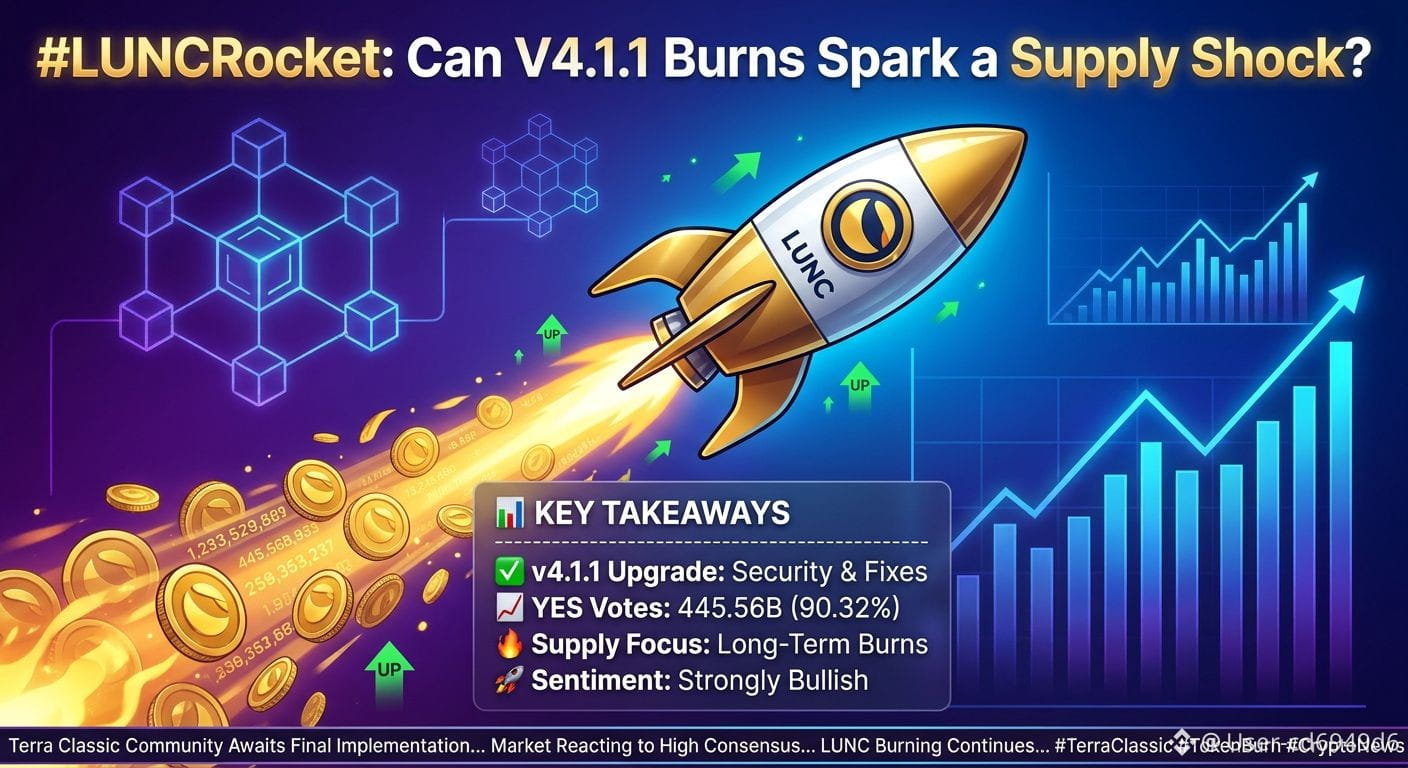
🔥 Can Massive Burns Realistically Save $LUNC ?
Skeptics call reducing $LUNC massive supply impossible. But history proves crypto supply squeezes happen—just look at SHIB. The real test is speed, funding, and ecosystem stamina.
⚡ The Real Reality
• Current Status: The price is hovering around $0.00004719 (+0.34%), showing minor bullish consolidation.
• Community Velocity: Active governance must keep fine-tuning on-chain burn taxes to optimize volume.
• Exchange Support: Binance’s monthly burn mechanism remains the backbone of the entire supply deflation strategy.
• The Utility Factor: Supply cuts build the launchpad, but real market demand dictates how high the price can actually go.
👇 Have Your Say!
Can community-driven burns spark a permanent structural comeback? Drop your predictions below! $BTC
#LUNC #TerraClassic #Crypto #TokenBurn #Binance #LUNCRocket #CryptoNews #Altcoins #Web3
{spot}(LUNCUSDT)
🔥 Can Massive Burns Realistically Save $LUNC ?
Skeptics call reducing $LUNC massive supply impossible. But history proves crypto supply squeezes happen—just look at SHIB. The real test is speed, funding, and ecosystem stamina.
⚡ The Real Reality
• Current Status: The price is hovering around $0.00004719 (+0.34%), showing minor bullish consolidation.
• Community Velocity: Active governance must keep fine-tuning on-chain burn taxes to optimize volume.
• Exchange Support: Binance’s monthly burn mechanism remains the backbone of the entire supply deflation strategy.
• The Utility Factor: Supply cuts build the launchpad, but real market demand dictates how high the price can actually go.
👇 Have Your Say!
Can community-driven burns spark a permanent structural comeback? Drop your predictions below! $BTC
#LUNC #TerraClassic #Crypto #TokenBurn #Binance #LUNCRocket #CryptoNews #Altcoins #Web3
Skeptics call reducing $LUNC massive supply impossible. But history proves crypto supply squeezes happen—just look at SHIB. The real test is speed, funding, and ecosystem stamina.
⚡ The Real Reality
• Current Status: The price is hovering around $0.00004719 (+0.34%), showing minor bullish consolidation.
• Community Velocity: Active governance must keep fine-tuning on-chain burn taxes to optimize volume.
• Exchange Support: Binance’s monthly burn mechanism remains the backbone of the entire supply deflation strategy.
• The Utility Factor: Supply cuts build the launchpad, but real market demand dictates how high the price can actually go.
👇 Have Your Say!
Can community-driven burns spark a permanent structural comeback? Drop your predictions below! $BTC
#LUNC #TerraClassic #Crypto #TokenBurn #Binance #LUNCRocket #CryptoNews #Altcoins #Web3
294


·
--
Проверено
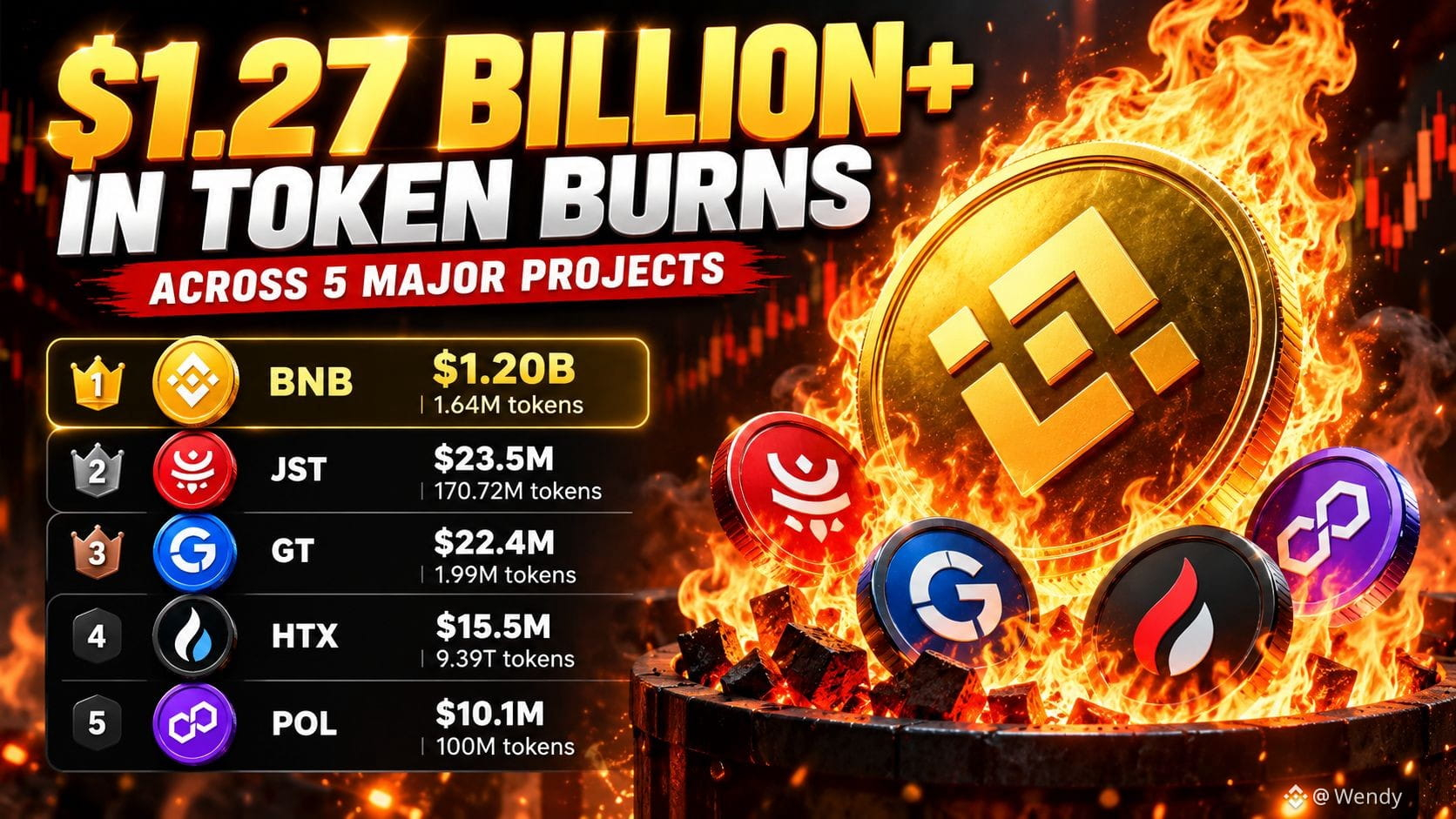
Over $1.27 billion worth of crypto tokens have been burned across five major projects.
According to CryptoRank's October 21 snapshot, these are the largest recent token burns:
🥇 $BNB: $1.20B | 1.64M tokens burned
🥈 $JST: $23.5M | 170.72M tokens
🥉 $GT: $22.4M | 1.99M tokens
🔹 $HTX: $15.5M | 9.39T tokens
🔹 $POL: $10.1M | 100M tokens
BNB dominates the list, accounting for approximately 94% of the combined burn value.
BNB Chain has already reduced its supply from an initial 200 million BNB to approximately 131.5 million, moving closer to its long-term target of 100 million.
Meanwhile, Polygon reportedly has another 22 million POL scheduled for its next burn.
Token burns permanently remove tokens from circulation, but their impact on price also depends on demand, issuance and market conditions.
Which token do you think benefits most from its long-term burn mechanism? 👀
#TokenBurn #BNB $BNB
{future}(BNBUSDT)
Over $1.27 billion worth of crypto tokens have been burned across five major projects.
According to CryptoRank's October 21 snapshot, these are the largest recent token burns:
🥇 $BNB : $1.20B | 1.64M tokens burned
🥈 $JST: $23.5M | 170.72M tokens
🥉 $GT: $22.4M | 1.99M tokens
🔹 $HTX: $15.5M | 9.39T tokens
🔹 $POL: $10.1M | 100M tokens
BNB dominates the list, accounting for approximately 94% of the combined burn value.
BNB Chain has already reduced its supply from an initial 200 million BNB to approximately 131.5 million, moving closer to its long-term target of 100 million.
Meanwhile, Polygon reportedly has another 22 million POL scheduled for its next burn.
Token burns permanently remove tokens from circulation, but their impact on price also depends on demand, issuance and market conditions.
Which token do you think benefits most from its long-term burn mechanism? 👀
#TokenBurn #BNB $BNB
According to CryptoRank's October 21 snapshot, these are the largest recent token burns:
🥇 $BNB : $1.20B | 1.64M tokens burned
🥈 $JST: $23.5M | 170.72M tokens
🥉 $GT: $22.4M | 1.99M tokens
🔹 $HTX: $15.5M | 9.39T tokens
🔹 $POL: $10.1M | 100M tokens
BNB dominates the list, accounting for approximately 94% of the combined burn value.
BNB Chain has already reduced its supply from an initial 200 million BNB to approximately 131.5 million, moving closer to its long-term target of 100 million.
Meanwhile, Polygon reportedly has another 22 million POL scheduled for its next burn.
Token burns permanently remove tokens from circulation, but their impact on price also depends on demand, issuance and market conditions.
Which token do you think benefits most from its long-term burn mechanism? 👀
#TokenBurn #BNB $BNB
User-cb545218:
follow me
4
2
13
1.3k
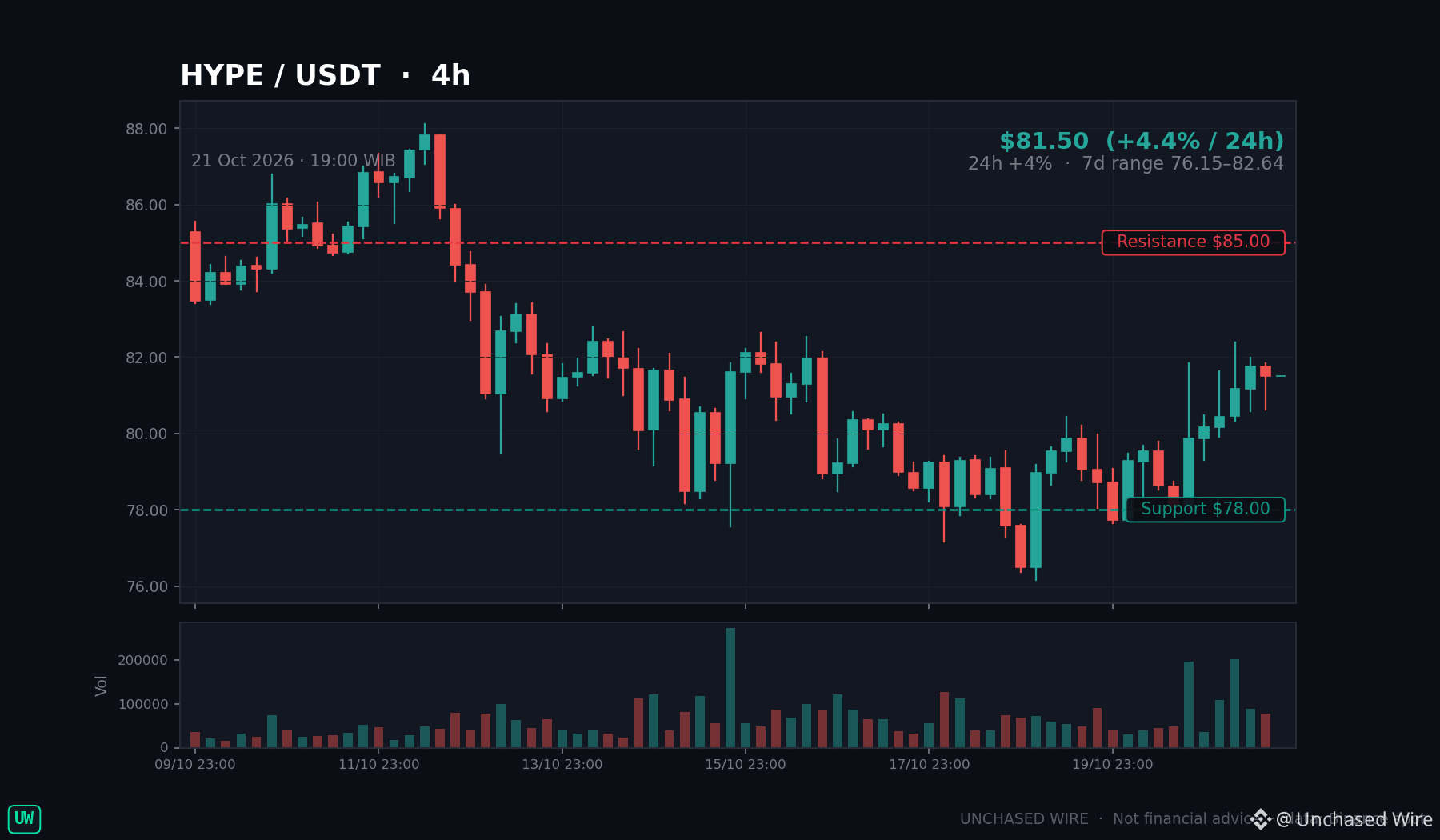
$1.75M of $HYPE went up in smoke yesterday — and that was the plan.
On-chain trackers clocked Hyperliquid's buyback burning 21,790 HYPE in 24 hours at an average $80.27, lifting lifetime burns to 49.69M tokens — 4.97% of max supply permanently removed. The fuel is protocol fee revenue, estimated near $1.65M a day. Annualized, one day of burns is ~0.8% of supply per year — illustrative, not a forecast — but the mechanism is the token's quiet engine: every perp trade feeds the burn.
Adoption is lining up behind it too: HYPE just joined a new retail options launch alongside BTC, ETH and SOL — one-week calls and puts, settled in USDC.
The honest risk: buybacks aren't dividends, and the burn only works while fees keep flowing — plus the team moved 3.75M HYPE off the staking contract this month, reportedly sold privately. The tape sits between $78 support, tested four times, and $85 resistance, ~14% under the $94 September high.
Above $85 by Sunday, or back under $78 — pick one. $HYPE NFA. DYOR.
#Hyperliquid #DeFi #TokenBurn #CryptoNews
$1.75M of $HYPE went up in smoke yesterday — and that was the plan.
On-chain trackers clocked Hyperliquid's buyback burning 21,790 HYPE in 24 hours at an average $80.27, lifting lifetime burns to 49.69M tokens — 4.97% of max supply permanently removed. The fuel is protocol fee revenue, estimated near $1.65M a day. Annualized, one day of burns is ~0.8% of supply per year — illustrative, not a forecast — but the mechanism is the token's quiet engine: every perp trade feeds the burn.
Adoption is lining up behind it too: HYPE just joined a new retail options launch alongside BTC, ETH and SOL — one-week calls and puts, settled in USDC.
The honest risk: buybacks aren't dividends, and the burn only works while fees keep flowing — plus the team moved 3.75M HYPE off the staking contract this month, reportedly sold privately. The tape sits between $78 support, tested four times, and $85 resistance, ~14% under the $94 September high.
Above $85 by Sunday, or back under $78 — pick one. $HYPE NFA. DYOR.
#Hyperliquid #DeFi #TokenBurn #CryptoNews
On-chain trackers clocked Hyperliquid's buyback burning 21,790 HYPE in 24 hours at an average $80.27, lifting lifetime burns to 49.69M tokens — 4.97% of max supply permanently removed. The fuel is protocol fee revenue, estimated near $1.65M a day. Annualized, one day of burns is ~0.8% of supply per year — illustrative, not a forecast — but the mechanism is the token's quiet engine: every perp trade feeds the burn.
Adoption is lining up behind it too: HYPE just joined a new retail options launch alongside BTC, ETH and SOL — one-week calls and puts, settled in USDC.
The honest risk: buybacks aren't dividends, and the burn only works while fees keep flowing — plus the team moved 3.75M HYPE off the staking contract this month, reportedly sold privately. The tape sits between $78 support, tested four times, and $85 resistance, ~14% under the $94 September high.
Above $85 by Sunday, or back under $78 — pick one. $HYPE NFA. DYOR.
#Hyperliquid #DeFi #TokenBurn #CryptoNews
84

Special Issue: Binance Coin (BNB) Market FocusWednesday, October 21, 2026
BNB STABILIZES NEAR $742 FOLLOWING 37TH QUARTERLY TOKEN BURN
Binance Coin (BNB) is capturing center stage across global digital asset desks today following the execution of its 37th quarterly Auto-Burn program. The protocol permanently burned 1,646,196.44 $BNB, drastically reducing spot market inventory and reaffirming the network's long-term deflationary framework.
The quarterly burn mechanism designed to systematically trim total supply down to 100 million tokens comes at a critical technical junction. $BNB is currently trading near $742.50 (approx. Rp13.37 Million), representing a resilient bounce back from earlier October lows around $719.
{spot}(BNBUSDT)
In institutional developments, corporate treasury firm BNB Standard confirmed plans to ring the opening bell at Nasdaq on October 26. Under incoming CEO Alex Odagiu, the company finalized a strategic governance settlement with YZi Labs to increase its corporate treasury allocation of $BNB per share and launch a direct validator node on the $BNB Chain, marking a significant convergence between traditional equities and native network infrastructure.
The successful destruction of over 1.6 million tokens during the recent burn reinforces BNB's structural scarcity. As institutional entities move from simple holding strategies to running active network validators, layer-1 utility token mechanics are showing real-world durability." Chief Technical Analyst, BlockMetrics Research
#bnb #TokenBurn
Special Issue: Binance Coin (BNB) Market Focus
Wednesday, October 21, 2026
BNB STABILIZES NEAR $742 FOLLOWING 37TH QUARTERLY TOKEN BURN
Binance Coin (BNB) is capturing center stage across global digital asset desks today following the execution of its 37th quarterly Auto-Burn program. The protocol permanently burned 1,646,196.44 $BNB , drastically reducing spot market inventory and reaffirming the network's long-term deflationary framework.
The quarterly burn mechanism designed to systematically trim total supply down to 100 million tokens comes at a critical technical junction. $BNB is currently trading near $742.50 (approx. Rp13.37 Million), representing a resilient bounce back from earlier October lows around $719.
In institutional developments, corporate treasury firm BNB Standard confirmed plans to ring the opening bell at Nasdaq on October 26. Under incoming CEO Alex Odagiu, the company finalized a strategic governance settlement with YZi Labs to increase its corporate treasury allocation of $BNB per share and launch a direct validator node on the $BNB Chain, marking a significant convergence between traditional equities and native network infrastructure.
The successful destruction of over 1.6 million tokens during the recent burn reinforces BNB's structural scarcity. As institutional entities move from simple holding strategies to running active network validators, layer-1 utility token mechanics are showing real-world durability." Chief Technical Analyst, BlockMetrics Research
#bnb #TokenBurn
BNB STABILIZES NEAR $742 FOLLOWING 37TH QUARTERLY TOKEN BURN
Binance Coin (BNB) is capturing center stage across global digital asset desks today following the execution of its 37th quarterly Auto-Burn program. The protocol permanently burned 1,646,196.44 $BNB , drastically reducing spot market inventory and reaffirming the network's long-term deflationary framework.
The quarterly burn mechanism designed to systematically trim total supply down to 100 million tokens comes at a critical technical junction. $BNB is currently trading near $742.50 (approx. Rp13.37 Million), representing a resilient bounce back from earlier October lows around $719.
In institutional developments, corporate treasury firm BNB Standard confirmed plans to ring the opening bell at Nasdaq on October 26. Under incoming CEO Alex Odagiu, the company finalized a strategic governance settlement with YZi Labs to increase its corporate treasury allocation of $BNB per share and launch a direct validator node on the $BNB Chain, marking a significant convergence between traditional equities and native network infrastructure.
The successful destruction of over 1.6 million tokens during the recent burn reinforces BNB's structural scarcity. As institutional entities move from simple holding strategies to running active network validators, layer-1 utility token mechanics are showing real-world durability." Chief Technical Analyst, BlockMetrics Research
#bnb #TokenBurn
151

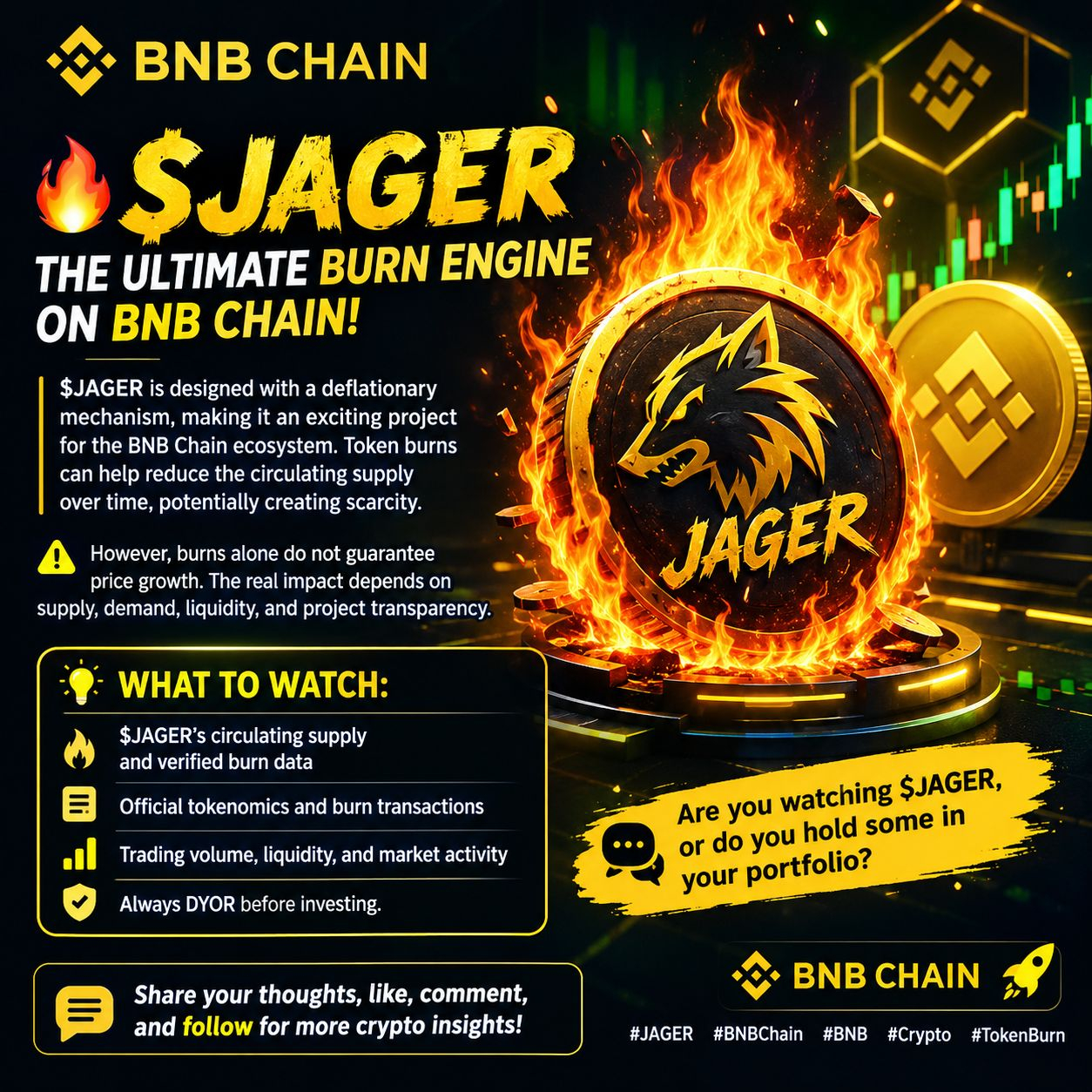
🔥 $JAGER on BNB Chain: A Deflationary Token to Watch!
$JAGER is attracting attention among crypto enthusiasts interested in token-burning mechanisms on the BNB Chain. 🔥
Token burns can reduce the circulating supply over time, potentially contributing to scarcity. However, burns alone do not guarantee price growth. Actual impact depends on the burn mechanism, token supply, demand, liquidity, and project transparency.
💡 What to Watch:
📊 $JAGER's circulating supply and verified burn data
🔥 Official tokenomics and burn transactions
📈 Trading volume, liquidity, and market activity
⚠️ Always DYOR before investing.
Are you watching $JAGER, or do you hold some in your portfolio?
👇 Share your thoughts, like, comment, and follow for more crypto insights!
#Jager #BNBChainSunset #bnb #crypto #TokenBurn $BNB $Jager
🔥 $JAGER on BNB Chain: A Deflationary Token to Watch!
$JAGER is attracting attention among crypto enthusiasts interested in token-burning mechanisms on the BNB Chain. 🔥
Token burns can reduce the circulating supply over time, potentially contributing to scarcity. However, burns alone do not guarantee price growth. Actual impact depends on the burn mechanism, token supply, demand, liquidity, and project transparency.
💡 What to Watch:
📊 $JAGER's circulating supply and verified burn data
🔥 Official tokenomics and burn transactions
📈 Trading volume, liquidity, and market activity
⚠️ Always DYOR before investing.
Are you watching $JAGER, or do you hold some in your portfolio?
👇 Share your thoughts, like, comment, and follow for more crypto insights!
#Jager #BNBChainSunset #bnb #crypto #TokenBurn $BNB $Jager
$JAGER is attracting attention among crypto enthusiasts interested in token-burning mechanisms on the BNB Chain. 🔥
Token burns can reduce the circulating supply over time, potentially contributing to scarcity. However, burns alone do not guarantee price growth. Actual impact depends on the burn mechanism, token supply, demand, liquidity, and project transparency.
💡 What to Watch:
📊 $JAGER's circulating supply and verified burn data
🔥 Official tokenomics and burn transactions
📈 Trading volume, liquidity, and market activity
⚠️ Always DYOR before investing.
Are you watching $JAGER, or do you hold some in your portfolio?
👇 Share your thoughts, like, comment, and follow for more crypto insights!
#Jager #BNBChainSunset #bnb #crypto #TokenBurn $BNB $Jager
1
17
1.8k

·
--
Проверено
#BNBToken
#CFTCSeeksCommentOnRetailDigitalAssetFramework $BTC
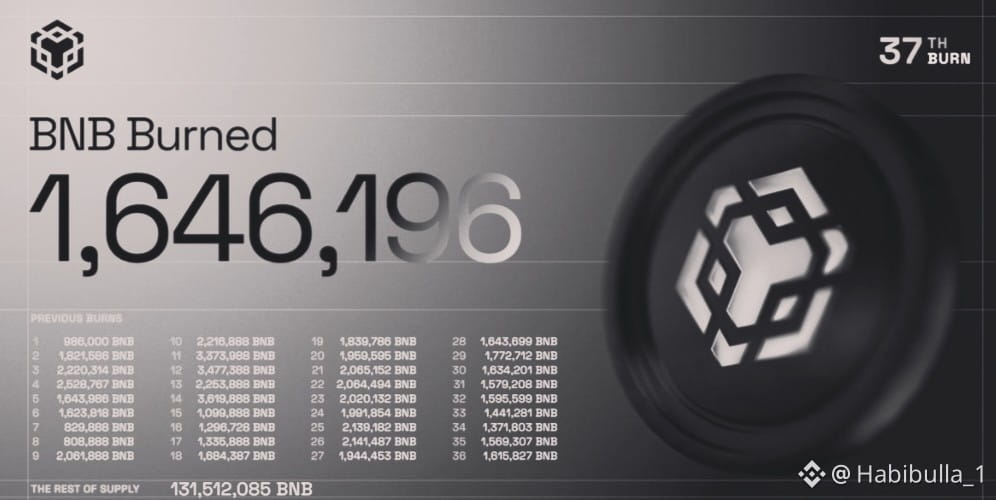
BNB’s 37th Token Burn Is Complete!
BNB Chain continues to reduce its token supply through quarterly Auto-Burn and real-time burning mechanisms.
📊 Key Facts: BNB Burned: 1,646,196.44 BNB
💰 Estimated Value: $1.197 Billion
📉 Remaining Supply: 131.51M BNB
🎯 Target Supply: 100M BNB
⚙️ Burn Mechanisms: Auto-Burn + BEP-95 Real-Time Burn
Reducing supply is an important part of BNB’s long-term strategy. However, future price performance will depend on demand, market conditions, and ecosystem growth.
Less supply, stronger fundamentals!
#BNBChain #TokenBurn
$BNB
#BNBToken
#CFTCSeeksCommentOnRetailDigitalAssetFramework $BTC
BNB’s 37th Token Burn Is Complete!
BNB Chain continues to reduce its token supply through quarterly Auto-Burn and real-time burning mechanisms.
📊 Key Facts: BNB Burned: 1,646,196.44 BNB
💰 Estimated Value: $1.197 Billion
📉 Remaining Supply: 131.51M BNB
🎯 Target Supply: 100M BNB
⚙️ Burn Mechanisms: Auto-Burn + BEP-95 Real-Time Burn
Reducing supply is an important part of BNB’s long-term strategy. However, future price performance will depend on demand, market conditions, and ecosystem growth.
Less supply, stronger fundamentals!
#BNBChain #TokenBurn
$BNB
#CFTCSeeksCommentOnRetailDigitalAssetFramework $BTC
BNB’s 37th Token Burn Is Complete!
BNB Chain continues to reduce its token supply through quarterly Auto-Burn and real-time burning mechanisms.
📊 Key Facts: BNB Burned: 1,646,196.44 BNB
💰 Estimated Value: $1.197 Billion
📉 Remaining Supply: 131.51M BNB
🎯 Target Supply: 100M BNB
⚙️ Burn Mechanisms: Auto-Burn + BEP-95 Real-Time Burn
Reducing supply is an important part of BNB’s long-term strategy. However, future price performance will depend on demand, market conditions, and ecosystem growth.
Less supply, stronger fundamentals!
#BNBChain #TokenBurn
$BNB
3
66

Проверено
#BTTC 🔥 21.62 TRILLION BTT BURNED! Is This Just the Beginning? 👀
BitTorrent has completed its first revenue-funded token burn, worth approximately $7.6 million! 🚀 With 100% of decentralized-service revenue committed to quarterly buybacks and burns, could $BTT become one of the most-watched low-priced crypto tokens? Or does real demand still need to prove itself? What’s your prediction? 🐳
$BTTC #CoinVahini #BTTC #TokenBurn #CryptoCommunity
#BTTC 🔥 21.62 TRILLION BTT BURNED! Is This Just the Beginning? 👀
BitTorrent has completed its first revenue-funded token burn, worth approximately $7.6 million! 🚀 With 100% of decentralized-service revenue committed to quarterly buybacks and burns, could $BTT become one of the most-watched low-priced crypto tokens? Or does real demand still need to prove itself? What’s your prediction? 🐳
$BTTC #CoinVahini #BTTC #TokenBurn #CryptoCommunity
BitTorrent has completed its first revenue-funded token burn, worth approximately $7.6 million! 🚀 With 100% of decentralized-service revenue committed to quarterly buybacks and burns, could $BTT become one of the most-watched low-priced crypto tokens? Or does real demand still need to prove itself? What’s your prediction? 🐳
$BTTC #CoinVahini #BTTC #TokenBurn #CryptoCommunity
ahmed82:
الخبر دى اكيد يعني كل 3شهور سوف يتم حذف 21تريون ارجوا الافادة وشكرا
6
20
4.8k

·
--
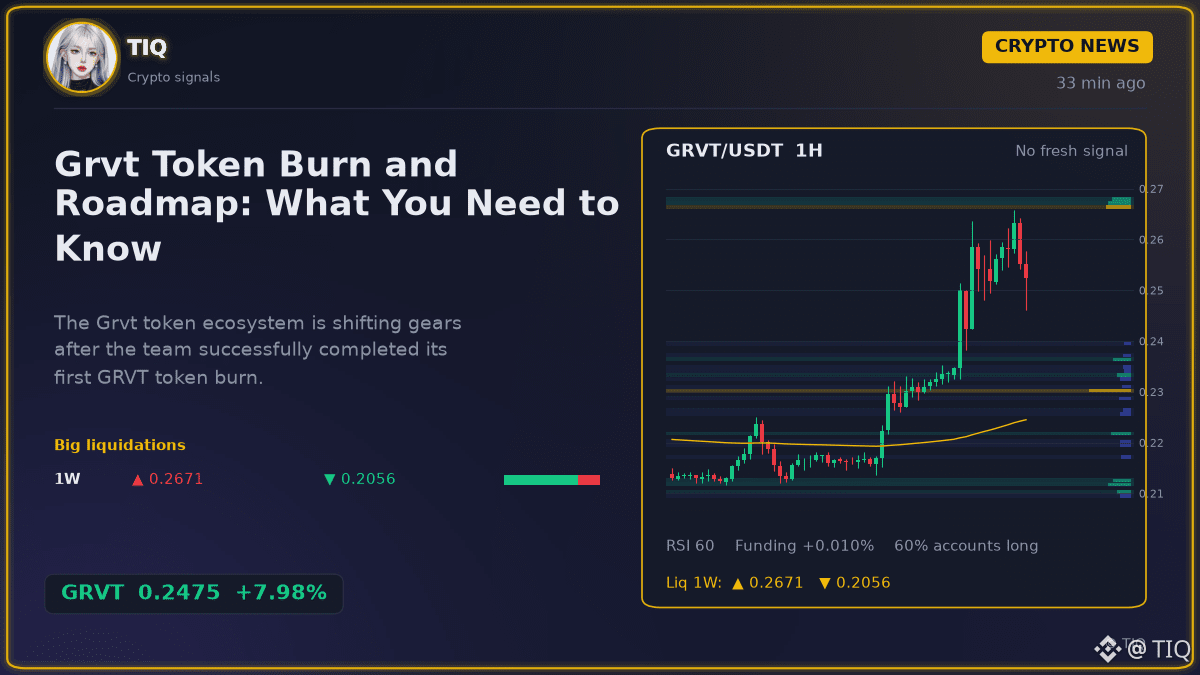
Grvt Token Burn and Roadmap: What You Need to Know 🚨
The Grvt token ecosystem is shifting gears after the team successfully completed its first GRVT token burn.
A total of 1.1 million tokens were removed from circulation as part of a new buyback and burn initiative. This move sets the stage for a busy season, with four major product launches scheduled to roll out leading up to the Grvt 2.0 update this November. The roadmap focuses on expanding utility, specifically targeting yield opportunities and zero-fee trading for real-world assets. It seems the team is trying to make trading as smooth as a freshly buttered slide, though we will have to see how these features perform in the wild. 🚀
Keep an eye on these upcoming platform updates as they aim to change how users interact with real-world asset trading. It is a busy time for the project, so watching how these new tools integrate into the ecosystem will be interesting for active traders. 📈
What do you think, fam: big deal or just noise? 👇
#GRVT #CryptoNews #TokenBurn #RWA
ℹ️ News roundup from public sources, not financial advice.
Grvt Token Burn and Roadmap: What You Need to Know 🚨
The Grvt token ecosystem is shifting gears after the team successfully completed its first GRVT token burn.
A total of 1.1 million tokens were removed from circulation as part of a new buyback and burn initiative. This move sets the stage for a busy season, with four major product launches scheduled to roll out leading up to the Grvt 2.0 update this November. The roadmap focuses on expanding utility, specifically targeting yield opportunities and zero-fee trading for real-world assets. It seems the team is trying to make trading as smooth as a freshly buttered slide, though we will have to see how these features perform in the wild. 🚀
Keep an eye on these upcoming platform updates as they aim to change how users interact with real-world asset trading. It is a busy time for the project, so watching how these new tools integrate into the ecosystem will be interesting for active traders. 📈
What do you think, fam: big deal or just noise? 👇
#GRVT #CryptoNews #TokenBurn #RWA
ℹ️ News roundup from public sources, not financial advice.
The Grvt token ecosystem is shifting gears after the team successfully completed its first GRVT token burn.
A total of 1.1 million tokens were removed from circulation as part of a new buyback and burn initiative. This move sets the stage for a busy season, with four major product launches scheduled to roll out leading up to the Grvt 2.0 update this November. The roadmap focuses on expanding utility, specifically targeting yield opportunities and zero-fee trading for real-world assets. It seems the team is trying to make trading as smooth as a freshly buttered slide, though we will have to see how these features perform in the wild. 🚀
Keep an eye on these upcoming platform updates as they aim to change how users interact with real-world asset trading. It is a busy time for the project, so watching how these new tools integrate into the ecosystem will be interesting for active traders. 📈
What do you think, fam: big deal or just noise? 👇
#GRVT #CryptoNews #TokenBurn #RWA
ℹ️ News roundup from public sources, not financial advice.
128

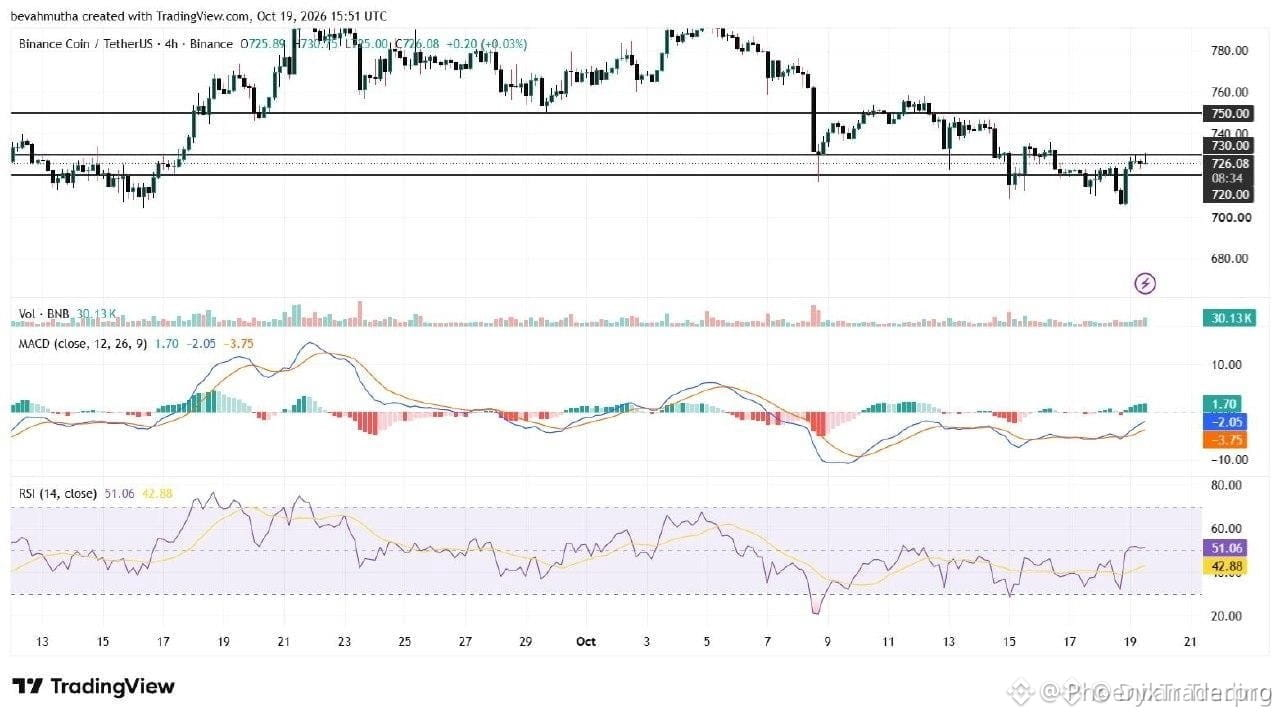
$BNB SUPPLY SHOCK IGNITES AS 1.65M TOKENS VANISH AHEAD OF THE $750 TEST! 💥🚀
Target: 750 🎯
A swift 3% bite out of circulating supply just hit the ledger, wiping 1.65 million tokens off the board right before Q4 liquidity kicks into gear. 🌊 When mechanical burns squeeze the float like this, order books thin out fast and order flow demands repricing.
📊 Historical post-burn expansions show a distinct pattern of patience followed by sudden upside velocity, even while macro hesitations linger in the background. ⚡ Smart bids are already stepping in to front-run the float compression before the crowd realizes how tight the book really is.
💬 Are you front-running this supply squeeze into $750, or waiting to buy the post-expansion retest? 👇
⚠️ Not financial advice. Always manage your risk. 🛡️
🏷️ #BNB #TokenBurn #Altcoins #Crypto
🐂 🌕
$BNB SUPPLY SHOCK IGNITES AS 1.65M TOKENS VANISH AHEAD OF THE $750 TEST! 💥🚀
Target: 750 🎯
A swift 3% bite out of circulating supply just hit the ledger, wiping 1.65 million tokens off the board right before Q4 liquidity kicks into gear. 🌊 When mechanical burns squeeze the float like this, order books thin out fast and order flow demands repricing.
📊 Historical post-burn expansions show a distinct pattern of patience followed by sudden upside velocity, even while macro hesitations linger in the background. ⚡ Smart bids are already stepping in to front-run the float compression before the crowd realizes how tight the book really is.
💬 Are you front-running this supply squeeze into $750, or waiting to buy the post-expansion retest? 👇
⚠️ Not financial advice. Always manage your risk. 🛡️
🏷️ #BNB #TokenBurn #Altcoins #Crypto
🐂 🌕
Target: 750 🎯
A swift 3% bite out of circulating supply just hit the ledger, wiping 1.65 million tokens off the board right before Q4 liquidity kicks into gear. 🌊 When mechanical burns squeeze the float like this, order books thin out fast and order flow demands repricing.
📊 Historical post-burn expansions show a distinct pattern of patience followed by sudden upside velocity, even while macro hesitations linger in the background. ⚡ Smart bids are already stepping in to front-run the float compression before the crowd realizes how tight the book really is.
💬 Are you front-running this supply squeeze into $750, or waiting to buy the post-expansion retest? 👇
⚠️ Not financial advice. Always manage your risk. 🛡️
🏷️ #BNB #TokenBurn #Altcoins #Crypto
🐂 🌕
10

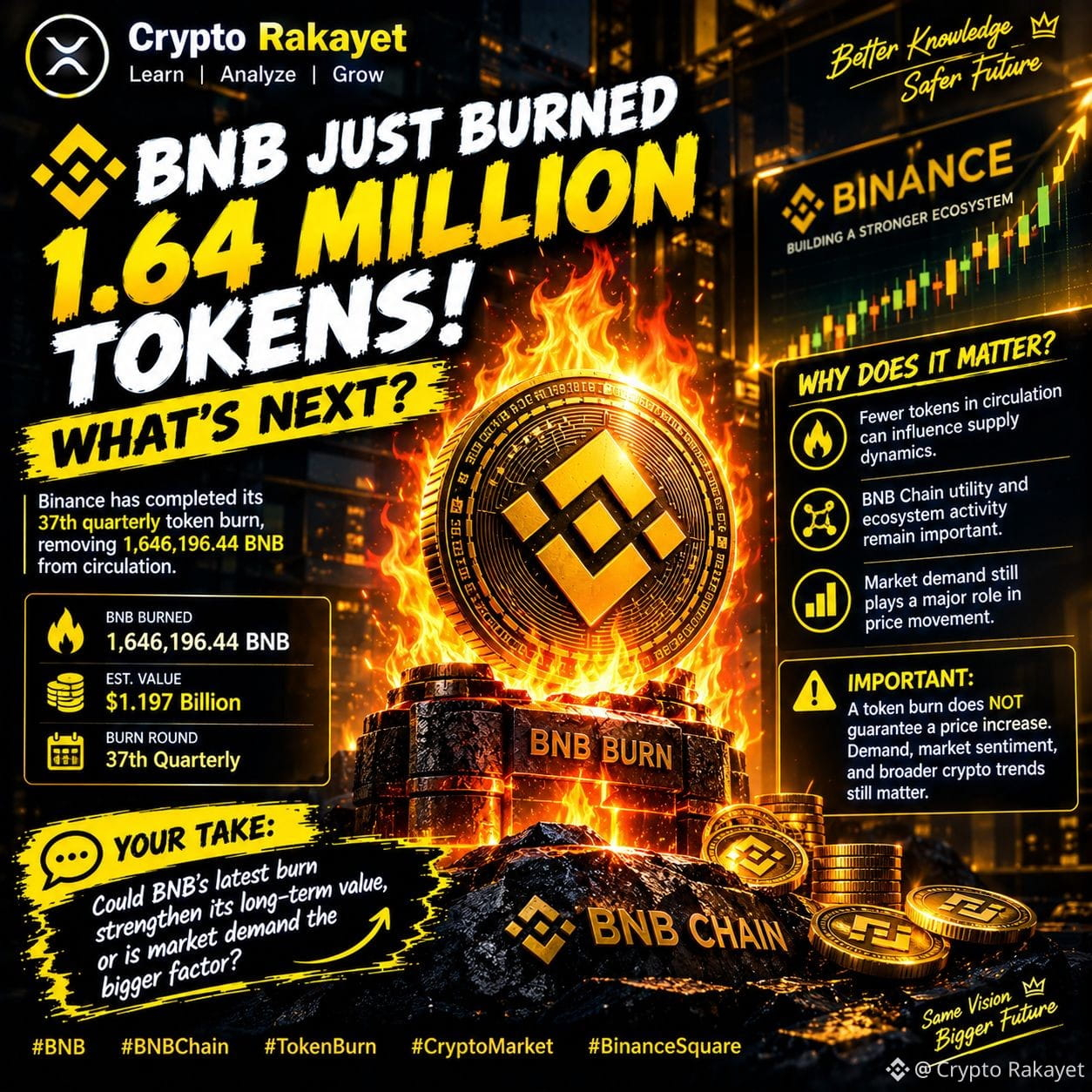
🔥 BNB JUST BURNED 1.64 MILLION TOKENS — WHAT’S NEXT?
The BNB ecosystem has completed its 37th quarterly token burn, removing 1,646,196.44 BNB from circulation. 👀
💡 Why does this matter?
🔥 Fewer tokens in circulation can influence supply dynamics.
🌐 BNB Chain utility and ecosystem activity remain important.
📊 Market demand still plays a major role in price movement.
⚠️ Important: A token burn does NOT guarantee a price increase. Demand, market sentiment, and broader crypto trends still matter.
💬 Your take: Could BNB’s latest burn strengthen its long-term value, or is market demand the bigger factor?
#bnb #BNBChain #TokenBurn #CryptoMarket #BinanceSquare
🔥 BNB JUST BURNED 1.64 MILLION TOKENS — WHAT’S NEXT?
The BNB ecosystem has completed its 37th quarterly token burn, removing 1,646,196.44 BNB from circulation. 👀
💡 Why does this matter?
🔥 Fewer tokens in circulation can influence supply dynamics.
🌐 BNB Chain utility and ecosystem activity remain important.
📊 Market demand still plays a major role in price movement.
⚠️ Important: A token burn does NOT guarantee a price increase. Demand, market sentiment, and broader crypto trends still matter.
💬 Your take: Could BNB’s latest burn strengthen its long-term value, or is market demand the bigger factor?
#bnb #BNBChain #TokenBurn #CryptoMarket #BinanceSquare
The BNB ecosystem has completed its 37th quarterly token burn, removing 1,646,196.44 BNB from circulation. 👀
💡 Why does this matter?
🔥 Fewer tokens in circulation can influence supply dynamics.
🌐 BNB Chain utility and ecosystem activity remain important.
📊 Market demand still plays a major role in price movement.
⚠️ Important: A token burn does NOT guarantee a price increase. Demand, market sentiment, and broader crypto trends still matter.
💬 Your take: Could BNB’s latest burn strengthen its long-term value, or is market demand the bigger factor?
#bnb #BNBChain #TokenBurn #CryptoMarket #BinanceSquare
77

🦈 $BNB COMPLETED ITS 37TH QUARTERLY BURN ERASING $1.2B IN SUPPLY! ⚡
BNB Chain has executed its 37th mechanical burn, permanently wiping 1.65M $BNB worth roughly $1.2B from the circulating float. 🌊 This programmatic supply contraction fundamentally alters the long-term order flow equilibrium.
While quarterly burns do not represent immediate buy-side market orders, drying up liquid inventory creates fertile ground for structural expansion once demand steps in. 📊 Institutional participants track precisely these float-tightening catalysts when mapping macro positioning.
With circulating supply shrinking systematically every quarter, how do you expect this structural deficit to impact the macro chart? 💬
⚠️ Not financial advice. Always manage your risk. 🛡️
🏷️ #BNB #TokenBurn #CryptoAnalysis #Tokenomics
🎯 🦈
🦈 $BNB COMPLETED ITS 37TH QUARTERLY BURN ERASING $1.2B IN SUPPLY! ⚡
BNB Chain has executed its 37th mechanical burn, permanently wiping 1.65M $BNB worth roughly $1.2B from the circulating float. 🌊 This programmatic supply contraction fundamentally alters the long-term order flow equilibrium.
While quarterly burns do not represent immediate buy-side market orders, drying up liquid inventory creates fertile ground for structural expansion once demand steps in. 📊 Institutional participants track precisely these float-tightening catalysts when mapping macro positioning.
With circulating supply shrinking systematically every quarter, how do you expect this structural deficit to impact the macro chart? 💬
⚠️ Not financial advice. Always manage your risk. 🛡️
🏷️ #BNB #TokenBurn #CryptoAnalysis #Tokenomics
🎯 🦈
BNB Chain has executed its 37th mechanical burn, permanently wiping 1.65M $BNB worth roughly $1.2B from the circulating float. 🌊 This programmatic supply contraction fundamentally alters the long-term order flow equilibrium.
While quarterly burns do not represent immediate buy-side market orders, drying up liquid inventory creates fertile ground for structural expansion once demand steps in. 📊 Institutional participants track precisely these float-tightening catalysts when mapping macro positioning.
With circulating supply shrinking systematically every quarter, how do you expect this structural deficit to impact the macro chart? 💬
⚠️ Not financial advice. Always manage your risk. 🛡️
🏷️ #BNB #TokenBurn #CryptoAnalysis #Tokenomics
🎯 🦈
2

💥 OVER $1.2B IN $BNB PERMANENTLY VAPORIZED AS 37TH QUARTERLY SUPPLY BURN CONCLUDES! 🦈
The network just wiped roughly 1.65 million $BNB completely off the board, permanently removing $1.2 billion in tokens from circulating float. 🌊 That is a massive structural supply contraction that fundamentally tightens the underlying market balance.
Smart money understands burns do not trigger instant vertical candles in isolation, but wiping substantial liquidity while network velocity remains active builds intense coiled pressure over time. 📊 When broader market demand flips aggressive, this restricted supply directly amplifies upside momentum. ⚡
💬 Are you accumulating spot $BNB into this supply squeeze, or waiting for fresh trend confirmation? 👇
⚠️ Not financial advice. Always manage your risk. 🛡️
🏷️ #BNB #TokenBurn #CryptoAlpha #Altcoins
🔥 💎
💥 OVER $1.2B IN $BNB PERMANENTLY VAPORIZED AS 37TH QUARTERLY SUPPLY BURN CONCLUDES! 🦈
The network just wiped roughly 1.65 million $BNB completely off the board, permanently removing $1.2 billion in tokens from circulating float. 🌊 That is a massive structural supply contraction that fundamentally tightens the underlying market balance.
Smart money understands burns do not trigger instant vertical candles in isolation, but wiping substantial liquidity while network velocity remains active builds intense coiled pressure over time. 📊 When broader market demand flips aggressive, this restricted supply directly amplifies upside momentum. ⚡
💬 Are you accumulating spot $BNB into this supply squeeze, or waiting for fresh trend confirmation? 👇
⚠️ Not financial advice. Always manage your risk. 🛡️
🏷️ #BNB #TokenBurn #CryptoAlpha #Altcoins
🔥 💎
The network just wiped roughly 1.65 million $BNB completely off the board, permanently removing $1.2 billion in tokens from circulating float. 🌊 That is a massive structural supply contraction that fundamentally tightens the underlying market balance.
Smart money understands burns do not trigger instant vertical candles in isolation, but wiping substantial liquidity while network velocity remains active builds intense coiled pressure over time. 📊 When broader market demand flips aggressive, this restricted supply directly amplifies upside momentum. ⚡
💬 Are you accumulating spot $BNB into this supply squeeze, or waiting for fresh trend confirmation? 👇
⚠️ Not financial advice. Always manage your risk. 🛡️
🏷️ #BNB #TokenBurn #CryptoAlpha #Altcoins
🔥 💎
2

·
--
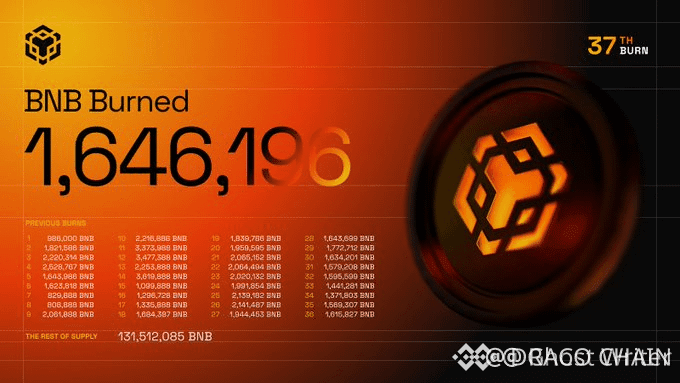
⚡ OVER $1.19B PERMANENTLY REMOVED AS $BNB COMPLETES MASSIVE 37TH TOKEN BURN 🦈
The protocol just finalized its 37th quarterly burn, taking roughly 1.64 million $BNB out of circulation forever—a staggering $1.197B supply extraction executed on-chain. 📊
From a structural perspective, aggressive supply-side contraction permanently alters order book depth, systematically starving liquidity from potential seller pools. 🌊 When baseline supply contracts at this magnitude, historical distribution blocks often flip into institutional accumulation zones over higher timeframes. 💡
💬 Do you expect this supply crunch to trigger an immediate structural breakout, or will we see one more sweep of the lows? 👇
⚠️ Not financial advice. Always manage your risk. 🛡️
🏷️ #BNB #TokenBurn #CryptoAnalysis #SmartMoney
🎯 🦈
⚡ OVER $1.19B PERMANENTLY REMOVED AS $BNB COMPLETES MASSIVE 37TH TOKEN BURN 🦈
The protocol just finalized its 37th quarterly burn, taking roughly 1.64 million $BNB out of circulation forever—a staggering $1.197B supply extraction executed on-chain. 📊
From a structural perspective, aggressive supply-side contraction permanently alters order book depth, systematically starving liquidity from potential seller pools. 🌊 When baseline supply contracts at this magnitude, historical distribution blocks often flip into institutional accumulation zones over higher timeframes. 💡
💬 Do you expect this supply crunch to trigger an immediate structural breakout, or will we see one more sweep of the lows? 👇
⚠️ Not financial advice. Always manage your risk. 🛡️
🏷️ #BNB #TokenBurn #CryptoAnalysis #SmartMoney
🎯 🦈
The protocol just finalized its 37th quarterly burn, taking roughly 1.64 million $BNB out of circulation forever—a staggering $1.197B supply extraction executed on-chain. 📊
From a structural perspective, aggressive supply-side contraction permanently alters order book depth, systematically starving liquidity from potential seller pools. 🌊 When baseline supply contracts at this magnitude, historical distribution blocks often flip into institutional accumulation zones over higher timeframes. 💡
💬 Do you expect this supply crunch to trigger an immediate structural breakout, or will we see one more sweep of the lows? 👇
⚠️ Not financial advice. Always manage your risk. 🛡️
🏷️ #BNB #TokenBurn #CryptoAnalysis #SmartMoney
🎯 🦈
19

·
--
💥 $BNB PERMANENTLY ERASES $1.2B IN SUPPLY AS QUARTERLY BURN EXECUTES! 🦈
The 37th quarterly burn just permanently removed 1.6462 million $BNB from circulation, erasing roughly $1.197 billion in active float. 🏦 This contracts the total circulating supply down to approximately 131.5 million tokens, creating a textbook structural supply constraint across the macro board. 🌊
When sustained supply contraction meets persistent institutional order flow, the structural baseline inevitably tightens toward key market inefficiencies. 📊 Are you pricing in this structural supply shock, or waiting for a sweep of lower demand pools? 👇
⚠️ Not financial advice. Always manage your risk. 🛡️
🏷️ #BNB #TokenBurn #SmartMoney #Altcoins
🎯 🦈
💥 $BNB PERMANENTLY ERASES $1.2B IN SUPPLY AS QUARTERLY BURN EXECUTES! 🦈
The 37th quarterly burn just permanently removed 1.6462 million $BNB from circulation, erasing roughly $1.197 billion in active float. 🏦 This contracts the total circulating supply down to approximately 131.5 million tokens, creating a textbook structural supply constraint across the macro board. 🌊
When sustained supply contraction meets persistent institutional order flow, the structural baseline inevitably tightens toward key market inefficiencies. 📊 Are you pricing in this structural supply shock, or waiting for a sweep of lower demand pools? 👇
⚠️ Not financial advice. Always manage your risk. 🛡️
🏷️ #BNB #TokenBurn #SmartMoney #Altcoins
🎯 🦈
The 37th quarterly burn just permanently removed 1.6462 million $BNB from circulation, erasing roughly $1.197 billion in active float. 🏦 This contracts the total circulating supply down to approximately 131.5 million tokens, creating a textbook structural supply constraint across the macro board. 🌊
When sustained supply contraction meets persistent institutional order flow, the structural baseline inevitably tightens toward key market inefficiencies. 📊 Are you pricing in this structural supply shock, or waiting for a sweep of lower demand pools? 👇
⚠️ Not financial advice. Always manage your risk. 🛡️
🏷️ #BNB #TokenBurn #SmartMoney #Altcoins
🎯 🦈
6
Войдите, чтобы посмотреть больше материала
Присоединяйтесь к пользователям криптовалют по всему миру на Binance Square
⚡️ Получайте новейшую и полезную информацию о криптоактивах.
💬 Нам доверяет крупнейшая в мире криптобиржа.
👍 Получите достоверные аналитические данные от верифицированных создателей контента.
Эл. почта/номер телефона
В тренде
1
#BinancePick
Просмотров: 2.9M
150,785 обсуждают
2
#EarningsSeason
Просмотров: 5.2M
25,679 обсуждают
3
#AnthropicTTMRevenueGrewAbout1200%
Просмотров: 12,328
289 обсуждают
4
#AnthropicS1ExpectedToday
Просмотров: 15,393
266 обсуждают
5
#SouthKoreaReportedlyWeighsFourthCryptoTaxDelay
Просмотров: 22,213
396 обсуждают
6
#FranklinTempletonFilesForTwoDividendToBitcoinETFs
Просмотров: 29,864
491 обсуждают
7
#StrategyMSTRSurpassesNasdaqInMarketCap
Просмотров: 23,239
356 обсуждают
8
#CanadaProposesStablecoinRedemptionWithin3BusinessDays
Просмотров: 1,060
34 обсуждают
9
#ElectrumWalletBugLetRogueServersStealFunds
Просмотров: 25,201
439 обсуждают
10
#ArgentineCourtDismissesLIBRACaseAgainstMilei
Просмотров: 38,395
540 обсуждают