

#theonchainobserver
theonchainobserver
Просмотров: 1,246
13 обсуждают
Популярные
Новые


Sulaiman 零号猎人
·
--
The On‑Chain Observer: Data‑Driven Narratives Before They Go Mainstream
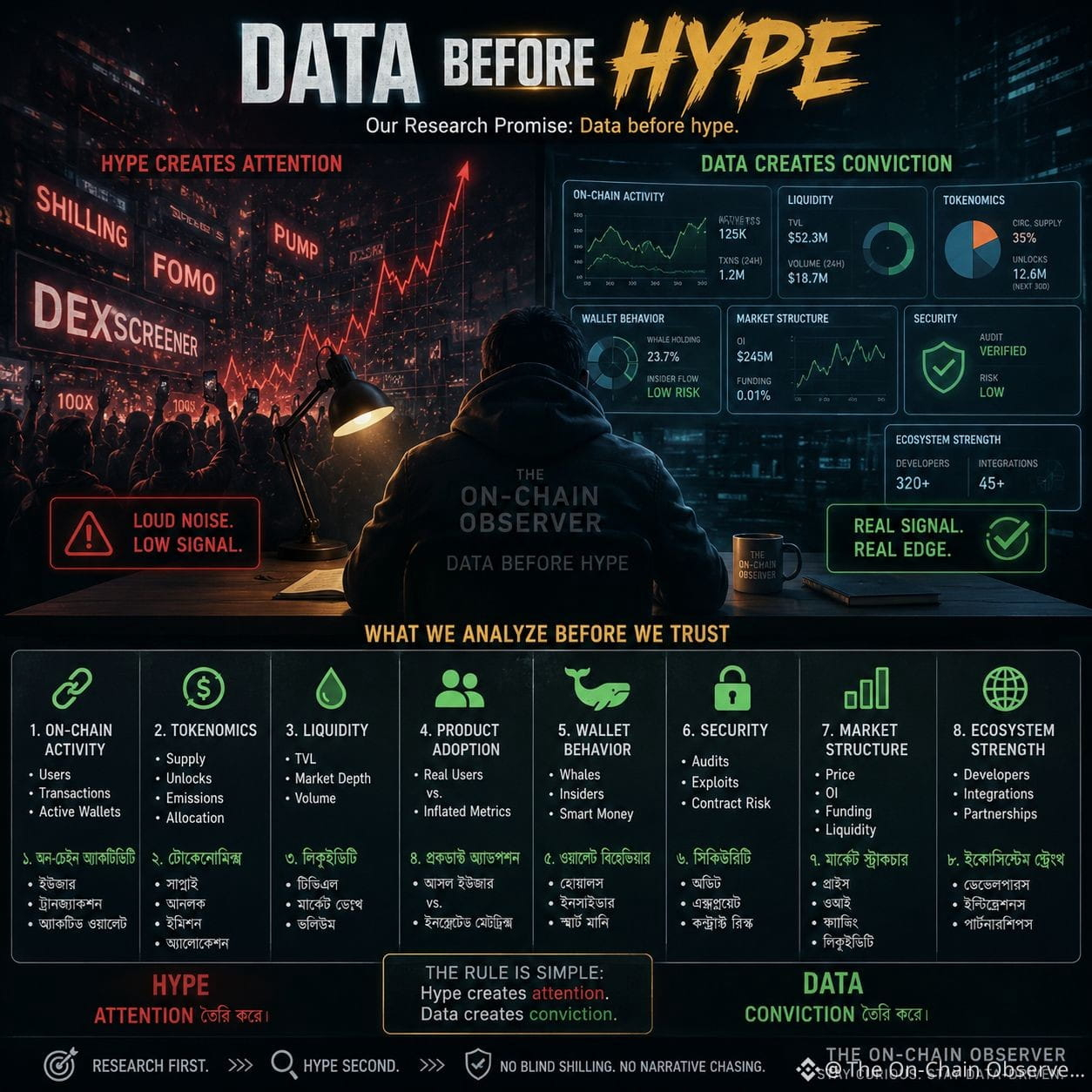
Most people chase crypto narratives after they trend.
I’m obsessed with finding them early, using on‑chain data instead of hype.
Here’s what this account is about:
On‑chain first, headlines second.
I track flows between wallets, exchanges, sectors and chains to see where liquidity is quietly moving before the crowd notices.Narratives, not random coins.
AI x crypto, Real‑World Assets (RWA), infrastructure, DePIN and other emerging themes – I focus on how attention and capital rotate between them, and which projects actually sit at the core of each narrative.Capital rotation as a map.
Narrative cycles rarely move in a straight line. Liquidity jumps from memes → AI → DeFi → Restaking → RWA, and back again. My goal is to make that rotation visible with clear charts and commentary, so you can understand where the market is reallocating risk.sharpe+1Signals, not signals‑selling.
I don’t sell calls or promise quick riches. I show the accumulation patterns, whale flows, rising active addresses, shrinking sell‑pressure, sector inflows and outflows – and I explain why they matter.Risk and downside are part of the story.
Every narrative has a hype cycle. I highlight both the “early” phase and the exit signals, so you’re not only thinking about upside.
If you prefer data over headlines, want to understand why capital is rotating into AI, RWA and new infrastructure plays – and you enjoy clear, concise breakdowns – this account is for you.
CTA / Closing
Follow The On‑Chain Observer if you want:
Weekly rotation radar postsNarrative maps with on‑chain evidenceShort, actionable breakdowns of where liquidity is moving next
What’s the one narrative you’re most curious about right now – AI, RWA, or something else?
👇 Drop it in the comments and I’ll put it on my radar for next week’s breakdown.
#OnChainData #CryptoNarratives #CapitalRotation #RWA #BinanceSquare
I’m obsessed with finding them early, using on‑chain data instead of hype.
Here’s what this account is about:
On‑chain first, headlines second.
I track flows between wallets, exchanges, sectors and chains to see where liquidity is quietly moving before the crowd notices.Narratives, not random coins.
AI x crypto, Real‑World Assets (RWA), infrastructure, DePIN and other emerging themes – I focus on how attention and capital rotate between them, and which projects actually sit at the core of each narrative.Capital rotation as a map.
Narrative cycles rarely move in a straight line. Liquidity jumps from memes → AI → DeFi → Restaking → RWA, and back again. My goal is to make that rotation visible with clear charts and commentary, so you can understand where the market is reallocating risk.sharpe+1Signals, not signals‑selling.
I don’t sell calls or promise quick riches. I show the accumulation patterns, whale flows, rising active addresses, shrinking sell‑pressure, sector inflows and outflows – and I explain why they matter.Risk and downside are part of the story.
Every narrative has a hype cycle. I highlight both the “early” phase and the exit signals, so you’re not only thinking about upside.
If you prefer data over headlines, want to understand why capital is rotating into AI, RWA and new infrastructure plays – and you enjoy clear, concise breakdowns – this account is for you.
CTA / Closing
Follow The On‑Chain Observer if you want:
Weekly rotation radar postsNarrative maps with on‑chain evidenceShort, actionable breakdowns of where liquidity is moving next
What’s the one narrative you’re most curious about right now – AI, RWA, or something else?
👇 Drop it in the comments and I’ll put it on my radar for next week’s breakdown.
#OnChainData #CryptoNarratives #CapitalRotation #RWA #BinanceSquare


0xSignal BNB
·
--
এই সপ্তাহে Crypto Market-এর ৩টি Narrative — কোথায় যাচ্ছে Capital?
Crypto market এখনো কোনো পরিষ্কার “Risk-On” signal দিচ্ছে না।
বরং ৩টি শক্তি একে অপরের সঙ্গে লড়াই করছে:
Bitcoin-এর range
Institutional capital
Altcoin speculation
এগুলো আলাদা গল্প নয়—একসঙ্গে দেখলেই market-এর আসল picture পরিষ্কার হয়। 👇
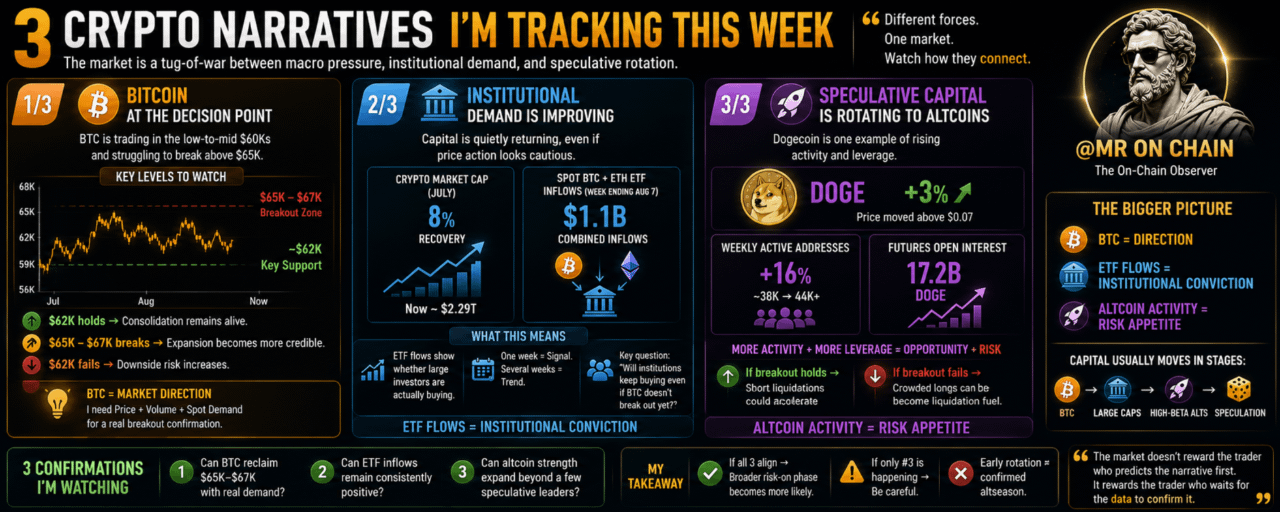
1/3 — 🟠 Bitcoin এখন Decision Point-এ
Bitcoin বর্তমানে $60K-এর মাঝামাঝি অঞ্চলে ঘোরাফেরা করছে।
কিন্তু আসল বিষয় price নয়—range-এর কোন দিক BTC ভাঙে।
আমি নজর রাখছি:
🟢 ~$62K → গুরুত্বপূর্ণ support
🔴 $65K–$67K → breakout zone
যদি $62K ধরে রাখতে পারে এবং BTC শক্তিশালী volume ও spot demand নিয়ে $65K–$67K-এর ওপরে যেতে পারে, তাহলে নতুন expansion phase শুরু হওয়ার সম্ভাবনা বাড়বে।
কিন্তু শুধু একটি wick দেখেই breakout ধরে নেওয়া ঠিক হবে না।
আমার confirmation দরকার:
Price + Volume + Spot Demand
তিনটিই যদি একই direction দেখায়, তখন breakout-এর credibility অনেক বেশি।
👉 এই মুহূর্তে BTC পুরো crypto market-এর direction নির্ধারণ করছে।
2/3 — 🏦 Institutional Demand নীরবে ফিরে আসছে
Price action খুব exciting না হলেও capital flow-এর picture কিছুটা ভিন্ন।
July-তে crypto market capitalization প্রায় 8% recovery করে ~$2.29T-এ পৌঁছেছে।
আর সবচেয়ে গুরুত্বপূর্ণ বিষয়:
Spot Bitcoin + Ether ETFs-এ August 7 শেষ হওয়া সপ্তাহে প্রায় $1.1B combined inflow দেখা গেছে।
এটা গুরুত্বপূর্ণ কারণ ETF flow আমাদের একটা ধারণা দেয়—
বড় capital কি সত্যিই market-এ ঢুকছে, নাকি শুধু অপেক্ষা করছে?
তবে আমি একটি strong week-কে confirmation হিসেবে দেখছি না।
১ সপ্তাহ = Signal
কয়েক সপ্তাহ = Trend
যদি ETF inflow ধারাবাহিকভাবে positive থাকে এবং একই সময়ে BTC support ধরে রাখে, তাহলে market structure অনেক বেশি bullish হতে পারে।
তাই আমার প্রশ্ন:
“Institutions কি কিনেছে?”
এর চেয়ে গুরুত্বপূর্ণ প্রশ্ন হলো:
“BTC সঙ্গে সঙ্গে breakout না করলেও তারা কি কিনতে থাকবে?”
সেখানেই আসল conviction বোঝা যাবে।
3/3 — 🐕 Speculative Capital Altcoins-এ ঢোকার চেষ্টা করছে
এবার আসছে market-এর সবচেয়ে risky অংশ।
BTC যখন ~$63K–$65K অঞ্চলে momentum খুঁজছে, তখন speculative capital higher-beta assets-এর দিকে তাকাতে শুরু করেছে।
Dogecoin তার একটি interesting example।
DOGE প্রায় 3% gain করে $0.07-এর ওপরে উঠেছে।
একই সময়ে:
📈 Weekly active addresses প্রায় 16% বেড়ে ~38K → 44K+
📊 Futures Open Interest প্রায় 17.2B DOGE
এই combination আমার নজরে পড়ছে।
কারণ:
More activity + More leverage = Opportunity + Risk
যদি spot demand শক্তিশালী থাকে এবং DOGE breakout করতে পারে, তাহলে short liquidation momentum-কে আরও accelerate করতে পারে।
কিন্তু breakout fail করলে?
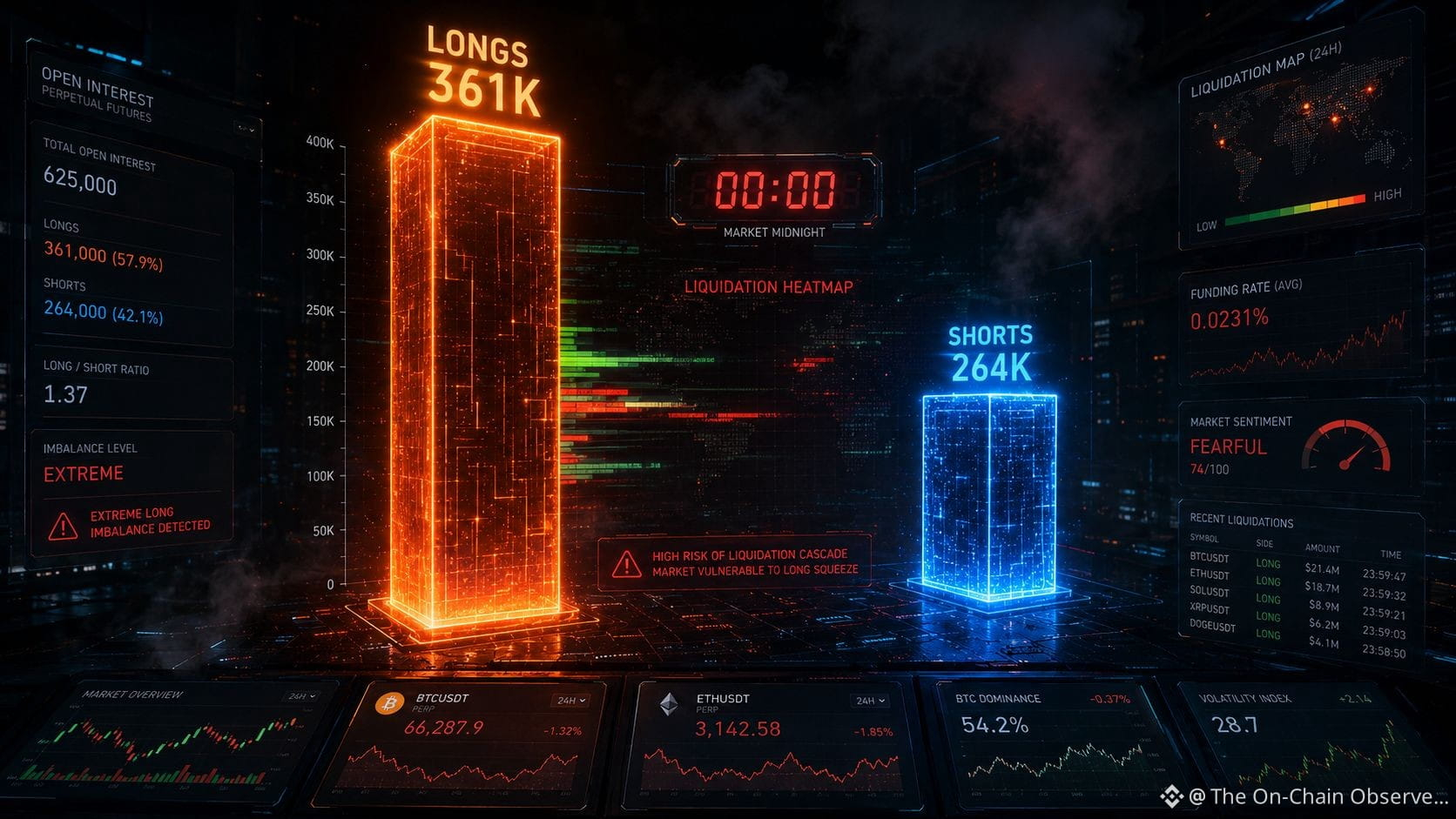
উচ্চ leverage-এর crowded longs নিজেরাই liquidation fuel হয়ে যেতে পারে।
তাই কোনো altcoin pump দেখেই আমি একে “Altseason” বলছি না।
4/3 — 🧠 তিনটি Narrative আসলে কীভাবে connected?
আমার কাছে market-এর framework খুব simple:
BTC = Direction
ETF Flows = Institutional Conviction
Altcoin Activity = Risk Appetite
এখন তিনটি scenario দেখুন:
🟢 BTC breakout + ETF inflows continue
→ Broader risk-on move তৈরি হতে পারে।
🟡 BTC range-bound + Altcoins outperform
→ এটা হতে পারে selective speculative rotation, কিন্তু এখনো Altseason নয়।
🔴 BTC support হারায় + ETF flows weaken
→ Altcoin leverage দ্রুত dangerous হয়ে উঠতে পারে।
সবচেয়ে বড় ভুল হবে এই narrative-গুলোকে আলাদা করে দেখা।
এগুলো একই capital cycle-এর বিভিন্ন ধাপ।
সাধারণত capital flow এমন হতে পারে:
BTC → Large Caps → High-Beta Alts → Speculation
কিন্তু cycle reverse হলে একই গতিতে:
Speculation → Alts → BTC → Cash
হয়েও যেতে পারে।
🎯 আমার এই সপ্তাহের Watchlist
আমি ৩টি confirmation খুঁজছি:
1️⃣ BTC কি real demand নিয়ে $65K–$67K reclaim করতে পারবে?
2️⃣ ETF inflow কি এক সপ্তাহের ঘটনা, নাকি ধারাবাহিক trend হচ্ছে?
3️⃣ Altcoin strength কি কয়েকটি speculative leader-এর বাইরে ছড়িয়ে পড়ছে?
যদি তিনটিই align করে—
🔥 তখন broader risk-on phase-এর সম্ভাবনা অনেক বেশি interesting হয়ে উঠবে।
কিন্তু যদি শুধু #3 দেখা যায়?
⚠️ সাবধান।
কারণ—
Early rotation ≠ confirmed altseason.
Market-এ সবচেয়ে বেশি লাভ সবসময় সেই ব্যক্তি করে না যে narrative সবচেয়ে আগে ধরে ফেলে।
অনেক সময় advantage থাকে তার কাছে—
যে narrative-এর পরে data confirmation দেখতে পায়।
— @0xSignal BNB
#CryptoBangladesh #BangladeshCrypto #CryptoBD #BitcoinBD #BinanceBangladesh
বরং ৩টি শক্তি একে অপরের সঙ্গে লড়াই করছে:
Bitcoin-এর range
Institutional capital
Altcoin speculation
এগুলো আলাদা গল্প নয়—একসঙ্গে দেখলেই market-এর আসল picture পরিষ্কার হয়। 👇
1/3 — 🟠 Bitcoin এখন Decision Point-এ
Bitcoin বর্তমানে $60K-এর মাঝামাঝি অঞ্চলে ঘোরাফেরা করছে।
কিন্তু আসল বিষয় price নয়—range-এর কোন দিক BTC ভাঙে।
আমি নজর রাখছি:
🟢 ~$62K → গুরুত্বপূর্ণ support
🔴 $65K–$67K → breakout zone
যদি $62K ধরে রাখতে পারে এবং BTC শক্তিশালী volume ও spot demand নিয়ে $65K–$67K-এর ওপরে যেতে পারে, তাহলে নতুন expansion phase শুরু হওয়ার সম্ভাবনা বাড়বে।
কিন্তু শুধু একটি wick দেখেই breakout ধরে নেওয়া ঠিক হবে না।
আমার confirmation দরকার:
Price + Volume + Spot Demand
তিনটিই যদি একই direction দেখায়, তখন breakout-এর credibility অনেক বেশি।
👉 এই মুহূর্তে BTC পুরো crypto market-এর direction নির্ধারণ করছে।
2/3 — 🏦 Institutional Demand নীরবে ফিরে আসছে
Price action খুব exciting না হলেও capital flow-এর picture কিছুটা ভিন্ন।
July-তে crypto market capitalization প্রায় 8% recovery করে ~$2.29T-এ পৌঁছেছে।
আর সবচেয়ে গুরুত্বপূর্ণ বিষয়:
Spot Bitcoin + Ether ETFs-এ August 7 শেষ হওয়া সপ্তাহে প্রায় $1.1B combined inflow দেখা গেছে।
এটা গুরুত্বপূর্ণ কারণ ETF flow আমাদের একটা ধারণা দেয়—
বড় capital কি সত্যিই market-এ ঢুকছে, নাকি শুধু অপেক্ষা করছে?
তবে আমি একটি strong week-কে confirmation হিসেবে দেখছি না।
১ সপ্তাহ = Signal
কয়েক সপ্তাহ = Trend
যদি ETF inflow ধারাবাহিকভাবে positive থাকে এবং একই সময়ে BTC support ধরে রাখে, তাহলে market structure অনেক বেশি bullish হতে পারে।
তাই আমার প্রশ্ন:
“Institutions কি কিনেছে?”
এর চেয়ে গুরুত্বপূর্ণ প্রশ্ন হলো:
“BTC সঙ্গে সঙ্গে breakout না করলেও তারা কি কিনতে থাকবে?”
সেখানেই আসল conviction বোঝা যাবে।
3/3 — 🐕 Speculative Capital Altcoins-এ ঢোকার চেষ্টা করছে
এবার আসছে market-এর সবচেয়ে risky অংশ।
BTC যখন ~$63K–$65K অঞ্চলে momentum খুঁজছে, তখন speculative capital higher-beta assets-এর দিকে তাকাতে শুরু করেছে।
Dogecoin তার একটি interesting example।
DOGE প্রায় 3% gain করে $0.07-এর ওপরে উঠেছে।
একই সময়ে:
📈 Weekly active addresses প্রায় 16% বেড়ে ~38K → 44K+
📊 Futures Open Interest প্রায় 17.2B DOGE
এই combination আমার নজরে পড়ছে।
কারণ:
More activity + More leverage = Opportunity + Risk
যদি spot demand শক্তিশালী থাকে এবং DOGE breakout করতে পারে, তাহলে short liquidation momentum-কে আরও accelerate করতে পারে।
কিন্তু breakout fail করলে?
উচ্চ leverage-এর crowded longs নিজেরাই liquidation fuel হয়ে যেতে পারে।
তাই কোনো altcoin pump দেখেই আমি একে “Altseason” বলছি না।
4/3 — 🧠 তিনটি Narrative আসলে কীভাবে connected?
আমার কাছে market-এর framework খুব simple:
BTC = Direction
ETF Flows = Institutional Conviction
Altcoin Activity = Risk Appetite
এখন তিনটি scenario দেখুন:
🟢 BTC breakout + ETF inflows continue
→ Broader risk-on move তৈরি হতে পারে।
🟡 BTC range-bound + Altcoins outperform
→ এটা হতে পারে selective speculative rotation, কিন্তু এখনো Altseason নয়।
🔴 BTC support হারায় + ETF flows weaken
→ Altcoin leverage দ্রুত dangerous হয়ে উঠতে পারে।
সবচেয়ে বড় ভুল হবে এই narrative-গুলোকে আলাদা করে দেখা।
এগুলো একই capital cycle-এর বিভিন্ন ধাপ।
সাধারণত capital flow এমন হতে পারে:
BTC → Large Caps → High-Beta Alts → Speculation
কিন্তু cycle reverse হলে একই গতিতে:
Speculation → Alts → BTC → Cash
হয়েও যেতে পারে।
🎯 আমার এই সপ্তাহের Watchlist
আমি ৩টি confirmation খুঁজছি:
1️⃣ BTC কি real demand নিয়ে $65K–$67K reclaim করতে পারবে?
2️⃣ ETF inflow কি এক সপ্তাহের ঘটনা, নাকি ধারাবাহিক trend হচ্ছে?
3️⃣ Altcoin strength কি কয়েকটি speculative leader-এর বাইরে ছড়িয়ে পড়ছে?
যদি তিনটিই align করে—
🔥 তখন broader risk-on phase-এর সম্ভাবনা অনেক বেশি interesting হয়ে উঠবে।
কিন্তু যদি শুধু #3 দেখা যায়?
⚠️ সাবধান।
কারণ—
Early rotation ≠ confirmed altseason.
Market-এ সবচেয়ে বেশি লাভ সবসময় সেই ব্যক্তি করে না যে narrative সবচেয়ে আগে ধরে ফেলে।
অনেক সময় advantage থাকে তার কাছে—
যে narrative-এর পরে data confirmation দেখতে পায়।
— @0xSignal BNB
#CryptoBangladesh #BangladeshCrypto #CryptoBD #BitcoinBD #BinanceBangladesh
Войдите, чтобы посмотреть больше материала